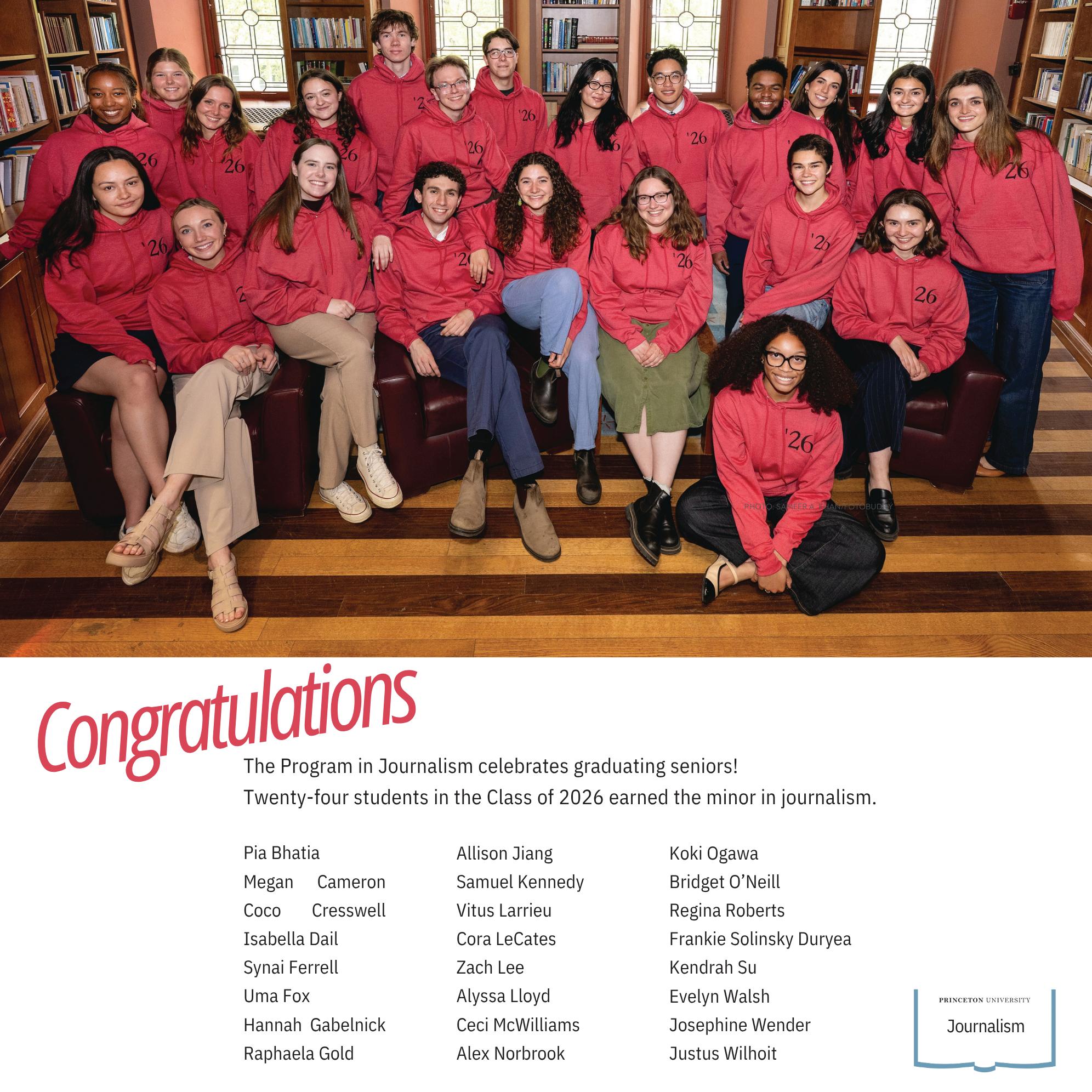
CONGRATULATIONS!
PHOTO
This Year’s Undergraduate Class
The Class of 2026, Princeton’s largest ever, has experienced a Princeton in turmoil. They began their time at the University as the first class to experience an outdoor Opening Exercises; they crashed TigerHub; they led Princ- eton to its first men’s Sweet 16 since 1967; they watched — and organized — an encampment in solidarity with Palestine; they experienced the impact of federal funding cuts and University budget cuts on student life, research, and employment; and they saw dramatic expansions of the University’s financial aid and facilities.
Upon admission, based on the Class of 2026 Frosh Survey, 49.9 percent of the class identified as women, 15.7 percent as first-generation, and one in four as LGBTQ+. A majority of the class entered Princeton proficient in a language other than English. A majority also identified as persons of color.
The Class of 2026 leaves behind a Princeton that they both experienced and shaped. In Princeton’s ongoing creation and re-creation, the legacy of the Class of 2026 will be its passion and resolve in the face of change. To the Great Class of 2026: Congratulations!
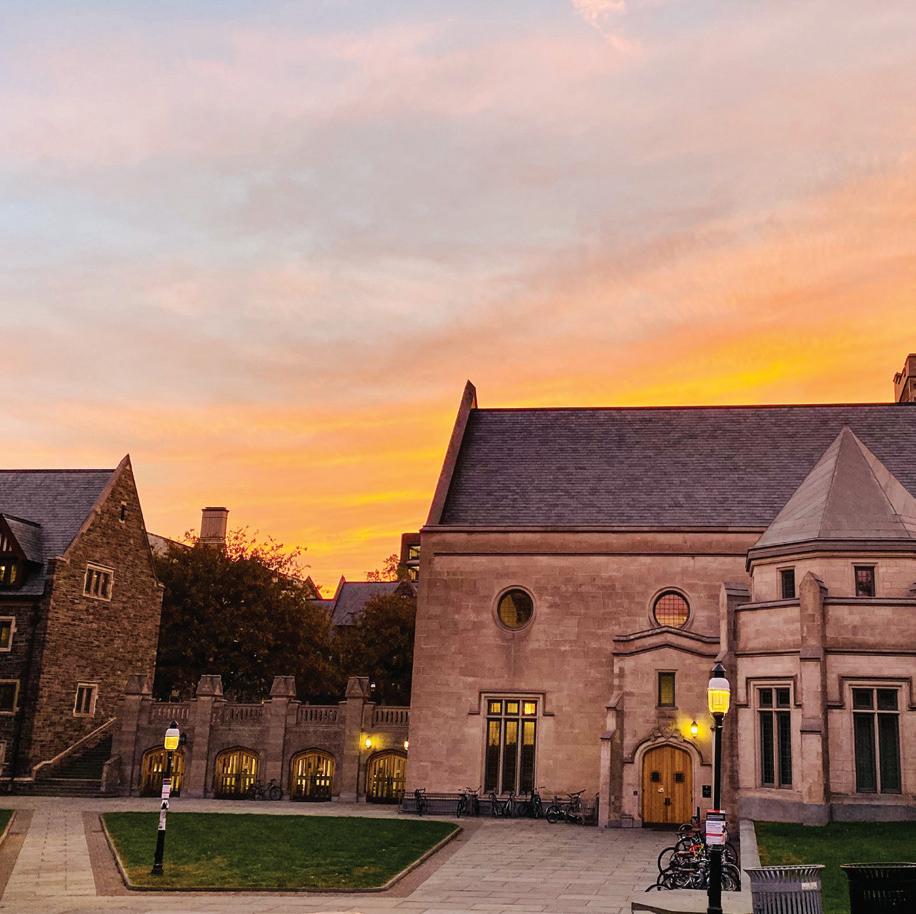
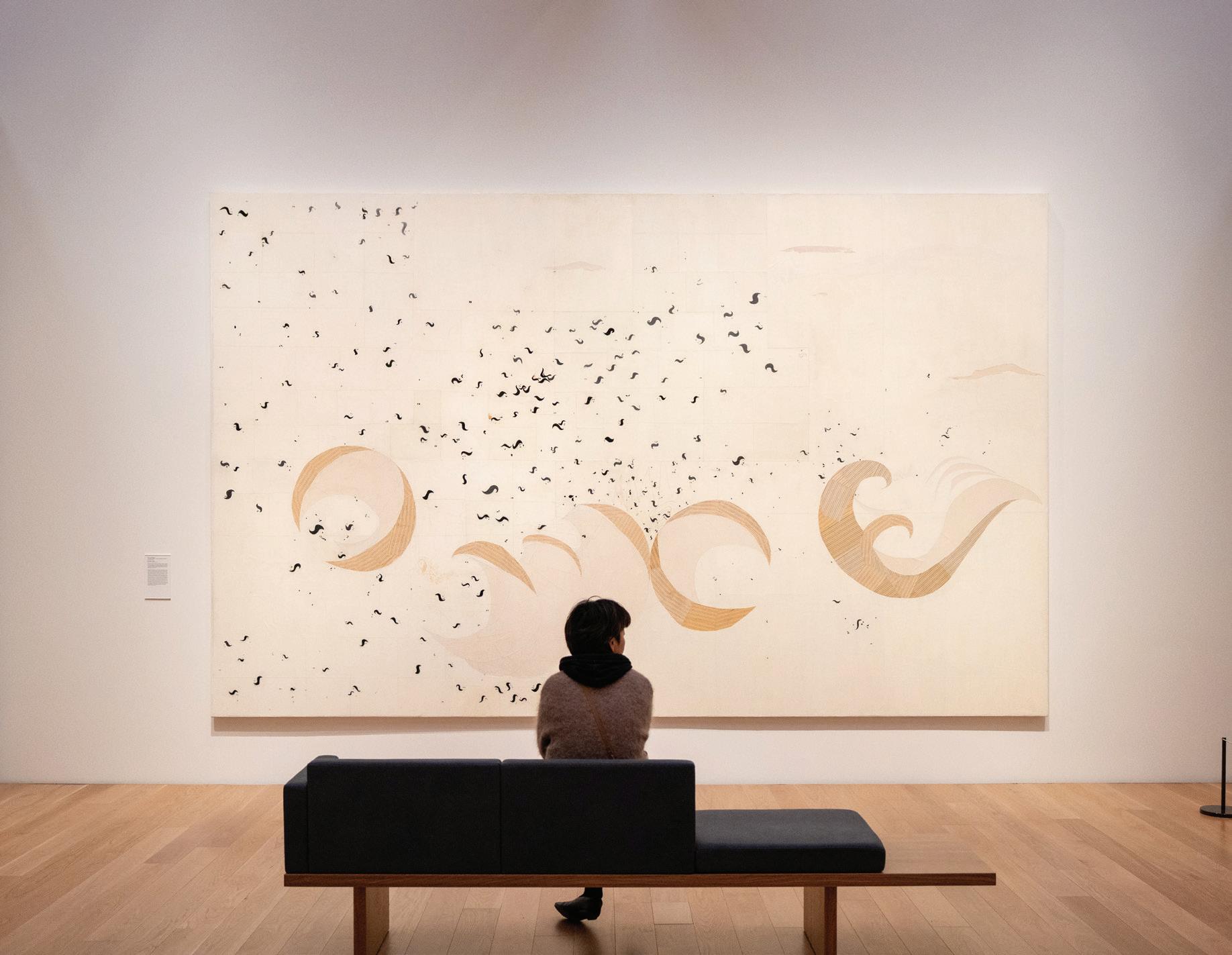
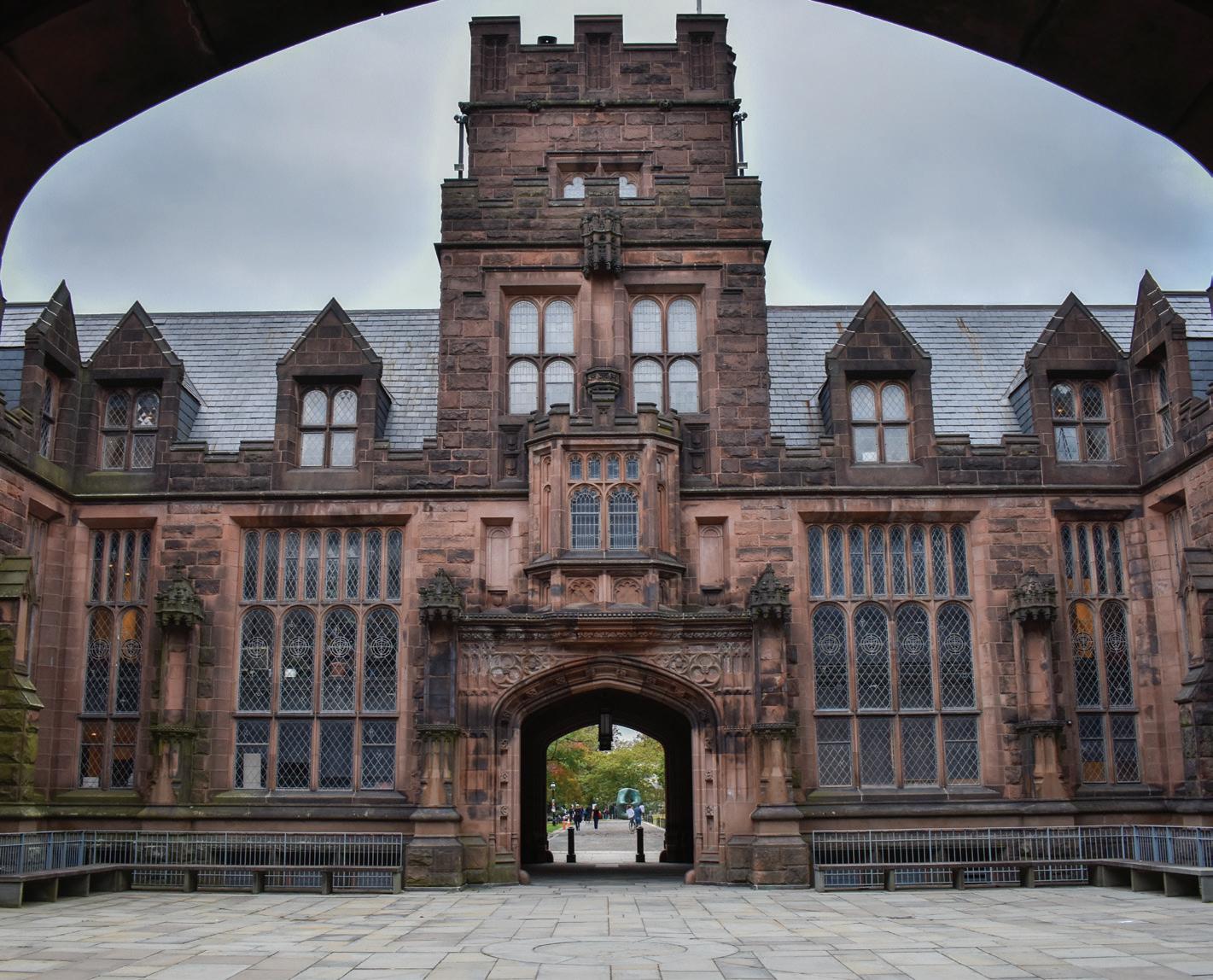
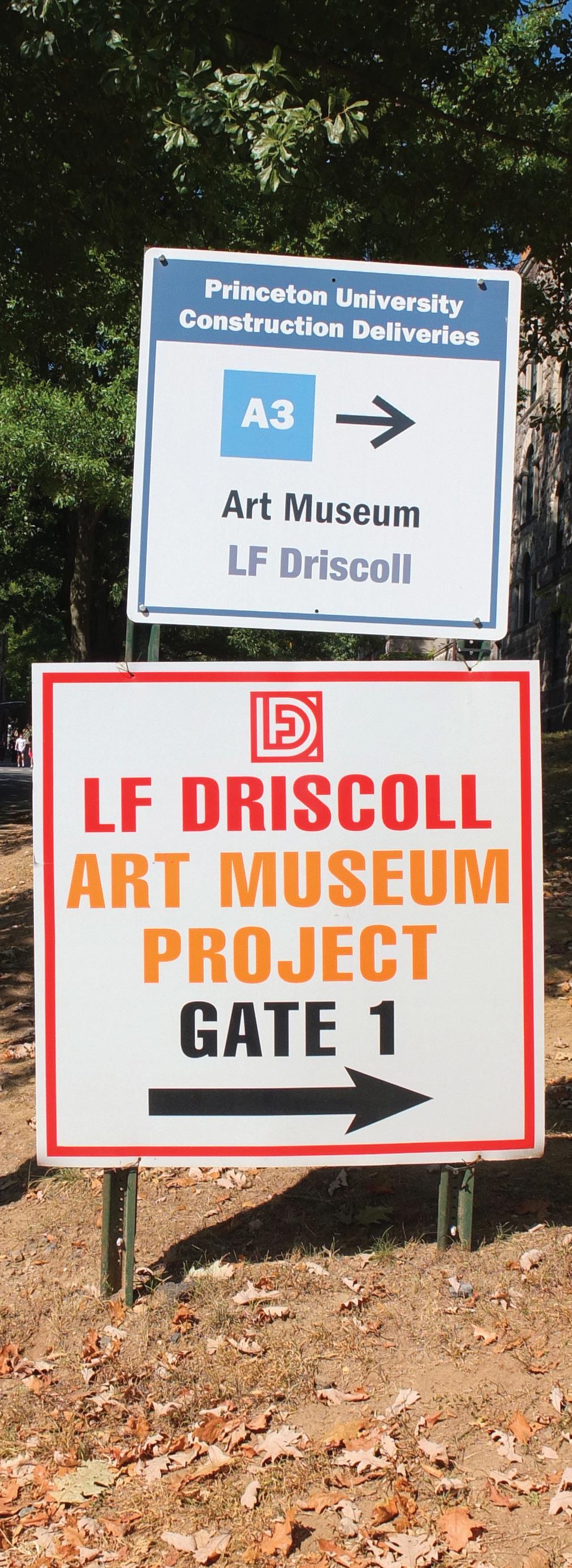
CALVIN KENJIRO GROVER / THE DAILY PRINCETONIAN Senior Year: The opening of the Princeton University Art Museum.
GUANYI CAO / THE DAILY PRINCETONIAN Freshman Year: Before the closure of Wilcox Dining hall
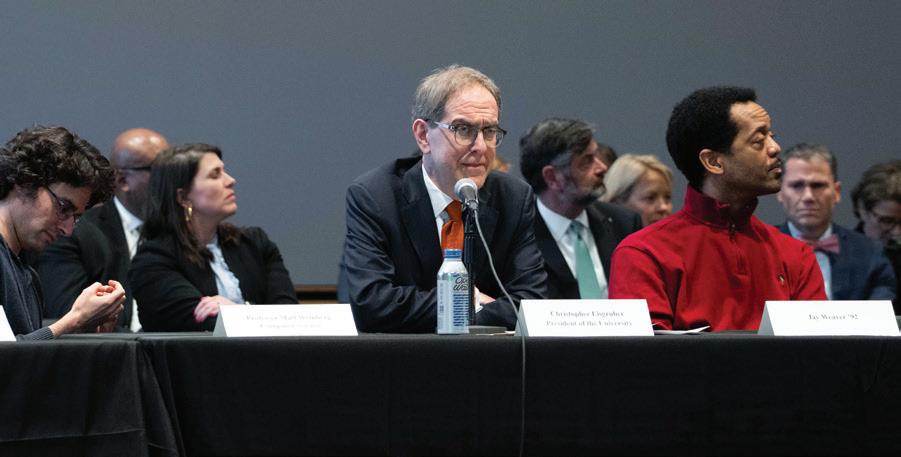
CALVIN KENJIRO GROVER / THE DAILY PRINCETONIAN Junior Year: The Monday, March 24, 2025, CPUC meeting.
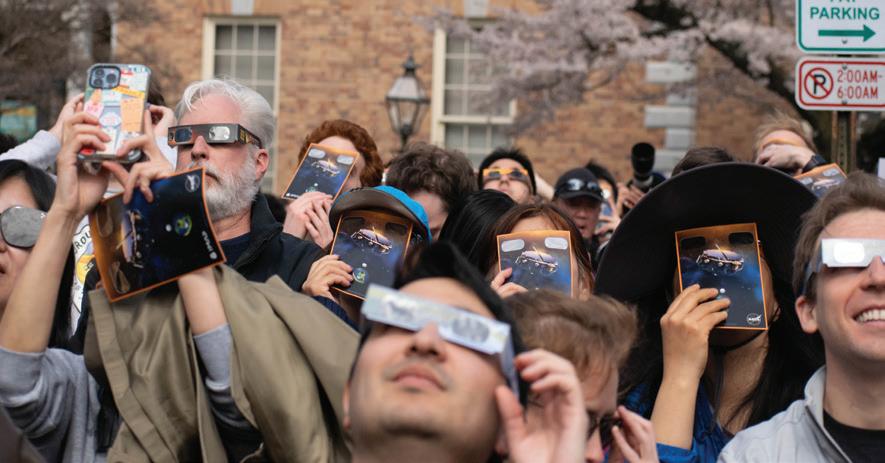
VEENA KRISHNARAJ / THE DAILY PRINCETONIAN Sophomore Year: Watching the Solar Eclipse, Monday, April 8, 2024.
editor-in-chief Jerry Zhu ’27
150TH MANAGING BOARD
managing editors
Frances Brogan ’27
Victoria Davies ’27
Corbin Mortimer ’27
Maya Mukherjee ’27
creative director
Juan Fajardo ’28
Sections listed in alphabetical order.
head archives editor
Jillian Ascher ’28
associate archives editor
Lucy Zschoche ’29
head audience editor
Loreta Quarmine ’27
associate reels editors
Angelyn Ansah ’28
Molly Ziskind ’28
head cartoon editor
Noam Rabinovitz ’27
associate cartoon editor
Paulette Martinez ’29
head copy editors
Sarah Li ’28
James Thompson ’27
associate head copy editors
Roberto Sampaio ’28
Felix Santiago ’28
Bobby Xia ’28
head data editor
Madeline Wadsworth ’28
associate data editors
Christine Cai ’29
Elizabeth Hu ’29
head features editor
Nikki Han ’28
associate features editors
Jamie Creasi ’28
Mara DuBois ’28
head humor editor
Tarun Iyengar ’28
associate humor editors
Nicolas Rohou ’28
Francesca Volkema ’28
head news editors
Nico David-Fox ’28
Luke Grippo ’28
associate news editors
Sena Chang ’28
Haeon Lee ’28
Caitlyn Tablada ’27
head newsletter editor
Ryan Choe ’28
associate newsletter editor
Annika Plunkett ’28
head opinion editors
Lily Halbert-Alexander ’28
Charlie Yale ’28
associate opinion editors
Isaac Barsoum ’28
Shane McCauley ’28
head photo editor
Emily Tang ’28
associate photo editor
Siena Sydenham ’29
head podcast editor
Devon Rudolph ’28
associate podcast editor
Julia Hack ’29
head print design editors
Jamie Creasi ’28
Albert Rho ’29
associate print design editor
Marley Hartnett-Cody ’28
head prospect editors
Gavin McLoughlin ’28
Ysabella Olsen ’28
associate prospect editors
Amy Jeon ’29
Amaya Taylor ’28
head puzzles editors
Luke Schreiber ’28
Emma Simon ’27
head spanish translation editor
Jorge Reyes ’28
associate spanish translation editor
Roberto Sampaio ’28
head sports editors
Lily Pampolina ’27
Doug Schwartz ’28
associate sports editors
Lucas Nor ’28
Matthew Yi ’27
head web design and development editors
Cole Ramer ’28
John Wu ’28
strategic initiative directors
Graphics
Caroline Naughton ’29
business manager Alistair Wright ’27
150TH BUSINESS BOARD
assistant business manager
Angela Han ’28
business directors
James Swinehart ’27
Chloe Zhu ’27
Ella Miner ’28
Devin Panalal ’28
Shravan Venkat ’28
Kosta Botev ’29
Sarah Cai ’29
Mason Dauber ’29
Will Liu ’29
Sara Mironov ’29
Business Manager Emeritus
Jessica Funk ’26
150TH TECHNOLOGY BOARD
chief technology officer
Abu Ahmed ’28
Chief Technology
Officer Emeritus
Yacoub Kahkajian ’26
software engineers
Nicole Deng ’28
Ziya Momin ’28
Kyaw Naing ’28
Stephanie Sugandi ’27
Albert Rho ’29
Jamie Creasi ’28
THIS PRINT ISSUE WAS DESIGNED BY AND COPIED BY Sarah Li ’28
Juan Fajardo ’28
BOARD OF TRUSTEES
president
Thomas E. Weber ’89
vice president
David Baumgarten ’06
secretary
Chanakya A. Sethi ’07
treasurer
Douglas Widmann ’90
assistant treasurer
Kavita Saini ’09
trustees
Francesca Barber
Kathleen Crown
Suzanne Dance ’96
Gabriel Debenedetti ’12
Stephen Fuzesi ’00
Zachary A. Goldfarb ’05
Michael Grabell ’03
Danielle Ivory ’05
Rick Klein ’98
James T. MacGregor ’66
Rohit Narayanan ’24
Marie-Rose Sheinerman ’23
Julianne Escobedo Shepherd
Abigail Williams ’14
Tyler Woulfe ’07
trustees ex officio
Jerry Zhu ’27
Alistair Wright ’27
COMMENCEMENT ISSUE DIRECTORS
Issac Barsoum ’28
Raf Basas ’28
Oliver Wu ’29
Education
Charlie Yale ’28

SEPT
PROSPECT
One tree over a changing campus
SEPT NEWS
SEPT NEWS
Largest incoming class in Princeton’s history welcomed in Opening Exercises, Pre-Rade
MAR PROSPECT
Adopting a new language
MAR SPORTS
FRESHMAN YEAR
2022 – 2023
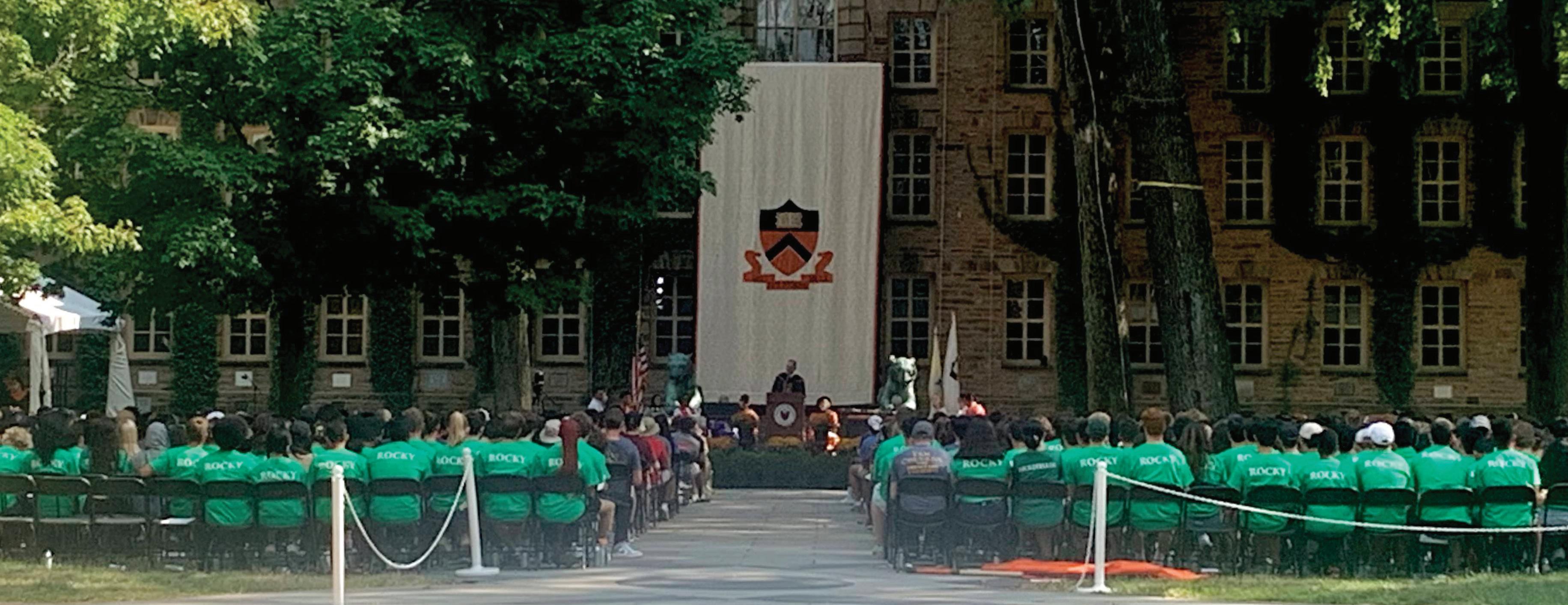
The Class of 2026’s first year at Princeton began in a heat wave. Many students assigned to live in New College West and Yeh College were left temporarily in the vestiges of First College. The University distributed more than 600 fans to students to beat back the heavy September heat that had welcomed Princeton’s largest class in its history.
1,500 students strong, the class was the first to experience outdoor Opening Exercises, breaking a longstanding tradition of holding the
APR
NEWS
South campus construction continues as Poe Field to be closed ‘more than a year’
event in the University Chapel. They listened to the advice of University President Christopher Eisgruber ’83 to “be fully present in this special and marvelous place.”
At Princeton, the Class of 2026 would learn a new language to communicate their new reality — words like “RCA,” “res college,” “the Street,” “eating club,” and “zee group.”
The Princeton endowment generated a loss, its first since the 2008 recession, a foreboding sign of financial turmoil to come. For the
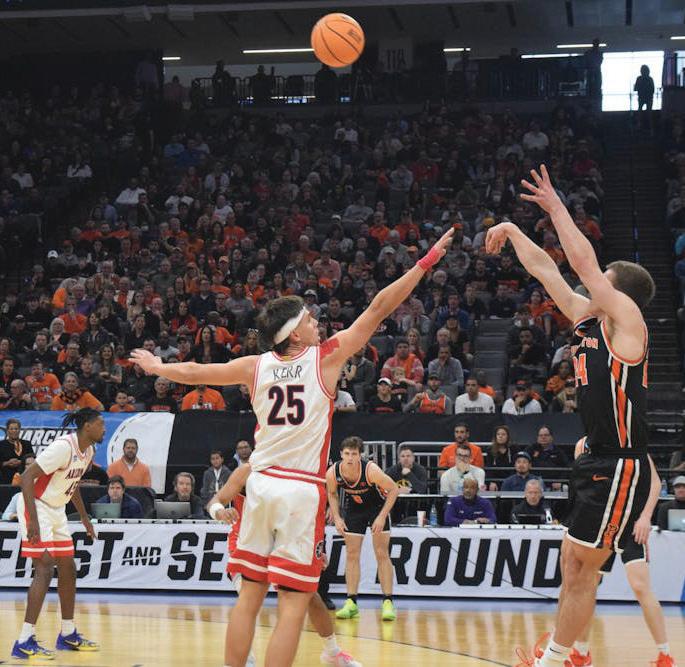
first time in 27 years, Princeton men’s basketball won an NCAA tournament game, then advanced to the Sweet 16.
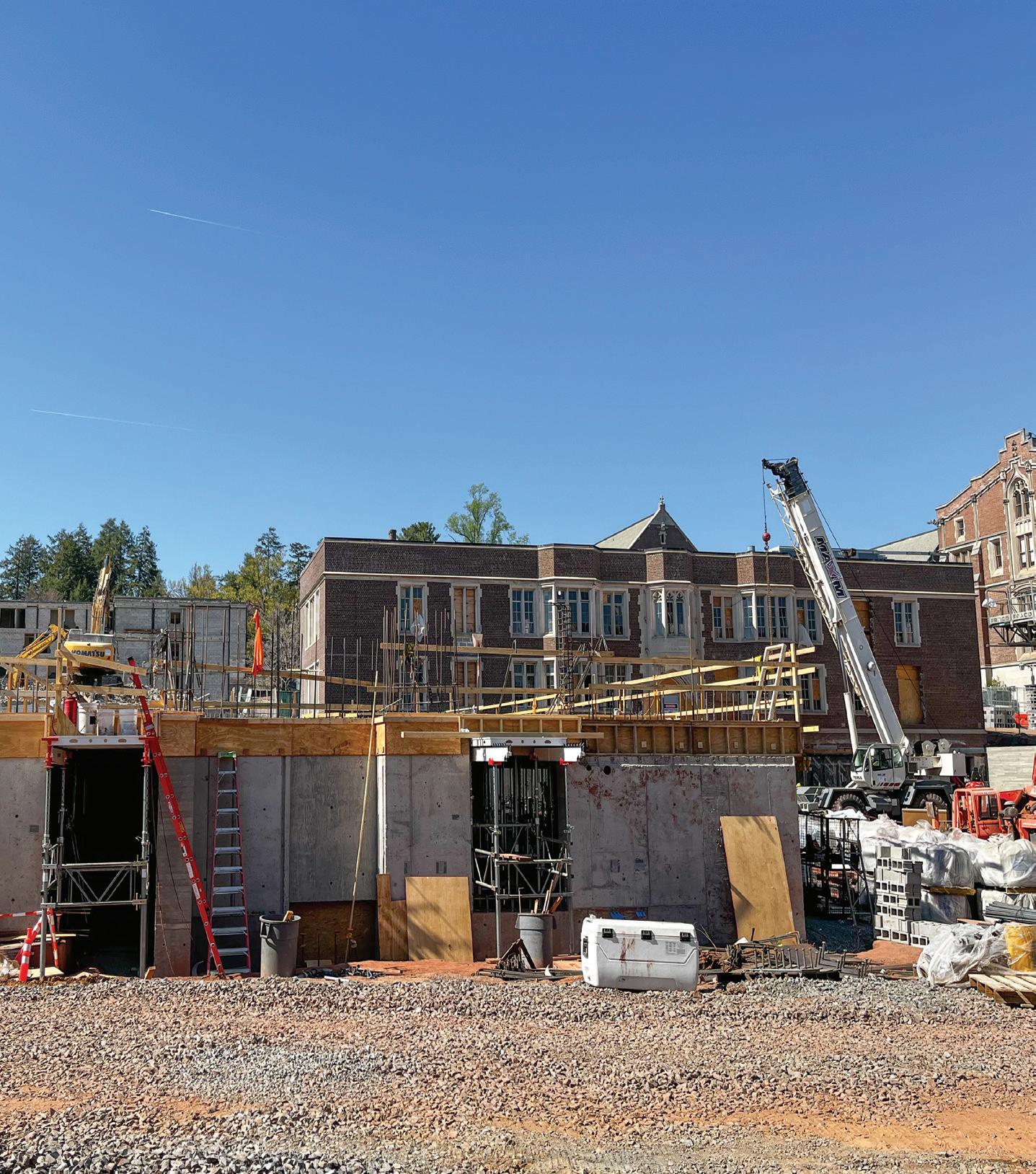
South campus grew up with the Class of 2026, resulting in the closure of Poe Field for “more than a year.”
By the end of the Class of 2026’s first year, the University was still learning how to accommodate its largest class ever: When students tried to enroll in courses for their sophomore fall, TigerHub crashed. And so it goes.
APR NEWS
TigerHub crashes for Class of 2026, University denies class size was a factor
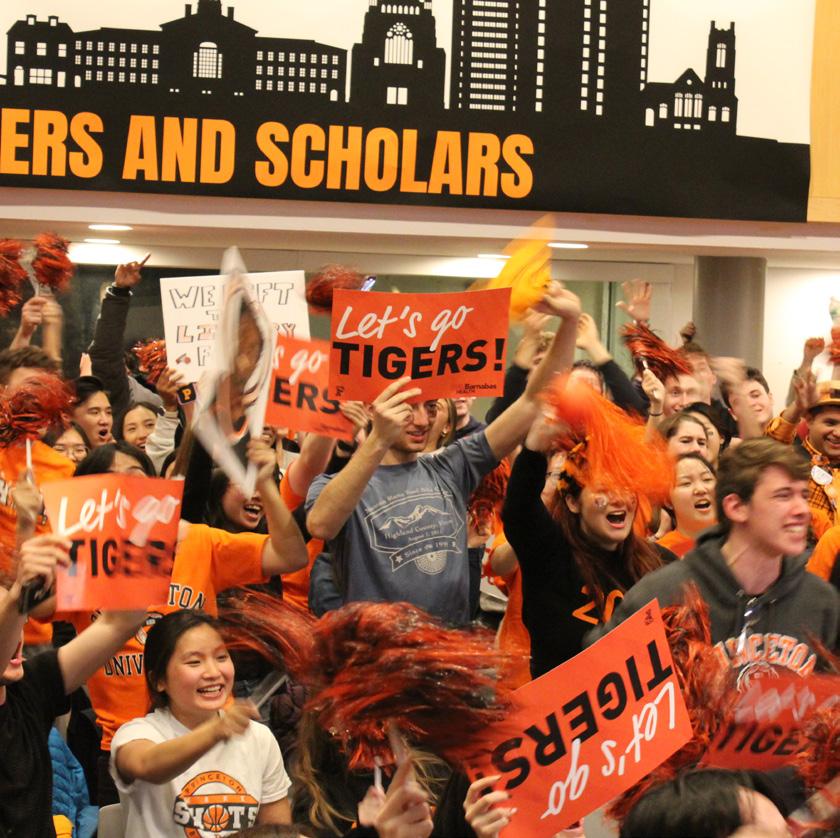
AARUSHI ADLAKHA / THE DAILY PRINCETONIAN Students watch the Sweet 16 men’s basketball game against Creighton, Friday, March 24, 2023.
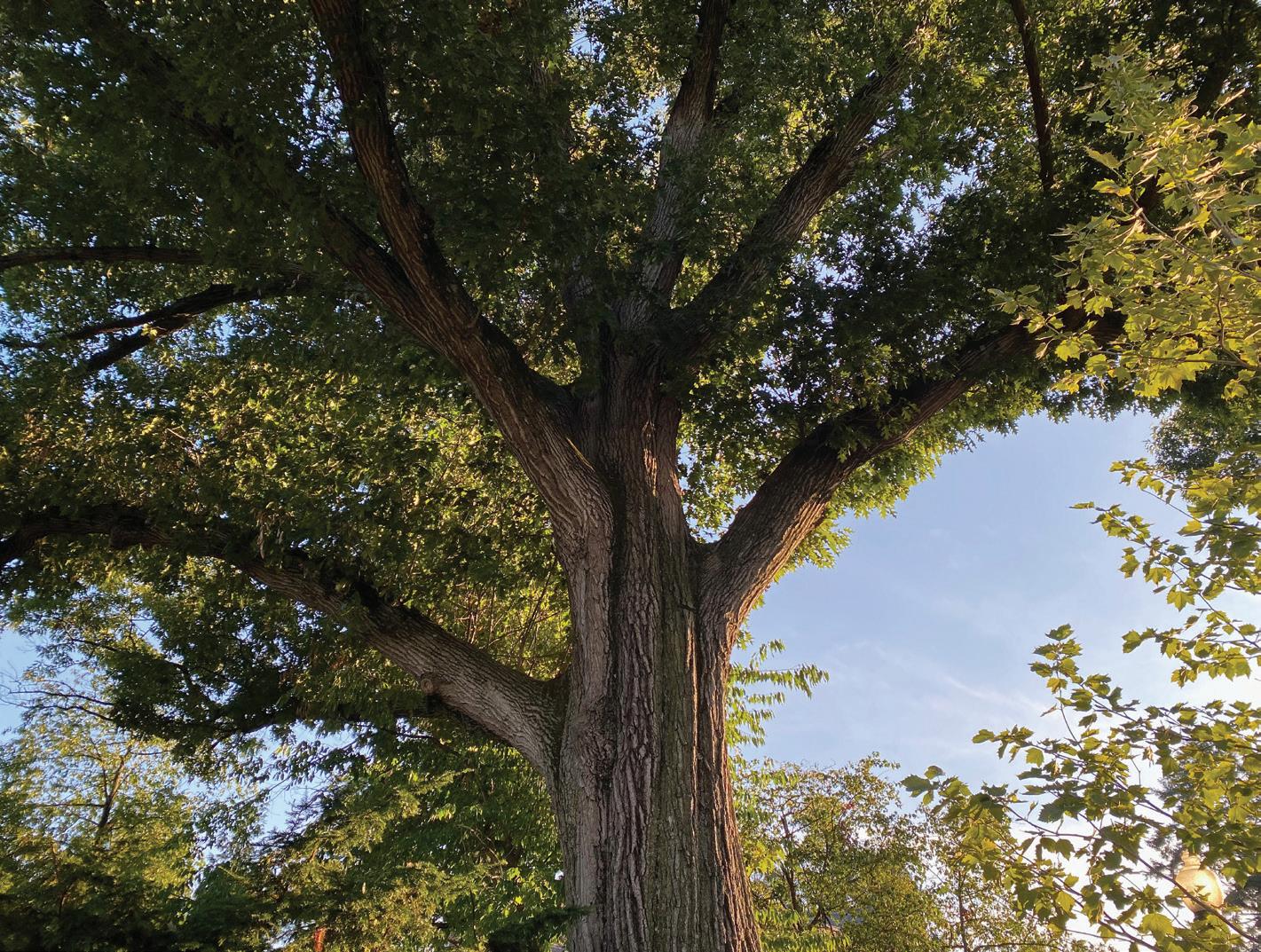
One tree over a changing campus
By José Pablo Fernández García | September 22, 2022
There’s a tree so tall and so sprawling that a still-low morning sun produces a shadow so long that it blankets a large swath of Washington Road and even strains to graze the grass before 1879 Hall. The tree sits on the northwest corner of the Princeton Tower Club’s lot. I often enjoy sitting under the tree’s shade on cooler, late summer afternoons and well into autumn before the tree drowns the yard in its leaves. This tree dominates over Prospect Avenue, dwarfing recently planted trees that line the street under its canopy. I know the tree best in its barren state — only its massive trunk and its innumerable branches fragmenting into a mute sky during the core of the academic year. Truthfully, the imposing trunk is what has recently been confronting my imagination most.
I’ve seen many young trees around campus whose trunks I could wrap my hand around. There are countless more I could probably wrap my arms around, even if it were to require my arms stretch to their limit. This one tree, however, might well require many, many friends to form a human chain around it. Even its branches are as thick as other trees’ trunks. It all makes me wonder how many years this tree has spent growing. If I were to somehow get a look at its rings, I can imagine myself losing track as I count
them — forever unsure whether I skipped or double-counted some rings. Though, at this tree’s age, a couple years or so are likely an acceptably small margin of error.
On campus, I always gravitate towards things like this tree — those things are so old that they’ve endured and witnessed the University’s constant evolution. I imagine this tree standing tall back when most of today’s campus was still open fields or barely-touched forest. I wouldn’t be surprised if this tree cast its shadow on Corwin Hall when it was still on the corner of Washington and Prospect — before Corwin was moved back so Robertson Hall could rise in the corner. I imagine the tree watching over the chemists migrating down Washington about a decade ago from the old Frick (now the Julis Romo Rabinowitz building) to the new Frick down the hill. This tree has seen countless iterations of this school, and soon enough, my Princeton will be simply another snapshot in time, an iteration from the past. The rings this tree grows while I walk past it on my way to eat and back are slowly to be buried under newer rings.
These thoughts have all been on my mind recently because I didn’t expect to feel like an old alumnus reminiscing on a Princeton of the past so soon — so soon that I’ve not even walked out of FitzRandolph Gate yet. But
somehow, already, the Princeton I applied to and the one I first came to know feel a world apart from the Princeton slowly being built around us. As the campus sprawls largely to the south and west from its historic core, the intimate park-like setting and the strolls between classes, meals, and more are set to give way to many more long, commuting treks to what only very recently seemed to be at the campus’s extremities. Poe Field has gone from a quiet, grassy oasis south of residential life to a bustling center as folks cross to and from dorms that seem more like the cold headquarters of the latest tech company than the warm, cloistered home I’ve known.
The longer I turn over these thoughts, however, the clearer it appears to me that my unease doesn’t really find its source in the physical changes across campus. There are few things I wish for more than to somehow prolong my time here in order to enjoy the new art museum, whose construction currently wakes me up most mornings. I think my unease comes from a discovery or realization of this campus’s rapid memory loss. I was only able to list off the above changes to the campus off the top of my head because I’ve taken the time to dig around histories and other records. But so many of my friends are surprised when I bring up these changes. For example, friends are shocked to learn that when the Rocky-Mathey Dining Hall was first built, long before the introduction of residential colleges, it featured five dining halls: the two still in use today, two more in today’s common rooms, and a fifth now split into a library and private dining room below today’s RoMa. But losses of this sort in our memory are largely fine. At least they’ve left behind a treasure hunt for anyone interested in such a quest.
So, I think what I’m really trying to get at is an amnesia I’ve sensed setting in regarding the last few years. The first few weeks of this semester have made it seem like campus is letting the disruption of the last few years be buried.
Recently, while getting coffee with two sophomores, I mentioned my own time as a sophomore, surviving a year on Zoom. I was met with largely blank faces and comments of how they couldn’t imagine Princeton in those conditions. All I could think in response was of how few students remain on this campus that ever knew anything of life and school before it all froze, suspended and awaiting any return. Now, so many students here know only a Princeton life that has
been pieced back together from remnants of before. And still, I can’t help but think that all this is a rather normal — if recently exceptionally accelerated — part of this school’s evolution. In four years, life has had to change more than in previous decades.
But something has still felt off: It feels almost as if the campus has happily jumped ahead to 2026, when the current construction is set to be completed, while some of us still grapple with the past few years. This all hit me most intensely when I requested an official transcript in the process of applying for post-graduate opportunities.
Under the spring 2020 semester, there’s a note for the “transition to virtual instruction for the second half of the spring 2020 semester” and the adjusted grading policies.
Under the fall 2020 semester, there’s a similar note for those months that “required all instruction to be conducted remotely,” and that maintained exceptional grading policies.
Under the spring 2021 semester, there is nothing.
No note for the continued virtual instruction. No note for the continued suspension of most residential life. No note for the increasing toll on our health — physical and mental. Not even a note for the exceptional grading policies that still remained — the seeming bare minimum for an academic transcript.
The space below that semester is just as blank as those two sophomores’ faces — really, more blank. At least those sophomores could sympathize through their own memories of that time in a way that this document resolutely refuses to do.
It’s this sort of memory loss — maybe memory refusal — that’s left me so uneasy these weeks. It’s a cold, isolating, institutional choice of amnesia. But then I remember that even deeply buried tree rings are prone to record long-forgotten drought and wildfires and the like.
This has all been on my mind as I’ve continued walking under the shade of that gigantic, majestic tree on the corner of the Tower yard. I think of how much this tree has stood over, and I wonder how much more it will stand over in the years to come. I imagine the years after I’ve walked out FitzRandolph Gate when I return to campus, part of the annual alumni pilgrimage, and I hope the tree will then still stand despite any further campus change. Maybe the tree will still remember something of these years already appearing to be lost.
JOSÉ PABLO FERNÁNDEZ GARCÍA / THE DAILY PRINCETONIAN
Largest incoming class in Princeton’s history welcomed in Opening Exercises, Pre-Rade
By Sandeep Mangat | September
7, 2022
The largest first-year class in Princeton’s history marched through FitzRandolph Gate in the Pre-Rade on Sunday, Sept. 4, marking the beginning of their four years at the University.
Opening Exercises for the Class of 2026 were held in front of Nassau Hall, rather than in the University’s Chapel, the event’s site since 1929.
First-years paraded through the iconic gate on their way to the seats arranged in front of Nassau Hall in a change to the traditional timeline. In previous years, the class has walked out of the University Chapel after Opening Exercises and then through FitzRandolph Gate during their Pre-Rade.
Opening Exercises mark the beginning of the academic year with an address from University President Christopher L. Eisgruber ’83, the presentation of several undergraduate awards, and spiritual remarks from a host of different traditions.
“I’ve always enjoyed the energy of Opening Exercises and the feelings of renewal and promise that accompany them,” he added. “Our gradual recovery from the long pandemic has heightened that sense of joy.”
Eisgruber also remarked on particular lessons that the pandemic has taught him, stating that “our extended experience with social distancing and remoteness has highlighted the value of presence and place in our lives.”
“I want to urge you to be fully present in this special and marvelous place,” he said.
His appeal for students to actively immerse themselves in their communities formed the theme of his address. He presented Jordan Salama ’19, author of this year’s Pre-read, as an example of someone who did this well.
“[Salama] learns from his travels because he engages energetically and imaginatively with the places that he visits. He is fully present to the people he meets and he lets them be fully present to him,” he said.
Eisgruber urged students to not only build personal connections with each other and
Eisgruber began his address by citing the historical importance that Opening Exercises has played in welcoming new students, and the opportunity the event provides to “reflect on the larger purposes that should guide our community as we begin another year.”
with professors during their time here, but also make time for quiet reflection.
“Cross Lake Carnegie and walk along the Towpath by the canal,” he said. “Leave your phone behind occasionally. Give yourself a chance to get lost in thought.”
Dean of the College Jill Dolan also presented several undergraduate honors.
Arya Maheshwari ’25 and Yuri Yu ’25 received the Freshman First Honor Prize, presented to sophomore students who display “exceptional academic achievement in the work of their first year.”
Casey Beidel ’24 and Brendan Kehoe ’24 received the George B. Wood Legacy Sophomore Prize, and Beatrix Bondor ’23 and Lucy Sirrs ’23 shared the George B. Wood Legacy Junior Prize.
The Class of 1939 Princeton Scholar Award, given to the member of this year’s senior class with the highest academic standing for all preceding college work at the University was given to Aleksa Milojević ’23.
Following Opening Exercises, members of the Class of 2026 marched around Nassau Hall for the Pre-Rade, cheered on by family mem-
bers, students in other class years, and alumni.
Elliot Lee ’26 said marching in the PreRade felt “monumental.”
“[The Pre-Rade] seems to be a part of a historical legacy, and I think that’s very significant,” he told The Daily Princetonian in an interview.
“I think it definitely helped us feel more integrated into the community as a whole,” he added.
Annabelle Edwards ’26 of New College West echoed that sentiment, telling the ‘Prince’ that the Pre-Rade was “a nice welcome to Princeton.”
“It was really helpful that everyone was in their college T-shirts, that helped you identify people that you hadn’t seen before,” she said.
Edwards added that as she was moving into NCW, she was struck by the fact that she was among the first cohort of people to live there. Jocelyne Wijaya ’26, another member of NCW, said that for this reason, marching in the PreRade felt “honorable and very exciting.”
“I think it was just a really good time for students to see each other, interact, and mingle,” Wijaya added.
Adopting a new language
By Isabella Dail | March 3, 2023
Before I came to Princeton, the word “chill” was merely an indicator of temperature, often useful for describing the weather. Now, I use “chill” to describe people, places, classes, and almost all my Princeton experiences. It’s a blanket word with an overall positive connotation and an indistinct meaning. The versatile “chill” is a word my friends use for various — practically all — contexts.
I digested the Princeton dictionary during my first semester here. When I describe the student life advisors, it’s now “RCA,” not “RA.” And who needs the full word “residential” when you can simply say “res” college instead? Or when I talk about the enigmatic “Street,” I mean the eating clubs lining Prospect Avenue. Even the phrase “eating club” is foreign to general audiences, so I try to make allusions to Greek life and elevated dining halls to non-Princeton listeners, often to even greater confusion.
When I first used “chill” in a new context with my family, they were understandably puzzled. They had begun to understand the distinctly Princeton terms, places, and people that I would make copious reference to in my phone calls, but they had not yet experienced the unique vernacular adopted by my friends and me. My dad groaned, claiming that I was supposed to be learning language at Princeton, not misusing words in daily conversation, while my mom simply laughed at my newly “expanded” vocabulary. In fact, I was also surprised by the ease with which new words had entered my personal lexicon. Niche words used by members of my zee group (a term most people won’t understand in and of itself), professors, and Princeton administrators wove their way into my spoken and written communication. For example, I would have never used the word “scaffolding” to describe
anything outside of the context of repairing buildings. However, I have now adopted a separate definition of the word after hearing administrators use “scaffolding” a shocking number of times to describe new extracurricular and service programs — perhaps a parallel to the very real construction occurring on campus.
In my linguistics class this past semester — a place where I discovered new technical words for categorizing language — we learned about language being “productive,” in the sense that speakers can build new words and phrases. Language is something that lives and evolves as it is used by speakers. We also learned about vernacular, a subset
of language adopted by specific communities with speech patterns unique to that community. Underpinning technical terms and problem sets was the concept that language is something beheld and formed by its speakers and hearers. People make their own languages to suit their communities, needs, and traditions.
By intertwining my knowledge of linguistics with observations about my daily speech patterns, I am reminded that Princeton is a formative place for growth and personal change. I have befriended peers from across the world with unique interests, backgrounds, and experiences. I have learned from their stories, becoming a more
informed and open-minded person as a result. In addition, they have influenced my behaviors, beliefs, and even my use of language. We have also formed distinct communities on campus and brought pockets of the world together in a single dining hall table, common area, or library study room, forging our own languages and traditions along the way. Outside of the standard Princetonian jargon, we have molded our own vernaculars that serve our developing friendships and circles of peers. Princeton is a place where I have met people who changed and will continue to change my life, from the way I see the world, to the language I use — and I think that’s very chill.
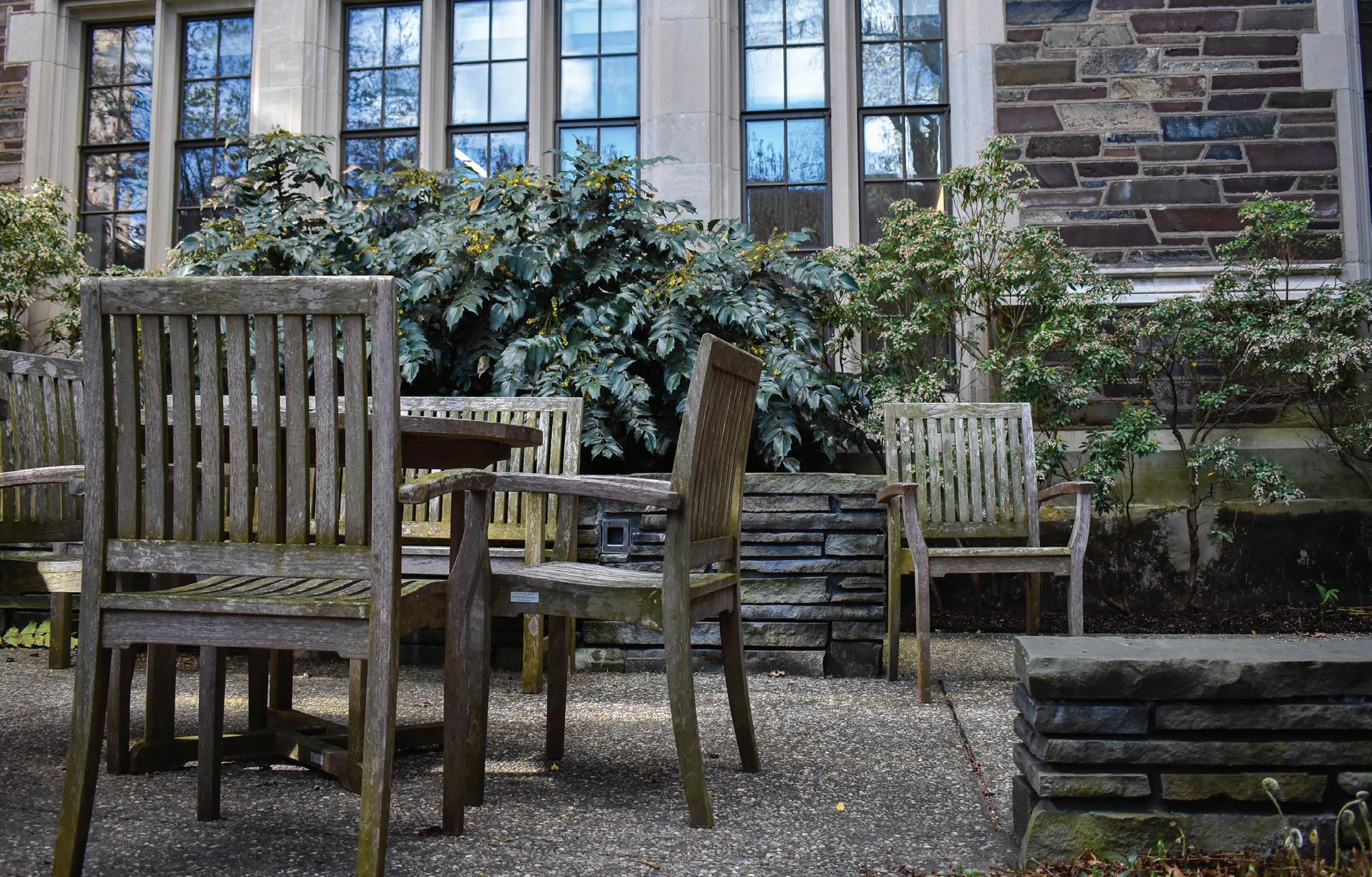
ANGEL KUO / THE DAILY PRINCETONIAN
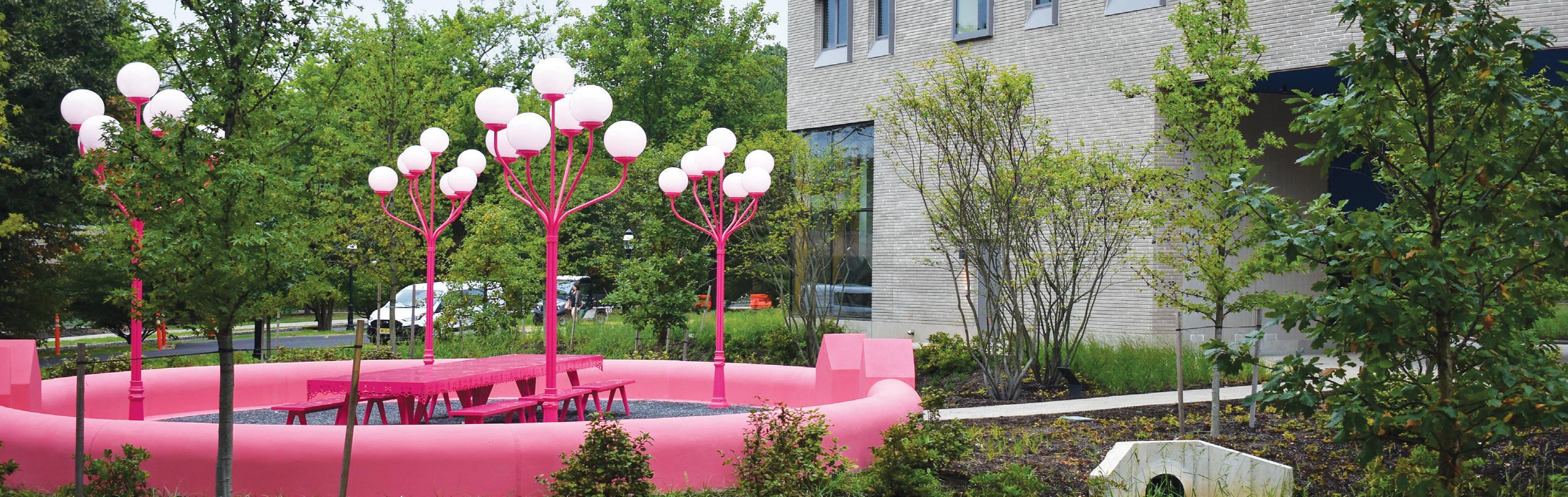
On the north end of the Julis Romo Rabinowitz building lies this small garden, where students and staff can escape work while still being shrouded from public view.
AFTER 27 YEARS: DAVID 59, GOLIATH 55 SPORTS
By Wilson Conn | March 16, 2023
SACRAMENTO, Calif. — The parallels are unavoidable and abundant.
A defensive battle. A Pac-12 champion. And most notably of all, Mitch Henderson ’98.
27 years after knocking off defending national champion UCLA in the first round of the NCAA Tournament, the head coach of Princeton men’s basketball — who was a sophomore guard on the 1996 Tigers team — is once again a tournament Cinderella. On Thursday afternoon, his 15th-seeded squad (22–8, 10–4 Ivy League) knocked off two-seed Arizona (28–7, 14–6 Pac-12), 59–55, giving the Princeton men their first March Madness victory in a quarter-century.
The Tigers’ last tournament triumph was in 1998, but the 1996 win — the final victory in the three-decade career of legendary Princeton head coach Pete Carril — holds a special significance in connection with Thursday’s upset, and not just because of Henderson’s involvement. Carril passed away last August, and the team has worn his signature bow-tie on their uniform this season in his memory.
“So much of what I say is [Carril’s],” Henderson said after the team won Ivy Madness last weekend. “A lot of this is honoring him.”
At the same time, though, Henderson seems intent on carving out his own path, both for himself and the teams he coaches.
“There’s gonna be some comparisons from some of you, I’m sure, to coach Carril,” Henderson told the media after the win Thursday. “But I want to be really clear that this group did this, and that was a really long time ago.”
Indeed, in the nearly three-decades since the famous upset over UCLA, Princeton’s offensive style has changed tremendously. Gone are the days of careful cutting, draining the shot clock, and lulling opposing defenses to sleep. More so than during the Carril years, Henderson’s Tigers rely on their scoring and shotmaking, especially from the three-point line, to carry them to
victory.
Yet, vestiges of the Carill era still remain. The offense, which was once run through facilitating big men like Kit Mueller ’91 and Steve Goodrich ‘98, now goes through the capable hands of senior forward Tosan Evbuomwan, who led the Ivy League this season in assists per game (5.2).
It must have been a concerning sight for Henderson, then, to see both his team’s shotmaking and Evbuomwan’s play falter early on against Arizona; the Tigers missed their first five three-point attempts, and the star forward came up empty on his first four field goal attempts, including a three-pointer that sailed past the rim for an airball.
According to Henderson, it was one last remnant of the Carril era which carried the Tigers through their shaky start, and ultimately to victory: their grit.
“That’s the through-line in the program for us, toughness,” Henderson said after the game. “Things that are tough, that are really hard to do … [we take] pride in those things.”
This tenacity was required for the Tigers right from the tip, especially when facing off against Arizona’s big men, Ąžuolas Tubelis (6’11”) and Oumar Ballo (7’0”). This season, the pair had combined for 34 points and 17.8 rebounds per game, on a team that, like Princeton, led its conference in rebounding. The Tigers’ game plan seemed to be to double-team the pair as often as possible to force them into turnovers or tough shots.
While both Tubelis and Ballo started off hot — scoring Arizona’s first 11 points, and 17 of their first 20 — it was the defensive effort of Evbuomwan, senior forward Keeshawn Kellman, and junior forward Zach Martini, among others, that kept the game from getting out of hand. Despite their massive size disadvantage — Kellman is the Tigers’ tallest player in the rotation at six feet, nine inches — the Tigers managed to emerge from the first half winning the rebounding battle,
21–17.
Martini led the Tigers in rebounding in the first half with five, finishing with seven boards and two steals.
“Zach Martini was unbelievable,” Henderson said. “He was all over the place.”
Martini came through on the offensive end, too, scoring a threepoint shot to cut the early Arizona lead before scoring on a classic Princeton backdoor cut that sent the basketball historians (and the older alumni in attendance) into a frenzy.
The Pac-12 champions were no pushovers, though, and bounced back from Martini’s run to take a 31–22 lead. The upstart Tigers matched them, going on an 8–0 run to end the half within one point of the Wildcats.
Junior guard Matt Allocco and senior guard Ryan Langborg each had opportunities to give the Tigers the lead heading into the half, but Allocco’s buzzer-beating layup rimmed out. Even though the Tigers weren’t able to break into the lead before halftime, the mood in the locker room was extremely optimistic.
“‘You’re okay, we’re down one, get the crowd on your side, [and] have some fun,’” Henderson recalls saying to his team at the break. “It wasn’t anything earth-shattering.”
“It was loud in there; everybody had something to say, you know,” Allocco told members of the media after the game. “‘We’ve got this, stay in the moment; we’re gonna make shots; we’re gonna make big plays.’”
The numbers backed up the Tigers’ confidence, too. As mentioned, they were winning the rebounding battle, and had also managed to record just four first-half turnovers. The Tigers also allowed Arizona to shoot just 30 percent from three and under 45 percent from the field in the first half, while only giving up eight points to players not named Ballo or Tubelis.
“We want to win six games just like Arizona does,” Henderson said, referencing the number of victories required to capture a national cham-
pionship. “And in order to do that, you’ve got to be tough defensively, because we did not shoot the ball very well tonight.”
“They didn’t get transition baskets, for the most part,” he added. “We weren’t perfect, but they weren’t getting what they’re really good at.”
However, as the second half began, the Tigers’ advantages began to wane. In the first seven minutes of the period, the Tigers turned the ball over six times. Arizona began to speed the pace of the game offensively and built a lead, which was once as large as 12 points.
Trailing and desperately needing a spark offensively, Princeton turned to sophomore guard Blake Peters. Peters, who has shot 37.6 percent from three this season while averaging just over 13 minutes per game, suddenly played a massive role for the Tigers, knocking down two key threes down the stretch to keep Princeton within striking distance.
Outside of Peters — who shot three-for-five from deep — the Tigers continued to struggle to get their shotmaking on track as the half progressed. They would finish having shot just four-for-25 from deep, and just 40.6 percent from the floor overall.
Once again, though, it was the Tigers’ defense that came through. Kellman, Evbuomwan, and firstyear forward Caden Pierce worked hard to defend the Wildcat bigs, coming up with key blocks and rebound after rebound. In the final eight minutes of play, the Tigers gave up just four points — and zero in the last 4:45 — a nearly unfathomable result against a team that averaged over 80 points per game entering Thursday’s contest.
“It’s such a tough group,” Henderson said. “We’re imperfect, but we’re a very tough group.”
As the defense held, the Tigers continued to search for a shot that would put them in the lead. As was the case at the end of the first half, the Tigers struggled to find a way through, with both Langborg and Pierce missing open three-pointers.
“We talk confidently,” Hender-
son said. “We felt we could win, [and] with four minutes left, [we said] ‘we’re gonna win this game.’” Langborg finally found the bottom of the net on a foul-line jumper to cut the Arizona lead to one at 55–54, before scoring a layup to give the Tigers their first lead of the game with just over two minutes remaining. The Californian was a hero on the defensive end, too, blocking Arizona guard Courtney Ramey with just 50 seconds remaining.
After Caden Pierce hit a pair of free throws, Arizona had one last chance to tie the game, now trailing by three. At that point, it seemed the Tigers were ready to cash in on a bit of March Madness underdog luck.
“They had three shots at the basket from 21 seconds [left],” Henderson said. “Those usually go in in a game like this ... We got lucky.”
With the win, the Tigers became just the 11th 15-seed to win an NCAA Tournament game, and the third in the last three seasons, following in the footsteps of fellow New-Jerseyans Saint Peter’s, who made it all the way to the Elite Eight as a 15-seed last season. They are the lowest-seeded Ivy League team to ever win a March Madness game.
“To beat a great team like that on this stage is a pretty special feeling, but also, I can’t say I’m surprised,” Allocco said. “This team has been so good all year.”
“On paper, it’s going to look like a big upset,” he continued. “But we believe in each other and we think we’re a really good team. When we’re at our best, I think we can beat anybody in the country.”
The Tigers will now continue their tournament journey against seventh-seeded Missouri (25–9, 11–7 Southeastern) on Saturday. Even with the short turnaround, Henderson is confident the Tigers can keep their run going.
“We played the majority of our games in our league on back-tobacks,” he said. “So the [extra] day of preparation is quite nice.”
“Missouri is really good, [and] we’re playing great,” he added. “It’ll be a fun challenge.”
South campus construction continues as Poe Field to be closed ‘more than a year’
By Madeleine Lebeau | April 16, 2023
For residents of the southern part of Princeton’s campus, the campus construction is unlikely to subside any time soon.
The University announced that the opening of Hobson College (on the site of the former First College) will be pushed back to 2027 from its originally scheduled 2026 opening date. Further, the University announced that Poe Field, a popular gathering spot for students, will be under construction starting after Reunions 2023 and is expected to take “more than a year.”
Some students and student groups have expressed concerns regarding the timing and scope of the projects.
The Poe Field project, which will put Poe Field under renovation for at least three semesters, is part of the University’s goal of becoming carbon neutral by 2046.
In an email to The Daily Princetonian regarding the Poe Field project, University Spokesperson Michael Hotchkiss wrote, “the construction will include a previously approved underground storm-water detention system required to support the storm-water design for the current University Health Services project (due to be completed by winter 2025), and for the upcoming Schmidt Hall project (anticipated start of summer 2025).”
Some club sports teams are concerned about the closure of Poe Field. The club Ultimate Frisbee team uses Poe Field as a practice location and considers the central location of Poe Field as a benefit during recruitment.
“A big chunk of our incoming class every year is people who
have never played Ultimate before,” says Alex Baroody ’23, one of the captains of Princeton Ultimate Frisbee. With construction on Poe Field, Baroody says that it will be “a lot harder for us to get new people to join our club … Just having those pickup games be visible brought a lot of our team to the game of Ultimate.”
Hotchkiss noted that it “is not feasible” to only have construction on Poe Field over the summer, and that “it is less impactful to complete the construction consecutively in one phase instead of breaking it up over multiple summers or stages.”
He added that the University “understand[s] that this work will impact many groups on campus who currently use Poe Field, as well as students and staff who will live in the dorms that surround Poe Field this summer and the next academic year.” He stated that the University will “provide regular updates regarding the construction and related impact, but also provide information on alternate temporary locations for club, pickup sports, and other recreation.”
Many students living in the new colleges cross Poe Field to get to the rest of campus. Zach Lee ’26, the Communications Lead for Yeh College Council, is concerned that with the construction of Poe Field, students of the nearby residential colleges are losing an “integral location” where they have been able to “relax, picnic, and play sports.”
Lee is a contributing News and podcast writer for the ‘Prince.’
“The construction on Poe Field will definitely make this challeng -
ing for students to continue in the future or may even possibly stop these activities for good until construction has cleared,” Lee said.
With the opening of Hobson delayed, construction will last longer at the site just north of Poe Field. According to Hotchkiss, this delay is a result of the fact that “several of the First College dorms that encompass the Hobson site were used as temporary housing assignments during the fall semester when move-in for a portion of Yeh and NCW residents was delayed.” Accordingly, construction did not begin on schedule.
Hotchkiss confirmed that all “housing or impacted buildings [will be] notified [of construction] and asked to send messages to residents or building occupants that will be directly impacted.”
Residents of Scully Hall will live
between the Poe field construction and the ongoing construction of Hobson College. Hannah Even ’25, a future resident of Scully Hall, was “not excited about” being surrounded by construction and the early start time of construction noise, particularly on the weekends.
According to Hotchkiss, campus construction will begin at “7 a.m. during weekdays and 8 a.m. on Saturdays.”
Despite the delay in opening Hobson, the University does not expect any delay in its implementation of the four-year expansion plan to increase Princeton’s undergraduate student body by 500 students. Hotchkiss noted that “the introduction of NCW and Yeh provides the swing space” that is needed to stay on target with the expansion of the student body.
ZEHAO WU / THE DAILY PRINCETONIAN Hobson College under construction.
TigerHub crashes for Class of 2026, University denies class size was a factor
By Justus Wilhoit & Lia Opperman | April 21, 2023
The Class of 2026 woke up bright and early at 7:30 a.m. on Thursday, April 20 to enroll in courses for the fall 2023 semester on TigerHub, Princeton’s course enrollment platform. First-years quickly encountered issues, however, when the website crashed for many students and some alleged that they couldn’t enroll until at least 15 minutes after enrollment opened.
The Class of 2026 is the largest class to ever attend Princeton, and represents the first step in the University’s planned four-year expansion of the undergraduate student body. In fall 2022, despite the increase in the student body, roughly the same number of undergraduate classes were offered as recent semesters. Though many classes later expanded the number of available student seats, many introductory classes, such as CHM 201: General Chemistry I and PHY 103: General Physics I exceeded their average enrollment numbers.
Despite this, in a statement to The Daily Princetonian, University Spokesperson Ahmad Rizvi wrote that “the increased class size was factored into this year’s [TigerHub] stress testing and did not contribute to the issue.”
He explained that a “technical problem” slowed the registration process in the morning, which led to some students receiving error messages.
“The problem was resolved quickly and all but 50 Class of 2026 students had registered by 8:15 a.m,” Rizvi wrote.
Although students were eventually able to enroll in their courses, the ‘Prince’ found that some popular and core courses were difficult to get into, which caused frustration for some members of the Class of 2026.
Myrah Charles ’26 spoke with the ‘Prince’ about how she was unable to join CWR 203: Creative Writing (Fiction).
Though creative writing (CWR) courses have been met with higher demand for a limited number of seats following the program dropping the application requirement for introductory CWR courses last spring, for Charles, missing out on a spot in one of the program’s coveted classes created uncertainty.
“It is what it is,” Charles said.
The requirements for earning a Creative Writing certificate include taking two 200- level classes by the end of sophomore year and two 300- level courses by the end of junior year, however the program states that in “unusual circumstances,” a portion of this requirement can be waived.
In spite of Charles’s current frustration with course registration, she remains optimistic that the Creative Writing program can accommodate students who don’t meet all the prerequisites prior to
their junior year.
“I can’t see them denying a person the opportunity to get the certificate with the current system we have now,” Charles added.
According to TigerSnatch, a student-created app created that allows students to receive email and text notifications when a spot opens in a full course, CWR 203 is currently the third most subscribed course. CWR 201: Creative Writing (Poetry) closely follows as the sixth most subscribed course. Toggling “subscribe” on a course activates email and text notifications.
ORF 309/EGR 309/MAT 380: Probability and Stochastic Systems, a required course for Operations Research and Financial Engineering majors, is the seventh most subscribed course For the fall 2023 semester, there are currently 1,041 subscribed users on TigerSnatch with 3,322 subscriptions. 227
courses have subscriptions.
SPI 298: Introduction to Public Policy, Authority, Incentive, and Persuasion is a required course for School of Public and International Affairs (SPIA) majors that must be taken either in the fall of sophomore or junior year; all spots were filled quickly, leaving many students uncertain.
“I spent the morning constantly checking TigerSnatch with concern, which interrupted my ability to focus during classes today,” Rebecca Cunningham ’26 said in an interview with the ‘Prince.’ Cunningham is an assistant News editor for the ‘Prince’.
Hours later, citing enrollment demand, more spots were opened up for students to join the course.
However, following the course’s increase in capacity, students who were still unable to enroll in the course received a message from Joanna Kovac, the academic coordinator of SPIA. Kovac notified students that they were on a waiting list, and that the course’s capacity may increase in the near future. Kovac additionally advised students to enroll in the course if seats become available during the May 1-5 add/drop period, and that the course will be available to prospective SPIA majors when they are juniors if they do not have the opportunity to take the course this fall.
First-years also took to Fizz, a private anonymous discussion app, to share their opinions on the TigerHub crash. Over 1,000 students upvoted a post that said “It should be a crime that the number one school in the country still uses TigerHub.”
Rizvi explained that there is “extensive preparation and testing” performed before each course registration cycle.
“We will investigate improving the course registration performance in the future to reduce any potential slow-downs,” Rizvi wrote.
SOPHOMORE YEAR 2023 – 2024
Before the Class of 2026 returned to campus for their sophomore year, the U.S. Supreme Court struck down affirmative action, prohibiting the consideration of race in college admissions. The University responded by refocusing on economic diversity, by March setting an aim for 70 percent of students to receive University financial aid and for 22 percent to be eligible to receive Pell Grants from the federal government.
A tree fell and crashed through a
window in Edwards Hall. An alumnus, Larry Giberson ’23, told a court he was “someone in the service of the nation, and in the service of humanity” before being sentenced for his participation in the Jan. 6, 2021 Capitol riots.
The Forbes College dogs, Fonzie and Lionela, continued to bring joy to students. Princeton confiscated 80 scooters in five days after prohibiting them.
In April, campus protests erupted
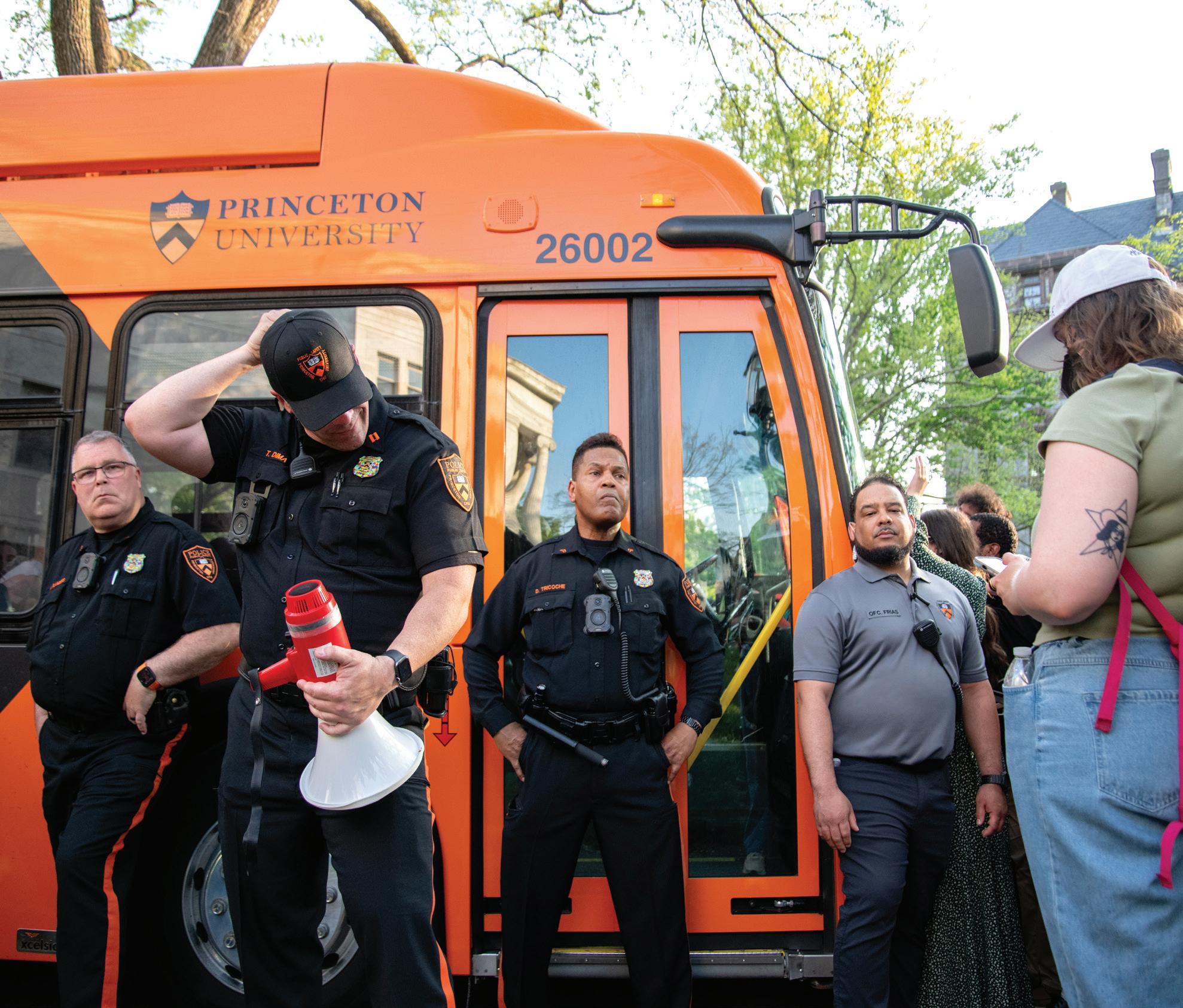
in solidarity with Palestine, culminating in an encampment, a hunger strike, and a sit-in in Clio Hall. A total of 15 student protesters were arrested during the course of the encampment. The University did not yield to protesters’ demands.
By the end of sophomore year for the Class of 2026, Princeton was more in turmoil than it had ever been for them. There would be no respite from the chaos in the coming fall.
JULY NEWS
AFFIRMATIVE ACTION STRUCK DOWN: Landmark Supreme Court ruling to drastically affect Princeton admissions
NOV
NEWS
DEC FEATURES
Visiting the Forbes College dogs at home
Alumnus invokes Princeton’s informal motto, then sentenced to two months for Jan. 6 actions
APR
NEWS Protest supporting Columbia’s ‘Gaza Solidarity Encampment’ circles Cannon Green on Declaration Day
MAR NEWS
Princeton to aim for 70 percent financial aid, 22 percent Pell Grant eligibility for undergraduate enrollment
Photos: The Clio Hall Sit-in
AFFIRMATIVE ACTION STRUCK DOWN: Landmark Supreme Court ruling to drastically affect Princeton admissions
By Sandeep Mangat | June
29, 2023
The Supreme Court struck down affirmative action on Thursday, overhauling almost 40 years of precedent in considering race in admissions.
The case, Students for Fair Admissions (SFFA) v. President and Fellows of Harvard College was decided along ideological lines, with a 6–2 conservative majority. Justice Ketanji Brown Jackson re- cused herself from the case, having attended Harvard and served on its Board of Overseers. The compan- ion case, Students for Fair Admissions (SFFA) v. University of North Carolina (UNC), was decided 6–3, also on ideological lines.
The long-expected decision will have a significant impact on Princ- eton’s admissions process, which has taken race into consideration in admissions since 1963. Numerous studies have found that percentages of Black and Hispanic students will likely decrease at many colleges as a result of this ruling, while the percentage of Asian-American stu- dents is likely to increase.
Awaiting a response from Princeton
The decision reached by the justices will have far-reaching consequences, leaving Princeton and other colleges to navigate un- charted territory in preserving racial diversity without a key tool admissions officers have relied on for decades.
In his January State of the Uni- versity letter, President Christo- pher L. Eisgruber ’83 wrote that the University will “be creative and persistent in our efforts to preserve and build upon the diversity of our scholarly and educational commu- nity,” in a post-affirmative action world.
A variety of alternatives to af- firmative action have been posed by experts, including giving prefer- ence to students for whom English is a second language or those com- ing from a lower socioeconomic status, increasing transfer and vet- eran students admissions, eradicating use of standardized testing, or eliminating early action.
In an interview with the Philadelphia Inquirer earlier this year, Eisgruber said that the University pushes “very hard on socioeco- nomic diversity.”
“I don’t think [that] is a substi-
tute for racial diversity but it does help … It removes one kind of bar- rier that might also stand in the way of racial diversity,” he said.
A model presented by SFFA in federal court in 2019 found that representation of Black students in Harvard’s incoming class would decrease by nearly a third if stu- dents from economically disadvan- taged backgrounds and not racial minorities were given preference.
The model found that to achieve a racial makeup comparable to that afforded by affirmative action, col- leges would need to give preference to students coming from lower so- cioeconomic statuses in addition to eliminating legacy admissions and standardized testing and increas- ing the number of disadvantaged applicants.
Legacy admissions have long been a contentious issue and one that is also being litigated through a lawsuit filed in federal court by five former undergraduate stu- dents, accusing 16 private colleges of abusing a 1994 law that allows schools to collaborate in forming financial aid policy, as long as they conduct “need-blind” admissions. The petitioners allege that some of the schools — which include Yale, Brown, M.I.T., Columbia, Cornell, and the University of Pennsylvania — consider the financial need of waitlisted applicants, while others, by offering legacies preference, put students needing financial aid at a disadvantage.“Privileging the wealthy and disadvantaging the financially needy are inextricably linked,” the lawsuit states. The schools’ motion to dismiss was rejected last August and the trial is expected to proceed.
Eisgruber has appeared re- luctant to discontinue legacy ad- missions, telling the Inquirer that “it’s an important part of who we are as an institution that creates a community that persists long after somebody graduates.”
Yet Princeton may struggle in the wake of the decision. In a court brief filed in Aug. 2022, representa- tives of the University of Michigan noted the difficulties the school faced after affirmative action was outlawed in the state in 2006. In response, the school increased out- reach to applicants from disadvan- taged socioeconomic backgrounds, reduced early action admissions, created new scholarships for mi-
nority students, and established an office of Diversity, Equity, and Inclusion — but, as the brief notes, “Despite having spent more than a decade successfully enrolling sub- stantially more socioeconomically disadvantaged students, race-neu- tral admissions policies have not significantly increased enrollment of underrepresented minorities.”
It remains to be seen what Princeton’s approach will be.
Eisgruber told the ‘Prince’ last fall that “we will do our best to be creative within the limits of the law.”
The long road to this point
Princeton has defended its admissions protocols in light of past challenges to affirmative action by emphasizing the “holistic” nature of its process. The University main- tains that it considers race as just one factor in conjunction with oth- er aspects of individual identity, in- cluding academic accomplishment and experience. The University does not use a quota system that would reserve a specified number of spots for students of a certain race. Quota systems were declared unconstitutional in Regents of the University of California v. Bakke, a landmark case on affirmative action in 1978. Bakke protected con- sideration of race in admissions as just one factor, entrenching use of affirmative action as we knew it.
The court’s majority in Bakke described Harvard’s admissions process as an “illuminating exam- ple,” given that race was considered as part of myriad factors, including socioeconomic status and consideration of what students’ experi- ences would bring to the Harvard environment, rather than there being a quota for students of a specific racialSincebackground. Bakke, there have been a number of challenges to affirma- tive action, but the court has maintained the general principle that considering race as a factor is not illegal discrimination on the basis of race.
In 2003, the court considered Grutter v. Bollinger and Gratz v. Bollinger, two cases that challenged the use of a system where appli- cants get points based on the race in the admissions systems of the University of Michigan Law School
and undergraduate program re- spectively. The court struck down the specific system, but maintained that consideration of race was per- missible given that the diversity of the student body was a compelling interest for the school. Yet the majority decision warned that affirma- tive action may have a time limit.
“A core purpose of the Four- teenth Amendment was to do away with all governmentally imposed discrimination based on race,” then-Justice Sandra Day O’Connor wrote in the majority opinion in Grutter. “Accordingly, race-con- scious admissions policies must be limited in time. This requirement reflects that racial classifications, however compelling their goals, are potentially so dangerous that they may be employed no more broadly than the interest demands.”
The Harvard case which the court just ruled on arose from a 2014 lawsuit filed by SFFA, a non- profit of more than 20,000 students and parents that alleged the Uni- versity’s admission process dis- criminates against Asian American applicants, thereby violating Title VI of the Civil Rights Act of 1964, which prohibits unequal treatment on the basis of race, color, or nationalSFFA,origin.which was founded by conservative activist Edward Blum who also filed the lawsuits against both schools, accusing Harvard admissions officers of applying subjective personal ratings to Asian American students.
In the case against UNC, SFFA alleges that the university discrimi- nates against both Asian American and white applicants, violating the 14th Amendment’s Equal Protec- tion Clause, which prohibits states from denying people equal protec- tion of their laws.
UNC is subject to this 14th Amendment standard because it is a publicPrinceton,university.while not named in this case, has had run-ins with affirmative action lawsuits in the past. It was investigated in 2015 after being accused of violating Title VI of the Civil Rights Act by two applicants who alleged that the University’s admission processes discriminated against Asian appli- cants. The United States Depart- ment of Education’s Office for Civil Rights found that the University’s approach was constitutional. Then
Dean of Admissions Janet Rapelye told the ‘Prince’ that the “admission process is done in an individu- alistic and holistic way.”
The Office for Civil Rights’ re- port had found that the number of Asian American admits was steadily increasing in the seven-year peri- od prior to the investigation — ad- mits of Asian descent formed 14.2 percent of the Class of 2007 and 25.4 percent of the Class of 2014. The report concluded that this trend was inconsistent with use of race-based quotas.
Rapelye had told the ‘Prince’ that the University does not use a score system that rewards points to students on the basis of race, as the students were alleging. Today’s decision come down as the Supreme Court is battling a series of ethics crises. In April, ProPublica revealed that Justice Clarence Thomas accompanied Re- publican mega donor Harlan Crow on luxury vacations and took trips on the Dallas businessman’s private yacht, all Politicoundisclosed. also reported that Jus- tice Neil Gorsuch sold his 40-acre plot of land in Colorado to Brian Duffy, the chief executive of Green- berg Traurig, one of the country’s biggest law firms and one which often represents parties in Supreme Court Cases. Gorsuch received an offer from Duffy nine days after being confirmed by the senate to serve on the high court.
On Tuesday, another ProPubli- ca report found that Justice Samu- el Alito ’72 had accepted trips and gifts from billionaire Paul Singer, whose hedge fund has come be- fore the court at least ten times. Notably, in a 2014 case involving a dispute between the hedge fund and the nation of Argentina, Alito failed to recuse himself, siding with the majority in a decision that led to the hedge fund being paid $2.4 billion.
After refusing to answer ques- tions from ProPublica reporters, Alito penned an op-ed in The Wall Street Journal, claiming that he was unaware of Singer’s connection to the cases he heard.
The ruling will be one of the most significant shocks to Princ- eton’s admissions program in the last 20 “Weyears.can’t pretend it’s going to be easy,” Eisgruber noted in his in- terview with the ‘Prince’ last fall.
FEATURES
Visiting the Forbes College dogs at home
By Mira Eashwaran & Raphaela Gold | December 8, 2023
In a festive, wreathed home just down the street from Forbes College, Head of Forbes College Maria Garlock and Dean of Forbes College Patrick Caddeau sit amidst a tornado of fur. Fonzie, a one-year-old golden retriever, and Lionela, a black Puerto Rican street dog, occasionally approach their humans for nuzzles. Lionela eventually races off after the toy in Fonzie’s mouth.
This was the scene we encountered when we arrived at Garlock’s house to learn more about her dog, Lionela, and Caddeau’s puppy, Fonzie, and the joy they bring to students at Forbes College. We had stumbled upon a playdate between the furry friends.
“[Fonzie] always loves to steal [Lionela’s] toys,” said Garlock. The two dogs have known each other since they were puppies and have frequent get-togethers arranged by their owners.
“You could kind of call them Romeo and Juliet. She’s going to be so sad when Fonzie leaves,” said Caddeau.
Fonzie is twice Lionela’s size and could be mistaken for an adult dog, but his fuzzy head and unceasing puppy energy reveal his youth. Fonzie was born into a litter of seeing-eye dogs, which are dogs born and trained to aid people with eyesight needs like blindness. After the holidays, Fonzie will need to return to The Seeing Eye — an organization based in Morristown, NJ which breeds guide dogs — to complete the next stages of his training.
The Caddeaus also have a family dog named CC, a 13-year-old golden retriever. “She helps us raise the [Seeing Eye] puppies, because she’s very calm, sweet, and mellow,” said Caddeau, “and having the puppies around also helps keep her active.”
Caddeau has fostered a
number of guide dogs, and he noted that the experience of raising a guide dog is different each time due to the puppies’ varying personalities. In order
deau, where the puppies live in kennels with a roommate. “You can stay up late together and play.”
Forbes has hosted study

to meet the high standards of The Seeing Eye, the family went through extensive training to ensure that they were wellequipped to raise the dogs.
“But it’s for good reason, right? In order to get the dogs to be Seeing Eye dogs, they need to have just the right combination of being obedient, but also independent and friendly, and they have to be good companions,” Caddeau explained. He added, “it’s not just the ability to guide blind people, it’s to have somebody who’s really a companion that you can live with [who] brings you joy.”
While Caddeau and his family are always saddened to see their puppies go back to the Seeing Eye after around 14 months of fostering, they enjoy receiving postcards about their dogs’ progress from the trainer.
“It’s just like going off to [first] year of college,” said Cad-
breaks with Seeing Eye, where guide puppies in training come in to play with students. Caddeau believes that having these dogs present in Forbes spreads joy around the community and brings students, Fellows, and faculty together over their shared love of dogs.
When Lionela first came home this past February, Garlock wasn’t sure how the puppy would behave at her study breaks. She carefully considered which type of dog to get given the fact that she lives on campus and needed a dog who wouldn’t bite, bark, or be nervous around people. Garlock wanted a small lapdog, while her kids preferred a big dog, so they compromised with a medium-sized dog.
Ultimately, Garlock and her family brought home the fivemonth-old “Sato” who had been flown overseas from a
shelter in Puerto Rico and had a family conversation about what to name the new puppy. Since the family is from Argentina, which had just won the World Cup in December, naming the dog after the famous soccer player Lionel Messi seemed the obvious choice. And so the puppy became known as Lionela and sometimes, “Lola.”
Garlock said she was glad to see how comfortable the puppy became around students. “[Lionela] was sleepy all the time, so the students would pet her and she was just in her little heaven,” Garlock explained.
As Lionela got older, however, she became a bit more hesitant around students and would linger at the top of the stairs, before eventually coming to visit the students.
Garlock now keeps Lionela behind a dog rail during study breaks because too many students can be overwhelming for Lionela, but when students ask her to pet the dog, she happily obliges.
“It’s a tricky balance, be-
cause there are students who are afraid of dogs and then, there are students who love dogs,” Garlock noted. She added, “I think there’s more of the second category … so I want to make her as accessible for those students as possible.”
Garlock takes Lionela on morning walks around campus, during which she and Lionela are greeted by students on their way to morning classes who recognize the dog and stop for a quick hello. Garlock shared that she thinks students particularly appreciate spending time with dogs in the stressful Princeton work environment.
“[Dogs] just make me so unbelievably happy,” says Madeline McDonald ’26, a member of Forbes College and fellow dog-lover, smiling. As someone who has almost always had dogs in her home growing up, McDonald said she feels “fur deprived” on campus. But getting to hang out with dogs — with Lionela or the Seeing Eye dogs that often come to campus during midterms or finals — boosts her mood.
Compared to study breaks with food or games, McDonald finds dog study breaks to be a beneficial “brain break” on campus, as well as a way to meet new people, as dogs provide a safe space for these connections to be formed. In these settings, people bond over their love of dogs or how much they miss their pets back home.
Garlock also praised the positive impacts dogs have on students. “When students are being graded and tested and trying out for things, it’s so nice to have this little beam of happiness who’s completely free of judgment,” said Garlock, adding, “They’re not worried about emails or the political issues of the moment; they’re just happy to be with you. It just feels like pure affection.”
MIRA EASHWARAN / THE DAILY PRINCETONIAN
Profesor Maria Garlock, left, with Lionela. Dean Patrick Caddeau, right, with Fonzie.
Protest supporting Columbia’s ‘Gaza Solidarity Encampment’ circles Cannon Green on Declaration Day
By Annie Rupertus and Miriam Waldvogel | April 21, 2024
Princeton tradition and a political protest clashed on Friday, April 19, as pro-Palestine demonstrators walked near the Class of 2026 Declaration Day celebration, where recently-declared students in black and orange sweaters posed with department banners behind the iconic Nassau Hall. Some paused amid the protest, while others continued taking photographs with protesters in the background.
The demonstration, which ran for over an hour and a half, was a show of support for the “Gaza Solidarity Encampment” at Columbia University, where students set up tents beginning Wednesday morning on the campus’ center lawn to demand Columbia divest from companies tied to Israel. On Thursday, Columbia President Minouche Shafik authorized arrests and suspensions of over 100 protesters at the encampment. Solidarity demonstrations, including similar encampments at Yale and the University of Michigan, have unfurled at colleges across the country since. Nearly 50 Yale students were arrested early in the morning of Monday, April 22.
Princeton’s demonstration began in front of Nassau Hall at 2:30 p.m. the day following the arrests at Columbia. About 100 students and community members gathered, reiterating calls for the University to divest its endowment from companies associated with the Israeli military.
Organizers also passed around flyers with QR codes for a petition addressed to the Columbia president, deans, and trustees, and for the Barnard-Columbia Abolition Collective Venmo account.
Nipuna Ginige ’26, a member of Princeton Students for Justice in Palestine (SJP), recounted the events at Columbia in a speech to the crowd. He was met with cries of “shame!” from protesters about what was happening there.
Vice President of Students for Prison Education, Abolition & Reform (SPEAR) Kristin Nagy ’27 told the crowd about her own friends
at Columbia and Barnard who had been arrested, suspended, or evicted from their campus housing this week. “These people could be us,” she said.
“Don’t forget that there are hundreds of thousands of our fellow students who have also been evicted and suspended because their universities have been destroyed,” she added, referring to the Israeli attacks against all 12 universities in Gaza since the war began.
Rowan Johnson ’27, co-chair of Princeton Young Democratic Socialists of America (YDSA) spoke about the over 30,000 deaths in Gaza, asking, “Guess who’s funding it all? This country, including this University,” pointing behind him to Nassau Hall.
Other speakers included representatives of Central Jersey Democratic Socialists of America, Unidad Latina en Acción, and Princeton Israeli Apartheid Divest, a group of students advocating for the University to divest from companies tied to
Israel’s “ongoing military campaign, occupation, and apartheid policies.”
There did not appear to be an organized counter-protest effort, although one student standing outside the gates enclosing the demonstration unfurled an Israeli flag shortly after the protest began; another student displaying Israeli and U.S. flags later joined. Later, when the demonstrators marched around Cannon Green, a sophomore borrowed the Israeli flag to pose for a photo with the protest in the background.
The events of the protest also included an encounter with University administration. About 20 minutes in, SJP Secretary Patrick Jaojoco GS said, “Everybody say hello to the chair of ODUS over there,” referring to Associate Dean of Undergraduate Students Jarrett Fisher. “They’ve notified us that we cannot use this mic.”
The use of amplified sound at protests must be approved by the Office of the Dean of Undergraduate
Students (ODUS). During the protest, organizers were handed cards informing them that they were in violation of University policy.
“If you do not cease the disruption immediately, you may be removed from the site and may face University-imposed sanctions (including being barred from campus) and/or arrest,” the cards read.
Compared to how the Israel-Gaza war has roiled other schools, the response on Princeton’s campus has been far less heated. Friday’s protest was the first major demonstration in support of Palestine on campus since Feb. 12, and protest tactics have not escalated beyond a diein in front of Firestone Library in February. Elsewhere, students have staged hunger strikes and sit-ins to demand action from their institutions.
Pro-Palestinian students and student groups at Princeton have also not faced arrest or major disciplinary action from the University.
On Friday, the University of Penn-
sylvania became the latest school to revoke recognition of a pro-Palestinian student group, citing alleged noncompliance with university policy.
The demonstration aimed to reach beyond just those who passed by Nassau Hall that afternoon.
Jaojoco told demonstrators that the University was planning to take a drone photo of Cannon Green, where Declaration Day festivities were being held. After protesters had been in front of Nassau Hall for about an hour, they began marching around the side of the building towards the celebration.
Class of 2026 Social Chair Aarushi Adlakha confirmed to the ‘Prince’ that the drone photo ultimately was not taken.
“We’re not only sending a solidarity message to Columbia today, we are sending a message to Princeton,” Jaojoco said at one point. “We need to make sure that every single person on this campus knows that we are here.”
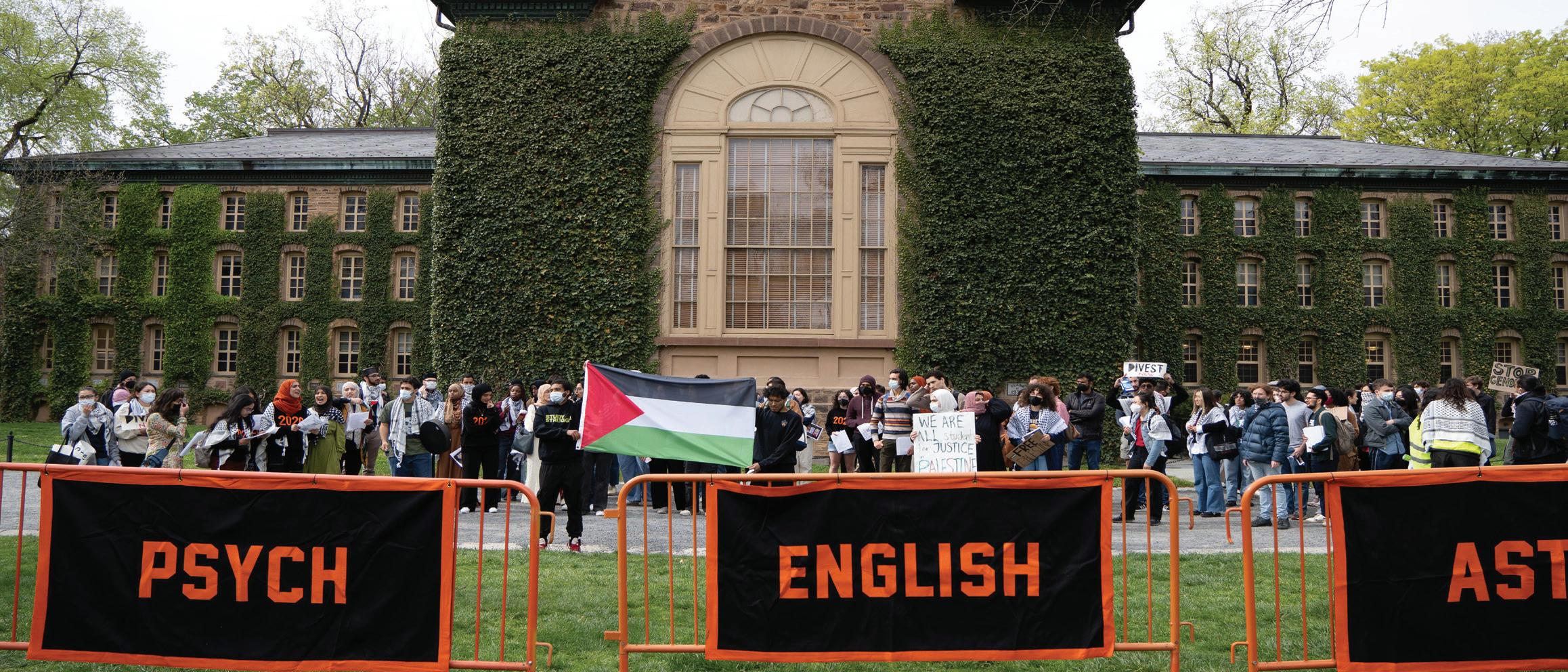
CALVIN GROVER / THE DAILY PRINCETONIAN Protesters in front of Cannon Green on Friday.
VISUAL ESSAY
In Photos: The Clio Hall Sit-in
By Calvin Kenjiro Grover, Ryland Graham, Louisa Gheorghita, and Ammaar Alam | May 3, 2024
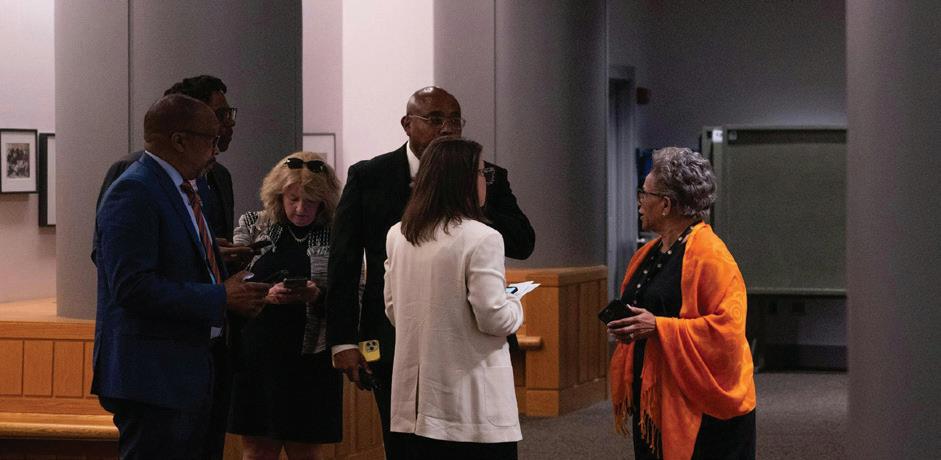
Administrators including Vice President for Campus Life Rochelle Calhoun and Assistant Vice President for Public Safety Kenneth E. Strother, Jr. react to the sit-in after leaving the CPUC meeting on April 29, 2024.
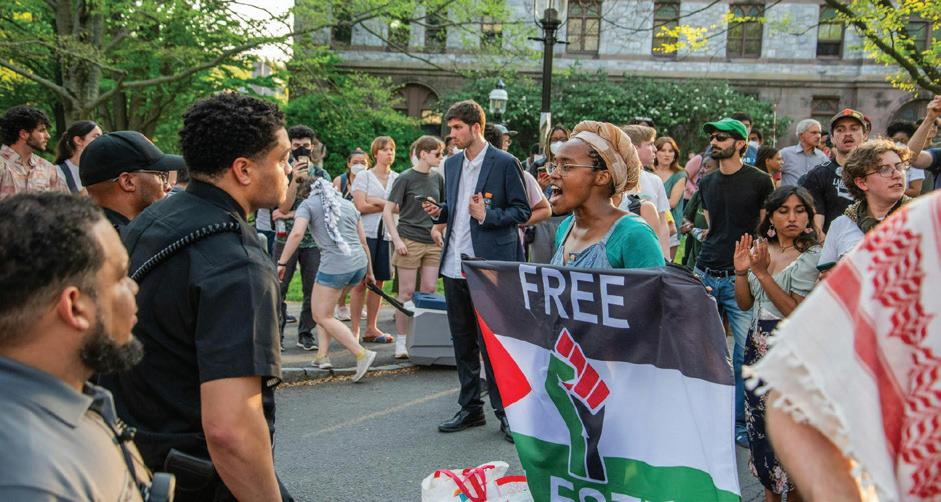
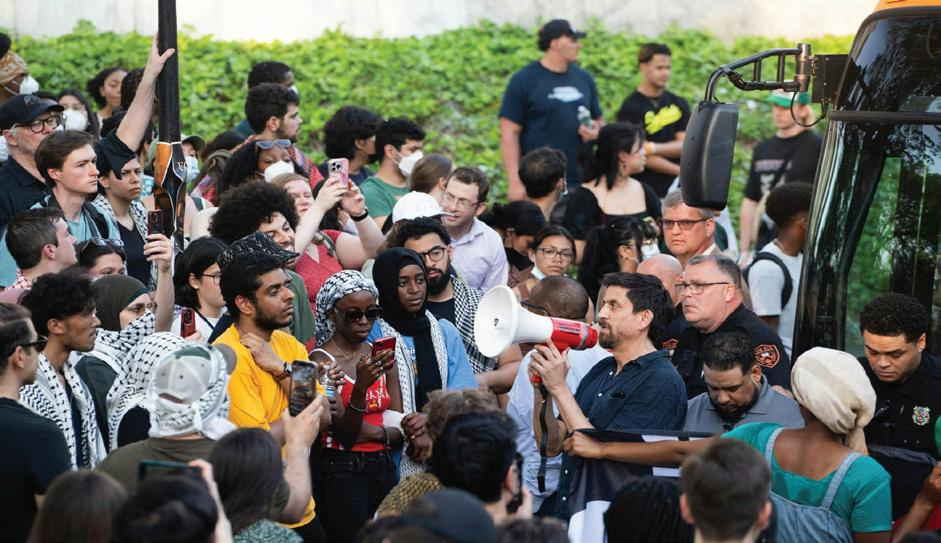


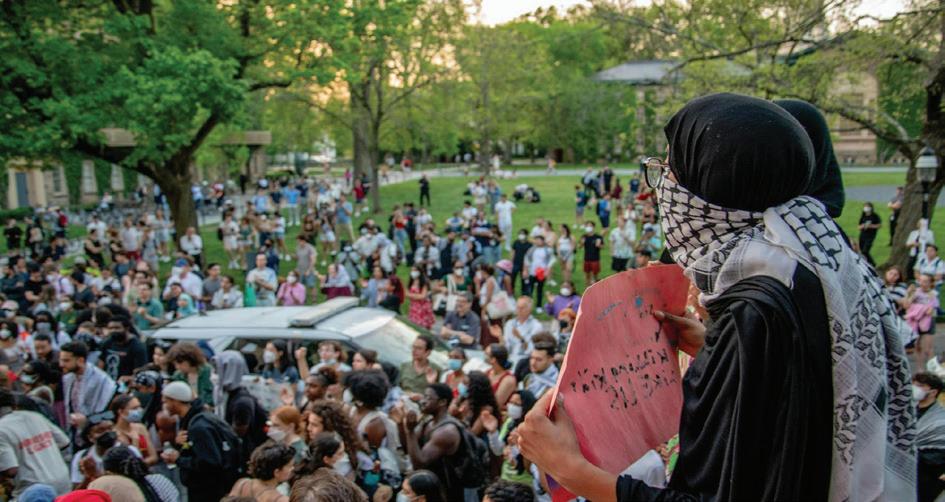
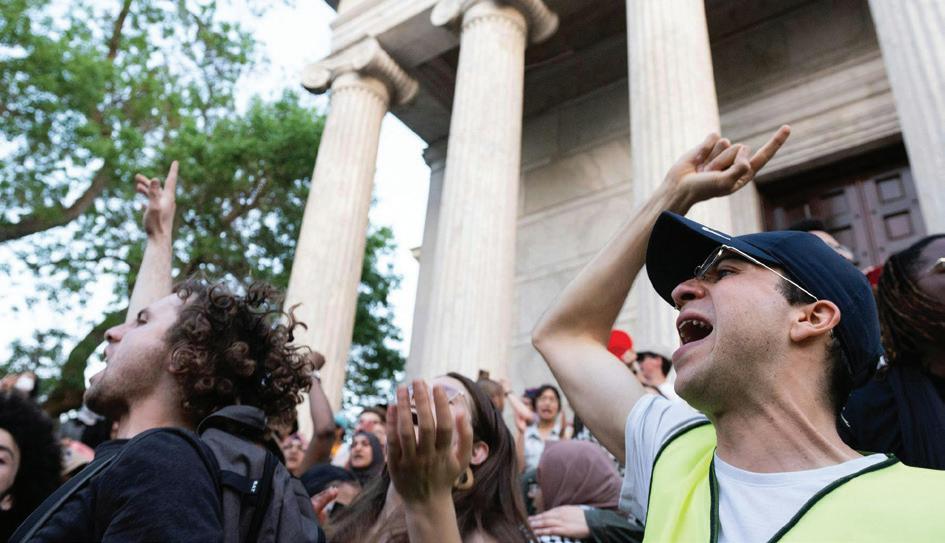
Protesters celebrate after sit-in participants were “de-arrested” according to organizers.
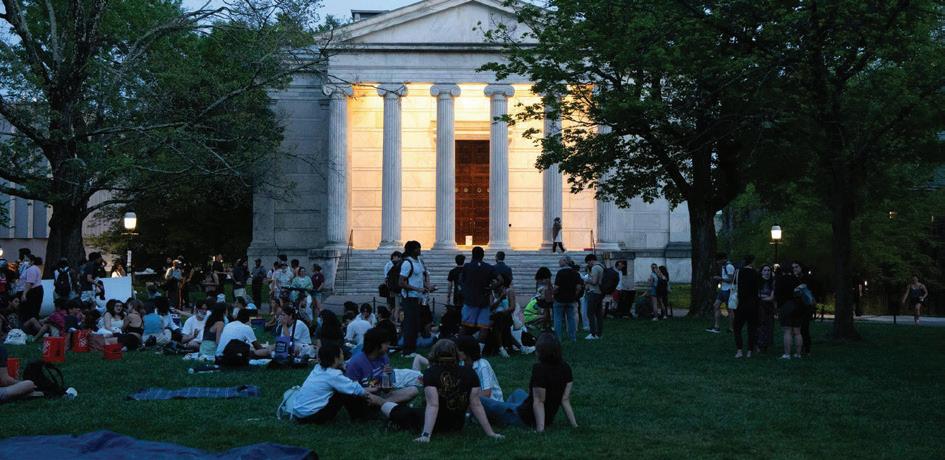
Members of Faculty for Justice in Palestine read a list of demands behind Clio Hall.
Sam Nastase, a postdoc, is arrested and led out of Clio Hall before being put on a Tiger Transit bus.
A protester faces off with PSAFE in front of the bus.
Associate Professor Max Weiss instructs the crowd to step away from the Tiger Transit bus holding two arrestees.
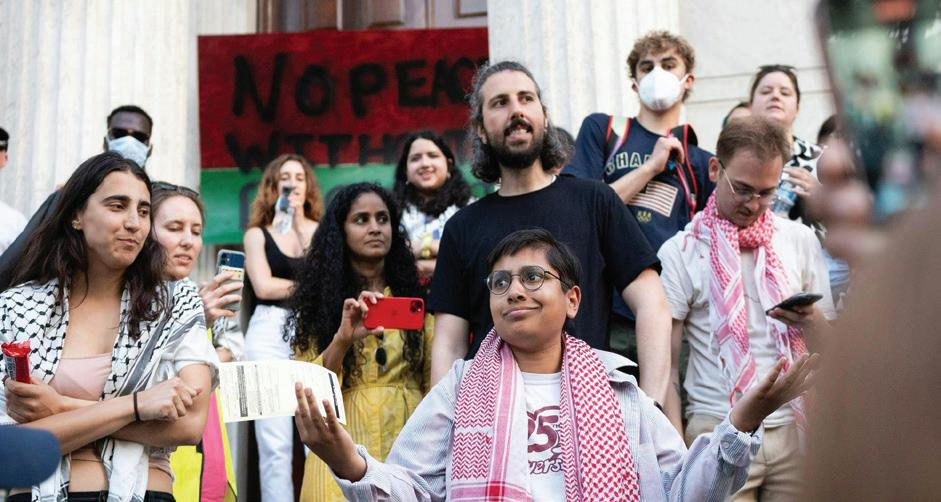
Aditi Rao GS gives a speech after exiting Clio Hall.
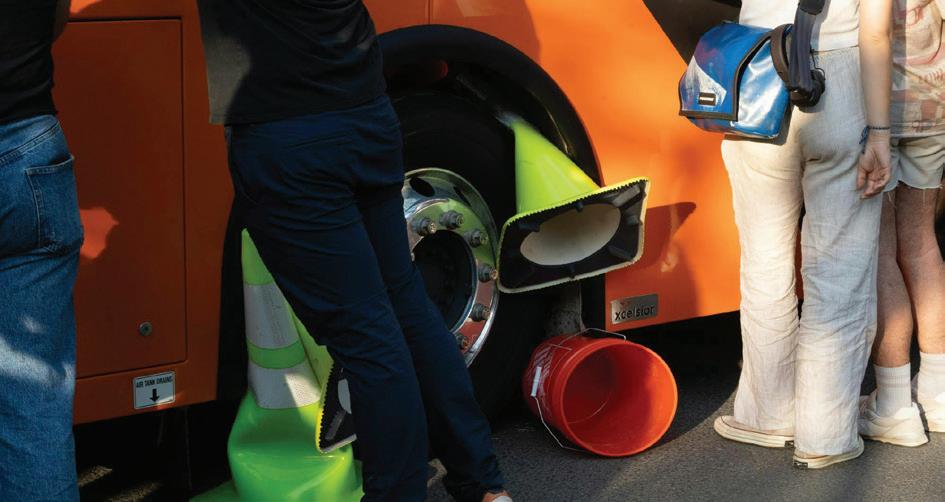
The wheels of the bus are jammed with cones and buckets.
Ariel Munczek Edelman GS gives a speech after being released from the bus.
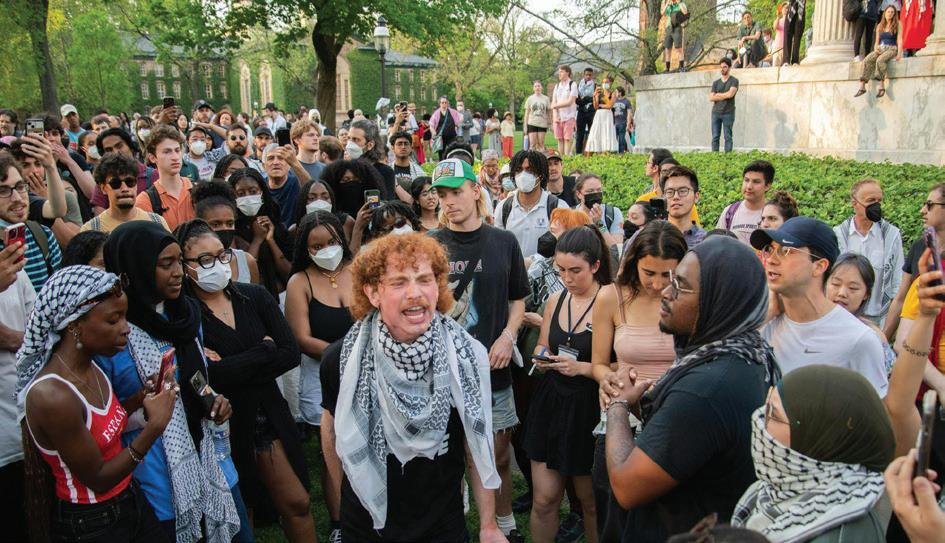
The crowd continues to swell as the sun begins to set.
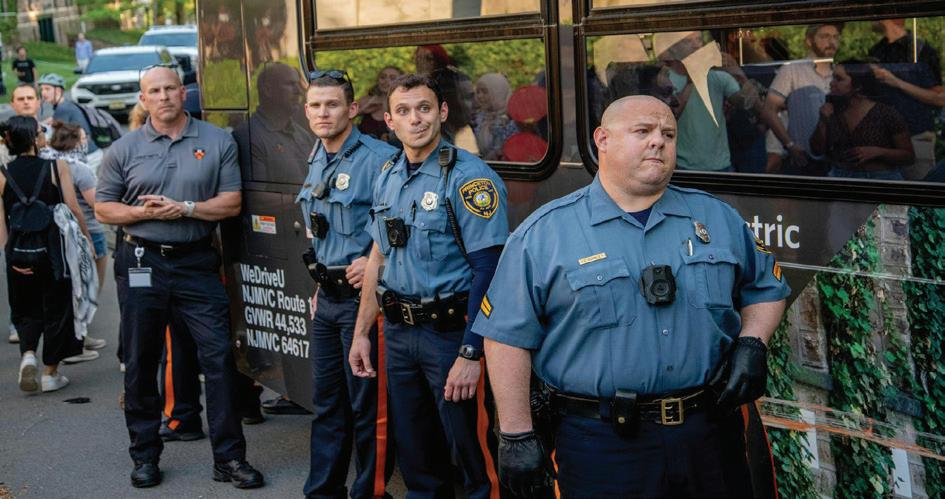
Princeton Police Department officers supported PSAFE during the sit-in.
Clio Hall stands silent after the sit-in moves to Cannon Green to set up a new encampment.
JUNIOR YEAR 2024 – 2025
The Class of 2026 entered their third year in the midst of increasing political pressure in Washington against universities. In the face of that pressure, President Eisgruber said that Princeton would not consider institutional neutrality, and would instead keep its policy of “institutional restraint.”
A red wave crashed over the United States in the 2024 presidential election, returning Donald Trump to the presidency. Afterward, students reported “despondency and shock.” Trump’s election heralded changes to come for Princ -
SEPT NEWS
Princeton President says University will not consider institutional neutrality
eton. The federal government yanked internship offerings in civic service and research before suspending more than $200 million in federal funding for Princeton research. The loss of research funding, about half of which would be restored over the summer, created “a massive vacuum of knowledge, expertise, innovation” that affected undergraduates, graduate students, and faculty researchers alike.
The Princeton community mobilized in solidarity with one another and in opposition to the fed -
NOV NEWS
Students report despondency, shock following election red wave
eral government’s actions. A May Day protest organized by Resistencia en Acción New Jersey drew more than 700 community members, including students.
By the end of the year, more budget cuts remained on the horizon. Institutions not directly affiliated with the University also underwent turmoil. Cloister Inn closed for renovations in June, leaving its members scrambling for a new home at Princeton just as the Class of 2026 settled in for their final year at their second home.
FEB OPINION
Flood the Princeton canon
MAR NEWS
Students in SINSI, other programs forced to pivot after federal government pulls internships
JUNE NEWS
Cloister Inn to pause operations for the next 2–3 years, citing “hefty renovations”
MAY
FEATURES
‘A massive vacuum of knowledge, expertise, innovation’: Researchers face uncertainties in academia and government amid funding cuts
MAY NEWS
May Day protest draws hundreds at Princeton in support of labor, immigration, and Palestine
APR NEWS
Trump administration suspends several dozen grants to Princeton
Students report despondency, shock following election red wave
By Hayk Yengibaryan
& Justus Wilhoit | November 7, 2024
In the early hours of Wednesday, Nov. 6, former President Donald Trump officially defeated Vice President Kamala Harris to become the 47th president of the United States. With Harris’s defeat, Princeton students are questioning where this leaves them and the future of America.
Polls conducted by The Daily Princetonian before and on Election Day suggested that eligible undergraduate students and community members overwhelmingly favored Harris. Despite a significant majority of Princetonians supporting Harris, the rest of the country experienced an overwhelming red shift. In a New York Times analysis, more than 90 percent of counties with complete voting results shifted toward the former president, indicating a trend of strengthened support for Trump in 2024 compared to 2020.
Vice President Harris won the state of New Jersey by only five points, compared to President Biden who won the Garden State by a staggering 15.9 points in 2020.
The ‘Prince’ spoke to multiple students who didn’t expect Trump’s victory to be called so early. In 2020, the Associated Press (AP) called the presidential race at 11:26 a.m. on Saturday of election week.
Laura Kahu ’27, from Newark, N.J., attended several watch parties on campus and learned Trump would be the likely winnner at 2 a.m. after Fox News had called the race in his favor. Her first reaction was disbelief. “I was like, no way. They made a serious mistake, of course, Fox News called it,” Kahu said.
However, after additional networks began to call the race for the former president, the
news of a second Trump presidency made Kahu feel more uneasy.
Kahu told the ‘Prince’ she was concerned about Trump’s rhetoric toward women and claimed that Harris’s gender may have influenced how voters viewed the vice president as a presidential candidate.
“This man doesn’t care for women. He doesn’t care about half of us out here. He has an agenda, and he has people who will fulfill an agenda for him, even if he’s gone,” Kahu said.
“If this was any other person, if Kamala was a white man, I think she would have won,” she added. “I think it makes people uncomfortable to see a woman — actually a black woman — at the forefront of this country.”
Francesco Agnello ’28, from Park Ridge, N.J., also noted the distinct identities of the candidates.
“When you’re considering a woman who has dedicated her whole life to public service, and you compare that to a guy who has spent his whole life in the private industry, serving the needs of him and his family, who is now a 34-count felon,“ he said, “it’s like there shouldn’t even be a competition in the first place.”
Agnello described Trump’s victory, along with a Republican-controlled Senate, a potentially Republican-controlled House, and a conservative Supreme Court as “jarring” and “disheartening.”
Maksim Zvolyak ’27, an international student from Ukraine who currently resides in Italy, echoed this sense of worry.
“This election is just devastating, because I’m scared for my family back home,” he said.
Zvolyak drew parallels between Trump and Italian Prime
Minister Giorgia Meloni, who he described as a “fascist,” noting that Meloni has faced criticism for praising Mussolini as “a good politician,” even though Meloni has recently sought to distance her party from its neo-fascist roots.
“Far-right regimes rise in Europe, and seeing the similarities between those politicians and Trump, I feel like there are definitely some aspects that could make him fascist,” Zvolyak said.
Noah LaBelle ’28 told the ‘Prince’ he felt like the Republican sweep puts the country on a path towards another four divided years, but he added, “I’d like to think that maybe we can unite under some common sense measures to try to address poverty and to help folks have a living wage in this country.”
For Aedan Fraley ’27, who is from south Florida, the rightward shift in the country came
as a surprise.
“I was definitely surprised about abortion,” Fraley said, referencing Florida’s abortion rights ballot measure that failed to meet the 60 percent threshold to pass. “It was really disappointing,” he added.
College Republicans Vice President Santhosh Nadarajah
’25 said he was more surprised at the extent of the former president’s performance compared to his electoral college victory alone.
“I’m not surprised at his victory,” Nadarajah said. “I am a little bit impressed, though, at how much he swung the swing states and also the suburbs in some blue states, in particular, in New Jersey, in New York, in Illinois, and in California.”
For Nadarajah, who is from Cerritos, Calif., this was the best campaign the former president ran out of all three of his campaigns.
“Trump and his campaign, led by Chris LaCivita and Susie Wiles, ran a very disciplined and effective campaign, much more so than his 2016 and 2020 campaigns,” Nadarajah said. “The Democrats failed to unify around a narrative, and it’s also why you saw a lot of split ticketing.”
With many Princeton students stunned by this election’s significant rightward shift, some are looking to the future.
“This is going to be very hard to accept, especially for undocumented people, immigrants, people of color, and everyone. But there’s always hope,” Zvolyak said.
“The only thing we can do is continue to try to engage in respectful dialogue with the other side to make sure … there won’t be as much divisiveness in our political dialogue,” Agnello said.
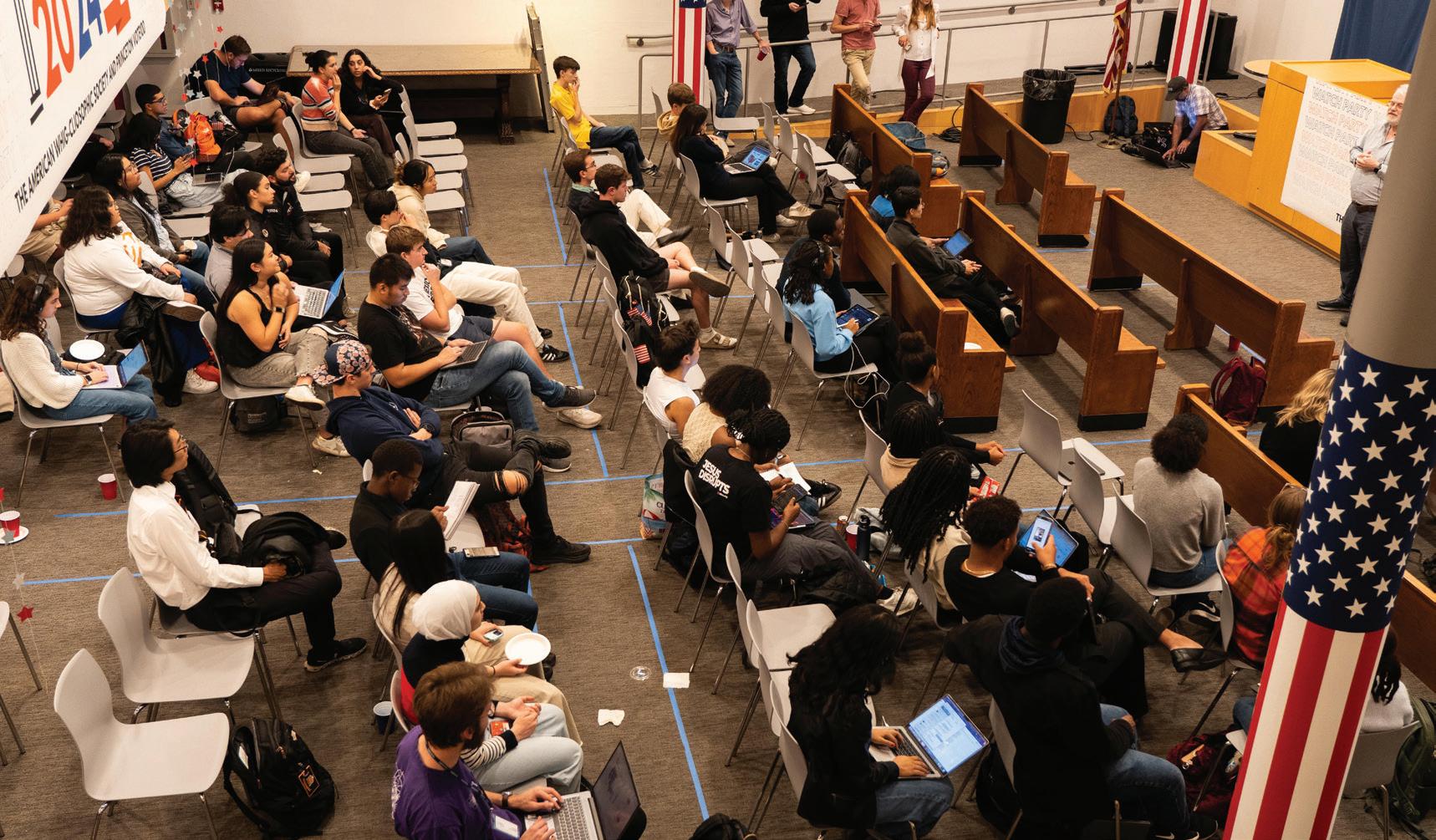
LOUISA GHEORGHITA / THE DAILY PRINCETONIAN Students gathered at a watch party in Whig Hall on election night.
May Day protest draws hundreds at Princeton in support of labor, immigration, and Palestine
By Sena Chang & Luke Grippo | May 2, 2025
Over 700 community members gathered for a “May Day” rally organized by Resistencia en Acción New Jersey on May 1, joining thousands across the globe protesting the Trump administration’s crackdowns on immigration, the war between Israel and Hamas, and diminishing worker rights. The rally was co-sponsored by Princeton Mutual Aid, American Friends Service Committee, CAIR, National Education Association, Semilla Roja, Black Lives Matter, and the People’s Organization for Progress.
Held on International Workers’ Rights Day, the protest at Princeton began at the Fountain of Freedom in front of the School of Public and International Affairs at 6 p.m. and concluded around two and a half hours later at the Witherspoon Presbyterian Church.
In a press release from April 22, Resistencia en Acción said that the some of the major demands they would be calling for at the protest were no’s to “fascism,” “exploitation of workers’ rights,” “detentions and deportations,” and “genocide.”
The crowd, which primarily consisted of people unaffiliated with the University, included members of Young Democratic Socialists of America (YDSA) Princeton, Ice Out of Princeton, and several University professors. Princeton town police were present to monitor the area.
“It was really inspiring to see community workers — Brown, Black, White — come together for International Workers Rights Day, in sync for the injustices that are happening right now,” Resistencia Director Ana Paola Pazmiño said in an interview following the rally.
Pazmiño explained that many community members are “in
fear of being detained,” especially following the imprisonment of Kilmar Abrego Garcia in an El Salvador prison after being mistakenly deported. “[Kilmar] was a union member, not a gang member, and we are fighting for him,” Pazmiño said.
“We advocated for the safety of our community members regardless of documentation status, for an end to Israel’s genocide of Palestinians, and for an end to the disproportionate police violence affecting Black and Brown communities,” Thomas Coulouras ’25, an organizer with Resistencia en Acción, wrote to The Daily Princetonian.
The protest began at 6 p.m. with speeches at the Freedom Fountain outside of Robertson Hall.
Around 6:50 p.m., the crowd began marching through campus and downtown Princeton, traveling alongside Washington Road, Nassau Street, Witherspoon Street, and Hulfish Street, circling Palmer Square Plaza.
During the march, several unidentified people in bullet-proof vests were present. Participants were also seen carrying an Antifa flag and wearing related apparel.
At approximately 7:30 p.m., the group paused on the Palmer Square lawn to hear from multiple speakers.
“We stand here to say that immigrant rights are human rights,” Lawrence Hamm ’78 said. “The struggle of the Palestinian people, the struggle of our immigrant brothers and sisters, the struggle of black people against racism in this country, and the struggle of the working class for a decent life is all one struggle.”
Calling for the abolition of Immigration Customs and Enforcement and an end to mass deportation, Hamm added, “A human being in the White House will try to criminalize them [immigrants], but I’m here to tell you the real criminals are in the White House.”
“What we must also do is what Dr. King told us, and that is to
transform his whole system from top to bottom,” Hamm concluded.
Jordan Lewis, district director for Rep. Bonnie Watson Coleman, addressed the crowd, sharing that the representative is currently in Washington, D.C. fighting “tooth and nail” for immigrant rights.
“Don’t just stop in New Jersey. Reach out to Florida. Reach out to every state that you know someone and get them involved, whether it’s making a phone call, sending letters. We are here for you, from your senator to your Congress member to your councilmember. But we’re here for working people that just want to make it to the next day,” Lewis said.
Also among the speakers was Mahmoud Desouky, who is running for the New Jersey State Assembly LD-16, who urged the crowd to support the Immigration Trust Act.
In an interview with the ‘Prince’ after the event, Paulo
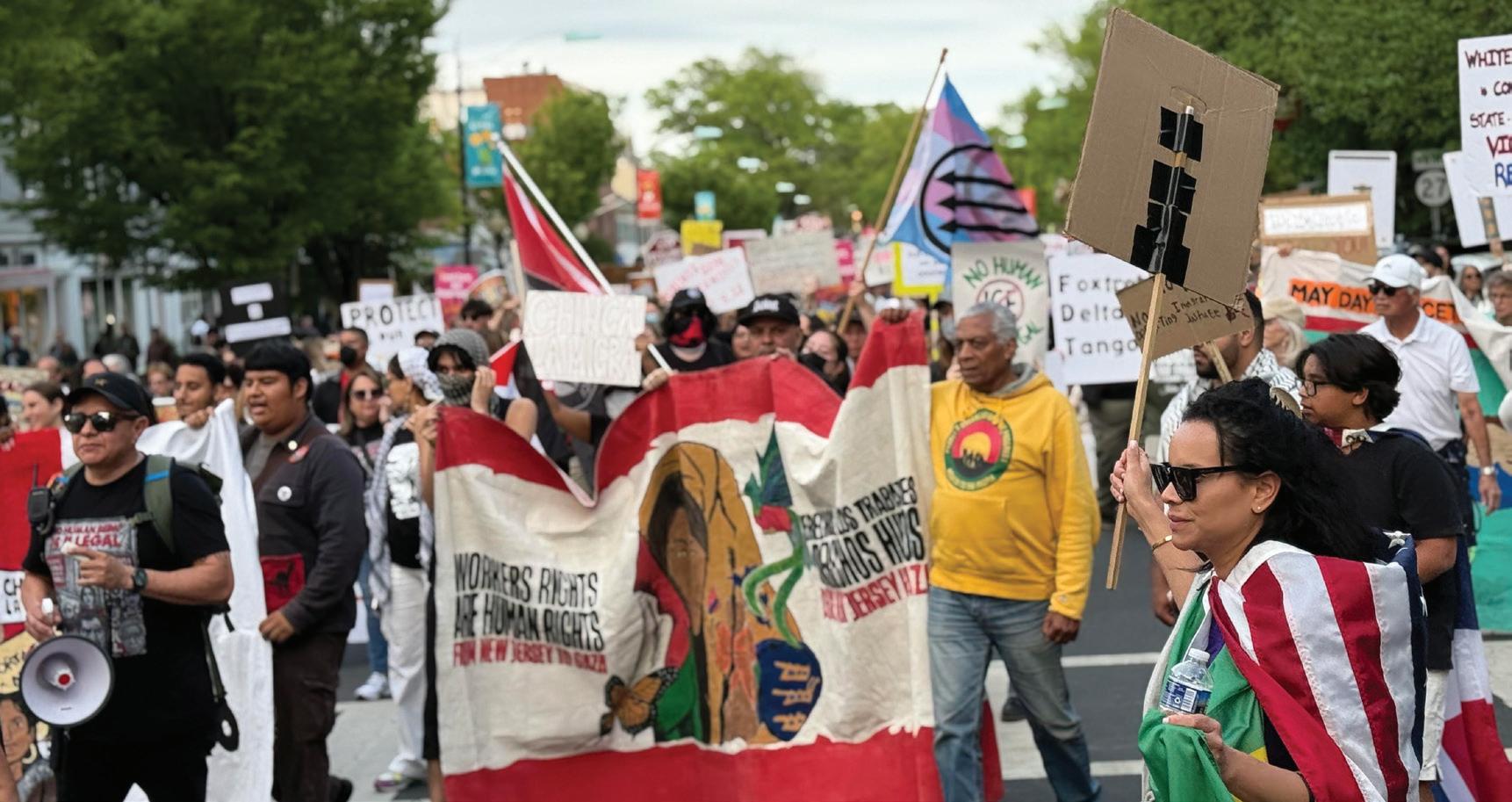
Almiron, a community member, expressed concern about the current presidential administration’s treatment of immigrants.
“If we assume that in past years, that previous administrations have been treating undocumented immigrants and low-income workers like garbage, now we can say for sure that they are treating them like sub-humans in this administration,” Almiron said. “The proof of it, probably the biggest one of them all, is the lack of due process and in deporting people who have no proof of being criminals, like Kilmar Abrego Garcia.”
When asked about the identity of the crowd members present who were wearing bulletproof vests, Almiron said that he “didn’t know anything about that.”
Almiron also shared with the ‘Prince’ that approximately 500–800 posters had been torn off of various places on Princeton’s campus while they were trying to advertise the event. “When we were posting our flyers for the event, we had on three occasions people ripping a lot of them off prior to the event, as if they wanted to send a message.”
“We planned this about a month in advance, but every time they took them down, we persisted. And then we kept hanging out posters. They took them down, we kept hanging up. Didn’t matter. We ended up keeping ours up at the end,” Almiron explained.
There was also a cultural convening at the Witherspoon Street Presbyterian Church following the rally, which featured protest music and a dance group from Ecuador.
Pazmino shared that the protest is “just the beginning.”
“What I’m saying is one hundred days of resistance, and we [will] keep going.”
‘A massive vacuum of knowledge, expertise, innovation’: Researchers face uncertainties in academia
and government amid funding cuts
By Maya Chu | May 4, 2025
In high school, Rishika Porandla ’28 completed seven part-time internships at NASA.
She is supposed to be on a path to full-time employment at NASA after college graduation through the Pathways Program, a federal initiative designed to provide students with paid work experience and a potential pathway into full-time roles within the government. Now, however, this guarantee is uncertain.
“New positions have not been opened for this year, and no official statement has been made about it,” Porandla said. “It just puts the future very up in the air, because we think we get job security with this Pathways Program, but we may not.”
In light of waning federal support for research at the University and various government agencies, early-career researchers at every level are facing fewer opportunities and growing uncertainty. As funding cuts mount, some students and postdocs are reconsidering careers in academia and government.
Porandla is a prospective astrophysics major and an undergraduate researcher at the Princeton Space Physics Lab. One project she hopes to contribute to is to the Nancy Grace Roman Space Telescope, a NASA-led mission focused on dark energy, exoplanets, and infrared astrophysics. However, with over 50 percent of NASA’s science funding in jeopardy under President Trump’s proposed budget for fiscal year 2026, the future of the mission is unpredictable.
“You have these big dreams — ‘I want to work here in this office, on this mission’ — but everything is so volatile,” Porandla said.
Amid the federal funding instability, Porandla also faced challenges in securing research opportunities for this summer. She applied to a National Science Foundation (NSF)-funded program called Research Experiences for Undergraduates (REU), which supports students working on research projects at a host institution over the summer. But after submitting applications to five REUs, Porandla received emails from Vanderbilt University, University of Texas-Austin, and Cornell University that those programs were canceled for the summer.
“It’s kind of disheartening to put so much effort into the applications and not get that return,” Porandla said.
According to Inside Higher Ed, at least a dozen REUs were canceled this year due to funding cuts, with project leads getting rejections on their proposals or simply not hearing back at all from the NSF. Porandla says this has widespread implications for many students interested in research, some of who are now
resorting to unpaid internships and missing out on the paid research experience REUs ordinarily provide. This especially impacts historically underrepresented groups, which the program tends to target.
“REUs operate on DEI; they operate on giving minority groups opportunities, and that’s an underlying layer that I think is being ignored right now,” Porandla explained.
Brian Mhando ’26, an Ecology and Evolutionary Biology major, faced a similar situation to Porandla, with his “dream” summer internship being canceled due to federal funding cuts and staff restructuring from the Department of Government Efficiency (DOGE).
“It was a very scary situation at first because I rejected a few internships at that point,” Mhando said. “[By then], all of the really good internships had gone.”
Later, Mhando secured a new internship with the Rakai Health Sciences Program, where he’ll conduct research on HIV and gonorrhea resistance. The program is sponsored by the School of Public Health at Johns Hopkins University, where Mhando was supposed to complete his internship — however, he was sent to the lab in Uganda due to federal funding cuts.
“I always thought the relationship between the government and universities was something that we don’t touch,” Mhando said. “Funding cuts made me realize how vulnerable that relationship is.”
Instability to university funding also has implications for graduate school admissions, according to Aryan Gupta ’27, a student in the Astrophysics department. In an already competitive process, Gupta expressed his feeling that limited funding opportunities mean he has to work even harder in order to stand out.
“Personally I very much want to go to grad school; that’s my dream,” Gupta said. “It might be much harder for me to get into grad school than it was for me to get into Princeton.”
For those already in graduate school, waning federal support for research is creating uncertainty about their future work.
“It’s the trickle-down effect of everything that’s going on with the partnership, but also the anticipated attacks to the program that is causing all this anguish,” said a graduate student in the Geophysical Fluid Dynamics Laboratory (GFDL), who chose to remain anonymous.
The GFDL is a research center operated by the National Oceanic and Atmospheric Administration (NOAA) in partnership with the University. Tucked a few miles southeast from campus, the lab advanc-
es climate research through Earth system models and computer simulations. Despite being home to Syukuro Manabe — the 2021 Nobel Prize winner in Physics — and the birthplace of the first general circulation climate model, the GFDL’s future now sits on shaky ground due to funding cuts.
For one postdoctoral researcher at the GFDL, who also chose to stay anonymous, the path forward is becoming increasingly unstable. He had once envisioned a clear future at the lab grounded in exceptional research, but his plans have now been derailed.
“My plan, and I think the plan of the lab, was to try and find a place for me to become a permanent employee after the two years ended. But now, that’s not happening anymore,” the postdoc said.
In addition to a $210 million pause on federal funding due to alleged antisemitism, the University also faces a $4 million cut from climate research, with the Trump administration aiming to reduce what it labels “climate anxiety.” The administration is also proposing an over 25 percent cut to NOAA funding, with a 75 percent slash to the Office of Oceanic and Atmospheric Research (OAR), which runs the GFDL.
Although the Princeton funding cuts are not directly tied to the GFDL, there remains uncertainty about the lab’s future. The postdoc had originally planned to stay in academia by pursuing federal employment at the GFDL, but with funding risks and a federal hiring freeze, he began searching for university faculty roles instead.
The anonymous postdoc further noted that most faculty searches have been paused. “Universities like Princeton aren’t hiring anymore because they’re scared of what’s going to happen,” he explained. “I didn’t get any professor offers this year because of that.”
In March, the University announced it would freeze most faculty and staff hiring due to federal funding and endowment tax uncertainty. Many peer institutions, including Harvard and the University of Pennsylvania, have done the same. For the postdoc, even another postdoctoral contract has been difficult to secure, with universities lacking stable funding to bring on new researchers.
“I know there are tons of postdocs who just struck out on the job market this year,” the postdoc said. “There’s a lot of people looking for ways to survive the next couple of years in academia, and I think a lot of people are just going to leave.”
For Glen Chua, who received a Ph.D. in Atmospheric and Oceanic Sciences from Princeton in
2025, the unreliability of federally-funded research is prompting him to explore other paths. He is currently a NASA Postdoctoral Program (NPP) Fellow and worries about the impact that funding cuts may have at this point in his career.
Chua expressed that his early-career years are critical in establishing himself in research because each postdoctoral contract is so short. “It’s very hard to focus on your work when you’re trying to think, ‘Should I be looking out for myself in some way?’”
Chua said. “It’s unclear whether I should be starting to look for a job or other opportunities.”
With research and federal employment opportunities increasingly at risk, Chua is now considering his last resort: entering the private sector.
“The job market in academia has always been very difficult, but now increasingly so. As much as I may not want to directly jump into the private sector, I’ve always been aware that it might eventually be something I need to do,” Chua said. “All this has accelerated that.”
Christine Blackshaw, a fourth-year Civil Environmental Engineering graduate student working in the Hurricane Hazards and Risk Analysis group, shares this sentiment.
“The only other pathway forward to stay within climate [studies] is industry,” Blackshaw said.
However, the private sector may not always offer researchers the opportunity to pursue what they’re interested in. The anonymous postdoc, for instance, says his work is less likely to align with corporate priorities.
“Most of my work isn’t directly applicable to what the private sector is interested in,” he said. “It’s a little bit more theoretical, [but] I want to do the kind of stuff that I find interesting.” For this reason, he is leaning toward staying in academia.
While Mhando understands the motive for entering the private sector, he aims to dedicate his career to service — something he feels he won’t accomplish working in industry.
“I understand the value of having a Princeton degree and where that can take you financially, but I feel like that would be disingenuous if I gave up on my dreams of helping people just because of one bad government,” Mhando said. “I’ve always wanted to help people, and I don’t think the private sector is where that happens.”
On a broader scale, the shift toward privatizing key areas of research brings its own set of challenges. For Blackshaw, ensuring public access to information is among the most pressing.
“Not all private companies [are this way], but in general, if you privatize climate research and climate modeling, that means access to that type of critical life-saving information and data is going to become significantly reduced,” Blackshaw said.
The postdoc agrees, adding that privatized research is not always conducive to the most effective scientific inquiry.
“The motive isn’t there to get the best answer, [but] an answer that someone pays for,” the postdoc said. “The investment needed to really answer climate science questions has to come from the federal government, or somewhere where you’re not beholden to the profit motive.”
For early-career researchers, the combined uncertainty around funding, academic jobs, and access to open data has led to a growing sense of disillusionment. Some are beginning to look beyond borders for more stable opportunities, raising fears of a long-term talent drain in American science. In a poll conducted by Nature, over 75 percent of scientists who responded are considering leaving the United States following funding disruptions.
“As someone who’s quite an early-career scientist, I’m really afraid that a lot of the talent, a lot of the leading scientists, are going to go somewhere else,” the GFDL grad student said. “That will leave behind a massive vacuum of knowledge, expertise, and innovation that scares me, because I’m not sure who’s going to be left to fill that hole.”
Gupta, though still an undergraduate, agreed that the lack of funding may encourage astronomers to think about industry-oriented roles or developing skill sets applicable to fields outside of astronomy. To this end, he is currently planning to minor in Statistics and Machine Learning.
“If astro doesn’t work out, at least I have a little bit of a statistical background to get a data science job,” Gupta explained. “I’m picking projects in astronomy that are a little more translatable to the private sector.”
While funding could eventually be restored, the impact of these cuts could extend past Trump’s time in office. Some researchers worry that the long-term damage to scientific institutions and processes may be more difficult to reverse. The postdoc explained that, for the GFDL, research relies on a continuous transfer of knowledge between generations of scientists.
“If suddenly everything gets gutted and you have to start from the ground up, I think that would just be almost impossibly hard,” the postdoc said. “You definitely can’t get that back in four years.”
Cloister Inn to pause operations for the next 2–3 years, citing “hefty renovations”
By Justus Wilhoit | June 16, 2025
Cloister Inn, one of Princeton’s eating clubs, will pause operations for the next two to three years, citing “hefty renovations” to the club’s house as the reason for the abrupt change. The move, which was announced to undergraduate members on Friday, came as a shock to officers and members alike and follows just 18 months after the club had to resort to an aggressive alumni fundraising campaign to keep its doors open.
An official statement from the club’s Board of Trustees to alumni said that upgrading the facility is necessary to remain competitive on Prospect Street, especially as more students express interest in taking part in Street Week.
“As Board members, we have heard consistent feedback from alumni and students — Cloister must upgrade its facilities and image to provide an experience that is attractive to today’s Princeton students,” the statement read.
In the email to current members, the club’s undergraduate officers expressed disappointment.
“We understand (and are just as shocked as you all are) that this will cause considerable chaos as you sort out your dining plan for next year,” they wrote, hinting that the decision may have come as suddenly to them as it did to the wider membership. They added that they themselves were still figuring out where to live for the coming year.
“I really didn’t see it coming, and I thought it was a really extreme measure,” said Cloister member Aidan Wang ’27.
Wang hopes to join another club in the fall, and while he is optimistic about how the other clubs will accommodate Cloister members, he wished the club had given members more advanced warning.
“If a shutdown was indeed necessary, give us at least a semester’s warning first before shutting down, so we could have time to figure out and plan what our next move is going to be,” Wang said.
Quadrangle Club and Colonial Club have officially pledged to accept any Cloister member who wishes to join, according to a separate statement sent out by the board to student members Friday night. Apart from Cloister, these were the only clubs without a waitlist to join at the end of Street Week in the spring.
open, Jackman explained that the club has not had a major renovation since the 1980s. He noted that major infrastructure work, especially in the kitchen, library, and dining spaces, would be too disruptive to continue normal activities.
Jackman said that the renovations would include changes to the kitchen, library, and dining spaces, but it appears that many details still need to be sorted out. In a message to the club’s alumni on Friday, Jackman said a team of alums would “develop the vision
“Once that construction starts, the only alternative would have been to spread it out over multiple summers, and we didn’t want to wait that long,” he added.
In addition to the call for renovations, Jackman also cited the club’s low membership in recent years.
“Since COVID, the annual membership of the club has been under 50 students, and we expect this trend to continue,” the Board of Trustees said in a statement to alumni.
“[Low membership is] a sign,
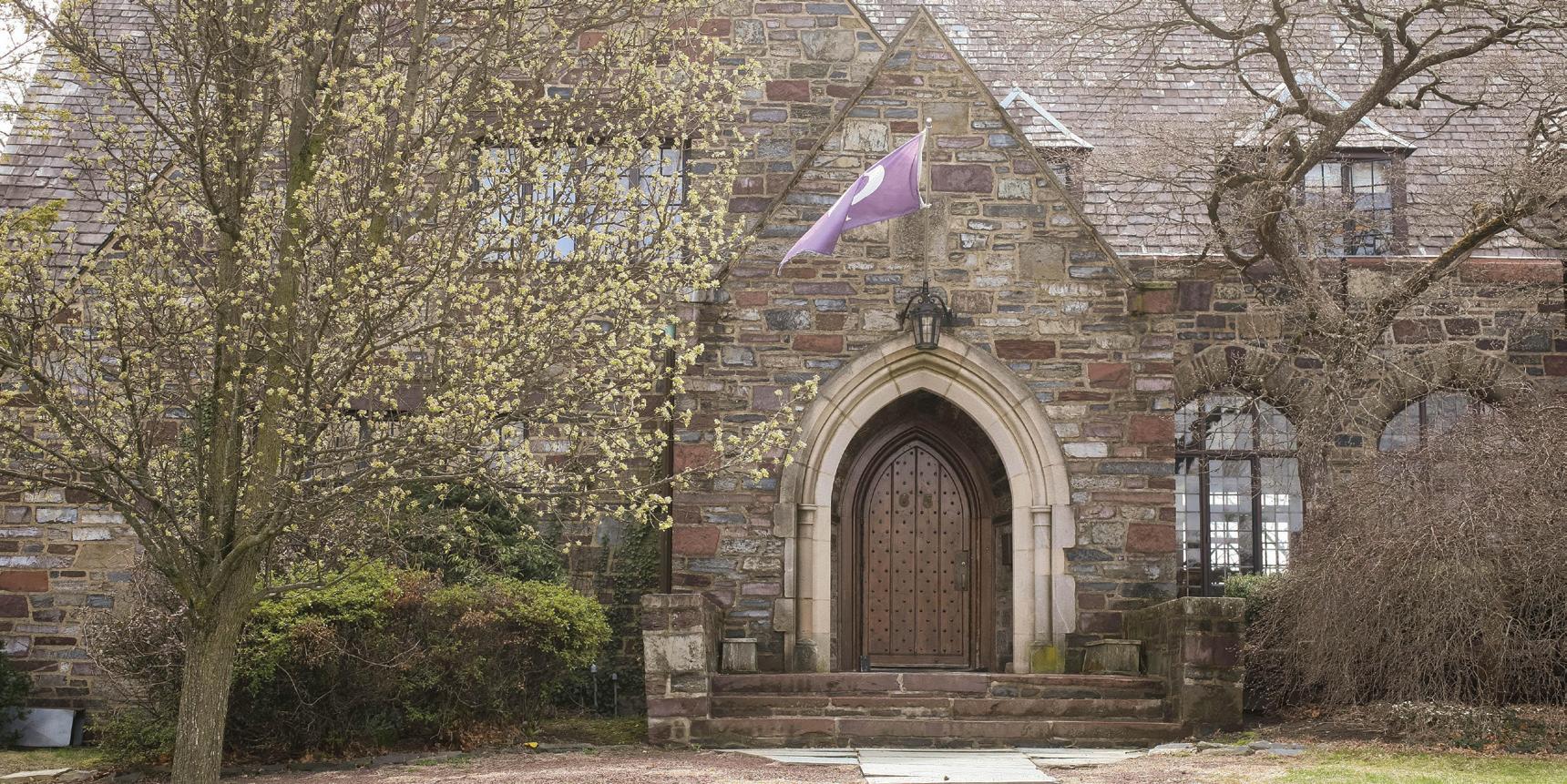
Mike Jackman ’92, Chairman of the Board of Trustees told The Daily Princetonian in an interview that there are ongoing conversations with other clubs to make space for Cloister members, but he did not explicitly mention which additional clubs.
When asked why the club chose to pause operations entirely, unlike Charter Club and Cannon Dial Elm, which have undergone or are undergoing renovations while remaining
as well as the execution plan and investment required” over the next six months.
Still, Jackman said that the temporary closure is necessary due to the disruptions it would bring to members.
“The resulting disruption to undergraduate activity would be too severe to be able to provide student members the experience they deserve if we were to operate during the renovation,” Jackman said.
at least to me, that what we’re offering at Cloister is not meeting the needs of enough kids on the campus,” Jackman added in an interview.
During the 2023–24 school year, Cloister’s membership was split between the Classes of 2024 and 2025, with 20 members in the former and 21 members in the latter. Three members were graduate students or associate research scholars.
Cloister has a long history of
near-closures. In 1972, Cloister temporarily closed due to lack of membership and became an alternate dining facility for undergraduates and an alumni center until 1977. In 1985, Cloister recruited only 11 new members during its sign-in period, causing it to nearly close. In 1994, Cloister undertook a “takeover” by sophomores which helped rescue its declining membership. In 2023, Cloister asked alumni to raise $250,000 in order to avoid closure. Club leadership hoped to pursue another “takeover” that ultimately did not take place. In the absence of member dues, Cloister has secured baseline funding for the renovations from an “entity friendly to the club” that Jackman was unwilling to disclose. Alumni have also been called upon to help fundraise.
Jackman confirmed to the ‘Prince’ that this decision was made at the club’s Board of Trustees meeting on June 4 and student members and alumni were all notified on Friday.
While Jackman acknowledged the disappointment felt by students, he expressed optimism about the opportunity to rebuild from the ground up. With no returning members when the club reopens, he sees a chance to reimagine the club’s identity.
“I think we’ll see some other members of other clubs probably get involved, because a strong club system helps all the clubs, and helps Princeton students, and really helps Princeton,” he said.
“We have to think about how students want to join a club, what kind of environment they’re looking for, and how to create that vibe. This is a very exciting project, and one that’s going to pay off for future Cloister members,” Jackman added.
ANNIE RUPERTUS / THE DAILY PRINCETONIAN Cloister Inn.
SENIOR YEAR 2025 – 2026
During the summer, Congress passed H.R. 1, an omnibus reconciliation package. The bill included an eight percent endowment tax for universities with large endowments and “more than 3,000 tuition-paying students,” and would have been levied against Princeton. The University responded by boosting financial aid instead, reducing the number of tuition-paying students to avoid the tax and save hundreds of millions of dollars.
The 25-year relationship between Princeton and fossil fuel giant BP ended just after the start
JULY
OPINION
Could Princeton avoid the endowment tax by expanding financial aid?
AUG NEWS
Princeton boosts financial aid despite potential budget cuts, new endowment tax
of the academic year. Budget cuts took a toll on free food, merchandise, and events in addition to research and student employment. Generative AI use became increasingly common, forcing professors across disciplines to adapt. Major changes were made to campus dining through the elimination of the independent meal option, eliciting opposition from alumni and eating clubs.
Graduate student cohort sizes were reduced, the new Princeton University Art Museum opened to the public, and the University cut employee benefits and reduced the amount employ-
SEPT NEWS
Princeton and BP agree to end 25year funding for Carbon Mitigation Initiative
ees would receive in raises. Women’s basketball coach Carla Berube left for Northwestern after six successful seasons.
The Class of 2026 leaves behind a Princeton still metamorphosizing. In the coming years, Hobson College will open, funding cuts will continue to affect research, exams will begin to be proctored, students will be less able to cook for themselves, and Princeton will change course from “growth” to “focus.” Perhaps Princeton will continue to improve for future generations — or perhaps the Class of 2026, Princeton’s largest ever, had it all.
SEPT NEWS
Student-facing budget cuts mainly impact free food, merch, and events, top administrators say
OCT NEWS
The future of humanities teaching in the AI age, according to Princeton
OCT NEWS
Alumni and eating clubs initiate dining plan opposition at Princeton-Harvard game
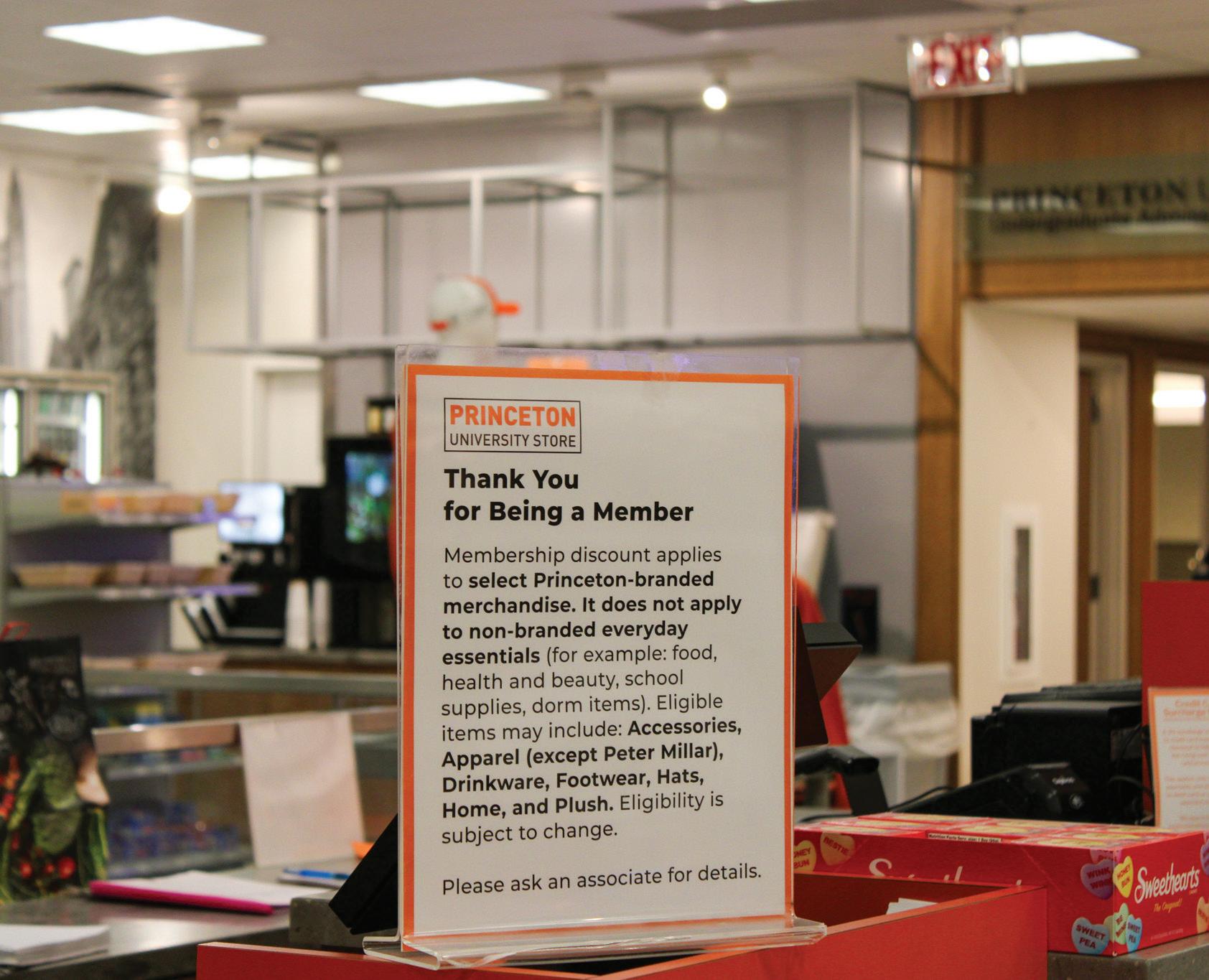
MAY
Senior Survey
FEB NEWS
U. to cut employee benefits following raise reductions, eliciting mixed reactions
APR SPORTS
NOV
NEWS
Most grad student cohorts will see reductions this cycle, but departments won’t say how many
VISUAL ESSAY
The Princeton University Art Museum, In Photos
The Carla Berube era at Princeton
Could Princeton avoid the endowment tax by expanding financial aid?
By Isaac Barsoum | July 15, 2025
On July 4, President Trump signed a budget reconciliation bill that has been cited as “the largest upward transfer of wealth in American history.” It is, unsurprisingly, a tax cut for the wealthy paid for mostly by cuts to existing programs, including Medicaid, clean energy tax credits, and food stamps.
And 8 percent of Princeton’s endowment returns, every year.
That’s from a massive increase to the existing tax on university endowment returns tucked into the omnibus legislation. Considering the 9.2 percent average endowment return over the past 10 years, the new tax could cost Princeton a fortune.
Because certain types of investment returns are exempt from tax-
what Princeton’s financial burden would be exactly, and a University spokesperson declined to provide the amount Princeton currently pays on the 1.4 percent tax.
However, the president of Yale University, which will also be hit by the higher tax, has estimated that it would cost Yale $280 million in just its first year. (Princeton’s endowment in 2024 was about $34.1 billion, while Yale’s was slightly bigger, at about $41.4 billion.) And the American Enterprise Institute (AEI) has estimated Princeton’s tax liability for 2026 at $217.4 million.
University President Christopher Eisgruber ’83 has warned that increasing the endowment tax would be devastating for the University. In his State of the Uni-
aid, research programs, and other University initiatives.
According to the legislation, institutions will have to pay 8 percent on endowment returns if they have “at least 3,000 tuition-paying students” and “a student adjusted endowment in excess of $2,000,000.”
Princeton checks all the boxes. So, we have to pay. Right? Actually, maybe not. Instead, Princeton could not only preserve its financial aid programs, but expand them — and potentially render itself exempt from taxation under the new law. By reducing the number of “tuition-paying students” to 2,999 or less, Princeton would become exempt from the tax. (But don’t worry, dear reader, you aren’t getting expelled.)
under $125,000. That means their expected family contributions are generally less than the cost of tuition, according to Princeton’s own estimates of expected family contributions. While there are students whose households earn more than that and still don’t pay tuition, this estimate gives us about 3,450 tuition-paying undergraduates.
Princeton’s Ph.D. students receive full tuition as long as they are progressing through their degree at a reasonable pace. Master’s students in the School of Public and International Affairs also receive full funding. Based on the University’s enrollment data, that leaves at most 400 graduate students who would have to pay some amount of tuition (with many of them receiving some form of aid along the way). Princeton is different in this way: It lacks a law school, medical school, or other large pre-professional graduate programs.
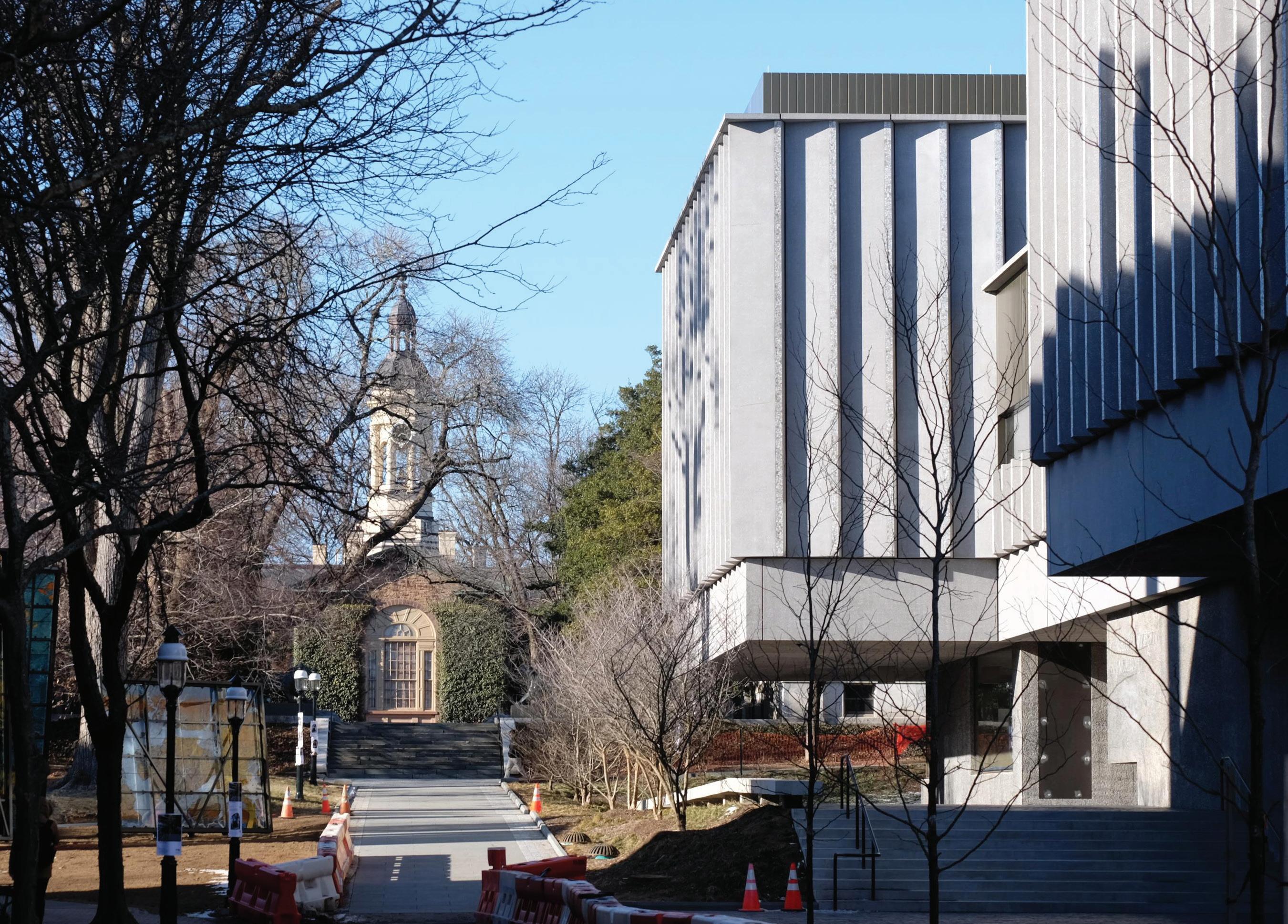
This all means that by expanding financial aid for about 850 undergraduate students, Princeton could put itself below the small-college threshold for the tax. Since these students already receive partial aid, bumping them up to the $65,210 line would not necessarily be too expensive. Even if those students hypothetically receive no financial aid at all, the maximum price tag would be about $60 million.
But it’s probably less than that. Based on survey data from the ‘Prince,’ there are far more than 850 undergraduates with household incomes between $125,000 and $250,000, meaning their current cost of attendance is around $37,500 or less. To bring each one below the tuition-paying threshold would cost about $12,000 per student — for a total cost of just over $10 million.
The University would also likely need to stop accepting external scholarship money for students, as
this makes them “tuition-paying” in the eyes of the law — something that would become perhaps just another idiosyncrasy of going to Princeton.
There are a lot of uncertainties here, and these are all back-of-theenvelope estimates. It’s not clear exactly what our true endowment tax burden would be, as there are lots of ways for Princeton to shelter its money from taxes. However, tax sheltering could mean that “fewer resources would be available to students, especially those who would benefit the most from support,” as the Tax Policy Center notes.
Expanding financial aid would achieve the opposite effect, expanding support and increasing available resources. And if Princeton’s tax liability is anything near the $217.4 million figure estimated by AEI (or even a tenth of that), increasing financial aid could be a bargain in comparison.
In 2017, powerful Republicans associated with the endowment tax passed that year said that it was intended to encourage universities to use endowment funds to make college more affordable. This year, the current chairman of the House Ways and Means Committee justified the increased tax as a way to hold “elite, woke universities and nonprofits accountable.” But it won’t accomplish that. Instead, it could force universities to cut important programs in order to pay the tax that will redistribute wealth to America’s most elite class.
It may finally be in Princeton’s financial interest to do what’s right for its present and future students. With this poisonous legislation comes a potential antidote that can simultaneously improve the outcomes of the student body and the longevity of the university. If the numbers line up, it’s a no-brainer. Expand financial aid — it’s what this moment demands.
MC MCCOY / THE DAILY PRINCETONIAN Path on the west side of the Art Museum leading to Nassau Hall.
NEWS Princeton boosts financial aid despite potential budget cuts, new endowment tax
By Devon Rudolph | August 11, 2025
Princeton announced Thursday that most students with families making up to $150,000 a year will pay nothing to attend for the upcoming school year as part of the most significant expansion of financial aid since 2023.
Most undergraduates with families earning up to $250,000 a year will not pay tuition as part of $327 million in financial aid spending, a $44 million increase from last year.
Previously, the annual family income threshold to receive full financial aid was $100,000.
The financial aid increase for a program already known as one of the most genewrous in the country comes amid a rocky financial picture for many elite universities, which are confronting the loss of research federal funding and an endowment tax passed by Congress in July. In May, Princeton asked departments to prepare for budget cuts of 5 to 10 percent and acknowledged the potential of layoffs.
The financial aid increase could also reduce Princeton’s tuition-paying student population as the University faces down an 8 percent endowment tax as part of the One Big Beautiful Bill Act. The bill exempts educational institutions with fewer than 3,000 tuition-paying students from the endowment tax and is scheduled to take effect in 2026.
According to the annual Frosh Survey conducted by the ‘Prince,’ about 69 percent of students in the class of 2028, 65 percent for the class of 2027, and 63 percent for the class of 2026 came from households making under $250,000. All PhD students, as well as masters’ students in the School of Public and International Affairs, pay no tuition. Other master’s programs have alternative aid options and have comparatively lower enrollment (around 200 last school year).
The University declined to comment on the number of tuition-paying students at Princeton.
The announcement made by the University calls its financial aid program “one of the most generous in the country.”
“Through our increased investment in financial aid, we are making the transformative experience of a Princeton education more affordable for more students than ever,” said Provost Jennifer Rexford ’91 in the announcement.
The announcement also acknowledged the alumni and other donors who contribute to the University’s ability to have a strong aid program. It does not, however, reference the increase on the tax on endowment, whose payouts cover about 70 percent of the financial aid budget.
In a press release announcing the expanded program, the University also said that Pell Grant recipients accounted for the 25 percent of the incoming Class of 2029, the highest percentage in Princeton’s history.

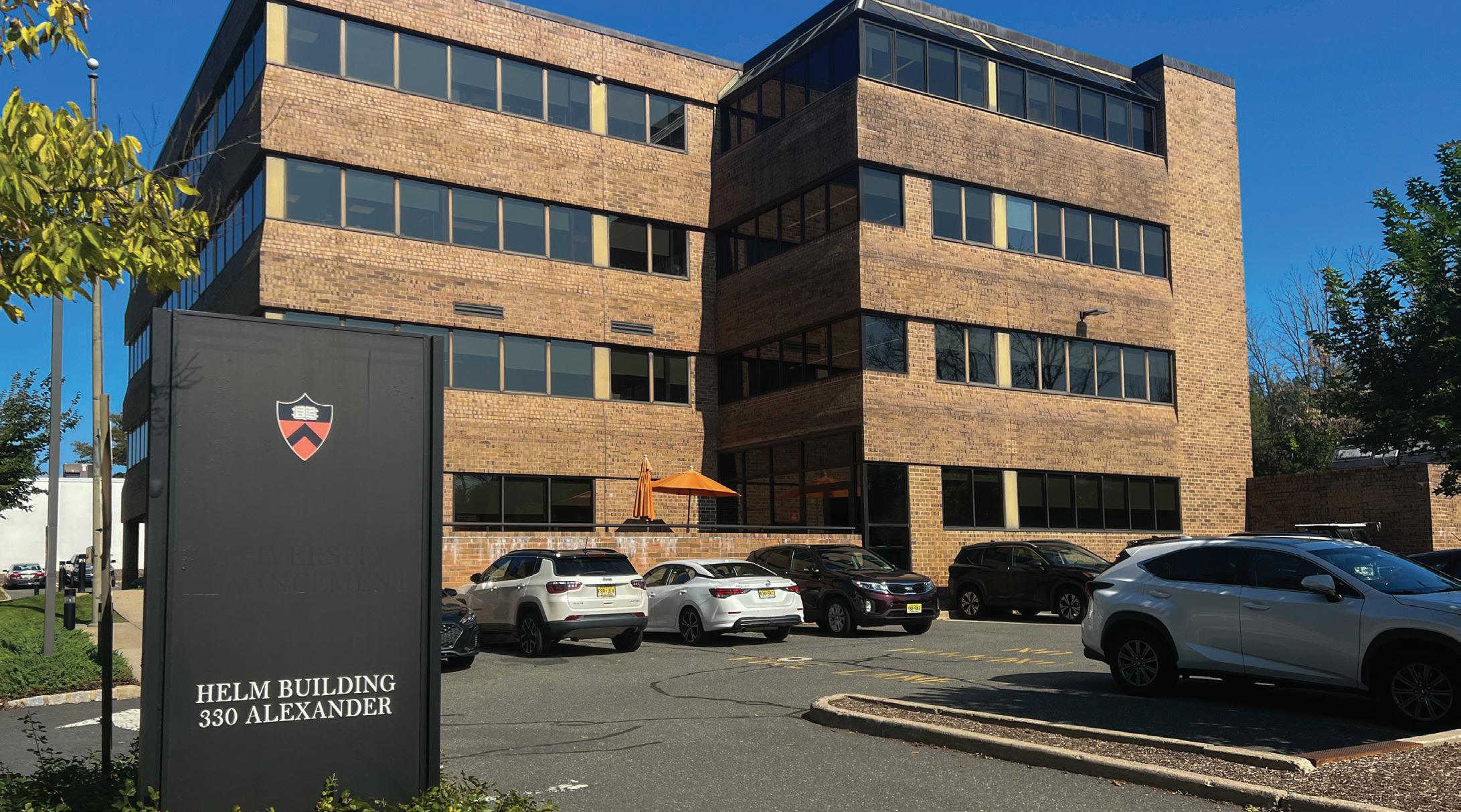
FEATURES
The future of humanities teaching in the AI age, according to Princeton professors
By Nikki Han | October 1, 2025
In a memo sent to faculty this summer, Dean of the College Michael Gordin was blunt: “This is the moment to reevaluate what you do and how you do it.”
The numbers, Gordin wrote, showed sharp increases in generative AI use. According to data from entering students, more than half of the Class of 2028 said they had “rarely or never” used such products in the class year. In the Class of 2029, which had access to ChatGPT and other generative AI throughout most of high school, that figure was 28 percent.
“If students, especially the generation that’s coming in right now, went through high school using [AI], it’s going to be really, really hard for them to stop,” said Meredith Martin, an English professor and Faculty Director of the Center for Digital Humanities.
For many users, generative AI has revolutionized coding, automated simple tasks like emails, and outstripped Google search as a reference tool.
But for humanities professors, the new tools have generated significant anxiety. “Will the humanities survive artificial intelligence?” Professor of History D. Graham Burnett asked in The New Yorker this spring.
In interviews with The Daily Princetonian, humanities professors discussed how they have adapted their classrooms to fit the new world of ChatGPT. Some professors are outright banning AI, turning assessments that used to be papers into in-class exams. Others are trying to work alongside AI, asking students to be transparent when they have used AI in research and writing. Others still are encouraging AI use and embracing its potential. And yet, they all expressed fears that AI could deeply impact critical thinking and writing.
“For a long, long time, writing has been a way that we’ve had of teaching thinking,” Professor of English and the English Department’s Interim Director of Undergraduate Studies Jeff Dolven told the ‘Prince.’
“Maybe less homework is good, but to me, if you’re not reading novels, you don’t understand the world, and you don’t understand people,” Chair of the Comparative Literature Department and Professor of African American Studies Wendy Belcher said.
Can AI produce better papers?
At this point, many professors say no.
In a recent article in The Chronicle of Higher Education, Belcher outlined “10 Ways AI Is Ruining Your Students’ Writing,” including making “banal arguments,” producing sentences that are
“pretty but empty,” and, fundamentally, getting facts “flat-out wrong.”
“It cannot help you write a good paper,” Belcher told the ‘Prince.’ “It can probably do a B paper, but it’ll still be kind of an empty paper.”
Still, Belcher and her colleagues were sympathetic to the reasons students are increasingly using AI to brainstorm, outline, research, and write for them.
“I think the students are being efficient,” Belcher told the ‘Prince.’ “A lot of students in my class are in STEM. [This class] is something they have to do; they’re just trying to get through it. You cannot get through Princeton [by] prioritizing all your classes.”
“I don’t believe students are evil. Students are smart,” Belcher said. “This is a new tool. They’re trying it out.”
While AI might be helpful when it comes to tasks like summarization, professors fear that it may harm students’ ability to think for themselves if they consistently use AI to write their assignments and papers.
Professor of Literature Andrew Cole, for instance, mourned the “cognitive offloading that happens with AI.”
“There are mental tasks that our brains are too tired to do, to extract this information or process this information. It’s easier for AI to do it, and it does it in milliseconds,” Cole explained. “The more infrequent [these mental tasks are], the more detrimental it is to our brains.”
For Cole, this “cognitive offloading” can be understood as a lingering consequence of the COVID-19 pandemic and subsequent lockdowns, during which students’ educations were completed entirely online.
“Every student that I have encountered within my classes within the last five years has had this experience of intellectual challenges, intellectual dormancy,” Cole said. “AI [has] come in to fill the gap with this particular population who has experienced this very traumatic episode in our global history.”
No comprehensive policy
Currently, University policy on AI usage is broad. According to Rights, Rules, Responsibilities (RRR), students cannot directly copy AI-generated output or misrepresent it as their own work. However, “If generative AI is permitted by the instructor (for brainstorming, outlining, etc.), students must disclose its use.”
In his memo to faculty, Gordin urged professors to clearly state their policies around AI. “[I]
nstructors need to articulate what is permissible within their courses,” he wrote in bold-face type. In turn, departments and instructors have created their own policies.
The English department, for example, lets faculty set their own guidelines for classes. For independent work, students must obtain written permission from their advisor and the Department of Undergraduate Studies before using generative AI tools and include a brief defense of their AI usage.
The History department’s policy, however, prohibits generative AI altogether as a text-generation tool for coursework, final examinations, and independent work. Instructors are granted exceptions to allow AI use for course assignments if a student follows the instructor’s guidelines and discloses AI use in writing.
Many faculty members said they appreciated the freedom granted to them to decide their own policies on AI, rather than an outright ban on AI.
“The question of how much you tolerate and allow is really up to you,” Assistant Professor of History Michael Brinley said. “My sense among the faculty is that they are not interested in policy guidelines that would further constrict things that they do in the classroom.”
“My impression is that faculty in English recognize the wisdom of the current University policy: that AI is not something that should be prohibited, but that there should be a very clear case-by-case understanding on how it’s being used,” Dolven said.
Martin, a member of the 2023–24 Committee on Teaching and Learning convened by the McGraw Center, had hoped that the University would implement some of the policy recommendations that the committee came up with for a more cohesive, University-wide AI policy. “There is a Princeton-specific issue with not wanting to get into the way of departmental autonomy,” Martin explained. “I think it would have been an occasion for departments to work together, and I think they need to.”
In the meantime, individual faculty members are already changing the way they administer assessments.
Many professors have simply stopped assigning papers, especially when it’s becoming increasingly difficult to not only distinguish between AI-generated and student-generated work, but also to prove it.
“I don’t think plagiarism detection works,” Martin said. “And I also don’t think that citational practices are robust enough yet to cover the full range of things that one might use a model for de-
pending on the class.”
Brinley’s class, HIS 362: The Soviet Century, used to have a required writing assignment. This semester, students will instead have a 15-minute oral midterm exam, three quizzes, and an in-person final exam, though students can opt to write a 5-page paper in lieu of the oral exam. For Brinley, this kind of assessment structure makes sense for his course which is “much more about content delivery than necessarily about methodological training,” he said.
Even in seminar settings, the future of papers is uncertain. Cole’s ENG 306: History of Criticism, which has 17 students, includes an in-class exam for the first time in his 16 years teaching at Princeton.
“It may sound weird for literature, but … there is an empirical element to literary study that can be measured in a thing that you might call an objective exam,” Cole said.
Other professors maintain that papers are valuable in their own right and are unsure about the pedagogical implications of replacing papers with in-class essays, because writing on the spot and spending time researching, drafting, and re-writing are different skills.
“All writing is in the re-writing,” Belcher said, “To me, the first draft is terrible.” She added that she would continue to assign papers, while having students disclose their AI use — then point them to her Chronicle of Higher Education piece that said AI-generated writing was filled with “bloated emptiness.”
Some faculty have evaded the consequences of AI-generated writing by assigning more creative, imaginative papers that AI is, at least right now, unable to effectively produce. Dolven, who teaches classes on poetry, assigns exercises that “involve creative imitation and different kinds of writing, not necessarily essay writing.”
“It is a kind of assignment that makes the sentence-by-sentence business of writing, the imaginative act of it, front and center,” Dolven said.
Working alongside AI
While many faculty have balked at the use of generative AI for writing and reading, others have integrated it into their research and teaching.
In April this year, Burnett published an article in The New Yorker explaining how he integrated AI into a class he taught last spring. One assignment asked students to use AI chatbots to explore a topic they had already learned about, condense the text down to four pages, and turn it in. “That produced some extraordinary papers, co-written, in a way, by the students and the chatbots they chose
because these were conversations,” Burnett told the ‘Prince.’
“Reading the results, on my living-room couch,” Burnett wrote in his article, “turned out to be the most profound experience of my teaching career.”
While some professors might disagree with Burnett’s methodology, his enthusiasm for AI made sense to Brinley, given that the class itself was about attention and media.
“It’s very appropriate in a course like that to also bring a methodological component of interacting with [AI] and then reflecting on the value of how this changes the patterns of thought and writing,” Brinley said.
In the Center for Digital Humanities (CDH), where Martin is the Faculty Director, researchers engage with technology and computational tools as central elements of humanistic inquiry. One of the current CDH projects that Martin directs is investigating how large language models — the same infrastructure that powers chatbots like Perplexity and ChatGPT — discern and classify style in existing literature.
“Humanists should at least know where and how it’s useful, so that they can say, ‘here are places that [AI] can be useful,’” Martin said.
Humanities professors, then, are in a moment of experimentation: while some, like Cole, deride the use of AI in the classroom, others are more open and optimistic about the technology’s potential. The University has largely left professors and departments to their own devices on the issue, and many are happy to have the freedom — for now.
“I think there are ethical reasons that professors can opt out of all sorts of technology that they don’t want to use,” Martin said. “I think it’s not helpful for anybody to pretend [AI] doesn’t exist.”
“It’s a moment of challenge to traditional ways of teaching, but it is also a moment of possibility,” Dolven said, “[Writing] is no longer something we can take for granted as a vocational skill. And I think that that’s really to the good. I think it requires of us an active imagination as faculty.”
“My approach would be,” Brinley added: “we’re all in this together. Let’s think together about how to protect ourselves, continue to pursue the things we want, and sustain certain scholarly environments which are threatened, in part, because of the complete devaluation of writing that comes as a result of its ease of production.”
“From my perspective, [students] can do all the AI they want in their own time. But when they come to me, it’s going to be them,” Cole said.
Alumni and eating clubs initiate dining plan opposition at Princeton-Harvard game
By Luke Grippo | October 29, 2025
Powers Field saw two surprises on Saturday: a monstrous 21-point loss at the Harvard-Princeton homecoming game and a plane flying over with a banner reading “dontharvardourprinceton.com.”
Earlier this month, the University announced that all students on campus would be required to purchase a dining plan, effectively eliminating independent status. Since then, opposition to this change has been steadily ramping up, with the annual Princeton-Harvard football game giving students and alumni the opportunity to publicly express their anger at the change.
The meal plan requirement includes students already in eating clubs and co-ops, who will be able to purchase a $900 Block 32 plan on top of the dues they already pay to their club. Students not currently on a University dining plan will be required to purchase a Block 160 plan at about $4,500 a year or an unlimited meal plan, which is currently about $8,700.
The game marked the official start of the “Don’t Harvard our Princeton” campaign led by the Graduate Interclub Council (GICC) protesting the new dining plan requirement for eating club and co-op members. The policy change, which also eliminates the separate room draw for kitchen-equipped dorms like Spelman Hall, has also garnered significant backlash from independent students.
“We consider this unwelcome turn of events to be the most serious threat faced by the Street in our 146-year history,” Robert ‘Hap’ Cooper ’82, Chairman of the GICC and alumnus of Tiger Inn, wrote to The Daily Princetonian in a statement.
Accompanying the flyover during the second quarter of the game, hundreds of attendees wore shirts and buttons distributed by the GICC throughout the week.
Aaron Meng ’26, Vice President of Charter Club, told the ‘Prince’ that he attended another event following the game, where many alumni questioned
him about the shirts and plane they saw in the stadium.
“People didn’t know. They were like, ‘I saw a lot of people wearing this, and I saw the plane,’ and they were wondering what’s going on,” Meng told the ‘Prince.’ “I was able to have a conversation with them about that. In that sense, I think it was noticeable.”
Meng and Charter President Madeleine Murnick ’26 shared that 150 shirts were picked up by club members when they were distributed earlier in the week.
“I’ve spent the past four weeks talking to our membership about how they’re feeling and their opinions and their questions and concerns,” Murnick told the ‘Prince. “My first and foremost job as an eating club officer is to hear from my club members, and so I’m really going to continue that process.”
Charter’s members have already expressed discontentment with the new dining system — a decision that the other eating clubs seem to share.
Scott Becker ’26, President of Cannon Dial Elm Club (CDE) expressed that most students in the club are in disagreement with the University’s decision.
In a statement to the ‘Prince,’ Becker wrote that a “majority of CDE members are in agreement with the position of the club’s graduate board” to oppose the new meal plan.
“Our members who are not on aid do not consider a $900 charge as insignificant, as is suggested in University statements,” Becker added.
The sentiments of these clubs is one that, Murnick suggested, is shared among the clubs, who have been in close dialogue with each other since the Sept. 29 announcement.
“We also need students to let the ICC know what they’re thinking and communicate with [University administrators] and let them know what they’re thinking,” Murnick said.
Alumni have also been invited to the conversation. Cap and Gown Club sent an email to alumni suggesting
they write a comment on the “Don’t Harvard our Princeton” website or email University administrators, an alum told the ‘Prince.’
Cooper wrote that the “Don’t Harvard our Princeton” campaign is fighting what the GICC views as a University distaste for eating clubs 120 years in the making, since ex-University president Woodrow Wilson called the clubs “divisive” and “snobbish.”
The campaign is seeking to protect an “overwhelmingly popular” institution that promotes “a robust and safe social environment for all undergrads at no cost to the University,” Cooper said. “No student at Princeton needs a car or a credit card to have a social life.”
The slogan “Don’t Harvard our Princeton” originates in the ongoing controversy surrounding Harvard University and its social finals clubs. Cooper and the GICC fear that a similar fate awaits Princeton and Prospect Avenue.
“They’ll drive enough of the open clubs out of business, so the remaining
clubs can no longer handle 100% of the demand — then they can justify building a new social/dining system,” Cooper wrote. “As with Harvard, the remaining clubs will become more selective, serving a privileged minority and the pro-club sentiment will begin to reverse. Eventually, they’ll turn the Street into a few nightclubs and B&Bs.”
Both the GICC and the clubs have alluded to future actions in the works, including a potential proposal from the GICC that would suggest making the Block 32 optional, according to Murnick, though the proper handling of this situation is of the utmost importance.
“[Students] don’t want to be required to buy an additional dining plan, and it is troubling that this decision was made without the eating clubs,” she said.
“A red line has been crossed,” Cooper said. “This is an ill-considered and ultimately dangerous policy against which we must all stand firm in opposition.”
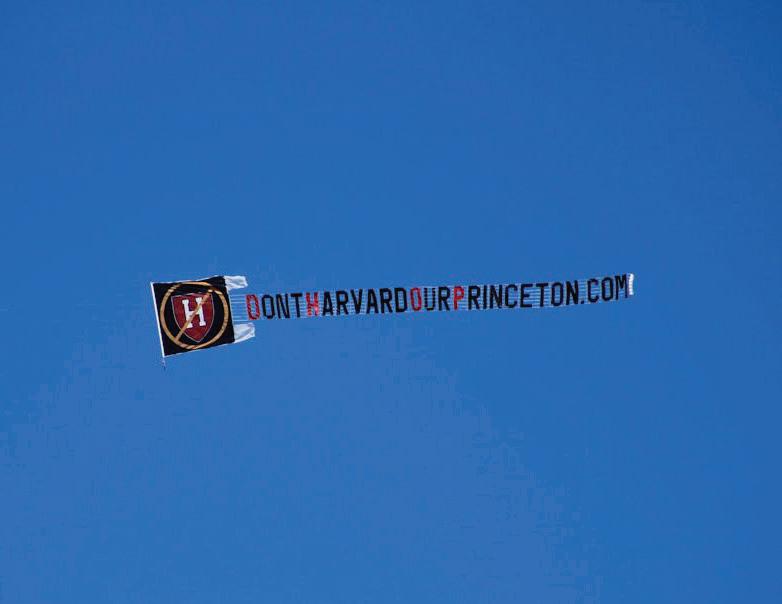
The Carla Berube era at Princeton SPORTS
By Hayk Yengibaryan | April 10, 2026
Six seasons. Five Ivy League titles. Five NCAA tournament appearances. Two NCAA tournament wins.
And one coach behind it all: Carla Berube, who in March decided to leave Princeton for Northwestern.
The decision came fast, finalizing just before the Tigers’ NCAA Tournament game this March, capping a season in which Princeton went 26–4, won the outright Ivy League regular season title, and claimed the Ivy League Tournament championship.
“I kind of knew that was probably my last game coaching at Princeton when it was over,” Berube told The Daily Princetonian.
The news broke to the team days after the loss to Oklahoma State, with Berube addressing the team shortly before the official announcement.
“Very difficult, to say the least,” Berube said of her announcement to the team. “It was a very tough decision, a very emotional meeting.”
“We were just really, really sad about it. A bunch of people were crying,” senior forward Taylor Charles told the ‘Prince,’ while acknowledging that the players are aware that Berube is “not out of [their] lives completely.”
Berube will now take over a Big Ten program and face a challenge unlike anything she encountered in the Ivy League. She will be succeeded by Associate Head Coach Lauren Gosselin, who was named the program’s 11th head coach on Wednesday afternoon.
When Berube arrived at Old Nassau in 2019, she replaced outgoing head coach Courtney Banghart, who had spent 12 years building Princeton into a powerhouse that reached the NCAA tournament eight times in 10 years.
The Tigers’ 2015 season saw them finish 31–1 before losing to No. 1-seeded Maryland in the second round. That season earned Banghart recognition as the 2015 Naismith National Coach of the Year. The transition from Banghart to Berube provided an uncertain period, particularly for players recruited by Banghart.
“When Coach Berube came in, it was a very uncertain time for me,” said Grace Stone ’23, who had been recruited by Banghart and played her first season under her. “She took what could
have been a really uncertain and scary and maybe not-so-great three years left at Princeton and really made them incredible for me.”
All non-seniors from the 2018–19 roster remained on the team under Berube the following season, with the incoming Class of 2023 committing to the new era at Jadwin.
“I honestly never even considered actually reopening my recruiting,”
Ellie Mitchell ’24, who took a gap year during the COVID-19 pandemic to preserve her Ivy eligibility, said. “I was excited for the opportunity to play under Coach Berube and it turned out being the biggest blessing in disguise.”
Berube herself described the transition as “amazing,” crediting the players for making it so.
“Everybody was super welcoming and just so kind to me and my family, just letting us in and teaching us all about Princeton and the Princeton women’s basketball,” Berube said.
In her first season, the Tigers went 26–1 with their only loss coming in overtime against the Iowa Hawkeyes. Berube’s squad finished the season with an AP poll ranking of 22.
Unexpectedly, the pause created by the pandemic gave the team space to adjust and, in many ways, to grow closer under a new staff.
“Berube, having [the COVID-19 break], in some sense, helped give her some time to get her head around things,” Abby Meyers ’22 said.
“It gave us an opportunity to just get to know each other really well, work on just cultivating leaders and what we want for the program moving forward,” Berube added. “We made the most of that time.”
During that time, Berube also recruited her first class with the Tigers, which included Parker Hill ’25. Hill got to see Berube coach a local game before committing to Princeton.
“We were the first people that she picked to come, which was very exciting,” Hill said. “And I found that every time I took an issue with a call or saw something, she would stand up and be talking about it.”
Hill joined a long list of Tigers from the Maryland area, including Chet Nweke ’24, Ellie Mitchell ’24,
Abby Meyers ’22, and Bella Alarie ’20. That list now also includes sophomore guard Toby Nweke and junior forward Fadima Tall.
“A lot of people could speak to how good the program was, including people that played under her,” Hill said. “I think just having the positive word of a lot of people in the Princeton basketball network … that was another big motivating factor as well.”
Charles — part of Berube’s second recruiting class — had a similar experience after catching a local game.
“She had a great head coaching record previously, before being at Princeton. And then I was able to watch her coach a little bit after COVID, just see kind of if she walked the walk and she did,” Charles said.
What followed the pandemic proved to be one of the most successful stretches in program history. The Orange and Black went 121–28 over the next five seasons, winning the Ivy League regular season and tournament four times and earning an NCAA tournament bid every season.
During her tenure, Berube coached three Ivy League Player of the Year winners, three-time Ivy Defensive Player of the Year Ellie Mitchell ’24, three WNBA Draft selections, and a total of 21 All-Ivy honorees.
This includes Alarie, a unanimous Ivy League Player of the Year and twotime AP All-American, whom Berube coached for her senior season, as well as Meyers and Kaitlyn Chen ’24, both of whom earned All-American honors under her.
“It’s just the winning mindset,” Meyers said. “That comes with the practices. The preseason is some of the toughest times that I’ve ever played basketball, and the drills that we did are ingrained in my memory in a kind of post-traumatic way … but it makes you really appreciate the process.”
“I think with Berube and her coaching staff, they’re able to kind of ingrain a trust and love for the process, however hard it may be. And I think that’s really attributed to our successful postseason play,” Meyers continued.
That process translated into a defensive identity, one built around Berube’s mantra of “Get Stops.”
“A lot of teams like to throw that around, defense wins championships, but it’s not simply a slogan for us,” Hill said. “I do think it’s a big core of the way [Berube] coaches and plays and prepares for games.”
While many fans immediately think of the defensive mentality that shaped Berube’s tenure, her impact extended beyond the court. Multiple players described a coach whose sideline tenacity was masked by a day-today warmth and humor that defined the program.
“She’s actually very goofy and loves to joke around,” Mitchell said. “And I think something that’s so special about her is that she’s able to demand this excellence from her team and coach at an extremely high level, but at the same time, she’s able to balance the relationships with her players.”
“One of the things that she would say before every one of our games was, play hard, play smart, have fun. And that’s on our team room wall, and I think that ‘have fun’ piece is something she always really brought, and we were able to joke with her on and off the court,” Stone said.
Senior forward Taylor Charles echoed similar sentiments, adding that Berube is “really good at bringing us all together and creating a community that we are so bought into and want to be a part of for four years.”
That community was, by Berube’s own account, what she was most proud of.
“You can say the championships were incredible, but I think it’s the relationships and the connections with those players … that’s what it’s all about,” Berube said.
That relationship is most evident with Mitchell, who still speaks with Berube regularly since graduating in 2024.
“My relationship with Coach Berube is one that I’ll carry with me for the rest of my life,” Mitchell said. “She obviously helped me become a better basketball player on the court, but more importantly, a better person off the court.”
No moment crystallized the program’s rise under Berube more than the success in March in both 2022 and
2023.
In 2022, the 11-seeded Tigers upset six-seeded Kentucky 69–62, who had just won the Southeastern Conference tournament. In the next round, the Tigers lost in heartbreaking fashion to No. 3 seed Indiana, 55–56.
Following the news of Berube’s departure, Meyers spoke with Tani Brown ’10, co-president of Friends of Princeton Basketball.
“[Brown] was just like, ‘We need to figure out a way to continue this legacy and this winning mindset, and show how important Princeton basketball is, and she mentioned the Kentucky game,” Meyers said.
“The next year as well, they went into the round of 32, and they were able to beat [North Carolina State],” Meyers said.
For Stone, the win against N.C. State was capped by a game-winner that traces back to Berube’s trust in her.
“That shot that I hit was one that Coach Berube had drawn up for me before against Columbia … that same exact three, to send the game to overtime,” Stone said. “It was something that we prepared for.”
“The confidence that Berube had to draw that up … meant a lot to me. Berube’s confidence when she has it never wavers,” Stone continued.
Berube capped off her tenure at Princeton this past season by winning the Ivy League regular season title outright and the Ivy Madness tournament. This was the first time in four years they had won both outright, having shared the regular season title with Columbia in the 2022–23 and 2023–24 seasons.
“That was always a goal,” Charles said. “We shared it with Columbia a couple of years and that’s just not as sweet as winning it completely by yourself. So I think that really was probably the most defining moment of the four years that I’ve had here.”
While Berube’s time on the Princeton sideline has come to an end, her place in the program will remain.
“She’ll be a tiger forever, and she’ll always be in our corner,” Mitchell said.
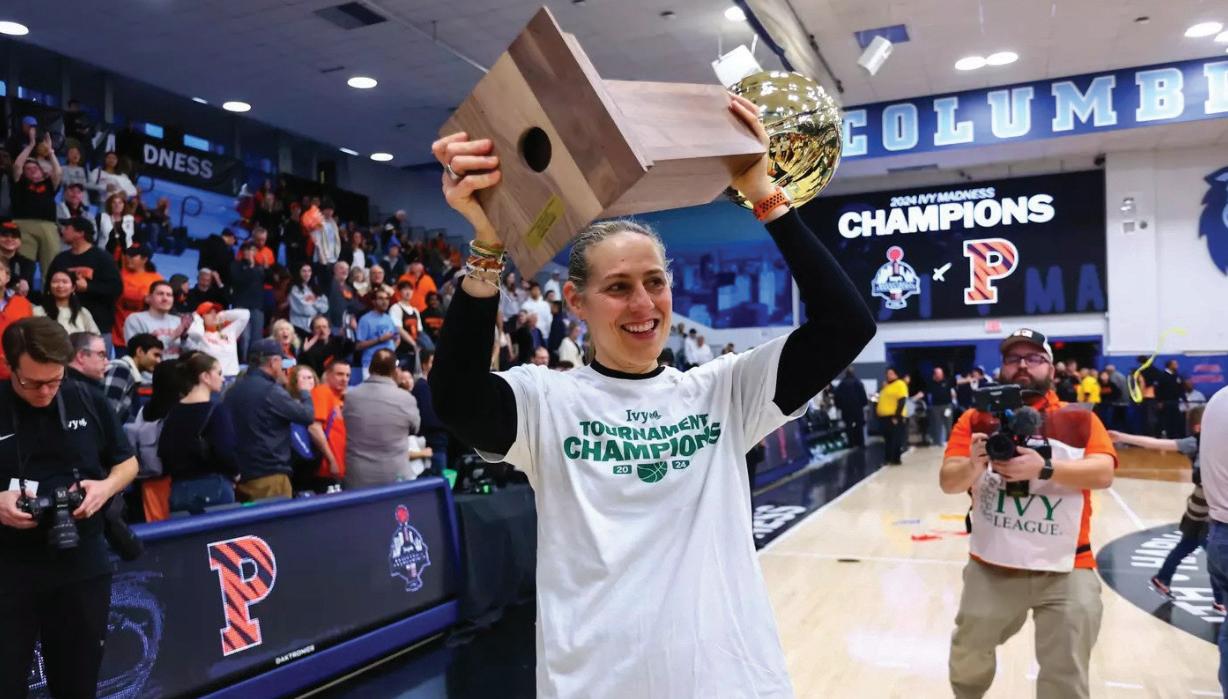
PHOTO CREDIT: SIENA SYDENHAM / THE DAILY PRINCETONIAN
‘A brilliant young contemporary writer and a beautiful human be- ing’: Remembering Lauren Blackburn ’26
By Victoria Davies & Caitlyn Tablada | May 21, 2025
When Kelly Kim ’26 started a poetry club at Princeton in her sophomore year, nobody went to the first study break. Nobody, that is, until “some very tall man [who] looked like an English major” knocked on the door.
From that day forward, Lauren Blackburn ’26 and Kim “bonded over this desire to become ‘real poets,’” according to writings on Kim’s Instagram, which she gave permission to The Daily Princetonian to share. In English Junior Seminar, they “did not read [the] books [they] were supposed to read and wrote poetry instead of writing essays,” becoming close friends in the process.
Blackburn was found deceased by authorities on April 25, several days after he was reported missing. He was 23 years old at the time of his death and is remembered by friends and mentors as a brilliant writer, voracious learner, and loving friend. A family obituary said he passed away after a “courageous battle with bipolar disorder.”
Blackburn was born on August 11, 2001 in Corvallis, Oregon. After moving to Indiana, he attended Corydon Central High School, where he stood out as a member of the cross-country track team, National Honors Society, and Academic Bowl.
Blackburn’s passions spanned far
and wide. He loved K-Pop, Virgina Woolf, and the soccer team Tottenham Hotspur F.C. He completed a mission for The Church of Jesus Christ of Latter-day Saints in the California Santa Rosa Mission in 2020-21. Blackburn also spent last summer in South Korea as a recipient of the 2024 Sam Hutton Fund for the Arts, learning about his Korean heritage and taking language classes. Most of all, Blackburn loved writing.
“Lauren was a brilliant writer and scholar. He had so much greatness inside of him, and I really think he could have been the next great contemporary author,” Julia Shin ’26, one of his close friends, wrote to the ‘Prince.’ “He wanted to write a book that would turn love into form, one that would write a novel both in and out of time, that would be a transcript of thought onto the page.”
Yiyun Li, head of the Princeton Creative Writing Department, recounted Blackburn’s remarkable presence in her advanced fiction class last fall.
“Lauren was one of the most well-read students I’ve ever had in my Princeton career. He had a very good memory of books he’d read, was exceedingly thoughtful and inquisitive about writing, and was a gentle and kind presence in the classroom,” Li
wrote in a statement to the ‘Prince.’ “His writing was about human hearts and human conditions, touching upon questions that might not have answers.”
Bradin Cormack, Professor of English, who had Blackburn as a student in his class on love poetry this past semester, echoed Li’s reflections on Blackburn’s talents as a writer and scholar.
“He was one of the most talented students I have taught, with an open curiosity for how others have thought about questions that interested him and with a really brilliant sense of how complex language becomes a means of discovery,” Cormack shared with the ‘Prince.’ “That made him an exceptional reader of poetry; and it was a joy to watch him, in his writing and conversation, think with the poetry that caught his attention.”
Cormack added, “[Blackburn] had a great sense of reading as something we do to make a world with and for one another.”
“I wish I still had some of his assignments/stories,” Ed Park, a lecturer in creative writing, wrote to the ‘Prince.’ “It’s hard to conjure the style from memory, but his writing was striking — intense and interior; at times too opaque; a way of combatting or understanding the flurry of thoughts in
his head. I loved how the class responded to his stories, which had their unsettling side — with great care and compassion.”
Blackburn also wrote two pieces for the ‘Prince,’ including one about Park and a profile of a University program that provided protection for Ukrainian and Russian scholars.
Behind Blackburn’s brilliant writing abilities was a caring and inquisitive character that touched many that crossed his path, his mentors and friends said.
“I was Lauren’s advisor for his junior independent work, although very quickly we became something like collaborators, almost co-conspirators, bound together by our mutual love of Virginia Woolf,” Maria diBattista, Professor of English and Comparative Literature, wrote in a statement to the ‘Prince.’
“[Blackburn] was both shy and forthcoming, reluctant to assert himself and at the same time unguarded about confiding the ideas, intuitions, and feelings that intrigued but could also baffle him,” she added. “He had the most open face, animated by a sweet, almost bashful smile … we ended up talking about books he was eager to read, so hungry was he for the company and impressions of other minds,
others’ ways of seeing and being in the world.”
Kathryn Farrell ’25, one of his friends, remembered Blackburn’s inquisitive and often silly character.
“Lauren would show up to late meal with his quiet smile, a draft of some experimental piece of writing which deconstructed the fourth wall between author and reader, and a bacon cheeseburger that would be picked up and set down untouched a hundred times while he spoke enthusiastically about Kant or Rilke or Virginia Woolf,” Farrell wrote to the ‘Prince.’
“Early in our friendship, he convinced me for several months that ‘Lauren’ was a nickname for his true legal name “Lawrence” (it is not),” she continued. “He would sit or stand on the highest possible horizontal surface in a room like a cat, and make his fingers into heart shapes at his friends.”
“As a friend, Lauren was the most sweet, silly, beautiful person,” Shin added, reflecting on their time together. “He had a way of supporting you that made you feel entirely heard. He was kind. He was so present. He loved with all his heart.”
Blackburn is survived by his parents Soonhee and Martin Blackburn, and his siblings Elisabeth, Colin, Cardon, and Quincy Blackburn.
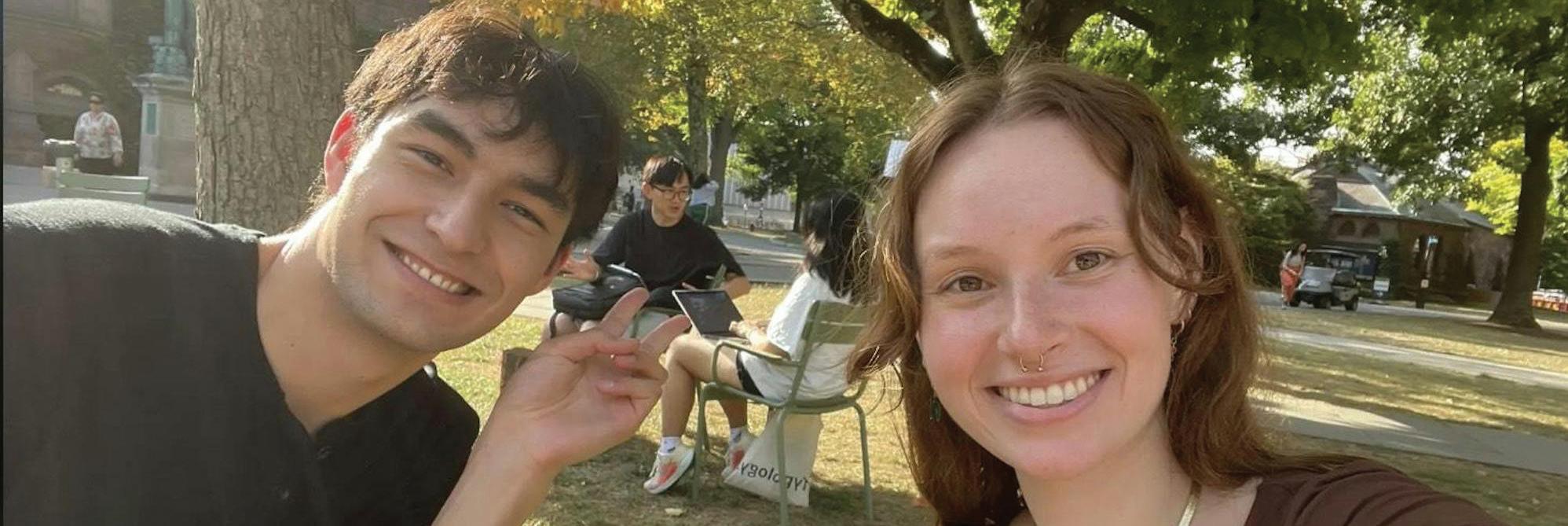
The Class of 2026, by the numbers: Our annual senior survey
By The Daily Princetonian Staff
Welcome to The Daily Princetonian’s fifth annual senior survey! The Daily Princetonian’s Data team has spent months collecting, analyzing, and interpreting responses from 476 seniors from the Class of 2026.
Our survey was conducted over a period of 37 days from Feb. 23 to March 31, 2026. Periodically throughout those days, The Daily Princetonian emailed a Google Form to all members of the Class of 2026 with a public email address — a total of 1,491 people. 476 students responded, yielding a 31.9 percent response rate.
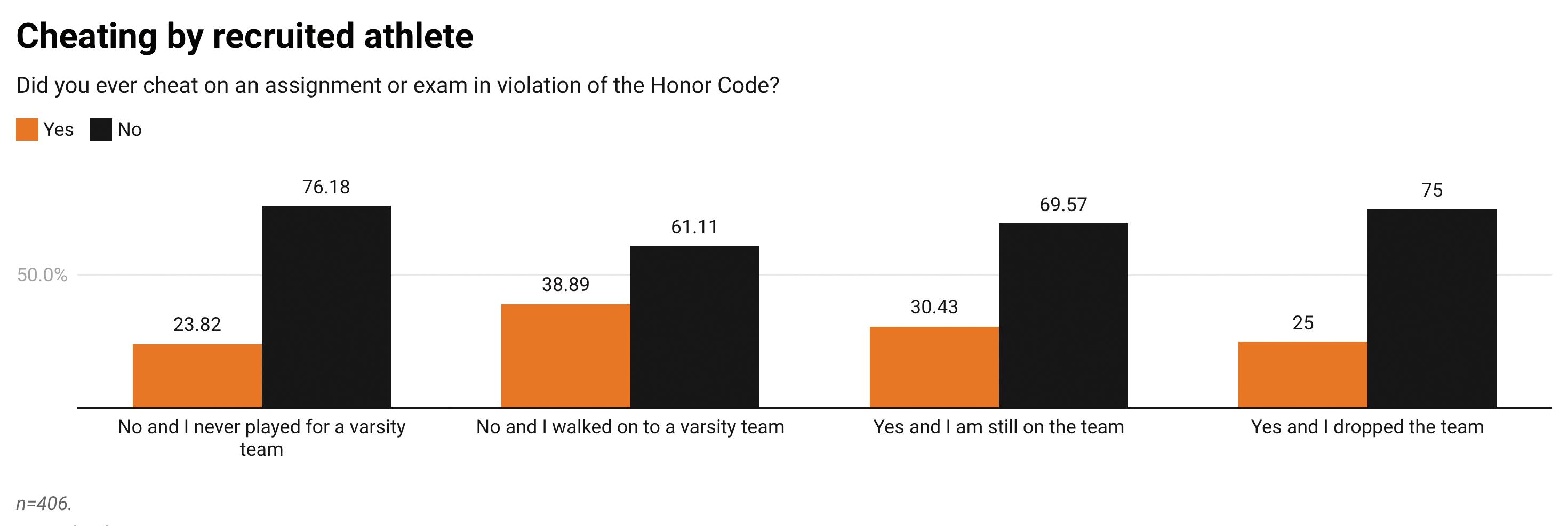
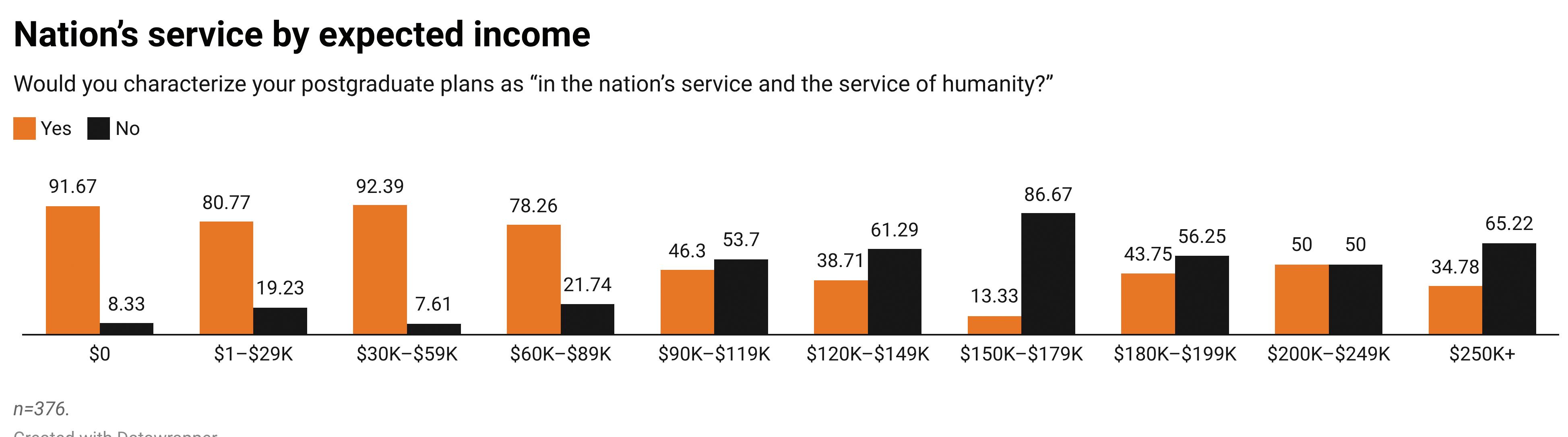
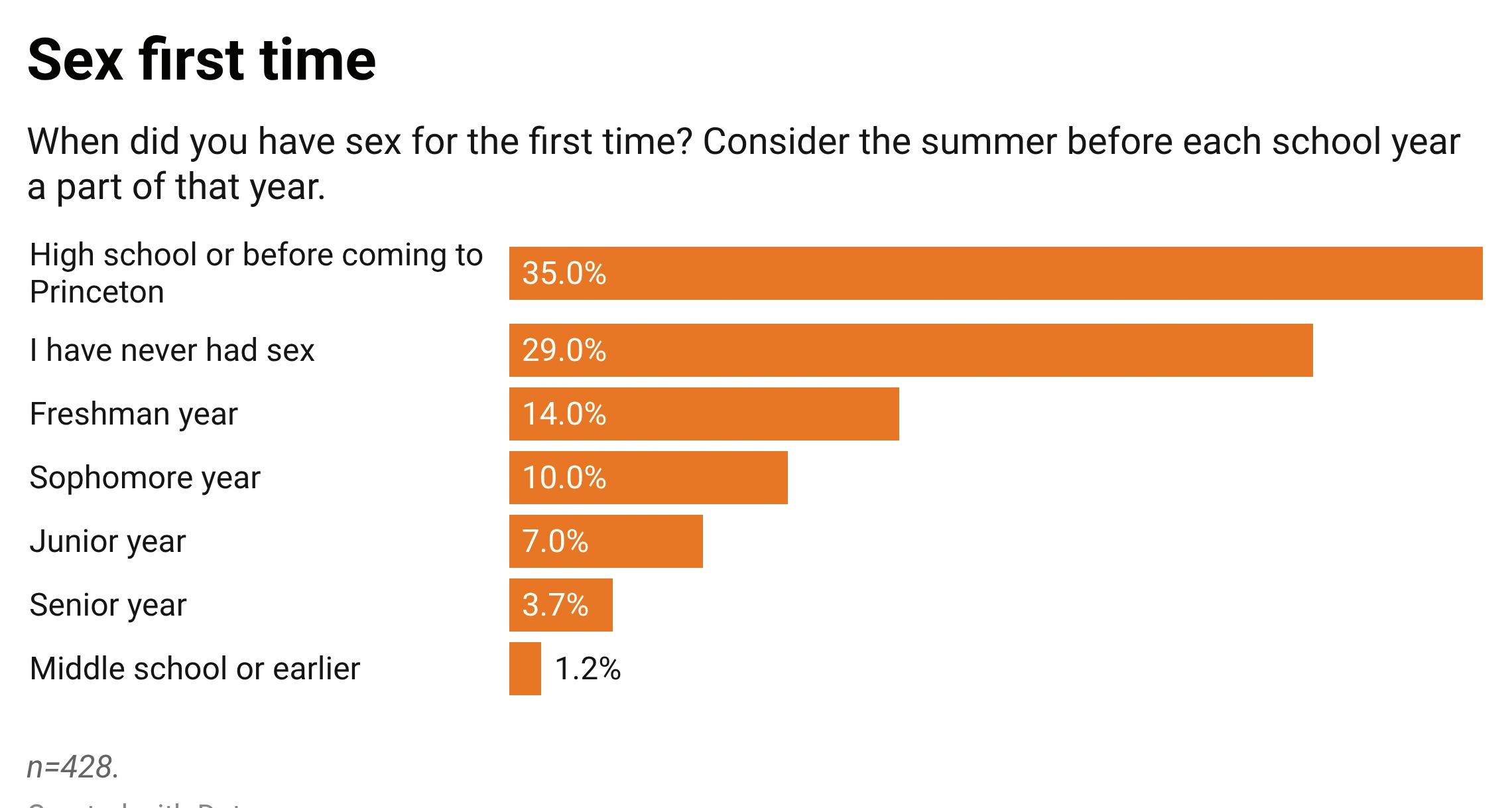
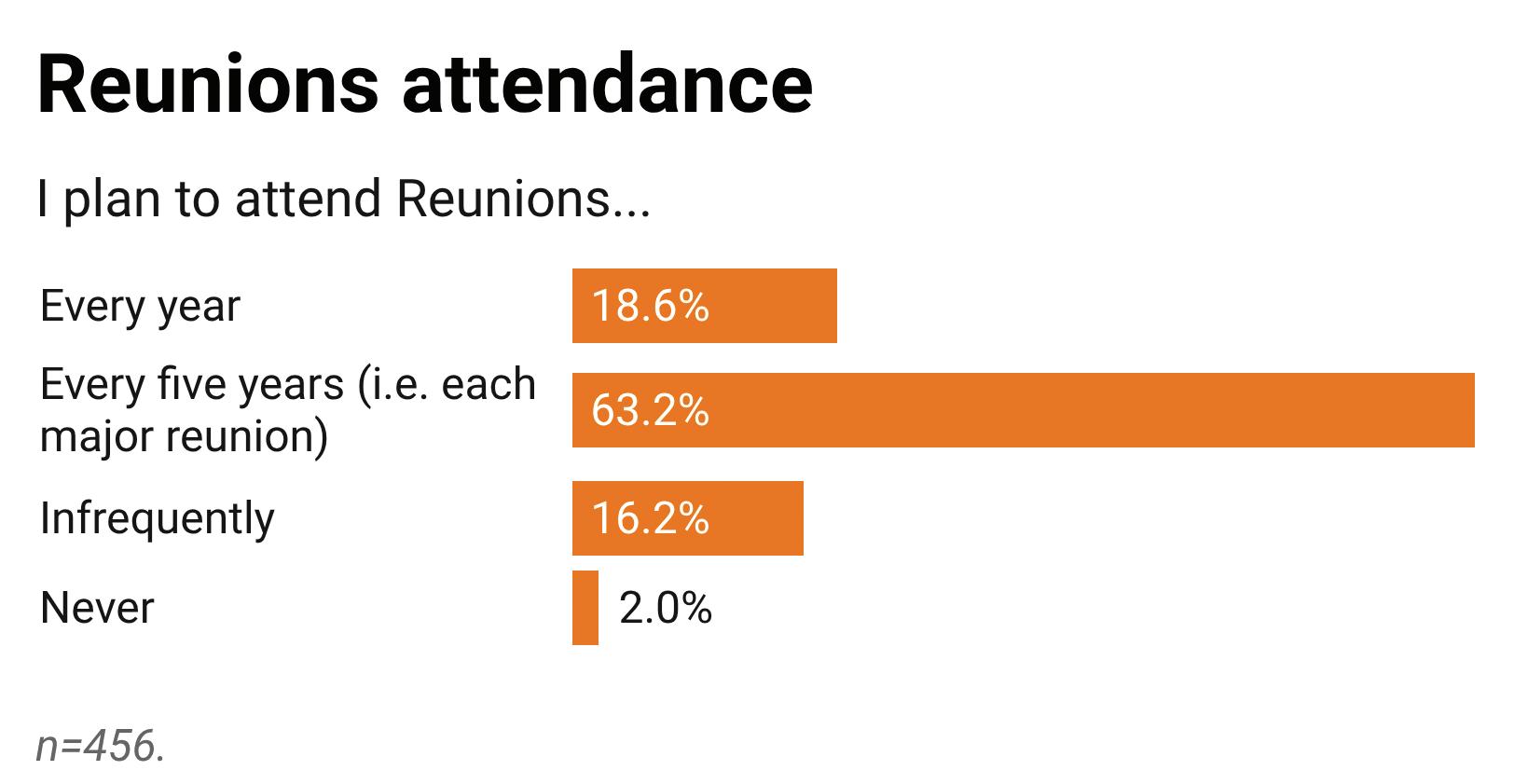
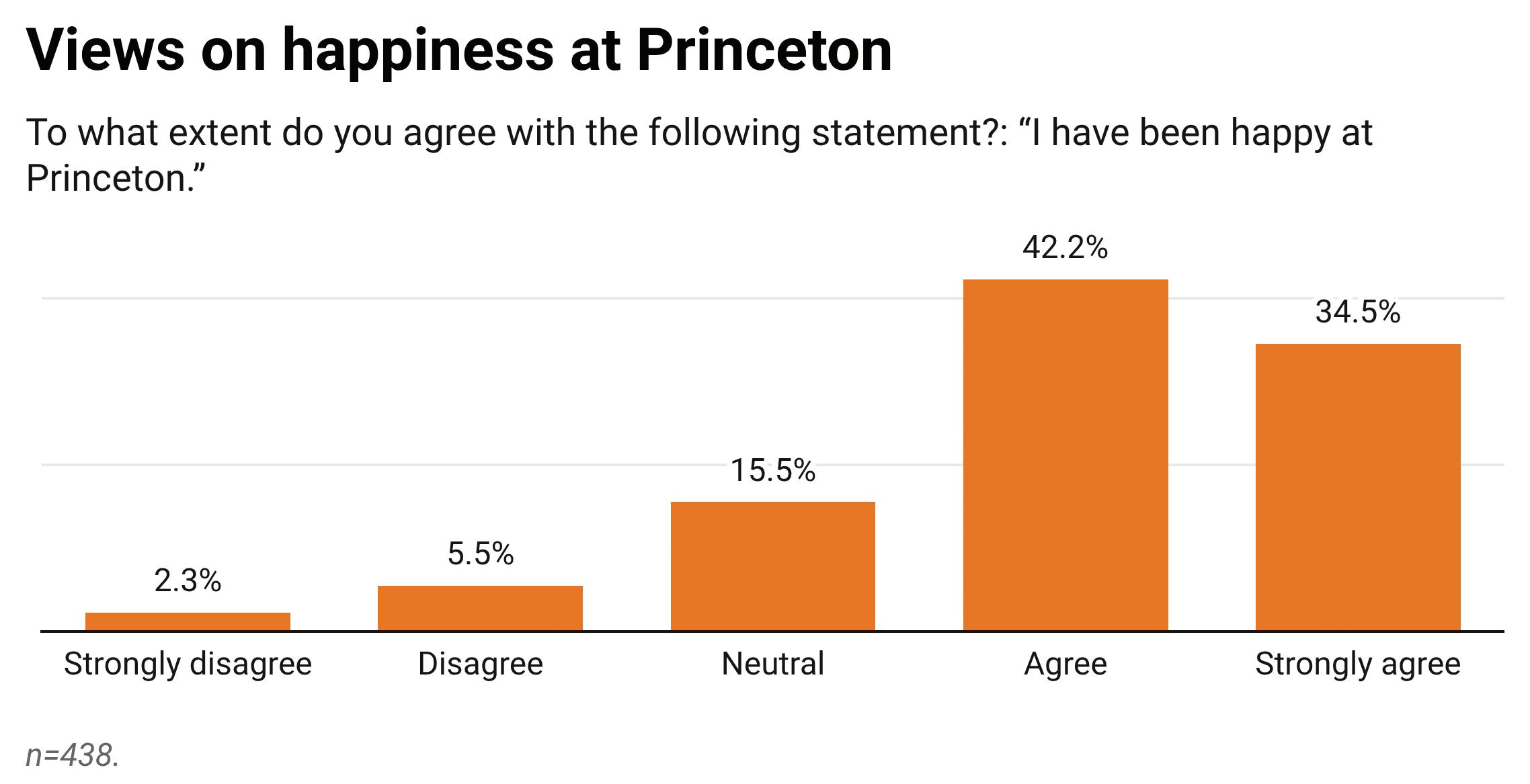
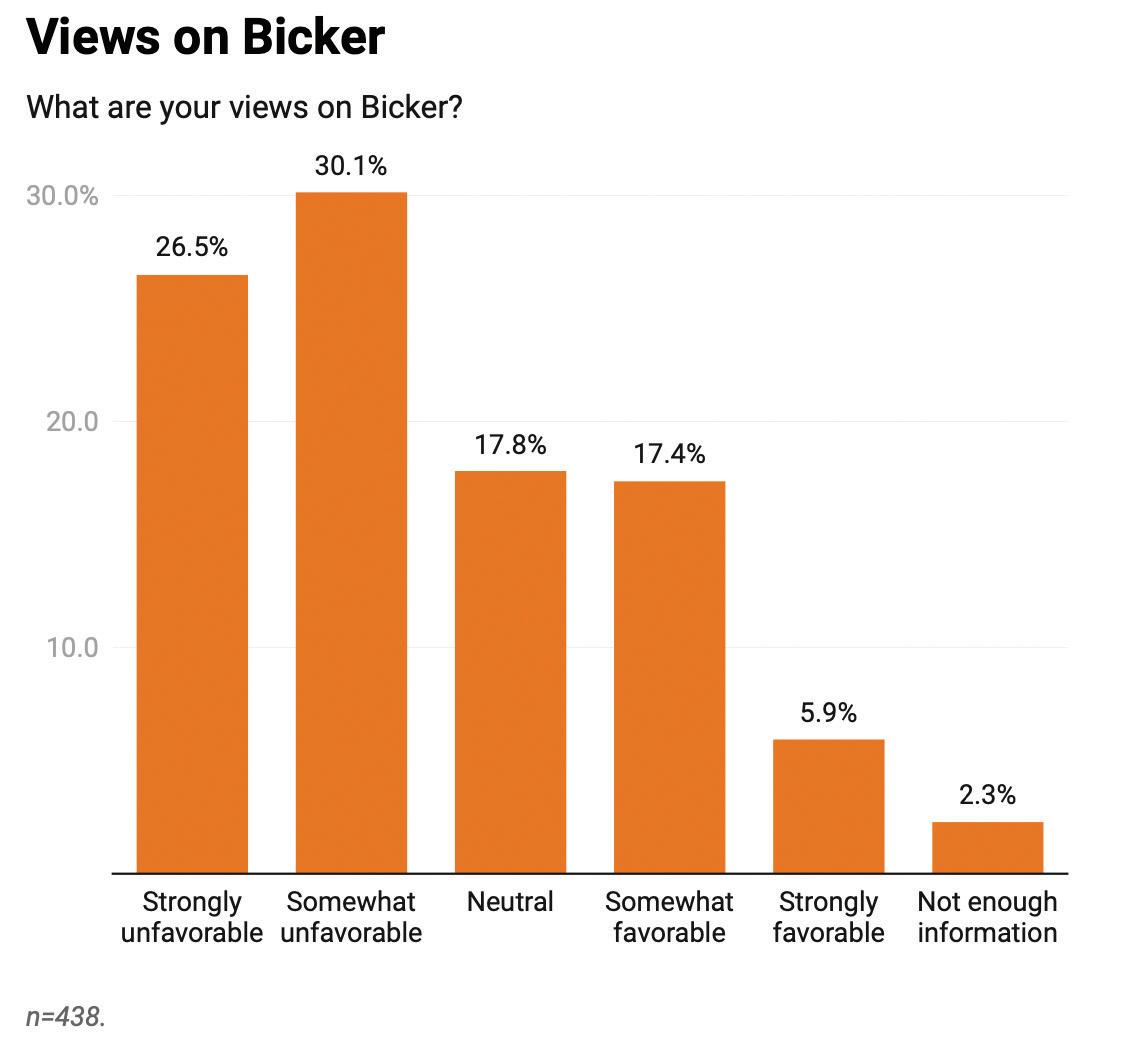
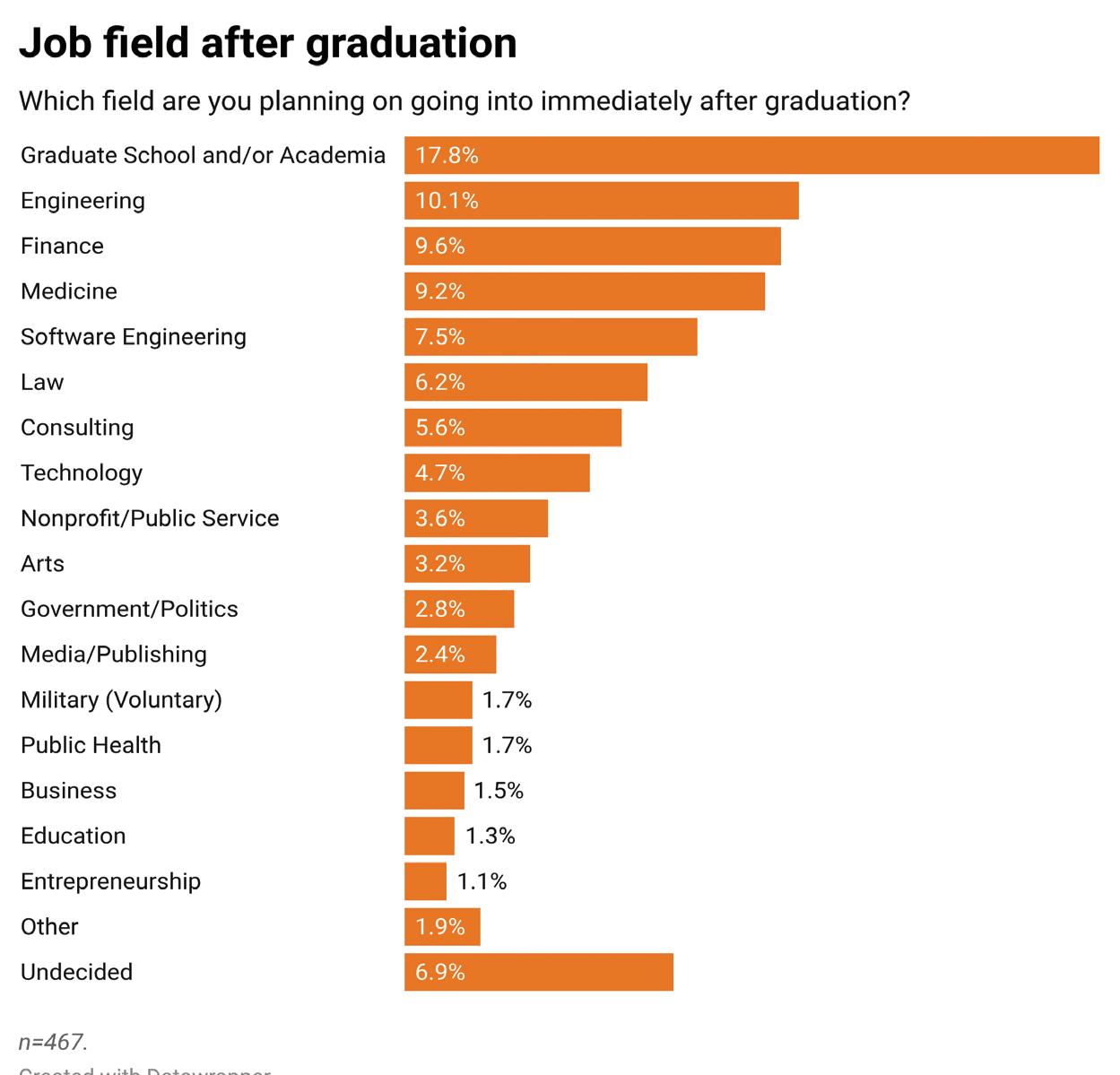

VISUAL ESSAY
The Princeton University Art Museum, In Photos
By Calvin Kenjiro Grover, Katharine Shea, MC McCoy & Siena Sydenham
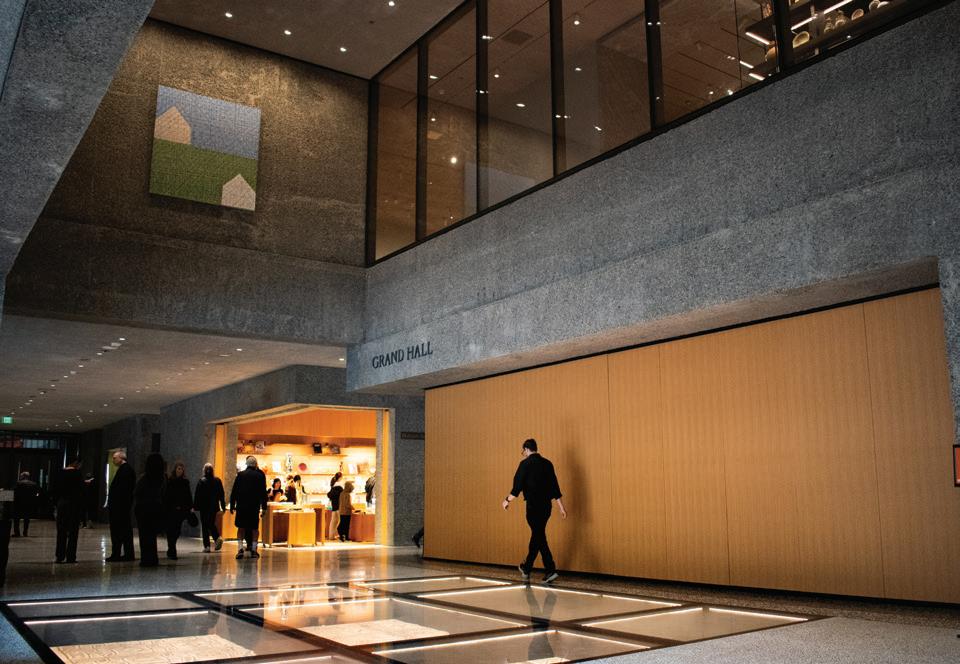
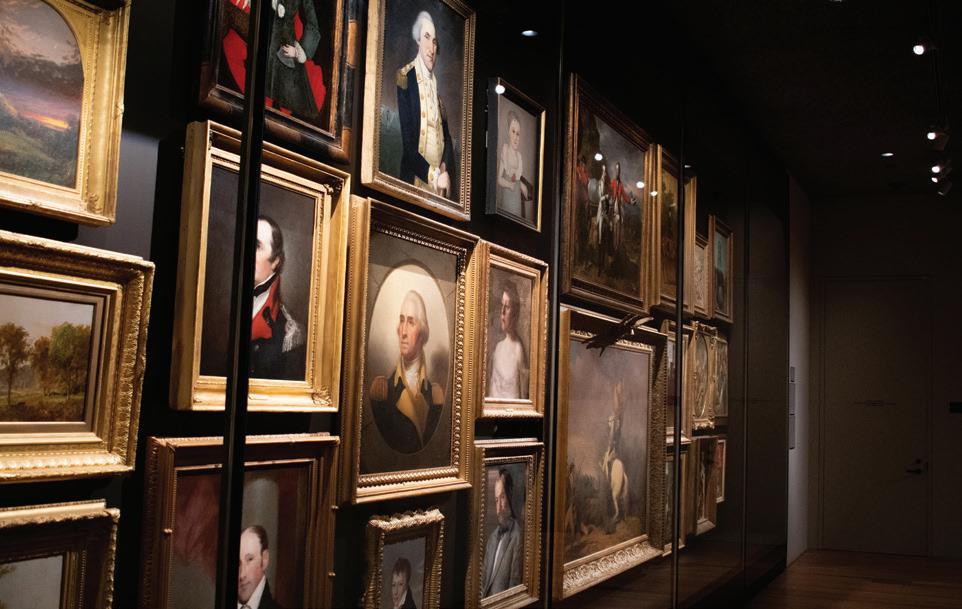
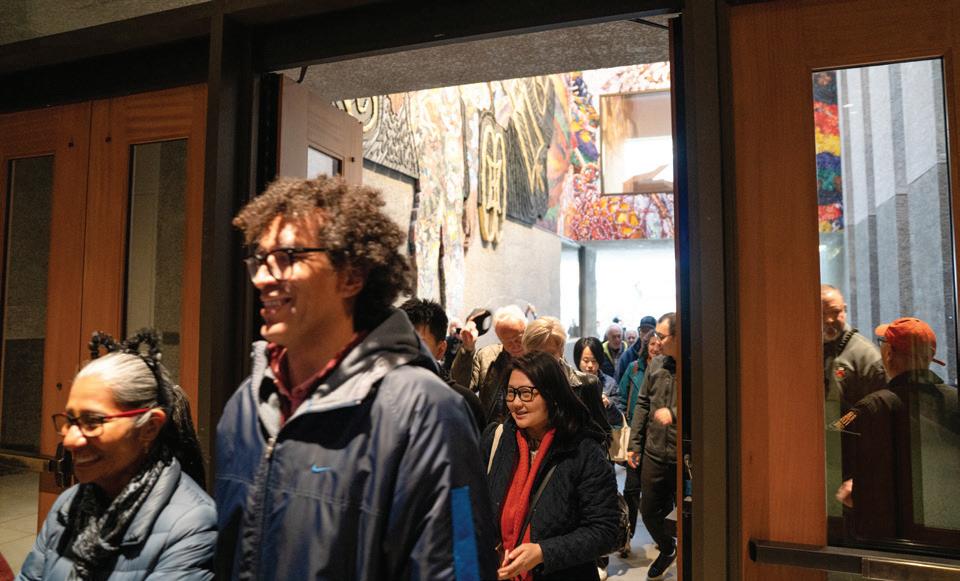
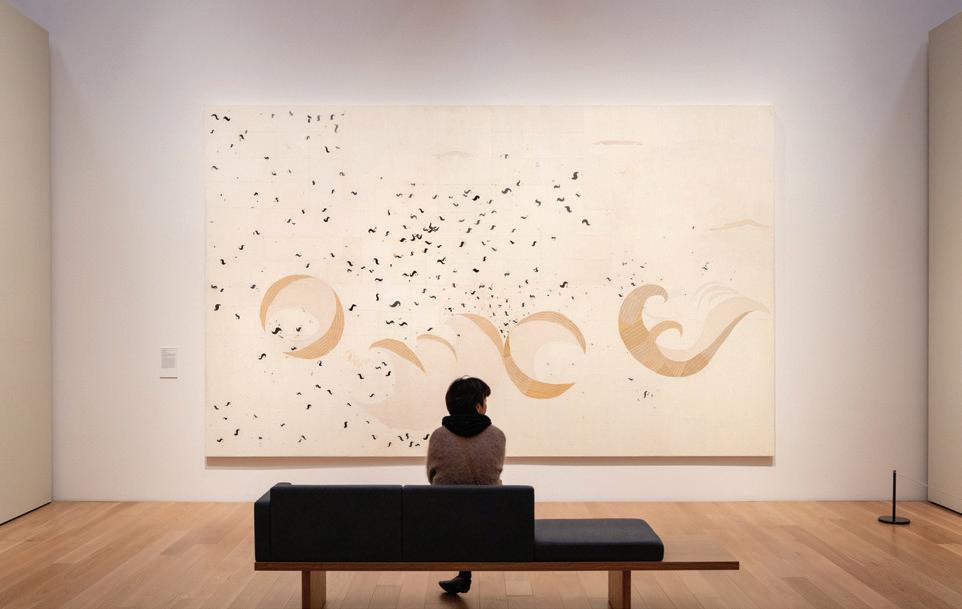
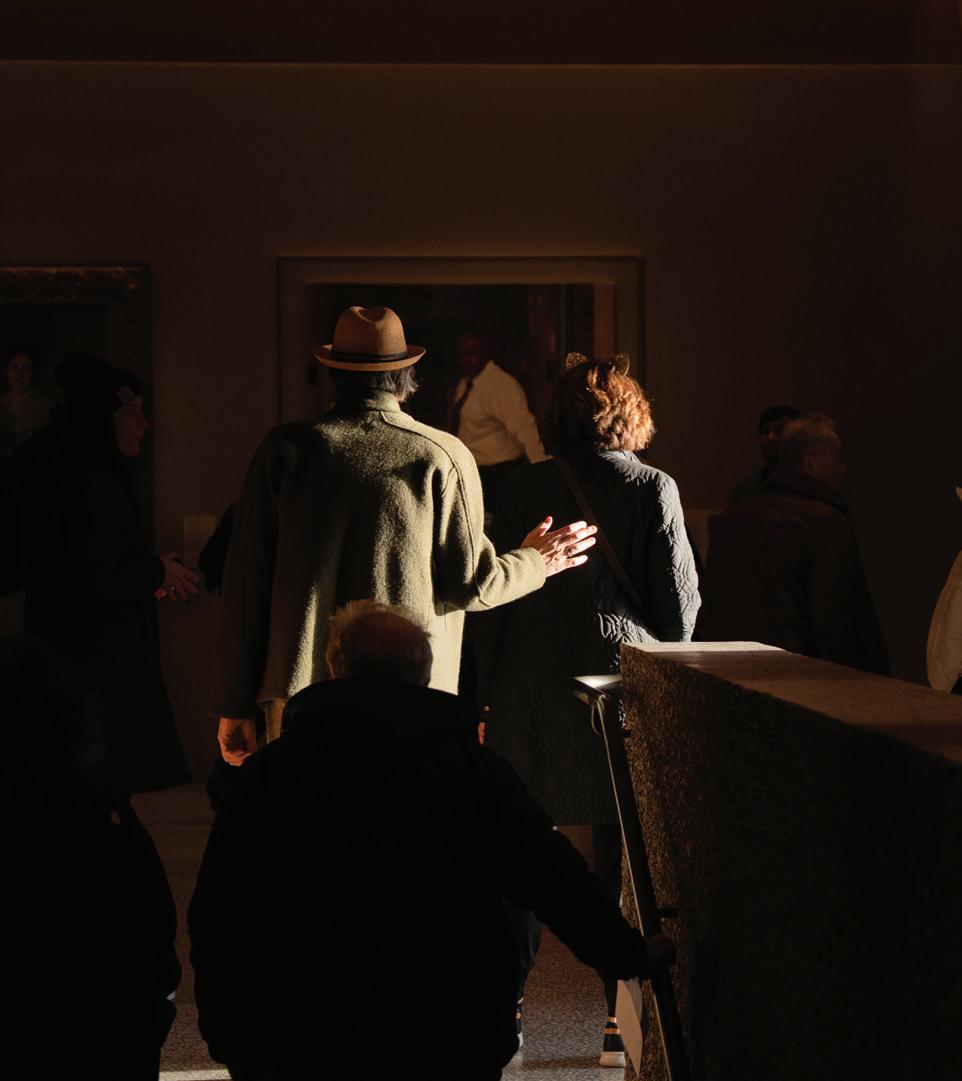
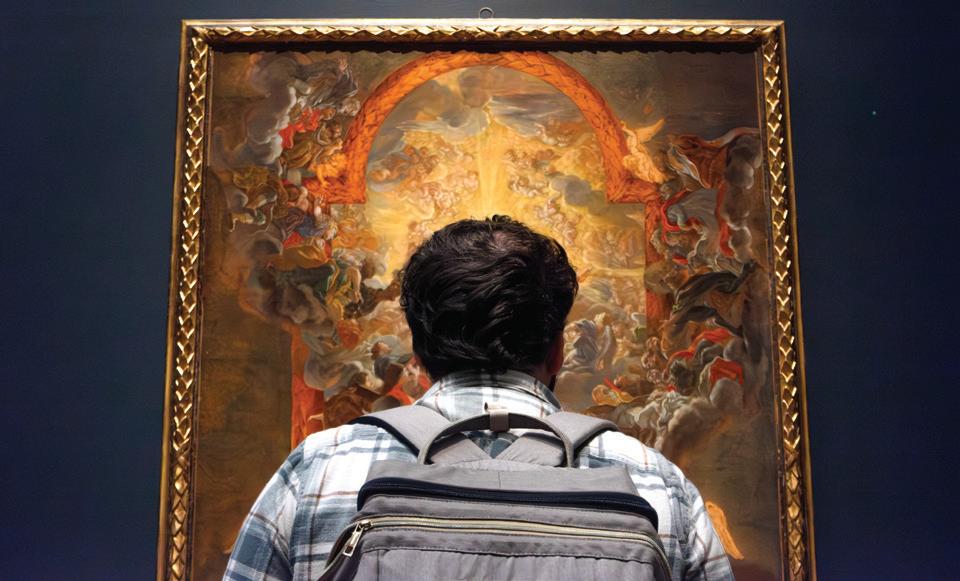
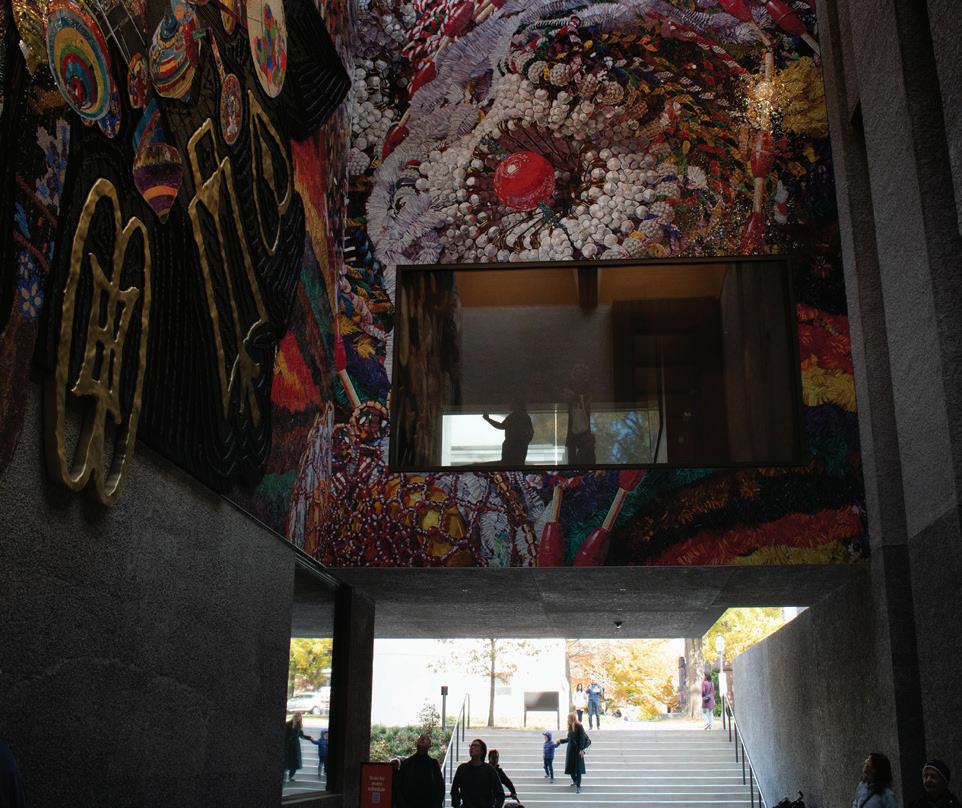
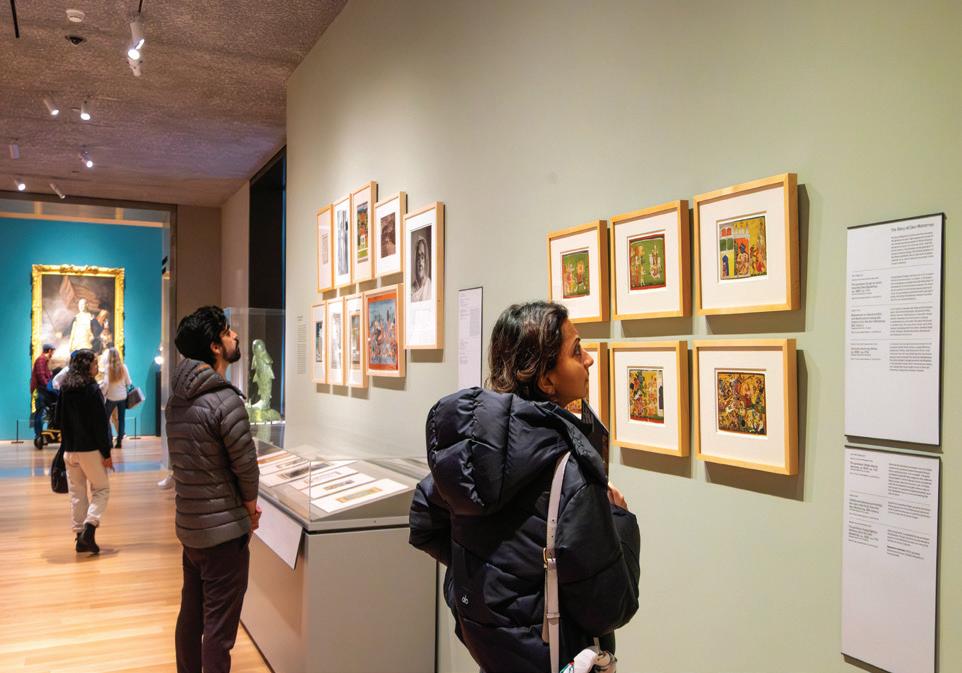
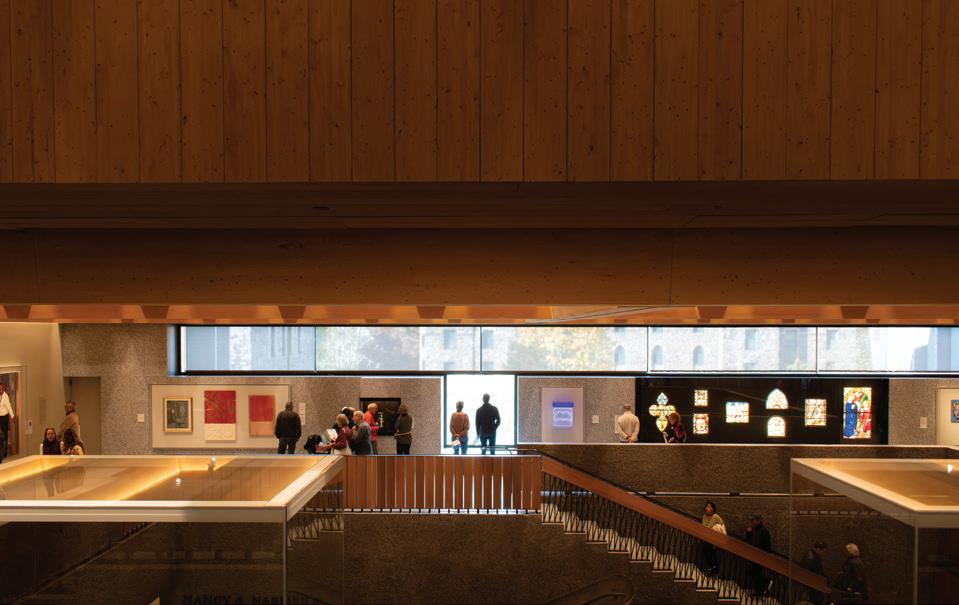
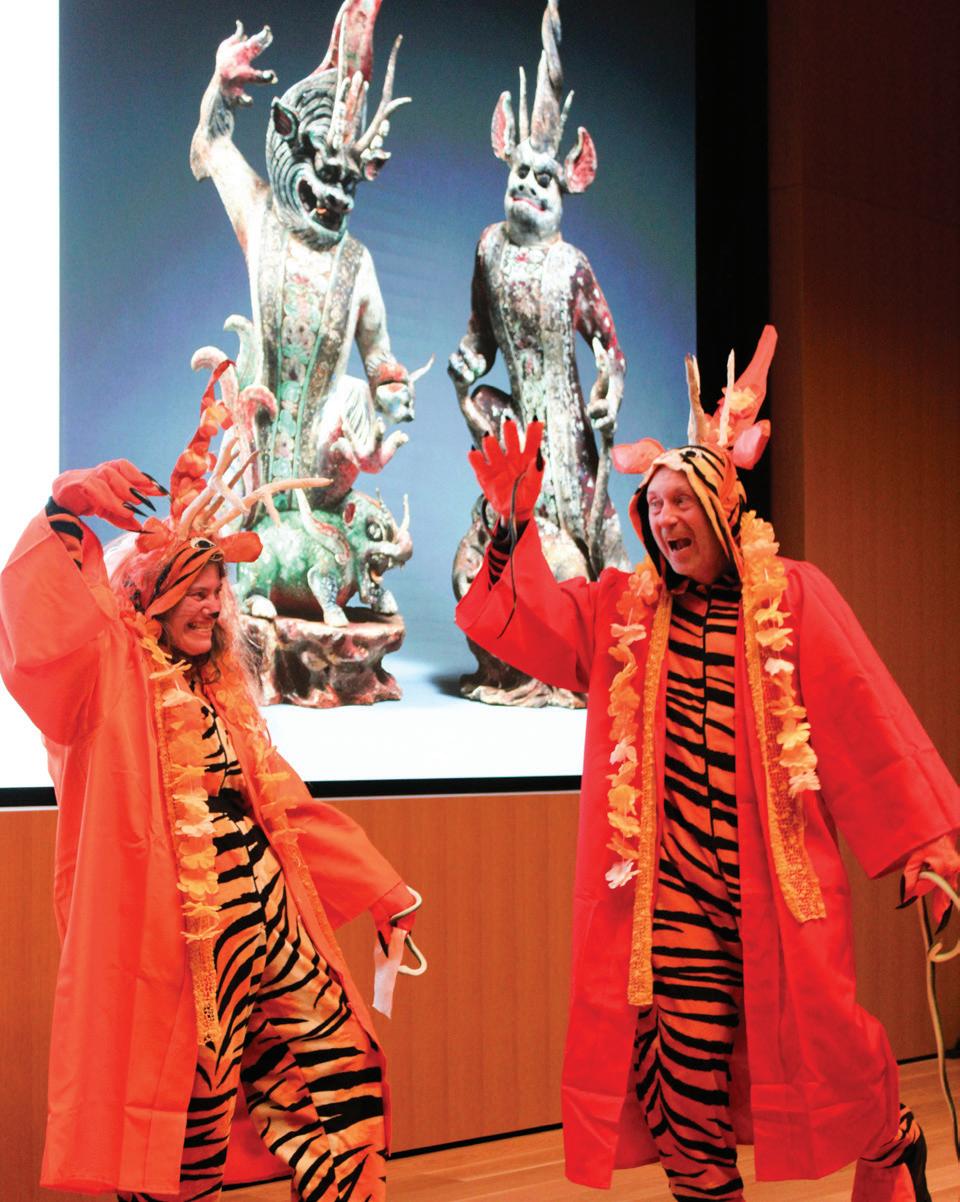
MC MCCOY / THE DAILY PRINCETONIAN
KATHARINE SHEA / THE DAILY PRINCETONIAN
SIENA SYDENHAM / THE DAILY PRINCETONIAN
SIENA SYDENHAM / THE DAILY PRINCETONIAN
CALVIN KENJIRO GROVER / THE DAILY PRINCETONIAN
CALVIN KENJIRO GROVER / THE DAILY PRINCETONIAN
KATHARINE SHEA / THE DAILY PRINCETONIAN
KATHARINE SHEA / THE DAILY PRINCETONIAN
MC COY / THE DAILY PRINCETONIAN
CALVIN KENJIRO GROVER / THE DAILY PRINCETONIAN
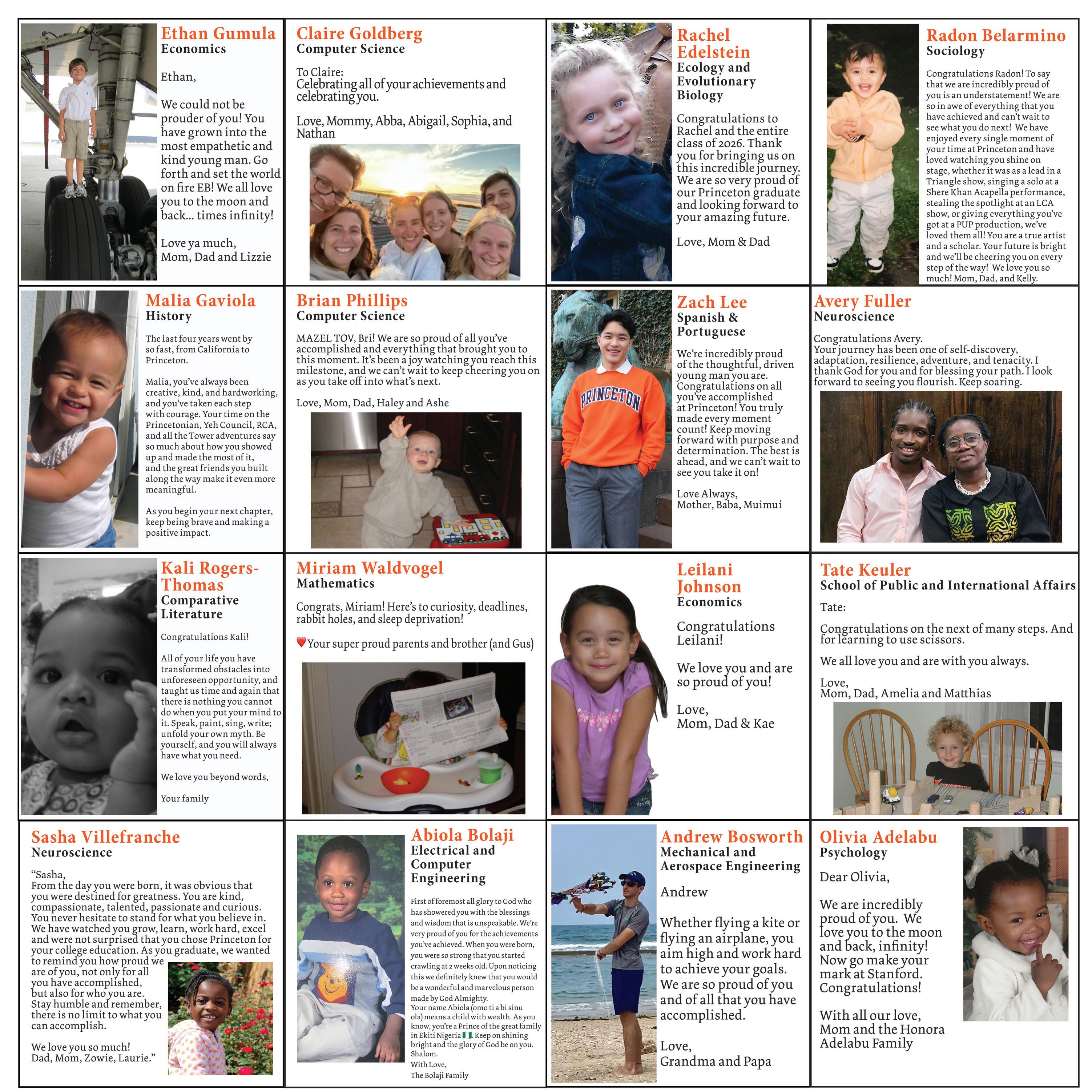
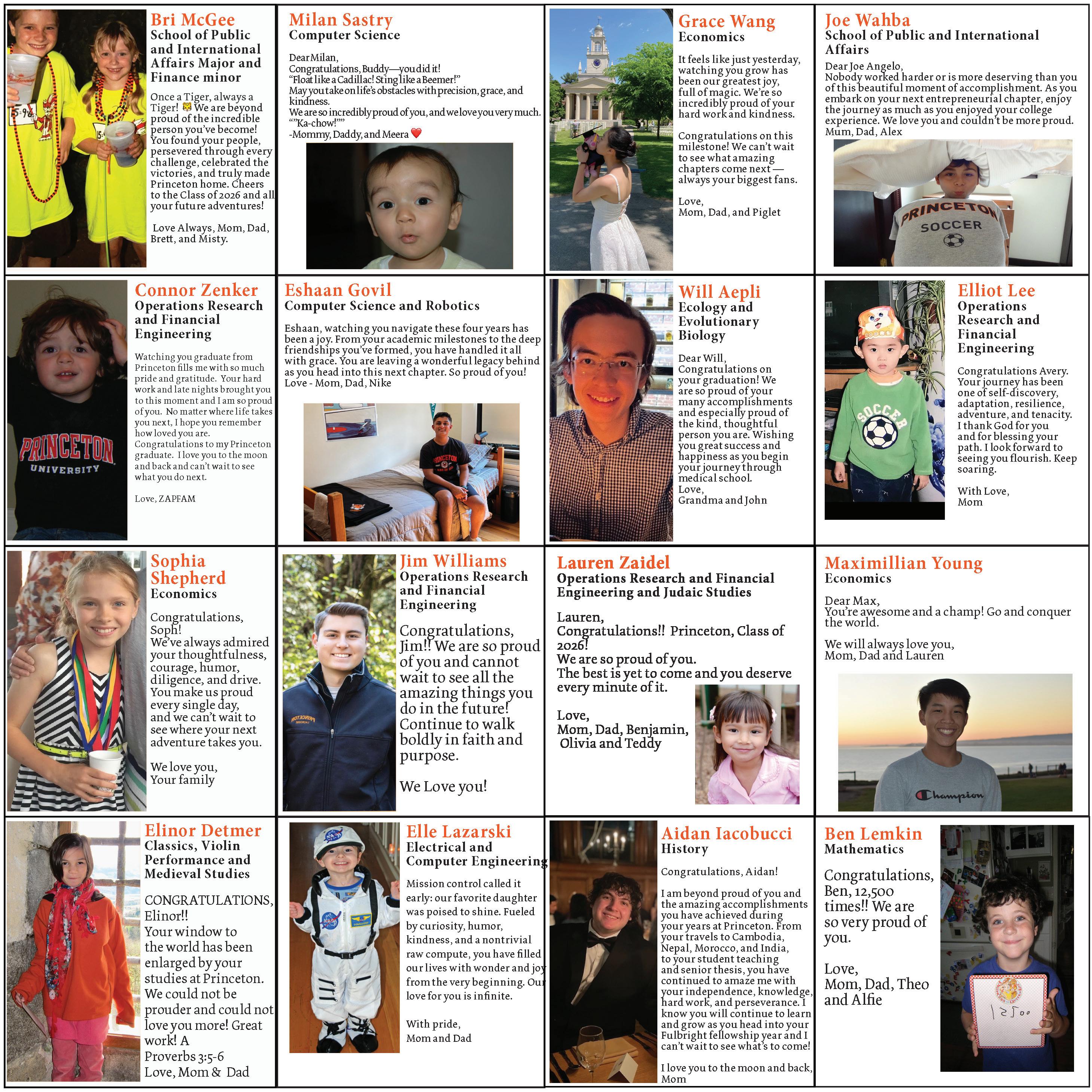
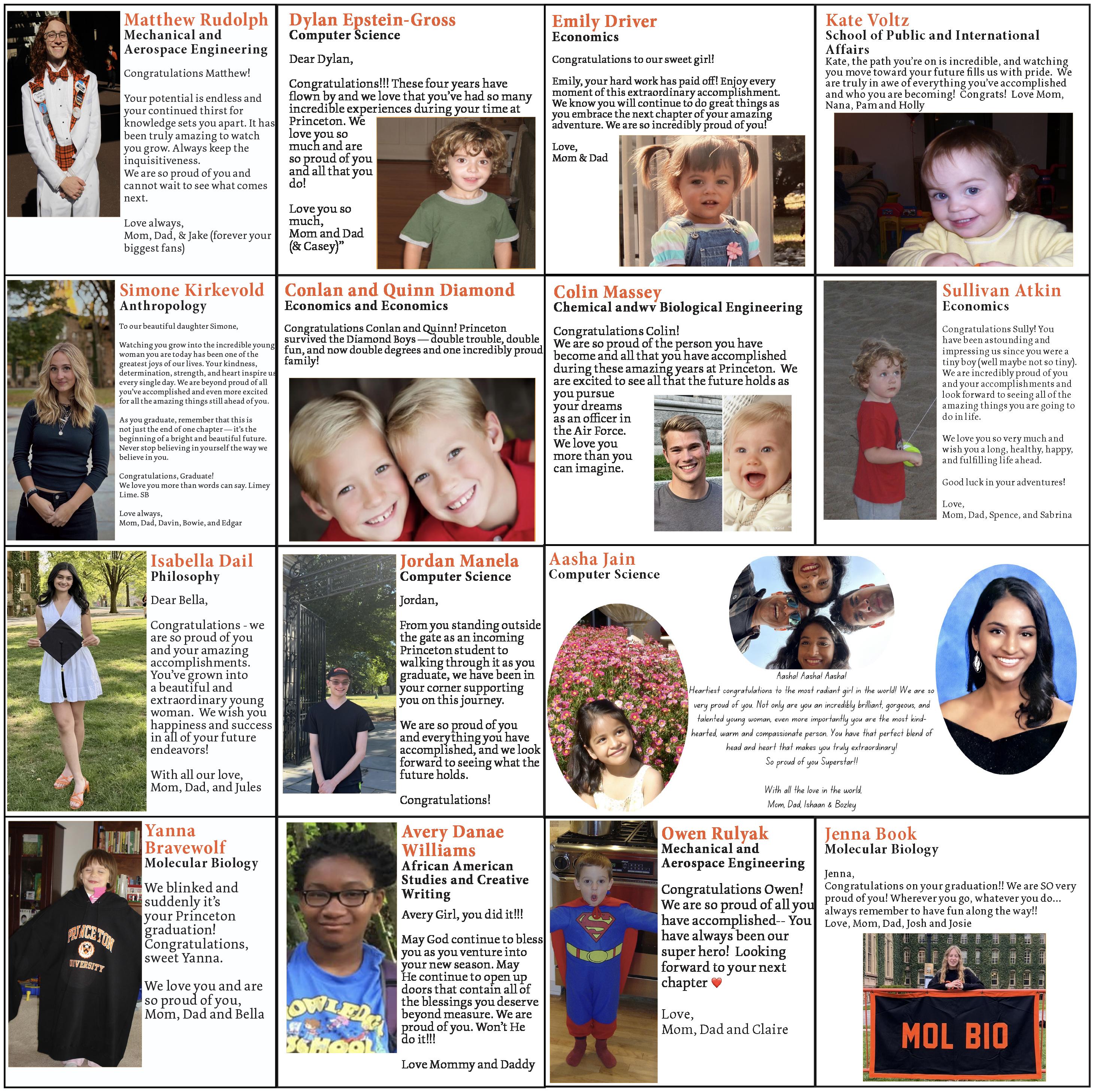
Farewell
By Minna Abdella Class of 2026 President

Great Class of 2026. The Greatest Class. Congratulations, Congratulations, Congratulations! Four years ago we came to Princeton with dreams larger than ourselves. From every corner of the world, we came here to further ourselves and to do it all alongside one another. Our hopes of building friendships, memories, and finding a home at Princeton began to come true in our freshman year.
Our first month was marked by Frosh Week, which we somehow were not allowed to actually attend, and questioning the mystery of what was moist about moist cloist while Cloister still existed. Our CA/OA/DDA and zee groups became the first people we knew on campus, and the ones we would nod at across campus for the next four years. We arrived late to our first-ever class because we got lost and had to ask a construction worker for directions, and we spent the rest of the year cycling through fifty potential majors before committing to one. We loved our freshman seminars, hated our writing seminars, came the closest we ever would to a bonfire, and ended the year with Waka Flocka Flame.
Sophomore fall, we returned to campus experienced and excited to see everyone. Maybe your freshman year friend group fell apart but hopefully new friendships also blossomed. It is likely also the worst it ever got academically – shoutout pre-meds. Spring brought Bicker, the process we all swore we would not let get to us and which got to all of us anyway, and on the other side of it, it also brought us our second homes. AB students joined the BSEs and finally declared majors. Things started looking up.
Junior year, we were upperclassmen, affiliated with our eating clubs, co-ops, or were independent.
We took on leadership roles and became RCAs, PAAs, CLAs, and officers of the extracurriculars we’d loved since freshman fall. We chased return offers from our summer internships and could not wait to update our LinkedIns. We wrote our first JPs and discovered we really are academics (well obviously). And enjoyed possibly our only non-rainy Lawnparties with A Boogie.
And then senior year, where we returned from what we now know was our last normal summer before being officially considered unemployed. We enjoyed our alternating biweekly Sakrid coffee tabs and Ivy Inn pub nights. We started appreciating what we once thought was mundane and realizing any Tuesday afternoon is now finite. I watched you do your best to contribute to the intra-Princetonian marriage rate. And we wrote books… actual books. And, of course, made sure our Instagram stories knew. *Some of us* made an unexpected best friend in Claude. And Fetty Wap sent us off to dead week, reunions, and eventually Commencement.
Now we are walking out of the Fitzrandolph Gates with even greater dreams than when we first arrived, but with a plan to achieve those dreams. We built this experience together. Princeton would not be the same without you. Not the late nights, not the friendships, not the wins, not the small moments that turned out to mean the most. Wherever we end up, and I have no doubt this class will end up everywhere, doing everything, changing the world in the greatest ways we can’t yet picture, always remember the people who were here with you and that at Princeton you have a home forever. Congratulations, 2026. Go and be great. Three cheers.

BROOKE MCCARTHY / THE DAILY PRINCETONIAN