of operational principles in exchange for funding advantages
A White House offcial told The Wall Street Journal that the schools were chosen for their commitment to ‘higherquality education’
ISHA CHITIRALA AND FINN RYAN Senior Reporters
Penn is one of nine schools that the White House approached on Wednesday requesting adherence to a set of principles in order to receive preferential funding treatment, according to The Wall Street Journal.
The memo — titled the “Compact for Academic Excellence in Higher Education” — laid forth 10 guidelines that would govern Penn’s admissions, pricing, and hiring practices, according to the Journal. In exchange, higher education institutions that sign the agreement will receive “multiple positive benefits,” including “substantial and meaningful federal grants.” Universities are “free to develop models and values other than those” offered in the memo, but only if the institution chooses to forgo federal benefits, the document stated.
On Sept. 25, The Washington Post reported preliminary details about the compact agreement from two senior White House officials.
A University spokesperson declined The Daily Pennsylvanian’s request for comment. The White House could not be reached for comment amid the ongoing government shutdown.
The guidelines included banning the use of race or sex in hiring and admissions.
The memo additionally outlined a requirement that universities freeze tuition for five years, the Journal reported. In February, the University Board of Trustees voted to raise tuition costs by 3.7% for the 2025-26 academic year — a practice that has been consistent across recent years.
It also included a provision instructing institutions
See COMPACT, page 7
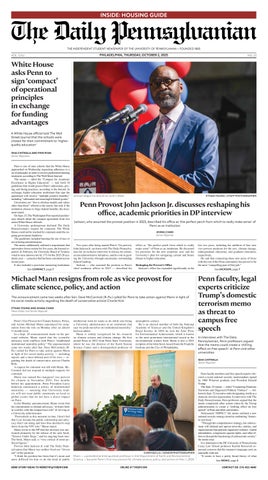
began his tenure on June 1, 2023.
Penn Provost John Jackson Jr. discusses reshaping his ofce, academic priorities in DP interview
Jackson, who assumed the provost position in 2023, described his offce as ‘the perfect perch from which to really make sense’ of Penn as an institution
AYANA
CHARI Senior Reporter
Two years after being named Penn’s 31st provost, John Jackson Jr. sat down with The Daily Pennsylvanian for an exclusive interview to discuss his tenure, recent administrative initiatives, and his role in guiding the University through uncertainty surrounding federal funding.
Jackson — who assumed the position as Penn’s chief academic officer in 2023 — described his
office as “the perfect perch from which to really make sense” of Penn as an institution. He discussed his priorities for the new academic year and the University’s plan for navigating current and future threats to higher education.
Reshaping the Provost’s Office Jackson’s office has expanded significantly in the
Michael Mann resigns from role as vice provost for climate science, policy, and action
The announcement came two weeks after Sen. Dave McCormick (R-Pa.) called for Penn to take action against Mann in light of his social media activity regarding the death of conservative activist Charlie Kirk
ETHAN YOUNG AND AYANA CHARI
News Editor and Senior Reporter
Penn’s Vice Provost for Climate Science, Policy, and Action Michael Mann announced his resignation from the role on Monday after an almost 11-month term.
In a Sept. 29 announcement made on his personal website, Mann stated that his scientific advocacy work conflicts with Penn’s “established institutional neutrality policy.” The announcement came two weeks after Sen. Dave McCormick (RPa.) called for Penn to take action against Mann in light of his social media activity — including reposts and a since-deleted post of his own — regarding the death of conservative activist Charlie Kirk.
A request for comment was left with Mann. McCormick did not respond to multiple requests for comment.
Mann was named the inaugural vice provost for climate in November 2024. Two months before his appointment, Penn President Larry Jameson announced a policy of institutional neutrality — meaning that University leaders will not issue public statements on local or global events that do not have a direct impact on Penn.
In the Monday announcement, Mann wrote that his commitment to climate advocacy “at times feels in conflict with the nonpartisan role” of serving as a University administrator.
“Particularly at this moment in time, I don’t feel that I can forsake the public scholarship and advocacy that I am doing and have thus decided to step down from the VPC role,” Mann stated.
Mann wrote to the DP that the decision was motivated primarily by the release of his new book, “Science Under Siege,” and his ongoing book tour. The book, Mann said, is “very critical of some political figures.”
Provost John Jackson Jr. told The Daily Pennsylvanian that Mann was neither fired nor “driven out” of the position.
“I think his position has been that it’s more and more difficult for him to do the kind of public
intellectual work he wants to do while also being a University administrator at an institution that says we pride ourselves on institutional neutrality,” Jackson added.
Mann is widely recognized for his research on climate science and climate change. He first joined Penn in 2022 from Penn State University, where he was the director of the Earth System Science Center and a distinguished professor of
atmospheric science.
He is an elected member of both the National Academy of Sciences and the United Kingdom’s Royal Society. In 2019, he won the Tyler Prize for Environmental Achievement, which is known as the most prominent international award in the environmental science field. Mann is also a 2023 recipient of the John Scott Award from the Franklin Institute and the City of Philadelphia.
last two years, including the addition of four new vice provost positions for the arts, climate change, undergraduate education, and graduate education, respectively.
He said that connecting these new areas of focus with the rest of the Penn community has proved to be the most “compelling part of [his] job.”
See JACKSON, page 7
Penn faculty, legal experts criticize Trump’s domestic terrorism memo as threat to campus free speech
In interviews with The Daily Pennsylvanian, Penn professors argued that the memo could create a ‘chilling effect on free speech’ at Penn and other universities
ISHA CHITIRALA Senior Reporter
Penn faculty members and free speech experts criticized a recent national security memorandum signed by 1968 Wharton graduate and President Donald Trump. The Sept. 25 memo — titled “Countering Domestic Terrorism and Organized Political Violence” — followed a Sept. 22 executive order designating Antifa as a domestic terrorist organization. In interviews with The Daily Pennsylvanian, Penn professors argued that the memo compounds other actions taken by the Trump administration to create a “chilling effect on free speech” at Penn and other universities. Nicknamed “NSPM-7,” the memo outlined a new national security strategy aimed at
society,” the memo read.
In a statement to the DP, University of Pennsylvania Carey Law School professor Kermit Roosevelt expressed concerns that the measure’s language casts an unusually wide net.
“It seems to have a pretty broad theory of what See MEMO, page 3
CHENYAO LIU | SENIOR PHOTOGRAPHER
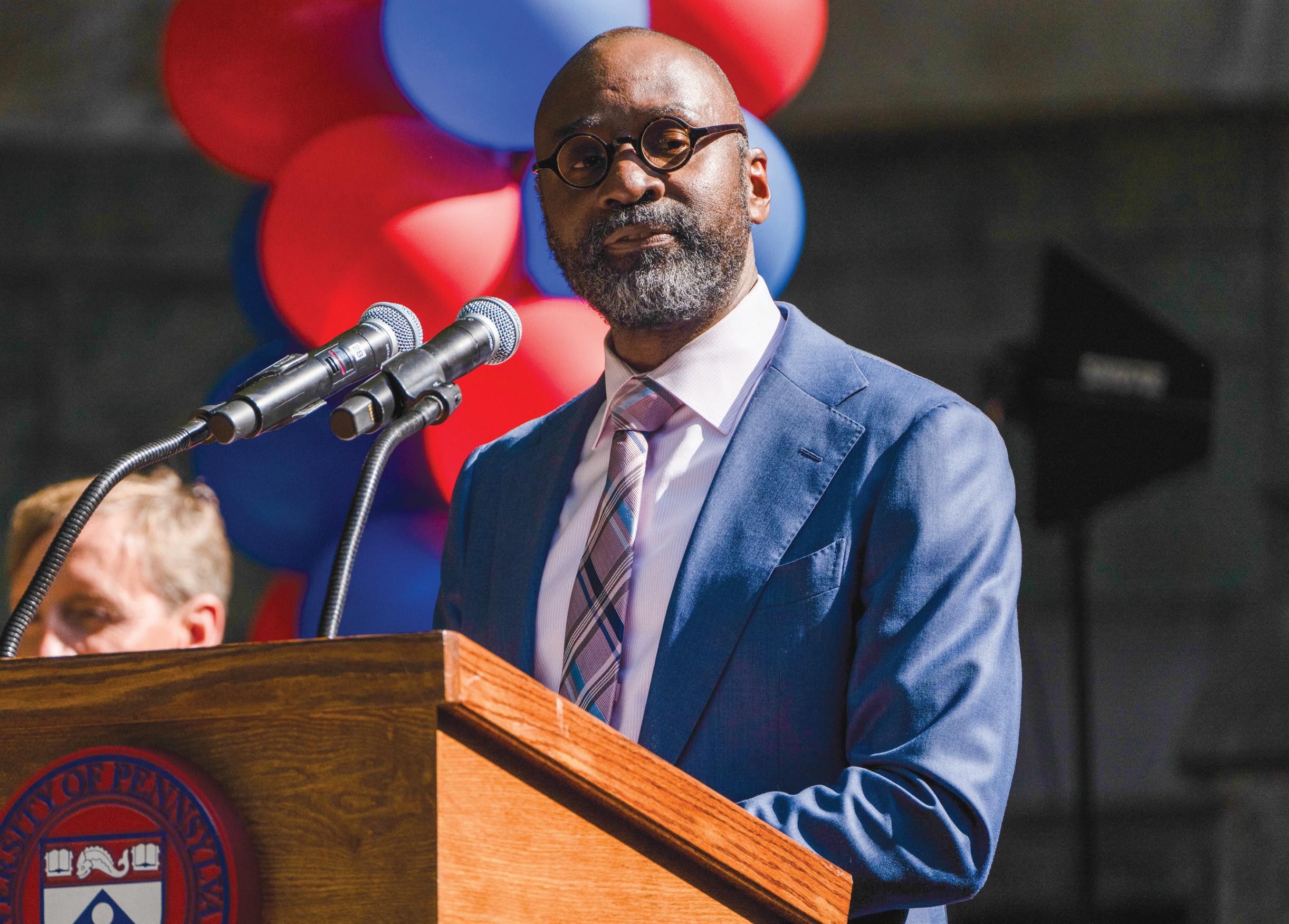
became Penn’s first vice provost for climate science, policy, and action on Nov. 1, 2024.
ETHAN YOUNG | STAFF PHOTOGRAPHER
Jackson
Judge dismisses lawsuit alleging Penn, elite universities engaged in price-fixing for divorced parents
The Sept. 25 order dismissed the suit outright, arguing that the plaintiff’s arguments lacked plausibility
GABRIELLE OSTAD
Staff Reporter
A federal judge dismissed a lawsuit last week that accused the College Board and 40 elite universities — including Penn — of engaging in a price-fixing scheme that inflated tuition costs for students with divorced or separated parents.
The lawsuit, initially filed in an Illinois district court in October 2024, alleged that the universities purposely withheld funding from applicants by evaluating the financial backgrounds of noncustodial parents during deliberations over financial aid packages. The Sept. 25 order dismissed the suit outright, arguing that the plaintiff’s arguments lacked plausibility.
“Nothing in Plaintiffs’ complaint suggests that the University Defendants exchanged their own internal financial aid decisionmaking processes or guidelines or otherwise shared with the other University Defendants the amount of financial aid they planned to offer a particular student,” United States District Judge Sara Ellis wrote.
“Nor does the complaint allege that the University Defendants all agreed on the same exact formula for calculating financial aid based on the NCP financial information.”
A University spokesperson declined The Daily
Pennsylvanian’s request for comment on the dismissal.
The class-action lawsuit — filed by the law firm Hagens Berman on behalf of a student at Boston University and a former Cornell University student — alleged that a price-fixing practice began in 2006, when the College Board implemented a policy requiring financial information for both parents, regardless of custody arrangements, in its College Scholarship Service Profile.
Penn requires all applicants seeking financial aid to complete the CSS Profile, and applicants with noncustodial parents must also submit financial information from both parents.
After the case was filed, Penn implemented changes to its financial aid process.
Students are now only required to submit financial information for a noncustodial parent once. In addition, they only need to provide the W-2 form — which details earned wages — for their primary parent.
The dismissal concedes that colleges requiring financial information from noncustodial parents generally increased the cost of tuition but argued that the plaintiffs failed to provide evidence of a price-fixing
2013 Wharton graduate Charlie Javice sentenced to seven years in prison for fraud
Her 85-month prison term — for defrauding JPMorgan Chase in its $175 million purchase of her startup — will be followed by three years of supervised release
scheme.
“The complaint also leaves unexplained how or why this particular subset of institutions that require NCP financial information formed an agreement while leaving out others that also collect and use the same information in their financial aid determinations,” Ellis wrote.
David Gringer — an attorney at WilmerHale representing the College Board and Penn — told The Washington Post that the court “correctly held that this case is nothing like a price-fixing conspiracy.”
“Collecting financial information from both an applicant’s parents makes good sense by ensuring that financial aid awards go to those who would benefit
sentence” for Javice.
Rowan — who served as Frank’s lead investor, according to Javice in 2018 — described the letter as an opportunity to “offer a more complete picture of who Charlie is as a person.”
He also emphasized Javice’s “resilience, intelligence and dedication to helping people in need,” adding that she has remained a “positive and upbeat person through these challenging past years.”
The trial investigated allegations against Javice and Frank’s Chief Growth Officer Olivier Amar for falsifying records to inflate Frank’s customer base tenfold in order to secure the company’s acquisition.
from the assistance,” Gringer
Javice countersued JPMorgan in 2023, claiming that four million users did go on Frank’s website to read articles about financial aid processes. She did not dispute that less than half a million users used the platform to complete financial aid forms.
2013 Wharton graduate Charlie Javice was sentenced to just over seven years in federal prison on Monday for defrauding JPMorgan Chase in its $175 million purchase of her startup, Frank.
Her 85-month prison term will be followed by three years of supervised release. Following her conviction in March, federal prosecutors initially recommended that Javice serve 12 years in prison after she was found to have exaggerated the customer base of her financial aid assistance program.
During the five-week trial — which began in February and concluded on March 28 in New York — a 12-person jury found Javice guilty on all four of the counts she faced: bank fraud, securities fraud, wire fraud, and conspiracy.
1984 Wharton graduate and Wharton Board of Advisors Chair Marc Rowan sent a letter of support on Sept. 11 to Hellerstein urging the court to “impose a lenient
“I am deeply sorry, and I am asking with all my heart for forgiveness,” Javice told senior United States district court judge Alvin Hellerstein during the trial, according to Bloomberg. “If it were within my power, I would never make the same mistake.”
JPMorgan filed a lawsuit against Javice in December 2022 — one month after firing her. The bank accused Javice of fabricating more than four million user accounts despite maintaining less than 300,000, according to the lawsuit.
In 2018, Frank settled with the federal government over allegations that the startup misrepresented its connection to the Department of Education.
Two years later, members of Congress wrote a bipartisan letter to the Federal Trade Commission claiming that Frank was misleading students by promoting a nonexistent universal application for COVID-19 pandemic-era student relief funds.










































































ELLIE PIRTLE | STAFF PHOTOGRAPHER
A federal judge dropped a lawsuit last week that accused College Board and 40 elite universities, including Penn, of engaging in a price-fixing scheme.
PHOTO COURTESY OF THE WHARTON SCHOOL Javice was sentenced on Sept. 29.
JACK GUERIN AND FINN RYAN
Senior Reporters
Penn Hillel hosts Eagles running back A.J. Dillon to discuss Jewish identity, athletic career
The Sept. 29 event — part of Hillel’s Jackie Reses Speaker Series — spotlighted Dillon’s career as an example of an individual who competes at the highest level ‘while balancing’ their Jewish identity
SAANVI RAM Contributing Reporter
Penn Hillel hosted Philadelphia Eagles running back A.J. Dillon on Monday to discuss how his professional football career intersects with his Jewish identity.
The Sept. 29 event — part of Hillel’s Jackie Reses Speaker Series — spotlighted Dillon’s career as an example of an individual who competes at the highest level “while balancing” their Jewish identity. The conversation was moderated by College senior and Hillel co-President Ethan Farber, along with Wharton sophomore Orly Sedransk.
“My Jewish journey wasn’t necessarily linear,” Dillon said during the event. “My mom’s side of my family is Jewish, and we did all the traditions and everything growing up. But once I started to get more into sports … [the] schedule gets a little busier.”
Dillon discussed the importance of using his platform as a professional athlete to help local communities.
“I think I have an unbelievable opportunity … and also a lot of responsibility,” he said. “Let’s try to inspire others to do more for others, rather than themselves, which is very hard to do, but whenever I get a chance, I try to do that.”
In July 2024, Dillon and his wife Gabrielle Dillon launched the Dillon Family Foundation to address food insecurity and support families across the nation.
Dillon described the foundation as a personal
“blessing,” adding that his team has been “able to hopefully change a lot of lives.”
He also mentioned his struggle balancing his athletic commitments with his Jewish identity.
“I think there’s no perfect answer,” Dillon said.
“The schedule can get hectic, but I think it’s trial and error with trying to figure out what works, and that might change in a couple months or a year as the season goes on.”
He continued that while “balancing faith” and work can be “challenging,” he strives to “be mindful of the things that are important.”
Sedransk, who also plays for the Penn women’s lacrosse team, highlighted her response to Dillon’s remarks in an interview with The Daily Pennsylvanian.
“I loved what he said about his pregame ritual: ‘I’ve done this before, and I’ll do it again,’” Sedransk said.
“I love that as a mantra I can start incorporating because I think it’s really easy to get caught up in the bad days and have a hard time moving on.”
Dillon similarly encouraged Jewish students to take advantage of their faith and community in an interview with the DP following the event.
“The great thing about being part of the Jewish community is you have a sense of belonging,” he said. “The reality is there’s not as many Jewish athletes. It’s always great when you are able to do something, no matter how big or how small, and have a platform.”


foments political violence — educational institutions that radicalize students through extremism on race and gender are mentioned explicitly,” Roosevelt wrote, pointing to language in NSPM-7 that describes education as a potential medium for “organized campaigns of targeted intimidation, radicalization, threats, and violence.”
The memo also included a list of “common threads animating this violent conduct” — including “antiAmericanism,” “anti-capitalism,” and “extremism on migration, race, and gender.”
Roosevelt added that he expects the memo to be “pretty easily read” as a “pretext to harass left-wing organizations and universities.”
A Penn spokesperson declined to comment on whether the memo will impact the University’s policies on open expression and protest.
History professor Jonathan Zimmerman described NSPM-7 as the latest move in a “recurring theme” from the Trump administration.
“The recurring theme is that we need to control people’s speech and ideas, and we need to do it from the executive chamber,” he told the DP.
Zimmerman cited the Trump administration’s possible plan to alter exhibits depicting slavery at the President’s House Site in Independence National Historical Park as an example of other actions taken by the administration that target speech.
Another controversial move came in January, when the administration signed a separate executive order directing federal agencies to identify and deport noncitizen participants — including college students — of pro-Palestinian protests. On Tuesday, a district judge in Boston ruled that actions taken by the Department of Homeland Security and the Department of State following the January order had “deliberately “ and “intentionally” suppressed “the rights to freedom of speech and peacefully to assemble” of the affected students.
In NSPM-7, protests against Trump’s immigration policy and police violence — referred to respectively as “Riots in Los Angeles and Portland” and “anti-police and ‘criminal justice’ riots” — are cited as examples of “domestic terrorism and organized political violence” the administration seeks to crack down on.
According to Zimmerman, protest — which has been a notable feature on Penn’s campus over the past few years — is a key component of the college experience.
“College was made for protest,” Zimmerman told the DP. “It’s been a hotbed of protest since it began. The reason [for this] is that college is supposed to expose us to new ideas and inspire us to act on them.”
In an interview with the DP, Penn Carey Law professor Claire Finkelstein highlighted the use of the language “domestic terrorism” as opposed to “crime.” Finkelstein said that the “terrorism” designation is not unique to the Trump administration but rather a product of “the war on terror.” She claimed this language provides the federal government with “powers” and “legitimacy” that it would not have if it characterized these actions as “crime.”
Finkelstein also hypothesized that the designation “may give a basis for invoking federal agents … for

the purpose of doing counterterrorism work,” potentially signaling a shift from the Trump administration’s formal use of the National Guard — which has recently faced legal challenges.
In an amicus brief filed in August, Finkelstein — alongside the Penn Center for Ethics and the Rule of Law — argued that Trump’s attempt to federalize the California National Guard against the wishes of California Gov. Gavin Newsom posed serious constitutional risks.
Multiple professors also criticized the Trump administration’s emphasis on “left-wing” violence, which they argued is not responsible for the majority of political violence in the United States.
“In fact, there is much more right-wing violence than left-wing violence over time, over the history of this country,” Finkelstein told the DP.
In a statement provided to the DP, Roosevelt stated that the “problems” with the memo are that it “focuses on left-wing ideology, when most political violence is perpetrated by right-wing actors.”
A recent study conducted by the Center for Strategic and International Studies found that in the past decade, “despite the increase in the number of left-wing incidents, left-wing attacks have killed 13 victims, compared with 112 and 82 victims for right-wing and jihadist attacks, respectively.”
Vic Walczak — who serves as the legal director for the American Civil Liberties Union of Pennsylvania — told the DP that there is “no basis in law for what [the Trump administration] is trying to force institutions to do” and that a possible crackdown on speech and protests at college campuses could be challenged in court.
However, Walczak added that institutions may “capitulate” despite the lack of legal basis, hoping to “avoid” the “fight, expense, publicity, [and] hassle” of a long legal battle.
In July, Penn decided to enter into a settlement with the White House to recoup $175 million in frozen funding. The University’s agreement — which several Trump administration officials suggested could serve as a “model” for other institutions — was quickly followed by the announcements of settlements by both Brown University and Columbia University, along with the start of similar negotiations with other peer institutions.
“Ultimately, we would certainly encourage the University of Pennsylvania to stand up to such bullying and intimidation tactics from the White House,” Walczak concluded. “The First Amendment is a bedrock of our democracy, social justice, and ability to make progress in this country.” MEMO, from front page




EBUNOLUWA ADESIDA | STAFF PHOTOGRAPHER
Dillon pictured speaking at Hillel on Sept. 29.
ABHIRAM JUVVADI | STAFF PHOTOGRAPHER Trump pictured speaking at an event on June 10, 2023.
Penn must protect its Latine students
LA CHISMOSA | We must establish safety measures to combat Latine discrimination
On Sept. 8, the Supreme Court of the United States overruled a lower court’s order that prevented federal agents from stopping and questioning individuals “about their immigration status based solely on factors like their ethnicity.”
These factors included flagging down individuals speaking English with an accent and individuals who are heard speaking Spanish. Throughout my time at The Daily Pennsylvanian, I have expressed the importance I associate with speaking my first language. Since then, the weight of said importance has only grown.
Once, I was talking to my father on the phone when I was stopped by a woman who asked if I was speaking Spanish.
After I said yes, she told me she was Puerto Rican and expressed how she rarely hears the language on campus. She was happy to learn that there was a thriving Latine community at the University. For that brief moment, our shared language brought us together, which brightened my entire day. Moments like these are crucial when a plethora of recent policies (including the aforementioned Supreme Court decision) have created an environment that breeds fear for ethnic minorities — particularly impressionable students. These worries are not ill-founded. U.S. residents have been wrongfully deported, and such grave decisions have been reduced to “administrative errors,” showcasing that there is, unfortunately, good reason to be concerned.
For example, a friend of mine was nearly denied entry to her domestic flight due to her Puerto Rican ID (and, to save you the Google search, this was prior to the federal
law change earlier this year). Moreover, parents have advised us to actively carry our passports to class due to the risk of being questioned. These are just a few key examples, but be aware that there are numerous instances such as these that demonstrate the biases targeting Latines. More importantly, notice I present these examples as a U.S. citizen myself. The fear is exponentially worse for Latine students on visas. I have friends who are worried to go out, worried about future job offers because of the decrease in visa sponsorship by employers (with new petitions for H-1B visas requiring a $100,000 fee), et cetera.
For students already adjusting to a completely different culture, the additional concern of being questioned worsens Latine students’ abilities to feel a sense of belonging on campus. While earlier in April the University updated students on student visa terminations, new orders and policy initiatives exacerbate anxieties. Considering this, the University should, at the very least, further prioritize fostering a safe environment for concerned students. The University’s failure to act would not only continue to breed fear among Penn’s community but would also actively disincentivize potential students from applying. If Penn benefits from students’ accomplishments (whether that be by maintaining its graduation rate, retention rate, or post-graduate success) and wishes to continue doing so, it must establish measures that make its students feel safe, beyond an FAQ page. Penn, along with various universities and colleges across the nation, is overflowing with intelligence and creativity from Latine students — genius that is
Wharton really isn’t evil

actively being stifled by the danger presented by deportations and the increasing requirements that may be imposed to acquire U.S. citizenship.
You may justifiably question why I, as a U.S. citizen, am the one writing this piece. The answer is tied to the fear I am actively discussing. With policy decisions actively placing obstacle after obstacle in the process of naturalization, students who aim to eventually seek permanent citizenship may rightfully not want to risk their waning chances by speaking out against our political leaders.
In its aforementioned update regarding student visa revocation, the University
stated that it “deeply values its interna
tional community and remains dedicated to fostering an environment where stu
dents and scholars from around the world can thrive.” However, more needs to be done to evidence this commitment, as current mechanisms fail to counteract the fear generated by numerous discriminatory policy decisions.
BEATRIZ BÁEZ is a College junior from San Juan, Puerto Rico studying mathematics and political science. Her email is beabaez@sas.upenn.edu.
CHARLOTTE’S WEB | The Wharton School is the top business school in the United States for a reason
For the first few months of fall, Locust Walk gets overtaken by booths: cultural clubs, volunteering organizations, theater groups, and, of course, finance and consulting teams. It would take nearly your entire four years at Penn to hear everyone’s opinion on all 800 clubs on campus. But it only takes five minutes to hear about an overwhelming feeling seemingly taking over the student population: disdain for the Wharton School and preprofessionalism.
The critiques range from Wharton being too exclusive and competitive to the curriculum being unrepresentative of Penn’s diverse educational opportunities. As a student in the College of Arts and Sciences, I noticed this divide immediately upon arriving at Penn.
The disapproval surprised me because one of the aspects of Penn that I was most excited about is having access to the No. 1 business school in the country. Even though I’m in a different school, most Wharton opportunities are still open to all Penn students. No matter the major, business education is crucial for the current hyper-competitive job market we are preparing to enter.
While it’s undoubtedly important to follow your passions, it’s equally important to understand your personal finances and the reality of the economy around you. Understanding the business behind your passion is what makes it more attainable. However, with the stigma around Wharton, students are hesitant to take advantage of all
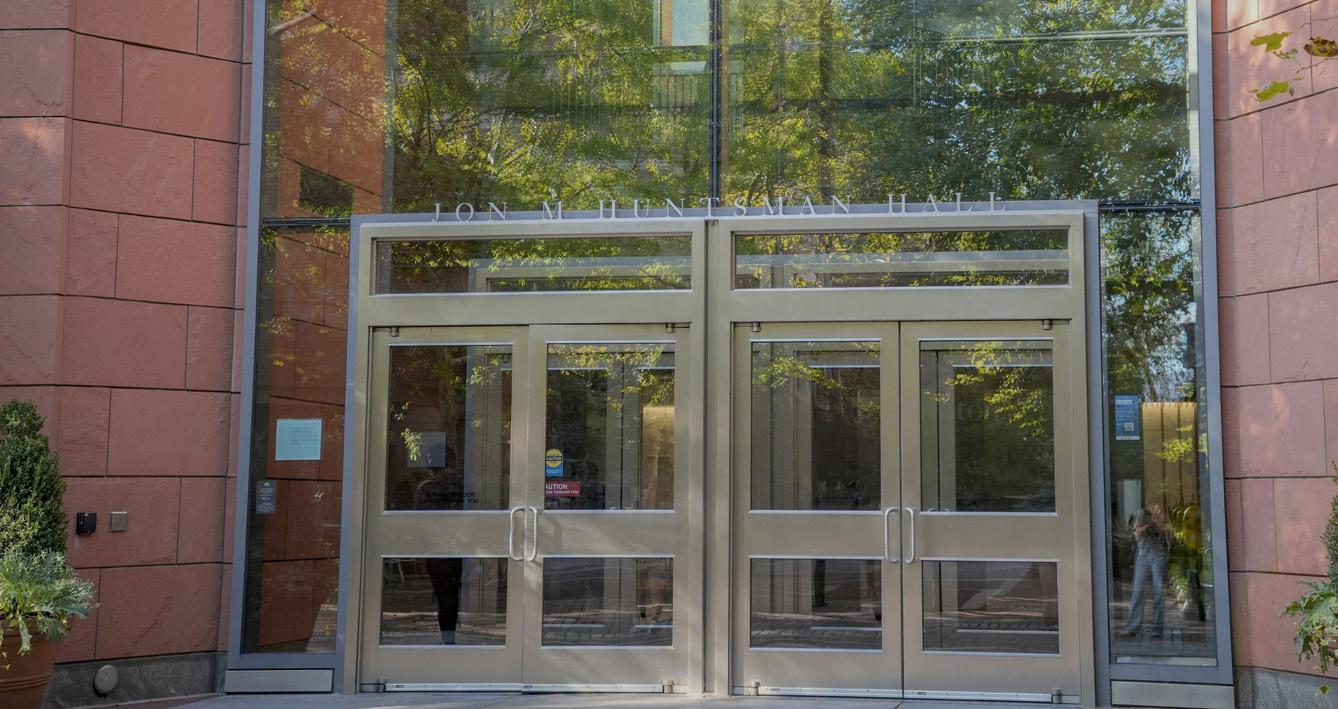
Columnist Charlotte Pulica highlights how Wharton’s reputation does not fully reflect the diverse opportunities it provides.
‘Privilege’ isn’t profane
that it has to offer. Besides just the classes, there are so many essential sessions and organizations that most of the student population never seeks out.
In all fairness, it’s no secret that Wharton is extremely competitive and exclusive. And while it’s easy to build up resentment — especially after getting a few “Thank you for your interest; however, we had an overwhelming number of applicants … ” emails — it can be hard to remember that Penn is a school known for its focus on preparing students for the job market. This preprofessionalism is exactly what we signed up for. Wharton’s competitiveness is just a glimpse into how intense the real labor market is. The culture at Penn is a rude awakening, but it’s nothing we shouldn’t expect in the future.
The truth is, Penn is a preprofessional school that is widely known for Wharton. While it gets a lot of hate, its success rate is undeniable proof of its effectiveness. As of 2024, the median income for a Penn graduate just one year out of college was $100,000, with 94.2% of students finding employment, higher education, or volunteering within six months of graduation. Wharton is the best business school in the nation for a reason, and that comes at the cost of being competitive and focused. This is the same way a chemistry degree comes at the cost of being stressed or a political science degree comes at the cost of having to be confrontational. These are the prices we pay for good results. While that may be difficult and frustrating, it doesn’t necessarily mean it’s bad. You
GLADYS’ GRIEVANCES | Privilege and personal merit aren’t mutually exclusive
As it’s used today, the term “privilege” was popularized as a means to describe inequality by women’s studies scholar Peggy McIntosh. In a 1988 essay, she listed 50 claimed examples of white and male privilege. In the decades since, the idea of “privilege” has become ingrained in mainstream political rhetoric. Now, however, instead of being used to critique societal imbalance, it’s more often deployed as a personal affront or attempt to discredit.
The very word “privilege” inspires indignation, whether it be on the basis of race, socioeconomic status, or perceived academic prestige. It’s difficult to deny, though, that students at elite institutions are among our nation’s most privileged: One in six students enrolled at an Ivy League institution has a parent in the top 1% of household income, and a 2017 study showed that 71% of Penn students hail from families in the top 20%. The stereotype of Ivy League snobbery, we then understand, is to large extent based in fact: Luxuries inconceivable to the majority of the country’s population exist in abundance at our school.
Despite the glaring statistics, the Penn community still shies away from speaking openly about privilege. The prevailing idea seems to be that thinking critically about or acknowledging one’s privilege negates any claim to personal accomplishment. The fact that Penn relishes in
marketing itself as diverse and accessible also fuels denial: We are encouraged to believe that truly anyone can be admitted provided that they’re willing to work hard enough. This contrast between Penn’s merit-based, open-armed branding and the undeniably privileged plurality further blinds us to the role of birthright benefit.
Privilege does not just present itself in the form of legacy status or admissions advantages — things as basic as WiFi, access to quality education, transportation, and literacy are all prerogatives assumed by aspirants to higher education. As of 2024, 54% of American adults read below the sixth-grade level, with 21% considered illiterate. This statistic already cleaves half of Americans from even beginning the steep climb to postsecondary education. Reliable health care, supportive mentors, and even being spoken to in “standard” English are all privileges we’ve each enjoyed. It is all too easy to forget that every step along the way requires knowledge and, by natural association, privilege that is too easily taken for granted. Of course, it is only natural to perceive and emphasize the privileges that others enjoy relative to you rather than yours relative to others. Clearly, some objective scale of entitlement exists at Penn: Children of millionaires learn
alongside first-generation and low-income students every year. However, undue emphasis on others’ comparative fortune is simply unproductive. We should be reminding ourselves that many things can be true at once: We can be both fortunate and talented, both grateful and industrious. There will always be those who are more connected or better off than we are — but to attend a school like Penn means that all of us, by definition, are in our own way beneficiaries of privilege.
Upon recognizing the opportunity that attending such a University represents, we can begin to understand why so many of our fellow citizens and students are disillusioned and increasingly resentful of elite institutions’ admissions practices and the matriculants’ resulting self-importance. We have created a system in which prestigious schools have become fortresses impenetrable by most of the general populace. Indeed, for some of our political leaders, emphasizing these schools’ ivory-tower status has proven effective at alienating and demonizing elite universities. Given that we’re students at one of the schools under siege, the way we handle our political caricaturization is crucial: Running from privilege only worsens this social divide. Confronting advantage does not nullify being deserving, intelligent, or hardworking — and
can follow your passions and get a great education at almost any college, but what sets Penn apart is its extraordinary access to career-advancing resources. You didn’t spend your entire life earning awards, keeping a perfect GPA, and taking infinite AP classes just because Penn has a pretty campus. You applied because you want a successful future. But in order to do that, you have to step outside of your comfort zone. Part of that is recognizing that competition and stress aren’t always the enemy. Maybe the problem is that we’ve separated humanities and business, making them mutually exclusive. When in reality, they’re both dependent on each other. In fact, Wharton needs the College just as much as the College needs Wharton. Business without passion is useless to society, and that passion doesn’t just come from Wharton students. All in all, Wharton is competitive. It’s exclusive, overwhelming, and corporate. It’s also successful, motivating, and educational for all Penn students. If we keep labeling the nation’s best business school as a tool to “sell out” or as a “funnel for consulting and finance,” then we’re only stopping our own opportunities. Wharton really isn’t evil — it’s actually one of the best things about Penn.
CHARLOTTE PULICA is a College first year from Enoch, Utah studying criminology and economics. Her email is cpulica1@sas.upenn.edu.
maintaining that privilege and merit cannot coexist is a petty philosophy.
GLADYS SMITH is a College junior from Williamsburg, Va. studying health and societies. Her email is gldysmth@sas.upenn.edu.
-
-
INSIA HAQUE | DESIGN EDITOR Senior columnist Beatriz Báez argues that Penn must take action to protect Latine students.
ISABELLE CHEN | STAFF PHOTOGRAPHER
HANS BODE | STAFF PHOTOGRAPHER Columnist Gladys Smith discusses privilege at Penn.
(No) experience necessary
PENN TO PAPER | Penn isn’t a place to learn; it’s a place to faunt what you already know
It’s a tale as old as Penn, and one of about a million other opinion pieces: Penn’s competitive club culture. It ruins our mental health, it fosters elitism, and it’s grossly preprofessional. But I’d like to take it a step further: It’s a glaring reflection of educational inequality and steals the college experience from many underprivileged students.
Throughout my time at Penn, I’ve noticed a phenomenon in which organizations assure prospective members that absolutely “no experience is necessary,” but everything about the club points to the opposite conclusion. Take for example, the Penn Debate Society. When I opened its application and attended an info session last year, I felt comfortable applying with absolutely zero experience in debate. I had the passion for public speaking and was ready to put in the work to learn. Yet, when I sat down for my interview, I was met with a mock debate in a format I was completely unfamiliar with. Obviously, I didn’t make the cut.
But this isn’t to air out my grievances with PDS specifically; you can find similar situations with just about every other type of club on campus. Penn Mock Trial boasts members who have never stepped foot in a trial before. Don’t check their LinkedIns though; you’ll see that they won debate championships before coming to Penn. Some clubs don’t even pretend to not require experience. Penn Labs specifically requires “sufficient technical ability” and just about every Wharton club asks for a stock pitch that no average freshman or sophomore would be able to write.
By the end of my sophomore year, I found myself in the only club I had experience for: the FGLI Dean’s Advisory Board. Coming from a Title I public high school in rural Arizona, we didn’t have a debate club, Model UN, business clubs, competitive math teams, a student newspaper, computer science classes, or any real opportunity to develop the skills that Penn clubs require before joining. And that’s exactly my point: Penn’s current club culture gatekeeps opportunities from students who were already lacking opportunities before coming to Penn.
But it doesn’t end there: I would even argue that Penn itself contributes to this culture of prior experience. With placement exams designed to fail students and strict AP credit policies, students who have never seen certain subjects are placed in the same classes as students who have already mastered
them. When I sat in PHYS 0151, MATH 1410, and even CIS 1600, I felt surrounded by students who already knew physics, multivariable calculus, and discrete mathematics. It sounds like a good thing, starting all students on the same playing field. In reality, it’s unfair to make students who are seeing content for the first time fight to stay above a curve set by students who are learning the subject for the second or third time.
Here’s the bottom line: I got into the same school as everyone else, so why does it feel like I’m underqualified to be a student here? I can’t help but feel envious seeing my high school peers attending state schools with resumes full of extracurriculars I could only dream of taking part in at Penn. Even if the University of Arizona’s Mock Trial team isn’t winning national championships at Yale, at least anyone can join.
Perhaps I just sound bitter that I got rejected from clubs I applied to or salty that I got a bad grade on a few quizzes in MATH 1410, but why shouldn’t I be? What does it mean for Penn to be an Ivy League institution for me and other FGLI students when we don’t reap any of its benefits? Opportunities like Penn Undergraduate Research Mentors are few and far between, and Penn isn’t doing anything to completely overhaul its club system anytime soon. So for now the most impressive part of my resume remains the “Education” section.
It’s not just about filling a resume, either. I chose to attend Penn because I was sold the idea that I’d have the chance to partake in all the classes, extracurriculars, and activities absent from my high school experience. Yet all I was met with was rejections and intro classes that make you feel like they want you to fail. Isn’t the point of going to university to learn? Why am I expected to already know?
For now, I’ll keep applying. But in the future, I’d like to see a Penn that actually stands to support its inexperienced FGLI students. And not just through frivolous free printing and community circles, but through actual systemic change that challenges the status quo.
VIKTOR WITTNER is an Engineering junior from Casa Grande, Ariz. studying computer science. His email is viktorw@seas.upenn.edu.
Ranked No. 7 where it doesn’t matter
Does looking rich make us belong?
SIMAR SAYS | A deep dive into the old-money aesthetic at Penn
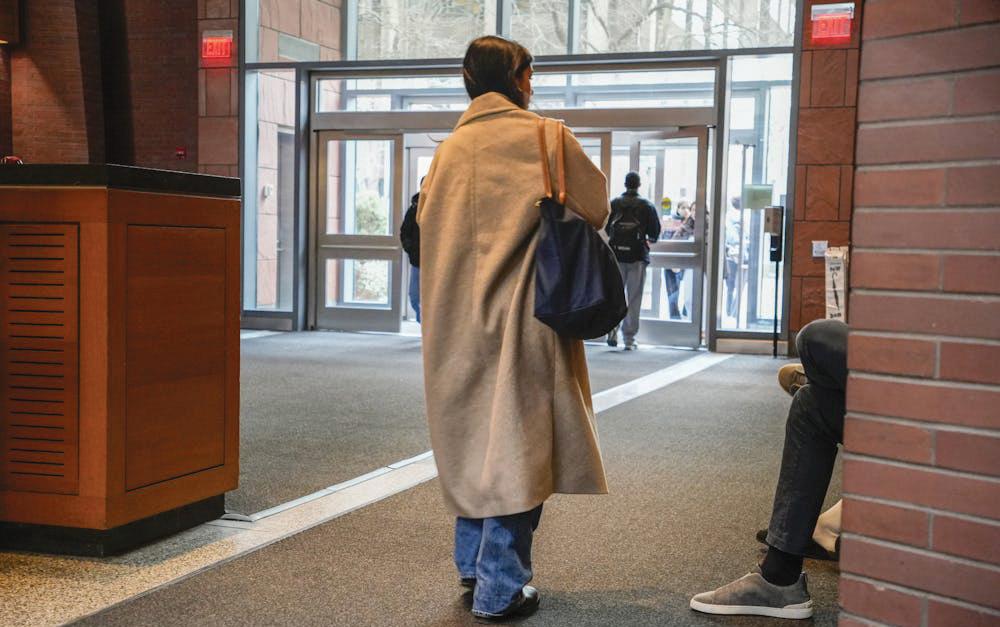
My first year at Penn, a drawer in my dorm was dedicated to dormant loungewear. My friends could not have been more wrong when they told me to buy more sweatpants for college. Like any unsuspecting first year, loyal to the laws of my local state school, I obeyed. Soon, however, I realized that most girls at Penn carry handbags instead of backpacks, cardigans instead of sweaters, and trench coats instead of cheap puffers. So, of course, the first time my mom visited I begged for her thrifted designer bags and cardigans.
As someone involved in political organizing, I remember going on an off-campus excursion and telling my roommate I had to change. After all, what would people think? Worse — what if one of my coworkers or friends outside of Penn saw me? I was sickened by my unconscious desire to signal status through prep-inspired outfits.
That is because prep is exactly that: a style dripping in privilege. According to video essayist Mina Le, the style is derived from White Anglo-Saxon Protestant Ivy League students from almost aristocratically wealthy families. In the 1920s, these students rejected formal suits in favor of casual wear. Trend strategist Anu Lingala explains that brands like J. Press and Brooks Brothers capitalized on this shift. Today, companies like Madewell, J.Crew, and Zara have revitalized the style among middle and lower classes.
In his book “Old Money: The Mythology of Wealth in America,” author Nelson Aldrich explains how, as time has evolved, these social classses grew to disdain flashy fashion. To distinguish themselves from the nouveau riche, they opted for simple, timeless looks. This style preference was fortified by the Great Depression, as families wanted to avoid judgement from the struggling general public. That’s part of the reason why Locust Walk is a sea of navy blue and neutrals.
But the shift towards plain clothing isn’t exclusive to Penn. Today, many Americans see “old money” as an emblem of character. As the wealth gap widens, the logo mania of West Coast celebrities is tacky — no longer aspirational, simply distasteful.
Further, there’s a vague difference between how elite Americans and Europeans dress on campus. Columbia University student and TikToker Nabihah Ahmad observed a similar trend, noting that Americans dress trendier, while European
JESS SAYIN’ | Penn suffocates intellectual ambition and, with it, any hope of societal impact
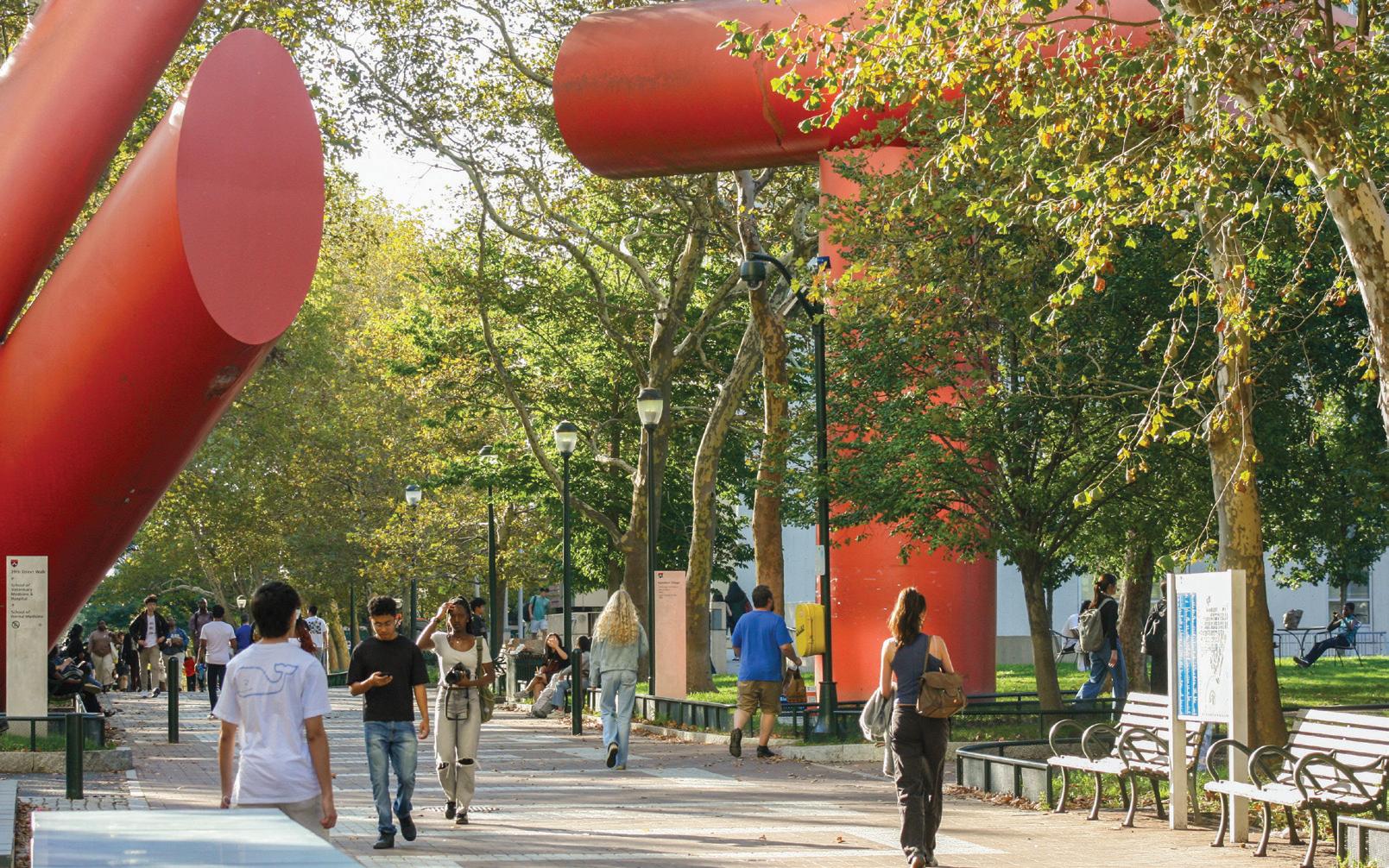
On Sept. 23, U.S. News and World Report unveiled the latest edition of the United States’ ever-coveted 2026 Best National Universities Rankings. After Penn’s tragic tumble to No. 10 last year (devastating, I know), our campus sighed in relief to find that we had clawed our way back up to No. 7 “best.” While U.S. News may have assuaged our fears of a declining reputation, its report obscures a much less flattering reality. When it comes to scholarly impact, Penn lags far behind its peers.
The University has cultivated a culture that crushes intellectualism, redirecting would-be academics and public leaders away from careers that build knowledge and advance the public good. In doing so, Penn sacrifices its positive influence on the world.
If we examine the circles populated by driven intellectuals, Penn alumni are embarrassingly absent. Let’s first take a look at the Rhodes Scholarship, one of the world’s most prestigious awards. The Rhodes Scholarship offers a fully funded post-graduate education at the University of Oxford to students dedicated to public service. As our peer institutions cultivate a culture of intellectual curiosity, they appear to be churning out Rhodes Scholars in droves.
As of 2023, Harvard University has 385, Yale University has 263, and Princeton University has 217. And Penn? We have just 24. That’s fewer than every other Ivy. Fewer than colleges a fraction of our size, like Swarthmore College and Williams College. Fewer than schools that focus far less on “prestige,” like the University of Mississippi or the University of Montana. Fewer than places some Penn students have never even heard of like Sewanee: The University of the South. But maybe the Rhodes Trust just has it out for us? Maybe Penn is still producing graduates keen on acquiring knowledge and bettering society? Well, a quick glance at the Penn Career Services page says otherwise. In their first destinations after graduation, only 16.7% of Penn students
pursue an advanced degree. By comparison, for recent classes, that number has been around 25% at Princeton and Brown University, 22% at Cornell University, and 21% at Harvard.
Not only is graduate school a likely path for those eager to learn, it’s a prerequisite for many impact-oriented careers, whether it be teaching, research, or law. Yet Penn students remain disinterested. Most of us infused our application essays with ambitions to explore diverse fields and serve our communities, but by graduation, those sentiments have entirely eroded. Of course, entering straight into the work force isn’t inherently negative. But as I’m sure you’re aware, most of us aren’t signing on with nonprofits or schools — we’re heading to J.P. Morgan or McKinsey & Company, pursuing a life in service of ourselves. What if Penn students are using lucrative starting salaries as a launchpad for careers in intellectual thought and impact? In that case, you’d still expect to see Quakers in the institutions producing knowledge and serving society. That doesn’t seem to be the case. When it comes to academia, for instance, Penn alumni aren’t exactly a leading presence. Take the Nobel Prize, largely awarded to researchers who have provided “the greatest benefit to humankind.” Of the 1,012 Nobel laureates, I can find just three who attended Penn as an undergraduate, all having graduated more than 60 years ago. Needless to say, that’s a pretty poor showing. Beyond academia, consider the U.S. Congress, a body grounded in public service (even if it doesn’t always seem that way). Based on House of Representatives and Senate rosters, of the 535 current members of Congress, just two hold an undergraduate degree from Penn. Compare that to 12 from Georgetown University, 14 from Stanford University, or 17 from Harvard (surprise, surprise). Ultimately, Penn students leave campus drained of their interest in intellectually meaningful pursuits, leaving the halls of thought and public service to be shaped by alumni from
old-money style feels more timeless because of its aristocratic roots.
But if you look at the most recent “old-money” trends, they are often derived from Europe. Even before Penn, I remember our generation’s country-club tennis skirt evolved into the French girl, Cambridge dark academia, and Stockholm aesthetics. These are all variations of old money — just more distinctly foreign and epochal. At the time, many Americans were tired of flaunting wealth through fun colors and silhouettes. To cope with economic challenges, instead of creating art or reading, we reimagine our lives as an artist in the 1900s in Paris or an 18th-century University of Oxford student.
This is the case at our University as well. Every fall, our University welcomes a class of first years, accepted because of their excellence in writing, performing, designing, and more. Over the course of four years, many of us enter the creatives-to-consulting pipeline. In a University where you have to apply to write poetry or try out for comedy, where academics is always second to your career, of course we would cosplay as academics, artists, and writers. We use fashion to reimagine ourselves, not necessarily because we lack the economic means to explore creatively, but because that side of us is stifled by the culture. Ultimately, we are a society of financial aesthetics, and I’m just as complicit as any other Penn student.
Note that this is not all assimilation — I’ve worn some of my quintessential “Penn” outfits back home. Old-money aesthetics have been in style for years, and I dress like an Ivy League student because, after all, I am one. Regardless, gone are the cargos and colorful acrylic nails I used to wear. As Penn students, we tend to limit ourselves to one sole facet of our identity through our style. Every time we do this, we deny ourselves the complexity of identity, forcing ourselves to value wealth and prestige over love, friendship, and individuality. So, every time you wear your cardigan or contemplate buying a new bag, remember to ask yourself if this is a performance or your truth.
learning.
everywhere but here. Any way you cut it, Penn graduates have steered clear of lives defined by continued learning, the creation of knowledge, and service to humanity. Our students enter college as some of the country’s most enthusiastic learners and impassioned advocates — Advanced Placement course collectors, prodigious musicians, dedicated researchers, and even nonprofit founders. We come as prime candidates for programs like the Rhodes Scholarship, likely aspirants for advanced degrees, and idealistic future leaders.
However, sometime during our years here in West Philadelphia, that intellectual flame is extinguished. As that fire dies, so does any chance of Penn being the driver of social good it ought to be.
HANS BODE | STAFF PHOTOGRAPHER
Columnist Viktor Wittner argues that Penn’s club culture and education structure unfairly disadvantage FGLI students.
DEVANSH RANIWALA | STAFF PHOTOGRAPHER
Columnist Jesse Van Doren argues that Penn makes its students less likely to lead lives of service and continued
JESSE
DOREN
SIMAR SONI is a College sophomore from Danbury, Conn. studying political science. Her email is simars@sas.upenn.edu.
GRACE CHEN | SENIOR PHOTOGRAPHER
Columnist Simar Soni delves into the origins of Penn’s fashion culture and its impact on student identity and campus life.

PHOTO BY JACKSON FORD
Federal government shutdown could delay ‘crucial’ immigration services, Penn ISSS says
The United States government has been shut down since Oct. 1 after Congress missed the deadline to approve a funding deal
FINN RYAN AND ANVI SEHGAL Senior Reporters

HANS BODE | STAFF
The U.S. government shutdown will impact immigration application processing times and operations through the Labor Department.
Penn’s International Scholar and Student Services issued guidance on Tuesday outlining the potential effects of the current federal government shutdown on immigration resources, visa applications, and overseas travel.
The United States government has been shut down since Oct. 1 after Congress missed the deadline to
approve a funding deal. The shutdown, according to a Sept. 30 update from ISSS, “will have an impact on crucial immigration services” — including application processing times and operations through the Department of Labor.
“If you are currently in the US maintaining a valid immigration status, this government shutdown will
Two Penn afliates announce bids for public ofce in 2026 midterm elections
Biology professor Ala Stanford is running for Pennsylvania’s third congressional district seat in the United States House of Representatives, while Goodman is seeking to represent the commonwealth’s 148th district in the state House
SANDY WALLS Staff Reporter
Two Penn affiliates — Biology professor Ala Stanford and 2011 College graduate Jason Landau Goodman — announced their bids for public office on Wednesday.
At an Oct. 1 press conference in Philadelphia, Stanford kickstarted her campaign to represent Pennsylvania’s third congressional district — which includes University City — in the United States House of Representatives. Goodman is seeking to represent the commonwealth’s 148th district in the Pennsylvania House of Representatives.
“This campaign is about stepping up and continuing to fight for Philadelphia,” Stanford said at the conference.
In a statement to The Daily Pennsylvanian, Stanford highlighted the key issues of her campaign — including “safer communities,” “good jobs and fair wages,” “safe, strong schools,” and “basic, quality health care.”
“I’ve seen the Trump Administration fail this city, and I’ve stepped up to lead in their absence — that’s what I’m going to do for you in Washington every single day,” the statement continued.
Stanford was endorsed by U.S. Rep. Dwight Evans (DPa.), who currently occupies the seat but announced in June that he would not be seeking reelection. 1999 University of Pennsylvania Carey Law School graduate and Pennsylvania state Sen. Sharif Street (D-Philadelphia) — who announced his bid in July — is running for the same office.
“Dr. Ala Stanford is a compassionate and dedicated public servant, and I am proud to endorse her campaign for Congress,” Evans’ endorsement read. “Dr. Stanford is ready to represent Philadelphia and be that champion for the people of the city and the region.”
At her campaign announcement, Stanford said she was “honored” by Evans’ endorsement, and added that she is “humbled by the opportunity to succeed him.”
In a press release published alongside the Oct. 1 announcement, Goodman stated that the “time is now to actively leverage this seat as a platform for the greatest good.”
“Our communities urgently need proactive, innovative, and relentless representation to serve them at home and in Harrisburg,” the press release read. “While our Democracy is facing unprecedented challenges, we must send our strongest fighters to the front lines.” Goodman — who also received a Master of Urban
Spatial Analytics from the Stuart Weitzman School of Design — currently works as an environmental lawyer and civil rights advocate, according to his campaign website.
During his time at Penn, Goodman played a leading role at the University’s LGBT Center and was the founder of the Pennsylvania Youth Congress — the state’s premier LGBTQ+ organization for youths.
In April 2022, Stanford was appointed as regional director of the Department of Health and Human Services within the Region 3 office, which holds jurisdiction over Delaware, the District of Columbia, Maryland, Pennsylvania, Virginia, and West Virginia.
Thomas Jefferson University professor and physician
David Oxman — who is running against Stanford — invited Stanford to embrace a national physicians’ walkout in a Wednesday press release.
“[Physicians] convinced me that we must do more to fight the Trump administration’s war on science and health. … That’s why I call on Dr. Stanford to join me in calling for a national physician walk out,” his Oct. 1 statement read.
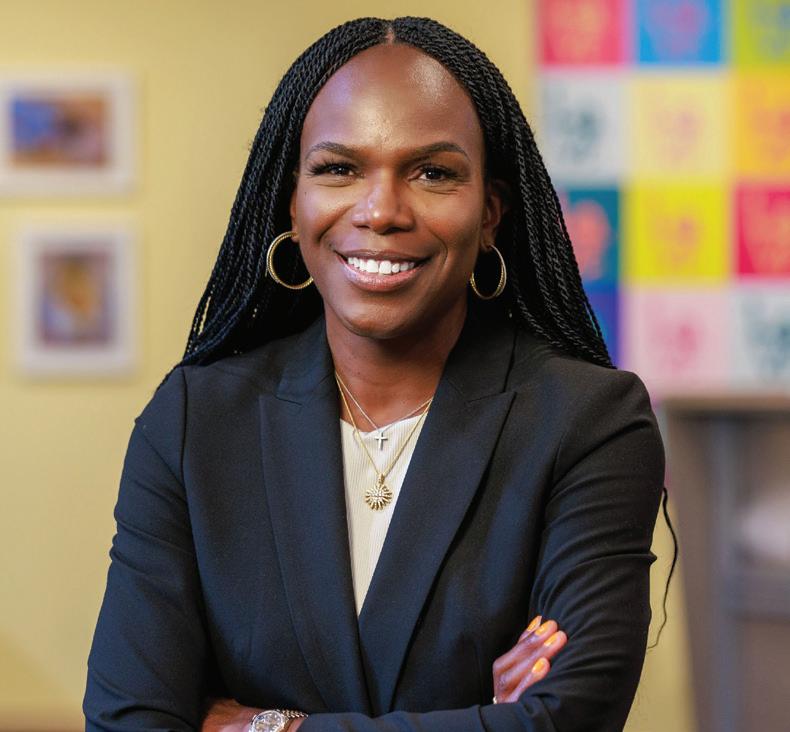
represent Pennsylvania’s third congressional district in the U.S. House of Representatives on Oct. 1.
not impact your ability to remain in the United States,” ISSS wrote.
The guidance discouraged “unnecessary international travel” for Penn affiliates holding F-1 and J-1 visas due to “possible delays in visa issuance.”
Those on H-1B and E-3 visas sponsored by Penn — as well as Mexican citizens with TN visas — were advised to avoid leaving the country, though the notice stated that they should not experience direct impacts from the shutdown. Penn students with Canadian citizenship were encouraged to “check with the port of entry” when considering international travel.
Although Penn-sponsored H-1B visas will be processed normally by ISSS, the announcement stated that Labor Condition Applications will be interrupted due to the Labor Department’s suspension of operations as part of the shutdown.
According to ISSS, the U.S. Citizenship and Immigration Services has historically “temporarily created an exemption” to permit filings necessary for maintaining status when it has not been possible to obtain a certified Labor Condition Application.
The Labor Department’s shutdown will similarly prevent the filing of permanent labor certifications and prevailing wage forms — both of which are required steps for the employment-based Green Card process.
to cap international undergraduate enrollment at 15% and require that applicants take the SAT or a similar standardized test.
According to University demographic reports, 15% of both of Penn’s undergraduate classes in 2028 and 2029 were composed of international students. Penn reinstated the standardized testing requirement for all undergraduate applicants on Feb. 14 for the 2025-26 admissions cycle.
In a statement to the Journal, White House Senior Advisor for Special Projects May Mailman said the schools were “good actors” — adding that each has a “president who is a reformer or a board that has really indicated they are committed to a higher-quality education.”
She added that the Trump administration does not plan to limit federal funding to schools that sign the compact, but that the selected universities would be given priority for grants when possible and provided with invitations for White House events and discussions with officials.
Mailman previously told the DP that Penn set a positive tone during negotiations with the federal government this summer by recognizing it had an “unavoidable need for a relationship” with agencies in Washington. The University’s understanding and ability to “have a conversation like adults” earned it a place on the government’s “listening side,” Mailman said in July.
That month, Penn reached a resolution agreement with the Department of Education to settle ongoing Title IX violations. As part of the resolution, the University removed 2022 College graduate and former
“This will impact the ability to file petitions with USCIS,” ISSS wrote. For “further details, please consult your ISSS assigned advisor or your immigration lawyer.”
The guidance comes after ISSS warned Penn affiliates holding H-1B visas to avoid international travel following a $100,000 fee imposed by the federal government on new visa applications. ISSS provided updated guidance that clarified that only new H-1B petitioners will be impacted by the rule following a memorandum from USCIS.
According to a recent analysis by The Daily Pennsylvanian, Penn may be forced to pay millions of dollars to continue employing certain international workers after the federal government imposed H-1B petition fees. Students on F-1 visas who have fulfilled the requirements for temporary work authorizations — including the Optional Practical Training employment authorization — will still be able to submit their applications, but “the processing time may be impacted if the government shutdown is prolonged.”
Employees on Penn-sponsored O-1 visas should not expect major changes due to the shutdown, according to the update. Extensions of J-1 sponsorships will also not be affected, but work authorization applications for J-2 dependents may be subject to delays.
Penn swimmer Lia Thomas’ individual records, issued a public statement specifying that Penn Athletics “will adopt biology-based definitions for the words ‘male’ and ‘female’ pursuant to Title IX and consistent with President Trump’s Executive Orders,” and privately apologized to affected athletes.
Vanderbilt University, Dartmouth College, the University of Southern California, Massachusetts Institute of Technology, the University of Texas at Austin, the University of Arizona, Brown University, and the University of Virginia were also named in the memo.
Of the schools that were offered an agreement, Penn and Brown were the only ones to face investigations from the White House regarding their federal Title IX compliance. Brown negotiated terms with the federal government to settle investigations into its compliance with Title IX in July.
Several other universities asked to join the “compact” were investigated due to their response to federal orders mandating the elimination of diversity, equity, and inclusion programs.
Former UVA President James Ryan faced criticism for the school’s resistance to federal orders mandating the elimination of DEI policies. After opening a civil rights investigation into the university, the Department of Justice offered a settlement conditional on Ryan’s resignation.
Both Vanderbilt and MIT also faced investigations into their alleged “race-exclusionary practices” within graduate programs. In response to federal pressure, MIT shut down its DEI office in May.
Dartmouth has largely remained out of the federal government’s crosshairs. The university — which was the only Ivy League school not to sign a letter in April opposing the Trump administration — has also avoided investigations from both the DOJ and the Education Department in contrast to peer institutions.

“This is the role, ultimately, that’s responsible for partnering faculty [and] deans with department chairs to make sure we bring in the top talent we can from all over the country and the world,” Jackson said. “That’s the top researchers, that’s the top teachers, that’s fantastic students — and to do that well gets you really excited.” Jackson added that the structure of the Provost’s Office should intentionally reflect an understanding of the distinct experiences of students, faculty, and staff at Penn.
“There’s no reason not to make sure we’re thinking about these different kinds of communities in really purposeful ways,” he said. “We’ve been thinking for a while that it’s going to be important to make sure we’re being sensitive to the different needs of the undergraduate versus the graduate population.”
In June, Jackson named professors Russell Composto and Kelly Jordan-Sciutto as the inaugural vice provosts for undergraduate and graduate education, respectively.
Jackson also explained his office’s “concerted approach to the arts” with the help of Timothy Rommen, Penn’s vice provost for the arts.
“An institution like this has to be thinking in all these registers at the same time,” Jackson said.
On Sept. 29, Michael Mann — who was named the inaugural vice provost for climate science, policy, and action in 2024 — announced his resignation from the role after an almost 11-month term. Mann wrote that his scientific advocacy work
conflicts with Penn’s “established institutional neutrality policy.” The announcement came two weeks after Sen. Dave McCormick (R-Pa.) called for Penn to take action against Mann in light of his social media activity — including reposts and a sincedeleted post of his own — regarding the death of conservative activist Charlie Kirk.
Jackson told the DP that Mann was neither fired nor “driven out” of the position.
“I think his position has been that it’s more and more difficult for him to do the kind of public intellectual work he wants to do while also being a University administrator at an institution that says we pride ourselves on institutional neutrality,” Jackson continued.
Penn’s evolving vision Jackson highlighted the University’s new strategic framework — titled “Penn Forward” — as the defining tool for Penn’s “priorities … as an institution.”
He pointed to the work of Penn’s Red and Blue Advisory Committee, which has clarified the University’s goals since former Penn President Liz Magill announced the “In Principle and Practice” initiative in 2023.
While Jackson applauded the work of “In Principle and Practice,” he described the plan as “very abstract” in comparison to “Penn Forward.”
“Penn Forward is taking what I think are the really important abstract ideas and making them more tangible,” Jackson said. “[We’re] making it clear to folks how we’re going to turn that stuff into things students and faculty experience more every day.”
Jackson also discussed the new College Foundations program, a pilot curriculum for first-year students in the College of Arts and Sciences launched
this summer. He added that the initiative will help students explore the College’s “amazing variety of research and scholarship.”
He mentioned the importance of “rethinking” what “AI is going to allow us to think about” when designing future curriculums.
Jackson emphasized that Penn’s administration should not simply respond “to the current moment,” but think “long term” about the ways “AI portends for the future of what we do.”
“I think there’s probably no aspect of what we do that is going to be the same 10 years from now,” Jackson added. “If institutions like Penn can’t figure out the right way to make sense of what’s emerging, no other institution has a chance.”
Challenges across higher education
Jackson characterized the current state of higher education as an especially “important moment” for Penn.
“We feel like this is a time where there’s so much movement, so much dynamism,” Jackson said. “Let’s make sure we’re thinking collectively about how to ensure that — not just for the next five years, but for the next 100 — Penn is really trying to be a genuine leader on these issues that matter.”
Penn’s administration, despite that commitment, has faced significant challenges and threats from the federal government.
In February, Penn graduate department chairs significantly reduced admissions rates across graduate programs in the face of federal research funding cuts, with faculty at the Perelman School of Medicine reducing admissions for its fall 2025 Ph.D. cohort by around 35%.
Jackson emphasized that the University — and
each department within it — is “committed to” remaining “sensitive to how many Ph.D. students” it brings in.
“We’ve been trying to make sure we are looking at the market for our Ph.D. students with a very good sense of the fact that we want students to emerge from this place and have life-sustaining professional careers — either in the academy or outside of the academy,” Jackson said.
He added that decisions to make changes to graduate admissions rates were not made by the Provost’s Office, but instead individual schools across the University.
While acknowledging other challenges faced by Penn, including a federal mandate to eliminate diversity, equity, and inclusion policies, Jackson said that the University’s “educational mission hasn’t changed.”
“One of the things we’re trying to make sure we do as effectively as possible is to continue to give students and faculty the kind of experiences that I think have made Penn a special place to do the kind of intellectual work we bring people here to do,” he added.
Jackson also referenced concerns surrounding free speech on Penn’s campus, along with the future of the University’s temporary guidelines for campus demonstrations.
“They gave us what I think is a fantastic document,” Jackson said. “Now we’re still in conversation with them as we think about ways to actually operationalize it.”
He explained that the goal is to use this semester to decide how to implement the committee’s recommendations and announce formalized guidelines “early next year.”
COMPACT, from front page
JACKSON, from front page
PHOTOGRAPHER
JESSE ZHANG | DP FILE PHOTO
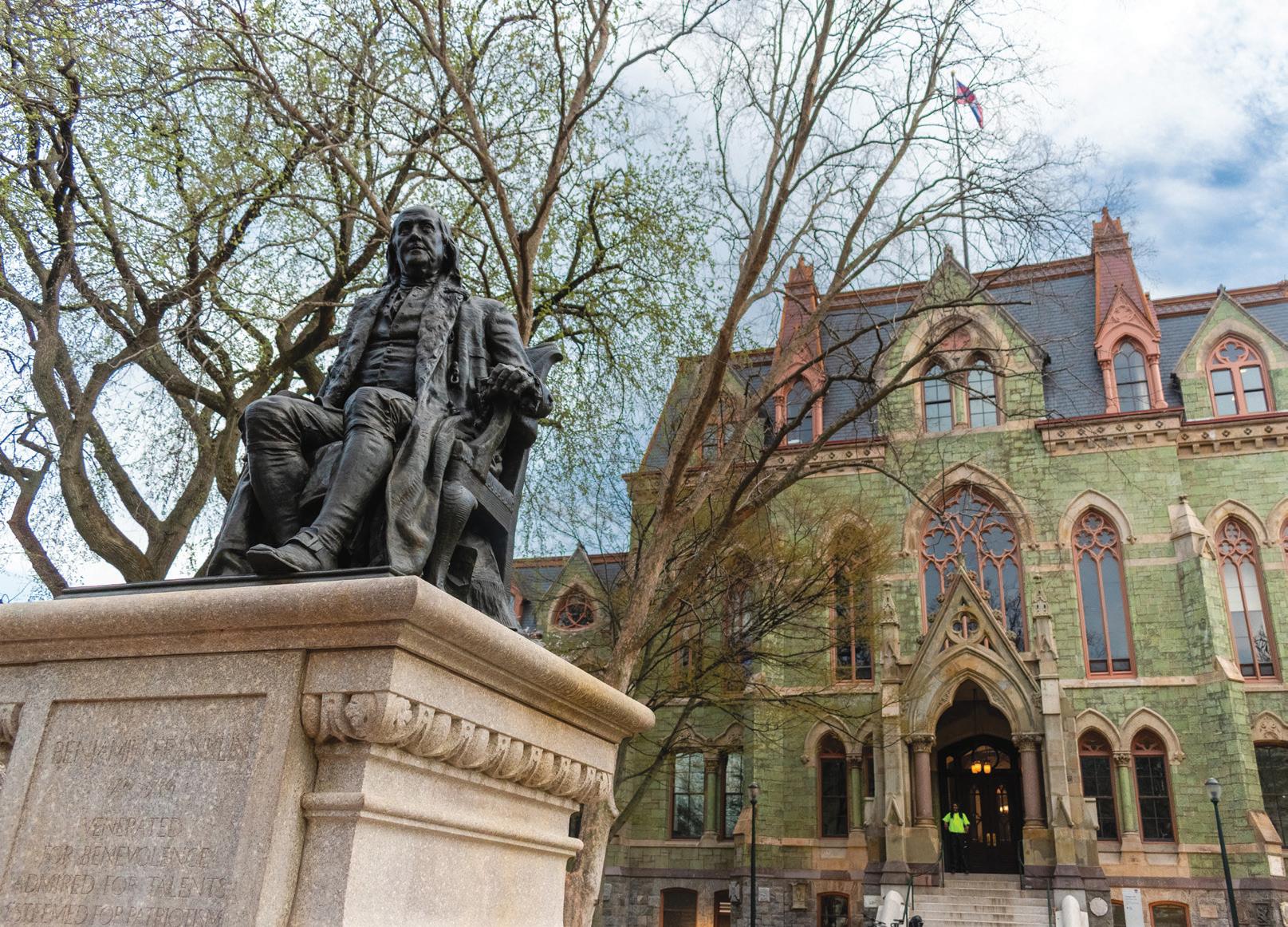
The Trump administration asked nine universities to sign onto a compact of operational principles in exchange for a federal funding advantage.
PHOTO COURTESY OF PENN ARTS & SCIENCES Stanford announced her bid to
Junior forward Abbey Cook comes in clutch with late goal as women’s soccer ties Dartmouth
Quakers could not convert their shots to goals until they fnally broke through with fve minutes remaining
CLARK, AND CAVANCE SNAITH Sports Reporters

Penn women’s soccer junior forward Abbey Cook came up big against the Big Green to bring the teams’ matchup to a tie, 1-1.
The Quakers (4-2-3, 0-1-1 Ivy) looked to bounce back from their previous two losses, including a home loss against Princeton to open their Ivy League play. Dartmouth (4-2-3, 1-0-1) entered with momentum after beating Harvard in its Ivy opener for the first time in 20 years. Penn women’s soccer is on an overall rise this season, already notching four
wins compared its two victories in the entirety of last season. In the first half, Penn dominated possession and the offensive attack, but it came up empty in the goal column. Cook led the charge on offense throughout the match, ultimately claiming 35% of the Quakers’ 14 shots, 60% of Penn’s shots on goal, and a gametying goal.
“I thought that [in] the first half we did enough to be ahead, but we didn’t create enough. But I thought
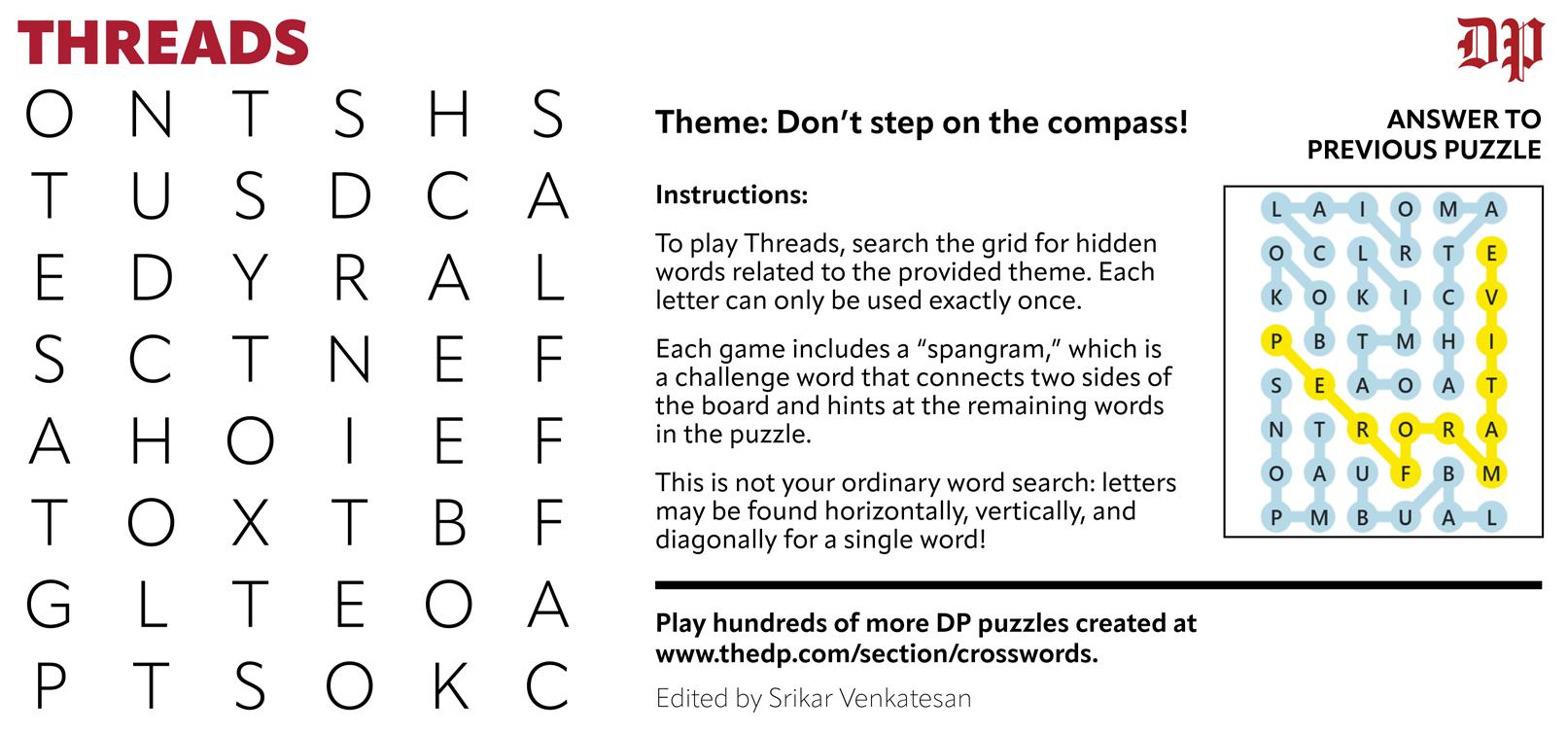
For answers to today’s puzzles, check page 9!

our possession was really good,” coach Krissy Turner said after the game.
The Penn offense relied largely on set pieces to attack, taking three free kicks and another two corners that resulted in several great opportunities, but the Quakers came up empty on each of them.
Senior goalkeeper Annabel Austen went relatively untested until the final minute of the first half, when Dartmouth put its first shot on net on a counterattack after a Quakers corner.
PREVIEW, from back page
completed 75.7% of his passes, marking his highest pass percentage to date. O’Brien, who emphasized the offensive capabilities of wideouts like Richardson, is looking to ride the momentum and bring this performance into Saturday’s game.
“[I’ll] go out there, execute, and get the ball to the playmakers. … They’re dangerous when the ball is in their hands, and if all 11 of us on offense do our job, we can put up some good yards, some good points, and walk out there with a win,” O’Brien said.
Historically, the Quakers have struggled against a Big Green dual-quarterback offense, with one used primarily as a passer and the other taking up the run game. Last season, however, the dual-quarterback system has instead shifted solely to then-starting quarterback Jackson Proctor.
The strong defensive effort was led by sophomore defender Eden Veenema and freshman defender Casey Forman, each of whom played a big role in minimizing scoring chances for Dartmouth. It was more of the same to start the second half, as Dartmouth’s offense could not generate open shots, even after an early free kick from forward Emmanuella Frimpomaa.
“It was one of those games where we didn’t need halftime,” Turner said. “They wanted halftime because then the momentum gets kind of killed, and we had to restart.”
Dartmouth looked to take advantage of the Quakers’ lost momentum by taking a stronger offensive stance in the second period, and controlled possession early on. Frimpomaa made a run on net and was fouled in the box by Veenema. Dartmouth midfielder Lykke Ihrfelt was awarded a free penalty kick and used the opportunity to score the first goal of the game, lobbing one past Austen with 34 minutes to go.
Penn responded by beginning to mount more of an effort to control the ball. Cook took a shot on goal after a good buildup, but the chance was thwarted by a save from Big Green goalkeeper Ola Goebel. More of the same continued until Dartmouth made a press on the goal, though the shot from forward Stephanie Lathrop was blocked away by the defense.
With 25 minutes to go and a light drizzle starting to come down, the Quakers continued to struggle to generate scoring opportunities, as Dartmouth controlled possession and kept the ball in Penn’s defensive half. Junior forward Mia Fuss made a valiant effort on a highly contested run to put a strong shot on, missing a goal by mere inches as the clock ticked toward zero.
The game looked all but over with five minutes remaining when Dartmouth fouled the Quakers, giving sophomore forward Lily White a free kick. Penn was finally able to convert, with a strong kick taken by White that led to a goal scored on a header by Cook, assisted by junior forward Taylor Ferraro.
“It felt really good,” Cook said about her goal. “I think we were putting a lot of effort and really pushing to get that goal. We had, I think, 14 shots, so to finally have one hit the back of the net was good.” Seemingly reinvigorated by Penn’s success, junior forward Magali Capdevila evaded several defenders on her run to the net and struck a shot from outside the box, but drove it just over the net.
As the rain continued to fall, the game came to a sudden halt with 39 seconds left on the clock after a hard foul from Fuss, who was warned with a yellow card. Play stopped before the final seconds ran off the clock, ending the game in a 1-1 tie.
“Wish we could have got three points, but we’ll take one,” Cook said.
The Quakers will take on Brown on Saturday in their first away game in Ivy League play, looking to take home their first conference win of the season.
Notably, last season, matchups against Yale would ultimately force a shift in the rosters for Dartmouth and Penn. Proctor was injured leading into Dartmouth’s matchup at Yale, leaving the Big Green to bring then-third-string quarterback Grayson Saunier into the hot seat. For the Quakers, 2025 Wharton graduate and then-starting quarterback Aidan Sayin was injured in the first half against Yale, with O’Brien stepping into the role of QB1. Both quarterbacks had significant moments of the rest of their season. Saunier ended victorious against all three games he started last season and won an Ivy League championship, while O’Brien shattered the record books in a 67-49 win against Cornell.
With two of the most productive quarterbacks in the conference, the Ivy League foes are primed for another back-and-forth matchup.
“They’re two explosive offenses, and if you look at both teams and both quarterbacks, they’ve had big explosive plays. … I think this will be a really good matchup on both sides, utilizing both talents,” Priore said.

The
LUCAS MILGRIM, ELLIE
NOAH JEONG | STAFF PHOTOGRAPHER
Penn women’s soccer tied with Dartmouth on Sept. 27.
The picks are in for football’s home opener against Dartmouth
The Daily Pennsylvanian Sports department made its picks for the result of the team’s home opener
THE DAILY PENNSYLVANIAN SPORTS DEPARTMENT
Penn 31, Dartmouth 28 — Valeri Guevarra, Sports editor It’s truly go time this weekend, and with this matchup being the Ivy League opener for both teams, I believe this is the year that the Red and Blue will pull off the victory.
While coach Ray Priore has not defeated Dartmouth at home in his head coaching career, this season will be different. After the offense put up a strong overall performance against nationally ranked Lehigh, Penn is set up for a win, led by senior quarterback Liam O’Brien and the man’s best friend: senior wide receiver Jared Richardson.
It was clear from the start of the season, when Richardson caught a 69-yard touchdown pass seconds into the season opener at Stonehill, that he is the most dangerous weapon in O’Brien’s arsenal. He further impressed at Lehigh, collecting 141 yards and two touchdowns. Before then, Lehigh had not given up more than 24 points in its first four games. He, along with fellow senior wide receiver Bisi Owens, will no doubt be instrumental in this matchup.
However, it will not be an easy road to a win. Dartmouth quarterback Grayson Saunier leads the Ancient Eight in completions per game. Under his helm, Dartmouth is the No. 8 offense in the country, averaging 478.0 yards per contest.
But, ultimately, I think the star trio of O’Brien, Richardson, and Owens will help the sun shine on Penn on Saturday.
Dartmouth 35, Penn 24 — Sonal Sukhatme, Sports associate Kicking off the Ivy season, Penn faces off against the two-time defending conference champions at Franklin Field. Dartmouth is already off to a strong start this season, being 2-0 after its games against Central Connecticut State and New Hampshire.
Historically, Penn does have a 49-40-2 winning record against the Big Green, and a 28-20 record at home. However, out of the teams’ last 10 matchups, Dartmouth has won eight. More specifically, last year, the Red and Blue narrowly lost with a final score of 20-17. These numbers make it unlikely that Saturday’s game will be a blowout, especially once you add in how strong the Quakers have been recently.
O’Brien had 316 yards against Lehigh and completed 28 out of 37 passes, and senior running back Julien “Juice” Stokes was named Ivy League Special Teams Player of the Week for the second time in a row, thanks to his 133 return yards.
However, I don’t think it’s likely for Penn to prevail, considering how strong Dartmouth’s offense has been. The Big Green’s offense is currently ranked No. 8 in the nation. Saunier hit a career-high 407 yards in Dartmouth’s last game and is the best in the Ivy League when it comes to completions per game.
Overall, I doubt Penn can pull through a win, but I’m confident that the Quakers will still put forth respectable numbers.
Penn 27, Dartmouth 24 — Soo Young Yoon, Sports reporter
My head says to pick the Big Green, who have won eight of their last 10 games against each other. Coming off of a thriller victory this past weekend, Dartmouth

looks to be one of the hottest teams. Still, my heart tells me Penn will pull this one off.
The Quakers, though they just faced a loss, featured an impressive outing on offense with O’Brien throwing for three touchdowns. However, they need to take care of the ball on the defensive side.
Last Saturday, Lehigh running back Luke Yoder had a monstrous performance with 173 yards and two touchdowns against the Quakers’ secondary. If Penn wants to win on Saturday, it must figure out a way to shut down Dartmouth’s run game.
I’m all in on freshman kicker Mason Walters hype. Penn lost the last two matchups against Dartmouth by just a field goal. This week, Walters may just hit another winner.
Penn 31, Dartmouth 28 — Madison Knier, Sports reporter History does not always repeat itself.
After a close 20-17 win by Dartmouth in the Ivy League opener of the 2024 football season, this year,
the Quakers are back at historic Franklin Field to set the record straight. Fueled by a bitter loss from last year, Penn football’s grit alone will certainly blemish Dartmouth’s current 2-0 record.
The Big Green presents a strong offensive unit led by Saunier. Despite its supposed powerhouse offense, the team is simply insufficient against what Penn has to offer.
Offensive execution has been a bright spot for Penn football so far this season, and this Saturday will be no exception. In their loss at Lehigh, the dynamic duo of Richardson and Owens combined for 22 receptions, resulting in 242 yards and three touchdowns, aided by O’Brien, who completed a career high 75.7% of his passes. When fueled by the energy of their home field crowd, these seniors are bound to continue their stellar performances, driving Penn to a victory.
On paper, it may seem as though Dartmouth has the edge, but Penn football simply wants it more.
Dartmouth 31, Penn 10 — Cavance Snaith, Sports reporter
The Red and Blue are entering this home and Ivy opener after a 14-point loss at Lehigh and a narrow win at Stonehill. Dartmouth enters this matchup, which also happens to be its first Ivy League game, undefeated. I believe they have a good shot at continuing that streak. Historically — and especially last season — the Big Green and the Red and Blue couldn’t be more different. Dartmouth is entering as the two-time defending Ivy League co-champions. They shared the title with Harvard and Columbia in 2024. The Big Green also has the most Ivy League championships of all time with 22 titles. On the other hand, Penn went 2-5 in the Ivy League last year. While there are new members and returning stars on the Red and Blue’s roster, Penn is experiencing the same struggles with turnovers as last year. In addition, the defense is finding it difficult to stop the running game, allowing 300 rushing yards last week.
I’ll be in the stands on Saturday, cheering for the Red and Blue, but my prediction stands for an unfortunate blowout. WAA , from back page
hockey, and tennis. One woman, Margaret Majer Kelly, led the way for new facilities for women’s athletics. She went on to become the first head coach of a women’s team at Penn. Finally, in 1921, bolstered by the female students’ dedication to accessible sports for women at Penn, the Undergraduate Assembly granted a coveted wish by establishing the WAA.
“It started as a way for women to participate in organized sports,” Penn swimming and diving senior freestyle/individual medley specialist and WAA co-President Anna Moehn said. “Now, it’s kind of transformed [from] a way for us to actually participate in sports [to] a way for us to be involved in the community and in each other’s lives outside of sports.”
Today, this association serves as a unifying body for all female athletes at Penn, as it is inclusive of every sport. Within its student-led organization, WAA comprises numerous committees, including marketing, finance, social, and internal. While every female athlete is considered a member, WAA offers leadership positions through these committees that build community while simultaneously fostering support for every team in Penn Athletics.
After climbing the ranks on WAA’s executive board from her sophomore year, senior diver and current co-President Sadie Howard spoke highly of the community and opportunities the association offers.
“Even if you are just an athlete, you’re a part of it, but if you want to get more involved, you can quickly have a higher, executive role,” Howard said, “It’s just like a way to meet new people and connect, because a lot of times, you’re really
close with your teammates but not with other sports.”
Inclusion is especially valued and expressed through assigning two ambassador roles to every team. This ensures that each female team at Penn is given support and granted the opportunity to be part of the larger Penn Athletics community, and their sense of community is shared with the rest of Penn’s campus and the broader Philadelphia area.
Through annual, traditional events such as lemonade sales and “Dodgeball and Donuts,” the WAA stays connected with groups larger than themselves. These student-athletes also devote themselves to civic engagement by choosing charities to fundraise for and partnering with nonprofit organizations like Young Quakers.
“It brings the entire athletic community together at Penn and for a great cause,” Moehn said.
Today, Penn female athletes undoubtedly uphold a reputation for hard work and tenacity, and they reflect the spirit of evolving times.
Between 2022 and 2024, revenue from women’s sports in the United States grew 4.5 times faster than that of men’s sports, according to McKinsey & Company. In addition, WNBA, NCAA women’s basketball, and NWSL televised games reached approximately 370 million viewer hours in 2024, up 430% from three years prior, according to the same data analysis from McKinsey.
As women in sports worldwide continue to level the playing field with their male counterparts, the WAA rides this momentum with pride.
“I’m supportive of everything that everyone has done to show that increase in equality within sports,” senior gymnast Alisha Werlen, former president and current director of WAA, said.
“We have grown so much in terms of being a name on campus, and Penn Athletics is giving us so much support.”

WRESTLING, from back page
but more importantly, to the
spirit of gratitude held by the wrestling team. “I’ve been on thousands of teams since [I was] a little kid, both in wrestling and millions of other sports, but really no other team has been like this one and I am truly grateful for the opportunity I’ve had to be here,” Pruett said.



the sport of wrestling,
KENNY CHEN | STAFF PHOTOGRAPHER
Penn wrestling pictured practicing at Shoemaker Green on Sept. 26.
MEERA RATNAGIRI | STAFF PHOTOGRAPHER
Penn plays Dartmouth football at an away game on Oct. 5, 2024.
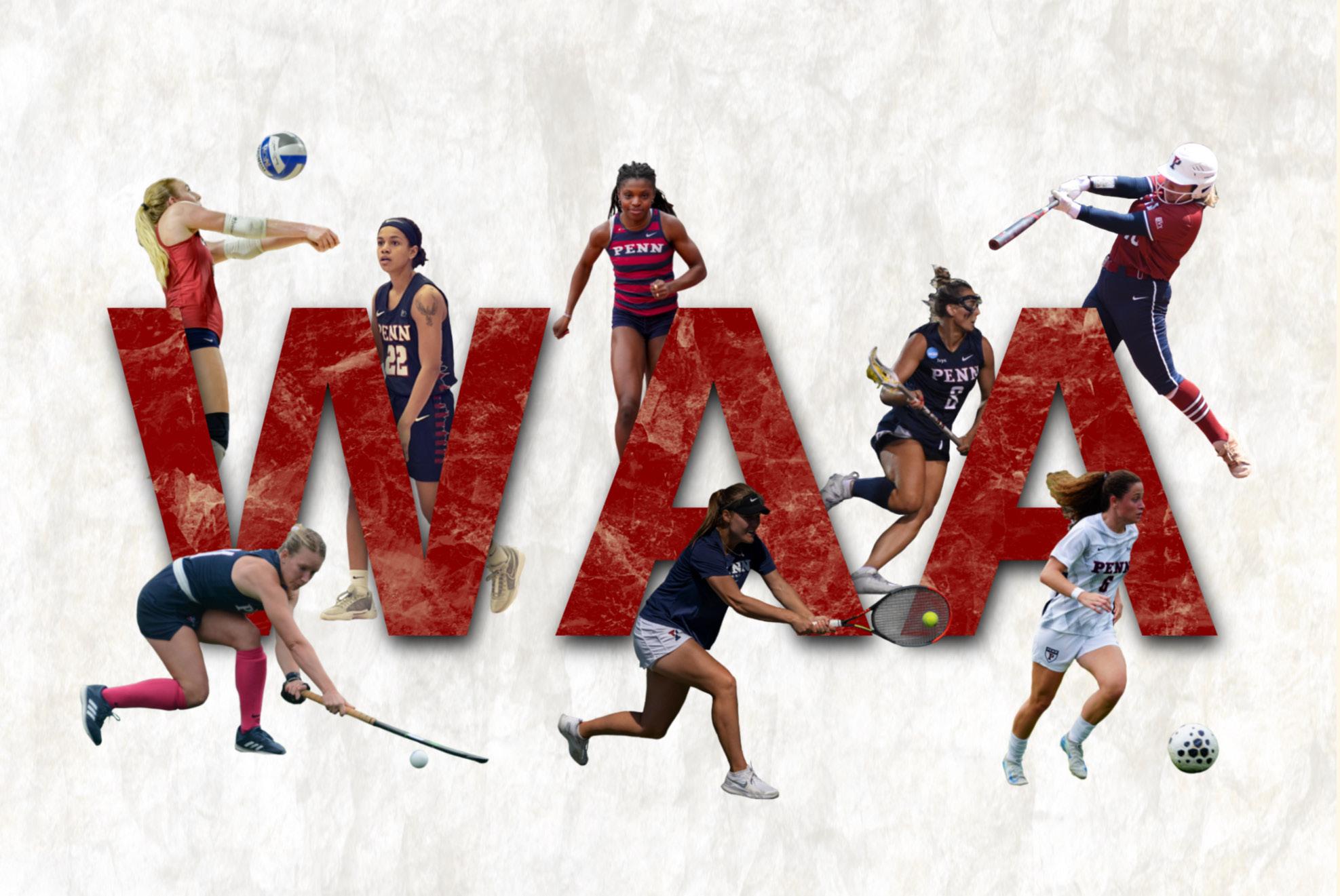
Sporty sisterhood: Penn’s Women’s Athletic Association is empowering female athletes
The unifcation of female Quakers has benefts for athletes, students, and the greater Philadelphia community
AVERY BROBBEY Sports Associate
Penn is teeming with exceptional female athletes, from Team USA lacrosse star and 2025 Wharton graduate Anna Brandt to reigning Ivy League women’s basketball Rookie of the Year and Penn women’s basketball sophomore forward Katie Collins. However, long before female names reached the top of the Red and
Blue’s record books, Penn women were fighting for something simpler: the chance to play. Out of their determination came the Penn Women’s Athletic Association, which laid the foundation for generations of trailblazing athletes.
Perseverance and determination are two themes that are most notable in Penn’s female
Red and Blue on the green: Wrestling showcases skill in annual ‘Grapple on the Green’
The athletes also expressed gratitude for a more casual setting for the sport
HANNAH CHANG Deputy Sports Editor
“It definitely catches eyes, whether you’re really interested or not,” senior wrestler Brady Pruett said. “[When] seeing guys roll around on the mat out in the grass field, you’re like, ‘What’s going on there?’”
Grapple on the Green is going on. Since 2016, Penn wrestling has held this annual event to integrate wrestling with the Penn community, with this year’s event held at Shoemaker Green. With the University’s support, Penn wrestling took its practice out in the open for everyone to see, and it was certainly eye-catching. Red and blue on the green field lay front and center of where all things athletics happen on campus. There was no ball, no net, no drinks, no desserts — just teams of wrestlers in red and blue sparring on the mat.
“We’re an indoor sport … so we’re like, ‘Hey, what the heck? Why don’t we try and bring this outside somewhere, have a little fun?’” coach Matt Valenti said.
The event featured pairs of wrestlers sparring with each other, with half the pairs sparring from 3-4 p.m. and the rest in the next hour. With knees bent, torsos leaning forward, and heads up just enough to look at their opponent, the wrestlers’ arms lunged forward as the bell rang. Then, the moment ended as they untangled themselves and smiled, laughed, said a few words, and clapped one another on the back.
“Because it’s grass, it’s a little more uneven,” Pruett said. “So I will say, there’s time where you might step, you might fall over. … I wouldn’t say it hurts any less though.”
The atmosphere was one of ease and low stakes. Teammates sat around blue Gatorade bottles and talked, jammed to music, or scrolled on their phones. Coaches watched from the fringes of the mat, occasionally giving advice between spars but mostly hanging out with the team. The blue skies and warm sun added to the cheer.
“Such a nice day,” junior wrestler Sean Seefeldt added, throwing his arms wide. “Most of the time, we’re trapped inside rooms, all compact, you’re really tucked away from the outside world. So it was nice to be out here sharing some sunlight with my teammates, getting to display some wrestling for the people to see.”
After going through practice that same day in the morning, during which the team did more intense, “live” wrestling, Grapple on the Green was
an opportunity for the team to practice with creativity.
“We’re mostly letting them take control today,” Valenti said.
“[It] was more just like free-going, on your own, use your own imagination, creativity, like working what you want … so guys were more excited to work on this today,” Seefeldt said.
And people did stop by to watch. University Vice President and Chief of Staff Mike Citro, who was a wrestler himself, joined the growing crowd of faculty and students. But perhaps the most special guests were boys from the nonprofit organization Beat the Streets Philadelphia. Many members on the wrestling team volunteer with the organization, mentoring elementary, middle, and high school students in academics and wrestling.
The students came onto the field and greeted the coaches and players, adding more community to the cheerful afternoon.
“It’s just great seeing those guys,” Pruett said. “We love seeing them as much as they love seeing us. You develop close relationships with them, and they become your friends. It’s great. It’s awesome.”
The greatest thing the team can offer these hopeful young wrestlers is the attitude, or the “existing culture,” as Pruett said.
What is that culture? “Gratitude,” Pruett said.
“I think everyone on the team is just very understanding of how grateful they should be for all these opportunities that we’ve been given. And you know, how can you be upset when you’re blessed with all these different things and these facilities, these benefits that we have at this amazing institution?”
Seefeldt also kept repeating how “blessed” he felt to be a part of the team, enjoying fun events like Grapple on the Green as much as the intense competitions they look forward to. This year, the team set a goal for every teammate to “get their personal best, then the team’s going to achieve a personal best. So it’s pretty simple,” he said.
“It’s pretty inspiring to hear them say that, and I think our whole team’s bought in on that concept, and we’re excited to go out there and show the country what we think we can do on a national level,” Valenti said.
Grapple on the Green invited Penn students to See WRESTLING, page 9
Football prepares for home, Ivy opener against Dartmouth
The matchup will kick off 130 years of Ivy football play at Franklin Field
JUSTIN LEE AND MATTHEW NEWBOLD Sports Editor and Sports Reporter
With a matchup against their first Ivy League opponent on the horizon, one thing is on Penn football’s mind: Winning.
“We’re about the future … our kids have worked real hard to this point, coming out from Spring Ball to preseason camp, and obviously through the first two games to put ourselves in a position to hopefully play well,” coach Ray Priore said. “We have to make sure we’re playing well in all three facets of the game.”
Penn football (1-1) will host Dartmouth (2-0) this Saturday at Franklin Field in both of their Ivy openers. Penn has won two out of its last 10 matchups against Dartmouth. The last three games between the programs came down to a single possession.
Last season, the Quakers fell to the Big Green in Hanover, N.H. with a final score of 20-17. In that game, Dartmouth held senior wide receiver Jared Richardson to only two receptions for 18 yards. This year, it’s been a different story for the veteran wideout. Despite the 44-30 loss to Lehigh last
Richardson caught 12 receptions for 141 yards and two touchdowns, making him No. 7 in most receiving yards in Penn history. In the season, he is averaging 122 yards per game. Heading into the game, Richardson’s motivation is similar to the team’s.
athletic history. In 1918, female students at Penn formed a Girls’ Athletic Committee through which they could enter interclass meets. In 1920, another group of students organized a class for Penn women at a nearby YMCA, which allowed them to create teams in sports such as basketball,
See WAA , page 9
“I just want to get that win. … We haven’t beat them in two years,” Richardson said. “They’re a good team. … I’m expecting similar looks to last year, getting doubled and tripled [by the defense],” he added. “[Senior quarterback] Liam [O’Brien] has been doing his thing the past two weeks. Just putting our trust in our quarterback and O-line. Coaches [will] put us in the right spots.” Like Richardson, O’Brien is also coming off a big performance against Lehigh. O’Brien logged 28 completions for 316 passing yards. He
See PREVIEW, page 8
Men’s basketball to bring back classic ‘Pennsylvania’ jerseys for 2025-26 season
The all-red and all-white sets harken back to the program’s glory days
WALKER CARNATHAN Former Sports Editor
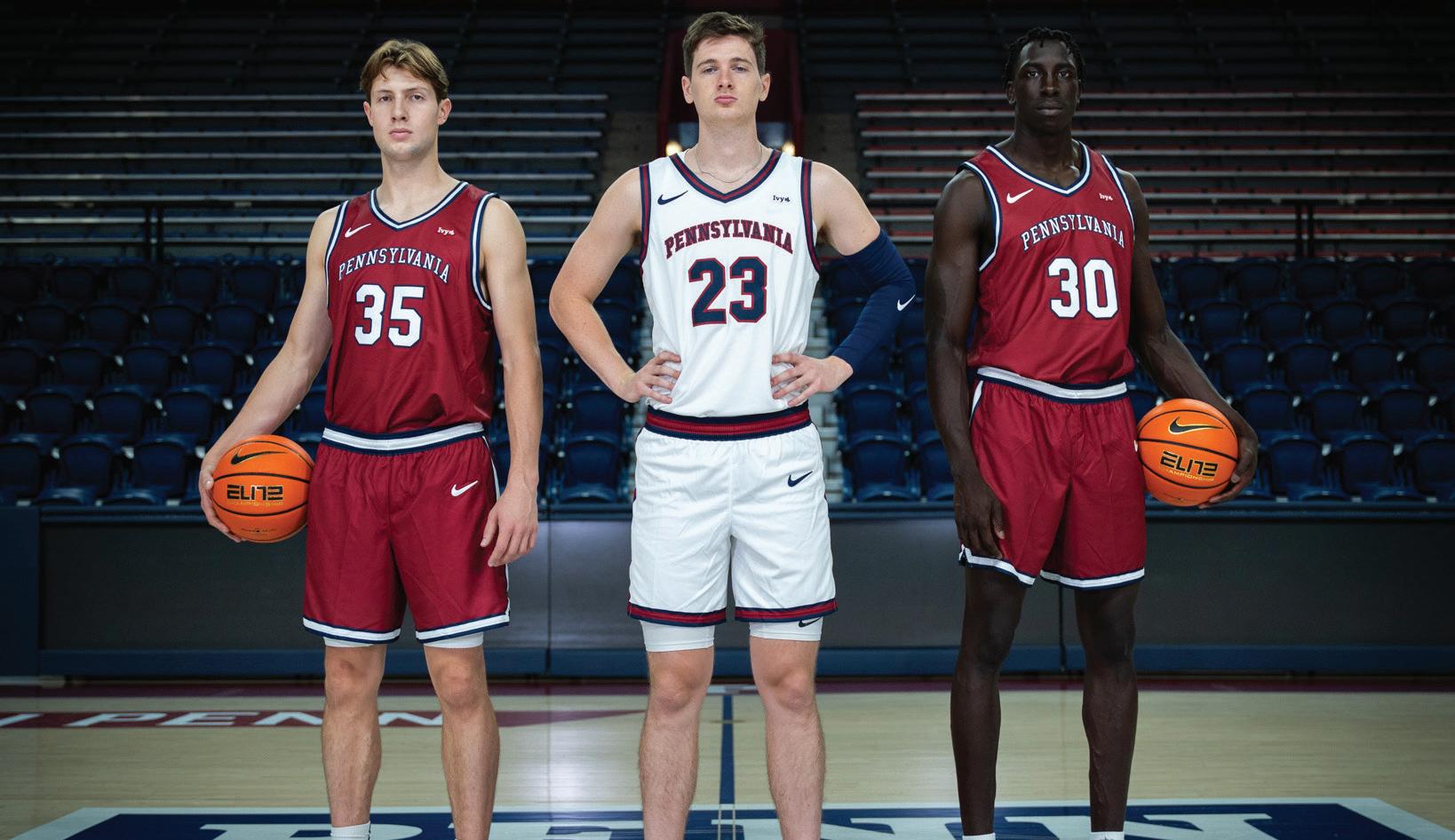
Penn men’s basketball is turning back the clock in more ways than one.
On Wednesday, the program announced via its social media that the Quakers are bringing back the program’s classic jerseys for the 2025-26 season.
After hiring 1982 Wharton graduate Fran McCaffery as their new head coach earlier this offseason, the Red and Blue are reflecting the change in their on-court appearance as they seek to restore the team to its former glory.
“It’s almost symbolic — the fact that we’re bringing the winning Penn, the exciting Penn,” senior forward Ethan Roberts said. “It just adds another element of excitement.”
Penn debuted two new sets on its social media accounts: one all-white look with red and blue accents and an all-red jersey with white and blue accents. Both feature arching “Pennsylvania” text emblazoned on the front — a notable change from the “Penn” mark the team has utilized in recent years. The team did not confirm whether the jerseys will serve as the team’s primary uniforms.
The Quakers last wore the style as an alternate in 2019 to celebrate the 40th anniversary of the 1979 Final Four team. That season, Penn donned the all-red set in a Big 5 title-clinching win over Saint Joseph’s.
The jerseys served as Penn’s primary rotation throughout the ’70s, ’80s, and ’90s, including during McCaffery’s playing days. During his three years on the team from 1979 to 1982, McCaffery helped the Quakers to a pair of Ivy League titles and a trip to the second round of the NCAA Tournament in 1980.
“It’s cool to have a Penn alum at the helm of the program, to see how much it means to him and know the success he’s had in that jersey,” Roberts said of McCaffery. “It all makes it more special for us.” McCaffery’s hiring triggered a summer of change on 33rd Street. The Quakers added two big-ticket transfers — former five-star recruit junior forward TJ Power and Division II star sophomore forward Lucas Lueth — as well as a five-person freshman class. McCaffery’s staff additions included former Iowa assistant Tristan Spurlock, coaching veteran Ben Luber, and former Siena star Ronald Moore.
After back-to-back seventh-place Ivy League finishes, the Quakers hope their new threads will coincide with a new beginning.
“It’s a cool time to be in the Penn men’s basketball program, that’s for sure,” Roberts said. “And we all feel that, which makes it even better. That’s the feeling across the board — it’s a time of excitement, growth, and program-building.”
DANA BAHNG | SENIOR DESIGNER