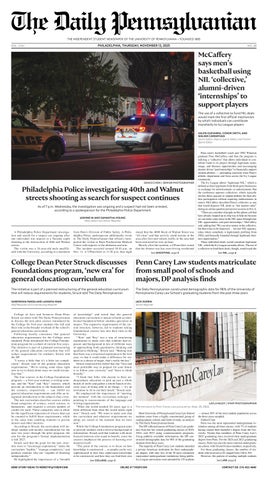
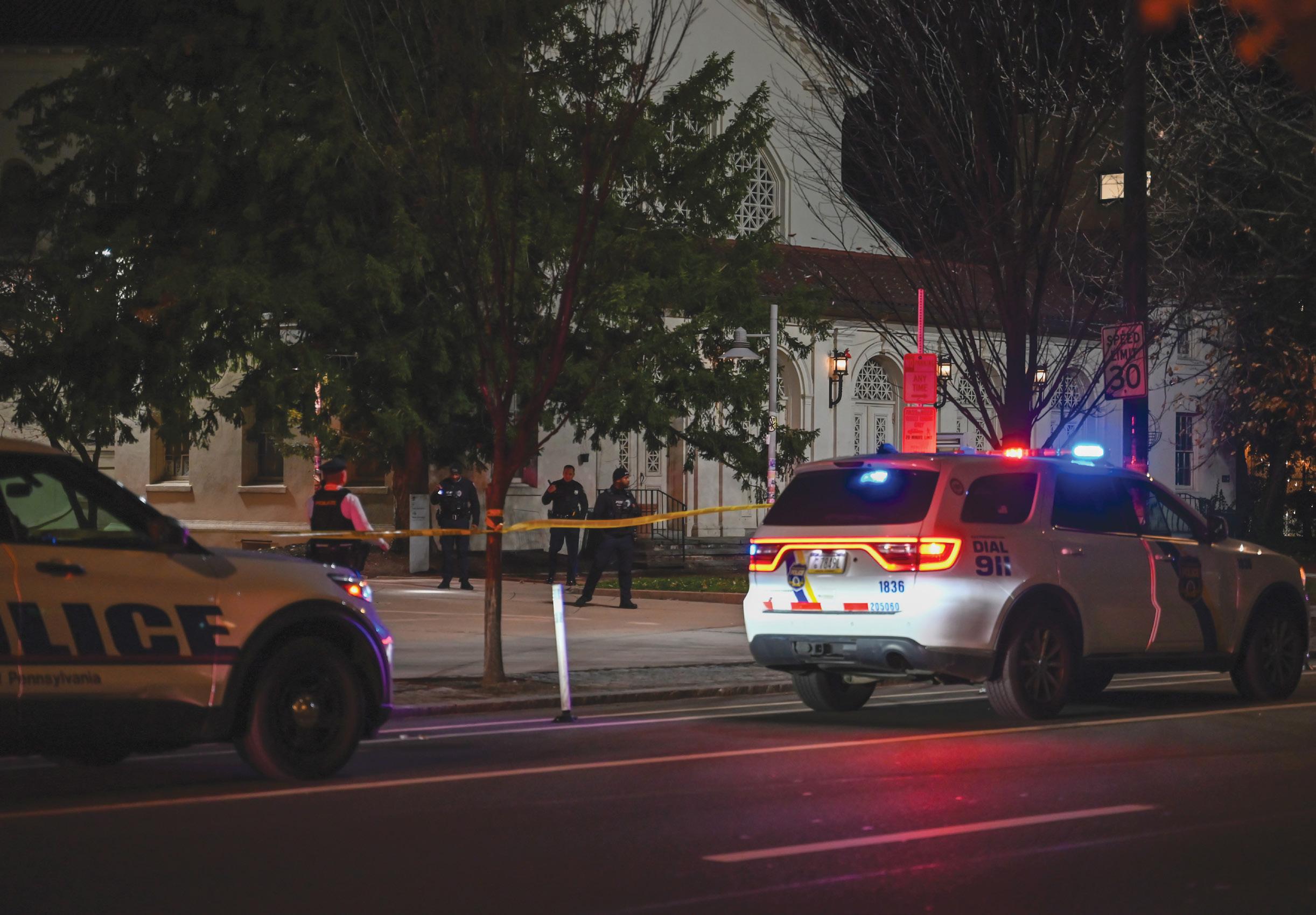
Philadelphia Police investigating 40th and Walnut streets shooting as search for suspect continues
As of 7 p.m. Wednesday, the investigation was ongoing and a suspect had not been arrested, according to a spokesperson for the Philadelphia Police Department
JASMINE NI AND SAMANTHA HSIUNG News Editor and Senior Reporter
A Philadelphia Police Department investigation and search for a suspect are ongoing after one individual was injured in a Tuesday night shooting at the intersection of 40th and Walnut streets.
The victim was a 34-year-old male unaffiliated with the University, according to a statement
from Penn’s Division of Public Safety. A Philadelphia Police spokesperson additionally wrote to The Daily Pennsylvanian that officers transported the victim to Penn Presbyterian Medical Center with injuries to the abdomen and arm. The incident occurred around 10:10 p.m. on Nov. 11. A UPennAlert at 11:38 p.m. that night
College Dean Peter Struck discusses Foundations program, ‘new era’ for general education curriculum
The initiative is part of a planned restructuring of the general education curriculum that will reduce requirements for students, Struck told The Daily Pennsylvanian
SAMEEKSHA PANDA AND LAVANYA MANI Staff Reporter and Contributing Reporter
College of Arts and Sciences Dean Peter Struck sat down with The Daily Pennsylvanian to discuss the new pilot courses introduced by the College for first-year students this fall and their role in the broader overhaul of the school’s general education curriculum.
Following faculty consensus that general education requirements for the College were outdated, Penn introduced the College Foundations program for a cohort of current first years. The initiative is part of a planned restructuring of the general education curriculum that will reduce requirements for students, Struck told the DP.
“I worry a little that it’s a little too complicated,” Struck said of the general education requirements. “We‘re testing some ideas right now to try to think about ways we could streamline that.”
The four courses in the College Foundations program — a first-year seminar, a writing seminar, and the “Kite” and “Key” courses, which provide an introduction to the humanities and the sciences, respectively — can fulfill six general education requirements and offer an integrated introduction to the subjects they cover.
The new curriculum classifies courses within broad categories of science, social science, or humanities and requires a certain number of credits for each. These categories aim to allow for the significant expansion of classes that can be counted to fulfill these requirements, while at the same time enabling students to pursue minors and other interests.
According to Struck, the curriculum will undergo student and faculty consideration for the next two years through the pilot program; the aim for the program’s formal implementation is fall 2027.
Struck said that the goals for the new structure were to “encourage exploration,” make the curriculum “legible,” “manage complexity,” and produce students who are “capable of thinking independently.”
He highlighted the importance of a “breadth
of knowledge” and noted that the general education curriculum is meant to build an intellectual foundation before students specialize in majors. The expansive requirements of the current structure, however, led to students taking foundational courses late into their time at the University.
“‘Kite’ and ‘Key’ was a way of structuring exploration to make sure that students had exposure and background in lots of different ways of approaching both quantitative thinking and qualitative thinking,” Struck said. “Making sure that there was a structured exploration in the first year, so that it could make a difference for students in a choice of major, that’s really the key.”
Struck expressed his belief that the “best and most profitable way to prepare for your future is to follow your curiosity” and “learn to think broadly.”
“I think that folks who decide in their undergraduate education to pick up just a whole bunch of skills and gather a whole bunch of discrete ways of being able to do things — it’s an invitation to AI to eat their lunch,” Struck said.
He emphasized the importance of “meeting the moment” with the curriculum redesign — pointing to reassessments of the language and writing requirements.
“What the world needed 20 years ago is a little different than what the world needs right now,” Struck said. “We want to make sure that the curriculum and whatever requirements we adopt are suited to the moment that we have now.”
While the College Foundations program aims to provide students with a diverse background of information, Struck said that students with more focused interests also stand to benefit, since the courses emphasize the process of learning over material itself.
“The point of the courses is to focus on how knowledge is constructed … so people can be very sophisticated in how they understand knowledge to be constructed, and how they can find their own
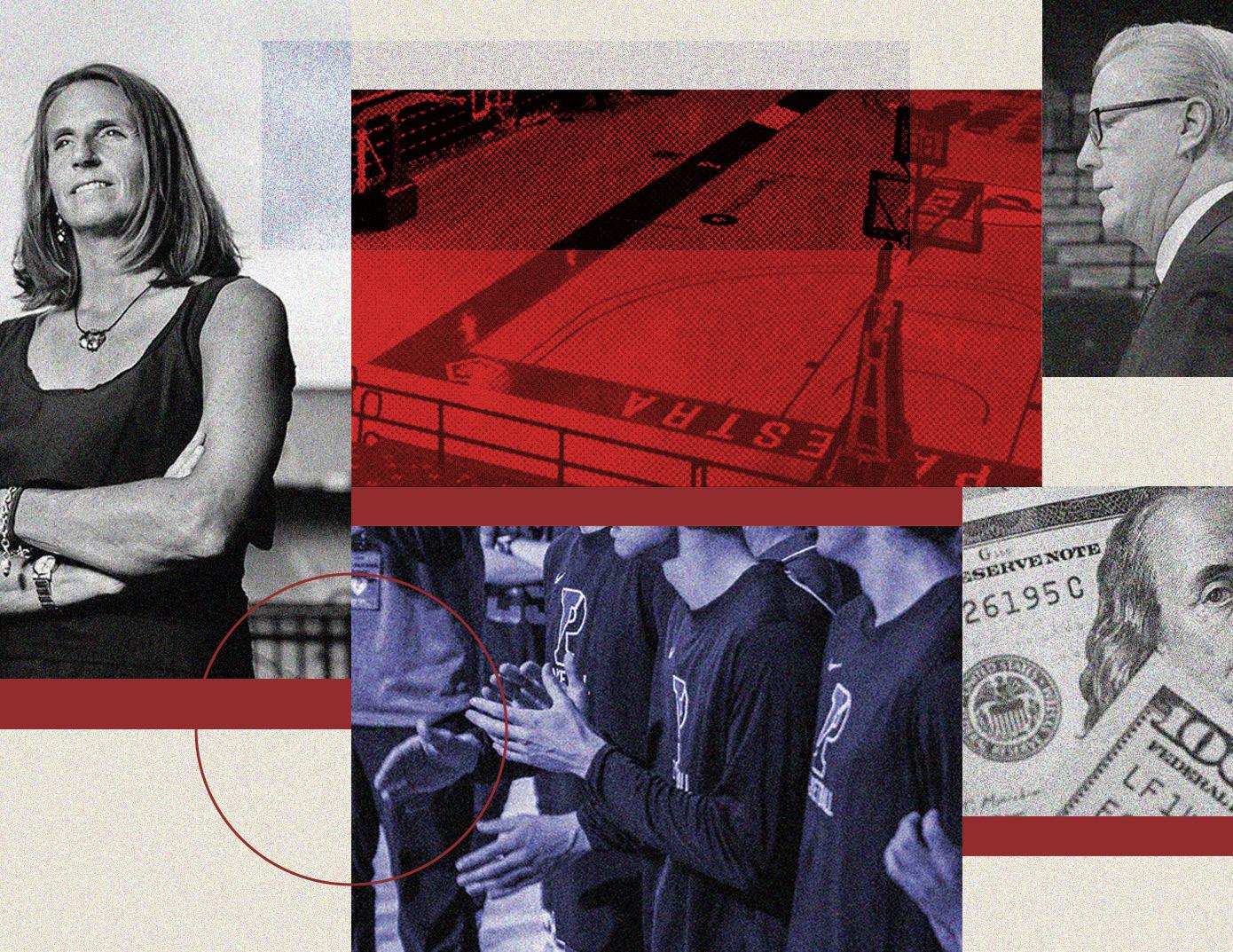
McCafery says men’s basketball using NIL ‘collective,’ alumni-driven ‘internships’ to support players
stated that the 4000 block of Walnut Street was “all clear” and that activity could resume in the area after foot and vehicle traffic in the area had been restricted for over an hour.
Shortly after the incident, a UPennAlert stated that the shooter was last seen driving westbound See SHOOTING, page 3
Penn men’s basketball coach and 1982 Wharton graduate Fran McCaffery said that the program is utilizing a “collective” that allows individuals to contribute funds to its players through legitimate name, image, and likeness opportunities and encouraging alumni-driven “paid internships” to financially support student-athletes — prompting reactions from Penn’s athletic department and from across the Ivy League community.
The Ivy League allows “legitimate NIL,” which is defined as direct payments from third-party businesses in exchange for advertisements or endorsements. But the conference opposes collectives, which typically involve direct payouts to student-athletes for their athletic participation without requiring endorsements in return. McCaffery described Penn’s collective as one that would disperse NIL deals at “fair market value” during an online question and answer session on Nov. 6.
“There are a number of people on this phone call that have already stepped up in a big way to help me because we can make some noise in the NIL space through true NIL opportunities and paid internships,” McCaffery said, adding that “We can raise money in the collective, but then it has to be dispersed … for true NIL opportunities where somebody is legitimately profiting from [NIL] and basically funneled through legitimate business opportunities.”
These individual deals would constitute legitimate NIL, which the Ivy League currently allows. The use of a collective to fund these deals, though, would mark the See NIL , page 6
Penn Carey Law students matriculate from small pool of schools and
majors, DP analysis finds
The Daily Pennsylvanian constructed demographic data for 98% of the University of Pennsylvania Carey Law School’s graduating students from the past three years
JACK GUERIN Senior Reporter
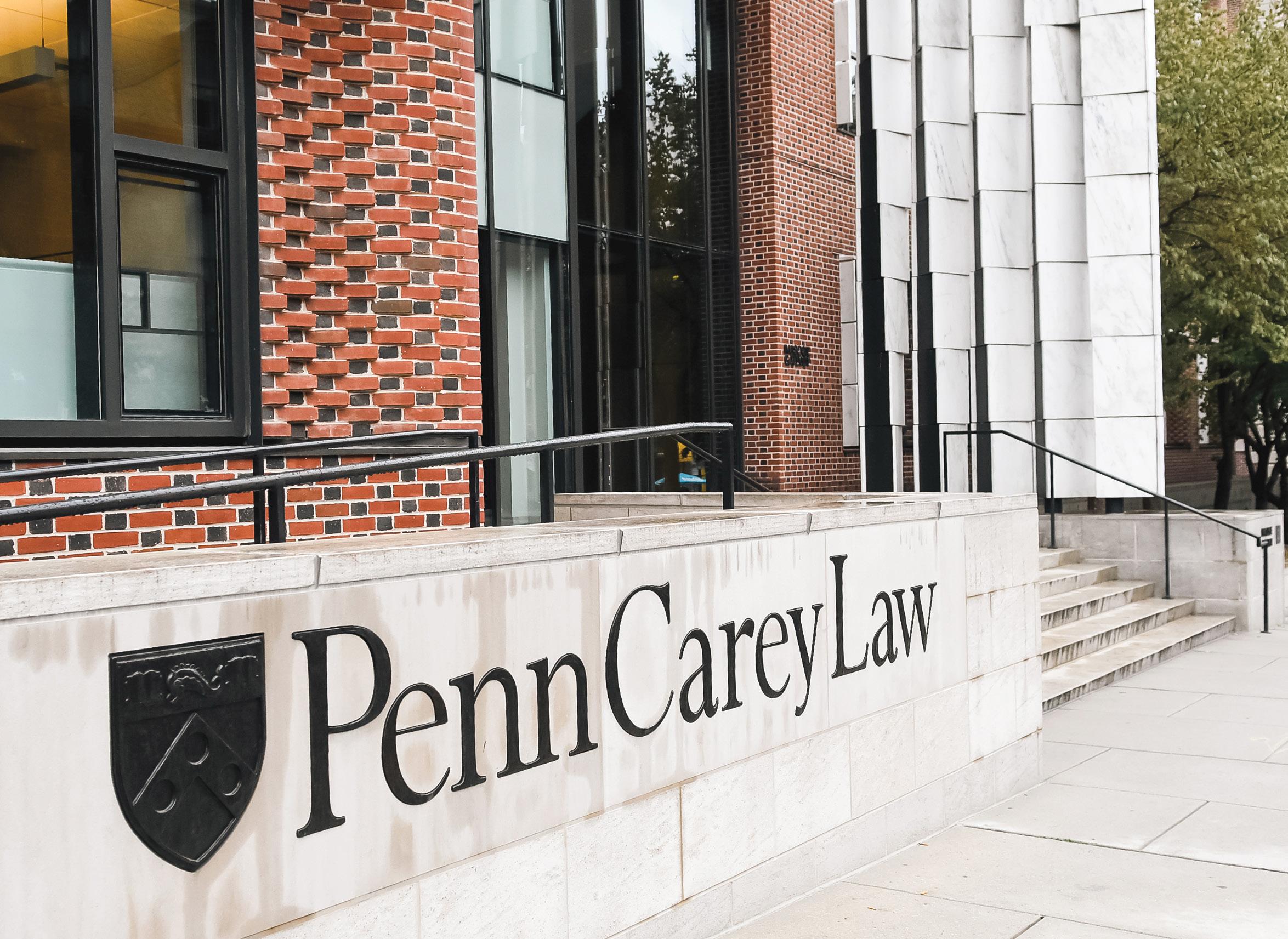
The entrance to Penn Carey Law pictured on Sept. 25, 2024.
Most University of Pennsylvania Carey Law School students come from a highly concentrated group of undergraduate schools and fields of study, an analysis by The Daily Pennsylvanian found.
The DP collected names of Penn Carey Law graduates from the law school graduating classes of 2025, 2024, and 2023 using commencement programs. Using publicly available information, the DP constructed demographic data for 98% of the graduating students from these years.
The majority of Penn Carey Law students attended a private American institution for their undergraduate degree, with only two of the 10 most commonly represented undergraduate institutions being public. Ivy League universities were attended by 155 students
— almost 20% of the total student population across the three years sampled.
Embed Code Penn was the most represented undergraduate institution among all three classes, with 7% of students having earned their bachelor’s degree from the University. Twenty-four members of Penn Carey Law’s 2025 graduating class received their undergraduate degree from Penn. For the 2024 and 2023 graduating classes, Penn was also the most common undergraduate school, with 18 and 16 class members, respectively. For those graduating classes, the number of students who received a J.D. ranged from 248 to 301. However, this pattern of sending multiple students
See LAW, page 2
GRACE CHEN | SENIOR PHOTOGRAPHER
LAYLA NAZIF | STAFF PHOTOGRAPHER
2025 election marks highest Penn of -cycle voter turnout in past decade, DP analysis finds
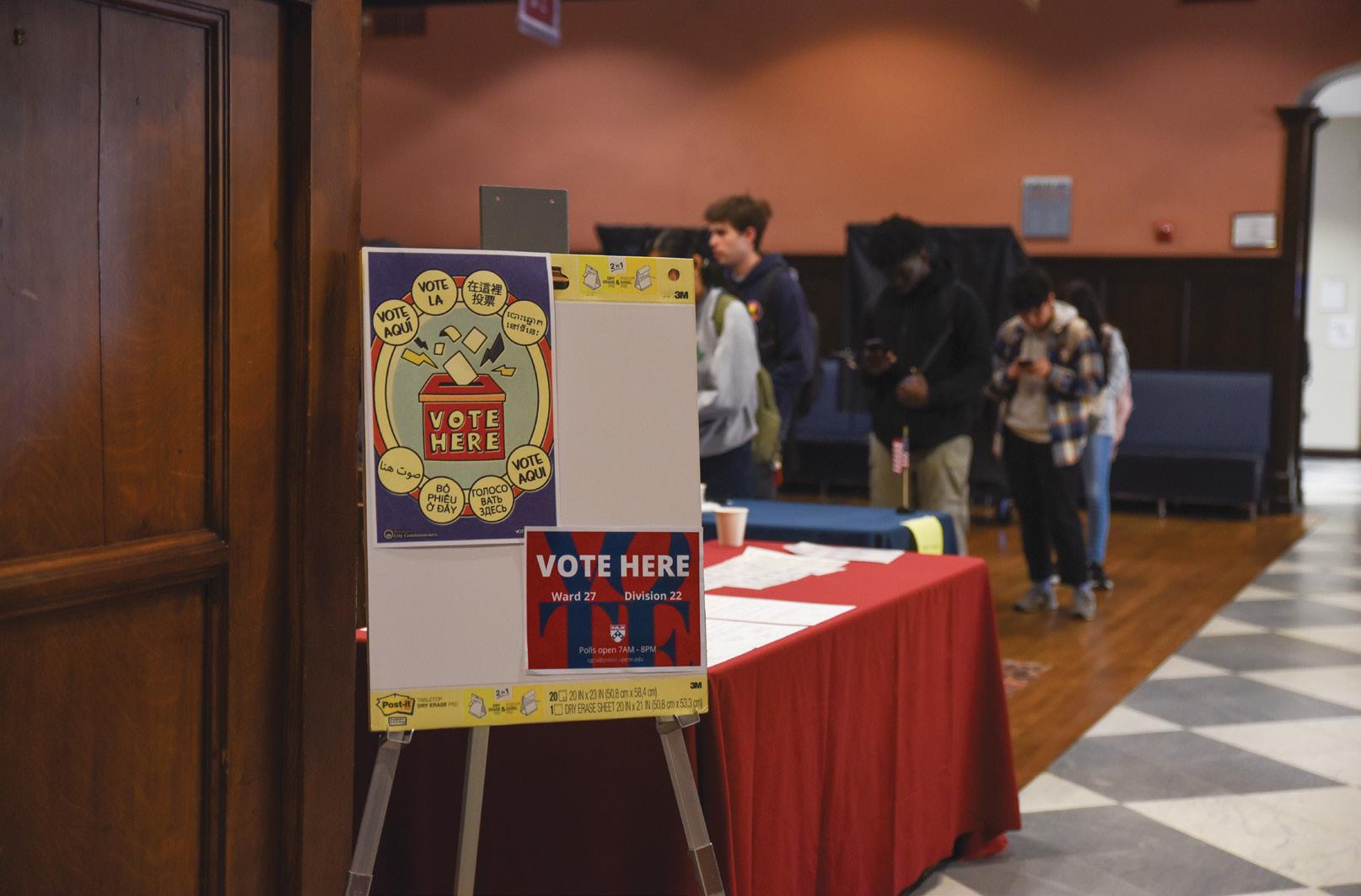
A total of 2,126 ballots were cast at Penn’s four on-campus polling locations on Election
Last week’s Election Day marked record turnout for an off-year election in the last decade, as voters at Penn’s on-campus polling locations voted more overwhelmingly for Democratic candidates than they have in years, according to an analysis by The Daily Pennsylvanian.
A total of 2,126 ballots were cast at Penn’s four on-campus polling locations on Election Day — a substantial increase from recent off-cycle elections. Over the past decade, as Penn affiliates have gained prominence in local and national politics, the University has continued to see increased voter turnout.
Compiling voting records from the nine Philadelphia ward divisions that most frequently correspond to on-campus polling locations at Penn, the DP found that last Tuesday’s turnout was significantly higher than any off-year election in the past 10 years.
In the past decade, this year’s election was the only one that drew over 1,500 voters to the polls at Penn without a national race.
This election was also one of the more Democraticleaning years on record, with more than 90% of voters at Penn casting their ballots for Democratic incumbent Larry Krasner to serve as Philadelphia’s district attorney.
As turnout has increased, so has the prominence of Penn alumni and affiliates in politics.
Presidential elections in 2016 and 2024 saw the highest levels of voter participation from Penn in the past 10 years. In both years, 1968 Wharton graduate and President Donald Trump was the Republican candidate on the ballot.
The 2020 presidential election — which lagged behind prior years in Election-Day turnout due to the COVID-19 pandemic — featured Penn affiliates representing both major political parties. Trump ran against former President Joe Biden, who previously served as the Benjamin Franklin Presidential Practice Professor at Penn.
According to an analysis conducted by the Institute for Democracy and Higher Education in 2021, nearly 77% of eligible Penn students voted in the 2020 election — a 9% increase from 2016.
In 2020, Penn students outperformed both the turnout rate for college students across the country and the general population turnout rate, which were 66% and 67% respectively, according to data collected by Penn Leads the Vote.
In 2023, Philadelphia’s mayoral election — in which 2016 Fels Institute of Government graduate Cherelle
Parker was the Democratic candidate — drew record turnout for a mayoral race. The 2015 mayoral election, by comparison, saw only 367 Penn voters, making for a 256% increase in turnout by 2023.
In this year’s elections, increased turnout has been attributed to the national prominence garnered by a retention vote for three justices on Pennsylvania’s Supreme Court. Penn overwhelmingly voted to retain all three justices.
The district attorney race between Democratic incumbent Krasner and Republican challenger Pat Dugan marked Krasner’s second time on the ballot for this position. He previously ran and won in 2021 — in an election that only saw 508 Penn voters. This year,
Penn alum, NBC News anchor Andrea Mitchell receives 2025 Beacon Award
1967 College graduate Andrea Mitchell received the award for her career in journalism and leading role in advancing opportunities for women ANANYA KARTHIK
TCPW Chair Aliya Sahai described Mitchell as a “trailblazer in journalism and a dedicated advocate for women” in her opening speech, citing Mitchell’s role as NBC News’ chief Washington and foreign affairs correspondent. She also highlighted Mitchell’s continued leadership at Penn through her involvement on the University Board of Trustees and the School of Arts and Sciences’ Board of Advisors.
In video messages played at the ceremony, Mitchell’s family and colleagues celebrated her as a “beacon for women in journalism and beyond,” emphasizing that “nobody brings history and context of world events the way [Mitchell] do[es].”
Gutmann, who formerly won the Beacon Award in 2011, presented Mitchell with this year’s award.
In her acceptance remarks, Mitchell reflected on her early years at Penn, where she studied English. She connected her time at Penn to the University’s longer history of women “breaking barriers,” recalling the 125th anniversary of women’s admission and the legacy of figures such as Sadie Alexander — the University of Pennsylvania Carey Law School’s first Black female graduate.
Mitchell also spoke about the obstacles she faced entering journalism at a time when women were excluded from newsrooms, highlighting a trainee program at a radio station in Philadelphia that she was accepted to.
“They said women could not be in the newsroom,” Mitchell explained. “So I talked them into letting me be a copy boy on the midnight shift.”
Mitchell said during the event that those early years taught her “that no job is worth compromising your principles, and that empathy is one of the
most important marks of character, and that civic virtue requires community care and service from all of us.”
After accepting her award, Mitchell spoke with Gutmann about the public responsibility of journalism and the “global importance” of interviewing political leaders.
She told Gutmann that she has “always felt that journalism is an obligation and … a civic responsibility.”
“Every day as a White House correspondent, for 12 years, I thought, ‘What am I doing here?’” Mitchell said. “It’s my responsibility to tell the American people and the world what is happening and what the president of the United States is doing or not doing.”
Gutmann highlighted Mitchell’s influence as both a journalist and a leader. She described Mitchell as “a leader among leaders,” adding that “if you want leadership, and there’s something to be done, Andrea is the person.”
The pair also discussed democratic values and civil discourse.
“The First Amendment is the guiding principle — not self-censorship or agreeing to be pressured,” Mitchell said. “I wish we could think of people as family members, as sons, daughters, parents, and not demonize them as hideous.”
When Gutmann asked what advice she would give to students entering journalism today, Mitchell urged them to “be a writer” and “to study” but not specialize in anything.
“Study everything,” Mitchell said. “Read everything. Don’t predict what you’re going to do. … You are a key part of the fabric of this great institution that has grown and evolved into the beautiful campus that we enjoy today.”
way into producing knowledge,” he said. The College Foundations program has
received mixed reviews from participants, with some appreciating the introduction to a variety of subjects and others claiming that the program doesn’t serve those who already have a clear idea of what fields they hope to pursue.
“I think the best preprofessional education you can get right now is one that lets you
amplify and follow your own curiosity, your own work,” Struck said. “Get yourself ready to be able to adapt and to be able to manage a complex situation, learn from difference — these are things that are key to getting ahead as well as to having the best chance of a lifelong sense of purpose.”
LAW, from front page
did not hold for most schools. By far the most common number of students sent to Penn Carey Law from any single undergraduate institution was one. In 2024, for example, 95 of the 145 unique undergraduate institutions were represented by only one student.
There was also a clear trend of students enrolling in law school soon after completing their undergraduate studies. More than 74% of the students analyzed by the DP spent less than four years between graduating college and enrolling at Penn Carey Law.
Less than 10% of students attended law school at least six years out of college.
In an emailed statement to the DP, a spokesperson for Penn Carey Law highlighted the law school’s holistic approach to admissions and stated that there was no advantage to attending a specific school.
“Students who apply to Penn Carey Law come from every state in the nation, from many countries around the world, from more than 200 undergraduate institutions, and from a broad range of academic, ethnic, cultural, professional, and economic backgrounds,” the spokesperson wrote.
Certain undergraduate fields of study were also common among Penn Carey Law students. In every year, the most common undergraduate major was political science. In the Class of 2024 alone, 98 students majored in political science, constituting almost a third of the entire class. After political science, the most common majors were economics, international relations, and history.
The Penn Carey Law spokesperson emphasized that there is not one particular path to earn a spot at the school and said that successful applicants come from a broad range of fields of study.
“There is no pre-law educational requirement or even a specific recommended course of study for admission to Penn Carey Law,” the spokesperson wrote. “Strength of character, breadth of knowledge, and intellectual maturity constitute the base upon which our legal education builds.”
The Trustees’ Council of Penn Women honored 1967 College graduate Andrea Mitchell with the 2025 Beacon Award at the Penn Museum on Nov. 6. Mitchell received the award, the council’s highest honor, for her career in journalism and leading role in advancing opportunities for women. The event concluded with a fireside chat between Mitchell and former Penn President Amy Gutmann.
HANNAH CHOI | STAFF PHOTOGRAPHER
Gutmann (left) and Mitchell (right) pictured speaking at the event on Nov. 6.
COLLEGE, from front page
CHENYAO
Penn announces Platt family naming gift for new student performing arts center
The building, currently under construction and slated to open in early 2027, will be named the Platt Student Performing Arts Center
COSTA GAY-AFENDULIS
Contributing Reporter
The University announced on Nov. 7 that its new performing arts building will be named in honor of 1979 College graduates Julie Platt and Marc Platt following a new gift to Penn Live Arts.
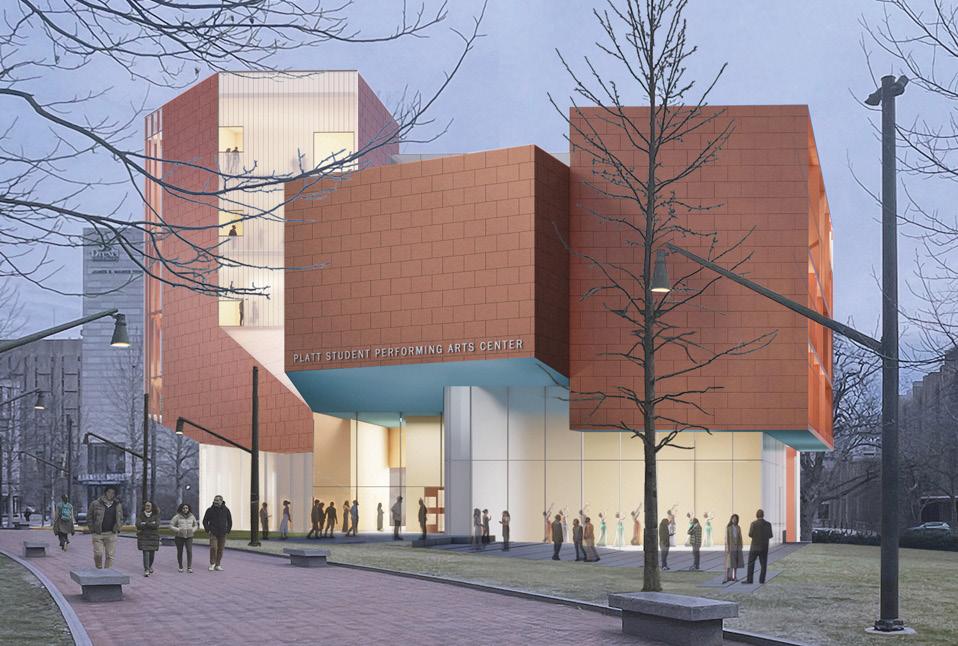
The building, currently under construction along Woodland Walk and 33rd Street and slated to open in early 2027, will be named the Platt Student Performing Arts Center and will provide concert spaces, lounges, and rehearsal rooms for students. Julie Platt serves on the University Board of Trustees and the Penn Live Arts Board of Advisors, while Marc Platt serves on the Director’s Advisory Council for Penn Live Arts.
“As the University’s home for the performing arts, our role is to nurture, incubate, present, and support the full ecosystem of performance on campus,” Christopher Gruits, executive and artistic director of Penn Live Arts, said in the announcement. “Julie and Marc’s generosity will be transformational, as more than a quarter of Penn’s undergraduate students participate in the performing arts.”
Penn President Larry Jameson added that the gift — the monetary amount of which has not been disclosed — will “have an immeasurable impact on generations of students.”
The couple also donated a naming gift for the Platt Performing Arts House in 2006.
Julie Platt is the outgoing vice chair of Penn’s Board of Trustees, and she serves on the Trustees’ Council of Penn Women.
In addition, she has contributed to Penn Hillel and the Katz Center for Advanced Judaic Studies, serving as co-chair of Hillel’s National Board of Governors and as a member of both organizations’ boards of overseers.
In addition to Julie and Marc Platt’s donations to Penn Live Arts — which have helped to establish the performing arts house and add rehearsal space to Houston Hall — they have also donated to Penn’s Jewish Studies program.
A centerpiece of the new building will be the 325-seat Edward W. Kane Theatre featuring an orchestra pit and full fly tower, supported by a $5 million gift last month from 1971 College graduate Edward Kane and his wife Marty Wallace.
The $75 million project was announced in 2021 and construction began in 2024. A 125seat theater will allow for “flexible performance and rehearsal capabilities.” The center will also include five rehearsal
Black Wharton hosts Dean Erika James, alumni for 50th-anniversary celebration
Members and alumni described the group’s history on campus and plans for the future in speeches at the gathering
JAMES WAN AND KATHRYN YE
Contributing Reporters
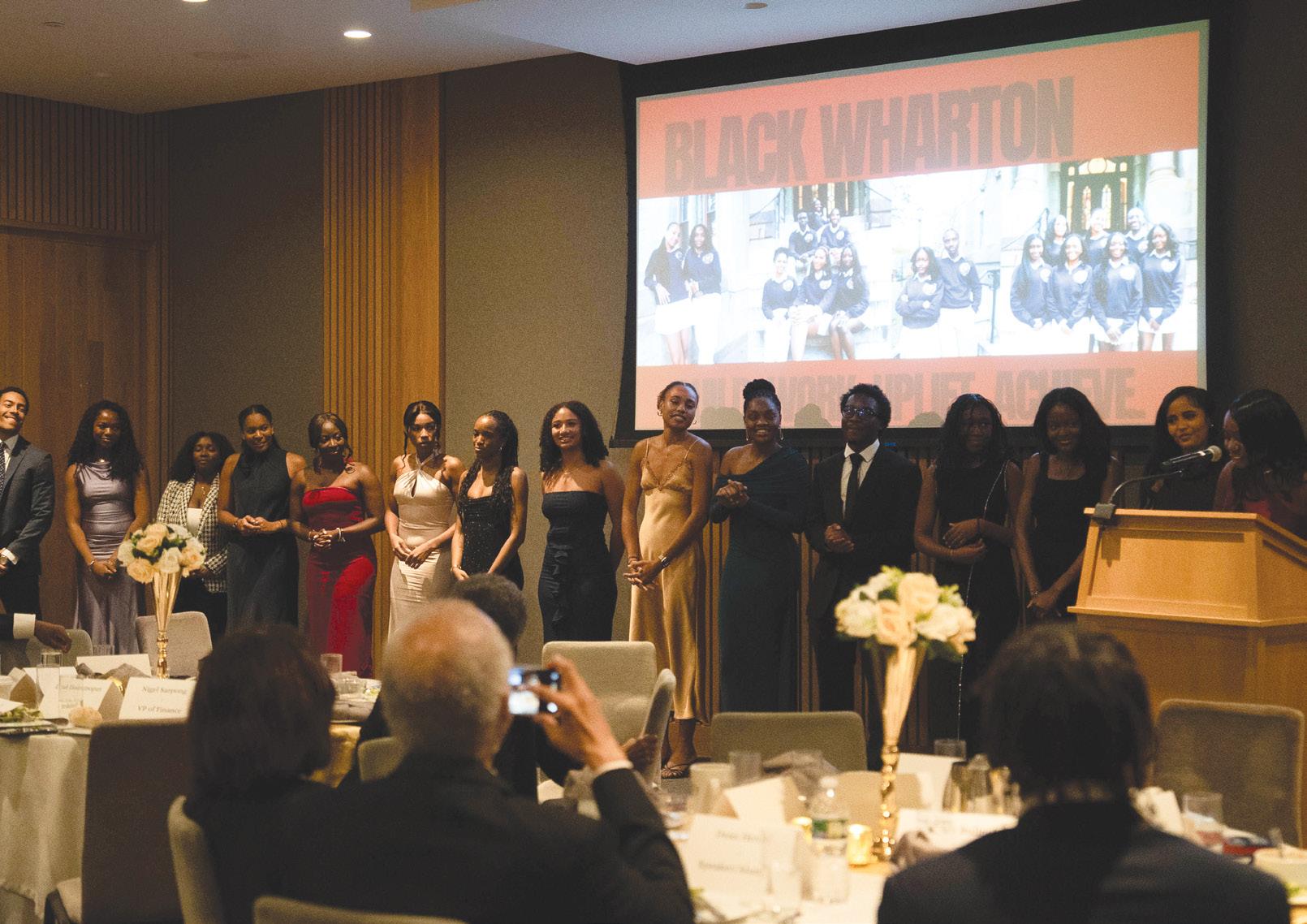
The Black Wharton Undergraduate Association celebrated its 50th anniversary on Saturday, bringing together current students, alumni, faculty, and corporate partners in the organization’s network.
The Nov. 8 event drew over 100 attendees and began with a keynote speech from Wharton Dean Erika James. Black Wharton members and alumni described the group’s history on campus and plans for the future in speeches at the gathering.
“Your achievements in business, finance, consulting, [and] community leadership are wonderful examples of what happens when purpose meets preparation,” James said during her remarks. “Your continued engagement through mentorship, philanthropy and advocacy keeps this community thriving.”
Black Wharton board members — including College junior Zora Edwards, who served as chair of the 50th year celebration — spoke about the growth of the organization since its inception in 1975 through
programs such as the Howard E. Mitchell Memorial Conference and the Black Ivy League Business Conference. Edwards noted that the group currently has over “200 active members, countless alumni supporters, and partnerships across industries.”
“Our founders set out to ensure that African American undergraduates across the University of Pennsylvania could achieve academic success, pursue professional excellence, and find strength in one another,” Edwards said.
A portion of the celebration was dedicated to remembering Black Wharton founder Harold Haskins, who sought to increase Black student enrollment and retention rates at Penn through recruitment efforts and the development of new programs. 1974 Wharton graduate Dean Henry spoke about how Haskins improved the minority student experience at Penn over decades, describing a “transformation” on campus from the 1960s to the 2000s.
Black Wharton hosted a 50th-anniversary commemoration event on Nov. 8.
SHOOTING, from front page
in a gray sedan. The suspect’s vehicle was “located” at 49th and Aspen streets around 10:40 p.m., according to police scanners.
Philadelphia Police sergeant Eric Gripp wrote to the DP that the investigation is being led by the police department’s Shooting Investigation Group, and investigators are asking for the public’s help in catching the shooter.
“I can tell you that while we are currently investigating some strong leads, we are still asking anyone who has information — particularly anyone who may have video — to reach out to our Shooting Investigation Group at the number above,” Gripp wrote.
College first year Mishal George — who is also a DP staffer — said that she was at the University City Cinemark when she witnessed two men arguing outside of the movie theater’s bathroom. According to George, the two individuals went outside after the argument got “more aggressive.”
“A minute later, there were two gunshots and everyone who was there went to the front glass doors,” George said. “We were watching as one of the men ran away and then one of them had been shot in the foot.”
Vice President for Public Safety Kathleen Shields Anderson told the DP on Tuesday that Philadelphia Police is leading the investigation because it was a gunshot-related incident.
A spokesperson for Philadelphia City
Councilmember Jamie Gauthier wrote to the DP that her office “had been in communication” with Philadelphia and Penn Police “before the shooting.”
“She will continue working with them and other public safety partners to keep folks safe,” the spokesperson wrote to the DP.
The shooting took place three days after three individuals were arrested — one for assaulting a police officer and two for disorderly conduct — after a crowd of several hundred “juveniles” assembled near 40th, Market, and Walnut streets.
In a statement to the DP, DPS wrote that officers from Philadelphia and Penn Police were present during the Nov. 8 incident. Several fights broke out as officers attempted to “disperse” the groups, which DPS characterized as “acting disorderly and causing disturbances to businesses in the area.”
The arrests took place during Penn’s Homecoming weekend. According to DPS, the “meetup” stemmed from a social media post calling for individuals to assemble at 40th and Walnut streets. Philadelphia Police inspector DF Pace told NBC News that a large crowd had accumulated in part due to the football and men’s soccer games that took place at Penn on Saturday. According to DPS, officers were “injured while they were separating the fights.”
“During the encounter, an unknown male intervened as officers attempted to take an individual into custody and deploy pepper spray. As a result, three officers were exposed to the pepper spray,” a Philadelphia Police spokesperson wrote in a statement to the DP.
“It is difficult to start a movement from a standingstill posture and with institutional headwinds — even more difficult to ensure permanence long after you’re gone,” Henry said.
“[Haskins] accomplished both.”
The Haskins family was also present at the event. 1993 College graduate Kristin Haskins-Simms spoke about her father’s legacy and shared remarks from her mother, Yvonne Haskins.
“He had the foresight to lean forward in developing a lot of programs that would support students wherever they were and whatever their aspirations,” Haskins said on behalf of her mother. “Your leadership and participation in Black Wharton carry the traditions and legacies of excellence that you will be thankful to rely on after graduation.”
The event also included a series of speeches from
Black Wharton alumni, who expressed their gratitude for the organization.
The planning process for the celebration took “about a year,” according to Edwards.
“We wanted to do this networking event to integrate our alumni and current undergraduate students because I think each of them can learn something from one another,” Edwards said in an interview with The Daily Pennsylvanian.
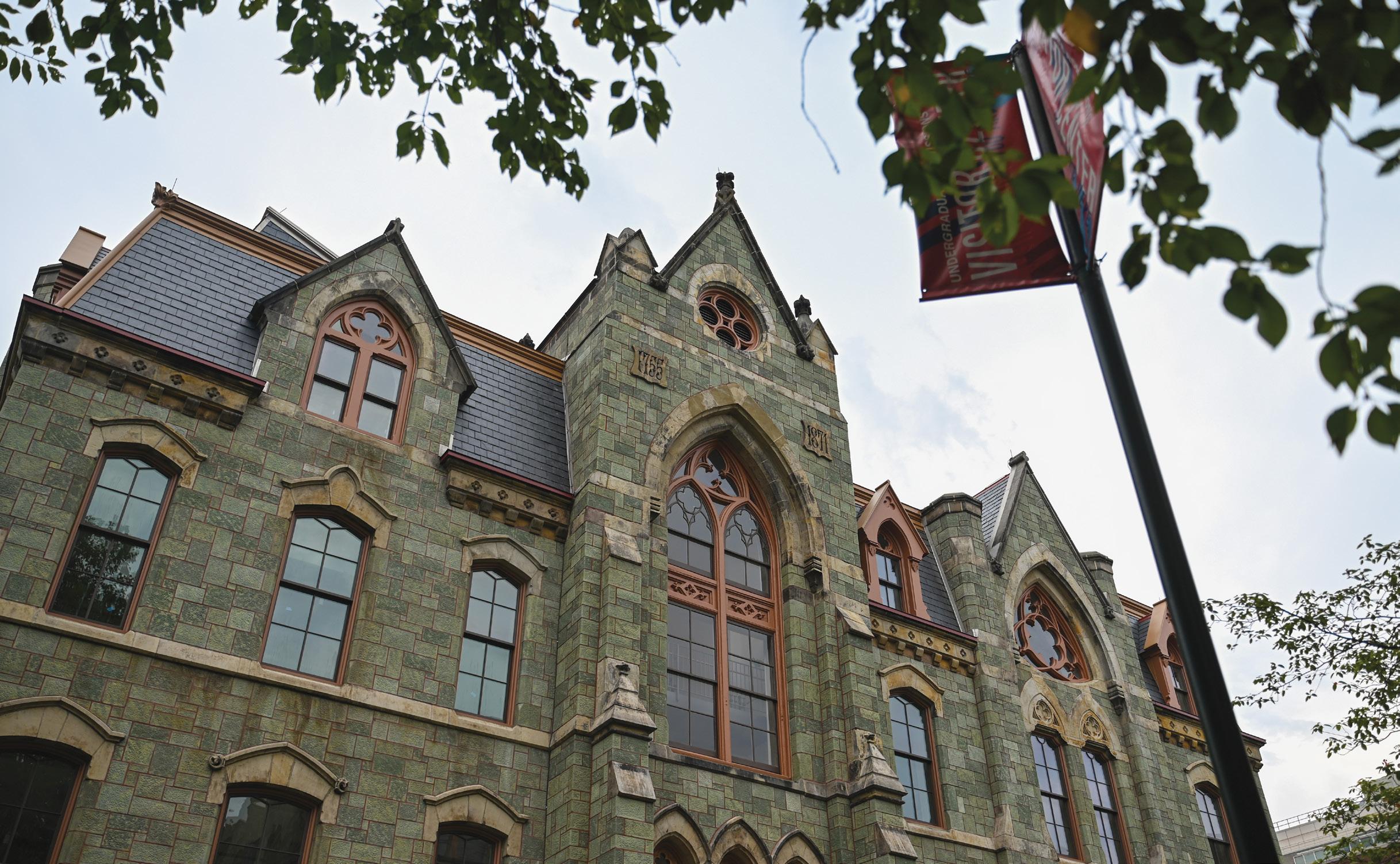
On Nov. 2, the Black Wharton’s Executive Board commemorated the organization’s decades on campus with a photo shoot outside College Hall.
“We want to make our mark and show that Black students are smart and we’re driven, and we know we’re valued and we belong here,” Edwards told the DP.
COURTESY OF PENN LIVE ARTS
The Platt Student Performing Arts Center will open in early 2027.
Research is Penn’s greatest gift
CHARLOTTE’S WEB | Research benefts students of all disciplines in all sorts of ways
On Oct. 16, I was invited to a panel about undergraduate research. To be honest, before that night, I had no intention of participating in research, but after hearing the panelists speak about how research changed their lives and continues to change others, I realized just how much I had been missing out on.
Research isn’t just for STEM majors. The benefits of participating in research apply to students of all disciplines, and they extend far beyond Penn. Many people see research as just a tool to build credibility, but in actuality, it teaches us a lot more along the way. Reginald Miles — director of Penn’s Veterans Upward Bound Program and a panelist at the event — spoke on the real-world benefits of research, saying, “It will prepare you for success. It will teach you how to be diligent, it will teach you how to communicate, it will teach you how to evaluate.”
Research isn’t just about collecting data and writing hypotheses. It’s about collaboration, learning from your mistakes, and challenging the way you think, all of which are crucial soft skills for life after graduation. Penn research, and Penn itself, has an excellent plural benefit where it teaches both soft skills and hard skills. Participating in research also gives you valuable mentors, whether they’re a supervisor, teacher, or even another student you’re working with; you get the opportunity to network with people who have more experience and want to connect with you. There’s never a downside to learning more about a subject you’re interested in. Conducting or assisting in research gives you the chance to gain more knowledge and experience, which is a great opportunity for any major.
There’s a myth that there often needs to be
I
a separation between passion and academics, especially in research. This is simply not true. Emotions and passion drive research, and this isn’t talked about nearly enough. There’s no point in spending hours collecting data and writing reports for a subject you don’t care about. Leaning into your fascination, anger, interest, and curiosity about a topic will fuel your research and make it worthwhile. Don’t let the idea of what research supposedly is stray you away from what it actually is: a chance to get firsthand experience with a subject you are truly passionate about.
Jumping into research can seem daunting. It’s such a boundless opportunity that it can feel overwhelming. Luckily, Penn is one of the top research universities in the world, and it has countless resources — one of which is the Center for Undergraduate Research and Fellowships. While Penn offers these resources, it’s up to you to take initiative. Cold calling research centers, reaching out to professors, finding mentors, and taking any opportunity you can are the steps that will give you a leg up. Research can be competitive, so it’s crucial to be intentional and consistent, even when faced with frustration. As Perelman School of Medicine professor Carsten Skarke said at the panel, “Maybe it takes eight doors until the ninth opens up. But each step you improve.” Staying consistent and focused is the best way to create research opportunities for yourself.
One of the hardest parts about research is maintaining your motivation. It takes a lot of work just to be able to start research, and even more to continue it. Often, it feels like a circular process. But it’s important to remember that just because it’s frustrating doesn’t mean research isn’t for you. Shawnna Thomas-EL,
use SNAP
benefits.
Many other college students do too
VESELY’S VISION | The Supplemental Nutrition Assistance Program is used by a diverse group of people and must be funded
I am an Ivy League student and a Supplemental Nutrition Assistance Program — commonly referred to as SNAP — recipient, and I am not alone. Over 1.1 million college students receive SNAP benefits nationwide. More broadly, SNAP benefits are used by over 41 million Americans a month. Over 22 million households rely on these funds to provide food for their families — with over 86% of these households containing children, the elderly, or people with disabilities. But this month, many payments did not go through. The recordlong government shutdown halted SNAP benefits, resulting in incredibly tangible impacts on Americans. At this time, the Supreme Court has instructed that benefits be funded in full nationwide, but orders from the White House have advised states to continue withholding benefits — and even “undo” funding that has already been sent to recipients.
This is inhumane, and the government must do what it can to allow SNAP
benefits to be distributed. Racist notions surrounding who receives benefits, including caricatures of Black women abusing welfare programs — commonly dubbed “welfare queens” — are going viral on social media, with many people taking these decades-old stereotypes as fact. In reality, the majority of SNAP recipients are white, and benefits are not widely misused. I am a full-time college student from a low-income family, and I rely on these benefits to buy groceries — as do many of my close friends. SNAP benefits are proven to help pull people out of poverty, provide food for children, and have been an essential part of our country’s welfare system for over 60 years. This month, stories of mothers going without food to make sure their kids can eat are cycling through the news as food banks across the country are struggling to keep up with increasing demand. Food insecurity is a nationwide problem that does not skip over college students.
You can’t read
GLADY’S GRIEVANCES | Challenge yourself to soldier past the headline
In 2004, the average attention span — calculated to be the time, for instance, an adult subject remained on one computer tab before switching to another — was recorded to be approximately two minutes and 30 seconds. That same study shows that in recent years, our attention spans have waned to a measly 47 seconds. With both the COVID-19 pandemic and the ever-growing popularity of social media — apps on which most users spend only 10-13 seconds per post — the average American’s attention span has only been further crippled.
Recent data also shows a steep decline — from 64% in 2012 to 40% today — in parents who read to their children, with an increasing proportion who view story time as a chore. Reading is now seen as a tedious means of helping your child acquire baseline literacy rather than an activity to enjoy. Only 40% of parents with children aged 0-13 reported that they found fun in reading to, or with, their child. During the first three years of a person’s life, more than one million new neural connections are formed each minute — most of which are now being barbecued by iPad time. With books’ waning popularity, children have fallen further and further behind by every academic and developmental metric. Lack of reading in early childhood is also directly tied to later deficiencies in critical thinking, comprehension, and elocution.
There is also a gendered difference: 44% of female children up to two years old are read to daily, in comparison to 29% of male children. Starting in first grade, boys perform
director of the Penn Knowledge is Power Program, addressed the familiar feeling of frustration students experience, saying, “You feel like you don’t want to do this anymore, but that’s not true — you do want to do this. You’re just tired. Own that feeling.” Allow yourself to be exhausted and frustrated, but don’t let that stop you from continuing your work. Penn’s research opportunities are truly one of the best things about this University. While it may seem overwhelming, frustrating, and maybe even a bit irrelevant to your major,
research is always a beneficial experience.
Getting to work with and learn about your passion is such a unique opportunity that paves the way for future success, and is the best gift Penn could offer.
CHARLOTTE PULICA is a College first year from Enoch, Utah studying criminology and economics. Her email is cpulica1@sas.upenn.edu.
Students face unique problems like tuition bills, balancing work and class, and rising inflation that does not correlate with rising wages. Ivy League students are not exempt from these realities. Since moving off the dining plan my junior year, one of the first things I did was apply for SNAP. In order to qualify as a college student in the state of Pennsylvania, you must not be on a meal plan and meet all other income requirements.
In my case, I qualify for the maximum work-study amount, receive the maximum Pell Grant, and hold an on-campus job, so getting approved and proving need was fairly straightforward. If you are a Penn student facing food
insecurity in lieu of SNAP payments, please utilize resources offered by the University — including redeeming meal swipes provided to students affected by SNAP benefit cuts. As always, I encourage Penn students to support one another during these times. Receiving government assistance does not define your worth. In fact, it can be an important stepping stone to achieving one’s goals.
MIA VESELY is a College senior from Phoenix studying philosophy, politics, and economics. Her email is mvesely@sas.upenn.edu.
significantly worse than girls in reading at every grade level, with the disparity growing all the way up to grade 12. Males are also less likely to enroll in college and more likely to sway toward conservatism. The feminization of literacy is also reflected in popular culture: One of the required accoutrements of the “performative male” is a physical book. We now find the idea of an adult male enjoying a book so unimaginable that we assume that it must unequivocally be for show.
So why should we, the esteemed Penn community, care? We have so little vested interest in the tragedies beyond our bubble. Despite our self-ascribed intellectual prowess, we have sadly displayed even less immunity to these trends than our fellow citizens. Fifty years ago, an education at any Ivy League school would have relied almost exclusively on massive textbooks and dense readings — there was a great deal of pride in the process and the act of learning. Today, Penn’s proudest pupils are those who can accomplish the most while toiling, thinking, and reading the absolute least: If you can ChatGPT it, you unquestionably should. Even the terminology of “locking in” and setting devices aside can be attributed to our perpetually wandering brains and scrolling thumbs.
Compounding the shame is the fact that our school, lauding itself as a beacon of the liberal arts, furnishes collections upon collections of first-edition books and rare texts. Paying Penn’s tuition is accompanied by access to these endless reserves of priceless works,
Columnist Gladys Smith cautions that failing to engage critically with information fosters ignorance and passivity.
which are utilized by embarrassingly few.
Because anything that is not a means to a discernible, professional end is scoffed at, reading — often not overtly productive — is rendered pointless. We tend to regard our exorbitant tuition as a flat fee for a prestigious diploma, as opposed to world-class pedagogues and bibliographical resources. At a University where the ultimate goal is to get by by doing the bare minimum, there is no place, or time, for reading. Perhaps the greatest problem is that we’ve forgotten that some ideas require more than a one-minute skim to be truly appreciated. Our environment is so greatly shaped by misinformation, sensational headlines, and rage-baiting “debaters” that all respect for nuance has been lost. If you can’t understand it in 40 seconds, it’s not worth understanding. This is the true reason why the media, and along with it, our country, has become so polarized: because we — yes, even at Penn
— lack literacy. We take things at face value and move on.
In our flippant, holier-than-thou declarations of “I’m not reading all that,” we’ve become more complacent with public affairs, seeking news on Instagram and relying on artificial intelligence to formulate every thought. Our inability to read and informedly develop our own viewpoints makes us that much more ignorant and passive — which then makes us a liability to both our colleagues and compatriots. If you’ve made it this far, congratulations; you’ve done far better than the average reader. You deserve a medal, or perhaps a Penn degree.
GLADYS SMITH is a College junior from Williamsburg, Va. studying health and societies. Her email is gldysmth@sas.upenn.edu.
ABHIRAM JUVVADI | STAFF PHOTOGRAPHER
Columnist Charlotte Pulica highlights that all students should engage in research to enhance their academic experience.
JACOB HOFFBERG | STAFF PHOTOGRAPHER Senior columnist Mia Vesely examines SNAP and challenges the belief that it is misused or unnecessary.
HENRY LEE | STAFF PHOTOGRAPHER
Being
quirements those
But it seemed promising enough, so I signed up. And I’m so glad I did.
The College Foundations program is a total reenvisioning of the current complex and convoluted sectors and foundations system, which received its latest update in 2005 (a year before I was born) and is in dire need of an overhaul. The current system requires students to fulfill 13 “Sectors of Knowledge” and “Foundational Approaches,” which, in practice, forces students to find the one or two niche and obscure courses that fulfill a specific requirement instead of making room for genuine exploration. Instead, College Foundations envisions a Franklinian core curriculum in students’ first year at Penn, with near-unbridled academic freedom beyond the four core courses. Students will take a writing seminar — which is already required — and a first-year seminar on any topic they choose, together with the newly created Kite and Key seminars. They then spend the rest of their time at Penn focusing on their major requirements, along with eight elective classes in any field or discipline, provided those classes are unrelated to their major.
As the bedrock of the new curriculum, Kite and Key seminars are designed to embody Ben Franklin’s intentions when he established the Academy of Philadelphia almost 300 years ago. Franklin believed students should study “every Thing that is useful, and every Thing that is ornamental.” Yet at the same time, he recognized the impossibility of this endeavor and instead proposed a liberal arts education as one in which students should aim to study the things that are “most useful and most ornamental” with “regard being had to the several Professions for which they are intended.”
In line with Franklin’s philosophy, Kite and Key seminars both cover a sprawling range of subjects and concepts that stretch across the humanities, STEM, and social sciences, giving students a bird’s-eye view into what each discipline entails. Weeks on “knowledge” and “ideology” had us discussing Descartes, Nietzsche, Marx, and
Foucault, while the “art” and “body” weeks took us to an art gallery at the Fisher Fine Arts Library and to the Penn Museum’s Anthropology department. Kite seminars give first years a common vocabulary: an arsenal of texts, ideas, and concepts that each provide the tiniest of windows into the depth of knowledge waiting to be acquired at Penn. I applied to college as someone interested in a wide variety of subjects. My options for majors ranged from philosophy, religion, and politics to law, psychology, and economics. The Kite seminar has allowed me to get a quick taste of each topic in a way the hyperspecialized sectors and foundations system never could. I’ve learned that I love critiquing the ideology of Slavoj Ž i ž ek and analyzing the themes of Kazuo Ishiguro’s “Never Let Me Go,” and I’ve also confirmed that majoring in history or anthropology is not for me. While I won’t be taking a Key seminar until
the spring, the basic structure of the course is designed to give students the skills necessary for careers in STEM and the quantitative social sciences. Students learn to code, analyze statistics, interpret data, and run experiments, among other skills that can be readily applied to a wide range of fields and majors at Penn.
Both Key and Kite seminars utilize a weekly lab where small 15-student groups meet with their teaching assistant, during which they might do hands-on coding and experiments for Key seminars or watch relevant documentaries and read required material for Kite seminars.
The Kite seminar has not only provided me with a range of topics and ideas to play with, but it has also built a community for myself and my classmates around our shared experience in the course. Spending hours together each week has turned us into a friend group that shares inside jokes, college tips, and a weekly snack rotation. Different students shine in different weeks.
Some of my peers commandeered “sports” week with personal football anecdotes, others dominated “power” week with their debate on systems of oppression, and some even graced our class with a 15-minute interpretive dance performance during “joy” week. All Penn students bring something unique to the College of Arts and Sciences, and the Kite seminar has afforded us each our time to shine as we journey through everything “most useful and most ornamental.” Franklin’s vision of a liberal arts education is certainly a lofty one — but the College Foundations First-Year Curriculum brings Penn one step closer to embodying it.
ELIAV ZENDEHDEL is a College first year from Los Angeles. His email is eliavzen@sas. upenn.edu.
HANS BODE | STAFF PHOTOGRAPHER
Guest columnist Eliav Zendehdel supports the wider implementation of the new College Foundations curriculum at Penn.
NIL , from front page
, from back page
KATE AHN | SENIOR DESIGNER
VHITO
EBUN ADESIDA | STAFF PHOTOGRAPHER
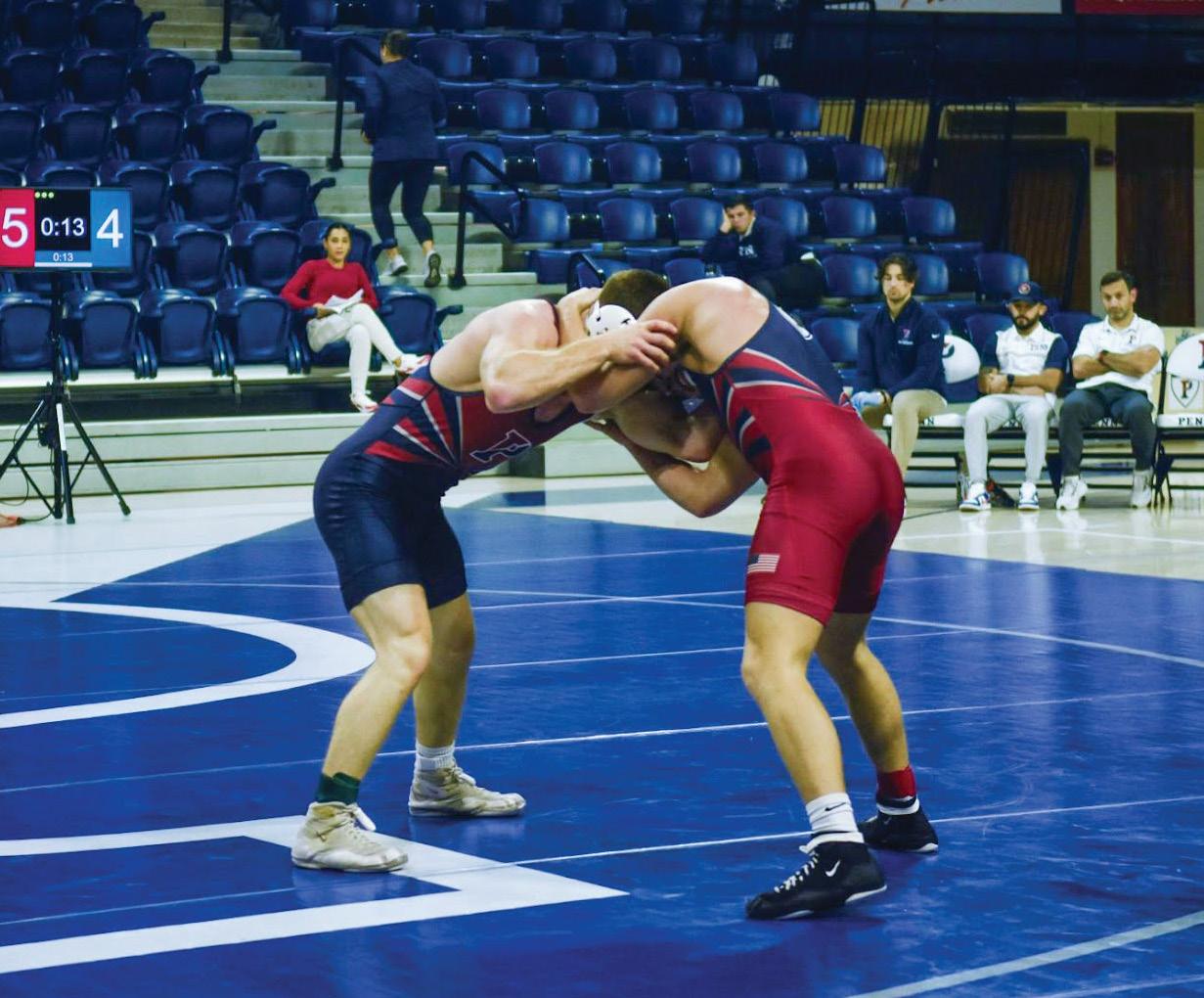
Wrestling pictured practicing on Nov. 3, 2024.
‘He
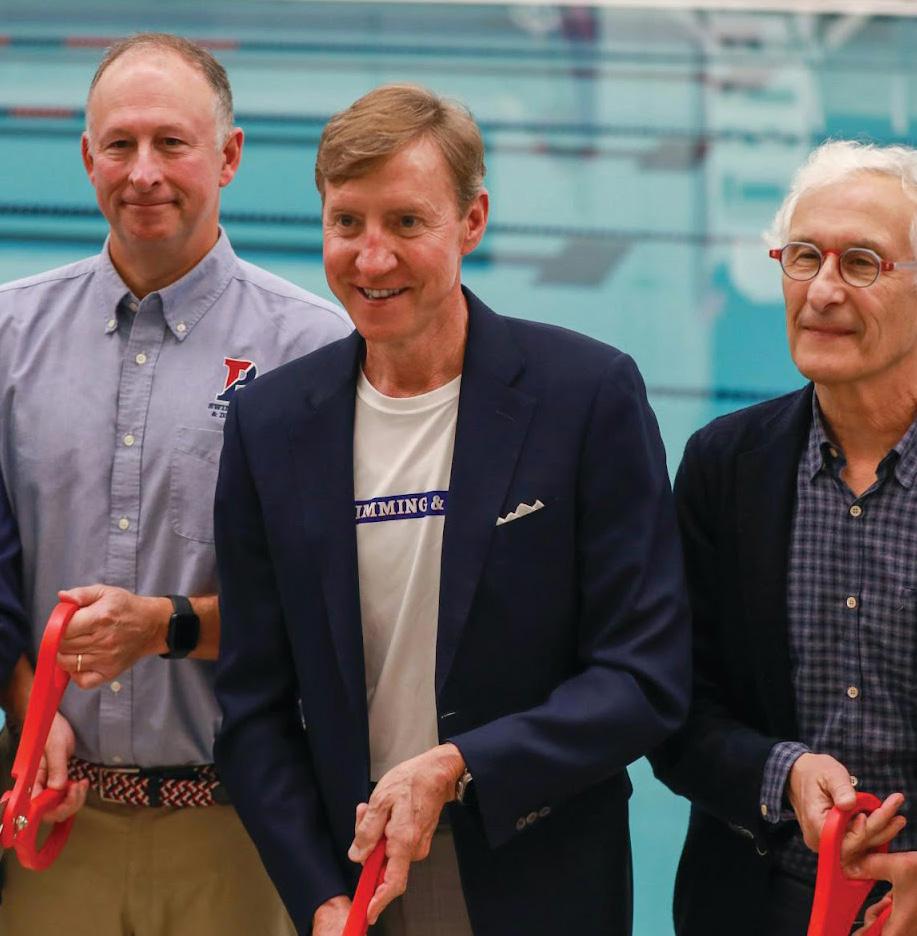
Pool celebrates reopening with ribbon-cutting ceremony after yearlong renovation
YAELLE DE OLIVEIRA
The ribbon-cutting ceremony at Sheerr Pool was held on Nov. 8.
WEINING DING
MULTIMEDIA EDITOR Then-sophomore defensive back Francesco Barone pictured preparing to pass the ball at the start of a play at Harvard on Nov. 11, 2023.
SEAN GAWRONSKI AND SOO YOUNG YOON Sports Reporters