Penn faculty join hundreds to rally against Trump administration’s federal research funding freeze
The Wednesday rally in Philadelphia was part of a larger ‘Nationwide Day of Action’ organized by Labor for Higher Education, with more than a dozen events in cities across the country
GABRIEL HUANG Senior Reporter
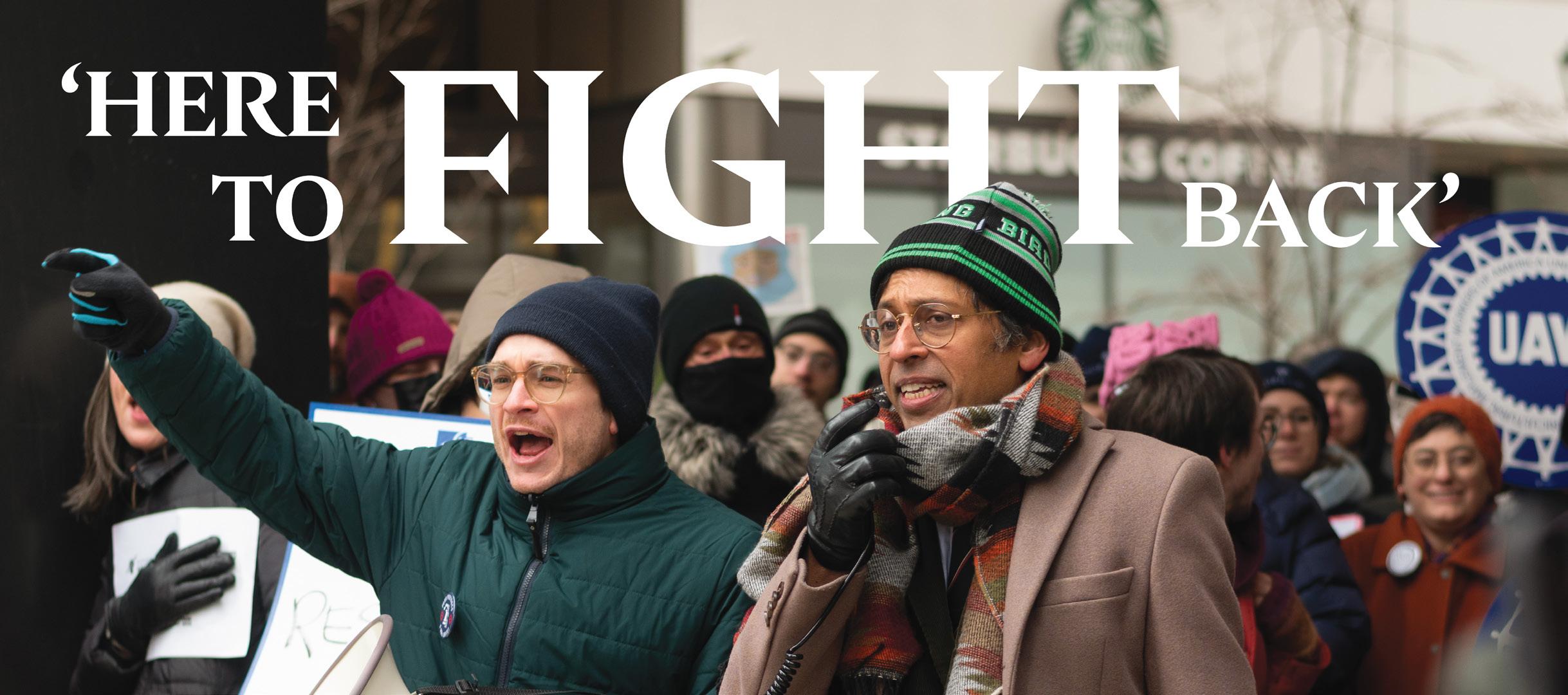
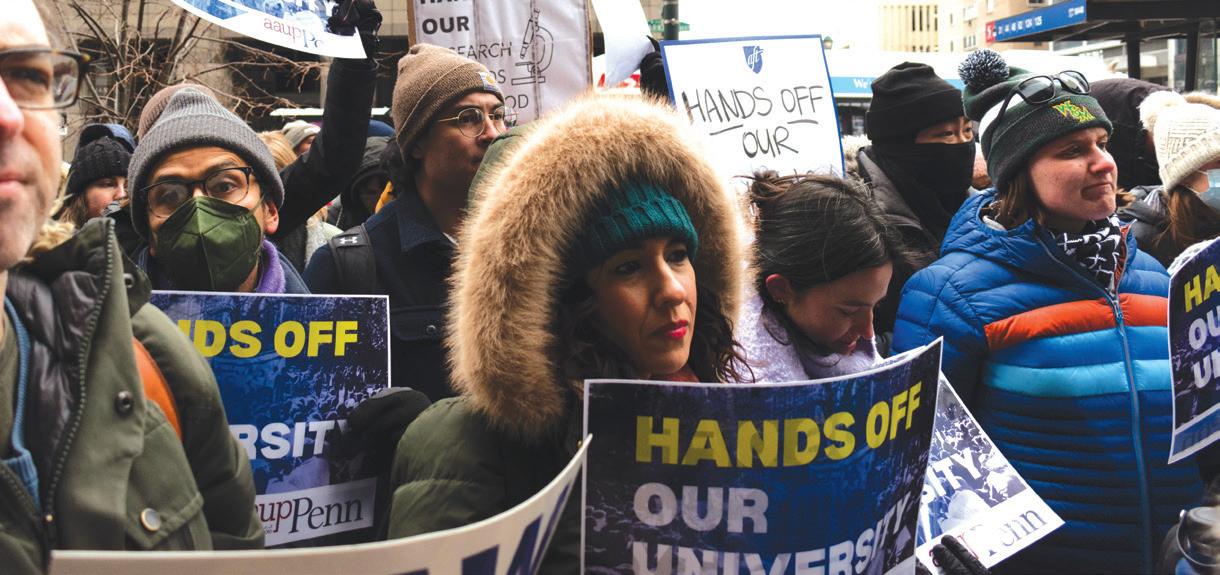
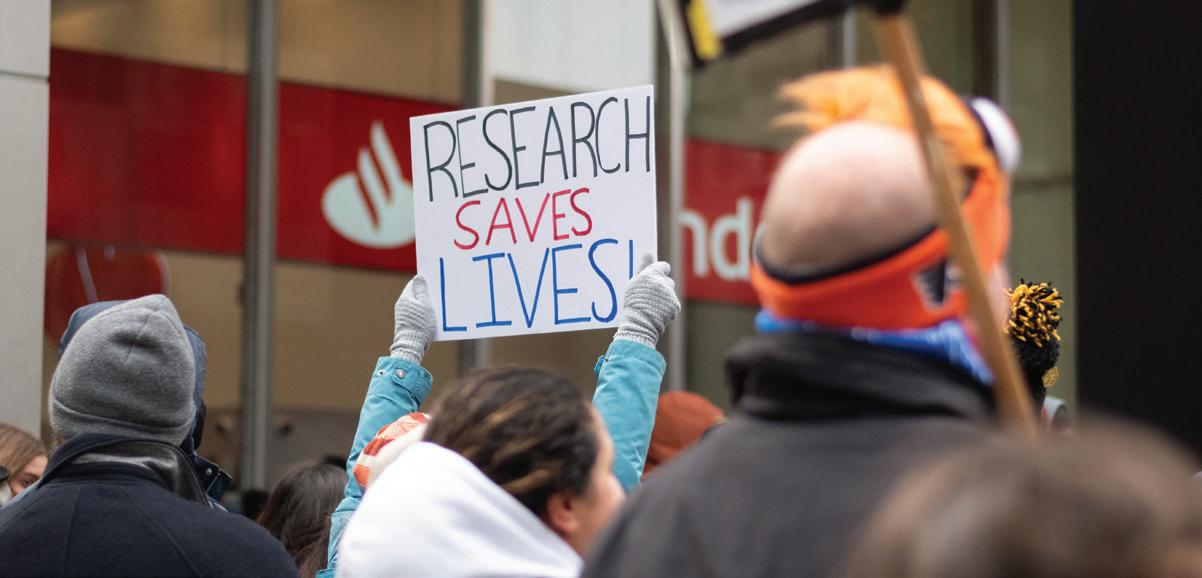
Over 300 individuals gathered together in Center City on Wednesday to protest recent federal funding cuts to academic research.
The rally, held outside the office of Sen. Dave McCormick (R-Pa.) in Center City, was organized by Labor for Higher Education in conjunction with the American Association of University Professors, American Federation of Teachers, United Auto Workers, and other groups. Faculty, students, and staff from several universities — including Penn, Temple
Department of Education letter orders universities to eliminate DEI programs within two weeks
The letter gave educational institutions 14 days to comply with the new requirements to continue receiving federal funding
PAIGE RAWISZER
Staff Reporter
The United States Department of Education published a letter last week threatening to revoke federal funding for all schools and universities that do not remove all diversity, equity, and inclusion initiatives.
The Feb. 14 “Dear Colleague” letter from Acting Assistant Secretary for Civil Rights Craig Trainor expanded the DOE’s interpretation of the U.S. Supreme Court’s 2023 decision in Students for Fair Admissions v. Harvard, which struck down affirmative action, to apply to academic programming more broadly. Trainor wrote that educational institutions have 14 days to comply with the new requirements in order to continue receiving federal funding. A request for comment was left with a University spokesperson.
In the letter, Trainor wrote on behalf of the DOE that the Supreme Court decision, which held that affirmative action policies were unconstitutional, did not solely apply to the use of race in admission. Rather, the letter addressed that the use of race-based considerations in any aspect of educational institutions was not legal.
“If an educational institution treats a person of one race differently than it treats another person because of that person’s race, the educational institution violates the law,” the letter stated. “Put simply, educational institutions may neither separate or segregate students based on race, nor distribute benefits or burdens based on race.”
Additionally, the letter criticized practices by some universities that promote “segregation by race” at graduation ceremonies and dorms, referring to them as “a shameful echo of a darker period in this country’s history.”
The letter also mentioned that other indirect DEI programming could be in violation of such legal principles, as these programs “frequently preference certain racial
Penn reinstates standardized testing requirement for 2025-26 admissions cycle
After four years of test-optional admissions policies, the University announced that prospective students applying to Penn for admission in fall 2026 will be required to submit either SAT or ACT scores as part of their application
WILLIAM GRANTLAND Staff Reporter
Penn reinstated the standardized testing requirement for all undergraduate applicants on Feb. 14 for the 2025-26 admissions cycle.
An announcement from the University stated that prospective students applying for admission to Penn in fall 2026 will be required to submit either SAT or ACT scores. Applicants who face “hardship in accessing testing” may submit a testing waiver as part of their application, according to the announcement.
A request for comment was left with a University spokesperson.
Penn implemented a test-optional policy during the 2020-21 application cycle after the COVID-19 pandemic closed standardized testing sites. The policy has since been extended every year, with Penn Admissions attributing the decision to the “continued effects of the pandemic” and the need to ensure its office can “responsibly review the role of the test-optional practice.”
groups and teach students that certain racial groups bear unique moral burdens that others do not.”
“The Department will no longer tolerate the overt and covert racial discrimination that has become widespread in this Nation’s educational institutions. The law is clear: treating students differently on the basis of race to achieve nebulous goals such as diversity, racial balancing, social justice, or equity is illegal under controlling Supreme Court precedent,” the letter stated.
Penn recently scrubbed the University’s primary Diversity and Inclusion website as part of a series of actions that have resulted in the removal of references to DEI initiatives and practices on various University sites.
The change comes alongside the removal of the DEI webpage for the School of Arts and Sciences. Penn also took down DEI websites for schools and programs including the School of Nursing, the Wharton School, the School of Engineering and Applied Science, and Penn Athletics.
ETHAN YOUNG | STAFF PHOTOGRAPHER
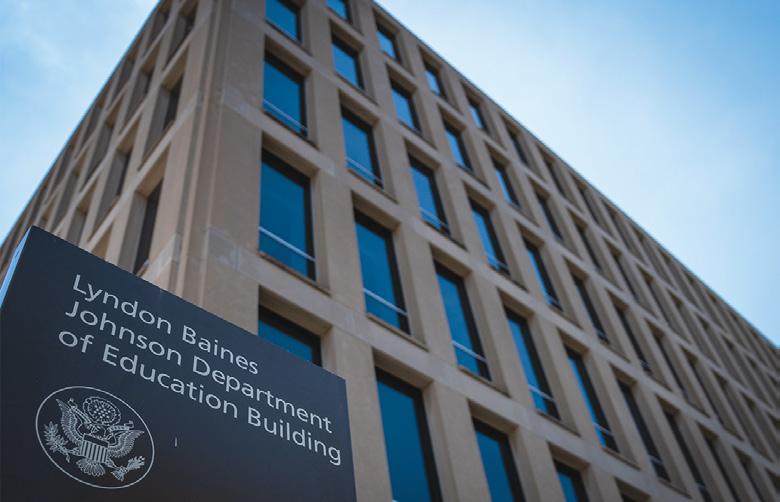
The DOE published a letter on Feb. 14 threatening to revoke federal funding for all schools that do not remove DEI initiatives.
University, and Drexel University — rallied in protest of the Trump administration’s changes to federal research funding policies.
The rally in Philadelphia was part of a larger
See FUNDING, page 3
“Since then, the University has committed to reassessing this policy each year to determine whether and when it would be appropriate to reinstate the requirement,” the recent announcement stated. According to Penn Admissions, the reinstatement of the requirement “aims to remove uncertainty” for applicants deciding whether to submit scores. Penn will continue “considering a student’s school-based
See TESTING, page 2
Fifth annual Energy Week at Penn highlights future of
energy and sustainability
This year’s programming featured events ranging from panels on approaching energy policy to an on-campus e-waste drive
MEGAN LIU Staff Reporter
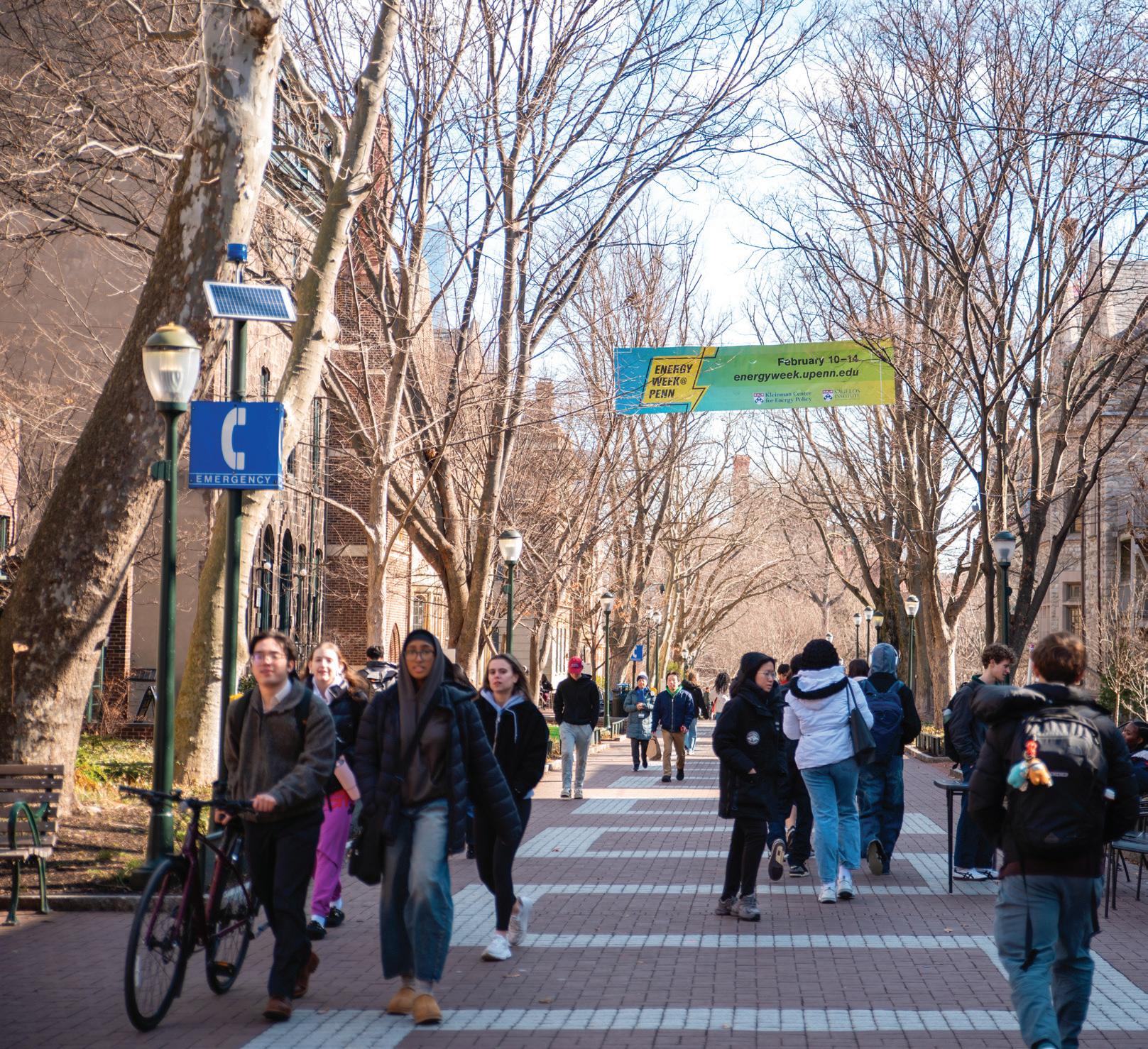
The Kleinman Center for Energy Policy and the Vagelos Institute for Energy Science and Technology hosted the fifth annual Energy Week from Feb. 10 to Feb. 14, bringing together students, faculty, and experts for panels, workshops, and discussions on the future of energy and sustainability.
Since its inception in 2019, Energy Week at Penn has aimed to foster dialogue on energyrelated research and pressing global issues. This year’s programming featured a range of events, from panels on conservative approaches to energy policy to an on-campus e-waste drive encouraging students and faculty to recycle old electronics.
These events were organized in collaboration with various Penn centers and schools, including new partners such as the Penn Museum and Penn’s Common Press. Cornelia Colijn, executive director of the Kleinman Center for Energy Policy, emphasized the growing importance of this year’s Energy Week.
“The challenge of climate change is incredibly complex, requiring interdisciplinary solutions informed by those working on the frontlines of progress,” Colijn said. “Energy Week is not just about a single discipline or program at Penn — it’s about bringing together people from diverse backgrounds to teach and learn from each other.”
Colijn emphasized that the event’s growth reflects the increasing urgency of the climate crisis. Many sessions throughout the week saw high attendance, with some reaching standing-room capacity.
“It’s a testament to the enormous appetite our community has for participating in these
conversations,” she said.
One of these keynote events was the Joseph Bordogna Forum, featuring former United States Deputy Secretary of Energy David Turk and Penn Engineering Vice Dean of Innovation and Entrepreneurship Vanessa Chan. Their discussion focused on the intersection of energy, technology, and society, particularly the role of universities in advancing clean energy transitions.
Chan, who also moderated a panel with BidenHarris administration officials on clean energy investments in the private sector, emphasized the impact of federal policies such as the Bipartisan Infrastructure Law and the Inflation Reduction Act. These policies have injected significant funding into clean energy efforts, spurring commercialization and technological development.
“We now have a lot of money — over half a trillion dollars — going towards demonstration deployment,” Chan said.
Yet, while technological innovation is crucial, Chan pointed out that the real challenge lies beyond simply developing new technologies.
“Only part of commercialization is about getting the technology to work,” she added. “The other part is overcoming barriers like cost, regulations, workforce, and supply chain.”
Chan emphasized how this year’s Energy Week highlighted the necessity of interdisciplinary collaboration in clean energy innovation, as clean energy solutions cannot emerge from any one discipline alone.
“The hardest thing right now is getting the
See ENERGY, page 3
DEVANSH RANIWALA AND ANNELISE DO | STAFF
PHOTOGRAPHER AND SENIOR DESIGNER
Mackenzie Fierceton reaches settlement with Penn following yearslong legal battle
‘I feel absolutely ecstatic that the lawsuit I brought against Penn has concluded,’ Fierceton wrote in a statement to The Daily Pennsylvanian
RIANA
MAHTANI Staff Reporter
2021 School of Social Policy & Practice graduate and 2020 College graduate Mackenzie Fierceton reached a settlement with the University on Jan. 15 following years of legal proceedings.
In December 2021, Fierceton filed a lawsuit against the University after it questioned her status as a firstgeneration, low-income student and survivor of abuse. She alleged that her Master of Social Work degree from SP2 was wrongfully withheld following the University’s attempt to discredit her past in an investigation conducted by the Rhodes Trust.
Fierceton’s lawsuit also claimed that the University’s actions were connected to Fierceton’s efforts to investigate whether the 2018 death of Cameron Driver — a graduate student also enrolled in SP2 — was linked to insufficient accessibility in campus buildings.
A request for comment was left with a University spokesperson.
“I feel absolutely ecstatic that the lawsuit I brought against Penn has concluded, and I am very excited to be beginning a whole new chapter of my life,” Fierceton wrote in a statement to The Daily Pennsylvanian.
“I have felt exceptional support from many Penn students and faculty, and I will remain forever grateful for that love and support,” Fierceton added.
While the details of the settlement remain confidential, Fierceton declined to sign a nondisclosure agreement restricting her public discussion of the case, according to Stacey and Henry Jackson President’s Distinguished Professor of Political Science Anne Norton — who wrote one of Fierceton’s recommendation letters for the Rhodes Scholarship.
Christopher H. Browne Emeritus Distinguished Professor of Political Science Rogers Smith, who has supported Fierceton since the beginning of her trial, told the DP that the University likely recognized it couldn’t effectively defend all of its actions in open court, prompting its decision to settle. He believes the University’s desire to avoid further negative attention also served as a key factor in the timeline of when the settlement agreement was proposed.
“Penn, which was facing huge amounts of adverse publicity because of our former president’s congressional testimony, wanted to get this case settled before the start of the 2024-25 academic year,” Smith said.
Both Norton and Smith told the DP that the settlement was decided in terms favorable for Fierceton.
In an interview with the DP, Norton recalled how she first came to know Fierceton during the early days of the COVID-19 pandemic when Fierceton was struggling with housing insecurity. She described Fierceton’s “vulnerable” situation, noting her emancipation and upbringing in an abusive household. Norton said that during this time, the University “did not provide for her.”
The University’s initial legal response in January 2022 alleged that Fierceton’s narrative in her Rhodes Scholarship application was “replete with falsities, including but not limited to a fictitious account of abuse by her mother.”
Penn administrators — including Eduardo D. Glandt President’s Distinguished Professor of Bioengineering and Deputy Provost Beth Winkelstein, Senior Vice President and General Counsel Wendy White, and
TESTING, from front page
ACT scores “as part of Admission’s broad and comprehensive assessment.”
“[T]esting complements a student’s existing accomplishments and can offer additional relevant information in our comprehensive and holistic admission process,” the statement read.
The shift comes as other Ivy League universities — including Dartmouth College, Harvard University, Cornell University, and Brown University — have reinstated standardized testing requirements for the 2025-26 admissions cycle after years of maintaining test-optional policies.
Yale University also reinstated standardized testing requirements but has moved to a “test-flexible” policy, allowing applicants to submit Advanced Placement or International Baccalaureate test scores in lieu of the SAT or ACT. Test-optional policies remain in place at Princeton University and Columbia University.
Previous test-optional policies were correlated with a significant increase in applications. Penn’s Class of 2025 — the first to apply under the testoptional policy — broke the record for the largest application pool in the University’s history. The Class of 2028 received a record 65,230 applications, which was over 10% higher than the number of applicants to the Class of 2027.
former Interim Penn President and Provost Wendell Pritchett — gave depositions throughout June and July 2023, according to court records. Other Penn faculty who testified include Norton and Smith. The depositions of SP2 professor of social work Amy Hillier and University of Pennsylvania Carey Law School professor of Law Catherine Carr took place in September 2023.
Norton added that she believed the University actively sought to suppress any public discussion of the trial.
“We had been pressured by Penn all the way along and in a particularly nefarious way,” she said. “We were continually told that if we made anything public [or] if we contacted any member of the press, Mackenzie would be punished.”
She remarked that this approach persisted throughout the trial, openly labeling Penn administration’s “thuggish behavior” in their attempts to preserve secrecy as “truly astonishing.”
Smith, who also testified, similarly criticized the University’s actions throughout the trial. He described the disciplinary proceedings as having been conducted in an “unusual fashion” that prioritized “avoiding scrutiny of the central administration’s own actions” over fairness.
“Penn wanted to distance itself from its own actions, not take responsibility, and instead, scapegoat Mackenzie,” Smith said. “If anything, I am more persuaded that Penn acted shamefully than I was at the time.”
Beyond the specifics of Fierceton’s case, Norton described a “climate of fear” at Penn, where students and faculty alike hesitated to publicly support Fierceton — including tenured professors.
“Students would say, ‘I’m a FGLI student, and I would really like to support Mackenzie, but I’m afraid they’ll take my aid away,’” Norton said. “That’s not what a university is meant to be.”
Fierceton is currently finishing up her Ph.D. at the University of Oxford, where she is studying the connection between child welfare and the criminal legal system. An anonymous Penn professor offered to pay for her first year of tuition after she withdrew from the Rhodes Scholarship.
In her written statement to the DP, Fierceton said that universities and other institutions of power often speak “the language of lawsuits” and that legal action can often function as a pathway to change.
“I don’t necessarily feel that litigation is a great platform for telling one’s story, but in some cases, litigation can be a measure of accountability and justice,” she wrote.
Fierceton also wrote that her case has also influenced her to seriously consider law school as a future endeavor — but in the meantime, she remains dedicated to finishing her Ph.D.
After The Philadelphia Inquirer profiled Fierceton in November 2020 when she was awarded the Rhodes Scholarship, Penn and the Rhodes Trust received anonymous tips suggesting Fierceton had been dishonest about aspects of her past on her application.
Penn and the Rhodes Trust both launched separate investigations into Fierceton’s undergraduate and scholarship applications, which detailed her alleged experiences of abuse.
Senate committee flags $11 million in Penn research grants for advancing DEI, ‘neo-Marxist’ values
The committee’s database cited 15 grants awarded to Penn faculty by the National Science Foundation, identifying them as ‘woke’ and ‘questionable’
ALEX DASH AND CHRISTINE OH Staff Reporters
The United States Senate Commerce Committee recently flagged over a dozen Penn research grants totaling nearly $11 million in funding, alleging that the initiatives promoted diversity, equity, and inclusion.
The committee’s database — which contained nearly 3,500 initiatives from universities across the country — cited 15 grants awarded to Penn faculty by the National Science Foundation during the Biden-Harris administration. The programs were identified as “woke” and “questionable” for advancing DEI and “neo-Marxist class warfare propaganda.”
A request for comment was left with a University spokesperson.
Sen. Ted Cruz (R-Texas), who chairs the committee, called for “significant scrutiny” into the awards as the NSF halts its process of reviewing new grants. According to a Commerce Committee press release, the flagged research amounted to more than $2.05 billion in federal funding.
The database follows the release of Cruz’s October 2024 investigative report, which aimed to reveal the increasing politicization of taxpayer dollars meant for scientific research.
Flagged grants were classified under five different categories, including social justice, race, gender, environmental justice, and “status” — which the committee’s report defined as “grants that described persons based on their membership in a population deemed underrepresented, underserved, socioeconomically disadvantaged, or excluded.”
A Penn project studying the impact of ocean warming on coral reefs was flagged under the status, race, and environmental justice categories.
The award description detailed that the project includes an outreach program offering climate change activities for first-generation, low-income students and trains teachers to deploy these activities in classrooms within the Philadelphia Public School District, which predominantly serves a low-income Black and Latino student body.
Another Penn initiative devoted to interdisciplinary training in soft materials research and science policy was flagged under the status, social justice, and gender categories. The proposed certificate program targets the recruitment of women and members of underrepresented groups in STEM as “a major goal of building a diverse community.”
The description also stated that the project team would “develop a network of minority-serving institutions” for research exchanges and studentfocused services.
The database also flagged a Penn project studying gender differences in digital learning games under the status and gender categories. The research aimed to integrate features into math games to overcome gender stereotypes about math proficiency and reduce math-related anxiety in girls, encouraging them to pursue STEM careers. The grant description noted that the project would “advance knowledge on the multidimensionality of gender,” with the games presenting fictional situations designed to break gender typicality and provide different gender
identity options to players who identify as neither male nor female or as both.
Wharton professor Nancy Zhang, whose grant application noted that her research has the potential to encourage the participation of women and underrepresented minorities in future STEM research, said she did not understand the criteria used for flagging grants.
“As with most [NSF] grant proposals that [are] submitted, we have [the] education of the next generation of researchers in our broader impact goals, and we try to foster inclusivity in our field,” Zhang said.
The release of the database comes amid concerns regarding federal research funding for Penn, including a recent National Institutes of Health policy that capped indirect cost funding for university research grants at 15%, a decision that would cost Penn $240 million.
In an announcement to the Penn community after the NIH policy change, Interim Penn President Larry Jameson said that Penn is working to “identify solutions to minimize the impact” of the policy. On Feb. 10, Penn and 12 other universities filed a lawsuit against the policy, which resulted in a judge temporarily halting the funding cut.
“Besides its devastating impact on medical research and training, the proposed actions run afoul of the longstanding regulatory frameworks governing federal grants and foundational principles of administrative law,” the Association of American Universities, Association of Public and Land-grant Universities, and the American Council on Education wrote in a joint press release announcing the lawsuit. “This action is ill-conceived and self-defeating for both America’s patients and their families as well as the nation as a whole.”
its
Wharton maintains top spot in 2025 Financial Times MBA program rankings
The Wharton School topped the Financial Times’ 2025 list of the top-100 business schools with global MBA programs for the second year in a row
FINN RYAN Senior Reporter
The Wharton School was No. 1 in the Financial Times’ 2025 list of the top-100 business schools with global MBA programs.
This year marks the second in a row that Wharton has topped the list. Columbia Business School in New York took second place on this year’s list, followed by IESE Business School in Spain.
The Feb. 16 rankings analyze 21 wide-ranging factors across 125 schools, including academic research output, alumni salaries, and the program’s carbon footprint. Alumni responses to surveys inform eight criteria, which account for 56% of the ranking. Data provided by the schools provides information for an additional 12 criteria, which make up 34% of the ranking. A school’s research rank, which is the final factor, accounts for the remaining 10%.
Wharton performed well in multiple metrics, despite a decline in the weighted salary calculation, which is found by dividing a program’s average alumni salary three years after completion by the total cost for the degree. According to the Financial Times’ methodology, the weighted salary of Wharton alumni fell from $245,772 in 2024 to $241,522 in 2025.
Wharton has also consistently placed in the topfive positions across other MBA ranking lists in the past two years. It placed No. 2 in the QS Global MBA Rankings and No. 4 in the Fortune rankings in 2025 and was No. 5 in Forbes’ 2024 rankings.
In September 2024, Wharton was No. 4 in LinkedIn’s annual MBA program ranking. The list ranks the top-100 business schools around the world based on how they prepare graduates for long-term career success. Wharton was also ranked No. 4 by LinkedIn in 2023.
In 2023, Wharton was excluded from the Financial Times’ 2023 list — its first absence in
the list’s 25 years — following a failure from the school to reach the required alumni survey respondent threshold of 20%.
In the 2024-25 U.S. News & World Report’s ranking of MBA programs, Wharton tied with Stanford for No. 1, a rise from its previously held third-place spot in the 2023-24 list. That year, the University of Chicago’s Booth School of Business took the No. 1 spot.
In 2023, the University of Pennsylvania Carey Law School and the Perelman School of Medicine withdrew from participating in the U.S. News rankings. Both schools announced that they would no longer report data, citing concerns with the methodology of the rankings. Wharton has continued to submit data to U.S. News.
SAMANTHA TURNER | DP FILE PHOTO
Fierceton speaks at a campuswide walkout and rally in solidarity with her case on April 13, 2022.
ABHIRAM JUVVADI | STAFF PHOTOGRAPHER The NSF canceled
annual grant review panels to comply with executive orders.
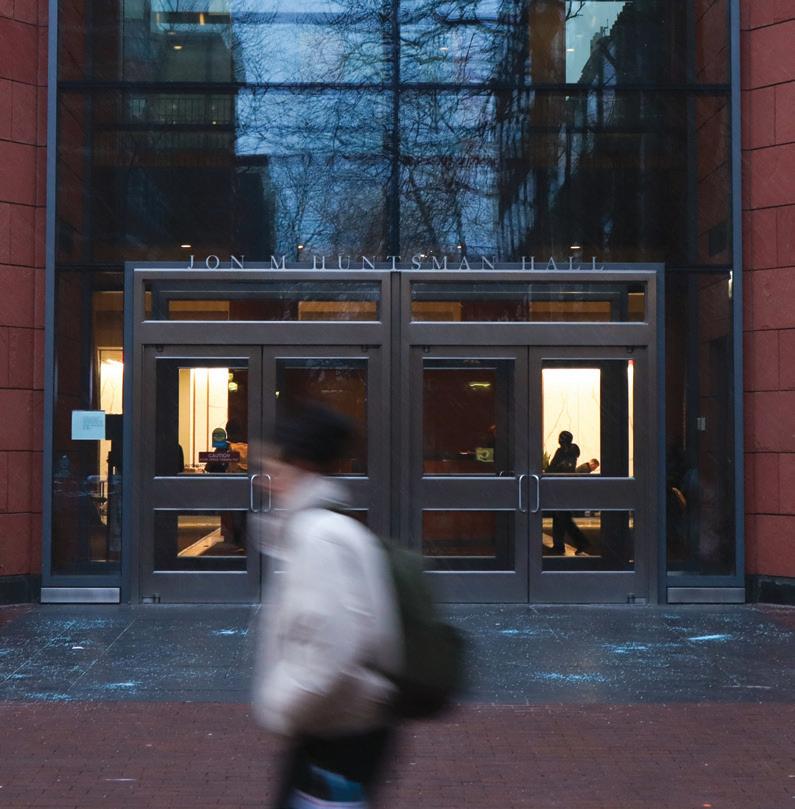
JUSTIN ABENOJA | STAFF PHOTOGRAPHER Wharton is housed in Huntsman Hall.
SHARON LEE | DP FILE PHOTO Penn announced that it will be reinstating standardized testing requirements for the 202526 admissions cycle.
Pro-Palestinian activists demand divestment, highlight Penn’s ‘complicity in genocide’ during march
Several activist groups on campus and from the greater Philadelphia area co-hosted the march, which moved down Walnut Street on Feb. 17
AYANA CHARI AND DANIYA SIDDIQUI
Staff Reporters
Around 100 pro-Palestinian protesters attended a rally and march on Penn’s campus calling on the University to divest from Israel and halt gentrification in Philadelphia on Feb. 17.
The demonstration, which took place on Presidents’ Day, began at 4:30 p.m. at 34th and Walnut streets — outside of Hill College House — and ended at 40th and Walnut streets, behind Gutmann College House, lasting around an hour and a half. The rally was publicized through a statement on Instagram and featured speakers from various proPalestinian organizations.
“Here in West Philly, Penn displaces and polices Philadelphians,” the statement read. “Through their private police force and their never-ending hunger for more real estate, Penn’s greed and power harm us all.”
A request for comment was left with a University spokesperson.
Several activist groups on campus and from the greater Philadelphia area co-hosted the rally, including Families for Ceasefire Philly, Save the UC Townhomes, Penn’s chapter of Jewish Voice for Peace, Penn Students Against the Occupation of Palestine, W.E.B. Du Bois Movement School for Abolition & Reconstruction, and Penn Faculty for Justice in Palestine.
The demonstration began with chants and two speeches while attendees held up signs protesting the Israel-Hamas war. Organizers handed out small Palestinian flags and a mock newspaper titled “The New York War Crimes.” The first speaker said that the reason for the rally was to “show [their] opposition to Israel [and] American-funded genocidal endeavors.”
“Despite months of campaigning, petitioning, and demonstrating against Penn’s investments in genocide, the Board of Trustees has refused to disclose their holdings or divest from Israel,” the speaker said.
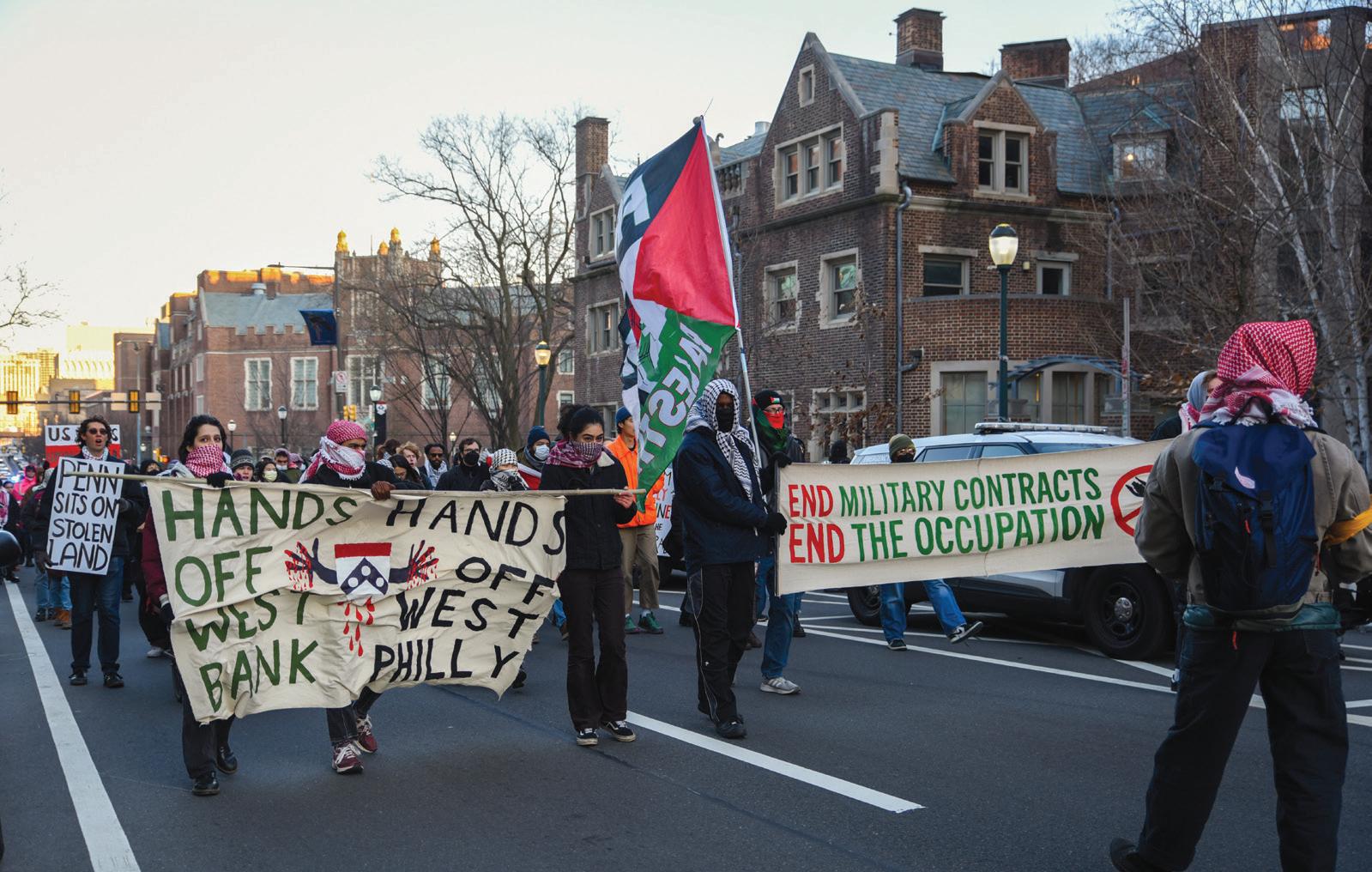
Several participants of the rally held up signs that read, “UPenn supports gentrification in Philly and genocide in Palestine,” “Hands off West Bank, hands off West Philly,” and “We stand in awe of the Palestinian people.”
Another speaker discussed her trip to Palestine in December, emphasizing the importance of remaining dedicated to the fight for Palestinian liberation.
FUNDING, from front page
“Nationwide Day of Action” organized by Labor for Higher Education, with more than a dozen protests in cities across the country.
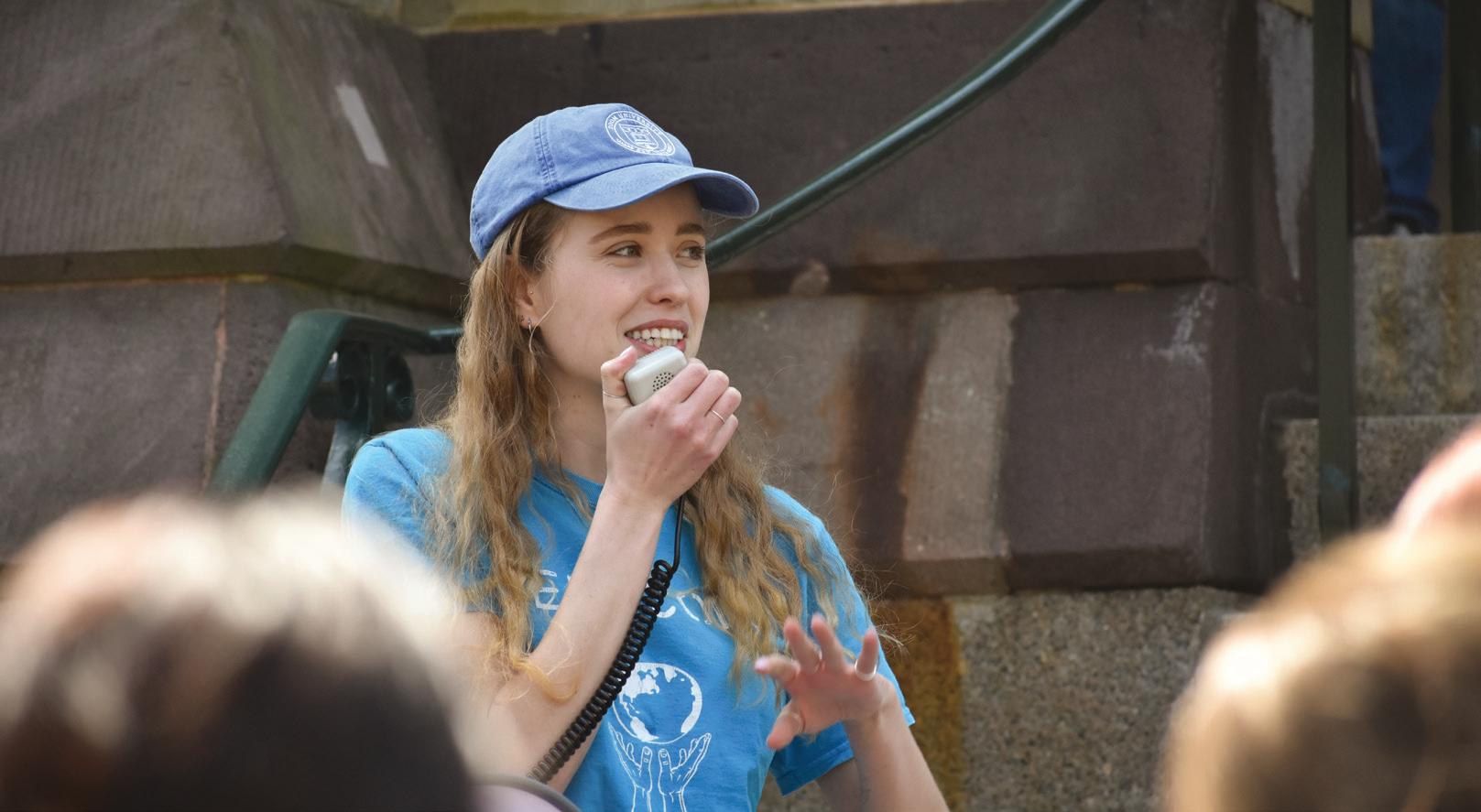
“We’re here to push back against the Trump administration’s illegal and dangerous attacks on publicly funded research,” one speaker, whom The Daily Pennsylvanian was unable to identify, said. “Republicans are trying to fire workers, shutter crucial medical research, and kill our economy. We’re here to fight back.”
In particular, speakers emphasized the importance of scientific research and the significant risks brought on by the Trump administration’s “reckless” and “careless” cuts.
“This means that when your father, your mother, your sister, your brother, your son, your daughter need life-saving treatment, it will not be there!” AAUP President Todd Wolfson told the crowd.
Lindsay Guare, a genomics and computational biology Ph.D. candidate at the Perelman School of Medicine, similarly said that cuts to biomedical research would have “serious implications for both science workers and long-term medical health.”
“The work done in Philadelphia institutions doesn’t just lead the world in innovation; it saves lives, and that’s worth defending,” Guare said.
ENERGY, from front page
entire ecosystem aligned. There’s not one organization or one company that can commercialize a technology on its own — it’s about bringing together business, government policy, technology, and academia,” Chan explained.
Third-year chemistry Ph.D. student and finalist in the Energy Week Lightning Talks Mayesha Ahmed echoed this sentiment, highlighting Energy Week’s ability to unite perspectives from across Penn’s schools and programs.
“Energy Week is one of my favorite things, because it’s so interdisciplinary and it’s about thinking about energy from all the different schools and all the different expertise,” Ahmed said.
During the Lightning Talks, Ahmed explained the intersection of energy technology and policy, specifically highlighting the issue of the communication gap between scientists and policymakers.
“Scientists and policymakers often think in very niche circles,” Ahmed said. “If I have the best technology, does that necessarily mean it will lead to the desired outcomes without the right policy in place?”
Both Chan and Colijn stressed the importance of real-world engagement for students who want to get involved as part of the solution.
“Students need to spend more time outside the classroom and really learn and understand what’s going on in the real world,” Chan said. “For those who attended Energy Week, I applaud them for wanting to learn what’s going on. For those who are too focused on exams or homework, you need to make time for these things — you’re doing yourself a disservice otherwise.”
Looking ahead, Colijn envisions continued growth for Energy Week, with hopes of involving even more diverse groups and expanding the
The demonstration took place on Feb. 17, going from 34th and Walnut streets to 40th and Walnut streets.
“We have a duty to fight, to hold these so-called leaders, these criminals in suits whose hands are drenched in blood, accountable,” the speaker said.
“So we say today, with one voice, you will not be silenced. You will not be made afraid, and you will not falter. Liberation for all, all power to the people, all glory to the martyrs.”
Protesters chanted, “From West Philly to Palestine, occupation is a crime,” “Free, free Palestine,”
“Trustees, your hands are red,” and “Israel bombs, UPenn pays, how many kids did you kill today?” as the group marched down Walnut Street.
There was a heavy presence from Penn Police and the Philadelphia Police Department for the duration of the event. Allied Universal Security Services officers were also placed at the entrances of Penn buildings along the march route, and PennCard checks were implemented at several locations while the demonstration took place.
A request for comment was left with a Division of Public Safety spokesperson.
Guare also criticized the Trump administration’s attempts to enact political control over research agendas — citing the targeting of research proposals featuring words like “diversity,” “nonbinary,” and “women.” She noted that researchers often use these terms to “highlight the impact of our work” and worried that restrictions on these terms would limit her research agenda.
“If politics decides what I can and cannot study, I’m afraid I will fail the very people who need this research and inspire me to do it every day,” Guare told the crowd.
The speakers at the rally also discussed the instability and uncertainty created by the federal funding cuts. Chris Large, a postdoctoral fellow at the Medical School, spoke at the rally and told the DP that his clinic and research were “disrupted” as a result of the federal funding pause.
While Large’s funding was reinstated as a result of a court order to resume National Institutes of Health funding, he said that the experience has made him question the future of his career.
“I’ve already seen the effect that pausing grant funding can have on universities, and I’m very worried about my future and my ability to continue in academia in this country,” Large said.
Several local politicians also spoke at the event, including 2013 Engineering graduate and Pennsylvania state Rep. Rick Krajewski (D-Philadelphia), Pennsylvania state Sen. Nikil Saval (D-Philadelphia), and
DPS issued a Public Safety Traffic and Transit Advisory announcing that Walnut Street was closed between 34th and 40th streets due to “demonstration activity” at 5:45 p.m.
At the intersection of 40th and Walnut streets, a member of Families for Ceasefire spoke about children who are suffering from the violence in Gaza. They held up a coloring book that was removed from a Jerusalem bookshop by Israeli police and said that attendees could get a copy at Families for Ceasefire.
A former resident of the University City Townhomes also gave a speech in which they said, “I am a product of this neighborhood, and I am not a victim.”
“We understand that all of our troubles, from Philly, to Sudan, to the Congo, to Palestine, are extremely linked,” one speaker said. “The fight against police brutality in West Philadelphia is the same fight against military occupation in the West Bank.”
Philadelphia City Councilmember Kendra Brooks. Krajewski told the crowd that the Trump administration was “attacking” academic institutions because they were “places of independent thought and knowledge.”
“This is not just about being anti-science,” Krajewski said. “This is about an agenda. They’re pushing a white supremacist, authoritarian agenda.”
After the rally, Krajewski spoke with the DP, emphasizing the importance of universities maintaining their independence amid political attacks.
“When you have political agendas attacking that independence, that is bad for higher education, and it’s bad for the future of our students,” Krajewski said.
Rallygoers like Large and Samuel Layding — a chemical engineering Ph.D. student at the School of Engineering and Applied Science and organizer of the rally — urged McCormick to increase his support for Pennsylvania’s scientific research.
“Senator McCormick has the opportunity to be part of the congressional push to address this crisis and ensure and guarantee continued funding of scientific research in this country,” Layding said.
Medical School Professor Emeritus Terri Laufer echoed a similar sentiment.
“[McCormick] should step up and act in the best interest of the citizens of [Pennsylvania],” Laufer said. “Supporting biomedical research is an obvious place to start because no one wants to be the senator who says, ‘I don’t want to cure cancer.’”
“Our
Five Penn classes ofered this semester that highlight Black history
As Penn celebrates Black History Month through programming and events, here are fve classes offered this semester across departments that highlight Black history
MAKAYLA WU Staff Reporter
As Penn celebrates Black History Month through programming and events, here are five classes offered this semester across departments that highlight Black history.
1. AFRC 1187: “The History of Women and Men of African Descent at the University of Penn”
This spring-term class offers students a look at the history of the women and men of African descent who have studied, taught, researched, and worked at Penn. By examining records, texts, and archives at the University, the class attempts to uncover the history of Black people in America and throughout the diaspora as well as collectively unpack Black history at Penn.
Taught by co-facilitators University Chaplain Charles Howard and Penn Spectrum Programs and Shared Interest Groups Director Daina Troy, the course includes a “making Black History project” that explores a “facet of life at Penn linked to Black culture, diversity, and/or social justice, and developing a proposal to enhance that facet.”
2. ENGL 0525: “Black Style: Fashions, Fictions, and Films of the 1920s” This 15-person course focuses on the 1920s Harlem Renaissance, using fashion as a lens to discuss the relationship between race and representation in print and on film. The course emphasizes collaborative skills through discussions.
Taught by English professor Zita Nunes, the class also incorporates visits to local archives and museums and a semesterlong project highlighting the Harlem Renaissance’s hidden histories in Philadelphia. The course, which is listed as a Benjamin Franklin Seminar, was taught for the first time last fall semester.
3. MUSC 3440: “Black Music and Sports” MUSC 3440 explores the intersection of sports, music, and race within the United States’ popular culture through modern and historical examples. The course is instructed by Music assistant professor Jasmine Henry, who is a musicologist and sound engineer specializing in 20th and 21st-century African American popular music. Students will examine the complexities of Black athleticism and musicianship through modern media coverage. Other topics include how sports and music serve as an opportunity to break the color line, the role of capitalism and exploitation in the music industry, and how sports and music are represented across cultural mediums. This interdisciplinary course prepares students for the broader study of popular culture.
4. PHIL 4515: “Existence in Black” Cross-listed in the Africana Studies and History departments, PHIL 4515 examines how the global Black experience shapes and is shaped by various issues such as freedom, alienation, race, and gender. In the course, students delve into texts on Black aliveness and Black existential philosophy. The class is taught by Africana Studies professor David Amponsah and juxtaposes Black existential thought with canonical European existential philosophy, examining expressions of Black experience through literature, music, and philosophy.
5. AFRC 1177: “African American History 1876 to Present”
This spring semester lecture is a continuation of AFRC 1176: “African American History 15501876.” Covering the post-Reconstruction era to the present, the course delves into major events, issues, and figures in African American history and examines different forms of Black resistance, rebellion, and activism within the system of slavery and beyond.
CHENYAO LIU | SENIOR PHOTOGRAPHER
NICHOLAS FERNANDEZ | DP FILE PHOTO Penn offers several classes across departments that highlight Black history.
CHENYAO LIU | SENIOR PHOTOGRAPHER
10-14. conversation
transition.
On Jan. 26, the Undergraduate Assembly passed the Investments Transparency Resolution, which called for the formal disclosure of all $22.3 billion in direct and commingled securities invested in and managed by the Penn Office of Investments. Additionally, the resolution called for a formal, comprehensive review of all commingled securities held in externally managed funds by the managers of those funds.
The UA is the elected governing body of Penn Student Government, serving as the primary liaison between undergraduates and administration. We represent undergraduate interests and advocate for University-wide change in the name of improving student life. One of our most significant powers is the ability to make formal recommendations to relevant administrators through resolutions — the highest form of student advocacy available to undergraduates at Penn.
Passing this resolution was no small feat.
The UA spent three months carefully drafting its language, ensuring it remained nonpartisan, unaffiliated with any student groups, and representative of all students’ interests in a broad, unbiased manner. We presented finalized versions to UA Steering, a committee of representatives from approximately 41 of the largest undergraduate student groups and umbrella organizations on campus. Additionally, we engaged in discussions with key administrators, including from the Office of the Executive Vice President, University Life, and Office of Student Affairs. After extensive deliberation, we voted on it as a body, solidifying our collective stance.
Now that the resolution has passed, it sits
If I were born today, I wouldn’t be American. On Jan. 20, 1968, Wharton graduate and President Donald Trump issued an executive order titled “Protecting the Meaning and Value of American Citizenship.” In short, the order prohibits children of immigrants with temporary or no documentation who were born in the United States from receiving American citizenship. The fact that these 500 words could have changed almost everything about my life had they been issued 20 years earlier has been weighing on me all week. In 2004, one of those shifty “birth tourists” — my mother studying to be a mechanical engineer on a temporary student visa — brought me into the world in Austin. Under Trump’s new policy, I would most likely now be living 7,000 miles away — speaking a different language, attending a different university, and having never known the country I call home. I could devote this article to the children who could be born stateless under the policy, without identification or a passport, meaning they legally don’t exist — a Kafkaesque nightmare.
I could write about how the policy creates a permanent underclass that lives in the United States but has no rights, similar to many Black people before the 14th Amendment was ratified. I could give you the same list of immigrant achievements and Emma Lazarus poems that are always offered up, like thoughts and prayers after a mass shooting, whenever our government tramples yet another fundamental right because it also protects immigrants.
on the desks of the University Board of Trustees, the Offices of the President and Provost, and the Penn Office of Investments, awaiting a response.
Undergraduates are more than just students — we are stakeholders of this University. Beyond paying tuition, we serve on committees, guide administrative policies, work for the University, and contribute in countless ways to Penn’s growth. Yet, despite our direct and ongoing investment in Penn’s future, we are often left in the dark about financial decisions that impact us.
Because of our active role, we believe that the Board of Trustees should hold a fiduciary duty to the students — one that includes full transparency surrounding the University’s endowment. The endowment affects every aspect of student life, funding daily operations, long-term strategies, student financial aid, academic research, instructional programs, the University of Pennsylvania Health
System, and much more. Transparency regarding Penn’s endowment isn’t just an abstract principle; it’s an obligation. Additionally, Penn undergraduates engage in discourse with and serve on committees for nearly every major University office except one: the Office of Investments. This lack of access and communication creates an unnecessary gap between students and the decisions that shape the financial future of our university. This resolution would help establish a more transparent and integrated dialogue between students and the Office of Investments. Furthermore, as a global research institution, Penn has a responsibility to engage in conversations about how its financial choices reflect its values and responsibilities to the world. Regardless of this resolution’s outcome, we as student advocates aim to represent the needs and concerns of our peers, and refusing to speak up or act out of fear of failure would
forfeit our ability to accomplish substantial progress. Our role as elected representatives is to address every cause the student body is passionate about, even when the outcome is uncertain. Accountability and transparency are what students have demanded of us, and it is our duty to deliver.
Penn students have called for greater transparency in the University’s financial operations for decades. This demand has remained consistent through student-led movements, community organizing, and individual advocacy. The passing of this resolution is a historic step forward in a movement that has long sought to bring Penn’s financial decisions into the public eye. Resolutions like this push the needle forward in the pursuit of student interests and the demand for change across our University. Change is often a slow and challenging process, but it is built on pivotal moments like these.
This resolution is more than just a document — it is a statement of principle, a declaration of student resolve, and a call for accountability. It signals that we will not stop advocating for the transparency we deserve. We have made our recommendations clear to the University, and now, we will advocate for Penn to uphold its commitment to the students — its most important stakeholders.
THE UNDERGRADUATE ASSEMBLY is the elected governing body of Penn Student Government. For comments, please contact Hannah Liu at communications@pennua.org.
But I won’t. Instead, I want to get at the heart of the issue, the real question posed by this executive order, and the poisonous ideology that spawned it: What does it mean to be American? Try for a second to find a good answer to that question. Speaking English fluently? Thirty million people within our borders don’t meet that requirement, and billions outside do — maybe it’s time for us to annex Australia. Believing in Christianity? Thomas Paine, Abraham Lincoln, and Ernest Hemingway did not. Sharing faith in democracy and capitalism? Among current Americans, 24% are ambivalent about the former, 43% the latter. Hard, right?
Don’t worry, you are not the first person to struggle with how to define what it means to be “American.” The question predates the founding of the United States and countless groups have attempted to answer it since. The Pilgrims believed that the United States was their New Jerusalem, belonging only to those who shared their specific interpretation of Christianity. The native inhabitants of the area disagreed and were systematically starved, sickened, and massacred for it. The British Empire believed it meant loyalty to the Crown, and waged what is often considered the first global conflict to ensure that loyalty was theirs instead of belonging to the French or Spanish.
The framers of the Constitution believed it meant only free, white men, eventually leading to the deadliest war in American history. Every bar this country has attempted to set, every fence it has tried to erect around “true
Americans,” has eventually been torn down. The Pilgrims excluded Anglicans. The Anglican British excluded other Protestants (our own Ben Franklin believed Germans were too stupid and dark-skinned to be American). The Protestant United States excluded Catholics. The Protestants and Catholics excluded Asian, Jewish, African, and Latin Americans. Each and every time, decades of pogroms, riots, and wars were needed for us to realize our mistake and redraw the line.
So, how about we stop drawing one? Birthright citizenship is not some far-left stretch goal — it is the bare minimum for a nation in which membership has always been impossible to define by identity or status.
I will note that birthright citizenship is unlikely to be struck down — the right could not be more clearly stated by the 14th Amendment, and 22 states have already challenged Trump’s executive order, stopping its implementation for now. Senior U.S. District Court Judge John Coughenour, who was appointed by former President Ronald Reagan, called the order “blatantly unconstitutional” when he blocked it last month. Nevertheless, “unlikely” is not the same as “impossible,” especially under a Supreme Court fully convinced that Trump speaks with the voice of God. While still constrained by popular opinion, the Roberts court has struck down long-established precedents with glee in recent years, eliminating Chevron deference, affirmative action in higher education, and, of course, the right to
DIYA-LOGUES | Smart was your personality; now, it’s the baseline
Let me guess: You graduated top of your high school class, right? You were valedictorian, gave a tear-jerking commencement speech, had an SAT score above 1550, and name dropped at least one nonprofit on your Common Application? How do I know all this about you? I’m not Joe Goldberg. Nor am I psychic. I just go to Penn. Take a glance at any class profile and you’ll see it — everyone here is smart. Insanely smart. The kind of smart that once made you special, but now, it just makes you another name on a Canvas roster.
So, this becomes an interesting “Hunger Games”-style experiment: What happens when you throw the “crème de la crème” of overachievers into a 300-acre pressure cooker?
Intelligence stops being impressive; it’s expected. It’s the baseline, the air we breathe. And when smart stops setting you apart, you scramble to find something that will. It doesn’t take long to figure out the new currency. It’s not grades, but access: the right clubs, the right jackets, the right fraternities to be seen at. You apply to a “beginner-friendly” consulting club, only to find yourself solving Bain & Company-style case interviews. You scroll through Sidechat, where greek life is ranked like NFL draft picks, with attractiveness and wealth as the new statistics to beat. Because when intelligence is assumed, status — how you dress, where you’ve summered, and even the genes you inherited — becomes the next game. So, we adapt, rebranding the superficiality we thought we left
behind, wrapping it in Patagonia vests and Canada Goose jackets, and calling it ambition.
But here’s the catch: You can’t grind your way into “the scene.” It isn’t earned; it’s inherited. It belongs to the kids with generational legacy, who learned the top clubs and downtown parties alongside their ABCs. They crossed paths with the right people long before you started filling out college applications. It doesn’t matter how hard you work: It’s about social networks built before you were even born. It feels unfair. And it is unfair. But then again, wasn’t it just as unfair when hundreds of other brilliant students got rejected from Penn and you didn’t?
That’s the uncomfortable truth: Penn isn’t some alternate universe. It’s just a hyperconcentrated microcosm of the real world. Nepotism doesn’t vanish after graduation. Social capital doesn’t disappear. There’s always the variability of luck. And even here, hierarchies form within hierarchies. The “finance bro” everyone admires secretly wishes he was in Castle instead. The girl in the “top” sorority feels like an outsider. The LinkedIn overachiever posting weekly updates is just trying to outrun his imposter syndrome.
In 2014, Madison Holleran, a Penn track star with a seemingly perfect Instagram life, tragically took her own life for reasons rooted in the very same dynamics. It’s a sobering reminder that this so-called metric we’re chasing isn’t as simple as a GPA calculation — it’s
abortion. It’s far from guaranteed that birthright citizenship won’t be next. If it is, let me pour one out here for the exceptional United States. A United States without color or creed. A United States as the shining city upon a hill. A United States as a dream so powerful that our worst enemies believed in it. A nation in which we are born free. We’ve never quite lived up to this ideal, but before Jan. 20, we at least tried.
Without birthright citizenship, we are just another nation, another arbitrary circle in the sand with 11 aircraft carriers.
literally impossible to quantify.
So, what should you do now? Should you reject the game entirely, claim you’re above it all? I wish I could tie this up neatly, telling you to be yourself and leave it at that. But even I can’t. That’s just not how human nature works. The only thing we can do is acknowledge that the game exists. The hierarchy is real. But you get to decide how much you want to play into it. Rankings only hold power if we give them power. Exclusivity only works if people care to buy in.
So, before you chase a seat at the table, ask yourself: Which table are you running toward? And do you even like the people sitting at it? Maybe you go full finance core — not for the clout, but because you genuinely love it. Maybe you rush greek life for the quality of friendships, not Sidechat rankings. Maybe you land the club that everyone’s dying to join — and then drop it because you realized it wasn’t for you.
The point isn’t to reject the game. It’s to stop letting it play you.
And in a place where everyone is scrambling to prove themselves, knowing what actually matters to you might be the rarest flex of all.
ROGER GE | STAFF PHOTOGAPHER
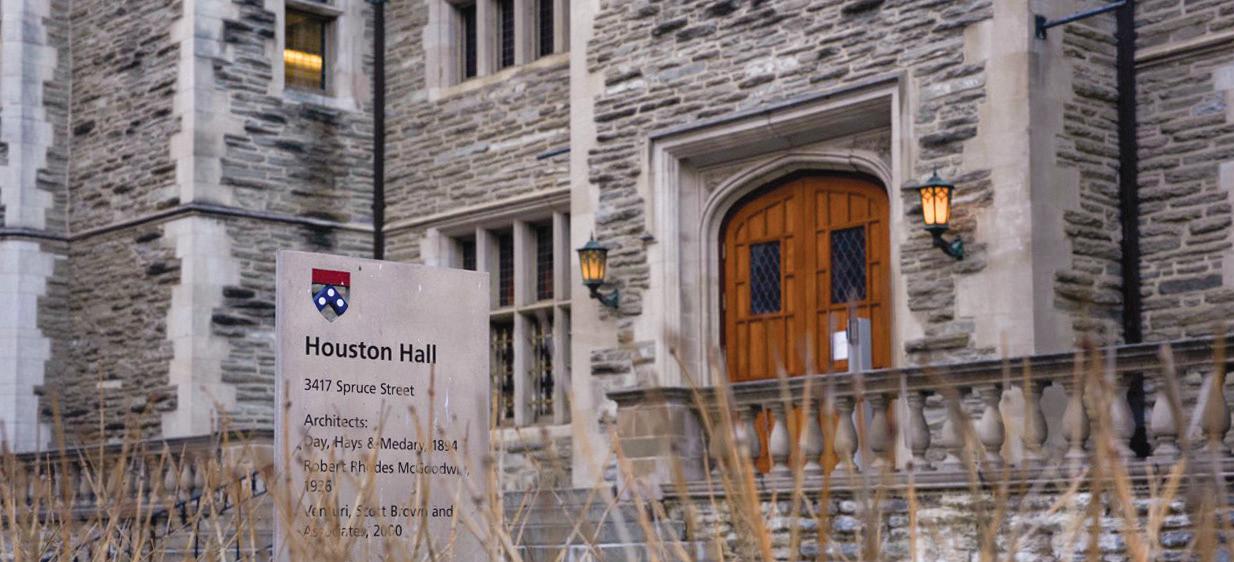
The UA hosts its general body meetings in Houston Hall.
WEINING DING | MULTIMEDIA EDITOR Columnist Jason Zhao explores the history of American identity.
JACKSON FORD | SENIOR PHOTOGRAPHER
Senior columnist Diya Choksey examines how, in a school where everyone is brilliant, status has become the real competition.
JASON ZHAO is a Wharton junior studying finance and computer science. His email is jaszhao@wharton. upenn.edu.
DIYA CHOKSEY is a College first year studying cognitive science from Mumbai, India. Her email is dchoksey@sas.upenn.edu.
Columnist Simar Soni discusses Generation Z’s obsession with situationships.
“So, you guys go on dates, hook up, and are exclusive, but aren’t dating?” I stared at my friend in disbelief when she told me about the boy she had been seeing for the past three months.
She replied, “Yeah, it’s kind of a situationship.” I simply could not wrap my head around how and why this would be the case. It was clear that they liked each other and were exclusive. Why not just make it official and call it what it is? If you break up, then you break up — rejecting a formal label does not eliminate the pain of ending a monthslong monogamous partnership. Her story is not unique. We are living in an epidemic of unseriousness. According to YouGov, half of all 18-to-34-year-olds have been in situationships. A survey from The Belonging Forum found that many people say they have no close
friends. Ultimately, Generation Z has a phobia of vulnerable relationships with any sort of official label.
This level of fear transcends our romantic and platonic endeavors. We’re the post-Sept. 11, 2001 generation. Social media and the hypernegative news cycle have left us in a constant state of information overload. But it’s not just us.
Many Generation X parents also grew skeptical and individualistic, leading to an overprotective parenting style — what many would define as “helicopter parenting” — which taught us to fear meaningful connections with the outside world. Quarantine during the COVID-19 pandemic threw us into an environment of isolation, but we had learned the lesson of loneliness years before. From childhood, we were taught to be wary of the world and suspicious of those around us. We
are desensitized to feeling passion and often circumvent the feeling of the full depth of tragedy, choosing instead to joke about the news or avoid serious conversations altogether.
We’re a risk-averse generation, constantly functioning under fear and the framework of loss. Driving is risky, relationships are risky, friendships are risky. According to Business Insider, we’re less likely to engage with all of these. Hinge even reported that 56% of its Gen Z users said their fear of rejection interfered with pursuing a relationship and 57% admitted they refused to confess their feelings for fear it was a turn-off.
To put it simply, most situationships are irrational and align with prospect theory: the idea that people prefer to avoid loss than take risks for equivalent or higher gain. This is stated best in bell hooks’ book “All About Love: New Visions”:
“Young people are cynical about love. And cynicism is the great mask of the disappointed and betrayed heart.”
This fear of love infiltrates every single one of our relationships, including platonic ones. Our parents’ friends were a knock away. People would comfortably go over to their friends’ houses even if there was laundry strewn around and dishes in the sink. At Penn, we schedule coffee chats with potential friends and feel the need to make our rooms spotless before anyone enters.
In all honesty, I understand the appeal of a gray, expectationless space. In a world of uncertainty, keeping our lovers and friends at arm’s length seems like the most practical tactic for self-preservation. However, situationships are open by definition. They are pointless when you have an expectation of commitment. The thrill of a casual dynamic is lost when you introduce exclusivity. While many of us have found ourselves in situationships, the vast majority of them blow up once unspoken or spoken rules are broken. But whenever I feel pessimistic regarding romance, I remember iconic 2000s sitcoms like “Girlfriends” or “Sex and the City.” Every episode, there was a new boyfriend. Though these partners were fickle, they always advanced the plot. Sure, turning your situationship into a relationship could end terribly. However, it is a learning experience nonetheless. At best, you find your future life partner. At worst, you break up and realize what you actually need to become a better partner, and have fun while learning something about yourself in the process.
So, how do we get more serious?
First, we must recognize the value of vulnerability and abandon idealism as our only goal for relationships. As Ivy League students plagued with preprofessional perfectionism, we live a life full of choice, searching for the perfect partner on Instagram or Tinder. We fail to realize that relationships — even casual relationships with the wrong person — can bring about meaningful growth.
But most importantly, we must be like our favorite sitcom characters. Sure, they had new partners every episode. But they called their casual relationships what they were: a relationship. While the blurred lines of a situationship may delay the fears, anxiety, and heartbreak, they don’t avoid it. So jump in and do it for the plot! Make that exclusive situationship a real relationship. Knock on your friends’ doors and fight the fear of intimacy that has gripped us for years.
SIMAR SONI is a College first year studying political science from Danbury, Conn. Her email is simars@sas.upenn.edu.
COURTENEY ROSS | STAFF PHOTOGRAPHER
contracting mononucleosis last semester and wanting to put more time into graduate school applications and commitments outside of swimming — including the Class Board 2025 and the Undergraduate Assembly — Liu decided to become a student manager.
“I want to honor the four-year commitment in whatever way I can,” she said. “It just only makes sense in my heart to still give back to the team … There’s something that still pulls me in.”
Women’s swimming and diving coach Mike Schnur “was very happy” with her decision.
“We needed some help this year with our crazy schedule without a pool,” Schnur said, “and I knew Hannah … would help our team and give a lot to the girls.”
Liu helps call out times for the swimmers, writes sets on the board, and talks with the coach “because apparently it gets really lonely on deck” when everyone else is in the pool. She’s up and about, pacing around the pool, watching her former teammates and telling them she knows they can go faster. Even when dressed up to go have lunch with Interim Penn President Larry Jameson a few hours later, she doesn’t mind when she gets splashed a bit.
During hours with the team, the performance of the athletes is a student manager’s first priority. But it can sometimes even supersede classes.
“I build my schedule around their schedule,” said Meklit Tedla, a College sophomore and student manager for the women’s lacrosse team. The team practices for around three hours in the afternoon, so she tries her best to make sure she doesn’t take classes that would conflict with the team’s schedule.
During practice, when she’s not setting up the camera and tripod to film practice sessions for the team to watch later or for social media, she’s watching and letting them “know how well they’re playing.” She goes up to them after practice, complimenting them, and spends time with them outside the field cooking, studying, and getting dessert together.
Tedla rooms with some of the lacrosse players, and she understands her role is much more than that of a videographer or even a manager.
“I’m not necessarily just here to work,” she said, “I’m here because I’m also their friend, and friends support each other.” She finds that her role as manager is often to give “emotional and supportive advice” and to be her team’s biggest cheerleader.
Federman and Liu had the same thoughts. When someone on the team texted her to rant, Liu said, “That’s not because I’m a manager. That’s because I’m their friend.”
“It’s the friend group that I always wanted growing up,” Federman said. “It’s the best group of guys I’ve ever met … and I’m grateful they welcomed me into that community as well, even though I’m not 6-foot-4 and shooting the ball into the hoop.”
Although student managers don’t get to play the sports they love, the time commitment is similar to that of the student-athletes. Managers go to practice to set up — often earlier than the players — and might travel with the team. But because they are friends with the athletes and a part of the team, they do their jobs without complaint, sacrificing other commitments and doing homework on the bus. They care as much as if it’s their own basketball game, swim meet, or lacrosse match, because, in a way it is.
“I wanna see this team finish their season,”
Liu said. “I’m still so invested in how they do.”
“I’m as invested in this team’s success as the players are,” Federman added. “I love it. I’m so happy that I did it.”
Tedla echoed, “I love it … I genuinely really, really love it.”
The three managers separately expressed the same pride and love they have for their teams and sports. They might not physically be on the field, in the pool, or on the court, but they’re in the same spirit and mindset as their athletes.
On any given day, Tedla is sitting on the bench, manning the camera and turning it to follow the ball. Liu is shouting out to the coaching staff, asking which sets the team will run today. Federman is on the sideline, holding out three fingers and grinning after a stunning shot.
“I might not be a player, but this is my team,” he said. “This team means everything to me.”
Women’s swimming and diving is confident heading into Ivy League Championships
Anna Moehn and Kayla Fu are set to shine in the 1650-yard freestyle and 100 butterfy, respectively
VALERI GUEVARRA
Sports Editor
Penn women’s swimming and diving is ready to make a splash at the Ivy League Championships just up north at Princeton from Feb. 19-22.
The Quakers finished the regular season with a strong 8-4 overall record but a less-than-ideal 3-4 conference record. Looking to prove it’s more than a losing Ancient Eight record, the team is focused on excelling at the Ivy championships.
“I think the team mindset has been absolutely amazing throughout the whole season and especially now, headed into championship season,” junior freestyle/individual medley specialist Anna Moehn wrote in a statement to The Daily Pennsylvanian.
Moehn is leading the way for the Red and Blue heading into the Ivy championships, especially as a leader for the historically dominant Penn distance freestyle group that has swept multiple podiums in the previous three Ivy championships. The distance swimmer has some big shoes to fill after the graduation of freestyle specialist Anna Kalandadze — who took home two Ivy titles and finished fourth at the NCAA Division I Championships last year. But the Alton, Ill. native is more than ready. She has been on the podium in the 500-yard and 1650 freestyle in her freshman and sophomore seasons. Moehn is looking to come out on top at the Ivy championships and swim fast enough to return to the NCAA championships. Moehn is seeded first in the 1650 free and second in the 200 and 500 free.
Distance group teammate and fellow junior freestyle specialist Sydney Bergstrom is also one to watch. The Swarthmore, Pa. native finished just behind Moehn and Kalandadze in the 1650 free at last year’s Ivy championships and claimed two Eastern College Athletic Conference titles in both distance freestyle disciplines. Bergstrom is seeded second behind Moehn in the 1650 free and fourth in the 500 free.
Another veteran to keep an eye on is senior breaststroke specialist Izzy Pytel, who is in her final Ivy championships. The Naperville, Ill. native has lowered her program records in both breaststroke events in the past two seasons, but the elusive medal finishes in both events have been just out of reach. It will be exciting to see if she’ll be able to break onto the podium in her events after several close calls and many A finals in previous years.
But veterans are not the only ones shining for the Red and Blue this year. Freshman freestyle/butterfly specialist Kayla Fu had a standout regular season and is not slowing down. The Sugar Land, Texas native broke the 100 butterfly program record and played a key role in the program record-breaking 200 medley relay at the Princeton Big AI Invitational. Fu is seeded first and second in the 100 fly and free, respectively.
“What’s special about Kayla is how good she is … underwater … her kick is pretty special,” coach Mike Schnur said when asked about Fu. “And who knows where she’ll be in a couple years — she could be swimming completely different events than she’s doing right now, but she’s really special.”
Sophomore backstroke/freestyle/individual medley specialist Katya Eruslanova is another underclassman to watch. Last year, the Havertown, Pa. native finished first in the B final in all of her individual events, notably swimming times faster than some of the A finalists. This week, it will be exciting to see if she can improve her preliminary morning swims to break into the A finals or possibly onto the podium at the Ivy championships — especially in the 200 individual medley, in which she is the reigning program record holder. Eruslanova is seeded fourth and third in the 200 and 400 individual medley, respectively.
The roster as a whole is strong, even with the loss of Sheerr Pool and relocation to the pools at the West Philadelphia YMCA and Drexel. At the Big AI Invitational in December 2024, the Quakers pulled off an impressive comeback after maintaining second in the first days of the meet to finish first ahead of Princeton, Columbia, and George Washington.
“It’s been such a chaotic year with having no home pool, but in a way, that’s brought us even closer,” Moehn wrote. “It’s so motivating to see how everyone has embraced this year’s challenges and continued to work hard anyway.”
And with this momentum, a top-three team finish at the Ivy championships is in reach — something that hasn’t happened since 2022.
“I think our team is phenomenal this year and with how much work everyone has put in,” Fu wrote in a statement to the DP. “I think we have a great chance at winning. It would be amazing to see us place top 3 overall.”
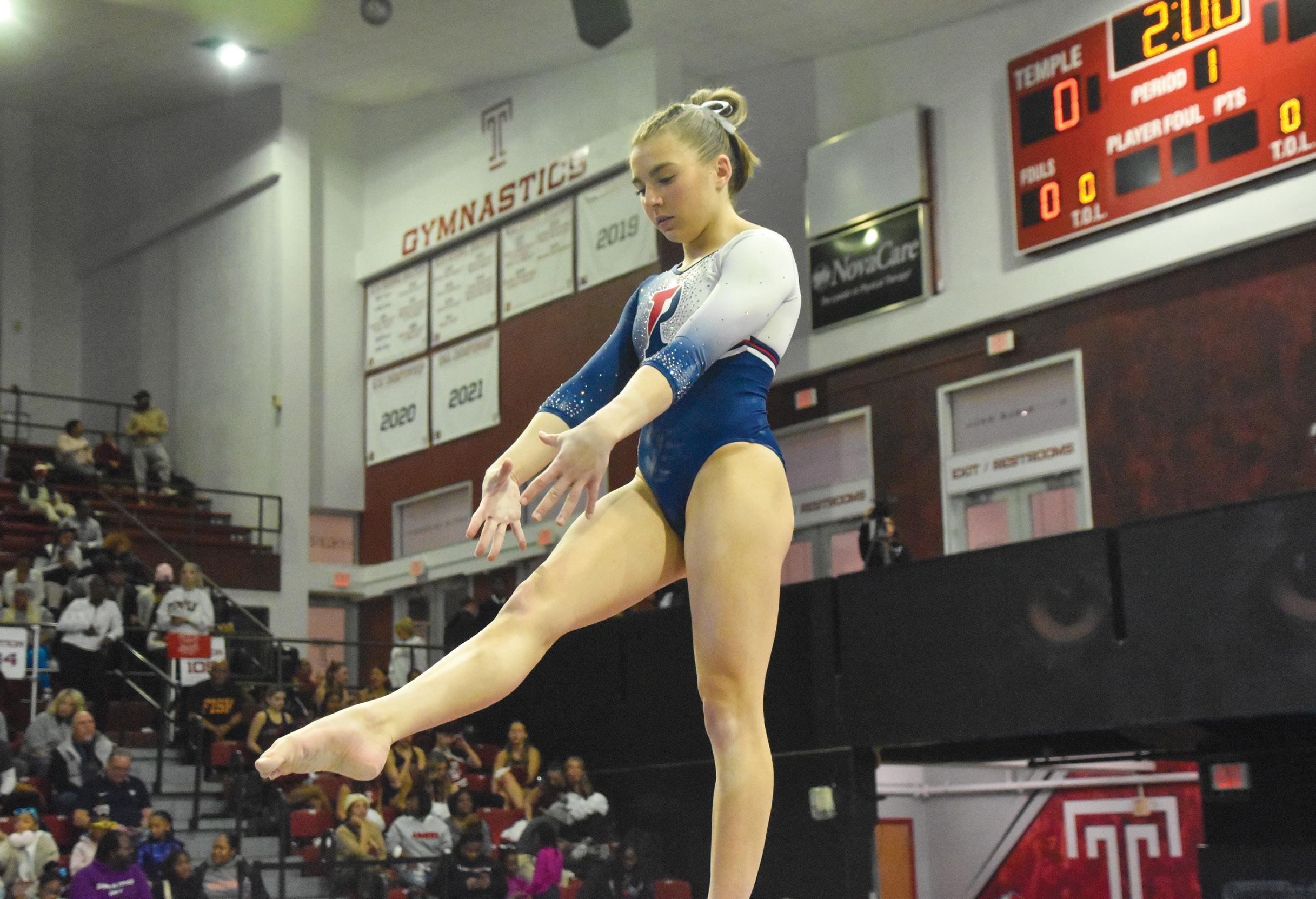
Ellis | Why you should become a Penn gymnastics fan
As Penn gymnastics soars to new heights, the team is becoming a must-watch powerhouse in collegiate competition
CATHERINE ELLIS Sports Reporter
This is the season to tune in and watch the Quakers fly to victory.
Increasing popularity
As gymnastics has gained popularity with the average person through its coverage at the 2024 Paris Olympics and celebrity-status athletes like Simone Biles, people are paying more attention to college gymnastics.
All of Biles’ teammates from the 2024 Olympic team are involved with NCAA gymnastics in some way. Sunisa Lee formerly competed for Auburn, while Jordan Chiles currently competes for UCLA, Jade Carey for Oregon State, alternate Leanne Wong for Florida, and alternate Joscelyn Roberson for Arkansas, are actively competing. Even Hezly Rivera, while still a junior in high school, has committed to LSU. Clearly, NCAA gymnastics is not a lesser choice; collegiate training is a great way to maintain technique and competition skills between Olympic years and other elite-level opportunities.
A force to be reckoned with
Some people may be surprised to learn that Penn has a gymnastics team, much less just how successful the team is. There is often rhetoric about how Penn may not be very sports-forward, but within the Ivy League and much of the Northeast, this gymnastics team breaks that stereotype.
The Red and Blue have won the Gymnastics East Conference for the past three years in a row, and in that time no other Penn team has been able to maintain a comparable record. But looking at the current team compared to their former rosters, it is easy to see how they’ve become so dominant.
The team, celebrating its 50th anniversary, has completely transformed since the COVID-19 pandemic, largely due to the appointment of Kirsten Becker as its coach. If you want to root for a team on campus that is reliably succeeding and continuously outdoing their records, one thing is clear: This is the season to become a fan of Penn gymnastics.
The ins and outs of gymnastics
In case you’ve forgotten since July of 2024, here’s a brief rundown of how gymnastics works, with some specifications for NCAA. There are four events — vault, bars, beam, and floor — that come together to make a team score. In college,
BASEBALL , from back page
One such player is sophomore pitcher Josh Katz. After throwing 37.2 innings for the Quakers last season, fourth most on the team, Katz is now the opening-day starter for Penn’s tilt with the Seminoles and is expected to be a mainstay in Penn’s starting rotation.
Tobin called Katz Penn’s “ace,” noting that he did not allow a run during the entirety of fall ball. Katz says that he appreciates the gravity of the moment, but that seeing former Quakers succeed against the nation’s best gives him confidence that he can carry the torch.
“I had that ability to learn from those guys — got to watch [Dromboski] do it at Auburn, saw [pitcher Cole Zaffiro] do it last year at UVA. So I think that relaxes me a little bit going into the weekend [against FSU],” Katz said. “Just trying to throw strikes, do what I do, trust my defense.”
Penn also returns a great deal of experienced talent, particularly at the plate. Junior infielder Davis Baker, a two-time All-Ivy honoree, ranked second on the team in hits (68) last season and was recently named to the Bobby Bragan National Collegiate Slugger Award Watch List. Junior outfielder Ryan Taylor and junior utility Jarrett Pokrovsky head up the returning All-Ivy
six athletes compete in each event, and the top five scores count.
Routines are generally scored out of 10, though some may capped slightly lower depending on difficulty, making team totals on each event out of a maximum 50 points. The final score is out of 200 points with all four event totals combined. Athletes competing in all four events—like Simone Biles — also enter in the all-around competition, which is scored out of 40 points.
Since 2022, the Penn gymnastics record books have been revised frequently. Below is the number of individual records set since the return from the pandemic, broken down by event. The denominator is the number of scores in the record book and the numerator is how many were set after the return to competition post-COVID-19.
All-around: 16/29 (55%)
Vault: 36/48 (75%)
Bars: 16/28 (57%)
Beam: 17/33 (52%)
Floor: 6/20 (30%)
In regards to the all-around records, it is worth noting that current team superstar junior Skyelar Kerico holds 11 out of 29 (38%) of those records, including the record for both the highest score and second-place score.
Team score records are kept in various categories: overall, home, away, season opener, Ivy Classic, and GEC Championships. All current team
players, while sophomore infielder Nick Spaventa and senior infielder Connor Chavez each recorded over 50 hits and started over 40 games. Overall, six of Penn’s eight leading hitters from 2024 are back on the field.
With that in mind, the Quakers believe their depth will be the driving factor behind another potential championship run.
“We’re very deep at all positions,” Katz said.
“Outfield, infield pitchers, we’ve got a very talented staff. Everyone’s going to have to contribute in different ways … utilizing the deepness of our team, I think that’s something that’s gonna help us win throughout the year.”
“Our position player group is very deep, one of the deeper groups I’ve had,” Yurkow said. “So I’m definitely optimistic.”
The two-time reigning conference champions were not picked to win the Ancient Eight this season — in the league’s preseason poll, Penn slotted in second behind Columbia, which was picked first by all 16 voters after winning the 2024 regular season title. Last season’s Quakers were unspectacular in the regular season, sneaking into the tournament with an 11-10 conference clip and embarking on an unlikely tournament run that included an upset of the top-seeded Lions.
Now, with old stars out the door and a new guard ready to rise, the Quakers are ready to turn the page.
score records have been set in the past three years, as well as all of the top-10 team vault scores. Further, eight of the 10 bars scores and six out of 10 beam and floor team records have been set since 2022.
Pre-COVID-19, the team average was 192.936 for the 2020 season. Upon returning to the competition floor in 2022, the average surged to 194.616, a drastic jump for a sport where wins are determined by hundredths or thousandths of a point. The average has only improved since then; 2024’s average was 194.948. Much of the credit goes to coach and Penn gymnastics alumna Kirsten Becker. Her win average is 0.507, with last season’s being 0.606, the best record since 2012 — the last time they won both the Ivy Classic and GEC Championships before 2022.
Looking ahead
This season, our gymnasts have stated that their next goal, in addition to an Ivy Classic and GEC four-peat, is to qualify for NCAA Regionals. The NCAA teams, regardless of division, with the top-36 highest National Qualifying Scores qualify to Regionals, which continue along a bracket format until National Finals. The NQS is made up of the team’s top-six scores, three of which have to be from away meets. The top is score dropped and the remaining five scores are averaged. While it may seem like a convoluted system,
STINA , from back page
goal percentages than Brown at the half.
Coming out of the locker room, Brown picked up the pace, switching to a zone defense that seemed to knock Penn off balance briefly. Penn’s offense struggled to find an open look, while its defense also seemed to slow down and clump in the paint, leaving players open in the perimeter and leading to Brown three-pointers.
But with each Brown three-pointer and the roar of the Bears’ bench, the Quakers had an answer in freshman guard Sarah Miller, who made 4-of-6 three-pointer attempts and kept Penn’s offense alive. The Red and Blue seemed to crack Brown’s zone defense by running back quickly and slugging the ball to Miller before Brown’s players could get in their positions.
Entering the final quarter of the game, Penn pushed with the same intensity in the third quarter — as did Brown.
With one minute left in the game and Brown defenders swarming Gayle in the corner, Gayle swung the ball over to an open Almqvist, leading to an easy bucket. As Brown got the ball and other players started running towards the other
it is designed to eliminate home-field advantage and fluke outliers. Last year, the team’s NQS was 195.450, less than a point away from 36th place. As of Feb. 17, Penn is currently No. 41 with an NQS of 194.745 and is only 0.370 points away from 36th place. Being only halfway through the season and almost three-tenths ahead of last year’s NQS should instill confidence in Quaker nation. With six meets left in the season and an upward trend in performance, it is very possible that Penn can pull off the first Regionals qualification for not only the school, but the whole Ivy League.
On the road to victory?
So what do all these numbers mean? The Penn gymnastics team has been consistently improving since 2022 and is expected to once again dominate Ivy Classic and GEC Championships. With the team on the rise, there has never been a better time to become a fan of the team. Their anticipated success shouldn’t be the only thing enticing enough for you — imagine the feeling of watching people do double backflips, fly 10 feet in the air, and flip on a four-inch-wide beam right in front of you.
Luckily for Quaker nation, you have the opportunity to watch the team clinch the title on March 22 when championships are held at the Palestra. It’s on you to “Pack the Pal” and support what is arguably the best team on campus: the 2025 Penn gymnastics team.
end of the court, Gayle got in a steal and quickly added in another two points — bringing the players on Penn’s bench to their feet screaming. Brown answered with quick three-pointers on its next two possessions, but it was too little, too late. Penn’s intensity and pace sealed its victory, ending the game with 11 second-chance points to Brown’s five and 17 points off turnovers to Brown’s four. Penn’s bench contributed a huge 30 points compared to Brown’s two bench points. But it was Almqvist’s night, with the Penn Band coming out with a banner that read, “Congrats Stina 1000.” The team huddled in front of the banner and called Almqvist to come over.
“As a team, we’re just super close, and we’re just all super proud of her,” Miller said.
“Proud of her out here for a thousand, … but [also to] see what she’s doing for her family [and to see her journey from] taking a risk on this coaching staff that never met her outside of a bunch of Zoom calls,” McLaughlin said, referring to her recruiting journey.
“It’s more about the whole process and journey for these guys,” McLaughlin added.
“I’m blessed,” Almqvist’s father said after the game. “It was fantastic to see. I’m so happy, especially for Stina because she always fight, fight, fight, and finally I could see her smile.”
SYDNEY CURRAN | STAFF PHOTOGRAPHER
Senior Zara Gazdak performs a beam routine against Temple on Feb. 8.
GRACE
Stina Almqvist hits 1,000 points in dominant win over Brown for women’s basketball
Almqvist fnished with 26 points, fueling a 73-61 win against Brown
HANNAH CHANG Sports Associate
Senior guard Stina Almqvist entered a pantheon of greats by hitting the milestone of 1,000 career points — all while securing an important Ivy League victory.
In what turned out to be a 73-61 win for Penn (13-10, 4-6 Ivy) against Brown (10-13, 4-6), Almqvist entered the game needing only 13 points to become the 26th player in program history to reach 1,000 points.
Almqvist’s parents and younger sister were there for the game, coming all the way from her home country of Sweden to watch her play. Almqvist’s younger sister told her, “You better get it during my three games when I’m there.” And Almqvist did, ending the game with a total of 26 points.
It was only fitting that she would hit the milestone in the month of National Girls and Women in Sports Day.
“Where I grew up, there’s only 15,000 people.
… The only pro team we have there is the women’s basketball team,” Almqvist said, “Since I’ve grown up, [women’s sports have always been] the thing. … I’m just really proud of coming from a place where women’s sports are so supported.”
She understood the importance of her achievement, hoping that as she once looked up to her older sister who now plays professionally in Sweden, her 12-year-old sister can do the same.
“[My younger sister] who just started her basketball journey, she can start looking up to us too,” Almqvist said. Penn entered the game coming off of an exciting win against Yale. On the other hand, Brown was coming off of a loss at Princeton the day before. Both teams, vying for a spot in next month’s Ivy League Tournament, came out swinging.
“Everyone knew how big this weekend was for us,” Almqvist said.
In the first quarter, Brown’s man-to-man coverage was especially strong with players moving fast on their feet, forcing Penn to take awkward shots.
“I thought they outplayed us a little bit for most of the first quarter,” coach Mike McLaughlin said.
But the momentum shifted on Penn’s last possession of the first quarter. Sophomore guard
Mataya Gayle shuffled and angled her body awkwardly to face the basket before launching the ball high above her Brown defender. The ball hit the net just as the shot clock buzzed and the first quarter ended, giving Penn a 15-12 edge and an offensive momentum at the end of the first.
With Penn’s offensive fire still hot, the Quakers opened the second quarter with “some pretty good team basketball,” according to McLaughlin. Almqvist assisted sophomore guard Abby Sharpe with a triple and then capitalized on a steal from freshman forward Katie Collins, good for two more points.
The Red and Blue’s lead expanded to 22-12 as Brown’s shots refused to go in and Penn excelled offensively. The end of the second quarter was all Almqvist, who made smart cuts to get easy baskets, securing her milestone of 1,000 career points before the half.
By the break, the Red and Blue were up 33-18 and were winning the margin game. They made more second-chance points, fast break points, and had higher three-point and regular field
See STINA , page 7
Meet the managers: The backbones of your favorite Penn teams
From early practices to late nights watching flm, managers give their all to support the teams they love
HANNAH CHANG
Sports Associate
It’s 8:15 a.m. on the Monday after the Super Bowl, and College senior Jake Federman is organizing the many things he got from the locker room — whiteboards, manager files, an iPad, a speaker, and the symbolic Lunch Pail Award given to the best player at practice — while the team’s “Basketball Jawn” playlist on Spotify slowly reverberates through the sleepy John Rockwell Gymnasium.
His fellow student manager is on the other side of the court — filling up the 15 blue Powerade bottles lined up on the padded seating area. There’s the sound of one basketball and the occasional squeaking of sneakers as junior guard Cam Thrower shoots on one end of the court.
“Cam I’ve seen shoot more than 10,000 shots,” Federman said. Federman, known as “Feddy” to the team and friends, is the senior manager of Penn men’s basketball, and he’s been a manager since the moment he arrived on campus.
“The first day of class my freshman year [was] Aug. 31, 2021,” Federman said. “There’s only been like six days ever at Penn when I wasn’t affiliated with this team.”
By 9 a.m., Federman, typically dressed in a red basketball shirt that matches the coaching staff’s, is under the basket, rebounding and passing the ball to a myriad of players practicing their shots.
He knows where each player “likes to catch the ball and, as crazy as it sounds, where on the seams of the ball they like to catch it” so he can give them the best pass possible.
“I’m not sure if they noticed,” he said, “but I don’t really need them to notice, ‘cause I don’t wanna add something else to their brain to think about.”
For the next two hours as the athletes do their stretches and their different practices and plays, Federman tracks analytics on the iPad, takes notes on the whiteboard on who made impressive offensive and defensive plays (one player
called out to Federman to make sure he made note of his on-court hustle), rebounds for the team, and plays “dummy” defense when they need it.
“My job is to do whatever needs to be done at any time, which is not always the most glamorous job, but it’s well worth it,” Federman said. “Is there a wet spot? Do I have to go get that with a towel? Is someone’s water bottle empty, and do I gotta go get that? Do they need an extra passer?”
It’s not just Federman who feels this way.
Fellow College senior Hannah Liu, a former student-athlete-turned-student-manager for the Penn women’s swimming and diving team, echoes this sentiment.
“I fill in where the coach is busy, right,” Liu said, “I’m like, ‘What can I do to help?’”
Before transitioning to the manager position, Liu swam for the team for three years. After
See MANAGERS, page 6
Three-peat? New-look Penn baseball eyes third-straight Ivy title
The Quakers will look to replace a number of departed stars, including Player of the Year Wyatt Henseler
WALKER CARNATHAN
Former Sports Editor
After the Philadelphia Eagles denied the Kansas City Chiefs a historic championship streak, another Philadelphia team is looking for a three-peat of its own.
This Friday, Penn baseball will open its 2025 season with an eye on the history books. After winning Ivy League tournament championships in 2023 and 2024, the Quakers are seeking to become the conference’s third-ever three-peat champions and the first team to win three in a row since the advent of the postseason tournament. Whether it’s for another conference crown or for their opening clash with No. 9 Florida State, the Quakers have no shortage of belief.
“I think we have 100% confidence,” senior pitcher Will Tobin said. “Florida State is a great team — they’ve got a lot of really talented dudes — pitchers, hitters, everyone on the team’s solid. But in the past, we’ve beaten good teams historically. We continue to beat good teams every time we step on the field.”
During their recent championship run, Penn has showcased an ability to punch above its weight. In 2023, the Quakers knocked off No. 13 Auburn in the first round of the NCAA tournament and drew within one game of becoming the first Ivy League team to advance to a Super Regional. Though the Red and Blue did not win a game in the 2024 Regional round, they fought close battles with both Virginia and St. John’s — the latter of which saw Penn lose a 12-inning thriller.
Now, the Quakers are tasked with replacing many of the players that fueled those tremendous runs. Over the last two years, Penn has lost eight All-Ivy honorees, including 2024 Player of the Year Wyatt Henseler and 2023 Pitcher of the Year Ryan Dromboski. The pitching staff has experienced the most turnover of all, with all three of the team’s highest-inning hurlers from one season ago now gone.
But if you ask coach John Yurkow, the next generation of Quakers are ready to step to the plate.
“Once you get your program to a certain level, it’s almost expected that every year you’re going to lose good players,” Yurkow said. “So you just have to trust that your process is really good. The assistant coaches do a good job on the player development side … making sure those young players are ready to go when their turn comes.”