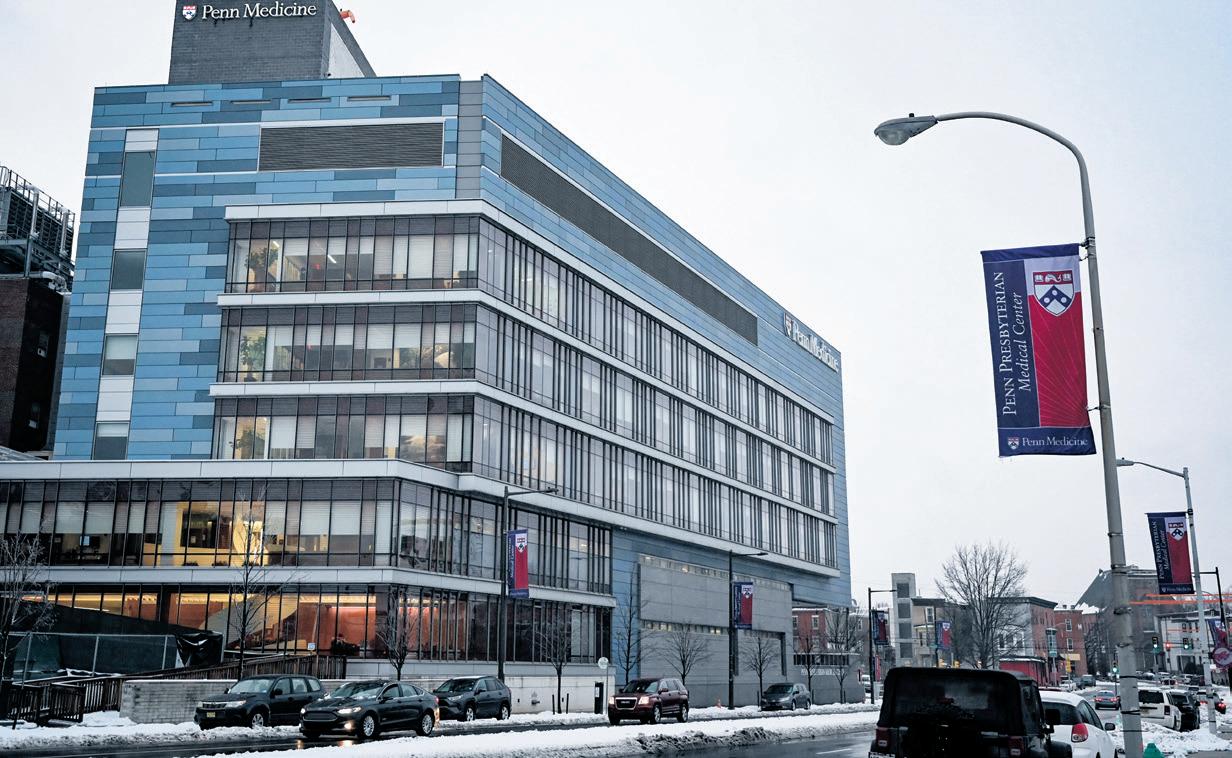

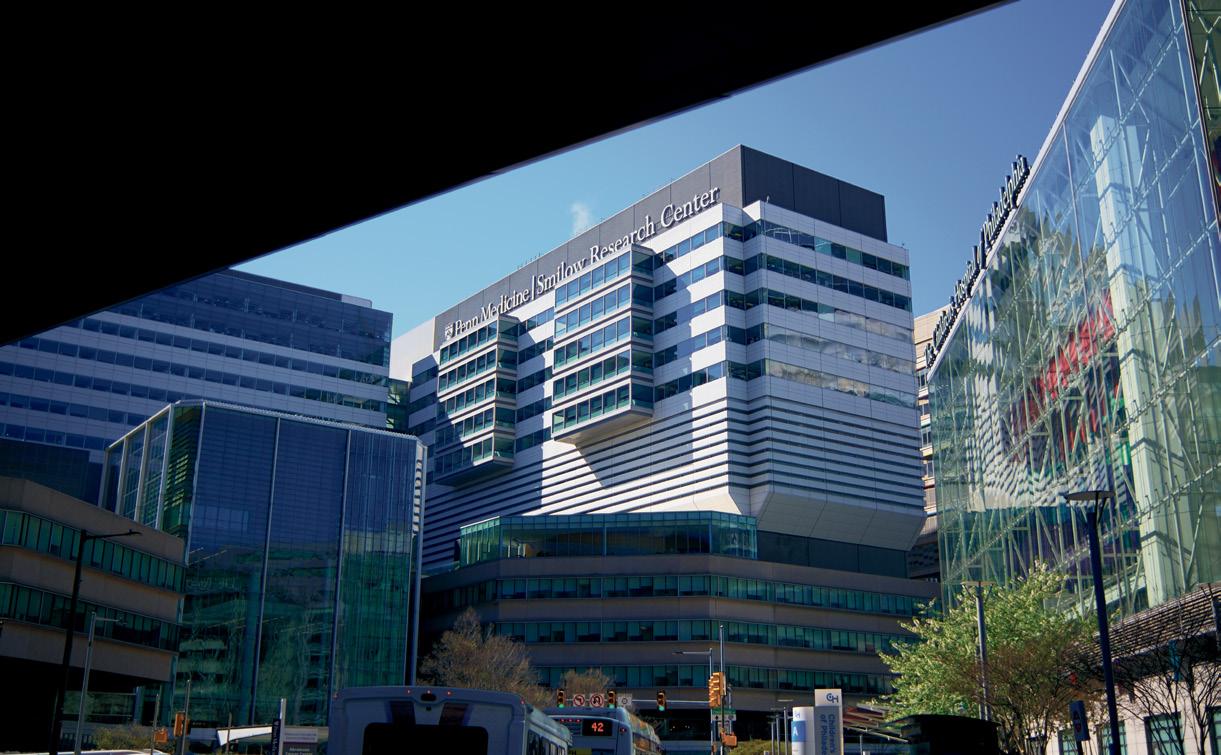
The University of Pennsylvania Health System was responsible for over two-thirds of Penn’s $17.3 billion in total revenue last year
Penn’s schools, programs, and centers run on billions in revenue each year, most of it thanks to the University of Pennsylvania Health System. Last year, Penn raked in over $17.3 billion in total revenue, and the Health System was responsible for over two-thirds of that figure. Patient revenue alone — by far the largest contributing category to the University’s total earnings
White House budget proposal a ‘gut punch’ to Penn, researchers say
The Daily Pennsylvanian spoke with University faculty and administrators to discuss potential impacts of the plan
NORAH FINDLEY Senior Reporter
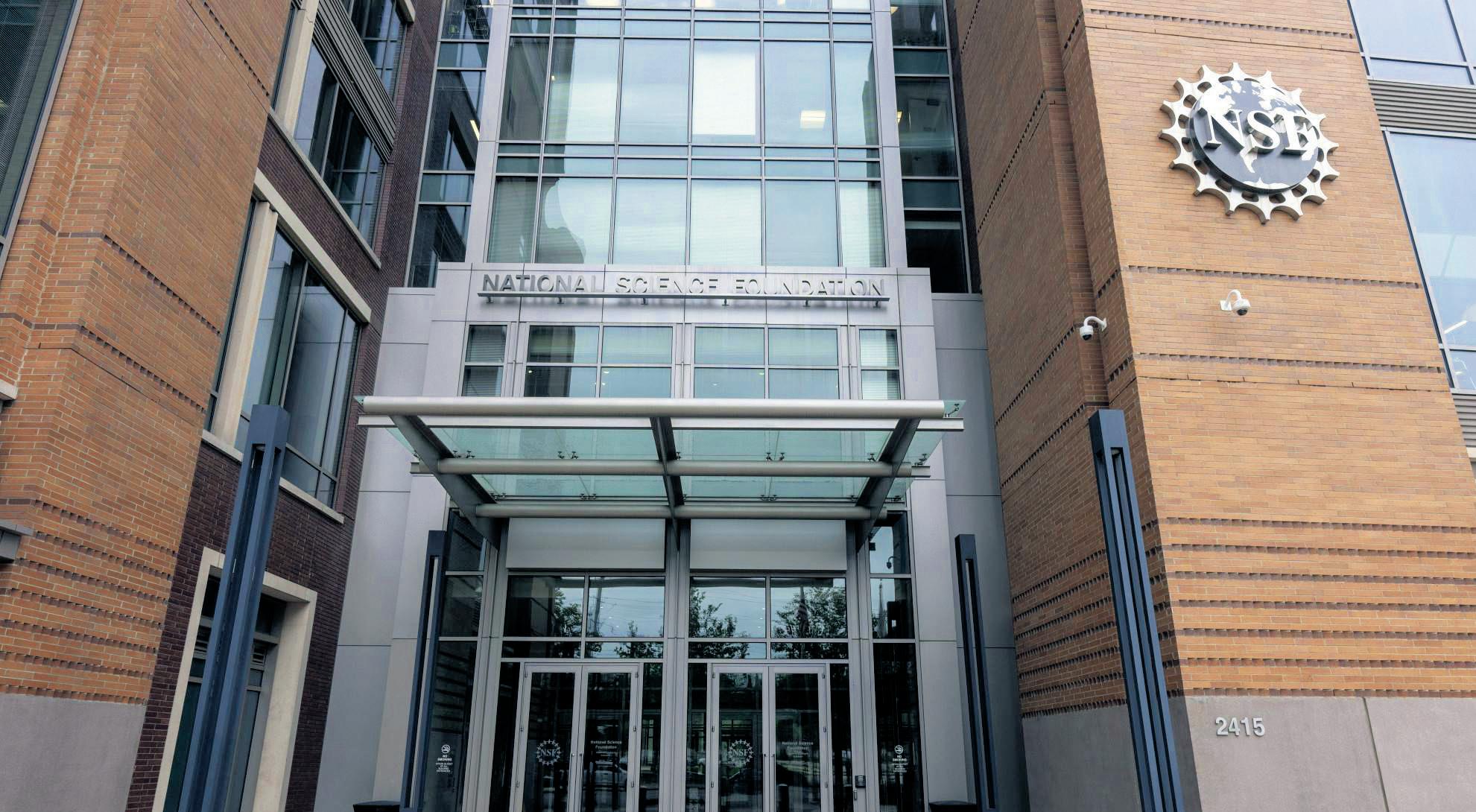
The White House’s budget proposal for fiscal year 2027 calls for significant funding reductions to multiple federal agencies, including several that provide federal funding to Penn.
The plan, released on April 3, proposes a cut of more than 50% in federal spending for the National Science Foundation and a 13% cut to the National Institutes of Health. Ahead of the proposal’s submission for congressional approval, The Daily Pennsylvanian spoke with University faculty and administrators to discuss how the potential cuts could affect their research.
Earth and Environmental Sciences professor
Leigh Stearns described the proposed NSF cuts — which specifically impact projects related to the climate and environment — as a “gut punch.”
“I think I probably won’t be submitting as many proposals,” Stearns said in an interview with the DP.
“It does shift how you think about your research, because I’m probably going to have to look at other funding agencies to fund some of the work that I would like to do through NSF.”
In January, Congress rejected a previous proposal from 1968 Wharton graduate and President Donald Trump’s administration, seeking similar cuts to federal science research budgets. Although the proposal would continue to fund research areas like artificial intelligence and quantum information, Stearns said that climate research remains essential.
“Even though we are confident about the way climate is changing, there’s still a lot of questions about how and when that will manifest,” Stearns said. “There’s a lot of fundamental science that needs to be done to understand those systems.” Stearns — who also serves as the graduate chair of the Earth and Environmental Sciences Department — also noted that reduced federal investment could weaken the nation’s competitive edge in scientific research on a global scale.
“A lot of European Union countries and China are going the opposite way — they’re investing more in fundamental science and supporting climate science at a time when we are making cuts,” she said. She added that other nations have already moved to “poach” United States graduates in scientific fields, and she hopes that Congress will reject the “devastating and reckless” proposal.
“It’s just a really bad optics for scientists and the international community,” she said. “Everybody knows that climate and environmental issues are very present in geopolitics and security and economic
See FUNDING, page 6
SAMANTHA DASIKA AND MISHAL GEORGE Staff Reporters
— netted over $10 billion in fiscal year 2025.
The Daily Pennsylvanian sat down with Penn’s Executive Vice President Mark Dingfield and UPHS Chief Financial Officer Julia Puchtler for a closer look at how Penn Medicine drives the University’s finances.
“Penn Medicine” serves as an umbrella term, encompassing both UPHS and the Perelman
School of Medicine. Despite the two institutions serving vastly distinct roles at Penn, both are financially tied to the University at large.
Puchtler explained that Penn Med students “benefit tremendously” because the school is “highly integrated” into the Health System. She added that UPHS was “ultimately created to See REVENUE, page 3
From performing arts groups to academic societies, students have gathered around shared interests for centuries
AMY LIAO Senior Reporter
Penn’s storied history stretches back to 1740 — and so does its tradition of student-led organizations.
From performing arts groups to academic societies, Penn students have gathered around shared interests for centuries. The Daily Pennsylvanian compiled a list of the oldest clubs still operating on campus today.
Penn Glee Club
Founded in 1862 during the Civil War, the Penn Glee Club is the University’s oldest performing arts organization and one of the longest continually running glee clubs in the United States. In addition to its singers, the entirely student-run organization also includes a band and technical section.
In an interview with the DP, College senior and Glee Club President Julia Gauffreau said that some of the group’s long-standing traditions include performing at convocation ceremonies and “[prestigious] gigs,” such as embarking on a tour each year.
Glee Club has toured in over 40 countries and territories across five continents, generally alternating between domestic and international trips each year.
“What brings us all together really is this shared value of wanting to have excellent performance, and that carries through a tradition and gives us a brotherhood,” Gauffreau said, adding that Glee Club’s three “pillars” are “performance, brotherhood, and tradition.”
In 2021, the Glee Club voted to merge with its
sister group, the Penn Sirens, and remove the group’s gender restriction on singing membership.
“The Glee Club has been a group that’s been willing to adapt and change as times have changed itself,” Gauffreau stated.
Gauffreau described Glee Club’s songbook as “really central and important” to the organization because it has preserved traditional repertoire while serving as “the opportunity to make our own new traditions.”
The collection includes longstanding arrangements, as well as the University’s alma mater, “The Red and Blue,” and other fight songs.
She added that the songbook took on new significance after the group became coed in 2021, when portions of the repertoire were rearranged to accommodate soprano and alto voices. The club introduced sections “to be inclusive of upper voices” and continually reviews the songbook with input from students and Director Sam Scheibe.
“We’re this musical ambassador, musical hand to the University, and being able to specifically represent Penn in Philadelphia and around the world is what sets us apart from other performing groups,” Gauffreau said.
The Philomathean Society
Founded in 1813, The Philomathean Society is one of the oldest continuously existing collegiate literary societies in the United States. See CLUBS, page 2
Steven Crowder debate at Penn canceled after producers back
According to the Penn spokesperson, Steven Crowder’s team backed out of the arrangements following a dispute with Penn Live Arts
JAMES WAN Staff Reporter
A planned debate between conservative political commentator Steven Crowder and Penn professor Jonathan Zimmerman has been canceled, a University spokesperson confirmed to The Daily Pennsylvanian.
The event — part of Crowder’s “Change My Mind” series — was originally scheduled for Friday at the Annenberg Center for the Performing Arts. According to the Penn spokesperson, Crowder’s team backed out of the arrangements following a dispute with Penn Live Arts.
“The event’s producers chose not to proceed with the venue rental contract, citing disagreements with standard university policies and security protocols,”
they wrote.
In an email sent to Zimmerman and obtained by the DP, Crowder’s producer wrote that they were “unable to proceed with the event as scheduled” due to “the inability to livestream” and “added security hurdles.”
“We’ve just heard from Penn Live Arts and have been informed that we would not be able to livestream due to ‘safety’ concerns,” they wrote.
“However, the on site security team has also informed our personal security that we would not be able to undertake many of our routine safety measures which makes us seriously doubt their See CROWDER , page 3
The resolution comes after several student groups voiced concerns about how the University would respond to federal immigration enforcement on campus ISHA CHITIRALA AND FINN RYAN News Editors
Penn’s Undergraduate Assembly announced a resolution last Thursday to “safeguard” student rights against possible federal immigration enforcement on campus.
The March 29 proposal aims to establish “enforceable” University protocols for responding to potential federal immigration enforcement, protecting student safety, and ensuring all students are “informed of their rights.” The resolution comes after several student groups voiced concerns about how Penn would respond to United States Immigration and Customs Enforcement activity on campus.
“At the University of Pennsylvania, current guidance on interactions with external law enforcement lacks centralized visibility, consistency, and accessibility,” the resolution read. “This disproportionately affects undocumented, DACA, international, and other immigration-impacted students.”
“Resolutions are the highest power of the UA,” College junior and incoming UA President Musab Chummun wrote to The Daily Pennsylvanian. “It is crucial for Penn to prioritize its students, especially with issues concerning external law enforcement. Looking ahead, this Resolution will push administration to take more proactive measures, and work with stakeholder groups to advance student protections.”
In the document, the UA outlined several “key problems” at Penn — including a lack of “publicly accessible policies,” “inconsistent and unclear guidance” across different University offices, and limited awareness among students of their legal rights.
While University officials previously told the DP that they are “quite attuned” to the national issue, administrators have remained largely silent about how Penn would respond in the face of ICE activity on campus.
In a April 2 email to the Penn community announcing the resolution, UA President Nia Matthews wrote that the University “has a responsibility not only to respond lawfully, but also to respond with clarity, care, and preparedness.”
“Although the full scope of federal immigration enforcement remains shifting and, at times, deliberately unclear, its consequences for students are not abstract,” she wrote. “Penn must not allow See UA , page 7
Community members can submit feedback on the guidelines via an online form before May 18 or during listening sessions this month
JAMES WAN Staff Reporter
A draft of Penn’s Guidelines on Open Expression has garnered mixed reactions from students and faculty. Since 2024, Penn has operated under temporary rules governing demonstrations and events. While some community members welcomed the University’s proposed revisions, others raised concerns about its implications for student expression, event planning, and institutional transparency.
College junior Musab Chummun — who is the current vice president of Penn’s Undergraduate Assembly and the organization’s next president — wrote blankly that “the proposed revisions do not effectively protect open expression on campus.”
“Firstly, what constitutes disruption/violations of open expression is too arbitrary,” Chummun explained in a statement to The Daily Pennsylvanian. “If the University can restrict speech without clear justification, the application of open expression becomes inconsistently applied and subject to bias.”
According to the draft guidelines, publicly released last Tuesday, Penn community members violate the principles of open expression if they “interfere unreasonably with the regular activities of others,” including “unreasonably disrupting the normal activity that takes place within the University.”
Chummun wrote that disruption “should not be overly restricted” because “it directs attention toward a cause that would otherwise be met with indifference.” He referenced a 1973 sit-in at College Hall that led to improved protections for women on campus, including the establishment of the Penn Women’s Center.
See GUIDELINES, page 7
CLUBS, from front page
College junior and Moderator Ashwin Laksumanage told the DP that the society’s mission is to increase “the learning of our members and the prestige of the University.” He added that members “are supposed to be lovers of learning” and that “Philo is what Philo members want it to be.”
“Our main priority is, firstly, to make sure that our members continue to be the best versions of themselves, to be educated individuals and be intellectuals in the true sense of the word,” he said. “I think University prestige will follow from that almost naturally because when your members have intellectual confidence about them, they’re more willing to put on events for the public and bring that intellectualism to campus.”
Historically centered around debate and discussion, the society also hosts public-facing programming throughout the year, including its Annual Oration, an address to the campus community from a prominent public intellectual. This year’s Oration hosted philosopher Angie Hobbs, marking its 200th iteration.
In addition to the Oration, the group hosts weekly teas with Penn professors in its College Hall space, where students can speak with faculty about their work and careers. The society maintains a dedicated top-floor suite in College Hall that includes meeting rooms, a library, an art gallery, and a private members’ office.
Laksumanage said that The Philomathean Society “has always been quite a progressive

organization,” acknowledging that “we actually admitted women into Philo before even the women’s college was integrated into the University” in 1974.
Laksumanage explained that the society’s other traditions include “march[ing] up and down Locust” while wearing academic robes and reciting Edgar Allan Poe poems on Halloween night.
“We’re always going to want to serve as a place for continuing to make societal progress, but the way we want to do that is through discourse, and we are committed to the idea that through discussing ideas, and even controversial ideas, is how we will move forward,” he said.
The Mask and Wig Club
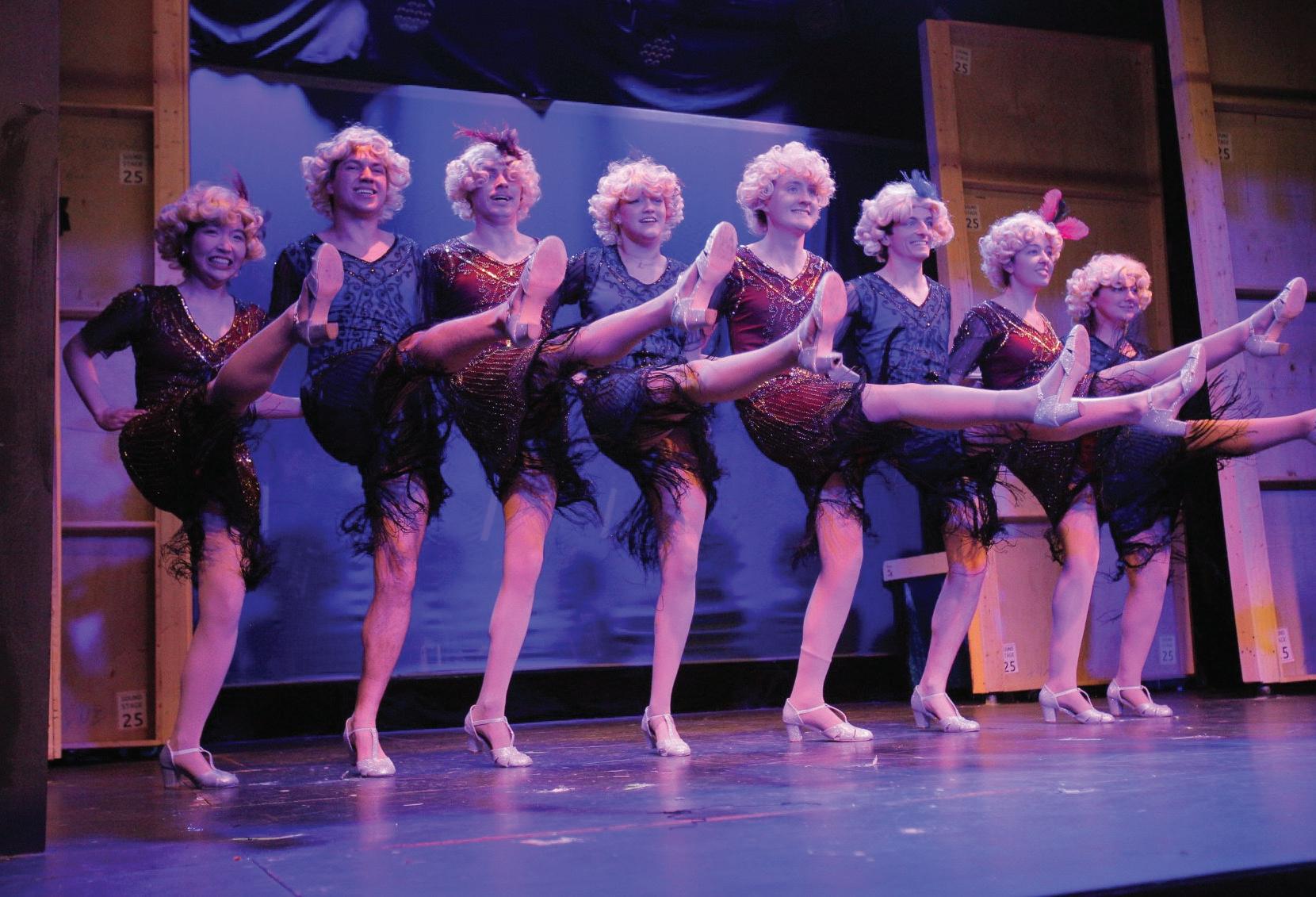
Founded in 1889, the Mask and Wig Club is a sketch musical comedy group that includes a cast, band, stage crew, and business team. The group performs three shows each academic year and goes on tour across the nation with their annual production in the spring.
College senior and Undergraduate Chair Emilia
Bronk said in an interview with the DP that Mask and Wig has had “multiple forms” of shows throughout its history, ranging from “a full satirical review” that embodied more of “a variety show” to “full book musicals” that are a “much more modern take of a comedy show.”
Engineering senior and Secretary-Treasurer
Joseph Dattilo also explained that the group has always followed “major theatrical trends throughout all of history,” with their “current age” following an “SNL style.”
Dattilo noted that Mask and Wig traditions include singing songs such as “Only Room for One” and “The Red and Blue” at the end of every show to


“signify credit to the University.”
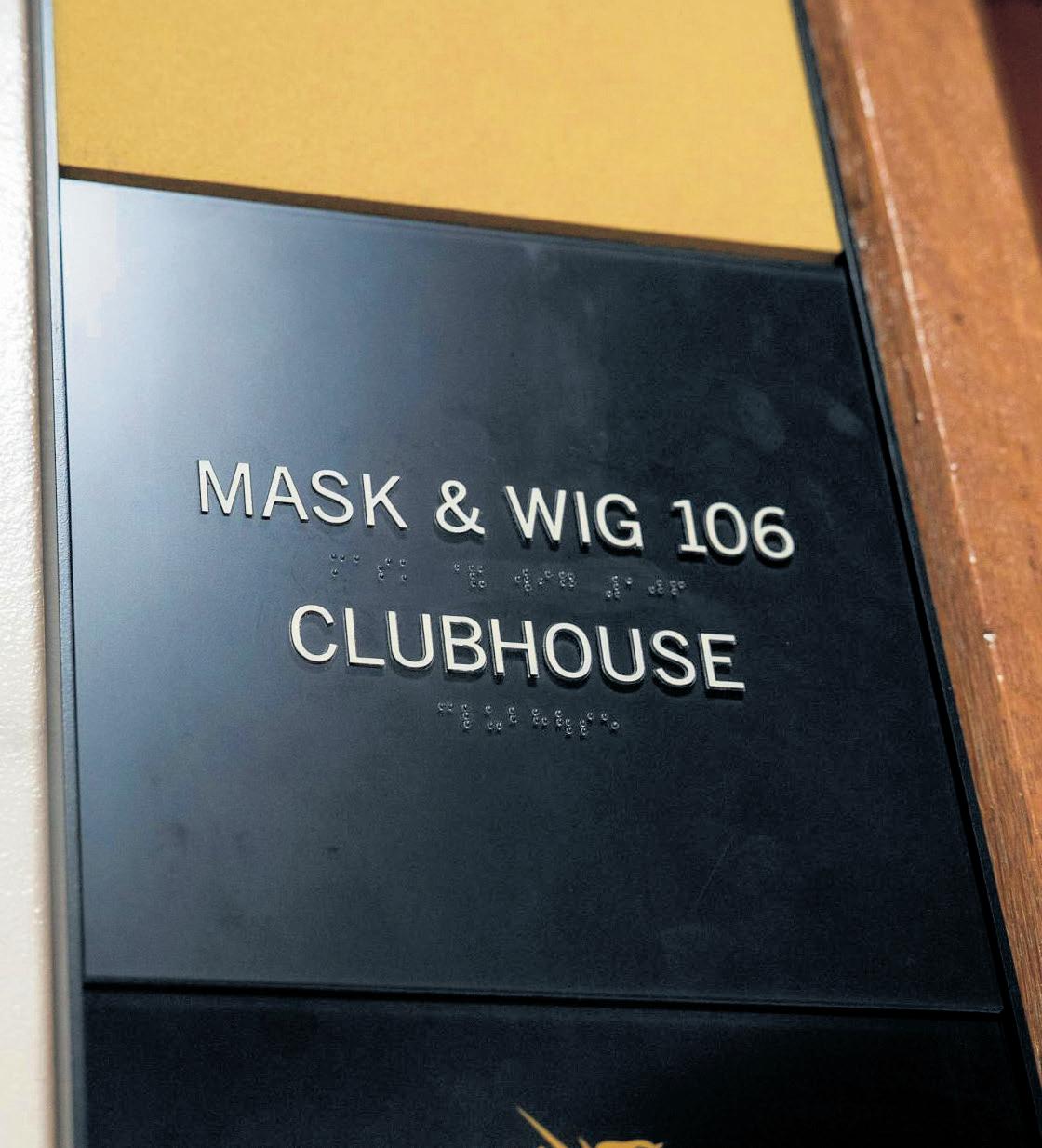
In 1894, Mask and Wig purchased a property at 310 South Quince St. to serve as a gathering place and rehearsal hall, known as the “Mask and Wig Clubhouse.” The clubhouse is funded primarily by alumni donations and revenue from their annual production and bar.
Bronk emphasized the alumni involvement in Mask and Wig as “something that really keeps this whole organization together,” adding that “members have had a very strong history of giving back to the University that they came from.”
In 2021, Mask and Wig announced it would eliminate gender as a membership requirement, opening participation to all genders for the first time in its history as a male-only group. The change was first implemented for the fall 2022 recruitment cycle.
“Before the age of the television and our phones, seeing live theater was something that a lot of people were doing all the time, so it was easy to have a stronghold in performing arts early on,” Bronk said. “We really strive to put on excellent productions and work our hardest.”
The Pennsylvania governor, who also serves as an ex officio member of the University Board of Trustees, is currently running for reelection ANANYA KARTHIK AND LUKE PETERSEN Senior Reporter and Staff Reporter

Pennsylvania Gov. Josh Shapiro is set to deliver the University of Pennsylvania Carey Law School’s Commencement address for the Class of 2026.
According to the April 6 announcement, the ceremony will take place on May 18 at the Academy of Music in Philadelphia. Shapiro — who also serves as an ex officio member of the University Board of Trustees — is currently running for reelection in Pennsylvania’s gubernatorial race.
Nearly 400 students are expected to graduate across the school’s law programs.
Penn Carey Law Dean Sophia Lee wrote that the school is “honored” to welcome Shapiro as its Commencement speaker in the announcement.
“His distinguished career and unwavering commitment to public service exemplify the leadership and civic responsibility we hope our graduates will carry with them as they begin their own professional journeys,” she added. Shapiro — who has served as Pennsylvania’s governor since 2023 — was previously also the state’s attorney general, chair of the Montgomery County Board of Commissioners, and a member of the Pennsylvania House of Representatives.
“Now more than ever, we need leaders willing to pick up the baton and carry it forward – and I believe the Penn Carey Law Class of 2026 can provide that leadership,” Shapiro wrote in the announcement. “Whether it’s holding criminals accountable, standing up for victims, or ensuring Pennsylvanians have access to adequate counsel, I look forward to seeing how these graduates will change the world and serve our communities.”



Over the past few years, Shapiro’s office has played a significant role in Penn’s response to campus antisemitism.
In fall 2023, Shapiro invoked a long-unused University statute that allows the governor of Pennsylvania to

appoint a nonvoting observer to the Board of Trustees. He selected 1982 College graduate Robert Fox, whom he also appointed as a nonvoting member on the University Task Force on Antisemitism.
Documents showed that Shapiro and Fox pushed for the firing of one University professor and the public condemnation of another. The two embraced an expansive definition of “antisemitic speech,” and intervened in the University’s January 2024 election for the chair of the Board of Trustees.
Shapiro — who grew up in Montgomery County — earned a bachelor’s degree from the University of Rochester and a law degree from Georgetown University. Third-year Penn Carey Law student Emma Kopp, who also serves as president of Penn Carey Law’s J.D. Class of 2026, wrote that Shapiro was a popular choice among surveyed students.
“As a lifelong public servant, Gov. Shapiro’s multifaceted legal career exemplifies humble servant leadership—a core tenet of a Penn Carey Law education,” Kopp wrote in the announcement. “One of the most popular Pennsylvania governors of all time, Gov. Shapiro has brought meaningful change to the lives of his constituents.” Shapiro will follow 1983 Wharton School MBA graduate and former New Jersey Gov. Philip Murphy, who delivered Penn Carey Law’s Commencement address last year.
United States Presidential Scholar and best-selling author Michael Beschloss is set to speak at Penn’s undergraduate commencement for the Class of 2026. Goldman Sachs Chair and CEO David Solomon will deliver this year’s Wharton MBA address.
“Moreover, he is a proud Philadelphian,” Kopp added. “We are excited to welcome him back home to celebrate this important milestone with us.”
“If we show up and we can’t livestream and we don’t have an estimate for security, what do you think happens if we want to upload it the following week?” Crowder said in the video. “Then that security estimate could come in, couldn’t it? Could be half a million dollars, could be more.”
According to one Penn Live Arts staff member
— who told the DP in March about safety concerns regarding the debate and was granted anonymity due to fear of retaliation — the event had not been confirmed at that time because of unresolved security costs.
The staff member said that confirmation for rental events like the Crowder debate needed to occur at least 72 hours in advance. Zimmerman was notified about the debate’s cancellation on Tuesday afternoon, just hours before the confirmation deadline.
He told the DP that he was understanding of the University’s actions and believed the administration was “acting in good faith.”
“I don’t think that the people who run this University are evil people. I understand their concerns that, with a livestream, there would be some sort of flash mob,” he said. “But I think this is a bad decision.”
Zimmerman questioned Penn’s logic regarding safety, calling its reasons for blocking the livestream “counterintuitive.”
“If it’s being livestreamed, there’s less incentive to go down to Annenberg,” he said. “I think it’s just as plausible that saying you can’t livestream would actually create precisely the sort of flash mob or chaos that they’re worried about.”
Tickets — which were free and open to the public — had already been available through Crowder’s website for several days. Crowder announced the event on April 1 after Zimmerman appeared on his podcast, and a spokesperson for his team wrote to the DP on April 4 that the debate was “confirmed.”
The debate was intended to center on free speech, according to Crowder. In an interview with the DP, Zimmerman reaffirmed his commitment to “dialogue across difference” but said that “we have to ask ourselves whether we really want that or not.”
“I want it, and I’m trying to live it, but do we want it?” Zimmerman said. “I think one way to read this entire episode is that actually we don’t.”
He added that Penn’s decision “actually empowers Crowder.” From his perspective, “as a Democrat,” he said that “events like this help us understand why our opponents keep winning.”
Prior to the event’s cancellation, Crowder’s spokesperson wrote to the DP that the debate would be different from past iterations of “Change My Mind.”
“This event marks the first time in nearly a decade of the Change My Mind format that a university professor has agreed to debate him live on stage making it a genuinely historic moment for the series,” the spokesperson wrote.
Zimmerman connected the issue to ongoing conversations about the draft Guidelines on Open Expression, which include provisions on protection of speech and event registration.
“At this particular moment, I think this episode actually highlights the problems with the proposed rules about open expression, which actually limit expression,” Zimmerman said.
Crowder has also cast himself as a proponent of free speech and has previously brought his “Change My Mind” segment to other college campuses, where he has debated students. His history of controversial statements has previously raised concerns among members of Penn Live Arts’ staff.
Although the debate is no longer taking place at Penn, Crowder’s producer offered Zimmerman the opportunity to hold the debate elsewhere.
“I think it will allow Crowder to take a kind of victory lap in which he says, ‘You see? These elitist, insulated libs are afraid to talk to me,’” Zimmerman told the DP. “I’ll be happy to have a conversation with him.”
The Daily Pennsylvanian spoke with event organizers about several of the symposiums, workshops, and seminars scheduled throughout April
MOUKTHIKADEVI KANAKALA Staff Reporter
Penn is hosting its third annual AI Month this April. Schools and centers across the University will organize symposiums, seminars, and workshops covering a variety of fields. The Daily Pennsylvanian spoke with several event organizers about artificial intelligence programming scheduled from March 31 to May 1. University of Pennsylvania Carey Law School professor and Director of the Penn Program on Regulation Cary Coglianese explained that “AI Month showcases the importance of AI to society and to our economy.”
“It provides incredibly unique learning opportunities for students about these transformative technologies that will be affecting students’ lives for years,” he added. AI Month programming will include two “Foundations of Optimization, Learning, and Data Science” seminars — a series created this year to address the “increasingly intertwined” advances across these fields, according to professor Jason Altschuler. Altschuler, one of the faculty members organizing the series, wrote in a statement to the DP that the seminars — which will take place on April 2 and April 9 — serve “as a university-wide hub to bring together the many communities across Penn interested in these areas.”
Wharton Human AI-Research will host a virtual discussion as part of its “AI Horizons” series on April 9 where speakers will consider how the technology has “deskilled” us, and an April 16 event on AI use in building creative organizations.
“AI Horizons” is a “forum where leading faculty

research meets the questions people are genuinely grappling with, including whether AI is quietly eroding the skills that students, professionals, and organizations depend on,” Marketing professor and April 9 event host
Bob Meyer wrote to the DP.
Meyer, WHAIR co-director, added that this “rigorous, timely inquiry” will be the focus of the discussion.
The School of Arts and Sciences will host an AI showcase on April 15 featuring lightning talks from graduate students and postdoctoral researchers. SAS will host a series of 60-second lectures the same day.
“I’m really hoping it’s an opportunity for us to discover all that’s going on, especially within the School of Arts and Sciences,” Penn’s Executive Director of the Data Driven Discovery Initiative Colin Twomey told the DP. Twomey explained that AI research within SAS is “not always visible,” adding that the initiative will “highlight different areas in the sciences, natural sciences, social sciences, and humanities” that offer a platform to have “interdisciplinary conversations in a natural way.”
Several AI Month events will focus on the use of technology in areas of health and medicine.
Natural sciences professor and Co-Director of DDDI Bhuvnesh Jain noted that AI Month is more “widely spread” across the University than it had been in previous iterations. DDDI will host an “AI + Us Talk” on April 15 about AI usage in medical diagnoses.
The Perelman School of Medicine will collaborate with the AI-Enabled Systems: Safe, Explainable, and Trustworthy Center in an April 17 symposium titled “AI in Medicine.”
Computer Science professor and ASSET Center Director Rajeev Alur said that the event will focus on the “social responsibility aspect” of AI and how it “can be put to use to improve health.”
“Everyone is talking about AI; they are finding applications in their own disciplines,” he added. “We are hoping that these events will stimulate students to get involved in research in AI.”
From a climate perspective, the Water Center at Penn will collaborate with PPR and Penn Carey Law to host its third annual Spring Water Policy Forum.
“Everyone’s just starting to think through how water systems can be better utilizing AI,” Emma Denison, the Water Center’s communications and student manager, said. “Our hope is that the events that we’re putting on and the research that we’re doing is able to be distilled and provide use to the communities that we’re working with.”
The month will conclude with three major symposiums hosted by the Graduate School of Education, School of Engineering and Applied Science’s Innovation in Data Engineering and Science Center, and the Soft AE Program.
Staff reporter Ana Laura Citalán Limón contributed reporting.
support” Penn Med.
“We really view it as not a choice about whether or not we should do that,” she said. “It is the mission of the health system.”
That integration means that UPHS revenue — which made up 67% of the University’s total consolidated operating revenue in FY25 — is already built into the University’s general financial statements.
“When you look at the financial statements of the University of Pennsylvania, they include all of the revenues and expenses of the University of Pennsylvania Health System,” Puchtler said. “It’s fully integrated in that way.”
Puchtler added that the Health System’s profits directly support Penn’s operations, including research operations, clinical enterprise, and teaching programs.
According to Puchtler, annual support for those three components amounts to roughly $600 million, plus an additional $200-250 million directed each year toward labs and research centers. Since 2005, total operating revenue and UPHS revenue have moved in near-lockstep with each other. Both increased by roughly $2 billion between 2006 and 2010, and have risen sharply since 2016. Between 2016 and 2024, University operating and UPHS revenue grew by roughly $8 billion and $6 billion, respectively.
In over 20 years, the only diversion from that pattern came between 2012 and 2013, when a dip in net patient service revenue caused total UPHS revenue to stagnate even as overall University operating revenue continued to trend upward.
Puchtler told the DP that UPHS has a “responsibility to maintain a solid, steady financial performance on behalf of the overall University.”
She added, “While we’re two different components of the same enterprise, our Health System performance will have such a significant impact on the University overall.”
Despite that reliance, Dingfield said that Penn’s academic budget is designed to withstand fluctuations in UPHS revenue.
“Our academic budget needs to be balanced, irrespective of the performance of the health system,” he said.
To manage that relationship, both Dingfield and Puchtler explained that the University and Penn Med leadership maintain close, ongoing coordination.
Dingfield said the core financial planning group includes himself and Puchtler alongside Vice President for Finance and Treasurer Colleen O’Neal and Senior Vice Dean for Finance and Operations at Penn Med Christopher Masotti.
Puchtler added that the group’s coordination extends beyond annual budget meetings, describing the work as a “throughout-the-year process.”
In recent years, large construction projects, COVID-19, and significant growth in Health System revenues have required more collaboration between the four parties.
“I think our relationship and areas where we cooperate have increased and grown closer over time,” Dingfield said. “It’s been an area of tremendous growth — growth physically, growth in revenues — and so it’s just required us to stay really, really closely connected.”


When it was announced that Michael Beschloss, a presidential historian, would serve as Penn’s commencement speaker, the Class of 2026 was largely disappointed. Last year’s address, delivered by 1996 College graduate and actress Elizabeth Banks, left expectations quite high for the current senior class. Yet this disappointment is nothing new.
The Class of 2024 commencement speaker, Siddhartha Mukherjee, was an equally frustrating announcement at the time, since it followed an address by actress Idina Menzel in 2023. This pattern is not a coincidence, nor is it simply the result of taste. It illustrates a structural problem: Penn students have virtually no say in who steps up to the podium on the most consequential morning of their undergraduate lives. Insult was added to injury for this year’s class of undergraduates when Pennsylvania Gov. Josh Shapiro was announced to be the keynote speaker for the University of Pennsylvania Carey Law School’s graduation ceremony. Many students expressed further dismay at this revelation, since they considered him preferable to the speaker chosen for the University-wide ceremony. Even worse, the Wharton School’s MBA commencement ceremony will feature Goldman Sachs CEO David Solomon, another more popular speaker among Penn’s undergraduate

Philadelphia is a beacon to this nation’s past. Echoes of the American Revolution can be seen at every turn, woven deeply into the fabric of the city. As Penn students, we have the unique opportunity to study in the very place where this country was born and better understand the roots of our civic duty. Right at our fingertips are the homes of revolutionary figures like Betsy Ross and our founder Benjamin Franklin. Nearby stands Independence Hall, where the Declaration of Independence was signed, and the print shop where Thomas Paine’s “Common Sense” helped spread revolutionary thought throughout the colonies. For me, Penn’s rich cultural connection was one of the main reasons I chose to come here. A university situated in the very place where the United States first defined itself as a nation, with a renowned Department of History, felt like the perfect fit for me. I knew from the moment I enrolled that I was lucky to be here as the United States approached its semiquincentennial.
This July, the nation is turning 250. To be Penn students during the semiquincentennial should have been an unforgettable component of our college experience. A moment like this should feel impossible to ignore at Penn — it’s in the birthplace of the nation
students. To be clear: Beschloss is a distinguished and successful man. He has published nine books, serves as a presidential historian at NBC News and as a PBS contributor, and his most recent book earned a spot on The New York Times Best Seller list. But students weren’t struck by success alone. The University’s choice wasn’t ill-fated, but it is irrelevant. Penn students are surrounded by this type of academic success throughout the entirety of their undergraduate tenure. Students wanted something else. They wanted a new kind of inspiration for their graduation day, not the same type of speech they could hear in a lecture. While it’s unrealistic to assume that any celebrity could be secured for commencement, there are more representative ways to approach the selection of a commencement speaker. Currently, undergraduates play almost no formal role in this process. The committee that selects candidates for honorary degrees gives only two of its 16 seats to undergraduate students. It also remains unclear if that small group of undergraduates has any say in speaker selection, beyond who will receive an honorary degree. To be eligible to join the committee, a student must be a member of the University Council, which has only about 15 seats for students either
elected into, or nominated by, branches of Penn Student Government. For most students, membership on Council, and by extension, influencing who receives an honorary degree, is far out of reach. The solution does not need to be radical. Penn could formalize student representation for the specific purpose of speaker selection. It could create a system where each student has a vote. Penn could even simply elicit student opinions in a broad survey to be considered for speaker selection. One example we could follow is the system at Ohio State University. There, anyone can directly nominate a commencement speaker. Then, their system is similar to Penn’s: a large committee with a few undergraduate students. Yet, those students have a direct say in who serves as commencement speaker. While their system isn’t perfect and still underemphasizes undergraduate representation, a dedicated committee for speaker selection, not just honorary degrees, is a step in the right direction.
Another step would be to rethink what the University is actually optimizing for in its selection process. Right now, the emphasis appears to fall on prestige and traditional markers of achievement. But commencement is not an academic lecture or a professional conference. It’s a moment to reflect and look to the future. A more effective approach would
prioritize speakers who can speak to uncertainty and the reality of entering a world that many students feel unprepared for. Those very topics dominated the lauded and popular commencement address given last year by Banks. These inputs are exactly what students could provide. There are many people that fall into the disciplines that Penn has put forth for the designation of honorary degrees who can also relate more directly to students graduating. After all, commencement is a celebration for them, not for Penn. The Class of 2026 deserves a commencement that feels like theirs. So does the Class of 2027, and the class after that. Commencement is meant to celebrate years of effort and growth. It should not feel imposed from above. Instead, it should feel shaped by those it aims to honor. Penn has the institutional strength to build a better system. In future years, we must demand that they actually do so.
Editorials represent the majority view of members of The Daily Pennsylvanian Editorial Board who meet regularly to discuss issues relevant to the Penn community. This body is led by Editorial Board Chair Jack Lakis and is entirely separate from the newsroom. Questions or comments should be directed to letters@thedp.com.
and it was founded by Benjamin Franklin himself — but it doesn’t. For an anniversary unfolding just beyond campus, our University’s presence feels almost nonexistent. Aside from a few Benjamin Franklin banners hanging from streetlamps on Walnut Street, there is little to suggest that anyone is paying attention or that anything is happening at all. Personally, I am no American nationalist, nor do I subscribe to American exceptionalism. I am extremely cognizant of and critical toward the ways the United States has reckoned with its history marked by repeated contradictions and broken promises. But as someone with high expectations for Penn’s historical affinity, I am utterly disappointed in the lack of recognition for such a milestone in American history. To be Penn students during the semiquincentennial should have been an unforgettable component of our college experience. Instead, we are left with most students having “America 250” fly over their heads with no further thought. This is largely due to the lack of visibility surrounding any of Penn’s initiatives related to the semiquincentennial. While the University does have a website page, a calendar of events, and scattered programming across departments, it all exists in a way that feels distant from student life.

And even when you do find it, the offerings are limited and often scheduled for May or the summer, a time where most students have already left campus. What Penn has created is not entirely absent, but it is largely out of sight. That same pattern carries into the classroom. Penn presented a list of courses tied to “America 250” this spring semester, framing them as part of its engagement with the semiquincentennial. But a closer look makes it clear that many of these courses are not new, and in some cases, not meaningfully connected to the American Revolution at all. Some are standard offerings that appear every year, repackaged under the anniversary to give the impression of something more intentional. Others stretch the connection so far that it becomes difficult to understand how they fit within a list centered around the nation’s founding. What is presented as a curated academic response instead feels like a compilation of existing courses, assembled to fill out a narrative rather than reflect a genuine institutional focus.
Courses like HSOC 4317 — cross listed as STSC 4317 — “Slavery and Disease: Medical Knowledge in the Atlantic World,” and HIST 3210, “Revolutions in Three Kingdoms: England, Ireland, Scotland,” appear on the America 250 list despite having little direct connection to the American Revolution. Others, like HIST 1166 — cross listed as AFRC 1166, ASAM 1166, and LALS 1166 — “A Nation of Immigrants Reconsidered,” focus on 20th century immigration, raising questions about their connection to a curriculum centered on the nation’s founding. While valuable in their own right, their inclusion feels less intentional and more like an effort to fill out a list, resulting in a collection of courses that only loosely gesture toward the semiquincentennial.
Penn’s approach pales in comparison to its peers. At Yale University, the semiquincentennial celebration features a flagship course, “America at 250: A History,” taught by leading historians. Harvard University has organized a university-wide series of conversations with scholars and
policymakers reflecting on the American experiment.
To its credit, Penn is not doing nothing. There are events and exhibits happening across campus that engage with different aspects of the Revolutionary era and its legacy. Some focus on print culture, on transatlantic revolutions, and on how American democracy has been remembered over time. These are thoughtful, interesting topics, and they show that there are people at Penn who are taking this moment seriously. There are moments where Penn gets it right. HIST 3120 offers a research-driven approach to the American Revolution, engaging directly with questions of memory, interpretation, and public understanding. But as a research seminar, it reaches only a small number of students and cannot carry the weight of Penn’s engagement with the semiquincentennial on its own. What makes this especially frustrating is that Penn is not lacking in resources, proximity, or historical significance. The University is choosing not to use them fully. At a time when the country is reflecting on its founding and its contradictions, a university like Penn should be helping to lead that conversation, not sitting on the sidelines.
More than anything, though, this moment reflects a broader issue. Penn does not prioritize American history to the extent that a university in this position should. The limited number of courses and faculty dedicated to it becomes even more visible at a time like this, when the expectation is not just participation, but leadership.
For a university so closely tied to the nation’s founding, that gap is hard to overlook. Is the University truly honoring its legacy with banners on streetlamps and symbolic course offerings? Maybe it is time for Penn to revisit its own founding and consider whether it is living up to the kind of intellectual leadership a moment like this demands.
GUEST COLUMN | What would Benjamin Franklin say?
The Penn administration has just released an extensive document outlining many new rules and procedures for regulating open expression on campus. The proposed revisions represent a stark departure from the past Guidelines on Open Expression at Penn. This makes it all the more important for students and faculty to pay attention. In an earlier guest column on this topic, we objected to the top-down, administration-driven process under which these new rules were generated. Leaving aside the issue of improper process, we write to highlight especially problematic aspects of these changes that the community should be aware of.
From a practical standpoint, the complexity of these rules and regulations is clearly meant to chill free speech. Despite multiple readings, we remain unclear on what precisely is required in terms of registration and oversight for a community member to speak their mind on campus. The likelihood of violating some provision within this document seems quite high because of its sheer complexity and ambiguity. Simply put, these guidelines are not designed to encourage open expression.
The revision states: “Whether communications occur on Locust Walk or in cyberspace, open expression remains … subject to the same limitations as non-digital forms of communication. Accordingly, these Principles apply to both in-person and online expression/conduct, particularly where Penn community members act or present themselves as Penn officials, community members, or representatives.”
Note that these limitations apply “particularly when,” but not only when, Penn community members act or present themselves as members of the Penn community. This leaves ambiguity about the expressive activities that students, staff, and faculty engage in on their own time, whether on social media or on the streets of Philadelphia. We are told that we have a right to express ourselves on social media: “However, this right is also circumscribed by principles of respect.” What is or is not considered “respectful” is highly subjective, so it matters a great deal who the judge is.
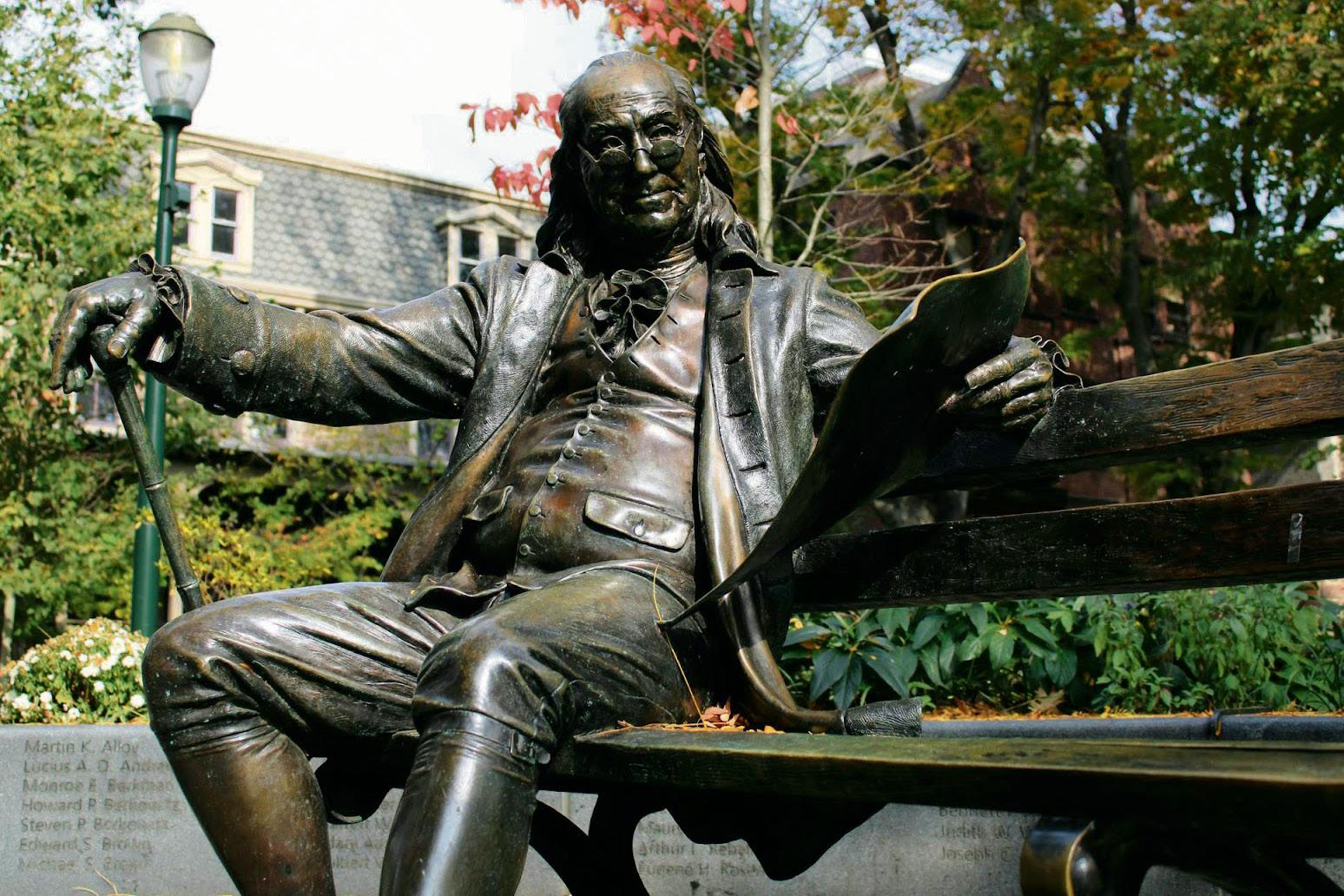
As Benjamin Franklin so aptly put it, “Abuses of the freedom of speech ought to be repressed, but to whom are we to commit the power of doing it?” At Penn, the provost will have authority to oversee the entire Penn community, with the help of (another) new vice provost, a staff member who will serve under the provost and take over the role previously assigned to the Committee on Open Expression, whose composition he would also control. The new executive director of open expression will train and oversee an Open Expression Observer Program. As the proposed revisions state, “The EDOE manages the OEOP and is responsible for recruiting, training, and deploying Open Expression Observers.” It is difficult to ignore the militaristic overtone of “recruiting, training, and deploying” members of the University community to police the open expression of other members of the community.
These revisions make events on campus possible only if one has prior approval, usually seven days in

advance. The EDOE is empowered to make disciplinary decisions regarding what kind of speech is punished. In addition, moving forward, all members of the Committee on Open Expression can be replaced by the provost if he chooses. Doesn’t that sound like Robert F. Kennedy’s firing of the vaccine board? The previous guidelines specified that committee members be selected solely by the Faculty Senate.
The new regulations go well beyond prohibitions against threatening or harassing individuals (which is already illegal) to indicate that negative statements about whole groups are also prohibited: “Such speech or conduct will be considered more severe if it targets individuals or groups on the basis of a characteristic or class protected by the University Equal Opportunity Policy and Nondiscrimination Statement.” This includes discrimination “on the basis of race, color, sex, sexual orientation, religion, creed, national origin (including shared ancestry or ethnic characteristics), citizenship status, age, disability, veteran status.”
It is worth considering how these rules might be interpreted. For example, imagine that a student’s sign mimics United States President Donald Trump, who was widely quoted as saying “immigrants are animals.” This is a disrespectful statement directed toward a protected class based on nationality or citizenship status. Should the student be disciplined for speech parroting the president?
Likewise, if an Iranian student carried a sign exclaiming, “Americans are imperialistic pigs,” this is clearly offensive to Americans on the basis of their national origin. Or consider a student at a rally who exclaims, “The American military slaughters private citizens.” This could be viewed as implicating two violation categories because it impugns a group based on shared national origin (Americans), as well as veterans or those on active military duty. It is also true according to our own government. Should a university punish its community members for stating the truth?
These political statements do not threaten a specific individual, but they do express a political point of view about a group in strong terms. Because only true threats and pervasive harassment directly interfere with people’s education and are legally actionable, these vaguely defined new rules increase the chances that rules will be applied unevenly. They are also an invitation to litigation that will need to be paid for by the University.
Extending disciplinary actions to those who say negative things about groups rules out a huge swath of political speech. The Israel-Hamas war brought into focus the fact that different people have different interpretations of the same political slogans. Both Jews and non-Jews alike need to be able to voice disapproval of the Israeli government as well as of Hamas, just as they need to be able to voice disapproval of their own government if they feel so moved.
Consistent with further restrictions, journalists on campus will be required to present “credentials” to justify their presence and may be asked to leave campus
Penn must do more than just appeal ANDY’S TOY BOX | The University needs to hold the line for the privacy of its Jewish students
On March 31, United States District Court Judge Gerald Pappert made a ruling that represents a continued and profound threat to the civil liberties of the Jewish community here at Penn: The University must comply with the U.S. Equal Employment Opportunity Commission’s subpoena, which seeks information on Jewish students, faculty, and community members. At the same time, he partially limited the scope of the subpoena, declaring that the University no longer has to disclose an individual’s affiliation with specific organizations, nor must it provide information about three Jewish-affiliated groups on campus. However, this decision ultimately fails to address the key threat to privacy that the EEOC’s demand fundamentally poses and must continue to be challenged.
In his decision, Pappert argued that the EEOC needs to be able to directly contact Jewish employees to learn if they have evidence of discrimination. Defenders of the subpoena have similarly argued that it is not unusual for federal investigators to request employee identities when probing workplace discrimination. In other words, the charge is intended to be a routine investigative procedure. However, it’s important to recognize that the procedural normalcy of the demand does not resolve its constitutional character.
Routine or not, compelling a university to compile and surrender a list of individuals sorted by religion — without their consent — is a First Amendment violation hiding in plain administrative sight. The dangers of such a violation are not merely hypothetical. As five Penn-affiliated Jewish organizations have already argued, the nonconsensual disclosure of private information implicates serious First Amendment violations. Specifically under attack is the freedom of association: the right of individuals to join religious and civic organizations without that membership being involuntarily disclosed to the government. Affirmed most forcefully in National Association for the Advancement of Colored People v. Alabama, the U.S. Supreme Court unanimously held that compelled disclosure of membership lists poses a threat to an organization’s members and their right to civil discussion. Considering its stakes, this dispute is one that should be handled with the utmost care and legal scrutiny. Unfortunately, that hasn’t been the case, as Pappert himself even acknowledged cracks in the EEOC’s legal foundation — noting that the original charge was “ineptly worded.” That acknowledgment should set off clear alarm bells, for both supporters
and opponents of the decision. Nonconsensual identification of Jewish individuals, for any purpose, is the kind of precedent that demands the most rigorous judicial scrutiny, not the most lenient. And while the EEOC’s stated intent of protecting Jewish students and employees may make the subpoena’s supporters feel better, it does not make the mechanism safer.
Perhaps the most dangerous aspect of the situation is the potential for it to become a slippery slope. If the courts establish that the EEOC may compel universities to produce lists of Jewish individuals without their consent, the same investigative reasoning can be applied to a variety of other situations: Muslim individuals in the name of investigating Islamophobia, Black individuals in the name of investigating racial harassment, and so on. Once the precedent exists that a federal agency’s investigative interest should be prioritized over an individual’s right to association, there can be no basis to limit that overreach. The partial restriction that Pappert provided does not resolve this concern either, only delaying the identification and harassment of community members.
Penn’s administration deserves credit for the effort it has already made throughout this long and arduous case. It has simultaneously respected the importance
Don’t protest those who don’t seek change THE CATCH UP WITH KAMAU | What’s the point of trying to engage?
Conservative pundit Ben Shapiro is set to speak at an event on Penn’s campus next week. For years, students across the nation have protested Shapiro when he has spoken on college campuses, and his upcoming visit at Penn is likely to draw similar attention. However, I believe that if students fundamentally disagree with Shapiro, the best way to protest the event is to simply not go. Notably, fellow conservative commentator Steven Crowder was also supposed to appear at a Penn event this month. Originally, he was set to host a debate with Penn professor Jonathan Zimmerman, but the event was recently canceled, with Crowder’s team citing security concerns and issues with Penn’s refusal to allow a livestream of the event. Nonetheless, Crowder and Shapiro both represent our current era of 30-second internet clips and gotcha politics. Both men have built their careers by arguing, in bad faith, with college students across the nation. So, by disrupting Shapiro’s event, or attempting to debate with him, you are just playing into his hands. Shapiro relies on his fast speaking style and the question-and-answer format of his events to lead debates. He regularly debates inexperienced college students who can’t respond fast enough. He also uses fallacious arguments and silences any valid counterarguments, as the microphone is controlled by his staff. During a campus speaking event at the University of California, Los Angeles, an attendee pointed out that Shapiro selling a “leftist tears mug” was an inherent contradiction of his intended goal of bridging the political gap. Shapiro shut this attendee down and claimed that leftists are against freedom of speech and that he will never try to bridge the gap with a leftist. This is an example of Shapiro generalizing the wide array of American leftist groups to
justify his profiting off political discourse.
In another campus talk at Cornell University, when questioned about his stance on school book bans on novels like “The Bluest Eye” and “Harry Potter,” Shapiro stated that local school boards have a right to decide what children can read. He went on to say it’s the same as not wanting a sixthsixthgrade library to include “Playboy.” Not only is it absurd to compare these books to an adult magazine, but Shapiro also does not acknowledge that the issue is not the books getting banned in elementary schools and middle schools — these books are being banned throughout entire school districts, for all grades. Shapiro has been traveling to college campuses and speaking with students for the past 10 years. He is an experienced public debater, so attempting to have a “gotcha moment” with him is pointless. At best, you might slightly throw him off his game. At worst, you could end up in a thumbnail of a YouTube video titled “Woke Penn student freaks out.”
I believe it’s important to have open conversations and debates, especially because those experiences expose people to different viewpoints. Nonetheless, some of the most poignant and effective political conversations I have engaged in have been among close friends, family, and classmates in intimate settings — not in front of a microphone in a large auditorium hall. When speaking with a peer, there is a level of trust and understanding established. Within a debate, on the other hand, each side is just trying to win. A lot of those more personal conversations with peers have made me look at certain issues differently or encouraged me to become more politically involved.
If you want to be a part of change, Philadelphia has a lot to offer in terms of political engagement.
The Third Congressional District of Pennsylvania is having a Democratic primary in May, and
whoever wins that race will represent University City and the rest of West Philadelphia for years to come. Five schools are slated to be closed in West Philadelphia, and residents are rallying to stop the closures. There is also a myriad of local community groups within West Philadelphia that tackle a wide range of issues. There are things happening in our city, where you can get involved and create
during events involving open expression. Did they get this idea from the Pentagon? This is said to be necessary to protect the “safety” of students and other community members. Safety from journalists? Really? Surely the administration knows that the whole point of demonstrations is to attract attention to important issues, so prohibiting the press would be counterproductive. By becoming members of the Penn community, we forfeit our freedom to express ourselves on the urgent issues of the day, except on the administration’s terms and with its express permission. College campuses are where the free speech movement began, a movement that later evolved into the civil rights movement. Suggesting that students sit this one out until they graduate and have their full rights restored is unacceptable. The University is capitulating to the current political administration’s demands to quell dissent rather than upholding democratic values. Rules regarding presentation of University identification have also changed. Under the old Guidelines on Open Expression, one could be asked for ID only if one were first accused of having violated a guideline. Under the new rules, anyone can be asked to present ID under any circumstances. Will there be awkward and uncomfortable moments? Undoubtedly. That is the nature of political conflict. But Penn’s reputation is already suffering from this debacle. It is no accident that the new proposal was buried in a supplement to the Almanac. The lack of transparency throughout this process suggests that our administration does not want to call attention to what it is doing.
By clamping down on free speech in response to Trump’s threats, the Penn administration is sending a dangerous message about its lack of support for democratic norms. Of all times to muzzle the Penn community, this is not it. The country is at war, democracy is at risk, and all people’s voices need to be heard. As Franklin noted, “Whoever would overthrow the liberty of a nation must begin by subduing the freeness of speech.” We encourage all members of the Penn community to join us on April 23 outside Perry World House at 3:30 p.m. to demonstrate our support for open expression.
CAROLYN MARVIN is a Frances Yates Professor Emeritus of Communication. Her email is carolyn.marvin@asc.upenn.edu.
DIANA MUTZ is a Samuel A. Stouffer Professor of Political Science and Communication. Her email is mutz@upenn.edu.
ROBIN PEMANTLE is a Christopher H. Browne Distinguished Professor of Mathematics. His email is pemantle@math.upenn.edu.
of investigating discrimination while maintaining that the subpoena raises serious privacy and First Amendment concerns. And most recently, the University’s decision to appeal, announced in the immediate aftermath of Pappert’s ruling, reflects a valuable amount of institutional awareness. However, that praise comes with a caveat: Penn must not, at any point, back down and accede to the EEOC’s charge, regardless of how narrow or constrained it becomes. Antisemitism on Penn’s campus is a real issue which demands serious attention. But fighting that threat does not require a compiled list of Jewish students and employees, nor does it justify sacrificing civil liberties. At a time like this, Penn must choose to affirm its obligation to its community and choose to fight tooth and nail against the EEOC. And especially as the May 1 compliance deadline looms on the horizon, the University must hunker down and prepare itself to conduct a vigorous legal challenge at every available level, including, if necessary, the Supreme Court.
ANDY MEI is a College first year studying economics and history from Palo Alto, Calif. His email is andymei@sas.upenn.edu.
KAMAU LOUIS is a first-year graduate student studying city planning from Orlando,
His email is louis3@upenn.edu.


FUNDING, from front page
development, so it just makes us look really bad.”
Earth and Environmental Sciences assistant professor Jon Hawkings, who researches biogeochemical cycles, told the DP that it would be “very difficult” to conduct scientific research without NSF support.
“Lots of people in my field depend on money from the NSF and from other federal agencies,” Hawkings said. “Without it, it just wouldn’t function, so progress would be dealt a huge blow.”
Hawkings also said that the funding reductions could further deter graduate students from pursuing academic programs in the United States and at Penn — an issue he argued was compounded by the University’s recent reductions in graduate admissions.
He argued that alternative funding sources, such as philanthropic foundations, are unlikely to replace federal investment at a large scale and would not be able to cover “even a fraction” of the NSF’s multibillion-dollar budget.
“When you get reliant on philanthropic foundations or even private donors, that skews the science, because then it’s just what they want to fund, rather than what we as a scientific community think are the right things to fund,” Hawkings said.
He added that the proposed funding cuts “don’t make economic sense.”
“It’s completely insane to me that they don’t want to fund these kinds of things because they’re such a small amount of money in the grand scheme of things, and there’s demonstrable economic trickledown effects of federal funding for research,” Hawkings said.
Chemistry professor Patrick Walsh — who leads an NSF-funded undergraduate training program for students from non-research universities to participate in collaborative research projects at Penn alongside co-principal investigator Marta Guron — wrote to the DP about how the potential cuts would affect the initiative.
The program — which seeks to “train the next generation of PhD researchers in chemistry” — is structured to train 10 students each year. In a statement to the DP, Walsh wrote that if government
funding for their grant was reduced in the future, he would no longer be able to accept all 10 students into the program.
“It is my hope that our elected leaders understand the value of investing in science, which has been shown to produce significant returns on investment,” Walsh wrote.
In addition to the proposed NSF cuts, funding for the NIH would be reduced by $5 billion under the Trump administration’s proposed budget.
School of Nursing Dean Antonia Villarruel wrote in a statement to the DP that the proposed NIH cuts would have a “major impact” on the development of science and scientists, as well as on the health of populations.
“Investment in the research enterprise of the U.S. is something we all need to be concerned about,” she added.
The White House budget proposes eliminating three institutes focused on minority health, integrative health, and international research.
“The areas of science that these institutes represent are important areas for science and for the advancement of health,” Villarruel explained. “Nursing research has led the development of interventions and approaches to reduce health disparities.”
Last year, the NIH implemented a funding cut — a 15% cap on indirect costs — that, if enacted, would cost Penn $240 million. A ruling blocking that order was upheld by a federal appeals court earlier this year.
In March, NIH Director Jay Bhattacharya visited Penn Medicine alongside Sen. Dave McCormick (R-Pa.) to discuss the future of federal research investments. According to a press release, the tour aimed to highlight “how NIH-supported research is driving medical progress.”
Earth and Environmental Sciences professor Michael Mann — who formerly served as Penn’s vice provost for climate — wrote in a statement to the DP that the proposed cuts fit into a “larger pattern” of the Trump administration’s “politically-motivated antiscience agenda.”
“The cuts of the NSF in particular will impact scientific progress in the U.S. across the board,” Mann wrote. “Given that this country was built on the scientific discoveries of our great universities, like Penn, one might go so far as to say that this assault on American science is downright Un-American.”

The program includes a full-time student teaching placement, enabling undergraduates to take state licensure exams after graduation
ELEFTHERIA
SERMPETI Staff Reporter
Penn recently launched a minor in urban secondary education that allows undergraduates to pursue a teaching license alongside their field of study.
The nine-course minor, jointly offered through the Graduate School of Education and the Urban Studies Program, combines coursework in urban education, research, and policy with courses on a wide range of subject-specific teaching methods. The program includes a full-time student teaching placement in the spring of senior year, enabling enrolled students to take state licensure exams after graduation.
“We have long understood the desire among Penn undergraduates to pursue meaningful careers in education, and we are delighted that so many have expressed interest, and so quickly, in this new opportunity,” GSE Dean Katharine Strunk wrote to The Daily Pennsylvanian.
The new program differs from Penn’s existing urban education minor by offering a pathway to teacher certification. While the urban education minor focuses on education policy and theory, the secondary education minor is designed to prepare students for classroom teaching at the secondary level — grades 7 through 12.
“We are excited to create new pathways into teaching for Penn students,” Strunk added.
Co-Director of the Urban Studies Program Julia McWilliams explained that the program was developed in part to provide earlier exposure to teaching for students who may be considering careers in education but are uncertain about attending graduate school.
“Oftentimes students aren’t sure about committing to that path,” McWilliams said.
McWilliams emphasized that the program reflects an effort to expand career pathways beyond fields that are traditionally popular among Penn students.
“With the pre professionalization of Penn and the ways in which we encourage students to go into finance and
GUIDELINES, from front page
Wharton junior and current UA President Nia Matthews similarly expressed concern that the draft “still does not clearly define what level of disruption to University operations is enough to cross the line,” noting that protest is disruptive “by nature.” Matthews wrote that Penn “continues to approach open expression through the lens of institutional risk and public scrutiny rather than through a clear commitment to academic freedom and dissent.”
She also questioned Penn’s approach to handling demonstrations.
“I have concerns that requiring permission for things like tents or encampments could limit protests that are meant to be urgent and responsive,” Matthews wrote.
Political Science and Communication professor Diana Mutz echoed a similar sentiment in that “students’ abilities to voice their views need to be encouraged.”
“The whole idea of protests is that there can be spontaneous events in reaction to real-world events,” Mutz told the DP. “If we cannot have spontaneous ones or we must go through the provost’s office to get permission, then obviously they’re not going to give us permission if they don’t like what we have to say.”
consulting, this is a way that we can open up a pathway into public service without students taking on additional debt or time,” McWilliams added. According to program materials, the minor is open to all undergraduate students, though education courses will count toward the four-course limit on classes taken outside the School of Arts and Sciences.
McWilliams explained that the initiative aims to strengthen Penn’s relationship with Philadelphia schools, and supports the Urban Studies program’s goal of creating “great urban leaders that understand interconnected urban systems.”
“Education is a big piece of that,” she said. “We see this as a way for Penn to contribute to the educational mission of the University and the city at large.” Program advisor and GSE Assistant Dean for Teacher
Preparation and Undergraduate Education Patrick Sexton similarly wrote to the DP that the minor can help address a “persistent teacher shortage” in Philadelphia. Local students “need excellent teachers,” he added, emphasizing that the minor’s new pathway can help meet that demand.
“Penn students are getting an opportunity that they have been looking for and Philly K-12 students are getting the benefit of a new pipeline of teachers,” Sexton wrote. “Everybody wins.”
Students must take teaching licensure exams — the Praxis exams, for Pennsylvania — in the state they intend to practice in.
“We look forward to working with our partners across the University as we consider additional routes into the teaching profession for Penn undergraduates,” Strunk concluded.
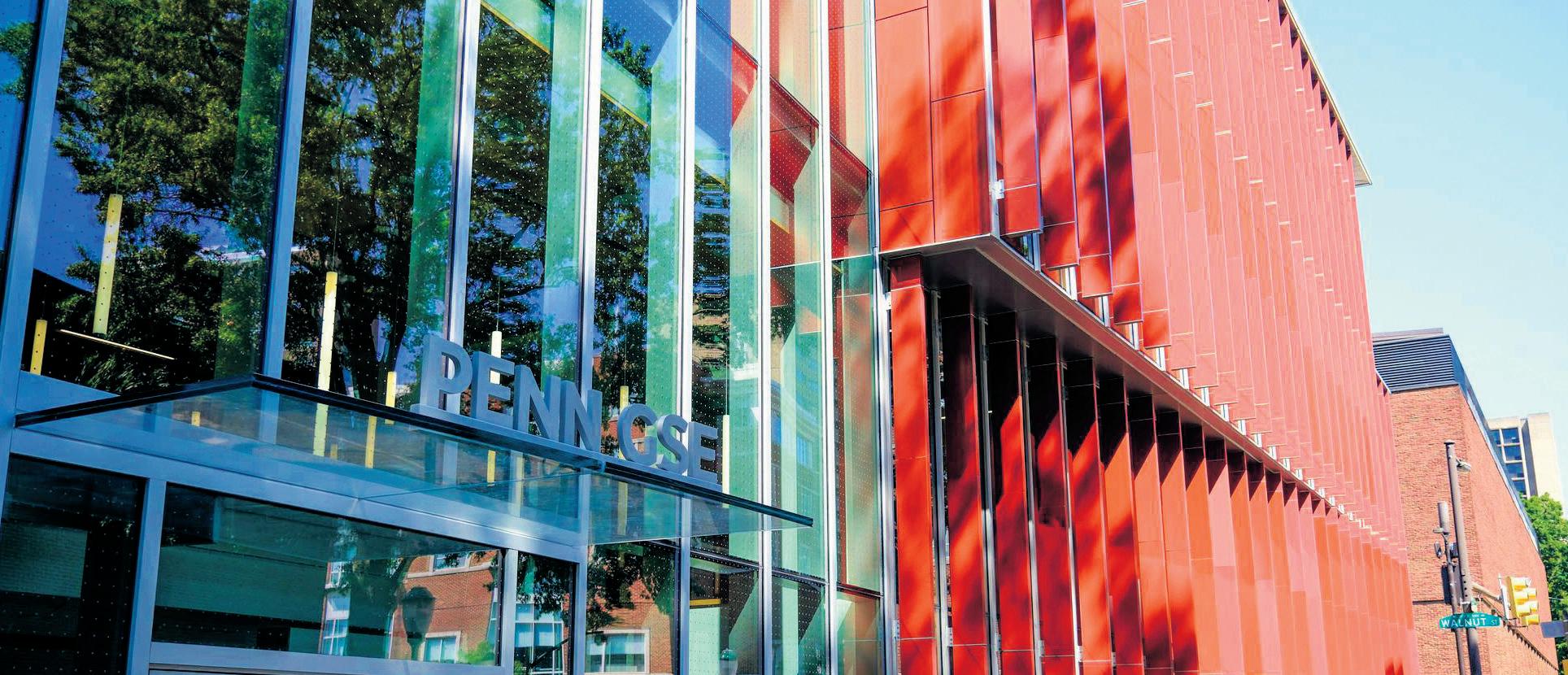
The new Open Expression Observer Program — which appoints faculty, staff, and administrators as “neutral parties” to monitor demonstrations — was also a point of concern for Chummun.
The draft policies state that open expression observers “shall refer potential violations of the Principles” to the executive director of open expression and “should endeavor to issue a clear verbal or written warning and instruction to those involved.”
“Students need more of a say in how the observer application program works, who can administer final referrals, and what truly counts as an open expression violation,” Chummun wrote.
Matthews also pointed to the draft’s provisions on student speech as an area of apprehension.
“The guidelines say that content of student speech or expression is not, by itself, a basis for disciplinary action, and they say community members have the right to express themselves, including on social media,” she wrote. “But in reality, Penn community members have still been scrutinized for what they say, and I’d argue that the University has not always done satisfactorily enough to protect those facing harassment.”
Communication professor Jessa Lingel — who serves as the president of Penn’s American Association of University Professors chapter — stated that the “inclusion of digital content, which hasn’t been really listed as part of open expression before,” was one of her major issues with
the draft guidelines.
“I’m really worried about how that will shake out in terms of people who are part of the Penn community feeling free to express themselves online out of fear of retribution,” Lingel added.
AAUP-Penn previously released a statement criticizing the University for a lack of “transparency and meaningful input from campus stakeholders” as it reevaluated open expression on campus.
The group also described a shift in shared governance at Penn, alleging that “the Vice Provost for University Life (VPUL) holds exclusive power to interpret and enforce the Guidelines, while the Committee on Open Expression (COE) has been relegated to a purely advisory role.”
Charged with overseeing matters involving open expression on campus, the committee will be chaired by Wharton School professor Phil Nichols, who described his role as an opportunity to “strengthen bonds and communication across our community.”
While Nichols explained he “didn’t even think of this role” until he was tapped, he emphasized that “Penn needs to develop an approach to issues that involve speech and expression and assembly.”
Community members can submit feedback via an online form before May 18 and are invited to attend an inperson or virtual community listening sessions in April.
Senior reporter Ananya Karthik contributed reporting.
“This
The
In an interview with the DP last month, DPS Vice President Kathleen Shields Anderson stated that the “presence of law enforcement in and of itself is not a reason to send out a UPennAlert” — referencing the University’s emergency notification system that disseminates information during “significant emergencies or dangerous situations.”
According to a “Frequently Asked Questions” list attached to the document, the organization drafted the document to ensure “University responses are legally compliant, consistent, and protective of student rights,” rather than in an effort to “override federal law.”
The resolution also details several incidents motivating its proposed protections — including events that have “demonstrated that ICE and DHS agents may attempt to access or enter spaces traditionally considered private even without a judicial warrant, sometimes through misrepresentation or forced entry.”
In February, a Columbia University student was detained by ICE officers who entered her residential building by allegedly impersonating members of the New York Police Department and requesting access to find a missing child.
“For far too long, these frightening interactions with federal immigration enforcement and the possibility of them engaging with our students has been framed as a false reality,” Matthews wrote in a statement to the DP. “The day the incident at Columbia took place, it was no longer a false reality.”
Citing policies at several other colleges and universities across the country, the UA called on Penn to “develop and publish a comprehensive protocol outlining the University’s procedures for responding to immigration enforcement activity on campus.”
The group also urged Penn to review its current policies, ensure “restricted campus spaces, such as residence halls, cultural and affinity spaces” are clearly designed and secured, and establish an institutional task force responsible for monitoring developments in federal immigration policy.
“As peer institutions implement more comprehensive response frameworks, including coordinated communication systems, legal guidance, and campus-wide education efforts, there is a growing expectation that universities proactively define their role in protecting students within the bounds of the law,” the document read.
“I understand that the administration is trying to be cautious, but there comes a point where being cautious to an extreme is the same as inaction,” Matthews told the DP. “Students need clear protocols and accessible resources. They need to see a University that’s willing to act with urgency. We wanted to make it clear that Penn cannot afford to keep hesitating on an issue this serious.”












































































The Quakers are 10-9 overall and 1-2 in the Ivy League conference, heading into the last four matches of the season
SEAN GAWRONSKI Staff Reporter
After splitting matches last week, defeating Fairleigh Dickinson (9-10, 6-1 NEC) before dropping the Ivy League opener to Princeton (15-2, 3-0 Ivy), the Red and Blue (10-9, 1-2 Ivy) faced an overnight turnaround on Easter weekend, falling to Dartmouth 4-1 but bounced back with a 4-1 win against Harvard.
“[The Harvard win] was really huge for us,” senior Maya Urata said. “I think this is really great for us mentally going forward into the last four matches of the season.”
Penn fell to Dartmouth in hard-fought matchup Penn kicked off the weekend hosting Dartmouth (13-5, 2-1 Ivy) at the outdoor Hamlin Tennis Center. On a warm, sunny Saturday, the Quakers faced tough matchups across the board. In the doubles circuit, Penn faced a team that has been nothing short of dominant. Dartmouth has won the doubles point in all but one of its matches against Ivy League opponents this season, including against Penn, which lost at the No. 1 and No. 2 spots by 6-3 scores. In singles play, Urata made quick work of her match at the No. 4 spot, defeating Dartmouth’s Lauren Han 6-0, 6-4.
While Urata’s experience allowed her to bring the match’s total score back to 1-1, Dartmouth pulled through in three tight matches at the No. 1, No. 2 and No. 3 spots in singles play to ultimately secure a 4-1 victory.
Penn dominated against Harvard Just 20 hours later, under overcast skies, the Quakers returned to the Hecht Tennis Center for a chance at redemption in Sunday’s match against the visiting Harvard Crimson (10-8, 0-3 Ivy).
After Saturday’s match, in which things did not go their way, Penn shot out of the gate to open doubles play on Sunday.
The communication between junior Esha Velaga and sophomore Lara Stojanovski could be heard just as much as it was seen with their on-court play. On several occasions, the Crimson opposition was left standing still as Velaga and Stojanovski capitalized on openings in Harvard’s positioning.

Carrying momentum from her doubles match, Velaga took over in her first set against Harvard’s Kavya Karra and dropped just a single point for a 6-1 scoreline. And while Velaga lost 6-0 in the second set, she not only recovered, but finished with a strong 6-3 final set.
“Knowing I still have control of the match and I just need to dial it in a little bit, taking five minutes in between the sets to get back into my zone and into what I did well in the first set really helped,” Velaga said. In what would be Penn’s only straight-set
While the duo won their match with a score of 6-2, juniors Liza Tkachenko and Sasha Motlagh also earned a 6-2 win with dominant short-court play. Penn cruised to the doubles point before heading into a set of competitive singles matches.
Clutch performances Though the Quakers scored 21 total runs in the series, games two and three were decided by one run each.
In an extra-inning thriller in game two, Penn went back and forth with the team from New Haven, Conn. After two home runs in the bottom of the first, the Bulldogs punched back with three runs in the next inning. The Red and Blue put up four runs over their next two innings, but every time the Quakers offense got hot, Yale responded. After a hit-by-pitch from freshman pitcher Hannah Graveline brought in a run for Yale in the top of the seventh, the Bulldogs tied the game, sending it to extra innings. At the bottom of the eighth, it was a tied game. All eyes were on Youngren as she stepped to the plate
with two runners on base. On a 2-1 count, Youngren struck one down the middle to give the Quakers the victory. Penn secured the series against Yale for the first time since 2022.
After game two, Youngren expressed what the performance against a conference rival meant to her.
“It’s so exciting, especially just for the entire team … knowing, especially for the seniors, how much it meant to all of them. Just looking back and seeing everyone go out of the dugout. Best feeling ever knowing that I did everything for them,” Youngren said.
The Quakers went on to pull out a narrow 7-6 victory against Yale in game three to sweep the Bulldogs.
“I think right now is about using this to help us prepare for some postseason play. So showing resilience late and being able to come through on top is huge for this team,” Novatin said.
The Quakers look to continue their winning ways as they head to West Long Branch, N.J., to take on Monmouth this Wednesday.

victory, freshman Joleen Saw fought through two 6-4 sets to take down Harvard’s Kate Kim at the No. 3 spot.
Velaga and Saw’s points, in tandem with the doubles point, meant Penn needed just one more win to clinch the victory. With all eyes now on her court, the Quakers’ only senior, Urata, rose to the occasion.
“For me, I thought that was a positive,” Urata said. “It creates so much of a high-energy and intense atmosphere, but I think I’m the type of player to thrive in that environment.” Urata’s match against the Crimson’s Andra
Braicu was a display of persistence on both ends. After dropping points early, Urata clawed back to take the first set 6-3. Braicu won the second set in a 6-1 turnaround. As the crowds gathered and the pressure rose for the final set, Urata fell back into stride, taking the final set 6-2.
On an afternoon that featured Red and Blue dominance, what ultimately led Penn to its 4-1 victory was its ability to recover and finish when it mattered. On April 10 and 12, the Quakers will take on the first half of those four matches at Columbia and against Cornell, respectively.

total — across all genders and weight classes — Penn rowing has produced dozens of Olympians, including both coaches and athletes, several of them medalists.
The crew subsequently won the Thames Challenge Cup two years in a row, competing against heavyweight teams — an impressive achievement.
Meanwhile, the men’s heavyweight rowers were climbing back to the pinnacle of the sport. In 1955, the men’s eight won the Eastern Sprints, the IRA championship, and most impressively, the Grand Challenge Cup at Henley, which typically features national — and Olympic — caliber teams.
“That’s kind of the trifecta,” Monte said. “Not only do you have collegiate recognition, you have international [recognition]. They were arguably the fastest crew in the world at the time.” One member of that team, 1957 College graduate Harry Parker, would go on to be one of the winningest coaches in collegiate rowing history, leading the Harvard varsity team for 50 years.
The 1970s ushered in an era of change for Penn rowing, with the introduction of women’s rowing as a varsity sport. Women’s rowing had existed in some capacity at Penn since 1934, when the University offered a class that took place on the Schuylkill. A club team was founded in 1967, and eight years later, after the passing of Title IX, women’s rowing became Penn’s 14th women’s varsity team. The women’s NCAA Division I Rowing Championship was not created until 1998.
The Quakers started with a bang, with the women’s four winning the Eastern Sprints title in 1976 and 1977. Penn quickly rose to prominence, boasting a 50-18 record from 1976 to 1982, most notably going undefeated in the 1980 season under thencaptain — and Olympian — Hope Barnes.
Both programs enjoyed significant success throughout the 1980s. On the men’s side, coach Stan Bergman took the helm in 1984, ushering in a new era for the program that saw it win the Eastern Sprints once in 1986 and again in 1991.
“Right off the bat, they were very competitive,” Monte said, “That was a very swift turnaround, particularly at that time in collegiate rowing.”
The 1990s brought more victories: In 1998, the women’s team qualified for the D-I championships for the first time, placing third in the Petite Final. Its success was not limited to the collegiate level. Members of the women’s team would go on to forge an Olympic tradition, culminating in 2004 College and School of Arts and Sciences graduate Susan Francia’s two gold medals in the women’s eight at the 2008 and 2012 Olympics. In
However, the new millennium would bring significant challenges for the program. For men’s heavyweight, Bergman retired in 2006, ushering in a more turbulent period for the program.
“I might be the sixth head coach [since 2006],” Monte said. “Just a lot of turnover. I think it was really tough for the program to find traction during that period of time, also at a time when collegiate rowing was changing, becoming more modern. Penn was just a little bit behind the eight ball.” Penn had historically relied on walk-ons to make up freshman novice crews, whom coaches would then train into varsity rowers. Other collegiate teams also used this strategy, evidenced by the gold medal-winning U.S. men’s eight at the 2004 Olympics, in which six of the eight rowers were college walk-ons. But increased interest in high school rowing, greater international recruiting, and the elimination of freshman teams led to a tightening of the roster, and with that came a changed team dynamic and fewer opportunities for walk-ons. Despite the challenges to the program, the team’s mission has remained the same.
“[Penn has] a long and proud history and tradition, and our job is to make sure that we’re adding to that in a positive way,” Monte said. “The standards of the program are at the highest level … because it wasn’t a flash in the pan. Penn rowing has been good for generations.”
This is evidenced in the recent success of all three teams.
Men’s lightweight won the 2025 IRA national championship in the varsity four, achieving backto-back IRA medals for the first time since the 1992 and 1993 seasons. Meanwhile, from 2022 to 2025, the women’s team qualified for the NCAA D-I championships four years in a row, achieving its best-ever finish of the NCAA era in 2022. Men’s heavyweight won the Clayton W. Chapman Trophy in 2023, awarded to the most improved team in the nation at the IRA championships, and has improved its results consistently since then.
This week, 147 years since the
lacrosse ultimately fell short, suffering a 16-8 defeat. Penn is now ranked No. 5 in the Ivy League and No. 15 in the nation.
“We were not nearly as sharp as we need to be in order to beat a team like Cornell,” coach Taylor Wray said. “I felt like they whipped our butt on the faceoff and the ground ball play in the middle of the field.”
Cornell’s scoring streak
The first half featured a back-and-forth exchange as the teams exchanged goals. Cornell struck early, scoring just seconds off the opening faceoff. Penn responded with three goals in 12 seconds as freshman faceoff specialist Quinn Ball’s unassisted goal helped tie the game at 4-4. After both teams traded goals early, the Big Red fired off five unanswered goals to take a 9-5 lead into halftime.
“I felt like their offensive ball movement was superior to ours, and we have to play better in order to beat a team like that,” Wray said.
Cornell played an aggressive offense from the onset, nearly doubling Penn in shot attempts, 26-12 at the half. Penn’s gritty defense, which put pressure on the Big Red early on, could only hold off for so long, as Cornell began to take over as the half closed.
Scoreless third quarter for Penn
Penn started the third quarter with the chance toPenn started the third quarter with the chance to decrease the point gap. The Quakers failed to convert a two-minute, non-releasable extraman opportunity despite the extra numbers on the field.
, from back page
where football dominates sports conversations.
“The great crowds that we have every single day and every single game, regardless of the success of the team, has been awesome,” Bentke said, “Getting recognized in the community by people you don’t know, who tell you good game — that’s been really cool.”
Bentke’s ties to baseball run deep. His father was a four-year varsity baseball player for Brenham High School and part of a state championship team.
In his sophomore year, Bentke committed to Texas A&M but decommitted after the departure of Jim Schlossnagle as head coach. After a breakout junior year and touring Yale and Columbia, Bentke decided to become a Quaker, driven by the opportunity to grow academically and athletically.
“I was really thinking about it, and nothing is going to beat Wharton on the business side, and Penn is a really strong school where I’ll be able to develop under a really good coach whom I trust,”
, from back page
runs of its own. Pokrovsky took the mound after starting the game in right field to clean out the eighth, while junior right-handed pitcher Josh Katz would close the game in a 10-5 Quaker victory. The win moved Penn to the tournament semifinals, where it faced Lafayette, a four-time victor of the Liberty Bell Classic, most recently taking home back-to-back titles in 2018 and 2019. The Quakers rolled out a bullpen game once again, with Connor Darling getting the nod to start the game.
“You’re trying to get guys some work as far as pitchers go,” coach John Yurkow said regarding the pitching plan for the game. “We want to get guys some innings that maybe don’t throw as much on a weekend, so you’re typically gonna see a parade of pitchers get run out there.”
Tuesday’s parade included six pitchers, combining to allow three runs over seven innings, in a game cut short thanks to Penn’s offensive performance. The scoring started right away, with a walk from freshman infielder Jay Secretarski and an RBI triple from Pokrovsky giving the Red and Blue an early 1-0 lead.
“The past couple of weeks I’ve actually been
Although the Red and Blue heightened their defensive intensity to start the second half, Penn struggled to contain the Big Red, surrendering four consecutive goals as Cornell extended the lead to 13-5.
“Anytime we got a little bit of momentum, we followed it up with a mistake, or a faceoff loss, so we couldn’t really get a whole lot going,” Wray said. “They went on a run where, you know, they scored early in the third, and then won the next faceoff … and we couldn’t get the stops that we needed in order to break their momentum.”
With the point gap widening, the Penn alumni grew more raucous, and Cornell players responded with a noticeably feisty back-and-forth banter. The action on the field got fiery in turn as the Big Red upped its defense, holding the Quakers scoreless in the third quarter.
“I felt like we were timid on offense. You know, they exert some pressure early in the offensive sets, and we did not deal with that pressure well,” Wray said. “It felt like we never got the ball moving. And, you know, we just needed to get more possessions.”
The Quakers finally answered in the fourth quarter with an unassisted goal from freshman attacker Jackson Maher, followed by senior midfielder Griffin Scane’s third point of the day, but the deficit was too wide to overcome. The game ended with a 16-8 final score.
“I think we’re still in a pretty good position.” Wray said. “We[’ve] got two Ivy League games left here to try and qualifay for the Ivy League tournament, and that’s our first goal … to make the postseason and qualify for the Ivy League tournament. We[’ve] got to make sure that we are ready to play and get off to a better start in the next one.”
Penn men’s lacrosse will head to New Jersey on April 11 to face the Princeton Tigers in its penultimate game of the regular season, hoping to seize the chance to earn a win for its postseason run.
Bentke said. In the long term, Bentke has dreams of playing professionally. However, in the interim, he’s excited to be in the outfield for Brenham, and soon Meiklejohn Stadium, and chase both wins on the field and in the classroom. On the personal side, Bentke is looking forward to simpler things like experiencing a Phillies game live.
Aaliyah Khan — Women’s track and field
Jumper Aaliyah Khan is similarly looking forward to enjoying the historic sports in Philadelphia, specifically (of course) the Penn Relay Carnival. Originally from the West Coast, Khan didn’t have the opportunity to compete at Penn Relays in high school. But according to Khan, the opportunity to don the Red and Blue at Franklin Field at the famous meet is “the coolest thing ever.”
“Penn Relays is super iconic. I always heard about it, and I thought it was the coolest thing,” Khan said, “Competing on Franklin Field and having that be my home field is such a dream come true.”
Khan wasn’t always just on the field. Growing up, Khan was also in the pool and on the court, perfecting her stroke technique and shooting. It
seeing the ball better,” said Pokrovsky. “I had a slow start, getting pitched a little differently than I was last year, but today and in the last couple weeks, I’ve been seeing it pretty well.”
Junior infielder Nick Spaventa doubled home Pokrovsky before the inning ended, and the Quakers tracked on two more in the second, with an RBI single from senior outfielder Ryan Taylor and an RBI triple by Spaventa bringing home the runs.
“In the last week or two, I’ve definitely seen the ball better,” Spaventa said. “My swing has felt good.” Taylor came through again in the third, scoring two on a single and coming around to score on a Secretarski single, extending Penn’s lead to 9-1. The Quakers pushed three more runs across thanks to some sloppy Leopard defense, and entered the seventh leading 12-3. With runners on second and third, junior infielder Nick Guachione singled to score Spaventa, giving Penn the 10-run lead it needed to secure a mercy-rule victory in seven innings and advance the Red and Blue to the finals.
“I’m looking forward to it,” Pokrovsky said. “I played there twice in high school, in the Carpenter Classic, but it’s been very cool.”
The Quakers will return to conference play this weekend in a three-game series against Cornell in Ithaca, N.Y.




wasn’t until her freshman year of high school that she decided to pursue track and field solely.
Khan subsequently started to follow track and field more closely and currently looks up to professional track and field stars Tara DavisWoodhall and Sha’Carri Richardson. Last year, she helped her team to a state championship.
When she visited Penn, Khan fell in love with nearly everything from the campus to the city to the members of the team.
“I love the city, and the campus just gave me a really good feel,” Khan said, “I liked how the team bonded … I felt like there was a certain prestige and I felt like Penn would make me push myself and get to where I want to get to, both in the classroom and track.”
Jake Casamento — Men’s lacrosse
Similar to Khan, Jake Casamento has played multiple sports, including golf and basketball, but it’s lacrosse — the sport that he’s played since first grade — that has gotten him an opportunity to play at the Division I level.
Casamento, too, has helped his high school team to a state championship, but at the end of the day, it’s his relationships with his teammates, not the wins, that motivate him to return to the field every day.
“[My friends and I] have basically played every year and have grown up playing together, and now, we’re all on the same high school team. Playing with them has been the best,” Casamento said, “We’ve become more than a team, but a family.”
The journey to Penn wasn’t the easiest for Casamento, who suffered through a fibula injury during his sophomore year, leading into recruiting season. His summer performance was impressive to the Navy, where he initially committed in part because of the long line of family alumni on his father’s side. But, after a strong junior year season, Casamento wanted to explore schools where he could perform at a high level both academically and athletically. Some well-timed switchups, including a recruit decommitting from Penn and coach Taylor Wray’s hire last summer, helped bring Casamento to Penn.
“I knew that Penn was a place where I wanted to be,” Casamento said.
‘
The cherry on top of it all was that Casamento and his family are huge Philadelphia sports fans. Casamento’s dad went to high school just across the river in Cherry Hill, N.J., while his aunt currently works in the Penn Medicine system.























Dartmouth opted out of their hosting obligation for next year, in part because of the Palestra’s centennial celebration
ELLIE
CLARK Deputy Sports Editor
The Quakers have a chance to defend their Ivy League tournament title at home next year.
With the Palestra’s 100th birthday just around the corner, the conference has announced that the most historic arena in Ivy League basketball will host the 2027 Ivy Madness tournament.
Dartmouth opted out of their hosting obligation for next year, in part because of the Palestra’s centennial celebrations. The Palestra officially marks its 100th anniversary on Jan. 1, 2027, although celebrations will begin in August of this year.
“The competitiveness of this league is matched only by the collegiality shared among the league’s institutions,” Ivy League Executive Director Robin Harris wrote in the Penn Athletics announcement. “Dartmouth’s willingness to forego hosting the 2027 tournaments in order for the league to celebrate this historic milestone, while also allowing time to evaluate the future structure of the event, is a testament to the collaborative spirit that defines the Ivy League.” Next year, Ivy Madness will mark its 10th anniversary and returns to its inaugural arena. The Palestra hosted the first two iterations of the Ivy Madness tournament in 2017 and 2018, although the tournament has yet to come home since.
“We are grateful to the Ivy League and our colleagues across the other seven institutions, especially Dartmouth, for their support in helping Penn celebrate the 100th anniversary of The Palestra by hosting Ivy Madness in 2027,” Penn Athletics Director Alanna Wren wrote in the announcement. “On behalf of our Division and the University, we are thrilled to welcome student-athletes, coaches, and fans to the Cathedral of College Basketball next March and to add another unforgettable chapter to this storied venue’s rich history.”
After 2018, the Ivy League planned to rotate tournament sites to ensure site neutrality. Seven schools have since hosted the tournament, with Cornell’s Newman Arena being the most recent stop on the Ivy Madness tour.
The pandemic halted the initial rotation plan, which would have brought the tournament back to the Palestra this academic year — a perfect plan to ring in the United States’ semiquincentennial in the country’s first capital. Locations for the tournament after 2027 are being discussed and will be announced at a later date, according to Penn Athletics.
Penn men’s basketball looks to build on the momentum of their historic 2025-26 campaign, which concluded with a first-round exit from the NCAA March Madness tournament, and both the men’s and women’s basketball teams will have a chance to prove themselves on the biggest stage in the conference on home turf.

From the pool to the field, student-athletes from this fall’s incoming class spoke about their backgrounds and excitement to attend Penn
While the world of collegiate athletics is constantly changing, one predictable change is the influx of young talent every year in the form of freshmen.
With the release of regular decisions for Penn’s Class of 2030 last week, The Daily Pennsylvanian sat down with four incoming freshman studentathletes to talk about their careers leading up to Penn, the recruiting process, and aspirations for life in the City of Brotherly Love.
Katelynn Zhou — Women’s swimming and diving First up is Katelynn Zhou, who is originally from Allen, Texas. While the semester may feel like it’s flying by for the Penn community, it has been a long time coming for Zhou, who is excited to finally arrive on campus after committing back in fall 2024.
VALERI GUEVARRA Senior Reporter
Zhou started swimming alongside her sister when she was five years old, and now, she is a star in the Lone Star state, racking up medals at Speedo Winter Junior Championships and seven final appearances at UIL 6A State — the most competitive high school meet in Texas.
“I just loved being in the water. My parents didn’t really have to convince me to go to practice, which was definitely different than some other sports.” Zhou said.
With her versatility in breaststroke, individual medley, and sprint freestyle, Zhou is looking forward to being an impactful contributor to both individual races and relays and helping build on the program’s historic end to the season. Her best time of 2:00.12 in the 200-yard individual medley would have qualified for finals at the most recent conference championships.
Zhou’s favorite part of her career so far has
AOIFE SHOVLIN Staff Reporter
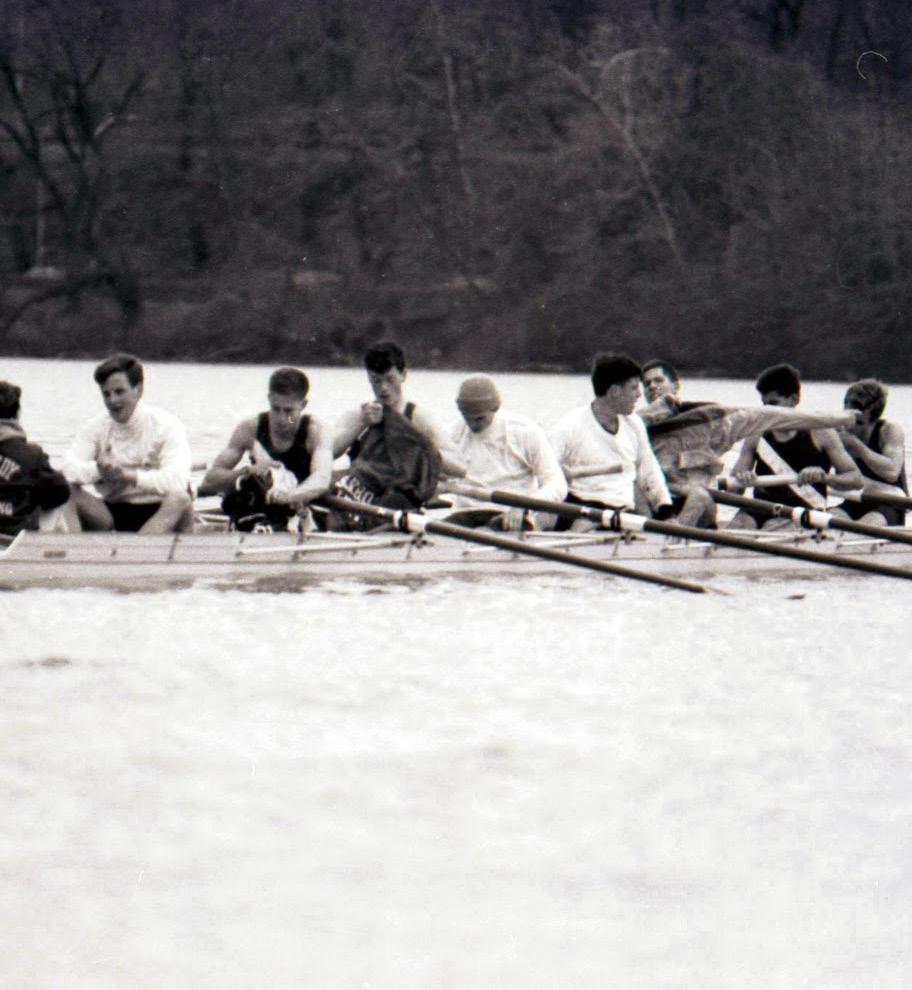
In 1879, Penn had just moved its campus to West Philadelphia. The Wharton School didn’t exist. The entire University had less than 1,000 students. But on the Schuylkill River, Penn men’s heavyweight rowing team was lining up for its first intercollegiate race, facing off against Princeton and Columbia for the Childs Cup.
Penn would go on to win that race, a fitting start for a team that quickly became a major rowing power. In the late 19th and early 20th centuries, “American rowing was starting to come into its own, and Penn was at the forefront of that,” Penn heavyweight rowing coach Al Monte said. Under first rowing coach Ellis Ward, Penn won three straight Intercollegiate Rowing Association national championships between 1898 and 1900. The team also represented the United States at the Henley Royal Regatta in England, which is still one of the biggest and most prestigious regattas in the world today. In 1917, Penn once again conquered a new frontier in rowing. Then-coach Joseph Wright advocated for a new
that quickly became
category to create opportunities for lighter rowers to compete at the collegiate level. Thus, the first lightweight rowing team in the United States was born. The lightweight team quickly developed into a dominant force, losing only one race from 1919 to 1928.
Its success was by no means short-lived, as the team embarked on a 23-race win streak in the early 1950s and later won 26 straight cup races from 1975 to 1978. Despite its success, lightweight rowing at Penn faced its fair share of challenges.
In 1951, the team was under an existential threat when it was discontinued by the University. However, the crew would not give up so easily. 14 lightweight rowers persuaded the administration to reverse their decision and headed for the Eastern Association of Rowing Colleges Championships. But the day before their race, tragedy struck when their boat was swamped and damaged in a practice run. An MIT boatman worked all night to fix it, and the next day, Penn won the title. But the success didn’t end there.
See ROWING, page 8
Sophomore catcher Lexy Youngren gave Penn softball the win in series against Yale
JAVIER ST. REMY
Staff Reporter
Penn softball swept Yale, securing a 0.500 record on the season. On Saturday, Penn softball (15-15, 6-3 Ivy) took on the Yale Bulldogs (10-23, 6-9 Ivy) in a doubleheader at Penn Park. Coming into this game, the Quakers were looking to snap a three-game losing skid and secure their first victory over Yale since 2022. The second game of the series went down to the wire, making it the defining moment for Penn’s victory. In the second game, the score was tied 6-6 in the bottom of the eighth. After getting on base with a single, freshman shortstop Jaz Johnson advanced to second. Next at the plate was lead-off hitter and sophomore outfielder Gigi Ganje, who singled to third before stealing second. With two runners on base, the stage was set for sophomore catcher Lexy Youngren to take over the game. After a strike and two balls, Youngren singled up the middle, bringing Johnson home and giving the Quakers their first victory over Yale
in four seasons. “I was just thinking ‘touch the ball,’ ‘Stay on top of the ball,’” Youngren said. “I smile every time before my [atbat]. I look a little silly at it, but I smile at the pitcher. Full grin with my teeth, so it calms me down a lot. So [I] get my smile and just say, ‘touch the ball’ and let it do its thing.”
Here is how the Quakers swept the Bulldogs.
Electric hitting The Quakers put up exactly seven runs in each game of the series, surpassing their average of approximately 5.5 runs per game. This can be credited to a Penn lineup with multiple hitters stepping up.
The Quakers beat the Bulldogs 7-5 in game one. In a matchup where 8-of-10 players who made a plate appearance recorded a hit, it was Youngren and Johnson who dominated, combining for five of the Quakers’ seven total runs. Youngren had herself a day, contributing three
hits and five RBIs, including a three-run home run in the bottom of the sixth. Johnson also had one of her best performances of the season, with three hits in three at-bats.
“Jaz is a sneaky one. She’s really fast. I think she puts a lot of pressure on people, and is just such a great athlete. So anytime you get Jaz on base, good things can happen,”
coach Christie Novatin said.
In game two, it was Youngren and Ganje who came up big. After a 1-for-4 performance in game one, Ganje made a statement in the second matchup, hitting her 12th home run of the season on the first pitch she saw in the bottom of the first inning. Youngren, batting second, capitalized on the momentum with a home run of her own on the second pitch of her first plate appearance of the game. Ganji ended the game with a walk, three hits, and two home runs while Youngren recorded three hits of her own including a walkoff single to win the series.
See SOFTBALL , page 8
been the people and environments she’s been a part of. Home to the powerhouse Texas Longhorns swimming and diving program, Zhou’s home state is naturally a competitive and strong swimming community that has inspired her through her career so far.
“Growing up and swimming at [the Texas] pool where so many Olympians and Texas swimmers train, it’s super motivating and really inspirational,” Zhou said.
Drake Bentke — Baseball Fellow Texan Drake Bentke had similar thoughts about the energetic and competitive community in which he grew up and developed his game. Bentke’s small hometown of Brenham, Texas and local high school are uniquely strong and historic baseball communities in a state
See ATHLETES, page 9
A 13-3 win against Lafayette sends Penn to the tournameent championship on April 21
LUCAS MILGRIM Staff Reporter
The Liberty Bell is ringing in a victory for the Quakers. In the midst of Ivy League play, Penn baseball participated in a battle for local glory in the Liberty Bell Classic. After a 13-3 win against Lafayette, the Quakers will play in the tournament’s championship game at Citizens Bank Park on April 21.
The Liberty Bell Classic, conceived in 1992, is an annual tournament featuring eight Philadelphia-area teams, culminating in a championship game at Citizens Bank Park. The Quakers have participated in the tournament each year but have never won the title. Penn kicked off this year’s tournament with a midweek game at Delaware State, coming off a sweep of Yale in a weekend series. Despite not counting toward conference standings, the team still came in with a strong desire to take home the victory.
“Our coaches, especially our hitting coach [Mike Santello], tell us to treat every game like the Super Bowl,” said senior utility player Jarrett Pokrovsky. “I know it’s probably cliché to hear, but we do try our best to bring the energy. With guys coming from class in the morning to play a game, it can be tough to lock in, but our coaches do a good job of bringing the energy, and it trickles down to the team.” In a bullpen game started by freshman lefthanded pitcher Ben Moulin, Penn gave the first year a lead before he even took the mound. Thanks to multiple errors by the Hornets, who entered the game with a 2-22 record, the Red and Blue took a 3-0 lead in the top of the first, and added another three in the second thanks to RBI hits from junior outfielder Gavin Degnan and Pokrovsky.
The Quakers cruised from there, with teams trading runs until the eighth, which began with Penn leading 9-2. An RBI groundout from sophomore catcher Ernie Echevarria pushed Penn’s total into double digits, giving them what seemed to be a comfortable eight-run lead. However, Delaware State stormed back, pushing across three
See BASEBALL , page 9