INSIDE: BEST OF PENN
THE INDEPENDENT STUDENT NEWSPAPER OF THE UNIVERSITY OF PENNSYLVANIA • FOUNDED 1885
PHILADELPHIA, THURSDAY, APRIL 3, 2025

THE INDEPENDENT STUDENT NEWSPAPER OF THE UNIVERSITY OF PENNSYLVANIA • FOUNDED 1885
PHILADELPHIA, THURSDAY, APRIL 3, 2025
Former Iowa assistant coach Tristan Spurlock will also join McCaffery’s staff, sources told The Daily Pennsylvanian
WALKER CARNATHAN AND SEAN MCKEOWN
Senior Sports Reporter and Sports Editor
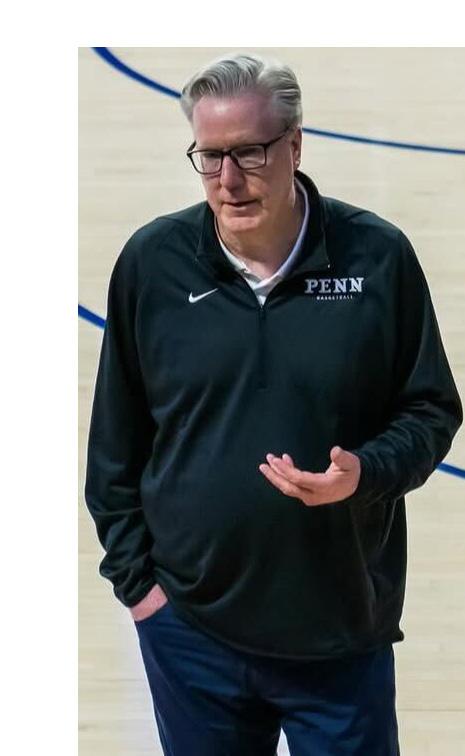
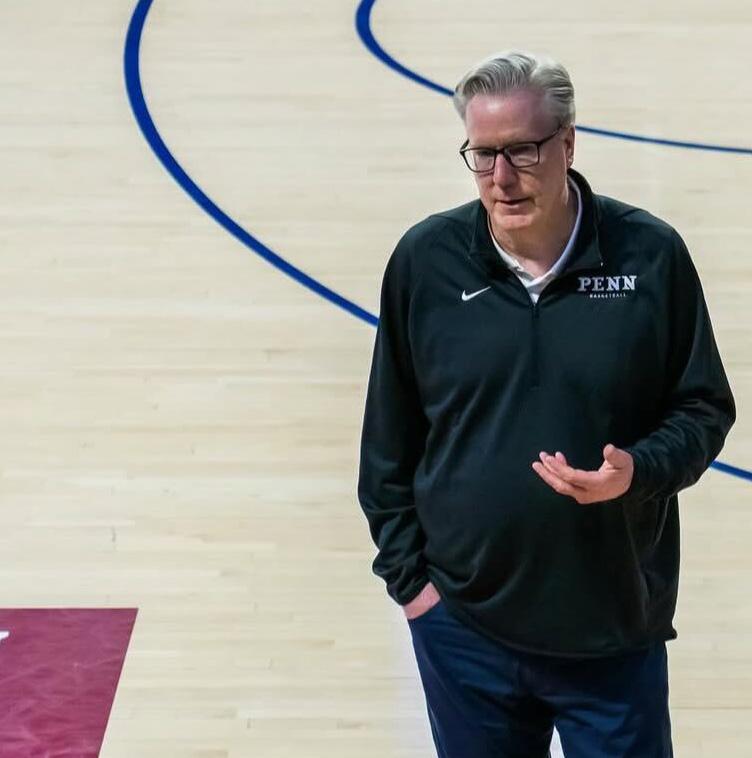
Fran McCaffery will serve as the next head coach of Penn men’s basketball, Penn Athletics announced on March 27.
McCaffery, a 1982 Wharton graduate and Philadelphia native, served as head coach at Iowa for 15 seasons, with previous stops at Lehigh, North Carolina Greensboro, and Siena. He will re place Steve Donahue at the helm of the program and serve as the team’s 21st head coach. His 12 career NCAA tournament ap pearances are the most of any Ivy League basketball coach at the time of their hiring in history.
“I am excited and honored to return to my alma mater and the city of Philadelphia to lead the Penn men’s basketball program,” McCaffery said in a statement. “It is a program that I have fond memories of from my previous time there as a student-athlete and assistant coach. My vision is to return Penn to prominence in the Ivy League and beyond and bring an exciting style of play to The Palestra.”
Earlier this month, McCaffery was dismissed as the Hawk eyes’ head coach after the team’s second-straight season without a tournament berth. He leaves Iowa City as the winningest coach in the program’s history with 297 total victories. Under McCaf fery, Iowa ranked as high as No. 3 nationally in 2016 and 2021.
McCaffery began his playing career at Wake Forest in 1977 before transferring to Penn, where he played from 1979-1982. After spending the 1982-83 season as an assistant for the Quak ers, McCaffery became an assistant at Lehigh, where he later served as head coach from 1985-1988 and took the Mountain Hawks to the NCAA tournament in his final season.
McCaffery then spent 11 years as an assistant at Notre Dame from 1988-1999 before head coaching stints at UNC Greens boro from 1999-2005 and Siena from 2005-2010. In his final three seasons with Siena, McCaffery led the Saints to three MAAC titles, three NCAA tournament berths, and two tourna ment wins.
McCaffery was hired at Iowa in 2010 and coached there for 15 seasons before being dismissed on March 14 of this year. During his tenure, the Hawkeyes earned seven trips to the
See COACH, page 10
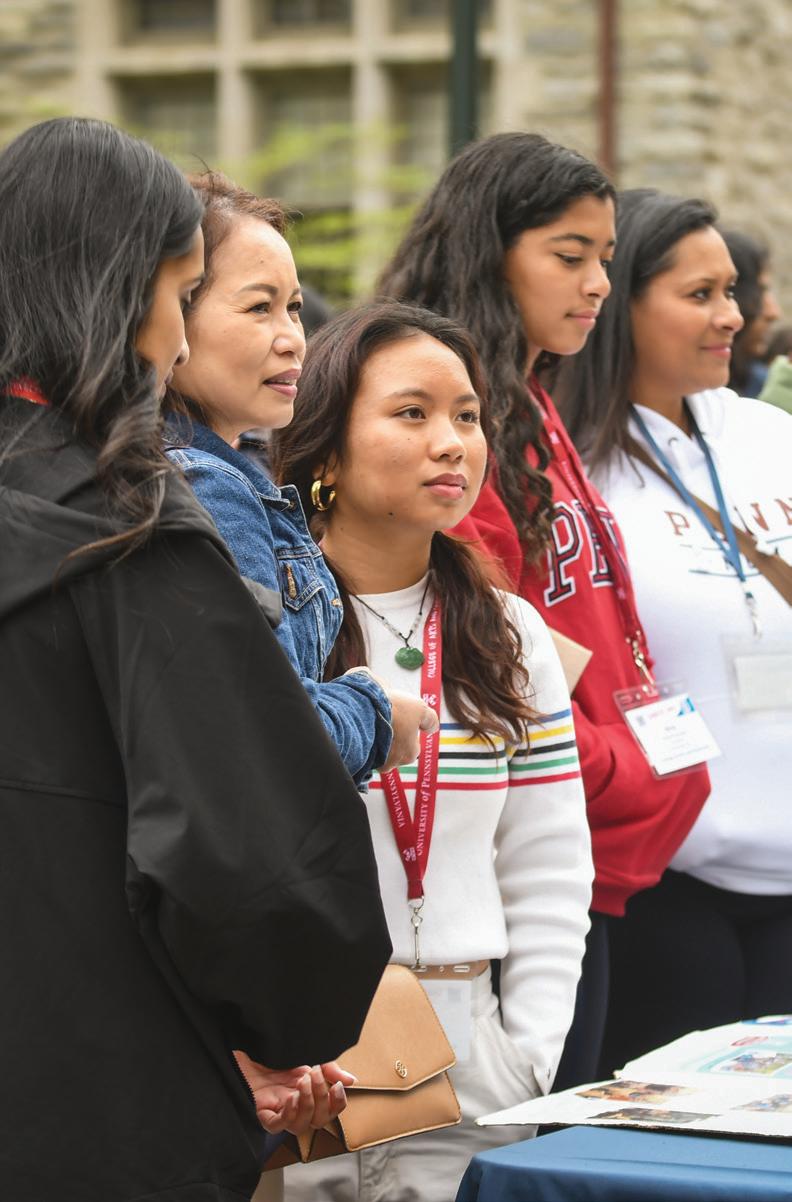
Penn announced regular decision results for the Class of 2029 in another historic application cycle. Over 72,000 students applied to Penn this year, marking an increase from last year’s applicant pool of over 65,000. Results were released to students at 7 p.m. on March 27. According to a press release from Penn Admissions, the Class of 2029 includes students from over 100 countries and all 50 states. The University chose not to immediately share further demographic data about accepted students. Penn also did not share its acceptance rate, continuing a decision to withhold admissions data during the regular decision admissions cycle.
“What stands out most about this class?” Vice Provost and Dean of Admissions Whitney Soule wrote in the announcement. “Their boundless curiosity, enthusiasm for making our world more sustainable, and commitment to making a positive impact.”
The announcement comes after recent executive orders from 1968 Wharton graduate and President Donald Trump have posed what Penn President Larry Jameson called an “existential threat” to the University.
Following a proposed $240 million funding cut from the National Institutes of Health, Penn has reduced admissions across its graduate programs. On March 19, the Trump administration announced a $175 million freeze in federal
See 2029, page 2
have reshaped Penn
Ten weeks into Trump’s second presidential term, The Daily Pennsylvanian compiled the
responded
AYANA CHARI AND ANVI SEGHAL Staff Reporters
Since being sworn in for his second presidential term, 1968 Wharton graduate Donald Trump and his administration have targeted higher education institutions across the country — including Penn — through a series of funding changes, executive orders, and policy measures.
On the campaign trail, Trump vowed to abolish the Department of Education, ban the participation of transgender athletes in women’s sports, cut funding for scientific research, and protect conservative speech on college campuses. Just 70 days into his second term, his administration has aggressively delivered on nearly all of those promises.
Penn President Larry Jameson wrote in a Feb. 24 email that the University is closely monitoring the “existential threat” posed by recent federal actions to higher education and reaffirmed its commitment to academic freedom, inclusion, and compliance with the law.
“The future of higher education may alter dramatically depending on how courts rule, how agencies implement new policies, and how future orders and legislation are enacted,” Jameson wrote at the time. “The anxiety and frustration many people feel at this moment is deep and often quite personal.”
On March 7, Penn launched a webpage — titled “Federal Government Updates” — tracking federal policy changes and their impacts on the University dating back to Jan. 28. The site intended to centralize updates on ongoing federal actions impacting higher education, research funding, immigration, and other essential areas of Penn’s operations.
Ten weeks into Trump’s second presidential term, The Daily Pennsylvanian has compiled the impacts of federal policy changes on Penn — and examined how the University has responded.
Diversity, equity, and inclusion
On his first day back in office, Trump signed an


executive order mandating all federally funded universities to eliminate programs centered around diversity, equity, and inclusion that could be in violation of federal civil rights laws. In response, Penn quietly revised longstanding University policies and began implementing widespread changes to its DEI initiatives.
On Feb. 6, Penn’s School of Dental Medicine and Stuart Weitzman School of Design shut down central offices, initiatives, and web pages related to DEI. That same day, Penn Athletics took down its DEI webpage — which housed an inclusion policy toward transgender studentathletes — following the launch of an investigation into Penn’s alleged Title IX violations that allowed 2022 College graduate and transgender athlete Lia Thomas to compete with Penn’s women’s swimming and diving team.
Four days later, Penn announced plans to revise its nondiscrimination and affirmative action policies as part of its broader effort to comply with the executive order.
On Feb. 13, Penn continued its overhaul by removing DEI content from additional websites — including the DEI page for the Wharton School and Penn Libraries — and relabeling Penn’s School of Engineering and Applied Science Office of DEI website to the Cora Ingrum Center for Community and Outreach.
The next day, Penn scrubbed its central Diversity and Inclusion website, renamed it “Belonging at Penn,” and replaced detailed DEI content with a three-sentence statement affirming Penn’s “commitment to equal opportunity.”
By Feb. 24, Penn’s four undergraduate and 12 graduate schools had all systematically removed references to DEI from their websites. Among those changes were the revisions of more than a dozen titles of Penn staff members formerly associated with DEI.
On March 20, Wharton’s undergraduate concentration and MBA major in DEI were both renamed to “leading
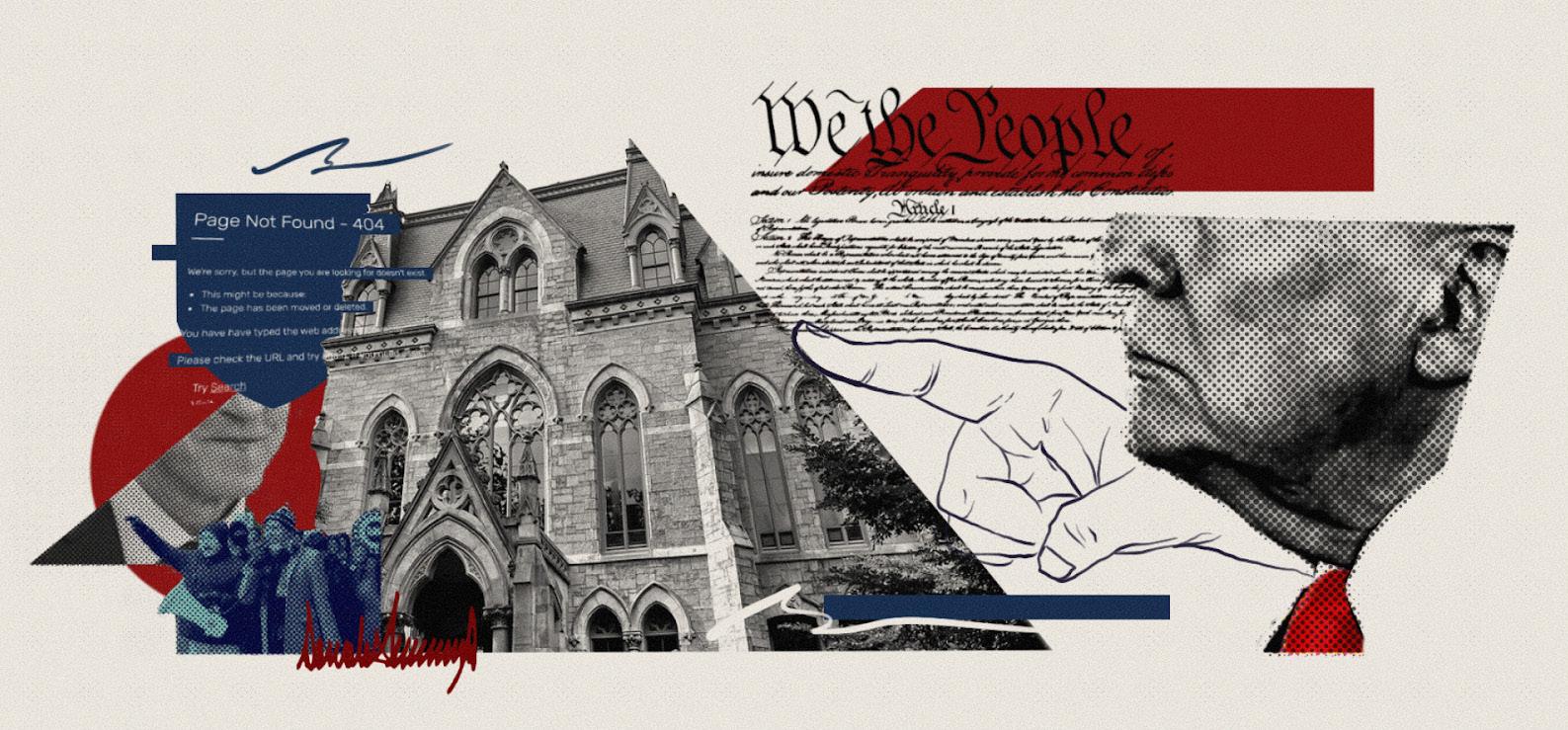
Ten weeks into Trump’s second presidential term, the DP compiled the impacts of federal policy changes on Penn and examined how the University has responded.
across differences.”
Federal funding
In January, the Trump administration restricted National Institutes of Health funding, external communication, and activity, affecting health and research systems, including Penn Medicine and the Children’s Hospital of Philadelphia.
A month later, the Senate Commerce Committee flagged 15 Penn research grants, totaling nearly $11 million in funding, alleging that the initiatives promoted DEI and “neo-Marxist class warfare propaganda.”
On March 4, Trump announced that he would pull federal funding from educational institutions that “allow illegal protests.” Trump issued an executive order on March 14 dismantling the Institute of Museum and Library Services, which

awarded Penn Museum over $1 million in the fiscal year 2024.
On March 19, the Trump Administration froze over $175 million in federal funding from the Department of Health and Human Services and the Department of Defense. The White House attributed the decision to Penn’s failure to bar transgender athletes from women’s sports. Penn has 21 active contracts and 596 active grants that receive funding through the two agencies — totaling hundreds of millions of dollars — according to a DP analysis of the Department of the Treasury fiscal year 2025 data.
On March 20, Trump signed an executive order to eliminate the Education Department. The federal action attempted to dismantle the department, which manages federal student loans through its Office of Federal Student Aid and funds Penn through grants. A 50% reduction
See TRUMP, page 8




funding to Penn, citing Penn’s “policies forcing women to compete with men in sports.”
This year marks the second full application cycle in which Penn has not been able to consider race in its admissions decisions. After a 2023 ruling from the United States Supreme Court declared race-conscious admissions unconstitutional, Penn’s Class of 2028 saw a decline in students from historically underrepresented races and ethnicities.
The test-optional policy that Penn first implemented during the COVID-19 pandemic was extended for the final time to applicants in this cycle.
The University has since announced that its standardized testing requirements will be reinstated for applicants in the 2025-26 admissions cycle, requiring students applying to Penn to submit their ACT or SAT scores. Several other Ivy League universities — including Dartmouth College, Harvard University, Cornell University, Brown University, and Yale University — have also reinstated testing requirements.
This year’s supplemental essays continued to include the “thank-you letter” prompt introduced during the 2022-23 application cycle.
“Each of these students embodies the spirit of Penn: a dynamic blend of intellectual curiosity, determination, and joy. We can’t wait to see them bring their talents to campus this fall,” Soule wrote.
The April 1 message came a week after Secretary of State Marco Rubio told reporters that the Department of State has revoked more than 300 student visas
SAMEEKSHA PANDA AND AYANA CHARI
Staff Reporters
Penn’s International Student and Scholar Services is “not aware” of any University student or faculty member who has been impacted by recent visa revocations from the Department of State, according to an April 1 email.
The message came a week after Secretary of State Marco Rubio told reporters that the State Department revoked over 300 student visas, including ones that belonged to students who participated in pro-Palestinian protests on college campuses. The ISSS email also advised Penn community members on how to respond in the event they are contacted by government officials.
“ISSS is not aware of ANY Penn student or scholar who has had their visa revoked or been affected by a ‘self-deport’ alert,” Vice Provost for Global Initiatives Ezekiel Emanuel and Associate Vice Provost for Global Initiatives Amy Gadsden wrote in the email.
“We are in communication with government officials to convey how unsettling these policies are for our community,” the administrators wrote.
The email also stated that ISSS contacted the State Department for clarification on the revocation of visas but were referred to past media statements, “which do not confirm the number of visas revoked or provide specific reasons for the revocations.”
A State Department spokesperson previously told The Daily Pennsylvanian that the department has “broad authority to revoke visas” under the Immigration and Nationality Act.
“We exercise that authority when information comes to light indicating that a visa holder may no longer be eligible for a visa,” the spokesperson wrote to the DP. “As the Secretary indicated, the Department revokes visas every day in order to secure America’s borders and keep our communities safe -- and will continue to do so.”
“Because the process is ongoing, the number of revocations is dynamic. The Department generally does not provide statistics on visa revocations, and we do not have anything additional to provide at this time,” the spokesperson added.
Emanuel and Gadsden also wrote that the government has currently not issued any official travel bans.
In March, ISSS sent an email advising international students to avoid “non-essential” travel to several countries ahead of a possible new federal travel ban.
ISSS stated in the March email that the countries likely to be affected by the travel ban, which may be introduced as early as next week, are Afghanistan, Pakistan, Iran, Libya, Somalia, Sudan, Syria, and Yemen. ISSS strongly advised students who are citizens of one of the listed countries to avoid “non-essential travel outside of the United States” until more details are available.
In February, 1968 Wharton graduate and President Donald Trump signed an executive order directing federal agencies to identify and deport non-citizen participants, including college students, in pro-Palestinian protests.
“To all the resident aliens who joined in the pro-jihadist protests, we put you on notice: come 2025, we will find you, and we will deport you,” Trump said in the fact sheet for the order.
“I will also quickly cancel the student visas of all Hamas sympathizers on college campuses,
which have been infested with radicalism like never before.”
Since then, nearly a dozen students, faculty, and researchers from universities across the country have been detained by federal agents.
On March 8, Immigration and Customs Enforcement agents detained 2024 Columbia graduate Mahmoud Khalil, who was a proPalestinian activist and the lead negotiator for Columbia’s Gaza Solidarity Encampment last spring. His detention prompted nationwide protests, including multiple in Philadelphia within the past month.
Masked ICE officers also detained Tufts University graduate student Rümeysa Öztürk on March 25. Öztürk — an international student from Turkey on a valid F-1 student visa — has since had her visa revoked. A federal judge ruled Friday to temporarily halt her deportation.



In December 2024, Mangione was charged with murder as an act of terrorism in the killing of UnitedHealthcare CEO Brian Thompson
WILLIAM
GRANTLAND Staff Reporter
United States Attorney General Pam Bondi has directed prosecutors to seek the death penalty in the federal case against 2020 Engineering graduate Luigi Mangione, per a press release from the Department of Justice.
In December 2024, Mangione was charged with murder as an act of terrorism in the killing of UnitedHealthcare CEO Brian Thompson. In an April 1 press release, Bondi called the murder an “act of political violence” and added that because the act “took place in public with bystanders nearby,” it may have posed a risk to individuals other than Thompson.
“Luigi Mangione’s murder of Brian Thompson — an innocent man and father of two young children — was a premeditated, cold-blooded assassination that shocked America. After careful consideration, I have directed federal prosecutors to seek the death penalty in this case as we carry out President Trump’s agenda to stop violent crime and Make America Safe Again,” the press release read.
Shortly after Mangione’s arrest, the Manhattan District Attorney’s Office indicted him on federal and state charges, including first-degree murder “in furtherance of terrorism,” two counts of second-degree murder — one of which was classified as an act of terrorism — and eight other weapons and forgery offenses.
At his arraignment in the New York State Supreme Court on Dec. 23, 2024, Mangione pleaded not guilty to all 11 state charges against him. A week earlier, he also entered a plea of not guilty to federal charges from the Southern District of New York, including murder with a firearm — which carried with it the possibility of the death penalty — two counts of stalking, and a separate firearms offense.
The state of Pennsylvania also charged him with possession of an unlicensed firearm, forgery, and the providing of false identification to police.
Authorities linked Mangione’s actions to his
opposition to the health care industry, citing a 262-word note recovered at the time of his arrest. In the document, he described Thompson’s killing as a way to broadly challenge corruption within UnitedHealthcare.
While a student at Penn, Mangione was a member of Phi Kappa Psi, a University-affiliated fraternity. He suffered from mental and physical health problems, which he claimed in a social media post were exacerbated by his fraternity’s “hell week” — the final week of intense pledging ahead of initiation.
Mangione posted frequently on Reddit about his difficulty maintaining focus amid exhaustion and brain fog and attributed his decline in academic success to these issues.
“It’s absolutely brutal to have such a life-halting issue,” Mangione wrote of his brain fog in a Reddit post. “The people around you probably won’t understand your symptoms — they certainly don’t for me.”
In screenshots of texts and voice memos obtained exclusively by The Daily Pennsylvanian, a current Phi Kappa Psi brother said the new member education process for the fraternity included binge drinking and eating. According to the texts, the pledges had to “solve an ACT for [a] 36, straight drunk” and were “stuck” in a basement.
In a voice memo, the brother described an eating event as “really nasty” and said his “stomach [hurt] a lot.” The texts also included a screenshot of a 9.07-mile pledging run the student tracked on a fitness application.
In 2016, Mangione founded Penn’s Game Research and Development Environment, also known as UPGRADE. The game development club aimed to “foster creative expression and cultivate career skills for the artists, programmers, and creatives interested in game development in the Penn community” and grew to include over 50 members.
Staff reporter Riana Mahtani contributed reporting.
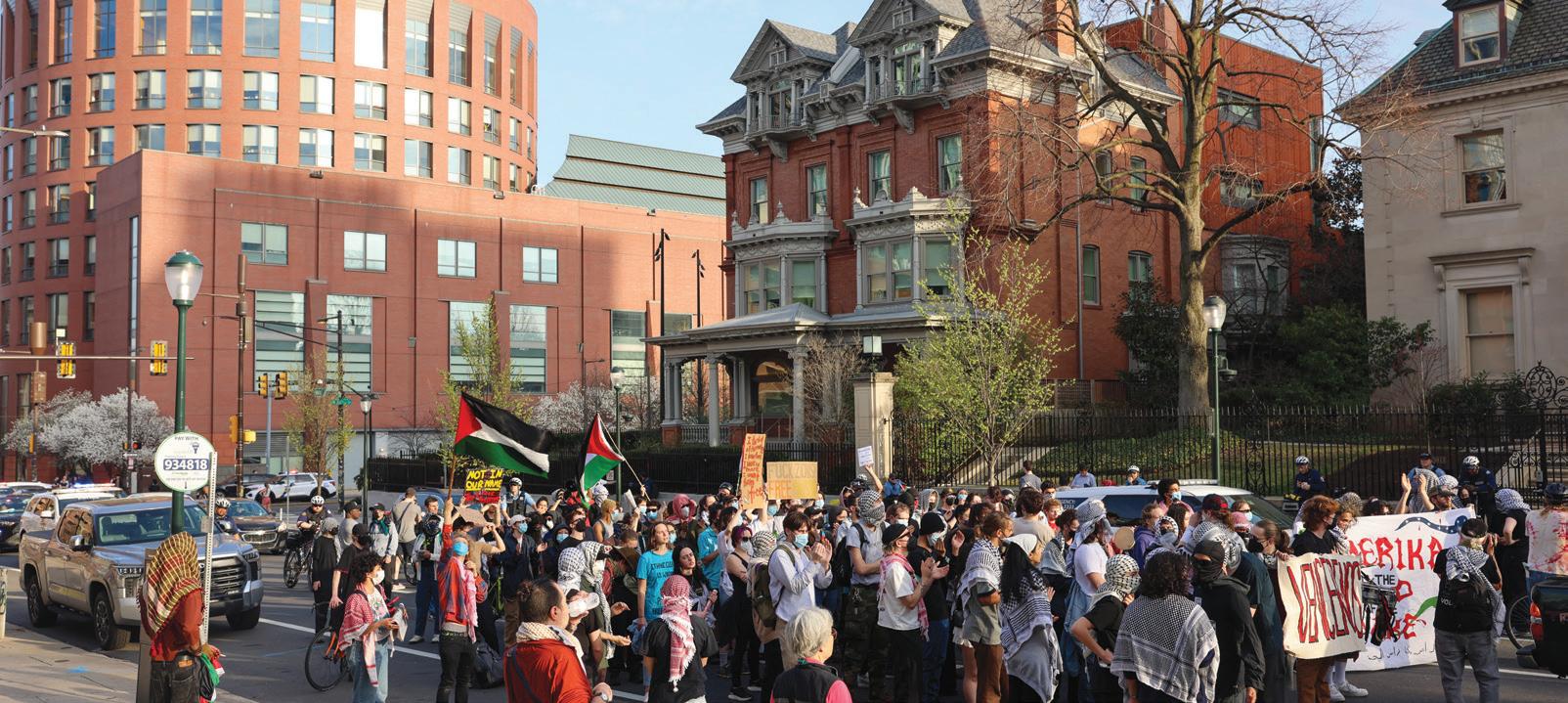
Pro-Palestinian protesters gather near Penn Hillel as Israel Week event takes place
The March 31 protest began at 30th and Market streets around 4:30 p.m. as part of an “All Out for Palestine Rally” FINN RYAN AND DANIYA SIDDIQUI Senior Reporter and Staff Reporter
Around 75 pro-Palestinian protesters rallied near Penn Hillel as an event featuring Israeli activist Noa Tishby and two survivors of the Oct. 7, 2023 Hamas attacks on Israel took place on Monday.
The March 31 protest began at 30th and Market streets around 4:30 p.m. as part of an “All Out for Palestine Rally.” The demonstration included speeches and chants as it moved down Walnut Street before stopping near Hillel in protest of an event hosted by the organization for Israel Week.
As protesters gathered, several organizers distributed mock newspapers — titled “The New York War Crimes” — that emphasized Palestine as “the land of the people.” Other flyers were also distributed, including a statement by Workers’ Voice titled “Israel: Hands off Gaza! No US Aid to Israel! Free Mahmoud Khalil!”
Once the rally began, a speaker explained that the demonstration observed “Land Day” — a Palestinian day of commemoration marking a large-scale 1976 Israeli land confiscation.
“This is to honor the six martyrs of the 1976 uprisings in Palestine. … They stood firm against the Zionist entities attempting theft and looting of their land,” one speaker said.
Ahead of the demonstration, organizers also said that they were protesting against “Noa Tishby and her Zionist ghouls.” The Hillel event was part of the organization’s ongoing Israel Week programming and offered “students a rare and intimate opportunity to hear directly from those who endured unimaginable tragedy,” according to a description of the event.
As the protest moved up Walnut Street, Penn Police and Philadelphia Police Department officers blocked off 39th Street Walk between Walnut Street and Hillel. Penn Police, Philadelphia Police, and Drexel University Police had a large presence throughout the duration of the demonstration.
Penn’s Division of Public Safety released an advisory shortly after the protest began, announcing “intermittent closures on Walnut Street between
The event drew around 250 community members from Penn and the Philadelphia area to the Zellerbach Theatre in the Annenberg Center
PHOEBE ANAGNOS Staff Reporter
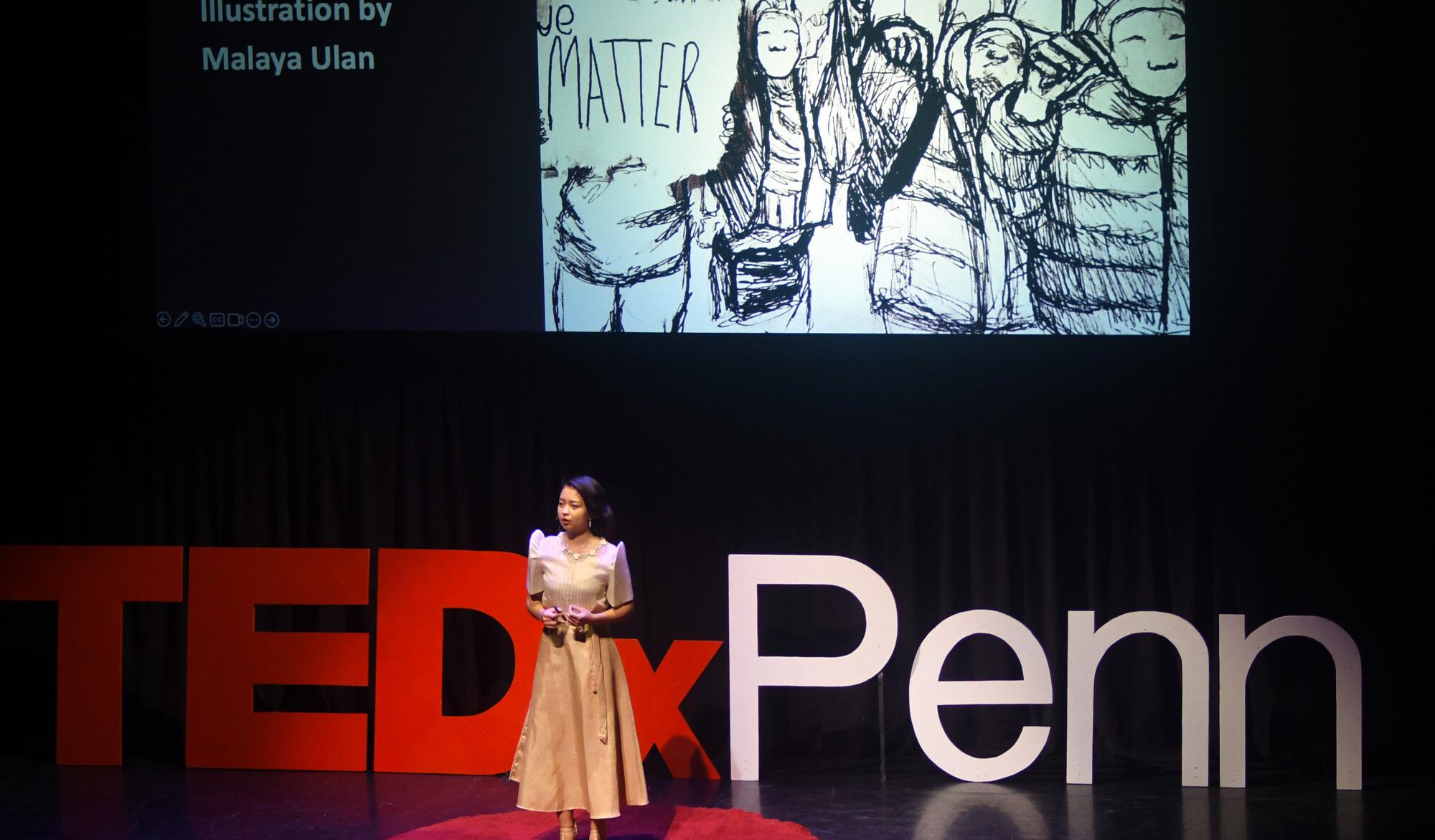
TEDxPenn held its annual conference at the Annenberg Center on March 29, inviting nine speakers to examine pivotal moments in their lives.
TEDxPenn is the largest student-run TEDx event in the country. The event drew around 250 community members from Penn and the Philadelphia area to the Zellerbach Theatre in the Annenberg Center.
Perelman School of Medicine professor David Fajgenbaum was the event opener and discussed his journey of healing and action. Fajgenbaum specifically discussed his battle with Castleman disease, specifically when he was told there was “nothing more” that could be done. He then decided to take control of his own survival.
“I realized that hope alone is not enough,” Fajgenbaum said. “If I wanted any chance to survive, I would need to turn my hope into action.”
He worked with his own blood samples to repurpose sirolimus, an immunosuppressive drug, to treat his disease.
In 2022, he founded Every Cure, a nonprofit organization that uses artificial intelligence to find new purposes for existing drugs.
Malaya Ulan, the 2024-25 Philadelphia Youth Poet Laureate, discussed the role of poetry for both protest and healing. Drawing from her Filipino heritage and lived experiences, Ulan spoke about using writing to reclaim identity and resist invisibility.
“Poetry became my best armor,” she said, explaining how verse helped her confront racism, isolation, and historical erasure.
Inspired by Filipino revolutionary José Rizal in ninth grade, Ulan led a student protest against widespread teacher layoffs in the School District of Philadelphia. Through her activism, Ulan emphasized that poetry is not only a form of personal expression, but also a tool for collective resistance and systemic change.
“With each end of a poem, we leave mic drops, bombs filled with seeds of inquiry,” Ulan said.
Noah Weber, the chief information officer of Olden Labs, shared his vision for transforming animal testing through ethical biotechnology and automation. In his talk, Weber addressed the staggering statistic that 150 million rodents are killed each year in biomedical research, while progress in treating major diseases remains slow.
“Animal research is very archaic. … The same manual procedures we did 60 years ago, we’re doing today,” Weber said. At Olden Labs, he leads efforts to modernize drug development by combining AI, robotics, and genetic engineering to reduce animal use while improving data quality.
the moment.
She developed an acronym, SOLO, to elaborate on how to shift the narrative of your life: Stay true to yourself, open yourself to an unscripted future, lean into discomfort, and own the opportunity.
Jaime Teevan, chief scientist at Microsoft, explained how generative artificial intelligence is reshaping the way people work. Teevan shared her first experience with OpenAI’s language model in 2022 and the pivotal moment when she realized its potential.
“I screamed, because I felt a huge responsibility to get this technology into people’s hands quickly and to do it the right way,” Teevan said.
She urged the audience to think of AI not just as a tool, but as a partner in reimagining how work gets done.
“The future of work is not about doing more things faster,” she said. “The future of work is about having interesting conversations.”
Cinema and Media Studies professor Peter Decherney, who serves as Penn’s Edmund J. and Louise W. Kahn Endowed Term Chair in the Humanities, spoke about the power of storytelling across cultural and geographic boundaries. For the past seven years, he has worked in partnership with African Jewish communities to amplify their stories, which are often excluded from mainstream Jewish narratives.
“When you tell someone else’s story, you enter the impossible but worthy abyss of trying to understand each other,” Decherney said.
Through photography, film, and long-term relationships, he explains how storytelling can expand both personal identity and global understanding.
Benjamin Fernandes, a Tanzanian entrepreneur and founder of a global fintech company, spoke about migration. Reflecting on his own journey from Tanzania to the United States, Fernandes emphasized that migration is not a crisis, but rather “the engine that powers progress.” He highlighted how migrants not only contribute to the economies of the countries they move to, but also send billions of dollars home, often outpacing foreign aid and becoming a lifeline for communities across the globe.
“Talent is everywhere,” Fernandes said. “Opportunity? Not so much.”
2016 University of Pennsylvania Carey Law School and Wharton School MBA graduate Jett Puckett, who currently works as a company owner and content creator, delivered a talk on the power of love, positivity, and authenticity in a media landscape dominated by negativity.
“In a landscape of fear and anger, love stands out,” Puckett said.
30th and 40th Streets due to demonstration activity.”
The advisory also noted the presence of Penn and Philadelphia Police to “assist with traffic closures.”
Brothers of Penn’s Sigma Alpha Mu fraternity stood on the porch with an Israeli flag as the protest passed their chapter house.
The demonstration stopped as a speaker reiterated their commitment to the Palestinian cause in the face of counterprotesters. A few individuals in the protest formed upside-down triangles — a symbol used by Hamas to indicate military targets — with their hands and directed them at the fraternity.
One speaker said they were “happy” about the presence of Israeli flags around campus.
“I’m happy because it shows where their true commitments stand: not to their students, but with Jewish fascism,” the individual said. “Let them hang an Israeli flag on top of College Hall. … Let them fly the flag of the oppressor.” When the crowd stopped at 39th Street, organizers chanted “F**k Penn” and “F**k Hillel.”
A speaker said that Penn invited Tishby “with the express purpose of justifying genocide on college campuses.” They continued that Tishby’s participation in Hillel’s Israel Week programming “serves only to manufacture consent for the genocide.”
Requests for comment were left with spokespeople for the University and Hillel.
“Tishby demands that the Palestinian people lay down and die, that they anguish in Israeli prisons where they are beaten, assaulted, and murdered every single day,” one speaker said. “The genocidal freaks of Penn Hillel welcome these advocates for genocide.”
The protesters also addressed recent federal actions that have resulted in the deportation of proPalestinian student protesters.
“If ICE shows up on our campus, we will show up,” one speaker said. “We will show up to put ourselves in the way of Homeland Security.”
In response to a video of the protest, United States Rep. Elise Stefanik (R-N.Y.) wrote in a post
University of Pennsylvania Carey Law School Associate Dean and Quattrone Center Executive Director John Hollway delivered his talk on wrongful convictions and the need for systemic reform in the criminal justice system. Hollway highlighted how human error, outdated protocols, and communication failures can align to produce catastrophic outcomes.
“We can’t change the human condition,” Hollway said. “We have to change the conditions in which our humans operate.”
Hollway’s work calls for a structural shift in how the justice system approaches error, prioritizing learning and prevention over blame.
2011 Penn Graduate School of Education graduate
Holly Hatcher-Frazier, an educator and former “Dance Moms” cast member, shared a personal reflection on one of her viral moments on the show: “Empty chair: Do a solo.”
“Two truths can exist at once,” Hatcher-Frazier said, acknowledging both the humor and the hardship behind
Rather than chasing controversy or spectacle, Puckett and his wife gained national attention simply by sharing their genuine relationship, which he calls “loving out loud.” Encouraging the audience to consume and create more positive content, he reminded the attendees that they have the power to “reshape the world.”
TEDxPenn club, composed of around 40 members across five core teams — Speaker & Content, Operations, Marketing, Design, and Finance — curated the talks from pitch to stage. Club members scouted speakers across disciplines, hosted auditions, and worked one-on-one with selected individuals. When selecting speakers, TEDxPenn considers “if that is an idea worth spreading,” according to Steven Su, a co-curator.
TedXPenn’s 2024 conference, themed “Limits to Infinity,” featured a former president of Peru and Nobel Prize laureate. In 2023, the conference, titled “(R)evolution,” featured an award-winning filmmaker and digital content creator.


With last week’s Ivy Day admissions decision release, over 72,000 hopeful Quakers anxiously logged into their admissions portals, bracing for the dreaded “status update.” For around 68,000 of them — roughly 95% — the news didn’t include a spot in the Class of 2029.
While the dean of admissions had to “regretfully inform” these applicants of their decision, the University Board of Trustees will be celebrating Penn’s ultraselectivity a few months from now. That’s because, for Penn and our peer institutions, the more brilliant students we reject, the more desirable we appear. For Penn, exclusivity is excellence. That doesn’t make any sense.
As our University Values so eloquently highlight, the ultimate purpose of higher education is to advance “opportunity toward a better future for all.” Universities — especially those as resource-rich as Penn — are meant to be engines of social change, opening paths to more opportunities and shaping promising leaders. It’s ironic then, that elite colleges pride themselves on shutting out as many people as possible, effectively limiting their social impact.
The reality is the vast majority of applicants to schools like Penn are more than qualified to succeed in a rigorous academic environment. That means we’re closing our doors to tens of thousands of hardworking students who could fully take advantage of a Penn education to change their lives and the lives of those around

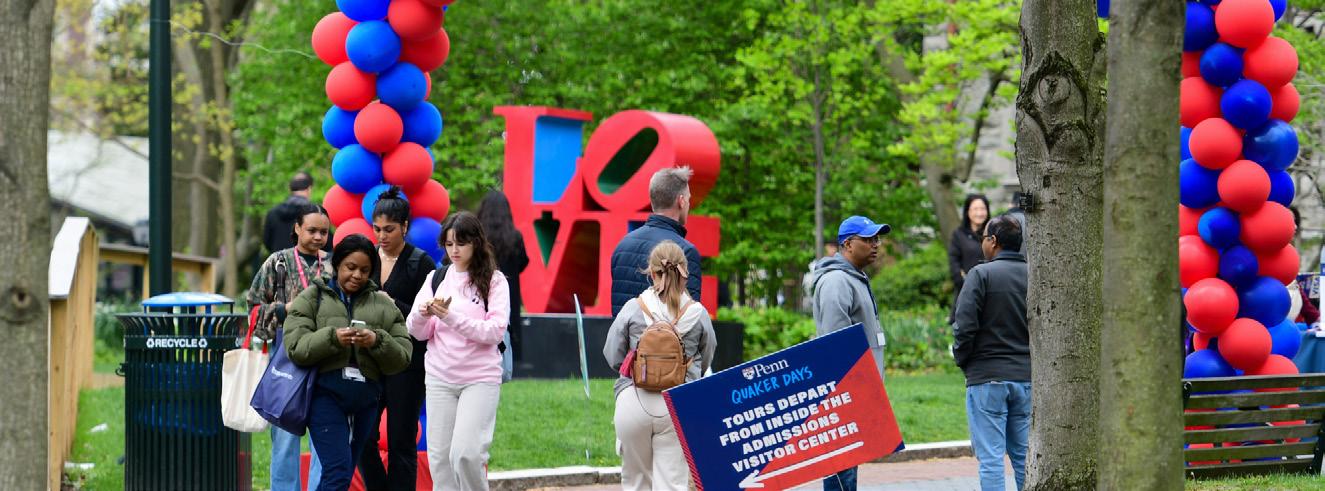
JACKSON FORD | SENIOR PHOTOGRAPHER
Columnist Jesse Van Doren asserts that exclusivity should not be mistaken for excellence in college education.
them. In that sense, our prized 5% acceptance rate is really an indication of our failure to be a maximally impactful institution. Moreover, Penn admissions officers rendering decisions by splitting hairs over minute differences between accomplished applicants doesn’t truly strengthen our student body — in many ways, this weakens it. The New York Times found that more Penn students came from the top 1% than the entire bottom 60%. For Penn’s Class of 2028, 14% of admits were legacy students. In our relentless focus on gatekeeping admissions, Penn’s limited seats are disproportionately filled by the advantaged.
But it doesn’t have to be this way.
Say Penn decided to increase the size of its incoming class. Without sacrificing academic excellence, we could better fulfill our mission of
expanding access to opportunity by instructing more highly deserving students who would use their education for the better. By creating more spots, Penn could welcome a wider array of perspectives, fostering a more balanced campus enriched by diverse backgrounds rather than those just clustered at the top of the socioeconomic ladder. Now, I’m not here to argue the logistics of hiring more staff or constructing another college house to support a larger class size. However, such expansions are certainly not unheard of. In recent years, multiple highly selective schools, including Rice University, Yale University, and Princeton University, have all taken the initiative to build new housing in order to grow their undergraduate population, citing a focus on expanding access and diversity.
New dorms are also not the only potential path forward — education researchers have proposed alternatives such as expanding hybrid learning models and establishing satellite campuses to reach more students. After all, if one can get an MBA from Wharton San Francisco, why can’t Penn do the same for undergraduates? We have a $22.3 billion endowment to make it happen. And sure, Penn already enrolls more students than a lot of its peers — which is fantastic! But that doesn’t excuse us from actively working to uphold the values of higher education.
Ultimately, as powerful as these changes could be, they’re dismissed as unrealistic over a single word: prestige. An Ivy League education is no different from that blue Goyard bag you see on Locust Walk: Its value is found in a brand name, capturing allure through rarity. Ivy Day is how Penn sustains this “status.” But instead of staking our reputation on this year’s 68,000 letters not offering admission, we could define success by a much more meaningful metric: the number of accomplished students Penn truly supports.
JESSE VAN DOREN is a College first year studying political science and earth & environmental science from Baltimore. His email is jessevd@sas. upenn.edu.
M’S MANIFESTO | Why research funding is crucial for American soft power
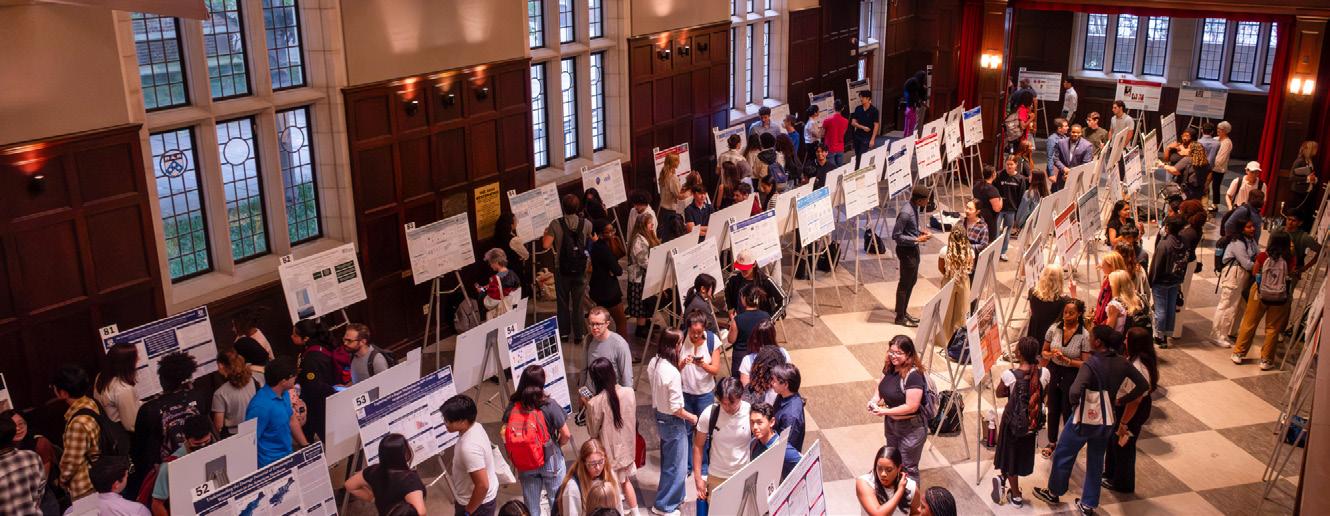
While I was growing up abroad, one of the things that stood out to me about the United States was its outstanding educational prowess. I knew that coming to a school like Penn would give me the opportunity to engage in research in any discipline I wanted. American research capabilities were crucial in swaying my decision about where to go to college. I wanted to be in a place where top-tier universities were leading in almost every area of study: cancer research, vaccines, STEM subjects, law, and business. It seemed fascinating that in the United States, even the humanities — often forgotten areas — had their own research powerhouse where scholars like Francis Fukuyama and Kenneth Waltz produced groundbreaking articles. Penn in itself is a reflection of everything I admired from the outside: With initiatives like the Wolf Humanities Center, the Roy and Diana Vagelos Program in the Molecular Life Sciences, the Penn Museum, and more, Penn offers an incredible setting to foster research.
Research is a diplomatic tool. It’s a form of soft power. It reflects, as I grew up seeing, American superiority. Just as it attracts students, it sends out a certain message: Academia enables the United States to expand its

influence through attraction and persuasion. International students are likely to “come, experience American values and democracy firsthand, and leave with appreciation for its ideals.” If this is true, then cutting research funding should be carefully questioned. Interestingly enough, American academia as it exists today dates back to the Cold War. The academic boom was part of an initiative to gain an advantage over the Soviet Union after Sputnik was launched. Paul Dickson explains this phenomenon in his book “Sputnik: The Shock of the Century”: “Many technologies, essential to modern life, including the Internet, owe their early development to the accelerated pace of applied research triggered by Sputnik.” Before the Cold War, American research was not as strong in areas like STEM and education systems did not encourage independent study — or as we call it today, universities did not follow the liberal education model. During the Cold War, research became a matter of national security. Today, research is still essential to national security. The current administration could benefit from evaluating how research still works today as a tool of soft power and increases national security. Research can help the United States get ahead of countries like
Russia and China and keep strengthening American influence abroad.
The Trump administration just suspended $175 million of federal funding to the University on account of Penn’s past policies regarding transgender athletes. The administration insists that these actions are being carried out to protect biological women. However, it should be considered that the effects of this decision will have a greater impact on Penn’s research capabilities — and as a result, American academia and security — than it will on the safety of women.
According to a report published by the University of California, Los Angeles School of Law, the population of transgender individuals in the United States amounts to only 0.6%. This means that there are no more than 100 transgender athletes competing in the women’s category, according to researcher Joanna Harper. On the other hand, Penn’s loss of research funding will have a greater effect, starting with the populations that benefit from the research conducted at the University. For example, of the funding that will be cut, $14 million will be taken away from the Center for AIDS Research at the Perelman School of Medicine. Let’s go over the impacts this will have — not only on the populations that have benefited from AIDS research, but also on American security.
In 2001, Penn launched the BotswanaUPenn Partnership, which focused on treating HIV/AIDS in the region. In 2022, the annual AIDS-related death rate had fallen from 18,000 to under 5,000. Additionally, 97% of the participants were receiving treatment and 98% of them achieved an undetectable viral load. Taking away funding will necessarily slow down the efficiency of the partnership. Research funding cuts are a loss for the public: For example, under similar circumstances, the administration cut more than 400 research
BENTHAM IN BALANCE | Loneliness
I know many of us hate silence. When all is quiet and you’re in your dorm, or in a lackluster classroom, or maybe walking home late at night. When all you hear are your own thoughts. When all you feel are your own feelings. Yuck. For many of us, being alone is about the least attractive thing that can occur during the day. Believe me, I understand. It’s unsurprising that solitude is stigmatized on a university campus. After all, our social networks and relationships can literally be modeled as future cash flows. That’s what networking is, right? Prepare to lunge at the promising connections we see among each other, because at the end of the day, those relationships will actually pay dividends down the line. Now, put that mindset in a place where crowds are everywhere, parties are constant, and social media bleeds into real life. Why would anyone actually choose to be alone? Yet, this exact thought process has caused a confusion between the feeling of loneliness and the condition of aloneness, of solitude. Unfortunately, we’ve begun to see the two as one and the same. The result is a widespread rejection of peace, privacy, and seclusion.

SYDNEY CURRAN | STAFF PHOTOGRAPHER
Columnist Zakhir Bentham calls for more people to take time for themselves.
The Surgeon General of the United States probably sealed solitude’s fate when he declared loneliness and social isolation a national epidemic. Big words; big effects. No wonder there’s anxiety when eating alone in a dining hall. It’s unsurprising that people have “filler friends” to take up space in their free time. People are afraid of what it means to be by themselves.
This rejection of solitude has done us a grave disservice. We’ve forgotten its freedoms. Now wait, don’t get me wrong. Loneliness itself is dangerous, detrimental to the individual, and quite unbecoming to the character. Touché, I wouldn’t wish it upon my least favorite family member. Social disconnection results in
depression, an increased risk of heart disease, and is comparable to smoking daily (yes, it sounds extreme, but these are the facts). This is a long-winded way to say: To be lonely isn’t pleasurable, and if you feel you are in such a condition, you should reach out to someone. But loneliness isn’t the same as aloneness. You can be lonely literally anywhere, with anyone, at any time. You can be lonely in your dorm, at a party, at a family gathering, and so on. You can be lonely and be with people at the same time. Therefore, an excessive dosage of people is not the appropriate prescription to cure your condition.
In fact, I imagine that the loneliest places on Earth are those with the most social activity. After all, these are the places with the most pressure to surround oneself with other people. We live on a university campus with over 20,000 students located in a metropolitan city. Perhaps you see what I’m getting at.
Yet, even if loneliness has a right to be stigmatized, rejecting solitude in the process is the casualty of a blameless bystander. We reject solitude because we’re afraid of loneliness and afraid of ourselves; afraid of our own thoughts, of other people’s thoughts. “Only losers are alone.”
What we don’t realize is that taking time to ourselves is one of the healthiest things we can
grants that went to Columbia University. Jamie Daw, a researcher at Columbia, was forced to stop her work that aimed to decrease the maternal mortality rate. On top of the impact these cuts will have on the general public, the consequences will also be felt in international relations. For example, let’s take the case of BUP: Were the partnership to cease to exist, a power vacuum would be left. Botswana still needs the foreign aid, and if the United States is not willing to or capable of providing it, another superpower will. In 2015, China announced a new initiative: the Health Silk Road. Its main intention was to provide healthcare equipment and innovation abroad. The main reason for its development: geopolitical concerns. The Health Silk Road is part of China’s efforts to strengthen its influence in Belt and Road Initiative countries. A large quantity of BRI beneficiaries have a high burden of endemic diseases, including AIDS. Over the past few years, China has been financing treatment, vaccines, and infrastructure, with a special focus on Africa. If the United States starts leaving power vacuums, it’s guaranteed they will be filled.
Research doesn’t only benefit those who receive access to innovation; it is most importantly a tool of soft power that, right now, the United States cannot afford to lose. If the administration wants to deal with campus unrest or gender issues, it must find a way to protect students without risking American values and security — not to mention the careers of everyone involved in academia. Research is crucial to the United States as a nation, and it must not be lost.
MARIANA MARTINEZ is a College sophomore from Bogotá, Colombia. Her email is marmari@sas.upenn.edu.
do. Taking time to relish in solace can increase your confidence, help you find your true sense of self, and even improve your relationships with others. It’s quite the charming endeavor. How can we find this solace at Penn? Many people have tried to prescribe certain techniques in the past. It was the legendary American poet Charles Bukowski who stated that the only true solitude was in “sleep or death.” Maybe his sentiments are understandable, but let’s stick with a more optimistic pathway.
I encourage all Penn students to block out times of their week to be with themselves. Go to the dining hall unconstrained by flaky schedules, watch a movie independently, or maybe even explore Philadelphia on your own.
There’s a reason that independence is so attractive, as I personally believe that there’s nothing more admirable than knowing oneself. Additionally, I can’t imagine there’s anything more difficult. But that’s OK. Be alone and be proud; you’ll be all the better for it.
ZAKHIR BENTHAM is a College freshman studying philosophy, politics, and economics from Montclair, N.J. His email address is zbentham@ sas.upenn.edu.

Dear Class of 2029,
First, congratulations. You’ve done something extraordinary — not just because the numbers say so, and not because Ivy League admissions are edging into Nobel Prize-level territory, but because I know exactly what it feels like to get here. The sleepless nights over that one extra problem set. The ACT grammar-induced existential meltdowns. The months of waiting and wondering, all culminating in one looming question: Is this the right place for me?
When I got into Penn, I didn’t cry. I didn’t scream. I just sat there, wide awake at 5 a.m., clutching my childhood pillow, trying to process it. After being deferred, I’d buried my Penn merch and made peace with the possibility of rejection. And then, like every ex whose photos you had just deleted, Penn came back.
Maybe that’s where you are now. Texting friends, deepdiving into Reddit threads, and stalking the DP. Waiting for a sign. I won’t pretend to have all the answers. But I can tell you this: I would choose Penn again. Every time. Let’s get this out of the way: the stereotypes? Probably all true. We’re more than a little preprofessional. Philadelphia has its questionable moments. The weather makes no sense. And yes, someone really did organize a Luigi Mangione lookalike contest.
But there’s also so much more the stereotypes don’t capture.
Right now, I’m writing this SABS-ing (you’ll learn what that means soon) by the ARCH on a warm spring afternoon. There are cherry blossoms above and music in the background. Students are handing out flyers for clubs, shows, protests — most of which I’ll forget to attend but take anyway. Because that’s the thing about Penn: It’s not just the buildings or classes. It’s the energy. The hum of

movement. The constant feeling that something is happening, whether that’s Mark Cuban casually swinging by campus or the infamous Econ Scream echoing through Locust Walk.
No matter how long you’re here, there’s always more to discover: a tucked away Joe’s Café I found too late, a shortcut I wish I’d known before that 8:30 a.m. lecture, a class that quietly but permanently changed the way I think. Faces on Locust Walk that slowly became familiar then essential. For a city girl like me, Penn somehow feels like a small town (with the privilege of a skyline just 15 minutes away).
Of course, it’s not all sunshine and rainbows. Our Instagram feeds from Saint Patrick’s Day or the Super Bowl parade don’t show the all-nighter that came before. There are mornings during finals season when giving up feels dangerously close. But then, the next day comes. And somehow, you stay. You grow. You find something new to look forward to, like a late-night Kiwi run with friends or screaming your lungs out at Spring Fling.
Part of what makes Penn extraordinary is also what makes it intimidating. You’ll meet people who’ve published novels, launched companies, and competed in the Olympics. You might never be the most impressive person in the room again. And you’ll be rejected and humbled — far too many times to count. But all of this is also exactly what pushes you. You begin to realize the ceilings you once imagined for yourself were never real. You stop seeing rejection as a mirror and start using it as a fuel to reflect and recalibrate. Slowly, comparison gives way to curiosity. Envy softens to admiration. In just two semesters, I don’t think I would’ve grown this much anywhere else.
I know elite universities are under scrutiny lately, and
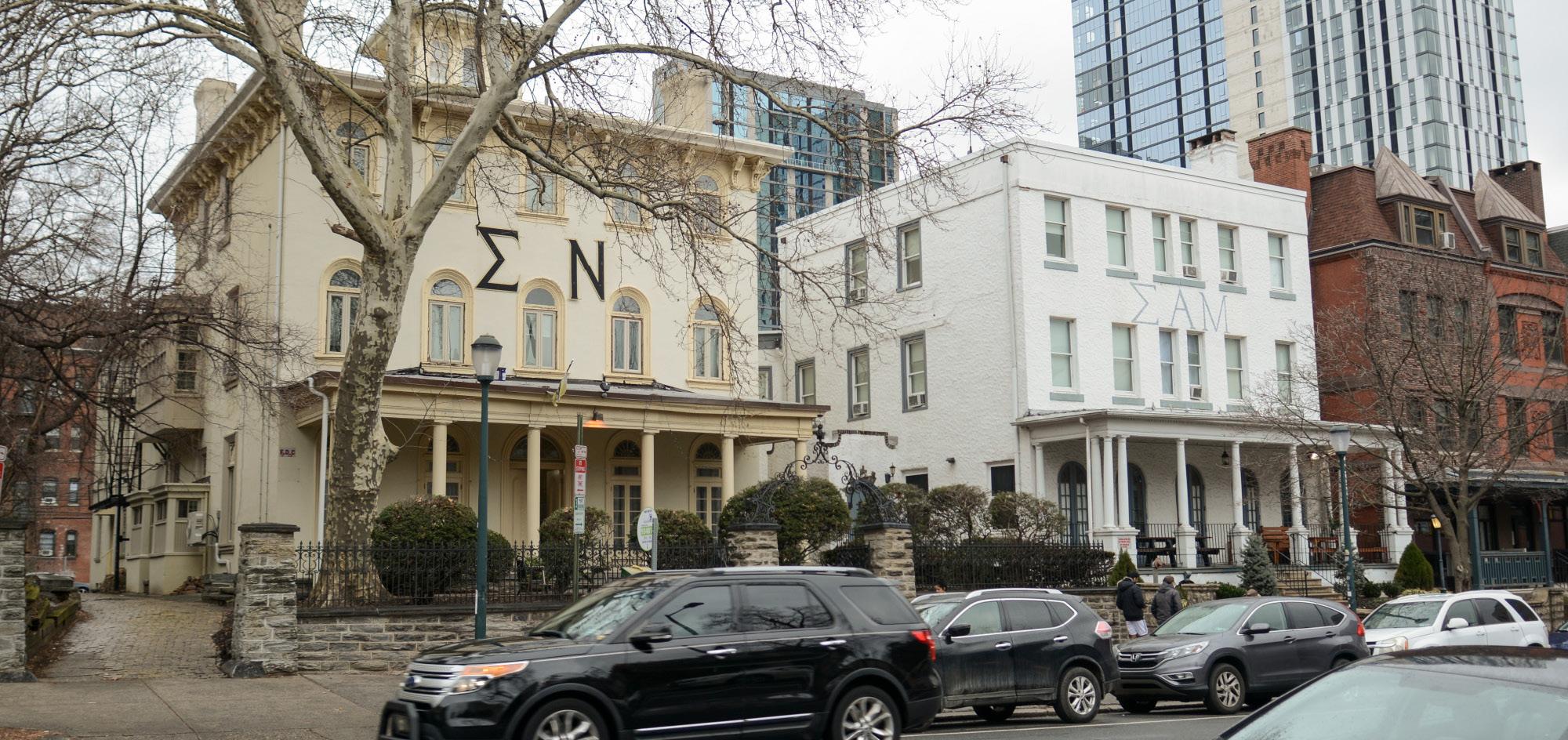
According to Penn’s hottest, wealthiest finance bros, Paddy’s — an unofficial weekend rager following actual Saint Patrick’s Day — was practically Mykonos, Greece in midterm season. Cheaper, of course, and allegedly sponsored by not just generational wealth, but ketamine and Veuve Clicquot in Solo cups.
To be fair, I’m hardly a credible insider when it comes to Penn’s social scene — not just because I’ve never been particularly involved in it, but because I’ve likely burned that bridge altogether by publicly criticizing greek life. And, even now, I think that Paddy’s is just people in green funneling vodka and electrolytes from plastic jugs labeled “BORG.”
But, for those of us who might view Paddy’s as something less than Penn’s finest cultural moment, the Office of Fraternity and Sorority Life’s unpopular cap of 100

attendees at registered events merits our attention.
During Major Event Weekends like Paddy’s, each student group on campus is allowed to host only one event, whether it is dry or involves alcohol. Events with alcohol, however, are also capped at a 3-1 guest-to-member ratio.
For instance, if a fraternity or sorority chapter has only 10 members, the maximum attendance is 40 people.
OFSL’s limits apply even to large, ventilated houses that could safely accommodate more attendees.
OFSL may be responding to pressure from local residents tired of public intoxication and overcrowded sidewalks, concerned parents who don’t want their kids in out-of-control environments, or alumni and donors who value Penn’s reputation. After all, Penn is an urban campus. In 2019, Penn reported 147 safety-related incidents involving students on public property in the
Two Geese and a Goyard A DOSE OF DILLARD | Why

in bed makes me so sad,” “whenever I open Instagram I get reminded that I go to school with millionaires and trust fund babies,” and “seeing everyone i know be on a yacht rn is slowly getting to me.” These comments were referring to the white sand, palm-tree lined, ocean view photos covering Instagram over spring break. While many Penn students traveled far and wide for spring break, many, like me, stayed home. The comments came on the heels of the many organized or group-affiliated trips to Punta Cana, Casa de Campo, Puerto Rico, and more. These posts are examples of how social comparison can take a toll on one’s sense of belonging. This mindset is a recipe for disaster. Still, these Sidechat comments aren’t just about spring break — they reflect a larger reality at Penn. Our culture includes designer everything,
Penn isn’t immune. We have hard questions to answer here as we imagine the kind of institution we want to be. But I don’t believe you can hate a place into becoming better. You have to love it enough to expect more from it — and care enough to expect more from yourself inside of it.
And that’s how I feel about Penn. It’s not always easy. It’s not always fun. But it is, without question, one of the most meaningful places I’ve ever had the privilege to be.
So if you’re sitting there, undecided and uncertain, still refreshing that Reddit thread, I won’t tell you what to do. But I will say this: I would choose Penn again. One thousand times over. And I hope you give yourself the chance to experience it too.
Philadelphia neighborhood around the campus. Noise complaints, crowding, and unsafe off-campus behavior don’t just affect students; they affect residents of University City. Events like Paddy’s are especially hard to manage. Even when fraternities follow registration rules, the sheer volume of people and energy creates unpredictable situations. OFSL may feel that putting a hard cap is the only simple lever to reduce risk across the board.
However, a purported member of greek life on Sidechat — the infamous part-Reddit, part-Messages app that facilitates private conversations among college students — explains, “OFSL is regulating Greek life to the point where it begins to either a) become all off-campus or b) cease to exist.” Fraternities, when faced with a limit, will prioritize brothers and close friends in addition to others with strong social ties. That leaves students from marginalized backgrounds disproportionately on the outside looking in, if they’re in the know at all.
Furthermore, those not plugged into legacy social networks will still party. But with the safest, regulated places out of the question, more students go to bars using fake IDs, unregulated apartments, or even the streets. OFSL has turned Penn’s already vulnerable social scene into a tiered asset class. Who manages access, who’s getting yield, and who’s just stuck outside refreshing their texts for an in?
Penn consistently promotes the idea that students will find open doors to experiences that “unit[e] people across meaningful differences on campus,” yet its effort to keep people safe ends up creating smaller, riskier, and more stratified events. When OFSL or other leadership unilaterally impose policies without involving student voices, it sets a precedent. Today, fraternities are affected. Tomorrow, clubs, performing arts groups, or student publications could be subject to OFSL restrictions.
On Sidechat, over 1,000 students upvoted that they
DIYA CHOKSEY is a College first year studying cognitive science from Mumbai, India. Her email is dchoksey@sas.upenn.edu.
luxury goods, and pampered lifestyles. So many of us are so aggressively awestruck when we finally arrive on campus and are confronted with how many students’ wealths challenge our hierarchy of values and even self worth. Many at Penn have adopted the mindset that there is a positive correlation between financial means and belonging. Don’t be fooled — it’s a trap. Thinking those with more financial resources belong or deserve to be here, while those without the riches, well, don’t, is missing the point. I’ll admit it is difficult to abandon this notion when so many people on Locust Walk are donning their Canada Goose jackets, Golden Goose shoes, and Goyard bags, but having gobs of money isn’t the only metric for wealth. Sahil Bloom’s book “The 5 Types of Wealth” explains that time, social wealth, mental wealth, physical wealth, and yes, financial wealth, together, are a more complete measure.There is more than just financial wealth. In a recent Knowledge by the Slice talk, Penn Religious Studies professor Justin McDaniel made a sobering point about the imbalance in our focus on our academic training. He estimates that 16% of our lives will be spent at work (hopefully making money) but we spend enormous amounts of our time, mental capacity, physical well-being and social capital on how to get rich. I would argue that we also use this precious time on our obsession with financial wealth. But what about the other 84% of life? How are we appreciating what we have and investing in ourselves so we can deal with the rest? Who has what and why does it really matter? Rich people will have expensive things. That’s a fact that simply won’t go away. And because of that fact, we shouldn’t attempt to change ourselves to fit in or feel like we belong. Furthermore, giving so much thought and energy to what others have doesn’t make those things magically appear for you. I also happen to believe that successfully completing a degree at Penn is a huge advantage and investment in your eventual financial stability. So, you’ll more than likely get to have a few of those high-end creature comforts at some point in your
would “sign a petition against OFSL.” One dissenter suggests that “[m]ost of the Penn administrative staff need to be let go, starting with the University Life office that wants to plan “appropriate social events” for students.” The aforementioned greek life member adds, “My Greek organization has helped me through times when the pressure feels like too much, and I genuinely do not know what I — or many others — would do here without those support systems.” This backlash shows how the policy was made without student input — and by people without relevant lived experience. OFSL has been a part of campus life since 1849, when the Delta Phi fraternity established its Eta chapter at Penn. And for over 175 years, the OFSL has guided over 40 fraternities and sororities as high-profile sexual assault allegations and other controversies have brought greek life under national scrutiny. But when there’s no real feedback loop or path to revision, students stop engaging with the system altogether.
Last December, I’d criticized OFSL’s ban on daytime parties during Homecoming weekend, during which the Penn administration wanted to funnel students into an official tailgate. This time, though, there’s no real effort on Penn’s part to create alternative programming that’s actually appealing. Sure, you can go to a wellness hour at Pottruck Health and Fitness Center with free coffee and yoga mats — but that’s not going to fill the social gap many of us are craving. Now, we’re at an inflection point between rejecting the absurdity of college drinking culture and still wanting organic, accessible social space. OFSL is unfortunately not helping either side.
MRITIKA SENTHIL is a sophomore from Columbia, S.C. Her email is mritikas@upenn.edu.
future. What’s more important is shifting your focus and widening your lens on wealth. So why do we have such an obsession with what we don’t have rather than gratitude for what we do have? It’s difficult to escape imposter syndrome at Penn, whether academically or socially. It’s not uncommon to feel as if you need to live a certain lifestyle or own or experience certain things to feel better about yourself. But this mentality is dangerous. Just as sure as night turns to day, there will always be someone with more — and another possession promising to be your ticket to the “in crowd.” What’s needed is for you to take stock of what you’ve got and realize there are so many more people worse off. I urge you to be true to yourself, whatever that means for you. Don’t waste your time trying to become what you think a Penn student “should” be — instead use this opportunity to become authentically who you were meant to be. There is no Penn aesthetic or blueprint to follow — the only requirement is to be yourself. This is the time and place for you to cultivate your talents, share your ideas, and if being yourself means purchasing the items mentioned above, then more power to you. But never think that because you don’t own luxury goods or lack a five-star lifestyle, it means you don’t belong. So, comparing yourself to those you deem “multimillionaires” and “trust fund babies” is pointless — true belonging comes from within. Whether you’re rocking Van Cleef & Arpels or you thrift on a budget, do you. That is the beauty of living in a diverse community, because there is nothing exciting about monoculture. If you’re lucky enough to secure a spot and ultimately earn a degree from this institution, odds are your future is fiscally viable. Besides, it’s not how you start that matters, it’s how you finish.
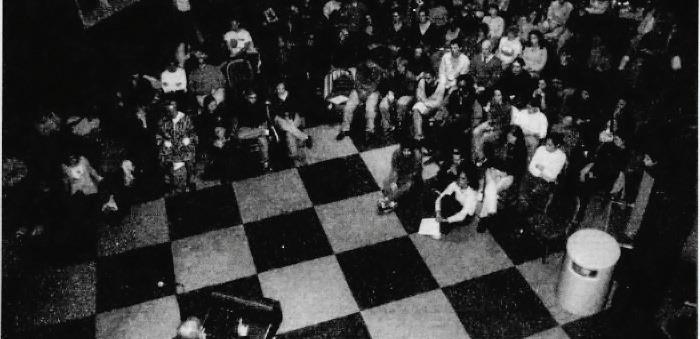

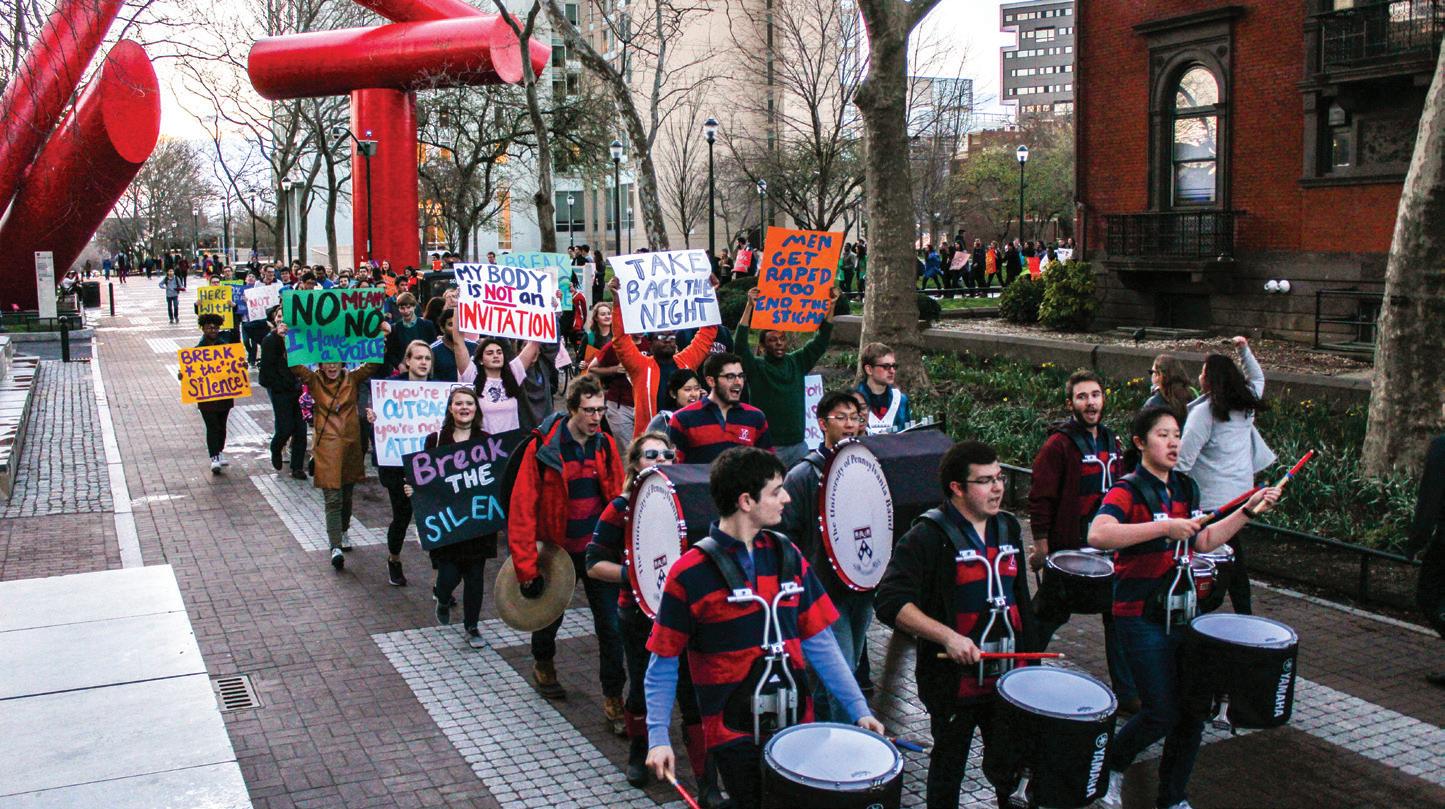
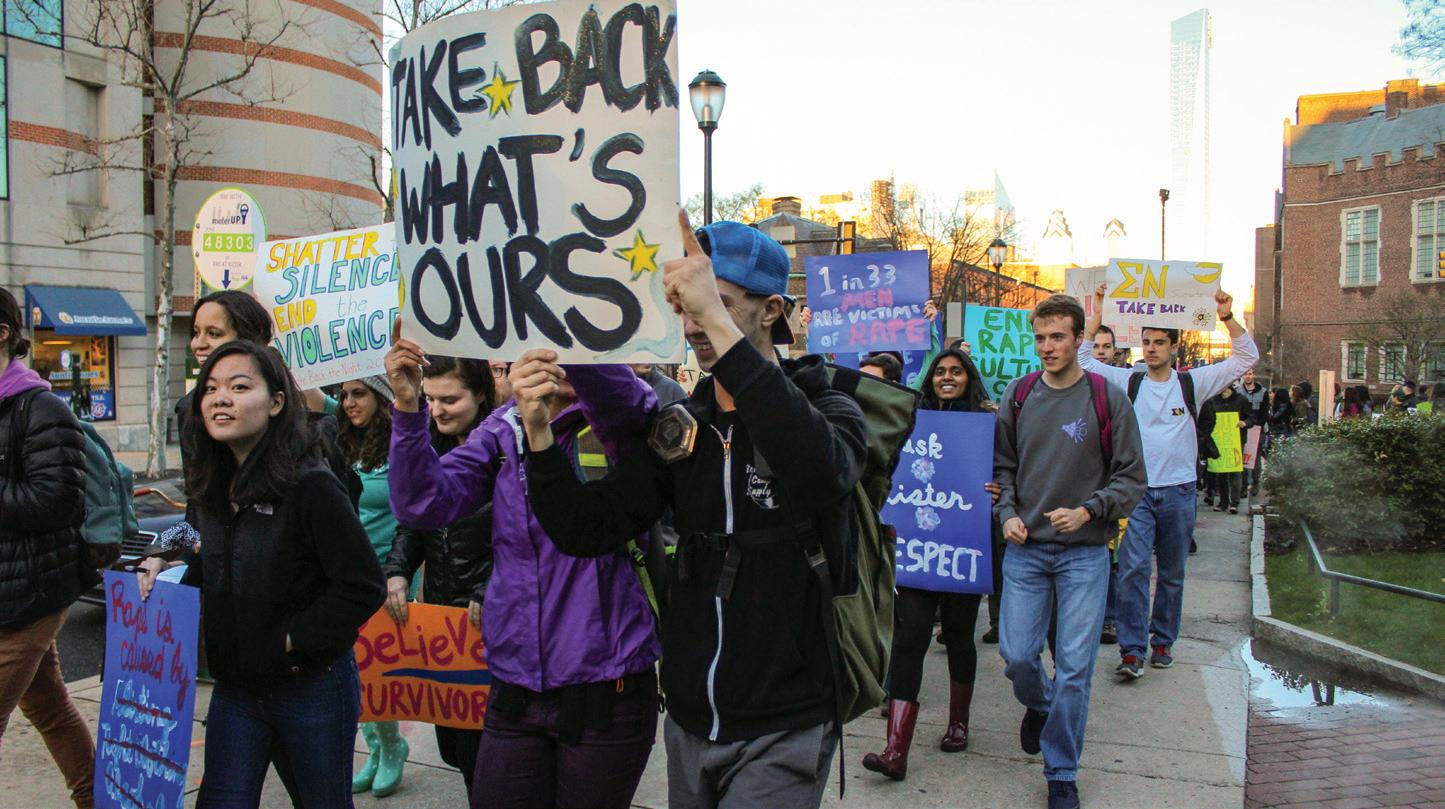


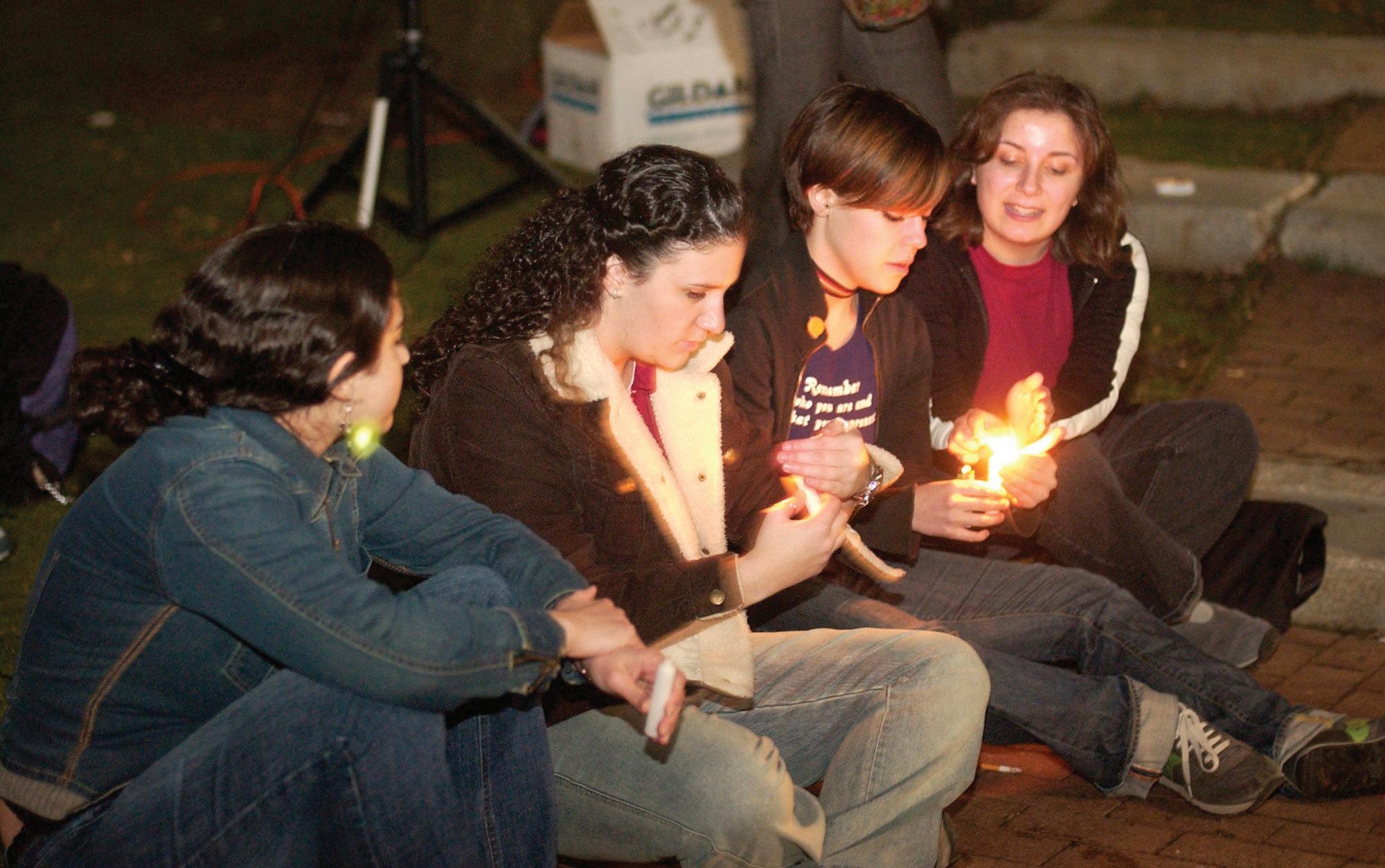

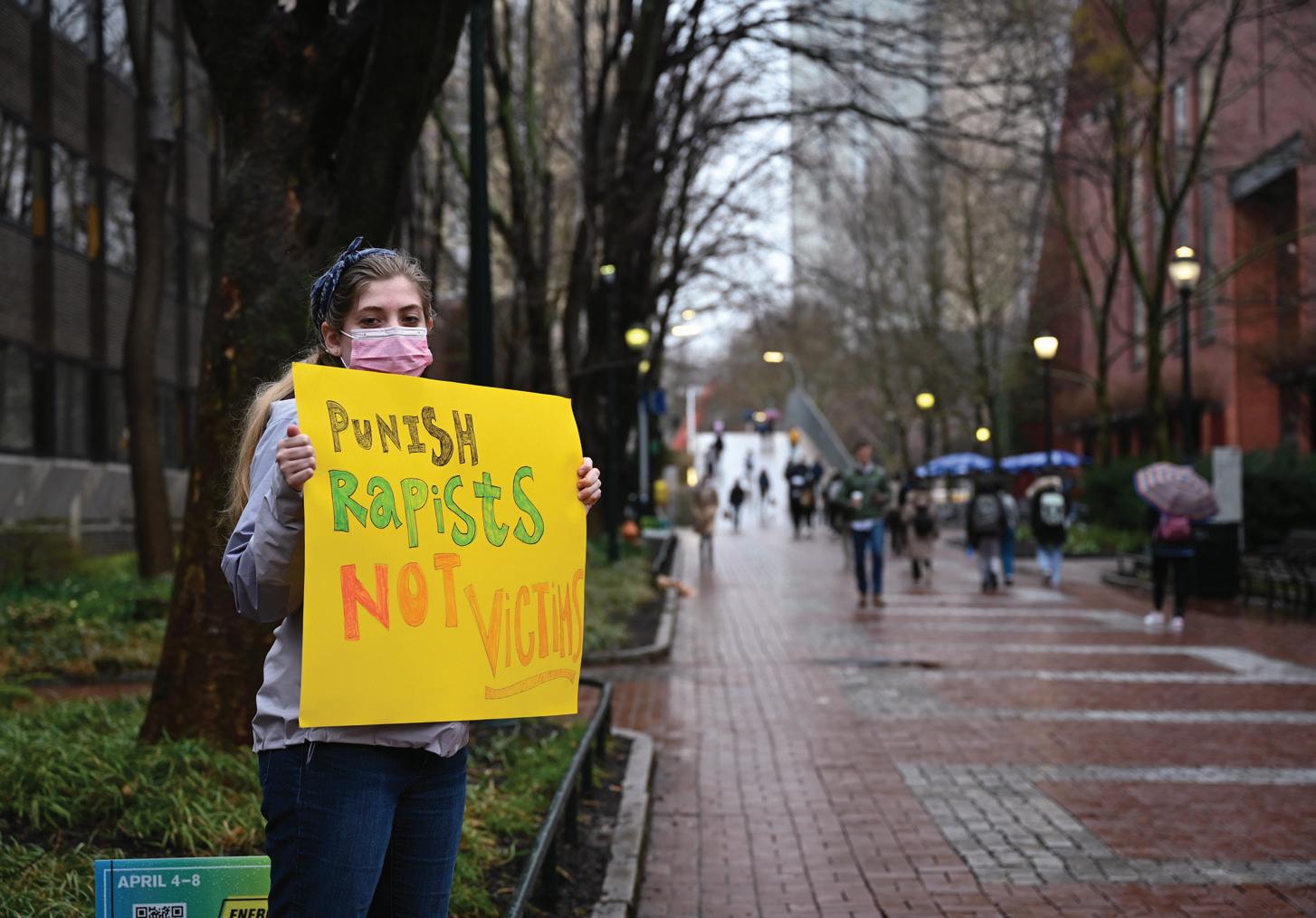
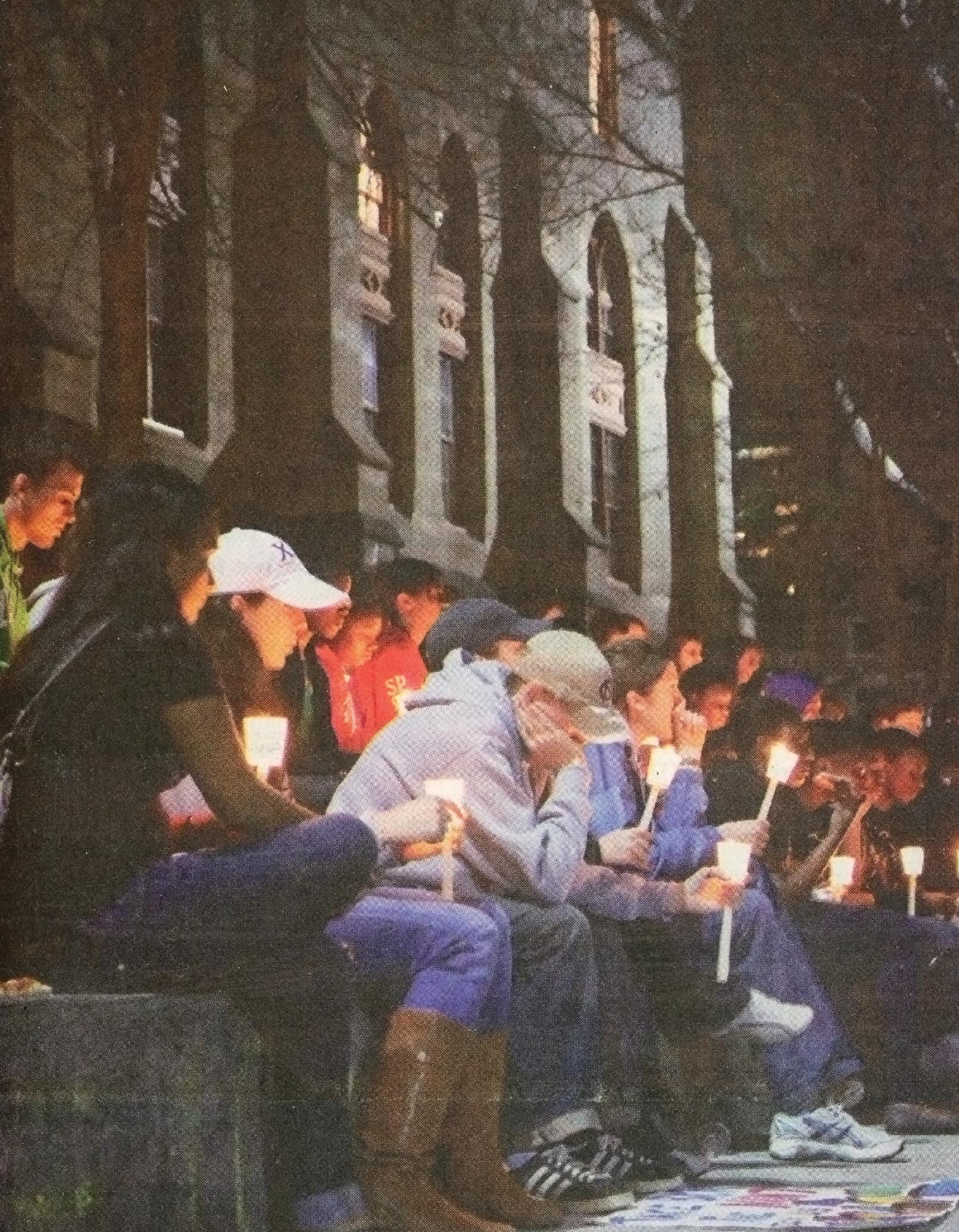
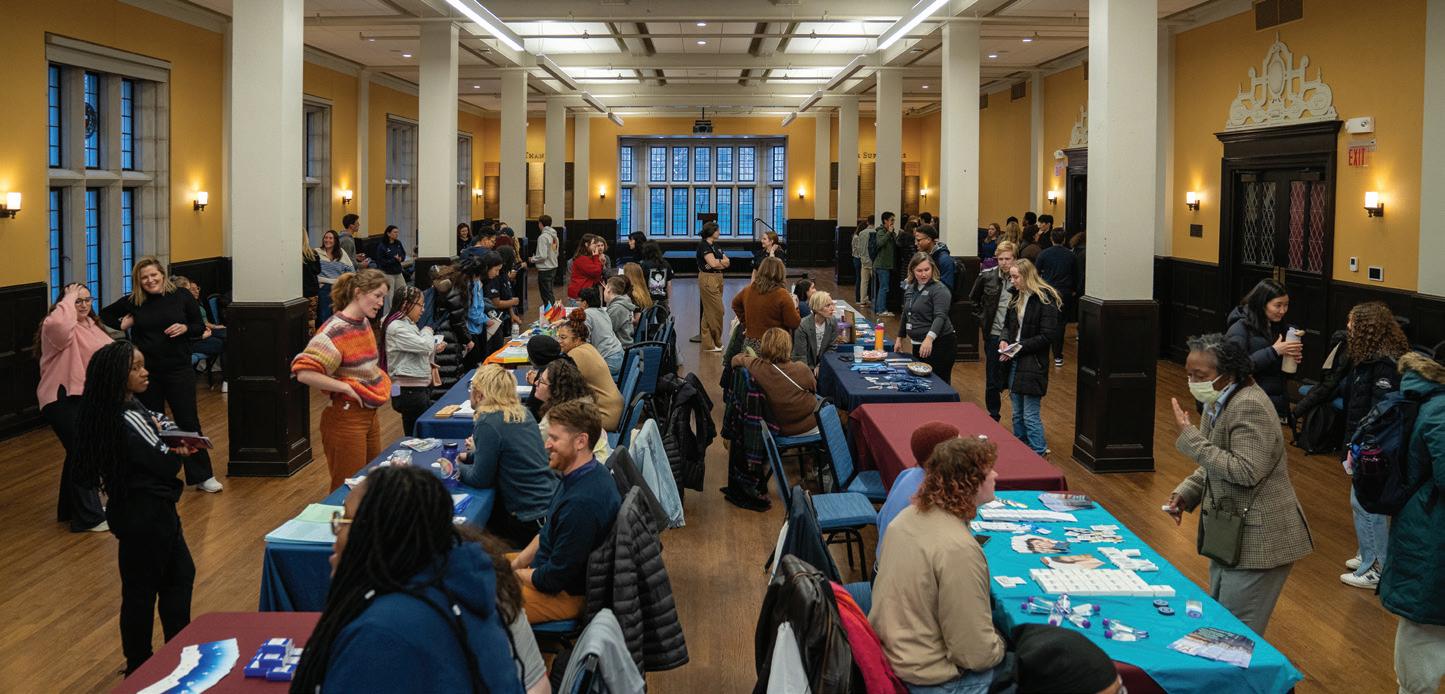
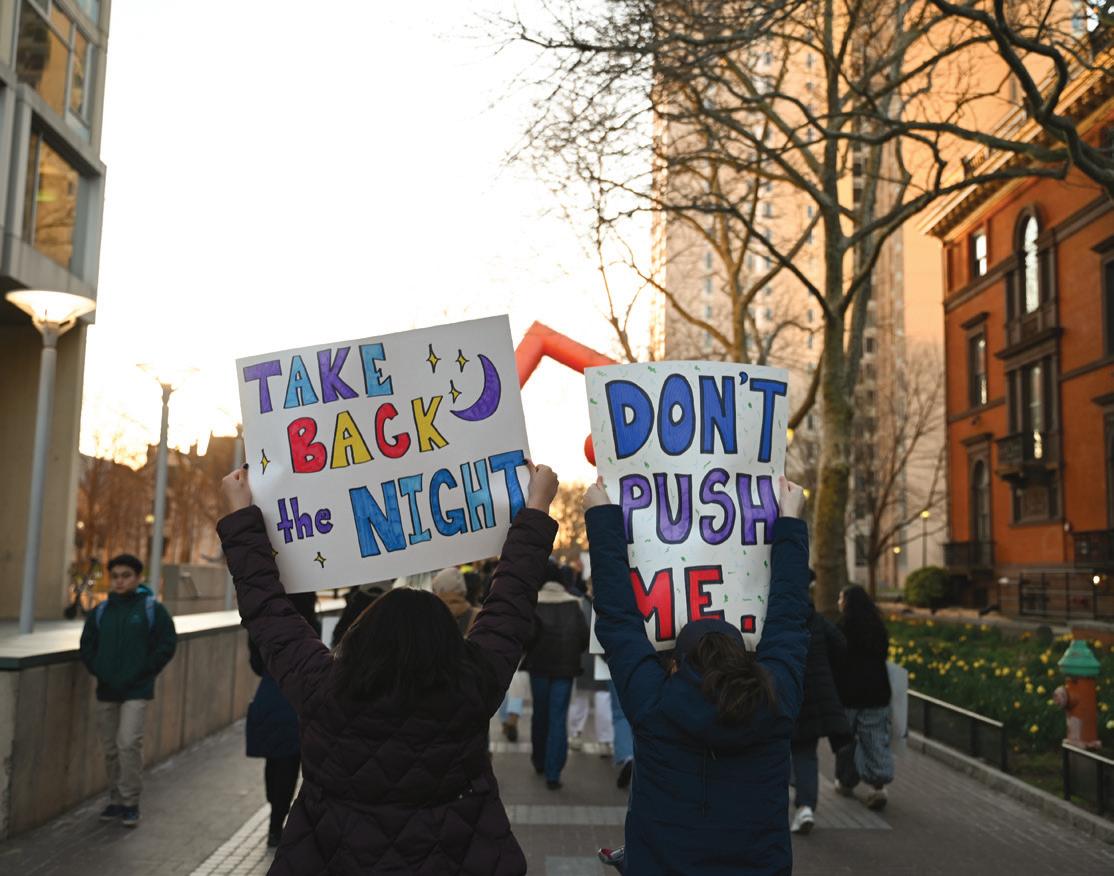
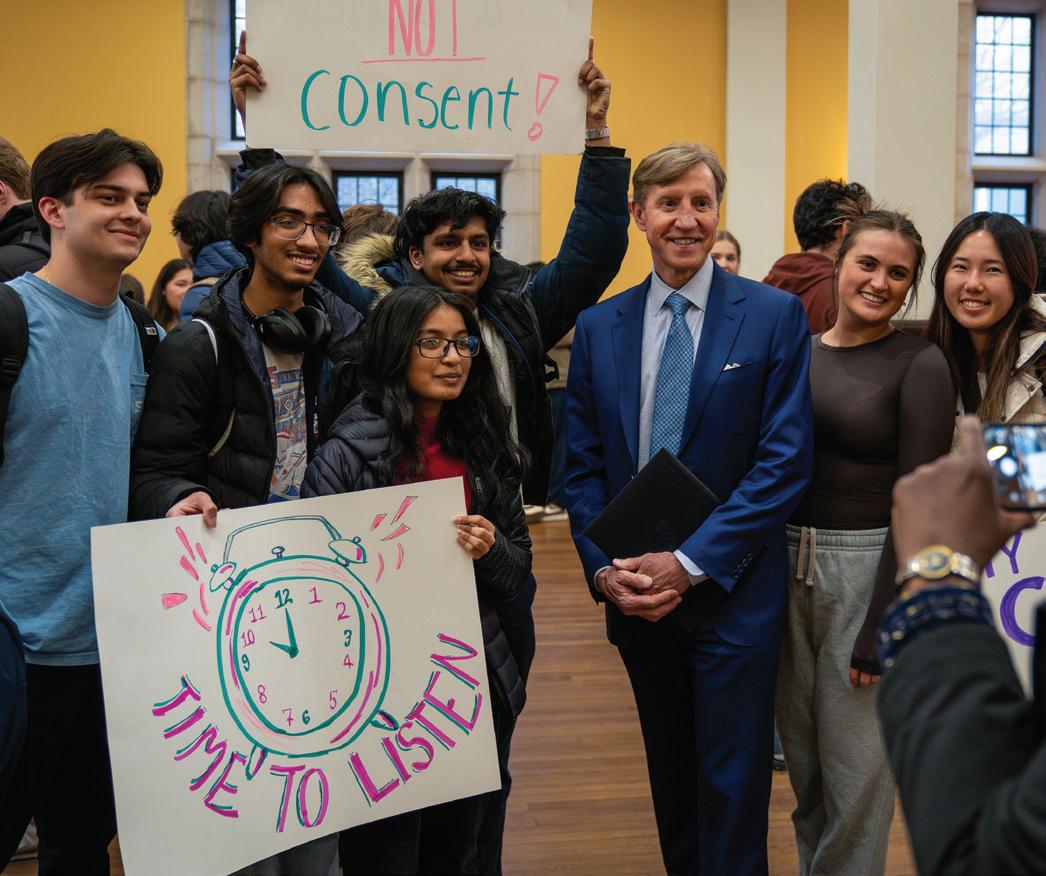
The event was part of the pilot program for the “Voices of October 7th” speaking tour and featured frsthand accounts from survivors of the Oct. 7, 2023 attacks
CHRISTINE OH Staff Reporter
Israeli activist and actress Noa Tishby moderated a discussion with two survivors of the Oct. 7, 2023 Hamas attacks on Israel at Penn Hillel on Monday.
The March 31 event was part of the pilot program for the “Voices of October 7th” speaking tour and featured firsthand accounts from survivors of the Oct. 7, 2023 attacks. Tishby moderated the conversation featuring Noam Ben David, a Nova music festival survivor, and Moran Stella Yanai, who was kidnapped from the Nova festival on Oct. 7, 2023 and held hostage by Hamas for 54 days.
In a statement to The Daily Pennsylvanian, Tishby described her experience at Penn as a “deeply emotional experience.”
“I was struck by the incredible resilience of the Jewish students who came out despite the challenging and often hostile campus environment,” Tishby wrote.
“October 7 is such a life-defining moment for anybody who’s been through it on the ground,” Tishby said as she introduced the two women. David and Yanai recounted their lives before the attacks and described the atmosphere of the Nova music festival, highlighting their aspirations and the strong sense of community they experienced. Then, they described the moment on Oct. 7, 2023 when the festival turned violent.
“When the sun rises, it’s the most wonderful time of every party,” David said. “But at that party, the sunrise was different than we all imagined.”
David recalled seeing rockets and thinking they were fireworks. When the music stopped, she heard screaming and knew something was wrong.
Tishby then asked Yanai to describe her experience in captivity.
Yanai recounted the moment she was brought into Gaza and told the over 200 audience members that she closed her eyes until the “terrorist next to me … forced me to open my eyes.”
“I’d never judge an entire nation [based on]
TRUMP, from front page
to the Education Department’s workforce began the next day. The same day, three Penn research projects funded by
something, but … what I saw as I was entering Gaza was 100% of civilians cheering, celebrating on the streets, from the youngest to the oldest … celebrating evil, screaming, ‘God is great,’” Yanai said.
Yanai described the unpredictability of life as a hostage, emphasizing the mental and physical toll of living in constant fear. She also highlighted the importance of maintaining hope and faith to survive the ordeal.
Tishby then asked David and Yanai for their reactions to the moment they realized that “October 7 was debatable.”
“Once I got out of the hospital, and I finally saw [people debating], I was shocked,” David said. “I felt even more devastated from inside.”
She recounted the murder of her boyfriend — asking “If it didn’t really happen, where is my boyfriend?” — and emphasized the importance of living life to the fullest in his memory.
“What’s frightening, more than pure evil, are those people that deny it,” Yanai added.
The Monday panel was the subject of an “All Out for Palestine Rally” that involved around 75 pro-Palestinian protesters. When the crowd arrived at 39th Street near Hillel, individuals chanted “F**k Penn” and “F**k Hillel.” One speaker said that Penn invited Tishby “with the express purpose of justifying genocide on college campuses.”
“Tishby demands that the Palestinian people lay down and die, that they anguish in Israeli prisons where they are beaten, assaulted, and murdered every single day,” one speaker said at the demonstration. “The genocidal freaks of Penn Hillel welcome these advocates for genocide.”
Tishby acknowledged the demonstration during the event, adding that “we have three times more people here in this room than out in the demonstration.” In a statement to the DP, Tishby said that the protest — which she described as a “hate mob” — was “antisemitism, plain and simple.”
the NIH were terminated. In the termination letters, NIH wrote that the awards were “incompatible with agency priorities, and no modification of the project could align the project with agency priorities.”
On March 27, the U.S. House of Representatives passed a bill to increase oversight over universities that receive foreign donations and investments, cutting the foreign gift reporting threshold for universities — including Penn
Organized in preparation for the 250th anniversary of the signing of the Declaration of Independence, the exhibition is on display through May 27
THEO GREENFIELD Staff Reporter

the
The
The Kislak Center for Special Collections, Rare Books, and Manuscripts featured an exhibit titled "Revolution at Penn?" that examined the formation of the University and the debates that divided the school through the United States Revolutionary War.
Organized in preparation for the 250th anniversary of the Declaration of Independence, the exhibition is on display in the Goldstein Gallery on the sixth floor of Van Pelt-Dietrich Library Center through May 27. The exhibit featured collections from the University Archives and the Kislak Center.
The beginning of the exhibition presents a large map of 1775 Philadelphia, a specialty of curator J. M. Duffin, according to Kislak Center curator John Pollock. On the map, viewers can see the homes of many past residents of Old City, and further information on them, such as occupation, as well as Penn’s original campus on the southwest corner of Fourth and Arch streets.
The exhibit explained the founding of the University, its founders — including Ben Franklin — and its unprecedented status as a colonial school with no theological
— from $250,000 down to $50,000, with a $0 threshold for “countries and entities of concern.”
Academics
On Feb. 7, a directive from the NIH capped “indirect costs” — which provide funding for overhead research costs such as lab spaces and support staff — at 15%. The proposed funding cuts jeopardized $240 million for the University, according to an email from Jameson. Penn medical practitioners and researchers expressed uncertainty for the future of their work and warned of severe consequences for the future of Penn’s research programs.
Three days later, a lawsuit filed by Penn and peer institutions resulted in a judge temporarily halting the NIH funding cuts. Senior Associate Vice Provost and Senior Associate Vice President for Research Elizabeth Peloso wrote that the 15% cap would result in a loss of $170.9 million for the remainder of the 2025 calendar year, threaten 529 jobs staff members directly affected by indirect costs, and impact an additional 4,020 Penn employees.
On Feb. 21, Penn notified graduate department chairs that it would reduce admissions across the University’s graduate programs, a decision faculty alleged was made after programs had already accepted students.
Two days later, Interim School of Arts and Sciences Dean Jeffrey Kallberg attributed the school’s decision to restrict graduate admissions to the NIH funding cuts, writing that the “difficult” decision was a “necessary costsaving measure to help mitigate the impact of these new funding realities.”
In response, 22 graduate chairs from SAS sent an open letter to senior administrators the next day, voicing concern over the school’s decision to cut graduate admissions.
On March 10, Provost John Jackson Jr. and Senior Executive Vice President Craig Carnaroli announced six University-wide “proactive financial measures” — including a hiring freeze and a review of capital spending — in the face of federal funding cuts.
In a March 25 email, Jameson wrote that faculty across seven of Penn’s schools received “stop work orders” notifying them that their federally contracted research was halted. The notices totaled approximately $175 million
school. In 1765, the University Board of Trustees founded the first medical school in America.
Original documents — including the “Additional Charter of the College” that established the legal foundation of the University, books on education by Ben Franklin and other American elites, students’ notes, sermons from the first provost, Rev. William Smith, and satirical books written by students mocking their professors — were organized by the Kislak Center and the University Archives.
“Part of the argument of the show is that our school and the people in it and the people around it were central players in the evolutionary events on both sides,” Pollock said.
Smith was forced out of his position in 1779 due to his Loyalist tendencies, including giving tours to Hessian officers, and was accused of warning Hessians of an impending attack by Washington’s forces on Germantown. The University was targeted by Constitutionalists and dissolved that year.
A new school, called University of the State of Pennsylvania was established and governed directly by the state of Pennsylvania. The College of Philadelphia, still operated by Smith, was eventually merged into the University of the State of Pennsylvania to become the University of Pennsylvania.
“It also did some things that we might find very uncomfortable,” Pollock said. “People in Pennsylvania and at the school had to swear a loyalty oath to the state… if you [didn’t] swear that oath you [couldn't] be a teacher here.” The exhibition explores a specific scandal during which Penn student Francis Murray, during a graduation speech, expressed sympathy toward Major Andre, a Patriot traitor and Benedict Arnold’s ally. While Pollock added that a Andre wasn’t believed to be pro-British, it was “politically dicey” at the time, and the provost took Murray’s diploma. While he did eventually get his diploma back, Murray had to defend himself in the newspapers.
“There are some parallels to protests in our own times,” Pollock said in reference to the incident with Murray. “What are students allowed to say publicly? Who gets to control that? Should your teachers lock down what you say?”
and came after the White House announced the March 19 funding freeze.
A wave of layoffs initiated by Trump’s second administration affected more than 175,000 federal workers, including Penn students and alumni. The job cuts are reported to have particularly impacted recent graduates who have just entered the workforce.
Immigration policy
On Jan. 29, Trump signed an executive order directing federal agencies to identify and deport non-citizen participants — including college students — of pro-Palestinian protests.
“To all the resident aliens who joined in the pro-jihadist protests, we put you on notice: come 2025, we will find you, and we will deport you,” Trump wrote on a White House fact sheet for the order. “I will also quickly cancel the student visas of all Hamas sympathizers on college campuses, which have been infested with radicalism like never before.”
On March 6 — two days before Penn’s spring break began — International Student and Scholar Services at Penn sent an email to international students advising the citizens of several countries to avoid “non-essential” travel ahead of a possible federal travel ban.
ISSS stated that the countries likely to be affected by the travel ban are Afghanistan, Pakistan, Iran, Libya, Somalia, Sudan, Syria, and Yemen. ISSS strongly advised students who are citizens of one of the listed countries to avoid “non-essential travel outside of the United States” until more details are available.
In a March 18 email to the Penn community, Jackson and Vice Provost for Global Initiatives Ezekiel Emanuel issued recommendations for individuals affected by evolving immigration policies, encouraging them to seek guidance from campus and legal resources, among other actions.
“We are taking action to offer direct support to impacted community members, plan for disruptions caused by potential policy changes, and provide information to ensure that we can continue to support students, scholars, and others,” the email read.
Nate Silver is the leading political forecaster whose statistics-driven approach is unparalleled in its accuracy to predict election outcomes. He first gained national attention during the 2008 presidential election when he correctly predicted the results of the primaries and the presidential winner in 49 states. In 2012, he called 50 of 50 states. A pioneer in the field of data journalism, Silver publishes his insights and statistical assessments of cultural phenomena on his highly popular Silver Bulletin Substack, boasting nearly a quarter million subscribers. Silver founded the awardwinning FiveThirtyEight website and served as its























McCaffery’s experience at the high-major level makes him a home run hire for Penn men’s basketball
WALKER CARNATHAN
Former Sports Editor
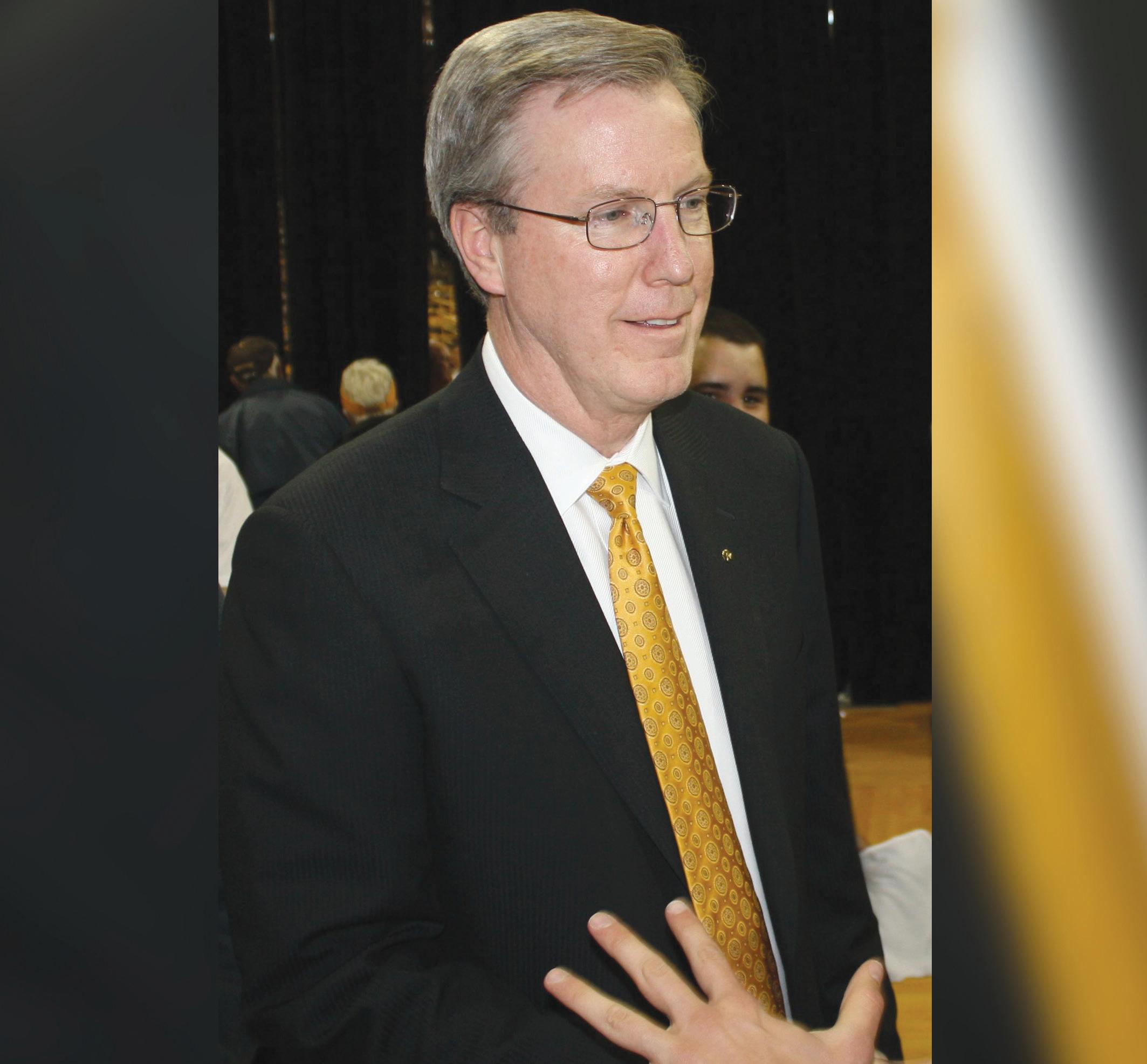
PHOTO COURTESY OF WIKIMEDIA COMMONS | CC0 1.0
Ivy League schools do not hire coaches like Fran McCaffery.
In the history of the Ancient Eight, Penn men’s basketball’s recent appointment of the 1982 Wharton graduate is relatively unprecedented. After 15 years at the helm of a high-major program in Iowa, one that peaked at No. 3 nationally
COACH, from front page
NCAA tournament — but never advanced past the Round of 32. McCaffery also coached five All-Americans during his time in Iowa City, including 2020 National Player of the Year Luka Garza and 2022 first-team All-American Keegan Murray, who was selected fourth overall in the 2022 NBA Draft.
“I am thrilled to bring Fran back to Penn and Philadelphia as our next head men’s basketball coach,” Athletic Director Alanna Wren said. “Fran has had success at every level of Division I and is passionate about restoring our program to glory. His energy and enthusiasm for leading young men was apparent throughout the process, and he has proven to be committed to player development and relationship-building with his student-athletes throughout his storied career.”
Parker Executive Search assisted Penn in the hiring of its new head coach.
McCaffery will be tasked with revitalizing a Penn program that has declined in recent years. After winning 23 Ivy League titles from 1970 to 2006, the Quakers’ last three coaches won a combined two conference crowns, and the team has finished with a losing conference record eight times in the same timeframe.
In 2024, the Quakers finished 8-19 overall, including a 4-10 record in Ancient Eight play. On March 24, sophomore guard Sam Brown, Penn’s only All-Ivy selection and the Ivy
a former assistant
in 2021 and 2016, McCaffery arrives at his alma mater with a breadth of experience — experience that will help him revive a once dominant team, experience that the league has never seen before.
The trajectory of collegiate coaching careers varies depending on the individual, but McCaffery’s path is truly unique. After tournament
League leader in points per game during conference play, announced he would enter the transfer portal. The same day, freshman guard AJ Levine also entered the portal before announcing he would return to Penn — just over 24 hours later — following the news of McCaffery’s hiring.
“I like how excited [McCaffery] is for this job. … I think he’s gonna really, really work for this team,” Levine said. “He blows [it] out of the water with his plan for us.”
Junior guard Ethan Roberts, the Quakers’ leading scorer and another potential transfer portal prospect, also expressed enthusiasm for McCaffery’s arrival.
“I’m just really excited for this hire,” he said.
“I think there’s a few opportunity costs you work with here at Penn, and just having that elite ball knowledge is huge,” Roberts added.
“It’s inspiring. It ignites a fire in you a little bit. That’s why I’m so excited to get back in the gym now and learn from somebody who does produce pros. … I’m just excited to be a Quaker, and I’m looking forward to the future.”
Many Penn alumni also reacted positively to the news of McCaffery’s hiring. Craig Littlepage, who served as Penn’s head coach from 1982-1985 and oversaw McCaffery’s first assistant job, lauded McCaffery’s teams for their ability to play “ahead of the curve” offensively while also noting McCaffery’s love for Philadelphia.
“It’s not only the love of Penn, and there’s no mistaking that he loves the University, but his love for Big 5 basketball and his love of the Palestra as a home where he’ll be coaching the

appearances at Lehigh, UNC Greensboro, and Siena, McCaffery made the jump to the highmajor ranks when he was hired at Iowa in 2010, where he spent the last 15 years before being dismissed at the end of this past regular season.
Plenty of mid-major coaches have made similar jumps, but few experience as much success as McCaffery, who finished as the all-time winningest coach in Iowa history with 297 victories. It’s even rarer that such a candidate comes across the desk at a school like Penn.
In the history of the Ivy League, there has never been a coach hired with more career NCAA tournament appearances than McCaffery’s 12. High-major experience is a rarity in its own right: In the last 20 years, just two coaches have been hired by Ancient Eight programs after previously coaching in a power basketball conference (Big Ten, SEC, ACC, Big 12, Pac-12, Big East).
Those coaches are Steve Donahue, who was recently fired by Penn, and Harvard’s Tommy Amaker. But both Donahue and Amaker flamed out at the high-major level — Donahue went 54-76 in four years at Boston College, while Amaker went 109-83 in six seasons at Michigan. Neither led those schools to a tournament appearance.
McCaffery, on the other hand, thrived at Iowa. In 15 seasons, the Hawkeyes made the tournament seven times and had just two losing campaigns. Though he was often criticized for never advancing to the second weekend of the tournament, McCaffery nonetheless oversaw one of the most consistent eras in the history of the program, one that produced 2020-21 John R. Wooden Award winner Luka Garza, 2022 NBA No. 4 overall pick Keegan Murray, and two other All-Americans.
Penn rarely gets the chance to hire those kinds of coaches. And when it does, players notice.
“I think there’s a few opportunity costs you work with here at Penn,” junior guard Ethan Roberts, the team’s leading scorer, said. “[McCaffery] having that elite ball knowledge is huge. … That’s why I’m so excited to get back in the gym and learn from somebody who does produce pros.”
Quakers,” Littlepage said. “McCaffery seems to be a guy that has connected really well with his players, and his players know that he will fight for them and support them in so many different circumstances. … They will feel that. They will see that everyday in practice.”
Former Pennsylvania Gov. and current Penn lecturer Ed Rendell, who criticized Penn’s decision to fire former coach Steve Donahue in March, also praised McCaffery’s coaching style.
“He plays exciting basketball,” Rendell said of McCaffery. “I can tell Penn fans, I can’t guarantee we’re gonna win or lose, [but] I can guarantee we’ll be fun to watch.”
Others have questioned whether McCaffery’s addition will change Penn’s fate — given the school’s prohibition of athletic scholarships and name, image, and likeness collectives. 1972 Wharton graduate Alan Cotler, a former point guard for the Quakers, wrote in a statement to the DP that McCaffery may improve the Red and Blue’s standing in the Ivy League but could struggle to construct a nationally relevant program.
“In the face of this unrelenting tsunami of college athletes realizing their fair market value, the Ivy League will not even discuss let alone allow these kids to even get scholarships, let alone pay for play,” Cotler wrote. “[McCaffery] is used to Pay for Play at Iowa and being in the big time. … He will come face-to-face with the reality of the above.”
“Does changing the coach really change anything?” Cotler added.
Following the news of McCaffery’s hiring,
and still bring it home,” he said after that race.
Fallon previously told The Daily Pennsylvanian that he had been working on swimming faster during the first half of the race while maintaining his impressive back-half speed.
Coll Marti led the NCAA finals race at the halfway mark with a time of 51.72 — closely followed by Yep, who split a 52.00.
Fallon made his move during the third 50. With an increased tempo and stroke rate, Fallon rallied into third place at the 150 mark, behind Yep and Coll Marti.
In the final 50 of his collegiate swim career, Fallon, as usual, made a big final push — pulling slightly ahead of Coll Marti to touch the final wall first. However, in the end, Breaststroke U prevailed
Prior to McCaffery’s hire, Roberts had been reported as a potential candidate for the transfer portal. Now, signs point to his remaining with Penn. On March 25, freshman guard AJ Levine announced he would enter the transfer portal. The next day, following the initial report of McCaffery’s hiring, Levine announced his return to the Quakers.
“We were already excited when we heard about it,” Levine said of McCaffery’s hiring. “He blows [it] out of the water with his plan for us and really just his excitement to be here.”
After back-to-back seventh-place Ivy League finishes, Penn will look to rebound under its new coach and return the program to its previous status as an Ivy League power. In 2024-25, Penn ranked No. 304 out of 364 Division I teams in the NCAA NET rankings and No. 294 in KenPom, a far fall for a program that once prided itself on being a nationally relevant program out of the Ancient Eight.
If there’s one coach that can restore the Quakers to national prominence, it’s the one with national experience. In Ivy League recruiting, it is a significant bargaining chip for a coach to say they have coached a conference player of the year. McCaffery alone can say he has produced a national player of the year. In the Ivy League, it is a massive win for a former player to make an NBA roster. McCaffery has coached a top-five pick. As he takes over a struggling program with an unprecedented resume, McCaffery will be under significant pressure to produce results at his alma mater. But in hiring a coach like McCaffery, in putting the necessary pieces in place for the team to rise again, Penn has already won.
WALKER CARNATHAN is a College junior studying English and cinema and media studies from Harrisburg and is also a former DP sports editor. All comments should be directed to dpsports@thedp.com.
sources close to the matter told The Daily Pennsylvanian that former Iowa assistant coach Tristan Spurlock would serve on McCaffery’s staff with the Quakers. Spurlock spent two seasons with the Hawkeyes as the director of player development.
Spurlock also acted as one of the Hawkeyes’ lead recruiters during his tenure as assistant, including his successful recruitment of four-star recruit Joshua Lewis, the No. 37 player in the Class of 2025. Lewis later decommitted from Iowa after McCaffery’s dismissal in March.
Before joining Iowa’s staff, Spurlock played professionally overseas for nine years. In college, Spurlock was a key rotation player at the University of Central Florida, averaging 11.4 points per game and 32.8 minutes per game for the Golden Knights as a junior in the 2012-13 season.
Struggles on the recruiting trail were one of the most frequent points of criticism against Donahue. The Quakers’ original recruiting Class of 2026 consisted of just two players — junior guard Cam Thrower and junior forward Christian Ubochi, who played a combined nine minutes this season, partly due to an injury to Thrower. Penn has also struggled to retain its top talent, with star freshman Tyler Perkins transferring to Villanova last spring and Brown entering the transfer portal this March.
McCaffery’s other assistants are expected to be announced in the coming weeks.
McCaffery brings a level of high-major experience unmatched by any other Ivy League coach. Now, Penn hopes he has what it takes to restore the program to its former glory.
and upset Fallon. Yep, a former walk-on, held strong in the final 50 to touch the wall first with a time of 1:48.30 — 0.5 seconds ahead of Fallon. Yep dropped over a second from his newly set personal best at this past Big Ten championships.
Even Fallon’s lifetime best — 1:48.48 from the 2024 NCAA championships — would not have beaten Yep.
While Fallon was the only Quaker at the NCAA championships, another athlete from the Ancient Eight competed in the final: Brown breaststroke/individual medley specialist Jack Kelly, who competed beside Fallon in lane two and rounded out the field in eighth in the final. This is the second year in a row that both have appeared in the championship final of the 200 breaststroke.
While the result wasn’t gold, Fallon completed his impressive college career with the Red and Blue with many accolades — including being the first Penn swimmer in history to represent Team USA at the Olympics — and as arguably one of the greatest Penn swimmers in history.

A battle between high school friends and former teammates broke the tie in the Quakers’ favor SONAL
The sun shone brightly over the Hamlin and Hecht Tennis Centers for the start of the Ivy League season.
Following tradition, Penn’s first match saw the team face off against its historic rival: the Princeton Tigers, the five-time defending Ivy League champions. The match was tight, but Penn persevered for a 4-3 win.
“[Having two players injured] was part of preparation [for this match], making sure that all 10 players are ready to step in, that all 10 players [know what to] expect of themselves, of each other. And it really came through today,” coach Sanela Kunovac said.
Penn (8-7, 1-0 Ivy) started off strong, winning two of the three doubles matches to secure the doubles point of the day. Senior doubles partners Eileen Wang and Sabine Rutlauka quickly beat Tigers duo Maren Urata and Eva Elbaz 6-2, heavily playing the offensive and covering the entire court.
On the next court over, sophomore Esha Velaga and senior Gavriella Smith were neck and neck against Princeton’s Pearlie Zhang and Bella Chhiv, but the Quakers duo ended up losing 6-3. This left the doubles point up to the Penn duo of freshman Lara Stojanovski and junior Maya Urata.
The Red and Blue had a slow and steady matchup against Princeton duo Tsehay Driscoll and Alice Ferlito, with long points converting into even longer
, from back page
and one assist for a career-high in both.
“I’m so happy with the outcome of this game,”
O’Brien said. “It was a close game, but we came out with a lot of heart, a lot of fight, and we won the game in the margins. … We just fell back on our preparation, and I’m so proud of my team.”
Freshman midfielder Sarah Kelley closed out the half with a goal, which went under review for some time, but eventually led the Quakers to a 8-5 lead.
The second half brought even more heat as the Terrapins attempted to fight back, but the game of cat-and-mouse kept Penn on top. Maryland started the half with a goal by midfielder Devin Livingston, but Sedransk blocked the Terrapins’ next six shots. The underclassman dominion carried over when a goal by O’Brien covered a failed shot attempt by Brandt during the same possession, and it continued when Sedransk made an incredible save off of a deflection from her shoulder. Sedransk concluded the game with 13 saves, an impressive feat for a freshman against a top-ranked
games. Finally, the Quakers were able to break the Tigers (7-8, 0-1) to win the set 6-4.
With the doubles point in the bag, the six singles matches followed. On court three, Wang dropped her serve early, going on to lose the first set 6-2. Wang continued to struggle to find her footing, leading her to lose the second set 6-1 — quickly putting Princeton on the board with its first point.
As Velaga battled on court one to win her first set 7-5, Rutlauka dropped a game early in the first set, with Chhiv going up 3-1. She widened the gap all the way to 5-2 until Rutlauka hit her stride and battled back to make it 5-4. Unfortunately, it wasn’t quite enough, and Chhiv took the first set 6-4. While their second set began, Smith was wrapping up her strong showing against Zhang, winning in straight sets 6-2, 6-3.
The remaining singles matchups continued to one-up the score: Stojanovski lost in straight sets 6-1, 6-3, followed by a Penn victory on court one from Velaga. In a close ending, Rutlauka lost to Chhiv 7-5, taking the overall score to 3-3.
With all teams at a tie, all eyes were on court six where Maya Urata stood opposite her childhood friend and high school teammate Driscoll in a third set to decide their matchup and the match as a whole.
“Is it the ideal situation? No, but I had mentally prepared myself,” Maya Urata said about Driscoll.
Maryland squad.
“She’s had two really big opponents in Florida and Maryland, and I think she’s coming off huge in both of them,” Corbett said. “It’s not easy to be a freshman goalie, let alone against the top-five ranked opponents in the country, so [I’m] really proud of her.”
After a beautiful assist from senior attacker Erika
Chung for a goal by Brandt to end the third quarter, the fourth quarter was filled with nonstop scoring momentum on both ends. Four consecutive goals by Maryland tightened the score to 11-11, but Penn did not let up as freshman attacker Mae Zaremba scored her second goal of the season with seven minutes remaining in the game. Though Maryland scored minutes later, Brandt proved why she deserved her recent Midseason First Team All-America honors with an interception that led to a goal by senior attacker Keeley Block. This goal victoriously settled the score for the Quakers.
The offensive dominance and determination by Penn were not the only factors that brought them to a win. The vibrancy of Quakers fans at Franklin Field pushed the Quakers further when Maryland made its late comeback. As the stands were packed with spectators sporting the Red and Blue, the indomitable spirit and cheers of Penn women’s lacrosse fans
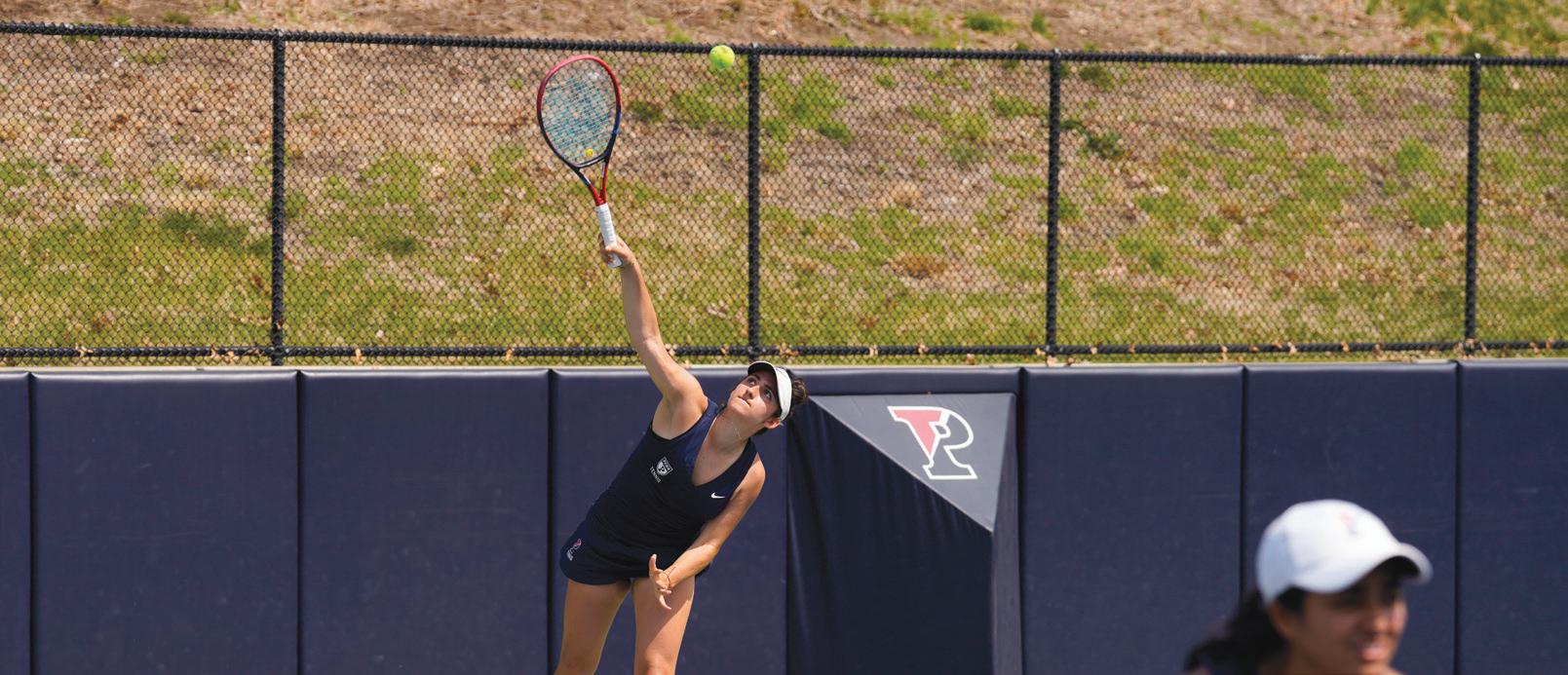
“Honestly … I adopt the mindset when I go on court of just erasing the opponent’s face and just focusing on what I can control, which is my own game: how I compete, how composed I am, my attitude.”
After dropping the first set to Driscoll 6-3, Maya Urata quickly responded to lead 3-0 in the second. Driscoll continued to battle, fighting her way back to an even 3-3, but Maya Urata was able to clinch the second set 6-4.
“It’s always a little bit nerve-wracking knowing that the match is going to come down to you,” Maya Urata said about high-pressure situations. “I’ve been in the same position a couple months ago, and unfortunately, that match didn’t go my way. So I was almost really eager to put myself in this situation again, and almost like avenge myself.”
Each player had their entire team’s eyes on them, with players cheering at every opportunity for their teammates. The final set was remarkably close, and as Driscoll and Maya Urata traded points and games, the cheers on each side only got louder.
cannot be silenced, even with the fatiguing heat of the afternoon.
“We love Franklin Field,” Corbett said. “We’ve been away a lot this year, and … [we are] happy, happy to be
“I personally think that our team did a better job at cheering and getting into our opponent’s faces today. I think we definitely sealed the barrier with that,” Maya Urata said.
Finally, Maya Urata finished strong against Driscoll’s aggressive yet steady play to win the final set of the afternoon 6-4.
With the conclusion of this first match, next week begins the series of double matchups each weekend for the Ivy League.
Kunovac isn’t worried about the upcoming few weeks.
“I have full confidence when the team shows up on the courts on Monday, they’ll have a sense of purpose,” Kunovac said. “They’ll be dialed in on whatever it is that they’re working on that day, because it’s been, you know, that’s what’s been working for us. … We’re going to keep doing that.”
On Saturday, the Quakers will travel up north to face both Dartmouth and Harvard toward their goal of an Ivy League championship this season.
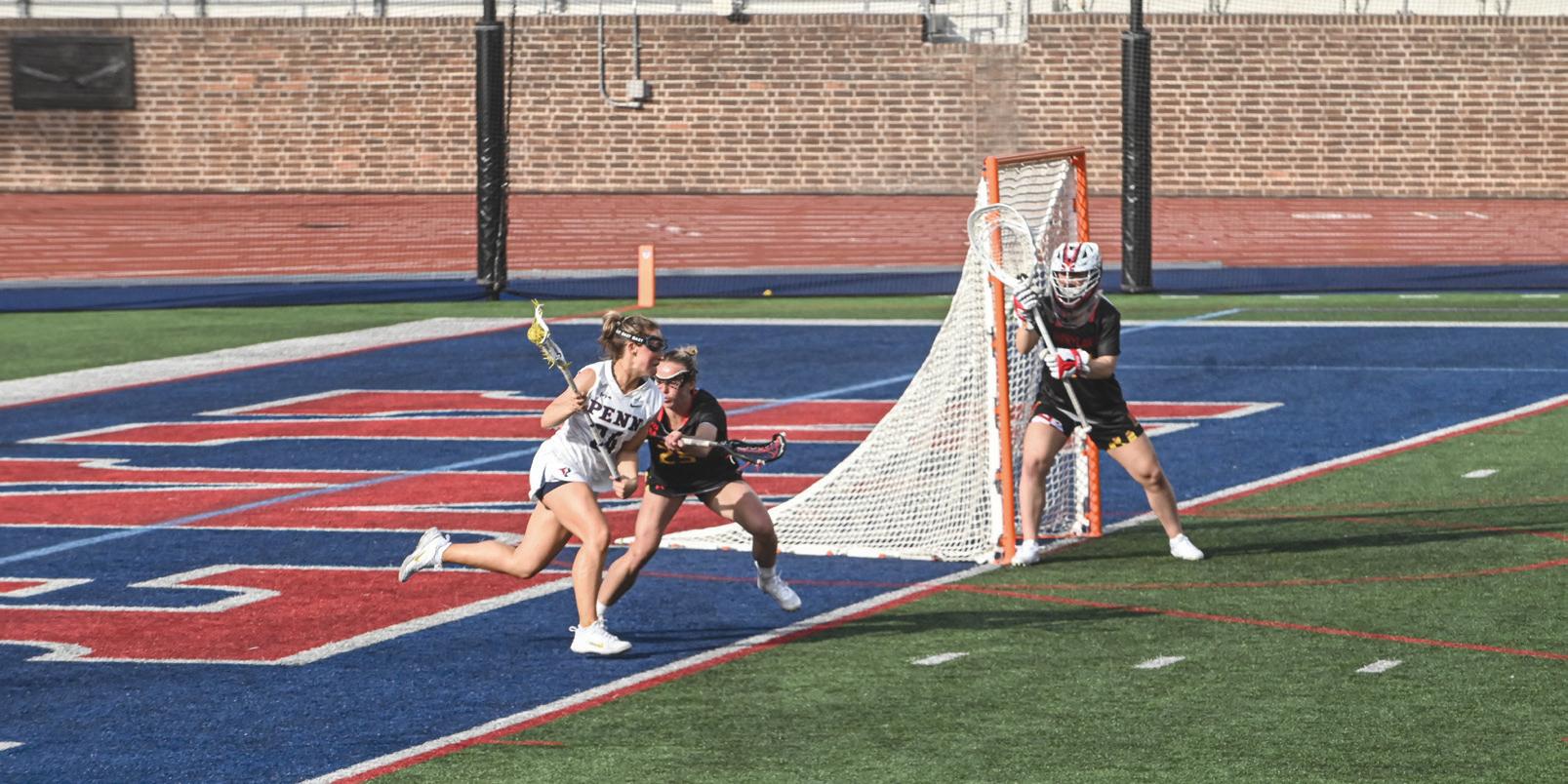












































































Penn has now earned its frst ever win streak over Maryland in the teams’ 31st matchup
AVERY BROBBEY Sports Associate
Penn has turned the tide against the Terps.
A hot Monday afternoon set the tone for the fiery contest between Penn and No. 6 Maryland. With a final score of 13-12, Penn (6-3, 2-0 Ivy) earned its first win over a ranked opponent. Home-field advantage for the Quakers and outstanding performances by senior midfielder Anna Brandt, freshman goalkeeper Orly Sedransk, and sophomore attacker Regan O’Brien led the way for the Quakers.
With the programs being common enemies, Penn’s victory helps to shape the new era of dominance in its meetings against Maryland (7-3, 3-1 Big Ten). With this game being their 31st matchup in history, Maryland held a 27-3 record against Penn heading into the game.
Penn defeated the Terps in 2024 to end the Terrapins’ 14-game win streak over the Quakers, with the new victory beginning Penn’s first ever win streak against Maryland, with the all-time series record now standing at 27-4.
“They always have a great program … great coaching staff, [and] great recruits,” coach Karin Corbett said. “I think what [that] enables us [to do is] just to believe in ourselves because … they’ve gotten the upper hand for years. … Having that belief that we can beat them and having younger kids see that they’re capable of beating Maryland really will carry for the future.”
The first quarter began quickly as Penn took an early lead with a goal by Brandt, and this lead persisted even as the teams scored back and forth until the scoreboard read 3-2. The offensive prowess on both sides eventually tipped in favor of Maryland, with two goals in the final minute of the quarter. A contested shot by Maryland midfielder Kori Edmondson earned Maryland the lead as the Quakers trailed 4-3. In the second quarter, the underclassmen of Penn women’s lacrosse shined the brightest. Gaining solid control of the ball, O’Brien drove an unassisted goal to the back of the net that tied the game at 4-4. Freshman midfielder Lela Greene tried a similar shot attempt moments later, and despite the save by Maryland goalie JJ Suriano, she helped fend off the Terps on the other side of the field and regained possession for Penn. After two goals by Penn and another by Maryland, O’Brien gapped Penn’s lead to 7-5. She finished with three goals
See WLAX , page 11
‘This
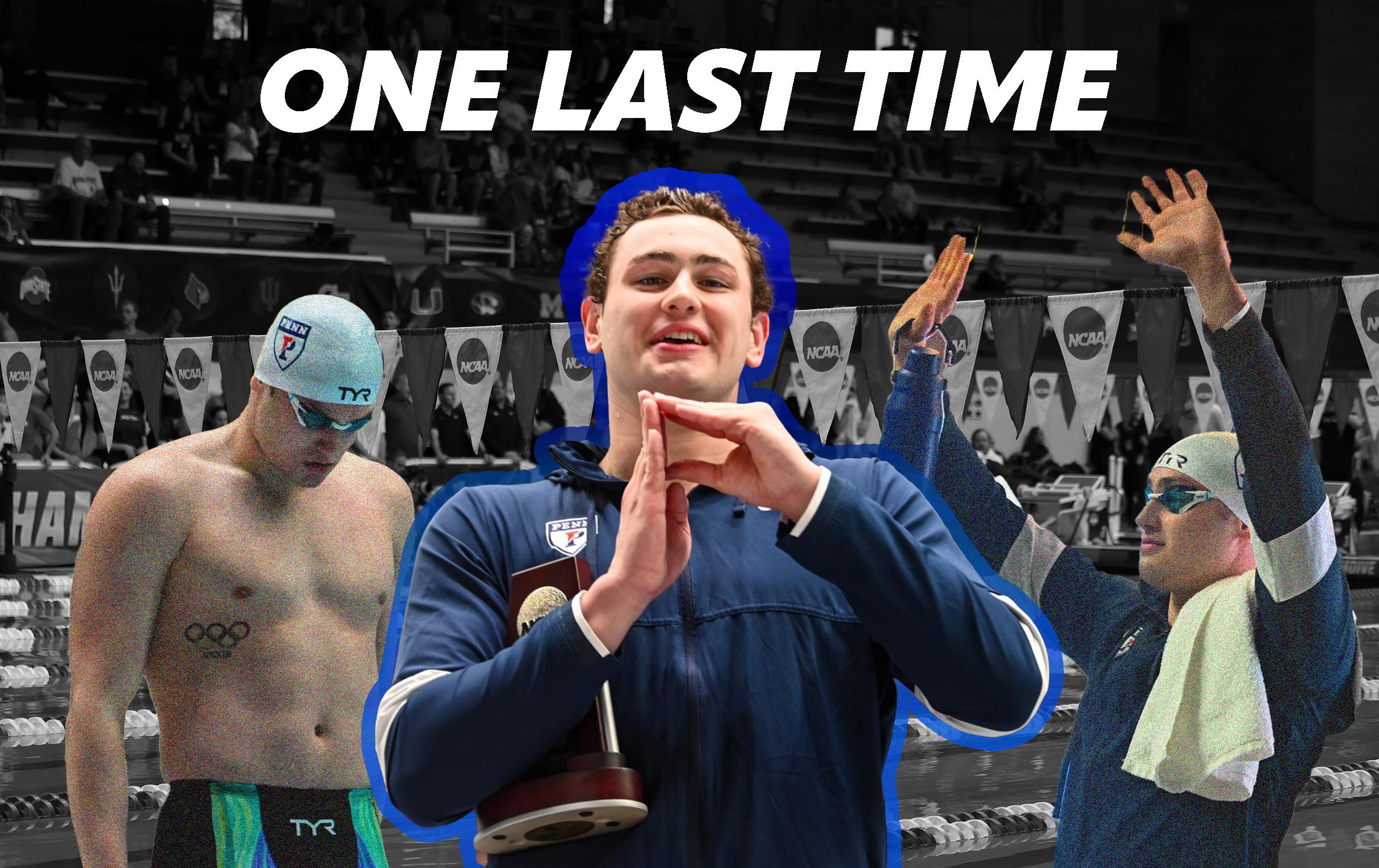
Fallon ends his collegiate swimming career with a fourth frst team All-America honor
FEDERAL WAY, WASH. — Senior breaststroke specialist Matt Fallon finished in second place in the 200-yard breaststroke finals at the NCAA Division I men’s swimming and diving championships, earning a fourth career All-American honor at his last collegiate swim meet. Coming into the championships, Fallon was a favorite for the NCAA title after previously finishing third and second in this event at the 2022 and 2024 championship meets. The NCAA title has been an accolade missing from Fallon’s trophy case — which includes three Ivy League titles, an American record in the 200-meter breaststroke, and a 10th-place finish at the 2024 Paris Olympics.
Fallon was seeded first in the 200-yard breaststroke with a nation-leading and Ivy League record-breaking time of 1:48.85 — just 0.37 seconds off his lifetime best, which he set at last year’s NCAA championships.
Competing from lane four in the fifth heat of
the morning preliminaries, Fallon kept it long and strong in the first half of the race — splitting a 53.66 for sixth at the 100.
Fallon’s performance was on par with his prelims swims at previous national championships: His first 100 split was 53.40 in 2024 and 53.34 in 2022.
An exciting part of Fallon’s strategy in the 200 breaststroke is his impressive second half of the race. He regularly out-splits his competitors and rallies from as low as seventh to first at the final wall. That strategy remained unchanged this year. Fallon split a 27.98 final 50 — the fastest of the field — to propel himself from sixth at 150 yards to first place at the finish.
Fallon touched the final wall in 1:49.85, good for the third seed heading into the evening finals. The time was exactly one second off his nation-leading time at the 2025 Ivy League championships.
Virginia Tech’s Carles Coll Marti notched a time of 1:49.23 — the fastest of the morning — in the
heat before Fallon. Indiana’s Jassen Yep recorded the second-fastest time of the prelims with a 1:49.39. Indiana lived up to its “Breaststroke U” nickname, sending fifth year Caspar Corbeau to the championship final as the fourth seed. The 200 breaststroke finals field was strong, with veteran fifth-year swimmers comprising half of the field.
Competing from lane three in the evening finals, Fallon got off the blocks to a quiet start, in line with his strong back-half strategy. The Warren, N.J. native split 25.02, good for eighth place at the 50. Fallon stayed at the back of the pack heading into the 100 mark, splitting 52.74 for the first half of the race. Notably, Fallon has previously started the race faster. At this year’s Ivy League championships in February, he split 52.00 for the first 100.
“I’m impressed I was able to take it out that quickly
See FALLON, page 10
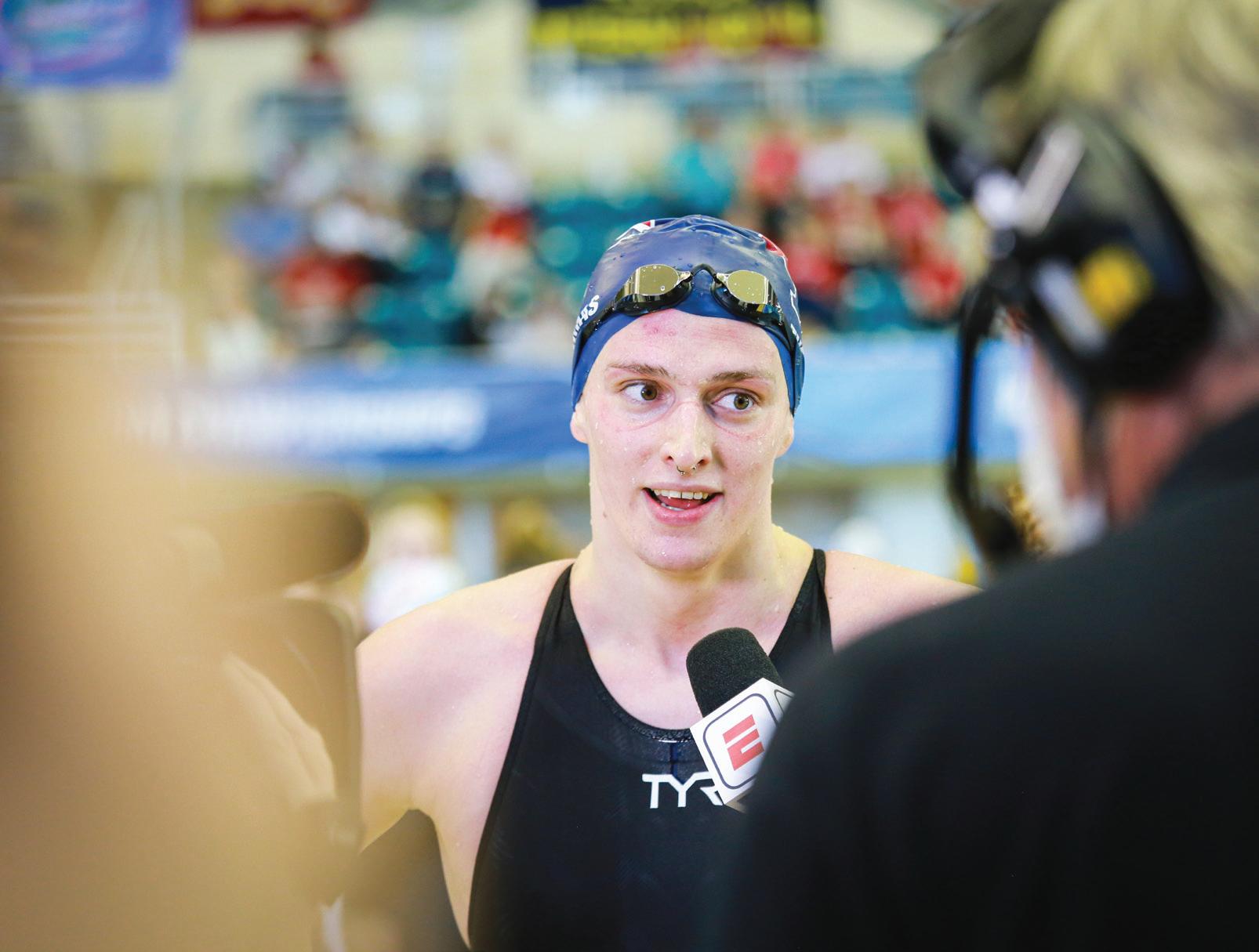
2022
During the
session, Thomas dis -
the fulfillment of competing after transitioning, and a lack of education and knowledge of “what being trans was” when she was growing up in her hometown in Texas. She also focused on the importance of transgender representation, asserting that competition categories in sports should be “athlete driven.”
“It has to be the athletes deciding for
themselves where they feel most affirmed and most comfortable,” she said. ”Having routes that are safe and nondiscriminatory that allow them access to that [is important].”
World Aquatics planned to introduce an “open” category that would allow transgender swimmers to be eligible to compete. However, plans to debut the new category at the 2023 World Aquatics Swimming World Cup in Berlin were canceled after no entries were received.
Thomas also responded to World Aquatics’ 2022 decision to prohibit transgender women who have gone through any part of male puberty from competing in women’s aquatics.
“I felt so devastated and [felt] grief over losing this access to my sport,” Thomas said of the ban, which she lost a legal challenge against in 2024.
“There was no doubt in my mind that I was going to fight this, that this is my sport too, and I’m not just gonna give it up to trans folks.”
Thomas noted that after her time at Penn, she feels some amount of responsibility fighting for transgender inclusion in sports.
“I’m so happy to have opportunities like this where I can share my story and hopefully be that inspiration for other people,” she said.
Thomas said that she initially felt that competing as a college swimmer after coming out as transgender “seemed an … impossible step.”
“I looked up … the NCAA transgender policy [during freshman fall] and knew it might be technically possible. … I didn’t think that I could do it,” Thomas said, adding that the thought of “having to pick one” contributed to her feelings of dysphoria.
“I didn’t want to swim. I just wanted to step away and be able to transition and be myself,” she said. “But my love of swimming kept me going.
… When I had transitioned, I felt more comfortable, and I said, ‘I can do this. I could do both.’”
Thomas competed for the Penn women’s swimming and diving team during the 2021-22
season after her transition. During this time, she received consistent national media attention, especially after garnering success on the conference and national levels.
“I still remember my first time scrolling through social media and seeing my face on someone else’s feed or on someone else’s post, just talking about me and just feeling confused,” Thomas said. “Because, on a conceptual level, I knew what was happening, but on a personal level, I feel like I was just another college woman competing.”
Despite the backlash, Thomas said that she kept swimming because of her love for the sport. While she does not swim competitively anymore, she still returns to the pool as a safe haven, as it was before she transitioned.
“It’s a reclamation of my body in a way where I’ve gone through such a wide emotional arc of how I feel about my body and how I feel in it.
… It’s now a celebration of how far I’ve come and how much more comfortable I feel now,” she said.
Thomas’ time in the pool remains part of the national conversation, even three years after her graduation from Penn.
On Feb. 4, 1968 Wharton graduate and President Donald Trump signed an executive order banning transgender athletes from women’s sports. The NCAA subsequently updated its policies to align with the order.
On Feb. 11, the Department of Education sent a letter to NCAA President Charlie Baker urging the reallocation of titles and awards earned by transgender athletes, including Thomas.
On March 19, the Trump administration announced that it would be following through on the promise made in the aforementioned executive order by freezing over $175 million of Penn’s federal funding, attributing the decision to the University allowing Thomas to compete on the women’s swimming and diving team.