Wharton STEP, Cohorts leaders criticize program merger
The school announced in February that Wharton Cohorts and the Successful Transition and Empowerment Program will be housed under a singular banner
Earlier this year, the Wharton School merged two of its first-year programs — a move students say administrators directly attributed to compliance with the Trump administration’s diversity, equity, and inclusion crackdown.
The school announced in February that Wharton Cohorts and the Successful Transition and Empowerment Program will be housed under a singular banner. The decision came nearly a year after 1968 Wharton graduate and President Donald Trump signed an executive order requiring universities that receive federal funding — such as Penn — to terminate DEI programs that could be in violation of federal civil rights laws.
A Wharton Cohorts participant — who requested anonymity for fear of retaliation — told The Daily Pennsylvanian that while the official explanation for the merger was “efficiency and budgeting,” Cohorts leaders were “more privately” given a different reasoning.
The anonymous student explained that Wharton Cohorts Director Lisa Podolsky and other school administrators “pretty much explicitly told” STEP and Cohorts leaders in February that the change was a result of the Trump administration’s new policies on DEI.
Podolsky redirected the DP’s request for comment to Wharton Senior Director for Strategy and Operations Michael Elias.
Elias said in an interview with the DP that the goal of combining STEP and Cohorts was to embed the first-year experience with “strategy and purpose.”
“The thing that STEP did really well was to foster students thinking about what their values are and how they’re using those values, their experiences, their interests, to make sense out of their four years in Wharton undergrad,” he said. “We’re taking both aspects of STEP and Cohorts and figuring out what worked really well.”
The anonymous Cohorts member alleged that the integration of the two programs was “covering up a much larger thing, which is killing STEP itself.”
Historically, STEP aimed to help disadvantaged groups adjust to life on campus through a week of pre-orientation programming. In February 2025, the program’s website read that its purpose was to “help historically underrepresented students successfully acclimate to college life.”
The website no longer refers to “historically
Penn alum John Ternus named next Apple CEO
John Ternus graduated from Penn in 1997 with a bachelor’s degree in mechanical engineering and applied mechanics AMY
1997 Engineering graduate John Ternus was announced as Apple’s next CEO on Monday.
Ternus — who serves as senior vice president of hardware engineering at Apple — will succeed current CEO Tim Cook on Sept. 1. Ternus graduated from Penn in 1997 with a bachelor’s degree in mechanical engineering and applied mechanics, alongside a minor in psychology.
As an undergraduate at Penn, Ternus was a member of the men’s swimming and diving team and, for his senior project, developed a mechanical feeding arm that could be controlled by individuals with quadriplegia using head movements. He graduated from Penn in the same year as 1997 College and Wharton graduate Elon Musk — who is currently the largest shareholder of the automobile company Tesla, space technology company SpaceX, and social media company X.
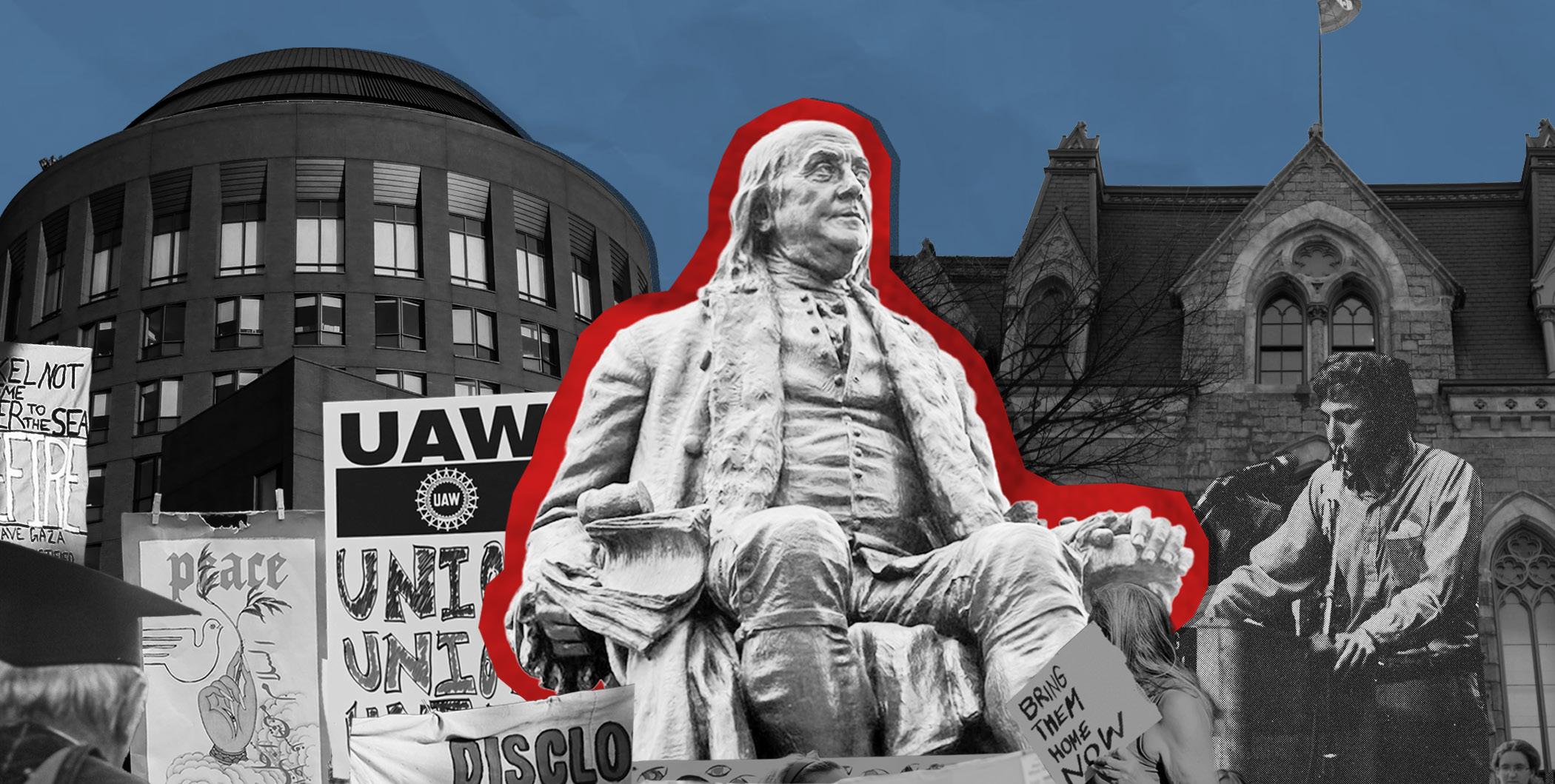
Proposed open expression guidelines centralize power with administrators, committee members say
Students and faculty raised concerns about the revised structure of
Last month, Penn published a revised draft of the Guidelines on Open Expression with a revamped committee leading the charge. Under the new proposals, the Committee on Open Expression has fewer members, a new role under the provost, and is no longer responsible for mediating alleged violations of the guidelines. As the University prepares to gather input on its draft through listening sessions this week, students and faculty raised concerns about the revised role and structure of the committee.
Temporary guidelines and the old committee
In May 2024, the committee — a group of Penn community members tasked with reviewing open expression cases — called for a review of Penn’s guidelines. On the heels of the 16-day Gaza Solidarity Encampment on College Green — which was disbanded by police and resulted in the arrest of 33 protesters — members of the committee wrote in a statement to The Daily Pennsylvanian that they “believe the infrastructure of open expression at Penn needs strengthening consistent with the law.”
At the time, the committee claimed it would work with the Faculty Senate and University Council to review the guidelines — but instead, Penn implemented the temporary guidelines and announced that a faculty-led task force
would evaluate the standards.
Wharton School professor Eric Orts, a committee member from 2022 to 2025, told the DP that the temporary guidelines were “basically just decided by the University” because “they felt that this was kind of an emergency situation.”
Fourth-year physics Ph.D. candidate Will Chan, who previously served as the president of the Pan-Asian Graduate Student Association, received an invitation to join the 2024-25 committee for a one-year term in July 2024.
The University officially announced the charge of the newly formed Task Force on Open Expression in August 2024. Chaired by Executive Vice Dean of the Perelman School of Medicine Lisa Bellini — who was also the chair of the committee at the time — and SNF Paideia Program Faculty Director Sigal Ben-Porath, the task force consisted of 12 individuals, including faculty, students, and one staff member.
The committee met seven times from September 2024 to February 2025, including “meetings focused on building out the principles and recommendations from the TFOE into a revised draft of the Guidelines on Open Expression,” according to the group’s year-end report in May 2025.
Chan said that the committee and the task force went
Annenberg School launches ‘Connected Futures’ strategic vision
The Daily Pennsylvanian followed up with Annenberg School for Communication Dean Sarah Banet-Weiser to discuss the school’s mission across research, education, and public engagement
ANANYA KARTHIK Senior Reporter
At the beginning of the new year, Annenberg School for Communication Dean Sarah Banet-Weiser said one of her goals for 2026 was working toward the school’s first strategic vision.
Four months later, on April 13, Banet-Weiser announced “Connected Futures,” a plan to guide the school over the next five years. The Daily Pennsylvanian followed up with Banet-Weiser to discuss the school’s mission across research, education, infrastructure, and public engagement.
The plan is intended to better articulate the school’s mission to the public. Recalling conversations from the start of her tenure in July 2023,
she said many peers were aware of the school’s reputation but unclear on the specifics of its work.
“Almost without exception, people would say, ‘Oh, I know that people do incredible work there, but we don’t really know what you do,’” BanetWeiser said. “Part of what I wanted to do with my vision as a dean was to tell the story of what Annenberg does and tell it to a wider audience.”
According to Banet-Weiser, that disconnect partly prompted a two-year process of meeting with students, faculty, and staff through “informal” encounters in an effort to understand what
through a “back-and-forth process” while drafting the revised guidelines. He added that the committee provided its “visions” while the task force indicated “what they felt was appropriate and not appropriate.”
“We didn’t all see eye to eye,” Chan said. Ultimately, the committee anonymously voted 9-1 to approve a draft of the task force’s recommendations in February 2025. The task force continued the revision process afterward, but Chan noted that the committee did not meet again.
“It felt like the vote was the conclusion of the work,” he said. “There wasn’t a follow-up saying, ‘People have asked for these changes.’”
During the 2024-25 academic year, “a small number of individuals reached out to the COE chair for guidance but did not wish to advance their concerns further for full committee review,” according to the University Council report. Chan confirmed that the committee did not discuss any mediation of open expression violations at its meetings.
“While that may be true that no students had come to the committee, it also begs the question: Are we functioning well as a University in terms of open expression?” he asked.
“It was very disappointing to go through all that work, and we didn’t hear anything,” Orts stated. “Then finally,
See COMMITTEE, page 2
Budget cuts to hit Penn schools, centers next year
The budget reductions may include staffing changes or modifications to programs and services
PHOEBE ANAGNOS Senior Reporter
a Tuesday email sent to University faculty.
Announced on April 21 by Provost John Jackson Jr. and Executive Vice President Mark Dingfield, the decision formalizes cross-cutting measures first introduced in January. The reductions — which may include staffing changes or modifications to programs and services — will vary
ANDY MEI | SENIOR DESIGNER
Banet-Weiser pictured explaining the Annenberg School’s first strategic vision on April 15.
EBUNOLUWA ADESIDA | SENIOR PHOTOGRAPHER
Penn celebrates climate office launch, announces new initiatives
Over the next three years, the office will provide students with a total of $2.4 million in innovation seed grants
KORI ROBINSON Staff Reporter
Penn officially launched its Office of the Vice Provost for Climate Science, Policy, and Action on Monday.
The April 20 event featured six speakers across Penn Climate who discussed student fellowships, research funding, and University-wide collaboration. The office also displayed its new website, which went live the same day.
Katie Baillie, who is the director of university and community engagement at Penn Climate, told The Daily Pennsylvanian that the office hopes to “have an impact and create climate solutions” across the University’s 12 schools.
“Penn Climate is really trying to act as a force multiplier and be bigger than the sum of the parts of Penn,” Baillie added.
During the event, speakers emphasized University-wide initiatives and student efforts to shape the direction of the office.
Vice Provost for Research David Meaney, who introduced the event, explained that the launch reflects years of development and signals a larger shift toward collaboration.
“It’s really a testament to where we are now but also kind of a prediction of where we could be going in the future with this momentum,” Meaney added.
Stephen Decina, executive director of Penn Climate, emphasized that uniting people across disciplines will be central to the office’s work.
“What I kept finding at each and every stop along this road of mine was that the limiting factor was never really ambition, and it wasn’t really funding — it was connection,” he told the audience.
Decina added that Penn Climate aims to bring together individuals and fields “that might not otherwise find each other” to drive change at local and global levels.
Baillie told the DP that “a lot of students have been really hungry for a way to engage with climate action in
their academics” and described the office as a response to that interest.
Faculty are developing new academic offerings in collaboration with the climate office to promote these efforts.
Vice Provost for Climate Science, Policy, and Action Sanya Carley shared that a new Penn Climate Student Fellows Program will launch in fall 2026. The initiative will feature 10 paid student fellowships — there will be two spots each for communications, data, and climate solutions hub fellows, in addition to four spots for research fellows.
Over the next three years, the office will also offer a total of $2.4 million in innovation seed grants — through allotments of $400,000 for individuals pursuing multidisciplinary climate projects across the University.
“We want Penn Climate to be a solutions-oriented space where we come together and really tackle challenges with a solutions-oriented mindset,” Carley said.
Business Economics and Public Policy professor Arthur van Benthem and School of Social Policy & Practice professor R. Jisung Park are offering a course titled “The Climate Challenge.” The course, set to launch in spring 2027, aims to move beyond discipline-specific approaches to climate, according to van Benthem.
“A lot of students learn about climate from their respective disciplines, but this course isn’t meant to be the big picture in the background,” he added. “What we’re going to do is bring together colleagues from across the University and make sure that we bring in the perspectives and connections and bridges across the wide variety of expertise that Penn has to offer.”
Meaney described the interdisciplinary nature of the office, emphasizing that climate solutions should unite the Penn community and “hopefully the world beyond that.”
“You should never imagine that the discipline that
products
discusses new
COMMITTEE
, from front page
to be presented with this new draft that obviously had been prepared internally to the administration but without consulting anyone who is on the faculty.” Chan said that under the “draconian” temporary guidelines, demonstrations and events were conflated in a “false equivalence” — echoing concerns raised by other Penn community members.
“Events, sure, they should be registered. Demonstrations, protests, vigils — those are not events,” Chan said. “They will be spontaneous very often. They will not happen in ideal scenarios and ideal circumstances. They are meant to be disruptive.”
He noted that, in the new draft, there was ambiguity between the two categories that “was not in the final draft submitted by the COE.” According to Chan, protest registration is “not necessary,” but Penn has “leverage in shutting down” demonstrations.
The “quick” 2025-26 turnaround
In response to a request for comment on the formation of the 2025-26 committee, a spokesperson for Penn’s Office of the Provost directed the DP to a University Council website, which published updated information this month.
you are studying doesn’t have relevance to climate,”
Meaney said. “All of those disciplines have a relevance.”
Meaney also pointed to students as central to the program’s long-term impact, emphasizing that the energy
, from front page
Ternus will join Apple’s board of directors upon assuming his new role, while Cook will transition to executive chairman.
“I am profoundly grateful for this opportunity to carry Apple’s mission forward,” Ternus wrote in the April 20 press release. “Having spent almost my entire career at Apple, I have been lucky to have worked under Steve Jobs and to have had Tim Cook as my mentor.”
In his current role, Ternus is responsible for managing all hardware teams in the Apple suite. He first joined Apple in 2001 as a member of the product design team and went on to become vice president of hardware engineering in 2013.
“We believe John is the best possible leader to succeed Tim and as he transitions to CEO we know his love of Apple, his leadership, deep technical knowledge, and relentless focus on creating great products will help lead Apple to an extraordinary future,” Arthur Levinson — Apple’s previous non-executive chairman — wrote in the press release.
According to the release, Ternus was “instrumental in the introduction of multiple new product lines,” including AirPods and iPad. He also recently contributed to the development of the newly
“they provide is infectious.”
“To those students, I will say that you are the people that will define the future that your children will inherit, and I would not be despondent by the challenge in front of you, but energized by that challenge,” Meaney said.
launched MacBook Neo.
“Ternus led much of the company’s focus in areas like reliability and durability, introducing new techniques that have made Apple products remarkably resilient,” the press release read. “He has also driven much of Apple’s innovation in materials and hardware design that have reduced the carbon footprint of its products.”
In January, The New York Times reported that “three people close to the company” said that Apple began accelerating its planning for Cook’s succession in confidential deliberations last year.
“If you want to make an iPhone every year, Ternus is your guy,” Cameron Rogers, who previously worked on product and software engineering management at Apple, said at the time.
Ternus returned to Penn in 2024 as the School of Engineering and Applied Science’s undergraduate commencement speaker. During his remarks, Ternus advised the audience to “always assume you’re as smart as anyone else in the room, but never assume that you know as much as they do.”
“When I first got to Apple — it was my second job out of college — and the first time I walked through those doors, it was exhilarating and intimidating all at once,” he recalled at the time. “But I’ll always be grateful I wasn’t afraid to ask for help when I needed it.”
Ternus will be Apple’s eighth CEO and its third since Steve Jobs pulled the company from the brink of bankruptcy in 1997.
Orts wrote in a statement to the DP that he had first been invited to rejoin the committee for the 2025-26 academic year in “late summer 2025” but was apprehensive about doing so with multiple versions of the guidelines in effect.
At the time, Orts was told that the administration would release the updated guidelines “soon.”
He was contacted again in December about rejoining the committee — and despite signaling that he would not return, he received an email in March notifying him of his appointment. Four days later, he resigned.
Other members of the 2025-26 committee were also invited to join in March. College junior Ben Woods — the Undergraduate Assembly’s academic initiatives director — confirmed his appointment last month in a statement to the DP.
According to a report from the Faculty Senate’s office, its executive committee voted on “a roster of eight faculty members” to the 2025-26 committee during March and April. The report states that “one candidate resigned from committee membership” and was replaced by another faculty member during the voting period.
One faculty member still listed as a member of the committee on the University Council’s website — History and Sociology of Science professor Harun Küçük — noted in a statement to the DP that he has “recently stepped down from the COE.”
“I didn’t feel that much could be said or done with the proposed guidelines,” Küçük wrote. “I’ve been living with
For 30 years, Giovanni & Pileggi Salon has been a cornerstone of luxury hair and beauty in Center City Philadelphia, celebrated for its artistry, innovation, and enduring commitment to excellence. Giovanni & Pileggi consists of unparalleled talent from stylists to makeup artists, offering a full range of luxury services. Celebrating three decades in business, Giovanni & Pileggi continues to set the
some version of whatever this is, day-in day-out, since 2022. Just trying to recuperate from 4 very rough years now.”
Communication professor Jessa Lingel — a member of the Faculty Senate Executive Committee and the president of Penn’s chapter of the American Association of University Professors — told the DP that the Faculty Senate has continually sought “clarity” from the administration regarding open expression.
“We have raised the issue of the open expression guidelines every time there’s a representative from leadership, whether that’s Provost John Jackson or President Larry Jameson,” Lingel said. “They’ve never really been able to provide explanations as to why this process is so divergent.”
Orts commented on the “quick” nature of the new and upcoming revisions to the guidelines.
“It’s the end of the semester, but they want to be done by this summer,” Orts said. “Where’s the time students have to take?”
Chan echoed this sentiment, stating that the community listening sessions are “particularly poorly timed” and “not in favor of getting student input.” He felt that past open expression listening sessions were merely “a chance for people in the University administration to give their opinions.”
A spokesperson for the Office of the Provost declined the DP’s request for comment, writing that “we will let the community input be the community input.”
The sessions — one at Perry World House on Thursday at 4 p.m. and another held virtually on Friday at 12 p.m. — are set to be moderated by University of Pennsylvania Carey Law School professor and former Chair of the Faculty Senate Eric Feldman.
“My role is to ensure that Penn students, faculty, staff, and postdoctoral trainees have an opportunity to express their views on the proposed revisions to the Guidelines on Open Expression, and to ensure that those views are clearly and accurately conveyed to Penn’s senior administration,” Feldman wrote in a statement to the DP.
“The listening sessions will emphasize anonymous feedback and privacy and acknowledgement of transparency concerns and distrust stemming from the review process and timeline to-date,” according to the Faculty Senate’s April 15 report.
Wharton professor and committee chair Phil Nichols wrote in a statement to the DP that Penn “should develop its support for and understanding of the meaning of open expression as a community” and that “one important role for the Committee is participating in this critically important community exercise.”
“The real work begins once the members of our community – students, staff, faculty, and all – have had a chance to provide input through the two listening events, on Thursday and Friday, or through the confidential online portal,” Nichols added.
KORI ROBINSON | STAFF REPORTER
The University announced the launch of Penn Climate on April 20.
APPLE
Ternus
A decade of growth for Penn’s Health System
To understand how the system has evolved, The Daily Pennsylvanian analyzed publicly available data since 2015
RACHEL
KANG Staff Reporter
In the past decade, the University of Pennsylvania Health System has grown significantly — now treating nearly half a million emergency patients a year, employing over 50,000 workers, and handling more than eight million outpatient visits annually.
To understand how the system has evolved, The Daily Pennsylvanian analyzed a decade of publicly available data from 2015 and 2024. The figures — which comprise of patient visits, employee numbers, and hospital capacity — offer unique insight into Philadelphia’s largest private employer.
The data spans all seven Health System hospitals — including the Hospital of the University of Pennsylvania, Penn Presbyterian Medical Center, Pennsylvania Hospital, Chester County Hospital, and Lancaster General Hospital. The data also includes the Princeton Medical Center, which was incorporated into the Health System in 2018, and Doylestown Hospital, which was integrated in 2025.
A request for comment was left with a Penn Medicine spokesperson. Penn has yet to publish the Health System’s annual data for 2025.
The Health System experienced a 47.8% rise in emergency department visits from 2015 to 2024, increasing from 296,000 in 2015 to over 400,000 in 2024.
In every year but 2024, Lancaster General Hospital recorded the most visits. It was surpassed by HUP in 2024, which reported over 109,000 visits that year. Doylestown Hospital — whose 2024 data was counted separately — had 53,294 emergency department visits that year.
ANNENBERG, from front page
defines the Annenberg School and identify areas of potential improvement.
Those conversations informed the strategic vision’s structure. The first pillar — titled “A Vibrant Intellectual Ecosystem” — includes four “research networks”: health communication; politics, policy, and institutions; cultural inquiry; and computational social science.
Annenberg School Vice Dean Emily Falk wrote in the announcement that these networks are intended to provide “structure, community, and support” for scholars working across disciplines. Banet-Weiser told the DP that the networks reflect the breadth of the research conducted at the Annenberg School.
“Lots of communication programs do health communication and social science,” she said. “Other ones do film and media studies. Other ones do political communication. We do all of that.” The second pillar focuses on the school’s physical and organizational resources.
Banet-Weiser said this section includes a plan to renovate the Annenberg School building — including changes to shared spaces and classrooms — to “reflect the dynamic and cutting-edge research and teaching.”
She also described the school’s curriculum and academic programming — the vision’s third pillar. Banet-Weiser highlighted that the school is continuing to update its undergraduate
STEP, from front page
underrepresented” groups.
Wharton Cohorts — the other first-year program previously offered by the school — was instead open to all incoming Wharton undergraduates. The program was meant to serve as an opportunity for students to “get to know each other better and expand their personal and professional networks.”
“Now, there’s no directed programming for any individuals who might be falling through the cracks,” a Wharton student involved in the STEP program, who also requested anonymity for fear of retaliation, said. “It’s disappointing, as someone who has gone through this program, that this is the best solution that they found — because what is this? Nobody wanted this.”
The student said that, earlier this year, he was “made more aware” that programming should no longer include “buzzwords” such as “diversity, equity, and inclusion.”
He explained that the two groups were first informed that larger changes to both programs were coming in January.
“We knew that there was change coming on the STEP side, and also on the cohort side,” he said. “However, we did not picture that it would be a combination of the two organizations at all.”
Wharton junior and cohort leader Chance Padlo echoed a similar sentiment, stating that students “started wondering” about the status of both programs when the Cohorts did not hold elections for co-chair presidents in their typical time frame.
According to the anonymous STEP member, Wharton administrators told cohort leaders that their program would be combined with STEP in February.
“They just ripped the band-aid off,” he said. “They just told everybody. Everybody was asking questions — it was crazy for us, especially because the Cohorts program has been working independently of STEP for years. So, it was a shock for a lot of people.”
The student described the process as “rushed” and a “last-ditch effort” to “save” both programs.
“It was just completely out of the blue,” he added.
Elias said Wharton informed student leaders at both STEP and Cohorts about the changes through routine meetings, email communication, and town hall conversations.
Wharton first-year Dario Cavalieri — who also served as a first-year representative at Wharton Cohorts — told the DP that “both organizations scrambled” after the announcement.
Because STEP had already completed its elections, cohort leaders were allowed to run for a single remaining co-chair position — rather than the three co-chairs offered by the original Cohorts structure.
“That’s why a lot of Cohorts are not retained,” Cavalieri explained. “It’s an entirely new group of
The Health System similarly reported increases in outpatient visits — visits without an overnight hospital stay — over the 10-year-long period. From 2015 to 2024, outpatient visits grew from 4.73 million to 8.28 million, a 75% increase.
In the same timeframe, adult admissions at the Health System, referring to patients admitted for overnight care, increased from about 118,000 to nearly 140,000, marking an 18% jump.
Emergency department visits, outpatient visits, and adult admissions all reached their highest numbers in fiscal year 2024, according to the data.
The Health System also experienced a steady increase in total employees over the decade-long period. From 2015 to 2024, the number of employees at the Health System grew from 31,235 to 50,924, marking a 68% increase.
The number of physicians working at the Health System has grown at a slower rate. The number steadily increased until 2021, when it dropped sharply from 8,923 to 6,052. In 2023, the number slightly increased to 6,243, a 3% jump.
The Health System did not publish data on the number of employed physicians for FY23 and FY24.
Penn saw year-to-year fluctuations in the number of births recorded between 2015 and 2024. In FY24, the Health System reported 18,059 births, a lower number than every year but 2016.
In FY24, HUP led all seven Health System hospitals in visits, admissions, and births. Lancaster General Hospital was a close second in all three categories.
curriculum and recently launched a new Master of Communication and Media Industries program, which will admit its inaugural class this fall.
The dean added that the school is “constantly updating our classes and figuring out how they fit into our concentrations.” She stated that the framework is not intended to impose changes directly on students’ academic experiences.
“Our hope is that our students will just feel the vision,” Banet-Weiser said.
The fourth pillar, which involves collaboration and connection, emphasizes partnerships beyond the University. According to the announcement, the Annenberg School’s research addresses issues including public health, misinformation, media production, and social justice.
“One of the things that we’re trying to do — not just here at Annenberg, but all of Penn — is to remind people why they should have trust in higher education,” she said.
Looking ahead, Banet-Weiser said that the vision is intended to serve as a flexible approach to an evolving technological landscape.
“We want to be nimble with this vision,” BanetWeiser told the DP. She noted that the school hopes to remain responsive to developments such as artificial intelligence and climate communication, which she said “undergirds all the things that we do.”
“What is the work that we want this vision to do?” she asked. “It is to create a better environment in which people live. We really believe that clear and equitable and trustworthy communication is a way to do that.”
people in this new STEP-merged structure.”
The anonymous STEP member described the integration of the two programs as “just for show” and “half-assed.”
“Realistically speaking, they might have changed the name as a whole to be STEP, but nothing about it is STEP anymore,” he added. “It’s just Cohorts with the STEP logo on it.”
As part of the integrated program, STEP will no longer offer a pre-orientation program, which Elias described as a “scaling issue.”
“There’s only a certain amount of students that come back early and that we could actually hold in the program,” he said. “This is a meaningful way that we could truly think about how it captures the entire incoming student body.”
“It’s kind of a joke that they try to portray, that this is going to be a good thing for the long-term program,” the anonymous STEP student continued. “I think it’s just going to dilute both of them.”
According to emails obtained by the DP, Wharton students were invited to a luncheon in October 2025, introducing them to the “Exploration + Application” framework spearheaded by Vice Dean and Director of the Wharton Undergraduate Division Cait Lamberton.
Elias — who works alongside Lamberton — wrote that the new framework was intended to help first years “explore academic, co-curricular, and community resources across Penn and Wharton” and expand their “networks and personal and professional interests.”
Several students criticized the new framework in conversations with the DP, arguing that it restricted the social aspects of the Cohorts program.
“Before, all the cohort events were a lot more chill,” Padlo, who served as a leader under the previous Cohorts program, said. “We would essentially go get boba with kids, or we would take them to a movie or some random activity — a lot of community-building things. Now, the new administration has wanted the events and activities to be a lot more intentional.”
Under the revised framework, Padlo added, the school’s administration had “more oversight” over events related to Wharton Cohorts.
Cavalieri offered similar criticism of the guidelines outlined under the new framework.
“The entire point of Cohorts is that, as a Wharton undergraduate, you’ll throw an event, you can just show up, you can have fun, you can be friends with your cohort leaders,” Cavalieri said. “It’s been a great way to hone class unity and a very socially cohesive part of Wharton that has essentially been killed.”
Elias told the DP that Wharton was “open” to student feedback on the school’s decision.
Padlo — who plans to continue working under the restructured STEP program — said that he was “skeptical and apprehensive” but “trying to keep an open mind” about the restructuring.
“I just want whatever is best for the community,” Padlo said. “I’m not sure if this is what’s best, but if it is, then I think I’d be happy to embrace it. I think it’s just going to take until the fall, till we see how it really pans out.”
BUDGET
, from front page
Weinstein wrote.
Despite growth in some revenue streams, the email pointed to continued financial pressures facing Penn — including legal, insurance, and employee benefit expenses, alongside challenges like inflation and global instability.
The message follows a January announcement from Jackson and Dingfield, which asked schools and centers to develop plans to reduce certain expenditures by 4%.
At the time, the administrators emphasized uncertainty surrounding federal policy changes, student loan reforms, visa policies, and research funding negotiations.
The latest message highlighted how forthcoming policy changes, such as an increase in the endowment excise tax and to federal student loan program updates, contributed to the University’s financial strain.
In 2025, Penn implemented several “proactive financial measures,” including a hiring freeze and a review of capital spending. Faculty have since raised concerns that continued reductions could restrict research programs and departmental resources.
“Careful stewardship during this period will help all of us to advance Penn’s core academic goals and position the University for ongoing resilience,” Jackson and Dingfield wrote.
THE PENN CLUB
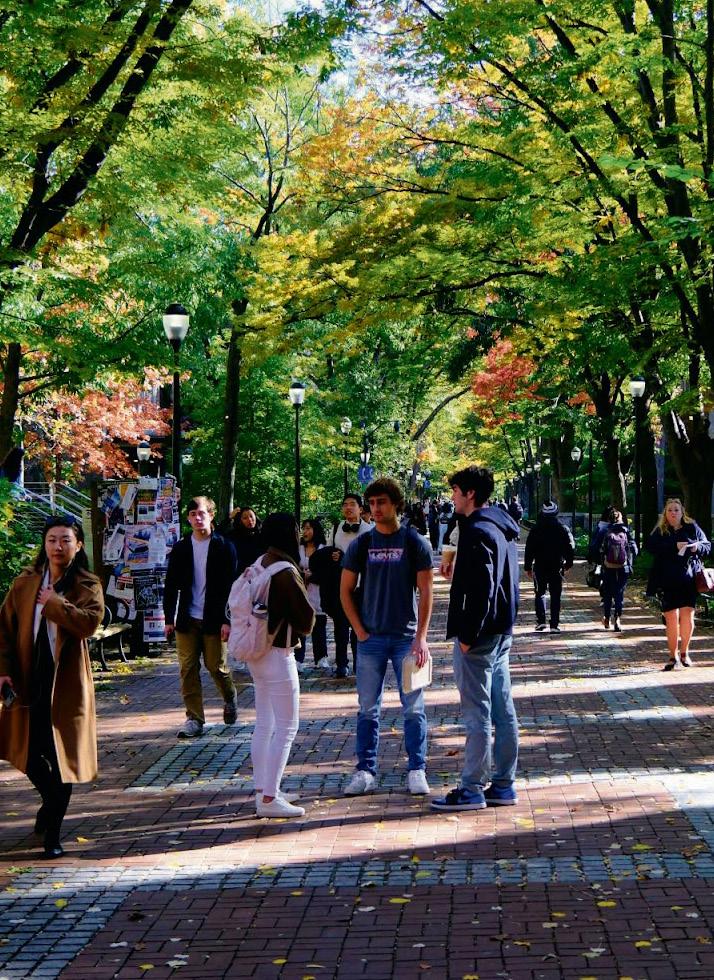
ABHIRAM JUVVADI | SENIOR PHOTOGRAPHER Students pictured on Locust Walk on Oct. 25, 2023.
KENNY CHEN | SENIOR PHOTOGRAPHER
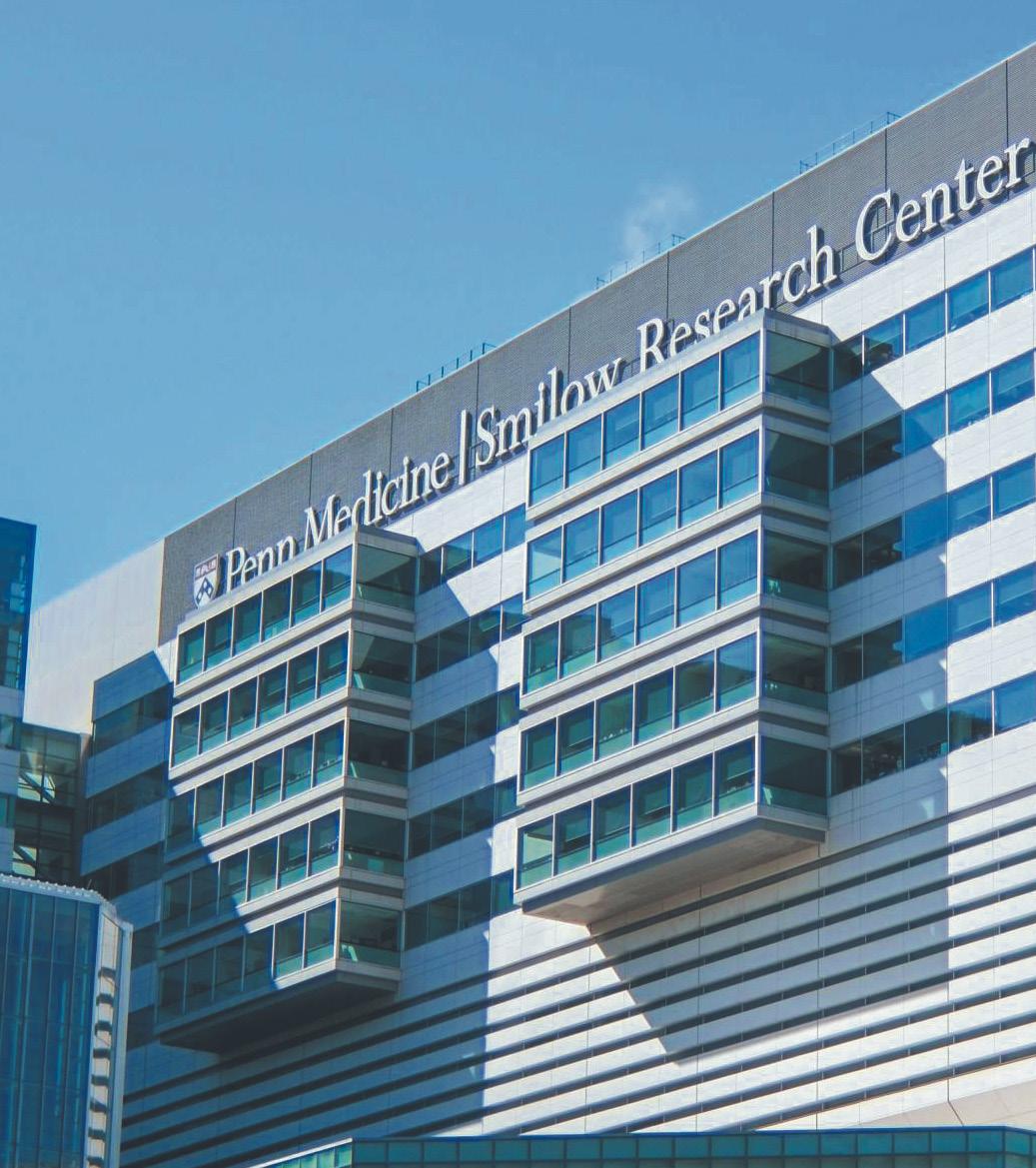
Penn Med’s Smilow Center for Translational Research pictured on April 8.
Editorial | We’re sick of student health services
In 2025, 65% of college students reported experiencing mental and emotional issues to the point where they needed help. Penn students are no stranger to this reality, yet the University frequently falls short in providing equitable, confidential, and helpful resources to those who need them most. Wellness at Penn — the umbrella organization for all student health services — is great at sending emails and posting flyers on Locust Walk, but when it comes to serious mental health issues, there are significant barriers and complications that mean students are forced to navigate on their own.
Penn has long been criticized for its bureaucratic tendencies, and this segmented structure extends to student health services in problematic ways. While Penn markets Student Health and Counseling as one unit, it is made up of two distinct divisions: Medical Care and Counseling. The two services were originally entirely separate, and remain functionally independent of each other in all aspects other than the shared name. The Medical Office and Counseling Office are in different buildings, have different phone numbers, and are staffed by different teams.
Integrated medical and psychological services are shown to be more effective both in typical environments and on college campuses. Incorporating mental health providers into medical settings improves continuity of care, increases service utilization, and reduces stigma. This approach — practiced at many of the top schools for mental health services — emphasizes student wellbeing as holistic and multidimensional.
Students looking for psychological support have to call to make an appointment, often to get told it will be weeks or months before they can come in. Student Health and Counseling also provides only short-term counseling. While the offered self-care workshops and peer wellness coaching are valuable resources, they are no substitute for regular sessions with licensed therapists. Student Health and Counseling relies heavily on referrals for specialized treatment, prioritizing acute crisis management over long-term, preventative care. Seeking external care also poses the additional burden of dealing with insurance. Whether students are on their own plan or the Penn Student Insurance Plan, it can be difficult to find an
Don’t vote at Penn
in-network provider in the area. PSIP is also mandatory for students who cannot prove that their current insurance meets Penn’s requirements, which poses additional burdens for students on Medicaid or with out-of-state plans. For plans that do not meet the requirements, students must pay out of pocket for PSIP, costing $4,622 annually. If Penn does deem a student’s mental health issue serious enough that it can’t be solved by drop-in counseling, it does not hesitate to involve Penn Police as crisis responders. This is a frightening step to take for a student who is looking for support, and only reinforces the stigma associated with seeking help. Penn’s health services also have a history of responding poorly to students seeking care related to sexual assault. Student Health and Counseling doesn’t always inform students about support centers that offer critical services and procedures for victims, including education for how to file reports of sexual assault on campus. Penn doesn’t prioritize efficiency with these cases, and it can take months for a student to be connected with Title IX resources or even a specialized counselor on campus. With the immense trauma and emotional
EDENLIGHTENED | Just because you can vote here doesn’t mean you should
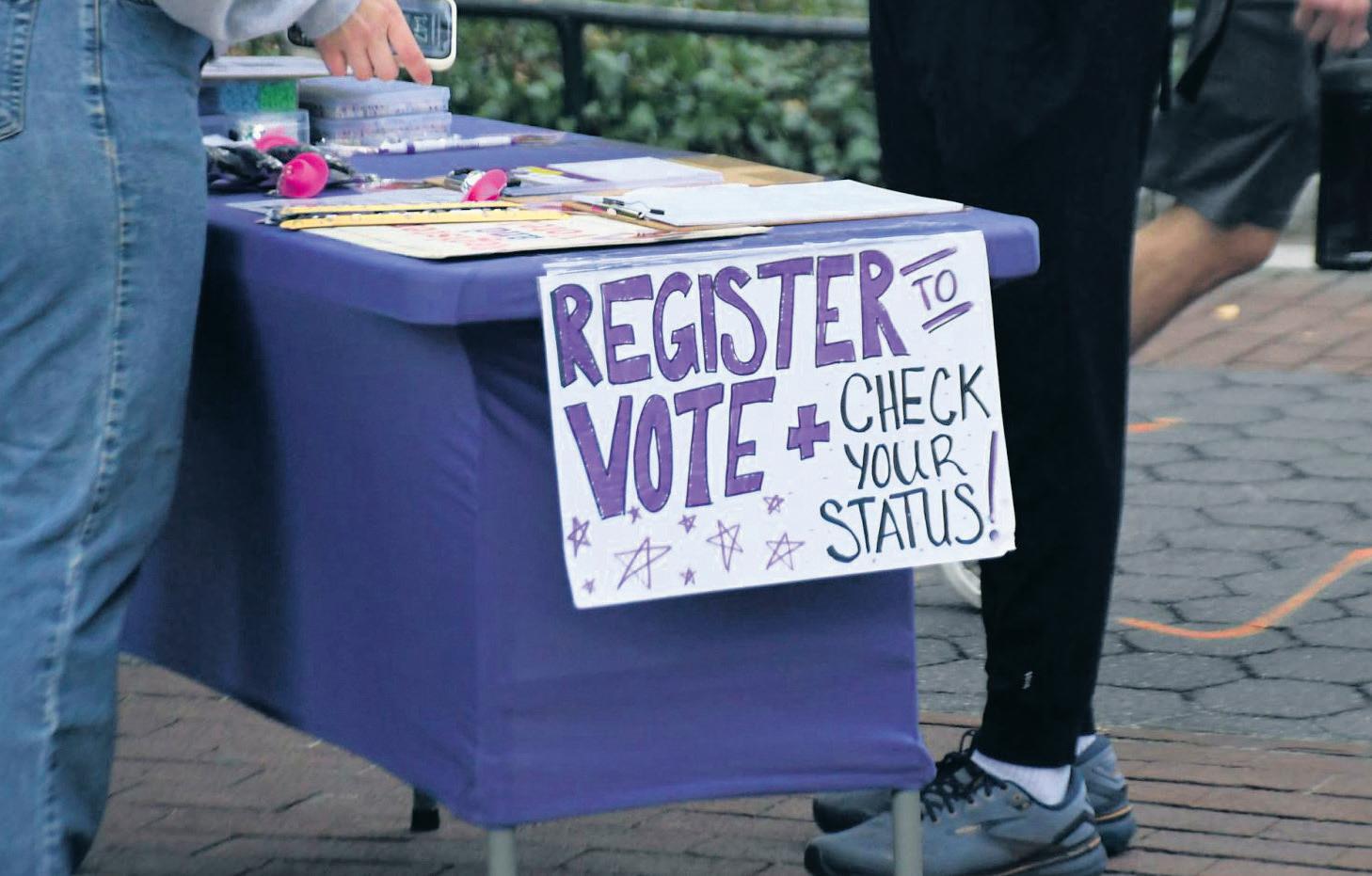
In Philadelphia, elections aren’t decided by the many — they’re decided by the few. A few thousand votes can seal the fate of representation for hundreds of thousands for decades. In such a system, voting isn’t just a right; it’s playing God with people’s lives. And when that power is in part being exercised by Penn’s student body — a group with little intention of staying in Philadelphia after graduating and whose familial, temporal, social, financial, and political interests aren’t even in the same state — it forces an uncomfortable question: Should we be using our right at all?
According to the 2026 Cook Political Report’s Partisan Voter Index, Pennsylvania’s Third Congressional District, which includes Penn, was the nation’s most blue district. In practice, this makes the Democratic primary the only election that matters. With incumbent Rep. Dwight Evans (D-Pa.) retiring, that decision now rests with a remarkably small electorate: In 2025, just 19.7% of registered Democrats turned out to vote in a citywide primary.
The same dynamic holds at the state level. In the last primary for the 188th Legislative District — Penn’s local district, only around 12% of the district voted. With Penn undergraduates making up roughly 16% of the district, we as a community have disproportionate power to determine representation for tens of thousands of residents. In light of how much is at stake, students who aren’t from Philadelphia have an ethical obligation to abstain from voting in local races. Most Penn students either do not live in Philadelphia or do not intend to call it home once they graduate, with only around 14% of Penn students choosing to stay in the area. We as a community rarely venture out into the city, and when we do, we spend almost all our time between 2nd Street and the Schuylkill River. We are here temporarily and have little vested interest in the future of this area. So it makes little sense that anyone who doesn’t have skin in the game should have a say in decisions that will impact residents in the area long after we have all moved to New York or the San Francisco Bay Area. This is not an argument against student political participation. It is an argument about where that participation belongs.
Students, if they are registered in Pennsylvania, absolutely should vote in national elections. But local elections are different. They determine who controls
weight that victims of sexual assault have to carry, they should not have to be burdened with the bureaucratic nightmare that is Student Health and Counseling. In times of sickness, desperation, and anxiety, students don’t need empty gestures like flyers or emails — they need genuinely supportive and accessible resources. In such a stressful stage of life, students shouldn’t have to worry about appointment availability or potential police intervention. They shouldn’t have to wonder about whether their insurance will transfer or if their sexual assault report will be handled with care. Students should be able to trust that this institution will keep them protected and in good health, but without reform and improvement to the system Penn has created, they can’t.
Editorials represent the majority view of members of The Daily Pennsylvanian Editorial Board who meet regularly to discuss issues relevant to the Penn community. This body is led by Editorial Board Chair Jack Lakis and is entirely separate from the newsroom. Questions or comments should be directed to letters@thedp.com.
LAYLA NAZIF | STAFF PHOTOGRAPHER
Columnist Eden Liu argues that with such little skin in the game, most Penn students should abstain from voting in local Philadelphia races.
school funding, zoning decisions, policing priorities, and public services that shape the daily lives of residents who will still be here in 10, 20, 30 years. When turnout is high and elections are competitive, this tension is diluted. But in a system like Philadelphia’s, where primaries decide everything and only a fraction of voters show up, the question of who votes becomes inseparable from who gets represented. We as a student body largely do not pay Pennsylvania’s major taxes, including property tax, inheritance tax, corporate tax, and realty transfer tax, nor do we meaningfully contribute to long-term fiscal burdens borne by residents. While some students do pay income or wage taxes through part-time jobs, these contributions are minimal compared to the sustained tax obligations of full-time residents. We also largely avoid the additional school income tax and business taxes that the city of Philadelphia levies. Most of us don’t have kids enrolled in the Pennsylvania school system, and we
immediately pack our bags and return home during breaks, leaving campus to be a ghost town. Why should we deserve a vote?
Many Penn students registered to vote here in Pennsylvania because they were told it was a swing state and their vote would make more of an impact here — but that is a political consideration designed to take advantage of the electoral college to affect national politics. National politics are not a factor in municipal and state races here in Philadelphia hence, why shouldn’t we pull back and let the locals decide on their own fates? Penn prides itself on being integrated into the West Philadelphia community, but our actions and attitudes speak otherwise. And that’s okay. Maybe what should come from that inevitable concession is an equal one acknowledging that we don’t have a moral right to determine the fate of those we don’t integrate with. Decisions are made by those who show up, and just because not as many show up does not mean our paternalistic instincts should override theirs with our out-of-state votes.
To be clear, students have every legal right to vote in Philadelphia. But democracy is not just about rights — it is also about judgment. The fact that you can vote somewhere does not always mean that you should. When your connection to a place is temporary, when your investment in its long-term trajectory is limited, and when your vote could outweigh that of residents whose lives are permanently tied to that community, there is an onus on you to respect the rights of locals to engage in their own self determination and restrain oneself from indulging in paternalistic practices. Philadelphia deserves representatives chosen by those who will live with the consequences of their decisions. For students passing through, the most responsible choice is to step back.
EDEN LIU is a College sophomore studying philosophy, politics, and economics from Taipei, Taiwan. His email is edenliu@ sas.upenn.edu.
INSIA HAQUE | SENIOR DESIGNER
An open door for police brutality at Penn
Until I came to Penn, I had never been tackled by a man with a gun or woken up at dawn by an armed group. The University itself deployed this violence against community members, including me, after we joined campus protests for Palestine in 2024. Penn’s Guidelines on Open Expression include protections against police brutality. Although these policies have been violated, they offer a foothold for our collective safety. The provost has now invited public comment on a proposal that would remove these protections for everyone on campus. Who holds the power to decide whether Penn can violently attack protestors? The current guidelines attempt to prevent police brutality by making the vice provost for University Life the point of accountability (with exceptions for emergencies, such as shootings). If the VPUL wants to deploy police, they must consult with
the Committee on Open Expression “whenever possible,” notify protestors ahead of time, and give a “full statement” to the University community afterward. The guidelines emphasize the importance of avoiding injury to demonstrators. The new proposal abandons all of that. The language may seem boilerplate: “If law enforcement determines that an activity jeopardizes the health and safety of the University campus or community or may violate local, state, or federal law, they may have a legal duty to intervene.” This move actually enables police and administrators to act without accountability. They used “health and safety” as a justification after arresting me for sleeping at the Gaza Solidarity Encampment, and after tasing people who were just chanting outside of our building occupation. If administrators, trustees, or police want your movement gone for political reasons,
Penn makes us less human
PENN UNSAID | Doing more should not mean feeling less
Last week, I went to a mentor meal expecting awkward small talk with my marketing class. Instead, I ended up hearing a classmate refer to their roommate as something truly original: non-human. This person listed their roommate’s defining habits as never sleeping, always working, and only caring about women. Everyone laughed, and it became quickly apparent to everyone at the table: Being non-human wasn’t an insult, it was a compliment.
What struck me about the compliment wasn’t just how bluntly it was said, but how uniquely Penn-like it sounded. As spring semester ends and the spring season finally begins, Penn students are going to start cramming for finals, partying harder than ever, and trading their school work for their internship work. This painful cycle never ceases to repeat itself, but even as we criticize its existence, why are we so reluctant to let it go?
I have learned that busyness at Penn is not merely a state of being; it’s an art form perfected throughout the eight semesters we have to make our marks. Maybe it sounds dramatic, but we all have that one friend. They’re president of a club, a board member of the rest,
and a good student at the same time. You might pretend like you simply admire their ability to go above their limits, but from what I’ve learned, it isn’t admiration. It’s jealousy. These are usually the same people who never sleep, never eat, and always brag about it. We praise these kinds of students for their willingness to sacrifice their base human needs. But at the same time, we’re grudging over the fact that some of us need more than five hours of sleep to interact with a world outside of working and drinking. More than one person has admitted to me they wish they didn’t have to shower. What this entire experience has shown me is that Penn students believe that in order to meet their potential, they have to give up their humanity.
It might sound cynical or bitter, but I see everyone scrolling on LinkedIn in their classes as they hover over profiles that don’t belong to them. I see students applying to way more organizations than they can keep up with and many of which they frankly don’t care about. It doesn’t even matter how many hours that organization might demand because usually, they’re going to put way
they can simply claim it’s unsafe or illegal and proceed to use brute force against you. They wouldn’t need to prove anything. In attacking the movement for Palestine, police officers dislocated people’s arms from their shoulders, inflicted concussions, pointed guns at students’ heads inside their home, put us in frigid cells under 24-hour lights, and more. When police slammed and tased protestors on May 17, 2024, VPUL Karu Kozuma did not give prior notice, prior delegation, or a post-facto report. Then, police and Kozuma positioned themselves as complainants in Penn’s disciplinary system, which is named the Center for Community Standards and Accountability. CSA used arrests, even without charges, to claim students broke the law. They recommended punishments that target our health care, education, and wages for food and rent.
In fall 2024, the guidelines played their limited role. I appealed my case to an official hearing panel. The panel found that participation in two protests — the Gaza Solidarity Encampment and the Fisher-Bennett Hall occupation on May 17, referred to as “Refaat Alareer Hall” — was not punishable in itself under Penn policy. After weeks of gathering evidence and witness testimonies, the panel of faculty and students considered Penn’s slew of accusations, including trespassing, “unreasonable interference,” discrimination, and weapons violations. The panel found the charges to be false. Its full report was so evidently clear in describing our movement’s benefits for community-building through open expression that, after Penn officials read the report, they violated policy again by refusing to share it with me.
My punishments were overruled. However, the disciplinary system makes hearings inaccessible to many of my peers in most cases. The hearing process is time-intensive and imposes significant psychological pressure on students. I have scheduling flexibility and a strong Jewish community. How many Penn students have the time to keep up with their existing obligations, line up a way to survive in case they lose their case, build a defense against several salaried officials and police, and
deal with the canard of antisemitism accusations? Police violence injures community movements and locks students into sanctions. The current guidelines’ protections helped me stay employed so I could keep supporting causes that matter, like Palestinian liberation. Effective organizing and mobilizing this week can enable many people (and unions) to fight for these protections long term, for all community members. In an era of United States Immigration and Customs Enforcement terror, our authorities could learn that this campus knows how to enforce consequences — legal, political, financial, and administrative — to prevent police from pointing guns at our heads. This enforcement is necessary to the University’s stated obligations, including “serv[ing] our community and society both at home and abroad.” The University committed violence against us at home because we tried to stop it from doing so abroad in Gaza, where a friend of mine wants to study, but our University has invested in technologies that murder her community and keep her babies hungry. Meanwhile, my friends on campus have food, but they may face
less time into it than they initially promised.
I would argue that this system is not born out of a literal desire to be successful. It is not just about the high salaries we’re told we can earn or the lessons we could learn from such demanding experiences. You might be used to working hard, but coming to Penn is a different experience. When we’ve all experienced personal excellence, the only way to move beyond is to stop caring about the work itself and care more about the appearance of working. It is true that some students work differently where they can rest far less than most people and still function properly. And yes, they might seem to work at a level that we deem more efficient and productive than the rest of us can stand individually. But if working at this level can be unsustainable for most, I want you to ask yourself: Is it possible you don’t want to succeed, you just want to be more successful than the person next to you?
I’ve been down this rabbit hole many times before, suffering silently so my self-constructed image doesn’t. Even when life got in the way, I was determined to keep going. In high school, it felt like being successful was
the main goal, but in college, it’s just to suffer enough that nobody can deny it. Ironically, we just had Wellness Week at Penn: a week-long series of events encouraging students to maximize their well-being. But there is no wellness seminar powerful enough if you’re determined to sacrifice every enjoyable aspect of your life for social clout. Everyone knows life isn’t perfect, but don’t ignore yourself in some feeble attempt to convince everybody that your life is. There is nothing wrong with being ambitious or diligent, but you should be motivated for the right reasons. Ultimately, nobody is going to give you a prize for pulling all-nighters or skipping breakfast for coffee. Your needs are meant to be fulfilled and your feelings demand to be felt. Stop hating yourself for being human; it’s the best trait you have.
LINDSAY MUNETON is a College junior studying sociology from Bergenfield, N.J. Her email is lmuneton@sas.upenn.edu.
ABHIRAM JUVVADI | SENIOR PHOTOGRAPHER
HILAH KOHEN is a Ph.D. candidate in compara-
HOLLY, from back page
Championships. His third-place finish in a race at that stage helped him secure an offer to row for Penn by the end of the summer.
Upon arriving in University City in fall 2022, Holly would join coach Colin Farrell’s team while pursuing a bachelor’s degree in mechanical engineering from the School of Engineering and Applied Science. As a freshman, Holly had to fight for a spot in the Red and Blue’s top boat.
“When I got here as a freshman, the team was not in as great a spot as it is now,” Holly said. “I was not that good compared to the other guys on my team, which is a pretty common experience for most new guys. You go from being the best guy in your high school club to coming into a collegiate program where you’re kind of the small fish again.”
In the summer of his junior year at Penn, Holly rowed the lightweight double sculls for USRowing at the World Rowing Under 23 Championships in Poznan, Poland. Holly credits his training sessions in Conshohocken, Pa., a city west of Philadelphia, for helping him refine his sculling. Sculling — a technique where each rower uses two oars, one in each hand, to propel the boat — is not practiced by the Penn team.
FAMILIES, from back page
history.
While Angeludi Asaah was racking up honors, her family was there to support her. Their father has made it to some of Angeludi Asaah’s meets in the United States, while their mother — who lives in Germany for her military career — has only been able to attend the FISU World University Games. Neither of their parents have ever been able to attend the Penn Relays in person, but Herinah Assah makes a point to support her sister at home.
When Angeludi Asaah first competed at the Penn Relays in 2024, her sister initially didn’t comprehend the magnitude of the event.
“I thought it was just a track thing at Penn. I didn’t think it was like ‘everyone is coming,’ I thought it was Penn’s own thing,” Herinah Asaah said. The scale of one of the largest track meets in the world threw her for a loop, especially since her sister would be competing at the auxiliary throws area, not the oval at Franklin Field.
Whenever Herinah Asaah comes to support her sister, she tries to stay “hidden,” only coming out of her hiding spot after her sister is done competing. It’s an unspoken rule between the sisters, but it was Herinah Asaah’s first time following it at the collegiate level.
“And I was just there, and I was just kind of in awe,” she said. “Obviously, she did really well in high
BASEBALL , from back page
a clean single from St. Joe’s infielder Richard Beggy batted in both runners. Another run was given up, before the third inning closed with the Hawks up 3-1 on the Quakers.
“In Poland, I learned that there’s a whole other worldclass level of elite rowing required on that stage,” Holly said. “The takeaway from competing in Poland was that there’s a whole other world-class level of elite rowing required on that stage. It was cool to meet the other national team members from all the different schools and athletes from other nations.”
During his time at Penn, the lightweight rowing program has improved significantly. Over the past three years, Penn has been consistently competing for a top-3 spot at the IRA National Championship. Harvard has traditionally dominated the lightweight division, but the Quakers continue to push their rivals each year.
“Starting freshman year, I trained at The Conshohocken Rowing Center on the weekends,” Holly said. He followed some seniors on the team to the center, saying, “I started tagging along because it was a goal of mine to make it on the national team.”
Outside the boat, Holly pushes himself to explore his passion for robotics. As a student worker in the SEAS AddLab, he’s accessed experimental and highperformance 3D printers, processed machine parts, and assisted as a consultant to outside groups. Holly is actively involved in the Wharton Undergraduate Aerospace Club, where he has engaged in discussions with senior leaders from top firms across commercial aviation, defense, and space sectors. Last year, he completed an internship at Albacore, a Pennovation Center startup specializing in long-range drone submarines.
school, she came into Penn, she was not recruited, and she built this community around her, and she was holding her own. Not to say that there was any doubt in anyone’s mind, but she was doing better than some of the people that were [recruited]. So that was really, really nice to see.”
As Angeludi Asaah prepares to close out her final season donning the Red and Blue, her sister is also finishing up her final year at Penn. The sweetness of competing on one of track and field’s biggest stages, combined with the bitter taste of a chapter closing behind them, makes this Penn Relays particularly memorable for the sisters.
“In terms of home meets that everyone who loves her can come and watch, it’s basically the last one,”
Herinah Asaah said. “I’m excited to go and watch and just be able to celebrate her.”
Senior jumper Kampton Kam
Senior jumper Kampton Kam has participated at the Penn Relays for three consecutive years — including winning a title in 2025.
Representing his home country of Singapore before he ever considered competing for the Quakers, Kam himself didn’t know about the event before he came to Penn. When the Quakers came calling, their coaches tried to attract Kam by bringing up the Penn Relays.
“I said, ‘What is that?’” he recalled.
Kam has since had ample opportunity to find out what the Penn Relays is, even earning his first Penn Relays title in the men’s high jump championship last year. His family has never been able to see him compete at the event.
A rotation on the mound didn’t solve the problem. After sophomore left-handed pitcher Aidan von Zuben gave up two more runs, Penn found itself in a 5-2 hole at the bottom of the sixth.
“I think we gave him 14 freebies. We walked eight guys and hit six. So, you’re not going to win many games when you’re doing that,” Yurkow said.
Cleavers, established in 2016, is located in the heart of Philadelphia near Rittenhouse Square. We offer an original take on the classic Philly cheesesteak with a commitment to using 100%
Actively pursuing an accelerated master’s degree in robotics, Holly will remain at Penn for a fifth year after earning his B.S. in May.
After a few cup regattas across the last two weeks of April, the Red and Blue will gear up for the EARC Eastern Sprints in mid-May and, ultimately, national championships.
Due to the Ivy League’s 4-in-4 eligibility policies, Holly’s rowing eligibility is set to expire at the conclusion of the 2026 season. He’s looking forward to making more memories with the Varsity Eight squad as EARC Sprints and IRA Nationals loom around the corner.
During his time at Penn, Holly absorbed all he could from those who had gone before him.
“I was really inspired by some of the senior leaders on the team — guys like Simon Dubiel and Charlie Bourget,” he said. “I learned that there were levels to this and that you can continually challenge yourself and race against better teammates and against better opponents to become a more complete and better rower.”
And even as he did improve, hitting the standard qualifying time for nationals and eventually racing in Poland, he always found new ways to learn and hopes to leave an example for others.
“It would be great if all our boats show up to Sprints and the IRAs and get gold in everything,” Holly said. “But one thing my coach always used to say in high school was that winning is a cheap emotion. I want to leave Penn and my team with motivation to continue the
“If I tell them what it is, they kind of have an understanding, but they haven’t experienced it firsthand,” Kam said. “So it’s hard to say if they really grasp what the Penn Relays are about.”
Still, Kam’s parents support him whenever and however they can. They saw him don the Red and Blue in person for the first — and only — time when he won the Ivy League indoor high jump title in March.
And while his parents have only watched Kam live once during his collegiate career, the senior relies on them as a “huge pillar of support” extending “beyond geography.” Despite whatever challenges occur in their lives, they make it a priority to be there for their son.
“My first year here wasn’t the best,” Kam said. “I kind of struggled with injuries and just getting acclimated to Penn as a whole, the college system here. Even through that, my parents were like, ‘Yep, we’re supporting you. Can you update us, share with us what’s going on?’ Yet, my mom, I did not know for two months, had been diagnosed with cancer.”
As Kam prepares to transition from the NCAA to professional athletics, his mother, now cancer-free, supports her son with even more enthusiasm from afar.
Even though his biological family isn’t physically present at stateside meets, Kam can rely on his chosen family of teammates and mentors to get through the heat of the competition. Kam first met 1980 College graduate and program alumnus Ron Wilson while icing an injury during his first Penn Relays in 2023.
Since then, Wilson has been a personal mentor to Kam. The two meet regularly to discuss life on and off the oval. As a member of Penn track and field’s sports board, Wilson has made it a point to support Penn and
Offense struggles after promising first inning
The Quakers started off hot, getting on base four times in the bottom of the first with two hits. After a single from senior outfielder Ryan Taylor, a hit by pitch sent junior first infielder Nick Spaventa to first base, with three runners on for the Quakers.
With two outs and loaded bases, freshman infielder Jack Warner hit an infield single to bring a runner home.
“He gives you competitive at-bats, and that’s why he’s been in the lineup and why he’s been able to stay in the lineup. He’s a real competitive kid. He’s doing a pretty good job for a freshman,” Yurkow said of Warner’s performance.
Warner’s single was a bright spot of the loss, as the Quakers went on to record two more hits in the following eight innings. Over the course of the game, only three Quakers recorded hits, and no one earned a walk. The Quakers ended the game
legacy of a strong culture; I want to leave the team in a better place than I found it.”
with just four hits over 32 at-bats, compared to the Hawks’ 10 hits over 36 at-bats. Even though Penn’s bats were cold for the vast majority of the game, some Quakers shone on the Philadelphia Phillies’ home turf. Junior outfielder Gavin Degnan hit his fifth home run of the
in the fourth inning to make it a one-run
stole the show once again as he
to left-center field and stole second in the
of the
While freshman infielder Jay Secretarski made it to second in the bottom of the fifth after a
by pitch and a stolen base, that would be the last time the Quakers made it on the diamond. The Hawks pulled off an offensive tour de force in the final four innings, racking up four runs to solidify their claim over the Liberty Bell crown. The Quakers look to bounce back as they head to Cambridge, Mass. to take on the Harvard Crimson for a three-game series starting on Saturday at 11:30 a.m.
his decision on X, the platform formerly known as Twitter, writing “GOD, COUNTRY, NOTRE DAME.”
Even in the ever-changing world of collegiate sports, the Ivy League has maintained its longstanding policy of prohibiting graduate students to participate in athletics, meaning Roberts is unable to utilize his final year of eligibility at Penn. Roberts has been nothing short of impressive in his two seasons at Penn, leading the team in points per game for both seasons. This year, Roberts particularly shined during the non-conference schedule — dropping two 30-point performances in Big 5 pod play to lead Penn to the Big 5 Classic championship game. Those performances earned him a national Field of 68 Mid-Major Player of the Week award. Against the Ancient Eight, Roberts had four over-20-point performances, including during the team’s Ivy League tournament-clinching win against Harvard, which were crucial to Penn’s turnaround from seventh place in the conference to Ivy League tournament champion in one season.
“I’m forever a Quaker. I’m forever a Penn basketball player. It’s been the pinnacle of my career thus far.” Roberts previously told The Daily Pennsylvanian.
His career was not without challenges. Last year, Roberts persevered through a shoulder injury during conference play. This season, he suffered two concussions — the second kept him out during Penn’s postseason play at Ivy Madness and NCAA tournament. Those challenges speak to the perseverance and intense work ethic that will serve him well at Notre Dame.
Before Penn, Roberts began his collegiate career at Army, where he had a standout season ending
TRACK, from back page
Penn Relays. The America 250 Day sessions on Saturday, April 25 feature some of the most competitive races.
Sean Dolan, son of track and field director Steve Dolan, will compete in the 800m Olympic Development race. He was the anchor leg of the current world-record indoor 4x800m relay, and his family ties to Penn may give him home turf advantage. The Olympic Development triple jump will see Thea Lafond in action, the triple jump gold medalist at the 2024 Olympics. Lafond made history when she brought Dominica its first Olympic medal, and she has the chance to make history as the first Olympic Development champion from Dominica at the Penn Relays.
Roberts drives to the basket on Nov. 21, 2025. with the Patriot League Rookie of the Year honor.
After reportedly fielding offers from every Power conference, the Arlington Heights, Ill. native chose to transfer to Drake for his sophomore year but sat out the entire season due to a stomach illness, granting him another year of eligibility.
At the end of last season, Roberts notably
On Saturday afternoon, men of 80 years and older will battle in the 100m dash. Reigning champ Dominic Stellato will look to extend his win streak at just 83 years old.
Also looking to extend its reign as the Penn Relays champion is Georgetown’s men’s 4x800m relay team, competing in the Championship of America category on Saturday. Georgetown middle-distance runner Tinoda Matsatsa is the only returning member and will look to lead the new squad to victory.
Those who like to leave sports events before they end may want to rethink that habit for the Penn Relays. The last event of the weekend, the high school boys’ 4x400m Championship of America relay, is one you will not want to miss. 2024 Olympian Quincy Wilson will be running in the same race he competed in at the Olympics — this time, against high schoolers. But, it may not be as easy, since the returning champion, Kingston College, is expected to give Wilson’s Bullis High School a run for its money.
decided to forgo the transfer portal and stay at Penn after the hiring of coach Fran McCaffery.
Notre Dame went 13-18 overall this past season, ranking 16th in the Atlantic Coast Conference and missing the ACC tournament. After losing its top three scorers of guards Markus Burton, Jalen Haralson, and Cole Certa to the transfer portal, Ethan
Record watch
The Penn Relays hosts a few events that are rarely contested elsewhere, like the women’s 4x1500m relay, the men’s 4xMile relay, and the 4x200-meter relay.
The Penn Relays typically contested in national collegiate competitions are the 4x400m relay, the indoor distance medley relay, and the 4x100m outdoor relay.
The inclusion of rarer events at the Penn Relays means that there is always a chance that a world record could fall.
In 2024, Villanova ran the No. 2 all-time mark in the 4xMile – a blistering 15:51.91 anchored by long distance phenom Marco Langon. Langon and fellow Wildcat Seán Donoghue are the only returning members of that squad, and they’ll be contesting both the men’s distance medley relay and the 4x800m relay.
The collegiate outdoor record for the men’s distance medley relay was set by Arkansas at the Penn Relays in 1989.
Arkansas’ long-distance runners stunned in 2022
as well, running the No. 3 all-time mark in the women’s 4x1500m relay to reset the collegiate record at Franklin Field. Although Arkansas will not be competing at the Penn Relays this year, 2025 NCAA D-I Cross Country champion N.C. State and former 4x1500m relay American record holder Stanford looks to rewrite the Razorbacks’ mark in the record books.
A collegiate record could also fall in a non-relay event this year. Rowan’s Seth Clevenger recently took down the D-III indoor 5K record. His personal record in the event — a blistering 13:32.09 set during the indoor season — is also nine seconds below the D-III outdoor 5K record. With heightened competition from D-I athletes, Clevenger will likely lower the mark once again.
It’s safe to say that the 130th running of the Penn Relays will be a historic event. With program, meet, and collegiate records up in the air, anything is possible.
KEVIN REN | STAFF PHOTOGRAPHER
Penn track and field families rally behind their athletes
At the nation’s largest and most historic relay event, support comes from near and far
Running at The Penn Relay Carnival is more than just running at Franklin Field. It means competing with fellow athletes from across the country, in a race run since 1895, and in front of fans and loved ones.
At the largest and most historic relay event in the country, Penn track and field’s finest are preparing to perform on one of the biggest stages in American athletics: the Penn Relays. While student-athletes feel the pressure mounting under the bright lights
Ian Holly is rowing through his last season at Penn
‘I want to leave Penn and my team with motivation to continue the legacy of a strong culture,’ the senior rower said
ANTONIO MELONI Staff Reporter
Seconds into the 2023 Intercollegiate Rowing Association National Championship, Penn lightweight rowing’s Varsity Eight found itself in a troubling scenario: They had “caught a crab.” A rower’s oar accidentally got pulled underwater mid-stroke, wrenching everything out of control and halting the crew’s progress. This was now-senior lightweight rower Ian Holly’s first time competing on the biggest stage of collegiate rowing — it was surely a memorable freshman year experience.
“We knew going into the race that Princeton and Harvard were really good, and we wanted to push them,” Holly said. “The boat immediately slowed down off the start, which was pretty rattling because we found ourselves in last place within the first 100 meters of the race. I’m sitting there thinking to myself, ‘This can’t be happening in my first-ever national race.’ I was freaking out.” After a quick reset, the Penn crew began making up ground on everyone ahead of them. The Quakers rowed from last to third place, gaining ground on Navy.
“Our coxswain was shouting at us, saying, ‘Guys, you have to trust me, know Navy is going to slow within the next like 200 meters, keep pushing,’” Holly said. “We had to start sprinting full speed with 800 meters left to go. I kind of just closed my eyes and thought, whatever is going to happen is going to happen.” Penn’s Varsity Eight crew finished marginally between Harvard and Navy on the back of an excellent late storm to the finish line. For Holly, this race taught him important lessons early in his collegiate career that he carries with him to this day.
“It showed me how quickly you can turn a race around,” Holly said. “When you’re down, literally and physically in a rowing race, or emotionally in general, you need to stay within yourself, stay true to yourself, and start working to turn your situation around to make the most of it.” Originally from Darien, Conn., a commuter suburb outside of New York, Holly was initially exposed to rowing in middle school by family friends. From middle school through his senior year of high school, Holly rowed with the private Maritime Rowing Club, captaining his crew in the 2021-22 season. Holly’s senior year of high school was cut short due to the COVID-19 pandemic, leading him to take a unique approach to collegiate recruiting since he wasn’t able to have official visits.
“I actually wasn’t recruited after leaving high school,” he said. “So, I graduated high school without knowing where I wanted to go to college, but I had told all these coaches that I was going to take a gap year and train.”
Shortly after graduating high school, Holly met a Penn rowing coach at the USRowing Youth National
See HOLLY, page 6
CLARK AND JAVIER ST. REMY Deputy Sports
Editor and Staff Reporter
of Franklin Field, their friends and families are on standby, whether they’re a few feet or a thousand miles away.
Senior Thrower Angeludi Asaah
Angeludi Asaah and her younger sister and College senior Herinah Asaah are facing their last Penn Relays as Quakers. Angeludi Asaah will be on the oval, Herinah Asaah in the stands. On top of seeing
Angeludi Asaah’s athletic progression throughout her early years, Herinah Asaah has also witnessed her development from the day they first stepped onto campus as freshmen.
Angeludi Asaah was a Hawaii state champion in the shot put in high school, but she wasn’t recruited to Penn, only making it onto the team as a walk-on her freshman year. Since then, she has wasted no time becoming one of the best throwers in program
See FAMILIES, page 6
a 10-year title drought.
“We really didn’t manage much offense tonight. I think we had four hits, a lot of strikeouts, so obviously not our best performance on either side. [We] played decent defense, but that was about it,” coach John Yurkow told The Daily Pennsylvanian. Pitching woes in the middle innings Freshman right-handed pitcher Thomas Egbert led off the Quakers in a bullpen game, not allowing a hit during the first two innings of play. When freshman left-handed pitcher Luke Pokrovsky relieved Egbert at the mound in the top of the third, the momentum shifted in favor of the Hawks. After walking St. Joe’s outfielder Alex Kesley, the freshman walked a second hitter, St. Joe’s catcher Blake Primrose. A wild pitch allowed both runners to advance to scoring positions, and See BASEBALL , page 6
What you need to know about track and field going into the Penn Relays
Breaking down the sport behind the Quakers’ biggest event of the year ELLIE CLARK AND ALISON FRAZER Deputy Sports Editor and Staff Reporter
If you’re a Penn student, chances are that you’ll run into an influx of runners on your Thursday morning walk to class this week. Don’t be surprised, because one of the biggest events in track and field is returning to Franklin Field.
For those unfamiliar with track and field or The Penn Relay Carnival, but are curious enough to tune in, here’s a breakdown of the sport and what to watch once the Penn Relays commences.
Back to basics
Before we get to the Penn Relays, let’s start with some track and field fundamentals. Watching the athletes zoom around the track, it’s normal to think, “Almost one minute to get around the track? I could do that.” But no, you probably could not.
One time around the oval, or 400 meters, is equal to running the length of four football fields. In Penn terms, it is the distance between Rodin College House and College Hall, which is a distance freshman sprinter Jailyn Milord can run in 53.16 seconds.
As you can imagine from the name, the Penn Relays mainly consists of relays. A relay is a running event that is made up of four athletes, or four “legs,” per team. Runners carry a baton, run a predetermined distance, and hand the baton off to their teammate who is next in line to run.
For most relays, every athlete runs the same distance. For example, in a 4x100-meter relay, all athletes run 100 meters. But there are medley relays, like the sprint medley, where every leg does not run the same distance. In the sprint medley relay, distances range from 200 meters to 800 meters.
Now, the real core of the Penn Relays is the different categories of competition. The Penn Relays is known for fierce competition in the Championship of America events. For high school and college athletes, this category is reserved for the strongest competitors. High school athletes must qualify for the Championship of America in the preliminary stages of the Penn Relays by finishing within the top eight to 15 runners depending on the event.
The Penn Relays is not specific for students, but also includes the Olympic Development and Masters categories. Olympic Development events draw professional athletes from around the world, including past and future Olympic champions to compete. The Masters categories feature athletes aged 40 and older, with past competitors being up to 100 years old.
So what’s in it for the athletes? Not only does placing in a race at the Penn Relays gives athletes bragging rights and TikTok content, but winners also receive a keepsake. First-place winners go home with gold watches instead of medals to keep as a reminder of their victory. Winners also have the opportunity to take a photo with the famous Penn Relays “wheel,” which has been part of the races since 1925. Secondplace finishers receive silver medals, and those who place third through fifth go home with bronze medals.
Quakers to look out for Freshman distance runner Joseph “Tiago” Socarras is making his outdoor collegiate debut at the Penn Relays. Although Socarras was spotted with a boot on the Quaker Nation podcast at the beginning
of April, he’s entered in the Quakers’ 4x800m relay as the anchor leg. The Miami native had a historic indoor season, culminating in a fourth-place finish in the 800m race at NCAA Division I Indoor Track and Field Championships. He has previously anchored the Quakers to an Ivy League title in the meet recordbreaking 4x800m relay.
Senior high jumper Kampton Kam stunned when he kept the wheel at home last year by winning the college men’s high jump championship at the Penn Relays. Kam, who recently decided to pursue track and field professionally, has one last bar to clear before he graduates, which is breaking 2014 Wharton graduate Maalik Reynolds’ high jump program record. Reynolds first set the program record at the Penn Relays in 2011 before bettering it at the Ivy League Heptagonal Championships — perhaps the record will fall at Franklin Field once again.
Freshman thrower Jessica Oji has a title to defend. Oji clinched the Penn Relays high school title in 2024 and 2025, becoming the fifth girl in Penn Relays history to capture multiple shot put titles. The Livingston, N.J., native is already one of the best athletes to ever don the Red and Blue, capturing the African indoor shot put record with an 18.50m shot in March. Her personal best would trounce the meet record at the Penn Relays, which has stood since 2003 — before Oji was even born.
Senior thrower Angeludi Asaah has a stacked day of competition on Saturday with entries in both the shot put and discus championship fields. Asaah currently sits at No. 2 in program history in both the
discus and shot put, behind 2021 College graduate and 2024 Olympian Ashley Anumba and Oji, respectively. The Honolulu native is a force to be reckoned with on the mound, and her All-American status in the discus is a testament to her strength as a thrower.
Senior javelin specialist Atticus Soehren earned the bronze in the javelin championship last year. Soehren recently threw a new personal best javelin mark at the Hurricane Collegiate Invitational in Miami, good for No. 4 in program history. Maybe the home turf advantage will net him a title. Junior triple jumper Adannia Agbo is going for gold. At last year’s Penn Relays, she earned the bronze with a 12.52m hop, skip, and jump into a headwind. Agbo made her triple jump season debut this year at the inaugural Spec Towns Invitational. Senior distance runner Lily Murphy is determined to go the distance. Murphy has always been a standout on the Quakers’ distance squad, capturing the Ivy League 10K title in 2024 and earning a bronze medal in the 3K at the Ivy League Heptagonal Indoor Track and Field Championships in March. In addition to the individual 5K championships on Thursday night, Murphy will also be running the distance medley relay and the 4x1500-meter relay.
, page 7
WEINING
The boys’ 4x800m relay teams hand off their batons at the Penn Relays on April 24, 2025.