thursday, october 2, 2025
O • Healthy debate

C • ‘No downside’ Murals honoring the city’s land-
The emergence of “Prove me S

thursday, october 2, 2025
O • Healthy debate
C • ‘No downside’ Murals honoring the city’s land-
The emergence of “Prove me S
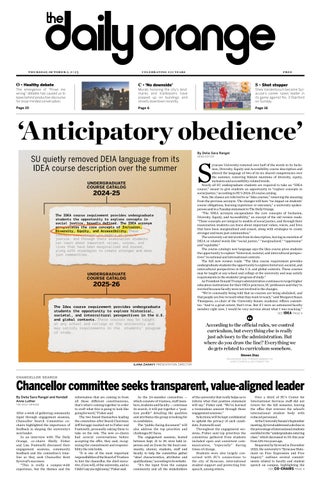
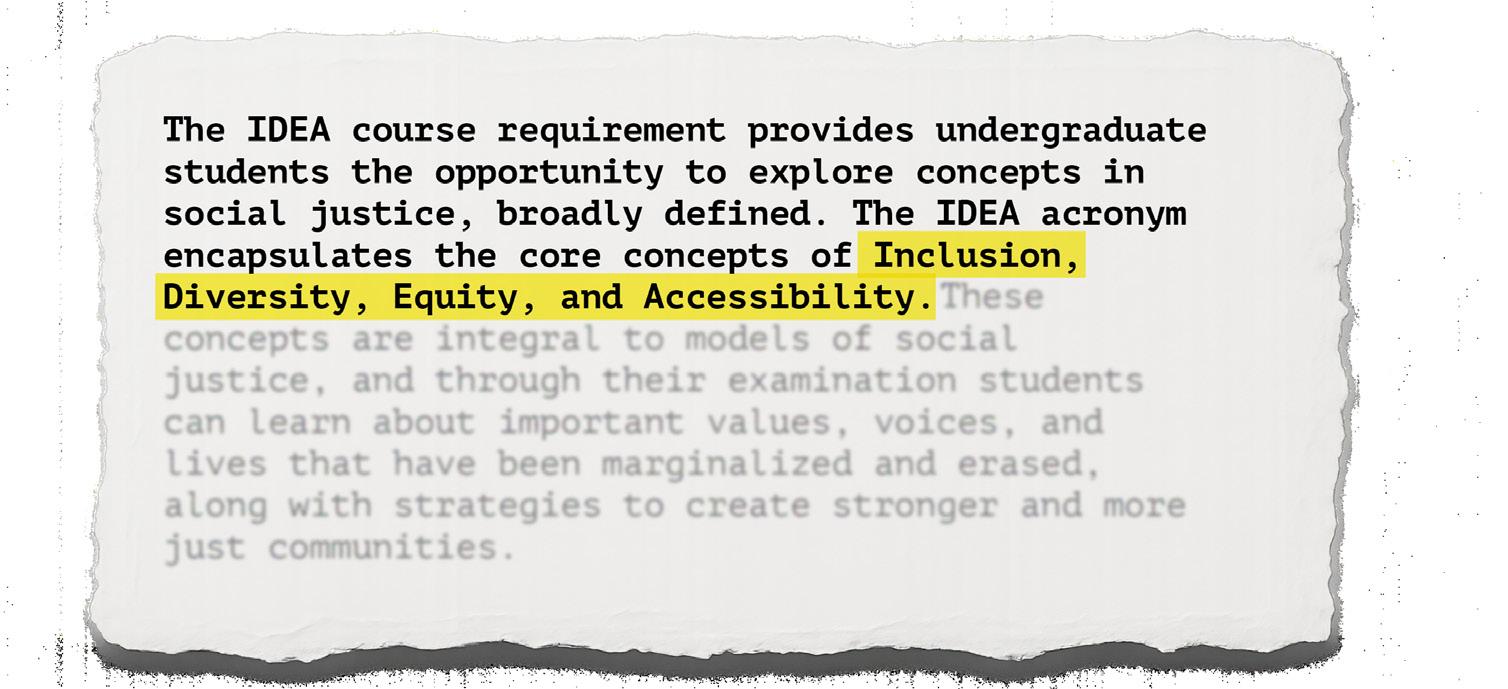
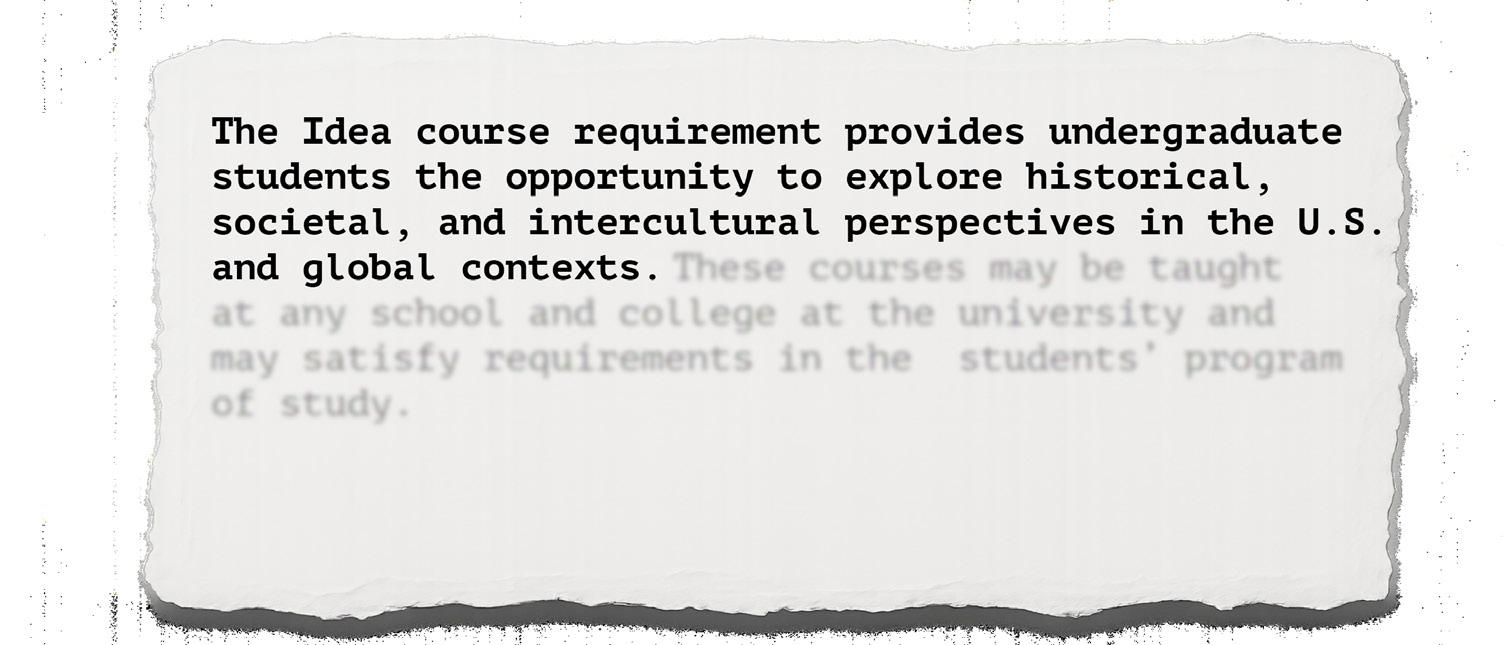
SU quietly removed DEIA language from its IDEA course description over the summer
According to the official rules, we control curriculum, but everything else is really just advisory to the administration. But where do you draw the line? Everything we do gets related to curriculum somehow.
By
After a week of gathering community input through engagement sessions, Chancellor Search Committee cochairs highlighted the importance of feedback in shaping the university’s next leader.
In an interview with The Daily Orange, co-chairs Shelly Fisher and Lisa Fontenelli discussed their engagement sessions, community feedback and the committee’s timeline as they seek Chancellor Kent Syverud’s successor.
“ This is really a campus-wide experience, but the themes and the information that are coming in from all these different constituencies, that’s what’s coming together in order to craft what this is going to look like going forward,” Fisher said. The two found themselves leading the committee after Board Chairman Jeff Scruggs reached out to Fisher and Fontenelli, personally asking them to take on the role. The now co-chairs had several conversations before accepting the offer, they said, recognizing the commitment and responsibility the role holds.
As the 24-member committee — which consists of trustees, staff members, students and faculty — continues its search, it will put together a “position profile” detailing the qualities and attributes the group is looking for in candidates.
The “public-facing document” will also address the top priorities and challenges SU faces.
“It is one of the most important responsibilities of the Board of Trustees to hire the chancellor, the chief executive, if you will, of the university, and so I didn’t say yes right away,” Fisher said.
The engagement sessions, hosted between Sept. 21 to 29, were held inperson and on Zoom for the local community, alumni, students, staff and faculty to help the committee gather “ideal characteristics, attributes and qualifications,” according to its website.
“It’s the input from the campus community and all the stakeholders
of the university that really helps us to inform what that position statement will say,” Fisher said. “We’ve learned a tremendous amount through those engagement sessions.”
Selections will be kept confidential to uphold the privacy of each candidate, Fontenelli said.
Throughout the engagement sessions, Fisher said top priorities the committee gathered from students included open and consistent communication, “especially” during times of change.
Students were also largely concerned with SU’s connections to the city of Syracuse, international student support and protecting free speech, among others.
Over a third of SU’s Center for International Services staff did not return for the fall semester, leaving the office that oversees the school’s international student body with reduced personnel.
At the University Senate’s September meeting, Syverud addressed a decline in the percentage of international students enrolled in the “undergraduate entering class,” which decreased to 5% this year from 12% two years ago.
Requested by Syverud in December 2023, the university’s “Syracuse Statement on Free Expression and Free Inquiry” outlines several commitments related to faculty and student speech on campus, highlighting the
see co-chairs page 4

Editor@dailyorange.com
News@dailyorange.com
Opinion@dailyorange.com
Culture@dailyorange.com
Sports@dailyorange.com
Digital@dailyorange.com
Design@dailyorange.com
Photo@dailyorange.com
BUSINESS 315-443-2315
how to join us
The Daily Orange is an independent, nonprofit newspaper published in Syracuse, New York. The editorial content of the paper — which started in 1903 and went independent in 1971 — is entirely run by Syracuse University students.
The D.O., a 501(c)(3) nonprofit, is editorially and financially independent from SU, and the paper receives no funding from the university. Instead, The D.O. relies on advertising revenue and donations to sustain operations.
This fall, the paper will be published Thursday when SU classes are in session. The D.O.’s online coverage is 24/7, including while SU is on break.
To show your support to The D.O.’s independent journalism, please visit dailyorange.com/donate. Donations are tax deductible.
If you are a Syracuse University or SUNY-ESF student interested in contributing to The D.O. on either its advertising or editorial teams, please email editor@dailyorange.com.
corrections policy
The D.O. strives to be as accurate in our reporting as possible. Please email editor@dailyorange.com to report a correction.
letter to the editor policy
The D.O. prides itself as an outlet for community discussion. To learn more about our submission guidelines, please email opinion@dailyorange.com with your full name and affiliation within the Syracuse community. Please note letters should not include any personal information pertaining to other people unless it is relevant to the topic at hand. All letters will be edited for style and grammar.
The D.O. is published weekdays during the Syracuse University academic year by The Daily Orange Corp., 230 Euclid Ave., Syracuse, NY 13210. All contents Copyright 2025 by The Daily Orange Corp. and may not be reprinted without the expressed written permission of the editor-in-chief. The Daily Orange is in no way a subsidy or associated with Syracuse University. All contents © 2025 The Daily Orange Corporation
The forecast for this upcoming week, per The Weather Channel.








We want to hear what you think about our content. Email editor@dailyorange.com or send us a message on social media.
Send tips and
Help us report on stories that matter to you. Email editor@dailyorange.com with your ideas. Tips may be shared anonymously.
3. Become a member.
Help us produce meaningful coverage by making a monthly tax-deductible donation at dailyorange.com/donate. You can receive a spot on our digital donor recognition wall.
By Isabel Mel é ndez-Rivera staff writer
At the University Senate’s first meeting of the year, Syracuse University Chancellor Kent Syverud thanked senators for their active participation in “shared governance.”
In the same meeting, senators said they felt university decisions this year violated shared governance, including when Syverud appointed a provost without senate input and admission into 20 majors in the College of Arts and Sciences were paused without faculty input.
Faculty also expressed frustration in the meeting regarding changes to the SU Renée Crown University Honors Program without their input.
The American Association of University Professors refers to shared governance as “the joint responsibility of faculty, administrations, and governing boards to govern colleges and universities.”
“Shared governance emerged from the peculiarity of universities as institutions for knowledge production and circulation in the broadest sense,” said Crystal Bartolovich, associate English professor, senator for the Agenda Committee and president of the SU AAUP Executive Committee’s chapter.
USen, the Board of Trustees, the Student Government Association and most recently the Chancellor Search Committee, are all expected to contribute to SU’s shared governance, senators said.
Each group’s influence on university issues should depend on the responsibility and expertise it holds in a given area, Bartolovich said. She said academic conversations should always include faculty, with unprecedented events as the only valid excuse.
“Decisions about the curriculum and academic program should be made by the faculty, and only deviated from by administrators in extremely unusual circumstances, such as extreme financial peril that cannot be addressed in any other way,” Bartolovich said. “It is the job of administrators to demonstrate to the faculty that their determinations are absolutely necessary.”
Margaret Susan Thompson, a history professor and co-chair of USen’s Academic Affairs Committee, said many faculty members feel recent decisions were made by higher administration, without involving the faculty.
“One of the questions that relates to shared governance is, how were faculty involved in those decisions, are these top down decisions, or are these more broadly based decision making processes?” Thompson said.
Shared governance has been brought up in key moments of SU’s history, said Amy Kallander, SU history professor and chair of the Academic Freedom Tenure and Professional Ethics Committee.
When #NotAgainSU organizers presented demands in 2020 to improve the campus climate for students of color, the university denied some of them, saying it “cannot implement them under the law or under shared governance practices,” according to internet archives.
After THE General Body, a coalition of over 50 student organizations at SU, protested in fall 2014 over transparency issues, Syverud discussed shared governance at a senate meeting
By Brenne Sheehan asst. news editor
Syracuse University will work with the Syracuse Police Department during former United States Secretary of Transportation Pete Buttigieg’s talk on campus Friday to ensure attendee and speaker safety.
Buttigieg’s visit comes just a few weeks after conservative activist Charlie Kirk was shot and killed at a college campus in Utah. Kirk’s death has prompted greater discussions about a rise in political violence in the United States, making on-campus organizations and law enforcement mindful of security surrounding guest speakers.
Buttigieg is scheduled to speak at the National Veterans Resource Center at 1 p.m. Security will use metal detectors and check SUIDs upon entry, according to a Friday email announcing the event. Backpacks are also not allowed.
The Canteen, a cafe within the NVRC, will be closed all day Friday, restricted to those with swipe access according to signage posted around the building.
While the university can’t reveal specific security plans for Buttigieg’s event or future speakers, an SU spokesperson said the campus

later that semester, according to the Wayback Machine — an internet archive.
“The second motion states that it is resolved that the Syracuse University Senate affirms and applauds the attempt of THE General Body to increase diversity, transparency, and shared governance in university practices and pledges to continue these efforts as part of your own work until concrete measures are taken to achieve these goals to the senate’s satisfaction,” Syverud said in the meeting.
While some universities have only a faculty senate, SU has a university senate, which means the governing body includes not just professors, but also undergraduate and graduate students, staff and administrators, Thompson said.
“For the most part, we advise the Chancellor and the Provost about university policy; we do not have the extensive power to actually make policy, so that’s where some of the tension comes in,” she said.
The senate consists of 17 standing committees, each of which meets and reports to the full senate at least once a year. Each senator’s responsibility depends on the committee they serve on, Thompson said.
Not all senators serve on a committee. Fulltime faculty are elected by their own schools or colleges. Committee members serve a two-year term, while other senators serve for as long as their electing group decides.
The governing body mainly advises the chancellor, but it is also “empowered” to approve curriculum changes and recommend faculty promotions, according to its website. The full senate meets monthly to hear reports and vote on proposals, motions, or resolutions introduced by committee representatives, the website states.
Doug Yung, engineering professor and cochair of the Employee Services, Fiscal Affairs, and Operations, said the senate is a forum where senators can stay up-to-date on key issues and events.
“The information piece is more important in the senate so that everybody stays well informed and is able to express their opinions and perspective, and so a lot of times, I would say, there usually a lot of consensus going on at the senate,” Yung said.
Yung, Thompson and Bartolovich agreed that the senate is the primary site of shared governance at SU.
USen Agenda Committee Student Caucus Chair Reed Granger said students participate in shared responsibility through their role as university senators.
“Most of these committees are faculty, professors, librarians and other executive members of our campus leadership, so the students (senators) can act as a kind of liaison of what students actually experience,” Granger said.
This year, there are 22 student senators, elected by SGA, serving on committees. They can vote on motions and proposals during meetings, Granger said.
For the most part, the administration holds faculty and student voices in high regard, she said, but the decision to pause programs discussed in the last senate meeting showed a lapse in faculty input and engagement.
“That is one of the few times that I have been alarmed by this university’s decision-making processes,” Granger said.
Kallander said although the senate makes recommendations, senior leadership ultimately decides whether to follow them, and if they don’t, faculty, staff and students have little power to “hold them accountable.”
“Most people in the senate feel like the senate is frequently bypassed and committee reports are ignored, and that this has become routine,” she said.
Efforts by graduate students to unionize in recent years are partly a result of disruptions to shared governance, Kallander said.
These senate recommendations are decided by the Board of Trustees and the Chancellor’s
Office with 48 voting trustees and 71 life trustees, currently. Voting members serve four-year-long terms, with the opportunity to serve three terms. Kallander reiterated that the idea of shared governance is to “indicate an awareness,” saying it’s more of an “ideal” that doesn’t “necessarily always happen in practice.”
She highlighted instances where faculty and the senate were not involved in decisions made by the university, including when the senate had previously voted to propose revoking an honorary degree but the board “shot it down.”
Most critically, the board has the authority to decide who the next chancellor will be, Thompson and Kallander said.
Discussions around shared governance became more common when Syverud started his tenure in 2013, according to past university releases.
Now, as Syverud prepares to end his term as Chancellor, the board holds significant power in selecting his successor.
“I hope everybody is able to bring in their perspective for this endeavor,” said Yung, who is a member of the committee.
The board announced the members of the Chancellor Search Committee on Sept. 19. Out of 24, eight are faculty members and three are students. German Nolivos, president of SGA, is the only undergraduate representative.
Kenneth Lanterman, SGA’s vice president of community and government affairs, said he is “100% sure” there is enough student representation on the committee.
However, the student-to-faculty ratio and the number of alumni on the committee have been questioned by others.
Thompson said the chancellor matters a lot for shared governance, highlighting that Syverud made it a “priority “to attend senate meetings and answer questions, a practice she said previous chancellors haven’t followed.
The new chancellor’s approach could have a big impact on how shared governance unfolds, she said.
In September 2024, Syverud addressed the current political climate affecting the university at the senate meeting regarding layoffs, program cuts and budget restrictions.
“I’m also not surprised that, given all this going on and given the politics of the world, I’m seeing attacks on traditions of shared governance continue and become exacerbated from various directions,” Syverud said. “I talked about this at the first senate meeting last year, and I’ve seen it accelerate.”
With President Donald Trump’s administration’s increasing involvement in campus policies, Bartolovich said shared governance is “essential” for protecting education, and along with faculty expertise, it can protect academic programs.
She said SU, a private university, has been relatively “shielded from government meddling” in academic programs and curricula.
“The current level of state intervention in universities to control the details of what faculty can say in research and teaching, are antithetical to the process of knowledge production itself, which the faculty are enjoined to uphold,” Bartolovich said.
iamelelend@syr.edu
is working with local law enforcement, including the Department of Public Safety and SPD to keep attendees and speakers safe.
“The safety and well-being of our community and guests is our highest priority,” the spokesperson wrote in a Tuesday statement to The Daily Orange. “We are working in close coordination with law enforcement agencies and other campus and community partners to provide a safe and positive experience for all attendees.”
SPD has “maintained ongoing discussions” with SU about political violence on college campuses, SPD Public Information Officer
Thomas Blake said in a Wednesday statement to The D.O., and has protocols in place for political speaker events.
“In preparation for events of this nature, we conduct a comprehensive intelligence workup that evaluates potential threats across all sectors of society,” Blake wrote. “Security remains our top priority, and we take every measure to ensure the safety of all involved.”
In an email statement to The D.O., SU College Democrats said the university should work closely with police to ensure safety during Buttigieg’s event. However, the group also recommended being cautious not to create an “atmo-
sphere of intimidation,” where students might feel uncomfortable engaging.
“We recognize that hosting political figures, whether at the national or local level, comes with real responsibilities in today’s climate,” the statement said. “Political violence has no place in our democracy, and it’s important that student organizations acknowledge those risks without being deterred from bringing important voices to campus.”
The organization also said it will take concerns of rising political violence into account at “every stage” when considering hosting political speakers at future events.
“At the end of the day, our role as students is to create opportunities for discussion, learning, and civic participation,” the SU College Democrats wrote. “Safety makes that possible, and it will remain our highest priority.”
SU College Republicans declined The D.O.’s request for comment.
Landon Nance, president of SU’s Pride Union, said the organization often hosts drag queens and other LGBTQ+ speakers at its events, and said the rising concern of “political violence” has made the organization more aware of guest safety.
“Event safety has always been a priority for our organization,” Nance wrote in a statement
to The D.O. “However, it is now more present in our minds.”
Nance said the group often uses sign-ins, keeping a “close eye” on attendees and involving DPS when necessary.
A spokesperson for University Union, the university’s student-run programming organization which often brings in celebrity guests, declined The D.O.’s request for comment because the safety of students at its events lies in the role of DPS and JMA Wireless Dome security, they said.
On Oct. 29, the university will host Jim Obergefell, the plaintiff in the landmark U.S. Supreme Court case Obergefell v. Hodges which legalized same-sex marriage across the nation.


bsheeh03@syr.edu
By Gunjan Silwal contributing writer
Jack Baldwin’s commitment to food systems research stems from the six years he served in AmeriCorps, he said. Before graduating from Syracuse University in 2020 with a Master of Public Administration, he worked as an urban farmer and gardener in Trenton, New Jersey.
Now, Baldwin works with the Maxwell School of Citizenship and Public Affairs’ X Lab as a senior associate, studying the effects of medically tailored groceries on veterans’ health through a research collaboration with the Syracuse VA Medical Center and Instacart.
“We want to show that veterans having access to healthy foods, the primary focus of the medically tailored groceries, leads to specific, measurable health outcomes,” Baldwin said. “The goal is to derive a causal link between a program like this and our measured outcomes, which will inform policy and provide causal evidence.”
Using a rigorous randomized control trial to gather evidence, the Maxwell X Lab’s study is a part of the Department of Veterans Affairs’ “Food is Medicine” effort.
The study involves 600 veterans, who receive VA resources like healthy cooking classes, oneon-one meetings with a dietician and online food guides for healthier cooking. Two hundred fifty of the veterans in the study will also be provided with a year of food vouchers worth $100 monthly on Instacart to supplement their current groceries with healthier options.
The food vouchers will allow participants to shop for medically-tailored groceries selected by dietitians that address common issues they face like hypertension, obesity and diabetes, said Colleen Heflin, a public administration and international affairs professor.
The initiative provides veterans with the resources and education necessary to adopt healthier eating habits and create lasting health improvements, while measuring the benefits of the medically tailored groceries.
The Maxwell X Lab partners with public and nonprofit sectors to complete research, according to its website.
In Trenton, Baldwin worked with local communities to plant city gardens and cre -
The university also changed the language in the university’s shared competencies, which encompass six different institutional learning goals that “enhance” undergraduate education, according to the course catalog.
“These were hammered out over the course of years by various committees that included administrators and faculty working constructively and constructively together to produce language that defined the shared competencies and the Idea requirement,” said a faculty member who requested to remain anonymous. “Now we come back in the fall to discover that some anonymous administrator made changes to both of these things without any faculty input whatsoever.”
The first competency, previously called Ethics, Integrity, and Commitment to Diversity and Inclusion, is now Ethics and Integrity.
The language of the fourth competency’s description, Civic and Global Responsibility, was reworded, taking out mention of “inclusive civic and cross-cultural learning.”
The previous description also included an emphasis on “public, global, and historical issues,” which was changed to “self-reflection, civil discourse, reciprocity, and participating as engaged citizens in local and global contexts.”
The other five — Critical and Creative Thinking, Scientific Inquiry and Research Skills, Civic and Global Responsibility, Communication Skills and Information Literacy and Technological Agility — appear unchanged.
“These competencies are part of the university’s obligations under Middle States accreditation and reflect ongoing alignment with accreditation standards,” the university spokesperson wrote. “The University has a duty to ensure compliance with our accreditor body’s expectations.”
Every eight years, the university is required to undergo a review process to maintain its accreditation from the Middle States Commission of Higher Education. Accredited institutions must prove their self-appraisal, institutional accountability and innovations and improvements through campus dialogue.
SU is amid its reaccreditation process, and is expected to be examined by the commission in spring 2027.
ate urban green spaces to help food-insecure communities access locally sourced foods.
Following Baldwin’s time with AmeriCorps, he started at Teach for America as a biology teacher at a Title I school, a school where over 40% of students qualify for either free or reduced lunch.
There, he saw firsthand how hunger directly undermines childhood education.
“When kids don’t have enough food to just be a kid, it has a massive effect on education and behavior … with direct links to graduation rates,” Baldwin said. “I was a teacher who always packed extra food to give to kids when they couldn’t learn.”
Baldwin returned to Maxwell in January 2023 to join the Maxwell X Lab. He emphasized the importance of the lab’s work, particularly in its use of randomized control trials.
“When a program is offered, it’s difficult to attribute the outcome solely to the program,”
Baldwin said. “The RCT addresses this by taking a sample of a population and randomly assigning them to either a treatment group or a control group. This provides a robust research design to compare the treatment and control groups and look for significant results in health outcomes.”
Heflin has spent her career analyzing social problems, specifically food insecurity. Now through her work with the Maxwell X Lab, she said she’s moved “beyond the research,” leading a project that offers direct solutions while also generating rigorous data that can influence food security policy.
Heflin’s involvement stems from her previous work with the military and veterans. After previously testifying before Congress about military and veteran food insecurity, she said she made “key connections” in the VA.
“It was the folks at the VA who actually reached out to me and asked if I wanted to be involved in evaluating a project like this,” Heflin said.
The shared competencies are supposed to be voted on and approved by the Senate before being made public, Thompson said.
“The shared competencies were approved by the Senate and were approved by various faculty groups and so forth, and then we come back after the summer and discover that they’ve been changed,” Thompson said. “And that’s a concern.”
Thomas Barkley, co-chair of USen’s Curriculum and Instruction committee, said because the Idea changes did not pertain to the curriculum itself, the Provost’s office — which oversees the course catalog — was not required to go through the senate to make language changes.
“The only thing that was changed was some of the language that is at the top of the page that essentially describes what (Idea) courses are, but that page is under the auspices of the office, and so they are allowed to make changes to that without consultation,” Barkley said.
“That’s their prerogative.”
Barkley said faculty concerns are being discussed within his respective committee, though no plans have been finalized.
In March, the Trump administration sought to wipe the federal government of DEIA-related language and flagged hundreds of words to avoid, The New York Times reported. Many of the words previously used appeared on that list.
At the first USen meeting of the fall 2025 semester, Provost and Vice Chancellor Lois Agnew confirmed that the changes had been made after senators asked questions about the change, with some alleging it was made without senate or faculty approval.
“The reason I’m really wanting us to move forward with this process now is that we have the opportunity to work together and really think about those questions of how we can come up with informed decisions that aren’t driven by panic,” Agnew said in the meeting.
Of the 152 courses listed under the Idea requirement, 113 are under the College of Arts and Sciences and Maxwell School of Citizenship and Public Affairs, which are conjoined in the catalog.
“The university is trying to argue, and I think they’re right on one level, that they’re not trying to eliminate courses, but they’re trying to make the requirements and the guidelines at SU correspond to the new set of rules coming from Washington,” Thompson said.
Admission into 20 majors in Arts and Sciences is currently paused as the university
Maxwell research assistant Ashraf Haque said his involvement in the Maxwell X Lab is driven by a central goal – bridging the gap between academia and policymaking.
Haque joined the Maxwell Ph.D. program in 2023. He’s spent the past eight years working, conducting research and assisting policymakers, including serving as the country director for Innovations for Poverty Action Bangladesh.
During his time there, Haque managed, implemented and communicated the results of at least 60 RCTs. He said his primary job was reworking research rhetoric into plain language for local policymakers. He also helped design programs that would efficiently utilize the scarce resources available in his local community.
Addressing the health issues of veterans through this VA study is vastly different work compared to his earlier projects in Bangladesh, Haque said. However, he believes the fundamental challenges remain the same. He explained the biggest challenge across all nations is building trust.
“When you offer something to a group of people, how they respond is almost universal across all countries,” Haque said. “‘Why are they offering this to me? What are their intentions?”
Haque said his experiences bridging that gap in Bangladesh developed a skill that is transferable to any study and any group of people across the world.
Haque also emphasized the importance of the data gathered during this study. The VA provides veterans with resources and subsidies for daily life. But for Haque, the X lab’s “cold numbers” will help strategists find out whether providing healthy groceries is the best way to help veterans.
For all three researchers, while the ability to impact a vulnerable population is incredibly meaningful, their primary goal is still focused on the data they gather, Heflin said.
“You need to understand which $100 gives you the best final outcome … If you have those cold numbers, you can compare,” Haque said. “Am I helping veterans in the best possible way with this $100? Or is there any other program that can help them more compared to this program?”
gsilwal@syr.edu
undergoes an academic portfolio review of its programs, degrees and majors.
Steven Diaz, a professor and former member of the curriculum committee, said it’s clear the university is trying to “act more quickly” in response to the federal government to stay under the radar.
“That’s always a sort of issue to what extent the administration needs to come to the Senate for proposal of things,” Diaz said. “According to the official rules, we control curriculum, but everything else is really just advisory to the administration. But where do you draw the line? Everything we do gets related to curriculum somehow.”
The university closed its Office of Diversity and Inclusion in June, replacing it with the Office of People and Culture within the Office of Human Resources. The closure drew criticism from the campus community.
Thompson said some of the former ODI’s functions related to curriculum, but HR has “no jurisdiction” over course content.
“It’s understandable that the Syracuse University administration would try to keep a very low profile, and engage in what the administration probably considers minor examples of anticipatory obedience by scrubbing DEI language from different offices and units,” the anonymous faculty member said. “But of course that’s going to affect students, especially students of color.”
In January 2025, the American Association of University Professors condemned universities for “acquiescing” to the federal government’s attacks on higher education and complying before any pressure to do so.
“While university administrators and faculty members may be compelled to comply with legislation and court orders, even where these run counter to professional and constitutional principles, they remain free to register their disagreement,” the statement reads. “And under no circumstances should an institution go further than the law demands.”
As SU undergoes a major period of transition, with the search for its next chancellor underway and an ongoing review of major programs, Thompson said she’s unsure what the university will look like in the coming years.
“We’re in a time of uncertainty. We have a new chancellor coming in. In a year after that, we will have a new provost,” Thompson said. “What are they going to do about these things?” dsrangel@syr.edu @deliasrangel
importance of promoting “free expression and free inquiry” and “open deliberation” on campus.
The statement was developed in response to USen members’ concerns that the potential for violent threats would be co-opted as an excuse to erode free speech on campus.
Students also said they’d like to maintain and enhance experiential learning, including study abroad, internships and research projects, Fontenelli said.
Fisher and Fontenelli emphasized they entered the engagement sessions and the broader search with “zero preconceived notions” about what the top priorities should be in selecting a chancellor, though they aim to find someone with the “strength” to lead the university.
“One thing that came out loud and clear (was) that people are consistently proud to represent Orange across all the engagements,” Fisher said. “But for the students, one thing … that was so impressive and thoughtful was that they thought broader than themselves and spoke passionately about getting this right for students coming after them, as well as what’s happening now.”
Representatives from Spencer Stuart, an executive search and leadership consulting firm assisting the committee, have taken “copious” notes throughout each engagement session that will be shared with the committee, Fisher said.
The firm will provide structure to the process, the co-chairs said, connecting the committee with potential candidates based on the traits it deems most important to the position profile.
“This is where we work very closely with the search firm to try to identify those people who will best match that criteria, and then try to shepherd them through the process to find the best fit for us for the next leader of the university,” Fisher said.
The committee is also accepting feedback through an anonymous survey on its Chancellor Search website. Responses will go directly to Spencer Stuart, according to its website.
The responses are also shared with the committee, Fontenelli said, and will be used to help define the position statement, which will continue to be established over the next few weeks. Because of uncertainty in higher education, Fontenelli said the committee will particularly look for the “attributes of the candidate as a leader” and “how they’ve executed in their past experience.”
The committee’s considerations align with broader changes across higher education under President Donald Trump’s administration, targeting diversity, equity, inclusion and accessibility programs, federal funding and international students.
In July, SU closed its Office of Diversity and Inclusion and opened a new unit under the Office of Human Resources after reviewing its compliance with federal policy. In April, three international students had their visas revoked under the federal administration.
“It’s less about the specifics of that uncertainty and more about finding the right leader who will represent the things that are most important to the university,” Fontenelli said. “It’s going to be incredibly important to have a leader who will be able to respond in a way that’s transparent and also in line with the stated mission for the university.”
While the university actively reviews a number of its major programs, including 20 courses within the College of Arts and Sciences and the Renée Crown University Honors Program, Fontenelli said there’s “no doubt” the next chancellor will inherit a wide “portfolio.”
“The most important thing to know is the portfolio is important and has been deemed important by the Board of Trustees, otherwise we wouldn’t be moving forward on a number of those things,” Fontenelli said.
Fontenelli also referenced Syverud’s ongoing projects — such as new dorms, academic strategic initiatives and “big changes” happening in college athletics. But the trustees will “keep moving forward” and “adapt as necessary,” she said.
Now that the first phase of the search — engagement sessions — is over, the co-chairs intend for the position profile to be available on the Chancellor Search website by mid-October. The committee will then be in the “full-on recruitment phase,” Fontenelli said.
“Once we actually have a broad list that the committee can review, we will start the process of combing it down and moving toward having someone selected so the board can approve that person by the end of the first calendar quarter of 2026, with the idea that the new chancellor would be in place for the start of the new academic year,” Fontenelli said.
The co-chairs plan to provide frequent updates to the campus community on the search through the website and campus-wide emails. news@dailyorange.com





In recent years, city initiatives have aided murals highlighting Syracuse’s culture and history
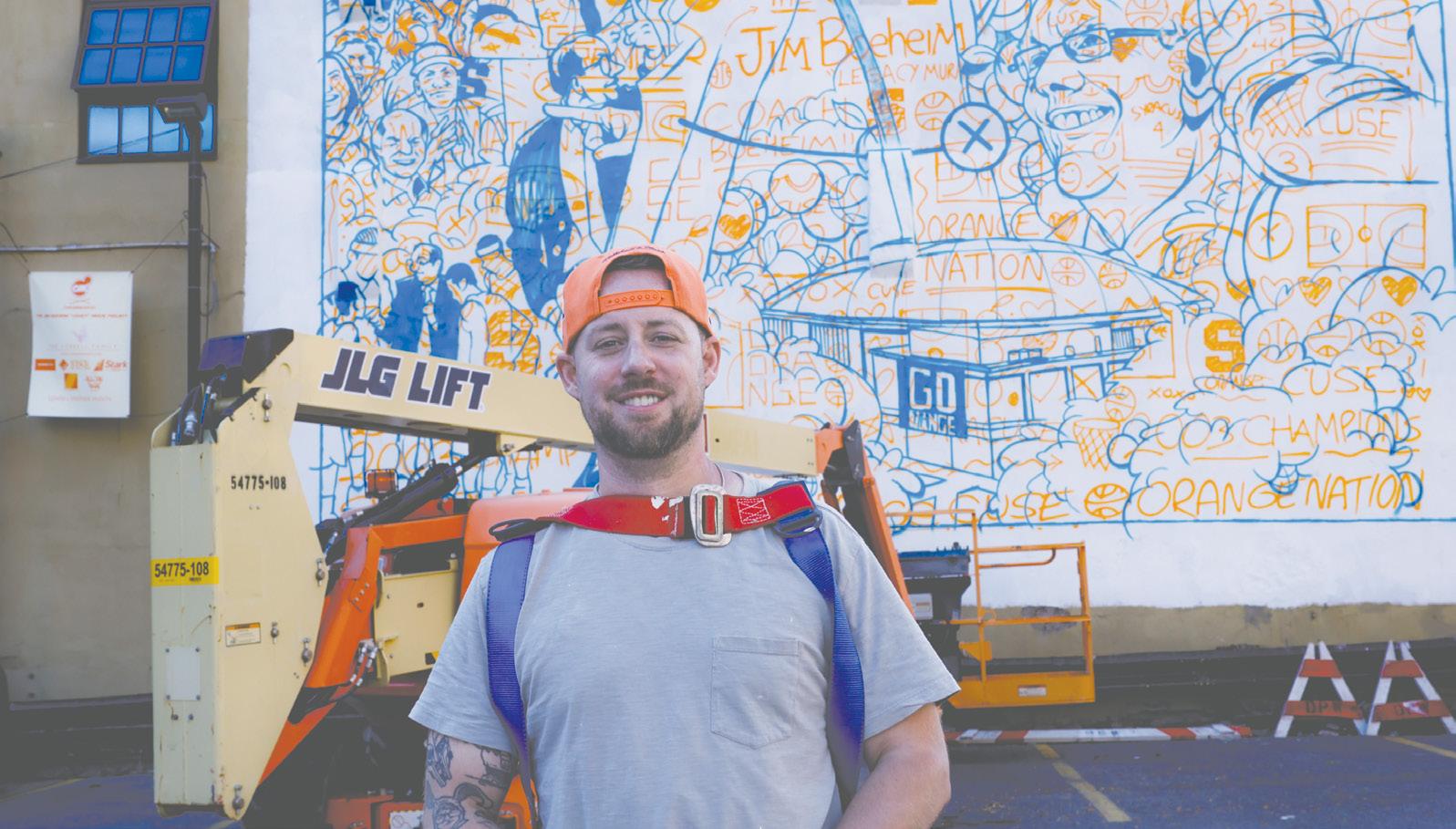
artist Chris Murray said he received the same “outsider treatment,” especially when gathering donations for his upcoming Jim Boeheim mural.
Photos by Zabdyl Koffa staff photographer
Syracuse International Jazz Festival founder Frank Malfitano wasn’t going to let the public art scene wither away during the COVID-19 pandemic. Malfitano decided a mural was the best route to revitalize the local art scene.
“Museums were shuttered and arts organizations and cultural institutions were all closed,” Malfitano said. “I didn’t think that should stop the flow of art happening in the community.”
Many murals have sprouted in Syracuse in recent years, with a few debuting over the summer. Tomorrow’s Neighborhoods Today (TNT)’s City as Canvas and the New York Department of Transportation fueled some of these projects, livening the city with spirit and creativity, Malfitano said.
Whether it’s murals holding historical significance or more novel ones, they represent more than just paintings on a wall, Syracuse University College of Visual and Performing Arts professor and illustrator London Ladd said. From the long, painstaking process of designing and funding murals to securing a specific building, murals encapsulate an arduous love affair that brings only good to the community, Ladd said.
“(Public art) comes to life with a sense of creativity, color and community. Syracuse was something that was nothing, and now the area is better,” Ladd said. “There’s no downside to public art.”
Malfitano submitted the concept for his “Legendary Syracuse Firsts” mural to the Syracuse Public Art Commission in 2020. The mural featured four basketball players connected to Salt City: Breanna Stewart, Earl Lloyd Jr., Dolph Schayes and Manny Breland.
When Malfitano enlisted Los Angeles-based muralist Jonas Never to paint the “Legendary Syracuse Firsts” mural, he faced backlash for not sourcing local artists. Philadelphia-based
“I got that ‘You don’t live here, why should we help you?’ (treatment), from the early stages, right up to the end of the fundraising. That’s been my experience doing these projects,” Murray said.
Murray was born in Norfolk, New York, but grew up two and a half hours away from Syracuse. Boeheim’s prowess still reached him.
“Whether it be sports, movies or comic books, I loved everything during that late 80s, early 90s basketball era,” Murray said. “Jim was at the helm of all of that with Syracuse basketball. He really just kind of gave us upstate New York kids some representation.”
After seeing the “Legendary Syracuse Firsts” mural on social media in late 2023, Murray, who lives and breathes Syracuse basketball, was inspired to honor Boeheim in a mural. He called the idea a “calling from outer space.”
To Murray’s surprise, there wasn’t yet a mural honoring Boeheim. As Murray researched, he found that Malfitano had spearheaded the “Legendary Syracuse Firsts” mural. The next morning, Murray had an hour and a half phone call with Malfitano on the ins and outs of painting the mural in Syracuse. Malfitano said he found a kindred spirit in Murray’s dedication and passion to the mural, which will be completed mid-October.
While Syracuse basketball has been followed for decades, physical music has seen an unsteady rise and fall, The Sound Garden Syracuse general manager Nick Shelton said. However, a resurgence of vinyl and CDs put the record store on the map. Celebrating its 30th anniversary this year, The Sound Garden has since become a cornerstone of Syracuse music.
Local artist and longtime collaborator Tommy Lincoln was first tasked to paint the Sound Garden’s storefront black. Then, Lincoln pitched painting a mural to add a touch of character to the store – a coincidence with the store’s

anniversary. While Shelton gave Lincoln complete control of the design, maintaining the store’s identity was vital.
“We also wanted the mural to become a stop of a destination, because there are people who like to travel around to see large pieces of street art,” Shelton said. “We didn’t want it to be an advertisement for the store, but a reflection of (Tommy) as an artist and the community around the store as well.”
The final product — finished this May — featured striking reds, blues and yellows, with the store’s iconic vinyls right at the center of The Sound Garden’s storefront.
campus life
By Claire Zhang asst. copy editor
Buy one trinket and display it on a desk. Soon, you’ll have an army of figurine babies or furry smiling creatures. Whether you love them or hate them, collectible trinkets like Sonny Angels and Labubus are stirring conversation at Syracuse University.
“My friends at home literally judge me so much,” Josie Gilbert,
an SU freshman, said. “They’re like, ‘(Labubus) is the creepiest thing ever.’And I’m just like, ‘No, it’s so cute.’” Labubus took over social media feeds earlier this spring and found their way onto designer purses and casual totes. Sonny Angels have been a collectible for years, sitting on shelves or sticking onto phone cases. SU students are sporting these trinkets on school supplies or as dorm decoration.
Toy company Pop Mart, known for distributing all kinds of collectible toys, took over producing Labubus from the original artist Kasing Lung in 2019. But it wasn’t until early 2024 when big celebrities like K-pop star Lisa and singer Rihanna were spotted with them that they blew up to a new proportion. Labubus have become a divisive topic: some people find them
adorable, others terrifying. At first, Gilbert was unsure of her opinion on them. Now, she loves them.
“My mom had them first and she started getting these ones that have blinged out necklaces and teeth,” Gilbert said. “And I was like, ‘You’re insane,’ and now I’m obsessed with them.”
It’s a tale trinket collectors are all too familiar with. Every few years, a new figurine or plush will
pop up on the market, and soon enough, buyers will have various versions of them. For freshmen roommates Gilbert and Isabella Santos is a fun hobby they’ve been practicing since childhood. When Santos and Gilbert were little, they loved toys like Shopkins, Mini Brands or Littlest Pet Shop. While they eventually grew out of those, their love for see collectibles page 9
By Charlotte Price asst. culture editor
Orange glitter, “The Great Gatsby,” theatrical, punchy, magical, mysterious and speakeasy — these are some of the words Syracuse University students used to describe Taylor Swift’s upcoming album, “The Life of a Showgirl.”
“This album feels like a victory lap,” SU sophomore Sara Woodside said.
Swift will release “The Life of a Showgirl” on Friday. The album is Swift’s 12th, referred to by some fans as TS12. It’ll have 12 songs, a diversion from Swift’s tradition of releasing bonus tracks or even a double album, she said during a podcast announcement.
The past few years have been more of a marathon than a race for Swift — she completed The Eras Tour, released a double album, rerecordings of past albums (Taylor’s Version) and purchased the master recordings to all of her music. The new album “feels like turning a new leaf,” Woodside said.
The work is Swift’s shortest in over a decade with a runtime of around 40 minutes, and includes only one feature: Sabrina Carpenter on the album’s title track. When Swift announced the album on fiance Travis Kelce and his brother Jason Kelce’s podcast, she said she focused on quality over quantity in the album.
At the end of her last show on The Eras Tour, Swift exited the stage through an orange door instead of taking her usual exit down an elevator lift, one of her infamous “Easter eggs.”
“I kind of wanted to give a little, subliminal hint to the fans that I may be leaving The Eras Tour era, but I was also entering a new era,” Swift said on the podcast episode.
The title “The Life of a Showgirl” is very literal. On the podcast, she shared that she was working on the album while on tour in Europe. Swift was literally living the life of a showgirl, Travis said.
Jenna Makuen, a junior psychology major, predicts the content of the album will reflect that constant on-the-go lifestyle Swift has kept up for the past two years.
“She’s just had to grapple with emotions and breakups and life experiences while performing in front of 50,000 people every night,” Makuen said. “And, of course, she wrote an album about that.”
Swift produced the album alongside Max Martin and Shellback, two creatives she hasn’t collaborated with since the 2017 release of “Reputation.” In past albums, Swift has collaborated with Jack Antonoff.
Senior public relations major Maria Keenan is excited for the pop music influence Martin and Shellback are expected to bring to the new album, along with the influence of a happy relationship.
“She hasn’t put out like an upbeat album in quite a long time,” Keenan said. “The last one was ‘Tortured Poets,’ which is one of her saddest albums ever, so it’s just been a long time since we’ve gotten pop-y Taylor.”
Swift recently announced her engagement to the Kansas City Chiefs’ star via Instagram, stirring up emotions for many fans who have followed her romantic journey through years of love songs.
Keenan said since she’s been engaged to Travis, Swift seems happier.
Kelce’s prominent place on Swift’s social media reflects a turning point for her, sophomore Marley Mills, said. Mills is curious to see how Swift’s lyrics will reflect finding her life partner. She’s noticed that songs like “So High School” — that fans presume to be about Travis — are more peppy than songs about past boyfriends.
Out of the 12 tracks on the album, Woodside is most curious about the one featuring Sabrina Carpenter. Swift doesn’t always include a title track, but Woodside said she enjoys seeing what the artist chooses to do with them when they’re included.
Mills said she’s anticipating the title track because she hasn’t been loving Carpenter’s work lately. She’s curious to see how her favorite artist will combine with one she isn’t as head over heels with.
“I feel like that one song is going to set the tone for the album,” Mills said.
Though the production and vibe of Swift’s music may be shifting with this album, Swift said on the podcast that one thing she didn’t want to change was her lyrical storytelling. That’s good news for Makuen, who said no matter what kind of music Swift releases, she’ll always pay the most attention to the lyrics.
Makuen is most excited to hear “The Fate of Ophelia” because she loves Swift’s references to things like Shakespeare or Greek mythology in songs like “Cassandra.” To fully understand the layers of meaning in Swift’s music, Makuen said she sometimes has to do some research.
“folklore” is Makuen’s favorite album, the first where Swift departed from her classic pop and country sound and focused on more poetic lyrics. She said she’ll always find Swift’s music relatable.
Swift has garnered a reputation as a genrebender, bridging indie, country, pop and folk influences throughout her career, Mills said. She said she often repeats to Swift naysayers that if they
don’t like her music, they just haven’t listened to enough of it.
“There’s always a song for any story in your life or any experience in your life,” Makuen said.
Woodside said Swift’s music connects to universal experiences like girlhood and growing from a teen to a young adult. Those themes “never go out of style,” she said (pun intended).
For many fans, a new album from Swift isn’t just 12 more songs to add to their playlist. It marks a new development in the life of an artist who, in many ways, has grown up with them.
Woodside was born in 2006, the same year Swift started releasing music. She’s also from Pennsylvania, Swift’s home state. She remembers watching music videos for the “Red” album with her older sister and mom and having dance battles in their kitchen. “evermore” soundtracked her high school experience, writing essays with it on repeat.
“I’ve never lived in a world that wasn’t at least a little bit consumed by Taylor Swift,” Woodside said.
Also a Pennsylvania native, Makuen remembers becoming a Swift fan at 11. She used to play Swift’s music in her CD player and memorize the lyrics for hours on end. Now, Makuen is a songwriter herself. When she started, she said she always tried to write like Swift did. She described Swift as a light in her life.
Mills’ childhood nanny introduced her to Swift; she and her sister used to drive home from school listening to “Picture to Burn” and “Our Song.” Mills said she’s been listening to Swift as long as she can remember, making her a fan of 19 years.
“I know it’s corny, but she’s not even like an artist to me,” Makuen said. “She’s part of me.”
As Swift has moved through eras of life with them, fans are excited to see what the artist’s next era will bring. Swift’s process of releasing a “Taylor’s Version” of her older albums has been an all-consuming era in itself, Woodside said.
Fans will gather for listening parties on Friday, like one at Marcus Syracuse Cinema. Mills said, along with attending that release party, she’ll be listening to the album while getting ready with friends for a sorority event that night.
Woodside doesn’t have classes on Friday, so she plans to dedicate the day to appreciating the new album.
“I have my cardigan to put on,” she said, referencing Swift’s branded cardigans. “But I think I’m just sitting to listen to it by myself in my room with my headphones. And probably listen to it again and again and again.”
cprice04@syr.edu

By Spencer Howard senior staff writer
On any given weekday at Syracuse University’s Schine Student Center, the Dunkin’ line can be seen extending to the atrium and often past the Gaming and Esports Center. In lecture halls, classrooms and all the floors of Bird Library, canned energy drinks and People’s Place coffees rest next to laptops with full calendars and keyboards clacking away.
“Lowkey, I wish I didn’t drink as much caffeine,” SU junior Anna Quigley said. “At this point, I feel like I’m addicted.”
From homemade cold brew coffees to Reign Total Body Fuel energy drinks in SU’s campus cafes, these beverages represent the unspoken companion to college life: caffeine. The drinks students consume represent their values — productivity, health, flavor or some combination of them all.
And with SU’s recent shift from PepsiCo to Coca-Cola products, the options on campus are changing, along with the habits of the students who consume them.
Senior Jessica Singh said she welcomed the shift. As a prospective student, Singh remembers the single con she added on her college pros and cons list was the fact that SU only carried PepsiCo products.

Singh said she likes the taste of Coke better than Pepsi, but was somewhat bummed to find out CELSIUS Energy Drinks would no longer be sold on campus due to their PepsiCo affiliation. She’d gotten used to having the energy drinks during late-night study sessions.
Singh only consumes caffeinated drinks a couple of times a week, when her workload demands it. She was initially hesitant to try Monster Energy or Reign drinks because of their bright packaging and aggressive reputation. But, after trying a Monster for the first time, she said she could barely tell the difference from her usual go-to.
“If I just closed my eyes and drank from a can, I would have thought it was a CELSIUS,”
Singh said.
Ava Dornburgh, a junior at SU and collegiate marketing ambassador for CELSIUS, has directly seen the shift in CELSIUS availability on campus. Because students can no longer buy the products, Dornburgh said people are ecstatic when she reaches out to sponsor their organization or event.
Despite being a CELSIUS ambassador, Dornburgh’s daily drink of choice is a cold brew coffee, which she makes in her apartment every morning. Like Singh, she only drinks heavily caffeinated beverages when she’s especially tired, or sometimes when working out.

Other students on campus, like junior Isabella Jordan, steer clear of all energy drinks because of their high caffeine content.
Jordan, who never drank coffee before college, now consumes a homemade latte or Starbucks iced coffee most days. She shared a similar experience with her hometown friends, who also didn’t drink much caffeine before going off to college. Jordan turned to drinking coffee when she began experiencing a lack of sleep and an increased workload during the first couple of months of her freshman year.
“The only thing that would steady out my fatigue was having one or two coffees every day,” Jordan said. “If I don’t have a coffee in the morning, I’m just really groggy the whole day.”
Quigley consumes several caffeinated drinks a day, though it’s something she said she wants to cut back on. Her go-to drink is coffee, but like Dornburgh, she has a CELSIUS when she wants to work out or get an extra boost of energy.
Since Quigley is a junior with no SU meal plan, she said she hasn’t noticed the absence of PepsiCo products in campus cafes and dining halls like her younger peers. Quigley said her friends voiced excitement about the switch because of a preference for Coke over Pepsi.
For non-coffee drinkers, soda is a simple alternative that still provides an energizing kick. With the new Coca-Cola soda fountains in SU

dining halls, some students now pair their meals with a simple Diet Coke or Sprite. Students will always find a way to get their caffeine, Jordan said. In 2025, a nationwide study conducted by Grand Canyon University found that 95% of college students consume caffeine in some form. Coffee and energy drinks were the two most preferred sources of caffeine, the study found.
Since the transition, Singh said she still sees the same amount of CELSIUS cans in her classes as before, but now there are many more Monster cans as well. Singh said she doesn’t have a preference in drink, as long as it serves its purpose, something other students agreed with. “I feel like some people do have this loyalty, but also, like me, some people don’t seem to care,” Singh said. “They just kind of need something to keep them awake.”
Dornburgh said that drinks like CELSIUS and coffee are such a major part of college because students are working so hard all the time.
Regardless of major or year, caffeinated drinks are a staple for SU students and college students beyond. Coffees, energy drinks and sodas seem to be as essential to college life as backpacks and pencils, and they’re here to stay whether students embrace them or not.
“Even if we slept 11 hours, we cannot stay awake without at least one cup of coffee,” Jordan said. sphoward@syr.edu


Becoming a muralist was an unlikely outcome in central New York artist Russell Mason’s career. Mason started off as a studio artist selling paintings at galleries. Away from the public, Mason considered himself a “reclusive artist,” until he was asked to paint a mural in a school in Utah 15 years ago.
Mason was approached by TNT in 2024 to paint a mural of street performer Elijah “Eli” Harris Jr. on 1637 South Ave. Street. With a guitar strapped around him, Harris was spotted around the streets and corners of Syracuse, lifting people’s spirits with his music. In 2020, Harris was struck twice in a hitand-run and died while riding his bicycle. A local Syracuse celebrity, Harris’ exuberant personality constantly lit up his surroundings everywhere he went, from the SU campus to Syracuse’s Southside, Lakisha Harris, Elijah’s daughter, said.
After meeting with TNT and Harris’ family to settle the mural’s design, Mason knew the mural needed to reflect Harris’ personality. Exclusively using bright colors and unique patterns in his design, the animated and eye-catching piece was designed to stand out against the street’s backdrop, like how Harris stood out in the crowd.
As a fellow artist himself, Mason understood Harris’s sheer passion for music, translating to his quickly approved design.
“I don’t think Eli was a person that you needed to sit down and talk to (in order) to know him,” Mason said. “Everyone knew who he was from his performance on the street. That’s where his passion was. He stood out and he’s got energy. You can just see it.”
While the mural’s colors and patterns were an easy decision, finding an image that truly personified Harris was crucial to the process. After scouring the internet for the perfect picture, Mason decided on an image of Harris strumming his guitar while singing on a street, surrounded by customers having dinner on an evening’s night.
Lakisha Harris described the photo as her father at his best: expressing himself through music.
“Think of it as you starting off a song,” Lakisha said. “It starts off slow, but towards the end of the song, that’s when it has the best and the highest impact. That’s the moment I feel like my father was in that picture.”
Mason spent two weeks priming the wall, outlining and designing the mural. But the wall’s rough, brick surface was an added challenge to the project.
In contrast to Mason’s colorful depiction of Harris, Never chose to paint the basketball players in a timeless black and white style to emulate a design that could stand the test of time. While initial sketches were subject to change, the four players were non-negotiable.
Though each player was athletically distinguished, the four were chosen for their strong stances on social justice.
“People started calling it the Mount Rushmore of Syracuse basketball, and it was implied that these were the four greatest basketball players to ever come out of Syracuse. That was never my assertion,” Malfitano said. “My assertion was that these were four champions who fought for social justice, barrier breakers, pioneers and trailblazers.”
Though Ladd is primarily known for writing children’s books, his love for Black history expands through all artistic mediums. He too wanted to feature historical figures who had ties to Syracuse.
An open TNT call in 2018 asked local artists to paint murals across Syracuse’s quadrants. Former TNT board member Camille Coakley selected Ladd to paint two murals on Syracuse’s Southside.
Since the two were both born and raised on the Southside of Syracuse, Coakley chose Ladd for his familiarity with the area and his artistic abilities. Coakley described Ladd as one of the most renowned Black illustrators in the country.
“I wanted to illustrate how the Southside has a lot of talent and a lot of treasures that have been overlooked for so long,” Coakley said. “And so London is one of those.”
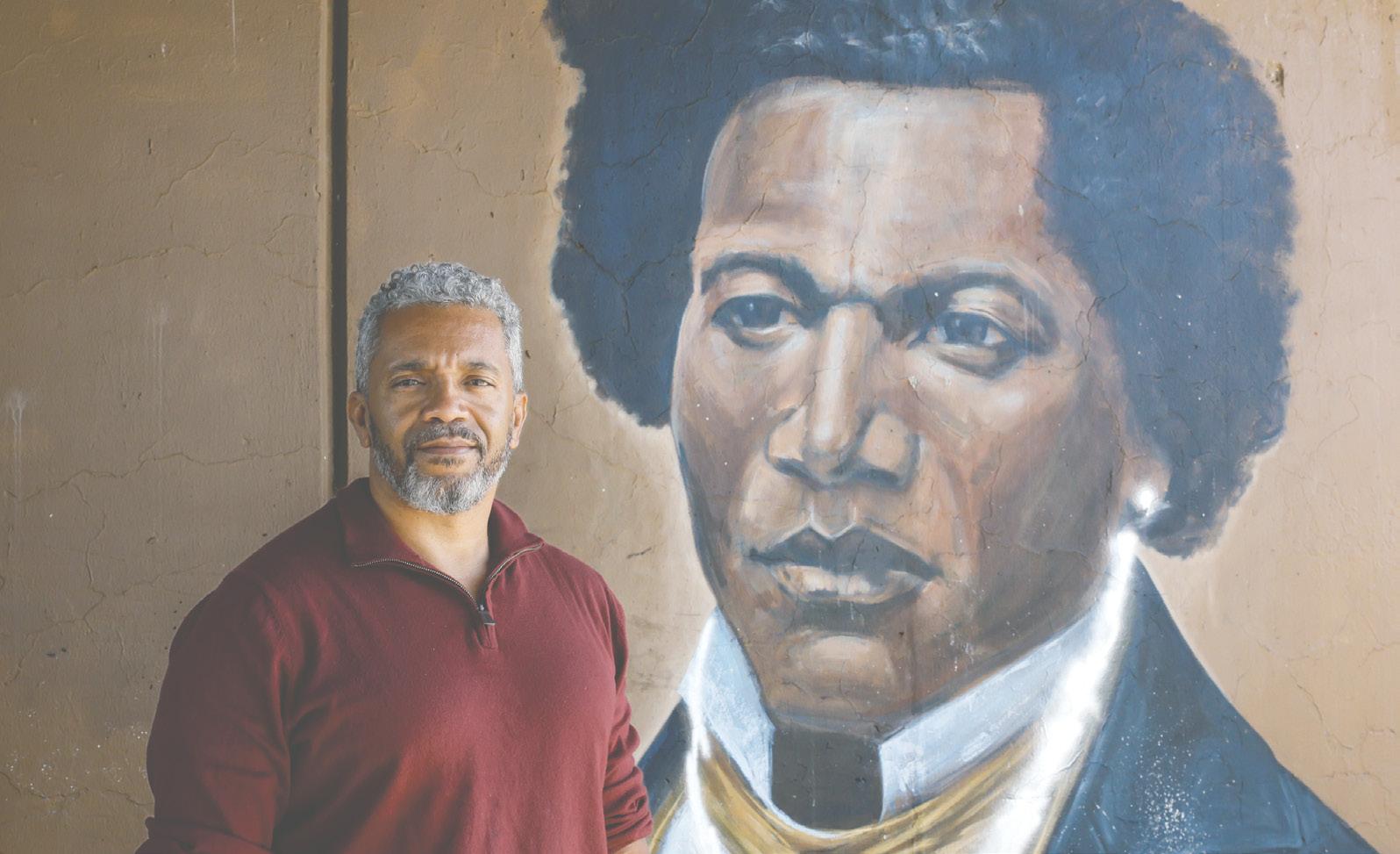

London Ladd’s murals of MLK Jr. and Frederick Douglass are nestled under the railroad bridge on South Salina Street.
In another effort to honor the neighborhood’s roots, Ladd decided to feature Martin Luther King Jr. and Frederick Douglass as part of his south quadrant murals underneath the railroad bridge on South Salina Street. King visited SU twice in 1961 and 1965, while Douglass visited Syracuse over 13 times, Ladd said.
Designs were crucial when designing the murals, but quotes played their own role in creating the powerful images. In Ladd’s Douglass mural, he used three quotes from the abolitionist.
“It is easier to build strong children than to repair broken men,” one of the three Douglass quotes states. When Ladd initially picked the quote, he thought it was about children’s education and raising children for their future. But after reciting the quote multiple times, its true meaning finally clicked, calling the quote a form of “poetry.”
Only knowing one way of life, many freed slaves, who were “broken,” had no idea how to function in society, Ladd said. Ladd heavily related to the quote as he was going through a personal crisis while painting the murals.
The murals’ location made it the most suitable to honor the neighborhood’s history as the street was a gateway from downtown to the Southside. However, the walls’ condition made it challenging to paint.
Even with offers to restore the murals, Ladd declined, as the walls would be damaged again. The only solution would be to paint the murals in a different location, which they decided against, he said.
“The area is different now,” Ladd said. “And who knows, when they tear the highway down, those people (living in the area) are going to get pushed
Jeremy Romance & The Zero Friends Club
Check out Syracuse-based Jeremy Romance & the Zero Friends Club this Thursday. The group produces pop, punk and hip-hop music. The show will also feature special guests LoJo Slyy, Flesruoy Llik and Zaya Lee.
WHEN : Thursday, doors at 6 p.m., show at 7 p.m.
WHERE: The Song & Dance PRICE: $14.63
out like they were when the highway went up. So I don’t even know if it’ll be a predominantly African American neighborhood in the future.”
Despite the present and future challenges, Ladd has no regrets painting the murals. Calling the murals a “savior” in his life, it pushed Ladd out of his shell. Interactions with the community were his favorite part of the process.
Like Ladd, Malfitano is proud of his mural despite setbacks. Up until the mural’s funding, the process for Malfitano’s “Legendary Syracuse Firsts” was smooth sailing.
When the mural’s budget was sent to Syracuse Mayor Ben Walsh for his final approval, it was vetoed. Without any direct funding, the mural was backtracked by two years. Despite the setback, Malfitano was able to source the mural’s funding through community and corporate donations.
After two and a half years of commissioning, funding and designing the mural, the “Legendary Syracuse Firsts” mural was unveiled in 2022. Looking back, Malfitano had no regrets spearheading the mural. Public art is more than a painting on a wall or a gathering of jazz lovers; it’s the “vehicle” to uniting people during a fractured time in society, Malfitano said.
The community engagement of the murals was Ladd’s favorite part of the process. When he first started the murals, a community member asked why the artworks were helpful or necessary following the recent murder of several local children. It took some time, but over the weeks of Ladd’s work on the pieces, people became fans of the art.
Similarly, watching how Ladd’s completed murals lifted the community’s spirits was an unforgettable moment for Coakley. People would drive by and honk their horns and come speak with Ladd, Coakley said. He appreciated how passionate Ladd was about the art and that he knew what Coakley was trying to convey.
When Lakisha saw the completed mural of her father for the first time, it brought her to tears. Seeing it up close in person was nothing like looking at templates, she said.
“The mural is a way of (Harris) getting rewarded for what he’s put into the community,” Lakisha said. “At the time, he didn’t need his voice (to be heard), because he’s already planted all of himself throughout the years that he’s given to Syracuse. He can rest now with the mural up there. His legacy is now secure.”
Despite varying logistics sometimes hindering these public art projects, they’ll always find a way around Syracuse, showcasing Salt City’s everlasting culture and icons, Malfitano said.
“Art projects like this that happen on a large scale, hopefully are doing some good in a time that isn’t really the best,” Malfitano said. “Art is there in perpetuity for everyone to enjoy.” tabintes@syr.edu
Dance and sing all night long to the music of Sabrina Carpenter, Charli xcx and Chappell Roan this Friday. Themez is taking over Cage with their pop-themed party.
WHEN : Friday, doors open at 9 p.m.
WHERE: DM @themezent for address PRICE: $5 presale, $7 at the door Themez at Cage
OktoberFest Celebration with Fritz’s Polka Band
Celebrate Oktoberfest with a free concert from Fritz’s Polka Band. Formed in 1978, the band has been featured at concerts like Woodstock ‘99 and Musikfest. They even appeared in the critically acclaimed TV show “Breaking Bad.”
WHEN : Sunday, 4 to 7 p.m.
WHERE: Middle Ages Brewing Company PRICE: Free
Malmgren Concert Series: Boston Public Quartet
The Boston Public Quartet, a piano and strings ensemble, will be performing music by female composers at Hendricks Chapel this weekend. The group seeks to normalize historically excluded voices through their concerts.
WHEN : Sunday, 4 to 5:15 p.m.
WHERE: Hendricks Chapel PRICE: Free
The popular post-grunge band Trapt is continuing its acoustic tour this week at Westcott Theater. They will be playing hits like “Headstrong” and “Echo” along with tracks from their new album, “The Fall (Deluxe).”
WHEN : Sunday, doors at 7 p.m., show at 8 p.m.
WHERE: Westcott Theater PRICE: $36.77 Trapt

trinkets stayed. Gilbert got her first Sonny Angel two years ago as a gift from her mom. Now, she has over 70.
Lafufus — fake Labubus — have become more common than the authentic ones.
Sophomore Sophie Krause has eight Labubus that her dad bought for her on a business trip to China. She made sure she was getting the originally sourced, “legit” ones and not one of the many fake versions, she said.
When trinkets become popular enough, it’s inevitable that dupes start to pop up, Krause said.
Sonny Angels and Labubus both often come in blind boxes, meaning the buyer doesn’t know what kind they’re getting until they open the box. It’s an enticing factor for many buyers and collectors like Santos. The joy of opening the mystery boxes gives her an adrenaline rush every time, she said.
Collecting can be a way to exhibit your personal style, Santos said. Gilbert said her taste is a little all over the place. Her eight Labubus are
coordinated with different purses of hers; she adds a Labubu to include a pop of color.
Santos and Gilbert display their collection of Sonny Angels in their SU dorm. The figurines stand on three shelves directly above their vanity mirror, lined up for everyone to see. They even have a Labubu that stands over three feet tall in the room.
“I feel like you really kind of make it your own,” Santos said. “I have different Sonny Angels that I’m like, ‘Oh, these are so me.’”
While trinkets are personal interests for many like Santos and Gilbert, there’s no denying social media has played a large role in the toys’ popularity, they said. Even for those who dislike the trend, it’s inescapable on Instagram or TikTok feeds. Santos said the collectibles have become an aesthetic.
“When you go on Pinterest, if you look up Sonny Angels, there’s people dressing them up, or showing different ways they display them,” Santos said. “I feel like it’s become its own community, in a way.”
Ziek Diallo, a sophomore at SU, isn’t interested in Labubus, but owned one
because he was paid by a brand to create hate content on Labubus using his TikTok platform. For two months, he made skits poking fun at the trend.
It all ties together because everyone is creative and expresses themselves in their own way.
Isabella Santos su freshman
“I’d make interesting skits about, like, the average performative male that just has their Labubu all the time,” Diallo said.
When he eventually stopped making the skits, he gave his Labubu away to a friend. Diallo doesn’t see the point of having one and thinks they’re just “straight consumerism.” However, he recognizes the longevity and popularity of trinkets among their fan base.


If the trinkets themselves weren’t enough of a social media phenomenon, Labubus have also been memed with other trends and “brainrot,” like Dubai Chocolate, Diallo said. Pairing the toy with different internet lingo has boosted its popularity, he said.
“They have dragged it for as long as possible, and it’s actually working, which is the scary part,” he said. “I don’t even know how Labubus and Dubai Chocolate are correlated.”
But for fans like Santos, brands like Labubu and Sonny Angels practice of continuously reinventing the toys through different series and collections is what keeps pulling buyers in.
While Krause thinks Labubus themselves are a fleeting trend, Santos and Gilbert agreed that trinkets themselves and the act of collecting are here to stay. They represent a larger artistic trend, Santos said.
“It all ties together because everyone is creative and expresses themselves in their own way,” Santos said. “For me, it’s my niche interest in fashion, but other people may express it in other ways.”
cmzhang@syr.edu






By Addy Kimball essayist
Just five weeks into my freshman year at Syracuse University, I had to unexpectedly travel home after the loss of my grandfather. The 10-hour bus ride gave me plenty of time to reflect – not only on the past month, my new life at college and the friends I’ve made, but also the recent loss I carried.
I arrived home with the already-pressing weight of his absence, and I knew one of my first tasks would be confronting the space he’d filled for so many years. I spent the next morning at my grandfather’s house to sort through his belongings: his watches, vintage history books, the flannels he always wore and even the pictures I drew for him and my grandmother as a child that were still pinned to the wall.
Handling these objects felt like touching pieces of my family’s history. Each item was a quiet reminder of the role he’d played in my life or prompted questions that would forever remain unanswered. Going through his belongings wasn’t just a matter of deciding what to keep, but it also forced me to reckon with what it will mean to no longer have him in my corner as life continues around me.
I returned to SU with that burden. Classes progressed, assignments piled up and campus life carried its usual momentum, seemingly oblivious to the loss occupying my mind.
It quickly became clear that grief and growth can occur simultaneously, and I’ve realized it’s OK not to have everything figured out – even in a society centered on constant productivity.
During phases of our lives that are supposed to be new and exciting, such as the beginning of college, our generation’s focus on forward momentum subtly pressures us to set grief aside — even though processing loss is essential for emotional well-being.
Social media heightens this expectation, offering a nonstop feed of curated moments
that suggest everyone around us is thriving. Amid birthdays, holidays, graduations or the simple rush of everyday life, it can be overwhelming to add the weight of loss to our existing commitments.
This pressure is especially true for young adults who are often navigating multiple transitions at once – starting college, entering the workforce or forming new relationships. Emphasis on hustle culture can make grieving in any form, whether it be a death or a breakup, seem inconvenient or even shameful.
But, acknowledging loss can coexist with happiness doesn’t diminish the significance of either. Experiencing joy doesn’t erase sorrow, just as carrying grief shouldn’t take away from the celebration of milestones and achievements. Recognizing this duality allows us to honor our losses while still being able to move forward.
The way we handle grief also varies significantly by location. In the United States, where productivity to the point of burnout is worn like a badge of honor, taking time to pause and take care of ourselves at a time we need it most can feel indulgent.
In fact, the U.S. is reported to rank 29th among 36 advanced nations on work-life balance in the OECD’s Better Life Index. By contrast, countries like New Zealand, Belgium and Ireland score much higher thanks to short work weeks, stronger leave policies and cultural norms that value rest as much as work. These structures create more room for people to process life changes, such as grief, without feeling as though they’ve fallen behind.
Some countries even embrace practices that directly resist hustle culture. In the Netherlands, for example, the concept of “niksen,” or “the art of doing nothing,” is widely discussed as a remedy for burnout. While it sounds simple, the practice reflects a broader cultural acceptance of slowing down to make space for stillness.
Ideas like this reveal that grief doesn’t have to be something we push aside until things settle down for us. Instead, it can be a process that moves alongside life’s routines, allowing for both reflecting and carrying on.
In the past two weeks on campus, reminders of my grandfather have shown up in small, everyday ways. An old country song plays in the dining hall that makes me wonder if he once knew it, a brief scent of mint reminds me of his favorite chocolates and passing flowers makes me think of my grandmother’s garden at their house.
On top of these moments, the digital picture frame my mom gifted me for move-in seems to display photos of him now more than ever. The
reminders are bittersweet, but they make me smile. They help me honor his memory every day. It’s possible to move forward even while experiencing heartache. When life forces you to mourn at a time you feel expected to celebrate, it’s important to give yourself permission to acknowledge your needs. Pause when you need to. Process without guilt.
By carrying grief while striving to become the person we want to be, we honor both those we have lost and the life we continue to live.
Kimball is a freshman majoring in political science. She can be reached at akimba02@syr.edu.

By Maya Aguirre columnist
On Sept. 23, the Syracuse University Debate Club attracted about 30 aspiring debaters and me for its second meeting. I sat in the back with a notebook, prepared to learn how to disagree better.
Haley Greene, SU senior and the club’s vice president, acted as a judge for the debate. She listened attentively to each argument. She took notes. I took notes, too, as I tried to resolve my question: where do arguments begin to fall apart?
I thought of the question around two weeks before the SU Debate Club meeting, when political activist and Co-Founder of Turning Point USA, Charlie Kirk, was killed during a public debate at Utah Valley University. The incident was front-page news for days. It rattled Americans, regardless of party affiliation, for various reasons.
In the wake of Kirk’s assassination, the United States confronts a unique opportunity to transcend partisanship and establish a healthier set of norms for political discourse. An effective culture of debate and argument can exist – but
first – Americans must identify where our disagreements start to go wrong.
Our understanding of argumentation is simplistic in 2025: the intention of political discourse is to force our opponent to forfeit rather than understand their perspective.
Like anyone else, I see the appeal in watching videos showing the moment someone I agree with wins an argument annihilation-style. But debate must be more complex than that.
Diminishing a war to its decisive battle ignores the objectives and intentions of its adversaries. Similarly, diminishing a debate to its outcome contradicts its intended purpose: to better understand each other through an exchange of ideas. It only polarizes either side more and, in turn, paves a path to increasingly extreme thought.
Kirk’s style of debate engaged many young people into the world of politics. However, through the medium of short-form video content, he reduced serious issues to mere clips and one-liners.
“Prove me wrong” was the tantalizing statement he used to attract challengers to argue
against him. The cost of losing was the out-ofcontext moment posted on TikTok.
The command has infiltrated discourse and now represents argumentation and debate in every facet of American life.
SU Debate Club’s meeting centered on the question, “Should comedians and entertainers have absolute freedom of speech in their acts?”
The club’s communications director, SU junior Colin Harkins, rolled a dice to determine each group’s position defending either the affirmative or the negative.
Both inexperienced and seasoned debaters prepared their arguments. I observed a freshman assigned to the negative contort her face while researching facts in support of a thesis she personally disagreed with.
A good debater rejects what’s comfortable. If a debater has the will to win, they relish in the process of stretching out of their comfort zones. They embrace how the simple act of rolling a die decides their position – even if it conflicts with their own convictions.
“Debate should be uncomfortable,” I wrote in my notebook.
Our arguments go wrong before they start because we’ve gotten too comfortable in our mindsets. But comfort in stagnant mindsets doesn’t make us more morally upright. It only makes it harder to form an argument that resonates with our adversary.
At the end of the debate, Greene offered her notes on how each group could improve. She highlighted the negative’s rebuttals and praised one of the debaters for preparing a quick, factbased counterargument.
“Good debaters alter their strategies,” I wrote.
Over time, we’ve collectively stopped trying to pivot our methods of changing the minds of others. Instead, we parrot the same approaches and get upset when our opponents are still unreceptive. But as our conversations escalate, our emotions overwhelm our rationale and we lose the ability to adjust our strategies.
We learn how to behave through trial and error in our childhoods. For example, two kids are playing in a sandbox. One kid won’t share the shovel, so the other throws a punch. This leaves one kid crying and the other being sent to the principal’s office, where they’re forced to reckon with their failed strategy of persuasion.
With time, we begin to learn the art of argumentation. We use tactics that work and leave behind the ones that don’t.
It’s easier when we’re young: our objectives are often simple, so our methods of achieving them are often effective.
By our teenage years, we begin to enter the political world in one way or another, feeling pressured to translate our internal values into political stances. But there’s no guidebook on how to enter this more serious world of debate. In the span of a year, your most serious topic of debate could shift from whether or not pancakes should be an acceptable dinner food to if the U.S. has an obligation to provide universal healthcare.
This enhanced complexity of conversation becomes overwhelming. Younger generations turn to the internet in a desperate attempt to align themselves with a faction. It’s a doubleedged sword — while we have access to unlimited information, our algorithms often keep us in spaces which infrequently challenge our developing way of thinking.
“The reason Americans have lost touch with the ability to have debate is because of the echo chambers that exist online, and honestly, these echo chambers exist everywhere. It has become so easy to place yourself in environments where you’re surrounded by people who think the exact same way as you, all the time,” Harkins told me.
The U.S. political climate in 2025 has reversed our maturation as effective debaters. The norms we became accustomed to through development no longer apply. We are once again children in the sandbox, hitting each other out of frustration, and this time with more power and influence.
Our emotions have become so tightly bound to our worldviews that our disagreements often escalate to the point of hatred and prejudice, making productive conversation impossible. When we reach this level of divisiveness, our argumentation is inherently weaker: we cherry-pick our facts to fit our narratives, and often end up contradicting our own value systems as we presume our opponent’s stance before hearing them.
As an opinion columnist, I spend time each week attempting to persuade readers of things I believe. The process of argumentation is as internal as it is external — I must first challenge my own perspective to convince you to reconsider your own. In operating under the strategy formal debate employs, I find this much easier.



candy, making Easter baskets before hiding eggs for Kam and her brother Jack Vanderbosch, whom Shea called her “kids,” to find on Easter morning.
“Her whole personality is wanting to be in control, wanting to be in charge,” Pam said.
Shea idolized Jack. He inspired anything she did growing up. The three siblings often played with their soccer net in their backyard, sometimes from 8 a.m. to 10 p.m. Their feet turned black after playing barefoot.
Jack showed no mercy, running up the score to as high as 25-0. He doesn’t think either twin beat him in anything. Shea took it personally. She always pushed to make it 25-2.
“My mindset at the time was either they’re going to like it or they’re not. If they weren’t having fun, if they didn’t want to win and compete, they wouldn’t still be here playing as it’s 25-0,” Jack said.
Shea became notorious in her 8U Co-Ed hockey league for laying people out on the ice.
“She would take no crap from the boys,” Dan said. Parents of opponents called her “The Crusher” and would cheer every time she got a penalty.
But from age 3, soccer was Shea’s sport. Her ruthless drive to win and willingness to take charge initiated her path to becoming a goalkeeper.
“She would always volunteer (to play goalkeeper), and nobody else wanted to do it. Everybody wanted to be a forward and score,” Pam said. “When they’re little, they’re doing cartwheels and picking flowers. But she was always like, ‘Come on guys, let’s go. We’re going to win.’”
“Maybe I was just crazy,” Shea said.
Shea’s club career was mostly spent across two programs. First was Global Premier Soccer. Then came Western New York Flash, an Elite Clubs National League soccer powerhouse, which Shea joined in 2018.
The WNY Flash has produced over 350 collegiate soccer players since 2016, including USWNT legends Abby Wambach, Alex Morgan and Carli Lloyd.
When former GPS technical director and current Canisius head coach Ryan Louis and
on the team knows that this is something you can’t take a break on,” Clement said.
Brumfield’s vigor comes from his name being attached to special teams. He said he’s “going to give everything that I got to make sure that it’s a positive representation of me.”
Brumfield associated that mentality with getting players to buy in. He shows clips of former Syracuse standouts like Zaire Franklin and Sean Tucker making plays on special teams in the National Football League to show what it takes to reach the next level.
“We talk to them about, ‘This is their salary (in the NFL). This is what they did when they sat in your seats,’” Brumfield said. “They were on special teams. And they’re playing special teams in the NFL, and that’s how they stayed there.”
To start his coaching career, Brumfield spent over a decade with various NFL organizations through the Minority Coaching Fellowship program. While with the Pittsburgh Steelers, he learned from head coach Mike Tomlin to always stay driven. Tomlin used to say, “You can be fed if you’re hungry,” but when you’re driven, “you can’t be stopped.”
So after getting let go by Georgia Tech in October, Brumfield arrived at Syracuse with a chip on his shoulder. His abrupt dismissal came less than two months after 247Sports’ Chris Hummer reported Brumfield got a contract extension, which made him one of the highestpaid special teams coordinators in the country.
Co. acquired the Vanderbosch twins, they made sure to take extra care of them so they wouldn’t leave.
Louis observed a finishing drill with Shea in net just weeks after she joined the club in seventh grade. It was too easy for her, Louis said. In her two years with GPS, Shea always played up three years with the 2001 team. Kam was with the 2003s.
“When she plays, she just oozes that sort of maturity and confidence,” Louis said.
Lancaster High School took notice. In July 2018, former Legends goalkeeper and thenvolunteer assistant coach Kimberly Corrie was tasked with finding the program’s next goalie. She watched seniors run weekly summer practices, and then saw an eight-grade Shea in goal.
A diving save off a breakaway grabbed Corrie’s attention. Then, Shea swiped the ball from one of the program’s top seniors. Suddenly, Corrie had found her keeper.
“Are we sure? Are we sure?” then-head coach Chris Cownie repeatedly asked Corrie.
He wasn’t concerned about Shea’s skill. If picked, she would be the first-ever middle schooler to play for Lancaster, but Corrie didn’t care.
“I was not hesitant in the slightest,” Corrie said. “She’s always been taller. She’s always been very athletic. She’s always been a very strong player. Sometimes you forget how young she was.”
Opponents hoped to avoid a penalty shootout against Shea, who was the first goalkeeper to win the All-Western New York State Player of the Year in 2019. Other coaches jokingly asked if she could take the game off so they could score.
As a senior in 2021, one of Shea’s 38 career clean sheets led to an overtime victory over archrival Clarence High School in the Sectional VI Class AA championship. After winning, she ran over to Corrie and embraced her.
“It was full circle,” Shea said.
With the WNY Flash, Shea’s presence similarly affected every opponent. She carried WNY Flash to the 2021 North American Cup by prevailing in two penalty shootouts.
“You don’t get that cup without Shea Vanderbosch in goal,” WNY Flash director Aaran Lines said.
She was everything SU needed in a goalkeeper. However, there was still a possibility to attend school with Kam. West Point was interested. They could mirror the Cavinder twins, the Lopez twins or the Barber Twins by playing the same sport at the same college.
The two discussed their decision during nighttime strolls with their puggle Jasmine in their Lancaster neighborhood. Shea wanted to go to a top program before joining the professional ranks. Kam cared more about the right academic fit.
Shea chose Syracuse. Kam picked Siena.
“(No one) knows what it’s like to be a twin. I don’t know what it’s like to always have somebody with you to make that decision. If the right school came along and they both loved the school, I’m sure they would’ve gone together,” Pam said. “But Kam’s where Kam needs to be and Shea is where Shea needs to be.
Shea trotted down to the lobby of the John A. Lally Athletics Complex to speak with The Daily Orange.
She spoke about her extremely short, unsuccessful dance career and the song “Hot Shower” by Chance the Rapper, which she, Kam and Corrie often sang in the car in high school. She showed her matching tattoo with her sister, which reads “today, tomorrow, forever,” and joked about “talking trash” toward DeNoyer, who was a key reason why Shea chose Syracuse.
Then she recoiled hearing stories from her former teammates.
“Oh god, who?”
Liesel Odden was Shea’s teammate for three years. They even did a special handshake before every game. But Odden can’t help but laugh while telling a certain story.
One preseason, SU strength and conditioning coach Corey Parker put the team through a “super hard conditioning workout” on SU field hockey’s J.S. Coyne Stadium’s synthetic turf. They returned to the locker room knackered. “The sarcastic queen,” Flurey said, took center stage.
“Guys, I think I saw Jesus today. He came down. He was glowing. I closed my eyes on that field hockey field and I literally saw him. Corey brought me to Jesus,” Odden remembers Shea proclaiming.
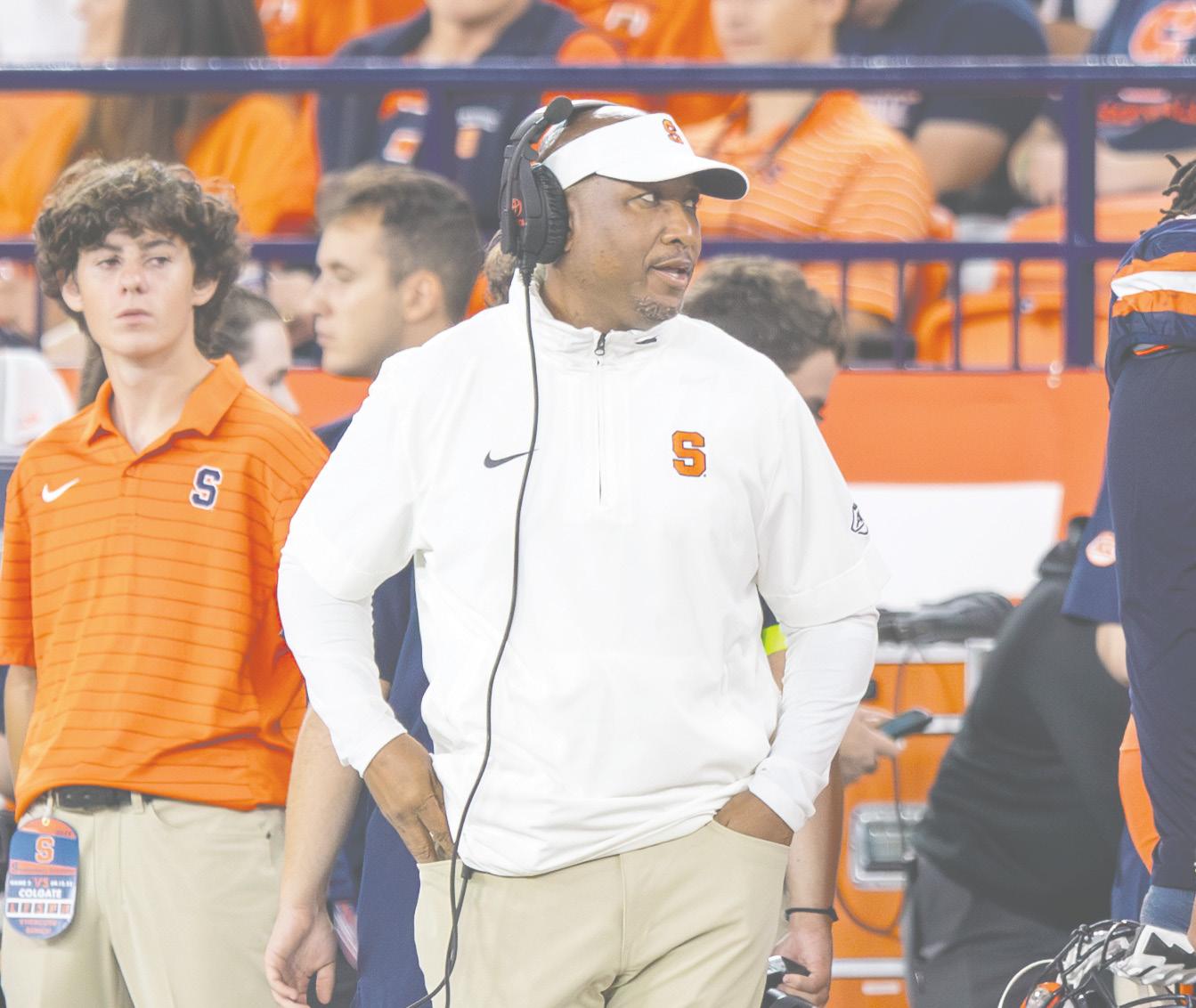
one with over two decades of collegiate coaching experience, Brumfield felt he’d be a good fit. On top of his time at Georgia Tech, Brumfield was also Virginia’s special teams coordinator from 2018-2021, giving him experience in the Atlantic Coast Conference.
“I’m a little bit dramatic a lot of the time,” Shea said.
However, when she first got to Syracuse, Shea was a shell of herself. Shea didn’t talk at all. She was nervous about the college environment and unsure of how much she’d play in the fall. It didn’t help she tore her PCL when training with WNY Flash director of goalkeeping Marcelo Moreira in May, which put her behind Walsh and Giorgio before the season even started.
“She’s by herself. She’s in an apartment. She doesn’t feel like she’s truly helping her team. That’s the fiber of who she is. I think that was the hardest struggle,” Pam said.
But once Shea started playing, she became herself. She’d joke with teammates when she was outside the touchline. Flurey added she could make anyone laugh. Then she’d flip a switch on the field. She’s been Syracuse’s top option ever since.
“A good nickname for Shea would be ‘the bear’ because I wouldn’t poke the bear,” said Nick Mendola, owner of Shea’s USL League Two team FC Buffalo.
“She just got this aura about her,” Canisius assistant coach Taylor DiMarco told Louis when SU played the Golden Griffins on Aug. 21. Shea relishes the pressure to keep her team in games. Nine saves in a 2-2 draw against No. 2 Virginia in 2022 led to an All-Atlantic Coast Conference Freshman Team selection. A careerhigh 16 saves against No. 3 Florida State in 2023. Twelve and 14-save efforts versus Notre Dame and Pittsburgh, which combined for 65 shots a year later. Ten stops in a 0-0 draw versus Princeton this season.
Her performances aren’t just among the best in Syracuse history; they keep pace with the best in the ACC and the country, where she ranks first and 15th in saves.
Shea will graduate from Syracuse in December to pursue her dream of playing professional soccer in the NWSL or abroad. As her time at SU dwindles, Shea still doesn’t know who that “freshman girl” who debuted against UConn was.
The record solidifies a feeling her coaches and teammates already knew.
“She’s the G.O.A.T.,” Madsen said. qdpostma@syr.edu @quinnpostman_
right time, which came in the first quarter. The extra possession helped Syracuse gain a double-digit lead, which it kept for the rest of the game.
“It’s the heartbeat of our team,” Brown said of SU’s special teams on Sept. 9. “Everybody’s involved. Every coach is involved … we’re in the process of making this thing be a well-oiled machine the right way, so there’s a lot of things we have to keep getting better.”
Syracuse’s first special teams blunder came last weekend against Duke, when Jaden Hart bobbled the opening kickoff at the goal line. Unaware if taking a knee would cause a safety, Hart ran the ball out from the end zone, gaining just 11 yards. Later in the first quarter, the running back had a 13-yard return.
When asked about the mistake on Monday, Brown spread both his arms, forming a “T-Shape,” a sign for allowing the ball to go into the end zone. Brown said the miscue was a “lack of coaching on my part” and said the off-returner will communicate to his partner on whether to bring the ball out.
Brumfield mentioned special teams as “one play for a large chunk of land,” and if executed right, can swing games. That requires attention to detail, much like one of Brumfield’s favorite non-football hobbies: cooking a Louisiana crawfish boil.
“That’s something we just want to move on (from),” Brumfield said of his departure from GT on April 15. “It’s 2025. I’m happy to be here. What happened in 2023 and 2024, I don’t even remember. All I can remember is the players we have now and who I’m coaching for.”
The Syracuse opening was a perfect chance for Brumfield to regain his footing. Georgia Tech offensive coordinator Buster Faulkner knew Fran Brown, while defensive coordinator Blake Gideon knew SU defensive coordinator Elijah Robinson. Both reached out to recommend Brumfield for the opening.
Brown wanted someone who could recruit and control a room, per Brumfield. As some -
Syracuse needed someone like Brumfield. Special teams blunders nearly cost the Orange multiple games last year. In SU’s 44-41 overtime win over UNLV on Oct. 4, 2024, Stonehouse was tackled before getting a punt off. He also had another one blocked, leading to a touchdown. On Sept. 7, 2024, versus Brumfield’s Yellow Jackets, SU failed to recover an onside kick and had a field goal blocked.
The Orange also cycled through kickers, with Jackson Kennedy, Jadyn Oh and Brady Denaburg combining to go 13-for-22 with no makes over 44 yards.
Stonehouse and Clement didn’t want to delve into the reasons for last season’s mistakes, while Derek McDonald feels SU “wasn’t detailed enough.” Brumfield wanted to change that.
After every practice, Brumfield goes right to his office and watches over film, recording voice-overs that critique each player. Brum -
field suggests improvements, whether it’s a missed blocking assignment or a poor angle on a tackle.
“He’s the all-knowing voice,” Stonehouse said. Through five games, Syracuse’s special teams are improving. Woody — who beat out Oh in a kicking competition this summer — knocked through a 49-yarder against Clemson, SU’s longest made field goal since 2022.
Oh handles kickoff duties, recording touchbacks on 80% of his kicks so far. Stonehouse’s 88 grade on Pro Football Focus is by far the best mark of any punter in the ACC. The next closest is NC State’s Caden Noonkester at 76.2. Overall, SU’s special teams is graded at 74.4, improving from 63.6 in 2024, which was the lowest rating in the conference.
The group is even helping Syracuse turn the tide of games. In Death Valley, Oh pulled off a surprise onside kick after SU’s opening drive touchdown.
Each week, Brumfield discusses ways to steal possessions with Brown, who sits in on every special teams gathering. Heading into Clemson’s hostile road environment, Brumfield knew he had the onside kick at his disposal. He just needed to wait for the
Growing up in New Orleans, Brumfield always enjoyed eating crawfish. While at Virginia, Brumfield missed the southern soul food, so he found “Louisiana Crawfish Company,” which ships live crawfish to your front door.
He watched YouTube videos on how to perfect the craft, from steaming the fish to inserting the potatoes and sausage, while finding the right mix of seasoning. The whole process takes about two hours to complete. In June, he invited all the specialists and players from Louisiana to his house for a crawfish dinner.
Though they’re two vastly different practices, Brumfield feels some principles apply to crafting a crawfish bowl and coaching.
“You need patience and studying the right technique and figuring out what works and what doesn’t work,” Brumfield said. “The same thing with football. Some of it is trial and error, like, let’s see what works best for our program. What works best for what we’re trying to do.”
Right now, Brumfield’s trying to come up with the right ingredients to keep his special teams unit cooking.
zakwolf784254@gmail.com
By Justin Girshon senior staff writer
Syracuse men’s basketball is just over a month away from beginning what could be a programaltering 2025-26 season.
The Orange are coming off their worst campaign since 1968-69 and have missed four consecutive NCAA Tournaments, making Adrian Autry’s third year at the helm a pivotal one.
SU completely rebuilt its roster in the offseason, bringing in six transfers and five freshmen to round out the rotation alongside returnees J.J. Starling and Donnie Freeman.
Classified by how important their individual success is to helping Syracuse return to March Madness — which isn’t talent-based — here’s a ranking of the Orange’s 10 most important players for this year:
10. Ibrahim Souare, forward/center, redshirt sophomore
Ibrahim Souare is the exact type of player SU needed off the bench last year. He has instant energy, good athleticism and solid size. Whether he starts or comes off the bench, Souare should be a key fixture in the Orange’s center rotation after averaging 2.8 points and 3.6 rebounds per game as a redshirt freshman at Georgia Tech.
9. Kiyan Anthony, guard, freshman Placing Kiyan Anthony ninth isn’t a knock on his talent. Ranking as 247Sports’ No. 32 player in the 2025 class, he’s one of the better recruits Syracuse has ever brought in.
Yet, with Starling, Naithan George, Nate Kingz and Luke Fennell all also vying for guard minutes, Anthony’s playing time may not be consistent. His scoring ability is no doubt among the best on the Orange, and he can change a game instantly when he heats up.
But with Starling — who averaged 34.5 minutes per game last year — locked in as the starting shooting guard, minutes could be tough to create for Anthony since he likely won’t play much point guard, and his 6-foot-5 frame makes him slightly small for a forward.
Anthony is a crucial part of what SU is building, even if that might not always be apparent throughout the season.
8. Luke Fennell, guard, freshman Like most freshmen, Fennell’s best college
days are likely ahead of him. But that doesn’t mean he’ll just sit on the bench and watch the whole year.
Fennell’s ball handling and great positional size (6-foot-6) should get him on the court immediately, and it’d make sense to see him serve as the backup point guard behind George. At times, depending on how Fennell adjusts to the college level, he could even see himself potentially playing alongside George.
Though he’s likely more important to how SU looks in the next two years, Fennell has the talent to emerge as an unsung hero for this season’s squad.
7. Tyler Betsey, forward, sophomore On the surface, Tyler Betsey may not look like a big transfer portal addition. He averaged just 11.1 minutes and 3.3 points per game as a freshman at Cincinnati, and he shot just 35.7% from the field.
However, 247Sports ranked Betsey as the No. 53 player in the 2024 class, and he has the attributes to become an X-factor. Out of high school, Betsey was lauded for his combination of positional size (6-foot-8) and shooting.
That didn’t translate immediately to the college level. But if Betsey can find his rhythm from beyond the arc and take a sophomore leap, there’s a world where he becomes the best 3-andD player on Syracuse’s roster.
6. Nate Kingz, guard/forward, redshirt senior Syracuse was one of the worst 3-point shooting teams in the country last season. Kingz was one of the best 3-point shooters in the country.
As the Orange look to improve their 32.8% 3-point percentage, which ranked 246th in the country last year, Kingz will be at the forefront of bolstering their outside shooting. In his lone season playing at Oregon State — he missed the 2023-24 season after tearing his ACL — Kingz nailed 44.6% of his 3-point attempts while shooting 4.2 per game.
In simple terms, Syracuse needs Kingz’s efficiency and outside shooting badly. It’s to be seen whether Kingz starts or plays more of a sixth-man role, but his secondary scoring will be crucial to the Orange’s success.
5. William Kyle III, forward/center, senior Though William Kyle III has elite athleti-
cism, he doesn’t have the traditional height of a center — he’s listed at 6-foot-9. But he will likely handle the brunt of SU’s center minutes, making him one of the most important players on this team.
There are three possible scenarios for how it goes. He could again average 2.9 points and 1.8 rebounds. Or he could return to his 2023-24 form, when he was a First Team All-Summit League selection at South Dakota State, averaging 13.1 points and 6.6 rebounds. Third, he falls somewhere in the middle of his previous two seasons.
More likely than not, it’ll be the third scenario. Kyle was banged up in his lone year at UCLA and didn’t receive much playing time. Meanwhile, the ACC is far from the Summit League, so it’d be difficult to see Kyle replicating his 2023-24 production.
Where Kyle falls on the pendulum could help define what kind of season Syracuse has.
4. Sadiq White Jr., forward, freshman Sadiq White Jr. is Syracuse’s highest-ranked recruit in his class and one of the most intriguing players on the Orange’s roster. His athleticism and size should help him adjust to the college level quickly, but he has a lot of question marks heading into the season.
Evaluators see White as a rawer prospect, and his outside shooting could take more time to develop. However, the forward should operate smoothly when attacking the rim and moving downhill, especially in transition, while also coming in as a plus defender.
Realistically, and based on speculation, White may start the season coming off the bench. But for Syracuse to reach its ceiling, there’s a great argument that White emerging as one of its top players is one of the most important things that needs to happen.
3. Naithan George, guard, junior
The one glaring issue SU had throughout last year was that it didn’t have a strong starting point guard. By getting George from the transfer portal, the Orange now have a guy who’s capable of being an All-ACC-level point guard.
Every time George — who led the ACC with 6.5 assists per game last year — touches the floor, he’s a double-double and triple-double threat. His secondary scoring will be vital
behind Starling and Freeman, but he’s the engine that could make or break SU’s offense. The bar is low for George to top what the Orange got from Jaquan Carlos last year, but the pressure is high to continue developing into one of the best point guards in the conference.
2. J.J. Starling, guard, senior
One of the best things a college basketball team can have is an experienced guard who can score when a game is on the line — Starling fits that bill. Entering his senior year off a campaign where he averaged 17.8 points per game, Starling should be expected to lead Syracuse and be among the ACC’s scoring leaders.
At this point, SU knows what it’s getting in Starling: a dominant scorer with the ball in his hands who thrives off scoring inside the arc, and he can step up as a ball handler when needed. After missing time last year, it’s vital that Starling stays healthy for the Orange to reach their ceiling.
Additionally, if Starling can at least become an average 3-point shooter — he shot 26.8% on 5.5 attempts per game last year — Syracuse’s offense can take a massive step forward.
SU can shoo-in Starling to score around 20 points in any game. But the more efficient he can be, and the more developed his offensive game becomes, coincides with how far Syracuse can go.
1. Donnie Freeman, forward, sophomore Before suffering a season-ending injury last year, Freeman looked like he was on the verge of becoming one of the best freshmen in the ACC. He averaged a near doubledouble, 13.4 points and 7.9 rebounds, while also drilling 9-of-20 3-pointers across his final eight games.
At 6-foot-9 with the ability to handle the ball and shoot, Freeman has the size, athleticism and skill that can help him take over games and also potentially put him on NBA scouts’ radars as a first-round pick.
If Freeman is healthy and, in a way, used the last half of last year like a redshirt year to continue his development, his sophomore leap could be among the best in the country. If that does happen, that’s how the Orange have their best chance of returning to the NCAA Tournament. justingirshon@gmail.com @JustinGirshon
By Cooper Andrews senior staff writer
Rickie Collins passed the accountability test in his first week as Syracuse’s starting quarterback. He sat stoically at the podium after Duke decimated the Orange 38-3 last Saturday and admitted he didn’t play up to SU’s quarterback standard. Collins quickly took action, requesting to meet with head coach Fran Brown later that night to review the tape from the loss.
“He had a couple mistakes, but I don’t think he struggled,” Brown said Monday.
While Collins’ numbers — 24-for-37 passing, 229 yards, no touchdowns and one interception — don’t reflect excellence, he wasn’t alone. As Brown himself said, the Blue Devils dominated the Orange in “every facet” of the game.
But when you replace a quarterback like Steve Angeli, who led the country in passing yards before suffering a season-ending Achilles injury in Week 4 against Clemson, scrutiny lies heavily on the backup. Collins’ chance to help right the ship comes this weekend on the road against SMU, the reigning Atlantic Coast Conference regular-season champions.
Here’s what to know before Syracuse (3-2, 1-1 ACC) squares off with SMU (2-2, 0-0 ACC) in Dallas Saturday afternoon:
All-time series SMU leads 1-0.
Last time they played …
The Great Depression was still tearing through the United States the last time these two schools faced off. On Oct. 15, 1932, at Archbold Stadium in Syracuse, the Orange lost to the Mustangs 16-6 in their lone-ever matchup on the gridiron.
Led by third-year head coach Vic Hanson, SU finished the 1932 season 4-4-1. Syracuse cycled through 11 different head coaches between Hanson’s final year in 1936 and Brown’s first in 2024.
The Mustangs report Under fourth-year head coach Rhett Lashlee,
the Mustangs are off to a .500 start through four games in 2025. They’re 0-2 versus Power Four opponents, falling to Baylor and TCU — which included a double-overtime loss to the Bears. It’s been an underwhelming start after SMU lost in the ACC title game to Clemson last year and made the College Football Playoff.
It’s led by redshirt junior quarterback Kevin Jennings, a dynamic playmaker but a turnover-prone arm. Jennings tossed for over 3,000 yards and rushed for 354 yards, totaling 28 touchdowns last year in a full season as the Mustangs’ starter. He has nine touchdown throws this season. Though after throwing 11 picks last year, he’s on a worse pace in 2025 with five interceptions in four contests.
Jennings has a two-headed monster to spearhead SMU’s wide receiving corps: Romello Brinson and Jalen Cooper. Brinson (19 catches, 365 yards) and Cooper (13 catches, 243 yards) are each averaging over 18 yards per reception, presenting themselves as major vertical threats. The Mustangs boast a middle-of-the-road rushing attack, averaging 141.0 yards a game — tied for 88th in the FBS.
SMU’s defense, coached by coordinator Scott Symons, is better than advertised. Its Pro Football Focus defensive grade sits at 88.8, the fourth-best mark among ACC teams. It also boasts a 90.5 rushing defense grade and a formidable coverage grade of 84.8 (fourth in ACC). The Mustangs have two defensive linemen with 3.0 sacks, Cameron Robertson and Jeffrey M’ba, while junior cornerback Jaelyn Davis-Robinson has tallied a teamhigh two interceptions.
How Syracuse beats SMU Brown said the Orange need to give the rock to sophomore running back Yasin Willis if they want to play winning football. Willis only had 11 carries in SU’s lopsided loss to Duke. Brown felt that was unacceptable. And he’s right — for Syracuse to upset SMU as a two-score underdog, offensive coordinator Jeff Nixon needs to dial up tons of runs for Willis.
SU was quickly forced into being onedimensional last week and paid the price. It closed the game on a streak of nine consecutive possessions without scoring. For Collins to find some more comfort in start No. 2, he’ll need to have a balance with Willis receiving plenty of touches. SMU’s 27 tackles for loss pose a threat to Syracuse’s run game, but Willis’ bruising playstyle is made for wearing out a team like the Mustangs.
On the other side, the Orange must rush the passer well. They’ve only brought down opposing quarterbacks seven times in five games and rank third-worst in the ACC with a 67.7 pass rushing grade, per PFF. Defensive ends David Reese and Denis Jaquez Jr. will need to set the edge on Saturday and wreak havoc in SMU’s backfield for SU to deliver an upset.
Stat to know: 90.0
Unfortunately for Syracuse, it’s facing one of the best offensive lines in the nation this week. According to PFF, SMU’s 90.0 pass blocking grade is the best figure in the country. The
Mustangs are the only team in the FBS with a pass blocking grade of 90 or above.
Getting Jennings to throw off-platform will be paramount for SU’s chances at winning in Dallas on Saturday. But against an SMU line full of ferocious hogs, it’ll be tough sledding for the Orange’s front seven.
Player to watch: T.J. Harden, running back, No. 27
Syracuse gave up 235 rushing yards on 37 attempts against Duke. Over 160 of those were conceded to freshman running back Nate Sheppard. Its rush defense’s next task? Senior halfback T.J. Harden, who’s tallied 309 yards and five touchdowns so far this season.
The UCLA transfer is in his first year as SMU’s featured running back. His best performance came against Baylor on Sept. 6, accumulating 19 carries for 115 yards and three scores. With SU’s defense letting up 174 rushing yards per game — which ranks tied for 110th in the country — the Mustangs will probably hand it to Harden early and often.
ccandrew@syr.edu
@cooper_andrews
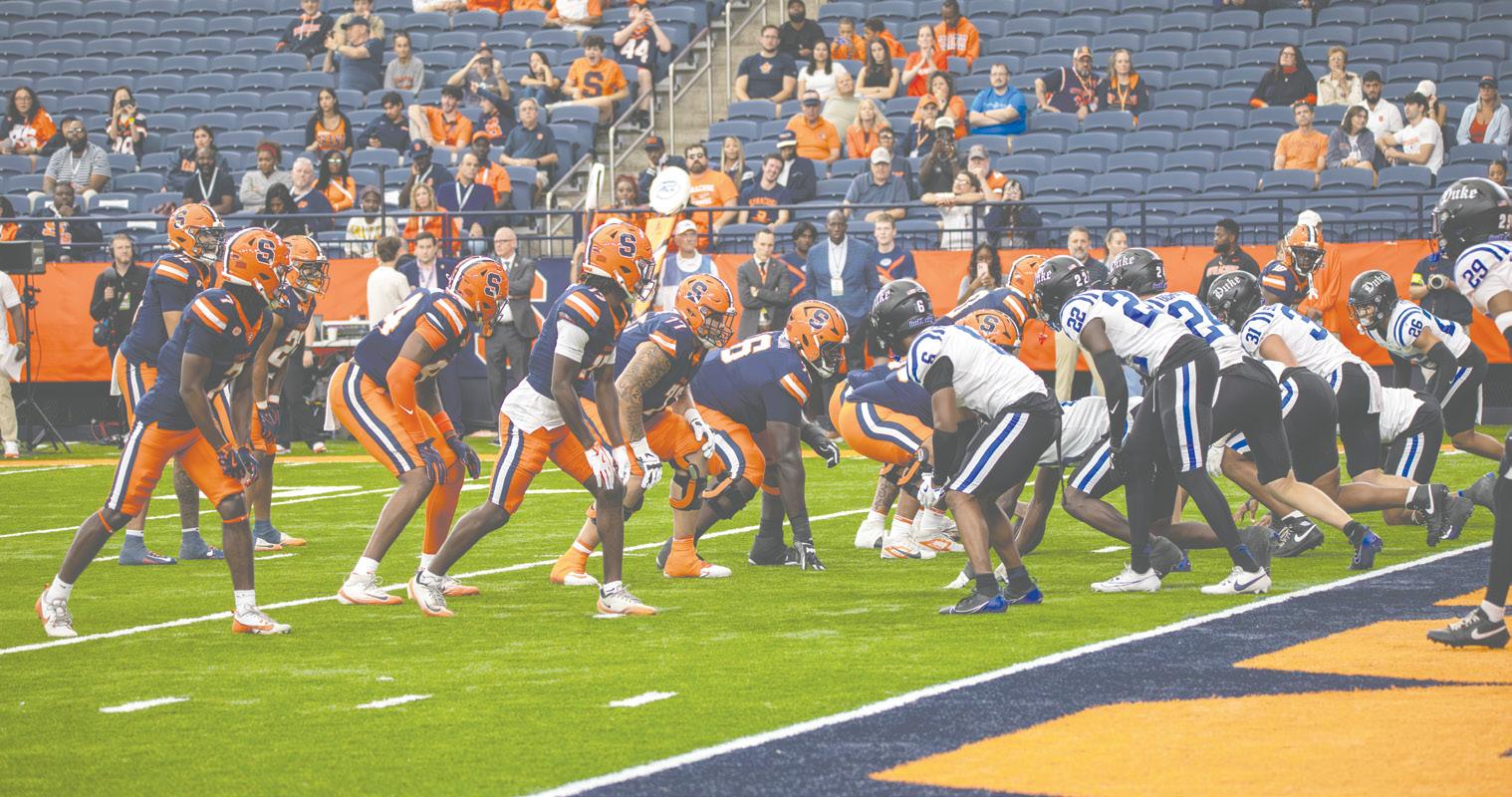
By Noah Nussbaum sports editor
Etched on Ernest Mensah Jr.’s right thigh is an inch-wide, black-and-white diamond tattoo. Three lines jet from the gem’s bottom to its crown, dividing it into four sections. Its black shading makes it pop when it’s not hidden by Mensah’s clothing.
It isn’t any ordinary tattoo. In 2023, before Mensah’s sophomore season at Xavier, he and the rest of the Musketeers’ starting defenders made a bet. If Xavier won the Big East Championship, they’d each get some ink. After they claimed the title with three consecutive tournament wins, Mensah ensured they saw it through.
Four days later, once the Musketeers’ season ended, they each got the jewel — which represented their 4-4-2 diamond formation — inked on different spots of their bodies.
“It was more of a joke at first, because we were so far away,” Mensah said of the bet. “But I think as we went through the season, it started getting more and more real.”
The conference championship was the crowning moment of Mensah’s three-year Xavier career. The Naperville, Illinois, native served as its starting right back and chipped in a goal and three assists. His success led to a 2024 AllBig East Third Team selection. Before his final year of eligibility, Mensah decided to transfer to Syracuse, where he’s using his experience to solidify the Orange’s backline.
“(He knows) what it takes to win a championship,” former Xavier defender Makel Rasheed said. “So bringing that experience from Xavier, and mixing that with guys at Syracuse will only help them go far in the ACC.”
This season, Mensah has been one of the Orange’s best defenders. After he finished his Xavier career, he boosted his game at Asheville City SC this summer. Asheville City coaches Scott Wells and Mathes Mennell said they could comfortably plug Mensah in at left back, right back or on the wings.
The environment was new for Mensah. For once, he wasn’t immediately the best player. But Mennell said that prepared him for the same feeling at Syracuse.
“For all these guys at their home schools, they’re Sharpies when it comes to the first 11,” Mennell said. “So putting them in an environment where they’re not necessarily a Sharpie, where they’ve got to fight, is the best way to earn their spots.”
That experience boosted Mensah to a strong start at SU. Alongside Chimere Omeze, Garrett Holman and Tim Brdaric on SU’s backline, he’s stuck like glue to attackers. He operates best against wingers, often driving them to the goal line and cutting off crosses. Mensah even assisted Holman’s goal against Cal.
Most of that success stems from Xavier — a school he almost didn’t attend.
As a senior in high school, Musketeers head coach John Higgins called Mensah’s club coach to express interest after watching him play in an Ohio tournament, his mother Christina Osei Agyemang said. A few days later, the two drove to Cincinnati to visit Xavier.
But with Xavier having so many returners, Higgins had no scholarships left. Mensah and his mother initially worried about the cost. But without many other offers, he took the best chance he had.
“He wanted to play soccer in college,” Osei Agyemang said. “I said, ‘Okay, we’ll find a way to pay the school fees.’”
As soon as Mensah arrived at Xavier, he desperately tried to make a strong first impression. So, he exerted himself to the max.
Before the 2022 campaign, the players needed to run a mile in under eight minutes with a minute-long break, Rasheed said. Mensah passed with seconds to spare, sapping every ounce of his energy.
Rasheed said Mensah couldn’t even walk afterward. The team called an ambulance to transport Mensah back to Xavier’s athletic facility. After he returned, Xavier put him in an ice tub to reduce his soreness. Trainers had to hold him up to stop him from drowning, with Mensah too exhausted to do so himself.
He carried that same dedication throughout his Xavier career.
Rasheed said Mensah was more advanced than most freshmen. He earned a starting spot alongside fellow first-year defender Dylan Kropp, who said that Mensah had the maturity and knowledge of a 23-year-old.
But Mensah’s offensive prowess stood out. The Musketeers’ right backs are always part of their attack, former Xavier reserve defender Owen Siewert said. Mensah — who entered with offensive experience from club soccer — thrived in that role.
“You need diverse players that can play in different positions and do well in different
parts of the field, and he was the guy that could play all up and down the line,” Kropp said.
Mensah’s abilities sparked Xavier’s title-winning 2023 campaign. The Musketeers entered the playoffs with a 7-3-5 record, while a backline headed by Mensah and Rasheed allowed fewer than one goal per game. Their preseason bet started coming to fruition.
It became a reality with Xavier’s Big East Tournament run. The Musketeers began by eking out 1-0 wins over then-No. 21 Akron and Providence to advance to the championship game versus then-No. 3 Georgetown.
Mensah knew it was “do or die,” his mother said. The Musketeers craved revenge over the Hoyas, who’d previously beaten them 3-1. Despite the pressure, she told her son to stay true to his game.
“Just do what you do best — defend, sending your crosses, precision passes, all that,” Osei Agyemang told him.
“Mom, we’ll do it,” Mensah replied.
But it initially didn’t seem like he could follow through on that promise. Midway through the second half, Rasheed reaggravated a nagging groin injury and exited the matchup along with another Xavier defender.
Mensah slid into Rasheed’s position at left center back. Mensah was unfazed. When Higgins told him to make the switch, he gave his coach a thumbs-up. He knew what he needed to do.
Back in Illinois, Mensah’s mother said she was “terrified” once she saw the change. Her son was Xavier’s last line of defense. She prayed no one got past him for an uncontested look on goal.
But Mensah was flawless. For the third straight game, despite leading a depleted backline, Mensah helped the Musketeers record a clean sheet.
“All my life I’ve just been playing in every position, going around the field,” Mensah said. “It was nothing really new to me. I knew my job and what I had to do.”
After going to overtime and the game remaining scoreless, the squads headed to a penalty shootout.
Mensah called it the most nerve-wracking moment of his life. But he knew beforehand if the game ended in penalties, Xavier would win. The Musketeers had prepared for this, Kropp and fellow defender Luke Kegerreis said. Throughout the season — and especially the week before the game — they practiced them constantly.
The preparation paid dividends. Leading 5-4 in the shootout, goalie Johnny Mennell clinched the win with a game-sealing save.
Kegerreis called it “right out of a movie.” With Johnny’s arms spread wide as he taunted Georgetown’s fans — a move Mensah compared to Real Madrid forward Jude Bellingham’s signature celebration — Mensah was one of the first to reach him. He said he “blacked out” after that, as everyone swarmed around him.
On the bus back, Mensah called his mother. He couldn’t muster up many words on that call. A few hours later, he called back with tears streaming down his face, and began with four words.
“Mom, I did it,” he said.
“I knew you guys could,” Osei Agyemang responded.
That moment, with a championship under his belt and some fresh ink on his thigh, was the pinnacle of Mensah’s time at Xavier.
“That’s the most important period of his career,” Wells said. “That’s where he was recruited. That’s where he became a college player. That’s where he grew and matured into a man.”
But Xavier won just four games during Mensah’s junior season, and he realized he had nothing else to accomplish there. The Musketeers had never been offensively sound — even when they won the Big East — and they weren’t improving.
Mensah had built his career with the program, but he needed to finish it somewhere else. He jumped into the transfer portal in December and waited for the right person to call. That turned out to be SU head coach Ian McIntyre.
Syracuse was looking for a new wing-back. As soon as Mensah entered the portal, he flew to the top of McIntyre’s board. SU’s coach called him instantly. After a few conversations, Mensah said he didn’t want to wait. He felt valued by SU, so he committed just two days after entering the portal.
“When the head coach is calling you right away, it means business,” Mensah said. “So I didn’t really need to wrestle too much in the portal. I wanted a coach to call me and be set on me.” Mensah entered Syracuse as one of just four players to win a conference title in their college careers. He knows how to get there, he knows what it feels like, and now, he wants to use that experience to power the Orange to another.
All he has to do is look to his leg for inspiration. njnussba@syr.edu @Noahnuss99
By Aiden Stepansky senior staff writer
As Chris Peal went through an unfathomable loss, Fran Brown stood by his side.
It was the spring of his sophomore year of high school, and the Charlotte, North Carolina, native saw offers pouring in from across the country. Brown, then the defensive backs coach at Rutgers, wanted Peal to play for him.
On April 9, 2021, Peal’s older brother, AJ, was shot and killed in an apartment complex in East Charlotte. Brown quickly switched from a recruiter to a shoulder to lean on.
“Chris doesn’t open up to a lot of people, but he naturally opened up to Fran,” said Isatta Kuyateh, Peal’s mother.
Brown checked on Peal daily. He sent the cornerback prayers each morning and called Kuyateh often. The relationship blossomed as Peal grieved. And once Brown moved to Georgia, Peal followed him.
Peal spent his first two college seasons with the Bulldogs. Though, after the first, Brown departed for Syracuse to become its head coach. A year later, Peal entered the transfer portal. Brown was one of the first people to contact Peal, and again, he found comfort with Brown.
After committing to SU, he’s been given his best opportunity yet as one of the Orange’s starting cornerbacks.
“It was almost a no-brainer,” Peal said of joining Brown at Syracuse. “He didn’t really have to do too much convincing. He was like ‘At this point, you know me, I know you. Do you trust me?’ And I came to play for him again.”
Peal originally passed on Brown. As offers from top programs piled up, Rutgers was an afterthought. Brown was then hired by the defending national champions, Georgia, in February 2022, and Peal earned an offer a month later.
To Peal, Brown was genuine. He opened up to him immediately, allowing Peal to do the same. Kuyateh described their relationship as organic.
Throughout the recruiting process, Peal and Brown spent hours over the phone together breaking down his high school tape. When he needed to choose a school, Peal was down to Georgia and NC State, per Chad Grier, Peal’s head coach at Providence Day (North Carolina). Brown won out.
While entering college as a four-star recruit, Peal faced instant adversity. He suffered a turf toe injury on the second day of fall camp, sidelining him for the entire preseason. Peal redshirted and developed on the scout team.
Chris doesn’t open up to a lot of people, but he naturally opened up to Fran.
Isatta Kuyateh chris peal’s mother
As Georgia prepared for its Orange Bowl matchup with Florida State, his right shoulder popped out of place in practice. Grier remembers getting a call from thenco-defensive coordinator Will Muschamp in the spring, saying Peal had a great scrimmage and was in line to start at cornerback. But days later, the shoulder popped out again. The Bulldogs’ staff then advised him to undergo labrum surgery.
“He just wanted to be on the field,” said Peal’s younger brother, Nick. “He hated being injured. He’s like, ‘I just need to be smart with decisions I make right now,’ because his body is his money maker.”
Peal missed all of summer workouts as a result of the injury. And on the same day he was cleared to return a week before the 2024 season opener, Peal suffered a Grade 3 AC joint sprain in his left shoulder. Peal said his right shoulder became his
“good one” despite undergoing surgery on it just months before.
At the same time, Peal lost the biggest reason he chose Georgia.
Brown took the Syracuse head coaching job at the end of the 2023 season. Peal was happy to see his position coach get a major role, but that meant losing their daily relationship. Nick felt his older brother was committed to Brown rather than Georgia. His absence left a void.
“After he left Georgia, it wasn’t quite the same for Chris,” Kuyateh said. “That bond, that family feel wasn’t there for him.”
To compound the issues, Peal was moved to safety. His former teammate Collin Gill said it was obvious that cornerback was Peal’s main position, but he wanted to play. He only logged 18 snaps.
Peal stuck with the Bulldogs throughout the spring. But he felt it was time for a change.
The decision again came down to Brown’s Syracuse or NC State. Kuyateh admitted they considered having Peal follow Brown to Syracuse when Brown initially left. But they wanted Peal to stick it out with the Bulldogs and push through the challenges. After a difficult redshirt freshman year, though, the family decided Georgia wasn’t the right fit. Running it back with Brown made the most sense.
“I love Chris. Chris is my boy,” Brown said. “I’m so happy that he got to come in and play for us. I’ve been recruiting him for a long time. It’s starting to pay off.”
Peal feels he fits well with the Orange. He can’t really explain it. It’s just a feeling. He’s also now further connected to his past.
Kelvin Hopkins, Syracuse’s director of football operations, checked each player’s ID this past summer to make sure they were prepared for gameday travel. When he saw Peal’s, he noticed the two shared the same hometown of Charlotte.
Hopkins then revealed he attended Independence High School. Peal responded by saying his older brother went to the same
school. They connected the dots. Hopkins was Independence’s quarterback. AJ was his running back.
Peal was nine years younger than AJ. He grew to love football by watching his brother play at Independence. Hopkins remembers being at their house, seeing a younger Peal running around. He recalls AJ being a calm presence. On the field, AJ used a spin move to evade defenders, but he wasn’t afraid to put his shoulder down and run someone over.
Peal wore the number 12 in high school, the same one as AJ. He saw — and still sees — his older brother as his “superhero.” He sports a necklace with a picture of the two on it. On his left forearm is a tattoo of Peal looking up a staircase at an angel with AJ’s name etched above it.
When times get tough, AJ gives him strength, Peal said. He can’t let his older brother see him weak.
“I feel like I carry him with me. He’s watching me,” Peal said. “Not only is he watching me, he’s helped guide me to get here.”
Brown sends Kuyateh a message on AJ’s death anniversary each year. She views Peal’s relationships in the program as more like family at this point. Hopkins now feels he has a little brother on the team to look out for. They act as an added layer of support for Peal. Things aren’t so different from what Peal saw at Georgia with Brown. He has a perspective no one else on Syracuse’s roster does: seeing Brown as his position coach before becoming a head coach. And Brown still works with the cornerbacks daily.
Peal played just 24 snaps across his first two college seasons. Through five games with the Orange, he’s already at 312. Peal looks to Brown to guide him both on and off the field.
Brown’s already helped Peal through his darkest hour. With a reunion at Syracuse, they’re closer than ever before. amstepan@syr.edu @AidenStepansky
Shea Vanderbosch leapt from SU’s 3rd choice GK to all-time shot stopper
By Quinn Postman asst. digital editor
Eighteen-year-old Shea Vanderbosch stood at the edge of Syracuse’s bench at SU Soccer Stadium.
Her “clunky” black knee brace — which she used after tearing her posterior cruciate ligament in the spring — engulfed her entire right leg. It was Aug. 21, 2022, and Shea was stuck behind fellow goalkeepers Michaela Walsh and Sierra Giorgio against UConn.
But Walsh suffered an injury and exited early. Giorgio came on and conceded five goals. Syracuse needed to make a change. So, assistant coach Brandon DeNoyer and head coach Nicky Thrasher Adams looked to the edge of the bench just before halftime. It was Shea’s turn.
“I just got cleared yesterday. What do you mean, go warm up?” she recalled thinking.
The 5-0 score occupied her mind.
“This poor girl,” former attacker Erin Flurey thought. Kylen Grant, who played for SU from 2021-24, was nervous for Shea. Former assistant coach Kelly Madsen still tries to erase the Huskies’ unyielding offense from her memory.
Shea made her debut in the worst of circumstances. But she left as SU’s No. 1 goalkeeper.
“Once you get into college, you’re in college. Yes, these freshmen can grow into it, but you know what you signed up for,” Flurey said. “Either act like you belong, or you’re going to look like you are struggling. I don’t think she ever did.”
A good nickname for Shea would be ‘the bear’ because I wouldn’t poke the bear.
Nick Mendola vanderbosch’s coach at FC Buffalo
On Sunday, Shea became Syracuse’s all-time saves leader with her 345th save, passing current Everton and Ireland international Courtney Brosnan. The record doesn’t just epitomize four years of steadying SU’s ship. It etches her name into Syracuse women’s soccer folklore.
“The people on that list are professional goalkeepers who are really skilled and talented,” Shea said. “(Having) myself in that list is great, but at the end of the day, I have to do my job.”
Blood work revealed Pam and Dan Vanderbosch wouldn’t just be having one kid. Not even two. Sonograms showed triplets. Along with a 4-year-old boy, bringing three more children into their Lancaster, New York, home seemed “daunting.”
Another sonogram told them that, instead, said they were only having two. Pam and Dan were ecstatic.
Kamryn Faith Vanderbosch was born 60 seconds before Shealyn Hope in February 2004. However, in the ensuing years, Shea became the bossy one.
In preschool, Shea — who learned to tie her shoes at 3 years old — often had her classmates, including Kam, line up so Shea could tie their shoes.
“Do they want their shoes tied? Some of them looked like they wanted to try on their own,” Pam asked Shea’s teacher, Mrs. Thomas, who called her “The Mayor.”
“Nope, Shea does it,” she replied.
That transitioned to her home life. When Shea found out her parents were the Easter Bunny in fourth grade, she handed them a list. Swedish Fish. Nerds. Mike and Ikes.
She called. Then called again and again. She had to ensure Pam and Dan bought the correct candy. When they returned, she took the
see vanderbosch page 12
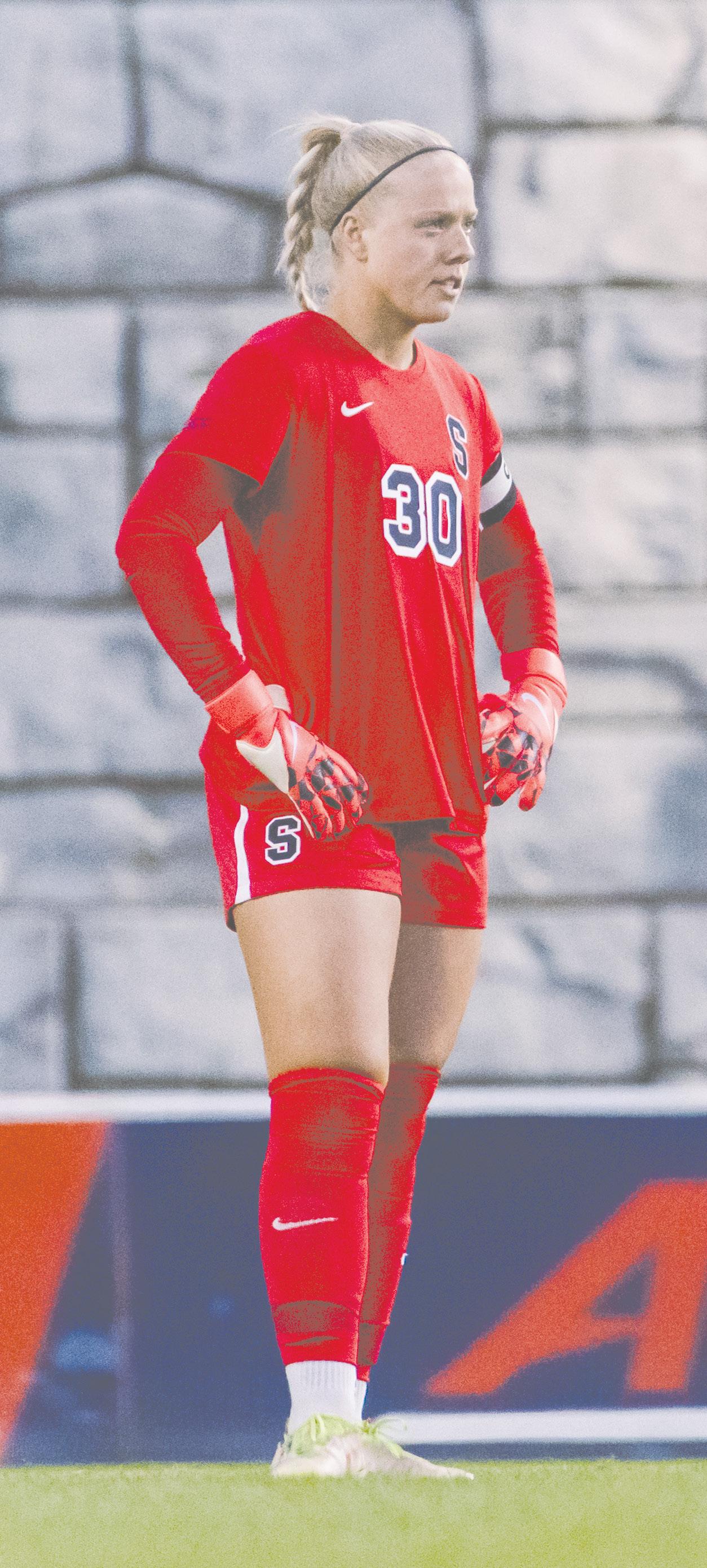
By Zak Wolf senior staff writer
Ricky Brumfield starts every special teams meeting with a football in his hands. He scans the room before eventually tossing it to someone.
Whoever catches it has to stand up and recite a specific creed. Brumfield made everyone memorize it after introducing it on the first day of training camp. The creed is only a few sentences, but it’s a crucial aspect of his philosophy.
Mess up a word and you embar -
rass yourself in front of your peers. And Brumfield.
“If you can’t say the creed, then I can’t trust you out on the football field,” Brumfield said. “We have to be able to have trust, so those are some of the words that’s in the creed … you have to know the creed to be able to play.”
Brumfield is tasked with fixing Syracuse’s special teams unit after the group unraveled under James Vollono last season. Missed field goals, blocked punts and poor execution were common occurrences.
The sloppy operation led to SU and Vollono parting ways. In came Brumfield, who suffered the same fate at Georgia Tech. However, through five games, he’s brought stability to the group. Iowa transfer Tripp Woody is 6-for-7 on field goals, Jack Stonehouse is averaging 49.1 yards per punt — without getting one blocked — and Syracuse’s special teams are operating smoothly.
“You can tell the difference of care between last year’s special teams and this year’s special
teams,” SU cornerback and punt returner Davien Kerr said.
Brumfield’s main goal when arriving at Syracuse was to bring more cohesion into its speciality group. The creed was part of that tactic. Brumfield asked for a volunteer to memorize the words after it was introduced, and Stonehouse obliged. He read it over in his mind for five hours straight, not wanting to fail Brumfield’s first test.
“He just doesn’t let little things slide,” Stonehouse said. “When you demand that respect, it’s easier to go
out to practice and tell guys where they need to be and (players) say, ‘Coach, I got you.’”
Everything starts with Brumfield’s energy. Tight end David Clement said Brumfield runs across the front of the room to start team meetings, which initially caught him off guard. Clement added Brumfield says if he’s not bringing the energy, he’s not ready to coach.
“He wants us to really care about special teams and bring the energy to the field and just make sure everybody
see brumfield page 12