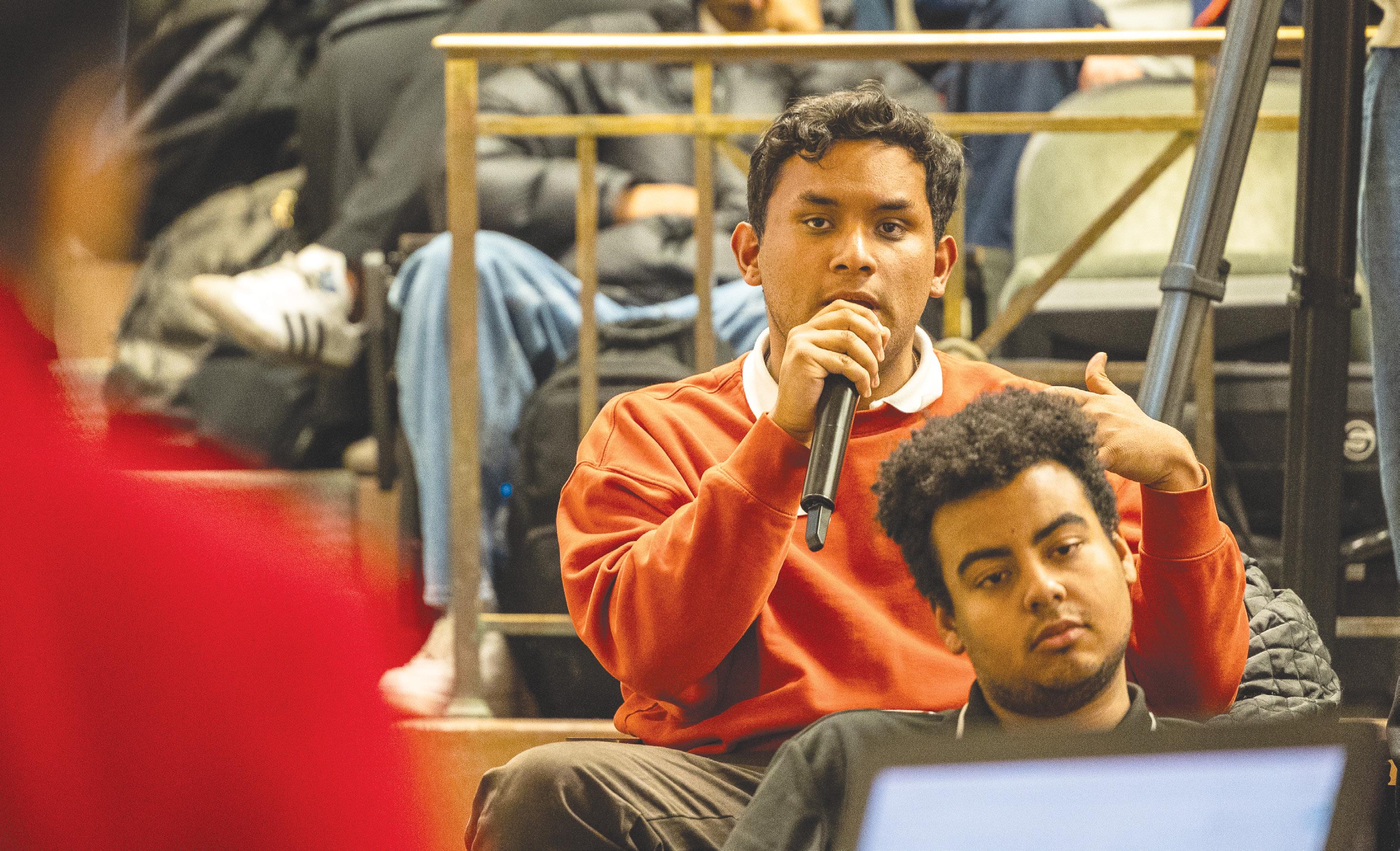
Germán Nolivos’ back-to-back terms as Syracuse University’s SGA president have been ones of ambition and drive.
Page 3
C
• Bird Watching
While some Syracuse University students bake under the sun, others gear up for finals in Bird Library.
Page 7
S
• Unfinished business
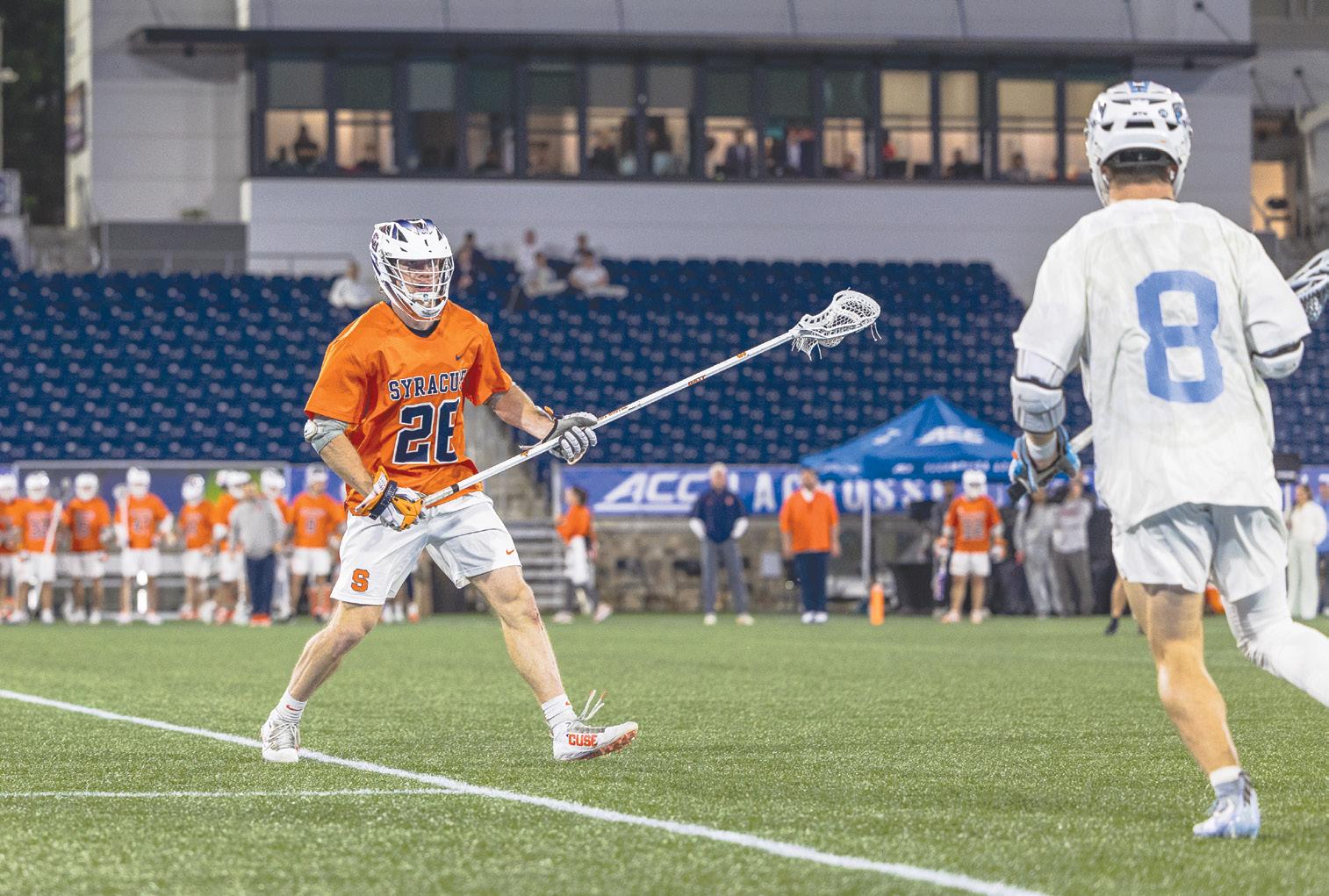
SU’s seniors sought to restore a winning culture. After three demanding years, they have one last chance to mark their legacy.
Page 11
Editor@dailyorange.com
News@dailyorange.com
Opinion@dailyorange.com
Culture@dailyorange.com
Sports@dailyorange.com
Digital@dailyorange.com
Design@dailyorange.com
Photo@dailyorange.com
BUSINESS 315-443-2315
how to join us
The Daily Orange is an independent, nonprofit newspaper published in Syracuse, New York. The editorial content of the paper — which started in 1903 and went independent in 1971 — is entirely run by Syracuse University students.
The D.O., a 501(c)(3) nonprofit, is editorially and financially independent from SU, and the paper receives no funding from the university. Instead, The D.O. relies on advertising revenue and donations to sustain operations.
This fall, the paper will be published Thursday when SU classes are in session.
The D.O.’s online coverage is 24/7, including while SU is on break.
To show your support to The D.O.’s independent journalism, please visit dailyorange.com/donate. Donations are tax deductible.
If you are a Syracuse University or SUNY-ESF student interested in contributing to The D.O. on either its advertising or editorial teams, please email editor@dailyorange.com.
corrections policy
The D.O. strives to be as accurate in our reporting as possible. Please email editor@dailyorange.com to report a correction.
letter to the editor policy
The D.O. prides itself as an outlet for community discussion. To learn more about our submission guidelines, please email opinion@dailyorange.com with your full name and affiliation within the Syracuse community. Please note letters should not include any personal information pertaining to other people unless it is relevant to the topic at hand. All letters will be edited for style and grammar.
The D.O. is published weekdays during the Syracuse University academic year by The Daily Orange Corp., 230 Euclid Ave., Syracuse, NY 13210. All contents Copyright 2026 by The Daily Orange Corp. and may not be reprinted without the expressed written permission of the editor-in-chief. The Daily Orange is in no
WEATHER
Delia Sara Rangel
Noah Nussbaum
Quinn Postman
peter radosh asst. digital
Cinco de Mayo
Raising the bar
Germán Nolivos navigated turbulence with ambition in 2-term SGA presidency
By Vivian Collins asst. news editor
Germán Nolivos was sworn in as Syracuse University’s Student Government Association president on April 29, 2024. Less than 24 hours later, he received a phone call alerting him that a Gaza Solidarity Encampment had been set up on SU’s campus.
He sent out his first campus-wide email as president in response, later saying the experience prepared him for everything the presidency would bring.
“After that day, I can take anything,” Nolivos said.
Nolivos served two terms as SGA president and, throughout his time at the helm, faced budget deficits, changing administration and shifting student expectations. He also led campus initiatives such as the
lending closet and the brain cancer awareness walk in support of outgoing Chancellor Kent Syrverud.
Born and raised in Venezuela, Nolivos came to the United States when he was 13 years old, moving to Miami, Florida. There, he began his journey in student government. He served as student government president his senior year of high school and class president the year prior.
As a senior in high school, he was nominated for the Posse Leadership Scholarship, an award that provides students with full four-year tuition scholarships from Posse’s partner schools, according to its website.
After doing his research on the Posse partner schools, Nolivos said SU was his “dream school” and had everything he was looking for in a university. When he arrived in Syracuse, Nolivos knew he wanted to continue serving in student government, as the leadership he developed in high school earned him his scholarship.
During his freshman year, Nolivos ran for and won SGA’s first-year representative seat, becoming the director of government affairs later that year. After serving as president of government affairs for the following year, Nolivos decided to run for president.
For his first presidential term, Nolivos ran unopposed alongside Reed Granger as his executive vice president candidate. Granger planned on running for an executive position in SGA and chose to run with Nolivos because they recognized his “drive to support students.”
“I thought that I could do a good job as president,” Nolivos said. “I felt that I had the management skills, I had done huge events and built relationships with a lot of administrators.”
The pair’s term was largely defined by improving SGA processes, implementing new campus initiatives and navigating the student protestors and encampments. see n olivos page 5
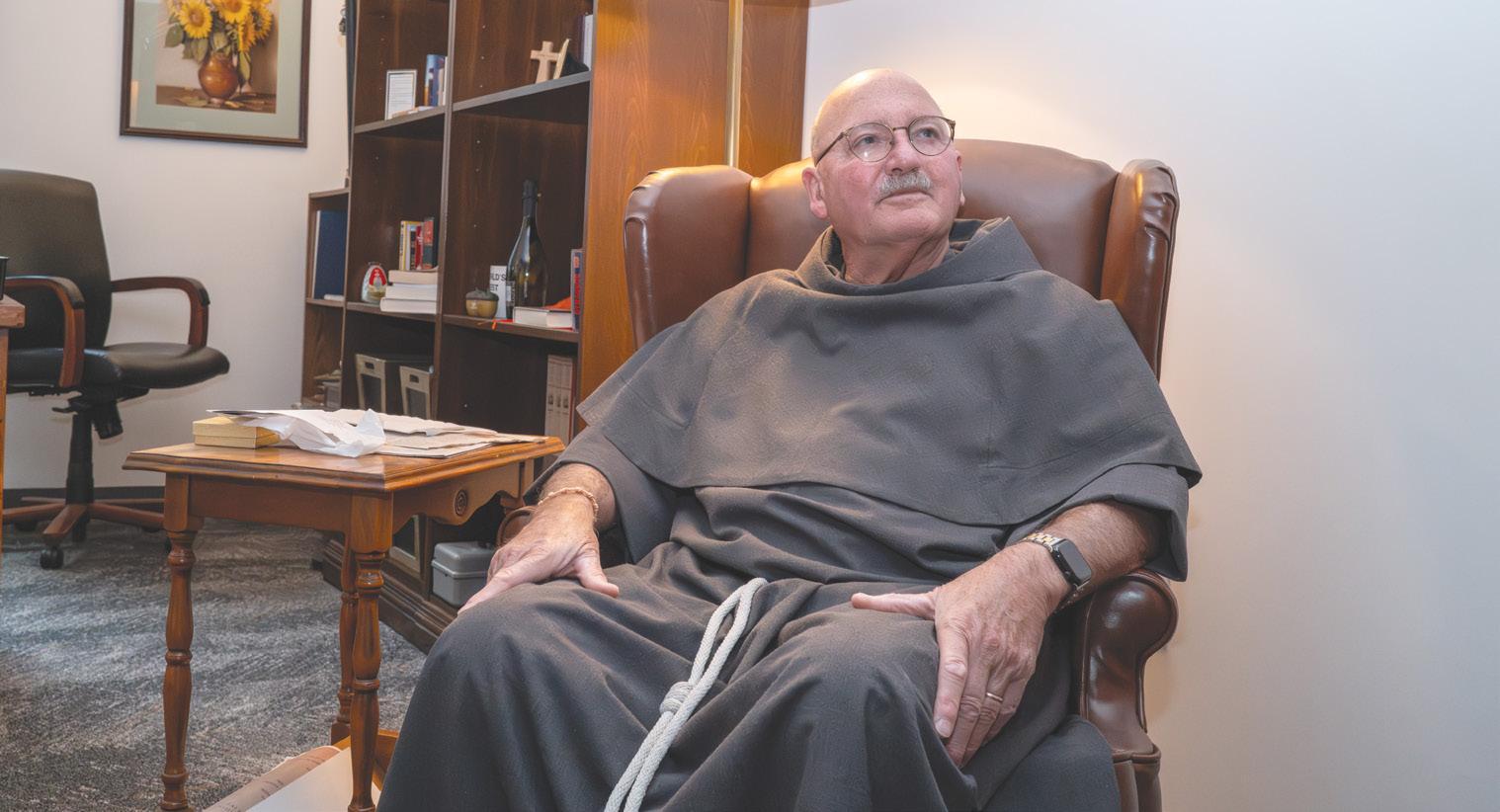
A sign led Father Gerry to SU. Now, it’s
By Ben Butler alumni engagement editor
When Father Gerry Waterman was a chaplain at Elon University, Syracuse University’s Catholic chaplain at the time, Father Linus DeSantis, regularly called him for advice. Waterman was glad to help, but to him, the situation at the Catholic Center seemed beyond salvation.
“They were deficit spending. The (chapel) was a pigsty,” Waterman said. “They had no relationship with the university at all.”
When DeSantis died in 2016, SU offered Waterman the chaplaincy. At first, Waterman wanted to decline, but his spiritual director suggested he check out what he was turning down first. If Waterman was meant to be there, he’d get a sign.
Waterman visited SU on an April weekend, packing only a windbreaker. After all, he was coming from North Carolina, where the sweltering summer was just beginning. It was freezing cold rain the whole weekend.
Waterman read the church’s accounting spreadsheet, and the columns were “red, red, red, red,” he said. Only about 20 students regularly attended Mass. The doors were locked and the Wi-Fi was private. Nothing was shaking his misgivings.
On the last day of his visit, Waterman went for a run before meeting with then-Chancellor Kent Syverud. He asked around for a running route — at the time he was running 35 miles a week — and headed toward Armory Square for a three-mile run. On the way, Waterman prayed.
“Lord, give me a sign,” he said. “If this is where you want me, you gotta give me a sign.”
Waterman came to a metal bridge near Interstate 690 when he looked over at an iron storm drain. He couldn’t believe what he saw.
Stamped in iron, clear as day, was his name: “WATERMAN.” The priest had to make sure it didn’t say “water main.” Underneath it was the number 84, the year he was ordained, and 55, the year he was born. “You don’t get many signs clearer than that,” he said.
When he met with Syverud later that day, the chancellor had a thick file on Waterman sitting on his desk. Immediately, Syverud made promises — to fix the property, to clean things up and to make it a “wonderful place” for both students and himself, since he also regularly attended Masses there. But Waterman didn’t need the promises. He’d made his decision already. After showing Syverud a picture of the drain, Syverud printed and framed the image — a reminder of why Waterman chose to come. see waterman page 5
germán nolivos served two terms as SU’s SGA president and his impact on campus has “set the standard” for future presidents. eli schwartz asst. photo editor
Syracuse residents hope Haynie will ‘look beyond’ SU’s campus
By Mirren Grimason asst. news editor
Past chancellors at Syracuse University each assumed varying levels of interaction with the city of Syracuse and central New York. The university plays an important role within the city, affecting its economic and social structure beyond those who attend SU, according to an SU release.
Whether it be through increased student involvement or addressing the university’s economic effect, local organizations and politicians said they hope to see acting Chancellor Mike Haynie look beyond SU’s campus.
After a months-long process, the Chancellor Search Committee announced that Vice Chancellor for Strategic Initiatives and Innovation and Whitman Dean Haynie would take the helm on May 11. Haynie entered the position almost a month early on April 15 after outgoing Chancellor Kent Syverud announced he would be stepping down after receiving a brain cancer diagnosis.
“I will seek out students who see this place most clearly because they are living it” Haynie said in a campus-wide email on April 27. “And I will seek out the citizens of Syracuse and Central New York, because this university exists as an integral part of this city and this region—a relationship I intend to honor and deepen.”
An SU alum, Syracuse Mayor Sharon Owens and her team collaborate with SU frequently, holding talks at the university, while maintaining a relationship with current faculty.
“While SU remains a vital hub of economic and cultural growth within our City, it is important to recognize and mitigate its impact on the City and its ability to deliver services,” her office wrote in a statement to The Daily Orange.
Despite Owens’ expressed commitment to working with Haynie, the relationship between SU and the city extends beyond politicians.
Chris Foley, CEO and president of Interfaith Works of CNY, said university students have
on campus
much to learn from engaging in the city and hopes that Haynie “embraces that opportunity fully.”
“Students who engage in that work do not just learn about diversity in a classroom. They experience what it takes to build bridges across difference in a real community,” Foley said. “My hope is that the new chancellor sees those partnerships not as community service alone, but as core to the university’s educational mission.”
Andy Mager, a member of the Syracuse Peace Council for over 40 years, said throughout his time working with the university, he’s seen both “positive collaborations” as well as “oppositions.”
Mager said during former Chancellor Nancy Cantor’s time, his organization and the city felt most connected with SU. He cited the creation of the Connective Corridor bus route, the construction of the Nancy Cantor Warehouse and the Haudenosaunee Promise scholarship program as initiatives Cantor started that benefited the city.
“It seemed to us that Chancellor Syverud pulled back a lot from much of the community connection and involvement that Nancy had initiated,” Mager said.
Mager said Haynie currently faces many “threats to academic freedom” from President Donald Trump’s administration, which Mager called on him to “resist.” Mager said he would also like to see Haynie adopt a similar attitude as Cantor, encouraging students to engage with the broader community beyond SU’s campus.
Beyond specific initiatives, Haynie adopting a positive attitude toward the city is important for both Syracuse and SU students, Tammy Honeywell, Onondaga County legislature candidate, said.
“We have a lot of growing small businesses in downtown Syracuse that are really expanding beyond just being a small business and trying to develop like places, safe places for people to go, or people to connect and network and just find other opportunities within the community,” Honeywell said.
As an educational institution, SU is exempt from federal and state income taxes. Honeywell said the amount of land the university owns has increased, causing it to “deplete some of our (city’s) revenue.”
Onondaga County Legislature Maurice Brown also commented on the amount of property SU owns, including South Campus.
“I think South Campus is such (an) underutilized opportunity. I have a bias. I live close,” Brown said. “But there’s so much land on South Campus … and we could use that land. Or you guys could use that land and give us some of the land on Marshall Street that SU keeps gobbling up.”
The 15th district that Brown represents encompasses South Campus, and he emphasized how Syracuse and the university are “intertwined.”
“From what I’ve heard so far, (Haynie) understands that his priority is to students and that should be his priority, absolutely. Just like my priority are the constituents of the 15th district,” Brown said. “But at the same time, there’s intersection. There are students who are my constituents. And he should care about both.”
Running for Brown’s current position, Onondaga County Legislature Candidate and Public School Teacher Jo Bennett said that they are focused on “accountability” rather than “innovation” from the university.
“The surge in temporary student housing is driving up costs and displacing long-term residents while our homelessness rates rise,” Bennett said in a statement to The D.O. “We need a chancellor who recognizes that the university’s ‘momentum’ is hollow if it leaves our neighbors behind.”
Owen’s office said they have had a “productive relationship” with SU and the chancellor, which will continue under Haynie’s leadership.
“As our current shared services agreement expires this summer, we will continue to engage with the Common Council and university leadership to partner together to uplift residents and students alike,” Owen’s office wrote. “The City is looking forward to working with Chancellor Haynie to forge new pathways of cooperation for the good of our community.”
msgrimas@syr.edu
SU announces 3 AAAS fellows, sets record for largest cohort
By Owen Smith asst. digital editor
Syracuse University’s announcement of three American Association for the Advancement of Science fellows, the largest cohort ever selected from SU in a single year, emphasizes its standing as a research institution.
Physics professors Duncan Brown and Lisa Manning, alongside Information Science professor Kevin Crowston, will join an elite group of scholars recognized for their “scientifically or socially distinguished efforts” to advance science. The fellowship has been awarded across institutions annually since 1874, with fellows recognized for their current research work or past publications.
The new fellows will be formally inducted into AAAS during a ceremony in late May.
The announcement signals a rising national ranking for the university’s research efforts, Brown said.
“If you look at the number of nominations we have compared to the size of our university, we are punching above our weight,” Brown said. Brown serves as SU’s vice president for research and was a key contributor to the September 2015 discovery of gravitational waves.
“We pursue research to attract and retain the best faculty because they’re the best people to work with our students and help our students transition from being consumers of knowledge to creators of new knowledge,” Brown said.
Manning, a 2019 fellow of the American Physical Society and former founding director for the BioInspired Institute, emphasized the importance of student involvement in professional research.
“This isn’t just an award for me,” Manning said. “It’s an award for all of those students who have worked on all of these cool projects in the past.”
Manning said she often brings her research into introductory physics classes to show freshmen the impact of the science she teaches.
For Professor Crowston, his appointment marks the first time a faculty member from the iSchool has received the AAAS honor.
“Partly, I think that AAAS is becoming a little bit more holistic, and partly the university does have these strengths in a broader range of disciplines,” Crowston said.
Crowston said his work on coordination theory, examining how humans can effectively communicate and collaborate, dates back to his PhD thesis from 25 years ago. He said his work has “stood the test of time.”
Biology professor Jason Wiles, elected an AAAS fellow in 2023, noted the appointment of three different faculty members in a year supports the idea that SU fellows and nominees represent a “rising profile” for the university’s research efforts.
Wiles explained that the election process is incredibly selective, as it takes only two votes against a candidate at either the Section or Council levels to exclude a nominee.
“Election as a fellow of AAAS is a very prestigious mark of distinction, but too few understand how truly rare and special of an honor it is,” Wiles said.
Interim Dean of the College of Engineering and Computer Science Jennifer Ross characterized Manning and Brown as “teacher scholars” who care deeply about incorporating students into their research.
Ross suggested that both Manning and Brown have the chance to reach the National Academy of Sciences, which is considered an even higher level of prestige in the scientific community.
Charles Driscoll, an environmental systems professor and 2017 AAAS fellow, added the fellow designation serves as a “feather in your cap” after a long career in teaching and research.
“It sends a message to the broad scientific community or research community that these individuals are recognized for doing very high quality research, very meaningful and very impactful,” Driscoll said.
Driscoll also mentioned the fellowship allowed him to lead interdisciplinary workshops on a “national stage,” where he could showcase his scholarly work to other national fellows.
George Langford, a 2013 fellow and a professor emeritus of biology, emphasized the appointment of three professors for the AAAS serves as a metric for evaluating SU as a research university.
“I hope that this is a trend of continuing increase in the numbers who are nominated each year from Syracuse University,” Langford said.
For Brown, the recognition represents SU’s commitment to creating and learning across a variety of diverse fields, including allowing student collaboration on research studies.
“Syracuse is in that sweet spot where we are big enough to have outstanding research but small enough that undergraduates can work with those faculty,” Brown said.
owensmith@dailyorange.com on campus
Jeffrey Rubin appointed interim dean of Syracuse University’s iSchool
By Fiona McHugh asst. digital editor
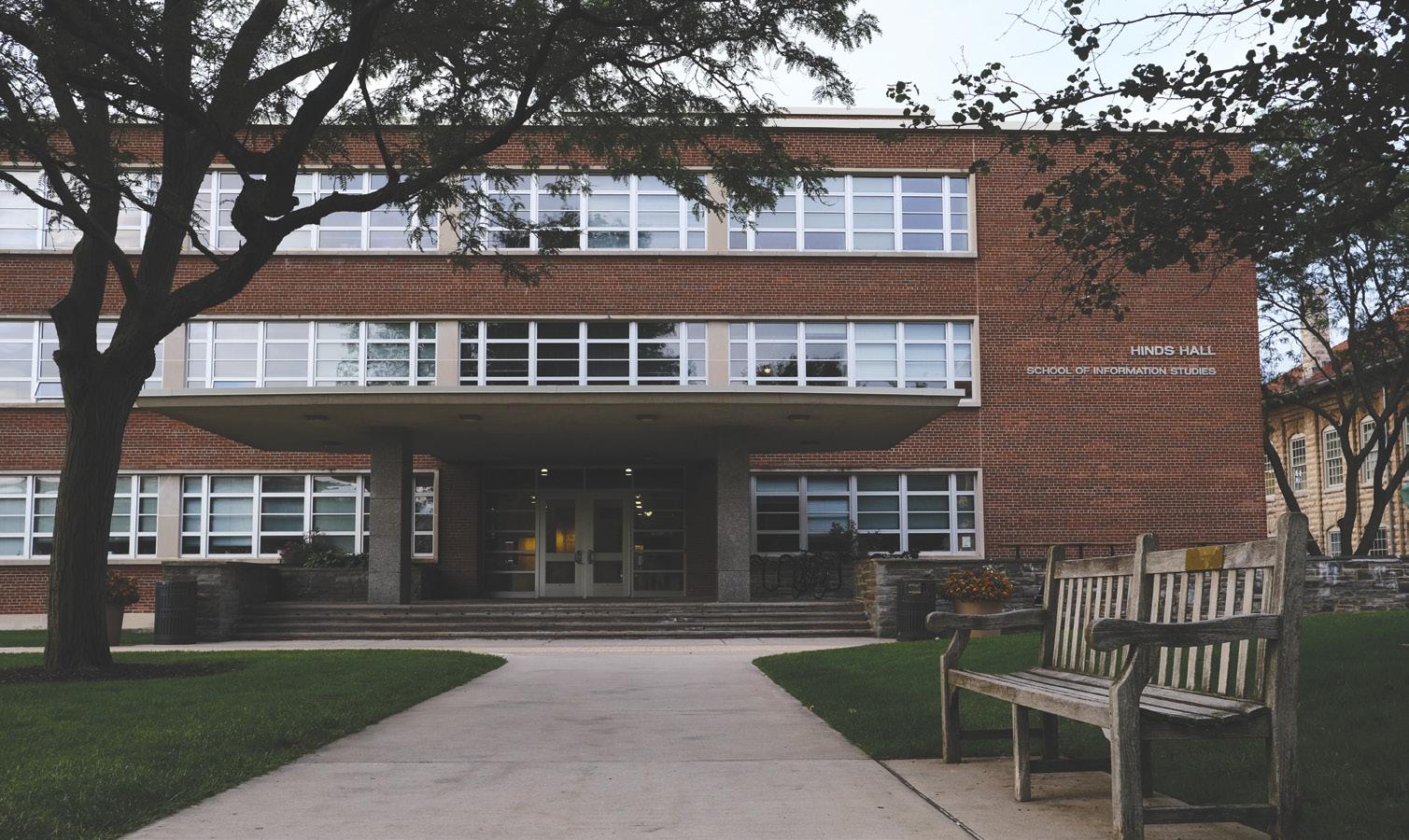
Syracuse University’s School of Information
Studies appointed Jeffrey Rubin as its interim dean, according to a release last Friday. Rubin’s appointment follows outgoing Interim Dean Jeff Hemsley’s announcement that he will step down following commencement on May 10.
This past year, Rubin served as the university’s senior vice president for digital transformation and chief digital officer.
Rubin attended the iSchool, earning a bachelor’s degree in 1995 and a master’s degree in 1998. He’s worked in the iSchool since 1996.
“It’s a great honor to step into this role at the iSchool, which is a place that means a lot to me,” Rubin said in the release.
Rubin previously served as special advisor to the chancellor on digital information starting in July 2021. He also founded SIDEARM Sports, a digital platform for college athletics that acts as a “fan engagement” platform and
powers websites, mobile apps and live statistics for college teams across the country.
In his role as advisor to the chancellor, Rubin led projects such as the installation of the distributed antenna system at the JMA Wireless Dome, which helped address connectivity issues.
Led by Hemsley since 2024, the iSchool launched a master’s degree program in appliedhuman centered artificial intelligence and an undergraduate minor in applications of AI. The school also established the Chancellor Kent Syverud and Dr. Ruth Chen Endowed Chair in Applied Artificial Intelligence.
“I am grateful to Jeff Rubin for stepping up to lead the iSchool during this period of transition,” Lois Agnew, SU’s vice chancellor, provost and chief academic officer, said in the release. “His experience and commitment to the iSchool’s mission make him exceptionally well-positioned to lead the school, and I look forward to the new work ahead.”
Rubin will begin his work as interim dean on May 11. fmchugh@syr.edu
Syracuse residents hope that acting Chancellor Mike Haynie will increase interaction between SU and the city to “forge new pathways.” avery magee development editor
Jeffrey Rubin, who served as senior vice president for digital transformation and chief digital officer this year, was appointed as the iSchool’s interim dean. dan lyon daily orange file photo
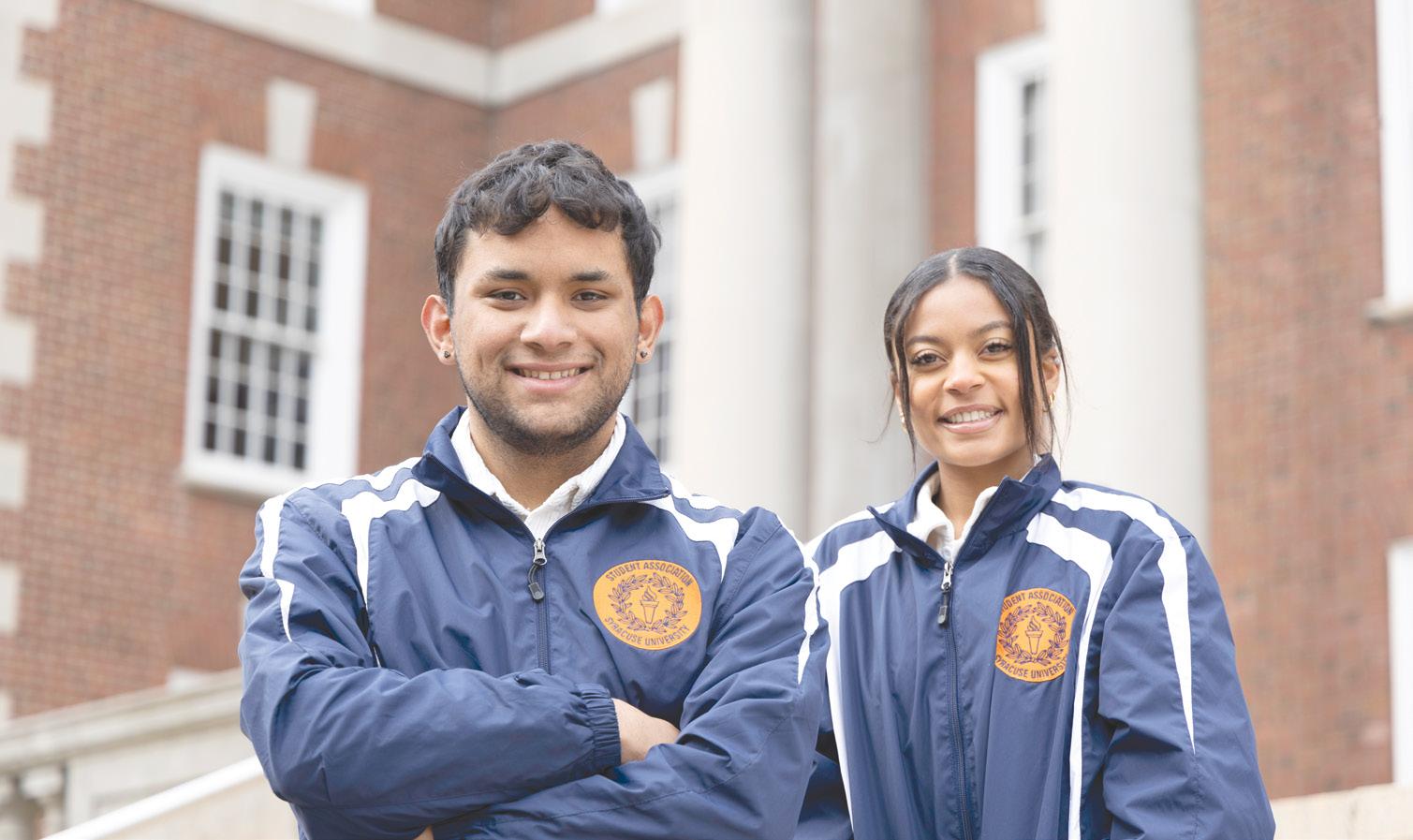
As his presidency led into a second term, Nolivos served with Janese Fayson at his side. The two became friends in Miami during their precollegiate training program through Posse. Fayson first became involved in SGA her junior year when she worked as the vice president of diversity, equity and inclusion.
“He’s so ambitious and (in) the best way possible. I think half the things that have happened wouldn’t have been done without him,” Fayson said. “Germán has worked so hard to create a culture that is dynamic, that is also ambitious, that is proud to be an SGA, and just full of amazing, smart, incredible people.”
Nolivos emphasized the benefits of serving two back-to-back terms and how they’ve allowed him to accomplish more.
“In a year, it’s actually impossible to get things done because there’s so many filters, so many conversations,” Nolivos said. “I feel that the progress we have done has been possible because of the timeframe and how long I’ve been here, not only as president, but also with a lot of my same team members.”
Granger cited the lending closet as one of Nolivos’ most notable initiatives. The closet is designed to provide registered student organizations with items and supplies that are commonly requested during SGA’s allocations processes. For example, instead of four different clubs requesting funds for four different karaoke machines, the closet provides one that clubs can borrow when needed.
“I guess Waterman is the name of the company that put that metal piece of iron up. I don’t know. I don’t need to know.” Waterman said.“It was a sign to me.”
10 years later, after completing DeSantis’ term and two of his own, Waterman’s time at SU is ending and Syverud’s promises have come true. Hundreds of students attend Mass weekly, the Catholic Center has a new building and its doors are always open.
Leaving is “bittersweet” for Waterman.
“There’s gonna be a huge hole in my heart,” Waterman said. “I’ve had pain in every place I’ve left, but I don’t think I’ve had this much pain.”
The Call Waterman’s life has been defined by signs. Growing up in Bridgeport, Connecticut, his grandmother told him he’d be a priest. But Waterman didn’t need her to convince him — he always felt the call.
When he graduated from Catholic grade school, his friends went to nearby Notre Dame High School. Waterman didn’t go with them.
“My parents said, ‘Nope, you’re a discipline problem. You’re going to go to the Franciscans,’” Waterman said, laughing. “I was always in detention. BB guns.”
In high school, Waterman was impressed by the brotherhood he saw in the Franciscan Order, and he figured if God was really calling him to the priesthood, that’s where he wanted to end up. So he asked for a sign.
A week later, Waterman’s girlfriend broke up with him. That same weekend, the friars were running a trip for students to see the seminary. Waterman, a junior still considering his options, decided to go.
“It broke my heart, but I said, ‘Maybe that was my sign,’” Waterman said. “I got what God wanted. When you do what God wants, everything works out.”
The Path Down Walnut Waterman stops and talks to everyone when he walks around campus — students, workers, faculty and parents alike.
An energetic guy, even though he only gets five hours of sleep a night, Waterman claims he doesn’t drink a lot of caffeine — just enough. One cup of coffee when he gets up, one cup when he gets to the Catholic Center and one more around 3 p.m.
Maybe it is a lot of caffeine. But he needs the energy.
As he walked down the street mid-interview, Waterman ran over to a parking garage attendant he sees nearly every day, gave her a hug and told her, “I love you.” Later on, a young guy walking down the street cheerfully greeted Waterman, saying, “Hello Father,” as he passed by. It feels like Waterman knows everyone, because he basically does. After the Catholic Center’s new building opened last semester, he thanked everyone, including the construction workers that he’d taken the time to get to know, offering lunch to everyone who came into the building.
“There’s an unfortunate but very human tendency to reduce that relationship to purely utility. They’re here to do a job, and that’s the end of it,” Patrick McLaughlin, a campus minister at the Catholic Center, said. “Father Gerry learns their names, he learns their sto -
The closet was inspired by the budget deficit Nolivos inherited as a result of the COVID-19 pandemic. When he became president, SGA had a negative $240,000 budget and had to find a way to accommodate funding requests from over 300 RSOs, Nolivos said.
“The sustainability of the lending closet initiative is one of the most impressive and tangible accomplishments I’ve seen a student government execute,” Granger said. “I’m really impressed with it, and I think it’s going to go a long way.”
ries. And it’s not just that he learns those things. He remembers.”
On one of their Tuesday morning walks, Syverud asked Waterman how he knew everyone.
“I told Kent, ‘You have too many other people to worry about and too many other things to worry about,’” Waterman said. “For me, I just have to worry about people.”
But Waterman doesn’t just worry about people. People might be the center of his ministry, but being a priest is similar to managing a small business, McLaughlin said, with many responsibilities.
“You have a very tight budget, you have employees you have to pay, and oftentimes you have a facility that is not in great shape,” McLaughlin said. “People who have the talent to be really great administrators, they’re cut out to be the pastors of a parish.”
Waterman’s a gifted conversationalist, Linc Zdancewicz, a business management senior who spoke at Waterman’s farewell on April 16, said. Talking to Waterman is informal and casual. Conversations might be comedic, theological, or deeply personal.
“He’s been great at meeting me where I’m at,” Zdancewicz said. “He’s been great at getting me to talk about my feelings and opening me up, but also seeing the beauty in a lot of things.”
Pieces of Father Gerry Waterman’s office is warmly lit. His desk is a little messy these last days, typical at the end of semesters. But with his impending departure, Waterman hasn’t had a free moment. He just returned from Ann Arbor, Michigan, where Syverud is receiving treatment for his brain cancer diagnosis.
In his office, Waterman points out a basketball signed by fellow SU Gerry — MacNamara — sitting beneath the chair students sit in during confession. A caricature of him from a wedding reception in Florida two years ago hangs behind it. Even though it’s black and white, you can almost make out his reddened cheeks from his big grin.
The office is Waterman’s base for counseling students. When students need him, he meets them. Sometimes he’ll even leave guest speaker events a few minutes early to ensure he can meet students on time, Imam Amir Duric, assistant dean for religious and spiritual life at Hendricks Chapel, said.
“If it’s his office hours from 2 to 4, nothing else can get in the way,” Duric said.
Zdancewicz was raised Catholic, but Waterman has helped deepen his faith. Others, like junior broadcast journalism student Evan Fay, converted to Catholicism because of him.
When one of Fay’s favorite hoodies was stolen last year, Waterman walked him over to 315 Vintage on Marshall Street and bought him another hoodie and a pair of pants. For a man who took a vow of poverty, Fay said, this meant everything. And when Waterman taught Fay how to tie a tie, he gave Fay 15 of his own to take home.
“I’m very lucky and grateful that now I have 15 pieces of Father Gerry,” Fay said.
Waterman once told Jack Rose, an SU alum and current student engagement coordinator at the Catholic Center, that he’d be bringing issues to the priest until Rose is 90. The line stuck with Rose — the implication being that Waterman would still be there to listen to Rose’s worries and struggles at 136 years old.
“I picture Father Gerry as the future head in a jar with, like, a cyborg body,” Rose said.
Outside of SGA, Nolivos is a remembrance scholar, brother of SU’s Pi Kappa Alpha chapter and served as the president of Las Naranjas Spanish Club for two years. While he’s busy serving as president, Nolivos still makes time for his friends who jokingly refer to him as a “campus celebrity.”
On top of his work for SGA, Nolivos also manages to take on two majors – political science and public relations. He finds a balance by using his classes to help inform his SGA work and vice versa.
For example, Nolivos said his crisis public relations
class helped prepare him for sending out campuswide emails regarding pressing campus issues.
Incoming SGA President Emily CastilloMelean said Nolivos has set the standard for how an SGA president can and should lead. She said the bar he set is one she and every president that follows will “work tirelessly to uphold.”
Max Lachut, incoming executive vice president and fellow brother of SU’s Pi Kappa Alpha chapter, echoed that sentiment, describing Nolivos as someone who leads by example and whose dedication is evident in “every initiative, every event, every single thing that he leads.”
Although he’s graduating this year with a dual degree, Nolivos will return to SU in the fall to pursue his Master of Business Administration at the Whitman School of Management. He said his experience making difficult decisions, managing a $6 million budget and building events from scratch all prepared him for this next phase in his life.
Nolivos said that those factors, combined with SU’s Forever Orange program, made the decision to stay a “no-brainer.”
As Nolivos looks ahead, Granger said his impact on Syracuse will be long-lasting and extend far beyond the confines of campus.
“It is my belief that if anybody has the opportunity to sit down and have a conversation with Germán, they should,” Granger said. “He cares about people, and he is one of the people at Syracuse University that I am most thankful I was able to meet, and I just hope that every other student that may follow me will have the chance to meet him or somebody like him.”
viviancollins@dailyorange.com
But pastors are people too, Reverend Devon Bartholomew, one of SU’s Protestant chaplains, said. Ministry doesn’t come without personal tolls and grief, and the perception that ordained people are holy and thus superior is flawed, Bartholomew said, because pastors need counseling or time to grieve, too.
Waterman was in the room when Bryce Lander, an SU senior, was pronounced dead last year. He was anointing Lander and spending time with his friends, Rose said, and Lander’s death came suddenly. The responsibility of planning and ministering at a memorial Mass fell on Waterman, a difficult yet necessary element of pastoral service.
The day after the memorial, a Friday during Lent, Rose took Waterman to Blarney Stone for a fish sandwich to do what he could to show his appreciation for Waterman.
Waterman is honest with students. He lets them know he’s vulnerable and he’s not afraid to cry around them. But he refuses to lean on them for support, because he’s their counsel, he said, not the other way around.
“It puts pressure on them, because that’s not their role,” Waterman said. “I tell students, ‘Don’t make your peers be your counselors, either. You need to go see a counselor. That’s not their job.’”
The United Front
Aside from the new Catholic Center chapel and the increase in attendance, Waterman also transformed the church’s relationship with other faith communities at SU. From other denominations of Christianity, to other religions like Islam, Judaism, Buddhism and Hinduism.
Waterman worked with other Christian chaplains at SU to expand Ash Wednesday services and collaboration around Easter, Bartholomew said. As a result, the university’s Christian community presents a more “unified front,” Bartholomew said.
Coming from a Baptist tradition, Bartholomew had never attended an Ash Wednesday service. He wasn’t sure what his responsibilities might entail, whether you had to be a confirmed or ordained Catholic to administer ashes on people’s foreheads, like taking and administering the communion Eucharist requires.
“(Waterman) said, ‘No, there’s actually no obligation. There’s no requirement. But we’re all trained to do it,” Bartholomew said. “When I discovered that, I jumped in with both feet.”
Waterman’s been a mentor for Bartholomew, who hasn’t ministered anywhere else. SU is Bartholomew’s first parish as pastor. Bartholomew often bounces ideas off Waterman and asks him questions about service.
Waterman isn’t just a source for other Christian chaplains. Like the recent efforts in the Catholic Church under Popes Francis and Leo XIV to expand interfaith dialogue, Waterman transformed the church’s relationship with other faith communities at SU.
Muslim students at SU don’t have a designated space in the same way Catholic students do, Duric said. They usually use auditoriums around campus for events, and a few years ago, when Duric needed a space to host a welcome back dinner for students, he went to Waterman. Duric asked if he could use the Catholic Center for the dinner, and Waterman didn’t hesitate to help.
“He said, ‘No, you’re more than welcome. It’s really almost like your space,’” Duric said. “I have many Muslim students who have nothing but respect for Father Gerry.”
The Stories That Can’t Be Told Waterman’s next step is in Washington, D.C. He’s not retiring, but he won’t be gone from Syracuse entirely either. He said he can never really leave this community behind, even if he isn’t there physically. A hole will be left in his heart when he leaves, he said, and it’ll be hard to fill.
“I know he loves people, but even that is a skill that he’s honed over 20 years of college ministry,” Rose said. “Every one of us has the capacity to be like that.”
Whether it’s students, fellow chaplains, or staff at the Catholic Center, there are seemingly endless stories to tell about Father Gerry Waterman. When Fay spoke at Waterman’s farewell, he invoked the ending of John’s gospel.
“Jesus did many other things as well. If every one of them were written down, I suppose that even the whole world would not have room for the books that would be written,” the verse reads. Fay said the same is true of Waterman — no one could really know how much of an impact the priest has had.
“Only God knows the full fruit of his life,” Fay said. “And perhaps, one day, Father Gerry will know too.”
from page 3 waterman
A storm drain bearing Father Gerry’s last name “Waterman” is what convinced him to serve at Syracuse. tara deluca photo editor
janese fayson served as SGA’s executive vice president with Germán Nolivos for the 2025-26 academic year. solange jain daily orange file photo
Newhouse
CULTURE
Bird Watching
Some Syracuse University students spend time outside, others prepare for finals in Bird Library
By Ben Butler alumni engagement editor
The last weeks of April are a blessing.
It’s the first time in the calendar year where the sky is blue, the UV index has an impact on your skin and the world feels fresh, full of possibilities and joy. Summer’s on the horizon.
Most Syracuse University students are crowded on the quad with friends, tossing frisbees and lying in hammocks.
Most.
Then you look to the right of the quad at the looming concrete behemoth that is Bird Library. Students on the promenade are mere ants, dwarfed by the Brutalist cube. Its oppressive veneer evokes sci-fi villainry, like if Darth Vader designed a study hall.
Some poor souls have exams tomorrow that they’re grossly underprepared for. You remember the huddled masses at desks and study rooms in the library.
Will they have enough time before exam day?
On those waning days of the semester, student priorities shift. Some sit outside with friends while others lock themselves in the library. Work has to get done, after all, even if it comes with the personal toll of spending time stuck inside.
“We wouldn’t actually go home, we’d be here all day, go home for four hours to sleep, change,” Ashley Chen, a sophomore marketing major, said. “We come back and spend a whole other day for a week of finals.”
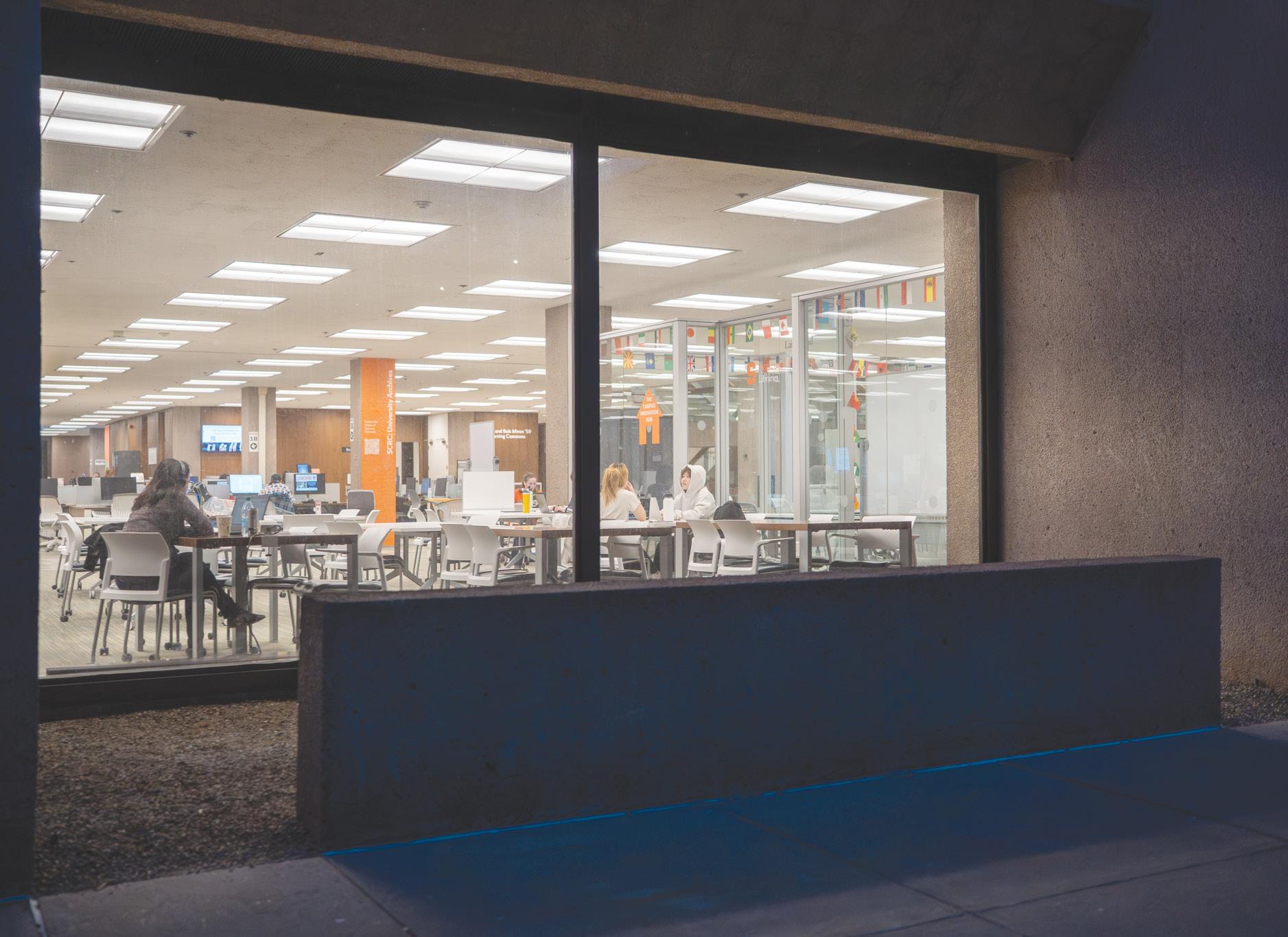
During finals week, Bird Library is open for 24 hours. Some students take advantage of the extra time over the witching hours.
Faegan’s Senior Blow-Out
By Tara Binte Sharil
asst. culture editor
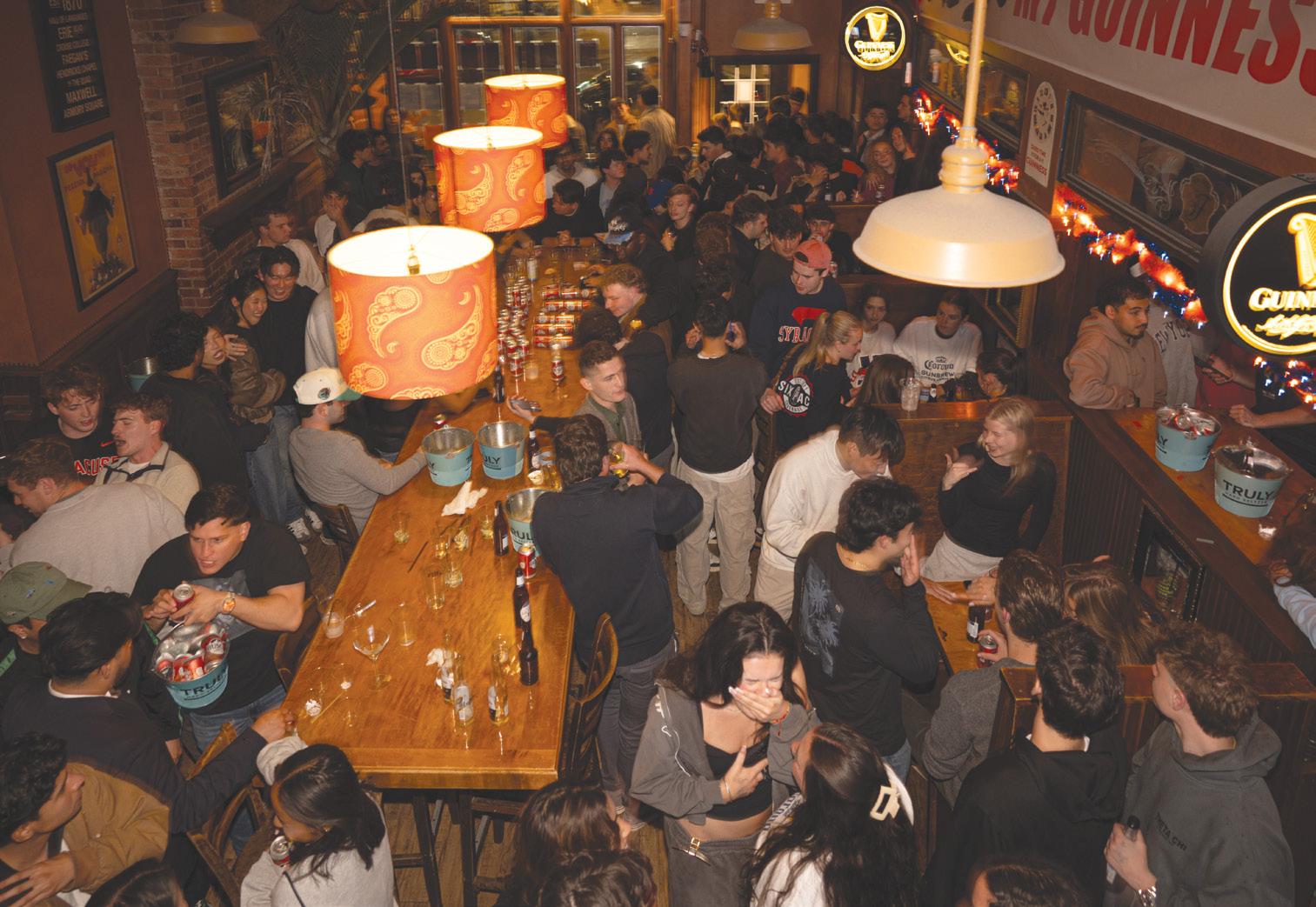
As midnight approached, Faegan’s Cafe & Pub was filled with reinvigorated energy as trays of champagne were passed around the bar. Customers, mostly Syracuse University seniors, hurriedly grabbed champagne from the trays as the minutes on Faegan’s digital clock ran down to six days, zero hours, zero minutes and zero seconds, which indicated how many days were left before Sunday’s commencement.
Right as midnight struck, SU senior Jake Warcaba climbed on the bar table with a microphone in hand to make a speech. The entire bar went quiet and the mingling came to an end, the revelers anticipating what Warcaba planned to address.
“I think we can all agree that when we look back at our college experience, however many years it may be from now, this place is going to be a big part of those memories,” Warcaba said.
On Sunday night, Faegan’s hosted its 42nd annual Senior Blow-Out to celebrate the class of 2026’s gradua-
tion. The night included free champagne, drink deals and a speech from Warcaba, who spoke on behalf of the senior class customers, thanking the bar for the countless memories while toasting to the graduating class.
The tradition first started in 1984, when then-Faegan’s employee Fritz Hottenstein came up with the idea to make Faegan’s come alive on Sundays — a day not many students would venture to the bars. From the first Sunday of the school year to the Sunday of graduation, Faegan’s was open to the public, offering custom-
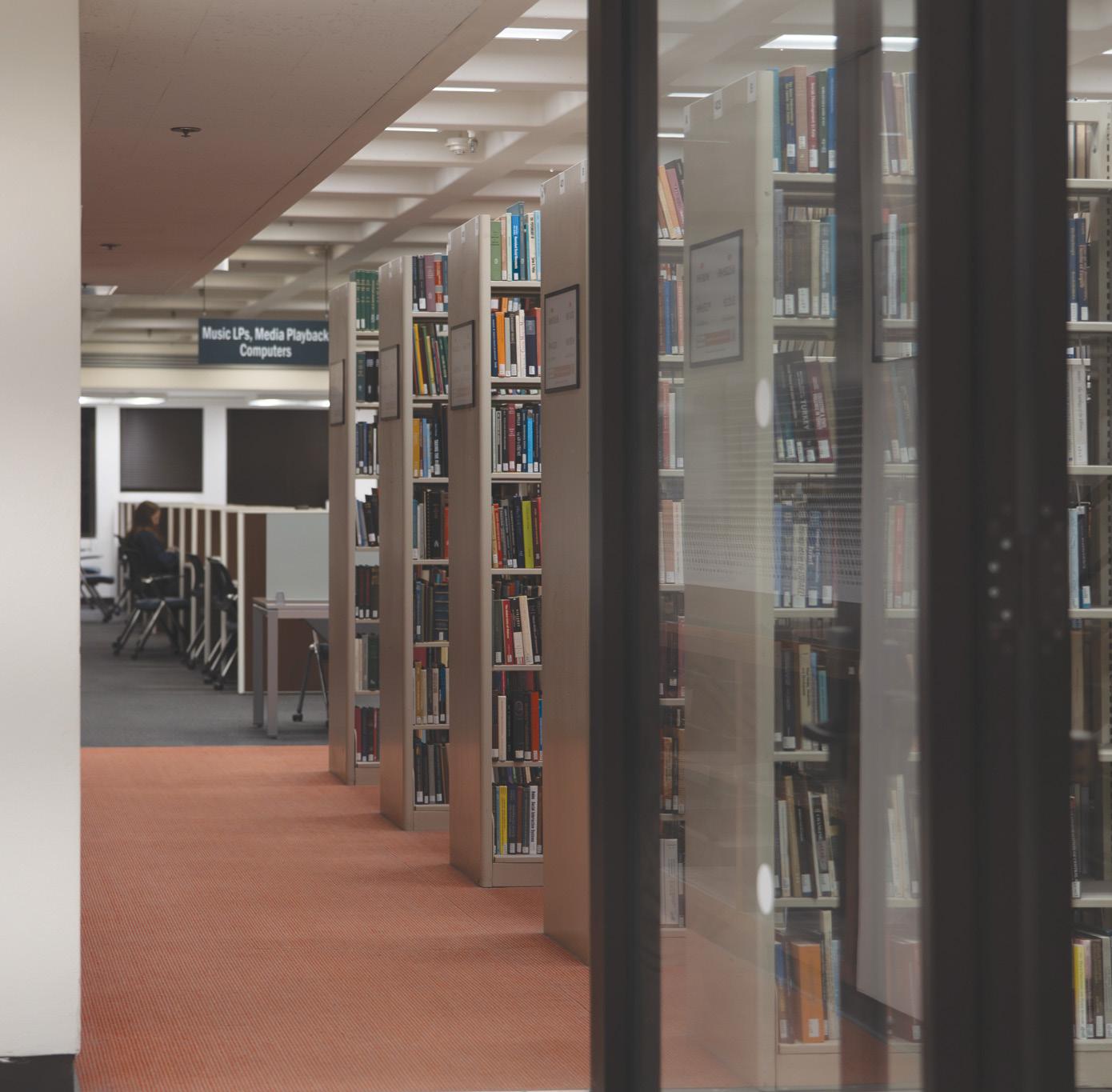
Bird has a built-in hierarchy on its six floors. As you go up, the sound level goes down. The basement, even at 1 a.m., is like a cafeteria. People gab. Comparatively, the fifth floor becomes a ghost town by 7 p.m. The only people still there are zeroed in on studying. I didn’t get anyone to talk up there, only met with harsh stares from those wishing for my snooping to stop.
Caffeine fuels nearly every student. The garbage cans are a graveyard of Celsius and Monster cans, with a few Dunkin’ plastic cups for good measure. In 20 years, the physical toll of caffeine dependency might be felt. These days, it could be a toll worth paying. see bird page 8
ers a midnight shot special, Faegan’s owner Ben Cook said.
With the idea coming to life, Senior Sundays at Faegan’s were born.
During Senior Sundays, Cook remembers having a countdown to how many Sundays were left before graduation. Back then, there weren’t any digital clocks, so Cook devised a sign with numbered slips of paper. Every time the clock hit midnight, Cook would rip the paper, signaling graduation getting closer and closer. By the time the countdown ran down to zero, Cook passed the empty sign to
a new loyal Faegan’s customer every year ahead of graduation.
However, Faegan’s decided to shift its Senior Sunday celebrations when fewer customers came to the bar on Sundays. Cook speculated that it was an unexpected phenomenon that saw this decrease in customers on Sundays. “I think (Senior Sundays) kind of stopped, believe it or not, when ‘The Sopranos’ came out, and people stopped coming out because it was such a hit show that everyone stayed at home to watch ‘The Sopranos,’” Cook said. see faegan’s page 9
Syracuse University students study on the first level of Bird Library into the night. While some students bake outside in the sun, others study in Bird for finals. zoe xixis asst. photo editor
These seniors spent four years as roommates
By Kosta Konstantopoulos asst. copy editor
Syracuse University senior Jenna Lewis got lucky.
Over the past four years, after spending mornings in class, nights going out with friends and days watching SU’s various sports teams in the JMA Wireless Dome, she has always returned home to the same person: Ashley Maikowski.
“I think having the same roommate for all four years gives you a constant in a time when everything else is changing,” Lewis said.
“I think I destroy my body with Celsius,” Chen said. “I would just keep DoorDashing them, and so I would drink, like, actually, three a day.”
On the third floor, in the soundproof study rooms, pairs of students scrawl notations on eight-foot long whiteboards. DoorDash bags are strewn about the floor. Two of the students, Cordelia Dunstan and Daniela Jacob, both juniors on the premed track, are staring down a mammoth assignment.
Organic chemistry. Orgo — a dirty word that causes veteran STEM students to shudder years later. Research shows that half the people that take it fail it.
Dunstan and Jacob are here at 11:30 p.m. They’ve been here since 9 a.m, and the exam is at 8 the next morning. All their chips are down. Though this floor closes at midnight, the pair are in it for the long haul even if they have to move spots — they’re going from Bird right to the exam on Friday morning. And the exam is cumulative, meaning they have an entire semester’s worth of ground to study.
Bags of Taco Bell are scattered across the table, a sort of dirty fuel for the pair, though Jacob has shifted to a salad from Pages Cafe. Rather than keep eating “crap,” like cheap takeout, she figured she’d choose something more nourishing.
The wall-length whiteboards are critical for their success. Dunstan thought it was a tad performative to use huge whiteboards for studying, until she took orgo herself. Now she swears by them.
“It genuinely helps so much because you can write and rewrite and rewrite over and over and over again until it’s in your brain,” Dunstan said.
The pair needs each other, and not just for retaining the course material. When one of them leaves to grab food, the other stays in the room to secure it. Other orgo students tend to swarm like moths to the whiteboards, because Bird doesn’t have a lot of them, Dunstan said.
Another orgo student, Chow Po, isn’t using a whiteboard to study. The junior biology major is locked in at Pages Cafe, where he’ll be until dawn.
Po took a nap before coming here, so he’s less frenetic than some of the others. Must’ve been a good nap, because he’s alert. He chugs a strawberry and cream Dr. Pepper, which is auspiciously caffeine free. Among the late-night crowd at Bird, Po’s an abnormality because he doesn’t drink caffeine at night.
He’s already looking forward to when the exam is wrapped, when he’ll have a chance to walk around Green Lakes State Park to clear his mind of the repetitive exam prep.
“I’m not a late night guy. I want to sleep,” Po said. “But if worst comes to worst, then I gotta be up here.”
Though it’s late, or maybe early morning, whatever 2 a.m. means to you, three sophomores near Po on the first floor are acting like it’s high noon.
Like Dunstan and Jacob, Taco Bell bags cover the group’s table. But unlike the orgo crew, these three look like they’re having the time of their life.
“My mom was just yelling at me on the phone. She goes, ‘I don’t understand how you’ve been pulling all nighters and you’re there every single night,’” Nikki Korakara, a television, radio and film sophomore, said. “‘She goes, ‘You need to pull your life together.’”
Korakara and her friends, Chen and Sadie Campbell, a marketing and business analytics sophomore, are there to study — but it isn’t their priority. It’s hard to explain to outsiders,
At SU, students’ housing often changes each year — from freshman dorms on Main Campus to South Campus apartments, off-campus options or Greek life housing. But for some seniors, one part of college life stayed the same: their roommates.
Lewis and Maikowski connected on an incoming freshmen Facebook group in July 2022 while looking for roommates before beginning college. Then, they added each other on Snapchat, began texting and decided to room together before arriving at SU.
Four years later, Lewis and Maikowski are still roommates.
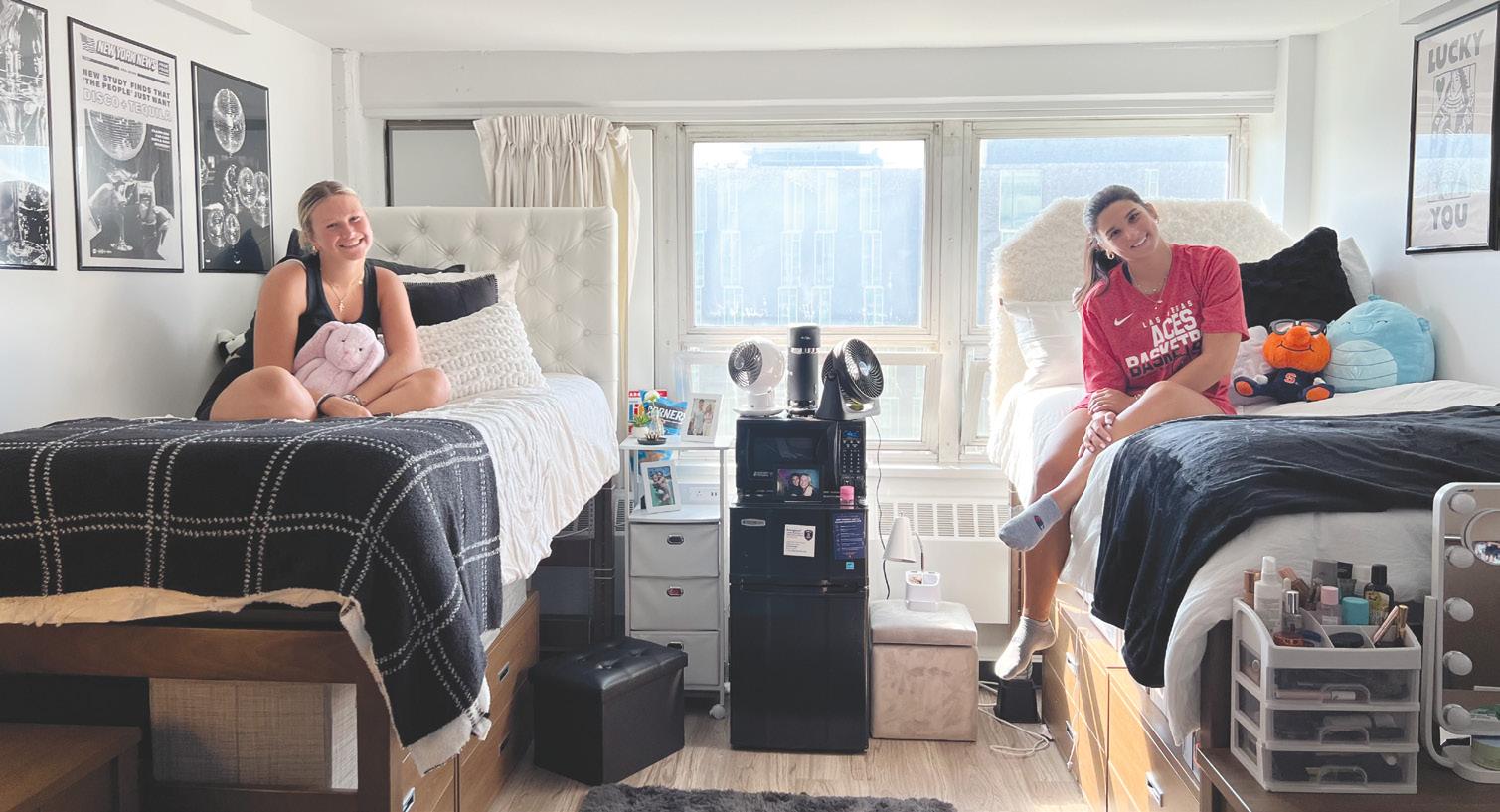
Even in a near-shoebox-sized double in Flint Hall freshman year, Lewis and Maikowski quickly learned that they worked well as roommates. At first, Maikowski was intimidated by her new surroundings, but Lewis helped relieve that stress. Maikowski said coming to Syracuse was intimidating because she didn’t know many people, and her roommate was the only person she’d talked to. They’ve stayed close since freshman year, even moving into DellPlain Hall sophomore year and off campus junior and senior year.
see roommates page 9
but the point of Bird for them isn’t just studying but also conversing.
“The tangents are crazy,” Korakara said. “We’ll sit here like, ‘Oh, my God, that was hysterical. We have to document that, we have to recreate that for a private story or for Tiktok.’”
I’m not a late night guy. I want to sleep. But if worst comes to worst, then I gotta be up here.
Chow Po su junior
Not all of the trio’s tangents can make it to print, but the highlights include geography professors that won’t curve exams to a woman studying outside on her computer while smoking a cigarette. Their late nights at Bird have created a delirium effect, more akin to stream-of-consciousness conversations than a structured study session. It’s hard to capture in writing; you had to be there.
They manage to discipline themselves by setting up a phone to create a time-lapse video, Campbell said. That way, self-surveillance would force them to focus.
“We’ve actually been pretty locked in right?”
Campbell said to her friends. “We were hacked so we wouldn’t be on our phones.”
Despite their tendencies to veer off-topic, the trio are all “academic weapons,” Chen said. How-
ever, they admitted that their study habits have declined since high school — a trend they attribute to AI and brain rot, along with the natural transition to college.
A trio of engineering students have occupied the computer area near the first floor plotter printer, scrawling mathematical notations out, much like the orgo crowd.
Engineering is hard to teach, aerospace engineering senior Barrett Lathrop said. Engineering professors teach it like it’s their first language, and students are basically being dropped into a foreign land where the language is strange and the natives are hostile.
Lathrop tries to explain hypersonics to me. Mind you, I haven’t taken anything remotely mathematic since high school calculus, but he does a decent job. From what I gather, the complex equations can help figure out temperature or pressure shocks on a rocket in flight.
Even though he claims engineering is hard to teach, Lathrop seems to get it.
It does help him retain information when he explains the concepts to strangers, Lathrop said. But Lathrop is also possibly loaded with caffeine. He said he’s got 800 milligrams in his system, and the stress and burnout of the moment might be getting to him a little.
For students at Bird during finals week, the debate toward the end of the night is whether to stay or go. A handful, like Lathrop and the trio of sophomores, decide to stick through. Cashing in your chips early might kill your chances of passing a class. Might as well study until you drop.
“I’ll head out around 4, or I might sleep on the floor,” Lathrop laughs. “Like a rat.”
bnbutler@syr.edu
Summer movies & shows
“Toy Story 5” (dir. Andrew Stanton)
I’m skeptical about “Toy Story 5,” but I’d be lying if I said I wasn’t thrilled to watch it come June 19. The plot — the toys being pushed aside by an iPad-like device — is similar to Buzz Lightyear’s introduction in the original film. But, Andrew Stanton has an opportunity to showcase the dangers of electronics.
“Supergirl” (dir. Craig Gillespie)
Releasing June 26, “Supergirl,” is the next installment of James Gunn and Peter Safran’s DC Universe, and it looks promising. From the trailer, I expect a graceful balance between serious moments and the playful charm of Gunn’s “Superman.”
“Supergirl” is Gunn and Safran’s chance to prove that their DCU is the future of superhero flicks.
“Minions & Monsters” (dir. Pierre Coffin)
The seventh installment in the Despicable Me universe goes old Hollywood on July 1. Set in the 1920s, the film follows the Minions as they chase stardom, lose it all and accidentally unleash monsters into the world. The film boasts a voice cast with Jeff Bridges, Christoph Waltz, Jesse Eisenberg and Allison Janney.
“Moana” (dir. Thomas Kail)
Disney’s live-action remake of its 2016 animated hit arrives July 10, with Catherine Laga’aia stepping into the titular role and Dwayne Johnson reprising his turn as the demigod Maui. The film keeps the original’s spirit of Pacific Islander celebration intact with Lin-Manuel Miranda back on songwriting duties.
“The Odyssey” (dir. Christopher Nolan)
Christopher Nolan’s adaptation of Homer’s “The Odyssey” debuts July 17. With Ludwig Göransson composing the score and a stacked cast featuring the likes of Matt Damon, Anne Hathaway, Tom Holland, Zendaya and Robert Pattinson, this could be the defining film of our generation. We’ll see if Nolan’s “The Odyssey” defies the gods.
Brand
Holland’s friendly neighborhood Spider-Man swings into his fourth movie on July 31. After the world forgot about Peter Parker in the last film, he continues to protect fictional New York City from various threats. The film promises a brand new villain and the return of beloved characters like MJ (Zendaya) and Ned (Jacob Batalon).
julia english cartoonist
Some Syracuse University students can be seen studying into the night at Bird Library. From chemistry to engineering, students gear up for their finals. zoe xixis asst. photo editor
“Spider-Man:
New Day” (dir. Destin Daniel Cretton)
Now, Faegan’s holds a Senior Sunday on the first Sunday of the school year and two events on the last two Sundays of the school year: Senior BlowOut and Senior Send-off, which gather friends and family to the bar.
During their freshman year at SU, Belinda Chan and Gabriella Johnson were strangers,
often staying in their dorms and afraid to branch out — a predicament many freshmen face when entering college. The pair nearly transferred out of SU after their freshman year. However, when they decided to stay, they met each other through their random roommates.
On Sunday, the two seniors celebrated Chan’s 22nd birthday at Faegan’s.
As Chan and Johnson sat on a table toward the back of Faegan’s, they reminisced about their
time at SU, joining the same sorority and taking Wine and Beer Appreciation class together. As the two looked at the clock winding down, they tracked the days, hours, minutes and seconds before their time at SU would soon become treasured memories.
“On day 17, that was our last Flip Night. It was after our beer and wine class, and then I was like, ‘That’s so far away, that’s nothing, it’s fine.’ And then all of a sudden we have six days left,” Johnson said.
Ava Galley and Jay Hrdy, SU seniors, were coming from Orange Crate Brewing Company when they saw a large crowd going into Faegan’s. Galley, Hrdy and their friend group followed the crowd and entered Faegan’s bustling setting.
The bar, which Galley said usually boasts a more relaxed atmosphere with people socializing and playing cards, was transformed into a spirited environment. Faegan’s had 2000s music, which the senior class grew up with, booming through the speakers. Crowds were packed back-to-back and a Busch Light Apple tower could be seen stacked on a table nearly all the way up to the ceiling.
Hrdy’s favorite Faegan’s memory was not as a customer, but as a former employee at Faegan’s. Galley’s favorite memories included all the bar crawls she experienced, with Faegan’s always being the final stop of the crawl. That’s where she’d often bring her Mini Uno cards to play with her friends.
So, when Galley, Hrdy and their friends arrived at Faegan’s Senior Blow-Out, they were in for a surprise.
“It kind of felt like New Year’s. But even after (Warcaba) did his speech, a lot of people, even over the bar, were hugging the bartenders. And I thought that was really sweet,” Galley said.
Last month, Cook asked Warcaba to give the Senior Blow-Out speech. After seeing his friend give the speech last year, Warcaba was honored to be the one up on the table, celebrating with the seniors. After all, he’s been a loyal customer at Faegan’s from the beginning.
When writing his speech, Warcaba wanted to dedicate it to the Faegan’s staff for their time serving the customers. The bar has become a place where the seniors created endless memories, which was why Warcaba agreed to make the speech. After seeing Faegan’s hard work come together to plan the annual event, Warcaba said he was honored to make the speech in front of the packed bar.
“They are the ones that make the environment at Faegan’s,” Warcaba said. “They treat you like a real customer and build a relationship with you. Thank you to them.”
Among the staff members Warcaba dedicated his speech to, he thanked Cook for making Faegan’s a popular destination for SU seniors, as well as Doug Peltier, a Faegan’s bartender and manager when Cook wasn’t there.
Peltier has worked at Faegan’s since 2017, where he’s become a friendly face around the bar as well as on campus. A social butterfly, Peltier’s been known to remember nearly every customer’s name. Warcaba has even seen Peltier recite over 100 names of the people in the bar.
After Warcaba thanked Cook for his hospitality, he searched for Peltier in the busy crowd. When Warcaba spotted Peltier across the table standing behind the bar, the whole crowd erupted: “Doug! Doug! Doug!”
That’s how much Peltier meant to the Faegan’s crowd.
“Of course, it always feels good to get that kind of reaction from the crowd,” Peltier said. “I’ve worked a career in food service, and I always feel like there’s great mobility in service. The last thought these kids should have when they’re leaving is, ‘When are we coming back?’”
Since working at Faegan’s, Peltier has gotten to know this senior class well, specifically the bar’s loyal customers. Whether it’s sparking conversations with the seniors or being the first person to introduce beer to those who don’t like the drink, Peltier’s friendly face, along with the rest of the staff, has seen many customers become employees at the bar.
“It’s always bittersweet. You get to know these kids over a year or two, and they end up working for you,” Peltier said. When you start bartending, you really have to be on your game. My philosophy is always you should be the puppeteer and not the puppet guide.”
With the clock hitting five days, 23 hours and 56 seconds, the night ended with Warcaba popping open a champagne bottle, spraying champagne onto everyone seated at the bar, the Faegan’s bell ringing one last hoorah and the crowd singing and dancing to DJ Ötzi’s “Hey Baby.”
But, Warcaba couldn’t end the night without one last goodbye.
“Congratulations to the Class of 2026. Cheers to Faegan’s,” Warcaba said. “Let’s have a f-cking night.” tabintes@syr.edu
Sloane Brown and Mia Tiano also lived in Flint as freshmen. Like Lewis and Maikowski, they grew closer while adjusting to college life and building routines together. By the end of freshman year, Brown and Tiano as well as Lewis and Maikowski were adamant about living together again instead of moving into their respective sorority houses.
Lewis and Maikowski bonded over food, often trying new restaurants around SU together, including the Craftsman Wood Grille & Taphouse for birthdays.
Brown and Tiano’s housing situation changed sophomore year, but their determination to live together did not. They were originally assigned to Marion Hall, but both Brown and Tiano felt that Marion was the wrong place for them.
In February, Brown and Tiano moved out of Marion and into 206 Walnut Place, a former fraternity house SU converted into student housing.
The house had a kitchen, a laundry room, a living room and about 10 residents, Brown said. She and Tiano lived there with other close friends, all of whom were in different sororities. It felt like they’d created their own sorority house.
When it came time to decide whether to live in their sorority houses for junior year, Brown said there was no question that she and Tiano would keep living together.
“We were like, ‘Wait, no, we’re living together,’” Brown said. “I don’t care if that means not living in a sorority house.”
However, Maikowski said the size of her and Lewis’ open double made freshman and sopho-
more year challenging. Living in a shared space meant they had to be mindful of each other’s routines. If one of them wanted to sleep earlier, the other kept the lights off. If one of them was studying, the other gave them their space. If one was talking to family late at night, they lowered their voice or stepped outside.
“We were both very respectful of each other’s space, as we were always in the same room together,” Lewis said.
By junior year, Lewis and Maikowski moved into Park Point with two other roommates. Maikowski said having their own rooms gave them more space while still allowing them to spend time together. They would watch movies in the living room, get ready with their doors open and listen to music together.
Living with Maikowski for four years became an important part of Lewis’ college experience. To this day, Lewis said Maikoswi is still her best friend, and the two understand each other more deeply because they’ve gone through similar experiences at SU, from classes and friendships to joining the same sorority.
While Maikowski and Lewis are different people now than they were when they first moved into their freshman dorm, living together helped them grow closer.
Maikowski said Lewis has become one of the people she’s grown closest with during her college experience. Although they both have grown from their 18-year-old selves, being with one another though it all allowed them to grow together.
Their bond strengthened in junior year, when much of their friend group studied abroad and Lewis and Maikowski stayed at SU.
“We almost only had each other,” Lewis said. “That was definitely a good bonding experience, too.”
Brown said living with the same person for four years worked because she and Tiano were honest with each other from the beginning. If they were annoyed, they talked about it. This relationship, Brown said, became more like sisters than roommates.
With graduation in five days, both roommate pairs are preparing to leave behind the rooms, apartments and routines that shaped their college experiences. But their friendships have become more than housing arrangements.
For incoming freshmen, or rising sophomores staying with their current roommates, Lewis said it’s important to have patience and respect. Maikowski said students should keep an open mind and remember they are sharing a space with someone else.
Then, maybe others can have the same roommate experience as them.
“Being open and willing to create a connection with the person that you’re living with is so important,” Maikowski said. “They’re ultimately the person that you’re going to be doing everything with, and you never know how long that will last.” kkonstan@syr.edu
ashley maikowski (left) and jenna lewis sit on top of their beds in their open double room in DellPlain Hall. The pair first connected on Facebook. courtesy of jenna lewis
syracuse university senior jake warcaba pops open a champagne bottle. Warcaba was chosen to give a speech on behalf of the senior class at Faegan’s Pub & Cafe’s annual Senior Blow-Out. ike wood senior staff photographer
College shouldn’t be the best four years of your life
By Gracie Lebersfeld essayist
College is going to be the best four years of your life.
Since my acceptance to Syracuse University in 2021, I’ve heard this time and time again. My family said it, my friends said it and practically everyone who knew I was leaving for college did as well. I used to believe it was true.
Now, with graduation only a few days away, I really hope these weren’t the best four years of my life.
If they were, then it seems like there isn’t much to look forward to.
The shared belief that college is a universal peak pushes us to make the most of our time and savor every day before it’s up. Simultaneously, devotion to this mantra makes graduation feel like impending doom instead of the start of something new.
After my last day of classes, I called my dad on my walk home. I tearfully admitted that I was terrified the end was so near. I told him I was worried I should’ve done more with my time in college. I asked him what to do now that the best four years of my life were ending.
“Gracie, I hope these weren’t the best four years of your life,” he said while laughing. I was initially shocked by his response, but before I could question him, he explained.
He told me that while his college years were some of his favorites, he wouldn’t call them his best. He said that so many amazing things happened after college, like marrying my mom, having my sisters and I and meeting some of his closest friends.
His words made me wonder why we believe making memories must stop abruptly after graduation. I began to question why I felt so
much dread for the future instead of optimism for a fresh start and the many opportunities to come.
It put the work I’ve done over the past four years into perspective. Thinking these were the best years of my life implied that the effort I put in toward building a future for myself was pointless. It dampened the memories and friendships I made. Instead of looking at my relationships and experiences with gratitude, I viewed them with sadness. I only focused on the fact that I didn’t have more time at SU.
Since that conversation, I’ve tried to reframe my thinking. I’m working on shifting that fear into excitement, the dread into optimism. I’m telling myself that even though these years were absolutely incredible, there are better ones ahead. The reason I worked
so hard during my time here is because I want the rest of my life to be even better. Coming to terms with the fact that I won’t be a college student forever hasn’t been easy. It’s been challenging to wrap my head around the fact that I won’t be returning to campus in August. But I’m slowly beginning to understand that even though I can’t make new college memories, the people I’ve met and everything I’ve learned here have prepared me to make more.
Graduation is a beginning, not an end.
Don’t go through college believing this is the greatest your life will ever be. Instead, enjoy yourself and work hard so when you graduate, you know the best is yet to come.
Gracie Lebersfeld is a senior majoring in selected studies in education and creative writing. She can be reached at gmlebers@syr.edu.
Embrace side quests to alleviate internship, job pressure
By Maya Aguirre columnist
On March 19, The New York Times Opinion section published a discussion with 12 whitecollar job seekers in their teens and twenties. When asked to describe the job market in one word, one interviewee called it a scam. Another, a 28-year-old tax associate named Orrel, described it as unfair.
“You can never have enough experience, even for entry level, because entry level is not entry level anymore,” Orell said.
Scholars and journalists argue that the bottom rung of the United States job ladder is broken. Some attribute this to artificial intelligence, while others blame employers’ reluctance to invest in training new hires. Increasing conglomeration is another cause within various industries, making entry-level positions more competitive and hiring processes much less personal.
Let this reassure you that you’re not alone if you don’t have any great job leads right now.
There’s an expectation in the U.S. that a bachelor’s degree will lead to a decently compensated job with opportunities for advancement. There’s also an assumption that pursuing a job outside one’s desired field, or a role that doesn’t require a degree, signals stagnation, disrupting the linear career path that is so valuable.
The reality is, many of us will have jobs that aren’t ideal at some point — because although the job market is bleak, we still need to make money.
But this doesn’t have to be viewed as a negative. Rather, it may give you the chance to capitalize on a unique experience. If your career path isn’t progressing in a straight line, it doesn’t mean you’ve failed. It just means you’re due for a side quest.
In video games, side quests sharpen skills and make the mission easier as the player familiarizes themselves with the game’s design. When the main task feels impossible, side quests revi-
talize the excitement you might’ve lost about the game. The same can be said about side quests in real life.
A side quest doesn’t need to be groundbreaking to be worth pursuing. You don’t need to go overseas and teach, apply to grad school or become a social media influencer — but there’s nothing wrong with trying these things, either. Whatever it may be, a side quest is most fulfilling when it excites you and reminds you of the agency you have over your life.
I’m no stranger to a side quest. When I returned to SU this past fall, I was prepared for my journalism professors to ask what internships we’d worked over the summer. As a fourthyear student, I anticipated my classmates’ answers. Almost all had worked in communications jobs or internships.
When my turn came, I told my peers I’d been a sales associate at a makeup store, sporting a fun, pink jumpsuit as my uniform. I’d talked to so many interesting people while working, and each night, I’d go home and jot down ideas for stories about the beauty industry, which I’d known nothing about months prior.
I revitalized my interest in journalism by existing in the world in this unfamiliar way and learned how to shade-match foundation while I was at it. I wasn’t ashamed of falling behind, because I hadn’t. I found something new.
A few weeks ago, I called one of my childhood friends for a check-in. An ice cream truck had parked down the street from her house.
I asked my friend what she was looking for, in reference to her choice of ice cream. With both of us near graduation, the question came off philosophical. Our mindless talking devolved into a heavier conversation about our futures.
We don’t often question what we want from life once we’ve seemingly established an answer.
Many of us pick what we want to do in our teens or upon declaring our majors at college. We set goals and adjust them only when necessary. We crave success, but we infrequently question
what success means to us, because changing our answer can be scary.
The modern career ladder assumes moving vertically is the only path to success. This neglects the fact that obstacles thrown our way don’t need to stop us from growing laterally.
In searching for an answer to the ice cream question, I sat beside another friend to write a list of 10 current goals on a sheet of composition paper. Among some of mine: garden and grow flowers. Learn how to code. Make a perfectly ratio-d Manhattan. Work on a farm. Drive a truck. Be a journalist.
It’s my dream to be a journalist. But I think what I actually mean by this is I’d like to be a
great listener, someone so ravenous to learn that I’m humbled by what I don’t know. My career goals and side quests in the interim are just the supporting evidence.
Entering the real world shouldn’t conjure dread, even if job culture makes it feel that way. At a major crossroad like graduation, we deserve to feel excited about our futures. To do so, allow yourself the space to recognize what you want to do in the current moment — it might just be worth pursuing.
Maya Aguirre is a senior magazine news and digital journalism and history major. She can be reached at msaguirr@syr.edu.
mai nguyen contributing illustrator
sarah yudichak contributing illustrator
DO-OR-DIE
Syracuse’s renowned senior class has 1 chance to leave their stamp
By Zak Wolf senior staff writer
It finally hit Billy Dwan III in early April. Sitting in class, he realized there were only three weeks of school left. Finn Thomson had a similar epiphany when Riley Figueiras brought up how many guaranteed practices Syracuse men’s lacrosse had left.
Other SU seniors haven’t thought much about it. Joey Spallina and Michael Leo try not to get wrapped up in the emotions. They know their college lacrosse careers could end at any moment, but they’re not entertaining the idea.
Their only focus is winning a national championship. If Syracuse’s senior-laden roster falls short, there’s no moral victory. The soon-to-be-graduates have constantly talked about bringing SU its first title since 2009. With one more loss, those dreams vanish.
“For us, (it’s about) just taking in the little things and being together and taking every single last moment we have together,” Dwan told The Daily Orange.
Syracuse’s 2022 recruiting class — highlighted by Spallina, Leo, Dwan, Figueiras, Thomson, Luke Rhoa and Jimmy McCool — was the highest-rated in the country. Ten four or five-star recruits formed a compelling class. Pressure was on before stepping on campus.
In 2022, Syracuse finished 4-10 for its worst season in modern history. That grew to an 8-7 record in 2023 before an NCAA Tournament Quarterfinal berth in 2024 and its first Final Four appearance since 2013 in 2025. This year is the grand finale. There’s a championship or bust mentality.
That’ll be tested in No. 6 seed Syracuse’s first-round matchup with Yale Sunday. A potential third meeting with North Carolina awaits in the quarterfinals, as well as a second with Notre Dame in the Final Four.
“We’re all hungry,” Leo said. “We all came here to do two things: win an ACC Championship and a national championship, and we’re going to keep on doing it until we win.”
The Orange won their first Atlantic Coast Conference Tournament since 2016 last year, and despite losing to UNC in the semifinals this season, they have bigger aspirations.
For a group that hoped to restore a winning culture at Syracuse, a national title would be a storybook ending.
A rebuild wasn’t on the cards when the 2022 class committed to SU in 2020. Syracuse had a few mediocre years under former head coach John Desko, but its brand remained strong. Desko retired after a first-round tournament exit in 2021, and current head coach Gary Gait’s four-win debut season set the program on the wrong track.
“It went from, ‘Oh, I’m excited to commit to play college lacrosse’ to ‘OK, we want to change something. We want to do something special,’” Dwan said.
When these seniors arrived on campus, the culture wasn’t up to their standards. Spallina can’t pinpoint exactly why. Veterans like Cole Kirst and Alex Simmons guided the inexperienced freshmen, but a winning mindset was absent.
“When you have a bad year, your culture tends to lack, and you just end up not doing the things you’re supposed to,” Spallina said.
Spallina wasn’t a vocal freshman, but he initiated a culture shift by doing little things like shooting before and after see senior class page 13
Mackenzie Salentre morphed her defense from violent to ‘artful’
By Jason Glick asst. sports editor
It wasn’t a third-grade girls’ lacrosse game in Prior Lake, Minnesota, without a thud and some screams. Like a flock of parrots, every parent watching barked the same question to Jessie Salentre.
Why isn’t your daughter in the penalty box?
When someone mentioned Mackenzie Salentre, Jessie’s daughter, it was often in response to her hardnosed playstyle. Growing up, Mackenzie was notorious for her checks and physical play. Her ice hockey coaches
gushed over how she positioned her body to deliver a vicious hip check.
But when she was constantly called for penalties, things got out of hand.
So she joined Minnesota Elite, a local club lacrosse team, where she could ignite a bruising body bouncer and get away with it. Mackenzie’s aggressive playstyle was commendable but not sustainable. She refined her defensive technique from vicious to cunning as her career progressed, winning the mental game over the technical one. It’s been on full display since transferring from UAlbany to Syracuse for her fifth collegiate season. In 18 starts
this year, Mackenzie’s 38 ground balls and 21 caused turnovers rank tied for second and third on the Orange, respectively. As one of Syracuse’s top defenders, that skill set remains key with the NCAA Tournament starting Friday against Loyola.
“She started to get more artful about it,” said Minnesota Elite club director Maria Longley. “You can’t teach that mindset. That tiger, that competitive spirit in her is why she’s doing so well.”
When Mackenzie suits up for SU, it’s hard to know her approach has changed. Izzy Lahah is often constituted as its go-to poker. In Syracuse’s
zone defense, Mackenzie is asked to play reserved and nimbly extend her stick to force turnovers. It’s the opposite of the reckless physicality she used to convey.
There were times when that style seemed unalterable. Parents joked to Jessie that, if Mackenzie wasn’t in the penalty box, she wasn’t trying. When Mackenzie deviated from those tendencies, Jessie said it hurt her team. At the club level, though, Mackenzie could play the scrappy style distinguished in the Midwest. But because Minnesota isn’t a lacrosse hotbed like Long Island or Connecticut, East Coast recruiting was difficult.
“We have to work really hard to be seen,” Longley said. “Some people aren’t willing to take a chance on a raw, athletic, defensive-minded kid.” Raw perfectly described Mackenzie. Even if it meant a ludicrous stick slap or decking someone, she did it in a heartbeat. That’s the kind of motor she needed to escape Minnesota, undeterred by poor weather conditions.
“We would literally shovel off our fields for tryouts,” Mackenzie said. “It’s a lot more about effort, coachability and athleticism in Minnesota versus players on the East Coast that are very technically skilled.” see salentre page 14
women’s lacrosse
abigail aggarwala digital design director | eli schwartz asst. photo editor
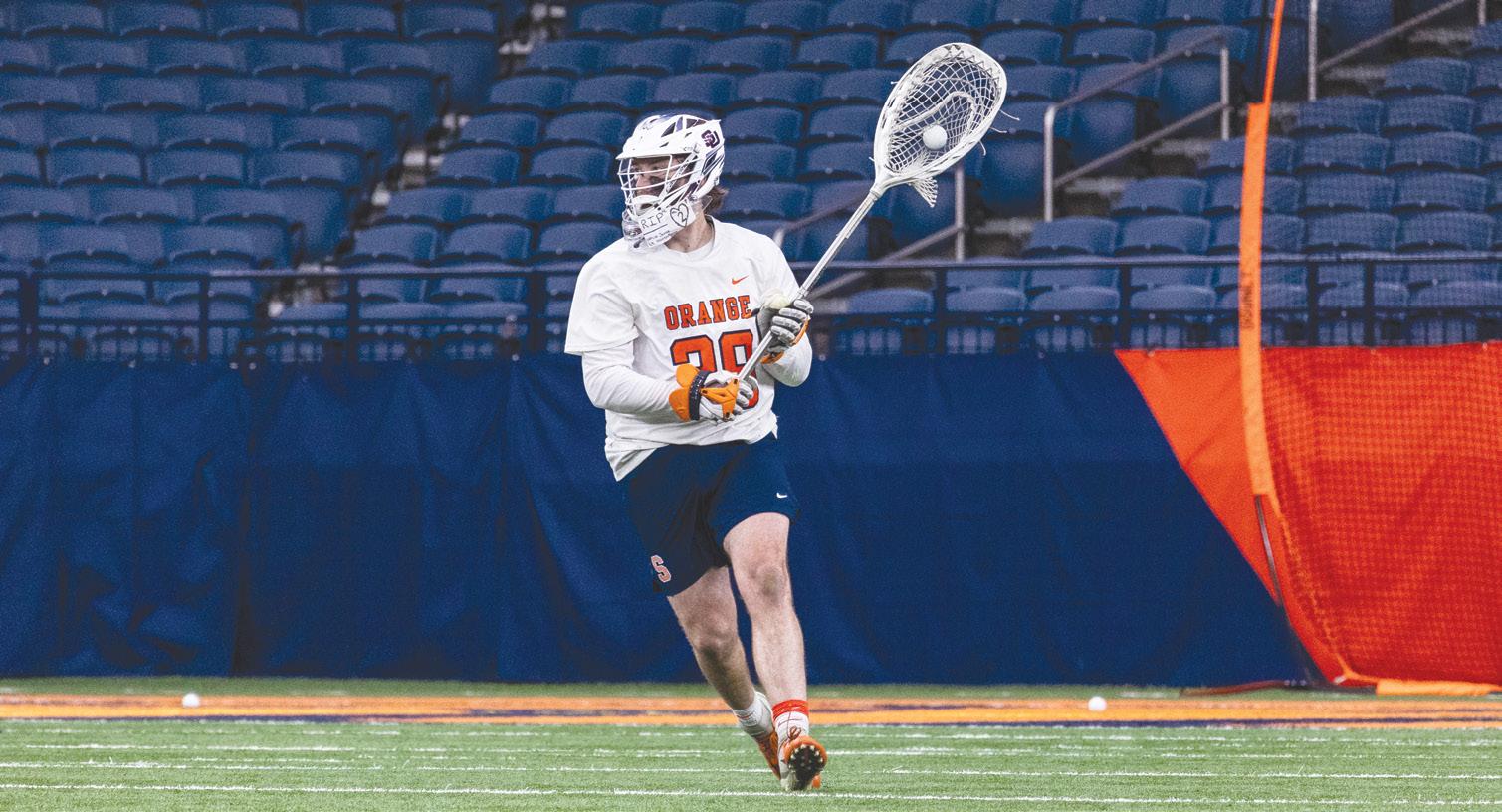
Out of net, Syracuse goalie Jimmy McCool speaks his mind on X
By Nicholas Alumkal senior staff writer
Nothing is going through Jimmy McCool’s head.
If the Syracuse men’s lacrosse goalie is in net during a game or practice, he said he’s “not thinking at all.” Instead, when he’s on the lacrosse field, the same repeated phrases roll through his cerebrum like a broken record.
“Just react, react, react,” McCool said. “And, just thinking about seeing the ball, saving the ball and then clearing it.”
Like a record player, McCool’s mind never stops, touching each groove in the mantras rolling through his head. He always looks toward what’s next, no matter what just happened.
“He does a really good job of moving on to the next one, even when he’s playing well,” said Nick Acquaviva, SU’s assistant coach, who oversees the goalies. “It’s a big thing for goalies. It’s a struggle. You’re always thinking about the next thing, and it’s trying not to harp on the past.”
When McCool encountered a bump this season — a benching at North Carolina on April 4 — he turned to a record player his girlfriend recently gave him for his birthday to “reset” and ground himself, he said. The next week, he posted a then-season high 18 saves in the Orange’s win over Virginia.
“Jimmy’s mentally tough,” SU head coach Gary Gait said. “He’s going to rebound, and he’s shown that last year and again this year. So, we rely on that mental toughness, that he can put himself in a good mindset and have some great games coming up.”
Throughout Syracuse’s high-stakes season
— which now enters the NCAA Tournament as a No. 6 seed — and off the field in recent years, he has a lot of thoughts. He shares many on the social platform X (formerly Twitter). Musings on food, lacrosse culture, music and, of course, his beloved Boston sports, flood his timeline.
“I’ve always just had an opinion on a lot of things and wanted to share them,” McCool said. “And I think sometimes people find it funny. So I don’t know. It’s just a place where I can go let out whatever I’m thinking.”
McCool’s profile picture and banner reveal his approach. His profile picture shows New England Patriots quarterback Drake Maye at a press conference, who looks like he’s been asked to present a group project he didn’t sign up for. He’s slouched over the podium, head tilted, lips pressed in that half-pout.
“Huge Drake Maye fan. Huge Ann Michael Maye fan. I’ve said that before,” McCool said of the Patriots’ quarterback and his wife, who garnered TikTok notoriety for her baking videos.
Peak at McCool’s banner, too. It portrays the climax of the 2007 film Gone Baby Gone, which takes place on a rooftop and reveals the final plot twist. There’s no hiding the city in the background. You guessed. It’s Boston.
“It’s just a scene I like a lot, and I thought the picture was cool,” McCool said of why he chose it.
However, the giant Boston sports fan doesn’t precisely recall why he started his X. His first post appeared on March 11, 2020, when the COVID-19 pandemic began. McCool wrote: “The fact this is how (Duke attack) Michael Sowers(’) season ends is actually a joke.”
He also doesn’t remember many other thoughts he released into the ether in the intervening years.
To wit:
Dunkin’ black cold brew is JET FUEL.
Normalize slim Jims in math lectures.
Simply no such thing as too much cream cheese on a bagel
You should never purposely wear socks to bed but the nights where you fall asleep with your socks on by accident are always the best sleeps ever
Valentine’s Day is funny because you always just discover one of your friends is in some random relationship that you simply had no idea about.
Or this one from July 5, 2022: I didn’t eat a single hot dog yesterday and not gonna lie that’s making me feel slightly like a communist.
You get it.
“It’s really just whatever’s going on in my mind gets posted sometimes, and it can be some really dumb takes and some stupid thoughts, too,” McCool said of his posting habits. “But I have fun with it.”
McCool said his favorites are reposts of friends’ lacrosse highlights. He also occasionally comments on his teammates’ play. On Aug. 11, the day before Game 7 of the Ontario
Chuck Kuczynski operates at 100%. It became
By Mauricio Palmar development editor
There will be no rest for the wicked, and there will be no rest for Chuck Kuczynski Sr. either. It’s the first day of the rest of his son’s life, and little Chuck Kuczynski won’t wait around to begin it. The sun has just risen over Virginia’s Chincoteague Island, the coastal tourist spot renowned for its famed water ponies. It’s no later than 6:30, maybe 7 a.m.
But if there’s an off switch for the younger Kuczynski, no one has found it. He’s never seen a point to doing anything with less than 100% intensity, and that’s why the 2-year-old is up with the Chincoteague sunrise, standing before his parents’ tent.
He rouses up his father, and they head to the beach to play soccer. “Endless energy,” Chuck Sr. says now, describing his son in the moment. The two kick the ball back and forth across the sand, and an English couple walks by. Tourists, surely. They stop for a second, entranced by the precocious 2-year-old’s skill. Even back then, there was an understanding that they were watching something special.
“Tell us his name,” they said to Chuck Sr. “Because he’s going to do something one day.”
It was a prescient prediction. That little child did, in fact, do something. That couple couldn’t have possibly foreseen that same child would become the primary long-stick midfielder on a Syracuse lacrosse squad that enters the NCAA Tournament as a No. 6 seed, but nobody could. Especially not with how his SU career started. Kuczynski approaches everything in his life with that same desire to just get after it, and it never gave him problems before college.
“I’ve always kind of been like, ‘It’s all or nothing,’” Kuczynski said. “It’s hard to really go 50%.”
So the question is, what happens when — through no fault of his own — a man who lives life at 100% is forced to downscale to 0% for the first time? After starting every game in his four years of high school lacrosse, Kuczynski suffered two broken appendages in his first two seasons at Syracuse, sidelining him for two years.
It would’ve been easy for Kuczynski to forget his dreams of playing at Syracuse. Brown midfielder Ben Scandone — who played with Kuczynski in high school — said that if he were in Kuczynski’s position, he doesn’t know if he would’ve kept going. To fight back into SU’s lineup. To evolve from a close defender to its top long-stick midfielder.
But Kuczynski is wired differently.
“He didn’t want that to be his last chapter. He didn’t want people to think this is where it ended,” Chuck Sr. said. “And, most importantly, I think he wanted this to be a beginning.”
Yes, the story of Chuck Kuczynski is one of new beginning. But even beginnings have beginnings, and this one came during an intra-squad scrimmage roughly two weeks before Kuczynski’s freshman season.
As Kuczynski tried to clear a ball, Saam Olexo tailed him. SU’s long-stick midfielder tried jarring the ball out of Kuczynski’s stick, but his pole got caught between the freshman’s legs. Kuczynski tripped on it and fell to the ground, his hand bearing the brunt of the impact.
It “felt funky,” in his words, but he didn’t understand the full extent of the injury. He came off the field and was asked to ball up his fist. His knuckles didn’t align properly, confirming what everyone suspected: Kuczynski broke his hand.
“It was a rough year,” Kuczynski said. “It was a tough adjustment to everything.”
It was even tougher because it was Kuczynski’s first significant injury. For the first time in his life, he was forced to cut off the ignition to his relentless motor.
Kuczynski was walking at 10 months old. Always on the go, he earned the nickname “Wild Thing” among the Villanova University daycare workers who watched him as a toddler.
At 3 years old, he learned to ski. He mountain biked with his father at 6. Once, during his senior year of high school, he was hospitalized on the first day of a weekend ski trip to Gore Mountain and somehow returned to the slopes the next morning.
When he played soccer during recess, he occasionally found himself in trouble by accidentally injuring kids in games of “World Cup.” But it was never malicious. He was simply showing glimpses of the aggression that eventually molded him into Syracuse’s most penalized player.
Before arriving at SU, his daredevil mindset hadn’t come back to bite him. Kuczynski was a risk-taker who never felt the conse -
quences of said risks. So, when he finally had to reckon with those consequences, it was difficult to overcome.
“It’s a very different feeling,” said Karen Kuczynski, his mother. “He started both in lacrosse and soccer his freshman year, so he was involved in game day from the very beginning. And to have that switch in his life was (difficult). I think, just, he had to get past it.”
While all the other freshmen participated in practices throughout the season, Kuczynski was sidelined, which Chuck Sr. said prevented him from learning at the same rate. It took him around eight weeks to fully rehabilitate. He returned in time to play his freshman season, but a lack of film study left him buried on the depth chart.
“You’re not in the locker room changing, you’re not practicing,” Chuck Sr. said. “You’re with the team, but you’re kind of not with the team. I’d say, mentally, it was very difficult.”
A year later, that difficulty ratcheted up. After beginning his sophomore year with an encouraging few months of fall practice, he was doing voluntary conditioning workouts one day before winter break. He was starting to feel comfortable, he said, and making improvements.
Then, mid-sprint, he felt a pop in his foot. He broke his fifth metatarsal, a bone that connects to one’s pinkie toe. He had a screw implanted into his foot, spent his final exams maneuvering around campus on crutches and returned home for winter break.
Kuczynski spent most of that break on his couch, doing little except making quick work of the two Lego sets his parents bought him. Karen would ask him to go shopping, get grocer-
a flaw at SU.
ies, run errands, anything to get her son out of the house. It was always futile.
“No,” Kuczynski would tell her. “I have no interest.”
Once he returned to campus, his parents tried to help him whenever they could. They visited nearly every weekend in his first two years, timing their trips around the games their son was physically incapable of partaking in. They’d take him out to Myers Creek for meals, trying to get any sort of insight into their son’s psyche. Anything he had to share was rather brief.
“(Chuck)’s good with sentences,” Chuck Sr. said. “He doesn’t use a lot of paragraphs.”
Kuczynski admits that there were “dark days” when he didn’t want to go to practice, and the thought of quitting lacrosse entered his mind. But he had seen stars back home from the Lehigh Valley — like former Ohio State midfielder James Cipolla — suffer injuries and struggle to return to form. He didn’t want to become a cautionary tale.
It took him many workouts — as well as a failed stint at short-stick defensive midfield — but that’s become an irrational fear now. After beginning his junior season competing with Nick Caccamo for the starting long-stick midfield spot, he supplanted the senior by Syracuse’s postseason run, taking the spot for good.
His parents still remember his collegiate debut against Jacksonville. It wasn’t Kuczynski’s best game. He had zero ground balls, zero caused turnovers, and the only stat he recorded was two penalties. And yet, as he watched inside the JMA Wireless Dome, Chuck Sr. felt complete.
“If this is the best it gets, that’s OK,” Chuck Sr. thought to himself. “He’s done it.”
Growing up, Kuczynski had a saying. He would try and fail to learn how to surf at the beach with Chuck Sr. He would try to figure out a Lego set with his grandmother. He would try to ride a bike, his parents anxiously following as he learned to pedal.
Someone would try to help him, but the response would always be the same.
“I need no help.”
The phrase brings Karen back to that first day after Kuczynski’s foot surgery. Karen was in Kuczynski’s South Campus apartment, worrying about him in the way she tended to do, and he was telling her not to. He walked around on crutches, showing her how easily he could scale the staircase.
Looking at him, Karen saw him both differently and the same all at once. Almost two decades had passed. Sure, he was much taller now and more mature. But in some ways, nothing had really changed at all. She looked at him then and saw that same 2-year-old, the one who could never sit still, always trying to prove he needs no help.
mjpalmar@syr.edu
jimmy mccool cradles the ball in Syracuse’s win over Colgate on April 18. While McCool’s mind is empty on the field, he’s not afraid to post on X off of it. eli schwartz asst. photo editor
men’s lacrosse
chuck kuczynski defends UNC’s Owen Duffy in the ACC Tournament. Kuczynski became SU’s top long-stick midfielder this year. eli schwartz asst. photo editor
see mccool page 14
Grading SU softball’s lackluster 2026 campaign by position
By Spencer Brod asst. sports editor
The nightmare is finally over. Syracuse’s 2026 season came to an end after its 12-1 run-rule loss to No. 17 Virginia Tech Sunday. SU finished a woeful 4-18 in Atlantic Coast Conference play, 0-13 against ranked opponents and missed the conference tournament for the second straight year.
It’s difficult to pinpoint one primary reason for Syracuse’s failures. Its .234 batting average and 261 hits both ranked last in the conference. Even with two-way phenom Madison Knight, the Orange’s 5.55 ERA was 12th.
The feeling was all too familiar for head coach Shannon Doepking. Across her eightyear tenure, Syracuse hasn’t reached the NCAA Tournament or beaten a top-10 team. It’s also finished above .500 in ACC play just once, in a shortened 2020 season.
With program cornerstones like Knight, Vanessa Flores and Julianna Verni graduating, 2027 ushers in a new era for the Orange. But if the last decade is any indication, it’ll likely yield more of the same.
Here are positional grades for Syracuse’s (1826, 4-18 ACC) 2026 campaign:
Hitting: C
Syracuse’s offense had its moments this season.
The Orange scored 19 runs across two games against Winthrop in February, behind four hits from both Madelyn Lopez and Flores. Then, in the Terrapin Invitational against UMBC
women’s lacrosse
and Providence a few weeks later, SU scored 11 and eight runs, respectively. Even when it was swept by then-No. 25 Louisville two weekends ago, Syracuse scored 13 runs.
Many players had spectacular individual seasons. Knight, who hit just 14 homers over her first three years with Syracuse, blasted 15 in 2026. Flores, a model of consistency since 2024, hit a career-high .278. Freshman Kendall Gaunt also provided pop with 20 hits and four homers.
So, why did Syracuse go 18-26? Its offense was far too inconsistent and couldn’t produce against ranked or ACC foes.
In its series against then-No. 10 Florida State, Syracuse mustered two runs across the first two games, getting run-ruled in both. The Orange couldn’t match any FSU rally.
Against NC State two weeks later, Syracuse put up another dud, scoring one run over two games. Doepking didn’t hesitate to call her team out after the second game, saying Burney was its only consistent contributor and Lopez was a “sleeping giant.”
SU’s offense was top-heavy and lacked depth. Its .235 batting average speaks for itself, and Burney, Flores and Knight often carried the load. Rose Cano hit just .205, Gabby Lantier slashed .211 and even with power, Kaimi Tulua hit a measly .210.
Lackluster situational hitting also doomed the Orange. In its 9-0 loss to Ohio State on Feb. 15, SU went 0-for-8 with runners in scoring position despite taking 31 plate
What to know about SU’s NCAAT 1st-Round matchup vs. Loyola
By Jordan Kimball sports editor
Syracuse can’t be too content given that it’s unseeded in the NCAA Tournament and therefore won’t host a game. But it must at least be happy with its first-round draw, right? The Orange take on Loyola, which they defeated 15-7 on Feb. 24 for their first victory of the season.
SU extended that momentum into a 12-game winning streak, stretching to its regular-season finale against Boston College on April 16. Ultimately, the run gave way in Chestnut Hill, Massachusetts. Since then, the Orange split two Atlantic Coast Conference Tournament games, including a 19-9 semifinal loss to North Carolina — undoubtedly their worst defensive performance of the year.
But, like in February, when Syracuse desperately needed to get back on track, a matchup with Loyola sits ahead. Since falling to the Orange, the Greyhounds have gone 10-4, most recently bowing out in the Patriot League Tournament semifinals.
Here’s everything to know about No. 7 Syracuse’s (13-5, 7-3 ACC) NCAA Tournament First Round matchup versus No. 22 Loyola (12-7, 7-2 Patriot) Friday in Annapolis, Maryland:
All-time series
Syracuse leads 17-4. The Orange have won 12 straight games against the Greyhounds, dating back to May 2, 2015.
senior class
practice and lifting extra weights. The routine didn’t yield instant results. Spallina said Syracuse’s youth was “thrown into the fire” in 2023 but showed growth in the following years.
SU’s 44 wins in the seniors’ four years mark its best stretch since winning 49 from 2014-17. Spallina’s evolved into arguably the best player in the country. Leo, Thomson and Rhoa developed into elite attacking options, and Dwan, Figueiras and McCool have held down the fort defensively.
While at SU, Leo said the seniors’ bonds grew because they were all “lax rats,” who hated losing. It’s why there’s sometimes chipiness during the final seconds of Syracuse losses. Look at the scuffle two weeks ago versus Notre Dame. Same with SU’s brouhaha with Princeton in February. Spallina attributes that to Syracuse’s competitive edge, saying they’re “kind of a—holes on the field” but added that’s “what makes us, us.”
“Nice guys don’t win,” Spallina said. “You have to be mean to win. (Lacrosse is) just a violent sport, so to go out there and be soft and just prance around, I think you’re doing a disservice to yourself and your team.
“From the outside we might be (a—holes), but I think it’s just because we care, and we just want to win.”
Last time they played
SU flashed promise in its first three games, but on Feb. 24 against Loyola, it badly needed to finish in front. The Orange were still searching for their first win under first-year head coach Regy Thorpe. Courtesy of a 7-0 third quarter, they found it with a 15-7 victory.
Syracuse led by just two goals at halftime. Ashlee Volpe’s benching seemed like a questionable decision, but the junior attack exploded for a career-high four assists. Meanwhile, Joely Caramelli and Molly Guzik each strung together hat tricks.
Syracuse wouldn’t lose another game for 51 days. Its win over Loyola laid the blueprint for the impressive streak.
The Greyhounds report
When SU last played Loyola, Elisa Faklaris seemed like the Greyhounds’ only threat. She finished that evening with a game-best four goals. But two months later, Loyola’s identity doesn’t revolve solely around Faklaris, but rather six players with 30-plus points, with three having more than 50. In comparison, Guzik is SU’s only player to reach 50.
The Greyhounds’ 383 total points rank 14th in the nation. SU’s only opponents this season with more were North Carolina, Stanford and Northwestern, three of the country’s
Having an edge is good, but fighting after games can come off as entitled, especially considering SU’s seniors haven’t won a national title. It doesn’t help SU’s regularly in the spotlight because of its distinguished history. Spallina often compares the Orange to the New York Yankees because neutrals love seeing them lose.
“All of these seniors came into this program with an old school mindset, and that was that they’re here to win a championship,” Gait said after Syracuse beat Colgate on April 18. “They brought that attitude back to the program… I think the only thing they would call successful this year is if we finish it.”
The championship-or-bust mentality has been the theme of Syracuse’s season. Figueiras and McCool will return in 2027 after redshirting as freshmen, along with junior faceoff man John Mullen and sophomore attack Payton Anderson. But with the other seniors graduating, this could be its best shot to win it all for a while.
That’s why Gait constructed a mammoth schedule. SU faced seven NCAA Tournament teams and 11 of the top 20 teams in the Ratings Power Index to prepare it for the postseason.
The Orange have had mixed success. Their February win over then-No. 1 Maryland — their first over the Terrapins since 2009 — was a milestone despite UMD missing the NCAA Tournament. SU later no-showed against
top five teams. Loyola’s offensive success is balanced; the Greyhounds rank top-20 in both goals and assists.
But, if we’re being honest, nearly all of Loyola’s achievements can be credited to Mae Murphy. She’s yet to be involved in a goal this season, but her prowess in the draw circle is unlike anyone else in the nation.
The defender leads the country with 230 draws, and she’s finished in single digits just four times this year. She’s just a freshman, making her success even more extraordinary. Against a flailing draw unit like Syracuse’s, she’s the player to watch. Sorry, it couldn’t be kept in.
How Syracuse beats Loyola Stop Murphy. It’s unlikely, but if Guzik and Caramelli figure it out, Syracuse will win this game. The Greyhounds’ offense is elite. Their defense is solid, too, but so is SU’s. The separation comes in the draw circle.
The Orange rank last in the ACC in draw wins per game (7.89). It’s not particularly close, either. Check the NCAA website for draw controls per game, and Syracuse won’t show up because it’s been so poor.
SU’s won the draw battle four times this season, three of which came in victories. However, the Orange have been playing their worst in the circle recently, proving detrimental in losses to
Princeton and North Carolina in the regular season. It also faltered late versus Notre Dame last week and couldn’t close against UNC in the ACC Tournament Friday.
For a team as experienced as Syracuse, it hasn’t played a full 60 minutes enough this year.
“It’s all mental,” Gait said last Tuesday after the ND loss. “You gotta put yourself in a mindset where you’re hungry, you’re energized, you’re willing to execute and leave it on the field…and as coaches, we try and motivate them.”
Now it’s do-or-die. Yes, winning it all is on SU’s seniors’ minds, but Rhoa and others said they’re taking it one day at a time.
Right now, it’s about making the most of every second they have left together. That means enjoying the chaos-laden Clarendon Street, where most players reside. One house is home to Dwan, Spallina, Figueiras and senior Dylan Sageder. In another is Thomson, Leo, McCool and Ohio State transfer Dante Bowen.
Thomson said his house has a lot of variety, while the other has “plenty of shenanigans.” The close proximity allows for team bonding. It could be a bonfire at one house one day or a movie night at the other.
With how driven Syracuse’s seniors are, it’s hard not to think about lacrosse 24/7. Mundane tasks like getting food together at Varsity Pizza on Marshall Street, the Erie
BC and UNC. To beat Loyola, Syracuse needs to beat Murphy.
Stat to know: 13
Aside from Cal’s seven shots against SU on March 3, Loyola’s 13 earlier this season were the fewest the Orange allowed all year. OK, so maybe to defeat the Greyhounds, you need to stop Murphy and hold them under 15 shots.
The problem is, Loyola hasn’t been held to that mark since then and averages 28.37 shots per game, which would rank sixth in the ACC. Syracuse’s 25.78 tries a game place 10th in the conference.
Player to watch: Mae Murphy, defender, No. 28
One last time, let’s talk about Murphy. A rise of this magnitude was unexpected, but now she’s hard to miss. She was named to the Tewaaraton Award Top-25 List and was an ILWomen Impact Freshman and a Midseason All-American.
Her two worst performances have come against Army, and Syracuse isn’t Army. Murphy’s eclipsed double-digit draw wins 15 times. The Orange have hit that mark four times, a gap that speaks for itself.
jordankimball28@gmail.com
@JordanKimball_
Boulevard Chipotle or a Texas Roadhouse on Sundays relieve some stress.
“(I) definitely wish I remembered a little more for the memories and just for my own personal nostalgia,” Thomson said. “I wish I could go back, but I can’t.”
Time flies, but May isn’t the time to be sentimental. Syracuse’s next month is its most pivotal in years, and the Orange are coming for it all. Everything’s been building to this moment. The disappointment of missing the tournament in 2023, to Leo’s tearful guarantee of a national championship after losing to Denver in the 2024 NCAA Quarterfinals. To the heartbreak and slumped heads following last season’s Final Four loss to Maryland.
Those memories are omnipresent in SU’s senior’s minds. Veterans are heavily relied on this time of year, and SU has an edge with plenty of them. But the most talented teams don’t always win it all.
But if the Orange are at their best, not many squads can compete with them. Syracuse can prove that with four more wins.
“We’re a group that’s not satisfied at all,” Figueiras said. “We didn’t come here to make the Final Four.”
The only way SU’s hunger ceases is by hoisting a trophy at Scott Stadium in Charlottesville, Virginia, on Memorial Day. zakwolf784254@gmail.com @ZakWolf22
madison knight speaks to her teammates during a game versus Notre Dame. In her senior year, Knight led SU with 15 home runs and 38 RBIs. charlie hynes staff photographer
Luckily for Mackenzie, not many natural midfielders play with such intensity. At times, though, that was one of her greatest drawbacks. When she was frustrated — which, per Jessie, happened easily — you could tell by her body language.
“There’s times she’ll go balls to the walls,” Jessie said. “If someone pissed her off, she’ll knock them out. You can tell, ‘Oh, someone pissed her off.’”
That impulse affected her relationship with sports at Prior Lake High School. During sophomore year, Mackenzie snuck her phone out at intermissions of varsity ice hockey games to call Jessie because she lost passion for the sport.
“I hate playing hockey,” Mackenzie would say.
“Suck it up,” Jessie would respond.
As a senior, Mackenzie missed varsity lacrosse tryouts and spent a bulk of the year on junior varsity. When she returned to varsity soon after, she tallied 34 goals, seven assists and 18 caused turnovers en route to a state title. The cherry on top was her title-winning goal.
Her defensive mindset was established months prior, though. She’d committed to UAlbany to play under Syracuse legend Katie Thomson. Longley’s connections with “everyone,” per Mackenzie, opened that door.
Longley was the confidence booster Mackenzie needed before high school. The two created a mutual trust when Mackenzie was in seventh grade, and it extended into high school. Even when Mackenzie struggled with playing time, Longley recognized her potential. Longley offered to coddle Mackenzie as a “second mom” while she fostered new skills, frequently consoling her on the sidelines during games.
Longley also reminded Mackenzie she was the “full package” when Pittsburgh and San Diego State ghosted her during her recruitment. But through it all, Longley encouraged Mackenzie to drop her over-the-top playstyle.
“If Mack’s going after a player, you just squint,” Longley said. “In Minnesota, you would squint going, ‘Oh no, it’s going to happen. She’s going to take a person out.’ Being
Junior Lacrosse League Finals, he pastiched and extended NBA analyst Charles Barkley’s viral faux pas.
“I got two words for you: Finn Thomson, Joey Spallina, Trey Deere, Jordan Vincent, Jake Spallina, Donny Scott; Game 7 tonight Must-See TV @TheOJLL,” McCool posted, mentioning all his teammates playing in the game.
Earlier this year, he poked fun at Syracuse defender Riley Figueiras, who raced upfield and recorded a hockey assist on a goal against Georgetown.
“Breaking news: Riley Figueiras realized there’s another half of the lacrosse field,” McCool wrote.
“A lot of it’s just jokes we have on the team,” McCool said of the post. “Love Riley. Great player. And I love when he goes down the other side of the field and pushes a little transition, too.”
Even in McCool’s sardonic posting tone, he tackles college lacrosse talking points in meta fashion.
“Burners in lacrosse are such a cowardly move,” he wrote on March 7. “I used to be calling out league commissioners with my full legal (name) in my username. Not all have the guts for it, I guess.”
When asked about that post, which received over 40,000 views, McCool said he knows people behind fake accounts are often college lacrosse players themselves.
“It’s a little weird that they have to go through that route to voice their opinions,” McCool said.
appearances. Although Syracuse outhit Notre Dame 9-8 on April 17, it was 2-for-9 with RISP in a 6-2 loss.
Syracuse’s hitting was somehow its strong suit this season. But duds against conference rivals and a lack of depth prevent this grade from rising above a C.
Pitching: D+
Even in an underwhelming 2025 season, Syracuse’s pitching was its saving grace. SU’s 3.64 full-season ERA ranked fifth relative to the ACC, and four of the Orange’s five pitchers had ERA’s under 3.80.
This season was an entirely different story. SU’s team-ERA plunged to 5.55, and only Knight finished below 5.00. Verni’s mark dipped from 3.78 to 5.70, while Jackie Pengel regressed from 2.07 to 5.36.
Syracuse’s pitching struggles were on display from the get-go. In the second game of its season against then-No. 14 South Carolina,
upfield in Syracuse’s win over Cal on March 3. The graduate student has been a key part of SU’s defense this year.
more artful, more disciplined, more balanced on defense and just being smarter about things was her progression.”
When Mackenzie played club tournaments with college recruiters in attendance, they approached Longley, flabbergasted by Mackenzie’s “energy” to cause a turnover.
After harnessing her relationship with Longley, Mackenzie became a brand-new player. She was poised, helping her win two state titles.
“She has two personalities,” Longley said. “She’s got this really interesting dichotomy of really chill off the field and an absolute tiger on the field.”
Mackenzie’s newfound composure continued once she arrived at UAlbany. After redshirting her freshman year, she posted 15 caused turn-
“And they could be a lot cooler if guys just said what they wanted to say with their names.”
McCool has, does, and will continue to, he said.
Sometimes those posts can be prophetic. On Dec. 9, 2021, McCool sent a query into the Xverse. “How do record players work?”
In that aforementioned benching against North Carolina, McCool allowed 12 goals on 19 shots. After the game, he received a birthday gift from his girlfriend: a record player. McCool retreated to his room in the basement of the house he shares with teammates Spallina, Michael Leo, Dante Bowen, Thomson and Ryder Ochoa.
McCool turned off the lights and switched on the Crosley record player. Listening to Tame Impala’s new record, “Deadbeat,” kept him grounded and allowed him to refocus, he said.
It wasn’t McCool’s first benching. He‘d taken the ignominious walk to the sideline last season in a home loss to Harvard. It “definitely still sucks,” McCool said of the most recent one. Yet, after his second career benching against the Tar Heels, he can reset better, he said. So, he leaned into the music. McCool headed to Sound Garden in Armory Square and bought Pearl Jam and Jim Croce albums.
“I still don’t understand how it works at all,” McCool said of the record player.
McCool’s father, Steve, laughs about his son’s sudden interest in Croce — an artist he played when they drove to youth lacrosse tournaments. However, the two listening to music postgame was nothing new.
SU’s pitching staff surrendered 15 runs. Meanwhile, its offense only registered two. Knight only lasted two-and-a-third innings and gave up 10 runs before Sydney Jackson entered in relief and gave up five more.
Knight had a career-worst year in the circle. Her 4.96 ERA was SU’s best, but it didn’t touch her standards. She squandered six-plus runs seven times, allowed a careerhigh 20 homers and struck out just 81 batters, 32 fewer than last season.
But Verni’s regression was even more detrimental. After a consistent 2025 campaign, the senior made a fool of herself various times this season. She didn’t secure an out and allowed six runs in SU’s 11-6 loss to Florida State on March 15. Against NC State on March 29, she conceded seven runs in three innings.
Similar to SU’s offense, Verni and Knight had their moments. Verni struck out a careerhigh 13 batters in a win over Boston College on April 10 and was outs away from a no-hitter against Colgate on April 15. Knight recorded eight complete games.
overs and 24 ground balls, while starting on the Great Danes’ interior backline as a sophomore.
The magnum opus of Mackenzie’s time with UAlbany was her 2024 America East Defensive Player of the Year honor, which culminated from 18 starts, 29 caused turnovers and 34 ground balls. She nearly matched those marks last year while UAlbany reached the NCAA Tournament.
“She brings a lot of experience playing at the University at Albany,” Syracuse head coach Regy Thorpe said. “She’s played in some big games and NCAA playoffs, so we brought her in for that.”
Mackenzie said coming to Syracuse for her graduate year was a no-brainer — after Thorpe made the move first, of course. She was in awe of how easy it was to connect with Thorpe, first at Florida. When Mackenzie attended the Final
“He’s just that type of kid that just loves lacrosse, and in the immediate time right after the game, he’s going to be ticked off, and he’s going to be put to a good night’s sleep and whatnot,” Steve said. “And he just lets it go. The mind of a goldfish. But I think his personality of just being lowkey and just fun and happy to be there, it’s helpful in those situations.”
In practice the week between the UNC and UVA games, Acquaviva said he focused on maintaining McCool’s feet, stick position and balance. The exercise entails Acquaviva or attacks firing tennis balls instead of lacrosse balls because bodies are “pretty beat up” at this late stage of the season, Acquaviva said.
Virginia, winners of its first two ACC contests, was up next. Gait said McCool’s starting spot was never in doubt despite his benching. Acquaviva sensed McCool’s rebound in the warmup.
But Virginia scored 39 seconds in.
“You would think that you’d get rattled after that,” Steve said.
Yet, McCool wasn’t. It was a wide-open shot that goes in 95% of the time, Steve said. McCool wasn’t thinking about the week before. He wasn’t thinking about the recent goal. He was thinking about the next play.
He made the next four saves, ending with 18 stops on 27 shots.
“He was doing a great job of being patient, playing great positioning, trusting his hands,” Acquaviva said. “I think you saw a couple of those in tight saves where he’s getting doorstep stops, where he’s playing great positioning and staying on his feet until the last second and then exploding to the ball.”
Yet, just like its offense, Syracuse didn’t have enough depth. It felt like, whenever Knight started, Verni was the only reliable bullpen option available and vice versa. That wasn’t a recipe for success.
Defense: DMiscommunications. Overthrows. Mental lapses. Syracuse’s defense resembled a middle school’s this season.
Even though it played the fewest games in the ACC due to cancellations, SU’s 58 errors were the fourth-most in the conference. The Orange’s 95.5% fielding percentage also ranked next to last in the ACC.
Erika Zamora had a notably poor fielding season with a team-high nine errors and an 88% fielding percentage. Wichita State transfer Milija Seaton also struggled defensively, posting a teamlow 82.9% fielding percentage and seven errors.
After Taylor Davison and Laila MoralesAlves helmed SU behind the plate in 2025, Grace Weaver joined Davison behind the dish in 2026. While she only committed two errors, she still suffered eight passed balls.
Four last season, Thorpe, then a Florida assistant coach, spoke with potential transfers. While the Gators bowed out to eventual champion North Carolina, Mackenzie decided she may join Florida after receiving advice from former Great Danes teammate and Gators midfielder Sarah Falk. Her crafty style suited the defensive-minded Thorpe in Gainesville.
Then, Thorpe took the job at SU and urged Mackenzie to follow him. There was just one issue.
“He couldn’t find her phone number,” said Donald Salentre, Mackenzie’s father. “It took him four different contacts to get a hold of her. He really went out of his way to find Mackenzie.”
But Mackenzie was following Thorpe no matter what. Even though Mackenzie didn’t find out until Syracuse’s season opener, Thorpe was always going to start her on a deep Orange backline, too. Thorpe laid the groundwork for Mackenzie’s transition to suit her new approach.
“At UAlbany, we played man to man,” Mackenzie said. “The zone defense we play here is one I’ve never played in where you pressure from behind the net. At UAlbany, I played behind the crease. Now, I play up top.”
Playing on the back-right corner isn’t the biggest difference in Mackenzie’s game at Syracuse. The ground balls are still there, with her season-best five fittingly coming against the Great Danes.
Rather, it’s her grace. Longley can’t be on the sidelines for Mackenzie to vent to anymore. She probably can’t get away with texting Jessie during games, either.
But now, Mackenzie doesn’t need to force herself into a playstyle she doesn’t recognize. She’s still a bruiser. She’s still physical. Every time she causes a turnover, the nostalgia of her youth returns. Only this time, there’s no penalty. The ball’s loose. Instead of ruthlessly eliminating the opposition, she stops. There’s an aura to it; the breathtaking, unproblematic poach that gets the same job done.
“It was a role I was ready to step into,” Mackenzie said.
jaglick@syr.edu @jason_glick
After the win, lighthearted McCool returned, Steve said. He shared his recordplaying habits in the postgame press conference. Then, he headed to the concourse to sign autographs.
Earlier in the day, before the UVA win, McCool’s parents were at a store in Syracuse, and his mother, Tricia, was wearing a team lanyard with her son’s name on it. Steve recalled a little kid asking if she was McCool’s mom. Tricia said yes and told the boy about how McCool started playing lacrosse.
Steve said McCool was a “pudgy” kid, so his parents put him in town-level lacrosse at age 8. But the intention was for McCool to play in the field. However, after playing goalie in street hockey growing up, when the coach asked who wanted to play goalie that week, McCool volunteered.
In his first foray in net, McCool stopped everything, Steve said. The planned weekly goalie platooning ceased. McCool locked down a spot and has stayed there ever since.
Tricia shared this tale with the boy in the shop. When the kid met McCool signing autographs postgame following his 18-save bounceback performance, he told the SU goalie the story he’d heard.
“‘I met your mom. She said you were a fat little kid,’” Steve recalls from the conversation. The game was over. McCool’s guard was down. He laughed about the joke at his expense.
“Thanks, mom.”
njalumka@syr.edu @nalumkal
SU had two or more errors in 19 games and three-plus three times. And in its 15-2 loss to South Carolina, it committed four.
Syracuse looked destined to capture its first-ranked win of the year against Louisville on April 24. It led 5-0 in the fifth inning, and its offense was in sync. But after allowing 10 runs in the bottom of the frame, and making three careless errors, the Cardinals clinched a 13-5 win in the sixth.
In their 13-2 loss to Virginia Tech Saturday, the Orange trailed 4-2 in the top of the third. VT’s Gaby Mizelle smacked a grounder to second baseman Lauren Fox, who knelt to make a play. Instead of handling it and throwing to first, the ball hit her shin and trickled into the outfield, allowing a runner to score.
“Virginia Tech was Virginia Tech,” Doepking told CitrusTV after Saturday’s loss. “A lot of freebies, a lot of miscues. When you shoot yourself in the foot against a team like that, it compounds quickly.”