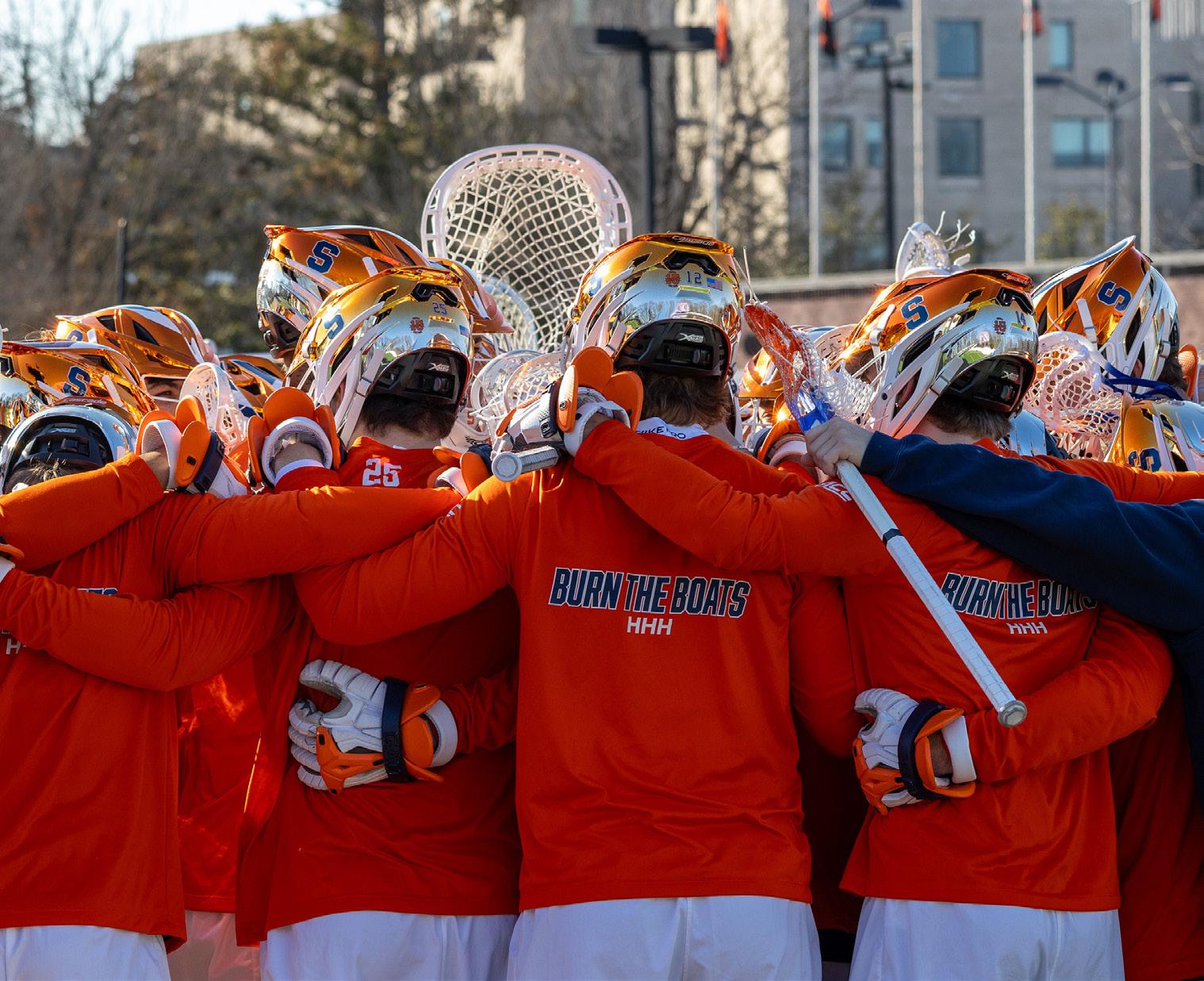
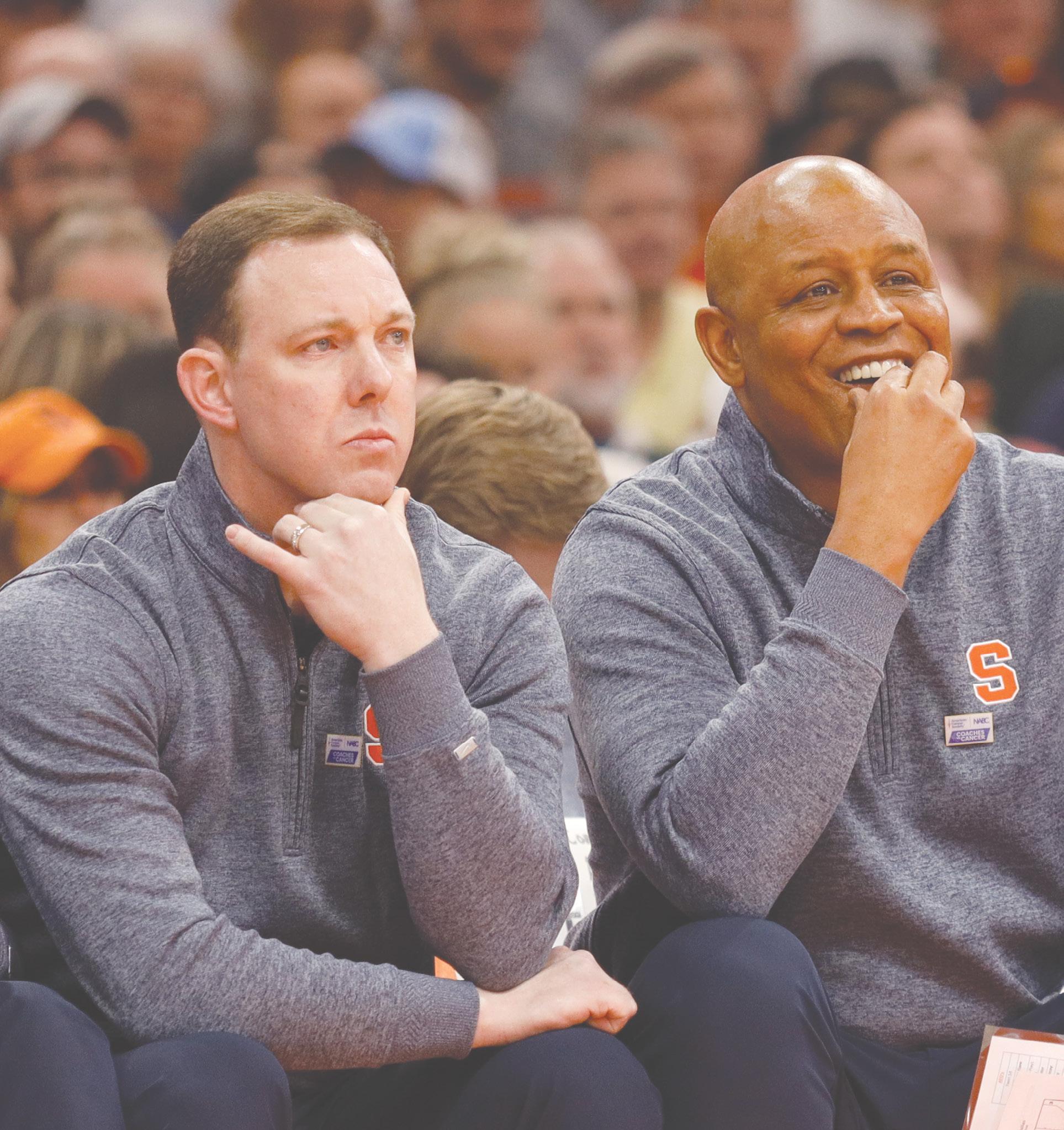
Syracuse men’s lacrosse must acknowledge the harm caused by the team’s “burn the boats” practice jerseys, our guest columnists write.
• ‘Burn the boats’ Page 12
C • Musical moves
Downtown music venues encourage Syracuse University student performers, especially after the closure of student house shows.
S • Storrs scenes
Our photographer captured moments from Syracuse women’s basketball’s NCAA Tournament matches in Connecticut.
Page 4
‘Unapologetically herself’
Kayla Corrigan made life her dance floor with kindness, humor and grit
By Remi Turner asst. copy editor
Whether it was her signature heeled pumps or her infectious laugh, Kayla Corrigan made life her dance floor.
During a spring break trip to Malta, the Syracuse University senior whirled around the cobblestone streets, grasping hands with a group of older women she had befriended — a moment her friend Isabel Gordon said captured her perfectly.
“She taught me about getting out of your head a little bit and being down for an adventure,” Gordon said. “I just hope that I can live up to that for her.”
Kayla, a 21-year-old marketing management senior at the Whitman School of Management, died in a December house fire in her hometown of Needham, Massachusetts.
Friends remember Kayla as someone who always brought her full self to the table — and never apologized for it.
“Like a magnet, she literally drew people towards her,” Sophia Terlecky, SU senior and one of Kayla’s closest friends, said.
While Kayla was a driven student with big goals for herself, she cared just as much about uplifting the people around her. In and outside the classroom, those who knew Kayla remember her as the ultimate “hype woman,” known to command any room with her “bubbly” personality.
She mastered the art of balancing her silly and serious sides and always lived life spontaneously. Kayla often enlisted her friends, like Terlecky, in random “side quests” at a moment’s notice.
She was the epitome of a “Get ready, I’ll be there in 10,” kind of girl, Terlecky said. Once,
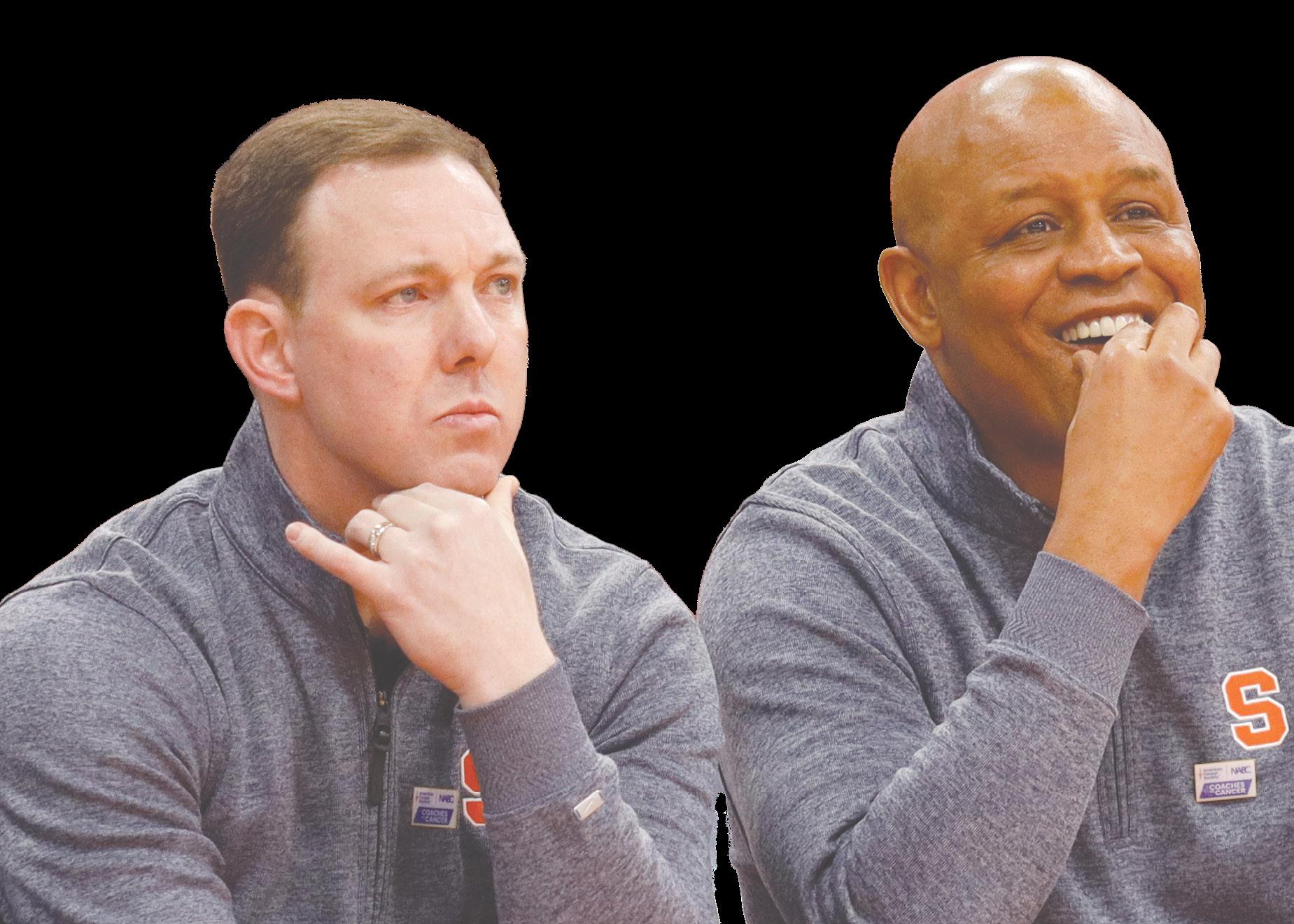
Gerry McNamara named Syracuse men’s basketball head coach
By Justin Girshon senior staff writer
Across his two seasons
the hiring process, Thamel reported SU officials promised McNamara a name, image and likeness commitment that projects in the top third of the Atlantic Coast Conference. A source familiar with the program’s thinking told
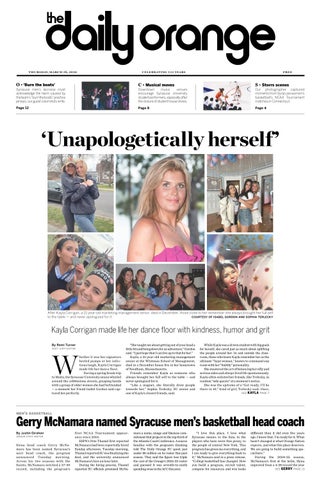
After Kayla Corrigan, a 21-year-old marketing management senior, died in December, those close to her remember she always brought her full self to the table — and never apologized for it. courtesy of isabel gordon and sophia terlecky
Siena head coach Gerry McNamara has been named Syracuse’s next head coach, the program announced Tuesday morning.
Editor@dailyorange.com
News@dailyorange.com
Opinion@dailyorange.com
Culture@dailyorange.com
Sports@dailyorange.com
Digital@dailyorange.com
Design@dailyorange.com
Photo@dailyorange.com
BUSINESS 315-443-2315
how to join us
The Daily Orange is an independent, nonprofit newspaper published in Syracuse, New York. The editorial content of the paper — which started in 1903 and went independent in 1971 — is entirely run by Syracuse University students.
The D.O., a 501(c)(3) nonprofit, is editorially and financially independent from SU, and the paper receives no funding from the university. Instead, The D.O. relies on advertising revenue and donations to sustain operations.
This spring, the paper will be published Thursday when SU classes are in session. The D.O.’s online coverage is 24/7, including while SU is on break.
To show your support to The D.O.’s independent journalism, please visit dailyorange.com/donate. Donations are tax deductible.
If you are a Syracuse University or SUNY-ESF student interested in contributing to The D.O. on either its advertising or editorial teams, please email editor@dailyorange.com.
corrections policy
The D.O. strives to be as accurate in our reporting as possible. Please email editor@dailyorange.com to report a correction.
letter to the editor policy
The D.O. prides itself as an outlet for community discussion. To learn more about our submission guidelines, please email opinion@dailyorange.com with your full name and affiliation within the Syracuse community. Please note letters should not include any personal information pertaining to other people unless it is relevant to the topic at hand. All letters will be edited for style and grammar.
SEIU negotiates raises, job clarity for SU workers in 1st semester
By Laura Lemgruber asst. copy editor
Four months after first organizing, Service Employees International Union Local 200United has made several changes aiming to help Syracuse University’s employees, but members say the union still faces challenges ahead.
SEIU steward Maven Kavan said she was
inspired by the Syracuse Graduate Employees United union. In spring 2024, SGEU won an agreement that won benefits including a median 24% stipend increase and extended health coverage.
“When the grad students started organizing, we realized that we didn’t have to continue to stay being treated like this,” she said.
Kavan, a sophomore in the College of Visual and Performing Arts, said she almost quit her
job at Bird Library’s LaunchPad before joining SEIU. When Kavan began her job in fall 2025, she said she struggled with an unclear job description, lack of training and conflicts with her manager. Speaking to an SEIU representative was the first time she said she felt her concerns were heard and the situation could change. In its first few months, SEIU has secured clearer job descriptions for student workers and
defined pay scales specifying how much each role should be earning, said Courtney Cole, an SEIU organizer and representative.
The union also secured a $2 pay raise for students and an almost $4 increase in meal allowances per shift, Cole said.
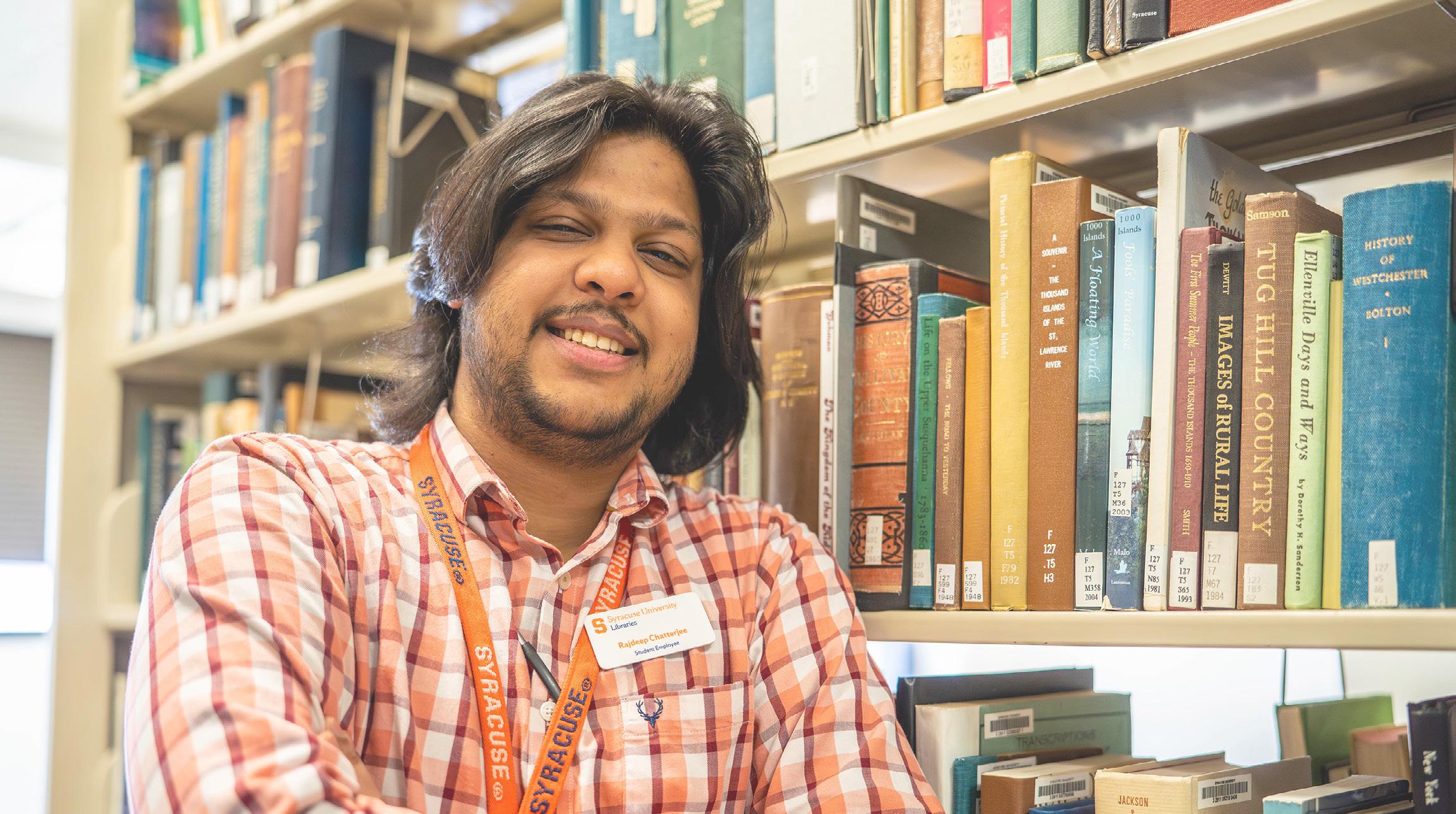
SU master’s student Rajdeep Chatterjee said involvement in the union has not only see seiu page 7
Bill Coplin inspired policy studies students to ‘do well and do good’
By Priya Schmit asst. digital editor
For over 50 years, Syracuse University professor Bill Coplin taught students to “do well and do good” — Coplin’s mantra to prepare students for the “real world.”
Since he started at SU in 1969 and retired in January, Coplin’s guided students through a skills-based education. Today, numerous alumni and current students cite the power of Coplin and his teaching methods, continuing to practice his lessons in their daily lives.
“Through his connections and leveraging his alumni network, I have met like-minded individuals who do well and do good in their everyday life,” Hunter Tryloff, Coplin’s former student and current president of the Skills Win Coaching Organization Coplin created, said.
It was a passion Coplin discovered in high school, where, as a student, he ran a tutoring program to help others with course material.
Then, in the early 1960s, Coplin pursued higher education at several prestigious universities — obtaining his bachelor’s degree in social sciences at Johns Hopkins University, and later his master’s and Ph.D. in international relations at American University.
However, Coplin said the “traditional” curriculum he was taught did not connect to his interests.
“I wasn’t satisfied with elementary or middle school or even high school, and well, and college,” Coplin said. “I think that most of the people aren’t. They’re forced into it, because that’s the path you have to take.”
Coplin carried this philosophy to SU, when he began teaching in 1969. He emphasized the importance of real-world experience and skills that translate to careers aligned with students’ interests, rather than a “traditional” college education.
He integrated this into SU’s curriculum by creating the policy studies program in 1977 within the Maxwell School of Citizenship and Public Affairs. The program combines insight into policymaking and political factors with more practical, skill-based components, including volunteer work, research projects and fieldwork.
“My purpose wasn’t to create more academics because, which is very apparent today, college doesn’t work. It makes no sense,” Coplin said. “It should prepare people to study what they want to study.”
Coplin said he developed an educational approach rooted in skill development, rather than traditional subject-based classes, which he said allowed him to succeed.
Peter Wilcoxen, the current director of Maxwell’s undergraduate policy studies program, who took over after Coplin’s retirement, emphasized the program’s unique focus on skill-development — particularly pioneered in Coplin’s teaching strategy that prioritized connecting with students through the program’s use of undergraduate course assistance. Fellow undergraduate students who previously took the course are assigned as undergraduate course assistants and given small groups within the classes to work with for the semester.
Kalina Weber, a dual policy studies and environment, sustainability and policy major, served as Coplin’s undergraduate course assistant for the honors section of PST 101: Introduction to the Analysis of Public Policy, after taking the class her sophomore fall semester.
After working with Coplin in the classroom and seeing him interact with his students, Weber said she sees how he makes guiding students a priority.
“I’ve just seen him be very dedicated to the students he develops relationships with, whether that’s finding them connections, finding them people to talk to, offering them positions,” Weber said.
Tori Perez Shires, a 2004 SU policy studies graduate and former student and teaching assistant for Coplin, explained how Coplin’s guidance ultimately changed her career path. Shires originally planned to attend law school but pivoted to a career in sales after Coplin strongly encouraged her to do so.
This moment served as an awakening, and Shires embarked on a marketing internship that led to a successful career in sales, and eventually led her back to SU as the senior director of development at Maxwell.
“He had an innate ability and a knack for understanding his students and where their strengths are, and really encouraging them to follow their strengths,” Shires said.
Wilcoxen also said Coplin’s dedication to students is apparent through the undergraduate course assistant opportunities that give them “real responsibilities” and “real challenges” outside the classroom.
Weber also expressed her appreciation for Coplin’s skill-based approach to education in preparing students for the future. When Coplin told her that many traditional classes fail to prepare students for successful futures, she said it was “enlightening.”
In the 1980s, Coplin created a community service course at SU that allowed students to work for clients and organizations in Syracuse rather than sit in a classroom. The
one-credit course offered opportunities like spending 20 to 30 hours a semester at the Boys and Girls Club.
He also created Skills Win, a student-run body that recruits volunteers and teaches skills to high school students in the Syracuse City School District.
Coplin created this program as a form of “job preparation,” which he aimed to help high schoolers who are more skill-oriented and feel underprioritized in traditional public schools. He said the program teaches high schoolers the skills necessary to succeed in their career and lives, from typing to technology skills such as Excel to email etiquette.
Weber, a former homeschool student, worked with Coplin to share her perspective on Skills Win and the real-world skills she gained from her background.
“Especially in Syracuse, where there are a lot of children in school struggling, I think it’s important to build those skills with them,” Weber said.
Morgan DiPerna, a former PST 101 student and current vice president of the Skills Win program, shared one of her favorite volunteering experiences. She outlined how they played a jeopardy game with the high school students to teach real-world skills in an interactive way.
“They made teams that were so competitive, and they were actually learning these interview skills and these people skills,” DiPerna said.
The policy studies program was integrated into the Public Administration and International Affairs department at Maxwell several years ago.
The transition from a stand-alone program into a larger department created availability for more faculty to offer policy studies program courses, resulting in a vast expansion of the number of electives students took.
Despite the changes, Wilcoxen said the original structure’s experiential learning and use of undergraduate course assistants remain strong, continuing Coplin’s legacy even after his retirement.
“The last thing we want to do is to change the major into another interchangeable, theory oriented social science major,” Wilcoxen said. “We want it to be different. It won’t be to everyone’s taste, but that’s ok.”
priyaschmit@dailyorange.com
By Laura Lemgruber asst. copy editor
Ahead of class selection for the fall 2026 semester, Syracuse University launched Clementine, a new artificial intelligence tool to help students with class registration.
Clementine, announced Wednesday, is an AI assistant intended to help students navigate the university’s course offerings, according to a campus-wide email from SU’s Information Technologies Services.
Designed by SU staff, Clementine pairs class offerings and course descriptions with students’ availability to help them find courses that fit into their schedules, SU Chief Digital Officer Jeff Rubin said.
“We just choose to bring that all together into place where you don’t have to do all of that work yourself,” Rubin said.
While Clementine can help students sort through hundreds of classes, Rubin said it is not the only resource they should use when building their schedules.
your advisor. What it could do is help you become a lot more informed before having that conversation with your advisor.”
Although Rubin said he finds the faceto-face conversations between students and advisors valuable, he recognizes advising staff have a finite amount of time to meet with students during busy registration periods. He hopes Clementine can help students have more productive meetings with their advisors, he said.
As this is the first version of Clementine, Rubin said it is not yet equipped to give advice on degree requirements or career paths, although his team may try to implement those features into future versions of the program.
However, he said he encourages students to ask Clementine for courses that may help them in future careers or internships.
“You can’t do that in the class search,” Rubin said. “That’s an important question that you could ask Clementine, and it’s going to do a really good job being able to answer that.”
Rubin said students have already noticed one large issue with Clementine — its speed. It can take 30 seconds to a minute to produce
answers because it searches through large data sets.
“Even if it’s a little slow, the richness of the answer is worth the
ITS encouraged students in its
day email to be specific and try different
wait,” Rubin said.
Wednes
phrasings
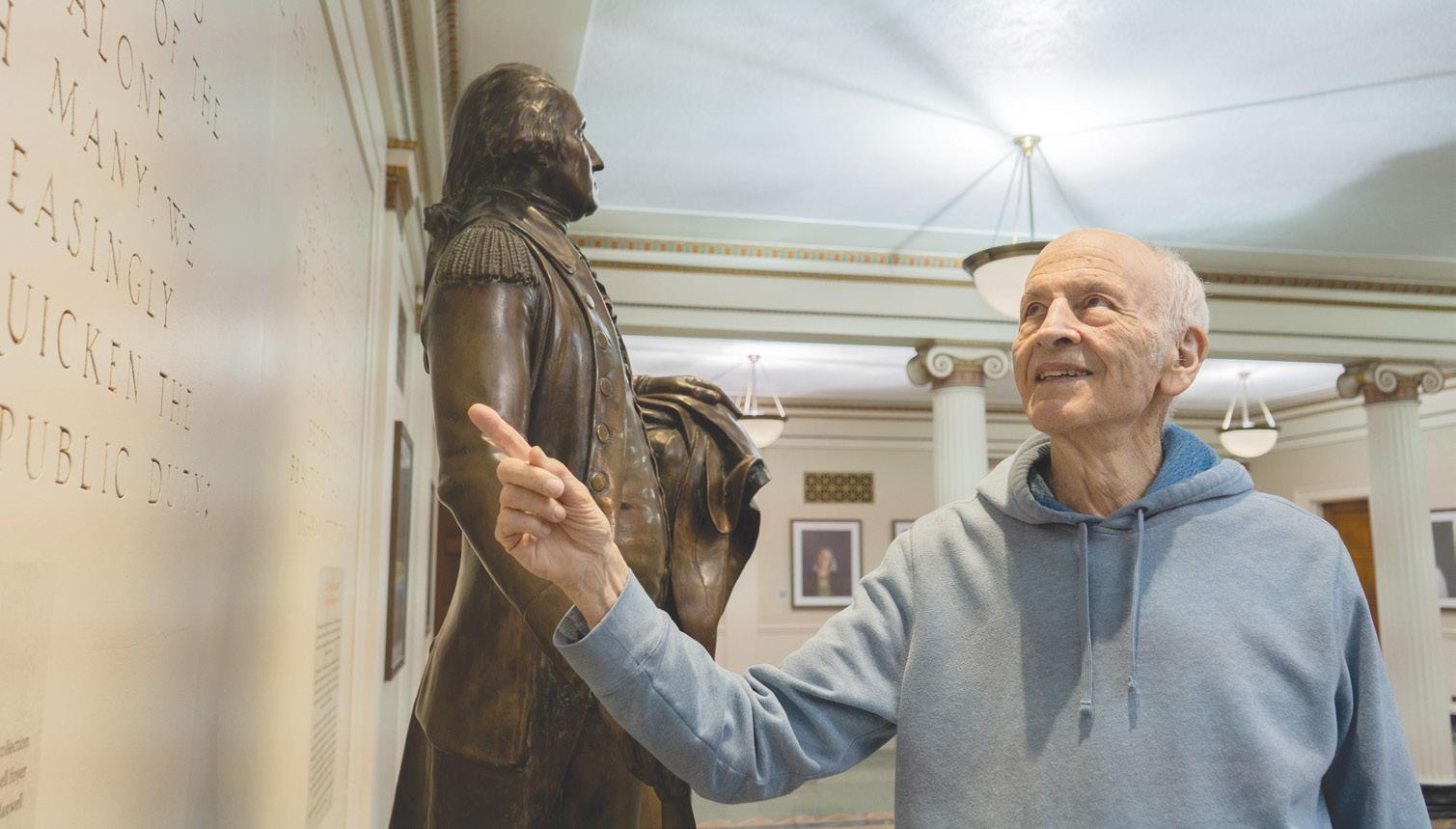
From the 1960s to his January retirement, Syracuse University professor Bill Coplin committed his life to giving students a skill-based education. olarose ndubuisi contributing photographer
Syracuse University launched Clementine, a new AI tool, to help students with class registration on Wednesday. eli schwartz asst. photo editor
women’s basketball
Shots from Syracuse’s March Madness campaign
Syracuse prevailed against Iowa State and fell to UConn at the NCAA Tournament in Storrs, Connecticut
By Griffin Uribe Brown digital managing edtior
by Tara Deluca asst. photo editor
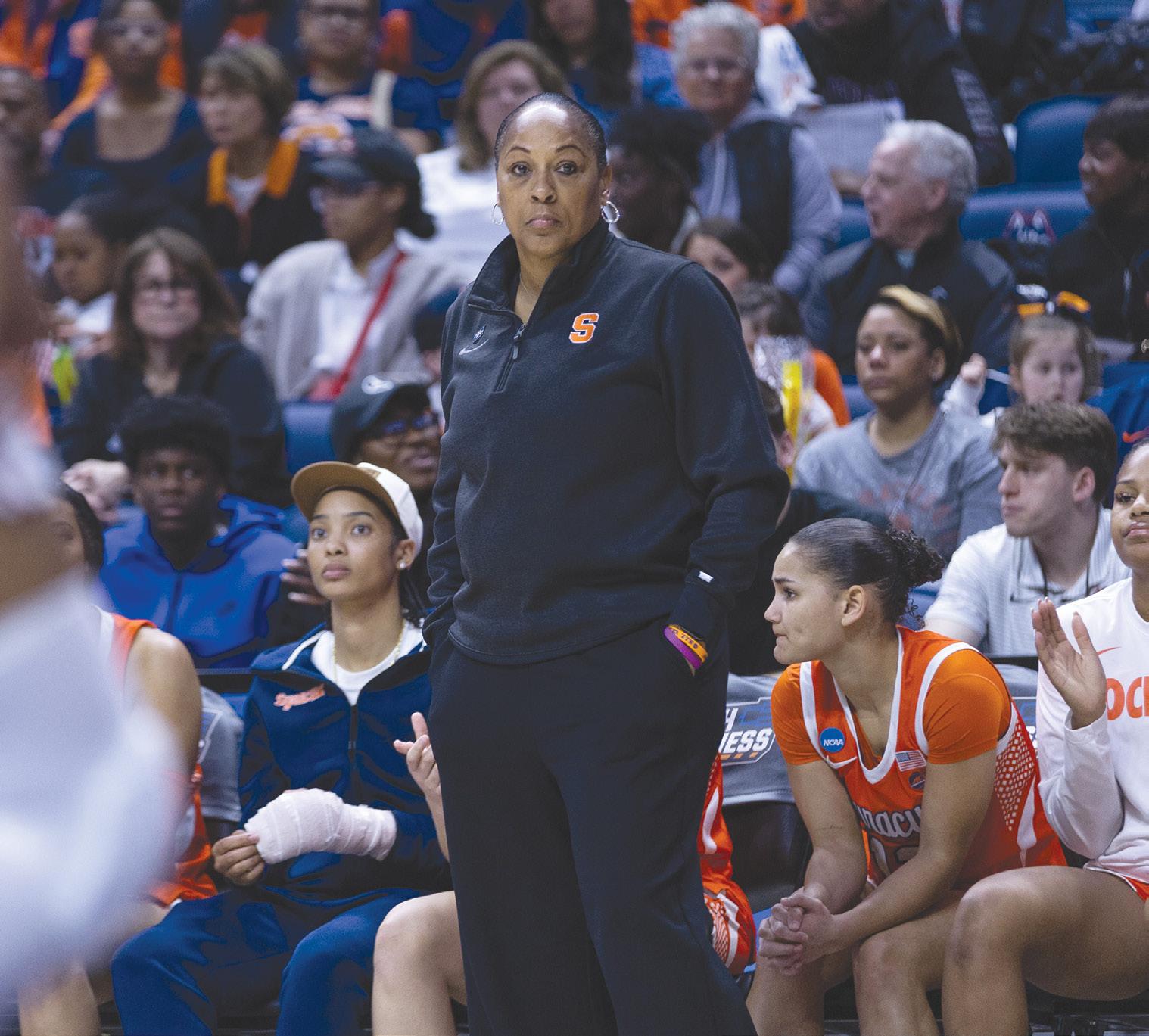
STORRS, Conn. — No. 9 seed Syracuse women’s basketball survived two rounds in the 2026 NCAA Tournament last weekend. The Orange opened the tournament with a win over No. 8 seed Iowa State Saturday night. Uche Izoje’s 23-point performance and a scorching five 3-pointers from Olivia Schmitt powered SU’s victory — despite the Cyclones’ Audi Crooks’ 37-point effort. Syracuse finally had a statement victory this season — on the March Madness stage with the nation watching. With the win, Syracuse’s season remained alive. However, next up was a familiar foe: No. 1 overall seed UConn. At media availabil-
ity the day prior, Huskies head coach Geno Auriemma said Izoje was the best player his team had faced all season. Once the ball was tipped Monday evening in front of a raucous 10,244-person crowd at Gampel Pavilion, one of the foremost cathedrals of women’s college basketball, the result was a foregone conclusion. The Huskies’ undefeated record was always going to remain intact, and a brutal first half saw the Orange enter the break trailing 65-12. That 53-point margin held after an even second half, leading to Syracuse’s worst loss under head coach Felisha Legette-Jack and the end of its 24-9 2025-26 season. Postgame, Legette-Jack decried SU facing UConn a fifth time in its last eight March Madness appearances while praising her team as its turnaround season ended. gbrown19@syr.edu
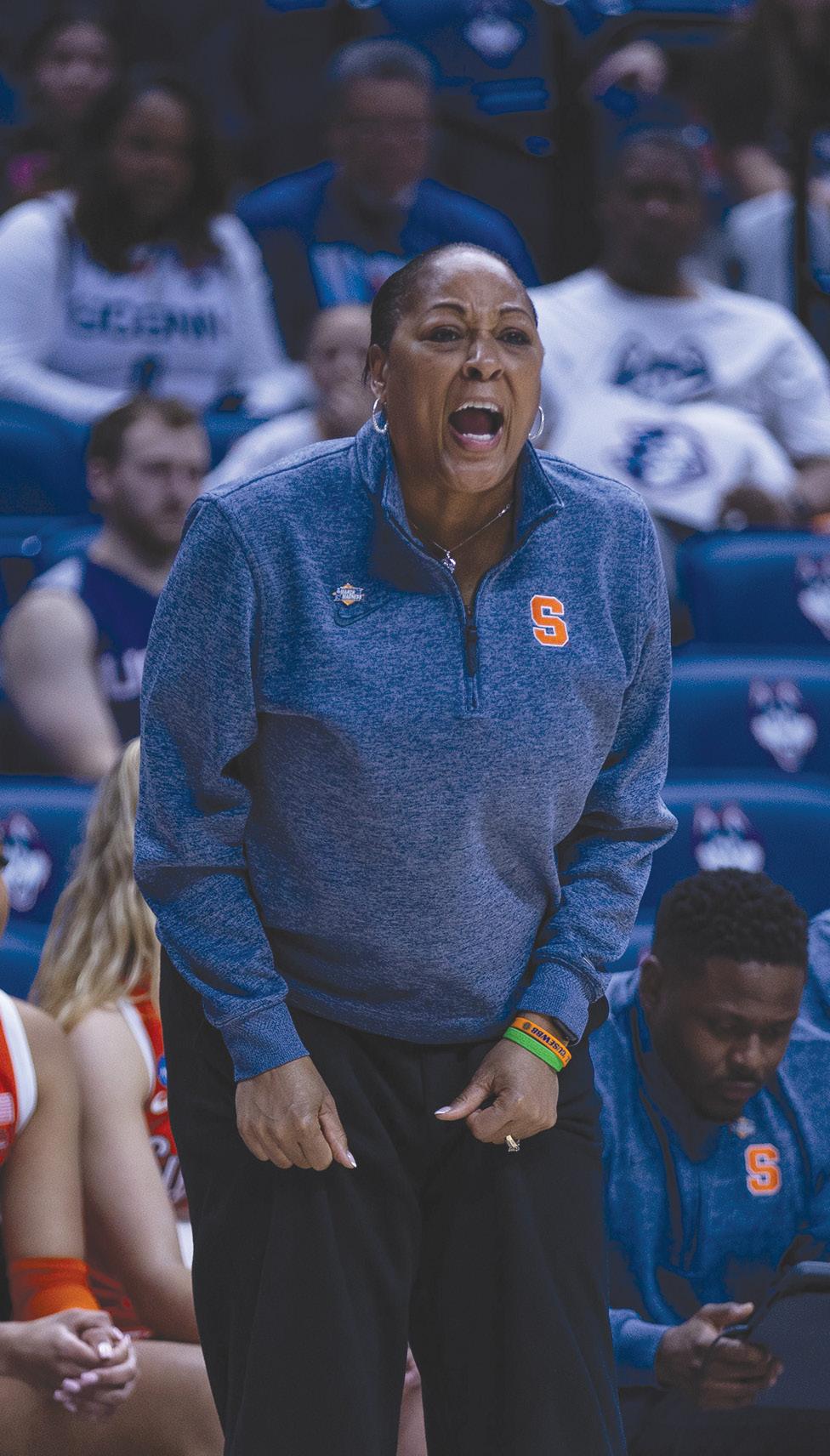
Syracuse head coach Felisha Legette-Jack shouts at her team in SU’s 98-45 loss to UConn. Postgame, Legette-Jack expressed frustration with her team having to play UConn for the fifth time in its last eight March Madness appearances.
Photos
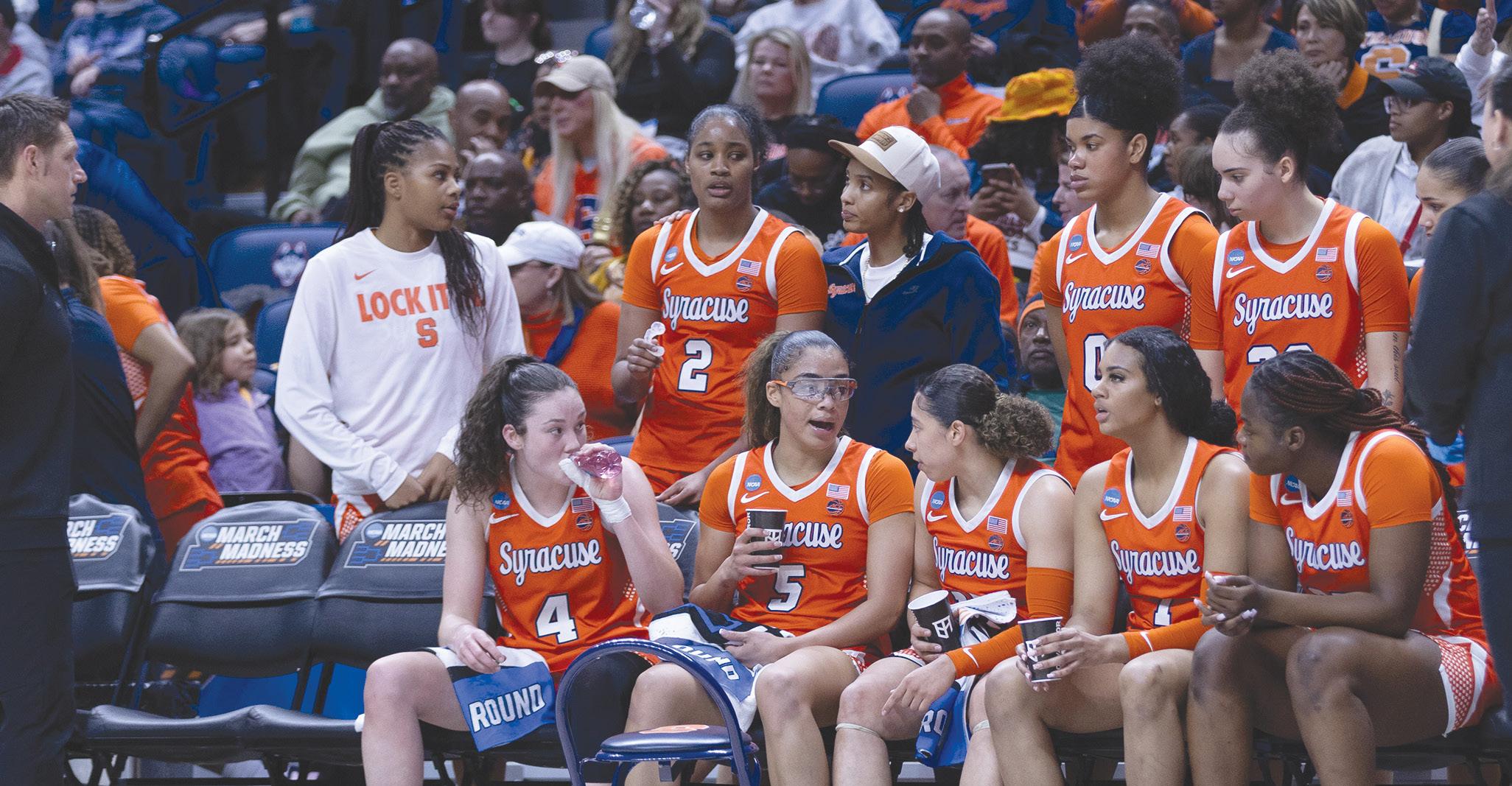
Syracuse players congregate on the bench during a timeout in SU’s loss to UConn Monday. The Orange’s 53-point defeat was their worst under fourth-year head coach Felisha Legette-Jack.
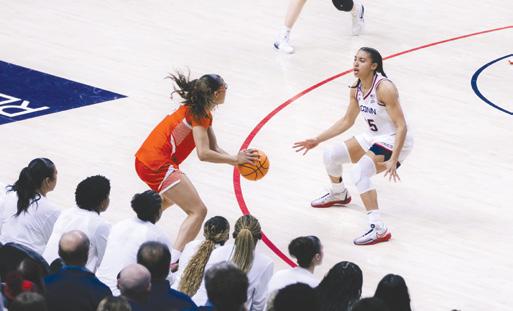
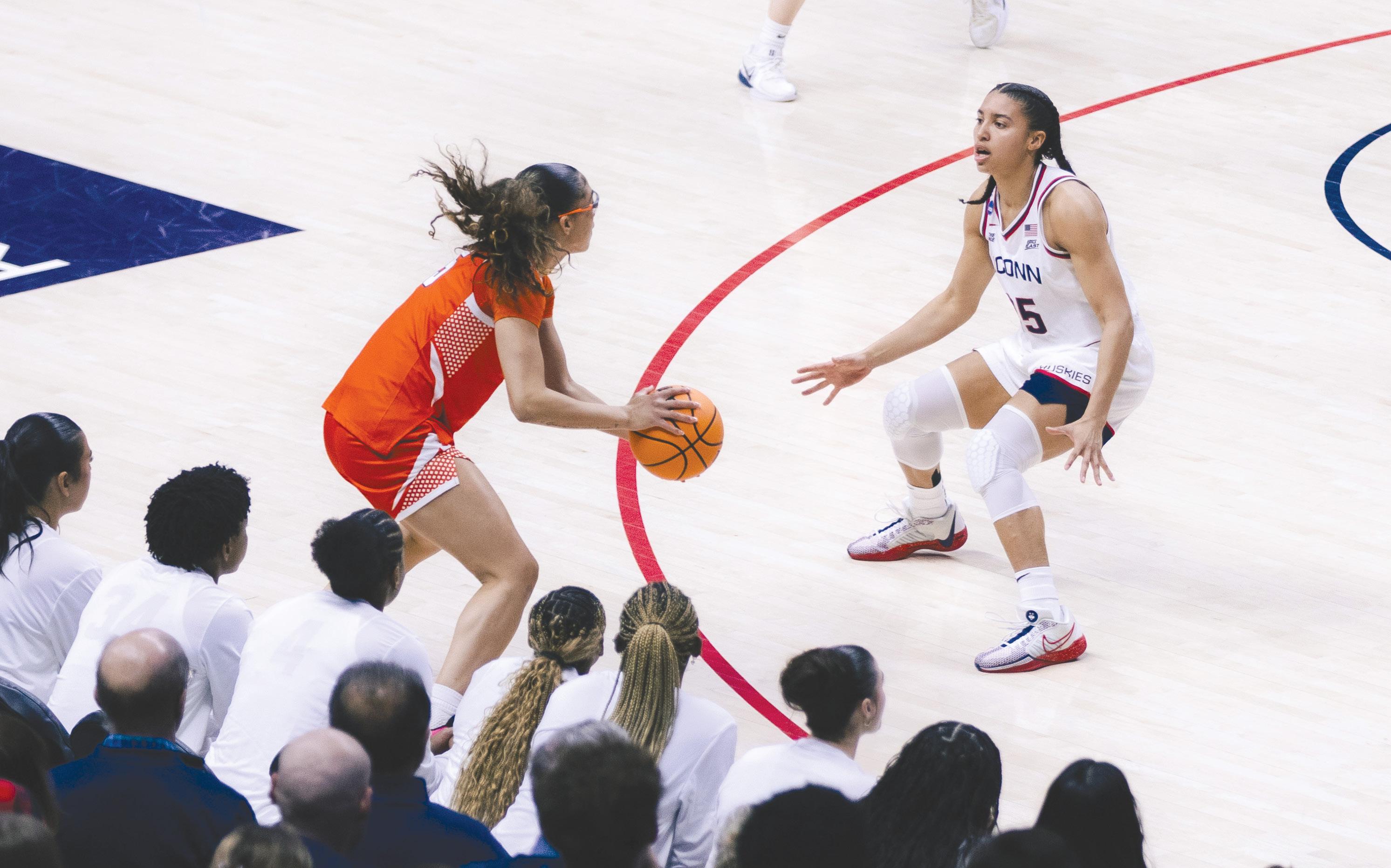
Syracuse guard Laila Phelia makes a move on UConn guard Azzi Fudd in SU’s second-round loss to the Huskies. Phelia scored 10 points in her final game of the season, finishing the year averaging 13.7 points per game.
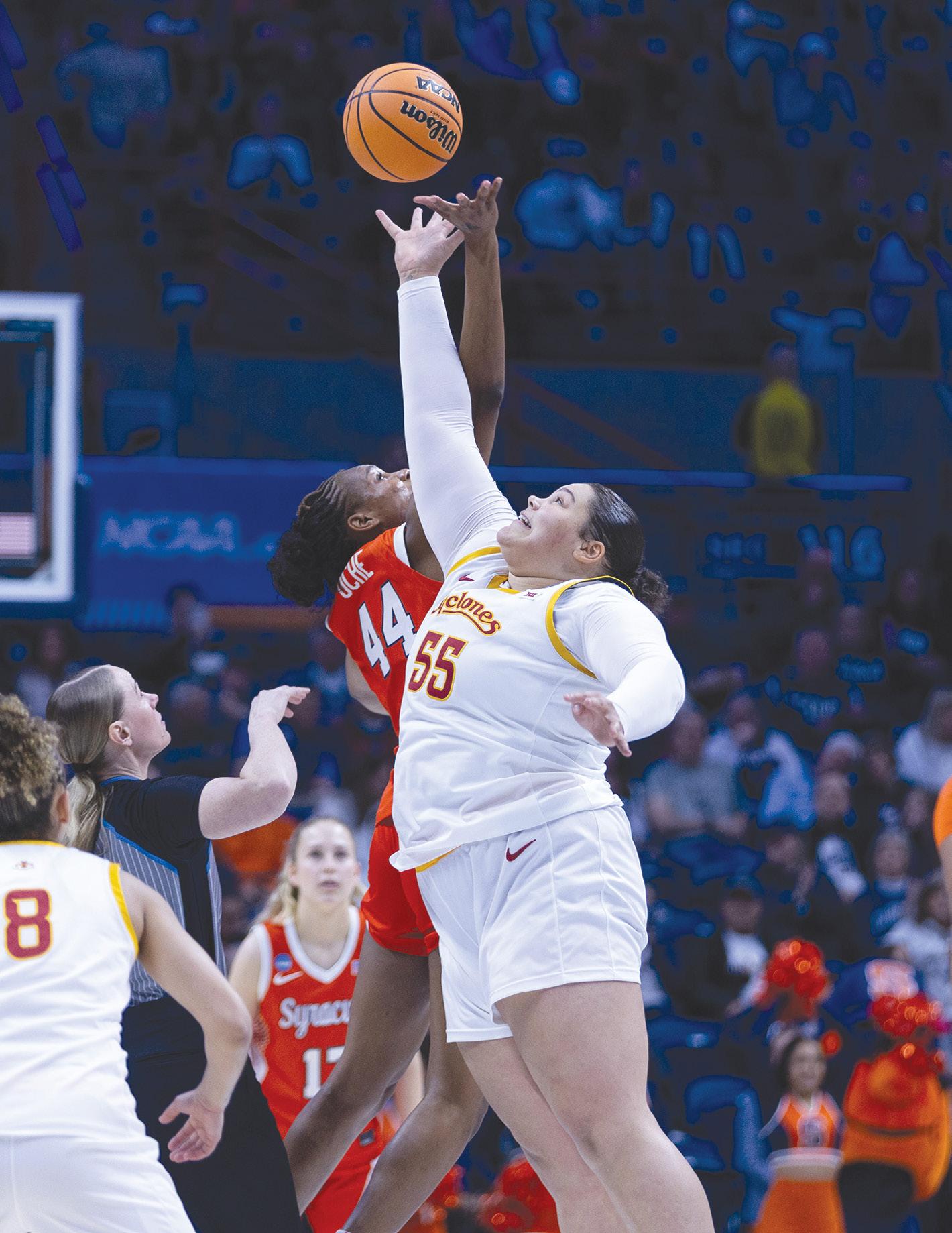
SU’s Uche Izoje and Iowa State’s Audi Crooks reach up for the opening tipoff in the Orange’s 72-63 win over the Cyclones in the NCAA Tournament First Round. Izoje and Crooks combined for 60 points, although Syracuse outlasted ISU.
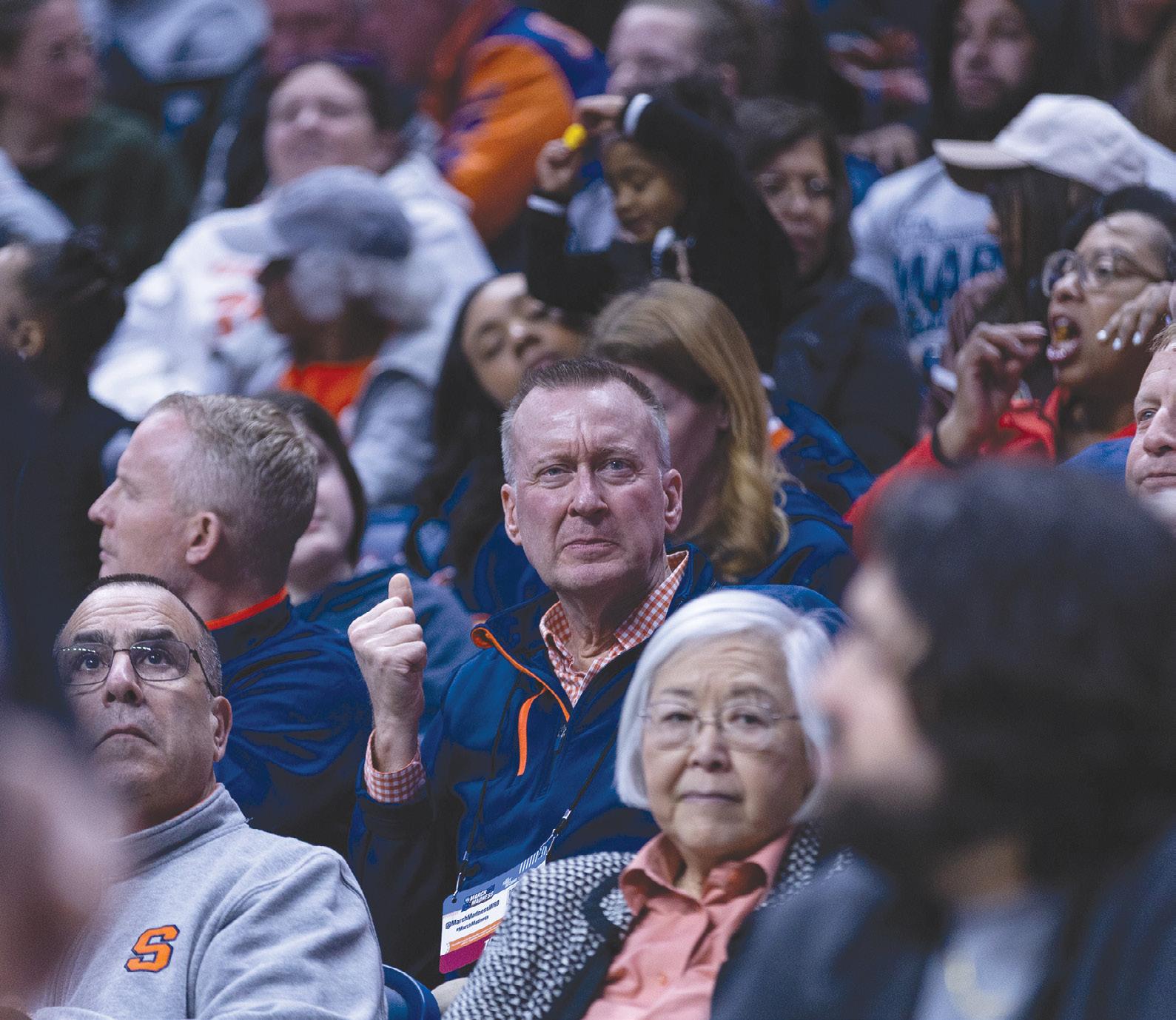
Syracuse Chancellor-elect Mike Haynie sits in the stands as SU plays in the NCAA Tournament. Haynie, the university’s vice chancellor for strategic initiatives and innovation and executive dean of the Whitman School of Management, will start his new role on July 1.
Want to see more? Check out the media tab at dailyorange.com
Hochul highlights FY 2027 budget proposals in Syracuse visit
By Ryan Garipoli contributing writer
New York Gov. Kathy Hochul promoted state budget proposals targeting affordability issues during her visit to Syracuse Wednesday afternoon.
Promoting her budget at the Wegmans Art and Home Center, Hochul touted policies aimed at lowering housing and everyday living expenses like utility, gas and insurance prices.
Hochul’s visits to Syracuse, Buffalo and Rochester Wednesday come amid opposition to her fiscal year 2027 budget proposal in Albany. In Syracuse, Hochul was introduced by Mayor Sharon Owens, who voiced support for Hochul’s budget and praised the work the governor has done for New York.
“Kathy Hochul knows what New Yorkers need,” Owens said.
The governor framed her budget proposals as part of her mission to “make life more affordable for everyone.” The proposals would approve millions of dollars in housing projects, as well as push back economic restrictions imposed by New York environmental protection laws.
“Making life more affordable has been a part of who I am since I was an 18 year old with a pair of jeans,” Hochul said.
New York state’s 2019 climate law. The New York Supreme Court ordered New York to meet the 2019 climate law’s standards now. Hochul has proposed adjusting the law to push back enforcements until 2030. Hochul said if New York had to meet climate law standards today, “crushing” costs would continue to rise.
Hochul blamed President Donald Trump’s “war on renewable energy” for New York’s failing to meet climate law standards.
The budget proposal also aims to address New York’s high insurance premiums, Hochul said, adding that New Yorkers “pay the highest car insurance premiums in the country.” New York paid the fourth highest car insurance premiums in 2025, according to the Insurance Information Institute.
She blamed “staged crashes” to collect insurance money and New York’s liability laws for unreasonably high rates.
Syracuse’s need to build new housing is “basic supply and demand,” Hochul argued, pushing for support for various housing projects her budget proposal would approve.
“I say let them build. Are you with me on that?” Hochul said. “Let’s build more, let’s build more housing. Put people to work and make more jobs.”
She referenced her time as a student at Syracuse University, where she organized a boycott of the campus book store over expensive book prices.
In addition to housing, Hochul urged people to consult with their representatives to push back deadlines on climate laws to keep utility and gas costs low.
“If this law is not changed the price of gasoline will go up $2.23 per gallon on top of the increases you’re already seeing,” Hochul said. Hochul has faced backlash from environmental groups who accuse her of wavering on
“Our liability laws are just out of sync with the rest of the country’s. It’s so easy to go to a jury and get millions of dollars for injuries that you may have caused yourself. We have to put an end to that,” Hochul said. “There are 35 states that are doing it differently and I want to be among those.”
New York’s state budget is due for approval by the New York State Legislature April 1. lkochis@syr.edu
SGA awaits board approval, referendum after constitution revision
By Priya Schmit asst.
Syracuse University’s Student Government Association passed new revisions to its constitution to be voted on by the board of elections during an executive session at its meeting Monday.
Valeria Serrano, SGA’s director of communications, confirmed the assembly’s passage of the revisions in a statement to The Daily Orange Tuesday. The student body will have the final vote in a constitutional referendum during the SGA election from March 30 to April 3.
The revised constitution will include the removal of its supreme court, SGA President German Nolivos told The D.O. before Monday’s meeting. Additional changes include modifying the constitution’s language and reworking the tier funding system.
The supreme court replaced the SGA judicial board four to five years ago, which interpreted the constitution, bylaws and impeachment procedures, Nolivos said. The court currently consists of a chief justice, deputy chief justice, senior associate justice and eight associate justices. The court, justices and trials are governed by a set of judicial codes.
SGA has five governing documents: the constitution, the bylaws, the fiscal codes, the ethics codes and the election codes. The goal of the new constitution is to consolidate the fiscal, ethics and election codes into the bylaws, Nolivos said.
Nolivos said SGA decided to change the constitution and ultimately dismantle the supreme court, after the body placed an injunction on SGA while it previously attempted to change its bylaws. He said SGA wanted the assembly’s administrative actions added to the constitution, which the supreme court deemed unconstitutional, due to the document’s “confusing” language.
Nolivos explained the current constitution also contains contradictions, grammatical mistakes and confusing language, leading the assembly to add revisions.
“I was reading our constitution, reading our bylaws, and I was like, ‘I don’t understand anything that this document says right now,’” Nolivos said.
This prompted SGA to send its constitution to university administration for feedback and suggestions, where SU suggested a constitutional rewrite, Nolivos said. The
Office of People and Culture symposium emphasizes engagement
By Owen Smith asst. digital editor
Syracuse University’s Office of People and Culture held its 2026 symposium last month, hosting more than 75 sessions across discussion panels, interactive presentations and workshops.
An initiative to increase staff collaboration and professional growth, the symposium was held at Schine Student Center and Bird Library on Feb. 20 and featured remarks from Mary Grace Almandrez, the vice president for People and Culture, and a performance from Adah Shenandoah, a member of the Oneida Nation, Wolf Clan and Haudenosaunee Confederacy.
Presenters represented 18 different units, divisions, schools and colleges at SU. The event’s theme was “engage,” which drew faculty from different departments and schools to share research strategies and tips.
Hua Jiang, associate dean of Community, Culture and Engagement at the Newhouse School of Public Communications, said the event provided a “rare window” into the projects happening across the university.
“The theme resonated strongly with me because engagement is central to both teaching and research in communication,” Jiang said. “Engagement involves not only sharing information but also creating connections among scholars, students and broader communities.”
The symposium is one of multiple staff events held during the 2025-26 school year so far. Cristina Hatem, director of strategic marketing and communications of SU Libraries, said she takes
advantage of the sessions to better understand how faculty can use campus resources like mental health resources.
Hatem attended a session on the Orange Survey to learn more about ways to improve the student’s experience based on the responses.
“The insights from that event are useful to think about what the libraries can do to support student belonging and retention,” Hatem said.
The collaborative atmosphere allowed for the sharing of digital resources and professional tips, Hatem said.
Hatem pointed to SU’s “Ask Orange Alumni” website as a primary example of a tool she implemented in her own department immediately after she learned about it. She later shared it with students to help them find internships.
During the symposium, faculty from the Whitman School of Management led sessions on workplace dynamics. Hatem highlighted a workshop the faculty held on productive conflict that featured real world role-playing scenarios.
“These types of sessions and exercises are valuable, regardless of your role or career stage,” Hatem said. “I appreciated having the opportunity, both the time and expertise, of campus resources for professional development.”
The symposium also addressed the human element of campus through a segment dedicated to “wellness.” Erin Smith, an internship program coordinator for SU Career Services, said the event effectively touched on issues such as staff burnout and stress.
Smith praised the wide variety of topics covered, which included everything from the
Department of Public Safety to new museum initiatives. He mentioned the event aimed to keep the campus community informed about resources that are “otherwise overlooked.”
“I will admit that the wellness block was really well done,” Smith said. “The Office of Human Resources really tries to let staff know what kind of resources they have at their disposal.”
Smith said the symposium encouraged staff to use on-campus spaces for mental health and to “de-stress.”
Beyond well-being, the event also sought to empower staff to take on leadership roles within the university. Smith said he felt the sympo-
sium provided support for employees looking to launch their own initiatives or move up within their department.
“If you’re interested in either partnering or leading your own initiative or organization, this sort of event gives you the support and buy-in to know that you have the ability to do that,” Smith said.
In a post-event survey, approximately 95% of respondents agreed the symposium environment “fostered open and active participation among staff,” and that they could apply what they learned directly to their roles, SU reported. owensmith@dailyorange.com
Gov. Kathy Hochul promoted her budget proposal in Syracuse ahead of its due date. Hochul previously visited Syracuse for the February state Democratic convention. avery magee photo editor
SU’s Office of People and Culture hosted its 2026 symposium, an initiative to increase staff collaboration and assist in professional growth. solange jain senior staff photographer
digital editor
SGA voted to revise its constitution at its Monday meeting. The new constitution is set to be voted on by its board of elections. eli schwartz asst. photo editor
the “dynamic duo” shopped around Destiny USA wearing grandma wigs. On another occasion, Kayla skated through the SU men’s hockey team’s house in a player’s rollerblades — prompting the crowd to erupt in laughter.
As an ROTC cadet with a more regimented life, Terlecky said Kayla taught her how to “say yes to everything.”
“She broke me out of a shell I didn’t realize I had,” Terlecky said.
Although Kayla loved celebrating life with the people she cherished, her academics were a top priority. During the week, she could be found late-night studying at Whitman or attending tutoring sessions for her marketing classes.
Kayla had industry experience under her belt, including a summer 2025 internship at Foundation Management & Pro-Productions and an advertising internship at McNeil, Gray & Rice Strategic Communications agency the summer before.
“She was such a hard worker,” Gordon said. “Just so committed to whatever she did, whether it was friendships or work.”
An engaged and outspoken student, Kayla sat in the front row of every class, always asking questions, and often stayed after to speak with her professors.
“Kayla’s work ethic kept her doing well throughout the semester, and she showed a level of resilience I won’t soon forget,” Whitman professor S.P. Raj wrote to The Daily Orange. “She had a measure of maturity that goes beyond what the classroom can teach.”
When a group project was assigned, Kayla naturally took the lead, but never made anyone feel overshadowed.
“She had a pretty competitive spirit,” Gordon said. “She kind of took (that) into other things that she did as well, and just always gave her best.”
helped him financially but made him feel more “comfortable” in his campus roles.
“How I thought of (the union) from a very big beginning was like insurance,” Chatterjee said. “That even if everything is great, everyone is really friendly, everyone is nice … just in case anything goes wrong, then I have the union behind me.”
Chatterjee first began working for SU by picking up shifts at JMA Wireless Dome concession stands. As an international student from Mumbai, India, Chatterjee said he prioritized balancing class work and on-campus employment when he arrived at SU in the spring of 2025. Now, Chatterjee is a concessions supervisor, student employee for Sadler Hall dining and marketing intern for the LaunchPad.
For Chatterjee, SEIU’s recent pay increase and addition of 15-minute breaks per four-hour shift have improved his working conditions. He said the pay increase allowed some students to pursue jobs outside of on-campus dining.
Similarly, Winter Cameron said they had a positive experience working for SU. Now a junior, Cameron currently works at Goldstein Student Center, but has also worked at Food.com and the Dome since their freshman year.
Despite their overall positive experience, Cameron said they wish workers were better trained, as some feel overwhelmed by a lack of instruction when starting new roles.
Always passionate about workers’ rights, Cameron said they were excited to join SEIU. As a steward, they said they enjoy getting the opportunity to negotiate with the school.
“I think as a student, having direct communication with the school itself, about your issues for employment, and having some people to be your voice, I think that is especially important and something you don’t usually get with student employment,” Cameron said.
Despite the union’s recent improvements, Chatterjee said he wants international stu-
from page 6 constitution
university did not offer revisions or specific changes, an SU spokesperson said in a statement to The D.O. Monday.
“We did not offer content direction; that work has been led by SGA, though they have asked us to review and provide feedback on their drafts,” the spokesperson said.
Through revising the constitution, problems with the concept of a supreme court became apparent to the assembly, Nolivos said. Because of the many senior positions in SGA, Nolivos found younger members of the assembly beginning to fill empty seats on the court every semester.
Kayla and Gordon met during a big-little date for their sorority, Sigma Delta Tau. They grew close while studying abroad in Barcelona in spring 2024, and together, ventured off to Interlaken, Switzerland, and Rome, Italy.
Often wearing sparkles and her favorite color, pink, Kayla didn’t believe in overdressing – no matter the venue. For Kayla, an average night out at one of her favorite on-campus bars, Orange Crate Brewing Company, called for stiletto pumps and a dress.
Like a magnet, she literally drew people towards her. She broke me out of a shell I didn’t realize I had.
Sophia Terlecky su senior
Hendricks Chapel turned pink for Kayla’s memorial on Friday. Hundreds of attendees, including SU students and Kayla’s friends and family, filled the pews honoring Kayla by wearing her favorite color.
Infatuated with her friend Ava Loucas’ blue Ford Bronco, Kayla once flagged her down for an impromptu ride across campus. With half her body hanging out the window, Loucas remembers the wind blowing through Kayla’s long blonde hair.
“She was so full of life, and so silly and unapologetically her,” Loucas said. “When you have her amount of energy, some people are intimidated by that. For me, it’s refreshing.”
Kayla always put others first. From sharing her clothes, to post-graduation pep talks, to study dates with friends like Sadie Potyk, she made sure she was someone people could count on.
While taking a marketing simulation class last semester, Kayla regularly helped Potyk go over course material. Potyk said meeting with Kayla was always her favorite part of the week.
“Her kindness is something that we will be able to carry with us forever,” Potyk said. “She made life a little less heavy in times when you needed it.”
And even in her harder moments, Terlecky remembers Kayla never made anyone feel unseen.
“She always cared about how someone else felt even if she was having the hardest day,” Terlecky said. “She didn’t make her bad day your bad day.”
Kayla is also remembered for her generosity. She was the first to sign up for SDT’s “Best in the Game” philanthropy event, volunteered at the Red Cross and helped out at local food pantries.
During this past spring recruitment, members of SDT recognized Kayla’s legacy by wearing gold “K” pins for their preference round. The sorority is also in the process of developing a scholarship in Kayla’s honor, SDT President Samantha Glickson wrote to The D.O.
Kayla lived in the SDT house her sophomore year. Every night, she would run up the stairs and approach SU senior Abigail Seigel’s door with her special knock, often in a pair of her “crazy” pajamas, like her cheetah print onesie. Seigel said Kayla always entered her room with a ball of energy and occasionally convinced her to break out in dance.
“She had such a unique ability to just turn anyone’s day around just by being there,” Seigel said.
Seigel vividly remembers a conversation she had with Kayla last semester, where they talked about their soon-to-be lives after graduation. Here, Kayla made Seigel feel immediately reassured about her future.
“There was not a single person who she didn’t touch, even if she didn’t speak to them individually,” Seigel said. “Her kindness just radiated through everything.”
An active person with an immeasurable amount of grit, Kayla loved taking cycling classes, running and going for walks with Loucas’ roommate’s dog, Bubbee. Growing up, she was also on a competitive gymnastics team.
In October, Kayla and Terlecky competed in a Spartan Race – a 10k course featuring obstacles like sandbag carries and monkey bars. Kayla placed in the top 20 of her age group and crossed the finish line with a smile on her face.
“She proved you can have balance and still be badass, and be the girly girl, but still have grit,” Terlecky said. “She just never backed down from doing something.”
But what mattered most to Kayla was the people around her. Her habit of always showing love for people earned her the title of “family hugger.”
“She always just wanted her family to be together,” Terlecky said.
Kayla is survived by her parents, Christa Baer Corrigan and Jim Corrigan, and sister, Alyssa Corrigan.
Her compassion and loyalty were seen by anyone and everyone she met. Kayla embraced the truest version of herself and never hid it. When asked about Kayla, Terlecky claims the mantra, “She loved fiercely, showed up fully.”
Kayla possessed the unique ability to own a room and ignore any judging eyes. While she especially loved country music, anything with a good beat sufficed. And if there wasn’t a dance floor present, she made it her job to make one.
“She was just unapologetically herself,” Seigel said. “I think that everybody in this life should just be a little more like Kayla.” rturne03@syr.edu
dents to feel confident consulting the union about concerns such as body jewelry policies. In February 2026, Chatterjee and other student employees received an email from their dining managers asking staff to remove “all jewelry” during their shifts.
Chatterjee said he hopes to establish a framework with his union manager concerning body jewelry to respect its cultural significance for some student employees.
Some student workers currently have a negative view of SEIU due to the increased attention it’s brought to issues like the jewelry policy, Kavan said, which had previously gone unaddressed.
While Nolivos said he is excited by increased underclassmen participation, he expressed concerns about the supreme court’s “overall veto power” over constitutional matters, which could create scenarios where the assembly and its most experienced members could be overruled by a small group with less time in student government.
To address these problems, the new constitution will remove the supreme court and create a constitutional committee to conduct future interpretations of the constitution and its bylaws. This decision gives more power back to the assembly, such as through votes or veto power for impeachments, Nolivos said.
Looking ahead to next semester, Kavan and Cameron said they hope SEIU can get more students involved and voice what issues they want addressed next. As more students learn about their contracts and the changes that SEIU is making, they said, they may be more understanding of the policies the university is enforcing.
“We’re gonna make sure you’re safe, and we’re also here to try and make sure that the university’s happy as well,” Kavan said.
Per Kavan, the university was very cooperative in past meetings, and despite differing opinions, it felt like both SU and SEIU representatives were trying to work together.
The revised constitution will also rework the funding tier system, Nolivos said. SGA’s previous budget cuts and unbalanced fund allocation under the current tier system created an ineffective structure for registered student organizations to receive funding.
“People hate the tier system. It doesn’t work. It’s old. It’s outdated,” Nolivos said.
The new system will decide an organization’s funding by its number of members and activities, activity status throughout the year and student engagement, Nolivos said. The organizations will be evaluated yearly and will be able to move up and down tiers based on performance.
Cameron said they recognize that working with the university is a negotiation and that they won’t be able to get all of the issues they want approved.
“We’re here for students. We’re fighting for respect,” Kavan said.
DISCLAIMER: News Editor Brenne Sheehan is a member of the SEIU. She did not influence the editorial content of this article.
Asst. Copy Editor Remi Turner contributed reporting for this article.
lalemgru@syr.edu
Students will be able to vote on the constitution referendum as part of next week’s SGA elections.
DISCLAIMER: Valeria Serrano is an advertising sales representative at The Daily Orange. She did not influence the editorial content of this article.
Senior Staff Writer Duncan Green contributed reporting for this article.
priyaschmit@dailyorange.com
The new constitution will also install a director of Greek life relations, Nolivos said. He also said it will remove the “unique population representative” from the constitution, citing difficulty in selecting one person to “represent the beliefs of an entire population.”
Four months after organizing, SU’s Service Employees International Union has made changes to help employees, but its members say the union still faces challenges. zoe xixis asst. photo editor
Making my way downtown
Syracuse’s downtown music venues have become resources to keep SU’s music culture alive
By Claire Zhang asst. digital editor
In Trevor Fraticelli’s first two years at Syracuse University, he could walk down Euclid Avenue on any given day and follow the sounds of drums and guitar into a live show in someone’s basement.
But since last fall, Fraticelli, an SU senior, noticed a shift in the performance scene and has to venture further to find live shows. As a longtime lover of live music, it’s now a matter of knowing where to look.
“There’s absolutely lots of space and lots of potential for students to become a really important part of the broader Syracuse music scene and music community,” Fraticelli said.
When one of SU’s most prominent house venues, Dazed, closed its doors in August, many students like Fraticelli were disappointed. Much of the music-loving community at SU frequented the house’s weekend shows, and student artists could book steady gigs. Now, students are turning to downtown clubs to keep the university music culture alive.
Fraticelli began working at The Song & Dance as a booking intern in the fall. Since then, he’s viewed the venue and other downtown spaces as viable spots for local artists to still perform. The venues are legitimate and have see downtown music page 11
The Driver Era, Ravyn Lenae to headline UU’s Block Party
By Eliana Rosen culture editor
million monthly Spotify listeners, their biggest songs are “Under Your Spell” and “Just Your Doll.”
Funk ‘n Waffles in downtown Syracuse is just one of many off-campus venues looking to amplify the city’s live music scene. The restaurant encourages SU students to use their space to perform. meghan hendricks daily orange file photo
courtesy of isabella allon
courtesy of jocey davis
We ghost hunted at SU so you don’t have to
By Ben Butler senior staff writer
Editor’s note: This article includes mention of violence and suicide.
For all of human history, they have been unexplained by science.
Tibetan Buddhists believe that they exist in a liminal space before reincarnation. Islamic tradition holds that the just ones can give hidden knowledge, while the impure ones seek revenge. Jesus’ followers believed he was one of them when he was resurrected.
Ghosts.
“Science is not oriented to proving that things don’t exist, we can only do that by showing other things that do exist,” said Gareth Fisher, a religion professor at Syracuse University who teaches a course on ghosts and belief. “We try to look at what people believe, and we don’t get into the real question of whether it’s true or not.”
Bird Library has a ghost hunting kit in its new “Library of Things” collection. Syracuse has some of the most paranormal activity in the country — a survey from 2023 ranked it as the fourth most likely city to have ghosts. So, I decided to check the kit out and see if SU has ghosts.
Here’s what I found:
How to hunt
I’ve never had a paranormal experience or touched a ghost hunting kit. So, I contacted Monica Kinner, vice president of CNY Ghost Hunters, for clarification on how to use the kit’s tools. Ironically, Kinner said she was scared of ghosts as a kid.
“I’m less afraid now because I know how to talk to them, and I almost feel as though I can turn it on and turn it off when I am investigating,” Kinner said. “But every now and again, it’ll creep up on me.”
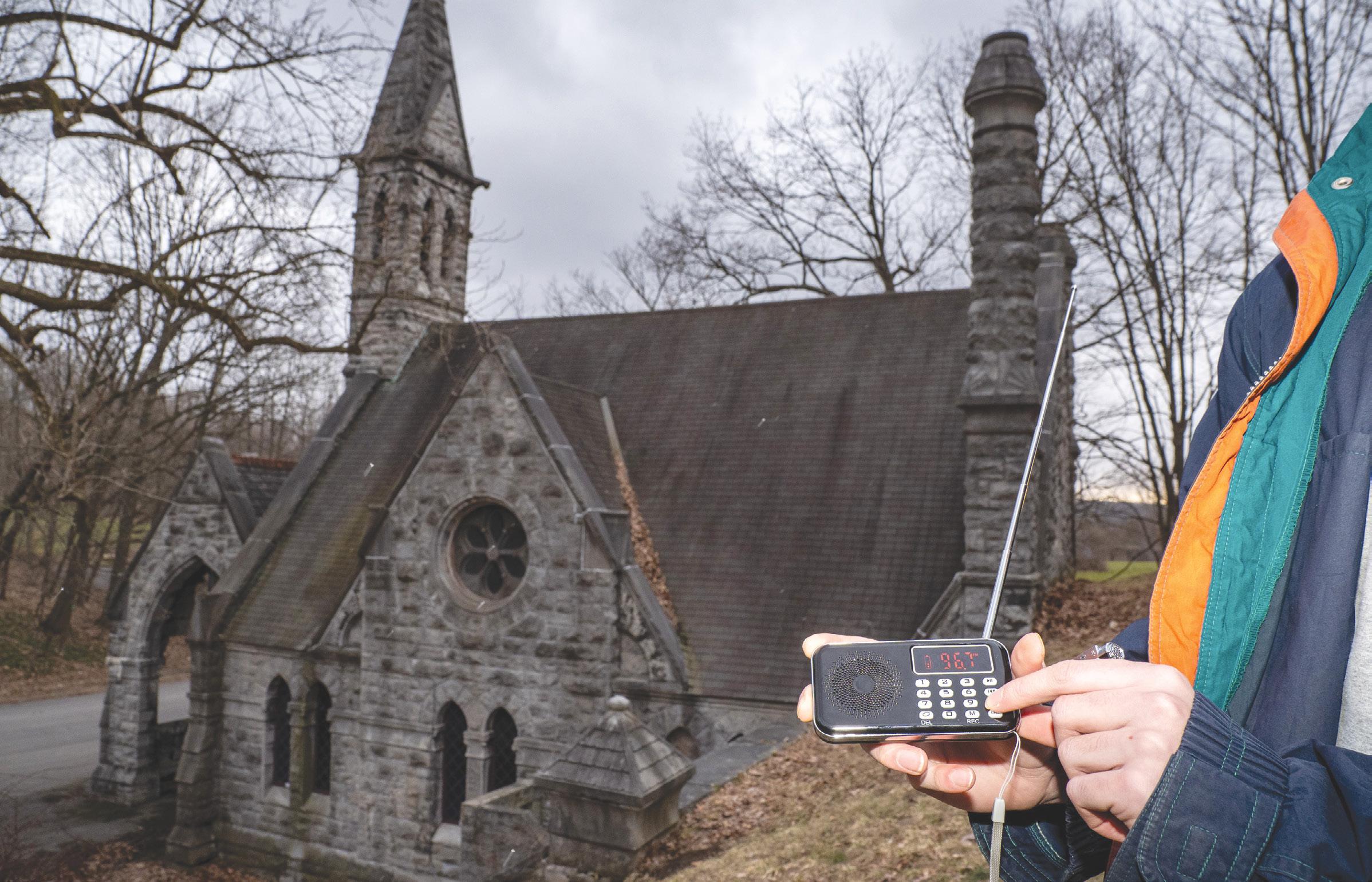
The kit includes a digital recorder, an AM/FM radio and an electromagnetic field reader. The kit’s radio and recorder are like any other. You go to the haunted location, start recording and ask the ghost a series of questions (with some pauses in between to allow the ghost to talk back). After you leave, you play back the recording and ideally hear responses to your questions that your naked ear couldn’t catch.
Electromagnetic activity from the EMF reader can indicate the presence of spirits, but make sure you’re not near lights, outlets or anything else that might manipulate the EMF test, Kinner said. When doing your hunt, you’ll want to hold the reader up in the air and find a spot where the EMF reader isn’t reading electromagnetic activity. Then you put the reader on a table and ask the spirit if it can get closer. If there’s a spirit, the reader will light up, Kinner said.
The line of questioning for the ghosts resembles a line of investigation questions on a polygraph exam or, thankfully for this journalist, a reporting interview.
“Sometimes we’ll ask questions that we know aren’t true,” Kinner said. “Because that’s how we know if we’re getting an intelligent spirit or someone who’s messing with us.”
Is Syracuse University haunted?
The short answer? A little haunted. Students shouldn’t expect to see poltergeists flying out of windows or hear banshees shrieking every night, but there’s a handful of documented claims of paranormal activity on and off-campus. Some students living in the university neighborhood even say they have “roommates” who aren’t paying rent and utilities.
An article in New York Folklore from the late ‘90s suggests Slocum Hall is haunted by the victim of a grisly murder-suicide. In 1921, Dean J. Herman Wharton of the College of Business Administration (now Whitman School of Management) was murdered by Holmes Beckwith, a professor who believed Wharton was responsible for firing him. Beckwith committed suicide immediately after.
Some people can hear (the ghosts) right out of the gate, but for other people it takes years
Monica Kinner vp of cny ghost hunters
John Harris, a paranormal investigator who runs Pride Paranormal NY, advised me not to ask Beckwith about the murder immediately — its poor form to bring up death in ghost hunting because ghosts don’t like to talk about it. Generally, Harris said, questions should lead with a genuine interest in the ghost’s life, work and personal history.
“Ghosts don’t haunt a place because they died there, they haunt a place because they have a biological desire to be alive,” Harris said. “It’s life that we’re interested in.”
So I sat in Slocum asking the deceased Beckwith about his life and his Ph.D. dissertation, which focused on German-style vocational education. But he didn’t share his theories about how work studies would help American students. He didn’t say anything at all.
When I started pressing Beckwith about the murder 10 minutes later, some architecture students knocked on the door and asked me if I still needed the room to talk to the air. That was my cue to leave for the night.
I didn’t hear a response from the recorder on playback, leaving me curious about Beckwith’s take on vocational education — and his motives for murdering his boss a century ago.
Harris also pointed me to Oakwood Cemetery next to the Mount, where he’s taken Fisher’s class REL 381: Ghosts and Ghostbusters on tours. Oakwood was planned as a cemetery park, meaning it was intended to be a place where the living would spend time honoring the dead. Because Oakwood was planned to be communal, the ghosts are more talkative there, Harris said.
When I went at twilight, the ghosts weren’t interested in chatting. I walked up to a grave and
Ada Setlik and Fever Dream
Support student indie pop and rock musicians Ada Setlik and Fever Dream Friday night. Setlik recently won a Best Live Performer Award at The Otto Awards, and Fever Dream was nominated for multiple awards.
WHEN : Friday, 6 to 8 p.m.
PRICE: $5
WHERE: Luna’s Cat Cafe
asked a Civil War veteran who the president was, but when I played the recording back I didn’t hear any ghostly voices whispering Abraham Lincoln’s name or praising the Union Army. All I heard were the crows cawing.
Maybe I just couldn’t hear the voices coming through the speaker. Kinner said that might happen — over time, hunters become more attuned to hearing phenomena through the speaker. Rookies don’t usually succeed.
“Some people can hear them right out of the gate, but for other people it takes years,” Kinner said.
Believe it or not
People believe more in ghosts now than ever. In 2024, four in 10 Americans surveyed said they believe in ghosts. Fisher attributed this to a rise in decentralized information, which allows for fringe ideas to develop. Social media is a hub for this, he said. In addition, the rise in distrust in institutions like the media, government and organized religion, have made people become more conspiratorial, he said.
Fisher doesn’t believe in the science of ghost hunting, but ghosts are about belief, not proof. The point of religion classes is to explore belief and why people believe in things, not prove whether things are true. Beliefs aren’t debunked but explored in his courses, Fisher said.
“In order to understand how society works, or human psychology, it is only important that people believe something is true,” Fisher said. “None of it matters, whether the thing is really true or not.”
But ghost hunters do believe they can develop a methodology to prove the existence of ghosts. Harris compared ghost hunting to other scientific developments like chemistry. Before it was called chemistry, the science of matter was called alchemy and was mostly focused on transmuting metals into gold, he said. Alchemists never had much success, but their techniques were foundational to modern lab experiments.
Most real ghost hunting isn’t sensational, like what you’d see on TV. Kinner and Harris both pointed out that most of their time is spent in dark rooms in dead silence with no one responding.
In the end, it doesn’t really matter if you encounter a ghost while you’re hunting. Fisher said a key learning objective of his class is to challenge what people believe. Students come into class skeptics or doubters, and walk out with their minds open to new ideas — which is the point of every religion course he teaches.
I checked the kit out as a skeptic, and I returned it understanding how subjective belief can be. But maybe I went into the whole thing wrong, and my skepticism held me back.
“(Belief) plays a role as well, because maybe they don’t want to talk to you if you’re trying to debunk them,” Kinner said. “Why would I want to talk to somebody who doesn’t believe in me?”
My advice to any burgeoning ghost hunters: If you want to find something, believe in it. Also, if you go to Slocum Hall to hunt, try to make sure students don’t need the room you’re hunting in. It gets a little awkward. bnbutler@syr.edu
The Flashing Astonishers
The Flashing Astonishers are a Syracuse-based band who play post-punk, alternative and indie rock. They are known for energetic performances and merging punk and rock influences.
WHEN : Friday, doors at 7 p.m., show at 8 p.m.
PRICE: $13.07
WHERE: Funk ‘n Waffles
Patrick Young
Join a night of music with Patrick Young, a singer and guitarist from Syracuse who plays a variety of covers from country to classic rock.
WHEN : Saturday, 6 p.m.
PRICE: RSVP for more details
WHERE: Harvey’s Garden
Driftwood and Neil Minet Band
Binghamton-based Driftwood, an Americana folk-rock band, is performing alongside Syracuse rhythm and blues group the Neil Minet Band. The Neil Minet Band is known for their warm guitar songs and blues-rock covers.
WHEN : Saturday, doors at 7 p.m., show at 8 p.m.
PRICE: $30.86
WHERE: Middle Ages Brewing Company
Enjoy a night of hip hop and rap beats with Bronx-born rapper A Boogie Wit Da Hoodie. His album “Hoodie SZN” reached No. 1 on the Billboard top 200 chart in 2019, with some of his most famous songs being “Look Back at It” and “Drowning.”
WHEN : Sunday, 8 p.m.
PRICE: Starting at $79.45
WHERE: Upstate Medical University Arena at the Oncenter War Memorial
A Boogie Wit Da Hoodie
Bird Library’s ghost hunting kit allows students to test this finding with a recorder, radio and electromagnetic field reader. A 2023 survey found that Syracuse is the fourth most likely city to have ghosts.
lars jendruschewitz senior staff photographer
arts
Bound Vintage brings Y2K, local thrift market to Syracuse
By Tara Binte Sharil asst. culture editor
For Ellie Walz, managing her thrift brand, LuckyGirl777, reminds her of working behind the scenes on a theater production. Informing her actors on what lines to say or where the lighting should be shining has transformed into deciding which clothes to feature in her brand.
“(The pop up) reminded me of directing because it felt, you curated all this stuff by hand. Every single piece you’ve thought of, and then you tagged it, and you’re like, ‘Okay, this is in my store,’” Walz, general manager at Bound Vintage, said.
LuckyGirl777 is one of the many brands showcased at Bound Vintage. The vintage market pop up store is making its first stop in Syracuse next month for ‘Cuse Bound Vintage. On their TikTok, they’re advertising to college students around the city. Started in 2024 by Lorelai Jonyer, Bound Vintage is not just for clothing vendors but local artists, tattoo artists and upcycled creations, too.
Jonyer, a vintage vendor herself, first launched the brand to close the disparity between vendors and thrift market owners, a current rising trend, Walz said.
While thrift shoppers enjoy the thrill of digging through $5 clothing bins or spending hours finding original Isabel Marant shoes at vintage clothing pop-up markets, some don’t realize the sacrifices thrift vendors make. Thrift markets often take place as a weekend event scattered throughout the year.
But, the limited number of thrift market events and inaccessible vendor prices can shy vendors away from the thrift scene. Often, owners don’t ensure their vendors are settled or comfortable with the space they are given, Walz said.
Jonyer wanted to change that. Bound Vintage makes it a point to close that gap for vendors to easily sell their clothes. In its first city in Brooklyn, Bound Vintage shrunk vendor prices down to rates starting at $100, Walz said. Other markets can charge upwards of $1000 for a two day event.
In two years, Bound Vintage has visited six cities, including Albany, Philadelphia and Baltimore. In April, Bound Vintage will be marking its seventh city in Syracuse. With space for 30 to 40 vendors, Jonyer and Walz wanted to bring Bound Vintage to Syracuse to introduce a proper, full pop-up market in the city. Walz also couldn’t help but notice the style the city exuded as well.
“I heard that the hottest people were in Syracuse. I heard that the style is there. It is the mecca. I mean, we bleed orange,” Walz said. “The highest demand by far for shoppers and for sellers was Syracuse.”
Since announcing its Syracuse stop on Feb. 27, Walz has received over 100 applications from different local and regular vendors. One of the regular vendors is Wave Thrift, hailing from New Haven, Connecticut.
Launched by Gabe Sebastian, Wave Thrift was started nearly two years ago and sells Y2K vintage clothes. Sebastian first started Wave Thrift in 2024 after collecting clothes that he purchased from thrift stores. Now, he relies on what he finds in thrift stores and his supplier.
When Wave Thrift first started out his brand, Sebastian tried to sell his clothes online on eBay and Depop. But, the monotonous cycle of uploading photos of his clothes online, waiting to see if anyone would purchase them and shipping was a boring process, he said. Sebastian then turned to pop-up markets where he could interact with different vendors and customers.
“I’m the type of person that needs constant stimulation, that needs to be around people. And these events I do like Bound Vintage, bro, I’ve been able to meet so many cool people and really discover myself or at the very least, find things that I never would have known about,” Sebastian said. Sebastian first heard about Bound Vintage in February 2025 from an Instagram ad for their Brooklyn market. Since then, he has been to almost every Bound Vintage city. In each place, Sebastian curates his clothes based on the city’s customer base.
In Brooklyn, Sebastian curates more obscure pieces, since New York City has become a hub of versatile fashion profiles. In cities like Albany and Rochester, fashion is not
as recognized, so Sebastian said he chooses a more streamlined collection.
At Brooklyn Bound Vintage, Alex Carroll was looking for a Juicy Couture bag, then stumbled on Jonyer’s booth. A year and a half later, Carroll is now a general manager of Bound Vintage, working alongside Walz.
By overseeing Bound Vintage’s locations, Carroll has seen how relationships develop between customers and vendors. Like Sebastian, Carroll also enjoys the interpersonal connections found shopping at pop-up markets compared to shopping online. The inclusivity of Bound Vintage was what prompted Carroll’s transition from a customer to a full-time general manager, they said.
“We stick out because we’re super inclusive. We are run by queer people. There’s so many of us there, and there’s so many different people who come to our events to not only shop, but to socialize, to make friends,” Carroll said.
At the upcoming ‘Cuse Bound Vintage pop up, customers can expect upwards of 40 vendors of various styles, all with a specific yet-to-beannounced theme, Walz said. For Y2K fashion, customers can look for brands like Sebastian’s and Jonyer’s. Walz’s brand, which specializes in plus-size fashion, will also be present. Additionally, the first three customers in line can expect a $50 cashback.
While ‘Cuse Bound Vintage offers a brand new pop-up market spot in the city, Bound Vintage also provides an affordable and accessible space for local vendors to sell their products. With Bound Vintage, vendors don’t have to worry about managing expensive and inaccessible rental costs.
Opportunities like the $50 cashback and stuffing a bag of clothes for only $25 creates an affordable shopping experience for customers. Also, the reasonably priced vendor rates gives vendors the chance to showcase their collection with a stress-free mindset, Carroll said.
“It’s just the little things like that where we love to keep things affordable,” Caroll said. “We love to keep it inclusive, and we love that there’s a community here.” tabintes@syr.edu
Readers, book club members become ‘neighbors’ at Parthenon Books
By Spencer Brod asst. digital editor
Ann Duddy learned to read when she was just 3 years old. Instead of watching TV, her older siblings read to her and explained what different words meant.
At 4, she picked up the book “Little Bear” and brought it over to her parents. To their disbelief, she started reading the whole thing.
“I’ve always been a big reader. I’ve always read a lot of different kinds of books,” Duddy said. “I’m still like that.”
Duddy never dreamed of owning a bookstore, even after working at the University of Louisiana at Lafayette’s bookstore and library during college. But in 2022, when Parthenon Books opened up in downtown Syracuse, Duddy immediately pushed for a job to help the store grow. Since last June, she’s owned the store.
As the only independent bookstore in downtown Syracuse, Parthenon has distinguished itself through its book clubs and trivia nights, Duddy said. While some stores in downtown Syracuse, such as Sugar Grove and Original Grain, have closed within the last few months, Parthenon Books has remained a thriving community hub since its opening, Duddy said.
“I don’t think you are going to have people walk into Barnes & Noble and the staff knows who they are,” Duddy said. “We have a lot of regulars, and they see this as their bookstore.”
Duddy started the store’s first book club, “Lattes and Literature,” which focuses on literary fiction. The store’s “Unhappy Hour” club, led by Syracuse University alum Linus Brooks, dives into horror stories such as “The Only Good Indians” by Stephen Graham Jones.
“The thing that I love about books is that you learn stuff about other people who aren’t like you and lives that are not like yours, and as a result, you learn a little about yourself,” Duddy said.
Syracuse local Jacqueline Pilon is a member of the Lattes and Literature club and said she visits Parthenon four times a week. Pilon’s mother is currently in the hospital, and she said Duddy always texts her to check in.
“When I walk in the door, people know me,” Pilon said. “I am appreciated. If I’m not here at least every couple of days, I get a text from Ann asking if I’m okay.”
Pilon said she most enjoys reading nonfiction books. But to step out of her comfort zone, she joined Lattes and Literature to explore fiction stories. She said she’s enjoyed many of the club’s selections, including “Margo’s Got Money Troubles” by Rufi Thorpe.
“Do I always like the books? No. Do I have good conversations about the books and have I made a lot of friends doing that? Yes,’’ Pilon said.
Duddy said Parthenon’s six book clubs have been the driving factor behind the store’s community connection. Several young customers joined the Lattes and Literature club and immediately became friends. Now, they hang out together consistently outside of the club, she said.
Brooks said trivia also became popular at the store last spring. He hosted four trivia nights and brainstormed questions on topics ranging from geography — his major at SU— to movies and more.
“I was shocked by how many people came to them because there are so many trivia
nights (at other places), but they were really fun,” Brooks said.
Despite the store’s successes, it has also faced serious challenges. Duddy said Parthenon’s business sales weren’t as high this winter due to poor weather, adding that locals sometimes don’t want to go downtown due to parking challenges and safety concerns.
When a new Barnes & Noble opened at Destiny USA in August 2024, Duddy said Parthenon’s sales declined as locals shifted their attention there. Parthenon has struggled to keep up with larger chain bookstores because they have less accessible parking downtown and a smaller book selection.
Still, Duddy believes every community deserves an independent bookstore, and was shocked when she realized downtown Syracuse initially didn’t have one. She said it’s important for smaller businesses to stand up against larger corporations, like Amazon.
“I think that Amazon is the ultimate evil, because not only do they hurt small
businesses, but they’re hurting the people who are selling through them by undercutting them,” Duddy said. “Publishers and authors suffer.”
With corporations like Amazon “taking over” the bookspace, Brooks said it is important for people to decide what information they have access to. He said that if you’re only relying on corporations for books, it’s easier for them to decide what they don’t want to have on their platforms.
“It’s really important that people have physical places to go to to find their books and to find information that will counter certain narratives that governments and corporations want,” Brooks said.
Retailers like Amazon don’t have book clubs every month. But, independent booksellers like Parthenon do.
“They (Parthenon) know you. There’s an actual relationship,” Pilon said. “These are my neighbors. I’m helping my neighbors.” sabrod@syr.edu
Unlike other vintage pop-up markets, ‘Cuse Bound Vintage will not just sell vintage clothing; they invite local artists, tattoo artists and up-cycled creations. courtesy of ellie walz
ann duddy always loved to read, but she never saw herself owning a bookstore. Last June, Duddy became the owner of Parthenon Books, an independent bookstore in Syracuse taite paradise staff photographer
potential to jumpstart aspiring artists’ careers, giving them a taste of their futures, he said.
“No matter what size the artist is, we treat everyone as if they’re a professional artist, and go through the process of creating a show as if they were not just a student artist,” Fraticelli said.
SU sophomore Isabella Allon has experienced this firsthand. Next month, she’s playing a gig at The Song & Dance, opening for the touring band West 22nd. Last year, she performed at Westcott Theater, collaborating with SU Records.
Allon said she has to practice self promotion when booking downtown shows. Networking with established artists and industry professionals is a valuable hands-on experience, she said.
Downtown venues also encourage SU students to play there. Adam Gold, owner of Funk ‘n Waffles, remembers his college days when there was always a night of music on campus or downtown. After graduating in 2007, he and a friend started the venue to give back to the music community.
“I was an SU student. I built this place essentially for them. Might as well utilize it, it’s here for you,” Gold said.
Along with physical spaces, a community like Syracuse’s is a vital resource for students, and they should take advantage of it more, said Eric Binion, owner of The Song & Dance. Locals have always been supportive of aspiring musicians, which is what makes the scene so strong, he said.
Binion has followed the dwindling house venues around SU. Since starting The Song & Dance just three years ago, he’s aimed for it to be a space to support student artists.
“I’m willing to take a financial risk to open the doors and staff the room for a show with four or five student bands and see how it goes,” Binion said.
For some students, the distance from campus is an obstacle preventing them from attending shows downtown, SU sophomore and student musician Jocey Davis said. Live house shows were always cheap entry and just a block away from dorms or apartments. However, the costs of Uber rides or coordinating a way to make it downtown hinders student audiences, Davis said.
That mindset is what keeps so many people from making the trip to see live shows.
“There’s such a big disconnect, which is unfortunate, because in hindsight, it’s not that far away,” Allon said.
Fraticelli said he has noticed the same pattern. While The Song & Dance is less than two miles from campus, Fraticelli said physical barriers like the I-81 highway make the city feel disconnected from campus. In coming years, he hopes the university will do more to integrate students within the downtown community, like offering transportation options from campus.
When Funk ‘n Waffles was located on Marshall Street, Gold ran a limousine service from the venue to a former club called Mezzanotte Lounge, a 10 minute drive from campus.
“It’s not like the kids could get there any other way,” Gold said. “So the limousine service would have a bottle or two of champagne. It was pretty wild.”
Binion hopes students will continue to make conscious efforts to seek out events in Syracuse. He’s seen how many students come to SU from out of state, from big cities like Los Angeles or Chicago, where there are always shows and festivals.
“They just think they’re in the middle of nowhere, but what they don’t realize is right down the road, a lot of that is coming to our city as well,” Binion said.
Fraticelli said he hopes with time and future collaborations with the university, word will spread and downtown shows will attract students.
Live music spaces aren’t just for performers. They are also an opportunity for students in other fields to immerse themselves in their interest in music. SU junior Ciane Lopez and her team at Hill Communications, SU’s student-run public relations firm, have Westcott Theater as a client. Throughout the school year they have been working to organize more student shows.
Since hosting a DJ competition and an upcoming Battle of the Bands at Westcott Theater, Lopez said she’s seen how eager students are to enter a live performance venue.
Going forward, Lopez even hopes to see students dip their toes into the scene, especially those who might not otherwise.
“Not every student is pursuing music as a definite career option, and you want to get the most out of your time in college,” Lopez said. The decline of house shows around SU has been disheartening for many students. But Davis said she’s appreciated how acoustic house shows like The Shipyard and downtown performances are focused on appreciating music.
“On the positive side, these bands are getting recognized in a different light, and for their music, rather than just being background music to a party,” Davis said.
When Davis performed at Funk ‘n Waffles in December, she was appreciative of just having a chance to play for a live audience.
Live music is not only a form of interaction between creatives, it’s also a chance to learn something new, Binion said. As a venue owner and event promoter, he enjoys teaching students the process of booking shows or setting up equipment.
As long as student artists promote their work and music-lovers seek out new shows, Syracuse’s music scene will continue to flourish, Fraticelli said. It’s all a matter of interconnection; as more people go watch performances, more may be inspired to host their own, Binion said.
“It’s just awareness and openness to that relationship being there,” Fraticelli said. “I think it’ll come with time. Downtown is becoming a better and better place to be.”
cmzhang@syr.edu
rené vetter cartoonist
julia english cartoonist
Spring sunshine
OPINION
SU men’s lacrosse’s ‘burn the boats’ glorifies Indigenous genocide
By Beth Margaret Wright and Hugh Burnam guest columnists
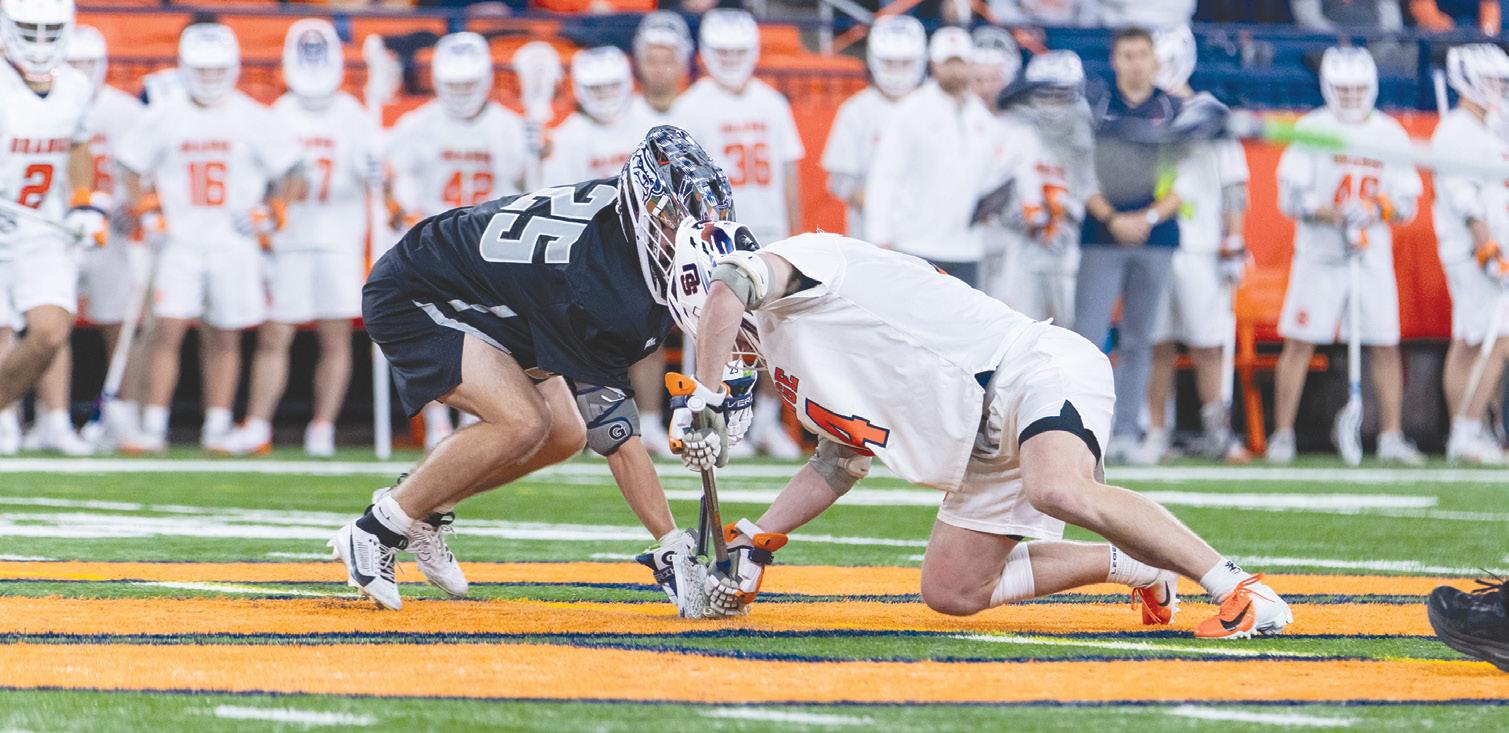
Syracuse University’s men’s lacrosse defensive coordinator John Odierna revived a centuriesold anti-Indigenous phrase and branded it across the backs of the team’s practice jerseys.
The phrase, “burn the boats” or “burn the ships,” coined by Spanish conquistador Hernán Cortés, is a nod to his brutal massacre, enslavement and colonization of the Indigenous Peoples of the Americas. In a game that has always been and will always be Indigenous, “burn the boats” has no place in it.
Five hundred years ago, Cortés embarked upon a military conquest of Mexico. Acting under the authority of the Spanish Crown and the Catholic Church, Cortés’ voyage was justified by the Doctrine of Discovery. The Doctrine of Discovery stated that any land not inhabited by Christians was available to be claimed and exploited by Christian colonizers. If Indigenous people inhabiting these lands couldn’t be converted to Christianity, they were enslaved or killed.
When Cortés arrived in Mexico, he ordered his men to burn or sink their own ships so that there would be no option but to continue their conquest of Indigenous Peoples of the “New World.” What resulted was the largest trade of enslaved Indigenous people in North America. Cortés led the way, becoming the largest owner of enslaved Indigenous people in Mexico. To mark their enslavement, Cortés branded the faces of Indigenous men, women and children with symbols of the Spanish Crown.
Given the colonial history of the phrase “burn the boats,” using it as a boastful slogan in any sport would be deplorable. But to use it in lacrosse, a sport still widely known as an Indigenous game, is especially cruel.
Under the leadership of Gary Gait, the team can’t be ignorant to the fact that lacrosse is called the Medicine Game or The Creator’s Game, among Indigenous Peoples locally, especially the Haudenosaunee (Mohawk, Oneida, Onondaga, Cayuga, Seneca and Tuscarora). It’s traditionally played among the Haudenosaunee to heal those with illness and for the enjoyment of the Creator.
column
The Medicine Game is played to give thanks. Lacrosse’s existence is a testament to the fact that, despite colonization’s efforts to stamp out Haudenosaunee culture, the Haudenosaunee resisted.
The Doctrine of Discovery, used to fuel Cortés’conquest, is still wielded against Indigenous people. In a 2005 case, the United States Supreme Court applied the Doctrine of Discovery to prevent the Oneida Indian Nation of New York from regaining control over land illegally taken from them by the state of New York.
Further, colonization has resulted in the significant loss of the Haudenosaunee’s ancestral homelands. The Haudenosaunee once maintained a land base in New York of nearly 25 million acres. Today, as a result of illegal takings, the Haudenosaunee land base has been reduced to less than 100,000 acres. SU sits on the original homelands of the Onondaga Nation (capital of the Haudenosaunee Confederacy); the Onondaga Nation which once held 2.6 million acres across New York, now holds a mere 7,300 acres.
The Syracuse men’s lacrosse program supposedly celebrates the roots of the lacrosse as an Indigenous Medicine Game, yet espouses settler-colonial rhetoric and the European conquest of Indigenous Peoples of the Americas. While Odierna defined this men’s lacrosse season by pro-colonization rhetoric, the Haudenosaunee, the founders of the game, are defined in part by their resistance to colonization.
“Burn the boats” is a grotesque phrase, especially given that Indigenous students seek out SU as a place where their culture and history is revered, not ignored. Indigenous lacrosse players have also always played for SU — and they currently play for SU. Yet, this lacrosse season, SU’s use of the phrase demonstrates that Indigenous genocide isn’t just ignored, but effectively celebrated.
SU taught us to think critically about history and to draw connections between the past and the present. Our time at SU shaped our commitment to continuing to fight for a better future for the next generation of Indigenous students. To us, a better future for Indigenous people means correcting historical inaccuracies, respecting the crucial contributions of Indigenous people
to our society and committing to learning from past atrocities.
As Indigenous alumni of SU, we urge that this matter be addressed immediately. Any use of the phrase “burn the boats” should cease. The entire men’s program staff should be mandated to attend cultural competency trainings. Above all, the program and Odierna should issue a public apology and Odierna should be held accountable for his poor lapse in judgement.
In a statement to The Daily Orange responding to this piece ahead of publication, SU Athletics wrote, “We thank those in our community who brought the concerns associated with this phrase to our attention. The team will not be wearing these warm up jerseys going forward.”
The celebration of both settler colonialism and Indigenous genocide has no place in the
Medicine Game. As longtime supporters of SU lacrosse, as SU alumni and as Indigenous people, if the Syracuse men’s lacrosse team’s quest to win a national title is shaped by the glorification of Indigenous genocide, the team doesn’t deserve to win; in fact, they deserve to lose.
Beth Margaret Wright ’15, Senior Staff Attorney, Native American Rights Fund (Pueblo of Laguna) and Hugh Burnam PhD ’23, Assistant Professor, Roswell Park Comprehensive Cancer Center (Mohawk Nation, Wolf Clan). They can be reached at bmwrig01@gmail.com and hburnam23@gmail.com. Co-author Hugh Burnam’s father was the dedicated and renown Syracuse lacrosse player and coach of the Haudenosaunee Nationals, Mark Burnam.
Haynie’s accessibility to students, internal knowledge are valuable
By OlaRose Ndubuisi columnist
The new chancellor isn’t someone you’d expect to see as you walk around campus. I found myself hesitant to speak when I noticed a familiar man in a suit briskly walking out of the Whitman School of Management on my way inside. His face looked familiar from recent photos.
“Are you Dean Haynie?” I asked.
Without knowing who I was or whether I was a Whitman student, he smiled, shook my hand and said his name was Michael. I introduced myself, telling him my majors were biology and journalism.
“What are you doing here at Whitman?” he asked.
I explained that I was interviewing students for this article on reactions to his appointment as chancellor.
“Oh,” he said, laughing.
I added that while I initially thought an external hire for chancellor would be better, I’d since reconsidered.
Given Chancellor-elect Mike Haynie’s nearly 20 years of involvement at Syracuse University and his experience working closely with students as the Whitman executive dean, an internal appointment now seemed like a strong choice.
“It’s all about the students,” Haynie said.
The Board of Trustees’ decision to appoint Haynie as the first internal chancellor since 1971 stands out, and for good reason. He’s worked alongside students and faculty in his time at SU as a professor and senior leader.
This familiarity is valuable. An external hire may bring knowledge and experience from another school, but what works elsewhere doesn’t necessarily translate to SU’s array of concerns and needs. Haynie’s perspective is shaped by years within this environment, putting him in a stronger position to lead it forward.
I’m impressed by the impact Haynie has had on SU over the past decade, particularly through his leadership and involvement in initiatives like the National Veterans Resource Center. This personal experience makes him a compelling choice for chancellor.
Before coming to SU, Haynie served as a United States Air Force Officer for 14 years. His commitment to supporting veterans at SU feels meaningful and suggests a passion for prioritizing the people within the university.
Haynie is the executive director and founder of SU’s D’Aniello Institute for Veterans & Military Families, which offers programs, education and training to transitioning service members, veterans and military spouses. He’s behind the development of the NVRC at the Daniel and Gayle D’Aniello Building, where his announcement ceremony as chancellor was held.
To me, an integral part of being a leader is servant leadership, leading humbly by example, putting others first and meeting people where they are. I expect Haynie’s passion for SU will help him serve the community as chancellor, as he has for the veteran community and Whitman.
Considering how easily it was for me to bump into Haynie, it’s refreshing to see a
friendly, recognizable face stepping into the role of chancellor.
Kerubo Mekenye, a Whitman sophomore majoring in Finance and Business Analytics, said she has heard of “how big of a heart” Haynie has for SU students.
“He will get lunch with students or he’ll just talk to them in the hallways,” Mekenye said. “It’s cool that he is invested in the people’s lives here in Whitman.”
A few students shared that their brief yet personal interactions with Haynie left positive impressions. CJ Bruno, a freshman with accounting and finance majors, who met the chancellor-elect earlier in the school year, recounted how Haynie was excited to hear they shared a hometown of Philadelphia.
“I didn’t feel like I was talking to some super high-up,” Bruno said. “I felt like I was talking to a normal person, a normal professor. He was super personable.”
We need a chancellor who is accessible and enjoys taking time out of their day to talk to students, making them feel welcome. Even from my short conversation with Haynie, I found him inviting and attentive.
But, ultimately, what matters is the decisions Haynie makes as chancellor once he begins on July 1. His experience at SU should inform a broader vision, one that allows his passion to spread beyond Whitman and benefit the entire university.
His track record offers a clear model. At Whitman, he has driven growth through initiatives like the Center for the Creator Economy, a joint venture between Whitman and the Newhouse School of Public Communications. Notably, Haynie was also a key leader in developing Transformation 2030, a five-year plan to elevate Whitman to a top 25 undergraduate business program by 2030.
Some Whitman students said they would like the new chancellor to improve financial aid for students and decrease the tuition to attract new students. The 2025-2026 tuition for undergraduates living on campus is $66,580 and the total cost of attendance with health insurance is $94,792.
Despite Haynie’s familiarity with how SU typically operates, I hope he will still think outside of the box, consider students’ concerns and forge a new path.
While many students had opinions about Haynie, several I spoke with expressed that they were unaware a new chancellor had been appointed or had not done any research on him. Others said they didn’t feel like the decision directly impacted their daily lives.
Although the chancellor’s role can feel distant, especially for freshmen, I urge students to take an interest in learning about the new leadership. Consider what you want from SU, what you value and what you hope will change.
OlaRose Ndubuisi is a freshman majoring in biology and journalism. She can be reached at oandubui@syr.edu.
eli schwartz asst. photo editor
avery magee photo editor
The stretch included a February matchup with Harvard, an Ivy League weekend against Princeton and Penn, a meeting with Johns Hopkins and a West Coast swing to Air Force and Denver. Making it back and forth from those campuses has racked up SU’s mileage. Syracuse’s month-long road trip started poorly with defeats to Harvard and Princeton. The Orange needed a dramatic overtime comeback in their victory over Penn. It was smooth sailing from there, though, as SU won its next three before returning home last Sunday.
“I think for this year, it’s a great schedule,” Gait said on Jan. 22. “It’s what we need if we want to make a run at the end.”
12 points
Joey Spallina is 12 points away from breaking Mike Powell’s all-time Syracuse points record. Yes, the senior would probably exchange every single point in his career for a national championship in May, but that’s not how it works. Spallina’s impending accomplishment shouldn’t be glossed over.
Mike, along with his brothers Casey and Ryan — who both now rank third on the all-time list — are some of the best college lacrosse players ever. Spallina won’t only likely break his record; he will shatter it.
The Orange have five regular-season games remaining, plus a potential run in the ACC and NCAA Tournaments. Spallina is averaging 4.75 points per game in 62 career contests, as well as a career-high 4.9 points this season.
Even if Spallina were to enter a monumental slump, Mike’s record is bound to fall. A bad stretch is also unlikely.
Since being shut out against Princeton, Spallina is averaging 5.6 points per game, including three outings of more than seven points. If the senior keeps that up, he could break the record against North Carolina in Chapel Hill on April 4, but he’ll likely reach the mark against Virginia on April 11.
It would be a poetic moment, since former SU coach John Desko is getting immortalized in the JMA Wireless Dome’s ring of honor at halftime. Desko not only coached all the Powell brothers but also recruited Spallina before he left the program in 2021.
Michael Leo’s 13 assists Michael Leo isn’t known for being an elite distributor. Usually, SU relies on his speed to create offense off downhill dodges from the wing.
Syracuse’s Michael Leo has already logged a career-high 13 assists near the mid point of his senior season. eli schwartz asst. photo editor
However, Leo has already surpassed his career high in assists with 13. He totaled just 12 dishes last year and 17 combined over his freshman and sophomore campaigns.
This year’s production can be boiled down to Leo playing more attack. Gait has flirted with that idea in the past, but Leo has mostly come out of the box as a midfielder at SU. Now that he’s on the field for almost every possession, he has more chances to put up points.
Leo spent a few games at midfield this year while the Orange experimented with Payton Anderson at attack, but over the past month, attack has been Leo’s spot to lose. Entering 2026, Leo never had a three-assist game. That changed against Harvard, when he recorded four assists, then three the following game versus Princeton.
And the senior’s scoring prowess remains. Leo recorded a career-high five goals twice in Syracuse’s last three games. It’s no secret he’s one of SU’s X-factors, and if he keeps up his offensive production, its offense will continue to thrive.
38 man-down defense opportunities If teams want to win national championships, discipline is key. If the SU wants to go all the way, it’ll have to clean up its penalty issues. The Orange have been flagged 38 times this season, which is the third-highest mark in the country.
The only teams that have had to defend more man-downs this season are Queens and Iona — programs that aren’t even in the same stratosphere
as SU. The Orange are still killing 71% of those penalties, the 22nd-best mark in the country.
Though it could come back to bite them at some point. Chuck Kuczynski was ejected and earned a three-minute locked-in penalty with Syracuse up six late Sunday. Six days before, Drew Angelo’s minute-long penalty allowed Denver to cut SU’s five-goal lead to two.
Syracuse won both those games, but it’s walking a fine line.
“We’ve been talking about that quite a bit lately. Just mental toughness, making good decisions and not getting caught up in the frenzy of a game where the calls are made,” Gait said after SU beat Georgetown. “If that’s a one-goal game, and we do that, it could cost us.”
58.3% adjusted faceoff win rate
Compared to last season, John Mullen is having a slight down year. But he’s hitting his stride recently, and it’s no surprise SU has won five games in a row because of it. As a team, SU has an adjusted faceoff win rate of 58.3%, according to Lacrosse Reference. Adjusted win rate accounts for opponents’ strength, rather than just tabulating the raw numbers.
In each of its last four games, Syracuse had an adjusted win rate over 60%. The Orange only reached that mark twice in their first six games. It also had a season-low 38.1% mark against Penn, where Mullen won just one of his first 10 faceoffs.
Eventually, he found a rhythm and sparked a 4-0 run to force overtime. Mullen then won
before to 14-18. This season, the Saints registered a 23-12 record, won the Metro Atlantic Athletic Conference Tournament and narrowly fell to No. 1 overall seed Duke in the first round of March Madness.
McNamara, 42, takes over Syracuse’s program from the recently fired Adrian Autry, who went 49-48 across three seasons after replacing Jim Boeheim in 2023. Before becoming Siena’s head coach, McNamara was a graduate assistant at SU under Boeheim from 2009-11 before being promoted to an assistant coach for the 2011-12 season.
When Autry was promoted to head coach, McNamara became SU’s associate head coach for the 2023-24 campaign before he left to become Siena’s head coach. Of course, McNamara is one of the best players to ever play for SU, too.
A four-year starting point guard from 2002-06, McNamara’s No. 3 is immortalized in the JMA Wireless Dome. Most notably, he helped Syracuse win the 2003 national championship, and he holds school records for career 3-pointers (400) and minutes played (4,799).
As the ninth head coach in program history, McNamara will look to help the Orange end their five-year NCAA Tournament drought, which is the program’s longest spell in over five decades.
justingirshon@gmail.com
@JustinGirshon
the most important faceoff of the game, and Leo subsequently scored the game-winner.
Mullen — who’s won 57% of his faceoffs — is set to face some real tests in ACC play. North Carolina’s Brady Wambach leads the nation in faceoff percentage, winning 70% of his draws. Duke’s Cal Girard is also at 63.6%, while Notre Dame freshman Aidan Diaz Matos is at a respectable 55.7%.
The Orange specialist will have to be on his A-game as SU heads into the business end of its season.
zakwolf784254@gmail.com @ZakWolf22
However, things escalated with Monster. When she first ventured to the facility, Davis asked Guzik why she changed clubs. Guzik said she wanted to play with the best. Davis chuckled and told Guzik she lacked the ego of the best.
Guzik didn’t develop the needed confidence overnight. First, she sat deep on the midfield depth chart.
“Lacrosse didn’t feel the same as it always has. It wasn’t fun,” Guzik said. “I was overthinking a lot. Every mistake, every single pass, every shot.”
DeMartino, who specializes in helping athletes’ mentality, met Guzik during her senior year of high school. DeMartino noticed Guzik’s mixed signals from last year’s SU coaches and endeavored to eliminate her rigidity.
“You got to learn how to let it go and just get back to the fun of the game and that freestyle mentality,” he said.
Guzik flourishes out of structure, when she’s running all over the place. Watching a Syracuse game, you can’t possibly miss her — unless she sprints by in the blink of an eye.
In 2019, her lacrosse-focused trainer, Shannon Brinson, was at a Spencerport game to observe his senior client and future Northwestern great Erin Coykendall. He squinted. Not at Coykendall, but a little seventh grader playing up on varsity, sprinting at light speed.
“Yo, who is that?” Brinson said. “The person I was standing next to was, like, ‘That’s Molly Guzik. I’ll get you in contact with her father.’” Brinson and Guzik have trained since the COVID-19 pandemic, rewiring shot mechanics, strength and first-step quickness.
This past offseason, Guzik awoke at dawn every day and made homemade bread and eggs with a Greek yogurt bowl. She’d then compile several thousand reps of wall ball and study film for hours. She hit the hay early every night, exhausted from the film.
“I don’t know if I’ve had a player watch as much film as she does,” Thorpe said. “She’s a student of the game. She’s a lax rat.”
In eighth grade, Brinson tossed Guzik tennis balls as she laid down to help bolster her frame taking draws or knocked her over to fix her balance to help her prepare her for college lacrosse.
Her preparations were ratcheted up another level with the 2024 Monster Elite squad, ranked the No. 1 club. Her future Orange teammate Bri Peters and Maryland’s Devin Livingston flanked her in the midfield. The team had such highlytouted prospects that four schools, including SU, visited Guzik and three of her teammates’ at their houses when recruiting opened on Sept. 1, 2022.
Even being there, though, would’ve been a distant dream this offseason. The Orange were picked 13th in the Atlantic Coast Conference Preseason Poll. Most of their roster was unproven at the college level. Yet, through a swift rebuild this season, Legette-Jack showed she’s built for the modern era, a competitive marketplace where she must fight to retain her best pieces and continue to attack the transfer portal year after year.
As Syracuse Athletics changes around her — with a new chancellor, athletic director and men’s basketball head coach — investing in her work could make SU a legitimate national presence. If her history is any indication, SU won’t regret betting on Legette-Jack.
“In order for it to go higher, those people are gonna have to help me take it higher,” Legette-Jack said of Syracuse’s new administration. “And I trust that it’s going to happen.”
When Legette-Jack last occupied this stage — a March contest at Gampel — her roster construction was far different. The squad consisted either of transfers from Buffalo, whom Legette-Jack brought with her in 2022, or SU’s own recruits. The Orange enjoyed a special season with Dyaisha Fair helming the offense before bowing out to the Huskies again.
But with Fair leaving, Legette-Jack failed to capitalize on SU’s momentum in one of her first offseasons of the name, image and likeness era. Syracuse picked up just two players in the portal, neither of whom made significant contributions in an abysmal 12-18 season that brought the Orange crashing back down to Earth.
Legette-Jack admitted she questioned her satisfaction with the program at the time. She knew, to get her love for coaching back, there needed to be changes.
“Things can go sideways pretty quickly,” Auriemma said. “Felisha came in and started to get the thing back to where it was — and it’s never a straight line uphill — going upwards.”
To do so, Legette-Jack reset hard in the offseason. She brought in eight new players: four transfer additions and four new freshmen.
“It’s the first time I remember anyone showing up at houses in 10-15 years,” Monster coach Craig Chamberlain said.
While her confidence rode sky-high with Monster, Guzik and Spencerport couldn’t recreate the same success, where her teams hovered around .500 during her tenure. Despite that, Guzik amassed 221 goals and a program-record 469 draw controls in her career. The key was her film study. Spencerport head coach Tara Pittman was impressed Guzik compiled her own clip list.
Pittman said Guzik was another coach on the field. But any miscues wouldn’t cut it under former Syracuse head coach Kayla Treanor, who wasn’t afraid to pull her. Guzik never started in 19 games.
“Coaches told her five different things,” DeMartino said. “Molly’s got a really good bullsh-t.”
That meant Guzik always went with the flow and rarely complained. Trying to align with the coaching staff’s vision, it seemed she had to. Guzik felt she couldn’t question a staff that landed in the Final Four in back-to-back seasons.
On the scoresheet, where Guzik ranked eighth for the Orange with 14 goals, it seemed she
played a major role. But in the last five games of the season, she only mustered one shot on goal.
“I would get down on myself,” Guzik said. “I’d be scared to play my game the way I want to play.”
When she met Thorpe and his staff this offseason, she noticed their relaxed demeanor. Seeing Ward, a former teammate in an unofficial coaching position, was another assurance. Now, they often bounce ideas off each other as Ward tweaks Guzik’s game.
Guzik’s freshman-to-sophomore growth seemed out of left field, but Davis said it made sense. Guzik was Inside Lacrosse’s No. 11 recruit in 2024, and her switch from midfield to attack this year opened the door for a breakout. He described it as Syracuse-esque, saying only Thorpe or Gary Gait could enact it.
The results have been impressive. Look at her six goals against then-No. 4 Northwestern . Or her lacing an impeccable assist across No. 20 Virginia’s crease.
“What you’re seeing now is who I’ve been seeing for the last four years. It’s not a shock to me,” Brinson said. “Finally, she’s able to play lacrosse and not have to think, not have to
Just about every pick was a gamble, but LegetteJack hit the nail on the head.
First was USC transfer Dominique Darius, who played sparingly in four years at UCLA and USC. When the former four-star recruit committed to the Orange in April 2025, she did so sporting a career scoring average of 3.6 points per game. She finished the year as one of the top point guards in the ACC, averaging 12.6 points with SU.
Laila Phelia was, on paper, Legette-Jack’s biggest get of the portal cycle. The former All-Big Ten First Team selection was one of the best scoring guards in the nation at Michigan before a retinal detachment shortened her lone season at Texas. She wasn’t sure if she’d ever be the same player.
When she entered the transfer portal last offseason, Phelia told The Daily Orange she only spoke with a few schools, including powerhouse programs LSU and South Carolina. But LegetteJack was the only coach who understood what Phelia needed to be back at her best. With Legette-Jack’s trust in her senior year, Phelia became SU’s go-to scorer.
“(Legette-Jack) was the one coach that really, truly felt and understood exactly what I was going through,” Phelia said with teary eyes after the UConn loss. “Her confidence in me straight off the bat, it just gave me a sense of belief.”
The most revolutionary addition of the offseason was Uche Izoje, who practically came out of nowhere to become the ACC Rookie of
worry about getting pulled. She could just go play and be Molly.”
After SU upset then-No. 6 Yale on March 17, Guzik spotted a couple dozen girls decked in matching grey and blue sweatshirts with fatheads of her face. It was Pittman and Guzik’s former Spencerport teammates, who made the hour-plus schlep to the JMA Wireless Dome to support their esteemed alum. The sophomore embraced Pittman, who was on the verge of tears. Guzik doesn’t think about tears. She never shed any, even in last year’s melancholic patches. All Guzik needed was the freedom that let her keep shooting, even when she failed, to turn her subtle smile into a gleam.
She squints at the sideline before every opening draw. Her teammates repetitively chant her name, and she locks eyes with her coaches. At last, she’s free. Free to play her lacrosse. “It’s a mindset flip,” Guzik said. “(The SU coaches) give you all the confidence that you need as a player. Anything and everything that you could want as a player.”
jaglick@syr.edu @jason_glick
the Year. Auriemma joked that he wished Izoje would hurry up and be WNBA Draft-eligible so he wouldn’t have to play her again. She went from an unknown prospect to one of the brightest stars in college basketball.
“(Legette-Jack) does an incredible job of identifying talent,” Auriemma said. “She took a big chance on (Izoje). She’s the best player we’ve seen this year.”
Retaining that generational talent Auriemma spoke of — Izoje — should be priority No. 1 this offseason. Syracuse had a budding superstar fall into its lap. It can’t allow her to leave for greener pastures, and the deciding factor will likely be NIL. Without a significant investment, LegetteJack can’t possibly retain her current stars while actively searching for her next ones.
After the UConn loss, Izoje said she has “not yet decided” whether she’ll return to the Orange next season, but she will “very soon.”
Meanwhile, Darius — who missed most of the postseason due to a left hand injury — is in the process of applying for another year of eligibility. If the Orange can return her or Izoje to pair with soon-to-be-senior wing Sophie Burrows, the foundation is set.
Keeping them will come with a price, though. That price has been the separating factor between Syracuse and the upper echelon of collegiate basketball programs.
The reality is that Syracuse will never be the next UConn. Much has been made of LegetteJack’s emotional postgame rant, railing against SU’s repeated scheduling against the Huskies in March. They’re a feared program, something Legette-Jack wants Syracuse to one day become. The two programs’ latest meeting led to utter humiliation at Gampel. There was no better reminder SU has work to do.
But the signs of potential sustained success are hard to ignore. Legette-Jack’s laid the foundation for something special. Her swift rebuild of the Orange this season showed she has the skills to make Syracuse a legitimate contender in college athletics’ new era.
Should this new regime of Syracuse athletics choose to invest in the program, perhaps LegetteJack could one day help SU hang one of those banners in the rafters of the JMA Wireless Dome. harrispemberton@gmail.com
Head coach Regy Thorpe’s hiring empowered Syracuse midfielder Molly Guzik to lead the Orange with 27 goals and become its draw specialist this season. charlie hynes staff photographer
Syracuse women’s basketball head coach Felisha Legette-Jack helped turn SU into an NCAA Tournament team in 2026. tara deluca asst. photo editor
Pat March, John Odierna competed in D-III before coaching SU
By Nicholas Alumkal sports editor
Pat March and John Odierna, Syracuse coordinators, have crossed the country together, recruiting and watching sporting events. They’ve been to NCAA Tournament basketball games in San Diego, Major League Baseball games in Minnesota and Southeastern Conference football championships.
Close friends, right?
“You got to be around people you love to spend time with, and I’m lucky enough to do that with Pat every day,” Odierna said.
But on May 15, 2010, on a 70-degree, sunny, breezy day in Gettysburg, Pennsylvania, the two were close in a different way. Odierna, a Gettysburg defender, was taking the field against March, a lefty attack for Roanoke, in the Division III NCAA Tournament Second Round. March’s Maroons triumphed in the thrilling 11-10 overtime victory.
Now the two are assistant coaches for No. 5 Syracuse. March has been its offensive coordinator since 2020, while Odierna has been SU’s defensive coordinator since 2024. Before they shared the sidelines on one of the nation’s preeminent college lacrosse programs, they were facing off at the D-III level.
The two faced in the NCAA Tournament again the next year — with March as a Roanoke assistant coach and Odierna in his senior season — and the Maroons advanced again.
They’ve shown D-III players can flourish at the top of the sport, while retaining the roots they planted playing and coaching at that level at SU.
“A lot of times, us poor Division III guys aren’t looked at as being ready for Division I, which is not accurate at all,” said Bill Pilat, March’s Roanoke head coach. “Right away, I knew (March) could succeed at any level he wanted, whether as a high school coach or Division I, II, III.”
At Roanoke, March was named to the All-Old Dominion Athletic Conference First Team and earned United States Intercollegiate Lacrosse D-III All-American Honorable Mention honors. He scored 152 goals and notched 91 assists.
“The tenacity of wanting to score, wanting to go to the goal, not (being) afraid to shoot,” Pilat said of March. “(He) played within the system, did the offense the way we wanted it done and just the intensity that he brought.”
That intensity sometimes went too far. In his junior year, March fainted running up a hill during a team-wide punishment after some players missed a meeting. As March remembers it, he couldn’t get lunch because there was a power
outage on campus. While running, Pilat recalled, March went “face down.”
“He didn’t complain,” Pilat said. “He just kept working and running until he passed out. He just couldn’t run anymore.”
Meanwhile, as a three-year starter at Gettysburg, Odierna earned USILA All-America Honorable Mention honors in 2011 after his senior year.
Whenever Odierna received the ball, his head coach, Hank Janczyk, felt a wave of relief, certain the Bullets would clear it cleanly.
“Not only was he a good player, he understood the game probably better than most defensemen I’ve ever coached,” said Janczyk, who was Gettysburg’s head coach for 34 years.
That 2010 NCAA Tournament game pitted two “elite” D-III teams at the time against each other, Odierna said. Odierna wasn’t assigned to defend March all game, but the two recalled matching up multiple times throughout.
“I didn’t really beat him one-on-one too many times,” March said of facing Odierna.
The highlights of that contest are limited and grainy, but you can see March’s Roanoke squad open the game on a three-goal run. On the last one, if you draw your eyes close to the screen, you can make out Gettysburg’s No. 10 — a dejected defender — peering off into the distance.
That was Odierna.
Gettysburg rebounded to push the game to overtime, where Roanoke scored in sudden death.
“We’re on the wrong side of it, which was tough,”
Odierna said of the loss. “And we did a lot more scout work on their end, because of their offensive (ability). I knew Coach March would be a tough assignment, so I was just trying to do my part and help us win the game.”
In that game, Odierna broke his stick for the first time all season. SU’s defensive coordinator couldn’t recall the circumstances behind the outburst, and whether or not it was connected to a oneminute slashing penalty he was assessed that day.
March scored two goals that day. If he remembers correctly, they both came in transition on a Roanoke team that liked to push the pace before the shot clock was instituted.
March began his own coaching career the following year at Roanoke. Still needing to complete classes to finish his degree, he joined Pilat’s staff as an assistant coach for the 2011 campaign, saying he always wanted to coach.
“He was just always a student of the game, in the office watching film,” Pilat said. “So I knew it would be an easy transition from that aspect.”
Roanoke and Gettysburg met again at the same stage in 2011. It was one last chance for Odierna to beat the team that had vexed him throughout his college career. But Roanoke hosted the game, and the outcome was ultimately the same. The Maroons secured a 15-9 win, simultaneously ending Gettysburg’s season and Odierna’s playing career.
“We weren’t as competitive as we would have liked to be, unfortunately,” Odierna said. “But
maybe that was the Coach March coaching effect.”
After realizing he was “more cerebral than athletic” in college, Odierna launched his own coaching career. He started at D-III’s Colby College in Maine, then went to Stevens Institute of Technology in New Jersey before moving to D-I Manhattan in 2016.
Through his rise up the divisions, Odierna has relied on many phrases Janczyk said to him. He used to roll his eyes at the sayings, but now understands their meanings. One example: Embrace the mundane.
“Be a master of the things that are boring and take no talent, and that’s just a good life skill,” Odierna said of the saying. “I try to embrace and attack the things that aren’t super exciting. And it allows you to elevate yourself, or separate yourself from other people.”
That philosophy is evident in Odierna’s helming of Syracuse’s man-down defense. Once in the late2010s, when Odierna was on Manhattan’s staff, Janczyk and some other coaches were having a late-night dinner in Baltimore. Odierna used the salt and pepper shakers to demonstrate his mandown defense. Janczyk, who has the second-most coaching wins in NCAA history, sat amazed as he watched him.
“I was taking notes,” Janczyk said. “I was like, ‘Wow, this is a really good idea.’ And I’ve been around a while, and I’ve known a lot of the really good coaches in the country for sure, but I was really taken by his ideas of man down.”
Janczyk adapted that man-down defense until he retired in 2021.
After one year on Pilat’s staff at Roanoke, March moved to D-III Dickinson, then made the jump to D-I at Vermont in 2014 and Princeton in 2017. What’s his biggest takeaway from playing for and working alongside Pilat? Keeping things simple.
“Simple doesn’t get forgotten,” March said. “It doesn’t get messed up, usually. So if you can keep things kind of basic for the guys, they’re able to understand it easily.”
Odierna and March admit they don’t think about their two matchups much. Their memories of that D-III NCAA Tournament contest are fuzzy. However, the lessons learned from playing at that level are clear, and their lasting bond is even clearer.
“The D-III Mafia, if you will, have extra pride, all root for each other,” Odierna said. “It’s a special opportunity to work in a place like Syracuse, but even more so special to work with a friend who also is part of the D-III crew.”
njalumkal@syr.edu @nalumkal
By Zak Wolf senior staff writer
Just like that, Syracuse is two-thirds of the way through the regular season. With five games until the postseason, the Orange are tied for the most wins in the country, though with the caveat that they’ve also played the most games.
Still, Gary Gait is probably satisfied with where his team is heading into Atlantic Coast Conference play. SU’s back-to-back February losses are in the rearview mirror. Since then, Syracuse has won five straight games, one shy of its longest winning streak under Gait.
More importantly, Syracuse is No. 2 in the Ratings Power Index, only sitting behind Richmond. RPI is key in determining NCAA Tournament seeding, and as long as SU doesn’t have a
that don’t need to allocate part of their $20.5 million revenue share toward football.
But here’s where things get interesting, folks. ESPN’s Pete Thamel reported the Orange expect to have a budget in the top-third of the Atlantic Coast Conference next season. In Autry’s third year, SU was middle of the pack.
Thamel’s report aligns well with what new Syracuse Director of Athletics Bryan Blair said in his introductory press conference Thursday.
“NIL is one of the most, if not the most, important aspects of what we do,” Blair said. “If we don’t have talented student athletes, if we can’t win and be competitive, we can’t drive the commercial enterprise to feed this entire ecosystem.”
Blair proved through his past ventures that he can succeed with limited resources. Though on Thursday, he said he doesn’t want to resort to such drastic measures at Syracuse. He shouldn’t have to. How can SU reach its monetary peak to compete where it needs to?
monumental collapse, it’ll have a strong case for a high seed in May.
Here are some key stats from No. 5 Syracuse’s (8-2, Atlantic Coast) first 10 games of the season:
5,277 miles traveled
It’s no secret Syracuse has traveled a lot this season — 5,277 miles, to be exact. The Orange scheduled eight road games for the first time since 2012, including a six-game road trip extravaganza that lasted 37 days. It was their longest road trip since 1980.
Much has been made of SU’s road struggles under Gait. Before this season, it was 7-12 in true road games since 2022, sparking narratives that Syracuse is a “different team away from the Dome.” To dispel that, Gait put together a challenging road slate.
Well, the answer might just be looking to an old friend, one who helped McNamara elevate Siena in just two years.
Adam Weitsman must be in the equation. The former Syracuse booster who brought celebrities to games and recruits on private jets had a notable falling out with SU’s administration. He took his wallet to Siena, helping support McNamara. Syracuse.com reported this past summer that Weitsman contributed $250,000 over a two-year period to pay Le Moyne players. He paid $75,000 to help McNamara retain Gavin Doty, the Siena sophomore who averaged 18.0 points per game this season and dropped 21 against Duke. Doty could very well join McNamara at Syracuse.
Weitsman sticking with McNamara, teaming up with John and Laura Lally and creating a funding juggernaut to support McNamara is the only way forward. Simply put, it’s what successful programs are doing. It’s what the Orange failed to do under Autry, leading to pitiful rosters like the 2024-25 team, filled with mid-major transfers in prominent roles.
The eyes were already on McNamara taking over, especially once USF’s Bryan Hodgson took himself out of the running and then took the Providence job. Blair said Thursday he’d be cheering McNamara on in the NCAA Tournament, solely because of his status as an SU alum and program legend.
His turnaround at Siena in just two years is impressive and taking Duke to the limit is no easy task, as Syracuse has come to learn over the last decade. Outside options like Hodgson and St. Louis’ Josh Schertz went to the wayside organically, and other young coaches like UConn assistant Luke Murray would’ve been too risky for a program with no margin for error.
The hire makes even more sense as John Wildhack puts the finishing touches on his era. Throughout his tenure as SU’s Director of Athletics, Wildhack has proven that, whether in lacrosse or basketball, he hires coaches with connections to the school, oftentimes alumni.
Thamel reported that Blair spoke with McNamara multiple times, and it’s assumed Blair and Chancellor-elect Mike Haynie would have the
biggest say in the next head coach of a prominent program. But it’d be ignorant to believe Wildhack — and even Boeheim — didn’t have a say in the decision. There’s nothing wrong with keeping it in the family. It’s how alums stay connected. Tyler Lydon, a 2017 NBA Draft first-round pick who played under Autry and McNamara when they were assistants, told The Daily Orange the possibility of the program not having an alum at the helm crossed his mind. He thought about what the scenario might look like, since he’d no longer have ties to the coaching staff and would have to connect solely through his alma mater’s brand.
It’s a positive when you look at it from that angle, a way to keep decades of Orange players together. But what happens if the well runs dry and things go south again? Does a beloved player and assistant coach fall to the wayside again?
That can’t happen this time, both for the morale of the program and its standing. If it does, Syracuse basketball won’t survive, pushing lower into the depths of irrelevancy.
pat march and john odierna shared the sidelines at the D-III level before becoming assistant coaches at Syracuse. eli schwartz asst. photo editor
Between Michael Leo’s 13 assists and Syracuse’s 58.3% adjusted faceoff win rate, SU has won its last five games. aaron hammer staff photographer
family hire
april 2003
McNamara helps SU capture 1st national title
McNamara scored all 18 of his points in the first half of the 2003 national championship against Kansas en route to an 81-78 win over the Jayhawks for the program’s elusive first title
women’s lacrosse
november 2011-2023
Joins Syracuse coaching staff as assistant
McNamara was elevated to an assistant coaching role. As an assistant from 2011-23, McNamara recruited SU’s guards and was part of seven NCAA Tournament appearances.
march 2006
Senior year Big East Tournament run
McNamara hit multiple gamewinners and led SU all the way to the Big East title, overcoming a narrative that he was overrated
Thorpe’s trust unlocks Molly Guzik’s ceiling: ‘It’s a mindset flip’
By Jason Glick asst. digital editor
Molly Guzik isn’t snapped out of her zone easily.
When she practices alone, she writes defenders’ names, times and scores onto the ball, Monster Elite Lacrosse coach Ronnie Davis said. While Davis does paperwork at the facility, which Guzik has a key to, he jokes that he fears embarrassing her by asking, “What’s the score?”
At Guzik’s kitchen countertop back home in Spencerport, New York, she’s often glued to her computer. Her father, Bill Guzik, hesitates to speak, fearing his daughter’s retaliation. When he peers at Guzik’s computer, he sees a men’s box lacrosse game. Or a Hall of Famer, John Grant Jr., mixtape. But most of the time, it’s her own film she wants to learn from.
When she watches her freshman year film from last season, Guzik notices she played scared and found lacrosse unenjoyable. Guzik said she was subbed out for every mistake.
After stepping foot on the Ensley Athletic Center turf last fall, it hit her. Guzik finally had coaches who understood her. New head coach Regy Thorpe and assistants Nicole Levy and Emma Ward have untapped Guzik’s arsenal. After coming off the bench last season, she’s become Syracuse’s leading scorer with 27 goals through 11 games and serves as its draw specialist.
As her trainer, TJ DeMartino, put it, Thorpe’s trust felt like a 20-pound boulder being lifted off her back.
“It didn’t really feel like the lacrosse I’ve known to play,” Guzik said, reflecting on last season.
Stepansky: Gerry McNamara’s hire is familiar. SU can’t repeat past mistakes.
AIDEN STEPANSKY STEP’S SIDE
Adrian Autry’s legacy is tarnished. What began as the changing of the guard from Jim Boeheim to another Syracuse lifer turned into a nightmare. Of course, Autry isn’t off the hook. He still shoulders plenty of blame for the Orange’s last three years of mediocrity. But SU’s administration allowed it to happen and failed to allocate enough resources to compete. With a changing of the guard from top to bottom, Syracuse still went in a similar direction by hiring Gerry McNamara. He’s a program legend and long-time assistant, just like Autry was.
That’s fine. However, the Orange must change their ways to ensure McNamara doesn’t become the next chapter in a ruined reputation, ultimately moving the program further down the ladder of national relevance.
The uncomfortable truth of the modern college basketball world is that it really didn’t matter who SU’s next coach was if it couldn’t cough up enough money to support them. Sure, X’s and O’s matter between the lines, and a coach must motivate his team when needed.
McNamara obviously proved he’s able to do so, taking the No. 1 team in the country down to the wire in the NCAA Tournament. Postgame, Duke head coach Jon Scheyer even said McNamara “outcoached him.” You’d be hard-pressed to find a time an opposing head coach even dared utter that sentence when Autry led the Orange. Especially not versus a team of the Blue Devils’ caliber.
Syracuse could’ve acquired prime John Wooden, and its lineup, full of under-the-radar, cheap pickups, would still struggle to hit its stride versus teams with boatloads of cash to spend. Not to mention schools
see McNamara page 15
McNamara’s feisty No. 16 seed Saints lost to No. 1 overall seed Duke in the NCAA Tournament First Round, reintroducing him to the college basketball world march 2026
Coaches Siena to MAAC title, near Duke upset
Under Thorpe, Guzik can work in isolation and flaunt behind-the-back shots, she said. If she slips up, she won’t be reprimanded. She’ll pick her head up and correct herself.
From the outset, after the Orange’s season-opening loss to Maryland, Thorpe praised Guzik’s independent, relaxed style and everything snowballed from there.
“Everyone’s like, ‘Oh, the kid went 1-for-10. What the hell,’” Davis said. “As a coach, give me a kid in the first game of the season to shoot the ball 10 times.”
Playing for 3D Common Goal and her Spencerport squads in middle school, Guzik transcended everyone.
As Bill put it, she hit a wall where she couldn’t grow much further. Guzik played for the neighboring Greece team but not much changed.
march 2023
Jersey retirement, named SU’s associate head coach
As his 14th season on the coaching staff neared an end, Syracuse retired McNamara’s No. 3 on March 4, 2023
Returns to Syracuse, hired as head coach
Days after McNamara’s most recent March Madness moment, Syracuse hired him as its next head coach march 2026
HARRIS PEMBERTON PEMBERTON’S PLAYBOOK
STORRS, Conn. — Felisha Legette-Jack took it all in. Sitting on the end of press row in Gampel Pavilion an hour and a half before tipoff Monday evening, she watched her team get loose. The UConn student section was already packed. The Huskies’ 12 national championship banners loomed overhead.
She’d been in this building several times for March Madness and never come out with a win.
Being there, though, looking over Geno Auriemma’s legacy, served as a reminder of what Syracuse wants to become. Of course, becoming the next UConn isn’t feasible. There’s a reason there’s only one UConn. But Legette-
Jack can’t help but desire the results Auriemma’s dynasty has achieved. Who wouldn’t?
Wins Syracuse had in the 2025-26 season — double its total from last season
If Monday’s 98-45 loss to UConn showed the Orange anything, though, it’s that they have lots of work to do to become a top women’s basketball program. There’s no way around that. UConn ran circles around SU and handed it its worst NCAA Tournament loss in program history.
By hiring Gerry McNamara, Syracuse went in a familiar direction: looking to a program alum and former assistant. Syracuse cannot make the same mistakes that doomed Autry, our columnist argues. nick luttrell daily orange file photo