TAKEOFF
Editor@dailyorange.com
News@dailyorange.com
Opinion@dailyorange.com
Pulp@dailyorange.com
Sports@dailyorange.com
Digital@dailyorange.com Design@dailyorange.com EDITORIAL
The Daily Orange is an independent newspaper published in Syracuse, New York. The editorial content of the paper — which originated in 1903 and went independent in 1971 — and its online platforms are entirely run by Syracuse University students.
The D.O.’s coverage of the greater SU area is disseminated through 125 issues during the 2017-18 academic year with a circulation of 6,000 copies, a readership of 30,000 and online circulation of about 500,000 during publishing months. The paper is published Monday through Thursday when SU classes are in session, Fridays before home football games and select basketball games and in the cases of notable and newsworthy occasions, such as the firing of former SU assistant men’s basketball coach Bernie Fine over sexual assault allegations. The D.O.’s online coverage is 24/7, including while SU is on break.
To help support The D.O.’s independent journalism, please visit dailyorange.com/donate.
follow us
@dailyorange • @DOsports • @DO_pulp
@DO_Visuals • @DO_Alumni • @DO_DailyDeals
The Daily Orange • Daily Orange Sports
The Daily Orange Alumni Association
Daily Orange Deals
@dailyorange • @dailyorange.events
FOLLOW @DAILYORANGE ON SNAPCHAT
For breaking news, at-the-scene coverage, interviews and more.
Dear readers,
This is the season Syracuse head coach Dino Babers has preached about since he got the job 21 months ago. This is the season, he says, his offense justifies the hype. This is the season, he says, it takes off. Our 2017 football preview takes long looks at the faces of this movement: embattled signal-caller Eric Dungey, itinerant wide receiver/running back/return man Ervin Philips and the “cows” on the offensive line. We also introduce you to the reigning national champion's heir apparent at quarterback and detail how exactly Syracuse plans on traveling its jet-setting road schedule. This guide provides everything you need to know to get ready for kickoff. Because, if you haven’t heard, this is the season.
Thanks for reading,
Sam Fortier, Sports Editor
inside
‘The cows’ Syracuse’s offensive line has bonded as “the cows” under the leadership of starting right tackle Jamar McGloster, who is called “Moo.” Page 11
Listen up D.O. Sports’ four football beat writers predict Syracuse’s football season, including Most Valuable Player, X-factor and record. See dailyorange.com
independent student newspaper of syracuse, new york

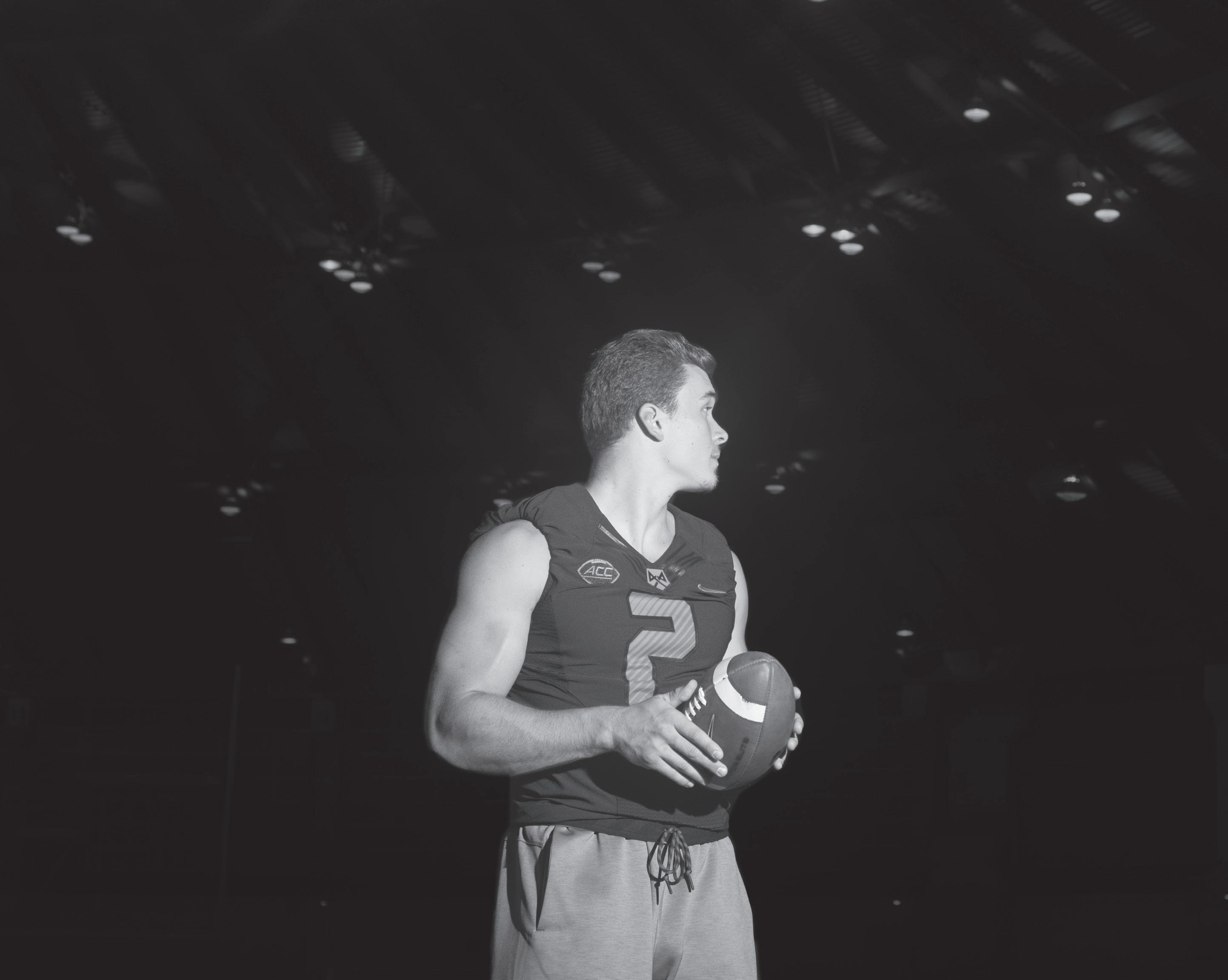
THIS SEASON, ERIC DUNGEY vows to be smarter.
BY SAM FORTIER SPORTS EDITOR
Syracuse head coach Dino Babers is not the first person to try curbing the approach responsible for Dungey’s successes and injuries. Scott Shafer, Dungey’s freshman-year coach, harped on Dungey about protecting his body by throwing the ball away instead of running. So did at least six Syracuse teammates. So did at least four coaches at Lakeridge High School in Oregon. So did at least two independent quarterback coaches. His dad talked to him about scrambling smart. When Dungey was a senior, Jennifer Schiele, Lakeridge’s concerned principal, tried enticing him into playing safer by offering a Three Musketeers candy bar, his favorite, for every time he opted not to run people over.
Now that concern rests on Babers ahead of a season that could define Dungey’s college career, as well as the perception of Babers’ fast-paced offense predicated on heady quarterback play.
Standing on the grass practice field in mid-August, Babers considered the conundrum. Dungey has asserted he’ll run less this year, as he did last year and the year before that. This time, does Babers believe him?
“I hope so,” Babers said. “I hope I believe him. … He needs to be a part of what we do.”
Afew days earlier, Dungey stood on the same field answering questions about his head. Questions about his health have dogged him since freshman year, when in Week 3 Central Michigan defensive end Mitch Stanitzek helmetto-helmet “pezzed” Dungey, the term one Nation Football League coach uses to describe hits that snap player’s heads back like Pez dispensers.
Dungey missed the next game and six
more in the time since, all due to “upperbody” injuries. College football teams cloak injuries by only distinguishing two categories: “upper-body” or “lower-body.” When SU says “upper-body” in relation to Dungey, because of his history and the hits he’s taken, it is popularly interpreted as “concussion.”
In August 2016, Syracuse.com reported Dungey has suffered two concussions, but Dungey’s father, Tim, maintained his son has only ever sustained one. One of Dungey’s former teachers and coaches said he missed “a few classes” with “a couple small concussions,” but Tim said that didn’t sound accurate and was “kind of funny, actually.”
Either way, after a full day of training camp, Dungey promised to limit any further injury.
“Coach always makes it clear that you got to protect yourself and have the family in mind,” he said. “If I’m not doing that, I’m not being smart and protecting myself. If I’m not on the field, it’s hurting the team.”
It is more important this season than any other in his life that Dungey remain on the field. Quarterbacking awards watchlisted him, and Babers publicly promised that the offense would take off in his second season. Dungey could be one of the nation’s best quarterbacks, said ESPN college football reporter David Hale, if he stays healthy.
“His ceiling is so high,” Hale said. “... He’s probably the best quarterback Babers has ever had as a head coach, including (current New England Patriot Jimmy) Garoppolo.”
In outlining the plan to stay healthy, Dungey said what he has always said, which was less running, more passing. His family and teammates are convinced that this year is the year he actualizes the long-promised adjustments in his game: to scramble selectively, to slide when he runs, to finally betray the player he’s been for his entire life.
Dungey said he wants to step into the pocket-passing role molded for him by coaches, yet the transformation robs him of the running talent that has always separated him from the rest. It was why then-SU
Eric Dungey has consistently said he’s going to run less. He had more rushing attempts per game last year than he had his freshman season.
offensive coordinator Tim Lester reviewed hundreds of quarterbacks’ tapes in the fall of 2014 and felt compelled to call a high school senior almost 2,800 miles away who held no Power 5 offers and had never received a substantial look from either of his two Division I state schools. It was why last season, after Syracuse’s upset of then-No. 17 Virginia Tech, Babers reversed his earlier assertions of wanting Dungey to run less to say the offense needed his legs to succeed.
Therein lies the duality of Eric Dungey: Running has always been crucial to his and the team’s current success, yet hazardous to his and the team’s future. He wants to change. He knows how. He says he will. And then he doesn’t.
In May 2013, before his junior season at Lakeridge, Rivals.com reporter Dirk Knudsen interviewed Dungey at a quarterback camp in Kennewick, Washington. Midway through the conversation, Knudsen said, almost as an aside, “You like to run the football, too, don’t you?”
Dungey squinted, hesitated and said, “Uh, yeah, but this year I’m going to become more of a passer.”
The next season, Dungey averaged about the same number of rushes per game as he did the year before.
At Virginia’s 33-yard line, with time winding down to halftime, Dungey sensed three refridgerator-sized defensive linemen closing in on him and took off. He darted up the middle to open turf. Four yards from the endzone, 6-foot2 UVA safety Quin Blanding squared up the then-freshman Syracuse quarterback, determined to dash Dungey’s dash. But his lowered shoulder whooshed through the air, never crunching against anyone. Dungey soared above him, hurdling into the endzone and that night’s Top 10 plays on “SportsCenter.” But on that play, Blanding wasn’t Dungey’s biggest threat. It was

Micah Kiser, the inside linebacker now missiling his 240 pounds into the space Dungey’s head would occupy in less than a second when he landed.
He first hurdled a defender in seventh or eighth grade, and it felt like an epiphany. Dungey, now 6-foot-4, has always been tall, and since he started playing as a kid, defenders threw themselves at his legs as the best way to wobble him. But at Lakeridge, Dungey played in a league that didn’t allow hurdling, and each time he jumped over someone it earned him penalty flags.
“Sometimes you don’t think, you just react,” Tim said. “That’s what he does.”
Lakeridge needed Dungey to move the ball with his legs because, opposing coaches said, the Pacers struggled to do it any other way.
“He was running for his life,” said Steve Coury, head coach at cross-town rival Lake Oswego High School. “The (offensive line) was not very good, and he played on a lessthan-mediocre team. But he could kill you that way.”
Many teams schemed strictly to stop Dungey and worried about when the structure of their plays broke down, because that’s when Dungey thrived. As he leapt over and steamrolled through their players, coaches sensed Dungey’s belief in himself to do what his team needed. Former NFL quarterback Chris Miller, who trained Dungey at camps and coached against him for West Linn High School, compared Dungey’s confidence to John Elway and Aaron Rodgers.
“He got his butt knocked off,” Miller said. “He’s laying on the sideline sometimes, always coming back the play after. He got his bell rung, and there were more moments than one. Throughout (the league), he was well-respected.”
And now here he was six months after high school graduation, having just cleared Virginia’s Blanding and on a collision course with the linebacker. He landed as Kiser’s helmet and right shoulderpad simultaneously connected, briefly though solidly, with his upper-body. Dungey’s head
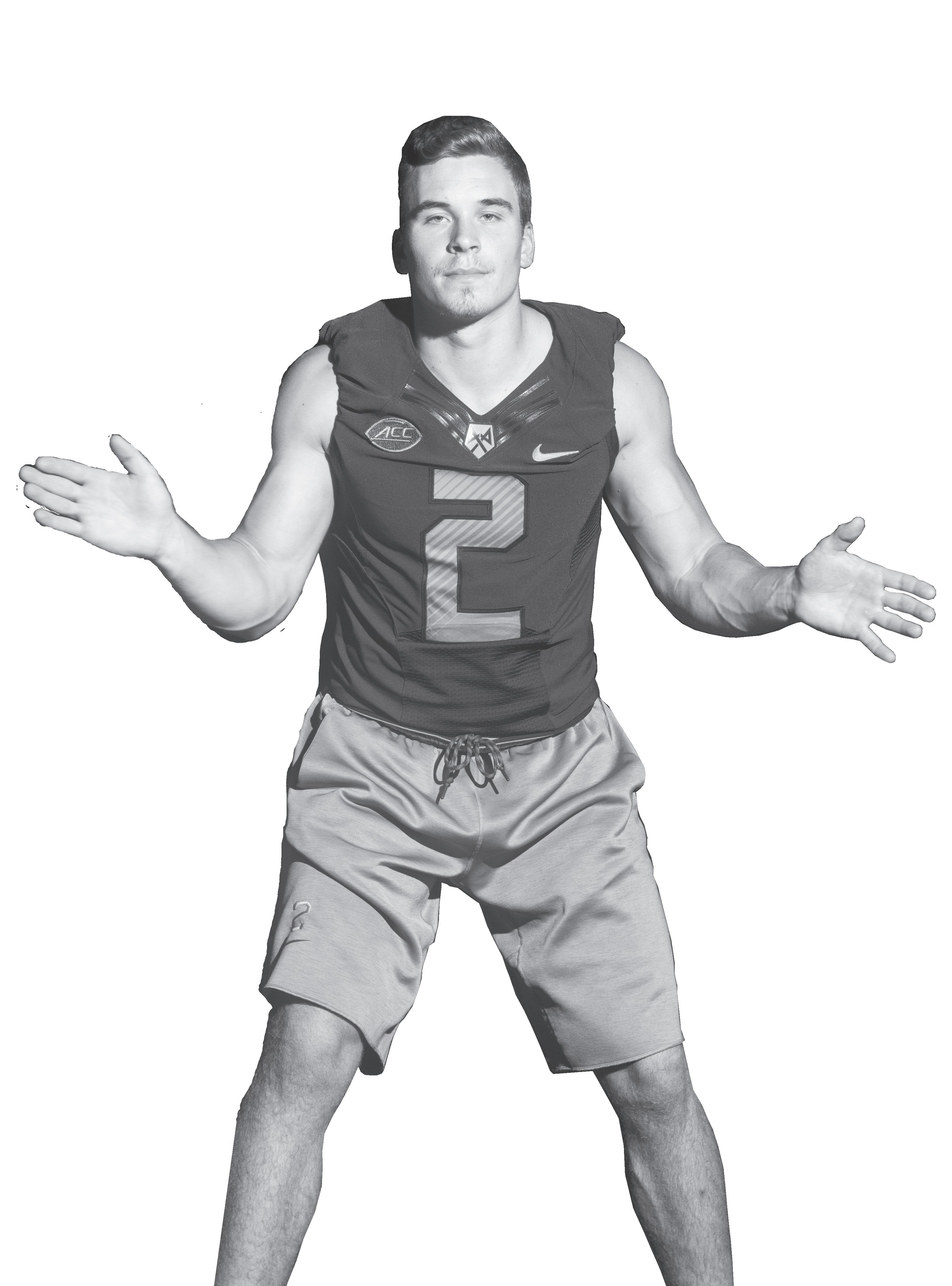
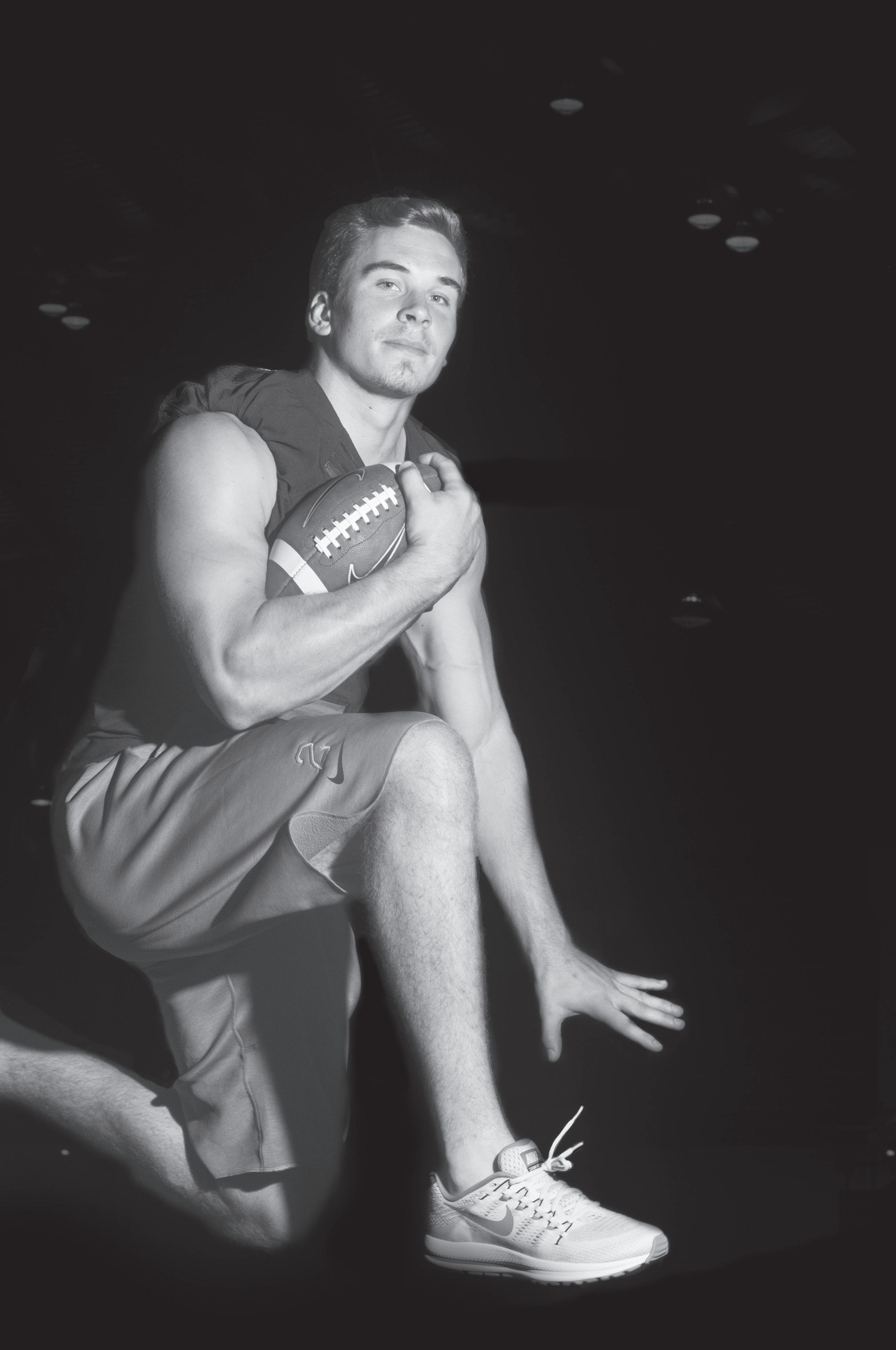
ERIC DUNGEY has thrown for 26 touchdowns and rushed for 11 more in his two, truncated seasons at Syracuse. He averaged 330.2 yards of offense per game last season.
JESSICA SHELDON STAFF PHOTOGRAPHER
whipped left as he tumbled to the foot of the “R” in VIRGINIA.
On the Scott Stadium sideline, Terrel Hunt winced. The year before, Hunt and Dungey bonded during Dungey’s official visit. They sat in a back corner of Lucy’s Retired Surfers Bar as Hunt explained “the perks of being a quarterback on a Division I campus.” Dungey, then 202 pounds, marveled at Hunt’s muscled 234. Dungey called Hunt “Pops” and texted him updates on his weight gain. More than anything, though, Hunt appreciated the way Dungey made him feel a part of the team after Hunt went down with an Achilles injury in the 2015 season-opener against Rhode Island. The injury ended Hunt’s career and jumpstarted Dungey’s, just four days after his first college class.
The true freshman threw a 32-yard touchdown on his first career pass attempt. He sometimes called plays that weren’t in the playbook but somehow became first downs. He won an overtime game. With him under center, Syracuse started 3-0 for the first time in 24 years. Throughout, Dungey frequented Hunt’s University Village apartment and stood next to him on the sidelines at games, asking, “T, what did you see?”
Dungey’s score put Syracuse up on UVA by a touchdown, but Hunt worried about Dungey because he seemed “woozy.” He asked Dungey if he felt OK, and Dungey simply responded, “Yeah.” In the Virginia visitor’s locker room at halftime, Hunt remembered Dungey approaching him and their following exchange like this.
“Hey T,” Dungey said, “what’s the score?”
“We’re up 21 to 14,” Hunt said.
“Really? Who scored?” Dungey asked.
“What do you mean,” Hunt said, taken aback. “You scored. You jumped over a guy!”
“Really?” Dungey replied. “I did that?”
Hunt nervously looked around to see if anyone else had heard. He thought Dungey was concussed. Dungey had missed the Louisiana State game three weeks prior because of the Central Michigan hit and, the week before in his return, South Florida had sacked him three times. Then, Hunt’s eyes swung back to Dungey, who was grinning.
“Nah, T,” Dungey said, “I’m just playing!”
caused the players to close ranks and support one another. Dungey and his teammates somehow remained in the hurricane’s eye and won nine games, the school’s best finish in at least a decade. Even when the conflict mushroomed and one coach quit during the playoffs, Lakeridge won its next game.
“It was one heck of an educational process,” Tim said. “... I think, looking back, you hate to say it was a positive thing, but it ended up to be a real positive thing, because I think (Eric and his teammates) learned that there are people who will write things and say things that are simply not true.”
Now, when asked about his head, Dungey still dismisses the concerns, though he again missed the final three games of last season; that “upper-body injury” was sustained after receiving a hit near his head against Clemson. Dungey has said he could have played those three games, but that Syracuse held him out. Dungey remains aware of the public perception that he lives tenuously on the edge of football eligibility because of his many assumed concussions.
“Everyone thinks that they know what happened to me,” Dungey said one day after practice, “but they’re not doctors.”
The voices close to him still offer warning.
“Oh my God,” Hunt said, “I literally, like, almost strangled him to slide. I used to yell at him at practice, ‘If you don’t slide, we’re fighting when we get in the locker room.’”
HE WAS RUNNING FOR HIS LIFE. THE (OFFENSIVE LINE) WAS NOT VERY GOOD, AND HE PLAYED ON A LESS-THANMEDIOCRE TEAM. BUT HE COULD KILL YOU THAT WAY.
Hunt interpreted the interaction as a joke. Classic Dungey, “breaking balls.”
There were occasional reminders that Dungey was a rookie — he almost missed an offensive series in overtime against Virginia because he ran back to the locker room to urinate instead of relieving himself on the sideline vents, like most players — but Hunt saw Dungey’s humor as indicative of a veteran leader’s awareness and self-assurance.
In overtime against UVA, Dungey was the subject of a second targeting penalty in four weeks. In a game that symbolized so much about the promise and pitfalls of Dungey’s style, Syracuse.com reported he absorbed 20 hits in total, including nine “he could have avoided” by sliding or throwing the ball away.
“(Coaches) want me sliding and not taking any shots,” Dungey said after the game.
“It’s not really in my nature.”
In SU’s next game, a helmet-to-helmet hit forced Dungey to undergo concussion testing. On that particular play, Tim Lester said, the quarterback scrambled when he should’ve passed. Two weeks later, trailing Louisville by 31 points with four minutes to go, another hit to the head forced Dungey to exit with what Scott Shafer called a “head” injury. Dungey did not play the last three games of the season because of an “upper-body injury.”
In February 2016, the first time Dungey spoke publicly since the season, he downplayed concussion discussion as “talk and rumors.” Syracuse had fired Shafer and hired Babers, whose offense, Dungey said, asked him to run less.
“I’m not going to be running nearly as much,” he said.
The next season, Dungey averaged more rushes per game than he did the year before.
When Dungey was a junior at Lakeridge, a season-long power struggle between two coaches
When Dungey’s natural instincts overrode his words, Hunt felt the same frustration as the two Lakeridge coaches before him. Hunt feared for Dungey the most, though, because watching his protégé play felt like looking in a mirror. Hunt relied on his legs and finished with more career rushing touchdowns (13) than passing (11). Hunt remembered playing Notre Dame at Metlife Stadium in 2014 and, even on third down with 24 yards to go, being unable to resist the beckoning of an open field.
“When you’re playing,” Hunt said, “you can’t help it.”
Hunt told Dungey about Drew Bledsoe, who in 2001 signed the then-richest deal in NFL history with New England, and six months later was knocked unconscious scrambling and never started for the Patriots again. He’d been replaced by Tom Brady. Hunt didn’t want his career’s premature ending to become prologue to Dungey’s prophecy.
“Bro, this is the worst ever,” Hunt told Dungey before graduating that spring.
“Seeing your team lose, and you can’t do anything to help. … I didn’t get to finish. I broke records, and I never got to build on it. I gave everything to this and I can’t help my team. You feel forgotten.”
This summer, Hunt said, Dungey texted him, “T, I’m sliding,” as well as an update that he was up to 222 pounds, right at the weight he wanted to absorb the hits he takes. He also hasn’t spent this past offseason learning a new offense “for the first time ever,” Tim Dungey said.
“His head is in such a great place right now,” Tim said.
In training camp, multiple wide receivers said, there has been a noticeable difference in Dungey’s approach when plays break down. That he throws short passes instead of running himself. This year is the year words finally become altered actions, Dungey said, because he understands the offense better now. Because he’s played in it for a year. Because before, he relied on running when he didn’t know what else to do.
“I definitely want to be (a pocket passer),” he said, the newest version of his annual preseason proclamation.
This season, Eric Dungey plans on running less. sjfortie@syr.edu | @Sam4TR
STEVE COURY LAKE OSWEGO HIGH SCHOOL HEAD FOOTBALL COACH
HIS HEAD IS IN SUCH A GREAT PLACE RIGHT NOW.
TIM DUNGEY ERIC DUNGEY’S FATHER
SLOT MACHINE
After
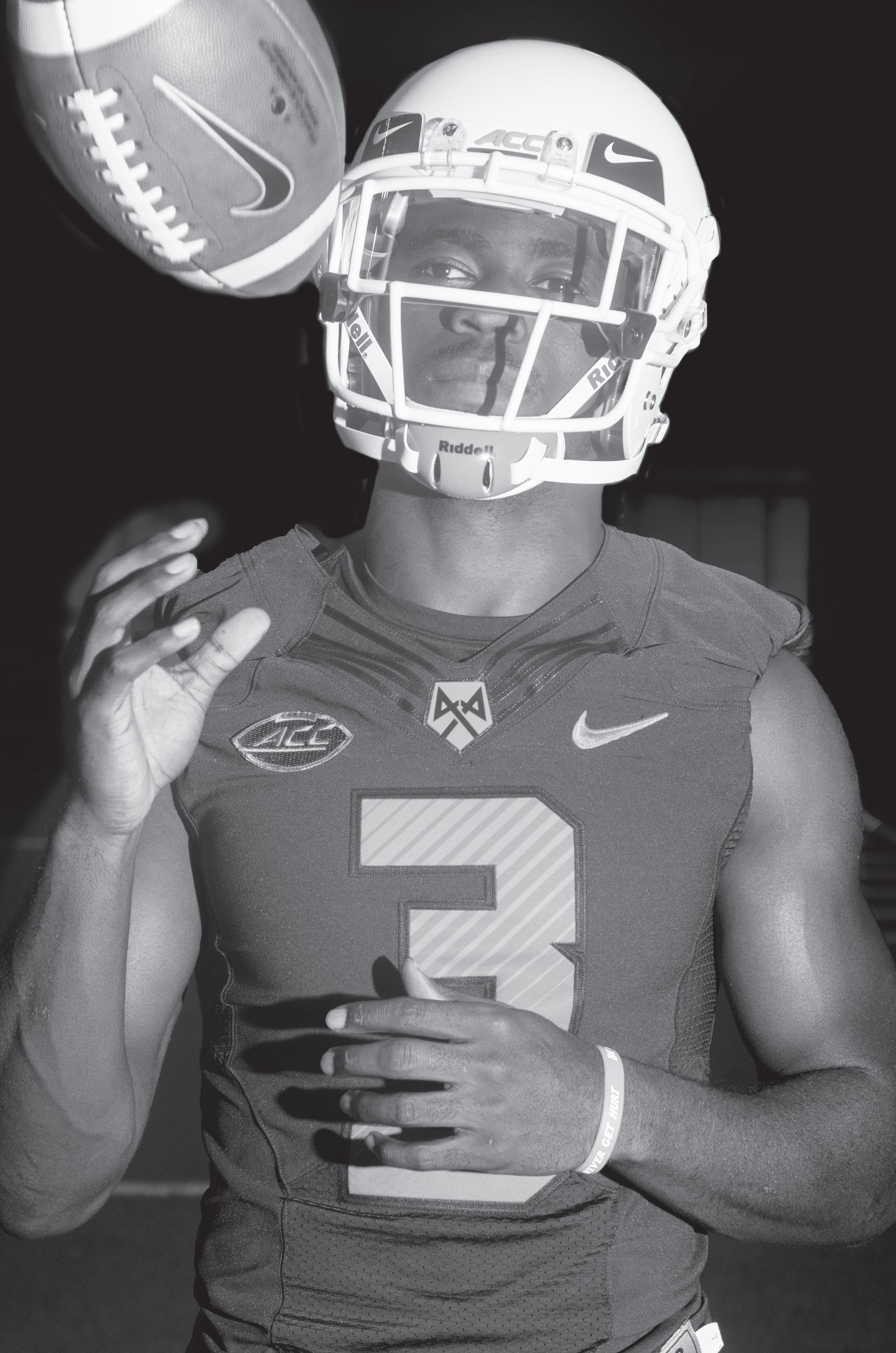
ERVIN PHILIPS BURST OFF THE LINE AND went to block linebacker Shyheim Cullen. Eric Dungey took the snap and faked a pitch to running back Moe Neal who was split-out left.
BY TOMER LANGER
ASST. DIGITAL EDITOR
Syracuse’s first-string offense was scrimmaging against the second-string defense at the start of a practice inside the Ensley Athletic Center. On the first drive, the offense went threeand-out, drawing roars from the rest of the defense standing on the far sideline. To start the second drive, Dungey looked only toward his toward his speedy slot receiver. As Cullen bit on the fake pitch, Philips planted his left foot and burst right past the now flat-footed line linebacker, catching the ball thrown to the open space down the middle.
It was a flashback to what happened frequently last year, and what will likely happen even more often when the season begins Sept. 1 against Central Connecticut State.
Philips wasn’t consistently in the slot his first two seasons. He was nearly everywhere else. He arrived as a running back, the position he started at when he was at West Haven (Connecticut) High School. He also contributed as a kick returner, and assumed the role of the primary “hybrid” under then-offensive coordinator Tim Lester in 2015.
In head coach Dino Babers’ up-tempo offense, he found a home at inside receiver, a place where he feels confident in his abilities as a playmaker. His 90 catches last season would have been the most ever for an SU receiver if not for the 94 grabbed by teammate Amba Etta-Tawo. With Etta-Tawo gone, Philips is poised to be one of Dungey’s top weapons.
“I want to be the best receiver in the ACC,” Philips said.
Even though he lined up primarily in the backfield at West Haven, the goal was to get him the ball in space. It’s why his high school coach Ed McCarthy ran jet sweeps with him and instructed his quarterbacks to throw him the ball in the flat. Philips set school records in touchdowns (88) and total offense (6,182 yards).
When Philips was in high school, McCarthy watched
many Mid-American Conference games, because they were frequently broadcast during the week. Unintentionally, it familiarized him with the Bowling Green offense run by Babers.
“I almost knew that he would be the slot receiver (when Babers was hired at SU),” McCarthy said. “He’s made for that position really. I thought it was a perfect fit with him in the offense.”
Babers said that during his first practice at SU, he and his staff instructed players to line up at whatever spot on the field they wanted to play at. Philips stood with the wide receivers.
Wide receiver Steve Ishmael predicted Philips would excel if given the chance at receiver. They have been roommates for three years and now are the two senior wideouts who will be tasked with leading the offense. They spoke about this season as soon as they got back from winter break last year, Ishmael said.
Philips said that earlier in his career, when he was being moved around a lot, he did not mind it. But from the first game last season, in which he set a school record with 14 receptions against Colgate, he knew he had found his permanent spot. After the breakout season he had last year, he is left wondering what might have been.
“Now that I think about it,” Philips said, “I wish I had the time to really get used to one spot. When you’re at one position, you get to learn it more, you learn the ins and outs and you get to improve at that position. It’s (playing multiple roles early in his career) a blessing because it allowed me to show how versatile I can be, but at the same time I wish I could have stayed at one position.”
To reach his individual goal of being the best receiver in the conference, Philips started working out at BreakOut Athlete, a local training facility that works with Division I and professional athletes.
BOA has become known for its explosiveness training, director Frank Quido said, with the majority of its clients being football players who want to get faster off the line.
It was initially difficult to develop a training regimen for Philips, Quido said, because he was already such a gifted athlete. But what stood out to Quido was Philips’ willingness to buy-in wholeheartedly to the training program, regardless of some of the untraditional exercises and equipment.
“You know, most people when they come to my facility, this training is so much different than what they’re used to,” Quido said. “But he embraced everything I asked him to do. Never questioned why, never complained this was too hard.”
The two worked together for about a month. In one
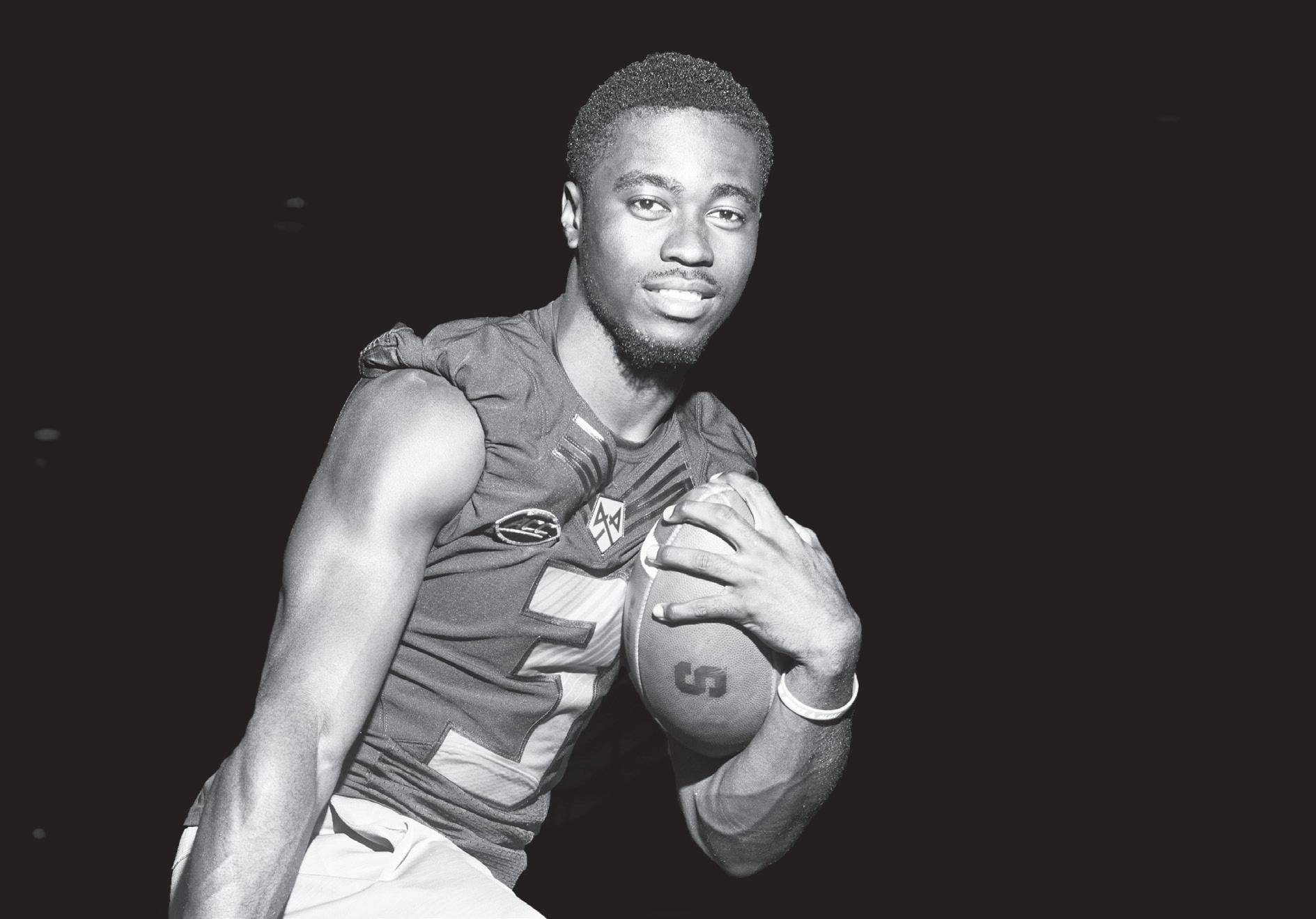
ERVIN PHILIPS had 90 catches last season, which would have been the most in a season in Syracuse history if not for the 94 nabbed by teammate Amba Etta-Tawo. With Etta-Tawo gone, Philips figures to be the top option in the passing game.
JESSICA SHELDON STAFF PHOTOGRAPHER
drill, Philips stood behind a tackling dummy and Quido, standing on the other side, threw tennis balls both to the right and the left of the dummy. Philips stood in place, seeing where the balls were coming from and catching them to improve his hand-eye coordination.
In another exercise focused on explosiveness, Philips ran on a treadmill while leaning forward until his chest touched a pole.
Philips said he feels faster and stronger than he did a year ago. Junior Kielan Whitner has noticed it too. Whitner has played safety before for SU and is currently transitioning to linebacker. In both roles, he matches up with slot receivers in practice. This summer, in guarding Philips, Whitner said the hardest part is the bevy of moves that Philips can put on, forcing a defender to not key in on just one.
“He got faster and more explosive off the line.” Quido said. “…
I THOUGHT IT WAS THE PERFECT FIT WITH HIM IN THE OFFENSE.
ED McCARTHY ERVIN PHILIPS’ HIGH SCHOOL COACH
We’re going to see him getting much more separation from defenders than we’ve ever seen before.”
Philips is still learning on the job. He struggled in his shift trying to get off press coverage. He did not realize how important it was to use his hands before the throw is even made.
McCarthy said, in retrospect, it’s a shame that Philips could not have redshirted his freshman season. Philips said he wishes he could have played in the slot all four years.
With Etta-Tawo gone Philips recognizes that defenses might key in on him as the top target. His definition of being the best receiver in the ACC means being consistent every single game, not having a “rollercoaster” season. And even though he has been doing this for only one year, he is confident he can reach that status.
“He just adjusts to things quickly,” Ishmael said. “He’s an athlete, he’s a football player and he’s been big time for us.”
He proved Ishmael right a year ago. Now, to reach the postseason goals that he and Ishmael discussed, he needs to adjust to his new role. He needs to be big time. tdlanger@syr.edu | @tomer_langer
HEAD-CENTRIC
2017
PRECISION FIT
Advanced technology allows the helmet to “map” the surface of the player’s head, and then create structures that perfectly mold to it
1917 THE TOP
This year marked the first time hardened-leather helmets were raised above the head to manage the impact of hits from the top of the head
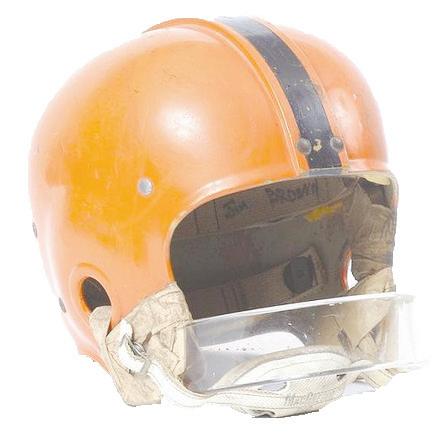
1955
JIM BROWN
Legendary Syracuse running back Jim Brown donned this helmet as a unanimous First Team All-American before his NFL Hall of Fame career
THE GAME NEEDS TO BE KEPT AS SAFE AS POSSIBLE IN ORDER FOR THE GAME TO RETAIN ITS POPULARITY, AND FOR PEOPLE TO WANT TO PLAY THE GAME, AND FOR MOMS AND DADS TO WANT THEIR SONS TO PLAY THE GAME. JOHN SWOFFORD ACC COMMISSIONER
HEAD-CENTRIC
The evolution of the Syracuse football helmet T
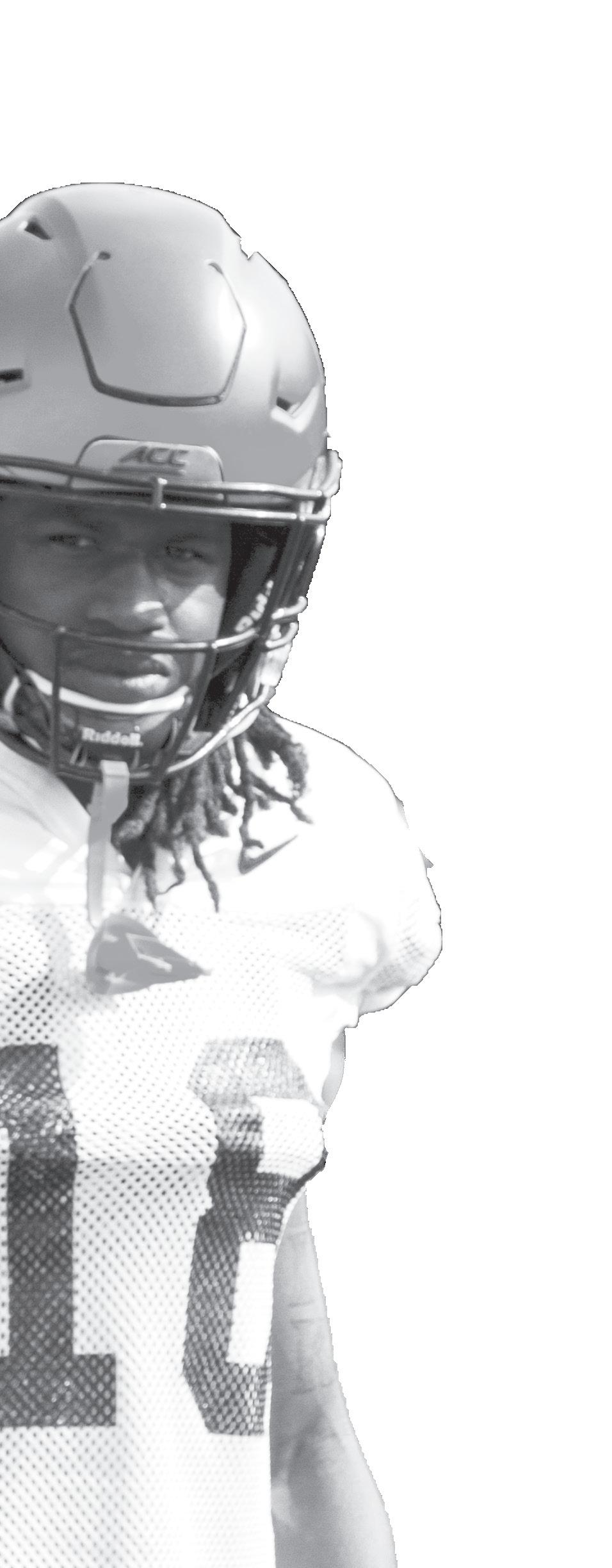
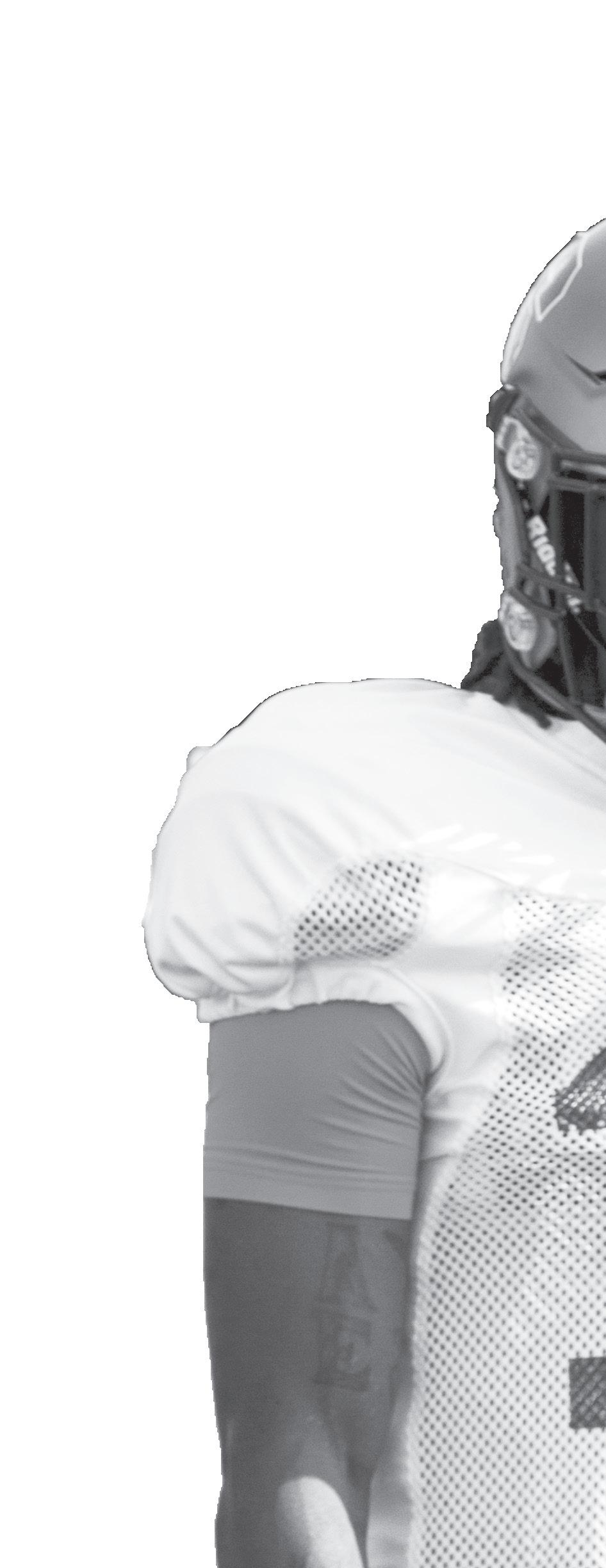
HE BIGGEST STORYLINE IN the game of football right now is player safety. At Riddell, the primary helmet provider of Power 5 teams, combatting brain injuries remains priority No. 1. Thad Ide, Riddell senior vice president of research and product development, leads a team that spends years on preparing helmets for Division I players. The last 10 to 15 years have been marked by “rapid accelera-
tion,” he said, in the the technological development of head protection. This fall, Riddell will unveil a new helmet called “precision fit,” and about five Syracuse players will don them. The idea is to balance creating a comfortable, sturdy helmet that fits the modern, sleek flow of the rest of the uniform. Since Syracuse football’s first down of football in 1889, players have slid on a variety of helmets. For decades, Riddell has been the Orange’s primary outfitter. Here’s a look at the thing that keeps players’ heads safe.
FIT
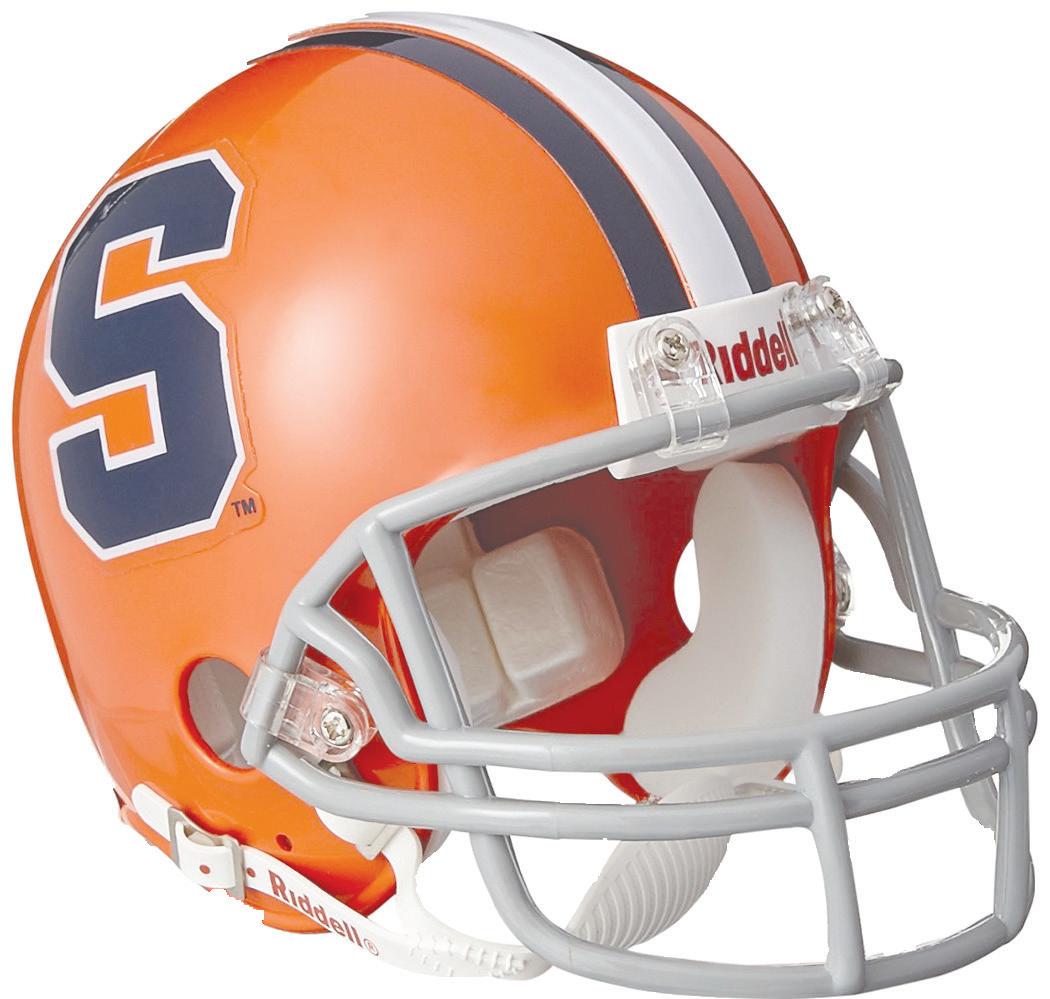
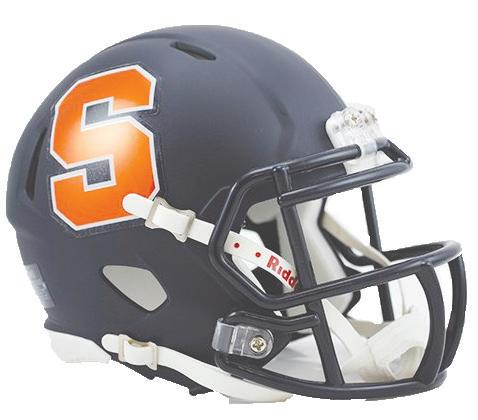
1990s
MODERN FRAME
VSR4 helmet has circular ear hole, clean face mask lines and rounded dome
2016 SPEED
Focused on improvements in side impact protection with a face mask attachment, custom inflation and an overliner for proper fit
RIDDELL HELMETS ARE 100 PERCENT SAFE. THINK ABOUT THE HELMET AS A SYSTEM OF DIFFERENT COMPONENTS THAT COME TOGETHER. ANY ONE PIECE NOT DOING ITS PART COULD COMPROMISE THE JOB.
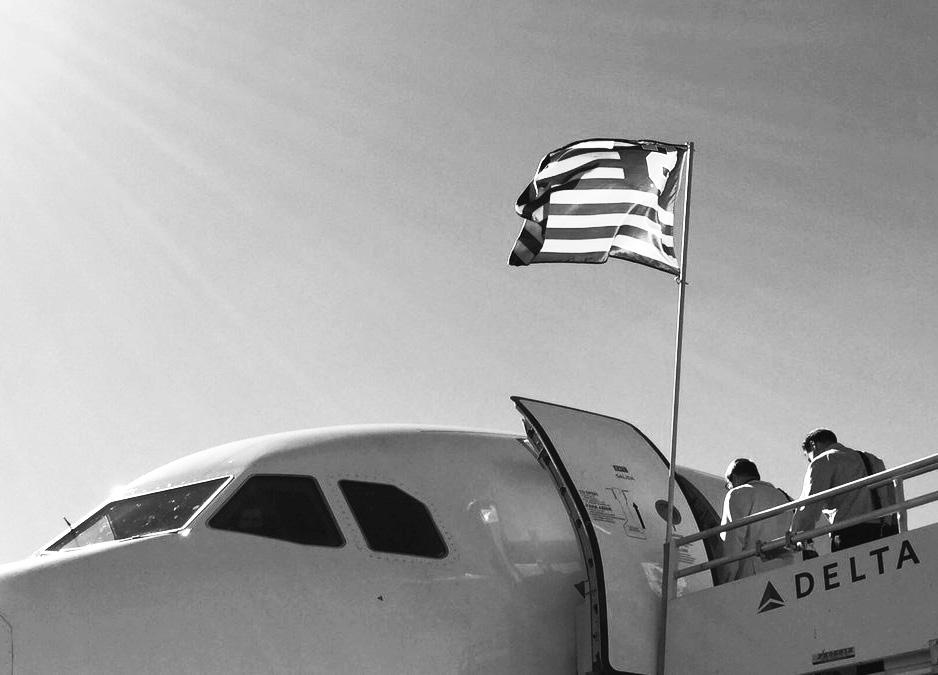
FREQUENT FLYER
As some colleges face charter shortages, Syracuse is ready to take flight in 2017
JOINING THE ATLANTIC COAST CONFERENCE in 2013 stretched out Syracuse’s travel schedule and put a dent in the travel budget. This fall, dozens of SU players, coaches, support staff and donors will board five 757 charter jets for trips to Louisiana State, North Carolina State, Miami, Florida State and Louisville, racking up about 4,537 miles along the way — the program’s highest total since 2011.
BY MATTHEW GUTIERREZ ASST. SPORTS EDITOR
As college football teams play spread-out schedules to satisfy expansive nonconference and TV schedules, airlines have cut back on the number of charters they provide. This creates a mismatch of higher demand for college football charters and lessened supply from airlines. This spring, major airlines cited soaring costs while considering the possibility of cutting their charter business altogether, according to Bloomberg.
Though most airlines will continue to fly NCAA teams, many will focus on the more profitable and predictable commercial business. Because while transporting teams to and from games can be lucrative, it poses logistical challenges for athletic departments and airlines alike.
At SU, the road to bowl eligibility begins long before the season opener, the first snaps of train-
ing camp and the annual spring game in the Carrier Dome. It begins months, sometimes years, in advance, inside the offices of Herman Frazier and Brad Wittke at Manley Field House. Frazier, SU’s senior deputy athletics director, and Wittke, SU football’s director of operations, work together on conference calls, schedule outlines and negotiate to ensure every detail runs smoothly for game day.
“The goal is that nothing travel wise has any type of effect on the game,” said Wittke, who handles budget management, travel meals and the team calendar. “From the flight, food on the flight, to the hotel to the buses, none of that should ever have a negative impact on what the team is doing on the field.”
In 2017, Syracuse signed a contract with Private Jet Services Group, a New Hampshire-based charter company that flies about 20 NCAA teams. After years of working with United Airlines, Delta Air Lines and JetBlue Airways, each of which has since reduced its charter offerings, SU found some stability in an otherwise wobbly sector.
Frazier and Wittke bring the same obsessiveness over Syracuse’s rigid schedule. On Friday before Saturday games, SU players get screened by TSAapproved security contractors outside of Manley Field House before boarding buses, in an alleyway near the parking lot. Players pass screening near a back door, hop on the buses and ride the Department
Syracuse flies up to 70 players for road games and a few dozen more coaches, support staffers and donors. All said, it costs college football teams about $300,000 to fly to and from opponents every week.
COURTESY OF SU ATHLETICS
of Public Safety-escorted buses to Syracuse Hancock International Airport. During the 10-mile ride, nobody may get on or off the bus until it pulls up to the aircraft on the tarmac.
Team equipment is usually sent via bus a day in advance, as airlines cannot fly the extra weight of football pads and training equipment. Up to 70 players can travel to conference games, per Atlantic Coast Conference rules.
Cost varies on location and time of year, but most bigtime college football teams pay north of $150,000 for each trip to and from an opponent. Some private jets, said Jeffrey McGill, a Queens College business professor who specializes in the airline industry, can cost as much as $38,000 per flying hour. Tacking on additional fuel costs, meals and service fees bumps the total to as much as $400,000 to $500,000 for a round trip across several states.
$150,000
Average cost to fly a college football team each way, per industry experts
4,537
Approximate number of miles the Syracuse football team will travel through the air this year — the program’s most since 2011
To negate the rising costs, several schools are sponsored by airlines. Washington plays its home games on Alaska Airlines Field and uses the airline for every road game.
Power 5 schools that don’t play in stadiums with airline naming rights deals haven’t found scheduling as easy. Ohio State, the 2014 national champion, was nearly left without ways to get to games this season. Early this year, OSU’s administrative services manager, Jennifer Bulla, “ didn’t sleep for two weeks,” when United refused to quote the school on fares. Other schools faced similar dilemmas.
After two weeks, the airlines renewed conversations. United and the Buckeyes will work together again this fall.
“If commercial airlines pulled off, I didn’t know what my next option was going to be,” Bulla said. “Do airlines want to be in this business anymore? You don’t
see planes page 14
STARTING BLOCKS
A healthy offensive line wants to get Dino Babers’ offense going on the ground
DINO BABERS WANTS TO run. It’s how he plans to take the pressure off his defense. It’s how he hopes to open up more chances for his passing game. It’s something he’s done before.
BY JOE BLOSS SENIOR STAFF WRITER
In 2013, Babers second year at Eastern Illinois, the team finished 12 yards short of having two 1,000-yard rushers. Syracuse hasn’t had one in four years. EIU averaged five yards per carry and totaled more than 3,000 yards for the season, increasing its total rushing yardage by 86 percent from 2012.
In 2015, Babers second year at Bowling Green, two backs combined for more than 2,000 yards. Co-offensive coordinator and offensive line coach Mike Lynch helped guide them there, and he now holds the same position at Syracuse.
“In my past experiences in this offense,” said Matt Mattox, Babers offensive line coach at EIU in 2013, “... wherever it’s been, that second year, there’s always been that next phase of guys taking off.”
Syracuse is now in its second year of the Babers era. If the Orange wants to emulate that same success on the ground — and turn around last year’s worst Atlantic Coast Conference rushing attack (3.2 yards per carry) — it must rely on an offensive line that blends limited experience with youth to keep up with the fast pace. A year after two senior starters went down early, SU has taken new measures to prioritize health.
“It’s hard for (the offensive line) to operate moving guys in and out, and that’s what we had last year with all the
injuries,” Babers said. “If we can get five guys and keep them around for a period of time, I feel like we have a better chance of being better.”
That hope dissipated before preseason camp even began. Redshirt junior Aaron Roberts will miss the entire season with a left knee injury suffered in summer conditioning drills. He started every game last year at left guard and his 968 snaps were the most of any player on the team.
“You can’t mourn on it,” starting right tackle Jamar McGloster said. “You gotta keep moving on.”
Roberts will likely be replaced by redshirt freshman Sam Heckel, one of four recruits of former head coach Scott Shafer to stick with Syracuse after Babers was hired. If healthy, fellow redshirt freshman Airon Servais, Babers first commit, will get the nod at center. Three different players started there last year. Junior Cody Conway started eight times last season and returns at left tackle. Redshirt sophomore Evan Adams will pair with McGloster on the right side at guard, a combo that started the final nine games of 2016.
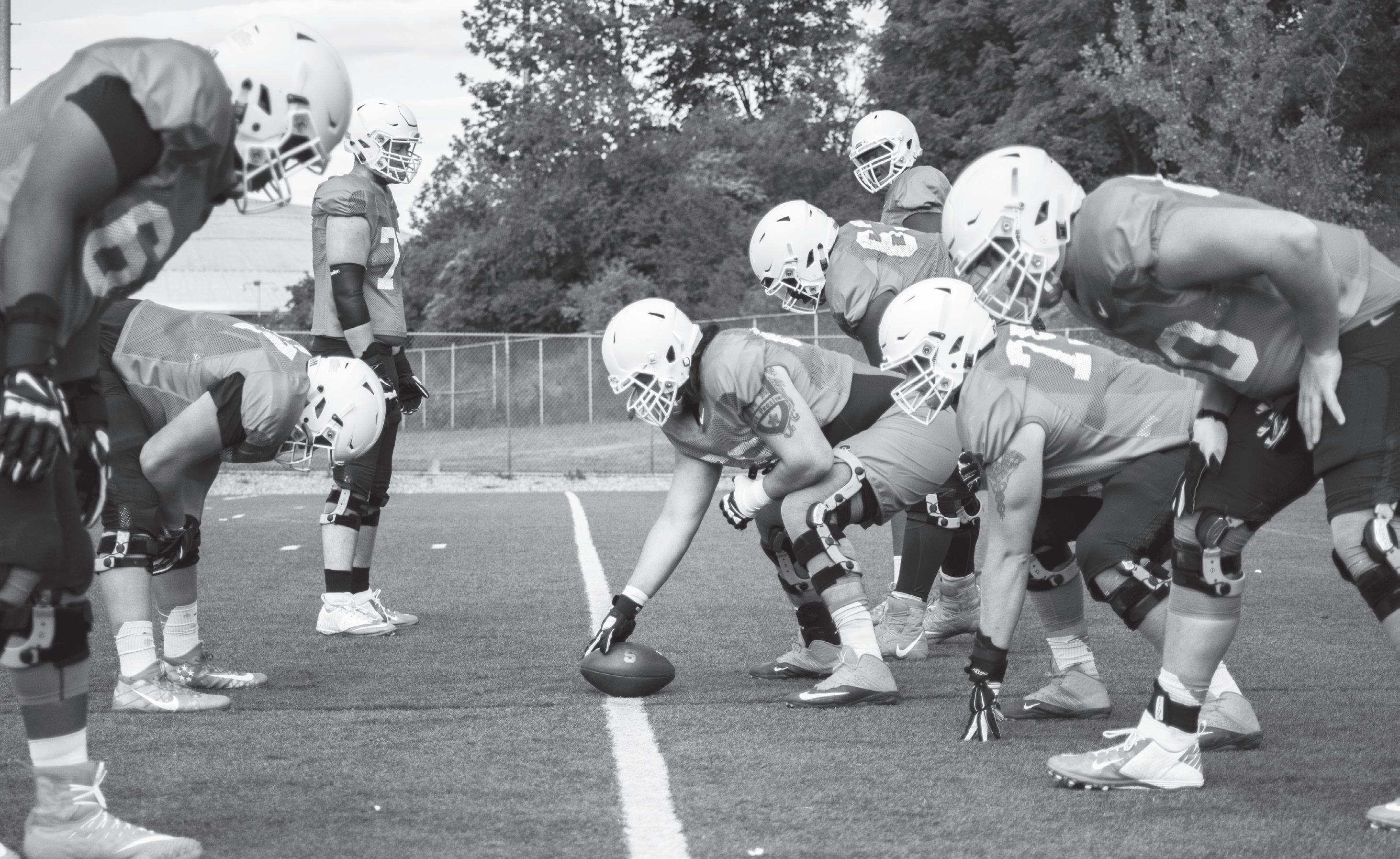
The group has gelled, Heckel said. They are known as “The Cows,” and McGloster, the leader almost by default because of his age, is called Moo. They love to eat, and the endless appetizers at T.G.I. Friday’s give them a cost-efficient way to do so.
To build depth for potential injuries, each lineman trained at various positions during the offseason. Heckel has taken reps at center on top of his firstteam duties at left guard, and he also played tackle in high school. Servais is relatively new to the offensive line after transitioning from linebacker midway through high school, but has experience at center and both right-side spots. Dur-
IN MY PAST EXPERIENCES IN THIS OFFENSE ... WHEREVER IT’S BEEN, THAT SECOND YEAR, THERE’S ALWAYS BEEN THAT NEXT PHASE OF GUYS TAKING OFF.
MATT MATTOX
BABERS’ OFFENSIVE LINE COACH AT EIU IN 2013
Syracuse’s starting offensive line will likely feature two redshirt freshmen and three players who saw considerable playing time in 2016.
ALLY MOREO PHOTO EDITOR
ing the winter and spring, the redshirts spent a few hours a day in the film room watching practice and games. They drew up formations. Heckel said he has a good grasp on both positions now. The system demands everyone else does, too.
“It’s challenging, but ultimately it’s good for the team,” Heckel said. “The more you can do on the offensive line, the better, the more valuable you are.”
Servais was not a full participant in practice for a good portion of camp. After he wore a boot to the team’s FanFest on Aug. 12, Babers said Servais was not injured but just taking a precaution. Because of his limited status, SU Athletics did not make Servais available for interviews during the preseason.
In an attempt to stay healthy himself, McGloster always grabbed a post-practice Gatorade, took off his pads and headed to the tubs. The tubs are mandatory for linemen, McGloster said, and personally he prefers five-minute intervals between hot and cold. After a trip to the trainer’s room, he eats, naps and returns to the tubs.
This rigid routine is new for McGloster. The line, he said, was “dragging” at times last year. Mistakes and laziness went ignored. After a full season in Babers’ system, the offensive linemen understood the adjustments it required.
“It’s very difficult for those guys, when you’re over 300 pounds and you get to tempo the very first time. It’s tough on them,” Babers said. “Think
AS DESHAUN WATSON held the 2017 national championship trophy, Kelly Bryant stood at the back of the podium, basking in the orange and purple confetti. Bryant, Clemson’s third-string quarterback, glanced over at Watson, visioning himself in 2018, holding his own trophy.
BY MATT LIBERMAN STAFF WRITER
“I feel like I could be on that podium,” Bryant said. “I’m not going to sell myself short.”
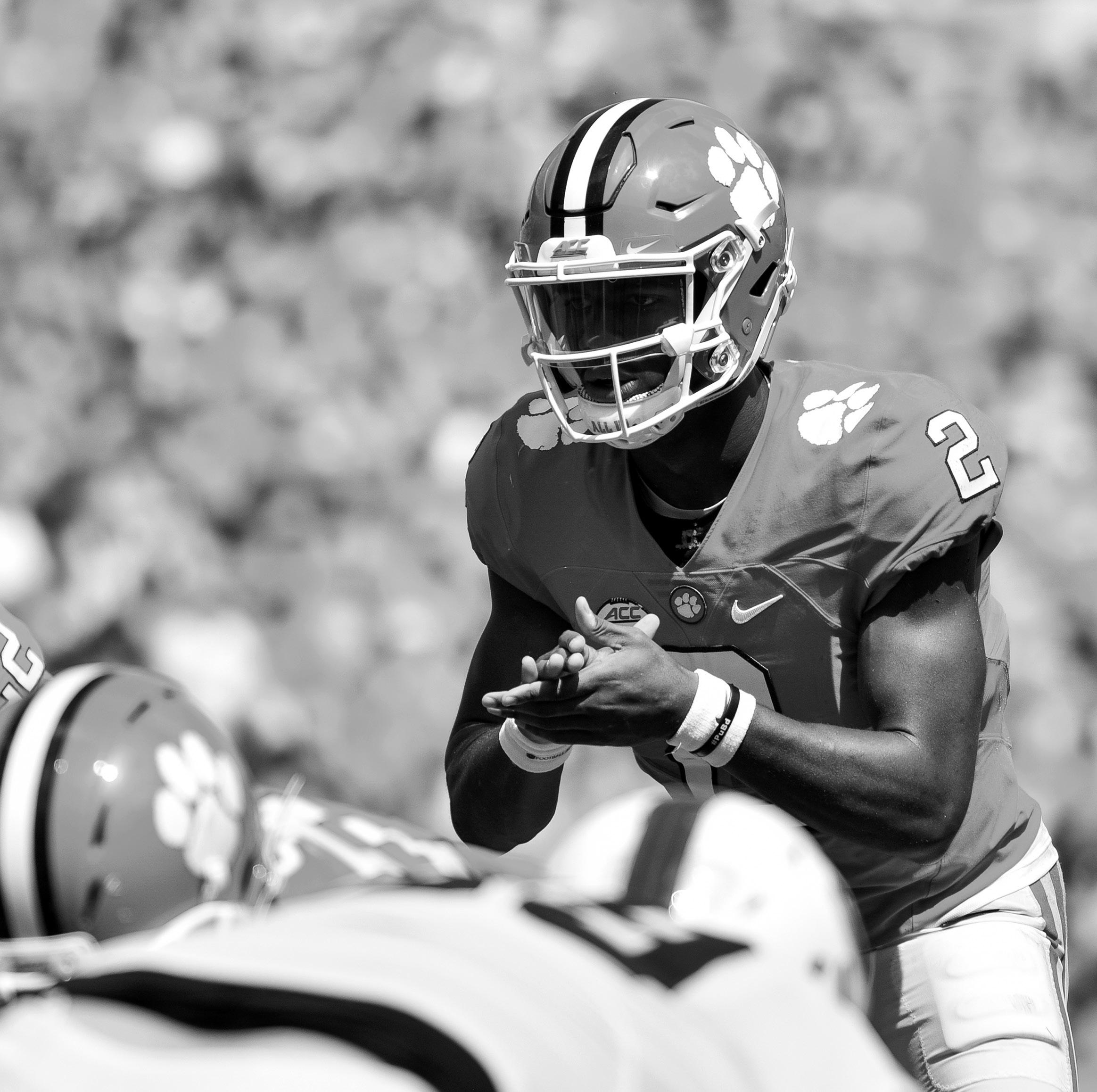
Watson graduated in three years as the most decorated Tiger in history. Now, Clemson’s signal caller is a junior who has not yet appeared in a single-score game. Bryant leads a program searching for its second consecutive title, yet he has completed only 13 career passes for 75 yards and has made just 12 appearances in two years. No. 5 Clemson, which travels to the Carrier Dome for a date with Syracuse on Oct. 13, is the only team in the Associated Press Top 10 replacing its quarterback. There was once a time when no one
TIGER TRAIL
After the DeShaun Watson era, Kelly Bryant is stepping in as Clemson’s quarterback
KELLY BRYANT is a junior quarterback who’s never appeared in a single-score game. Now, he’s the Clemson QB heir apparent and needs to fill the shoes of the most decorated player in school history. COURTESY OF CLEMSON ATHLETICS
thought Bryant would be a Power 5 quarterback. Bryant stared at Abbeville (South Carolina) High School, where he became the first freshman quarterback to start in school history, said head coach Jamie Nickles. He was a threat on the ground, not in the air. College coaches offered him a scholarship, though not as a quarterback. His first two schools, South Carolina and Clemson, offered him as “an athlete.”
But Bryant wanted to play quarterback. The then-sophomore looked to coach Ramon Robinson, a former professional quarterback.
“When he threw the ball,” Robinson said, “it didn’t look normal. I had to start at ground zero.”
“My footwork was terrible,” Bryant said. “I’d never done a five-step drop. I’m not in shape. I don’t know what I’m doing.”
Houses and Apartments 1-8 bedrooms
Euclid, Livingston, Ostrom, Ackerman, Sumner
Walking distance to campus, Furnished, Laundry, Pets OK
Rent from the landlord The Daily Orange called "Friendly and Responsible”
Call or email to set
a tour! ben@rentfromben.com


know. I just take it one year at a time.”
Bulla works on each season’s itinerary a year or two ahead, giving her wiggle room when things go wrong. Markets and aircraft availability change by day and fuel prices fluctuate.
One airline, Southwest, has flown college football teams for about 25 years. It’s one of the largest domestic networks carrier in the United States, giving it an intricate network to get charter planes to airports near universities faster than a smaller airline would. Southwest is set to fly about 20 teams this year.
At the time, Bryant struggled to do basic passing drills and he could only throw it about 30 yards. In March 2013, Bryant was named MVP at a football camp. Afterward, Robinson spoke with then-Clemson assistant coach and recruiter Chad Morris. Bryant still had a Clemson offer only as an athlete. Robinson asked Morris for a few more months of training and promised when Morris would see Bryant next, that athlete tag would turn into a scholarship to play quarterback.
That July, Bryant made a decision that changed the course of his career. He transferred from run-heavy Abbeville to Wren High School, about 50 miles away, with its spread offense under head coach Jeff Tate.
“There was no way no anyone was going to offer him as a quarterback at Abbeville,” Robinson said. “During his two years I think he only threw the ball 62 times.”
That changed under Tate, who thrust Bryant in as the captain of a high-volume passing offense. In two years there, Bryant total for 6,235 yards in the air and 1,894 on the ground.
After Bryant’s junior year, his father, Russ, pulled up to the gate outside Memo -
Charter cutbacks, experts said, are linked to fuel costs. The baggage for football teams contributes to a complex loading process. Sometimes, airlines divert from flight schedules to accommodate teams, which is inefficient. Many opt to use the aircraft to gain revenue elsewhere, notably through commercial flights.
“You have a very expensive asset sitting in a location you can’t use for something else,” said Bert Craus, Southwest’s charter business manager. “The biggest challenge is aircraft availability. It’s kind of like a ballerina act, looking at airplane times to maintain our charter business.”
McGill said airlines can still profit on charters — Southwest continues to expand its
rial Stadium on the final day of a high school camp at Clemson. As Bryant headed for the car, Morris noticed Bryant’s Clemson orange cleats, strikingly similar to the school’s. Morris thought they belonged to the team, so he called Bryant back. Russ explained he bought them for his son. He could wear them in two years, because the Tigers offered him as a quarterback, not an athlete.
Clemson wanted him as a quarterback.
After a quick conversation, Bryant and Russ climbed into their Buick LeSabre. Bryant was ecstatic.
As the pair drove home, listening to Phil Collins’ “In the Air Tonight,” Bryant belted, “I’ve been waiting for this moment for all my life.”
When he arrived at Clemson, Bryant was the third-string quarterback, behind Watson and Nick Schuessler. While Bryant barely saw the field, Watson was twice named quarterback of the year. In January, he led Clemson to its second-ever national championship.
“All my life,” Bryant said, “I’ve been used to being the guy. I had to take a back seat.”
In two years, Bryant has not attempted more than five passes in a game. Once as a freshman, with Clemson ahead 45-0 against Miami, Bryant entered the game in the fourth quarter. Russ and his wife, Deborah, didn’t expect their son to be in yet. Deborah was
charter business — but that it takes complex scheduling and pricing algorithms to calculate whether it’s worth it. Mostly, that’s on a trip by trip basis.
Schools put out bids for charter partners though more airlines are saying no. Some programs are left to consider bussing to games, a cheaper but time-consuming alternative. This spring, United, among others, did not quote teams on pricing for this season. They considered cutting charter business for NCAA and several NFL teams.
Taking precautions on flights can benefit schools. This fall, Boise State will fly to San Diego for a late kickoff. San Diego’s airport has an 11:30 p.m. curfew, however, so Boise State will bus an hour to an airport near Los Angeles.
driving home from the grocery store, expecting to be home in time.
After completing his first collegiate pass, Bryant dropped back on the next play and then tucked and ran. He split a gap at the line of scrimmage and shot between a linebacker and two safeties. Bryant outraced everyone for a 59-yard touchdown.
It was the only game Deborah and Russ missed. Russ was on the way home from work when Deborah called. Immediately he slammed down on the gas to catch the rest of the game.
“I was like Jeff Gordon,” Russ said. “The tires were smoking.”
Bryant added another rushing score to finish the game with 69 yards on the ground and his first two collegiate touchdowns.
Two years later, Bryant beat out Zerrick Cooper and Hunter Johnson for the starting spot. After the championship, Schuessler graduated and Watson left for the NFL.
Bryant succeeds the program’s greatest player. After he was named the starter headed into camp, there was no celebration in the Bryant household. He went to the gym to work out.
“There are a lot of people who have played quarterback at Clemson,” Tate said. “And they’ve all followed someone.” mdliberm@syr.edu

Two or three years ago, Boise State flew to a small airport near the campus of Wyoming. As snow fell and temperatures dropped below 30 degrees Fahrenheit, players sat on the tarmac for over an hour. Even though Syracuse is the snowiest college campus in the U.S., Frazier said SU football has not run into such weather-related problems.
Frazier and Wittke feel fortunate Syracuse hasn’t faced other issues that fellow schools have encountered, either. SU’s largest issue involves donors who want to take flight with the team.
“We’re arguing now over how many people can get on the plane to go to LSU,” Frazier joked. mguti100@syr.edu | @Matthewgut21
about a 350-pound person running a marathon with TV cameras and everybody watching. It’s a disadvantage.”
Now, “people don’t mind working hard,” said McGloster, whose listed weight is 309 pounds, down 19 pounds from last year. He said the leadership is collective. Playerled practices in the summer helped shore up their grasp on blocking schemes and techniques. The biggest factor in catching up to the speed of Babers’ offense, by team consensus, was simply repetition. Conway called it a “natural reaction.”
It’s an offense that Mattox — who now leads the offensive line and run game at South Florida — saw produce a “physical transformation” in his EIU line entering year two. They lost weight. Hydration keyed stamina. Time built familiarity. In a spread-out, newschool system, they dominated with a smashmouth, old-school run-game. They went 12-2 and reached the national FCS quarterfinals.
“You can play defense and throw the ball for 600 yards,” Mattox said, “but if you rush for 300 yards, that (defensive coordinator) is going to be mad as all get out.” jtbloss@syr.edu | @jtbloss

Monday
Wednesday: 8am-2am Thursday-Saturday: Open 24 Hours Sunday
until 12am


FOOTBALL FALL 2017 SCHEDULE