thursday, february 19, 2026
Mission clarity
SU’s decades-long military legacy inspires ‘best place’ commitment to veterans
By Griffin Uribe Brown digital managing editor
efore Syracuse University built the National Veterans Resource Center, campus leaders were striving to make the university a premier institution for veterans and military-connected students.
The gleaming, $62 million center punctuates SU’s commitment to that goal in a way that its many offcampus military endeavors do not. Its bright glass exterior, accessibility-centric design and intricate wooden interior make it stand out on Waverly Avenue.
Like most buildings, the NVRC began with a set of blueprints.
Mike Haynie, a retired United States Air Force officer and current vice chancellor for strategic initiatives and innovation, commissioned an architect friend to make renovation plans for the Hoople Building, which sat where the NVRC stands today.
He delivered them to SU Chancellor Kent Syverud.
“I’ll take it on me to go raise some money — what do you think about renovating?’” Haynie remembered asking Syverud. “And he looked at these pictures, and then he crumpled them up and threw them away in front of me.”
Haynie recalled Syverud replying, “Mike, if we’re going to do this, we should do this.”
After years of construction, the complex, named for donors Daniel and Gayle D’Aniello, was officially dedicated in 2021.
The building houses SU’s military and veteran offerings, including two marquee institutions — the D’Aniello Institute for Veterans and Military Families and the Office of Veteran and Military Affairs.
Syverud’s commitment to the military at SU began on day one of his role. In his inauguration speech on April 11, 2014, he
see military page 4
ESF graduate assistants lose funding after stability plan cuts
By Charlotte Price social media editor
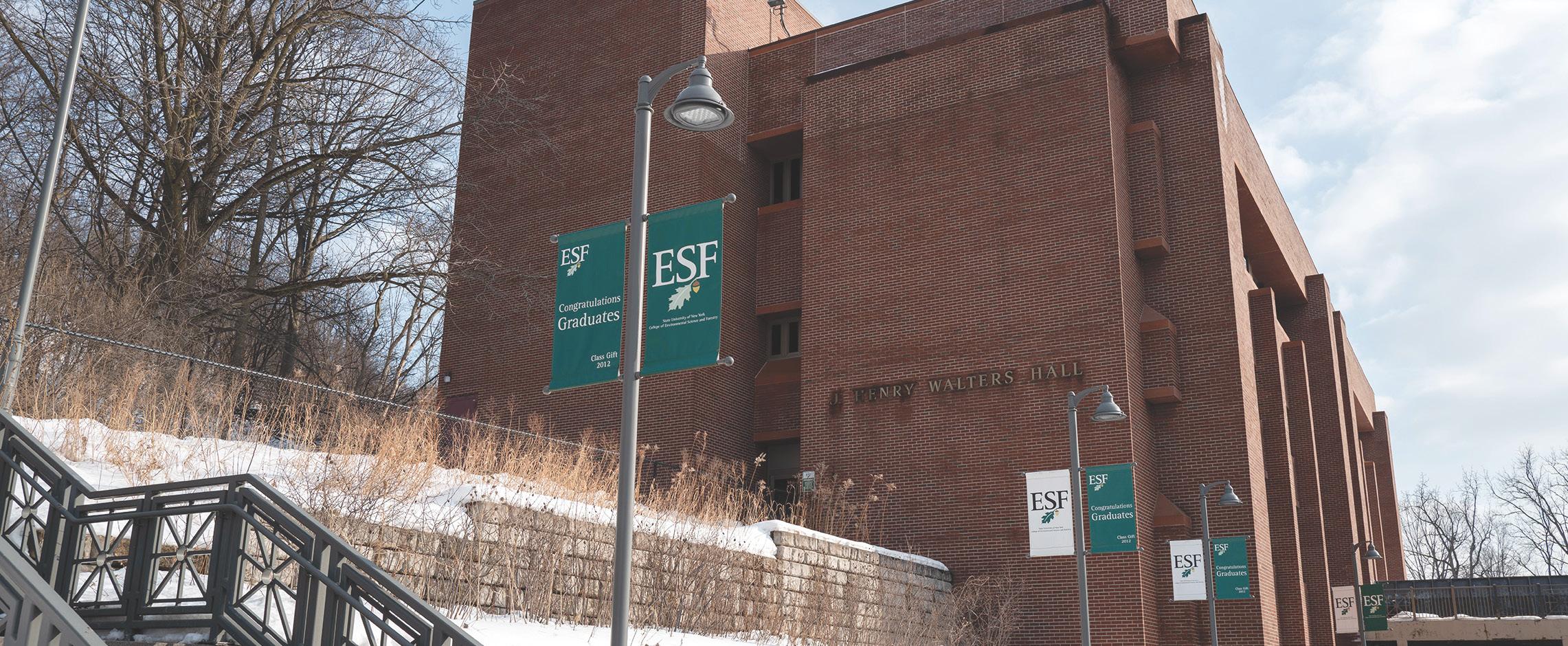
As year one of SUNY ESF’s fiscal stability plan continues, graduate students are navigating their education with less financial support after the university cut funding for graduate assistant positions.
Last summer, SUNY released the plan to close ESF’s structural
budget deficit. The plan aims to increase undergraduate enrollment and reduce spending in several areas, including graduate assistant funding. ESF cut GA funding by 17% compared to last year, and the funding is expected to be cut by another 13% next year, ESF administration confirmed in a Wednesday statement to The Daily Orange.
GAs work as teachers and are compensated with tuition stipends and benefits. These roles typically support graduate students in their early years at ESF before they transition to federally funded research assistantships later in their programs, Emily Friden, a fourth-year graduate student and president of ESF’s graduate student association, said.
Only about 12% of graduate students nationally receive any form of assistantship, according to ESF’s statement. Even with the cuts, ESF is still at the average number of GA positions per 100 students for SUNY’s University Centers, the statement said. ESF Professor Colin Beier said funding cuts to GA positions will make pursuing a graduate
education at ESF less accessible and appealing.
“That is going to have a lot of impacts on the delivery of courses and obviously the ability for grad students to even attend ESF,” said Beier, who also serves as ESF’s vice president of academics for United University Professionals. “The idea is that you’re not going to see graduate students page 5
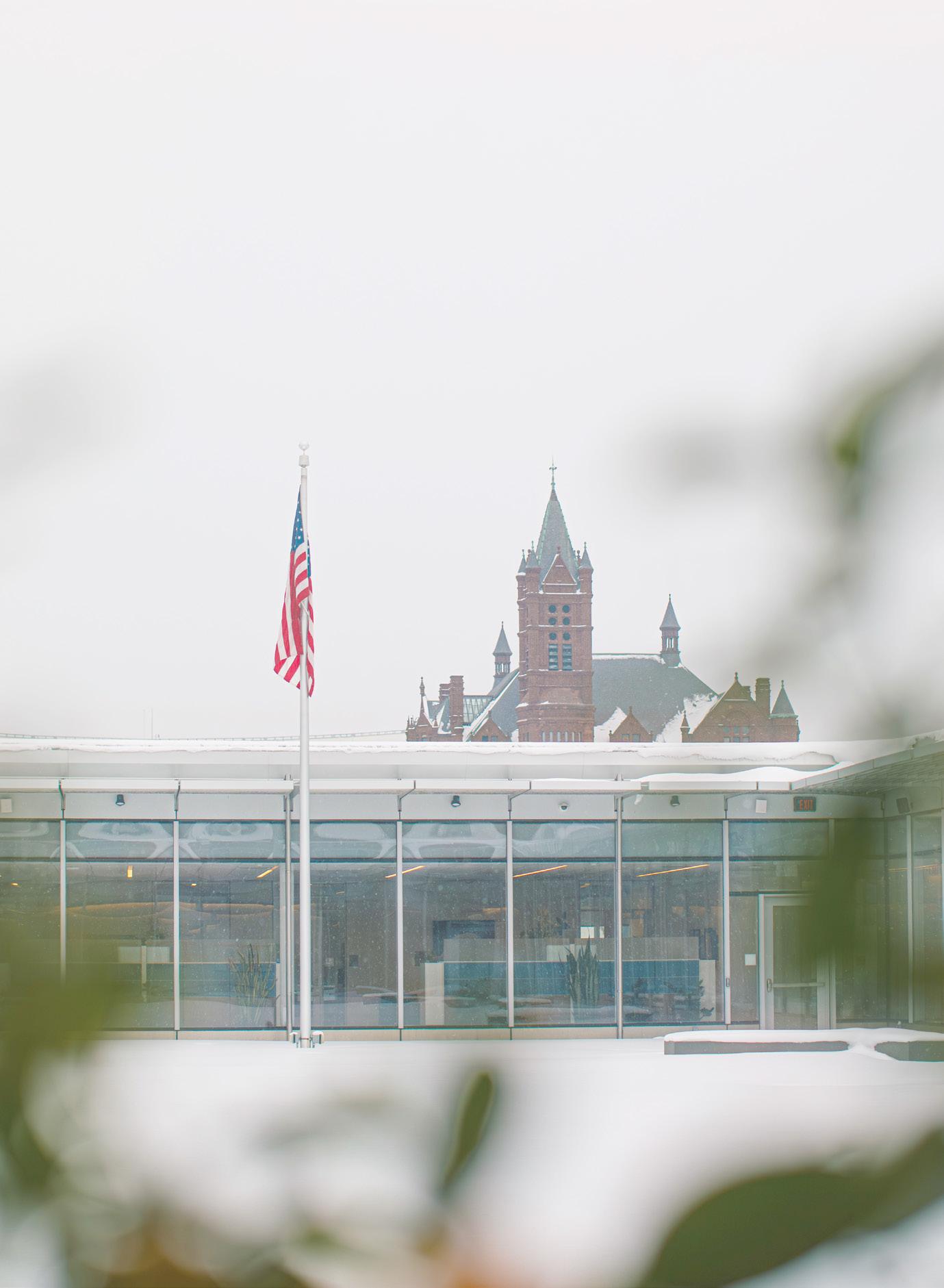
The NVRC’s upper level includes a flag pole used by ROTC, a robot-landscaped courtyard and an orange tree from Ruth Chen, Kent Syverud’s wife. avery magee photo editor
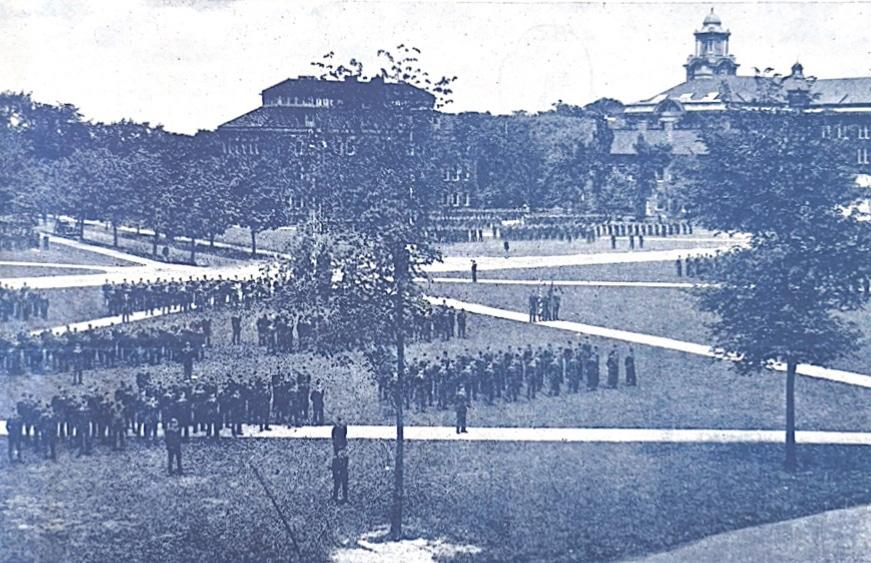
During the GI bulge, Syracuse University’s student body nearly doubled by dint of enrolling World War II returnees. courtesy of scrc

Editor@dailyorange.com
News@dailyorange.com
Opinion@dailyorange.com
Culture@dailyorange.com
Sports@dailyorange.com
Digital@dailyorange.com
Design@dailyorange.com
Photo@dailyorange.com
BUSINESS 315-443-2315
how to join us
The Daily Orange is an independent, nonprofit newspaper published in Syracuse, New York. The editorial content of the paper — which started in 1903 and went independent in 1971 — is entirely run by Syracuse University students.
The D.O., a 501(c)(3) nonprofit, is editorially and financially independent from SU, and the paper receives no funding from the university. Instead, The D.O. relies on advertising revenue and donations to sustain operations.
This spring, the paper will be published Thursday when SU classes are in session. The D.O.’s online coverage is 24/7, including while SU is on break.
To show your support to The D.O.’s independent journalism, please visit dailyorange.com/donate. Donations are tax deductible.
If you are a Syracuse University or SUNY-ESF student interested in contributing to The D.O. on either its advertising or editorial teams, please email editor@dailyorange.com.
corrections policy
The D.O. strives to be as accurate in our reporting as possible. Please email editor@dailyorange.com to report a correction.
letter to the editor policy
The D.O. prides itself as an outlet for community discussion. To learn more about our submission guidelines, please email opinion@dailyorange.com with your full name and affiliation within the Syracuse community. Please note letters should not include any personal information pertaining to other people unless it is relevant to the topic at hand. All letters will be edited for style and grammar.
The D.O. is published weekdays during the Syracuse University academic year by The Daily Orange Corp., 230 Euclid Ave., Syracuse, NY 13210. All contents Copyright 2026 by The Daily Orange Corp. and may not be reprinted without the expressed written permission of the editor-in-chief. The Daily Orange is in no way a subsidy or associated with Syracuse University. All contents © 2026 The Daily Orange Corporation


monday, february 16

sunday, february 15
women’s

friday, february 13
11,
friday, february 13
68, CLEMSON 64 SYRACUSE 9, UNC 13
9
WEATHER








SU pauses funding to STEM, AAS graduate fellowships
By Brenne Sheehan news editor
Syracuse University paused funding for new fellowship awards under the STEM and African American Studies programs, Graduate School Dean Peter Vanable wrote in a Monday email to graduate program directors and chairs.
In the email obtained by The Daily Orange Wednesday, Vanable wrote the pauses, which will only affect new applicants, were “in response to budgetary constraints.” Students who have received fellowships with multi-year funding commitments will continue to receive support as “originally promised.”
“These decisions are not made lightly but reflect the difficult tradeoffs we’re facing across all graduate funding priorities,” Vanable, who also serves as the associate provost for Graduate Studies, wrote. “We recognize the importance of these programs in supporting our graduate students and their scholarship. We will continue to assess our funding landscape as circumstances evolve.”
The AAS fellowship was open to graduate students who integrate African American or Pan African studies into their respective fields of study.
Interim AAS Department Chair James Haywood Rolling Jr. said the pause “saddens him a great deal” as a former AAS graduate fellow,
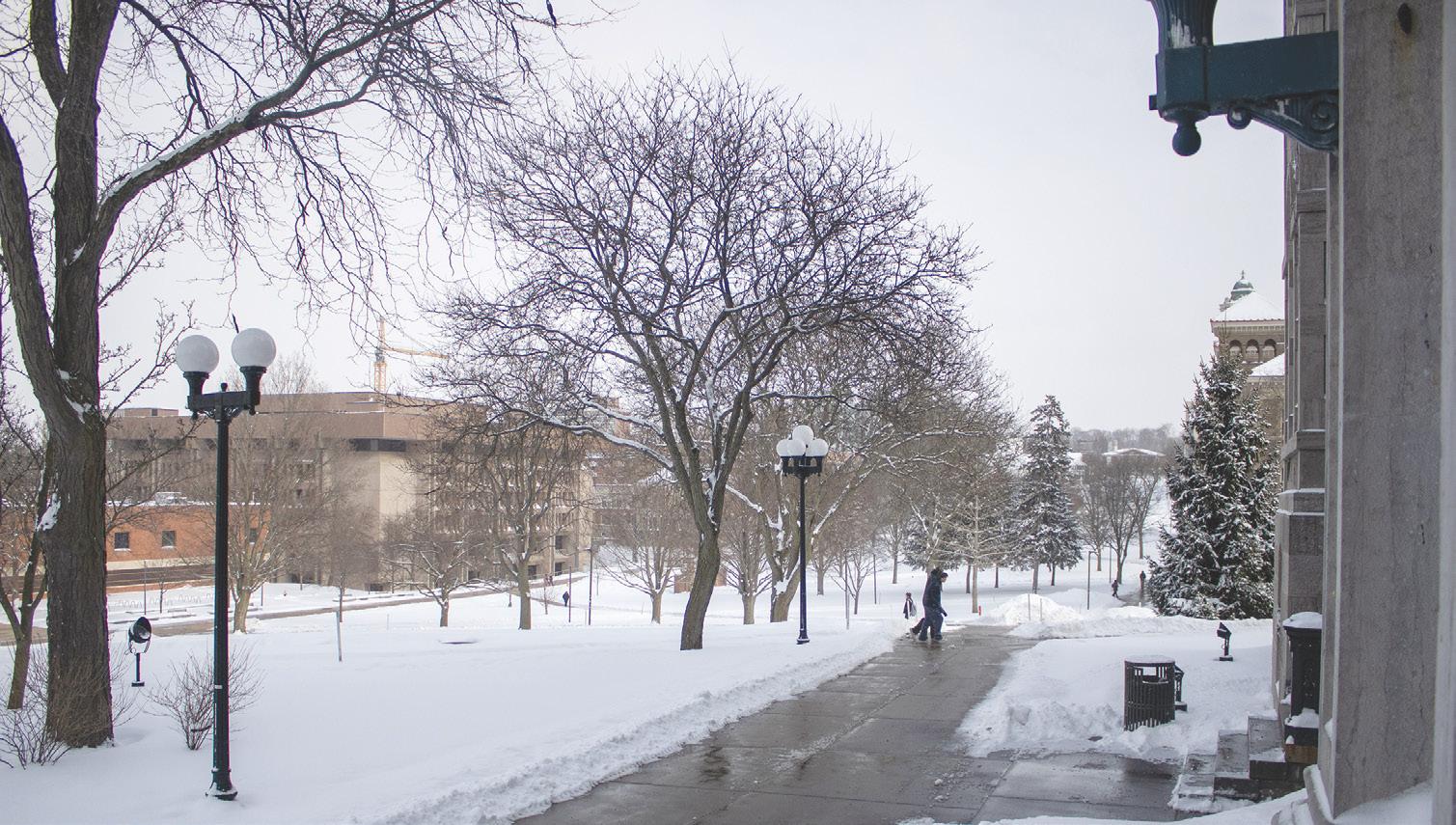
Syracuse University has paused funding for new STEM and African American
awards “in response to budgetary constraints”.
which he shared paid for his full tuition and a stipend for living expenses.
“I would not be a university professor today if not for the AAS fellowship altering my career trajectory,” Rolling Jr. wrote in a statement to
The D.O. Wednesday.
Rolling Jr. said Vanable has provided him “additional context” since Monday. However, he said he urged the dean to “shift” its funding priorities back to support the fellowship.
“While I appreciate the challenges of the rapidly evolving funding landscape in higher
education and at SU,” Rolling Jr. wrote. “I also expressed my hope that the university will make a way to shift its funding priorities back toward the support of these lifechanging fellowship opportunities as soon as possible.
The STEM fellowship is a single funding program that provides funding to Ph.D. students in STEM disciplines, an SU spokesperson told The D.O.
“The University continuously assesses its academic programs and graduate funding priorities, taking into account student interest and career placement opportunities,” the SU spokesperson wrote in a Wednesday statement. “Like many institutions, we are also navigating a challenging economic environment marked by sharp increases in labor costs.”
The decision follows similar cuts and pauses to graduate programming at colleges across the country, including Boston University and the University of Pennsylvania.
Vanable did not immediately respond to
The D.O.’s request for comment.
This story will be updated with additional reporting online.
brennesheehan@dailyorange.com city
Ash Wednesday celebrants bring service to regional ICE office
By Arabella Klonowski asst. news editor
Around 40 people gathered to celebrate Ash Wednesday outside of the Immigration and Customs Enforcement’s Mattydale office, but they didn’t hold signs or chant.
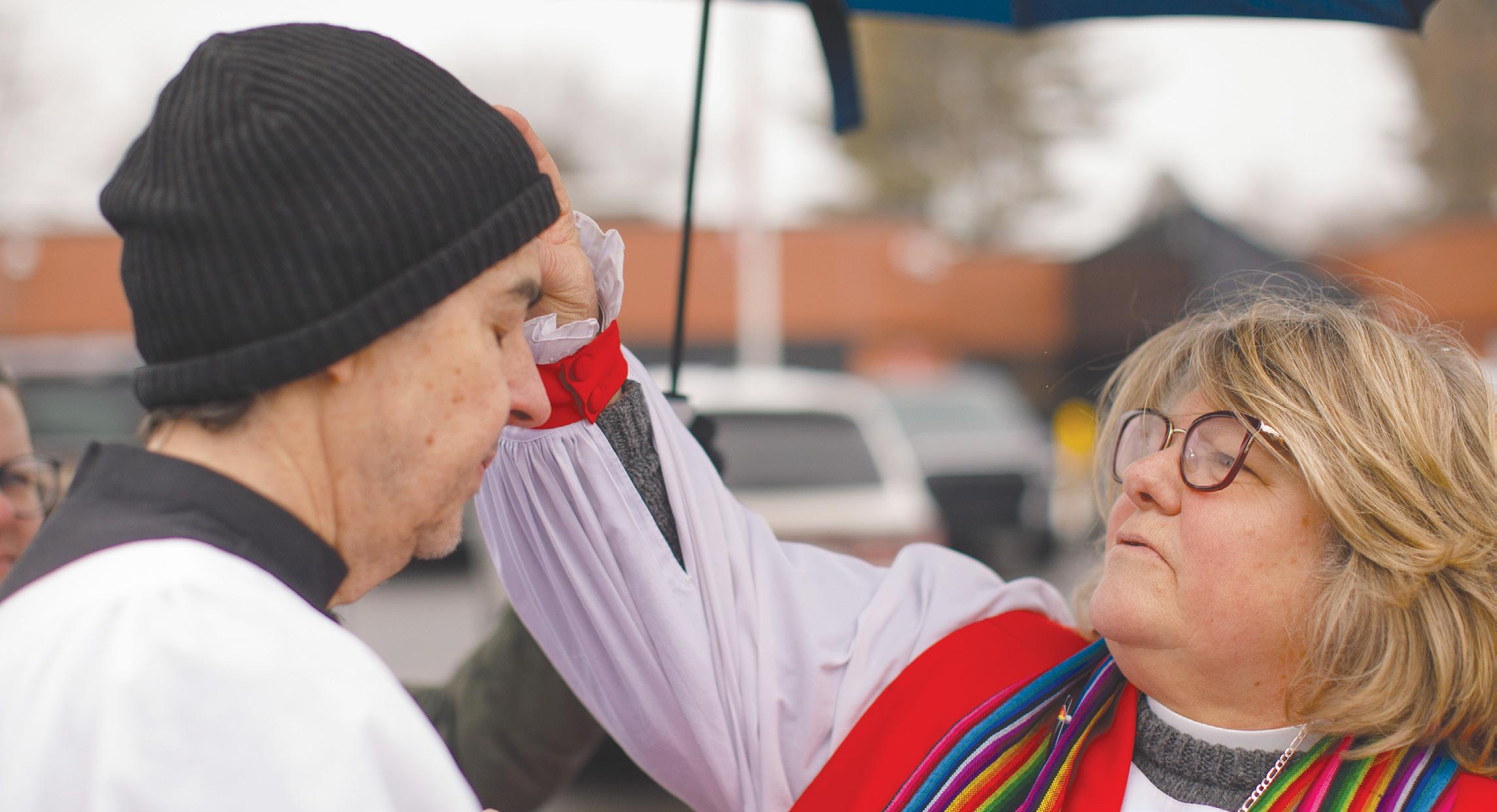
Following prayers and readings, the group welcomed attendees to receive ashes on their foreheads as part of the Lenten celebration.
Rev. Megan Castellan, who works with Duncan-Probe at the Episcopal Diocese, said the idea for the service originated during a staff meeting weeks earlier, when deciding where to distribute ashes aside from a typical church space.
Castellan said in the past years, the group went to Syracuse University’s campus and downtown. She had the idea to hold the event in front of the ICE office during a discussion with fellow staff members.
“It’s a call for repentance in the locus of the place that has harmed so many people,” Castellan said. “Ash Wednesday is all about calling for repentance and asking people who have harmed the community to repent of what they’ve been doing, not just because they’re horrible, they’re bad, but also because we all stand in need of repentance.”
Outside of the Syracuse area, religiouscentered services have also been held across the country, including a vigil at an Phoenix, Arizona ICE office. Religious leaders at an ICE facility outside of Chicago, where agents previously tear-gassed clergy members, entered the detention center Wednesday to distribute ashes, as well as communion.
This is something Adam Eichelberger, director of communications for the Episcopal Diocese of CNY, said was quite intentional.
“Jesus says, ‘Blessed are the peacemakers. Blessed those who are meek apart,’ and we were trying to embody that,” Eichelberger said.
Instead, the group walked through a hail storm together to the space between two parked cars, designated for them by federal agents, while singing the religious hymn “This Little Light of Mine.”
Bird
By Mirren Grimason contributing writer
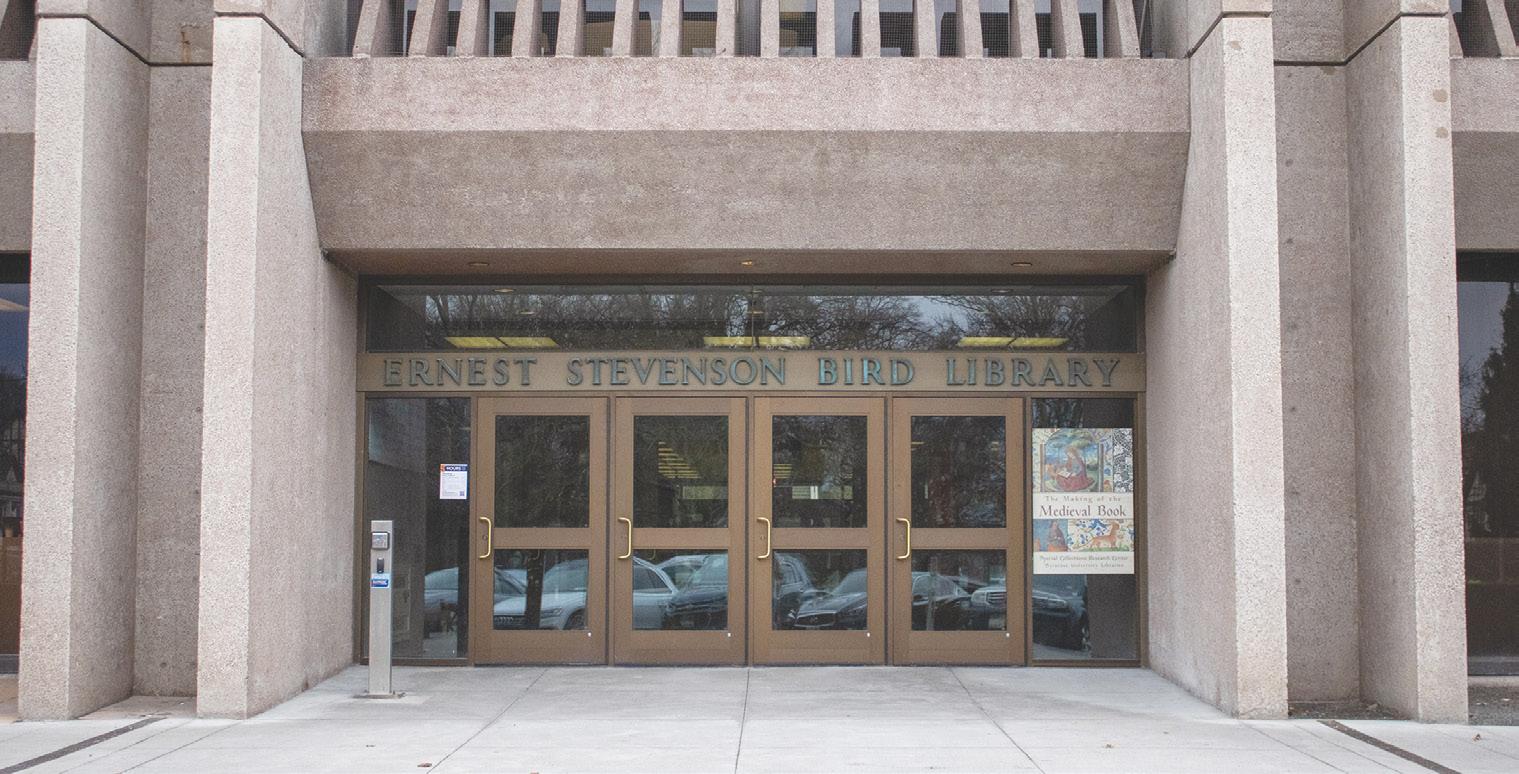
From a crochet set and clothing steamer to a ghost hunting kit and karaoke machine, Syracuse University students can now rent items from a 21-item catalogue at Bird Library’s new “Library of Things.”
Inspired by similar initiatives at other universities, four Bird employees — including Head of Access and Resource Sharing Tiffany Raymond — launched it on Monday.
Funded by a staff innovation grant available within the SU library network, the collection includes items that students may not have the resources to purchase themselves. It also aims to loan items students may only need occasionally, so they don’t have to devote time, money and storage space to purchase the items themselves, Raymond said.
“If you want to give knitting a try because your friend told you it’s really relaxing, you don’t have to go out and buy all of the implements,” Raymond said. “That can be expensive for a craft that you’re not actually going to like.”
The grant request was submitted roughly a year ago, and once the funding was approved, Raymond immediately got to work.
Raymond and Nick Olivieri, Bird’s access user services manager, said they were inspired by other librarians at a conference in 2024 who explained the impacts their own libraries of things made on their students. The two launched the project alongside Access Services Supervisor Kaly Johnston and Access Services Librarian Kristin Jeter.
The team said they took a lot of time and research deciding what to purchase, weighing
“Meekness doesn’t mean weakness. Meekness means making sure that we understand what our voice can do, and that there’s something very powerful in protest, and there’s something very powerful in prayer.”
The event, led by Bishop DeDe DuncanProbe and representatives of other Christian denominations, welcomed attendees regardless of religion or background, Duncan-Probe said.
The multifaith service brought together members of Roman Catholic, Presbyterian, Methodist, United Church of Christ and Lutheran denominations. Eichelberger said he also believed people outside of the Christian faith attended as a “presence.”
Chris Greene, who attended the service with fellow parishioners at All Saints Church, said its ecumenical representation felt “wonderful.”
“It should be all Americans that are sitting there saying ‘This is wrong, this is not who
practicality and the needs of students.
Studies fellowship
leonardo eriman daily orange file photo
SU Bird Library launched its “Library of Things,” a collection consisting mostly of household and crafting goods. leonardo eriman daily orange file photo
Bishop DeDe Duncan-Probe places ashes on Rev. Canon Deacon David Stickley’s forehead at an Ash Wednesday service outside of the Immigration and Customs Enforcement’s Mattydale office.
avery magee photo editor
declared: “I believe Syracuse University must once again become the best place for veterans.”
Syverud confirmed in January he accepted the presidency role at the University of Michigan, after announcing in August he would depart from SU.
The Chancellor Search Committee is searching for a new university leader who will “embrace and advance Syracuse’s longstanding commitment to veterans and military-affiliated individuals,” among many other requirements. D’Aniello, a U.S. Navy veteran and SU life trustee, sits on the committee.
“It’s also a time of transition,” Haynie said. “We don’t know if that person will have the same level of commitment to this as Kent does.”
Syverud’s public commitment affirmed a cause many on campus were already working toward.
“I hate to use military terms, but there’s something beautiful about clarity of mission and unity of effort,” said Dwanye Murray, deputy director of OVMA. “We’re all working to that common goal.”
Murray, an SU grad who served in the Army for over 30 years, said the very existence of the NVRC building is a testament to the university’s commitment to improve its military offerings.
Haynie was working on building out SU’s military infrastructure long before the Hoople blueprints. He began as an entrepreneurship professor at the Whitman School of Management in 2006, inspired by his time at the Air Force Academy in Colorado Springs.
At the time, the U.S. was at war in Iraq and Afghanistan. Veterans who returned with disabilities were especially interested in owning their own small businesses, Haynie said.
Haynie launched the Entrepreneurship Boot Camp for Veterans with Disabilities with financial support from Martin Whitman and a poster he made using a random ROTC cadet photo in PowerPoint. EBV expanded, with SU as its national host, to colleges like Texas A&M University, University of Connecticut and Louisiana State University.
After a 60 Minutes segment brought national attention, Haynie launched another program: Veteran Women Igniting the Spirit of Entrepreneurship. V-WISE, a four-week online program, has hosted conferences in cities like Atlanta, Chicago and Houston.
In 2011, the non-credit Veterans Career Transition Program was offered free to post-9/11 veterans through the School of Information Studies.
Inspired by those successes, Haynie realized there was a much bigger opportunity.
“Nowhere else in the U.S. did there exist an academic institute focused on the social and economic wellness concerns of vets and their families,” Haynie said. “How come nobody else in the country has gone big on this?”
Haynie booked himself a few minutes with then-Chancellor Nancy Cantor. SU should be the first school to establish a military-focused institute, he urged her in 2011. Cantor’s answer, simply put, was that SU didn’t have the money.
So Haynie leveraged SU’s existing relationship with JPMorgan Chase & Co., landing a 10-minute meeting with its chief operating officer. He pitched the partnership as an opportunity for the bank to “repent” for wrongfully foreclosing servicemember homes.
Seven million JPMorgan dollars, three faculty, a student employee and a handful of programs marked the launch of the IVMF — an interdisciplinary academic institute focused on veterans and their families.
“My only regret from that meeting was I didn’t ask for enough,” Haynie said.
Today, the institute has around 120 full-time staff. This year, it will put somewhere between 22,000 and 24,000 veterans through programs across the country, he said.
“Next thing you know, I’m sitting in Hendricks Chapel for Kent’s installation as chancellor,” Haynie said. “He gives this speech where he lays out four priorities, and one of the four was to be a national exemplar for how we engage veterans and military families.”
In 2015, Haynie was named vice chancellor of veterans and military affairs to oversee the creation of the OVMA and quickly began to see positive outcomes.
Since then, SU’s military-connected and veteran student enrollment has increased 300%.
SU has seen 1,800 student veteran graduates and 3,200 military-connected graduates since 2014.
Military Times recognized SU as the year’s best private university for veterans several times since 2017, frequently ranking it in the top 10%. In that time, 15 Pat Tillman scholars — a program that invests in veterans and their spouses — have studied at the university.
“What really stands out to me about SU is the intentional support network that builds camaraderie from peer mentorship to dedicated staff and resources that understand the unique transition from military to student life,” Manuel Villavicenciosolano, the community outreach
of
coordinator for the Student Veteran Organization, wrote in a statement to The Daily Orange.
Few colleges have as much military-specific support as SU, said Charlie Poag, the communication manager at the IVMF, a U.S. Marine Corps veteran and graduate of the Newhouse School of Public Communications. Infrastructure like Veteran Career Services and the Office of Veteran Success help military-connected students find jobs and process benefits.
SU certifies over 700 students’ Department of Veterans Affairs benefits annually and boasts a 100% undergraduate job placement rate for student veterans seeking employment assistance, he said.
SHoP Architects, the group behind the Barclays Center and YouTube’s headquarters, designed the 115,000 square foot NVRC to accommodate veterans with disabilities. Stairless common areas with railings and braille throughout make the building accessible.
Beyond those services, the NVRC also anchors the university’s U.S. Army and Air Force Reserve Officer Training Corps programs. Classroom 018 purposefully brings non-military students into the center to learn alongside military populations.
ROTC, led by Lt. Col. Matthew Coyne and Lt. Col. Michael Skarda, has seen its highest enrollment in the last 20 years and nearly 400 cadets commissioned since 2014.
Syverud made his inaugural promise keenly aware of SU’s “glorious past” — which stretches as far back as 1903. William Herbert Johnson, who fought in the Spanish-American War, likely became SU’s first veteran graduate, in addition to being the College of Law’s first Black alum.
Others, like Floyd “Ben” Schwartzwalder, best remembered as Syracuse football’s national title-winning coach from 1949-1973, served in WWII. As did Martin Whitman, the namesake of SU’s School of Management.
Eileen Collins, the first woman astronaut to both pilot and command a U.S. space shuttle mission, graduated from SU and its Air Force ROTC.
Wilmeth Sidat-Singh played basketball and football before becoming a Tuskegee airman. Before he died in a training mission in 1943, he was one of the first Black university athletes.
Much of SU’s military history dates back to World War II, during which President Franklin D. Roosevelt assembled a small group of college and university leaders, among them then-SU Chancellor William Tolley.
Roosevelt — who told fireside chat listeners he was “laying plans for the return to civilian life of our gallant men and women in the armed services” — tasked this group to create what would become the GI Bill.
After the war, Tolley invited veterans, regardless of educational background, to SU. In a 1945 report for Syracuse-Onondaga Post-War Planning Council, Tolley advocated for programs allotting “necessary provisions for veterans wishing to resume uninterrupted educations.”
“Most people don’t realize, we exist as the school that people know because of a decision Chancellor Tolley made after World War II,” said Haynie, who uses Tolley’s desk today.
Throughout World War II, Tolley — who received 15 SU credits through the Student Army Training Corps during World War I — spoke about the warfront and the key role he believed American universities played in guiding the country back to post-war society.
“While the war has reduced our enrollment, it has greatly increased our responsibilities,” Tol-

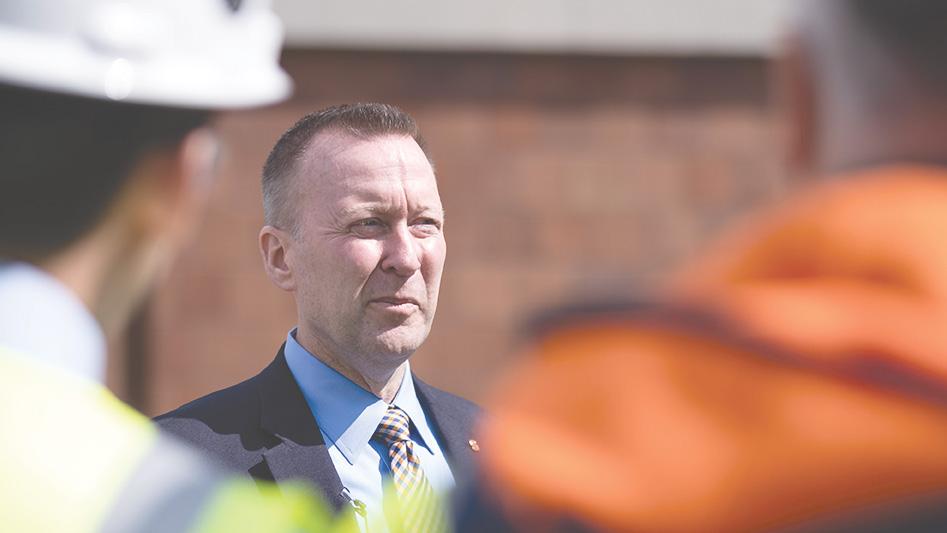
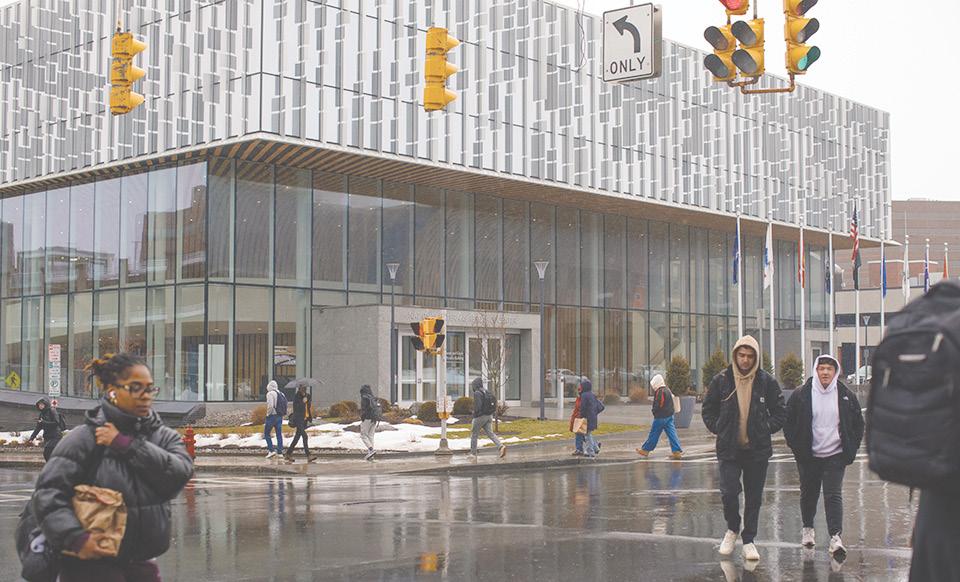
The National Veterans Resource Center was officially dedicated in 2021 after years of construction. dan lyon daily orange file photo
ley wrote in 1943, also claiming SU became one of the 21 largest colleges in the nation.
In 1946, SU admitted 9,464 veterans, almost doubling the school’s student body. The year after, SU led New York state for veteran enrollment, ranking 17th in the U.S.
Haynie leaned on such history when he lobbied Cantor for the IVMF in the early 2010s.
“As these programs that we had built were getting all this attention, and I started getting letters, not emails, letters from alums who came to this university after World War II because of Tolley,” Haynie said. “That history became the basis for my pitch.”
Haynie’s belief that institutions should assume responsibility for the nation’s decision to fight in wars echoed Tolley’s decades earlier.
“I think I can say in full confidence that no college or university in America has dedicated itself more completely to the war,” Tolley wrote in an August 1943 edition of the university’s alumni newsletter.
Several university programs continue the commitment. Whitman’s Defense Comptrollership Program has ushered through over 2,000 graduates since its founding in the 1950s. Newhouse’s Advanced Military Visual Journalism program has taught over 1,100 active-duty personnel serving as combat photographers and military journalists since 1963.
Stacy Pearsall, the only woman to win the National Press Photographers Association’s mil-
itary photographer of the year award twice, is a graduate of Newhouse’s program. Her “Veterans Portrait Project” photos adorn the NVRC walls.
During the Vietnam War, national resentment toward the military crept onto campus. Students questioned the role of ROTC. In 1970, faculty followed a national trend and voted to remove ROTC, but then-Chancellor John Corbally preserved the corps on campus.
Murray met his wife, also an SU alum, while on active duty in South Korea. Even as the U.S. experienced difficulties in times of war, he said SU opens the door to veterans and facilitates difficult conversations — like those that accompanied Vietnam and contemporary conflicts.
“We talk about representation in other affinities,” Murray said. “Representation matters in the veteran space too.”
Over the past few years, the university has simultaneously expanded its off-campus infrastructure and created a visible on-campus footprint with projects like the NVRC.
Next month, Syverud will partake in his final Chancellor’s Review and Awards Ceremony at SU. The event, an annual tradition established by Chancellor James Day in 1917, includes a formal inspection of cadets by the chancellor.
Syverud, whose photograph and “best place for veterans” quote are enshrined on the ground floor of the NVRC, falls in a long line of chancellors who championed military efforts at SU. griffinuribebrown@dailyorange.com
Members
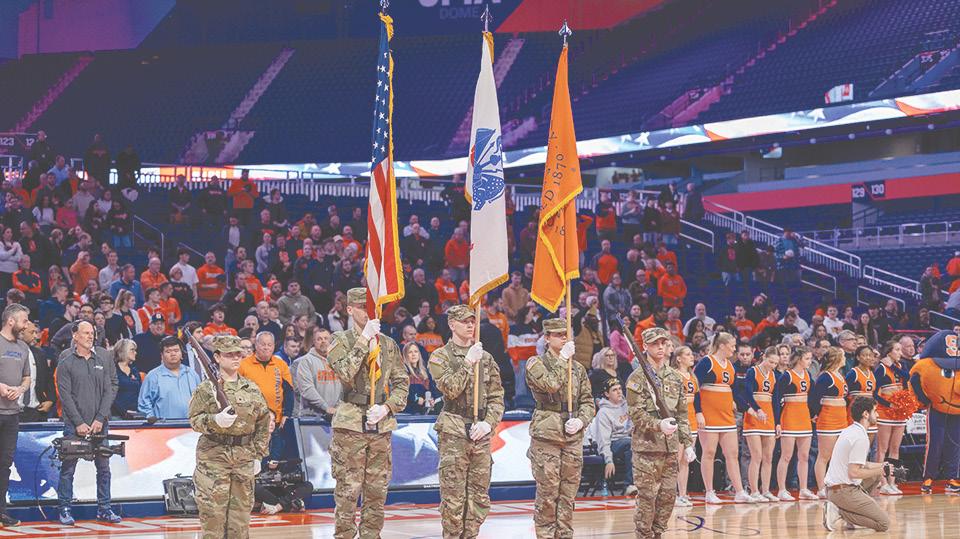
the Army Reserve Officers’ Training Corps color guard lead the pre-game festivities before Syracuse men’s basketball takes on Virginia Tech on Jan. 21, 2026. eli schwartz asst. photo editor
graduate students
come unless we make it financially feasible for you to come.”
Though GA positions are important for recruitment, the university said, they are not the main reason why students attend ESF.
ESF established a stability planning committee in December to advise the university on the execution of the stability plan. Although the committee can make recommendations to ESF leadership, Friden said it cannot require them to take any action.
“We have been, and will continue to be, completely transparent about the importance of maintaining ESF’s fiscal health and the strong future of our campus,” ESF administration wrote. “The need to reduce operational costs has been discussed at many public forums in the past year.”
If students cannot secure external research assistant funding for their final years of school, many return to their GA positions that act as a “security blanket,” Friden said.
Students appointed as GAs receive a stipend, benefits including health insurance and a tuition scholarship, according to ESF’s statement. Students with a 20 hour per week position receive a scholarship equivalent to up to 10 credits.
Instead, graduate students like Liz McDaniel, a chemistry Ph.D. candidate, have taken full-time jobs to financially support themselves. McDaniel now works at a local lab and comes to campus twice a week to work on her research.
Working full-time has reduced the time she can dedicate to her research and led her to take a “big step back” from her campus involvements, McDaniel said.
Slower research means students take longer to complete their programs, which Friden said could jeopardize ESF’s R2 research classification because fewer students will graduate with Ph.D.s. R2 status is a major draw for potential graduate students seeking research opportunities, she added.
ESF said the R2 status is not at risk because the status is based on Ph.D. completion.
Chris Koudelka, a third-year Ph.D. candidate at ESF, said he’s cut his research “in half.” Ph.D. students won’t be encouraged to pursue innovative research because they’re focused on the “fastest way to get out,” he said.
Some Ph.D. students have shifted to a parttime status since the cuts or are unsure if they
from page 3 ash wednesday
we are,’” Greene said. “Our forefathers didn’t fight for this one; they must be rolling over in their graves.”
Canon Rev. Deacon David Stickley of the Episcopal Diocese of CNY helped plan the service and, similarly to Greene, said the inclusive nature of the service made it particularly meaningful.
“It’s very heartening that so many people came out and came out peacefully and came out in a way that doesn’t exclude anybody,” Stickley said. “Including the people whose actions we may or may not agree with.”
Duncan-Probe began the service by highlighting the role love and healing play in current times, simultaneously emphasizing the importance of Ash Wednesday.
“There’s so much in our world that’s horrific to us, and we all are complicit in how we respond to it,” Duncan-Probe said. “In our own response, to not dehumanize where there’s been dehumanization, to stand for justice where there needs to be justice and to recognize the institutional racism of our country that is on full display.”
Meg Ksander, a pastoral associate at All Saints Church, attended with a group of parishioners and explained the church recently had two parishioners detained by ICE at the Mattydale office. She described Wednesday’s sacramental location in front of the office as “deeply meaningful.”
“I feel very compelled to be here to be in solidarity with all those who are targeted unjustly and oppressed by this regime,” Ksander said.
will be able to finish their degrees, Koudelka said. The time needed to write a dissertation doesn’t work around the schedule of an offcampus job, he said.
“The amount of research that people are able to do is going to decline,” McDaniel said. “I know that I’m worried about the Carnegie ranking for the school and I know I’m not the only one.”
While Friden said ESF values its R2 status to attract prospective and current students, cuts to graduate student funding don’t match that goal. Because SUNY hopes to increase undergraduate enrollment, the workload for professors and graduate assistants will also increase, straining resources and ultimately “diluting the quality” of ESF, Beier said.
Graduate students could become overworked and “spread too thin,” he added.
“It’s ‘tightening the belt,’ but it’s like cutting new holes in the belt,” Beier said. “It’s going to a level where we estimate that, based on the numbers that we have in front of us, that we’re going back to the staffing level, including grad assistants, of the 1970s.”
When a professor brings on a graduate student to do research, they are often supported with a GA position if they don’t have a research grant, Beier said. He said the exchange keeps students focused on their research at ESF, rather than needing to support themselves with another job.
Without the ability to obtain his degree while teaching, Beier said he wouldn’t be where he is
Though explicitly welcomed by DuncanProbe and other religious representatives, no federal agents participated in the service. Two agents, however, supervised the final moments of the ceremony from a short distance.
Eichelberger said the officers’ presence didn’t feel threatening at that moment, but recognized possible fear in the situation.
Before the service, Eichelberger, along with the Duncan-Probe, entered the offices after being initially told their presence was not allowed. However, Eichelberger described two other officers as “surprisingly accommodating,” saying they allowed the service to happen on the grounds of free speech, on the condition that it not interfere with protocol.
“Hopefully, what we are seeing, because we’re seeing so many folks who are affiliated with the government’s actions, not being bad apples, but potentially being good apples,” Eichelberger said. “So we remain forever optimistic and hopeful that people change their minds.”
Both agents declined to comment.
Ksander said she hopes the service will increase awareness and prompt political action from representatives for immigrationrelated policies.
Following the service’s conclusion, the group once again sang what Greene said she recognized from attending Catholic school while growing up.
“Sometimes the songs are what really makes it, the words: ‘Let there be peace, let it begin with me,’” Greene said. “So many times, I think we kind of sit back and say, ‘Oh, peace, yeah, you should get started.’ It’s so easy to tell somebody else what to do.” arabellaklonowski@dailyorange.com
system was a full-time job, Olivieri said. He said those who don’t work in a library might not recognize how much time this process takes.
today — an opportunity fewer graduate students will now have access to.
Koudelka said reducing funding for GA positions harms the “backbone” of ESF and keeping student success metrics the same with the cuts is “not feasible.”
He claimed the announcement of the stability plan violated ESF’s shared governance policy. He believes students and faculty affected by cuts should be involved in making administrative decisions, not informed after.
“It feels this way that we’re being managed,” Koudelka said. “Because it’s assumed that we won’t understand, and so it already creates issues of trust and accountability.”
McDaniel found out about the change during a department meeting last year. The chemistry department chair explained that students further in their degrees and not taking a full courseload wouldn’t be able to return to GA positions.
As the graduate student representative in ESF’s stability planning committee, Friden said the committee has been trying to find “footing” in the financial information ESF has shared with them about each department.
She said ESF administration has been receptive to sharing information with the stability planning committee, which has been moving in a “positive direction.”
Koudelka said he doesn’t see ESF’s mission statement, “Improve Our World,” reflected
in the stability plan’s cuts. Beier said he views the stability plan not as a “plan,” but as a “set of targets.”
“Right now, it’s clear that education is secondary to cost control, because the leadership is managing optics rather than addressing the consequences of the stability plan,” Koudelka said.
President Donald Trump’s administration cuts to funding for federal agencies like the Environmental Protection Agency and National Science Foundation feel like “two punches at once” for graduate students, Friden said. Because external research funding from those federal agencies isn’t there, she said financial options for graduate students are reduced further.
“These next three years are going to be really frustrating as we work through the five-year stability plan on our turf and then the three years on the federal turf,” Friden said.
For Friden, graduate students bring a trove of research and teaching experience to college campuses, and are a “driving force” behind science programs that require lab classes.
“As much as advisors and professors can do research, it’s on the backs of graduate students,” Friden said. “So the fact that SUNY sees the amazing work we’re doing and says, ‘Let’s decrease their funding,’ is awful. It devalues the work we do.”
charlotteprice@dailyorange.com

new recreational activities, without having to spend money on non-essential items. SU students feel the same way.
expand the collection to loan even more items of practical use to SU students.
Raymond said they needed to ensure the new library was logistically possible for Bird’s staff before further pursuing the initiative.
“We have to process (the items) to make sure that they are ready to circulate, so that when a student comes to the desk to ask for something, it’s something that they can transport out of here without too much trouble,” Raymond said.
Additionally, cataloging all the items, storing them and setting up new rules in the library
“You have to teach our loaning software how to properly loan all of these items because you need to establish new rules, new identities for all of these items, and it needs to be able to recognize those identities and apply those rules properly,” Olivieri said. “So there’s a lot of things that happen behind the scenes in order to roll out a new collection.”
Additionally, Raymond said the crafting items and games allow students to engage in
“The Library of Things provides a great opportunity for students and for myself to take a break from all the schoolwork or stress, and allows us to branch out into our creative side,” SU freshman Gigi Gandarillas said. Gandarillas has always wanted to try sewing, and now, she has an opportunity to try it.
Raymond said the library’s team intends to keep track of what goods are popular and which are not. That way, she said they can eventually
“Since it’s a loan, students learn to take care of things that they don’t own, while still having access to the goods,” SU sophomore Sophia O’Brien said. “I think it’s really smart of SU to eventually expand this to more varieties of loanable items.”
Students can view the list of
A year into its fiscal stability plan, ESF students face uncertainty amid a 17% cut to graduate funding. tara deluca asst. photo editor
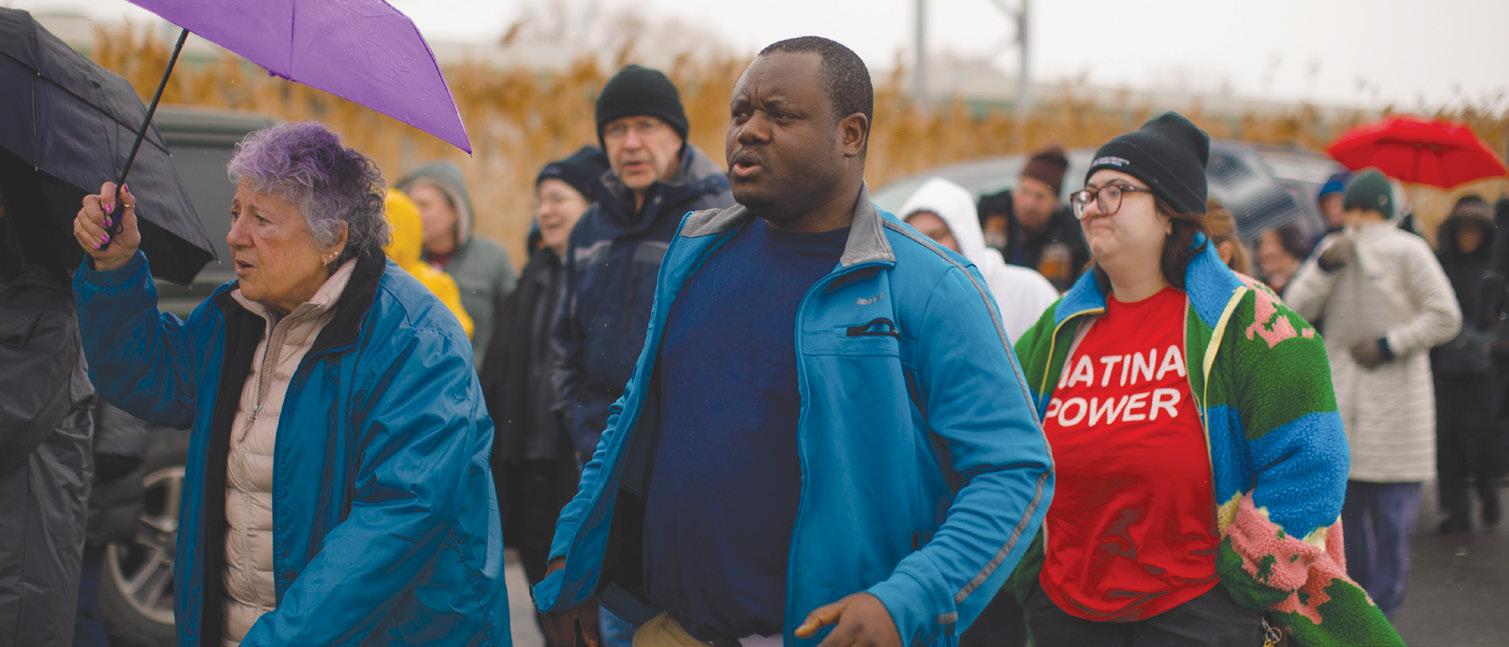
Around 40 attendees walked to the Ash Wednesday service, singing “This Little Light of Mine” before receiving their ashes. avery magee photo editor
Flat-screen fandom
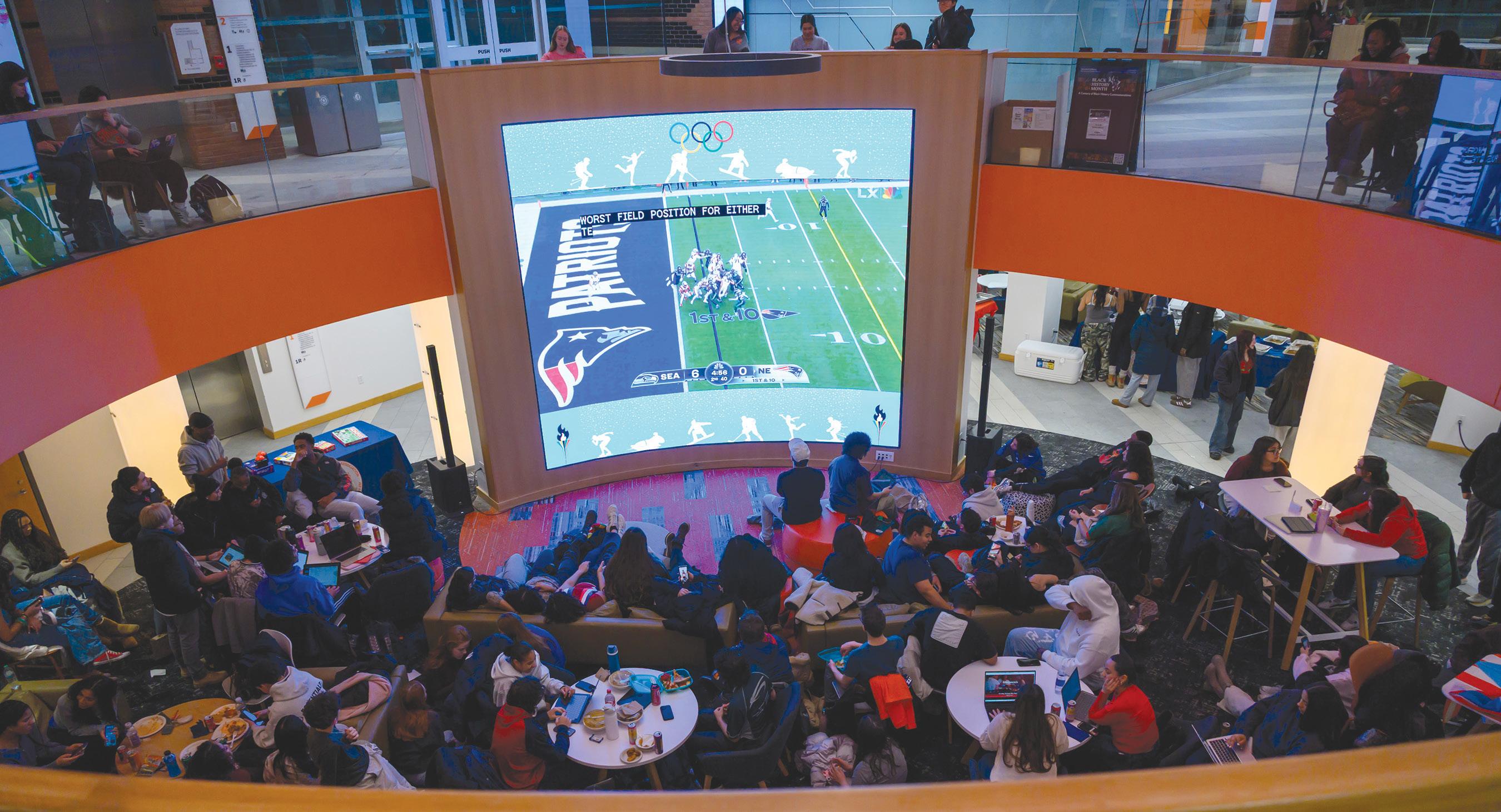
For SU students, Schine Atrium’s video wall is a place to watch sports in between classes
By Tara Binte Sharil asst. culture editor
For Syracuse University
freshman Ericka Desrosiers and her five friends, trying to plan a hangout session together is no easy feat. Whenever they try to gather to watch a movie, the troupe’s rowdy dynamic becomes a whirlwind of never-ending high energy, which is probably why they have never once finished a movie together.
So, when the group spent a month planning how they would watch Super Bowl LX, it felt like an impossible task. However, when learning that the Super Bowl would be streaming in the Schine Atrium, the group finalized their viewing plans. They planned to arrive early to get the best seats in the room.
“Today was good, it was a practice for us,” Desrosiers said. “Basically, plans don’t make it out of the group chat.”
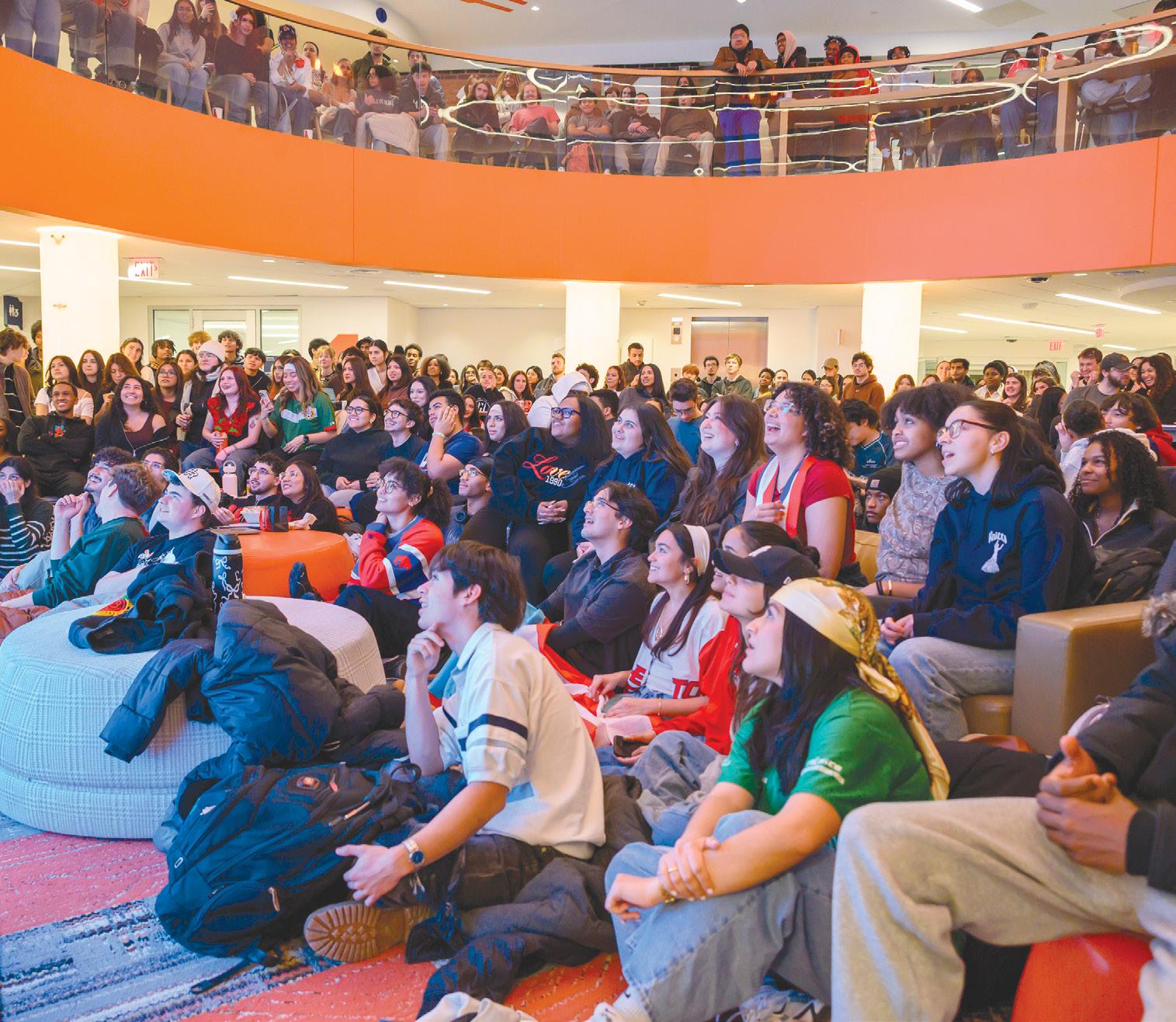
Since 2021, Schine Student Center’s LED video wall has been the epicenter of SU’s televised sports watching, from UEFA Champions League soccer matches to the Orange’s basketball games. Whether students are taking a lunch break or skipping class to witness a tie-breaking 3-pointer, the video wall unites them in small and large groups for the love of the game.
On Feb. 2, the Puerto Rican Student Association, La L.U.C.H.A., Latiné Honors Society and SU’s Student Government Association hosted a “Watch Party Benito Bowl” in Schine. The event brought a large group of students to watch reggaeton superstar Bad Bunny perform in the highly anticipated halftime show and the Seattle Seahawks battle against the New England Patriots.
SU sophomore Diana BonillaPrado helped host the event. She said their goal was to bring a big see video wall page 9
Former SU dance professor launches costume-inspired brand
By Lily Zuckerman asst. culture editor
Dance had been part of Annie Osterhout’s life since she started doing ballet at 3 years old. When she stopped dancing in 2012, Osterhout needed another creative outlet: fashion.
“I needed to keep creating. I’ve always been interested in fashion,” Osterhout said. “When we were doing performances, I was always coming up with the costuming. It just carried over into the collection.”
Later this spring, the 57-year-old will bring those clothing sketches to life with the launch of her first clothing brand, Anna Lisa. While there is no set unveiling, Osterhout aims for the brand’s first clothing line to drop by the end of May. Osterhout’s interest in fashion first sparked during the
dance classes she taught at Syracuse University from 1992 to 2012, she said. Osterhout said her time at SU gave her the confidence she needed to start the line.
Benjamin Simon, Osterhout’s student in the 1990s, said he noticed her fascination with fashion and dance in the performances she choreographed and the costumes she chose for their dances.
He said he wasn’t surprised to learn that Osterhout would be creating her own clothing line.
“I do remember that she did put a lot of thought into what we were wearing and how it influenced the meaning of the dance,” Simon said.
The dance costume choice that stood out the most to Simon of all Osterhout-choreographed dances he performed in was “Albo Gator.” In the
piece, Simon and his peers donned straitjackets as they danced, trying to get up off of the floor without their constrained arms.
Chosen by Osterhout, Simon still remembers the piece “vividly.” It exemplified Osterhout’s sophisticated costuming, he said.
Osterhout’s decision to assign straitjackets to her dancers was an artistic choice that challenged the dancers movements, Simon said. That connection between choreography and costume design was where Osterhout’s artistic vision for fashion and dance shines through, Laurie Deyo, Osterhout’s longtime colleague and friend, said.
Deyo, who taught dance at SU from 1986 to 2015, met Osterhout more than 40 years ago at a local dance studio. In 2011, Deyo and Osterhout
founded the School of Education’s dance minor. Since they’ve known each other, Osterhout’s creativity always showed in her sophisticated outfits, Deyo said.
“Her artistic vision blows me away. From her dance and fashion that she’s designing, she has a vision for things,” Deyo said.
“She’s doing exactly what she should be doing right now.”
Anna Lisa’s combination of dance as a discipline and the emotions behind rock and roll music — two of Osterhout’s favorite artistic endeavours — Osterhout’s new brand is a different form of artistry, but also continuation of her passions at SU, she said.
“It goes back to just how bodies move and how fabric drapes on a body when they’re moving,” Osterhout said.
Two years ago, Osterhout began drawing the clothing designs. Sketch after sketch — dresses, skirts, shirts — Osterhout said that something changed for her.
After outlining more than 50 clothing pieces in her sketchbook, Osterhout said that she reached the point where she felt like the fabric spoke to her, like music and dance had. Osterhout said she knew something was right.
Once she started collecting fabrics and experimenting with draping, Osterhout decided to find a studio space for “Anna Lisa.” She landed on an office building surrounded by other artists at The Velvet Mill in Stonington, CT, where she moved after leaving SU.
If Osterhout is in her office space designing, there is always rock music playing in the background, she said.
Since 2021, Schine’s LED video wall has been the epicenter of sports streaming at Syracuse University, from soccer games to the Olympics. charlie hynes staff photographer
La Unidad Latina celebrates 35 years of building ‘home’ at SU
By April Stelle contributing writer
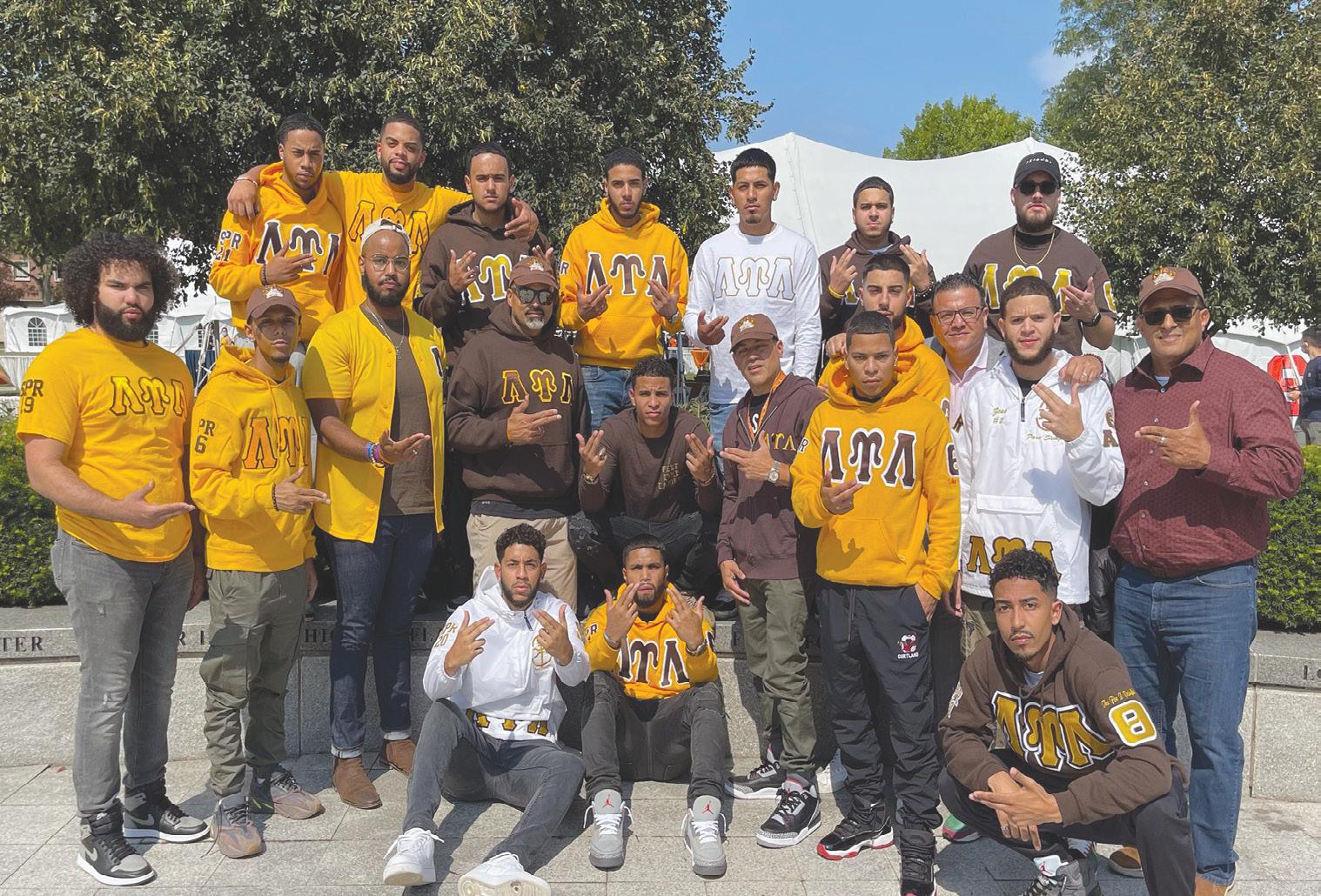
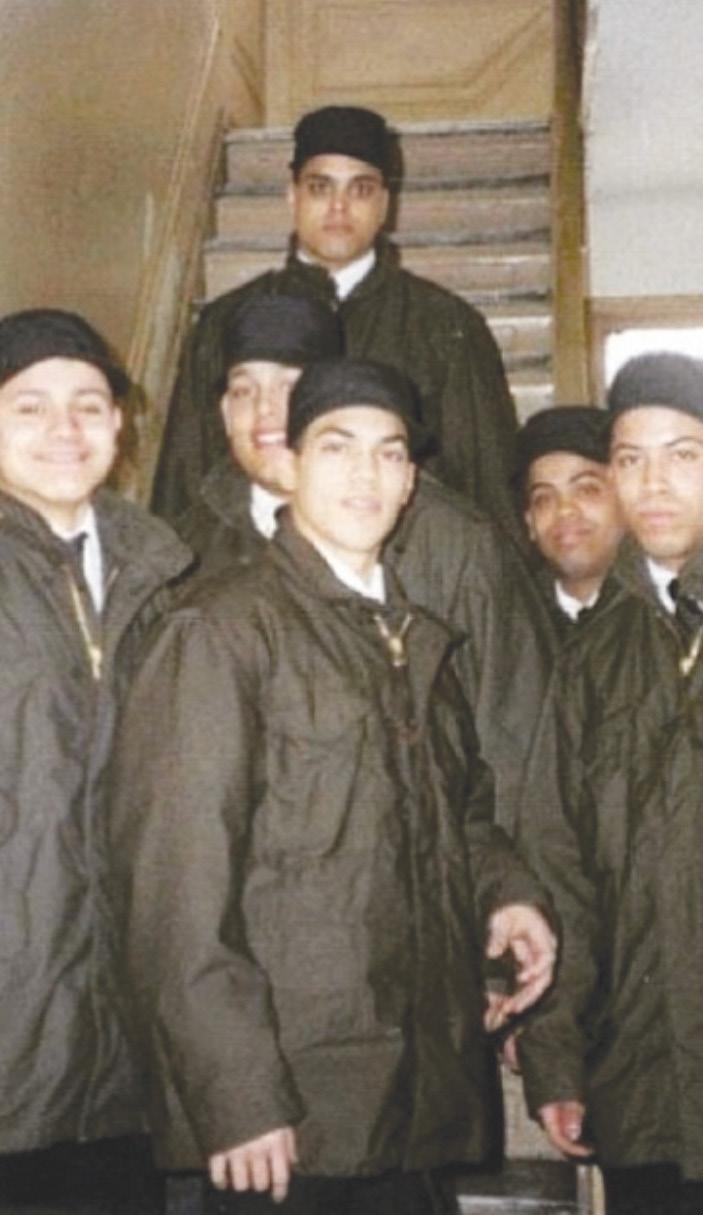
When Syracuse University alum Zhamyr Cueva first arrived on campus, he wanted to create a space for Latino students to find support at a predominantly white institution. In 1991, Cueva and five other students helped charter Lambda Upsilon Lambda fraternity, the first Latino fraternity on SU’s campus.
“We needed a space to find community support and provide a family, because all of us were first generation Latino students, and it was a predominantly non-Latino institution,” Cueva said. “The fraternity would help bring out traditions and perspectives and what we feel is necessary in a brotherhood.”
The fraternity, also known as La Unidad Latina, celebrates its 35th anniversary this year. The chapter was chartered at SU on April 27, 1991. It was originally founded at Cornell University on Feb. 19, 1982, when the first 14 members were initiated. Thursday is their national fraternity Founders Day.
Since there was not yet a council for Latino Greek life at SU, La Unidad Latina received their charter through association with the National Pan-Hellenic Council. The fraternity eventually joined the Latino Greek Council, which transitioned into a part of the National Association of Latino Fraternal Organizations. This created a permanent national affiliation and established an independent Latino Greek governing structure at SU, Cueva said.
Patrick Ramos was looking to be a part of something bigger than himself when he first came to SU. Ramos said it “immediately felt like home” when he joined Lambda Upsilon Lambda in the spring of 2007.
The LUL Softball Classic brings out the most engagement for the national organization, Ramos said. The yearly softball tournament started in 2005 and draws hundreds of people from chapters across the country every summer. This summer will be the 21st edition.
SU’s Theta chapter of Lambda Upsilon Lambda has won two out of the last three championships, but Ramos said that his biggest win of the tournament was sharing moments and conversations with younger Hermanos, or how Latino fraternity members refer to their brothers.
“From older guys, younger guys, and feeling like you have an extended family that in and of itself, is just amazing,” Ramos said. “A lot of the time that family is sometimes even bigger or more impactful, in a way, than your own personal family.”
Brandon Medina, who joined Lambda Upsilon Lambda in spring 2012, wanted to further elevate Lambda Upsilon Lambda’s presence on campus. He aimed to win the La Copa Dorada award, an award given to the Lambda Upsilon Lambda Chapter of the Year.
In the summer of 2014, the summer after Medina graduated, the Lambda Upsilon Lambda’s Syracuse chapter won La Copa Dorada award.
“It kind of put us in a different stratosphere, because other chapters across the nation were starting to see, ‘Wow, Syracuse, the Theta chapter, is really doing some really cool stuff,’” Medina said. “But the more important thing was elevating the work that we were doing, both on campus and within the community.”
An event that gave Medina the opportunity to stay connected with the Theta chapter is Coming Back Together, a reunion event put on by the Office of Multicultural Advancement every three years that creates connections between Lambda Upsilon Lambda undergraduates and postgraduate students.
Medina, who has attended three of these events since his graduation, said it’s a great opportunity to reconnect with people from the chapter from his time on campus, while reminding the undergraduates of the support system they have around them.
Cueva has also returned to campus after he graduated. On one visit with his mentor, Cueva noticed the Black fraternities and sororities had plaques on the Shaw Quadrangle to honor their history and presence. He later found out the National Pan-Hellenic Council fundraised for years to get those plaques up.
For Cueva, the plaques represented a way for the fraternity to represent themselves at SU. Cueva decided to pay for the NALFO plaques himself.
“What’s really important is when you have students that take open house tours, they come to Syracuse, and they might be of Latin descent, it gives them an opportunity to see that there’s a few communities here for them,” Cueva said.
Joseph Cruz said his first Coming Back Together event was right after his class was initiated — or crossed — and it gave him the opportunity to meet over 30 alumni.
“That was my first experience that it was like, ‘Wow, this is wholesome,’” said Cruz, who joined Lambda Upsilon Lambda in 2021. “This is actually a brotherhood.”
Cruz was initiated after COVID-19 pandemic, which he said brought the Hermanos closer together.
“It was more intimate. It was just us. It was us talking to each other, getting to know how our day was going, any family issues that’s going on,” Cruz said. “Those were the times where we were intimate and vulnerable with each other, to get to know each other a little bit better.”
Joshua Moran, who joined Lambda Upsilon Lambda in the spring of 2016, wanted to keep this family-like connection among Hermanos after graduation. Every few months, Moran curates events the Hermanos have never experienced to bring them.
Moran said it is uncommon in male-centered friendships to reach out to each other to plan hang outs. He wanted to make a space for Hermanos to hang out and enjoy each other.
One of the yearly postgraduate events is Secret Santa, which, with organizing help from Cueva and Medina, drew in a crowd of 30 Hermanos this past year. It was run out of one of Cueva’s restaurants in New York City. This was the largest turnout for these postgraduate events yet, which usually draw in about 10 to 15 Hermanos.
As a 21-year-old Latino man from Washington Heights, New York, Secret Santa had a big impact on President Angel Caceres, who joined Lambda Upsilon Lambda in the spring of 2025. He said he was deeply impacted by being surrounded by other educated Latino men.
“When I went to that Secret Santa, I realized for the first time, like it actually hit me, I was surrounded by so many educated Latino men who
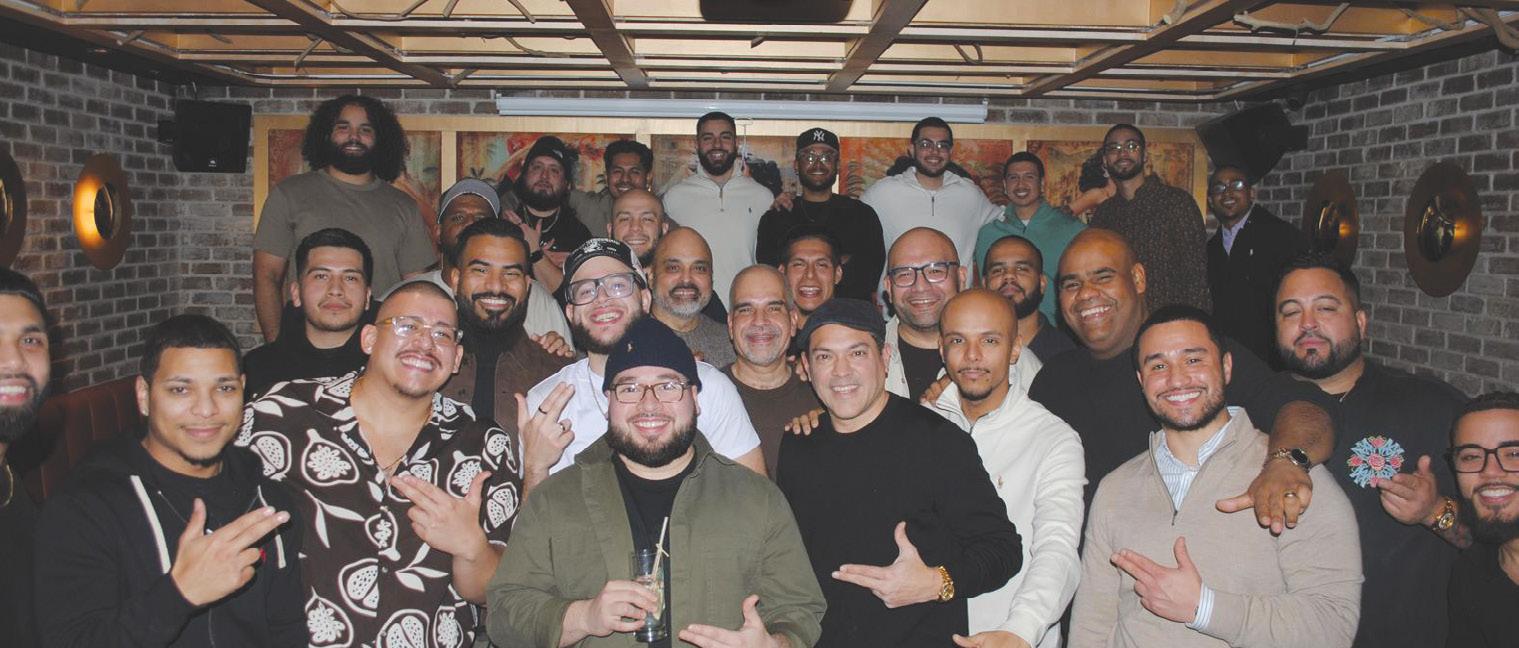
spoke both English and Spanish,” Caceres said. “That’s so significant for me because growing up, if you were an adult and you spoke Spanish, you typically did not speak English.”
Whenever Caceres plans events for Lambda Upsilon Lambda, he said he does so with intention, always thinking of ways to serve the campus community in a meaningful way.
“We were made for this activism, we were made for this support, and we were made for facilitating that community space away from home for people, so that people can feel safe,” Caceres said. “Especially at institutions like PWI, and then you want to add in everything that’s happening around the world with ICE. It’s important for people to have these safe spaces.”
Joining Lambda Upsilon Lambda, Caceres said the most important thing was the “brotherhood” he felt. When he came out in early April of last year, he was received with love from Hermanos he had never met before.
Whether it’s at events in the city or visiting different schools in upstate New York, he has felt nothing but love and respect.
“I really have felt like my time here, I’ve really gotten that brotherhood that I joined for so it’s not like a singular memory,” Caceres said. “It’s not one particular event. It’s truly been an experience for me.”
ajstelle@syr.edu
beneath the surFACE aims to spread HPV awareness through art
By Caroline Erskine asst. digital editor
Cancer care has been a mainstay of Martha Ryan’s career. From working at the American Cancer Society to Upstate Cancer Center, Ryan said she’s seen the devastating impact cancer can have on patients and loved ones.
Now, though officially retired, she is the program coordinator for beneath the surFACE, which focuses on cancer prevention education, spreading awareness and understanding through artwork.
“If I can prevent one person from having to hear those words, ‘you have cancer,’ (the program has) been effective,” Ryan said.
Based out of SUNY Upstate Medical University, beneath the surFACE has focused on educating people — primarily high school and college students — since 2017 about HPV, the six kinds of cancer that it can cause and the benefits of the HPV vaccine.
The program also incorporates an art component that transforms old radiation masks into hopeful messages. High school art students work on the project during class time, decorating the same plastic
forms that head-and-neck cancer patients wore during treatment.
Beneath the surFACE began by presenting the educational material to the Syracuse City School District, attempting to implement itin the schools. However, health teachers declined to teach the material, citing a large workload and insufficient knowledge of HPV, Ryan said.
That year, the art portion of the program was still successful, with middle school, high school and local artists decorating radiation masks, auctioning them off and contributing the proceeds to the Upstate Cancer Center.
Just before the COVID-19 pandemic, Ryan presented the program — now complete with slides and a lesson plan — to health teachers again. Unfortunately, due to the timing of the pandemic, teachers were unable to implement the lessons until the pandemic ended.
Lori DiFlorio, a Nottingham High School art teacher, has been working with the program for two years. She emphasized the importance of HPV education and the message that the decorating of radiation masks sends.
“It really makes a beautiful connection between someone’s pain and taking that pain and turning it into something beautiful,” DiFlorio said.
The masks, donated by the Upstate Cancer Center after patients complete treatment, start as molded plastic that secure patients’ heads and shoulders during radiation sessions. Ryan said sourcing the masks is easy because most patients don’t want to see them again after treatment ends.
“It’s a way of showing that something terrible can have positive effects afterwards,” Ryan said.
So far, more than 70 art students have transformed radiation treatment masks into pieces of art, DiFlorio said. This year, around 12 students are working on masks at Nottingham High School.
DiFlorio has approximately 150 students across grades 9 to 12, with about 10 participating in the mask project this year. Students work on the masks during class time, though some also work during lunch or after school. One student is even crocheting her mask at home, she said.
What motivates most students to participate is learning the masks will be auctioned off with proceeds going to research at the Upstate Cancer Center, DiFlorio said. The students who take part show real empathy for cancer patients, she said.
Students are experimenting with various materials including feathers, beads and yarn. A few are transforming their masks into animals.
Completion times vary widely — some students finish in a week while others work on their masks for over a month depending on their vision, she said.
Jette Halevi, an SU senior public health student interning with the program, said the art project makes the program more powerful because it involves the community in addressing such a serious topic.
“Art is such a good way to express yourself,” Halevi said. “Involving high school students, starting from that age and involving our whole community in such a project, really is such an amazing way to spread the message.”
The masks, made in classes like DiFlorio’s, will be displayed at Hendricks Chapel from March 3 to 18, with the second-ever reception and silent auction on March 18 from 4 to 7 p.m., Ryan said. All proceeds will benefit SUNY Upstate Medical University’s head and neck cancer program.
“We have some really great students, and the ones who have taken on this project are leading with empathy,” DiFlorio said. “They are excited to really contribute to raising money for a good cause.”
cberskine@syr.edu
SU’s Lambda Upsilon Lambda chapter was chartered at SU on April 27, 1991. They celebrate their national Founders Day Thursday. courtesy of angel caceres
SaltTee prints historic, landmark-inspired clothes
By Joel Pelachik asst. copy editor
There’s that old saying: “One person’s trash is another person’s treasure.” For David Haas and Kelly Hall, screen prints are their treasure — a warehouse full.
Haas and Hall are co-owners of SaltTee Collections, an online clothing store that sells apparel donning logos of vintage Syracuse businesses and landmarks, from the Carousel Center (now Destiny USA) to Clark’s Ale House.
“People yearn for the past, and this is a direct tie to it, with local companies and establishments,” Haas said. “A lot of us used to either go (to these places), had jobs there, our families worked there, so it’s just a lot of good memories.”
SaltTee opened in July 2025, but the idea was drawn up years before. Hall, a full-time realtor, gave Haas a tour of a “meek” warehouse on West Fayette Street in April 2022. The warehouse had been previously owned by Wards Printing since the 1950s, before they switched locations.
Haas, who runs @syracusehistory on TikTok and Instagram, saw the location was up for sale and wanted to feature it as a video for his account. Audiences loved the warehouse, which featured decades worth of screen prints that Wards saved, Hall said.
“I was interested, and so I was guessing my audience would (also want) see this building,” Haas said. “But then when I got there, the magnitude of screens in there was just overwhelming, in a good way. This is gold.”
The post performed well on Haas’ account. When the listing agent told Hall the prints would be thrown out, Hall and Haas decided to make use of them, thus creating SaltTee Collections, Hall said.
The business partners — both born and raised in Syracuse — hosted an open house in November 2022. Customers bought clothing and some of the physical screen prints leftover from Wards. That was when they knew the business idea could work, Hall said.
“This community and ecosystem of Syracuse enthusiasts really wanted to wear the Syracuse his-
tory, we saw the ability to create that, and just bring smiles to people,” Hall said.
SaltTee officially opened last July, partnering with Wards. Wards still owns the screen prints, which is now located in East Syracuse. SaltTee operates out of their new location and acts as the “vehicle” for selling specific products, Haas said.
SaltTee’s third clothing drop was released at the beginning of February, including callbacks to landmarks like Rosie’s Sports Pub & Grill, DeJulio’s Army and Navy Store and the Sweetheart Corner sign.
The sign, which still stands at the intersection of East Taft Road and Route 11, advertised the locally owned Sweetheart Market from the 1950s until its closing in 2003. Hall said it’s nostalgic for the Syracuse community. Customers often write in requesting specific logos for apparel, including the Sweetheart Corner sign, Hall said.
“I had two people reach out to me and say their parents met there,” Hall said. “Their parents met there, and they got married. So, it’s really sweet to have that, and they bought the sweatshirt for their parents.”
SaltTee customer Brittany Gawarecki said the merchandise is “very comfortable,” and that the emblem on her Fay’s Drugs sweatshirt hasn’t peeled at all. The regional drugstore — where 16-year-old Hall had her first job — was featured in SaltTee’s original clothing drop.
It’s not just people currently living in Syracuse that love these products, Gawarecki said. She works at a local car dealership and said one of their vendors noticed her Fay’s Drugs sweatshirt. Then, he bought one for his sister, who now lives in Florida but used to work at the drugstore.
Gawarecki said she loves the nostalgia that SaltTee brings.
“It’s got a sweet spot in my heart for the older locations that might not be open anymore, and it’s nice to wear the shirts,” Gawarecki said.
When she wore her sweatshirt to the IKEA at Destiny USA, she said people stopped her, complimenting the SaltTee merchandise and telling her old stories about Fay’s Drugs, Gawarecki said.

Apart from Syracuse’s nickname — Salt City — Hall said SaltTee reminds her of the phrase “salt of the earth.” As a small business, SaltTee is shining a light on other local businesses, even if those businesses aren’t around anymore, Hall said. Hall called the project a “full-circle moment.” Their merchandise are “wearable pieces of art,” she said.
Though SaltTee primarily sells their clothing online, Haas and Hall, who both work full-time jobs, want to take advantage of pop-up shop opportunities with in-person vendors to “get more eyes.”
“It’s been so well received so far, and we’re only scratching the surface,” Hall said. jdpelach@syr.edu
Drag queen Arya Klos promotes authenticity
By Ava Shedlauskas contributing writer
Arya Klos performed at an assisted living event outside of Syracuse on a whim. She had only been there one time previously, for a bingo event with the residents. With her makeup done, hair in an elaborate up-do and only the highest of heels on, Klos fully immersed herself in the drag experience.
She noticed an older woman silently watching in the audience, as a singular tear fell down her face. The woman came up to her afterward, thanking Klos for a show that brought her back to her own performing days.
The following week Klos got a call.
“They want less bingo and they want more you,” she recalled an employee telling her.
This wasn’t a first for Klos, leaving such an impact on viewers. These experiences are what make Klos love doing drag, she said. Klos has performed as a drag queen for years. Now based in Syracuse, Klos began her performance career in New York City.
“The Arya mindset is just to have a good time. The world is kind of just in a sh-tty place overall so why not take a moment to laugh, enjoy and bring in some culture,” Klos said.
She competed in her local writing center’s slam poetry competitions while living in New
York City. In her final performance, she talked about “slut culture” and decided to “go out with a bang” by throwing condoms into the audience, she said.
Klos was surprised to be invited back to the writing center to perform the following year. Her performance, done dressed in drag, was a feminist piece through the lens of a drag queen titled “As a Drag Queen.” Delivering the poem was her first performance in the drag community.
While working in the city, Klos befriended other drag queens and kings. Quickly, she realized she’d need a signature drag name. Inspired by “Game of Thrones” character Arya Stark, Klos picked up the character’s name. She said the name Arya Klos also coincidentally created a pun of “Are ya close?”
Eventually, Klos made the move upstate and began performing in the local drag scene. In Syracuse, Klos often participates in community events. Last Thursday, she served as the guest emcee for “Glide with Pride,” an LGBTQ+ ice skating event hosted by the Syracuse Mayor’s Office LGBTQ+ Advisory Board.
Fatcat Baking, a local vegan bakery, co-sponsored Thursday’s event. Owner Megan Rydzak said showing up for one another is crucial in the local drag and LGBTQ+ community. For Rydzak, sup-

porting local LGBTQ+ artists represents “community and love.”
Klos frequently visits Rydzak’s store, Rydzak said, where they’ve formed a strong friendship. Her three words to describe Klos: sassy, businessoriented and kind.
“The drag community is interesting, you would think it’s small but we have a really, really big drag community here,” Rydzak said. “It’s popping.”
The LGBTQ+ community in Syracuse allows Rydzak to come with an open heart — no one has to be someone they’re not, she said.
Klos said she has seen how her influences paved the way for local drag representation. But, there is still quite a way to go, she said. On a local and global scale, the cross section of gender equality and drag culture intersect in challenging ways. Drag queens and kings have always been around, but only recently are getting to share their stories, Klos said.
For Klos, putting on a show is not just about delivering a solid performance.
“It is also about giving a nod to the drag queen culture that came before,” Klos said. “I’m not saying every stage performance is a rally, but it’s good to foster those moments of community and embrace creativity in many fashions.”
Klos said she appreciates local LGBTQ+ youth advocacy groups, like The Q Center. They provide LGBTQ+ 101 training to schools and businesses, community outreach and cultural competency modules. Klos grew up in Long Island, and found the programming at a similar organization extremely supportive.
Kip Amyot, a support specialist for The Q Center, emphasized the importance of drag culture in LGBTQ+ communities. He said the drag queencommunity partnerships are tight in the greater Syracuse area; often artists do performances that benefit local food pantries and transgender visibility causes.
“(Drag has) been an absolute staple in communities towards being authentic,” Amyot said. “It has the power to draw support and bring people together. It’s undervalued. Drag is the true embodiment of being who you are.”
Klos agrees. Drag is about showcasing one’s true authentic self, Klos said.
“People will see us as a prop, or something that is less than, which is unfortunate,” Klos said. “People don’t also realize at the end of the day we’re people. We are taking time away from that to perform and embrace our creativity and share that with everyone else.”
ashedlau@syr.edu
In the quintessential dive bar setting, enjoy classic rock from duo Brian McArdell and Mark Westers. Dual acoustic guitars and harmonica are featured in their covers, from Fleetwood Mac to the Grateful Dead.
WHEN : Thursday, 7 to 11 p.m.
PRICE: Free
WHERE: Shifty’s Bar and Grill McArdell & Westers
Transient Kicks with The New Service
Listen to Transient Kicks, an original, Syracuse-based jam band that blends rock, funk, jazz, bluegrass and psychedelic influences. The group is known for high-energy, improvisational live performances. Joining them is special guest The New Service. You must be 18 or older to attend.
WHEN : Thursday, 8 to 11 p.m.
PRICE: $13.07
WHERE: Funk ‘n Waffles
Immerse yourself in a jazz speakeasy with one of Steve Grills’ Rochesterbased blues bands’ classic highenergy, passionate performances.
WHEN : Friday, 8:30 to 11:30 p.m.
PRICE: Free WHERE: The Fitz Steve Grills and the Roadmasters
The Band Memo with support from Mosaic Mind
A shared love for jam bands and Americana/folk/rock music brings the members of The Band Memo, a New York City-based group, together to create their own unique sound and live experience. They are supported by Syracuse-based alternative rock band Mosaic Mind. You must be 18 or older to attend.
WHEN : Friday, 8 to 11 p.m.
PRICE: $13.07
WHERE: Funk ‘n Waffles
Party Rock: 2016 Wanderlust Edition
Experience a 2010s throwback night hosted by DJ Nor.th Star. Get nostalgic with 2016 hits from Justin Bieber, Rihanna, Selena Gomez and more. You must be 18 or older to attend.
WHEN : Saturday, 9 p.m.
PRICE: $13.60
WHERE: The Song & Dance

For Arya Klos, drag is not just about giving a solid performance but also about honoring other drag queens who came before her. courtesy of arya klos
David Haas and Kelly Hall opened SaltTee Collections in 2025. courtesy of david haas
‘Touse Glovers’ light up dorm rooms, tap into TikTok trends
By Claire Zhang asst. digital editor
Syracuse University freshman Addi Rudman has taken on a new fixation to bring to her usual dorm hangouts: gloving. With her room lights off, light-up hand gloves on and speakers blasting, Rudman puts on a performance.
“The gloves take over, the gloves have a mind of their own,” Rudman said.
Gloving, a finger dance using LED light-up gloves, is popular among EDM performers, at rave festivals and most recently on TikTok. The gloves are fabric, with small LED bulbs attached to the fingertips. Performers who use the gloves are referred to as “glovers.”
Glovers move their fingers in elaborate ways to create a light show with their hands, usually in the dark. Rudman had been seeing gloving videos on her feed since last summer, when she thought, “I can so do that.”
When Rudman came back to campus this January, she bought gloves off Amazon. And with encouragement from her friends, Rudman decided to start a TikTok page: @syracuse.glovers. While the whole concept is “lowkey satire,”
audience to witness the “powerful and engaging” performance.
Desrosiers and the majority of her friends supported the Patriots during the Super Bowl. Miles Anderson was the group’s only Seahawks fan.
While Anderson defended his team, his friend Fahim Issifou interrupted with “You’re just saying a bunch of nothing,” which led to a larger debate. Uzzekiah Harvey said the Super Bowl was “Drake Maye’s race,” and Eskerly Benitez argued that if Diggs won the championship ring, she hoped to see another ring on Cardi B’s finger.
Heated rivalries are common in the Atrium. SU senior Alex Calabrese still remembers watching the 2022 World Cup on the video wall as a freshman. Calabrese, who grew up in London, has seen his fair share of different sporting events in person, from the Olympics to the Champions League. These events bring together visitors from all around the world to support their respective countries and teams. The video wall brought a similar feeling, he said.
During the World Cup, the Atrium projected every game of the tournament. But, in the highly anticipated game between Switzerland and Serbia, Calabrese recalled the space’s division for the controversial game. One side supported Switzerland and the other Serbia, though many supporters weren’t of those nationalities.
“It was the most full I’ve ever seen in this room. I did not feel like I was in America, to be honest,” Calabrese said. “Whether it was France, Switzerland, Senegal, Cameroon, Argentina, every country was represented here, which was really, really awesome.”
When Osterhout designs an item for her fashion line, she said she envisions Keith Richards’ wife, Patti Hansen, at 27 years old as the woman wearing her clothing. She’s a big fan of Richards’ music and sees the fashion’s elegance and sophistication aligned with Hansen.
“I am designing for her,” Osterhout said. “What she would wear, how she would wear it and what would make her look sexy and elegant at the same time.”
Whenever Osterhout plans an outfit for a future client, she wants them to feel like the most confident and happiest woman in the room, she said.
“Dance is too insular when in fact, it’s everywhere, all of the time in everybody’s life,” Deyo

“And now a moment of silence for the situationships that started right before valentine’s day, and were forced into a level of emotional intimacy that none were quite ready for”
it’s a fun bit for her friend group and the page has gotten her recognized by fellow students, Rudman said.
The Syracuse Glovers account also refers to themselves as “touse,” which merges the words “top” and “house.” Oftentimes, the term refers to the top ranked sororities and fraternities in Greek life. Rudman jokingly named her dorm “touse” at the start of the school year because she lives on the top floor of her dorm.
“Then I was like, ‘You know what gloving is? Touse,’” she said.
Teagan Tokheim, an SU freshman and Rudman’s friend, is the videographer for most of the TikTok videos. She recalls filming their video to “Rush” by Troye Sivan, which she said had an “electric” vibe. Immediately after, Tokheim and Rudman knew it was a one take wonder, she said.
EDM, house or pop songs with a good beat drop are Rudman’s favorite “to glove to,” she said. Currently, the page only has five videos. She plans to film her next TikTok to “Paparazzi” by Lady Gaga and use flashlights in the background.
Rudman’s ultimate goal is to go viral, but the videos she has posted have gotten only some
Four years later, Calabrese ended up in the same spot for the Milan Cortina Winter Olympics’ 5,000-meter women’s speed skating final: in front of the Atrium’s video wall. In the final stretch, Calabrese was on the edge of his seat with his hands on his head. Italy’s Francesca Lollobrigida crossed the finish line, winning by a tenth of a second. Calabrese cheered. Immediately after she won, he rushed off. Like many other students, he squeezed in the viewing between classes.
Since Feb. 6, the Atrium has showcased various winter sports during the Milan Cortina, from figure skating to curling. Students have been in and out of the Atrium to stay up to date with the games.
SU senior Hans Pedersen and his dad decided to hang out in the Atrium while waiting for their car to charge. Luge played on the top half of the split screen and the SU men’s basketball team on the bottom half. Though they know nothing of the sport, the Pedersen’s decided to watch luge over basketball.
“I’m more interested in watching these dudes fly on the ice,” Pedersen said.
Freshman Martin Fields was catching up with the Olympic hockey games while having lunch at Schine. A longtime hockey fan, Fields said the USA and Canada are the two main nations he is watching. On Thursday, Canada and Czechia competed against each other in the quarterfinals. A Team USA fan, Fields was rooting for Czechia to win.
While Fields is primarily a hockey fan, he’s also stayed up to date with other winter games. With the Atrium streaming all sorts of other sports, it was the best way to watch them, he said.
Sophomore Whitman Brida usually sits on the couch alone while killing time in between classes. On Monday, the Atrium broadcast a soc-
said. “Annie shares that kind of idea that every discipline is present in everything.”
The collection — which consists of nearly 20 pieces — are made to order. Out of all of them, Osterhout’s favorite piece is a strapless dress that is form-fitted on top and flows out on the sides. The dress is made of gray flower-printed fabric, has a low back and a purple sash.
In a year from now, Osterhout said she hopes “Anna Lisa” will be sold at Bergdorf Goodman, Bloomingdales or Neiman Marcus.
Osterhout wants her clothing pieces to last a lifetime and for it to be passed down generations to come.
But that attention to the garment’s quality comes with a price tag, Osterhout said. The madeto-order collection will range in price from $400 to $700, depending on fabric and construction.
views, specifically from people on campus. Other people on her floor have asked her to perform for them or show them her ways.
“Everyone comes to my room and they ask if they can use the gloves, and they’re like, ‘Teach me, I can’t do it,’” Rudman said. “I’m like, ‘No, you put the gloves on, it comes to you.’”
Though the account hasn’t reached Rudman’s goal of virality yet, at only 136 followers, it’s reached people outside of Syracuse, many friends of friends, Rudman said. Tokheim posted one of the videos on her Snapchat private story, urging everyone to follow the account and her sister in Nebraska said she’d already seen it.
Another member of Rudman’s friend group, SU freshman Sara Spring told her mom about the account, who’s also now invested. At first, Spring’s mom thought Rudman was simply holding glow sticks in her hands, she said. Now, she has an appreciation for it.
Gloving has simply become a hobby for Rudman to entertain her friends. Spring said their friend group often asks Rudman to glove for them, eager to see her newly learned techniques. Rudman said that she has never danced seriously
cer game between FC Barcelona and Girona FC.
Though Brida is a fan of Barcelona, his main team is Liverpool FC, he said. In fact, Brida scheduled his classes last semester around Liverpool’s game schedule in the Champions League, so he could catch it in between classes in the Atrium.
While Brida also enjoys the rousing energy of sports bars, the Atrium has a calmer atmosphere, he said. The couches offer a comfier space, and the proximity to food spots allows students to eat with a side of entertainment, Brida said.
But, depending on who’s playing, that may not always be the case.
While students crammed to study during finals season last May, the Atrium streamed the second-leg Champions League semifinals. It was Barcelona versus Inter Milan, who were performing at their peak.
In the first leg, the final score was tied at 3-3. The second leg was one of the most enticing games of the season. Of course, the Atrium had to stream the game.
Brida remembered spotting students who crept out of their study tables, moving to the front of the Atrium to watch the tantalizing game.
“Everyone was studying for their last couple of finals, but they came down here for the insane game,” Brida said. “When Inter had the last-minute goal with the backheel above the goalkeeper, it was crazy. I like Barcelona enough where I got pissed off that they lost. It was a great game.”
For Desrosiers, that same atmosphere was present at the Watch Party Benito Bowl. It was the easiest way to round up football fanatics, Bad Bunny fans and her rowdy friends in one space.
“It’s just unity. We’re all from different places, but at the end of the day, we all came here together to watch the game,” Desrosiers said.
Osterhout’s biggest inspiration for her approach to fashion design draws from the dresses that costume designer Edith Head made for movies in the mid 1900s. Osterhout’s fashion line resembles Head’s designs for the dresses worn by Grace Kelly in “To Catch a Thief” and “Rear Window.”
Osterhout’s ambitious personality pushed her to create the brand, Deyo said. Deyo said Osterhout’s known for always trying something different and pushing the edge, which showed up in every costume she chose for her dancers.
“I always wanted to make my dancers look beautiful. As a dancer, you understand the body, you understand where the curves are,” Osterhout said. “You understand how you want something to flow. And it just carried right over into fashion design.” lvzucker@syr.edu
before and doesn’t claim to be a dancer, but gloving is often a full body experience.
“Once the gloves go on, it’s dance city over here,” Tokheim said.
One night, the friend group was hanging out in Tokheim’s dorm when she got a text from Rudman, asking her to turn the lights off as Rudman wanted to make a “dramatic entrance.”
“She walks in, music blasting with her gloves on and gives us a full performance,” Tokheim said. Spring said Rudman’s confidence and willingness to not take herself seriously are why the account is so fun. Their friend group is big on long running bits — some have lasted since the first day they met each other, Spring said.
Rudman is somebody who is “undeniably herself,” and her humor makes the account and gloving something unserious for the friend group to be a part of, Spring said. Tokheim said it’s extended beyond their circle — gloving is now a social conversation topic with other students.
“This is something that I’m gonna be laughing about until I’m actually on my deathbed,” Spring said. “I’ll be telling my grandchildren about it.”
cmzhang@syr.edu
While graduate students Ryan Brouchoud and Ryan Jacobs came to Schine to support the Patriots, their friends, Claudia Reto and Leslie Saldaña, were rooting for Bad Bunny.
Reto and Saldaña, who had never watched a sporting event in the Atrium, made their way to Schine to absorb the buzzing atmosphere around the match. Reto said they enjoyed immersing themselves in American culture alongside Latin American students.
As the speaker blared for the start of the halftime show, students rushed back to their seats to watch the musician perform. The Atrium was sprinkled with students wearing Puerto Rican jerseys, flags wrapped around their backs and cheers shouted in Spanish could be heard left and right. Students at the front sat down on the floor to make way for others at the back, who were tiptoeing to watch. Crowds extended toward the back doors of the Atrium, and students who couldn’t find a seat in the main space sat on the floor above to view the historic show with their peers — even if their views were slightly obstructed.
As Bad Bunny’s halftime show came to a close, a thunderous applause erupted from the Atrium. For Bonilla-Prado, the final scene of the performance encompasses the gathering. By using the video wall, hosting the watch party symbolizes an opportunity to bring Latino students of different identities together to witness the culturally and politically significant event.
“There’s a lot of strength in numbers,” Bonilla-Prado said. “Seeing other people you wouldn’t normally see on an everyday basis and watching something that is so important to our communities, it brings a sense of welcomingness. It feels like we’re connected by one experience.” tabintes@syr.edu
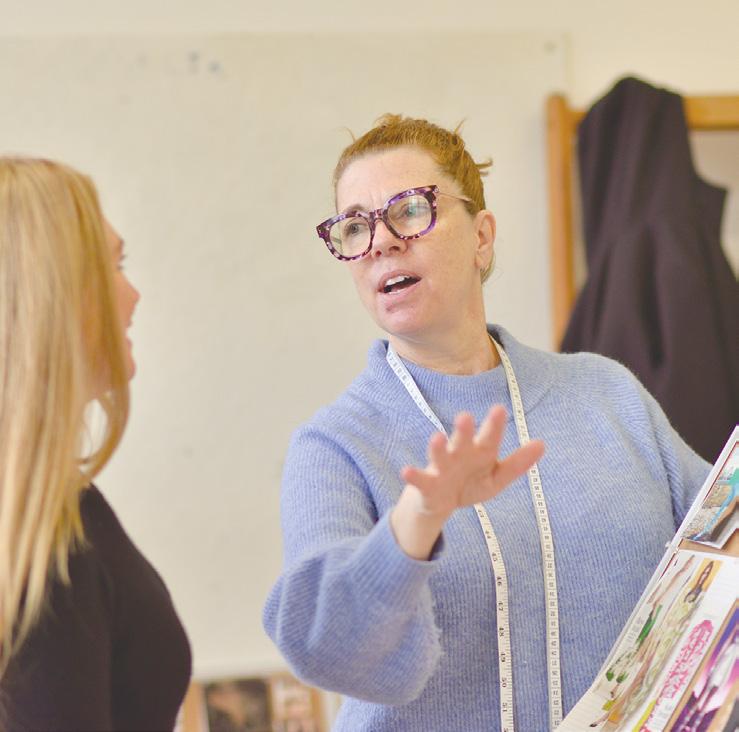

rené vetter cartoonist
cartoonist
annie osterhout brainstorms her new fashion line. courtesy of annie osterhout
letter to the editor
I ended my financial support of SU over absence from ‘the Call’
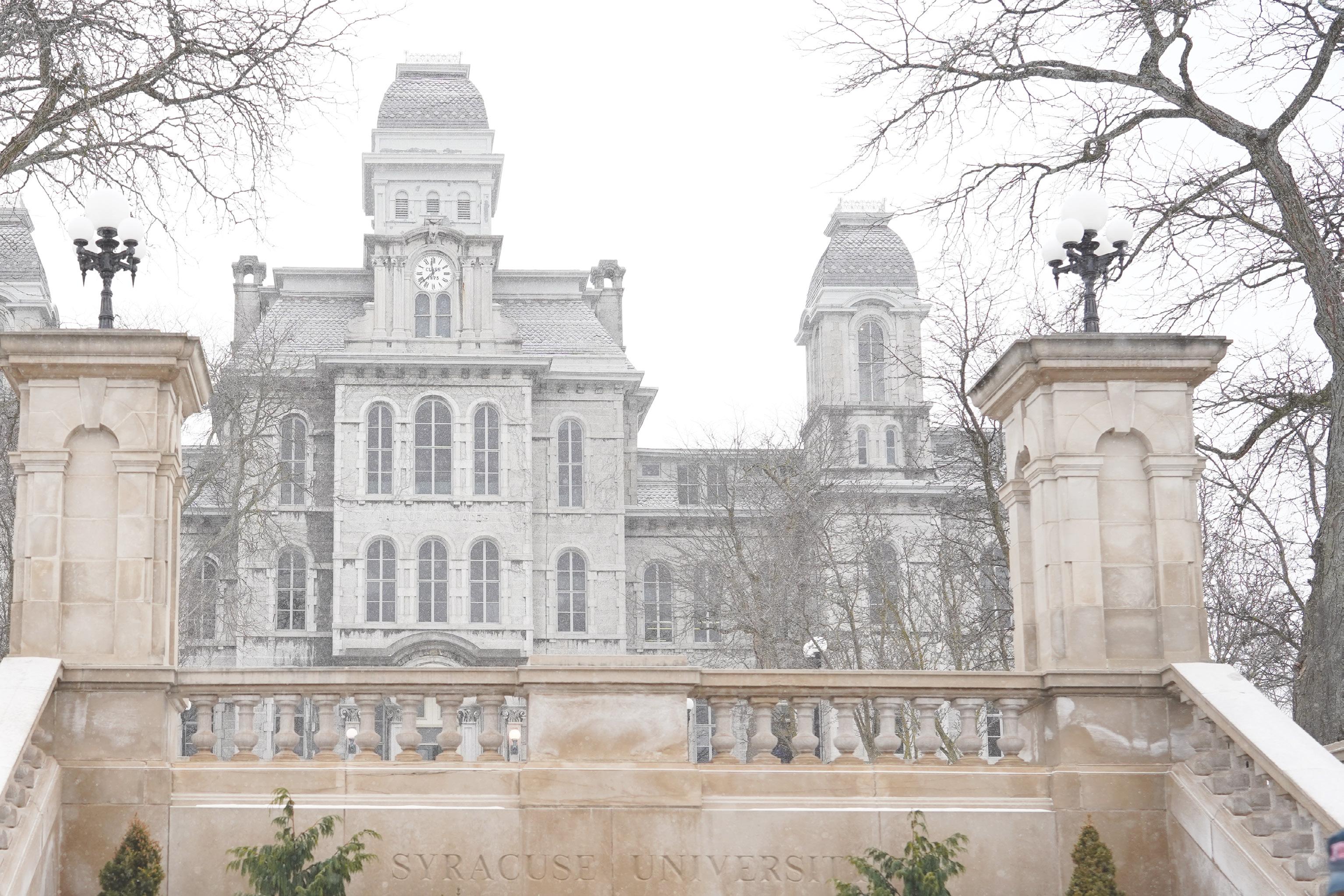
By David Frankel
Last year marked an inflection point in how our federal government interacts with institutions of higher education. The Donald Trump administration weaponized research grants to coerce universities to conform to its political agenda.
The policies the Trump administration sought to influence were responses to diversity, equity and inclusion programs and perceived antisemitism. This extortion was most visible with respect to federal research funding at Harvard University and Columbia University, but also included investigations of other universities, such as Brown University, Cornell University, Northwestern University and the University of Michigan.
Just a few days ago, the Department of Defense announced that starting with the 2026-27 academic year, it will discontinue graduate-level professional military education, fellowships and certificate programs at Harvard and is evaluating similar programs at other “woke” universities.
President Trump is now demanding that Harvard pay $1 billion to end its standoff with his administration. Piling on, the United States Dept. of Justice’s Civil Rights Division just initiated a lawsuit against Harvard seeking applicant-level admissions data it claims to need for its investigation of the school’s compliance with federal civil rights laws.
Some may argue that past presidential administrations also threatened to cut off research or other federal funding to universities. Most notably, the Johnson and Carter administrations threatened the cessation of funding to force compliance with desegregation court orders and civil rights laws, including prohibitions on sexbased discrimination.
I want my alma mater to stand for truth, knowledge and justice.
David Frankel su class of 1977
This time is different. The Trump administration has openly conditioned funding on institutional ideology and internal governance choices, such as whether DEI offices could exist.
Columbia caved to this pressure, reaching a settlement to pay roughly $200 million, revise or end certain DEI practices and accept outside compliance monitoring to restore most funding. In contrast, Harvard and its faculty sued the Trump administration and won an important victory in the U.S. District Court for the District of Massachusetts.
The Trump administration appealed that ruling to the U.S. Court of Appeals for the First Circuit, where it’s currently pending. My personal preference is the Harvard approach.
Last spring, hundreds of university and college presidents and other educational leaders responded to the unprecedented overreach and political interference by the Trump administration. The signatory universities issued “A Call for Constructive Engagement,” expressing their openness to constructive reform and acquiescence to legitimate government oversight.
At the same time, they opposed undue government intrusion in the lives of those who learn, live and work on their campuses. They also expressed a willingness to pursue effective and fair financial practices while rejecting the coercive use of public research funding.
I’m an alum of Syracuse University, having graduated before most students reading this were born. I was a proud SU donor until last spring, when Chancellor Kent Syverud and the SU administration declined to sign on to the Call.
Between April 27 and Dec. 3, 2025, I sent five emails to Chancellor Syverud seeking to learn why SU hadn’t signed onto the Call and urging him to do so. In November, knowing I would be on campus, I requested a brief meeting in his office. On Dec. 3, I called his office and left a message with his representative regarding my request. After receiving no response, I called again on Dec. 8 and left a detailed voice message stating I would be on campus on Dec. 12.
Finally, on Dec. 10, I received an email from Tracy Barlok, SU’s senior vice president and chief advancement officer, who agreed to meet with me.
I met with Ms. Barlok at the Schine Student Center. She was very nice and generous with her time, but she was extremely vague when I asked why SU hadn’t signed on to the Call. Essentially, she said the university was trying to stay under the radar on this issue, an explanation she acknowledged wouldn’t satisfy me, and she was right.
I requested that she report back to Chancellor Syverud that I disagreed strongly with SU’s decision. I told her SU’s silence was akin to what most Ger -
man citizens and organizations did in the early 1930s, when far too few people stood up as the Nazis consolidated power. History offers examples of the harm enabled by institutional silence, a pattern that appears to be occurring in the U.S today.
Maxwell School of Citizenship and Public Affairs Dean David Van Slyke recently wrote to alumni that the school will continue defending faculty academic freedom and protecting student speech. Let’s see SU turn those lofty promises into action. I want my alma mater to stand for truth, knowledge and justice. Suos Cultores Scientia Coronat.
To date, I haven’t received any communication from Chancellor Syverud. In recent years, I had been considering making a substantial monetary gift to SU and had been working with the Maxwell School’s development team on this. As a result of this lack of communication and transparency, I have decided to end my financial support to SU. Decisions have consequences.
Chancellor Syverud will be departing SU to become president of the University of Michigan in Ann Arbor. Ironically, U-M is one of the many signatories of the Call. Go Blue! Let’s hope he doesn’t bring with him the timidity he exhibited at SU.
David P. Frankel
Class of 1977 Washington, D.C.
The university did not respond to the D.O’s request for comment on its decision not to sign ‘A Call for Constructive Engagement.’
This letter was submitted by David Frankel, Class of 1977. He can be reached at slovakdc@gmail.com.
zoe xixis asst. photo editor
Indian culture is consistently exploited without accountability
By Dayna Bhatti Roberts columnist
On Jan. 28, Margot Robbie appeared at the premiere of her latest film, “Wuthering Heights,” wearing a couture Schiaparelli gown and a pillaged Indian diamond necklace. It’s unfortunately not surprising to see Indian culture exploited in Western society.
For a country consistently demeaned and berated, India has seen much of its beauty appropriated without acknowledgment, as its lush culture continues to be exploited.
Nur Jahan’s Taj Mahal necklace carries a story of devotion and love, given to her by her husband, Mughal Emperor Jahangir, with the words “love is everlasting” inscribed alongside her name. Subsequently, when India was ruthlessly colonized by England, the necklace was looted. In the years since its displacement, it has been renamed and rebranded — referred to as a Cartier piece or as Elizabeth Taylor’s necklace — but never by the name of the original owner or the country to which it belonged.
The necklace’s journey reflects a troubling pattern of Indian exploitation, including the theft of its wealth, the erasure of its origins and the reframing of violently appropriated objects as Western before anything else. It was stripped of its own history to better fit the narratives of its oppressors.
For Robbie to wear the necklace at this particular premiere feels especially pointed, given the controversy already surrounding the film. Heathcliff, a character explicitly described as a brown man in the novel, was cast as none other than Jacob Elordi, effectively erasing the entire plot’s commentary on marginalization and racial disparity.
It’s prognostic to see a white actress in a white-dominated, whitewashed film wearing a looted necklace to its premiere. After years of unchecked exploitation, it’s imperative we don’t

allow this appropriation to continue without acknowledgement of its roots.
While other communities have gained at least some recognition for their influence after years of hard-earned activism, Indians are still met with silence. Black people are credited for their impact on music and streetwear, and Hispanic people for their influence on food and dance. There is still a long way to go, but acknowledgement would at least be a starting point.
The Indian community has faced both racist violence and deportation with little sustained advocacy in its defense. There are no large-scale rallies supporting these concerns and even fewer public callouts beyond the community itself. There is a deeply rooted negligence of Indian
people that allows for this continued exploitation of our culture to exist.
In fact, Robbie is not even the first Hollywood star to flaunt stolen Indian jewels.
In 2022, YouTube personality Emma Chamberlin went to the Met Gala wearing Maharaja of Patiala’s diamond choker, a piece long rumored to have disappeared during British rule in India. This choker was later acquired by Cartier, a luxury brand with a documented history of acquiring looted jewelry.
Just last year, Indian celebrity Diljit Dosanjh was denied the right to wear the very same necklace. India and its people are often demeaned for their heritage, forced to assimilate to purportedly “Western” ways in white spaces — all while
having to watch their white counterparts exploit their own culture.
It’s a mockery and a blatant example of modern-day racism gone rampant.
Even Coachella fashion is deeply rooted in appropriation. Traditional Indian garments are rebranded as white “boho-chic” staples that make the festival so iconic. Lehenga tops are reduced to “beaded shirts” and dupattas to “scarves.” While Indian people are shamed for their heritage, foreigners can flaunt stolen aspects of it freely, marketing it as vintage rather than acknowledging its true origins.
As movements rise in response to heightened hatred, racism and conservatism, it’s time for India and its people to receive the same level of advocacy and representation. There should be no debate over casting Elordi as a brown character, it was unacceptable. Likewise, traditional Indian clothing shouldn’t be rebranded as “hippie” or “boho” when it’s, quite simply, cultural attire.
If we truly want to see change in Western media, we need to hold even our favorite celebrities accountable for taking roles from brown actors and for treating traditional Indian pieces like costume jewelry. Much like the backlash that followed when Kim Kardashian wore Marilyn Monroe’s dress, there must be anger, passion and a collective voice strong enough to make it clear that this mockery cannot continue.
Rather than rendering an entire country and its people invisible to freely exploit its abundant culture, we should bring that culture into the spotlight, appreciating its beauty and history.
Mehndi, your favorite local Indian restaurant, lehenga tops and dupattas can all be rightfully appreciated — but only if there is an effort to understand the people and histories behind them.
Dayna Roberts is a junior majoring in creative writing. She can be reached at dbrobert@syr.edu.
Situationships are the exception to Gen Z’s emotional awareness
By Gain Lim columnist
Yesterday was Valentine’s Day, the one day of the year that calls for clarity and effort. Roses. Chocolate. Public declarations. Yet, for much of Generation Z, relationships remain carefully undefined, sidestepping both the label and expectations they carry.
A “situationship” is an intimate relationship between two people who consider themselves more than friends but haven’t defined it with a label, according to MerriamWebster. The definition is straightforward. The appeal is less so.
The word offers a middle ground. It gives people somewhere to stand that isn’t quite commitment but also isn’t nothing. It allows intimacy without declaration. By withholding a label, the relationship remains ambiguous, allowing emotional commitment to be deferred without fully denying its presence.
In other words, it lets us hover.
Gen Z has steadily turned that gray area into normative dating terrain. The situationship is a kind of romantic purgatory — a space where almost nothing is said and the lack of definition becomes the definition. You’re not strangers. You’re not dating. You’re somewhere in between.
Modern dating advice repeats the same script: Don’t double-text. Don’t show too much interest. Don’t ask “What are we?” too soon. The person who seems to care less holds the advantage. Wanting something openly can feel embarrassing. Being earnest reads as being corny, and being corny feels exposed. Instead, we keep things vague. Cool. Casual. We act like we could walk away at any moment, even when we don’t want to, because it offers emotional insurance.
But this reluctance to express vulnerability isn’t because Gen Z doesn’t want connection.
Data from Match Group show that around 80% of Gen Z are confident they will find lasting love someday — more than any previous generation — but only about 55% feel ready for a romantic relationship right now.
Researchers call this the readiness paradox: Young adults are optimistic about love, but set high internal standards before they feel prepared to pursue it. They want to set healthy boundaries, feel emotionally fulfilled on their own and be comfortable in solitude before entering something that requires vulnerability.
While this emphasis on personal growth can be admirable, it also intersects with the very linguistic avoidance that the “situationship” captures. When readiness is tied to self-optimization, the threshold for taking interpersonal

risk rises. A willingness to name something, to make it public, to “hard launch” it, becomes a test of perfection rather than a step toward connection.
Social media intensifies this pressure. Many Gen Z daters attach meaning to online signals: Nearly half will “soft launch” a connection, and a majority view a “hard launch” as a binding commitment. The fear of public failure through posts that can be easily judged makes clarity feel risky and ambiguity feel safer.
This map between public performance and personal feeling underscores how public relationships have become. The language of detachment is a tool to manage impressions as much as emotions.
In many ways, Gen Z is redefining how romance fits into a broader set of social priorities. They talk about ambition, independence
and emotional boundaries with the same fervor earlier generations once reserved for settling down. But these priorities complicate the timeless territory of intimacy.
This readiness checklist can feel like a prerequisite for emotional investment, yet the very traits young adults want to perfect — communication, vulnerability, resilience — are often developed through relationships, not before them.
The words we use, then, aren’t neutral descriptors. They shape the world they describe. “I got the ick” says “I reject” before caring becomes complicated. “I’m being nonchalant” says “I care” without admitting it. “I don’t want anything serious” says “I don’t want to be vulnerable.” Language can liberate. It allows new forms of connection outside outdated scripts. But, it can
also normalize emotional distance, making direct communication feel optional. Gen Z may have abandoned what sociologists call the “relationship escalator,” but the emotional purgatory they’ve created isn’t exactly freedom. It’s a space where connection exists without confirmation, where closeness often fades before it can be defined and the safest move is to never fully show your hand. Gen Z has made self-awareness part of its identity. We speak fluently about boundaries. We unpack attachment styles. We insist on emotional intelligence in friendships, classrooms and workplaces. It’s worth asking why romantic relationships are the exception.
Gain Lim is a freshman majoring in Health & Exercise Science. She can be reached at glim06@syr.edu.
khloe scalise contributing illustrator
julia rodenberger contributing illustrator
“I still always have butterflies in my stomach when I have to leave,” Gwen says.
Sending their last child to college was a new challenge for Patrick and Gwen. But SU was a new challenge for Shy, too. Shy overcame a late start to basketball to become a consensus fourstar prospect in the class of 2024. She was always a quick learner, and in Mastic Beach, she was almost always her teams’ best player.
That changed at Syracuse. Patrick said it often — that these are just the same girls Shy had been playing with throughout high school — but she knew something had changed. It was a different level entirely. Shy played a bench role last season, starting one of her 27 games as a freshman, and struggled with confidence throughout.
But she’s finally adapted to college this season. In their reinvigorating 21-win season, the Orange have relied on four penciled-in starters: Dominique Darius, Laila Phelia, Sophie Burrows and Uche Izoje. The fifth has been a revolving door, yet with 15 starts in 26 games, Shy essentially made the spot hers.
But it’s not the same star status she held back in high school. Rather, it’s a new role, shaped around her unselfishness and defensive tenacity, that keeps the Orange ticking.
“She’s so special,” SU head coach Felisha Legette-Jack said about Shy. “She cares more about the team than even herself.”
That first summer night back in her apartment, though, Shy didn’t feel so special. It might’ve been the first time in a while — if ever — that Shy felt out of her depth.
“I was definitely used to being away, but never actually staying in another place without my parents,” Shy said. “It was definitely a bit different. I did get very homesick.”
Growing up, Shy played the piano. During the COVID-19 pandemic, she learned to cook by studying her mother in the kitchen. She can whip up some mean empanadas or pasta alfredo. Gwen was never a strong swimmer, but Shy learned how to do it swimming in her uncle’s pool without any formal training. Everything came natural to her.
Basketball was no exception. The way Patrick recalled it, Shy was at a track meet when a few of her friends’ parents came up to her, noting her height. They asked the seventh-grader if she’d ever played basketball. When she responded “no,” they invited her to try out for a local Catholic Youth Organization squad.
With her delayed start, Shy was initially the worst player on that team. She didn’t let that feeling last long.
“Right from there, she tells me she wants to try to get better,” Patrick recalled. “So I was like, ‘Hey, let’s give it a shot. Let’s see what happens.’”
“Giving it a shot,” in this case, meant setting Shy up with Jerry Powell, a New York-based
of hers, already attended BU. Kinsler spent a gap year in Minnesota, playing at ShattuckSt. Mary’s to further refine her game and prepare her for college.
Then everything fell apart.
Durocher retired just before Kinsler was set to arrive in Boston, and associate head coach Kerstin Matthews departed for a head coaching position at St. Mark’s School in Massachusetts. It was a gut punch for Kinsler, who Durocher and Matthews recruited in high school. Kinsler’s sense of familiarity vanished.
“To see (Derocher and Matthews) go was obviously really hard,” Kinsler said. “But I was very excited that Tara Watchorn received the job.”
Her mother, Jennell Kinsler, told her daughter to fall in love with the school, not
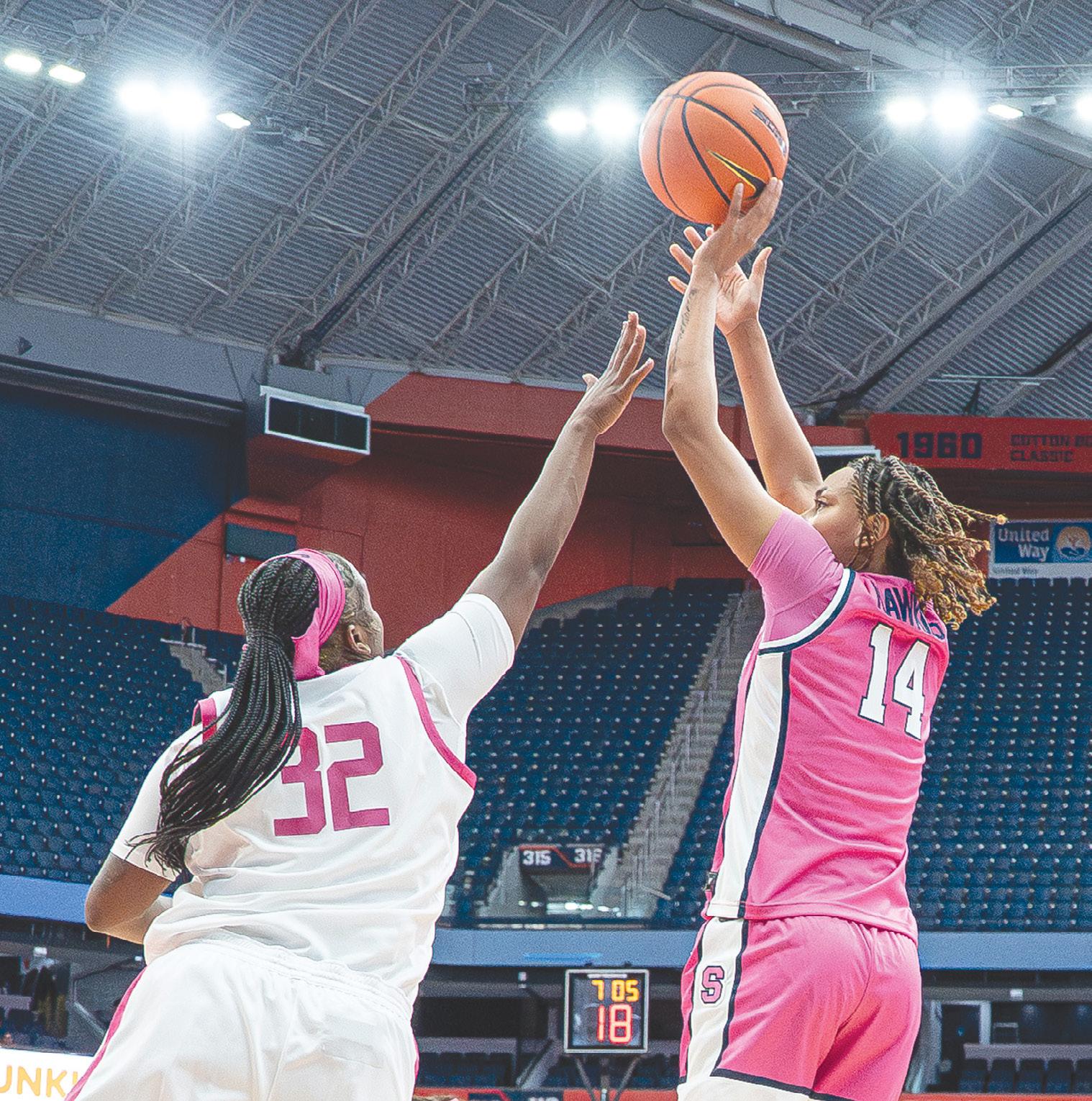
trainer who has coached several NBA players, per the New York Daily News. “Seeing what happens,” in this case, meant watching Shy’s meteoric rise to high school basketball stardom. Patrick recalled Powell telling him Shy was one of the fastest learners he’s trained in a long time.
Within a year of learning to dribble, she was a varsity starter for William Floyd High School (New York) as an eighth grader, Patrick said. By her sophomore year, she was walking the same halls that WNBA champions Sue Bird and Tina Charles did at Queens-based high school Christ the King. By 2022, Shy was playing a key role at Long Island Lutheran, one of the nation’s best high school teams.
Her profile grew so dramatically, in fact, that Kristen Sharkey — then SU’s associate head coach — was soon in the Hawkins’ living room, trying to convince Shy to come to Syracuse. When Shy returned to William Floyd as a senior, she was a local celebrity, Gwen said, garnering thousands of followers and packedout crowds.
“It was unbelievable,” Patrick said. “We’re from a small little town, so it’s like, just to be
the coach. But Kinsler wasn’t just starting fresh under a first-year head coach. She was simultaneously adjusting to the other aspects of college.
Although she lived in a suite with a group of other freshmen, Kinsler struggled to connect with her peers. Deerfield and Shattuck brought people together through community events, Jennell said, but BU didn’t do the same, especially since it didn’t have a football team. And over time, Kinsler also realized she wasn’t a fan of the city she’d dreamed of.
“Their hockey team did a couple of outreach things,” Jennell said. ”But she just felt that she wanted to be more part of a community.”
Toby said that since Kinsler had always been the best player on her teams back home, riding the bench at BU was a humbling and frustrating experience. It was the first time in Kinsler’s life she truly needed to earn minutes.
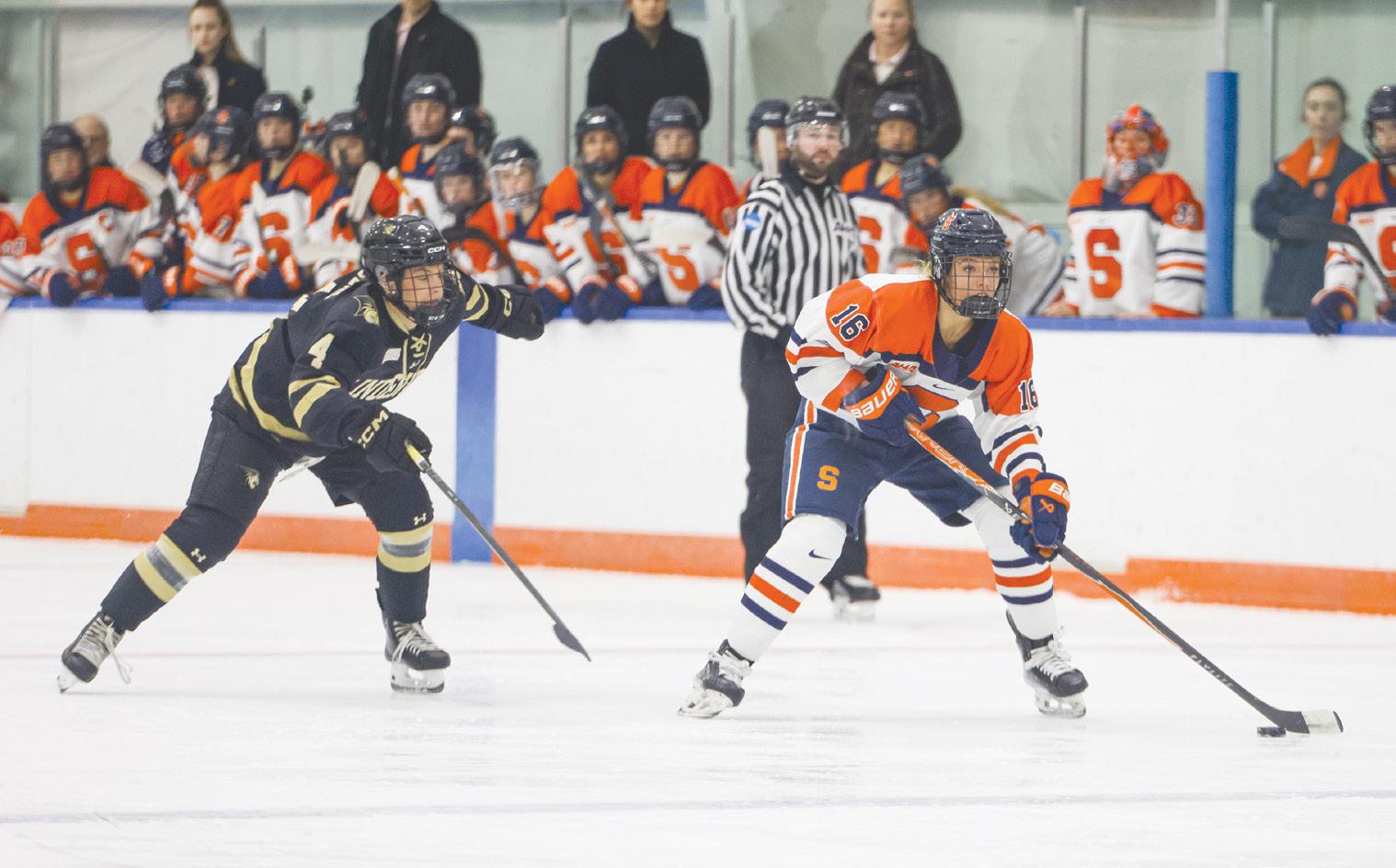
recruited? The whole process was mindblowing, to have so much attention.”
But once she got to SU, without the hype of recruiting rankings or the packed gyms waiting to see her, Shy was just a college freshman.
Of course, the thing about college is everybody was the go-to player in high school. Everything was more aggressive, more physical. Heading into preseason practices, Patrick said, Shy was nervous, and she had reason to be.
Former SU forward Kyra Wood recalled running hours of “champions,” essentially a revved-up version of suicides. The practices were intense, and there were difficult days where — if she wasn’t thick-skinned — Shy might’ve broken, Gwen recalled.
“It’s a lot mentally,” Gwen said. “And I have to say, my daughter makes me really proud. Because she gets through those hard days.”
She was hard on herself. Years of success molded a higher standard, and when Shy didn’t meet it, she’d sometimes “beat herself up for it,” Patrick said.
Her limited opportunity only confounded the issue. Wood thinks Hawkins expected to con-
Girls were more physical. The pace was faster. Kinsler didn’t have Watchorn’s validation, which left her feeling out of place and in need of change.
“When she committed to BU, the concept was: She’s committing to BU and she’s going to be there forever,” Toby said. “It was a very, very difficult, emotional process for her and our family to say, ‘Maybe I have to get divorced here.’”
After many long conversations with Toby, Kinsler took a gamble and entered the transfer portal.
A cloud of uncertainty blanketed the Kinslers. With over 100 girls entering the portal, they worried her desired teams wouldn’t have room for her. Teams started reaching out, primarily schools she’d previously turned down and Western Collegiate Hockey Association squads near her Wisconsin home.
And then there was Syracuse. Though SU wasn’t initially on her family’s radar, Kinsler immediately got in contact with Syracuse head coach Britni Smith and associate head coach Heather Farrell. The coaches set up multiple Zoom calls with Kinsler and her parents, during which they gave presentations on what it meant to be a studentathlete at SU.
“It felt very much like being in a living room with somebody who wasn’t trying to sell you a new car, but was really just trying to have a conversation about what’s in the best interest of everybody,” Toby said.
After those calls, Kinsler booked a tour of Syracuse in the spring of 2024. She took an early morning flight from Boston and, upon landing, toured the Tennity Ice Pavilion and checked out the locker room.
Kinsler also got coffee at Cafe Kubal with then-sophomores Heidi Knoll and Maya D’Arcy, and their quick connection became a key factor in her commitment to SU.
“It’s one thing to meet the coaches and walk around the campus,” Kinsler said, “but another to actually connect with girls on the team.”
tribute heavily as a freshman. When she didn’t, it magnified every mistake she made, because she played with the fear of getting benched. Last year, Shy averaged just 11 minutes per game while the Orange slogged their way to a 12-win campaign.
“The fear, or the lack of confidence, came when, ‘OK, if I make a mistake, then I’m going to be pulled out,’” Wood said of Hawkins. “It was always so much going on in her head.”
But Patrick always told her it would get easier. And it did.
Shy didn’t know she’d have an expanded role this season, Gwen says, but as she woke up for her 6 a.m. offseason workouts, she hoped for it. Seven games in, her wish was granted when she picked up her first start against Howard on Nov. 30, 2025.
It wasn’t a show-stopping performance by any means — 10 points, six rebounds and three steals in 27 minutes — but it was the type of performance that’s been expected of her since. Legette-Jack just needs her to be a versatile starter who allows the other four to shine by playing tough defense.
“She’s a very unselfish player,” Phelia said. “In order to win, you have to have players on your team that are gonna do whatever it takes.”
Shy has involved into that type of player. It’s why she picked up seven consecutive starts after that Howard game. It’s why, when she was benched for four straight games after Syracuse’s win over Florida State, LegetteJack gave her every opportunity to earn her way back into the lineup when Phelia was out against Stanford.
Shy and Phelia are “Orange sisters,” Legette-Jack said, meaning the two are accountability partners. They pick each other’s brains and take responsibility for each other’s effort levels daily.
Thus, when Legette-Jack deputized Shy to replace Phelia against the Cardinal, it meant something. Before the game, Phelia told Shy she needed to do the little things, be aggressive and, most importantly, be mentally ready.
Because this was her moment. No one could take it away from her.
“You gotta believe that the mistake you made is not your fault; the ball wasn’t round enough, you didn’t have enough air in it, the rim was crooked,” Legette-Jack said this January, referring to Shy. “You gotta believe that you belong. Nobody takes your confidence, you relinquish it.”
Shy played 39 minutes in that game — the most of any Syracuse player — and scored 10 points to help the Orange secure a 69-58 win over Stanford. She’s started six of Syracuse’s seven games since. If you ask Gwen, she’ll tell you that Shy’s time has finally come.
So, where is Hawkins’ confidence right now?
“It builds up more and more,” Shy said. “Every practice and every game.”
mjpalmar@syr.edu @mpalmarDO
Midway through her visit, when Smith and Farrell asked Kinsler if she was ready to commit to SU, she signed the papers on the spot.
“It was an instant connection with the coaching staff and vibe of the place,” Toby said.
Jennell said that Syracuse’s coaching staff ensured a smooth transition with team calls and Zoom workouts over the summer, despite a nerve-wracking new dynamic and style of play.
It helped Kinsler make an immediate impact on the ice. In Syracuse’s season opener against Stonehill, Kinsler scored her first goal with SU — and the team’s first of the year — just 68 seconds after the opening faceoff en route to a 4-0 win.
“After being through a whole year of just wanting to be out there so bad and to make a difference in the game, to make that difference within the first minute of the season with my new team was the happiest I’ve been in so long,” Kinsler said.
Despite the Orange’s inconsistencies last season, Kinsler was a threat all year. She led the team with 17 assists, and her eight goals ranked third. That production has carried over to this season, where her 16 points rank second on SU, and her recent game-tying goal against then-No. 13 Mercyhurst propelled Syracuse to an upset shootout win.
“Jackson could take over the game on any given day,” Farrell said. “She’s that talented, and she’s one of the fastest players on the ice.”
Beyond increased playing time, Kinsler just feels at home in Syracuse. She finally feels the community BU lacked, going to football games at the JMA Wireless Dome and bonding with her roommates Stella Costabile and Celia Wiegand.
In early January, Syracuse practiced outdoors at a farm rink. The team bonded off the ice, too, petting baby goats and horses. As Kinsler skated around the rink, wind hitting her face, she was surrounded by all of her teammates. It almost felt as if she were a kid again, just playing outdoor hockey with her friends somewhere out in Wisconsin.
And she felt pure, unadulterated joy. The kind she could never find in Boston.
sabrod@syr.edu @spencerbrod20
shy hawkins overcame the mental struggles of riding Syracuse’s bench as a freshman. Now, she’s a staple of its starting lineup. matthew crisafulli staff photographer
Jackson Kinsler played sparingly as a freshman at Boston University. After entering the transfer portal, she’s found stability at Syracuse. isaac williams contributing photographer
men’s lacrosse
Previewing No. 1 SU men’s lacrosse’s clash vs. No. 14 Harvard
By Mauricio Palmar asst. sports editor
Soak it in. For the first time since the COVIDabridged 2020 season — where Syracuse started 5-0 — the Orange are No. 1 on Inside Lacrosse’s rankings.
To be the best, you have to beat the best, and SU understood the memo Friday. Facing off against then-No. 1 Maryland, Syracuse got off to an early 6-2 second-quarter advantage and never relinquished it down the stretch. Sure, Eric Spanos and Elijah Stobaugh made it close for the Terrapins late, but the Orange defense held strong to prevent a late collapse.
Phew, curse broken. Check that off the list.
Right now, SU is the team to beat in college lacrosse. It’s up to the Orange to defend their crown, but with a road matchup against Harvard on deck, it won’t be easy. Their last two matchups have been rather dramatic affairs, so Syracuse will likely look to dispatch the Crimson more convincingly this time.
Here’s everything to know about No. 14 Harvard (2-0, Ivy) before it hosts No. 1 Syracuse (3-0, Atlantic Coast) Saturday:
All-time series
Syracuse is 19-1. Its lone loss came in the 2025 regular season, where SU’s 5-0 lead evaporated late in a 15-14 defeat.
Last time they played
Picture the inverse of that aforementioned loss. That’s what went down on May 11, 2025, when the Orange topped Harvard 13-12 in the First Round of the NCAA Tournament. The Crimson came out of the gates ready to run SU out of the JMA Wireless Dome, with a dominant 8-2 halftime lead. It looked as if Syracuse’s postseason, yet again, would end prematurely.
John Mullen had something to say about that. The faceoff man won 24-of-28 battles in the contest and essentially played make-ittake-it to help Syracuse erase a 10-5 fourthquarter deficit in a five-minute span. Forced into overtime with a 12-12 deadlock, Owen Hiltz came through with a game-winner to end an instant classic.
women’s lacrosse
The Crimson report
The Orange can rest easy knowing that, when they roll into Cambridge Saturday, Sam King won’t be on the other end tormenting them.
The former Harvard attack led the Crimson in points for two consecutive seasons, notching 73 in 2024 and 66 in 2025. He’s since graduated, leaving the scoring output up to Teddy Malone and Jack Speidell. Through two games, it doesn’t seem like the tandem is having much trouble adjusting to King’s absence.
Malone, in particular, has jumped out to a scorching start, notching six points in Harvard’s season opener against Providence and putting six goals past Colgate Tuesday. The senior has quickly established himself as the Crimson’s primary attack, and if he keeps up this pace, he could easily find himself in line for his first AllAmerican honors this season.
Defensively, Harvard has a somewhat new cast of characters. Quinn Kelly — a Christian Brothers Academy graduate — has been a revelation as a freshman long pole, while Joost de Koning seems to be breaking out in his first year as Harvard’s longstick midfielder. They each have six ground balls, and de Koning has three caused turnovers. His mark leads the Crimson.
How Syracuse beats Harvard Lock up the Crimson, and throw away the key. Heading into the season, Syracuse’s defense didn’t receive many plaudits from pundits. Billy Dwan III was really the only SU defender to consistently be in the conversation for preseason accolades. On Feb. 4, Inside Lacrosse published its top five defensive units list — Syracuse wasn’t even an honorable mention.
Number one on that IL list? Maryland, the unit SU’s defense just outclassed for 60 minutes last Friday. Now, the Orange are starting to get attention. Dwan and Riley Figueiras have been playing some of their best lacrosse to date, with Figueiras even taking ACC Defensive Player of the Week honors for his performance against the Terps. Syracuse hasn’t allowed double-digit goals to an opponent yet. It won’t be easy, with Malone and Speidell still wreaking havoc in the Crimson attack, but if the Orange can
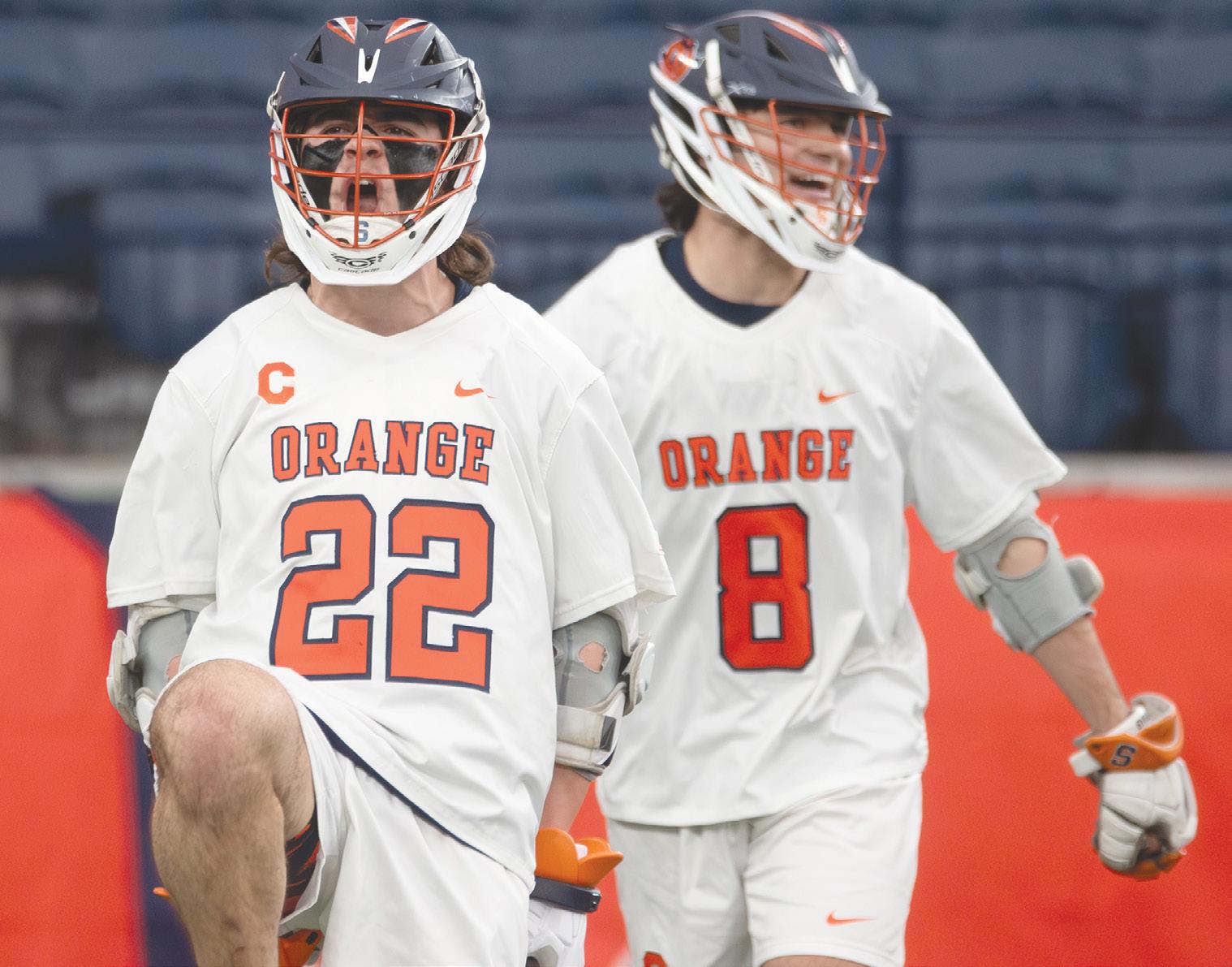
continue that trend Saturday, its offense should do the rest.
Stat to know: 74.1
The scariest thing about Harvard’s attack is its ball movement. The Crimson don’t play iso-ball very often, and it helps them involve a variety of offensive options.
Syracuse doesn’t roll the same way. The Orange have scored 44 goals this season, and only 18 of them have been assisted. That’s good for a 40.9% assisted-goals percentage. The Crimson, on the other hand, have assisted 20 of their 27 goals through two games — a 74.1% assisted-goals percentage.
Is it good or bad? Not necessarily. But that disparity is certainly something to notice when watching these teams’ offensive approaches Saturday.
Player to watch: Jack Speidell, attack, No. 4
Malone’s certainly hot right now, but Speidell is just as — if not a more — important attack for Syracuse to key in on.
His impact hasn’t really been felt too heavily on the scoreboards just yet; he only has three goals through the Crimson’s first two games. Yet, he still ranks second on the team with nine points, leading the way with six assists. It’s almost a complete role reversal from his freshman campaign, where he led Harvard with a whopping 46 goals.
If Speidell becomes more of a feeder — like he has thus far — against SU, it might bode well for the Orange. But if he starts doing both at a high level, it might be tough for Syracuse’s defense to stop him. mjpalmar@syr.edu @mpalmarDO
Previewing No. 13 Syracuse’s bout with No. 3 Stanford
By Jason Glick asst. digital editor
Syracuse women’s lacrosse’s already-demanding schedule has proved an early-season challenge. And it couldn’t be more difficult.
Then-No. 7 Maryland was a test for then-No. 11 SU, and handing it a 9-5 loss wasn’t shocking. But suddenly, the Terrapins placed second in the latest Inside Lacrosse poll.
The Orange knew what to expect with No. 1 North Carolina. Beating the reigning national champions and Chloe Humphrey was too good to be true despite a valiant effort.
And now, Stanford, ranked fifth ahead of the season, catapulted to No. 3. When glancing at the top three, it’s SU’s first three opponents. The Orange haven’t been 0-2 since 2001, and they’re on the verge of tacking on another loss.
Such a record would put Syracuse in uncharted territory. Things get easier for the Orange after Friday’s matchup, but eking out any of these three contests could aid them come May.
The Cardinal enter on an opposite trajectory with a 3-0 start. But SU proved its record doesn’t matter, pacing the Tar Heels for three quarters.
Here’s everything to know about No. 3 Stanford (3-0, 1-0 Atlantic Coast) before it faces No. 13 Syracuse (0-2, 0-1 ACC):
All-time series Syracuse leads 3-2.
Last time they played Riding an 8-5 halftime lead in the ACC Tournament First Round on April 23, 2025, No. 6 seed SU crumbled in its 15-10 loss to No. 3 seed Stanford. The Orange entered off their first 15-goal loss in 20 years at an all-time low. Meanwhile, the win marked the Cardinal’s fifth in their last six.
Instead of big days for SU’s plus-30-goal scorers Emma Muchnick, Emma Ward and Caroline Trinkaus, SU’s supporting cast stepped up offensively. Gracie Britton and Alexa Vogelman bagged hat tricks and Joely Caramelli scored a brace. The Orange also succeeded on the draw through eight Meghan Rode wins.
A game after being pulled for Allie Hanlon, Daniella Guyette stopped just three
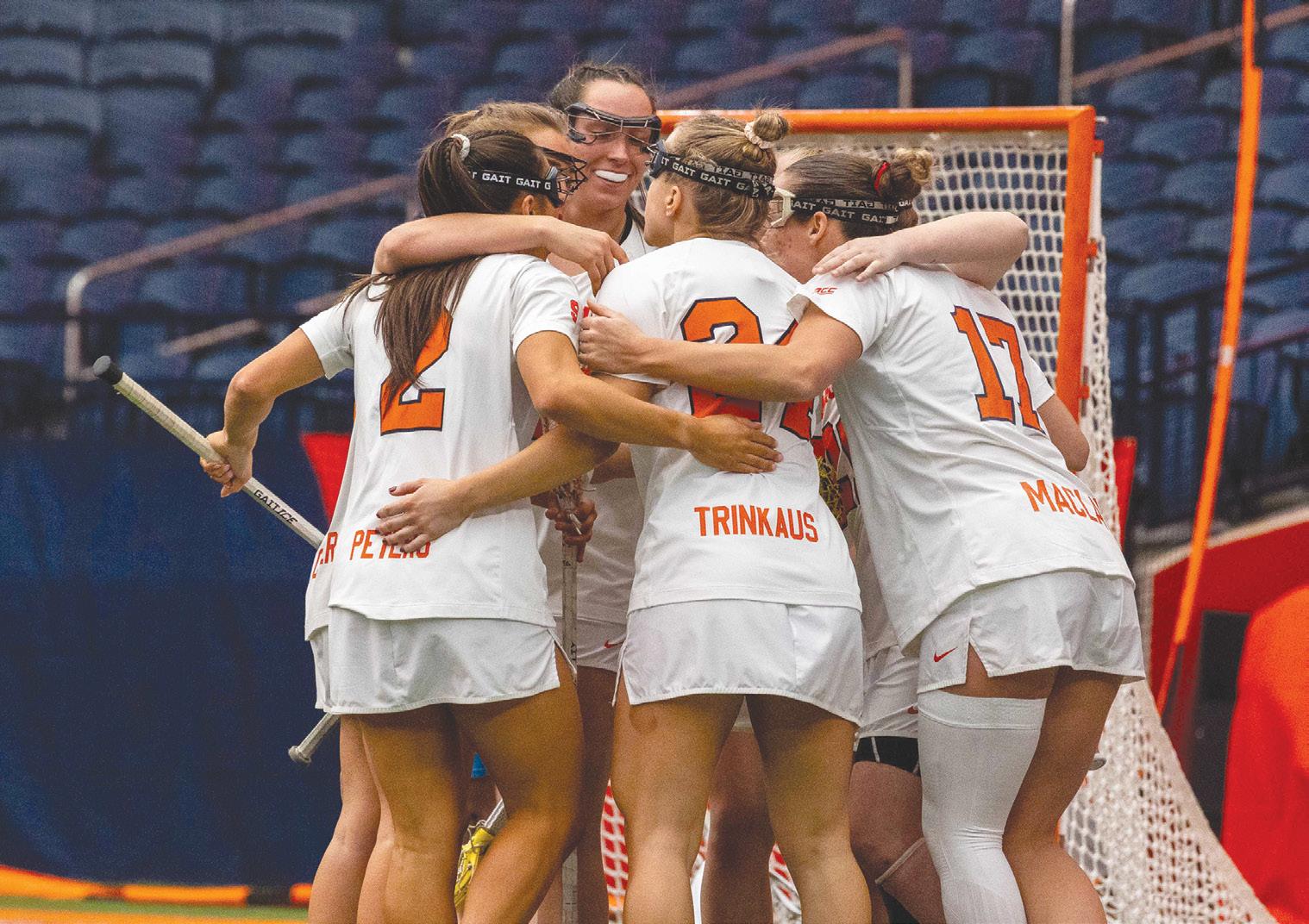
of Stanford’s 15 shots on goal. Rylee Bouvier and Aliya Polisky commanded the Cardinal’s offense with four goals apiece. The Cardinal won two more ground balls, executed four more clears and caused five more turnovers than the Orange in the lopsided affair.
The Cardinal report
This is a very similar Stanford squad that took down Syracuse, returning 26 players, adding eight and losing five this offseason. Its only significant departures were defenders Sophia Brindisi and Allison Baldwin, who combined for 58 ground balls, and midfielder Maddigan Miller, who supplied 15 goals.
Between the pipes stands reigning All-ACC Third Team member Lucy Pearson, who’s held steady with a 6.26 goals against average. Without Brindisi and Baldwin, the back line has weakened. The Cardinal ranked third in the ACC in ground balls and fourth in caused turnovers last year. Kate Bellissimo and Olivia Rose lead
them with just five ground balls, and Kaleigh
Sommers has forced the most giveaways by a defender with only four.
Up front, Polisky pursues a Tewaaratoncaliber season, already scoring 11 goals on just 16 shots. One of the Cardinal’s biggest additions was Boston College transfer Mallory Hasselbeck, Inside Lacrosse’s No. 1 recruit in the 2021 class, whose career was suppressed by injuries. Now at Stanford, the redshirt senior already has a career-high seven goals.
How Syracuse beats Stanford It would be preposterous for the Orange not to attack Stanford’s feeble back line. It looks like a completely different squad without Brindisi, who made the All-ACC Second Team last year. Syracuse’s attack may not be its best position group, but it has the tools to manipulate the Cardinal defense. Trinkaus and Molly Guzik recently switched to the position and are now SU’s leading scorers.
Although it’s early, the Orange score the least amount of goals per game in the conference with just seven, while Stanford has the secondmost with 17. Taking advantage of woman-up opportunities could prove beneficial, with SU being the only team in the ACC to score one per contest. This is especially important because the Orange have the worst shot accuracy in the conference at 24.1%.
Number to know: 65.4
No team in the country comes close to matching Stanford’s shot accuracy. A 65.4% clip has the Cardinal standing above the clouds, driven by Polisky’s 11-for-16 mark thus far. Hasselbeck has laced seven of her nine shots in the back of the net, with none of her attempts even going wide. In fact, the redshirt senior is one of five Stanford players to score on all of its shots on net.
Although it’s been three games, this is a drastic turnaround from last year for the Cardinal, who only scored 45.4% of their shots on goal last year, only 1.7% higher than SU. With a flipped script, it will only make Syracuse’s defense and Guyette even more cautious.
Player to watch: Aliya Polisky, attack, No. 24
Few players in the country have more impressive stretches than Polisky’s in the previous two seasons. She scored 118 goals, and her 65 tallies last year ranked fifth in the conference, averaging a hat trick.
The attack upped her production through three contests, notably delivering seven Monday against Vanderbilt. After scoring about 44% of her shots across her previous two campaigns, Polisky’s launched just shy of 70%.
After redshirting her first year at Stanford, the Franklin, Tennessee, native emerged on the All-Pac 12 First Team in 2024 and the AllACC Team in 2025 following the Cardinal’s conference switch. Polisky entered this year as just one of three attacks on the Preseason All-ACC First Team alongside Humphrey and Virginia’s Madison Alaimo.
jaglick@syr.edu @jason_glick
No. 13 Syracuse rounds out its early-season gauntlet against No. 3 Stanford Friday, led by Tewaaraton Award contender Aliya Polisky. eli schwartz asst. photo editor
For the first time since 2020, Syracuse is the No. 1 team in college lacrosse. Its first matchup with that ranking comes Saturday against No. 14 Harvard. jacob halsema staff photographer




men’s lacrosse
Revisiting SU men’s lacrosse’s 2 thrilling games against Harvard
By Nicholas Alumkal sports eitor
The funeral procession was starting. At the half of its 2025 NCAA Tournament First Round matchup, Syracuse men’s lacrosse trailed Harvard 8-2. It seemed as if another promising season would end with a thud. The third quarter did nothing to turn SU’s fortunes. The Orange remained down 11-6 with under 11 minutes to play.
However, with the final grains of sand escaping Syracuse’s hourglass, it didn’t resign itself to a fate of elimination. The Orange found their form just in time. With five unanswered goals in one minute and 39 seconds, SU tied the game at 11. The JMA Wireless Dome was reinvigorated.
SU added a sixth straight goal with 3:32 to go to take its first lead of the day. A near-miraculous Harvard equalizer with six seconds left pushed the matchup to overtime. But, with the crowd behind it, Syracuse called game 51 seconds into overtime and escaped 13-12.
“Syracuse lacrosse is known for doing some spectacular things,” Gait said postgame. “That comeback ranks right up there.”
The Orange stayed alive — overcoming No. 3 seed Princeton in the quarterfinals before falling to No. 2 seed Maryland in the Final Four — but also exacted revenge. The Orange lost to Harvard 15-14 earlier in the season, a defeat that unleashed questions about SU’s championship credentials.
Now, Harvard is the one out for payback, and the Orange have the target on their back. No. 1 Syracuse (3-0, Atlantic Coast) and No. 14 Harvard (2-0, Ivy League) meet Saturday at Jordan Field.
Ahead of the contest, here’s a look back at the two thrilling games a year ago:
Early-season setback vs. Harvard
Coming off a 11-7 loss at then-No. 2 Maryland on Feb. 15, then-No. 6 Syracuse looked to return to the win column against then-No. 15 Harvard. Early on, it looked like the Orange would easily prevail. SU led 5-0 less than six minutes into the game, but the Crimson crawled back, never letting the game devolve into a blowout.
The Crimson scored three straight to close the first quarter, and never let the deficit grow beyond three again. By the time the fourth quar-
women’s basketball
ter began, the Dome was silent as the game was tied 12-12.
SU’s Finn Thomson finished with a careerhigh five goals, while Owen Hiltz and Sam English added four and three, respectively. The Orange’s John Mullen dominated at the faceoff X, winning 28-of-31 draws.
Possession wasn’t the issue. Execution was.
Syracuse scored just four second-half goals and committed 15 total turnovers — 12 unforced. Passes sailed. Shots came too quickly. Defensive miscommunications gave the Crimson clean looks, and they made them count. Teddy Malone’s early fourth-quarter goal gave Harvard its first lead, and another breakdown pushed its lead to two.
The Orange had chances late. Down 15-13, SU capitalized on a man-up opportunity to pull within one with 1:54 left. Mullen won the ensuing faceoff, giving Syracuse a final opportunity to tie. The look came, but Harvard goalie Graham Stevens made the save. A frantic final scramble ended with a shot wide of the cage.
Harvard stormed the field. Syracuse stood still.
The Orange had the start they wanted and the possessions they needed. They just didn’t make enough plays when it mattered.
McCool benching
There aren’t many feelings worse in sports than getting benched — sitting there, helmet on, watching someone take your spot. For most athletes, the first goal isn’t a title. It’s to play. When that’s taken away, even for a moment, it stings.
Syracuse goalie Jimmy McCool felt that in the Orange’s loss to Harvard in 2025.
After allowing 10 goals on 15 shots through 35 minutes, McCool was pulled at the 9:34 mark of the third quarter following a game-tying score. Head coach Gary Gait turned to sophomore Michael Ippoliti, hoping to spark momentum. It didn’t come. Ippoliti allowed five goals in the loss.
McCool finished with a .333 save percentage, his worst career outing up to that point. Gait backed his starter afterward, but the move sent a message: Syracuse will adjust if it has to — even at goalie.
Automatic Mullen
Mullen did everything you could ask in both
matchups with Harvard. But the possessions just meant two very different things.
In the regular-season loss, Mullen went 28-for-31 at the faceoff X — the second-most single-game wins in program history. But the extra chances went to waste, as SU scored just four times in the second half, and failed to cash in late.
A few months later, it was more of the same from Mullen — but this time, it changed everything.
Mullen finished 24-for-28 in the NCAA Tournament rematch, holding Harvard to just one faceoff win across the third and fourth quarters. During Syracuse’s six-goal fourth-quarter surge, nearly every score came right after a Mullen win. He set the table, and the offense finally ate.
In overtime, the script felt obvious. Mullen clamped, won it clean and gave SU the ball. Moments later, Hiltz buried the winner.
Season on life support
The Orange entered the NCAA Tournament — and their opening round matchup with Harvard — on a high. They ran the table as the No. 4 seed at the ACC Tournament, claiming the conference tournament crown for the first time since 2016.
But a week later, Harvard was the one on a tear. Despite the two teams being level in most statistical categories, the Crimson blitzed SU for a 7-1 lead by the 7:06 mark of the second quarter. Luke Rhoa was the only Syracuse player who impressed in the first half, notching both of SU’s goals, though it entered the break down 8-2.
“We’ve got some good seniors in our locker room. They kind of snapped the boys back into it at halftime,” Hiltz said.
However, even out of the break, SU struggled reeling in Harvard. The Orange had success winning the ball — capturing 15-of-16 faceoffs in the second half. But when Harvard did have possession, they were ruthless, scoring 12 goals on 17 shots on target throughout the game.
4th-quarter rescue
Just in the nick of time, Syracuse discovered its finishing touch. Rhoa lit the fuse with a trademark tracer bullet into the net, trimming the deficit to 11-7.
Twenty-eight seconds later, Trey Deere converted a man-up goal from close range. The
Dome started to rise to a crescendo. Chuck Kuczynski cranked the volume up another level with his powerful strike 11 seconds later. With 9:11 to play, SU grabbed a third man-up goal in the span of a minute to pull within one.
“We had some (long stick midfielders) step up and score huge goals that are definitely crowd pleasers and get everybody involved,” Hiltz said of SU’s late performance. “I credit all the guys.”
The crowd. The quick ball movement. The scoring in droves. It all reminded Gait of “the good old days” of Syracuse lacrosse.
“Play fast, have fun — that’s old-school Syracuse lacrosse,” Gait said of SU’s fourth-quarter comeback. “We kind of dug into the history to bring back that have fun, play fast (mentality).”
The Orange tide wasn’t over. A fifth goal arrived soon after, tying the contest at 11-11. Then, with over three minutes left, Michael Leo handed the Orange their first lead of the game.
Harvard miraculously sent the game to overtime when Owen Gaffney put away a long-range drive with six seconds to go. But with a Mullen faceoff win to begin overtime and the SU offense humming, Hiltz applied the sudden-death winner.
Looking towards Saturday
On Saturday, payback will be top of mind for Harvard, which has gotten off to a 2-0 start. Though it was picked to finish third in the Ivy League Preseason Poll, Jack Speidell and Malone form a fearsome offense, combining for 77 goals in 2025. Syracuse, fresh off defeating then-No. 1 Maryland, is now the team to beat.
The weather conditions might complicate things. It’ll be the Orange’s first outdoor game of the season. They’ve historically struggled leaving the climate-controlled comforts of the Dome, losing three of five road regular-season games last season. Compounding matters, temperatures in Cambridge, Massachusetts, will be in the low 30s with expected snow — conditions SU stalled in at UMD and versus Cornell last year.
The recent history and Saturday’s setting all portend an engaging game. It also shows the varying identities of the Orange. Saturday’s test will reveal whether SU has the championship credentials in a make-or-break season.
njalumka@syr.edu
@nalumkal
Analyzing SU’s NCAA Tournament outlook with 3 games left
By Harris Pemberton asst. sports editor
Felisha Legette-Jack never wants to look too far ahead. Inside the Syracuse locker room, LegetteJack’s mindset is to “be where your feet are.” Her players know this team is close to going to the NCAA Tournament, a stage 10 of its 15 members have never graced.
But the key, Legette-Jack said, is just “winning the day.”
At this time last year, the Orange had to live game-by-game. An Atlantic Coast Conference Tournament miracle run was the Orange’s only possible chance of making noise in March.
Syracuse has fluctuated between a No. 8 and a No. 9 seed in ESPN’s NCAA Tournament projections since mid January. That’d leave them to play a squad of similar standing in the first round before a potential second round matchup against a No. 1 seed.
Last Sunday’s win over Clemson should virtually seal Syracuse’s spot in The Big Dance. Comfortably losing their final three games and an early exit from the ACC Tournament would be the only way the Orange might miss out. But even in that worst-case scenario, Syracuse’s 21-9 overall record might still be enough to get into March Madness as a No. 11 or 12 seed.
Based on Syracuse’s record alone, it might seem like a top-8 seed is virtually a guarantee. But lacking a signature win has hurt the Orange.
On paper, Syracuse’s best win is a road victory over Virginia in January, where Laila Phelia ignited for a career-high 38 points. So far, it’s SU’s only win in its five Quad 1 opportunities. The four losses came to then-No. 6 Michigan in November, Duke in December, North Carolina in January and then-No. 6 Louisville Feb. 8. Three of those four losses were by at least 19 points.
Now, Legette-Jack and her squad are positioned incredibly well for an at-large bid to The Big Dance, regardless of what happens in Syracuse’s final three regular-season games. Still, if SU can win each day — and its final three ACC games — it could boost its seeding significantly.
Here’s how the Orange (21-5, 11-4 ACC) stand with three games remaining — and what they still have left to gain.
Syracuse currently sits at a projected No. 9 seed in the NCAA Tournament, per ESPN’s Bracketology, though CBS Sports and HerHoopStats have SU as a No. 8 and No. 10, respectively.
The Orange are also currently the No. 3 seed in the ACC. Although, North Carolina and NC State — which sit fourth and fifth — have played one less game than SU. As it stands, the No. 3 spot would guarantee Syracuse a bye to the ACC Tournament Quarterfinals. But if the Orange drop below the No. 4 seed in the standings, they’d only get a bye to the second round.
But Syracuse’s success against just about everyone else has kept it afloat. The Orange are 5-1 in Quad 2 games, with wins over Utah, Cal, Stanford, Miami and most recently Clemson. They also haven’t slipped up against any lesser squads, winning 15 games across Quad 3 and 4.
That gives Syracuse’s resume a good foundation. It should be enough to get it into the tournament, but that’s not where SU’s goals end — it wants to make noise when it gets there.
This final stretch will serve more as a postseason tune-up to see if the Orange can hang with top opposition. Syracuse gets two Quad 1 opportunities on the road against NC State on Sunday and against Notre Dame on Feb. 26, which both rank top-25 in the NET rankings.
Then, SU heads home to face Boston College in its regular-season finale March 1. That’s as close to a guaranteed win as you can get in Power Five basketball. The Orange obliterated the lowly Eagles 93-59 a few weeks ago on the road and should have no problem replicating that result at the JMA Wireless Dome.
If Syracuse can beat both NC State or Notre Dame, it could rise as high as a No. 6 or No. 7 seed
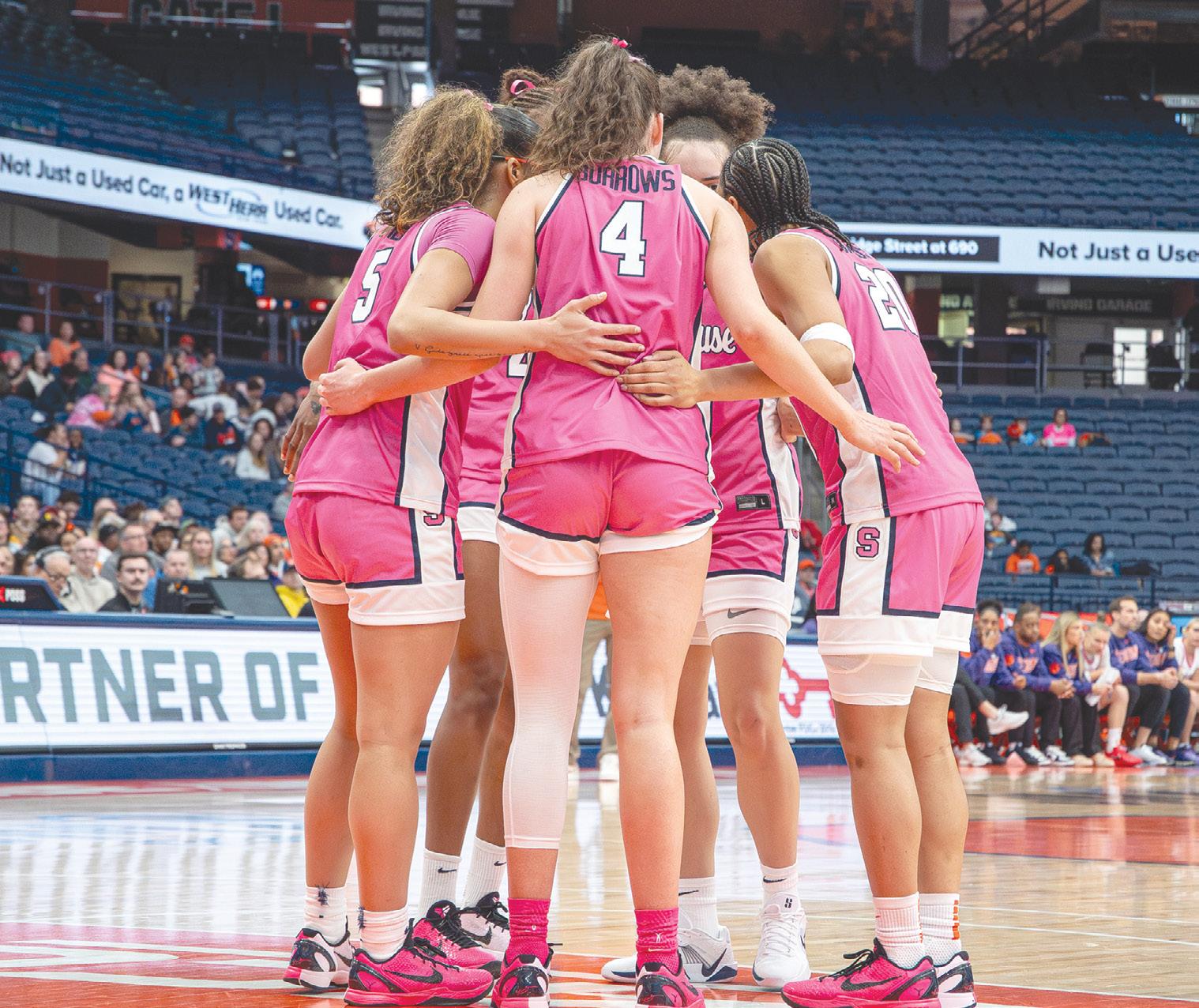
in the NCAA Tournament and likely lock up a top-4 seed for the conference tournament.
If SU can even get one win over those two Quad 1 opponents, it’d likely stay as a No. 8 or No. 9 seed in March Madness, but could secure a second-round bye in the ACC Tournament. It’d also be a major sign it can compete in hostile environments against great teams. Otherwise, it’ll have to wait until the ACC Tournament to prove that.
Perhaps the most likely scenario from the final three games, though, is two road losses to the Wolfpack and Fighting Irish and a home win over BC. In that case, Syracuse would likely lack the Quad 1 victories to push it much higher than a No. 10 seed in the NCAA Tournament, and it’d likely fall to fifth or sixth in the ACC.
Still, Legette-Jack said her team is just fighting for a chance to compete. To do that, they can’t really look big-picture. All that should matter is taking care of business each day.
That starts Sunday against NC State. The Wolfpack present a challenge, but also an opportunity for Syracuse to cement its place in March Madness, and perhaps secure a top-4 seed in the ACC.
And if the Orange do indeed win that day — as well as each one between now and March — they’ll have the chance to win something more: their first national title in program history.
harrispemberton@gmail.com
Syracuse women’s basketball is a projected No. 9 seed in the NCAA Tournament with three games remaining. matthew crisafulli staff photographer
Syracuse has five Quad 2 wins this season, boosting its NCAA Tournament resume
CHALLENGE ACCEPTED
Shy Hawkins was always a quick learner. But college is a different animal.
By Mauricio Palmar asst. sports
There are butterflies in Gwen Hawkins’ stomach. She can’t escape the anxious buzz of anticipation as she helps her youngest daughter, Shy Hawkins, pack her belongings.
It’s July 2024, and Shy’s preparing to leave Mastic Beach, her tiny Long Island hamlet, for Syracuse. She’s accompanied by her parents — Gwen and Patrick Hawkins — and a whole lot of butterflies.
Five hours and a little over 300 miles later, the family enters Shy’s apartment. They’re the first ones there, so Shy gets to pick her room.
Eventually, Shy’s new roommates — Olivia Schmitt and Keira Scott — arrive, while Patrick’s putting together shelves. Gwen adjusts Shy’s comforter, making sure her pillows are perfectly placed for a sumptuous night of rest. Gwen won’t have that same luxury tonight. Soon, she and Patrick will leave for the night, sleep in a hotel and, eventually, return to Mastic Beach. For the first time, Shy won’t be with them when they depart.
see hawkins page 12
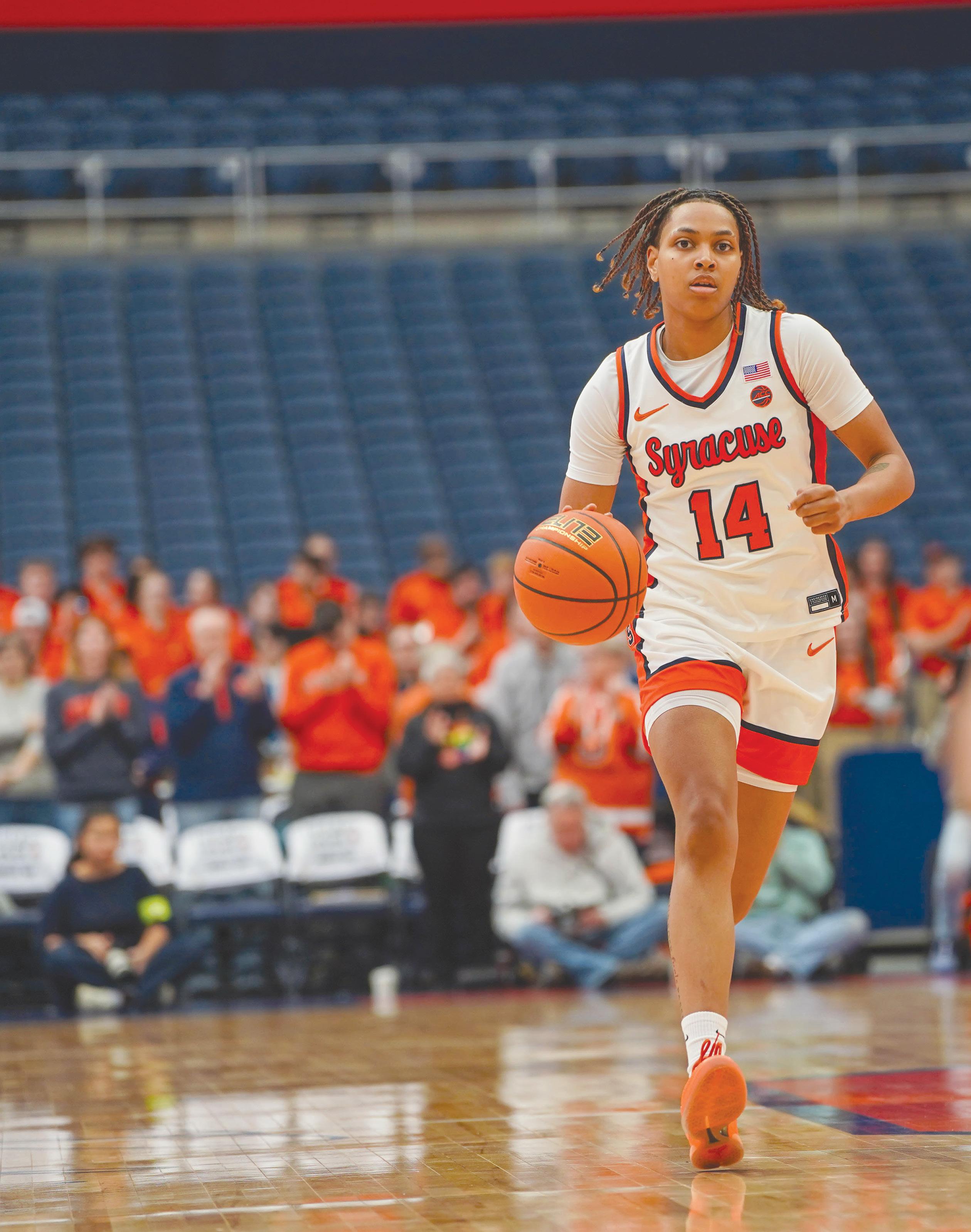
After BU struggles, Jackson Kinsler makes her mark at SU
By Spencer Brod asst. digital editor
It was time for a heart-to-heart meeting. Jackson Kinsler needed it. The Boston University freshman had played in just 17 of BU’s 38 games, and with an influx of Canadian players arriving, Kinsler was uncertain about her future and considered entering the transfer portal.
She sat down with her father, Toby Kinsler, and BU head coach Tara Watchorn. Kinsler didn’t receive the playing time she’d
hoped for as a freshman, so she wanted to know whether her role would increase as a sophomore.
“Does she have a future here?”
Toby asked Watchorn, referring to his daughter.
Watchorn was brutally honest. No matter what Kinsler did, the answer was, frankly, no.
“She had to fight every day to just have an opportunity to wear a jersey and sit on the bench,” Toby said.
“It teaches you: ‘Nothing’s free and nothing’s certain. You have to earn everything, no matter what.’”
That interaction was the tipping point in Kinsler’s rocky year at BU, where she scored just once across 17 games before transferring ahead of the 2024-25 season. After Syracuse’s coaching staff reached out, Kinsler found her footing with the Orange, scoring in her first game, and she hasn’t looked back since. The junior forward ranks second on SU in both goals (seven) and assists (nine) while consistently delivering in the clutch.
“She adjusted really well,” former Syracuse forward Bryn Saarela said. “She fit right in with the culture of the
team and how Syracuse hockey plays.”
Kinsler began receiving Division I offers as early as eighth grade, but Toby said it felt too early to think about college. A few years later, during the COVID-19 pandemic, the college process picked up again. Due to pandemic restrictions, many of Kinsler’s college tours were virtual. She considered Dartmouth, Harvard, Union, Holy Cross, Vermont and BU before making a final decision. Ultimately, Kinsler fell in love with the allure of playing in a major city — Boston — and the legacy of then-
Terriers’ head coach Brian Durocher, and she chose Boston University.
Her admiration for BU began years prior, though. In her high school English class at Deerfield Academy in Massachusetts, Kinsler was tasked with writing a biography on someone who inspired her. Kinsler wrote about former BU star Marie-Philip Poulin, now a three-time Olympic gold medalist and four-time world champion with Team Canada.
The stars continued to align for Kinsler. Clara Yuhn, a close friend see kinsler page 12
ice hockey
After grappling with confidence issues in her freshman year, Shy Hawkins is finally settling into her role as SU’s fifth starter. zoe xixis asst. photo editor
editor