Twenty-four Syracuse University Senators petitioned to discuss the “serious challenges for shared governance and transparencies” following changes to Falk College.
N • Special meeting Page 3
C • Hallowed halls
As some of the last residents prepare to move out of Kimmel and Marion Halls, students and alumni reflect on the history of the buildings.
Voiceless
Falk College’s restructure has left faculty and students with uncertainty for its human dynamics departments
By Kendall Luther news editor
On Monday, faculty and staff of the David B. Falk College of Sport and Human Dynamics were invited to listen to a presentation from Dean Jeremy Jordan and Provost Gretchen Ritter titled “The Future of Falk College.”
The faculty and staff left not only with a new name of the college — David B. Falk College of Sport — but also with an uncertainty of what is to come in the future for their respective departments.
“At the end of the coming year, we will likely evolve in kind of two separate directions,” Ritter said in the meeting. “We have a sense of one of those directions quite clearly here, and we are going to be asking all of you to help us to develop the other direction.”
The new name will take effect at the end of the semester, said Jordan, who has “extensive experience in sport and recreation management,” according to SU’s website. He said the college will be com posed of four departments: Sport Manage ment, Nutrition and Exercise Science, Sport Analytics and Esports.
The future of the human dynamics departments — Marriage and Family Ther apy, Social Work, Human Development and Family Science and Public Health — will be determined by a task force con vened by Ritter. The task force will have until the end of October to understand “the opportuni ties” and the “best way” to accomplish its goals moving forward, Jordan said.
university communications pertaining to the changes to Falk College before Monday’s meeting, said Kenneth Corvo, associate professor in the School of Social Work.
“There’s no determination that we have a home, any of us,” Corvo said. “The committee that established the elevation of sport was done surreptitiously — none of us knew this was going on.”
A professor in the department of Public Health, who requested to remain anonymous, said rumors regard ing the change originated from a community-based agency the College worked with to coordinate intern ship placements. A staff member from the agency
S • Revolutionary
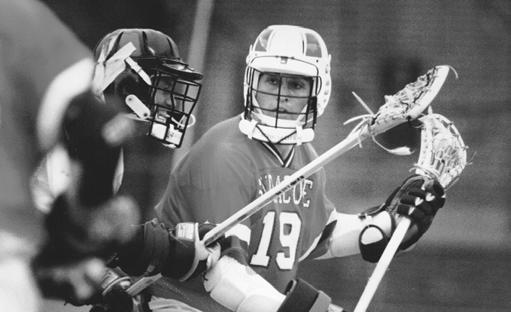
Syracuse will retire Paul Gait’s storied No. 19 on April 20, signifying another milestone for one of lacrosse’s most influential players of all time.
12


Associate Dean for Human Dynamics Programs
Rachel Razza. Razza said at the meeting that she was “brought into the conversation last week.”
Razza did not immediately respond to The D.O.’s request for comment.
“We mapped out a positive path forward that came out of a task force on sports management, and now the next phase is to do it with human dynamics,” Ritter said.
With developments such as Micron’s new facility and the I-81 Community Grid project bolstering the



School of Education’s InclusiveU celebrates tenth anniversary
By
Julia Boehning asst. news editor
Before Andrew Benbenek stepped foot on Syracuse University’s campus — or any college campus — he knew he wanted to be part of the Orange.
“I had wanted to go to SU since I was probably 3, 4 years old — before I even knew why I was going to college,” Benbenek said.
Benbenek, who was diagnosed with brain cancer as a child, had been told throughout his life that his disability would make achieving his dream of going to college unlikely. In 2017, however, he found a home in SU’s then relatively new InclusiveU initiative — a program that provides accessible higher education for students with developmental and intellectual disabilities.
Now, his alma mater is celebrating 10 years on SU’s campus. It was founded as a program in SU’s Lawrence B. Taishoff Center for Inclusive Higher Education — a center within SU’s School of Education dedicated to finding ways to support college-aged individuals with disabilities.
Since InclusiveU’s creation, the program’s student population has increased by over 600% — from 14 stu-
dents in its first year to over 100 today.
Today, it is one of the largest programs for intellectually and developmentally disabled college students in the United States, said Beth Myers, the executive director of the Taishoff Center. “They really ‘bleed orange’ like everybody else,” Myers said. “Our students get the opportunity to be a college student and to be a part of college student growth … it’s an opportunity
for students to explore what it means to find themselves.”
When InclusiveU was founded, there were only about 25 higher education programs for disabled students in the U.S., Myers said. Currently, there are around 300, according to the PACER Center — an organization dedicated to providing resources to parents of children with disabilities.
free thursday, apr. 18, 2024 celebrating 120 years Page 5
Page
flynn ledoux contributing illustrator
on campus
see inclusiveu page 4
see falk page 4

INSIDE
The best quotes from sources in today’s paper.
NEWS
“The committee that established the elevation of sport was done surreptitiously — none of us knew this was going on.” - Kenneth Corvo, associate professor in the School of Social Work Page 1
The Daily Orange is an independent, nonprofit newspaper published in Syracuse, New York. The editorial content of the paper — which started in 1903 and went independent in 1971 — is entirely run by Syracuse University students.
The D.O., a 501(c)(3) nonprofit, is editorially and financially independent from SU, and the paper receives no funding from the university. Instead, The D.O. relies on advertising revenue and donations to sustain operations.
This fall, the paper will be published Thursday when SU classes are in session. The D.O.’s online coverage is 24/7, including while SU is on break.
To show your support to The D.O.’s independent journalism, please visit dailyorange.com/donate. Donations are tax deductible. Editor@dailyorange.com
how to join us
If you are a Syracuse University or SUNY-ESF student interested in contributing to The D.O. on either its advertising or editorial teams, please email editor@dailyorange.com.
corrections policy
The D.O. strives to be as accurate in our reporting as possible. Please email editor@dailyorange.com to report a correction.
letter to the editor policy
The D.O. prides itself as an outlet for community discussion. To learn more about our submission guidelines, please email opinion@dailyorange. com with your full name and affiliation within the Syracuse community. Please note letters should not include any personal information pertaining to other people unless it is relevant to the topic at hand. All letters will be edited for style and grammar.

CULTURE
“Marion and Kimmel need a makeover and I'm happy that they're finally getting a much-needed makeover.” Kaitlin Bo Iong, sophomore and Marion Hall resident Page 5
OPINION
“Our wages do not reflect the cost of living, nor do they equate to the skill and effort we bring to our roles. It's not just a matter of fairness, it's a matter of survival.”
- Nawazish Shaik, Syracuse University Dining Halls employee Page 9
SPORTS
“Physically, I look like sh*t. But other than that, I’m fine."Paul Gait Page 12
COMING UP
Noteworthy events this week.
WHAT: Disability Pride Week Pet Therapy
WHEN: April 19, 11:30 a.m. - 1 p.m.
WHERE: Barnes Center at The Arch, 103
WHAT: Silent Disco
WHEN: April 20, 7 - 10 p.m.
WHERE: Schine Student Center, 304
WHAT: Late Night Ice
WHEN: April 21, 7 - 10 p.m.
WHERE: Tennity Ice Skating Pavilion

about
The D.O. is published weekdays during the Syracuse University academic year by The Daily Orange Corp., 230 Euclid Ave., Syracuse, NY 13210. All contents Copyright 2024 by The Daily Orange Corp. and may not be reprinted without the expressed written permission of the editor-in-chief. The Daily Orange is in no way a subsidy or associated with Syracuse University. All contents © 2024 The Daily Orange Corporation
News@dailyorange.com Opinion@dailyorange.com Culture@dailyorange.com Sports@dailyorange.com Digital@dailyorange.com Design@dailyorange.com BUSINESS 315-443-2315
2 april 18, 2024
Senators petition for ‘special meeting’ over Falk renaming
By Griffin Uribe Brown asst. digitial editor
Before Syracuse University Senate’s final meeting of the semester began Wednesday, 24 senators signed a petition calling for a “special meeting” about the renaming and restructuring of the David B. Falk College of Sport and Human Dynamics.
The petition calls for a discussion of the “serious challenges for shared governance and transparencies” following changes to Falk College among other issues not brought before the Senate “at all” or not “dealt with as extensively and transparently as shared governance demands.”
Dean Jeremy Jordan will lead the new Falk College of Sport and Rachel Razza, now the chair of the human development and family science department, will serve as associate dean for human dynamics programs for the 2024-25 academic year, Vice Chancellor and Provost Gretchen Ritter said.
The decision to rename Falk College was made after a recommendation from a task force looking to elevate the college’s sport-related programs, according to a Monday press release.
Ritter and Jordan met with faculty Monday to discuss the announced changes, and they plan to meet with faculty in “a couple of weeks” after gathering feedback, the vice chancellor said.
“We are taking all this feedback into consideration as we proceed. I am aware, by the way, of the petition that is circulating, calling for a special meeting of the Senate on this topic,” Ritter said. “I think it’s a great idea — I’m fully supportive of it and I look forward to that conversation.”
The meeting will be held on April 30 at 10 a.m., Agenda Committee Chair Kira Reed said. The Senate’s bylaws state that a special meeting can be called by the chancellor, Agenda Committee or by a petition of over 20 senators.
The university “is not specifying” the outcome of the human dynamics programs, Ritter said in response to a question from Moira McDermott, an associate teaching professor. The university will “follow the lead” of the task force, Ritter said, though she thinks it is unlikely that human dynamics will remain in Falk College.
Ritter also spoke about “concerns” surrounding SU’s African American Studies
department, citing the “significant challenges” around maintaining leadership for the department. AAS has not had a faculty chair this semester.
In the last decade, AAS has had seven department chairs, including multiple interim chairs, Ritter said. The department’s last chair, Vlad Dima, was an outside hire who stepped down after one semester.
“To be clear, there have been no conversations about pulling back support or shutting down this department,” Ritter said. “Any claim to the contrary is simply not accurate.”
Ritter said College of Arts and Sciences Dean Behzad Mortazavi requested that AAS faculty provide two recommendations to succeed Dima and received one. Professor Horace Campbell previously told The Daily Orange that the only name put forward was Herbert Ruffin, an associate professor.
Ritter said faculty chair positions should be limited to faculty who are either currently a full professor or an associate professor on the verge of being promoted to a full professorship. It was “appropriate” for Mortazavi to seek a chair of that status, Ritter said.
Ritter said Arts and Sciences is “continuing” to work to “resolve the issues” and appoint a department chair. She urged AAS faculty to work with Mortazavi to create a “sustainable path forward.”
“African American Studies is central to the mission of the university and the College of Arts and Sciences. We take pride in the research and curricular offerings of this department,” Ritter said. “It is central to Syracuse University’s commitment to advancing academic excellence at a university that is welcoming to all.”
Joan Bryant, an associate professor in AAS, said at the meeting that the department’s faculty were told to propose either full professors or associate professors in the recommendation process Ritter described.
“(Mortazavi) failed to explain why he initially called for names of associate professors, why he never communicated his concerns to the individual we proposed, and why he did not consult either of the department’s
Goldwater Scholarship brings sense of belonging to SU cohort
By Dylan van Breda staff writer
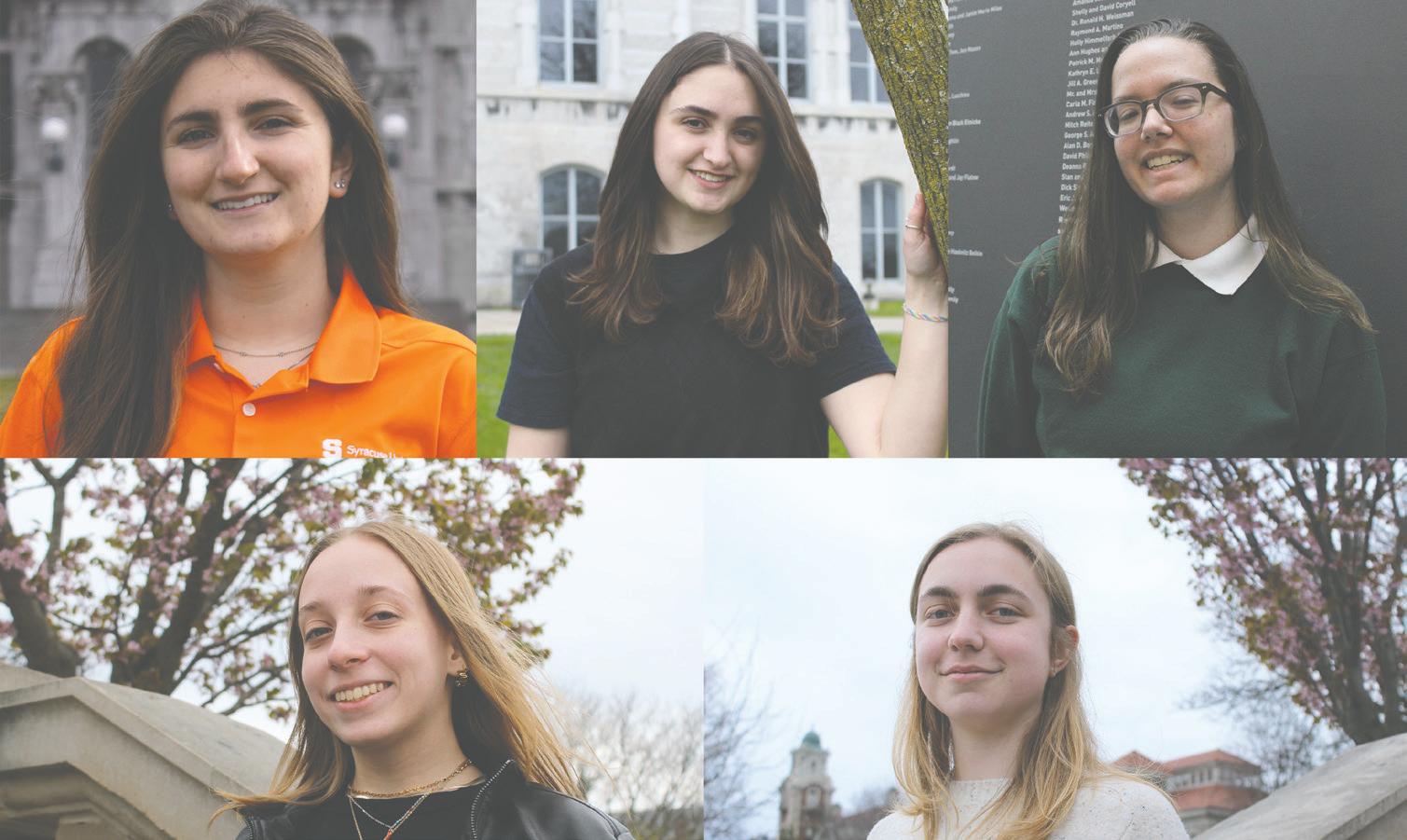
A record number of Syracuse University students have been selected for the Goldwater Scholarship — a national merit-based scholarship awarded annually to sophomores and juniors pursuing natural science, engineering and mathematics majors — according to an SU news release.
Five SU students were selected for the meritbased scholarship — the most in the university’s history, the release states.
The Barry Goldwater Scholarship and Excellence in Education Foundation was established in 1986 by Congress to honor Arizona Senator Barry Goldwater. This year, the foundation is supporting a record number of 508 scholars for the 2024-25 academic year, according to its website.
Gianna Voce, a sophomore computer science and neuroscience major, said she was not expecting to receive the scholarship and only applied because she thought it would give her a better chance to receive the award her junior year.
“I don’t even know when it was supposed to be announced. Then, I got the email and I was in shock,” Voce said. “I called my mom … She was in shock. So, it was a lot of just disbelief because I didn’t think I would get it … there’s so many more people with so much more experience than I have.”
Serena Peters, another recipient, is a junior majoring in chemistry. She said receiving the scholarship helped increase her confidence and sense of belonging as a woman in STEM
— who are statistically underrepresented in the field.
“It’s very easy to feel out of place in STEM classes. As someone who’s (assigned female at birth), you look around and it’s just a bunch of engineering bros,” Peters said. “It’s really important for there to be this sense of belonging. I deserve to be here, and I can do this as good as anyone else in this class.”
Peters said she dreams of being a professor. She wants to make sure every student feels they are capable of succeeding and are not discouraged because of their identity, she said.
According to its website, 1,353 science, engineering and mathematics students were nominated this year for the Goldwater Scholarship and only 438 were selected.
Sadie Meyer, another scholarship winner, is a sophomore studying biomedical engineering and mathematics. She said working through the application process with SU’s Center for Fellowship and Scholarship Advising, namely writing her personal statement, helped her develop a vision for her future career.
CFSA assisted each nominee in preparing their application. The SU nominees for the national competition were then chosen by a faculty committee led by James Spencer, a professor of chemistry, according to the release.
Kerrin O’Grady, a junior scholarship recipient who is majoring in biomedical engineering and neuroscience, said working with physically disabled communities encouraged her to pursue bioengineering. Through working with a club for neurodivergent individuals, she said she found a passion for helping people in a hands-on manner.
“I saw, through working with these communities, that I can have a real impact, especially in the physically disabled communities where there’s nerve damage because that’s what my research is on now,” O’Grady said.
O’Grady said she wants to pursue a doctoral degree in biomedical engineering with a focus on neural engineering. She then wants to work in a lab, continuing her research on nerve damage and directly helping disadvantaged communities.
“I can connect with a lot of different people who have different research interests that are looking for similar goals in life,” Fancher said. “Having access to people who want the same things … is going to be really cool.”
Syracuse University announces 2024-25 Remembrance Scholars
By Stephanie Wright senior staff writer
Syracuse University announced the cohort of Remembrance Scholars for the 2024-25 school year in a Wednesday afternoon news release.
The program, now in its thirty-fifth year, honors the SU students killed in the bombing of Pan Am Flight 103 in 1988 over Lockerbie, Scotland. Thirtyfive students are selected annually to represent the SU students and, as of last year, the flight crew and the other passengers who were killed.
“(The scholars) reflect the talent and promise of those students whose memories they honor,” SU’s Provost and Vice Chancellor Gretchen Ritter said in the release. “We are very proud to call them members of our University community.”
The 2024-25 Lockerbie Scholars, who come to SU for a year of study to represent the town of Lockerbie, are Cameron Colville and Anna Newbould.
The 2024-25 Remembrance Scholars are listed below:
• Alba Aljiboury, a policy studies and information management and technology major and member of the Renée Crown University Honors program.
• Linda Baguma, an international relations and political major and member of the Renée Crown
University Honors Program.
• Adam Baltaxe, an international relations and Spanish major and member of the Renée Crown University Honors Program.
• Tanner Boshart, an economics, history and finance major in the Renée Crown University Honors Program.
• Danis Cammett, an international relations and applied data analytics major in the Renée Crown University Honors Program and a member of SU’s Army Reserve Officer Training program.
• Natalie Dolenga, an international relations major and Renée Crown University Honors Program member.
• Charlotte Ebel, a public relations and women’s and gender studies and member of the Renée Crown University Honors Program.
• Luke Elliott, a citizenship and civic engagement and public relations major and member of the Renée Crown University Honors Program.
• Mason Garbus, a music education major.
• Joshua Garvin, a music industry major.
• Tabitha Hulme, a public health and health humanities major.
• Abigail Jones, a public relations and policy studies major and member of the Renée Crown University Honors Program.
• Rajan Joshi, an economics major and member of the Renée Crown University Honors Program.
• Sierra Kaplan, a health humanities and political science major and member of the Renée Crown University Honors Program.
• Kelsey Leary, an art photography major.
• Nadia Lyngdoh-Sommer, a sociology and law, society and policy major and member of the Renée Crown University Honors Program.
• Sophia Moore, a television, radio and film and sociology major and member of the Renée Crown University Honors Program.
• Zachary Murrary, a political science, policy studies and modern foreign language major and member of the Renée Crown University Honors Program.
• Ryan Myers, a public relations and psychology major and member of the Renée Crown University Honors Program.
• Mark Nzasi, a neuroscience and psychology major and member of the Renée Crown University Honors Program.
• Cheryl Olanga, a computer science major.
• Adya Parida, a computer science major and member of the Renée Crown University Honors Program.
• Jenna Poma, a policy studies and citizenship and civic engagement major and member of the Renée Crown University Honors Program.
• Tia Poquette, a policy studies major.
• Alekya Rajasekaran, a biotechnology major and member of the Renée Crown University
Honors Program.
• Olivia Reid, a policy studies major and member of the Renée Crown University Honors Program.
• Mason Romero, a music education and music history and cultures major and member of the Renée Crown University Honors Program.
• Alie Savane, a biology major.
• Abigael Scott, a neuroscience and biology major and member of the Renée Crown University Honors Program.
• Yifan “Ivan” Shen, an architecture and music history and cultures major and member of the Renée Crown University Honors Program.
• Justine Smith, a political science and policy studies major and member of the Renée Crown University Honors Program.
• Joshua Spodek, a history and social studies education major and member of the Renée Crown University Honors Program.
• Alyssa Sutherland, a public health and women’s and gender studies major and member of the Renée Crown University Honors Program.
• Evelina Torres, a political science and citizenship and civic engagement major and member of the Renée Crown University Honors Program.
• Leondra Tyler, a neuroscience and psychology major.
NEWS dailyorange.com news@dailyorange.com april 18, 2024 3
on campus
Julia Fancher, another scholarship holder, is studying physics and mathematics and is a member of the Renée Crown University Honors Program. She said she looks forward to seeing the networking opportunities being a Goldwater Scholar opens up.
on campus
Syracuse University announced Kerrin O’Grady, Sadie Meyer, Serena Peters, Gianna Voce and Julia Fancher as the 2024-25 Goldwater Scholars. isabella flores staff photographer
spwright@syr.edu @stephaniwri_ on campus
see usen page 4 see goldwater page 4
population, the region will have an increased need for the services human dynamics train people for, Jordan said.
“We need to allow our human dynamics group the opportunity to not do their work in the shadow of this college that is focused on sport,” Jordan said.
Eric Kingson, a professor of social work, said he expected a change, but he was surprised that it happened with a “lack of focus on the other departments.”
“It’s emblematic of really just not giving a darn about the caregiving professions,” Kingson said. “I think that’s something we see in society. We see it in how we pay people who do the most basic care work like aids in hospitals, aids in nursing homes. We see it in the full lack of recognition that giving care as a whole is a very significant contribution to our society.”
Other members of the Human Dynamics Task Force include Syracuse Deputy Mayor Sharon Owens, Deputy County Executive for Human Services Ann Rooney, partners from across campus and faculty and staff from Falk College, Jordan said. As of now, faculty will make up one of eight constituent groups in the task force.
“The committee that they’re establishing is a committee that diminishes faculty voice,” Corvo said.
As the meeting ended, undergraduate students in Falk College received an email with “advanced notice” of the “reimagination” of the college and its academic programs. Grace Brashears, a junior studying human development and family science
InclusiveU aims to educate “students of all ages with intellectual and developmental disabilities who want to experience college life,” according to SU’s Center on Disability and Inclusion’s website. Students in the program audit one to three SU classes a semester, participate in professional and personal development seminars, have the opportunity to live on campus and graduate with a certificate in their selected field of study.
Prior to the creation of InclusiveU, the Taishoff Center, which was founded in 2009, featured two community programs for disabled students — its OnCampus partnership with the Syracuse City School District and the Access program with an external “adult service agency,” InclusiveU Director Brianna Shults wrote in a statement to The Daily Orange. These initiatives allowed only a “small number” of students with disabilities to attend SU.
In 2o14, the Taishoff Center was awarded a federal grant from the U.S. Department of Education’s Transition and Postsecondary Programs for Students with Intellectual Disabilities office — which funded the InclusiveU project, Shults wrote. It then began to offer classes to a 14-person enrollment class.
When Benbenek first came to SU in the early years of the program, he said opportunities for InclusiveU students were limited. During his freshman year of college, he realized he was interested in pursuing a career in sports broadcasting and attempted to take classes at the university’s S.I. Newhouse School of Public Communications. At first, he was denied.
eligible full professors about becoming the AAS chair,” according to an AAS faculty statement from March.
At Wednesday’s meeting, Chancellor Kent Syverud said he confirmed honorary degree recipients for the university-wide commencement ceremony on May 12 from a Senateapproved list. At its March 20 meeting, the Senate voted to recommend a revocation which has now been passed along to the Board of Trustees. The board has final say on the potential revocation, Syverud said.
Syverud also reported on his role in a working group with university presidents and athletic leaders related to the “dramatic change” he said is coming to college sports. He added that he will be meeting with SU’s leadership and academic deans over the summer to address potential developments.
and public health, said the email “came out of nowhere.”
“Overall, it was really confusing as to what was going to happen to all the human dynamics majors,” said Brashears, a student ambassador for Falk. “Throughout the email, they were just emphasizing how important it was to kind of lift up all the sport majors in the school … so I was just confused as to what even the options for our majors are going to be.”
The email states that future changes will not impact current students’ coursework or academic progression and that “all students enrolled in programs currently housed in Falk College may continue their studies and complete their respective degree programs without any changes to existing curriculum requirements.”
Grace Sacco, a senior majoring in social work, wrote in a statement to The D.O. that the lack of clarity in the email “leaves room for almost too much interpretation.”
Corvo said he doesn’t think the university is driven by marginalizing groups, but that it does not put any effort in to avoid it. He claims at least 85% of the students in the human dynamics departments are women while those enrolled as sport majors are mostly men.
“Essentially, sport, which is mostly male, is being valorized. The other programs which might be reasonably considered to be socially conscious or helping (are) mostly female and the female students … are being marginalized,” he said.
Penelope Lee, a junior studying public health, said that taking away the “human dynamics” part of the college’s name can be misleading for current students and future graduates who will be applying for jobs.
“Taking away that part of the name basically takes away the entire point of why you’re
“When I started (with) InclusiveU, Newhouse wasn’t really open to InclusiveU students,” Benbenek said. “It was definitely challenging to get classes that wanted to accept an InclusiveU student because they had never done this.”
After getting involved with several on-campus communications outlets and taking thorough notes at Newhouse events, Benbenek said he demonstrated to professors that he was capable of being accepted into their courses. He then became the first InclusiveU student to take Newhouse courses and graduate with a certificate from the school.
Throughout his college career, Benbenek continued to lead among his peers. In 2020, he was the second InclusiveU student in the program’s history to be named an SU Remembrance Scholar, the first being awarded to Cleo Hamilton in 2019.
Benbenek now works as a board operator at Galaxy Media Partners — a digital communications firm in the central New York area.
Over its decade-long presence on campus, InclusiveU students have led the changes to the program. In 2017, InclusiveU saw its first student live in an on-campus housing facility. Next semester, the university expects to have half of the program living in residence halls, Shults wrote.
Both Myers and Shults highlighted the importance of allowing disabled students at SU to enjoy the traditional college experience. InclusiveU is the only four-year, residential, fully inclusive college program in the state, Shults wrote.
For sophomore John Rorro, getting that experience was one of his main draws to the InclusiveU program. Having grown up in Washington County, New York — nearly three hours away from Syracuse — he said his family initially
Other business:
The Senate passed a resolution to expand the Agenda Committee. Reed announced that Brice Nordquist, a writing studies, rhetoric and composition associate professor and the dean’s professor of community engagement, will serve as the Agenda Committee’s chair next school year.
Ritter said SU is “looking closely at the data and the rationale” behind its recent decision to remain test-optional for the 2025-26 academic admission cycles. The university will “make a call” regarding the policy’s future this fall, she said.
putting that on your resume … and your diploma,” Lee said. “It really doesn’t think about these other majors that have done … so much work and so much effort that they’ve put into making these programs great.”
The university did not respond when asked which college name would appear on students’ diplomas
The college started as the College of Human Services and Health Professions in 2001 after a merger of the College of Nursing, the School of Social Work along with two departments in the College for Human Development. About two years later, the university decided to eliminate the College of Nursing, Corvo said.
The college was renamed the College of Human Ecology in 2007 and included the Sport Management department, which had been introduced to the university two years earlier. In 2011, the university received a $15 million gift from David B. Falk.
Corvo said he and other faculty members thought the college would be named David B. Falk College of Human Ecology, but Falk instead “demanded” the college be named “Sport and Human Dynamics.”
“The irony, I guess, is that we took Sport Management on, supported them, nurtured them, funded them, and now they are ‘elevated’ to become the college, and the other units that supported, nurtured, and funded them are being treated as inferior remnants,” Corvo said in a statement to The D.O.
The task force needs to determine the “optimal structure and alignment” within the university, Jordan said. The findings will be reported and reviewed by Ritter in October, and future plans will align with Chancellor Kent Syverud, the Board of Trustees and other areas of central administration, he said.
felt hesitant to send him to SU. He ultimately decided to attend the university because of its sports management program.
“The moment I came to visit Syracuse and took my first step on campus, I knew that I could call this a home for the next four years,” Rorro said. “The reason why I’m here is to get the fouryear experience that other typical students are getting. I felt like kids with disabilities, and me with a disability, deserve the same thing.”
Now, Rorro said he is heavily involved on campus. Along with working in SU’s Peer2Peer program (an initiative that connects students at InclusiveU with others in the broader campus community), he also works on the sidelines during SU football home games. Like any other sports management student, he said he dreams of having a full-time job with his favorite sports team, the New York Rangers, and starting a family.
“We’re Syracuse students like everyone else. We have a say,” Rorro said. “We want other typical students to recognize and see that, ‘Yeah, we’re in (InclusiveU), but we’re just like you.’”
Rorro, Benbenek and around 280 SU community members attended InclusiveU’s 10th anniversary celebration on April 4. Rorro said he enjoyed the opportunity to advocate for the program with SU alumni, faculty and administrators and plans to continue supporting InclusiveU after he graduates.
Echoing Rorro, Benbenek said he regularly connects with the professors and peers who supported him when he was a student at SU.
Although they are grateful for the opportunity to attend a four-year university, several InclusiveU students said there is still room for the program to grow.
Brashears said she is concerned that the departments will not receive the acknowledgement they deserve in the future.
“All of the programs at Syracuse are very historic. A lot of them are the first of (their) kind in the country, and a lot of them are some of the best in the country,” she said. “In my time at Syracuse … I’ve already seen it get very overlooked by the nation as a whole, which is really unfortunate.”
Currently, Kingson said the university could move the existing human dynamics programs into a new school, add the units to an existing college or eliminate them entirely. He said many of the faculty would like to stay in one college but that it will not happen if the process is “taken out of the hands of faculty.”
Jordan anHall as and associate deans will host a town hall meeting on Thursday at 12 p.m. in 335 White opportunity for “students to learn about the reimagining of Falk College and engage in discussion.” Brashears said the timing of the meeting is “really weird and really inconvenient” as many Falk classes either end at 12:20 p.m. or start at 12:30 p.m.
“I know that if it were up to the professors of the human dynamic majors and even the people who run those programs, they would absolutely (gather student input),” Brashears said. “But I think that would be a good compromise to allow us to be a part of that task force in some shape or form.”
On Wednesday, over 24 faculty members petitioned for a special University Senate meeting following the renaming of Falk. The meeting will be held on April 30th at 10 a.m.
“They have lost the trust of everybody in our college and I don’t know how they can recover it,” the anonymous professor said.
kaluther@syr.edu @kendallaluther
When Benbenek attended SU, he had to campaign to walk with his graduating Newhouse class as InclusiveU students typically walk with the School of Education. In the future, he said he hopes students in the InclusiveU program will be afforded the same opportunities as the rest of SU when selecting their graduation preferences.
“I feel like they should be able to walk the stage with the people they went to school with,” Benbenek said.
As the program continues to grow, Myers said she hopes to further “embed” InclusiveU into SU’s university systems, such as making course registration more accessible and encouraging registered student organizations to further accommodate students with disabilities.
InclusiveU also aims to work with similar higher education institutions across the country and serve as a “blueprint” for schools intending to implement similar programs, Myers said.
“In the next 10 years, I hope we continue to let our students lead in the growth process of InclusiveU,” Shults wrote. “So much of what our program focuses on is what our students want out of this experience.”
Rorro said he thinks programs like InclusiveU are crucial in helping young disabled people grow as individuals. He hopes families of college-age students with disabilities will let their children “give (college) a shot” despite the barriers they may face.
“We’ve just had an amazing 10 years, and I’m just happy that I’ve gotten to be a part of it,” he said. “I’ll tell you right now, it has definitely changed my life.”
jmboehni@syr.edu @juliaboehning
According to the Goldwater Scholarship Foundation’s website, scholarship recipients have won an “impressive array of prestigious awards” — becoming Hertz Fellows, National Defense Science and Engineering Graduate Fel-
During the meeting, the Senate unanimously voted to award all the degrees to this year’s graduating class. The Senate also passed a resolution to implement agreedupon changes to the faculty manual.
gbrown19@syr.edu @GriffinUriBrown
lows, Rhodes Scholars, Churchill Scholars and Marshall Scholars, among others.
“We’re so proud of Julia, Sadie, Kerrin, Serena and Gianna,” Jolynn Parker, CFSA’s director, said in the release. “They are exceptional young scientists and it is gratifying to see them honored with this award.”
djvanbre@syr.edu

4 april 18, 2024
from page 1 falk
from page 1 inclusiveu from page 3 usen from page 3 goldwater
Moving out
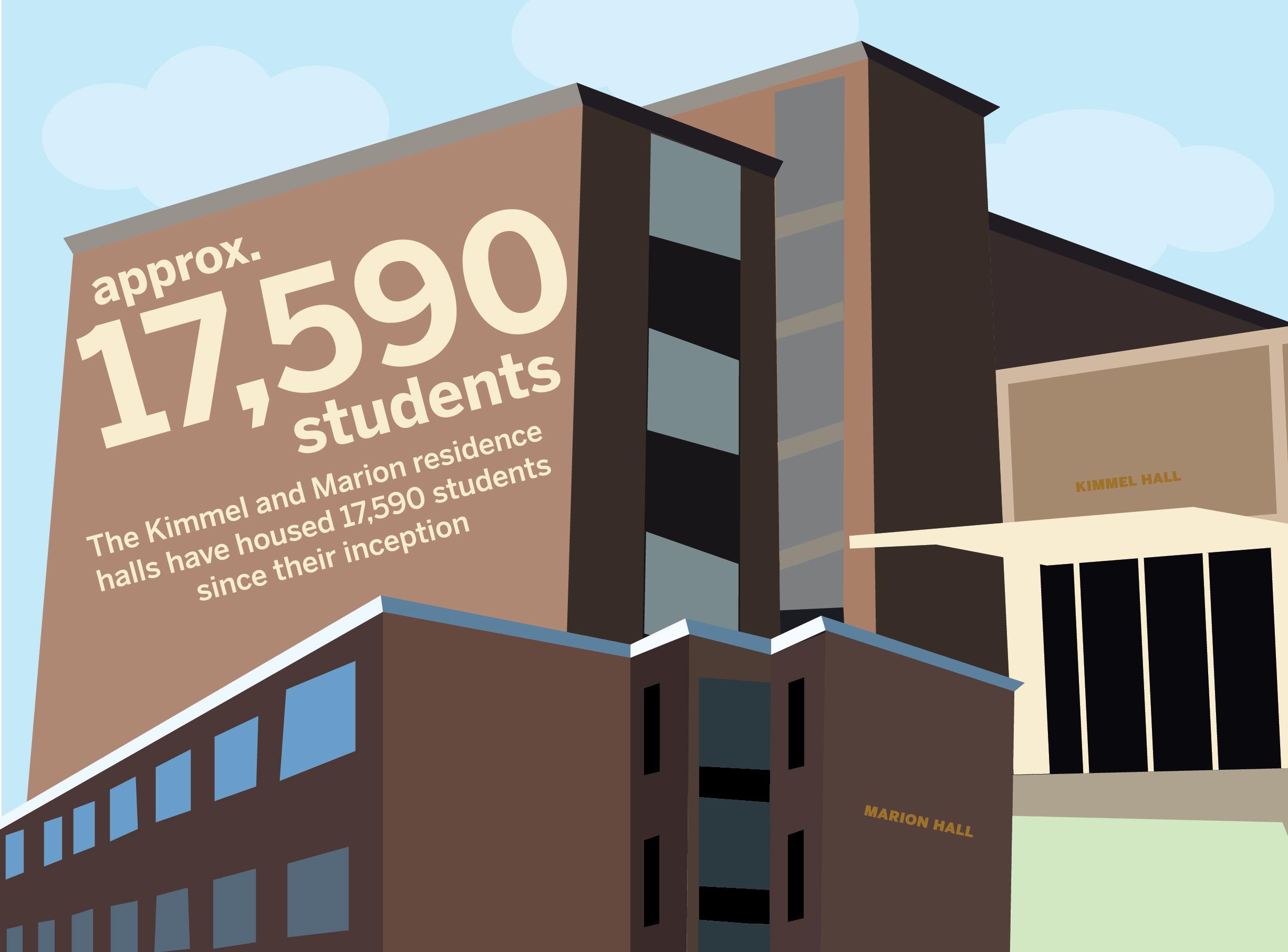
Kimmel Dining Hall used to be the hot spot for students. Now, SU is tearing down the building along with Marion Hall.
By Rosina Boehm asst. culture editor
After a 75-point men’s basketball win, Syracuse University alum Bryan Dumas ran to the Taco Bell in Kimmel Hall with his friends to celebrate. At the time, Taco Bell locations around Syracuse would offer free tacos after a 75-point win, and gathering in Kimmel to enjoy the “Taco Time” offer after the game became a tradition.
“The team was still pretty good, so they scored 75 points at a decent clip,” Dumas said. “I remember many ‘Tacos Times’ at Kimmel, other great meals in between classes, after class, late at night on the weekends; it was always a great environment.”
Kimmel is currently home to SU students and the ITS MakerSpace. Until 2021, it was also a dining hall with options like Kentucky Fried Chicken, Taco Bell and Sbarro, along with typical dining hall options and a convenience store. SU announced on Feb. 26 that the building, along with Marion Hall, a neighboring sophomore residence hall, would be torn down to make way for an updated residential hall complex.
Along with the incoming residence hall in place of Kimmel and Marion, SU has announced other student housing developments, including the construction of another residence hall at 700 Ostrom Ave. and the conversions of the Sheraton Hotel and The Marshall apartments into student housing. The changes come after an increase in undergraduate enrollment from 14,201 in 2010 to 15,421 in 2022.
For years, Kimmel was a favorite dining hall for many students like current senior Dan Capelli. Capelli was heartbroken when he heard Kimmel was closing his freshmen year. He said it felt like “a fog” settled over campus for a month once the news broke.
Capelli hoped the dining hall would make a return for a while, even last year, but now all he can do is reminisce. He made some of his closest friends by going to Kimmel weekly.
“Each Wednesday, freshman year, me and my friends, we would make the trek all the way across campus from Sadler, which was my freshman dorm,” Capelli said. “Just to make it over to Kimmel to stock up on snacks and the convenience store section and get nachos and Häagen-Dazs.”
Students could use their meal swipes there and purchase various food items at Kimmel. For Dumas, the dining hall had whatever his “heart fancied” because of the many fast food spots.
Kimmel also stayed open late so students could grab latenight treats. Bruce Williams graduated in 2009 after playing on the football team and recalls it as a more convenient option for grabbing food than walking to Marshall Street. It was also a space to socialize, like when students gathered there after Drake’s 2010 performance at Block Party, he recalled.
“It would just be those late-night meetups with friends or just even alone,” David Yontz, class of 2002, said. “It was just one of those social hubs.”
But Kimmel was special to Yontz because of more than just his friendships. One night in his senior year, he was writing a paper for
a philosophy class and decided to fuel up with a cup of coffee from Dunkin’. He still remembers his order from that night: a Boston Kreme donut and a coffee.
Yontz sat outside of Kimmel on a bench and saw a friend of his approach with someone else. What he didn’t know then was he had just met his future wife, Katie Langrock. He still considers the moment “love at first sight.” That night, they hung out with his other friends before she went back to school at Miami University at the end of the weekend.
They stayed connected, exchanging AOL instant messages, and he sent her his mixed CDs. Eventually, they dated and got married in 2007. The last time they returned to the spot they met at SU was before they got married. Now, they never will again, and since Yontz is a sentimental person, he is sad about the loss.
“We revisited the site, but we had never been back, and so now we probably won’t be able to get up there before it’s demolished,” Yontz said. “So it’s sad that we’ll never have that.”
After hearing Marion and Kimmel would be demolished, Yontz instantly looked at options to travel to Syracuse to revisit the spot one last time. The trip wasn’t feasible, though, he said, as his home state of Georgia is too far.
For current and former residents of Kimmel and Marion, the construction is a much-needed opportunity for improvements. The buildings haven’t been renovated since 1988, and thus have lacked the amenities of newer dorms like Ernie Davis Hall.
“Definitely Marion and Kimmel were kind of bare bones in that way,” Dumas said. “Like older dorms on campus, I’m sure they were probably lacking some of the things college students are looking for.”
Sophomore and current Marion resident Kaitlin Bo Iong said Marion needs new amenities. She misses the pod bathrooms in her freshman-year dorm and believes students deserve better than the building’s communal bathrooms.
She said that while it’s bittersweet to think she’s the last person to live in her room, it also brings to mind how many people lived there before her, making the room feel “historic in a bad way.”
“Marion and Kimmel need a makeover and I’m happy that they’re finally getting a much-needed makeover,” Iong said.
Williams didn’t have Ernie Davis Hall when he was a student, but now he drives by it every day and admires the modern building, which he sees as part of creating new legacies for future students, he said.
Marion and Kimmel’s legacy comes from the opportunities to study, socialize and “forge long-time friendships” in the spaces, Dumas said. Williams hopes SU honors the old buildings in some way, like hanging pictures in the new space.
“We always talk at Syracuse, remember the land in which you’re on and the memories and people and things that came before you,” Williams said. “For these students, I’m excited for them to create new memories in this new building that goes up.”
rlboehm@syr.edu
LLL event celebrates SU’s global footprint
By Savannah Stewart asst. culture editor
Below a tent in the center of the Shaw Quadrangle, Los Del Río’s “Macarena” played from speakers, attracting Cultures on the Quad event attendees to a dance floor. Together, they danced to the song’s steps, while surrounding participants connected over food and lively conversation about the campus’ various languages and cultural identities.
“It’s important to come support different cultures on campus because you have to learn about different people and surround yourself with different kinds of people,” said freshman Annabel Metzger.
“Coming into freshman year, you don’t know that many people, so meeting people from other cultures is a great way to expand your horizons,” added her friend, freshman Molly Klein.
On Wednesday SU’s Department of Languages, Literatures and Linguistics (LLL) continued their series of celebrations for its 50th anniversary with Cultures on the Quad. Gail Bulman, LLL’s department chair, said Cultures on the Quad began in 2010 and celebrates all of the different languages offered at SU and the many cultures fostered on campus. The event also provided opportunities for students to research the department’s majors and minors.
This year, LLL invited the Maxwell School’s Moynihan Institute of Global Affairs, Syracuse Abroad and the Intelligence Community Center for Academic Excellence to participate in Cultures on the Quad because of each institution’s commitment to creating exposure to a diverse university culture, Bulman said. Each organization was represented at an information table during the celebration.
It’s important to come support different cultures on campus because you have to learn about different people and surround yourself with different kinds of people.
Annabel Metzger su freshman
“(Cultures on the Quad) offers so much opportunity for students here because every single language here, they have opportunities for you to study abroad,” said French teaching assistant Maxence Juchert. “This 50 year history is also an event that can remind you that you can go abroad and study. You can go to France. You can go to Asia, study in Korea, for example. I mean, it’s such a great event to remind you that the doors are open.”
For Juchert, celebrating 50 years of LLL “feels amazing.” She said it’s valuable for SU community members to see people study French outside of France, and people can learn so many languages they might never have thought of studying.
Bulman said LLL usually hosts Cultures on the Quad in the Huntington Beard Crouse Hall breezeway, but this year LLL hosted the event on the Quad for the first time. She said LLL encouraged all 15 language programs in the department to participate in the celebration and reserved tables for them.
“They do at that table what they wish,” she said. “In other words, they bring in their cultural artifacts. They might have a signature beverage or food item from that culture, games and different activities.”
Student representatives and professors for the Hebrew language program offered event attendees matzah flatbread, while
april 18, 2024 5 CULTURE dailyorange.com culture@dailyorange.com
slice of life
cole ross digital design editor
see quad page 7
Artist speaker event about chromatic expression art exhibit
By Sydney Brockington asst. digital editor
Syracuse community members gathered for an intimate event in the main hall of the Community Folk Art Center (CFAC) to observe “Chromatic Expressions,” a 23-piece gallery by multidisciplinary illustrator Megan Lewis. The gallery celebrates the many facets and emotions of Black people.
“My work is a reflection of my personality. It allows me to communicate meaningfully,” Lewis said. “I create the world I want to exist in through my paintings, where I can play, work out and express my emotions.”
CFAC hosted an artist talk Wednesday for “Chromatic Expressions,” where Lewis shared her intimate curation process for the gallery pieces. She reflected on her sources of inspiration and desire to have them showcased through her work at CFAC.
Lewis, a Baltimore, Maryland, native, is known for her multidisciplinary illustrations and paintings. She frequently creates art highlighting people of the African diaspora and challenges their stereotypes and perceptions.
Her work primarily aims to stimulate emotions within the viewer, rather than expose the emotions of the painted subject, she said. Lewis has created murals for brands and organizations like the Baltimore Orioles, Target, LIFEWTR and the University of Maryland Medical System.
“‘Chromatic Expressions’ is more than an exhibition,” said Tanisha Jackson, executive director of CFAC and assistant professor of Syracuse University’s Department of African American Studies. “It is a celebration of authenticity, resilience and the beauty of diversity.”
Founded in 1972, CFAC supplies an exhibition space for artists of African descent, according to its website. CFAC curates artistic cultural and educational events that highlight the experiences of Black people, Jackson said. The center also hosts many public programs including film screenings, gallery talks and performing arts courses.
“This art resonates with the kinds of conversations we try to cultivate at the CFAC and in the Department of African American Studies (SU), which is to bring visibility and diversity
in our understanding of the African diaspora,” Jackson said.
“Chromatic Expressions” features painted portraits on fabric that showcase Black people in moments of introspection — ranging in color and texture. Some portraits feature glitter, while others contain raised paint. Each painting showcases a subject, while also featuring Lewis’ inner sentiments. Lewis is represented through red lips because she wears the color with pride.
“We have had viewers from all over who spotted this exhibition from the window including Austria, L.A., North Carolina, Texas and more,” said Alexia Carr, a marketing outreach coordinator at CFAC. “Each painting conveys a different emotion.”
One portrait entitled, “Ready,” shows a Black woman contemplating her future in pensive thought, Jackson said. Her quiet strength and inner resilience radiate through the image, she said.
“Lewis’ artwork brings to the forefront her own emotions through the figures in her portraits,” Jackson said. “This demonstrates that Blackness and Black people are not monolithic, that we are introspective and that we have aspirations, desires and dreams like everyone else.
For six years, Lewis’ paintings only featured Black women. This series of pieces was entitled “Blk Women.” Now, she mainly paints Black men, aiming to work toward creating more positive images of them. “Joy” is one of these images.
The portrait is a prolific iteration of the media campaign “#Black Boy Joy,” which encourages Black men to express their emotions. Lewis gave several remarks about her curation process for the image.
“It’s like a dance between the two. You’re my subject. This is who you are,” Lewis said. “Show me who you are. Then I’m going to be with you and collaborate together.”
Lewis’ art is constantly evolving. She uses her everyday experiences to kickstart her daily painting sessions, she said. In the future, Lewis hopes to be more open with herself and her heart. She wants to live her life in a gray space — rather than black or white, she said.
“I keep myself bottled up and I think my work really helps me release some of that,” Lewis said. “My work is my release. It’s my therapy almost.” sabrocki@syr.edu

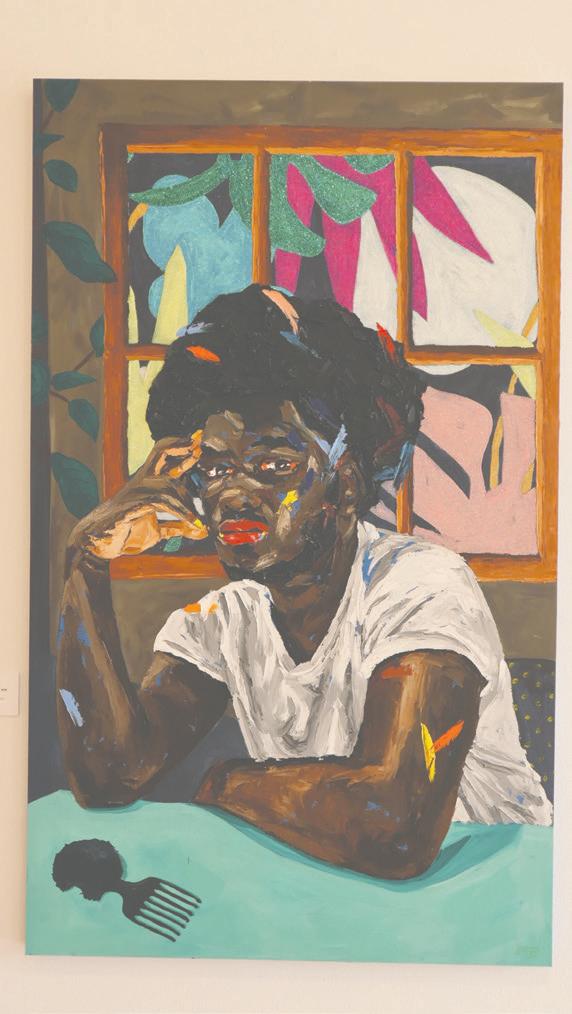



to the left: Artist Megan Lewis said her work is constantly evolving. Her art is more than just art - it is therapy.
Bird Library’s Uzbek exhibit creates a ‘multi-layered’ experience
By Irene Lekakis staff writer
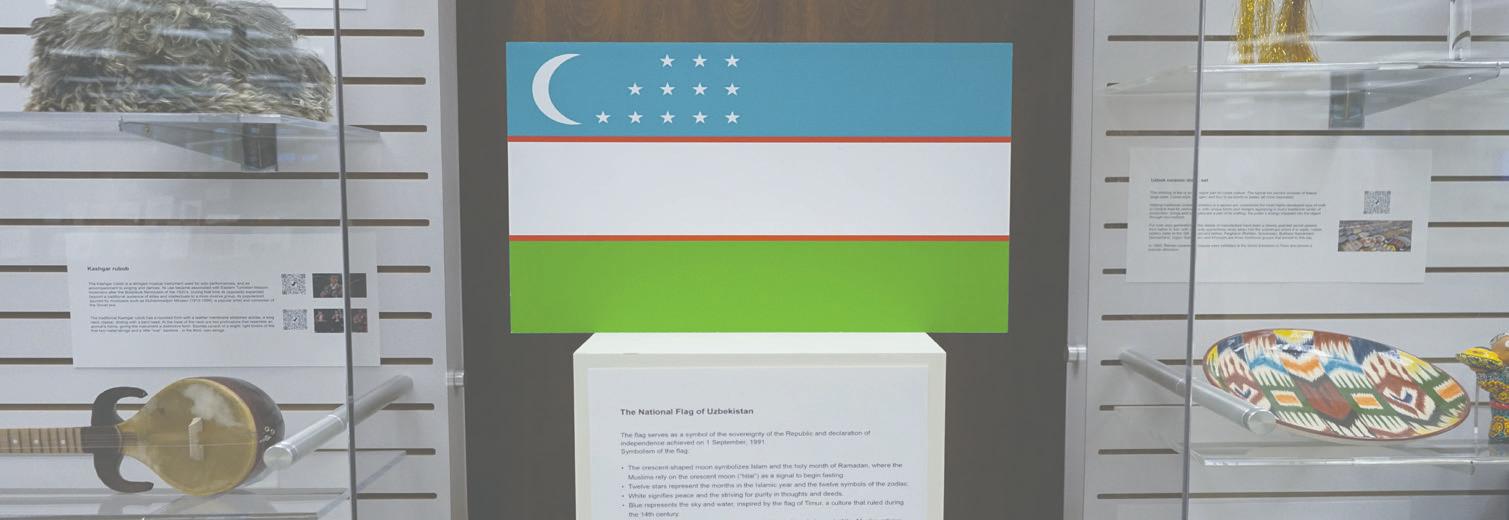
Intricately woven, vibrantly colorful clothing pieces from Uzbekistan culture are on display at Syracuse University’s Bird Library. The country’s traditional hats and cloth garments line an entire wall as part of the Uzbekistan Cultural Exhibition.
“(Central Asia) is not studied well. The main purpose (of the exhibit) is to generate awareness and visibility. There is a big length in this globe which should be learned and studied more,” said Mirjahon Turdiev, curator of the exhibition.
On April 15, the Central Asia and the Caucasus Initiative (CACI) unveiled the Uzbekistan Cultural Exhibition at Bird. The installation will last until May 15 and promotes the culture of underrepresented parts of the world. Turdiev curated the display to most accurately represent the contents of Uzbekistan culture.
One display case holds a doira, dutor, nay and rubob, musical instruments that are central to the culture of many countries in Central Asia. The other case includes a doppi, an Uzbek skullcap, Uzbek ceramic dish sets and an Uzbek Kurash uniform yaktag, which represents the country’s popular sports.
The exhibition’s items are sourced from Uzbekistani Syracuse residents and overseas from the country of origin. The historically significant items serve to connect the past and
present — a form of intergenerational bridging, Turdiev said.
CACI launched the exhibit with a Human Book event, the first of its kind. Authors of published works relating to Central Asia came to the Maxwell School of Citizenship & Public Affairs to take part in an open discussion with event attendees.
“By people coming and experiencing the human library, they then can go to the exhibit at Bird Library with more of an understanding of what they are going to experience there,” said Georgios Carter, the Human Book event organizer. “It creates a multilayered approach to learning.”
The Human Book event aimed to represent all walks of life, eventually being applied to other minority groups, Carter said. He added that the current focus on Uzbekistan has potential to expand to include events like Black History Month and identities like Asian Pacific Americans.
Organizers hope it will become part of future culturally diverse exhibitions at Bird, Carter said. The book event exposed students to material similar to the items displayed at the Uzbekistan Cultural Exhibition.
“(The exhibit) sends messages to the world that those kinds of things exist in that part of the world,” Turdiev said. “Every piece of work tells me there was a mentor or mentee, teacher or student, creating and keeping this for years and years.”
The exhibition seeks to remind students of their home country, especially as upstate New York
becomes a new home for many immigrant populations. The artifacts in Bird attempt to create a feeling of belonging within SU for those populations, Turdiev said.
For people who are not from Uzbekistan, the exhibit can help them understand other disciplines, Turdiev said. Carter said the exhibition offers students information that can lead to a deeper respect and comprehension of the things that their peers and faculty have been through.
“I think (the exhibit) is very important for humanity,” Turdiev said. “The world nowadays is not so separated. We are living in the world of globalization. Through culture, economy and politics, everyone is connected.”
Namita Naikwadi, an SU student, said she liked the exhibit because she could relate it to her Indian culture. Music and clothing are important aspects for her as well. Even though it is not a culture she knows much about, she is inclined to learn more after seeing the exhibit.
Turdiev said his work is not nearly finished. In the future, he plans to bring similar events to SU to learn about understudied countries that are rich with culture. His next step is adding study abroad programs for countries in Central Asia.
“These kinds of events not only help those of the diaspora but also allows the university as itself to grow using the knowledge of people within our own community,” Carter said.
iclekaki@syr.edu
dailyorange.com culture@dailyorange.com 6 april 18, 2024
slice of life
from the studio
Instruments and ceramic dish sets from Uzbekistan sit in an exhibit case on the first floor of Bird Library. leanne rivera staff photographer
above: Multidisciplinary illustrator Megan Lewis‘s work is a reflection of her personality. Her work is on display at the Commmunity Folk Art Center. courtesy of alexia carr
solange jain staff photographer
Unfortunately, ‘Civil War’ is a typical pro-war movie
By Nate Lechner senior staff writer
During an interview with Gene Siskel of the Chicago Tribune in 1973, French filmmaker François Truffaut said he “didn’t think [he’d] seen an antiwar film … every film about war ends up being pro-war.”
Truffaut explained how cinema uses violence as adrenaline and gives the audience heroes to root for, turning the act of war into pure entertainment. Truffaut posits the question of whether all displays of warfare glorify violence, no matter the destruction it brings.
A24’s latest film “Civil War” presents a dystopian version of America torn apart by brutal warfare and on the brink of total collapse. Writer-director Alex Garland’s depiction of unrest and division is extremely intriguing and harrowing, creating heart-pounding tension throughout the film. While the film does a good job of showing how war amplifies the worst in a character no matter what side they are on, Garland is unable to fully make “Civil War” an anti-war film, presenting its events as interesting and exciting for the characters.
While “Civil War” does take place in the contemporary United States, Garland gives very few details about why the country is divided and what makes the war directly American. The film’s themes are meant toto apply to any country, he said.
In an interview with Christopher Kuo, Garland said “If one is talking about polarization, extremism, the Fourth Estate, all of those things, would it be wise to make a Republican-Democrat conversation that immediately shuts down the other half?”
The film follows a group of journalists who drive from New York City to Washington, D.C. hoping to interview the fascistic, three-term president (Nick Offerman). The conflict doesn’t affect renowned photojournalist Lee Smith (Kirsten Dunst) because she has covered several battles overseas. Joel (Wagner Moura) is a writer who seems almost enamored by the horrific action he is experiencing, eager to cover it.
Veteran reporterSammy (Stephen McKinley Henderson) and young, up-and-coming war photographer Jessie (Cailee Spaeny),who idolizes
Lee, join the pair. Throughout their trip, the four encounter several people who are caught in the midst of the urban warfare, with each interaction seeming to increasingly wear on them.
By telling the story through the eyes of journalists determined to capture a once-in-a-lifetime story, Garland presents an interesting moral question among the characters. In the film, Lee explains how she wants people to use her photos and think, “Don’t do this.” Now that war has come to America, she is horrified yet continues with her passion. No matter how much danger she may put herself in or how much pain those around her experience, Lee always looks to capture the best possible photo.
The people fighting around Lee also take pride in being photographed even as they are doing horrific things. The journalists can seemingly find a good story in anything, no matter how abhorrent it may be.
In the interview with Kuo, Garland said he wanted the journalists in the film to feel oldfashioned and not part of our real-world media ecosystem. Jessie uses a 35-millimeter camera, which is from a time when the media’s function was better understood and embraced than the way it may be now, he said. Lee and Joel are Reuters reporters, not attempting to present their work as propaganda. By making Lee and Joel objective reporters, Garland said he did not want to paint a clear picture of who was truly on the side of good or bad in the war.
One of the critical scenes in the film challenges this idea. On the drive to D.C, the four lead journalists meet up with Tony (Nelson Lee) and Bohai (Evan Lai), two reporters from Hong Kong also heading to the nation’s capital. A group of whitenationalist militiamen, led by a man played by Jesse Plemons, stops the six journalists.
Plemons holds the group at gunpoint and asks them, “What kind of American are you?” In this scene, Plemons represents another way people can use the division of the civil war to their horrific advantage. He seems to take pride in interrogating each person and seeing them question their own identity.
The look of sheer terror on the character’s faces is the first time any character other than Jessie
seems impacted by the war. While the journalists have previously used death associated with the war to their advantage as members of the media, we see how they begin to reconsider their actions when they see them up close. After a narrow escape from Plemons’ character, the group continues toward D.C.
The final act of the film is where the audience can see the most pro-war film elements. As Western Forces from Texas and California move to the White House to try to kill the president, Garland shoots an intense action sequence, showing off just how cool war can look in a movie. Even among all the explosions and gunfire, Joel, Jessie and Lee document every moment.
The battle moves through D.C., passing several monuments and showing the many murders of U.S. government members. Garland’s directing in this sequence is similar to that of a firstperson shooter video game, as the camera moves from street to street, giving intimacy to each shot. In a film that is largely episodic at times, this sequence feels like a necessary, exciting and intense finale.
Throughout film history, movies centered around war have often been used to tell deep, emotional stories about how being so close to conflict alters one’s psychology. However, there is an excitement about depicting war on screen that many filmmakers cannot move away from.
“Civil War” presents a group of characters who start to lose their sense of comfort and excitement around warfare as the tragedies of the conflict become more personal. We see Lee start to experience PTSD in real-time, and Joel has a mental breakdown questioning the whole endeavor of covering the war. Even as they start to dissect the morality of reporting on such horrific violence, there is still excitement about being a part of U.S. history.
Truffaut believed that simply showing war on-screen was a glorification of the practice, no matter how tragic it may be. Garland’s depiction of a divided America is unsettling, yet there is a fascination in his filmmaking that makes “Civil War” thrilling. nrlechne@syr.edu
How our humor columnist gave up being funny
By Sarah Wells humor columnist Dear Readers,
I feel the responsibility to inform you that upon seeing a singular play this weekend, I have decided that I am now serious, and I am no longer going to be funny.
I know, I know. This must be very sad for you. I’m sure reading my hilarious jokes must be the highlight of your week, but from now on, I will only discuss serious, academic and artistic topics in my column. Some of these topics will include theater, books and Letterboxd.
You may be asking, “Sarah, how have you been committing to this new, serious lifestyle?” This past week, I’ve been participating in various scholarly activities.
For example, I snuck into a College of Visual and Performing Arts film class. They noticed, and kicked me out pretty quickly after I raised my hand and asked the professor if she’d ever met Adam Sandler, but that was pretty obviously out of intimidation.
I’ve also started to partake in the art of beret and turtleneck wearing. I think it looks quite chic if you ask me, especially with all of the books I’ve been carrying around.
Usually, I like to read novels, but I am happy to report that I’ve only been reading vintage surrealist novels that only have 500 reviews or less on Goodreads and are from the perspective of birds. Am I really confused while reading them? Yes. Do I miss my usual books about hot guys and unexpected romance? Maybe.
Poetry slams are also my new passion — I love to snap so much. I also like to boo. I really, really love to boo people. What can I say? I’m honest. If you’re up there doing a metaphor about the seasons, get out of my face, you cliché pig.
Although, one girl did a poem about a kitten at the last slam I went to. I liked that one. No
Turkish language professors displayed traditional painted ceramic plates.
The event featured a range of student group performances, including from student Bollywood dance group the Desi Performance Team. Bulman said the Spanish language professors also spotlighted salsa dancing and the Japanese language program offered
CONCERTS
JMA Wireless Dome
After postponing his concert in October, Bruce Springsteen is finally performing in the JMA Wireless Dome on Thursday. The New Jersey native is known for his pioneering rock hits like “Dancing in the Dark,” “Born in the U.S.A.” and “Glory Days.” Springsteen will be performing alongside his band, E Street Band. Tickets for Springsteen’s show are available online.
WHEN: April 18, 7:30 p.m.
PRICE: $60.50 - $786.50
Redgate
Redgate and Phi Kappa Theta fraternity are collaborating for Walnutpalooza this Friday. The concert features six hours of live music from artists and groups FEEM, Caroline Bergan, Mimicking Mars, The Gritty Jawns, Luna and The Carpets, Nancy Dunkle, Hydrogen, XO and Bella Fiske. Walnutpalooza will also feature food trucks and vendors such as Callé Tropical and Vintage Yard. All proceeds will go to Children’s Miracle Network Hospitals. To buy tickets, send $7 to @suphikap on Venmo or pay at the door.
WHEN: April 19 at 3 p.m.
PRICE: $7 presale, $10 at the door
The 443 Social Club & Lounge
This Friday, Jamie McLean Band is performing at the 443. The band’s music combines “New Orleans soul, middle Americana roots, Delta blues and New York City swagger,” according to its website. The threepiece band has performed among artists like Gregg Allman, Aaron Neville and Dr. John. Tickets for the show are available online.
WHEN: April 19 at 7 p.m.
PRICE: $23.11 - $55.09
Funk ‘n Waffles

matter how serious I am, kittens will always be my weakness.
Last but not least, I made sure to argue a lot, because that’s what serious people do. They argue over serious things. I asked my friend what she thought about vaccines. No matter what she said, I made sure to disagree with her.
Next, I asked my boyfriend who his favorite movie director is. He said Christopher Nolan (and yes, you guessed it, he’s a white man). In response, I said, “Well, I think his work is quite derivative.”
students opportunities to try Kendo, a Japanese martial art.
Sahana Anand, a sophomore and president of Desi Performance Team, said she started the organization from a long-term dream. She said it’s always so much fun to perform alongside her friends and feel the audience appreciate their art.
“South Asian culture is so rich, and we really want to just celebrate it, spread the love in art, so it’s really important,” Anand said.
This is a big thing with serious people. Derivativeness. Everything is derivative to me now. Books, TV shows, clothes, street signs, public restrooms.
Oh no. I’ve just made a terrible revelation.
Is this column … derivative? Are my attempts to be serious … just derivative of actual serious people I know? This is my worst nightmare.
Unfortunately, I am not going to attempt to be serious anymore, because I’d rather be silly and stupid than smart and *shudders*… derivative. sswells@syr.edu
Bulman said LLL hopes to showcase how multicultural and multilingual the university is through Cultures on the Quad. Although the department recognizes their diversity every day, the event makes the department accessible to the broader community.
“ We really value that diversity,” Bulman said.
“We celebrate it every day in the Department of Languages, Literatures and Linguistics, but we want the whole university to celebrate.” sfstewar@syr.edu
The Seapods are performing this weekend at Funk ‘n Waffles. Originally from New York, the five-piece band centers around Americana and rock genres. The jam band has toured together for over 35 years and is known for their albums “Matinee Idols” and “Superman Curse.” Tickets for the show are available online.
WHEN: April 19 at 8 p.m.
PRICE: $18.22
Middle Ages Brewing Company
BB Dang is performing this Friday. This Rochester, NY cover band plays modern hits at festivals, bars and casinos across the country. The sixpiece group mainly performs pop and rock tracks but also includes elements of country music into their sets. Tickets for the show are available online.
WHEN: April 19 at 8 p.m.
PRICE: $12.83
The Dollhouse and Mudpit
Walk Me Home, Leisure Hour, Spelunking and Paper Rabbit are performing this Friday at “Dollpit.” Each student band performs tracks in the punk rock genre. The Dollhouse and Mudpit are co-hosting the show. Tickets are available online or presale.
Direct message The Dollhouse or Mudpit on Instagram for the address and information.
WHEN: April 19 at 9:30 p.m.
PRICE: $7 presale, $10 at the door

dailyorange.com culture@dailyorange.com april 18, 2024 7
humor column
screentime column
flynn ledoux contributing illustrator
from page 5 quad

dailyorange.com 8 april 18, 2024
Amid the announcement of recent changes to Falk College, SU administration should have been more open, transparent
In 2011, David Falk donated $15 million under the pretense that the College of Human Ecology’s name would be changed to include the word “sport” alongside his name. Now, the David B. Falk College of Sport and Human Dynamics will yet again be “reimagined.”
On Monday, Syracuse University sent out a release that the school will drop “Human Dynamics” from its name. The David B. Falk College of Sport will “capitalize on relevant marketplace trends” and be the “first standalone college on an R1 campus that specifically focuses on sport,” according to the release. But these achievements mean little to those who are negatively affected by the change.
Monday’s announcement follows a “months-long exercise” involving a Sports Management Task Force that identified new ways to enhance the sport-related programs at Falk.
Created in March 2023, the “Sport” side of Falk College had plenty of time to think about its future. A Human Dynamics Task Force was created Monday, and newly-
appointed Associate Dean for Human Dynamics Programs Rachel Razza said in a meeting earlier this week that she was brought into conversations about the change just a week ago.
Even as students learn their school is splitting, Vice Provost Gretchen Ritter still hasn’t given the new task force their official charge — something they’re set to receive by the end of the semester, according to the news release. Starting “in earnest” over the summer, the task force will submit its findings to Ritter by the end of October.
This change was also not brought to the University Senate, the academic governing board that includes administration, faculty, staff and students. And through bypassing it, more than 20 Senators felt compelled to support a special session to discuss the changes. Changes, especially ones this significant, should have been brought to the Senate months ago.
Faculty, who are among those most impacted by this change, are being left in the dark about further proceedings. Currently, faculty make up a diminished role on the Human Dynamics Task Force. Many of them were made aware of the restructuring Monday.
The university’s conduct throughout this process is indicative of a larger trend at SU. Within the past month, The Daily Orange has reported on faculty members feeling the university’s dwindling support for the African American Studies department. Students in the social sciences Ph.D. program were not told the program had stopped accepting new admits for two years.
Falk College is another recent example of the erosion of trust between those who work and study here and those who decide what’s studied. Students and faculty do not feel heard or valued by this administration.
The lack of student involvement in the original process is also cause for concern. While SU has done a commendable job trying to gain student input for initiatives like the Syracuse Statement and the Academic Strategic Plan, nothing was done for the students of Falk College. The university should not pick and choose when it values student input and involvement.
Falk College’s human dynamics sector holds the future of social workers, therapists, public health professionals and human services providers. These crucial fields have had a major impact on the campus and local community.
Throughout the pandemic, Falk College worked with an interdisciplinary team of scientists to implement the wastewater surveillance network to establish the baseline level of the coronavirus at SU. In 2021, Katie Weldon, a graduate of Falk College’s social work master’s program, directed a healthcare collective in central New York to improve health outcomes for individuals with mental health and substance use disorders. Human dynamics is worth more than its reconstruction reflects.
The changes to Falk College are not inherently wrong, and they may potentially benefit the university in the long run, but both students and faculty deserve transparency and involvement with these types of decisions. The university can’t just talk about shared governance, it needs to act on it.
Decisions this big should never be this opaque.
The Daily Orange Editorial Board serves as the voice of the organization and aims to contribute the perspectives of students to discussions that concern Syracuse University and the greater Syracuse community. The editorial board’s stances are determined by a majority of its members.
Are you interested in pitching a topic for the editorial board to discuss?
Email opinion@dailyorange.com.
april 18, 2024 9 News Editor Kendall Luther Editorial Editor Olivia Fried Culture Editor Kelly Matlock Sports Editor Cooper Andrews Presentation Director Bridget Overby Digital Design Director Cindy Zhang Photo Editor Cassandra Roshu Photo Editor Maxine Brackbill Illustration Editor Nora Benko Asst. News Editor Julia Boehning Asst. News Editor Ahna Fleming Asst. News Editor Claire Samstag Asst. Editorial Editor Grace “Gray” Reed Asst. Editorial Editor Kaia Wirth Asst. Culture Editor Rosina Boehm Asst. Culture Editor Savannah Stewart Asst. Sports Editor Aiden Stepansky Asst. Sports Editor Justin Girshon Asst. Sports Editor Zak Wolf Asst. Photo Editor Lars Jendruschewitz Asst. Photo Editor Joe Zhao Design Editor Lucía Santoro-Vélez Design Editor Leah Cohn Design Editor Miranda Fournier Design Editor Fernanda Kligerman Digital Design Editor Cole Ross Asst. Digital Edi tor Faith Bolduc Asst. Digital Editor Olivia Boyer Asst. Digital Edi tor Sydney Brockington Asst. Digital Editor Griffin Uribe Brown Asst. Digital Editor Nick Jepson Asst. Digital Editor Timmy Wilcox Asst. Copy Editor Varsha Bhargava Asst. Copy Editor Roxanne Boychuk Asst. Copy Editor Matthew Gray Asst. Copy Editor Ava Lombardi Asst. Copy Edi tor Samantha Olander I.T. Manager Davis Hood Business Manager Kevin Ross Advertising Manager Christopher Ern Business Asst. Tim Bennett Circulation Manager Steve Schultz Student Delivery Agent Hailey Hoang Fundraising Manager Ally Ferretti Anish Vasudevan EDITOR-IN-CHIEF Kyle Chouinard MANAGING EDITOR Stefanie Mitchell DIGITAL MANAGING EDITOR OPINION dailyorange.com opinion@dailyorange.com By The Daily Orange Editorial Board
editorial board
The recently announced “reimagining” of Falk College is another example of a lack of transparency and faculty involvement from university administration. The decision disregards the importance of Human Dynamics programs.
cassandra roshu photo editor
Community’s letters in response to campus unionization efforts

Hundreds of community members gather to hear the stories of Syracuse University workers and call on the upper administration to create a fair process for all campus employees. Administrative, professional and technical staff are working toward secring union recognition from SU.
Syracuse University’s ‘small-campus feel’ reflects its staffers
Dear Chancellor Syverud and Provost Ritter, Hello, and a happy spring to both of you.
I’m just writing to express my heartfelt support for the workers of Syracuse University as they move to unionize. Again and again, in my travels, I hear this about our university: that we are a big, wonderful university that feels like a small, wonderful univer-
sity. When a student finds himself or herself in need of advice or direction, or is confused and floundering in any way, he or she can always find help from staff. I once heard this described as a “two-degree of separation” advantage that Syracuse has over other universities; if the staff member helping a student solve a problem doesn’t know the answer, he or she will know (and reach
Syverud, Ritter should support worker’s unionization efforts
Dear Chancellor Syverud and Provost Ritter,
In some ways, I am loath to write this letter as I’m ignorant of how running a university works. It can’t be easy. I also know you both as kind human beings, and your support of our creative writing program has made it possible for our students to excel here.
Yet my late daddy was a labor organizer who put his body on the line in the 1950s to help working people secure benefits that in some ways saved my own family economically. During strikes when I was small, we often ate what union members shared from their gardens and what could be shot in the woods.
Also, for some years when my son was a baby, I worked as an underpaid adjunct professor, teaching five sections of comprehensive examinations at two universities for aggregate fees smaller than what Harvard University University paid me for a single poetry class.
So when I was contacted by workers I
know are personally devoted to our students, and those workers asked whether I could support their efforts in forming a union by writing this letter, I had to say yes. And I urge you, from the compassion I know you both have, to say yes with me.
Not many years ago, a devoted staff member reached out to faculty for financial help, and I also know hard-working people on staff at Syracuse University University taking second jobs to put food on family tables. So I write to urge you to support their efforts to form a union and address their hardships.
I write with gratitude for their service to our students and for how both of you show your care for said students every day as well.
Thanks for considering.
With hope and deep respect,
Mary Karr
Peck Professor of Literature, Trustee Professor
out to) someone who does. This makes for a beautiful small-campus feeling that few other schools can offer. Problems get solved quicker this way, with a personal touch, and the student thus feels more valued and feels the university itself as a sort of congenial, extended family. This can, I believe, be traced directly back to the positive attitude and true “school spirit” of our staff –
they believe in, love and support their university and I think it is imperative that their university also believe in, love and support these invaluable workers.
Warmly, George Saunders Writer and proud member of the Creative Writing Program and English department

SGEU unionization success reflects need for a workers union
To whom it may concern:
I am writing in support of the Syracuse University student food service and library union campaign. I have signed the faculty letter of support.
I have heard directly from students who work in food service, specifically about how they feel that working conditions are inadequate and also
do not support good academic outcomes for them and how they feel that their voices are not heard. I have heard from international students, with uncertainty in their voices, saying that they are not even sure what is possible to ask about or understand in terms of working conditions.
Separate, but related, the graduate student
union effort clearly has improved things for graduate students. I heard just last week of a substantive raise for graduate assistants and can only guess that this was the result of union negotiations. This seems only fair. Their pre-raise compensation sounded about the same as what I heard about 10 to 15 years ago at some other universities. It is not
to anyone’s benefit for students to be stressed by working conditions and inadequate compensation. Let’s welcome a collective voice for food service and library workers as well. It’s really good for all of us.
Sincerely, Ian M. Shapiro, Professor of Practice
10 april 18, 2024
letter to the editor
to the editor
letter
letter to the editor
letter to the editor
cassandra roshu photo editor
dailyorange.com opinion@dailyorange.com
cassandra roshu photo editor
SGEU calls for recognition of workers unionization efforts
The members of Syracuse Graduate Employees United understand that we are not the only groups on campus that have had to deal with precarious working conditions, lack of support and protections and sub-standard pay. Our colleagues who feed us, run our libraries and make our departments run should not have to work in these kinds of conditions and we believe that all workers on campus should thrive as members of this community.
SGEU is a union of over 1,100 graduate student workers who perform various kinds of labor at Syracuse University. We conduct research, teach undergraduate students, support campus initiatives and perform other essential jobs to make this a prestigious university. As workers on campus, we believe that SU works because we do.
This is why we, the members of SGEU, proudly support the unionization campaigns of the clerical staff, student library
workers and student food service workers at Syracuse University. It was only a year ago when we were in the same position as the clerical and food service worker campaigns are in. We believe unionization will increase accountability in university labor relations and improve the labor conditions for all workers on campus, benefitting the university community and the larger central New York community.
SGEU recognizes all the work that the
clerical staff, hourly food service workers and hourly librarians do to maintain the status of the university. We call for Syracuse University to voluntarily recognize these campaigns and their right to unionize and fight for better wages and working conditions. Now is a time for recognition and respect for the basic requirements for dignity and decency at Syracuse University for all workers.
Syracuse Graduate Employees United
Student food service workers call for better wages, more respect
Today, I stand before you not just as a graduate hourly student worker but as a voice for all of us who have tirelessly worked in the dining halls. We are a crucial part of this institution, ensuring every student, staff and visitor receives the nourishment they need with a smile, regardless of our own circumstances.
However, it’s high time our voices are heard, our work is respected and our rights are protected. We are gathered here to initiate a change — a change that is overdue. A change that recognizes our dedication and addresses our struggles.
First, we demand better wages. Despite the essential services we provide, many of us struggle to make ends meet. Our wages do not reflect the cost of living, nor do they equate to the skill
and effort we bring to our roles. It’s not just a matter of fairness, it’s a matter of survival.
Second, we seek improvements in our working conditions. Our environment should be safe, healthy and conducive to productivity, not just a checkbox for compliance. We’ve faced challenges that have been overlooked for too long, from inadequate equipment to insufficient breaks. It’s time our workplace becomes a space where dignity and safety are not just promised but practiced.
Moreover, we call for respect — a fundamental human right. Our roles should not define our worth. The lack of acknowledgment and appreciation undermines our contributions and erodes our morale. We deserve to be treated
with dignity, to have our voices heard and our concerns addressed with sincerity and urgency.
Additionally, we advocate for better implementation and enforcement of rules. Policies and procedures are in place but their inconsistent application and, at times, complete disregard leave us vulnerable and undervalued. We need a transparent system that ensures fairness and accountability.
Lastly, we demand transparency in job listings and openings. Opportunities for advancement and development should be accessible to all, not hidden or reserved for a select few. We seek a clear, fair and equitable process for all current and prospective employees.
Unionization is not just about addressing
these issues. It’s about building a community where we support one another, where every worker’s contribution is recognized and where we all have the opportunity to thrive. It’s about creating a workplace that reflects the values we stand for as an institution.
We are not just asking for changes; we are demanding what is rightfully ours. It’s time we stand together, united in our cause, for better wages, improved working conditions, respect, fairness and transparency. Let’s make our voices heard, let’s make our work respected and let’s make our rights protected. Thank you.
All students, workers included, deserve to have basic needs met
To the Campus Community,
We, undergraduate student members of the Youth Democratic Socialists of America (YDSA) chapter and the Undergraduate Labor Organization (ULO) at Syracuse University, stand with the student library and food service workers in their effort to unionize.
As their classmates, friends, roommates and peers, we have seen firsthand the challenges student workers face trying to juggle campus jobs with their studies, clubs, sports, socializing and so much more. Late night shifts make this juggling act incredibly difficult. Low wages make this juggling
act incredibly difficult. Limited sick leave makes this juggling act incredibly difficult! Without a voice in the workplace, student workers are unable to collectively bargain to change these injustices and we wholeheartedly support their right to do so. Student workers are struggling to pay their bills as Syracuse has experienced some of the most dramatic rent hikes in the country. Additionally, food services workers, who are overwhelmingly international students, have expressed that many are dealing with disrespect, bias and unfair treatment in their workplace with no way to address these issues when they arise.
Adjuncts United calls for workers’ neutrality at Syracuse
Dear Chancellor Syverud, Provost Ritter, Board of Director Members and University Administrators, Through my representation of Adjuncts United unit members over the past years I have been privileged to have many frank and encouraging conversations with many campus leaders about labor, equity and respect for campus employees. I write today to convey appreciation for those individual conversations. And to ask for your collective voice in remaining supportive of neutrality regarding labor organizing on campus.
Thinking back to 2005 and 2006, when Adjuncts United began organizing, I experienced the university climate as relatively quiet about neutrality. In fact, push back and denial of organizing rights from some academic units created a stressful time for many folks, ultimately contributing to me losing my teaching position for the spring 2006 semester. Navigating that has informed my efforts to protect labor rights over these 18 years. While I would hate for job loss to happen to another employee as they exercise their rights in 2024, I must trust it will not. And I applaud university leadership for voicing neutrality regarding the recent graduate student organizing, marching for recognition, negotiating and
ratifying their agreement.
On behalf of Adjuncts United bargaining unit members (420+ faculty in spring ‘24), I want to highlight the critical work of the university office and support staff. Teaching, especially contingent teaching, would be much more difficult in this large institution without the readily offered expertise of office admins, lab assistants, tech staff, maintenance folks and others. I have heard repeatedly that administrative staff across campus often work to onboard new contingent faculty, especially those hired just before the semester. These individuals keep the university running, yet in my University Senate role as co-chair of the Women’s Concerns Committee, I have listened while female staff members share their experiences navigating the vulnerabilities of low pay, unreasonable job expectations and lack of recognition.
I encourage you to extend neutrality to all employees working toward collective representation at Syracuse University.
Sincerely,
Laurel
Morton, Adjuncts United President, and Part Time Design Instructor, VPA
Student Library and Food Service workers have come together to demand a voice throughunionizing, a path that will allow them to exercise collective, democratic power to make decisions about their working and learning conditions. We, members of ULO, YDSA and the undergraduate community, had the opportunity to support the Syracuse Graduate Student Employees in their organizing effort last year and have seen the ways they have massively improved their working conditions through the establishment of their union.
Now, one year later, we wholeheartedly support student library and food service workers
in their decision to fight for their right to unionize and improve their workplaces, too.
All students at Syracuse University deserve to be well-rested, well-fed and securely housed. All students deserve to make the most of their education, whether they work campus jobs or not. We stand behind our working peers in their effort to unionize, and we ask that SU administration does the right thing by not engaging in union-busting tactics

april 18, 2024 11 Letter to the Editor policy To have a letter printed in The D.O. and published on dailyorange.com, please follow the guidelines listed below: • Limit your letter to 400 words • Letters must be emailed to opinion@ dailyorange.com
Please include your town of residence and any relevant affiliations
Topics should pertain to the Syracuse area
Letters should not include any personal information pertaining to other people unless it is relevant to the topic at hand, which will be decided at the discretion of The D.O.’s editor-inchief and managing editor
Any links to third-party websites will also be published at the discretion of the editor-in-chief and managing editor
All letters will be edited for style and grammar Thank you in advance for adhering to and following these guidelines.
•
•
•
•
•
To Chancellor Syverud and the Syracuse University administration,
letter to the editor
letter to the editor
Regards, Nawazish Shaik
Forever in Solidarity, Undergraduate Labor Organization, Youth Democratic Socialists of America
letter to the editor
Alana Coffman (ULO), Jake Snelling (YDSA)
to the editor
letter
SEIU leaders demand SU creates fair unionzation processes, emphasizing the harms of intimidation, misinformation and legal delays. cassandra roshu photo editor dailyorange.com opinion@dailyorange.com
Thirty-four years after his legendary career at Syracuse, Paul Gait’s No. 19 jersey will hang in the rafters of the JMA Wireless Dome for the rest of time
By Cooper Andrews sports editor
Paul Gait solemnly walked away from Rutgers Stadium in Piscataway, New Jersey, to debrief Syracuse’s 1987 Final Four loss to Cornell with Roy Simmons Jr. and his twin brother Gary Gait.
He turned to Simmons Jr. and apologized for letting him down. The head coach quickly praised Paul and Gary’s freshman-year efforts to put them at ease. Paul wasn’t the least bit satisfied. Once he locked eyes with Simmons Jr., his intentions were clear.
“Coach, we hope to be with you for the next three years,” Simmons Jr. remembered Paul telling him. “And if we are, you will never lose a national championship the next three years, we will be sure of that.”
He was right. Syracuse won the next three national titles though the third was vacated by the NCAA. Paul and Gary became the catalysts behind Syracuse lacrosse’s golden era from 1988-90, a span in which the Orange lost just 1-of-43 games. They formed a dynasty, one that can be traced back to Paul’s daring guarantee.
That stretch of dominance marked the early stages of Paul’s journey to becoming one of the most influential lacrosse figures of all time. He averaged nearly four points per game at SU and earned a spot in the U.S. Lacrosse Hall of Fame. He then totaled 712 points through 13 seasons in the National Lacrosse League and was inducted into the NLL Hall of Fame in 2006. Since retiring, he’s served as a revolutionary mind behind modern lacrosse equipment, holding 30 lacrosse-related patents and founding the high-end Gait Lacrosse brand, a company he still runs alongside Gary.
The story of lacrosse can’t be told without Paul. Thirty-four years after his college career, Syracuse is set to immortalize him on April 20, where his No. 19 jersey will forever hang in the JMA Wireless Dome’s rafters.
“Well, it was a great career, a great run,” Paul said. “It was an exceptional life experience as well because of the fact that I went from being a player to working in the industry that I grew up loving.”
Some of the fondest memories from the 57 year old’s life involve how he’s grown lacrosse. He’s always lived an active lifestyle, remaining deeply committed to his aspirations. Though, his intense drive hasn’t come without a cost.
Paul was paralyzed from his T6 vertebrae and below after suffering a 20-foot fall in the Gait Lacrosse warehouse in Altamont, New York, on Nov. 3, 2022. He underwent spinal fusion surgery following the accident. He can no longer walk, and primarily moves by wheelchair.
“Physically, I look like sh*t,” Paul said. “But other than that, I’m fine.”
To any outsider, Paul’s adjustment to paralysis seems damning. He said initially, he would fall over if he sat in a chair without a back. He had no control of his abdomen. He gained some upper-body feeling back four months into the injury, and has a “thin layer” of workable muscles in his back and abs.
He still lives in constant pain. Though one would never know that from hearing him speak.
“Nothing’s changed,” Paul said. “The only break I took was the first three weeks after I fell and the time in the rehab, so a total of six weeks. After that, I went to work every day. And I’ve been working ever since.”
Propped up in his hospital bed, Paul managed Gait Lacrosse’s finances, reviewed and crafted product designs. Yet he admits that since returning home, the hardships are difficult despite having distractions.
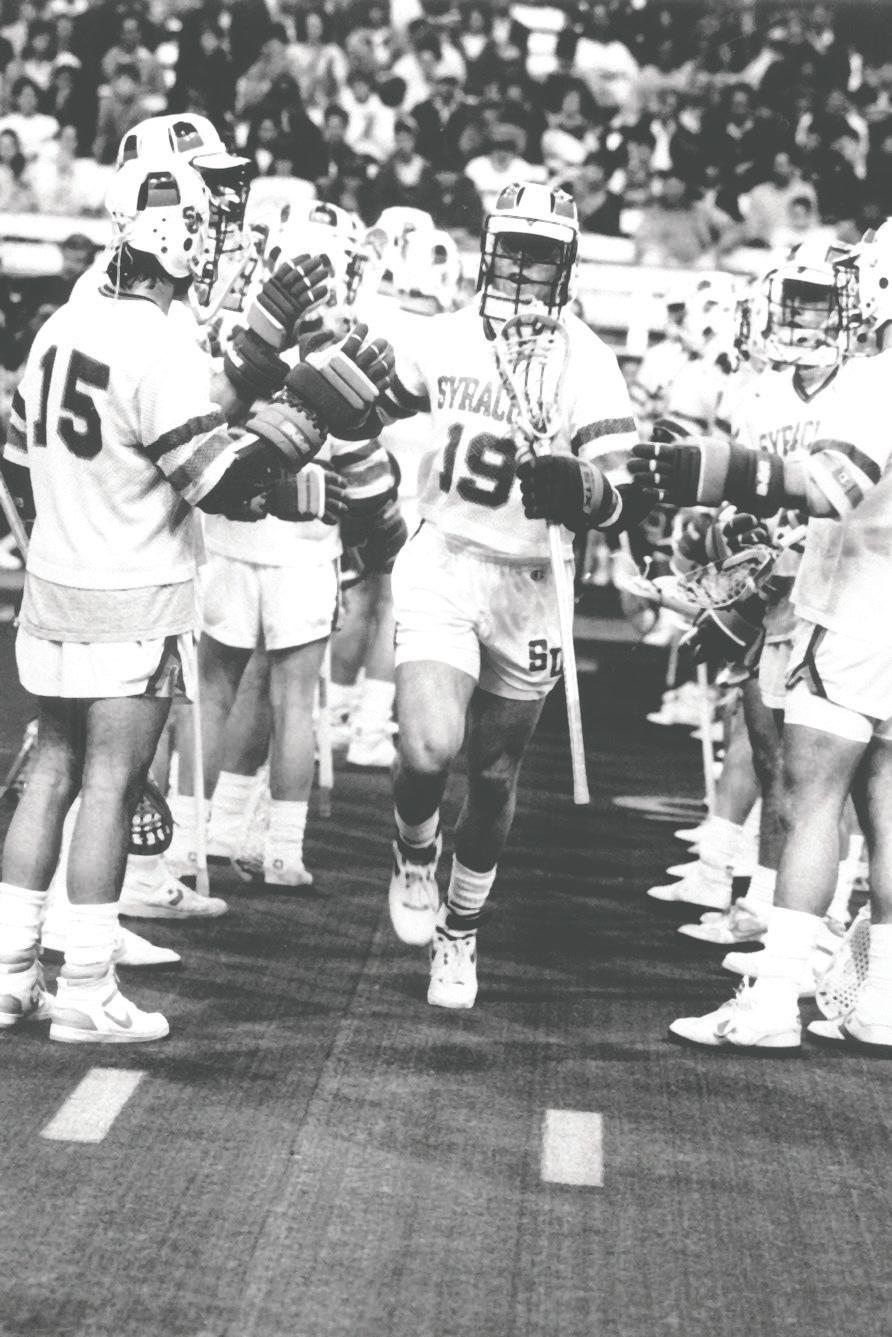
His current goals are to rid himself of the unabating pain and to harness enough core strength to perform a sit-up once again. Paul said a singular core workout used to put him in bed for three straight days, but he’s recently seen steady progress after the peak of his paralysis shifted down to the T7 vertebrae.
Paul said he’s on the right path to building back the muscle strength that he lost. He performs two core workouts per week but wishes it were seven, so he can inch closer to that elusive sit-up.
Gary said the hardest part of see -
ing his brother paralyzed is the pain he goes through. At the same time, he’s thankful that Paul has Gait Lacrosse to fall back on. According to Gary, maintaining a firm grasp over the company has proved necessary in Paul’s recovery.
“He’s not sitting around thinking about it or worrying about it, he’s actually trying to lose his mind in his work to get through each day,” Gary said of Paul.
Two hands and a brain are all Paul needs to fulfill his values. He says that in all aspects of life, he searches
for ways to be unique — traits Paul deems necessary for success. The ideology stems from him and Gary’s U12 lacrosse coach, Ron MacNeil, Canada’s all-time leading scorer in box lacrosse history. Paul said MacNeil taught him and his brother how to win by being deceptive and becoming instinctive in their craft. MacNeil’s advice rapidly became routine for Paul to excel in all of his ventures. Just as he defies the odds by living an unexpectedly active lifestyle while paralyzed, Paul consistently finds ways to stand out.
That starts with size. As prospects, Paul and Gary were much more imposing than typical offensive-based midfielders. Both stood 6-foot-2 and Paul weighed more than 200 pounds. Simmons Jr. didn’t even need to scout the Gait twins in person before offering them scholarships. He received a recommendation from Bob Allan, a former Canadian National Team head coach and friend of Simmons Jr.
Upon seeing them for the first time, the Hall of Fame head coach linked the Gaits to Jim Brown, SU’s
12 april 18, 2024
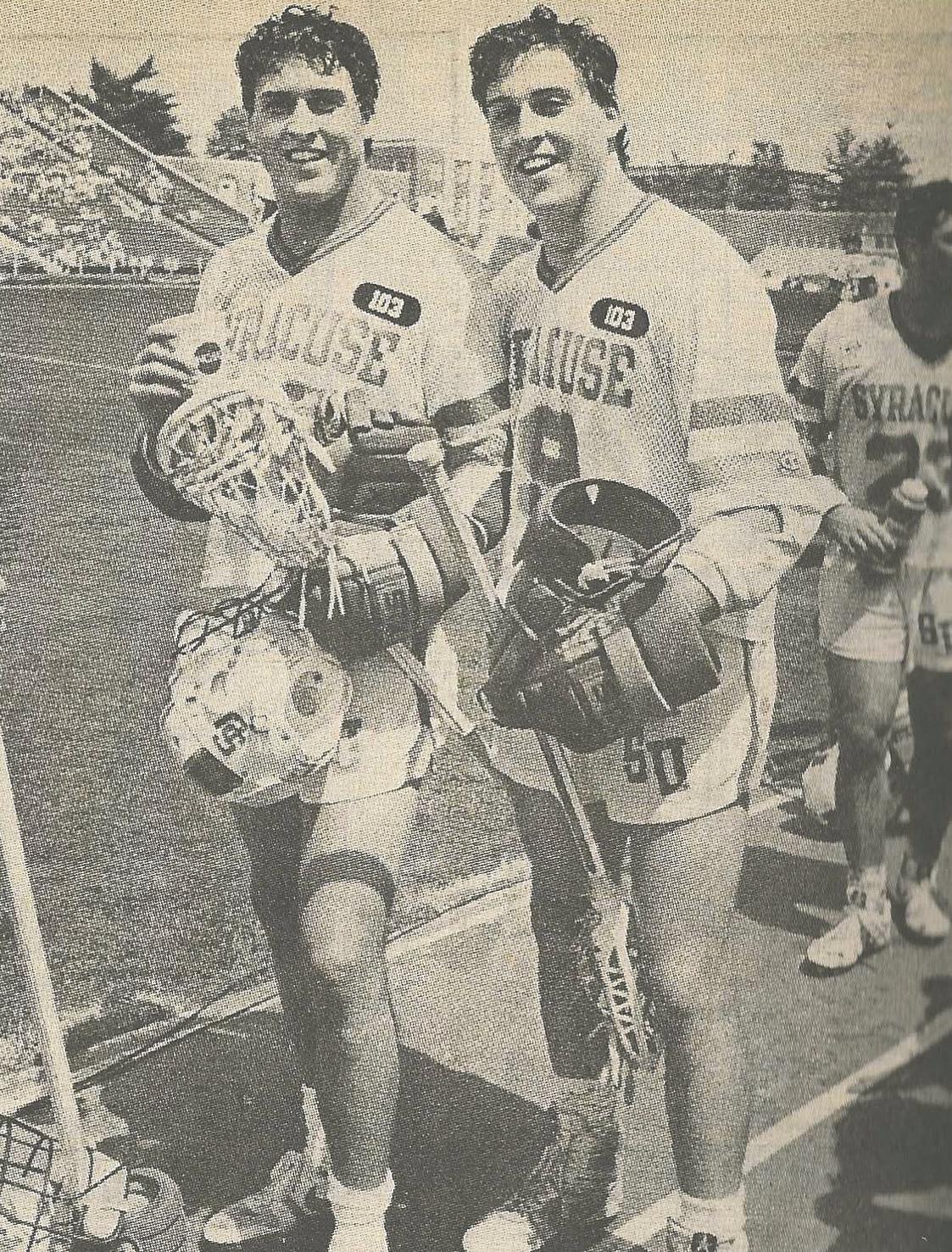
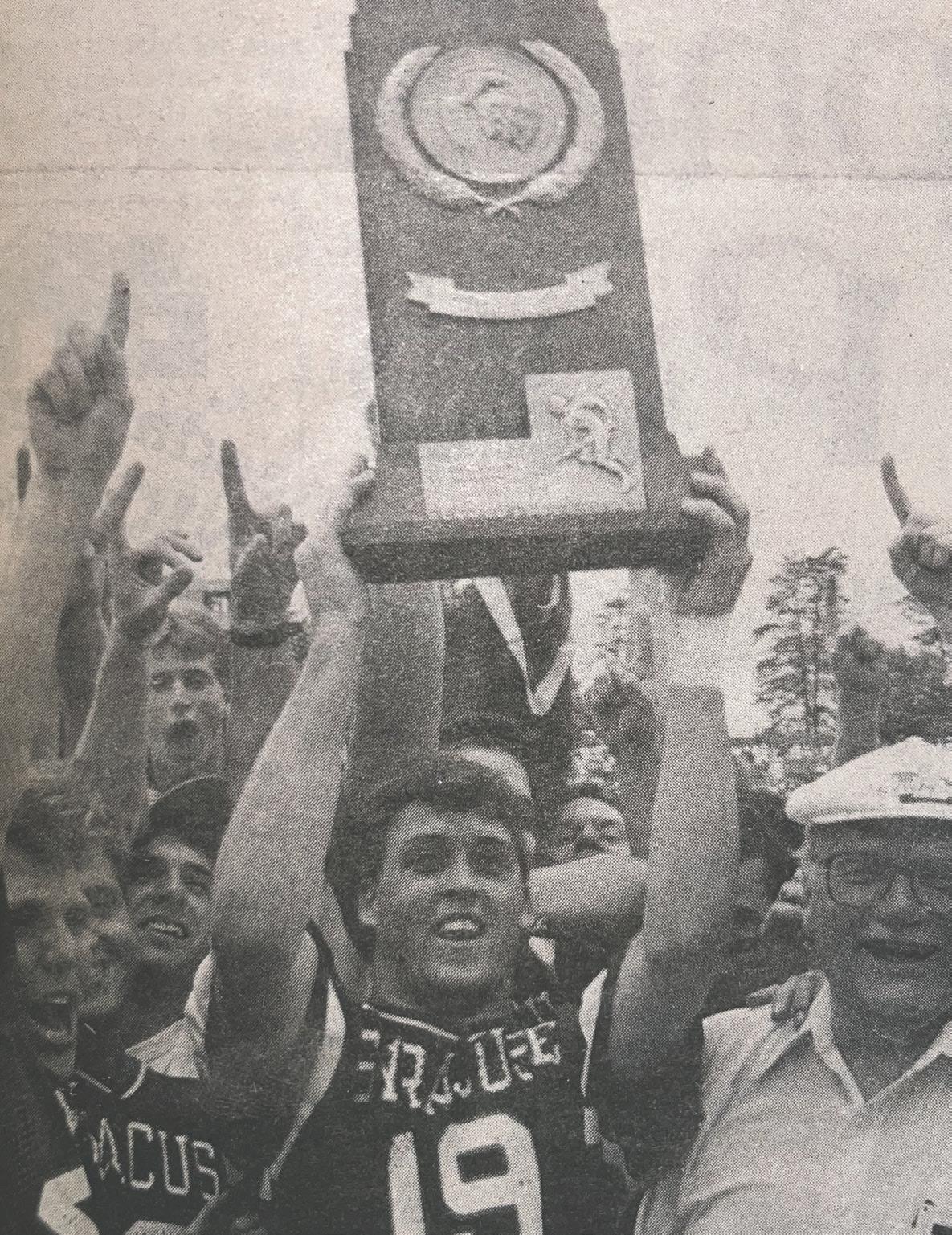
top right: Paul Gait holds up the 1990 NCAA Championship trophy in exultation. It was Syracuse’s third straight national title, though the victory was vacated three years later.
daily orange archive photo
top left: Twin brothers Paul (right) and Gary Gait pose on their 23rd birthdays during Syracuse men’s lacrosse’s 1990 season.
daily orange archive photo
bottom right: Paul Gait (right) entered his freshman season without a starting spot in Syracuse’s midfield, but became a staple of its dominant late 1980s squad over his final three seasons.
of su athletics
bottom left: Paul Gait netted four goals and dished two assists in Syracuse’s 1989 NCAA title victory over Johns Hopkins. Gait was named the MVP of the championship
daily orange archive photo
left: Paul Gait averaged nearly four points per game during his four-year career with the Orange, establishing himself as one of the program’s alltime greats.
of su athletics
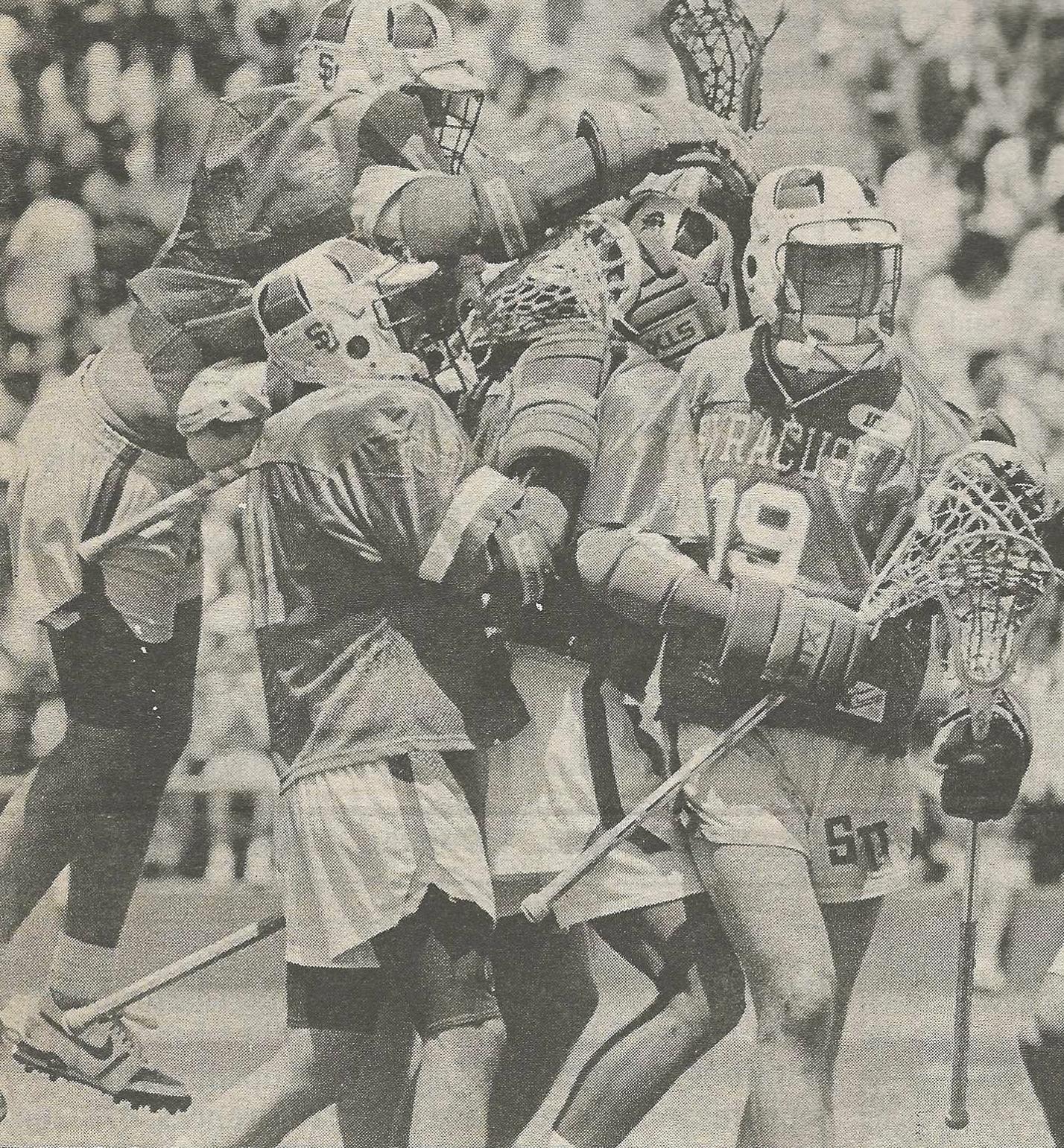
all-time great football running back who also played lacrosse at the university from 1955-57.
“The thing that made (Brown) so good at lacrosse was that he was over 225 pounds, could run like the wind and was extremely strong,” Simmons Jr. said. “Paul and Gary had it all. They had the size, the weight, the strength to make you a superior athlete.”
But when the Gaits arrived at Syracuse in January 1987, Paul had a little too much size. He admitted that he celebrated the holidays “quite a bit” and entered his freshman year around 230 pounds. Meanwhile, Gary rigorously trained coming into the program at a lean 195. Naturally, Gary garnered regular playing time to begin his career. Paul did not.
“The coaches looked at me and said, ‘You’re going to play attack because you look big and slow and fat,’” Paul said. “I spent all preseason trying to earn an attack spot. And we weren’t there in the fall, so we didn’t get to earn our spot in the fall like the rest of the team did.”
Paul had to act fast. He got back in shape — around 210 pounds — a week before the season opener. He said he stood out as one of the fastest guys on the team, which prompted a return to the midfield. But he still couldn’t carve out a starting role a week before the season. It was time for Paul to think like MacNeil: unique and different. To earn more playing time, he dissected how opposing defenses guarded him to figure out the most efficient ways to attack. Paul and Gary always kept their sticks in their left hand, while their teammates switched hands depending on the situation. As a result, Paul said defenders would position on the left side during
attacking possessions, not between him and the goal.
Paul and Gary used to laugh about the strategy, questioning why opponents consistently gave him open scoring lanes. In response, Paul practiced beating a defender to their weak side without switching hands. He said it paid dividends.
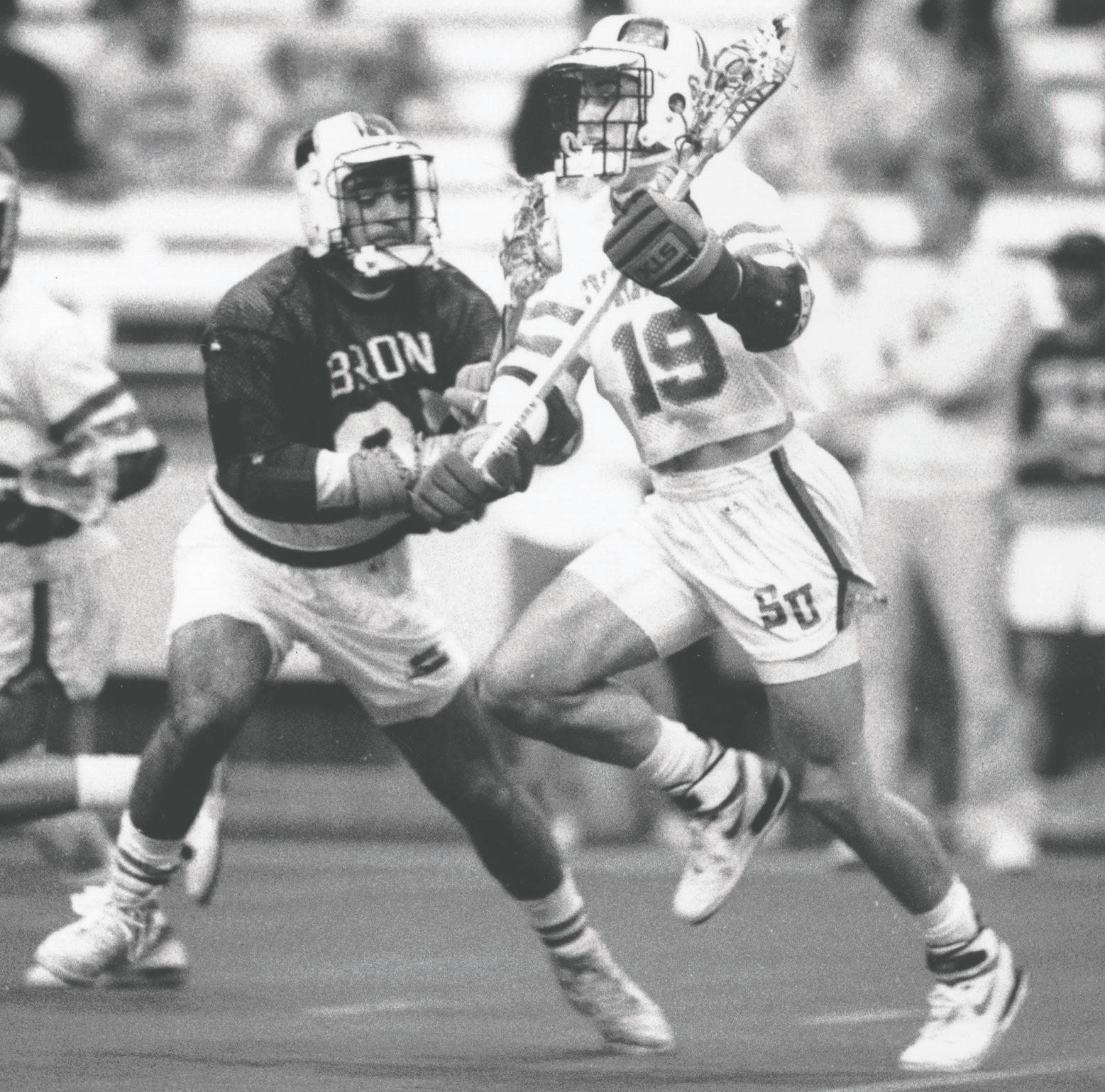
find rules that aren’t written and take advantage of those.”
“Most of our teammates would switch their stick over to the other hand if they wanted to go right,” Paul said, “whereas we kept it in our left hand and just tucked it better than they did and rotated our upper body a little more.”
Paul started to find a rhythm during his brief stints off the bench and said he increasingly earned playing time as the season waned. By postseason play, Paul and Gary were regulars for the Orange. Paul finished his freshman season with the seventh-most goals on the team (11) and three assists.
It was Paul’s only year at Syracuse where he wasn’t a First-Team All-American selection. From there, Paul and Gary solidified themselves as two all-time greats by spurring SU to three consecutive national titles. The only game the Orange lost in that span was their season-opener in 1989 versus Johns Hopkins, where they fell by one.
After college, STX Lacrosse offered Paul and Gary a job out of college as sales representatives. From then on, it became Paul’s mission to improve the sport through modern equipment design.
“The inspirations are the same inspirations (Gary and I) had as players,” Paul said of joining the lacrosse equipment industry. “Make something different, make something unique, do the unexpected,
While he ultimately left STX, Paul said he created “three or four” product designs that were made by the company after he left. He moved to a softball manufacturing company, J.deBeer & Son, and spearheaded a brand-new line of lacrosse equipment. There, he permanently changed the women’s game, inventing a revolutionary lacrosse head that had a pocket in the stick to help players control the ball and release cleaner shots.
Paul was promoted to the company’s president in 2003, the same year he founded Gait Lacrosse — which was originally the men’s lacrosse subsection of J.deBeer & Son. Under Paul’s control, the company became the world’s leader in both women’s gear and Canadian box lacrosse equipment sales.
Though, Gary couldn’t control his laughter when discussing what he considers to be Paul’s most “exciting” contribution to lacrosse: inadvertently producing the modern lacrosse helmet.
Sport Helmet was the largest lacrosse brand when he and Paul lived in Syracuse post-graduation. It used to sell what Gary described as “big bucket helmets.” While Paul visited one of Sport Helmet’s manufacturing warehouses, he took one of its whitewater rafting helmets, stuffed padding inside of it and stuck a facemask on.
The spontaneous creation became Paul’s box lacrosse helmet that summer in Canada.
“It was the funniest looking helmet at the time,” Gait said. “But
(Paul) didn’t care.”
Paul thought the helmet was lighter and more comfortable than Sport Helmet’s heftier offerings. Once he arrived back home after the summer, Gary said Paul put a visor on it. Word quickly spread. Soon enough, Sport Helmet developed the modern lacrosse helmet off Paul’s design.
Gary said Sport Helmet eventually changed its branding to Cascade, which sells top-of-the-line lacrosse helmets to this day. And, according to Gary, the name Cascade directly comes from the helmet’s whitewater origins.
“Paul’s an incredible mind and manufacturer and understands how to make everything,” Gary said.
I’m just so excited that his time has finally come. I thought we both should have been honored together.
Gary Gait paul gait’s twin brother
During Paul’s tenure at J.deBeer & Son, he sold the rights of the Gait Lacrosse brand to K2 Sports. Then in 2019, Paul called Gary and told him he could purchase the name back. Paul wanted to re-launch the company with Gary, who joined his brother.
Ever since, Gait Lacrosse has
transformed into the sport’s premier equipment brand. Paul said coming out of the COVID-19 pandemic, they became the No. 1 high-end men’s lacrosse sticks company in the world. By the end of 2022, he said it was the No. 1 high-end women’s line too. Paul continues to implore MacNeil’s wisdom, growing the business through doing the unexpected.
“We made every stick unique, and that had a different purpose or suited a different style of play,” Paul said. “And we charged the same price for every stick whereas every other company would have layered prices.”
Today, Gait Lacrosse has six distinct women’s lacrosse heads for athletes to choose from. Paul said that when he or Gary watch girl’s lacrosse nowadays, they feel a special sense of pride that they helped grow the game together.
The impact Paul has had on lacrosse extends far beyond Syracuse. As a pioneer of the sport and one of its most talented players ever, Paul’s name is synonymous with lacrosse. Still, he thinks his jersey retirement at SU is a long time coming.
“It’s special not so much for what has happened recently. But more for what happened in 1993,” Paul said.
In 1993, Syracuse’s 1990 NCAA Championship was vacated. An investigation into the school uncovered that Simmons Jr.’s wife, Nancy, illegally co-signed a car loan for Paul, who said his original vehicle broke down. Paul emphasized that the action wasn’t illegal at the time and that the NCAA changed its bylaws after the fact.
He said it was challenging to deal with the aftermath of the NCAA’s ruling. He believes Syracuse’s 1990 squad is the greatest collegiate team of all-time and feels guilty for his teammates and Simmons Jr. that the title victory has an asterisk.
The jersey retirement ceremony on April 20 will be “a small step to healing” the way Paul felt, he said.
Paul’s current concerns may revolve around the growth of Gait Lacrosse and fighting his paralysis. Yet starting Saturday, Paul’s legacy will finally reside where it belongs — with his No. 19 next to Gary’s No. 22 in the venue they used to rule.
“I’m just so excited that his time has finally come,” Gary said of Paul’s jersey retirement. “I thought we both should have been honored together … We wouldn’t have had three national championships at Syracuse if he wasn’t a part of all three of those teams.”
ccandrew@syr.edu
@cooper_andrews
april 18, 2024 13
courtesy
courtesy




14 april 18, 2024 dailyorange.com
Beat writers split on whether No. 6 SU will defeat No. 4 UVA
By Daily Orange Sports Staff
No. 6 Syracuse finishes the 2024 regular season against No. 4 Virginia after splitting four straight road games. SU defeated Hobart and North Carolina, dropping contests to Notre Dame and Cornell in between those wins.
The Cavaliers are coming off an 18-12 loss to Duke, which was their worst defensive performance since 2022. The Orange haven’t defeated UVA under head coach Gary Gait, allowing Virginia to score an average of 20 goals in all three of those losses.
Here’s how our beat writers believe No. 6 Syracuse (10-4, 2-1 Atlantic Coast Conference) will fare versus No. 4 Virginia (10-2, 1-1 ACC) Saturday in the JMA Wireless Dome:
ZAK WOLF (9-5)
Syracuse has been in some pretty wild games this season. Why not have one more to wrap up the 2024 regular season? In the JMA Wireless Dome, SU had a controversial overtime loss to Maryland and then a heartbreaking overtime defeat to Army.
Games in the Dome have delivered this season and Saturday will be the same. Two explosive offenses — both of which are top seven in the country in scoring — going head to head will lead to an exciting back-and-forth affair. Each attack has numerous offensive weapons but revolve around one star. For Syracuse, it’s Joey Spallina while Virginia has Connor Shellenberger. Both aren’t necessarily score-first options but their presence opens up lanes for secondary options. I expect both to show up big time Saturday and each offense to be on its A-game.
But as much as offense will play a role, the difference will be who plays better between Will Mark and Matt Nunes in net. Mark holds a
from page 16
williams
of Williams’ performance despite the game taking place less than a week after becoming Syracuse’s new head coach. Brown’s decision to attend the state championships was just one of the moments that renewed interest in the program even before his introductory press conference.
Around the same time at Christian Brothers, Williams and his friends talked about how Brown changed everything regarding
from page 16
fair
“(Fair is) definitely a position we’re looking for this year at the 1-2 spot as a backup or, as Becky calls them, a microwave shooter.”
A microwave shooter is a player who can score frequently upon entering a game. Throughout her NCAA career, Fair was one of the best microwave shooters in the sport. Among many moments throughout her D-I career, Fair’s fourth-quarter takeover versus Arizona in the Round of 64 in the NCAA Tournament showcased her high volume scoring best. By scoring 11 straight unanswered points down the stretch, Fair propelled the Orange to a 74-69 win.
“She can get to the rim, she can knock down 3s. She’s able to create her own offense and her ability to get by bigger defenders, so that’s really what stood out,” Williams said.
Move to ACC was pivotal
When asked when Fair appeared on her radar, Williams didn’t acknowledge Fair’s time playing at Buffalo. While she dominated Mid-American Conference opponents, earning First-Team All-MAC three straight seasons, she still didn’t garner much attention from WNBA executives.
“Since she showed up at Syracuse, we’ve been watching her,” Williams said.
from page 16 boston college
their second-lowest of the season. SU scored just two goals in the third quarter and three in the fourth, going on multiple scoring droughts over 10 minutes in the eventual win.
“We really just did not shoot the ball well at all today,” Treanor said postgame. “It’s something we’re going to have to get better at.”
Against the Eagles, SU will need to finish its chances. The Orange’s attack has had no issue
61% save percentage in his last six games while Nunes is coming off the worst performance of his career. Against Duke, the junior let up seven first-quarter goals without registering a save and was benched for the last three quarters.
Syracuse has plenty of firepower to keep up with Virginia and behind stellar play in net from Mark, the Orange will get the job done.
COOPER ANDREWS (10-4)
TOSS-UP
14
13,
SU’s final regular-season contest leaves me in a bind. I’m one correct pick behind Anish in our beat writer’s predictions leaderboard. And with Syracuse and Virginia being as evenly matched as possible, I have to make a business decision. So, I’m riding with the Cavaliers to hand the Orange a home loss heading into postseason play.
Syracuse has raised some hefty concerns over its last two games, particularly in its fourth-quarter mishaps. On April 2 versus then-No. 13 Cornell, SU blew multiple sevengoal leads in an 18-17 double-overtime loss. Its offense was lifeless while the Big Red’s attack ran rampant in the fourth, outscoring Syracuse 5-1. Eleven days later against North Carolina, the Orange exited with a victory but allowed five unanswered second-half goals — including three in the fourth — for UNC to cut its deficit to one.
That same late-game sloppiness isn’t going to play against Virginia. Sure, the Cavaliers had their worst performance of the season last time out versus Duke in an 18-12 loss. Yet they were consistent before then, while SU has been inconsistent late all year long. Overtime defeats to then-No. 4 Maryland and then-No. 5 Army are still fresh in my mind. The Orange have put together a commendable season, though they haven’t shown enough in crunch time for me to think they’ll upset UVA in this spot.
Syracuse football. As fans of the Orange, they found the hiring to be shocking in a way.
“He would bring in a lot of great coaches by his side,” Williams said. “...It was just definitely gonna be a whole lot different.”
Williams received other offers from Penn State, Boston College, Colorado and UMass, but chose Syracuse. After announcing his commitment, Williams showed up to view spring ball practices with other potential recruits.
At the Ensley Athletic Center, Williams noticed the coaches’ involvement with the
Upon producing the same damaging results in the ACC, Fair showed she belonged at the next level. Fair’s three-level scoring prowess and consistent high-scoring outputs appealed to Williams most. Across the 2023-24 season, Fair scored 20 or more points in 22-of-32 games.
“She continued to put up those numbers game after game after game and more,” Williams said.
What to look for in training camp
Fair was the Aces’ first selection in the draft, but her spot on the Las Vegas roster is not guaranteed.
“Just looking forward to (Fair) challenging our veterans, showing that she could knock down some shots and get to the rim, maybe show some of her point guard skills,” Williams said.
Fair’s shooting prowess is well-documented, but some of her on-ball skills need fine-tuning.
According to HerHoopStats, Fair’s 40.7% 2-point percentage in 2023-24 and 2.1 turnovers per game both ranked in the 30th percentile of D-I. Though Fair’s 3.6 assists per game ranked in the 94th percentile, she’ll need to improve her assist-to-turnover ratio to become a viable ball handler for the Aces.

Owen Hiltz starred on the attack as a freshman during Syracuse’s two wins over Virginia in 2021 when the Cavaliers defeated Maryland for their second NCAA championship in two years. The first was a commanding 20-10 victory where the Orange finished the game on an 11-3 run and Hiltz recorded five points in his first collegiate start. The latter was a gutsy 13-11 win where Jakob Phaup’s 88.9% win rate made up for 18 turnovers. Syracuse’s 2024 squad can take lessons from both those wins. SU needs to deliver a
players and how intense players practiced. To him, it was an immediate change for the program he grew up watching.
While Brown and his staff brought in plenty of recruits from out of town, high schools from around the area have received invites to see the Orange practice during spring ball. Brown has not been shy; he calls central New York his backyard and doesn’t want the best players in that yard to leave.
“(With) the best football players in my backyard, I’m gonna watch them play,” Brown said. “And then if they go to college, why wouldn’t
strong second half, something it hasn’t done on the road throughout April. And to make up for sloppy mistakes (another issue the Orange have had lately), the faceoff unit has to be consistent. Luckily, they won’t have to rely on just Phaup with Mason Kohn and John Mullen coming off an assertive showing in Chapel Hill.
This isn’t the Syracuse from recent past. The Orange are on the cusp of finishing above .500 in ACC play for the first time since 2018, almost a month removed from their statement win over Duke. Now, SU has the chance to complete the regular season with another defining victory over the only team it hasn’t faced above it in Inside Lacrosse’s rankings. And it’s going to do it.
sports@dailyorange.com
they play in the crib? ... Someone just ran a 10.6 ( seconds in track) the other day in our backyard. Why would I let him leave the yard?”
Bruce said schools like Christian Brothers can be one-stop shops for talent, and he thinks Brown has already taken advantage of that with Williams.
“You get these kinds of kids that are on the same team and they’re local,” Bruce said. “I think that’s just appealing to Fran because again, they’re right there.”
henrywobrien1123@gmail.com
@realhenryobrien

Fair’s driving ability will also be pivotal as she tries to make Las Vegas’ roster. The ACC has some of the best defenders in college, but the WNBA poses a new challenge. If Fair continues to show that facing bigger and stronger defenders is no problem in training camp, she’ll have a better chance of making Las Vegas’ roster and carving out a role in its rotation. justingirshon@gmail.com
beating up on their recent unranked opponents. But facing BC will be a test they haven’t seen since the early portion of the season. If Emma Tyrrell, Olivia Adamson and the rest of its scoring depth convert their shots, Syracuse should enter the ACC Tournament on a 10-game winning streak.
Stat to know: 7.93
Led by Sydney Scales and Becky Browndorf on the back end, Boston College averages just 7.93 goals allowed per game, the third-best mark in
the nation. Through 15 games, the Eagles have held 10 opponents under double-digit goals. The Orange’s attack has been nearly unstoppable this year, scoring 15 or more goals in 13-of15 games. SU’s strong offense versus BC’s topfledged defense will be one of the biggest battles of the contest.
Player to watch: Shea Dolce, goalie, No. 88
Dolce is in her second year between the pipes for the Eagles and looks to be improving
upon her first season, in which she won ACC Freshman of the Year and ACC Tournament MVP. In her sophomore season, Dolce’s recorded seven games with a save percentage over 50%.
The Darien, Connecticut, native has improved her save percentage from 45.7% to 46.4%. Though when she struggles, BC falters. In games where she records a save percentage under 35%, Boston College is 1-3. amstepan@syr.edu
dailyorange.com sports@dailyorange.com april 18, 2024 15
@AidenStepansky
lacrosse
men’s
Our beat writers are undecided on whether No. 4 Syracuse will defeat No. 6 Virginia to win its third ACC game of 2024. arnav pokhrel staff photographer
@JustinGirshon
INSTANT CLASSIC SYRACUSE 17, VIRGINIA 16
SYRACUSE
VIRGINIA
ANISH VASUDEVAN (11-3) (21,21,21) SYRACUSE 15, VIRGINIA 13
Dyaisha Fair was selected with the No. 16 pick in the WNBA Draft after averaging 22 points per game this year. courtesy of the las vegas aces sarah stier/getty images
HOMEGROWN
Christian Brother’s Academy two-way star Darien Williams could potentially become Syracuse’s first enrolled recruit from central New York since 2018
By Henry O’Brien senior staff writer
ODarien Williams remembered watching a video of Syracuse head coach Fran Brown’s introductory press conference in November. Williams recalled Brown saying he grew up on welfare and didn’t need to go anywhere else, giving him the feeling that Brown wanted to stay in central New York long-term.
The part-wide receiver, part-defensive back kept returning to the video. Shortly after he became Syracuse’s first regional commit of the class of 2025 in midMarch, he watched the press conference again. Williams was addicted to the message Brown sent recruits.
“He’s very involved in the community, trying to get out and help as much as possible and it’s definitely nice to see,” Williams said.
Williams, a three-star recruit from nearby Christian Brothers Academy, is the No. 2 Class of 2025 recruit in New York per 247Sports’ Composite Ranking. Because of Brown’s clear effort to recruit players from the Syracuse region, Williams was convinced to commit to Syracuse. Williams could be the Orange’s first enrolled recruit from central New York since 2018.
Bruce Williams, a Syracuse wide receiver from 200508, is the wide receivers coach and offensive coordinator at CBA. He said SU always placed some form of emphasis on recruiting locally and mentioned how former head coaches like Dick MacPherson, Paul Pasqualoni and his head coach Greg Robinson recruited players from the area. The previous coaching staff didn’t do that.
“Up until the last regime, everybody from the coaching staff that at least I’ve known has always recruited locally,” Bruce said. “Fran Brown, I think has done a good job in a matter of months, showing that effort that he will keep local kids here.”
The process for Williams started when he moved from Atlanta to Syracuse as a 4-year-old. It was easy for Williams to become a fan of the Orange with them playing close by. As he started playing football in fifth grade, first as a quarterback, Williams always watched SU.
When Williams played at the modified level in seventh and eighth grade, Bruce told him he was playing the wrong position. The coach said Williams should switch to wide receiver, although he still wanted to be a signal caller.
But in ninth grade, there were already four other quar terbacks on the Brothers’ roster. Williams approached Bruce and said he wanted to make the position change. Bruce said the shift was vital for Williams to garner attention from major programs since some of his older teammates played multiple positions and even tually committed to colleges like UAlbany and Central Connecticut.
“By being able to do multiple things, you become valuable,” Bruce said. “But it also teaches a kid how to be selfless, how to understand that he may not always be the guy and how he can still impact the game not with the ball in his hand.”
Williams excelled quickly after his shift to wide receiver. In 2023, Williams led the Broth ers with 863 yards and 11 touchdowns as part of the team’s run to the Class AA state championship. Williams tal lied three games with at least 100 receiving yards and four with two touchdowns or more.
In the state champion game against Carmel at JMA Wireless Dome, Wil displayed his speed and ing ability. In the first ter, he ran a deep post and snagged a wobbly midfield. Williams cre separation at the block “S” logo and scored uncontested for 78 yards.
Later in the quarter, Williams took a slant route the distance for a 65-yard score.
Then to seal the cham pionship, he scored a 48-yard touchdown in the third quarter.
Brown took note

Opponent Preview: Everything about No. 6 BC
By Aiden Stepansky asst. sports editor
With an 8-0 start in conference play, Syracuse women’s lacrosse is the outright Atlantic Coast Conference regular-season champions. The Orange have steamrolled through their ACC games, winning by a combined 63 goals.
In its last three conference matchups, SU has won by 10, nine and nine, respectively, handily defeating multiple bottom feeders through high-powered offense, draw dominance and defensive command.
All that’s left in the regular season is a matchup with Boston College. The Orange ride a nine-game winning streak into the contest and have a chance to go undefeated in ACC play for the first time. The Eagles have flirted with the top spot
of the Inside Lacrosse Poll all season, holding the position in weeks two and three, but BC recently dropped after an overtime loss to then-No. 11 Virginia.
Here’s everything to know about No. 6 Boston College (12-3, 6-2 ACC) before it faces No. 2 Syracuse (12-3, 8-0 ACC): All-time series Syracuse leads 17-11.
Last time they played… In the NCAA Tournament semifinals, SU had the opportunity to avenge its regular-season loss and reach the national championship for the first time under head coach Kayla Treanor. After leading 7-5 entering the fourth quarter, Syracuse fouled seven times to BC’s two, giving the Eagles more offensive chances.
With the game tied 7-7 with three minutes left, Kayla Martello converted on a free-position shot to take the lead, ultimately ending SU’s magical season that featured 15 straight wins.
The Eagles report
The Eagles are coming off their third loss of the season, a crushing 13-12 overtime defeat. BC currently sits at third in the ACC.
Boston College’s balanced team — which ranks second in offensive efficiency and sixth in defensive efficiency — has taken down ranked teams like then-No. 13 and thenNo.16 Yale, but have dropped games to then-No. 3 Northwestern, thenNo. 8 Notre Dame and then-No. 11 Virginia. All three losses were by a combined margin of five goals.
On attack, UVA transfer Rachel Clark is leading the team in points
Aces GM Williams ‘excited’ to draft Fair
By Justin Girshon asst. sports editor
On Monday, the Las Vegas Aces selected Dyaisha Fair with the No. 16 pick of the 2024 WNBA Draft. Fair became Syracuse’s first player selected in the WNBA Draft since Brittney Sykes and Alexis Peterson were drafted No. 7 and 15, respectively, in 2017. In Fair’s final collegiate season, she became the third-highest scorer in Division I women’s basketball history.
“I’m just really looking forward to what (Fair) can bring to (training) camp,” Las Vegas Aces general manager Natalie Williams told The Daily Orange. “She’s also fierce and just a tough kid, so really excited to get her into camp.”
In 2023-24, Fair averaged 22.3 points per game while nailing 37.7% of her 3-pointers on 9.5 attempts per game. Fair’s campaign earned her a second-straight All-ACC First Team selection and AP Third Team AllAmerican honors.
Fair now takes her talents to Las Vegas, where she will compete in training camp for one of the Aces’ 12 spots. Six of the 18 players listed on the back-to-back WNBA Champions’ roster will be cut after training camp.
In a one-on-one interview with The Daily Orange, here’s what Williams said about the Aces drafting Fair:
Aces take advantage of Fair’s drop
Mock drafts from ESPN, NBC Sports and the New York Post had Fair being selected within the first round, while CBS Sports, Yahoo Sports and The Sporting News had her outside the top 12 picks.
Guards Nika Mühl (UConn), Carla Leite (France), Brynna Maxwell (Gonzaga), Isobel Borlase (Australia), Leila Lacan (France) and Celeste Taylor (Ohio State) were all in similar positions, but Fair was the eighth guard taken. Williams was unsure where Fair would land but was happy she fell to the Aces’ first pick.
“We thought she could (fall to No. 16), but we also thought she could go higher,” Williams said. “We thought maybe her height would help us, that people may not pick her because of her size.”
Height doesn’t phase
Becky Hammon
When asked about the Aces’ drafting Fair — whose biggest drawback is her 5-foot-5 frame — the first thing Williams mentioned was Hall of Fame head coach Becky Hammon’s philosophy.
“When you got Becky Hammon, who is 5-foot-5, 5-foot-6, she wasn’t afraid at all,” Williams said. “She knew what determined, young, talented guards could do.”
Although Hammon is in her third year with the Aces, she’s a professional basketball veteran. As a player, Hammon starred in the WNBA, making six All-Star games from 1999 to 2014.
with 67 and has helped replace Jenn Medjid’s lost production. McKenna Davis, Emma LoPinto and Martello are close behind Clark with 63, 57 and 52, respectively. Overall, the unit averages more than 17 goals per game.
In the draw circle, BC executes at a 55.3% mark with Ryan Smith (49) and Cassidy Weeks (45) producing the most wins. They will match up with Syracuse’s Kate Mashewske, who ranks eighth in the nation with 8.93 draws per game.
How Syracuse will beat
Boston College
Syracuse can defeat Boston College Thursday if it displays efficient shooting.
In their last outing, the Orange posted a 39.5% shooting percentage versus Clemson,
Her first coaching gig came in San Antonio in 2014, working as an assistant under Hall of Fame coach Gregg Popovich for the Spurs. Hammon became the second female assistant coach in NBA history and the first female head coach in a game after Popovich was ejected on Dec. 30, 2020.
In December 2021, Hammon was hired by the Aces where she’s remained since. Across her playing and coaching careers, Hammon has seen a variety of talented players. She’ll never gloss over smaller players like herself, making Fair an easy selection for the team.
Microwave scoring
Las Vegas has one of the best backcourts in the WNBA. Kelsey Plum and Jackie Young are each coming off back-to-back All-Star seasons, while Chelsea Gray also made the All-Star team in 2023.
The Aces desired to add scoring off the bench, as they already had three elite starters. Last season, reserve guards Kierstan Bell and Sydney Colson averaged 3.7 and 1.3 points per game, respectively.
SPORTS dailyorange.com sports@dailyorange.com 16 april 18, 2024
Class of 2025, commit Darien Williams is the first of Fran Brown’s CNY recruiting efforts. courtesy of darien williams
see boston college page 15
lacrosse
women’s
women’s lacrosse
see fair page 15
williams page 15
see
