The Daily Northwestern
4 A&E/Circus e Actors Gymnasium celebrates 30 years of

4 A&E/Circus e Actors Gymnasium celebrates 30 years of
By NINETH KANIESKI KOSO daily senior staffer @ninethkk
Students who have not completed Northwestern-mandated bias training may soon face escalating penalties, including the loss of student a liation, nancial aid and access to on-campus housing, according to an email obtained by
e Daily. e email was sent Sept. 16 from the University to undergraduate and graduate students who have yet to complete the training titled “Building a Community of Respect and Breaking Down Bias.”
e University stated that students who fail to complete the bias training and a estations will be barred from enrolling in classes needed to complete their degree.
By SIDDARTH SIVARAMAN daily senior staffer @sidvaraman
Rezoning for a Be er Evanston, a new not-for-pro t in the city, aims to increase homeownership opportunities for Black and middle income residents by legalizing multi-unit housing, co-founder Roger Williams said.
“We’re very much coming at this initially from the perspective of stopping the hemorrhaging of Black residents out of Evanston,” co-founder and 7th Ward resident Frank Hill said.
The Black proportion of the city’s population dropped from 22.5% in 2000 to 14.8% in 2024, Hill said. Citing housing policy experts Richard and Leah Rothstein, Williams said the trend exists because most Black residents are in moderate or middle income brackets, a range for which there are few suitable housing options in Evanston.

Fourth Ward resident Zachary Sanchez-O’Neill said he saw precisely this gap in housing options when he was searching for a home in 2023.
Sanchez-O’Neill said he purchased a two-bedroom, one-bathroom house in Kansas for around $125,000 in 2012. When his wife was accepted into a medical residency program in Evanston, he thought his family could a ord a similar home in the area, he said. Instead, he said, they now live in a small apartment.
“We love our community, and we love our neighborhood. But at this point in our lives, we feel stuck,” Sanchez-O’Neill said. “ ere’s either a $250,000 apartment, or you wait for a milliondollar house.”
Hill said multi-unit zoning is a “ rst step” toward correcting the issue. Rezoning for a Be er Evanston advocates for relaxing zoning laws across Evanston to allow developments with more than four units, Williams said, because duplexes and triplexes
First released in a Feb. 20 email, the training features modules discussing University policies, changes to the Student Code of Conduct, antisemitism and bias against Muslim, Arab and Palestinian communities. e training has been met with a mix of backlash and approval from the NU community and beyond.
Over the summer, the University put registration holds on
By AUDREY PACHUTA daily senior staffer @audreypachuta
When interim University
President Henry Bienen relinquished his post as Northwestern’s head honcho in 2009, most current undergraduate students were too young to be in kindergarten.
Bienen, who became former President Michael Schill’s temporary replacement Sept. 16, is no stranger to the demands of the job he held for nearly 15 academic years.
But if the words he spoke when he was rst hired back in June 1994 still ring true, he’d be the rst to tell you that inheriting the reins from a contentious predecessor isn’t ideal.
“You have to ask yourself, would you rather come to an institution in dire di culty or follow a guy that’s done a great job and come to a school that’s very strong. I think the obvious answer is the la er,” Bienen told e Daily for a special June 15, 1994 edition announcing his hiring.
Back then, Bienen introduced
students who had not completed the training. ese students can not add or swap classes until they have completed the training, according to another email sent in August.
During the h week of each quarter, the University will update academic records and discontinue the academic programs of students
» See TRAINING , page 15
By MARISA GUERRA ECHEVERRIA daily senior staffer @marisa_g_ech
On a bustling Saturday morning, residents wandered the stalls of Evanston Farmers’ Market, perusing freshly-baked bread, handmade jewelry and colorful ower bouquets.
Campaign workers and political candidates wove through these crowds and stood at street corners, passing out pamphlets and greeting idle shoppers. ey were seeking the elusive signatures required to get their campaigns on the Democratic primary ballot.
In one corner of the market, two tables manned by the Democratic Party of Evanston boasted dozens of clipboards, each sporting signatures for candidates at every level of public o ce, ranging from the Cook County Board of Commissioners to Illinois’ 9th Congressional District.
The weekend event was the second iteration of the DPOE’s “Petitions & Produce” campaign. It also marked the organization’s third petition drive to ramp up voter engagement during the petitioning season, which rst kicked o on Aug. 5 and ends Nov. 4. During
the process, party candidates must obtain a certain amount of valid signatures from in-district voters to qualify for the primary ballot.
“We are focusing on people having access to the ballot, understanding the ballot, and understanding how important the ballot process is,” DPOE president Kathy Hayes said.
According to Hayes, the idea to host farmers’ market petition drives arose in the DPOE to kickstart community engagement and education in the earliest stages of the election process, over a year before the general election in 2026.
Hayes also said the drive allows the DPOE to process and notarize the candidates’s signed petitions more quickly, allowing them to add to their o cial tally before the November deadline.
“Now that’s a li le in the weeds for the average voter, but timing is everything with elections.” Hayes said. “Ge ing your signatures in on time may quantify where you are on the ballot.”
On average, the DPOE receives around 150 signatures at a Petitions & Produce event, DPOE board member Sebastian Nalls said.
Erica Sitko (Weinberg ’01), who visited the farmers’ market from Wilme e with her two children, said the event serves as a convenient gathering place for voters to meet representatives from multiple
» See PETITIONS , page 15
himself as someone equally concerned with undergraduate education as he was with research. He admi ed that, coming from Princeton University, he didn’t know much about Greek life, but was quick to call himself “a bit of a jock” as he fawned over Big Ten athletics.
During his decade and a half at the helm, Bienen oversaw some of the University’s largest milestones, including the opening of a new campus in the Middle East and a 1996 Rose Bowl appearance, as well as his fair share of challenges like a student-led hunger strike advocating for an Asian American studies department.
Now, at 86 years old, Bienen returns to the fray with an entirely new set of circumstances before him.
A new president’s growing pains
Bienen commended former NU President Arnold Weber, who came before him and kept the school in “good nancial shape,” avoided tuition hikes and remained largely uncontroversial throughout his tenure.
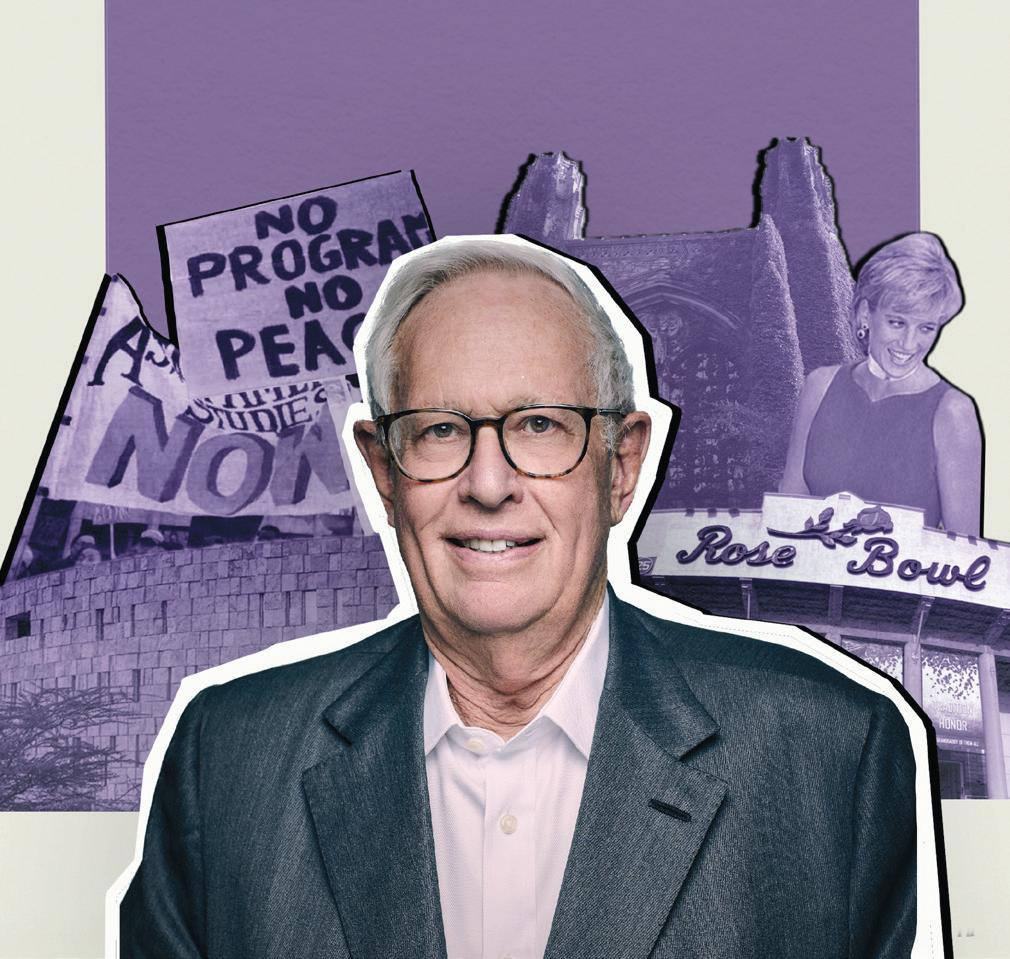
“I haven’t learned that much is broken, and I don’t expect many, if any, immediate changes,” Bienen said on forming a new sta . Unlike Schill, who resigned, embattled by Washington Republicans’ allegations of antisemitism on campus and with a $790 million federal funding freeze in tow, Weber retired, leaving few lingering challenges for his successor.
e Daily reported that students chanted “four more years, four more years” during Weber’s
By NOELLE CABRERA the daily northwestern
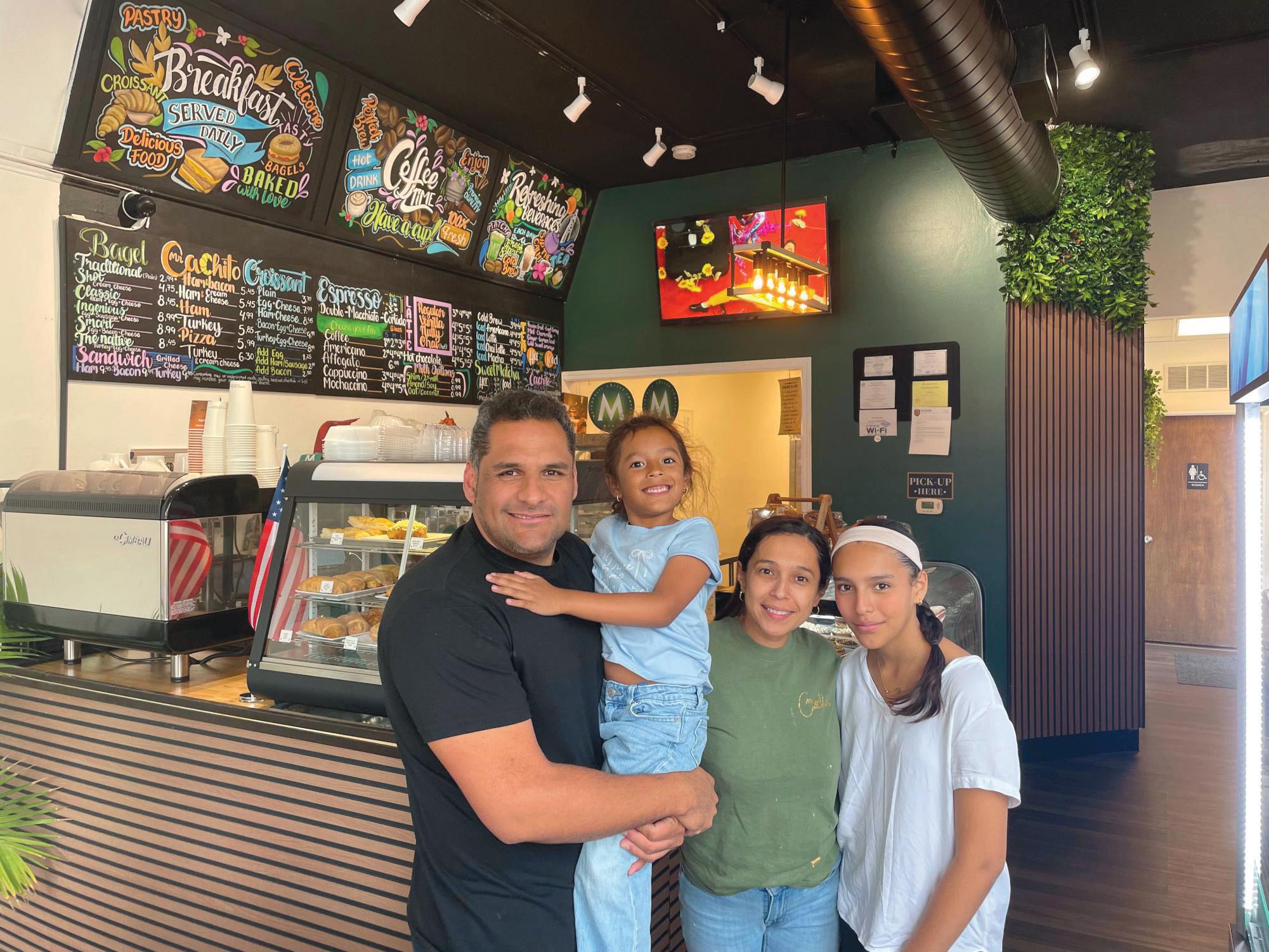
Ten years ago, Rolando Alvarado, manager and co-owner of Venezuelan bakery Mr. Cachito, could never have imagined leaving his home in Trujillo, Venezuela. But following the rise of Venezuelan president Nicolás Maduro, Alvarado and his family fled for their safety.
After living in the U.S. for four years and spending the last two as an Uber Eats delivery driver in the Chicago area, Alvarado noticed a vacant spot on the corner of Sherman Avenue and Grove Street. The space was previously occupied by The Plant Shop and Other Brother Coffeebar.
With no prior experience owning a bakery, Alvarado and his wife Angie Frías decided to use the space to bring a piece of Venezuelan culture to Evanston. The bakery opened earlier this summer and features the bakery’s namesake pastry, the cachito.
“If you met somebody from Venezuela and you ask about the cachito, everybody knows it,” Alvarado said. “We realized nobody here has the cachito.”
Cachitos are crescent-shaped Venezuelan pastries typically filled with ham. Mr. Cachito offers a variety of other fillings too, including turkey and cream cheese, pepperoni and mozzarella and seasonal flavors like pumpkin and cream cheese.
Open daily from 7 a.m. to 7 p.m., the familyowned bakery offers a friendly atmosphere, a vibrant interior and a diverse selection of beverages and Venezuelan baked goods, including the cachito.
Despite facing challenges like securing funding, receiving permission from the City of Evanston and navigating language barriers in the process, Alvarado considers the bakery a success.
“For us, it was a big surprise because in Evanston, everybody supports the small business,” he said. “The people are so polite, always so friendly.”
Alvarado said Mr. Cachito has seen plenty of business but few Northwestern students since Fall Quarter started in mid-September. He hopes to do more advertising aimed at students in the upcoming months.
School of Communication senior Ashley
Qiu visited the bakery for the first time over the weekend.
“I feel like I’ve pretty much visited all the cafes (and) bakeries around here, so I feel like it’s exciting that there’s a new cafe open,” Qiu said.
Mr. Cachito’s proximity to Qiu’s residence and cozy ambience make it a great study spot, she said.
Martin Krongo, a pharmacy student at University
of Illinois Chicago, decided to stop by Mr. Cachito to study while walking around Evanston with friends.
“The staff is really nice, and the owner had a big smile when he greeted me,” Krongo said.
Alvarado and Frías are continuing to advertise Mr. Cachito by posting content on their Instagram account, @mrcachitobakerycoffee, and
participating in community events, including Taste of Evanston, an annual celebration of local food. In the future, Alvarado said he hopes to open more Mr. Cachito locations in Chicago and beyond.
“Mr. Cachito has not been easy, but every day we try to get better,” he said..
noellecabrera2028@u.northwestern.edu



























By NINETH KANIESKI KOSO and CATE BOUVET daily senior staffers @ninethkk / @catebouvet
Northwestern faculty members sent a le er to NU’s Board of Trustees on Wednesday morning, with 567 faculty signatories asking for faculty representation in the search for a new University president.
e le er calls for the University to appoint at least two faculty members chosen by the Faculty Senate and two sta members chosen by the NU Sta Advisory Council to the presidential search commi ee. Additionally, the le er requests that the University consult the entire faculty and sta about what qualities they seek in a president through a survey and in-person meetings.
“ e Board of Trustees has completely ignored us since Trump came into the White House, and that has to change,” said English Prof. Daisy Hernández, who helped with the le er. “ is is such a major turning point for Northwestern University, and I think that faculty and sta need to be a part of the conversation and choosing the next president.”
e beginning of the le er recognizes many threats to higher education, including academic freedom and free speech, noting that the University is in a “critical moment” following the Trump administration’s reduced support for research, NU’s sta layo , the erasure of diversity, equity and inclusion initiatives and the diminishment of NU’s health care and tuition bene ts.
e le er was dra ed by Medill Prof. Jon Marshall in collaboration with seven other original signatories — art and art history Prof. Rebecca Zorach, McCormick Prof. Michael Peshkin, Asian American studies and Black studies Prof. Nitasha Sharma, Black Studies and history Prof. Martha Biondi, Pritzker Prof. Annie Buth, history Prof. Helen Tilley and Feinberg Prof. Namratha Kandula.
e nal point of the le er requests that the University honor the Faculty Assembly resolution passed April 21, which asks the Board of Trustees to allow eight faculty visitors to a end Board meetings and review all records the trustees can as of fall 2025.

For Zorach, it is essential that faculty and sta are represented because choosing the new president is a “crucial decision” that the University is making in an “intense moment of crisis.”
“We just really wanted to insist on representation in the process and a voice in the process and (bring) a ention to what faculty and sta priorities might be for a new president,” Zorach said. “We don’t have a lot of communication with the Board. I feel like there’s a need to build trust with the Board.”
During the last presidential search in 2022, faculty, sta and students were all represented on the commi ee. However, Zorach said some faculty members are not con dent the Board will follow past practices.
In the last presidential search, commi ee members were nominated by members of the NU community and selected by the Chair of the Board. Zorach said she wants the Board to go one step further and accept commi ee members from a Faculty Senate nomination.
“ e Senate is the representative body of the



faculty, and so to give the Senate that voice in selecting members of the Senate who would be on the search commi ee seemed appropriate as a way of bolstering the kind of representative character of the of the search process,” Zorach said.
Marshall described the Board as “a very opaque group” that has “the ultimate power of the University.” Yet, he noted that much of the NU community knows very li le about why they make the decisions they do.
Faculty, sta , students and alumni deserve to have the opportunity to share their ideas with the Board, and know more about the reasoning behind its decisions, Marshall said.
“I think the new president will be more likely to have a successful tenure if they have the support of faculty and sta from the beginning,” Marshall said. “One way to do that is to more actively involve faculty and sta in a meaningful way in the search process.”
n.kanieskikoso@dailynorthwestern.com catebouvet2028@u.northwestern.edu
The Daily Northwestern www.dailynorthwestern.com
Editor in Chief Emily Lichty eic@dailynorthwestern.com
General Manager Stacia Campbell stacia@dailynorthwestern.com
Holly and John Madigan Newsroom Phone | 847.491.3222 Campus desk campus@dailynorthwestern.com City desk city@dailynorthwestern.com Sports desk sports@dailynorthwestern.com
Ad Office | 847.491.7206 spc-compshop@northwestern.edu
THE DAILY NORTHWESTERN is printed each Wednesday during the academic year, except vacation periods, the two weeks preceding them and once during August, by Students Publishing Co., Inc. of Northwestern University, 1999 Campus Drive, Evanston, IL 60208. All news is published 24/7 online at Dailynorthwestern.com.
First copy of THE DAILY is free, additional copies are 50 cents. All material published herein, except advertising or where indicated otherwise, is Copyright 2025 THE DAILY NORTHWESTERN and protected under the “work made for hire” and “periodical publication” clauses of copyright law.
POSTMASTER: Send address changes to THE DAILY NORTHWESTERN, 1999 Campus Drive, Evanston, IL 60208. Subscriptions are $100 for the academic year. THE DAILY NORTHWESTERN is not responsible for more than one incorrect ad insertion.



By ALEXANDER HERNANDEZ GONZALEZ daily senior staffer @alexbespeakin
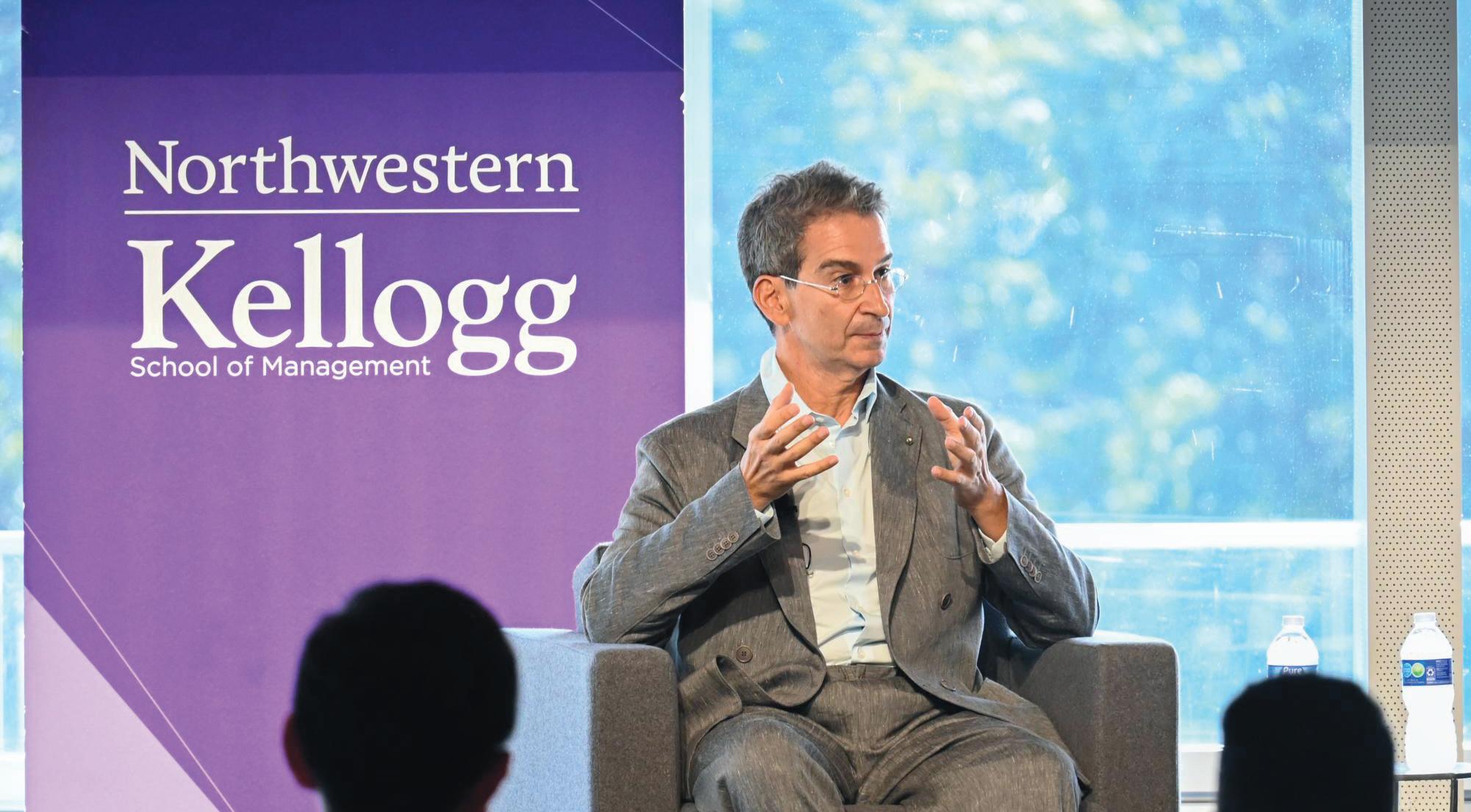
Founder of YOOX Net-a-Porter Group and Italian businessman Federico Marchetti has always let creativity control his life.
As a child in Ravenna, Italy, Marchetti lived in a small apartment with three family members, excelled academically and sold Mickey Mouse comics by the beachside.
After receiving his undergraduate degree from Milan’s Bocconi University, Marchetti moved to New York City and received an MBA from Columbia University in 1999. While working in the finance and consulting industries, he built a business plan and connected with venture capitalist Elserino Piol, founding online fashion store YOOX in June 2000.
The start of something revolutionary was on the horizon.
YOOX was not only the very first lifestyle e-commerce website — it merged art, luxury and the internet to bring designer labels to doorsteps across the world. Since selling the company to Richemont in 2018 through a transaction valued at $6 billion, Marchetti has become a board member for fashion house Giorgio Armani and the chair of The Sustainable Markets Initiative’s Fashion Task Force for King Charles III. Marchetti went on to release his 2023 book “Le Avventure di un Innovatore” in Italy.
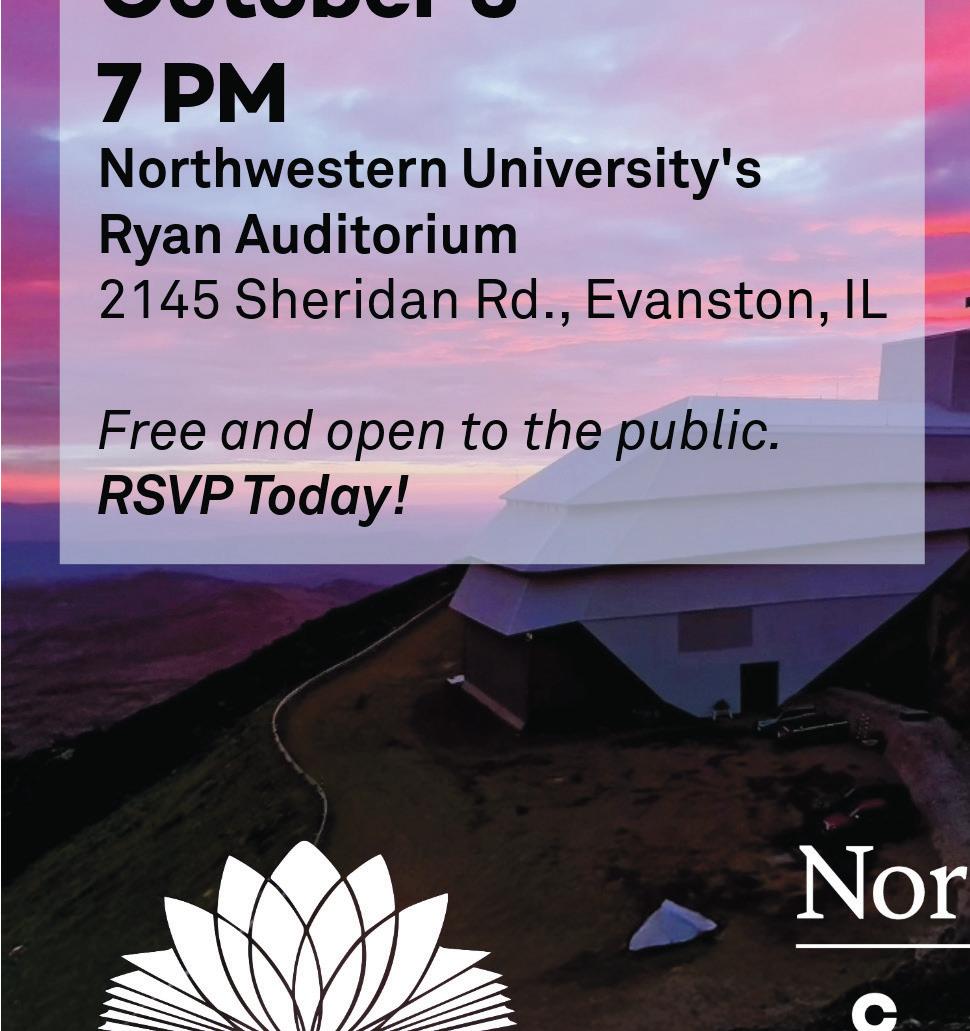
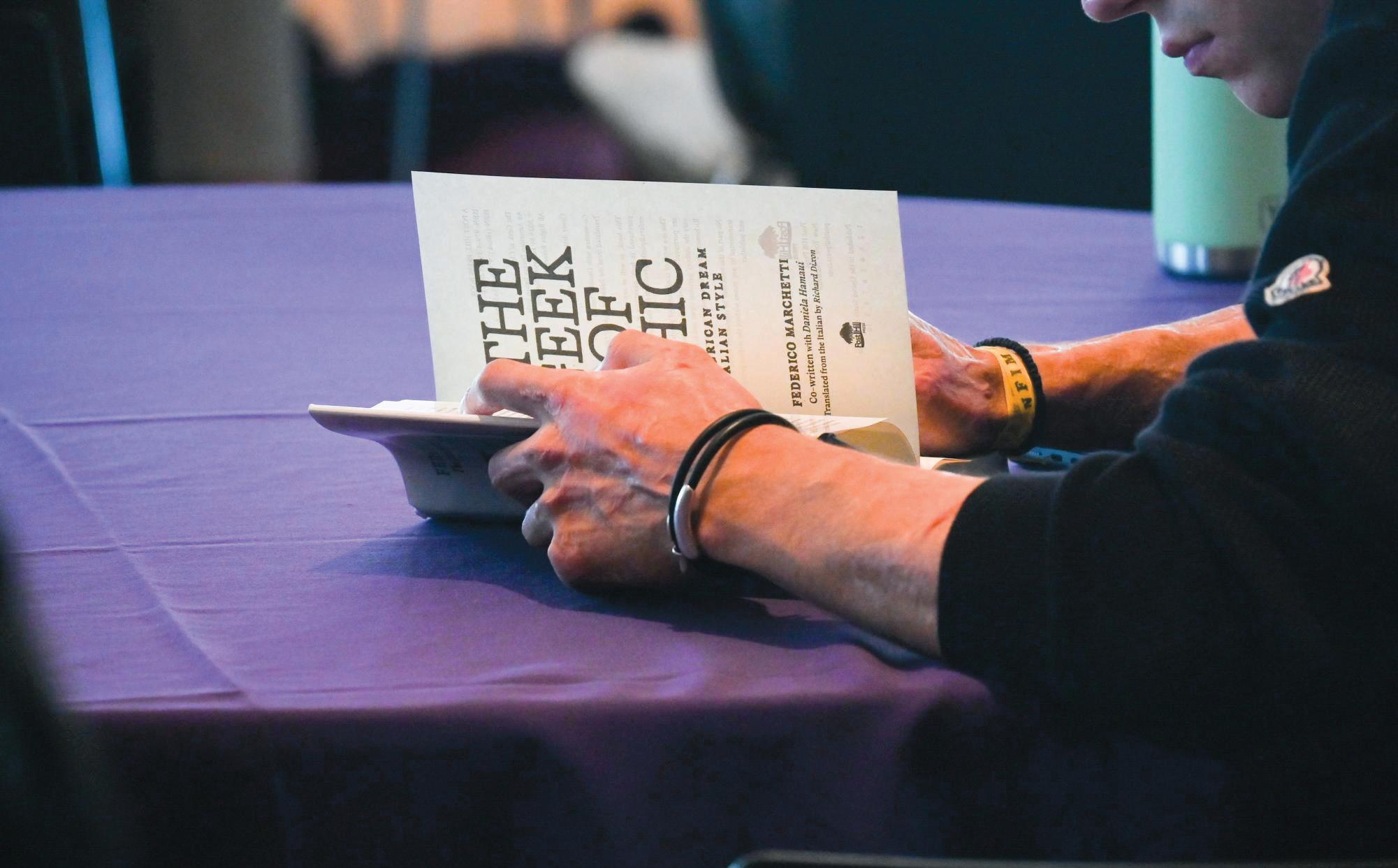
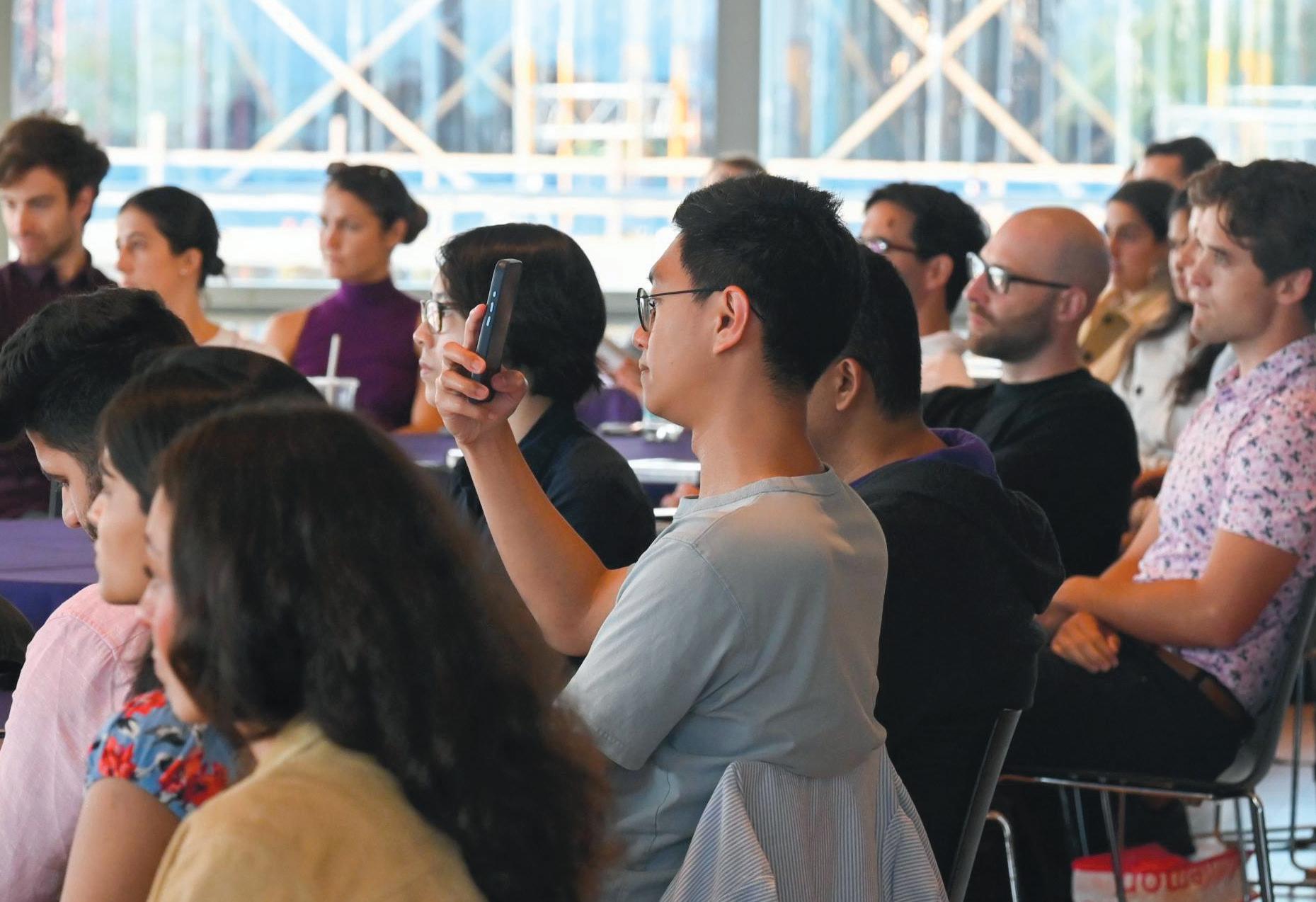
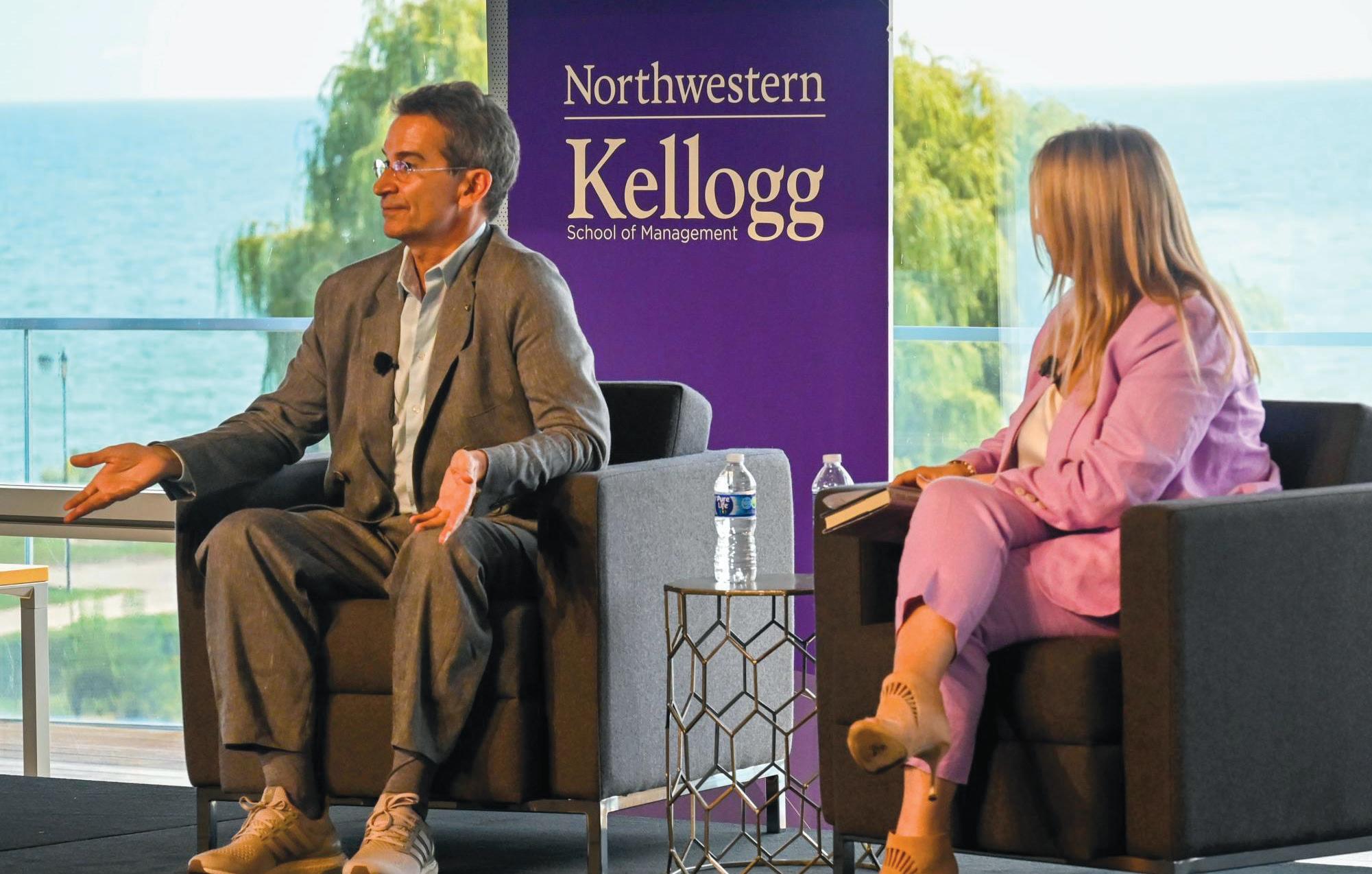
With fashion weeks taking over global capitals such as NYC, London, Milan and Paris, Marchetti released his best-seller, titled “The Geek of Chic: An American Dream Italian Style,” in the U.S on Sept. 9. On Friday afternoon, Marchetti spoke to approximately 200 Kellogg School of Management students about the book and provided insights into the tech and luxury industries.
The Daily sat down with Marchetti to discuss
his newly released book, prominent career highlights that shaped his life and advice for NU students wanting to kickstart their entrepreneurial journey.
This interview has been lightly edited for brevity and clarity.
The Daily: The inspiration and story behind YOOX’s name is quite fascinating. Were there other names in the running or any memorable stories at the start?
Marchetti: When I found out YOOX.com was available for $10, I thought it was just a sign of destiny. But it was also going to be my name because it had the end of the chromosomes and the DNA of technology. Everything I did for 20 years was along these lines of finding a balance between human and machine, which is in the name. It definitely was a blessing.
One of the first orders from YOOX was coming from some nuns from a monastery in Umbria, Italy. This monastery ordered some shoes from Miu Miu. We emailed them and said “We’re gonna send you the shoes for free.” They responded with, “Thank you so much. We pray for your success.” So, everything went so well.
The Daily: Arguably, YOOX is the blueprint of fashion e-commerce. How did your Italian roots flourish in making YOOX a recognizable name in the industry?
Marchetti: YOOX is really an American dream, the Italian style because I don’t think that someone in Silicon Valley would have come up with something similar to this. What I tried to do was to combine American innovation like commerce processes and customer service with Italian creativity and culture through collaborations in order to surprise the customers. We are the ones that discovered JW Anderson, launched vintage in 2001 when nobody was talking about it. We featured art with Takashi Murakami doing a special edition for us.
I think it worked very well because the
customers loved mixing art with fashion and design. It definitely helped a lot being an Italian talking to professionals. It’s obvious for proximity in terms of geography, but also for proximity to the culture.
The Daily: One quote from your book that stuck with me was: “The American dream was just one step away, I had only to achieve it.” In the position you are now, has the American dream changed for you?
Marchetti: No, I think the American dream will always be the American dream for everybody in the new generation because of what can happen in America. For example, in Italy, if you are born poor, there’s a great probability that you stay poor. You don’t become rich or successful. In America, it’s a land where you can make it if you have a great idea, imagination or if you come up with something as the first one. I think it’s still the country where you can make it.
The Daily: As the first non-family member of the Giorgio Armani Board of Directors, what did it mean for you that Mr. Armani wrote the foreword, especially after his passing?
Marchetti: I’ve known Mr. Armani 30 years before I became an entrepreneur and always admired him because he was the creative director, but he was also the businessman. He was the only one who combined, which is incredible. When he asked me to sit on his board as the
only non-family member, it obviously was a great honor. I tried to help him a lot on the sustainability part with an amazing project. I came up with the idea of producing organic regenerative cotton in Italy two years ago. In his honor, the product, which is the iconic Giorgio Armani blue t-shirt he wore every time when he closed a show, is now in the boutiques. So it’s amazing that Mr. Armani wrote the foreword.
The Daily: Why bring “The Geek of Chic” to the U.S. now, especially during New York Fashion Week?
Marchetti: I started from the “Italian Style” because I’m Italian and it’s been an unexpected best-seller in Italy. To finish my mosaic with the “American Dream” side, that’s why I came to America. At this point, the “American Dream Italian Style” is accomplished. Mission accomplished.
The Daily: What would you say to NU students early in their journey of entrepreneurship or innovation?
Marchetti: Take risks. You will find your luck by taking risks and everything is possible. If I made it with no contacts, no technology, no fashion and ended up working with the King of England, it means that everything is possible. You just need to dream it and also take all the possible gifts in order to be there.
a.hernandez.gonzalez@dailynorthwestern.com
Editors
By REGAN HUIZENGA daily senior staffer @reganmichele215
The Block Museum of Art debuted 34 edition prints and working proofs by Helen Frankenthaler on Wednesday in its “Pouring, Spilling, Bleeding” exhibition.
The pieces were gifted to the museum by the Helen Frankenthaler Foundation. The Block was one of 10 university museums to receive the prints in 2023 — along with a $25,000 grant — as part of the foundation’s Frankenthaler Prints Initiative.
Frankenthaler was a well-known 20th-century American artist often recognized for her “soak-stain” technique when painting. She also experimented with other media, including printmaking.
The exhibition was curated by Academic Curator Corinne Granof and 2024-2025 Block Museum graduate fellow Stephanie S.E. Lee.
Both Granof and Lee were already familiar with Frankenthaler’s work, although more so with her paintings than her prints.
“I certainly had a passing familiarity with her work, but having this opportunity over the past year to learn more about her practice and her connections and her openness to experimentation, it has just been so impressive,” Granof said.
The first section opens with works from Frankenthaler’s circle and network. The next section, “Divertimento,” features working proofs, trial proofs and a cancellation print illustrating the process behind the final “Divertimento” print.
Another section, titled “An Eye Toward East Asia,” focuses on artists who, similar to Frankenthaler, turned to East Asian art for inspiration. The final section shows an intergenerational network of artists who have been influenced by Frankenthaler.
The curators spent a few days in the foundation’s archives in New York to further research both Frankenthaler’s personal life and career.
There, they found handwritten business notes by John Hutcheson, who worked with Frankenthaler on “Divertimento.” The notes included information about phone calls with Frankenthaler, supplies that were purchased, the time it took to mix different shades and
more, Lee said. These details helped Granof and Lee understand the process behind the prints.
The two also learned more about Frankenthaler’s network while researching for the exhibition. Alongside Frankenthaler’s own work, “Pouring, Spilling, Bleeding” also features work by some artists close to Frankenthaler.
The exhibition is made up almost entirely of works from the Block’s own collection, which is not always the case, according to the museum’s associate director of communications, marketing and digital strategy, Lindsay Bosch.
“Our collection has a rich background of work in abstraction, of people who worked with Frankenthaler, of her contemporaries, and so we had a lot already existing that could speak to these works,” Bosch said.
Granof and Lee decided that the show would be centered around experiments, accidents and innovation, as Frankenthaler’s work embraced the idea of process and experimentation.
Frankenthaler described her approach as “pouring, flooding, spilling, bleeding” — which is where the exhibition got its title, Granof said.
As they started the curation process, Granof and
Lee made a list of about 200 works from the Block’s collection to look through, Granof said.
“It was really important for both of us to be able to see the works on the table next to each other to see what kind of effect they bring about,” Lee said.
The Block will host a series of public programs during the exhibition’s stay, including a keynote lecture and a panel of contemporary artists.
Even without the programming, Granof said she thinks the exhibition’s story will be evident to viewers. The story comes across visually, she said, and can be understood without reading a single label in the exhibit.
“Pouring, Spilling, Bleeding” opened Sept. 17 and will run until Dec. 14.
Above all else, Granof hopes the exhibition will help viewers appreciate Frankenthaler as an artist, while Lee said she hopes it helps viewers appreciate the medium.
“I want people to fall in love with works on paper,” Lee said. “I would love for people to see the show and take away the infinite possibilities of what you could do with the medium.”
r.huizenga@dailynorthwestern.com
By LUCAS KUBOVCHIK, CLAIRE COFFEY and RAKSHA JAYAKUMAR
Content warning: This story contains mentions of violence and sexual assault.
An eager crowd packed into Shanley Pavilion for Sit & Spin Productions’ final performance of Mara Nelson-Greenberg’s 2018 play “Do You Feel Anger?” on Saturday night.
And rightfully so — Sit & Spin’s take on the piece was passionately directed and left audiences with an empathetic outlook on abuse in the workplace and beyond.
“Do You Feel Anger?”, Sit & Spin’s New Student Week show, is the first student production of the 20252026 school year. It ran four times across Friday and Saturday.
The performance was prefaced by a content warning issued by the show’s director and producer,
Communication senior Georgia Mann and McCormick junior Will Boyle, respectively. This announcement was co-sponsored by Northwestern’s Sexual Assault and Peer Educators program, as the show depicts sexual violence, abuse and gore.
This warning was accompanied by a reminder that the actors would mirror audience reactions, developing a relationship between cast and crowd. The show continued to build on this connection during each pivotal moment, creating an environment that left viewers questioning how they see the world around them.
“Do You Feel Anger?” follows Sofia, a bright-eyed empathy coach attempting to teach a male-dominated office of debt collectors emotional intelligence. Played by Communication sophomore Juno Azuz Zacher, Sofia sets out with a clear sense of self as she refuses to submit to men and pledges to stand up for the effervescent Eva, an employee trapped in a cycle of violent muggings.
Sit & Spin’s New Student Week show is the first student production each year.
However, as the show progresses, Sofia slowly loses sight of her values and promises as she is folded into a world of corporate apathy, a development which Zacher conveyed with eerie effortlessness. The audience loses faith in Sofia as she turns her back on sisterhood to become a male sympathizer.
By exploring modern office dynamics through absurdity and painfully blunt dialogue, “Do You Feel Anger?” dissects the systematic silencing of women’s pain in the modern workforce.
Sofia’s and Eva’s struggles with murderous ex-boyfriends, a boss in disbelief over the science of period symptoms and male-coworkers constantly fluctuating emotions illustrate how distractions and humor can be used as a coping mechanism when there are no other options.
“I think the biggest part, for me, is … how complicit we (have) become in these structures of power,” Mann said about her directorial debut. “Obviously, it is hyperbolized in the play, but a lot of the actions the characters take are things that are happening day to day.
Making the audience watch that and confront that is really important to me.”
Sofia’s capitulation to her office’s toxic work environment eventually pushes her towards a total breakdown in the show’s finale. It is only then that she sees just how much the culture unknowingly affected her and the other female employees she left hanging. Sofia’s release captures a core aspect of workplace abuse that “Do You Feel Anger?” seeks to portray.
“We should be progressing as a society and not falling back into cycles of hatred,” Mann said. “It’s really empathy at the end of the day that I think has become more and more necessary.”
As cast members took their final bow, the actors encouraged the audience to reflect. If they had felt anger, like the play’s title suggested: Where did it come from?
lucaskubovchik2029@u.northwestern.edu clairecoffey2029@u.northwestern.edu rakshajayakumar2029@u.northwestern.edu
By CLARA MARTINEZ daily senior staffer @claramart1nez7
During the European Renaissance, Dutch philosopher Desiderius Erasmus professed, “Women. Can’t live with them, can’t live without them.”
It’s a funny sentiment, but it seems to be transforming into an all-too-true reality of even the coziestlooking romantic comedy. In fact, with the genre’s current scope, Erasmus’s quote should just be: “Men. Can’t live.”
Over the summer, two romantic movies revolving around a male love interest’s terminal illness became streaming successes.
In “My Oxford Year,” Sofia Carson plays Anna De La Vega, an American student spending a year abroad at the University of Oxford in England. De La Vega has a typical rainy day meet-cute with a local British stud who drenches her in sewer water with his vintage car,
but things go south as she becomes more and more invested in his secretive health issues.
Prime Video’s “The Map That Leads to You” also begins with an endearing (and slightly nauseating) first encounter against the steamy backdrop of Barcelona, Spain. Starring alongside Madelyn Cline, KJ Apa plays Jack who has been diagnosed with terminal leukemia. In the limited time he has left on Earth, the couple decide to explore Europe because, well, why the hell not.
Despite high streaming numbers — “My Oxford Year” hit No. 1 in 75 countries on Netflix — neither movie was well-received by critics. Even with the backing of major production companies and the allure of foreign romance, both fell short of attaining above 40% on Rotten Tomatoes’ Tomatometer.
Both films rely on inevitable death as an anchor of emotional depth, which is simply ineffective. There is a profound lack of substance in what brings the couple together in the first place; they almost immediately seem soul-tied as sympathetic caregivers, rather than
as individuals brought together by real love.
These movies are a continuation of recent titles labeled under the guise of a romantic comedy. Last year, “We Live in Time,” starring Andrew Garfield and Florence Pugh, kept the laughs up until about halfway through, when impending doom inevitably took over.
Having grown up with films like “When Harry Met Sally” and “10 Things I Hate About You,” I thought that the worst thing that could happen in a rom-com was for the couple to break up.
“La La Land” proved that there are worse possibilities: for one, a torturous, post-breakup flash-forward illustrating a rose-colored alternate reality.
Similarly, Tom’s trials in “(500) Days of Summer” bear resemblance to a horror film as he ruthlessly pursues who he believes to be the love of his life, a truly agonizing hour and a half of the male gaze.
But while “La La Land” and “(500) Days of Summer” don’t leave audiences with the warm fuzzies of, say, a John Hughes flick, they carry messages about the complexity of dating and commitment.
I can’t say the same about many of the so-called “rom-coms” that premiered in the last couple of years. Instead, it feels like someone is sitting next to me with a box of tissues, asking me to cry, or else. God forbid I want to wind down on a Wednesday night, laugh and yearn for a bookstore meet-cute overlaid with an eighties synth-pop soundtrack.
Nora Ephron has directed two of the top 20 highestgrossing rom-coms of all time, “Sleepless in Seattle” and “You’ve Got Mail” and was a screenwriter for the 1989 hit “When Harry Met Sally.” In her commencement address to Wellesley College in 1996, she said, “Above all, be the heroine in your life, not the victim.” Perhaps heroine is a strong word for the lovestruck protagonists that play out on the big screen, but there is something to be said about the importance of strong characters and plot to maintain the dignity of the romcom genre. After all, Harry didn’t meet Sally just to die a year later; it took him 12 years to get the girl. claramartinez2028@u.northwestern.edu
By MAYA WONG daily senior staffer @mayawong
Where else can you find people twirling on hanging silks, flipping on trapeze bars and practicing stage combat — other than The Actors Gymnasium?
Located in the Noyes Cultural Arts Center, The Actors Gym is a nonprofit circus and performing arts training center that offers classes for nearly all ages, ranging from introductory levels for young children to professional two-year training programs for aspiring circus performers.
Founded in 1995, The Actors Gym celebrated three decades of circus in Evanston on Friday at its 30th Birthday Bash, held at Tallmadge Park.
The event featured a special guest performance from Midnight Circus, a professional circus troupe that tours public parks in the Chicago suburbs. Co-founder and Communication Prof. Sylvia Hernandez-DiStasi was part of the original cast, and she reunited with her longtime friend and former colleague, Midnight Circus co-founder Jeff Jenkins, to bring spectacle and excitement to the Birthday Bash.
Inside a remarkably large circus tent, Midnight
Circus awed attendees with flips and tricks that seemed to border on the impossible.
“It’s so lovely to see these two really pivotal pillars of the Chicagoland area circus world together,” said The Actors Gym’s production manager Erin Hollway. “Acknowledging that we both as organizations have grown up together and celebrating each other’s existence and accolades and exquisite talents.”
Because The Actors Gym could not celebrate its 25th anniversary due to Covid-19, marketing manager Alice Wu said, a large celebration this year has been in the works for a while. She said planning began about six months ago — and for most, it was a success.
“It was just a night of joy and revelry and celebration of the things that The Actors Gymnasium has brought to the circus community in the Evanston and greater Chicago area,” Hollway said.
Hernandez-DiStasi co-founded The Actors Gym three decades ago alongside Carlyle Coash (Communication ’90), Lawrence DiStasi (Communication ’87) and theatre critic Tony Adler.
As a second-generation circus performer who grew up in a troupe and previously performed in Ringling Bros. and Barnum & Bailey Circus, Hernandez-DiStasi is the only founder remaining at the circus school. The Actors Gym was originally founded to expand
actors’ skillsets by offering courses in gymnastics, aerial apparatuses, juggling and more. About five years into running, Wu said the gym began offering stage combat classes where participants can take tests to become certified in using a certain weapon onstage.
Over time, The Actors Gym pivoted to mainly specialize in circus skills. Its aerial classes are the most popular, teaching students how to use aerial silk, trapeze, lyra (or aerial hoop) and Spanish web.
“That’s what everybody wanted, especially when we first opened. Cirque du Soleil was really huge,” Hernandez-DiStasi said.
Along with courses for children, teens and beginner adults, The Actors Gym offers a unique two-year ProTraining program intended for performers who want to pursue circus full-time and actors who want to enrich their acting toolkits. The intensive program requires participants to practice five days a week from 9 a.m. to 4 p.m. and instructs them in almost every facet of circus.
Hollway completed the ProTraining program in 2023. She said she jokes that she has a “master’s degree from clown college,” describing the program as a fulltime education in circus.
The Actors Gym produces over ten shows a year, including showcases in a talent show-like format and
productions that Hernandez-DiStasi said are “circus with a little bit of story.”
Wu, the marketing manager, said she hopes that these performances not only entertain, but influence as well.
“If we do something on stage that inspires someone to take a risk, or take a class and do something that feels maybe a little scary that they maybe wouldn’t do before, to me, I think that’s so worth it,” she said.
The Actors Gym’s 30th Birthday Bash saw three decades of former students and their families and friends walk through the tent. Many of these attendees started practicing circus for fun and exercise in grade school; others joined The Actors Gym to prepare them for a future profession.
Having mentored these students since the very beginning, Hernandez-DiStasi has watched individuals, friendships and relationships blossom. She’s even officiated multiple weddings between students.
“It’s the people that come through,” HernandezDiStasi said. “It’s the connections that you make, it’s the friendships. I feel like I’ve raised thousands of children.”
m.wong@dailynorthwestern.com
By JANELLE MELLA daily senior staffer @janelle_mella
The transition from high school to college can be overwhelming, especially when it means moving states away from home and suddenly being surrounded by unfamiliar faces. For many Northwestern freshmen, the first few weeks come with feelings of imposter syndrome and the pressure to figure everything out right away.
But students are finding ways to work through that early uncertainty by keeping a positive mindset, connecting with people who share their interests and finding outlets beyond campus to alleviate stress.
Much of that process begins during Wildcat Welcome — a packed week of orientation events meant to help students get settled into life at NU. It’s a mix of meeting new people, learning about the campus community and getting a first taste of NU traditions.
But once orientation ends and classes start the following week, the stress can start to creep in.
“It was really overwhelming to start over,” Medill freshman Carly Ellermeyer said.
Coming from a “fairly small” public school in New Jersey, Ellermeyer was used to knowing most of her classmates and being involved in several clubs and leadership roles. Now, entering a larger school, she described the transition as going “right back to the bottom,” having to readjust to not knowing anyone and join entirely new clubs.
It was also a shift, she said, to be surrounded by so
By LUCAS KUBOVCHIK
the daily northwestern @lucaskubovchik
In late August, Medill announced undergraduate journalism students will no longer have access to Adobe Creative Cloud through their school emails, except during quarters they are enrolled in a journalism course that requires Adobe software.
Adobe Creative Cloud is a collection of over 20 software including Photoshop, Lightroom, Premiere Pro and Illustrator.
“It really came down to mostly a financial decision because the cost of the Adobe contract was increasing significantly, and with the current state of financials at Northwestern, we’ve all been asked to cut back (on) expenses,” said Medill Prof. and Executive Director of Multimedia, Technology and Innovation Ivan Meyers.
Meyers said licenses are either assigned to an individual or a device. Previously, all Medill students had access to an individual license, but now they must access the program through a device license at designated spots on campus.
Prior to the change, all Medill students had access to Adobe through their University-issued Google account, accessible on any device.
“Since I’ve been at Northwestern, all Medill students have had free access to the entire Adobe Suite,” Medill junior Victoria Ryan said.
Medill began offering unlimited Adobe access to students mid-2020 due to access concerns during the COVID-19 pandemic, Meyers said. Before this, only students enrolled in a journalism course that required the software had access, making the change a return to a previous policy, Meyers explained.
For students like Ryan, who has finished her required Medill classes and is not enrolled in a journalism course this quarter, she said this change is an obstacle to her career goals.
“Video journalism is a big part of my academic journey here,” Ryan said. “(The change) has a big impact because it really limits my access to these products and makes it harder for me to do video reporting on my own time.”
Other students, like Medill senior Jessica Watts, worried that for students living on North Campus with limited time due to classes, their access will be further restricted by distance.
“They’re not gonna have time to come all the way South, to go to (McCormick Foundation Center) and use the computers, then go all the way back,” she said. Watts also expressed concern about the change limiting Medill students professionally, noting that many employers look for people with experience using technology like those offered by Adobe.
Without Adobe access on their own devices, Watts said students are at risk of not appearing as competitive as their more familiar peers.
“Not being able to say that we’ve been able to use and master these resources, at least as much, is really going to hurt a lot of people in the long run,” she said. lucaskubovchik2029@u.northwestern.edu
many students who highly prioritize academics. Ellermeyer said she felt like her peers were already far along in their academic paths and more experienced in their fields.
But she has since found ways to move past those feelings of imposter syndrome.
Rather than comparing herself to others, she’s learned to embrace her own strengths.
“Everyone is a different kind of smart,” Ellermeyer said. “Even if you’re not textbook intelligent, people have skills here that I would have never imagined.”
She said she’s made some friends, but is still looking forward to meeting more people through shared interests — something that’s worked well for others.
Weinberg freshman Carissa Ye said she didn’t have to put much effort into branching out at her small, allgirls private high school. Arriving at NU, Ye said she was suddenly thrown into a much larger environment.
She’s come to learn that finding people with similar interests and people she can recognize in classes or clubs has helped with that.
“It’s always nice to be able to see a familiar face in a huge lecture,” Ye said.
She met many of those familiar faces through her peer adviser group — a cohort of about 14 students from her undergraduate school, led by an older student — that students are placed into during Wildcat Welcome.
Ye added that attending dorm events and getting to know people on her floor has also played a big role in helping her feel more settled.
“(Events) at the residential college have been a very big part in me feeling more comfortable and feeling
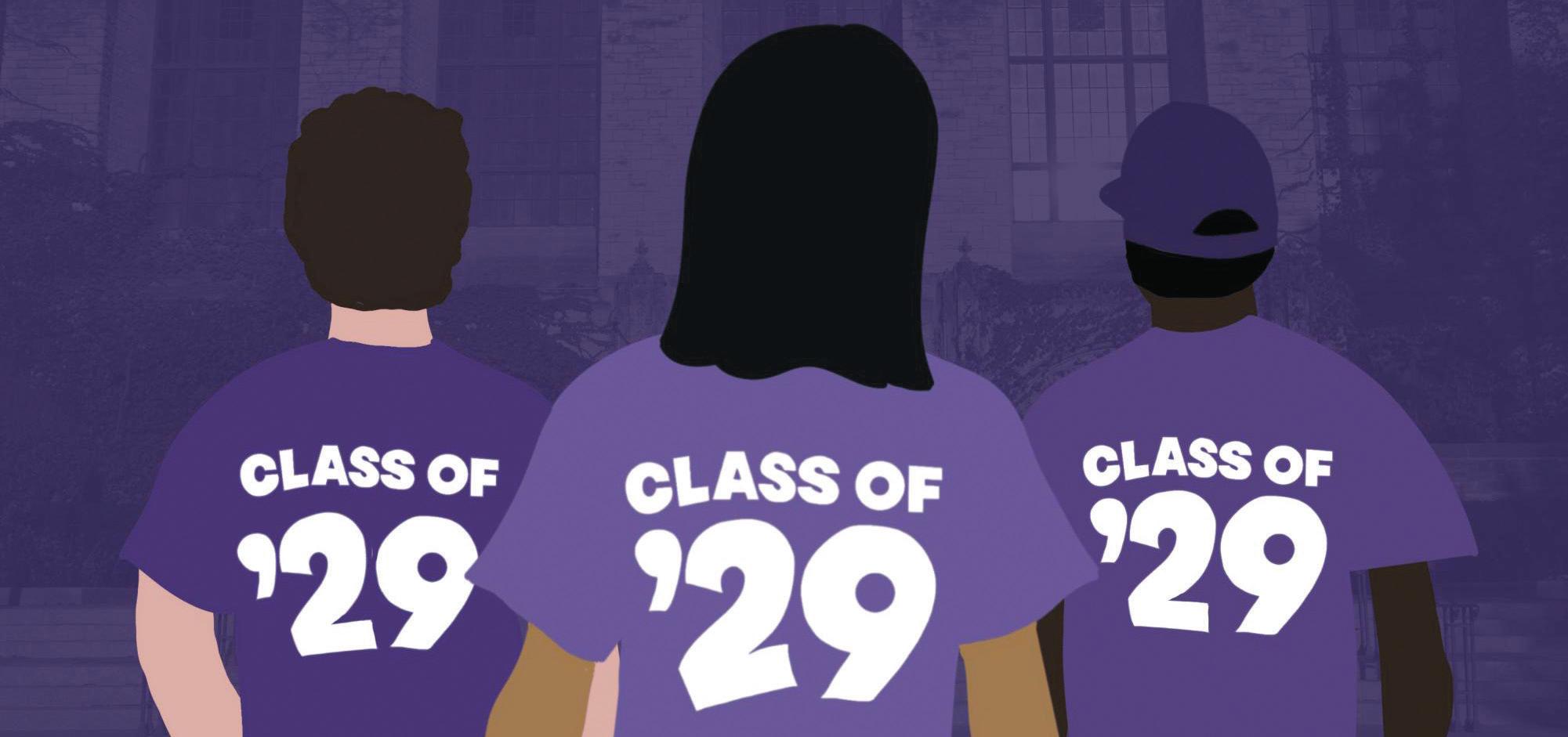
Some freshmen have found that making friends with those who share similar interests has helped them get through the first weeks of college.
more at home,” Ye said.
McCormick freshman Nathaniel Allen said putting himself out there and being open to different activities on campus has helped him find those connections as well.
Allen said the stress started to build as classwork piled up during the first week, but staying active and spending time outside has helped him keep a positive mindset amid the pressure.
“I was trying to stay outside, just stay out of my dorm,” Allen said. “I want my dorm to just be a place where I rest.”
He’s found small ways to explore campus and city life, creating a list of “side quests” to keep his college experience fun. His list includes biking along Lake Shore Drive and checking out museums in Chicago. Allen said he’s still in the early stages of his freshman year and doesn’t have everything figured out yet, but is confident things will get easier with time.
His advice for other freshmen?
“Trust me, it’s going to be okay,” Allen said”
j.mella@dailynorthwestern.com


5 key stats to keep in mind for Saturday
By ALEX BOYKO daily senior staffer @aboyko_nu
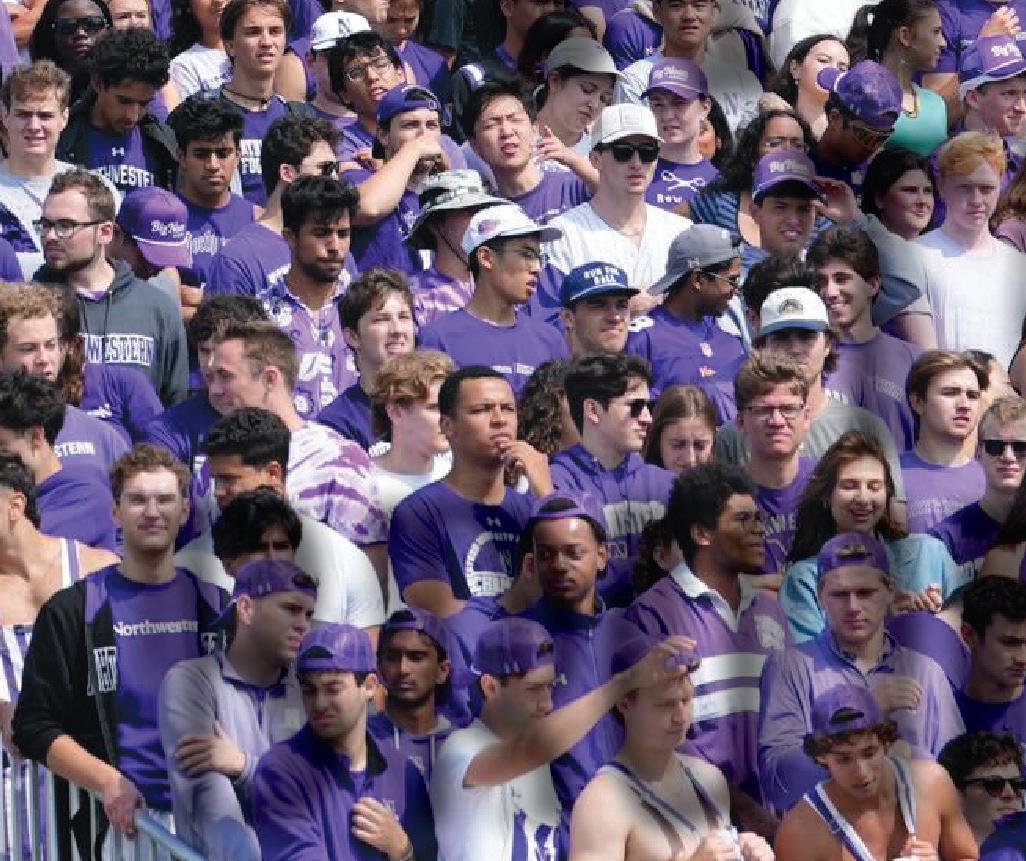
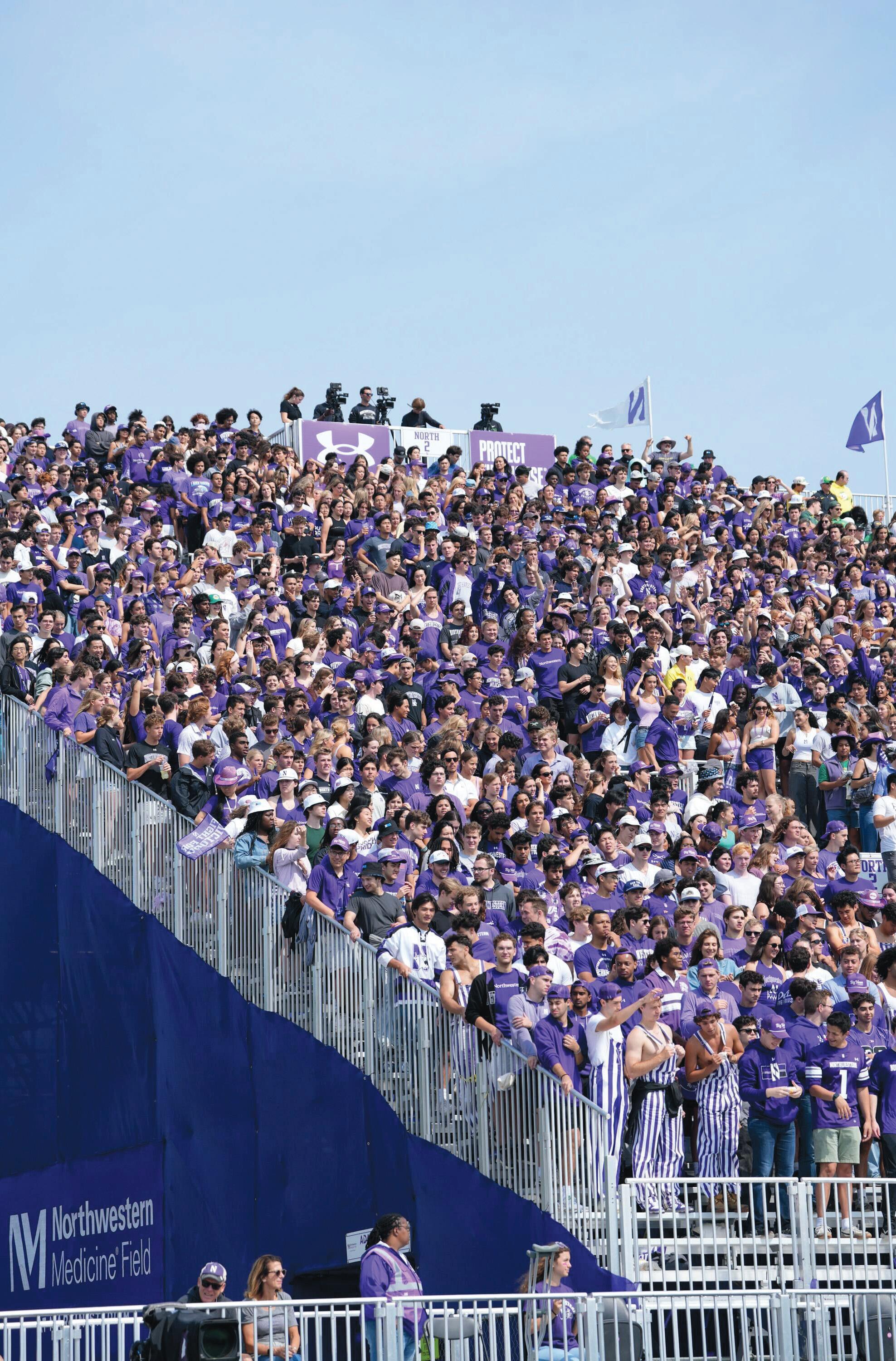
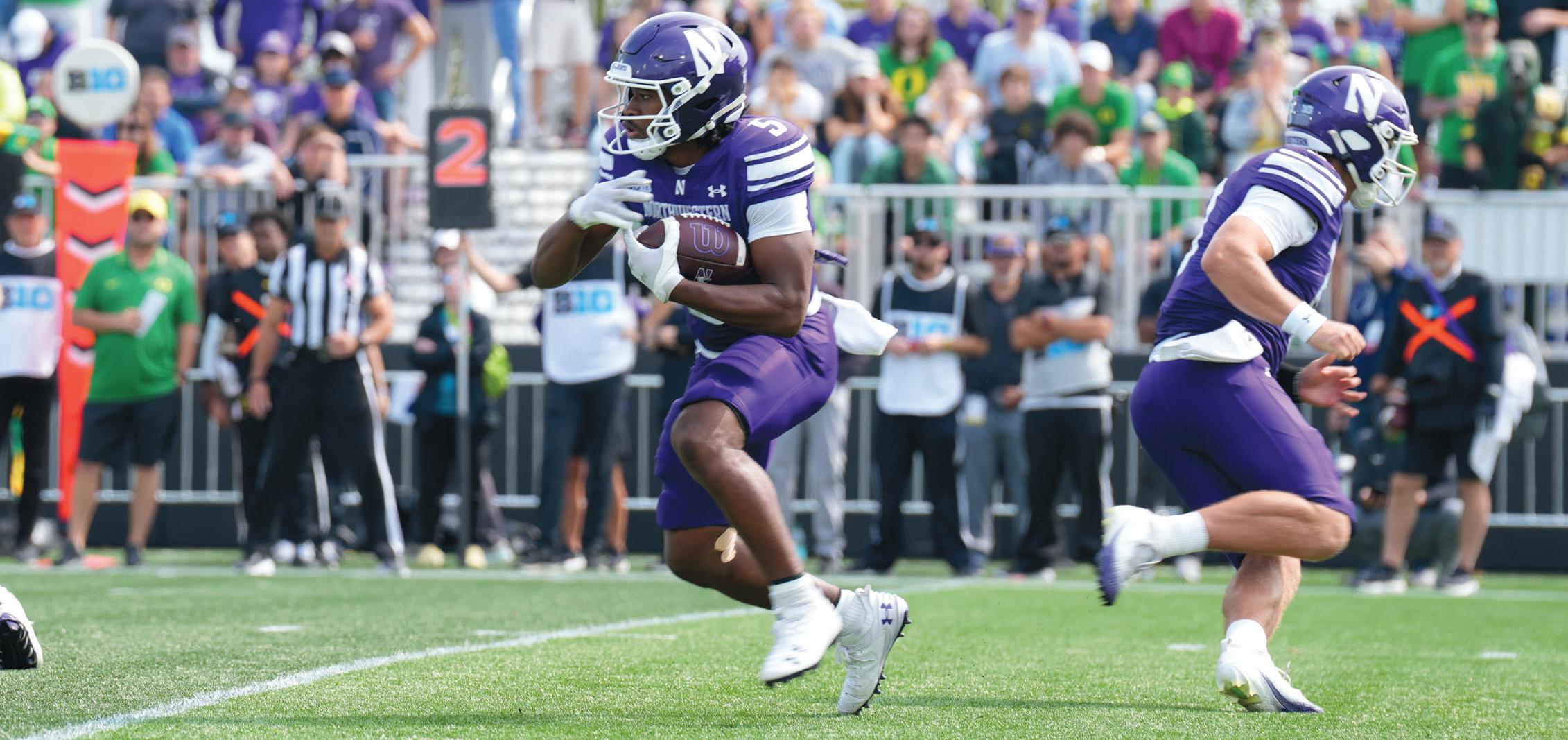
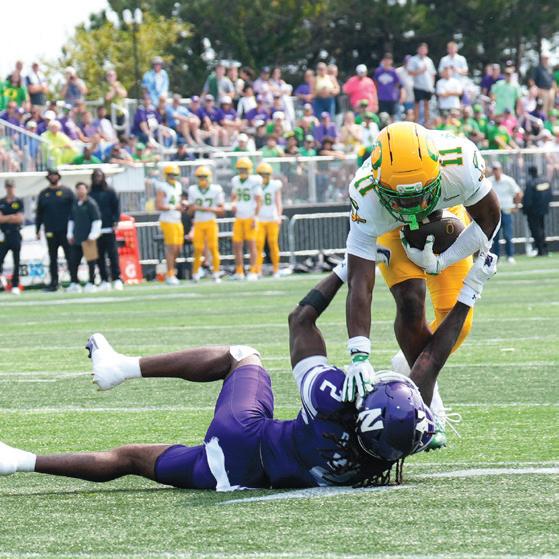
It’s been a long week without Northwestern football. Eleven days ago, FOX’s Big Noon Kickoff had its first ever broadcast from Evanston ahead of a Wildcats’ (1-2, 0-1 Big Ten) defeat at the hands of the then-No.4 Oregon Ducks.
The nationally-televised event drew in a rowdy crowd that brought buckets of energy to the Lakefill. But in the days since, with an NU bye week coinciding with the start of Fall Quarter, that buzz has quieted down.
After the brief hiatus, the ’Cats return to action at home against UCLA (0-3, 0-0 Big Ten) Saturday afternoon.
Whether you are a NU sports junkie, need a refresher after the bye week or are new to the scene altogether, here are five things to keep an eye on ahead of the ’Cats game against the Bruins:
1. Negative plays on defense
Both defenses have struggled at the point of attack this season. The Bruins’ 1.67 tackles for loss per game is the worst among FBS teams and, if it holds, would be the lowest mark of any Big Ten team since Sports Reference started tracking the stat in 2005. The ’Cats are currently ranked 2nd worst among Power 4 teams, ahead of only UCLA, with 3.33 per game.
These totals include both teams’ efforts to disrupt their opponents with both their run defenses and pass rushes, where the two have especially struggled, with UCLA notching just two sacks and NU recording three in three games each this season.
Forcing negative plays is crucial to a defense’s success, and that impact is magnified by both teams’ struggles on the other side of the ball this season. However, both teams have also evaded negative offensive plays at a high level, residing
within the top third of FBS teams this season in tackles for loss allowed.
A strong showing in the trenches from either squad could go a long way in determining the outcome of this game.
2. Impact of the run game
The ’Cats’ ground game has been the team’s engine so far and faces an advantageous matchup against a Bruins’ defense that is among the worst in both rushing yards allowed and yards per carry this season.
NU’s rushing attack has an advantage in the duel against UCLA’s rushing defense, and the coaching staff has shown it is willing to pound the rock against weaker opponents, with 41 attempts against Western Illinois earlier this year.
Given the circumstances, both redshirt sophomore running back Caleb Komolafe and redshirt junior running back Joseph Himon II should have double-digit touches for the fourth straight game.
3. 2nd down struggles
Despite NU’s struggles on offense, the team has excelled on 1st down so far. It’s what happens later that’s caused so many issues.
According to ESPN’s EPA model — a metric of
PASSING
Preston Stone
51-of-86, 541 yards
6.3 YPA, 3 TD, 6 INT Dallas
Nico Iamaleava
62-of-97, 608 yards
6.3 YPA, 3 TD, 3 INT Long Beach, California
RUSHING
Caleb Komolafe
36 carries, 150 yards
4.2 YPC, 1 TD Katy, Texas
Nico Iamaleava
30 carries, 139 yards
4.6 YPC, 1 TD Long Beach, California
1.67
UCLA tackles for loss per game
Worst among FBS teams ... but NU does little better with 3.33 per game.
offensive efficiency that estimates how many more points a team is expected to score on a drive given the result of the play — NU ranks third lowest among all Power 4 teams for its average contributions from 2nd down plays.
While turnovers have been a consistent issue, struggling to maintain a rhythm in the passing game has been the primary culprit for this problem. Graduate student quarterback Preston Stone has completed just half of his 2nd down passes across the team’s three games this season, recording 130 yards, no touchdowns and two interceptions.
4. Following up on good plays
While difficulty establishing a rhythm pops up in the 2nd down data across all three contests, it’s been apparent to coach David Braun and his coaching staff since the Tulane game.
The ’Cats’ offense has particularly struggled to string positive plays together. After a negative play — meaning one with a negative EPA — NU responds with a positive one 51.4% of the time, the 10th highest rate in the country. After a positive play, that number craters to 36.7%.
That dip in efficiency is the 2nd worst of any FBS team. Luckily for the ’Cats, facing UCLA might be just what the team needs to stabilize those numbers. Following a positive play by their opponents, the
RECEIVING Griffin Wilde 15 receptions, 213 yards 14.2 YPR, 0 TD Sioux Falls, South Dakota
Kwazi Gilmer 16 receptions, 174 yards 10.9 YPR, 0 TD Los Angeles
Bruins allow another 57% of the time, the most in the country by a wide margin.
The run game will likely shoulder the offensive load, but NU needs to find a way to complement it with a consistent passing attack to stay ahead of the sticks.
If the offense is going to stack positive plays together and hit on a higher percentage of its earlydown throws, this is the game it should happen.
5. Consistency under center
For both Stone and the ’Cats, completing more than 60% of their passes seems to be the magic number — in games where he has thrown the ball at least 10 times, Stone is a perfect 9-0 when he hits that mark, versus 4-5 when he falls below it.
During Braun’s tenure, NU has only lost one game where it completed over 60% of its passes — last season’s matchup against Indiana. The ’Cats’ splits over the past three years of a 10-1 record in games above the 60% mark and 3-14 in games at or under it speaks for itself.
This is not a causal relationship, winning teams tend to complete their passes, but the sharp decline speaks a bit to the identity of what a winning, Stone-led NU looks like.
Neither he nor the team are built to succeed in high-variance offense, which sacrifices rhythm for big-play potential. But if the two can maintain a stable attack together, the results are historically favorable.
NU’s upcoming game against UCLA is a good opportunity to establish down-to-down consistency through the air, with the Bruins allowing a 75% completion percentage so far this season. Stone currently sits at a 59.3% clip both this season and for his career, just eight completions from bumping both north of 60%.
At the end of the day, the numbers on the stat sheet don’t win games, but ones like these are good to keep an eye on.
alexboyko2026@u.northwestern.edu
TACKLE
Robert Fitzgerald
15 solo, 12 atk
27 tot tackles Dallas
Isaiah Chisom
17 solo, 20 atk
37 total tackles Santa Clarita, California
By ANNA WATSON daily senior staffer @adub_sports
For the rst time since the Big Ten expanded in 2024, Northwestern will try its hand against one of two California joinees Saturday a ernoon. e Wildcats (1-2, 0-1 Big Ten) will host UCLA (0-3, 0-0) this weekend with both teams coming o a bye week following decisive defeats.
“Last week was really productive,” coach David Braun said during his weekly press conference Monday. “Challenged our team for urgent daily improvement. I thought we accomplished that mission throughout the week.”
In its last showing NU fell 34-14 to then-No. 4 Oregon, as graduate student quarterback Preston Stone’s o ense hardly showed promise. On the West Coast, the Bruins red their head coach DeShaun Foster a er losing all three of their nonconference games this season.
Saturday serves as an important game for both Big Ten bo om dwellers as they look to get back on track.
“Now the challenge ahead is to take that improvement that we made last week and start stacking on that improvement as we o cially get into UCLA week,” Braun said.
With the ’Cats looking forward to one of the most favorable matchups of their conference slate, here are some key storylines to monitor this week:
Stone remains the man at quarterback rough three games this season, Stone has not been the life force the NU o ense hoped he would become. e former SMU quarterback has already turned the ball over seven times, and his six interceptions are the second most across FBS.
Braun and the NU sta made a change at quarterback a er two games in 2024 when then-graduate student transfer Mike Wright made way for then-redshirt sophomore Jack Lausch the week a er an overtime loss to Duke.
is season, Braun is in no such rush to make a change.
“Preston Stone is our quarterback,” Braun said. “… ere has never been a consideration of making a change at starting quarterback.”
Braun said the consistency Stone has shown during practice plays a part in the decision to leave him as the starter. Referring speci cally to the two games Stone has struggled in, Braun called a fourpick debut at Tulane an “extreme outlier” and said only one of the two interceptions against Oregon was on his starter.
If the ’Cats ever decide to go in a di erent direction, redshirt freshman quarterback Ryan Boe waits in the wings.
UCLA and its new Skipper present a unique challenge
e announcement that Foster was no longer the coach of UCLA came with the news that Tim Skipper would take over as interim head coach for the rest of the season.
Before his promotion, Skipper served as special assistant to the head coach. e interim coach role is not new to Skipper, who was Fresno State’s interim coach last season. He led the Bulldogs to a Famous Idaho Potato Bowl appearance.
Braun expressed his respect for Skipper Monday, recalling a time he worked a Colorado State camp when Skipper was out there and crediting the interim coach’s work last year.
“Heck of a football coach,” Braun said. “Incredible motivator, and UCLA will be playing their best football when they come into Evanston.”
Playing a team with a new leader presents some challenges, as there is no tape showing what UCLA is capable of with Skipper at the helm.
Braun said that Skipper prides himself on his teams playing with great fundamentals and e ort, so NU will have to stay on its toes.
“ e thing that we need to understand is take the tangible things that we’ve seen from their defense speci cally, be wise about making sure that our o ensive game plan is adaptable and adjustable to anything that they put out there and ultimately put our guys in a position to play really fast,” Braun said.
Defensive injury updates
e ’Cats’ secondary has been banged up to start the season. Redshirt sophomore defensive back Damon Walters — who earned an All-Big




By ANNA WATSON daily senior staffer @adub_sports
When Northwestern running backs coach Aristotle ompson rst introduced himself to his room during winter workouts, he didn’t focus on football.
He and his family have experience navigating the coaching world, so ompson knew that he had to have his players give him a chance to help them grow.
“(I was) asking them to give me an opportunity to open up my heart, open up my arms to them, to show them not only just how I do things, but how I will pour into them, how I will pour all of myself to them,” ompson told e Daily Tuesday. rough three games, it is safe to say that the Wildcat (1-2, 0-1 Big Ten) running back corps has allowed ompson to do his job.
While NU only rushed for 98.5 yards per game in 2024, through this point in the season, the ’Cats have averaged 178.3 rushing yards per game, a gure that ranks 10th among 18 Big Ten teams.
“We’ve been fortunate here to have, ever since I arrived … just an incredible presence and leadership in that running back room,” coach David Braun said during his weekly press conference Monday. “As I’ve said before publicly, I think ( ompson) is taking it to just even a whole other level.”
Saturday’s matchup against UCLA, a defense that allows the fourth most rushing yards per game in FBS, could give ompson’s guys further chances to shine. Ge ing to this point, though, has taken work and change.
Since his arrival in Evanston, ompson has seen improvement in his group’s understanding of their role and their “F.B.I.”, or football intelligence.
“They understand they have to do more,” ompson said. “ ey have to be the guys who can run the ball, the guys who can block, the guys who can catch, the guys who have to be more vocal at times, have to be a spark plug. ey’ve embraced that.”
Progression is especially evident in redshirt junior running back Joseph Himon II and redshirt sophomore running back Caleb Komolafe, who have had to step up following graduate student running back Cam Porter’s season-ending injury. Komolafe, who rushed the ball for 139 yards in 2024, has already rushed for 150 this season. His average is also up signi cantly, from 2.8 yards per carry a year ago to 4.2 yards per carry in 2025. ompson said that maturity has been a standout factor in Komolafe this season.
“What I knew about Caleb when I rst got here, Caleb was kind of a jokey, joke guy,” ompson said. “(Now), he’s dialed … A year ago, I don’t know if that was the case, so seeing him be intentional about the way that he steps into his growth, his own development, his own process to get through the day, is huge.”
In Himon, toughness is evident to ompson. Himon has accumulated 137 rushing yards through three games, a gure that is more than half of his 2024 total.
Saturday will provide a brand new challenge for the group. Even though the UCLA defense isn’t incredibly daunting on paper, the ’Cats cannot be sure they will see the version of the Bruins that’s on the tape.
In the time following its 35-10 loss to New Mexico, it parted ways with coach DeShaun Foster and defensive coordinator Ikaika Malloe. NU could very well see a di erent team come the weekend.
To prepare for the upcoming matchup, ompson isn’t focusing on the aspects of his opponent’s game he can’t control. It’s about what the ’Cats do.
“At the end of the day, they have guys on scholarship that are coming to play football just like we do, and they’re hungry to try to get a win in Big Ten play,” ompson said. “We have to do our part to make sure that we come out victorious and not worry about anything that’s going on in Los Angeles with them right now.”
Simply put, though, the Bruins haven’t been able to stop anyone. rough three games, UCLA has been outscored 108-43 by its opponents. Against New Mexico, the soon-to-be visitors allowed two running backs to rush for more than 80 yards.
From studying the Bruins, Himon thinks that he and his teammates could have a productive weekend.
“ ere will be a lot of big plays that can be happening at the second and third level,” Himon said.
“If we, as running backs, continue to trust our reads on the rst and second level, then it’s up to us at the second and third level to make those guys miss and create those big plays.”
For ompson, it doesn’t ma er who is on the other side of the eld. e level of excitement to go out there and play remains the same.
On Saturday, ompson said he wants his running backs to show their identity.
“We need to put it on tape so that other people will turn it on saying, ‘Oh, hey, this is what the running backs at Northwestern are about. is is how they play. is is their style of play. is is their demeanor,’” ompson said.
Ten Honorable Mention last season — has not been available through three games this season. Braun described Walters’ “so tissue” injury as “ nicky.” Braun said he is optimistic about his progression and that they will know more about his availability later in the week.
“When we get Damon back, we need to make sure that we have him back for the rest of the season,” Braun said.
Additionally, graduate student defensive back Garner Wallace and redshirt sophomore defensive back Josh Fussell both exited NU’s matchup against Oregon with injuries.
Braun said that he is optimistic Wallace will be back but characterized Fussell as more questionable for Saturday’s matchup.
annawatson2027@u.northwestern.edu

4-0, 2-0 4-0, 1-0 4-0, 1-0 4-0, 1-0
3-1, 1-0
3-1, 1-0
3-0, 0-0
3-0, 0-0
3-0, 0-0
2-1, 0-0 0-3, 0-0
3-1, 0-1
3-1, 0-1
3-1, 0-1
3-1, 0-1
2-2, 0-1
2-2, 0-1 1-2, 0-1


Gameday Editor
Anna Watson
Writers Alex Boyko
Andrew Little Kamran Nia
Audrey Pachuta
Gameday is a publication of Students Publishing Co. A two-page issue is published on the Wednesday prior to Northwestern road games and a longer issue is usually published on the Wednesday prior to Northwestern home games.
All material is © 2025 Students Publishing Co. Questions or comments should be sent c/o Gameday Editor Anna Watson, 1999 Campus Dr., Evanston, IL 60208.

































By MARISA GUERRA ECHEVERRIA and EDWARD SIMON CRUZ daily senior staffers @marisa_g_ech / @edwardsimoncruz
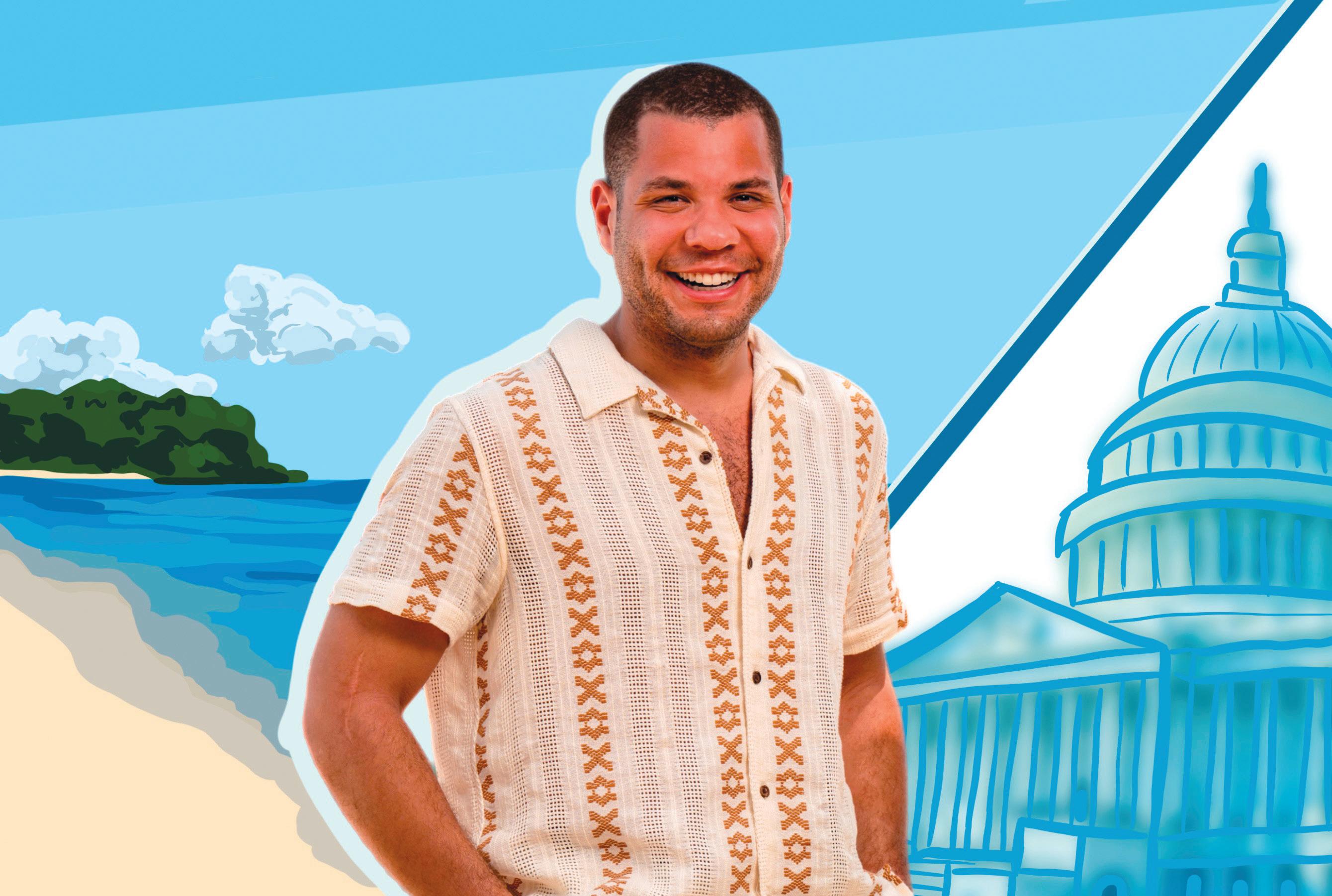
The day after Evanston native Alex Moore (Medill ’21) turns 27, millions will watch him scheme with, and against, his fellow castaways on the 49th season of the CBS hit reality show “Survivor.”
To celebrate the Wednesday premiere — and his birthday — Moore will return to the Chicago area and watch the show with people from various stages of his life, including high school teachers, lifelong friends and his family.
On the newest season of the popular unscripted series, Moore and 17 other contestants will fend for themselves in the wilderness, face challenges testing their physical abilities and vote each other out until a “Sole Survivor” takes home $1 million. Moore’s stint on “Survivor” was just his most recent leap of faith after he moved to Washington, D.C. soon after graduating from Northwestern in 2021. Building on two years of summer internships, he went to work for U.S. Rep. Jan Schakowsky (D-Evanston) of Illinois’ 9th Congressional District. A year after the move, he became Schakowsky’s communications director — one of Capitol Hill’s youngest.
But whether it was jumping headfirst into the D.C. “swamp” or the islands of Fiji, Moore relied on the skills and community he developed in Evanston. “I fall back on all these people constantly, whether it’s needing information about what’s going on in the community or just in my personal life as well,” he said. “I really want to be the best person I can, and that’s growing from other people’s advice and other people’s wisdom who’ve been through stuff before me.”
From Student Council to Tribal Council
Among other family traditions, the Moores regularly gathered around the TV to watch “Big Brother” and “Survivor,” discussing game strategy and rooting for their favorite players.
From a young age, Moore was active and adventurous. According to his older sister, Jessica Moore, he often said he would one day compete on “Survivor.”
Young Alex grew up attending local public schools: Walker Elementary School, Chute Middle School and Evanston Township High School. At ETHS, he played baseball and served as class president for three consecutive years.
Long before receiving the official title, his peers called him “Mr. President,” convinced he’d run for political office one day.
“People have known since he was incredibly young that he just has that perfect mix of things where he’s just a good person, a good talker (and)
I’m going to act however I’m going to act, and that’s going to get me to wherever I’m supposed to go in life.
is hardworking,” his longtime friend and fellow ETHS alum Tally Dully said.
As a senior in first-period Spanish, Moore and some of his classmates would discuss — in English — the then-ongoing season of “Survivor,” subtitled “Game Changers.” Two Spanish teachers at the school, Nicole Roubekas-Lane and Tricia Hurley, built on these conversations to oversee an informal “Survivor”-centric club during the before-school AM Support period, when students can meet with teachers before class.
One of Hurley’s students and a classmate of Moore’s remained quiet in class but joined the “Survivor” club. Hurley said the student opened up in a new way around Moore, with whom he played baseball.
“Alex just really has this way of bringing people’s personality out and just relating really well to people,” Hurley said. “Alex is just a walking ray of sunshine. He’s always smiling. He’s incredibly friendly.”
When the “Game Changers” season ended after senior graduation, Roubekas-Lane and Hurley brought the students together for burgers to discuss the finale.
The teachers spoke about the need for “Survivor” contestants to display multiple sides of themselves, building support among fellow castaways before eventually stabbing them in the back. According to Hurley, Moore would know how to separate his kind personality from the need to “outwit, outplay and outlast” the other contestants on the show.
“You have to be able to separate what your goal is from what your morals are,” Hurley said. “You got to be able to lie straight in somebody’s face, and I think that’s what was so exciting for us — is because it’s so beyond anything we would normally do.”
‘A bridge builder’
Moore loves talking to people, he said, and he maintains a perennial love for his hometown, which he dubs “the best place on Earth.” He praised the city’s diversity, heralding it as a place where people of different cultures and backgrounds are “coming together as one.”
“Seeing all the different backgrounds of people in Evanston, I feel like, also ties into how he’s able to connect to so many different people,” Jessica Moore said.
- ALEX MOORE
He chose to pursue journalism at the Medill School of Journalism, Media and Integrated Marketing Communications — about 10 minutes away from home and close enough for his parents to do his laundry.
During his freshman year at NU, Moore retained his connections to the Evanston community by dedicating himself to community service, cofounding the University’s Community Engagement Coalition.
Flannery Cusick (Weinberg ’21), a fellow ETHS-turned-NU alum, said that before the CEC, community engagement at NU was too decentralized, with student groups disconnected from efforts to accomplish their goals and support the local community.
According to Cusick, Moore had the drive to improve the community and its relationship with NU through projects interviewing residents and students about the benefits of intercommunity collaboration.
Val Buchanan, the associate director of NU’s Leadership Development and Community Engagement office, said Moore was a “natural” at building trust with people and that his work in the CEC helped set the direction for the office’s early years.
Cusick also noted that Moore would often connect both his NU and ETHS friends on and off campus at social gatherings and would stay in touch with his ETHS peers attending NU.
“He’s just a very earnest guy,” Cusick said. “I can’t wait to see all of America fall in love with him.”
Moore briefly reported for Northwestern News Network, journeyed to Washington as a reporter for Medill on the Hill and interned on NBC’s “TODAY” for a summer.
But, he said, he disliked deadline reporting. Moore preferred having inside information accessible to him — for example, through House Democratic leadership meetings — instead of having to search for the scoop.
Still, in a city of people trying to “climb on top of you” or “bring you down,” Moore said he tries to build genuine relationships with others to win over their trust.
“I am playing the long game of chess, and so I always have the pieces in my head ready to go, and I wouldn’t do something that would actually bring harm or try and climb over someone else,” Moore said.
‘Heart, hustle and strategy’
In a statement, Schakowsky recalled meeting Moore at a 2018 community event with a “full suit” and a “huge smile on his face.” She said Moore would bring “the same heart, hustle, and strategy to the island that he brings to our office every day.”
Several of Moore’s Evanston and NU friends said they were unsurprised by his rapid rise through the Washington power hierarchy and his position as one of Schakowsky’s closest advisors.
One of those friends, Alexa Mikhail (Medill ’21), said Moore successfully unites people around a common message by displaying empathy in his interactions with constituents.
“That’s just who he is,” Mikhail said. “I think it comes really naturally to him to be a really strong leader of a message.”
Moore has pursued public-facing careers in politics, media and now reality TV, which Dully, the ETHS alum and longtime friend, said can be common among people who “put on a facade.”
But Dully distanced her friend from those figures.
“When Alex is doing anything, it’s so strange and it’s so Alex-specific that it can’t be a charade,” Dully said. For instance, multiple peers commented on his love of margaritas — specifically, margarita mix. According to one friend, Alex Freeman (Weinberg ’21), Moore would often “parade around” college functions and drink straight from a bottle of margarita mix.
“He’s known for having a palate of a five-yearold,” Mikhail said. “He eats a palate consisting of Kraft Mac & Cheese and chicken nuggets and margarita mix.”
Although Moore calls himself the “Margarita King,” Mikhail said he remained “humble at his core about his success.”
Still, Moore said he brought his love of those drinks to “Survivor” even though some viewers made social media videos decrying the “margarita curse,” in which players who win margaritas at auctions become the next ones eliminated.
“Why would I not try and beat that? That’s so me,” he said.
Moore said that while growing up, some people tried to “put (him) in this box” without truly getting to know him.
But early in life, Moore realized he was better off being himself. Even in actions as small as defying the “margarita curse,” he said, he brought this mentality to “Survivor.”
“I’m going to act however I’m going to act, and that’s going to get me to wherever I’m supposed to go in life,” he said. “No one’s going to tell me what to do. I can make my own decisions and be happy with that.”
m.guerra-echeverria@dailynorthwestern.com e.cruz@dailynorthwestern.com
By JACK GREENSPAN the daily northwestern
Crowds lined the riverwalk at 7 a.m. Sunday as the first horn went off for the Chicago River Swim. The event, featuring 263 selected swimmers, marked the first open-water swimming event in the Chicago River in 98 years.
Swimmers raised a total of $150,000 for ALS research at Northwestern’s Feinberg School of Medicine and swim education programs, according to a news release.
Illinois-based non-profit A Long Swim organized the race as part of its mission to raise funds for ALS research by staging large-scale open water swimming events. Marathon swimmer Doug McConnell founded A Long Swim in 2011 with his sister after losing his father to ALS. Years later, his sister also died from the disease.
Since its founding, the nonprofit has generated more than $400,000 in support of research work at NU’s Ozdinler Lab. Spearheaded by Feinberg Prof. Hande Ozdinler, the lab was established in 2009 as the second Les Turner ALS Center at Feinberg.
After visiting the lab, Ozdinler said McConnell asked her in 2019 to be the director of science at A Long Swim, an offer she accepted. Now, funds from the organization’s events go directly to helping the lab develop groundbreaking research and bring in new faculty.
“The first time we met, (McConnell) looked me in the eye and said, ‘I’m going to help you,’” Ozdinler said.
Since beginning her partnership with A Long Swim, Ozdinler said her lab has made many advancements in ALS research.
One of her biggest projects has been a collaboration with chemistry Prof. Richard Silverman, developing an experimental drug that helps prevent early symptoms of neurodegenerative diseases, like protein clumping and neuron degeneration.
“I don’t think there’s any one person in this world who doesn’t know of anyone with a neurodegenerative disease,” Ozdinler said. “You need seed money to support initial phases of research, and that’s what A Long Swim wants to accomplish.”
Swimmers at the Chicago River Swim participated in either a one-mile or two-mile course. Onemilers were required to raise at least $1,250, and


two-milers were required to raise at least $1,750.
Around 300 staff members helped to make the event run smoothly, McConnell said. Compared to other A Long Swim events, he said Sunday’s event was “considerably more complicated” to organize.
The organization initially planned the event for last year, but the swim was moved to Lake Michigan after the city denied a permit due to unsafe conditions for swimming.
Margaret Frisbie, executive director of Friends of the Chicago River, said teams from the University of Illinois Chicago and Current, a water innovation company, tested the water quality before and during the event to ensure safety.
Frisbie said the event was a testament to decades
of hard work being done by her organization to revitalize the Chicago River.
“People believe things that they see,” Frisbie said. “When you see people swimming in the water this way, you understand that this river is clean, it’s healthy, it’s accessible and that we need to work together to make sure this kind of thing can happen all the time.”
Paul Sommer came from Indiana to participate in the swim. Sommer raised over $35,000, making him the event’s top individual fundraiser.
After he first registered for the river swim, his brother was diagnosed with progressive supranuclear palsy, a neurodegenerative disease similar to ALS. He said his brother’s diagnosis motivated him to fundraise.


Sommer, 64, said he’s been competing in triathlons and Ironman competitions for 20 years.
“You’re always nervous, and that’s a good thing,” he said. “The water was perfect, and it was just so different swimming and looking at buildings.”
McConnell said he hopes the river swim can join the list of successful Chicago events like the Chicago Marathon and Bike the Drive.
“Chicago is a place that does big events really well,” McConnell said. “We’d like to make this an annual event and really make it a major fundraiser for Northwestern and give it a real place in the open-water swimming world.”
jackgreenspan2028@u.northwestern.edu




















It’s the rst week of classes, which can only mean one thing: It’s time to put my small-talk cap on.
Activating the re ned social skill of eager, yet e ortless, interest in people is kind of hard — being nice enough to ask speci c questions, but not too exhaustive to the point where you make people feel forced to overshare.
I’m usually good at the rst couple of shots. Fire a “How is your dog?” here and an “I saw you went to…” there — that’s all ne.
But when it’s my turn to answer, I’m taunted by the same recurring question: “What did you do this summer?” Emphasis on the squeaky “you.” What did I do? I ponder the question. Mostly, I de ect and let the other person take the lead. Besides, when someone shows a li le too much interest, I take the hint. ey probably thought they o ered an incredible question they’ve just been dying to answer themselves for the last ve minutes. So I let them.
“You know, I was here and there,” I say at rst.
en, I quickly try to recall an Instagram post or look for a tan before asking: “You did some cool things, though, right? How was that?”
And so it begins: ey’re making proper money at a widely-known corporate chain, reporting on the news at a massive national publication (conveniently located in their hometown) or doing freelance consulting for a life-saving nonpro t.
I tell them that all sounds great and pretend I didn’t see it three times on their LinkedIn. eir friends’ LinkedIn. Even the Northwestern LinkedIn (everyone loves that “repost” bu on).
I genuinely feel happy for my interlocutors. You know, the people who really cranked up the summer grind and put themselves out there. ey’re already miles ahead of many of their peers’ careers, achieving things very few people our age have. In fact, I admire this dedication and eagerness to go out into the job market.
But I don’t relate to the pride of having worked or done anything remotely world-changing during my freshman summer. Between June and September, I spent most of my time at home. Occasionally, I walked my dog around the block. Being from Greece, I also hit the beach a couple of times to work on my tan lines.
O en, I nd it hard not to compare myself to other people. Although my advisor and I talked about there being low pressure to acquire an internship this year or to “have something to do in the summer,” I felt I was the only one who — truly — had nothing to do. And, to me, that felt like a worldending problem.
What’s worse is that I chose to have nothing to do. I applied to zero internships, looked for zero jobs and did zero research on how to go about getting one. My resume was le untouched — I was just too overwhelmed.
But there was a reason. I uniquely had something many take for granted later in life: an unproductive summer.
My decision didn’t help me change the world, nor did it grant me points for a future job at e New York Times. It didn’t solve climate change or rescue starving children. It let me, however, spend time with those I love most, in the dearest places I call home.
e more we grow, the more likely it becomes that we nd things to do, like my hardworking peers admirably did this past summer. Fewer and fewer students return to their hometown — staying in Chicago or Evanston, signing apartment leases or
suble ing during the three summer months. e more we grow, the more we are expected to seek job experiences — or at the very least, get out of the house.
It’s plausible then — and hopefully true — that next summer I, myself, will put on a pair of navy blue pants and nally say, “I’m o to work!” But the closer I come to this day, the further I am from home: singing in the car with my dad, showing up at my childhood friend’s house unannounced, gazing at the twinkling water of my coastal city. When I didn’t have an internship, I felt like the planet was going to burn. at was until I looked up at the sun, gazed back down at my favorite book and ran my hands through the sand, my best friend smiling next to me.
“Don’t you just love having nothing to do?” she said. And for a moment, yes. Yes, I did.
Alexia Sextou is a Medill sophomore. She can be contacted at alexiasextou2028@u.northwestern.edu. If you would like to respond publicly to this op-ed, send a Le er to the Editor to opinion@dailynorthwestern. com. e views expressed in this piece do not necessarily re ect the views of all sta members of e Daily Northwestern.
Dear Students,
Nobody asked, but I’d like to o er a li le advice. I’ll make it quick.
Look around at your college friends and try to predict which one or two will have the greatest impact on your life.
You’ll probably get it wrong.
I’m writing this now, in an admi edly emotional state, because my friend Bob Kazel (Medill ‘86) died Wednesday, and I didn’t treat him that well when we were students.
I didn’t recognize how important he was going to be to me ten, twenty, thirty, forty years later. I didn’t recognize how wonderful he was (I wrote “how wonderful he is” and had to backspace to change it, and now I have an ache in my chest) until we’d le
My name is Sophia Gutierrez. I am a proud AfroCaribbean, pansexual, working-class woman — and I am mourning the death of Charlie Kirk. In his own way, he was a friend in times of political rejection from my own Democratic party and moments of national uncertainty. Mourning him feels paradoxical, and yet, I will miss him dearly. Because of my identity, I o en feel both subtle and overt pressure to conform to the ideology of the le . In many ways, this makes sense — I am a progressive, a er all.
But never blindly and never at the expense of democracy. Too o en these days, dissent invites not debate, but layered personal a acks that target my identity. For the audacity to question critical race theory, the idea that racial bias is inherent in American institutions, I’ve been called an “Uncle Tom,” a “bootlicker” and Candace Owens.
Kirk’s death has stirred something I haven’t felt since the fall of my sophomore year of high school. It was 2020, and I sat in English class as we discussed Toni Morrison’s “Song of Solomon.” My teacher asked about the ctional extremist group the “Seven Days,” which kills white citizens at random as retribution for racial hate crimes and oppression. e class quickly reached consensus: If you are the product of an oppressive system, actions normally deemed morally impermissible — like murder — are justi ed.
Evanston, gone our separate ways and then reconnected years later. I didn’t recognize how he was su ering as a student because people like me didn’t warm up to him right away, and how that made him feel isolated, unseen and lonely.
I mean, we were friendly. We worked together at e Daily. We went to a Sox game together once. But he lived o campus, with his mother, in north Chicago. He didn’t a end parties. He wasn’t there for the late-night bull sessions that cemented many of my other friendships. And, okay, he was sort of weird, too. He looked like a six-foot-two Muppet. He geeked out on Star Trek. He dressed like an old man. I might have teased him for being less than cool.
And then, a er graduation, he wrote me a le er. He said he wasn’t going to take the job he’d been o ered at e Miami Herald because he was in the hospital. He had what was then called manic-depressive illness.
As our le ers traveled back and forth across the country, he explained what that meant, because I had never heard of it, and how it had been a part of his life
for years, which was why he hadn’t lived on campus. I had never asked.
But now I could ask, so I did. And that’s when our real friendship began. Soon a er that, he told me he was gay, which further explained why he’d felt isolated on campus.
Our friendship lasted forty years. rough more manic episodes and bouts of depression and hospital stays than I can count. rough jobs that came and went.
ere were more moments of joy than sadness. He danced at my wedding. He recorded his favorite karaoke songs for my daughter on the day she was born. He never missed a holiday dinner at our table unless he was sick. My kids called him Uncle Bob. For the past few years, he lived in a nursing home. e medication he took all those years destroyed his kidneys, and he needed dialysis three times a week. en came cancer. But he seldom complained. He proudly shared his life story recently for a book called “Pro les in Mental Health Courage.” He served earlier this year as a judge for a high school
newspaper journalism contest. He volunteered on a suicide hotline. When I saw him two weeks ago, he was full of jokes and almost as giggly as the twentyyear-old Muppet I once knew. He may have been the bravest person I ever met, and he was certainly one of the kindest. Kindness, it turns out, is much more important than coolness in a friend.
So, I guess that’s my advice. As you look around campus and try to guess which friends you’ll still love and need in your lives forty years from now, you will have a be er chance of guessing correctly if you factor in kindness. If you’re lucky, you might even nd a friend like Bob Kazel.
Jonathan Eig is an alumnus of the Medill School of Journalism, class of 1986, and a former Daily sta er. If you would like to respond publicly to this op-ed, send a Le er to the Editor to opinion@dailynorthwestern. com. e views expressed in this piece do not necessarily re ect the views of all sta members of e Daily Northwestern.
vigorous debate and censorship as a natural response to challenge. Rigidity and intolerance ruled the day, carried out by peers who seemed to channel both Big Brother and McCarthyism.
Years later, I nd myself in a similar paradox. Northwestern was likely only on Kirk’s radar as a hotbed for le ists and their liberal agenda. Yet, I feel complicit. I am part of an institution cloaked in elitism and notorious for its frosty a itude toward conservatives.
NU is among the 64.5% of U.S. colleges and universities to receive an “F” in the 2026 College Free Speech Rankings from the Foundation for Individual Rights and Expression. at “F” is not only for Northwestern, however. It is the grade I would give America itself for its failure to protect and practice the ideals of its own experiment.
Kirk’s death holds up a mirror to a national problem: a growing intolerance of intellectual diversity and an inability to sustain a genuine exchange of ideas — something Kirk, for all his aws, insisted on.
Since 1998, FIRE has recorded more than 1,700 a empts to deplatform speakers and cancel campus events, with nearly half successful. In Heterodox Academy’s most recent September 2024 report, with data compiled from 2019-2022, nearly three in four students said they were above average reluctant to express their views on controversial issues. ese numbers ma er, but more chilling is what they imply: Words once con ned to classrooms or campaign trails can now show up engraved on ri e cartridges – a reminder that rhetoric is no longer just rhetoric, that civil conversation can end in bullets. e meaning of those inscriptions remains under investigation, according to Reuters.
le to sustain liberal democracy?
I don’t only mourn Kirk — I admire him. at is not to say I share his views — that the Civil Rights Act of 1964 was a “mistake” or that climate change is “gibberish.” Admiration is not endorsement. What I mean is that I can imagine Kirk, myself and Voltaire walking into a bar and having a few drinks (although I am not yet 21).
Coming of age in college means dra ing your own ethical code as you navigate the trials of youth. You are supposed to nourish intellectual curiosity at school, which is nearly impossible to do when singular ideals reign supreme.
Over the years, I have worn many hats, literally — a Trump-branded cowboy hat at the Conservative Political Action Conference, drunk on the thrill of small government; a pepto-pink pussyhat at the Women’s March, fueled by feminist fervor; a Russian revolutionary budenovka at age fourteen. e costumes changed, but the question remained: How do we heal this fractured nation? Do the answers lie in Marx or MAGA?
Perhaps the questions — and the answers — are not Manichaean. Perhaps they are simply American, whatever that hideously beautiful word means in 2025.
When I began writing this opinion piece, someone asked me: What does it feel like to grieve someone who wouldn’t have grieved you?
Allow this to be my retort: I am an American and a proud one at that. Kirk would have approved.
Of course, he would not have approved of certain parts of me — my politics and my campus in particular. But that is the paradox of pride in America — however di erently de ned, it is something we all share. And it makes grief, in such a polarized nation, both unsavory and strangely unifying.
The Daily Northwestern Volume 150, Issue 2
Editor in Chief
Emily Lichty
Managing Editors
Sydney Gaw
Alexander Hernandez Gonzalez
Christina Lin
Sasha Draeger-Mazer
Audrey Pachuta
Sarah Serota
Hannah Webster
Opinion Editor Aidan Klineman
Assistant Opinion Editor Alexia Sextou
LETTERS TO THE EDITOR may be sent to 1999 Campus Drive, Evanston, IL 60208, via fax at 847-491-9905, via e-mail to opinion@ dailynorthwestern.com or by dropping a letter in the box outside THE DAILY office.
Letters have the following requirements:
• Should be typed and double-spaced
• Should include the author’s name, signature, school, class and phone number.
• Should be fewer than 300 words They will be checked for authenticity and may be edited for length, clarity, style and grammar.
I raised my hand to disagree. What followed was predictable — a snowball of tribalistic intolerance — 18 angrily righteous classmates against one. is was no anomaly. Increasingly, my education felt de ned by moral absolutism in the name of “wokeness” — subjective complexity replaced by accepted “truth,” ostracism as a consequence of
I don’t see the two prevailing visions of the purpose of education — to create good workers or good citizens — as mutually exclusive. Yes, education should produce informed, engaged citizens. And yes, it should prepare students for work. But if both are true, then we must ask: What kinds of citizens, workers and peers emerge from institutions that crush intellectual diversity and sti e debate? Who will be
Sophia Gutierrez is a Medill junior. She can be contacted at sophiagutierrez2027@u.northwestern.edu. If you would like to respond publicly to this op-ed, send a Le er to the Editor to opinion@dailynorthwestern.com. e views expressed in this piece do not necessarily re ect the views of all sta members of e Daily Northwestern.
Letters, columns and cartoons contain the opinion of the authors, not Students Publishing Co. Inc. Submissions signed by more than three people must include at least one and no more than three names designated to represent the group.
Editorials reflect the majority opinion of THE DAILY’s student editorial board and not the opinions of either Northwestern University or Students Publishing Co. Inc. SOPHIA
nal commencement ceremony in 1994.
Despite an initially smooth transition, Bienen realized that signing on to the same policies that de ned Weber’s presidency could lead him astray. at summer, e Daily published an editorial calling for Bienen to “replace Weber, not replicate” him.
“Northwestern should enter the 21st century with vigor and energy. It can only do that with a president who is willing and open to change,” it wrote.
ough Bienen was tapped for the role in June of 1994, the now-interim president could not move to Evanston until the Winter Quarter of 1995 for a combination of personal and professional reasons. He visited campus frequently during the fall to prepare.
When he nally took over in January, it didn’t take him long to face student concerns head-on.
During his rst introduction to students at an ASG-hosted forum, Bienen elded questions on his agreement with a Weber-era policy of excluding faculty’s same-sex domestic partners from receiving bene ts. He said he supported the decision during one of his rst interviews with e Daily.
A er the appearance, students commended the new president’s openness. Bienen routinely hosted breakfasts in Norris and a ended reside chats with various student groups throughout his presidency.
Nearly three months a er the forum, Bienen touted the importance of cultivating diversity on campus during his rst State of the University address.
“I don’t expect a utopia,” he said March 28, 1995. “I know universities all too well to expect a community of angels.”
Twelve days later, when a group of Asian American students announced a hunger strike a er the University refused to establish an Asian American studies program, it was clear that Bienen’s optimistic image of multiculturalism would not come simply.
Student hunger strike draws national a ention
In the spring of 1995, e Rock was marked by sights of tents as student activists protested Bienen’s refusal to establish an Asian American studies department.
Earlier in the year, the Asian American Advisory Board collected over 1,200 signatures calling for Bienen to hire a full-time, tenured director for the proposed department by May 7, 1996, as well as two other professors by the fall.
By the time the protest began on April 12, 17 students had pledged to starve themselves, and 60 others commi ed to a one-day fast. e following day, an estimated 150 students braved wintry weather conditions to protest outside administrative o ces, but Bienen never came outside.
“I’m interested in talking to people, not listening to chants,” he told e Daily. ough it lulled at some points, the tents did not come down for nearly a month. By Day 9, the demonstration had received national a ention. Students at Stanford University, Columbia University and Princeton began their own fasts in solidarity.
e protest persisted into a prospective students weekend, but Bienen didn’t budge.
“I don’t care for the bad publicity, but we’re not going to change the way we do things,” Bienen said. “If you hurt the University, embarrass the University, you haven’t done yourself any good.”
ough the AAAB never struck a deal with the president, he agreed to sit down with them in the beginning of May 1995. Bienen also participated in an open Q&A session for all students on the same day.
Bienen told students that he did not have the power to unilaterally create a new department. While maintaining his skepticism, he told student activists he was not completely closed o to their idea.
“ e study of ethnicity is extremely viable and very interesting,” Bienen told students May 2, 1995. “I don’t know if it’s wise, though, to create a lot of hyphenated studies.”
e tents were taken down by students on May 4, but organizers told e Daily their ght was not over and would continue into the next academic year.
ough no department was created until 1999, Bienen referred to 10 Asian American-related courses o ered in the 1995-96 academic year as progress.
Federal funding concerns surface
On a much smaller scale than those that plagued Schill’s presidency, Bienen also handled proposed federal funding cuts of his own during the early days of his tenure.
As Republicans sought to address a budget
de cit and reverse the course of research funding increases during the Cold War, Bienen cited potential cuts when NU opted to raise tuition in 1995.
Later that year, as loose federal threats to the University’s nancial status further materialized, Bienen spoke out against congressional action.
In September 1995, both the U.S. House of Representatives and Senate proposed about $10 billion in student loan cuts, projected to cost NU $500,000, valued at around $1 million now.
“ is is a terrible mistake,” Bienen said. “It’s like sticking the camel’s nose under the tent of taxing nontaxable institutions. As a principle, it’s a disastrous one”
At the time, Bienen said the potential cuts would particularly impact need-blind institutions like NU, which couldn’t “create a war chest” with higher education on the chopping block.
Broadening global scope: from British royalty to the Middle East
A Rose Bowl appearance, a royal visitor, an Academy Award winner as commencement speaker: Bienen le a rocky rookie year behind as NU soared into national limelight amid an eventful 1996.
A mere two years a er being named NU’s president, he found himself hosting the Princess of Wales in his University-funded home.
Princess Diana visited Chicago that June to visit breast cancer research centers across the city. Bienen showed her around campus, gi ed her an NU sweatshirt and accompanied her to a gala at the Chicago Field Museum.
Bienen later told the Chicago Tribune that he danced with her and the pair stayed in touch a er she returned home.
e improbable, headline-grabbing connection was an early means of achieving Bienen’s term-long goal of expanding NU’s presence on a global stage.
A decade later, Bienen’s presidency would take him over 7,000 miles away from Evanston to Qatar, where he tested the waters of opening a new campus in Doha.
A er negotiations spanned the bulk of 2007, NU joined ve other universities that had already expanded to the Middle East hub. e following year, about 40 students began taking journalism and communications classes at the new campus.
Bienen routinely touted the nancial bene ts of the decision — which was funded by the nonpro t Qatar Foundation — but his administration




also celebrated the impact it would have for students back in Illinois.
According to then-Vice President for University Relations Alan Cubbage, the move was also aimed at furthering study abroad opportunities and expanding students’ worldviews. He said Bienen had already helped balloon the percentage of students who studied abroad from 8% to 25% over a 10-year span.
Bienen’s legacy follows him back to presidency
At the time, Bienen said there were “no ( nancial) negatives” to opening the new campus. He even extended his tenure longer than he initially planned to see the project through. Now, 17 years a er NU-Q opened its doors, it could come back to haunt him in his second term. Less than a month before his resignation, the House Commi ee on Education and Workforce grilled Schill on NU’s continued involvement in Qatar. Members speci cally pressed him on potential Qatari in uences and the proliferation of pro-Palestinian sentiments.
As the political climate regarding U.S. involvement and allegiances in the Middle East has shi ed, Bienen’s chief accomplishment remains at the forefront of University a airs.
Despite the various ups and downs of a lengthy presidency, Bienen said he could’ve kept the job for longer if he had to, but believed in the importance of fresh leadership.
“I’m not tired, I’m not worn out, I’m not burned out,” Bienen told e Daily in March 2008. “I believe it’s time to have someone else take a crack at it.”
audreypachuta2027@u.northwestern.edu
Correction: Last week’s issue of e Daily included a misspelling of “turmoil” on the front page. e Daily regrets the error.



























By REGAN HUIZENGA daily senior staffer @reganmichele215
The Central Street Busker Fest took over a small portion of the street Saturday with jugglers, musicians, poets and other street performers drawing about 450 attendees into the early evening.
The festival was organized by Central Street Evanston Community Director Angela Shaffer, with the goal of developing arts and culture in the district, Shaffer said.
Busker fests are public events with street performers, or buskers, performing a range of talents. The performers often accept tips from the audience.
The Central Street festival was partially inspired by a similar busker fest Shaffer heard about in Fort Wayne, Indiana, she said. It was also inspired by a desire to activate the main stage at newly-renovated Independence Park and promote independent and local businesses on Central Street, she added.
Given her own background in the arts, Shaffer said it was important to her that this festival help keep the arts alive by highlighting talent in the community and giving each performer their own space to shine.
“I want everyone to feel like they have a really fair chance to not only get some tips while they’re out there busking, but to feel like they have space to share their voice,” Shaffer said.
The Central Street Busker Fest was open to the public at no cost, although tipping was encouraged.
Entertainment on the main stage began with a set by five-time Grammy nominee Justin Roberts, followed by a Dance Center Evanston performance, Mayor Daniel Biss juggling fire and a La Tosca Chicago musical performance.
Along the stretch of the street surrounding the main stage, a wide array of other buskers and entertainers performed. Unicyclist and juggler Kyle “unikyle” Campbell, said that the Central Street Busker Fest was his second time performing at a festival.
Since learning to unicycle in 2014, Campbell
has traveled internationally to compete. However, in 2025, he decided that he would take a break from traveling with his unicycle for the first time in several years, he said.
He performed at his first local festival in June at the Evanston Main Street Fair.
Campbell prepared for his performance by practicing his tricks and painting a large box to store equipment in during his performance. He added that he wanted his performance to facilitate audience participation by calling on audience members and using words painted on his box to prompt cheers from the crowd.
But the most important aspect of his show, Campbell said, was being authentic, something he strives for during his performances and an ideal he hopes the audience will take with them, he added.
“At the end of the day, be authentic and things will work out,” Campbell said. “You don’t have to be someone that you’re not. I’ve always been kind of goofy, and it’s served me well and gave me a lot of opportunities to do a lot of cool things.”
Attendees of the Central Street Busker Fest were able to see Campbell and many others doing just that — being themselves while showcasing their passions and talents.
For attendee and volunteer Brian Houze, this was part of the reason he decided to go to the festival.
“I think just being able to walk around and see people doing their thing just on the sidewalk, I just wanted to see that regardless of who it was or what they were doing,” Houze said.
Other performers included musicians, singers, poets, a puppeteer, a caricature artist, a mime, a tarot card reader and a living statue.
Shaffer said she would love to see the festival grow over time throughout the Central Street Evanston district.
“I think this is just a really great time for people to come together — with everything going on — through the arts,” Shaffer said. “I think the arts are just a great communication, unifying everyone.”
r.huizenga@dailynorthwestern.com
Nathaniel Foster is a student at the School of Professional Studies and writer of Ducks Dan and Dave. He can be contacted at nathanielfoster2027@u.northwestern.edu or @duckscomics. Lia Kim is the illustrator for Ducks Dan and Dave and is not associated with Northwestern. The views expressed in this piece do not necessarily reflect the views of all staff members of The Daily Northwestern.
By Miguel Tsang
From page 1
who are not registered, but expected to be, according to the Sept. 16 email.
Students who remain unregistered by Oct. 20 in Fall Quarter or by Feb. 2 in Winter Quarter will lose eligibility “to live in campus housing, access campus facilities or receive financial aid, including Federal Work Study allocations.”
Still, some students are holding out on completing the training.
A member of NU’s chapter of Jewish Voice for Peace, who wished to remain anonymous for fear of retribution, has not yet completed the bias training and called it “explicitly Zionist” and “inaccurate.”
“It’s been put out there as though it protects me, like it’s explicitly like, ‘This is how to not be antisemitic,’ which is supposed to protect me as a Jewish student, and it is absolutely one of the most antisemitic things I’ve seen on campus,” the student said.
The student said it was “upsetting” that a bias training that “completely” misrepresented the Jewish community is threatening their position at the University.
In the Sept. 16 email, the University highlighted that only two sections require attestations: one to
From page 1
campaigns at once.
Hayes added that at least 10 candidates or their representatives attended Saturday’s drive. One of them, Evanston resident and State Senate hopeful Rachel Ruttenberg (Medill M.S. ’04) said she received 150 signatures and talked to many more voters after stops at Wilmette’s French Market and Evanston’s Farmers’ Market.
From page 1
may still be unaffordable for most middle income buyers.
The organization’s website features a computer rendering of a seven-unit condominium, designed to fit with Evanston’s historical district building code, next to single-family homes on a residential block, Hill added.
“It requires creative thinking and problem solving to satisfy the aesthetics of the folks who want singlefamily homes,” he said. “We don’t need to dispute
acknowledge that the student agrees to abide by the University’s Policy on Discrimination, Harassment, Sexual Misconduct and another that the student agrees to follow the Student Code of Conduct, including demonstration and display policies.
The email also noted that the sections on antisemitism and on bias against Muslim, Arab and Palestinian communities do not require attestations.
“If you have been concerned about the policies you are required to attest to, we hope the clarifications above give you the information you need to make the best choice for you. If you intend to complete the required attestations, please do so now so your studies are not interrupted,” the end of the email stated.
Throughout the email, the University clarified that once students complete the bias training, they will be welcomed to enroll back at NU.
Student employees who hold jobs requiring student status, including teaching and research assistants, will not be immediately removed after termination of student status. However, those students will not be eligible to work beyond the Fall Quarter, according to the email.
Sixth-year environmental engineering Ph.D. candidate Laura Jaliff and fifth-year musicology Ph.D. candidate Vivian Tompkins also chose to hold off on
While candidates often knock on doors and frequent high-rush areas like Metra stations, marketplaces provide higher visibility and a chance to have in-depth conversations with voters about political issues they care about.
“It’s a bit of a gathering place,” Ruttenberg said, with a cup of coffee from the market in hand. “I love it. It’s great, great energy out here.”
Evanston resident Bethany Johnson, one of 18 candidates in the Democratic primary for Illinois’ 9th Congressional District, was standing a few feet off the
the aesthetics…Our goal is racial and socioeconomic integration throughout the city of Evanston, and you do that by providing affordable units.”
Williams, a local realtor whose children have graduated from Evanston Township High School, said he became interested in housing reform after entering the real estate business and learning about the history of redlining.
In the mid-20th century, housing policies forced African Americans into the city’s 5th Ward, and banks created a wealth gap by refusing to issue mortgage loans to Black homebuyers, he said.
“It’s an ugly blight on this city’s history,” Williams added.
completing the bias training due to its content.
Jaliff noted that the University has obfuscated the punishment for graduate students. Graduate research assistants, like her, need to enroll in a research class, Jaliff said.
“Obviously, if you have a registration hold, you can’t do that,” Jaliff said. “So part of what we’ve been told is that they’re going to follow historical precedent and not rescind research funding, essentially your paycheck, just because you haven’t registered for those credits, but it’s unclear how much of that has been communicated to departments.”
In a statement to The Daily, a NU spokesperson wrote that the University is working to soon provide answers to a “small number of graduate students.”
Tompkins described her situation as “in limbo,” saying that the registration hold threatened her ability to finish her work at the University.
The confusion surrounding the consequences of not completing the bias training causes a “climate of fear,” Tompkins said.
“With all of these emails we’ve been getting, the emphasis has really been on making us afraid, which maybe that sounds basic, but to me it’s disturbing that the University — as an educational institution — is functioning off making students afraid,” Tompkins said.
side of the DPOE booth. With her own petitioning clipboard in hand, she chatted with prospective voters. She said meeting voters at the farmers’ market serves as a “two for one deal” where she can gather signatures and meet voters face-to-face in a comfortable setting.
Faculty have to complete a similar mandatory training, which was released before the students’ training, religious studies and political science Prof. Elizabeth Shakman Hurd said. Yet, Hurd said she found the faculty training to be different “in tone and in tenor.”
“There are still issues within the faculty version of the training that people will disagree with,” Hurd said. “That’s normal. There are always going to be issues, but in general, it was much more balanced, measured, nuanced (and) historically careful in the kinds of claims it was making about the state of Israel, about Palestinians and so on.”
For faculty, their bias training was just “another in a series of trainings,” Hurd said.
After the students’ training came out, Hurd said “everything exploded.” She went on to claim that this isn’t the University she said she worked hard for in order to ensure students were exposed to a diversity of opinions and not “force-fed political propaganda.”
“I want to express my deep gratitude to all of the students who are staying the course,” Hurd said. “This is not easy. They’re fearful of losing the right to go to class and to be a student, and they can’t imagine anything more scary.”
n.kanieskikoso@dailynorthwestern.com
Abigail Aziza Stone, a volunteer for Mayor Daniel Biss’ campaign for the same seat, agreed. As politics are becoming increasingly hostile, a light-hearted locale like a farmers’ market allows for easier conversation and an openness for new experiences and conversations, she said.
In the fall of 2024, his push to reduce the impact of redlining led him to attend a training session on advocacy for the city’s heavily debated Envision Evanston 2045 plan hosted by local nonprofit Joining Forces for Affordable Housing. That’s where Williams met Hill, and the pair realized they shared similar views, Hill said.
Loosening zoning laws does not single-handedly make multi-unit housing affordable, Hill said. He referenced pilot programs for shared equity, a property sharing system that would allow residents to take home more equity in a sale than the city’s proposed community trusts, as a potential solution to supplement zoning reform.
The face time with voters on the ground, with tote bags and armfuls of fresh produce in hand, is something Johnson said makes her feel closer than ever to the 9th Congressional District and “captures the spirit of the petitioning process.”
“I’m doing this because I don’t want people to just sign their name. I want them to meet me,” Johnson said. “That’s what this is supposed to be.”
m.guerra-echeverria@dailynorthwestern.com
Sanchez-O’Neill said living and working in a diverse community like Evanston has been “educational” for him, adding that his children have benefited from going to culturally diverse schools. But with housing prices rising and enrollment in Evanston public schools dropping, he said he worries about that diversity’s future.
“It seems like there are fewer young adults with young kids in our area, and because they can’t afford to live here, they just aren’t taking their kids to school here anymore,” he said. “How can I help people that want to live in Evanston to be able to live in Evanston?”
s.sivaraman@dailynorthwestern.com
Fall 2025 | An independent voice since 1923 | Evanston, Illinois
DESIGN EDITORS
EDITOR IN CHIEF
Emily Lichty
PRINT MANAGING EDITORS
Alexander Hernandez Gonzalez, Sasha Draeger-Mazer, Audrey Pachuta, Hannah Webster
MULTIMEDIA MANAGING EDITORS
Sydney Gaw, Christina Lin, Sarah Serota
CAMPUS EDITOR
Nineth Kanieski Koso
ASSISTANT CAMPUS EDITORS
Cate Bouvet, Cayla Labgold-Carroll, Ashley Wei
CITY EDITOR
Anavi Prakash
ASSISTANT CITY EDITORS
Ashley Dong, Regan Huizenga, Siddarth Sivaraman
SPORTS EDITOR
Eli Kronenberg
ASSISTANT SPORTS EDITORS
Maya Heyman, Andrew Little
OPINION EDITOR
Aidan Klineman
ASSISTANT OPINION EDITOR
Alexia Sextou
ARTS & ENTERTAINMENT EDITOR
Maya Wong
ASSISTANT ARTS & ENTERTAINMENT EDITORS
Clare Kirwan, Clara Martinez
FEATURES EDITOR
Carlotta Angiolillo
ASSISTANT FEATURES EDITOR
Yana Johnson
GAMEDAY EDITOR
Anna Watson
IN FOCUS EDITORS
Shae Lake, Leah Schroeder
SOLUTIONS EDITOR
Janelle Mella
SOLUTIONS GRANT COORDINATOR
Lily Ogburn
AUDIO EDITOR
Finn Hazen
ILLUSTRATIONS EDITOR
Siri Reddy
ASSISTANT ILLUSTRATIONS EDITORS
Lily Ogburn, Lillian Ali
PHOTO EDITOR
Jonah McClure
ASSISTANT PHOTO EDITOR
Dov Weinstein Elul
VIDEO EDITOR
Avantika Singh
DATA VISUALIZATION EDITOR
Femi Horrall
ASSISTANT DATA VISUALIZATION EDITOR
Diya Raj
POLLING EDITOR
Grace Wu
ASSISTANT POLLING EDITORS
Samanta Habashy, Eunice Eunsoo Lee
CROSSWORD & GAMES EDITOR
Miguel Tsang
ASSISTANT CROSSWORD & GAMES EDITOR
Kate Pollot
COPY CHIEFS
Ruby Grisin, Kamran Nia
COPY EDITORS
DJ Harrison, Danny O’Grady
Shun Graves, Matt Wasilewski
ASSISTANT DESIGN EDITORS
Lauren Kee, Diya Raj
AUDIENCE ENGAGEMENT EDITOR
Rachel Schlueter
NEWSLETTER EDITORS
Marissa Fernandez, Ben Shapiro
ASSISTANT NEWSLETTER EDITOR
Natalie Gordon
SOCIAL MEDIA EDITOR
Dalton Hanna
ASSISTANT SOCIAL MEDIA EDITOR
Teresa Ayala Leon
WEB DEVELOPER
Yong-Yu Huang
DIVERSITY & INCLUSION CHAIR
Marisa Guerra Echeverria
DEVELOPMENT AND RECRUITMENT EDITORS
Jack Baker, Edward Simon Cruz, Melody Xu
STAFF EDITOR
Sejal Mehta
GENERAL MANAGER
Stacia Campbell
SHOP MANAGER
Chris Widman
BUSINESS OFFICE STAFF
Branden Chen, Kevin Tang
ADVERTISING PRODUCTION STAFF
Christina Feng
Wednesday, September 24, 2025
By JONAH MCCLURE daily senior staffer @jemccl125
No. 1 Northwestern has cruised through the start of this season.
The Wildcats (8-0, 0-0 Big Ten) have outscored their opponents 26-2 through eight games. Since 2021, NU has posted a record of 43-2 in non-conference regular-season games.
After being ranked first in the NFHCA Division I National Coaches Poll for the second straight week, the ’Cats continued their strong start as they took down Delaware 4-0 and Villanova 5-0. They have now recorded six shutouts on the year.
In Friday’s match against the Fightin’ Blue Hens (3-4, 0-0 MPSF), NU got off to a hot start. Under six minutes into the game, junior forward Ashley Sessa took a penalty corner. Redshirt-junior forward Aerin Krys received the ball, stopping it for junior defender Ilse Tromp, who buried a shot into the bottom-left corner.
This goal marked a rare quick-strike for the ’Cats, who have struggled with early-game scoring. It was just the third time this season that NU scored in the first quarter.
That wouldn’t be the only time Tromp’s name was called, as less than two minutes later, the ’Cats had another penalty corner. This time, graduate student forward Grace Schulze took the corner, finding Krys and Tromp again, the latter of whom found the back of the net.
Later in the first quarter, NU found itself with another penalty corner. The initial shot from senior defender Maja Zivojnovic was blocked, but Schulze maintained possession for the ’Cats and slipped the ball past the goalkeeper for the team’s third goal of the quarter. This was the second time this season that NU has scored three goals in a quarter.
The ’Cats held a 3-0 lead into the second quarter and could not expand on it until the fourth. In the second and third quarters, NU outshot the Fightin’ Blue Hens 12-2 but were unable to find another goal.
The score would hold until five minutes into the fourth quarter, when the ’Cats had yet another penalty corner, their 14th of the game. After Sessa passed the ball in, graduate student midfielder Maddie Zimmer made a nifty behind-the-back pass to Tromp, whose shot narrowly beat the keeper to complete her hat-trick.
The match was all but over at that point, with NU running out the clock and claiming victory by a score of 4-0. After allowing a goal in each game the weekend prior, redshirt-freshman goalkeeper Juliana Boon recorded another shutout and tallied three saves. Krys recorded two assists for the second consecutive game.
In Sunday’s game, the ’Cats faced the Villanova Wildcats (1-6, 0-1 Big East). The match got off to a very familiar start, as just three minutes in, Sessa was taking a penalty corner for NU. And just as she had on Friday, Tromp scored the game’s first goal after Zimmer received the pass from Sessa.
The scoring fell stagnant for much of the first half until one minute remained in the second quarter. Again, Sessa took the penalty corner, passing the ball out to Krys. Tromp took the shot, which hit the Villanova goalkeeper’s pad and bounced back into the net.
Holding a 2-0 lead, the ’Cats kept their feet on the gas. Less than three minutes into the third quarter, Zimmer charged into the arc, weaving past defenders and slapping a shot into the net. Later in the quarter, junior forward Piper Borz knocked a rebound shot past the keeper to extend the lead to 4-0. NU attempted 15 shots in the quarter, the most in a single quarter this season.
In the fourth quarter, the ’Cats looked to tack on again. Sessa knocked a pass right in front of the goal, where Borz was waiting. She snuck the ball between the goalkeeper’s legs for her second goal of the game.
NU would hold down the fort on defense, and the game came to a close with the ’Cats winning 5-0. Borz notched her first two-goal game of the season. Sessa recorded her third three-assist game of her career. Boon tied a career high with five saves.
After a five-goal weekend, Tromp now leads NU with eight goals on the season.
The ’Cats play their Big Ten opener and first home match of the season when they take on Indiana Friday. The game is set to start at 3 p.m. jonahmcclure2028@u.northwestern.edu
By SIDDARTH SIVARAMAN daily senior staffer @sidvaraman
By the time Northwestern captain and graduate student midfielder Joe Suchecki donned a sky blue jersey and goalkeeper gloves, NU’s Big Ten home opener against Rutgers Friday was already well off the rails.
But after two red cards Friday night, a penalty rattled off the crossbar and a potential equalizer disallowed for offside, Suchecki’s booming goal kick deep into the Evanston night sealed a chaotic 2-1 win for the Wildcats (5-21, 1-1-0 Big Ten).
“He looked cute,” senior defender Nigel Prince said postgame of his captain’s new getup.
Prince added that he would play forward if it meant winning, too. The gesture encapsulated his team’s willingness to do whatever it takes to get three points, he said.
The evening started almost as frantically as it finished. Five minutes in, senior forward Alejandro Martinez Santamaria’s cutback from the left-wing byline found freshman forward Aaron O’Reilly unmarked at the top of the six-yard box. The Naperville native made no mistake from close range, and the ’Cats got on the board early.
Martinez Santamaria turned from provider to finisher for NU’s second. A through ball from junior midfielder Baraka Tarleton split two lines of the Scarlet Knights (4-2-1, 1-1-0 Big Ten) defense, putting the Spaniard through on goal for a one-on-one finish in the 18th minute.
“That was probably the hardest pass of the whole season,” Martinez Santamaria said. “We’ve got that roommate connection, and we finally got to see it.”
Coach Russell Payne said his team had chances early in matches throughout the season, but it converted those opportunities into goals Friday night. NU could have scored a third, but a golden chance at the back post for senior midfielder Doug Hainer glanced just wide.
A 30th-minute Rutgers cross ricocheted off junior defender Fritz Volmar into the back of the net, giving the Scarlet Knights a lifeline.
As the game wore on, Payne said NU was forced to take its foot off the gas due to a lack of depth. The ’Cats entered the match with a few players unavailable, he said, and junior defender Bryant Mayer joined the injury list when he left the match early on.
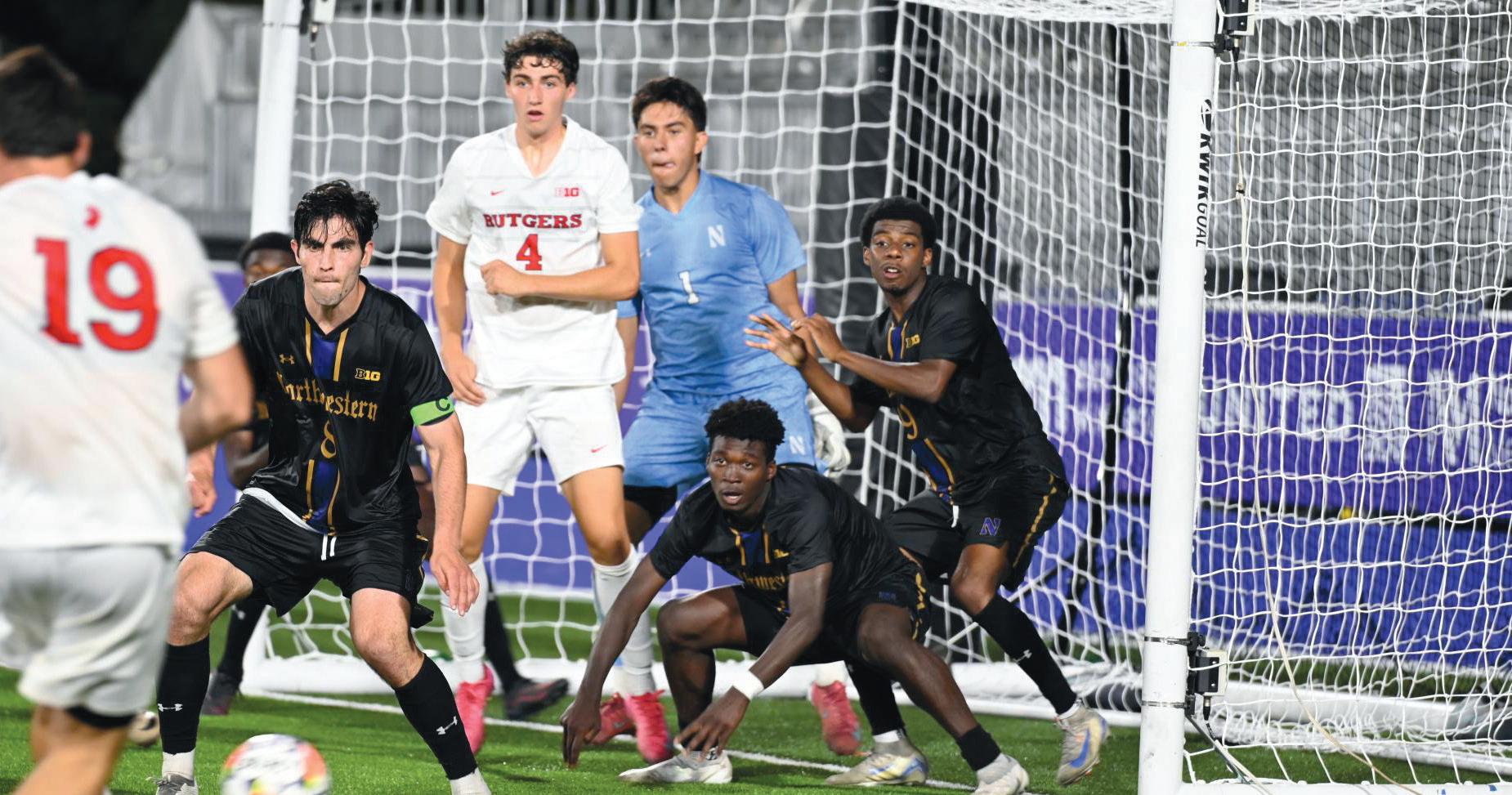
“The guys that you want to sub in certain positions aren’t available, and you just have to start subbing in guys who haven’t played those positions,” Payne said. “And that can be tough for the guys.”
With the visitors pushing farther forward and the hosts retreating into a defensive block, redshirt junior midfielder Henri Richter found himself occupying a right-sided center back role.
An arching through ball in the 87th minute from Rutgers midfielder Joschi Schelb split NU’s two central defenders, and with Scarlet Knights forward Andrew Kitch bearing down on goal, Richter dragged him down.
The play was ruled a penalty and a red card offense, setting off a cascade of Rutgers chances in the last three minutes of the game. Martinez Santamaria said he couldn’t believe his team’s defensive effort as he watched from the bench.
“They gave everything they had, and they didn’t concede the goal,” he said.
Schelb’s penalty attempt crashed off the crossbar. Rutgers defender Sawyer Koza hit the bar again seconds later, and Schelb’s attempt to clean up the rebound was cleared off the line by diving freshman defender Andrew Johnson.
The Scarlet Knights thought they had their equalizer when Kitch ran between NU’s center backs again and found the back of the net, but the goal was disallowed for offside.
With 17 seconds left and Rutgers throwing everything but the kitchen sink at the ’Cats,
a momentary bobble by senior goalkeeper Rafael Ponce de León led Rutgers midfielder Timo Jansen to lunge for the ball at the NU goalmouth.
As Ponce de León smothered the ball, the NU keeper pushed the Dutchman away, sparking a shoving match between players on both teams. Ponce de León was sent off, bringing NU down to nine players and no one in goal. Suchecki seized the opportunity to reintroduce himself as a goalkeeper — if only for 17 seconds.
Payne said the end of the match showed that his team is still figuring out how to stay cool in the heat of the moment.
“I never want to have another three minutes like that again,” he said. “But I love the fact that we’re gritty and gutsy because gutsy teams can find a way to win games.”
The night was also the first of NU’s twomatch “NUestros Colores” series to celebrate Hispanic Heritage Month. Mariachi NU performed a halftime show, and Latino Music Ensemble at NU serenaded fans from kickoff to the final whistle.
WNUR Sports broadcast the match in Spanish and English. The station will do the same for the second match of the series Thursday, in which NU women’s soccer will host Ohio State. NU will travel to face Maryland this Friday. Payne called the Terrapins one of the top teams in the country and said the match will require everything the ’Cats have and more.
s.sivaraman@dailynorthwestern.com
Some great setting to close early
By ELI KRONENBERG daily senior staffer @elikronenberg
After a deflating straight-sets defeat to Summit League outfit St. Thomas tempered the mood around Northwestern’s otherwise stellar nonconference season, coach Tim Nollan was searching for a response from his squad in its Saturday afternoon clash with Campbell.
The Wildcats (10-2, 0-0 Big Ten) duly delivered, dominating the Camels (8-3, 0-0 CAA) wire-to-wire in a 25-12, 25-18, 25-19 victory that got NU back on track ahead of its Big Ten opener Wednesday.
“I thought we were ready to play from the opening whistle,” Nollan said. “Our first nine points we executed at a really high level — serving, attacking, block lineups — so I give the team a lot of credit.”
No player embodied that instant precision more than senior outside hitter Rylen Reid, who pounced on an errant Camels pass for a clean kill on the match’s first point.
Reid went on to notch four kills in the aforementioned opening nine points, helping NU to a 7-2 lead.
“Honestly, I owe it all to the setters,” Reid said of her early exploits. “They put up great balls today, and I just try to stay focused on the little things.”
The ’Cats kept their paws on the gas pedal, going on an 11-3 run to earn a deluge of set points leading 24-10. A Campbell player going down with injury after the visitors saved the first set point briefly delayed the inevitable, but freshman outside hitter Bella Bullington closed the set out
two points later with a perfectly-placed spike that landed just inside the baseline.
The second set provided more jeopardy than the first — but, while the Camels kept pace with NU up to a 14-14 deadlock, they never held a lead at any point in the set. The ’Cats pulled clear from that point on, and Reid dispatched a crosscourt spike on set point to put the home side up two sets to none.
It was Reid’s 10th kill of the match, marking the ninth consecutive match she has achieved double-digit kills. She would go on to lead all players with 14 kills, cementing her status as NU’s most ubiquitous hitter.
“The coaching staff and I really worked together on out-of-system shots and my shot selection in general,” Reid said of her offseason improvements. “Also in the weight room, I just put in a lot of effort to increase my vertical and get stronger.”
Campbell grabbed a lead in a set for the first time all afternoon when it won the first point of the third set, but never pulled away by more than one.
With NU leading 15-10, the Camels had one last trick up their hump, launching into a 6-2 run to pull within one. However, Campbell committed a service error on the next point, and junior outside hitter Campbell Paris followed that up by tallying a kill, prompting the Welsh-Ryan Arena PA announcer to declare “Campbell on Campbell” conflict.
The ’Cats did not give their opponents another window back in. On match point, Campbell’s Hannah Pattie botched a set, and NU clinched a much-needed bounce-back victory.
“We talked in the locker room beforehand that you’re gonna have setbacks in sports. That’s how it
is,” Nollan said. “The perfect season almost never happens for anyone. But that’s not what’s gonna define you or your team — what’s gonna define you is how you respond after you have setbacks.”
Behind Reid’s team-leading 14 kills, graduate student outside hitter Ayah Elnady added nine, and Bullington finished with eight. Paris was the most efficient attacker on the day, killing seven of her 14 total attempts.
Elnady led the team with 13 digs, a personal season-high mark. Nollan praised Elnady’s defense, crediting her diligence to better understand the team’s defensive alignment.
“She’s really put in the time to come and talk to the staff and watch film and (is) always asking questions,” Nollan said. “Today, I think, was the start of her breakout of really understanding how we play the middle-back and how she can help us really vacuum up and scoop up some balls back there for us.”
NU opens its Big Ten campaign Wednesday at home against Indiana at 8 p.m. The ’Cats finished conference play 3-17 in Nollan’s first season in charge, but the NU coach said he is hopeful the team has learned lessons in its non-conference season that will prepare it for the “onslaught” of Big Ten play.
“Any given night, everyone’s got enough talent and the coaches are good enough that they’re going to push you, they’re going to expose your weaknesses, they’re going to make you have to make adjustments,” Nollan said. “As a staff, we have to know what Plan B and Plan C is, and the team’s got to be really good at executing Plan A so we hopefully never have to get to it.”
elikronenberg2027@u.northwestern.edu