VIDEO / No Kings Protest
Evanston protest draws thousands downtown

Judge Georgia Alexakis said the plainti s did not establish that they were likely to succeed on the merits of their claims.
VIDEO / No Kings Protest
Evanston protest draws thousands downtown
Judge Georgia Alexakis said the plainti s did not establish that they were likely to succeed on the merits of their claims.
By BEN SHAPIRO daily senior staffer @benshapiromedia
By SARAH SEROTA daily senior staffer @sarahserota
With the greater Chicago area becoming an epicenter for Immigration and Customs Enforcement, churches across Evanston have braced for impact.
ICE agents have taken multiple people in Evanston as part of Operation Midway Blitz, a federal immigration crackdown targeting undocumented immigrants in Chicago. Amid swelling enforcement, Evanston’s religious organizations have become a key player in the local response and advocacy e orts.
Some congregations have devised plans of action if ICE agents enter their places of worship. Executive pastor at First United Methodist Church of Evanston Rev.
a congregation that values justice and mercy, we knew that we had to think ahead about it.”
This plan was developed in collaboration with other religious communities across Evanston. Cox said much of her church’s devised plan came from a training held by Interfaith Action of Evanston and the Evanston Interfaith Clergy.
The collaboration wasn’t restricted to this single training — many of these faith communities have been in contact with one another about the best practices and procedures to respond to an o cer entering their space, according to Rev. Eileen Wivio from the Unitarian Church of Evanston. Cox, Wivio and other religious leaders did not disclose the details of their plans, but Cox emphasized their intention was creating a sense of safety and care for all people within the community.
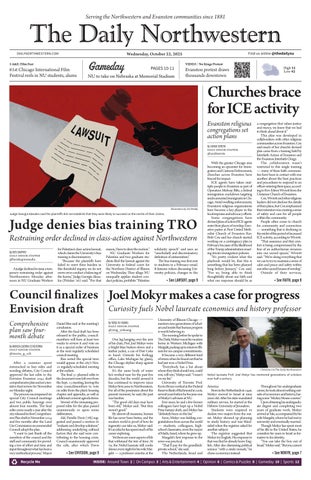
A judge declined to issue a temporary restraining order against Northwestern Monday afternoon in NU Graduate Workers for Palestine’s class-action lawsuit, which claims the University’s bias training is discriminatory.
reason, I have to deny the motion.”
“Because the plainti s have failed to meet their burden in this threshold inquiry, we do not move on to conduct a balancing of the harms,” Judge Georgia Alexakis (Pritzker ’06) said. “For that
Daniel Biss said at the meeting’s conclusion.
By MARISA GUERRA ECHEVERRIA daily senior staffer
After a summer spent entrenched in line edits and wording debates, City Council approved the last edits to the Envision Evanston 2045 dra comprehensive plan and set a tentative nal review for November on Monday night.
e process encompassed six special City Council meetings and two public hearings over almost four months. e nal edits come nearly a year a er the city released its rst Comprehensive Plan dra in November 2024 and ve months a er the Land Use Commission recommended Council adopt the plan.
“I want to just thank all the members of the council and the sta and community for providing a ton of e ort and time and input throughout what has been a very methodical process,” Mayor

A er the nal dra has been released to the public, councilmembers will have at least two weeks to review it and vote on it as a special order of business at the next regularly scheduled council meeting.
Biss noted the special item would appear at the city’s Nov. 10 regularly-scheduled meeting at the earliest.
e nal 51 planned edits to the document were le over from the Sept. 15 meeting, leaving the nine councilmembers to vote on edits from the plan’s housing chapter and appendix, as well as additional consent agenda items.
Several of the remaining proposed edits for the plan passed unanimously or upon some deliberation.
Ald. Parielle Davis (7th) suggested and passed a motion to “evaluate and develop solutions” addressing underlying cultural factors that she said were contributing to the housing crisis. Council unanimously approved the edit, after which Davis
NU Graduate Workers for Palestine and two graduate students led the lawsuit against the University in federal court for the Northern District of Illinois on Wednesday. ey allege NU unequally applies student conduct policies, prohibits “Palestine
By YONG-YU HUANG daily senior staffer @yong_yuhuang
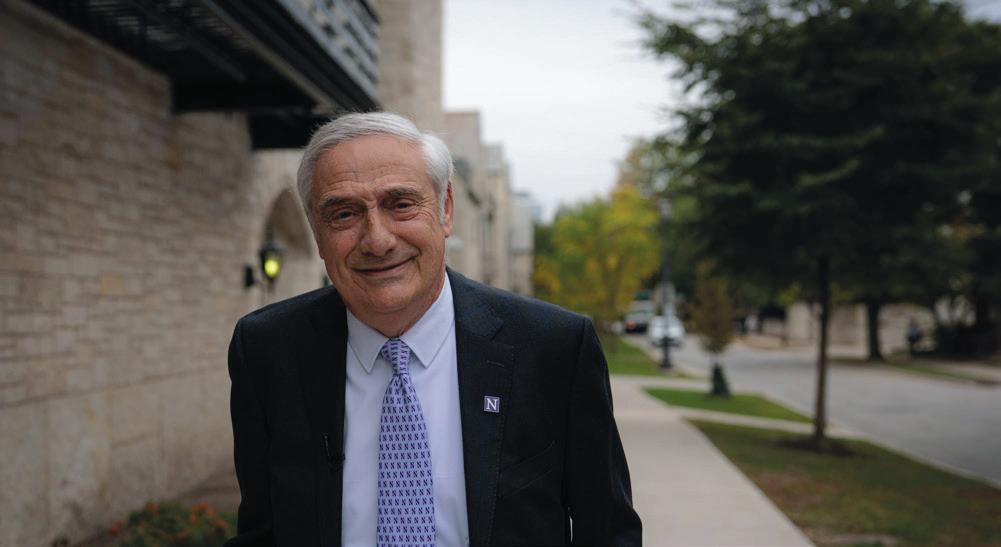
One leg hanging over the arm of his chair, Prof. Joel Mokyr wore a bright blue bu on-down and a leather jacket, a can of Diet Coke in hand. Outside his Kellogg o ce, Lake Michigan lay glassy, the Chicago skyline sharp against the horizon.
It’s the same body of water he’s worked near for the past ve decades, but the world around it has continued to improve since Mokyr rst came to Northwestern. For all of the pessimism about the present moment, he said, the past was harsher.
“ e good old days may have been old,” Mokyr said. “But they weren’t good.”
By almost all measures, human life has never been be er, and the modern world is proof of how far ingenuity can take us, Mokyr said. It’s an idea he has spent much of his career exploring.
Yet there are some aspects of life that withstand the test of time. At 79, the Nobel laureate still cooks dinner every night for his wife Margalit — a professor emerita at the
solidarity speech” and uses an “unscholarly and discriminatory de nition of antisemitism.” e bias training was rst sent to students in a February email. It features videos discussing University policies, changes to the
» See LAWSUIT, page 9
University of Illinois-Chicago — mentors new generations of scholars and insists that human progress is worth believing in.
e morning before he spoke to e Daily, Mokyr was at his vacation home in Western Michigan with Margalit, packing up to return to Illinois for on-campus commitments.
It became a very di erent kind of return when he found out that he had just won a Nobel Prize.
“Everybody has a list about whom they think should win, could win, will win,” Mokyr said. “I wasn’t on my list.”
University of Toronto Prof. Kevin Bryan worked at the Federal Reserve Bank of Richmond in 2006, several years before he became one of Mokyr’s advisees at NU.
Ever since, he and a few former colleagues have kept up a Nobel Prize fantasy dra , and Mokyr has “de nitely been on the list.”
Soon, Mokyr was elding congratulations from across the world — students, colleagues, highschool classmates, even the mayor of Haifa, Israel, where he grew up.
Margalit’s rst response to the news was practical.
“ at’ll pay for the grandkids’ private school,” she said.
The Netherlands, Israel and
Bri Cox said her church started working on a contingency plan in February because of the likelihood of the Trump administration enacting stricter immigration policies.
“It’s pre y evident what the playbook would be, that this is something that has been planned long before January,” Cox said.
“For us, being able to think thoughtfully about our faith and what our response should be as
People o en come to church for community and connection — something that is declining in the midst of this period of increased ICE activity, according to Wivio . “ at assurance and that comfort is being compromised by the fear of an authoritarian invasion into our sacred spaces,” Wivio said. “We’re doing everything that we can to try to maintain a sense of calm and peace and safety within our other sacred houses of worship.” Outside of their services,
» See FAITH, page 9
America
Born in the Netherlands in 1946, Mokyr moved to Israel at nine years old. A er his state-mandated military service, he started at the Hebrew University of Jerusalem. Students were required to declare two majors from the outset. Mokyr showed up planning to study history and was blindsided when the registrar asked for another subject. The registrar suggested that Mokyr try English. His response to that was that he already knew English. A er also dismissing political science “with a snide remark,” he chose economics instead.
roughout his undergraduate career, he took almost nothing outside of economics and history, barring some “Mickey Mouse courses.” Upon obtaining his undergraduate degree and completing two years of graduate work, Mokyr arrived at Yale, accompanied by his wife Margalit, whom he had met in university and eventually married. ough Mokyr has spent most of his life in the United States, he considers his years in Israel as formative to his identity.
“You can take the boy out of Israel,” Mokyr said. “But you cannot
By CATE BOUVET daily senior staffer
@catebouvet
Over 60 community members gathered Friday at WhistleMania to assemble whistle kits with instructional packets detailing response strategies for federal immigration agent sightings.
Art Makers Outpost hosted WhistleMania, joining several Chicago neighborhoods who have held similar events this month. The whistles and instructional packets will be distributed at schools and be available at local businesses, Art Makers Outpost owner Valerie Kahan said.
In addition to providing material to make whistle instructional zines, there was a table to donate to Sanctuary Evanston to provide mutual aid for community members. Some are afraid to leave their house and need help going grocery shopping or taking their children to school, said a member of Sanctuary Evanston, who requested to be anonymous for fear of being targeted by federal agents.
After at least one person in Evanston was taken by federal immigration agents Thursday morning, Kahan said that the community was shocked but came together to spring into action.
“We want to get the information out as quickly as possible so that we can avoid as many people being detained or kidnapped as possible,” Kahan said.
Kat Abughazaleh, a candidate for Illinois’ 9th Congressional District, said that whistles have been shown to deter ICE and are a tangible action for the community to take to support each other. She also dropped off 3D printed whistles to help the cause.
Abughazaleh added that she was proud of Chicago for leading the way in standing up to ICE. The community needs to be proactive on this issue by insisting on inspections of ICE’s processing facility in Broadview and electing representatives that will provide resources to the community, she said.
“Evanston is responding fantastically and
proactively,” Abughazaleh said. “People are scared, but they’re defiant.”
The Sanctuary Evanston member who spoke under the condition of anonymity works in Evanston/Skokie School District 65. She said that the school community wanted to know what to do in response to immigration agent sightings, especially “with the kidnapping that happened a block away from two schools.”
Federal agents have detained multiple people near Dodge Avenue and Oakton Street in the last week, an intersection that sits near Dawes Elementary School and Chute Middle School. At least one person was taken by ICE agents at the intersection on Thursday, according to an X post by Mayor Daniel Biss the same day.
The Sanctuary Evanston member said she is worried for the children who are scared and afraid to talk about it.
“We’ve been really afraid of parents of our students getting kidnapped during the day, and so we’ve really encouraged families to have a plan in place, emergency plans for if a child is suddenly without guardians,” she said.
She added she has encouraged families to sign temporary guardianship papers and update their contact information in the school system in case something happens.
Biss said that governments need to do everything they can to protect the community, citing the resolution passed Oct. 13 declaring ‘ICE free zones’ on city property. He said that the city government has worked closely with school districts to help them manage ICE activity and approach emergency plans for parents and students. He said he was proud of the school’s transparency and leadership.
“Let’s not kid ourselves, we are dealing with a lawless rogue entity that is engaging in gratuitous violence and so we need to be vigilant at all times and acknowledge that they are not going to be following the law if they can get away with it,” Biss said.
Biss said that Evanston must act as a community. He said getting footage of immigration agents is critical, not only to show the world what is being done but to try and hold “these monsters accountable.”
Xenophobic Antiblackness Globally
We are living in extraordinary times for the history of Black people. In these first two and a half decades of the millennium we have seen an unprecedented growth in Black economic power, we have witnessed Black people occupying positions of prestige and influence from national politics to board of corporations to directorships of academic and cultural spaces. These accomplishments have been matched by symbolic and institutional commitments from states and private agencies such as the creation of museums and the launching of new prestigious awards. But these last two and a half decades have also seen the largest wave of Black migration across the globe, mostly from places where conflicts and famine are destroying communities (places like Sudan, Eritrea and Haiti). We have witnessed a surge of Black women mortality during childbirth, a raise of Black women unemployment, an increase on violence against Black women, particularly trans Black women, and a growth in Black women poverty rate across continents. For all that is new about this genocidal violent antiblack moment we find ourselves in, one thing that remains across time and space is the systematic violence and oppression of poor, trans and immigrant Black women by everyone around them, which is only matched in magnitude and awe by their radical resilience. Black women across the globe continuously teach us how survive disaster; how to not fall in the abyss and how to imagine otherwise. In this lecture, Professor García Peña focuses on the lives and work of Black women from across Latin America and Europe, bringing attention to the ways in which migration and anti-immigrant violence affect Black women as well as the multiple movements of resistance they have created and inspired.
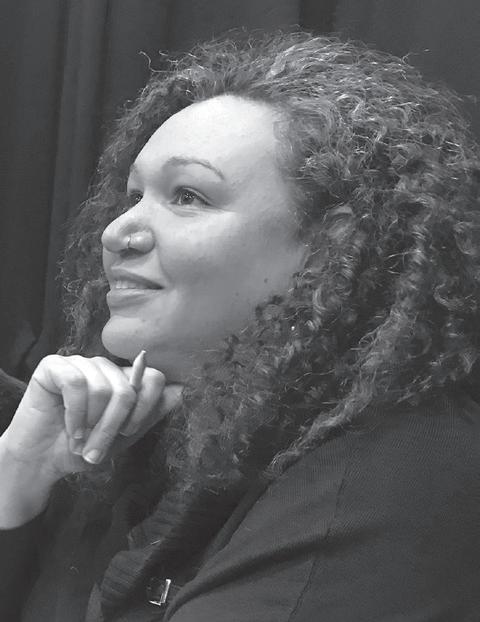


Evanstonians are rising to the challenge in “this dark, scary moment,” he said. WhistleMania attendee Joan Ducayet said that as immigration agents become more active in Chicago, she needed to find a way to feel like she was making a difference. She said she felt energized by the community at WhistleMania.
“It is our Chicago history that we resist and we help people from the tyranny of the government and that’s not just something I want to do now, it’s the history of Chicago and it’s our turn,” Ducayet said.
catebouvet@u.northwestern.edu

Monday, November 3, 2025 • 5:00 p.m.

Dr. Lorgia García-Peña is a writer, activist and scholar who specializes in Latinx Studies with a focus on Black Latinidades. Her work is concerned with the ways in which antiblackness and xenophobia intersect the Global North producing categories of exclusion that lead to violence and erasure. Through her writing and teaching, Dr. García Peña insists on highlighting the knowledge, cultural, social and political contributions of people who have been silenced from traditional archives.
Harris Hall Room 107 1881 Sheridan Road Northwestern University
Reception to follow
Free and open to the public No tickets or reservations required




For more information, contact Suzette Denose at 847.491.5122 • s-denose@northwestern.edu







By SOPHIA BATEMAN the daily northwestern
National Public Radio Legal A airs Correspondent Nina Totenberg delivered the 36th annual Leopold Lecture at Cahn Auditorium on Tuesday night. Speaking to hundreds of a endees, Totenberg re ected on decades of experience reporting on the Supreme Court and provided insights into modernday legal developments, such as the Court’s shi to a 6-3 conservative majority and the increased use of the emergency docket. Sociology Prof. Laura Nielsen moderated the sold-out talk in a Q&A format.
e Leopold Lecture, established in 1990, invites esteemed public gures and scholars to NU’s campus in memory of history professor emeritus Richard W. Leopold.
Totenberg, who has been NPR’s legal correspondent since 1975, has won prestigious journalism awards throughout her career. In 2022, Totenberg published a New York Times bestselling memoir titled “Dinners With Ruth: A Memoir on the Power of Friendships,” in which she re ected on her relationship with Supreme Court Justice Ruth Bader Ginsburg.
Totenberg began by recounting her path into legal journalism and describing her approach to covering the Court — particularly having not a ended law school.
When covering a story, Totenberg said she focuses on understanding the situation by highlighting the principal arguments, being accurate and not ge ing “stuck in the weeds.” She said her ultimate goal is bringing understanding to her audience.
“You have to make it easier,” Totenberg said. “ e idea is not to make it so complicated that nobody wants to listen to it or hear it.”
Totenberg also emphasized the importance of including strong interviews on both sides of her stories so that “there’s some tension.”
When asked about her own consumption of legal journalism, however, Totenberg’s response prompted laughter from the audience.
“When I get home a er a long, hard day, do I want to listen to a podcast about the Supreme
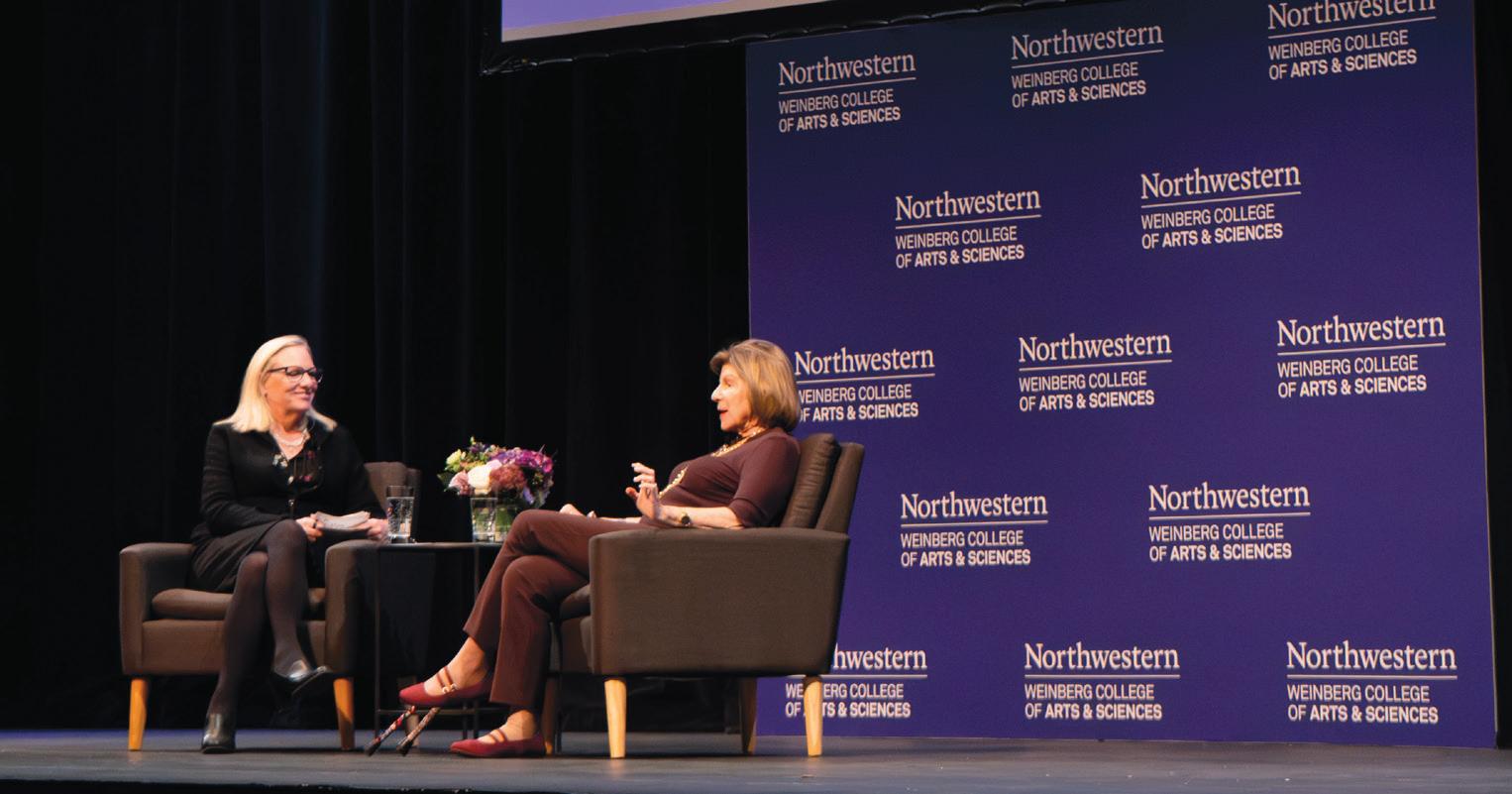
Court?” Totenberg said. “No, I want to watch ‘Law and Order.’”
Addressing the Supreme Court’s current 6-3 conservative makeup, Totenberg said President Donald Trump’s three rst-term appointments fundamentally reshaped the Court’s ideological divide, with the conservative justices being “far more conservative” than any group of justices she had previously covered.
“ ere is no center,” Totenberg said. “I don’t personally think that’s a healthy thing for a Court, but it is what it is.”
Despite this, Totenberg said she doesn’t think the U.S. is in a constitutional crisis — at least not yet.
Totenberg highlighted the Court’s expanded use of the emergency docket, requests for immediate intervention made without full brie ngs or arguments, particularly in regard to the last three administrations.
She said she believes more dockets are being granted because the court is “very deferential to the executive branch.”
“When the executive branch comes in and says, ‘ is is an emergency. We need you to block the lower court decision, and the consequences will be very dire if you don’t,’ I think their natural instinct is to grant it,” Totenberg said.
Tackling hot-bu on issues, Totenberg’s lecture drew members of the NU community as well as Evanston residents.
Weinberg freshman Julia Knispel, who a ended the lecture, said it sparked her interest due to the way it merged her interests as a pre-law student studying political science.
“I don’t know a lot about journalism, but hearing her perspective as a journalist and not necessarily a lawyer or something that you would typically hear from, I thought that would be interesting,” Knispel said.
Knispel also said Totenberg “humanized” Ginsburg, who Knispel described as a “stoic, serious person,” through descriptions of their friendship.
A fan of Totenberg since she was young, Weinberg freshman Sarah Price, who also a ended the lecture, said the conversation highlighted journalism’s role in sustaining an informed democracy.
“It’s really on citizens to nd out about their government, and I think journalists really help us with that,” Price said. “I would have no idea what the Supreme Court is doing if it weren’t for NPR and hearing Nina Totenberg as a kid every morning.” sophiabateman2029@u.northwestern.edu
desk sports@dailynorthwestern.com Ad Office | 847.491.7206 spc-compshop@northwestern.edu THE DAILY NORTHWESTERN is printed each Wednesday during the academic year, except vacation periods, the two weeks preceding them and once during August, by Students Publishing Co., Inc. of Northwestern University, 1999 Campus Drive, Evanston, IL 60208. All news is published 24/7 online at Dailynorthwestern.com. First copy of THE DAILY is free, additional copies are 50 cents. All material published herein, except advertising or where indicated otherwise, is Copyright 2025 THE DAILY NORTHWESTERN and protected under the “work made for hire” and “periodical publication” clauses of copyright law.
POSTMASTER: Send address changes to THE DAILY NORTHWESTERN, 1999 Campus Drive, Evanston, IL 60208. Subscriptions are $100 for the academic year. THE DAILY NORTHWESTERN is not responsible for more than one incorrect ad insertion. Check out








































By CLARA MARTINEZ daily senior staffer @claramart1nez7
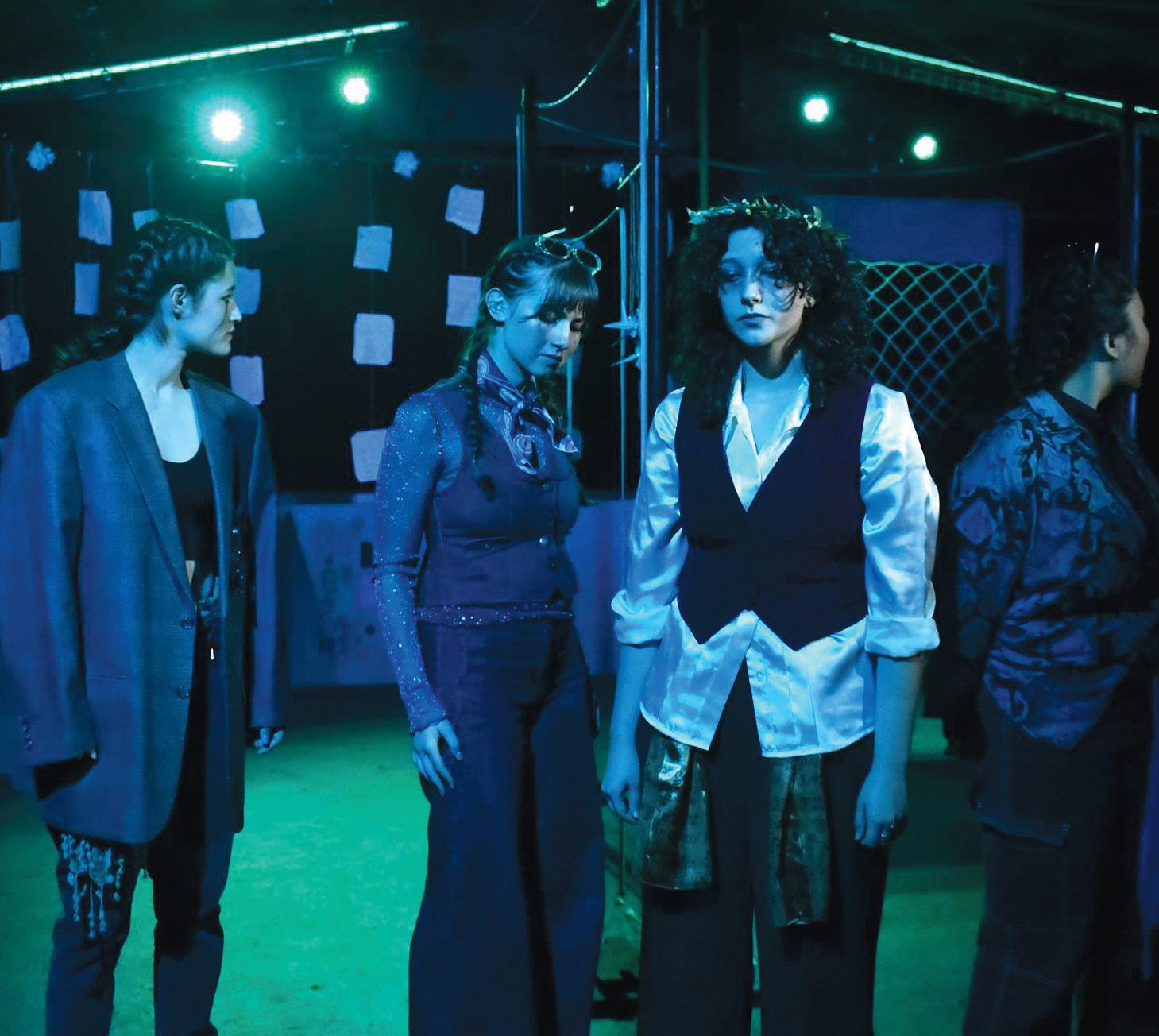
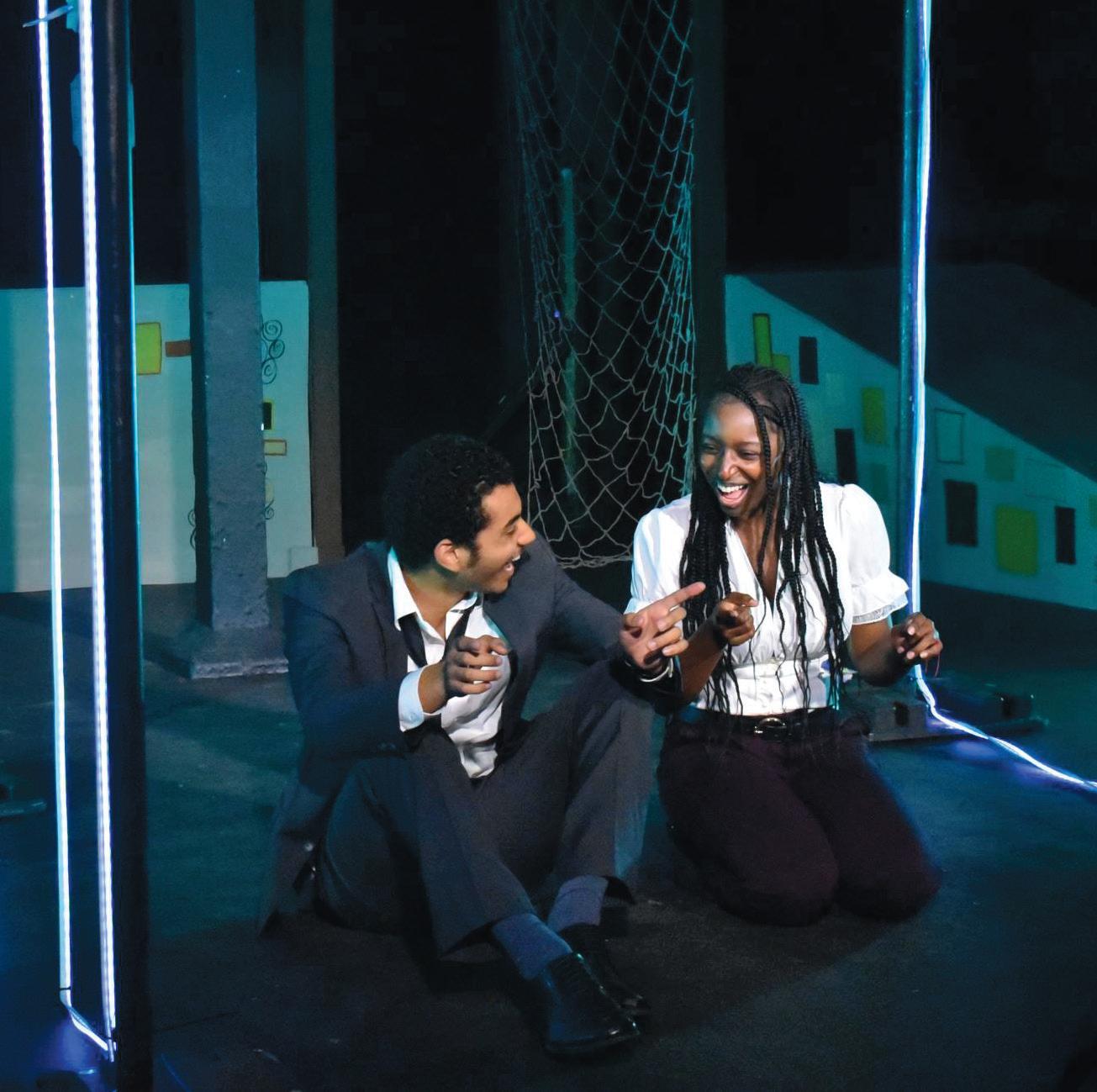
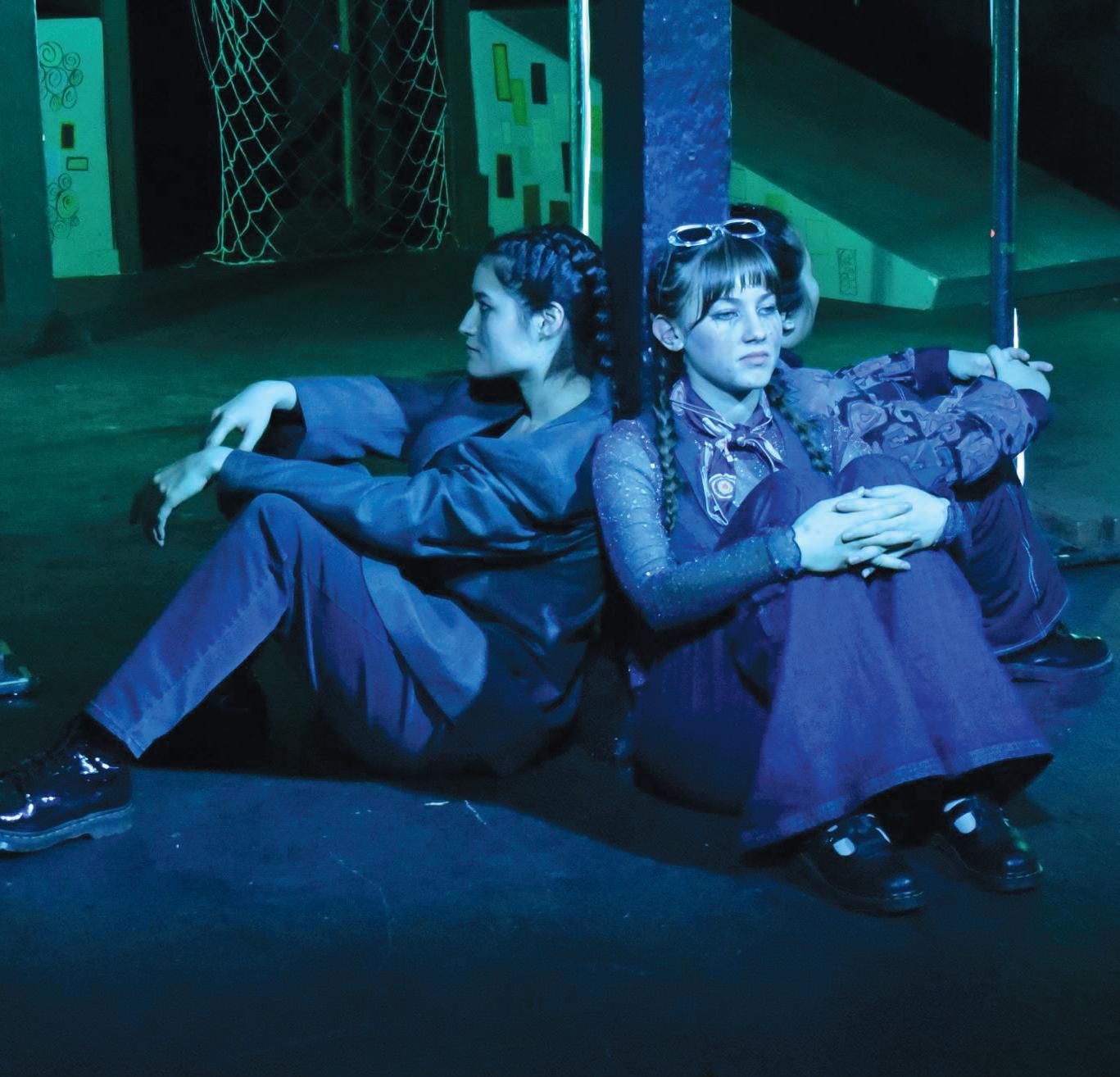
In the Jewish Theatre Ensemble’s production of the play “Eurydice,” light became a character unto itself. Used in the construction of set changes and as a way to differentiate the underworld from the real world, lighting designer and Communication senior Sam Bessler said he wanted light to provide clarity for the audience.
“It’s a very word-heavy show that deals with a lot of abstract,” he said. “It’s a show that design has a huge role in telling the narrative of, so I was really drawn to this idea of being able to weave together the more challenging elements to understand.”
The play premiered in Shanley Pavilion on Friday and closed Saturday night, totaling four performances.
“Eurydice” is based on the tragic ancient Greek
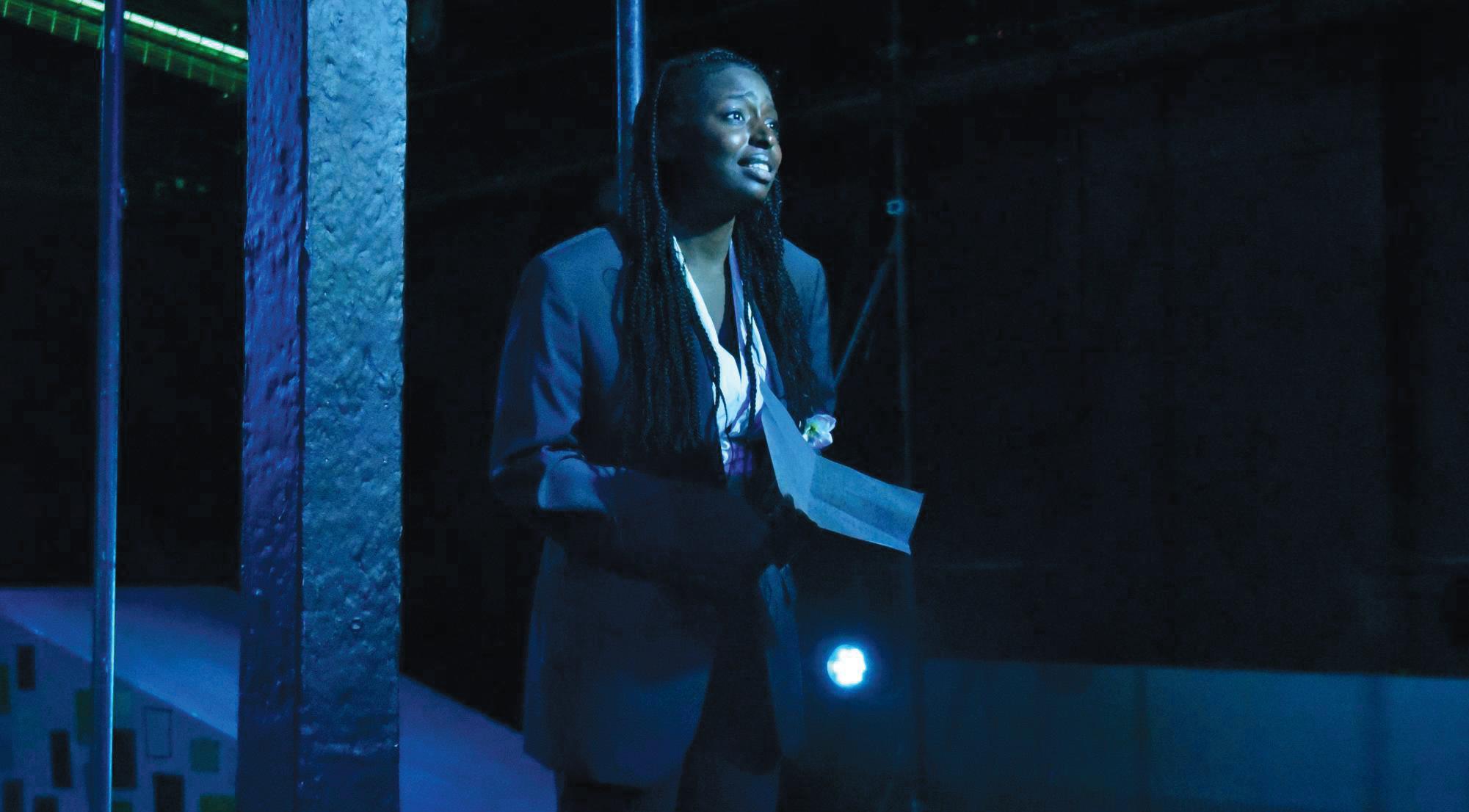
myth of two lovers. Eurydice (Communication sophomore TaLea Carter) dies on the day she marries Orpheus (Communication sophomore Rose Peters). Orpheus journeys into the underworld to retrieve her.
In the underworld, Eurydice reunites with her father (Communication sophomore Akinle Armand), where he makes a home for her during her stay. She also encounters the Stones, a chorus trio who try to school her in the norms of the dead.
Director and Communication sophomore Tomi Fawehinmi said one of the ways in which this production is distinct lies in the casting. The role of Orpheus was gender swapped.
“We had a female Orpheus which made it a queer love story, which really led us to ask questions about conventionality,” she said. “What does it mean for two women to have to be held to the standard of this love story that means so much and that is so famous?”
Fawehinmi said the show began rehearsals on the first day of classes. Rehearsals originally involved a
lot of table work where the actors were reading lines without blocking so that the poeticism of each line would feel more natural, she said. Then, Fawehinmi dove into blocking, mapping out how the actors would move across the stage in the sequence of the play.
A cast of seven actors performed the tragedy in Shanley Pavilion, a quirky and intimate venue characterized by metal beams that partially block audience view. Bessler said the production team thought carefully about how to incorporate the elements of the set.
“Thinking about, just like the practical limitations of a space like Shanley, there was a lot of conversation about, okay, how much agency can we put in the hands of the actors to help create the world that they are in?” he said.
One of the play’s pivotal moments is when Eurydice’s father builds a house for her using string lights, taking ten minutes to weave them through a metal scaffolding. All the while, Communication sophomore Jo Brinkerhoff, who plays the role of
Little Stone, sang and strummed the guitar to create what Fawehinmi described as a “homey” vibe. Weinberg senior Nathan Gilbert said he came to see the show in support of his friend Bessler. As a regular attendee at Shanley productions, Gilbert said he was captivated when string lights were used to construct Eurydice’s house in the underworld.
“There was a really cool sense of space and creepiness about it,” he said.
In the “Eurydice” script, Fawehinmi said the creation and destruction of the house is achieved with string. But, for her vision of the play, string wasn’t going to cut it. Fawehinmi knew she wanted it to be something more dynamic.
“Making it light and making it something that can change … it was really interesting to me,” she said. “It’s essentially the physical manifestation of the father’s love for Eurydice that he’s been waiting to give to her all this time.”
claramartinez2028@u.northwestern.edu
By ELIZABETH PERRY
Early Monday afternoon, the Ethel M. Barber Theatre lobby looked more like a backstage dressing room than a theater lobby. Rows of costumes, hats and accessories lined the space, and the room quickly filled with people browsing the racks as the Wirtz Center for the Performing Arts costume shop opened its pop-up sale.
The two-day sale featured more than 500 pieces of clothing and accessories once used in NU theater productions.
Costume Shop Supervisor Eileen Clancy said this is the first sale the shop has held since before the pandemic. A team organizes a sale roughly every five years when storage spaces start to overflow, she said.
Prices range from $1 to $10, with a few specialty items priced higher due to their cost of production.
“The specialty items are more expensive because of the materials and labor,” Clancy said. “Some pieces represent our time, energy and effort, and we want to make sure that the price is affordable but also fair to the work that went into creating it.”
The specialty pieces are displayed on mannequins around the pop-up, and staff remove them when a shopper wants to purchase them.
Communication senior and student organizer Poseybelle Stoeffler said these specialty items have proved surprisingly popular.
“The turnover on the specialty items on the mannequins has been way quicker than I expected. Some of the shop employees have been dressing the mannequins since we opened, basically,” Stoeffler said. “It’s been very exciting to watch those pieces go.”
Many of the items featured in the sale have been repurposed multiple times for different productions, but the costume shop no longer has a use for them and
needs to clear space for new costumes.
Some costumes, like painted pieces from the October 2023 show “Frida,” are just too unique to reuse, Clancy said.
“There are some pieces that are very specific to the shows they were made for that I know won’t have another life cycle,” Clancy said. “We want to give them another life by sending them out into the world and having people use them as costumes or even clothes in their daily life.”
The first day of the pop-up sale was very successful, said Weinberg senior Jessica Guo, an employee at the costume shop.
Guo said the event was bustling from the start, with several people arriving even before the official 3 p.m. opening.
“It got extremely busy right away,” she said. “At one point, I was stopping people until a few people paid and left. It was very crowded.”
After the sale ends, any costumes that aren’t sold will be donated to community groups around Evanston.
Clancy said that while selling out is the main goal, the costume shop also wants to make a positive local impact. Clancy has a list of 22 Evanston organizations that accept donations and plans to decide where to send each leftover costume once the sale concludes, she said. She explained that the event gives these pieces a second life, allowing them to be reused as costumes or even incorporated into everyday clothing.
“It’s all really cool stuff. You literally could buy a pair of jeans for $3 (or) a shirt for $1 and you can make a zombie and not destroy your own clothes, which I think is a super cool thing,” Clancy said.
The sale’s final day is on Tuesday, 3 to 7 p.m. at the Wirtz Center.
elizabethperry2028@u.northwestern.edu
By CLARA MARTINEZ daily senior staffer @claramart1nez7
As a freshman, RTVF senior Jackson Heller said he was “terrified” to walk into Studio 22 Productions’ writing workshop, Writer’s Circle, with his script, freshly written for his class, RTVF 260: Foundations of Screenwriting.
“I was like, ‘Why not get something ready to submit to the grant cycle?’” he said. “I had seen that there were grants at the time that they had, but I didn’t apply to anything. I was scared, frankly.”
Heller’s script told the story of a man who chokes on an M&M and enters an afterlife purgatory, modeled after a corporate waiting room. He ended up returning to Writer’s Circle three times for rewrites, which gave him the confidence to submit his script to the Studio 22 board.
Heller went on to apply and win the New Student Grant, a $1,500 prize for him to produce his film with a crew entirely made up of freshmen and transfers.
Now, Heller is one of three Studio 22 Script development co-chairs alongside RTVF senior James Lee and RTVF sophomore Libby Nook. The three board members lead Writer’s Circle in Kresge Centennial Hall once a week on Mondays, from 3 to 5 p.m.
“It is the best resource if you really want to learn about student filmmaking, and you really want to
make a film at Northwestern,” Heller said.
The student production company awards two student grants per quarter, which provide students with funding to produce their own films. As members of the studio’s script development team, Lee said, they can offer direct feedback for screenwriters hoping to be successful in the pitching process.
“A lot of what we’re generally drawn to is people who are able to present concepts that get us really excited, that might be a little risky,” he said. “But, also not too risky that we feel like we’d be endangering the amount of money we’d be giving them.”
Every year, Studio 22 awards three $1,500 grants and three $5,000 grants. If a student is successful, they must produce their film the following quarter.
Although the Script Development Chairs who work most closely with successful grant winners to fine-tune their scripts, everyone on the production company board votes on their favorite pitches.
Studio 22 Finance Chair and RTVF sophomore Maille Hickey has read scripts for the grant cycle twice and said it’s important for writers to read their scripts out loud to understand how they will come to life on set.
“Things always sound really different when you hear them out loud versus when you read them on the page,” she said. “Something can sound unnatural on the page, but then when actors bring it to life, it becomes moving.”

Lee said the team doesn’t just get applications from RTVF majors; anyone can drop in and workshop their writing. The team has offered feedback on plays and poetry, he said.
As a result, he added, writers have gone on to find success in other realms, such as theater production. He recalled that a student who came into Writer’s Circle multiple times went through many rounds of revision and successfully pitched their play to Vertigo Productions, a theater board that stages original student scripts.
Lee said the main advantage of Writer’s Circle is that writers get the opportunity to hear their words come off the page.
“Literally any opportunity you can get to workshop things where you are not speaking, you are not directly involved, is going to be a massive part of how your script improves,” he said. “The only way something like a screenplay can meaningfully make strides is if the writer is actually being surprised in productive ways.”
claramartinez2028@u.northwestern.edu
By MIGUEL TSANG daily senior staffer
@migtsang
The Chicago International Film Festival dimmed its lights for its 61st annual event, which began on Oct. 15. Organized by Cinema/Chicago, the event spread across several venues, including Wrigleyville’s historic Music Box Theatre and the Gene Siskel Film Center. Over 100 feature films and 60 short films will be screened throughout the event’s 11 days.
Among the many films being screened are the latest from notable directors like Chloé Zhao and Nia DaCosta. Superstar director Spike Lee is set to make an appearance at AMC NEWCITY 14 on Friday to unpack his new thriller “Highest 2 Lowest.”
Even with all the A-List programming, the
bread and butter of the event is its ever-expanding roster of diverse international films.
Programmer Sophie Gordon (Communication ’17) headed “OutLook,” a lineup of LGBTQ+ focused narratives from around the world.
“Don’t be dismayed if you weren’t able to get a ticket to Spike Lee because it sold out in five minutes,” Gordon said. “There are other amazing opportunities for engagement with this festival.”
She said she was most excited to present “Two Times João Liberada,” a Portuguese drama about a transgender actress who clashes with her director over how to portray a historical figure. The film tied into a recurring theme of ghosts among the OutLook lineup, with “João Liberada” featuring “a very sassy historical ghost.”
Gordon especially encouraged RTVF students to give films like “João Liberada” a chance.
“This is a film that I think is a really awesome film to see as a student because this is really a film
about filmmaking,” Gordon said.
Other than the movies themselves, the festival featured a host of meet-and-greet opportunities for up-and-coming student filmmakers.
Industry Days, the festival’s networking division, was responsible for running a variety of panels, mixers and masterclasses peppered throughout the festival.
Industry Days organizer Kayla Myers said the event brings in crowds from many Chicago schools like Northwestern and Columbia College Chicago.
“I think for students, Industry Days would be their first big space where they’re meeting people who work in the industry and getting connected in that way,” Myers said.
Communication sophomore Samuel Wong attended three Industry Days panels on Oct. 18, including one hosted by “Good Will Hunting” director Gus Van Sant.
Wong especially appreciated a workshop called “Directing the Actor” because of the different directorial styles it showcased.
The panel was set up in such a way that a pair of directors would direct two pairs of actors in an improvised scene, before the floor was opened up to audience questions.
“It’s just really refreshing and inspiring to see different approaches to the same subject,” Wong said.
All in all, many programmers emphasized the unique opportunity of being a student enjoying the festival.
“I started going to the film festival when I was a student at Northwestern,” Gordon said. “I loved being able to have the opportunity to take the train down to the city and see something that I never would have seen before.”
migueltsang2028@u.northwestern.edu
By BIANCA DISHMON daily senior staffer
Contentwarning:Thisarticlementionssexual assault.
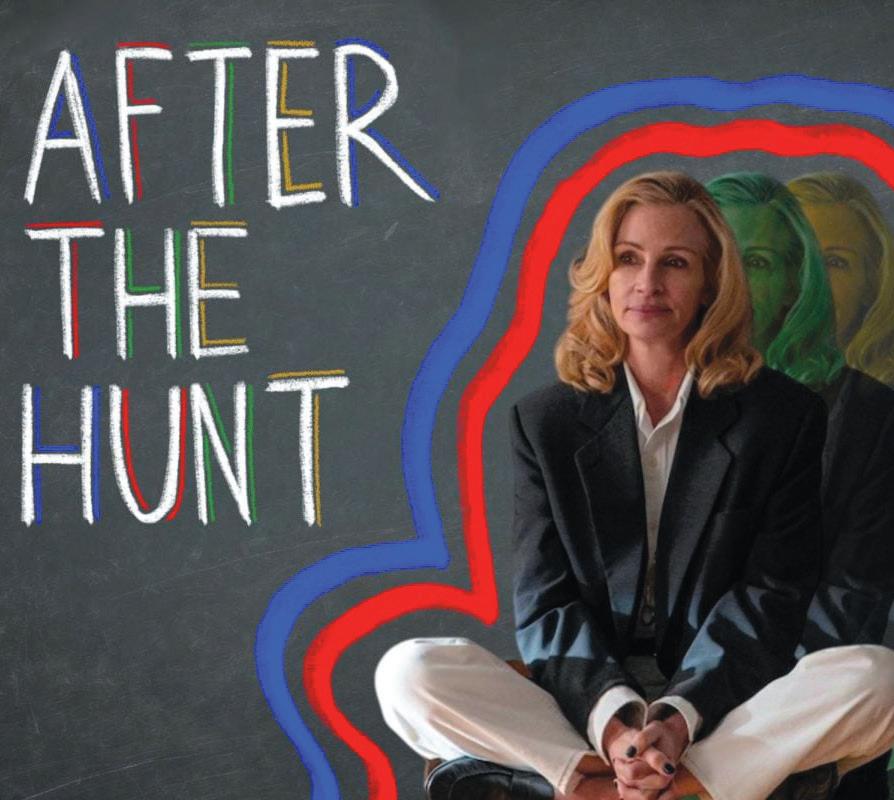
Andrew Garfield. Ayo Edebiri. Julia Roberts. What these three have in common, besides an impressive array of awards, is that they lead the star-studded cast of Luca Guadagnino’s newest film, “After the Hunt,” one of my most highly anticipated films of the year. However, with its subpar plot and disjointed editing style, my anticipation and excitement were unfortunately unjustified.
Released in theaters Friday, less than a year after Guadagnino’s last project, “Queer,” “After the Hunt” centers around Yale professor Alma Imhoff (Roberts) as she handles the fallout from PhD student Maggie Resnick (Edebiri) accusing her close colleague, Hank Gibson (Garfield), of sexual assault. The plot progresses as Imhoff finds herself at odds with believing the side of either individual and eventually becomes fully embedded in the debacle herself.
While the plot sounds intriguing, its execution is less than satisfactory. With about a two-and-athird hour runtime, there should have been no reason for audiences to leave the theater with a host of questions — yet, for me, that is exactly what happened.
In the interest of time, the movie utilizes a fiveyear flash-forward to illustrate the growth, or lack thereof, Imhoff and Resnick experience after the prior events. I could not help but wonder what specifically happened within those five years.
One of the turning points of Imhoff’s attitude towards Resnick’s accusation was the revelation that the student was planning to press charges against Gibson. The audience, however, never gets to know whether that suit formally took place.
Another questionable moment was the quick rebuilding of Imhoff’s credibility. In the flashforward, it is revealed that after publishing a story about her personal experience with statutory rape,
she has become the dean of Yale.
Given that Imhoff was under investigation for forging a prescription and also under fire after the publication of an op-ed by Resnick condemning her, it seems unlikely that the professor would be able to wipe the slate clean and climb up the ladder to become the dean of one of the country’s most prestigious universities in such little time. More time should have been spent focusing on what happened in those five years as opposed to glossing over them.
The number of questions the plot leaves behind can in part also be attributed to the film’s disjointed editing. There were numerous filler scenes in which the audience would see Imhoff doing menial tasks, such as stopping by a liquor store or writing at her desk, before the scene would abruptly cut to another.
This form of editing and the amount of nonsubstantial scenes felt unnecessary and contributed nothing further to the plot.
However, there were some positive, noteworthy spots throughout the film. Both the costuming and Garfield’s performance were exceptional. What stands out about the costuming the most was its subtlety. As the movie is set at a college, most of the outfits are traditional academia wear, collared shirts, slacks and on occasion, a bold blazer.
With the costumes, the film portrayed the relationship between Resnick and Imhoff through nearly unnoticeable changes in Edebiri’s wardrobe.
At one of the film’s most climactic points, Imhoff comments on how Resnick has started mirroring her. This draws attention to both characters’ outfits, and sure enough, Resnick is wearing the same all-white outfit that the audience has already grown to associate with Roberts’ character.
This commentary about how Resnick’s relationship with Imhoff has subtly grown into idolization was one of the few directorial decisions that deserve full appreciation.
Garfield’s performance is also worth noting
because it felt like a true departure from some of his previous roles. Most widely known as SpiderMan, Garfield’s role in this film could not be any further from a hero.
As Gibson, Garfield tapped into a character with more villainous tendencies, and he did it masterfully. Only time will tell if Garfield continues to pursue more of these complicated characters.
Guadagnino has several upcoming projects, notably his rendition of “American Psycho.” As “After the Hunt” had a rushed and unfinished feeling to it, most likely resulting from its rapid production, one can only hope that the film director will realize the power of quality over quantity and approach future projects with more time and care.
biancadishmon2028@u.northwestern.edu
GEORGE KOUTROUVELIS


OP-ED CONTRIBUTOR
As a lifelong Washington Commanders fan now living in Illinois, I can’t help but feel deja vu watching the Chicago Bears move forward with their plan to leave Soldier Field for a new stadium.
When the Commanders le Washington, D.C., for suburban Maryland in 1997, the owners promised fans a state-of-the-art stadium, be er access and huge economic bene ts. e move was supposed to elevate the team for the modern era. Instead, it marked the beginning of a slow decline for both fans and the team.
Decades later, the Bears are preparing to make a similar move by moving from Soldier Field, their historic lakefront stadium in downtown Chicago, to a sprawling development 25 miles away in neighboring Arlington Heights. As the Bears frame this as a leap toward modernization, what I see is a step toward isolation.
e plan seems great. Bears ownership promises a “world-class experience” for fans and a state-of-theart xed-roof stadium surrounded by restaurants,
In their recent le er to e Daily, Prof. Michael Peshkin and Prof. Elizabeth Shakman Hurd raise objections to the University’s antisemitism training module that range from clearly valid to u erly trivial. But even taking all of their complaints at face value, it was irresponsible for two tenured faculty members to urge students to “refuse this training,” thus imperiling their academic futures.
entertainment and mixed-use development.
ey’ve already commi ed over $2 billion to the project, touting 56,000 construction job-years, 9,000 permanent jobs and $60 million in annual tax revenue. In terms of accessibility, the Bears advertise an on-site Metra stop, ample parking and plenty of room for tailgating. It sounds impressive on paper. So did Northwest Stadium.
When the Commanders le RFK Stadium nearly 30 years ago, fans were promised all the same things: be er amenities, easier access and more comfort. What they got instead was a soulless concrete bowl surrounded by parking lots and gridlock.
at’s not to say the Bears’ new stadium will be as bad as Northwest Stadium. It does seem like the ownership is trying to build the best stadium they possibly can. at said, I’d argue that no ma er how beautiful the new stadium may be, the prospect of physically moving the team out of Chicago is risky.
e Commanders’ Maryland stadium didn’t just fail to deliver the promised economic and fan experience bene ts. It severed the team’s emotional bond with the city, e ectively transitioning the Commanders from being D.C.’s team to being a team near D.C. at’s exactly what the Bears risk by leaving their home arena.
Soldier Field is more than just a stadium. It’s one of the NFL’s oldest and most iconic venues, standing on Chicago’s lakefront for nearly a century. You can even see the skyline looming in the distance, and while it may have had an awkward renovation in the last 20 years, limited seating and cold wind chill, those downsides just add to the eld’s character. Arlington Heights, no ma er how modern or comfortable, can’t replicate that.
e Bears argue that Soldier Field is too old, small and limited for what they want to build. But a franchise’s home isn’t just about square footage or luxury boxes, it’s about the place. ere’s a reason why RFK is still held in higher regard than Northwest despite having objectively worse amenities — it’s all about location.
Moving 25 miles away means more than a change of address. It means abandoning what makes the Bears a “Chicago” team.
If there’s one thing I dreaded about going to Commander’s games growing up, aside from the constant losses, it was the hassle of traveling to the stadium. Public transportation access outside of D.C. is limited, making gamedays an issue for anyone who can’t drive. at’s the worry I now have for Bears fans. Sure, the idea of a new Metra stop will make the stadium accessible in theory, but in practice, I have a hard
Peshkin and Hurd denounce the potential consequences of non-compliance, but that will not protect boyco ing students from su ering the possible loss of housing, nancial aid and perhaps graduation. No 17-minute video is worth inviting such penalties. It is plainly hypocritical for professors to continue collecting their salaries from NU while encouraging students to risk separation from the University. What would Peshkin or Hurd say to students who followed their advice that “resistance ma ers,” adamantly refusing to watch the video, only to be denied enrollment? Would they o er the students
alternative housing? Would they help pay o their student loans?
As faculty members, we stand in a relationship of trust to our students, who are entitled to believe that we act in their best interests. It is a violation of trust for professors to push students to jeopardize their education while taking no comparable chances themselves. It would be a true tragedy if even a single student were to lose a scholarship — or worse, a visa — due to Peshkin’s and Hurd’s reckless guidance.
In this instance, NU students evidently have better judgment than the teachers, as all but a handful,
time believing it will actually satisfy fan needs. ousands of fans commute to Soldier Field for Bears home games, and while it’s not a perfect system, the combination of Metra and CTA buses or trains funneled into downtown makes public transport an extremely accessible option for fans in the city. But for fans who live in the city and rely on public transit, Arlington Heights might as well be in another world.
As a lifelong Commanders fan, I can tell you rsthand: Once a team leaves its city, it’s nearly impossible to rebuild that sense of belonging. RFK wasn’t perfect — it was cramped, outdated and occasionally chaotic. But it belonged to the city, in a way Northwest never did.
Chicago doesn’t need another entertainment district. It needs the team that has represented it for more than a century to stay where it belongs. So, if the Bears want modernization, they should renovate, not relocate — because leaving means losing their soul.
George Koutrouvelis is a Medill eshman. He can be contacted at georgekoutrouvelis2029@u.northwestern.edu. If you would like to respond publicly to this op-ed, send a Le er to the Editor to opinion@dailynorthwestern.com. e views expressed in this piece do not necessarily re ect the views of all sta members of e Daily Northwestern.
if that, have opted to watch the video, whatever their views are on the Israel-Palestine con ict.
— Steven Lubet
Steven Lubet is the Williams Memorial Professor of Law Emeritus at the Pritzker School of Law. He can be contacted at slubet@law.northwestern.edu. If you would like to respond publicly to this op-ed, send a Le er to the Editor to opinion@dailynorthwestern.com. e views expressed in this piece do not necessarily re ect the views of all sta members of e Daily Northwestern.
CORDELIA
AGUILAR
COLUMNIST

Head tilted lazily towards the window on the train, I consciously resisted the urge to scroll on my phone, which I haphazardly charged before leaving for the concert. Instead, I surrendered my gaze to my smudged re ection staring back at me in the window, framed by a blur of trees and buildings. ere’s no doubt about it — digital stimulation is a default. Pings and pixels are now a solace from the whirr of everyday life, and silence feels unnatural. As my eyes refocused onto the cityscape, I felt a icker of irritation at the part of me that wants to ll the quiet moment with noise — to drown stillness with stimulation — and yet, that instinct reveals something. is constant craving for input, this insatiable
I pride myself on being great at so many things: cooking, painting, making conversation with brick walls, writing, listening to albums the day they’re released — the list goes on.
It’s important to recognize your faults when you’re otherwise so amazing. So, I’ve identi ed the two things I am not so great at: driving cars and saying goodbye. Being from Manha an, it’s not really important that I don’t have my license yet — I’ll lock in and take my test when I get back to the United States, maybe. Regardless, I’m great at using public transportation, which is what I’m doing right now.
On this train ride back to Florence from Rome, I decided that I wouldn’t let myself listen to Tame Impala’s new album until I nished writing CST. It came out two days ago — I’ll get to it soon. I had a pre y good excuse for not listening on Friday, though: My parents were visiting!
I’ll be gushy in a few sentences, but rst — I thought exploring Italy couldn’t get any be er until I did it with people whose credit card limits are a bit higher than mine. In the past two weekends, I was
need for clamor, isn’t just shaping our habits, but our art too. e rise of the genre and aesthetic we’re now calling “electro-pop” isn’t an inexplicable anomaly. It’s a post-genre, intentionally ironic fusion born from a world too restless to sit still.
At the House of Blues just last week, that world was brought to life.
e bass pounded through my chest like a second heartbeat and the crowd pulsed to the screen: “WOW!” ashing in twenty fonts — neon and jarring. e shot cut to a handycam showing grainy footage of siblings Brandon and Savannah Hudson, known as “Between Friends,” making their way to the stage in a low-resolution trance.
Brandon wore a black vest and jeans, grungy with the o and charm of a 2000s garage band drummer.
Savannah moved like an optical illusion, almost puppet-like in her striped, glow-in-the-dark set. Together, their presence felt viscerally electric. And their music, a charmingly glitchy spin on pop maximalism with
able to explore Venice and Rome without considering if I could order drinks, appetizers or dessert.
Not for nothing, but if every city was Venice, I would be Superman — there are no cars. I guess that makes goodbyes my kryptonite here.
I get a ached to people and places — even things — really easily. I guess this isn’t totally a bad quality. My heart is enormous and spilling with love to give, leaving plenty of room to receive. It makes navigating my daily life kind of di cult, though.
I can think of many strangers who were xtures in my life for so li le time but whom I remember fondly and wish nothing but the best for. In my fantasies, I host annual dinner parties for us to gather and update each other on our lives.
One invitee would be the lady who passed out the New York Daily News on the subway station I exited every day for two weeks during my middle school summer Minecra coding intensive. Every morning I would take a newspaper from her that I wouldn’t read — present journalist Sylvie is cringing — and we’d wish each other a “blessed” day.
On the last day of the program, I greeted her the same way, not knowing whether or not to tell her I’d likely never see her again. It probably didn’t ma er to her the same way it did for me, but this routine was precious and hard to let go of.
If I shed a tear on the subway that day, I still
polka dots and censor bars — traded polish for pixels, clarity for distortion.
ough we o en struggle between craving stimulation and staying present, their performance blurred that line, creating a tangible, somewhat paradoxical connection between the digital and the physical. As Brandon hyped up the crowd and Savannah pranced through strobes and cheers draped in a feather boa, people lost themselves in the electric beat — hands and digital cameras raised.
Electro-pop, with a song scheme that leans more on texture than melody, functions like a deliberately pixelated language re ective of the fragmentation of modern reality — a quality that Between Friends’ latest album “WOW!” captures with air.
Tracks like “DJ” echo a spontaneous boldness, while “JAM !” loops with hypnotic repetition, its refrain a dizzying carousel of beaming lights, drawing listeners into its vibrant rhythm.
Experiencing their tour was a vivid reminder that
navigated it like a champ. See? Great at riding a train. It doesn’t ma er if the person is a main character, a sidekick or an extra — I am fond of my cast and wish we had more parties. I wish I never had to say goodbye knowing I wouldn’t say hello again.
I’m dreading saying goodbye to my professors in Florence. Don’t get me started on the guy who works at my favorite pastry bar here.
Earlier today, I said goodbye to my parents, which, relatively speaking, isn’t my most di cult goodbye. e most precious exchanges are the goodbyes where the “see you soon” is guaranteed. I feel secure knowing that barring any freak occurrences, my parents will be ready to meet me back home.
But I still cried the second their car pulled away for the airport. And again walking into the metro station. My eyes might be a li le damp still.
Now I have to say goodbye to you, my sweet reader — at least I know I’ll meet you again next week — same time, same place.
Now, if you’ll excuse me, it’s “Deadbeat” time. Sylvie Slotkin is a Medill junior. She can be contacted at sylvieslotkin2027@u.northwestern.edu. If you would like to respond publicly to this op-ed, send a Le er to the Editor to opinion@dailynorthwestern.com. e views expressed in this piece do not necessarily re ect the views of all sta members of e Daily Northwestern.
beneath the incessant buzz of our overstimulated minds lies an ache for connection, and at its core the rise of electro-pop and the digital age is a direct response to that ache.
In a world with endless stimuli, music is a means of making connection accessible, giving moments where noise recedes into genuine connection. Electro-pop isn’t just sound, but an art carefully cra ed to invite us, through screens and speakers, to experience something real together.
On the train ride home, with my phone nearly dead, I let the silence feel like a song.
Cordelia Aguilar is a Weinberg sophomore and author of “Earworm.” She can be contacted at cordeliaaguilar2028@u.northwestern.edu. If you would like to respond publicly to this op-ed, send a Le er to the Editor to opinion@dailynorthwestern.com. e views expressed in this piece do not necessarily re ect the views of all sta members of e Daily Northwestern.
The Daily Northwestern Volume 146, Issue 6
Editor in Chief Emily Lichty
Managing Editors
Sydney Gaw Alexander Hernandez Gonzalez
Christina Lin
Sasha Draeger-Mazer
Audrey Pachuta
Sarah Serota
Hannah Webster
Opinion Editor
Aidan Klineman
Assistant Opinion Editor
Alexia Sextou
LETTERS TO THE EDITOR may be sent to 1999 Campus Drive, Evanston, IL 60208, via fax at 847-491-9905, via e-mail to opinion@ dailynorthwestern.com or by dropping a letter in the box outside THE DAILY office.
Letters have the following requirements:
• Should be typed and double-spaced
• Should include the author’s name, signature, school, class and phone number.
• Should be fewer than 800 words They will be checked for authenticity and may be edited for length, clarity, style and grammar. Letters, columns and cartoons contain the opinion of the authors, not Students Publishing Co. Inc. Submissions signed by more than three people must include at least one and no more than three names designated to represent the group.
take Israel out of the boy.”
Since 2001, he has visited about once a year to teach in Hebrew at Tel Aviv University, where he holds a long-standing appointment.
Although he is no supporter of the current government and their policies, Mokyr said, he believes the country is more than that — a sentiment he hopes is true for the U.S. as well.
“I don’t know what I would feel if I went there now for the first time, but given that I lived there for the formative years of my life… I have an emotion when I go there,” Mokyr said. “Somehow, these are my people, for better or for worse.”
‘This has been my entire life’
Fresh from New Haven, Connecticut, Mokyr arrived at NU in 1974 after finishing his doctorate under the mentorship of the late Prof. William Parker. 51 years later, he’s still here, jointly appointed in both the history and economics departments.
“This has been my entire life,” Mokyr said.
Mokyr’s publication of “The Lever of Riches” in 1990 was a landmark moment in the study of economic history.
The book asked why technological change flourished in some places but not others, arguing that culture mattered as much as resources or geography.
“Joel is an economic historian, but he’s interested in the culture and institutions that foster innovation, and this takes him into the realm of qualitative history,” history Prof. Ken Alder said.
However, in the 1990s, Yale tried to bring him back. Mokyr said that his former Yale classmate and then-President Richard Levin invited him to return and promised to also arrange an offer for Margalit, who was already established at UIC.
Weeks passed without news.
One morning over breakfast, Margalit looked at him and asked if he was still going to Yale.
“I said, ‘What do you mean, you?’” Mokyr said. “She said, ‘I’m not going. I haven’t heard a damn thing, and the only reason they’d offer me a job is because they want you. I don’t want that. I’m not going, you can go.’”
Ultimately, a corresponding role failed to surface, even after Mokyr inquired again, and the couple and their two daughters stayed in Illinois. It wouldn’t even occur to him to break up his family, he said.
At NU, Mokyr’s mix of rigor and approachability has shaped his reputation among colleagues and students alike.
That spirit was on full display at one of the history
department’s Cakes and Classes events, where Mokyr posed cheerfully with a cake-covered knife and his colleague Prof. Yohanan Petrovsky-Shtern.
“You can take classes with Professor Mokyr, the Nobel laureate of 2025, and he can serve you cake,” history department chair Prof. Kevin Boyle said.
‘The second kind of game’
In 1989, University of Chicago Prof. Kenneth Pomeranz, then at University of California Irvine, first met Mokyr when he critiqued part of a manuscript that would go on to become “The Lever of Riches.”
Two things struck him: Mokyr’s interest in divergent viewpoints and his disinterest in the politics of academic ranks.
Today, Pomeranz is often mentioned as Mokyr’s foil in the long-running debate over the Great Divergence — why the Industrial Revolution emerged in Europe and not elsewhere.
While he and Mokyr may differ in emphasis, their accounts are not “necessarily completely inconsistent,” and Pomeranz credits Mokyr with showing economists that innovation is more than just having the right incentives.
History Prof. Daniel Immerwahr said that the “intellectually promiscuous” Mokyr’s inquisitiveness leads him to talk to everyone about what they know.
Although academia can be a very hierarchical place, Immerwahr said, it can also be a place where people are interested in each other “not as title-holders, but as knowledgeable-holders.”
“It is so clear that Professor Mokyr is playing the second kind of game,” Immerwahr said.
He said Mokyr is one of the faculty members he’s been most influenced by, not just in form and method, but also because of their disagreements.
According to Alder, Mokyr sees this as central not just to academic camaraderie, but also to the technological innovation that he studies.
“He practices what he preaches,” Alder said. “What he preaches is that what drove innovation in England and the Low Countries — and in most of Western Europe and then the United States in the period of the 18th century — was open discussion, dissent, disagreement.”
The Irish connection
University College Dublin Prof. Emeritus Cormac Ó Gráda has been a friend and collaborator of Mokyr’s since the late 1970s.
While Mokyr was on sabbatical at Stanford, the two had a consequential conversation under the redwoods that sparked the beginning of several papers they coauthored on Ireland, according to Ó Gráda.
In 1983, Mokyr published “Why Ireland Starved” about the Irish economy before the Great Irish Famine. Ó Gráda said the book caused much discussion, changing how many Irish scholars thought about the famine.
Mokyr didn’t miss the opportunity to attend and speak at Ó Gráda’s 1997 Dublin wedding. The morning before, they were running an errand at a supermarket when the PA system asked for a moment of silence for Princess Diana’s burial.
“I thought you guys spent 700 years being oppressed by the British,” Mokyr quipped. “And here you are now, commemorating and commiserating.”
And Mokyr doesn’t whisper, Ó Gráda pointed out. He was embarrassed, but enjoyed his friend’s humor even in the moment. That’s the kind of thing Mokyr does, according to Ó Gráda.
“He says it like it is, for the most part,” Ó Gráda told The Daily. “He’s a great friend. He’d do anything for you.” ‘Intellectual children’
In his first year at NU, Williams College economics Prof. Anand Swamy (TGS Ph.D. ‘93) took a European economic history class with Mokyr. It was one he never forgot.
Mokyr jumped up and down in the classroom, “bursting with zest and interest.”
After more than five decades at NU, Mokyr’s students are scattered everywhere, from Japan to Canada.
National University of Singapore Prof. Tuan-Hwee Sng (TGS Ph.D. ’11) told The Daily that when he was preparing to go on the job market, Mokyr was recuperating at home from surgery on an infected artificial hip. Still, he asked Sng to visit and update him on his research.
“He was clearly not fully recovered and in pain, but he still took the time to listen carefully and offer advice,” Sng wrote to The Daily.
To date, Mokyr estimates that he has trained more than 70 doctoral students.
He said he’s held their hands, let them cry on his shoulder and translated their impenetrable prose into comprehensible English. He remains in touch with the vast majority of them.
“They are like my intellectual children,” Mokyr said. “And I now have intellectual grandchildren.”
Fourth-year economics Ph.D. student Nicole Saito is one of those descendants. Her interest in economic history was sparked by a Chapman University professor who had been advised by two of Mokyr’s students, Prof. Avner Greif and Prof. Ran Abramitzky, at Stanford.
On her campus visit as a prospective doctoral student, Saito brought along her copy of “The Lever of Riches” and asked Mokyr to sign it over lunch.
But his answer caught her off guard: Mokyr asked why she would spend her money on his book before
autographing it. Saito then told him she owned a few of his other works too, but they were too bulky to fit in her suitcase. Mokyr didn’t miss a beat.
“He said, ‘I use them as doorstops to my office. They’re good for that purpose,’” Saito told The Daily. Beyond his graduate advising, Mokyr continues to teach undergraduates.
McCormick junior Thomas Belej took “History of Modern Europe” with Mokyr in Winter 2024, where the professor assigned each student a book for a final paper.
“The stereotype is these great professors, these giants in their field, are almost never good lecturers or good at meeting with students,” Belej said.
That was far from the undergraduate’s experience.
Mokyr gave him a book about the post-WWII expulsion of Germans from the region of Czechoslovakia, where his grandparents were from, after Belej told Mokyr that his interest in history stemmed from his family’s background.
The case for progress
For all his honors, Mokyr remains animated by ideas. He has no plans to retire. He listens to Beethoven while writing and scoffs at the idea of ever playing golf, which he calls an “utterly stupid game.”
Cooking, though, he finds relaxing.
On his visit to the Mokyrs two years ago, Sng was surprised to learn that Mokyr keeps a jar of Lao Gan Ma, the Chinese chili oil, in their fridge. It turns out Mokyr has a taste for mala seasoning, Sng wrote in an email to The Daily.
After speaking to The Daily, Mokyr said he was headed home to make dinner for himself and his wife. But first, he went back to what he’s spent a lifetime studying.
People remain as inventive as ever, he said, and the system encourages this with incentives like peer recognition, such as the Nobel Prize.
“Famine in the world should have disappeared if it wasn’t for our stupidity and our idiocy in inflicting famine on each other — which is what’s happening in Sudan, it’s happening in Gaza … in Myanmar,” Mokyr said. “It’s cruelty and stupidity that are hard to get rid of.”
For all his sharpness about the failings of the world, Mokyr pointed to examples like Uber and medical advances as proof that humanity hasn’t stalled in its progress.
In his opinion, the world needs to continue encouraging technology and ingenuity.
“And we’ve got plenty of that because we’re smarter and we know more than we ever did before,” Mokyr said.
y.huang@dailynorthwestern.com






or @duckscomics.
By Maryclare Nestor
crossword & games
Editor Miguel Tsang
Assistant Editor Kate Pollot
1 Famous fall Starbucks flavor 12 Opposite of lollygagging
Viral bodybuilder Hall 16 Famous Delevingne 17 Operatic solo 18 Colonial rule of the British crown in India 20 Jojo Siwa’s viral 2024 song
22 First name of Russian “Swan Lake” and “The Nutcracker” composer 23 Economic Development Administration, abbr 24 “I have,” shortened
25 One might put this in their hair to keep it in place
26 Derived from the Greek word “logos,” meaning “reason” 27 Yes, Ned, I’ll marry you!
30 Noah’s claim to fame 31 Indiana or Illinois,
of
stone used in building 59 Movie in the car
62 2000s show set in the fictional Stars Hollow, Connecticut
1 What you might be doing at an orchard 2 A bird, in Spanish 3 Disfigured
British stroller
Jayhawks
Student Code of Conduct, antisemitism, and bias against Muslim, Arab and Palestinian communities.
The plaintiffs say they do not want to complete the training because it requires them to attest that they will comply with NU’s anti-discrimination policies, which cite a definition of antisemitism endorsed by the International Holocaust Remembrance Alliance. Critics of the IHRA’s definition say it has been used to label any criticism of Israel as antisemitic. The IHRA states that “criticism of Israel similar to that leveled against any other country cannot be regarded as antisemitic.”
Alexakis asked the plaintiffs to identify activities they want to engage in that they believe are not allowed under the code of conduct policies, which NU requires students to attest to. The plaintiffs claimed the attestation characterizes anti-Zionism and certain types of criticism of the state of Israel as “antisemitic,” therefore barring them from speaking negatively about the Israeli government.
The plaintiffs said the IHRA definition of antisemitism penalizes blanket criticism of the Israeli government and the ideology of Zionism. The University claimed that students are free to voice political opinions about a government as long as it does not create a
From page 1
Evanston’s places of worship have also been at the forefront of some of the protests in the greater Chicago area.
Rev. Jason Coulter, a senior pastor at First Congregational Church of Evanston, said that he, alongside other faith leaders, traveled to the ICE facility in Broadview, Illinois, two weeks ago to try to offer
From page 1
unsuccessfully attempted to revive a previous iteration of housing goals last discussed on Sept. 15.
On the issue of Comprehensive Plan guidelines, Ald. Tom Suffredin (6th) proposed the directions be “applied and implemented as appropriate on a wardby-ward basis.” He added that he trusts staff to add the sentence to the plan wherever they deem fit.
Suffredin said the decision-making power, in terms of which guidelines are applied to each ward, lie with “the people who live there.” Nieuwsma countered the suggestion, adding that

“hostile environment.”
“Speech is not prohibited on campus,” defense attorney Monica Khetarpal said. “Harassing speech or discriminatory speech is banned on campus.”
In her ruling, Alexakis noted that students are not required to endorse the bias training video nor watch it — the only requirement is to play the video until the end.
In an email sent on Sept. 16, the University told students who had not completed the required training that their student status would be discontinued on Oct. 20 or Feb. 2 — depending on whether the student is registered for Fall Quarter classes — if they did not complete the training, pursuant to University policy.
Due to the imminent Oct. 20 deadline, the plaintiffs asked the judge to issue a temporary restraining order Thursday. During a status hearing Friday, Alexakis set a court date of Monday — the Fall Quarter student status discontinuation date — to hear arguments.
A temporary restraining order would have prohibited the University from discontinuing the student status of those facing a registration hold because they did not complete the bias training until further litigation could proceed.
Restraining orders require the existence of an urgent irreparable harm. The University argued that the plaintiffs created the “emergency” — given the imminent nature of the student status discontinuation
clergy to the detainees. Coulter said that state police officers denied the group of religious leaders access to the facility.
“In that refusal, it laid bare the horrible, offensive and unjust response that is currently unfolding in our country right now,” he said. “And it broke my heart to know that you kept apart from these folks who are now detained.”
During services, some religious communities have
he was concerned the city would end up with “nine different zoning flavors” across the wards with such a flexible guideline.
“It’s important that at the end of this process, we have a holistic plan that works for the entire community and we don’t have a Balkanized zoning system based on wards,” Nieuwsma said.
Suffredin’s measure passed 5-4, with Ald. Bobby Burns (5th), Kelly, Suffredin, Davis and Rodgers voting in favor of the motion.
The plan almost faced an additional setback toward the end of the meeting due to a motion from Davis, who proposed referring the plan to the City-School Liaison Committee for review, to address community

date — because they “sat on their hands.” Defense attorneys said the plaintiffs facing an Oct. 20 discontinuation date should have filed a lawsuit earlier.
The plaintiffs countered that claim, arguing NU created a nebulous timeline in arguing the Oct. 20 deadline was too soon for injunctive relief, but the Feb. 2 deadline was too far away for one.
The University also said neither of the named plaintiffs, second-year history Ph.D. student Ifeayin Eziamaka Ogbuli and fifth-year media, technology and society Ph.D. candidate Marwa Tahboub, were subject to the Oct. 20 deadline because they registered for Fall Quarter classes before facing a registration hold.
NU attorneys said 16 students have not completed the training. It is unclear how many, if any, face the October discontinuation date and how many face the February deadline. NU attorneys also indicated they are unaware if all 16 students who have not completed the training did so in protest.
Alexakis added that if she heard evidence that a discontinuation in student status would impact the plaintiffs’ immigration statuses, she would be more likely to grant the restraining order.
The plaintiffs noted, however, that neither Ogbuli nor Tahboub would face impacts on their legal residency due to a change in their student status. Attorneys were unable to prove if unidentified members of the class would face citizenship issues.
discussed how their faith values play into the ongoing conversation about ICE activity in the area. Cox said she has spoken out about the United Methodist tradition encouraging protecting immigrants and those who seek asylum. Wiviott said she has been preaching about the importance of justice and equity during this time.
Coulter said that while none of the members of his church have been detained, his congregation has felt
members’ increasing worries over pending school closures in Evanston/Skokie School District 65.
While City Corporation Counsel Alex Ruggie cautioned against the move, calling it “procedurally very not recommended” to make the referral in the midst of the public hearing, Davis held fast to the plan’s impacts in the midst of school closures.
“I still think that every aspect of the comprehensive plan actually weighs very heavily on the children in our community, and the way that our community is built,” Davis said.
While Kelly immediately agreed with Davis’ motion, citing growing resident concerns, Ald. Shawn Iles (3rd) argued that residents of all ages have had plenty of time


To obtain a restraining order, plaintiffs have to demonstrate that they are likely to win their case, that there is no adequate legal remedy for the consequences they face and that they will suffer irreparable harm if the relief is not granted.
“I find that the plaintiffs have established irreparable harm, but I also find that the plaintiffs have failed to establish the likelihood of success on the merits of the claims that they advance,” Alexakis said.
In their lawsuit, the plaintiffs allege NU violated the Illinois Worker Freedom of Speech Act, Title VI of the Civil Rights Act of 1964 and the Civil Rights Act of 1866. Alexakis found that the plaintiffs failed on their Title VI argument because they could not prove they are members of a racial minority that the University intended to discriminate against based on their race.
The University argued that it could not have violated the state worker act because it required graduate students — although some of whom are employed by NU — to complete the bias training in their capacity as students, not workers.
After the ruling, the plaintiffs told Alexakis they intend to file for preliminary injunctive relief and begin discovery. The defense said it needed 30 days to decide what its next move is. Alexakis set the next hearing date for Dec. 2.
b.shapiro@dailynorthwestern.com
the recent ICE activity in a personal way.
“This is not six degrees of separation. This says one or two degrees of separation. So I think everybody is feeling it in a very up close and personal way,” Coulter said. “Even if they themselves and their family members have not been directly affected, they know people who have.”
s.serota@dailynorthwestern.com
to provide input on the comprehensive plan while school closures were on the horizon. Nieuwsma and Geracaris, the sitting members on the City-School Liaison Committee, also noted that it does not have the policymaking powers to advise on a 20-year roadmap for the entire city.
The move to delay the plan for a referral ultimately failed 6-3, with Alds. Suffredin, Davis and Kelly voting in favor.
“We have worked on this plan for a long time. This is, what, the sixth or seventh meeting?” Iles said. “I am also getting emails from people who are saying it’s about time that we act on the plan and that we move forward.” m.guerra-echeverria@dailynorthwestern.com



















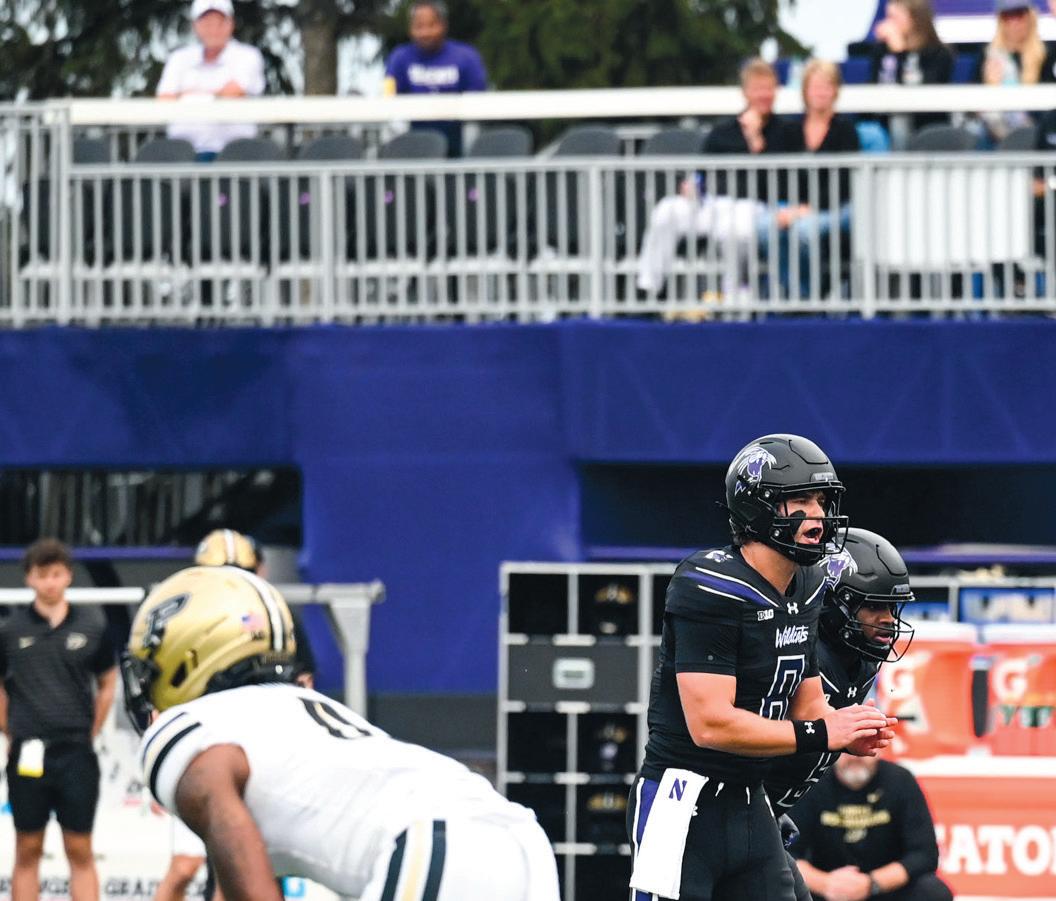
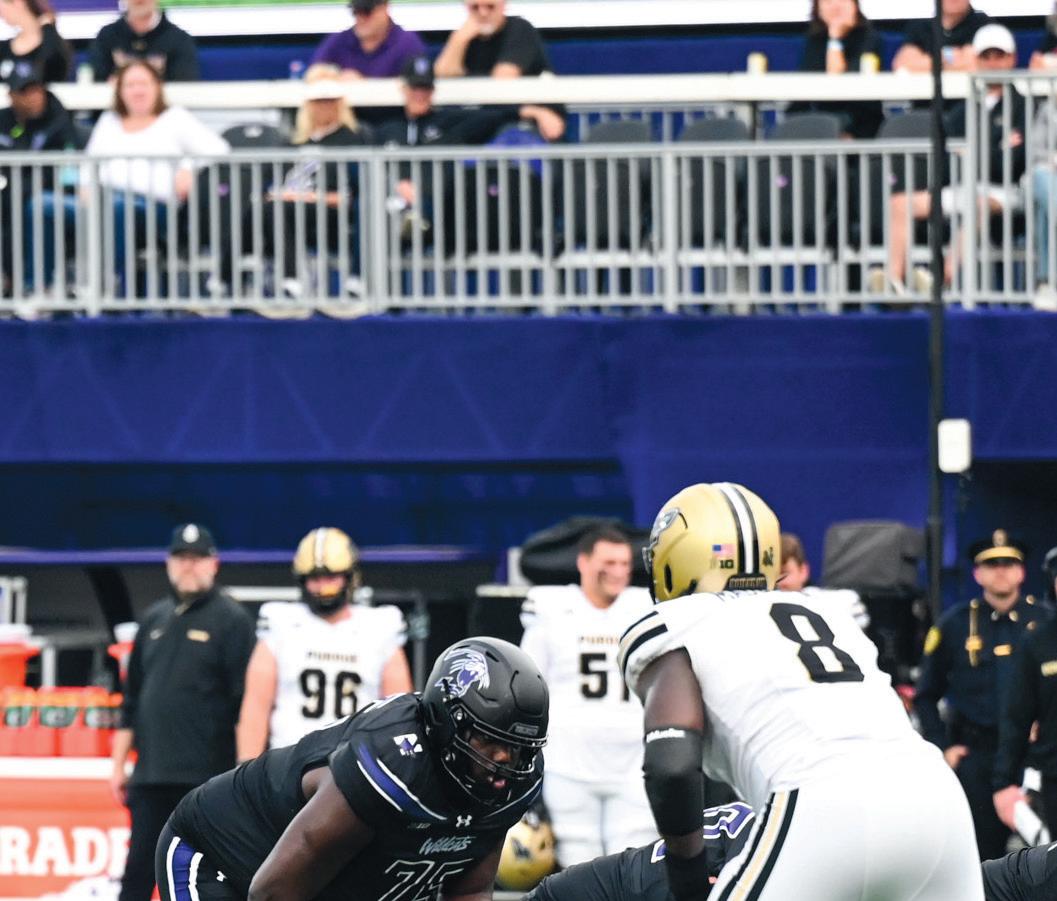

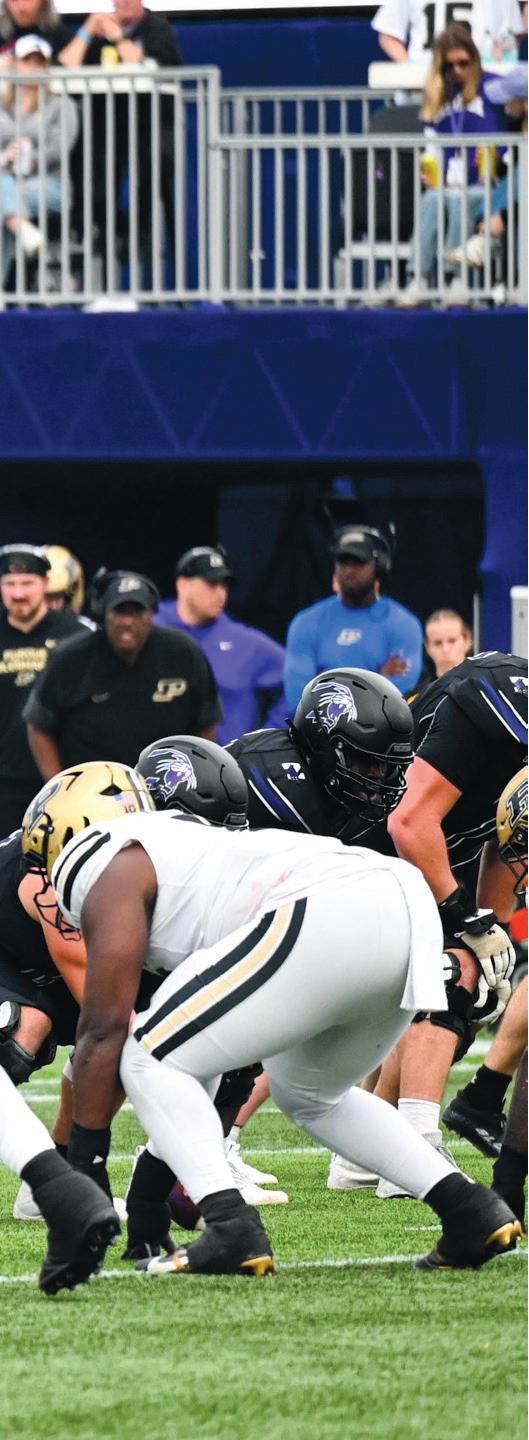
Northwestern emerged victorious in its lone Big Ten away contest against Penn State, but another challenge awaits.
e Wildcats (5-2, 3-1 Big Ten) will travel to Lincoln, Nebraska and take on the Cornhuskers (5-2, 2-2 Big Ten) on Saturday. e two teams nd themselves in very di erent points of the season, especially a er last week.
Against Purdue, the NU defense dominated through all four quarters, and the o ense did enough to put points on the board and secure a fourth consecutive victory.
GET GAMEDAY IN YOUR INBOX
Sign up for The Daily’s weekly sports newsletter for the latest from the gridiron and beyond. dailynorthwestern.com/email/
Se ing the record straight
An article published in Wednesday’s paper titled “NU to celebrate 1995 Rose Bowl Anniversary” inaccurately stated when Northwestern wore black jerseys against Notre Dame. e Daily regrets the error.
PASSING
Preston Stone
111-of-187, 1,213 yards
6.5 YPA, 10 TD, 7 INT Dallas
Dylan Raiola
155-of-213, 1,768 yards
8.3 YPA, 16 TD, 5 INT Buford, Georgia
While the ’Cats beat up on the Boilermakers and secured their rst shutout win since 2017, Nebraska had a disappointing showing against Minnesota. e Cornhuskers were favorites to walk away with the win, but their o ense only scored six points o of two eld goals. Quarterback Dylan Raiola was also sacked nine times.
NU has the hot hand, but Nebraska can fuel itself o the desire to get back in the win column. Here’s what the Gameday Sta thinks will happen this weekend:
Andrew Li le
Daily Senior Sta er Nebraska 23, Northwestern 17
Northwestern is riding high a er shu ing out Purdue, while Nebraska is coming o an uncharacteristic o ensive performance in a 24-6 loss to Minnesota.
Redshirt sophomore running back Caleb Komolafe exited early against Purdue with an upper-body injury, but coach David Braun said the team expects its leading rusher to be ready for Saturday. Komolafe’s status is critical for the Wildcats, as the Cornhuskers allow 156.3 rushing yards per game in the Big Ten, the fourth-most in the conference.
Despite his struggles against the Golden Gophers, Raiola is the best quarterback NU has
RUSHING
Caleb Komolafe
107 carries, 483 yards
4.5
Emmett Johnson 119 carries, 713 yards 6.0 YPC, 7 TD Minneapolis
faced since Oregon’s Dante Moore. Minnesota set the blueprint for beating the Cornhuskers, sacking Raiola nine times last week. Raiola’s completion percentage drops to 51.2% when facing pressure, according to PFF, and defensive coordinator Tim McGarigle needs to nd ways to get the sophomore out of rhythm early. Nebraska’s experienced stable of pass catchers is di cult to slow down when Raiola is comfortable, presenting a challenge for the ’Cats’ secondary.
NU’s success on the line of scrimmage should keep this game very competitive. Still, Nebraska’s o ense will be hard to overcome if Raiola has a bounce-back performance in front of a raucous Memorial Stadium crowd.
Anna Watson
Daily Senior Sta er Nebraska 21, Northwestern 17
All good things must come to an end. is week, Northwestern’s four-game win streak is in jeopardy.
e Cornhuskers will be hungry for a bounceback performance. What they showed against Minnesota is not up to their standards, and it’s a pre y safe bet that Nebraska will look be er Saturday than it did last week.
Home eld advantage during conference play, especially in an environment like Memorial Stadium, gives the hosts an upper hand as well.
e Cornhuskers are a talented team with a talented quarterback in Raiola, who can hurt NU in a variety of ways. However, the Minnesota game proved there will be opportunities for a buzzing ’Cats defensive line to cause commotion.
Nebraska also allows the fourth most rushing yards per game in the Big Ten, which is another nice matchup for an NU team that relies heavily on Komolafe and Joseph Himon II’s production.
As Braun mentioned at his weekly news conference Monday, the ’Cats do have a li le bit of
momentum behind them, having not lost since Sept. 13. e powers at play for the Cornhuskers, though, could be too much to overcome.
I think Nebraska pulls out the victory and gets back on track, while NU makes the contest closer than the be ing lines say it will be.
Alex Boyko
Daily Senior Sta er
Nebraska 20, Northwestern 17
Despite a concerning 24-6 loss to Minnesota last week, this Nebraska team should not be overlooked, especially considering how di cult it can be to play at Memorial Stadium. at being said, the Huskers are actually a good matchup for the ’Cats on paper. Nebraska has been the best defense in the FBS by passing yards allowed, but ranks just 88th in rushing yards allowed. If NU can keep the game competitive in the rst half and allow itself to stick to a run-heavy game script, its stable of backs can thrive against a Nebraska front that has allowed over 120 yards and two rushing touchdowns in four of its six FBS matchups this season.
On the other side of the ball, the Huskers’ engine — the 18th ranked passing a ack in terms of yards per game — is met with a ’Cats defense that ranks 18th best at preventing them. e Cornhuskers’ weakness so far has been their pass-blocking. Raiola was sacked nine times last week and is being dropped at the third-highest rate in the country. NU’s performance versus Purdue showed how disruptive its defensive line can be when allowed to tee o in obvious passing situations, and they are well-positioned to swing the game in the ’Cats’ favor. e formula for victory remains unchanged — win in the run game, limit turnovers and play complimentary football — but executing on the li le things is paramount this week. If special teams mistakes or the turnover bug rear their head again, NU’s alreadynarrow margin for error might close completely.
solo, 24 atk
Nyziah
Javin Wright 23 solo, 28 atk 51 tot tackles Chandler, Arizona
By ANNA WATSON daily senior staffer @adub_sports
Special teams coordinator Paul Creighton sees Saturday’s special teams matchup like a boxing match. Nebraska, which boasts the second highest PFF grade for special teams in the FBS, is extremely aggressive and tries to maximize explosive plays. However, Creighton knows how his team can counter.
“Floyd Mayweather was the best boxer of all time, and he was not an aggressive boxer, he was a smart boxer,” Creighton told e Daily Tuesday. “Being at Northwestern, one of the advantages you have is you’re dealing with a room of really, really smart guys.”
e Wildcats (5-2, 3-1 Big Ten) will have to think on their feet against one of the country’s most dangerous units. e Cornhuskers (5-2, 2-2 Big Ten) have blocked three kicks in 2025 and are on pace to have their best punt return season in more than a decade.
Nebraska has 20 punt returns for 288 yards this season and averages 14.4 yards per punt return. e kick return squad has seen similar results, averaging 27.3 yards per return, a gure that ranks secondbest in the Big Ten.
Creighton said the question to be asked is how to mitigate and take advantage of their aggression.
NU’s ability to buy-in and understand the potential locked inside special teams will prove important.
“Coach (Gary) Barne , when he talked to us last week, said every game comes down to six plays,” Creighton said. “ e problem is you don’t know which six plays they are gonna be … One of those plays for sure is going to be a special teams play.”
e buy-in from the team is somewhere graduate student punter Luke Akers said the group has improved throughout the year.
According to Akers, special teams is not something that everybody wants to do, but this team has players like redshirt freshman running back Dashun Reeder, who is taking snaps on o ense and blowing guys up on kicko .
“Having guys buy into special teams makes our jobs so much easier because we can just trust what everybody else is doing and focus on us,” Akers said. “We work pre y hard as specialists, so they see us working hard, and we see them working hard, so we can just trust each other.”
If Akers punts against Nebraska, he will likely have to kick to Jacory Barney Jr. Barney leads Nebraska with 217 punt return yards, which is the most by a Cornhusker since the 2014 season. Akers said NU tries to be directional with punts, so that is a focus for the team.
Creighton has faith in Akers’ ability as a specialist. His professionalism, skill, athleticism and humility make him a standout player to the special teams coordinator.
By ALEX BOYKO daily senior staffer @aboyko_nu
Already leading 19-0 against Purdue in the fourth quarter, Northwestern had ve chances to put the game rmly out of reach. Instead, the hosts le the door open for the Boilermakers with two three-and-outs, two turnovers and a missed eld goal to close out the game.
With some time to re ect, coach David Braun opened Nebraska week frustrated with last week’s
performance despite the shutout pitched by he and defensive coordinator Tim McGarigle’s unit.
“You have a group of guys on this team — on special teams, on the o ensive side of the ball — that, honestly, le the game with a bi er taste in their mouth, knowing that we did not nish in the fourth quarter the way that we expect to,” Braun said during his weekly press conference Monday.
“Plenty of things this morning to address, clean up, be objective with our evaluation and know that there is needed improvement as we approach this evening’s practice.”
As the Wildcats (5-2, 3-1 Big Ten) prepare to
“When I’m pu ing together a game plan for really any phase I’m never thinking, ‘Can Luke do this?’” Creighton said. “ e answer is he can do it. How can everybody else manage it? at makes it super easy.”
Saturday’s venue, however, is another piece of the puzzle, as Nebraska’s Memorial Stadium is the second formidable Big Ten away site the ’Cats will visit. 407 consecutive games have been sold out there, which is the longest streak in the country.
NU had to visit the infamous Beaver Stadium in its victory against Penn State, but Creighton said that the team’s subpar nonverbal communication at the venue led to some issues.
Having that experience in their back pocket, though, can only help so much.
“ at’s another big growth area of our team too, is understanding that it doesn’t ma er if we are playing Purdue at home or Nebraska on the road,” Creighton said. “It’s not going to be easy. So, it’s understanding the obstacles, and me, as a coach, doing a really good job positioning those guys to not have to overcome a tough situation.”
Ultimately, the group has shown growth that it can take with it to Lincoln. In NU’s win over Purdue, the ’Cats a empted an unsuccessful fake punt. Creighton said that previously, the sta was worried about being aggressive on special teams because of how it might impact the team if a mistake was made. Against Purdue, though, the team was excited for the a empt, and when they didn’t
face the Cornhuskers (5-2, 2-2 Big Ten) Saturday, Braun and his sta understand that their team will have to claw its way to victory, particularly with how di cult it is to play at Memorial Stadium.
NU’s brief road schedule to this point has been anything but forgiving — a season-opener down in the swampy, summer heat of New Orleans and a full house in Happy Valley. So, naturally, the ’Cats third test is also in one of the most hostile environments in the country against a team hungry for a win.
Nebraska has sold out its past 407 games in Lincoln, a FBS-record streak dating back to 1962 in which the Huskers have won over 80% of their games.
“We’re going on the road in arguably the best environment, the most hostile environment in all of college football,” Braun said. “So, incredible challenge in front of us.”
get it, the team had the mindset of just keep playing. e re ned mentality has even allowed the ’Cats to implement a swinging gate on extra points, where the blockers initially set up away from the center and can run a play out of that formation or revert to their traditional position before the snap. is summer, coach David Braun came to Creighton and told him they should do the swinging gate, which is something the special teams coordinator had done in the past.
For Creighton, the implementation has been fun while creating an impact on his opponent.
“If somebody runs that, it’s like, ‘Oh great. We have got to take 10 minutes of practice time to practice lining up to this stu ,’’’ Creighton said. “During the week, 10 minutes of practice time is like gold. You don’t have time to waste.”
Winning the special teams ba le will be a tall task for NU, but it is nothing the crew cannot handle.
Creighton said he just wants to see his guys play hard and for each other, even through the inevitable mistakes.
“Kicko return and punt return are two of my favorite units because you got a bunch of skill, a bunch of guys that are receivers, running backs and DBs that are busting their ass for somebody else,” Creighton said. “ ey’re not going to get any recognition for a great block or a great play, but they’re selling out to make somebody else look good.”
annawatson2027@u.northwestern.edu
ahead of Saturday’s skirmish. e NCAA tracks nine major special teams statistics on its website. Nebraska ranks inside the top10 in over half and outside the top-20 in just one. On the other hand, NU’s special teams unit has had an up-and-down season so far. Last week’s fake punt a empt and missed eld goal are still fresh, and ga es against UCLA and Penn State nearly cost the ’Cats dearly in one-possession games. With the two teams relatively evenly matched at 5-2, NU’s ability to overcome the home- eld advantage and execution mistakes that come with it will be crucial. A er playing in Lincoln during his rst year at the helm, Braun has a taste for what it takes to play there.





















e ’Cats have stolen three wins at Memorial Stadium, but never ended regulation with a lead larger than a eld goal. Facing a Cornhuskers team that limps into this game a er a 24-6 shellacking by Minnesota, Braun’s squad has a chance to grab number four.
NU enters the game riding a wave of momentum, extending its win-streak to four by blanking the Boilermakers. But, according to Braun, that won’t be enough for the ’Cats to walk into e Sea of Red and come out unscathed.
“Momentum is real, but it’s something that you can’t take for granted,” Braun said. “If we can focus on daily improvement, we’re gonna give ourselves a chance. But just because we’ve won a few games in a row doesn’t mean that we’re positioned to win this next game.”
Beside noting the hostile environment, Braun also made a point of mentioning the Cornhuskers’ special teams unit as a potential di erence-maker






“You’ve got to do a great job of just really handling your pre-snap process. Speci cally on o ense,” Braun said. “You’ve got to do a great job of responding as momentum shi s in a football game. In this league, it’s going to take four quarters. We’ve got to be at our best in the fourth quarter.” Both teams sit one win away from securing a bowl game and the nal moments of this game could go a long way towards deciding NU’s postseason plans.
However, Braun emphasized that wasn’t one of the team’s focuses this week and that making a bowl game is not in its list of goals for this season. Instead, Braun has told his players to continue to focus on the task at hand and take a moment to acknowledge how short the college football season is.
“It’s crazy to think that we’re already past the midway point of the regular season,” Braun said. “… Continue to enjoy one another. Have fun doing something that this entire group has dreamt of doing.”
alexboyko2026@u.northwestern.edu






3-1 5-2, 2-2 5-2, 2-2 5-2, 2-2 4-3, 1-3 3-4, 0-4 3-4, 0-4 3-4, 0-4 2-5, 0-4 2-5, 0-4
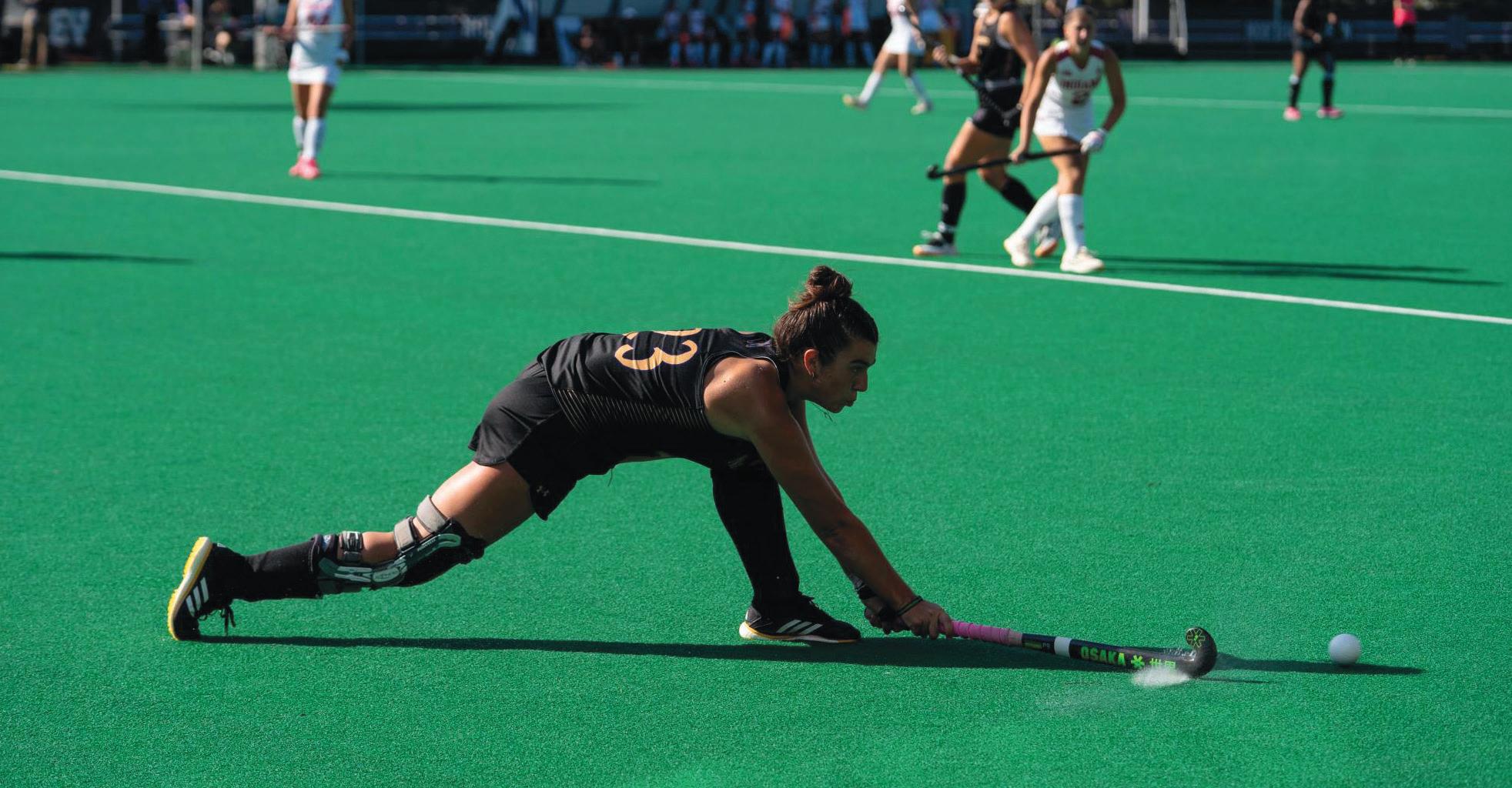
By YONI ZACKS the daily northwestern @yonizacks
Sophomore forward Kennedy Roesch scored two second-half goals as Northwestern beat Purdue 3-1 to clinch a spot in the Big Ten Tournament for the first time since 2022. The Wildcats (8-3-6, 4-2-4 Big Ten) continued their strong recent history against Purdue, winning three out of the last four games against the Boilermakers (5-10-3, 2-7-1 Big Ten).
By JONAH MCCLURE daily senior staffer @jemccl125
As the clock wound down, the scoreboard at Lakeside Field showcased a rare result last Monday — a loss for No. 1 Northwestern. Then-No. 8 Princeton took down the top-ranked squad on the road by a score of 3-2, handing the hosts their first regular season loss since 2023.
Despite the loss, the Wildcats (13-1, 5-0 Big Ten) maintained the top ranking in the Division I National Coaches Poll. They are the first team to be ranked first in the country for seven straight weeks since North Carolina in 2022.
NU bounced back from its first loss with a tandem of ranked victories, taking down No. 15 Rutgers 5-0 and No. 10 Maryland 2-1. The ’Cats have now won five straight games over both opponents.
NU began the weekend in Piscataway, New Jersey, where it took on the Scarlet Knights (8-7, 3-3 Big Ten).
The game saw little action through much of the first quarter, with neither team logging a shot attempt until over seven minutes in. Later in the quarter, the ’Cats put pressure on their opponent, taking two more shots before junior forward Ashley Sessa drew a penalty corner. Sessa both inserted and finished the
play, passing the ball to senior defender Maja Zivojnovic, before rushing into the goalmouth to deflect Zivojnovic’s shot into the net.
With NU holding a 1-0 lead, Rutgers looked to get on the board, attempting five shots in the first three minutes of the second quarter. Near the end of the quarter, the Scarlet Knights were forced to play with 10 players after a green card was issued, and the ’Cats took advantage.
Junior forward Olivia Bent-Cole stole the ball from a Rutgers player and ran down the backline toward the goal. She found graduate student forward Grace Schulze, who slotted a shot past multiple defenders and into the back of the net.
Despite outshooting NU 6-2 in the second quarter, the Scarlet Knights were unable to find their first goal, and the contest went into halftime with the ’Cats leading 2-0.
In the third quarter, both squads traded shot attempts, but neither scored until NU drew another penalty corner with two minutes remaining. Sessa inserted the ball to Bent-Cole, who dished it to Zivojnovic, and she shot it toward the left side of the goal. The Rutgers goalkeeper deflected the ball, but it snuck past her into the goal.
The ’Cats looked to add to their 3-0 lead in the fourth quarter. Sessa, running parallel to the goal just inside the
shooting circle, narrowly snuck the ball past the goalkeeper for the score.
In the final minute of the contest, NU wasn’t done yet. Bent-Cole sent a shot past the outstretched goalkeeper to Sessa, who was waiting right in front of the goal and knocked the ball in. It was Sessa’s third goal of the game and first career hat trick. Zivojnovic is now one of eight ’Cats with at least five points this season.
The ’Cats weren’t scared of using the full clock, as they scored four of their five goals in the final two minutes of quarters.
Sessa’s seven points (three goals and one assist) were the most by an NU player in a single game this season. Bent-Cole logged her first-career threeassist contest.
In Sunday’s game, NU took on the Terrapins (8-6, 4-3 Big Ten). This marked the ’Cats’ fifth contest against a top-10 opponent this year.
The game almost immediately took a different turn from Friday’s match, as NU conceded a goal to Maryland midfielder Djuna Eikelboom in the sixth minute.
The ’Cats were dominated throughout the rest of the first half, as they did not attempt a shot until the second quarter and were outshot 7-1 through 30 minutes of play.
Early in the third quarter, NU earned
an opportunity to tie the game. Graduate student midfielder Maddie Zimmer was fouled hard in front of the goal and received a penalty stroke. She shot the ball over the head of the goalkeeper and into the back of the net, tying the game at 1-1.
The ’Cats kept the pressure on for the rest of the quarter, attempting five more shots before earning a penalty corner. After Sessa passed the ball in and the Maryland goalkeeper saved a shot from junior defender Ilse Tromp, Zivojnovic possessed the ball near the left side of the goal. She knocked a shot past a diving defender and the goalkeeper for the score and the 2-1 lead.
The NU defense held strong throughout the fourth quarter, allowing just one shot in the final 15 minutes.
The ’Cats held on for the narrow 2-1 victory over their ranked foe.
Over the two games, redshirt freshman goalkeeper Juliana Boon recorded eight saves and allowed just one goal. Zimmer tallied her fourth goal of the season, and Zivojnovic has logged points in three consecutive games.
In the home stretch of the regular season, NU heads home to take on No. 14 Michigan and No. 12 Ohio State next weekend.
jonahmcclure2028@u.northwestern.edu
NU got off to a strong start, scoring a goal in the 13th minute. A foul by Purdue defender Zoe Cuneio right outside the box set up a free kick just inside the penalty arc. Senior midfielder Caterina Regazzoni took a shot that soared over the Boilermaker wall and into the right side of the net. Purdue answered for the early deficit in the 30th minute. Boilermaker defender Emilia Deppe sent a corner kick into the center of the box, where Cuneio was able to head it back to midfielder Margaux Chauvet. Chauvet volleyed the ball just out of reach of a diving ’Cats’ freshman goalkeeper Nyamma Nelson, and midfielder Irene Campo headed it in on the goal line. That goal ended a 210-minute shutout streak for Nelson, who had a strong day with four saves. Her biggest save came in the 36th minute, diving to the left to save a long shot by defender Gabriela Angulo.
The NU offense continued to pressure Purdue goalkeeper Emily Edwards, with crisp passing leading to a chance in the 33rd minute. Senior forward Hayley Newman set up Roesch with a through pass to the penalty box that Roesch wasn’t able to put past Edwards.
Roesch had two chances in the 38th minute, both of which were blocked by Cuneio. Purdue’s run of blocked shots continued, with Chauvet blocking a chance by substitute junior winger Keira Wagner off a corner in the 43rd minute.
Regazzoni had a chance from just outside the penalty area in the 44th minute that was blocked by Campo, sending the teams into the break tied 1-1.
The ’Cats came out blazing after the half, breaking through in the 48th minute. A cross by sophomore winger Kate Hennen ended up at the feet of junior winger Megan Norkett, who took a shot that was blocked by Edwards.
By ELI K RONENBERG daily senior staffer @elikronenberg
After Northwestern’s 25-22, 25-22, 27-25 home loss to Illinois on Sunday, coach Tim Nollan did not mince words as he assessed his team’s failure to match up with its in-state rivals.
“I thought we got pushed around out there,” Nollan said. “I don’t think our kids competed very well. I don’t think we played the way we’ve been trying to play all year. I’m incredibly disappointed with our performance.”
The Wildcats (13-7, 3-5 Big Ten) entered Sunday’s contest missing their talisman and kill-leader, senior outside hitter Rylen Reid, with what Nollan described as a “day-to-day” lower extremity issue. It was Reid’s second consecutive match missing out.
Senior outside hitter Buse Hazan took Reid’s place in NU’s five-set win over Michigan after over a month on the sidelines, marking her return with a dominant 17-kill showing.
Hazan picked up right where she left
off, earning the first point against the Fighting Illini (12-5, 7-1 Big Ten) with a down-the-line kill reminiscent of the one she delivered to clinch Thursday’s victory.
The ’Cats maintained a slim lead throughout the early stages of the set, but the tide turned as Illinois embarked on a 7-2 run, punctuated by a service ace that forced Nollan to call a timeout trailing 15-13.
The Illini held firm on top of the net, winning several points with blocks as they extended their advantage.
“We didn’t pass very well,” Nollan said. “We had a hard time locating setting, and our attackers had very limited choices.”
A key sliding doors moment occurred with Illinois leading 19-16, when a hit from the visitors flew long and NU thought it had earned the point. However, a challenge by Illini coach Chris Tamas revealed a block touch, and the call was overturned.
With NU trailing 24-21, Hazan saved one set point with a kill, but a delicate touch kill by Illini outside hitter Taylor de Boer on the next point sealed the set.
Illinois drifted out to a slender advantage early in the second set, before a 10-2 run opened the floodgates and put the visitors ahead 20-12.
The ’Cats sprung to life facing a 24-18 hole, saving four consecutive set points. However, the next one proved a bridge too far as a clean kill by Illini outside hitter Alyssa Aguayo to the middle back put Illinois up two sets to none.
After the ’Cats jumped out to a 7-3 lead in the third set, Illinois went on a 5-0 run to take control back. The Illini stayed narrowly ahead through the middle stages of the set, but NU fought back to tie it at 21-21 after a kill by junior outside hitter Campbell Paris was originally called out but overturned following video review.
Paris took over for a brief period, notching a kill to put NU up 22-21 and then another for 24-23. Illinois stood up to test, however, saving two set points and creating a match point of its own, leading 26-25.
Coming out of a timeout staring down the void of defeat, the ’Cats set up a hit for freshman outside hitter Bella Bullington, but Bullington missed wide
right to extinguish their last hopes.
Asked if he saw more fight from his team in the third set, Nollan poured cold water on the idea.
“No,” he said. “I mean, honestly, I don’t think we competed the way we need to compete. The way we played today is not going to represent this program. I won’t let it.”
Graduate student outside hitter Ayah Elnady led the team with 12 kills, and Hazan came in just behind her with 10. Elnady and junior libero Drew Wright each notched a joint-team-leading nine digs.
The ’Cats now head out on the road, facing Nebraska and Indiana next weekend.
“We’ll come back next week, and we’ll work really hard in correcting those things before we travel,” Nollan said. “We’ve got to watch film. We’ve got to show them where we made the mistakes. We’ve got to go back to our techniques and figure out why we’re making those mistakes, and just try and get some better performances.”
elikronenberg2027@u.northwestern.edu
The rebound ended up back at Norkett’s feet, and she passed it to Roesch, who placed the ball in the left corner of the net, giving NU a lead it wouldn’t relinquish.
Roesch’s strong night continued a few minutes later, when she halfvolleyed a deep cross from freshman defender Audrey Alberts past a diving Edwards to the near post to put the ’Cats up 3-1. It was Roesch’s teamleading eighth goal of the season, and her first career brace.
NU settled in for the rest of the game, holding Purdue to two shots on goal. Both shots went straight into Nelson’s hands. As Purdue tried to make one final push to save the game and keep its postseason hopes alive, the ’Cats denied any hope of a Purdue miracle.
With its third consecutive win, NU clinched a spot in the Big Ten tournament, the first round of which will be held at Purdue. The regular season concludes with a home game against Wisconsin on Sunday.
yonizacks2029@u.northwestern.edu