After two years of contentious debate, Evanston is turning toward a rezoning initiative that has already divided residents and defined an entire municipal election cycle.
Last month, City Council narrowly passed its new comprehensive plan, the first step in the city’s broader Envision Evanston 2045 initiative, which looks to define the city’s development for years to come. Throughout the process, a select group of residents has attended meeting after meeting to express concerns over the plan’s timeline and intent, particularly around the language it uses to describe Evanston’s housing goals.
Impassioned residents resist zoning plans
As the city begins reexamining its zoning code, which was adopted in 1993, these residents are pushing back on the scope and direction of the proposed rewrite, arguing the process has reflected predetermined outcomes rather than a consensus among community members.
“The adopted plan emphasizes future density scenarios and regulatory changes, far more than it reflects what many residents consistently express, which is preservation of neighborhood character, scale and predictability,” said John Storey Williamson, a 3rd Ward resident, commercial property manager and realtor.
“This plan reads more like a platform for housing production policy than a reflection of Evanson’s built reality.”
Storey Williamson is part of the Evanston Action Coalition,
» See HOUSING , page 14
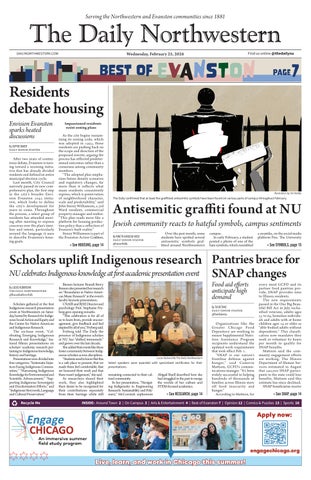
Antisemitic
Jewish community reacts to hateful symbols, campus sentiments
By NINETH KANIESKI KOSO daily senior staffer
Over the past month, some students have spo ed several antisemitic symbols graftied around Northwestern’s
Scholars upli Indigenous research
NU celebrates Indigenous knowledge at rst academic presentation event
By LUCAS KUBOVCHIK
the daily northwestern
@lucaskubovchik
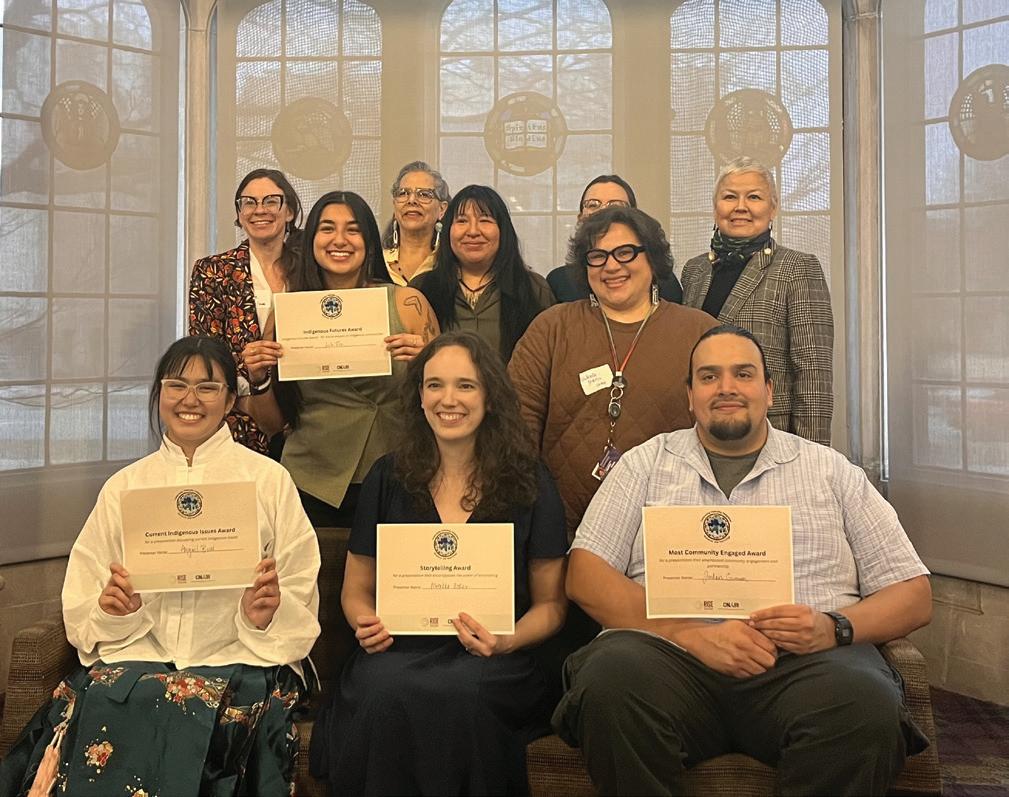
Scholars gathered at the rst Indigenous research presentation event at Northwestern on Saturday, hosted by Research for Indigenous Social Action and Equity and the Center for Native American and Indigenous Research.
The six-hour event, “Celebrating Emerging Indigenous Research and Knowledge,” featured fifteen presentations on scholars’ academic research pertaining to Indigenous knowledge, history and heritage.
Presentations were divided into four categories: “Systematic Injustices Facing Indigenous Communities;” “Harnessing Indigenous Knowledge for Environmental and Scienti c Advancement;” “Supporting Indigenous Sovereignty and Decolonization E orts;” and “Indigenous Storywork, Language and Cultural Preservation.”
Bienen lecturer Brandi Berry Benson also presented her research on “Boundaries in Native American Music Research” in the event’s faculty keynote presentation.
CNAIR and RISE Director and psychology Prof. Stephanie Fryberg gave opening remarks.
“ is celebration is for all of us to learn from, provide encouragement, give feedback and feel inspired by all of you,” Fryberg said. Fryberg told The Daily the presence of Indigenous scholars at NU has “shi ed immensely” and grown over the last decade.
She added that events like these foster community between Indigenous scholars across disciplines.
“Students need to know that this is a safe place to present, that we made them feel comfortable, that we honored their work and that there wasn’t judgement,” she said.
As researchers shared their work, they also highlighted their desire to be recognized for their contributions separately from their heritage while still
remaining connected to their cultural community.
In her presentation, “Navigating Indigeneity in Engineering Research: Sustainability and Polymers,” McCormick sophomore
Abigail Buell described how she had struggled in the past to merge the worlds of her culture and STEM-focused academics.
Pantries brace for SNAP changes
Food aid e orts anticipate high demand
By TIA BETHKE daily senior staffer @bethketia
Organizations like the Greater Chicago Food Depository are working to ensure Supplemental Nutrition Assistance Program recipients understand the updated work requirements that took effect Feb. 1.
“SNAP is our nation’s frontline defense against hunger,” said Camerin Mattson, GCFD’s communications manager. “It’s been widely successful in helping hundreds of thousands of families across Illinois stave off food insecurity and hunger.”
According to Mattson, for
every meal GCFD and its partner food pantries provide, SNAP provides nine to Illinois residents.
The new requirements passed in the One Big Beautiful Bill Act in July reclassified veterans, adults ages 55 to 64, homeless individuals and adults with at-home children ages 14 or older as “able-bodied adults without dependents.” This classification now mandates they work or volunteer 80 hours per month to qualify for SNAP benefits. Mattson said the community engagement efforts are working. The Illinois Department of Human Services estimated in August that 340,000 SNAP participants in the state could lose benefits. Mattson said this estimate has since declined. SNAP bene ciaries receive
Illustration by Siri Reddy
Lucas Kubovchik/The Daily Northwestern Select speakers were awarded with specialized certificates for their presentations.
District 65 Board standardizes transportation policy
By RUIXIN ZHANG and EMILY DISSANAYAKE
the daily northwestern @ruixinzhang
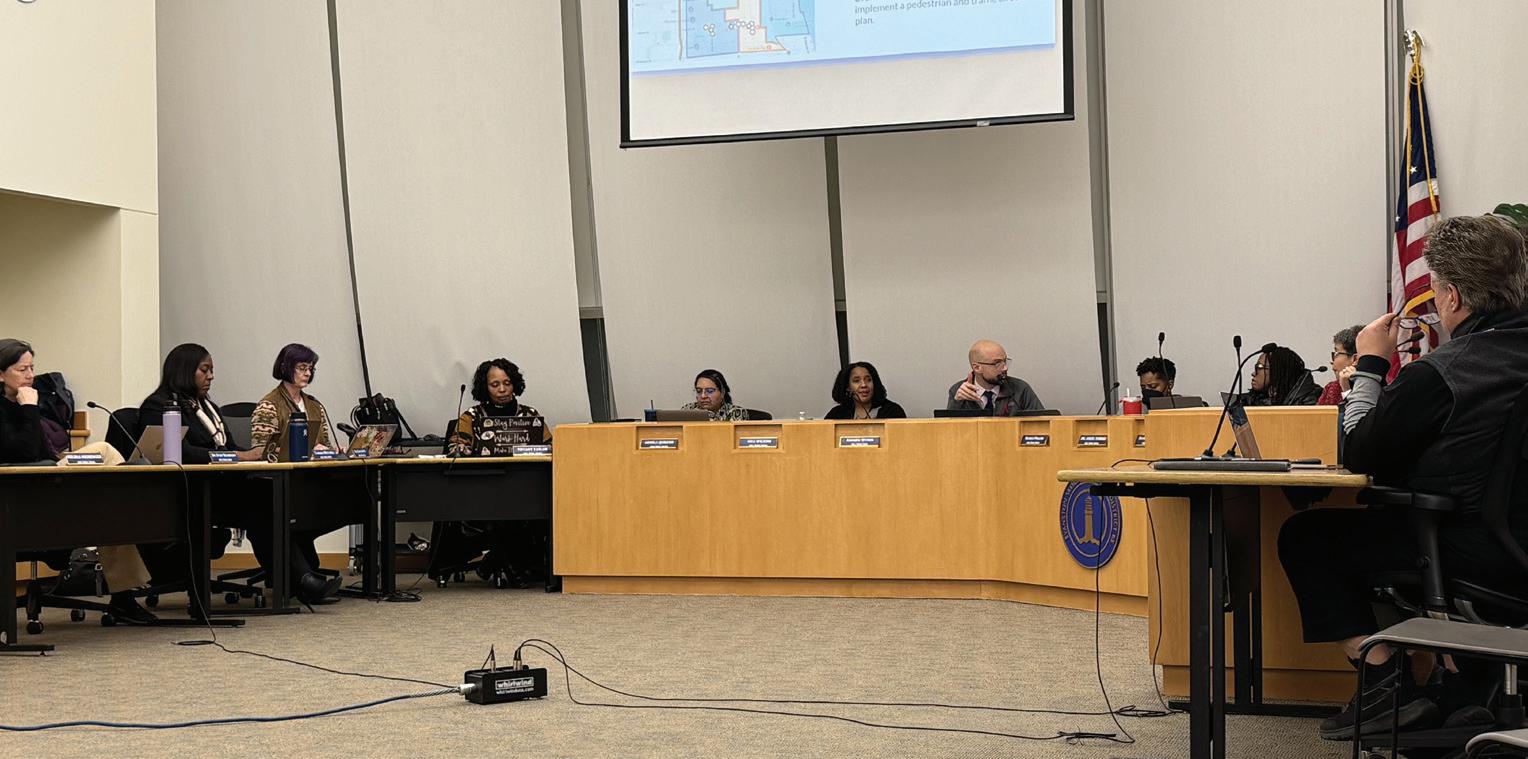
The Evanston/Skokie School District 65 Board of Education voted Monday night to standardize district transportation policy, approved new hazardous road designations and deliberated a three-year plan to decrease costs and improve student outcomes for the district’s special education services.
The meeting was also the first since District 65’s Chief Financial Officer Tamara Mitchell announced she is stepping down at the end of the 2025-26 school year.
“I want to thank you for your hard work and dedication to the school board,” Board President Patricia S. Anderson said to Mitchell. “I hold you personally and your skills specifically in the highest regard.” Mitchell said it was an “honor to serve this community.” Anderson added that she is committed to a “smooth transition” directed by Mitchell’s “continued skill and professionalism.”
Board updates transportation policy
Following a lengthy discussion, the board unanimously approved rescinding a board policy that set different transportation criteria for neighborhood and magnet school students.
The board agreed to establish a uniform policy across the district, reducing the district’s transportation fee revenue by an estimated $30,000, according to the board memo.
Under the new policy, K-8 students living over 1.5 miles away from their assigned school or facing “serious walking hazards” will receive free transportation, as well as English learners enrolled in bilingual programs at schools beyond their assigned attendance boundary.
For special education students, free transportation services and vehicle adaptations will be provided if included in their individualized educational programs.
At the Feb. 9 board meeting, Data Management Specialist Chris Koutavas and District 65
Transportation Coordinator Lou Gatta presented the board with four options for determining hazard roads. The options could have reduced the district’s transportation costs, which currently stand at $4.2 million annually.
Gatta and Koutavas returned to the board at Monday’s meeting with evaluations of several roads not currently marked as hazardous under Illinois Department of Transportation guidelines.
Following discussion over potential designations, the board unanimously agreed to adopt hazard road designations aligned with IDOT guidelines, which include Dempster, Emerson, Golf, Green Bay and McCormick roads. In addition, Ridge Avenue, Chicago Avenue and Gross Point Road — currently not considered hazardous roads by IDOT — will be designated as such.
Transportation provided for non-IDOT hazard roads is not eligible for reimbursement, according to the memo. The designation will cost the district an estimated $4 million, resulting in an overall cost reduction of about $200,000. Notably, roads that have crossing guards lose their hazardous designation.
The board also discussed 2027 budget allocations for the Crossing Guard Program. Currently, District 65 and the city share the cost of the program, with the district paying about $460,000 and the city paying about $200,000. However, the cost-sharing agreement expires next year, and the district will assume 100% of the cost by 2028 and is projected to pay about $737,000 that year.
According to Gatta, the board is leaning towards allocating $500,000 to fund around 40 crossing guards and prioritizing six new guards for Foster School and high-traffic intersections. The district currently employs about 55 crossing guards.
Board discusses a three-year special education plan
Gini Sulek, Director of Student Specialized Services and Supports, and Assistant Superintendent of Instructional Leadership Katie Speth presented a three-year plan to control costs and improve student outcomes regarding special education services.
According to the special education audit presentation, state and local expenditures dedicated to Special Education Maintenance of Effort rose from about $28 million in the 2021-22 school year to over $45 million in the 2023-24 school year. The board discussed potential causes for the increase, including changes in leadership and a rise in contractual workers.
In its first year, the plan emphasized greater fiscal oversight and the use of data to monitor student performance. Board members also highlighted the need to prioritize individual student needs and inclusivity despite rising costs.
“It’s always been about access, and we are federally mandated to provide access through the individual education program, whatever the cost may come,” said board member Sergio Hernandez.
Parents raise concerns over administrators’ arrest
Board members met in a closed session for an hour to discuss the status of “specific employees,” according to the agenda. At the end of the open session meeting, the board voted to “dismiss and suspend” a district administrator. The
administrator’s name was not publicly disclosed.
During public comment, several parents referenced the Feb. 5 arrest of Washington Elementary School Assistant Principal Carlos Mendez on charges of aggravated criminal sexual abuse of a minor, domestic battery and evading an out-ofstate warrant. No district students are involved in the allegations.
Former FBI hostage negotiator Phil Andrew, who is running to represent Illinois’ 9th Congressional District, attended the meeting and spoke during public comment.
“Thank you for your work,” Andrew told the board. “There are three Andrews — my nieces and nephews are in District 65, and their future and their well-being is in your hands.”
Some parents criticized the district’s communication following Mendez’s arrest and asked for additional transparency.
“My daughter got here a few weeks ago, and in her own words, not mine, asked who you were working for,” said district parent Lauren McNamara during public comment. “And so I ask again, isn’t it the kids?”
r.zhang@dailynorthwestern.com
e.dissanayake@dailynorthwestern.com
Emily Dissanayake/The Daily Northwestern
Board members also reviewed a special education audit presentation.
ON CAMPUS
Students re ect on invasion of Ukraine
By TAARIQ AHMED
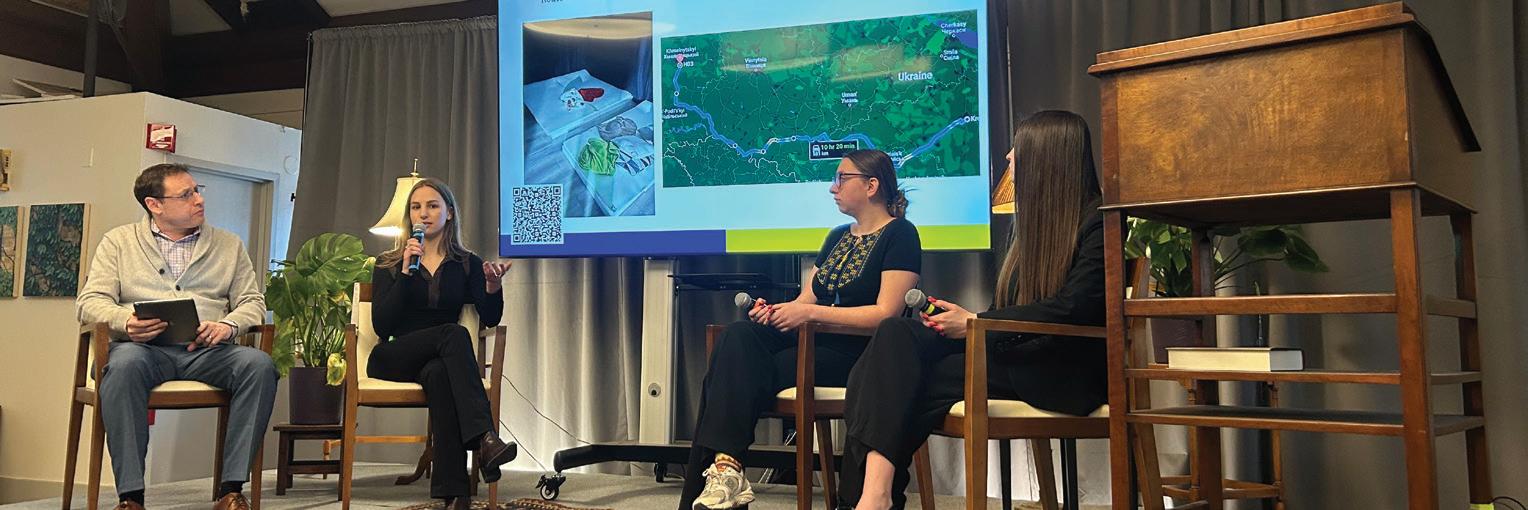
Students shared their experiences and re ections on the 2022 Russian invasion of Ukraine and its ongoing impacts, as part of a Friday panel hosted by Northwestern’s Ukrainian Club at the Roberta Bu e Institute for Global A airs.
e con ict began Feb. 24, 2022. Four days before its fourth anniversary this Tuesday, the students discussed life before, during and a er the con ict in a conversation moderated by political science Prof. Jordan Gans-Morse to an audience of about 25 people.
Ukrainian Club President and Medill sophomore Mira Trofymchuk, who is from Kakhovka, Ukraine, said her mom came into her room telling her about the initial a acks. She said they headed to her grandmother’s house nearby, where other family members were already staying.
“I remember waking up my brother — he was 7 years old at this time, and he was just crying — he didn’t know what was going on,” Trofymchuk said. “I was 15 when the full-scale war started, but I realized that I don’t have time to act like a teenager. I have to grow up in a second and be an adult right now.”
Trofymchuk also spoke about her stepfather, a Ukrainian soldier who was killed in October 2023.
She said he always gave her hope, made her laugh and inspired her to stay optimistic.
“He was the brightest person in my life,” Trofymchuk said. “I feel like right now I have the mission of carrying his positivity, but at the same time, delivering a really important message.”
Former Ukrainian Club President and Weinberg junior Yuliia Chernova, who is from Kharkiv, Ukraine, said she still remembers her mom waking her up due to bombings in her area.
She said her parents had always told her that if anything were to happen, they would leave Kharkiv, because “it was never an option” for them to live under Russian occupation.
“Surprisingly, the night of, I slept like a baby,” Chernova said. “It really helped me stay awake the next day, because I didn’t even wake up from the explosions, even though my parents did.”
Chernova described hearing the rst air raid alert and spending time in an underground station. She said
she did not sleep much because she and her family were constantly checking the news, and there were many people in a closed room, si ing “shoulder-to-shoulder.”
Ukrainian Club Treasurer and Weinberg junior Vira Vitiv, who is originally from Chortkiv, Ukraine, said waking up to news of the Russian invasion from London felt di erent than the others’ experiences. She opened her phone to messages from family in Ukraine and then noti cations online.
“I got ready to go to school and realized that nobody in my school knows this is going on, and everybody’s just living a normal life,” Vitiv said. “I was si ing in my class, and I was just like, ‘Why is no one saying anything? Why do these people not understand?’”
Trofymchuk spoke about peaceful protests in Kakhovka, where Russian soldiers were present with weapons. She described how it became di cult to learn virtually and how her parents ultimately decided they needed to leave the country to support her and her brother’s education.
Her family stayed in a refugee camp in Augsburg, Germany, for a month, Trofymchuk said. While it was di cult to be surrounded by languages she didn’t know and to live with the hope of returning, she said she found purpose in meeting other Ukrainians sharing her struggle.
“What helped me was nding Ukrainian teenagers in Augsburg, hearing their stories and realizing that I am not alone; they are also going through a really hard time,” Trofymchuk said.
Chernova said while the possibility of military strikes loomed, she also noted lawlessness in the
absence of police and civil order in Ukraine at the time.
“When we were leaving the station to go back home, a friend of mine texted me, ‘Be careful outside,’” Chernova said. “ at’s when it hit me that it’s not just dangerous because of the war, it’s also dangerous because of what fear does to people.”
Chernova said her family heard rumors that Russian forces weren’t le ing people leave and that people were being shot while trying to exit Ukraine, as well as other reports of violence. She didn’t tell any of her friends until a er she had le the country.
Vitiv said she a ended protests in London and that it was di cult to convince her family to leave Ukraine, because they were in a state of disbelief about the future.
“My grandma had to walk 14 hours to cross the border on foot, as a 70-year-old woman, to get out, because the safety of my family was the number one priority,” Vitiv said.
She described the challenges of the refugee application and transfer process, which proved more di cult than she and her family originally believed.
She also touched on foreign governments’ need to o er permanent protection for Ukrainian refugees, rather than requiring them to repeatedly renew their status.
“Young people are now rethinking their whole identity of what it means to be Ukrainian, of what it means to think about your future, of what awaits them,” Vitiv said. “You’re trying to build a life for yourself, for your families, while having absolutely no safety, even abroad.”
r.ahmed@dailynorthwestern.com
campus@dailynorthwestern.com
City desk city@dailynorthwestern.com
Sports desk sports@dailynorthwestern.com
Ad Office | 847.491.7206 spc-compshop@northwestern.edu
THE DAILY NORTHWESTERN is printed each Wednesday during the academic year, except vacation periods, the two weeks preceding them and once during August, by Students Publishing Co., Inc. of Northwestern University, 1999 Campus Drive, Evanston, IL 60208. All news is published 24/7 online at Dailynorthwestern.com.
First copy of THE DAILY is free, additional copies are 50 cents. All material published herein, except advertising or where indicated otherwise, is Copyright 2025 THE DAILY NORTHWESTERN and protected under the “work made for hire” and “periodical publication” clauses of copyright law.
POSTMASTER: Send address changes to THE DAILY NORTHWESTERN, 1999 Campus Drive, Evanston, IL 60208. Subscriptions are $100 for the academic year. THE DAILY NORTHWESTERN is not responsible for more than one incorrect ad insertion.
Taariq Ahmed/The Daily Northwestern Former Ukrainian Club President and Weinberg junior Yuliia Chernova speaks during a student panel discussion hosted at the Roberta Bu ett Institute for Global A airs.
A&E arts and entertainment
Actors Gymnasium tells circus story of resilience
By THOMAS HURLEY the daily northwestern
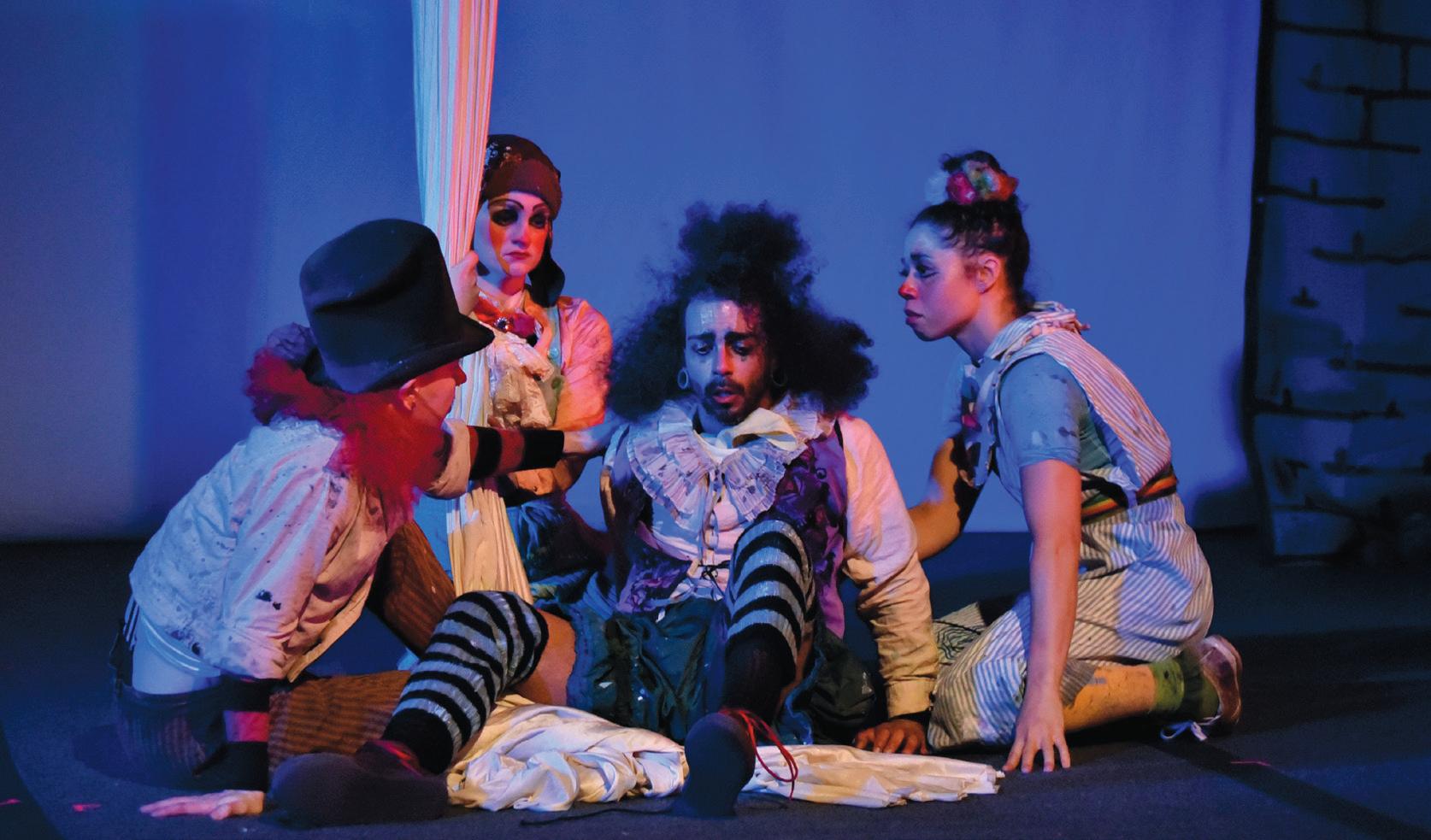
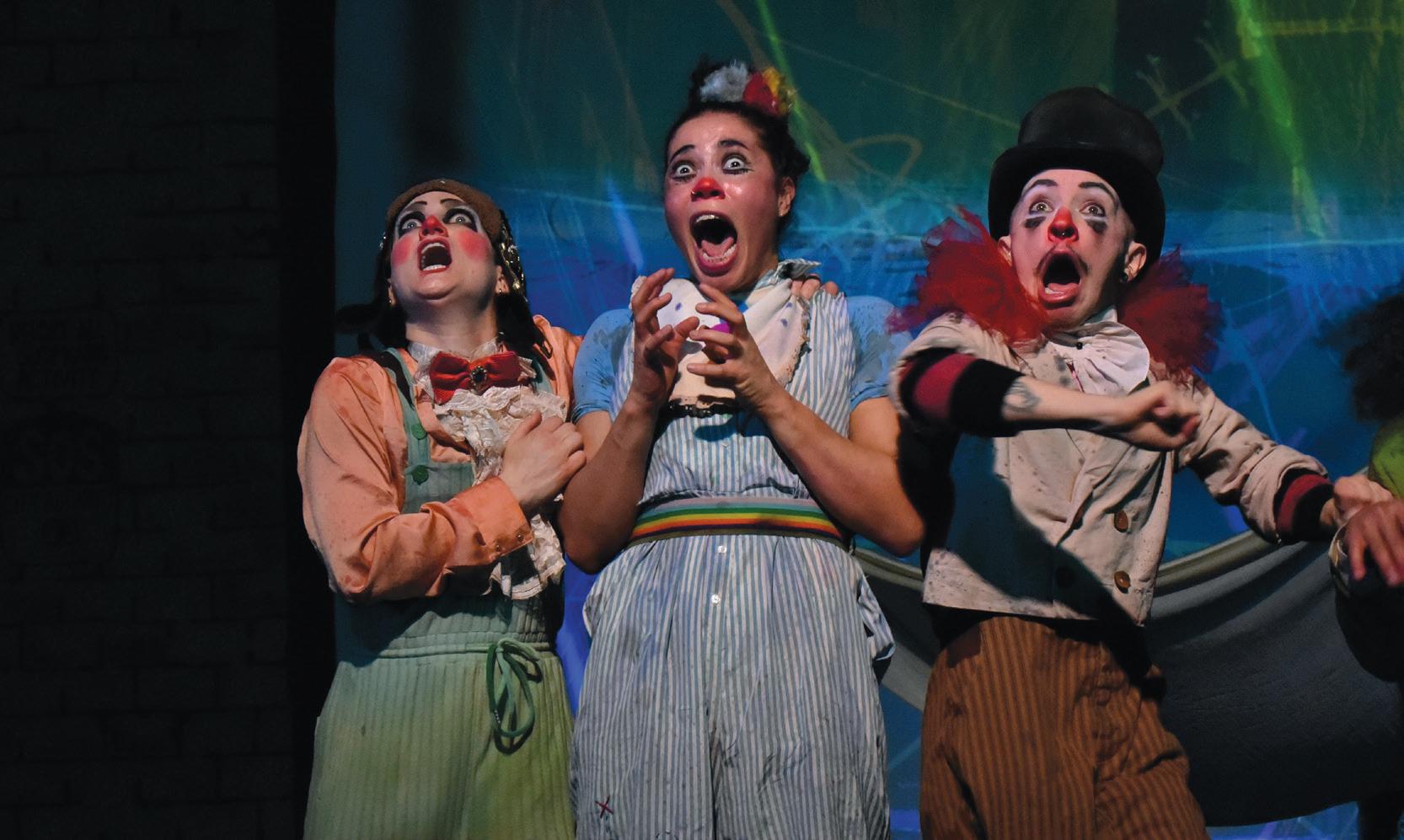
At first glance, “AQUÍ O ALLÁ: a circus story” is a clown show. Red-nosed actors perform gravity-defying acrobatics, other performers ride unicycles and the word ‘circus’ in the title is certainly appropriate. But on a deeper level, the production has immense artistic value. The show is the Actors Gymnasium’s Winter Circus and is directed by Raquel Torre and produced in association with La Vuelta Theatre Lab. In the Actors Gymnasium’s theater in the Noyes Cultural Arts Center, the audience is inches away from the stage, heightening the suspense of the acrobatics and the poignancy of the acting.
Torre said she began developing the show over a decade ago with Jean Carlos Claudio, who plays one of the main characters. Since then, they created the show “Memorabilia” with Teatro Vista Productions, for which they collaborated with sound designer and composer Satya Jnani Chávez.
She said she knew she wanted to work with Chávez again and spotlighted their musical talents in “AQUÍ O ALLÁ: a circus story.”
Chávez creates live loops, plays guitar, sings and plays an onstage role in the show, all of which build a strong connection between the performance and its music. Rather than background or accompaniment, their performance consistently feels like a heavily involved part of the show that is equally as responsible as the actors for storytelling.
Like acrobatics, the improvised nature of live looping gives each performance its own unique touch.
Another layer of production is the Actors Gymnasium Teen Ensemble, who provide a stark contrast to the main characters’ clown costumes.
The ensemble wears neon green shirts, black suit jackets and bright pink swim caps, contributing to an intentional visual chaos that lends itself to the circus atmosphere.
The costumes provide a juxtaposition with the show’s plot in a way that Torre described as “a little bit of a twisted aesthetic.” While the
show is brightly colored and consistently humorous, its central theme is strong.
Torre said the main characters are called “dislocados” because they have been dislocated and are homeless. Despite this, the characters confront their situation with optimism and comedy.
“This is a show about these characters who don’t have a house, they arrive anywhere, and they create their home out of nothingness,” Torre said. “But they don’t see themselves as unfortunate; they don’t see themselves in the lens of poverty.”
Although most of the show has a humorous tone, there is a striking moment towards the end when the dislocados’ belongings are taken from them by law enforcement. The silence in the theater is palpable when the characters see that the little livelihood they built for themselves has been destroyed, and suddenly the show’s levity collapses.
This scene naturally invites a reflection on how society treats the “dislocados” of real life. The law enforcement, which theoretically exists to serve its community, is ultimately what caused
the characters the most harm. Torre described this treatment as “heartbreakingly timely,” and the acting truly drives the issue home with clarity. The actors’ expressions are amplified by their vibrant, heavy makeup, one of many ways the show follows clown tradition.
While Chávez’s live looping is what ties the production together, the actors’ closeness to the audience is what draws the viewer in. On top of that, the actors move through the aisles a number of times during the show, even bringing some onstage for a dinner scene. With the fourth wall broken, the audience is thrown into the story and the themes are especially clear.
“I think this is, for me, the first version of the new version,” Torre said. “I am excited to continue developing it, because my head is still full of curiosity.”
“AQUÍ O ALLÁ: a circus story” will be performed at the Actors Gymnasium’s space in the Noyes Cultural Arts Center on Saturdays at 4 p.m. and 7 p.m. and Sundays at 3 p.m. until March 22. thomashurley2029@u.northwestern.edu
Survivor NU Club embraces ‘Survivor’ Season 50
By ALLEGRA LIEF
Wednesday, Feb. 25, at 7 p.m. may hold little meaning to a majority of Northwestern students.
But for the small yet mighty population of rabid fans in the Survivor Northwestern club, “it’’s everything,” said Communication senior and club member Emma Nelsen.
After filming for the landmark Season 50 wrapped up last summer, the premiere date for the CBS show was officially set in November. Ever since then, devotees of the show at NU and beyond have eagerly waited for the day to come.
Now, the season premiere has finally arrived. “Survivor” Season 50 is more than just a regular season of the show; it’’s an all-star celebration of the past 26 years of reality television’’s best.
“I think it’s definitely a testament to the fact that people like watching this kind of reality TV and that there’s a staying power to this format,” Communication junior and club member Margot Luftig said. “Even with all the new kinds of shows, spin-offs and all of that, there’s still something about the original that makes people watch it.”
When the first season of “Survivor” premiered in May 2000, it was unlike anything else on television. At the time, TV shows were a mix of stale comedies and scripted dramas, nothing that remotely resembled
what would become the greatest adventure game on television, Luftig said.
No scripts, no supplies and a hefty cash prize of 1 million dollars? Americans were easily hooked.
“Nostalgia is huge,” Nelsen said. “A lot of people were young when they started watching, and it reminds them of being a kid.”
For many club members, including Weinberg junior Callie Berthold, “Survivor” was a key part of their childhood.
Berthold, who watched the show with her dad throughout middle and high school, is looking forward to Wednesday’’s premiere for the chance to see some of her favorite players back on screen.
“My favorite players are really from the teens, 20s and 30s seasons,” said Berthold. “It’’s players like Mike White that I’m really excited for. They weren’t necessarily trying to be the most monumental ‘Survivor’ player ever, but that’s what often made them more memorable.”
Despite widespread excitement for Season 50, certain parts of the show are already making fans wary, Luftig said.
While half of the players are from earlier seasons, referred to as “old-school ‘Survivor,’” half are from less popular, more budgeted versions called “the new era,” which references the 10 seasons since COVID-19, including Season 50.
Newer seasons feature a faster-paced 26-day game with an array of new locations rather than 49 days with
a fixed location in Fiji.
Many fans wanted more “old-school” players and were upset when beloved players like Parvati Shallow were absent from casting, Luftig said. Other aspects of Season 50, including suspicious celebrity cameos present in the trailer, are also raising some eyebrows.
Regardless, there is rampant optimism for Wednesday among fans of the show. Even if the show looks different from how it previously did, the milestone is one met with eagerness.
“When you push people to a breaking point, you can see how they act in ways that are less filtered than everyday life,” Luftig said. “Watching people from different walks of life interact and then vote each other out, and then asking those same people to vote for them to win a million dollars, creates so many interesting dynamics around trust, power and relationships.”
a.lief@dailynorthwestern.com
Illustrated by Leyton Jackson
collide for longtime.
Thomas Hurley/The Daily Northwestern
Super Bowl halftime conductor reflects on NU
By INA CHOE the daily northwestern @ina_choe
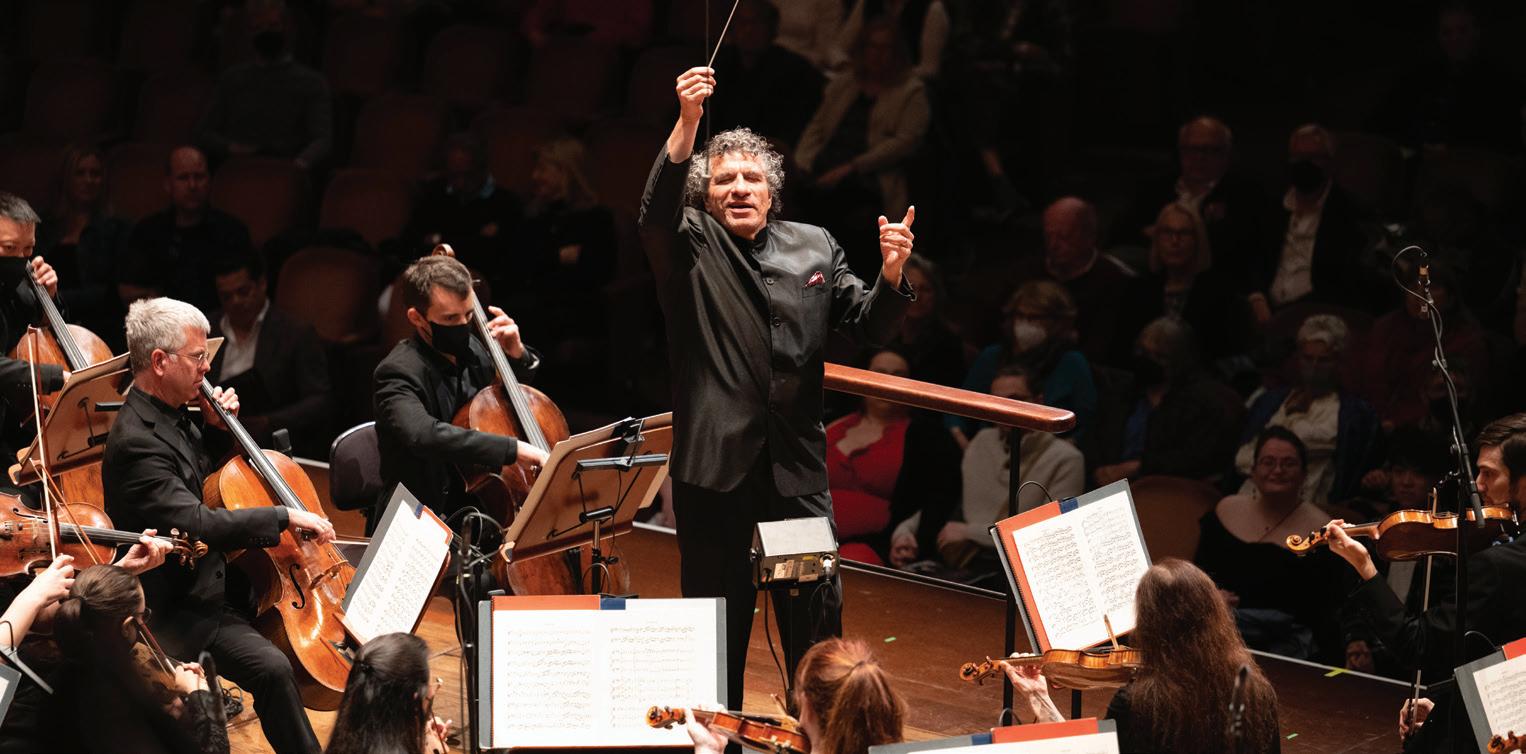
Northwestern alum Giancarlo Guerrero (Bienen MMus ’92) performed at the Super Bowl halftime show alongside Bad Bunny earlier this month. Along with being the artistic director and principal conductor of the Grant Park Music Festival, he now has a new title to add to his long list of accomplishments: halftime show conductor.
Guerrero has been involved in the music industry since he was a child. Growing up in Costa Rica, he started his journey in a youth orchestra and grew his passion as a percussionist. He started pursuing a career in conducting during his time at the University for his master’s.
The Daily spoke with Guerrero about his experience conducting the halftime show and his time at NU. This interview has been edited for brevity and clarity.
The Daily: You’ve been in the music industry for quite some time. How did you get into music and conducting? How did your time at NU shape your musical path and journey?
Guerrero: For my master’s in conducting, I attended Northwestern and studied with Victor Yampolsky in the conducting department. My journey from percussion to conducting was really almost an accidental one, because I took the mandatory conducting class that all music makers have to take, and honestly, I was not very interested in it … but I had a wonderful teacher, and somebody that kind of saw a natural talent in me, and eventually he convinced me that I definitely should pursue this … little by little, percussion took a second backseat, and I became a full-time conductor.
I was immensely privileged that I was admitted to the Northwestern University School of Music, and specifically the conducting school — the fact that it’s a very prestigious program, and the fact that I got to study not only with Maestro Victor Yampolsky as my main teacher, but all of the rest of the faculty and people that
really shaped me and inspired me to continue my career as a musician. I have to say also that a big part of it was living in Chicago, one of the great cities in the world for a classical musician — having the Chicago Symphony, the Lyric Opera and the Grant Park Music Festival. And now, being the artistic director and principal conductor, it’s coming completely full circle.
Every time that I come through, I always have to stop by campus and visit with people that have shaped my career, and since then, have become not only dear friends, but dear colleagues as well.
The Daily: Bad Bunny’s music isn’t conventionally the style of music that you would normally work with. What was it like trying to adapt your conducting style when working outside of a traditional classical setting?
Guerrero: I have been very fortunate to work with the likes of orchestras in Berlin, France, Chicago, New York or Boston. But honestly, I don’t think I ever had ‘halftime show with Bad Bunny’ in my bingo card. For my friends and family and people around me, when they saw me there, I don’t think they had it in their bingo card either, because it was quite a surprise.
The other thing that was really impressive, and made me respect Benito even more, not only as a performer, but as a great artist, is when I had a chance to speak with him. He told me that he wanted actual string players and an actual conductor. (He said,) “I have way too much respect for what you guys do and you have to be presenting the proper light. So, I’m not going to do this in a fake manner. I want the real thing.” And for that, I was really grateful for the fact that, obviously, for him, the most important part of it was the music.
The Daily: What do you personally think of Bad Bunny and his performance at the halftime show?
Guerrero: I loved it, honestly. I spent some time with him before and after the show and he really is a class act. He runs, I will tell you, an amazing organization. The best part that I will take with me for the rest of my life was the fact that we had over 1,000 people, all from every imaginable background that you can think of, and everybody coming together for one common
purpose, which is bringing a great show, great music, to hundreds of millions of people, and to see how everybody comes together at such a degree of professionalism, a degree of generosity, a degree of joy.
The Daily: What did you think about the message that he was trying to send through his performance?
Guerrero: In the end, I go back to the whole idea that when we all come together, we can do anything that we want in reality. It’s a message that goes not only to communities, but it goes to the rest of the world. And God knows, we need that message now more than ever — the idea that if we work together for a common purpose, we can really do things. And as I said, everybody keeps (saying) this was a Hispanic, Latino, Spanish show. It was not.
I can tell you from my own personal experience that there were people from every background that you can think of involved in this show as part of it. And with every single stage, there was a different style of music. So this is a guy that is not just stuck in one type
of music. He’s somebody that completely explores the many different genres that are available to him and is immensely talented for it.
The Daily: How do you think that art is powerful in spreading messages that differentiate it from other forms of communication?
Guerrero: The reach that something like this has in terms of how many people watch it is just remarkable. You’re targeting the hundreds of millions of people by the end of it. In the end, the message is secondary. The first thing that we were all focused on was the music making, putting the show together and doing the best that we could. And I can promise you, the person next to me took something different than I did, and that is what’s so beautiful. Music as a universal language has a way of bringing us together, and for all of us to come up with our own message that we think was told to us.
i.choe@dailynorthwestern.com
Reflections Repertory Company hosts showcase
By SASHA BAUMGARTNER
daily northwestern
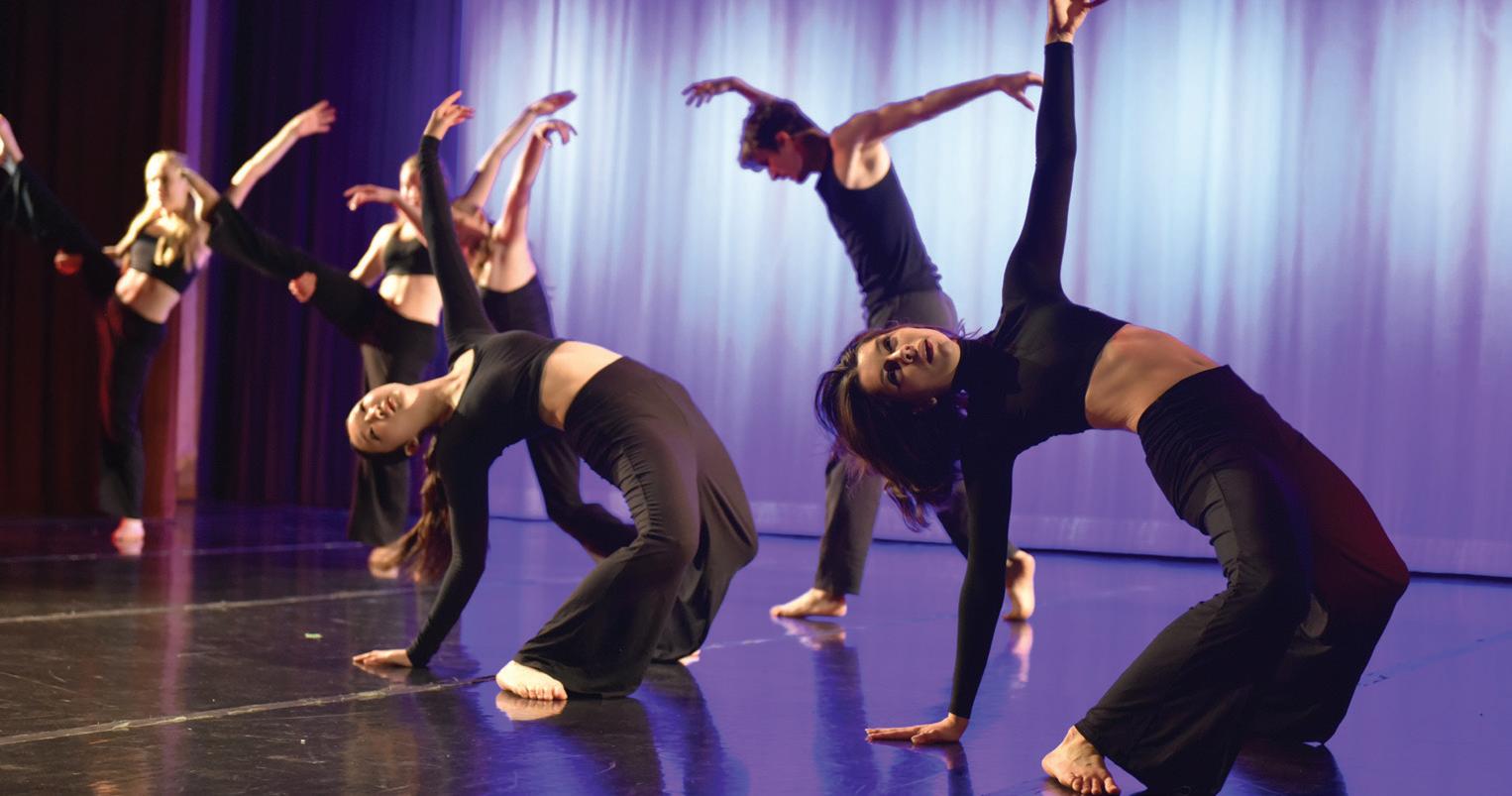
Elegance leaped across the stage Friday and Saturday at Reflections Repertory Company’s winter showcase, titled “SPOTLIGHT.”
The small venue of Wirtz Ballroom did not disserve the show as dancers filled the room with traditional and contemporary ballet steps. The dances were choreographed to modern pop songs, taking a fun spin on what is typically thought of as traditional ballet.
Dancers began with a full company number to Britney Spears’ hit song “Toxic.” The performance was energetic and engaged the audience right away.
The iconic piece set the tone for the graceful yet lively choreography that was to follow the rest of the night. The show also ended with “Gimme More,” another Spears hit, which created a full circle moment for the show.
After the opening number, several executive board members welcomed the audience to the show and also took a moment to acknowledge the history of ballet. This addition was impactful since they took the time to recognize the non-inclusive roots ballet is often known for.
They recognized the elitism and racism that historically accompanied ballet. The acknowledgement set the stage for the show’s modern and culturally inclusive take on ballet as a form of expression.
The performance featured a guest duet from Typhoon Dance Troupe. Performed by fourth-year psychology Ph.D candidate Ouxun Jiang and fourthyear math Ph.D. graduate student Guoran Ye, the duo floated across the stage, enchanting the audience with poised lifts. These dancers truly made their performance look effortless and had a breathtaking fluidity of movement.
At the beginning of the show, there was a fast-paced dance to the Eurythmics’ “Sweet Dreams.” The dancers moved with the music in an alluring way, not just moving to the lyrics of the song, but also its intense beats. They created a beautiful expression for this strong track.
There were several dances that were extremely fierce. One such performance was Addison Rae’s “Diet Pepsi.” That dance rocked the audience and had everyone cheering loudly. The slinky and sexy choreography also brought the song to life.
Notably, the dance to Florence + The Machine’s “Choreomania” was beautifully choreographed. The dance was powerful with great musicality — the beat of the music was accompanied by artistic jumps that
made for a stellar performance. The big lift, where the group hoisted a dancer into the air on her back, had the audience on the edge of their seats.
All in all, I felt the show was a refreshing remediation of ballet that captivated the audience, including
myself. By mixing pop hits, ballet choreography and contemporary pieces, Reflections succeeded in a graceful and engaging winter showcase.
s.baumgartner@dailynorthwestern.com
‘EPiC’ explores Elvis’ journey in musical documentary
By REGAN HUIZENGA daily senior staffer
@reganmichele215
Following the global success of Baz Luhrmann’s 2022 biopic “Elvis” starring Austin Butler, the Australian filmmaker has jumped on yet another opportunity to bring America’s King of Rock ‘n’ Roll back to theaters. Constructed from over 50 years of previously unseen footage from Elvis Presley’s Las Vegas residency, “EPiC” serves as America’s brand new concert flick. Editor and executive producer Jonathan Redmond compiled footage from past concert films such as “Elvis: That’s the Way It Is” and “Elvis on Tour.” At the same time, he strategically utilized soundbites from both archival interviews and revamped studio albums to let Presley narrate his own story.
While most of us will never be able to witness his concerts in person, if the king offered a whimsical introduction to the idea of his public persona, “EPiC” sits us front and center at a show that must be seen to be believed.
The first few sequences of “EPiC” mirror the same structure as Butler’s feature film. Luhrmann inserts barrages of images and found footage summarizing the first two decades of Presley’s career: his time at Sun Records, an iconic performance of “Hound Dog” on “The Ed
Sullivan Show” and his Army service in Germany.
While a good bit of the information isn’t a surprise to any seasoned Presley fanatic, the film’s beauty lies in the footage’s mysticism. Clips are intimate, with silent 8mm home movie footage stabilized to fit the big screens.
With the singer’s controversies having come to life since his passing, it’s important to note that, as he tells his own story in this documentary, Presley only reveals his best self.
Viewers won’t receive any grim secrets, such as his troublesome relationship with then-wife Priscilla Presley or intel into the all but secret love affairs he pursued on tours around the world. The movie also doesn’t disclose information regarding the artist’s substance abuse, give or take a few jokes the singer cracks about morphine between sets.
Rather, viewers will learn about how Presley crafted his sound, his love for diverse music genres, notably both his love for (and exploitation of) African American blues artists and even watch him interact with other musicians such as Sammy Davis Jr.
During the film, I remembered this is a Baz Luhrmann production and that at times his work can toe the line of simply being too much. While most of Presley’s raw discography is honored, Luhrmann infrequently samples dark, creepy echoes of Presley’s soundbites or inserts ominous beats to intensify the scene.
Other times, home footage is abandoned to sprinkle in awkward PowerPoint-esque images of Presley as a child, notably in the film’s performance of “Polk Salad Annie.”
Overall, “EPiC” was an exhilarating cinematic experience that took us back to history-defining eras in the rock and roll, electronic and country music genres.
While shaky inserts in visual effects and additional soundtrack choices offered short-lived disappointment, I posed the question, “Is Elvis still alive?”
With the efforts of Baz Luhrmann, I can safely say he’ll surely live a little longer.
r.huizenga@dailynorthwestern.com
Sasha Baumgartner/The Daily Northwestern Dancers performed to “Take a Slice” by Glass Animals.
Photo courtesy of Kristen Loken
Northwestern alum Giancarlo Guerrero (Bienen MMus ’92) performed at the Super Bowl halftime show alongside Bad Bunny earlier this month.
Illustration by Carmen Gaskin
EPiC: Elvis Presley in Concert released in theatres on Feb. 20.
Art therapies help with youth mental health challenges
By LILY OGBURN daily senior staffer @lilyogburn
Kasha Akhtar (SESP ’23) started therapy in 2019 while she was a student at Northwestern. The following year, her therapist suggested they start incorporating art therapy in her sessions. Akhtar decided to give it a try.
“I’ve always been super into art just for expressing myself. That’s always kind of been an avenue that I’ve used for myself,” Akhtar said.
Akhtar participated in art therapy from 2020 to 2024. She said she found art therapy helpful in allowing her to express her feelings and process trauma.
Creative arts therapies include using art, music, dance, drama and more to express and work through emotions and symptoms of mental health disorders. These therapies are being deployed across the U.S. to treat patients of all ages, including young adults like Akhtar.
She sometimes engaged with art therapy through programs at Compass Health Center in Northbrook, which provides specialized behavioral health care for individuals in Chicago through partial hospitalization and intensive outpatient programs.
Akhtar was participating in one of those programs on the anniversary of her mother’s death, and art therapy helped her cope with the heavy emotions of that day.
“I think for the first time in a long time, it allowed me to, while I was making art, cry and really actively grieve in the moment and really be in touch with my emotions,” Akhtar said.
Research shows creative arts therapies are effective in treating a variety of mental health conditions. A critical review published in the Australian & New Zealand Journal of Psychiatry that examined 23 studies on creative arts therapies’ effectiveness in individuals under the age of 24 showed overwhelmingly positive results across the globe for mental health conditions including post-traumatic stress disorder, depression and anxiety.
Informed by that research, the Institute for Therapy through the Arts, a nonprofit located in Evanston, is deploying creative arts therapies to treat mental health conditions. The organization provides art, music, drama and dance and movement therapy for people of all ages.
Jazmin Royg is a dance and movement therapist
and ITA’s intake coordinator. During intake sessions, she engages clients with each of the four modalities of therapy that ITA offers and conducts a conversation about which modalities felt comfortable and expressive for the clients.
Using her observations and the client’s preference, Royg then helps match clients with a therapist at ITA. She said her position is very rewarding.
“I love when a client shares their story, and they are just so happy with what they have been working (on), or when a parent comes and is like, ‘Look, this happened,’ and you can really be part of those experiences,” Royg said.
Clare Burke, an art therapist and clinical manager of programs at ITA, explained what an average art therapy session might look like. First, she said, an art therapist might start with a check-in that could be either verbal or artistic, such as asking the client to make a drawing representing something that was difficult for them in the past week.
The art therapist would observe the client and choose their next steps based on the check in, she said. For example, she might not recommend watercolor paint to a client who expresses feeling like they lack control in their life because it is a difficult material to control. She might ask that client to choose a medium that allows them to gain more control in the session, she said.
The therapy session might end with a “check-out,” or a brief reflection on the session, Burke said.
Burke added that while young people make up a large portion of clients at ITA, the creative arts therapies the organization offers can be helpful to anyone, regardless of age, condition or artistic skill level.
“You don’t have to be an artist. You don’t have to be a musician to be able to engage in these therapies, because nobody’s judging your skill. It’s about how you express yourself in the modality,” she said.
Dr. Borna Bonakdarpour is a professor at the Feinberg School of Medicine and a neurologist at Northwestern Memorial Hospital. He studies how treatments using music can improve patient outcomes.
In 2021, Bonakdarpour conducted a study aimed at relieving feelings of anxiety and loneliness for patients of all ages in the neurological unit of Northwestern Memorial Hospital. Participants were offered 30-40 minute personalized live music sessions by a violist in consultation with a music therapist and a certified music practitioner.
Creative arts therapies include using art, music, dance, drama and more to express and work through emotions and symptoms of mental health disorders.
The pilot program was extremely successful, with 92% of participants reporting that it improved their emotional state.
“When the pandemic happened, people needed what’s called psychological first aid. And music therapists are trained to do that,” Bonakdarpour said.
More broadly, creative arts therapies are also being used to address psychological symptoms resulting from other conditions, such as stroke and dementia. Bonakdarpour has used music to help treat patients with aphasia, a brain condition that impairs speech. He has also worked with ITA to create the Musical Bridges to Memory program, which provides an interactive music session with music therapists for dementia patients and their families.
One limitation of creative arts therapies is accessibility. Many insurance plans don’t cover these therapies, and some patients don’t have insurance, Royg, Burke and Bonakdarpour noted.
One way ITA is reckoning with this limitation is by providing grants and financial assistance to help cover the cost of its services, Burke said. Royg added
that the organization is working toward accepting Medicaid plans.
Bonakdarpour stressed this limitation, noting that music therapists go through special education and licensing, and their work should be recognized by insurance companies. He also noted the challenge of funding additional studies and programs to continue the effective music treatments he has used.
Akhtar discontinued therapy in 2024 after she developed sufficient coping mechanisms and skills to “deal with (her) past trauma and any everyday stressors,” she said. But if she ever feels she needs therapy again, she will incorporate art therapy into her regimen, she said.
“I think for me, sometimes it can be very hard to put my experiences into words,” Akhtar said. “I think a combination of therapies is what helped me the most, and when it comes to art therapy specifically, I know there were some (strategies) that really hit home and helped me process.”
l.ogburn@dailynorthwestern.com
Illustration by Lily Ogburn
The Daily Northwestern
Serving the Northwestern and Evanston communities since 1881
BEST OF E VA N S T O N
Every year, The Daily Northwestern highlights local businesses and restaurants through our special issue, Best of Evanston.
From categories like Best All-Around Restaurant to Best Gym, we have listened to the Evanston community’s opinions to report on this year’s Best of Evanston. We received nominations from over 70 people, after which 549 voters proceeded to determine Evanston’s “Bests.”
As international students, Evanston has become our home away from home. We were enamored by the place as we strolled from Central Street to the Lakefill. The city welcomed us as we spent our weekends exploring its different shops and businesses. And so, we wanted to show some love to the people and community staples that have been instrumental in our getting to know and love Evanston.
This year’s Best of Evanston features reported content, too, including profiles of businesses that have been a mainstay in the community for decades. We also produced multimedia content for this issue — stay tuned on Instagram — ranging from audio stories about salons and barbershops to videos about our winners.
Without further ado, we are excited to present this year’s awards.
We hope you love this issue as much as we do.
Nakorn
All-Around & Splurge
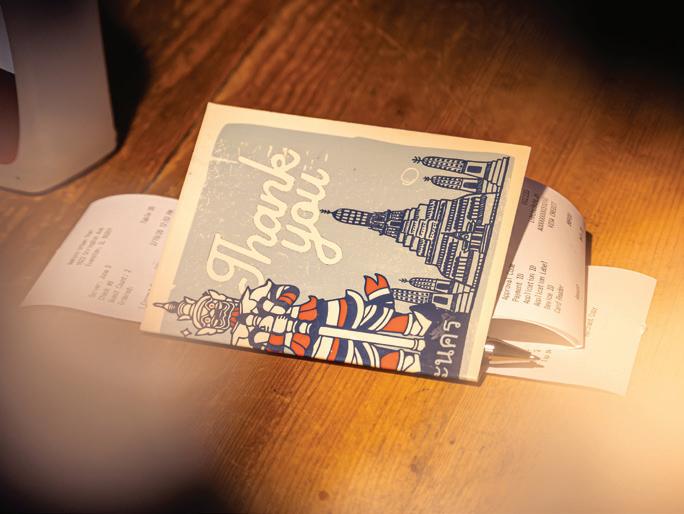
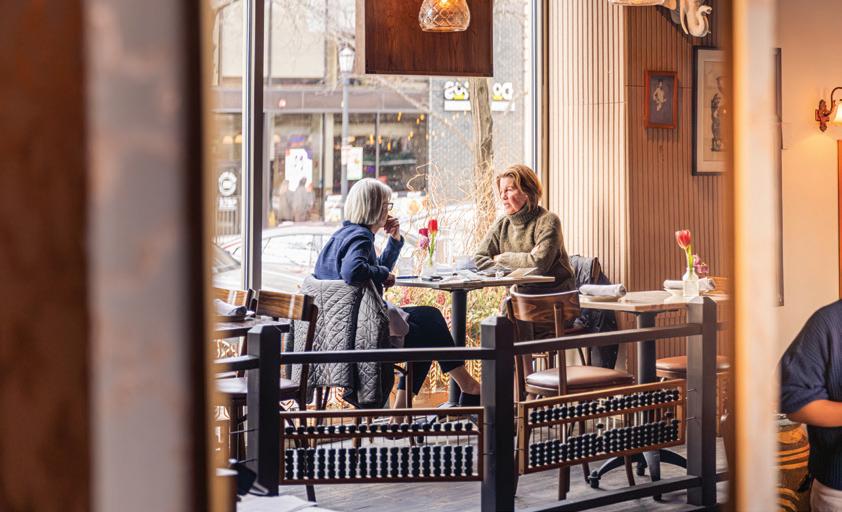
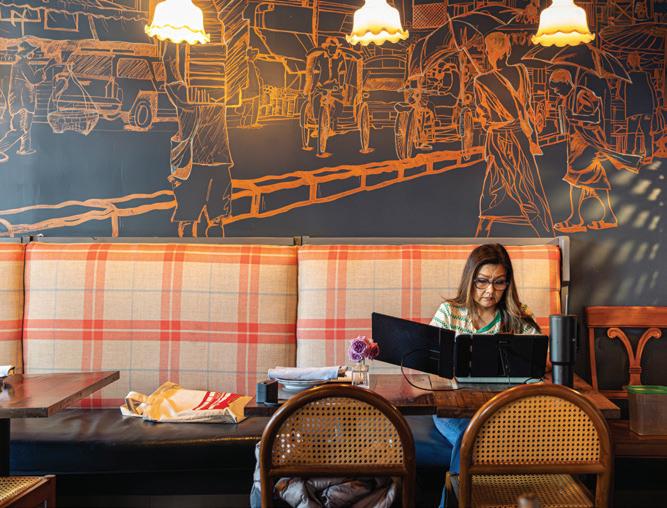
Nestled in Orrington Avenue, NaKorn instantly pulls visitors into an intimate, cozy eatery with delicious smells wa ing through the air.
e restaurant perfectly fuses sophisticated dining with a comfortable atmosphere. It serves familiar ai avors with a fresh spin in dishes such as their coconut-curry braised chicken and sautéed tiger prawn and thin rice noodles.
e eatery o ers a variety of small plates, noodles, main dishes and delectable desserts that tempt the taste buds without inducing decision fatigue. Dishes range on the pricier side, but their unique avors are worth the splurge.
e rst time I went to NaKorn, I ordered the chicken lettuce wrap as a starter. With my rst bite of minced chicken tucked into crisp iceberg le uce, I tasted punchy chili-lime dressing, balanced with a cooling hint of mint. At that moment, I knew the rest of my meal was going to be delicious.
All of NaKorn’s dishes are intentionally cra ed and deliver bold, authentic avors every time. e restaurant is open for lunch and dinner, and the menu o ers various gluten-free and vegan options as well.
For those looking to wind down a er a long week with a warm meal, head to NaKorn for a ful lling experience.
— Evelyn Won
Budget Menu & Takeout
Located at the intersection of Dempster Street and Chicago Avenue, Sea Ranch Sushi o ers fresh and tasty Japanese food at an a ordable price.
is year, Sea Ranch won for Best Budget Menu. Sushi is usually thought of as a splurge, but with roll prices ranging from about $3 to $15 and nigiri pieces priced from around $2 to $6, Sea Ranch’s prices make it an everyday reality.
If you aren’t in the mood for sushi, the restaurant also makes delicious udon, ramen and soba noodles for around $10 per bowl.
Sea Ranch also functions as a Japanese grocery store, stocked with items like Pocky, Ramune and more to satisfy additional cravings.
e restaurant also won Best Takeout this year, and I wholeheartedly agree.
Sea Ranch was one of the rst restaurants I had the pleasure of trying in Evanston. As a then-high school student here
joy yee noodle
Joy Yee Noodle, a downtown Evanston staple, is known for its colorful drinks, expansive menu and reliable quality.
Joy Yee Noodle opened its rst location on Davis Street in 1994. Soon a er, in 1996, the restaurant opened a second location in Chinatown Square.
Today, the brand has six locations throughout the Chicago area.
Best known for its deluxe-sized bubble teas, Joy Yee has become a staple for Northwestern students and locals alike.
From classic taro milk tea to mango fruit tea packed with bursting boba, the shop o ers seemingly endless customization options. Customers can choose sweetness levels, ice preferences and toppings ranging from tapioca pearls to aloe and lychee jelly.
Joy Yee Noodle also o ers panAsian style cuisine. From its Szechuan wontons and teriyaki chicken to Vietnamese pho, there are several meal options for anyone who loves Asian fare.
Burger Boba
Whether they’re grabbing a quick brown sugar milk tea between classes or catching up with friends over fruit slushes, Evanston’s boba lovers have made one thing clear: Joy Yee is the city’s top sip.
button bakery
New Business
For those eager for elevated sandwiches and burgers in Evanston, e Fat Shallot is the perfect spot to pay a visit.
Co-founded by Evanston locals Sarah Weitz and Sam Barron, e Fat Shallot is a restaurant chain based in the greater Chicago area. Weitz and Barron, a married couple, originally opened their business as a food truck. Now, the chain has expanded to stalls and restaurant locations throughout Chicago and its suburbs.
e restaurant’s Evanston location opened in October 2023, following the closing of the building’s former occupant, the Old Neighborhood Grill. Since then, the restaurant has become a familiar favorite.
Located at 2902 Central St., e Fat Shallot o ers a wide range of sandwiches, burgers, assorted drinks and salads for lunch and dinner. Some favorites include the cheeseburger, BLT decorated with tru e aioli, gourmet grilled cheese and tru e fries. In addition to its famous sandwiches, customers and families can enjoy a lively and friendly atmosphere complete with an outdoor patio, as well as a game area and full service bar in the back of the shop. In addition to the Evanston location, e Fat Shallot also has a spot in Lincoln Park. e restaurant also o ers catering options for events and celebrations.
for the summer, I took a Northwestern student’s advice and ordered Sea Ranch to campus. When I opened the takeout box and saw the nigiri and rolls, I knew that it would become one of my favorites in Evanston. I would not be exaggerating to say it’s one of the reasons I hoped to come back to Evanston for college.
Now, I order it more weekends than not.
In a few months, when spring starts to transition to summer, I can’t wait to order from Sea Ranch and enjoy some fresh sushi lounging at Clark Street Beach.
— Christina Lin
Nestled at the bend of Elmwood Avenue, Witchy Woman World Apothecary and its various handmade products provide an opportunity to slow down and re ect.
e shop is so ly illuminated by candles and lamps and is clu ered with various ora and trinkets, se ing a cozy atmosphere.
Customers can buy natural bath, body and skin care products such as bath bombs, soaps, shower steamers and lip balm alongside anointing oils and candles typically used for rituals. All products are handmade in-house by the owner Sara Shaaban.
Witchy Woman World Apothecary also hosts various events throughout the year focusing on community building. Every month, the store hosts an evening market featuring women-owned businesses, including diviners o ering di erent readings, such as through tarot cards and tea leaves.
e store also hosts events throughout the year celebrating di erent holidays such as Halloween and solstices.
Shabaan said she believes that a “hidden gem” invokes the sentiment she wants for the store.
Whether looking for a nice gi , a space for self-discovery or a place to relax, Witchy Woman World Apothecary can provide that next magical experience for you.
— Chris Kim
perfectly soft center. Customers will have to arrive early to get their hands on one, as they tend to sell out by the afternoon.
The pastry section offers fudge brownies that are a chocolate lover’s dream. Garnished with powdered sugar, the brownie’s crust is satisfyingly crunchy and its insides are perfectly cakey.
A fan favorite is the button cookie, which cleverly calls back to the bakery’s name. The cookie is iced to look like a real button and decorated with different colors of frosting, ranging from blue to pink.
Button Bakery offers a welcoming, cozy environment. When inside, it feels like a warming, family-owned business. One cannot help but feel at home as they savor a delectable treat. Button Bakery is worth the hype and will satisfy any carb cravings.
— Sasha Baumgartner
— Emily Dissanayake
ough the Renee Feldman Studio is a relatively new addition to Evanston’s Ashland Arts business district, it’s made an impact on the neighborhood.
Owner Renee Feldman, a 7th Ward resident, runs the salon with a small but mighty group of veteran hairdressers.
Feldman, who has over 25 years of experience, decided to downsize and relocate her business formerly the Renee Feldman Salon from Chicago’s Gold Coast to 2142 Ashland Ave. while cu ing hair in clients’ backyards during the COVID-19 pandemic. In addition to staple services like men’s and women’s haircuts, highlights and coloring, the four-station salon recently expanded its o erings to include manicures and pedicures.
Feldman also runs an acclaimed bridal styling business through the studio.
Some of the salon’s regular clients highlighted the Renee Feldman Studio’s boutique feel and Feldman’s commitment to the Evanston community as reasons for their continued patronage.
In addition to running her salon, Feldman volunteers on the city’s Economic Development Commi ee board as its at-large business district representative.
Bennison’s bakery
Bakery Salon
For the sixth year in a row, the Evanston community has voted Bennison’s Bakery the best place to grab baked goods.
When passersby spot the bakery’s glowing corner sign on the intersection of Maple Avenue and Davis Street, they know they can step inside for everything from delicate French macarons to bu ery Danish pastries and crusty European-style loaves.
e bakery, founded by Wisconsin baker Larry Bennison, rst opened its doors in 1938. Guy Downer purchased the shop in 1968, and it has remained familyrun under Jory Downer.
Bennison’s reputation extends beyond Evanston. In 2005, Downer was part of the U.S. team that won the Coupe du Monde de la Boulangerie, an international artisan bread competition.
Whether you’re looking for a king cake to celebrate
Mardi Gras, a traditional princess torte to x a craving, or a Bavarian pretzel just because, Bennison’s has you covered.
e bakery is also known for its annual Paczki Eating Contest, where contestants eat Polish-style donuts topped with sugars or lled with jams. Six years running, Evanston’s sweet tooth has spoken, and it still belongs to Bennison’s. —
Gillian Ho
Nestled on Main Street, with sweet and savory aromas seeping through its doors is Button Bakery.
The bakery quickly became a community staple since opening in May and has secured the title of Best New Business. Button Bakery has a wide selection of breads, ranging from French baguettes to cranberry walnut bread. The Bavarian pretzel is by far a standout. It is carefully salted and has a
— Ruby Dowling
FR IO gelato
Sweet Treat
I scream, you scream, we all scream for FRÍO Gelato! For the second year in a row, FRÍO Gelato has claimed Best Sweet Treat.
Despite it being “mucho frío” in the winter, FRÍO Gelato always has loyal customers leaving smiling, dessert in hand — a testament to its delectable sweet treats.
Located at 1301 Chicago Ave., the Argentine dessert store elevates the ice cream experience, selling an assortment of sweet treats from creamy gelato and refreshing sorbet to ahogado (similar to an Italian a ogato).
FRÍO Gelato o ers a multitude of ways to consume the frozen delights: swirling gelato on top of a homemade cucurucho (wa e cone), sundae-style
with toppings and sipping on a café-lato or hot choco-lato — gelato melted into hot co ee or hot milk.
For something more playful, FRÍO also sells barquillos (li le boats), where scoops of gelato are nestled into a homemade wa e bowl.
Personally, my favorite treat at FRÍO
Gelato is the dulce de leche alfa-lato: dulce de leche gelato sandwiched between two vanilla alfajores (Argentine cookies) and dipped in their housemade chocolate dip.
The various flavors of gelato and sorbet accommodate di erent dietary restrictions, with gluten-free, dairy-free, nut-free and vegan options. My favorite avor is the granizado (chocolate chip), but other choices like horchata, frutos del bosque (mixed berries) and mexican hot chocolate pique my interest.
e convenient location makes FRÍO
Gelato a great place for a post-dinner stop to enjoy a scoop (or more), no ma er the season.
— Ina Choe
chicken shack
bookends & beginnings
Located at 1620 Orrington Ave., Bookends & Beginnings o ers an eclectic array of books, cards, stationery and other trinkets, making it the perfect place to go to buy a gi .
In the independent bookstore, there is something for everyone. From children’s picture books to foreign literature, readers can take a trip around the world in the cozy two-story store.
Bookends & Beginnings was rst established in 2014 in Bookman’s Alley, founded by Nina Barre (Medill ’87). e store relocated in 2023 to their current location, expanding the space to improve its children’s area and adding MiniBar, which serves both alcoholic and non-alcoholic beverages.
e expansion allowed Barre to open Middles Used Books in 2024, a separate space three doors down from Bookends & Beginnings, speci cally for used and rare books. According to the store’s website, customers can trade in gently used books for store credit at Middles.
Potential gi ideas that Bookends & Beginnings sell are literature, travel books, cards, plushies, key chains and more.
backlot coffee
In addition to their book and gi collection, the store serves as a gathering space for the Evanston community. e store regularly hosts speaker events with journalists and authors, as well as writing workshops all open to the public.
ee Shop & Allergy-Friendly Brunch ovo frito cafe
Evanston has a lot of notable co ee shops to explore but Backlot Co ee is one that is consistently in my rotation.
With its main Evanston location on Central Street, Backlot o ers unique co ee avors and the ideal place to work or catch up with friends. Its menu features seasonal items that excite customers of all ages. Who wouldn’t want to try a vanilla mint matcha?
Whether you’re in the mood for a sweet treat or a
quick lunch, Backlot carries a large selection of house-made pastries, breakfast, lunch and to-go items to quench your appetite. Have food allergies? e co ee shop also has a variety of choices to t your dietary needs, including vegetarian, vegan and gluten-free options.
Late-Night Spot
For those seeking a taste of fried familiarity a er hours, Evanston Chicken Shack is the spot to beat.
Nestled along Ridge Avenue in a quiet corner behind a shopping center, Chicken Shack doesn’t command much a ention from the outside. But inside, nestled between the three red and white-checkered tables, lies a bounty of hot and crispy chicken breasts, tenders and nuggets.
e restaurant, which is open past midnight for the majority of the week, is known for its sizable fried chicken strips, which come smothered in a wide variety of customizable sauces, as well as its box specials and rib tip combos.
Over the years, Chicken Shack has become a staple for Evanston residents. It has been voted “Best Late Night Spot” every year since the category’s introduction in 2022. is enduring sense of a ection has kept the restaurant in business for 36 years, cementing its reputation as a perpetual neighborhood favorite among those who frequent its doors in the earliest hours of the morning.
Needless to say, should you feel the midnight munchies creeping up, Evanston Chicken Shack has got you covered.
— James Frazier-Wilson
Backlot also has a second Evanston location in Kresge Centennial Hall on Northwestern’s campus, giving the University community the opportunity to sample its amazing avors.
So, next time you’re in the mood for coffee, check out Backlot. Otherwise, you’re missing out on Evanston’s 2025 and 2026 Best Co ee winner.
— Cydney Waterman
When I rst learned that a Detroit-style pizza restaurant won this category, I wasn’t sure what to think. Chicago has produced some incredible originals — the Ferris wheel, the skyscraper, the zipper — but its ways of making pizza just might be the most signi cant. Both deep dish and tavern-style can be found in abundance in Evanston, so it was surprising to nd that another city’s method reigned supreme in the vote this year.
But a er I went to Union Squared and tried their pepperoni pizza, it became clear that their number one spot was well-earned.
e ingredients are perfectly balanced, with a respectable cheese-to-crust ratio and an optimal amount of pepperoni. Even as someone who rarely orders pepperoni, I found it complemented the rest of the pizza wonderfully. e airy, crispy crust was one of the best pizza crusts I’ve ever had.
Union Squared introduced me to a new style of pizza and is the newest restaurant on my list of favorites. I’m glad I haven’t allowed my Illinoisian biases to prevent me from enjoying one of Evanston’s best.
If you’re like me and want to try some eye-opening pizza, I highly recommend making your way to 1307 Chicago Ave. to try a slice (or more).
A er all, Chicagoans and Detroiters can agree on at least one thing: It’s be er than New York-style.
— omas Hurley
Place for a Gi Bar
If you’re craving a home-style brunch with plenty of delicious options, Ovo Frito Café is the place for you.
e café, founded in 2017 by Roberto Flores and Zinnia Iglesias, o ers traditional American breakfast fare alongside Latin American cuisine inspired by the founders’ origins in Mexico and Belize. It has won Best Brunch four times previously, including last year.
e great food is complemented by friendly service and a bright atmosphere with egg-themed art covering the walls.
e wa e pla er with bacon is a personal favorite. I’ve ordered it every Sunday morning for the last two quarters, and it never gets old. e crunch of the bacon complements the so eggs, and their savory avor contrasts well with the sweeter wa es.
Other menu standouts include the omelets, which come with a large variety of ingredients, all paired with mouthwatering Desiree potato hash. e simple but delicious smoked ham omelet is a perfect way to start your day.
If you’re in the mood for a friendly breakfast, Ovo Frito should be at the top of your list.
— Ben Dannemiller
While Evanston saw multiple bar closures this year, one spot remains a local favorite.
sketchbook brewing company
Taking home Best of Evanston’s Best Bar title for the first time is Sketchbook Brewing Co., a taproom and brewery located on Chicago Avenue.
Sketchbook was founded by home brewers Cesar Marron and Shawn Decker in 2014 to celebrate the art of beer making. The company expanded in 2020 when the pair opened a second taproom in Skokie, which now houses its primary brewing system.
Sketchbook’s taprooms offer over a dozen different beers on tap, all brewed on the premises. Along with the taproom’s offering of light snacks, customers can select from a wide variety of traditional beer recipes, experiment with a more innovative brew or sample options with a flight if undecided.
The bar also offers a membership program, allowing its over 600 members to fill up a jug with their favorite brew to enjoy at home.
But Sketchbook provides more than just beer. The taproom also serves as a familyfriendly gathering space, offering a variety of events including karaoke, trivia, live music and bingo.
Alongside these events, Sketchbook hosts pop-ups with local food vendors and offers space rentals for private and semiprivate events. In the fall and winter, customers can even sign up to pair their cold beverage with a sauna session provided by Sauna Club.
Recognized as an Illinois Green Business, Sketchbook is committed to sustainable brewing practices and waste reduction efforts. With its community-centered values, Sketchbook is a beloved Evanston gem, earning it the title of this year’s best bar.
— Emily Lichty
Whether it’s to buy a food lover a cookbook or a new parent a dinosaur plushie, Bookends & Beginnings is the perfect place to look for a gi
Illustrations by Nicole Cheah
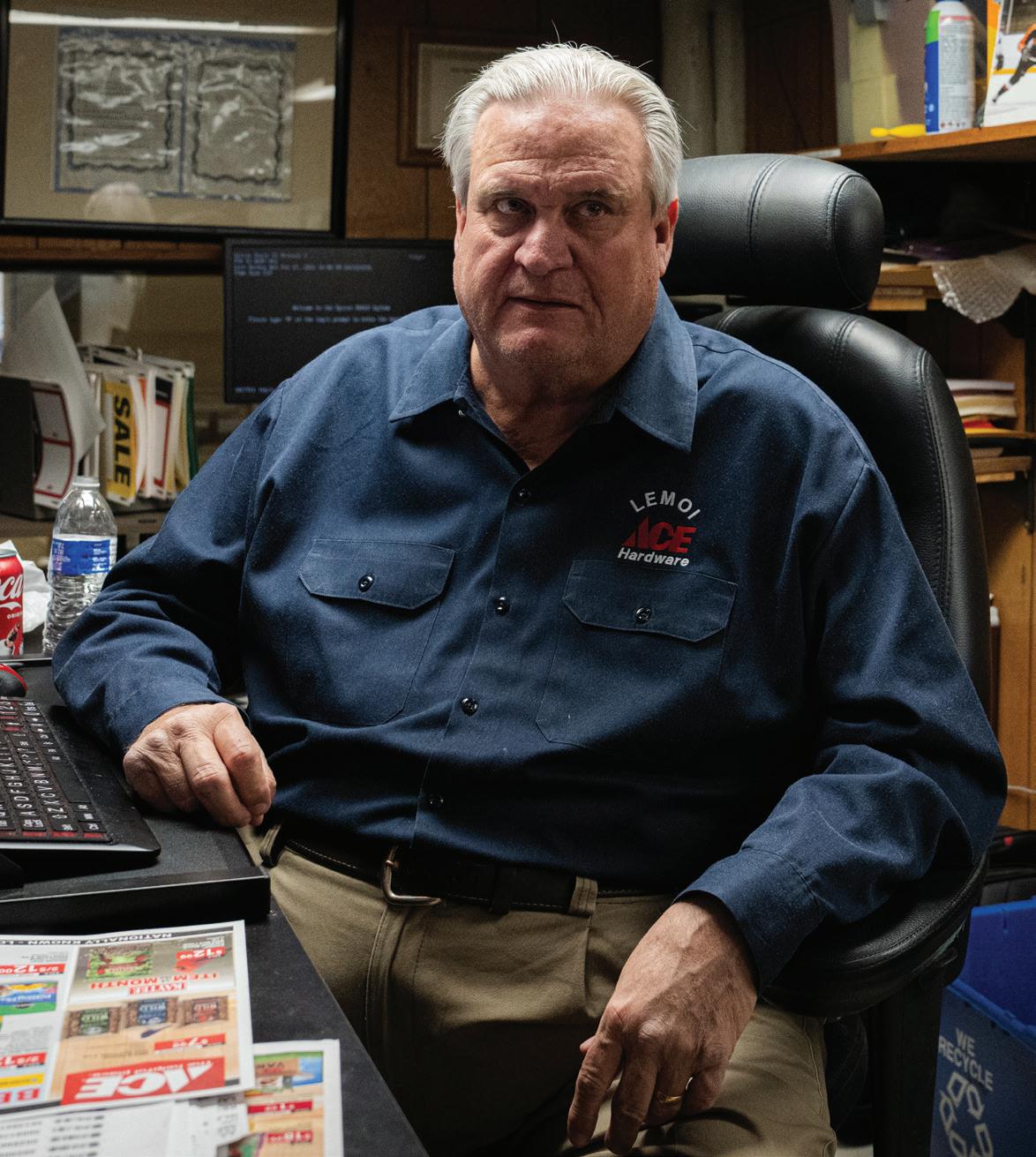
Lemoi ACE Hardware reflects on 131 years
By SAMI MCKENNEY daily senior staffer
Sco Evans was hired to work at Lemoi Ace Hardware by Alfred Dupuis, a former World War II Seabee who owned the store until he passed away in 1981.
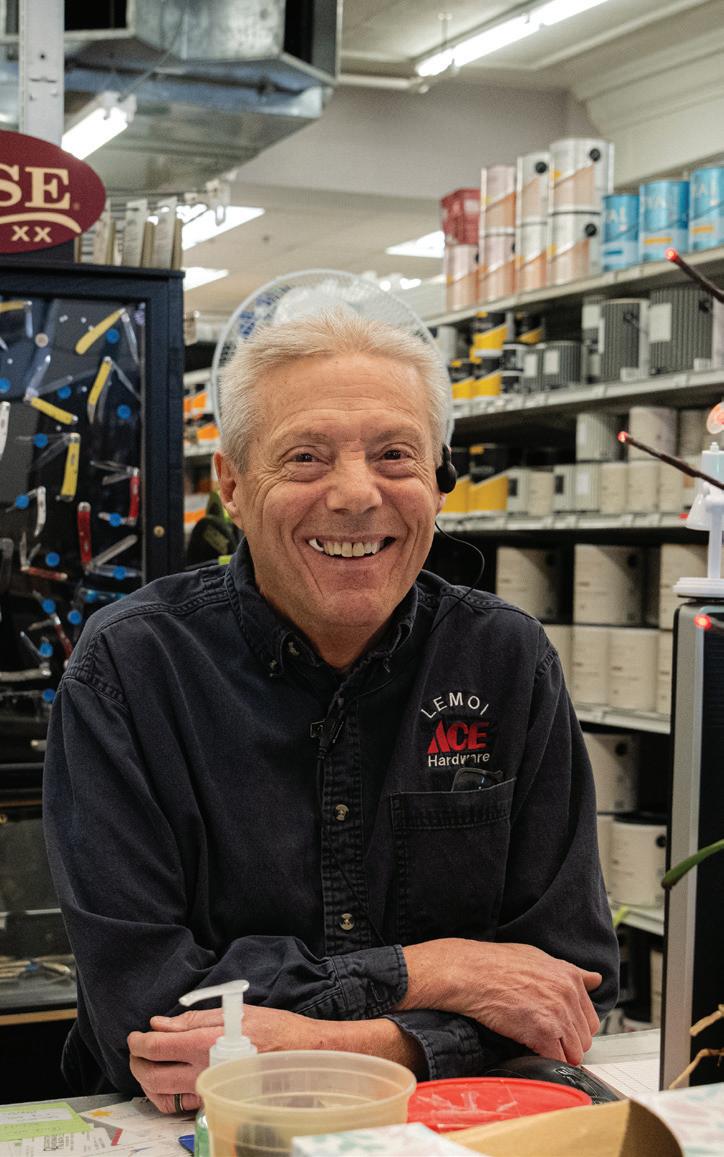
47 years later, Evans can still be found directing customers on the retail oor as the store manager.
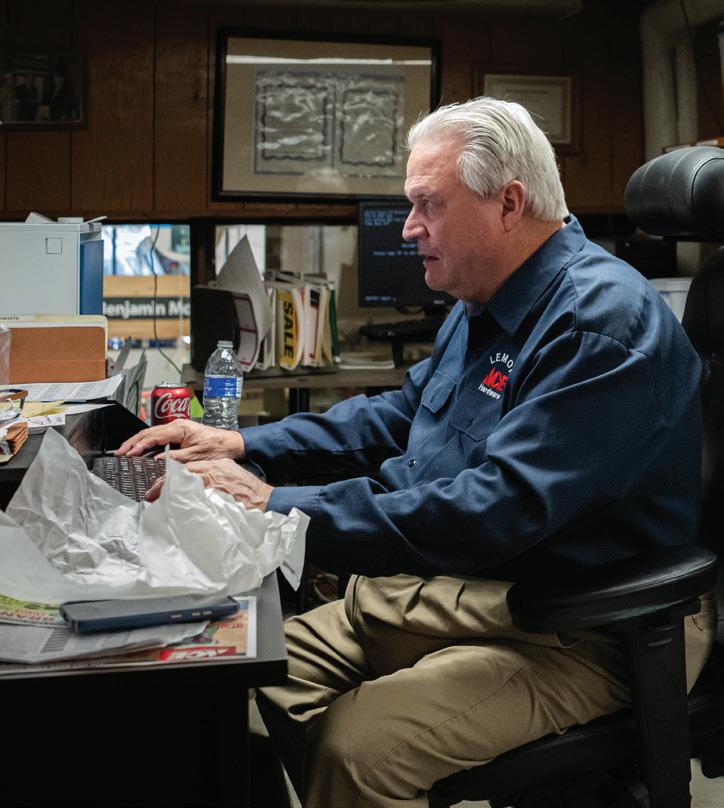
What’s more, it’s still a Dupuis who spends his days in the a ic-turned-o ce above the shop, sending emails, managing accounts and purchasing inventory. Ralph Lemoi Dupuis carries his father’s surname, but his middle name comes from his grandfather and great-grandfather. It’s the name displayed across the storefront that has been in Dupuis’ family for four generations.
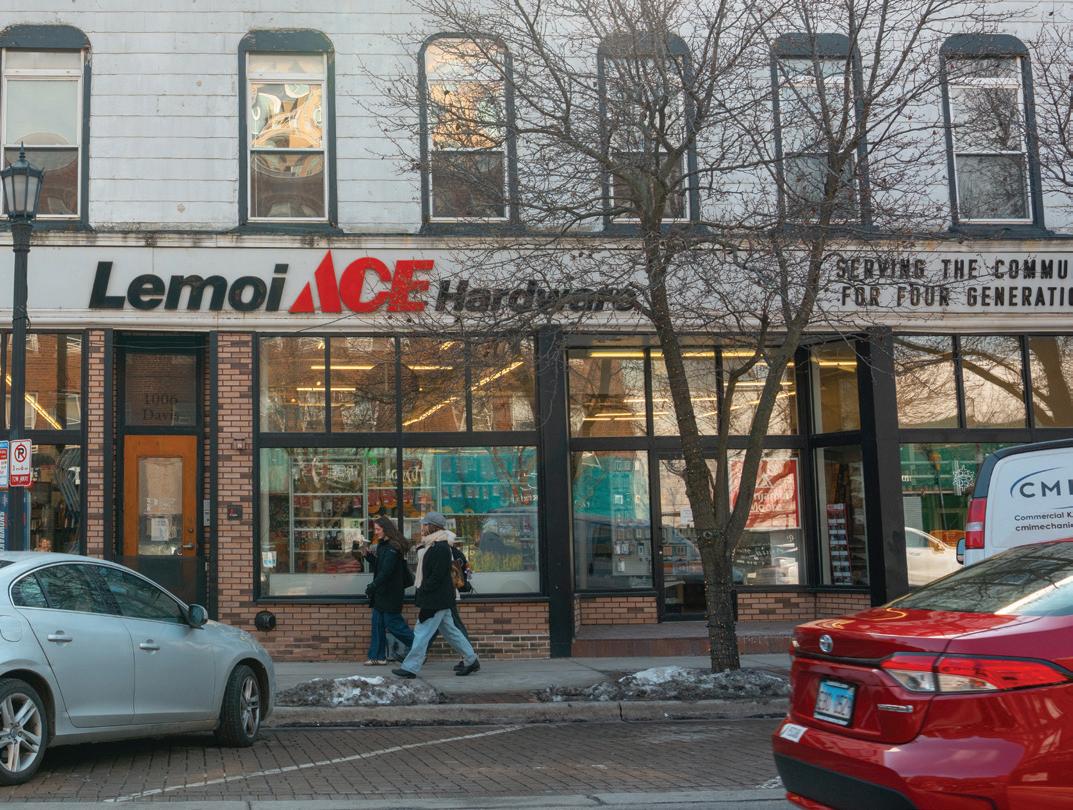
Founded in 1895 by Dupuis’ great-grandfather, Peter Lemoi, Lemoi Ace Hardware is Evanston’s longest-running retailer. Over its 131 years, the story of the 1008 Davis Street storefront has become one of legacy — of longtime employees like Evans and generational ownership.
As he enters his seventies with four adult children sca ered across the country, Dupuis believes he’ll be the last of his line to own the store.
‘Fate has it’
Dupuis’ great-grandfather, Peter, was one half of the Peterson-Lemoi tinner business that serviced potbelly stoves in 1894, according to Dupuis. In 1895, he broke o to open Lemoi Ace Hardware.
Since the beginning, the store has been run as a co-op of the Ace Hardware corporation. While the family runs the store as they please, Ace Hardware supplies their inventory.
e original store was a small segment of the Davis Street property it now occupies. Dupuis’ grandfather, Ralph H. Lemoi, was a World War I Marine and one of President eodore Roosevelt’s Rough Riders, according to Dupuis. A paint salesman originally, he was reluctant to take over the store, but eventually joined the family business.
Dupuis said Ralph moved the store out of its original location into an empty meat-packing house next door. In the early ’60s, Lemoi Ace Hardware bought its original space back as an add-on.
It was Ralph who encouraged his daughter Shirley Lemoi’s ancé, Alfred, to step into the family business, Dupuis said.
“He got back from World War II and was going to go to college on the GI Bill,” Dupuis said. “He married my mom, and my grandfather said, ‘You can’t
learn the hardware business in college,’ so my dad started working here.”
Dupuis said he spent a lot of time in the store as a “li le guy” while his mom kept the books and his dad worked. If he behaved, they’d let him go down the street to Bennison’s Bakery and get a sugar cookie. To this day, he’s friendly with Bennison’s owner.
As a teenager, Dupuis worked at the store delivering heavy drums of ice melt for his dad during school breaks. Before work, they’d get breakfast on Church Street with “a couple of remen, a couple of policemen.” Dupuis said Alfred knew everyone.
Alfred’s death came suddenly at age 58. He suffered an aortic aneurysm in the back of a taxi. Dupuis was recently out of college, working as an accountant at a big rm. He never planned to take over the store but agreed to work there temporarily until his younger brother graduated college and could take over. Dupuis said his brother always wanted the business.
“Well, fate has it, I never le , and he never came in,” Dupuis said.
‘ e greatest li le hardware store around’
Dupuis said his business is stable and largely recession-proof.
“ ere’s been a few times where we’ve had to get a line of credit, but not that many,” Dupuis said.
“I’m a big believer in keeping relationships, as long as they do the job. I don’t go shop price on everything because once you establish that relationship, that’s how we do business here.”
More than anything, Dupuis said it’s those relationships that keep Lemoi Ace Hardware strong.
According to 8th Ward resident Don Verdon, a customer since the ’70s, he continues to frequent the store because its employees are knowledgeable. If they can’t give you an immediate answer, he said, they’ll do research and nd a solution.
“I started going there because another neighbor said it was the greatest li le hardware store around in Evanston, and it is,” Verdon said.
Dupuis said receiving bad Yelp reviews makes him “ballistic.” Keeping store culture warm and friendly is crucial to him.
“We know our customers’ names for the most part. ey know our names,” Dupuis said. “I’ll be downstairs at the cashiers doing something and one of our old-time customers will go, ‘Oh my God, look what the cat blew in. Where have you been?’ And I just laugh. I go, ‘Upstairs napping!’”
Evans, whom Alfred hired right out of high school, said his almost 50 years at Lemoi Ace Hardware
haven’t been repetitive. At the store, he said “it’s always something di erent.”
According to Evans, the employees have enough trade experience to speak con dently about the products and give solid advice. It’s a casual atmosphere, but the work is ful lling to Evans.
“It’s always that somebody’s got a project that’s really important to them,” Evans said. “It’s just an everyday thing to us, but if we can help them out with it, if you look at the big picture, it’s a big deal.”
‘I’ve got no regrets’
More than being the owner of a longtime Evanston establishment, Dupuis is connected to the Evanston and Northwestern communities through his love for NU sports.
In 2011, when Dupuis went septic from diverticulosis surgery and “came really close to dying,” his wife, Be e Pederson Dupuis, pushed him to take a step back from work and enjoy sports. He began taking Saturdays o to go to football games.
“My wife has always loved Northwestern football,” Dupuis said. “She is a nurse. When (former Northwestern coach Pat Fitzgerald) broke his leg when he was a player here … she took care of him in the hospital.”
A er his emergency, Dupuis and Be e got season tickets and began to tailgate. To Dupuis, it was reminiscent of childhood NU gamedays si ing with his dad in the stands, wrapped in a sleeping bag to stay warm.
For Dupuis, NU is a large part of the story of Lemoi Ace Hardware. He said one of PetersonLemoi’s rst large projects in 1894 was xing the stoves in Willard Residential College, and the store continues to do business with the University.
It’s likely that Lemoi Ace Hardware will leave the bloodline when Dupuis steps down. Dupuis said none of his four children want to assume ownership. According to him, either Ace Hardware will absorb it as a corporate store or a new owner will step in. Dupuis compared the situation to when he saw his childhood home get demolished. Shirley and Alfred built it in 1955 when Dupuis was born, right next to the 1952 Lemoi family home that Dupuis lives in now. He said he wasn’t sad to see it become an empty lot, just as he won’t mourn the loss of familial ownership at the store.
“Whatever happens here happens. e kids are gone, and I put all four through college,” Dupuis said. “I’ve got no regrets.”
s.mckenney@dailynorthwestern.com
Dupuis worked in accounting but took a leave of absence to take care of the store a er his father died. His younger brother was meant to take over a er graduating from college.
Scott Evans is one of the store managers at Lemoi Ace Hardware. Dupuis’s father, Alfred Dupuis, first hired Evans. He has been working at the store since.
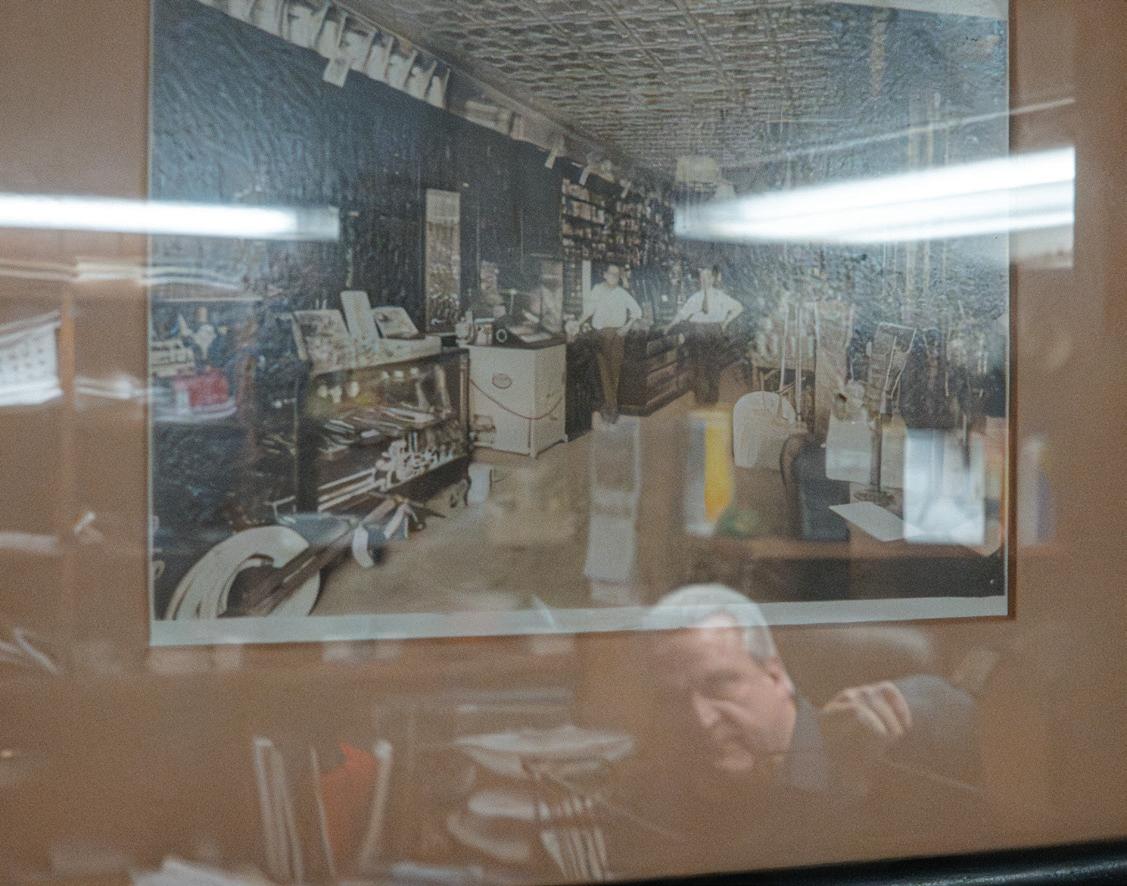
Dupuis points to a photo of his grandfather, Ralph Lemoi, and Peter Lemoi standing in the store. Photos of Dupuis’s family and the store hang in his o ice, beginning with Peter Lemoi standing in the first location of Lemoi Ace Hardware.
Dupuis believes in maintaining relationships with his customers.
The store also o ers a variety of services and items, from making keys to supplying snow blowers. that terrorized villagers on New Year Day.
Lemoi Ace Hardware opened in 1895, making it the oldest continuously operated retailer in Evanston.
Christina Lin/The Daily Northwestern Ralph Lemoi Dupuis’ great-grandfather, Peter Lemoi, opened the business in 1895. More than 130 years later, Dupuis operates it.
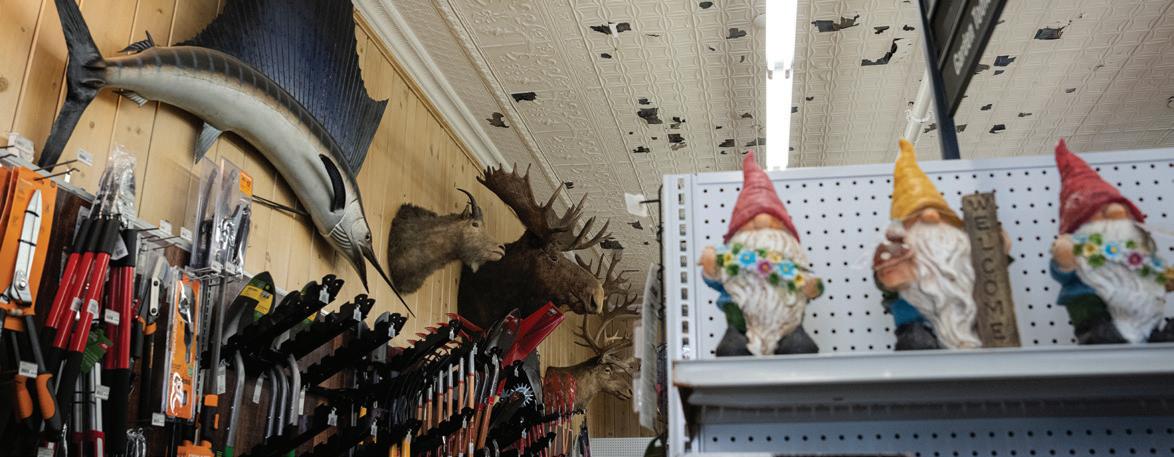
The store decorations reflect its long family history.
NAKORN COOKS BOLD thai Cuisine
Chessmen
By NOELLE CABRERA and REGAN HUIZENGA
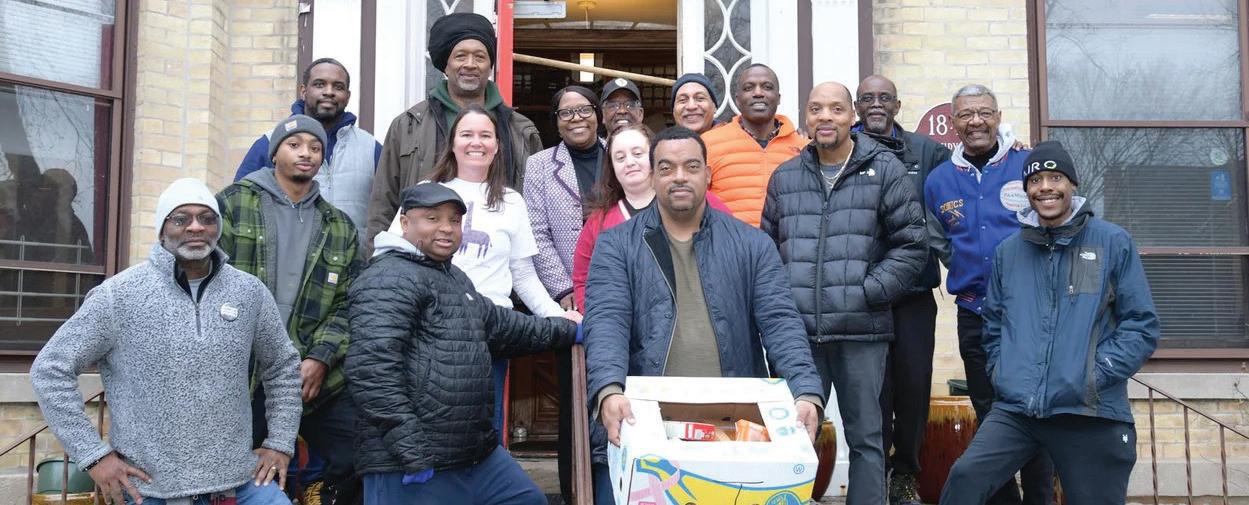
For nearly 70 years, the Chessmen Club of the North Shore has been a staple community organization focused on addressing issues of hunger, health and literacy in Evanston.
Whether members join because their fathers were Chessmen, they are involved with other volunteer work, or they’ve simply felt the club’s community presence, they are all dedicated to service.
“We are very focused on making an impact, and there’s not a member in the group that you would nd that doesn’t have that kind of giving bone in their body,” President Reynold Martin said. “We’re all volunteers, we’re all African Americans that are somehow touched into this Evanston community, and all have
Founded in 1958 by late former Evanston Police Chief William Logan Jr. and late former Benton Harbor, Michigan Police Chief Andrew Rodez, the volunteer club is one of the nation’s oldest African American male organizations.
these similar ideas or similar goals.”
rough the years, the organization has partnered with various local organizations to give back to the community.
It worked with C&W Market Foundation to provide food for community events and collaborated with Alpha Kappa Alpha members to serve anksgiving dinners at churches to those in need, Martin said.
Every holiday season, the Chessmen Club partners with Valli Produce to deliver hundreds of food baskets to families and seniors in need in Evanston, feeding up to 1,750 people.
“People are thankful for what we have to o er, and it warms your heart. It touches you,” Emeritus member Dudley Brown said. “It makes you want to cry when you see some of these people and how thankful they are.”
e Chessmen Club also supports the Books & Breakfast program, which promotes literacy at local elementary schools and o ers students breakfast every morning.
ey help fund the program, and members ll in to read to and connect with kids when student volunteers are on break, Vice President Jabari Porter said. Ge ing to know and interact with the children in this program has been a fruitful experience, he said.
e club’s other primary focus is its scholarship program. Every year, it awards around $40 to $50,000 in scholarships to at least ten local high schoolers, who engage in community service, to o set college costs,
Martin said.
Secretary Keith Robinson also works as an associate principal at Evanston Township High School, which he said bene ts the club’s scholarship program since he has direct connections with students and their community service work.
To support these initiatives, the club holds fundraisers including its annual gala. is year’s gala will be on March 14. e gala serves not only as a fundraiser, but as a time to honor community members, recruit new members and celebrate community accomplishments. e event is like a “family reunion,” Robinson said.
Moving forward, members hope to grow their membership, increase their scholarship fund, and expand their hunger initiatives.
Treasurer Jermaine Nesbi said he hopes to start providing food baskets year-round, since “people are hungry throughout the whole year.” e club will also see a change in leadership soon.
Following the gala, R. Sco Rochelle will assume the position of president, which Martin has held for the past six years.
“Although we’re di erent people, we have di erent ways of thinking, at the end of the day, we all have the same goal, and that’s to serve our community of Evanston,” Nesbi said.
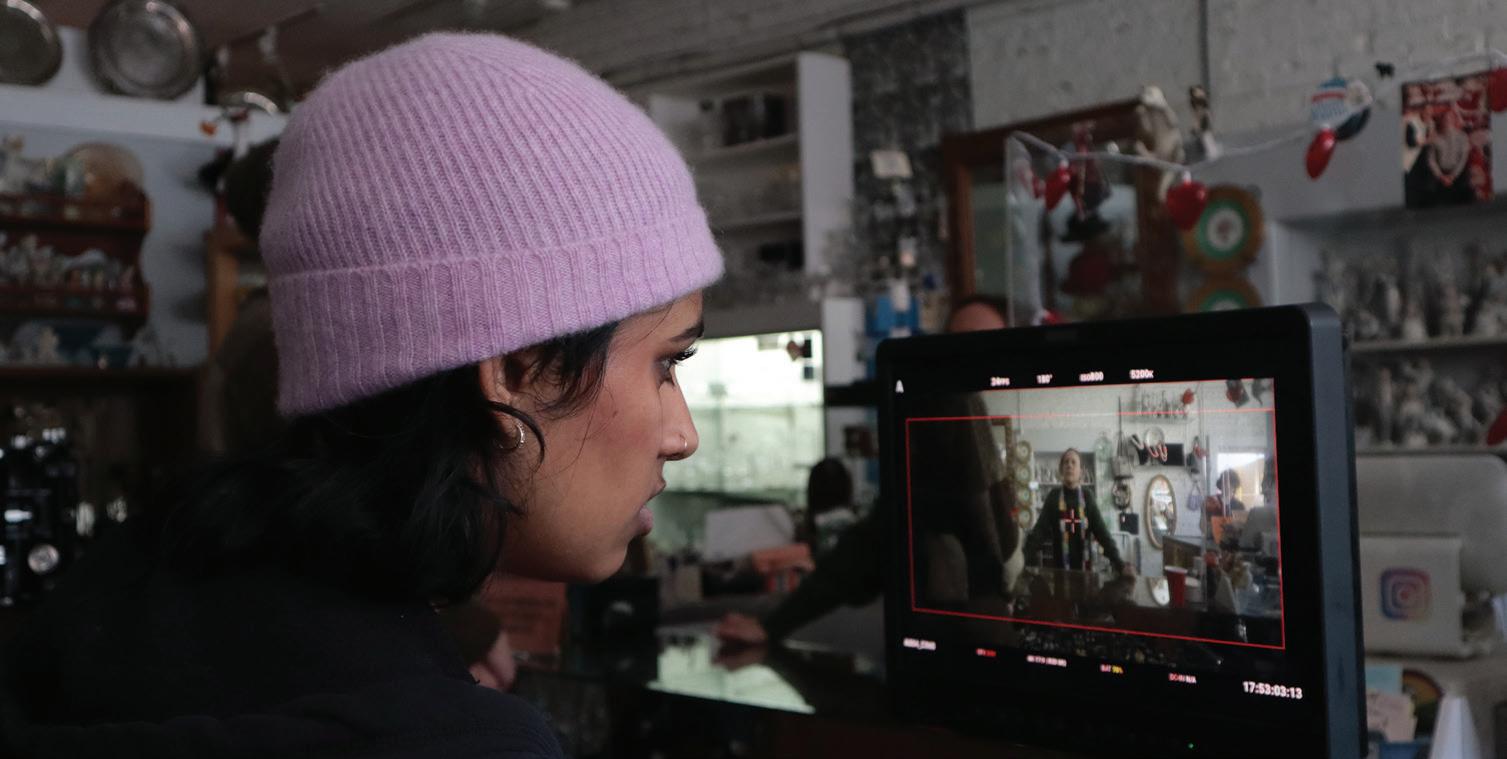
As spring approaches, student lmmakers are migrating outside to shoot outdoors footage for their latest lm projects. Whether on the Deering Meadow or in downtown Evanston, chances are you’ve passed a crew in action.
“Your location makes or breaks your story, and I feel like it’s something that goes so under-noticed,” Communication junior Shreya Saini said. “It’s so powerful, how you can convey hope, beauty, romanticism and everything, and also a feeling of loneliness and isolation. I’ve done both with the Lake ll.” Filmmakers like Saini o en gravitate toward locations around the University and Evanston for their proximity and convenience. Beyond the Lake ll, popular lming spots include local cafes, restaurants and classrooms inside buildings like the Technological Institute and Kresge Centennial Hall.
According to Saini, lmmakers frequently cold-call local businesses to request permission to lm. While some decline or ask for a he y fee, she said most of her collaborations with Evanston businesses have been fruitful and friendly.
“I’ve noticed Evanston restaurants and stores are really usually willing to help lm students, because they know we’re students, and o entimes we’re a lot of their business, so it kind of becomes a symbiotic relationship,” she said.
Saini has lmed in Peet’s Co ee for free because they wanted to “give back” to the Northwestern community. She also lmed in places like the LeTour, Secret Treasures Antiques & Collectibles and the YWCA Evanston/North Shore pool, all of which she describes as “really collaborative.”
Restaurants support student lmmakers through food donations as well, according to Saini. Providing food for the crew can be one of the most unexpected and highest costs, which businesses like Bagel Art Cafe, Einstein Bros. Bagels, Siam Noodle and Rice and Everest Indian Cuisine alleviate with their le over donations.
While many Evanston businesses are collaborative, sometimes, student lmmakers encounter legal and nancial obstacles to working with them.
According to Communication junior Hunter Bachrach, the biggest challenges for lming anywhere o -campus are dealing with the tight budgets and the “multi-step process” of registering for permits and certi cates.
When lming in a public park, Bachrach and his crew were stopped by a police o cer and asked to present their permit.
“Outside of all of the government stu you have to go through, a lot of Evanston residents are very understanding and are very encouraging of projects,”
Bachrach said.
Filmmakers like Communication junior Sabrina Schmi enjoy lming in Evanston for the city’s ambience and abundance of nature, which makes footage lmed in the spring and fall pre ier.
She said she prefers the suburban look Evanston o ers over a bustling city that would make things harder to lm.
“Evanston has an old look to it. e architecture of buildings is really nice,” she said. “I honestly love the brick vibes Evanston has. It looks very ‘suburbian,’ and it looks very nice on camera.”
Both Schmi and Communication senior Paul Kwak have had encounters with residents while lming. Some stop by to ask questions about what the
students are working on, he said. Kwak described the Evanston community as curious, nurturing and accommodating.
“I feel like we’re really lucky to be shooting here in Evanston at Northwestern, because I feel like the community is very welcoming to us lmmakers,” Schmi said. “I honestly wouldn’t change it, it’s a really good space to be as a lmmaker shooting here.”
i.choe@dailynorthwestern.com
Photo courtesy of Shreya Saini
NU filmmakers collaborate with local businesses, like Secret Treasures Antiques & Collectibles, to find the perfect locations for their projects.
Photo courtesy of Reynold Martin
Last holiday season, the Chessmen Club distributed hundreds of food baskets to community members in need as part of the organization’s annual tradition.
Luke Meinhardt/The Daily Northwestern
NaKorn opened in November 2016 with a mission to serve the traditional Thai cooking that owners Sam Rattanopas and Mina Sudsaard grew up eating. They first met in middle school in Bangkok. Two decades later, they reunited and later decided to open a restaurant together, combining Rattanopas’ love for the restaurant industry and Sudsaard’s design experience.
OPINION
Sextou: Whether ‘town’ or city, Evanston is home
I’ll admit it. When I rst moved to Evanston, I didn’t really like it.
It’s funny to say this out loud now, typing from Washington D.C., as I gleefully count the days until I return to our blooming campus. But in all honesty, Evanston and I didn’t quite get along during my rst year here. In fact, I could probably name more streets in Chicago than our college town.
Evanston always felt more like a town than a city. Partly inspired by “Gilmore Girls’” Stars Hollow on sunny days, and “Stranger ings’” Hawkins on its mostly gloomiest, I felt that Evanston was, at best, adorably small and timid. Many stores close early, the few places you can get a drink seem to close permanently, and the “L” train’s Purple Line feels ghostly once the sun sets.
I know as I’m writing this that I’m probably — no, most de nitely — doing Evanston
a disservice. But it wasn’t until recently that my relationship with Evanston began to grow. Allow me to explain myself.
Si ing in Northwestern’s all-favorite Colectivo Co ee earlier this school year, I wondered why I didn’t click with the place as much as everyone else. At rst, I blamed it on my inner city girl, my yearning for buzzing streets at midnight and whizzing cars with bass heartbeats. en, I felt it might be completely and u erly my fault. at I was unadaptable, in exible, stubborn. e times my friends and I fought about our connection to Evanston must’ve been countless, and they o en called me out for my insistence on the “town” a ribution.
It was only a few months ago that I realized, humorously “town” or not, that Evanston is, above all, my home. And it does not bear the title merely for being the place I’ll reside in for the next few years, or for being the location I tap as my Uber drop-o from O’Hare.
Evanston is where I long to be because it provides the one thing every home does: memory. When I walked its familiar streets a few weeks ago on a weekend visit, I glanced at the corner store where my dad and I got my rst U.S. SIM card. Across the street is the iconic campus
Target, where my roommate and I get our weekly mac and cheese. A few blocks down sits my friend group’s favorite Italian restaurant, beaming with light, craving the moment we make our next reservation.
I walked further. Look, I said to myself, that’s the trinket shop I showed to one of my oldest friends who came to visit me from Greece. And over there, the brunch spot where I had one of the worst dates of my life, located not too far from the place where I had one of my best. e thing about Evanston is that, even in its cold Midwestern weather, it nds ways to warm you up. Saturday ea markets tucked between quiet streets, community-run art shows spilling out of small galleries, the slightly absurd magic of Nepalese and Mexican restaurants sharing the same block, and lakefront walks that turn strangers into regulars.
Above all, Evanston holds its roots in kindness — students, residents and families — always eager to tell you a joke or a story. On a particularly cloudy day, at least one person will nd a way to cheer you up with a gentle wave or a kind o er of their seat on the bus.
What I didn’t know before — or perhaps didn’t quite understand — is that people in
Evanston really just love Evanston. And they do it well.
I gured, then, I might as well. Besides, my job wasn’t to “discover” a newfound appreciation for Evanston so much as to nd a way to keep up with it — to follow the porch conversations and not-so-quiet pride that shows up in places you don’t expect.
So, I now try to honor Evanston with presence. With endless visits, restless exploration, the small act of showing up again and again. Now, I pour my love into Evanston, ll it with people and joy and adventures, because it is the place that keeps ful lling me.
Eventually, I thought, “I love it here.” Because Evanston is my home.
And what greater gi is there than a home that invites you to ll it?
Alexia Sextou is a Medill sophomore and author of “Margin Notes.” She can be contacted at a.sextou@dailynorthwestern.com. If you would like to respond publicly to this op-ed, send a Le er to the Editor to opinion@dailynorthwestern.com. e views expressed in this piece do not necessarily re ect the views of all sta members of e Daily Northwestern.
Northwestern has one of the best athletics programs in the country. Wildcat lacrosse is ranked number four in the country, women’s golf and eld hockey are reigning champions and volleyball had a winning record for the rst time in three years.
So why is it that at most NU sporting events, there are less than 20 students there as fans? Even worse, the University has an organization specically dedicated to the student section: Wildside. Wildside needs to actually do something and get students to go to sporting events outside of just football and men’s basketball.
I have been to over 70% of NU home sporting events since I arrived on campus in September. I have been to every sport that has hosted so far this season, except diving. Other than men’s basketball and football, there has not been a signi cant student presence at these events. is is embarrassing.
e fact that crowds at most events are almost completely devoid of student fans is a major stain on this school’s athletic reputation. e fact that there is an organization meant to drive student a endance and it is still incredibly low is even worse.
One might refute that this is Wildside’s problem by arguing that students just don’t care about these sports or that people are too busy to a end. Even if you could force people to go to the games, they won’t be passionate about the team and won’t be cheering. It’s similar to the old adage: “You can lead a horse to water, but you can’t make it drink.”
But the horse certainly won’t drink if it doesn’t know that the water exists or where the river is. I have heard from countless peers that they didn’t know about certain NU varsity teams, or that the Northwestern Wildcats app exists or how to get ’Cats Pass.
is problem is accelerated by Wildside’s seeming indi erence toward non-revenue sports. For Sunday’s lacrosse matchup against Central Michigan, Wildside promoted the game on Instagram less than an hour before the opening draw. Wildcat fencing hosted top opponents at the Schiller Duals on January 31, and Wildside didn’t post
anything outside of their weekly Catch the ’Cats post that currently has no comments and less than 100 likes.
ese posts also don’t include the venues for the events, which is a major problem for sports like fencing or tennis, which can be hosted in multiple places on campus.
What needs to happen to turn student a endance around? First, knowledge of certain sports’ existence needs to be far be er than it is right now.
e aforementioned problems with Wildside’s Instagram coverage should be xed. Also, Wildside could work with NU Athletics to increase promotion of non-revenue sports in Universitywide communications.
Additionally, incentives need to be increased for a endance at non-revenue sports. Wildside has designated members-only sections at both men’s basketball and football. ese front-row seats could instead be given to students who a end non-revenue sports in the week prior to the game, similar to the points system that NU used to assign priority for student seats in prior years.
Even if Wildside can’t drive a endance at every single game, something like a “Wildside Series” would do the trick. Each sport should have one
event throughout the year with free food and giveaways for students, weeks of advertising and hype in the lead-up, all for the goal of having a sellout student section at that event. Regardless of the speci cs, Wildside needs to be doing much more for NU sports than they are right now.
To the Wildside organization: On your website, you claim to unite “NU Athletics and NU Student a airs to support Northwestern’s 500+ studentathletes.” is is untrue. You only truly support the approximately 130 student-athletes on the men’s basketball and football teams. You have taken on the responsibility to represent the student section at NU athletic events. is is, once again, not the case for non-revenue sports. You have failed in your stated goals as an organization. Do your job. Ben Dannemiller is a Medill eshman. He can be contacted at bendannemiller2029@u.northwestern. edu. If you would like to respond publicly to this op-ed, send a Le er to the Editor to opinion@dailynorthwestern.com. e views expressed in this piece do not necessarily re ect the views of all sta members of e Daily Northwestern.dailynorthwestern.com. e views expressed in this piece do not necessarily re ect the views of all sta members of e Daily Northwestern.
Cohrs: Here’s why I ran a ‘joke campaign’ for ASG President
My name is Noah Cohrs. You may recognize me from the lake. My friend Alan Hu and I recently ran a joke campaign for ASG co-presidents, which we hope brought you some joy. In a brilliant demonstration of the beauty of ranked choice voting, we lost. Barely.
at’s probably a good thing, because we would have resigned anyways, but I regret being unable to give a resignation speech and speak publicly to the Northwestern community about why we ran this campaign.
e student government here has a problem. A vast majority of students do not know about it, care about it or engage with it in any meaningful way. Last week’s election, which had the highest turnout in recent memory, still only saw 2,039 out of over 8,000 undergraduates come out to vote. During our campaign, I lost count of how many times I heard people say things like “I hadn’t heard of ASG before this,” “I’ve been here for two years, and I still have no idea what ASG does,” or “I think ASG is the most useless organization.”
I can’t blame them, because two weeks ago, I was in the same boat. But I’ve started to realize that this a itude is dangerous. I believe this disengagement with our student government is a major problem — that ASG ma ers — for two reasons.
e rst is about practice. As university students, we’re learning how to participate in society. If we learn to ignore the government and our responsibility to elect representatives, we will bring
that apathy into the world. If, instead, we choose to build our democratic muscles — practice following local elections, learning about issues and voting — we are preparing ourselves to be more engaged, powerful citizens in the real world for the rest of our lives. is is a key part of your education. And it’s important enough to be worth a few minutes of your time.
e second reason is even more important. I believe that, with the students united behind it, ASG could become a powerful political force on campus. We are over 8,000 hard-working, passionate young people, and we are critically important to this University. Uniting behind ASG will greatly strengthen our bargaining position with the administration, improve our ability to implement policies and strengthen our campus-wide community. And it doesn’t have to stop with campus. is many people, when well organized, have the potential to create great change — in our city, county, state, country and world. rough ASG, students could engage directly with real issues, instead of being represented by a University administration that frequently shies away from taking a stand on issues that are critically important to us. But that cannot happen until we get organized.
I’ve heard a lot of people say that ASG doesn’t ma er because it’s ine ective. at may be true, but the blame for that doesn’t just fall on them. Maybe you don’t engage with ASG because it’s ine ective, but ASG can’t be e ective if you don’t engage with it. Something has to change, and I’m starting by choosing to care.
at was the rst purpose of this project: to combat student disengagement by running a “government awareness campaign.” Even though we were a joke campaign — hey, now a lot more people know about ASG. Now a lot more people
know they have presidents. More people watched the debate. More people voted. at’s a win in my book. e other purpose of this campaign was to demonstrate, by means of allegory, the consequences of this disengagement.
When a government and its people are this disconnected from each other, candidates are held to much lower standards. ey don’t need to propose sound policies or demonstrate their competence. All they need is a ention. Controversy. Drama. Anything to turn disengaged voters into passionate supporters — and when people are apathetic towards their government, that doesn’t take much.
We used these tactics to run a harmless joke campaign. Most campaigns that use them don’t. is is populism. is is what happens when you don’t care. You can ignore it, but it won’t ignore you. is is the de ning political force of our time, and it is critically important that we understand it.
In this election, good triumphed: John and Gauri, your new presidents, are incredible, dedicated people. ey seem willing to put in the work to bridge the divide between ASG and the students. With their help, this can be a turning point toward be er campus governance.
Either way, I will be doing my best, at every level, to become a more engaged and responsible citizen, and to help others do the same. Because our story here has a happy ending. But not every story does.
Noah Cohrs is a SESP junior. He can be contacted at cohrs@u.northwestern.edu. If you would like to respond publicly to this op-ed, send a Le er to the Editor to opinion@dailynorthwestern.com. e views expressed in this piece do not necessarily re ect the views of all sta members of e Daily Northwestern.
Sarah Jessica Parker to speak at 2026 commencement
By EMILY LICHTY and NINETH KANIESKI KOSO daily senior staffers @emilymlichty / @ninethkk
Actress Sarah Jessica Parker was announced as Northwestern’s Class of 2026 commencement speaker, according to a Tuesday University news release. She will address the graduating class June 14 at the United Center in Chicago. Parker is best known for her role as Carrie Bradshaw in the television series “Sex and the City.” Throughout the franchise’s 27-year run, including six seasons, two movies and three spin-off seasons, she won four Golden Globe Awards, three Screen Actors Guild Awards and two Emmy Awards. Her role in the show “cemented her presence as a fashion and pop culture icon,” according to the release.
Parker is also known for titles such as the films “Hocus Pocus” and “Hocus Pocus 2,” as well as her work on television and Broadway. An entrepreneur and producer, Parker launched her production company, Pretty Matches Productions, in 2005 and founded her own literary imprint, SJP Lit, in 2023.
“I’m truly honored to have been invited to serve as this year’s commencement speaker,” Parker said in the release. “It’s a privilege to celebrate the graduating class whose years of hard work, dedication to their studies, commitment to one another, their community and the larger world deserve recognition.”
Parker will also receive an honorary degree of Doctor of Arts at the ceremony, according to the release. She was also honored for her contributions to television with the Golden Globe Foundation’s Carol Burnett Award in 2026.
The actress currently serves on the New York City Ballet Board of Directors as a vice chair. In 2009, she was selected by the Obama administration to be a member of the President’s Committee on the Arts and the Humanities.
“Sarah Jessica Parker has been a strong supporter of the arts and humanities for many years, and I am thrilled she will be our commencement speaker,” interim University President Henry Bienen said in the release. “From starring in and producing film, television and theatre productions to her successful business ventures, Sarah’s iconic and versatile career speaks to the interdisciplinary approach we value and champion at Northwestern.”
e.lichty@dailynorthwestern.com
n.kanieskikoso@dailynorthwestern.com
Ducks Dan and Dave: Tummy Tussle
The Daily Northwestern Wordsearch
best of E VA N S T O N
By Kate Pollot
& games
Editor Kate Pollot
Assistant Editor
Tanat Johnny Tungsubutra
Photo courtesy of Jem Mitchell
Sarah Jessica Parker is best known for her role as Carrie Bradshaw in the media franchise “Sex and the City.”
From page 1
a civic organization founded in response to Envision Evanston that he said focuses on “maintaining Evanston’s quality of life.” Storey Williamson and others favor a more “incremental” approach to zoning, as opposed to a wholesale rewrite.
Through Freedom of Information Act requests, the EAC has worked to develop a timeline of what they think went wrong throughout the Envision Evanston process.
Members of the coalition argue that the shift toward zoning reform emerged early in the comprehensive planning process and was driven less by resident input than by external pressure and political incentives.
Storey Williamson said the city had begun applying for federal housing grants before drafting the comprehensive plan, using language that assumed substantial zoning changes would occur. He argued that this signaled the city had already embraced that upzoning as a policy goal before it publicly identified it as such.
Beyond any single procedural concern, Storey Williamson and others take issue with the assumption that density will create more affordable housing. They worry that an influx of market-rate housing will accelerate the displacement of current Evanston residents.
Their concern is rooted in a particular policy goal outlined in the comprehensive plan and in the language of Evanston’s new strategic housing plan, commonly known as Housing4All, which the Housing and Community Development Committee recently recommended to City Council for approval.
One objective included in the comprehensive plan’s housing chapter suggests the city should aim to “Increase housing supply and affordable housing choices at all income levels.” This would include
RESEARCH
From page 1
Sixth-year environmental engineering Ph.D. candidate in environmental engineering Jordan Gurneau said the relationship he balances between his heritage and academic work changes every day.
“Some days I want to be just a scientific scholar,” Gurneau said. “Somedays I want to be an Indigenous scholar. Sometimes I want to be just a human. I think (this event) is a really good space to allow each other to take an extra breath and be like, ‘Oh, yeah. We’re doing this work. It can be difficult. It can be rewarding, too.’”
expanding by-right residential development, such as small-scale multi-unit housing, in all residential districts and higher-density housing in mixed-use and downtown areas.
The reasoning behind this, explained in the Housing4All plan, draws on examples from Minneapolis and New Rochelle, N.Y., cities that have implemented policies to increase housing supply. The plan says that updating Evanston’s zoning code can expand housing options and curb rising rent prices.
“Zoning code updates will foster inclusive growth while advancing sustainability and reducing the pressures that drive up housing costs,” the plan reads.
Seventh Ward resident Kiera Kelly disagrees, citing one study conducted by Georgetown Law’s Center on Poverty and Inequality, which found that lowincome renters faced rent increases, while rent for wealthier households stayed relatively stable in cities with aggressive housing growth.
Proponents advocate for new zoning, multi-unit housing.
Still, a growing body of research suggests the opposite is true — and so does a separate contingent of Evanston residents, who herald density.
Scott Roberts, a 3rd Ward resident, co-founded the Evanston organization Say YES! to Duplexes and said he is excited by the prospect of diversifying the city’s housing stock.
“We have a housing crisis in the country and especially in Evanston,” Roberts said. “Lots of people want to live here, but they’re being priced out, and part of that is because of a choked supply.”
Housing advocates point to Minneapolis as an example of how expanding housing supply can work in practice. The city made a series of zoning changes beginning in 2009 and officially eliminated exclusive single-family zoning in December 2018. A study from the Pew Research Center found that rents in the city
Weinberg senior Olivia Bailey said the gathering provided her with a way to see what projects her peers have been pursuing.
A co-chair of the Native American and Indigenous Student Alliance, Bailey said she is at CNAIR every week, a “space that feels like home” for her.
“I know all these people, and I interact with them all the time, and I don’t know the work that they’re doing,” Bailey said. “Seeing everyone’s presentation, like my own friends’ presentations, it’s really enlightening.”
Medill first-year Monica Riley attended the event as both an audience member and a judge on the event’s committee to award certificates to select speakers.
stayed the same as more apartments were built, even as the rest of the state saw prices rise.
Other research suggests that expanding marketrate housing helps existing renters by slowing rent growth, reducing displacement and strengthening neighborhood quality.
Support for these ideas remains strong in Evanston. Although his challenger campaigned against Envision Evanston in last year’s municipal elections, Mayor Daniel Biss still won reelection in a landslide. Ald. Jonathan Nieuwsma (4th) said the results show there is “widespread support” for zoning reform.
Housing debates have grown heated
While Roberts advocates for a diversity of housing options more broadly, his group specifically focuses on advocating for duplexes, which he described as a “compromise” to “lower the heat” in housing debates.
Despite this framing, arguments over housing in Evanston have remained contentious, in part because they have been framed in moral terms.
In December 2024, Biss said it would be “immoral” to delay the comprehensive plan, arguing that the city could not afford to wait to address urgent housing needs.
Kelly said that demonization of people who hold different beliefs about housing is “really hurtful” and has gotten to the “point of bullying.”
“We are speaking as people who love this town and also believe in having housing that’s affordable and addressing some of the problems we see,” Kelly said. “We just disagree with a movement that requires such drastic transformation, potentially, in our city.”
Mary Rosinski, a real estate broker who has vocally opposed much of the Envision Evanston process, echoed her sentiment.
Rosinski hesitated to share that she lives in the 7th Ward because she said residents of that ward are frequently “put down” for their views.
At the beginning of her first year at NU, Riley said she was worried whether she would find a community where she could share her Indigenous culture. With events like these, she said her hesitancy has lifted.
“Other people here are really nice and welcoming, so they would want to talk to you either way,” Riley said.
“Even if you’re sitting by yourself, they’ll come up to you and start talking to you, introducing themselves. It really changed my perspective (on) coming here.”
As the event concluded, CNAIR Associate Director of Community Outreach and Engagement Pamala Silas announced the events’ certificate winners: Buell won the Current Indigenous Issues Award, Weinberg senior
“People say, ‘Oh… they’re always whining.’ Well, that’s because we’re always under attack,” Rosinski said. “It’s a disservice to so many residents who care so much and put so much into this town.”
Rosinski added that the residents opposing the upzoning initiatives are simply trying to “protect our neighborhoods.”
Timeline of zoning changes is uncertain
Amid this continued debate, city officials maintain that addressing housing affordability remains a key priority.
While highlighting the importance of the city’s affordable housing work, Biss told The Daily that he is “really proud” to do “what’s right,” even when it is politically fraught.
“I’m really passionate about the work that we’re doing to make housing more affordable in Evanston, to expand the supply of housing, which is a necessary part of the effort to make housing affordable across income levels and across the city,” Biss said. “It’s been a tough fight, and I don’t think it’s any secret that my reelection campaign was tougher and more vigorous because of it.”
According to Nieuwsma, the timeframe for the rezoning process is uncertain.
The draft scope of services the city released for public feedback included a timeline that aimed for new zoning provisions to be adopted in 2028. However, that timeline did not make it into the document City Council approved at its Monday meeting. Still, Nieuwsma said rezoning is “overdue.”
“It’s gonna take a lot of work,” he said. “It’s gonna take a lot of public engagement. And I really am fairly confident that when all is said and done, we will end up with a product that is generally acceptable for most people in Evanston.”
s.baker@dailynorthwestern.com
Lula Fox won the Indigenous Futures Award, first-year Litowitz MFA+MA graduate student Mathilda Zeller won the Storytelling Award and Gurneau won the Most Community Engaged Award. Fryberg said she hopes to continue the event on an annual basis.
“We have a responsibility in academia,” she said. “That is to really go out and build those bridges so that we’re both learning from traditional knowledge but also able to take what we learn in academia and give back.”
l.kubovchik@dailynorthwestern.com
From page 1
was quick to remove the symbols it found Feb. 1 and launched an investigation, an NU spokesperson wrote to The Daily on Feb. 8.
More symbols have been spotted since then.
The Daily confirmed that at least five graffitied antisemitic symbols have been found on various parts of campus throughout the month.
When Bienen junior Ilan Nevo, who is Jewish, first saw people posting about the symbol online, he said he did not have much of a reaction. However, he said it made him think of his grandfather, who he said escaped the Nazis in Germany during the 1930s.
“He escaped from that, and then he came here, and now I’m sitting here, and I’m looking at that,” Nevo said. “It didn’t make me feel any fear. It just made me kind of sad that this is what it has come to.”
The University did not respond to a question about how it approached removing the graffiti or its presence on campus.
When previously asked about student-reported
SNAP
From page 1
one warning per month for three months before being removed from the program for failing to meet work requirements, making May the earliest possible date participants could lose benefits.
The federal government shutdown last fall also froze SNAP benefits for millions of Illinois recipients for about three weeks.
Mattson said anytime there are changes to a policy like SNAP, it can be confusing for recipients to understand their impact on them. She added that GCFD’s main focus right now is making sure people know what’s changing and where to find help.
The organization launched saveoursnap.org, a website which provides resources, including links to exemption forms and a quiz to ensure people are meeting work requirements. GCFD is also sending members from their benefit enrollment and policy team to community events to present information and answer questions about the changes in person.
“I can only imagine how tricky this is for people who depend on SNAP benefits to make sure that their family, their children, have enough food.” Mattson said. “We really feel for those neighbors and are doing everything we can to help them.”
Much of GCFD’s work consists of “plugging
antisemitic graffiti, the University wrote in a statement to The Daily on Feb. 8 that they “immediately removed or painted over” the graffiti.
NU Hillel Experiences Co-Chair and Weinberg junior Callie Berthold described discourse on Jewish student life and the Israel-Hamas war during her first couple of years on campus as “stressful and strenuous” for the Jewish community.
She noted she felt like this feeling had been dying down until seeing the symbols.
“Seeing symbols around campus popping up with specifically hateful language and symbolism toward Jewish people … it hits, and it hurts as a Jewish student,” she said.
Berthold said she has heard similar sentiments from other Jewish students, as many have expressed sadness over these incidents. She described that it felt like a “wind back” after NU’s community worked hard to build safe spaces, resources and communal trust.
Both Berthold and Nevo said they have not seen as many antisemitic symbols in their time on campus as they have recently.
“People know that hate has no place on our
into” existing meetings such as church gatherings and advocacy events and tailoring their messaging, explained Tyler Stratton, director of community asset building at GCFD.
“We are doing a lot to meet people where they are, to make sure that they get access to the information and understand what’s happening, why it’s happening and where they can go for additional support and resources,” Stratton said.
The most common questions Stratton receives focus on what food resources are available if someone loses benefits, how to find work opportunities to maintain eligibility and what the changes mean for immigrant communities.
“Our overall goal is to have a community-centered response as we are working to build awareness about the changes to SNAP,” Stratton said. “Simultaneously, we want to create a space where we can connect partners and neighbors with resources and action steps that they can take as well.”
Liam Ford, executive director of Ignatian Mission Center, a Rogers Park food pantry and GCFD partner, said the Center has served more than 250 families in the last two weeks. He noted it increased from an average of 210 families, though he attributed the rise largely to general need rather than SNAP changes.
He said the GCFD has kept his team informed
campus, and it’s just ridiculous at this point that it’s still coming up,” Berthold said.
NU Hillel Executive Director Michael Simon said he first heard about the symbols from discussions with students.
He said they appreciated how seriously NU was taking its response to the symbols. By the time Simon said he reached out to the University, they told him they were already investigating.
“We’ve been progressing toward trying to ensure that (NU is) a community that tries to be free from any kind of harassment, intimidation, threat — certainly hateful symbols have no place on our campus,” Simon said. “It’s really important that people in authority, like campus administrators, react with empathy and moral clarity to make it known that Northwestern doesn’t condone hate in any form.”
The Northwestern University Police Department arrested Shahid Hussain, who a University spokesperson wrote had no affiliation with NU, for antisemitic graffiti found on campus on Feb. 12, according to a NU statement Feb. 18. He faces criminal charges, including a hate crime charge.
The University did not respond to a question about whether all the graffiti found on campus could be attributed to Hussain.
At least two instances of antisemitic graffiti have also been reported off campus. The Evanston Police Department confirmed to The Daily in a statement Feb. 18 that the department is actively investigating but remains unable to confirm if the instances are related. Images reviewed by The Daily show the symbols off campus resemble those discovered at NU on Feb. 1.
Nevo said he hopes NU promotes conversation between different student groups to address the sentiment behind the graffiti. He said he felt the University has taken agency out of students’ hands and “infantilize(d)” them.
“Make students on campus from different social groups interact and learn about each other, because that’s how you actually defeat these prejudices,” Nevo said. “Not by (telling) some people, ‘Oh, go do this module, and I’ll lecture at you.’ That just creates more division.”
n.kanieskikoso@dailynorthwestern.com
and stocked with flyers to share with clients. Mattson said it’s too early to gauge any impact, as recipients who are no longer eligible will not begin to lose their SNAP benefits until May. “What we tend to see is when people have a
source of income or a source of food cut off, it’s usually a couple weeks before we start to see them,” Ford said.
t.bethke@dailynorthwestern.com
The Daily Northwestern
Winter 2026 | An independent voice since 1923 | Evanston, Illinois
DESIGN EDITORS
EDITOR IN CHIEF
Emily Lichty
PRINT MANAGING EDITORS
Marisa Guerra Echeverria, Nineth Kanieski Koso, Betsy Lecy, Anavi Prakash
MULTIMEDIA MANAGING EDITORS
Femi Horrall, Yong-Yu Huang, Jonah McClure
CREATIVE DIRECTORS
Christina Lin, Matt Wasilewski
CAMPUS EDITOR
Lexi Newsom
ASSISTANT CAMPUS EDITORS
Riq Ahmed, Sophia Bateman, Lucas Kubovchik
CITY EDITOR
Jack Baker
ASSISTANT CITY EDITORS
Claire Coffey, Wallis Rogin, Emily Dissanayake
SPORTS EDITOR
Kamran Nia
ASSISTANT SPORTS EDITORS
Sid Sivaraman, Yoni Zacks, Charlie Perlman
ARTS & ENTERTAINMENT EDITOR
Alexander Hernandez Gonzalez
ASSISTANT ARTS & ENTERTAINMENT EDITORS
Gabe Hawkins, Rainee Li
OPINION EDITOR
Aidan Klineman
ASSISTANT OPINION EDITORS
DJ Harrison, George Koutrouvelis
FEATURES EDITOR
Regan Huizenga
ASSISTANT FEATURES EDITOR
Lizzie Perry
IN FOCUS EDITORS
Sarah Serota, Hannah Webster
SOLUTIONS EDITOR
Naomi Taxay
ASSISTANT SOLUTIONS EDITORS
Kate Moores, Caroline Altschul
SOLUTIONS GRANT COORDINATOR
Lily Ogburn
AUDIO EDITOR
Ruby Dowling
ASSISTANT AUDIO EDITORS
Eliza Martin, Allegra Lief
PHOTO EDITOR
Liam Barrett
ASSISTANT PHOTO EDITORS
Drayson Jaffee, Luke Meinhardt
VIDEO EDITOR
Yana Johnson
ASSISTANT VIDEO EDITORS
Chris Kim, Miguel Tsang
ILLUSTRATIONS EDITOR
Nicole Cheah
ASSISTANT ILLUSTRATIONS EDITORS
Charlotte Nagel, Chelsea Lim
DATA VISUALIZATION EDITOR
Ryan Ottignon
ASSISTANT DATA VISUALIZATION EDITOR
Navya Singh
POLLING EDITOR
Diya Raj
ASSISTANT POLLING EDITORS
Isabella Kunc, Graciela Zhang
CROSSWORD & GAMES EDITOR
Kate Pollot
ASSISTANT CROSSWORD & GAMES EDITOR
Tanat Johnny Tungsubutra
WEB DEVELOPER
Devon Lai
Clare Kirwan, Sami McKenney
ASSISTANT DESIGN EDITORS
Connor Tang, Ruixin Zhang
AUDIENCE ENGAGEMENT EDITOR
Edward Simon Cruz
NEWSLETTER EDITORS
Dalton Hanna, Maya Wong
ASSISTANT NEWSLETTER EDITORS
Maya Heyman, Hannah Mehler
SOCIAL MEDIA EDITOR
Ashley Dong, Avantika Singh
ASSISTANT SOCIAL MEDIA EDITOR
Sarah Park
COPY CHIEFS
Bianca Dishmon, Joshua Singer
COPY EDITORS
Clara Freeth, Jordan Balousek, Ina Choe
DIVERSITY & INCLUSION CHAIRS
Izzie Jacob, Teresa Ayala Leon
DEVELOPMENT AND RECRUITMENT EDITORS
Sophie Baker, Caroline Killilea, Ashley Wei
STAFF EDITOR
Siri Reddy
GENERAL MANAGER
Stacia Campbell
SHOP MANAGER
Chris Widman
BUSINESS OFFICE STAFF
Tia Bethke, Branden Chen, Edward Simon Cruz, Allie Epstein, Ken Trakulyingyong, Jen Walsh
ADVERTISING PRODUCTION STAFF
Lori Cui, Christina Feng
Daily file photo by Yong-Yu Huang
While changes to SNAP’s work requirements took effect on Feb. 1, Greater Chicago Food Depository staff said
MEN’S TENNIS
Cyrus Mahjoob lifts NU on path to play pro tennis
By JONAH MCCLURE daily senior staffer @jemccl125
Cyrus Mahjoob was tasked with picking an outfit to represent what he wanted to be when he grew up. Despite his mother, Negin Mahjoob, offering assistance, Cyrus went alone to his room and returned wearing an all-white outfit, accompanied by a headband and his tennis racket.
“I’m going to be a professional tennis player,” the five-year-old said, according to his mother.
Over 15 years later, Mahjoob is on his way to reaching that goal. The now-junior plays at the second singles slot for No. 49-ranked Northwestern, the school he transferred to after leaving Georgia last spring. Mahjoob also plays at second in doubles, where he and junior Ethan Schiffman rank 70th in the country.
Budding into a star
Though Mahjoob knew he wanted to be a tennis player, he didn’t shy away from embracing his multisport athleticism as a kid, Negin said. In her first conversation with Wildcats’ coach Arvid Swan, she explained Mahjoob’s athletic prowess.
“Cyrus is a natural athlete,” she told The Daily. “He played all the sports until he was eight.”
Mahjoob continued to play a variety of sports after turning eight, when he was forced to choose which sports to focus on. He never struck out in six years of playing baseball, he was the “Dennis Rodman” on his basketball teams and was a year-round swimmer, Negin said.
Around the time he narrowed his sporting focus, Mahjoob and his sister, Setareh Mahjoob, began playing tennis at the Junior Tennis Championships Center. JTCC, located near Mahjoob’s hometown of Rockville, Md., became a second home for the tennis fanatic. He trained at the facility four days a week, mainly working with coach Asaf Yamin. Very early on, Yamin said he could see Mahjoob’s potential as a player, given his work ethic and passion.
After playing in the program for five years, Yamin suggested that Mahjoob should play in an international tournament. The coach said he thought Mahjoob was ready since he already loved to compete, and Yamin wanted his player to gain some international exposure.
“I felt that he was ready to make the transition from being a mommy’s boy to a big boy,” Yamin said about Mahjoob’s first international tournament, which took place in Jamaica. “It was good to throw him into deeper water and see how he could adjust, and he did great.”
After the first tournament, which he lost in the first round 0-6, 1-6, Negin said Mahjoob was ready to continue his tennis journey on his own. Her son would be gone for four weeks in a row, she said, travelling to play in tournaments in a variety of countries during the same trip.
During his tournament career, Mahjoob peaked just outside of the top 100 in the ITF Junior Rankings. Yamin said his student had a “very good” junior career, which paved the way for Mahjoob’s time in college tennis.
Finding his joy
Mahjoob’s independence carried over to where he would commit to play college tennis, originally at Michigan. Committing to play college tennis, a choice he made alone, was just the next step of his plan, he said.
After the Wolverines’ head coach, Adam Steinberg, left for Florida the summer before Mahjoob’s freshman year, he flipped his commitment to Georgia, where he would play under esteemed coach Manuel Diaz. Diaz coached the Bulldogs for 36 years and is the all-time winningest coach in the SEC.
During his two seasons at Georgia, Mahjoob posted a 32-24 record in singles, playing predominantly at the bottom of the lineup. He accumulated a record of 14-15 in doubles, playing at the second and third slots.
“The biggest thing I learned at Georgia was the importance of family and building a family-like community between the team,” Mahjoob said. “If you trust the guy next to you off the court, you’re going to trust him fully on the court, and you’re going to be competing even harder for each other.”
Though Mahjoob benefited from his time at Georgia, Negin noticed a change in his demeanor. Yamin said Mahjoob had a huge smile on his face whenever he would play, but Negin said it seemed “the life was taken out” of Mahjoob before he entered the transfer portal.
After Mahjoob arrived at NU, the vibes seemed to shift for him on and off the court. He said the culture has been very welcoming and that it has been a lot of fun traveling with the team, describing his experience as “incredible.” The bonding with his teammates has spanned into academic settings, he added.
“Some of my favorite memories, believe it or not, are from going to the library with (my teammates),” Mahjoob said, acknowledging the “nerdiness” of the comment. “It’s those small conversations that let you learn about someone and help build the relationship.”
Mahjoob understands the quality of education at NU, he said, and how it sets him up for success beyond his tennis career. Negin added that she had seen his emphasis on academics throughout his life, explaining
FIELD
that she threatened to take away a day of training at JTCC if Mahjoob didn’t finish his homework or earned poor grades.
He never wanted to miss practice, Negin said, so at a young age, he learned that academics came first.
Pursuing his dream
With over a month of team tennis in the rearview, the ’Cats boast a record of 10-3, and Mahjoob has played an important role in those matches.
He said he expected to be playing near the top of the lineup when he transferred into the program and knew he could make a “huge impact” on the team.
Yamin said he understood Mahjoob’s spot on the team was an important reason for his transfer.
“He really wanted to be more meaningful for the team, more of a leader, to have people rely on him because he thrives in those moments,” Yamin said. “He doesn’t shy away from pressure.”
In the spring season so far, Mahjoob boasts a record of 6-4 in singles, with all of his matches coming from the No. 1 or No. 2 positions. In doubles with Schiffman, the duo has posted a 5-2 record.
Mahjoob credits the team’s success to a strong
HOCKEY
community and everyone buying into the program, he said. He added that Swan and assistant coach Chema Carranza have a “good recipe” for success, which has allowed the team to build some momentum. There’s a lot of shared trust between him and the coaches, Mahjoob said, something he felt immediately after transferring.
“The guy’s amazing, he’s an incredible leader,” Swan said after Sunday’s win over Denver. “He does everything right, he competes so hard and he’s a great example for the team of how to conduct themselves on and off the court.”
By the end of his time at NU, Mahjoob has several goals he wants to reach on and off the court, something he said he’s discussed extensively with Swan. The two of them have met more regularly to talk about this season, next summer, and beyond, which has strengthened their bond, he said.
With all the success Mahjoob has found as a junior and now in college, his top priority hasn’t wavered since he was 5 years old.
“Everything I do is to put myself in the best position to play professional tennis,” Mahjoob said.
j.mcclure@dailynorthwestern.com
NU poised to maintain success post-Maddie Zimmer era
By KAMRAN NIA daily senior staffer @kamran_nia
Early in Tracey Fuchs’ tenure at Northwestern, she would take chances on players whom she didn’t perceive as ideal cultural fits. Whether a recruit was a little “lazy” or didn’t make complete sense for the team, the 17-year Wildcats coach said she sometimes overlooked such flaws in pursuit of high-level talent.
But after winning three field hockey national championships in the past five seasons, Fuchs said NU can now pass on such players without sacrificing skill in its recruiting classes. The ability to cultivate a
deliberate culture could help the ’Cats sustain their success, as the career of graduate student midfielder Maddie Zimmer, a two-time Honda Sport Award winner — given to the best collegiate female athlete — has come to an end.
“Five or six years ago, maybe we didn’t have a bullseye on our back,” Fuchs said Thursday. “Now, we’re consistently one of the best teams in the country and (the) Big Ten. It comes from (the team’s) mentality and our culture.”
When Zimmer arrived in Evanston in 2020, the ’Cats hadn’t been to a Final Four in 26 years. But in four of the five seasons she played for NU, it reached the NCAA final.
Fuchs said the ’Cats’ success has been driven by four
core values: relentlessness, chemistry, accountability and drive to push each other. She felt that every player on the most recent championship-winning team fit its ideal culture, as even players who didn’t appear often in games accepted their roles.
Senior midfielder and captain Greta Hinke said the team also developed a bond through off-the-field activities like beach days, pickleball tournaments or just hanging out at older players’ off-campus houses.
“We feel so comfortable with each other because we formed these relationships outside the sport,” Hinke said. “We can have those conversations on the field and still appreciate each other as people and not just like field hockey players.”
In replacing Zimmer, Fuchs said she will look to the transfer portal. But, she noted that even if she can’t find a like-for-like replacement, she is confident in the team’s returning talents.
NU’s leading goal-scorer, junior forward Ashley Sessa, and goalkeeper Juliana Boon, who is entering her redshirt sophomore season after finishing eighth in the country in save percentage, are both coming back.
The team’s entire backfield is also set to return if senior Maja Zivojnovic — who started 23 games last season — receives a hardship waiver, which she has applied for.
Zivojnovic has had four knee surgeries while playing for the ’Cats, Fuchs said, appearing in just 32 games between 2022 and 2024. But she still crossed the threshold of maximum games to qualify for a medical redshirt.
“She was over the limit of games by like one or two,” Fuchs said. “If there’s anybody that deserves a hardship waiver, it’s her.”
NU’s recent rise has also positioned the program well in the recruiting space, according to Allison Keefe, who works as a video analyst for the U.S. Under-21 team and runs The Field Hockey Analyst Instagram page. She said the ’Cats have a unique advantage because they can offer top-level academics and athletic scholarships, whereas Ivy League schools cannot
provide the latter.
Fuchs said the team has secured commitments from three of the top five “blue chip” recruits in the 2027 class, presumably forward Alexandra Curtis, midfielder Chase Strohm and goalkeeper Norah Kirsch.
“Because of the Maddie Zimmer era, they’re definitely going to still have a lot of top players who want to go there, which will help them not have as harsh a fall off,” Keefe said.
Keefe also said NU’s hardware could boost the Midwest youth pipeline, which has been steadily growing.
On the 2025 roster, the ’Cats had just three players from the Midwest — redshirt junior forward Amelia Albers, freshman midfielder/back Julia Soriano and Hinke. Meanwhile, seven players came from Pennsylvania alone.
“Having Northwestern locally,” Keefe said, “has helped (kids) aspire to, ‘There’s a school right there that I can go play for one day, and I could be national champion.”
Hinke, who is from Mequon, Wisconsin, said she played club matches for the Windy City Field Hockey Club, based in the northern Chicago suburbs, after her local team went under.
Andrea Burlew, who coached Hinke at the collegepreparatory University School of Milwaukee, said it’s difficult to start youth programs in the Midwest, at least near Milwaukee, because there aren’t enough coaches. But she added it’s possible NU’s success could inspire young talent in the region.
Fuchs said she wants to continue engaging young talent by bringing them to ’Cats’ games. But for now, NU will lean on diverse talent as it focuses on preserving the culture to protect its national championship trophy.
“Winning is fun,” Fuchs said. “So when you come home from the national championship, you don’t want to give it up.”
k.nia@dailynorthwestern.com
Daily file photo by Drayson Jaffee
Junior Cyrus Mahjoob hits a forehead during.a match earlier this season. The transfer has won six singles matches this season.
Daily file photo by Jonah McClure
Northwestern made the national championship game in four of five seasons that graduate student midfielder Maddie Zimmer played for the team.