Community members re ect on Biss’ tenure, potential replacement
By WALLIS ROGIN and TAARIQ AHMED the daily northwestern
As Mayor Daniel Biss eyes his potential departure to Washington, many Evanston residents are split on his tenure and setting expectations for his replacement. They also point to his response to Immigration and Customs Enforcement, housing policies and democratic processes as features of his mayoral term.
In March, Biss secured the Democratic nomination in the race to represent Illinois’ 9th Congressional District following a decade in public office. He previously served in the Illinois General Assembly and State Senate.
Ninth Ward resident Paul Westbrook said he is dismayed that Biss, who was reelected in 2025, seems unlikely to complete his fouryear mayoral term.
“I’m a little disappointed that when he got reelected a year ago, he promised that he was going to stay around,” Westbrook said.
Westbrook said he’s been both supportive and critical of some of Biss’s actions during the mayor’s five-year tenure. Specifically, Westbrook said he is in favor of the work Biss put into projects like Envision Evanston 2045.
Panel hopeful for AI’s future
After nearly two years of debate, City Council passed the Envision Evanston comprehensive plan, a vision document which outlines the city’s economic development, housing, transportation and environmental goals.
the city’s Residential Landlord and Tenant
Throughout his mayoral reelection campaign, Biss championed the development initiatives outlined in the plan, and it quickly became a focal point of his campaign. The zoning code revision remains under discussion.
process raised questions
tions related to zoning. In a controversial
allow Northwestern to host concerts in the investment”
“Evanston works best when major policy changes follow a clear sequence of community input, Council direction and then staff implementation,” Storey Williamson said. “In several cases over Biss’s tenure, that sequence has felt reversed.”
Alternatively, 3rd Ward resident Katie MacDonald said she appreciated Biss’ support on housing policies as a member of her tenant’s
Cannabis tax fails to meet high goals
By MAX TURETZKY assistant city editor @maxturetzky
Six years ago, Evanston tied its landmark municipal reparations program to a novel revenue source: a tax on recreational cannabis. However, the promised revenue has failed to materialize.
In 2019, Evanston passed a 3% tax on cannabis sales, with the rst $10 million in revenue earmarked for reparations to the city’s Black community for decades of racial housing discrimination. Initial projections suggested the tax could generate about $1 million per year. Instead, it has produced closer to $100,000 — about a tenth of what the city anticipated — said former Ald. Robin Rue Simmons (5th), one of the architects of the city’s reparations program and a member of the Evanston Reparations Commi ee. The city has previously declined to disclose the revenue
Experts optimistic about research and innovation
By SYDNEY FELDMAN reporter
Three artificial intelligence experts discussed AI’s potential in research and data analysis at a Tuesday a ernoon panel in Norris University Center’s McCormick Auditorium.
“Even the tool you use two to three months ago is di erent today,” Paris said.
Kho agreed, adding that institutions and industries should remain exible to adapt to the evolving AI landscape.
Both Kho and Paris highlighted the prevalence of interdisciplinary collaboration at the University as a pathway to create opportunities to innovate.
Third Ward resident John Storey Williamson, a founding member of the Evanston Action Coalition, said the comprehensive planning process raised questions regarding how decisions were made in the city.
generated by its cannabis tax, citing an Illinois law designed to protect tax con dentiality for businesses.
In 2022, Evanston commi ed another $10 million to reparations from its real estate transfer tax, which has provided the bulk of the program’s funding and ensured the city meets its $1 million annual commitment. e city has used the funds to provide $25,000 housing grants to eligible residents and their direct descendants. So far, it has distributed $6.4 million in grants to at least 250 residents, according to data published in 2025 by the Reparations Commi ee.
In February, the city approved payments to 44 more eligible residents.
Despite the tax’s underperformance, using cannabis to fund reparations carried symbolic weight, Rue Simmons said. Data she obtained from the Evanston Police Department showed Black residents accounted for 71% of marijuana arrests, despite making up around 15% of the city’s population, she added.
By OLIVIA MA reporter
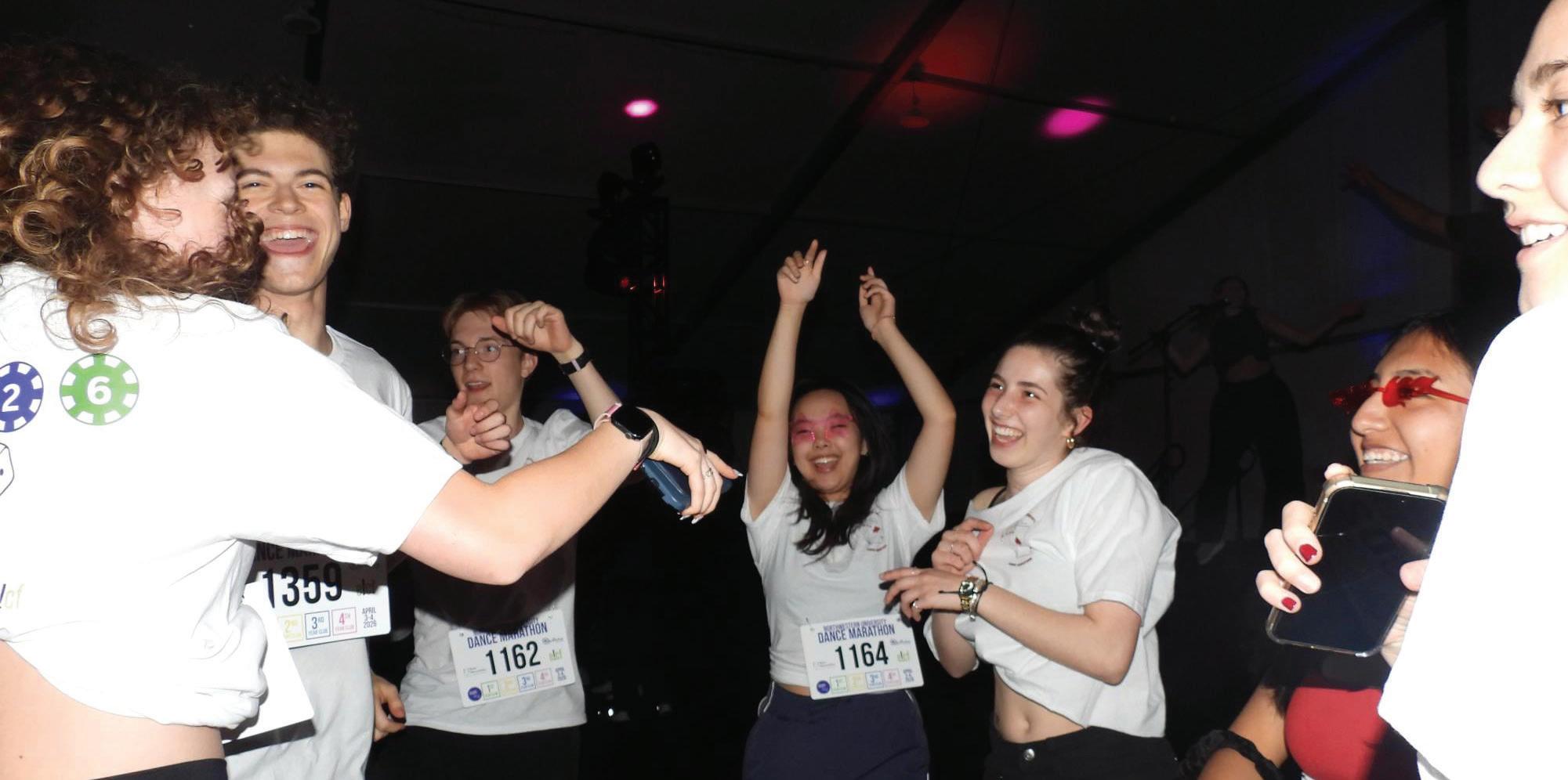
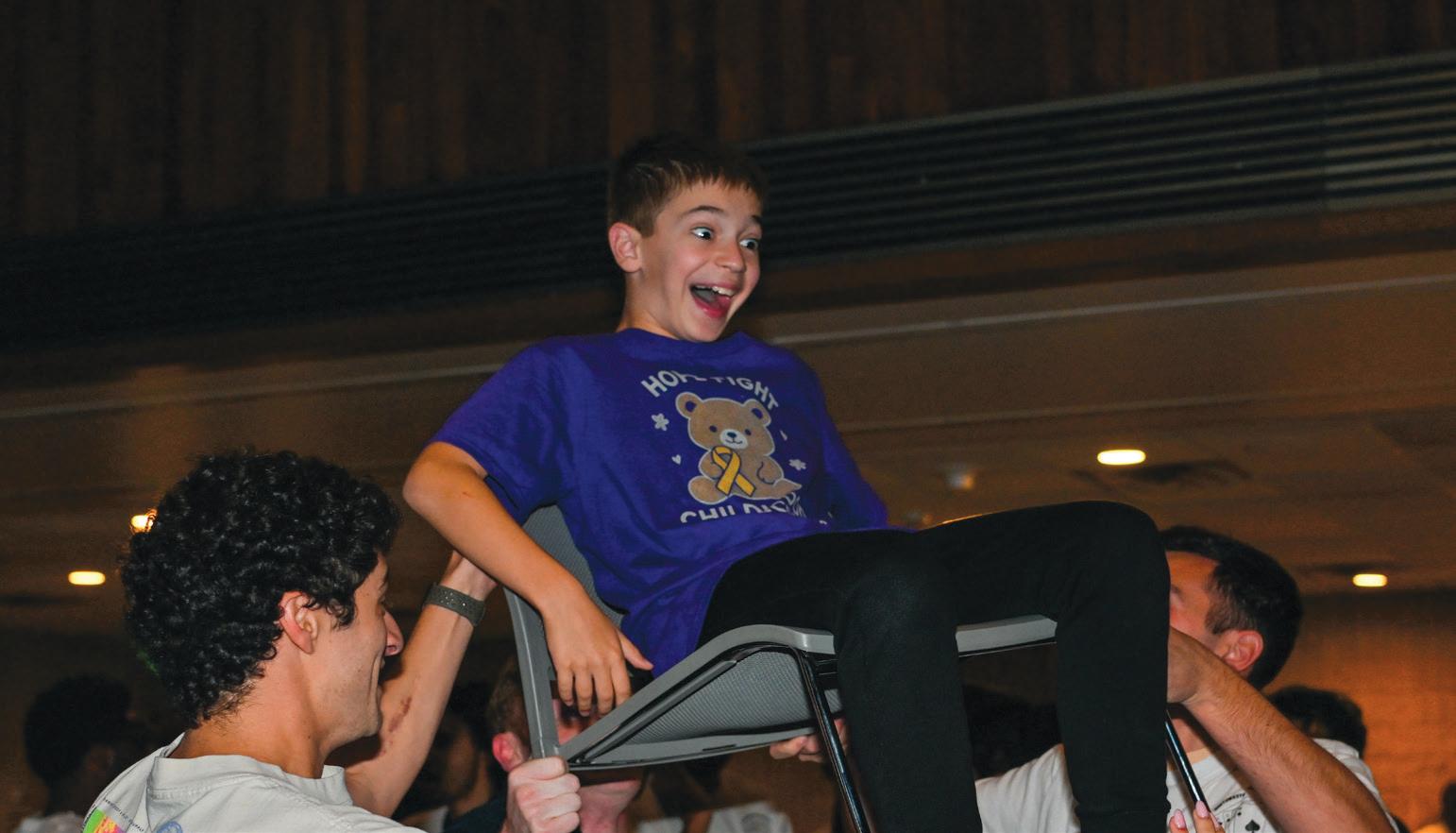
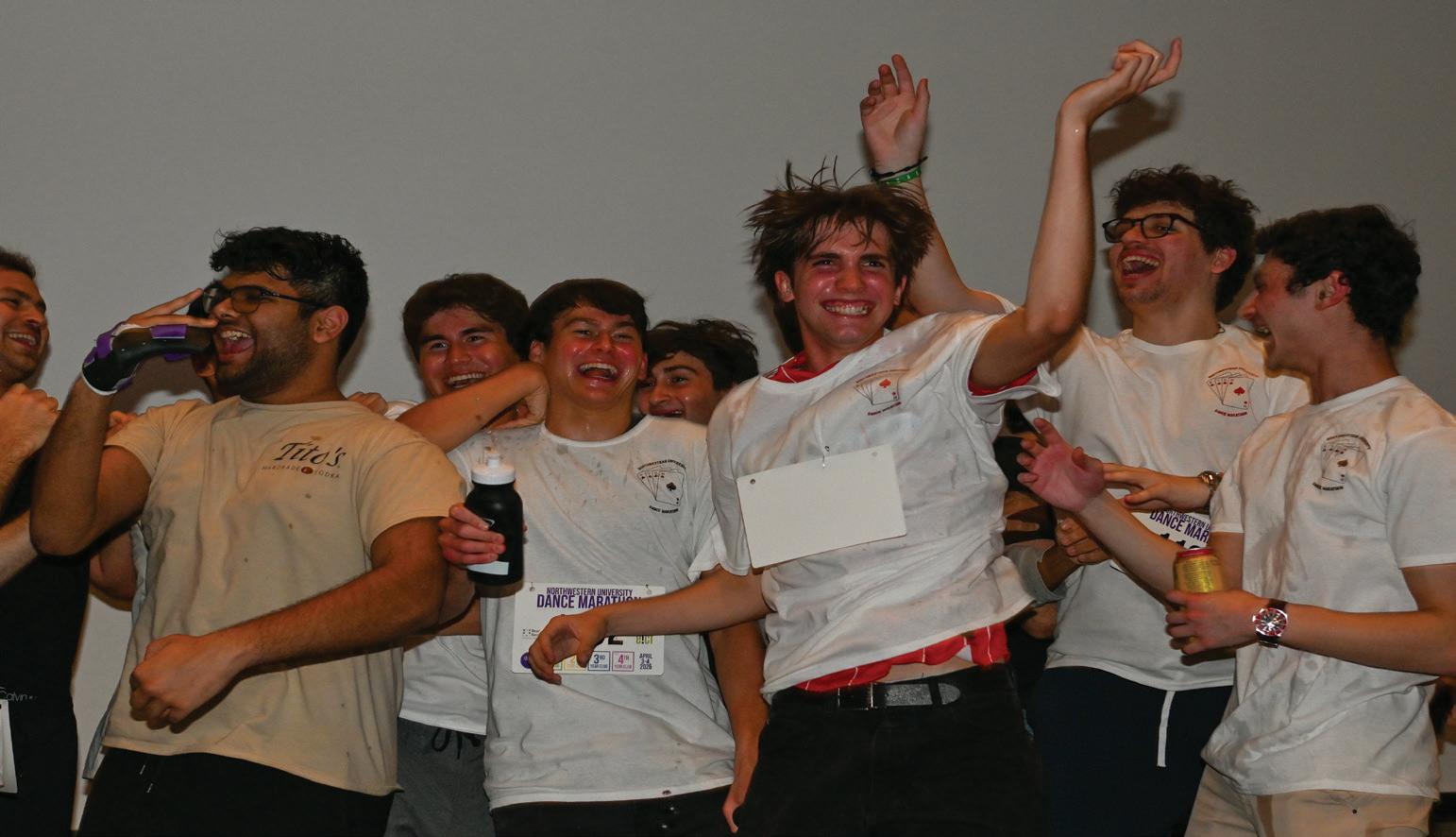
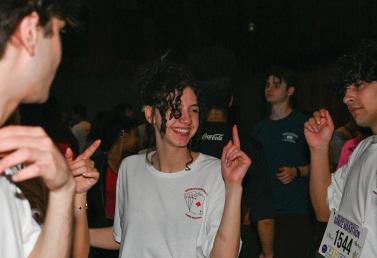
Backed by technicolor lights and the sound of classics like “Pump It” by the Black Eyed Peas, community members packed into a large tent on Norris University Center’s Cohen Lawn on Friday night, jumping shoulder to shoulder to kick o the annual Northwestern University Dance Marathon.
Less than an hour into the event, stormy conditions forced NUDM to relocate to Norris’ Louis Room. By sunrise Saturday, participants had moved back to the tent and worked through weariness and lack of sleep to dance their way to the 15-hour mark.
A er being hosted at WelshRyan Arena for two years due to construction at Norris, the 52nd NUDM returned to its original location, continuing a tradition of music, dance and charity by raising $218,774 for the Bear Necessities Pediatric Cancer Foundation and the Evanston Community Foundation.
Emceed by Weinberg senior Talia Squarer and Medill senior
Hosted by the Northwestern Network for Collaborative Intelligence, the panel featured Sean Mooney, director of the Center for Information Technology at the National Institutes of Health, Abel Kho, NNCI co-director and NU Institute for AI in Medicine director, and Joe Paris, associate vice president of NU’s IT Services and Support. e session was moderated by Feinberg Prof. Kristi Holmes.
“We need to be very careful about how we change human processes using technologies like AI,” Mooney said.
While most current arti cial intelligence training a empts to replicate human practices, Mooney said he hopes to see more AI developments aimed to complement rather than replace.
Paris said the “biggest challenge and opportunity” with AI is its rapidly evolving landscape.
“NU is interdisciplinary and what we’ve consistently seen is a desire to work across di erent disciplines and skillsets to solve problems,” Paris said.
e NNCI is working on a number of initiatives to promote interdisciplinary AI research such as e Forge and AI + X. ese programs aim to bring students, faculty and outside partners together to be er understand AI system applications, Paris said.
While Kho acknowledged the ongoing uncertainty surrounding government grants to universities and other research institutions, he said the opportunities for collaboration “have never been be er.” He said he sees students as one of the largest potential groups of innovators.
“As a university, we need to do more to ensure students are engaged and bring ideas forward,” Kho said.
s.feldman@dailynorthwestern.com
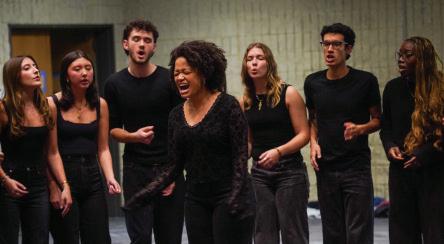
Tobias Khabie, the evening was interspersed with performances from student groups like unk
A Cappella and Purple Haze, and games like Four Corners.
For students like McCormick rst-year Cerys Hudson, who said NUDM was one of the reasons she applied to NU, the event was a way to have fun with friends despite their busy schedules.
“I was like, guys, it’s (the) rst week of NU,” Hudson said. “We
need to dance. We need to have fun for our last quarter of freshman year. And everyone showed up.”
For others, NUDM serves as both a celebration and a pathway into campus involvement.
Weinberg first-year and NUDM member Nyah Adiedo was drawn to the organization for its scale and its charity work.
“I did a similar club in high school which was focused on cancer research, and I thought
that this would be a good way for me to get involved,” Adiedo said. “It’s such a big community, and it gave me the chance to know people in all levels of the school.” Behind the scenes, NUDM leaders followed a six-page, minute-by-minute schedule that accounted for every performance and transition throughout the 15-hour period.
oliviama2025@u.north-
» See MAYOR REACTIONS , page 15
Illustration by Siri Reddy
Planned Central Street townhouses scaled back
By JOSIE BELFER reporter
Last month, Evanston’s Land Use Commission rejected a plan for Bent Park Homes, a townhome development on Central Street, citing concerns from residents and commissioners about lot crowding, the excessive footprint of attached garages and a lack of green space.
Developers are now planning to proceed with a modified version of the townhome project in the coming weeks, which they say was re-designed with residents’ concerns in mind.
The updated Bent Park Homes proposal will include 10 units rather than 11 and a “lower profile design,” according to Scott Siegal, a member of the Bent Park Homes’ development team. Siegal said he believes the new plan will be completed within the next few weeks.
“The Land Use meeting was very helpful for us,” Siegal said. “Our client has taken the neighborhood residents’ and committee’s feedback into account in modifying the floor plan, overall look of the building and unit count.”
The lot under consideration has been vacant since 2018, when the previous multi-family development on the site was demolished in anticipation of a redevelopment.
Bent Park Homes submitted three major variance requests, which are necessary when properties wish to deviate from the city’s zoning regulations in their proposals.
The variance requests included allowing for 3-story buildings instead of 2.5-story buildings, 59.4% building lot coverage rather than the maximum of 55% lot coverage, and a maximum 66.7% coverage of the backyard by garages rather than the city’s allowed 40%.
Siegal said the revised plan will address concerns about unequal garage space by including two-car garages in all units. He also said the developers plan to address neighbors’ concerns about water runoff into an alley adjacent to the property by repaving the alley and installing new speed bumps.
“We are going to deliver something that looks a lot lighter on the site,” Siegal said. “I can say without a doubt that everything that was raised has been heard and incorporated into the modification.”
Evanston resident James Gathii, who lives on the street directly behind the property, expressed concern about water runoff into the alley.
“We are not opposed to someone using their property,” Gathii said. “The objections we had were to the very major variations they were seeking, both on the lot coverage and the rear yard coverage, because they would mean that the entire property would be covered in concrete.”
When he heard the Land Use Commission was meeting to consider the development, Gathii said he started looking at the plans more closely when “red flags” arose.
Gathii said his concerns were primarily about the project’s lack of adherence to the city’s green space guidelines and rules.
“If they want to build townhouses, they have to be done within zoning rules, rather than outside the
zoning rules,” Gathii said. “This one’s really crammed and very close together with adjoining walls. It’s pretty aggressive.”
Gathii also said he was worried about the potential road safety issues from the new garages on the property and how that could affect his daughter, who walks to school. He said his daughter would have to be careful of cars both when crossing Central Street and when walking in front of the alley next to the new property.
Jeff Smith, the president of the Central Street Neighbors Association, said the developers could achieve what they wanted within the existing zoning rules.
He added not all residents who opposed the project were part of the “Not-in-my-backyard” movement, where residents disagree with local development.
“You’ll hear the acronym ‘NIMBY’ thrown around,
but front yards and backyards are legitimate concerns for most people in America because their house is going to be the largest single investment they have,” Smith said. “Most folks aren’t multimillionaires, and so if you lose 10% of your property value, that’s a lot.” Smith said that for many residents, concerns about development are deeply personal and have to do with the overall perceived identity of their neighborhood.
“A street or a neighborhood is more than just a thoroughfare in Evanston,” Smith said. “It’s an ecosystem, and the needs and feelings and sensitivities of the people who live there have to be taken into account.”
Something for people to actually see each other.”
j.belfer@dailynorthwestern.com
Illustration by Raine Wang
The new rendering of the development includes 10 rather than 11 homes.
ON CAMPUS
Passover brings Seders, gatherings
By DESIREE LUO campus editor
For many Jewish students at Northwestern, Passover evokes memories of home.
From sundown on April 1 to April 9 this year, the holiday commemorates the Jews’ exodus from Egyptian slavery more than 3,000 years ago.
“It was always a really nice time for my family because so much is centered around the meal and being in a home together,” Weinberg sophomore Ha ie Saal said.
e Seder, a ritual dinner with songs and readings usually held on the rst two nights of Passover, traditionally initiates the celebration. NU Hillel hosted Seders on Wednesday and ursday.
Beyond the two evenings, Hillel’s Passover programming runs every day of the holiday, including daily kosher for Passover lunches and dinners, a kosher for Passover Shabbat dinner and a screening of the lm “ e Prince of Egypt.”
“It’s actually the time when the most amount of Jews are in this building at a given time in the
academic calendar,” Bienen senior and Hillel Vice President Jeremy Berkun said.
Saal a ended Hillel Seders on the rst two nights of Passover. She said she went not only to keep kosher and receive free meals but also to meet other Jewish community members.
Both nights featured traditional songs and readings similar to the ones Saal said she recites when she celebrates with her family.
“It felt similar to being back home,” she said.
Saal said her favorite Seder rituals include singing the traditional song “Dayenu” and reciting “Ma Nishtana,” where the youngest person at the table asks four questions to prompt the telling of aspects of the Passover story.
As the youngest child in his family, Weinberg junior Benjamin Barrish said “Ma Nishtana” is also one of his favorite Passover traditions.
Barrish added that he doesn’t mind when Passover evenings run long.
“You get tired, but part of it is just ge ing the goo ness of it all,” he said.
Because he lives just 30 minutes away from campus, Barrish said he went home for a Seder with his
family. His family’s Seder menu included brisket, ge lte sh, quinoa and vegetables, he said.
Like Barrish and Saal, Berkun also said he most enjoys celebrating Passover at home. But since coming to college, he’s celebrated Passover with di erent groups on campus. He’s even hosted several Seders.
Berkun still remembers a Seder he helped host for Jewish a cappella group ShireiNU a few years ago. He and his groupmates gathered at a member’s house, where they cooked rotisserie chicken and played piano.
is year, he helped host a Hillel Seder open to seniors. With about 25 a endees, Berkun said it was an “intimate” meal with “singing, good wine and good company.”
For Berkun, the dinner represented a culmination of his time at Hillel and NU.
“Passover is a beautiful holiday about journey, about traveling,” he said. “And to be in college is to constantly be thinking about what the next step in life is and where we’re going to go next.”
d.luo@dailynorthwestern.com
The Daily Northwestern www.dailynorthwestern.com
Editor in Chief Anavi Prakash eic@dailynorthwestern.com
General Manager Stacia Campbell stacia@dailynorthwestern.com
Holly and John Madigan Newsroom
Phone | 847.491.3222
Campus Desk campus@dailynorthwestern.com
City Desk city@dailynorthwestern.com
Sports Desk sports@dailynorthwestern.com
Ad Office | 847.491.7206 spc-compshop@northwestern.edu
THE DAILY NORTHWESTERN is printed each Wednesday during the academic year, except vacation periods, the two weeks preceding them and once during August, by Students Publishing Co., Inc. of Northwestern University, 1999 Campus Drive, Evanston, IL 60208. All news is published 24/7 online at Dailynorthwestern.com.
First copy of THE DAILY is free, additional copies are 50 cents. All material published herein, except advertising or where indicated otherwise, is Copyright 2025 THE DAILY NORTHWESTERN and protected under the “work made for hire” and “periodical publication” clauses of copyright law.
POSTMASTER: Send address changes to THE DAILY NORTHWESTERN, 1999 Campus Drive, Evanston, IL 60208. Subscriptions are $100 for the academic year. THE DAILY NORTHWESTERN is not responsible for more than one incorrect ad insertion.
Daily file photo by Cayla Labgold-Carroll
The Seder is a traditional dinner with songs and readings usually held on the first two nights of Passover.
A timeline of how Iran’s retaliatory strikes impacted NU-Q
By ASHLEY WEI polling editor
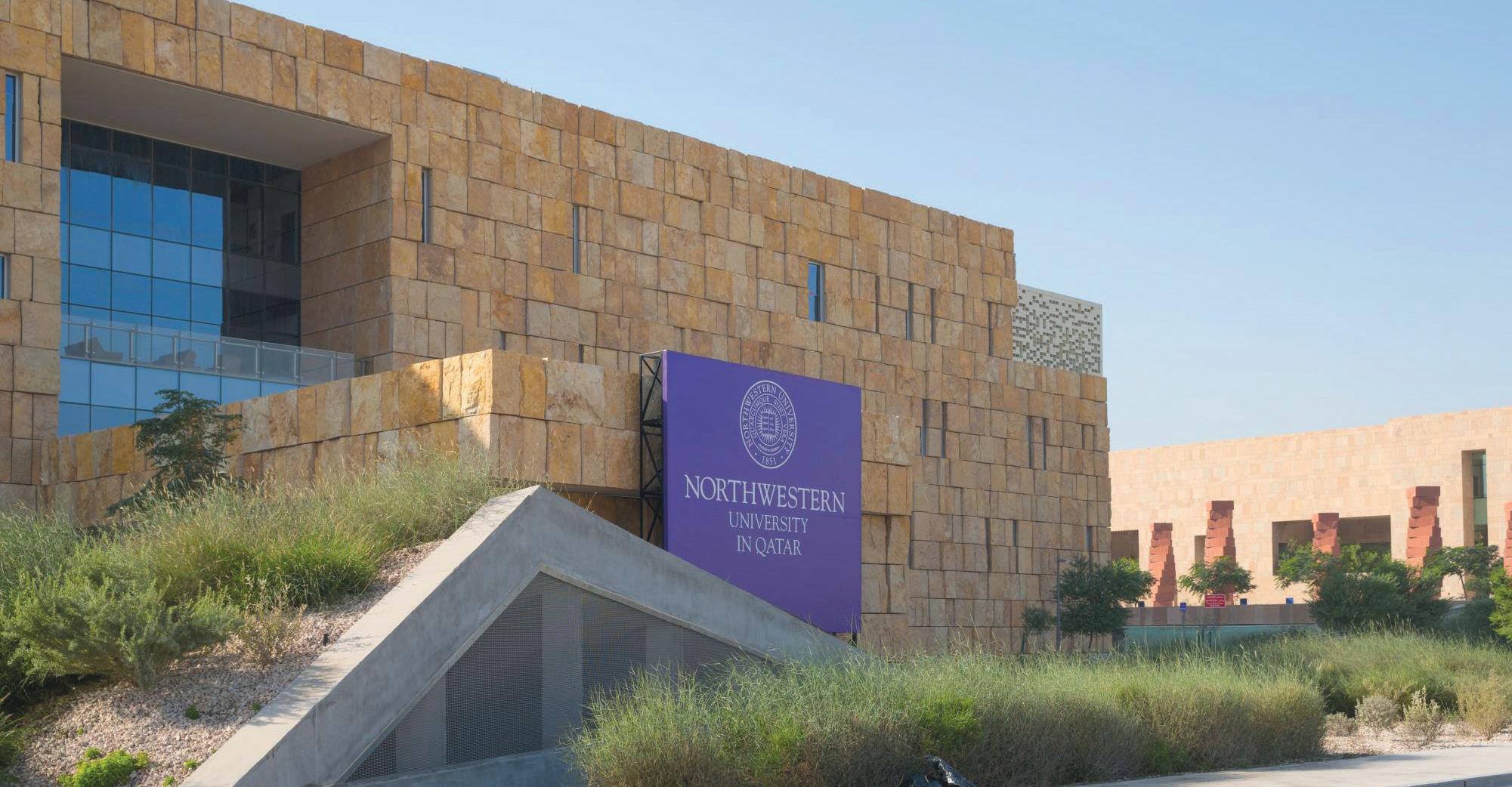
About 16 miles from Northwestern University in Qatar, Iran’s retaliatory strikes on Feb. 28 hit the U.S. Al Udeid Air Base among other U.S. military bases across Gulf Arab states.
The strikes followed the U.S. and Israel’s jointmilitary operation that targeted several cities in Iran that day, The New York Times reported.
Under the leadership of NU-Q Dean and CEO Marwan Kraidy, the campus has initiated safety measures since then, including shelter-in-place advisories, remote operations, assisted bus departures and financial assistance for student evacuations.
Interim President Henry Bienen wrote in a Feb. 28 email to the NU-Q community that Evanston campus leadership was in continuous communication with NU-Q leaders.
“We have been in close contact with NU-Q leaders throughout the day to ensure we clearly understand the situation in Doha as well as the welfare of our students, faculty and staff,” Bienen wrote.
Bienen oversaw the founding of NU-Q in 2009, the last year of his term as president.
On March 4, Bienen reaffirmed that NU leadership is in “around-the-clock contact” with NU-Q leaders in his first and only email to NU’s Evanston and Chicago community.
NU-Q responds to preliminary retaliatory strikes
The Feb. 28 retaliatory strikes unfolded as students returned to NU-Q on the last day of Spring Break. Some students told The Daily they heard loud noises that morning. Others were unable to return to campus due to the Qatar airspace’s closure.
Throughout the day, the NU-Q community received a series of alerts and emails from NU-Q leadership and the Qatar government, beginning with an AlertNU-QATAR email that advised community members to “return home immediately and remain indoors.”
NU-Q transitions to remote learning for the rest of the quarter
NU is one of six U.S. universities with a satellite campus in Education City. The Doha-based hub is sponsored by the government-backed Qatar
Foundation.
Although the Qatar government has cleared educational institutions for in-person learning, all six U.S. universities in Education City have transitioned to remote operations for the rest of the semester.
Kraidy first announced a move to remote operations on Feb. 28. Escalating safety measures and logistical adjustments accompanied the transition to remote operations.
Health, Safety, Security and Environment Director Michael McDonough sent out a community checkin form on March 8 to assess interest in Universityprovided relocation measures.
NU-Q community undergoes evacuations and returns, assisted departures
On March 11, NU-Q planned to conduct its first assisted bus departure to Riyadh, Saudi Arabia for
“faculty, staff, international students, spouses and dependents,” McDonough wrote in a March 9 email. Travelers then needed to arrange their own flights out of Riyadh, the email stated.
Qatar’s airspace remained closed at the time of the first bus departure. Community members interested in limited commercial and repatriation flights offered by Qatar Airways arranged the transport independently of NU-Q, according to the email.
Some individuals left prior to the first bus departure through embassy-coordinated arrangements, McDonough wrote.
Students could apply for the Student Emergency and Essential Needs Fund to support departure from Qatar, according to the email. The fund can be claimed once per calendar year.
NU-Q has undergone multiple evacuations as precautionary measures. A March 29 temporary relocation followed Iran’s Islamic Revolutionary Guard
Corps labeling U.S. universities in the region “legitimate targets,” according to multiple media outlets. Evacuated students returned to campus March 31.
As of April 1, the number of flights to and from Doha were gradually increasing, according to a Qatar Airways travel alert.
Few students are currently staying in Education City as NU-Q remains remote until at least the end of the school year.
a.wei@dailynorthwestern.com
Scan this QR code to view the timelines of how NU-Q has responsed to retaliatory strikes in the region.
Photo courtesy of Northwestern University
Northwestern’s Qatar campus is about 16 miles away from Al Udeid Air Base, according to Google Maps.
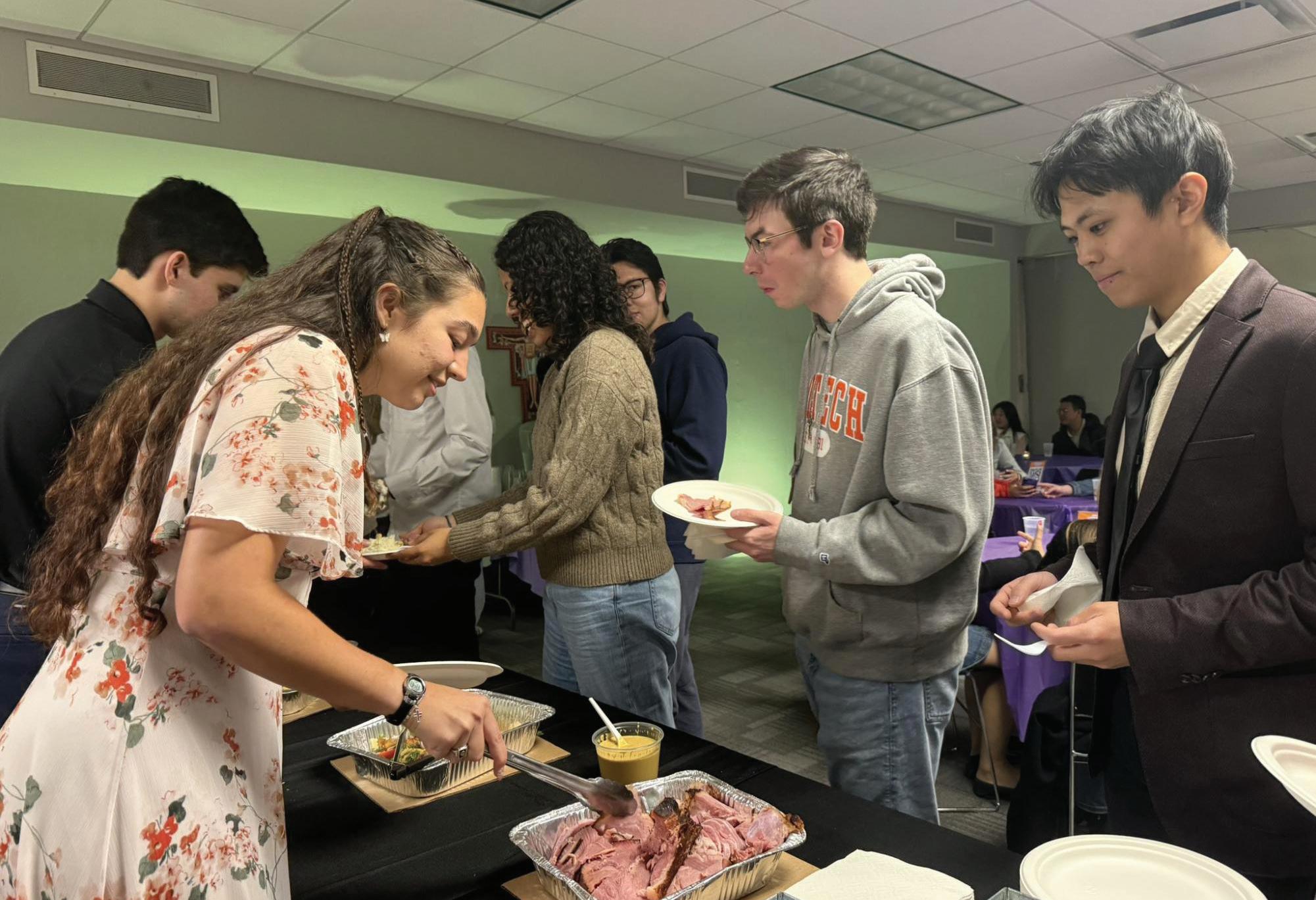
Northwestern students celebrate Easter on campus
By SASHA BAUMGARTNER and SUMMER HU the daily northwestern
On Sunday, McCormick junior Kate Manion celebrated her first Easter away from her family.
Although she said she was initially upset, Manion, a Catholic Students Association member, found another support system: her “Sheil family,” referencing her friends at Northwestern’s Sheil Catholic Center.
For Manion and other Northwestern students, Easter Sunday marked the end of Holy Week, which began on Palm Sunday on March 29. Easter, a Christian holiday, celebrates the resurrection of Jesus Christ.
“It’s really a way we renew our baptismal vows after Mass,” Weinberg senior Nicolas Stanciu said. “It’s the way to renew our belief in the faith and our commitment to it.”
Students shared a meal hosted by the CaSA, following a Communion service at Sheil. Several Christian campus groups, including Cru at NU and NU Ignite, also collaborated to host an all-campus Easter Worship Night open to community members regardless of background.
With some students spending the holiday away from home and their families, event attendees expressed their gratitude for the NU religious community.
Communication junior Audrey Sy said, although faith was a large part of her life growing up in the Philippines, she had been “lackluster in my church-going days at NU.” On Sunday, Sy said she wanted to ensure she celebrated Easter.
“It was really important for me to come just because I feel like my faith has grown a lot in the last year and a half,” Sy said.
At the all-campus worship service, students sang hymns and had time for personal prayer. There were also several group prayers and scripture readings.
Weinberg senior Samantha Serban said she had never been to any campus religious events before Sunday’s Easter Worship Night. She said she typically spends Easter with family.
“I honestly just wanted a community to celebrate with,” Serban said.
Stanciu said he’s found acceptance in the Sheil’s Order of Catholic Initiation for Adults, a program for students to learn more about Catholicism and the larger NU religious community.
Going to Mass and Sheil events in college, especially as a first-year, requires a lot of discipline without a family nearby to go with, Stanciu said.
“You’re continuing your commitment to the faith by showing up, by coming for Easter and by making community with everyone else here,” he said.
McCormick senior Santiago Rodriguez said he celebrated Easter this year by calling his family
and going to church in the morning, in addition to attending the CaSA dinner.
Being alone tests a person’s faith, Rodriguez said.
“When you’re on your own, which eventually will happen, I think that’s when you choose whether or not you’ll continue going and reaffirm your belief,” he said.
Weinberg junior Annika Rachmat said that because she did not celebrate Easter with her family this year, she instead celebrated Easter with friends over brunch.
Still, the holiday served as a reminder of home for Rachmat.
“Even though we weren’t physically in the same space, knowing that they were celebrating the day before and I was celebrating the next day made me feel very close to them,” Rachmat said.
s.baumgartner@dailynorthwestern.com
s.hu@dailynorthwestern.com
Photo courtesy of Northwestern University
The Catholic Student Association hosted an Easter dinner at Sheil Catholic Center to celebrate on campus.
A&E
BLAST takes the stage for Spring Showcase
By INA CHOE assistant solutions editor
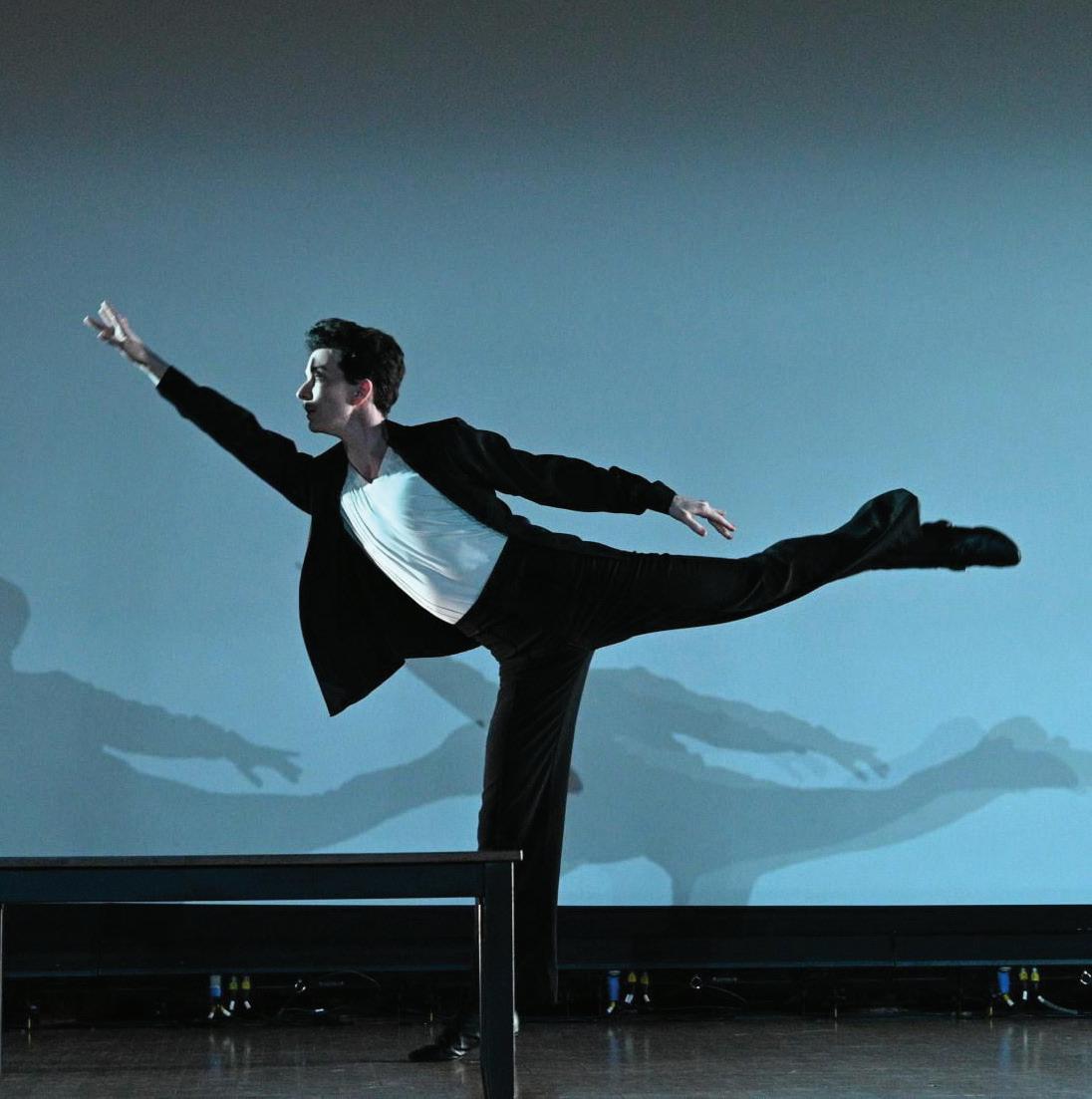
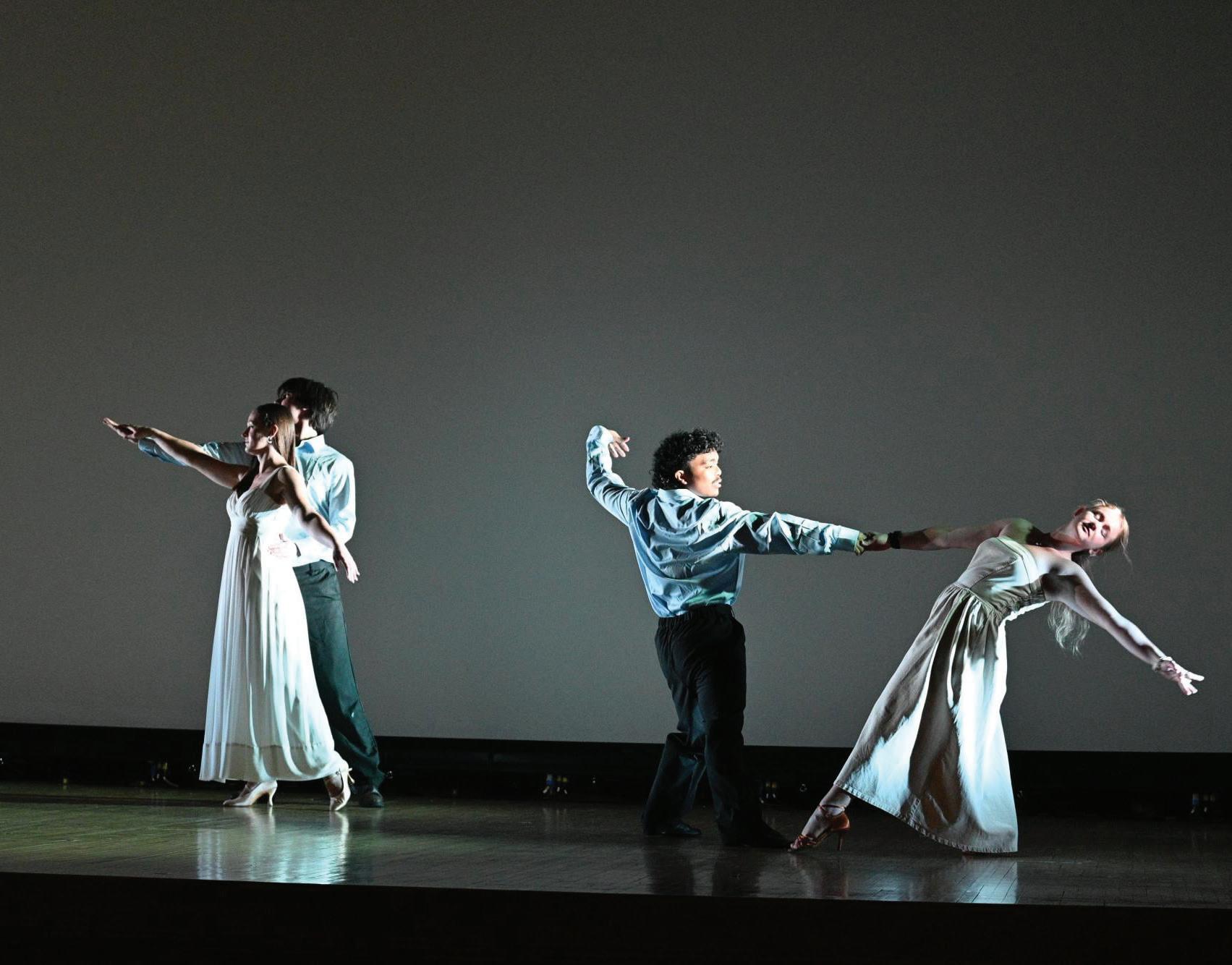
Flowy dresses, flashing lights and cheers filled Ryan Family Auditorium on Friday and Saturday night. Northwestern’s Ballroom, Latin, and Swing Team held its annual Spring Showcase, featuring 13 pieces and three guest performances.
“BLAST Takes the Stage” was the showcase’s theme, inspired by the theatrical choreography in many of the pieces that members submitted, said show producer and fifth-year Ph.D. candidate in chemistry Alice Li.
The opening number, “On Broadway,” and closing number, “Fantasmic,” brought the entire cast onstage. The theme of dancers “taking the stage” was enhanced with changing lights and
colorful backdrops throughout the performance, Li said.
“Usually when we do ballroom dance, we don’t have the fancy lights, so this is our chance to do a choreographic piece and create a vision,” she said. The showcase included three guest performances from NuTango, a student-run Argentine Tango club, Lena and Arkady Dudko, a local 10-dance couple, and NU K-Dance, a student-led K-pop dance group.
The 16 pieces featured a wide range of styles, such as rumba, cha cha, Viennese waltz, salsa and jive. The dancers conveyed different emotions for each piece, from energetic to playful to melancholy.
As a barrier-free club, there were pieces for both beginner and advanced ballroom dancers, according to Weinberg junior Tolu Ogunbomehin, BLAST’s competition coordinator.
“We try to have a good range of different styles, from Latin to standard to smooth to rhythm and other styles, and then we also have a mixture of different levels,” she said. “We have a lot of new members this year, so we have a lot more beginner-friendly dances this year too.”
Many of the performances used mixes of popular songs, such as Pitbull’s “Timber,” Sabrina Carpenter’s “Espresso” and Chappell Roan’s “Good Luck, Babe!” The piece “Vacation” played on the theatrical theme, where three dancers danced to a song from the movie “Alvin and the Chipmunks: Chipwrecked,” taking on the role of the Chipettes.
BLAST members choreographed all pieces other than the guest performances, which was a unique opportunity for many to advance their knowledge and skills in ballroom dancing, said
Junior Newcomer Captain and first-year Doctor of Audiology student Jenya Evdokimenko. Evdokimenko, who choreographed two pieces in the show, said she wanted to showcase different styles of ballroom dancing. She added that she also hoped to have moments of interaction with the audience with the “Luck to go” piece, where audience members danced to “HOT TO GO!” along with the dancers.
“With BLAST, I really like that we have opportunities to participate in ballroom competitions that are usually, in the real world, so expensive, especially for students,” Evdokimenko said. “They’re all just very amazing and beautiful human beings, and I connect with them so much. We have such a great community, very supportive.”
i.choe@dailynorthwestern.com
NU Community Ensemble marks 55th anniversary
By TAARIQ AHMED reporter
Donned in purple and white, members of the Northwestern Community Ensemble performed songs alongside Grammy-winning gospel singer and songwriter Jekalyn Carr at their 55th anniversary event Easter Sunday in Cahn Auditorium.
Communication Prof. Kent Brooks, NCE’s faculty adviser, framed the show as “a worship experience,” not just a concert. He invited attendees to participate by standing up and physically engaging with the music.
“This choir was started as an act of resistance. That’s something to celebrate,” Brooks said. “In the beginning, this choir wasn’t even recognized as a registered student organization, and it took some time. For those who don’t know the history, they couldn’t even have rehearsals on campus. But look at God, 55 years later and here we are. Amen.”
The choir sang numerous religious songs for the occasion, like “Total Praise” by Richard Smallwood, “Don’t Cry” by Kirk Franklin and “Send The Rain” by William McDowell. The audience — filled with NCE alumni — sang along to lyrics projected onto a screen behind the ensemble.
Second-year Master of Divinity student Medomfo Owusu, the NCE chaplain, joined the choir shortly after moving to the U.S. She said she hoped to bond with people her age who enjoy gospel and share a passion for faith through music.
Owusu added that it was special to see attendees resonate with different kinds of music, from
songs that were more Easter-related to those that reflected more traditional gospel music.
“It was an answer to prayer,” she said. “I had been praying over the week that the place would be packed, sending flyers out to friends at my seminary and friends at church and other people that were nearby.”
Carr, the special guest artist of the show, led the audience in several hits of hers, including “You’re Bigger” and “It’s Yours.” In a shiny silver dress adorned with flowers, Carr enthusiastically hit poses and strutted across the stage — and even ventured into the crowd at one point.
Owusu said Carr lifted ensemble members up with a spirit of encouragement to stay lively and active in their performances.
“She really wanted us to tap into our youthful energy,” Owusu said. “She’s in her 20s herself, and a lot of us are in our late teens and early 20s, so we can sing and act like we’re young even though it’s been a long day and even though we’re busy students and just have some energy for worshiping the Lord.”
NCE alumni and attendee Sharon Miles (Communication MFA ’25) said the group was “a rock” to her last school year when she was wrapping up her degree, and that was why she came to the event — and will continue to attend as many as she can.
While she was previously unfamiliar with Carr, Miles said she was happy to have been introduced to the singer’s personality and music.
“Her message specifically about believing that God is with you through the good times and dark times was very relevant for this
moment,” Miles said. “We all feel that with the weight of so many things that are happening, so to be in this space and to be reminded that God is with you through that was a really important message that broke through the crowd tonight.”
r.ahmed@dailynorthwestern.com
Scan this QR code to listen to an audio version of reporter Addis Belay’s coverage of the Community Ensemble performance.
Taariq Ahmed/The Daily Northwestern Northwestern Community Ensemble performed and worshipped at its event titled “Raised to Praise.”
Thomas Hurley/The Daily Northwestern
Ina Choe/The Daily Northwestern
‘The Drama’ is awkward yet morbidly engaging
By BIANCA DISHMON and SIRI REDDY daily senior staffers
Content warning: This review contains mentions of gun violence.
This review contains spoilers.
“What’s the worst thing you’ve ever done?”
That’s the question at the center of “The Drama,” A24’s newest film released Friday. The movie, directed by Norwegian filmmaker Kristoffer Borgli, stars Zendaya and Robert Pattinson as picture-perfect lovebirds Emma and Charlie.
Throughout its buzzy press tour, “The Drama” marketed itself as a wedding rom-comdrama. At face value, it is — the film follows Charlie and Emma in the days leading up to their wedding, from rehearsing their first dance to picking out florals.
The couple appears idyllic for the first half hour of the movie. She’s a literary editor; he’s a museum curator. They share an impeccably curated apartment with floor-to-ceiling bookcases, a spiral staircase and kitschy art on every wall. They have a perfect meet-cute, a flawless sex life and banter to fuel endless self-insert daydreams.
At a tasting for the wedding dinner, Emma’s maid of honor Rachel (Alana Haim) goads the couple to reveal their worst misdeeds to one another before the wedding. While Charlie is up to the challenge, a wine-drunk Emma is more hesitant.
It’s only after much prying from the table that Emma finally reveals her secret: at 15, she
planned to commit a school shooting.
The couple spends the rest of the film’s nearly two-hour run time grappling with the weight of Emma’s reveal, with a distraught Charlie constantly wavering between forgiveness and horror. It’s clear what wants “The Drama” to convey: how conditional is unconditional love? What mistakes should we forgive the ones we love for?
the film’s subject matter.
This, paired with the twist’s omission from the trailer and use as a plot device for shock value, depreciates the impact school shootings have had, and continue to have, on many
The entire film is rife with dark, often absurd, humor aiming to challenge the morals of the audience.
But given the frequency of school shootings in the U.S., the topic deserved much more care and attention than it was given.
To make matters worse, the glitziness of Zendaya and Pattison’s press tour, featuring quickie Las Vegas weddings and themed red carpet looks, felt jarring when contrasted with the heaviness of
trayal has been critiqued by parents gun violence and concerned
contributing to the
lack of severity that school shootings receive in the media.
The film attempts some commentary on the complicated relationship between American
culture and guns and the nation’s collective desensitization towards mass shootings. That being said, nearly every mention of the issue after its introduction is presented humorously — like a young Emma running into technological difficulties while filming her manifesto video, or the wedding photographer repeating the word “shoot” to the mortified couple. The audience at our screening found both of these scenes, and the majority of the other poor-taste moments, deeply amusing. For what it’s worth, it is almost impossible not to laugh at the film’s absurdity, but its humor remains uncomfortable when confronted with the reality of how frequent school shootings are in
By JAMES FRAZIER-WILSON reporter
A troupe of improvisational comedians and a competitive a cappella team might not seem like the most natural collaborators. But The Bix, Northwestern’s musical improv group, and Freshman Fifteen, a student a cappella group known for its goofy, interactive performances, proved to be a perfect pairing.
The two groups performed their show “Shirts vs. Skins” together Saturday night. The event was equal parts song and comedy, with many of both groups’ performers getting their moment to shine during the show’s antic-filled 90-minutes.
The union made perfect sense as soon as they took the stage. Although the members of each group were identified by drastically different outfits, little else separated them as both matched the other’s free-flowing vibe
and enthusiasm perfectly.
The show began with Freshman Fifteen, decked out in the group’s trademark unbuttoned, bright green bowling shirts, and crammed onto the stage of Harris Hall 107.
A spirited rendition of CeeLo Green’s “F–k You,” followed, performed by Communication first-year Lily Zebrauskas.
The song’s peppy lyrics and animated delivery set a lighthearted tone, which would continue for the rest of the performance.
Although F15 recently performed the entire setlist, the audience welcomed the repetition, cheering the names of Zebrauskas as well as the later soloists: Communication senior Poseybelle Stoeffler, McCormick first-year Quinn Guerra, Communication junior Patrick Howard and Communication sophomore Eloise Nelson.
In return for their enthusiasm, audience members were frequently called upon to shout out suggestions for the performers to
Despite its missteps, the film remains strikingly engaging from start to finish. Borgli knows how to catch and hold the audience’s attention: His smash-cuts are crisp, his pace is perfectly frenzied and he meticulously crafts each aspect of every shot to amplify the tension between his characters.
build scenes off of in the intermittent improv segments led by The Bix members.
The material often revelled in absurdity. Communication junior Louise Sims was tasked with singing about being in love with Bigfoot during the “Bar Bix” segment.
Communication sophomore Henry Carson pantomimed as the stuffed, mounted head of an elk.
The actors were frequently asked to stretch their comedic abilities during these amusingly unconventional segments, a difficult task exhibited especially well in the “Dating Game,” an exercise where three students must come up with a freestyle rap in the persona of well-known celebrities, characters and even objects.
True to the spirit of improv, every show is different — this time, Communication junior Rowan Sharma impersonated Ellen DeGeneres, Communication sophomore Tomi Fawehinmi rapped about the title character
‘The AI Doc’ shows balance but
By AMY L. WONG reporter
This review contains spoilers.
“The AI Doc: Or How I Became an Apocaloptimist,” which was released in theaters March 30, was advertised as “the most urgent film of our time.” While the powerful review convinced me to watch the documentary, it failed to live up to my expectations.
It is a mostly balanced discussion of humanity’s future amidst the prevalent use of artificial intelligence, but it still could have greatly benefited from more detailed information about AI risks.
Despite the film only being 1 hour and 44 minutes long, it tackles a long list of AI risks, including mental health, deepfakes, geopolitical tensions and power-seeking behavior. In large part because the documentary covered so many subtopics, I felt as though it was not able to explore each risk with specific cases that I didn’t previously know about.
Since I’ve done AI policy work in the past, I was already acquainted with a majority of the research and risks discussed in the film. While I might have been more informed than the target audience, I was still disappointed that I didn’t learn as much about the potential consequences of AI as I’d hoped.
Throughout the film, Daniel Roher, one of the documentary’s directors, asks questions about AI to experts and CEOs of AI companies such as OpenAI and Anthropic. The experts answer his questions, some solemn while others more optimistic.
One of Roher’s recurring questions is about whether the interviewee wants to have children.
“I know people who work on AI risk who don’t expect their kids to make it to high school,” Tristan Harris, co-founder of Center for Humane Technology, said.
Between shots of the various answers to Roher’s many questions, the film cuts to his own reactions.
Sometimes, he sits in disturbed silence. These pauses benefit the documentary, allowing the audience to process the experts’ answers. However, the long, repetitive silences began to feel slightly overdramatic to me.
Silence is also apparent in Roher’s interview with Sam Altman, the CEO of OpenAI, the company that owns ChatGPT. When Roher asks Altman about the future of AI, Altman takes a few moments of silence to process his thoughts.
Unlike other interview sections, the moments between Roher’s questions and Altman’s answers are not optimized for time. It was terrifying to see one of the most powerful people in AI be even slightly uncertain about difficult questions about the technology’s future. I felt it was deeply important for the director to include Altman’s hesitation.
Near the end of the documentary, Roher talks on the phone with his parents, during which they ask him about the film’s premise and its progress. He responds with a brief overview of the film and expresses uncertainty about where humanity is headed with AI.
“That’s what’s frustrating about it: no one knows,” Roher said.
Roher’s irritation is valid. It was comforting to know that someone else is as discontent as I am about the lack of answers in AI’s potential future and how governments could regulate it as its capabilities strengthen.
To Roher’s credit, I was thoroughly impressed by the variety of sources he interviewed. He spoke with AI researchers and professors from academic institutions such as Stanford University and University of California, Berkeley, an AI reporter and even the founder and president of Encode. Encode is a youth-led organization founded by Stanford senior Sneha Revanur that seeks to “fight to keep AI’s promise alive through nonpartisan policy action and public education,” according to its website.
With a wide range of perspectives, the documentary is able to deliver a more often
There’s also no denying that Pattinson and Zendaya are powerhouse actors with palpable chemistry, and their talent shines through in lighthearted and dismal moments alike.
Had the film chosen any other issue to center, it would be a masterfully crafted reflection on love, forgiveness and abject betrayal. As it is, “The Drama” feels like a waste — a perfect storm of talent, thrown away on an insensitive premise.
b.dishmon@dailynorthwestern.com
s.reddy@dailynorthwestern.com
The Bix, F15 pair perfectly in ‘Shirts vs. Skins’ show
of “Ma” from the much-memed 2019 thriller, and Guerra “slithered” into the role of a gummy worm.
The final game of the show was “Yearbook,” in which a cohort of Bix and F15 members portrayed members of a fictional high school extracurricular — in this case, the improbable “Taxidermy Club.” Although neither group actually committed to being the “skins” referenced in the title phrase, the show reflected the casual camaraderie and sense of collaboration often present in shirts-versus-skins sports competitions. At the end of the show, the combined members of both groups barely fit on the Harris stage for their bow. Their union, rather than diminishing both teams’ impact, highlighted and emphasized their respective strong suits, synthesizing a Saturday night packed with twice as many songs, laughs and memories. jameswilson2028@u.northwestern.edu
only scratches surface
than not balanced exploration of the promises and perils of AI. The tone of the film switches from disheartening to varying degrees of hope quite frequently. While watching the film, it felt appropriately disorienting and reflective of my internal debates.
Even though I didn’t love the documentary and wished it presented more information I wasn’t already aware of, I don’t regret watching it. I wouldn’t highly recommend the film, but I wouldn’t discourage anyone interested in AI from watching it either.
a.wong@dailynorthwestern.com
Illustration by Xuan Day Tran
“The AI Doc: Or How I Became an Apocaloptimist” discusses both apocalyptic and optimistic predictions for humanity’s future in the context of AI.
Illustration by Siri Reddy
IN PHOTOS
CAPTURED: NUDM dances on through storm
Northwestern’s 52nd annual Dance Marathon invited students to dance the night away on Friday and raise money for charity. This year’s funds went to the Bear Necessities Pediatric Cancer Foundation and the Evanston Community Foundation.
Less than an hour into the event, lightning forced NUDM to relocate to Norris University Center’s Louis Room. The location change didn’t prevent them from continuing the scheduled festivities, with a cappella performances and DJ STRFRY providing dance music well past midnight.
Cayla Labgold-Carroll/The Daily Northwestern
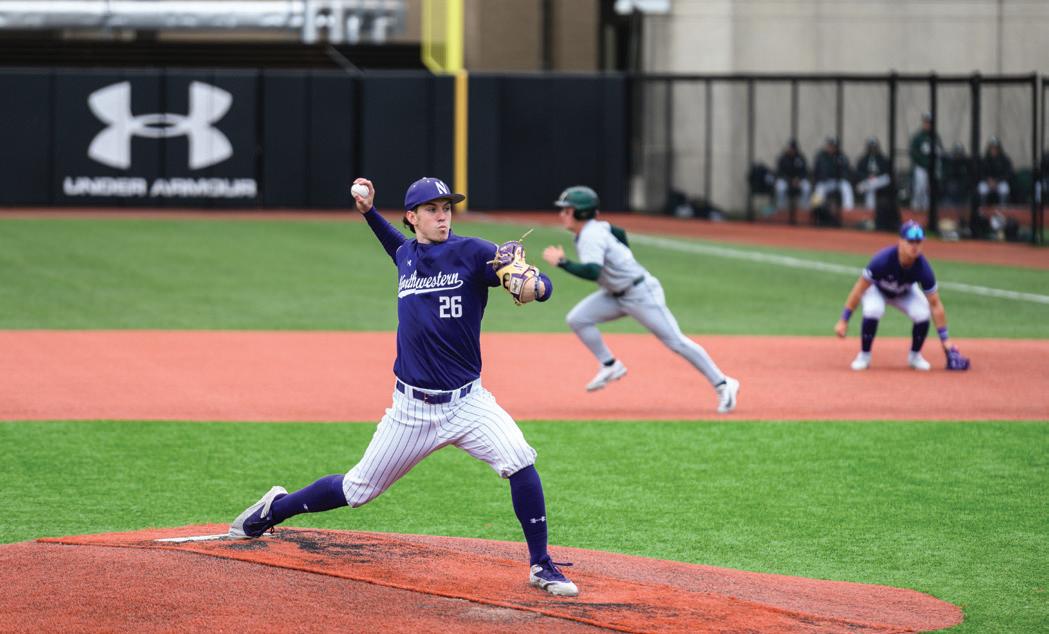
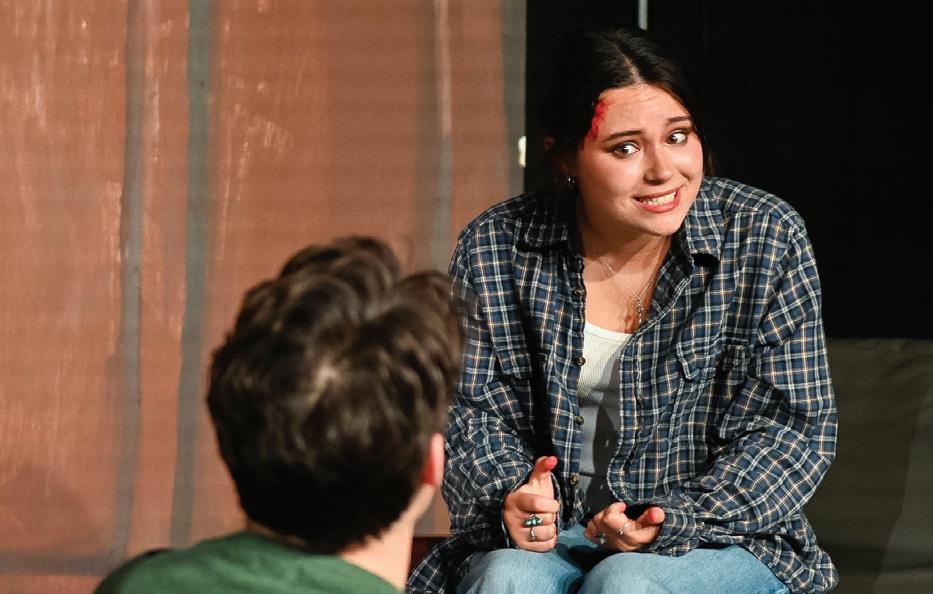
ON THE FIELD AROUND TOWN CENTER STAGE
Carter Nishi/The Daily Northwestern
Luke Meinhardt/The Daily Northwestern
Yong-Yu Huang/The Daily Northwestern
Yong-Yu Huang/The Daily Northwestern
Luke Meinhardt/The Daily Northwestern
Lydia Park/The Daily Northwestern
Ashley Dong/The Daily Northwestern
Ashley Dong/The Daily Northwestern
Ashley Dong/The Daily Northwestern
Ashley Dong/The Daily Northwestern
Lydia Park/The Daily Northwestern
Lydia Park/The Daily Northwestern
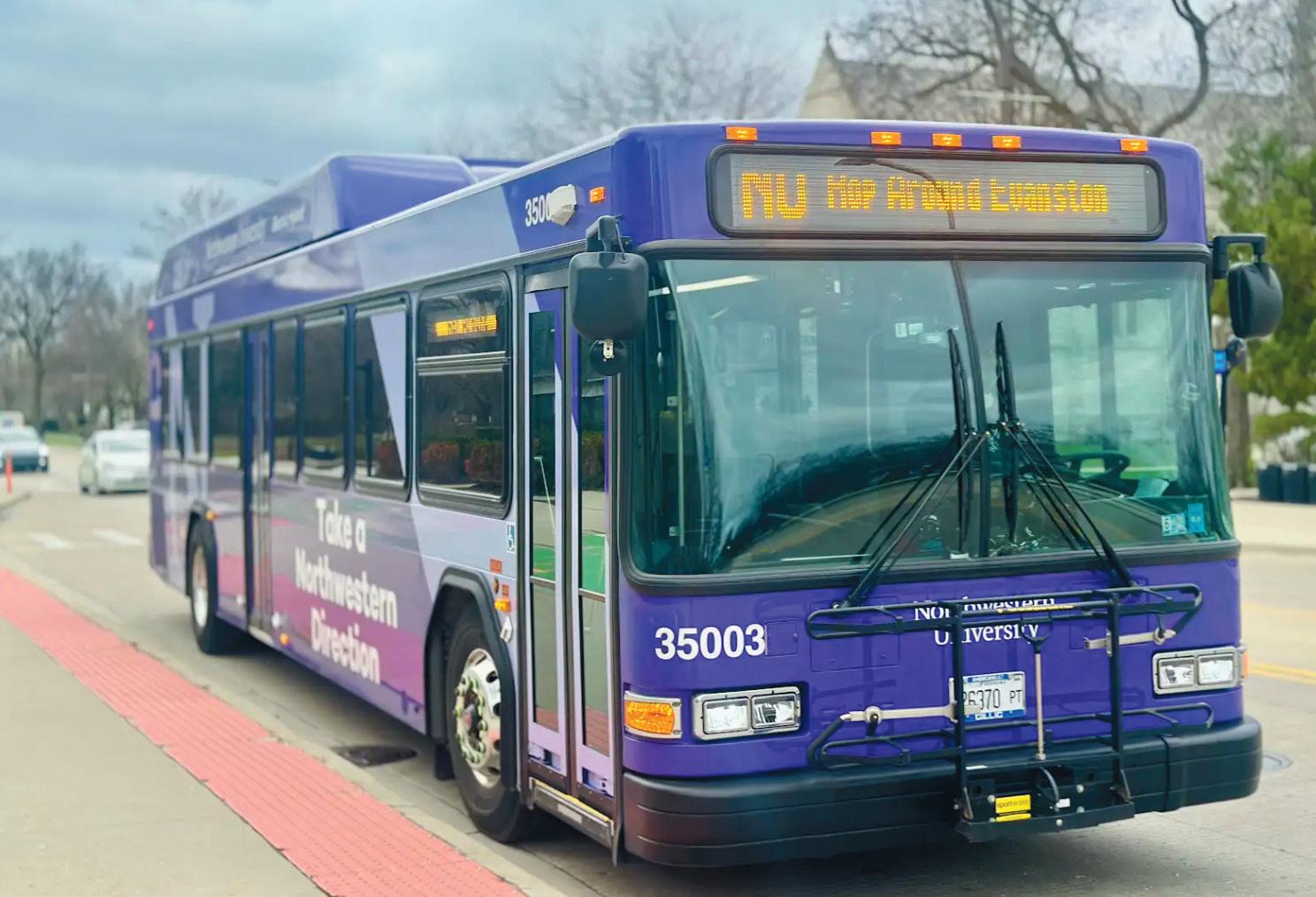
New Saturday-evening shuttle connects Evanston
By RUIXIN ZHANG assistant campus editor
Hop Around Evanston, a free shuttle service co-hosted by Northwestern Neighborhood and Community Relations and the Evanston Chamber of Commerce, launched as a pilot program Saturday evening.
The shuttle will run every Saturday from 6 to 9 p.m. through June 20, according to the program’s website, which also features a live tracker of the shuttle’s location.
The ride consists of 13 stops in a 30 to 40-minute loop, which stretches north to Central Street, south to Howard Street, east to Chicago Avenue and west to Dodge Avenue. The stops at NU are located near Weber Arch and the Donald P. Jacobs Center as well as the Technological Institute and Patten Gym.
The route also runs through Evanston’s three main business districts — Main-Dempster Mile, Central Street Evanston and Downtown Evanston — according to EL Da’ Sheon Nix, NU’s director of Evanston community relations.
Nix said he came up with the idea in June 2025 at a conference hosted by the International Town and Gown Association, a nonprofit organization working to connect college campuses to their local communities.
He said he was chatting with a 7th Ward resident on the way to one of ITGA’s conference sessions.
“We were at a crosswalk and a trolley rode by, and she said, ‘Wouldn’t it be great if Evanston had something like that?’” Nix said.
To turn the idea into reality, Nix worked with Paul Merkey, NU’s associate director of transportation and parking, to make the route accessible and safe by ensuring the shuttle fit the height requirement to pass through viaducts and placing stops in areas where it seemed natural.
Brianna Gray, interim executive director of the Evanston Chamber of Commerce, said the ride serves as a great option for NU students to explore the local community.
“This is a nice way to be able to essentially get chauffeured around Evanston and be able to see the amazing business districts that we have to offer,” Gray said.
The pilot program is funded by an initial $15,000 grant, according to Nix. He said he hopes to improve the shuttle service through data tracking and raise funds through advertising to expand shuttle hours, days of service and the number of shuttles.
Fourth Ward resident Templeton Steinwedel, who works at newly opened Pizzeria DeVille, handed out the restaurant’s menus on the bus as part of the program’s “Shuttle Ambassador Opportunity,” one of the advertising choices available for local businesses.
Steinwedel said the opportunity was a great way to build a personal connection with potential customers.
“Businesses in Evanston really live and die on how integrated they become with the community,” he said.
A self-described “foodie,” Kristine said she was excited to use the bus to visit local restaurants.
“We’re going to give some experience for our son because it’s his first time riding a bus,” Kristine said. “This is our hidden gem.”
r.zhang@dailynorthwestern.com
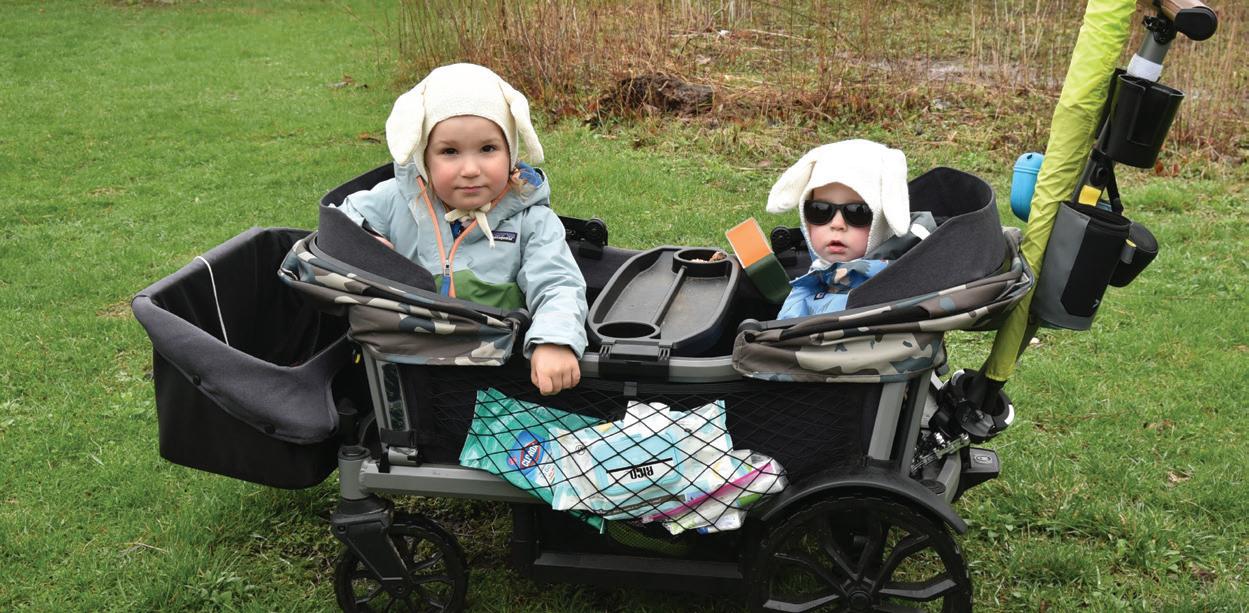
Fourth Ward resident Ranni Kristine, who rode the bus Saturday, said the ride would allow her to explore Evanston with her husband and 2-year-old son with more spontaneity.
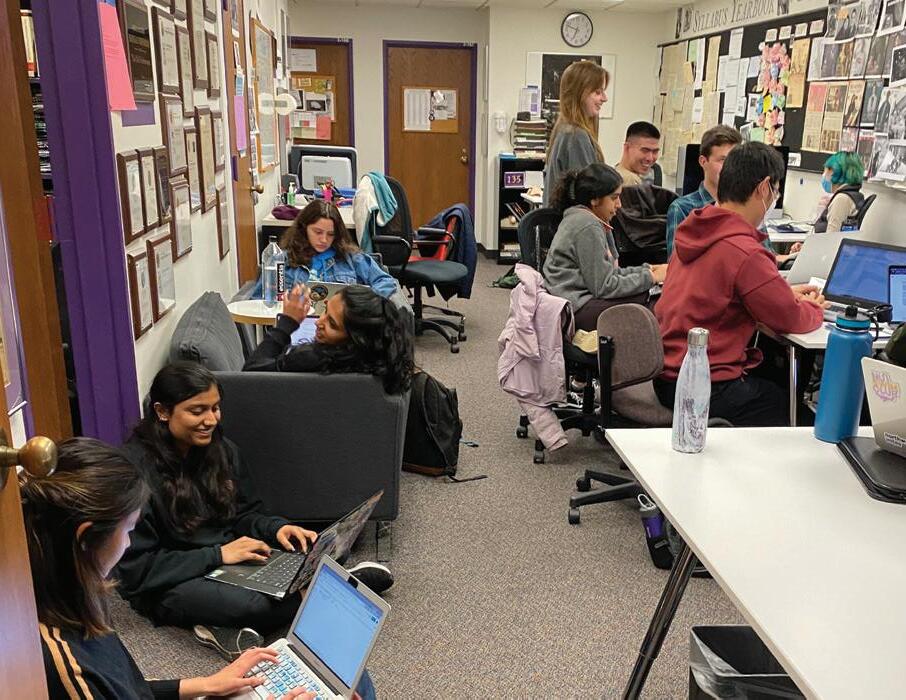
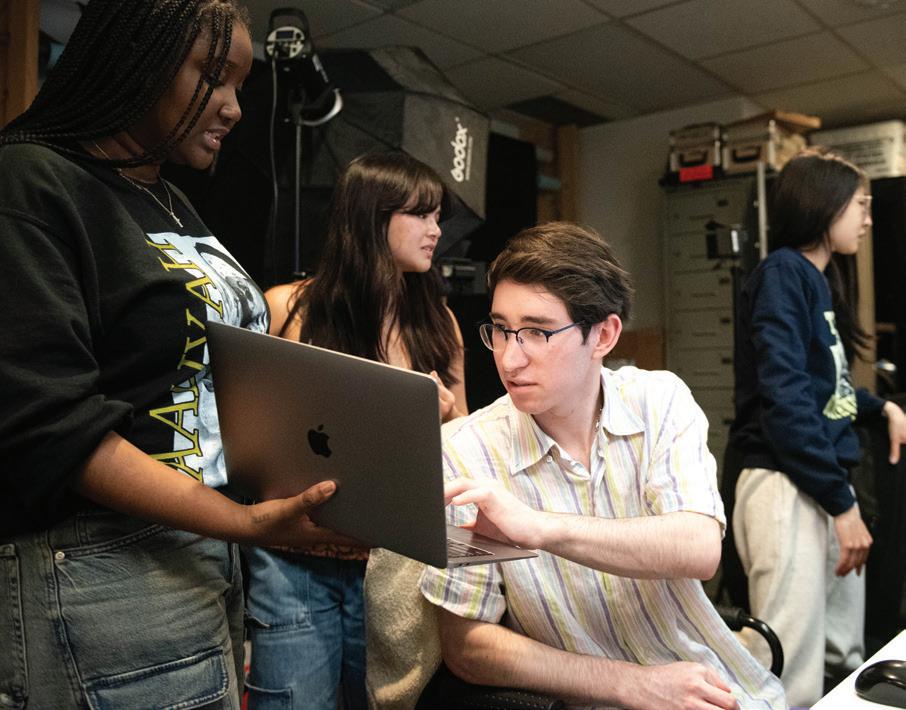
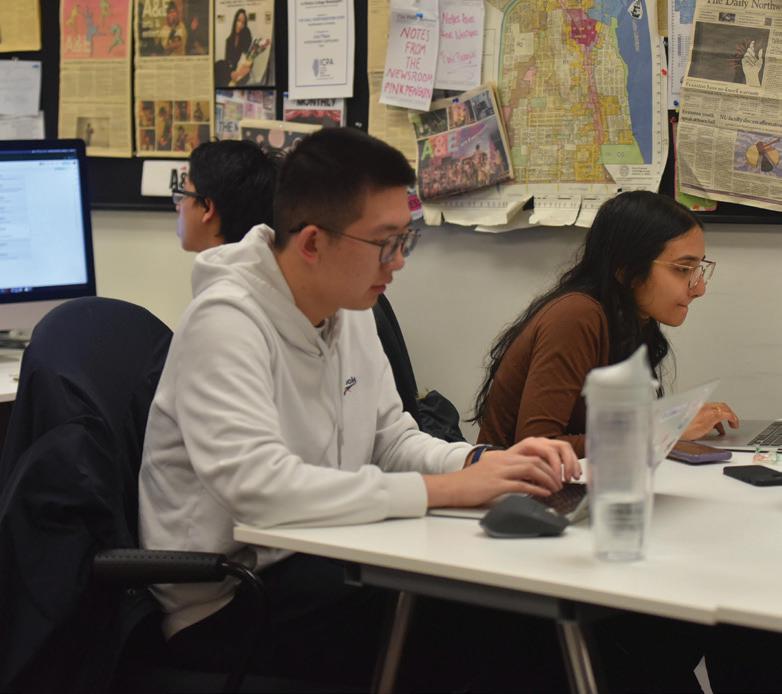
Write stories, interview people and produce under deadline. News reported by the community, for the community––all while having fun.
Daily alumni go on to work for major news outlets, including: The New York Times, USA Today, Sports Illustrated, The Washington Post, ESPN, The Wall Street Journal, Deadspin, People and Vox
• Reporters • Designers
• Copy editors
• Multimedia producers
• Photographers
• Illustrators & more
For details email joinus@dailynorthwestern.com or visit: dailynorthwestern.com/joinus
Ruixin Zhang/The Daily Northwestern
The ride consists of 13 stops in a 30 to 40-minute loop, running every Saturday from 6 to 9 p.m. until the third week of June.
elatest scoop: Ice cream machine coming to campus
By RUIXIN ZHANG assistant campus editor
Scream no longer because an ice cream machine is coming to campus.
A picture of a new so serve machine installed at the back of Foster-Walker Plex East was posted Tuesday on the social media platform Fizz and received over 2,000 upvotes. e machine operated for some time Tuesday but was removed by Wednesday.
Northwestern Dining and Compass Group still plans to install a so serve machine o ering chocolate and vanilla ice cream at a dining hall, Compass District Marketing Manager Mary Belovich wrote in a ursday email to e Daily.
“We are working towards an opening date later this month in April,” Belovich wrote in the email.
Belovich wrote that Compass has “no other plans to expand to other dining halls at this time.”
Most recently, e Daily reported in October 2022 on a new so serve machine in Plex East with allergenfriendly and vegan options. In 2019, e Daily also reported so serve machines installed in dining halls under NU’s previous dining service repeatedly broke and were eventually removed.
Weinberg rst-year Idaliz Torres said she is looking forward to ge ing ice cream from a so serve machine due to warmer spring weather.
“I like it super cold,” Torres said. “Just fresh out of the machine. I don’t like it when it’s too melted.”
Torres said because Elder Dining Commons on North Campus occasionally serves ice cream, she would also appreciate having ice cream accessible to students on South Campus.
e so serve machine is returning due to high student demand, Belovich wrote.
“We have had many students ask about the return of ice cream on campus, so we are very excited to be able to bring it back this year,” Belovich wrote in the email.
Still, McCormick sophomore Kaifeng Jing is tempering his expectations for any campus ice cream machine.
“I just hope that they regularly maintain it,” Jing said. “ e drink machines o en break down, and people don’t x it for weeks.”
Weinberg sophomore Shaik Obaidullah said he normally doesn’t have ice cream if he needs to buy it.
But if the sweet treat comes to Plex East, Obaidullah said he will be “really, really happy to have ice cream every single day” because it will be included in his meal plan.
“I’m not a big fan of ice cream because I don’t want to pay to get fat,” Shaik said. “But I don’t have to worry about that because I’m ge ing ice cream for free, and I can cut it a er going to the gym.”
r.zhang@dailynorthwestern.com
‘Popup’ pho station replaces salad bar
By DESIREE LUO campus editor
A build-your-own pho bar has replaced the salad bar at the Market at Norris University Center.
Described as a “popup” on Northwestern Dining’s Instagram page, the pho bar opened Friday. Prices start at $8.99, according to signs posted near the Market.
Customers can choose from between beef and vegan broth as well as several protein options, including steak, chicken, shrimp and tofu. e bar’s topping o erings include carrots, cremini mushrooms and jalapeno peppers.
Chloe Sky, a high school junior from Los Angeles, stopped by the pho bar for lunch during a visit to NU’s campus with her mother, Maria Nicolacakis.
“I just started with a lot of noodles because I always nish the noodles too fast,” Sky said.
Sky selected the beef broth. She added several toppings to her bowl but said she was surprised there were no bean sprouts, a common addition to pho.
Nicolacakis said she was impressed by the variety of add-ons available, especially the fresh basil and cilantro. Opting for the vegan broth, she topped her bowl with a sprinkle of chili crisp.
“We go to pho places all the time in LA, and the avor of this vegan broth is right on,” Nicolacakis said.
For Bienen Prof. Geo rey Duce, vegetables were key. He said he xed his bowl with carrots, zucchini, onion and cilantro.
He said he prefers healthier lunches but can’t nd those at Norris restaurants like Buen Dia, which serves tacos, quesadillas and burrito bowls, or Starbucks.
“Most of the other food court options are basically junk food, actually, but this is something healthy,” Duce said.
While Duce said he enjoyed the taste of his pho, he found the price to be on the higher end. He said he paid more than $15 for a large bowl with tax included, which to him was “quite a lot for a build-your-own kind of setup.”
Like Duce, Bienen rst-years Grace Kim and Erin Lee came across the bar while visiting Norris for lunch Friday.
With the Bienen School of Music located steps away from Norris, Kim said she and Lee frequent the Market, previously for the salad bar.
“We come here literally every day, multiple times a day,” Kim said. “Whenever you go into the Market, it’s for random things. It was kind of a surprise today.”
Still, the new pho bar was a welcome change for Lee.
Although not immediately trying the new option, she said she’s not opposed to building her own bowl somewhere down the line. “It needs to be the right time, when I really want pho,” Lee said.
d.luo@dailynorthwestern.com
Desiree Luo/The Daily Northwestern The Market at Norris University Center’s pho bar opened to customers Friday.
OPINION
You: In defense of Timothée Chalamet’s comments
Timothée Chalamet recently came under fire after an interview with Matthew McConaughey where Chalamet made the following remark:
“I don’t want to work in ballet or opera or things where it’s like, ‘Hey, keep this thing alive, even though no one cares about this anymore’ … All respect to all the ballet and opera people out there.”
The outrage against Chalamet has been fervent, from opera houses publicly denouncing him to dancers badgering him in his Instagram comments.
“I pay $200+ to go to ballet or opera but have never paid to see you in theaters,” wrote one ballerina after Chalamet posted about his
I can’t believe it’s taken me this long to write about one of the most important figures in my life. It strikes me that I haven’t spoken about him before, considering I sleep cuddled up next to him every night.
Today, it’s time to introduce my loyal readers to Burt, my stuffed koala.
Burt is hand-knit from alpaca fur and I bought him when I was in fifth grade — with my first “real” pocket money. I had been recently hired as
appearance on LeBron James’ podcast.
No matter how loud his haters are, they still fundamentally misunderstand his point.
Critics rebut Chalamet’s claim that “no one cares” by pointing to the high attendance of ballet and opera shows. But does “caring” about art amount to merely paying for it?
Chalamet’s actual argument is that ballet and opera are irrelevant despite being kept alive by persistent patronage. Just because something is still alive does not mean it’s lively.
When Chalamet said “no one cares anymore,” he actually meant that very few people are interacting with ballet and opera as acute expressions of present social experiences.
Developments in ballet and opera have fallen behind the transformations of society at large. The world demands to be understood in new ways, and from the general dearth of commentary on contemporary ballet or opera works, it appears that no one views either as opportune sites for reflecting on the current moment.
Chalamet’s critics also claim that he’s a philistine — or hostile to the arts — because he can’t appreciate ballet or opera.
While Chalamet doesn’t have a particular appetite for ballet or opera, that doesn’t necessarily mean he denies their artistic value. Rather, he’s making a judgement as an individual artist and not as a viewer. It would be one thing to altogether dismiss ballet or opera, and it’s another to not want to work in it.
The production of ballet and opera today seems at best academic. The reproduction of classical works — the primary mode of these art forms — can curate moments in art’s history as critical lessons for its potential today. But such lessons are not marching orders. They furnish a sensibility, not a dogma, for artists.
Or worse, romanticism permeates the production of ballet and opera, where its supporters wish to preserve art adequate to a past moment, hoping for history’s return. But time cannot be reversed, and any move toward the
past forecloses the creativity of the present. If Chalamet’s aim is to be at the forefront of art, then he cannot reproduce the art of the past for its own sake, as if paying off a karmic debt.
Chalamet implies that he respects ballet and opera as artistic traditions, but he also believes they formally limit the expressive potential of artists today.
Perhaps there are new artistic opportunities for ballet and opera, and Chalamet is wrong. But this would require a serious attempt to reimagine ballet or opera, breaking with past works to reflect our ever-transforming experience of the present.
Until then, let the dead bury the dead.
Allen You is a Medill junior. He can be contacted at allenyou2027@u.northwestern.edu. If you would like to respond publicly to this op-ed, send a Le er to the Editor to opinion@dailynorthwestern.com. e views expressed in this piece do not necessarily re ect the views of all sta members of e Daily Northwestern.
a mother’s helper and this gig, although totally pointless, is what brought me to Burt.
One day, on the way home from school, my babysitter and I walked into an artisan shop a few blocks away from my home in Chelsea, New York, that rotated its theme every few months. When we went in, the theme was “forever young” — or something like that.
The second I turned the corner with handmade stuffed animals and saw Burt, it was love at first sight. It didn’t matter that he cost $60. He was perfect.
On that note, I’m pretty sure Jellycats are around that price, so Burt was definitely a worthwhile investment.
Burt has traveled almost everywhere I have.
Any time I have gone on a trip without Burt, I ended up caving and buying a similarly shaped stuffed animal so I’ve stopped leaving him at home.
One summer, I started going on one-night trips, with a single bag in tow. There, I had Burt with me on daytime adventures. One day, I had the idea to take pictures of him doing various activities and made him an Instagram account.
Now, I intentionally keep Burt in my bag during the day on certain adventures so he can see the sights I see and experience the beauty of travel. I definitely feel silly with him in my purse sometimes, but it’s worth seeing his adorable face smiling back at me as I snap a picture of him. My parents didn’t want me to have a security
blanket or stuffie as a kid. My brother had one and it got lost and it was tragic. I don’t think he’s been the same since. But, as soon as I had the means to buy one, I introduced Burt into my life. He’s not big, he’s not inherently valuable, and my friends say he could use a wash, but to me he is absolutely perfect. I cannot imagine my life without Burt.
Sylvie Slotkin is a Medill junior. She can be contacted at sylvieslotkin2027@u.northwestern.edu. If you would like to respond publicly to this op-ed, send a Letter to the Editor to opinion@dailynorthwestern.com. The views expressed in this piece do not necessarily reflect the views of all staff members of The Daily Northwestern.
Sextou: Filler words are, like, kinda ruining everything
It’s incredibly hard to imagine our day-to-day speech without filler words.
On average, a person speaks between 6,000 to 16,000 words each day, according to a wide range of published studies. It varies between different groups, depending on factors like fluency, gender or education — but the estimated range remains the same.
And yet, within the ocean of our linguistic composition, filler words in native English speakers account for over 10% of daily speech. Honestly, I was surprised it wasn’t more, because it seems as though we use them all the time.
Words such as “um,” “uh,” “you know,” “kinda” — and my personal worst — “like,” tend to be common in everyday conversation. They’re even more tempting to use in stressful situations such as interviews or presentations.
But filler words are ruining everything, and it’s time to try our best to put an end to them.
As I grew up in Greece trying to learn English, my teachers realized I was a stuttering kid. Whenever I didn’t know what or how to say something, I’d pause and fill the deafening silence with an “um” or, as we say in my native
language, “em.” They were quick to posit that the more “meaningless” words I used, the more empty my speech became.
Initially, I didn’t get it. But the older I got, the more I started to notice how much poorer my language, and others’, sounded with that awkward vowel stretching.
“This is, like, the best thing ever,” someone would say, and the only thing I’d hear was that rolling “like,” stinging my brain in unpleasant ways.
Slowly, I began to notice how much more value words had with a quick breath of silence in between.
During class discussions, I tried my best to dodge “ums” and “likes” and instead take a few-seconds-long pause. Whenever I asked a question, I reminded myself to speak slower so I could find alternative, more meaningful phrasing, such as “it sounds as though you had a rough time,” or “let’s go in about an hour.”
Every chance I could, I tried to kill my “likes.”
When I reached eighth grade, one of my teachers told me that my English was “shockingly, very good.” It was a common, well-intentioned — though oftentimes backhanded — compliment from educators when I lived in the U.K.
Still, I felt proud of myself for having managed to sound almost fluent — “Even better than your native classmates at times,” my teacher said.
When I asked him why he felt that way, he told me I sounded “certain” in my vocabulary.
Once I came to Northwestern later down the road, I noticed other non-native speakers doing this too.
In the fall, a few friends and I gave a welcome presentation for a club we run. After the meeting was over, somebody on our executive board pointed out in awe that one of my friends — who is from Korea — had “incredible” speaking skills because he’d almost entirely avoided filler words.
I looked into it more, and it seems that research backs this up: Non-native English speakers use about four fewer filler words for every 100 words spoken when compared to native English speakers, according to a 2019 study published in a blog run by the University of California, Los Angeles. This, in turn, simply makes us sound clearer.
I’ve attended meetings, held group discussions, watched presentations — and all were better when people just paused. When they took a second to think instead of reaching for a verbal crutch, everything sounded more deliberate, more precise, more worth listening to.
Of course, I’m not saying the goal is to sound perfect or robotic or freakishly prepared at all times. I’m not even saying we should erase “like” from our vocabulary entirely. However, maybe we could start by trying to be a little less afraid of silence — and just a breath more intentional with our words.
It’s, like, so much more powerful.
Alexia Sextou is a Medill sophomore and author of “Margin Notes.” She can be contacted at a.sextou@dailynorthwestern.com. If you would like to respond publicly to this op-ed, send a Letter to the Editor to opinion@dailynorthwestern.com. The views expressed in this piece do not necessarily reflect the views of all staff members of The Daily Northwestern.
ETHS students protest war in Iran, navigate challenges
By JACK BAKER daily senior staffer
About 100 Evanston Township High School students walked out of class to protest the war in Iran on March 27, marking the latest student-led protest at ETHS to oppose the Trump administration.
ETHS senior and Student Union President Eva Hansen said the student government has been “feeling very frustrated” with Trump’s policies, and that opposing the war was an issue that students would surely “rally around.”
Weeks after an independently organized walkout protesting Immigration and Customs Enforcement activity, Hansen said the Student Union worked with the student organizers to plan the demonstration against the Iran war.
The
At the walkout, several speakers encouraged attendees to call their representatives to oppose the war. The school’s Community Service Office also collected food drive donations during the walkout, including from ETHS junior Adam Sklar.
Hansen said the protest’s timing was “definitely intentional.” The walkout occurred just one day before Evanston’s third “No Kings” rally — which drew thousands of anti-Trump protesters to Dawes Park, and an ETHS-sponsored food drive and distribution event.
Sklar said he initially questioned the value of organizing a protest in a strongly progressive community like Evanston but later concluded that ETHS students could set a positive example.
“If hundreds of schools across the country are
“We had to follow some different protocols because we are a school-sanctioned club,” she said. “That included having it on school property instead of marching to downtown Evanston, which is what they did for the ICE protest, but it was similar — similar people, similar vibes.”
Green with Envy
By Miguel Tsang
Editor Thomas Hurley
Assistant Editor Tanat Johnny Tungsubutra
By Miguel Tsang
holding these protests, and they make news like what we’re doing, then that can send a general message to the youth and to the general population that kids are paying attention,” he said.
Sklar said ETHS leaders “did the best of what you could expect” by supervising the protest without endorsing its message or harshly penalizing its participants.
During the protest, school administrators also sent an email to parents and guardians.
“ETHS is coordinating with the Evanston Police Department to ensure the safety and security of students participating in this demonstration,” they wrote.
According to Hansen, students who walked out of class received unexcused absences but did not receive harsher punishments like detention.
Hansen explained that as the Student Union was planning the walkout, administrators emphasized that ETHS permits free expression from students with varying political beliefs.
“They pointed out that ‘If we allow you to do big walkouts in support of liberal policies, we also have to allow more right-leaning organizations to do the same thing,’” Hansen said. With just weeks left in her senior year, Hansen said student activism will continue beyond her time at ETHS.
She said that while the Trump administration’s actions have been “unpredictable,” more issues are likely to arise that will demand a response from ETHS students.
“I feel very lucky to have grown up in a town where protests and activism is encouraged. And I know not everyone grows up with that, so definitely, I feel like we should take advantage of our school’s willingness to let us speak out,” Hansen said. “This is how many people in our generation are feeling even if they’re not walking out with us.”
j.baker@dailynorthwestern.com
Daily file illustration by Nicole Cheah
The protest featured several speakers who encouraged attendees to call their representatives to oppose the war.
CANNABIS TAX
From page 1
“Because of the overpolicing in Black communities, the war on drugs and well-documented information on disparities in policing as it relates to marijuana, it was a very ing tax revenue to use to repair harm,” Rue Simmons said.
In practice, this has not translated into signi cant revenue. Sales at Evanston’s two dispensaries have been lower than expected due to competition from neighboring municipalities and Michigan, where cannabis prices are lower, Rue Simmons said.
She added that Zen Leaf, one of the city’s two dispensaries, told her that the tax was hurting its sales. Zen Leaf declined to comment for this story.
O Y Cannabis, the city’s other dispensary, consistently underperforms compared to its sister locations in neighboring municipalities such as Niles and Wadsworth, said Ashley Tolbert, the store’s general manager. O Y’s parent company owns a location in Wadsworth that makes “triple” what Tolbert’s store does, she said.
However, Tolbert doesn’t blame Evanston’s cannabis tax. She said her customers do not mind paying a li le more when they know that the money goes toward a good cause.
Instead, she a ributed her store’s lower sales to Evanston’s zoning laws. While Illinois permits dispensaries to operate from 6 a.m. to 10 p.m., Evanston restricts them from 10 a.m. to 8 p.m. e city could increase its cannabis tax revenue by extending its operating hours for dispensaries, Tolbert said.
“People like to buy cannabis at all times of the day,” Tolbert said.
Another issue a ecting the city’s cannabis tax is the prevalence of Delta-8, a THC extract o en sold in smoke shops and CBD stores outside the state’s system of licensed dispensaries. Delta-8, typically sold in vapes and edibles, is marketed as a less potent alternative to marijuana. Most importantly, it is not subject to Evanston’s cannabis tax.
Some city o cials have recently oated taxing Delta-8 at the same level as cannabis to raise more revenue for reparations. e Reparations Commi ee voted ursday to o cially recommend that the city tax Delta-8, even as the U.S. Congress seems likely to ban hemp-derived products, including Delta-8.
Rue Simmons said taxing Delta-8 would only incrementally expand the city’s reparations fund, not enough to close the funding gap currently being lled by the real estate transfer tax.
“ e revenue wouldn’t be astronomical, but it would be revenue nonetheless, and more opportunity
for us to deliver repair,” Rue Simmons said. is new tax would a ect a range of businesses that are not licensed as dispensaries, including Green Bay Smoke Shop in Evanston, which relies on Delta-8 for 30% of its revenue, according to the store’s owner, Muhammad Arsalan.
Arsalan said his prices are already higher than the city’s dispensaries, and a Delta-8 tax could force him to let go of his two employees.
e question of how best to raise revenue highlights a deeper aw in the city’s reparations program, according to economists who spoke to e Daily.
SESP Prof. John Olson said the shortfall represents a fundamental problem with excise taxes — also known as “sin taxes” — a type of sales tax that targets speci c goods like cigare es, soda or cannabis. Excise taxes create opportunities for “leakage,” Olson said,
meaning consumers will buy alternative products or shop elsewhere to avoid the tax.
“Excise taxes generally are unstable forms of revenue,” Olson said. “Prices uctuate. And so if you want to have a permanent or semi-permanent policy, then you would want to have a stable, more permanent funding mechanism for that.”
Kellogg Prof. erese McGuire, an expert on public nance who sits on the city’s Finance and Budget Commi ee, questioned the funding structure itself.
She called the earmarking of tax revenues for speci c expenditures a public policy “bugaboo” that she teaches her Kellogg MBA students to avoid.
“You should try to raise revenues for anybody — the city of Evanston or the state of Illinois — in the most e cient, equitable, simple way you can,” McGuire said. “And then you’ve got a pot of money
and spend it the way your residents most want it to be spent.”
Whether the city manages to expand its cannabis tax base, Olson said he thinks “most economists” would agree that a “more broad-based, more stable” revenue source would be be er economically for the city. e city declined to comment on the status of the fund or the cannabis tax, citing an ongoing lawsuit by conservative activist group Judicial Watch against the reparations program.
“At the end of the day, the city has to make money as well,” Arsalan said.“We’re going to give some experience for our son because it’s his rst time riding a bus,” Kristine said. “ is is our hidden gem.”
m.turetzky@dailynorthwestern.com
Illustration by Xuan Day Tran
In 2020, Evanston imposed a 3% tax on gross cannabis sales, with the first $10 million in revenue earmarked to o er reparations to the city’s Black community for decades of racial housing discrimination.
‘Hamilton’ producer reflects on theater journey
By SASHA BAUMGARTNER assistant campus editor
“Hamilton.” “In The Heights.” “Rent.” “Avenue Q.”
These are just some of the musicals that were produced by 22-time Tony Award-winning producer Jeffrey Seller.
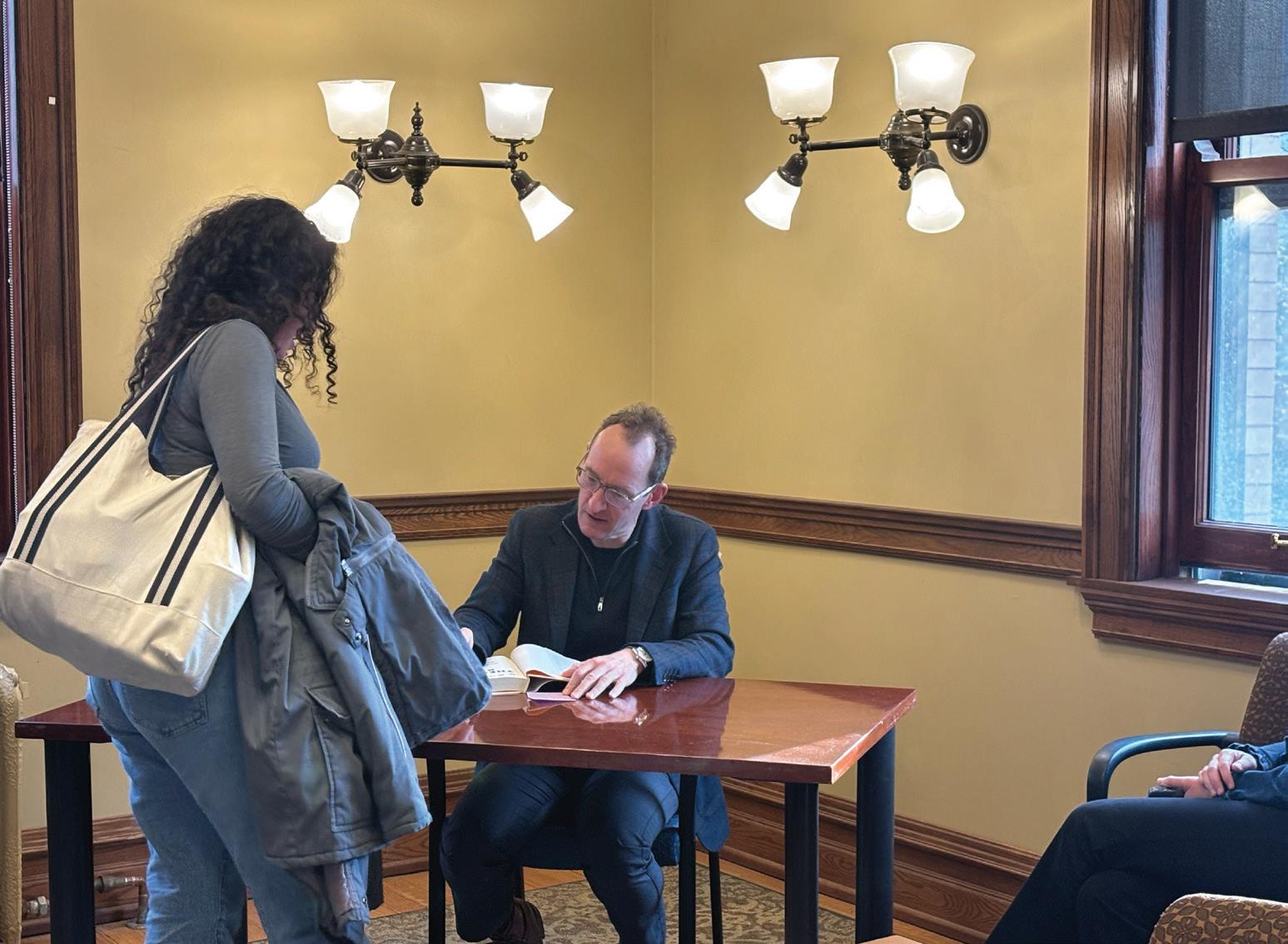
Seller spoke to attendees Tuesday in Annie May Swift Hall in a conversation and book signing of his memoir, “Theater Kid.”
Seller discussed his experience as a producer and the work and patience that it takes to get a show ready to premiere.
He added that he selects productions that move him personally.
“I pick it because it moves me in my guts,” Seller said.
The first 15 people who signed in to the event received a free copy of “Theater Kid.” The NU bookstore also sold copies of the book with a 20% discount.
Seller said he always felt like “an outsider” until he found theater. As he participated in more plays throughout childhood, he said he eventually felt like he was “inside a group.”
First-year Communication graduate student Emerson DelMonico said she attended to hear
MAYOR REACTIONS
From page 1
that would help drive the city’s local economy.
Biss even garnered national attention in the fall for his strong stance against ICE presence in Evanston. Under Biss, the city’s Welcoming City Ordinance was updated in January 2025, which strengthened protections for immigrants in Evanston. In October, the city implemented “ICE free zones” to restrict immigration officers from using city property for operations.
about Seller’s Broadway career and get advice for working on shows.
“I am interested in production, specifically theater production,” DelMonico said. “I also love ‘Hamilton.’”
Seller worked with composer and playwright Jonathan Larson to produce “Rent,” which came out in 1996. He said he and Larson wanted to create a show that was relatable to audiences.
While making “Rent,” Seller and Larson also created a $20 dollar ticket lottery for the show. To this day, the lottery allows audience members to enter and potentially win discounted tickets to Broadway shows.
“Jeffrey helped change who gets to be in the room,” said Laura Matalon (Communication ’82), a marketing executive who has worked with Seller and introduced him at the event.
Seller said when helping produce “Rent” at 31 years old, he “could barely afford a ticket” to a Broadway show.
“I never wrote a Broadway musical, but I helped some get made,” Seller said. “But I did make the lottery policy, and I’m very proud that that has opened up accessibility in such a positive way over these last 30 years.”
s.baumgartner@dailynorthwestern.com
MacDonald said Biss’ stance against increased federal immigration enforcement seemed “really outfront.” Ultimately, though, she approved of this work.
“I do see that he’s done a great job supporting residents, some of them vulnerable residents,” MacDonald said.
Biss continued to condemn ICE during his congressional campaign and said he aims to abolish the agency if he makes it to Washington.
Still, as the city reexamines the process by which it will replace Biss, 7th Ward resident Kiera Kelly said she is unhappy that Evanston must now contend with the mayor’s potential departure.
“(Biss has said) the goal would be to have the shortest time possible that residents do not have an unelected mayor,” she said. “Biss, who positions himself as a national leader standing up for democracy, may intentionally deprive Evanston of an election.”
To trigger a special election, Biss must resign by Oct. 19, before his November congressional election.
Kelly said that she hopes Biss’ potential successor “leans into the identity of Evanston.”
“I would like a candidate to really appreciate Evanston and be realistic about why people choose to live here,” Kelly said. “We have so many wonderful
qualities and so much diversity. There’s something for everyone.”
MacDonald said she wants a mayor that ensures the needs of all residents are considered.
“There’s a lot of attention recently that’s been paid to making sure that residents across all wards have access to the same resources,” MacDonald said. “I hope that whoever is mayor continues to do that and make sure that their eyes are going across all of the wards.”
w.rogin@dailynorthwestern.com
r.ahmed@dailynorthwestern.com
Sasha Baumgartner/The Daily Northwestern
Jeffrey Seller signed copies of his memoir “Theater Kid” and personalized the messages for attendees.
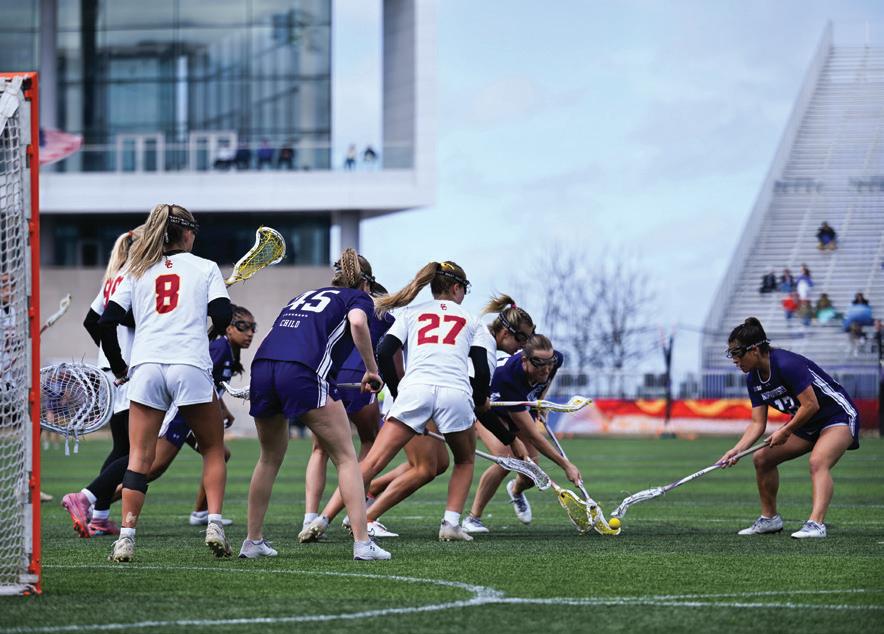
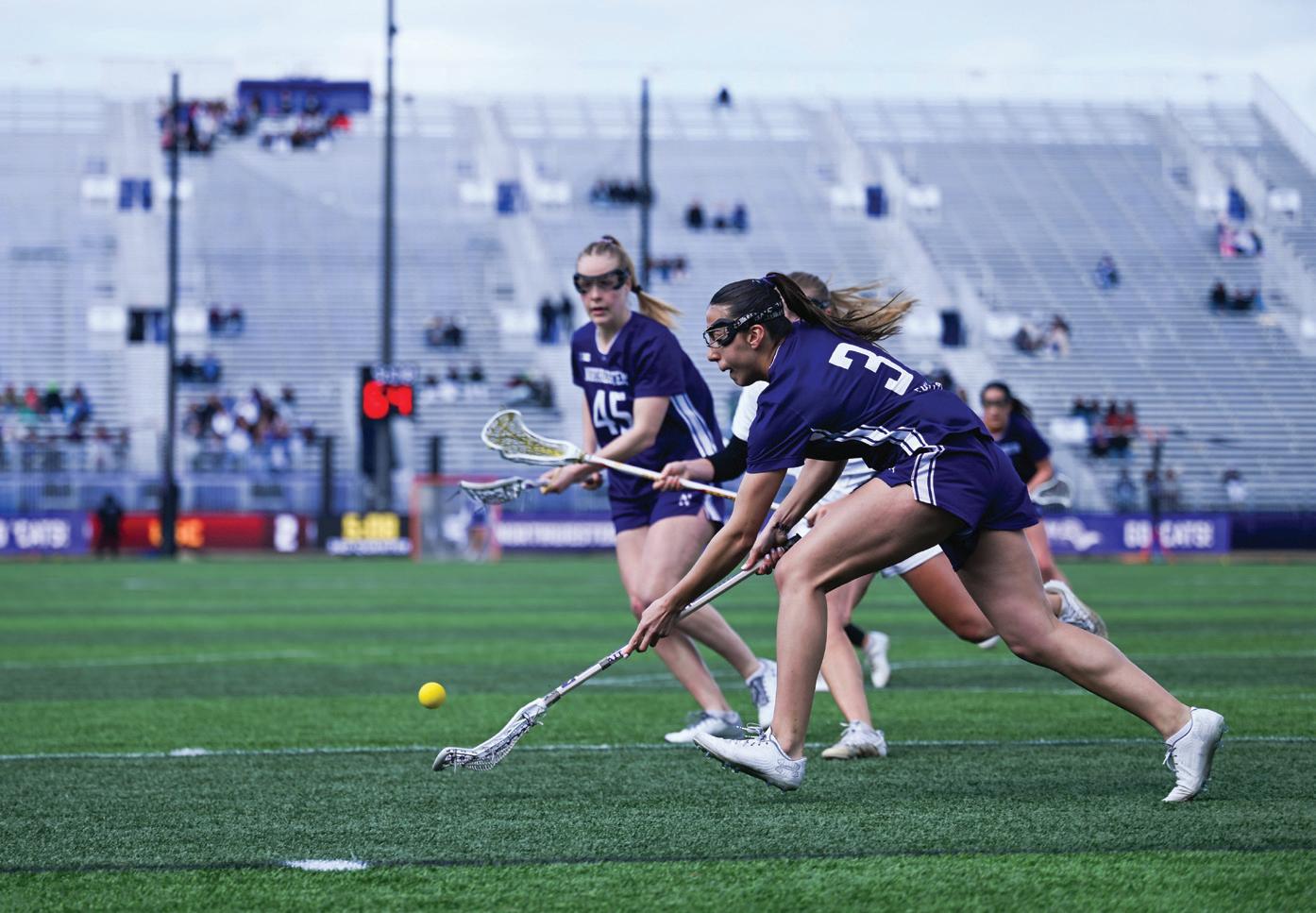
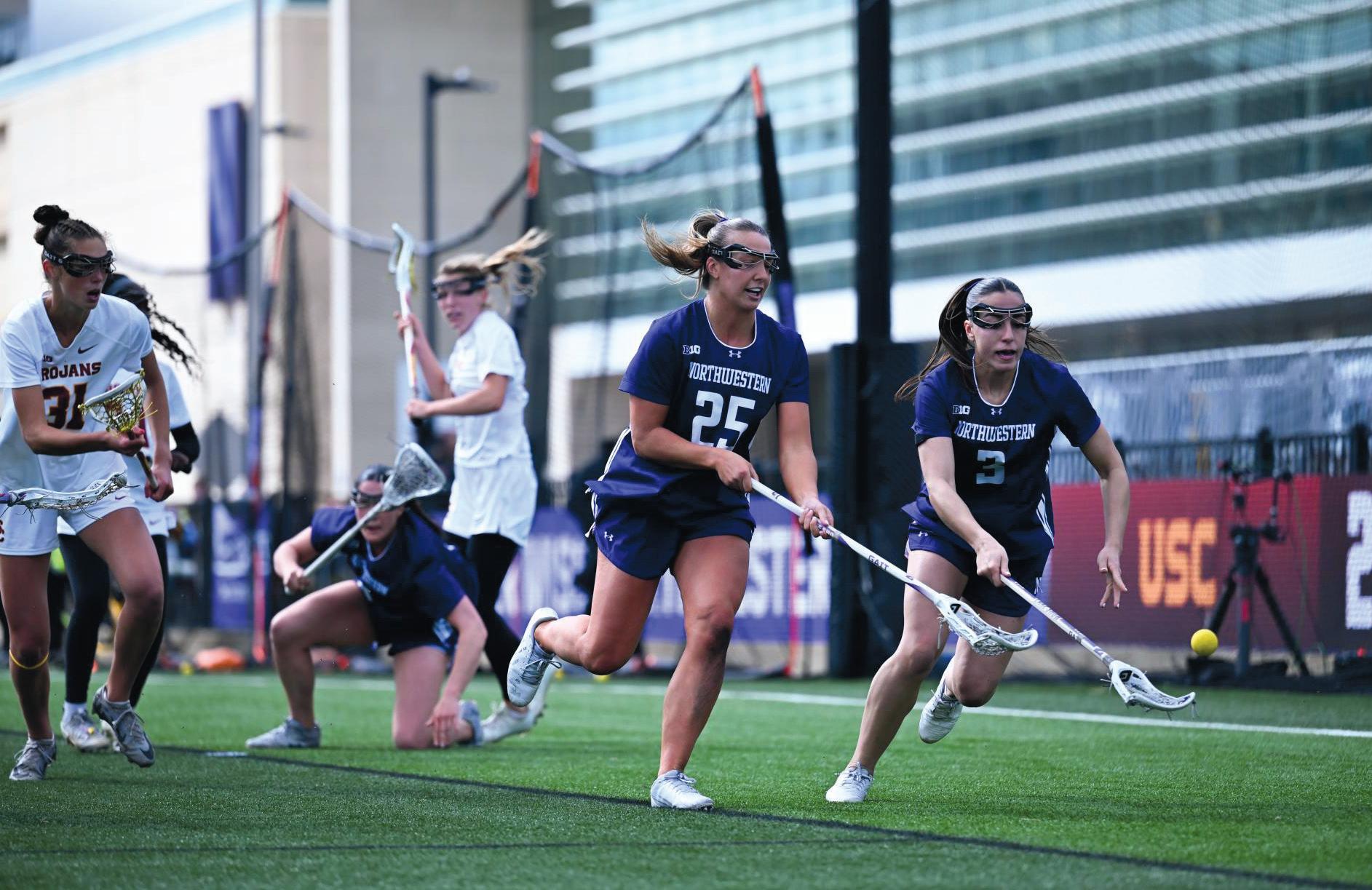
No. 6 ’Cats beat USC 11-5 at ‘Lacrosse Day in Chicago’
By AVANTIKA SINGH assistant sports editor
Northwestern set two records in its game against USC Saturday afternoon: senior attacker Madison Taylor became the second player in program history to surpass 300 goals, and a programrecord 5,805 people filled Northwestern Medicine Field at Martin Stadium for No. 6 NU’s second annual “Lacrosse Day in Chicago.”
The Wildcats (9-3, 3-1 Big Ten), who have the highest goal differential in the Big Ten, outscored the Trojans (6-8, 0-6 Big Ten) 11-5 in the second game of an event that also featured Notre Dame and Richmond’s men’s teams.
Until well into the second quarter, NU seemed poised to record a shutout, leading 5-0.
Freshman midfielder Kate Ratanaproeksa controlled the opening draw and despite an NU turnover, scored the opening goal. In the first quarter, the ’Cats won four draws to the Trojans’ one and converted each of those scoring opportunities into a goal.
Taylor reached 300 career goals with a latequarter free position shot. She ended the game with four goals, bringing her career tally to 303.
“I definitely didn’t see myself being able to do that,” Taylor said postgame. “It’s just really surreal.”
NU and USC opened the second quarter with turnovers and ground balls galore. Neither team scored until junior attacker Taylor LaPointe found the back of the net halfway through the period.
As the ’Cats’ draw control dominance stalled, so did their scoring. They controlled none of the three draws following LaPointe’s goal and scored only once more in the second quarter. Meanwhile, the Trojans converted on their fifth shot on goal three minutes before halftime.
In the third quarter, NU returned to draw dominance. It also dominated in fouls. NU recorded two fouls in the opening two minutes and three fouls in the closing three. USC had none the entire quarter.
“I don’t think today was our best performance,” coach Kelly Amonte Hiller said postgame. Still, the ’Cats’ offense didn’t slow down. After
the Trojans scored their second goal of the game, the ’Cats responded with three goals in the back half of the third quarter.
USC outscored NU 3-2 in the fourth quarter, the only period during which the visitors scored more than the hosts. Sophomore attacker Aditi Foster logged her sixth hat trick of the season, but her goal was followed by three in a row from USC. Taylor nabbed the contest’s final goal with
less than one minute left in the game, bringing the score to 11-5.
By the final buzzer, the ’Cats caused a seasonhigh 15 turnovers. They also committed 21 turnovers, matching their season-high from their loss against Syracuse. Amonte Hiller said the team has to clean up this aspect of its play for future games.
“We have to be deceptive, we have to be focused,” Amonte Hiller said. “Those are the
BASKETBALL
things if you want to play well.”
NU goes on the road to play No. 1 Maryland on Thursday.For the ’Cats’ three combine representatives, and many other members of its graduating class, NU’s pro day March 17 represents their final opportunity to showcase their talents to scouts and the world at large ahead of the NFL Draft. a.singh@dailynorthwestern.com
Eight players leave NU for transfer portal, four remain
By JONAH MCCLURE and YONI ZACKS the daily northwestern
March Madness came to a close Monday night, but the madness is just beginning for Northwestern. Eight Wildcats have entered the transfer portal, which officially opened Tuesday, leaving just four players set to return next season. The mass exodus began on March 20, with freshman forward Cade Bennerman entering the portal, and wrapped up with three players announcing their intent to transfer in the span of two hours on Monday. Add NU’s graduating players — senior forward Nick Martinelli, senior guard Justin Mullins and redshirt junior forward Gus Hurlburt — to the pool of departures,
and the ’Cats are losing 58.8 points per game this offseason, 80.4% of last season’s offensive production.
Following Bennerman’s announcement, sophomore guard K.J. Windham entered the portal after spending most of his second season on the bench. Windham was a breakout candidate entering this season after finishing strong in his freshman year, but he saw less than 12 minutes on the floor after the turn of the calendar year.
The next domino to fall was freshman forward Tre Singleton, the highest-ranked recruit in NU’s modern history, who announced his intention to enter the transfer portal Thursday. Singleton averaged 7.6 points on 47.7% shooting as one of two players to see the floor in each of the ’Cats’ 34 games.
Following NU’s loss to Purdue in the Big Ten Tournament, he emphasized his bond to the program.
“My priorities are just to make sure I get better in this offseason and see what I can do to help Northwestern win more games next year,” Singleton said.
Senior guard Blake Smith, with one year of eligibility, chose to enter the portal just a few hours after Singleton. Smith, who spent four years at NU, played an important role on the ’Cats’ 2023-24 NCAA Tournament team.
Junior center Arrinten Page joined Singleton and Smith in the portal one day later, deciding to transfer to his fourth school in four years. A four-star recruit out of high school, Page spent one year each at USC and Cincinnati before coming to Evanston.
Early in the year, it seemed as though the 6-foot-11 Page would be the star center for the ’Cats. However, a one-game suspension derailed those plans.
Page missed the game against Howard due to a team standards violation and started just four games after the violation. His usage climbed back up later in the season, but the Atlanta native decided it was time to move on from NU.
Though five players had already entered the portal, there were still more players looking for a change of scenery, and Monday brought the movers.
The day started with junior guard Jordan Clayton, a three-year Wildcat, departing the program, according to Sam Kayser of League Ready. Clayton, a team captain last season, leaves Evanston after more than doubling his time on the court from the 2024-25 season.
Clayton’s final legacy at Welsh-Ryan Arena will be his three-pointer to take the lead against Purdue as the shot clock expired. The ’Cats followed up the shot with a defensive collapse and fell in a heartbreaker.
Just two hours later, fellow junior guard Jayden Reid announced on X that he would also enter the portal. Reid, who started 28 games and the last 12 in a row, leaves NU after just
one year. The ’Cats’ third-leading point scorer, Reid transferred to NU after two seasons at USF. “It’s one family,” Reid said in November. “The culture is what really stuck out to me in the transfer process. That’s one of the reasons why I came here. Even past the basketball staff, the nutritionist, the weight room staff — everybody is just good people, it’s just a family.”
Reid wasn’t the only newcomer to depart Monday. Freshman forward Tyler Kropp, who came to Evanston as part of coach Chris Collins’ highest-ranked recruiting class, announced his departure from NU on X minutes after Reid.
Kropp, who started 10 games and played in 31 of the ’Cats’ 34 games, ranked third on the team in rebounds per 40 minutes with 7.2. His best performance came in NU’s first conference win of the season over USC, where the Powell, Ohio native tied for second on the team with 11 points on 83.3% shooting.
When The Daily asked Kropp after the ’Cats’ loss to Purdue in the Big Ten Tournament about where he saw his role in the program after the team’s strong finish to the season, he didn’t directly answer the question.
“There’s really nothing better than experience,” Kropp said. “Obviously, we’ve seen it’s really hard to win in the Big Ten. That experience is really valuable.”
Monday’s madness left NU tied for the most outgoing transfers of any high-major in men’s basketball program that didn’t fire its coach. The four players remaining on the roster are sophomore guard Angelo Ciaravino, freshman guard Jake West, sophomore guard Max Green and freshman guard Phoenix Gill.
Once the season ended, it was clear that the ’Cats needed to make some changes.
This many changes, however, leaves Collins with plenty of work to do to rebuild his program. Charlie Perlman and Siddarth Sivaraman contributed reporting.
Senior attacker Madison Taylor and sophomore attacker Aditi Foster scored hat tricks in Saturday’s win.
Illustration by Lucas Kubovchik
Hours before the national championship, Northwestern saw a trio of players enter the transfer portal, bringing its total number of transfer departures to eight. The team is left with four returning players: sophomore guard Angelo Ciaravino, freshman guard Jake West, sophomore guard Max Green and freshman guard Phoenix Gill.