The Daily Northwestern
AUDIO / Everything Evanston Early birds start Sundays with Evanston Running Club


VIDEO / NEMO NEMO host annual drill for EMT trainees

AUDIO / Everything Evanston Early birds start Sundays with Evanston Running Club
VIDEO / NEMO NEMO host annual drill for EMT trainees




PHOTO What’s in eir Bag: A busy Wildcat













Oneida tribe, said that the gathering represented a celebration of love and happiness for her.










“Once you hear the heartbeat of the drum, everyone comes together to sing,” she said. “You can see lifelong friends and family that you haven’t seen in a while.”

By JONAH MCCLURE and ISAIAH STEINBERG the daily northwestern
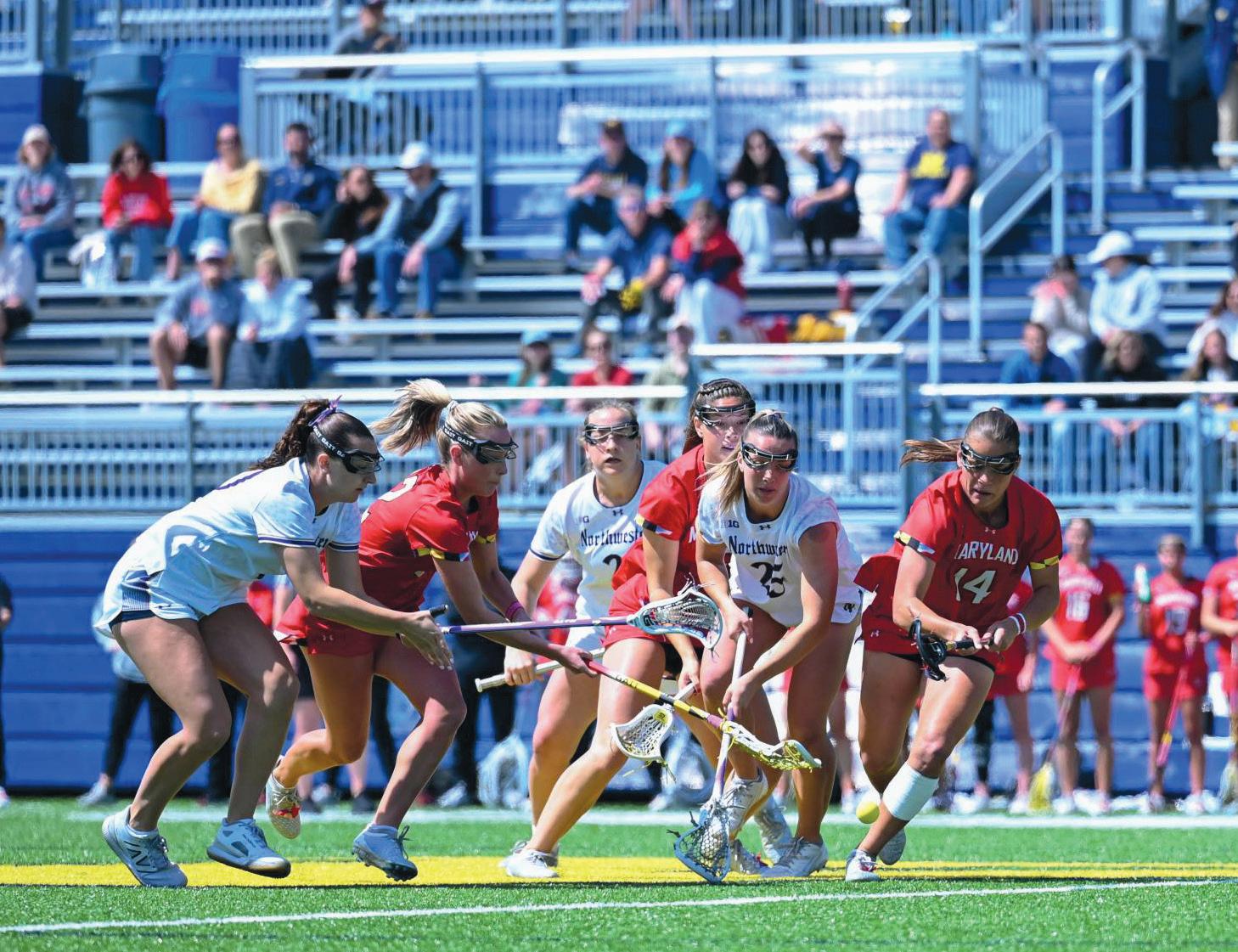
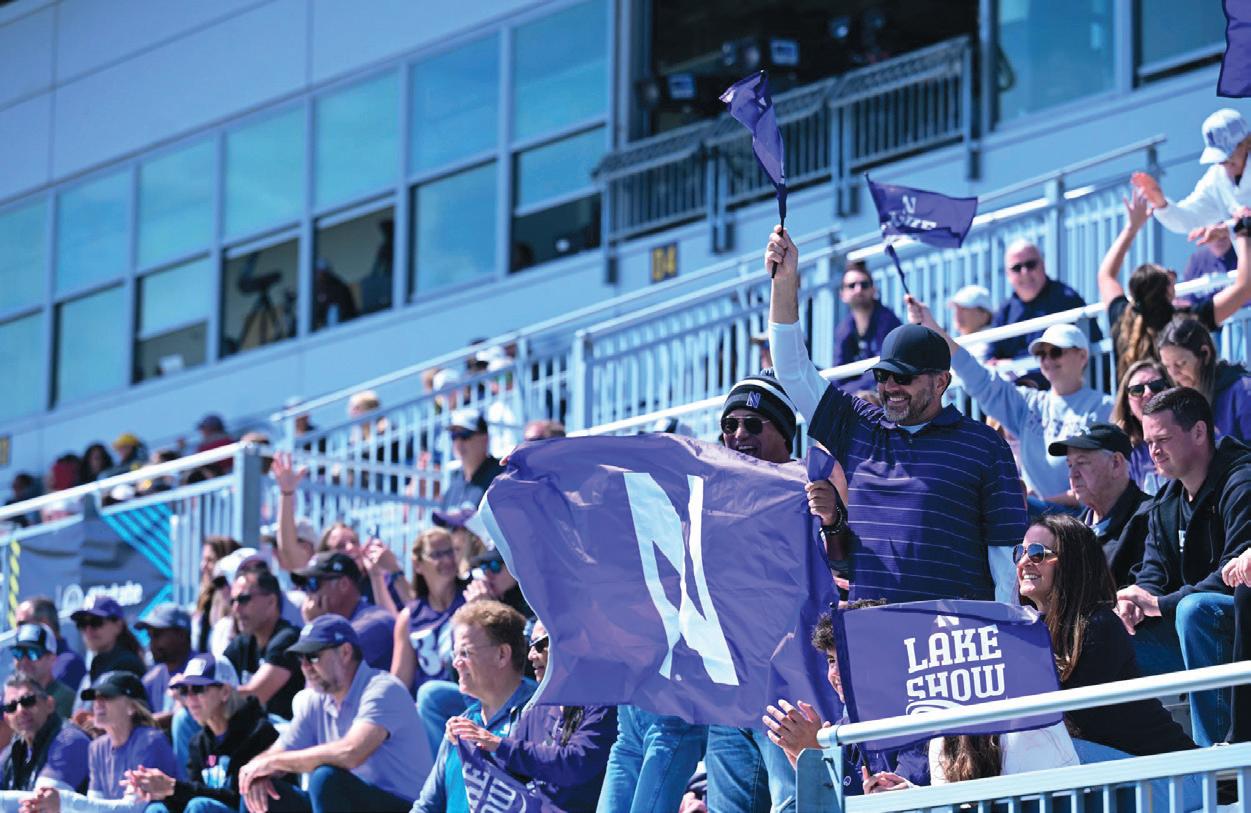
When graduate student midelder Annabel Child secured the ground ball, ve seconds remained in overtime of the Big Ten Championship. She ran toward the top of the 8-meter fan as the seconds painfully ticked away.
As Child slid to the ground, she slo ed a shot into the back of the net between two Maryland defenders, clinching Northwestern’s fourth consecutive Big Ten Tournament title.





Stadium in Ann Arbor, Michigan,






















e Wildcats (15-3, 7-1 Big Ten) defeated the Terrapins (16-3, going to stay the most composed
Former Wesley residents to receive $63K in subsidies
By TIA BETHKE assistant city editor
In a unanimous vote Monday night, City Council decided to extend aid to displaced tenants of three Wesley Avenue apartment buildings. The city will allocate $63,229.50 in rental subsidies from the City Emergency Assistance program and the A ordable Housing Fund to provide up to 12 months of additional support.

“We have put them in a situation that’s our responsibility to take care of them for at least one more year, ” Ald. Ma Rodgers (8th) said. Two years ago, the city deemed 2014, 2018 and 2024 Wesley Ave. at risk of collapsing and immediately relocated 18 households consisting of 32 people to an extendedstay accommodation funded by the city. ough Ald. Krissie Harris (2nd) ultimately voted in favor of the extended aid, she was hesitant to give her support. She suggested that continued recipients of the funds
» See COUNCIL , page 10






was going to win the game, and we leaned into that. We knew that we were in the driv-













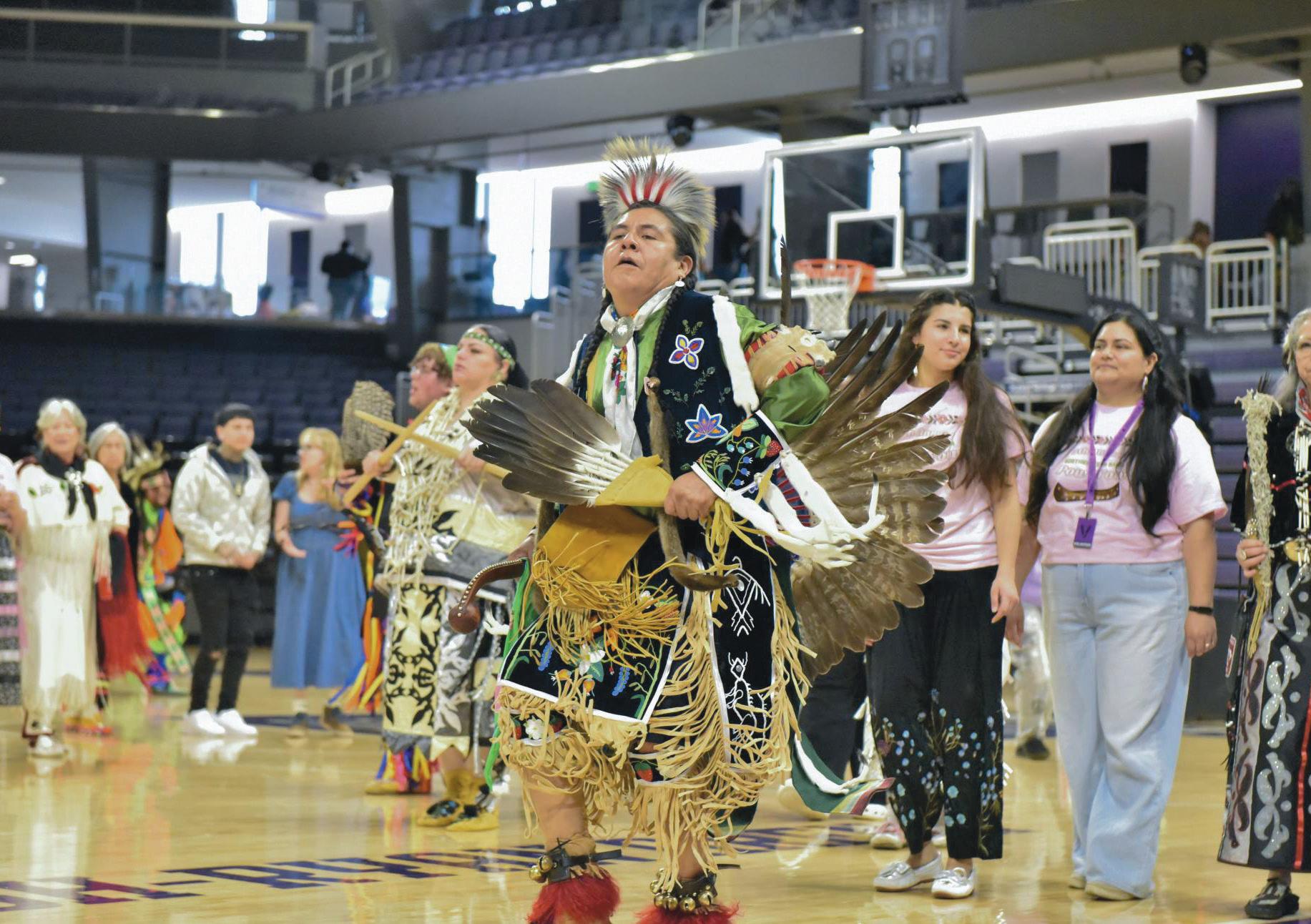
Northwestern’s Native American and Indigenous Student Alliance hosted its fifth annual Spring Pow Wow at Welsh-Ryan Arena on Sunday, drawing about 1,500 attendees from both Indigenous and nonIndigenous communities.


Christjohn said her son was a drummer for Indian Community School Eagle Singers, one of the four drum groups at the Pow Wow, playing music for dancing.









Throughout the event, attendees were invited onto the arena to dance to the beat of the drums. This included spot dancing, where members who ended up at a specific location when the music stopped won $10.







fourth quarter, just 11 minutes away from pu ing the contest four unanswered goals to level the game. During the run, the Terrapins won four of the ve draws and outdrew the ’Cats 10-6 in the game. It marked just the second time in the last 12 games NU lost the draw — the rst of which also came against

of the ball with a chance to win
By ALLISON KUESTER assistant city editor
When First Congregational Church of Evanston first found out about the presence of Immigration and Customs Enforcement agents in the city, church members hung up signs on the outside walls of the building saying “ICE cannot enter here,” and “Immigrants are welcome, ICE is not.”
The church wanted to ensure that immigrants in the community were aware that it would stand with them and protect them, Jason Coulter, the church’s senior pastor,




and ran the clock down to less than 30 seconds.
“It is an opportunity for us to come together, to celebrate our cultures, traditions and relationships with our fellow students and Indigenous peoples across the nation,” Weinberg senior Kaya Payton, cochair of the Spring Pow Wow Planning Committee, said during opening remarks.















sive play, redshirt












said.
“This is a congregation that could be seen as a sanctuary, as a safe space, as an ally and as someone who will take risks to defend others,” Coulter said.
“We think that is part of the way we live our faith in the public square, by practicing our values in real time.”
During Operation Midway Blitz, the Trump administration’s federal immigration crackdown targeting undocumented immigrants in the Chicago area, some Evanston churches announced that their faith communities could serve as sanctuaries for immigrants.
In January 2025, Lake Street Church of Evanston, which











Students and a teacher from the Indian Community School in Franklin, Wisconsin, a school that provides education to Native children in grade school, also performed various songs and dances.
Carol Muskin (SESP ‘83, TGS ’91), a volunteer at the Gichigamiin Indigenous Nations Museum, said she has attended NAISA’s Pow Wow every year and enjoys actively participating in the festivities.



Following an acknowledgement that Northwestern sits on the traditional homelands of the Council of the Three Fires, the Pow Wow commenced with the Grand Entry. Led by army veterans, the ceremony included dancers, Pow Wow royalty and NAISA committee members. Led by the head dancer, the performers lined up based on age and dance


Pow Wow attendee Kayla Christjohn, a member of the
“I really love coming and dancing and seeing the
» See POW WOW, page 11
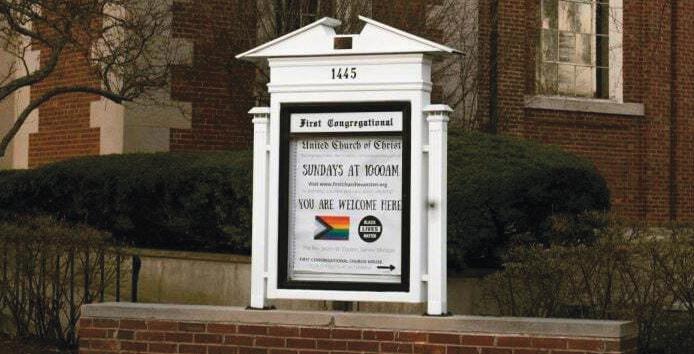
Coulter described as “the real leaders on this movement,” declared itself a sanctuary by providing short-term emergency shelter to immigrants in need. The move came despite an announcement from the
By MAX TURETZKY assistant city editor
A bank of six machines, virtually indistinguishable from slot machines, sits against the wall of a Citgo gas station at 443 Asbury Ave.
Evanston has banned video gambling within city limits since 2009. But a legal loophole has helped ll that void with dozens of “sweepstakes machines,” which look, sound and play much like video gaming terminals but are mostly unregulated.
Sweepstakes machines skirt Illinois’ gambling laws. To play the game, customers typically purchase gi certi cates redeemable at an online store, receiving slot-style game entries as a promotional bonus. In theory, no purchase is required to enter the sweepstakes, which operators argue keeps the machines outside the bounds of state gaming rules.
Local politicians in both Evanston and Chicago have recently proposed bans or regulations on sweepstakes machines, which critics have said resemble video gambling too closely.
A dra ordinance under consideration by Evanston’s Human Services Commi ee would cap the number of sweepstakes machines in the city at 20, impose a $500 annual licensing fee and a monthly “revenue operation fee” per machine as well as allow only two machines per location.
Ald. Bobby Burns (5th) has led the charge to regulate sweepstakes machines in the city, though he said he would also consider a full ban.
“While we prohibited gaming machines, we have allowed sweepstakes machines to ourish in Evanston,” Burns said. “ ey feel very similar to gaming machines, and I think it’s been confusing.” Burns has proposed 11 amendments to the dra ordinance that would signi cantly restrict how the machines operate. ese proposals would likely prohibit virtually all existing sweepstakes machines in Evanston.
Under Burns’ framework, gambling-style imagery and visuals would be prohibited, sweepstakes entries would need to be tied to the purchase of a real product and operators would be required to allow at least one free entry per day, alongside
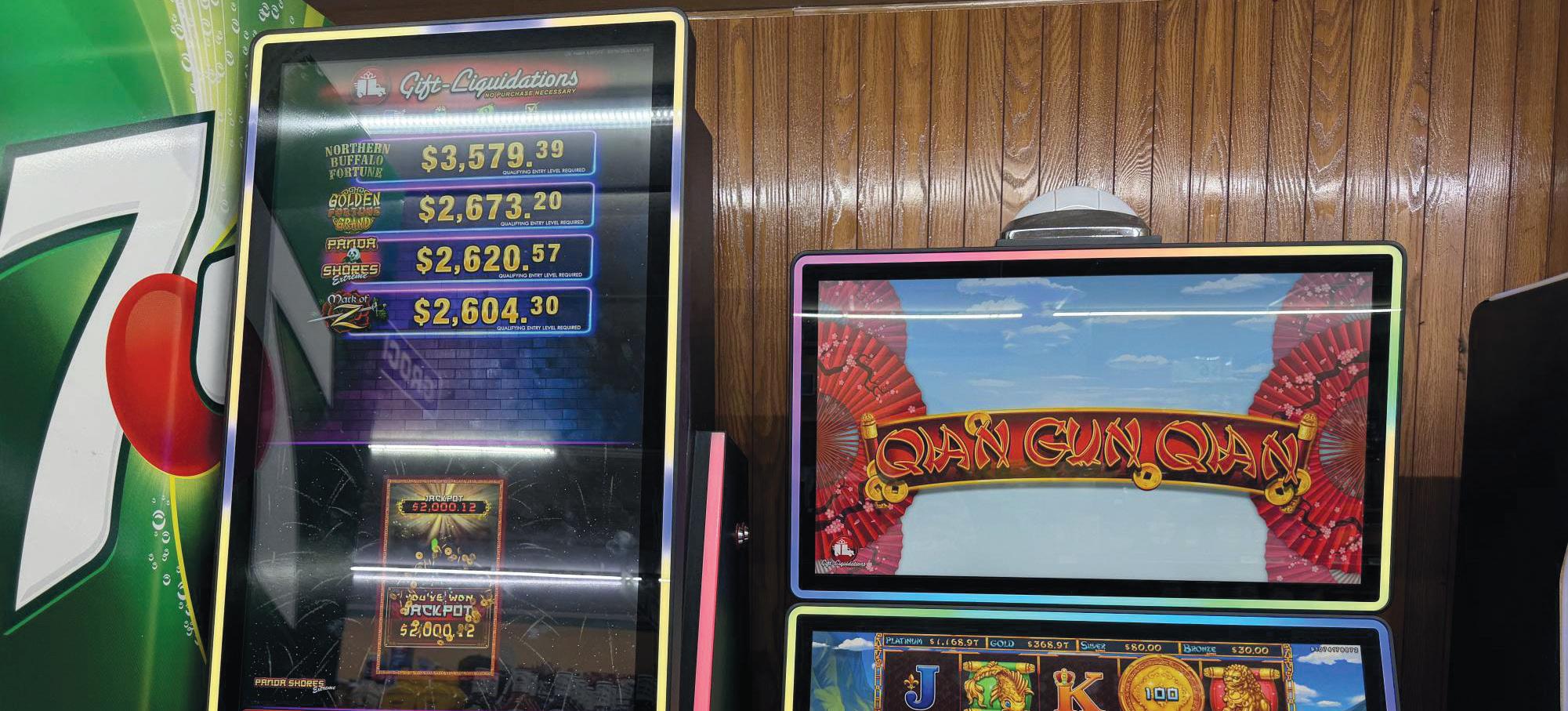
several other new licensing regulations.
However, Burns said he would support allowing sweepstakes machines to remain in Evanston if they functioned as genuine sweepstakes instead of as a “cover” for gambling.
“As long as we limit them to a reasonable amount and tax and regulate them so that they’re legitimate, lawful sweepstakes activity, then we’re good to go,” Burns said. “We bring in some revenue and we allow these businesses that have lost some tobacco products a way to bring in some revenue.”
Sweepstakes machines exist in a legal gray area, and the Illinois Gaming Board considers them illegal gambling devices. In 2024, Evanston police cited several businesses for operating the machines. However, the citations were ultimately dismissed at administrative hearings a er operators argued the devices were legally distinct from gambling.
e Citgo station on Asbury Avenue was among
those cited, longtime manager Adriana Vital said. She added that the sweepstakes companies sent their own lawyers to handle the case on her behalf.
Vital said she installed six sweepstakes machines to replace lost revenue a er Evanston banned the sale of avored tobacco in 2024. Since the citation, she has not been in touch with the city.
“ ey leave me alone, I leave them alone,” Vital said. “You don’t poke the bear.”
Vital added she would welcome some regulation if it meant the machines could stay. Without them, her store would struggle to survive, she said.
She said that it would be a “shame if we have to close down” because of the ban on sweepstakes machines.
“Every mode of survival that we’ve had, they’ve been shu ing it down for us,” Vital said.
Eighth Ward resident Robert Bady, a business
video
He added that the city’s growing number of sweepstakes machines re ects an existing demand for gambling.
While he thinks sweepstakes machines are probably “not legal” under current Illinois law, Bady opposes a municipal ban. Instead, he said he sees an opening to revisit Evanston’s longstanding prohibition on Illinois Gaming Board-regulated machines, which he hopes could “open the door” to legal gambling in the city.
City Council voted 5-2 against legalizing gambling in 2024, despite a strong push by former Ald. Devon Reid (8th).
“You can’t talk out both sides of your mouth, and let this proliferate like this and not make a decision,” Bady said.
m.turetzky@dailynorthwestern.com
Meet the artist Vernon Reid as he shares stories of his unlikely career journey defined by evolving media, community, relationships, and encounters with remarkable people— all set against the backdrop of extraordinary social events, and the work of artists and producers who helped to create the very times that they were simultaneously responding to. Reid will engage with the audience to explore the unintended consequences of actively disruptive change.
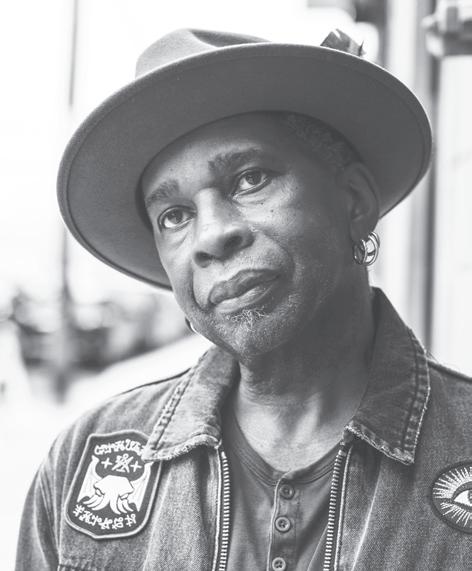

Vernon Reid is a visionary guitarist, composer, and producer best known as the founder and lead guitarist of the groundbreaking rock band Living Colour. Born on August 22, 1958, in London, England, he emigrated to America as an infant with his Caribbean parents. Reid grew up in Brooklyn, New York. He established himself as a force in the Downtown NYC music scene, initially via his association with the brilliant composer and drummer Ronald Shannon Jackson, and his dynamic, Ornette Coleman inspired ensemble The Decoding Society, which skillfully blended rock, jazz, funk, and experimental genres to create a unique and influential sound. Reid formed Living Colour in 1984, and the band achieved widespread acclaim with their 1988 debut album “Vivid,” featuring the hit single “Cult of Personality.” The band went on to release several more successful albums, earning multiple Grammy Awards and becoming one of the most celebrated bands of their era. Reid has also pursued various solo projects and collaborations with artists such as Public Enemy, Carlos Santana, Garland Jeffries, Mariah Carey, Tricky, Grace Jones, The Ramones, Wayne Kramer, James Blood Ulmer, George Clinton, Jack Bruce, and many others. He has also been a tireless advocate for social justice and racial equality, co-founding the Black Rock Coalition with the journalist Greg Tate, artist manager Konda Mason, and producer Craig Street, using music as a platform to create community, raise awareness and inspire change.

Wednesday, April 29, 2026 • 5:00 p.m.

Guild Lounge Scott Hall • 601 University Place • Northwestern University Free and open to the public No tickets or reservations required For more information, contact Suzette Denose at 847.491.5122 • s-denose@northwestern.edu









By DESIREE LUO campus editor
Students packed Parkes Hall 122 for food, music and dancing at the Middle Eastern North African Student Association’s Taste of MENA event Saturday.
A endees browsed booths that showcased snacks, drinks and items from countries in the MENA region, as music traditional to the represented countries played over speakers.
“A lot of times, Middle Eastern countries and North African countries are grouped together,” MENA coPresident and McCormick junior Batool Salman said. “ is event really lets every country shine and show what is special about them.”
Salman said the event reached full capacity last year — the rst time it was hosted. Despite an increase in tables this time, Salman said the event still ran out of seating with about 150 a endees. Organizers encouraged a endees to dress in cultural a ire. During the event’s “Fashion Show,” booth representatives walked around the perimeter of the room holding ags from their respective countries.
“We have a lot of drip,” MENA co-President and SESP junior Mahmoud El-Eshmawi said. “It’s just a ma er of like, ‘Hey, this is another way of expressing our cultures.’”
As the event wound down, a endees voted for their favorite booths of the night. Sudan’s table won rst place, followed by Egypt’s and Iraq’s. roughout the evening, students lined up at Sudan’s booth to try the hibiscus ower juice, a traditional beverage in Sudan, McCormick rstyear Muzan Abdulla said.
“I’m happy everyone showed up,” she said. “We’re all winners.”
Egypt’s booth was decorated with CDs and lm posters, which El-Eshmawi said represented the city’s status as the region’s entertainment hub. Soccer jerseys, including that of Liverpool FC winger Mohamed Salah, lined the wall behind the booth.
Earlier that day, El-Eshmawi said he called his mother asking for directions and ingredient amounts to make Roz bil Laban, an Egyptian rice pudding. e dish was just one of many items he brought from his apartment to the event.
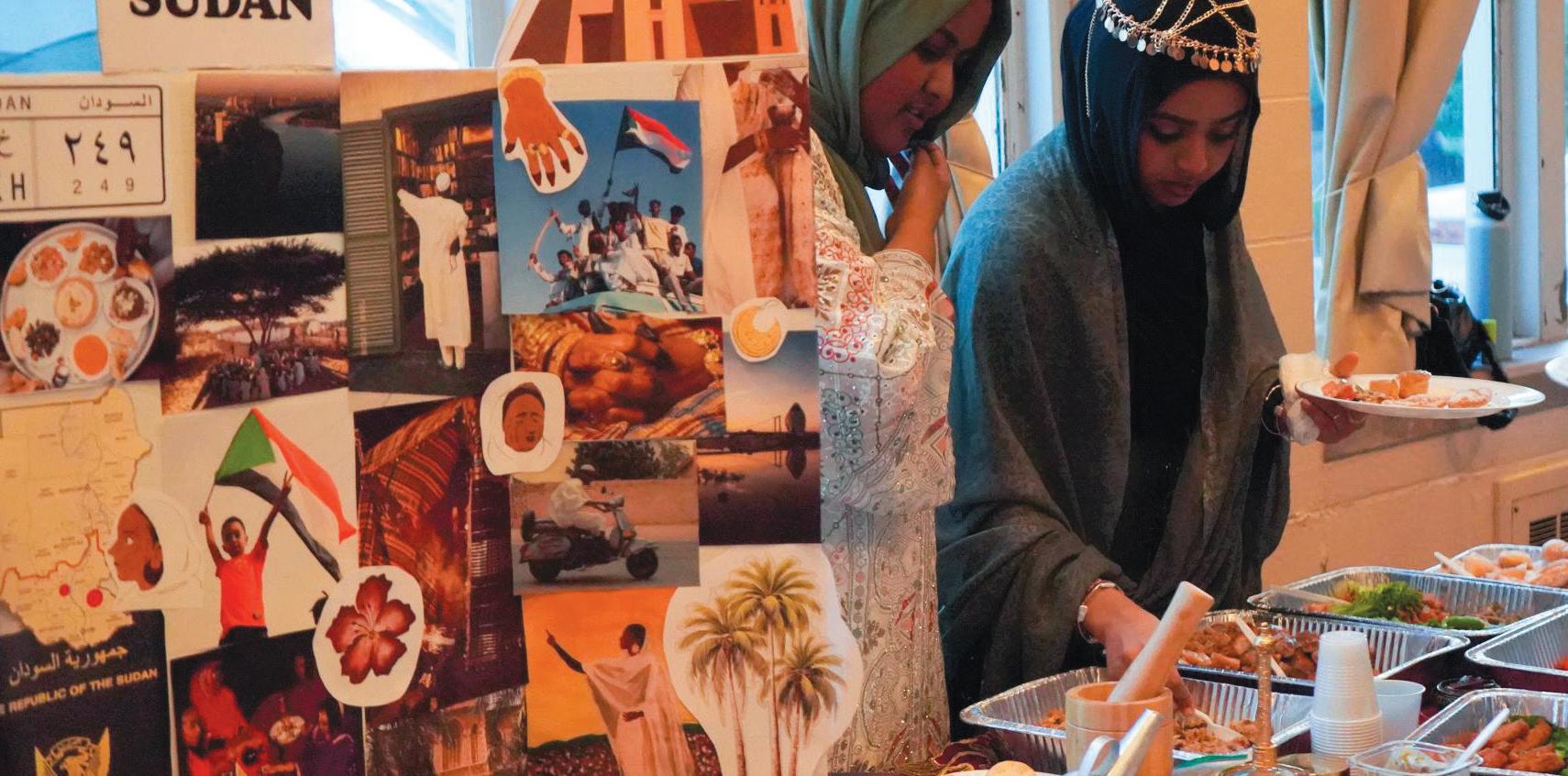
“My apartment is hollow at the moment,” he said. e booth also o ered macarona bechamel — which El-Eshmawi said is his favorite dish — and sobia, a sweet beverage.
Most booth o erings were homemade. SESP sophomore Lana Alnajm, who serves as MENA’s Associated Student Government senator, said her family members pitched in to help make dishes for Iraq’s booth.
One of the dishes the booth o ered was kibbeh, which Alnajm said is made with rice, ground beef, parsley and various spices.
“ e homemade things are things you will o en not nd or see in any restaurant,” she said.
For Alnajm, the event o ered a way to represent her culture at Northwestern, especially a er no longer celebrating Arab Heritage Month in NU dining halls, she said.
In April 2025, NU apologized for and condemned a performance held in Sargent Dining Hall by a local Arab dance group, intended to celebrate Arab Heritage Month.
“ is is kind of our way of taking that back and allowing the community to cultivate awareness about our culture, but also celebrate as well,” Alnajm said.
MENA Advocacy commi ee member and Weinberg sophomore Ameera Hamadeh said she hopes the event helps community members, especially on NU’s campus, learn more about di erent cultures in the MENA region.
Hamadeh tabled at Palestine’s booth, which had a ke yeh draped around it to symbolize Palestinian resistance, she said. Olive trees also surrounded the booth.
“At NU, we don’t get a lot of opportunities to demonstrate our culture in a positive light,” Hamadeh said. “Being able to do that at Taste of MENA, and seeing how people have been so receptive and really supportive, makes me really happy and gives me hope for the future.”
El-Eshmawi said the event’s turnout was encouraging, despite this only being its second year.
A endees, coming from MENA and non-MENA backgrounds alike, had arrived at Parkes Hall up to 15 minutes early, he said.
“Although it is important to shed light on the struggles that we’re facing, I think it’s just as important to celebrate the beautiful parts of the culture,” El-Eshmawi said.
d.luo@dailynorthwestern.com
The Daily Northwestern
www.dailynorthwestern.com
Editor in Chief Anavi Prakash eic@dailynorthwestern.com
General Manager Stacia Campbell stacia@dailynorthwestern.com
Holly and John Madigan Newsroom
Phone | 847.491.3222
Campus Desk campus@dailynorthwestern.com
City Desk city@dailynorthwestern.com
Sports Desk sports@dailynorthwestern.com
Ad Office | 847.491.7206 spc-compshop@northwestern.edu
THE DAILY NORTHWESTERN is printed each Wednesday during the academic year, except vacation periods, the two weeks preceding them and once during August, by Students Publishing Co., Inc. of Northwestern University, 1999 Campus Drive, Evanston, IL 60208. All news is published 24/7 online at Dailynorthwestern.com.
First copy of THE DAILY is free, additional copies are 50 cents. All material published herein, except advertising or where indicated otherwise, is Copyright 2025 THE DAILY NORTHWESTERN and protected under the “work made for hire” and “periodical publication” clauses of copyright law.
POSTMASTER: Send address changes to THE DAILY NORTHWESTERN, 1999 Campus Drive, Evanston, IL 60208. Subscriptions are $100 for the academic year. THE DAILY NORTHWESTERN is not responsible for more than one incorrect ad insertion.









By CAMI KNIGHT reporter
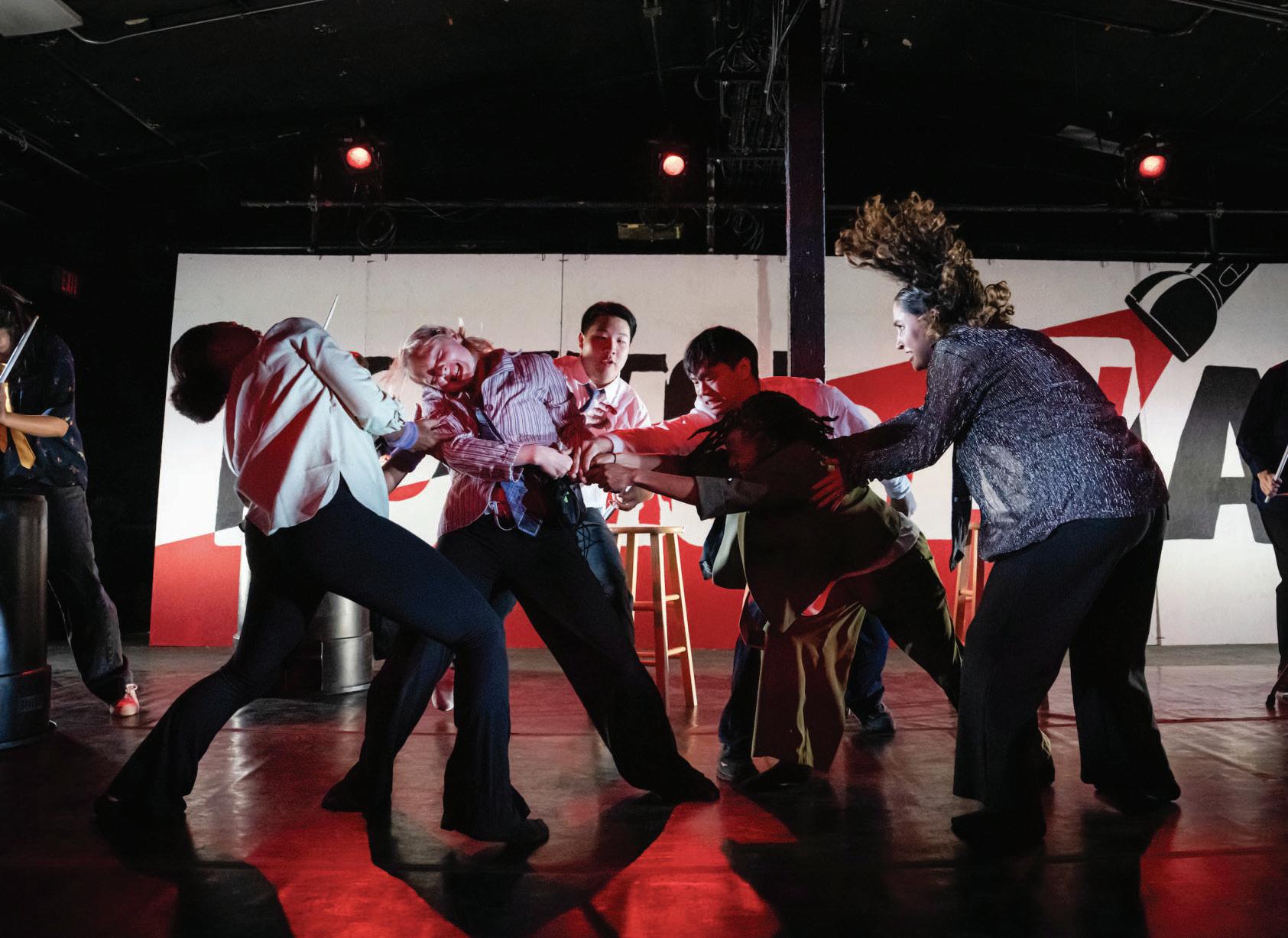
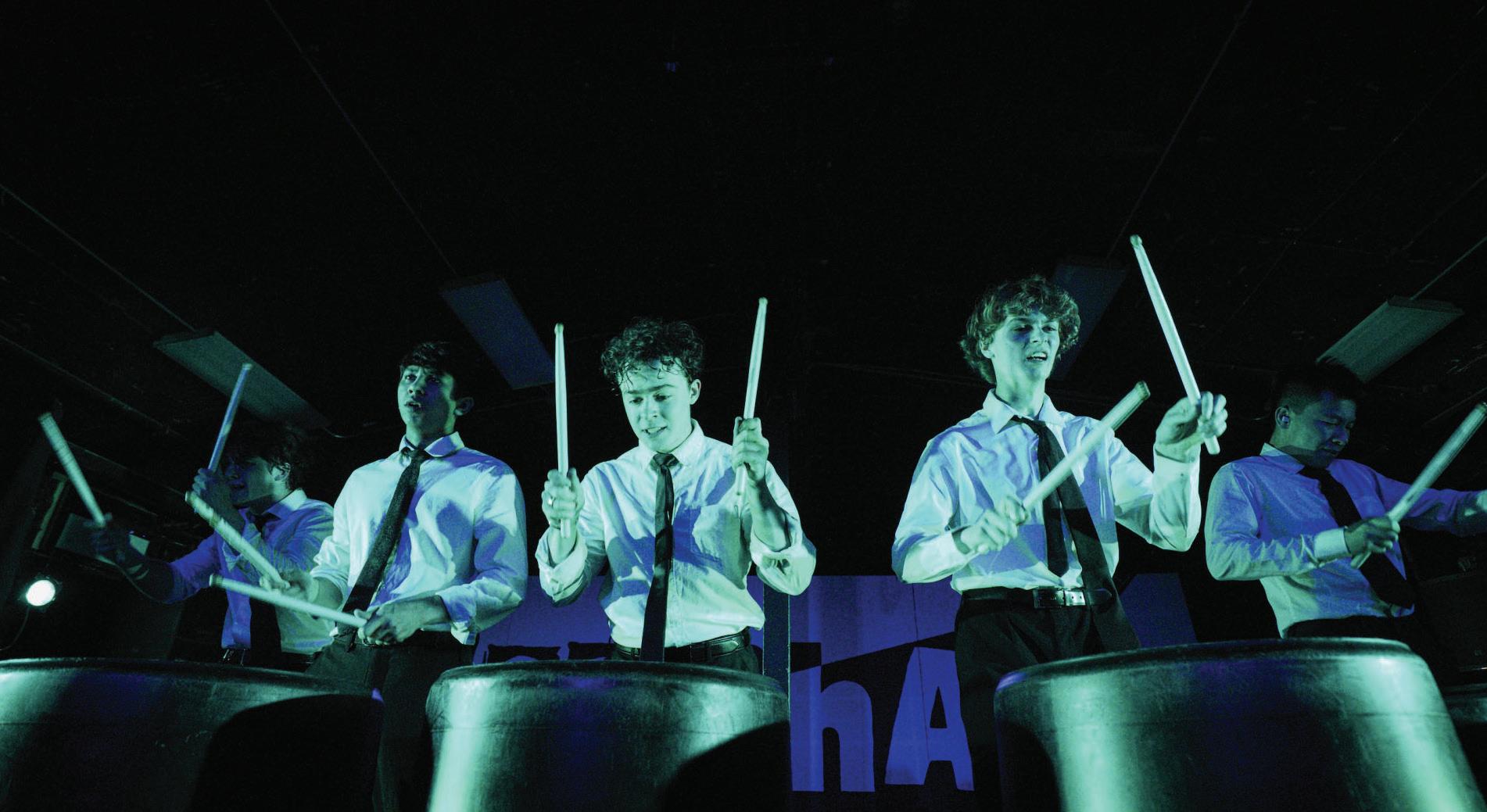
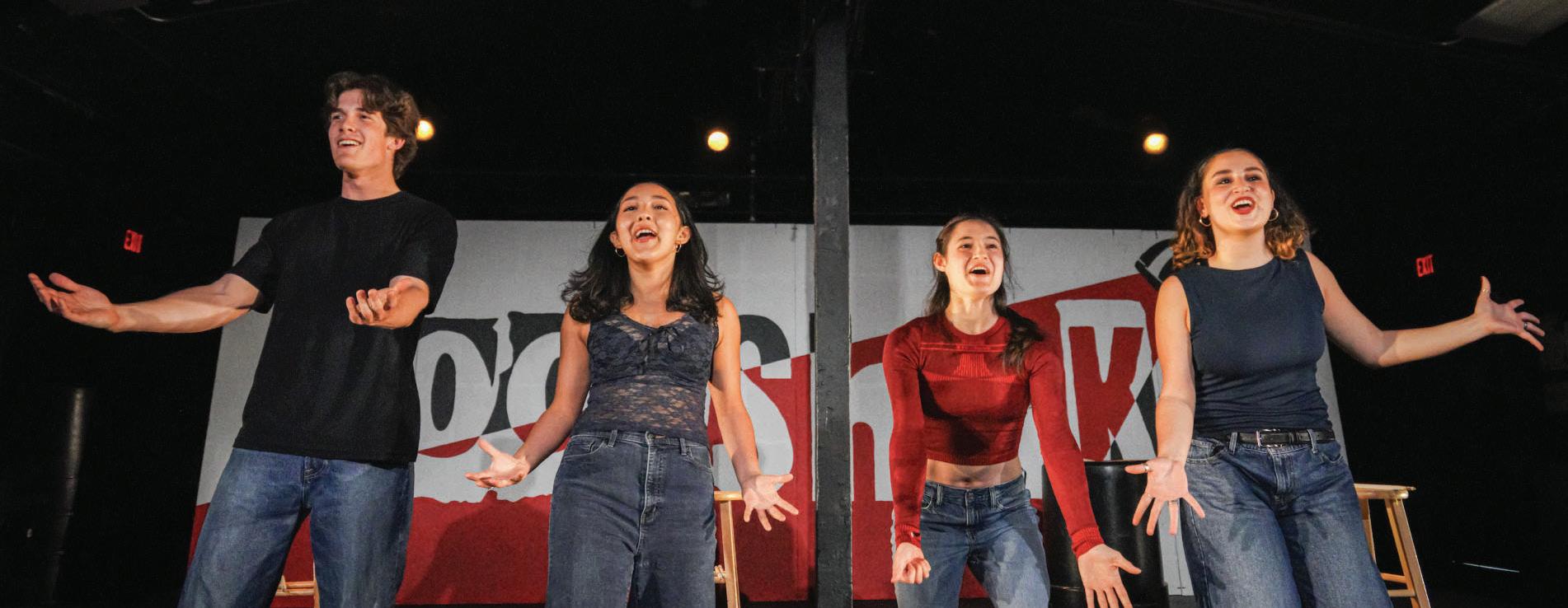
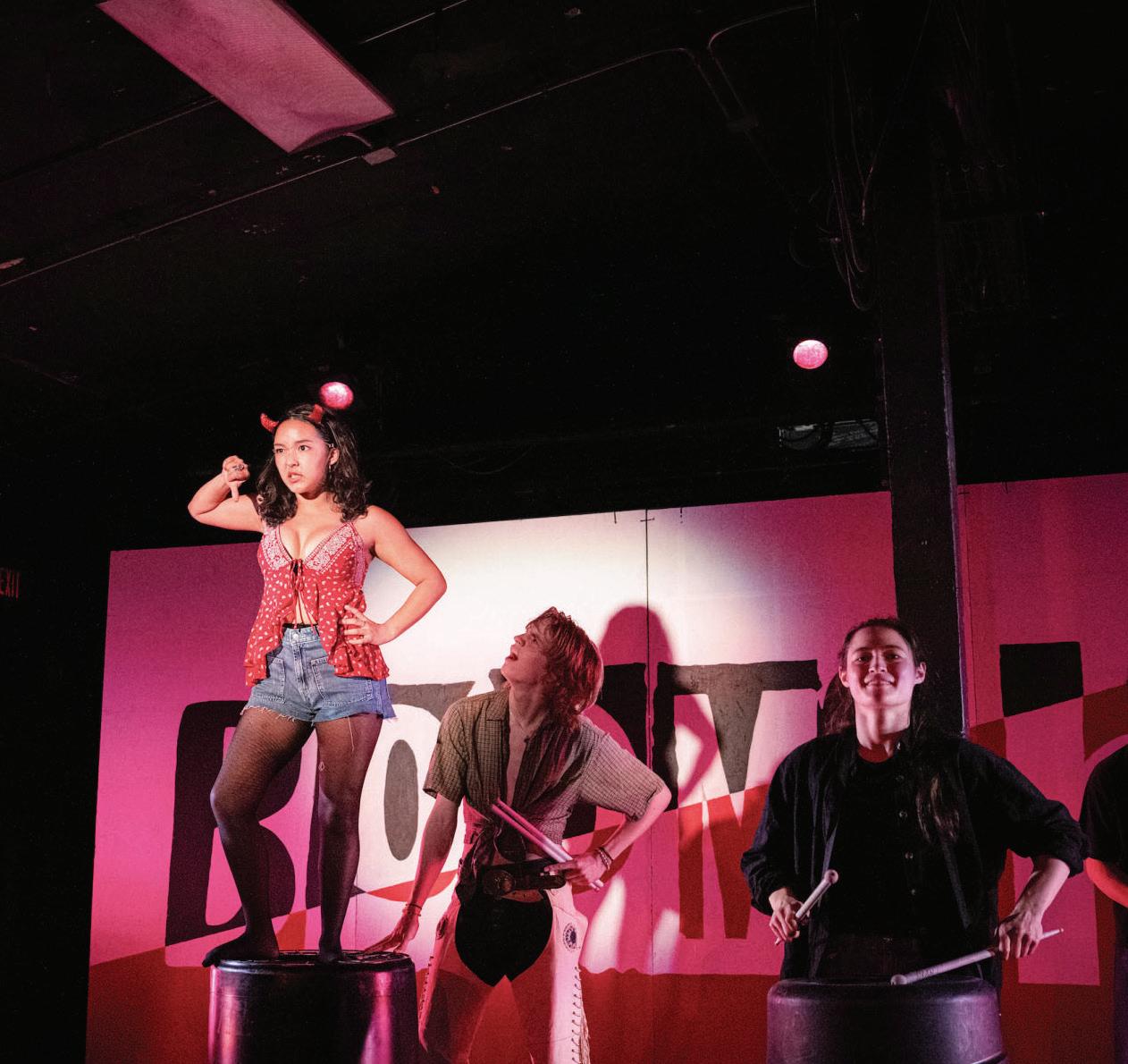
A small stage with poles in the middle could not stop Northwestern’s premier drum, dance and rhythm ensemble, Boomshaka, from pulling out all the stops at its sold out annual spring show Friday and Saturday at Shanley Pavilion.
The show, titled “MOST WANTED,” featured dancing and drumming numbers alongside skits, body percussion and several other unconventional instruments, including boomwhackers and broomsticks.
Each of the pieces was loosely centered around a money heist theme, inspired by the 2025 Louvre robbery, Weinberg junior Clayton Zipperian, who serves as a drummer and executive producer for Boomshaka, said.
“That idea of a heist kind of stuck around and became the most loyal motif,” Zipperian said. “One of the great things about our spring show is that it offers a lot of thematic and artistic flexibility … it’s more about the product that we’re putting on the stage than the theme that it follows.”
A variety of pieces hit the stage, set to music ranging from popular hits like Michael Jackson’s “Smooth Criminal” and RAYE’s “WHERE IS MY HUSBAND?” to an acapella rendition of “The Pink Panther Theme” by Henry Mancini.
The time in between dancing and drumming was filled with skits written and produced by Boomshaka’s members about museum heists, court cases and even superheroes.
For McCormick and Communication first-year Aether Yun, these skits added to their enjoyment of the production.
“I was quite pleasantly surprised because I
wasn’t expecting all of the other things that (Boomshaka) added to make this into a full show, like all of the skits in between dances,” Yun said.
While the dancing and drumming sets generated audience applause that could be heard from outside the pavilion, the skits kept audience members laughing throughout the almost two-hour show.
Zipperian said that although the hours spent planning and practicing for the show could be a lot, putting on the show challenged him and his fellow cast members in ways he never could have imagined.
“I didn’t think that I would ever meet a group of people that can put on these really moving and emotional performances, but also like something that’s a little more over the top and cartoony, like the superhero piece,” Zipperian said. “Being surrounded by people that are this creative and
talented, it really brings the best out of all of us.”
Communication sophomore Moorea Lambert came to the show to support her friends who were involved. Lambert said she anticipated the talented dancers and drummers, but left feeling blown away by the smaller details and interludes she was not prepared for.
With constant costume changes, pieces where performers stepped outside of their comfort zones by switching their typical roles, like “Dancers Drumming” and “Drummers Dancing,” and a large variety of props and sound making devices, the show kept audience members on their toes.
“They have something for everyone,” Lambert said. “I was entertained, I was moved, I was really impressed and I felt very lucky to get to see so many students’ passions reflected.”
camiknight2029@u.northwestern.edu
By REGAN HUIZENGA print managing editor
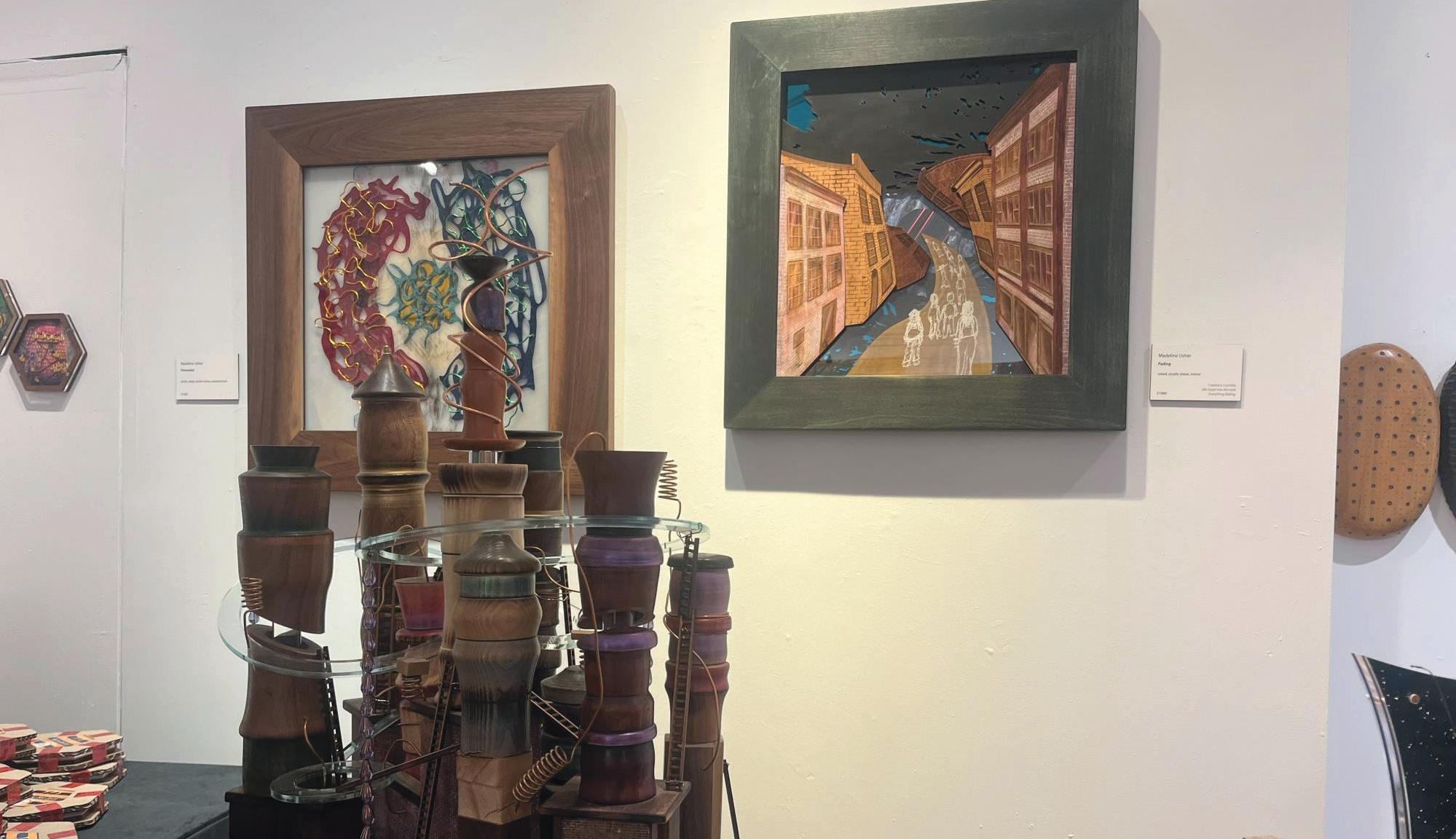
From visual wood sculptures to practical furniture pieces, “Evanston Woods II” featured wood in many forms. Works by six local designers and makers filled the Space 900 Gallery Friday through Sunday for the show.
Located on Dempster Street, Space 900 offers opportunities for artists — members and non-members alike — to showcase their work. According to member artist Todd Anderson, the gallery features shows by non-member artists about a third of the time.
“Evanston Woods II” was organized by Chicago woodworker Paul Segedin, who said the show was about reaching the public with makers’ works. Segedin said that while he talked a lot in college about controlling the means of production, he later realized that wasn’t enough; he also had to control the means of distribution.
“We want to remind people that handmade furniture is out there,” Segedin said. “It’s really hard to find in Chicago. There’s a lot of good makers here, but not a lot of ways to find it.”
Segedin displayed several of his own pieces in the gallery. He got into woodworking, which he described as his “third or fourth career,” a little more than a decade ago.
Local artist Madeline Usher showed a variety of pieces in the show. Though Usher began doing art professionally about four years ago, she said making art has been an “obsession” throughout her life.
“I’m at my studio whenever I’m awake and not at my day job,” she said.
Usher’s background is in woodworking, largely influenced by her father’s shop filled with metal and woodworking tools while she was growing up.
Most of her pieces include wood as a material, but Usher has also evolved to include other materials, such as her sculpture “I Wish You Could Join Me Up Here.”
The sculpture, which was displayed in “Evanston Woods II,” is made of wood, copper, beads, acrylic paint, acrylic sheets and watercolor paint. Usher said the piece reflects the feeling when a person is finding success in their life while their friends are going through rough times and the desire to have their friends join them.
Usher finds materials for her work all over, she said, including at a lumber yard and even from trees cut down near CTA tracks.
She was not the only maker to make use of downed trees. Local maker and architect Len Koroski displayed a coffee table made from a tree that had been cut down at the corner of Oak Street and Maple Street in Winnetka.
Koroski started woodworking about five years ago, when he no longer had to commute to work during the COVID-19 pandemic. As an architect, Koroski compiled books of sketches and ideas for furniture and buildings, he said, so he decided to start building some of them.
He collaborated with Mui Baltrunas, a master wicker, on a bench in the show. Koroski built the bench, and Baltrunas did Danish cord weaving for it.
As a master wicker, Baltrunas said he works on everything from museum renovations to original
designs. In addition to the bench, he had a pair of chairs originally from Jamaica in the show.
His work can take up to a couple of weeks, depending on the size and material of the piece, he said.
“It’s meditative,” Baltrunas said. “You can’t get distracted, you have to keep your focus and you get into a rhythm.”
According to Segedin, many of the featured makers
and designers spend a lot of time creating in a solitary environment.
Thus, it was exciting to be able to show his work in
“Evanston Woods II,” he said.
“Making it isn’t good enough,” Segedin said. “It really needs to be out in the world.”
r.huizenga@dailynorthwestern.com
By YANA JOHNSON in focus editor
An archaic riddle from the depths of my memory resurfaced while watching “Michael,” director Antoine Fuqua’s bedazzled retelling of the King of Pop’s life. It asks: A father and his son are in a car accident. The father dies at the scene and the son is rushed to the hospital. At the hospital, the surgeon looks at the boy and says: “I can’t operate on this boy, he is my son.” How can this be?
To the modern mind, the answer is obvious: The surgeon is the boy’s mother, a radical idea foreign to the misogyny of the twentieth century. However, when I first heard this riddle as a young child, I was confused for a different reason: how could a stranger’s hands hold the life of a child better than their own family?
Eventually, I realized that a mother, regardless of how skilled, knowledgeable or loving she is, should never be allowed to operate on her own child. Love alone will not always prevail. In surgery, as in filmmaking, it is only a hindrance.
Tragically, this is the case for “Michael,” a film heavily endorsed and influenced by Michael Jackson’s living
relatives and friends. Rightfully, they attempt to offer Jackson the dignity and joy the media often deprived him of in life. But their overly familiar hands, brimming with remnant pain and affection, are ultimately too gentle to make the cuts vital to the movie’s survival.
“Michael” premiered in theaters on April 24 with its star-studded cast, helmed by Juliano Valdi and Jaafar Jackson as the respective younger and older iterations of the film’s titular character.
To call Jaafar Jackson a revelation would be an unspeakably gross understatement. In his first ever appearance on-screen, he is a vessel possessed by Michael Jackson’s fabled spirit. His twitchy smirks and sweat glistened jheri curl make “The Gloved One” undead again, an act as impressive as it is often sincerely unsettling.
One could credit such a performance as Jafaar Jackson’s birthright, bestowed upon him as not only a close observer of the musical phenom but his blood relative. Indeed, Jafaar Jackson performs every hip thrust and “hee-hee” not just as a dutiful fan, but as the son of the icon’s brother. Clearly, the planetary pressure inherent to that title crushed him into a diamond rather than dust, and thank God for it.
His performance is a huge benefit to the film, and
the only case of the Jackson family’s involvement being a creative benefit rather than a disservice.
Otherwise, the Jackson family’s vice grip on the film’s production strangles the film’s already frail skeleton. It was evident to me that between Michael Jackson’s son appearing on set nearly every day and the star’s siblings frequently involving themselves in development, any layered interpretation of Jackson’s life was stamped paper thin.
The film wavers between highlight reel and tragedy porn. Jackson excels on-screen as Michael Jackson, but when he is not portraying his uncle basking in the adoration of his fans and the joy of his performance, he plays the star as a kicked puppy, bullied by his father and too delicate for the perils of the real world.
Perhaps this truly is just how the real Michael was. It certainly is how a grieving, loving family would want to remember and represent him. But it’s not how an interesting, compelling protagonist is written. And for a film that hinges on his character, it eviscerates the storytelling in a way even Jafaar Jackson’s exceptional performance can’t fix.
But thankfully, there is still Jafaar Jackson’s performance. There is “Thriller” performed on the big screen and the live rendition of Jackson’s criminally underrated
ballad “Ben.” The moonwalks are smoother than shea butter and the concert scenes — of which otherwise there would be too many — genuinely inspire even the most silent viewer to stand and sing.
It’s hard to fault Jackson’s estate for dominating the creative reins of their brother, father and friend’s story. Given Jackson’s poisonous relationship with the media, their attempt at a respectful, kind portrayal is not only fair, but simple “Human Nature.” And for what it’s worth, they succeeded; a new generation will fall in love with Jackson’s timeless hits, and those of the past will remember why they adored him in the first place.
If not life-changing, “Michael” is at least fun. It offers audiences the chance to turn back time and envision a simpler, more joyous time with a simpler, joyful character. If viewers are searching for Jackson’s dark underbelly, sordid secrets or an acknowledgment of the mortifying allegations that plagued his later years and legacy, this is not the film to watch. Audiences can only give in to the synth-backed bliss. Or, as the film offers no other choice, they can just “Beat It.”
y.johnson@dailynorthwestern.com
By ADDISON HINESMAN and ESTEBAN BALTA the daily northwestern
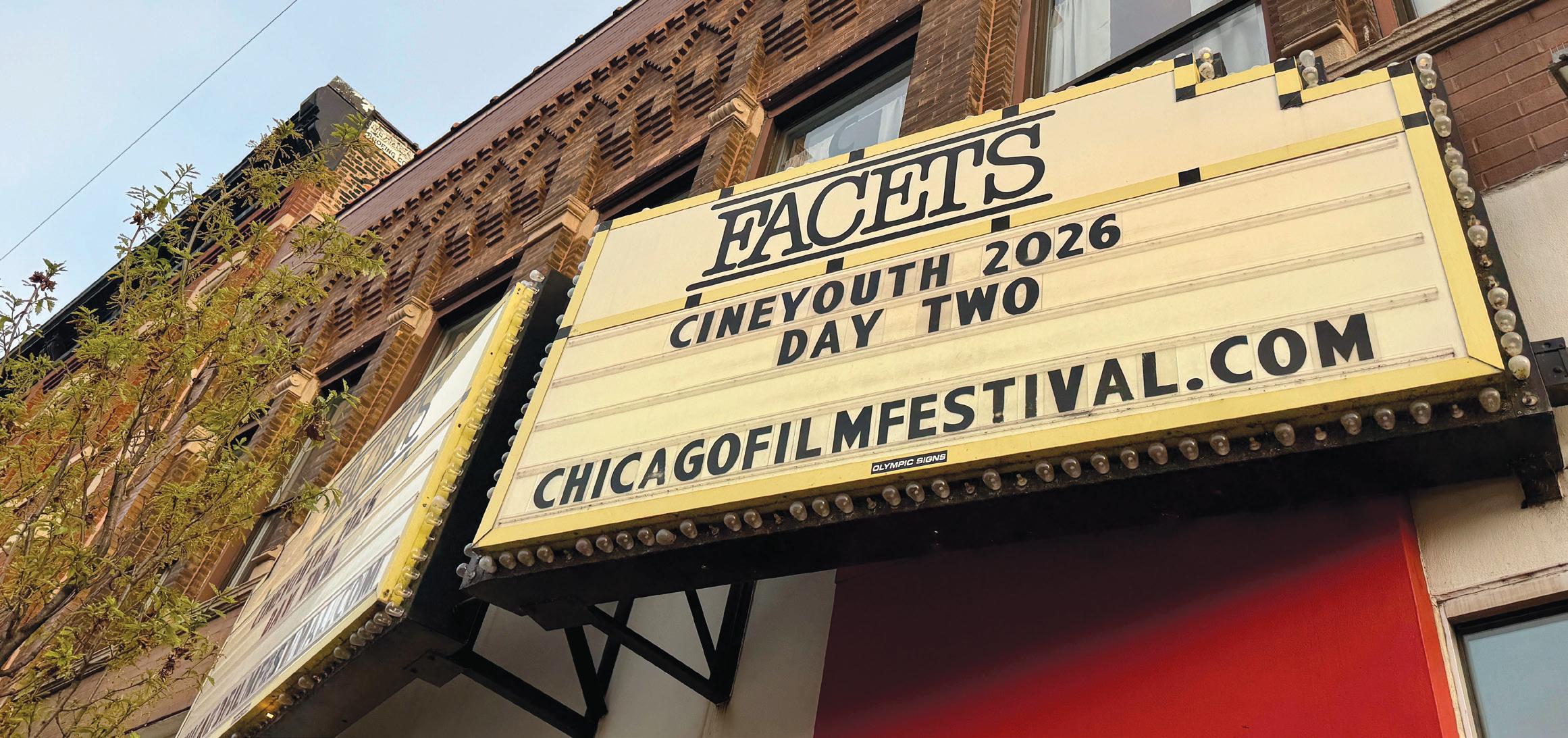
Filmmakers filled the Facets Theater from April 24 to 26 to see their short films on the big screen at CineYouth’s 21st annual film festival. The event showcased short films by young filmmakers from all over the world. It offered free admission and a variety of events beyond screenings, including Q&As with filmmakers and workshops presented by Adobe and Columbia College Chicago. For Marketing Manager Michael Welch,
CineYouth is more than a collection of top short films. It’s a community that fosters support for aspiring artists, he said.
“I hope this really gives them a platform to showcase their work for the first time and really motivates them to continue to follow their art and to grow in their careers,” Welch said.
CineYouth screened 71 selected short films from 16 countries. According to Welch, the decision process was rigorous and took six months.
Films were split into 10 different categories, ranging from “chaotic evil,” which included dark films with twisted outcomes, to “(dis)embodied,”
featuring films focused on the LGBTQ+ experience.
For Daniela Morales Morcillo (Communication ’25), the most important viewer of her film was her mother.
“Retazos” centers on her mother’s self-reflection on motherhood through experimentation with family archival photos.
Morales Morcillo said she remembers her mother’s reaction to seeing their family photos on the big screen, which she wasn’t aware would be included when Morales Morcillo took them.
“(She) never thought people outside our family would see it, but she’s very proud,” Morales Morcillo
said. “She’s been very supportive of my filmmaking enterprises.”
Morales Morcillo’s mother wasn’t the only supportive face in the crowd. Brianna Gallardo (Communication ’25), Morales Morcillo’s close friend, said she felt proud to see Morales Morcillo’s work broadcast on the big screen.
Gallardo, a fellow film enthusiast, found the event enriching.
“I’m just excited that her film is given a platform to be seen by a huge amount of people,” Gallardo said. “I really love seeing other people’s work, and just being able to be in the same space with other creatives.”
Morales Morcillo said she had applied to CineYouth so many times, she lost count.
“Third time’s the charm,” Morales Morcillo said. “Oh, wait, actually, fourth. Fourth time is the charm.” Loyola Marymount University student Molly Foy, another young filmmaker, based her screenplay “Hail, Mary” on a collection of memories from her adolescence.
The short film is a coming-of-age story in which the protagonist rebels against their parents in order to prove their independence to friends.
“There’s so many faces involved in this, like actual programmers and people that have watched your film and want to talk about it,” Foy said. “Not only has someone seen my film that I don’t know, they also enjoyed it and saw a place for it within their program.”
After spending half a year preparing for the event, Welch said the payoff was beyond rewarding. He said the festival is meaningful not only to the filmmakers, but to the CineYouth team as well. Welch said he looks forward to a bright future at CineYouth, hoping to continue to increase young filmmakers’ passion for film.
“I just want this to be an opportunity for them to continue to pursue their art,” Welch said.
addisonhinesman2028@u.northwestern.edu estebanbalta2028@u.northwestern.edu
By ELIZA GOLDWASSER assistant newsletter editor
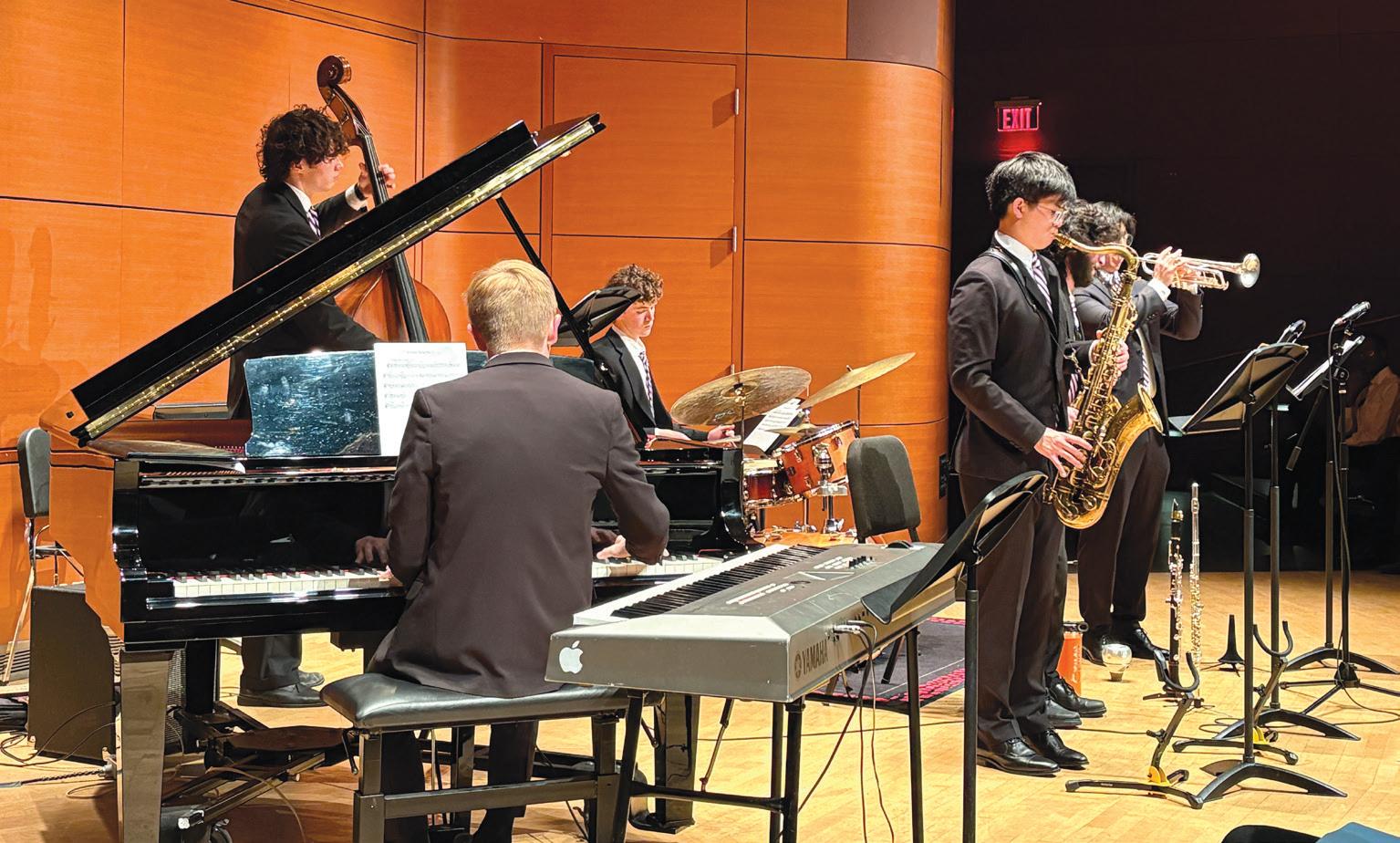
Dynamic arrangements by Bienen School of Music students transformed the McClintock Choral and Recital Room into a lively Miles Davis tribute concert Monday night.
Two Bienen Jazz Small Ensembles — the Derrick Gardner and Kevin Fort Ensembles — arranged and performed Davis and his collaborators’ pieces in celebration of his centennial.
Bienen first-year Milo Kaplan, the alto saxophonist in the Kevin Fort Ensemble, said there was a special pressure that came with arranging the music of Davis, who he said is often considered “the greatest jazz musician, if not the greatest musician of all time.”
“To attempt to do something meaningful and unique with this music that’s already so potent was challenging and a bit daunting, but we did our best, and we had a good time with it tonight,” Kaplan said.
Members of the ensembles selected compositions to perform. The concert incorporated decades of music and subgenres of jazz, including bebop and modal jazz, to reflect Davis’ extensive and multifaceted career.
While there was not a lot of homogeneity in the style or era of the arrangements, one common thread throughout the concert was that very few of Miles Davis’ pieces were actually performed.
While introducing their arrangements, the
musicians joked with the audience about the lack of original Davis compositions. Kevin Fort, director of the Kevin Fort Ensemble, hypothesized why so much of the music attributed to Davis was not actually written by him.
“He didn’t have to write that much himself because he had these great composers, great musicians, that he played with all the time,” Fort said. “That’s one thing. The other thing is, he tended to put his name on other people’s work when maybe it shouldn’t have.”
The lack of Davis’ tunes did not seem to bother the audience, though. The sold-out crowd gave standing ovations to both ensembles at the end of their performances.
Evanston resident Margarita Redmond said she has been coming to Bienen concerts for years and thought the show was fantastic.
“I’ve been a hardcore aficionado of the student ensemble for a long time,” Redmond said.
Members of the ensembles have, for the most part, been playing together since the beginning of the year.
As the ensemble spent more time playing as a group, Kaplan said they began to learn each other’s musical languages, allowing them to interact more fluidly.
“A big part of jazz is this nonverbal, even nonvisual communication, where we find moments to interact with each other just based on what we hear,” Kaplan said. “That’s only gotten that much easier over the course of playing together for a year.”
Bienen junior and Kevin Fort Ensemble drummer
By MICAELA RIVERA PORRAS assistant el diario editor
Aunque muchos edificios en la Universidad de Northwestern cuentan con una mesa de billar, hay varios estudiantes cuya afición por este deporte va mucho más allá de unos juegos a la semana.
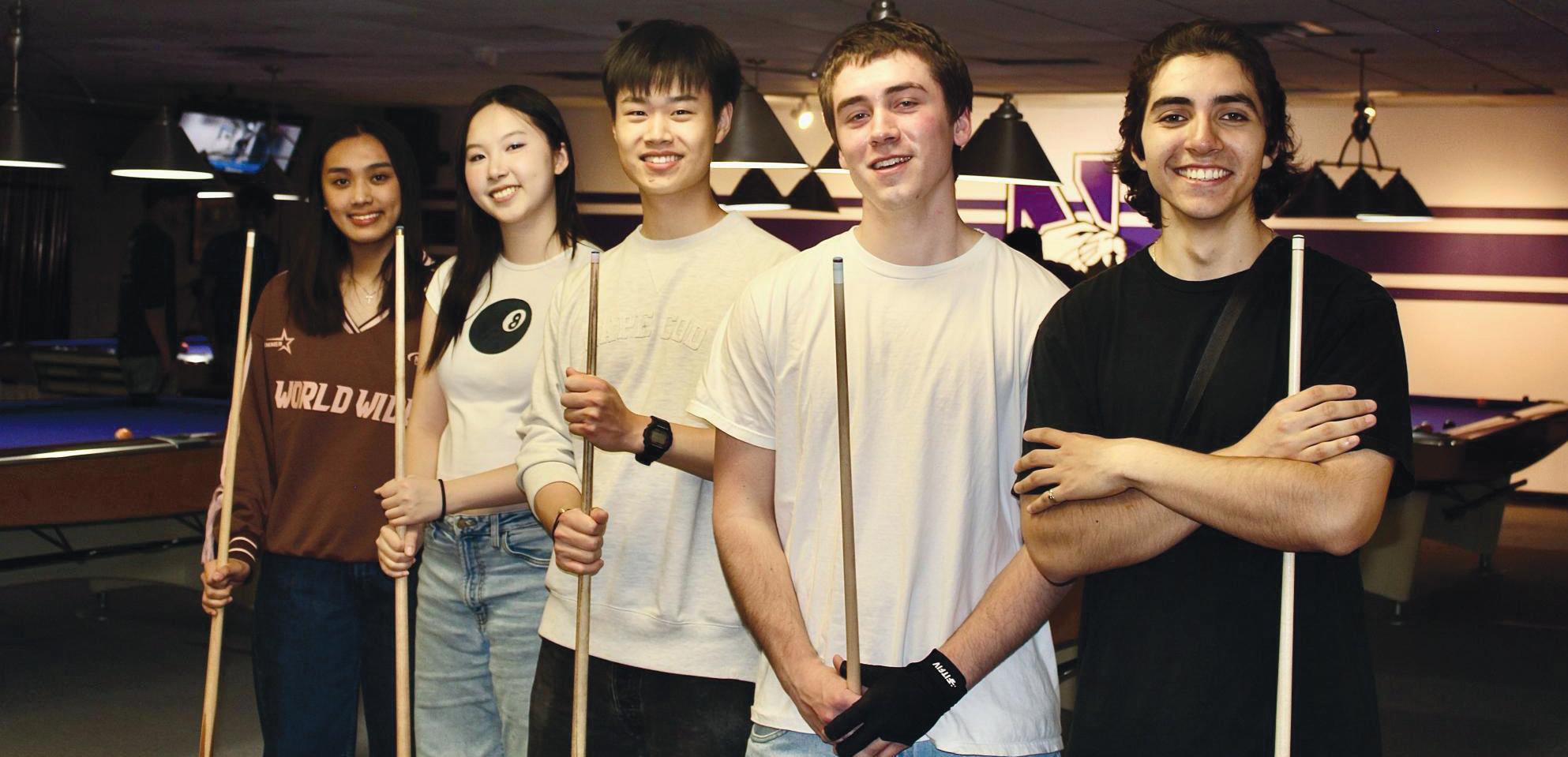
Billiards Club, se reúne todos los jueves en la sala de juegos de Norris University Center, y es un punto de encuentro para los más de 90 miembros del club, los cuales son estudiantes de primer año hasta postdoctorado.
Raphael Tinio (Weinberg ’25) co-fundó el club en 2022, al notar que habían otros alumnos como él que le dedicaban mucho tiempo a jugar en las mesas de billar en los edificios de sus dormitorios.
“Al inicio fue muy difícil porque pensé ¿Cómo organizo a la gente?”, dijo Tinio. “¿Cómo organizo un club? y ¿Cómo hago que la gente se quede y se entretengan?”.
Al principio, el club tenía una comunidad más pequeña y solía hacer un torneo por trimestre. Moises Muñoz, estudiante de tercer año de McCormick, se unió al club en 2023 y se convirtió en presidente en 2024. Desde aquel año, se comprometió a amplificar la presencia del club. Algunas de sus iniciativas para el club incluyeron la creación de una tabla de clasificación basada en puntos de torneos entre todos los jugadores, la organización de al menos cuatro torneos al trimestre, la transmisión en vivo de los torneos, la incursión en redes sociales y la expansión del equipo ejecutivo del club.
Muñoz dice que el club se ha convertido “en una comunidad muy bonita que es mucho más como una familia” después de establecer fechas y horarios específicos de reuniones semanales.
“Tengo una comunidad que me dice lo que ellos quieren y yo les doy los torneos que les gustan”, dijo Muñoz. “Yo amo a la gente que viene aquí”.
A puertas de su graduación, Muñoz aún tiene grandes planes para el club. El dice que uno de
sus mayores objetivos es organizar el primer torneo inter-universitario de billar de Northwestern y consolidar una selección competitiva de billar que pueda representar a la universidad en torneos de mayor nivel en el área de Chicago.
Sin embargo, reconoce los obstáculos que presenta la falta de financiamiento que tiene el club, el pequeño número de mesas de billar disponibles y las muchas horas de entrenamiento para alcanzar esta meta.
“Muchos niños aquí tienen mucha dedicación académica también. Entonces es difícil ir a otro
estado para competir”.
Esta primavera, el club de billar estará organizando cinco torneos, dos de los cuales son “invitacionales”, un privilegio que ahora puede permitirse gracias a la creación de su tabla de clasificación y la gran cantidad de jugadores que tienen.
Alineados con el espíritu de hermandad del club, Rhys Halaby, estudiante de cuarto año de Weinberg, y Subhajyoti Chaudhuri, estudiante de posdoctorado en el departamento de química, se conocieron jugando billar en las reuniones del
club de los jueves. Ambos acuerdan que su amistad nació gracias al club, y ahora son tan cercanos que hasta juegan torneos de dobles juntos.
Cuando se le preguntó sobre su parte favorita de Billiards Club, Chaudhuri dijo que apreciaba la gente con la que jugaba.
“Solo ver que puedes competir con ellos con intensidad pero siguen siendo amigos–es súper genial”, Chaudhuri dijo. “Es un espacio competitivo pero ligero que de verdad disfruto”. m.riveraporras@dailynorthwestern.com



Disponible en línea aquí: www.dailynorthwestern.com/category/el-diario
By LUCAS KUBOVCHIK and MARISA GUERRA ECHEVERRIA the daily northwestern
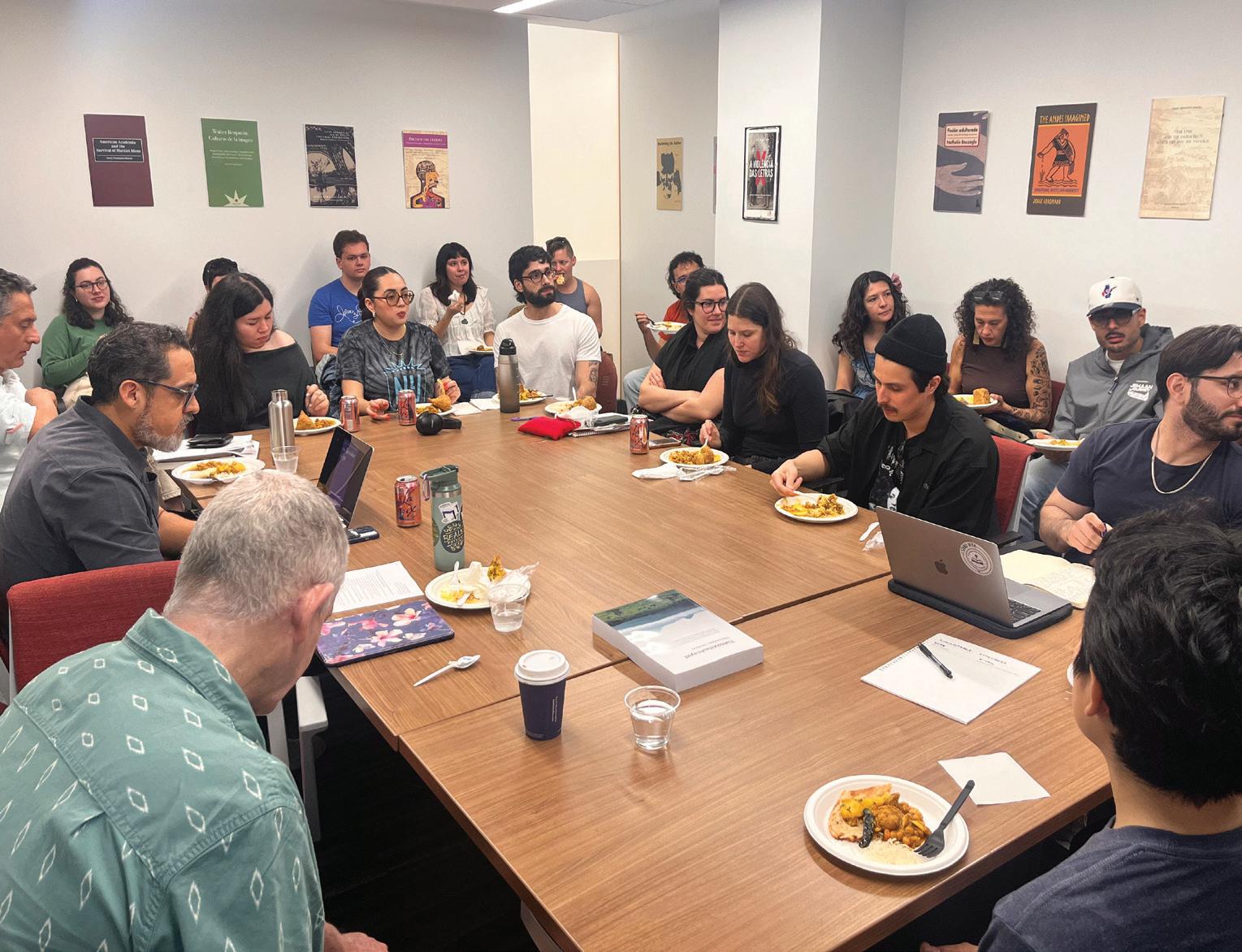
Estudiantes y miembros de la comunidad de enseñanza de Northwestern se reunieron en Kresge Hall para un taller de estudios indígenas latinoamericanos organizado por el grupo de trabajo sobre estudios coloniales latinoamericanos el jueves.
El evento fue patrocinado por el programa de estudios latinoamericanos y caribeños, el departamento de inglés, el Alice Kaplan Institute for the Humanities y el departamento de español y portugués.
Los académicos de Northwestern y de la University of Warsaw empezaron con una mesa de diálogo que se extendió desde el mediodía hasta la 1:30 p.m. Destacaron estudios y discursos sobre el estudio de los idiomas, las culturas y las historias indígenas de América Latina.
La conversación fue moderada por la profesora de inglés Mariajosé Rodríguez Pliego y la profesora de español y portugués Caroline Egan.
“Durante los últimos dos años, bajo la dirección de algunos de nuestros estudiantes de postgrado, hemos tenido este grupo de trabajo sobre los estudios coloniales latinoamericanos”, dijo Egan. “Algunos de los estudiantes preguntaron si podríamos organizar un evento sobre el estudio de los idiomas, las culturas y las historias indígenas desde diferentes perspectivas dentro del marco general de los estudios latinoamericanos.”
Antes del evento, los locutores entregaron lecturas a los asistentes para que sirvieran de base para sus conversaciones. El profesor de español y portugués Jorge Coronado abrió la conversación con un repaso de las historias generadas por los pueblos indígenas de Latinoamérica a través de “múltiples géneros literarios” distintos a la documentación histórica “común”.
Platicó sobre cómo la incorporación de estas narrativas transforma la manera en que los académicos entienden la historia de América Latina indígena.
Juan Fernando León, un becario posdoctoral de enseñanza del Nicholas D. Chabraja Center for Historical Studies, habló con los presentes sobre el impacto del colonialismo en el medio ambiente y en la arquitectura indígena de América Látina.
Profesor de estudios de género y sexualidad S.B. West discutió sobre los debates históricos del mundo maya presentes en las lecturas compartidas, incluyendo una que sugirió que no hay “una definición fija de los mayas,” y otra que argumentó que el concepto binario del género es evidencia de la opresión colonial de la sociedad maya.
El último locutor, John Sullivan, profesor de la University of Warsaw, es profesor emérito de la Universidad Autónoma de Zacatecas. También es cofundador y exdirector del Instituto de Docencia e Investigación Etnológica de Zacatecas, donde trabaja de manera monolingüe con académicos indígenas para estudiar el náhuatl, uno de los idiomas indígenas más hablados en las Américas.
Describió el momento en que se dio cuenta de que el Instituto monolingüe debería hablar únicamente en náhuatl.
“Se sintió como si alguien me diera un puñetazo en la cara”, explicó Sullivan. “Pensé, ‘Ay Dios mío. Cada minuto que paso trabajando con ellos en español, estoy contribuyendo al borrado de su idioma y su cultura.’ De ahí en adelante, se convirtió en un espacio monolingüe”.
Después de que los locutores presentaron sus temas respectivos, Rodríguez Pliego y Egan abrieron el espacio para preguntas y la participación de la audiencia.
A las 2 p.m., el evento pasó a una clase dirigida por Sullivan en náhuatl clásico, en la
que los asistentes aprendieron frases e interactuaron entre sí en el idioma. Rodríguez Pliego comentó que está trabajando con Egan y Sullivan para integrar el náhuatl “más activamente” en Northwestern.
“Eso también es algo concreto en el que esperamos avanzar a través del panel, la clase de John, esta visita y estas conversaciones”, añadió.











“Cuando aprendes otro idioma, incorporas otra forma de pensar, otra forma de percibir tu propio cerebro y tu vida. Te desarrolla como persona”, dijo Sullivan.
l.kubovchik@dailynorthwestern.com
m.guerra-echeverria@dailynorthwestern.com
Aprender idiomas ayuda a los estudiantes a incorporar distintas formas de pensar, lo que puede ampliar sus perspectivas, argumentó Sullivan.




































I pictured myself trekking to class through blizzards with my face blotchy, skin tingling and wind whipping my hair. I’m from outside Washington, D.C., so I’m not entirely unfamiliar with the cold. But given how I spent a solid two years wrapped in blankets thanks to the COVID-19 pandemic, I consider myself very sensitive to temperature.
My social media feed is once again inundated with college commitment posts.
It sounds cliche, but it’s hard to believe I was at that stage of my life a year ago — college sweatshirts, senioritis and hordes of commits who “like to go out but also enjoy a good night in.”
If you’re reading this and thinking about attending Northwestern, here are some things to know before you take your ceremonial steps through The Arch. Keep in mind that I probably don’t represent the majority viewpoint.
Chicago temperatures are manageable
When I came to NU, the weather was one of my biggest concerns. But Chicago winter wasn’t anywhere near as brutal as I expected. The real concern isn’t physical temperature. It’s the seasonal depression that often accompanies it. Although this wasn’t something I personally experienced, the white light therapy in the Henry Crown Sports Pavilion hints at the issue.

I am guilty — quite guilty, in fact — of pretending to be stuck in my own world, looking down at my phone or the sky above and saying, “Oh, look, a red bird in that tree over there!” when I see someone I kind of know 20 feet ahead of me on Sheridan Road, when we have yet to establish the greeting phase of our nascent relationship.
Just like making the first move, I avoid initiating a greeting, especially when I’m unsure whether the other person will reciprocate. What if they don’t hear me? What if they don’t respond? In most cases, when I see a recognizable face up or down Sheridan, I hold back my “Hi” until they lock eyes with me and begin to smile. This is the epitome of behavior for a classic socially anxious individual like me. According to a study on social anxiety in the Journal of Behavior Therapy and Experimental Psychiatry, socially anxious people may struggle more with reciprocity of prosocial behaviors, making an unanswered “Hi” on Sheridan feel like the end of the world.
Every autumn, cafes scribble their menus onto chalkboards like small love notes — pumpkin spice or cinnamon apples, a warm beverage to nurse in the face of crescendoing gales. In years past, I have, admittedly, indulged in a trendy latte or two. But for me, fall has always had a subtler taste. In a cozy California kitchen, a placid pumpkin sits, round and rosy, until my mom cuts it open with a steady hand. Its seeds are scooped, its fruit is sliced and the chunks are churned into a slushy consistency, the blender humming with a squealing sound. When the pumpkin soup is done, it is thick and golden and barely sweet — soft on the tongue, almost earthy — like it is truly possessed by the autumnal spirit. It is not here to impress, simply to heal.
The taste my mom curates changes with the seasons.
In the wintertime, garlic shoots and crumbly pork are seared together in a stir-fried splendor. Oil simmers and spits as the vegetables hit the pan with a sharp crack. The meat browns quickly, soaking up soy sauce until it deepens into a glossy, savory scramble. I linger close by and steal a bite. Warm flavors flood my mouth, thawing my frigid body better than our heating system ever could. The shoots are crisp and grassy in all the best ways; the pork is salty and rich enough to make me sigh. My mom watches, pleased, as I scarf down
Maybe this year had a mild winter. Maybe my hometown prepared me better than I thought, because aside from a purgatorial frostbite weekend, the weather didn’t end up bothering me much.
The North and South generalizations are mostly true
If you’re a prospective student, you’ve probably heard the generalization by now — North Campus is for STEM, South Campus attracts humanities and arts. North is work hard, play hard; South is laid-back.
The North and South stereotypes mostly hold true academically. My humanities classes have nearly all been on South Campus, while my (admittedly few) STEM classes have all been up north. Students who live in South Campus dorms are more likely to major in theater or journalism than the swarms of engineers on the north side, though North has more humanities majors than one would expect.
Socially speaking, the North and South divide isn’t quite as well-defined as people believe it to be. Paradoxically, North Campus students are supposed to be more stressed, intense and locked in, yet also harder partiers.
In practice, this doesn’t represent the full picture. Although most fraternity parties are on North Campus, it’s hard to draw conclusions about differences in overall social behavior between students on the two halves of campus.
Miscellaneous things to know
Here are some things I’ve learned. There’s a lot to get through.
Elder Dining Commons is the top dining hall, but the build-your-own stir-fry at Foster Walker Plex West is the best meal. Shake Smart is widely regarded as students’ favorite meal exchange option. Schapiro Hall suites are the most coveted dorms. Classes have a lot more reading than high school. The Greek life scene seems to be growing. The lake is swimmable until about October. Being near Chicago hasn’t gotten old yet. We get subscriptions to The New York Times and HBO Max as well as a host of discounts. NU students use the social media app Fizz to post anonymously — it’s a blend of humor, brainrot and toxicity.
College is better than high school
I’m serious. You’ll definitely miss home sometimes and things might get hard, but I think most people would agree that college is exponentially better than high school. It’s a space for you to grow independently — to nurture aspects of yourself that you didn’t even realize were stifled.
One of my takeaways about going to college is that major life changes really don’t feel as profound as you think. I was disappointed to find that the last day of high school felt like any other day of school. Stepping across the graduation stage felt like any other formality. Coming to college is no different. I expected it to feel like starting a new season of a TV show, a monumental next chapter. The truth is that the first night, you’ll just go to sleep in a different bed. You’ll wake up and talk to new people. Everyone just carries on, and you won’t realize until months later how fundamentally different your life has become.
Allie Deutsch is a Medill first-year and author of “Two Cents.” She can be contacted at a.deutsch@dailynorthwestern.com. If you would like to respond publicly to this op-ed, send a Letter to the Editor to opinion@dailynorthwestern.com. The views expressed in this piece do not necessarily reflect the views of all staff members of The Daily Northwestern.
What baffles me more is the American cultural phenomenon of greeting neighbors and strangers alike. In the opening act of “The Truman Show,” Truman greets everyone on his block before heading to work. He doesn’t know them, so why say hi?
This can be explained by civil inattention, a term coined by sociologist Erving Goffman in his book, “Behavior in Public Places”: the etiquette of noticing someone without inviting a conversation. Greeting someone is not a job-to-be-done; rather, it is a practice of politeness in acknowledging a shared space.
Perhaps that’s what scares me: “Hello” can mean nothing to one person and everything to another all at once.
The fear of an unrequited interaction often supersedes my desire to seem affable, so I default to averted gazes, performative music listening and a tight-lipped mouth. You’ve probably seen the three wise monkeys, whether as a Japanese maxim — Mizaru, Kikazaru and Iwazaru — or simply as the monkey-covering-eyes emoji set. See no evil, hear no evil and speak no evil.
Not that the person across from me on Sheridan is evil, per se. But to me, pretending not to see someone feels like the safest way to avoid guilt, awkwardness or both.
However, just because you pretend not to see them
— like a toddler who covers their eyes to hide in hide and seek — it doesn’t mean you are not seen. Just to be sure, here are my parameters for deciding whether you should say “Hi” when you pass someone on the street.
Friends. Someone you worked on a class project with. Someone you’ve said “Hi” to before. Someone with whom you’re in a club or organization. Professors and teaching assistants. These are people who, if you don’t greet them, may negatively impact your ongoing relationship with them.
Not necessary, but socially acceptable in some cultures
Mutual friends. Anyone with a dog or a stroller. People you’ve maybe said “Hi” to before, but you forgot. Someone you met at Reza’s on day three of Wildcat Welcome, with whom you exchanged Snapchats, but no friendship ever blossomed, and have seen at various functions over the past three years. A person you kissed more than once. An ex of any kind (good ending). These are people who fall in the gray area — it doesn’t hurt to say “Hi,” but it doesn’t hurt
to pretend you don’t know them either.
Oh, look! A bird!
An ex of any kind (bad ending). Someone you’ve kissed once. Anyone who passes you right after you trip over yourself. People you don’t know. In this case, saying “Hi” may elicit a negative response, so proceed with caution.
My general rule of thumb is that if you’ve never had a conversation with someone, you don’t have to say “Hi.” To caveat, it would be nice if you had a mutual understanding of each other’s presence and acknowledged it as an opportunity to blossom into a friendship.
So, the next time you try to slide into their DMs, maybe try bumping into them on Sheridan and saying “Hi” first.
Zoe Chao is a Medill junior and author of “Undecided.” She can be contacted at zoechao2027@u.northwestern. edu. If you would like to respond publicly to this op-ed, send a Letter to the Editor to opinion@dailynorthwestern.com. The views expressed in this piece do not necessarily reflect the views of all staff members of The Daily Northwestern.
what she calls her “bad cooking.” Her presentation is certainly rougher than refined restaurants, but I think my mother’s love for both me and her homeland trumps any Michelin star.
Shishito peppers are a signature of spring in my household, not in season but still perfectly suitable. They blister and wrinkle in the wok, skin puckering into pockets of char. My mom and I reach for the gnarled greens, a playful gleam in her eye as she warns me of the randomized spice. Most are delicious — silky, smoky, slightly tangy. But every so often, a rippling flame will scorch my mouth, drying out my tongue with striking, citrusy heat. We laugh together, and I reach for another as if I can outsmart the cheeky dish.
Summer heralds the season of soda: Coca-Cola chicken wings have arrived. The liquid sugar fizzles arrogantly as it is poured and transformed, bubbling down into a dark, syrupy glaze that coats the pale poultry. My mom nurtures them one by one, painting them until they shine. When I finally sink my teeth into the umami bird, caramelized fire bursts in my mouth, mildly crispy and deliciously reminiscent of teriyaki. My fingers grow sticky, and my mom pokes fun as I clumsily maneuver my chopsticks around the hefty wings in an effort to spare my skin.
These flavors have filled my evenings for as long as I can remember. They live in the air, the steam and the quiet rhythm of my mom moving from stove to sink and back again.
I enjoy the commodifications of my culture that have taken over social media in recent years. Matcha has a rich, velvety flavor profile that is only accentuated by brown sugar tapioca. Taro is a creamy kick of nutty vanilla, baked perfection in
a 99 Ranch Market bun. These flavors, however, are some of the few palatable enough for a wider, Western audience. They are dressed up and reconfigured to be marketable.
In my kitchen, my heritage, my cuisine asks for no spotlight.
These dishes are only a taste of the mouthwatering food from East Asia. From more mainstream plates like red-braised pork to the dishes that garner disgust like boiled duck blood, I hope you dive deeper than shallow TikTok trends and explore the unbridled potential of the gastronomy that raised me.
There is no such thing as “weird” food, only food that is not pretty enough for the bigger picture.
I always find myself reminiscing on the same scene: a pot on the stove, smoke rising in soft spirals, my mom tasting and adjusting without really measuring. My cat naps on the floor nearby, both of us enjoying the quaint warmth of a hearty kitchen curated by a woman we love.
Outside, the season announces itself in bold flavors and carefully orchestrated coffees. Inside, time blurs together: a playful spring, sweet summer, tender winter and familial fall. Cooking has always been about community.
I hope you look beyond the screen and give Asian cultural cuisine a real chance.
Rainee Li is a Medill first-year and author of “Threads of a Typhoon.” She can be contacted at r.li@dailynorthwestern.com. If you would like to respond publicly to this op-ed, send a Letter to the Editor to opinion@ dailynorthwestern.com. The views expressed in this piece do not necessarily reflect the views of all staff members of The Daily Northwestern.
By YONG-YU HUANG
data visualizations editor
Like many international students, Andrew Fang (MSJ ’24) came to Northwestern hoping his degree would open doors in the American job market.
This proved true for the Taiwan native, who is now a Washington correspondent for Deutsche Welle. After graduation, Fang worked on post-completion Optional Practical Training before eventually switching to an I visa for foreign media in 2025.
International students on an F-1 visa are eligible to apply for OPT, a 12-month training program authorized by U.S. Citizenship and Immigration Services that allows them to work in the U.S. in a field directly related to their major after graduation. Those who graduate from a STEM-certified program may apply for a 24-month extension.
Fang said that in recent years, it’s been difficult for any international student to find a job after graduation, regardless of degree.
“They never want to hire someone with no experience, but we need a job to get experience,” Fang said.
“They don’t value any experience you know you have in foreign countries. And that’s really unwise, but it’s also understandable.”
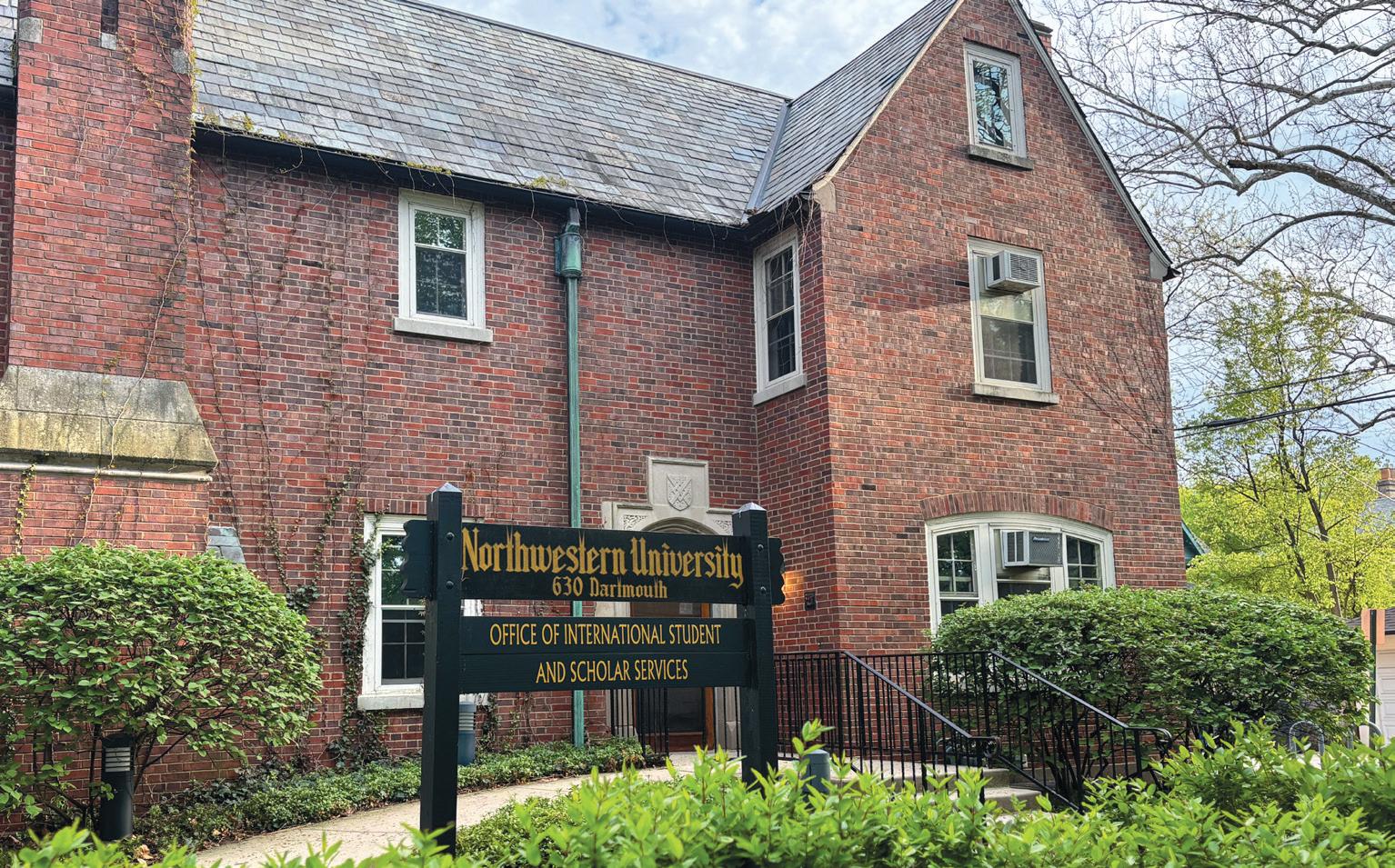
Post-completion OPT students worked for at least 920 employers throughout the country — with top employers including NU, McKinsey & Company and Amazon, according to the Office of International Student and Scholar Services’ most recent report from the 2023-24 school year. At the time, 1,812 alumni were working on post-completion OPT in 38 states.
The report noted that 77% of NU graduates on post-completion OPT were master’s graduates, while bachelor’s graduates and doctorate-holders made up 12% each.
Meanwhile, 62% of the University’s students on the STEM extension were master’s graduates, while 20% held bachelor’s degrees and 18% had doctorates from NU.
The University has had thousands of students participate in the program, based on data ranging from 2006 to 2022 from the OPT Observatory, a project by nonpartisan think tank Institute for Progress that tracks international student employment trends with data from the Student and Exchange Visitor System.
The data was released through Freedom of Information Act requests, according to the OPT Observatory website.
According to the OPT Observatory, 45.7% of international graduates from Illinois who work on OPT have done so in state at least once from fiscal year 2006 to fiscal year 2022.
Students must be in F-1 status at the time of their application, have been a full-time student for at least one academic year and be finishing their program at NU. They cannot apply if they have used more than a year of full-time Curricular Practical Training — the program that allows international students to work off-campus — during their degree level.
Students are able to apply to OISS for their OPT recommendation on a new I-20 document 100 days before their program end date. Afterward, they are able to submit their application to USCIS starting 90 days before their program end date. They have until 60 days after their program end date to file for OPT and can apply for OPT once at each academic degree level.
OPT and its STEM extension come with limitations that can narrow students’ job options. While standard OPT allows for some flexibility, including certain unpaid roles or self-employment if they meet strict requirements, the STEM OPT extension requires students to work for a U.S.-based employer enrolled in the E-Verify program and follow a formal training plan, effectively ruling out freelance work and many startup roles.
As of 2024, the top 5 states where NU alumni work after completing OPT are Illinois, California, New York, New Jersey and Texas — with almost 50% of graduates staying in Illinois.
Weinberg senior Lis Breyer is New York-bound. Originally from Brazil, she plans to work for Bank of America after graduation.
Breyer said she has already applied for OPT. She said she was chosen in the H-1B work visa lottery in the spring and plans to transition to a H-1B visa later this year.
The amount of information online about OPT and the H-1B can be “overwhelming,” Breyer said.
She explained that although OISS can provide some resources for students, they can’t actually provide legal advice. Although it’s “frustrating,” she said she understands OISS is not responsible for this process.
Additionally, given the current political climate, Breyer said that this has changed some students’ postgraduate plans — some had been planning to go home before starting jobs.
“I feel like some friends are not planning on going back after graduation, because they’re afraid that they won’t be able to let in, even though, in theory, they can,” Breyer said.
Meanwhile, for students on the STEM OPT extension, the top three states for postgrad employment remain the same. Washington and Massachusetts enter the fray, respectively receiving 8% and 4% of international alumni staying in the country.
After graduation, Weinberg senior and Canadian citizen Terry Chen plans to move to Seattle to start his full-time job as a product manager at Microsoft.
“Anyone who’s international, there’s more limitations on the type of companies you can apply to,” Chen said.
He said he’s applied and received his OPT recommendation letter from OISS but needs to start the later steps soon — like working on USCIS paperwork.
Although Chen said that he originally wanted to work on a startup after graduation, he found that the limitations of working in that space as an international student proved too difficult.
“Maybe that’s something I’ll do in the future, but at least right now, just the process of getting a job and working is much simpler than starting a startup,” Chen said.
Chen said that OISS has helped walk him through the OPT application process.
However, Breyer said she and her friends have sometimes heard varying advice from different OISS advisors regarding the process of submitting their OPT applications to USCIS to receive their Employment Authorization Document card.
“We are all international, and we’ve heard different things,” Breyer said. “For example, my friends were able to file to get the EAD card two days before I was able to. The officer said I could only do it on Monday, and theirs said they could do (it) on Friday.”
For international graduates like Fang, staying in the U.S. long-term is not guaranteed — but they don’t consider leaving a failure.
He said he remains open to returning to Taiwan but sees OPT as part of a larger exchange between countries and talent.
“OPT can create a good environment for people from all around the world to come to study in the U.S. and also give back to the U.S.,” Fang said. “To give back their talents, no matter in journalism or in other professions.”
y.huang@dailynorthwestern.com








By SEKELA NZAI reporter
For Members Only, Northwestern’s Black student alliance, hosted the fourth annual Intercollegiate Black Cookout, welcoming ve Chicago-area universities to the Lake ll Saturday.
Students from DePaul University, University of Illinois Chicago, Loyola University Chicago, Elmhurst University and e University of Chicago were all in a endance. Complete with student vendors, food trucks and line dancing, the event was themed “TrailRide” and hosted hundreds of students.
“It’s really important to connect with the people that share an identity with you, come from the same background and have had the same experiences,” said Weinberg sophomore and FMO co-Coordinator Marie-Synclaire Gbadebo. “We are in a very predominantly white institution area, so I think it is important to create opportunities to meet more Black people from other areas.”
FMO and Black student unions from the other ve universities began communicating with each other about the cookout in the fall, Gbadebo said. As the host, FMO led the logistics planning to ensure a safe and fun event for all a ending.
For several students, this annual event wasn’t just about free food and mechanical bulls. It was about being in a space where they could truly see people like themselves, regardless of where others are from.
“At rst, I wanted to go to a historically Black
From page 1
should be required to participate in nancial literacy education, arguing there needs to be a change in the remaining recipients’ behavior in order for them to no longer need the assistance.
“What changes in a year? If it hasn’t changed now, what’s going to be di erent in a year?” she asked.
Both Ald. Bobby Burns (5th) and Rodgers pushed back on these proposed requirements.
college or university, so it’s really important for me to come to events like this, so I can see my people and connect with my people,” UIC freshman Ashley
Phillips said. “I feel like this event is important because not many Black people know their culture and know people like them.”
McCormick junior Ma hews Wondwesen took the event as an opportunity to begin sharing his Black hair care brand NOIRÈ with the community.
“I feel like, as a Black-owned business, this is the perfect event because it’s an event where all kinds of cultures and backgrounds that are all under the identity of Black come to,” Wondwesen said. “ ey promote the idea of being inclusive to everybody. It’s a community here that they created.”
Wondwesen said Black student events and spaces have given him perspective and community in places beyond his own school, a sentiment that he’s not alone in.
Several students at the cookout said transitioning into spaces where they’re underrepresented can be a culture shock. Events like the intercollegiate cookout o er these students a reminder of what it’s like to belong.
“It’s like, dang, I forgot we could get down like this because I haven’t really seen a large Black event in a minute,” DePaul freshman Cecelia Nyangacha said.
“But you’ve got to be a villager if you want a village, so I always come outside when there’s events like this going on.”
sekelanzai2029@u.northwestern.edu
Rodgers said it was “frustrating” that the city would ask people that it had relocated to go through any “additional steps.”
“Financial literacy is not what got us here,” Rodgers said.
In addition to providing resources for people to “get back onto their feet,” Rodgers emphasized a need to revisit the original cause of the displacements.
Burns said a er the relocation, City Council and city sta looked into why residents were not noti ed of their eviction earlier. He added that a similar incident to the Wesley Avenue evictions was unlikely to

occur because city sta inspected other apartments of the same style.
Burns also shot back at Harris, saying that the program has successfully helped displaced tenants nd stable housing. He said another year of assistance would likely help the other tenants.
“ ese are hardworking people who were living in a ordable units,” he said. “ ey had no reason to believe that they wouldn’t be able to continue to stay there as long as they remained income eligible.”
He noted that the tenants that no longer require assistance found stable housing through “a mix of
their own e orts” and support from Connections for the Homeless and Evanston’s Health & Human Services Department.
He also pointed out that all but one of the heads of household on the list of displaced tenants work full time. at individual who does not work receives Social Security bene ts, he said.
“I know that these six households are looking forward to these extensions, and I appreciate that support,” Burns said.
t.bethke@dailynorthwestern.com
By Alex Boyko



dancing,” Muskin said.
The theme for NAISA’s Pow Wow is “Blooming Flowers.” NAISA graduating seniors collectively select a flower or plant to honor each year. The Virginia Springbeauty, a native plant from Illinois, was chosen for 2026’s Pow Wow.
NU Director of Native American and Indigenous Affairs Jasmine Gurneau, who is from the Oneida Nation and Menominee tribe, said this Pow Wow saw a record high of vendors in attendance.
About 25 Indigenous vendors at the event sold goods ranging from intricate beaded jewelry to handmade art and Indigenous foods.
McCormick senior Vicky Laguerre, who has attended the Pow Wow since her freshman year, said she enjoys the growing community of vendors and bought a fry bread as well as a blanket dog, or a hot dog wrapped in fry bread.
“I also love walking around the vendors and seeing all the handmade jewelry and clothing and blankets and just everything they make,” Laguerre said.
A wiigwaasi-jiimaan, meaning birch-bark canoe in Ojibwe, was also on display at the Pow Wow. Gurneau said the wiigwaasi-jiimaan was built by Evanston community members and housed at the Segal Visitors Center.
“We thought it’d be really great for her to join our community today with all the singing
Trump administration last year that churches and schools would no longer be considered off-limits to ICE agents.
While public churches cannot legally deny the entry of ICE agents, certain private areas of the church, such as the clergy person’s office, are off-limits to immigration officers without a warrant, said Rev. Michael Nabors, senior pastor at Second Baptist Church of Evanston. If ICE were to knock on the doors of the
and the song and the dancing,” Gurneau said.
Afterward, the Pow Wow also featured an exhibition by Teyukhilihwakhwá·sehe Singers about the traditional music of the Hotinoshoni, as well as guest performances by Mariachi NU and Ritmo De Mis Ancestros: Ballet Folklorico.
Later in the event, Pow Wow emcee Shannon Martin, a member of the Gun Lake Pottawatomi Tribe, took a moment to recognize members of the Indigenous community who have gone missing or been killed. She emphasized that Indigenous individuals have a higher chance of going missing and being killed. She also thanked the American Indian Health Service of Chicago for the work it does for the health and safety of Indigenous people.
“When our people go missing, they don’t put it out on MS NOW or CNN. The whole country isn’t aware of when one of ours goes missing,” Martin said.
NAISA leaders also recognized Pamala Silas, the Center for Native American and Indigenous Research associate director for community outreach and engagement, for her retirement. Students thanked her for her research and the guidance she has provided Indigenous students with on campus.
To celebrate her retirement, some attendees participated in an honor dance for her, circling the arena with Silas and inviting others to join the dance.
Christjohn said her children are learning both the Oneida and Ho-Chunk languages
At Evanston Church of God, church members focused their efforts during the ICE raids on education about how to find and provide resources to those in need by partnering with community organizations and providing a safe place of worship for all, Pastor Caleen Howard said.
“It’s another way that we are trying to meet the felt needs of our community,” Howard said. “Where they hurt, we try to see what we can do to either provide support or resources to help them.”
In protesting ICE activity, some faith communities went beyond private action.
and teaching them to her. She emphasized the importance of passing down the language.
“It’s really significant for these kids to know who they are as an individual and where they
scene, Nabors said.
According to Nabors, the line was used to communicate on Oct. 31 when federal immigration agents made several arrests across Evanston and Skokie and a civilian vehicle rearended an agent’s vehicle, leading to the arrest and detainment of the driver.
Nabors, one of the first people to reach the area, called Evanston Interfaith Clergy and Leaders to organize a community-wide protest with about 200 attendees.
“I’ve never seen a community that had the components where people have the ability to rise above their differences and work together
r.zhang@dailynorthwestern.com
s.baumgartner@dailynorthwestern.com
Correction: Last week’s issue of The Daily included the wrong opinion column under the headline “Chao: Does thrifting make me feel better about myself?” on page 8. Last week’s issue also misidentified a lacrosse photo as from a game against Maryland on page 12. The game was actually against USC. The Daily regrets these errors.
From page 1
Lipkin and forced a turnover, stifling Maryland’s momentum and sending the game to overtime tied at 7-7.
“Shoutout Madi Smith at the end, with that risk that she took,” Cuocco said. “She knew that everyone was gonna have her back. She’s had a great game, even with the draws, and she was really our rock today.”
Though the ’Cats’ defense faltered before the narrow overtime win, the team built an early lead thanks in part to a 33-minute scoring drought from Maryland. The 3-1 halftime score marked the lowest-scoring first half ever in a final of the Big Ten Tournament, the first of which came in 2015.
Despite zero goals by either team in the second quarter, the period was far from lacking in action. The squads combined for 16 shots, 14 ground balls and 11 turnovers as well as five penalty cards that were all issued to NU.
Each team had its fair share of scoring opportunities, including two separate occasions where it seemed as though the ’Cats got on the board. A shot from sophomore attacker Aditi Foster touched part of the net before bouncing out off the crossbar, and a later goal from junior midfielder Taylor Lapointe was disallowed due to a dangerous follow-through.
In the final minute of the half, the Terrapins earned a golden two-player-up opportunity as Lapointe and Epke sat on the sidelines with penalties. Despite the advantage, Cuocco corralled her 10th save of the first 30 minutes and sent Maryland into halftime with just one goal.
The scoring picked up early in the third quarter as NU nabbed some insurance scores. Child found the back of the net twice in the span of three minutes, giving the ’Cats a 5-1 lead. After the Terrapins broke their scoring drought with a goal from attacker Maisy Clevenger, Foster answered back with one of her own.
Child finished the game with a team-high and career-high three goals on three shots. Foster’s two goals were the second-most on the team.
NU entered Sunday averaging more than 15 goals per game, and part of its offensive struggles were due to senior attacker Madison Taylor, who missed her final 11 shots after scoring on her first attempt. Despite the ’Cats’ scoring woes, they still held a four-goal lead.
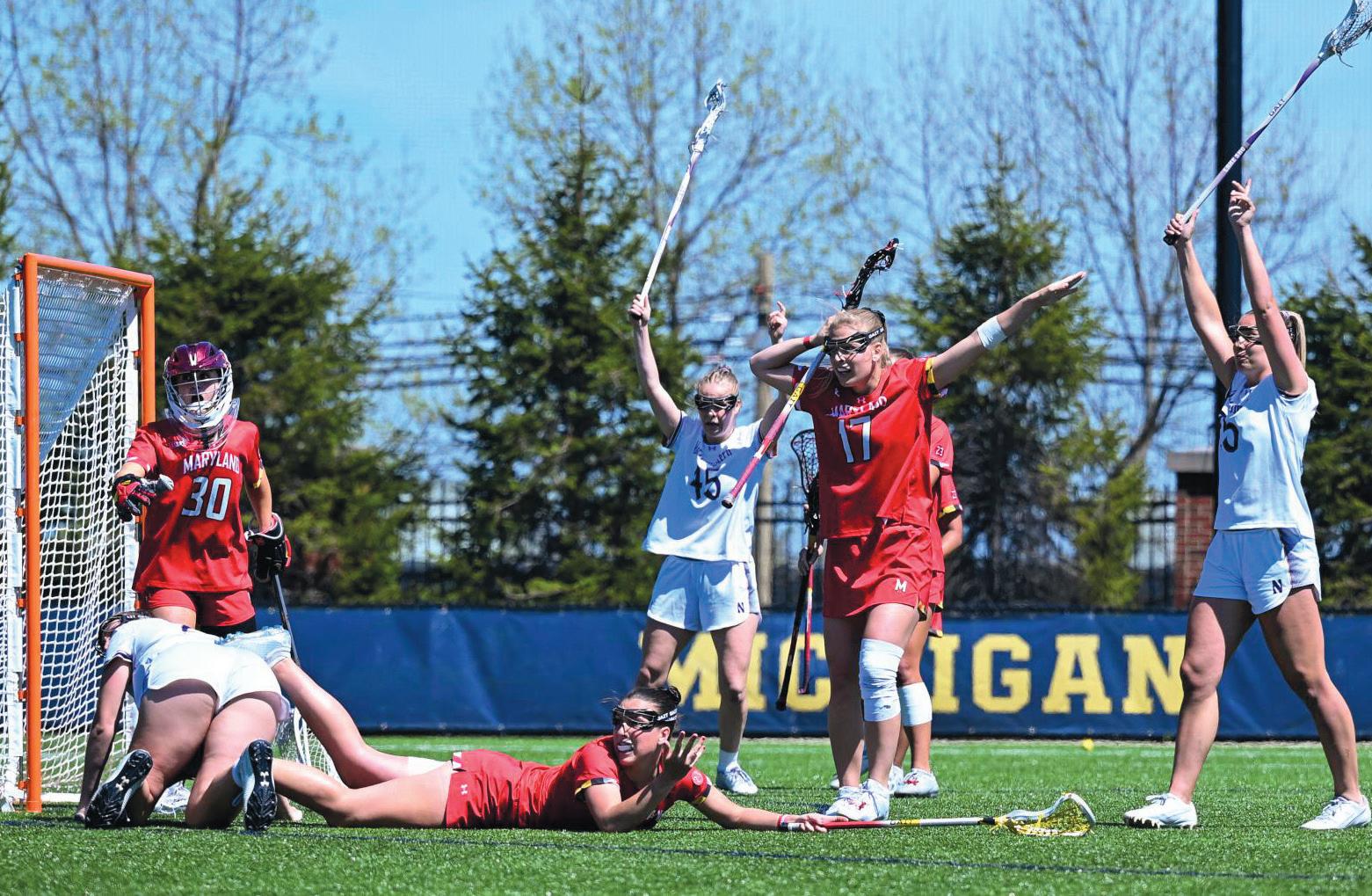
But as the game entered crunch time, the script flipped on its head.
A reinvigorated Maryland offense ventured on a 5-1 scoring run, tying the contest with 1:46 left on the clock in regulation. The Terrapins’ second-to-last goal was their first score with a player advantage, as NU was 9-for-9 on penalty kills prior to that point.
The ensuing neck-and-neck ending was nothing new for coach Kelly Amonte Hiller, who acknowledged the pattern of her team playing in tight games.
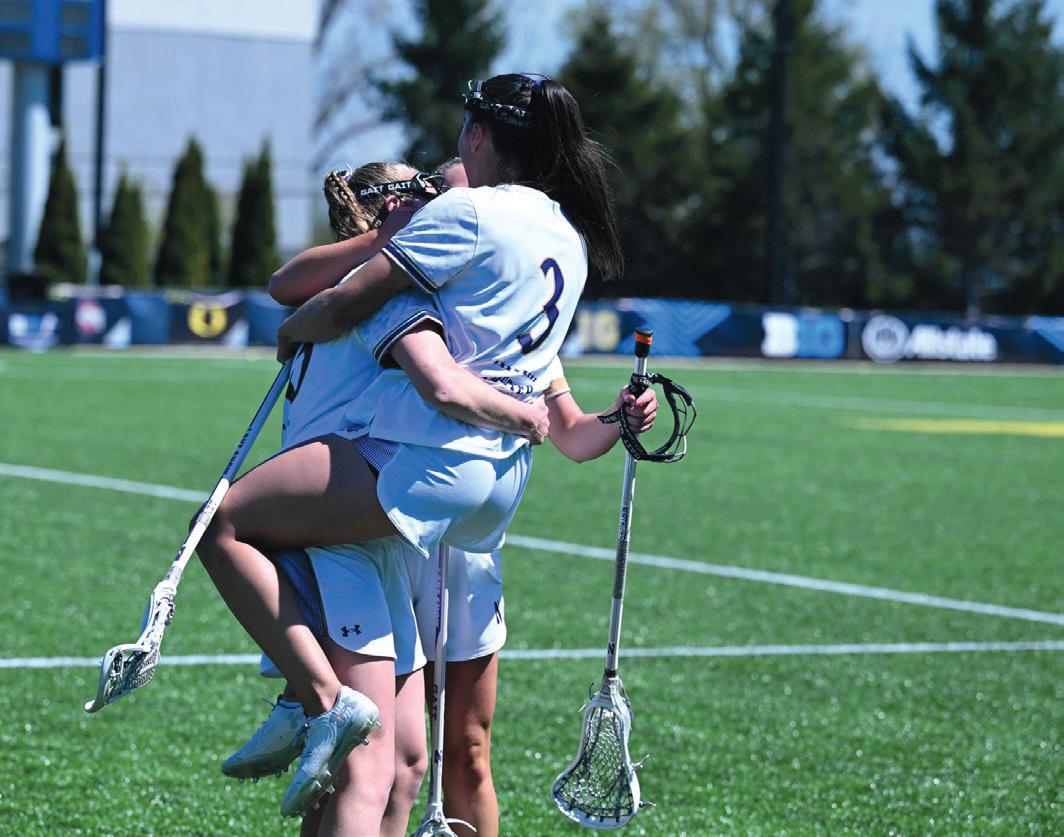
“I think it’s just having that mentality, like when you’re a kid, that’s what you dream about — to be in those moments,” Amonte Hiller said.
On the opening possession of overtime, Cuocco made a save to keep the ’Cats alive for another possession. Lapointe seemed to nab the game-winner just a few minutes later, but it was disallowed due to a crease violation. Cuocco stopped two more shots when Maryland went back on offense, setting up Child to score as time expired.
NU’s bench stormed the field as Child’s shot
hit the back of the net, and when the goal was confirmed by a video review, the celebration officially began for the conference tournament champions.
“The belief, it never wavers,” Foster said postgame. “It’s just so amazing to be on this team, and everyone just believes in everyone so much.”
The win clinched a spot in the NCAA Tournament for the ’Cats. They will wait to see their seeding during the selection show on May 3 at 8 p.m.
j.mcclure@dailynorthwestern.com
i.steinberg@dailynorthwestern.com
By YONI ZACKS newsletter editor
The season has been over for a month, but Northwestern women’s basketball is still making moves, adding new coaches and players.
New associate coach Lauren Dillon has known coach Carla Berube for her entire basketball career, having played for her at Tufts before following her to continue her coaching career at Princeton and now NU.
Dillon spoke with The Daily on Friday about her relationship with Berube, the newest ’Cats, coaching staff additions and her vision for NU basketball.
This interview has been lightly edited for brevity and clarity.
The Daily: Can you talk a little bit about your relationship with Coach Berube?
Dillon: We’ve known each other now for 12 years. We’ve gone through different versions of our relationship, but I’ll never forget the first
time that I actually spoke with her in person. I was on my official visit at Tufts, and I was sitting across the desk from her. I was sitting between my parents on the couch, and I was so nervous. At this point (in my life), I (was) not shy at all.
I (was) very outgoing, actually, but I remember just kind of being tongue-tied and not knowing what to say and being completely blown away by her. The way that she recruits, the way that she shows care and love for her program, and how much she’s committed to continuing to build, no matter what.
At this point, they had just won the NESCAC championship. They were playing in the Final Four, and that even wasn’t good enough. She had sights to win the national championship, to get to that game. I was blown away by her excellence, but also her humility, and the way that she is never satisfied and always knows that (she) and her teams can get better. The idea that I could be a part of that was really special.
That was kind of my first experience of, “Whoa.” (I was) a little bit in awe of just being
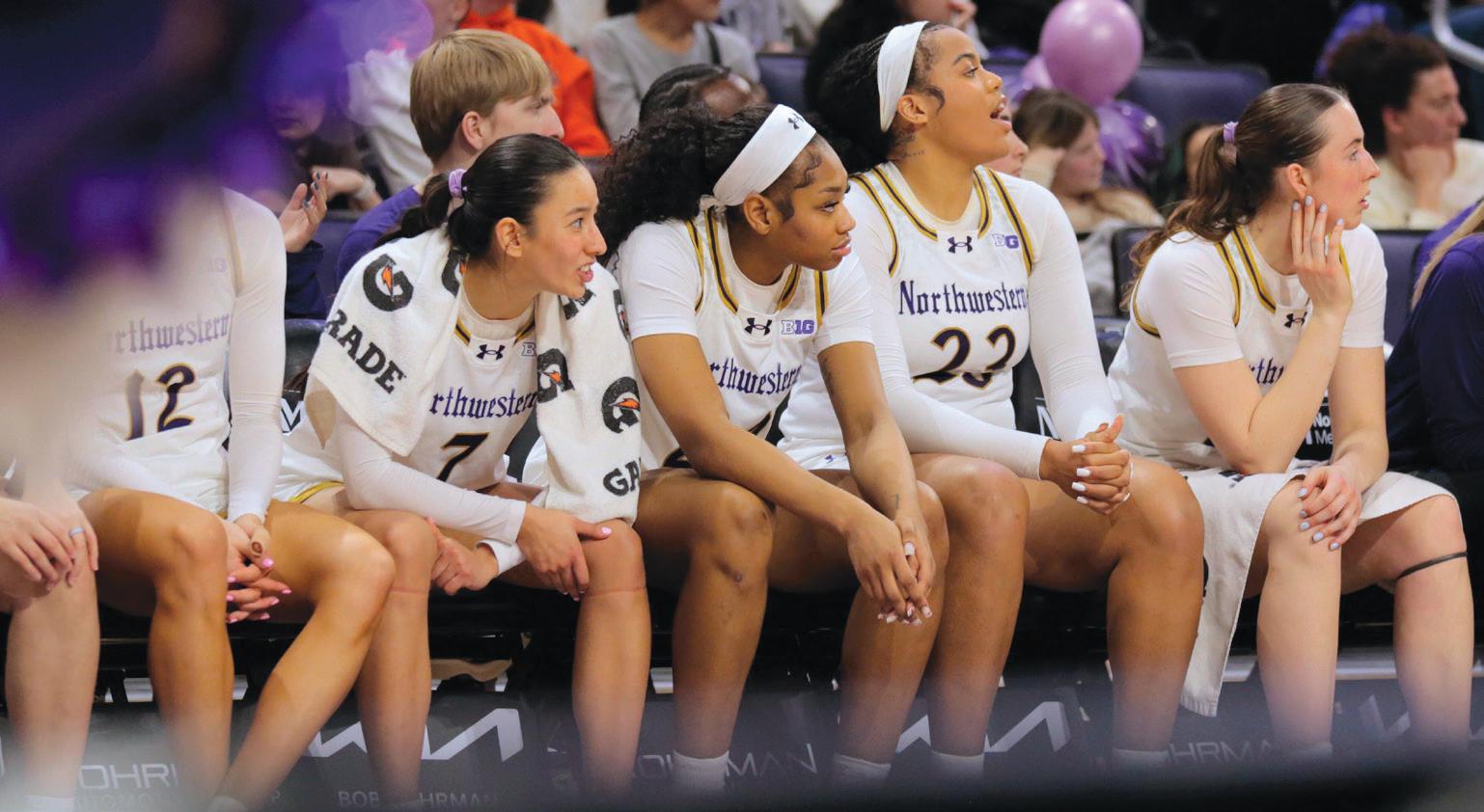
in the vicinity of her and getting to play for her. And throughout my playing days, our relationship was pretty strong from the get-go. I would say that I was able to crack her open a little bit. She was kind of tough in the early days, but if you’re able to get to her through humor, it made things a little bit easier.
I loved playing for her. I think she put a lot of her trust in me as a player, so I was able to put a lot of my trust in her off the court. So we always had a relationship where I was able to come to her and talk to her, and vice versa, and then the jump from player to coach was interesting, especially at my alma mater, but right away, it felt like by the time that I actually became an assistant coach, I was so ready for it because of the leadership work and the conversations and the trust and communication that we had built over those four years that it honestly didn’t feel like a jump at all. It felt just like the shoe that fit, like I was ready for it.
I credit her a lot for the work that she did with me off the court. Over the past eight years coaching together, it’s been awesome. I think she’s given me a voice more and more every year, and I think you don’t see that a lot out of head coaches. I feel so honored to be able to step onto the court and know that my voice is so valued and that you can hear my voice in practice a lot, and she’s not going to be like, “I need the floor, it’s my team.” It feels like all of our team. I think our relationship has continued to grow, and the trust is definitely there already, and now she’s helping me find my voice and my footing in my own coaching career, which I credit her a lot for.
This many changes, however, leaves Collins with plenty of work to do to rebuild his program.
The Daily: How did you find the new additions, and what drew them to Northwestern?
Dillon: (Former Syracuse guard) Camdyn Nelson is somebody that we recruited back at Princeton. She played at high school for a school that was in my league. In high school, I went to Noble and Greenough, and she went to St. Luke’s. I’m familiar with that area, and I’m from New England, so I knew her and her family really well. So she was someone we wanted to get in touch
with and get on campus right away. With her, she was looking for a place that fit her playing style. So I think she is such a dynamic point guard, and she brings a lot to the table as it comes to skill but also the type of athlete we love, and then the type of teammate and person that we know that she is. So knowing all of those things made it a really easy yes, I think, for us and for her. I think on top of the right fit, knowing that she knows our staff really well, knowing the success that coach Berube and all of her programs had had, that she also believes in a bright future for Northwestern women’s basketball, and she was ready to be the start of it.
Similarly, (former Kentucky guard) Lexi Blue, we also recruited at Princeton, so we knew her parents, we knew her, and just like when we felt about Cam, we knew that she was going to bring athleticism and skill and college basketball experience. We also knew her staff at Kentucky, and they had awesome things to say about her and what she was able to bring to the day-to-day practice and games, and as a teammate, so equally excited for her.
(Former Syracuse forward) Jasmyn Cooper went to my high school, so I’ve known about her for a while. Me and my high school basketball coach are really close. His name is Alex Gallagher, and we talk weekly just about how the program’s doing. They’re definitely a women’s basketball powerhouse, so (we) always have an eye on those players. We go way back with Jasmyn, and I think similarly, she was looking for the right fit. She is a high academic student-athlete, so I think she wanted that experience and was ready for the challenge on all levels.
y.zacks@dailynorthwestern.com
Scan this QR code to read more about new women’s basketball associate coach Lauren Dillon and her aspirations with the basketball program and her coaching career.