The Daily Northwestern

By CARLOTTA ANGIOLILLO senior staffer
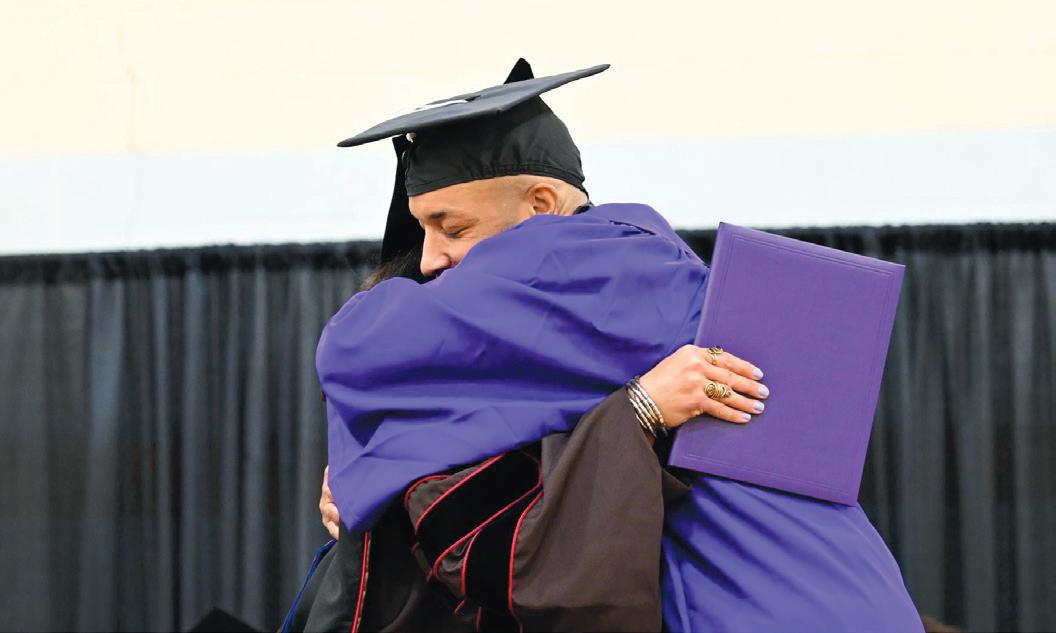
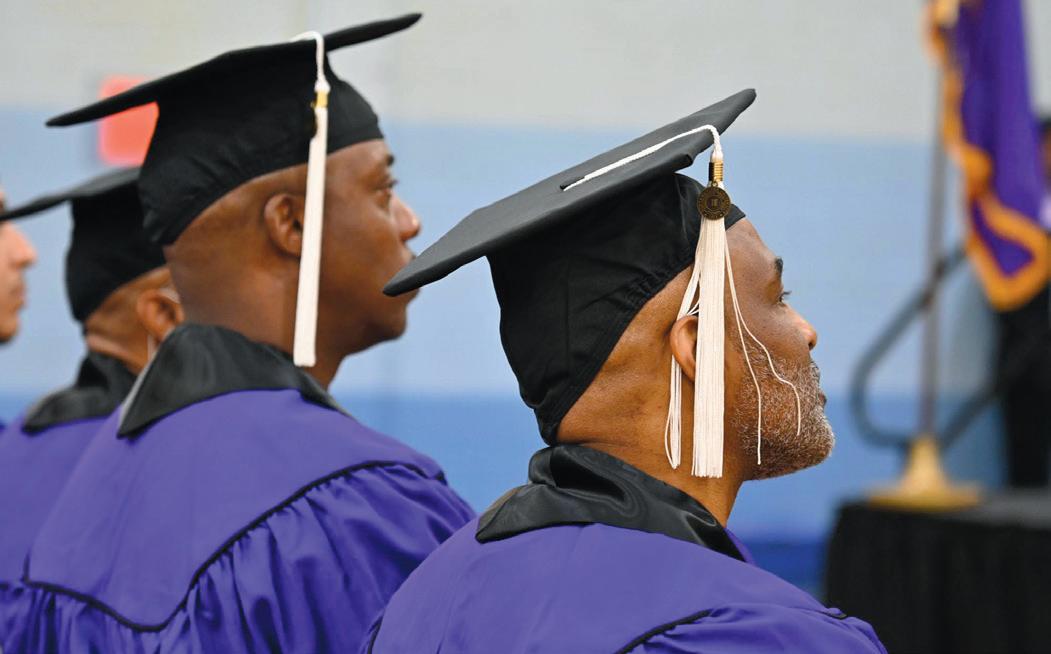
Less than three years a er the Northwestern Prison Education Program’s inaugural class
graduated in November 2023, a second cohort of incarcerated students received their bachelor’s degrees from Northwestern on Monday morning. e graduates joined the 2023 cohort as the only people in the
Team competes at rst national competition
By LEXI NEWSOM print managing editor
The Northwestern University Figure Skating Club’s Intercollegiate Freestyle Team stood together on the ice at Salt Lake City Sports Complex, listening to the results of the Low Team Maneuvers event. When it was announced that the NU skaters who competed in Low Team Maneuvers had won, the whole team began cheering and celebrating together.
“That was an unbelievable moment,” said Weinberg

senior and NUFSC President Michelle Lu, who competed in the event.
Of the 13 skaters — 12 of whom competed — who a ended the National Intercollegiate Final this weekend, three competed for Low Team Maneuvers. In this event, a group of skaters takes turns performing various elements, including jumps, spins and a step sequence, and receives a joint score. e overall team nished 13th at the National Intercollegiate Final, which took place Friday through Sunday in Salt Lake City, Utah. e 16 teams that participated were invited based on their scores from qualifying competitions
» See FIGURE SKATING, page 10
U.S. to receive a top 10 university degree while incarcerated.
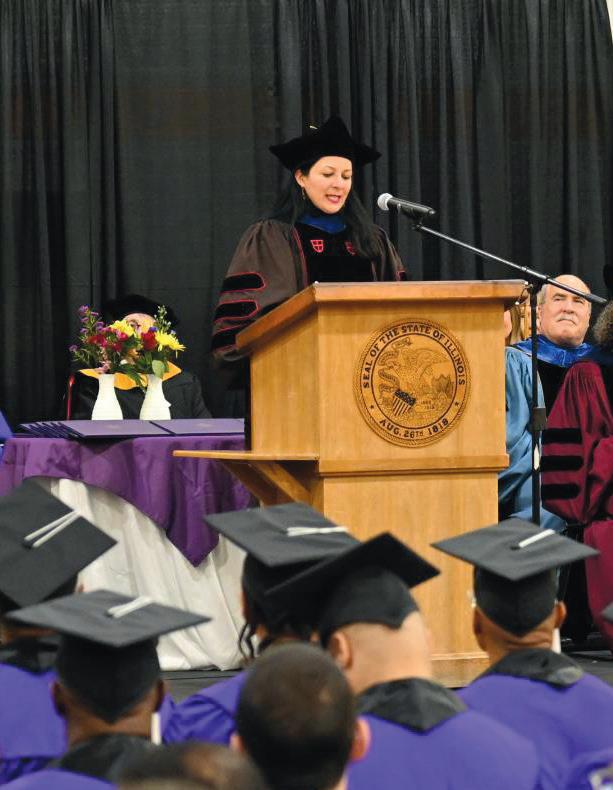
“ ere is something uniquely powerful about being second,” NPEP Director Jennifer Lackey said during her remarks. “ e rst cohort carries the weight of
beginning… but a second cohort carries something di erent, and in many ways, more demanding. You took what NPEP was and helped it become what it is today.”
Monday’s 5-4 vote delays further discussion until May
By MAX TURETZKY and CAROLINE GOULD the daily northwestern
City Council moved to delay the final vote on the Strategic Housing Plan, Evanston’s first comprehensive housing strategy, in a 5-4 vote Monday.
Ald. Clare Kelly (1st) motioned to table the plan, nicknamed Housing4All, until May 11. Kelly raised several concerns about the strategy, which she said failed to discuss gentri cation and lacked “concrete initiatives” to prevent the displacement of current residents.
Kelly was joined by the three other members of the Council’s “opposition bloc” — Alds. Parielle Davis (7th), Ma Rodgers (8th) and Tom Su redin (6th) — which tends to oppose Mayor Daniel Biss’ agenda and voted against the city’s landmark comprehensive plan in January.
“Our duty is rst and foremost to our residents who are here now,” Kelly said.
Ald. Bobby Burns (5th) also voted in favor of tabling Housing4All. He told e Daily he wanted two readings of the plan before voting on it.
Housing4All would guide policy and funding allocation over the next decade, with the goals of lowering housing costs and addressing the city’s long-standing racial and income inequities.
The plan aims to preserve between 500 to 1,000 existing a ordable housing units, build between 2,500 to 4,000 new units and protect residents from displacement through stronger tenant protections.
City o cials have been working on the plan since June 2024, and the Housing Community and Development Act Committee voted to advance it to a full Council vote in February.
The several dozen residents who spoke during public comment at Monday’s meeting were split on the housing plan.
Supporters leaned younger and included tenants, realtors and a ordable housing advocates who were concerned about rising home prices.
SESP rst-year Hyrum Flores spoke in favor of the plan, citing his experience as a student from a “low-income background” who “wants to live o -campus.”
“ ere are a lot of students in my position who come from very similar backgrounds, who really
» See COUNCIL , page 11
By ALLISON KUESTER assistant city editor
As a longtime Evanston resident, Janet Alexander Davis cares for her neighborhood in the 5th Ward — she knows she can always call her neighbors if she’s having a medical emergency. But, throughout her time on Leland Avenue, she has seen and experienced the harmful e ects of the nearby Waste Transfer Station.
For decades, the waste transfer station on Church Street has loomed large in the residential areas of Evanston’s historically Black communities in the 2nd and 5th Wards. Residents have been protesting the station for upwards of 10 years.
Now, as the topic of the station is coming before Evanston’s
committees, there is “more renewed interest,” said 2nd Ward resident Cindy Levi , who lives next door to the station.
In January, City Council unanimously adopted Evanston’s Environmental Equity Investigation nal report, a detailed overview of environmental injustice in the city. It included several references to the waste transfer station and the city’s stated goal to “mitigate impacts of the facility.”
During a March 23 Administration & Public Works Commi ee meeting, members of Environmental Justice Evanston and a ected residents came together to explain the station’s history and their experience living near it.
“ e point is that back 40 years ago, we may not have understood that garbage of any kind would be detrimental to a neighborhood,”

Davis, the co-chair of EJ Evanston, said. “But we know be er now, and that’s my qualm, is that we know be er, and yet we allow something to continue to exist.”
e station has been operating for decades. Originally owned by Richard and James DeBoer in

DeBoers were known to employ
largely from the
and 5th Wards.
By JACK BAKER senior staffer
e Evanston/Skokie School District 65 Board of Education voted 5-2 Monday to eliminate two school counselor positions across Haven and Nichols Middle Schools. e decision scales back an earlier plan to cut all nine middle school counselor positions a er harsh criticism from dozens of community members.
District 65 currently employs nine counselors across Dr. Martin Luther King Jr. Literary and Fine Arts School and Haven, Nichols and Chute Middle Schools. On ursday, all were informed their positions would be eliminated in an a empt to cut costs, according to Ti any Taylor, the district’s executive chief of human resources.
e board’s Monday vote partially reversed that decision, leaving seven counselors in place, with one at King Arts and two each at Haven, Nichols and Chute.
Board members will next consider alternative funding sources to ful ll Phase 3 of the district’s Structural De cit Reduction Plan, which now aims to cut $16 million to $18 million from the district’s budget by scal year 2030.
Chief Financial O cer Tamara Mitchell said the district needs to cut $6.3 million to reach a balanced budget and 90 days cash-on-hand for scal year 2027. Simultaneously, the district will transfer $1 million to cover the construction of Foster School and allocate $2.7 million for capital improvements.
Mitchell added that the district plans to sell the property of Dr. Bessie Rhodes School of Global Studies, which will close at the end of this school year. e sale is projected to generate $4 million to fund construction at Foster.
e vote to eliminate just two counselor positions instead of all nine leaves the district about $1 million short of necessary cuts for scal year 2027. Tensions ared as board members scrutinized previous decisions and evaluated potential cost-cu ing measures.
Community members slam proposed counselor layo s during public hearing e board meeting began with a public hearing for
community members to share input on the proposed reduction in force, pursuant to Illinois School Code, occurring just days before the District 65 Educators’ Council’s deadline to notify educators of changes to their employment status.
During the hearing, board members heard from counselors, social workers, teachers, parents and District 65 students.
“School counselors are not an extra presence. ey are not a luxury,” Haven counselor Jacob DeLay said. “ ey are a steady presence in the lives of students navigating mental health and academic challenges, relationships, identity and planning for their future.”
DeLay said counselors bring “humanization to data points” by meeting with students twice annually and learning more about their personalities and goals.
Carla Stone, a teacher who has worked in District 65 for 26 years, began by thanking the “beautiful board” and highlighting past decisions she said have bene ted students and teachers.
“One such initiative was hiring these counselors shortly post-COVID,” Stone said. “ ank you. I have been praising you ever since because since you have hired these counselors, I can do my job.”
Stone recalled a time before counselors were hired in District 65 schools, emphasizing how di cult it was to deliver instruction while neutralizing the “emotional grenades” that commonly arise in middle school classrooms.
Stone pointed to the number of students who spoke during the hearing as proof that “counselors save lives.” Evanston Township High School freshman Mae Reichel said her counselor at Nichols helped her through some of her life’s “most challenging moments.”
“With all due respect, it has been a long time since you all have had to walk the halls of a middle school and feel misunderstood or alone or uncertain, and when I felt that way, I knew where to go,” Reichel said to the board. “Please make the right decision, and put the students rst.”
Haven social worker Mahalia Sobhani said eliminating counselor positions would burden other employees, explaining that social workers are o en unavailable to respond to classroom needs because they must a end meetings related to individualized education programs and 504 plans.
Sobhani added that Haven distributes a form for students to request social and emotional learning support each school year. As of April 11, sixth graders at Haven had submi ed 432 requests, more than 70% of which speci cally requested the school counselor, Sobhani said.
“What is the board’s solution for meeting this manpower gap without counselors?” Sobhani asked board members. “Did anyone consult my administrators or my department leads before deciding to double my workload?”
Board members clash while searching for alternative funding cuts
According to a presentation from Mitchell and Taylor, the district plans to eliminate about 50 total positions before next scal year. Beyond personnel, the district also aims to cut more than $2 million by reducing costs associated with out-of-district transportation and tuition, its crossing guard budget and technology, among other areas.
As the board began its discussion of Phase 3 of the SDRP, board member Andrew Wymer said he “did see this coming,” a ributing the need for sta ng changes that will directly a ect students to the board’s refusal to follow administrative recommendations.
In December, Wymer joined board members Sergio Hernandez and Mya Wilkins in voting to close Lincolnwood Elementary School in addition to Kingsley Elementary School following the conclusion of this school year. e vote failed 3-3.
“I absolutely do not want to get rid of school counselors,” Wymer said. “We wouldn’t have had to if we had followed the formal recommendations of SDRP (Phase) 3.”
But board member Maria Opdycke criticized that characterization, arguing that framing the board’s debate as one between closing Lincolnwood and eliminating counselor positions was a “false choice.” e school’s potential closure is slated to be reconsidered by the board in October, pending evaluations of the district’s nancial status and K-5 building utilization rate.
Opdycke also pointed to other controversial district expenditures, including on transportation and iPads.
“Continuing to go back and say, ‘I made the decision, and you guys didn’t, and now we’re in this situation,’ is just a destruction of our ability as a board to come together and have a holistic situation and have a holistic decision,” Opdycke said.
Board member Chris Van Nostrand, who took o ce in February, requested the board collectively revisit “all of the cost-cu ing ideas that have come up over the last 12 months.” Board member Nichole Pinkard, however, said the board must immediately decide whether to cut counselor positions and nd an alternative funding source if necessary.
Opdycke and Van Nostrand both criticized the proposal to eliminate any counselor positions. Opdycke said she rst heard about the budget cuts just days before Monday’s meeting and added that she was still unsure of the counselors’ job descriptions.
Later, the board members zeroed in on studentto-counselor ratios and heard from Jessica Plaza, the district’s director of student supports and services. She spoke to the experience of Chute’s two counselors, explaining that they are each currently forced to serve one grade level and split another, which “makes it difcult to be able to provide real-time intervention and support.”
“ ey’re not as able to see kids as o en and as regularly. ey’re more o en called into crisis situations and having to be more reactive than proactive,” Plaza said, predicting Nichols and Haven would experience similar challenges if positions are eliminated.
Still, Board President Patricia S. Anderson informally polled board members about retaining at least two counselors at each middle school and one at King Arts. e resolution garnered support from all members except Opdycke and Van Nostrand.
While leaving the room, Stone praised board members for scaling back the layo s.
“ is is why I said you were beautiful,” she said.
j.baker@dailynorthwestern.com
Scan this QR code to view graphs comparing studentcounselor ratios at schools in District 65.












By SUMMER HU and LUCAS KUBOVCHIK
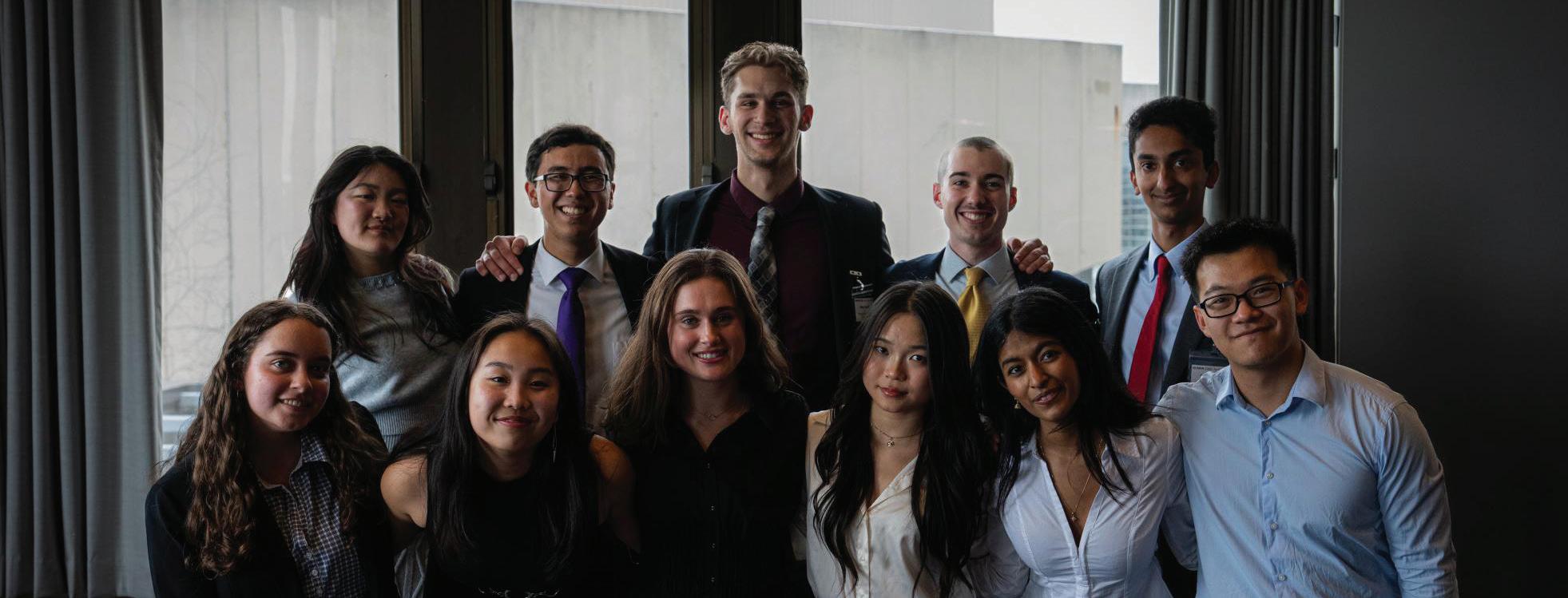
Northwestern University Model United Nations hosted about 600 high school students for its 23rd annual conference from Thursday to Sunday.
Students debated global issues and historical events, ranging from geopolitics in the Caribbean to modernization during Japan’s Taishō Democracy era. The debates took place across 15 committees including several noncrisis and crisis committees.
“We want to make sure for delegates that this is more than just a Model UN conference,” Weinberg senior and conference Secretary-General Enzo Banal said. “It is also an opportunity to get a foothold into their future.”
Some delegates participated in specialty crisis committees, where they assumed the position of historical characters and advocated for their personal agendas through committee debate and backroom powers.
From the Golden Age of Piracy to the Inca Civil War, delegates learned to adapt to unexpected
changes in debate and worked to advance their characters’ interests.
Other delegates represented countries in noncrisis committees, such as the World Trade Organization, discussing topics and working toward resolutions related to global dilemmas.
Deerfield Academy freshman Andrew Walsh, who attended the conference independently from his school, represented Colombia in the United Nations Office for Outer Space Affairs committee.
“Coming here, it’s vibrant debate immediately,” Walsh said.
Despite it being her first year participating in MUN, Hinsdale South High School junior Abigail Rios-Tejeda said the “learning curve” NUMUN provided of becoming a competitive debater helped prepare her for future conferences.
Representing Poland in the WTO committee, Rios-Tejeda said the conference’s lively climate helped paint a clearer picture of the future of U.S. politics.
“A lot of us are pretty unsatisfied with the state of the U.S. right now,” Rios-Tejeda said. “So hearing that a lot of kids from the U.S. are like,

‘Let’s see that change to make it happen,’ is really refreshing.”
North Shore Country Day sophomore Andrew Cohen, who represented Mexico in the WTO committee, said delegates discussed how countries could help less developed countries grow economically and ensure their interests were represented on the global stage.
Cohen said he appreciated the feedback he received from the committee chairs. The specific feedback on his physical motions while speaking will help him improve as a delegate, he added.
Weinberg junior and NUMUN Director of Competition Henry Fleck said competing in Model UN is based on collaborative problem solving, which he said is an important skill for students to develop before entering the workforce.
“Model UN is really at its core about people,” Fleck said. “It’s about understanding them, learning to work together even if you disagree, finding that common ground.”next.”
s.hu@dailynorthwestern.com l.kubovchik@dailynorthwestern.com
Saturday, April 25
7:30 p.m.
Pick-Staiger Concert Hall Tickets: $40/15

Jahari Stampley, piano
Micah Aléc Collier, bass Corey Fonville, drums
The jazz trumpeter, composer, and Chicago native makes his Northwestern debut following the release of his latest album, Beautifulism (Sweet Surrender)
The Daily Northwestern www.dailynorthwestern.com
Editor in Chief Anavi Prakash eic@dailynorthwestern.com
General Manager Stacia Campbell stacia@dailynorthwestern.com
Holly and John Madigan Newsroom
Phone | 847.491.3222
Campus Desk campus@dailynorthwestern.com
City Desk city@dailynorthwestern.com
Sports Desk sports@dailynorthwestern.com
Ad Office | 847.491.7206 spc-compshop@northwestern.edu
The Daily Northwestern is printed each Wednesday during the academic year, except vacation periods, the two weeks preceding them and once during August, by Students Publishing Co., Inc. of Northwestern University, 1999 Campus Drive, Evanston, IL 60208. All news is published 24/7 online at Dailynorthwestern.com.
First copy of The Daily is free, additional copies are 50 cents. All material published herein, except advertising or where indicated otherwise, is Copyright 2025 The Daily Northwestern and protected under the “work made for hire” and “periodical publication” clauses of copyright law.
POSTMASTER: Send address changes to The Daily Northwestern, 1999 Campus Drive, Evanston, IL 60208. Subscriptions are $100 for the academic year. The Daily Northwestern is not responsible for more than one incorrect ad insertion.
out


















































By AMY L. WONG reporter
As Illinois legislators consider a bill that would allow renters to use small solar panels under certain conditions, Evanston representatives and activists say the technology offers clear benefits.
Senate Bill 3104, sometimes referred to as the Plug-In Illinois Act, would allow renters to use plug-in solar energy systems if the maximum power output is 391 watts or less.
Ald. Jonathan Nieuwsma (4th) said Illinois has a history of passing legislation that has made solar energy “a more viable option.” He pointed to the 2016 Future Energy Jobs Act as an example.
“This Plug-In Illinois Act is building on that momentum and will help to expand the list of the universe of potential solar users to apartment buildings, condo owners and single family homes that might not have enough unshaded rooftop to do a big system on their own roof,” Nieuwsma said.
T. Manning, education and outreach coordinator at Climate Action Evanston, said because of small solar panels’ convenience and cost-effectiveness, he thinks they are a “no brainer of an idea.”
While rooftop solar can cost thousands of dollars, a smaller plug-in solar panel could cost only a few hundred dollars.
“The fact that you don’t need to hire anyone, that you can literally just take it out of the box and plug it in and it starts to work, is obviously game changing,” Manning said. “It’s accessible, it’s affordable.”
In addition, other than the upfront cost of solar panels, it costs nothing to maintain them, said Joel Freeman, a board member of Climate Action Evanston.
According to U.S. Census survey data, more than 40% of Evanston households are renters as of 2024. Ald. Shawn Iles (3rd) said that despite this “huge percentage,” Evanston can do more to support renters. He added the bill would give them an option to do so.
“Evanston has a bad habit of forgetting renters,” Iles said. “If you can figure out a way to add to our renewable energy goals and save yourself some money, it’s kind of a win-win thing. So it’s sort of the city’s responsibility to make sure that people are aware of these options.”
While prices for rent, gas and groceries are rising, Iles said the bill would help Evanston renters offset costs. According to the Evanston Housing Gap Analysis, released in September 2025, 48% of renter households are cost-burdened, meaning they spend more than 30% of their income on rent and other housing costs.
Evanston resident Paula Scholl said the proposed bill was “practical.”
She added that she thinks the provisions currently included in the act address any potential safety issues.
For example, Scholl said the bill currently mandates that any solar panel device must be listed by UL, formerly known as Underwriters Laboratories, a company which tests electrical products.
Iles said he expects the bill to be popular in Evanston, as the city has passed numerous
“progressive” initiatives. City Council passed the Climate Action and Resilience Plan in 2018, which declared Evanston’s goal to use 100% renewable energy by 2030.
“In my experience, it is important to Evanstonians to see themselves as a leader in these efforts,” Iles said.
a.wong@dailynorthwestern.com







By RAINEE LI reporter
A er more than 14 years in business, Todoroki Hibachi and Sushi continues to o er quality and a ordable dining that sets a high standard in Evanston cuisine.
My friends and I ambled into the cozy restaurant located at 526 Davis St., where warm lighting and ornate sushi boats curate a lovely ambience. ere is a separate dining room for hibachi, though we opted to order a la carte.
Todoroki’s menu o ers a variety of small plates, sides, sushi, desserts and main dishes. Options for vegetarian and gluten-free diners are marked accordingly.
e crispy tuna ($8) small plate was the rst to arrive. Aside from the adorable presentation of ve neatly lined-up pu s, the combination of spicy ground tuna layered over the warm, crispy
crab made for a balanced texture between creamy and crunchy. Neither component was overly shy, and the unagi sauce drizzled on top accentuated the avor, creating a well-rounded bite of sweet and spicy. With one pu for each of us, the plate was quickly emptied. e rest of our food arrived shortly a er. e tiger ($14.50), crazy salmon ($15), angel hair ($12) and sex on the beach ($16) rolls were artfully arranged in a pale wooden boat. e jalapeno poppers small plate ($9) came on a separate dish.
Bundled in warm rice and thin seaweed, the deep-fried tiger roll was a savory explosion. e crispy tempura coating served well as a counter to the creamy interior. e spicy tuna gave the roll a subtle kick, and the cream cheese lling was deliciously tangy, giving a sweet-and-sour hint to the avor pro le. e spicy mayo and unagi sauces were overpowering at times but ultimately added a nice umami accent.
As someone who typically has had li le regard
for shell sh, the angel hair roll was an outlier that pleasantly surprised me. Stringy crab powdered with tempura akes enveloped the roll. Combined with a crunchy cucumber and shrimp tempura lling, this was a fresh and crisp juxtaposition to the heartier tiger roll — even if the overdecorated top was falling apart over my chopsticks.
e glossy ikura on the crazy salmon roll may look appealing, but when eaten individually, they are an overpowering wave of shiness.
Lesson learned: Everything tastes better together.
e ground and grilled salmon worked well with the avocado, giving the whole roll a smooth texture. Paired with the ikura and spicy mayo sauce, the overall avor was clean, creamy and refreshing, though nothing to write home about.
e sex on the beach roll was the highlight of our evening. e fresh crab lling with the spicy seared salmon layered on top creates a unique taste, both rich and clean. e sweet unagi sauce
added a hint of caramelized soy that calmed the spice of the salmon, which resulted in a soy and savory pro le.
Finally, the jalapeno poppers gave one nal kick to close out the evening. e cream cheese avor was subtler, unlike in the tiger roll, though the texture complemented the ground salmon and fried coating well. However, the jalapeno was fairly spicy and o en overpowered the other avors of the dish, resulting in a at burn as opposed to a multifaceted avor.
Split among ve people, our meal was fairly priced and lling. ough the unagi sauce made for a somewhat repetitive taste — having been drizzled over four out of ve dishes — each dish was distinct enough to make for a variety of avor options that catered to our individual palates. Todoroki has stood the test of time and earned its place as a staple in my Evanston selection.
r.li@dailynorthwestern.com
By REGAN HUIZENGA print managing editor
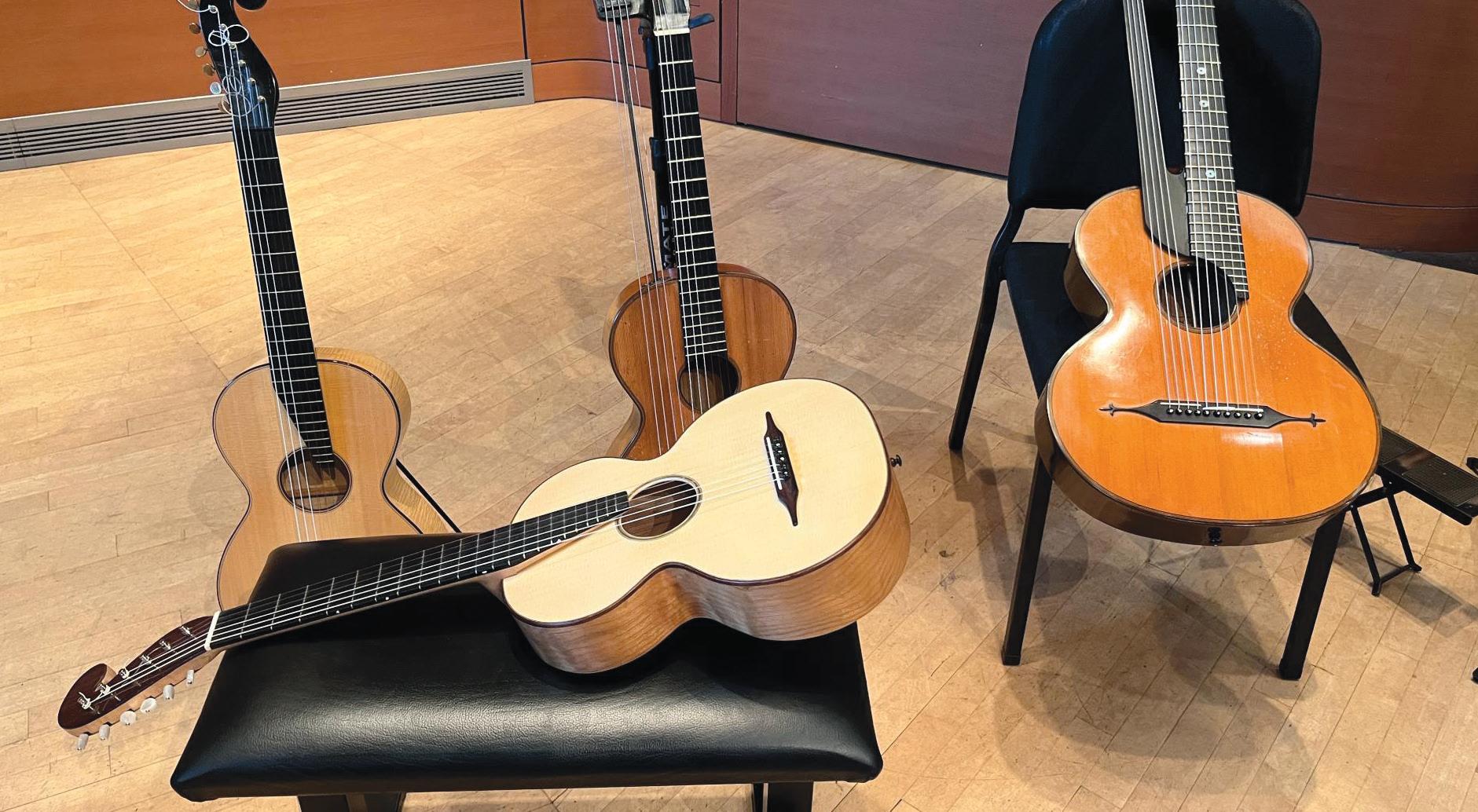
With guitar music and performances of literary texts intertwined, the McClintock Choral and Recital Room became a 19th-century parlor for almost two hours Sunday.
e event, “Performing in the Parlor: e Golden Age of Guitar and Elocution,” mixed a repertoire of 19th-century music pieces with literary texts — a common combination in the U.S. at the time. roughout the performance, Anne Waller, Mark Maxwell and Brian Torosian (Bienen ’89, ’95,’03) played on 19th-century Viennese guitar reproductions, Interspersed between the musical pieces, Fiona Maxwell (Communication ’18) performed selections of text.
“What we’re hoping to do with the concert is to kind of give audiences a sense of what it would have been like to a end a cultural event in the 19th century, speci cally at Northwestern or in Evanston at that time,” Fiona Maxwell said.
Waller said she grew up listening to guitar recordings, and when she was 14 years old, she began classical guitar lessons. Today, she is a senior lecturer at the Bienen School of Music and has spent 45 years performing as a part of the Waller & Maxwell Guitar Duo with her husband, Mark Maxwell.
As the daughter of two guitarists, Fiona Maxwell said she also played music growing up. However, it quickly became obvious that her path would di er from her parents’ — even as a toddler, she wouldn’t stop talking.
“It was clear that I was going in the verbal direction,” Fiona Maxwell said.
She took an interest in not only theater, but also
history, majoring in both during her time at NU.
She became especially interested in the NU archives about the School of Oratory, where elocution and oratory were taught.
“ rough that archival research, I saw how my art form and my parents’ art form actually were like sister art forms,” Fiona Maxwell said.
During the pandemic, Fiona Maxwell, Mark Maxwell and Waller started performing together.
ey each have their own expertise, with Mark Maxwell and Waller focused on the musical aspects and Fiona Maxwell on the literary ones.
Although many of their performances have combined historical and contemporary pieces, Waller said “Performing in the Parlor” was strictly rooted in the 19th century.
“I would really like people to take away the fact that, yes, the guitar was in America almost from the beginning,” Waller said.
Waller, Fiona Maxwell and Mark Maxwell worked together to nd connections between music and text and pair them together. For instance, a text about 19th-century American life was matched with American music, and a story of sailors ge ing shipwrecked in France was paired with French music. Making these combinations was a “fun puzzle” for the family, Fiona Maxwell said.
e family knew they wanted the event to be at NU, since the idea grew out of the University’s archives, Fiona Maxwell said. NU also has a history of early guitar performance and elocution, she added.
In fact, all of the texts adapted and performed by Fiona Maxwell for the event were also performed by NU students and faculty during the 19th century — with one exception.
“I recently uncovered this kind of oral history
autobiography of this Italian woman immigrant who came to Chicago and, through se lement houses, became a really renowned storyteller,” Fiona Maxwell said.
is woman was Rosa Casse ari, and Fiona Maxwell adapted a moment from Casse ari’s spoken memoir for “Performing in the Parlor.”
For a endee Rania Adamczyk, this part of the performance was one of her favorites.
Adamczyk did theater with Fiona Maxwell when the two were kids, and she has enjoyed following Fiona Maxwell’s journey into historical performance, she said. Adamcyzk added she has also a ended similar performances by the family.
“ ey were really intentional about pairing
the music and the spoken performance pieces,” Adamczyk said. “It gives you an interesting window into life.”
Fiona Maxwell said these performances are important both to local history and the broader history of women and performance in the U.S.
“ is art form of elocution, and also music, was a really important way that women, minorities, immigrants were able to kind of enter into public conversation,” Fiona Maxwell said. “ rough the music they shared, they were able to show that they belonged in public in America, and that they also had valuable perspectives.”
r.huizenga@dailynorthwestern.com
By KATE POLLOT senior staffer
Director Ben Wheatley’s latest film “Normal” is scheduled to make its theatrical release this Friday.
The neo-Western stars Bob Odenkirk as Ulysses, a sheriff who’s found temporary work in the small town of Normal, Minnesota. However, he quickly discovers that Normal is anything but. When Ulysses attempts to stop a bank robbery, he accidentally uncovers corruption underlying the entire town. The mayor (Henry Winkler) has made a deal with the Japanese yakuza, storing guns and gold bars for criminals in exchange for a cut of the profits.
Now that Ulysses knows their secret, the entire town bands together to kill him before he can alert anyone else. This twist kickstarts the rest of the film, mercifully ending the painfully slow first half of the movie, as Ulysses’s quest for survival begins.
Ulysses is a likable enough archetype; his role as a lawman dropped into an idiosyncratic small town and his love of pie reminded me of Dale Cooper (Kyle MacLachlan) from “Twin Peaks.” His consistent acts of kindness make him endearing to the audience, and Odenkirk plays him well.
However, the film clumsily handles Ulysses’s backstory and motivation. Odenkirk makes do with the dialogue he has, but it’s difficult to become genuinely invested in his character’s story when all of his lines are overly expository and
on the nose.
Thankfully, I didn’t particularly care about the quality of the story or the depth of the main character. The plot was ultimately just a vehicle for the absolute gorefest that is the second half of the film.
“Normal” features some of the most disgustingly creative kills I’ve ever seen onscreen. From the first scene, the violence had the entire theater gasping and cringing.
The one-on-one fight scenes are where “Normal” shines. The fight choreography is innovative and unique, using everything from knitting needles to watermelons as weapons.
The ensemble cast is also a huge strength of the film. Both Winkler and Billy MacLellan, who plays the well-meaning but incompetent Deputy
Mike Nelson, give stellar comedic performances, and I wish both of their characters stuck around longer.
Jess McLeod and Reena Jolly also shine, becoming thoroughly enjoyable sidekicks and snagging some particularly gnarly kills.
However, the last moments of “Normal” are thoroughly anticlimactic despite its thrilling second half. I wasn’t particularly invested in any of the surviving characters, and some storylines reached an unsatisfying conclusion.
Overall, “Normal” is — as its title suggests — normal. It’s par for the course when it comes to action movies, but it’s still an entertaining watch well worth seeing in a theater.
k.pollot@dailynorthwestern.com
By THOMAS HURLEY crossword & games editor
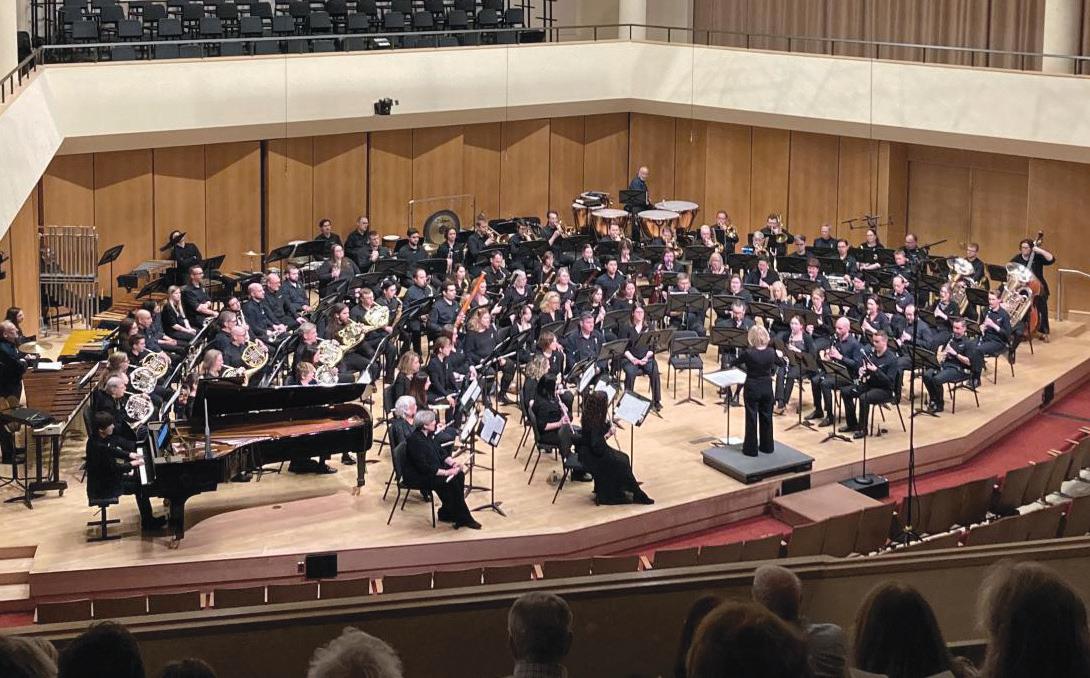
The Northshore Concert Band brought audience members to a world of childlike enthusiasm with its Sunday concert, “Story Tellers,” at PickStaiger Concert Hall.
The program featured five pieces, all pertaining to the central theme of stories. Watching the performance, the band’s cohesive and expressive playing made it easy to drift into the fantasy worlds depicted by the music.
Mallory Thompson (Bienen ’79, ’80), who was a professor and director of bands at Northwestern until 2024, maintained her high energy and expressiveness throughout the long program.
The concert began with Adam Schoenberg’s “Rise,” which immediately established the group’s high caliber. The song kicked off with subtle mallets and piano, including multiple melodic lines that coincided to create a flowy, ambient sound. Shortly into the song, the full band carried out an impressive crescendo, ending in several satisfying brass chords to set the tone. In the song’s second part, the atmosphere shifted with a contemplative power chord that unfurled into a beautiful, bittersweet melody and ended with a peaceful layer of flute over a soft brass melody.
After “Rise,” Thompson dedicated the concert to Sandra Ellingsen, a member of the Northshore Concert Band for 35 years, who passed away last June. Ellingsen always wore pearls to concerts, Thompson said, so the entire band wore pearls to honor her.
Thompson then invited flautist Jennifer Nelson to the microphone to speak about Ellingsen. Nelson said that Ellingsen was “always looking for opportunities to use her talents to help others,” such as when the two played flute duets for charity.
The program’s uplifting nature continued with Percy Grainger’s “Children’s March: Over the Hills and Far Away.” The tune took the audience on a playful, jaunty journey that started with a simple bassoon melody, ended with a cheeky light note and seemed to go everywhere in between. The main theme was passed between sections, taking on a different personality variation each time. Bells and mallets occasionally gave the song a glistening sound while snare and brass hits made
certain parts pop.
At one point, band members sang, which added to the sonic depth.
To conclude the first act, the band played excerpts from the Studio Ghibli film “My Neighbor Totoro,” which was composed by Joe Hisaishi and arranged by Yo Goto. The medley began mysteriously with chimes overlaying a mystical flute solo and soon became marchlike. Funky mallets and brass hits gave some parts a jazzy or even Latinesque sound, but the dominant tone was one of fantasy and whimsy.
The band’s energy carried over and even
By ALLEGRA LIEF
Six struggling writers, a stormy Scottish island, zero contact with the outside world, a fleeting
opportunity for literary glory and an eventual bloody murder. This is the basic premise of “The Ending Writes Itself.”
The novel presents itself like any stereotypical Agatha Christie or Arthur Conan Doyle mystery, except it’s modern-day, and author Evelyn Clarke

multiplied after intermission, beginning with Martin Ellerby’s “Tales from Andersen,” which Thompson said was written to evoke the feelings of Hans Christian Andersen’s writing. This song showcased the band at its most expressive, playing into the emotional weight of the Danish author’s storytelling and mixing in some of the enthusiasm from earlier in the program with more seriousness.
To conclude the show, the group played “Excerpts from ‘Far and Away’” by John Williams, who has composed music for films such as “Star Wars,” “Jaws” and “E.T. the Extra-Terrestrial.” The
is not an established mystery writer. Instead, the moniker combines the names of two modern literary figures: bestselling author V.E. Schwab, and screenwriter and author Cat Clarke. Under a pen name, the two joined forces to brave the uncharted genre together.
The duo wastes no time setting the scene; six writers, across a variety of genres including horror, romance, young adult and mystery, are invited to the remote island of Skelbrae, Scotland, under the pretense of an exclusive literary retreat hosted by the elusive Arthur Fletch, a famed thriller writer.
Upon arrival, it quickly becomes clear that this is no ordinary gathering. Fletch is absent, the rules of the salon are confusing and the weekend’s true purpose emerges: each writer must compete to craft the ending to Fletch’s unfinished final manuscript over the course of 72 hours, with a career-altering reward hanging in the balance. As if the stakes couldn’t get any higher, people soon start to drop dead.
The novel isn’t a typical mystery, and at times it feels like Clarke has bitten off a little more than she can chew. The chapters alternate between the six authors’ perspectives, causing the tone to constantly pivot. One moment offers the dry wit of horror writer Kenzo, while the next has the girlish innocence of resident YA author Millie.
A broader commentary on the modern-day
medley integrated Irish folk music into a cinematic saga, with soulful melodies in the winds clashing into brass hits and giving the concert a defiant conclusion.
An afternoon watching the Northshore Concert Band perform felt like an afternoon transported back in time to the simpler joys and imagination of childhood. Thompson continues to prove herself as a musical force even after retiring from the University, and her band exudes the same level of passion.
t.hurley@dailynorthwestern.com
book industry functions as a throughline. Both Schwab and Clarke have deep experience with the trials and biases that exist in the publishing and literary worlds, and the novel’s many references to the genre’s tropes, including the struggles of midlist authors and the threat of artificial intelligence, at times border on excessive.
Ultimately, the inclusion of modern issues serves to confront the traditional mystery stereotypes that the novel leans back on. Simultaneously, these references add complex layers to the characters themselves.
Their ambition, insecurity and desperation turn into narrative fuel that heightens the tension and allows the reader unfiltered access into the complexities of the industry.
I’m a huge fan of a good murder mystery, so I was most engaged when the murder mystery began to unfold in its latter half. The scene is well set, the narrative is seamless and the twists and eventual reveal unfold satisfyingly. Will the novel revolutionize the mystery genre or reshape the publishing industry? No. But it doesn’t need to and proves to be appropriately fun, thrilling and appealing to anyone, whether they’re familiar with the intimacies of what it’s like to be an author or otherwise.
a.lief@dailynorthwestern.com
By ALEXIA SEXTOU opinion editor
The Daily Northwestern Opinion Desk is thrilled to name 12 columnists for Spring Quarter 2026, building on its commitment to make a home for the voices shaping dialogue among communities on campus and in Evanston. Our newly expanded student columnist team will draw on their backgrounds, identities and experiences to explore a wide range of topics. From campus life and social commentary to politics and pop culture as well as everything in between, our section is proud to welcome a polyphonic team of writers to share their stories.
At its core, the Opinion Desk is a space for ideas: to question, challenge and contribute. Every perspective is unique and necessary to lay the foundation for meaningful conversation.
At The Daily, we remain committed to platforming a wide array of voices and perspectives.



We invite members of the NU and Evanston communities — including students, staff, alumni and Evanston residents alike — to join that conversation by submitting their opinions and responses to our desk.
No voice is too small or insignificant to ignite conversation.
As always, send submissions, pitches and feedback to opinion@dailynorthwestern.com.
Alexia Sextou is a Medill sophomore and author of “Margin Notes.” She can be contacted at a.sextou@dailynorthwestern.com. If you would like to respond publicly to this op-ed, send a Letter to the Editor to opinion@dailynorthwestern.com. The views expressed in this piece do not necessarily reflect the views of all staff members of The Daily Northwestern.












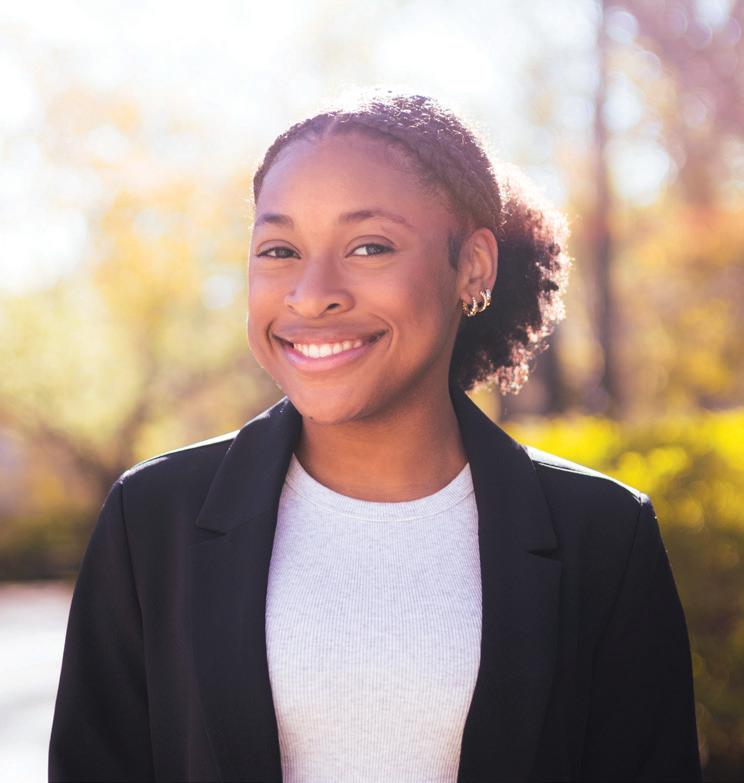

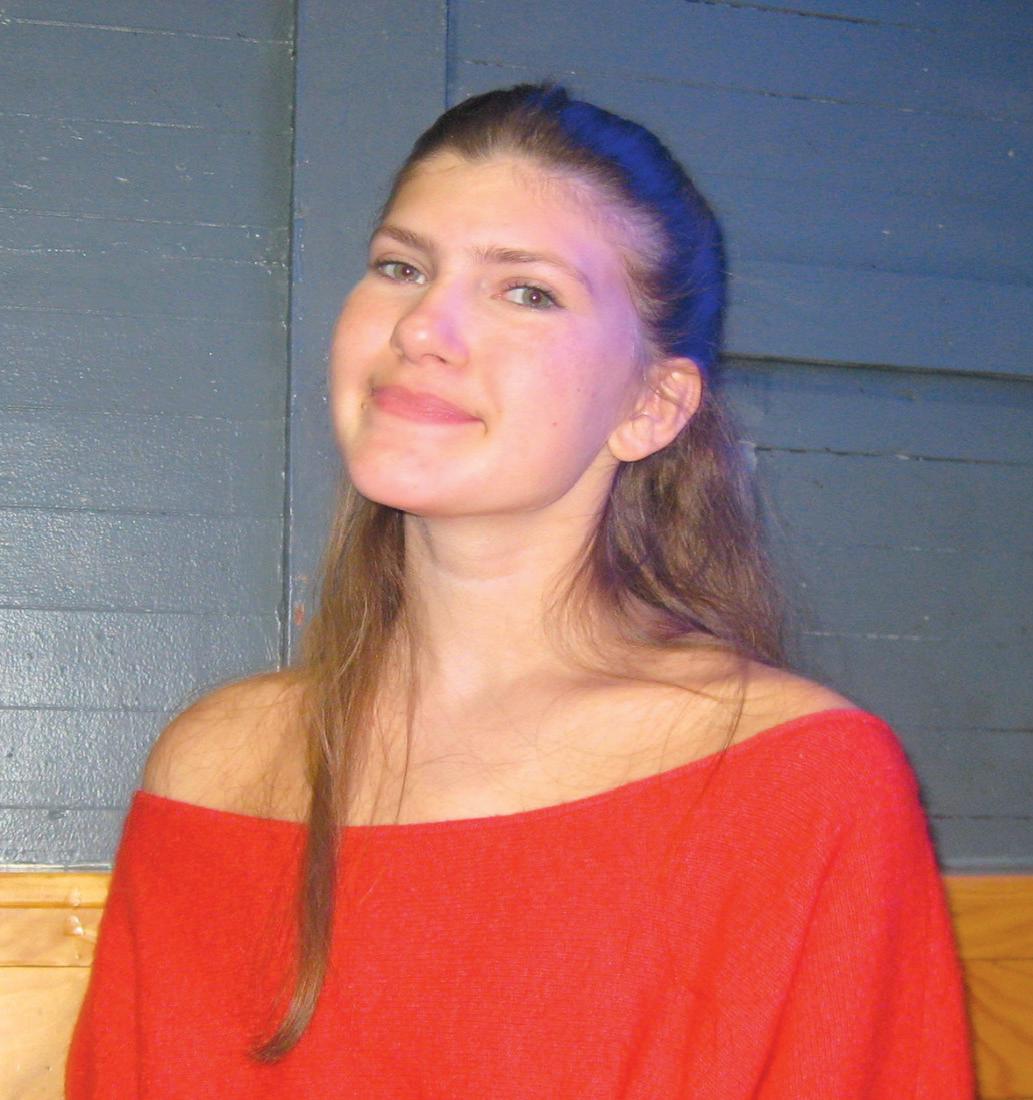
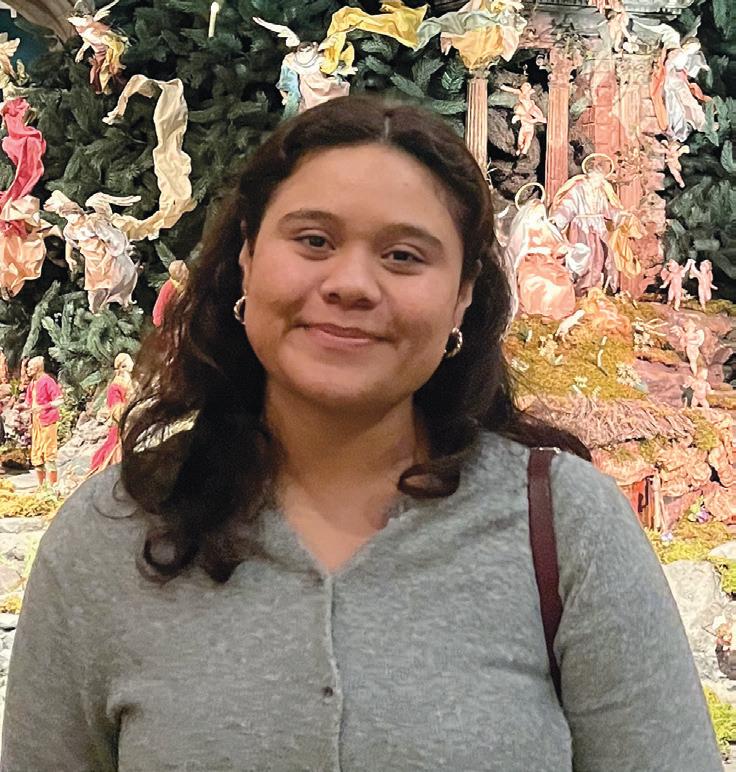

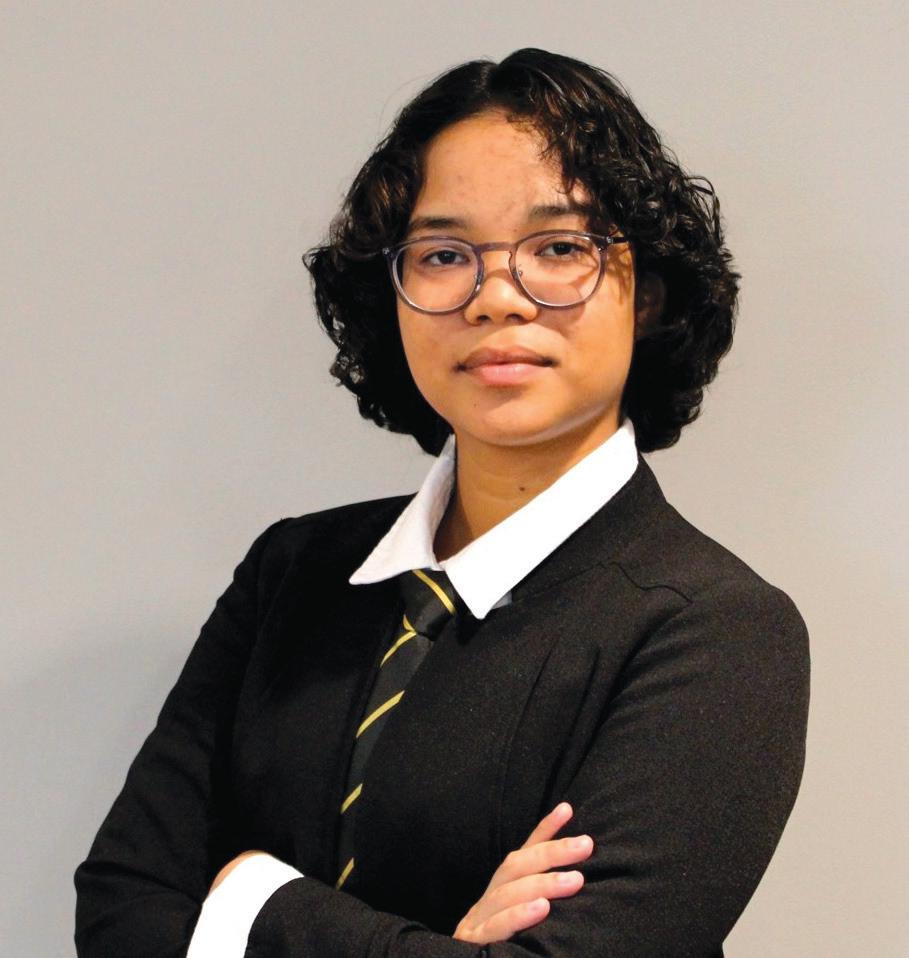

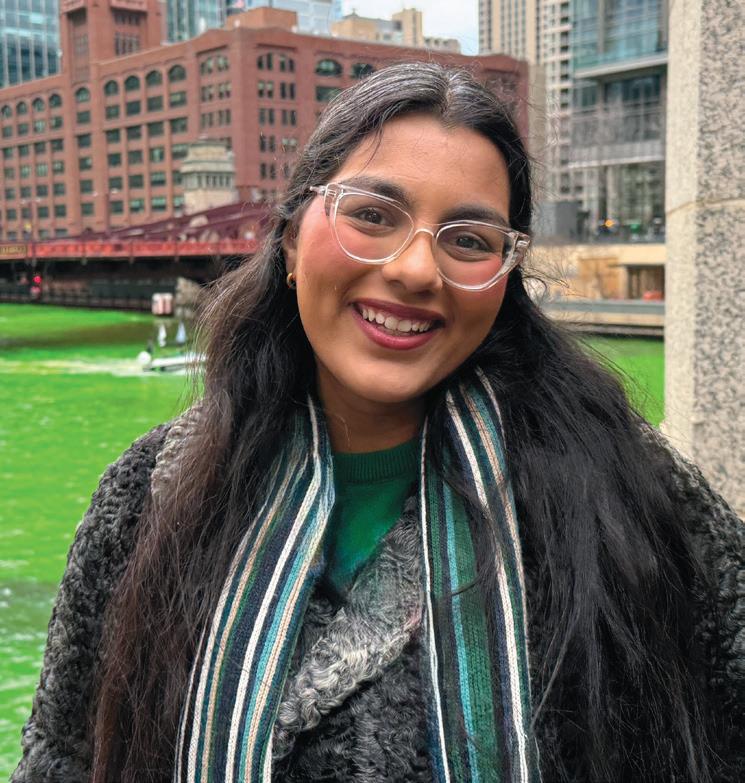

EL DIARIO EDITORS
Cuando aplicamos a la Escuela de Periodismo de Northwestern Medill, una de las mejores escuelas de periodismo de los EE. UU., nos sorprendió ver que no había ninguna publicación dirigida a los estudiantes hispanos.
Northwestern tiene más de una docena de publi caciones estudiantiles y se ubica en una de las áreas metropolitanas más hispanas del país. Aquí fue donde nos dimos cuenta que la oportunidad existía y era nuestra para tomarla.
Establecer una sección hispanohablante en The Daily ha sido un largo proceso de gestación. Mien tras la posibilidad de cobertura hispanohablante ha circulado en las conversaciones del periódico desde el año pasado, esta idea se veía cada vez más lejana debido a comentarios sobre que The Daily no tenía la “audiencia” necesaria para el proyecto y la cobertura en español se desviaría de nuestra “marca”. Adicio nalmente, crear una nueva sección requería tiempo, recursos y un equipo bilingüe que el periódico no tenía ni podía mantener.
Para nosotras, estas conversaciones tomaron un nuevo significado cuando llegaron los agentes federa les migratorios a Evanston y el área de Chicago medi ante la Operación Midway Blitz de la administración del presidente Donald Trump.
En ese entonces, tomábamos una clase de reportaje bilingüe de Medill, en la cual cubrimos el impacto de la mano dura migratoria en las comunidades inmigran tes y latinas del área. Nuestros artículos reflejaron la perseverancia y la voluntad de las comunidades locales latinas mientras el miedo y la ansiedad los rodeaban. Más que nada, nuestros reportajes reforzaron nuestra y que la diversidad es necesaria. Bienvenidos a El Diario.
Por MAX TURETZKY and MICAELA RIVERA PORRAS el diario northwestern
Con su victoria en las elecciones primarias democráticas por el 9no distrito congresal de Illinois, el alcalde Daniel Biss se encaminó a irse a Washington el próximo año. Ahora, Evanston tendrá que decidir quién tomará su puesto.
La manera en que se convoquen las nuevas elecciones municipales dependerá de la fecha en la que Biss renuncie oficialmente a la alcaldía, lo cual deberá hacer para poder juramentar como miembro del Congreso. Bajo la enmienda del código estatal de elecciones del año pasado, Biss deberá renunciar hasta el 19 de octubre — antes de las elecciones congresales de noviembre — para desencadenar unas elecciones especiales municipales para elegir a quien completará
el resto de su periodo como alcalde. Él ha dicho que espera renunciar para el 27 de noviembre, la fecha máxima proclamada antes de la enmienda del código de elecciones que se aprobó el año pasado.
Un portavoz de su campaña le dijo al Evanston RoundTable que Biss todavía tiene la intención de renunciar “a tiempo para permitir que se convoquen las elecciones especiales”. Cumpla o no cumpla su promesa, el Concejo Municipal deberá elegir a uno de sus propios miembros como alcalde interino para reemplazar temporalmente a Biss.
El alcalde interino tendrá todos los poderes de un alcalde regular, excepto la capacidad de desempatar votaciones y vetar legislación, a menos que renuncie a su puesto en el Concejo, ya que en ese caso sí obtendría esas facultades.
Algunos han considerado al concejal Jonathan Nieuwsma (del 4to distrito), un aliado de Biss,
When we first applied to Northwestern’s Medill School of Journalism — the country’s leading school for the field — we were shocked to see that there was no Hispanic or Latino stu-
NU boasts more than a dozen student publications and resides in one of the nation’s top 10 metropolitan areas by Hispanic population. That’s when we realized: the opportunity was
Starting a Spanish language desk at The Daily has been a long time in the making. While the possibility of Spanish language coverage has cycled through newsroom conversations since last year, they ended with the conclusion that The Daily does not have the “audience” for it and it would depart from our “brand.” Building a new section required time, resources and a bilingual team the paper did not have — or, at least, was
For us, those conversations gained a new meaning when federal immigration agents came to Evanston and the Chicago area through the Trump administration’s Operation Midway Blitz.
At the time, we were enrolled in Medill’s bilingual reporting class, where we covered the immigration crackdown’s impact on local immigrant and Latino communities. Our stories reflected the perseverance and agency of these communities as fear and anxiety surrounded them. Above all, our reporting amplified our personal connection to our community.
From there, we saw avenues for bilingual media everywhere at The Daily. We wanted to expand the accessibility of our local political and event coverage and celebrate the diversity and advocacy of our campus’ Latino community.
We also wanted our translated and original coverage to go beyond the subject of immigration
como un posible sucesor. Sin embargo, cuando el RoundTable le preguntó durante la celebración de la victoria de Biss el 17 de marzo, Nieuwsma evitó decir si se postularía para la alcaldía.
Jeff Boarini, quien se postuló a la alcaldía en la elección municipal de Evanston de 2025, dijo al RoundTable que sí tiene la intención de lanzarse a una segunda candidatura en caso de que se convoquen las elecciones especiales.
Según las reglas actuales de la ciudad, un alcalde interino puede ser elegido con una mayoría simple de cinco votos. Pero en febrero, el Comité de Reglas aprobó el avance de un proyecto de reforma de las reglas del Concejo que cambiaría ese requisito a una mayoría calificada de seis votos.
Si el Concejo aprueba esta medida, la disposición de la mayoría calificada podría representar malas noticias para su “bloque mayoritario” de cinco miembros,
to include the complexity and nuance our community has to offer.
It all came down to the priority to make coverage about us, for us, by us.
El Diario showcases translated stories from our English language news coverage and will feature original reporting in both English and Spanish. Our three-person bilingual editing team at El Diario upholds The Daily’s rigorous editing process and high reporting standards in every translation and story we offer, regardless of the language. We seek to lead and empower a growing team of bilingual reporters and translators to pursue stories our community wants to read and see themselves represented in.
We aren’t the first from our Medill cohort to advocate for bilingual campus media. We were inspired by colleagues who have championed Spanish language reporting across other student publications, including the revival of Noticiero Northwestern, and the publication of Spanish media at WNUR Sports, North by Northwestern and Medill News Service.
Although it has taken The Daily some time to launch this initiative, El Diario is committed to serving the community in a time where our language and culture need more visibility than ever. Bienvenidos a El Diario.
Marisa Guerra Echeverria is a Medill junior. She can be contacted at m.guerra-echeverria@dailynorthwestern.com. Teresa Ayala Leon is a Medill sophomore. She can be contacted at t.ayalaleon@ dailynorthwestern.com. If you would like to respond publicly to this op-ed, send a Letter to the Editor to opinion@dailynorthwestern.com. The views expressed in this piece do not necessarily reflect the views of all staff members of The Daily Northwestern.
conformado por Nieuwsma, así como por los concejales Bobby Burns (5to distrito), Juan Geracaris (9no distrito), Krissie Harris (2do distrito) y Shawn Iles (3ro distrito), quienes suelen alinearse con Biss. En este caso, el bloque mayoritario necesitaría convencer a al menos uno de los otros cuatro miembros de la oposición para poder elegir a un alcalde interino. Lori Keenan, quien también se postuló sin éxito a la alcaldía en 2021, criticó en febrero a Biss y a algunos miembros del Concejo por intentar revocar la regla de la mayoría calificada. “Reescribir las reglas cuando se vuelven inconvenientes socava la confianza pública y se siente más como la política de Washington que como la gobernanza de Evanston”, dijo Keenan. m.turetzky@dailynorthwestern.com michaelariveraporras2029@u.northwestern.edu
By MAIA ALVAREZ reporter
Algunos grupos estudiantiles de Northwestern organizaron el martes una sesión de entrenamiento en Swift Hall titulada “¿Qué debería hacer si ICE llega a Northwestern?”
Presentada por algunas organizaciones, entre ellas NU College Democrats y Bienestar, la sesión también contó con la participación de representantes de la red de apoyo local Sanctuary Evanston. Voluntarios de Sanctuary Evanston educaron a los participantes sobre las estrategias para documentar la actividad de la migra, interactuar con oficiales del Servicio de Inmigración y Control de Aduanas y cuidar a sus vecinos.
Alex Nagy, estudiante de cuarto año de Weinberg, dijo que asistió al evento para aprender más sobre la legalidad de las acciones de ICE.
“Sin importar si apoyas o no la deportación de la gente indocumentada, por lo menos deberías estar muy motivado por el hecho de que se están violando los derechos de la gente”, explicó Nagy. Voluntarios de Sanctuary Evanston advirtieron que los estudiantes deberían buscar lugares accesibles sólo con Wildcards si hay actividad de ICE en el campus. Eso se debe a que los agentes de ICE no suelen usar las órdenes de cateo al entrar en una propiedad privada. Mucho del entrenamiento se enfocó en documentar las acciones de los oficiales del control de inmigración,
como usar el método “SALUTE” para describir el tamaño de la fuerza policial presente y otros detalles importantes de la escena, a fin de facilitar las investigaciones de los equipos de respuesta rápida.
“Realmente es un ecosistema de apoyo”, comentó un voluntario de Sanctuary Evanston, quien solicitó anonimato por temor a ser identificado por agentes federales. “Es para comunicarse con la gente afectada y con quienes tienen la capacidad de proteger a la comunidad que no son vulnerables al control migratorio”.
También presentaron la iniciativa “Purple Sanctuary”, una sucursal de Sanctuary Evanston dirigida a la comunidad de Northwestern. La organización quiere empoderar a la comunidad de Northwestern con métodos específicos para responder a ICE.
Durante el entrenamiento, Purple Sanctuary distribuyó folletos “zines”, silbatos y mascarillas, que fueron obligatorios para proteger las identidades de los locutores y asistentes al evento.
Nagy comentó que apreciaba que el evento aclarara estrategias legales y prácticas para grabar la actividad de ICE y para protegerse, basada en el nivel de riesgo individual.
Sin embargo, añadió que convendría cambiar algunas partes del evento, como las actuaciones de un encuentro con ICE, en futuros entrenamientos.
“Realmente no me gustó eso”, opinó Nagy. “Si yo fuera alguien que viniera para aprender más porque tenía miedo por mí o por mi comunidad, habría sentido que fue de mal gusto”. Voluntarios de Sanctuary Evanston dijeron que
reportar dentro de la comunidad es el primer paso fundamental para reportar la actividad de ICE en Evanston.
Inaya Hussain, estudiante de cuarto año de Weinberg y miembro de Purple Sanctuary, explicó que la comunidad de Northwestern tiene muchos inmigrantes y que quería que más personas entendieran cómo reaccionar ante la actividad de ICE a su alrededor sin asustarse.
“Me acuerdo de que durante el otoño, la gente mandaba mensajes en grupos de texto muy grandes diciendo ‘Vi a ICE’ o “ICE está en Evanston’, pero no daban información completa”, dijo Hussain. “Y eso difundió mucho miedo en el campus”. maiaalvarez2028@u.northwestern.edu

By SUMMER HU assistant campus editor
Northwestern’s American Society of Civil Engineers’ Surveying Team mapped the Lakefill on Saturday as preparation for an upcoming regional symposium.
Surveying is the science of mapping the Earth’s surface through measuring the relative distances and angles between designated points.
The six-member team set out to the Lakefill with a theodolite, a powerful surveying instrument, to practice measuring the distance between certain points in the area.
McCormick sophomore and Surveying Team member Samuel Morrissey described the theodolite lens as the “kind of camera your mom would bring to a nice event.”
“You can take a lot of different measurements from the same point, and that’s how you create
earlier in the season.
This was the first time the team, founded in the 2024-25 academic year, competed in a national-level competition. Not everyone representing NU this weekend participated in the Low Team Maneuvers event, but many team members said the win was one of the highlights.
“Intercollegiate is the most fun place ever,” second-year Ph.D. student in chemistry and NUFSC co-founder Callie Goins said. “We all love skating, but there’s also that camaraderie aspect. Something that really sticks out about going to Nationals is that all of the other teams there were also so excited for us because they
a map,” Morrissey said.
The mapping Saturday served as practice for the 2026 ASCE Western Great Lakes Student Symposium, which takes place Thursday through Saturday in Minneapolis. NU ASCE’s Surveying Team will compete against 18 other student chapters in a series of competitions, including surveying.
McCormick sophomore and Surveying Team co-captain Alex Rosenzweig said the theodolite returns a CSV file with precise coordinates, which can then be used to create a 3D map.
Although surveying has existed for centuries, it is now increasingly automated and done by drones, Rosenzweig said.
Rosenzweig said the surveying team is going back to the fundamentals of surveying and “interacting with land.”
“I appreciate the physical aspect of it a lot more,” Rosenzweig said. “It’s quite fun doing the surveying. If you’re just flying a drone around,
all knew that it was our first Nationals.”
The freestyle team’s season, which started in October, was NUFSC’s first shot at qualifying for Nationals.
Weinberg sophomore Joseph Klein, NUFSC’s co-founder and vice president of intercollegiate skating, said reaching this level of competition was a “1% shot.”
“This whole season has kind of been a chaotic beginning to something that turned out to be so great,” Klein said.
In addition to the team wins, three skaters medaled in their individual events, according to the team’s Instagram post Monday evening.
Goins was one such skater, earning bronze in her junior short program.
“(Competing) used to be the scariest thing
yeah, you get to fly a drone, but you’re not really there physically in the same way.”
For McCormick first-year and Surveying Team member Sydney Frazure, surveying the Lakefill exposed her to civil engineering and helped solidify her interest in pursuing the subject as a major.
Frazure said she enjoyed the hands-on experience more than engineering courses like Design Thinking & Communication, the two-quarter sequence required for McCormick first-years.
“It was a lot more fulfilling to do than DTC or the more general engineering classes,” Frazure said.
NU does not have a traditional surveying program, which makes obtaining equipment like a theodolite much more difficult, Rosenzweig said.
Rosenzweig said he traveled to Countryside, Illinois, to obtain the necessary equipment for Saturday’s survey and the upcoming conference.
in the world, but now skating with the team at Northwestern and having all of my friends being there and supporting me and just feeling like I have that backbone to my skating, it makes competing actually fun again,” Goins said.
Lu learned a new preliminary-level program just weeks before nationals. As a senior, she said she wanted to “have something fun for (her) to do and be proud of” for her last performance as part of the team.
With her program set to “Golden Slumbers/ Carry That Weight” sung by Jennifer Hudson from the movie “Sing,” Lu won a bronze medal.
“My goal was just to go out there and have a lot of fun, which I did,” Lu said. “My teammates were just unbelievably supportive. And then the
Countryside is located about two to three hours away from NU by public transportation.
During last year’s competition, Rosenzweig said the group did not have a theodolite, which meant they could not participate in several events. Still, they placed second in the topographic mapping portion of the competition.
“We just don’t have the resources,” Rosenzweig said. “There’s not a lot of people who are willing to supply surveying equipment. It’s a fairly niche subject.”
However, Rosenzweig said he still believes that surveying is invaluable and foundational to civil engineering.
“Everything civil engineers do is based on principles of surveying,” he said. “You need to understand the land to work with it. I just think it goes so underappreciated in so many fields because you’re kind of assuming that’s a given.”
s.hu@dailynorthwestern.com
cherry on top was just receiving that national medal — I had not expected that at all.”
Weinberg sophomore and NUFSC co-founder Vanessa Zhang said the weekend was both fun and busy, adding the team often fell asleep around midnight or 1 a.m. and woke up again for practice ice early in the mornings.
Zhang said the team’s hard work through the season culminated in the closing ceremony of the national competition.
“You’re hugging each other, and you’re cheering for each other, and it’s a really nice closing to the season, which has been so exhausting, so tiring, so rewarding,” Zhang said. “And being able to share it with your team, of course, is great.”
l.newsom@dailynorthwestern.edu
By Thomas Hurley
Thomas Hurley
By Thomas Hurley
opposite
Short opera solo
Spanish speech sound, or a hint to 63Down
Famously friendly Fred: ___ Park, Chicago neighborhood bordering Evanston
2 Word before Wayne, Baby or Uzi Vert
3 Forceful sound 4 Constellation whose name is Latin for “altar”
5 Number that sounds like a German refusal 6 Long for 7 Confidence or religion
8 Cases for the cremated
Weaving technique often used for baskets and furniture: ___ Park, Chicago neighborhood with numerous thrift stores along Milwaukee Avenue 1 Civil rights legislation that requires compliance with accessibility standards
Presented, as an Oscar
9 Lake, in Lyon 10 Middle of an arm joint? 11 Chicago’s train, phonetically 12 Kylo of Star Wars 14 Old manuscripts, including some found in the Dead Sea 15 Unit used in both the gym and the buffet 21 Presented, as an Oscar 22 Newman of Saturday Night Live’s
Newman of Saturday Night Live’s original cast
Germanic folk creature and a Will Ferrell movie of the same name
Like a motorcycle or horse 26 Car without a gas tank, abbr.
Not a lot
Infielder’s catch
Stories
From page 1
Founded in 2018, NPEP provides incarcerated people with the opportunity to receive a bachelor’s degree. Between Sheridan Correctional Center in Sheridan, Illinois, and Logan Correctional Center in Lincoln, Illinois, around 100 students are enrolled in the program.
The 20 graduating students received a Bachelor of Science in General Studies with an undergraduate major in social sciences. Two additional students had previously received their degrees in June 2025 and were also honored at the ceremony.
Throughout the ceremony at Sheridan Correctional Center, the graduates and NPEP community members reflected on the change made possible by the program.
“I started this journey with a sixth grade education, and here I am,” NPEP graduate Edmond Duffin said
Since then, a slew of different companies have owned the station, which is now operated by Waste Management, Inc.
“It’s this false dichotomy of ‘We might give you headaches, we might make you sick, we might give you respiratory illnesses, but, hey, we’re offering jobs,’” EJ Evanston co-chair Jerri Garl said.
A 2019 study, commissioned by the city, found that the area around the Church Street Waste Transfer Station had elevated levels of pollution, containing at least one likely carcinogen. While the study did not attribute this to the transfer station, some residents have made that connection.
Levitt said that the chemicals the station sprays to cover the smell of garbage have made her extremely
From page 1
want to live in this city and contribute to it,” Flores said.
Several representatives of Connections for the Homeless, wearing blue and gold “Yes to Housing Zoning Reform” t-shirts, attended to show their support for Housing4All.
Jacki Davidoff, a Connections for the Homeless volunteer, said the housing strategy embodied “the
in his remarks at the ceremony. “I’m what it looks like when competence and capability meets an opportunity.”
Human rights lawyer Bryan Stevenson delivered the commencement address. Stevenson is also an author and the founder and executive director of the Equal Justice Initiative, a human rights organization based in Alabama.
In his address, Stevenson discussed his own experience with access to education. He said for part of his childhood, he attended a segregated school and was raised by adults who had been denied a full public education because there were no high schools for Black people in their county.
Stevenson went on to graduate from college and attend Harvard Law School. He said to show her support as he worked his way through his schooling, his grandmother would tightly squeeze him when they hugged and later ask if he still felt her embrace. It was her way of making sure he knew she was always with him, he said.
sensitive to chemical fragrances, causing her to cough and choke when exposed to chemical scents and when she goes outside.
“I have a little tiny patio out back, and I love to garden, and there’s days when I can’t be out there at all,” Levitt said.
Beyond chemical concerns, ongoing noise pollution from the transfer station has affected the daily lives of some residents.
Levitt said the first time she slept in her 2nd Ward home, she thought there was an earthquake. It was only later that she realized the shaking came from trucks driving in and out of the station.
For Levitt, the transfer station exemplifies an ongoing pattern of environmental racism throughout the U.S., whereby garbage dumps and other polluting industrial buildings are placed in “lower-income neighborhoods and more diverse communities,” she said.
same values” that brought her and her husband to Evanston 23 years ago.
“I think many of us in Evanston would say that the national direction of this country — of the wealthiest growing their wealth, while those with less are losing the footing that they have — is not the trend that our city would like to emulate,” Davidoff said.
Many opponents were older residents who argued Council had rushed the plan without sufficient public input or time to review the 134-page document, which the city released last month.
“When people fall down, people lose their way, when people are struggling, when people are incarcerated, people are being overwhelmed by all kinds of challenges — all of us have the capacity to get close enough to them and wrap our arms around them and affirm their humanity and their dignity,” Stevenson said in his speech. “I believe these graduates are manifestations of someone’s choice to affirm their humanity and their dignity.”
Stevenson also said the NPEP graduates are “singing a new song that America needs to hear” in an era of “politics of fear and anger.”
Other speakers at the ceremony included interim President Henry Bienen, Provost Kathleen Hagerty, incoming Provost Erik Luijten, Evanston Mayor Daniel Biss and Illinois Lt. Gov. Juliana Stratton.
Each graduate made a short speech as they crossed the stage, with common themes of religion, family and the transformative power of education.
Many also praised Lackey and thanked her for
“I lived for 29 years in northwest Evanston, and that would not have been acceptable there,” Levitt said. “So why should it be acceptable in a different part of Evanston?”
While Illinois has amended its policy regarding waste transfer stations so they cannot exist within 1,000 feet of a residential area, the station on Church Street has remained because the amendment doesn’t retroactively apply to facilities built before January 1988.
The Church Street Station is bordered by residential homes and is a short walk from Evanston Township High School.
Izzy Franconeri, a senior at ETHS and the hub coordinator of student climate organization E-Town Sunrise, said she can smell the fumes from the station when she walks to school.
“How is this here? How is the waste transfer station right next to the high school that serves the entire
First Ward resident Paul Breslin opposed the plan and expressed frustration that Council was ignoring opposing views from residents, many of whom he said are “highly qualified professionals” who are educated in housing and affordability issues.
Breslin dislikes that these residents are sometimes written-off as members of the “Not-in-mybackyard” movement.
“We have people coming to public comment and are slagging them as NIMBYs and racists and
advocating for them and their education.
“Education became a lens, sharpening my perception,” NPEP graduate Yaphet Davis said as part of his remarks.
Communication Prof. D. Soyini Madison teaches poetry, performance of poetry and women’s literature classes through NPEP.
She said many graduates previously took her classes and told her that they used what they learned from her, including metaphors and certain sentence structures, in their speeches.
“They have become family to me because I’ve been here for so long,” Madison said. “It’s one of the most valuable teaching experiences because it’s as though whenever I come in to teach my class, they are always ready. They are always so excited. It’s like they’ve been waiting for it all week, and that’s a different experience.”
Thomas Hurley contributed reporting.
c.angiolillo@dailynorthwestern.com
city and literally right next to residential homes?” Franconeri said.
While EJ Evanston has been particularly active in advocating against the waste transfer station, the movement did not begin with the organization. Since 2010, residents of the 2nd and 5th Wards have worked to raise awareness about the effects of the station through the group Evanston Neighbors United. The group has since disbanded, but community members and residents continue to do similar work.
“When people understand their own power, when people can embrace what a community is and say, ‘No, we’re not going to stand for this anymore,’ then that’s where the power comes from,” Garl said.
“It’s each other.”
EJ Evanston will be holding a Q&A about the station on April 28. and 5th Wards.
a.kuester@dailynorthwestern.com
old people,” he said. Although the final vote was delayed, Alds. Jonathan Nieuwsma (4th) and Shawn Iles (3rd) advocated for the quick passage of Housing4All.
“Is this a perfect document? No,” Nieuwsma said. “This has been in development for almost two years. It’s been through the wringer at HCDC, which is the committee assigned to do this work.”
maxturetzky2029@u.northwestern.edu carolinegould2027@u.northwestern.edu

















By KAMRAN NIA senior staffer
e li le kid born at the UCLA Medical Center was destined for this moment, swept up in the celebration of an improbable victory.
Fortune favored him when he beat Texas as the Bruins’ backup quarterback in 2014. Now, it had followed him again.
In Jerry Neuheisel’s rst game calling plays for UCLA, he had achieved the unimaginable by ushering in a 42-37 victory over No. 7 Penn State for the winless Bruins. His Bruins.
Neuheisel was bathed in blue Powerade as he was scooped towards the stands that chanted his name — the same bleachers he once rooted from as a kid while watching his dad execute calls for the Bruins.
Neuheisel was home, doing what he dreamed and he was thriving. at October day, he and UCLA appeared inseparable.
“I love UCLA more than anything,” he said at the time.
But just half a year later, Neuheisel has le Westwood and emerged in a new environment, joining Northwestern as the quarterbacks coach in January. He has arrived under recently-hired o ensive coordinator Chip Kelly with a vision to assemble a potent o ense that will take the Wildcats to new heights as the program readies to open the new $862 million Ryan Field.
While the winter kept Neuheisel mostly indoors, away from the mountains, beaches and travel destinations he loves, he’s adjusting well. He knows how to thrive in unfamiliar places, having grown up around the country, following his father’s professional and collegiate coaching career.
ese days, Neuheisel has been scouring tape and considering ways to get the most out of his new quarterbacks. He expects Michigan State transfer Aidan Chiles, who he said has played in the “wrong o ense” during his college career, to prosper.
Most importantly, though, Neuheisel is excited about being around “good people.” He said he enjoys bragging about how smart his players are. Back at UCLA, he used to tell everyone that his school was the No. 1 public university in the U.S., and now he gloats about coaching at a top-10 university overall.
“It’s been a breath of fresh air,” Neuheisel said. “ is place is everything I thought it would be and more.” But leaving UCLA meant that Neuheisel would leave all he knew.
Born for football
Jerry’s dad, Rick Neuheisel, was the wide receivers coach for UCLA when Jerry was born in 1992, a er having played there as a quarterback a decade earlier.
Rick had to miss UCLA’s spring game for Jerry’s birth, but a group of his fellow coaches eventually joined him at the hospital to see his son.
“He was ge ing recruited from day one,” Rick said of his son.
Jerry’s mom, Susan Neuheisel, said she took her son straight from the hospital to the UCLA practice eld to watch a session instead of going home. Perhaps that
in uenced Jerry, whose rst word was ‘ball’ and his favorite TV show growing up was SportsCenter.
“He came into this world unlike any person I’ve ever known,” Susan said. “He’s always been kind of … a golden retriever. He brings passionate joy with him.”
As Jerry grew up, Rick took coaching jobs with Colorado, Washington and the Baltimore Ravens, so his family relocated frequently.
But through all of the changes — 11 di erent houses, nine schools and four states — football was the one constant in Jerry’s early years. Meanwhile, he learned how to easily connect with people.
“My favorite part of the year was in August, when you had 53 new friends,” Jerry said. “ e rst day of practice, I had a whole new team of friends.”
At each stop, UCLA never lost its in uence.
When Jerry was just 3 years old, Rick coached Colorado to the 1996 Co on Bowl. In the days leading up to the game, former Bruin and eventual Hall of Fame quarterback Troy Aikman visited practice, and Jerry sat on his lap.
Jerry was exposed to numerous prominent football gures, like Aikman, and appreciated them more than some other kids might have. Despite being just 3 years old when he met Aikman, he knew who he was because he had already memorized the names of all 30 starting NFL quarterbacks.
roughout Jerry’s childhood, he would hear Rick on recruiting calls so o en in car rides that he said he could’ve handled one himself. He lauded his dad’s ability to recruit and understand players, and said he still uses some of his strategies today.
“I (was) more involved than most coaches’ kids are,” Jerry said, “and that probably just stemmed from that’s all I’ve ever wanted to do.”
Rick didn’t push Jerry too hard, even though he knew his son had a solid feel for football, because he didn’t want him to lose his love for the game. But when he showered his son with compliments, Jerry would ask why Rick didn’t point out clear de ciencies.
“He wanted to talk about things that needed to get be er, which I think is a critical thing of coaching,” Rick said. “You can’t just think you know it all.”
O cially a Bruin
Rick brought Jerry to UCLA in 2011 under a “grayshirt,” meaning he didn’t have a scholarship in the fall. Although he’d watch practice and acclimate to the team, he wouldn’t participate until later in the school year.
But that fall, Rick was red amid poor team performance, leaving Jerry’s spot in jeopardy.
Rick said he told new coach Jim Mora he didn’t have to keep his son on the team, recognizing the value of scholarship slots. But Mora wanted to see what the kid had in him.
While Jerry didn’t play much for UCLA, he was devoted to the program as a backup for three seasons, and he came through when called upon.
In a 2014 game against Texas, he put together an iconic moment with the Bruins when he came in for quarterback Bre Hundley, who had su ered an elbow
made nowhere close to NFL money, he said, but seeing their passion helped him remember his football ambitions.
“Some kids dream about making the throw,” Jerry said. “I always dreamed about making the call.”
Just a year later, in 2017, Noel Mazzone, the o ensive coordinator at Texas A&M, called him and o ered him a job. Jerry, who played under Mazzone at UCLA, was on the next ight to College Station, Texas, to become an o ensive quality control coach.
Texas A&M regrouped from the opening loss and nished the season with a 7-6 record, but it wasn’t enough to keep his or Mazzone’s jobs. Still, Jerry said that year launched his coaching career and his relationship with Mazzone, who he said is his “football dad.”


e Texas A&M job showed Jerry the realities of the college football coaching lifestyle, Rick said, even if he had an idea of what it looked like by observing his dad’s work. e program’s belief in Jerry as a young coach was vital for him, Rick added.

“He needed somebody to want him,” Rick said, “and it was a big-time program.”


As Jerry sought his next coaching opportunity, he recalled a time when Chip Kelly visited Texas A&M’s practice and observed the coaching sta ’s meetings for a couple of days. He didn’t even know if Kelly, who had just landed the UCLA job, remembered their encounters that week, so he was nervous to call him.

But with some encouragement from his wife, Jerry gave him a ring.
Kelly didn’t pick up the rst time, so Jerry le a voicemail about how he thought he’d be an excellent t at UCLA. Soon a er, Kelly called back and told him he would be hired as a graduate assistant.
“Never in a million years would I have thought I would have go en hired on that sta ,” Jerry said.
Jerry arrived at his dream school with ripe ambition in 2018. He owed UCLA a Rose Bowl, according to the Los Angeles Times, a promise he had made to his grandfather.
Originally, Jerry had expected to be at UCLA for just a year or two as a graduate assistant, but around the time the COVID-19 pandemic began, he was promoted to coach the wide receivers. Over time, he made his in uence felt and built trust with Kelly and his sta . He even led the tight end room in 2024.
“ e amount of growth and the things we did,” Jerry said, “I owe everything to (Kelly).”
Jerry withstood two coaching changes during his time at UCLA, including Kelly’s departure in 2024, but he said he “loved every bit of” his experience there. He learned to coach the same people who would’ve been his teammates not too long ago, earning their respect while also building relationships.


coaches can adapt the system to the personnel … And therein lies what Jerry was exposed to, and it’s going to be incredibly valuable for him down the road.”
Building a new future in Evanston
UCLA hired former James Madison coach Bob Chesney soon a er the season, and Jerry was on his way out. He properly visited Northwestern after taking a liking to it in the fall, confirming his desire to move to Evanston.
Jerry had opportunities to leave Westwood earlier during his eight years there, but he said he feels he left at the right time, with the best interests of his coaching career in mind.
The Walter Athletics Center impressed Jerry, and he’s excited about the new Ryan Field. On the field, he has bought into coach David Braun’s vision of challenging for the Big Ten Championship every season.
“When you get here, and you see the facility, and you see the people that are working here, and you see the stadium that’s being built, and all the things going into it, you can kind of see what the vision of the program is,” Jerry said.
“The sky is really the limit.”
He said he believes in the program’s goals because of its recently elite defense. In 2025, the Wildcats’ defense ranked sixth in opponent points per game, but its offense ranked 14th in points per game, resulting in a 6-6 regularseason record.


In 2022, Jerry coached now-Sea le Seahawks receiver Jake Bobo to an 817-yard, seven-touchdown season. In 2024, tight end Moliki Matavao led the Bruins with 506 receiving yards and 41 receptions under Neuheisel’s guidance.



“ ere is nothing like this game,” Jerry said. “It is the greatest thing I’ve ever been a part of, and it’s probably the only thing I’ve truly ever understood in my life.”
Making his mark


The opportunity to turn around an offense led by Kelly, under whom Jerry blossomed at UCLA, made him believe he could make a meaningful impact.
“Jerry’s one of the rising stars in this profession,” Kelly said in his introductory Northwestern press conference. “He’s everything you’re looking for in a coach.”

transferring to another university. So, he le behind a year of eligibility and went to play for the Obic Seagulls of Japan’s X League.



In 2025, Jerry was elevated to interim o ensive coordinator under interim coach Tim Skipper, a er the ring of DeShaun Foster amid an 0-3 start.

A er Skipper’s squad lost to Northwestern in his rst week as coach, he passed the reins to Jerry to call plays against then-No. 7 Penn State.
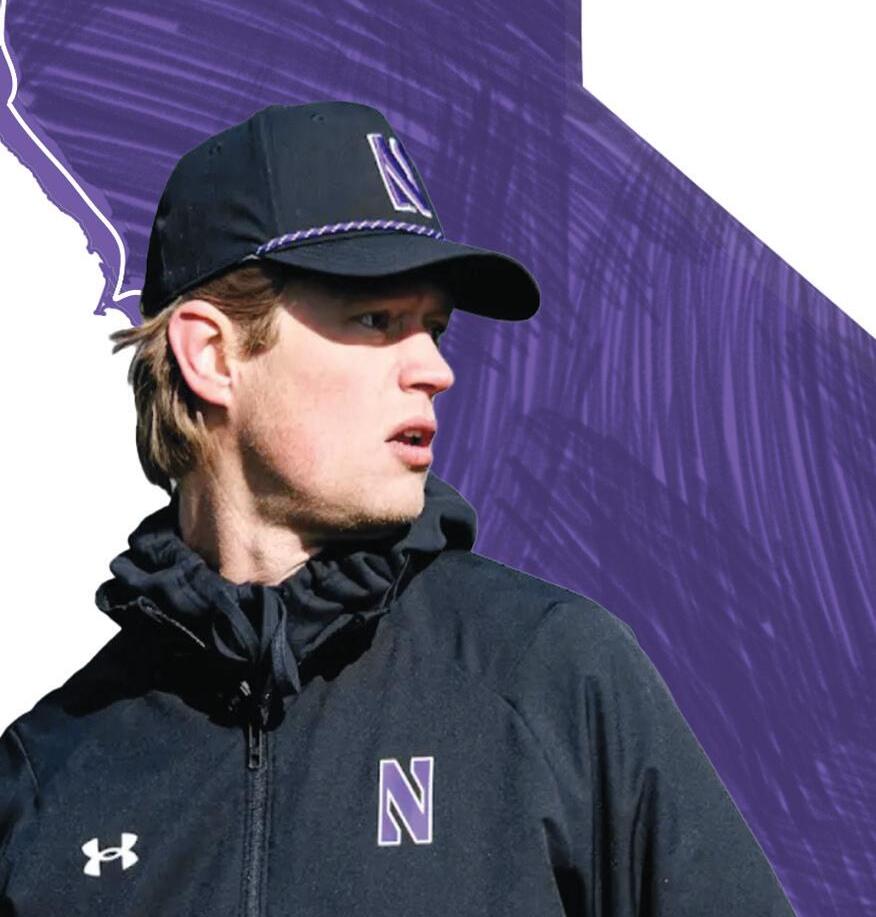
“I couldn’t imagine playing anywhere else,” he said of UCLA.












When Rick caught wind of the change, he called his son and o ered only one suggestion.
Jerry said he’s been “in awe” of the culture Braun has set into motion, and he wants to help take the program to the next level. He added that he has been blown away by the way Braun connects with players, balancing the responsibilities of coaching with serving as a support system.



“ e only advice I’m gonna give you is practice your post-game victory speech,” Rick said, “because it need(s) to be about thanking everybody else.”




But even Rick wouldn’t believe what happened as Jerry’s Bruins dismantled Penn State 42-37. ey led by as much as 20 points, compiling 435 yards of o ense and nearly 40 minutes of possession in the stunning victory.
While Northwestern’s schedule is difficult, including road games against the previous two national champions, Indiana and Ohio State, and the 2026 College Football Playoff semifinalist Oregon, Jerry said he is not worried about the squad the team will face.
After all, the Big Ten is always punishing.




“What do you come to college football for,” he said, “if not to play in games like this and stadiums like this?”

Jerry said the win against Penn State was a product of work from “a lot of good people,” and the entire team and sta had tremendous belief in each other. He still doesn’t want to take credit for the victory, even though he appeared to light a re under the o ense while calling plays.


Jerry doesn’t have a specific game that he is looking forward to; he said he’s excited for all of them. He is eager to learn the “Go! U Northwestern” fight song, navigate a new school culture and explore all of the other Wildcat traditions.

“It was just one of those days where you just fall back in love with college football,” he said, “because that’s how special it can be.” e entire year wasn’t “euphoria” for Jerry and the Bruins, though.

A er UCLA ra led o two straight victories against Michigan State and Maryland following the marquee victory, the team never won again, nishing the season with ve straight losses for a 3-9 record.
It’s been almost a decade since Jerry was anywhere other than UCLA, where he probably could’ve recited the “Eight-Clap” cheer in his sleep. While he still owes Westwood, which will always be “home” for him, a Rose Bowl victory, he said he is focused on taking things one day at a time in Evanston.

Despite the challenging run, Rick said the losing weeks might have been more bene cial for Jerry’s growth as a coach than the winning ones.



“It’s one of those pieces that is part of your story that you are just so thankful that you got to write,” Jerry said, “and now you’re just excited to write the next chapter.”

“There are a lot of coaches out there that believe in only one system,” Rick said, “(but) great
k.nia@dailynorthwestern.com