The Daily Northwestern
3 CAMPUS/Eig
Medill alum Jonathan Eig wins Pulitzer Prize

SPORTS/Lacrosse by the numbers
Breaking down No. 1 Northwestern, Florida’s key gures before Final Four
Schill to testify with UCLA and Rutgers leaders on ursday
By BEATRICE VILLAFLOR daily senior staffer
@beatricedvilla
e House Commi ee on Education and the Workforce, led by chairwoman U.S. Rep. Virginia Foxx (R-N.C.), called University President Michael Schill and the leaders of two other universities to appear for a ursday hearing about antisemitism on college campuses.
e hearing, titled “Calling for Accountability: Stopping Antisemitic College Chaos,” will mark the commi ee’s third on antisemitism within college campuses since December 2023. It comes a er the leaders of Harvard University, the Massachusetts Institute of Technology and Columbia University have testi ed in front of Foxx’s commi ee.
Testifying alongside Schill are University of California, Los Angeles Chancellor Gene Block and Rutgers University President Jonathan
» See CONGRESS CONTEXT, page 10
4 OPINION/MENA Advocacy Calling out NU bias against MENA students

Students have alleged misconduct om Segal shop professional Sco Simpson. But they fear administrators have li le desire or ability to hold him accountable.
By BEATRICE VILLAFLOR daily senior staffer @beatricedvilla
Just over a month before she graduated from Northwestern, Emily Song (McCormick ’24) told her professor that Scott Simpson — a professional hired to help students manufacture projects in the Segal Design Institute shop — was “unfit” to work in a learning environment.
Song had previously reported Simpson for his “disrespectful”
behavior toward her, referring to several incidents with him during her sophomore year. After another negative interaction with Simpson in February, she lodged a complaint against him again.
“I don’t enjoy spending time in the shop anymore,” she wrote in a Feb. 19 email to her professor. “I look over my shoulder, making sure Sco is not around me.”
Four days later, she met with Segal administrators to discuss her concerns about Simpson. That same week, seven other students lodged similar complaints against him.
Election slating bill faces preliminary injunction
Legislation could prevent candidates om appearing on ballots
By WILLIAM TONG daily senior staffer
A Sangamon County Circuit Court judge granted a preliminary injunction Wednesday against enforcement of a recently passed Illinois law that prohibits election slating. e legislation could prevent four Republicans vying for state o ce from appearing on general election ballots in November.
e candidates led the lawsuit against the Illinois State Board of Elections and A orney General Kwame Raoul on May 10. It came a week a er Gov. J.B. Pritzker signed the law, which stops party leaders from adding candidates who didn’t run in partisan primaries to their general election slates.
During a Wednesday hearing on the injunction, Circuit Court Judge Gail Noll said the law could violate the plainti s’ constitutional rights by disrupting

their ballot access in the middle of an election cycle.
“Here, the public act eliminates one entire route,” she said.
Before Noll announced the order, an a orney for the State Board of Elections said for now, the agency was not planning to reject any ballot petitions based on the law.
Earlier in the hearing, plainti s argued that the law’s application to them speci cally restricts the public’s voting rights against the state’s “purported interests” in making the electoral system more fair.
Je rey Schwab, the plainti s’ a orney, said the court should apply strict scrutiny to this dispute — the highest standard of constitutional review that requires government action be narrowly tailored to further a compelling state interest. He said the state failed to meet those stipulations.
Democratic o cials have said the slating ban prevents political party elites from exercising too
much in uence over the electoral process by handpicking candidates and bypassing primary elections. Schwab said he had doubts about that interest.
“Why would they only do it for general assembly elections and not others?” Schwab said.
He said allowing the plainti s to be on the general ballot gives the public more choices during November’s elections, which contributes to Illinois’ goal of protecting voting rights.
And, the law was unfair to the candidates themselves — catching them o guard as many had already started obtaining signatures for the slating process, he said.
“ e legislature changed the rules in the middle of the game,” Schwab said.
Attorney Hal Dworkin, who represented the Illinois A orney General, argued the preliminary injunction could set several negative precedents
» See HEARING , page 10
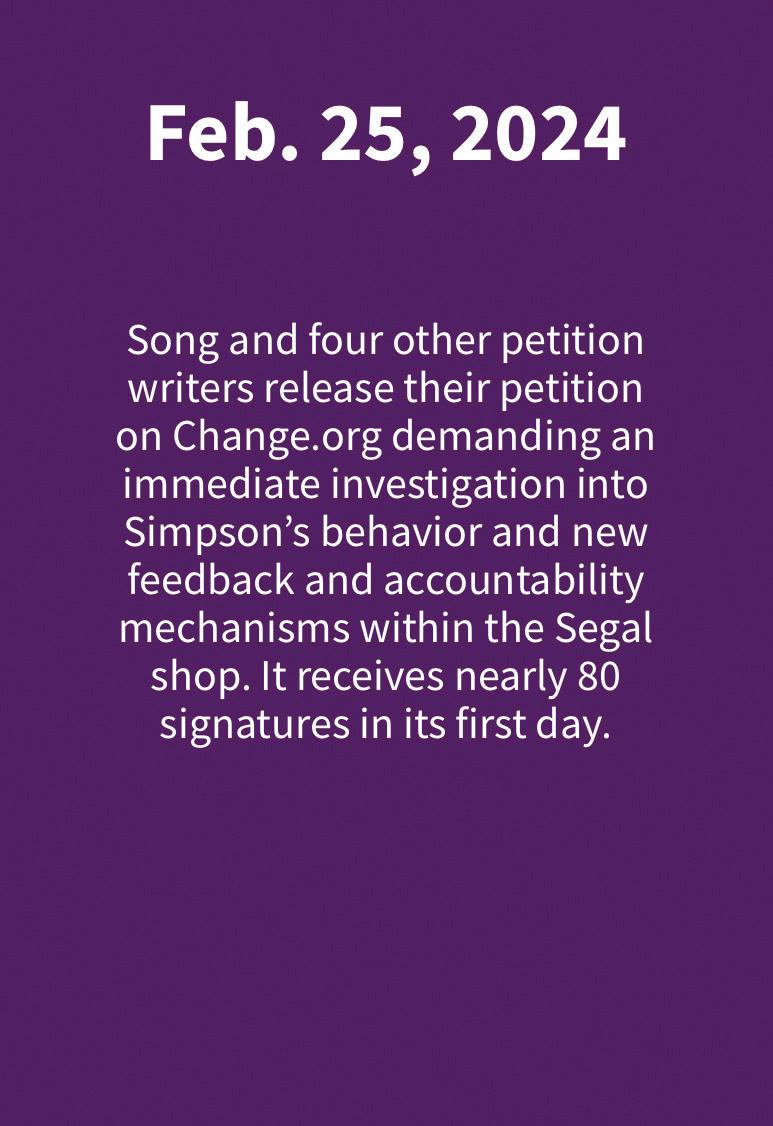
And, on Feb. 25, Song and four other McCormick seniors launched a petition alleging a “deeply problematic culture” at the shop. The petition calls for new accountability mechanisms and feedback systems in the shop and an immediate investigation into Simpson’s behavior. As of May 21, it has received 114 signatures.
Despite several complaints to Segal and University administrators and a temporary absence from his role, Simpson made appearances at the shop following his removal from the shop floor in late February. He
returned to his role on April 23.
Even as the University promises to implement safeguards to prevent similar behavior, several students question administrators’ ability and desire to hold Simpson accountable for his conduct.
“If students don’t shine a thirdparty spotlight on the behavior and the conditions in the shop, from individuals or the culture itself, there’s nowhere in the administrative chain that will allow for such scrutiny,” Song said.
» See IN FOCUS , page 6
A er early blow, Ryan Field foes expand lawsuit claims
New
claims bring total to seven in lawsuit against Evanston
By SHUN GRAVES the daily northwestern @realshungraves
Residents suing Evanston over Northwestern’s plans for a rebuilt Ryan Field sought to breathe new life into their accusations Monday, doubling down on claims a county judge dismissed in April and detailing how public concerts could “interfere” with their livelihoods.
A er Judge Pamela McLean Meyerson dismissed three of the four original claims in April, siding with the city and NU, the remaining count seemed poised to enter a pretrial phase. But the Most Livable City Association now seeks to relitigate the claims while introducing some new ones.
Shortly a er Mayor Daniel Biss broke City Council’s tie in November to approve NU’s plans to host public-facing concerts at a new Ryan Field, Most Livable City and 13 stadium
neighbors sued the city. e group opposing the events wants the court to declare that approval invalid.
In the months since, the University has intervened to support the city. With its modied claims detailed in Monday’s ling, Most Livable City asks the court to reconsider its decision.
e changes could prolong a case that cuts to the core of a debate that has riven Evanston for the past year.
One count includes more detailed claims that the city violated residents’ due process rights by approving the ordinance on a tie-breaking vote, alleging that decades ago, Evanston’s legal counsel declared a higher voting threshold when City Council voted on a zoning change.
Another reiterates arguments that the city should have used a map amendment, a more stringent process, rather than a simple text amendment to allow concerts at Ryan Field. And the
last further underscores due process claims over the city’s handling of a Most Livable City wri en protest last year.
e suit’s most lengthy claim, that the city engaged in “secret negotiations” in favor of NU and thus violated residents’ due process rights, has proceeded regardless of the judge’s April ruling — because Evanston and NU had not asked for the court to dismiss it.
Monday’s modified complaint separates the claims that Biss and some councilmembers “traded their support for the zoning change for Northwestern’s promise of monetary payments to the City” into a new count.
And it introduces two more counts to the suit for seven total. e nal two ask the court to prevent the zoning ordinance from taking e ect, arguing the public-facing concerts will deleteriously impact private
» See MLCA , page 10
DAILYNORTHWESTERN.COM Find us online @thedailynu ursday,
23, 2024 High 77 Low 57
May
INSIDE: Around Town 2 | On Campus 3 | Opinion 4 | In Focus 6 | A&E 11 | Sports 12 Recycle Me
Serving the Northwestern and Evanston communities since 1881
@william2tong
Illustration by Shveta Shah
Nonpro t honors community members at celebration
By YONG-YU HUANG the daily northwestern @yong_yuhuang
Several dozen people filed into the First Congregational Church of Evanston to attend Connections for the Homeless’ Milestone Celebration Wednesday evening. Starting at 6 p.m., the organization honored community members, volunteers and staff members, with a dinner provided afterwards by Chicken Shack.
The local nonprofit provides financial assistance, emergency shelter and guidance for people experiencing homelessness. It also owns and operates the Margarita Inn, which it purchased in November 2023 after having run a homeless shelter there since 2020.
Coordinated Entry and Training Manager James Barnett has spent six years at Connections, he said.
“When I started, there were about 40 (people on) staff, and now we have 100,” Barnett said. “Our mission of ending homelessness, one person at a time, is not something we do alone.”
The Milestone Celebration also recognized PEER Services, which provides substance use prevention and treatment services to Connections participants, as an Outstanding Community Partner. PEER Services comes onsite to the Margarita Inn to serve the Connections community.
“They fought to disassemble barriers to participants receiving services,” Manager of Shelter Programs Keegan Olson said, “People don’t even have to leave the shelter to get connected on their journey to better care.”
Connections served about 5,000 people in 2023 and offered shelter to about 60 individuals and families at the Margarita Inn, Barnett said. Volunteers drop in every week to cook food, organize clothes in the clothing room, assist participants, and more. Last year, they gave over 10,000 hours to the organization, Barnett added.
Volunteer Justin Travis was honored with the Lisa Todd Volunteer Award at the event.
Director of Communications Eric Ruder said
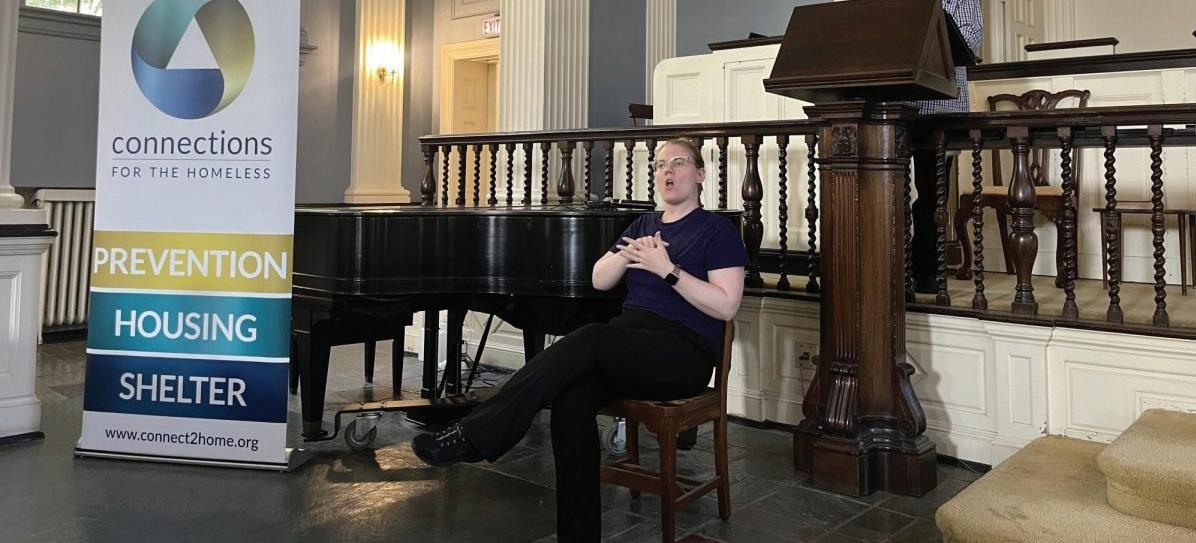
Connections’ Milestone Celebrations happen twice a year. Staff members introduced the honorees, many of whom spoke as they went up to the stage and received their awards.
“We do this regularly because there’s always so many amazing stories of people who face big obstacles and then find a way to surmount them,” Ruder said.
Medical Director Dr. Keith Boyd introduced Lamonte Cooper , who first encountered Connections through a friend and has been a resident at Margarita Inn for eight months. Previously, he slept on a train for around nine months, he said.
In his speech, Cooper spoke about how Connections has helped with his health issues, including hypertension and an upcoming surgery.
“Hopefully, I’ll be off of the cane and get a



job at some point,” Cooper said.
Loren Taylor (Medill ’81), another Margarita Inn resident, said he received a stage four prostate cancer diagnosis in November and lost his housing in January, about three weeks after he started chemotherapy. Taylor came to Margarita Inn in March, halfway through his treatment.
Taylor said he was especially aware of the dangers of congregate shelters given his weakened immune system. He was worried about the recent measles outbreak and the COVID19 pandemic.
“I was doing everything that I could to stay out of congregate shelter,” Taylor said. “As large as my network was and how diligent they were at keeping me from having to sleep on the train, nobody was really in a position to help.”
However, Taylor said he found the support he needed at Connections. He noted that Boyd
has been a key part of his experiences at Connections, and Margarita Inn has been crucial to his health journey.
Connections participant Fariba Panahi was also honored at the event for her “resilience, community, and generosity of spirit.”
Panahi discussed her experience with the organization as an Afghan refugee, noting that Connections staff provided resources and connected her to essential services as she and her family settled into a new country.
“Your commitment to helping families like mine rebuild our lives is nothing short of extraordinary,” Fariba said. “I have heard the saying, it takes a village to raise a child. Well, my family is living proof that a city like Evanston can raise a whole family.”
yong-yuhuang2026@u.northwestern.edu
AROUND TOWN THURSDAY, MAY 23, 2024 2 THE DAILY NORTHWESTERN WWWW NU Symphonic Band Shawn Vondran, conductor Friday, May 31 7:30 PM Pick-Staiger Concert Hall $6/4 Percy Grainger Children’s March John Williams Adventures on Earth Through a Child’s Eyes Through a Child’s Eyes (847) 467-4000 concertsatbienen.org Readers & Advertisers: Last spring print issue of The Daily is today: Thursday, May 23 Watch for our Graduation Issue: Monday, June 3 Contact The Daily at 847-491-7206 or Email spc-compshop@northwestern.edu for more information about advertising. Visit DAILYNORTHWESTERN.COM for news coverage during the print break. 505 Main Street • 847.864.3435 • www.oceanique.com CELEBRATE GRADUATION WITH US Make your dinner reservations now 300 Premium Wines • Superb Fish, Prime Beef & Duck Tuesday $ 1.75 Oysters Wednesday $36 .00 Lobster Entrée Thursday No Corkage or 3 Course Menu $62 (Wildcard Discount Not Applicable) French American Cuisine
Yong-Yu Huang/The Daily Northwestern
Coordinated Entry and Training Manager James Barnett speaks at the Milestone Celebration.
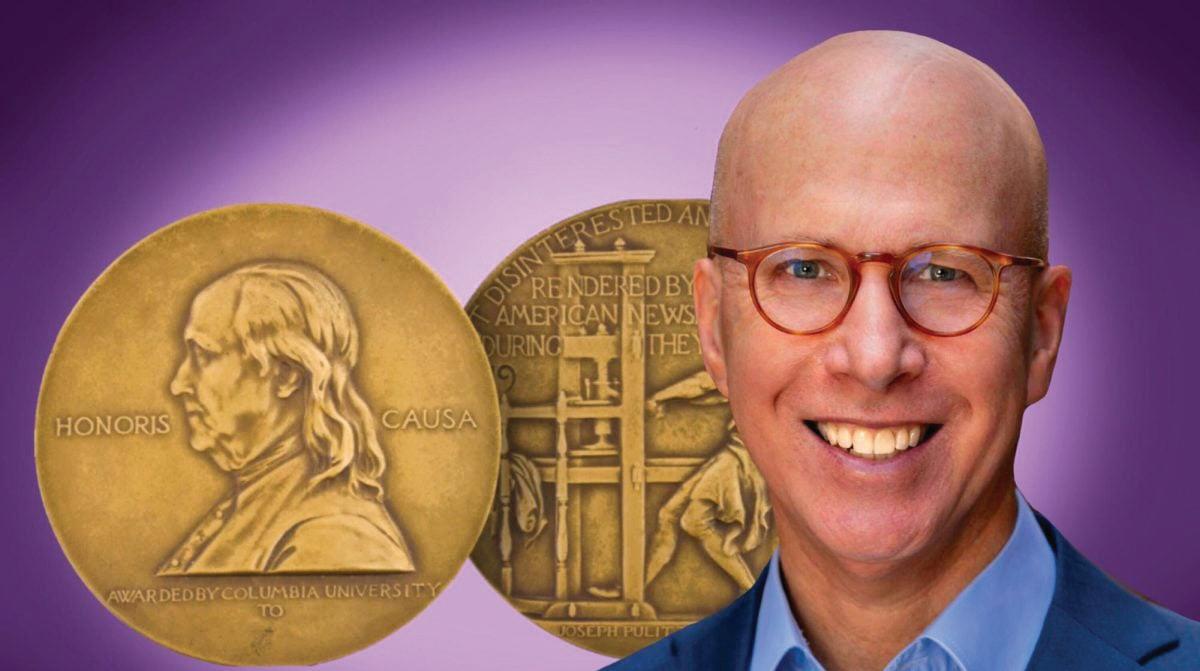
Medill alum Jonathan Eig wins Pulitzer
By LILY OGBURN daily senior staffer @lilyogburn
When Jonathan Eig (Medill ’86) was a student at Northwestern, he was thrilled at the chance to become a newspaper reporter after graduating. He never expected to one day win a Pulitzer Prize.
Eig, a New York native now living in Chicago, has spent much of his life pursuing his dream of being a reporter. He transitioned to a career as a biographer in 2005 when he published his first book, “Luckiest Man: The Life and Death of Lou Gehrig.”
Now, almost two decades later, Eig has won the 2024 Pulitzer Prize for Biography for “King: a Life,” his account of Martin Luther King Jr.’s life.
“I’m still walking on air,” Eig said about the recent achievement.
From writing biographies to sports articles for the Rockland County Journal News, Eig has always been a storyteller. His parents, Phyllis and David Eig, said he has been a strong writer since childhood — always involved with his school newspapers.
While Jonathan Eig’s parents didn’t know what his career goals were when he started reporting, they always supported his endeavors, including attending journalism school.
“He showed not just an ability, he loved it,” Phyllis Eig said. “We supported whatever it was he wanted to do, as long as it was legal, healthy and it made him happy.”
Jonathan Eig joined The Daily Northwestern’s campus desk in his first year at NU. By his senior year, he was The Daily’s Campus Editor.
At The Daily, Jonathan Eig met Robert Kazel, a city reporter at the time, and now a lifelong friend. Kazel said in an email to The Daily that his first impression of Eig was that he was a “competitive” reporter with great journalism skills.
“I didn’t need to be at The Daily long before realizing that Jonathan was highly respected by his editors and peers, someone with not only terrific writing skills but strong ambition and drive to tackle complex and difficult subjects,” Kazel said.
After graduating, Jonathan Eig reported for several
news outlets, including The Times-Picayune, Dallas Morning News, Chicago Magazine and The Wall Street Journal.
However, Jonathan Eig said reading books compelled him to apply his journalism skills to write his own book.
“Writing newspaper stories and making stories is great, but books are more permanent,” he said. “You can say something bigger. And I just thought, ‘Maybe I can try.’”
Jonathan Eig said he didn’t expect to succeed as an author. But when his first biography “Luckiest Man: The Life and Death of Lou Gehrig” reached the No. 10 spot on The New York Times Bestseller list, he swapped his career to writing books.
Jonathan Eig said the skills he learned at The Daily and as a newspaper reporter are crucial to his work as a biographer.
“I think journalists do research in a slightly different way than most academics,” he said.“I think that gave me an advantage as a book writer who knocked on doors, made cold calls, (and) dug through people’s basements and closets looking for old letters.”
Writing biographies is an all-consuming process,
Jonathan Eig said. For a book like “King: A Life,” he said he spends a year or two compiling research. His process includes interviewing people, digging through archival materials and gathering all the information he can about his subject.
“It’s one person trying to gather thousands, millions of data points about another person’s life, and then make sense of it all and translate it into something that’s pleasurable to read,” Jonathan Eig said.
Jonathan Eig’s attention to detail paid off; his exhaustive biography of MLK gained national attention. “King: A Life” became a New York Times Bestseller, receiving a nomination for the National Book Award and winning the New-York Historical Society’s 2024 Barbara and David Zalaznick Book Prize and the Pulitzer Prize for Biography.
When Jonathan Eig found out he had won the Pulitzer, he said he was ecstatic.
“I wake up in the morning, and I can’t believe it actually happened,” he said. “It’s been like waking up on my birthday for the last seven days in a row.”
lilyogburn2026@u.northwestern.edu
The Daily Northwestern www.dailynorthwestern.com
Editor in Chief Jacob Wendler eic@dailynorthwestern.com
General Manager Stacia Campbell stacia@dailynorthwestern.com
Holly and John Madigan Newsroom
Phone | 847.491.3222
Campus desk
campus@dailynorthwestern.com
City desk city@dailynorthwestern.com
Sports desk sports@dailynorthwestern.com
Ad Office | 847.491.7206 spc-compshop@northwestern.edu
The Daily NorThwesTerN is published Monday and Thursday during the academic year, except vacation periods and two weeks preceding them and once during August, by Students Publishing Co., Inc. of Northwestern University, 1999 Campus Drive, Evanston, IL 60208; 847491-7206.
First copy of The Daily is free, additional copies are 50 cents. All material published herein, except advertising or where indicated otherwise, is Copyright 2024 The Daily NorThwesTerN and protected under the “work made for hire” and “periodical publication” clauses of copyright law.
POSTMASTER: Send address changes to The Daily NorThwesTerN, 1999 Campus Drive, Evanston, IL 60208. Subscriptions are $100 for the academic year. The Daily NorThwesTerN is not responsible for more than one incorrect ad insertion. All display ad corrections must be received by 3 p.m. one day prior to when the ad is run.

ON CAMPUS THURSDAY, MAY 23, 2024 THE DAILY NORTHWESTERN 3
Illustration by Lily Ogburn
Eig won the 2024 Pulitzer Prize for Biography for his sixth book, “King: A Life.”
DAILYNORTHWESTERN.COM
Check out
for breaking news
OPINION
Hamed: Calling out Universiy bias against MENA students
EMAN HAMED GUEST COLUMNIST
When I served as co-president of Northwestern’s Middle Eastern North African Student Association from 2023-2024, I witnessed firsthand the ways in which Arabs at NU assumed many roles: students, friends, mentors, and perhaps most notably, builders.
We built a community for ourselves that nurtures the long-held Arab ideals of resilience and resistance. As a leader, I advanced common-sense initiatives that increase our presence and inclusivity on campus, a stated NU value, but not with ease. The unabating obstacles during this process speak to the current climate of what it means to be an Arab in higher education: navigating academia in a context blind to our existence.
This development of a MENA community at NU derives from our determination to dismantle global practices of Arab erasure and subjugation. Our determination is especially encompassed in our unity around the struggle for Palestinian liberation. But students who speak up for Palestine on college campuses, especially at NU, are susceptible to a vicious culture, and the perpetrators of this culture operate with impunity.
Of note, it is the hypocrisy of prominent figures, from Joe Biden to Michael Schill, that allow for this status quo to manifest and dangerously expand. When Schill and his counterparts write addresses condemning antisemitism with no regard for the rampant Islamophobia and anti-Arab sentiment throughout the country, they are telling a one-sided story that lends to this immunity. I am weary of President Schill’s emails — not for what they include, but what they exclude. He is far too acclimated with the nature of downplaying Palestinian, Arab, and Muslim suffering. He wrote in a Nov. 13 email that there was a “brutal terrorist attack on Israel by Hamas” on Oct. 7 but
only “ensuing military action in Gaza.” To be clear, he wrote, “Northwestern will not stand for antisemitism” or “other forms of hate.” Arabs and Muslims — we are an afterthought at best. This inability to identify Arabs and Muslims, to concede that we too exist in a heightened harsh reality of threat, is ignorant.
I have no choice but to come to the logical conclusion that NU is riddled with hypocrisy. On Tuesday, May 14, I returned to my off-campus apartment with my name crossed out on my mailbox and “HAMAS” written underneath. That following Thursday, I returned home again with a series of MENA Studies’ “Palestine in Context” flyers taped to my front door, vandalized with the messages: “WE DON’T NEGOTIATE WITH TERRORISTS” and “HAMAS WILL RAPE.”
If we want to talk about divisive, violent rhetoric, this is about as harmful as it gets. I immediately contacted the University to inform them of this event. Two separate administrators promised that I would be receiving a phone call from Schill. It never came.
I hoped that Schill would prove me wrong and debunk the aura of hypocrisy he has assumed. At the very least, if he could not issue me a phone call, I expected a community email from him in my inbox the next day, noting that this University rejects these hate tactics and is committed to ensuring the protection of all students.
After all, within 24 hours of the defacement of Israeli and American flags on Deering Meadow, we were all reading about how unacceptable these actions are. There was also a vague mention of the removal of “banners and signs,” although you would be forgiven for having missed that this referred to the brazen tearing of Palestinian art and images of the destruction in Gaza by an “angry mom.” Yet, somehow, when an Arab student is targeted in her own home, Schill is silent.
The sad reality is that this incident is the most recent in the history of the University ignoring discrimination against their Arab and Muslim students. Schill was also silent
when the Students Publishing Company pursued criminal charges against two students of color for their Palestine activism. Schill was also silent when Zionists doxxed and harassed multiple pro-Palestine NU students on social media. Schill was also silent when pro-Israeli counter-protestors on Deering Meadow called peaceful demonstrators terrorists and wished sexual assault upon them. The administration’s silence shows us one thing: the sanctity of safety is a privilege, and one that it will not extend to Arab and Muslim students and their allies.
In truth, I am hardly surprised. Schill is responding to the anti-Palestinian incentives in his environment, which spans from the meeting rooms of Northwestern’s Board of Trustees to the halls of Congress. Consider what happened to Sonoma State University President Mike Lee, who was put on “leave” after daring to reach a negotiated settlement with pro-Palestinian protestors. Or indeed, what happened to Schill, who was hooked alongside Rutgers’ President Jonathan Holloway to answer for having caved to pro-terror encampment protestors, which is how Virginia Foxx’s House Committee apparently views peaceful pro-Palestinian students speaking out about ongoing Palestinian suffering and Israeli crimes against humanity.
Many Zionists have worked diligently to conflate any sympathy for the Palestinian cause with antisemitism. Within this philosophy, they embolden aggressive treatment of Arabs and Muslims through their dialogue on Palestine-Israel, which intentionally advances the idea that we as Arabs are barbaric, uncivil and unworthy of a dignified response to threats to our wellbeing.
I am here to tell the NU community that I will not be disparaged. My welfare matters no less than any other student’s. I reject the fundamental dehumanization of Arab and Muslim life.
The honor of Arab and Muslim students at NU is something I will not be silent about. The honor of the more than 35,000 innocent Palestinians Israel murdered in Gaza
is something I will not be silent about. The honor of Palestinians who have endured 76 years of occupation at the hands of the U.S.’s colonial outpost in the Middle East is something I will not be silent about.
Every time I open my phone to read the news, I am reminded that the hate crime I faced pales in comparison to the massacres in Gaza right now. The fear I now experience walking into my apartment is nowhere near the fear Palestinian children feel as they watch bombs destroy their schools, playgrounds, hospitals and homes, as they watch their families die in front of them. Yet, that does not mean that the threats to my physical safety that I have been subjected to are any less important or worthy of administrators’ attention than the fears that pro-Israeli Jewish students say they feel from slogans and chants.
I implore us to think about the double standard and why we have relegated Arab and Muslim students to the status of second-class citizens. And I urge us all to critically assess the institutional environment NU and other establishments like it have created where engaging in advocacy for Palestine is a sin.
I dream of a NU that embraces Arab and Muslim students for who we are and what we stand for — equity for all. Calling for a ceasefire is part of this equity. Saying Palestinian lives matter is part of this equity. Urging NU to end its complicity in violence by divesting from all entities aiding the Israeli government’s violence is part of this equity. After a long journey, I am lucky to seek refuge in a small but brave community at NU who stand in solidarity with these values. I dream of a NU where every Arab and Muslim gets this community from day one — because we deserve to feel respected.
Eman Hamed is a Weinberg junior. She can be contacted at emanhamed2025@u.northwestern.edu. If you would like to respond publicly to this op-ed, send a Letter to the Editor to opinion@dailynorthwestern.com. The views expressed in this piece do not necessarily reflect the views of all staff members of The Daily Northwestern.
Lubin: The encampment invites extremism, antisemitism
of anti-Zionist Jewish protesters — who represent an extreme minority of Jews — as if this did anything to undermine claims of antisemitism.
Content Warning: This article contains mention of war, sexual assault and death.
Like the long list of colleges that have had similar encampments, the encampment on Deering Meadow brought with it a surge of antisemitism.
One protester wore a sweatshirt depicting Abu Obeida, the spokesperson for the Al-Qassam Brigades, the military wing of the Palestinian terrorist group Hamas. A sign depicting a star of David with a red slash drawn through it was taped to the Meadow’s fence. Another poster portrayed Northwestern’s Jewish president, Michael Schill, as a horned devil, echoing a centuries-old antisemitic trope. Jewish students reported being targeted, yelled at, and in at least one case, physically assaulted.
These instances of hatred do not make the encampment itself antisemitic but are emblematic of a larger problem within the protest’s ideology and rhetoric.
As both a history major with a passion for global affairs and a Jewish NU student with Israeli family members and friends, I felt compelled to go to the encampment to try to understand it for myself. I spoke to several protesters, and almost all of them appeared to hope for a solution to the conflict — something we had in common.
I posed the same question to each protester. If their movement opposed antisemitism, then why did such glaringly hateful acts follow the encampments at almost any university they appeared at?
Each time, the protester deflected — antisemitic acts had been committed by “community members,” not by students, one claimed. Another argued that a “few bad apples’’ did not undermine the overall message. Another pointed to the presence
I do understand their answers. I wholeheartedly believe a majority of the protesters in the encampment are not antisemitic.
But these arguments miss the point. There is a reason why antisemitism follows this movement everywhere it goes: leaders and encampment organizers propagate rhetoric that invites extremism, support for terrorism and antisemitism.
Within 24 hours of the Oct. 7 attack, in which Hamas and several other terrorist groups killed more than 1,200 civilians — including men, women, children and the elderly — and kidnapped hundreds, torturing, raping and burning innocent people alive, student organizers at NU had posted statements justifying the acts as a form of “resistance.”
While the bodies of innocent Israelis were still warm, NU Students for Justice in Palestine, a group that later led the Deering encampment, argued that Israelis affected by the Oct. 7 attack could not claim victimhood due to a history of Palestinian oppression. The group called the attack — which, I remind you, included the rape and slaughter of Israelis the same age as NU students and the murder of children in their homes — an act of “resistance” and a “testament to the indomitable human spirit.”
This kind of rhetoric is not revolutionary, or sophisticated, or even persuasive to most rational people. It is disgusting, antisemitic, dehumanizing and, most concerningly, intellectual garbage.
What I noticed most keenly when I spoke to protesters was their simplistic framing of the conflict. One side, the Palestinian side, was inherently good by virtue of their oppression.
The other, the Israeli side, was inherently bad by virtue of their comparative power — and therefore unable to claim victimhood for any atrocity they experienced, no matter how cruel.
This ideology employs a black-and-white dichotomy of “oppressor” and “oppressed,” “white” and “nonwhite” (despite the obvious irony that Israel is a majority non-white country) to swallow up all the conflict’s complexities and to reframe it as a battle of an entire nation of good versus an entire nation of evil.
This oversimplified paradigm, which utilizes a significant amount of revisionist history and a number of loaded buzzwords, is what allowed antisemitism to emanate from encampments nationwide.
If you participated in these protests, consider this: I am a Jewish student, and I am close to the Jewish community that has felt uncomfortable on campus these last few months.
I want peace. And everyone in that community that I have spoken to wants a ceasefire, the release of the hostages and an end to this war; a solution that affords dignity, self-determination and equal rights to Jews, Muslims, Israelis and Palestinians alike.
Yet there is a real reason we feel alienated by your movement. Trust us, please, that we are rational, intelligent NU students and young people with hearts and minds just like you, and not bloodthirsty “genocide supporters,” “colonizers” or “oppressors.”
We could be your partners as advocates for peace in the Middle East. Instead, you chant “we don’t want no Zionists here,” treating us as if we are personally representatives of the Israel Defense Forces and demonizing us simply for our belief — which an overwhelming majority of Jews worldwide share — that Jews have a right to live in peace in their indigenous homeland, just as Palestinians do.
The national encampment movement, despite the beliefs of many misguided and good-hearted people in it, was and is not a movement for peace.
A true peace movement would demand hostages’ return as well as a ceasefire and an end to Palestinian suffering. These goals, and the goal of peace itself, do not align with the goals of Hamas terrorists, or the Islamic Republic of Iran, or the Houthis. If this
movement were the movement that currently exists, then these encampments would not have been celebrated and praised by the Ayatollah Ali Khamenei and his terrorist proxies as they have been in recent months.
The most concerning aspect of the encampment was not the antisemitism that came with it, though that was deeply troubling. It was that at such a prestigious and elite university, the protest fell short of embracing complexity, discourse and intellectual thought — and ultimately failed to advocate for peace.
The kind of movement I imagine, one that humanizes both Israelis and Palestinians, might have seen both Israeli and Palestinian flags flying, because as any NU student should know, innocent people, no matter their ethnicity, religion or nationality, are not their governments, and they do not deserve to be dehumanized, kidnapped, raped, murdered, starved or driven from their homes because of their government’s actions.
This kind of movement, moreover, might actually have something to say about other important regional actors, like Saudi Arabia, Egypt, Qatar, and Iran, who would have essential roles in any possible solution.
This kind of movement, I believe, would have seen the participation of a much larger community of Jewish students — and no, I do not mean the “anti-Zionist” Jewish students that we have asserted again and again do not represent us. I mean Jewish students who have deep compassion for others and want to be part of a broader solution to this conflict. I mean Jewish students who want peace in the region for both Israelis and Palestinians and believe that it can be accomplished without the wildly unrealistic goal of erasing the world’s only Jewish state. I mean me.
Jake Lubin is a Weinberg sophomore. He can be contacted at jakelubin2026@u.northwestern.edu. If you would like to respond publicly to this op-ed, send a Letter to the Editor to opinion@dailynorthwestern.com. The views expressed in this piece do not necessarily reflect the views of all staff members of The Daily Northwestern.
THURSDAY, MAY 23, 2024 4 THE DAILY NORTHWESTERN Join the online conversation at www.dailynorthwestern.com
JAKE LUBIN GUEST COLUMNIST
DeLeon: Rainbow washing — exploiting pride for profit
“pride flags and rainbow iconography” only in queer-friendly spaces.
Representation of and public support for a cause is becoming increasingly important for businesses to successfully cater to their audiences. You might remember Chipotle’s “Homo Estás?” campaign. Not only was the offensive use of Spanish hilariously horrific, but as a gay man I was shocked at how Chipotle thought it would get away with this superficial display of allyship, just in time for Pride Month 2015. Business practices of pinkwashing and
Business practices of pinkwashing and greenwashing are examples of how companies falsely support causes, such as feminism and climate control, as a means of profit
- ISAIAH DELEON, Columnist
greenwashing are examples of how companies falsely support causes, such as feminism and climate control, as a means of profiting from earnest shoppers. But as we head toward Pride Month, my eyes are on rainbow washing.
Scotty, who goes by the username @scot_e, speaks about queer issues online, has a video discussing the ways businesses are performative in their service for queer folks. He points out specifically that many businesses use
Scotty calls out these businesses for rainbow washing because it takes credit away from the queer communities that created safe spaces for themselves and profits from a false narrative.
Queer influencer Matt Bernstein also talks
Target... pushes rainbow and pride-related merchandise only around June to boost profits while doing little else to support queer communities during the remainder of the year.
- ISAIAH DELEON, Columnist
about the danger of businesses neglecting their queer brand partners. Target is a prime example of this, as the brand pushes rainbow and pride-related merchandise only around June to boost profits while doing little else to support queer communities during the remainder of the year.
The most salient example, though, is Bud Light, whose advertisement campaign in 2023 with trans influencer Dylan Mulvaney was disappointing because of the company’s lack of follow through in protecting Mulvaney after the campaign received backlash.
Dylan Mulvaney is known for her Days of Girlhood series on TikTok. She quickly became a powerful content creator for sharing her transition story despite backlash from some viewers. During her increasing popularity, Bud Light reached out to her and other content creators to cater to a more progressive audience.
Mulvaney posted a video promoting Bud Light, and the company sent her a can of beer with her face on it to commemorate her transition journey. This can of beer would lead many conservative customers to boycott the brand because of its support of transgender people, and later queer bars and foil around the nation pulled Bud Light from their bars after what would become of Bud Light’s failed attempt at incorporating Mulvaney into their marketing.
I want to clarify that I don’t think Bud Light was wrong for supporting Dylan Mulvaney. In fact, when I initially heard about its decision to have Mulvaney become one of the new faces of Bud Light, I was pretty amazed considering I didn’t think Bud Light appealed to queer buyers that much. But, I was disappointed by how little they supported Mulvaney after receiving backlash from conservative drinkers.
Right-wing news networks got a hold of this can of beer and had a field day with it. Videos of people shooting packs of beer, merchandise promoting anti-trans rhetoric and even a federal investigation initiated by Sen. Ted Cruz (R-Texas) against Anheuser-Busch, the parent company of Bud Light, for promoting underage drinking surfaced all over the internet as a result of the conservatives thinking Mulvaney was promoting transitioning for kids.
Mulvaney has massively cut down her media presence since to protect her safety. Bud Light, at least to my knowledge, has yet to do anything to protect her. Bud Light essentially used Mulvaney as a tactic to sell more beer, but as soon as things got complicated, it neglected Mulvaney and her safety.
While Bud Light seemed to have good intentions in highlighting a trans voice with this campaign, its lack of support to Mulvaney represents how this decision was only for business purposes.
Target as well has received some backlash. Conservatives on X were upset at Target for
selling tucking underwear and shortly after Target received bomb threats, whipping up fear about sexualization of kids. In reaction, Target relocated its Pride sections into the back of stores nationwide.
I won’t ignore the fact that Target experienced a large safety threat and needed
- ISAIAH DELEON, Columnist ”
At the end of the day, rainbow washing is just capitalism that has latched its claws onto another social movement.
to act accordingly to protect the safety of shoppers, but putting the Pride section in the back of stores across the nation says something about its performative support for queer people.
At the end of the day, rainbow washing is just capitalism that has latched its claws onto another social movement. Brands continue to disregard queer progress anytime their bottom dollar is at stake. Queer content creators and brands struggled to bounce back as a result of the Bud Light controversy, and this year, it’s crucial to support queer brands and public figures instead of businesses that slap a rainbow sticker on their brand leading up to Pride month.
Isaiah DeLeon is a Weinberg junior. He can be contacted at isaiahdeleon2025@u.northwestern.edu. If you would like to respond publicly to this op-ed, send a Letter to the Editor to opinion@dailynorthwestern.com. The views expressed in this piece do not necessarily reflect the views of all staff members of The Daily Northwestern.



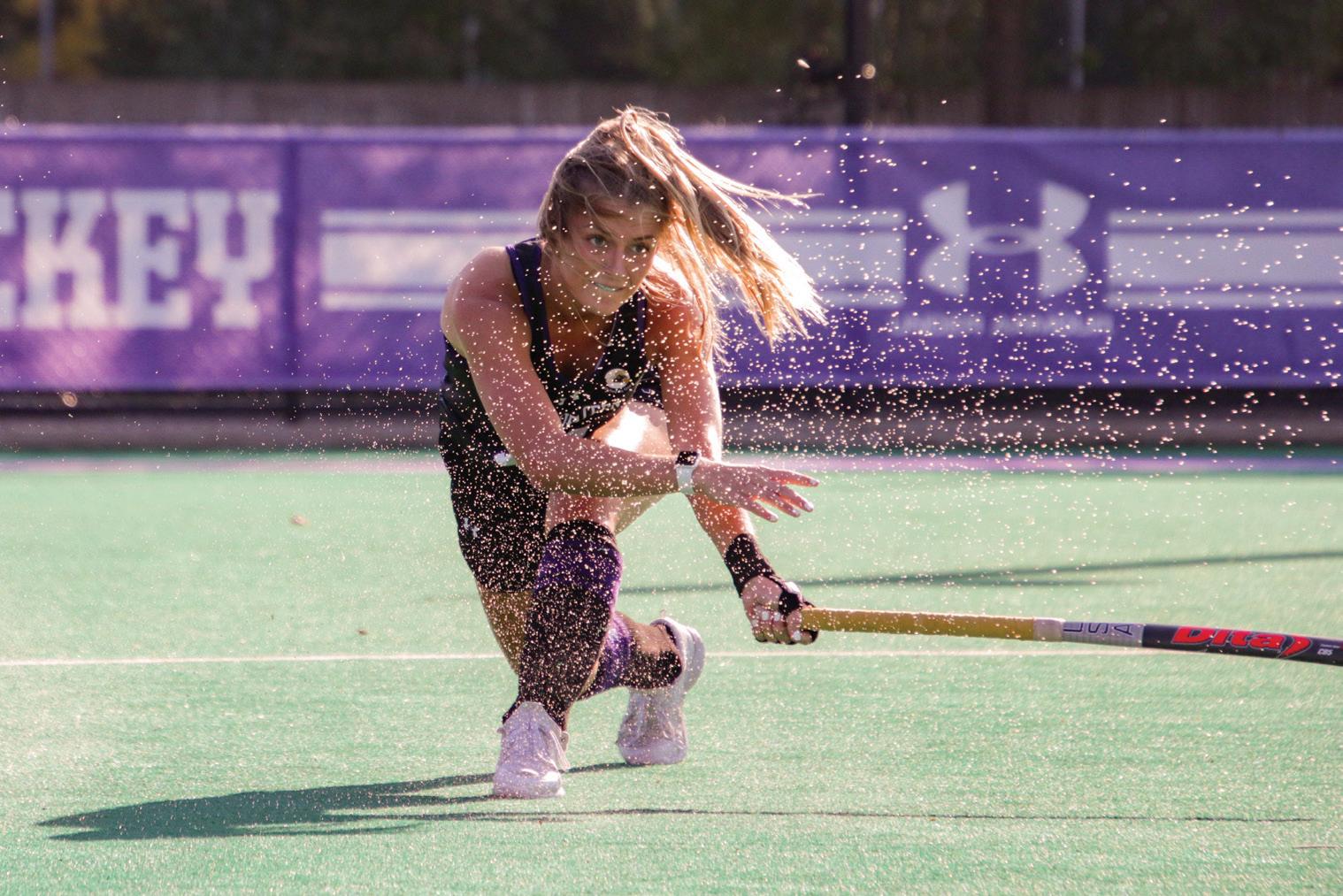


THURSDAY, MAY 23, 2024 THE DAILY NORTHWESTERN 5 Presented by Students Publishing Company in memory of Northwestern alum Kay Krieghbaum (1946-1969), whose dedication to photojournalism inspired this event. TOP: 2023 winning photo by Angeli Mittal ABOVE: 2023 2nd place photo by Jacob Wendler 1st Place - $150 2nd Place - $100 3rd Place - $75 Hon. Ment. - $50 For entry rules & form visit dailynorthwestern.com/kkphotocontest Deadline for submissions: Friday, May 31, 2024 PHOTOGRAPHIC CONTEST the kay krieghbaum memorial For all your packaging and shipping needs. The UPS Store For more info visit: tinyurl.com/upsev 847-869-3000 Visit us in downtown Evanston 1555 Sherman Ave. SHIPPING Services Small stuff. Large stuff. UPS ships it all. INTERNATIONAL, TOO Packing, Shipping & Moving Supplies Hours: M-F 9-6, Sat. 10-5, Sun. 11-4 Student Storage Services Short & Long Term Available Northwestern Special: Show your Wildcard or mention this ad for 10% Off Boxes & Packing Materials
ISAIAH DELEON COLUMNIST Join the online conversation at www.dailynorthwestern.com OPINION
”
”
‘Try and speak English better’
Aside from Song, several students told The Daily that Simpson has a tendency to exhibit problematic behavior toward women, people of color and those with accents.
One shop trainer (McCormick ’24), who has worked in the shop for about two years, said he observed Simpson treating students differently based on their race and gender. The trainer, one of several students who work closely with shop professionals like Simpson, spoke under the condition of anonymity, fear ing retaliation.
He described Simp son as giving whiteappearing men more generous feedback. White-appearing women, he said, often had to “act dumb and innocent” to get a positive response from Simpson.
“Everyone else, it’s kind of a gamble,” he said. “Especially if you’re darker skinned. Then, it’s a little bit more stressful.”
Simpson told Song to make an appointment for later in the week. But a half hour later, Song said, she saw a shop trainer she knew who offered to help her at 4 p.m. that day. The shop trainer said they told Simpson of the arrangement.
When Song returned to the shop for her appointment with the trainer, Simpson stopped her before she could enter the room where the water jet was located, she said. According to Song, Simpson told her that the machine was no longer available and that she shouldn’t have Song said she tried to defend herself, explaining to Simpson that the trainer initiated the appointment. However, Simpson told Song he does not “talk to mad people” and walked away, she said.
“If students don’t shine a thirdparty spotlight on the behavior and the conditions in the shop, from individuals or the culture itself, there’s nowhere in the administrative chain that will allow for such scrutiny.”
EMILY SONG
McCormick ‘24
Former shop trainer
The Daily requested an interview with Simpson and followed up with a detailed list of questions about students’ allegations. Simpson did not respond to either request for comment prior to publication.

The shop trainer said that he has seen Simpson become frustrated with people with accents, especially when they ask for assistance on the water jet, a machine that uses a highpressure stream to cut materials.
Since both undergraduate and graduate students from different backgrounds use the machine, the trainer said, it is common for users to not speak English as their first language.
“When he gets really impatient like he did in the fall, he’ll just say, ‘Stop. You need to do this, remember what we talked about,’” the trainer said. “He doesn’t give them a chance to talk.”
The trainer also said Simpson once told him that “I love all people” but that people with accents should “try and speak English better.”
The petitioners also demanded that an immediate investigation into Simpson’s behavior be launched, with findings reported to Segal and McCormick students.
“Some of the shop staff have forgotten they work in a teaching environment,” the petitioners wrote. “We do NOT deserve to be treated the way we have for asking for help.”
Dueling petitions
Since the launch of Song’s petition, some former NU students have come to Simpson’s defense, highlighting their positive experiences under his tutelage.
Nearly two weeks after the McCormick seniors launched their petition, Wojciech Stojko (McCormick ’15, ’16) started a Change.org counterpetition on March 8 called “Support for the continued safe existence of the Segal Prototyping and Fabrication Lab.”
According to Song, the trainer caught this part of the conversation and assured her that he would speak to Simpson for her.
While the trainer later returned to tell her that Simpson was “sorry” for his conduct, Song said she felt disrespected by Simpson’s unwillingness to apologize to her personally.
Song then encountered Simpson by the water jet, where he apologized to her. In response, Song told him that yelling was not a productive way to speak to students, she said.
Simpson replied that he was not yelling — Song was. When she denied this, Simpson interrupted her, Song said. Simpson reiterated that he doesn’t “talk to angry people,” Song wrote in a statement to The The Daily spoke to another student who witnessed Song’s interaction with Simpson and corroborated

“What we’re trying to say is that it’s unprofessional for teaching staff to extend care, attention (and) quality teaching only to those that they choose and not the general public.”
The trainer estimated that he has heard about 40 stories from students about Simpson’s behav ior, ranging from microaggressions to confrontations with students.
EMILY SONG
McCormick ‘24
Former shop trainer
Song’s first negative interaction with Simpson this year was followed by a second on Feb. 23. Song went to the shop and asked Simpson for help with the water jet for her 300-level design project.
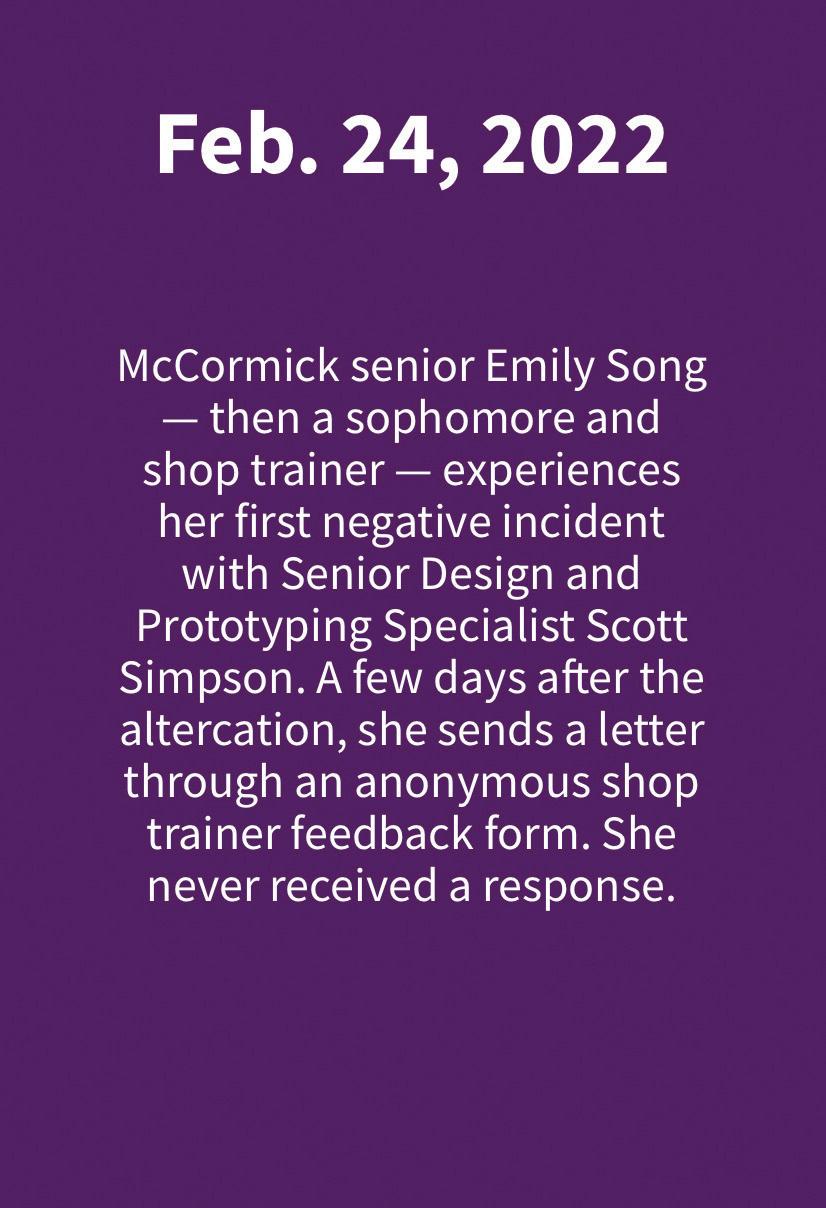
Immediately after her confrontation with Simpson, Song went to Segal’s administrative offices to report the incident. She confided in McCormick Prof. Kim Hoffmann, Segal’s Design Education and Strategic Initiatives lead, who she wrote was “very sympathetic” to her situation.
Song launched the petition shortly after. It had been in the works prior to her second negative interaction with Simpson in February, she said. Within a day, the petition garnered nearly 80 signatures.
One of the petition’s demands is that CTECs — the University’s course and teacher evaluation tool — be extended to evaluate shop staff.

However, Song said her petition’s aim was not to claim Simpson is “indiscriminately mean” to everyone.
Song highlighted that the “narrative” of alumni like Stojko — who she noted were mostly white and male, with the most recent graduation date being 2019 — can exist alongside the experiences of her and others.
“What we’re trying to say is that it’s unprofessional for teaching staff to extend care, attention (and) quality teaching only to those that they choose and not the general public,” Song said.
Stojko’s petition calls for empowering shop professionals’ ability to hold “dangerous shop users” accountable by writing up, recording and ejecting students determined to be exhibiting “unsafe behavior.” The petition has 93 signatures as of May 21.
“We had mentors such as Scott Simpson to teach us how to creatively, effectively, and most importantly safely express our ideas through meaningful prototyping work,” the petition reads.
The petition alleges that students’ respect for the machinery has decreased in recent years. The petition also said current students were “erroneously confi dent” in their ability to use the machines to the point that they think they “know better than seasoned professionals.”
As an employee for the Ford Motor Company, Stojko added, he sometimes comes to the shop for student recruit ment and to teach guest classes.
group that regularly uses the shop, sharing the Facebook exchange, the alumnus said he has been messaging Simpson and assured him that the student group “has his back.”
Simpson did not respond to a request for comment on the message or its contents.
Song said students who are willing to learn should have their concerns heard regardless of skill level or shop experience.
Song said in her experience, she has seen Simpson cultivate an “in-group” of selected students that he bonds with through “divulging personal information” and complaining about faculty and other shop users.
In discussions with administrators, Song said, both Hoffmann and Segal Executive Director Greg Holderfield remained sympathetic to her situation.
The Daily reached out to Holderfield and Hoffmann through NU spokespersons but received no comment on a list of questions.
“They repeatedly assure me that the counterpetition is nothing to worry about as all it does is it illustrates the in-group/out-group culture in the shop,” Song wrote in a statement to The Daily.
‘Environment of a dictatorship’
When one McCormick senior and petition writer asked Simpson for help on her 300-level design course final in Fall Quarter, she said Simpson told her the questions were so “basic” that it was “embarrassing” she was even asking. It was her first time operating the Computer Numerical Control mills, machines that could cause injury if misused.
“He told me that if I didn’t know how to do this one thing that I had no business being in the shop,” she said. “I just remember (his comments) making such a deep impact on me because it’s already an insecurity I had as somebody that didn’t have as much shop experience.”
As the incidents piled up, students at the shop found themselves increasingly avoiding Simpson while working. Multiple students told The Daily that Simpson’s presence created a stressful and fearful experience for those working alongside him.
“He told me that if I didn’t know how to do this one thing that I had no business being in the shop.”
McCORMICK SENIOR Petition writer

Song’s petition quickly circulated within a network of former shop student workers, Stojko told The Daily in a statement.
Petitioners also claimed there had been a recent “vilification” of Simpson in Song’s petition. It called claims of Simpson yelling “laughable” and ignorant of his recent hearing loss.
Simpson did not respond to a request for comment on the hearing loss.
In a Facebook message obtained by The Daily, Simpson thanked one alumnus for his support with the counterpetition and asked him to reach out to others in hopes of “blowing up” Song’s petition.
“It’s a super difficult position to be in charge of everything in the shop,” Simpson wrote. “Especially when you have to worry that anything (you) do or say can offend someone.”
In a message to the listserv of a student
“I wanted to do something cool, and I was really excited, and that just completely ruined the atmosphere for me,” the McCormick senior said about Simpson’s comments on her work. “(It) just made me feel so uncomfortable being in the shop and again — just so tense.”
She also recalled “trying to be frozen” with a female friend when Simpson would walk past them while working on the CNC mills for another design class. She said Simpson facilitated an “unsupportive environment” that intimidated them.
“You (could) just feel the atmosphere shift when Scott walked past us,” she said. “Because we’re just hanging out, machining, and then Scott walked past us. We both grow quiet.”
She added that the pair was scared Simpson would offer unsolicited comments on their projects, so they would stop working until he walked away. As a result, the student said they would rather wait 15 to 20 minutes for another shop professional to be available instead of
THURSDAY, MAY 23, 2024 6 THE DAILY NORTHWESTERN
IN FOCUS From page 1
McCormick senior and former shop trainer Lawrence Chang said community members have a “collective awareness” that Simpson’s demeanor toward students can be “disrespectful or demeaning.”
One former graduate student (McCormick ’24) recalled a time when Simpson turned off a machine while she was midway through using it, tell ing her that her hair was not “all the way up” — it was in a ponytail instead of a bun.
“It was just kind of one of those things where it’s not a fire able offense, but it’s creating this envi ronment of a dicta torship,” she said. “It’s like, ‘What I say goes.’”
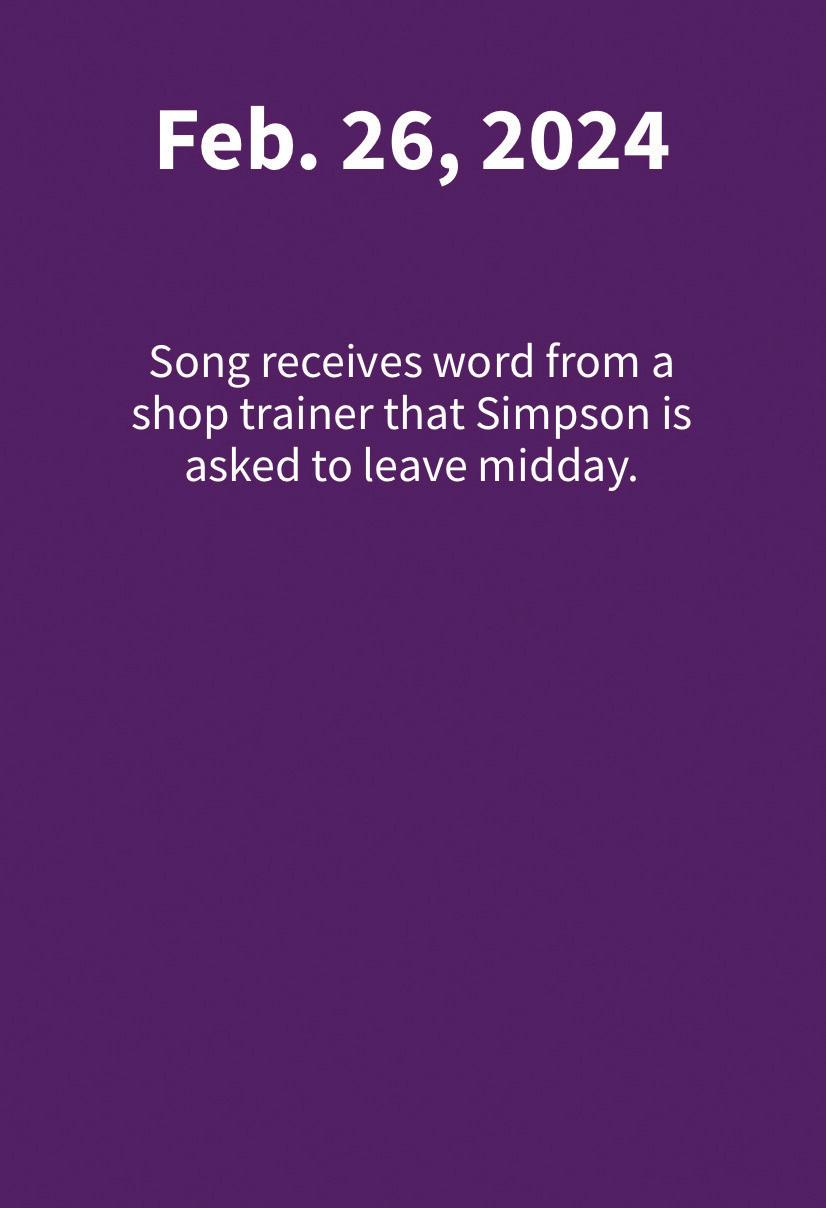
After at least eight reports and the release of the McCor mick students’ peti tion, Simpson was removed from the shop floor on Feb. 26. According to some who worked there, the environment noticeably changed.
“It was just kind of one of those things where it’s not a fireable offense, but it’s creating this enviornment of a dictatorship. It’s like, ‘What I say goes.’”
FORMER GRADUATE STUDENT
University spokesperson Erin Karter wrote in a statement to The Daily that the Segal leadership team was “made aware of student concerns regarding the prototyping lab and actively worked with University partners to investigate those concerns, address any issues, and continue to improve the Karter said that, when issues arise, HR investigates complaints about staff members in partnership with school leadership, the relevant school’s HR administrators and, if relevant, “other University offices.” Karter did not comment on whether there was an investigation into Simpson’s conduct specifically, citing a University policy of confidentiality on personnel matters.
McCormick ‘24

“He was out of Ford (Center) for the rest of Winter Quarter. Everything felt very calm. Everything felt very relaxed,” said a former trainer who had worked at the shop for about two years. “It seemed like students were like, ‘OK, yeah, I can be here. I don’t have to worry about Scott.’”
A maze of accountability
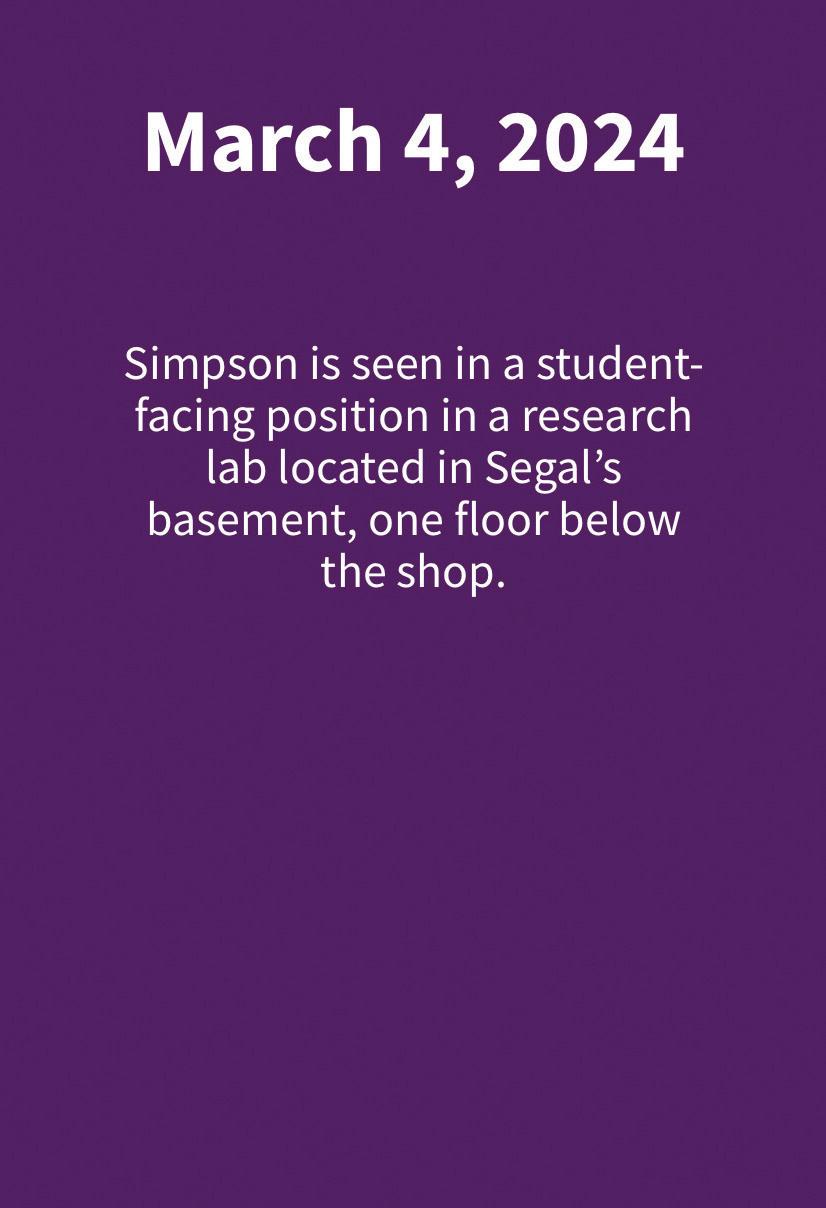
Simpson didn’t remain out of sight for long. A week after being removed from the shop floor, he returned to a student-facing position in a research lab in the Ford Center’s basement, a floor below the shop.
In an email that same day, Greg Holderfield — one of the Segal administrators — encouraged Song to pursue formal pathways like the University’s Office for Civil Rights and Title IX Compliance for her complaints.
That day, Song heard from friends that Simpson had returned to the building. Fearful of running into him, Song inquired about Simpson’s appearance to Hoffmann — with whom she lodged her second complaint this year — and Holderfield the next day.
In an email obtained by The Daily, Holderfield replied that Simpson’s appearance “was not expected or understood.” In a separate email, Hoffmann told Song that there was a “disconnect” regarding Simpson’s work arrangements that week.
University spokespersons and Simpson did not comment on the nature of his absence from the shop floor.
Despite faculty members’ confusion and sympathy, Segal administrators told Song that there was little the faculty could do. According to Song, administrators told her “they are unable to investigate Scott or hold Scott accountable in any truly meaningful way.” Song said she was told investigations, hiring and employment termination policies fall under the jurisdiction of NU’s Office of Human Resources.
“Employment and ‘investigations’ are a complicated matter,” Holderfield wrote to Song the same day. “(HR) must be involved — this is not a faculty(-led) process.”
Holderfield told Song that Segal administrators had spoken with HR on the matter and added they were “aggressively working” to address her concerns with HR.
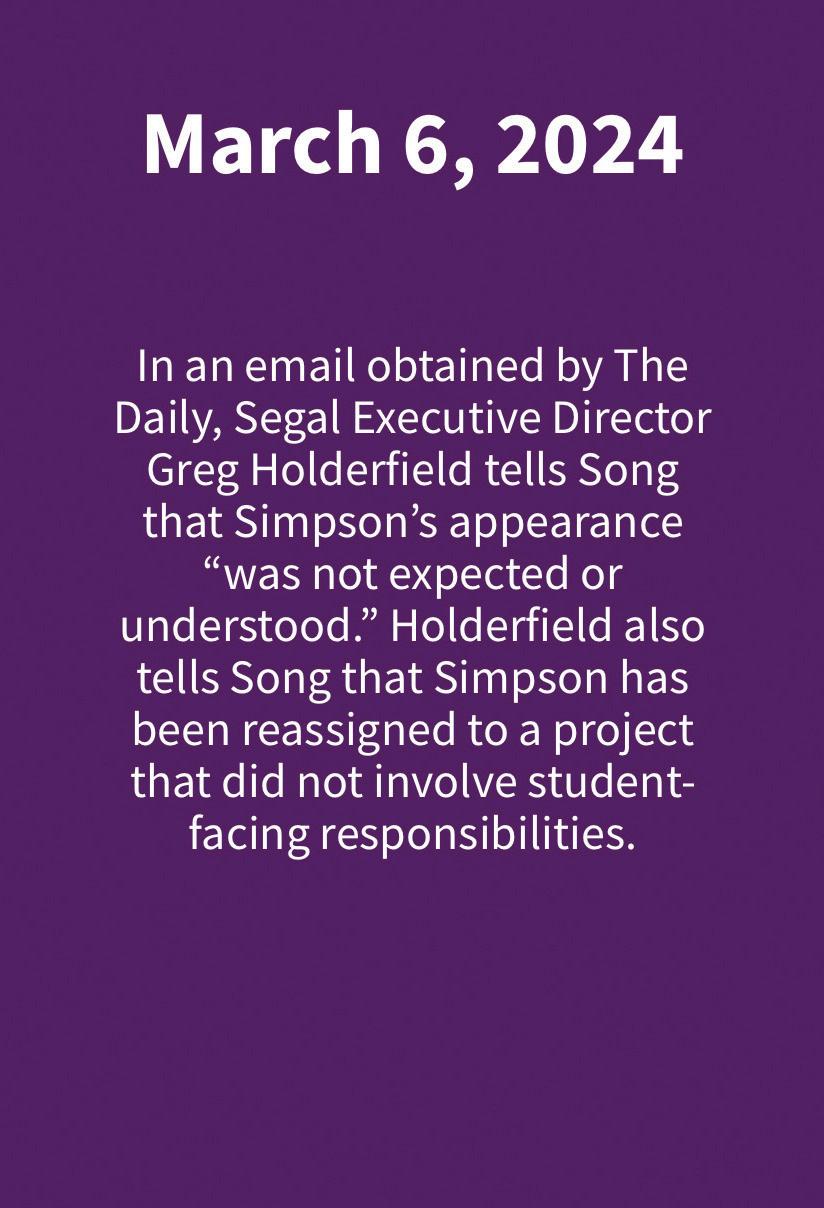
On March 6, Holderfield wrote an email to Song that said Simpson had been reassigned to a project that did not involve studentfacing responsibilities.
“Scott will not be in Ford (Center) for the remainder of the quarter,” he wrote. “Next steps are developing and cannot be shared at this time. More to come.”
Meanwhile, Song prepared to bolster her complaint. The next day, she verified the NU affiliation of more than 90 of the petition’s signatories through the University’s online directory at Hoffmann’s request. Song also opened a form for students to submit anonymized or public statements about their experiences in the shop, sending all nine responses the form collected to Hoffmann later that same day.
When Song asked how she could be protected from retribution, she erfield and Hoff they were unsure. According to Song, Hoffmann and Holderfield both said it was their first time deal ing with the issue and that they did not know how to identify retaliation or protect Song from it.
Hoffmann and Holderfield, con tacted by The Daily through University spokespersons, did not respond to a request for comment.
“‘What are the actual tangible things you could do?’ is what I would ask myself, and I felt like there wasn’t much,” Chang said. “I feel like now, (since) we have this petition Emily started, the ball is rolling.”
But, on April 23, Song received word that Simpson had returned to the shop. Simpson’s return has led some students to question if NU has the ability or even desire to reprimand him.
“We’ve tried all of the official avenues of trying to resolve this situation,” McCormick senior Kevin Chen said. “At this point, I guess that we’ve kind of exhausted the options.”
The former shop trainer said after Simpson returned from absence, he observed him “dialing back” his behavior.
But he added that Simpson is typically at his worst toward the end of quar ters — when deadlines pile up and pressure mounts — and that it remains to be seen if this behavior returns.
to anonymously report incidents. She submitted a letter about the experience and put her name on it.
Over the next quarter, Song heard nothing back about the Winter 2022 complaint. She was not in Evanston the following quarter, so she didn’t follow up on it. She also didn’t trust that her letter would be taken seriously, she added.
Part of her Change.org petition calls on the administration to make a more transparent reporting mechanism for design and engineering students working at the shop — one area where administration has made tangible change.

“People that they put in the shop are actively bullying students.What the administration chooses to do is to focus the blame back on the stuents, saying stuents aren’t ‘safe’ enough.”
“Administration is not gonna do s--t,” he said. “Noth ing’s going to happen because the University needs students that go directly to HR to file a formal complaint, and that removes any source of anonymity.”
EMILY SONG
McCormick ‘24
The former graduate student — whom Simpson confronted about her hair — described his absence as “barely a slap on the wrist,” especially given his return to the shop.

“He shows his best side to (supervisors) to get what he wants, and that is to remain in the shop,” she said.
“We’ve tried all of the official avenues of trying to resolve this situation. At this point, I guess that we’ve kind of exhausted the options.”
KEVIN CHEN McCormick Senior
‘Barely a slap on the wrist’: Simpson returns
For the next month and a half, Song said, Simpson wasn’t working with students, but she hadn’t heard anything about the status of an investigation or long-term consequences either.
Some students still felt encouraged by the developments.
Chang said when he was a shop trainer from March 2021 to April 2022, he considered reporting Simpson’s behavior. Until Song’s petition, he never did. He said he felt reporting Simpson would not change much in the shop.
‘This is how it is’ It’s been more than two years since Simpson’s first altercation with Song, during Winter Quarter 2022. One day that quarter, when Simpson was available, she said she asked for general advice on a project she was working on at the time for a research lab.
When she asked him for advice, Song recalled Simpson raising his voice at her and saying students with research should not be working in the shop. At the time, Song was already a shop trainer with her photo on the lab’s wall alongside other trainers.
Song said she didn’t want to argue with Simpson, especially in front of other students. So, she told Simpson she understood and went to leave until he stopped her.
“He then walks up to me again and says, ‘I’m sorry if I hurt your feelings, but this is how it is,’” she wrote in a statement to The Daily.
At the time, there was a portal for shop trainers

In late March, Hoffmann, Holderfield and McCormick Prof. Michael Peshkin, Segal’s Engineering Education lead, announced mechanisms for institute accountability and feedback following the petitions.
According to the announcement, CTECs for design classes will now feature “Educational Environment” questions. However, not all engineer ing classes will have these CTECs despite many others requiring students to work in the shop.
Song said this change is not enough to hold Simpson accountable. Karter told The Daily in a statement that Segal is currently “adding additional mechanisms for feedback that will be available for all courses.” Song graduated early from NU at the end of Winter Quarter, and many of the petition writers will also leave the University soon.
“To justify their inaction, they use ‘HR’ and ‘safety,’ wrapping the issue so deeply in red tape that I will be waited out before HR makes a decision,” Song wrote in a statement to The Daily.
The McCormick senior and petition writer who Simpson said has “no business being in the shop” said she is “fearful” for the freshmen girls entering McCormick and the shop environment because of his condescending behavior toward women.
“If I had these experiences with Scott when I was working on (Design Thinking and Communication), I don’t know if I would have stayed in McCormick,” she said. “I don’t know if I would have been able to overcome that enough, to stay in an environment that belittles me and makes me feel like I’m way less competent than my male counterparts.”
Though Song has graduated, she occasionally works on personal projects in the shop — where Simpson still remains — ahead of Commencement. She noted that Segal has implemented “arbitrary rules” in the interim within the shop as a way of guaranteeing safety, like requiring students to wear name tags and stand when operating machines.
“Segal is currently focusing on enhancing the clarity of communications between students and staff,” Karter wrote in a statement to The Daily.
Song said the new rules are just another way to deflect accountability toward students. She said the real problem lies with “toxic” leadership by shop professionals like Simpson.
“People that they put in the shop are actively bullying students,” she said. “What the administration chooses to do is to focus the blame back on the students, saying students aren’t ‘safe’ enough.”
beavillaflor@u.northwestern.edu
THURSDAY, MAY 23, 2024 THE DAILY NORTHWESTERN 7
Former shop trainer
Parlor on Central aims to become Evanston staple
By MISHA OBEROI and ANAVI PRAKASH the daily northwestern
Fat Elvis, Super Human and This $&@! Just Got Serious are just three of the ice cream flavors at the newly opened Parlor on Central in Evanston.
Eli Kesic owns the shop with his wife Kristina Kesic, her brother Aleks Urosevic and his wife, Demi Urosevic. The Urosevics, who live near the parlor, have longed for an ice cream shop in the neighborhood since they moved to Evanston last year, Demi Urosevic said.
They got their chance at the beginning of this calendar year, signing a lease for the storefront that used to be home to Blended Health & Smoothie Bar.
Eli Kesic said the two couples have always wanted to start a business together and are excited to provide a space for other families to enjoy ice cream.
“ We’re noticing that (Parlor on Central is) a gathering point,” he said. “We are a family that came together, and we built this thing. And we want it, similarly, to be a place where other families can come and meet and do their thing.”
The parlor’s walls are lined with black and white family photos and miniature ice cream models. The counter and seating area — featuring striped bean bags — follow a minimalistic black and white theme.
The shop serves 20 flavors at a time that rotate based on customers’ recommendations and demands, Demi Urosevic said. She added that the staff is still learning which flavors are most popular, as some sell out before their weekly shipment arrives.
The owners picked their supplier, Chocolate Shoppe Ice Cream, located in Madison, Wisconsin, because it was a family favorite, Eli Kesic said.
The parlor offers five different sizes: kids,
Illinois Senate passes artificial intelligence protections for artists
single, double, triple and pint. The prices range from $4.50 for a kid’s cup to $11.50 for a pint.
Lawrence Hennelley, 14, said he’s glad Parlor on Central is affordable and only two blocks away from Haven Middle School, which he currently attends.
“Central (Street) can be a little expensive sometimes, but I think (Parlor on Central) is pretty good,” Hennelley said. “It’s not too expensive.”
In his two visits to the parlor, Hennelley has tasted several flavors — including Halley’s Comet and Mackinac Island Fudge — and has enjoyed all of them. He said he looks forward to frequenting the parlor during his summer break.
Eighth-grader Dominic Putt has visited Parlor
The Illinois Senate approved a bill Friday that would allow artists to sue entities that replicate their work through artificial intelligence without their consent.
The bill, HB4875, does not apply in special circumstances, such as news, satire and parody.
on Central twice and has already found his go-to flavors: Zanzibar Chocolate and Peanut Butter Cup.
“The chocolate is really rich, which is nice,” he said. “Also, who doesn’t love ice cream on a hot day?”
Although the parlor is still finding its “core business model,” Eli Kesic said he hopes the parlor will become a staple for Evanston residents.
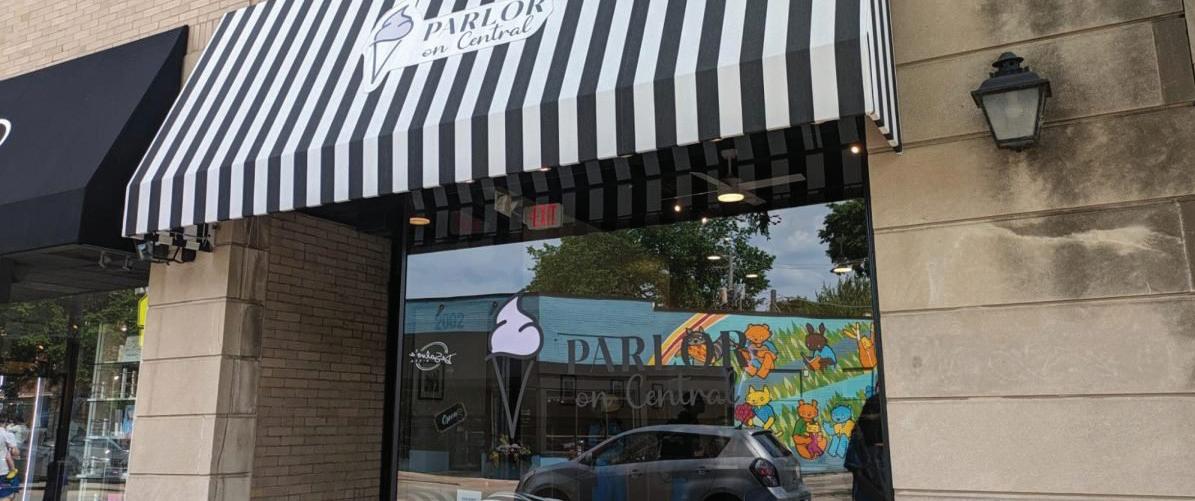
Located at 2002 Central Street, the familyrun parlor is open every afternoon and evening.
The shop will be open 2-9 p.m. from Mondays to Thursdays, 2-10 p.m. on Fridays, 12-10 p.m. on Saturdays and 12-9 p.m. on Sundays.
“Recording artists and musicians have never had an easy path, especially starting out,” State Rep. Jennifer Gong-Gershowitz (D-Glenview) said in a Friday news release. “HB4875 gives artists a path to restitution when their likeness is used to generate profit without their authorization.”
Earlier in the week, the Senate also passed the Digital Voice and Likeness Protection Act, which requires artists to have representation during negotiations and prevents contractors from replacing artists with AI-generated content.
State Sen. Mary Edly-Allen (D-Libertyville) sponsored both bills.
Co-owner Eli Kesic said these hours work well because the establishment is surrounded by a lot of “morning places” that close before 6 p.m.
“That’s kind of our sweet spot,” he said. “(Other places) kind of shut down and now the community has a place to come in the evenings.”
The family also looks forward to collaborating on events with schools and residents in the community, he said.
“We want it to be something that people can come to for the next 30 years,” Eli Kesic said.
mishaoberoi2027@u.northwestern.edu anaviprakash2027@u.northwestern.edu
“While AI is a powerful tool with the potential to do much good, guardrails are necessary to protect artists and the general public,” EdlyAllen said in the Friday news release.
Both bills will return to the Illinois House for a concurrence vote because the bills were changed during the Senate’s decision.
The Daily Northwestern City Desk

THURSDAY, MAY 23, 2024 8 THE DAILY NORTHWESTERN NUsyllabus.com YEARBOOKS ARE HERE PICK IT UP Norris 3rd Floor (Office H) Thu. 5/15–Fri. 5/17 11am–4pm Mon. 5/20–Thu. 5/23 11am–4pm | Fri. 5/24 11am–2pm Mon. 5/27 Closed | Tues. 5/28–Fri. 5/31 11am–4pm
Misha Oberoi/The Daily Northwestern
Family-owned Parlor on Central opened May 11 on 2002 Central Street in Evanston.
Glowing personality: ‘Highlighter Kid’ dresses
By ISAIAH STEINBERG the daily northwestern @isaiahstei27
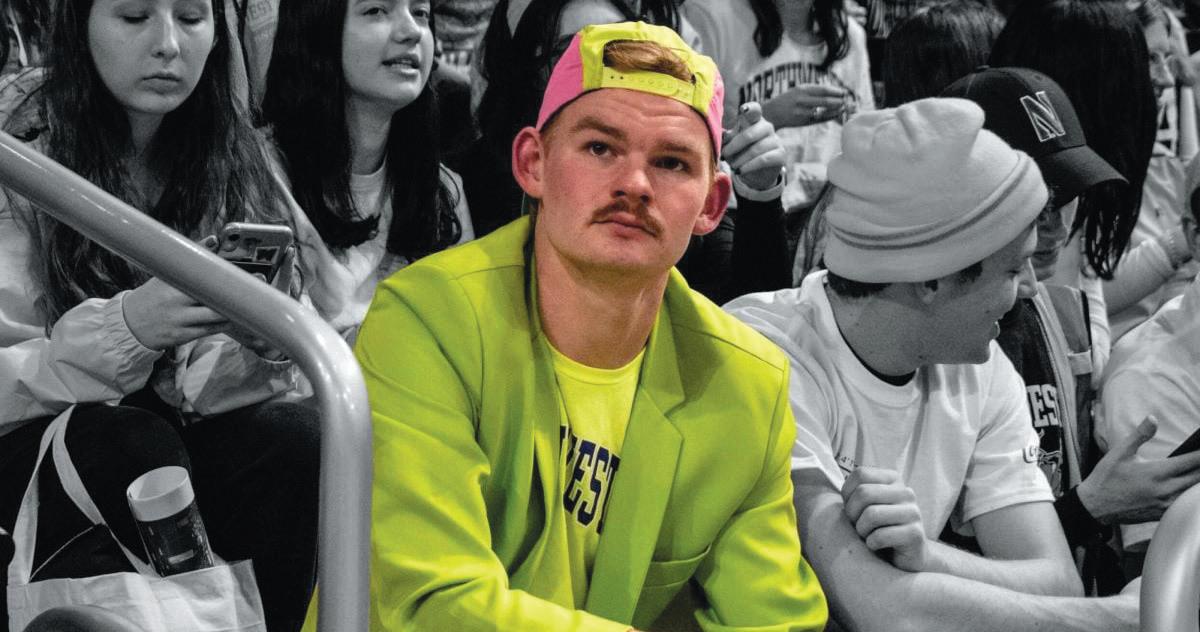
Amid a sea of roaring fans, one neon-clad student stood out. Donning a neon suit and cap to a Northwestern men’s basketball game, Weinberg freshman Sam McLain quickly became known on campus as the “Highlighter Kid.”
McLain’s fashion tradition began at a sleepaway camp in 2017 in rural Ohio, when someone called 12-year-old McLain a “highlighter” for wearing bright neon clothes.
The following year, McLain thanked his middle school peers for electing him student council president while wearing bright neon golf pants and a neon tie. McLain’s childhood love of bright neon, monochromatic athletic outfits cemented him as the “Highlighter Kid.”
“I’m very outgoing and very extroverted, and I try to be generally a very positive person,” McLain said. “I think (my clothes) compliment that expectation of energy and happiness.”
Months into his freshman year, McLain became a campus phenomenon after sporting his neon suit to NU’s retro-themed game against the University of Maryland on Jan. 17. Weinberg freshman Faith Magiera said students approach McLain on the street and compliment his vivid fashion sense.
Weinberg freshman Franke Gordon, McLain’s roommate, said people are often shocked when he reveals his roommate’s identity.
“In a crowd situation, you can always find him,” Gordon said. “He’s like a lighthouse and I’m like a boat. It draws you toward him.”
Gordon said it is easy to distinguish between each side of the room: McLain’s side is peppered with neon clothing, while Gordon doesn’t own a single neon garment.
McLain said his neon reserves pale in comparison to their prior stature. As he grew older, McLain ditched monochromatic neon outfits in favor of neon accents to complement his outfits after learning “not every neon goes with every neon.”
“As I’ve learned, some things go better with others — and even the fabric and the material can make all the difference in terms of if the
outfit makes sense together,” McLain said.
Peers are often perplexed to see McLain when he is not neon-clad. McLain recalled how, on his way to a formal party and wearing a navy suit, a group of girls recognized him in the dark and asked why he wasn’t wearing neon.
Although his celebrity status brings expectations, it also brings joy to those around him, according to SESP junior Valerie Lippin.
“I think (his clothes) bring joy because they definitely light up a room — literally,” Lippin said. “I think it also inspires people to also be themselves and develop a unique style.”
Outside his “Highlighter Kid” persona, McLain plays rugby for NU’s club team, plays Survivor NU, sings a cappella for Extreme Measures, competes in NU Quizbowl and enjoys Taylor Swift, according to Gordon.
Karen McLain, Sam’s mom, said her son is
a natural-born leader who cares deeply about every group he is part of.
“It’s been great to see him really thriving in the Northwestern environment,” Karen McLain said.
Despite his outfits’ unique aura, Sam McLain was not NU’s first “Highlighter Kid.” Instead, Sam McLain continues the tradition of McCormick junior Elijah Esparza, who began wearing monochromatic outfits in eighth or ninth grade.
Esparza said he feels camaraderie with his fellow “Highlighter Kid” and dresses in bright clothes to brighten others’ days.
“We’ll hang out sometimes and talk about bright colors and all that sort of stuff,” Esparza said. “I think it’s just fun. I don’t find it as a competition.”
Sam McLain said there is room for two
“Highlighter Kids” on campus because he uses neon as an accent, while Esparza has a weekly schedule of monochromatic bright outfits.
Consistent with his nickname, Sam McLain said 30% of his drawers contain bright neon clothes, while much of his other clothes are neon-adjacent colors such as blue and pink. Since he was first compared to a highlighter, Sam McLain said he has continued to embrace the nickname and has accrued countless neon accessories.
“In everything that I do — be it sports that I watch or games I play — I just have a lot of breadth and not necessarily a lot of depth,” McLain said. “But I kind of enjoy that. I like to get a taste of everything in life and I just have a love for life.”
isaiahsteinberg2027@u.northwestern.edu
































THURSDAY, MAY 23, 2024 THE DAILY NORTHWESTERN 9 Scan below or sign up at dailynorthwestern.com/email PENDING DELIVERY The Daily’s BIGGEST HEADLINES right in your inbox 1 The Daily is an independent non-profit funded by advertising revenue and charitable donations from readers like you. Many of America's top journalists honed their skills in The Daily newsroom. Help ensure this opportunity for future generations. For more information visit: DONATE TO The Daily Northwestern dailynorthwestern.com/donate
to impress
Illustration by Jacob Wendler
McLain gained fame at NU after wearing a neon suit to the ‘Cats Retro Night basketball game against Maryland Jan. 17.
for the Illinois government. For one, several previous court cases have applied strict scrutiny only when a change in electoral policy completely negated the election results, Dworkin said.
The injunction plaintiffs were proposing would effectively force the State Board of Elections to revert to enforcing old law, Dworkin added.
“That would say one legislature is binding future legislatures in how the election code works,” Dworkin said.
Dworkin and attorney Michael Kasper — who represented State House Speaker Emanuel “Chris” Welch (D-Chicago) — said the preliminary injunction damages separation of powers in Illinois. Both argued the injunction amounts to a judicial mandate that forces the State Board of Elections to accept the plaintiffs’ ballot petitions unless they fail
CONGRESS CONTEXT
From page 1
Holloway.
Before taking over as chancellor in 2017, Block was the school’s executive vice president and provost, coinciding with Schill’s tenure as UCLA School of Law’s dean.
Block has come under fire for UCLA’s response to its pro-Palestinian encampment after counterprotesters assaulted several students on May 1. The committee has accused Block and other UCLA administrators of perpetuating campus antisemitism.
“UCLA’s leaders have allowed their campus to become a severe and pervasive hostile environment for Jewish students, standing by as students, faculty and affiliates were assaulted and harassed,” Foxx’s May 15 letter to Block, UC President Michael Drake and UC Board of Regents Chair Richard Leib reads.
Planning to retire from his post in August, Block has voiced his dedication to repairing trust, reducing discrimination and protecting free expression on campus until the end of his term.
Like Schill, Holloway — who served as NU’s provost from 2017-20 — made some concessions to demonstrators in exchange for dismantling the encampment at Rutgers.
A Rutgers student filed a lawsuit against the school following the agreement based on allegations including violations of discrimination,
to meet some other state requirement. Kasper said judicial review is the previously recognized way for candidates to dispute negative rulings on a ballot petition from the State Board of Elections. Noll’s granting the plaintiffs’ injunction, he said, would mean turning the process on its head.
“They want you to rule for the board before (a challenge) is even filed,” Kasper said.
Schwab disagreed. He said the present case’s purpose was only to stop the state from enforcing its slating ban for the plaintiffs, who couldn’t have expected the rule change. Schwab said in future cases, the law might not violate any constitutional rights.
Noll will hear arguments for a final injunction on June 3, and parties are required to submit briefs and motions by May 29 and responses by May 31, respectively.
williamtong2026@u.northwestern.edu
harassment and “hostility at Rutgers towards Jewish students.” Rutgers also faces concerns from government officials, who have called for further investigation of antisemitism on campus.
The first hearing, held in December 2023, saw the leaders of Harvard, MIT and the University of Pennsylvania confronted by Foxx and committee members on their free speech and demonstration policies. Foxx opened that hearing by alleging leaders of those campuses failed to protect students from incidents of “vitriolic, hate-filled antisemitism” since Hamas’ Oct. 7 attack on Israel.
That attack killed 1,200 Israelis, according to Israeli officials. In response, Israel has continued an air and ground offensive in Gaza that has killed over 35,000 Palestinians, according to Palestinian officials.
U.S. Rep. Elise Stefanik (R-N.Y.) asked the witnesses whether “calling for the genocide of Jews” was in violation of each university’s code of conduct. She referred specifically to chants of “intifada” — a phrase that means “rebellion” and refers to two violent Palestinian uprisings against the Israeli state in 1987 and 1993 — from student protesters.
Harvard’s Claudine Gay, MIT’s Sally Kornbluth and Penn’s Elizabeth Magill all condemned antisemitism on campus.
“History teaches us that where antisemitism goes unchecked, other forms of hate spread and
properties and public spaces near the rebuilt Ryan Field.
“Because the noise, traffic and other adverse impacts from commercial events will impair the use and enjoyment of neighboring properties, we ask the Court for an injunction against the ordinance,” Most Livable City wrote in a message to supporters Monday.
The city declined to comment on the residents’ new efforts.
The new filing arrives at another landmark juncture for Ryan Field. As demolition at the 7th Ward site winds down and construction on the new arena begins, barely any parts of the 97-year-old stadium remained standing Wednesday. NU plans to complete its
ultimately can threaten democracy,” Magill said in her opening remarks.
While condemning antisemitism, the university leaders reiterated a commitment to free speech in response to the committee’s questions and defended the actions of their respective university administrations.
“When speech crosses into conduct that violates our policies — policies against bullying, harassment, intimidation — we take action,” Gay said.
Gay and Magill have since resigned from their positions, while Kornbluth remains at MIT. All three presidents who testified at the first congressional hearing were — like Schill — relatively new to their posts.
At the second hearing, Columbia administrators — including Columbia President Minouche Shafik — were questioned about chants used by pro-Palestinian protesters. Shafik said chants of “intifada,” along with “by any means necessary,” were, to her, “incredibly distressing.”
She said current Columbia rules do not specify that slogans like “globalize the intifada” are prohibited but noted she has sent a “very clear message” that these messages are “unacceptable.”
Columbia faculty who appeared to support militant group Hamas were also brought up during the hearing.
Shafik said there were five cases at the time of faculty who had been removed from the
WEEKLY CROSSWORD
Lizzie Ferrazza
brand-new, $800 million football field in 2026. Though Biss cast his tie-breaking vote in November, the Ryan Field fracas remains top of mind for some residents — and could play a role in next year’s mayoral election. In his State of the City address earlier this month, the mayor reiterated his view that a benefits pact with NU over Ryan Field ushered town-gown relations into a “fundamentally” new era. Still, Biss’ detractors continue to pillory the mayor as overly amenable to NU’s wishes. While pursuing its claims in court, Most Livable City has also lambasted Biss on social media, frequently denouncing him as “Tiebreaker Dan.”
“Could an audition for Willie Wildcat be far behind?” the group wrote in a post from April. shungraves2027@u.northwestern.edu
classroom or dismissed as a result of their comments on the Israel-Hamas war.
“On my watch, faculty who make remarks that cross the line in terms of antisemitism, there will be consequences for them,” Shafik said.
Foxx and her colleagues will likely scrutinize the actions and rhetoric of Medill Prof. Steven Thrasher’s, who documented his experience at the Deering Meadow encampment on social media platform X, formerly Twitter.
The day after her testimony, Shafik authorized the New York Police Department to clear out a pro-Palestinian encampment. Officers arrested more than 100 protesters, an action which prompted universities across the country to set up similar “Liberated Zone” demonstrations, including at Northwestern.
Unlike other college campuses, NU administrators refrained from mobilizing law enforcement and University Police held a minimal presence at the encampment after its first day.
NU administrators’ decision to strike a deal with encampment organizers after six days drew Foxx’s criticism. In her letter, she writes that University leaders “surrendered to the violators in a shameful agreement,” a decision likely to be criticized in the committee hearing.
Thursday’s hearing is set to begin at 8:45 a.m. CDT in the Rayburn House Office Building. beavillaflor@u.northwestern.edu
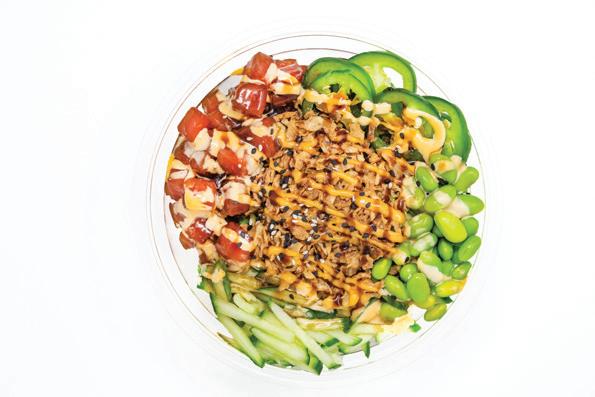

THURSDAY, MAY 23, 2024 10 THE DAILY NORTHWESTERN
HEARING From page 1
From page 1 C M Y 225-Ad, Northwestern-PRINT.pdf 15 C M Y CM MY CY CMY K 225-Ad, Northwestern-PRINT.pdf C M Y CM MY CY CMY K 225-Ad, Northwestern-PRINT.pdf 15 2/16/24 C M Y CM MY CY CMY K 225-Ad, Northwestern-PRINT.pdf 15 2/16/24 10% off Enter “NU10” in “Coupon” Go Fish! By
ACROSS 1 Waterfall spray 5 “It’s a Wonderful Life” director 10 Bad day for Caesar 14 Florentine flooder 15 “Is that my cue?” 16 Short-term sub 17 Night light 18 Small jazz group 19 Palindromic pop group 20 Advice from Jiminy Cricket 23 Theater chain 25 Gymnast’s goal 26 Make a point? 27 Yogi’s locale 32 Colorful quartz 33 Fistfuls of dollars 34 Created 35 Lithuanians, e.g. 37 Start of a tot’s song 41 "At ___, soldier!" 42 Up ___ (cornered) 43 Protagonist “with shoes on” in a 2021 film 48 Synagogue scroll 49 Summer hrs. in D.C. 50 Boxer Laila 51 Enact sharp judgment? 56 “On Earth ___ is in Heaven” DOWN 57 Ancient Aegean region 58 Simple rhyme scheme not to be confused with 19-Across 61 Words of comprehension 62 Home of the Ewoks 63 Provide for free 64 Uncool sort 65 Equally strange 66 Word above an emergency door 1 Sixth-day creation 2 Wrath 3 Like Alpine peaks 4 Singer Braxton 5 Secret supplies 6 Come (to) 7 Trick out, as a car 8 Start for call or Cop 9 Shortly 10 Mississippi source 11 Unsettled one? 12 Set sail 13 Fifth wheel 21 Eye sore 22 Sacred snakes 23 In ___: stuck 24 Start of something big? 28 Letters next to cell phone bars 29 Nocturnal newborn 30 Cole who was “King” 31 Mag. staffers 35 Sweetie, in slang 36 Manual transmissions? 37 Greek capital, to airlines 38 Place for pumpernickel 39 An amoeba has one 40 Where to nosh on a knish 41 Bounce back 42 Concerning 43 Creamy dessert 44 More bohemian 45 Snitched 46 “Works and Days” poet 47 Bella’s beau 48 Singer featured on Flo Rida’s “Low” 52 “___ yellow ribbon…” 53 Sweeties 54 Opposite of ecto55 Track event 59 “What ___, chopped liver?” 60 Fitting 1 2 3 4 5 6 7 8 9 10 11 12 13 14 15 16 17 18 19 20 21 22 23 24 25 26 27 28 29 30 31 32 33 34 35 36 37 38 39 40 41 42 43 44 45 46 47 48 49 50 51 52 53 54 55 56 57 58 59 60 61 62 63 64 65 66
MLCA
The Daily Northwestern DAILYNORTHWESTERN.COM/CROSSWORD SCAN FOR ANSWERS crossword & games Editor Jaharia Knowles Assistant Editors Lara Choy Sarah Serota
UNITY brings charity fashion show to Chicago
By BETSY LECY the daily northwestern @betsy_lecy
With fabric that otherwise would be wasted, a bridal-inspired couture dress with an edgy twist is set to be featured at the third annual UNITY Charity Fashion Show since the COVID-19 pandemic.
The piece is made of patchwork from secondhand wedding fabric that was donated to the line. This underscores the “Cyclical” theme, which will feature 14 clothing lines from Chicagoland designers and one from Northwestern students in UNITY. The show will take place Thursday at the Chicago Cultural Center.
UNITY hopes to embrace sustainability in fashion and emphasize that articles of clothing can be reimagined through generations yet still remain timeless, said SESP senior Anthony Engle, co-executive director of UNITY.
“It’s typically just the styles we see change, like the concept of the white T-shirt,” Engle said. “The value of the white T-shirt went from being a plain T-shirt to a sleeveless tank, but at the core, it’s still the white T-shirt that’s always there. It’s just the way we see it is changing; It’s cyclical.”
In previous years, the organization hosted the sold-out shows at venues in Evanston, with around 300 people in attendance each year.
Yet its scope is broadening to the Chicago fashion space to host more than 400 people this year, fulfilling a long-term goal, Engle said.
“We wanted to bring more of our work to the forefront of the Chicago fashion community,” he said.
This show is partnering for the fourth year with Arts of Life, a charity organization that provides creative studios for people with intellectual and developmental disabilities. All of the ticket sales will go directly toward the charity.
The show will open with live performances from a jazz ensemble and NU contemporary dance ensemble Graffiti Dancers.
Despite the breadth of collaboration for the show, the clothing pieces are entirely individualized. The design process began in Winter Quarter with 18 student models creating a “mood board” of their clothing preferences, including textures, colors and styles, said Weinberg senior
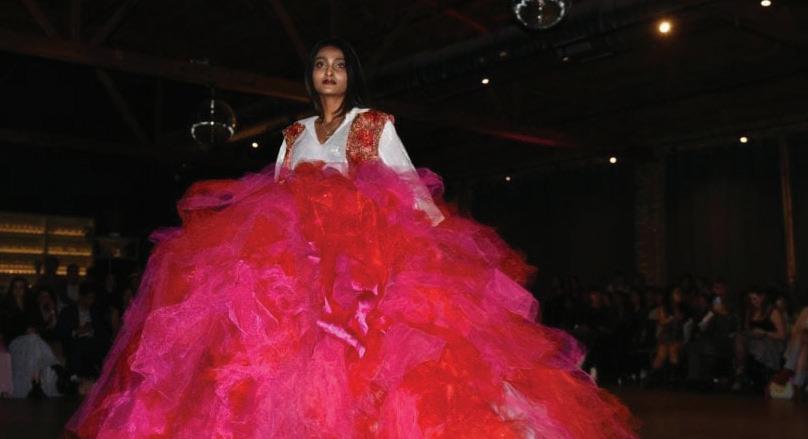
and creative director Yolanda Chen.
Chen said members of the design team then picked a mood board that resonated with them the most and were paired with a model.
She said Winter Quarter and Spring Quarter were a collaboration to design a piece catered to both the model and the artist.
“As a typical commercial model, you are a glorified clothes hanger,” Chen said. “We wanted to make sure every model had a piece that was custom-made and tailor-fitted and they just felt beautiful in.”
Chen is a self-taught designer who learned to sew as a pandemic hobby. At workshops prior to the show, Chen taught members of the design team how to craft their individualized pieces.
In previous years, the design team worked
from Ford Center, but the sewing machines were broken this year, limiting their options.
Now, the designers are producing the clothing line out of Chen’s apartment, leaving fabric scraps and paper pins in their wake.
“Ideally, I would want everyone to have a sewing machine, a desk and a nice pair of fabric scissors, but instead we’re passing around two pairs of scissors and two sewing machines,” Chen said. “I think it adds to the bit of creating a line from scratch with not the best equipment.”
Despite this challenge, Chen said this process is “special” because it entertains students’ passions for fashion and design to create a fullfledged couture line.
Weinberg freshman Aliyah Durry said she plans to go to the show to see her friend and
UNITY model Emani Larkin’s accomplishments in action.
“She really worked hard for this,” Durry said. “I think it will be a good opportunity for all of us to see what can be accomplished in a short amount of time.”
UNITY tickets are available for purchase on UNITY’s Instagram, with a special discount for students. UNITY will provide bussing for NU students prior to the show’s start at 8:30 p.m.
“(The audience) should be ready for the night of their lives,” Engle said. “If people are looking for an ability to get dressed up, head down to the city to see a beautiful venue and enjoy a night of culture and couture, then UNITY is the perfect opportunity for them.” elizabethlecy2027.1@u.northwestern.edu
The Daily Northwestern
Spring 2024 | An independent voice since 1923 | Evanston, Illinois
EDITOR IN CHIEF | Jacob Wendler
PRINT MANAGING EDITORS | Jake Epstein, Casey He, Nicole Markus, Samantha Powers
DIGITAL MANAGING EDITORS | Sonya Dymova, Micah Sandy
CAMPUS EDITOR | Beatrice Villaflor
ASSISTANT EDITORS | Leah Schroeder, Jerry Wu, Kelley Lu
CITY EDITOR | William Tong
ASSISTANT EDITORS | Misha Oberoi, Anavi Prakash, Hannah Webster
SPORTS EDITOR | Lucas Kim
ASSISTANT EDITORS | Henry Frieman, Audrey Pachuta
OPINION EDITOR | Emily Lichty
ASSISTANT EDITOR | Eli Kronenberg
A&E EDITOR | Mary Randolph
ASSISTANT EDITORS | Betsy Lecy, Jillian Moore
IN FOCUS EDITORS | Pavan Acharya, Cole Reynolds
AUDIO EDITOR | Carlotta Angiolillo
ASSISTANT EDITOR | Edward Simon Cruz
VIDEO EDITOR | Sasha Draeger-Mazer
PHOTO EDITOR | Francesco Thorik-Saboia
ASSISTANT EDITORS | Shun Graves, Taylor Hancock
ILLUSTRATIONS EDITOR | Ziye Wang
ASSISTANT EDITORS | Shveta Shah, Sophie Zhang
DATA VISUALIZATION EDITOR | Charlie Spungin
ASSISTANT EDITORS | Alex Boyko, Femi Horrall
DESIGN EDITORS | Lillian Ali, Jamie Kim
ASSISTANT EDITORS | Kelly Luo, Maya Wong
AUDIENCE ENGAGEMENT EDITOR | Lexi Goldstein
SOCIAL MEDIA EDITOR | Katie Chen
ASSISTANT EDITOR | Paloma Leone-Getten
NEWSLETTER EDITOR | Kate Walter
ASSISTANT EDITOR | Rachel Schlueter
WEB DEVELOPER | Eugenia Cao
COPY CHIEF | Isabel Su
COPY EDITORS | Lea Levine, Isaiah Steinberg, Grace Wu
STAFF EDITOR | Lily Ogburn
DEVELOPMENT AND RECRUITMENT EDITORS Nora Collins, Madeline King, David Samson
DIVERSITY & INCLUSION CHAIR | Jerry Wu
CROSSWORD & GAMES EDITOR | Jaharia Knowles
ASSISTANT EDITORS | Lara Choy, Sarah Serota
STIPEND COORDINATOR | Erica Schmitt
GENERAL MANAGER | Stacia Campbell
SHOP MANAGER | Chris Widman
BUSINESS OFFICE STAFF
Jenny Aguilar, Jose Blancarte Ramirez, Branden Chen, Jonathan Fang, Mia Schmitt, Kevin Tang
ADVERTISING PRODUCTION STAFF Christina Feng, Sammi Li
THURSDAY, MAY 23, 2024 THE DAILY NORTHWESTERN 11
Daily file photo by Ziye Wang
Last year’s UNITY theme was “Subculture: The Intersection of Expression, Identity and Fashion,” inspiring a bright colored gown.
Thursday, May 23, 2024
SPORTS
LACROSSE
Northwestern set for Final Four against Florida
By JAKE EPSTEIN daily senior staffer @jakeepste1n
Through two NCAA Tournament games, No. 1 Northwestern has appeared infallible, scoring 37 goals and conceding just 11 in running-clock blowouts of Denver and No. 8 Penn.
While coach Kelly Amonte Hiller’s potent powerhouse program passed its primary postseason tests, unseeded Florida awaits the defending national champions in a Friday Final Four fight where the winner will punch its ticket to Championship Sunday.
The Wildcats (17-2, 5-1 Big Ten) enter the game on a nine-game winning streak, and their attacking and defensive units have elevated their play at the most ideal juncture. However, the Gators (20-2, 6-0 AAC) boast 20 consecutive victories and the nation’s most lethal scoring offense.
Florida coach Amanda O’Leary was an assistant coach at Maryland when Amonte Hiller was a freshman on the team. Much like Amonte Hiller in 2023, O’Leary has spearheaded a program resurgence this season, propelling the Gators to their first Final Four since 2012 — despite losing defender Becky Browndorf and attacker Emma LoPinto to Boston College.
“Mandy is just a really charismatic coach,” Amonte Hiller said. “Florida has done a great job supporting its women’s program, and I’m just really impressed with how she built it back up… There’s always ebbs and flows to coaching, and it speaks to her greatness that she’s brought her team back to the Final Four and been so dominant this year.”
Bitter rivals in the now-defunct American Lacrosse Conference, NU and Florida faced off 10 times between 2010 and 2014, with the Gators nabbing six victories.
Since May 17, 2014, the two teams have merely
watched one another from a distance — until now.
“It’s a little bit more prep work when you’re playing against an unfamiliar opponent,” Amonte Hiller said. “I have a lot of respect for them, so (we’ll) just try to really get to know them … and get our game plan going. It’s a challenge for sure, but it’s a challenge for them as well.”
With attacker Maggi Hall entering the illustrious 50-goal, 50 assist club this season, Florida has a deep attacking arsenal capable of capitalizing just seconds off a draw or transition play. And, draw specialist Liz Harrison is among the nation’s best.
Although O’Leary’s squad packs an ability to score goals in bunches, having poured in nine first-quarter conversions in its quarterfinal victory over Maryland, graduate student goalkeeper Molly Laliberty said the ’Cats remain focused on themselves.
Friday will mark Laliberty’s fifth career Final Four appearance as the sixth-year netminder made the Division III semifinals in 2019, 2021 and 2022 with Tufts before winning a national title with NU in 2023.
“Our best preparation is playing Northwestern lacrosse,” Laliberty said. “We are always trying to prepare for all the situations a team might throw (at) us … The biggest focus is just on executing the things we know we can control, like our attitude, our focus, our effort.”
Along with a lightning-paced attack, the Gators possess a stout defensive unit capable of rendering dynamic scorers silent. They held James Madison attacker Maddie Epke — who scored 57 goals this season — to just three scores on 14 shots across two games.
Between the pipes, Florida goalkeeper Elyse Finnelle has proved pivotal throughout the postseason. Finnelle tallied 14 saves in the Gators’ first-round victory over UNC.
Although the ’Cats will be challenged on the
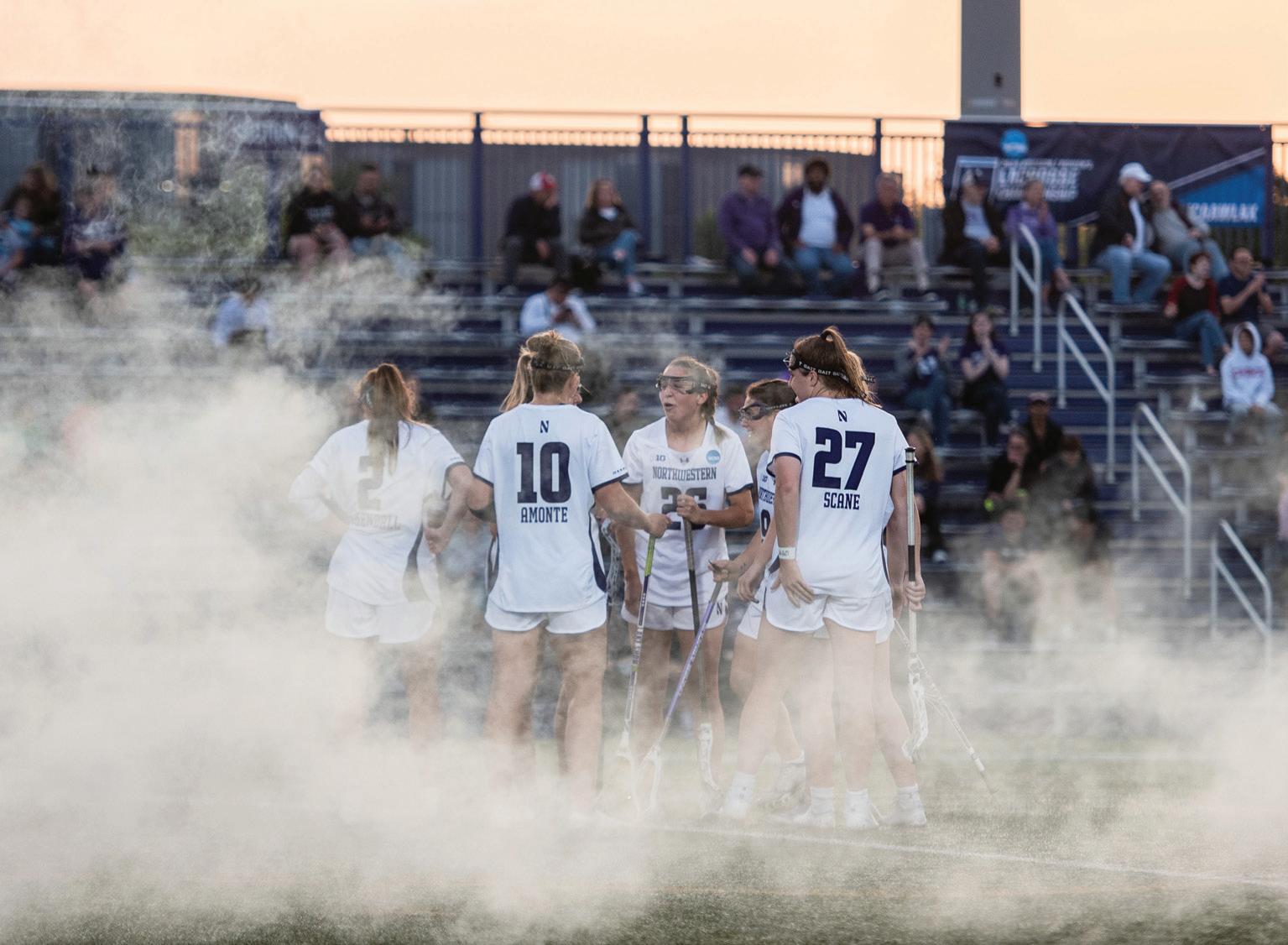
offensive end, graduate student attacker Izzy Scane said she’s confident in her weekly preparation alongside the nation’s elite.
“It’s easy to perform in games when you play against the best players in the country,” Scane said. “The girls on and off the field — we have girls that scout for us and play defense like the teams we are going to see, and they’re typically better than the D’s we end up seeing in game.”
Temperatures for Friday’s contest are expected to be upward of 80 degrees in Cary, North Carolina, which the Gators are certainly more familiar with. As such, the ’Cats will have to beat the heat
WOMEN’S GOLF
— and a charging challenger, too.
Carrying the lone Tewaaraton Finalists left standing in Taylor and Scane, NU will have no shortage of starpower in a stacked Final Four field. Entering her last weekend of college lacrosse, Scane said she’s taking nothing for granted.
“When I was a bit younger, I was a little more scared for the situation,” Scane said. “Now that I’m older, it’s allowed me to just enjoy and work my hardest to allow us to be successful.”
jacobepstein2026@u.northwestern.edu
Wildcats finish in 11th place at NCAA Championships
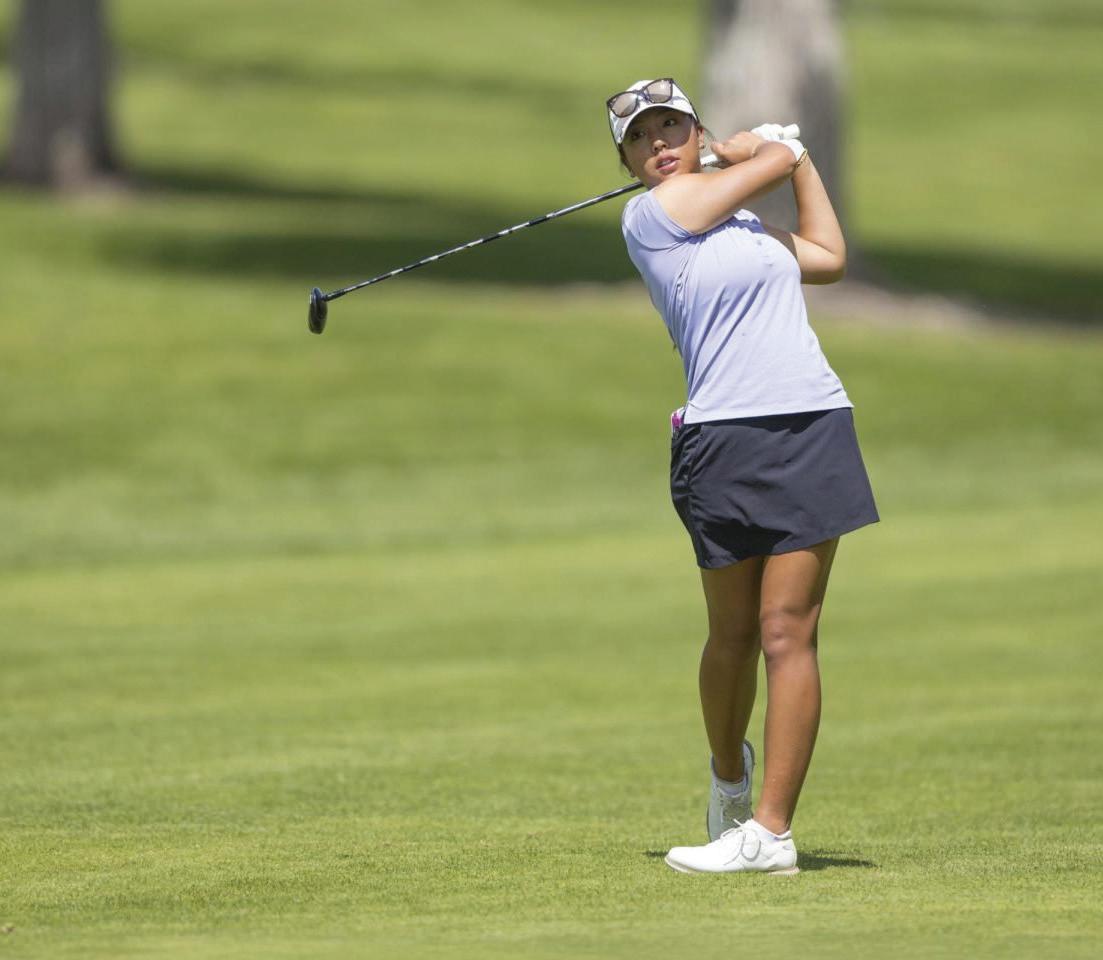 By LUCAS KIM daily senior staffer @lucaskim_15
During the first three rounds of Friday to Monday’s NCAA Championship, Northwestern came one step closer to achieving what no other squad in the program’s history had done before: securing a national title.
After advancing past the first cut, which narrowed the field from 30 teams to 15, the Wildcats entered Monday’s fourth round in fifth place. With
just another round of solid golf, they would be well-positioned to qualify for the match play quarterfinals — consisting of the top-eight teams — for just the third time in program history.
But after 18 holes of inconsistent play, coach Emily Fletcher’s squad fell to an 11th-place tie, ending its year in disappointing fashion after a dominant regular season.
“You don’t want to lose sight of the incredible season that our team had, but I think you temper that with a little bit of disappointment.” Fletcher said. “It just really felt like a little bit of nerves kept us from committing to the shots we needed to hit.
It isn’t that we weren’t ready for them, I just think we just weren’t able to execute.”
After enjoying an impressive regular season that included two tournament wins, NU logged a fourth-place result at the NCAA East Lansing Regional and headed to Carlsbad, California more than a week later seeking its first-ever national title.
Entering as the No. 11-ranked squad in the nation, the ’Cats got off to a hot start, jumping into third place after the first day of action.
A trio of NU golfers — freshman Ashley Yun and seniors Jennifer Cai and Jieni Li — each tallied a 1-under 71 with sophomore Jiayi Wang hitting an even-par 72.
Saturday signaled the first sign of trouble for the ’Cats, who logged a 5-over 293 to drop to eighth place.
“Our goal was to just be the best we could be every day,” Fletcher said. “We proved ourselves to be a top-10 team in the country all year round… (but) I still felt like each of those days we left a few shots out there.”
Yun continued her excellent play, hitting a teambest 2-under 70 to help sustain NU’s top-10 position during a rocky 18 holes. Li also contributed with an even-par 72.
Needing to stay ahead of the first cutoff that would cut the field in half, the ’Cats maintained an 11-stroke cushion over 16th place Florida State heading into Sunday.
Despite worsening conditions, NU kept its composure, moving up into fifth place behind Yun’s 1-under 71 to punch a fourth-round ticket. Over the first 54 holes, Yun exhibited her dominance over the national scene, standing tied for fourth place in the individual rankings and performing in the face of high wind speeds.
“Even if you played in the morning, it was still a bit windy towards the back nine. I know that even if I was struggling I wasn’t the only one that was struggling, and it’s tough for everyone out (there),” Yun said following Sunday’s round three.
With the field cut in half, the ’Cats looked poised to qualify for match play, but it all came crumbling down.
With the exception of junior Lauryn Nguyen’s even-par 72, no player on NU’s lineup finished
better than 5-over. The ’Cats combined for eight double bogeys and three triple bogeys in a tournament-worst 21-over round four showing.
NU dropped six places and finished 10 strokes behind eighth-placed Auburn, earning a share of 11th place alongside Texas and Florida State.
Despite the rough final round, Fletcher’s squad enjoyed its fifth-best NCAA Championship result in program history and its best since finishing in fourth place in 2018.
Yun, the Big Ten Freshman of the Year, led the team with a 19th-place individual finish after struggling in the fourth round. It was an impressive NCAA Championship debut for Yun, who collected three top-20 performances this year.
“We knew this about Ashley, and certainly we saw it come through,” Fletcher said. “She certainly did her part and stood up and led us to the very best of her ability. I think it just shows how much she embraces big moments, and she’ll continue to build off of that over the next three years.”
Nguyen followed in 39th place after notching 74-73-72 scores over her last 54 holes.
Monday also marked a bittersweet end for seniors Cai and Li, who built two storied careers with the program.
Cai finished her NU journey having bounced back from a lackluster junior campaign to capture her second career All-Big Ten First Team honor. Li was also recognized for all-conference awards during her time with the team, being named to the All-Big Ten First Team and Second Team in her junior and senior seasons, respectively.
Fletcher — who captured her second consecutive and sixth career Big Ten Coach of the Year award — recognized the seniors’ contributions and commitment to the program, especially with the COVID-19 pandemic during which they entered as first-years.
“When Jieni and Jen were freshmen, it was right during COVID,” Fletcher said. “They’ve really done everything that we’ve asked them to. They were both very coachable players; they were willing to really listen and develop and improve and that’s really all you can ask for as a coach. Both of them were incredible that way.”
lucaskim2025@u.northwestern.edu
Photo courtesy of Albert Chang
Junior Lauryn Nguyen follows through on her swing. Nguyen, a two-time All-Big Ten First Team honoree, finished tied for 39th Monday.
@DailyNU_Sports
Daily file photo by Henry Frieman
In a battle of former ALC rivals, No. 1 Northwestern and Florida will meet for the first time since 2014 Friday.
