
The Daily Northwestern


Amid rising tuition costs, students criticize Northwestern’s practice of reducing institutional nancial aid in response to outside scholarship winsBy OLATUNJI OSHO-WILLIAMS daily senior staffer @osho_olatunji
With triplets entering college at the same time, Jaida Hill’s parents were thrilled when she won an outside four-year, $80,000 scholarship just before graduating high school in 2021. Though NU had already offered Hill about $50,000 in financial aid for each academic year, her family hoped the external scholarship could offset $20,000 a year in additional costs. But when payments began in August, Hill’s family discovered the University had cut
$20,000 from her yearly need-based aid — the equivalent to the outside award — only a month before she was set to start her freshman year.
“We were like, ‘Well, what’s the point of having a scholarship if it doesn’t actually mean anything?’” Hill, now a Communication junior, said. Hill is one of many college students — at NU and other private and public universities — to have their financial aid reduced after winning outside scholarships.
This practice is sometimes referred to as scholarship displacement, which affects about half of U.S. scholarship winners, according to a 2021 survey by student discount servicer
NU, city partner to research at-home water lead testing
By ANAVI PRAKASHWhen Ald. Bobby Burns (5th) was campaigning for councilmember, he advocated for environmental justice and access to clean water and air.
So, when he read about a Northwestern home water lead testing survey, he said he wanted Evanston — specifically 5th Ward — residents to be involved.
The Making Water Insecurity Visible group is a collaboration between Anthropology Prof. Sera Young and McCormick Prof. Julius Lucks. The group is using biosensor at-home tests and Water Insecurity Experiences Scales, which is a series of survey questions on individuals’ feelings about their water, to offer lead testing to families living in southeast Chicago or Evanston. Participants can pick between three in-person meetings or two on Zoom and one in-person meeting for the tests. Testing eligibility requirements include living in a single-unit home built before 1986 and not running water for a minimum of six hours prior to the testing.

“A big goal of the project is to increase access to lead testing because lead testing is very expensive,” said Jenna Messing, the survey’s project manager. “There are a lot of hurdles to jump through when it comes to lead testing, so being able to have readily available tests would improve a lot of people’s lives and sense of well being.”
The study expanded to Evanston after Burns reached out to the group last winter, according to Messing. She said Burns is also part of the group’s committee advisory
Student Beans.
Winning an outside scholarship can change the amount of money that schools expect a student’s family to contribute toward attendance. The student’s effective need, based on their family’s expected contribution, also changes.
But these determinations of need aren’t necessarily comprehensive for many students — including several at NU — who say their determined need isn’t the same as their family’s real need. For many students, their goal in pursuing outside scholarships is to bridge the distance between what the University determines their families can pay and what they actually can.
All universities, including NU, are bound by
ASG
federal regulations when determining financial need if federal dollars comprise part of a student aid package. But for allocating institutional grants, some universities have crafted policies to allow students to retain part of their outside scholarships, while NU typically does not. Despite many students winning outside scholarships up into the tens of thousands of dollars, NU’s practices have left some scrambling to keep pace with rising tuition costs. In trying to offset these costs, students who’ve just won outside scholarships are still sometimes left juggling jobs on top of full course loads.
Senate SAFC
$50k in student org funding Commi ee funds 26 student groups for 2024-25
By ISAIAH STEINBERG the daily northwestern @isaiahstei27One week after the Student Activities Finance Committee announced $2.09 million in funding allocations for student organizations, the Associated Student Government Senate allocated $50,000 on Wednesday to groups which appealed their funding decisions or did not apply for SAFC funding.
ASG’s $50,000 budget for Funding Senate appeals is separate from SAFC’s tuitionfunded budget. The budget
was $30,000 last year. Despite the funding increase, organizations still requested more than was available — $82,093 in total.
Sixteen organizations received funding from the appeals process. Groups received money for speaker events, holiday celebrations, theater equipment, costumes, tournament fees and more.
Allocations ranged from $360 for NU Anime Club and Significant Others A Cappella to $9,600 for Speech Team.
SESP sophomore and ASG Co-President Caleb Snead encouraged senators to fully fund NU Mock Trial,
Global Engagement Summit and Speech Team. Snead said the groups have exhausted their other possible funding sources and were at risk of not being able to continue operating.
NU Mock Trial received $8,882 — the full amount it requested — to fund travel costs for national tournaments.
“To be able to compete without any financial barriers is something that we really try to prioritize, and it’s a message that we talked about during recruitment,”
» See FUNDING SENATE , page 7
INSIDE: Around Town 2 | On Campus 3 | In Focus 4 | Opinion 6 | Puzzles 7 | Sports 8 Recycle Me
DAILYNORTHWESTERN.COM Find us online @thedailynu ursday, May 16, 2024
since 1881 » See IN FOCUS , page 4
the Northwestern and Evanston communities
the daily northwestern @anavi_52
See LEAD TESTING , page 7
Project aims to create con dence in water quality »
allocates
Illustration by Emily Lichty
Spud Club educates children at Farmers’ Market
By SARAH SEROTAEvanston residents crowded around booths at the Evanston Farmers’ Market, sampling and purchasing local produce and food Saturday. In the market’s center, children and parents crafted colorful chalk drawings on the pavement.
Every Saturday, the Spud Club hosts a tent for children aged 2 to 10 and their families at the farmers’ market. The club is a free program designed to introduce children to healthy eating practices, according to the City’s website.
For many parents, the Spud Club is their first Farmers’ Market stop. Evanston resident Greg Burhop said he and his children love the Spud Club.
“I have such fond memories, especially around the fall (with) the fall activities that they had out here,” he said. “We have such beautiful pictures from this last year.”
Burhop said his family typically spends half their time at the market at the Spud Club tent.
Along with activities like coloring and tracing one another with chalk, Burhop said he takes his children to the Spud Club for educational purposes.
“There have been some times when (they) were teaching us how to plant things and teaching us about plants, and we really enjoyed that too,” he said.
Many children are regulars at the Spud Club. Every weekend they visit and participate in an activity, they can get a punch on their Spud Club punch card. After the card is fully punched, children
State house passes bill to establish Early Childhood Department
The Illinois House passed a bill 93-18 to form the Department of Early Childhood on Thursday afternoon, bringing the proposed agency one step closer to fruition.
The proposal is now headed to Gov. J.B.

can choose a reward from a market-themed bushel basket.
The club is frequently run by volunteers. This weekend, Evanston Township High School sophomore Tyson Clark volunteered at the tent. It was his second time helping run the tent.
Clark recently moved to Evanston from California and said volunteering at the Spud Club reminds
Pritzker, who has previously advocated for the creation of such an agency, for a final stamp of approval. The Senate passed the bill unanimously in April.
The state’s current childcare and early childhood education programs are managed under three departments: the state’s Department of Human Services, the Illinois State Board of Education and the Department of Children and Family Services. The new agency will allow programs under these departments to be housed in
him of home.
“I’m glad I can help them build their future,” he said. “Maybe they want to be an artist, so I’m here to help them do art.”
Evanston resident Kristen Hren said she regularly takes her son Zephyr Hren to the market.

one place.
“(This new agency) can create more efficiency, transparency and ease of access for families and providers,” said state Rep. Mary Beth Canty (D-Arlington Heights), one of the bill’s sponsors, during the House floor debate.
If the bill is passed, the Department of Early Childhood will launch on July 1.
The bill also requests an allocation of $13.1 million from the state’s General Assembly for support staff and operations. By July 1, 2026, the
“We are trying to teach him about growing his own food,” Kristen Hren said. “We have a big garden in our backyard, and it’s important for him to see where food comes from.”
sarahserota2027@u.northwestern.edu
She said the Spud Club is a good activity for young children who wake up early in the morning and hopes to teach her son more about sustainable gardening.
department plans to manage programs such as early intervention for students with disabilities and the Child Care Assistance Program to support low-income families.
Canty said experts will spend time examining how the state can make a transition without interrupting services over the next two years.
“We can make early childhood simpler, better and fairer,” she said.











AROUND TOWN THURSDAY, MAY 16, 2024 2 THE DAILY NORTHWESTERN For all your packaging and shipping needs. The UPS Store For more info visit: tinyurl.com/upsev 847-869-3000 Visit us in downtown Evanston 1555 Sherman Ave. SHIPPING Services Small stuff. Large stuff. UPS ships it all. INTERNATIONAL, TOO Packing, Shipping & Moving Supplies Hours: M-F 9-6, Sat. 10-5, Sun. 11-4 Student Storage Services Short & Long Term Available Northwestern Special: Show your Wildcard or mention this ad for 10% Off Boxes & Packing Materials Happy hour mon - Fri, 2 - 5 pm Cheese Fries or Cheeseburgers (Single Original, Chitown, or Backyard) Chicago Dogs (2 for $7) Big Chicago dawg 4-piece Chicken Tender all beer & Hard seltzer (Plus 50% off carry-out/dine-in fountain drinks) *Must be 21 & over for alcohol; show i.d. Drink Responsibly. Dine-in; Carry-out or Delivery via DevilDawgs.com only. Evanston 921 Church st. order Online: Devildawgs.com sign up for loyalty rewards follow/tag @Devil.dawgs
the daily northwestern @sarahserota
Sarah Serota/The Daily Northwestern
At the Downtown Evanston Farmers’ Market, families draw with chalk at the Spud Club.
Misha Oberoi
Vigil honors Nakba Remembrance Day
By SAMANTA HABASHY daily senior staffer @habashysamAround 30 Northwestern students and Evanston community members commemorated Nakba Remembrance Day with a vigil and prayers on Deering Meadow — renamed by Palestine Week organizers as Hind Meadow to honor the death of Hind Rajab, a young Palestinian girl.
The vigil, held on Wednesday evening, marked Day 5 of Palestine Week.
The event is part of ongoing programming hosted by NU’s Middle Eastern North African Student Association, Educators for Justice in Palestine, Students for Justice in Palestine, Jewish Voice for Peace and Fossil Free NU as part of their efforts to bring awareness to the current conflict in the Gaza Strip.
According to event organizers, the vigil aimed to educate attendees about the history of the Nakba and looked to memorialize the displacement of over 700,000 Palestinians from their homes in 1948.
“Nakba translates to ‘catastrophe’ in Arabic because between 1948 and 1950, 530 villages were destroyed (and) 15,000 Palestinian women, men and children were killed,” said an organizer who asked to remain anonymous for fear of retribution.
The organizer added that in 2024, Palestinians are commemorating 76 years of loss and dispossession since Israel declared its independence in 1948.
Speakers recalled events that took place during and after the Nakba, referencing the Palestinian refugees and destruction of hospitals in Gaza.
Organizers encouraged attendees to share their own experiences, whether it related to the Nakba or diasporic events in other areas of the world.
A Palestinian student organizer shared that his grandmother lived in Haifa in 1948. His family — like other Palestinian families — was

told that they had to leave for two weeks, he said. The family fled to Alexandria, Egypt.
“My grandmother is now 82 years old, and she’s never been back,” the organizer said.
“Haifa is now considered a part of the State of Israel, and all the villages that were there — that were promised to the Palestinian people — were wiped out.”
He said his family history is the reason he continues to support pro-Palestinian movements on campus, like the five-day encampment on Deering Meadow that ended in an agreement between the University and organizers to provide additional support for MENA and Muslim students and faculty.
The vigil comes as Israel continues its air and ground offensive in Gaza which has killed more than 35,000 Palestinians, according to Palestinian officials. The military action
follows Hamas’ Oct. 7 attack on Israel which killed about 1,200 Israelis, according to Israeli officials.
One NU student who spoke at the event said her family is from Eritrea.
“(My family) has also been a victim of not only Western imperialism and colonialism, but also oppression under the threat of Zionism,” she said. “My parents growing up didn’t learn their native language in school because Eritrea was annexed to Ethiopia. Both of my parents did not grow up, past the age of 18, without their mothers, fathers, or the rest of their siblings.”
The student said she feels lucky to be able to travel back to Eritrea, but that it’s hard to be from a place where she has to “confront
» See VIGIL , page 7
The Daily Northwestern www.dailynorthwestern.com
Editor in Chief Jacob Wendler eic@dailynorthwestern.com
General Manager Stacia Campbell stacia@dailynorthwestern.com
Holly and John Madigan Newsroom
Phone | 847.491.3222
Campus desk campus@dailynorthwestern.com
City desk city@dailynorthwestern.com
Sports desk sports@dailynorthwestern.com
Ad Office | 847.491.7206 spc-compshop@northwestern.edu
TheDailyNorthwesternispublishedMondayand Thursday during the academic year, except vacation periods and two weeks preceding them and once during August, by Students Publishing Co., Inc. of Northwestern University, 1999 Campus Drive, Evanston, IL 60208; 847491-7206.
First copy of The Daily is free, additional copies are 50 cents. All material published herein, except advertising or where indicated otherwise, is Copyright 2024 The Daily Northwestern and protected under the “work made for hire” and “periodical publication” clauses of copyright law.
POSTMASTER: Send address changes to The Daily Northwestern, 1999 Campus Drive, Evanston, IL 60208. Subscriptions are $100 for theacademicyear.TheDailyNorthwesternisnot responsible for more than one incorrect ad insertion. All display ad corrections must be received by 3 p.m. one day prior to when the ad is run.
Check out DAILYNORTHWESTERN.COM for breaking news

ON CAMPUS THURSDAY, MAY 16, 2024 THE DAILY NORTHWESTERN 3
Samanta Habashy/The Daily Northwestern
Attendees in lawn chairs face Deering Library during the Nakba Remembrance Day vigil.
What is ‘Scholarship displacement’?
According to the National Scholarship Providers Association, scholarship displacement occurs when one form of student financial aid, like a private scholarship, replaces or reduces another form of student financial aid, such as grants, work-study or loans.
Scholarship displacement typically occurs when an institution deems a student to be over-awarded, meaning the student’s total aid exceeds their total demonstrated financial need.
According to NU’s website for undergraduate admissions, financial aid awards from the University can include a combination of student loans, employment through a federal work-study program, a need-based scholarship from NU and federal or state grants.
The federal component of financial aid package awards are bound by federal guidelines for determining need. These determinations are based on personal data obtained through the Free Application for Federal Student Aid, commonly known as the FAFSA.
If a student’s financial situation changes — such as by winning an outside scholarship — the federal government has discretion to change its awards. Federal law mandates that any outside scholarship or funds a student earns exceeding their determined need by $300 is considered an “overpayment.”
But when it comes to NU’s institutional dollars — known as a student’s “Northwestern Scholarship” — the University has more flexibility in determining need.
When NU’s aid combined with an outside scholarship exceeds the federal “overpayment” benchmark, a student’s federal funding is the first to go, making the aid package compliant with federal requirements. But NU sometimes takes a step further and dips into a student’s Northwestern Scholarship as well, even though its own aid isn’t subject to federal regulations at that point.
Still, NU often explains changes to financial aid packages by telling students that federal guidelines require it to displace its own aid, emails to students show.
“It is not possible to simply ignore federal qualifying criteria,” University spokesperson Erin Karter told The Daily in a statement.
But, according to experts, private universities like NU can choose whether or not to follow federal determination of need when allocating institutional dollars after federal funds have been removed from aid.
NU denies choosing to reduce its own aid when it’s not federally required to do so, shying away from the term “scholarship displacement.”
“The University does not engage in ‘scholarship displacement,’” Karter wrote in the statement. “A school that engages in this type of practice will reduce their own funding on a dollar-for-dollar basis each time a private scholarship is identified.” However, The Daily found that NU’s financial aid practices are often identical to those it denies using.


where the (College Scholarship Service) Profile contribution is higher than the FAFSA (Student Aid Index), the parent contribution might be replaced.”
Karter said that, in response to The Daily’s request for comment, the Financial Aid Office’s director replaced the “self-help” term on the website with “Federal Work-Study or needbased loan” to make it more clear. However, Karter did not comment on why the “dollar for dollar” language was removed.
“Other universities are bound by these same rules and cannot simply ignore federal requirements,” Karter said. “Like Northwestern though, other schools might show flexibility in their own definition of financial need where that definition differs from the federal definition.”
Under the special circumstances section of the Financial Aid Office’s website, the office says that it makes “every effort to avoid a reduction of a student’s Northwestern Scholarship assistance.”
In some cases, NU does make exceptions for outside scholarship awards.
After Francine Kibwana (McCormick ’23) was admitted to NU, she said she was “rigorous” about applying to outside scholarships to offset out-of-pocket costs.
“I went on a really long walk in the woods. I sat on a bridge and I just bawled my eyes out, because I was like, ‘Well that’s the end of my dream of coming to Northwestern.’”
NU listed $19,000 as the yearly amount she had to pay, which Duckett said was inflated due to changes in her family’s financial situation. But, after appealing to the University, NU reduced her bill to $9,000, lessening her financial burden.
When choosing to attend NU, Duckett said her plan was to avoid as much debt as possible. She also expected to pay for college out of her own personal pocket.
Throughout her senior year of high school, Duckett had kept a chart of scholarships to apply to, organized by date and provider, and ended up netting about $12,000 through various outside awards. She thought almost all of her additional costs were going to be covered.
“I was ecstatic,” Duckett said. “In my mind, I

FRANCINE KIBWANA
McCormick ‘23
You’re charging me the same amount, so I’m not putting in any extra work — it felt like a scam, quite frankly.
Kibwana won five separate scholarships totaling about $4,000, which she reported and sent to the University. When NU subsequently displaced her outside scholarships, she emailed, called and spoke with employees at the Financial Aid Office.
Kibwana eventually regained the outside scholarships that NU previously displaced.
The office told her that this situation was a “one-time allowance” and encouraged her to “read up on the University’s financial aid policies,” Kibwana said.
But she said her experience in regaining her outside scholarships discouraged her from applying for more during her time at NU.
“I didn’t know if I was going to catch someone on a good day again,” Kibwana said. “You’re charging me the same amount, so I’m not putting in any extra work. It felt like a scam, quite frankly.”
Making up the difference
With a higher-than-expected tuition bill freshman year, Hill applied to become a Residential Assistant for the next one to lower costs her $20,000-a-year scholarship would have otherwise covered.

Though Hill’s room and board costs were covered by the University, she said the position did not financially benefit her.

dents. However, federal law does not require that students report their outside scholarships to their colleges.
Duckett complied with the University’s request, and just months before her freshman year — like Hill — she was notified that the University had cut her aid by nearly the full amount of her outside scholarships, leaving her with a $9,000 bill.
She had saved money from working for three years during high school, but a $9,000 bill left her having to pay $3,000 each quarter out of pocket. This placed an added financial pressure on her to find a job from the moment she arrived at NU.
“It wasn’t because I wanted to,” Duckett said. “It was purely because I was stressed and I was worried about how I’m gonna pay the next quarter off.”
Juggling NU’s challenging mechanical engineering curriculum, a new job and navigating the University for the first time took a toll on Duckett.
“For the first quarter, I was fine. The second quarter I was fine. I just managed to scrape by barely,” Duckett said. “But if you ask anyone who knew me freshman year, I was very broke.”
to determine institutional need is not universal. Like NU, Washington and Lee — a private liberal arts university in Virginia — meets the full demonstrated need of its students. But unlike NU, Washington and Lee only reduces need-based grants by 50% of any outside award or benefit, allowing students to use the other half to cover their family’s expenses.
Kaster said Washington and Lee’s policy on outside scholarships aims to recognize the work students have done for the outside award. Through a fifty-fifty split, students still gain some benefit, he said.
Washington and Lee determines institutional aid packages based on a student’s CSS Profile and family tax returns — not the FAFSA. Kaster added that Washington and Lee’s policy on outside scholarships as it relates to institutional aid is not based on any federal policy regarding need-based awards.
“It’s an institutional policy because these are institutional awards that we’re adjusting,” Kaster said. “We don’t adjust federal awards for outside scholarships.”
Award displacement policies do not vary only by university, but by state as well.

Weinberg junior “ ”
So they gave me a scholarship, but then they’re like, ‘Because we gave you this, we’re reducing your financial aid.’

“It didn’t change how much I was paying every year for school,” Hill said.
She said she could have benefited more from working an oncampus job at the Henry Crown Sports Pavilion instead of the hours she worked as an RA.
When she spoke to the Financial Aid Office about the $12,000 in scholarships she had won, Duckett said staffers told her that her family was capable of paying the $9,000 and as a result, they would reduce her need-based aid.

MILES JACKSON
In 2021, when Hill had $20,000 removed from her aid package — which included no federal need-based aid and was therefore not subject to any federal regulation — it came from her “Northwestern Scholarship,” she said.
And in January, Weinberg junior Miles Jackson received an email from NU informing him he was a recipient of the C.J. Luther Scholarship for the 2023-24 academic year, an endowed scholarship awarded by NU. The scholarship totaled about $55,000.
Similarly to Hill, Jackson’s outside scholarship replaced a portion of his Northwestern Scholarship, according to a University email obtained by The Daily.
“So they gave me a scholarship, but then they’re like, ‘Because we gave you this, we’re reducing your financial aid,’” Jackson said. Through April, the Office of Undergraduate Financial Aid’s website stated that after the “selfhelp” — federal work-study opportunities or loans — portion of a student’s award has been replaced, a “Northwestern Scholarship may be reduced, dollar for dollar, for any remaining amount.”
Currently, the website reads almost the same, but without the “dollar for dollar” language. The website also now states that “in some cases

When Hill applied for the position in 2022, RAs were also paid $500 each quarter. During her sophomore year, Hill’s financial aid was adjusted to account for the $500 and was reduced by an amount equivalent to her room and board costs.
“There seems to be nothing that you can do to lower your tuition unless you just find a way to cover it entirely,” Hill said.
Hill intends to graduate early to pay less for her last year of college.
After speaking with other recipients of the $80,000 scholarship she received, Hill said universities’ varying policies have had mixed impacts on their financial aid, especially at institutions that don’t displace students’ outside awards.
“It’s actually really annoying, because some people in my program go to schools where they don’t do that, and they essentially have free college,” Hill said.
Being unable to use scholarship money to offset costs not covered by financial aid has forced some students to work to pay off tuition-related costs out of pocket each academic quarter, in addition to taking full course loads.
McCormick junior Rebeka Duckett was attending a virtual class for her high school when NU’s financial aid decision arrived in her email inbox.
“I literally just shut my laptop,” Duckett said.
But for many students, there is still a gulf between their demonstrated financial need and what they can actually pay.
“Did you really need that $9,000 from me?” Duckett said. “If my family could afford the $9,000, why do you think I would get the scholarship?”
JAIDA HLL
Communication junior “ ”
There seems to be nothing that you can do to lower your tuition unless you can just fi nd a way to cover it entirely.
To varying degrees, scholarship displacement is limited or banned in five states: California, Maryland, New Jersey, Pennsylvania, Washington and — soon to be — Minnesota. In February, Illinois state Rep. Nabeela Syed (D-Palatine) introduced a bill that could help students bene t from both university and nonuniversity scholarships if passed. The Scholarship Displacement Act would also aim to prevent non-university affiliated scholarships from being taken from students.
How universities’ policies vary
The way a university approaches outside aid is largely based on how it calculates a student’s demonstrated need.
When filing for financial aid at NU, students typically submit forms for FAFSA and their CSS Profile. While federal aid must be allotted according to guidelines set by the FAFSA, universities can determine how they award institutional money using any combination of these factors.
As a result, many universities like NU are required to follow federal guidelines when federal money is involved in need-based financial aid packages.
“The University reduces a student’s need-
“I wanted to try to take on this issue because I think scholarship displacement is not necessarily serving young people and serving students that are embarking on this journey in their life,” Syed said.
Currently, the bill focuses primarily on Illinois’ public universities, but Syed said she might revisit private universities as the legislation develops.
Impact on smaller, local scholarships
While students may apply for larger ‘bigbatch’ scholarships to cover gaps in financial need, many also apply for smaller local scholarships to take care of expenses outside of tuition. In 2022, student loan servicer Sallie Mae reported that the average scholarship from a non-profit organization or company was $2,189.
NU’s current policy eats most outside scholarships for students with a demonstrated need.
4 THE DAILY NORTHWESTERN IN FOCUS From page 1
“ ”
Before coming to NU, Medill sophomore Atarah Israel was named the Indiana High School Journalist of the Year for 2022 and earned a $1,000 stipend. But, she never touched the check.
The Indiana High School Press Association sent the money directly to NU, which deducted $1,000 from Israel’s financial aid award. While the University covered 100% of their demonstrated financial need and losing the grant was not immediately pressing, Israel said they had planned to use the money they won for other expenses.
“School supplies, a new laptop, clothes,” Israel said. “I was using (my) laptop for some time before then, so it would have been nice to get a new one for college.”
Internal and merit-based institutional awards
Policies of scholarship displacement can sometimes financially penalize students for winning merit-based scholarships, leaving them worse off than if they were not awarded at all.
Colleges and universities can displace need-based internal scholarships and merit-based institutional awards granted by universities in the same way as outside scholarships.
Prior to attending NU, Weinberg freshman Aleksandar Dale applied to the University of Southern California early action and was accepted. He went through a second application process to apply for one of USC’s merit scholarships, which were offered to about 21% of first-year students entering the school in 2023.
free,’” Dale said. That didn’t happen.
Instead, he said when USC recalculated his financial aid to account for the merit scholarship, the university dropped its need-based gifted aid so low that he would end up paying more money to attend USC with the merit scholarship than without it.
“You tell me you want me and you do all these things and you give me the scholarship, and then nothing changes with the scholarship,” Dale said. “I felt like it was just an empty title.”
According to USC’s undergraduate admission website, its merit scholarship and needbased financial aid applications are separate processes. Since Dale did not qualify for a Pell Grant or the California Dream Act, the state’s ban on scholarship displacement did not apply to his situation.
Dale ultimately chose NU because he felt it offered him a better financial aid package.
Some NU students have been financially disadvantaged for earning outside scholarships as well.
Just before she won a four-year, $40,000 scholarship during her freshman year at NU, McCormick sophomore Gabriela Nor wood met with the Financial Aid Office to discuss how her outside award would impact her aid pack age, including the federal work-study that comprised part of her award.
Did you really need that $9,000 from me? If my family could afford the $9,000, why do you think I would get the scholarship?
REBEKA DUCKETT McCormick junior

Dale was offered a half-tuition Presidential Scholarship for the 2023-24 academic year, worth about $30,000 at the time.
He said he thought funds from the merit scholarship would be added to his demonstrated aid package.
“I was super excited because I’m like, ‘I’m going to get to go and be in California for
“They told me, by federal law, they have to take it away, (that) they’re not allowed to give me more than I actually need,” Norwood said of the scholarship.
Norwood had logged work-study hours dur ing her freshman year. But after winning the scholarship, she remembered that the federal work-study component was the first to be excised from her award package, in accordance with federal requirements.
Now, she says it’s tough to find any job on campus, and she can’t rely on work-study dollars to offset her family’s costs.
“Last year, I didn’t max out my work study, but it still helped me,” Norwood said. “And now, I can’t even subtract that amount from what my family is having to pay through work study.”
For an outside scholarship to significantly benefit Norwood, she has to find one that is worth more than what NU is giving her in aid, she said.
But now, she’s not applying to as many outside scholarships.

GABRIELA NORWOOD McCormick sophomore
If it’s not more than what Northwestern is giving me, it’s not going to make any kind of difference. So it’s just a waste of my time.
“If it’s not more than what Northwestern is giving me, it’s not going to make any kind of difference,” she said. “So it’s just a waste of my time.”
Why universities continue award dis
outside grant money, so let’s give the aid we would have given to them to another student who needs it,” she said. NU did not comment about where displaced aid goes after a student wins an outside scholarship. Still, the University’s policies have left many students disillusioned by NU’s financial aid system. The total cost of NU for students living on campus has jumped from $76,317 for the 2020-21 academic year to $89,448 for the upcoming academic year. Given rising costs, some students with aid packages feel they have few options to pay for expenses that would otherwise be covered by outside scholarships.
“If your scholarship is just money and you can’t get more than your aid, there’s no point,” Hill said.



“
“ ” ” THURSDAY, MAY 16, 2024 THE DAILY NORTHWESTERN 5 NUsyllabus.com YEARBOOKS ARE HERE PICK IT UP Norris 3rd Floor (Office H) Thu. 5/15–Fri. 5/17 11am–4pm Mon. 5/20–Thu. 5/23 11am–4pm | Fri. 5/24 11am–2pm Mon. 5/27 Closed | Tues. 5/28–Fri. 5/31 11am–4pm
Lott: Increase communication, collaboration and care
JESSICA LOTT
OP-ED CONTRIBUTOR
As the campus rabbi at Northwestern Hillel, wherever I have gone in the last several months, people ask me, “What is it really like on campus right now? How are the Jewish students doing?” It is impossible to answer these questions, because every student’s experience is unique, but there are some common threads.
Some Jewish students are feeling isolated from their peers. Some Jewish students are feeling like Hillel is a refuge and the only place they can be their full selves. Some Jewish students are feeling alienated from institutions like Hillel. Some Jewish students are feeling forced to weigh in on an issue they don’t know much or care much about. Some Jewish students are feeling that the only way to survive socially is to stay silent.
Many Jewish students — including quite a few who have shared their experiences and concerns directly with me — are feeling forced to take one side or the other in a conversation about a conflict that is not just two-sided. I often feel the same way.
I believe that the rhetoric and behavior from some on campus have gone from tense to toxic.
- JESSICA LOTT
What explains this stark dynamic that has left so many students pitted against one another? I think it is the very natural
impulse to seek clarity in the face of chaos, to make sense of senseless loss and to exert any influence we can against powers beyond our control. These desires make us human, but they also sometimes lead individuals to reach absolute conclusions without leaving any room for disagreement, discretion or nuance. It’s how we end up overwhelmed by hurtful rhetoric, blunt slogans, unyielding demands and lots and lots of statements.
Against this backdrop, I’ve spent the last several months intentionally focused on listening to students. I chose not to publicly weigh in on the situation in Israel and in Gaza — and the conflict it has created on campus. Like many of the Jewish students
In that spirit, I feel it’s important to humbly share my own thoughts.
I believe Jews have a homeland, that the Land of Israel is that place and that it was our homeland long before the modern State of Israel was established. I know there are Israeli hostages in Gaza who should be home with their families. I know that the citizens of Israel are suffering daily from the losses they have experienced since Oct. 7 and from the collective grief and fear they hold because of how this connects to the stories of persecution Jews carry in our DNA and in our souls. Israelis came from all over the world to return to our homeland and should be able to live without the threat of violence from their neighbors.
different from your own and to hold as true a story that conflicts with your truth. At
We can honor those whose thoughts and feelings and opinions are still in formation, rather than humiliate them.
- JESSICA LOTT ”
I also believe two peoples can hold the same place as their homeland, and the consequences of that are really hard.
- JESSICA LOTT ”
I know, I made that choice partially out of concern that saying something — saying anything — would alienate some portion of our community or make them think I couldn’t be there for them. Unfortunately, I am afraid that I created exactly that impression by saying nothing.
I do, in fact, feel strongly. I believe that, over the last few weeks, the rhetoric and behavior from some on campus have gone from tense to toxic. This environment is not advancing the cause of peace, and it has further discouraged and frustrated the majority of students who believe that there is a better path forward guided by constructive and empathetic conversation.
I also believe two peoples can hold the same place as their homeland, and the consequences of that are really hard.
Palestinians have been in the region for centuries and deserve freedom of movement and lives of peace and prosperity without the threat of violence from their neighbors. There are innocent people starving and suffering in Gaza who should have food and shelter and water and homes and a life free from bombardment. War has ravaged their community in ways that have irrevocably broken my heart.
I don’t claim to know how to fix it. I’m not a historian or foreign policy expert or negotiator, but I am a rabbi and an educator and a human who believes that more than one party needs to cease their fire — of actual weapons, of psychological manipulation, of hateful words and of destructive actions. The destruction of one party or the other will only cause more pain. The only way forward is to figure out how to live together in peace.
So what can we do here at NU? What kind of change can we actually affect? We can start by trying to increase communication, collaboration and care for one another. There is critical work to be done right here in our community. That work is trying to understand and respect an opinion that’s
NU, we are smart and sensitive and nuanced enough to hold more than one thing as true at the same time. We can honor those whose thoughts and feelings and opinions are still in formation, rather than humiliate them. We can applaud those who are willing to admit they just don’t know enough and want to learn from multiple perspectives. We can exercise free speech, and we can be kind and cautious and humble in our speech.
For my part, I will continue to offer Jewish education, spiritual guidance and religious support to all students alongside my colleagues at Northwestern Hillel. I invite you to take a walk with me so I can hear your stories, and I commit to continue hosting spaces for students to connect with one another across differences. No student will ever be excluded because of beliefs they do or do not hold. When we say we welcome everyone, we mean it.
So, “what is it really like on campus right now?” That’s up to us, so let’s figure it out together..
Jessica Lott is Campus Rabbi at Northwestern Hillel. She can be contacted at jessica.lott@northwestern.edu. If you would like to respond publicly to this op-ed, send a Letter to the Editor to opinion@ dailynorthwestern.com. The views expressed in this piece do not necessarily reflect the views of all staff members of The Daily Northwestern.
Jayal: Health and wellness is deeper than box breathing
Soho and Notting Hill seemed saturated with wellness services that borrow pieces from other cultures without understanding, so much so that Goop, all-American wellness queen Gwyneth Paltrow’s brand, penned a piece on London’s love for bienêtre, or well-being.
“Let’s squeeze those glutes!” Not one to disobey, I follow the yoga instructor’s suit, albeit less elegantly, creating my own angular, possibly avant-garde, rendition of warrior three. I am on a string of wellness classes that I spontaneously signed up for during a post spring break burst of motivation. I have thus far braved kickboxing, spin, high-intensity interval training and pilates. After subsequently obliterating my sniveling immune system, I decided it was time to rejuvenate by returning to my Indian roots.
One quote, though, sends shivers down my spine: “The wellness industry in London has found its feet—its soft, beautiful, callus-free feet—with a host of entrepreneurial women taking the lead.” The idea that to be well is to be soft-footed and beautiful typifies the misinterpretation of the practices that the wellness industry has absorbed.
says this is because the world has simply become comfortable with taking, stealing and profiting off of specific groups.
And then, there’s capitalism and the glossy aesthetic of wellness and productivity that it promotes. Since we are all operating in a system that tells us we have value based on how productive we are and how good our life looks, it becomes easy to pick and choose or just to pick from, like a grapevine of cultures.
whose rich heritage we erase each time we say “hello” when something has ended.
Devaki Jayal is an exchange student from University College London. She can be contacted at devaki. jayal.24@u.northwestern.edu. If you would like to respond publicly to this op-ed, send a Letter to the Editor to opinion@dailynorthwestern.com. The views expressed in this piece do not necessarily reflect the views of all staff members of The Daily Northwestern.
The Daily Northwestern Volume 146, Issue 9
- DEVAKI JAYAL ”
At a field trip to a SoulCycle in Chicago on Sunday, I joined the “squad” in cycling to softly glowing candles. At SoulCycle, each session is concluded by chanting “namaste” in unison. This has always intrigued me. Namaste is a Sanskrit word that means “greetings,” and is now used in Nepalese languages as well as Hindi, as “hello.”
The gluttony for enhancement is so urgent that we have lost our curiosity to know the origins of what we do.
There I was: squeezing, stretching, extending. I realized I was one of the only people of color in a room of fifty. Yoga originated in the Indian subcontinent. Its purpose is spiritual, ritualistic. It certainly has nothing to do with squeezing one’s glutes for the sake of enhancing one’s glutes.
This phenomenon — where practices from the Global South are commodified into fitness classes — has become ubiquitous in the West.
During my sophomore year at University College London, I noticed a similar trend. Health-centric parts of London such as
Yet, any fitness class vaguely related to South Asia inevitably sees it used to bid the attendees farewell. I suppose the West is not as far as I had thought from the years of infatuation with “Nama-stay in bed” paraphernalia.
I suppose the West is not as far as I had thought from the years of infatuation with ‘Nama-stay in bed’ paraphernalia.
- DEVAKI JAYAL ”
Editor in Chief Jacob Wendler
Opinion Editor Emily Lichty
Assistant
Opinion Editor Eli Kronenberg
Managing Editors
Nicole Markus Samatha Powers Casey He Jake Epstein Micah Sandy Sonya Dymova
LETTERS TO THE EDITOR may be sent to 1999 Campus Drive, Evanston, IL 60208, via fax at 847-491-9905, via e-mail to opinion@ dailynorthwestern.com or by dropping a letter in the box outside The Daily office. Letters have the following requirements:
I cannot help but naively wonder why the Western world so blatantly exoticizes cultures that it has already looted.
- DEVAKI JAYAL ”
I cannot help but naively wonder why the Western world so blatantly exoticizes cultures that it has already looted. My friend Tierrai, a political science major at the University of Toronto and fellow SoulCycle class attendee,
The gluttony for enhancement is so urgent that we have lost our curiosity to know the origins of what we do. Myself included: It was just recently that I learned the inventor of pilates, an exercise form I have practiced regularly for years, was invented by a German man named Joseph Pilates. He developed the exercises to stay fit and mobile during his imprisonment in World War I.
These are fast times. We are fastidiously fast in fashion, fast in speech. We burn through relationships — platonic and romantic alike — through money, jobs, lives. Fast verbs are epochal: binging, ranting, spamming. In many ways, this speed has allowed us a manner of connecting with other cultures that is, when one takes pause to think about it, incredible.
But perhaps we need to slow down to recognize what it is we are doing, what practices we are claiming to be devoted to and
• Should be typed and double-spaced
• Should include the author’s name, signature, school, class and phone number.
• Should be fewer than 300 words
They will be checked for authenticity and may be edited for length, clarity, style and grammar.
Letters, columns and cartoons contain the opinion of the authors, not Students Publishing Co. Inc. Submissions signed by more than three people must include at least one and no more than three names designated to represent the group. Editorials reflect the majority opinion of The Daily’s student editorial board and not the opinions of either Northwestern University or Students Publishing Co. Inc.
THURSDAY, MAY 16, 2024 6 THE DAILY NORTHWESTERN Join the online conversation at www.dailynorthwestern.com
OPINION
DEVAKI JAYAL
COLUMNIST
”
Medill junior and NU Mock Trial Fundraising Chair Douglas Lee said. “To be able to do that, at least for the fall season, is something that we’re really happy about.”
Treblemakers, NU’s East Asian-interest a cappella group, initially received $3,500 of a $20,000 request to perform in Singapore and learn about Asian culture.
But senators later cut the group’s funding to zero, arguing that their initial allocation would not sufficiently reduce the financial burden on members of the group.
“We’re very thankful that people took their time to really consider us and really think about funding our mission of bringing multicultural diversity to campus,” McCormick freshman and Treblemakers Treasurer Dillon Su said.
Though Su said the group was disappointed in the outcome, members remain hopeful their trip can still happen.
The Senate also passed a resolution to establish a Pride House for LGBTQ+ students and a resolution urging NU to illuminate
council, which advises the group on how to effectively conduct the study.
The group is looking for 50 homes in Evanston and is prioritizing residents in the 5th Ward, Messing said. According to a 5th Ward newsletter from Burns on May 7, 21 of these spots have been filled so far.
Along with the lead testing, study participants receive $50 in gift cards, a water filter with replacements, and additional resources to avoid lead contamination.
Burns said it was important to him that the 5th Ward be included in the study because there has been a lack of lead testing in the ward in the past.
A 2020 Daily investigation found that water testing for lead contamination in the last two decades only included sites in the 5th Ward twice out of over 180 samples. As of 2021, Evanston has over 11,000 lead pipes across the city, and 86% of all water pipes are made of lead or have lead soldering.
Lead exposure can result in health issues such as kidney damage and heart issues.
Some 5th Ward residents, like Patricia Winter, said they suspect the water coming from their pipes is dirty. Winter said she doesn’t use water from
Deering Library with the colors of the pride flag for Pride Month, which the administration did last year.
“It’s important that (students) know that ASG is supporting the LGBTQIA+ community, that they can come to ASG with these issues and that we can confront them head on by passing legislation such as the Pride House,” said McCormick sophomore and ASG Parliamentarian James La Fayette Jr., who cosponsored the Pride House legislation.
During the meeting, senators asked student group representatives questions to determine how much money to allocate to each group.
Senators primarily focused on how many students the organization served, how likely the group was to receive funding from alternative sources and how central the request was to the group’s core operations.
”People really asked good questions and really thought (the allocations) through and it wasn’t rushed at all,” Weinberg sophomore and Speaker of the Senate Grace Houren said. “It was tiring, but it was well thought out.”
isaiahsteinberg2027@u.northwestern.edu
her faucets because it’s water that has been “in the streets.”
Margeta Palmer, another resident, said she doesn’t trust the water coming from her pipes.
“I don’t know if the water is dirty, if there’s insects or worms in it,” she said.
Palmer added that she isn’t interested in getting her water tested because she drinks only bottled water.
Messing said the study will allow people to have more agency over their water quality and understand potential steps they can take to “protect” themselves and their families. She added that Making Water Insecurity Visible plans to expand the study to include testing for other contaminants, like copper.
Burns said lead testing will be “incredibly relieving” for residents who participate in the testing as it will help them understand what is in their water.
“I’ve been in a situation where I was concerned about water quality, and I didn’t feel I had the money at the time or the understanding of how it may work to even effectively advocate for myself or to do the testing myself,” Burns said. “Hopefully (lead testing) gives people confidence that it is drinkable water.”
anaviprakash2027@u.northwestern.edu
From page 3
the legacies” of colonialism and imperialism. She said it is important to know solidarity is not a new concept as all struggles are interconnected.
“I think that it’s imperative that, if you have a story, that you’re willing to stand up and say that this isn’t just about Palestinian people, this is about all of us, right now,” the student said. “It’s happening to Palestinian people. But this could be anybody.”
Around 8 p.m., attendees observed a moment of silence honoring the Palestinian lives lost.
A Muslim-cultural Students Association board member transitioned the event into leading the Maghrib prayer, a traditional sunset prayer. A Jewish student then led a Hebrew prayer to end the night.
A MENA student attendee said he’d heard about the Nakba since he was 10 years old.
“The word comes up within family conversations, and learning how the kids had to see their families get slaughtered in front of
them would make you cry,” he said. “At the same time, (it) reminds you of the amount of injustice that Palestinian people had to go through for, now, 76 years.”
He said part of the vigil is practicing what he’s learned at NU — that when he sees something wrong, he should stand up for change.
The vigil concluded with closing remarks from organizers who urged students and community members to continue educating themselves about the complexities of the conflict.
Organizers also shared details about the rest of the events planned for Palestine Week and encouraged the audience to continue to support their efforts.
“While we treat the Nakba somewhat like a historical event, the reality of the situation is that the Nakba has never ended, and Palestinians continue to be treated unjustly,” an organizer said. “It’s a very tough time, but being together makes it a little bit easier to bear through.”
samantahabashy2026@u.northwestern.edu

WEEKLY CROSSWORD
By Sarah Serota


THURSDAY, MAY 16, 2024 THE DAILY NORTHWESTERN 7 LEAD TESTING From page 1 C M Y 225-Ad, Northwestern-PRINT.pdf 15 C M Y CM MY CY CMY K 225-Ad, Northwestern-PRINT.pdf C M Y CM MY CY CMY K 225-Ad, Northwestern-PRINT.pdf 15 2/16/24 C M Y CM MY CY CMY K 225-Ad, Northwestern-PRINT.pdf 15 2/16/24 10% off Enter “NU10” in “Coupon”
The Daily Northwestern DAILYNORTHWESTERN.COM/CROSSWORD SCAN FOR ANSWERS crossword & games Editor Jaharia Knowles Assistant Editors Lara Choy Sarah Serota The Presidential Puzzle
ACROSS 1 Lasagna-loving feline 9 Pop-star garment maker 15 Olivia Rodrigo, when it comes to your ex 16 Three-strike caller 17 Unveiled 18 Passed gas, as a horn might? 19 Ability to perceive information beyond the known senses (abbr.) 20 Prickly case around seed 21 Finish 24 Legal authorities to represent others on their behalf (abbr.) 26 It’s in our DNA 29 Action thriller that doubles as a Christmas movie 31 American environmentalist third party 33 Outlaw 34 Dreaded homework assignment for a STEM major 35 Floor covering 38 Tool for fishing 39 Short and sweet pet name 41 Cunning, similar to a fox 42 Japanese video game company whose name translates to ‘hit a target’ 44 Trendy prebiotic soda 47 Rain, en Français 48 Places where one might see Nicole Kidman’s iconic ad DOWN 50 Premiere tennis tour 51 Cask for beer 52 NASA’s European counterpart 53 Chicago commercial radio station 54 Finance bro’s postundergrad ambition? 57 Where one might find sandwiches in India? 61 Swish slogan 66 ___ __ voice: how a person speaks to someone 67 According to Nirvana, one can come this way 68 1950s blond bombshell 69 Beatles’ lead guitarist 1 Graphic bloodshed 2 Lincoln and the patriarch of many monotheistic religions 3 Indicated plans to attend or not 4 Expense 5 Nickname for daughter with flower powers in Encanto 6 Doesn’t speak English as a first lang. 7 Renowned Hollywood martial artist 8 Guy Fieri’s road tripping claim to fame (abbr.) 9 Ballerina’s tulle costumes 10 Cupid’s alternate Latin name 11 Private company’s public debut (abbr.) 12 Really good, to a young person 13 Natural material containing a metal or mineral 14 Jake Gyllenhaal may fear this color 20 No-good object 22 Point of a pen 23 Salutation-like term of endearment 24 Small fields where horses are kept 25 ____ and the Blind Forest 26 Hotly debated guns 27 Scottish sea monster’s surname 28 What contestants might strike on Howie Mandel’s game show 30 Nitroxyl to chemists 31 Organism’s full set of DNA 32 Pinstriped Big Apple batters (abbr.) 35 Tool for a quest 36 Water, Fire, Earth and Air nations TV show 37 Tightly instructed 40 Midwestern surprise slang 43 Tear 45 Deceive 46 Bookend of French negation 49 Popular Girl Scout cookies falsely rumored to be discontinued 51 Contrary to a death 53 Sound of excitement 55 Ballpoint pen to the Brits 56 Perfect score 57 Often present at a cash-only store 58 If repeated twice, a child-like word for poop 59 Chinese energy conglomerate 60 Irish sea god 61 Rastafarian Lord 62 Land of the baldheaded eagle, for short 63 Large orange sch. in NY 64 High rocky hill 65 Reckless driving reward, if caught 1 2 3 4 5 6 7 8 9 10 11 12 13 14 15 16 17 18 19 20 21 22 23 24 25 26 27 28 29 30 31 32 33 34 35 36 37 38 39 40 41 42 43 44 45 46 47 48 49 50 51 52 53 54 55 56 57 58 59 60 61 62 63 64 65 66 67 68 69
SENATE
FUNDING
From page 1
VIGIL
Illustration by Lily Ogburn
Ald. Bobby Burns (5th) said at-home water lead testing will be “incredibly relieving” for people because it’ll help them understand what is in their water.
Thursday, May 16, 2024
Alumnae reflect on NU’s legacy ahead of tournament
By AUDREY PACHUTA the daily northwestern @audreypachutaDrawing from Seth Godin’s “Purple Cow: Transform Your Business by Being Remarkable,” coach Kate Drohan fashioned a new motto for what she deemed a special 2006 team.
With three NCAA tournament berths in her first four years as Northwestern’s head coach, she was convinced that with the right rallying cry, this team had the potential to propel the program to unprecedented success.
“The whole idea is: How can you separate yourself from everyone else? How can you do something a little differ ently?” Dro han said. “And the word Godin used was ‘remarkable.’”
The team’s man tra, “be remarkable,” was rooted in the idea that while spot ting a regular cow in a field may not be noteworthy, seeing a purple cow would garner attention.
Drohan felt the message embod ied the Wildcats’ values as a com - paratively smaller private school competing against giants like Michigan and Ohio State in the Big Ten.
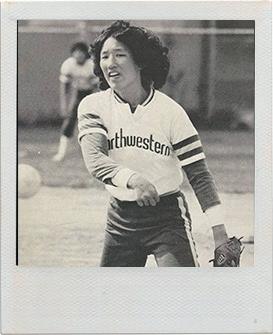
California, where she found Lisa Sliwa, formerly Lisa Ishikawa — a pitcher who would put NU on the map.
Just two years after Big Ten softball’s inception, Drysdale’s program stood in its infancy. Despite clinching the inaugural conference championship title in 1982, the ’Cats had yet to make their mark on the national scene.
Sliwa piqued Drysdale’s interest while playing summer ball in her hometown of Stockton, California. As a freshman in 1984, she wasn’t anticipated to receive much playing time, as NU’s primary pitcher Cathy Tawse shouldered significant responsibilities in the circle.

“We have a heavy focus on academics. We play a very physical, very explosive brand of softball,” Drohan said. “So there are certain things about our program that I think continue to set us apart, and that’s become part of our identity.”
Intended as a short-term inspiration source, the theme transcended into a permanent fixture, symbolizing the program’s legacy and continuity for the current roster and incoming prospects.
Boasting 22 NCAA tournament appearances and six Women’s College World Series runs, NU has crafted a tradition of remarkability since the program’s inception in 1976.
As the 2024 team prepares for a Friday postseason regional matchup against Saint Francis (Penn.) in Austin, Texas, three eras of softball dominance shine through whenever Drohan’s group takes the field.
Building a program (1984-1987)
After the ’Cats’ first coach Mary Conway served at the helm for three seasons, leadership shifted to coach Sharon Drysdale in 1979.
In an age of softball predating Oklahoma’s perennial powerhouse status and the SEC’s softball stronghold, Drysdale focused her recruiting efforts on the West Coast — then, the sport’s epicenter.
However, when Tawse tore her rotator cuff while sliding into second base during the team’s spring break trip that March, the freshman took the mound in almost every game until season’s end.
Maintaining a programrecord 0.46 ERA that season and finishing with a 33-7 record, she led the ’Cats to the NCAA championship in Omaha, Nebraska — where the contest was held until 1987.
“It was not something that I was expecting,” Sliwa said. “I came to Northwestern to get a good education, and I was just playing softball to pay for school, so I wasn’t really looking for that much exposure.”
She pitched five no-hitters, including the Big Ten’s first-ever perfect game against Michigan State. Her performance resonated with future-teammate Ndidi Massay, formerly Ndidi Opia, who soon became the other half of the battery.
Two years younger than Sliwa, Massay played against her future teammate in summer leagues and high school competition before they’d eventually don the same colors at NU.
“I really didn’t know many schools outside of the West Coast, but I knew Lisa had gone to Northwestern and then they were in the World Series,” Massay said. “I just knew that’s what I wanted to do too.”
Though Massay was not formally recruited until her senior year of high school, she said she heard Drysdale was impressed by her performance in a game she played against Sliwa a few years prior.
During Massay’s debut season in Evanston, the ’Cats clinched a World Series spot for the third consecutive year. While it marked the sole instance during Massay’s four-year tenure that the team reached such heights, she said she will never forget the excitement of playing softball at the highest level.
Massay said that despite the comparatively limited fanfare and media attention surround ing the sport at the time, it was “still amazing to be around some of the elite softball players in the country.”
In Omaha, Massay said she formed relation ships with players who eventually became her teammates in summer leagues and people with whom she crossed paths later in her career as a sports journalist.
Massay capped off her career as NU’s leader in hits and stolen bases, boasting a .299 careerbatting average in a pitcher-dominated era, where ERAs often dipped below 1.00.
The former catcher said she appreciates the game’s evolution, noting its shift toward a more hitter-friendly and team-oriented approach as the mound moved back three feet and bats shifted from aluminum to composite.
“I think the big thing about the team now is that it’s much more of a group effort and not just one or two superstars,” Massay said.
“When I played we had Lisa Ishikawa on the mound — and we won four Big Ten Championships because of that.”
Passing the torch (2004-2008)
return in 2000 — just before Drohan took the reins as head coach the following year.
Upon inheriting a dormant program, Drohan began curating a team that would one day compete at the highest level.
As it did with Drysdale decades ear lier, the recruiting trail took Drohan to California, where she targeted infielder Garland Cooper.
Cooper said Drohan told her when she committed to NU she would be joining a team that would compete for a national championship.
“At the time, Northwestern hadn’t even scratched the surface of becoming a top-25 program, but for some reason, when she said that, I believed her,” Coo per said.
Three years later, Drohan delivered on her promise.
After fielding offers from top-tier programs like Michigan, Alabama and Ohio State, Cooper joined the ’Cats on the field in the spring of 2004.
The utility player often spent hours with Drohan outside of practice studying film to stay ready when called upon to bat or pitch.

Following her graduation last spring, Supple pivoted to a career in sports broadcasting, frequently covering her former team for Softball America.
While Supple said she loves being closely connected to a program to which she dedicated countless hours, she admits that it has been strange watching her former teammates and coaches compete from the sidelines.
“I don’t know how it’s already been a year since my Senior Day,” Supple said. “But I just feel so proud of the way this team continues to write their own story but also carry on the legacy of Northwestern softball.”
Seeking new horizons
During its final 2024 regular season series against Indiana, NU celebrated both Senior Day and alumni weekend, commemorating nearly 50 years of storied success as this year’s squad prepared for its postseason run.
Among the fans was Drysdale, who threw the first pitch in Friday’s series opener at the stadium named after her.
Despite retiring more than two decades ago, Drysdale remains a key source of inspiration for the team. After securing their third consecutive Big Ten regular season title, players rushed over to celebrate her birthday.
taining the tradition of excellence in NU softball.
She said it was a pleasure to watch how strongly the players and coaches believed in one another. “I just hope they continue to play as well as they can because that’s all you can ask for,” Drysdale said. “The competition gets tougher and it takes a lot to pull it off, but they’ve shown they can and I hope they will.”
audreypachuta2027@u.northwestern.edu


After a string of four consecutive NCAA tournament appearances in the mideighties, Drysdale’s program fell into limbo for nearly 13 years until a national postseason
SPORTS
@DailyNU_Sports
The legendary coach commended her suc
PhotocourtesyofLisaSliwa LisaSliwa,formerlyLisaIshikawa,pitches theball.
SOFTBALL
PhotocourtesyofNdidiMassay
PhotocourtesyofGarlandCooperInfielderGarlandCooperhitstheball.
NdidiMassay,formerlyNdidiOpia,gatherstheball.
Photo courtesy of Sydney Supple Utility player Sydney Supple celebrates a win.
Daily file photo by Henry Frieman
Coach Kate Drohan and former coach Sharon J. Drysdale talk after Northwestern secured its third-consecutive Big Ten regular season title.