8 SPORTS/Basketball Iowa game postponed due to COVID-19


8 SPORTS/Basketball Iowa game postponed due to COVID-19
In December, Evanston began giving $500 each month to 150 residents as part of the city’s guaranteed income one-year pilot program.
The city launched applications for the program in August, selected a cohort of recipients and has sent out two rounds of payments so far. Evanston is running the pilot in conjunction with Northwestern, which is researching how the money impacts residents’ quality of living and the community as a whole.
The program follows an already circulating body of research that shows guaranteed income has benefits, research project manager Jeff Thomas said.
“In recent history, the city that put it on the map was Stockton, California,” he said. “(Martin Luther King Jr.) even spoke about universal basic income back then. It’s not a new concept by any means. Once people started getting stimulus checks, it’s not a huge leap.”
The financial toll of the
COVID-19 pandemic helped push Evanston toward offering residents guaranteed income, Thomas said.
That pressure, combined with research, created both a national and local need for guaranteed income, according to Mayor Daniel Biss.
“It’s an important transformation occurring in the way that public benefits are distributed,” Biss said. “There’s robust data coming back from across the country, and it’s working. It’s important for us to be a part of that effort.”
The project costs around $1.1 million, $900,000 of which will go directly to participants. The remaining funds finance research and administrative needs. Evanston invested $700,000 of American Rescue Plan Act funds into the project, and NU $400,000 from its budget.
The city sent its first payment in the form of city-issued debit cards to 150 low-income residents Dec. 1 and will load additional funds every month, Biss said.
To qualify for the program, residents needed to make at or below 250% of the federal poverty line and be between 18-24 years old, 62 and older or an undocumented community
» See INCOME , page 6
3 VIDEO/Notes from the Newsroom
Ava Earl performs in first installment of concert series
4 OPINION/Ahn Residential Services offered me no support
It took just more than an hour for Weinberg freshman Adam Valiji’s new bike to disappear from the bike racks outside the Norris University Center.
“I looked everywhere,” he said. “I thought maybe I just parked it somewhere else, and then I found a bike lock, so I knew that it got stolen.”
Valiji is one of many Evanston
community members affected by bike theft.
Some students and residents returned to Evanston following Thanksgiving and Winter breaks to find their bikes missing from the racks they had locked them at.
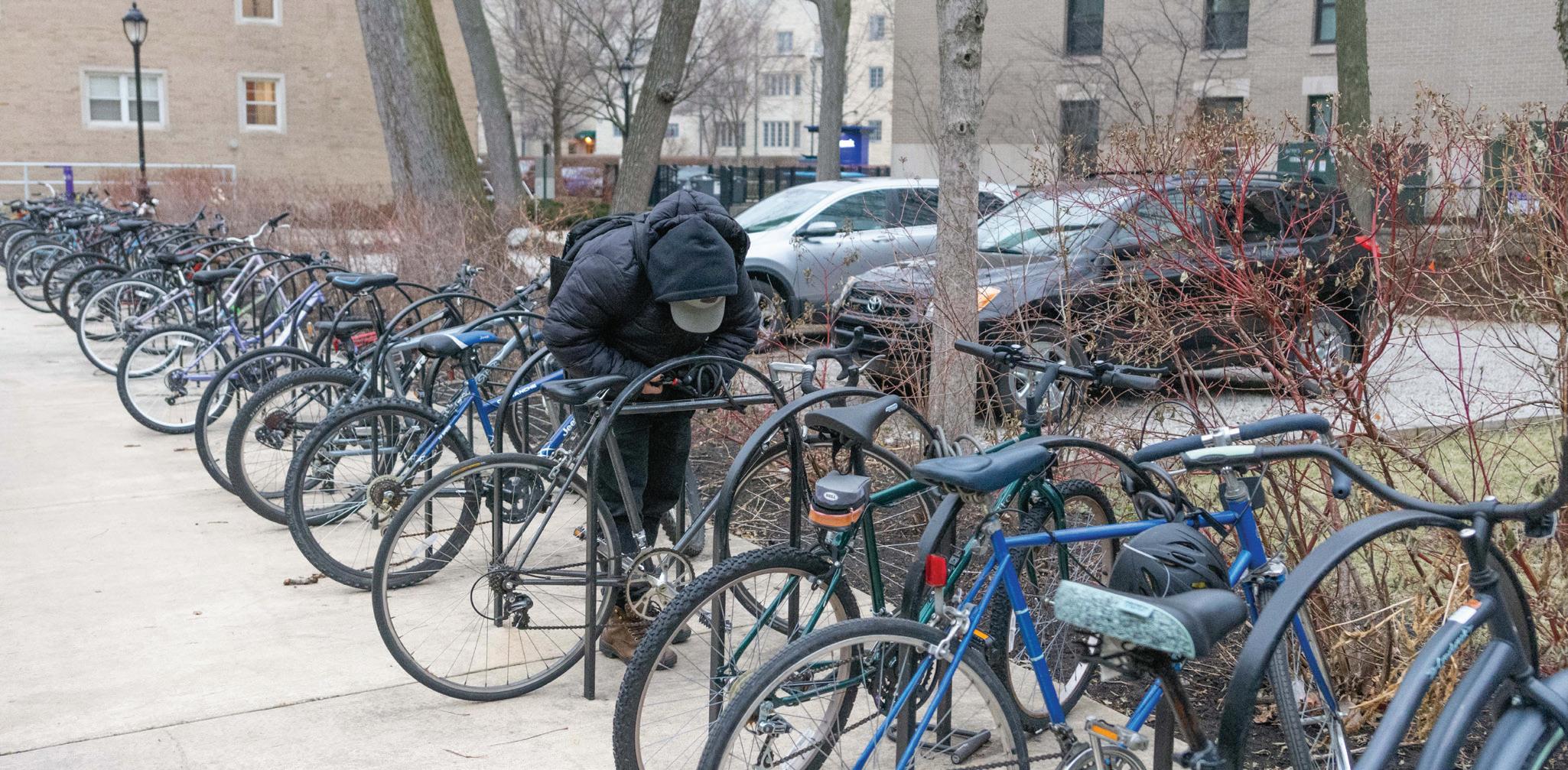
Charlie Swain, sales manager at Evanston’s Wheel & Sprocket, said bike theft is widespread on NU’s campus and the broader Evanston community.
“Right after Thanksgiving, multiple people a day were coming in saying that their bike had been
Northwestern announced plans Sept. 28 for a complete renovation of Ryan Field. The school would revamp the stadium, limiting seat capacity but adding concerts and alcohol sales.
But for residents of the 7th Ward, where Ryan Field is located, the renovation raises a number of concerns: noise and traffic during summer concerts, limited parking capacity, safety risks surrounding alcohol sales and tensions around NU’s relationship with Evanston.
The University must now apply for several permits from the city for the rebuild, concerts and alcohol sales. City Council will issue or deny final approval.
So the Most Livable City Association — a group of Evanston residents focused on raising awareness around issues presented by the Ryan Field rebuild — released a petition asking the city to limit events at the field and for an independent study of the stadium’s expected impact on nearby residents and businesses. It’s reached nearly 700 signatures so far.
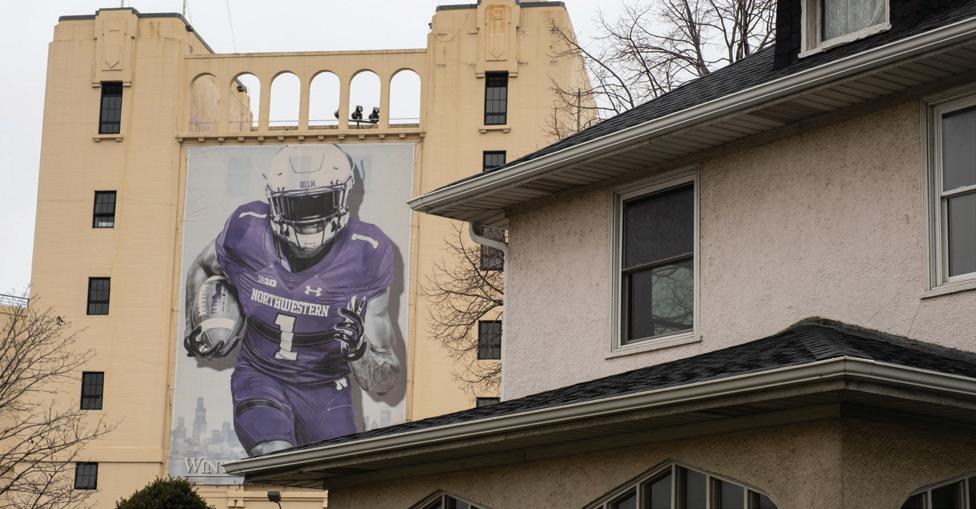
As debates around the stadium continue, Ald. Eleanor Revelle (7th) said she sees this discussion as a chapter in a longer discussion about the town-gown relationship.
“There’s definitely a lot of talk about a general feeling in the community, whether you’re talking about the stadium or not, that Northwestern could and should do more for the community,” Revelle told The Daily. “So this concert stadium proposal seems to be an opportunity to have conversations with the University about what we’re going to do.”
The University’s proposal includes the addition of 10 concerts a year at the renovated Ryan Field, which has prompted concerns about noise and traffic
The school responded to earlier concerns about noise and traffic by reducing the capacity in the stadium by 15,000 seats, adding noise and visual controls and conducting a “comprehensive parking plan.”
However, Aaron Cohen, a member of the Most Livable City Association and 40-year resident of Evanston, said he’s still worried
concertgoers will park on the street. According to a zoning analysis application by the City of Evanston, a minimum of 4,202 parking spaces are required for Ryan Field and Welsh-Ryan Arena, but only 1,365 have been proposed.
Cohen also expressed reservations about where the Ryan Field changes fit in with the University’s educational mission.
“Why does the University need to sell alcohol?” he said. “Why does it need the whole concert with 35,000 people as if it were a major entertainment venue?”
As an educational institution with nonprofit status, the University does not pay property taxes — nor does it make payments in lieu of taxes, as some universities do. It has, however, contributed to
the Good Neighbor Fund, which has granted $1 million annually to the city since 2015.
But, similar to Cohen, resident and petitioner Andrew Berman said the planned concerts at NU seem intended to draw in profit.
“It’s the audacity of trying to run a for-profit business when you’re technically a not for-profit institution,” Berman said. “You don’t pay taxes on the building and property that you’re running the business on. That really grates on me.”
Nevertheless, the University does pay a variety of local, state and federal taxes.
A study by consulting firm Tripp Umbach predicted the stadium construction will bring
stolen over break, whether they had left it inside a garage, or on a porch or at a bike rack on campus,” Swain said.
There were about 209 bike theft incidents in 2022, which was an increase from about 176 in 2021, according to figures provided by Evanston Police Department Cmdr. Ryan Glew. However, he said the number of stolen bikes is likely higher, since the provided data may not account for instances when more than one bike was stolen.
Evanston resident Brian Solmos (McCormick ’23) had two of his bikes stolen from his off-campus apartment complex’s bike room. He reported the second theft to Evanston Police Department officers for insurance purposes, he said, and informed his landlord of both incidents.
“I don’t think anyone’s bike has ever been recovered by the police,” Solmos said. “So it’s kind of like a formality to report it.”
is necessary.”
Wang isn’t the only student who views the lab component as equivalent to a one-unit class.
By SAMANTHA POWERS the daily northwesternThe workload can be overwhelming for some students taking classes with four- to eight-hour labs. Whether they spend hours poring over their textbooks or just show up to class without any preparation, each student has a unique approach to managing their time in these courses.
McCormick freshman Mark Wang, who is in his second quarter of organic chemistry, attends lecture five times each week — in addition to his four-hour lab. He said he spends about 10 to 15 hours per week on work outside of class.
“It’s essentially like taking five classes because I would consider lab to be as much work as another class,” Wang said. “Sometimes it feels weird to put so many hours into a lab class when it’s only worth like one-third the credit of the normal lecture class. It rubs me the wrong way, but I think lab
Weinberg sophomore Farley Wall was enrolled in two different four-hour lab sessions Fall Quarter, so he decided to take three classes instead of four. He said the decision was necessary because of substantial time spent on his labs, in addition to prep work and lab reports.
“It’s very easy to look at that and get intimidated by it, just because it’s like, ‘That’s eight hours of my week,’” Wall said of the lab sessions.
“The way I (managed) it is just kind of treating it as a normal class.”
Organic chemistry, a multiquarter sequence, is a requirement for many chemistry majors, pre-med students and engineering students. Chemistry Prof. Derek Nelson, who is teaching Chem 235-2 this quarter, said the course’s workload is demanding but that faculty have taken steps to make the process easier.
This school year marks the first full academic year of a newlyrevised sequence that condenses organic chemistry into two

STEM community survives by working ‘smarter, not harder’
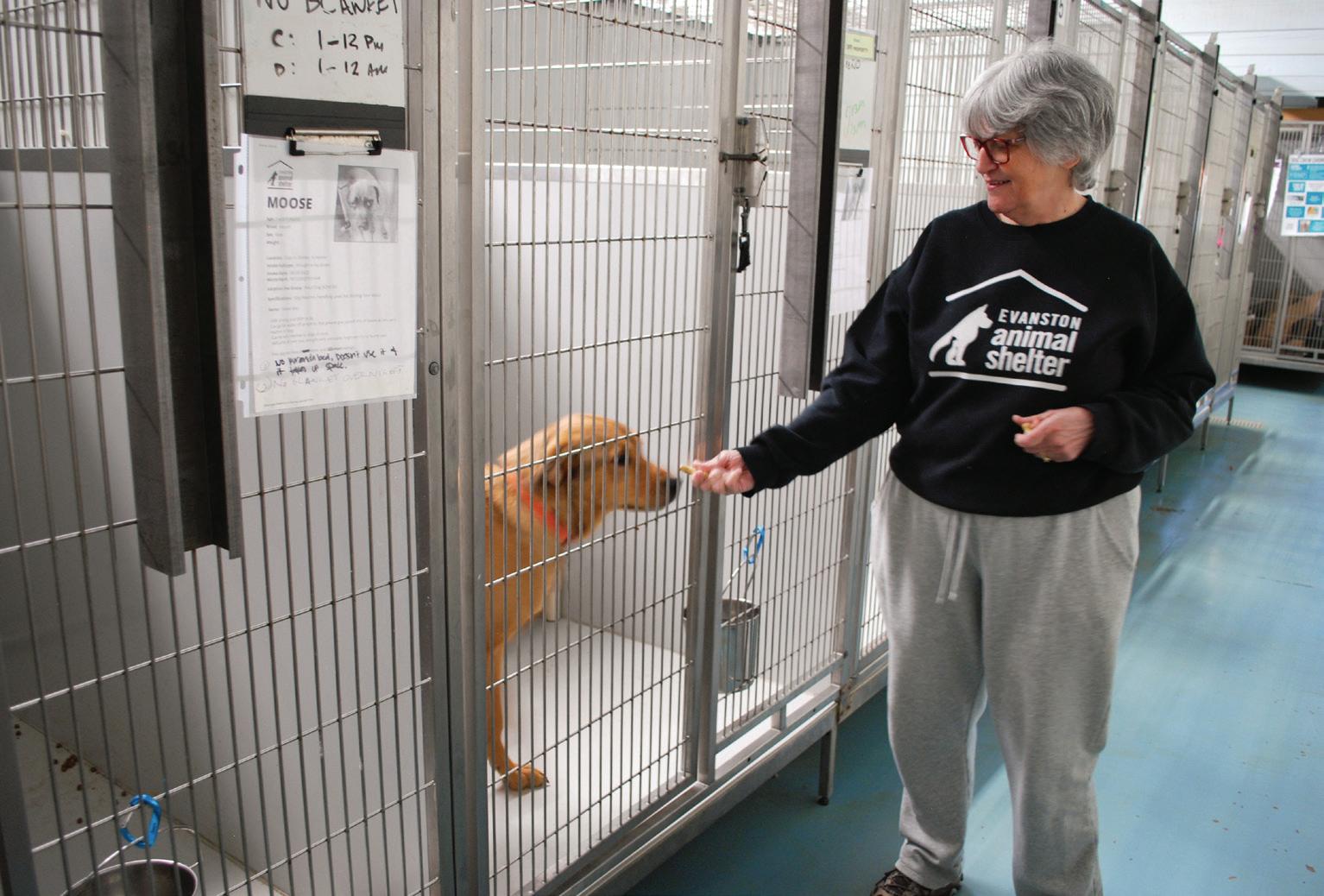
The city approved plans for renovating Evanston Animal Shelter in November, with the new building on track to be operational by the end of this year.
The Evanston Animal Shelter Association, Cook County and the City of Evanston are working together on the estimated $6.3 million community project that saved the shelter — located on Oakton Street — from shutting down after decades of operating from an ill-equipped facility, originally designed to be a dog pound.
The small, crowded building is intended to only house dogs for a couple days before they are euthanized, not to provide cats and dogs with adequate space and treatment, according to Evanston Animal Shelter Executive Director Vicky Pasenko.
“It’s life changing,” said Pasenko about reconstructing a building that is “currently dying.”
According to city engineer Lara Biggs, the building is expanding from 3,500 to the minimum 8,500 square feet to meet national standards for animal shelters.
There will be various new spaces: separate areas for cats and dogs, isolation for sick animals, a medical room with a contracted veterinarian, indoor roaming space for animals, a lobby and a room for community and education.
The city approved plans for renovating Evanston Animal Shelter in November, with the new building on track to be operational by the end of this year.
The Evanston Animal Shelter Association, Cook County and the City of Evanston are working together on the estimated $6.3 million community project that saved the shelter — located on Oakton Street — from shutting down after decades of operating from an illequipped facility, originally designed to be a dog pound.
The small, crowded building is intended to only house dogs for a couple days before they
are euthanized, not to provide cats and dogs with adequate space and treatment, according to Evanston Animal Shelter Executive Director Vicky Pasenko.
“It’s life changing,” said Pasenko about reconstructing a building that is “currently dying.”
According to city engineer Lara Biggs, the building is expanding from 3,500 to the minimum 8,500 square feet to meet national standards for animal shelters.
There will be various new spaces: separate areas for cats and dogs, isolation for sick animals, a medical room with a contracted veterinarian, indoor roaming space for animals, a lobby and a room for community and education.
At the building’s current full capacity, kennels overflow into the halls, creating a fire
hazard that prevents workers from moving around, Pasenko and other volunteers said.
Adoption Counselor and Kennel Captain Erika Morales mentioned other facility issues, including flooding up to the ankles from leaks and a malfunctioning HVAC system that endangers the animals’ safety.
While explaining how these dangers affect the animals, Morales noticed that a dog, Ralphie, had urinated in the adoption room because the overheating caused him to drink too much water.
“It’s been four years of us holding it together,” Pasenko said about the shelter functioning.
Biggs said she became concerned about the building in 2016 because it violates various city standards, such as the malfunctioning HVAC system and small size.
The estimated total project budget of $6.3 million includes costs for projects beyond construction, like relocating animals and fixing soil toxicity issues.
The final cost will be determined once the official construction bid is selected and approved by City Council in February, Pasenko said. In addition, the council will vote on improving the Municipal Storage Center to house relocated dogs. Once both items are approved, construction can begin.
The animal shelter hopes to relocate the dogs by early April, whereas the cats are already relocated to a temporary cat shelter at 611 South Blvd., and then start tearing down the current shelter, according to Pasenko. That day will be very emotional for her, she added.
Pasenko said the Evanston Animal Shelter has become her second home, shared by three other full-time employees and about 175 volunteers that work in shifts.
“A project like this only happens when the community comes together,” Biggs said.
Evanston is paying about half of the project’s costs because of Cook County’s $2 million grant and the Evanston Animal Shelter Association’s commitment to raising $1 million.
The only councilmember who voted against the project in November was Ald. Krissie Harris (2nd). She said she needed more documentation and information.
“I can’t approve something that I’m not clear about. I don’t know what the final project is going to be,” Harris said.
She emphasized the importance of the project, however, and said the shelter’s work is “very admirable.”
Biggs said she hopes the center’s new services can better help residents who may be struggling with animal care.
“It’s truly a place that the community has supported and created, and it will continue to provide great service for the community,” she said.
marthacontreras2025@u.northwestern.edu
“Simply breathtaking” — Santa Fe ReporterManaging a well-balanced and diversified portfolio between classes just got a little easier with the installation of a brand-new Bloomberg Terminal in Main Library.
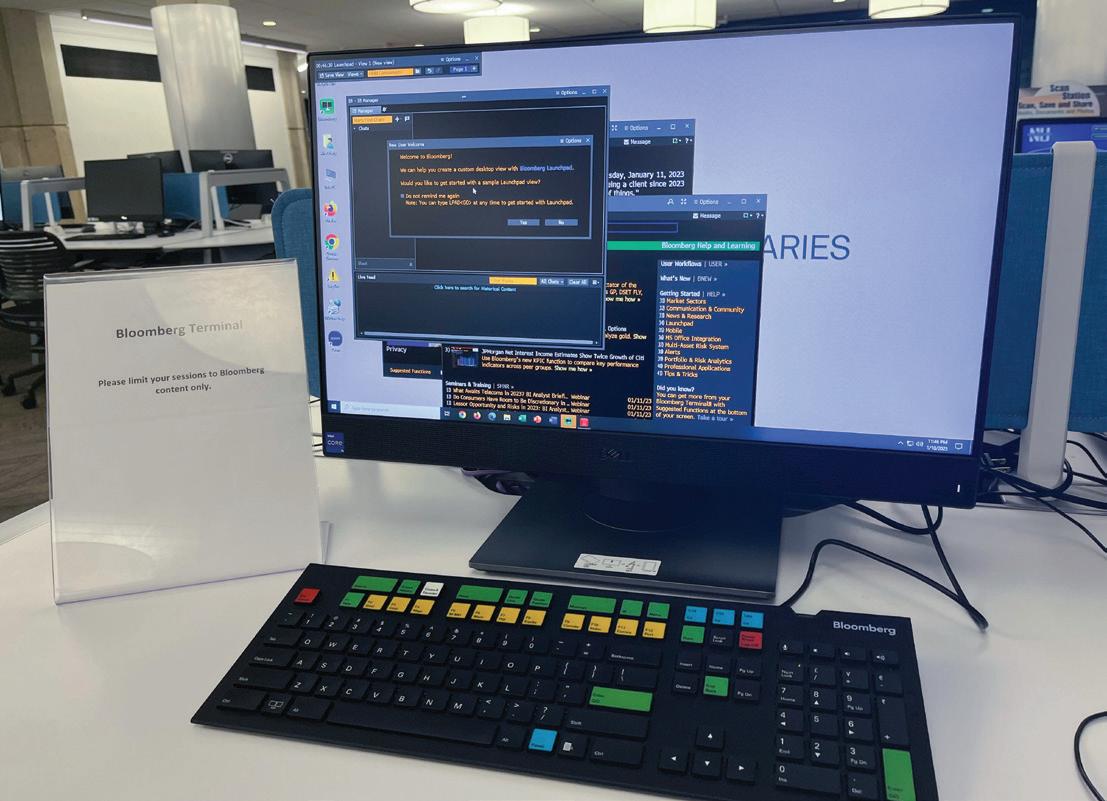
The high-tech hub for financial news and information currently has an annual price of $30,000 (without an educator discount) and is wedged between computer workstations in the John P. McGowan Information Commons. It’s been up and running since the beginning of Winter Quarter.
“It’s got great information in the more esoteric corners of the financial market,” librarian Carol Doyle said. “Bond information, municipal bonds, derivatives, options and things like that.”
As Northwestern Libraries’ management and business librarian, Doyle is responsible for aggregating resources that improve faculty and students’ access to business materials, such as resource guides or market reports.
Doyle said that previously, undergraduates looking to access a Bloomberg Terminal would have to visit the Kellogg Global Hub after looking up guides on NU Libraries’ website.
“I would work with the people in Kellogg research support, so that they would know that undergraduates were coming over,” Doyle said. “Through our outreach and through our research guides, we let people know that (Terminals) were located there and that they could go over and access them.”
Just over a year ago, Doyle advocated for one to be installed in Main Library, removing extra steps in the process and making the Terminal’s resources more
accessible to undergraduates.
Doyle said she hopes students use the work station for classwork in courses related to economics or business institutions.
Students within the finance community at NU see potential for the Terminal to help those interested in financial services gain familiarity with industrystandard technology that many fulltime analysts rely on everyday.
Women In Business President and Weinberg junior Phoebe Cahill was an investment banking intern at Bank of America last summer, and part of her final presentation required her to use the Terminal to price assets and bonds.
Though she had previously interned at a hedge fund as a market research analyst, she was able to pick up more technical skills at her most recent internship.
She said that full-time analysts incorporate information and data from the Terminal in their day-to-day work, such as building financial models.
“I think it would be awesome to incorporate (the Terminal) into some of the BIP classes or econ classes, just so you get hands-on experience because it really is used in a lot of banking jobs and internships,” Cahill said.
Though WIB has a finance division, Cahill also sees potential for members of finance-oriented clubs, like Investment Management Group or Northwestern Capital Management, to use the Terminal to gain experience with skills they will need in the future.
Medill junior Elisabeth Betts, who will return to J.P. Morgan and Chase as an investment banking analyst this summer, said her first experience with the Terminal was during her summer internship last year.
“When we were operating within
the sales and trading markets division, they took us to the trading floor and everything, and we saw people using the Bloomberg Terminal,” she said.
There, Betts was able to “poke around” the interface and become familiar with its functions.
Though she may not work with the Terminal every day post-grad, she said that because she’s going into financial services, knowing how to navigate around it helps her communicate with the coworkers who do.
Betts added that if the University promotes the Terminal more, undergraduates who are unfamiliar with financial services as a career will be able to get a headstart in the industry.
“I think it would be nice to see Northwestern foster an understanding of the Terminal and what it is,” Betts said. “Financial services as a whole is still pretty inaccessible as an industry.”
As for limitations on use, Doyle said that Information Commons staff are keeping an eye on the number of people asking to use it and will adjust according to demand, meaning adding sign-ups for time slots.
Communication junior Frances McKittrick, who works at the circulation desk, said she has fielded a handful of inquiries from students curious about the Terminal since its installation, but the demand hasn’t been too overwhelming.
Until then, the Terminal is available for students of all levels to use during the library’s hours of operations.
“We always want to make access easy for students,” Doyle said. “We don’t want students having to wait long periods of time to use the Bloomberg Terminal.”
alexperry20@u.northwestern.edu
The Daily Northwestern www.dailynorthwestern.com
Editor in Chief Alex Perry eic@dailynorthwestern.com
General Manager Stacia Campbell stacia@dailynorthwestern.com
Holly and John Madigan Newsroom
Phone | 847.491.3222

Campus desk campus@dailynorthwestern.com City desk city@dailynorthwestern.com
Sports desk sports@dailynorthwestern.com


Ad Office | 847.491.7206 spc-compshop@northwestern.edu

The Daily Northwestern is published Monday and Thursday during the academic year, except vacation periods and two weeks preceding them and once during August, by Students Publishing Co., Inc. of Northwestern University, 1999 Campus Drive, Evanston, IL 60208; 847-491-7206.


First copy of The Daily is free, additional copies are 50 cents. All material published herein, except advertising or where indicated otherwise, is Copyright 2022 The Daily Northwestern and protected under the “work made for hire” and “periodical publication” clauses of copyright law.
POSTMASTER: Send address changes to The Daily Northwestern, 1999 Campus Drive, Evanston, IL 60208. Subscriptions are $100 for the academic year. The Daily Northwestern is not responsible for more than one incorrect ad insertion. All display ad corrections must be received by 3 p.m. one day prior to when the ad is run.



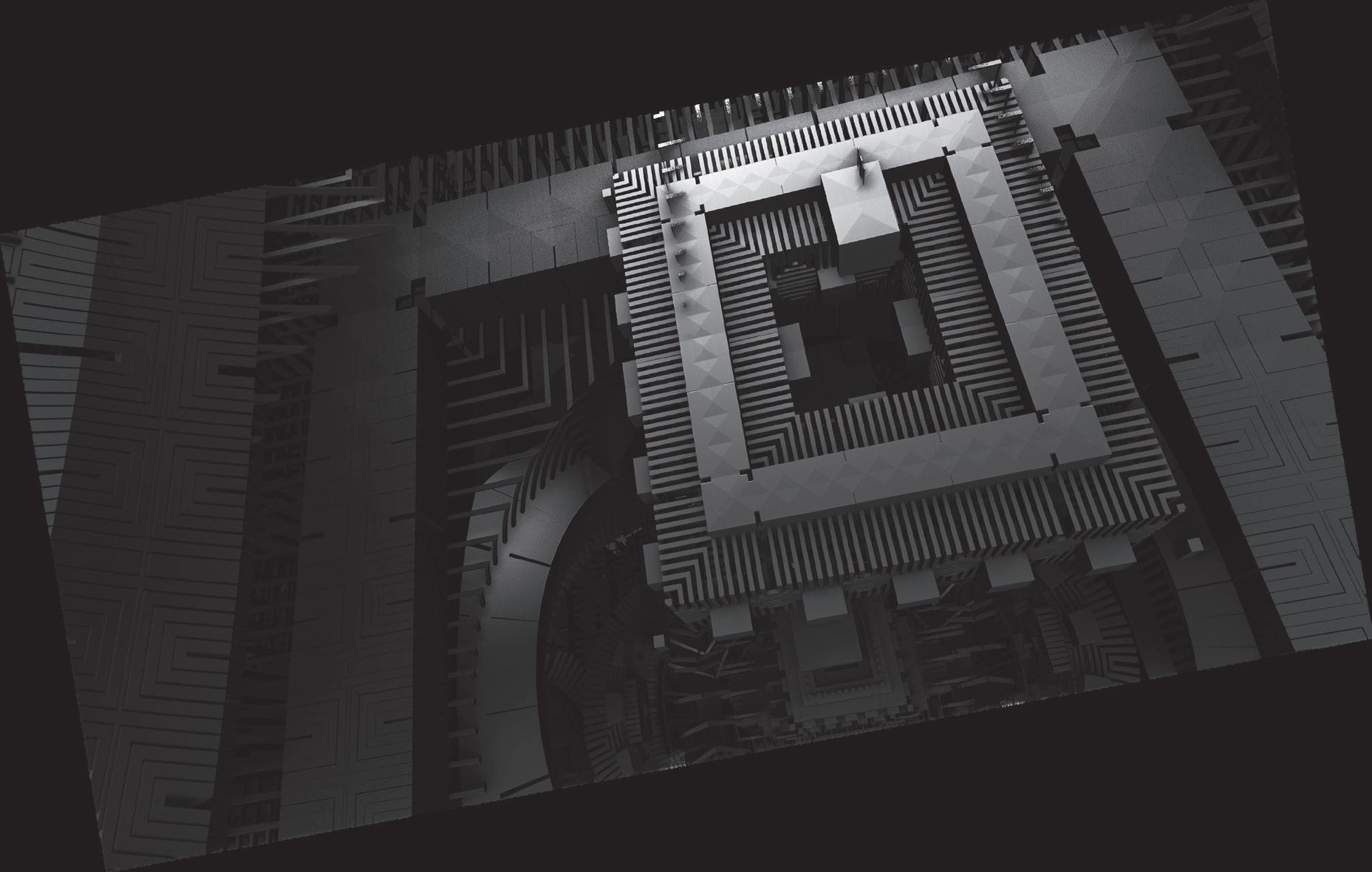
Saturdays January 7 - February 25 at Norris University Center 11:00 AM - 12:00 PM Central
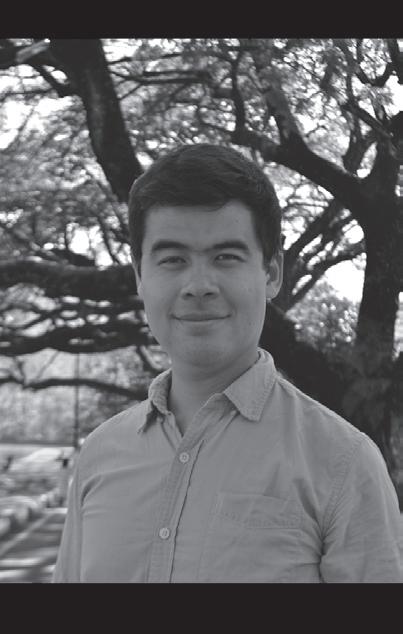
Join us for weekly lectures by Northwestern Postdoctoral Scholar Ian Mondragon-Shem. He will present an eight-week series on the development of quantum technologies.

Join the online conversation at www.dailynorthwestern.com
To all of the students who barely make it through the cracks, holding on for dear life: “… you are enough your work is enough you are needed your work is sacred you are here and i am grateful.”
-adrienne maree brownI am in an abusive relationship with the University. I am constantly put in situations that violate my personhood and dismiss my humanity. I am continuously taught that my self-worth is attached to what and how much I can produce. I am repeatedly reminded that I should be doing “more.”
That AND is in our DNA.
Sleeping fewer hours at night, skipping meals and working relentlessly without breaks are all applauded. The core of our existence is to grind, never coming to a halt. Over time, even machines wear out — gears jam. Our bodies continue to weather, accumulating the pain and traumas inflicted upon them.
My intentions for writing are not to get back at the University, nor are they out of spite or revenge. I am not writing out of anger or rage, although
all of these feelings and emotions are present. I am writing from a place of radical love, to express solidarity with everyone who has been harmed by the carceral logics and oppressive practices of Northwestern as an institution. To the folks who have been systemically neglected and drawn to the margins: this is a love letter to you.
To the Canada Goose-ers, this is certainly an unfamiliar tale. To the othered, this will more than likely make you cry. Probably reignite a fire burning inside you, bold and fierce.
Possibly make you angry, spiraling into a rage of wanting to tear everything down.
Potentially overwhelm you with grief and hopelessness.
Oftentimes, I experience an uneasy feeling of estrangement, imposter syndrome. After all, you cannot belong in a system that isn’t designed for you. I wish I could quit, drop out and escape this pit of despair. Yet, as cycles of abuse go, I feel compelled to carry on with my toxic relationship with NU. It seems impossible to imagine an alternative reality, for I have been made to believe this is the only means of success.
the result of having normalized oppression.
Surviving trauma becomes a rite of passage.
Nearly four years ago, Gabrielle Bienasz published “This is a University, not a war zone — so why do we have to die before Northwestern changes the rules?” I would amend that statement by saying this is indeed a war zone, not a university. Why? One insufferable truth: the system is not broken — it is designed to break us. The University, founded and maintained in the occupation of Indigenous lands, has time and again employed brutal tactics to terrorize its Black, brown and Indigenous students in attempts to silence their voices. The blatant disregard for our humanity is inexcusable.
You cannot belong in a system that isn’t designed for you. I wish I could quit, drop out and escape this pit of despair. Yet, as cycles of abuse go, I feel compelled to carry on with my toxic relationship with NU.
- SAHIBZADA MAYED,“This is something you have to get through. Just suck it up and try to make the most of it.” This is
as the “educational survival complex.” This is a system “in which students are left learning to merely survive, learning how schools mimic the world they live in, thus making schools a training site for a life of exhaustion.” Navigating survival at a predominantly white institution like NU sucks the life out of us. The cost of higher education is far greater than the absurd amount we pay in tuition dollars. Let us not forget the traumas inflicted upon our bodyminds. What is the real achievement, graduating with a four-year degree or making it out alive?
I wholeheartedly commend the work of student activists to disrupt institutional forms of violence by imagining life-giving and liberating possibilities. I applaud their efforts to speak truth to power and make their voices heard and felt. This is merely a testament to the resolve of students to engage in liberatory dreaming and future building.
Op-Ed Contributor
In the past three years, I have seen my peers brutalized at the hands of police in riot gear. I have watched multiple friends end up in psychiatric wards due to chronic stress and burnout, coupled with a lack of adequate mental health support services. I have even been involuntarily hospitalized, which was orchestrated by Counseling and Psychological Services and Northwestern Medicine Student Health Service.
Author Bettina Love has come to know this
Audre Lorde reminds us that “the master’s tools will never dismantle the master’s house. They may allow us to temporarily beat him at his own game, but they will never enable us to bring about genuine change.” In other words, we cannot rely on settler-colonial institutions — they don’t keep us safe. Abolition is our path to freedom.
Sahibzada Mayed is a McCormick senior. They can be contacted at sahibzadamayed@u.northwestern. edu. If you would like to respond publicly to this op-ed, send a Letter to the Editor to opinion@ dailynorthwestern.com. The views expressed in this piece do not necessarily reflect the views of all staff members of The Daily Northwestern.
Content warning: This article contains mentions of suicide.
On Oct. 26, 2022, I attempted suicide. I spent the next 19 days in my dorm. On the twentieth day, I received an email from Northwestern Residential Life; I was required to resume the entirety of my responsibilities as a resident assistant immediately. If I didn’t, I would be stripped of my position and lose my dorm in Schapiro Hall.
While this was some of the worst treatment I endured from NU, it was not unprecedented. Nor was it my first experience with homelessness. During the winter of 2021, I was forced to flee my home due to domestic violence. Since then, I have relied on my dorm as my only form of stable housing.
The summer of 2022, I became a conference assistant with NU’s Residential Services. I was one of 18 CAs, students who would manage all residential services for summer programs. I received three meal swipes a day, a stipend of $1,650 and housing for 200 hours of contracted work. After two students quit, the remaining CAs were forced to take up extra hours without a corresponding pay increase. Given the number of hours I was ultimately scheduled to work, my take-home wage would have amounted to less than $6.60 per hour (excluding housing and dining contracts).
I was expected to be on call for 12 hours for night duty. All the CAs lived on South Campus
in the North Mid-Quads while the majority of residents lived on North Campus. Getting a call from a resident in the middle of the night meant we were expected to walk nearly a mile — alone and in the dark — from NMQ to Schapiro Hall. I voiced my concerns to Residential Services’ director of operations and services Jenny Douglas about safety and mental health. The notion of making that trek triggered my post-traumatic stress disorder, but no accommodations were made.
Further, I pointed out how little the CAs were paid, considering the hours worked. According to Residential Services, students’ housing contracts and meal plans counted as compensation. I argued we should ensure that all students are given their basic needs and that food and shelter should not be tied to employment. Residential Services excused this by claiming they support the idea that food and shelter are essential needs, but the University does not guarantee these to student employees. Students Organizing for Labor Rights and multiple conference assistants responded with a petition, but little changed. I felt like I had no options. After I decided to quit, NU Residential Services filled my position with another student, and CAs never received pay for their extra hours.
canceled immediately and I was given two days to leave, removing the two sources of stability I had depended on. I moved to the only sublet I could find on short notice: a house with mold and no air conditioning. As a result, I became severely sick and could not eat for days as I suffered through Chicago’s summer heat.
Without my job, I go without a roof over my head. Residential Services encouraged me to resign, stating that any lack of enthusiasm shouldn’t negatively impact my residents, or my performance on the job.
- KAYLYN AHN, Op-Ed Contributor
I had signed up to be an RA months before my experience as a CA. That fall, my PTSD and depression worsened due to the instability I suffered because of Residential Services. I had to continue working with them despite the abuse and exploitation. Eventually, I resorted to suicide. The only other option seemed to be medical leave. My therapist recommended I enroll in a PTSD/trauma recovery program, which involved full-time rehabilitation for 30 hours a week. Residential Services had other plans, informing me that if I were to take medical leave, I would lose both my housing and my job. When I told them I had nowhere else to live, they told me it was policy and refused to consider my housing insecurity an important matter.
stating that any lack of enthusiasm shouldn’t negatively impact my residents, or my performance on the job.
This heartlessness was underscored by Residential Services’ response to my attempted suicide: an emailed list of all my upcoming RA desk shifts, a list of duty shifts and a list of RAs to contact to make up for my missed shifts.
I am not the only student who has been subject to the University’s inhumane policies — my experience has shown NU’s willingness to exploit vulnerable students to maintain its ever-growing wealth. Every student, every employee and every person has the right to housing. We have the right to food, education, healthcare and stability. No student should go without housing because of an institutional lack of remorse and compassion.
NU, a top-10 U.S. institution with a $16.1 billion endowment, capitalizes on the vulnerability of its students and employees. It is inhumane and reckless to tell a student, 20 days after attempting suicide, to get back to work or become unhoused — again.
Blaming this experience on an inflexible policy is not a valid excuse. Rather, it retraumatizes students and clearly illustrates the University’s unwillingness to take a hard look at its practices and treatment of students.
It is not just policy, it is negligence. It is not just a contract, it is an injustice. It is not procedure, it is abuse. And I refuse to stay silent any longer.
After being forced to quit, my meal plan was
I pleaded my case, that I felt forced to forgo necessary PTSD treatment to focus on my position as an RA. Without my job, I go without a roof over my head. Residential Services encouraged me to resign,
The Daily Northwestern Volume 145, Issue 03
Kaylyn Ahn is a SESP sophomore. You can contact her at lynnahn2025@u.northwestern.edu. If you would like to respond publicly to this op-ed, send a Letter to the Editor to opinion@dailynorthwestern.com. The views expressed in this piece do not necessarily reflect the views of all staff members of The Daily Northwestern.
LETTERS TO THE EDITOR may be sent to 1999 Campus Drive, Evanston, IL 60208, via fax at 847-491-9905, via e-mail to opinion@dailynorthwestern.com or by dropping a letter in the box outside The Daily office.
Letters have the following requirements:
• Should be typed
• Should be double-spaced

• Should include the author’s name, signature, school, class and phone number.

• Should be fewer than 300 words They will be checked for authenticity and may be edited for length, clarity, style and grammar.
Letters, columns and cartoons contain the opinion of the authors, not Students Publishing Co. Inc. Submissions signed by more than three people must include at least one and no more than three names designated to represent the group.
Editorials reflect the majority opinion of The Daily’s student editorial board and not the opinions of either Northwestern University or Students Publishing Co. Inc.
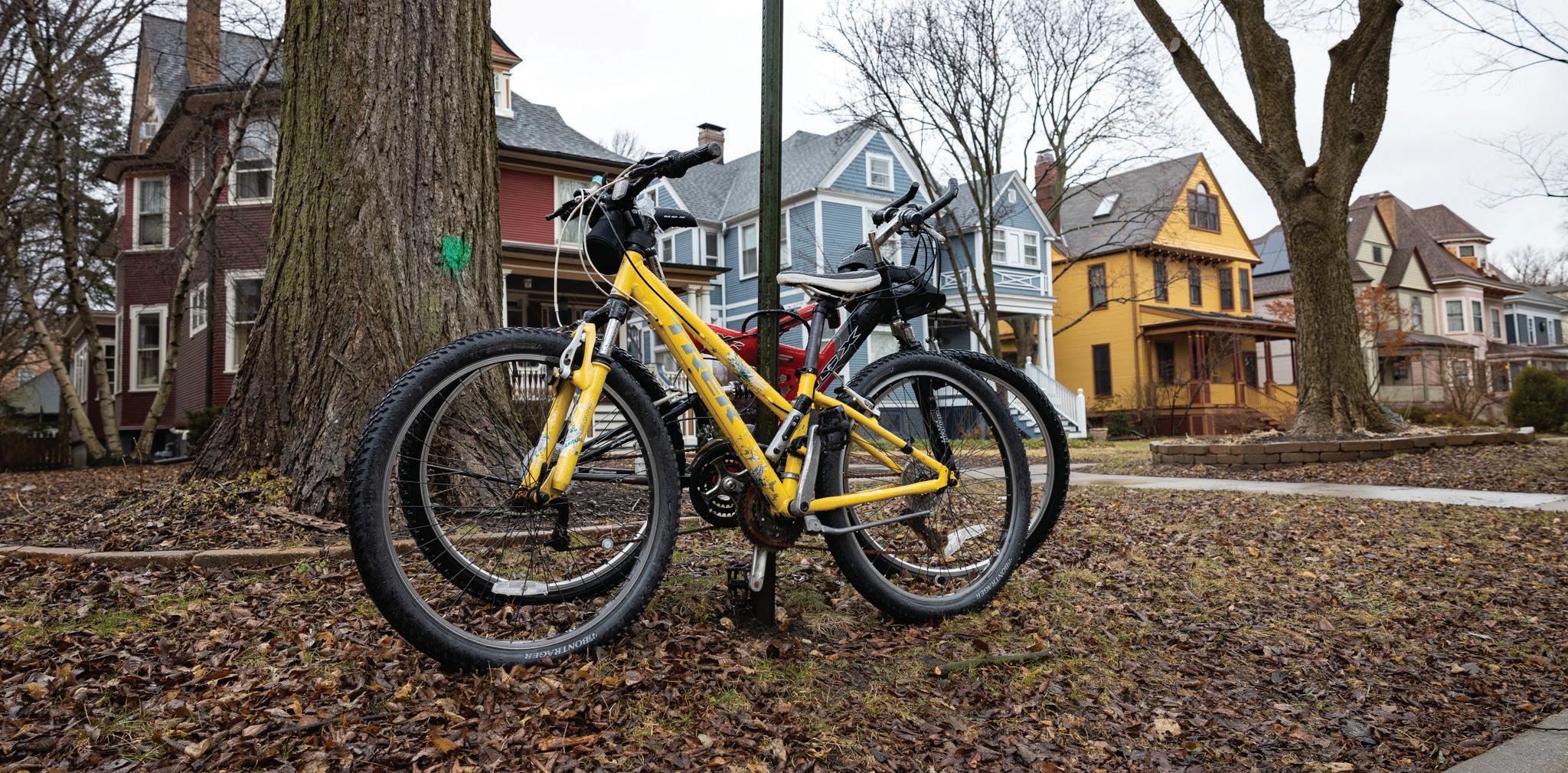
Ald. Bobby Burns (5th) remembers making the journey many times when he was young. It started with sneaking through the Canal Shores Golf Course and venturing down a back alley before dodging the cars screaming down Green Bay Road.
Burns, who grew up in the 7th ward, would often make this trip to visit friends in the 5th. The simplest route would be through the intersection of McCormick Boulevard and Green Bay Road — but that’s where the Metratracks rise some 15 feet above the sidewalks, making crossing all but impossible.
“The train tracks kind of split the two wards,” Burns said. “There’s a way to get through, but it’s not an easy one.”
However, this may soon change with a plan to build a tunnel under that intersection. The Evanston Transit Alliance proposed a bike trail that would connect the North Shore Channel Trail to other trails north of Evanston. The proposal places the 5th ward at the center of a biking corridor stretching from northern Chicago to southern Wisconsin, punching a hole through those impermeable tracks.
The intersection is also emblematic of Evanston’s history of redlining, when the city used the North Shore Channel and the train tracks to physically restrict movement between the historically Black 5th ward and whiter wards. Through this lens, arduous journeys like Burns’ seem less like the exception and more like the remnants of a racist past.
That blockade still affects the 5th ward, according to Burns. The lack of connectivity to Evanston has stunted economic growth in the neighborhood.
“The 5th ward has struggled with foot traffic,” he said. “The more we can incentivize people to come, it will help the storefront businesses.”
Restoring this connectivity is part of the ethos behind the North Channel Trail extension, said Evanston Transit Alliance member John Fervoy, who is spearheading the project.
It is also part of a larger movement in transportation planning that seeks to address racist decisions made during the 20th century, according to Tim Gustafson, a planner engineering the trail extension.
“Because those decisions were made, and they had such a profound impact on changing and
shaping communities, we know the transformative potential that stitching them back together can bring,” he said.
Though, Fervoy and Gustafson say that the project isn’t without risk. In 2015, a bike path along old train tracks brought new pedestrian traffic to transportation-starved Logan Square.
With it came businesses and more economic activity — but in 2018, those developments brought the largest property-tax increase anywhere in Chicago, forcing many low-income residents out. Now, Chicago leaders are scrambling to stop developers from demolishing affordable housing and displacing residents.
Fifth ward residents worry that their neighborhood has a similar fate.
“I’ve seen the changes,” said Bob Pascoe, pointing to a brand-new microbrewery that stands out against the 5th ward’s industrial buildings. “It’s starting to look like downtown Evanston.”
Pascoe, who owns R&S Auto, said he’s worried
that new businesses will push out communitybased ones like his and that current residents, facing higher taxes and rent, will leave with them.
He said 5th ward residents would appreciate expanded biking access, including every biker friend of his, whom he listed until he ran out of fingers to count them. However, he says he doesn’t think they’ll be able to stay long enough to enjoy the trail’s benefits.
“Most of the people who would benefit are the rich people who live in Wilmette,” Pascoe said.
Gustafson said he is empathetic to these concerns. He used to live in the gentrifying Andersonville neighborhood under a landlord who kept rents affordable. But when the landlord retired and sold the building to developers, they didn’t renew his lease, forcing Gustafson to relocate to Rogers Park.
There, he was able to put a down payment on a condominium, establishing a foothold that would prevent a similar experience in the future. He
said that this is a privilege not everyone has and
the government
lower-income
Gustafson pointed to Belmont Cragin, a neighborhood just a few miles away from Logan Square, as an example. There, land-use investments — subsidizing businesses and housing — preceded transportation increases, helping the neighborhood develop with less displacement.
Higher density and increased property ownership amongst residents could help ease the burden of development. However, with the trail extension still years away, Burns said he hasn’t explored pairing specific land-use improvements with transportation ones in the 5th ward.
But for bike advocates and community members alike, it’s never too early to be proactive.
“Why not give money to the poor people first, then build it?” Pascoe said.
colereynolds2026@u.northwestern.edu
Valiji reported his stolen bike case to University police but said he was told they were too understaffed to further investigate the case.
The Evanston police force has decreased in size in recent years, with 27 officer vacancies in 2022.
Lou Kuhn, owner of Evanston bike store The Pony Shop, attributed increased theft over holiday breaks to convenience. He said bikes in outside areas are vulnerable when students are out of town.
“I don’t think people are stealing the bikes because they want to ride them around,” Kuhn said. “They have to be stealing them for other reasons, which the number one reason is probably money.”
Swain said bikes in Evanston are targeted because of poor street lighting, NU’s presence in the city and the COVID-19 pandemic causing streets to be quieter.
They said bikes with fewer locks attached are more likely to be stolen because it takes less time to remove them.
“Any bike can be stolen,” Swain said. “Any lock can be broken.”
Wheel & Sprocket was broken into twice last winter, and general manager Gretchen Brauer estimated about $20,000 worth of product was stolen. The Pony Shop also suffered two break-ins within the past five years, according to Kuhn. Since then, both shops have installed steel shutters.
Recent bike theft outside of store break-ins may be due to increased security at Evanston shops, Swain said. He added, it is more difficult to steal newer, expensive models from stores.
Kuhn said about one customer per week contacts The Pony Shop to say they’ve had a bike stolen. He reviews anti-theft measures with customers when they purchase bikes and encourages bike registration, he said.
But some students are disincentivized from purchasing any replacement bikes.
“I am not getting the third bike until I move out of Evanston,” Solmos said, laughing. “I am done tempting fate when it comes to owning a bike here.”
lexigoldstein2026@u.northwestern.edu
From page 1
member. From the pool of eligible applicants, the city used a lottery system to select a 150-person test group to receive payments for the study.
As of Jan. 16, 503 other applicants opted in to participate as the study’s benchmark group, Thomas said.
SESP Prof. Jonathan Guryan and graduate researchers Sheridan Fuller, Phoebe Lin and Claire Mackevicius work with Thomas to gather qualitative and quantitative data for the study. They plan to conduct in-depth surveys and interviews with participants to gauge how the additional income affects their ability to afford food, energy and other costs, Thomas said.
From page 1
quarters, instead of three, for non-majors. The new sequence will help students adjust to the demands of a full lab sequence while providing flexibility so students can cater their coursework to their postgraduate goals, Nelson said.
He said some students still struggle in their labs, which require strong time management skills.
“There are a lot of students who put off things until the last minute,” Nelson said. “It’s human nature, right? There are students who are extremely well-prepared, and they’re going to start doing the assignments as soon as I post them. Some people rely on office hours … other students, I never see.”
Nelson makes a point to provide all necessary lab criteria in his lectures, he said, but some students still come to office hours to ask additional
From page 1
billions to Evanston, and special events will continue providing revenue for the city. The study also said the University’s direct and indirect tax revenue to the city will likely increase to more than $5 million annually by 2031.
NU Assistant Vice President of Communications Jon Yates said introducing concerts would make the construction of the stadium more worthwhile.
He also said a nonprofit organization, such as NU, may perform activities like concerts that are secondary to, but still in support of, its core mission.
“It’s important that this magnitude of an investment in a facility be sustainable in the long-run — both from an environmental perspective and a financial perspective,” Yates said in an email to The Daily.
According to Yates, the rebuild will create nearly 3,000 jobs in the region, with a target of 35% dedicated to minority- and women-owned businesses. He said the school will give priority
After the payments conclude in November, the researchers will also look at aggregated data to compare what goods and services the test and control groups spent money on.
“Candidly, my hypothesis is (this research) will follow suit to what’s already been done,” Thomas said.
Former Ald. Cicely Fleming (9th), who introduced the project idea to City Council, pushed for the program to be an academic study so participants would be less likely to see government benefits be reduced, she said.
Having spoken to some residents about the program, Fleming said the community’s reactions are mixed.
Some residents asked Fleming if the city will continue to run the program past the initial year. A few
questions. According to him, both strong students and those who need extra help frequent his office.
Weinberg freshman Vincent Xiong, who is enrolled in Chem 212: Organic Chemistry and Bio 233: Genetics and Molecular Processes, said paying close attention during lecture helps him better understand course content needed for labs. Xiong is in labs nine hours a week between both courses.
“I really live by ‘work smarter, not harder,’” Xiong said. “When a professor is explaining a complex topic, you don’t want to be jotting down notes and not listening. You really want to just be there and know you can understand.”
Xiong also said taking his mind off studying helps him to manage his stress. When he needs to take a break, he said he likes to play video games and catch up with friends.
Syed Uddin, a third-year Ph.D. candidate in neurobiology, said that as a teaching assistant for
to Evanston businesses and individuals.
Samuel Lica, the manager of Central St. restaurant Mustard’s Last Stand, said the new stadium will likely bring in more profits.
“While the stadium is built, from Mustard’s point of view, it will benefit the business because it will generate a lot of construction, as all of the workers that are a part of that construction will come here,” Lica said.
However, business owner Kandi Corbbins said increased traffic might not bring her targeted clientele to the area.
The owner of hair salon iKandi, Corbbins said she already sees customers avoiding the area on game days because of increased congestion.
“I’m hopeful that we will find a way in order to make it to our advantage, but I find it a struggle for businesses like mine to survive over here, especially minority businesses,” she said. “I don’t know that (the stadium) is going to bring the people that we need to make this business thrive.”
Revelle said she’s working with NU representatives to address community concerns. She’s
expressed disappointment at not winning the lottery to receive the money, she said.
Others told Fleming they did not want the city to hand out money. To those residents, Fleming said she pushed back with the same argument she gave councilmembers who doubted the plan.
“How can we give money to businesses under the guise of COVID recovery, but we wouldn’t do the same thing for the taxpayers?” she said. “Explain to me why it’s okay to give businesses $3 million but we complain about giving residents $700,000.”
What makes guaranteed income so important, she added, is that it gives low-income residents choices for what to spend government aid on.
Thomas said that while the research team is still
an introductory-level biology class last quarter, he would often share tips for labs during office hours.
“The TA can elaborate on (assignment criteria) and give you more insight on what they expect you to do and what they don’t expect you to do,” Uddin said. “Students who asked for that insight got it, and students who didn’t — I can’t read minds, right?”
Uddin said he understands the mental toll longer lab sessions can take on students but that his best students knew how to manage their priorities.
He added, however, that a heavy workload in any course is not something to navigate alone.
“There was only one way to deal with it when I was an undergrad: Just do one thing at a time and plan on things,” Uddin said. “You need good friends. Humans are social animals. You can’t survive alone — especially not in college.”
samanthapowers2026@u.northwestern.edu
also held three special 7th Ward meetings for Evanston residents to discuss their concerns surrounding Ryan Field, with meetings centering around the renovation process, the Tripp Umbach economic report and gameday parking and traffic management.
Revelle’s fourth special topic meeting, scheduled for Feb. 8, will discuss alcohol sales at the new facility.
“Since I don’t know whether my council colleagues are going to approve concerts or not, I’m trying to put in place some strategies to address some of the neighbors’ concerns,” Revelle said.
Fiona McCarthy, a member of the Most Livable City Association, said she hopes the city and the University will find a way to address neighbors’ worries and make the stadium renovation work for both parties.
“These concerns are real,” McCarthy said. “I really hope that the city does their due diligence to address them, and I hope that they can find a way to work with the neighbors and Northwestern.”
emilylichty2026@u.northwestern.edu
in early stages of gathering data, he has already had emotional conversations with residents about how the additional income affects their lives.
“I heard about people that, when they were picking up their debit card, they were literally in tears of joy,” he said.
Fleming said she hopes the city will continue expanding guaranteed income programs and that, like Thomas, she already knows what the results will be.
“Having been raised here, having lots of family here and having been poor when I was younger, I understand the benefit of cash in hand,” she said. “I didn’t need the study to tell me what life experience told me.” williamtong2026@u.northwestern.edu




THE DAILY NORTHWESTERN is not responsible for more than one incorrect insertion of an ad. Corrections must be received by 10am on the day before ad runs again, call 847-4917206. All Classifieds must be paid in advance and are not accepted over the phone. To run online, ad must run in print on same day. The Daily does not knowingly accept misleading or false ads and does not guarantee any ad or claim, or endorse any advertised product or service. Please use caution when answering ads, especially when sending money.
It is the policy of The Daily Northwestern to accept housing advertising only from those whose housing is available without discrimination with respect to sexual orientation, race, creed or national origin. The presumption is therefore, that any housing listing appearing here is non-discriminatory.

THE DAILY NORTHWESTERN is not responsible for more than one incorrect insertion of an ad. Corrections must be received by 10am on the day before ad runs again, call 847-4917206. All Classifieds must be paid in advance and are not accepted over the phone. To run online, ad must run in print on same day. The Daily does not knowingly accept misleading or false ads and does not guarantee any ad or claim, or endorse any advertised product or service. Please use caution when answering ads, especially when sending money.
HELP WANTED ADS are accepted only from advertisers who are equal opportunity employers. The presumption, therefore, is that all positions offered here are available to qualified persons without discrimination on the basis of race, color, religion, national origin, sex, sexual orientation, marital status, age, handicap, or veteran status.

China officially reopened its borders to international travelers on Jan. 8, removing the mandatory quarantine policy for inbound travelers. The decision came after nearly three years of strict COVID-19 restrictions that limited travel within the country and prompted protests in at least 17 major cities.
At Northwestern, China is the most represented country among international students, and the news is a relief to many who have not been home or seen their loved ones in years.
When Medill graduate student Cindy Wang left the U.S. during her sophomore year at the University of Southern California to return to Hangzhou, China in March 2020, she had to quarantine for 14 days and pay for the hotel, food and additional expenses herself. The policy dissuaded her from returning to China after starting her senior year at USC in fall 2021.
“You need to pay everything, and then if you get COVID during quarantine, you need to keep quarantining,” Wang said. “And air tickets are really limited and expensive, so I just stayed in the U.S.”

When Wang left China in fall 2021, the country had less than 300 cases, compared to more than a million in the U.S. China attributed their low case numbers to its Zero-Covid policy, which involved frequent testing, a tracking app and strict lockdowns.
Wang’s story is not unique. About half a million international students had not returned to China as of January 2022. Meanwhile, inside the country, others were housebound as cases began to rise — Shanghai residents were under lockdown for two months. Some cities saw rates of suicide and depression shoot up.
“I heard from my friends that a lot of their



Media executive Mackenzie Warren (Medill ’00) is the new director of the Local News Accelerator, the Medill School of Journalism, Media and Integrated Marketing Communications announced Jan. 10.
The program, a part of Medill’s Local News


grandparents didn’t have enough food in Shanghai, and it was just really hard for a lot of families at a time,” she said.
Wang said she feels really lucky. With low case numbers in her region, her family was able to live a relatively normal life within the confines of the province’s borders.
But in China’s capital of Beijing, Medill junior Lucy Dai said her community’s policy was “restrictive” and “controlling.” Residents had to apply for permission to leave their community space and had to return after an hour, Dai said.
“I know that, for my parents, it (was) kind of a harsh thing,” she said. “They (had) to stay in their room for a long period of time, and the only source of community (was) the ones who will bring them food, fruit and vegetables, and everyone was anxious.”
Initiative, aims to strengthen local news organizations. Warren will work with local outlets to address topics such as business strategies, audience development, consumer research and leadership coaching. He will begin working at Medill’s Chicago campus this winter.
“A stronger local news ecosystem translates to a clear outcome: We and our neighbors will live healthier, more informed, safer, happier, more fulfilling lives,” Warren said in a University press release. “We have great momentum and our odds of success are high.”
As case numbers rose in the second half of 2022 — triggering longer and more frequent lockdowns — citizens’ frustrations increased. Videos of protests circulated on social media in September with citizens calling for an end to the Zero-Covid policy.

“We had protests before, but the government was compressing them,” Dai said. “So it wasn’t really big until the end of last year. Suddenly, there was something that went on in the Xinjiang province, and everyone was like, ‘We cannot take this anymore.’”
The “something” Dai referred to was an apartment fire in Urumqi, the capital of Xinjiang, in November 2022. Firefighters were delayed in responding due to the lockdown that had been in place for more than 100 days. 10 people died and nine were injured. Following the incident, mass protests broke out across China. People held candlelight vigils to mourn the victims
Warren was an executive for Gannett — a mass media company and one of the largest U.S. newspaper publishers — from 2008 to 2016.
He said the accelerator will help local news outlets find their place as important community services and sustainable businesses. Warren also highlighted the importance of local news in Chicago due to its cultural impact and the city’s distinct neighborhoods.
A $2.4 million grant from the Robert R. McCormick Foundation will support the Local News Accelerator over the next three years.
and raised blank sheets of paper above their heads — symbolic of anti-censorship. Their message was a call for the removal of Zero-Covid policy and an increase in personal freedoms.
“I was shocked in a good way because I thought never in my history I will be able to witness this kind of big scale, peace protests in China,” Wang said. “It’s really empowering … I feel like it’s really revolutionary.”
China’s response to the protests was quick.
The outcry died down after the country announced plans to ease restrictions, suppress protests and censor content online. Still, some see the rare demonstrations of open criticism as a reason for hope.
“It may presage some significant shift or not, but I mean, in some ways it already has,” history Prof. Peter Carroll said. “I’m confident in saying it was in fact, these protests, the scope of them, the duration, and the clear support for them, that caused the party to very quickly change its policies.”
With eased restrictions, Wang and others are hopeful they might return home soon, but there are still risks to account for. The U.S. is now requiring testing for incoming flights as China faces its largest infected population since the pandemic began.
Dai decided to travel home to Beijing during winter break, homesick after not seeing her family in almost a year and a half. She and her parents tested positive for COVID-19 and spent the majority of their break in quarantine.
Still, Dai and Wang, like many others, said the eased restrictions will be an improvement for China, and they are hopeful for their country’s future.
“It’s definitely something that everyone is clapping (about),” Dai said. “It’s definitely a good thing for both international students or the U.S. or other countries, and also good for Chinese people in general.”



katiejahns2023@u.northwestern.edu
Medill Dean Charles Whitaker welcomed Warren, whom he called “ideally suited” for the position.
“Mackenzie has spent years working with local news leaders across the country on strategies for audience engagement and digital storytelling,” Whitaker said. “He understands the opportunities and challenges in local news as well as anyone, and he’ll bring that expertise to the Accelerator and our news partners.”
Fresh off two narrow losses to Rutgers and Michigan, Northwestern was supposed to be on a road trip to Iowa this Wednesday.
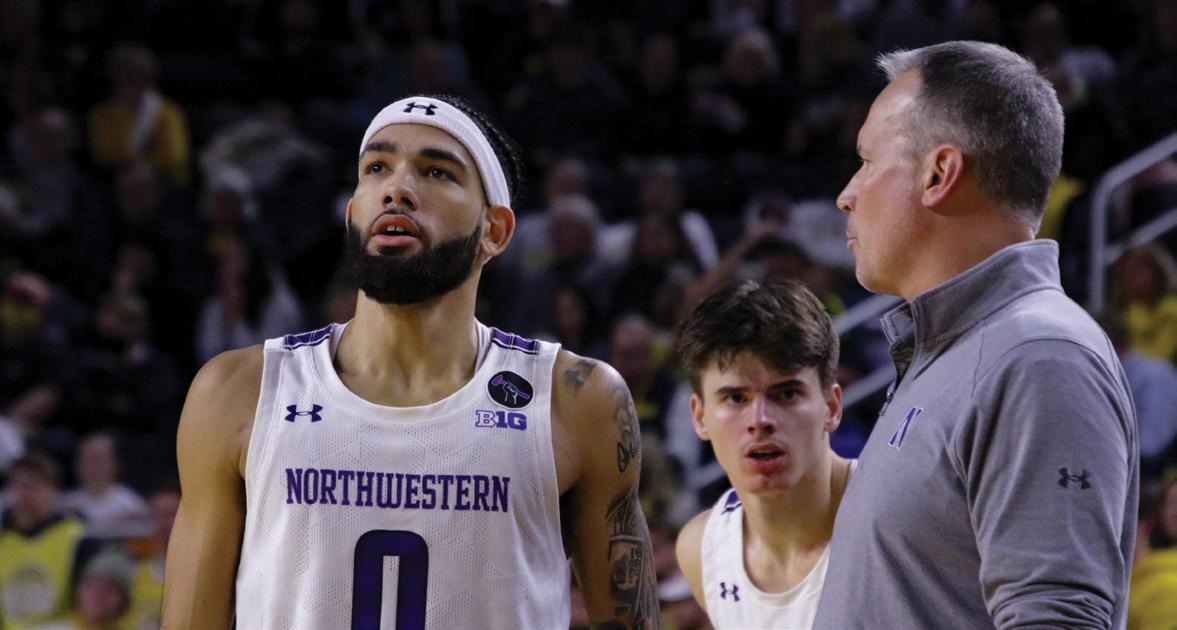
That game was scrapped the day prior, with the Wildcats citing “COVID-19 health and safety protocols” within the program as the
reason for the postponement. NU only had six of 12 players available, according to a report from Stadium’s Jeff Goodman. As of right now, NU and Iowa are actively working with the Big Ten to get the game rescheduled.
Now, it appears NU’s weekend bout with Wisconsin may be in jeopardy.
When speaking to reporters following his team’s Tuesday win over Penn State, Badgers coach Greg Gard
showed little optimism surrounding the two teams meeting Saturday.
“We don’t think it’s going to happen,” Gard said. “I learned about it (Tuesday) morning and told our staff and our operations guy that I wanted to focus on our game and let our administration work with the Big Ten office. We’ll learn more in the next 24 hours, but our focus was all about tonight. Whatever happens next will happen.”
This brings us to the present — and the certainty of Saturday’s game is still in limbo. Another postponement or cancellation would push the Cats’ return to the court to Jan. 24 against Nebraska.
As for the immediate advantages, for a squad that already boasts a limited eight-man rotation, a brief and unexpected respite from the gauntlet of Big Ten basketball is a benefit.
The nearly week-and-a-half-long break lets the group catch its breath — in particular backcourt cogs in redshirt senior guard Chase Audige and senior guard Boo Buie. The duo each account for over 80% of NU’s minutes played this season and are the squad’s only two players averaging over 10 points per game.
The reprieve also allows coach Chris Collins and his staff to take stock of the team’s current direction, coming on the heels of back-to-back defeats.
One primary focus could concern opponents’ recent success from three-point land against the Cats. Of NU’s five January conference games thus far, opponents are shooting a combined 43.6% from beyond the arc. In that stretch, only Illinois managed to hit under 30% of its threepoint attempts.
Over the Cats’ past three games, Indiana, Rutgers and Michigan in particular have all troubled Collins’ bunch from distance, hitting at least nine triples at a clip of 45.5% or better.
Prolific individual performances from opposing guards may also provide some pause. Guard Cam Spencer, who buried the game-winner in the Scarlet Knights’ victory over NU last week, nailed 6-of-7 three-point attempts; Hoosier guard Jalen HoodSchifino, for all his costly turnovers, went scorched earth hitting 5-of-7 triples. Meanwhile, Wolverines guard Jett Howard canned 4-of-6 attempts from deep last Sunday.
The Cats’ defense remains a top20 unit nationally, notably holding opponents to 41.5% on two-point shots. Still, the recent defensive struggles on the perimeter have mired a critical early stretch of the season.
Oh, and for those ever-looming March Madness questions — the
potential cancellation of matchups against Iowa and Wisconsin could prove consequential on Selection Sunday, when the NCAA bracket is revealed.
As of mid-January, NU is a bubble team operating on the thinnest of margins. If the clashes with the Hawkeyes — designated a Quad 1 meeting — and the Badgers — designated a Quad 2 game — are scratched from the schedule, the Cats lose two potential resume-boosters. This isn’t to say either of those games were guaranteed victories, but the wiggle room in the selection committee’s eyes — should NU’s form dip later in the season — shrinks if those games aren’t played.
An easy solution to this problem is to continue winning. As the victories mount up, doubts of a March Madness dream are quelled. But recent history aside, it’s naive to believe that, in a conference which cannibalizes itself as much as the Big Ten, Collins and the Cats can just waltz into their second NCAA Tournament appearance.
Ultimately, NU, as Collins would say, has a lot of opportunities left and the COVID-19 pause provides an unique opportunity to regroup and rebound after a pair of tough losses.
alexcervantes2024@u.northwestern.edu
WOMEN’S BASKETBALLIn its quest to collect its first conference win and bounce back from a five-game losing streak, Northwestern (6-11, 0-7 Big Ten) failed to capitalize on an impressive first-half run and fell to Purdue (12-5, 3-4 Big Ten) 65-54 Saturday.
Though they swept the Boilermakers in their two matchups last season, the Wildcats were not able to replicate their past success.
Turnovers played a large role in Saturday’s game: NU turned the ball over 25 times — the most in any of their conference games this season — including 14 turnovers in the first 14 minutes of the game.
“They just did a really good job of keeping us off balance,” coach Joe McKeown said. “We couldn’t push the ball. Again, you can’t turn it over like that.”
Five different Cats had three or more turnovers, mainly caused by Purdue’s aggressive full-court press defense that bothered NU ball handlers all afternoon. As a result, the Boilermakers were able to score 19 of their 65 points off turnovers.
Despite this high number, the Cats were never too far behind on the scoreboard due to their strong defensive performance and on-court adjustments.
“People were open, but we just didn’t execute with our passes. We were a little bit sloppy on that,” graduate student guard Sydney Wood said. “We had the right scheme. I think the coaches put us in a good position to break the press.”
One of these changes involved switching to a small ball lineup with one big on the court instead of two. NU’s largest deficit of the game came in the second quarter after being down 30-16. Looking to counter Purdue’s high-pressured defense, McKeown inserted a lineup with four guards and one forward.
The switch yielded immediate results as the Cats went on a 14-0 run to tie the game up at 30. NU scored three straight 3-pointers, including two from sophomore forward Caileigh Walsh.
“We were struggling in the second quarter, and we needed some pressure,” said McKeown. “We needed to create some turnovers and try to get some easy baskets. We were looking for maybe a quicker lineup on the court.”
However, this run wasn’t enough as the Cats entered the fourth quarter down six and weren’t able to mount another string of scores.
NU was led by senior guard Kaylah Rainey, who scored a career-high 14 points to go along with five assists and five steals. Rainey, who has played behind star guard Veronica Burton for the past three years, went 3-for-3 from behind the arc after going 0-for-3 last game against Iowa.
“I was feeling very confident,” Rainey said. “My teammates trust me to make that shot. So I was open, and I’m glad I was hitting it today because I know I wasn’t hitting it at Iowa City.”
Wood added 10 points and nine rebounds while Walsh had 10 points and five rebounds of her own. On the other side, senior guard Abbey Ellis put up a game-high 24 points, including three 3-pointers.
NU is set to face undefeated No. 3 Ohio State on Thursday. NU fell 81-48 to the Buckeyes back in December.
The Cats are now 0-7 in conference play, the team’s worst start in more than a decade. With 11 Big Ten games left in the season, McKeown says he is still hopeful about the rest of the schedule.
“It’s a long season and there’s two halves to it. We’ve been really good over the last four years in February,” McKeown said. “So that’s our goal: to use these games as learning experience with a lot of different lineups and young players. We’re asking a lot of our team right now, but we’ve proven we can do it.”
BASKETBALLAfter Northwestern’s loss in heartbreaking fashion to Rutgers last week, one can only wonder what the final result would have been if the Wildcats didn’t get off to such a lackluster offensive start in the first half. More importantly, though, it shined a light on the impact players outside the top scorers, like senior guard Boo Buie and redshirt guard Chase Audige, have on NU’s overall success.
This was the case again in the Cats’ trip to Ann Arbor on Sunday to face Michigan, as nothing seemed to go in their favor early on. While NU was cold out of the gate from the field, the Wolverines were on fire, resulting in a lead as high as 12 five minutes into the contest. This run came in the midst of junior seven-foot center Matthew Nicholson picking up his second foul around the 15-minute mark, forcing him to the bench for the rest of the first half and making it more difficult for Cats to defend Michigan’s leading scorer, sevenfooter Hunter Dickinson.
Even with these setbacks, Cats on offense helped NU chip away at the Wolverines’ lead, resulting in their own lead by the end of the first half. Yet, the Cats couldn’t continue their upward trend in the second half while Michigan could, dropping the contest 85-78.
“We put ourselves in a position on the road to get one, which isn’t easy,” coach Chris Collins said. “There’s a lot of things that we can get better at, but you know, sometimes the other team just plays a little bit better than you do.”
Much of NU’s struggles in the first half originated from miscommunication on defense, and sloppy play overall.
Of course, Michigan’s playmaking advantage of cross-court passes and unique vision meshed with their height opened up doors for them shootingwise. This meant 7’ 1” Dickinson or 6’ 8” Jett Howard could fire passes from one corner to another, and find teammates like guard Dug McDaniel, who had 10 points in the first half, for an open shot. Although the Cats have continually proven to be a good close-out team
throughout the season, the Wolverines gave NU fits early on.
“We got to recommit ourselves to playing better defense,” Collins said. “It’s hard during the season, because there’s so many games and such a short window everybody’s playing two or three games a week, and so your practice time becomes more limited.”
In addition to their slow start, NU struggled to take care of the rock. The Cats turned the ball over five times in the first 20 minutes, four coming from Buie. Turnovers are always problematic, but this is even more critical when it comes from the lead guard, floor general and team leader in assists.
NU was able to clean up these hiccups midway through the first half, though, not turning the ball over for nearly the last 11 minutes, and multiple players stepping up. This included senior forward Robbie Beran, and sophomore guards Julian Roper II and Brooks Barnhizer.
With Audige and Buie knocking down only four out of 13 shots, junior guard Ty Berry’s zero points and Nicholson’s absence, the trio carried the load. After Buie’s two free throws that pushed Michigan’s lead down to 10 points nearing the 10-minute mark, Beran and Barnhizer combined for the Cats’ next nine points. And with the help of Audige’s two threes and a Roper II stepback, Beran’s next two buckets gave them the lead. The senior had 12 of his 16 points in the first half.
“I’m just proud of our energy and toughness,” Collins said. “For us to then get the lead at the half, I think it
showed a lot about who our group is, and who we’ve been all year.
After their comeback performance, the Cats jogged into their locker room with a two-point lead. With the absence of production from the majority of NU’s rotation, it was easy to believe that if that group finds its groove in the second half, the game is the purple and white’s to lose.
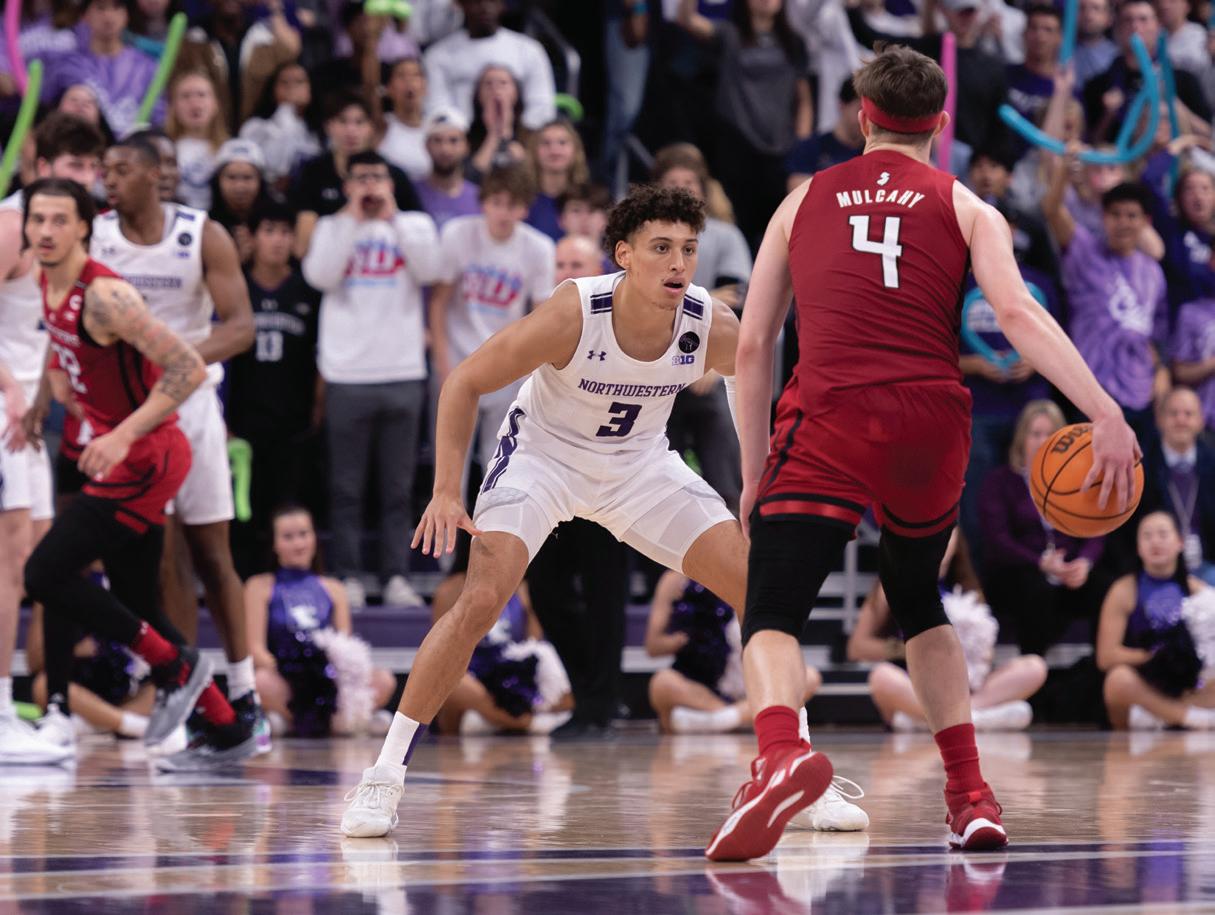
However, with both squads going blow-for-blow for the first 10 minutes of the second half, where neither team’s lead extended past four points, the Cats’ offense blew a fuse and wasn’t able to recover for the rest of the contest. This included a 10-0 run for the Wolverines down the stretch — a near nail in the coffin for NU. The only points the Cats could scrummage up were layups or free throws — no midrange jumpers or three pointers.
Against both Illinois and Rutgers, NU’s ability to kick their offense into high gear late into the contest proved to be a secret weapon and problematic for defenses. However, without it against Michigan, a group that was hot from the field at the time as well, and no early lead like they had against No. 15 Indiana, the Cats were doomed. Hopefully, with conference play ongoing, this won’t be a reoccurring issue.
“We got a little bit worn down in the second half,” Collins said. “Michigan made more plays than us, they made more shots, and they did the things that were worthy of winning today.”