How to make memories, not mugshots, over spring break
Fla., to the deep fjords of Ryfylke, Norway, students at the University of Mississippi are scattering far beyond the Magnolia State. Some are traveling to college classics like Charleston, S.C., or West Palm Beach, Fla. Others are returning home or staying in Oxford.
For senior business major Sarah Stockett, the decision to travel across the border did not come with certainty.
At last, it is that special time of year. No, not midterms — spring break. From the white sands of Destin,
Some are going farther, including one group traveling to Cancún, Mexico.

A look inside


TANNEHILL
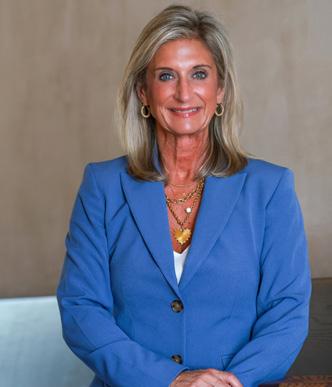
Robyn Tannehill’s dedication to the arts goes beyond her work as mayor.
SEE PAGE 4
SCREAM 7
The classic slasher’s sixth sequel delivers what the franchise always has.
SEE PAGE 5
NIL
The Mississippi House of Representatives passed a bill that would exempt NIL income from taxes.
SEE PAGE 6
CARNEIRO
Ole Miss kicker Lucas
Carneiro details his three kicks in the Sugar Bowl and looks ahead to next season.
SEE PAGE 7
Stockett planned the trip long before headlines began reporting violent unrest in parts of Mexico after the killing of a drug cartel leader on March 1. When travel advisories and viral videos began circulating, the Madison, Miss., native and her friends started to think twice.
“We tried to reconsider the trip,” Stockett said. “Ultimately, we decided that the tourism industry was a big, important part of Mexico, and there wasn’t too much of a threat for tourists.”
Stockett said they relied on research, news reports and personal connections to make their decision. Friends who lived in or recently visited the area reassured them it was safe.
“It was hard to figure out what to believe because we were seeing lots of fake AI videos about stuff happening in Cancún that was not true,” Stockett said, “It felt like TikTok and everything was exacerbating the situation, when Cancún was, really, very far away from where that unrest was happening.”
New progressive organization protests U.S. strikes
HANNAH IVEY JACK KIRKLAND News Staff Writers
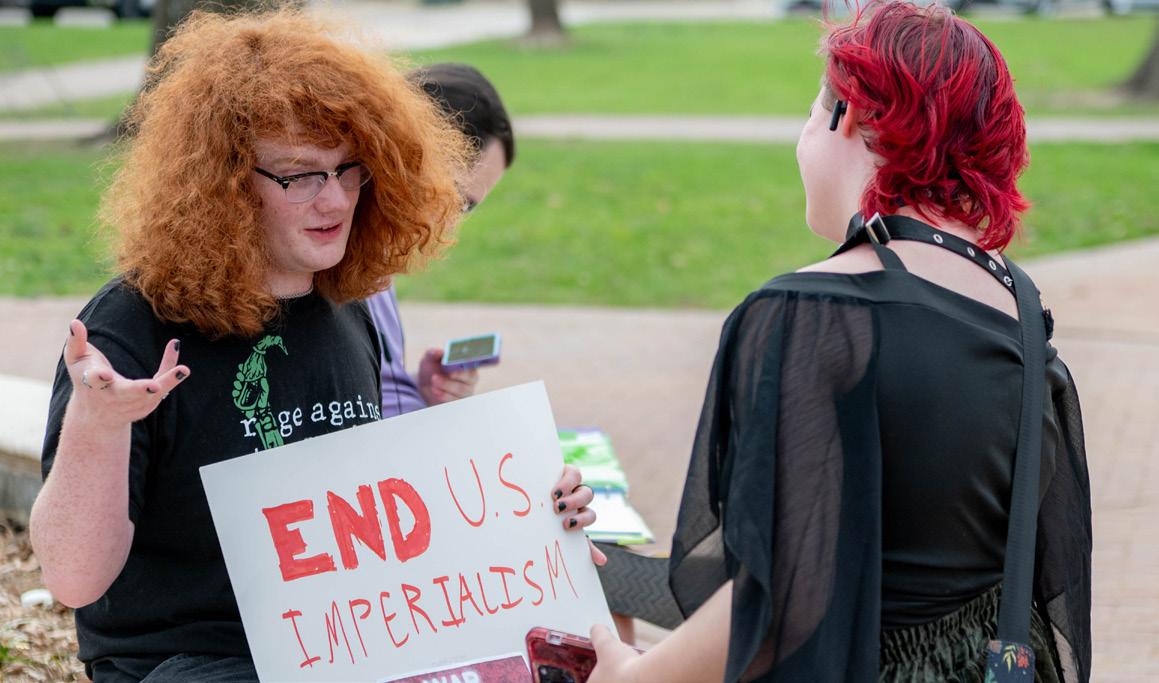
The University of Mississippi’s new chapter of the Students for a Democratic Society (SDS) held its inaugural meeting on Sunday, March 1, in Lamar Hall. The following day, members took to the Circle to protest the United States’ recent missile strikes on Iran.
The group’s first sponsored event was a sit-in protest under the slogan “No War in Iran” from noon to 1 p.m. Approximately 15 people sat around the flagpole
in the center of the Circle. Members disapproved of recent U.S. involvement in the Middle East. Six American servicemen have died since the U.S. and Israel coordinated missile strikes on Iran. The protest was held in collaboration with the national SDS organization, which held similar events across the country on March 2. The sit-in-style protest
Unregistered and unaware: Why most Ole Miss students will not show up
HAILEY AUSTIN News Contributor
The Mississippi primary election on Tuesday, March 10, will determine which candidates from each political party appear on the midterm ballot for U.S. House and Senate seats. Among those candidates is Cliff Johnson, a clinical professor of law instruction at the University of Mississippi School of Law, who is running as a Democrat for Mississippi’s 1st Congressional District.
Even with a local professor in the race, many UM students are unaware of the upcoming election. Between a lack of information and registration constraints, many are prepared to miss voting in the primary election altogether.
Student voters who are registered in Lafayette County, such as Will Grem, a freshman psychology major from Oxford, still feel uninformed
about the upcoming election.
“It’s not that I don’t want to do research or don’t want to get out,” Grem said. “It’s mainly because I am just too busy to know when it is actually happening.”
Lauren McKay, a junior dietetics and nutrition major from Wiggins, Miss., said that she did not realize there was an upcoming election but is not registered in Lafayette County, anyway.
“I feel like I don’t really pay attention to state news,” McKay said. “I’m not registered in Lafayette County. I am still registered in my hometown.”
A fight for turnout
With the primary scheduled for the Tuesday of the university’s spring break, many students will be away from Oxford when the election takes place. That timing compounds the issue of traditionally low turnout for primary elections, according to Emily Ommundsen, an assistant professor of political science at
the University of Mississippi.
“In midterm years, turnout is lower than in presidential years. And then, across both of those, turnout in primaries is lower than in general elections,” Ommundsen said. “This year, we are in a midterm year and a primary, so we can expect turnout to be quite low compared to those other styles.”
By adding spring break to the mix, student participation becomes even less likely. Students who are registered in Lafayette County but are traveling for spring break had to request an absentee ballot well in advance if they plan to vote. Mississippi allows absentee voting in limited circumstances.
“It is possible as a college student to get an absentee ballot, but it’s hard, and it requires students to do some advanced planning,” Ommundsen said.
Jeff Busby, the Lafayette
MARY EVANS
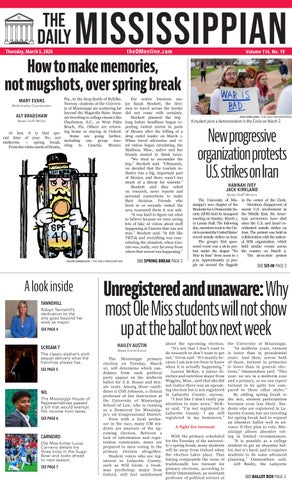
OLIVIA CANGELOSI / THE DAILY MISSISSIPPIAN
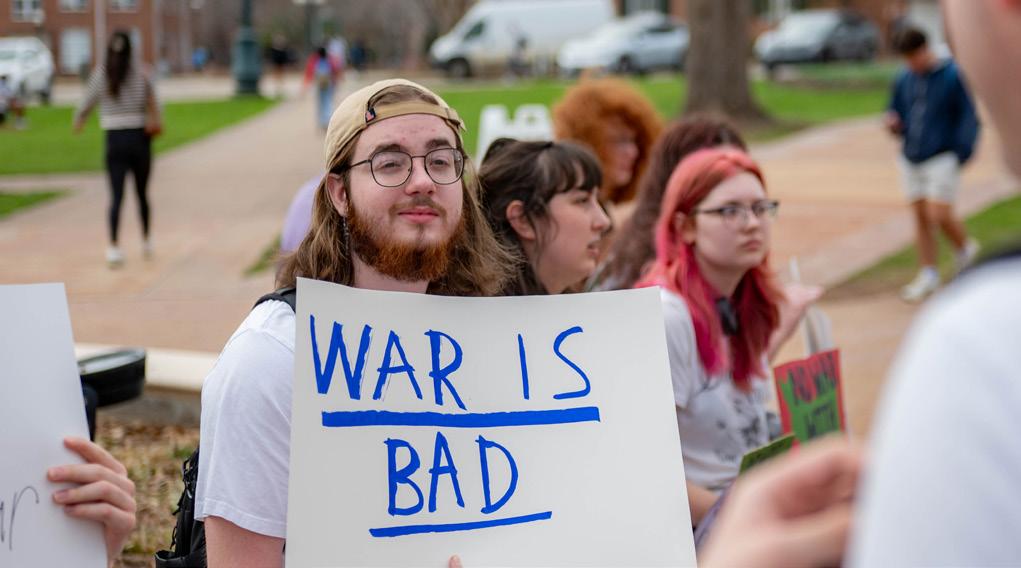
A student joins a demonstration in the Circle on March 2.
JACK KIRKLAND / THE DAILY MISSISSIPPIAN
ALY BRADSHAW News Staff Writer
SPRING BREAK
continued from page 1
Stockett is less concerned about the destination and more worried about the journey along the way.
“I think my biggest concern would be that a new situation would arise or something would change, like an airport would be shut down or a shelter-in-place would happen,” Stockett said. “Right now, I’m not too worried.”
While students are weighing the risks, William Magee Center program manager Alysia Lajune said spring break hazards are common. Substance misuse tops the list of dangers.
“You’re probably on some special vacation, and you want to party and have a good time, so sometimes partying is a little bit amplified on spring break,” Lajune said.
That amplification can come with consequences.
“There’s always a risk of alcohol poisoning, overdose. … Even for those that don’t overuse, just being in an inebriated state can
continued from page 1
was chosen due to fears that the organization may come off as too disruptive to campus life. Members are considering more active forms of protest, such as marching and chanting, but they are reluctant to pursue them.
“We consider maybe marching around campus chanting, but we wouldn’t cause any riots or anything,” Mia Kienberger, a freshman majoring in computer science who attended the protest, said.
Gabriel Navarro is a junior creative writing and French double major from Amory, Miss. He’s a member of SDS and participated in the protest. Navarro voiced goals of the sit-in and his opinion on the organization.
“We don’t support … what the (Trump) administration is doing,” Navarro said. “We don’t support our foreign policy with Iran — what we’re protesting right now. We don’t support very conservative, hyper-capitalist systems.”
The event organizers came prepared with custom posters and encouraged students to create their own boards and slogans. The posters featured different messages showcasing the group’s opposition to U.S. military strikes on Iran on Feb. 28.
Some were simple, direct phrases like “No War” and “War is Bad.” Others were more detailed. One sign read, “If the bombs feel far away… press your ear to the ground … the Earth & its people cry for justice!”
The greater national New Students for a Democratic Society organization was founded in 2006 following the U.S. invasions of Iraq and Afghanistan. The organization is a progressive, national multi-issue movement with more than 40 chapters across the U.S. Their slogan “Join the fight! Dare to struggle, dare to win” invites students to join protests against U.S. wars and intervention, racism, homophobia, transphobia, police brutality and other societal issues.
Kienberger shared some of the organization’s goals and what she hoped to achieve during the inaugural meeting on March 1.
“We want to have a group of people on campus come together and fight against (President Donald) Trump’s agen-
obviously put you at risk for being taken advantage of,” Lajune said.
Students traveling to popular beach destinations face risks.
“You may be more at risk for being assaulted, robbed, just a number of things, especially if you’re going to areas where people expect a flock of college students to start coming in,” Lajune said. “You may have some people that are preying on students that are away from home, away from parents, who might be in a vulnerable state because of intoxication.”
During spring break, students may be more inclined to participate in behavior they would otherwise reconsider. Lajune calls this the “memory-making mindset.”
“It’s this, ‘I wanna make a memory. I wanna have fun,’ (mindset),” Lajune said. “‘I may not drink a lot during the school year, but on spring break … I may be a little bit more open to doing more.”
While students are away from home, local law enforcement sees another concerning pattern during school breaks: unsecured property.
da and be a mobilized effort,” Kienberger said. “We want to have a sense of community on campus.”
Though there is no formal relation between the two groups, the original Students for a Democratic Society was founded in the 1960s as a student activist organization dedicated to opposing the Vietnam War and fighting for participatory democracy, political and social issues. The SDS disbanded in the 1970s following an incident involving a radical faction of the organization called The Weather Underground that resulted in the deaths of three members, according to Smithsonian magazine.
Lauren Fuller, a graduate student pursuing a master’s in biology, helped found the UM SDS chapter. Prior to the first meeting, she tabled in front of the Gertrude C. Ford Ole Miss Student Union on Feb. 21 to gauge interest.
“I have some friends in the SDS national organization in Louisiana, and they came up here last week to help see if there would be people interested in starting a chapter,” Fuller said. “I think we had over 70 people sign up. A lot of people were in support of what we were saying. We’ve had some hecklers, but I think that’s what you’ll get no matter what. And it was only a couple people. It just feels like it’s a very loud minority.”
Fuller shared what she thinks sets SDS apart from other left-leaning organizations on campus, such as University of Mississippi College Democrats.
“The main difference that I see is that we are more of a fighting opposition,” Fuller said. “SDS at Loyola University of New Orleans was able to keep Turning Point USA from getting chartered at their university.
Oxford Police Department Public Information Officer
Breck Jones said the most common safety issues involving students involve leaving belongings and residences vulnerable.
“Students should always lock all of their windows and doors, take any valuables out of plain sight and avoid posting that you’re out of town on social media,” Jones said. “If you can, leave a light on, or have a friend or neighbor check on your apartment while you’re gone.”
Jones said planning ahead is the first step.
“Stay aware of your surroundings, don’t abandon your group and never drive while you’re impaired. Always utilize rideshares or designated drivers,” Jones said.
Like Lajune, Jones also has concerns about alcohol misuse.
“The best thing you can do to stay out of trouble is to look up what the local laws and ordinances are of areas that you’re traveling to, like open container laws and where alcoholic beverages are permitted,” Jones said. “If a situation begins to feel unsafe or out of control, leave and go back
When JD Vance came to Oxford, UM Dems hosted a teach-in. There was no protest. There was no opposition. I think what SDS brings that other student organizations don’t is that we are action-oriented, meaning that we have demands and goals and we’ll escalate them.”
Fuller talked about some of her future plans for this chapter.
“One of our campaigns that we discussed previously with some of the people we met with was an affordable housing campaign,” Fuller said. “That’s a big issue here in Oxford, and I think the goal is to bring that directly to the dean. I know that UM Forward has a petition, and I’m interested in that. I think that we could help bring that directly to the people who need to see it and make demands.”
At the protest, Kienberger hinted at future collaborations with UM College Democrats and UM Forward. Navarro also mentioned a possible No Kings protest, as part of a nationwide wave of demonstrations against President Trump, later this March.
UM College Democrats President Elizabeth Wildman, a junior public policy leadership major from Laurel, Miss., said she is excited about a possible collaboration with SDS.
“When people sit back and expect action from their peers, democracy struggles,” Wildman said. “We are excited to see SDS decide to stand alongside us and demand a better future. The movement will benefit from their support.”
to your hotel room or condo.”
In an effort to keep Oxonians and UM students safe, the William Magee Center, the Department of Campus Recreation, the UM Nutrition Clinic and University Police Department hosted a “Safe Spring Break” event on Tuesday, March 3, from 4 to 6 p.m. at the South Campus Recreation Center and Turner Center.
The event promoted student safety ahead of spring break next week and distributed harm-reduction items such as drink-spiking prevention covers, sunscreen, condoms and hydration packs to students.
The event is part of a university-wide initiative to promote student wellness, according to Shannon Richardson, assistant director of wellness education at the Magee Center.
“The inspiration behind ‘Safe Spring Break’ is based on the university’s commitment to student safety, well-being and informed decision-making,” Richardson said. “Spring break often involves travel, celebration and increased independence. While it can be a fun and restorative time, it can also
present increased risks related to alcohol use, sexual health, sun safety and personal safety.”
Adequate hydration and nutrition are also crucial on spring break, according to Melinda Valliant, professor of nutrition and hospitality management and director of the UM Nutrition Clinic.
“We emphasize staying hydrated, which requires that we consume adequate fluids, electrolytes and carbohydrates,” Valliant said. “Think sports drinks, water and pretzels, salted watermelon, et cetera.”
Valliant’s best advice to students is to pay attention to the recommendations of the UM Nutrition Clinic and the other campus wellness organizations. Officials involved in the other Safe Spring Break event hosts echoed the same wish.
“We want all Ole Miss students to have a great time on their spring break but make sure to plan ahead and look out for each other,” Jones said. “We want everyone to have fun, but be safe and make it back to Oxford happy and healthy.”

County circuit clerk, confirmed this notion. Although absentee voting for the upcoming primary election has been open for nearly 40 days, his office reports that only approximately 140 people out of 38,000 registered voters have cast absentee ballots so far, indicating a light turnout for this primary. Outside of presidential elections, Busby estimated that only 5% of the university student population votes in statewide and local elections.
“The only one that the students really focus on, which is kind of sad, but it is the truth, is the presidential election,” Busby said.
Busby hopes that his office will eventually close the gap and reach young voters through its social media efforts.
“A lot of people, unless you’re really tuned into the news, don’t even know there are midterms going on,” Busby said. “That’s what we fight as a clerk’s office. We want to get the word out.”
Similarly, Ommundsen highlighted the lack of campaign exposure as a cause for the difference in turnout for presidential and primary elections. Whereas presidential election campaigns feel impossible to ignore, statewide elections do not garner the same attention.
“There are more advertise -
ments that people are exposed to on TV, social media, radio, basically everywhere,” Ommundsen said. “Campaigns are just not as robust for the lower level of elections.”
Registration barriers
In addition to a lack of media focus on primaries, structural barriers make it difficult for college students to participate in Mississippi’s local elections.
Nevaeh Dominguez, a senior multi-disciplinary studies major from Palm Beach, Fla., is one of many students not planning to vote in the primary.
“I think it’s a mix of not knowing and not being registered here,” Dominguez said. “I always go back to Florida when I’m not in school, so I haven’t changed my registration.”
According to data provided by Deputy Circuit Clerk Chyna Sinervo, there are 2,608 active registered voters between the ages of 18 and 22 in Lafayette County. Over 22,000 students are enrolled at the university’s Oxford location.
Mississippi does not offer online registration and requires voters to be registered at least 30 days before an election.
“Most college students probably couldn’t tell you when that election is,” Ommundsen said. “By the time we start getting close to the election, if you only learned about it a week or so before, you’ve already missed the deadline
Voter-education efforts
Shanika Ward, the co-president of the League of Women Voters of Oxford/ North Mississippi, seeks to improve young voter turnout by running voter education workshops, campus registration drives, candidate forums and voting simulations.
“Election dates vary and can be confusing,” Ward said. “We focus on removing barriers to participation by simplifying complex election information and ensuring students and young voters feel confident, prepared and informed before they enter the voting booth.”
Ward hopes students understand why their participation in primaries matters. She emphasizes students’ ability to create local policy change in areas of funding, education, housing and more.
“Primaries determine who appears on the general election ballot,” Ward said. “If you do not vote, then your voice is missing at the most influential stage of the election process.”
As young voters consistently do not show up to the polls over time, Ommundsen explained, elected officials shift their policies toward the voters who do show up.
“If those elected officials are aware that younger voters aren’t participating at the same rate as older voters, those elected officials are less incentivized to gear

THE DAILY MISSISSIPPIAN EDITORIAL staff
CLAY HALE editor-in-chief dmeditor@gmail.com
RAEGAN SETTLE managing editor dmmanaging@gmail.com
SYDNEY STEPP copy chief thedmcopy@gmail.com
CAMERON LARKIN digital editor dmdigitaleditor@gmail.com
AIDAN PONIATOWSKI news editor thedmnews@gmail.com
DYLAN THOMAS assistant news editor thedmnews@gmail.com
JAYLYNN CONNER arts and culture editor thedmfeatures@gmail.com
JESSICA JOHNSON assistant arts and culture editor thedmfeatures@gmail.com
RUSS EDDINS sports editor thedmsports@gmail.com
NATE DONOHUE assistant sports editor thedmsports@gmail.com
LENORA COLLIER opinion editor thedmopinion@gmail.com

policy goals towards younger voters,” Ommundsen said. “We tend to see policy focus more toward older voters, partly because they have higher turnout rates.”
Busby reinforced the idea that statewide elections mean more for students’ daily lives than do federal elections.
“That voting block could make a big difference and have a huge voice,” Busby said. “In a college town like this, the students could change everything.”
What would it take?
One student who does plan on voting is Mason Johnson, a sophomore public policy leadership major from Laurel, Miss., who stressed that students need to participate in elections if they want a say in the political landscape of the state.
“You really can’t complain or call for action if you’re not taking the steps that you can do as a citizen to make change happen,” Johnson said.
Many students indicate they would be more likely to vote in local elections if there was more information available to them beforehand.
While Grem said that he would vote if elections were “more publicized around town,” McKay just wants to see representatives making more of an effort to get in touch with young voters on social media.
Kamryn Billie, a sophomore social work major from Clinton, Miss., found out about the upcoming election only because she hap -
pened to glance at a Snapchat advertisement telling her to “get out to vote.”
“During these smaller elections, they don’t push for the vote as much,” Billie said. “They feel forgotten.”
To increase young voter turnout, Ommundsen said that Mississippi could look to other states’ more flexible absentee voting and registration processes.
Nevertheless, the easiest fix answers the calls of the students.
“If this were more widely known about,” Ommundsen said, “we would probably see turnout increase.”
Primary election polls will be open from 7 a.m. to 7 p.m. on March 10. For more information about voting processes and where to vote, visit the Lafayette County website.
OLIVIA CANGELOSI photo editor thedmphotos@gmail.com
JOURNEY GLOVER assistant photo editor thedmphotos@gmail.com
MADELYNN LIBERTO design editor thedmdesign@gmail.com
ANNA GRACE LIKES assistant design editor thedmdesign@gmail.com
MARY EVANS multimedia coordinator dailymissmedia@gmail.com
AVERY THOMAS social media manager thedmsocialmedia@gmail.com
CADENCE MANNING assistant social media manager thedmsocialmedia@gmail.com
S. Gale denley student media center
LARZ ROBERTS Director of Student Media
DENNIS MOORE Editorial Director

CLAY HALE / THE DAILY MISSISSIPPIAN
Ballot courtesy: Lafayette County Circuit Clerk
CLAY HALE / THE DAILY MISSISSIPPIAN
Mayor Robyn Tannehill reflects on national award, contributions to the Oxford art scene
LOGAN KENNEDY A&C Staff Writer
Before becoming mayor of Oxford, Robyn Tannehill was the director of tourism for the city and started the first annual Double Decker Arts Festival in 1995. Now as mayor, she has been awarded the Americans for the Arts 2026 Public Leadership in the Arts Award.
Americans for the Arts (AFTA) and the United States Conference of Mayors (USCM) announced the winners in a press release on Jan. 30. Other honorees included Michigan Gov. Gretchen Whitmer and Albuquerque, N.M., Mayor Tim Keller.
The Yoknapatawpha Arts Council, a local organization dedicated to supporting Lafayette County artists and residents, announced Tannehill had won the prestigious national award for local arts leadership in a Facebook post last month.
“From championing the Double Decker Arts Festival to weaving arts and culture into every corner of city planning, Mayor Tannehill has helped make creativity a part of Oxford’s DNA,” the post read. “Her support of spaces like the Powerhouse Community Arts Center and her arts-forward vision continue to strengthenourcity,ourcreativeeconomy and our sense of community.”
Tannehill said she was honored to receive the award.
“Wayne Andrews, who is the director of the Yoknapatawpha Arts Council, called me to tell me that I’d won. I was like, ‘What are
you talking about?’ and he said, ‘Yes, we nominated you,’ and I got it,” Tannehill said in an interview with The Daily Mississippian.
The National Awards for Local Arts Leadership partners with the USCM to honor individuals who consistently advocate for and support arts and culture and/ or arts education in their cities.
“The Yoknapatawpha Arts Council felt Mayor Tannehill was a strong candidate for this award,” Andrews said. “She supported projects such as the Arts Incubator, a collaboration with the (Oxford-Lafayette) Economic Development Foundation and the chamber and arts council to support small creative start-up businesses.”
Andrews sees Tannehill’s ability to encourage others to support the arts, accompanied by her own support for the arts, as one of her biggest strengths.
“What makes Mayor Tannehill stand out for this award is not that she supports the arts or invests in the arts, but that she inspired others to recognize how the arts can ensure we retain that sense of community while growing,” Andrews said.
The reception of the award carries significance to Tannehill and to Oxford residents who support the arts by showing up to events, buying from local artists and celebrating Oxford’s art culture.
“It’s just my name on the award, but it’s not an award just to me,” Tannehill said. “We’ve got so many artists in town that awards
like this really put a spotlight on the artists in our community, and it demonstrates that art is important here, and we value it and see it as economic development.”
From The Powerhouse Community Arts Center — a center for cultural events, performances and showcases of artistic expression — to the Yokna Sculpture Trail that runs through Oxford and public art displays at Lamar Park, Oxford is a community centered around creativity.
Tannehill’s commitment to the arts started long before she was mayor of Oxford. An art and interior design student at University of Mississippi, she graduated in 1992 and later assumed the role of the director of the Oxford Tourism Council.
“When I got the tourism director position, I said, ‘We need to celebrate the three things that brought us to the table, which is music, food and art.’ … So I started Double Decker,” Tannehill said. “From then, I have just kind of figured out ways to incorporate art and culture into whatever planning I’m doing for the city.”
Double Decker has become a hallmark of Oxford creativity, music and fun. Tannehill’s passion for the arts continues in her current role as mayor as she brings art into every aspect of her job that she can. She credits her professional team for helping her carry out the visions and plans she has for Oxford.
“My art major really translates into everything that I do,” Tanne-
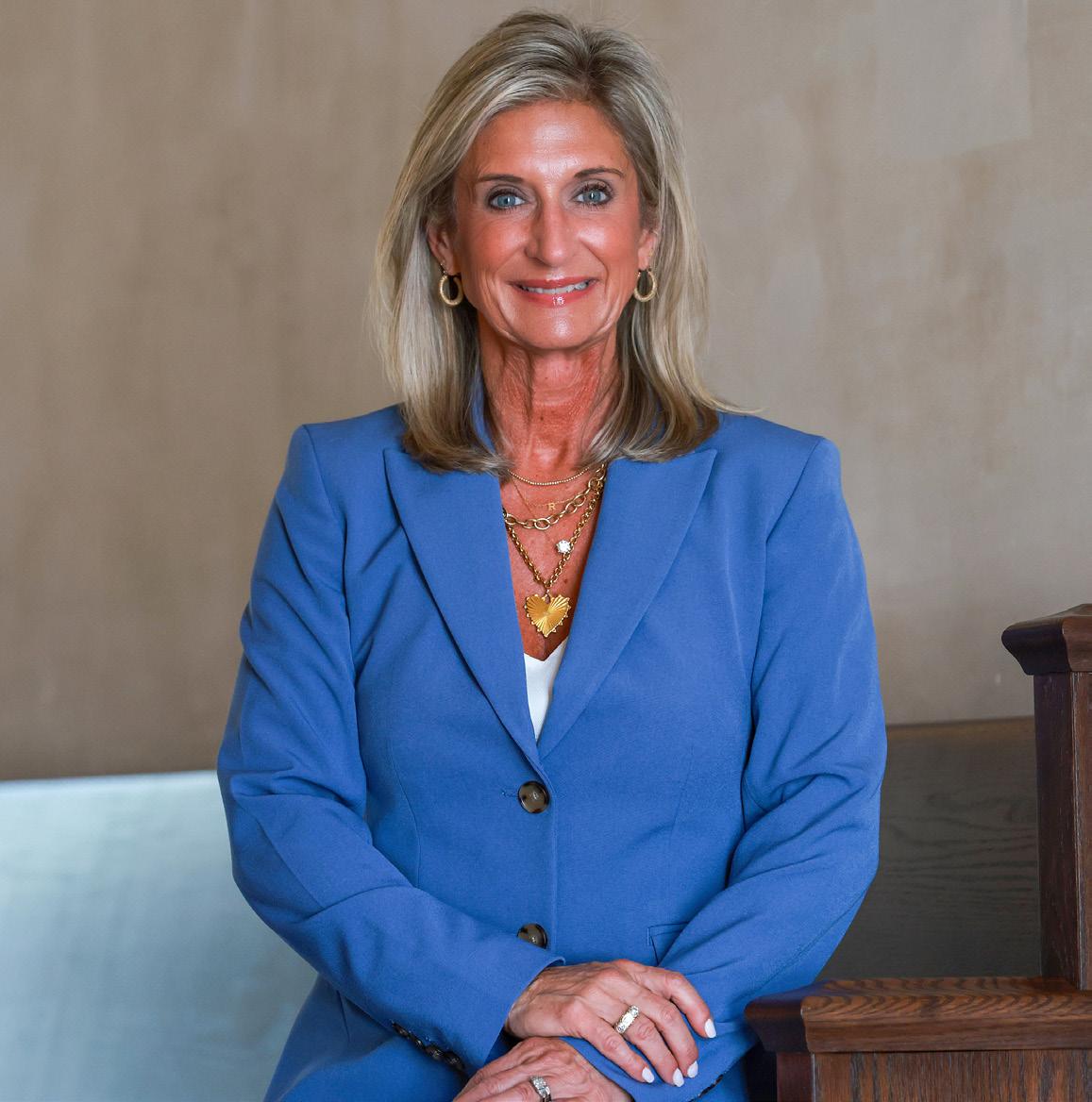
Mayor Robyn Tannehill.
hill said. “I think when we do an arts-focused approach to planning and development, it changes things. There are a lot of people that can map out streets, but we have a staff that is more focused on place-making than just putting a building here and a street there.”
In the years since Tannehill took office, Oxford has built upon a legacy of art and music.
“We’ve adopted a public art program, so we are budgeting every year for a new piece of public art. So, you’ll see murals that have popped
up over the past few years that are a part of that,” Tannehill said. “We really try to embrace public art in any public space where we can get it. We are working with developers to include public art in some of their larger developments now.”


er and Roger L. Jackson as the voice of Ghostface.
“This time, it’s all about nostalgia,” Mindy Meeks-Martin — played by Jasmine Brown — said in “Scream 7.”
The newest addition to the “Scream” franchise lives up to this claim.
Deemed cult classics by fans, the “Scream” movies have long been a staple in the slasher genre. The first, released in 1996, gained popularity as a unique blend of comedy, suspense and horror that has now propagated six additional sequels.
This seventh film includes members of the original cast: Neve Campbell as Sidney Prescott, Courteney Cox as Gale Weathers, Matthew Lillard as Stu Mach -
One notable addition is Isabel May as Tatum Evans.
The plot follows Sidney’s daughter, Tatum, as she faces her first encounter with the latest Ghostfaces.
The franchise is famous for its commentary on movies, especially its own legacy.
From the scenes that break the fourth wall in several of the “Scream” films and even the “Stab” movies within the “Scream” world, the films are acutely aware of themselves. Kevin Williamson, director and screenwriter, therefore chose “Scream 7” to highlight the concept of nostalgia.
“I’ve always thought it would be a wonderful thing to have Kevin Williamson direct,” Campbell said

in an interview with SciFi Now. “He knows these films and these characters better than anybody.” Williamson uses his knowledge of “Scream” to create a fresh narrative and blend of callbacks.

The traditional prologue scene uses Prescott’s childhood home, where the first murders occurred, to set the stage. Further, viewers find out that Tatum will be taking on her mother’s legacy. Finally, the choice of killer is a fitting nod to fandom craze and the maniacal appreciation many have for the “Scream” installments.
Each “Scream” movie has been an apt indicator of the time in which it was made. The films achieve this through fashion, casting choices and trends. “Scream 7” chooses to timestamp itself with deepfake AI in order to bring back the nostalgic character Stu Macher, who hasn’t been in a “Scream” movie since the original.
Unfortunately, there were a few unexplained inconsistencies that distract from the plot. For instance, when a camera angle makes it seem like one of the characters is stabbed several times in the torso and once in the head, this character is shown to still be alive several hours later.
Even still, the film is an improvement from the last two in the series and is projected to earn more at the box office than either respective movie.
At the Malco Oxford Commons Cinema Grill, viewers clapped first for Gale’s arrival and then for Evans’ memorable altercation with Ghostface. The sentiment seemed positive, with approving murmurings about the film’s watchability.
Overall, “Scream 7” seems to be an enthusiastic love letter to the film and its legacy, cementing its own place in the franchise.
ROSE HARMON
A&C Staff Writer
LENORA COLLIER / THE DAILY MISSISSIPPIAN
Ghostface in Paramount Pictures and Spyglass Media Group’s “Scream 7”
PHOTO COURTESY: PARAMOUNT PICTURES
Mississippi bill would exempt NIL from income tax
WILSON ENGERISER
Sports
Staff Writer
The Mississippi House of Representatives passed a bill that would remove income tax from any name, image and likeness (NIL) deals for athletes at colleges and universities in the state of Mississippi on Feb. 25. House Bill 4014 was sent to the Senate on Feb. 26.
The Mississippi state government is attempting to make the state more attractive for college athletes, since athletes’ NIL earnings would not be taxed by their state of residency nor by the state of Mississippi, where their income is made.
This marks a move toward a beneficial relationship between large public universities — namely the University of Missis-
sippi and Mississippi State University — and state government.
However, this is not an uncommon idea. The Arkansas state government recently passed the Arkansas Student Athlete Publicity Rights Act to exempt NIL deals from state tax.
This Arkansas bill also aims to exempt NIL deals from the Freedom of Information Acts, which means that athletes’ NIL deals cannot be made public information.
State Rep. Trey Lamar, R-Senatobia, presented the bill to the Mississippi Legislature, stressing how necessary the bill is for Mississippi schools to remain at the forefront of college athletics.
“There’s other states doing it,” Lamar said. “I believe Mississippi needs to remain
competitive in that arena.”
If House Bill 4014 is passed, half of the SEC schools will have either tax exemptions on NIL earnings or no income tax (Ole Miss, Mississippi State, Florida, Arkansas, Texas, Texas A&M, Tennessee and Vanderbilt), providing an advantage over schools from other states that have not followed suit. Recruits will be more willing to play there, since they will retain a larger portion of their NIL money.
While the bill was passed in the Mississippi House 76 to 32, there were still strong dissenters. Rep. Dan Eubanks, R-Walls, supports equal and fair treatment, but he does not support making exceptions for athletes.
“Why would they not be taxed like any other employee?” Eubanks said. “Is the only

incentive for us doing this because other states are doing it? I just don’t know why they’re being treated different than anyone else in the world.”
The Mississippi Senate’s decision to pass or reject the House
How will NIL affect U.S. Olympic teams?
WILSON ENGERISER
Sports
Staff Writer
The Milano Cortina 2026 Winter Olympic and Paralympic Games were yet another great success for the United States on an international stage. The U.S. finished second in medal count (33) and second in gold medals (12), trailing Norway in both categories. However, the recent prevalence of NIL in college athletics and the uneven dispersal of money among sports raises questions of how long the U.S. will be able to continue its dominance.
The majority of NIL deals — and the NIL deals that are most lucrative — are typically found in the most popular American sports, namely football, basketball and, on a smaller scale, baseball and softball.
According to estimates from the NCAA, 75% of NIL allotment goes to football, 15% goes to basketball and 10% goes to all other sports. This comes out to an average of about $4,500 per year for every athlete outside of football and basketball.
Is it possible that NIL funding is drawing more athletes to high-revenue sports and simultaneously causing a shortage of athletes in non-revenue sports,
which are part of the Olympics?
Approximately 75% of Olympic athletes who competed for Team USA in the 2024 Paris Summer Olympics also participated in college sports, according to the NCAA.
One of the most gifted athletes of all time, Olympic swimmer Michael Phelps, spoke about how NIL could be affecting the Olympics in an article from The Edvocate.
“We’re already struggling to attract and retain talented athletes,” Phelps said. “If the best young athletes are now lured by lucrative endorsement deals in non-Olympic sports, the future of American Olympic success is in jeopardy.”
Brennan Berg, an associate professor and director of the sport and recreation program at the University of Mississippi, echoed that NIL could be creating a talent vacuum in Olympic sports.
“That (money) could have influenced someone even before they became a high-level athlete, when they were just starting sports … (to) associate more prestige with one sport, and say, ‘Well, I want to go do that because it’ll get me more attention and higher status in my community,’” Berg said.
South Carolina wide receiver
Nyck Harbor competed as a sprinter in 2024 and missed spring football but focused on football in 2025 and did not compete in track and field.
Harbor finished fifth at the SEC Indoor Track and Field championship in 2024. In 2025, he had 30 receptions for 618 yards.
However, Berg believes that all NIL money is still worthwhile.
“I think NIL that’s available to all athletes is beneficial, even if for some of the Olympic sports athletes it’s just a few thousand extra dollars,” Berg said. “That can be a huge relief to someone that has a really constrained budget.”
A possible solution for this disparity in earning across sports would be compensation of Olympic athletes by the U.S. government. Many countries pay their athletes for medals won or at least provide resources for training and living.
For instance, the Italian National Olympic Committee promised to pay the equivalent of approximately $213,000 to Italian athletes who win gold medals. In the United Kingdom, Olympic athletes can apply for Athlete Performance Awards, which, according to UK Sport, are “offered … as a contribution towards (an
SUDOKU©

Complete the grid so that every row, column and 3x3 box contains the numbers 1 through 9 with no repeats.

athlete’s) living and training costs.”
However, Berg does not anticipate any U.S. government funding for athletes, at least for the foreseeable future.
“IthinkitwouldhappeniftheU.S. as a country started doing poorly on the international stage,” Berg said.

ACROSS
1- Bric-a-___; 5- Crew needs; 9- Himalayan legend; 13- Currency unit of France and Germany, among others; 14- Appalling; 15- Util. bill; 16- Pulitzer-winning biographer Leon; 17- Animal trap; 18- Trig ratio; 19- Magnetic induction units; 21- Charlotte of “The Facts of Life”; 22- Pigsty; 23- Some Ivy Leaguers; 25- Annika Sorenstam’s org.; 27- Implies; 31- Pines; 35- As to; 36- Record with a VCR; 38- Last Greek letter; 39URL ending; 40- Thin glutinous mud; 42- Grab a bite; 43- I ___ vacation!; 46- Novelist Bagnold; 47- The most heavily populated continent on Earth; 48- She’s a Dahl; 50- Source of caviar; 52- Fill up; 54- Operation memento; 55- Large bag; 58- Timecard abbr.; 60- Comfortable;

64- Land map; 65- Cove; 67- And others, briefly; 68- Bushy hairdo; 69- _____ and desist; 70- Garment of ancient Rome; 71- Diamond protection; 72- Fast fliers; 73- Sign of things to come;
DOWN
1- Borscht ingredient; 2- Kind of awakening; 3- NASA launch vehicle; 4- School; 5- Have title to; 6- At a distance; 7Rustic; 8- Drowsy; 9- Polite agreement; 10- “Night” author Wiesel; 11- Change for a fifty; 12- Frozen treats; 14- Aids; 20- Stout relative; 24- No longer fresh; 26- Prizm maker; 27- City in Tuscany;

The leg behind the most important win in Ole Miss history
EVAN HUGGINS
Sports Staff Writer
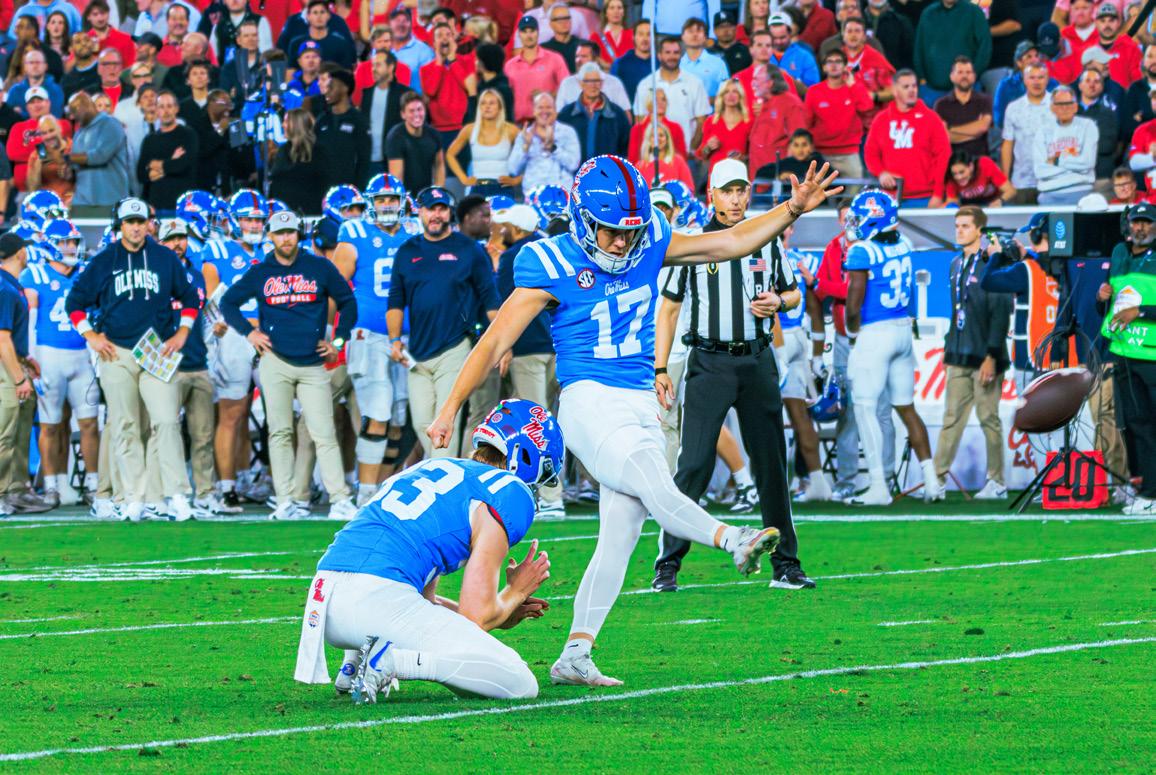
Ole Miss Football’s Lucas Carneiro kicked the 47-yard field goal that sealed the Rebels’ victory over No. 3 Georgia in the 2026 Sugar Bowl — one of the most important field goals in program history.
Despite the significance of the kick in the College Football Playoff quarterfinals, he approached this field goal attempt the same way he did the two kicks he made earlier in the game. The first, a 55-yarder, broke the existing record for longest kick in Sugar Bowl history; with his second
made kick, a 56-yarder, Carneiro broke his own record.
“Every kick, to me, is the same,” Carneiro said.
“I go out there and tell myself (I’ve) got this. Each kick just built up more confidence for me to go out there and make the next one.”
Carneiro’s successful kick was the final touch on a revenge game for the Rebels. Their only loss of the season came against then-No. 9 Georgia in October. Though avenging this loss was certainly a motivating factor, Carneiro said the Rebels did not let their emotions control them.
“Obviously, everybody
wanted their revenge,” Carneiro said. “I think if we had gotten caught up in the idea of revenge, it would not have gone the way we wanted. We took it as just another game. Our job is to go 1-0, and this is what is in front of us and what we have to handle.”
Carneiro also spoke about some of his favorite plays by his teammates — plays that he believes were just as important as his game-winning kick.
“I thought it was pretty cool when Trinidad (Chambliss) ran around and found Kewan (Lacy), and Kewan (Lacy) got the first down,” Carneiro said.
On that play, quarterback Chambliss ran in a wide arc around the backfield to evade Bulldog pass-rushers. He looped from one side of the field to the other and managed to find running back Lacy for a crucial conversion on 3rd-and-7. The Rebels were trailing 24-19 at the time.
Carneiro also mentioned Chambliss’ deep ball to wide receiver De’Zhaun Stribling, which set up the kicker’s game-winner.
“The last throw to set up the field goal I had was obviously awesome. The whole stadium erupted, and it was awesome to see,” Carneiro said.
On this play, the Rebels faced a third-

and-5 in their own territory. The game was tied at 34 with 32 seconds to play. Rather than play it safe and go for a first down, Chambliss threw a long pass to Stribling for a 40-yard gain.
Although Ole Miss’ season ended in the Fiesta Bowl with their 31-27 loss to No. 10 Miami, Carneiro still looks back on the 202526 season with fondness.
“This whole season was surreal. I sat down and thought about how it was a historic run that everyone is going to remember. To be a part of that just means even more,” Carneiro said.
Now, the Rebels are looking ahead to next season.
Spring camp is one month away. Carneiro is focused on continuing to improve.
“For this spring, it is about flipping the page onto this season and focusing on getting better every day in the weight room and on the field,” Carneiro said.

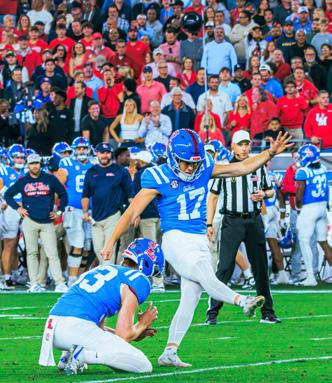
Lucas Carneiro kicks a field goal during the Fiesta Bowl on Jan. 8 in State Farm Stadium.
REESE JOHNSON / THE DAILY MISSISSIPPIAN
Watch our video interview with Lucas Carneiro here.
RESULTS & BENEFITS
Muscle
Stress
Pain
Increased Calorie Burn
Detoxification
Lower Blood Pressure
Anti-Aging & Skin Rejuvenation
Improved Circulation
Weight Loss