MISSISSIPPIAN THE Daily
Thursday,

been postponed to summer 2028.
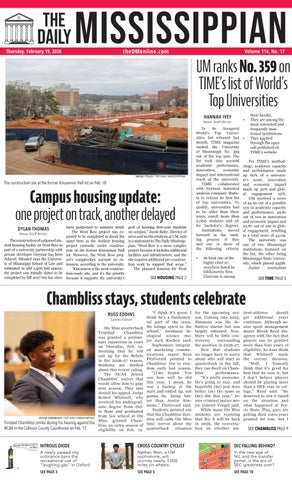
The construction of a planned student housing facility on West Row as part of a university partnership with private developer Greystar has been delayed. Situated near the University of Mississippi School of Law and estimated to add 1,500 bed spaces, the project was initially slated to be completed by fall 2027 but has since
The West Row project was expected to be completed at about the same time as the student housing project currently under construction on the former Kincannon Hall lot. However, the West Row project’s complexities warrant an extension, according to the university.
“Kincannon is the most construction-ready site, and it’s the priority because it supports the university’s
goal of housing first-year students on campus,” Jacob Batte, director of news and media relations at UM, said in a statement to The Daily Mississippian. “West Row is a more complex project because it includes additional facilities and infrastructure, and the site requires additional pre-construction work to support that scope.”
The planned features for West
SEE HOUSING PAGE 2
In its inaugural World’s Top Universities list released last month, TIME magazine ranked the University of Mississippi No. 359 out of the top 500. The list took into account academic performance, innovation, economic impact and international reach of the university.
TIME collaborated with German statistical analysis company Statista to release its first list of top universities. To qualify, universities had to be older than three years, enroll more than 2,000 students and offer bachelor’s degrees. Institutions moved forward in the ranking process if they met one or more of the following criteria:
• At least one of the highly cited researchers listed by bibliometric firm Clarivate is among
their faculty.
• They are among the most renowned and frequently mentioned institutions.
• They applied through the open call published on TIME’s website.
Per TIME’s methodology, academic capacity and performance made up 60% of a university’s score, innovation and economic impact made up 30% and global engagement 10%.
UM received a score of 44.60 out of a possible 100 in academic capacity and performance, 49.81 out of 100 in innovation and economic impact and 23.87 out of 100 in global engagement, resulting in a total score of 44.09.
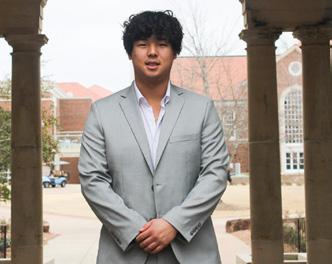
The university was one of two Mississippi institutions featured on the list, the other being Mississippi State University, which placed 445th. Junior journalism
TIME PAGE 5

A newly passed city ordinance bans the recreational use of “laughing gas” in Oxford.
SEE PAGE 3
RUSS EDDINS Sports Editor
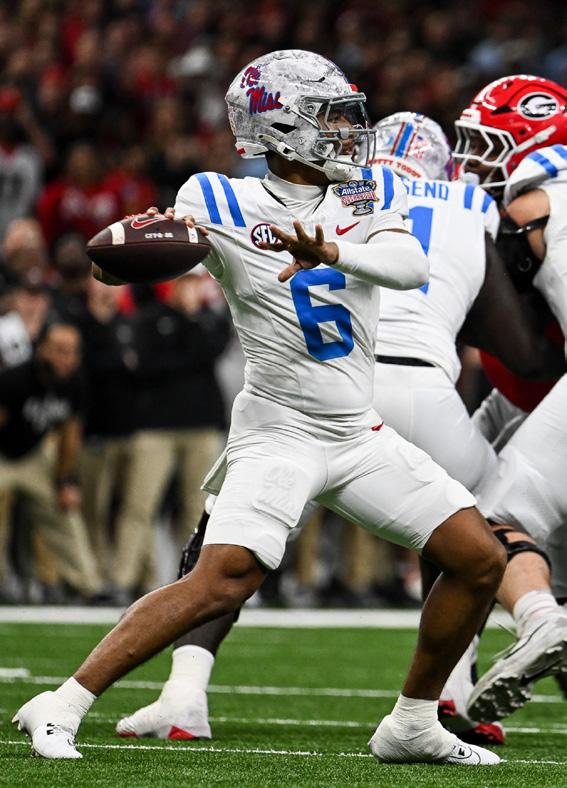
Ole Miss quarterback Trinidad Chambliss was granted a preliminary injunction in court on Thursday, Feb. 12, meaning that he will suit up for the Rebels in the 2026-27 season. Students are thrilled about this recent ruling. The NCAA denied Chambliss’ waiver that would allow him to play next season. They also denied his appeal. Judge Robert Whitwell, who received his undergraduate degree from Delta State and graduated from law school at Ole Miss, granted Chambliss an extra season of eligibility on Feb. 12.
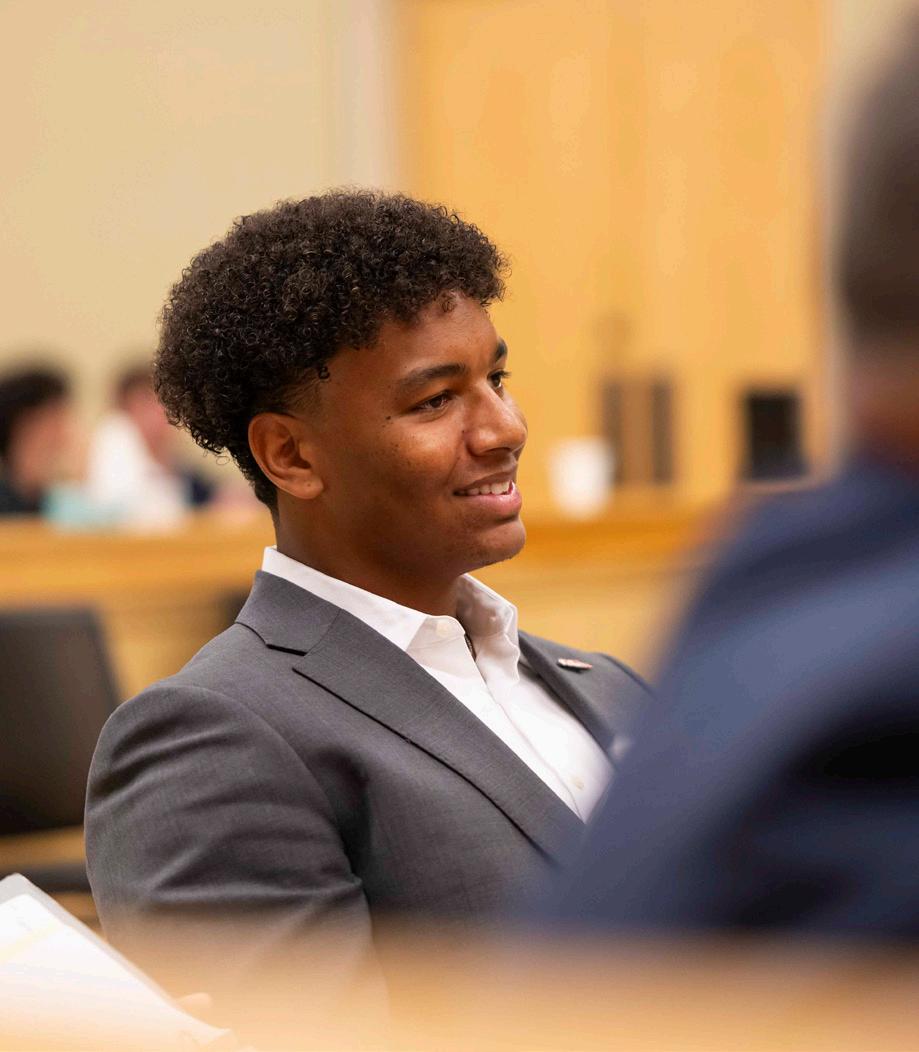
“I think it’s great. I think he’s a fundamental part of the team. He brings spirit to the school,” freshman biological science major Jack Rochon said.
Sophomore integrated marketing communications major Sean FitzGerald pointed to Chambliss’ rise to stardom early last season.
“(I’m) hyped. You saw how well he did this year. I mean, he was a backup at the start and ended up, not gonna lie, being better than Austin Simmons,” FitzGerald said.
Students pointed out that the Chambliss decision will calm Ole Miss fans’ nerves about the quarterback situation
for the upcoming season. Coming into 2025, Simmons was the definitive starter but was largely untested. Now, there will be little controversy surrounding the position in 2026-27.
Now that students no longer have to worry about who will start as quarterback in the fall, they can dwell on Chambliss’ performance.
“It’s pretty awesome. He’s going to stay, and hopefully (he) just does better (or) the same as (he) did this year,” junior criminal justice major Gabriel Voegel said.
While many Ole Miss students are rejoicing that No. 6 will be back in 2026, the conversation on whether stu -
Nathan Won, a UM sophomore, will journey nearly 3,000 miles on wheels.
SEE PAGE 5

dent-athletes should get additional years continues. Although senior sport management major Micah Reed disagrees with the fact that players can be granted more than four years of eligibility, he does think that Whitwell made the correct decision.
“Well, I honestly think that it’s great for him that he won it, but I don’t believe players should be playing more than a fifth year in college,” Reed said. “He deserved to win it based on the situation and what happened at Ferris State. Plus, guys are getting their extra years granted for less, but I
SEC FALLING BEHIND? In the new age of NIL and the transfer portal, is the era of SEC greatness over?
SEE PAGE 10
Row include a new dining facility and parking garage with about 1,500 available spaces.
Due to these complexities, construction on the West Row project has not begun.
“The West Row project is currently in the design phase,” Batte said. “Construction is scheduled to begin in fall 2026, with movein expected in summer 2028.”
The university has partnered with construction company Greystar and modular construction business Modern Living Solutions to design and build the two new housing facilities.
This public-private partnership, otherwise known as a P3 approach, will take some of the financial responsibility off of the university and put it onto the private developers.
The Daily Mississippian reached out to Greystar for comment on the
construction’s status but did not hear back by time of publication.
from page 1 CONTACT THE NEWS DESK AT thedmnews@gmail.com
The housing facility that will be located on the former Kincannon Hall lot is expected to hold 1,200 beds.
“Construction on the former Kincannon site is underway,” Batte said. “The project remains on schedule with movein expected in summer 2027.”
These two student housing construction projects were announced in summer 2025 to alleviate the pressure of a rising student population. Both were estimated to open at the same time, providing a combined 2,700 additional beds on campus.

CLAY HALE Editor-in-Chief
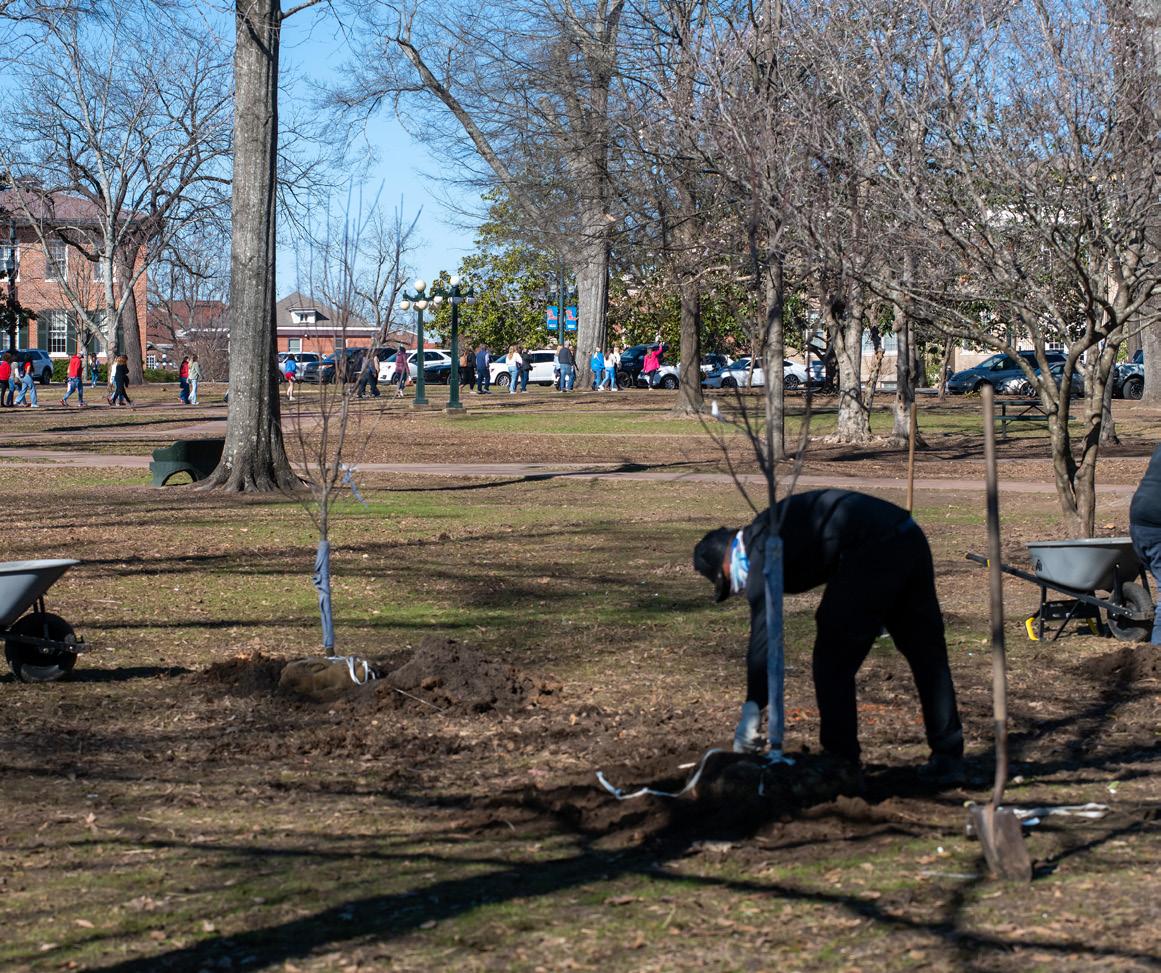
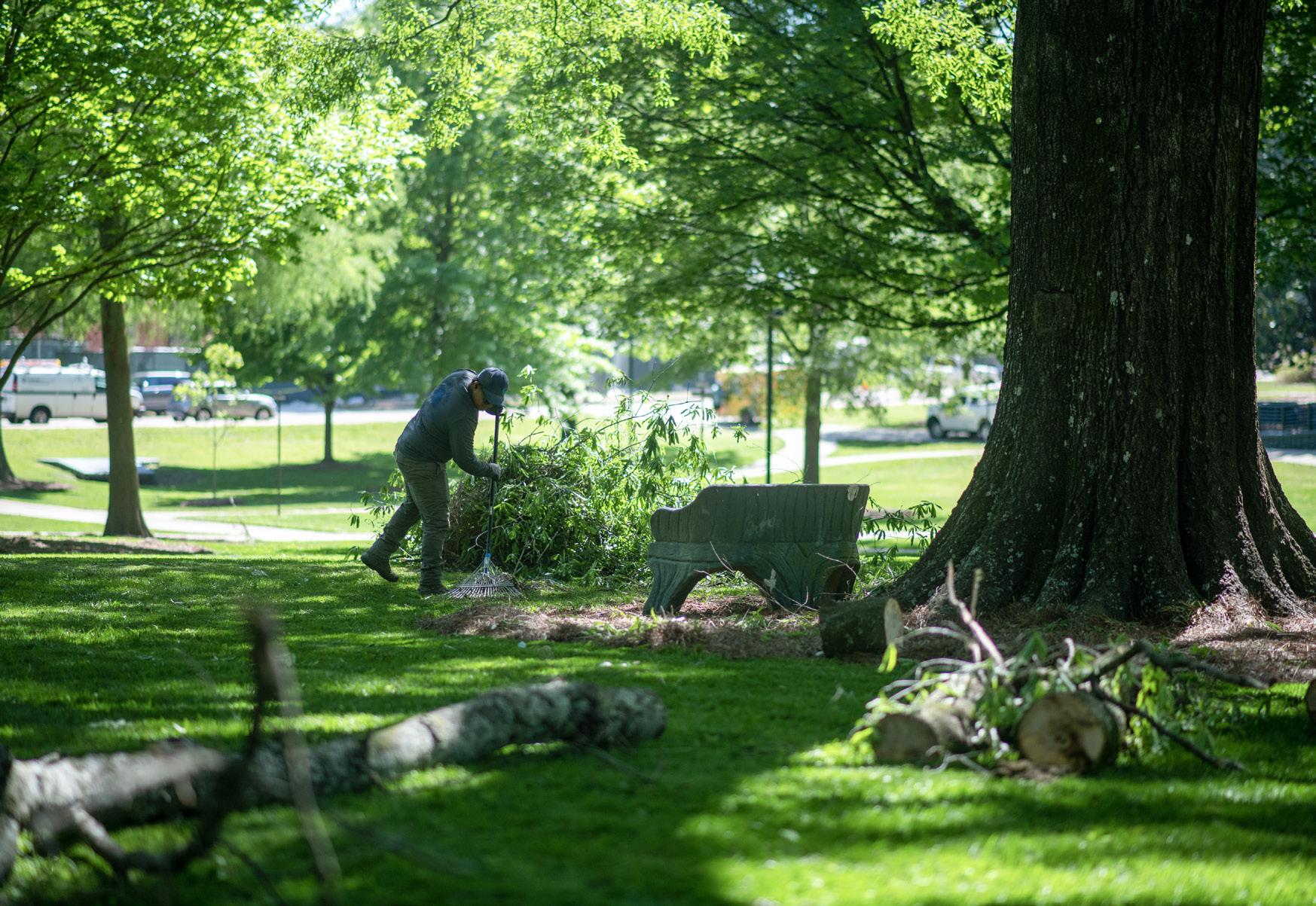
After the University of Mississippi lost approximately 5% of its total tree population at the hands of Winter Storm Fern, the Mississippi Forestry Commission has issued a grant to help plant a new beginning for campus.
The grant will assist the Department of Landscape
Services in planting 29 new trees across the Oxford campus. Sophie Kline, arborist and superintendent for the department, finds the tallchoice flora to be entwined in the culture of Ole Miss.
“Think of people sitting in the shade. Think of the food the squirrels eat. Think of the aesthetic purposes, of oxygen. There are all these somewhat intangible services
that trees provide that people don’t think of on a regular basis,” Kline said. “That is a part of the culture here.”
The 29 trees, which Landscape Services is already planting, are just the start of what is to come for the campus tree rebirth.
“We’re going to be planning for next planting season,” Department of Landscape Services Director Nathan Lazinsky said. “Landscape Services plants about 300 trees a given year on campus. I hope to maybe double that number this coming year.”


ALY BRADSHAW News Staff Writer
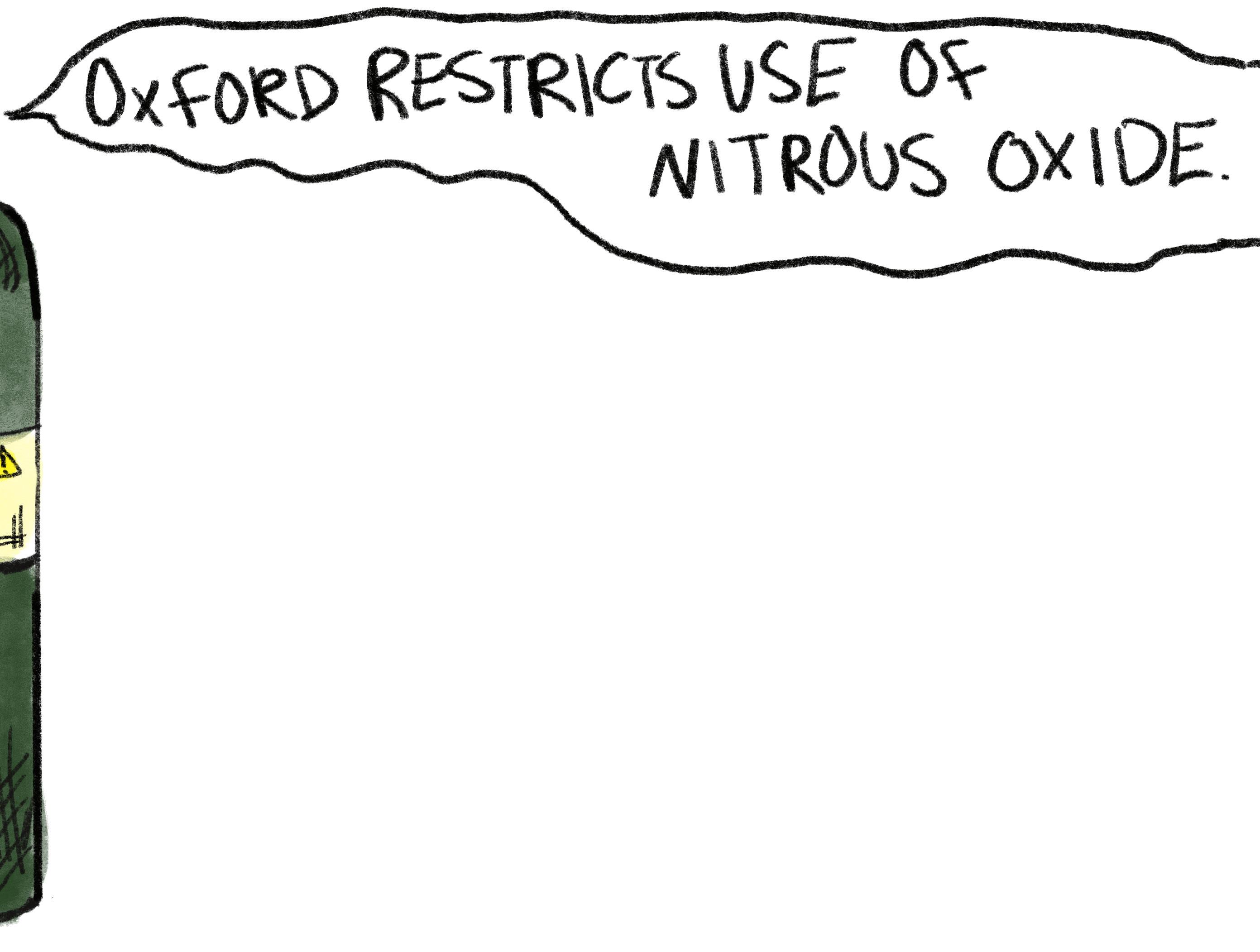
Mayor Robyn Tannehill and the City of Oxford Board of Alderman announced a new ordinance on Tuesday, Feb. 3 that restricts the use of nitrous oxide, commonly referred to as “whippets” or “laughing gas.”
City Ordinance No. 20263 was unanimously approved by the aldermen in attendance. Under the ordinance, it is illegal for any person to intentionally consume nitrous oxide for intoxication purposes or to possess nitrous oxide with the intent to use it for intoxication purposes within Oxford city limits.
food preparation,” Oxford Police Department Public Information Officer Breck Jones said in a press release dated Feb. 10. “However, it is increasingly being misused as a recreational drug by inhaling the gas from balloons to get a brief high.”
Jones also pointed to an uptick in vehicular crashes linked to nitrous oxide in Oxford as a reason for the ordinance.
with the first major incident in the community taking place in 2012 or 2013.
Andrew Yockey, assistant professor of public health at the University of Mississippi, has studied the effects of nitrous oxide. In July 2025, Yockey was a co-author of a first-of-its-kind study on nitrous oxide-related fatalities.
Yockey clarified the reasoning behind recreational use of nitrous oxide in an interview with The Daily Mississippian.
ey said. “Recreational use, though, is never truly safe — the risks are still there.”
While the new ordinance will restrict access to nitrous oxide in stores, Yockey said it may not be a fix-all solution.
“It’s not a silver bullet,” Yockey said. “Young people can still get it online or from informal sources. So while it might reduce use, it’s unlikely to completely stop it.”
“Here in our community, we have seen the real-world consequences of this misuse,” Jones said. “Impairment from inhalants has been linked to crashes, injuries and emergency responses that impact not only the user but also innocent drivers, passengers and pedestrians. These incidents are preventable, and their effects are felt by families, neighborhoods and our community.”
The ordinance also makes it illegal to sell nitrous oxide products to individuals under 21 or to any person whose intention is to use the product for intoxication purposes. The city prohibits the recreational use, possession and sale of nitrous oxide.
There are still lawful uses of nitrous oxide, which the ordinance explained, including food preparation, medical, dental, veterinary, industrial, automotive, retail and scientific uses.
“Nitrous oxide has legitimate uses in medicine and
“Impairment from inhalants has been linked to crashes, injuries and emergency responses that impact not only the user but also innocent drivers, passengers and pedestrians.”
-
THE DAILY MISSISSIPPIAN EDITORIAL staff
CLAY HALE editor-in-chief dmeditor@gmail.com
RAEGAN SETTLE managing editor dmmanaging@gmail.com
SYDNEY STEPP copy chief thedmcopy@gmail.com
CAMERON LARKIN digital editor dmdigitaleditor@gmail.com
AIDAN PONIATOWSKI news editor thedmnews@gmail.com
NOAH WALTERS assistant news editor thedmnews@gmail.com
JAYLYNN CONNER arts and culture editor thedmfeatures@gmail.com
JESSICA JOHNSON assistant arts and culture editor thedmfeatures@gmail.com
RUSS EDDINS sports editor thedmsports@gmail.com
NATE DONOHUE assistant sports editor thedmsports@gmail.com
LENORA COLLIER opinion editor thedmopinion@gmail.com
Officer
In an interview with The Oxford Eagle, Oxford Police Chief Jeff McCutchen said that the city’s concerns over nitrous oxide have stretched over a decade,
“People often inhale it for a brief euphoria, dizziness or a sense of floating,” Yockey said. “But even in the short term, especially for people under 21, it can cause tingling in the hands and feet, loss of coordination, fainting or even injury if you pass out.”
Yockey also noted the legitimate uses of nitrous oxide, differentiating them from recreational use.
“As for adults over 21, nitrous oxide is generally safe when used medically, like at the dentist’s office, under supervision with oxygen,” Yock -
The regulation states that the ordinance will be enforced by the Oxford Police Department and other authorized personnel. The penalties include fines up to $500 or imprisonment.

OLIVIA CANGELOSI photo editor thedmphotos@gmail.com
JOURNEY GLOVER assistant photo editor thedmphotos@gmail.com
MADELYNN LIBERTO design editor thedmdesign@gmail.com
FARIDA BELAL assistant design editor thedmdesign@gmail.com
MARY EVANS multimedia coordinator dailymissmedia@gmail.com
AVERY THOMAS social media manager thedmsocialmedia@gmail.com
CADENCE MANNING assistant social media manager thedmsocialmedia@gmail.com
S. Gale denley student media center
LARZ ROBERTS Director of Student Media
DENNIS MOORE Editorial Director
NOAH WALTERS
Assistant News Editor
Nepalese Student Association (NEPSA) members and other students came to the Gertrude C. Ford Ole Miss Student Union room 323 to observe the Hindu holiday of Maha Shivaratri on Sunday, Feb. 15.
Maha Shivaratri is celebrated by hundreds of millions of Hindus in Nepal and across the globe. The festival day celebrates the marriage of Shiva, one of the principal deities in Hinduism and the supreme being in the Shaivism tradition, to the goddess Parvati.
“It’s called Shivaratri, which literally means ‘the night of Shiva.’ It means devotees of Shiva fast throughout the night and only eat milk, nuts and water,” NEPSA Vice President of Cultural Affairs and sophomore biomedical engineering major Aarzu Joshi said. Joshi, originally from Nepalese capital Kathmandu, explained that this fasting was a part of the celebration and drew upon her experiences as a student to make her point.
“Shiva is god, but it literally transcribes to self-reflection. As students, we know how important self-reflection is and (this event) reminds us to take a break in between our busy lives. It’s basically just understanding who we are,” Joshi said.
Achala Gaihre, a public health masters student also from Kathmandu, similarly pointed out the interiority of the celebration while empha-
sizing the impact that inner feelings can have on others.
“(Lord Shiva’s) one of the greatest deities. We are offering him prayers, meditating,” Gaihre said. “This festival is all about looking into inner peace and finding your spirituality, loving everyone in the world.”
For Gaihre, the celebration is not just a religious one but also one of community. Having come from thousands of miles and continents away, finding something in Oxford that resembles home allows her to find comfort in its reminiscence.
“Once I came to Oxford, I don’t think I’ve missed Nepal so much because we have events going around,” Gaihre said. “I’ve called my friends (back home), and it is most like (a) cultural exchange, and I’ve made more friends. It is more homely and this association connects you to home.”
Utsab Acharya, president of NEPSA, biomedical engineering doctoral student and Kathmandu native, strives to create a sense of home and community for Nepalese students through his leadership.
“For me, it’s to unite all of those Nepalese people who are single, like most of the undergraduates and graduates, who will get a little bit of time outside their student life,” Acharya said. “Then, some meet-andgreets. I know the first and second year will be very difficult when somebody leaves (their) hometown, so I’m just trying to connect with them. I’m just helping and being social for them.”
Part of his efforts is the ob-

servance of cultural events.
“(Saturday) … most of the Hindus in Nepal already celebrated (Maha Shivaratri) and we are just resembling that so that we will do some kinds of (cultural activities),” Acharya said.
The NEPSA community is invaluable to Nepalese students like Joshi, who came to Oxford with few connections. She only knew one Nepali family through social media.
“I’m so thankful for (the) Nepalese Student Association, and also I’m very happy that I’m getting to be an executive member,” Joshi said. “First, I joined NEPSA as a membership coordinator, and now I’m the vice president. It has helped me connect with so many Nep-
alese people, and I did not even know so many Nepalese people are here on campus. … It’s like connecting back home.”
The event’s organizers desired to connect Nepalese students and to promote cultural recognition.
“We have a lot of deities, but we don’t have a position for the specific deity,” Gaihre said. “We believe that every deity is special. We have (a) deity for everything … and there’s (so many) that we never thought of giving it ranks. Everyone is special with special powers and special gifts, right? So every event is important in its own right, has its own story and its own religious beliefs.”
Not only does NEPSA find value in its culture and members, but to Acharya, it also
strives to represent Nepalese culture to those outside of it.
“The main intention is I’m trying to show our culture to other diversities so that if you see over here, you can find different cultures, like people from different cultural backgrounds and different nations. I’m just trying to show our culture to them,” Acharya said. Ultimately, sharing that culture can lead to commonality and even unity.
“We just want to share our views, share our culture and (try) to meet with other people, try to unite all of those,” Acharya said.
AT thedmnews@gmail.com
ELI CROWLEY News Staff Writer
Spring 2026 marks the first semester that instructors at the University of Mississippi are required to use the Blackboard Ultra course view, phasing out the original viewing format in the course management system. Now, three weeks in, professors and students have mixed reviews on the new interface, with some appreciating new user-friendly features such as drag-and-drop.
Instructor of Speech Talya

Slaw was especially welcoming of the transition, citing ease of access and a “smoother” feel.
“It’s certainly easier for me to make modules, basically, for each week than it was in the old Blackboard,” Slaw said. “Smoother is a good way of describing it. It feels a lot more intuitive in how you build stuff on (the instructors’) end. It’s a lot easier now since you once had to push a lot of buttons to move things around.”
Assistant Professor of Speech Communication Jacob Justice echoed Slaw’s sentiment.
“I don’t miss anything about the old Blackboard. I really like that you can drag and drop items easier,” Justice said.
Blackboard Ultra has been available to the university since December 2021, and prior to this semester, professors had the option to choose between the Ultra format and the original format.
In 2024, the university announced to its faculty members that a spring 2026 deadline to switch to Ultra would be implemented. Rationale behind the change include a cleaner user inter -

face, a more mobile-friendly display and new tools and artificial intelligence features.
Not all professors gave praise to Ultra, including Associate Professor of Classics Jonathan Fenno, who shared his concerns.
“I have a very complicated grading schema,” Fenno said. “In Excel, I have no problems using formulae to arrange for that, but it is very difficult on Blackboard.”
Fenno also added that he missed the gradebook format in the original course view, citing issues with sorting in Ultra.
“It used to be really easy in the past layout to find out which students hadn’t submitted something or received a low grade and to send them an email,” Fenno said. “The sorting doesn’t work very well. It fails to sort grades, or it sorts them wrongly. It’s a big failure. There are major problems with Ultra.”
Veronica Ramponi, a freshman criminal justice and forensic chemistry major from Telluride, Colo., also has her concerns.
In Blackboard Ultra, profes -
sors have to manually unlock documents after uploading them. Ramponi said this causes difficulty for instructors.
“Stuff is locked weird, and it’s hard to find certain things,” Ramponi said. “When you click on courses, it only shows you your most recent three, so that makes it harder to use on the phone and mobile devices.” The Daily Mississippian was unable to obtain a comment from the Office of Information Technology.
Faculty experiencing trouble with the transition to Ultra can reach out to the Faculty Technology Development Center at (662) 9157918 or ftdc@olemiss.edu.
Students are encouraged to reach out to the IT Help Desk at (662) 915-5222 or helpdesk@olemiss.edu.
continued from page 1
major Divinity Ham feels that the university was ranked correctly.
“I think that Ole Miss deserves this ranking, (but) if they were ranked higher, I wouldn’t be surprised,” Ham said. “Ole Miss has a lot going for it. There’s always something going on on campus or in Oxford. Their academics are pretty good, too. I’m glad I’m able to go to a school where I feel challenged academically and also get to be a part of such a well-rounded community.”
Jordan Clarke, a junior English major, also pointed to the community as a strong point for UM.
“I think we deserve to be a little higher. I feel like Ole Miss is underappreciated,” Clarke said.
“I feel like people assume we aren’t good enough because (Ole Miss) is a Mississippi school and assume we’re only a party school.
We’re more than that. We care for our community — our Ole Miss family. It really showed during the winter storm, so I think we deserve to be higher.”
Junior mechanical engineering major Nick Slater approved of the university’s spot on the list. The university’s ranking, Slater said, does not matter as much as aspects that cannot be measured in data, such as the campus life and the sense of belonging.
“It’s not just the institution,” Slater said. “It’s all the people who surround the institution. When I decided to come here, I wasn’t just planning on doing four years of school. I was planning on being a part of Oxford for four years. It had to be more than a classroom. It was a feeling. When I was here, I didn’t want to leave.”
RUSS EDDINS Sports Editor
Students spend their summer breaks in a myriad of ways: Some may partake in study abroad programs, and others may work summer internships. Still others may simply return home after an arduous academic year.
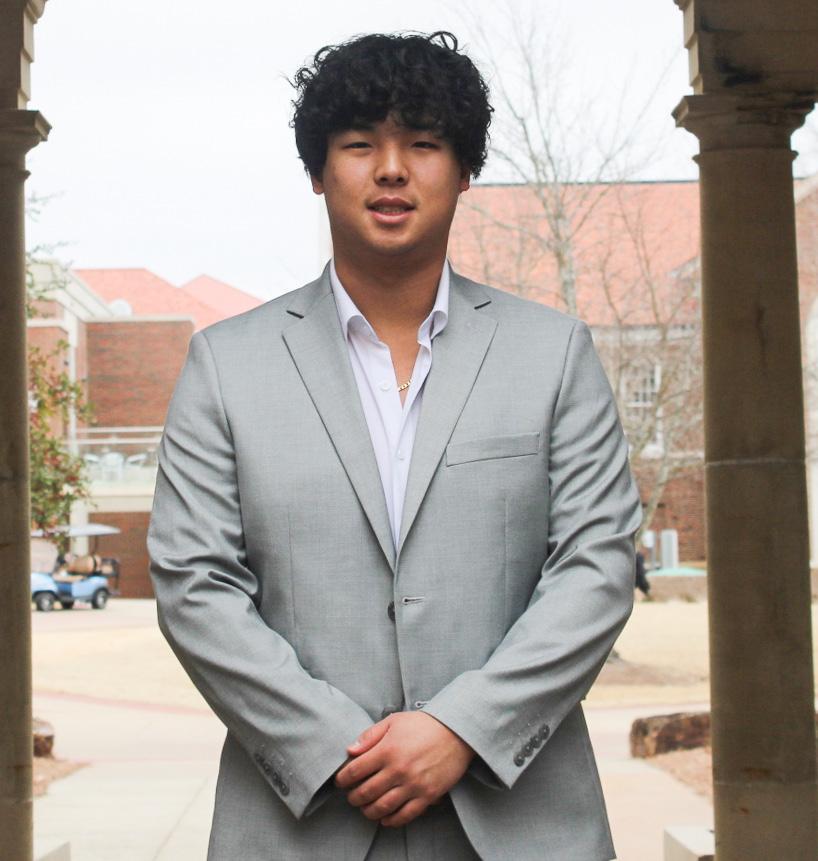
University of Mississippi sophomore Nathan Won will spend much of his break on a bicycle.
Won, an entrepreneurship major and member of Pi Kappa Phi, will participate in the fraternity’s largest philanthropic event: The Journey of Hope, an annual cross-country cycling trip from Santa Clara, Calif., to Washington, D.C. The trip will begin June 5 and extends to Aug. 8.
The event is held to raise money for people with disabilities. He is the only member of the UM chapter taking part in the event.
“I’ve always been big in
philanthropy,” Won said. “I’ve always had involvement in philanthropy back home with the Special Olympics in Boston and a bit of Special Olympics around here, too.”
Won was motivated to participate in the event after his fraternity brother, Cameron Geranios, participated in the event last year.
“I was really inspired by him. So I was like, ‘This is a great way to raise awareness for people with disabilities and a great way to raise money for them as well.’ So I thought this would be a great opportunity,” Won said.
While Won is the only member of the UM Pi Kappa Phi fraternity in this year’s event, he is familiar with a few other members who will join him on the journey. In total, 50 to 60 people are going on the trip.
“I know a couple guys that I met through Cameron Geranios, and so they encouraged me as well to participate,” Won said. “I was just

really encouraged, inspired by their work ethic as well.”
Won and the other participants are tasked with finding organizations to donate money to the cause. He has taken several steps to spread the word and collect money for his goal.
“I’m going through many different organizations to promote it,” Won said. “I was just recently on the WTVA News to promote it. My goal is to raise $30,000. Whether it’s through clubs such as the (Ole Miss) Finance Club, Special Olympics or whether it’s through Greek organizations with fraternities or sororities, I’m going to be going to them and promoting my initiative and try to raise awareness for the event.”
Pi Kappa Phi’s philanthropy, “The Ability Experience,” sends a training program to people in The Journey of Hope. Won has check-ins, a
mileage quota to reach and monthly seminars to attend to prepare for the event.
According to its website, The Ability Experience empowers “men of Pi Kappa Phi to live the value of service by creating shared experiences with people with disabilities through service.”
The organization is cautious about the physical ability of participants, so they ensure the cyclists are reaching mile goals and check in often.
Won recently got his bicycle to Oxford and has been training in various ways and with different tools.
“(I’ve) just been going to the gym (and) indoor cycling to stay in shape,” Won said.
“We use Strava and TrainingPeaks, which gives us daily goals of which work you have to do, whether it’s lifting, training or cardio as well.”
Reservations for places to sleep and rest have already been made for the group.
“Depending on the location, we will have cabins and then hotels as well for us to just stay the night and take a break,” Won said.
Won has no doubt that he can complete the nearly 3,000-mile journey.
“It’s gonna happen. I’m very grateful and excited for the opportunity, and I’m doing everything I can to prepare as well,” Won said.
On the journey, Won will see much of the United States. He is looking forward to seeing one part of the country in particular.
“Probably just going through the mountains,” Won said.
TATUM STEWART News Staff Writer
In a state that consistently ranks among the highest in cancer mortality and uninsured rates, access to routine screenings remains a challenge for many Mississippians.
The CDC ranked Mississippi third among U.S. states in cancer mortality in 2023, with 172.4 deaths to cancer per 100,000 residents. That same year, the U.S. Census Bureau ranked Mississippi eighth in terms of residents without health insurance, with over 10% of Mississippians reporting no coverage.
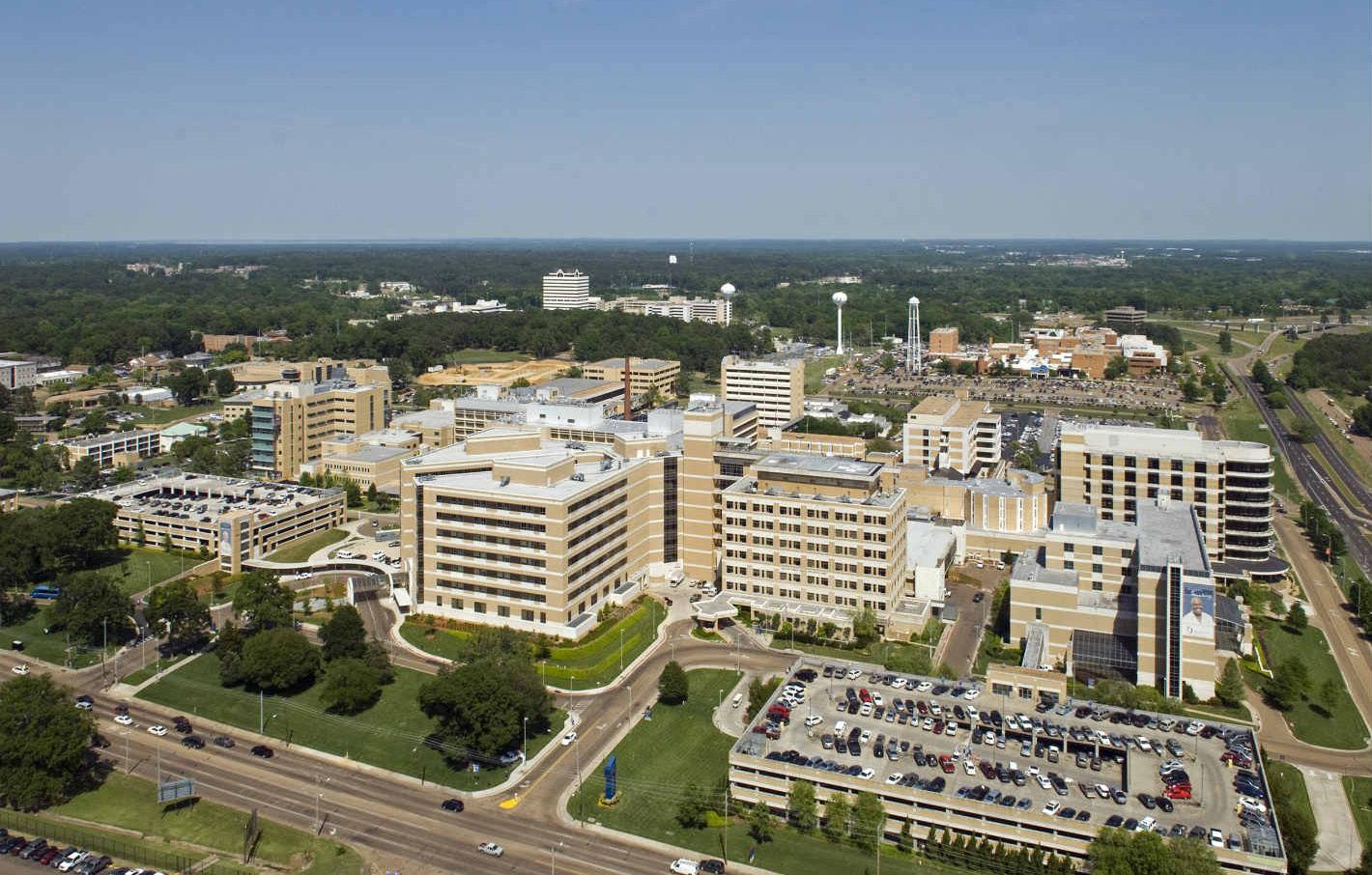
To address that gap, the University of Mississippi Medical Center will host its annual See, Test and Treat program event on April 11, offering free cancer screenings to uninsured and underinsured people.
For Rena Pafford of Ridgeland, Miss., a mammogram during last year’s event led to an early breast
cancer diagnosis and treatment, according to UMMC.
“Early detection gave me options and hope, and that’s why programs matter like this so much,” Pafford said in a UMMC press release dated Feb. 9. “They truly save lives.”
The program aims to reduce barriers to care for individuals who may delay screenings due to cost or lack of insurance.
Dr. Rod Rocconi, director of the UMMC Cancer Center and Research Institute, said the annual event reflects the institution’s effort to expand access to preventive care in Mississippi.
“By offering free, high-quality screenings to uninsured and underinsured individuals, we’re helping detect cancer earlier and connecting patients to the care and resources they need,” Rocconi said.
Bethany Sabins, a nurse practitioner with “See, Test and Treat” since the launch of the program in 2017, emphasized the impact that an
early screening can have on stopping the spread of cancer.
“We’re making a difference in Mississippians’ health by offering these cancer screenings, which can be lifesaving,” Sabins said. “When cancer is detected early before it has spread, outcomes are improved.”
Individuals can apply online now at UMMC’s official website or call (601) 8153572 to determine eligibility.
UMMC representatives will follow up via voicemail regarding qualification for free screenings. The screenings will be held at the UMMC Pavilion, 1410 East Woodrow Wilson Ave. in Jackson, Miss.
Senior journalism major Shelby Wicker of Midland, Texas, said early detection made all the difference when her grandmother, whom she calls her best friend, was diagnosed with lung cancer.
“Because her lung cancer was caught before it had spread too far, she had op -
tions, options that ultimately saved her life,” Wicker said.
For Wicker, crucial programs focused on screening early detection like the one now provided by UMMC can make all the difference.
“Her diagnosis could have easily come much later, but identifying it early gave doctors time to act, and she was able to receive
a lung transplant,” Wicker said. “That gift of time meant more years with her family we never thought we’d have.”
TAYLOR HILL A&C Staff Writer
Eric Deaton is a Southern blues musician who has played across the world on many stages with numerous other artists, including The Black Keys. Five years ago, Deaton recorded his first collaboration album with The Black Keys, with their newest album, “Peaches!” releasing May 1, 2026.
“Both records I have done with The Black Keys are covers, so it’s nothing anyone has written for the project,” Deaton said to The Daily Mississippian. “We’re just coming in and doing songs that we all love and, in some cases, have played all our lives.”
Songs on the album include “Where There’s Smoke, There’s Fire,” “Tell Me You Love Me” and the Feb. 6 early-release track “You Got to Lose.”
Originally from North Car-
olina, Deaton moved to Mississippi 30 years ago to pursue a music career. Early in life, he felt drawn to the blues, eventually realizing that many of the artists he admired traced their roots back to the genre. That discovery deepened his appreciation and ultimately shaped the path he chose to follow.
“Pretty soon, I discovered that there was a really happening blues scene in Mississippi at the time, and a lot of great old guys were still around,” Deaton said.
As he immersed himself in the Mississippi blues scene, Deaton began to use his voice and guitar skills to carve out his own identity within the hill country blues tradition. He spent many nights at the now-closed Junior’s Place in Chulahoma, Miss.
“I started going down to Junior Kimbrough’s juke joint every Sunday night
and playing with him and R.L. Burnside,” Deaton said. “That was my higher education, Kimbrough University.”
Moving to Mississippi opened a plethora of opportunities for Deaton, allowing him to root himself in the genre’s traditions and build relationships within the tight-knit blues community.
“Once I moved here, that’s who I sought out, all of the active, living blues men here in the state,” Deaton said. “I really zeroed in on the hill country because I thought that was really the most exciting and powerful stuff that was happening.”
Beyond following the musicians he admired, Deaton found himself sharing stages with them, learning firsthand from the very artists who defined the hill country sound.
“At the age of 18, I started playing with my musical heroes, which was the experience

of a lifetime,” Deaton said.
While sharing the stage with blues legends like R.L. Burnside and Junior Kimbrough early in his career was unforgettable, Deaton found that the steady rhythm of nightly performances shaped him most. It was the simple act of showing up, taking in the sound and learning in real time that left a lasting mark.
“Every night was just absolutely the highlight of my life, one of the best things I’ve ever done, just soaking up that music and learning to play it in front of the crowd there, and it was an incredible scene,” Deaton said.
From North Carolina to Mississippi, Deaton was exposed to a variety of blues styles — from the rhythms of hill country to the electric edge of Chicago blues. Those years of working across diverse genres, performing and studying the craft laid the foundation for his own artistic voice.
“I just soaked it all up in my bones for years, so when I do my own original music, it’s always for that deal and that sound in it,” Deaton said. “It all grows and it all comes out of what I soaked up playing those years at Junior’s joint.”
As his career expanded, Deaton had the opportunity to travel internationally. Even while performing overseas and experiencing new cultures, he found that his musical personality remained rooted in Mississippi.
“The further away you get from home, the more of a big deal playing this type of music and being from Mississippi is,” Deaton said. “I’ve gotten to see countries I wouldn’t have seen otherwise, try new
types of food and it’s a blast.”
Though his appreciation for Oxford has remained steady, the local music scene has shifted during his time in Mississippi. The steady circuit of venues that once gave musicians consistent opportunities to perform is not what it used to be.
“There used to be a lot more places to play locally,” Deaton said. “I would play locally back in the ’90s and early 2000s. I’d play multiple shows a week, and that’s not really possible anymore. I think as generations have changed, kids have changed, and there’s not the same interest in local music scenes that there was back when I was that age.”
He emphasized that the talent in Oxford has not disappeared, though. Instead, many musicians have had to adapt, pursuing other careers or taking their work on the road to find consistent opportunities.
“There’s still a richness of musicians here in this town, but I think, to some extent, people have gone on to other careers and are just leaving town to do most of their work like I am these days,” Deaton said.
Deaton remains committed to the music that first drew him south three decades ago. Whether performing abroad or closer to home, his foundation in Mississippi blues continues to shape every note he plays.
“Pure love of music is just who I am,” Deaton said. “It’s essentially part of me, and I am part of it, and there’s really no way to get away from it. It’s what I’m immersed in and it’s not going anywhere as long as I’m still here.”
LOGAN KENNEDY
A&C Staff Writer
Seven distinguished speakers will deliver talks this year at the annual TEDx University of Mississippi event on Feb. 20. This year’s program is titled “Uncharted” and will be held at 7 p.m. at the Gertrude C. Ford Center for the Performing Arts. Tickets for the event are free, but donations are encouraged.
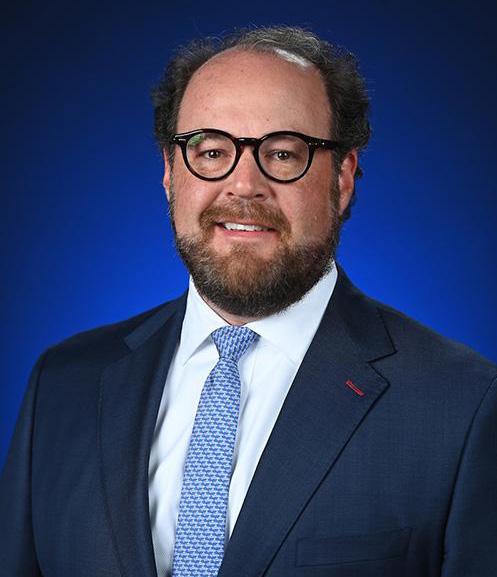
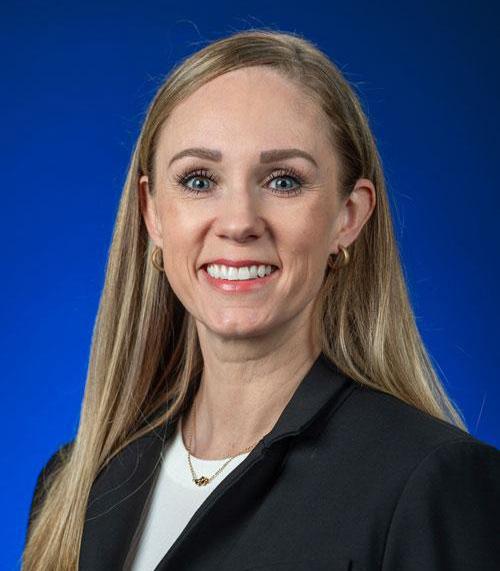
Speakers include Southern Poverty Law Center Director Waikinya Clanton; research scientist Mark Dysinger; ethical hacker, entropy advocate and founder of PostQuantSec. io Samantha Lowrimore; University of Mississippi Associate Professor of Social Work Tess Lefmann; oral radiologist Dania Tamimi; University of Mississippi Lecturer in Composition and Rhetoric and Assistant Director of Academic Innovation Marc Watkins; and Director of the National Center for Cannabis Research and Education and University of Mississippi Re-
search Associate Professor in the Research Institute of Pharmaceutical Sciences Robert Welch.
“We really try to cater to individual interests, and this year’s speakers are all so deserving of this opportunity,” Jorja Carter, TEDx University of Mississippi assistant chief of staff, said.
The TEDx University of Mississippi’s website describes the theme, “From groundbreaking science to frontier education, Uncharted is an invitation to envision the world as it could be, not just what it is.”
The event is planned and organized by students that work in different committees, such as public relations and speaker relations. TEDx 2026 is also co-sponsored by the Department of Media and Communication.
Staff starts planning the event in August, choosing speakers through open submission and interviews to select who it believes will best fit the event’s annual theme.
With more than 100 sub-

missions, the committees narrowed the group down to four speakers who will be discussing a variety of topics.
“Tess Lefmann’s talk is the one I’m most excited for this year,” Shea Graham, co-head of speaker relations, said. “It’s rare to hear a talk that is both scientifically rigorous and emotionally disarming, but Tess does that so naturally.”
Meredith Anderson, TEDx University of Mississippi’s chief of staff, said the organization’s goal is for students to expand their knowledge with diverse points of view.
“We really want to try and expand people’s mindsets,” Anderson said. “We have speakers from Mississippi but also outside of Mississippi, which is good because that can bring new ideas or experiences. We want students to go home with possibly new interest in a topic or idea that they hadn’t thought of before.”
Each speaker brings a new and different approach to a specific topic. Mark Dysinger, in his biography, states that he is a researcher for “rare” diseases but argues against the word “rare,” as it harms the research of a disease.
Daylan Flowers, senior journalism major and host of sports podcast “The Daylan Show,” will emcee the event.
TEDx UM will host a reception following the event, which is a collaboration with the UM Department of Art and Art History. Attendees can browse student art and mingle with the speakers, ask questions or dive into deeper discussions. The Mississippians Jazz Ensemble and Jiwon Lee, a violinist and integrated marketing communications graduate student, will perform during the intermission following the first two speakers.
The sole fundraiser for TedX University of Mississippi Saeed Fanoodi is a Ph.D. candidate who joined the organization this year. He helped secure donations and advertisement sales for this year’s event.
“The goal is to introduce perspectives and ideas that students may not encounter in traditional academic settings,” Fanoodi said. “TEDx creates a space for interdisciplinary thinking, inspiration and exposure to voices and experiences that broaden how students understand innovation, leadership and impact.”
Editor’s Note: P.B. Jernigan, an arts and culture staff writer, serves as co-head of speaker relations for TEDx University of Mississippi.
Meredith Anderson was an arts and culture staff writer during the 2024-25 academic year.
Jorja Carter was a news staff writer during the 2023-24 and 2024-25 academic year.

ROSE HARMON A&C Staff Writer
This rainy Valentine’s Day evening, Mississippi musical talent performed to an intimate crowd at Exploradora Coffee off North Lamar Boulevard for the Hill Country Songwriters’ Showcase. Bringing a combination of new and traditional sounds, these Mississippians serenaded the coffee shop with their original work, telling stories of love and heartbreak.
The showcase, in partnership with the Mississippi Songwriters Association and the Red Clay Music Society, was formally hosted by Luke Fisher, co-founder of the Red Clay Music Society, alongside Brady Rees and David Anderson, who introduced each of the three rounds of artists.
Round one featured Ryan Miller, David Cornelius, Alanna Mosely and Brian Harrison.
A storyteller, Ryan Miller spoke about writing music when first attempting to woo his now current wife and of a challenge he gave himself to write a song in an hour during the COVID-19 pandemic.
“I asked my wife what I should write about, and she said to write about where we’re from,” Miller said. “I asked my middle child, and she said to write about a wed-
ding. I asked my eldest, and she said something about criminal activity. I asked my youngest, and he was just covered in red clay.”
Using these elements, he would write one of the songs performed that night.
Cornelius sang a particularly memorable song, dedicated to his father.
Mosely, as Fisher said, “probably knows every song ever recorded,” and started her set with a song about love gone wrong.
“You gotta play a heartbreak song because, screw love,” Mosely said.
Mosely also sang of the solace in finding one’s identity, as well as a redeeming song about love.
At the end of the first round, Fisher introduced Harrison.
“Brian is country,” Fisher said. “He writes country songs. That’s all that needs to be said.”
In the past, Harrison has made guitars, including one of his own, and that night sang about God and love, including one song inspired by what Winnie the Pooh said to Piglet: “How lucky I am to have something that makes saying goodbye so hard.”
Round two, also known as the duo round, featured Joe Austin with Brian Sherwood, Singlewide, The Posies and The Kites.
Austin and Sherwood brought traditional Southern sounds to love songs and hometown sentiments. The Posies sang about moonshining and romance. Singlewide, a brother-sister duo, sang about summer heartbreak and one memory of “Mountain Dew green” colored clouds. Indie group The Kites sang about insatiable love and remembering one’s humanity.
Round three featured solo artists Sean Gasaway, Will Stults, Tricia Walker and Jeff McCreary.
Gasaway, known for his involvement with the Mississippi Songwriters Association, spoke on the anti-bullying initiative of the program, using two stories he often tells the kids he teaches. That is the backstory behind two of his most popular songs, “Stomp” and “Porkchop.”
In the instance of “Stomp,” Gasaway was in his truck with his young daughter, who was throwing a fit.
“Everytime you stomp, I’m gonna shake my rump,” Gasaway said, trying to annoy her.
“And she sang that the whole way home on this five-hour trip.”
Gasaway tells these stories to kids, he said, to show that even if an idea sounds silly, no one knows what it could turn into.

Stults sang a mixture of funny and sentimental, including one song about his butt followed by a humorous anecdote about visiting his grandfather’s nursing home, which inspired a song about hoping to never forget but inevitably doing so.
Walker sang about a woman’s best friend — a good purse (with a pistol in it) — that received laughs from the crowd. She also strummed about the homegrown South and, of course, love.
The show closed with Mc-
Creary, who focused on suffering, grief and addiction. Between the other musicians’ sets in this round, he laughed quietly. “Here’s another one of my uplifting songs,” he said before telling the story of a friend who served in the military, as McCreary himself did.
WILSON ENGERISER
Sports Staff Writer
Ole Miss’ sports teams, like its student body, draw from towns, cities and states across the country. However, there is another subset of student-athletes who are not discussed as frequently, yet are key contributors in several athletic programs — international players.
Though American football is perhaps the most popular sport in the country — FOX Sports claims that approximately 40% of adults in America cite football as their favorite sport — it is much less popular around the world, which makes it all
the more remarkable that Ole Miss’ starting punter, Oscar Bird, is from Sydney, Australia.
Bird grew up playing Australian football. Though this variant is more similar to rugby than to American football, Bird did not find the transition difficult.
“The sport I played, Australian football, the kicking elements of that game are very similar to American football punting,” Bird said. “Without knowing much about the sport or college football, there was a pathway to come over here and try and get a scholarship.”
Bird is not the first Australian to play for Ole Miss. Punters Will Gleason (2013-17) and Fraser
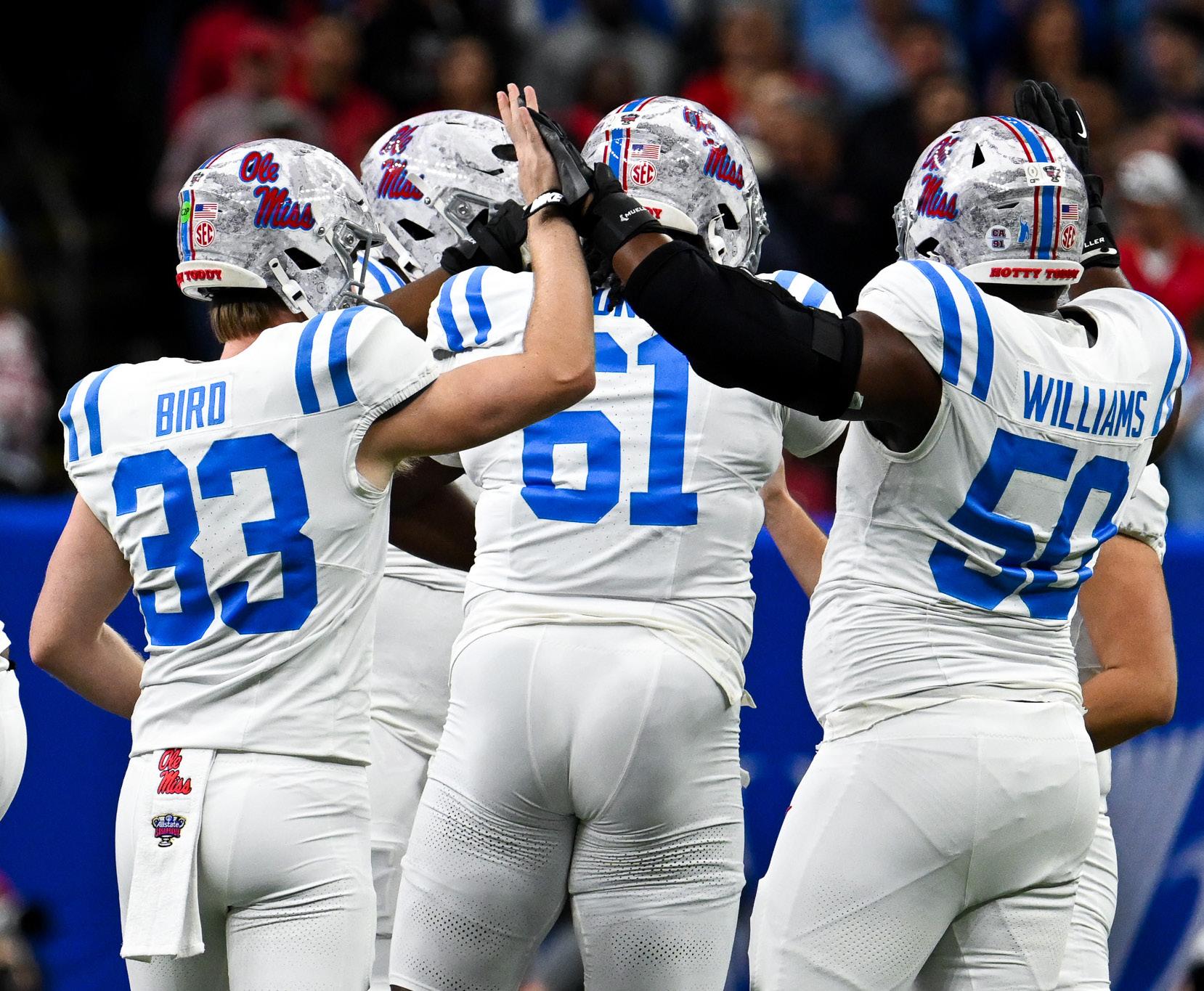
Masin (2022-24) also played for the Rebels. Bird said that this recruiting pattern helped smooth his entrance into the program.
“Coming into this program, they’ve had an Australian for the last three years,” Bird said, referring to Masin. “Coaches and some of the players are already adjusted to an Australian-style punter, and that just helped me so much more because it wasn’t new for them. It was new for me, but it just allowed me to transition into the program a lot easier.”
Bird explained that Oxford and the Ole Miss community made a strong impression on him during the recruiting process.
“Oxford was probably my favorite town by far, and that was without even having an offer yet,” Bird said. “I really liked Ole Miss, so I was really grateful when the coaches were happy to have me here. I’ve also had family and friends come throughout the year to watch games, and they’ve loved Oxford.”
While American football is not a global sport just yet, tennis is played throughout the world, and Ole Miss’ tennis program reflects this. Emily Welker and Andrea Nova are from the European continent and chose Ole Miss for their collegiate journey.
Welker, who is from Germany, spoke about the connections and friendships she has found within this program, which are essential for athletes who are far away from home.
“I feel like the coaches do a good job of us having the feel-
ing of having a second family here,” Welker said. “(They) try to build a good relationship within the team with all of the teammates, and (we do) different activities together. I think that kind of helps with being so far away from home.”
One of the major differences between domestic athletes and international athletes is the recruiting process. Nova is from the Czech Republic and never visited Oxford before accepting her offer to play here.
“I didn’t come here for a visit, so everything was just a surprise,” Nova said. “I was so open-minded, and whatever is gonna happen, is gonna happen. I didn’t really have any expectations.”
Kai Milburn is a sophomore men’s tennis player from New Zealand and Isac Strömberg is a senior player from Sweden.
“I came to the U.S. because there’s so many resources here,” Milburn said. “The colleges provide so many resources, like nutritionists, coaches, strength coaches, and I feel like it’s pretty tough to get that doing it by yourself.”
Before Strömberg met the former Rebel tennis coach Toby Hansson, he did not know what college was.
“(Toby Hansson) kind of talked to me about college back then, and it seemed like a good fit to me,” Strömberg said. “Tennis is obviously an individual sport, so doing it here with a lot of teammates, we’re 10 people on the team, and it’s way more
fun doing it with the team.”
While Milburn’s recruiters are no longer with the program, he still credits them for why he chose to attend the university.
“I feel like the reason why I picked here was just the people,” Milburn said. “Obviously, the coaches that I got recruited by aren’t here, but I really felt that the teammates here were really dedicated and eager to be better.”
Strömberg had no expectations of Oxford or Mississippi. When he first got here, he actually did not plan on staying long, but that changed after a while.
“When I got (here), I really liked it here,” Strömberg said. “Now the time has just flown by, so it was an obvious decision to stay here for four years.” Milburn had a better idea of American culture, but he still encountered a few surprises when he moved to the U.S.
“Obviously, you have all the stereotypes of how America is and … not bad things, but some of things that people were controversial about,” Milburn said. “I’ve been to America once before, and I felt like a lot of the people were really quite blunt with you and not really friendly. But living here and experiencing it all, I felt like everyone’s more friendly and talkative and really more appreciative than other states.”
REAGAN TAYLOR Sports Staff Writer
The Ole Miss Men’s Tennis head coach welcomed new head coach Jake Jacoby in May 2025. In the fall of his first season, he coached doubles pair Kai Milburn and Isac Strömberg to the NCAA Doubles Championship, and his squad is off to a 12-0 start this spring season.
Though Jacoby’s hometown of Little Rock, Ark., is not generally associated with tennis, the coach said he fell in love with the game through watching the biggest tennis players compete on the biggest stages.
“(Little Rock is) not exactly a hotbed of tennis, like areas like Texas, California, Florida (or) other areas, but (I) just really fell in love with the game around the age of nine or 10 years old — watching Wimbledon, the French Open, the US Open, the Australian Open, watching guys like (Rafael) Nadal and (Roger) Federer go at it,” Jacoby said.
Jacoby’s favorite tennis player growing up, American Marty Fish, is not necessarily a household name, yet Jacoby said he modeled more than just his playing style off the professional.
“I used to wear the same clothes as him,” Jacoby said. “I have a very similar game style as him.”
Jacoby was a five-star recruit coming out of high school. He played his entire collegiate career
continued from page 1
think that in order to fix it, you have to change eligibility rules across all levels, not just DI.”
Senior general business major Nolan Brooks, however, always believed that Chambliss should be granted an additional season of eligibility.
“I think that him coming back is long overdue, and whoever dogs on him for not going to the NFL doesn’t understand the beauty of college sports and how loved he is in Oxford,” Brooks said.
“He’s also making more money in college than he would for his rookie contract in the NFL, so why leave? There’s 29-year-olds playing football, but all of a sudden
at the University of Iowa, where he shined. His 127 total wins are No. 5 in school history; he ranks No. 7 in doubles wins with 60 and No. 9 in singles wins with 68. He cited head coach Ross Wilson as being instrumental in shaping him into the player he was and the coach he is now.
“I really loved playing for that coach. He was very much holding you accountable, day-today, little details (of) you wake up on time, you arrive on time, everything is perfect in terms of your preparation and your intensity every day,” Jacoby said.
After his playing days ended, Jacoby spent one season as an assistant at Charlotte. He then served as the associate head coach at Mississippi State for six seasons, which helped shape him as a coach and leader.
“A lot of my heart is still there (Mississippi State), and there’s some amazing people there. A lot of what I’m bringing here is what I’ve learned there,” Jacoby said.
Jacoby was named the Intercollegiate Tennis Association Southern Regional Assistant Coach of the Year in 2023 and again in 2025. Despite these accomplishments, Jacoby hopes to build a culture centered around the athletes at Ole Miss.
“This program’s about them. It’s about them taking ownership of what they want it to look like. They don’t play for me,” Jacoby said. “My title is
it’s an issue when Trinidad wants to get another year.”
Voegel believes Chambliss was owed another year due to his time in DII.
“He did lose years while playing in DII. It’s quite fair considering some guy just got his ninth year. People have gotten seventh years and it’s only his second year playing DI,” Voegel said.
Voegel is referring to Montana linebacker Solomon Tuliaupupu, who was granted a ninth year of eligibility by the NCAA this past offseason.
Sophomore environmental studies major Spencer Parish had an interesting comparison for why student-athletes should be allowed an additional year.
“People do post-grad years all the time for schooling to get an extra degree. Those (doctoral) degrees, they go for six years. I mean, why not football?” Parish said.
Whether students think student-athletes should only have four years to play or six, Chambliss is back for the upcoming college football season.
“Honestly, I think that means everything, because it’s his sixth year, and I think he should end out on a bang,” freshman marketing major Cooper Croley said.
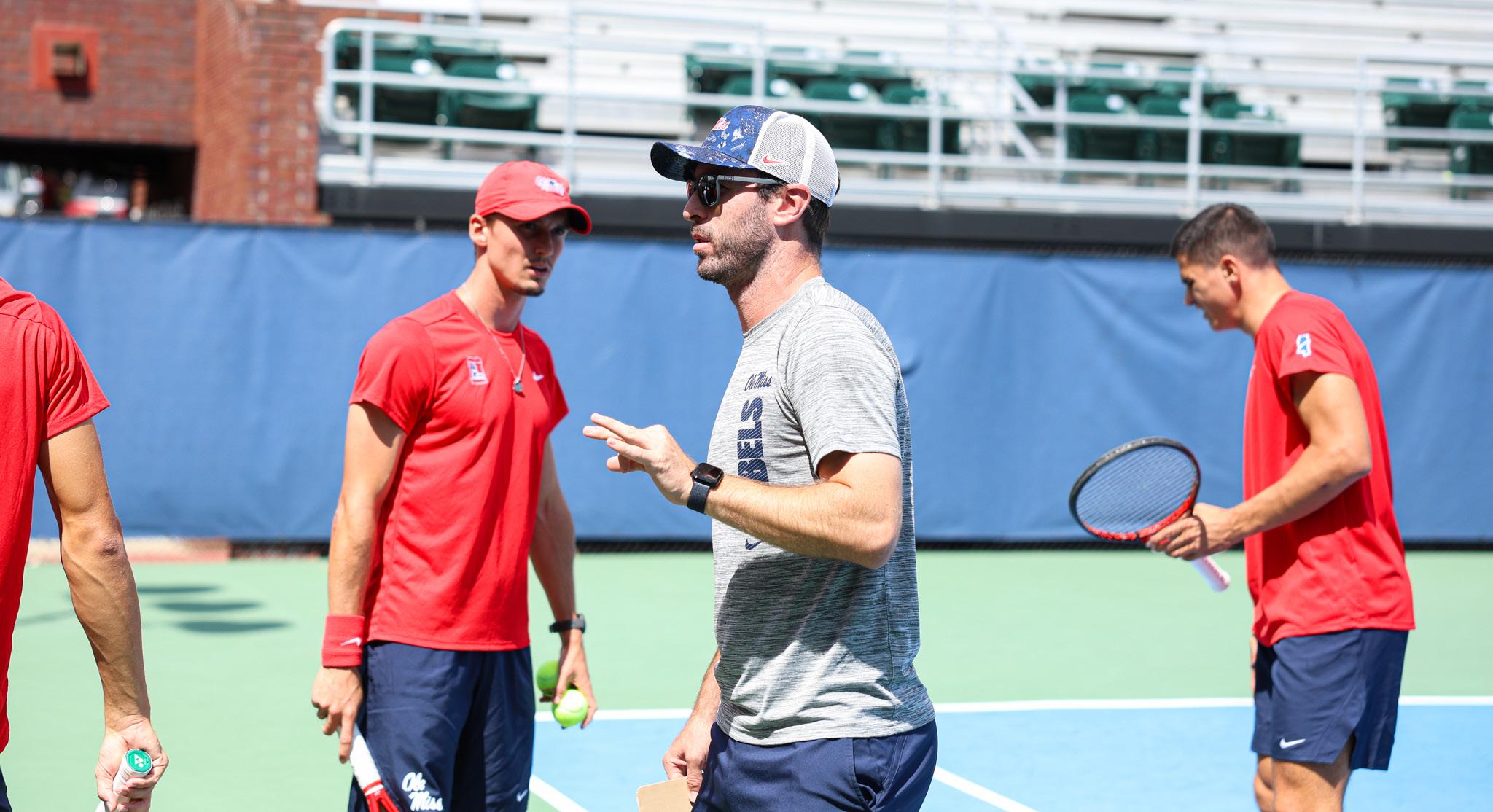
the head coach, but this is Ole Miss Men’s Tennis, and it’s their men’s tennis program.”
One of Jacoby’s main goals revolves around the Ole Miss community, specifically the fans who attend his team’s matches. He and his team honor the fans with a special ritual after every competition.
“One, (we hope to be) a program that the fan base in this community can be extremely proud of in terms of our engagement on the court in matches, and then off the court as well,” Jacoby said. “One thing we’ve implemented is, whenever there’s fans at the end of the match, we go up and say hello to them
and say thanks for coming.”
Jacoby hopes that this tradition will familiarize players with their biggest local supporters.
“Let’s develop a relationship so that it’s not just someone playing court three. (Instead), that’s a player from this town that I can get to know and build a relationship with and show that I support them,” Jacoby said.
Jacoby’s other goal is performance-based. He hopes to transform Ole Miss Men’s Tennis into one of the premier programs in the nation. To achieve this, he teaches his players to strive for excellence in everything they do.
“Two, (we hope to be) a pro-
gram that not only is competing in the SEC and making NCAA tournaments, but is consistently competing for Top 25 or better every year, ranking-wise,” Jacoby said. “We talk about letting results happen, but at the same time, they are nice goals to have, and if you have something to work towards, you can be more physical, more intense, more engaged every day.”

ETHAN TAVEL Sports Staff Writer
Times are changing in college sports. Previously, many regarded the SEC as the premiere league to play in. However, three straight years of a non-SEC national champion in football — better yet, three years with no SEC team advancing to the big game — have left this notion in question. So, in this shifting landscape of college sports, is the SEC’s reign of dominance finally coming to an end?
The short answer is no.
The transfer portal is rampant. NIL and revenue sharing have become a priority for most top-end players. Rather than wait their turn at an SEC school, players more often choose to play first at smaller schools with the hopes of transferring to and starting at bigger, more elite programs — while earning millions of dollars in the process.
Since Georgia’s championship in 2022, the Big Ten has won three in a row, and even the ACC made a national championship
game appearance this past season, in large part because of NIL.
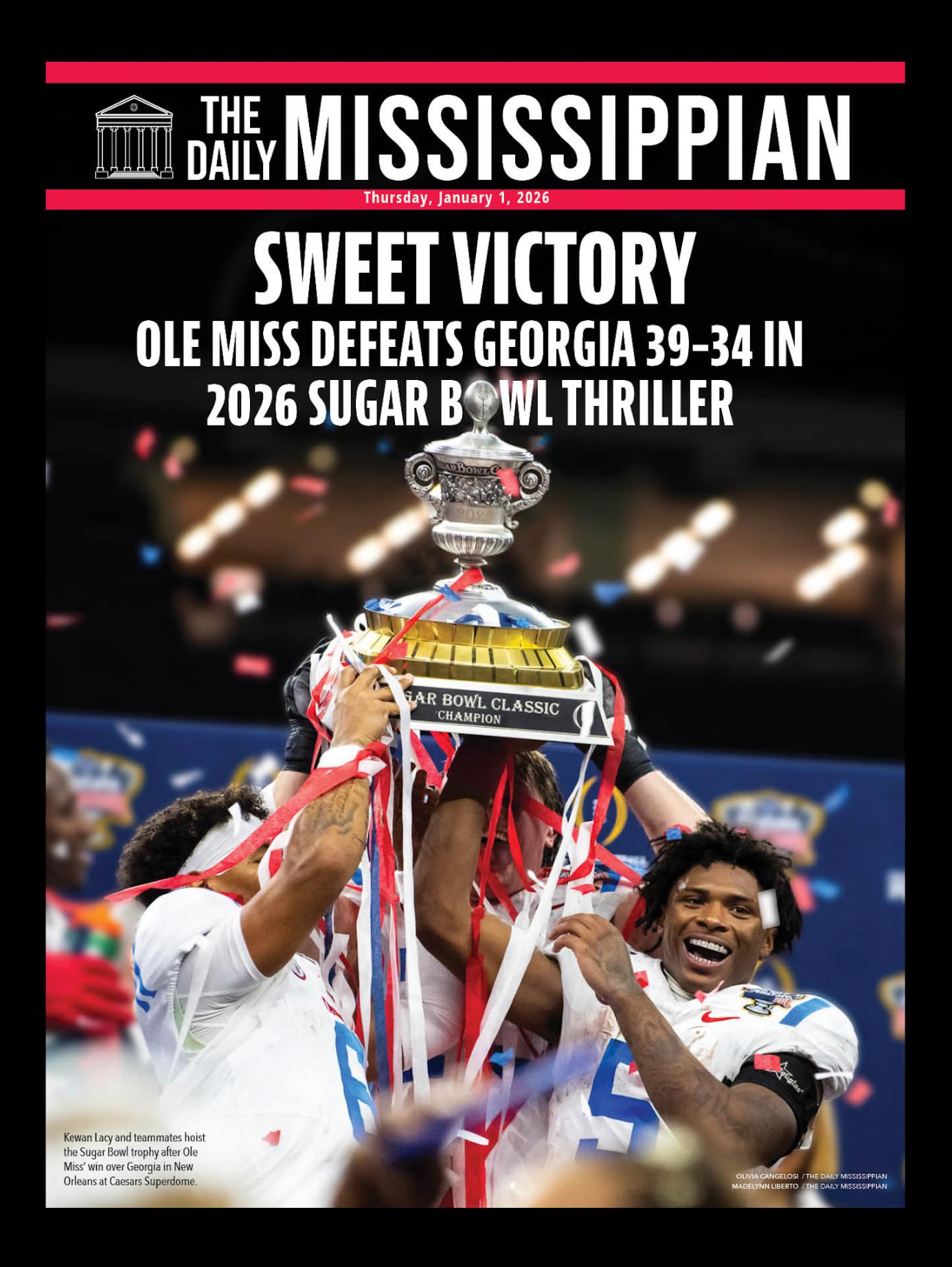
The Big Ten might have overtaken the SEC in terms of championship hardware, but the SEC is still very much a factor. This past season, four SEC teams qualified for the 12-team College Football Playoff bracket — a third of the field — and Texas also made an argument to be included. Ole Miss narrowly missed a national championship game appearance after a close loss to Miami.
In the 2024-25 season, Texas advanced to the semifinals. The year before, in 2023, Alabama made the field as one of the four College Football Playoff teams.
Besides, the SEC is still dominant in other sports. In men’s basketball last season, 14 out of 16 SEC teams qualified for the postseason, shattering the previous record of 11 teams from the same conference. Seven of these teams advanced to the Sweet Sixteen, four reached the Elite Eight, two reached the Final Four and Florida won the national championship.
In his most recent ranking, March Madness bracket expert Andy Katz predicted 10 SEC teams would make the men’s tournament this season.
On the women’s side, the last time an SEC team was not in the Final Four was in 2019. Last season, South Carolina lost to UConn in the national championship; SEC teams took home national titles the three years prior.
In baseball, a record 13 SEC teams qualified for the NCAA Tournament last season, eight of whom were regional hosts. LSU won the national championship, adding another trophy to the conference’s nine in the past 15 years and the sixth straight since 2019.
This season, 10 SEC teams are ranked within the Top 25, the most of any conference.

In track and field, counting Texas A&M’s tie with USC in 2025, the SEC has won five men’s championships in a row. On the women’s side, SEC teams have won two straight. Also, Florida won in 2022, and Texas, before they joined the SEC, won in 2023.
HENRY STUART Sports Staff Writer
Ole Miss Women’s Basketball is in the midst of a vital stretch of conference games. After losing to No. 18 Kentucky on Sunday, the Lady Rebels rebounded against No. 21 Tennessee on Tuesday. Now, they will take on No. 7 LSU at home tonight, then No. 3 South Carolina on the road on Sunday, Feb. 21.
The No. 17 Lady Rebels are currently 21-6 overall; at 8-4 in conference play, they are tied for fourth in the SEC with LSU and Tennessee. The Lady Rebels will jump the Tigers if they win the matchup tonight. They will then have to visit the Gamecocks, who sit atop the SEC with a conference record of 11-1 and an overall record of 25-2.
Head coach Yolett
McPhee-McCuin and her squad have already played two games in three days. These quick turnarounds make Top 10 games even more difficult to win, but, according to McPhee-McCuin in a postgame press conference on Feb. 17, the Lady Rebels will not shrink from the challenge.
“I don’t want that to be missed. No other team in the country has the schedule we have right now,” McPhee-McCuin said. “We’re playing in the toughest little stretch out of anybody. And not because of who we’re playing — we’re playing all these games in these amount of days. One day rest? We can’t even practice tomorrow (Wednesday), we didn’t practice today or before. But this team didn’t make any excuses; they came out there and played their hearts out.”
McPhee-McCuin chooses to

view the competitive back-toback schedule as an opportunity for the players to prepare themselves for the postseason, when there will also be quick turnarounds — though, admittedly, not this quick.
“This stretch that we’re in, there’s not a team that has this stretch,” McPhee-McCuin said. “What I want to say is that this will be harder than the NCAA Tournament.”
McPhee-McCuin also charged Ole Miss fans to do their part in supporting the team, specifically in the upcoming home game against LSU.
“I’m eight years in; we need you (the fans). We’re gonna need you on Thursday, when we go up against No. 7 LSU,” McPhee-McCuin said. “The only thing that’s going to help us get through that game is crowd support, because it matters.”
Complete the grid so that every row, column and 3x3 box contains the numbers 1 through 9 with no repeats.

So, though the SEC may be lagging a bit in football — at least, according to its own lofty standards — in recent years, the conference is not fading
by any means. It remains one of the best conferences in the country, if not the best outright.
Sports television personality Stephen A. Smith will be in attendance for the game after McPhee-McCuin invited him to visit on his show on Jan. 21. The Ole Miss Football team will also be in attendance.
Tip-off between the



“Mississippi’s Constitution begins with ‘We the People.’ Those words are not decorative.”
TAYLOR YOUNG Opinion Staff Writer
American history is, in part, defined by a struggle over rights — what they mean, who holds them and who decides when they can be exercised. In Mississippi, this struggle has taken an unusual form.
The state constitution grants citizens the right to bring forth a constitutional amendment by ini-
tiative, commonly called a referendum. Currently, however, Mississippians cannot exercise this right.
The initiative process was enshrined in the constitution, stating that “The people reserve to themselves the power to propose amendments to this Constitution and to enact or reject the same at the polls independent of the Legislature.”
This right has been under fire throughout much of the state’s his-

tory; it was taken away from the people in 1922 by court proceedings but reestablished in the 1990s.
After a brief 30-year stint, however, this right has once again been taken away.
In 2020, the state passed initiative measures 65 and 65a, commonly known as the medical marijuana amendments. To the surprise of many, Mississippians voted for both of these amendments by an overwhelming majority, with respectively 68% and 73% of the population casting ballots in favor of them.
The following May, the state’s Supreme Court ruled both of these initiatives invalid — not based on policy, but because the initiative petition failed to meet a constitutional requirement.
Mississippi requires an initiative brought forth by the people to receive a constitutionally mandated number of signatures. However, signatures must be equally distributed among the state’s U.S. congressional districts.
What, then, is the problem? Our constitution requires signatures to be distributed among its five congressional districts. Following the congressional reapportionment in 2001, however, the number of Mississippi’s congressional districts was reduced to four.
So, while the process remains in the state constitution, it cannot legally be carried out.
Ultimately, the state legislature stepped up to overwrite the mix-up by passing its own medical marijuana bill. Yet Mississippians remain unable to initiate a constitutional amendment.
Last week, the state senate elections committee moved to table SB 2920, which would have restored this constitutional right. The effort continued in the state senate through a concurrent resolution but ultimately died on the senate floor.
Since 2021, state politicians and elected officials have expressed concerns over reestablishing this right, citing a fear that it could attract dark money from special interest groups that do not have to disclose their donors. Referendums are expensive endeavors and can entice groups seeking to circumvent the legislative process.
Although the concerns of the legislature have merit, they do not outweigh the long-term harm to our rights. The Mississippi Constitution begins with “We the People.” Those words are not decorative.
As former President Abraham Lincoln once said, “We the people are the rightful masters of both Congress and the courts.” As we have
given our government its power, it is within the legislature’s authority to step in when the initiative process is broken. In fact, it is their duty.
For students at the University of Mississippi, civic duty does not end at presidential elections.
Charles Miller, a second-year law student from San Antonio, said, “Referendums are an important part of democracy. When a legislature fails to effectuate the will of the people, the people have a right to speak.” Miller expressed surprise when hearing about the current state of referendum rights in Mississippi. “I think if the right is promised in the constitution, it should be maintained, even if the number of districts has changed in the last 130 years,” he argued. Many actions or inactions in government go unnoticed. Like Miller and myself, we must ask the important questions while paying attention to local matters. A right that exists in theory is not much of a right at all, but a democracy without participation is even less so.
Taylor Young is a second-year law student from Gulfport, Miss.
CONTACT THE OPINION DESK AT thedmopinion@gmail.com
“Our need to constantly feel admired and appreciated has led me to believe that so much of our mental energy — maybe too much — goes into chasing the state of being chosen, rather than simply choosing ourselves.”
RILEY ALTIERE Opinion Staff Writer
You are someone else entirely when you remove the need for romance.
As I scroll through Instagram and TikTok, especially after Valentine’s Day, my feeds are flooded with digital postcards of seemingly perfect relationships. When I spend time with my friends, I find that more often than not, the topic of discussion is one of our momentary “situationships.”
Will it last? Maybe not — but gossiping about the prospect is indisputably exciting.
Our need to constantly feel admired and appreciated has led me to believe that so much of our mental energy — maybe too much — goes into chasing the state of being chosen, rather than simply choosing ourselves.
This generation craves love so much that it has evolved into something entirely different, something I like to call “fast love.” When we are desired, we conflate it with feeling loved. Yes, being wanted might feel like love in a way. But for love to manifest, it must last. For the most part, situationships certainly don’t.
The goal is simple: We, as a generation, want to be immediately seen, recognized and unconditionally loved.
This desire is unique and a
Opinion Policies:
product of the environment we have been brought up in. The rising use of social media and dating apps has raised us to expect instant gratification in every aspect of life, including relationships.
With endless options available at the tip of our fingers and constant validation through likes, messages and comments, emotional connections can be replaceable and temporary.
Because of this, many young people are subconsciously trained to seek quick bursts of attention instead of investing in the slower process of building long-term love. This digital atmosphere reinforces the idea that connection should be immediate and intense, even though relationships rarely work that way.
I have been there — caring deeply for someone who never felt the same, building up a relationship in my head before anything real had begun. It is heart-wrenching. It hurts especially when you are a teenager and feel something that you think is love before a tangible bond has even blossomed.
The intense emotion we feel after first contact is not love. Rather, it is infatuation. The line between love and infatuation is often blurry. At the onset of a new connection — a number exchanged at a coffee shop or a match obtained on Hinge — a magical feeling can obscure the development of an authentic bond.
Rather than saying we are infatuated by who a person is or how they treat us, we say we love that person.
As college students, we are often ambitious and busy, yet emotionally, many of us still feel unwhole without a relationship. We are in a constant state of planetary orbit, gravitating from one obsession to another.
That pressure to always have someone as the finishing piece to our fulfillment puzzle compounds the mindset that being single is a temporary problem, a personality flaw or even a failure.
When we look at our seasons of singleness as a problem, love becomes a survivalistic need. This mindset cancels out the standards that we would normally uphold when entering a new relationship.
We ignore red flags, shrink ourselves into a mold to stay chosen, confuse attention with authentic affection and enter a constant state of silent panic when initial infatuation wears off.
Oxygen is necessary for survival. Contrary to popular belief, romance is not. So, why do we treat it like it is?
It is uncomfortable to admit that much of our identity is shaped by how we want to be perceived. We want to sport designer bags to show others we have achieved an enviable status.
Romance is no different. When we have a partner, we show others that we are achieving a rela-
Columns do not represent the views of The University of Mississippi or The Daily Mississippian. The

tional status that many desire.
With nobody texting us, flirting with us or validating us, the version of ourselves that does not perform or wait for others is revealed. That version is often quieter, lonelier but ultimately more honest.
There is freedom in that state of emotional independence, but there can also be fear. There is no one to project our meaning onto and no one to absorb our uncertainty.
Independence asks us to sit with who we are and can feel heavier than a breakup. The majority of the time, independence is when we realize we like ourselves way more than we thought we would. When we center our lives around romance, we lose sight of more important things: loving our-
selves, creating genuine friendships and building a future of fulfillment. We become lost in a sea of wanting to be seen and desired, and in the process, stop seeing ourselves. Romance is not your lifeline; it is a choice and not a necessity. We should treat romance as such. I am someone else entirely when I remove the need for romance. Maybe that is the version worth meeting first.
Riley Altiere is a freshman journalism major from Alpharetta, Ga.
CONTACT THE OPINION DESK AT thedmopinion@gmail.com
welcomes letters to the
which should be emailed to thedmopinion@gmail.com. Letters should be no longer than 300 words. They may be edited for clarity, brevity and libel. Third-party letters and those with pseudonyms or no name will not be published. Letters are limited to one per individual per month. Letters should include contact information, including relationship to the university, if applicable.
Stress
Pain
Increased
Detoxification
Lower Blood
Anti-Aging & Skin Rejuvenation
Improved Circulation
Weight Loss