University of Mississippi community rebounds after Winter Storm Fern
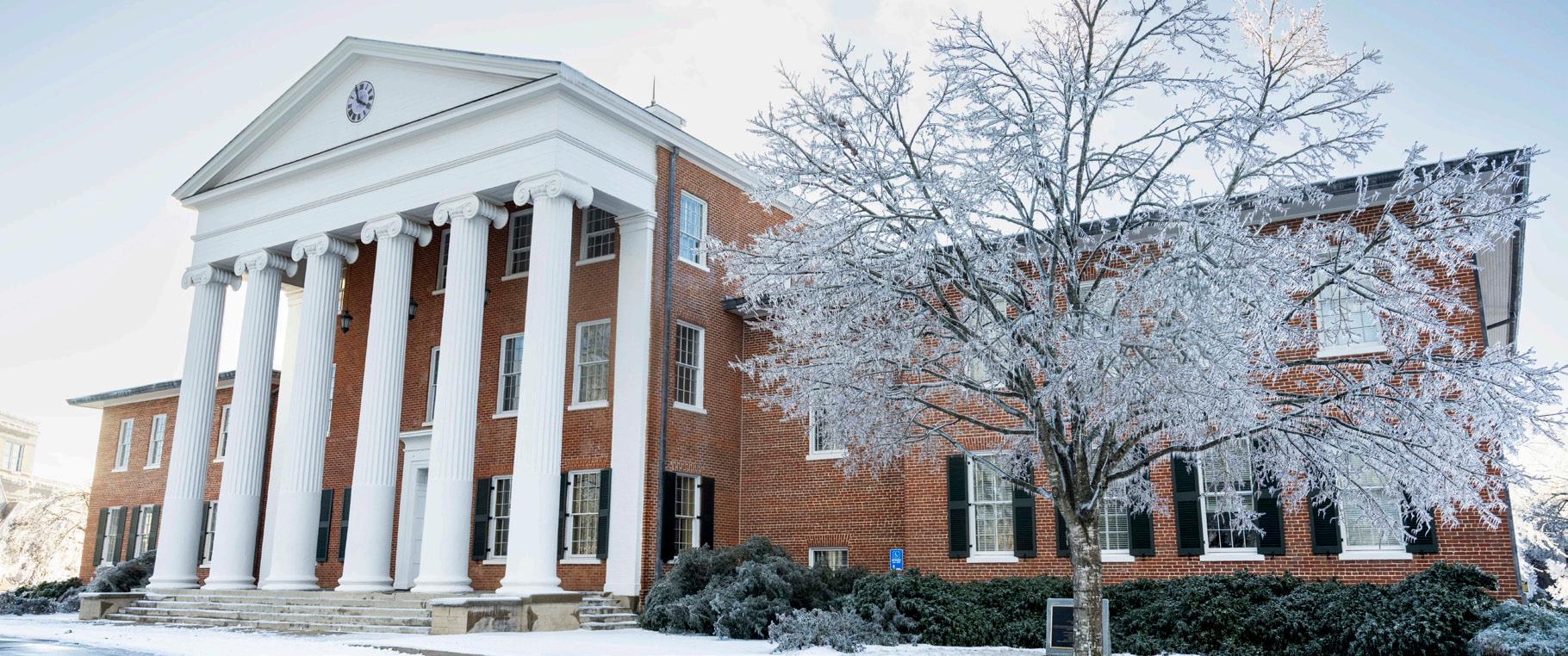
The storm hit Oxford and the university on Saturday, Jan. 24, covering the city and campus in a sheet of ice. Many residents went without power, food and shelter for days on end. The Daily Mississippian recounts their stories of devastation and recovery in this special edition. WHAT WAS THE COST?
With the ice now gone, where did we see the impact?

ICE STORM OF 1994
Thirty years ago, Oxford weathered a similar winter storm.


Meet the people who helped their neighbors overcome the hazardous conditions.
JACK KIRKLAND / THE DAILY MISSISSIPPIAN
OLIVIA CANGELOSI / THE DAILY MISSISSIPPIAN
JACK KIRKLAND / THE DAILY MISSISSIPPIAN
AIDAN PONIATOWSKI News Editor
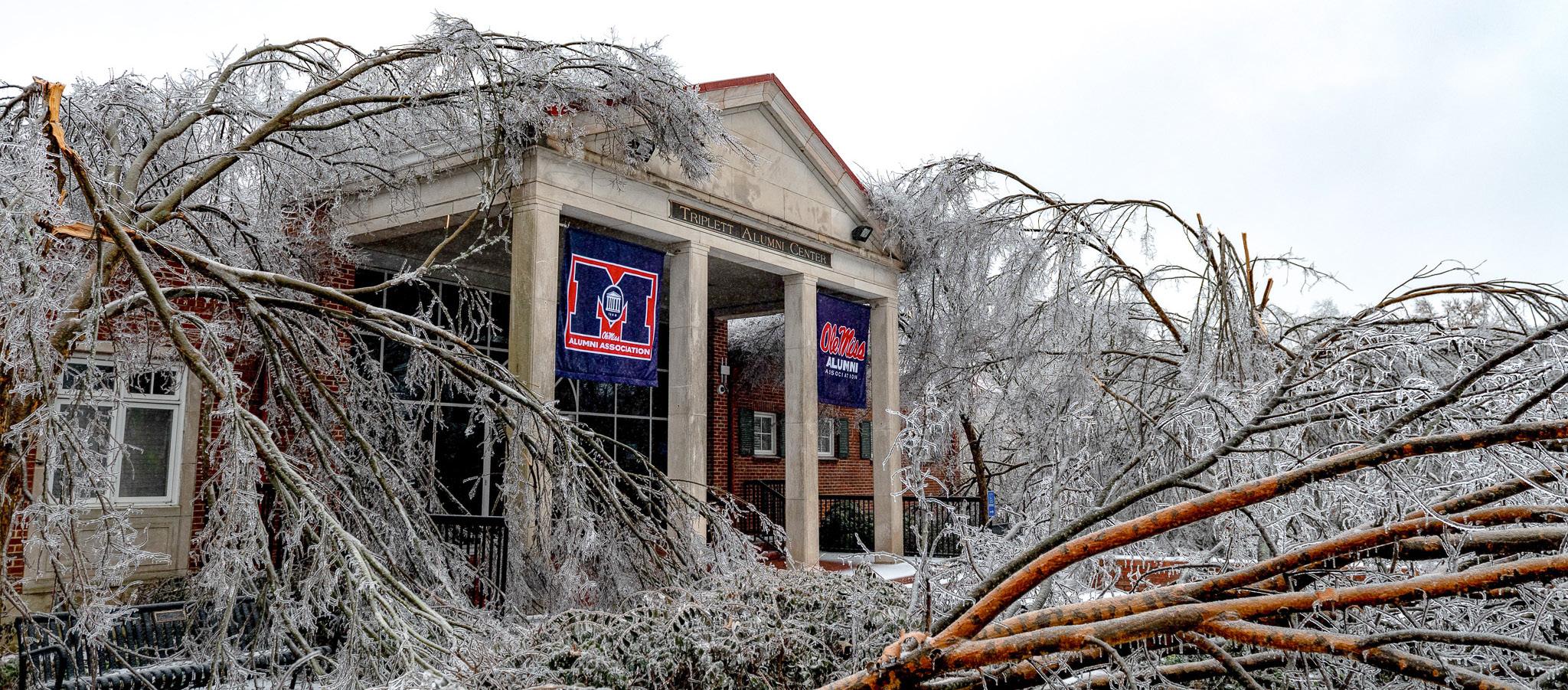
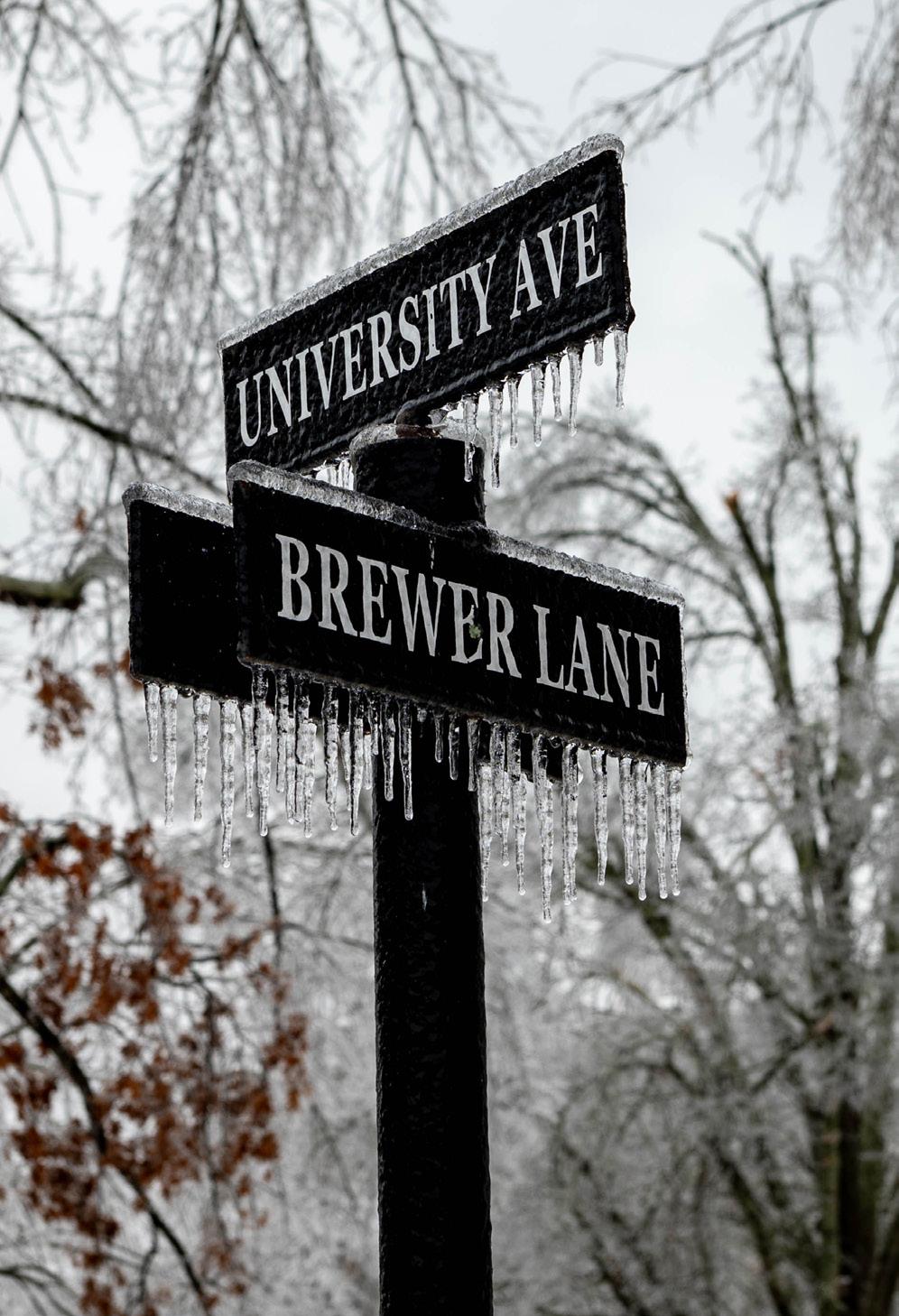
In the early-morning hours of Saturday, Jan. 24, Winter Storm Fern brought freezing rain and sleet to Oxford, closing campus from Saturday, Jan. 24 until Sunday, Feb. 8. The storm’s precipitation caused trees to collapse and surfaces to ice over, leading to power outages, dangerous road conditions and water shortages.
Nearly three weeks removed from the storm, the impact is still felt on campus, in Oxford and beyond. Downed trees, cleanup crews and building maintenance serve as a reminder of the destruction left in Fern’s wake.
Despite the disaster, the Oxford community has banded together in the past weeks. Prime evidence of this comes courtesy of the Rebel Relief Disaster Fund, established following Fern. The fund aims to help students who faced unexpected travel costs or difficulties in covering food or living expenses.
“Students enrolled at least half-time can apply, and applications are reviewed through the UMatter team and the Office of Financial Aid to confirm eligibility and need,” Batte said to The Daily Mississippian. “As of today, more than $500,000 has been raised, and more than $215,000 has been distributed to more than 800 students. Staff are working as quickly as possible to review pending applications.”
While Fern may have damaged buildings and trees, Oxford’s spirit remains unbroken.
Loss of life
At least 153 people are reported to have died in North America as a result of Fern, with at least 25 people in Mississippi alone, per Mississippi Emergency Management Agency (MEMA) reporting from Feb. 2. Two of the 25 deaths occurred in Lafayette County, according to MEMA. Mississippi and Tennessee had the highest number of casualties among states hit by Fern with 25 each.
The cost of catastrophe: Effects of Winter Storm Fern linger
Debris clean-up
Debris removal efforts, including the disposal of downed trees, remain underway at the university. On Monday, Feb. 9, the Institutions for Higher Learning Board of Trustees approved up to $10 million to go toward UM cleanup efforts and debris removal.
The expectation is the university will pay cleanup costs upfront and will seek reimbursements from the Federal Emergency Management Agency (FEMA) and MEMA, as well as university insurance.
“It’s still too early to provide a total cost estimate,” UM Director of News and Media Relations Jacob Batte said in a statement to The Daily Mississippian. “The university is covering immediate response and restoration costs. At the same time, we’re documenting storm-related expenses and pursuing any reimbursement that may be available.”
Oxford Mayor Robyn Tannehill estimated during a Board of Aldermen meeting last week the total cost of debris removal in the city to be more than $16 million.
Building closures
Buildings across the university campus experienced storm damage, causing some temporary closures.
The Sally McDonnell Barksdale Honors College experienced a water leak, causing flooding in the main hall of the building. The building was temporarily closed, and inside access was restricted as a result. It reopened with the university on Monday, Feb. 9.
On Wednesday, Feb. 11, the honors college announced it would close its basement study area, known as “the dungeon,” until further notice.
“As a result of storm damage from Winter Storm Fern, there are ongoing issues with electrical power, persistent odor concerns and issues with furniture,” Honors College Dean Ethel Scurlock said in an email to the honors community. “Several tables have
swollen due to moisture exposure, and some furniture pieces have physically broken apart. Out of an abundance of caution, we cannot allow students to use the space until these conditions are properly addressed and the area is safe.”
The V.B. Harrison Building, which houses University Health Services (UHS), also experienced flooding. Student Health Services has temporarily moved to its South Oxford Center location on South Lamar Boulevard until repairs are made to its on-campus building.
“We anticipate Student Health Services will remain at the South Oxford Center for several weeks and will provide updates as plans are finalized for a return to normal operations on campus,” Director of UHS Alex Langhart said in a Feb. 5 email statement.
Employee Health Services and Pharmacy Health Services locations remain unchanged.
While the Turner Center avoided flooding and the gym reopened, the center’s natatorium will be closed for repairs until further notice due to water pump issues.
Canceled events
Numerous events scheduled during the university closure were canceled or postponed.
University of Mississippi College Democrats canceled its watch
party of NBC’s “Dateline” special covering the Jay Lee trial and the greater Justice for Jay Lee movement. The special aired on Jan. 30.
The honors college rescheduled its Honors College Formal for April 18, previously scheduled for Feb. 7. The Honors Research Symposium and Spring Convocation, previously scheduled for Feb. 10, has been rescheduled to March 4.
The Gertrude C. Ford Center for Performing Arts announced it canceled the Jan. 29 showing of the musical The Choir of Man and plans to refund all ticket holders.
Return to learning
In an email announcement on Thursday, Feb. 5, Chancellor Glenn Boyce announced that students would return to school on Monday, Feb. 9. He also said the university would shorten its semester by two weeks and keep spring break on the calendar.
“We have worked with the U.S. Department of Education to adjust our academic calendar, allowing us to shorten our semester and maintain spring break during the week of March 7,” Boyce said in his statement.
While the announcement is welcomed by students with spring break plans and graduating seniors, it has also left professors to restructure syl-
labi to accommodate two weeks of missed instruction.
Student workers
The university also announced that it would pay its student employees for time missed during the break.
“The university recognizes the financial impact that Winter Storm Fern and the resulting campus closure may have had on our student employees,” a Feb. 5 email announcement from Executive Vice Chancellor and Chief Operating Officer Steven G. Holley and Vice Chancellor for Student Affairs Shawnboda Mead said. “To support our student non-exempt (hourly) employees during this disruption, the university will pay student wages for scheduled work hours missed while campus operations were suspended due to the storm for the pay period, Jan. 25-Feb. 8.” Students were instructed to input scheduled hours during the two-week absence into Workday, the university’s new human resources platform, before Feb. 9, in time for the Feb. 13 payroll deadline.
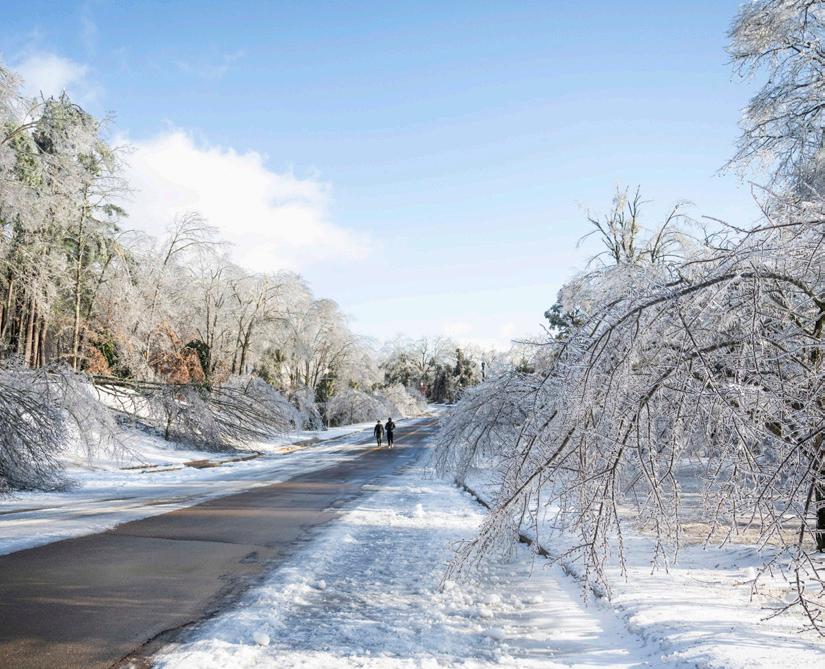
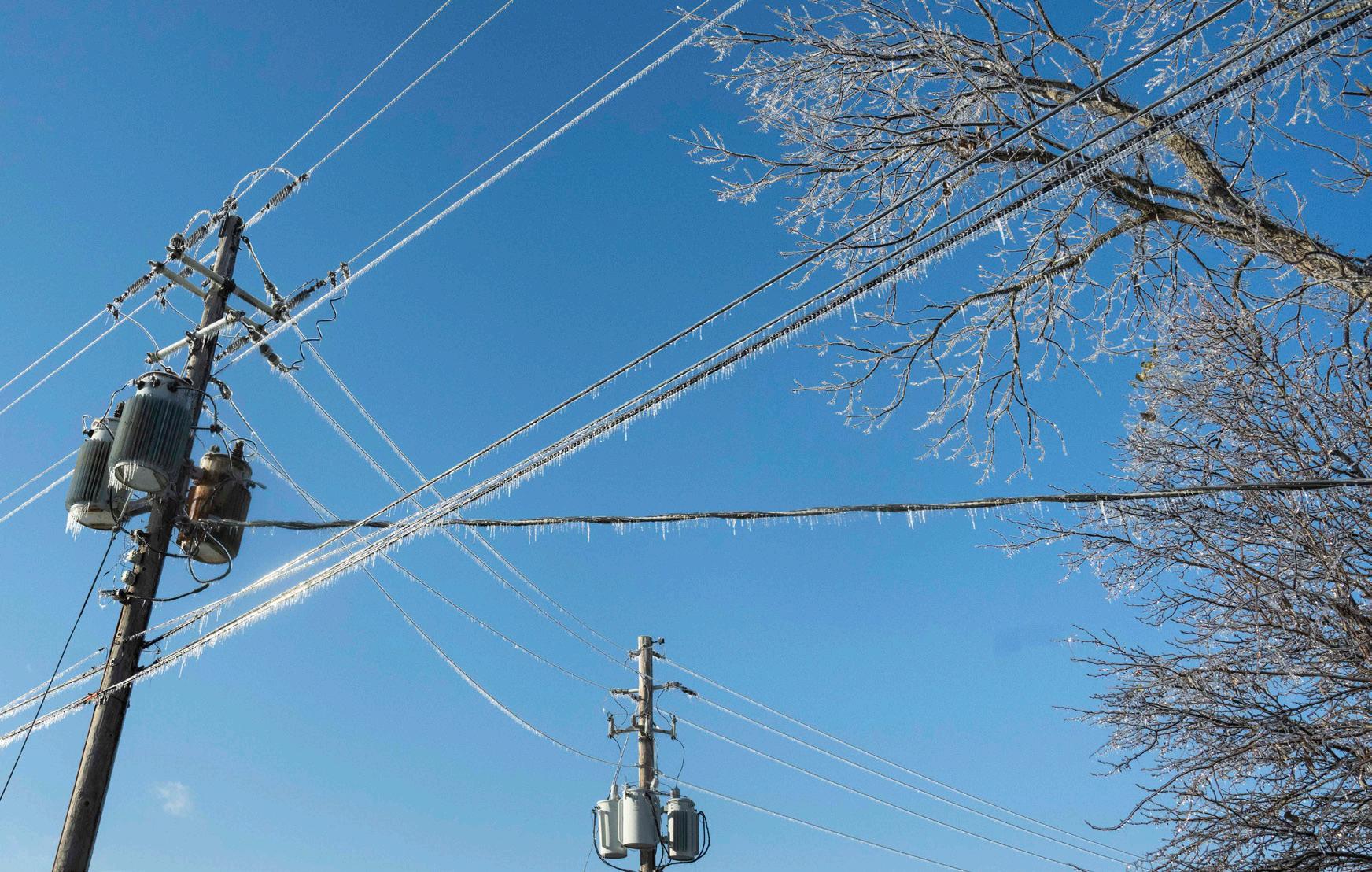
Ice covers power lines on Anderson Road on Jan. 27.
OLIVIA CANGELOSI / THE DAILY MISSISSIPPIAN
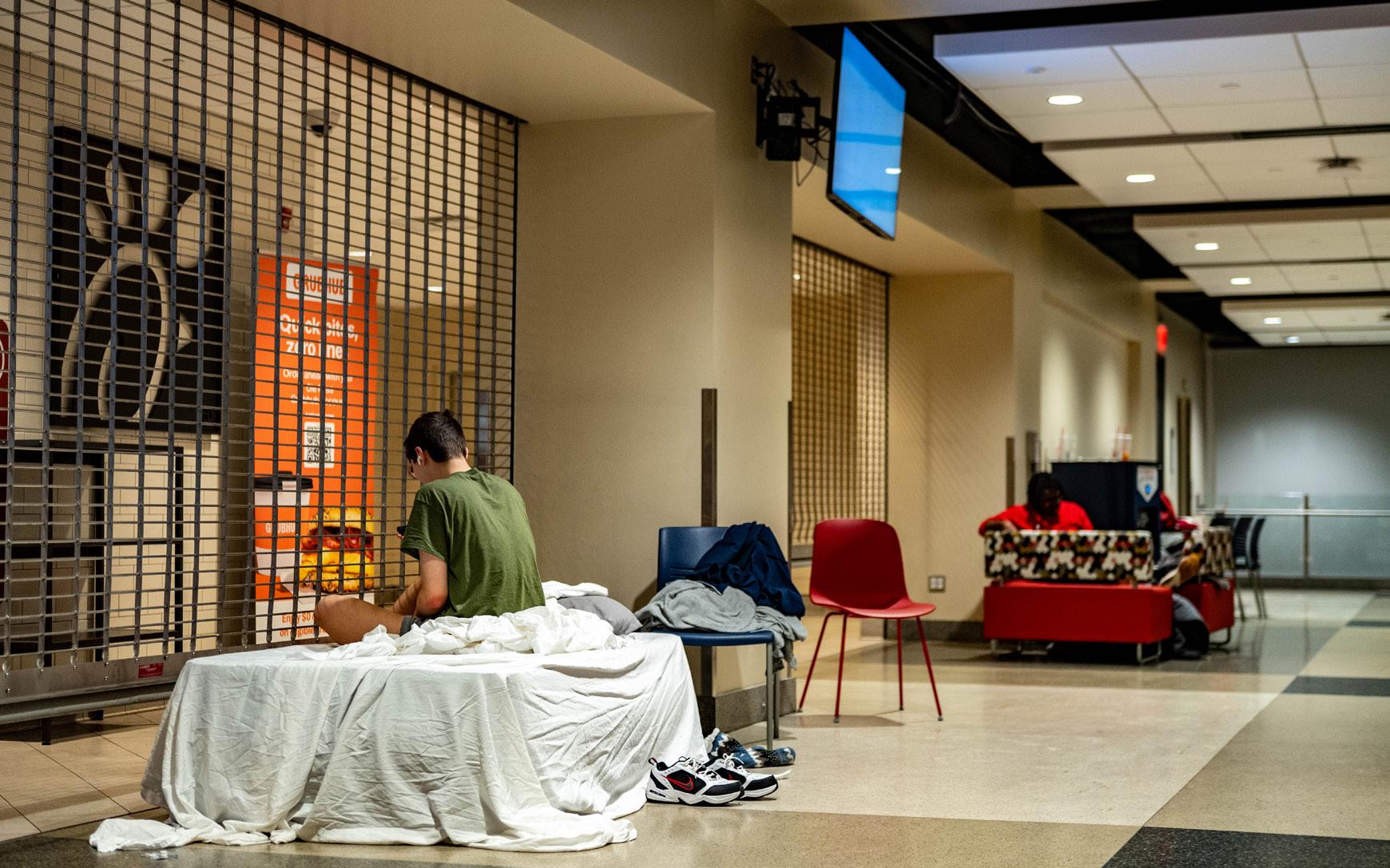
Student seeks shelter in the Gertrude C. Ford Ole Miss Student Union on Jan. 29.
JACK KIRKLAND / THE DAILY MISSISSIPPIAN
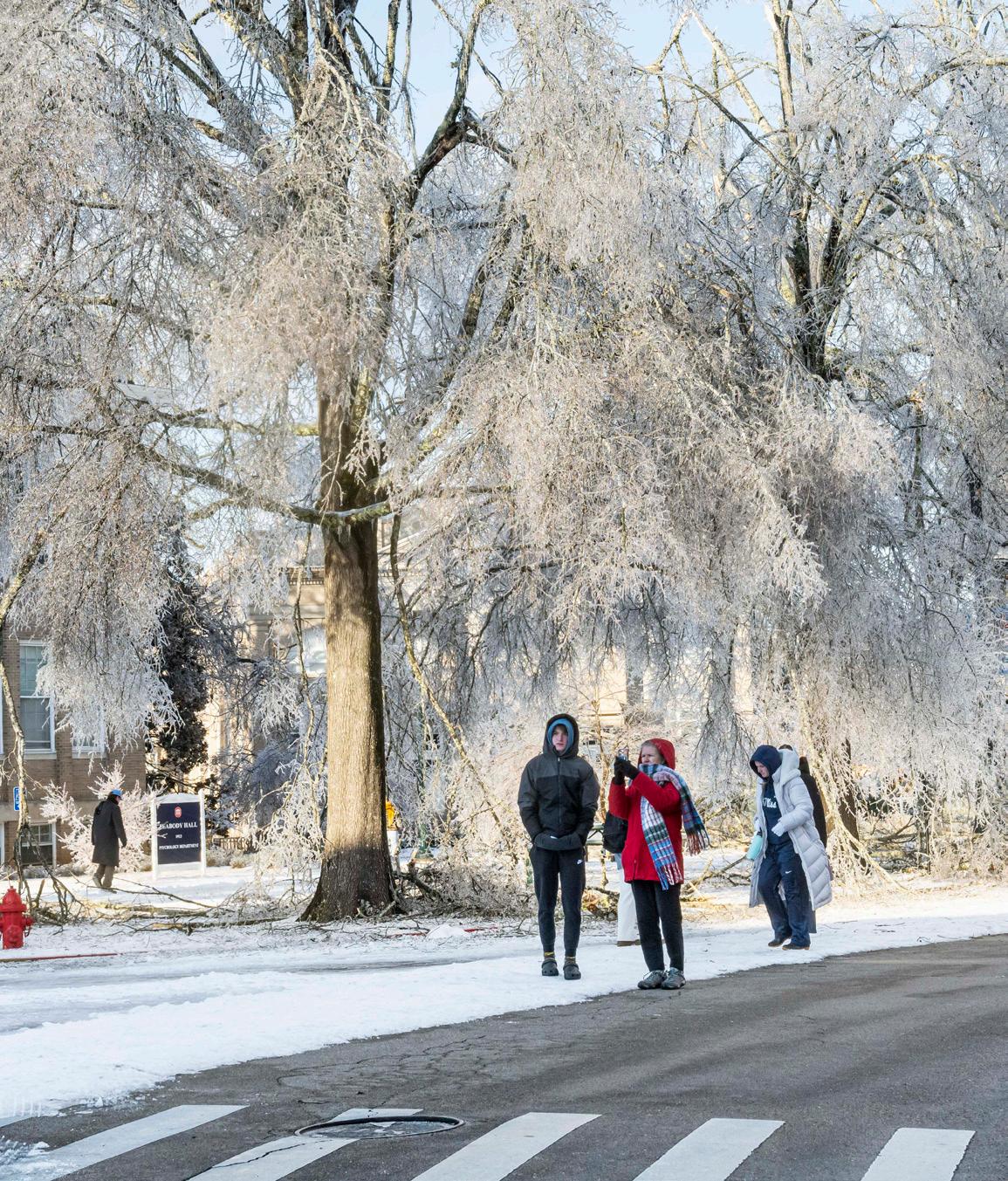
woman photographs the icy landscape on campus on Jan. 27.
CANGELOSI / THE DAILY MISSISSIPPIAN
THE DAILY MISSISSIPPIAN EDITORIAL staff
CLAY HALE editor-in-chief dmeditor@gmail.com
RAEGAN SETTLE managing editor dmmanaging@gmail.com
SYDNEY STEPP copy chief thedmcopy@gmail.com
CAMERON LARKIN digital editor dmdigitaleditor@gmail.com
AIDAN PONIATOWSKI news editor thedmnews@gmail.com
NOAH WALTERS assistant news editor thedmnews@gmail.com
JAYLYNN CONNER arts and culture editor thedmfeatures@gmail.com
JESSICA JOHNSON assistant arts and culture editor thedmfeatures@gmail.com
RUSS EDDINS sports editor thedmsports@gmail.com
NATE DONOHUE assistant sports editor thedmsports@gmail.com
LENORA COLLIER opinion editor thedmopinion@gmail.com
OLIVIA CANGELOSI photo editor thedmphotos@gmail.com
JOURNEY GLOVER assistant photo editor thedmphotos@gmail.com
MADELYNN LIBERTO design editor thedmdesign@gmail.com
FARIDA BELAL assistant design editor thedmdesign@gmail.com
MARY EVANS multimedia coordinator dailymissmedia@gmail.com
AVERY THOMAS social media manager thedmsocialmedia@gmail.com
CADENCE MANNING assistant social media manager thedmsocialmedia@gmail.com
S. Gale denley student media center
LARZ ROBERTS Director of Student Media
DENNIS MOORE Editorial Director
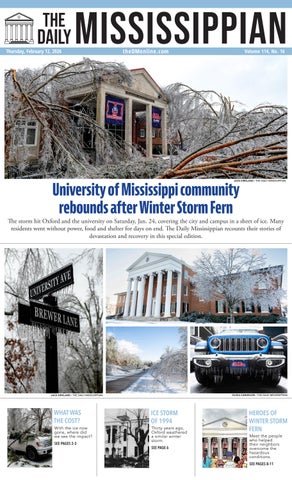
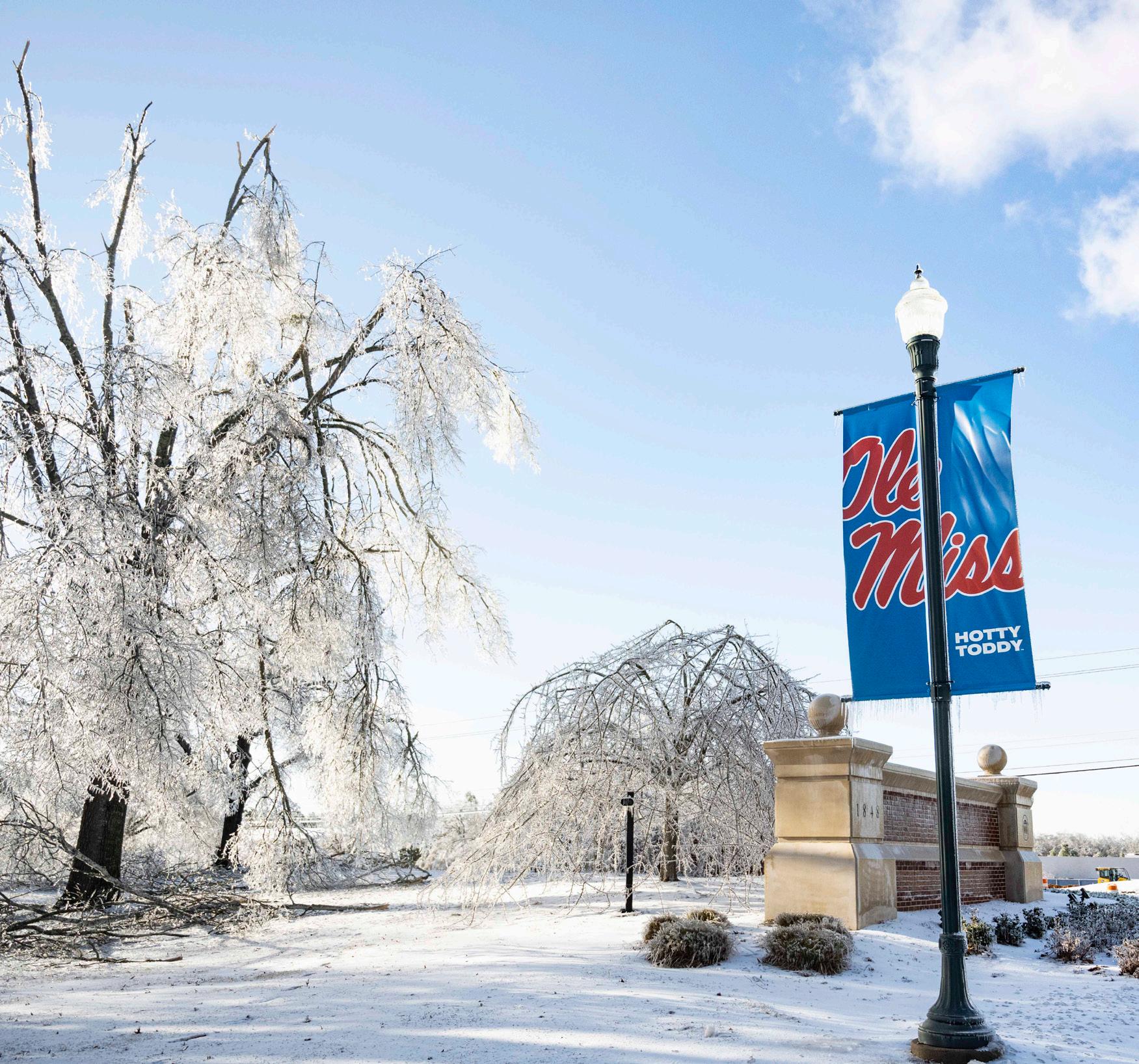
An Ole Miss banner hangs in front of ice-covered trees on Jan. 27.
OLIVIA CANGELOSI / THE DAILY MISSISSIPPIAN
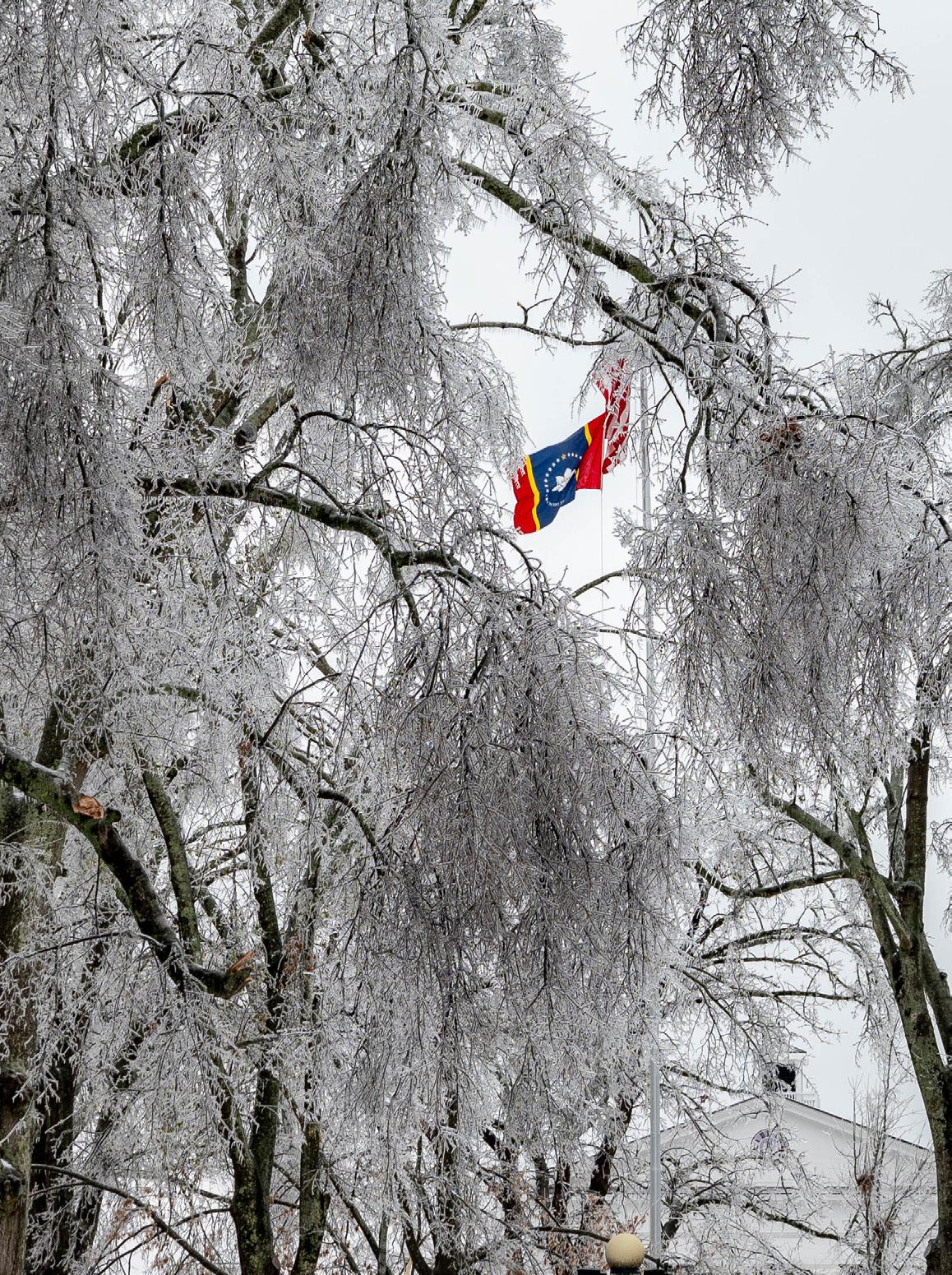
The Mississippi state flag flies behind icy trees in the Circle on Jan. 27.
JACK KIRKLAND / THE DAILY MISSISSIPPIAN
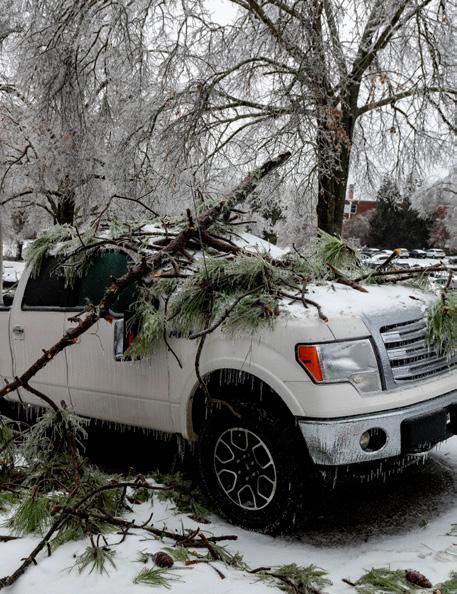
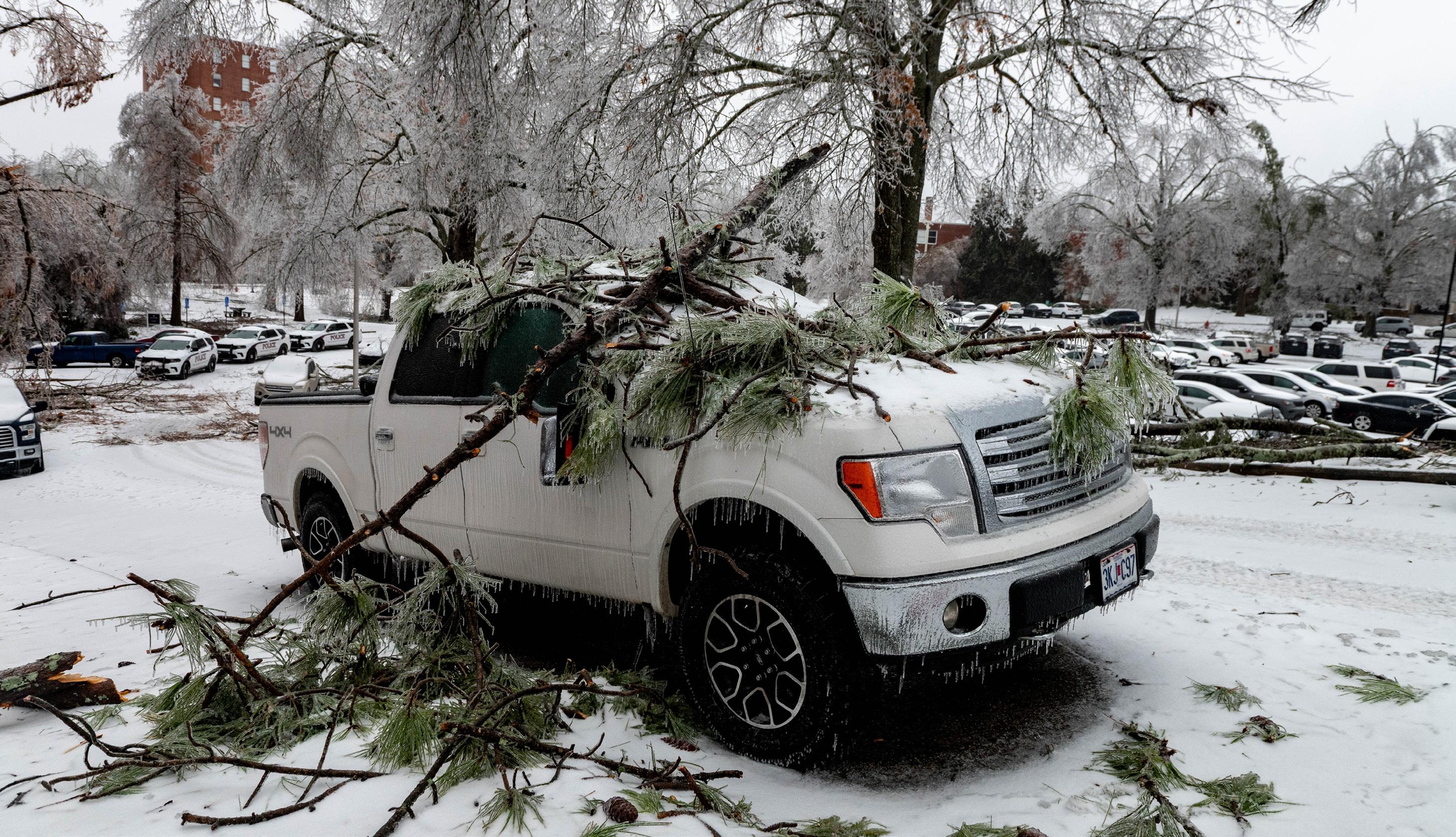
A tree limb falls on truck in front of Deaton Hall on Jan. 27.
JACK KIRKLAND / THE DAILY MISSISSIPPIAN
JACK KIRKLAND News Staff Writer
Winter Storm Fern wreaked havoc on greenery across campus in January. While there is still much work to be done, the university’s Department of Landscape Services and independent contractors are working hard to bring the campus back to life.
Chancellor Glenn Boyce detailed the storm’s environmental impact on campus in a letter sent to university stakeholders last week. He described the university’s preservation efforts and the extent of damage to campus landscaping.
Of the more than 130 tree species on campus, red oaks and maples fared the worst. Trees were removed entirely if they met one of the following conditions: losing 30%-40% of their canopy, losing larger limbs on one side of the tree or by losing their resilience with age.
While much of the university’s greenery survived the storm, there is still a sizable amount of foliage to be removed.
“We estimate 95% of the trees weathered the storm pretty well, but we have 14,000 trees on campus,” Nathan Lazinsky, director of landscape services, said. “I think we’ve already pruned over 2,100 trees in … about 10 days now. So it’s been rocking and rolling.”
Lazinsky estimates that the remaining 5% of trees, around 700, will have to be removed in the coming weeks.
He fears the process may be lengthy and continue into the future due to budget and government regulations. The university, he said, has requested funds from the Federal Emergency Management Agency to offset the costs of landscaping damage.
Despite the damage seen across campus, landscape services and contractor teams have high hopes for restoring injured landscaping.
“Our hope is to make it better than it was before. And again, that’s a hard pitch to catch. But I’m going to do my best to do it, and I know our team will too,” Lazinsky told The Daily Mississippian.
Boyce said the university plans to replant a tree for every one cut down following Fern. He emphasized his faith in landscape services and contracting
Landscape workers clear the way for campus regrowth
teams to restore the former beauty of the UM campus.
“Those in our community who were here in 1994 remember a similar storm and the recovery that followed,” Boyce said. “Our landscape rebounded, and it will do so again. The trees we plant today will grow and serve our campus for decades to come.”
The landscape services team includes experienced International Society of Arboriculture Certified Arborists, qualified in tree risk assessments useful for evaluating storm damage, and partnering ISA Certified Arborist consultants.
The 5% of trees that cannot be recovered, according to Lazinksy, will largely be chipped and repurposed elsewhere. Some logs, especially those that hold some sentimental value, may be repurposed to build furniture.
“We have a natural debris site that we use on campus,” Lazinsky said. “Typically, we use that as our treecycling program. We chip everything up every two, three years and then repurpose those chips on campus.”
Treecycling is the process to sustainably reuse trees to be made into mulch or compost.
In addition to landscape services, contractor teams are also working on the ground. Woodland Tree Service is the primary contractor for rehabilitating the Grove and Circle following the aftermath of the storm.
Terran Arwood, president of landscaping contractor Woodland Tree Service, said that the damage of the storm was difficult to anticipate.
“For the people that are involved in the leadership here, this is probably a once-ina-career, once-in-a-lifetime type of thing, so nobody’s prepared for it,” Arwood said.
The landscaping team faced complex challenges over the past two weeks. Both Lazinsky and Arwood voiced difficulties regarding getting their employees to job sites.
“There’s two weeks straight in the early part of it (Winter Storm Fern), we’re driving down here in slabs of ice, and then the interstates closed,” Lazinsky said. “There’s no place to stay here, so you’re talking about 20-hour days.”
These difficulties result in fewer staff members showing up, meaning less efficient cleanup efforts.

“Our staff had a few reporting in the last two weeks, but some didn’t,” Arwood said. “I mean, we probably had a third of our staff reporting in.”
However, both groups remained dedicated with several employees who began cleanup efforts during dangerous conditions. Lazinsky gave credit to his staff members who reported to campus during the two-week university closure, noting that many had no power, water or heat.
“They take a lot of pride in what they do, and obviously by showing up here, cutting their way to work without water and power,” Lazinsky said. “To me, when you have a team that’s brought in with pride … you can’t stop that.”
Both Woodland Tree Service and UM Landscape Services have been put to the test repairing damage from Winter Storm Fern, yet the workers remain resilient and positive that they will
restore campus to a condition even better than before.
“I think the layperson, if they came and visited next fall for a tailgate, I don’t think that they would honestly even notice it,” Arwood said. “In some way, they’re even safer now than they were before the storm because there’s a lot of reduction of weight.”


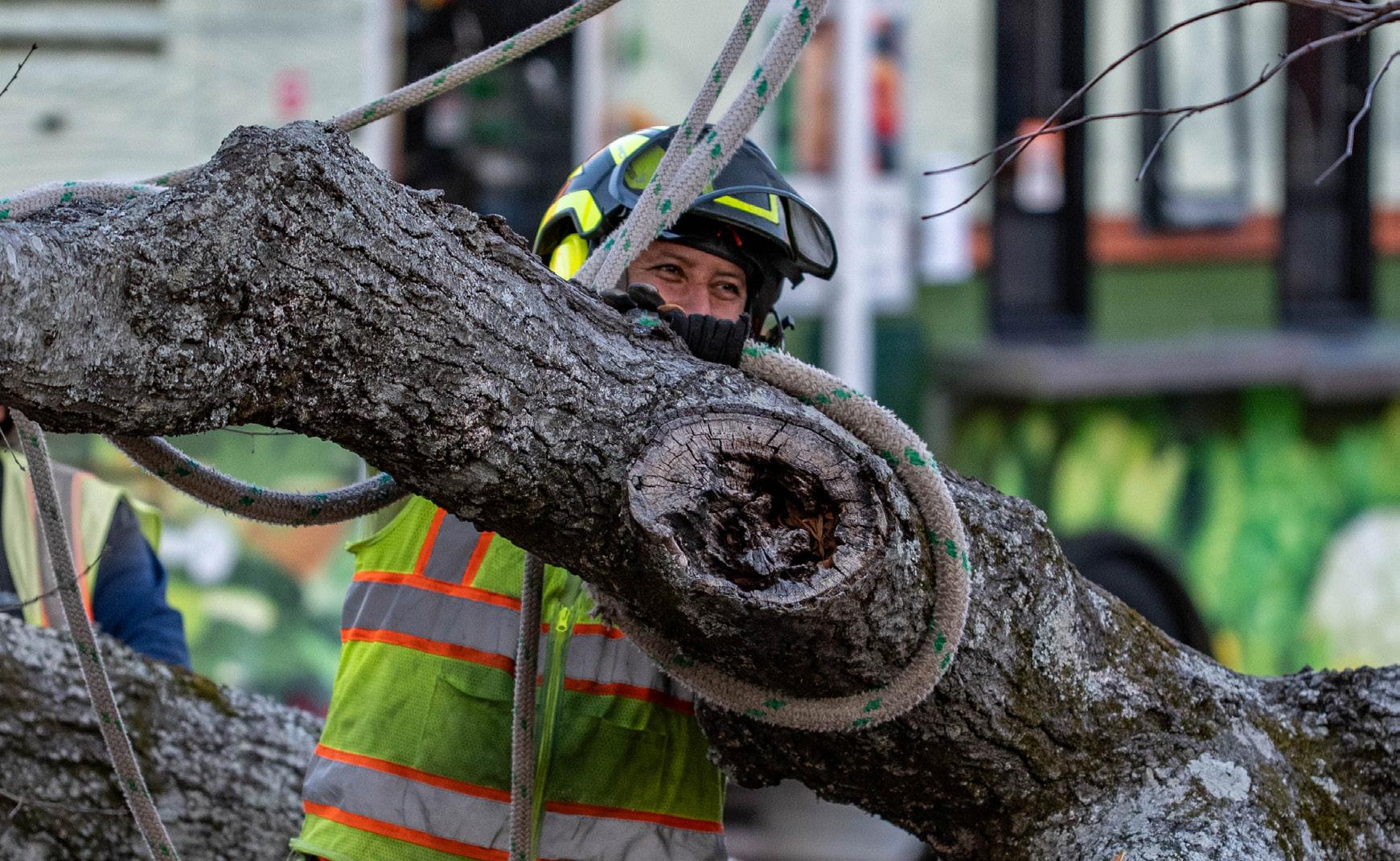
A landscaping contractor secures a tree limb before cutting it on Feb. 9.
JACK KIRKLAND
Professors adjust classes after campus closure
In the wake of the two-week campus closure following Winter Storm Fern, University of Mississippi professors had to adjust their class curriculum and syllabi to make up for lost instructional time.
In an email sent to the UM student body by Chancellor Glenn Boyce on Thursday, Feb. 5, he confirmed that the university would shorten its semester by two weeks, keeping spring break intact and the Commencement date unmoved.
Two weeks of lost time can be detrimental for a professor, especially for those that meticulously craft their syllabi to spread out their schedule in the most optimal fashion.
“It’s going to be a lot more work because of the truncated time frame,” Vanessa Charlot, assistant professor of media and communication, said. “Balancing teaching, workload and students and personal projects that are research-based as a professor, it’s going to be a very hectic semester.”
Professors must adapt quickly as they select what material to prioritize and what topics can be cut out. Each professor is using a different strategy to move forward, carefully considering what will work best with their content, students and learning goals.
Charlot teaches JOUR 103, a large intro-level lecture class, and JOUR 576, a smaller graduate-level class.
One of Charlot’s main focuses has been making sure that her students feel supported and not overwhelmed

as their classes resume. She has pushed back deadlines and made notes available ahead of time to help with the transition back to campus.
“I do think that students may feel a little bit overwhelmed just because some of the material still needs to be covered, not just in my class but other classes,” Charlot said. “I hope that they don’t feel rushed throughout the semester, and I know that me and my colleagues are actively working to ensure that that does not happen. But I do think that they’re probably going to get a truncated experience with a lot of material, and so the students are going to have to show up.”
Caroline Wigginton is the chair of the Department of English and an associate professor of English. This semester, she is teaching HON 102 and ENG 775, a graduate-level literary studies seminar.
When Wigginton was adjusting her course curriculum, one of her main goals was to maintain the arc of the class while also sufficiently hitting all the learning objectives she set for her students.
“For me, it’s trying to figure out how to not just, for example, cut off the end last two weeks, but how to preserve the structure of the course,” Wigginton said. “So that might be by shortening some readings. It might be, with my graduate students, trying to schedule some additional optional sessions for things that they may be interested in doing.”
Other professors, such as Graham Pitts, had protocols already in place in their syllabi. Pitts works in the Croft Institute for International Stud -

ies as an associate professor of history and international studies. This semester, he is teaching INST 209 and HIST 355.
“I build the flexibility automatically into the syllabus. So it’s not a heavy lift for me to condense some readings and the material that would have taken three weeks into a week and a half,” Pitts said. “So without sacrificing rigor, without sacrificing … the arc of the course, we don’t ask the students to work more. We just work better.”
Pitts also emphasized the importance of professors and students working together, accommodating one another in the aftermath of this difficult situation.
While some syllabi have flexibility already weaved into them like Pitts’, not every department or professor has that same advantage. Ryan Fortenberry is an associate professor of chemistry and biochemistry teaching CHEM 332 — a junior-level chemistry course that is often a prerequisite for graduate-level chemistry classes.
Fortenberry is doing his best to adjust his in-class workload to accommodate for the two-week loss. However, he and the rest of the chemistry department face a unique struggle because of the chemistry labs that work along with the course.
“We have a certain number of laboratory exercises that we expect the students to get through. They have learning outcomes; they are necessary for higher level classes; they’re necessary for accreditation,” Fortenberry said. “Now, we have two less weeks to get through them. So do we cut a lab? Do we cut a laboratory exercise? Do we change the way we assess the way that those laboratory exercises are presented to the students? That is going to be the biggest difficulty for the chemistry department.”
While every professor is taking a different approach in adjusting classes and work schedules, collaboration between the students and the teachers is a consistent theme. Adaptation is a skill that professors are emphasizing for both themselves and their students to ease the stress
that will come with changes in workload and class structures.
“We’re all going to have to hold our hands and give each other a lot






DYLAN THOMAS News Staff Writer
Caroline Wigginton
PHOTO COURTESY: UNIVERSITY OF MISSISSIPPI Graham Pitts
Ryan Fortenberry
Vanessa Charlot
vu: Residents compare Oxford’s 1994 and
CHANCE MARLOWE News Staff Writer
As Winter Storm Fern hit Oxford, many Oxonians and University of Mississippi students were left without power, water or a warm shelter.
“Nothing prepares you for hearing your neighborhood come apart in the dark,” Kitty Hurdle, a staff member for campus ministry Ole Miss Cru, said, describing her experience during Winter Storm Fern. “We thought we were prepared, but the reality of it was overwhelming at times.”
More than 30 years earlier,
Oxford heard the same sound.
R. Gerald Turner, chancellor of the University of Mississippi from 1984–95 and now president emeritus of Southern Methodist University, shared his firsthand experience of the 1994 ice storm that hit Oxford.
“That night it sounded like somebody was out in the yard
shooting shotgun shells. You’d hear a crack, then a boom, and then (the limb or the tree) would hit the ground,” Turner said. He and his family lived in Carrier House, the UM chancellor’s official residence.
“The next day it looked like a tornado had come through the yard, the house, the campus.”
Like Fern, the 1994 ice storm left significant damage to buildings and surrounding infrastructure. The roads were obstructed for several days and cleanup crews were busy for close to a month.
“I’ve had lots of pictures sent to me, and I don’t know how you could tell the difference between what you have this year and what we had in ’94,” Turner added.
This year, the university informed students that the semester calendar would be shortened by two weeks, leaving dates for spring break and commencement convocation as scheduled.
“I’ve had lots of pictures sent to me, and I don’t know how you could tell the difference between what you have this year and what we had in ’94.”
- R. Gerald Turner
storms

While commencement was rescheduled in 1994, Turner recalls adding Saturday classes to students’ schedules to make up for class time missed.
“My memory is that we had some Saturday classes to make up some time, but I don’t remember us delaying commencement,” Turner said.
During Winter Storm Fern, the university opened the Gertrude C. Ford Ole Miss Student Union as a 24-hour warming
House for students, faculty and locals to use the hot water for showers during the ice storm.
“At that time, we had more generators. The chancellor’s house was only out for three days. We had a lot of people come to our house to get a hot shower,” Turner said.
During Fern, the power outage forced many Oxford businesses to close their doors. The historic Square Books was out of business for
ually maintain commerce and help Oxford cure their boredom.
“We just wrote down the books that we sold and did the cash register the old-fashioned way. We wrote down credit card numbers and rang it up after the power came back,” Roberts said.
A 91-year-old resident of Ellison Assisted Living of Oxford, Jimmie Sparks, remembers her experience in rural Lafayette County during the 1994 ice storm.


Fallen trees outside of the Lafayette County Courthouse on Feb. 15, 1994
MILAN PEKAREK / THE DAILY MISSISSIPPIAN
CLAY HALE Editor-in-Chief
The Gertrude C. Ford Ole Miss Student Union opened its generated warmth and electricity to students on Monday, Jan. 26 as a shelter from Winter Storm Fern.
Though some students traveled to their hometowns to escape the icy aftermath, many stayed on campus and crafted community in the midst of the storm.
Classes on the Oxford campus at the University of Mississippi were closed from Monday, Jan. 26 until Friday, Feb. 6, and as the weeks went on, fewer and fewer students needed to use the Union’s resources. But on that first Monday, the Union was stuffed with students and their supplies.
Jakiyah Campbell, a junior radiology student from Winona, Miss., took advantage of the Union’s warmth alongside her friend Ke’Amber Conner, a junior law studies major from Noxubee County, Miss. Campbell learned about the ice storm on Facebook, and her
Friends, felines and food: Community cracks the campus cold
parents contacted her to express the severity of the situation.
“I had to go to the grocery store and start stacking up, and I couldn’t really get (anything) because they were out of everything. I got some things but not enough; I couldn’t do (anything) with it,” Campbell said.
Campbell lives at The Suites Oxford, and prior to braving the ice for the Union alongside Conner, she was surviving off Flamin’ Hot Cheetos, Doritos and saltine crackers. Conner’s conditions at Rev Oxford Student Apartments were not better.
“I do not have power,” Conner said. “Our hot water is not working; we have been taking cold showers. (And we have been) bundling up under like three to five covers and layers of clothes.”
Conner and Campbell did not have a ride to campus before Monday, Jan. 26, and when they arrived, the Union’s power was temporarily out, which meant they were unable to charge their devices. To pass the time — and fill their stomachs — they ventured over to Rebel Market, where UM allowed

anyone to eat for free over the two weeks that campus was closed.
Conner and Campbell ended up stationed on the bottom floor of the Union, where they brought their essentials to stay the night.
“I brought a toothbrush,” Campbell said. “And I’ve got my shower things.”
Conner, in addition to toiletries, packed up several devices to charge.
A family on the make-shift, reorganized Union couches offered Campbell and Conner food they had to spare.
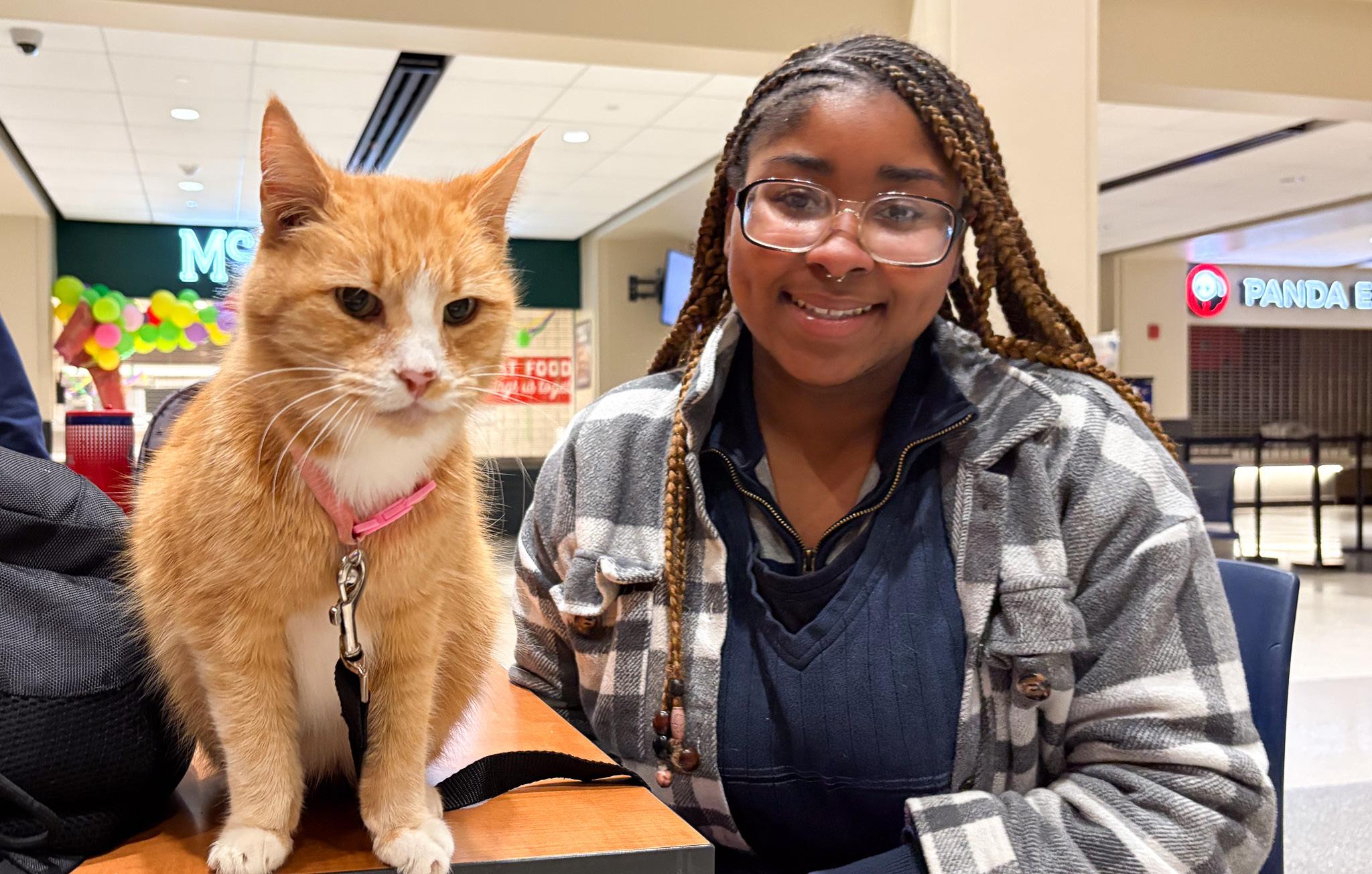
Below a television set in the food court area sat another group of friends. But in addition to similar necessities as Conner’s and Campbell’s, an orange tabby cat named Garfella sat perched on a Union table.
“My best friend brought (Garfella) … for me, because she’s my roommate. … (Garfella) was gonna stay at the apartment for the night. And we finally convinced (my roommate) to come and bring both the kittens with her, and she did,” Syrianna Jones, a sophomore special education major, said inches away from Garfella and her other roommate’s cat. “I didn’t think about litter and everything, so I’m just gonna see what happens.”
Jones, like Conner, lives at Rev Oxford. She, alongside her roommates, were trekking over to campus until a police officer offered them a ride to the Union.
Garfella was one of many pets at the Union over the two weeks it was open. Jones says she did not expect the ice storm to have the impact it had.
“I feel like this is apocalyptic times,” Jones said. “It’s so spooky outside. There’s no power anywhere — that’s scary.”
The Union, alongside several dormitories, were not without power. In fact, that evening, several food trucks were open, too. Munchies Chicken and Waffles was one of the trucks open for students, first come, first serve. Hundreds of students placed their order for a hot meal while available, offering some sense of normalcy.
Among those in the Grubhub queue was freshman psychology major and RC South resident Matthew Cronin.
“I don’t have a roommate, but I’ve got a friend who’s been crashing with me these past couple of days,” Cronin, a Brandon, Miss., native said. “We’re at the Union right now. … We’re just trying to stay somewhere warm while we wait on (our food) to get ready.”
Cronin admitted that he did not heed the warnings issued about Winter Storm Fern, and he paid for it in hunger.
“As much as I don’t wanna admit it, I had multiple people tell me — beginning of the week — ‘Stock up on food,’” Cro-
nin said. “I was like, ‘Ah, it’s not gonna be that bad.’ So I’ve eaten through most of my food already.”
With his friend, multi-disciplinary studies major Jackson Herrera from Water Valley, Miss., to his right in the Union, Cronin shared how he had witnessed the community come together on campus.
“There’s been a lot more talking to people,” Cronin said. “We ran into people who were sledding with Tupperware containers, cardboard boxes, duffle bags — whatever — and they’ll let you use their stuff. And we were all just sledding together down the hills.”
Though the Ole Miss campus faced devastating damage to its trademark flora, among many other negative effects, Jones was grateful for the connection that she was granted with her peers.
“It’s really forcing you to go out and make connections because after freshman year, when you’re not really on campus, it’s easy to let go of that,” Jones said. “But having this time right now, it’s great, and especially having to rely on each other too, as a community for resources and everything, that’s bringing us closer together.”

Syrianna Jones sits with her cat, Garfella, in the Gertrude C. Ford Ole Miss Student Union on Monday, Jan. 26.
CLAY HALE
Jackson Herrera and Matthew Cronin wait
Jan. 26.
Oxford and the University of Mississippi came together to support one another during and after Winter Storm Fern. This special section includes some of those stories.

Meet a lineman who brought power back to Oxford
SYDNEY STEPP Copy Chief
Linemen and electrical engineers worked around the clock to return power to Oxford and the University of Mississippi campus as quickly as possible after experiencing historical damage from Winter Storm Fern in January.
Shedd Castle is an Oxford native and a lineman with Oxford Utilities who has been working on lines damaged by the ice storm since Jan. 31.
“We showed up that Saturday before the storm, and we were on standby to take outages and stuff,” Castle said. “They got to me about 7 o’clock that evening. The city provided us a hotel and fed us. About 10 o’clock
at night, my phone rang, and we had our first outage. And we tried to work outages ‘til about 4 o’clock that morning.”
The damage to power lines was so extensive, Castle said, that the crew was working 14 to 15 hours a day for 12 days straight.
While being a lineman is a notoriously difficult and dangerous job, Castle said that he started in the line of work because he genuinely loves it.
“I thought it was cool,” Castle said. “It allows me to work outdoors. I wanted a career that … allowed me more freedom outside.”
Castle completed his six-yearlong lineman training in 2021 and then worked with the Water Valley Electric Department for two years before moving to Oxford Utilities.
“Trees were falling in the distance, and it almost looked like the Aurora lights. Seeing lines falling down, it looked like explosions. It honestly was just the most insane thing I’ve ever seen.”
- Shedd Castle Oxford Utilities lineman
Despite training and working as a lineman for over a decade, Castle said that working during the storm is different than anything he has encountered before.
“It was a lot different for us, because (with) our utility (service), we typically know what’s going on,” Castle said. “Whenever you have 150 people all helping, plus tree crews, you have to communicate. It is just a lot of logistics behind it, because you don’t want anyone to get hurt, right? I think the ice made it twice as difficult, because there were places we couldn’t access, even with four-wheel-drive trucks. You try to go up a hill, solid sheet ice, and it was just inaccessible.”
The scene that Castle saw while working during the storm was also different from his typical work.
“Trees were falling in the distance, and it almost looked like the Aurora lights,” Castle said. “Seeing lines falling down, it looked like explosions. It honestly was just the most insane thing I’ve ever seen. My foreman, about 4 o’clock, he said, ‘This is too dangerous. We just have to call it for the night before someone gets hurt.’”
While he was working on lines, Castle’s wife, Mary Castle, stayed at their house without power for five days.
“It’s what I signed up for,” Shedd Castle said. “I knew that was part of the job when I applied for it. She understands, she took care of the house … and was amazing through it, but my job demands are to work storms, be on call, be away from my fam-
ily, be gone for several days and that’s just what comes with it.”
Mary Castle also supported her husband through prayer.
“I’d be at the hotel room, she’d be at the house without power,” Shedd Castle said. “(At every) chance, she prayed for the safety of me and the people I worked with.”
Her faith kept her grounded while her husband was out working.
“Updates that Oxford Utilities and the mayor would put out on Facebook (helped me while he was gone),” Mary Castle said. “He, of course, shares his location with me, so I could look it up and just see where he was in Oxford, even though I couldn’t talk to him, (and) obviously, faith. I knew that the Lord’s will would play out with how he wanted it, and I trusted that he would protect them.”
While Shedd Castle is part of the team that restored power to
Oxford, he also emphasized how the process has been made possible by the entire community.
“(I want to) just emphasize how grateful Oxford Utilities is as a whole and how supportive the community was,” Shedd Castle said. “They provided us with whatever we needed. We had resources. People took time away from their families and got out there to just give us hot coffee. I work with an awesome group of people that put (in) as much effort (as they could), and this entire community came together to restore the lights.”
GRACE ANN COURTNEY / THE DAILY MISSISSIPPIAN
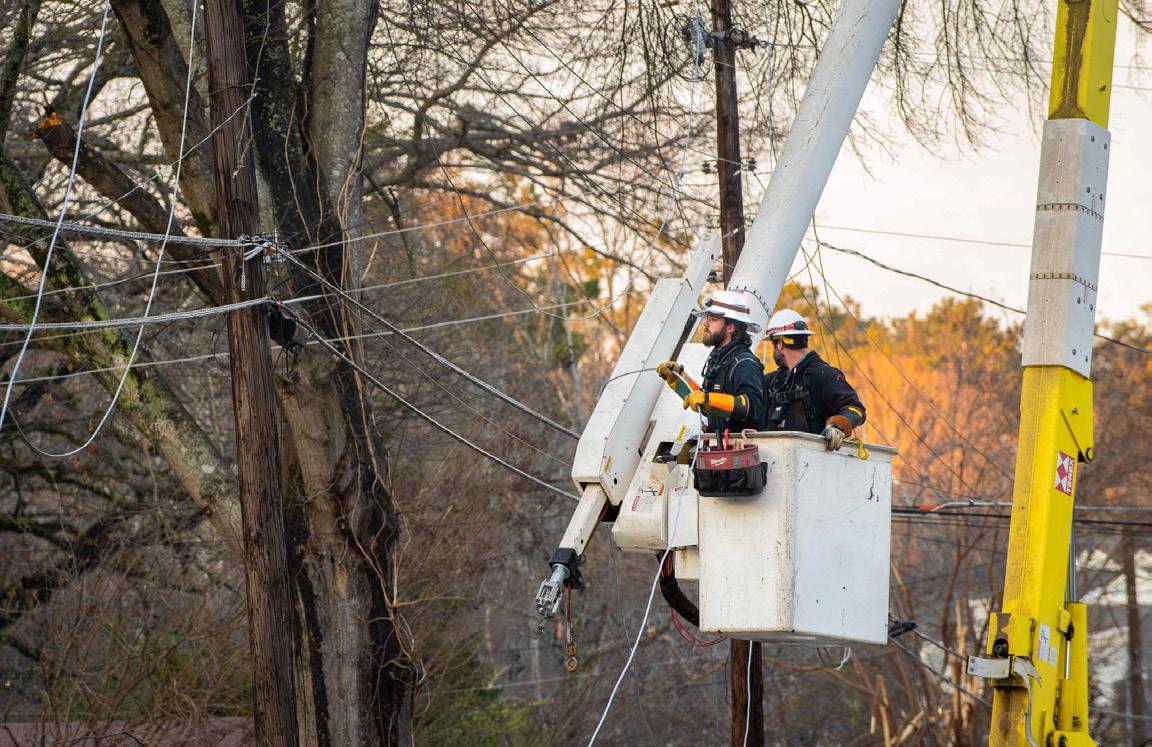
Two linemen work to restore power lines in Oxford on Jan. 29.
OLIVIA CANGELOSI / THE DAILY MISSISSIPPIAN
Local restaurants serve free hope and hot plates
JESSICA JOHNSON
Assistant A&C Editor
Following Winter Storm Fern, many Oxonians were left without heat or water — and with growling stomachs.
To address the needs of the community, various local restaurants gave away meals for free, including Connie’s Chicken and Loco Taco.
From Jan. 30 to Feb. 5., Connie’s Chicken offered meals to those in Oxford and Lafayette County, free of charge. The fast-ca-
sual restaurant served sausage and chicken biscuits and donuts for breakfast, as well as chicken tenders and fries for lunch and dinner.
Sam Pennington, general manager of Connie’s Chicken in Oxford, said the destruction from the storm put pressure on everyone in the community.
“We knew a lot of people were without work for a week or two,”
Pennington said. “Money’s probably tight. You’ve got to repair your house, or something got hit.”
Sponsors aided Connie’s Chicken to fund the free meals, includ-
ing Foundation Strategies, Good Earth Landscape, State Farm Will Poole Agency, Stonewater Adolescent Recovery Center, Memphis Scrap, Oxford Glass, Dipstix, Oxford Health and Rehab, Farm Bureau and Sayle Oil Company.
“It was kind of a split where (the sponsors) would pay (for the) cost of goods, like our chicken and fries … and then we were paying for the labor and actually putting it together,” Pennington said.
Pennington estimates Connie’s served approximately 6,000 to 8,000 meals in the span of a week.
“A lot of people were coming here ready to pay,” Pennington said. “They’d have their card out, or they’d be handing me cash. I’m like, ‘No, I’m sorry. We’re doing it for the community today. There’s no payment necessary.’”
Loco Taco Oxford also provided free meals to the community.
On Thursday, Jan. 29, Loco Taco opened its doors for University of Mississippi students, plating up whatever meal they wanted — for free. General manager Luis Sosa said it was an all-day effort to serve more than 2,000 hungry students.
“We opened at 11 (a.m.), and we didn’t stop until 9 at night,
which is the time we closed,” Sosa said. “All day, it was all hands on deck. It was a very busy day.”
Loco Taco chose to offer meals following the storm damage on campus, Sosa said.
“We saw that a lot of (the) student population, they were either stuck here (in Oxford) or they were having difficulties getting to places,” Sosa said. “We saw that a lot of the university area had busted pipes and stuff like that, and we just felt it was a great contribution to (serve) students since they were going through a tough time.”
Loco Taco publicized the event through social media, leading students to make the trek from campus and beyond.
“A lot of the students, they saw it on Facebook, and they would come to us and they didn’t believe it,” Sosa said. “They were like, ‘Is it true you guys are giving free food to the Ole Miss students?’”
Pennington also said the wintry conditions continually impacted customers at Connie’s Chicken.
“There were a lot of, ‘God bless y’all’ and ‘You know this means a lot,’ hearing more people say that they’re still without power (or) they’re still without water,”
Pennington said. “I had a guy telling me that he was getting icicles hanging off his house and boiling them just so they had water, like that’s the state they were in.”
Pennington, who lives in Pontotoc, Miss., said witnessing the destruction in Oxford was eye-opening and made him appreciate his impact on the community.
“I came up to check on the store (to) see how everything was doing, see if any pipes burst or anything,” Pennington said. “But coming into Oxford, I felt like I was entering a war zone. It was just truly mind-blowing to see how hard everybody got hit here.”
Sosasaidheisgratefulforthepositive reception from UM students.
“A lot of the time, whenever you give stuff out for free, a lot of people kind of take advantage of it,” Sosa said. “Not in a bad way, but they just take it for granted. But you could tell they were really grateful. Every one of them said thank you. They were really appreciative of everything we’re doing, and we’re happy for that.”
‘Everyone is your neighbor in a disaster’: Churches step up during crisis
NATE DONOHUE Assistant Sports Editor
Alex Barfield, a campus minister at St. John the Evangelist Catholic Church who graduated from the university with a bachelor’s degree in integrated marketing communications in 2023, noticed something particularly encouraging in the wake of Winter Storm Fern, which plowed through the Ole Miss and Oxford communities — people took care of each other more than ever before.
“One of my takeaways is how everyone is your neighbor in a disaster,” Barfield said. “...Rich and poor did not have power or water and needed help. It was really a chance to live the Gospel, to care for the least among us.”
For three church leaders in Oxford, the winter storm was not a community-crippling disaster. Instead, it was an opportunity for faith to shine through — a canvas on which church members could illustrate the selflessness, generosity and love that are so often emphasized within religious communities.
Senior pastor at The Orchard Church Eric George, pastor of students at First Baptist Church Louis Zinc and Barfield all shared insight into the ways their respective churches kept morale high over the past few frosty weeks.
Outreach efforts
Each pastor said that his or her church checked in with members via texts and phone calls. Barfield used GroupMe to ensure that her students were doing well. She herself lost power and had to stay with family for a few days to keep warm; she used this time to reach out to “widows, the
elderly and vulnerable students.”
Barfield and other church members took food, water and other supplies to students in need, including one student who is a wheelchair user. Barfield and Father Robert Antony, one of the priests at St. John the Evangelist, traveled to shelters and prayed with those present.
St. John the Evangelist was also active in repairing the physical wreckage of the storm.
“My co-worker Mike Critz and our priest Father Mark Shoffner helped to clear brush and trees at parishioners’ homes,” Barfield said. “They also worked to deliver generators to those in need — St. John’s members or otherwise. Several people we helped we had never met before.”
George, like Barfield, was impressed with his church members’ proactivity. Those with power hosted those without, even if they did not know each other. Some of these houses, George said, were pretty packed.
“I know of one home with 14 people!” George said.
Zinc said that First Baptist Church wasted no time in establishing a means for people to request help. With this “ice relief submission,” they hoped to coordinate a large-scale assistance effort, which took into account pressing issues as well as more minor, long-term needs.
“This form helped us administratively organize the specifics and strategize meeting both urgent and non-urgent needs,” Zinc said.
Scheduled events
Additionally, the churches scheduled events during which supplies could be distributed. Zinc noted that his church re-
ceived an overwhelming amount of offers to help those in need; to put these hands to work, the church organized “Serve Oxford Saturday” on Saturday, Feb. 7.
“By hosting Serve Oxford Saturday, we are able to welcome volunteers from a distance to our city and county for a one-day blitz of relief work,” Zinc said. “These volunteers can commit to a full day of service without the need to arrange for overnight stay and the logistics that accompany a longer stay.”
A post on First Baptist’s Instagram page stated that attendees performed light yard work and attended to other community needs.
The Orchard Oxford has hosted two events through which the needy can collect supplies. The first took place on Thursday, Jan. 29. George cited the assistance of satellite churches in neighboring areas — Orchard Tupelo and Orchard Fulton — as being crucial in providing these supplies, which include “bottled water, food, tarps, propane, diapers (and) ice.”
The Orchard Oxford hosted another giveaway on Friday, Feb. 6. This one was more steered toward helping families with young children; the church partnered with Magnolia Family Nutrition and the Oxford MS Making an Impact in the Lactation Community (MILC) League. Oxford MILC provided “infant and toddler supplies” according to a post by the League’s Facebook page.
Barfield said that Sierra Cannon, the president of the Parish Council Administration at St. John the Evangelist, paired with the LOU Second Responders Recovery and Care to lead a giveaway of food, toiletries, water and clothes from Friday, Jan.
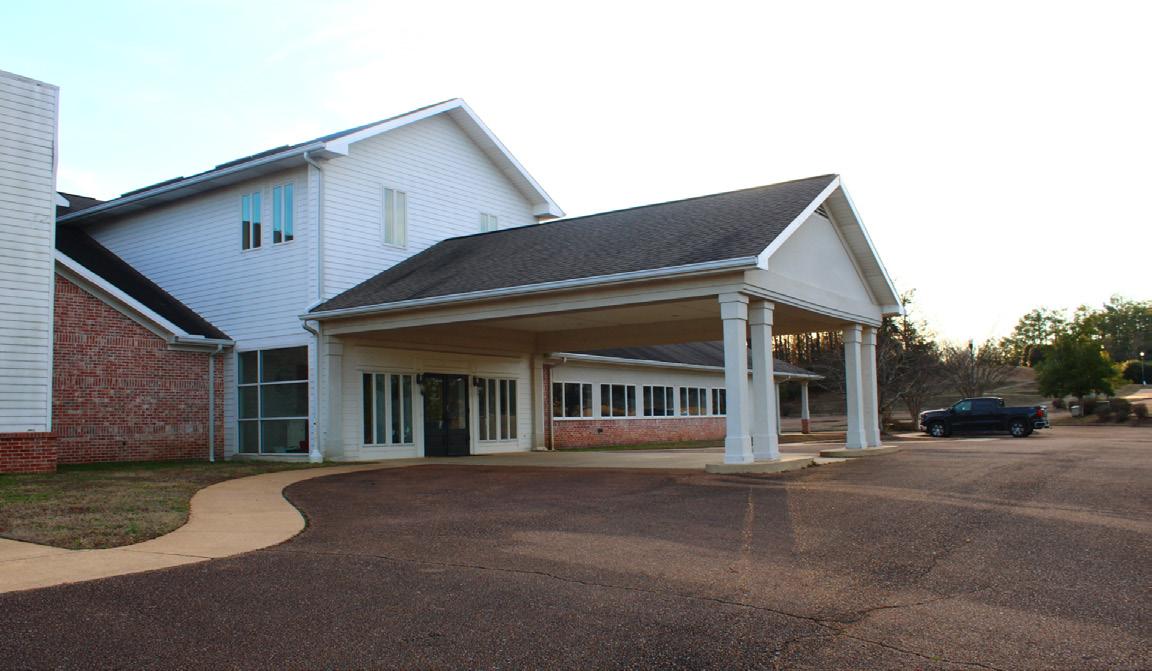
30, through Tuesday, Feb. 2. Cannon and the other volunteers helped assist those who were unable to leave their homes.
Services
In the wake of the winter storm, churches were forced to cancel in-person services. Even on Sunday, Feb. 8 — two weeks following the storm — Zinc said First Baptist Oxford’s schedule was still quite limited, especially because the church lost one of its boiler systems. However, the church managed to fit in one in-person service.
On Sunday, Jan. 26, St. John the Evangelist held a single service that only a few parishioners were able to attend. Still, Barfield believes that celebrating Mass was beneficial, even with a lower attendance.
“The Catholic Mass is an efficacious prayer even if no one is in attendance, so we prayed for the storm and those affected. A few students were able to attend by walking over, including many of the track team women,” Barfield said.
Because The Orchard Oxford is part of a family of other
Orchard churches in North Mississippi, George and the other pastors pre-recorded their sermons in anticipation for the storm — which they already had experience doing due to the pandemic a few years ago. Recovery is ongoing. George suspects that the community will still be in need of healing long after all the power lines are restored and heaters are repaired. Yet he believes that the churches, as they demonstrated during this time of strife, will continue to strive to build up the community of Oxford.
“I’m humble enough to realize that even after we get through this natural disaster, trauma will be heavy for many,” George said. “I pray that the church and counselors will continue to rally around our citizens of Oxford and Lafayette County, supporting them as they find the healing and wholeness that only the Lord can bring.”
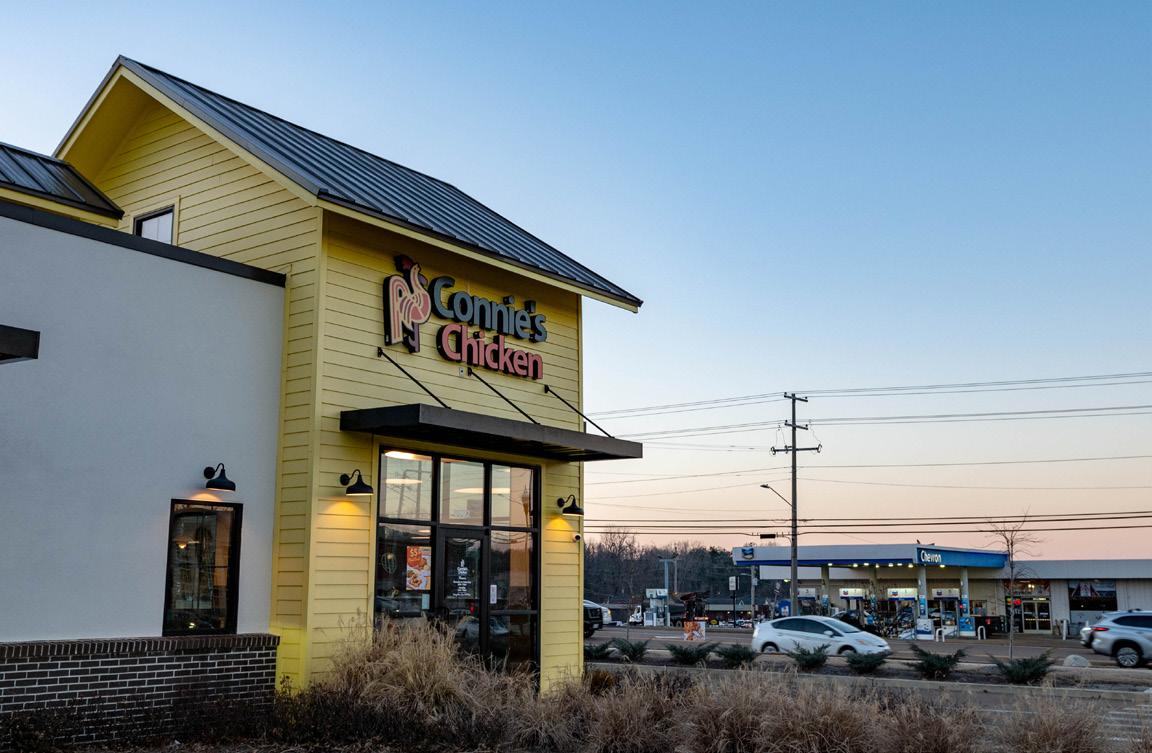
Connie’s Chicken
JACK KIRKLAND / THE DAILY MISSISSIPPIAN
The Orchard Oxford
ALANA BROWN-DAVIS / THE DAILY MISSISSIPPIAN
Baptist Memorial Hospital puts patient care first during historic storm
JAYLYNN CONNER
A&C Editor
With the help of a dedicated team and support from the community, the Baptist Memorial Hospital-North Mississippi remained open during Winter Storm Fern to meet community medical needs.
Many staff members slept at the hospital for several days due to dangerous road conditions and their commitment to provide care.
Jerry Kelly, a nurse manager at Baptist Memorial Hospital who lives in Pontotoc, Miss., was impressed by the hospital staff’s willingness to provide care despite difficult conditions from the ice storm.
“One thing that I will never forget about working through this storm is the sacrifice hospital staff made putting their patients before their own needs at home,” Kelly said.
For Kelly’s family of healthcare workers, his decision to be away from home and brave the cold was a no-brainer.
“All of my family are in the medical field and know what that responsibility means,” Kelly said.
William Norris, director of
food and nutrition at the hospital — along with his daughter and 14 of his staff members — stayed overnight for multiple days to keep the community fed.
“We continued to serve all patients and families and kept the coffee shop and the cafeteria running as if it was a normal day,”
Norris said. “We even had university students and people from surrounding neighborhoods who walked to the hospital to eat because they did not have power.”
Norris emphasized how staff members prioritized the hospital’s needs.
“Everyone was willing to do whatever they could to help during this stressful time,” Norris said. “Staff were leaving their own families and homes and staying at the hospital round the clock.”
Norris said that staff members went beyond their job duties to help with all facets of the hospital’s operations.
“Staff were pulling together and working in other areas of the hospital to help — nurses were helping cook, ancillary staff was helping serve food, deliver linens
— whatever they could with smiles on their faces,” Norris said. “There were a lot of tired people, but everyone kept doing whatever was needed to take care of our patients.”
Like many others working at Baptist Memorial Hospital, Gilbert Stroud, director of plant operations and facilities from Batesville, Miss., called the hospital home throughout the storm. He was also diligently working a week ahead of time to secure necessary supplies and equipment.
“We continued our normal responsibilities and also started prep the week prior to the storm to prepare the roads, parking lots and sidewalks to keep them clear of ice and snow,” Stroud said. “We brought in skid steers for clearing and were slinging salt around the clock to keep the grounds safe and free of ice.”
Along with this preparation, Stroud said, his department worked during the storm to keep the grounds and facilities safe and accessible.
“As the storm set in, we were out in the cold … plowing the roads day and night,” Stroud said. “We had to ensure the equipment within the hospital was still running as normal
even during the cold temperatures.”
Stroud said his team dutifully faced the frigid temperatures, no matter how harsh the conditions grew.
“I would like people to know how amazing and dedicated my team is to this hospital and our patients,” Stroud said. “They never complained no matter how cold or tired they were. We are very blessed.”
As freezing temperatures subsided, water pressure in Oxford also waned as leaks became apparent. To keep water flowing at the hospital and refill tanks, the City of Oxford turned off water to several parts of the community.
Administrator and CEO of Baptist Memorial Hospital-North Mississippi Brian Welton released a statement on Jan. 27 thanking key stakeholders for their efforts.
“I would like to thank Mayor Robyn Tannehill, the City of Oxford and local residents for their support as we work to ensure Baptist North Mississippi continues to operate at the highest levels for the community,” Welton said in the statement. “The quick and concerned response of the city to our concerns about wa-
ter pressure issues that began this afternoon has been incredible and demonstrates their commitment to this remarkable community.”
As the hospital helped the community, the community also helped the hospital, from bringing food to making a way for staff members to get to their jobs.
“We had employees trapped at home because of the ice, and neighbors were helping them clear their drives so they could be mobile and come to work,” Norris said. “The community came together to make sure we could take care of our patients.”
As recovery efforts wrap up, the hospital community hopes that they will continue to be seen as a valuable resource for those in need.
“One thing I would like for people to know about my experience during the storm is that Baptist (North Mississippi) will always be here for our community and our patients,” Kelly said.
Kindness on wheels: Facebook moms rally around young rescue driver
CLAY HALE Editor-in-Chief
Brittany Mitchell feared for the safety of her son, Grayson, who lives four miles from the University of Mississippi campus, when Winter Storm Fern hit Oxford on Saturday, Jan. 24. His rescue, to her surprise, would come from an 18-year-old Oxford local — Ja’Marius Ivy.
“This year, (Grayson is) living off-campus, and he does have a car. But when the storm hit, of course, everyone was pretty much stranded, and that’s partly how we came to meet Ja’Marius,” Brittany Mitchell said. “My future daughter-in-law lives in RC South, and, of course, they barely lost power at all. And so I said to Grayson, ‘Well, we need to get you over there.’”
The Mitchells and Grayson’s fiancée — freshman art major Brooke-Lynn Hyden — are from Virginia Beach, Va., which is more than 900 miles away from UM. Brittany Mitchell, in search of someone to help transport her son to Hyden, found a recommendation for Ivy on Facebook from
user Kamar Johnson — a friend of Ivy’s who helped him clear trees from driveways, as well as give rides on the hazardous roads.
Brittany Mitchell phoned Ivy and Johnson, and Ivy was able to relocate her son to campus on Monday, Jan. 26.
“I reached out to these guys, and they both responded immediately. And Ja’Marius said, ‘I’m sure I can reach his neighborhood. I have a big truck. I’d be happy to go get him,’” Brittany Mitchell, a UM alumna said. “I was a mama on a mission. I was getting my freezing child out of his house and back onto campus.”
It took Grayson Mitchell sleeping in several layers and seeing his breath in his bedroom for him to admit that he needed to get to warmth, and he said his two-door sedan was not going to get him there.
“He picked me up in his red truck,” Grayson Mitchell, a sophomore biology student, said. “When we were heading to the dorms on campus, we probably passed two or three power lines (down); there was a tree in the road. It was really gorgeous, but I was like, ‘Holy cow.’”

Ivy lives with his parents in Oxford, but he attends Northwest Mississippi Community College in Batesville, Miss., with aspirations of becoming a diesel mechanic.
Grayson Mitchell, 19, was shocked to learn that Ivy is just 18; he will turn 19 on Valentine’s Day.
“When I met him, I thought he was 21, 22. He’s 18 — he’s younger than I am,” Grayson Mitchell said. “I’m just blown away. This is just an incredible guy.”
While both Mitchells were grateful to Ivy for his kindness, it was Brittany that felt moved to recommend Ivy in the Facebook group Ole Miss Parents Chat Group on the same day. Little did she know, her post, across the chat’s 16,200 members, would reach almost 1,000 likes and create a local awareness of his work.
The post became a hub for other community members to testify about the work Ivy had done for them during the ice storm.
“He took my daughter to her friend’s house last night! She was resorting to sleeping in her car because it was warmer than her (apartment),” one user named Kelley Hall Curl wrote.
Ivy, who completed his services in a ruby 2014 GMC Sierra, did not anticipate the impact his kindness would make.
“I figured … ‘I’ll probably help maybe five people, 10 people,’ and then just call it at the end of the day,” Ivy said. “I definitely wasn’t expecting to miss 200 calls (from community members). It was definitely shocking; when they started happening, they kept on happening.”
Soon, Ivy was receiving so many phone calls that he decided to post in the Facebook group What’s Happening in Oxford, MS — which has more than 107,000 members — and apologize for not

being able to meet everyone’s needs.
As of Tuesday, Feb. 10, Ivy was able to address more than 70 calls for assistance by himself and even more with the help of Johnson. The duo graduated from Oxford High School together, but they did not start off as the best of friends.
“At first … we (weren’t) that cool, but then we started to talk a lot. We ended up having a lot of the same interests, like when we ride four-wheelers,” Johnson said. “He ended up being like a brother from another mother.”
Johnson said Ivy is determined, kind and ambitious.
“He’s a really good person. If he wants to pursue something, he’s gonna do it,” Johnson said. “If anybody’s in need, he’ll put others before himself.”
Ivy was giving people rides on icy roads and cutting down dangerous tree limbs before power was restored to his own home.
“It just feels good being able to help everybody,” Ivy said. “You see other people help also, so you see the city all come together at once.”
In the same way that Ivy assist-
ed the community when it was in need, the community turned right back around to offer kindness to him. He charged no more than “gas money” when needed, but he says the community came together to extend monetary tips to him.
“He just wanted to be of service, and I hope that it was probably a powerful lesson for him, too,” Brittany Mitchell said. “(I hope this teaches) that at his young age, that no matter how crazy the world gets and how negative social media can be, this is a powerful example of where it can be good and it can be positive, and he can be part of that.” Ivy voiced gratitude for the community and hopes that he will cross paths again with those he helped during the storm.
“I’m just glad that I could help,” Ivy said. “I enjoy meeting new people, and I hope I see them again.”
Grayson Mitchell and Ja’Marius Ivy
PHOTO COURTESY: JA’MARIUS IVY
Retired Air Force pilot offers way home to students trapped in Oxford
MARY EVANS Multimedia Coordinator
When Winter Storm Fern shut down roads, airports and power across North Mississippi last week, University of Mississippi student Allie Weinhardt found herself stranded in Oxford with no electricity, heat or a safe way to travel home.
Then, a Facebook post changed everything.
Michael Jones, a Houston-based United Airlines captain and retired U.S. Air Force pilot, offered to fly stranded UM students home for no cost after seeing parents share concerns online.
“I saw that all those kids were having problems getting between Oxford and basically any airport because of the roads,” Jones said. “So, I had offered up if they wanted to fly kids.”
Jones served 21 years in the U.S. Air Force before retiring in 2019 and later became a captain with United Airlines. He has owned aircraft throughout his adult life and currently flies a Cessna 310, a six-seat, twin-engine plane. He is also the father of a high school student planning to attend UM next fall, which led him to join the Ole Miss parent Facebook groups where he first saw the posts.
“I’m in a place in my life where I’ve got an airplane,” Jones said.
“I’ve got the means available if I can go out there and assist, get some of these kids home. I was willing to help out where I could.”
Jones initially planned to fly students from Oxford to Memphis. However, the University-Ox-
ford Airport, along with nearby airports such as Panola County Airport were closed all week, leaving Tupelo Regional Airport as the closest operational option.
“Dealing through the parents who were talking to the kids was kind of a logistical nightmare to try to arrange all that so in the end, I was just like, ‘Alright, be at the airport at 11 a.m., and that’s when we’re gonna leave,” Jones said.
On Jan. 29, Jones flew multiple trips out of Tupelo, transporting nine UM students: four to Houston and five to Memphis. He personally covered all fuel costs, flight time and maintenance expenses, which he estimated could total between $5,000 and $6,000.
Among the passengers was Allie Weinhardt, a sophomore accounting major from Houston. After several days without power and the announcement that classes were canceled for another week, her mother, Angela Weinhardt, began searching for alternatives.
“I didn’t have four-wheel drive, and I didn’t have a way to get to the Memphis airport and she found a comment section that he was in and sent me screenshots,” Allie Weinhardt said. Allie Weinhardt was not apprehensive at first.
“I had never met him before,” the sophomore said. “I was just really, really nervous that someone was going out of the way, like going above and beyond, to be kind.”
For Angela Weinhardt, the decision came down to a leap of faith.
“You feel so helpless as a par-
ent when your child’s nine hours away with no electricity, no water,” Angela Weinhardt said. “I just decided to say a little prayer and trust that he was somebody trying to help people out.”
Even she had her doubts.
“It’s one of those things where in hindsight, like now, everybody’s like, ‘Oh, well, that’s so wonderful. That’s so awesome.’ But if it had gone wrong, it would have been like, ‘How could you trust a stranger?’” Angela Weinhardt said.
The flight to Houston lasted under three hours and included three other UM students from some neighboring areas in Houston. Jones kept parents updated, even providing flight tracking once they were airborne.
“He never did anything but try to make us comfortable,” Allie Weinhardt said. “That made all the difference.”
Jones said the students’ excitement was evident.
“They’d never flown on a small plane before, so there may have been a little anxiety associated with that, but they just seemed super excited to be finally getting home,” Jones said.
Jones, who regularly volunteers with nonprofit aviation charities like Angel Flight and Pilots for Patients, said he never expected acknowledgement for his work.
“One of the Fox (News) people here in Houston contacted me,” Jones said. “I was kind of surprised because I don’t do it for recognition or anything.”
For the families, the impact was immediate and lasting.

“I wish there were words to describe the depth of the gratitude,” Angela Weinhardt said. “I personally got to sleep through the night last night. It just means everything to have her back. It’s just such a relief.”
For Allie Weinhardt, the experience changed how she views community.
“It’s such a great example of paying it forward,” Allie Weinhardt said. “Something so awful can still bring people together.”
Junior mechanical engineering and Chinese double major Emma Tamplin, a resident assistant in Pittman Hall from Katy, Texas, admitted she was nervous to fly with Jones at first.
“I was really nervous — a little stranger danger,” Tamplin said. “But I was just ready to get out.”
After days without power and watching storm damage pile up across campus, the
flight felt like her only hope.
“The dorms are just four white walls,” Tamplin said. “I was kind of going insane.” Jones made a point of calming everyone in the air.
“He kept checking on us in the headsets and made sure we were okay,” Emma Tamplin said.
Emma Tamplin’s mother, Sharon Tamplin, said the offer felt almost unreal.
“We were just amazed that he would make an offer like that,” Sharon Tamplin said. “You almost have to put your faith and trust in things happening for good.”
Oxford and Lafayette County centers warm up temperatures and hearts
TAF FLANDERS
A&C
Staff Writer
As tree limbs crashed onto powerlines throughout the night of Jan. 24, the temperature in thousands of Lafayette County homes fell. By the morning, University of Mississippi students and Oxford locals alike were seeking warmth, and a rapid mobilization of county workers, city employees and volunteers prepared multiple warming shelters for the Lafayette-Oxford-University (LOU) community.
In the early hours of the near-blackout, fire stations offered immediate warmth for those who needed it most, according to Lafayette County’s public information officer, Beau Moore.
“In our emergency response plans, we already have our county fire departments designated as warming centers in the event of an emergency like this,” Moore said. “These stations are not manned 24 hours a day so we (had) to get people there to man it and open it up.”
Soon, though, officials realized the historic ice storm would require larger warming centers. The Lafayette County School District quickly offered up their arena and lat-
er the Lafayette Elementary School due to power constraints.
“Jay Foster, the superintendent of Lafayette County Schools, was a great person and immediately made the school available for us,” Moore said. “The cafeteria staff came in to cook meals, and it was just really a great partnership between the county and the county school system.”
The staff of the Oxford Conference Center joined with city employees to open a warming center that sheltered hundreds at its peak. The city’s director of staff development, Holly Tubbs, knew a large relief effort would be needed after a night of hearing tree limbs fall nonstop.
“I did not expect it to be as bad as it was, but the night the storm did hit, I knew just waking up from it,” Tubbs said. “It sounded like a war zone outside.”
Tubbs and the conference center’s director, Micah Quinn, helped to turn a ballroom into a temporary home for an estimated 300 people. Along with city employee Braxton Tullos, the three managed to open mere hours after learning the center would be used.
“We were kind of going by the seat of our pants,” Quinn said. “(After) that one first
night, we realized what we’re doing, what we need and just figuring it out as we went.”
With the warming center established, Quinn soon began to receive help from community members eager to volunteer. A group of UM students who volunteered their babysitting services particularly stood out to her.
“The students really stepped up with volunteer roles,” Quinn said. “We had some girls sign up just to help babysit the children that were here and keep them occupied and kind of give their parents a break.”
Owens said one of the students even brought in clothes and baby supplies for a newborn staying at the shelter. Tubbs and Quinn highlighted the spirit of community they witnessed at the warming center.
“We just had so many people willing to help, and all departments of the city came up and helped us with the center,” Quinn said. “We had tons of volunteers by the end of it, so I feel like we had a great support system here to keep it running.”
Alongside volunteers, emergency responders played a large role in assisting the community’s warming centers. County sheriff’s deputies and city police officers
safely transported citizens over icy roads to the warming centers.
When Moore bought 100 biscuits from Waffle House to pass out to sheriff’s deputies, he said most were too busy assisting in relief efforts to stop for food.
“None of them would meet up with me to get biscuits because they were out there still working and helping people, getting them to warming shelters,” Moore said.
Moore estimated that some deputies likely worked 24-hour shifts in the days following Storm Fern’s impact.
The warming centers’ biggest
asset wasn’t their ability to run a central heating system — it was the people who showed up for their community. Cafeteria workers cooked free meals; conference center employees became shelter managers; warming center residents volunteered at the very center they were living in. Rain or shine or ice, the LOU community continues to show unbridled strength in times of adversity.
Allie Weinhardt poses for a mid-flight selfie with Michael Jones on Monday, Jan. 28.
PHOTO COURTESY: ALLIE WEINHARDT
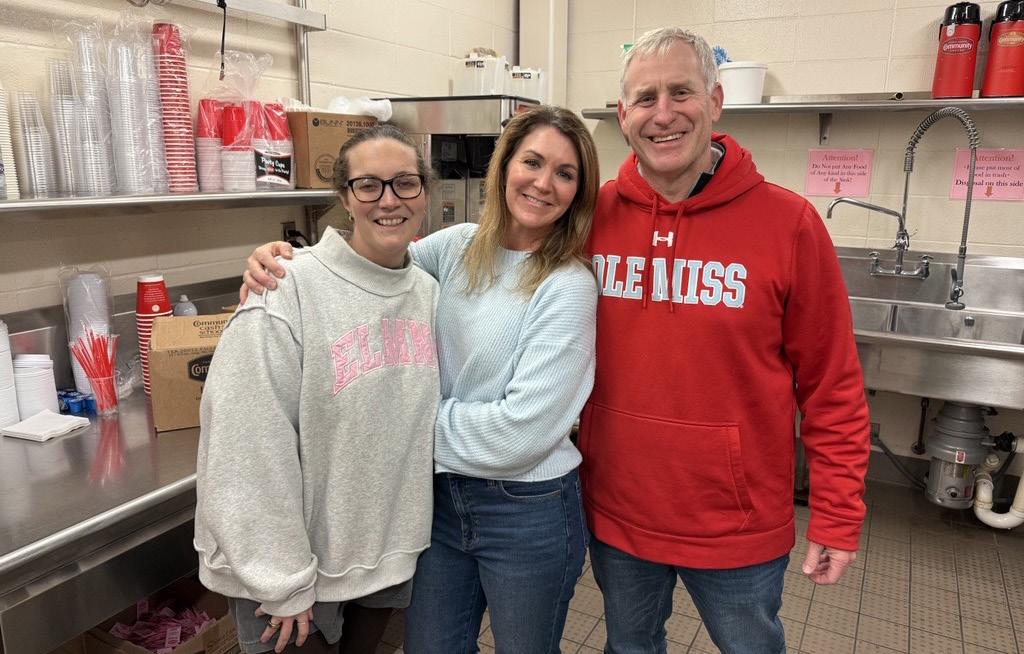
Holly Grissinger Tubbs, Micah Quinn and Braxton Tullos serve at the Oxford Conference Center’s warming shelter.
PHOTO COURTESY:
Ask A&C: What was your storm struggle meal?
A&C DESK
Many students were left eating whatever food they could find in their pantry — no matter how odd it might seem — during the peak impact of Winter Storm Fern.
The Daily Mississippian’s Arts & Culture staff has shared the random and assorted eats that got them through the storm.
Fireplace flatbreads — Ada C. Richardson
I went home to live with my family in Oxford during the storm. When our power went out, my mother had to get creative when it came to making meals. We had a fireplace, so she mixed up some flatbread dough and cooked them on a cast iron skillet over the hot coals. They were delicious.
Ramen and olives — Logan Kennedy
I ate instant ramen for several days, and when I ran out, I was luckily able to walk down the street to the gas station to buy more ramen. I also developed a love for Castelvetrano olives, which, for some reason I still do not know, was something I picked up from the store before the storm. I now buy olives, but am taking a break from ramen.
Toast and Dr. Pepper — Sara Zaleski
I remember eating a lot of toast, specifically sourdough bread and adding peanut butter and any other condiments that sounded good. Once our power ran out, I switched to just plain bread which became a popular “meal” in my household. My roommates and I were pretty stocked with
snacks, but Dr. Pepper helped the hunger. Safe to say I am not made for a snow storm.
Rice-A-Roni — P.B. Jernigan
Like many other students, I underestimated the storm. I was not expecting much to be left in the grocery stores by the time I got around to it. Almost everything was gone except for Rice-A-Roni. I ended up living off of it for three days, and I do not think I can eat Rice-A-Roni the same again.
Peanut butter and jelly — Jessica Johnson
I was one of the lucky few who was able to walk into a store in Oxford and come out with bread, peanut butter and jelly before the winter storm. Interestingly, eating a PB&J for three days straight brought back some good nostalgic
memories. Paired with fruit gummies, a pack of almonds and an applesauce pouch, I felt like I was back eating lunch in elementary school.
Potato chips — Taylor Hill
I knew the storm was coming, so the one thing I made sure I had was Ruffles. I love Ruffles because they are tasty, and they will always fill me up. I ate probably two bags in less than a week, but they will still be my comfort food.
Oreos and peanut butter — Taf Flanders
When the power went out, I brought whatever I could eat out of the package to my bed so I could stay under the covers. I remembered seeing this combo on “The Parent Trap,” so I decided to give it a try — it was really beautiful.
Fireplace hot dogs — Charlie Slusher
I holed up with a friend at his house. Thanks to him, I was able to stay warm by a fireplace for a few days. We cooked hot dogs over it one night, and they were the best tasting hot dogs I have had since my Boy Scouts days.
Pretzels — Rose Harmon
I ate too many pretzels. Kroger had a two-for-one special the week before. For some reason, I did not want to believe we would actually get a lot of snow, which meant they were one of the few non-perishables I bought before getting snowed in. So, I only had these two large bags of pretzels, and I ate all of them.
How students stayed active while they were iced in
TAYLOR HILL
Sports Staff Writer
Winter Storm Fern swept through Oxford and disrupted daily schedules for students and community members. In response, the University of Mississippi community found creative ways to stay active and connected.
“Winter Storm Fern completely stopped my daily routine. I usually get up at 8 or 9 and go to classes, then to work, but all those activities came to a halt,” freshman film production major Jaidyn Bryant said.
Freshman mechanical engineering major Kyle Marin, who usually eats breakfast at The Grill at 1810, was thankful that Rebel Market continued to provide food on campus despite power outages and widespread closures.
“Rebel Market staying open was a highlight for me and allowed me to continue my usual breakfast routine,” Marin said.
Almost all on-campus buildings were closed and events were suspended for two weeks, including
the university’s recreational facilities. The closures eliminated students’ access to gyms, creating an additional challenge for those trying to stay active during the storm.
“I mainly did push-ups for my at-home workouts,” Marin said.
Though the sleet and ice wreaked havoc, both Bryant and Marin managed to make the most of the situation — for them, the weather provided an opportunity to get some exercise with friends.
“My roommate, neighbor, girlfriend and her roommate and I all planned to go sledding the first day it snowed/iced. Going sledding was a beautiful time filled with laughter and joy. Though it was a workout to climb back up the hill, I’d relive that day 100 times if possible,” Marin said.
Bryant and her friends also entertained themselves with sledding, among other activities.
“I sledded down the hill near Rebel Drive. It was quite a rush,” Bryant said. “My friends and I raced in the hallways and played ding-dong ditch. We also walked

all over campus to see how the landscape had been transformed.”
Josh Millman, a junior management information systems student and goalkeeper for the Ole Miss Hockey Club team, also faced challenges.
“My eating habits were affected because I had no power to cook. I also was not able to do any on- and off-ice training during this time because of (the absence of) power and a large tree that came down, blocking access to my street. I had to focus more on staying safe instead of hockey,” Millman said.
For student-athletes, the storm disrupted more than just class schedules. Winter Storm Fern shifted priorities away from athletics and fitness, pushing students to focus first on basic needs and safety before returning to their routines.
“To be honest, it was very tough staying active while stuck indoors,” Millman said. “What I was able to do was walk back and forth from my house to my friends’ … to check on the place.”
Millman returned home to
Complete the grid so that every row, column and 3x3 box contains the numbers 1 through 9 with no repeats.





RUSS EDDINS Sports Editor
Ole Miss sports teams edit calendars after inclement weather
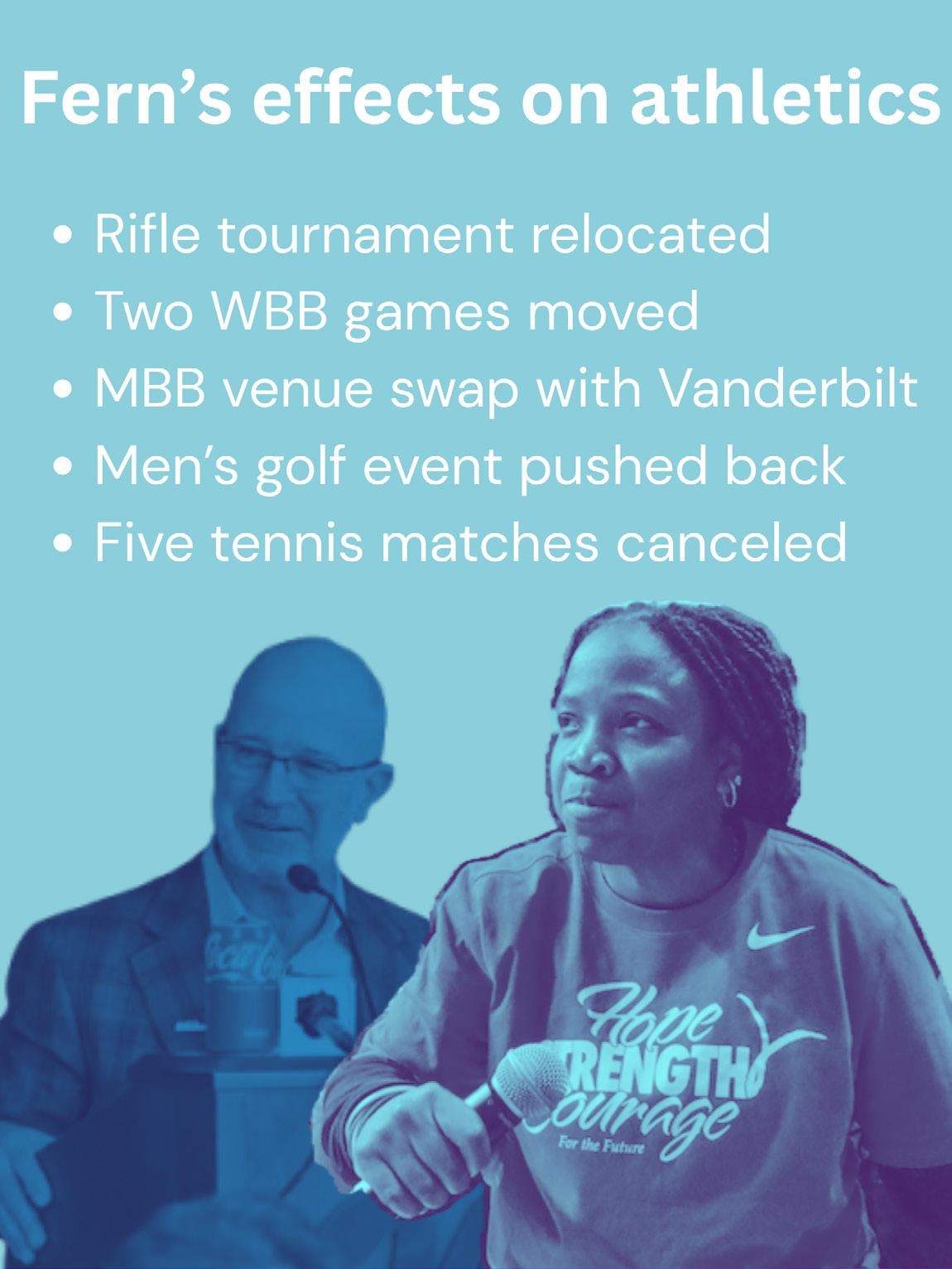
Winter weather affected every facet of the Oxford community, including Ole Miss Athletics. Events for six sports were either canceled or postponed due to Winter Storm Fern.
Rifle
The Ole Miss Rifle team was forced to cancel its matches against Navy and Georgia Southern. The team was also set to host the Patriot Rifle Conference Tournament on Feb. 7-8; however, the tournament was relocated to Fort Wayne, Ind. On day one of the event, the Rebels finished third in smallbore, and Gracie Dinh took bronze.
Ole Miss scored 2,537 points, the eighth-highest score in the history of the event. Audrey Gogniat won gold in air rifle on day two, and the Rebels finished second overall.
Since the program was unable to host the tournament this year, head coach Will Shaner plans to make a play for Ole Miss to host in 2028.
“Each year, the coaches kind of get together and decide who’s going to be doing it (hosting),” Shaner said in an
interview with The Daily Mississippian. “Next year, I know for sure it’s going to be (in) Nebraska, but knowing us and how excited we were to host it, we’ll probably try to put in a bid for the year after that.”
Basketball
The Ole Miss Women’s Basketball team was forced to relocate its home games against Vanderbilt and Auburn to Legacy Arena in Birmingham, Ala.. The Rebels’ home game against Tennessee, originally scheduled for Jan. 26, was postponed to Feb. 17.
“Disappointed that we lost a home game BUT grateful that we get to play,” head coach Yolett McPhee-McCuin said via X on Jan. 27. “Thanks to Shae (Ralph) and the league office for making this possible! Alabama Rebs we could use your support!”
The Rebels defeated thenNo. 5 Vanderbilt in the neutral site game 83-75, then followed this win with a 71-45 thumping of Auburn.
“Birmingham we love you! You all showed so much love! Thank you! From the time we got here and even tonight! To the ones that drive up, safe travels back! We are now headed to Tuscaloosa!”
McPhee-McCuin said via X on Feb. 2.
The Ole Miss Men’s Basketball team was affected minimally. Instead of hosting Vanderbilt on Jan. 31, the Rebels traveled to Nashville, and the game was played on the same day as it was originally scheduled. The Rebels lost the game 71-68. Vanderbilt will now come to Oxford on March 3 for the second matchup between the two teams, which was originally slated to be played in Nashville.
Golf
The Ole Miss Men’s Golf team saw only slight modifications. The Thomas Sharkey Individual Collegiate, originally scheduled for Jan. 29 and 30, was pushed back to Feb. 7-8. It was hosted by Georgia Southern.
Tennis
Both Ole Miss Men’s and Women’s Tennis teams suffered significant changes to their schedules. The women’s match against Illinois and the men’s matches against Chattanooga, Southern Miss, Charlotte and Eastern Kentucky were canceled. None will be rescheduled. Women’s tennis against Southeast Missouri was also canceled, but was rescheduled.
CONTACT THE SPORTS DESK AT thedmsports@gmail.com
Rebel Athletes unfazed through Fern
ISAAC SCHEER Sports Staff Writer
The University of Mississippi was forced to close, and life for those in the community changed for weeks due to Winter Storm Fern. Conditioned to expect the unexpected, the Rebels shifted their approach to winter training.
Tennis was among the sports affected at UM.
Star freshman Pietro Pampanin says he had never seen or experienced a winter storm of Fern’s magnitude.
“I’m from Italy, and there is nothing that has happened that is similar to this,” Pampanin said. “So when I saw this, I was pretty surprised, because I didn’t know if we could practice.”
Outdoors, they could not practice, but the team adjust-

ed by moving their training to indoor facilities, which presented a different challenge. Pampanin explained how the game is faster on indoor courts because the ball moves much more quickly. Still, he noted that while he prefers outdoor tennis, he was grateful to have the opportunity to continue on the indoor courts.
“We actually are very lucky because (with Ole Miss) we have one of the best campuses in the country,” Pampanin said. “The indoor courts are very useful for us. We could practice indoors, we could have the matches indoors, we could have the start of the season indoors.”
When Fern hit Oxford, Pampanin and the tennis team were in Homewood, Ala., for a match against Samford University. The Rebels were able to extend their stay at Samford until they had to leave for a Feb. 1 match against Dayton in Ohio.
The Rebels beat both the Bulldogs and the Flyers, and by the time they returned home on Wednesday, Feb. 4, the worst of the storm had already passed. Of course, Pampanin still noted that the storm’s damage on campus was starkly noticeable.
“It was pretty strange to come here and see all the trees down and everything,” Pampanin said. “But I knew as soon as we came back (and) I saw the people working to make order and to make it better, I felt safe, even if
the situation was horrible.”
Other sports were forced to relocate games and practices to cities outside of Mississippi. The women’s basketball team was safe with both water and electricity in Birmingham, Ala., where they defeated No. 5 Vanderbilt and Auburn in neutral site games.
Head coach Yolett McPhee-McCuin told fans that her team had rallied with a renewed sense of vigor to inspire Oxford.
“I told the team that this needed to be our way to show that we are fighting alongside the people that are still there,” McPhee-McCuin said. “We are lifting them up and wanted to try to bring them some joy.”
Prior to the storm, the Ole Miss Rifle team defeated No. 12 Ohio State on Jan. 25. The following week, they were forced to cancel matches against Navy and Georgia Southern and had to severely limit practices leading up to the Patriot Rifle Conference Tournament. Shaner said that Ohio State, who also competed in the tournament, had to deal with closures and shutdowns relating to the weather, too.
“(We) basically had a week off. Unfortunately, Ohio (State) also got hit with a pretty major snowstorm, so they had their campus shut down, as well,” Ole Miss Rifle head coach Will Shaner said. “So the girls had some time off, which of course
is not always ideal because we’re trying to get ready for conference championships.”
Ole Miss Baseball season officially starts on Feb. 13, so head coach Mike Bianco and the team found themselves in a tough spot. Bianco used the opportunity to volunteer at Oxford Love Packs with the team.
“Obviously, (it’s) a different preseason than we’re used to and then I would be remiss if I didn’t say a big thank you to mayor Robyn Tannehill,” Bianco said at baseball media day on Tuesday. “Of course, all the city and county officials, the lineman, all the first responders and workers … trying to get us through the terrible storm.”
All of these Ole Miss sports teams, whether they were still holding practice or unable to meet in-person, embraced the mentality that women’s basketball star Christeen Iwuala summed up perfectly in her Vanderbilt ESPN postgame interview.
“The energy that we had today and the reason why we’re doing it: We’re doing it for the city of Oxford,” Iwuala said. “We had a really rough patch, (a) really rough winter storm … so we’re just doing it for the city of Oxford.
Are you pleased now, Northerners?
Southerners were not overreacting about Fern
“Yet before any real precipitation falls, a flood of Northern agitators washes through social media, regurgitating trite cliches about the South and winter.”
LOGAN DURLEY
Opinion Staff Writer
It begins with a forecast: splotches of blues, greens and pinks on a blank map, a foot of snow here, chance of tornadoes there and an inch of ice over yonder. Uncertainty is the only thing that is certain at this point.
Then, in the coming days, weather models dance around predictions, shifting north and south, east and west, drastically altering outcomes for all of us on the ground only able to watch the sky in apprehension.
Yet before any real precipitation falls, a flood of Northern agitators washes through social media, regurgitating trite cliches about the South and winter: empty bread aisles, the little amount of snow it takes to grind us to a halt and haughty reminders of historical blizzards Northerners braved in flip flops and shorts.
One comment in particular that I encountered on X, posted by conservative radio host Jesse Kelly, read, “It will never stop being funny watching Southerners prepare for two days of freezing temperature as if it’s the ten plagues of Moses.”
These comments, though
primarily made in jest, are characteristic of the nose-up, elitist Northern attitude towards the South and its people.
Winter Storm Fern, in retrospect, was the most bitter vindication for the South’s perceived panicked preparedness, or lack thereof, and underlies just why the South hates winter storms.
I began tracking this storm multiple days in advance, checking various weather models at six-hour intervals like an amateur meteorologist. It was obvious that I was not alone in my surveillance, as Oxford grocery aisles began to clear by midweek — a telltale sign of impending doom.
Also by midweek, weather models noted a drastic tick to the North for the storm, a shift that would prove to be damning for a large swath of the South with worse wintry precipitation. Over the course of a few days, Oxford’s forecast went from a pleasant snow day to a catastrophic ice storm.
By Friday, I, one of the South’s native sons, was prepared with non-perishables, batteries, bottled water, blankets and covered windowsills. All my dishes and laundry
were done; this was not my first winter storm in the South. Bags of ice sat in my fridge with cooler bags at the ready. Bathtubs were full of water. Pitchers and large tupperware were filled with water for drinking.
What Northerners, in all their winter wisdom, consciously ignore in their diagnosis of Southerners as feeble panic-buyers and overreacters is that our infrastructure is not designed with once-in-a-generation winter storms at the forefront of mind.
It is cost-prohibitive to bury power lines, stock and maintain snow-plows and salt trucks for the occasional inch of snow, insulate houses for extreme cold and ensure every driver has snow chains and experience traversing black ice and blizzard conditions. Our preparations are not melodramatic frivolity — they are means for survival.
My midnight dash from Oxford to my hometown of Olive Branch, Miss., to escape dangerously cold temperatures in my house felt much more like a retreat than an evacuation. The trip, which usually takes me about 57 minutes, took three hours.
On Mississippi Highway 7, I watched the SUV in front of me

lose control in the dark and dive into a ditch. On I-22, the road conditions worsened, and the severity of the situation was marked by the line of 18-wheelers on both sides of the interstate that had temporarily abandoned their journeys. It was on these dark roads, no longer illuminated by street nor porch lights, that the aforementioned bitter vindication manifested itself. The cold, the hunger, the quiet, the apprehension, the pain in my legs from walking on inches of ice, all negate the levity imposed on this situation by ignorant Northerners, watching from the comfort
of their winterized infrastructure. As Oxford thaws, the reckoning begins. Thus far, 25 Mississippians have lost their lives. As these winter storms grow more intense, we must adapt and, regrettably, rip a page or two from the Northern winter handbook.
Logan Durley is a sophomore biological sciences major from Olive Branch, Miss.
Branches of memory: mourning the trees that connect Ole Miss
“The university’s trees act as nature’s pillars of memory, holding moments of community and tradition beneath their branches.”
VIDYA ADLAKHA Opinion Staff Writer
When Winter Storm Fern swept through Oxford, the destruction left behind more than just frozen branches and scattered leaves. The accumulation of ice caused irreparable damage to hundreds of campus trees, damaging a core facet of the University of Mississippi’s identity.
The trees on the Ole Miss campus serve as far more than just decorative landscaping; from the towering oaks that line walkways to the flowering dogwoods and magnolias scattered across campus, they provide beauty, shade and serenity in a constantly changing university environment.
Prior to Winter Storm Fern, the university boasted thousands of trees across campus, representing dozens of native species such as the bigleaf magnolia, northern catalpa and flowering dogwood. Our campus is not only a center for education, but also a botanical sanctuary.
Ole Miss researchers and faculty actively study and work to preserve the campus’ beloved trees.
Ecology professor Steven Brewer, for example, has emphasized the importance of restoring fire-adapted oak woodlands, which once dominated much of Mississippi’s natural landscape. Their numbers have
dwindled due to urban development and fire suppression.
These woodlands are composed of oak and pine species and are shaped by consistent and low-intensity fires. They are a key component of the environment as they support high biodiversity and prevent a buildup of dense vegetation, which can further lead to wildfires.
The restoration of oak woodlands around campus, furthermore, serves as a refuge for native species that have disappeared from their former home.
These trees are classrooms in themselves, teaching lessons about resilience, biodiversity and environmental stewardship. But they do more than that: The university’s trees act as nature’s pillars of memory, holding moments of community and tradition beneath their branches.
Nowhere is this connection more visible than in the Grove. Students, alumni and families have gathered beneath majestic oak branches for decades for celebrations, reunions and rituals that define Ole Miss game days.
The university’s trees also boast remarkable historical importance. Some predate much of the modern campus itself.
Two of the university’s “Champion Trees” stand as living monuments: a northern catalpa estimated to be around 175 years old that
sits between the student union and Bryant Hall and an osage orange recognized for its size and age.
Known as “George and Martha,” two willow oaks near the J.D. Williams Library were planted on Arbor Day in 1932 to commemorate the bicentennial anniversary of George Washington’s birth.
It is this converging significance — ecological, cultural and historical — that makes the damage from Winter Storm Fern especially painful.
For many on campus, the loss felt personal.
“It’s really sad to see trees that were so old destroyed by the storm,” junior psychology major Sydni Nguyen said. “The campus looks sadder now.”
These were the trees students studied under, posed beside for graduation photos and walked past every morning on their way to class.
The trees of Ole Miss link alumni to students, past to present and culture to science. They connect ecological research with football traditions and historical commemorations with daily routines.
However, in this loss there is hope for renewal. The destruction left by the storm has spurred conversations about preservation, care and the future of the campus canopy, turning grief into a renewed sense of responsibility.
As restoration and cleanup

continue, Winter Storm Fern revealed how deeply rooted the trees of Ole Miss are in the identity of the university. Their survival and regrowth mirror the resilience of the community that gathers beneath their leaves.
LENORA COLLIER/ THE DAILY MISSISSIPPIAN
Vidya Adlakha is a junior biological sciences major from Ocean Springs, Miss.
LENORA COLLIER
Opinion Editor
Oxford’s Southern hospitality shined during the storm
“As unfortunate as it may be, it is disaster that brought Oxford together.”
The South has many stereotypes — some good, many bad, most inaccurate. While it is easy to throw the entire region under the bus for its complicated and often-problematic history, there is a stereotype I believe rings true. Southern hospitality, for one, seems to point to something tangible that exists almost ubiquitously below the Mason-Dixon line.
It describes a set of virtues, namely politeness, charity, charm and delicious homecooked meals — a standard of how to interact with lifelong friends and strangers.
Despite the region’s tumultuous history, I see Southern hospitality as more than surface-level pleasantries. It is the actions that transcend transaction and social constructs, driven by a simple belief that the world is better when we are kinder to those in it.
Make no mistake, however — being hospitable in the Southern way is distinct from simply showing kindness. I see it as more proactive in nature and a culturally ingrained etiquette that defines communities.
Perhaps no other time has Southern hospitality been ex -
emplified to me than in the weeks since Winter Storm Fern swept through the state. Oxford has exhibited tremendous recovery thus far.
Less than two weeks after the onset of the cold front that spelled doom, our briefly silent town is no longer quiet.
Jackson Avenue traffic is once again extra-busy, supermarket shelves are (for the most part) restocked and Rebel Market is back to serving fried chicken on Thursdays.
This was only possible through the valiant efforts of Oxford’s legion of linemen, debris removal workers, electricians, first responders and selfless city residents. Individuals who, often guided by selflessness as their prerogative, chose to exhibit Southern hospitality even when it is most inconvenient to do so.
As unfortunate as it may be, it is disaster that brought Oxford together. Compelled by collaboration, our temporarily disrupted college town is bustling again.
While much of this was driven by necessity, I like to believe it draws from something deeper. Southern hospitality is not an inherent virtue. It is a conscious choice, made even in the most inconvenient of circumstances.

It is the one Oxford made. Oxford residents providing free meals to college students lacking hot food, linemen working overtime to restore power to the community and my own apartment complex extending rebates and providing gift cards to compensate residents, for example, are just a few of the many ways our city exhibited Southern hospitality.
Spring break matters more than missed class days
Lenora Collier is a sophomore international studies major from Hattiesburg, Miss.
CONTACT THE OPINION DESK AT thedmopinion@gmail.com
Reflecting on the destruction inflicted by Fern, we have no choice but to look forward. However, we cannot simply move on. Restoration efforts will continue. As costs of the destruction are assessed, those of us with the ability and circumstance must continue to carry that Southern hospitality onward. Sometimes, it takes the worst of times to show what we can do when we come together. I know that Oxford has the capacity to continue. The question, however, is will it choose to?
“Though many continue to fret about missing an excessive amount of schoolwork, eliminating spring break would have created more problems than it would have solved.”
MACKENZIE MCDARIES Opinion Staff Writer
Spring break is almost three weeks away, but students have yet to complete even two weeks of classes. After the University of Mississippi was forced to close following the catastrophic Winter Storm Fern that severely affected Oxford, many students and parents began to ask: What will become of our beloved spring break?
On Feb. 6, UM quieted calendrical fears with a Facebook update stating, “the university worked with the U.S. Department of Education to adjust the academic calendar, allowing for a shortened semester,” ultimately saying that spring break is here to stay.
While some students and parents remain worried about missed curriculum or rushed lessons later in the semester, I believe this decision was ultimately the right one.
For many students, spring break is a sacred occasion planned months in advance. Students trav-
Opinion Policies:
el with friends and family, work, serve their communities or simply relax. Personally, I will be traveling to Texas to attend the Houston Rodeo. My boyfriend and I have even snagged front-row seats for the night Creed will be performing.
I, along with many others, have already booked flights, hotels, event tickets and more for this trip. Since many of these purchases are expensive and non-refundable, I find that if the university were to have canceled spring break, many students would likely have skipped their classes rather than lose their money, resulting in frustration and poor attendance across campus.
Freshman Molly Kate Cuthbertson, an international studies major from Columbus, Miss., plans to spend her spring break in Guatemala on a mission trip.
“It’s been planned for a while, and I have already raised my support for it,” Cuthbertson said. “I wasn’t happy when I heard the break might get canceled because I have been look-
ing forward to this for a while.”
Like countless other students, canceling the break would have required her to forfeit her long-awaited plans.
Regardless of whether or not students have plans for the break, it remains an important aspect of student well-being.
A break from classes can be essential for the mental health of many, as it provides time to rest after weeks of academic stress and prevents burnout.
Now, after this devastating ice storm, spring break is especially beneficial for those who were trapped in Oxford without power for days and need time to fully relax.
Though many continue to fret about missing an excessive amount of schoolwork, eliminating spring break would have created more problems than it would have solved.
It allows for students and faculty alike to get some long-needed relaxation. As we adjust to returning to school, I am grateful that spring break will remain a chance

for students to rest and recoup before finishing the semester strong.
MacKenzie McDaries is a freshman Arabic and political science major from Murfreesboro, Tenn.
Columns do not represent the views of The University of Mississippi or The Daily Mississippian. The Daily Mississippian welcomes letters to the editor, which should be emailed to thedmopinion@gmail.com. Letters should be no longer than 300 words. They may be edited for clarity, brevity and libel. Third-party letters and those with pseudonyms or no name will not be published. Letters are limited to one per individual per month. Letters should include contact information, including relationship to the university, if applicable.
LENORA COLLIER / THE DAILY MISSISSIPPIAN
Pain
Increased
Detoxification
Lower Blood
Anti-Aging & Skin Rejuvenation
Improved Circulation
Weight Loss