AI policies in the works for academic departments

ing these policies will continue into the fall semester.
The University of Mississippi is working to establish artificial intelligence policies by tasking individual academic departments, instead of professors, with creating their own standards for AI usage in coursework. Currently, each professor sets the standard regarding AI for his or her own courses, with little uniformity throughout departments. Work creat -
The request for department-wide standards came after the University of Mississippi’s AI Task Force teaching and learning subcommittee sent a recommendation for AI use to the university administration.
The teaching and learning subcommittee is one of the four subcommittees of the AI task force. The group is composed of faculty members who discuss how AI is
ASB
developing, how those developments impact the university and what practices and procedures the university should implement as a result.
Joshua Eyler, senior director of the Center for Excellence in Teaching and Learning and assistant professor of teacher education, serves as chair of the teaching and learning subcommittee. Eyler said the university dictated that individual departments
confirms
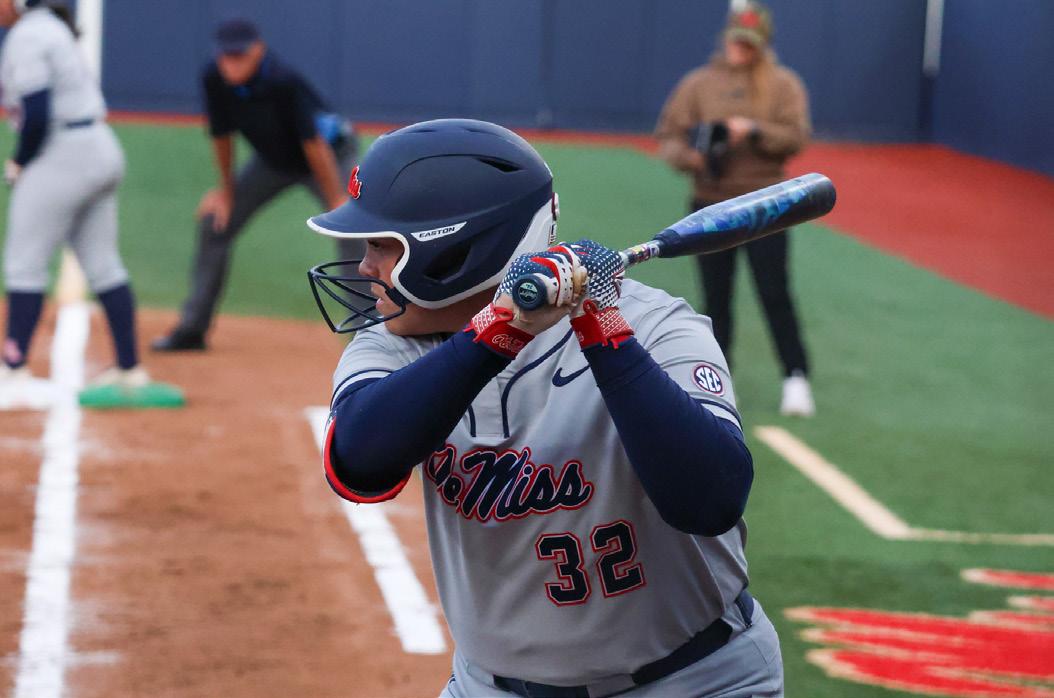
Madi George, Rebel softball break singleseason home run records
Freshman Madi George, a Leander, Texas, native, tied and broke the single-season home run record for Ole Miss Softball on Sunday, April 19, in game three of the series at No. 15 LSU.
George, with 18 home runs, surpassed Lexie Brady, who formerly set the record with 17 homers in 2025. The Rebels also set the single-season program home run record against Southern Miss on Tuesday, April 21.
“I knew I was pretty close (to the record), and when I hit the first one I knew I tied
it,” George said in an interview with The Daily Mississippian. “Then, I was told one more and I’ll break it.” George spoke about her approach at the plate that day and how she adjusted between at-bats.
“The first home run I hit, they threw me (a high inside pitch), so I was like, ‘I’m definitely not going to get that pitch again,’” George said. “I had to change my plan and approach to sitting that (low outside pitch), because I knew they were going to choose a drop-ball pitcher. I knew she was going
new members, elects senators for the 2026-27 term

Christian
DYLAN THOMAS University News Editor
Associated Student
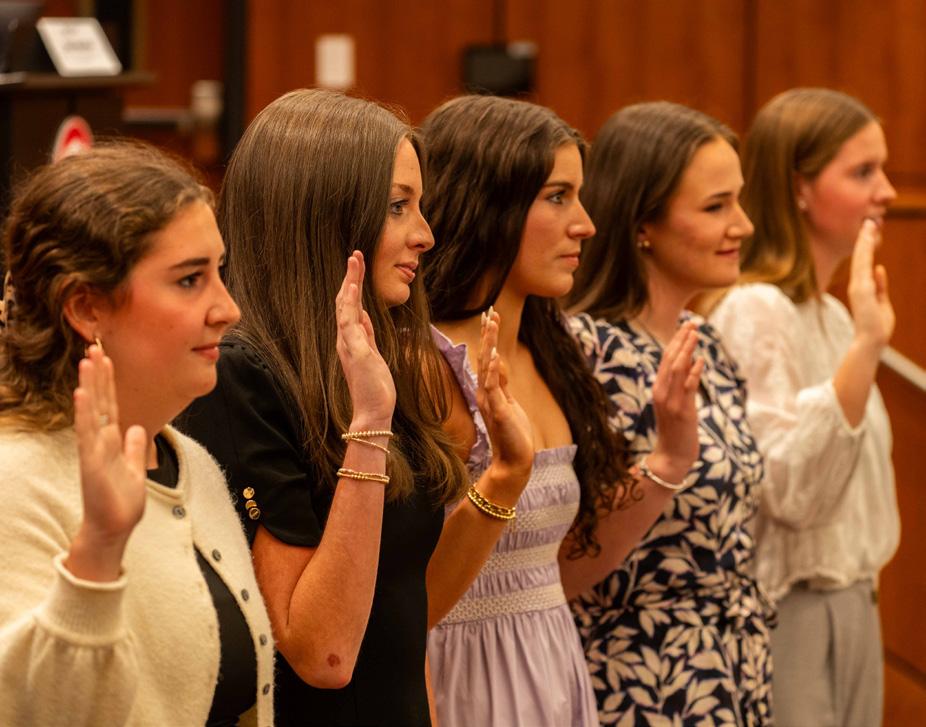
Body senators voted four new open seat senators into office and confirmed 36 nominations for the other ASB branches at the ASB Formal Senate meeting at the Gertrude C. Ford Ole Miss Student Union on Tuesday, April 21. Corey Kingery, Eli Keel, Paul Winfield and Ryan Ostrowski were confirmed as the
new open seat senators. Kingery, Keel and Winfield are veteran ASB members who ran in the ASB spring elections this year.
Kingery and Keel ran for ASB Vice President, but both lost to current ASB Vice President Trey McKean. Winfield ran for treasurer and was defeated by Jackson Doss.
“I ran for treasurer and I lost, but losing teaches everyone a really important lesson,” Winfield said. “You
can’t only love something when you win.”
Ostrowski, a sophomore criminal justice major from Nashville, Tenn., and a first-time ASB senate candidate, garnered support for his idea that the university host a spring concert series in the Grove.
“I would like to propose an idea to implement a spring concert series in the Grove to promote not only a selling point of the university, but also to promote the student
music organizations that we have here,” Ostrowski said. “We have a lot of very gifted music students and a very gifted music program.”
The open seat senators were elected through a ranked voting system implemented by ASB Attorney General Lucy Allen.
The ASB senators also confirmed all the nominations for positions in the president’s cabinet, the legisla -
FITNESS INSTRUCTORS
Students are stepping out of their comfort zones to teach exercise classes.
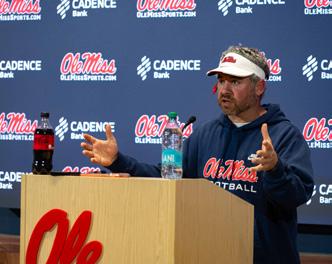
Rebel football has new leadership for 2026-27.
SEE PAGE 6
MAGIC MAN
Dadd deals entertainment to the Oxford community.
OLE MISS COACHES
DYLAN THOMAS University News Editor
SEE AI PAGE 2
GRACE ANN COURTNEY / THE DAILY MISSISSIPPIAN
Nominees sworn in during the formal senate session in the Gertrude C. Ford Ole Miss Student Union on April 21
JACK KIRKLAND / THE DAILY MISSISSIPPIAN
SEE ASB PAGE 2
SEE MADI GEORGE PAGE 6
REAGAN TAYLOR Assistant Sports Editor
Madi George at bat in the game against Southern Miss at the Ole Miss Softball Complex on April 21
LEXI TITUS / THE DAILY MISSISSIPPIAN
create AI policies instead of a standardized, university-mandated policy because of each department’s unique needs.
“(The teaching and learning subcommittee’s AI procedural draft) is a recognition that there are a lot of different practices right now and that departments are looking for and would value support structures in creating policies,” Eyler said. “Not standardized in the sense that everyone’s doing the same thing because that would be very difficult given how different departments are, both in terms of their disciplinary practices and their cultural norms. Giving them not necessarily standardized (policies), but giving them resources and tools to be able to create the policies.”
Different schools and colleges on campus will face varied challenges as they coordinate with their departments to create these AI policies.
Some schools only have a few departments, which can make collaboration easier. The School of Journalism and New Media, for instance, only has three departments — media and communication, journalism and integrated marketing communications. Other schools and colleges have more vast and diverse departments with varying needs.
ASB
continued from page 1
tive council, the secretary’s department and the department of justice. Before the nominations were presented to the senate floor, ASB executives conducted interviews to select nominees for their respective open branch positions and presented these teams to the senate.
All nominees were confirmed unanimously. The nominations are as follows:
President’s cabinet
Luke Habeeb as chief of staff
The College of Liberal Arts houses 21 departments; the departments have not started working on creating AI policies.
“At this time, the college has not yet begun work on this initiative, as it will require coordination across 21 programs,” Stacey Smith, assistant to the dean for the College of Liberal Arts, said in an email to The Daily Mississippian.
“We anticipate starting the process after graduation, given the number of priorities and activities taking place between now and then.”
Dean of the School of Journalism and New Media Andrea Hickerson elaborated on what AI policies could look like.
“I suspect because our departments have such a similar skill set, similar background, they will look very similar in some cases,” Hickerson said. “Now, we might see differences, for example, about how journalism wants to approach it where they are focused on truth and accuracy, where (integrated marketing communications) would be more comfortable with it in some of the creative aspects of things.”
Hickerson also expressed that while the policies are being made on a departmental level, there is a possibility of it changing to an overarching School of Journalism and New Media policy, as to hinder any confusion students may have regarding AI use expectations.
“(Departments are) really going to focus on their dis -
George Monroe as deputy chief of staff
Brady Moore as executive liaison
Evans Reynolds as joint governance liaison
Alexis Ring as principal of academics
Sarah Claire Sypeck as principal of athletics
Mason Johnson as principal of health and wellness
Emma Scruggs as principal of infrastructure and environmental affairs
Jack Turrentine and Ava Ol -
ciplinary expertise and what works for that area of knowledge. Though, after people make those decisions, it’s going to start at the departmental level and then maybe look across,” Hickerson said. “If journalism adopts this policy and IMC adopts this policy, and students are taking all these classes, they might not realize that they’re in a journalism class versus an IMC class. We’re going to have to be really cautious about that. It very well could be that we’ll end up with a single policy after going through departmental ones.”
The AI Task Force meets quarterly throughout the school year.
“The task force is sponsoring conversations around university-wide policies and guidelines on artificial intelligence as it relates to, specifically, teaching and learning, research, service and business practices,” Robert Cummings, executive director of academic innovation, said.
Beyond dealing with the work of the individual subcommittees, the task force also discusses innovations in AI technology and the effect that AI agents could have on the university. AI agents are software systems that use AI to perform multiple tasks at once, without the initial prompting from the user.
Generative, simple AI models like ChatGPT require more user control and review than the advanced AI agents that
ive as co-principals of external affairs
Abby Seney as principal of housing
Josie McCarey as principal of student life
Mafati Bah as principal of inclusion and cross-cultural engagement
Wilson Engeriser as principal of first-year encounters
Summer Mocknick as director of accessibility
Legislative council
Evelyn Coon as vice president’s chief of staff

have emerged in the past four to five months. Marc Watkins, assistant director of academic innovations group and lecturer in composition and rhetoric, gave a presentation on the growing access students have to AI agents at the task force meeting on March 27.
“Sometimes you can prompt (simple AI) agents; other times that trigger can send it up, so they work autonomously. That was about 18 to 20 months ago,” Watkins said. “You can have dozens of agents. Faculty might decide that we need it to do feedback. Another agent becomes an email agent … Another agent might … grade.”
Advanced AI agents have the ability to work more independently and are able to perform a wide variety of jobs simultaneously. Watkins addressed some of the implications that tools like this could have on the university.
“That’s really the big shift here. We’ve moved from a space where we’re working iteratively with these tools to one where it might be automated to some degree,” Watkins said. “The one big risk with all this is that you’re still responsible for the output, even when your agent may be working on your behalf.”
These AI agents could also affect teacher evaluations.
“We need to go beyond just assessment and start thinking about risks that generative AI systems pose to us, and one of those areas is our teaching
Lillian Prather as parliamentarian Davis McQuirter as director of senate affairs
Paul Tusa as sergeant at arms
Jess Voge as events coordinators
Vivian Harrison and Rozlynn Smithwick as legislation monitors
Nicky Ewers as campus liaison
Danica Beachy as legislative aide director
Zachary Rifkin, Julia Daigle and Kayt Davis as members of the legislative coordination team
Secretary’s Department
Hannah Polk as deputy secretary of internal operations

evaluations,” Watkins said. “If a student does use an AI agent to produce an evaluation, the resulting data is not a reflection of student experience.” AI Task Force members also discussed the possibility of giving students access to the Google chatbot Gemini through the university. This topic was introduced in October; talks about providing Gemini to students will continue through the task force’s next meeting in May.
Olivia Gainey as director of community service
Julianna Horton as director of marketing
Leah Bagwell as director of photography
Ava Mize as director of executive affairs
Reese Aksamit as assistant director of legislative affairs
Ali Petrow as director of programming
Maria Fulbright as director of treasury marketing
Department of Justice
Sneha Vuyyuru as deputy attorney general of operations
THE NEWS DESK AT thedmnews@gmail.com

Faculty Senate President Hans Sinha addresses
JACK KIRKLAND / THE DAILY MISSISSIPPIAN
Robert Cummings
PHOTO COURTESY: UNIVERSITY OF MISSISSIPPI
‘Invisible’ buses operate as OUT prepares for fall upgrades
HAILEY AUSTIN
News Contributor
For sophomore allied health studies major Aaron Cabriana, the TransLoc app said the OUT bus was five minutes away. Then, it said 10. A few minutes later, the bus disappeared from the app entirely.
“I honestly didn’t know if I would still get to campus on time,” Cabriana said in an interview on April 16.
Oxford-University Transit (OUT) is switching to a new tracking system, leaving students uncertain regarding bus arrival times and active bus locations. Many students believe their only solutions are to leave earlier or find another mode of transportation to campus.
OUT is the joint public transportation system for the City of Oxford and the University of Mississippi. OUT buses carry approximately 1.5 million passengers annually, making it the most-utilized transit system in Mississippi, according to OUT’s website. The OUT system serves as the primary transportation option for many students, with more than 20 routes across Oxford connecting student housing locations to campus and major Oxford locations such as Walmart and the Square.
While OUT’s tracking system update is intended to improve the system long-term, riders have found that the gap between what OUT is meant to offer and what it actually delivers is becoming difficult to ignore.
Invisible buses
The most common complaint among students is tracking buses along their routes.
Caden Bridges, a sophomore pharmaceutical sciences major who rides the bus every day, said that only one of the two buses on his route appears on the app.
“They only ever have one on the tracker, and that tracker is usually accurate,” Bridges said. “I can follow it, but the other one is just invisible. It’s 50/50.”
Senior psychology major Makenzie Tate described similar struggles waiting for buses without being able to track them using the app.
“The bus is going to come, but they’re not on the app,” Tate said. “If you’re not out there, you might have to wait another 30 minutes or an hour.”
Donna Zampella, general manager of OUT, is aware of this issue and explained that it has a specific cause: OUT is currently switching tracking platforms and has chosen not to install the current hardware, which would enable accurate tracking, on its newest buses.
“We are in the process of switching our tracking system, which is why the new buses do not yet have trackers installed,” Zampella said. “We will not invest in equipment that will be obsolete in two months.”
Sophomore exercise science major Haley Milsap said that the “ghost buses” cost her one morning after she waited more than 30 minutes for the Brown route. Since a bus never appeared at the stop, or on her screen, she ended up driving to class.
“It’s not on the app, so you kind of just have to sit at the stop and wait for one to come,” Milsap said.
Milsap now carves out an extra 20 minutes every morning to wait at the bus stop.
“I don’t feel like I can rely on the bus system to get where I need to be on time because of all of the issues,” Milsap said.
Driver shortage
Inconsistent tracking is not the only factor affecting delays. According to Zampella, a driver shortage is another challenge OUT faces, resulting in longer bus routes — both in terms of physical distance and time.
An OUT driver, who asked not to be named, said that a lack of driver availability has ledto the need for combining full routes to meet the shortages.
“I’m doing Blue-Gray, which means Blue East and Gray … combined,” the driver said. “People are having to wait longer. They’re asking, ‘Where’s Gray?’ And I’m trying to get there, but I’m having to do two routes.”
The Gray route, which takes riders to the eastern edge of Oxford, is one of the longer routes on its own. Combined with another route, the delay has grown longer for those waiting.
“Both routes are really long by themselves, so some people end up waiting and don’t really know why,” the driver said.
For students who do not have an alternative mode of transportation, OUT’s unpredictability necessitates heavy planning. Jelecia Hopper, a senior integrat-
THE DAILY MISSISSIPPIAN EDITORIAL staff
RAEGAN SETTLE editor-in-chief dmeditor@gmail.com
SYDNEY STEPP managing editor dmmanaging@gmail.com
NATE DONOHUE copy chief thedmcopy@gmail.com
CAMERON LARKIN visual editor dmdigitaleditor@gmail.com
DYLAN THOMAS university news editor thedmnews@gmail.com
CHANCE MARLOWE local news editor thedmnews@gmail.com
ed marketing communications major who depends entirely on the bus system to get around town, has to leave her apartment an hour before class starts.
“I will get to class like 30 minutes before, 20 minutes before, sometimes just five minutes,” Hopper said. “I just keep traffic in mind. I feel like I can rely on the bus, but I have to plan around it.”
Although OUT is aiming to cut down on wait times, Zampella acknowledged that some delays will always be a part of the transit system.
“Certain factors are beyond our control, such as traffic volume, detours, accidents, driver breaks and absences,” she said.
To address these issues, OUT is increasing hiring efforts for qualified drivers and providing Commercial Driver’s License (CDL) training for applicants at its facility. The unnamed driver and Zampella agreed that the bus system has shown improvement by more clearly establishing where the bus stops are.
“We have more stops and people actually know where to stand,” the driver said. “That part has gotten much better.”
Funding uncertainty
Despite OUT’s efforts to tackle tracking and staffing issues, the company’s financial structure depends heavily on the federal government. The City of Oxford holds the grant that supports OUT, but the system operates under federal Section 5311 funds
— Formula Grants for Rural Areas. Thus, cuts to the transportation budget at the federal level directly impact OUT’s budget.
“The federal government is implementing budget cuts across various sectors, including transportation,” Zampella said. “Budget reductions could impact our ability to procure new buses, invest in technology systems and complete necessary repairs and maintenance.”
According to the American Public Transportation Association (APTA), the Trump administration recently requested a $4.8 billion cut in public transit spending for the 2027 fiscal year, a decrease of 23% from the FY 2026 enacted level.
Zampella remains hopeful that OUT will avoid disruptions to its 2026-27 budget but could not rule out the possibility of cuts. In addition to an 18-month production delay for heavy-duty buses — which is a lingering effect of the COVID-19 pandemic — budget concerns only compound the challenges OUT faces in improving its services.
Even so, OUT has added 30 buses to its fleet in recent months.
What can riders expect this fall?
In the face of driver shortages and funding pressures, upgrades to the rider experience are on the way. Regarding the specific changes students can expect for the fall semester, Zampella pointed to replacing the current Trans-
Loc tracking system with Swiftly.
The switch to Swiftly would allow users to track buses through Google Maps, receive updates on route delays and detours in real time and experience fewer overall interruptions.
Additionally, OUT is considering the implementation of a communication application that all riders could download to receive information in real time. For those who may not have access to the internet, the agency is actively equipping bus stops with maps, route details and additional useful information for riders to stay informed on bus routes and schedules.
Overall, OUT continues to make targeted changes to bus routes with the goal of improving turnaround times.
“We regularly evaluate routes to ensure efficiency, especially as the city adds more apartment complexes,” she said. For Milsap and many other students, however, an improved experience would not require much.
“If the app worked, honestly, it’d be fine,” Milsap said. “That’s really all it is.”
TAYLOR HILL arts and culture editor thedmfeatures@gmail.com
TAF FLANDERS assistant arts and culture editor thedmfeatures@gmail.com
RUSS EDDINS sports editor thedmsports@gmail.com
REAGAN TAYLOR assistant sports editor thedmsports@gmail.com
MACKENZIE MCDARIES opinion editor thedmopinion@gmail.com
JACK KIRKLAND photo editor thedmphotos@gmail.com
DANIEL LAUBHAN assistant photo editor thedmphotos@gmail.com
MADELYNN LIBERTO design editor thedmdesign@gmail.com
GRACE ANN COURTNEY assistant design editor thedmdesign@gmail.com
MELANY CARRASCO multimedia coordinator dailymissmedia@gmail.com
CHLOE GRIFFITHS social media manager thedmsocialmedia@gmail.com
S. Gale denley student media center
LARZ ROBERTS Director of Student Media
DENNIS MOORE Editorial Director

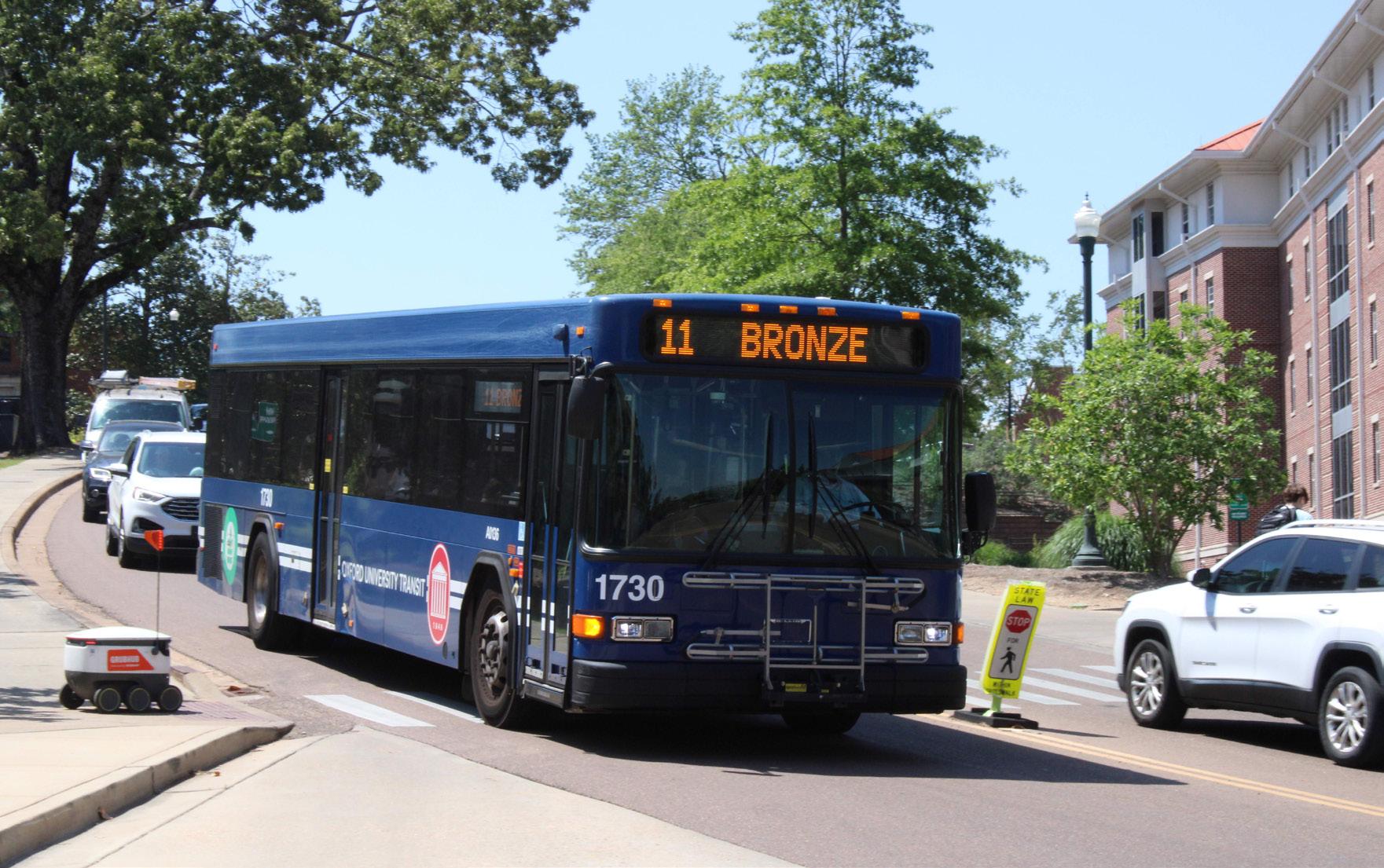
An Oxford-University Transit bus travels down Rebel Drive on April 22.
JAYLYNN CONNER A&C Staff Writer
Christian Dadd, a magician and graduate student in the master of taxation program, can be spotted performing tricks with playing cards around Oxford and the University of Mississippi campus for all interested in his mystique.
Dadd’s tricks have caught the attention of popular Ole Miss athletes such as Trinidad Chambliss, Caden Prieskorn and Diego Pounds. Whether on the Square or before the student section after home football games, the athletes enjoy Dadd’s sleight of hand. Dadd, however, wants everyone to find joy in his magic, not just campus celebrities.
“I think you never know what someone is going through,” Dadd said. “They could be having a stressful day, a tough day, and just
Catch him before he disappears! Meet the magic man of Oxford
giving that one quick moment of peace of mind from stress-related activities, it just does wonders.”
Dadd’s Instagram account @ magicmanofoxford boasts 5,820 followers as of April 22. Sororities, fraternities and other groups have booked him to perform at their events. However, Dadd still enjoys performing for free in public spaces.
“The gigs are awesome,” Dadd said. “My purpose is to make people happy and bring joy to the world. I like going out every Thursday, Friday and Saturday night to the bars or going to campus and doing magic for people.”
For Zane Rigdon, a junior finance major, and friends, the magic’s effect was immediate and intense when they saw Dadd spontaneously perform at The Balcony at Oxford Grillehouse on April 17.
“I’m just blown away by this

experience,” Rigdon said. “Usually, you go to dinner and talk with your friends, but having such an entertainment source made the dinner a 10-out-of-10 experience.”
Senior allied health sciences major Kameron Turner also raved about Dadd’s performance at The Balcony at Oxford Grillehouse.
“I don’t even have words,” Turner said. “I feel like my heart is beating so fast because I’m just actually amazed at how impressive that was. I feel like that’s the coolest thing I’ve seen in a while.”
Dadd, who is from League City, Texas, has been performing card magic at the university since he was a freshman accountancy major in 2021. He graduated with his bachelor’s degree in accountancy in 2025, but he did not start advertising his magic seriously until this year when he began his master’s program.
“It wasn’t until really this year, my fifth year in college, when I decided I was gonna go all out,” Dadd said. “I created the magic man of Oxford account (on Instagram), and I just started editing and posting videos. I only expected to get maybe a few hundred views, but I didn’t expect it to grow to what it did.”
Jaromir Saloni, a senior computer science and mathematics double major, is Dadd’s roommate. He said Dadd is often approached by fans who are eager to see magic tricks. Thankfully, Dadd carries several decks of cards with him wherever he goes.
“When we go to Walmart or out to the stores, people recog-


nize him, and he’ll perform magic for them there,” Saloni said.
Because Dadd did not have a car his freshman year, he was unable to perform magic at off-campus venues, so he showcased his talent to those on campus.
“I didn’t have a car here my freshman year, so I would perform in the (Gertrude C. Ford Ole Miss) Student Union,” Dadd said. “I would perform in the dorms.”
Susan Dadd, Christian’s mother, said her son’s interest in magic stood out even when Christian was young.
“I was a little bit shocked because it’s unusual compared to most hobbies (that) kids would have at that age,” Susan Dadd said. “Most kids are going to pick it up and put it down. He just wanted more and more, so I think that’s the shocking part, how long he held onto that hobby.”
Dadd’s parents got him a magic kit for Christmas when he was 5 years old, and he has been performing magic ever since. After displaying his skills at a talent show when he was in third grade, Dadd fell in love with card magic.
“My parents actually got me a magic kit for Christmas, and I needed something for the talent show, so I was like, ‘Okay, I’m gonna practice my heart out,’” Dadd said. “When it finally came time to perform, I loved it. The reactions I got just told me this was something that I want to continue doing.”
Dadd continued receiving magic kits as he grew older. He also watched videos of famous magicians David Blaine, Criss Angel, Mat Franco and Shin Lim, whom he credits for much of his learning. Dadd said that he would not be where he is today without magic books in particular.
Isaac Etheridge, a senior criminal justice major, is Dadd’s former college roommate and a fellow magician. Etheridge noted that Dadd’s skills have improved since Dadd started college.
“I’m really particular about mechanics — how you control the cards — and there were some things that I would see him do that needed some level of improvement,” Etheridge
said. “Over the years, I will say, his sleights have gotten a lot better.”
Around the time Dadd started his undergraduate studies, he realized that he wanted to make tricks of his own. His repertoire is now replete with both original acts and imitations of other magicians’ tricks.
“I probably have 15 tricks that I’ve created so far in college. I have over 30 tricks total that I know off the top of my head,” Dadd said. Since Dadd is now confident in his arsenal of tricks, he is currently working to improve his stage presence.
“For me, it’s more about the performing now because I’ve got all the sleight of hand that I need, or that I think I need,” Dadd said. “It’s more the performing aspect — knowing what to say, knowing how to engage your audience and knowing how to direct their attention to what you want.”
With his Uniform Certified Public Accountant (CPA) Examination coming up in July and a job lined up at Ernst & Young in Houston, Dadd will soon be disappearing from Oxford.
“I had an internship that ran over the summertime, so I got the experience I need(ed) to know what it’s like to work in an accounting firm,” Dadd said. “This past summer, I got the offer, and I’m going to start full-time in January in their tax department.”
Dadd still plans to carve out time outside of work to practice magic.
“Usually, accountants only work Monday through Friday, so that leaves my weekends open,” Dadd said. “The weekends are going to be my time to do magic-related things.”
Dadd hopes that, after his career in accountancy is complete, he will be able to dedicate all his time to magic.
“I know that I want to do magic full time,” Dadd said. “That has been a dream of mine ever since I was little. I’m going to work some amount of years until I retire, and when I retire, that’s whenever I’m going to start magic professionally full time.”
Christian Dadd
JACK KIRKLAND / THE DAILY MISSISSIPPIAN
Christian Dadd shows off his card tricks in the Circle on April 22.
JACK KIRKLAND / THE DAILY MISSISSIPPIAN
Students take the lead in Oxford fitness scene
SARA ZALESKI A&C Staff Writer
As new fitness studios continue to open in Oxford, there are currently more than 15 located within town limits. Many University of Mississippi students are not only attending workouts but also stepping into instructor roles. Instructors have different requirements to obtain certifications depending on the studio they work for and type of classes they are instructing.
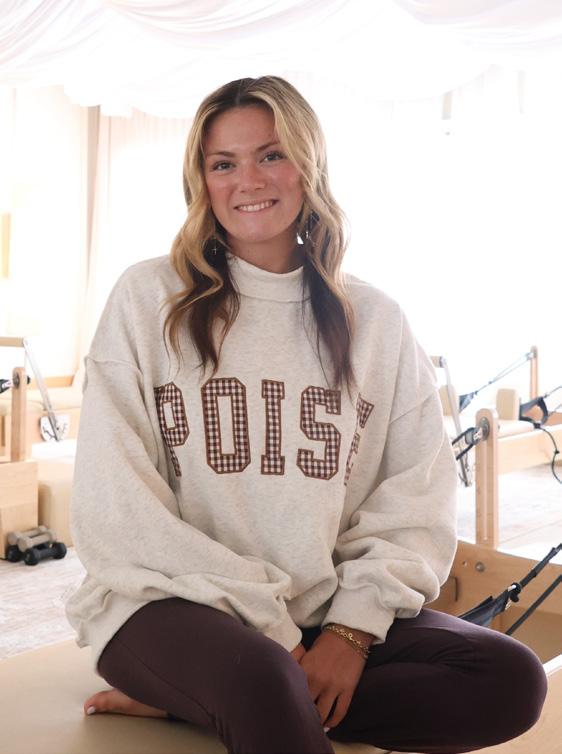
Mercedes Granese, a junior psychology major, teaches barre and reformer pilates, a variation of the exercise style involving a special reformer machine, at Poise Wellness Club. She also serves on the wellness studio’s marketing team.
“Fitness is becoming more important to younger generations, even in smaller places like Oxford,” Granese said. “In the middle of everything going on in life, it offers a sense of peace and stillness that’s hard to find elsewhere.”
Granese does not just lead workouts; she also builds meaningful connections with her students.
“Watching my students choose themselves every day inspires me just as much as I hope to inspire them,” Granese said. “They’re more than just students to me — they become friends, and I genuinely care about who they are and who they’re becoming.”
Other instructors also point to personal growth through their studio’s workouts.
Macie Coleman, a pilates instructor at Power Movement Pilates, is a senior business marketing major. She first became interested in pilates because of her mother.
“She helped me get certified, and it became my passion,” Coleman said. “I just fell in love.”
Coleman has watched students become more intentional about their fitness.
“Fitness in Oxford has grown tremendously over the last couple of years. It’s amazing to see people working to better themselves,” Coleman said. “My favorite part about my job is the community it has brought me. I have met so many people and made so many friends that I will have forever.”
Caroline Grice, a sophomore

accountancy major, is also a reformer pilates instructor at Power Movement Pilates. She said that her passion for fitness continues to grow through both teaching and personal experience.
“My favorite workout right now is reformer pilates,” Grice said. “I am biased because I teach it, but it really is the best allaround workout for anyone. It’s low impact, customizable, and it really builds your core muscles.”
Grice said fitness has impacted herinwaysbeyondphysicalstrength.
“Working out has made me stronger, but it’s also brought me so much happiness. It’s rewarding to see others experience that, as well,” Grice said.
Alongside the rise of pilates, cycling has emerged as another popular style of workout among university students.
Brelyn Binkley, a senior allied health studies major on the pre-nursing track, serves as a cycle instructor at ELMNT CYCLE. She said that the fitness community in Oxford continues to grow with a strong emphasis on support and connection.
“I feel like the fitness community in Oxford is really vast,” Binkley said. “There are so many great places to go to get a good workout in. Everyone is just trying to better themselves one day at a time, and it’s awesome to see.”
Binkley began working as an instructor in February 2025. Teaching came naturally to her, she said.
“I have always loved teaching because I used to be a dance teacher in high school. When ELMNT was opening and looking for instructors, I was so excited to apply and have the opportunity to teach,” Binkley said.
The desire for self-improvement among college students has become more evident in recent years, especially in Oxford.
“I think people are inspired to work out to find fulfillment within themselves,” Granese said. “It’s also about chasing a version of themselves they have in their mind.”
Binkley also commented on the overall benefits of younger generations taking part in exercise classes.
“I think the fact that younger generations are taking over fitness trends is incredible. I think that if you are blessed to be able to move
How to maximize your Double Decker Arts Festival experience
TAYLOR HILL A&C Editor
Without a solid plan on how to spend your 2026 Double Decker Arts Festival, you may waste time wandering, waiting in lines or missing out on amazing artists. The event, which will be held on the Square April 24-25, offers entertainment ranging from live music to shopping. Students at the University of Mississippi weighed in with their best tips on how to make the most of the weekend.
The easiest way to maximize one’s experience at the festival is to arrive early. This allows for optimal browsing; crowds are typically lighter, artists are more talkative and items you may want to purchase will still be available. Use the maps provided by @ doubledeckerart on Instagram to navigate the festival efficiently.
Whitley Carraway, a sophomore allied health studies major, will be going to her second Double Decker this year. She advises students to get to the Square when tents open at 10 a.m.
“Get there earlier before the crowds, so that way you can actually walk around and see all of the tents,” Carraway said. “Getting there earlier, walking around, seeing tents and the art aspect of it is really interesting, even if that’s not your thing.”
Large crowds can make it difficult to tackle all of the booths that the festival has to offer. Other than art and food booths, there will be a variety of music performances and food truck options to fill your day.
Do not treat the festival as a single, long event; break it into smaller chunks. Morgan Eaton, a senior accountancy major, advised students to explore each part of the festival, especially the music and the races. The 5K race starts at 7:45 a.m., and the 10K race starts at 7:30 a.m., both beginning and
ending at the Oxford YMCA located on North Lamar Boulevard.
The music will begin on Friday night with Penelope Road at 6:00 p.m., and conclude for Friday with Shane and The Smiths at 10 p.m.
Art and food vendors open at 10:00 a.m. on Saturday and will close at 5:30 p.m. The music will continue at 11:30 a.m. with Annie and The Caldwells and conclude with the headliner, Wilco, at 10:00 p.m.
“Get there early, stay all day, do the run or walk if you can and get the full experience,” Eaton said. “Go see all the music, take a break and come back to enjoy the nightlife and the music.”
Decide ahead of time where and when you will eat. The lines get long fast. Try to eat earlier or later in the day to avoid long lines, and share food with friends to keep spending low. Be sure to bring hand sanitizer or wipes to limit spreading germs.
Natalie Molloy, a junior integrated marketing communications major, will be attending Double Decker for her third time.
“If you want to eat on the Square, try to get there early, or put your name in so that you don’t go hungry,” Molloy said. “Have fun, but be smart. With so many people around, it’s important to feel good so you can last all day.”
The headliner music performances bring out many attendees each year, and for good reason. However, acts by lesser-known bands are typically not quite as crowded and still entertaining. Make sure you look at the lineup before going to the festival, and pick out two or three must-see artists — at least a few of whom are not expected to draw out huge crowds.
There are also some must-have items to carry with you and stay safe. First, bring your own water so that you can stay hydrated without spending unnecessary money.
“Hydrate, hydrate, hydrate
because it’s such a long weekend, lots of things to do, bands and vendors to see, lots of time in the sun,” Molloy said.
Also, bring sunscreen, sunglasses and fans to keep your body cool and protected. If you anticipate taking pictures and videos, bring a portable charger to keep your phone battery going until the end of the day. Carry a small bag to store these essentials.
Remember to wear comfortable shoes, since you will be on your feet for most of the day. It can be difficult to find a place to relax and recuperate during such a lively festival. Take a midday break in the shade or leave the Square to find food and air conditioning. It is important to take breaks to fully enjoy the weekend.
Before you leave for Double Decker in the morning, consider transportation options, parking availability and nearby accommodations. Shuttles will be available for pickup and drop off at the South Oxford Center and Oxford High School for $5 per person, roundtrip. Establish a spot to meet up with your friends and family in case you get separated from them. For safety purposes, stay aware of your surroundings.
“If you can walk to the Square, walk. If you have friends who live near the Square, go to their houses in the morning, then walk. If you have to Uber, schedule your Ubers beforehand,” Molloy said. “Don’t even bother trying to find a parking spot on the Square. If you have to, try to park off the Square and walk from there. Driving to the Square is almost impossible, especially on Saturday.”
your body, then you should be as active as you can and do things that will not only benefit you now but also in the long run,” Binkley said.
Mercedes Granese
Ole Miss Football’s top brass:
Golding, Baker, Brown lead the charge for next season
RUSS EDDINS Sports Editor
The Ole Miss Football coaching staff looks different than it did in November 2025. Head coach Pete Golding, offensive coordinator John David Baker and defensive coordinator Bryan Brown are all beginning their first full seasons in their respective roles.
At the end of last season, Golding, the former defensive coordinator, was promoted to head coach; offensive coordinator Charlie Weis Jr. departed for LSU, paving the way for Baker’s hiring from East Carolina; and Brown, the current defensive coordinator, was elevated to co-defensive coordinator for the playoffs.
While Brown is the defensive coordinator, Golding will still call the defensive plays.
Golding came to Ole Miss in 2023 as the defensive coordinator. In 2024, under Golding, the Rebels led the SEC in sacks with 52 and tackles for loss with 120.
Prior to coaching at Ole Miss, Golding was the defensive coordinator at Alabama from 2018 to 2022. He won three SEC titles and a national championship with the Crimson Tide.
Golding often talks about his time under former Alabama head coach Nick Saban. He draws on that experience to shape Ole Miss’ structure.
“Being around coach Saban really helped me because there wasn’t a defensive meeting he wasn’t in. There wasn’t a special teams meeting he wasn’t in. He didn’t even call the defense,” Golding said in a press conference on April 7. “He had it set up in the right way and trusted the people to do their job in other areas of the program. That was really important to me for this offseason to be able to make sure we have everything structured really well.”
Under former head coach Lane Kiffin, who left dramatically last season for LSU, Ole Miss was an offense-first team. After Golding served as the head coach throughout the team’s run in the College Foot -
MADI GEORGE
continued from page 1
to throw that pitch to me, and I was just like, ‘I gotta sink into it and go with it.’”
George hit her 17th home run of the season in the top of the first inning on Sunday. The ball traveled 290 feet and gave the Rebels an early 2-0 lead. In the top of the fourth, George homered again to set the new record.
Despite this record-breaking performance by George, Ole Miss lost, 8-5. George has been an impact player all season for Ole Miss. Alongside her 20 home runs, she leads the team
ball Playoffs last season, he is familiar with the offense, but he hired Baker intentionally.
“Obviously, we hired JDB (John David Baker) for a reason, and that’s to run the offense,” Golding said. “When you’re a coordinator over there, depending upon where you work, you don’t love when the head coach walks in and is like, ‘Hey man, we’re gonna do this, this and this.’”
Golding will let the coordinators do their jobs, but he wants to ensure that players’ skill sets are being used appropriately.
“The game has changed, too. If you’re gonna invest in players, you better have a role for them,” Golding said. “It is my responsibility to make sure (that) within the package that they (the coordinators) create, here are the tools that we need to make sure we have plans for and that we’re using effectively — because we recruited them (the players) based on this skill set.”
Baker was the Ole Miss tight ends coach from 2021-23 and the co-offensive coordinator in 2022-23. He left Ole Miss in 2023 to take the offensive coordinator and quarterback coach job at East Carolina.
Baker spoke about the people who have influenced his coaching career the most in a press conference on April 10. He got his start coaching at North Texas before coming to Ole Miss as part of Kiffin’s coaching staff.
Through Baker’s time at North Texas, USC, East Carolina and Ole Miss, he has found his offensive identity.
“A large part of it is what we did (at Ole Miss) for three years … and then continued to do that at East Carolina. … It (the offense) derives from a lot of different places, but all really good coaches,” Baker said.
East Carolina was No. 19 in yards per game (449) under Baker in 2025. Pirate quarterback Katin Houser threw for 3,300 yards, completed 65.9% of passes and had 19 touchdown passes last year.
Baker’s prior experience at Ole Miss will make for a smooth transition to the of -
with 50 RBIs and a .394 batting average. She is second on the team in hits with 56.
“I’m really blessed. I wouldn’t have thought I would be here today, being in the four-hole spot, having my starting spot on the field,” George said. “I would not have thought of that coming into my freshman year because I thought I was going to be riding the bench the whole time.”
George hit her first collegiate homer against CSUN on Feb. 6. She hit two home runs to set the Ole Miss single-season home run record by a freshman on Tuesday, April 14, against North Alabama.
“I actually didn’t know that I broke the freshman record. I didn’t even know that was a
fensive coordinator role. When Baker was last at Ole Miss, he served under an offensive head coach. Now, he will be under a defensive head coach, but Baker has experience in this situation.
“(Being at ECU) was my first time in my career working for a defensive head coach, which was awesome,” Baker said. “I worked for a great head coach … (who was) first there, but the other part of that was (neither of them was) an offensive guy that had years and years of experience in this system. As I’m game planning … finding the answers or finding things that are wrong in what we’re doing, that was all on me.”
Brown was the defensive backs coach before December 2025, when Golding promoted him to co-defensive coordinator. Now, he is the defensive coordinator. He spoke to the media before the playoffs on Dec. 16 about his new role.
“With PG (Pete Golding) getting elevated to the head coach, the model has changed a little bit getting into the defense, so I’m taking over the
thing. I thought it was just the overall record,” George said.
Cassie Reasner’s 3-run shot in the first inning against the Southern Miss Golden Eagles was the Rebels’ 68th home run of the season, surpassing the previous record of 67.
“When (softball head coach) Jamie (Trachsel) told us that we tied (the record) … honestly, none of us were really thinking about it because we were just like, ‘We’ve just got to play the game we know. We’ve just got to play the sport that we love,’” George said.
In addition to George’s pair of homers, Laylonna Applin also hit one over the fence in the 12-5 win. On the season, the Rebels have 71 homers.
Reasner is second on
role of scripting for practice, meeting with the defensive staff and getting all those things ironed out,” Brown said. “I make life a little easier so Pete (Golding) can drive the bus on his game day.”
Brown was a defensive back for Ole Miss Football from 2003-06 and point guard for the men’s basketball team in 2002. On the football team, Brown totaled 70 career tackles. He graduated from the university in 2006. His coaching career began in 2008 at Rutgers. Brown spent time at Delta State, Cincinnati, Louisville and Appalachian State. In 2010-11, Brown was a graduate assistant and defensive administrative assistant for the Rebels.
Brown was nominated for the Broyles Award in 2018 and 2023, which is given to college football’s top assistant coach.
He coached defensive back Trey Amos, who was selected by the Washington Commanders in the second round of the 2025 NFL Draft. The former Rebel led Ole Miss in pass breakups (13) in 2024.
Brown returned to Ole Miss
the team in homers with 11, while Persy Llamas, Mackenzie Pickens and Kennedy Bunker are all tied for third with eight apiece.
With her two homers against Southern Miss, George now has 20 on the season, good for third in the SEC. She hit seven homers before SEC play began and has hit six homers during conference play.
With six games left, George and the Rebels will look to extend their records and finish the season strongly through their tough remaining slate of SEC games.
For George, her freshman campaign is just the beginning of her legacy.
“Honestly, this is just the beginning,” George said. “It’s
in 2024 as co-defensive coordinator and secondary coach. He spoke about how things have changed around the program since his days as a player.
“The first thing is the winning culture, a winning mindset. It’s not, ‘We hope we can win.’ It’s, ‘We’re gonna win every single football game,’” Brown said in a press conference on April 7. “That’s the mindset now (compared) to what it’s been in years past. The program has done a heck of a job continuing to build the resources (that) we have.”
just making me want to work harder in the future as well. (It makes) me want to break my record over and over again throughout the years.”
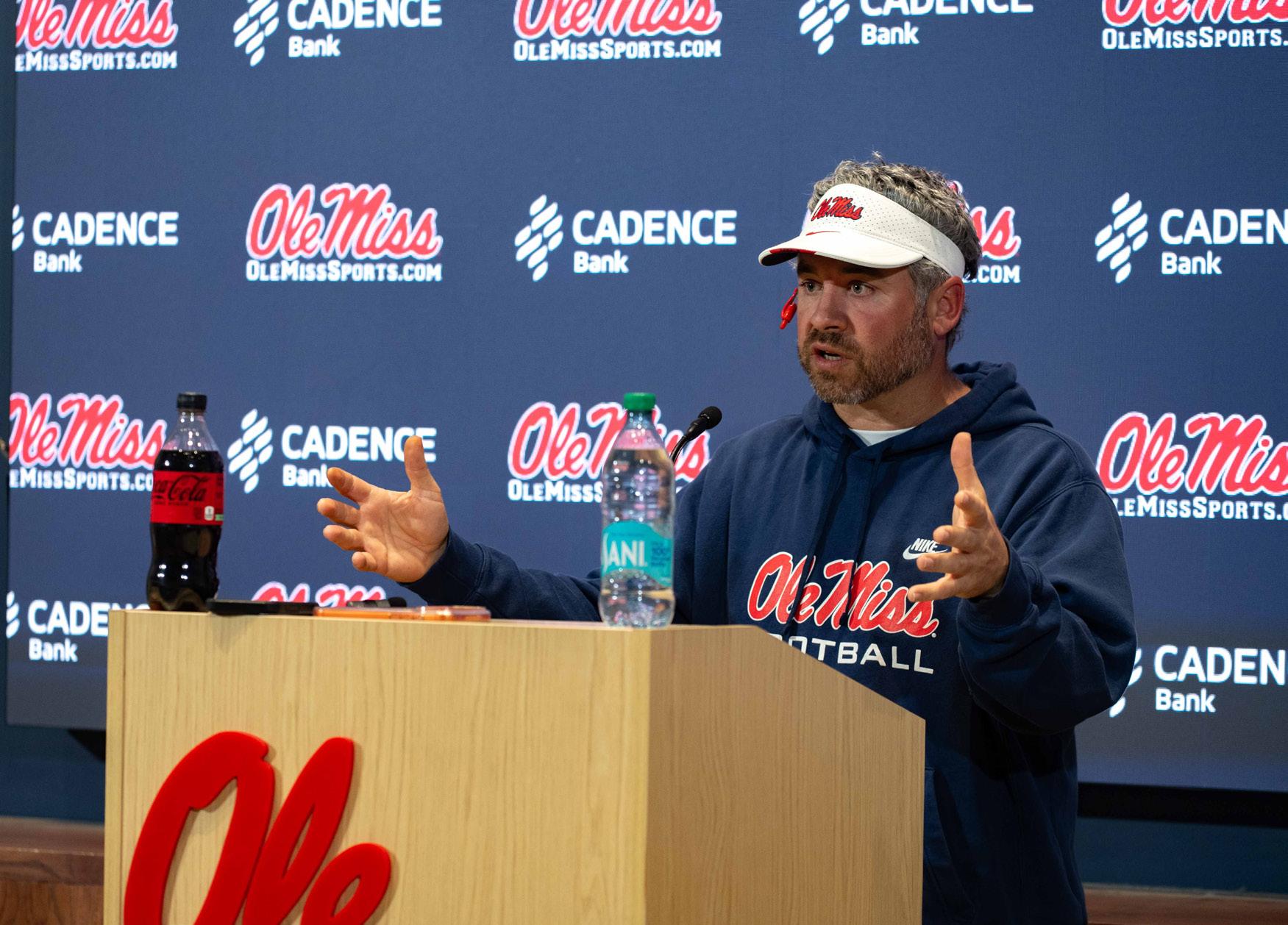
Pete Golding speaks in a press conference in the Olivia and Archie Manning Athletics Performance Center on April 21.
JACK KIRKLAND / THE DAILY MISSISSIPPIAN
Wear the history, not just the fabric: Appreciating South Asian culture on campus
“South Asian culture is not a costume, a workout or a red-carpet accessory to be discarded when the season changes. It is a vibrant and beautiful legacy.”
VIDYA ADLAKHA Opinion Staff Writer
Harper’s Bazaar recently deemed the neck scarf Kendall Jenner wore in her pre-Oscars appearance an “elegant styling trick” rather than calling it by its proper name: the dupatta. Bella Hadid and Gracie Abrams donned red carpet looks with the same scarf, along with cropped blouses and long skirts — both of which were obvious replications of the traditional Indian dupatta scarf, choli blouse and lehenga skirt. Yet, no credit was given to the culture where these garments originated.
The fashion world seems to treat South Asian culture like a brand-new invention, stripping the bindi, dupatta and lehenga of their context and adopting these items as part of Western fashion.
At the University of Mississippi, everyone has an opportunity to engage in South Asian culture. Student groups such as the Indian Student Association and the Pakistani Student Association let students engage with the culture beyond the so-called aesthetic to develop a deeper understanding and appreciation for South Asia’s admirable traditions and garments.
Showing up to campus Holi celebrations or attending a club-sponsored henna night are authentic ways to engage with South Asian culture. These events allow students and faculty to recognize and learn about the depth of cultural history that is alive in Oxford.
Nishi Patel, a sophomore
Opinion Policies:
biochemistry major from Vicksburg, Miss., serves as the dance coordinator for the Indian Student Association. She said people and organizations at the university help bridge the gap between different cultures.
“We do a pretty good job connecting these various groups with organizations like the Indian Student Association (and) the Nepali Student Association and Holi celebrations,” Patel said.
Though student organizations work toward improving cultural awareness on campus, there remains a glaring double standard throughout the nation when it comes to items of spiritual significance, such as the bindi. When the bindi is worn at music festivals as a decoration or accessory, it is deemed boho-chic or avant-garde, yet Indian women who wear bindis daily are often ridiculed as being too traditional or not American enough.
Patel shared that others’ appropriation of the bindi feels a bit like a mockery. Rather than being merely an accessory, it is meant to represent a deep, personal connection.
This erasure extends to spiritual practices, too. Yoga, originating in South Asia, is a spiritual and philosophical practice meant to unite body, mind and soul. However, in America, it is being rebranded for the Western market.
In particular, Lululemon has capitalized on this by using terms that are spiritually-meaningful in South Asian cultures like “Namaste,” for marketing puns, such as “Namastay at the
beach.” Essentially, Lululemon is using South Asian spirituality as an aesthetic selling point.
The same can be said for the dupattas, which have been an integral part of Indian culture for centuries. The exact same piece of fabric gets marketed in the West as a boho shawl or a Scandinavian scarf.
Embracing a culture means valuing the people behind it, not just the garments or trends they create. Appreciation that only shows up when the culture is stripped of its people is not appreciation at all — it is hypocrisy.
For many South Asians living and working in Oxford, these contradictions sting because they turn our heritage and culture into a trend that only has value during festival season. It is exhausting to explain that a bindi is not a sticker and that a dupatta is not simply a Scandinavian scarf.
South Asian culture is not a costume, a workout or a red-carpet accessory to be discarded when the season changes. It is a vibrant and beautiful legacy found in university labs, student unions and all spaces in between, and it is a legacy that deserves to be respected and embraced.
Vidya Adlakha is a junior biological sciences major from Ocean Springs, Miss.

CONTACT THE OPINION DESK AT thedmopinion@gmail.com
Columns do not represent the views of The University of Mississippi or The Daily Mississippian. The Daily Mississippian welcomes letters to the editor, which should be emailed to thedmopinion@ gmail.com. Letters should be no longer than 300 words. They may be edited for clarity, brevity and libel. Third-party letters and those with pseudonyms or no name will not be published. Letters are limited to one per individual per month. Letters should include contact information, including relationship to the university, if applicable.
SUDOKU©
Puzzles by KrazyDad

HOW TO PLAY
Complete the grid so that every row, column and 3x3 box contains the numbers 1 through 9 with no repeats.
DIFFICULTY LEVEL
INTERMEDIATE




GRACE ANN COURTNEY / THE DAILY MISSISSIPPIAN
Increased
Detoxification
Lower Blood
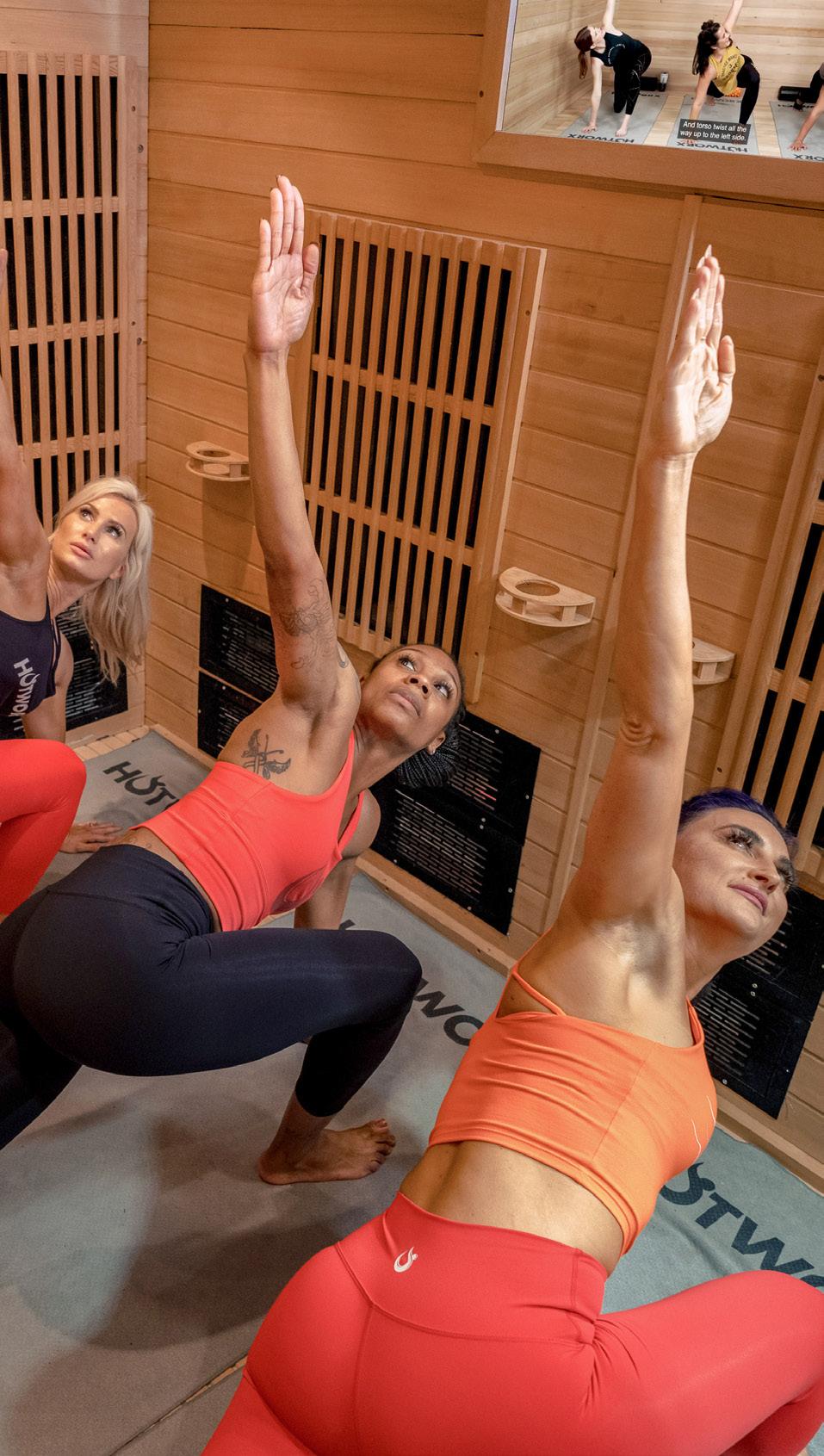
Anti-Aging & Skin Rejuvenation
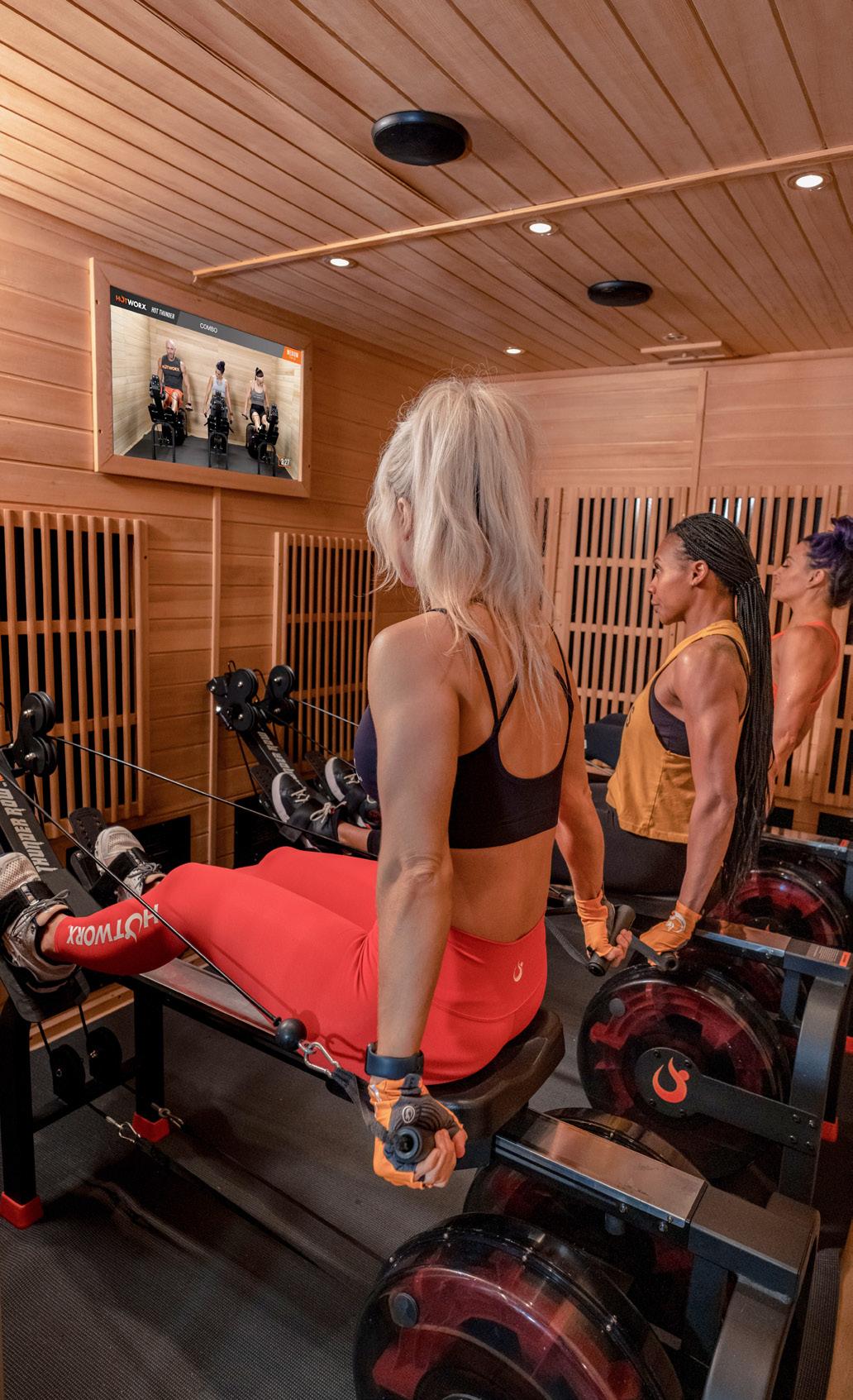
Improved Circulation
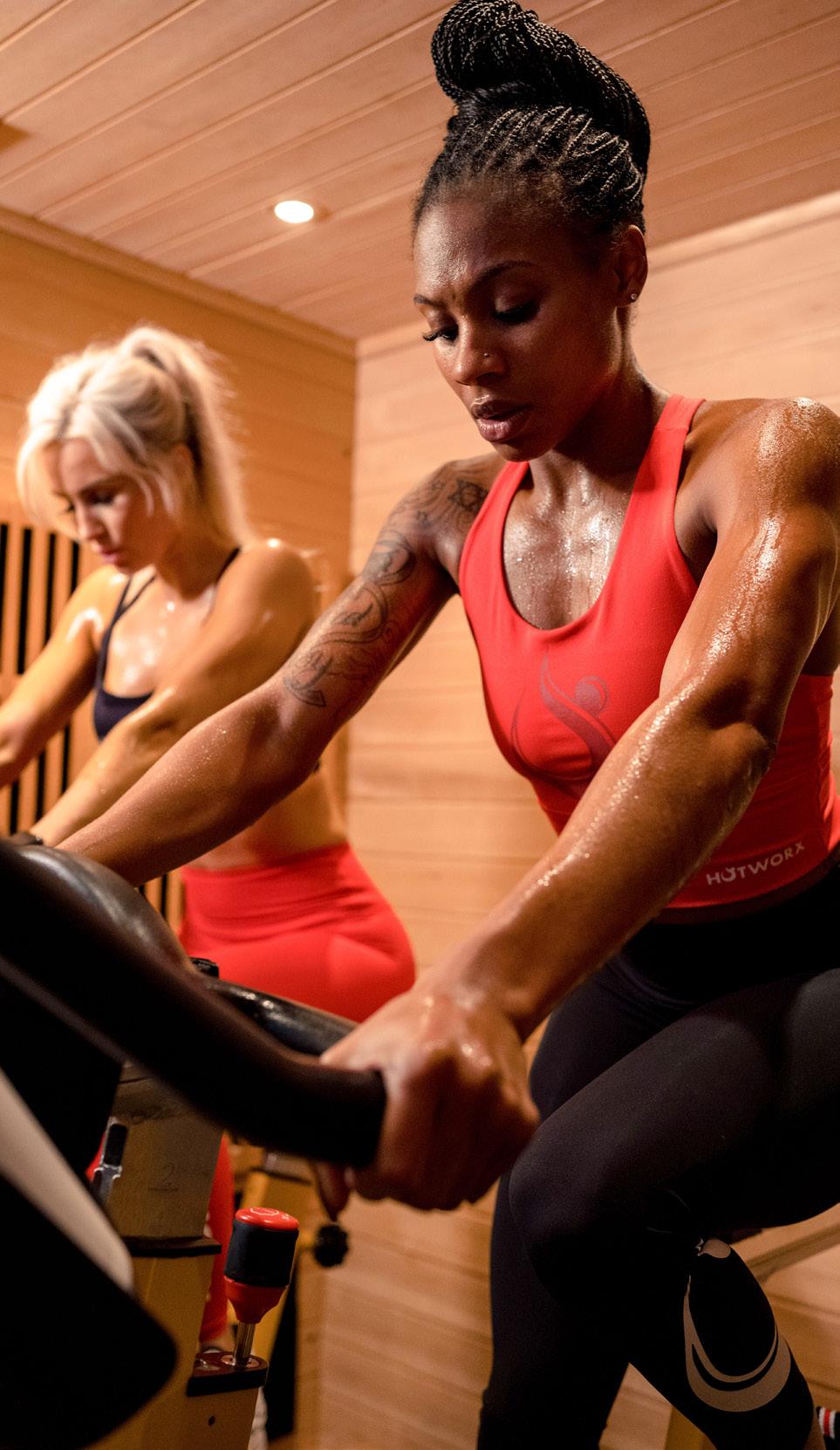
Weight Loss