Are student workers paid enough? coping with the growing gap between wages and the cost of living
Student workers at the University of Mississippi are struggling to pay their bills working the maximum number of hours allotted per week, even with hourly wages higher than the state minimum wage.
Luisa Sánchez, a junior civil engineering major from Bogotà, Colombia, juggles three on-campus jobs: She is a teaching assistant for an engineering course, a math tutor and a lab research assistant.
“Even when maximizing my hours, my monthly salary will be almost entirely spent on rent,” Sánchez said. “This is concerning to me because everything in Oxford is just getting more expensive, but I will be getting the same amount of money as if the prices did not change.”
The university sets a maximum of 25 hours per week for domestic students, but for international students like Sánchez,
they are limited to 20 hours by their visa requirements. From there, individual departments, at their own discretion, decide what student wages will be.
Whereas Sánchez once worked only 10 hours a week to focus on school, she picked up additional jobs to afford living in Oxford. Although she is among the highest-paid student workers at the university, earning $15 per hour at each job, roughly 90% of her monthly income still goes to rent alone.
Sánchez is one of many student workers struggling to afford living in an increasingly expensive college town. While the university minimum student wage is $9 an hour, the Massachusetts Institute of Technology’s Living Wage Calculator finds that a living wage for one adult to cover basic expenses in Lafayette County is more than double that, at $23.14.
For some student workers, the gap in wages is something they feel every day.
“I stress myself out planning and separating my time to squeeze my work hours between my classes. I force myself to go to every shift on time because I would hate to lose my jobs that give me the most consistent hours.”
How the system works
There are nearly 1,900 student workers on campus. Under the UM’s current system,
Pi Kappa Alpha reactivates following 5-year suspension
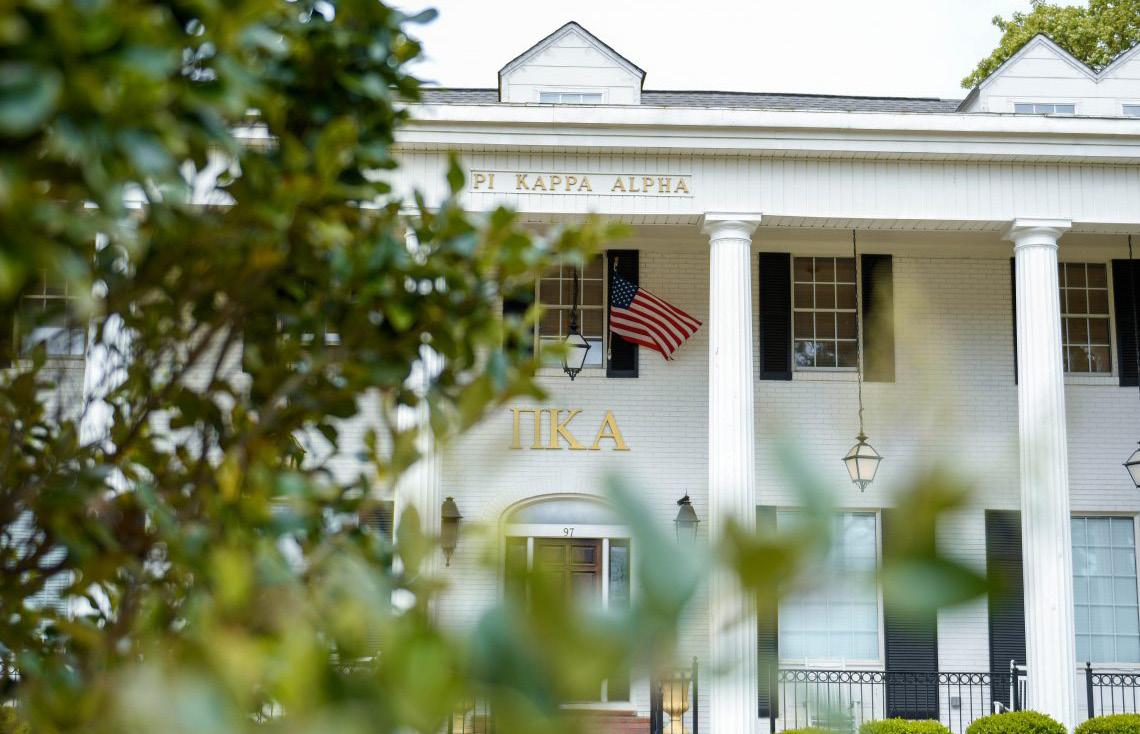
The Gamma Iota chapter of Pi Kappa Alpha is returning to the University of Mississippi, the chapter announced in an Instagram post last week. The chapter will reactivate in the fall and will be involved in 2026 Interfraternity Council Formal Recruitment.
“Hotty Toddy! PIKE is headed back to Ole Miss,” the post said. “This fall, our professional expansion consultants will be in Oxford recruiting the next generation of Pikes.”
The chapter was suspended from campus in 2021 as a result of hazing violations that received national media attention. The suspension remained in effect until May 1, 2025.
The hazing incident, in which active members of the fraternity sprayed bleach or cleaning fluid onto blindfolded new members during pledgeship activities, took place
REGISTRATION
the Department of Human Resources sets the campus-wide minimum wage at $9 per hour — a rate the university has increased to in the past
on Oct. 11, 2020, according to University Police Department (UPD) incident reports.
UPD filed aggravated assault charges against James Bowes Higgins on Nov. 17, 2020, as a result of the incident, where one pledge member alleged that the substances were sprayed into his mouth, causing burns to his esophagus.
The chapter was officially suspended from campus on Nov. 11, 2021, having previously been placed on interim suspension closer to when the allegations came to light. Its charter with the national Pi Kappa Alpha International Fraternity organization was
five years from the $7.25 federal minimum wage, according to Bryce Drew, UM direc-
DJ Stobbe dubbed
DJ Stobbe, a senior real estate major from Louisville, Ky., was crowned the 2026 Mr. University on Tuesday, April 14 at the Gertrude C. Ford Center for the Performing Arts. Featured in an introduction, questionnaire, talent show and fitness portion, five contestants vied for the pageant title as they raised funds for the William Magee Center.
“I told myself before I came here that no matter what happens it’s all in the Lord’s plan,” Stobbe said. “I told myself to just have fun, and I got to meet some great guys. Thank you to everyone who came out.”
Three judges selected Mr. University: Ag-
gie Doddridge, assistant director of student activities at the Ole Miss Student Union; Henry Potter, 2025 Mr. University contestant and Cameron Davis, 2026 Miss University. The panel also selected a Mr. Talent, Mr. Muscle, Mr. Know-It-All and Mr. Congeniality.
“You want a Mr. University that has it all,” Doddridge said. “That’s a good representative of the university while also having a good attitude, a good spirit — someone that’s really a fan amongst the crowd. That was really evident in DJ’s performance tonight, so it’s no surprise that he
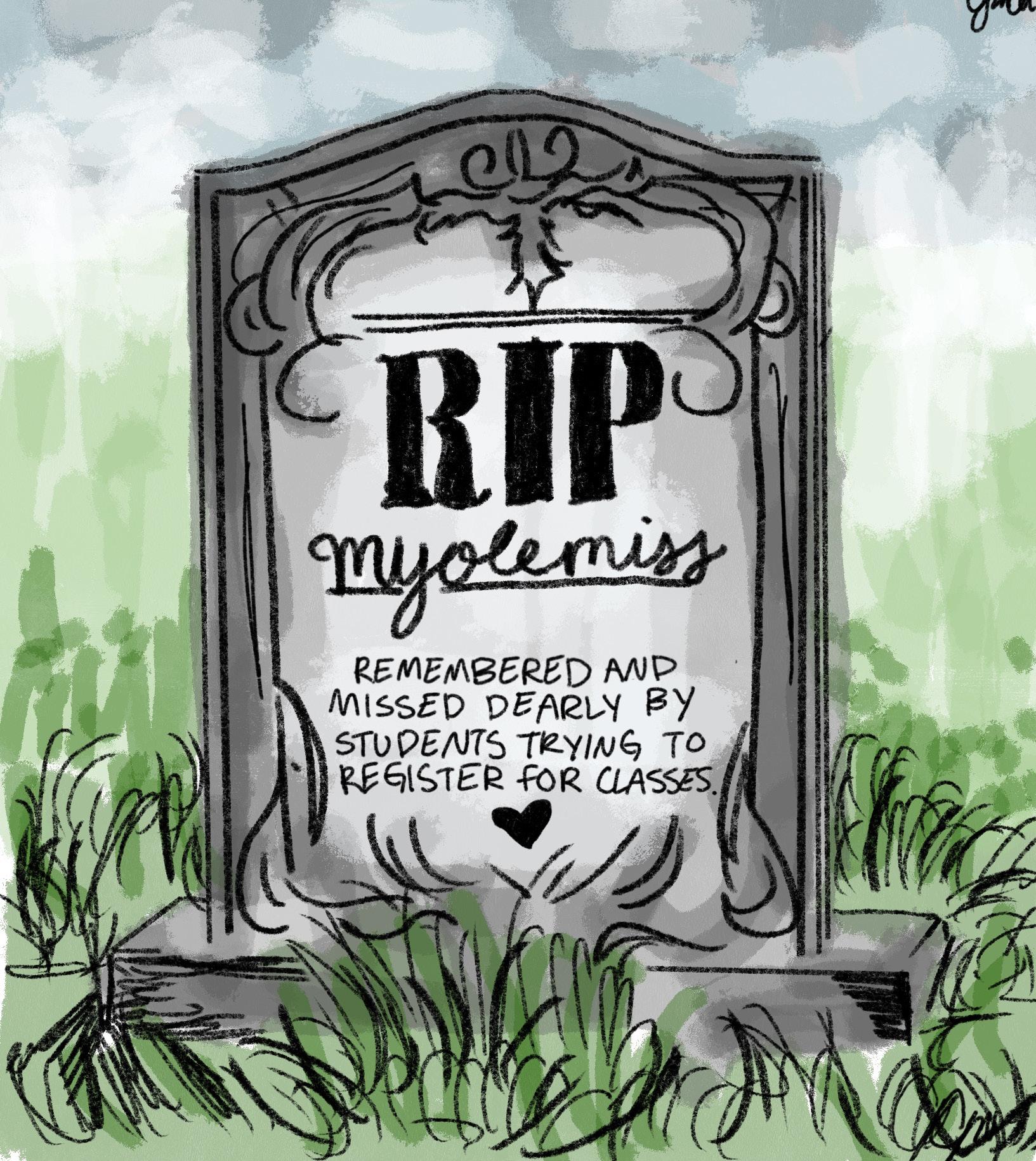
Many students face delays in signing up for classes.
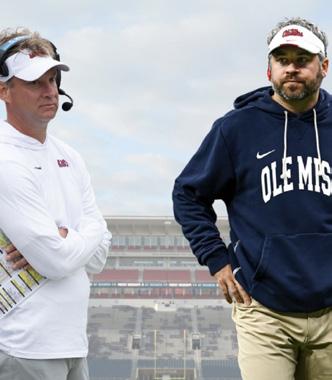
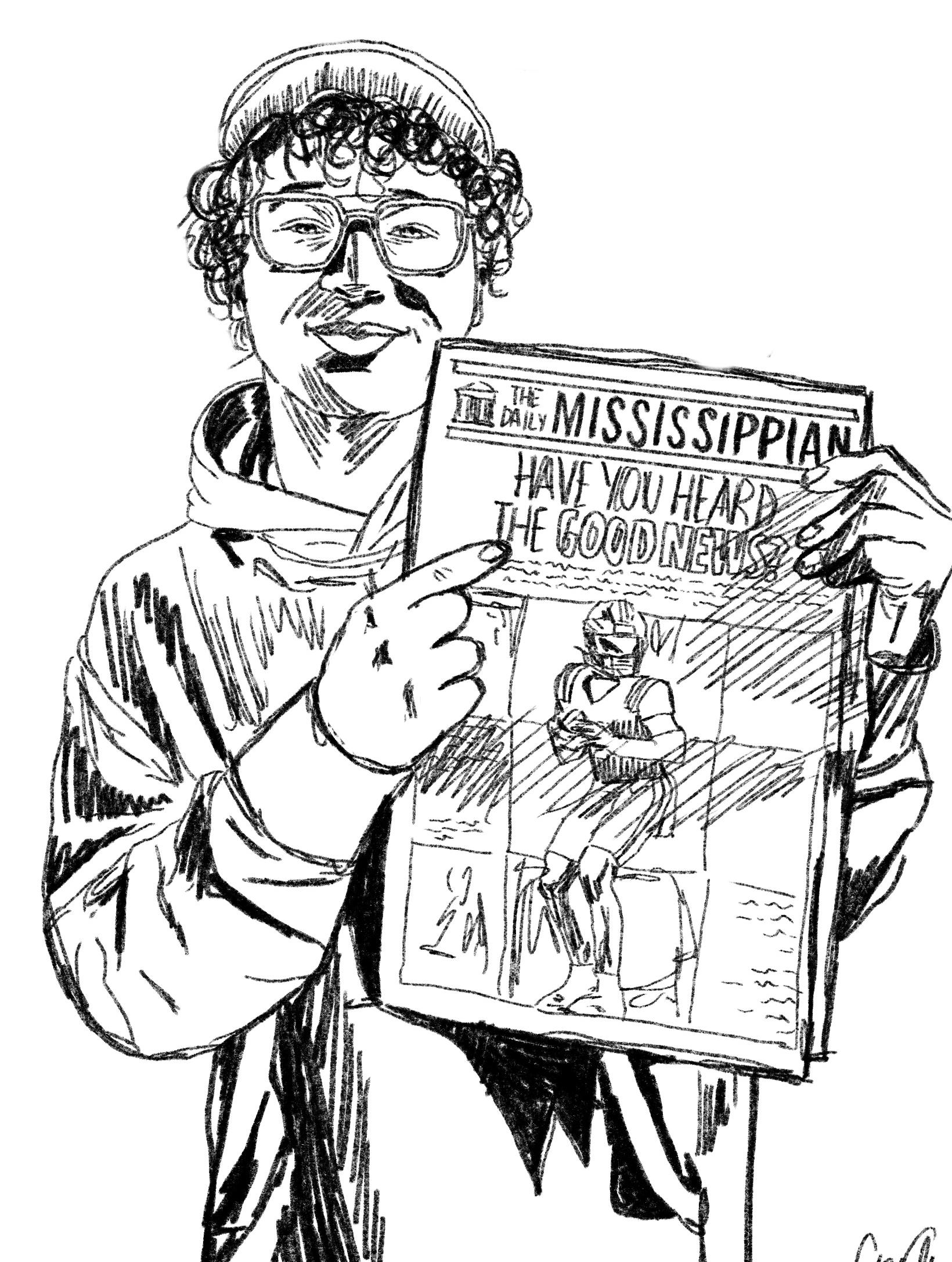
The Ole Miss Football head coach addresses last football season’s coaching controversy.
PAGE 9

Outgoing DM Editor-inChief Clay Hale champions collegiate journalism.
The Gamma Iota chapter of Pi Kappa Alpha Fraternity house in 2021
KATHERINE BUTLER / THE DAILY MISSISSIPPIAN
AIDAN PONIATOWSKI News Editor
HAILEY AUSTIN News Contributor
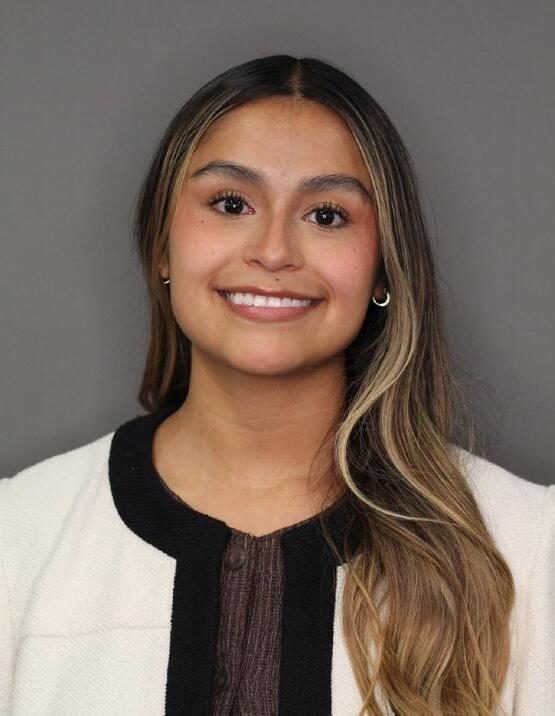
- Luisa Sánchez junior civil engineering major
PHOTO COURTESY: LUISA SÁNCHEZ
1
tor of compensation, recruiting and HR business partners.
Currently, across all departments, the average hourly student pay is $11.70. Although the structure does not necessarily prohibit higher pay, Drew said, human resources pauses and reviews a department’s decision to pay students more than $15 an hour, which is the approximate wage of the university’s lowest-paid employees.
With yearly reevaluation, he explained, university budget officials and senior leaders decide whether it is appropriate to raise the minimum.
“Since the chancellor has been in his role, he consistently advocates for salary and wages,” Drew said, calculating that the 24% raise from the $7.25 minimum to the current $9 was an additional $2.99 million annual investment by the uni -
versity into student wages.
Still, the cost of living in Oxford has already outpaced the average hourly student pay. Rent costs, which make up a large portion but not all of student expenses, are up nearly 10% from last year, according to RentCafe. This means the average price for an apartment is now $2,343 a month.
A student who works the maximum 25 hours every week and earns the average campus wage brings in less than half of the cost of rent each month.
Furthermore, UM tuition and fees have risen 38% over the last decade, fueling a total cost of attendance exceeding $49,000 in 2025, up 5.5% from the year before.
Different wages, same problem
Across university departments, students feel similar effects of pinching pennies.
Thomas Tilleros, a senior Southern studies major who earns $12 per hour as an administrative assistant in one
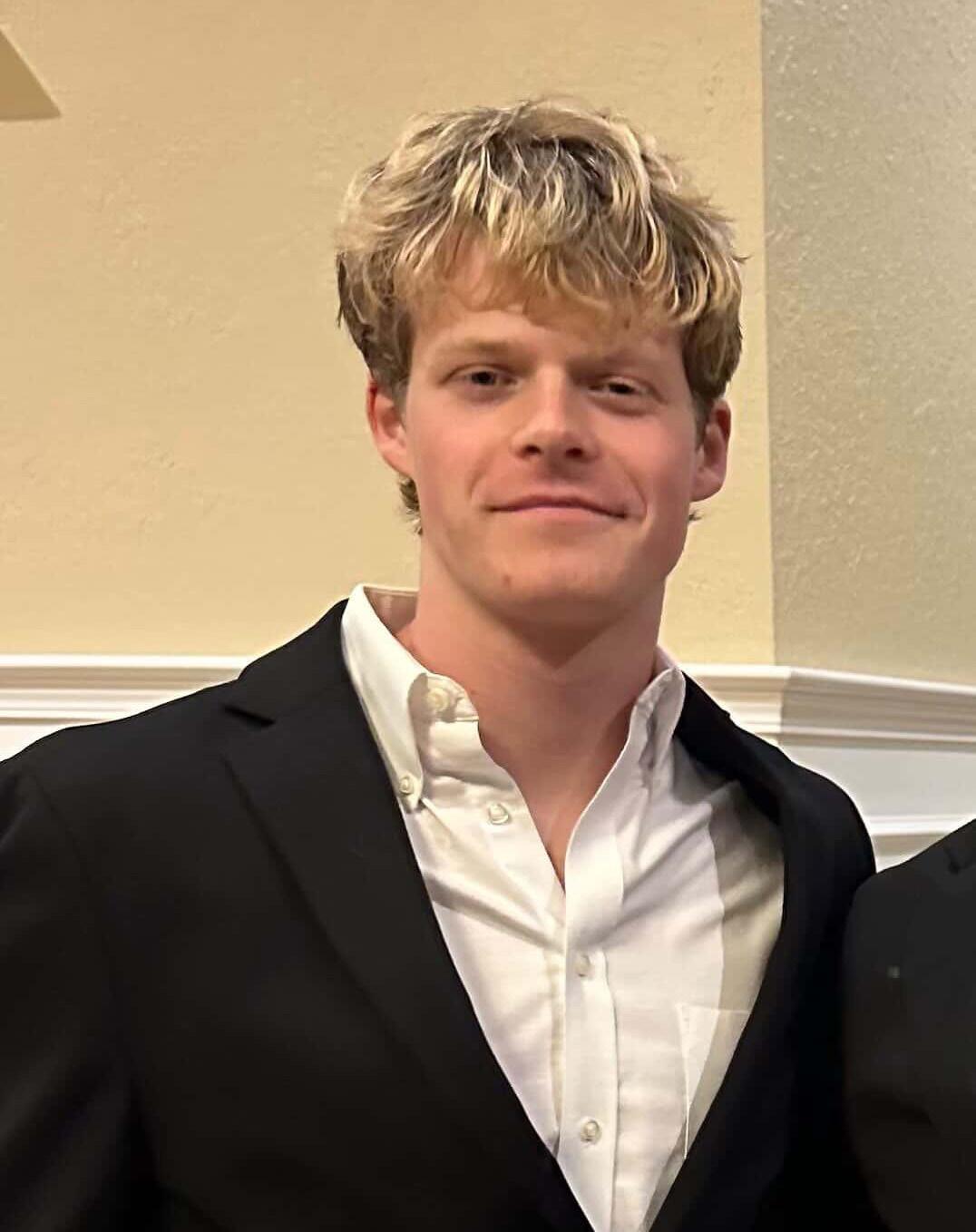

of the university’s academic departments, believes it would be impossible to live on the university’s minimum wage.
“There is no way a student can survive off $9 an hour and only 20 hours of work a week,” Tilleros said.
Griffen Hinkle, a senior integrated marketing communications major working for Ole Miss Sports Productions for $9 an hour, echoed this sentiment.
“Expenses are much more than the current income as an Ole Miss student (can support),” Hinkle said. “I think $15 or more is much closer to being reasonable.”
Madison Pope, a junior psychology major, makes $10 per hour working at the university library. She holds a different view, emphasizing that the hourly wage is an issue but is not the entire problem.
“I would say it could cover my basic expenses if I could work more hours; however, I did have to pick up a second job,” Pope said. “I’ve also talked to a few other student workers who share the same problem with the pay being too low and had to pick up another job.”
Combined with the increasing costs of attending the university, hourly work limits compound with existing financial pressures. Sánchez takes on three jobs in an attempt to reach the maximum in the first place.
Today, she anxiously plans every shift for consistent pay.
“I stress myself out planning and separating my time to squeeze my work hours between my classes,” Sánchez said. “I force myself to go to every shift on time because I would hate to lose my jobs that give me the most consistent hours.”
No fixed system
Since departments set their own pay, student wages and work experiences can be drastically different. Christine Hellums, the business manager for the School of Engineering, said that within her school, there is not a single, centralized structure governing what student employees earn.
“Each unit or department tends to establish its own approach based on a variety of factors, so there can be quite a bit of variation in how pay is determined,” Hellums said. “Within departments, decisions about student wages are typically influenced by considerations such as the nature and complexity of the work, required skill level or prior experience and available funding.”
As a result, Hellums said, the School of Engineering determines pay on a caseby-case basis rather than by a fixed range, and depending on the department, adjustments to student wages can happen periodically.
“Differences you see between departments are often the result of these varying needs and resources, as well as differing operational priorities,” Hellums said.
Wendy Goldberg, a senior lecturer and member of the organizing committee of the

United Campus Workers of Mississippi, wants the university to address the tension between what departments want to offer workers and what their budgets can support.
The United Campus Workers, a labor advocacy organization that unites staff, faculty and student laborers across Mississippi campuses, is seeking more student wage transparency.
Unlike faculty and staff members, she explained, students do not have access to a public list or online database showing what each department and role pays its student workers, ultimately making it more difficult for students to advocate for themselves and to locate higher paying campus jobs.
“The university needs to be transparent with the way people are paid,” Goldberg said. “You should know if there are better wages in another department so you can go there. That’s the whole point of competition of wages, that you can apply somewhere else if there’s better pay.”
Goldberg also explained the broader consequences of the university paying students a wage that cannot cover the cost of living in Oxford, pointing to issues of food insecurity and the struggle of affording housing.
“There are real consequences for students who are falling through the cracks, who may even have to drop out because they can’t afford to stay here,” Goldberg said.
According to College Tuition Compare, 72% of UM undergraduates receive some form of federal, state, local, institutional or other source of grant aid. With an average award of $12,887 per academic year, there is a clear gap between financial aid and the overall cost of attendance.
As of April 15, the UM website estimates that the cost of attendance is $31,154 for in-state students and $51,314 for out-of-state students.
For many, on-campus jobs are not a source of extra income. They are a mode to stay housed, fed and enrolled.
What would it take?
All costs considered, many students want a minimum wage well above the current $9 for on-campus jobs. Tilleros suggested $12 for a minimum, with a range up to $17, while Hinkle and Pope say that $15 would be a fair starting point. Goldberg, speaking from the union’s position, suggested even more.
“We used to advocate for $20 an hour, but I think that given the way things are now, I don’t think that’s enough,” Goldberg said. “That is way more than what people are currently making.”
Since the university will continue to evaluate the minimum wage annually, it is possible that wages will increase in a future budget cycle. Sánchez, however, hopes to see change more immediately as costs continue to rise while wages do not.
“This financial situation stresses me,” Sánchez said. “I am already doing beyond the average student part-time. Even if it was possible to increase my hours, I don’t think I would be able to handle everything at the same time.” While working more hours is an option, Goldberg believes that the issue calls for collective action.
“Individually, you can’t do anything,” Goldberg said. “But if we come together, we can say, ‘This needs to change. This needs to happen.’”
Bryce Drew
PHOTO COURTESY: UNIVERSITY OF MISSISSIPPI
Griffen Hinkle
PHOTO COURTESY: GRIFFEN HINKLE
Thomas Tilleros
PHOTO COURTESY: THOMAS TILLEROS
$62K donation establishes scholarship for students with learning disabilities
DYLAN THOMAS Assistant News Editor
University of Mississippi
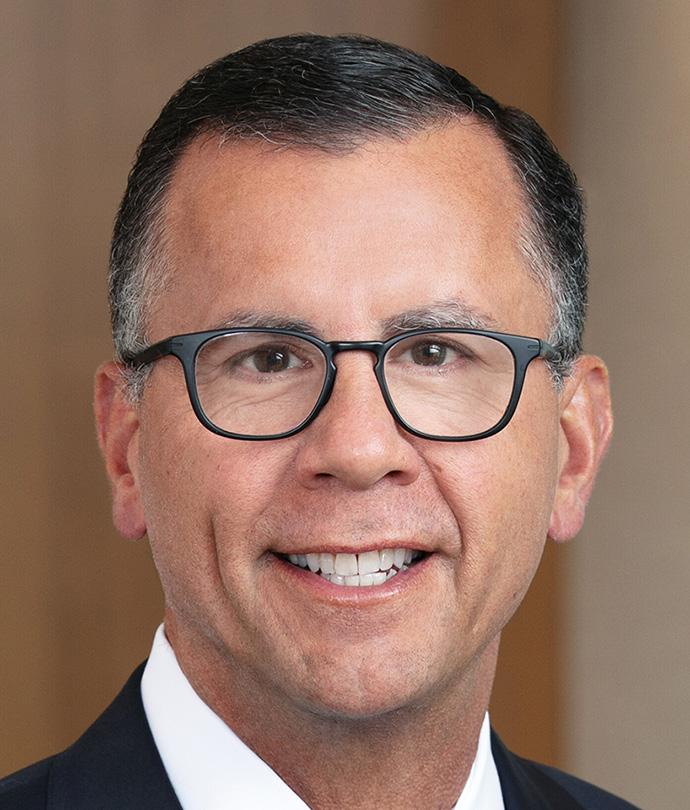
alum Mark Paukune donated $62,000 to establish the Paukune Undergraduate Scholarship Endowment in the UM College of Liberal Arts. The scholarship will support students with learning disabilities.
The award will be given to full-time liberal arts students who have registered learning disabilities with the university’s Office of Student Disability Services. Learning disabilities include dyslexia, dysgraphiaandmanyotherconditions.
Paukune has dyslexia and dysgraphia, which caused him to struggle during his academic journey. The Forth Worth, Texas, native wanted to provide additional support and encouragement to students who may be struggling with the same issues he had.
“Students with learning disabilities get frustrated at an early age and put limits on them-
PIKE
continued from page 1
also suspended that month.
In 2023, the UM chapter of Delta Psi moved to the previous Pi Kappa Alpha house, located at 97 S. Poole
selves,” Paukune said. “I want these students to be directly recognized, because if you have learning differences, it doesn’t mean you’re not smart. In fact, chances are you’re really smart, but grades just don’t come easy.”
Dean of the College of Liberal Arts Lee Cohen expressed much excitement for Paukune’s gift and what it means for the disabled students in the liberal arts program.
“This gift reflects a personal understanding of both the challenges and the extraordinary potential of students who learn differently,” Cohen said. “This scholarship sends a powerful message that intellectual ability is not defined by a single pathway. … Perseverance, curiosity and support can change lives.”
Emma Lewis is a senior Chinese and international studies major from Tulsa, Okla. She has dyslexia and ADHD and is optimistic about the impact this scholarship could have on students with learning disabilities.
“This scholarship would
Drive on campus. Delta Psi will remain at that location through the 2026-27 school year before moving back to the fraternity’s previous residence at 307 Fraternity Row, with Pike returning to the house on South Poole Drive following Delta Psi’s move. The Interfraternity Coun -

THE DAILY MISSISSIPPIAN EDITORIAL staff
CLAY HALE editor-in-chief dmeditor@gmail.com
RAEGAN SETTLE managing editor dmmanaging@gmail.com
SYDNEY STEPP copy chief thedmcopy@gmail.com
CAMERON LARKIN digital editor dmdigitaleditor@gmail.com
AIDAN PONIATOWSKI news editor thedmnews@gmail.com
DYLAN THOMAS assistant news editor thedmnews@gmail.com
have such a great impact on any student with learning disabilities, just by making them feel more comfortable and confident in their abilities,” Lewis said. “It definitely would for me.”
After graduating in 1987, Paukune went on to have a successful career at the Bank of America Private Bank as a managing director, private client adviser and institutional client adviser. He believes that what he learned through his liberal arts degree at the university was instrumental in his professional achievements
“My liberal arts degree taught me how to learn and how to use information not just to be stagnant with it but to apply it,” Paukune said. “Specifically, like political science and history, which were my majors: Those are things you apply to your life. You learn from the past, then apply it to the present and future.”
cil (IFC) will conduct an interview with national representatives of Pi Kappa Alpha this spring, with a release of the interview on May 1. Preventative measures on hazing and clarifying details on the chapter’s return will be discussed during the interview.
As of April 15, there were
just south of 100 comments on the announcement post. Most of the comments featured students tagging their peers with the news, but others expressed excitement.
“Never thought I’d see her make the triumphant return,” Nick Douglas (@ douglas_dude), a senior en -
trepreneurship major, commented under the post.
need more news?
JAYLYNN CONNER arts and culture editor thedmfeatures@gmail.com
JESSICA JOHNSON assistant arts and culture editor thedmfeatures@gmail.com
RUSS EDDINS sports editor thedmsports@gmail.com
NATE DONOHUE assistant sports editor thedmsports@gmail.com
LENORA COLLIER opinion editor thedmopinion@gmail.com
OLIVIA CANGELOSI photo editor thedmphotos@gmail.com
JOURNEY GLOVER assistant photo editor thedmphotos@gmail.com
MADELYNN LIBERTO design editor thedmdesign@gmail.com
ANNA GRACE LIKES assistant design editor thedmdesign@gmail.com
MARY EVANS multimedia coordinator dailymissmedia@gmail.com
AVERY THOMAS social media manager thedmsocialmedia@gmail.com
CADENCE MANNING assistant social media manager thedmsocialmedia@gmail.com
S. Gale denley student media center
LARZ ROBERTS Director of Student Media
DENNIS MOORE Editorial Director

Mark Paukune
PHOTO COURTESY: UNIVERSITY OF MISSISSIPPI
Ole Miss selects 2025-26 Hall of Fame members
LEXI KRENIS News Staff Writer
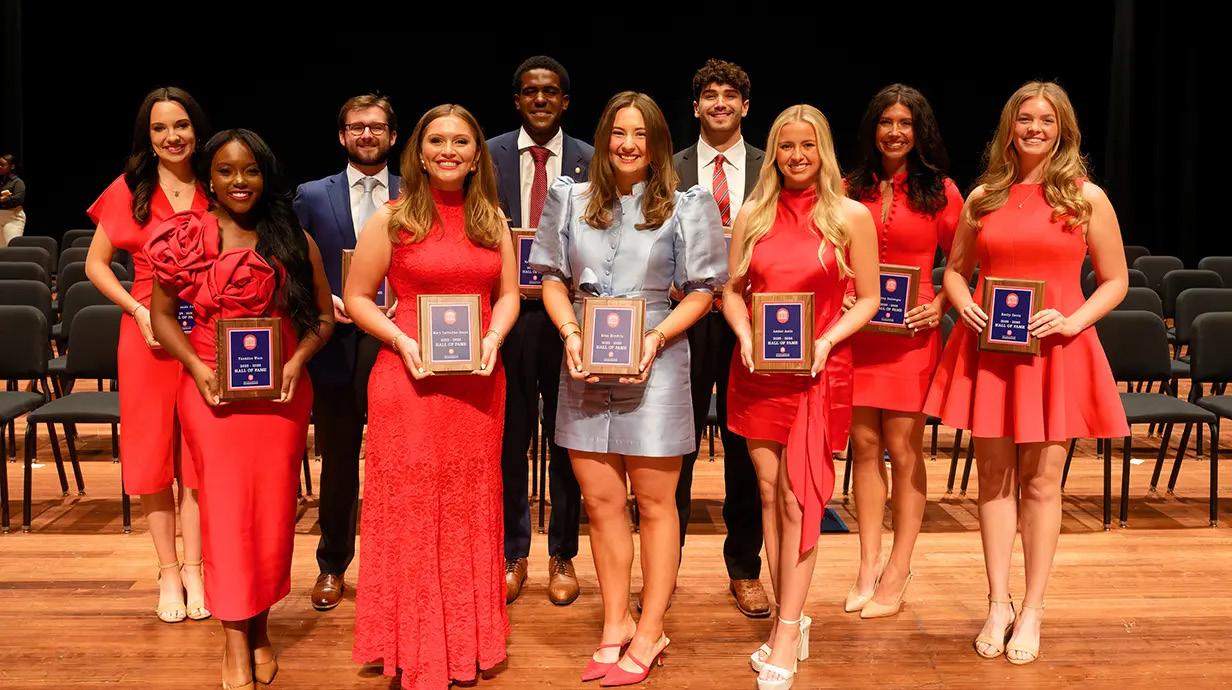
University of Mississippi Hall of Fame inductees for 2025-26 were announced at the Who’s Who ceremony held at the Gertrude C. Ford Center for the Performing Arts on Friday, April 10. The university’s Hall of Fame recognizes senior undergraduate students for outstanding scholastic and extracurricular achievement.
A panel of faculty members decided that these students have exhibited exemplary leadership, academic excellence, research skills and made countless contributions to the Lafayette-Oxford community and university.
Amber Amis
Amber Amis is a senior integrated marketing communications major on the pre-med track from Clinton, Miss. She has served in numerous roles, including president of the Jackson Free Clinic Health Ambassadors, co-founder and philanthropy director of Student Providing Aid Ole Miss, treasurer for the Public Relations Student Society of America and outreach chair for the Clinical Experience Network. Amis is involved in the Sally McDonnell Barksdale Honors College, Ole Miss Ambassadors, College Panhellenic Council recruitment leadership, Kappa Delta sorority and other mentorship roles. She is a recipient of the Stamps Scholarship, Chancellor’s Leadership Award and is a member of Phi Kappa Phi and Order of Omega.
Ryan Augustine
Ryan Augustine is a senior allied health studies major in the College of Liberal Arts from Madison, Miss. He has held leadership roles on campus including executive director of the Student Activities Association, treasurer for the Jackson Free Clinic Health Ambassadors, orientation coordinator, co-coordinator of training and selection for Ole Miss Ambassadors and mission trip leader with Ole Miss Cru. Augustine’s campus involvement also includes membership in the Columns Society, Global Brigades, RebelTHON and the Clinical Experience Network. Augustine has completed hundreds of service hours through mission work in Belize, Guatemala and Costa Rica and the Big Event. His honors include the McDonnell Barksdale Scholarship, Chick-fil-A Remarkable Futures scholarship, multiple Chancellor’s Honor Roll designations, the Larry D. Ridgeway Award, the Gilman International scholarship and recognition as Mr. Ole Miss in 2025.
McKenzie Cox
McKenzie Cox is a senior integrated marketing communications and public policy leadership double major from Concord, N.C. She has served as president of the Public Relations Student Society of Amer -
ica, vice president of finance for the Kappa Delta sorority, weather anchor for NewsWatch Ole Miss and global ambassador for Ole Miss Study Abroad.
Cox’s campus involvement also includes the College Panhellenic Council Standards Board, Trent Lott Leadership Institute and the Sally McDonnell Barksdale Honors College. Cox has been deeply committed to community engagement, contributing through food drives, Girl Scouts education programs, RebelTHON and the Big Event. Cox was named Miss University 2025, a Taylor Medalist, a Stamps Scholar, a Delta Scholar and a Campus Favorite during her college career. Cox will compete for Miss Mississippi this summer and plans to attend law school to pursue a career in public policy.
Emily Davis
Emily Davis is a senior exercise science major in the school of applied sciences from Benton, La. She has held roles on campus including president of Ole Miss Special Olympics, president of the Pre-Occupational Therapy Association and student director and program creator for the READY Inclusive Higher Education Program.
Davis has also served her community through Ole Miss Cru, College Panhellenic Council recruitment leadership, Kappa Delta sorority and the Sally McDonnell Barksdale Honors College. She was elected Homecoming Court Senior Maid in 2025 and given the Student Activities Association Spirit of SAA Award.
After graduation, Davis will begin her doctorate in occupational therapy at LSU Health Sciences in Shreveport, La.
Riley Dellenger
Riley Dellenger is a senior marketing major in the school of business administration from Ocean Springs, Miss. Dellenger has served
as vice president of member development for the College Panhellenic Council, president of Rho Lambda, director of First Year Experience for the Delta Delta Delta sorority, orientation leader and director of membership development for RebelTHON.
Dellenger was elected Miss Ole Miss in fall 2025. Her involvement also extends to the Student Activities Association, Ole Miss Cru, Catholic Campus Ministry, Women in Business club and the Ole Miss Ambassadors program. She has contributed to service efforts including mission trips to Ecuador and Costa Rica, RebelTHON, Court Appointed Special Advocates fundraising events, Special Olympics and more than 100 hours with the Ole Miss Ambassadors.
Cate Drane
Cate Drane is a senior public policy leadership and public health double major from Natchez, Miss. She has served as president of the American Cancer Society chapter at UM, executive leadership and development coordinator for the Leadership and Engagement Ambassadors, service chair for the Trent Lott Leadership Institute Student Advisory Board and recruitment counselor for the College Panhellenic Council.
Drane is also the founder and president of The Children’s Literacy Project — a statewide initiative dedicated to improving K-5 literacy. Her involvement extends across the Sally McDonnell Barksdale Honors College, Luckyday Scholars, Mortar Board honors society, Phi Kappa Phi, Gamma Beta Phi, Alpha Omicron Pi sorority and multiple national and international leadership fellowships.
Connor Gee
Connor Gee is a senior biological sciences and business administration double major from Madison, Miss. He has
held influential roles including co-executive director for Ole Miss Ambassadors and principal of mental health for the Associated Student Body.
Gee served as director of finance and fundraising for the Big Event, co-director of Greek development for RebelTHON, community service chair for Lambda Sigma and is a leader in the Kappa Alpha Order fraternity and Reformed University Fellowship.
Eron Hendrix
Eron Hendrix is a senior public health major in the school of applied sciences from Tupelo, Miss. Hendrix has served as executive director of the Big Event, president of PeriodUM, senator and chair of the ASB Committee on Student Life, co-director of Homecoming for the Student Activities Association and a student representative on university-wide search and advisory committees.
Her involvement spans the Sally McDonnell Barksdale Honors College, Kappa Delta sorority, the Student Health Coalition, the Public Health Student Association and the Health Professions Advising Office.
Hendrix has performed service work through menstrual equity initiatives, community markets, the Grove Grocery food pantry and global health work in Ghana. She is a recipient of the Stamps Impact Prize and multiple academic scholarships.
Yasmine Ware
Yasmine Ware is an interdisciplinary studies major with international studies, Chinese and global security studies minors from Madison, Miss. She has served in numerous roles, including president of the Undergraduate Black Law Student Association, principal of ASB Inclusion and Cross-Cultural Engagement and secretary of the Columns Society. Ware founded the OneUM
Committee during her time at the university, a campus-wide initiative fostering dialogue and unity across communities. She was named a 2025 Harry S. Truman Scholar and recipient of the James Meredith Community Transformation Award. Ware has also represented the university nationally and internationally through Model United Nations conferences, the Croft Diversity Engagement Committee and global study programs in Europe and Asia.
Braedan Watters
Braedan Watters is a senior biological sciences major from Madison, Miss. He was the 2025-26 president of both the Interfraternity Council and the Jackson Free Clinic Health Ambassadors, president of the Health Professions Advising Ambassadors and a leader within the Big Event and Kappa Alpha Order fraternity.
Watters’ campus involvement spans the Sally McDonnell Barksdale Honors College, ASB Judicial Council, Clinical Experience Network and the Phi Beta Kappa and Mortar Board honors societies.
Watters will attend the UMMC School of Medicine in fall 2026.
From left: McKenzie Cox, Yasmine Ware, Connor Gee, Cate Drane, Ryan Augustine, Eron Hendrix, Braeden Watters, Amber Amis, Riley Dellenger and Emily Davis
PHOTO COURTESY: HUNT MERCIER/OLE MISS DIGITAL IMAGING SERVICES
Experience transition frustrates students as class registration continues
ELI CROWLEY News Staff Writer
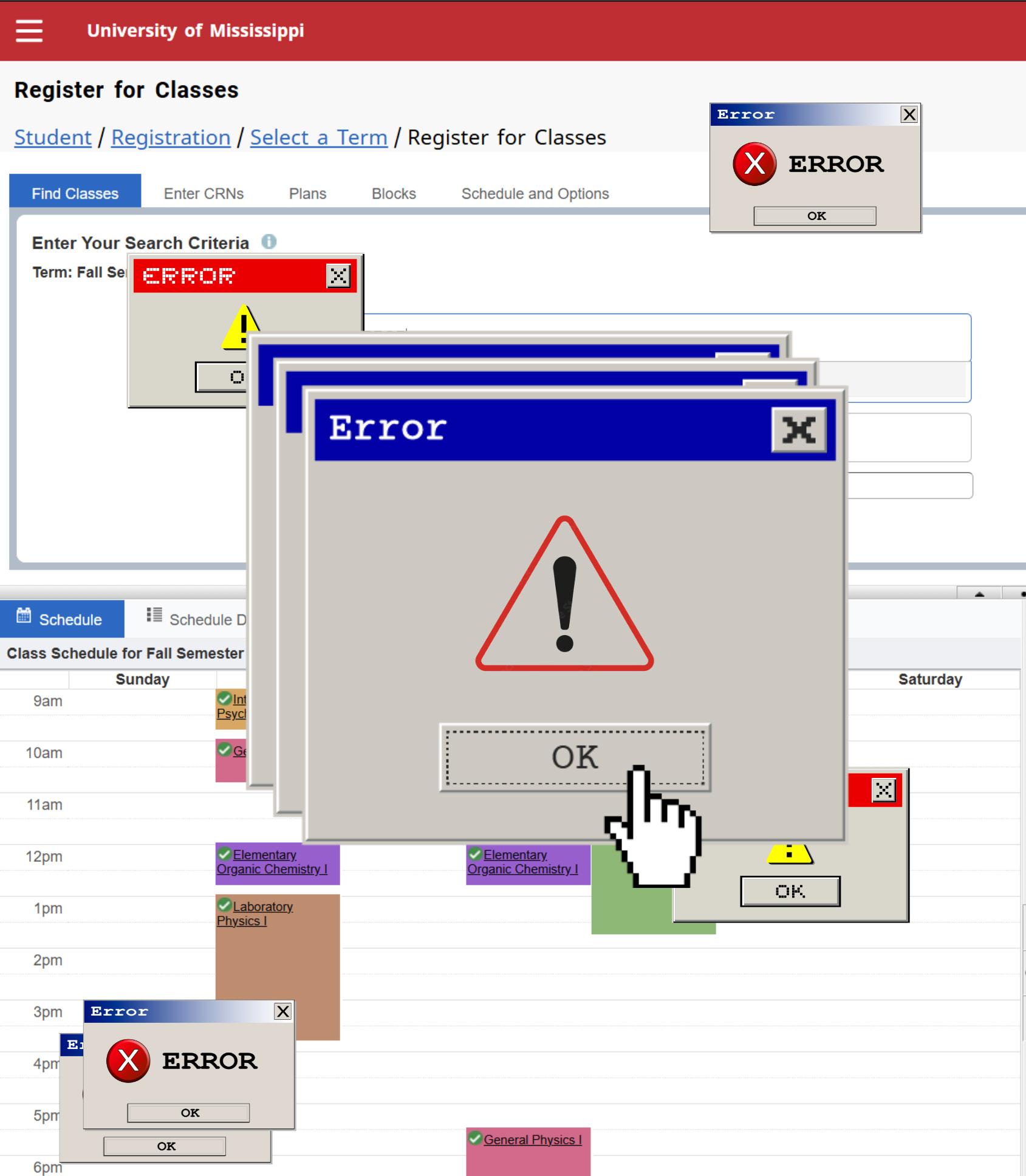
Students began encountering difficulties with Experience, the website that houses the University of Mississippi’s new registration system, as priority registration opened on Monday, April 13.
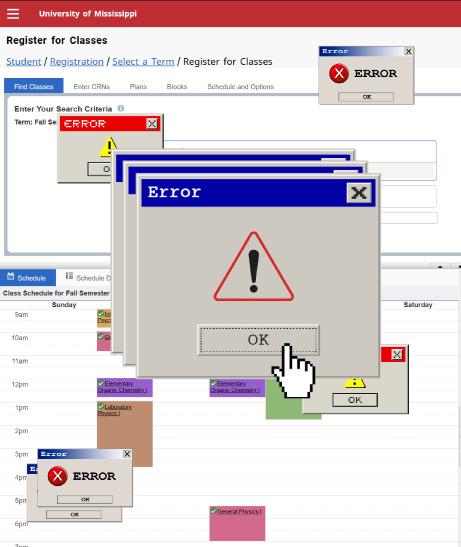
Problems included difficulty logging onto the Experience platform, submitting registration requests and being prohibited from enrolling in classes because the system did not recognize earned pre-requisites for certain courses.
Some students have been forced to file manual override requests.
The registration application shift from myOleMiss to Experience came as a part of the yearslong initiative, Project Encompass, with the purpose to modernize the university’s information systems.
JT Cunningham, a junior political science major from Nazareth, Pa., said course registration on Monday was chaotic.
“My time ticket was at noon, and I logged in and the software itself worked fine. But the registration portal wasn’t working and I wasn’t able to sign up for my classes until 4:30 (p.m.),” Cunningham said.
The registration portal on Experience was not working for part of the day on Monday. Students
reported only being able to register for Intermediate Algebra, MATH 0990. When they tried to search for and enroll in other classes, the system crashed.
Other students experienced similar problems.
Peyton Tangye, a freshman pharmaceutical sciences major from Littleton, Colo., encountered issues when registering for her science lab, which inhibited her ability to get her ideal schedule.
“My registration was at eight, but I wasn’t able to register for classes until nine,” Tangye said. “When the system finally came back up and I was trying to add my organic chemistry lab, it kicked me out, so I had to log in again and I wasn’t able to get the section I wanted.”
While some students faced problems while registering, UM Director of News and Media Relations Jacob Batte emphasized that the amount of successful student registrations was in line with years prior.
“An updated registration process is being implemented as we transition to a new student information system,” Batte said. “Priority registration began on Monday, April 13 and over the first two days, nearly 5,700 students have successfully registered, which is in alignment with priority registration numbers of prior years.”
However, on top of the class registration issues, some students believe that the university did not communicate effectively about how to address the issues they were facing.
“They didn’t send any emails saying the system was down or that the system was restored again,” Tangye said. “I had to talk to my adviser, who was overwhelmed with other students and did not understand what was going on.”
Batte elaborated on what efforts the university made to try to support students as they experience roadblocks during the registration process.
“Given the scale of the rollout of a new system and the registration process, the university had teams from across campus in place before registration began ready to address unexpected items and improve the experience,” Batte said. “The university is aware that there have been students who have encountered items that may be impacting their ability to successfully complete registration. We are actively implementing solutions and supporting our students every step of the way.”
Some students were simply frustrated with what they believed was a lack of preparation for the course registration process. Evie Maynard, a freshman biological sciences major from Clinton,
Miss., wishes academic advisers were clearer with students about the new registration process.
“I didn’t know about the change at all,” Mayhard said, “I didn’t ask my adviser about the change (to Experience), but she didn’t bring up the new website at all. We only talked about my schedule.”
What will Williford prioritize as ASB President?
DYLAN THOMAS
Assistant News Editor
Associated Student Body President OC Williford is hoping to use her presidency to lower costs for students, increase student success and serve the University of Mississippi student body to the best of her ability.
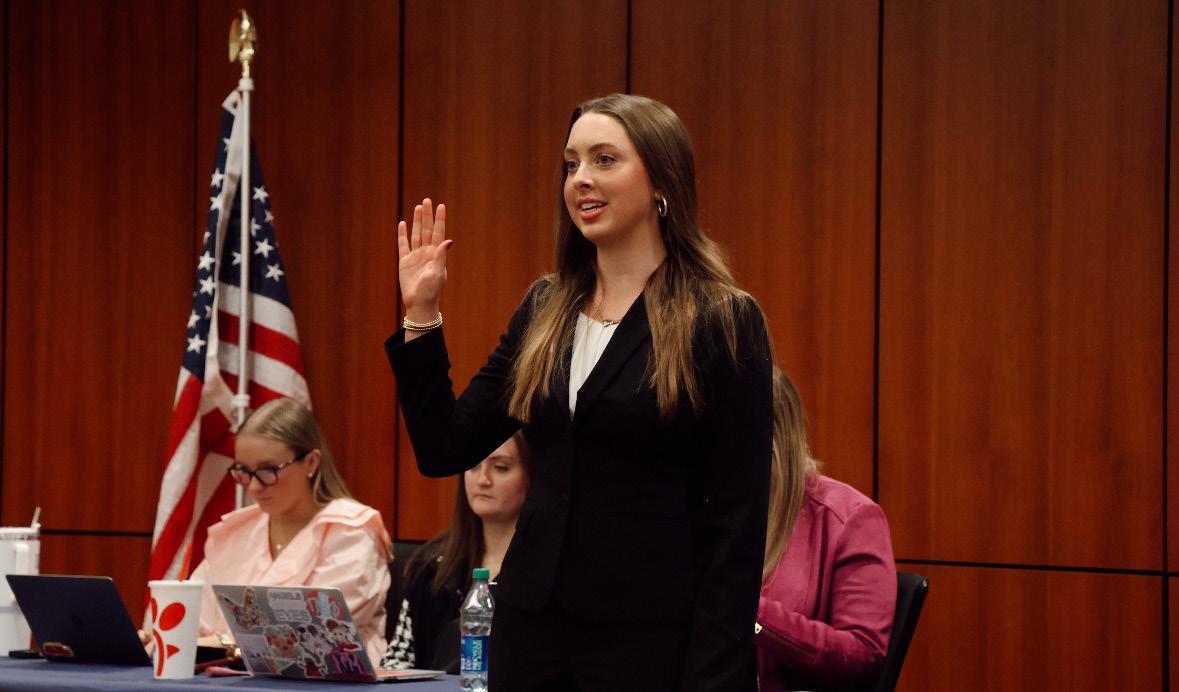
Williford started in ASB as a legislative aid on the rules committee during her freshman year. For her sophomore year, Williford became a senator representing the College of Liberal Arts and quickly rose through ASB ranks. She was voted in as principal of academic affairs on the president’s cabinet. For this most recent ASB term, Williford
served as chief of staff under her predecessor ASB President Jack Jones.
“The night that Jack Jones won the election last year, he asked me to be his chief of staff, and upon my confirmation, he said to me, ‘I hope you know that we both just won ASB president,’” Williford said. “Throughout the year, he really showed me that (his statement) meant it was a complete partnership between the two of us. He really valued input on everything, really valued trust. He has become one of my closest friends and closest mentors.”
Williford hopes to introduce new policies and continue pushing initiatives currently in the works. Her main focuses are the ongoing
university-wide attendance policy and lowering costs for students.
“We want to partner with local businesses within the community to implement student discounts. We also are going to be looking at parking tickets and working through lowering prices on those,” Williford said.
Williford played a large role in collaborating with Ole Miss Athletics to lower concession prices during the 2025 football season. She said she will continue talks with athletics to further reduce prices and enhance the overall football game experience for students.

She also wants to implement an awareness campaign on driving under the influence and an opportunity for graduating students to take pictures inside Vaught-Hemingway Stadium.
“Ole Miss had one of the highest percentages of DUIs in the SEC, so we’re going to look at warning students about the dangers of drunk driving,” Williford said. “We’re also trying to capitalize on tradition. A lot of the reasons that people come to school here is because it’s a smaller SEC school … so we’re going to be looking at having graduate photo sessions in the Vaught.”
Beyond these goals, Williford plans to continue adjusting the university’s attendance policy — an initiative that has been in the works for three years.
“Currently, we don’t have a bereavement policy for Ole Miss. That’s the number one change that we’re looking to add with the attendance policy,” Williford said. “The second most important one is for our students who are representing the university at athletic events. Football, cheerleading, band — anything like that, looking to add that into the attendance policy, so there is a concrete, listed item where these
students will be able to miss class and make up (work) within reason.” There are a range of issues that Williford is wanting to address this next ASB term, but she believes that she and her team are up to the task.
“We really do have a very widespread bucket list of policies, but I served as chief of staff this past year. I know what it takes,” Williford said. Williford puts a strong emphasis on empathy, viewing the campus through their perspective to better understand campus concerns.
“My goal as (ASB president) is to listen to the students and listen to their personal experiences,” Williford said. “Looking at campus life through other students is really how I create policies but also continue to grow my heart for this place.”
Above all else, Williford wants to make a difference for the students on campus and for the university community.
“Ole Miss owes me nothing, but it has given me everything,” Williford said.
OC Williford sworn in as principal of academics her sophomore year
PHOTO COURTESY: OC WILLIFORD
Oxford puts cars in park as gas prices rise
CHANCE MARLOWE News Staff Writer
Since the United States and Israel launched a joint military operation against Iran on Saturday, Feb. 28, Americans nationwide have faced an increase in gas prices. University of Mississippi students and Oxford locals feel the price increases at the pump.
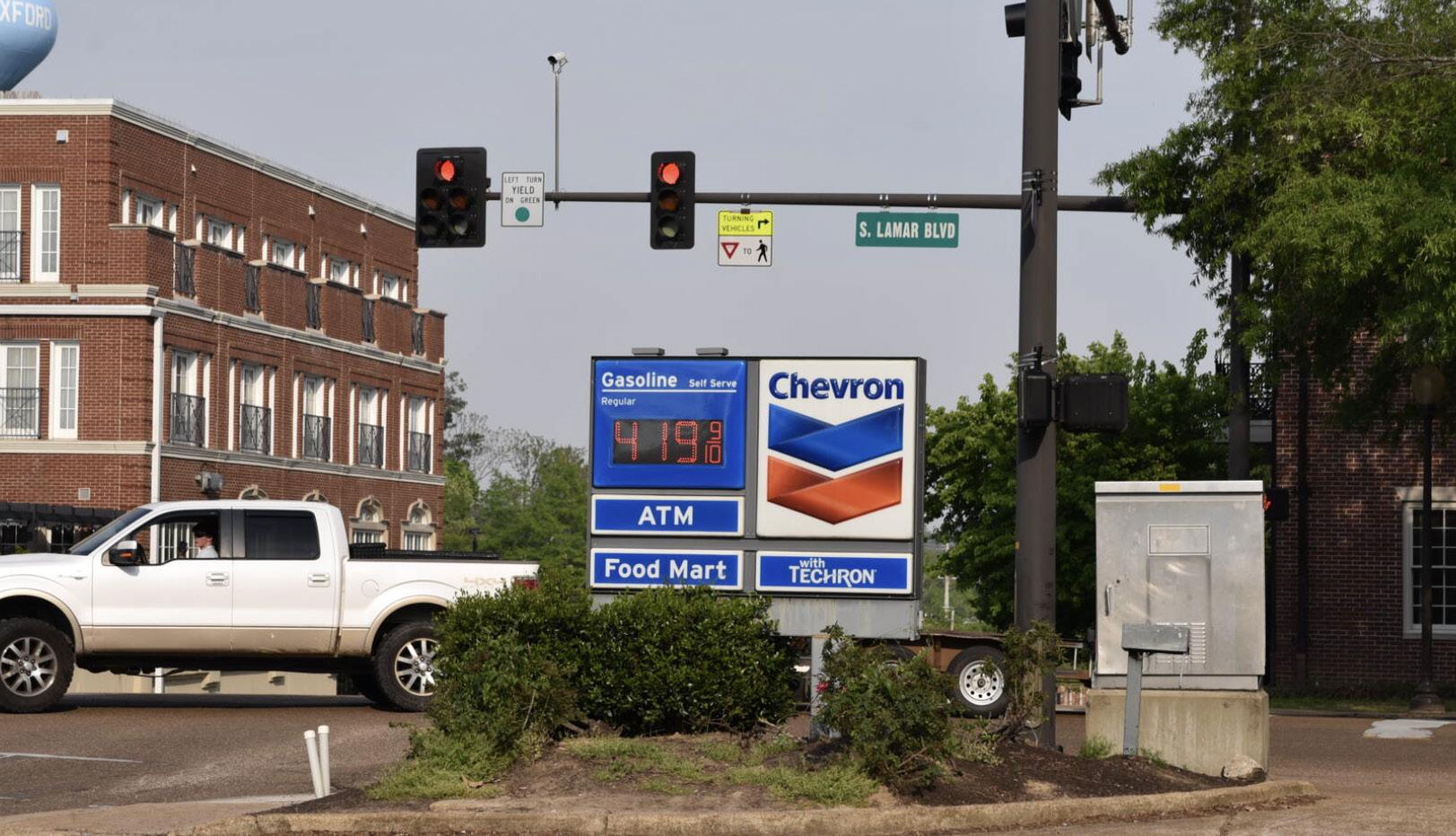
Lafayette County currently averages about $3.89 per gallon of gas, according to an April 15 AAA report. That mark puts the county as one of the highest average gas prices in the state, with a sharp increase of close to a dollar per gallon in the past month.
Nationally, the average gas price stands at about $4.10 per gallon as of April 15, up from the $3.45 national average one month ago. In Mississippi, the average price is $3.74, up from $2.99 in March.
Zach Paul, a freshman accountancy major from Oxford, has dealt with the effects of rising gas costs.
“Thankfully, I was able to fill up before spring break at the normal price, around $50, and I haven’t filled up since,” Paul said. “My friends have told me theirs have been around $90.”
Dylan Jensen, a freshman risk management and insurance major from Satellite Beach, Fla., initially was confused about the rise.
“I keep on waiting for the gas to go down, thinking there would
be progress in the conflict, and yet it still keeps on rising and it is very frustrating,” Jensen said.”I hope this is over soon and we can all get back to normal. On a broader level, I am having to plan trips earlier because I expect prices to continue to rise.”
Since the military conflict started, Iran has stopped the flow of goods through the Strait of Hormuz, a major shipping corridor that connects the Persian Gulf to the Arabian Sea.
About 20% of the world’s oil and liquified natural gas passes through the strait. While the U.S. imports only a small fraction of that oil, the block still has implications for domestic gas prices.
This block has caused an increase in international crude oil prices, and U.S. gas prices follow those international price guidelines.
On Feb. 27, prior to Iran blocking the Strait of Hormuz, the global cost of crude oil was about $67 per barrel, according to the website Trading Economics. On April 7, amid threats of military escalation from President Donald Trump, including a TruthSocial post claiming that “a whole civilization will die tonight,” crude oil prices shot to over $112 per barrel.
This volatility and rise in oil prices leads to increased gas prices.
“As someone who does not like filling up gas and watching
the money counter go up, it’s pretty frustrating,” Paul said.
A two-week ceasefire was announced between the U.S. and Iran on the evening of April 7. Among the conditions of the deal was that Iran would reopen the strait and grant passage to maritime traffic, projected to lower crude oil prices by about 15% (about $93) as of April 8.
This decrease in oil prices is usually matched by a decrease in gas prices, although the going rate for oil is still over $20 more per barrel compared to pre-conflict pricing. Addition-
ally, it may take months for oil production in the Gulf states to return to normal levels, per reporting from the BBC.
Also feeling the effects were gas station operators in the Oxford area.
Ray Rupani is the owner of the Chevron on the Square with the renowned “Chicken on a Stick.”
Rupani found that the rise in prices, combined with general price inflation, has led to difficulties for consumers.
“People are having a hard time as it is with inflation,” Rupani said. “With the gas pric-
From Jordan to Morocco:
es going up, it will be less traveling and going out because people need to pay their bills before they go on vacation.”
A decrease in gas prices is welcomed by Rupani.
“As an owner and as a customer, I obviously want prices to go down,” Rupani said.
Arabic Flagship students face sudden change due to travel advisory
MICAH OWENS News Staff Writer
DYLAN THOMAS Assistant News Editor
The Arabic Flagship freshman cohort at the University of Mississippi will no longer be traveling to Jordan over the summer as originally planned due to safety concerns because of the conflict between the United States, Israel and Iran. Instead, the freshman cohort will be joining the graduating seniors on a trip to Morocco. Graduating seniors will
stay in Morocco for their capstone year, but the freshmen will stay only over the summer. Both trips are mandatory to graduate from the Arabic Language Flagship Program.
The United States and Israel launched joint strikes against Iran on Feb. 28. Iran retaliated by firing missiles at U.S. military bases in Qatar, Kuwait and the United Arab Emirates. A two-week ceasefire with Iran was announced on April 7.
Due to rising conflict in the Middle East and uncertainty regarding when the U.S.-Israel-Iran conflict will conclude, the
language flagship program will no longer fund a study abroad program in Jordan. The program receives partial funding from the U.S. Department of War.
Emma Lane, project coordinator for the Arabic Language Flagship program in the Department of Modern Languages, offered insight on the funding for the study abroad opportunity in Jordan and how it impacts students’ ability to travel there during the summer.
“It’s not that our students are banned from studying in Jordan. They just won’t receive the typical scholarship for students go-

ing to Jordan,” Lane said. “The flagship program in D.C. said scholarships can only be used for summer abroad in Morocco.”
Students who wish to travel to Jordan are allowed to, just not with scholarship money from the flagship headquarters.
The language flagship will still fund the graduating senior Arabic students’ study abroad capstone year in Morocco, which is why Morocco is a summer abroad option for the freshmen cohort.
Daniel O’Sullivan, chair and professor of modern languages, said the university and language flagship staff want to give their students the opportunity to study abroad in Jordan, but the decision is not up to the university.
“We want to send students everywhere we can,” O’Sullivan said. “It’s just that world events, we have no control over them whatsoever, so we just have to wait and see the attitude. Ideally, we would like to take our students to Jordan.”
The continued conflict between the U.S., Israel and Iran has increased the travel advisory warning for countries such as Jordan. Travel advisory warnings come from the U.S. Department of State and range from one through four, with one being the safest and four being the most dangerous.
A level three travel advisory means that people should reconsider traveling there due to safety and security concerns.
Before the conflict with Iran, Jordan was a level two. Morocco currently sits at a level two, which recommends travelers to exercise increased caution.
“It was just from a safety standpoint (that) Jordan was raised to a level three warning by the State Department,” Lane said. “While things on the ground are fine, there’s missiles going overhead, and sometimes missiles fall from the sky. Flights get canceled and a lot of other programs in Jordan that were there this spring had to evacuate.”
There are nine students in the Arabic flagship freshmen cohort that have the option to go to Morocco this summer. Keagan Rupp, a freshman Arabic and international studies major from Cottleville, Mo., plans to go to Morocco. He was disappointed but not surprised by the cancellation of the Jordan trip.
“I was disappointed because I was excited for many things in Jordan, like the desert and Petra, but Morocco still sounded exciting,” Rupp said. “My expectations didn’t really change, but it definitely serves a purpose in teaching us that nothing is absolute, and the world and politics play a large role in our area of study.”
Chevron’s gas prices on the Square on April 15

COLOM SEEKS TO BECOME FIRST DEMOCRATIC
U.S. SENATOR IN MISSISSIPPI SINCE 1989
AIDAN PONIATOWSKI News Editor
Editor’s note: This story is part of a series featuring candidates for the 2026 U.S. Senate election in Mississippi. Scott Colom will participate in the general election in November as the Democratic nominee. The Daily Mississippian published profiles of independent candidate Ty Pinkins and Republican primary candidate Sarah Adlakah.
The DM has reached out to the Republican general election candidate Sen. Cindy Hyde-Smith, but her office has stopped communication to set up an interview. The DM will continue to attempt to set up an interview with Hyde-Smith before November.
In a state where a Democrat has not served as a U.S. senator since 1989 or won a senate election since 1982, it is easy to see why some consider Mississippi elections as merely a formality.
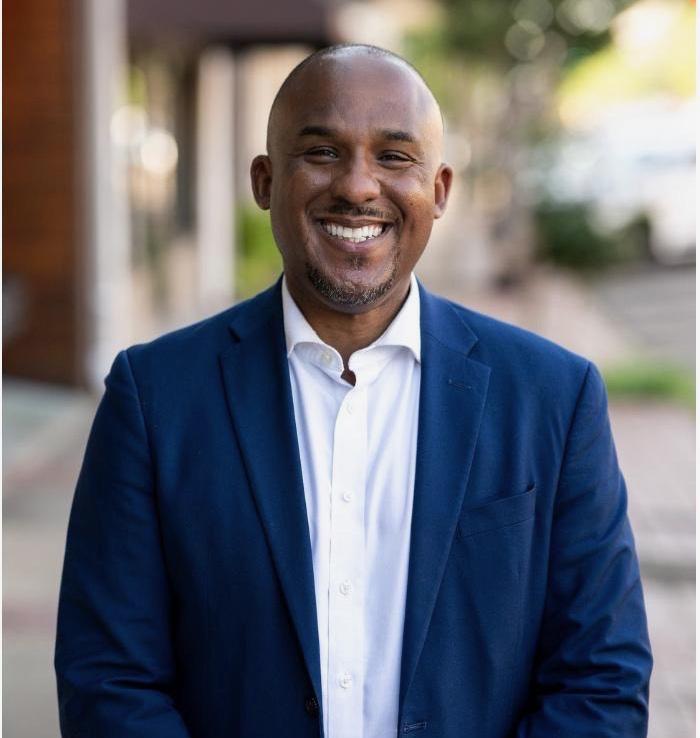
Scott Colom wants to change that perception.
“I think we’ve been making a lot of cracks in the glass, which represents the belief that a Democrat can’t win in Mississippi,” Colom said. “(In) 2019, Jim Hood got very close to being elected governor. In 2023, (Brandon Presley was) three points — 27,000 votes from being elected governor. Last year, the Democrats were able to break the supermajority in the state senate.”
Colom announced his candidacy for the Democratic nomination for the U.S. Senate in September 2025. He has served as district attorney for the 16th Judicial District of Mississippi since 2016
As district attorney, Colom has attracted attention for solving cold cases and for an 85% conviction rate in cases he has tried. President Joe Biden nominated Colom for district judge in the U.S. District Court for the Northern District of Mississippi in November 2022. Hyde-Smith blocked Colom’s nomination in January 2023, citing his support of transgen-
der athletes in women’s sports and for receiving political action money from Hungarian-American philanthropist George Soros as reasons for her opposition.
In the March primary election, Colom secured 73% of the vote statewide to face incumbent Sen. Cindy Hyde-Smith, who has served since 2018.
“She is disconnected from reality, disconnected from voters. This is exactly what happens when you won’t go talk to voters. We do that,” Colom said. “You think that ‘Oh, they can’t get beef, they’ll just get some other protein.’ … Only people that are disconnected from average working Mississippians will say something as ridiculous as that. It’s a symbol of a disease and ineffective leadership.”
Colom adds that the perceived ineffectiveness goes beyond partisan labels.
“She’s uniquely failing the state of Mississippi, and this is a unique moment where those failures are causing real pain to people,” Colom said. “When you bring up the fact that we haven’t had a Democratic senator for a long time, that’s because Thad Cochran and Trent Lott — they delivered for Mississippi. I might not agree with them ideologically on every point, but they understood that their number one duty, the number one responsibility, was to deliver money, resources, jobs in Mississippi. Cindy Hyde-Smith has totally betrayed that principle.”
Economy
Affordability and economic well-being is a major focus for Colom’s campaign.
“Mississippi has to have a leader that’s fighting for us. Fighting for higher wages, fighting for jobs for young people so they can stay in Mississippi or move back to Mississippi,” Colom said. “They don’t have to decide whether they’re gonna pay their utility bill this month or whether they’re gonna be able to provide food for their family.”
Colom expressed support for a federal minimum wage increase, which he believes will
“honor the dignity of work.” The last federal minimum wage increase was in 2009, bringing the rate from $6.55 to $7.25.
“We haven’t raised the minimum wage in close to 20 years. It’s going to boost all wages,” Colom said. “We need to empower workers, and it’s just been too long since we lifted the floor. When we lift the floor, it’s going to help all workers.”
The Congressional Budget Office has found that increasing the minimum wage would raise the income of most low-wage workers, although doing so would likely slightly increase unemployment among low-wage workers.
Colom also supports using federal assistance programs to help build business in the state.
“We’ve got to bring capital to Mississippi. We’ve got to have policies from the federal side to incentivize capital coming to Mississippi so our towns can grow, so people can start businesses, so that we can have the jobs that attract and keep young people,” Colom said.
Education
Federal cuts to education funding, including scholarship and loan opportunities, are something Colom wants to combat.
“The reduction of federal support for college students is really hurting them,” Colom said. “They just said they couldn’t afford college, and it’s a sad circumstance. It goes back to not prioritizing the needs of people in Mississippi, because we need to make sure people in Mississippi that want to go to Ole Miss have the opportunity to get an education and enjoy college … life.”
Federal funding for research opportunities at Mississippi’s universities must be secured, Colom believes.
Analysis from Mississippi Today shows that Mississippi institutions of higher learning could stand to lose over $30 million in research under cuts by the Trump administration.
“The federal government has a lot of research dollars that can be brought to Mississippi that
can really make a difference in growing those communities. Cuts to federal research disproportionately hurt rural places like Mississippi. It’s hard for us to make that up,” Colom said.
“If our universities do well, then our towns are going to do well. Our state is going to do well.”
Colom believes federal funds should also flow into Mississippi’s public schools and into programs that build off progress made from the “Mississippi miracle,” or the rise in literacy rates among elementary students in the state.
“We’ve got to get money to our schools. That’s the short of it, and we’ve got to make sure it’s going to the programs that are building on the momentum of the miracle,” Colom said.
Healthcare
Colom wants to prioritize healthcare spending — an area where Mississippi lacks. Last week, the Magnolia Tribune reported that Mississippi ranked 48 out of 50 in nationwide health rankings.
“We have to stop the bleeding. We’re in a state of emergency when it comes to healthcare,” Colom said. “(Hyde-Smith) basically is regulating (Mississippians) out of healthcare (through insurance cuts). We have to cancel those healthcare cuts. We have to save our healthcare. We have to save our hospitals.”
Colom referred to funding cuts for the Affordable Care Act and Medicaid, which help provide health insurance coverage to Americans. The U.S. Senate Joint Economic Committee estimates that roughly 118,000 Mississippians would lose their health insurance because of these cuts.
“We have to expand Medicaid so more people have access to affordable healthcare, and that’s going to get us in the right direction,” Colom said. “That doesn’t solve all our problems … when it comes to transparency and pricing, when it comes to making sure people have access to effective and efficient rural hospitals.”
Colom cited his experience running for district at-
torney in 2015 against incumbent Forrest Allgood, who had served as district attorney for almost three decades.
“I ran for district attorney in 2015 because I felt like there was a need for common sense when it came to prosecution,” Colom said. “I was able to beat him by leading with my values, and listening to the voters and putting their needs first. I’m in my third term as district attorney, and I’m proud of my work to keep the community safe and the courtroom fair. I’m going to bring that to the United States Senate.”
While Hyde-Smith currently has more cash on hand than Colom, the district attorney outraised the incumbent in the fourth quarter of 2025, with $420,327 raised compared to Hyde-Smith’s $357,995. The secret, Colom believes, is hard work and putting Mississippians first.
“Secret sauce, it doesn’t fall out the sky … I am a hard worker and I understand the stakes,” Colom said. “This is like when I ran in 2015. I knew this community needed a better district attorney. It needed somebody that was going to protect the innocent as much as prosecute the guilty. … (This race is) very similar. This makes a difference. It matters.”
This fundraising performance confirmed to Colom that Mississippians want progress and believe in his ability to put Mississippi first.
“I’m not surprised because I believe in the people of Mississippi,” Colom said. “I believe the majority of Mississippians love Mississippi, whether they hate the Democratic Party, love the Republican Party. That’s the key — that belief is why I’m going to win.”
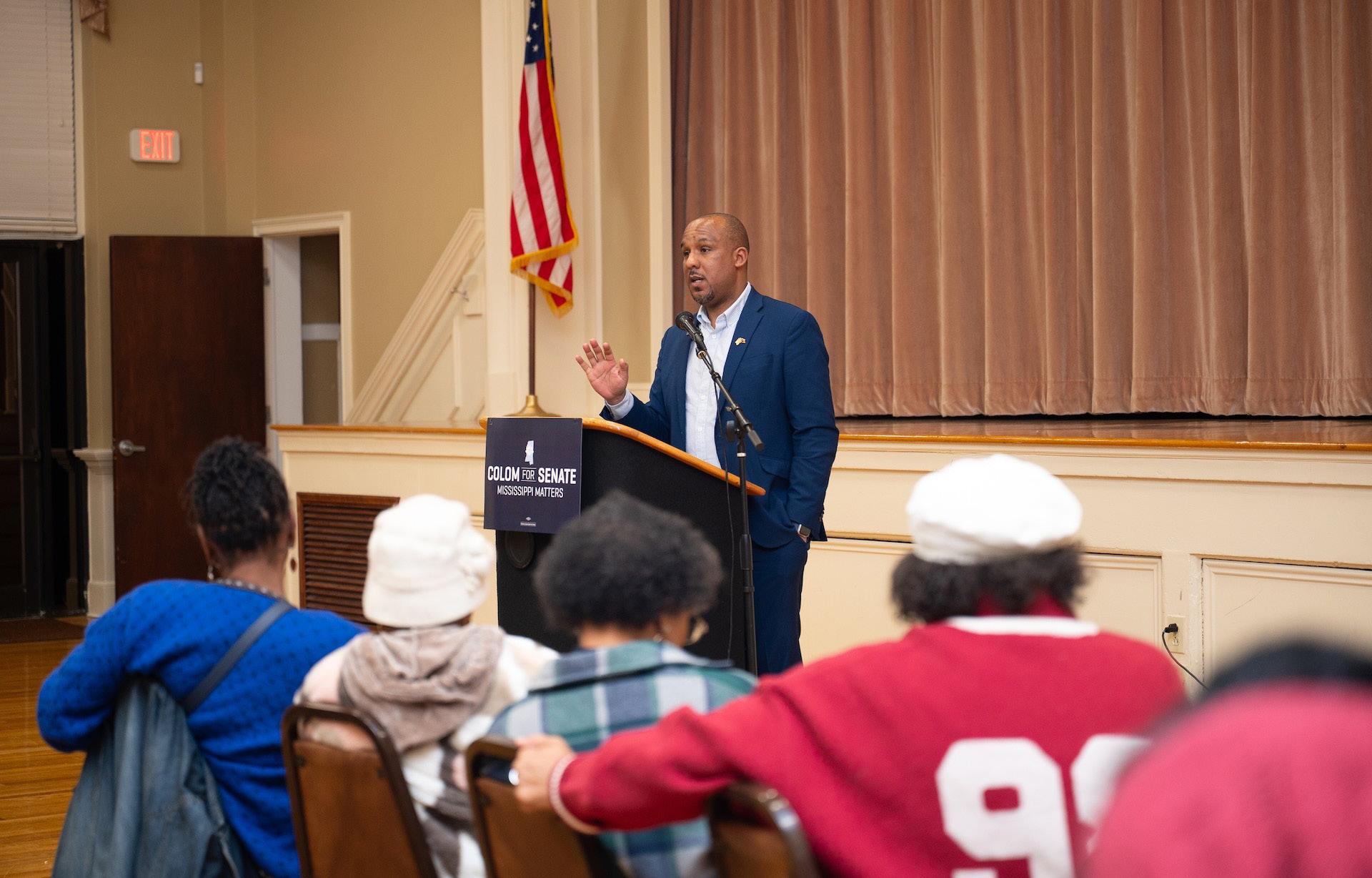
Scott Colom speaks with residents of Hattiesburg, Miss., on Feb. 5.
PHOTO COURTESY: SCOTT COLOM
ended up being Mr. University.”
During the talent portion, Stobbe won over the audience’s hearts and the judge’s ballots as he played the opening chords to Michael Jackson’s “Billie Jean” on the piano before performing the singer’s signature moves and throwing a fedora into the crowd.
Braxton Dagg, senior class president of Associated Student Body and an integrated marketing communications major from Hurley, Miss., organized the show, expressing pride in raising funds for the William Magee Center. The senior class served as the official hosts of the event.
“The event ultimately helps bring seniors together one last time before walking the stage while raising awareness and money for the William Magee Center,” Dagg said.
The center opened in 2019 and was named in honor of William Magee, an Ole Miss track-and-field athlete who died from a drug overdose. By providing addiction recovery services and wellness education, the center functions as a valuable campus resource.
Sean Giamportone, who won Mr. Talent by competitively eating four hot dogs during the talent section, is a senior
biomedical engineering major from Olive Branch, Miss.
“I just wanted to help support the William Magee Center,” Giamportone said. “It was a fun time, and I met some great people.
Braeden Watters, named Mr. Muscle for his jiu jitsu performance in the fitness competition, is a senior biological science major from Oxford who emphasised his admiration for the cause.
“I’ve worked with (the William Magee Center) previously, and I know the people in that foundation are absolutely incredible,” Watters said. “I couldn’t be more happy to support that mental health and wellness foundation.”
Watters celebrated the Mr. Muscles win.
“It was so fun. Obviously, we weren’t the best with choreography, but we tried our best and we were just laughing and smiling,” Watters said. “It was a great time.”
Wesley Templet, a public policy leadership and political science major from Vacherie, La., won Mr. Know-It-All for his answers during the interview section.
“It’s senior year,” Templet said. “I figured I might as well go out with a bang, have fun and raise money for a good cause. (The fitness section) was really uncomfortable for all five of us, and it was just
really fun to go through it.”
Andrew Nichols, a senior public policy leadership and economics major from Monroe, N.C., won Mr. Congeniality for his first impression with the judges during the introduction section, but he preferred the talent portion.
“We all spent a while working on our talents, and I loved how every guy did something different that kind of fit his personality,” Nichols said. “I’ve wanted to participate in Mr. University ever since I got here and saw that this was a thing. It’s the senior class’ way of giving back to the university that’s given me so much.”
Hagan Hord, a senior integrated marketing communications major from Stuttgart, Ark., spoke to how the talent portion was a crowd favorite.
“I got to see lots of different comedy factors with the talent and had the most entertaining night,” Hord said. “It was lots of fun. Getting to see these guys actively give back to the William Magee Center was really cool.”
Elizabeth Anne Mitchell, a senior biomedical engineering major from Pontotoc, Miss., was not disappointed by the evening.
“That was the most entertaining and atrocious night of my life,” Mitchell said. “Best $15 ever spent.”
Potter, a 2025 Mr. University contestant and 2025 engineering graduate, shared his insight into

both sides of the competition.
“There was a lot of good talent up there, a lot of laughs,” Potter said. “It was weird judging (having been a participant) because there were several things where I saw where it was coming from. But we didn’t have a dude speed-eating hot dogs — that was new so it was interesting to see, and I thought it was hilarious.”
Stobbe closed the laughter-filled night with thanks to all of the pageant participants.
“Truthfully, I’m just grateful to everyone who came tonight, all the judges and everyone who made this possible,” Stobbe said. “This university has given so much to me, and I’m really blessed to be in this position and to win tonight.”
Punker Decker flea market features drag, hardcore punk and local artwork
P.B. JERNIGAN A&C Staff Writer
Punk-enthusiasts and creatives gathered for the Southern Punk Archive’s Punker Decker flea market at the Powerhouse on Sunday, April 12. The punk flea markets began in 2022 to showcase local artists, vendors and musicians. It has since grown to include film screenings and drag performances.
John Rash, founder of the Southern Punk Archive, gave insight on the name Punker Decker in relation to the annual Double Decker Arts Festival.
“The spring market al -
ways happens in April and is labeled as ‘Punker Decker,’ which is a direct response to the large Oxford Double Decker Festival but appeals to more underground culture and more diverse demographics,” Rash said. “In general, the punk flea markets don’t have a specific theme but are aimed at creating an affordable space for DIY artists and vendors to share their goods and a highlight for regional musicians who play genres of music not embraced by our local live music venues.”
Vendors sold a variety of goods, including jewelry, art, prints and clothing.

“I run a small business selling my art prints and keychains, and I thought Punker Decker would be a great opportunity to introduce selling my stuff in a market,” Linen Golding, a junior creative writing major from Kiln, Miss., said. “I definitely think it’s a way for people who are very artsy and alternative to get together and share their work and experiences.”
Pixel Press: UM Print and Photo Club had a booth selling art prints, zines, buttons and stickers made by students. Danielle Jennings, a junior graphic design major from Olive Branch, Miss., who is a member of the club, spoke of the community engagement Punker Decker fostered.
“This is a smaller scale kind of event, but the community is just as lively,” Jennings said. “We hope that events like this will continue to grow, and it will get even bigger than just being here at The Powerhouse. The community hasn’t let us down.”
Music was played by Charcoal, a Hattiesburg, Miss., punk rock band, and Portia, a hardcore punk band originally from New Orleans. The films screened were curated by Instructional Assistant Professor of Film Production Chriss Alison Huff and Assistant Professor of Digital Media Bryce Heesacker.
Drag performers Vivica Vanity and Eliza Meow closed out the show. Eliza Herbert, a senior art major from Biloxi,

Miss., was a vendor at the event alongside performing as Eliza Meow. She sold handmade ceramic pottery and spoke of the connection between her art and performance.
“There’s some intersectionality in my art and being a performer,” Herbert said. “It’s nice because the performance is showing who I am, and my art is telling more of the story behind it all.”
Natalie Elizalde, a junior biological science major from Houston, attended this year’s Punker Decker and spoke of what brought her to the event.
“My friend is selling art, so I wanted to come and support her,” Elizalde said. “I love going to little events in Oxford. They’re very fun.”
Rash reflected on the flea market’s growth and success
of this year’s Punker Decker.
“The market held on Sunday was the most successful market to date,” Rash said.
“This year, I invited others to participate as part of a planning committee and the collective effort truly helped the market grow and to run smoothly. All of the vendors said they had a successful day. In addition, the films and performances were well attended and received positive feedback. I couldn’t be happier with the results.”
Vintagia booth at Punker Decker at The Powerhouse on April 12
OLIVIA CANGELOSI / THE DAILY MISSISSIPPIAN
Portia performs at Punker Decker at The Powerhouse on April 12.
DJ Stobbe is crowned Mr. University at the Gertrude C. Ford Center for the Performing Arts on April 14.
Pete Golding gives his perspective on last season’s Lane Kiffin debacle
RUSS EDDINS Sports Editor
Ole Miss Football head coach Pete Golding appeared on the “Always College Football with Greg McElroy” podcast on Monday, April 13. He spoke about the situation with Lane Kiffin that led to Golding’s promotion to head coach.
Kiffin’s last game as the Ole Miss head coach was the Egg Bowl on Friday, Nov. 28. Ole Miss won handily, 38-19.
“Obviously, the Egg Bowl was that Friday. I rode back with Kiff. (Kiffin’s son) Knox had a (high school) playoff game, so we took the van back instead of riding back with the team,” Golding said.
“I still couldn’t get a real feel because I was with him the whole time, (and) he was like, ‘Tuesday, I’m going to Florida. Wednesday, I’m going to LSU. Thursday, I’m staying.’”
Kiffin officially departed the Ole Miss program on Sunday, Nov. 30, but Gold -
ing said that the former head coach had made up his mind the night before.
“Then Saturday night, I got the first call from (Vice Chancellor of Intercollegiate Athletics) Keith (Carter) Saturday night saying, ‘Hey, Kiff’s decided to go elsewhere. Let’s meet at 7:30 (the next morning),’” Golding said.
Just after noon on Sunday, Carter offered Golding the head coaching job.
“We went in … started talking about some things, then he met with the players’ council, and then it got real (at) about 12:20 (p.m.) that day,” Golding said. “They called me back over there, the chancellor and Keith, and were like, ‘Hey man, we really want you to do this. We think it’s the right time. We think you’re the right guy.’”
Golding initially did not want to be the head coach. He was satisfied with his role as defensive coordinator.
“I kind of expressed

throughout it that I love my role. You ain’t gotta worry about me going anywhere. I can’t (leave) because of my family and all that,” Golding said. “It goes back to timing to me. It just felt right. There wasn’t anything that I wanted or asked for, any of those types of things.”
If Golding did not take the job, Carter and Ole Miss Athletics might have turned to another coach who was on the staff. However, Golding accepted. In his first move as head coach, he attempted to convince offensive assistants to stay at Ole Miss instead of leaving for Baton Rouge, La., on Kiffin’s plane and joining the LSU staff.
“They (Carter and the athletic department) had mentioned a couple other names, and to be honest with you, I’m like, ‘I really don’t want to work for somebody else at this point in my career. Let’s just do this,’” Golding said. “I didn’t ask how much. I didn’t ask how many years. I just went straight over to the building and started recruiting some offensive staff. Try to keep them off the plane by two o’clock.”
Despite his initial reservations, Golding quickly fell in love with his new position.
“I never thought I’d want to do it at this age (42), and then after five days being into it, I was like, ‘I wish I would have done this a long time ago,’” Golding said.
The players erupted in applause during the team meeting when Carter announced that Golding had been named the new head coach. Golding said that he was caught off-guard.
“We had a one o’clock team meeting. I had no idea,” Golding said. “I was meeting with an offensive coach, and (at) 12:58 (p.m.), (someone said), ‘Hey, come in here,’ and that was the announcement. That was a little bit of a surprise.”
Golding’s first week at the helm was a vital one for the program not just because he had been named head coach but also because the team was preparing for its first College Football Playoff game in program history. National Signing Day also fell during that week.
“This is the Sunday before our Wednesday signing day. We weren’t concerned from a defensive standpoint, but I hadn’t had a relationship with the offensive guys that were outside of my area,” Golding said. “(I was) trying to do that and retention of staff and all that.”
Golding spent his first few
days in the new position speaking with parents and players; he was also in talks with Ole Miss coaches who were considering departing for LSU. With all the chaos and drama swirling around the program, Golding welcomed this busy schedule.
“(My promotion) happened super fast, but it was a blessing, to be honest with you, that you had a game in two weeks,” Golding said. “It was a blessing to me that signing day was Wednesday because you just went straight to work, and you had nothing to think about.” Golding did not overthink his upgraded role. Even amid the excitement, he focused on doing what was needed of him.
“There was never a dull moment. (I) didn’t have time to think about it, to be honest with you,” Golding said. “It’s one of those things — shooters shoot. You got your opportunity, you gotta roll.”
Golding and the Rebels went on to defeat Tulane and Georgia in the College Football Playoffs. He also brought in the No. 22 recruiting and No. 2 portal classes in the country.

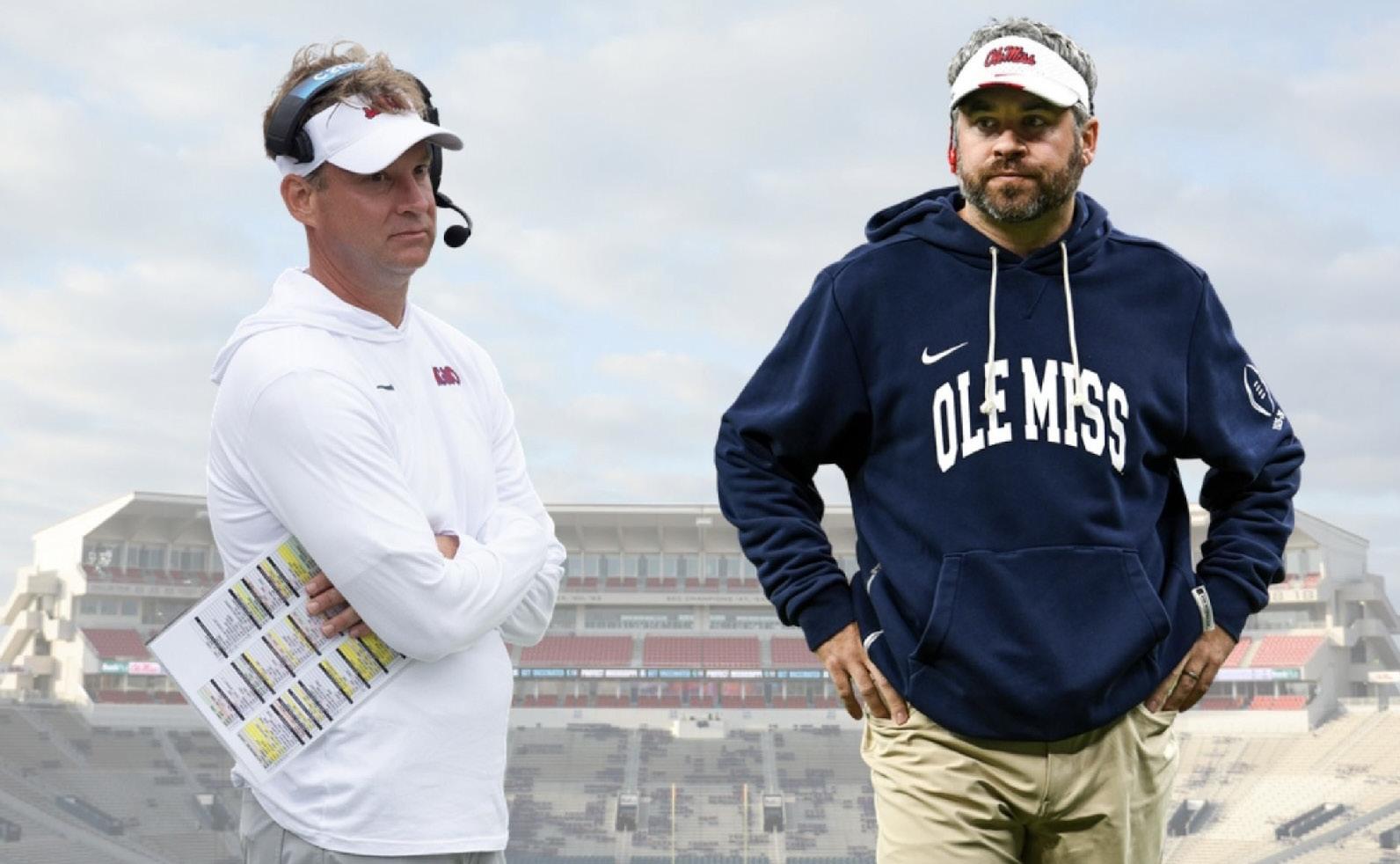
Lane Kiffin and Pete Golding
CAMERON LARKIN / THE DAILY MISSISSIPPIAN
Pete Golding stands with members of the Ole Miss Football team on
Registering for classes was not a good ‘experience’
“Perhaps in the future, more time will be taken to ensure university systems are complete and fully ready for launch before students are left to deal with them.”
MACKENZIE MCDARIES
Opinion Staff Writer
Priority class registration opened at the University of Mississippi on Monday, April 13, marking the initial rollout of the university’s new platform, Experience.
In the first days of class registration, students found themselves embroiled in website errors and unresolved technical issues that left them feeling like lab rats testing a program not ready for launch.
In fact, the technology was so faulty that it disrupted adjacent systems; for instance, the Sally McDonnell Barksdale Honors College was forced to postpone its senate elections due to the glitches hindering its ballots. GroupMe chats blew up with student after student asking who else was seeing the same error messages and how to get past them.
This frenzied class registration experience has left students wondering why the platform needed to be changed in the first place, and even more so, why now?
Jacob Batte, director of news and media relations at the university, said nearly 5,700 students registered in the new Experience system within the first two days of the fall 2026 registration period, which aligns with priority registration numbers in prior years.
“The university is aware that there have been students who have encountered items that may be impacting their ability to successfully complete registration,” Batte said. “We are actively implementing solutions and supporting our students every step of the way.”
Batte said the university stationed teams across campus before registration began to address unexpected items and help students navigate the transition.
Before the release of Experience, students and faculty used the myOleMiss platform to register for classes, pay the bursar, accept financial aid and manage all other logistics pertaining to the college experience.
myOleMiss, or as I like to call it, “Ol’ Reliable,” had been in use since 2008. Its interface was sim-
ple and relatively easy to navigate. The convenience of myOleMiss was the reason for its near 20-year tenure of usage by the student body.
The new platform, Experience, will serve the same purpose as myOleMiss once did. It is being implemented as the primary academic portal where class registration, financial aid and other tasks can be performed, and it is promised to be an upgraded and more “user-friendly” alternative to myOleMiss.
The website is primed to fully replace myOleMiss by fall 2026.
Sophomore international studies major Ethan West from Hamilton, Miss., said that this would have been his fourth semester registering for classes through myOleMiss.
“The website is a little outdated, but once you got past that, it was pretty simple to use,” West said. “I didn’t think there was a problem.”
When the news of the upcoming transition to Experience began to resound throughout the campus, West said that he was “excited” about the opportunity for the website to be “modernized” to make registration easier.
“In reality, that did not happen,” West said.
Registering for classes, he said, left him annoyed and frustrated, a gripe he said was universal among his peers who also had priority registration.
“We were really just guinea pigs for all of these problems that nobody really could have expected,” West said.
After selecting his classes in Experience to register for them, West recounted receiving a slew of notifications about technical issues impeding his registration.
“(Experience) was saying that I had not taken prerequisites that I took years ago, and then for a little bit there it was only letting me register for intermediate college algebra,” West said, recalling a situation that he described as “intermediate algebra purgatory.”
The bugs of prerequisites not loading properly or the only available class being intermediate algebra should not have occurred.
Puzzles by KrazyDad

With the class registration date set months in advance, there should have been a greater effort to smooth out these issues ahead of time or to at least push the launch of Experience further into the future to allow for extra time to perfect the website and avoid unnecessary havoc.
Nevertheless, the production of the platform felt rushed and resulted in a troublesome experience for students trying to register for the fall, as West is just one of several students who struggled navigating Experience. Personally, I was met with numerous error codes and a crashed website when it was my turn to register for classes.
Carlos Harrison, a sophomore biological sciences major from Brandon, Miss., was “confused” about the decision to phase out myOleMiss.
“myOleMiss seemed pretty efficient,” Harrison said. “It had everything I needed, and I could see all the tabs right on the front page.”
In the switch from myOleMiss to Experience, Harrison found difficulty adjusting and preparing for class registration on the new platform.
“It’s pretty hard to move away from something that easy,” Harrison said.
The university did aim to assist students by sending various emails and tutorial guides for tackling Experience prior to the first day of registration. However, while appreciated, the endless emails and guides did not make many students’ class registration easier due to the unpredictable technological problems that occurred while attempting to use the site.
Harrison said a step-by-step slideshow explaining the process was made available to him by the university when he registered for classes, but it was overshadowed by the website’s issues.
“(The slideshow is) kind of useless when the website doesn’t work,” Harrison said.
Harrison believes, along with many students, that the university “definitely should have tested the website more extensively” beforehand.
Though it may have been time
HOW TO PLAY
Complete the grid so that every row, column and 3x3 box contains the numbers 1 through 9 with no repeats.
DIFFICULTY LEVEL
INTERMEDIATE

for myOleMiss to retire, the rollout of Experience did not have to be so chaotic. It is becoming increasingly clear that the transition was rushed, and there should have been greater preparation for unprecedented technical errors in order to lessen stress and frustration for students.
Perhaps in the future, more time will be taken to ensure university systems are complete and

them. MacKenzie McDaries is a freshman Arabic and political science major from Murfreesboro, Tenn.


GRACE ANN COURTNEY / THE DAILY MISSISSIPPIAN
“Readers
Pick up a paper: Student media matters
should be holding their student-run outlets accountable because these media matter — the publication’s reporting and communication to the student body matters.”
CLAY HALE Editor-in-Chief
I’ve worked at The Daily Mississippian long enough to be familiar with the nickname its haters have dubbed it — The Daily Mistake.
Sure, as a student writer and editor, I have made errors, just as every other journalist has. However, the heart of The Daily Mississippian, and all student media, is in being an information service for the campus community.
When student journalists do inevitably mess up, however, there is a peculiar positive emotion I feel when their readership corrects their errors.
At the University of North Carolina at Chapel Hill, scandal was ridden throughout their student newspaper on April Fools’ Day when the publication released insensitive satire articles that featured reports of false U.S. Immigration and Custom Enforcement (ICE) threats, puns regarding Israel’s conflict with Gaza and the erasure of Indigenous communities.
The Daily Tar Heel’s April Fools’ Day content included a print paper, newsletter, social media posts and online publication. Some of the paper’s student readership even started calling out the lead editors involved to resign, and a petition of UNC alumni and former DTH editors echoed these sentiments. After this, the editors met and the Opinion Desk editors elected to step down from their positions.
My hat typically is off to The Daily Tar Heel; much of our staff considers them the cream of the student paper crop. In creating this holiday edition, however, they were very wrong in their decision-making process.
The Daily Tar Heel missed the mark with their over-execution of attempting to “shed light” on serious contemporary issues facing the nation, but it is worth shedding our own light on the fact that students cared about what their newspaper was publishing. Students took to TikTok and other social media to express disappointment and frustration with their newspaper.
Readers should be holding their student-run outlets accountable because these media matter — the publication’s reporting and communication to the student body matters.
I admire the accountability that readers of The Daily Tar Heel took to the editors of the paper. I wish it happened on a broader, more national level.
Around this time last year, President Donald Trump was making plans to defund the Public Broadcast Service (PBS) and National Public Radio (NPR) via executive order.
As a Mississippian and student editor, I contacted my senators — Cindy Hyde-Smith and Roger Wicker — to relay my concerns about Trump’s plans. I never heard back from Hyde-Smith, but I was delighted to see that Wicker addressed my concern in an email:
“As a strong supporter of local broadcasting, journalism and free speech, I am encouraged by the modern media landscape because it provides diverse news options for breaking stories, political analysis and public safety updates. I support President Trump’s initiative to prevent PBS and NPR from accessing federal funding. Unlike other broadcasters, PBS and NPR benefit from federal subsidies their competitors do not re ceive. Federal funding is just one of many revenue streams for these public broadcast ers, and they can remain sustainable with continued funding from other sourc es, including state funds, corporate sponsorships and fees from member stations,” Wicker said in the email re sponse on June 17, 2025.
Though I appreciate that I actually received a response to my email, I do still, of course, have my reserva tions about his perspective.
What the average citi zen may not realize is that with the elimination of PBS and NPR, many stations will lose their only access to reli able news coverage, partic ularly in rural, low-income areas of the country. Local news outlets are closing in record numbers as ad rev enue and subscriptions drop, further exacerbating the news desert epidemic.
Dwindling access to quality local news in evitably means student media is what remains standing. Yes, your stu dent journalists are who you may have to rely on for reliable truthtelling.
We’ve seen other ex amples of media silenc ing in the last year, too.
The University of Alabama suspended two student-run magazines in December 2025 in alignment with federal diversity, equity and inclu sion guidelines from former United States Attorney Gen eral Pam Bondi. Many of the students behind these publi cations released two new in
dependent magazines, which was made possible by MASTHEAD, a nonprofit organization run by Alabama alumni that fundraised more than the $25,000 goal it originally set.
Though Alabama’s student magazines should never have been halted in the first place, it was refreshing to see alumni unite to support student journalists.
In the cases of The Daily Tar Heel and Alabama’s magazines, one common sentiment stands true in an era where quality news feels so scarce: Readers care about and trust their student media.
At The Daily Mississippian, we have faced our own drama.
Last year, we faced minor backlash for including a comment from a Trump supporter the morning after the 2024 U.S. presidential election say -
cal way.
As the arts and culture editor in the 2023-24 academic year, I wrote an article commissioned by then-Sports Editor Cameron Larkin called “Bleacher bandits: pledging allegiance to actives.”
This story detailed alleged hazing in fraternities from a former pledge and spotlighted bullying by members of these organizations in Vaught-Hemingway Stadium. I faced my own personal backlash for this and experienced personal attacks on X.
“Clay Hale is softer than baby s–t,” one user wrote.
But this was worth it — because I was putting to light something that mattered.
When students stop caring about the media that is supposed to represent them, we collectively lose. In a time
picking up Thursday papers. When feedback flows, our staff’s motivation to share meaningful stories grows. Who knows — student media may be the subgenre that survives and revives the rest.
Clay Hale is a firstyear graduate student studying integrated marketing communications from Water Valley, Miss.
RESULTS & BENEFITS

Stress
Pain
Increased Calorie Burn
Detoxification
Lower Blood Pressure
Anti-Aging & Skin Rejuvenation
Improved Circulation
Weight Loss