The Daily Iowan Riverside luminaries celebrate storied history
Founders of the local theater, Ron Clark and Jody Hovland, starred in ‘The Fiance’ as the show’s two main characters.


Founders of the local theater, Ron Clark and Jody Hovland, starred in ‘The Fiance’ as the show’s two main characters.
Theaters foster relationships by rejecting industry standards.
Two people sit on a couch across from each other on stage, eyes fixed on one another as the lights dim and curtains close. Almost immediately, the audience breaks into a mix of cheers, claps, and laughter, people springing to their feet in a standing ovation.
Moments later, the lights are back on and the “The Fiance’s” cast returns to the stage to take their final bows and thank the crew and creative team.
This scene accompanied the show’s opening night on April 1 .
That Saturday also marked its world premiere, making that particular group of iverside Theatre patrons one of the first audiences to experience it. Hosting a world premiere is not new to iverside or to its founders, on lark and ody Hovland, who first opened iverside’s doors in 1 1. While lark and Hovland have debuted many original performances over the years, they haven’t often gotten the opportunity to act as characters in those shows alongside one another. That opportunity came in the form of “The Fiance,” the final show on iverside’s 5- calendar.
“These last two projects last year’s and this one have presented us with a really rare opportunity to work together on stage because over the history of the company we rarely did that,” Hovland said. “We might be on stage as characters together but not as connected characters. So, this has been an opportunity for us to really explore.” ast year, Hovland and lark appeared as the married utley couple in “ ative ardens,” while this year they played ea and Doug, respectively two retired people who have each lost their spouse after a lifetime together.
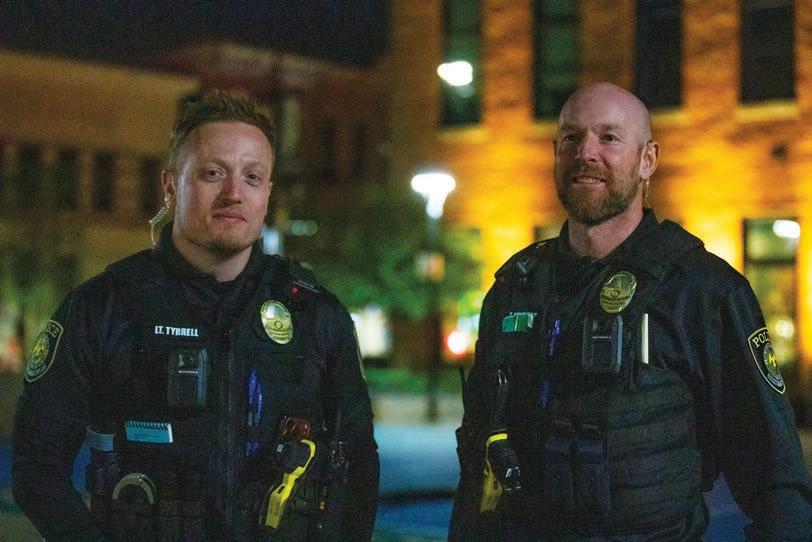
UIPD provided extra o icers for patrols a week after the April 19 Pedestrian Mall shooting.
In response to the April 1 Pedestrian Mall shooting, the Iowa ity Police Department I PD increased downtown patrols over the weekend.
Four officers from the University of Iowa Police Department UIPD were added to this weekend’s downtown patrol, according to ee Hermiston, public information officer for I PD.
The April 1 shooting in downtown Iowa City, resulting in the injuries of five individuals, including three UI students, shifted the emphasis placed on security around the Ped Mall.
I PD relased the name of the suspect in the ongoing investigation into the shooting, 1 -year-old Damarian ones, of edar apids. As of April , the victim shot in the head remains in critical condition and no arrests have been made.
Following the event, I PD issued a press release stating they would increase police presence downtown.
Hayley ruce, chief of staff and public information officer for campus safety, said in an email to The Daily Iowan , that the UIPD would continue the longstanding collaborative relationship
between departments. ruce said in the email that the safety of downtown is stressed as a shared responsibility. ruce said that UIPD would continue working closely with the I PD to strengthen
prevention and response efforts. ruce wrote in the email that the ohnson ounty ommunity iolence Intervention team


Across Iowa, movie theaters serve a larger role than simply projecting entertainment.




From FilmScene in Iowa City to The Last Picture House in Davenport, independent and bouti ue cinemas are using movies to facilitate community engagement. exhibition industry has been in a state of financial uncertainty since the O ID-1 pandemic, when many chain locations closed due to reduced attendance as people obeyed stay-at-home orders.



In the five years since, however, as film production has bounced back from the pandemic and the writer’s strike, movie theaters, too, have witnessed a resurgence.
“We’re kind of held hostage, you could say, by the studios and what’s coming out,” Scott aper, general manager of The ast Picture House, said.
The relationship between theater and studio is codependent they both need each other to survive. As bigger movies began to come out like “Top un Maverick” in , “ arbie” and “Oppenheimer” in , and recently “Project Hail Mary,” cinemas have seen a gradual increase in regular theater-going.
While the general sentiment surrounding movie watching has leaned toward streaming since the pandemic trained audience members to flip on the T rather than physically go to a theater, aper said, these popular releases remind people why the big screen is special.
“There’s so much you miss when you stream something at home. If you don’t have a state-of-the-art sound system or giant screen, there are things you won’t hear or see,” aper said. “Everyone laughing and gasping in a room together is a special experience. As people get back into that routine, they realize they enjoy it and want to do it more.”
The return to the theater-going routine isn’t exclusive to The ast Picture House. ig-box megaplexes have also seen a bump thanks to fre uent releases of popular films. In an email to The Daily Iowan, inemark shared its most recent company earnings call, which revealed that 5 bolstered the franchise’s highest domestic box office since the O ID-1 pandemic. inemark also delivered an all-time performance with premium formats, including D, IMA , and Screen , making up 1 percent of the chain’s global box office. D profit grew over 5 percent annually, setting another record.
The eventizing of major film releases has become a major marketing strategy, with studios investing more money in filming movies for IMA or other Premium arge Format, or P F, screens. P Fs always come with an upcharge, aper said, thus generating more revenue for both the theater and the studio. ow there are more P Fs than just IMA , which typically features an expanded aspect ratio and louder sound. D- O theaters feature motorized seats that are programmed to move with the movie, Dolby theaters feature more detailed soundscapes, and aser D projectors display the most immersive D image.
Premium theater options help make audience members feel like they’re getting a special experience but can also prevent them from participating in concessions and merchandise sales, aper said.
“When you’re spending $1 on an IMA ticket, you’re less likely to buy a popcorn or candy,” he said. “We keep all that concession revenue and split the box office revenue with the studios, depending on the percentage they charge.”
At inemark, $1. billion came from food and beverage sales in 5, the largest profit this area has seen at the franchise. oncessions are vital for a theater’s survival, and the best way to drive more revenue is to get more people in the door.
To do this, inemark and many of the other megaplex companies emphasized exclusive theatrical windows to delay home releases and drive viewing to the big screen rather than the alternative. ased on 5’s surge in revenue, it worked.
The rising tide of movie theater revenue lifts all cinemas, as Iowa ity’s local nonprofit theater, FilmScene, also experienced an increase in foot traffic last year.
For smaller theaters like FilmScene, revenue increases don’t come from the P F push but rather from establishing an engaged community of film lovers.
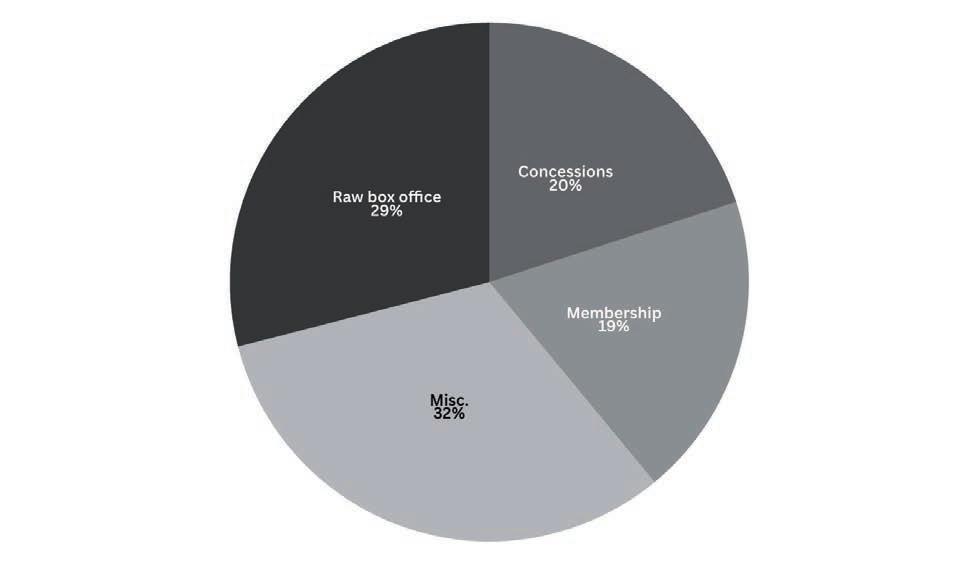
The two-location cinema garnered ,5 regular ticketed admissions in 5, an all-time high since its opening in 1 . aw box office makes up percent of total revenue, concessions another percent, and membership 1 percent. The remaining revenue comes from a hodgepodge of sponsorships, grants, merchandise sales, summer camps, and other extraneous offerings.
Andrew Sherburne, FilmScene’s executive director and co-founder, believes upholding a proper viewing experience for the audience comes from the uality of


the picture, comfort of the seats, the way customers are treated at the box office, and the cleanliness of the facilities.
“ ots of theaters have different ways to brand their premium moviegoing experience, but I think what’s more important than any acronym you might see next to a theater name is the commitment the theater is making toward audience experience,” Sherburne said.
FilmScene actively encourages viewers to remain in the lobby after screenings, conferring with fellow audience members and connecting the film to the world and their lives.
“ oth of our locations have this communal lobby space that we think is essential to fostering that,” Sherburne said. “We love to see those sorts of conversations.”
FilmScene opened in 1 , and The ast Picture House opened in , coinciding with a national increase in independent theaters opening in the last decade, according to an October 5 S ews article.
“People are searching for experiences that are meaningful,” Sherburne said. “I think arthouse, independent, locally owned and operated theaters are more deeply engaged in the work of connecting with their local audiences. People see that.”
FilmScene shows 5 uni ue films every year. It’s understood upfront that turnout will be higher for some than others.
“We know some films will have small but passionate audiences while others might have broader appeal,” Sherburne said. “ ig releases do well, but so do films that have a uni ue point of view or something to say. Our community collaboration series fills up, as do park screenings in the summer. People want to have that shared experience. We’re not trying to maximize box office revenue, we’re trying to give our audiences a choice.”
Similarly, The ast Picture House balances new release films and repertory screenings.
There’s no science to determine which movies will hit or not, but when there are gaps in new release programming or things don’t perform as well as expected, older films can fill in and typically outperform the major movies, aper said.
The films that have done the best at both big and small theaters recently have been the ones that appeal to en audiences. While the common thought may be that young people are too busy on their phones or playing video games to go to the theater, movies like “ ootopia ,” “The Super Mario alaxy Movie,” and “Iron ung” have outperformed among en , aper said.
alancing programming is difficult for theaters with only a handful of screens, like FilmScene and The ast Picture House, but for these independent theaters, it’s important to ensure people have access to a variety of films.
achary anes, a University of Iowa graduate student with a PhD in film studies, has experience programming at the Onion ity Experimental Film Festival in hicago, the orton enter in ake Forest, Illinois, and FilmScene’s Out of the Archive series. He sees movie theaters as a place for conversations, something that he believes FilmScene excels at.
“Places like Marcus Theaters provide a lot of mainstream films, and it’s important to have access to that,” anes said. “ ut independent cinemas have much more flexibility

to respond to the interests and needs of the community.”
anes recalled hearing that some theaters are still struggling to bring audience numbers back to pre-pandemic levels. He’s also seen great interest in repertory screenings both at independent theaters and multiplexes, which he’s delighted to see.
“There are so many great films out there that need to be seen in a theater,” anes said.
Other than diverse programming, independent theaters rely on hyper-local community event programming to serve a role as a cultural hub beyond the place to see a movie.
“We're trying to share the art of film with as many members of our community as we can, and we're promoting that it's not just about that movie or those actors on the screen or the story, it's about coming together as a community and engaging in conversations and meeting new people,” aper said. “I think that's where theaters like us are really trying to play toward.”
The ast Picture House, being only two-and-a-half years old, is still doing lots of outreach in the uad ities to spread the word about its programming. From setting up popcorn booths at community
events to hosting local businesses at pre-show parties before major screenings, the theater is dedicated to serving its community.
For the release of “Wuthering Heights” earlier this year, the theater set up a wine pop-up and sold exclusive truffles from a local chocolatier, which drove a larger turnout that targeted the demographic of the movie, aper said.
FilmScene, too, runs a slew of programming targeted at the Iowa ity community. From the Scenesters Selects series that allows local high school students to program and discuss films at the theater, to partnerships with the UI via the ijou Film oard, the theater promotes a variety of audiences. ommunity collaborations drive much of FilmScene’s ticket sales, and many times, these events are completely free for audiences.
“When there’s someone there who cares deeply about serving their community, the employees are happy, and the business is situated to serve a local audience, you feel it,” Sherburne said. “ ou want to be a part of it. I think that deep down, people want to detach from their devices and have an experience.”
While the megaplexes have seen a profit increase in the past year,
securing the future of the film exhibition industry, independent theaters have also found success both financially and socially through fostering communal atmospheres.
“ ike any small business, we have our challenges. ou can't be afraid to try new things right now because that seems to be where we're having success,” aper said. “ ust because we've always done it that way in the movie theater industry, why are we doing it that way ust because we've always done it one way doesn't mean we should continue.”
eturning movie theaters to their status as community hubs has led to success across the state, and cinemas like FilmScene and The ast Picture House are becoming increasingly committed to serving their respective cities.
“People want something more than just a transactional experience with their movie theater,” Sherburne said. “Those theaters that know how to create a real, meaningful experience will continue to attract people.”
Editor's note: Charlie Hickman is the executive director of the Bijou Film Board and works closely with FilmScene. Hickman did not interview FilmScene or write up the portions that mention the theater in this article.
In addition to box o ice, concessions, and memberships sales, FilmScene also generates revenue from sponsorships, grants, merchandise sales, summer camps, and other miscellaneous sources.
officers from I PD.
joined UIPD downtown this weekend.
In a press conference on April , Mark ullock, assistant vice president for campus safety at the UI said, there would be four additional police officers specifically dedicated to the downtown area, complementing and pursuing co-patrols with additional
“Safety downtown is a shared responsibility,” ullock said in the April press conference. Hermiston said in an email to the DI that I PD is grateful for the partnership to keep the downtown safe.
“While shootings across the city have decreased considerably since , we will continue to work vigorously to address gun violence in our com-
munity and will hold accountable anyone who uses firearms in a dangerous or reckless manner,” Hermiston wrote in the email.
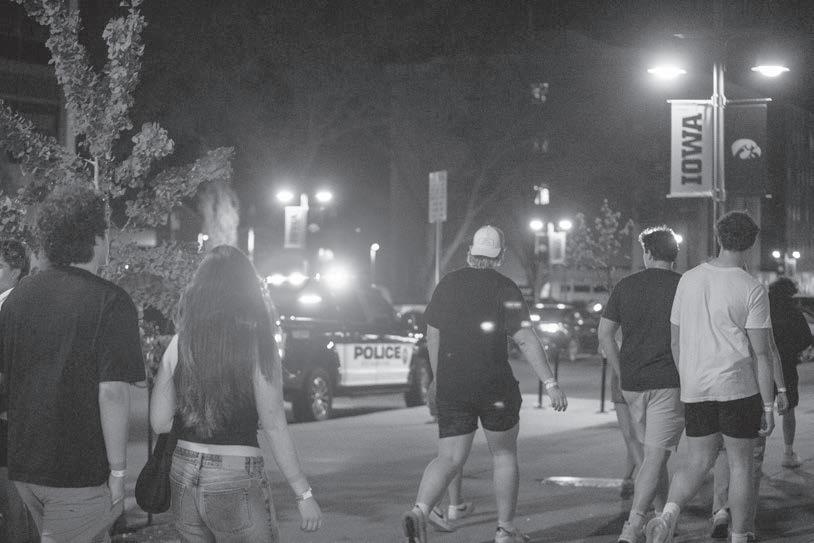
On April , pedestrians out on the town noticed the enhanced security. While there was acknowledgement of the growing numbers, students reacted to their proximity with a matter-of-fact, relatively neutral stance. “I’ve definitely noticed an
increase of cops around the Ped Mall,” Ava Peterson, a UI fourth-year student, said. “There’s been more stationed by Elray’s, and there’s been more by Airliner. We’re just kind of coexisting with the cops. The cars don’t personally have much effect on me, because I’ve seen cop cars around the area for four years now.”
Police parked on and patrolled several streets downtown, fre uenting linton, Dubu ue, Iowa Avenue, and Washington Street. Officers on their feet weaved their way between crowds, methodically searching for signs of suspicion and danger.
While officers maintained a visible presence through-
out the Pedestrian Mall and surrounding streets on a packed Saturday, they had little to no effect on student perceptions throughout the night.
UI fourth-year student arol Mc ann, said the police had very little effect on the atmosphere of downtown Iowa ity.
“Honestly, I don’t think there’s a difference in how people feel,” Mc ann said. “Even with the prevalence we had before, it doesn’t make an impact on the actual amount of crime that’s occurring. So I feel like even with more cops being present, it’s not actually doing anything. The prevalence of them doesn’t affect how we’re going about the night.”

The two have enjoyed getting to act alongside each other after years of being involved with Riverside.
When Hovland and Clark founded Riverside in 1981, they didn’t yet have an overarching mission. Instead, what they had in mind was simply developing and producing a show at a time. The two first met in graduate school at the University of Iowa and became fast friends.
After their time in school together, they decided to funnel their passion for theater into management.
“This was not something people did at the time. There were storefront theaters in major cities, but the idea of the regional theater movement was only less than 20 years old,” Clark said.
Clark said the idea of opening something like Riverside was “out there.” He said his and Hovland’s intentions were always professional, and they wanted to grow a professional opportunity for both themselves and other artists.
“It turned into a full-time life when we weren't looking. The community itself was so embracing and encouraging,” Hovland said. “On the one hand, it seemed like an unlikely place for a professional theater given its size, but it became a great incubator for our dreams.”

The first site to host iverside was the site which houses the Becker Communication Studies Building.
The first show performed there was “The Exercise,” which featured only two actors — Clark and Hovland — a director, their friend and fellow co-founder Bruce Wheaton, and a technical assistant.
“It was a merry band of four, and we did that at what was then called the Old Armory. That was a wonderful building — it was falling apart and that made it a perfect theater lab because we could do anything,” Clark said.
In 1983, the young theater moved to Old Brick, a historic former church building in the heart of Iowa City. Riverside was housed there until 1990. When Hovland and Clark began hosting shows at Old Brick, they did two, maybe three shows a year.
By the time they left, that number had grown to four shows a year, and they were planning on upping it to five.
“We were asked to leave,” Clark said. “We were dominating the space more than the Lutheran campus community.”
Upon being moved out of Old Brick, Hovland and Clark moved to a space in Iowa City’s Northside neighborhood, in what is now The James Theater, where Riverside remained until their retirement in 2015.
Through it all, Clark stressed that he and Hovland tried to surround themselves with the best collaborators to learn from and taught themselves as they needed to.
During the 34 years they spent as managers, Clark and Hovland toured several two-person shows to spread the word to other communities about what Riverside was doing. One such show that the two took on tour was a one-woman show called “First Lady Lou” by Des Moines playwright Rebecca Christian about former First Lady Lou Henry Hoover.
The show was produced by the Hoover Presidential Foundation, and Clark and Hovland ended up touring for two years beginning in 1988, putting on about 100 performances.
“We took it everywhere, from Stanford University to the Smithsonian Institution,” Hovland said. “And then it was in every church basement in Iowa, and some reallife theaters, too.”
Hovland said “First Lady Lou” was a show they were able to build upon because they were able to tour with decent fees, making money which they then poured back into the theater. Most importantly, they were also able to grow an audience.
Along with touring popular shows, Clark and Hovland were also able to be responsive to community needs. After the Nov. 1, 1991, campus shooting that resulted in the de4ath of six people, Riverside received a commission for the play about gun violence, which they then put on.
“For the first 1 years or so, we just took the time surviving, but then we started developing in different ways,” lark said. “We would devise this stuff because we were fueled by naivete. We didn’t know what we couldn’t do.”
Many of their shows invited community conversation wherever they went.
Clark and Hovland said they enjoyed doing post-performance events and talkbacks with the audience about issues relevant in their plays.
While they did take their shows all over the country, they mostly performed in the Midwest, which worked out well because they were raising kids at the time.
“In 1995, we did probably one of the most insane things we’ve ever done, which was a walking tour across the state,” Clark said. “We went to Des Moines and covered about 200 miles. And we would walk and try to raise awareness of the arts.”
As they walked, in every town they passed they would gather more arts supporters, many of whom would travel out or into new towns with them and would raise money for their own arts organizations. At the time, there were also growing issues and threats to the National Endowment of the Arts.
“We would also write printed postcards to give to senators — in Amana, Cedar Rapids, Ames, Grinnell — traveling on roads and backroads,” Hovland said.
The trip was not without its challenges. Alongside the exhaustion of walking for days on end, the summer of 1995 was also extremely hot, and there were reports of cows and chickens fainting. The group hired a support van to drive and meet them,with water bottles, sunscreen, and a change of shoes inside.
“That was one adventure, and opening the Shakespeare Festival in 2000 was another one,” Clark said.
Clark said Riverside hired actors from across the country to come celebrate the opening of the festival and its partnership with the city. This summer, the festival is putting on Shakespeare’s "A Midsummer Night’s Dream," which Hovland described as a “perfect play for that space.”
“I directed it once, I acted in it once, I’ve directed it in other places,” Clark said. “And to go stand up on that stage and get the firsthand experience, it’s uite exciting actually.”
In 2026, Clark and Hovland got the rare opportunity to perform together on stage in the world premiere of “The Fiance.”
They also got the e ually rare opportunity to rehearse with the playwright Emily Bohannon there to give insight.
ohannon first developed the idea for “The Fiance” in 2013 while she was at the Juilliard Playwrights Program. From page to stage, the entire development has taken 13 years. The show came to Riverside after Adam Knight, the Riverside producing artistic director, saw potential in it.
Two summers ago, in 2024, Knight invited Bohannon to Iowa City for a week, where they ran a workshop reading of the play. That summer, Bohannon also got actors together to do a public reading at the public library in order to gauge audience reactions.
“They cooked up a plan along the way to launch a full production of it. And they recast the other three roles,” Hovland said.
“Adam [Knight] really put together a great company. We’re lucky to be surrounded by terrific people.”
Bohannon said the Iowa City community was a perfect host for the show, and she saw the show as relevant to many of their lives.
“There’s such a large community of people here who are retired and in new relationships, and there are lots of subscribers and patrons of this theater who are in late in life relationships,” Bohannon said.
“The Fiance’s” premise focuses on three different generations of women, each of whom is consumed with heartbreak and relationship troubles. It’s also a show which features two older people as its main characters — a rarity in theatrical productions, as pointed out by Clark and Hovland.
Bea, Hovland’s character, is a retired woman dealing with the recent loss of her husband when she meets Doug, Clark’s character. Bea’s daughter, Joan, played by Jessica Link, grapples with the just-asrecent divorce of her husband Malcolm, played by Martin Andrews. Finally, Alex, portrayed by Christina Sullivan, is Bea’s granddaughter and has just broken her own engagement.
One member of the show, Link, said she first got involved after lark sent her a copy of the script and told her it was a “really good show.” Knight then reached out to her to ask if she was interested in auditioning.
“What I think is special about doing this show here right now is the fact that it got workshopped here all that time ago,” Link said. “Emily and Adam are longtime friends and collaborators, so you can really feel that chemistry in the room. And it’s neat Adam was able to bring a new piece from elsewhere here to try it with Ron and Jody helming it.”
Hovland sums up the main themes of the show well during the first act when she asks if “there is anyone in this room who’s not” heartbroken.
“The moment I really felt like Riverside and Iowa City is the perfect place for the world premier of this play was after the public reading,” Bohannon said. “I had so many audience members come up to me and say, ‘This play is about my life.’ A lot of older couples came up together.”
After the 2024 public reading, Bohannon put together a few more rewrites of the play after thinking about the space and the people she’d met in Iowa City.

Throughout the run of the show, Bohannon has described Clark and Hovland as “thrilling to work with.”
Bohannon said Clark is the perfect, cookie-cutter image of what she imagined the character of Doug to be.
Hovland, on the other hand, is slightly different than how she pictured Bea but brings a powerful energy to the character and a more grounded
“They’re local luminaries. Anyone who has been to the theater, who has seen them before, knows they are tremendous actors, and they have also poured so much love and care and detail into this,” Bohannon said.
Link has appreciated her time performing alongside Clark and Hovland as well.
“They’re such an institution in the theatrical community here at Riverside. It’s really special to work with these titans of theater in our community space,” she said.
Something Link loves about Riverside’s audiences is their willingness to see new work and how they show up for any new work featuring Clark and Hovland.
“They enjoy seeing Ron and Jody perform, and you really feel that trust when the audience shows up at Riverside. Audiences are so smart, and they’re so intellectual, and they’re willing to go on that journey and place trust in you here,”
Link said. Clark and Hovland’s chemistry on stage also shines through, with their history as partners causing them to feel naturally drawn and connected to one another.
“It’s comfortable,” Hovland said. “Doug and Bea are deeply physically involved. We began knowing about each other and about each other’s work, so we’re able to make a leap that would be more challenging if we didn’t know each other well. We also trust each other.”
Clark and Hovland both appreciate Bohannon’s respect of older people and their individual stories as “completely e ual and functional human beings.”
To explore the issues of love and life that get touched on in the play is, as Clark terms, “a rare treat.” Both he and Hovland are now 75 years old and, according to Clark, many of the roles they are offered are of characters who are either dead or dying — such as the ghost of Hamlet’s father.
“The Fiance” marks a departure from that pattern.
“And their ages, Doug and Bea’s, are not being misrepresented," Clark said. “But they’re fully alive in their advanced years.” Knight, director of “The Fiance,” agrees, and said he was particularly drawn to the story because it’s a love story that isn’t often seen on stage but that many people witness either personally or in their families. He is also excited to welcome Clark and Hovland back to the stage.
“As the person who is now the executive, there’s a wonderful sense of history that I’m part of in directing them on stage,” Knight said. “They have a remarkable shorthand with each other that makes my job as a director very easy. They understand how to work with one another and, especially with a play that has as many turns and intimate moments as this play does, their bond has helped our process.”
With rehearsals and having playwright Bohannon in house, many day-to-day changes have occurred throughout the show’s rehearsals.
These changes range from taking out a single word here or there to altering how characters move and interact. For example, at a rehearsal, Knight, Bohannon, and the actors went through different run-throughs of the scene where Andrews, playing Malcolm, enters the stage for the first time, holding a house plant as a gift for his ex-wife.
Link’s Joan is upset upon seeing him at the door and must figure out how best to slam the door, while still keeping the people and conversations visible and able to be interpreted by the audience.
“This is an art form where we’re all trying to achieve two things. We’re trying to create a great production for our audience, and we’re also trying to help Emily find her play,” Knight said. To help with the evolving vision for the show, Knight and Riverside held two preview performances on April 16 and 17 ahead of the show’s opening night on April 18.
“The term preview means that the designers are still in the room, the writer is still watching, and there are still rehearsals taking place after that performance,” Knight said. “So, when we learn how an audience responds to something, we can continue to make little tweaks or adjustments to help it find its way.”
With Bohannon in the audience of the preview performances, she’s able to notice when they’re engaged or bored and make changes based on that experience. Even after the official opening night on April 1 , she was still thinking of her play as a living work and considering tweaks to make it. By the end of the show, the story isn’t tied up in a neat bow and neither is the production. Hovland and Clark have both been thrilled to be part of a production such as “The Fiance,” embracing their roles as actors.
“I used to dream about a time in my life when I could just be an artist. I couldn’t imagine what it was like to get up in the morning, be able to work on a script, go to rehearsal, and have time for that to be your primary focus,” Clark said. “To be able to live their lives as freelance actors is truly a fantasy come true.”
If the SAVE Act gets passed through Congress, voting rights will be threatened.

The Safeguard American Voter Eligibility Act, or the SAVE Act, would require voters to prove their citizenship through necessary documents like a passport, certified birth certificate, or military ID with proof of U.S. birth to register for federal elections. This legislation passed in the House in April 2025 and if made into law, will create additional barriers for eligible voters.
According to ABC News, states would not be allowed to process voter registration applications without such proof, and voters would also need to present a governmentissued photo ID when casting a ballot in federal elections.
Currently, federal law allows voters to register by signing a sworn statement affirming citizenship, but the SA E Act would effectively shift the burden to voters to prove citizenship. Though this proposed law has passed through the House of Representatives, it has yet to pass through the Senate.
For the Trump administration, the main objective of the newly proposed law is to prevent non-citizen voting, but at a cost that would have the most impact on younger voters, voters of color, women whose married name differs from their birth certificate or passport, low-income individuals, and transgender Americans, by obligating them to show in-person proof of citizenship using documents that do not reflect their identity.
Senate Democrats and civil rights organizations, such as The Leadership Conference on Civil and Human Rights, argue the law would suppress minority voters who are less likely to have access to re uired documents.
For example, 21 percent of Black Americans and 23 percent of Hispanic Americans lack a driver’s license, compared to only percent of white Americans. Spouses who have undergone a legal name

change will also be at risk for further scrutiny of legal documentation when considering as up to 69 million American women have birth certificates that don’t match their present name.
Purchasing the required documents like passports or birth certificates will create financial barriers for many voters and election officials would face increased workload and legal risk that would cause further strain on state and local election offices from verifying documents under threat of penalties.
Voting rights advocates warn this could create “bureaucratic hurdles” for millions of Americans whose names differ from
their birth certificates by disproportionately affecting marginalized groups and unnecessarily restricting access for millions of eligible voters by requiring in person, document-based proof of citizenship.
“There are already many people who feel like their vote does not matter, or are already at a disadvantage, and this law would just make it harder on people that already are struggling the most,” Kimberly Ramirez, a first-year student at the University of Iowa, said.
Eliminating online and mail-in voter registration to only in-person visits to local election offices will leave people without access to transportation, especially in more
rural areas, at a more significant burden of voting on time.
According to Head Count, an estimated 21 million eligible voters lack easy access to the required documents, and nearly 4 million have none at all. Many people, such as seniors or those with disabilities, would face costly or time-consuming trips just to register. With tension rising between the Senate and the House of Representatives over the impending passing of this voter suppression legislation, continued awareness among communities of its effects and demand for attention from Congress are crucial towards preserving democracy.
Keeping a tidy living space can be a beautiful thing.

I was a freshman once, away from home for the first time. either my roommate nor I had any idea how to create a livable, personable space. We were in ienow Hall at the University of Iowa, where the rooms carry the approximate charm of an anchorite’s cell or really, any kind of cell.
Our room was depressing and grey; it had no decoration, no personality, and absolutely nothing to disguise the concrete walls. We had a T , an box, and sheets on our mattresses. That is what we called home for about a year.
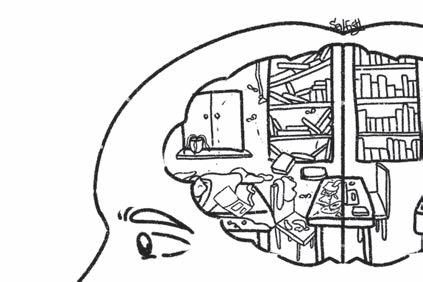
ut at least it was clean. As much as I disliked the damn place, I would much rather spend the rest of my days there than have to spend one more hangout in a crumbfilled, dusty, musky, and stinky apartment. Living on your own in college means taking on basic responsibility, and the bare minimum is keeping your space clean. It shapes your productivity, your relationships, and how you respect yourself. There is no excuse for living, let alone inviting people over, in a dirty house, or an ugly house, for that matter. leanliness is not hard. Still, I’ve heard horror stories about college roommates, especially living in the dorms, from not doing their laundry and leaving dirty clothes sprawled around the room, to neglecting the trash until it becomes a stench.
Once you break the habit of leaving things out rather than putting them away, and start doing small things like taking your shoes off at the door, you can maintain a clean space in about an hour a week.
The bar is very low when it comes to decorating college houses. Honestly, all you need are a few frames hanging, a handful of succulents or a pothos, an accent light, and a rug. Iowa ity’s Artifacts often has nice stuff
for free on the curb, and Midnight offee has free plants every so often. othing even has to match; you can literally just throw a room together and call it eclectic. There are no excuses.
The advantages of the little work I am begging you to do are many. It will definitely raise your grades for one. ot only does keeping a house nice create a sense of routine, but it also saves you precious time when you are busy. Sometimes the will to do homework strikes, and sometimes, by the time the mess is out of the table, the inspiration is gone. Even if it's not, the cleaning of the space will take some willpower that could have been used for something more urgent. A righam oung University study showed the majority college students require a certain degree of cleaning to properly focus on class and study, being the fourth most important element in a studying environment. A clean space is almost as vital as comfortable temperature or proper lighting.
eo Myers, a third-year University of Iowa student who shares a beautiful apartment with his roommates, shared an even more important point the social side.
“As a college student, I share my kitchen and living room with roommates, and being able to hang out in a nice common space really makes living with others more fun. We can all be in the living room and be closer; we can easily have guests over,” he said. It's much easier to host if there is no impromptu spring cleaning every time people threaten to stop over. And decorations are the most practical conversation pieces.
By maintaining a nice-looking, communal space, you show you care about your own space and you also care about the people who share that space.
A roommate who does not keep a dorm clean is, in essence, saying he does not care about the place or the people there. If you have ever met someone who was in prison, you will know they keep their cells as clean as possible,with plenty of rules about hygiene, and what should not be done in the shared cell.

Showing respect and care by agreeing to
maintain a space clean is a very easy way to avoid those passive aggressive texts in the group chat. We all have heard stories of roommates falling out because someone could not keep the place in order. Not only do you respect others, but you respect yourself by living in a beautiful place. Walking around town, I see many closed windows. How many of those are closed to hide the “mess?” What does it say about someone ashamed of their innermost sanctum?
According to Oxford CBT, the act of cleaning will reduce stress, increase feelings of control, and reduce clutter, making it easier to focus on what matters. 1 percent of college students say that keeping a clean room helps with their physical and mental wellbeing. A study published in the Springer journal has found that college students can

use dishwashing to promote mindfulness, by using the act of cleaning as a form of meditation, which can decrease nervousness and increase calm and creativity. As college students, we could not ask for more. When asked if a massage or arriving home to a clean house is more relaxing, 72 percent of responders answered the latter. ut if this is the case, how come only 5 . percent of students clean their rooms weekly? The two biggest reasons given were lack of motivation and lack of time. I do hope this column will help with the former. As for lack of time, I’ll find igfoot before I find a college student who does not have an hour a week of free time. The cost-benefit ratio of investing your time and energy in creating a nice space to live is one of the best. An ugly space is harmful to the self, and most importantly, it's harmful to me if I have to stop by.
Go-At It Land Stewardship uses goats to graze on properties and reduce wildfire risk.
accumulate as dry fuel.
The goats also leave behind a natural parting gift, using their feces to add carbon to the soil and improve nutrient cycling.
In the middle of Iowa’s burning season — when controlled burns are used to reduce wildfire risk from mid-March to May, according to the Iowa Department of Natural Resources — Johnson County residents are using an unorthodox supplementary tool: a herd of goats.
Many residents have been calling on Go-At It Land Stewardship goats to graze on their property to reduce wildfire risk, resetting the landscape much like a controlled burn.
The need for wildfire prevention was especially highlighted this season when a fire broke out south of US- 1 on Feb. 1 . It was estimated to have covered 5 acres and spread 3.5 miles before it was put out, according to Johnson County Conservation.
Tamra Elliott, who runs Go-At It Land Stewardship with her husband, Ryan Elliot, said she wasn’t expecting to receive so many calls from residents specifically requesting the goats for wildfire prevention.
Elliot said Go-At It provides free consultations for residents interested in using the service, after which she provides a quote based on the size of the site and the management goals of the owner.
Elliot said Go-At It began in summer 2025 and has yet to compile the number of clients requesting goats for wildfire prevention.
“It was very surprising how many people are now kind of thinking outside of the box, saying, ‘We need this burned, this is becoming a pretty bad situation here, so let’s try the goats. What can the goats do?’” she said.
Elliott said goat grazing is not tied to a strict fire season but instead follows plant cycles, with much of the prairie and fuel-reduction work happening during the dormant months before spring growth.
Elliot said the goats reduced wildfire risk by grazing and trampling overgrown vegetation with their hooves, breaking up built-up plant material so it decomposes faster and doesn’t
Elliot said the goats’ grazing and “foot action” help not only prevent wildfires but also aid Iowa’s dwindling prairies by opening space for new plant species to grow.
“It really does do the stimulation for your prairies and your other ecosystems that we haven’t really considered bringing into the management,” she said.
Elliot said historically, people have thought of goats as only being useful for grazing shrubs but are now seeing their broader applications as controlled burns become harder to schedule around bad weather.
“It’s hard to get your prescribed burns through because the weather is getting so erratic lately,” she said. “It’s too harsh, or it’s too wet. This is something that you don’t have as narrow a window, and if you are concerned about the amount of plant death, this is a great way to get that under control.”

Brad Freidhof, the director of Johnson County Conservation, said the goats help replicate historical grazing patterns that have been lost due to declining populations of bison and elk, and because animals such as chickens and hogs are now raised indoors.
“Returning the goats to the landscape gives them a replacement for prescribed fire,” he said. “ In some places, a prescribed fire is not applicable because of smoke management or infrastructure. Goats are actually the best mechanism to control and help care for the landscape.”
Freidhof said the goats are another tool for wildfire prevention, not a complete substitute for controlled burns. He noted that the grazing method is time-consuming and sometimes requires subsequent visits to apply growth chemicals.
He said Johnson County will need all the wildfire-prevention tools it can get, as climate change and dangerous human practices, such as burning trash,
increase the risk of wildfires across the state.
“With these extremely dry conditions and high winds that we’re now seeing across the state, those are the things that are driving these wildfires that we’ve never seen in Iowa in the past,” Freidhof said. “ es, wildfires have happened, but not to this extent.”
Caitlin Savage, a client who uses the goats for her property in Cedar Rapids, said the goats have been helping manage her prairies and filling her empty horse stables with an entertaining amount of chaos.
“It’s really fun because the goats are all really friendly, and they all have their personalities,” she said. “It’s nice to have the goats there and on the property and in the pasture where the horses used to roam.”
Savage said the goats put less pressure on her to conduct prescribed burns
every year, which, while preventing wildfire risk, wouldn’t give the plant life adequate time to grow.
“It’s been really nice since some of those areas that we weren’t able to burn this year and have been holding off for a year or two, the goats have been able to come in and decrease the dead material lying on the ground, so that it’s a little less of a wildfire risk for this season,” she said.
Elliot said climate change will create incentives for people to adapt in every possible way to prevent wildfires, especially by not hesitating to call for the goats at Go-At It Land Stewardship to come to aid.
“This is something that I think will have a growing popularity,” she said. “Doing the fire prevention in Iowa, that’s something we did not expect to be applying it for, but we found that it has been very successful.”
Young adults are drinking less nationally, but Iowa City bar culture remains strong.
quickly, we keep having to create more shelf space for drinks,” Moore said. “We’ve also noticed a lot of college kids are drinking THC beverages during the week.”
While national data suggest college students are rethinking their relationships with alcohol, local perspectives in Iowa City show a more nuanced reality.
A report from Goliath Consulting, a data insight firm that analyzes nationwide data and consumer trends, describes a “sober shift” among Gen Z, pointing to declining alcohol consumption, rising interest in wellness, and a surge in non-alcoholic and alternative beverages.
The report highlights that younger consumers are prioritizing mental and physical health, seeking social experiences that don’t always revolve around alcohol.
The study reports 21 percent of young adults abstain from alcohol completely, while 39 percent consume it on occasion. According to the report, 72 percent of young adults regularly consumed alcohol in 2003, while only 62 percent of young adults consumed alcohol in 2023.
However, this shift does not seem to be reflected in Iowa City. Chris Moore, general manager at John’s Grocery, said he has noticed a clear change in weekday drinking habits, but weekend alcohol consumption among college students remains strong.
Moore also pointed to a rise in non-alcoholic drinks and alternative beverages, particularly since the COVID-19 pandemic. He estimates sales in that category have grown by 50 percent each year since 2020.
Data from Iowa State University shows the consumption of wine in the state has decreased by 6 percent and found that Iowa consumers are shifting towards non-alcoholic drinks.
“That section has been growing so
THC drinks are infused with cannabis-derived compounds, and unlike other cannabis products, are legal in Iowa due to their low percentage of THC. The drinks typically have less than 0.3 percent THC, making them legal to sell and consume according to the state of Iowa.
Nationally, the shift aligns with broader Gen Z preferences. The Goliath report found that many young consumers are drawn to products that allow them to socialize without the downsides often associated with heavy drinking, such as hangovers and health risks.
Mark Vander Weg is a professor and head of the University of Iowa Department of Community and Behavioral Health. Vander Weg cautions that even as drinking patterns evolve, alcohol still carries serious health risks for young adults and has long-term consequences.
“We are finding more and more evidence about a strong link to cancer,” Vanderweg said. “When it comes to cancer, the risks from drinking start at a much lower level than we previously anticipated.”
Vander Weg said one drink a day can increase the risk of cancers such as breast cancer and colorectal cancer. While younger people are unlikely to experience these outcomes immediately, Vander Weg said drink patterns established in college can accumulate over time, leading to long-term health risks.
Heavy alcohol use, Vander Weg said, is linked to a wide range of immediate harms, including motor vehicle accidents and poorer mental health outcomes. Over time, it can

also contribute to chronic conditions such as high blood pressure, weight gain, diabetes, heart disease, and liver disease.
Alcohol-related cancer deaths have doubled in the U.S between 1990 and 2021, according to the U.S. Department of Health and Human Services.
Vander Weg also pointed to concerns about brain development, noting that alcohol use during young adulthood — when the brain is still developing — can affect cognitive health and increase the likelihood of future substance abuse problems.
Josh Immerfall, owner of several Iowa City bars, including Giddy Up, CAMP, and Scouts Honor, said he has not seen a significant decline in alcohol sales among young adults.
“Specifically in the Midwest region, I think alcohol sales still remain strong,” Immerfall said.
National Alcohol Beverage Control Association data from January 2026 shows a decline of alcohol sales between 2 to 4 percent from the previous year but highlights other factors that may be at play including inflation and the rising price of alcohol.
While national data points to a rise in non-alcoholic options, Immerfall said that trend has not fully translated into
a traditional night out at a bar.
“We’ve seen a small rise in THC beverage sales, but nothing that moves the needle,” Immerfall said.
Instead, he said drinking culture in college towns such as Iowa City may be more resistant to change, especially given the strong social norms tied to going out.
Cody Smith, a fourth-year student at the UI, echoes that perspective. Smith said these expectations shape how he spends his weekend and socializes.
“I don’t think that students are drinking less than in the past,” Smith said. “I think that because there isn’t really much else to do around here on weekends besides drinking is why it is so popular.”
For Smith, cost plays the largest role when deciding whether to spend his night downtown. He said if he cannot afford nightlife, he and his friends will simply find an alternative, such as playing video games or card games. But, he emphasized that drinking still plays a central role on campus.
“People see drinking and going to the bars as a social event and a great way to meet new people,” Smith said. “Especially being on a campus where going to the bars and drinking is the norm, everybody just wants to fit in.”

Over the weekend, volunteers from across Iowa City planted about 2,000 trees and shrubs on the west side of campus using a Japanese forestry technique.





Some proposals look to protect speech, while others may lead to a ‘chilling e ect.’
bill could lead to a different approach from educators, some of whom may refrain from grading based on accuracy out of fear of repercussions, like in the Oklahoma controversy.
When Jack Kennedy served as the journalism advisor for Iowa City City High School for over two decades, he felt as though freedom of expression in schools was supported and valued at the statehouse.
In 1989, Kennedy worked with the Iowa High School Press Association and recalled shaking the hand of Terry Branstad, former Republican governor of Iowa, after Branstad signed the “Student Free Expression aw,” which codified speech protections for student journalists and their advisors.
Now, Kennedy said Iowa has diverged from its traditional value of the First Amendment, as proposed legislation underpins an increasingly restrictive culture of speech. Kennedy said the bills, while individually targeting separate issues, all share one common theme: the element of fear.
“We are now in a patch of history where the fear of our schools has overcome our pride and our recognition for the value in keeping the state strong,” Kennedy said.
Among a slew of legislation by the Republican majority targeting Iowa’s education systems, there are a handful of bills that seek to regulate or provide guidance surrounding student and educator speech.
This includes House File 2336, introduced in March, which intends to protect student speech by banning schools from penalizing students for engaging in political, ideological, or religious speech. It would prevent schools from limiting certain viewpoints if other “similarly situated students” are not prevented from speaking on a different opinion on the same issue.
It also protects student organizations from being discriminated against for an expressed ideological viewpoint.
House File 2512, introduced in February, would allow the denial of educator licenses for people found “publicly celebrating” politically motivated violence in response to the death of conservative activist Charlie Kirk. House File 2121 expands “Don’t Say Gay” legislation prohibiting the instruction of LGBTQ+ topics by educators from grades K-6 to include 7-12.
While the “Don’t Say Gay” expansion bill and the “Charlie Kirk” bill technically died in the second funnel and are unlikely to pass this session, Kennedy said the proposals contradict the essence of the student free expression law he worked to pass less than 40 years ago.
“We have a law in the books that says ‘A high school student can publish [without censorship] in whatever media platform they choose,’ but they can’t actually speak the words in the hallway or express the same ideas,” Kennedy said. “It just seems so odd.”
Kennedy, now an adjunct instructor at Colorado State University, said as he watches the operation of the Iowa legislature from afar, it seems like lawmakers have turned from once celebrating and investing in the public education system to combatting it for their best interest.
Kennedy said House File 2336 represented “virtue signaling” from the Iowa legislature, that Republicans want to stand and make a clear declaration that religion in school is accepted. Kennedy thinks religion has always been present in schools, but that the bill alludes to the lack of acceptance for it, which he disagrees with.
Brett Johnson, University of Iowa media law professor and attorney, said the bill harkened to the November 2025 controversy at the University of Oklahoma. Psychology student at the university Samantha Fulnecky filed a claim of religious discrimination against the university for receiving a failing grade on an essay in which she cited the Bible repeatedly for what was intended to be a reaction paper to a scholarly article on gender typicality and the mental health of students in early adolescence.
The controversy sparked nationwide debates surrounding the presence of personal religious beliefs in school assignments, though critics of Fulnecky’s argued the failing grade was not due to the presence of religion, rather the absence of a response to the essay prompt.
Mel Curth, Fulnecky’s instructor, reportedly deducted points because the response “does not answer the questions for this assignment, contradicts itself, and heavily uses personal ideology over empirical evidence in a scientific class, and is at times offensive,” according to reporting by The New York Times
The Iowa bill includes language that students cannot be punished for expressing their religious beliefs in assignment, but Johnson was happy to see a caveat that grades can be impacted if the rubric is not followed.
Johnson said the ambiguity of the
“I’m looking at this new law and saying, ‘Man, if I give the student an F, even if I can show my rubric, I’m worried the student might sue me, or I might lose my teaching license, or I might lose my job,’” Johnson said. “I might be like ‘Good job, gold star. Here’s an A,’ out of fear.’”
Johnson said the protections proposed in the bill already exist under the First Amendment and are strengthened by Tinker v. Des Moines, the 1969 Supreme Court decision which sets the nationwide precedent that students maintain their Constitutional rights while in public school.
Johnson finds the legislation to be redundant but potentially as a way for politicians to show their constituents they are willing to fight for religious freedom.
“Part of growing up and a part of learning is learning how to place religion within our kind of big secular world,” Johnson said. “I wouldn’t be able to do that in that position, I’d be doing a disservice to that student. That’s one of the potential detrimental effects.”
Rep. Angel Ramirez, D-Cedar Rapids, said the legislation is part of a broader movement of the state standing up for the free speech rights of some students, but not all.
“What this bill will do in practice is allow space for potentially hateful rhetoric against marginalized populations to exist within the school system and not be penalized under the guise of religious expression or political speech,” she said.
Rep. Samantha Fett, R-Carlisle, who serves as a floor manager for the bill, said she fights for free speech because it’s an important issue to all Iowans. Fett said the state lacks clear, consistent standards for school districts to understand what is protected under the First Amendment.
“I know that as a school board member, before I was a state representative, I did field questions about this,” Fett said. “There just isn’t good information that’s distributed at the local level about how to handle those situations.”
Fett said the legislation doesn’t provide additional protections beyond what the First Amendment offers. ather, she said it streamlines standards, as she had been hearing from constituents that speech concerns were not being handled uniformly by districts.
“This does not expand student rights,” Fett said. “This just defines what is acceptable, so those teachers administrators can use it as tools to better serve their students.”
Fett said on the contrary to Ramirez’s perspective, the bill does not favor specific viewpoints over others. Fett said the bill provides an outline disallowing discrimination of any opinion or ideology.
“This applies to what our First Amendment rights are for students, period,” she said. “That narrative was probably put forth to try not to pass the bill, which is unfortunate, because we just want to make sure that schools in the state of Iowa are applying First Amendment standards correctly.”
The legislation passed the Iowa House on March 3 and awaits debate in the Senate.
If passed, HF 2121 would prohibit the instruction of LGBTQ+ material in Iowa’s high schools, serving as an expansion for the legislation dubbed the “Don’t Say Gay” bill by its opponents.
Johnson said the legislation could potentially have a chilling effect in Iowa’s schools, as some teachers may refrain from using materials that include the presence of LGBTQ+ characters out of fear of penalties.
Ramirez said she worked at a middle school at the time the original legislation passed, and sixth graders were no longer allowed to be a part of the school club for LGBTQ+ students and their allies.
“The sixth graders come in search of a community because they identify as queer and they are not able to talk about it,” Ramirez said. “Teachers are afraid to talk about it with kids. There’s no longer a safe space for them. It has been detrimental to my students’ mental health.”
Ramirez said if the bill were to pass, the mental health of LGBTQ+ high schoolers in Iowa will suffer.
She said even at the elementary and middle school level, school districts overcompensate for the vagueness of the legislation by removing potentially more material than necessary, furthering the impact of the chilling effect.
She said this impact would be exacerbated if the legislation from grades 7-12 were to pass.
Robert Corn-Revere, chief counsel at the Foundation for Individual Rights and Expression, said states have a lot of latitude to restrict instruction of certain topics for K-12 schools because curriculum is determined by the state.
The foundation advocates for the First Amendment rights of all Americans,

defending cases regarding free speech rights nationwide.
Corn-Revere said it would be much more difficult to bring speech claims against any legislation pertaining to instruction because it does not directly prohibit student speech.
Awaiting debate at the statehouse, legislation dubbed the “Charlie Kirk” bill is argued by experts, including Corn-Revere, as the most direct First Amendment violation of the bunch.
The legislation would allow for revocation or denial of teaching licenses for those who “publicly celebrate” politicallymotivated violence.
The bill mentioned the killing of conservative activist Kirk nine times and was proposed to apply to all political violence. If passed into law, it would be retroactively applied beginning Sept. 10, 2025, the day of Kirk’s death.
Corn-Revere said the foundation has been involved in a handful of claims against individuals facing sanctions for social media activity related to the death of Kirk in either direction. He said the vagueness of restrictions has been a major problem.
“What does it mean to celebrate political violence?” Corn-Revere asked. “How do you determine the threshold for what that would be and how it applied?”
Corn-Revere said the sanctions against educators tend to be viewpointbased, as they are rooted in a particular attitude towards Kirk, which makes the restrictions “particularly suspect from a Constitutional perspective.”
“Simply having a political attitude, whether or not you think it’s a distasteful political attitude, isn’t something the government gets to police,” Corn-Revere said.
Johnson echoed similar thoughts, and said the bill could be “void-for-vagueness” if passed because it does not clearly lay out how it would be enforced.
The bill lists “good riddance” and “one less fascist” as potential examples of punishable speech, but it also lists that “any similar” speech would be applicable under the law, a catch-all phrase that Johnson said makes the bill difficult to enforce evenly.
He used the death of Ayatollah Ali Khamenei, the supreme leader of the Islamic Republic System who died in the Feb. 28 U.S.-Israeli strikes on Iran, as an example of the ambiguity.
Johnson questioned if educators would lose their licenses for commenting about the deaths of notoriously violent and repressive leaders, such as Khamenei.
“What if somebody said ‘I disapprove of war, I’m a pacifist, but I’m glad that this Ayatollah is dead because of all the murderous actions of his regime?’”
Johnson asked. “Presumably under this new bill, that could be grounds for losing your license.”
amirez’s concerns rose from a specific amendment in the bill, H8078.
The amendment would allow for removal of educator licenses of “any teacher or administrator who encouraged or led a student protest.” A student protest is defined as a coordinated event of at least three to four students who leave class to draw attention to social issues or any local, state, or federal policy. Ramirez said “good administrators” work to ensure their students’ safety when they learn a walkout is planned, including planning security measures.
If this bill passes, those safety measures
may be grounds for loss of license, which Ramirez said would incentivize schools to discourage its students from exercising their First Amendment right to protest.
“We are trying to say in other legislation that we care about student voices, but clearly that’s not the case,” she said.
Johnson said the “Charlie Kirk” bill is the clearest violation of the First Amendment in his opinion, but the bills in conjunction with one another are part of a larger “flood the zone” tactic by lawmakers to achieve their agenda.
Johnson said if passed into law, many of the bills will likely get tied up in court, and the more bills there are, the harder it is to challenge them all.
“Inevitably, some of them are going to get through and kind of reshape our norms when it comes to expression,” Johnson said.
Kennedy said he thinks the bills, when taken as a whole, are more representative of national Republican politics as opposed to state-driven initiatives, as they don’t represent the “very foundation the state is built on.”
Corn-Revere said state legislators like to “go with the fads” and pick up what issues are seen as “hot” at a given time, and that these bills, and specifically the harlie Kirk bill, are representative of that.
“If it’s in the news and a politician thinks there’s some hay to be made from it, then you’ll see legislation popping up in a given area,” Corn-Revere said. “It just kind of depends on what First Amendment issues are in the news at a given time.”
Ruthina Malone, president of the Iowa City Community School District board, said she doesn’t think passage of any legislation related to speech would change the district’s approach to providing education to students.
“We as a district allow our students to express themselves in a respectful manner,” Malone said. “We do not control what they say. We don’t infringe on their ability to share their thoughts.”
Malone said in her time as board president she hasn’t been concerned about whether students’ free speech rights have been infringed upon in school, as she hasn’t heard about it being an issue.
She emphasized the importance of teaching young adults how to share their perspectives in a respectful manner.
Malone said the legislation would pose less of a problem in Iowa City, one of the most progressive areas of the state, compared to smaller, rural communities.
Ramirez said the bills would impact all districts, as they represent a bigger picture — that the state legislature is not standing up for the free speech of all Iowans.
“It’s very specific to a conservative lens,” she said. “Obviously that raises a red flag for me, because I would want every Iowan, regardless of identity, political belief system or religious belief system, to be able to have the same freedom.”
Kennedy said the proposals will result in unintended consequences across the state. He said “brain drain,” or the outward migration of young people from the state, is one of the unintended consequences that is already being seen in Iowa, but said it will only continue to accelerate if the state legislature continues to restrict.
“The very essence of American mythology is freedom,” Kennedy said. “More tightening of how you’re supposed to behave, legislation, is the antithesis of freedom.”
Editor’s note: Jack Kennedy is a relative of DI staff Grace and Anna Olson.


Iowa baseball built a pipeline of junior college athletes, showing no sign of stopping.

The University of Iowa baseball team is home to players with a variety of journeys to get to Iowa City. The roster is filled with players who spent time at junior colleges. It features 11 players who played at a junior college before making their way to Iowa.
Head coach Rick Heller has used junior colleges to fill holes in the lineup since he started in Iowa City in 2014. The starting lineup is littered with players who grinded away at lower levels before making the jump to Division I. Miles Risley, a transfer from Kirkwood Community College, and Caleb Wulf, a transfer from Southeastern Community College, have been middle-of-the-order bats ever since they joined the Hawkeyes.
all levels. The emphasis on culture and fundamentals has been a key reason recruits have sought out the program. The strong culture Heller has created has made the adjustment smoother for players coming in.
“I think it’s a great culture. We all love each other and want to play for each other and just win a bunch of ball games,” Risley said.
Risley has been the poster child for a successful transition from the junior college level to the DI level. After an illustrious high school career at Johnston, where he was first-team AllState and Iowa High School Player of the Year as a senior, Risley took his talents to Kirkwood Community College and was an Honorable Mention All-Region selection in his sophomore year. Risley was already on Heller’s radar out of
Risley to Iowa City.
“We loved Miles Risley in high school, but we had Kyle Huckstorf here, and it didn’t make any sense to bring Miles into that situation as a freshman,” Heller said.
Risley has posted a .995 OPS through 32 games with four home runs and a .500 on-base percentage.
This flexibility with the roster is one of the positives of bringing in junior college players. Players such as Risley can hone their skills at a junior college for two years and immediately make an impact when they transfer in.
The ability to bring in players who have significant game experience has been massive for Heller and the Hawkeyes.
Having players from junior colleges is not something new to the Iowa baseball program. Over the last four seasons, Heller has had 10 players or more on
Tran was the first Hawkeye to compete on bars at nationals since 2003, and the first NCAA qualifier since 2022.

Though the Iowa gymnastics team fell short of an appearance at the national championship, one Gymhawk did earn a chance to perform. Following a consistent season and a perfect 10 score, sophmore Aurélie Tran led the school solo in the bars event at the national championship on the individual level, ultimately earning a runner-up finish.
Tran was Iowa’s first individual competitor at the national championship since Adeline Kenlin in 2022 and the first on the bars event since Alexis Maday back in 2003. “It feels amazing. I feel just great to push those barriers and achieve new things,” Tran said. Her path to the national championship starts well back in the regular season. Tran over the 11 regular season meets averaged a 9.900 and did not score lower than 9.850 on bars. She also competed as an all-around competitor in all four events this season, earning a career high score in the all-around during Iowa’s last home meet of the season.
“I feel like just getting the opportunity to improve at every meet is something I looked forward to,” Tran said. “And after every meet, we have a film review session, which has allowed me to catch the little details I can work to improve on.”
But really, where Tran excelled was in the postseason. During the Hawkeyes’ meet in the Big Ten tournament, she led the Hawkeyes to a fifth-place finish while taking home a first-place finish herself on the bars event with a five-way tie at 9.950.
Tran did not stop there, and with her team at the NCAA Regionals second round meet, she scored Iowa’s first perfect 10 on the bars event, finally breaking Maday’s 9.975 record set back in 2004.
That perfect 10 score qualified her as an individual competitor for the next round in the national championship despite the team failing to qualify for the next round together. Representing Iowa on the national stage was a special opportunity to her, though she did miss her fellow Gymhawks who had been cheering her on all season long from the sidelines.
the roster every year who came from a Recruiting junior college players has been convenient for Heller due to the state of Iowa being a hotbed for highlevel junior college baseball. Programs like Kirkwood in Cedar Rapids and Southeastern in Burlington have seen success year in and year out.
The proximity and the winning pedigree at these junior colleges provide the perfect combination for a recruit that Heller is looking for.
“Having the benefit of a bunch of great junior colleges in our state that do a great job developing players, it would make no sense not to,” Heller said. When the Hawkeyes walked away with a 5-2 victory over the Maryland Terrapins on April 18, the impact of junior college transfers was felt across all aspects of the game.
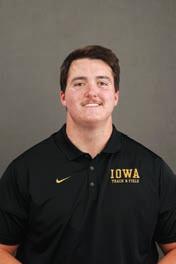
Junior thrower Ryan Johnson holds lofty ambitions with a grounded perspective.
For Ryan Johnson, the distance of a throw isn’t the point.
Even as one of the top hammer and weight throwers in the country at the University of Iowa, the junior measures success differently less by feet and inches, but rather by something that he can’t see on a scoreboard.
Johnson’s rise at Iowa has been marked by recordbreaking throws and impressive national-level performances. Hailing from Springboro, Ohio, Johnson holds the school records in the hammer throw and the weight throw. His hammer throw ranks second in this season’s NCAA record books. Behind all of the numbers is a shift that has shaped Johnson’s career just as much as any result: learning to compete without letting performances define him. In a sport built on measurable outcomes, Johnson is chasing something less tangible.
That perspective didn’t come immediately.
Before the success, Johnson’s path into throwing started in a much different place on the football field, where he spent years chasing a sport that eventually no longer felt like his own. The gridiron was his home from second grade to high school, until it wasn’t.
“Freshman or sophomore year of high school, I kind of fell out of love with the sport, and it just wasn’t really my thing anymore,” Johnson said.
Looking for a new outlet, Johnson found an opportunity through a simple suggestion by a friend. Johnson didn’t touch the ball as a lineman in football. Such wouldn’t be the case in shotput.
“I was like, ‘What’s that?’” Johnson said. “And he goes, ‘You try to get a metal ball to go as far as you can.’ I was like, ‘That sounds like a good time to me.’”
A year or two later, another introduction was held: the hammer throw. This ultimately changed the trajectory of his career. Just like shot put, Johnson hadn’t heard of the event but quickly recognized its appeal.
“They were like, ‘It’s like a shot put ball on a wire, and it goes way further,’” Johnson said. “I was like, ‘That sounds like a lot of fun.’” What began as something fun soon became something
Iowa’s club sports programs foster community and engagement for students.
have these different experiences.”
The University of Iowa has 22 varsity teams that compete in NCAA Division I, eight men’s and 14 women’s programs. Sports like football, wrestling, basketball, and others attract thousands of spectators and earn millions of dollars for the university.
The path to becoming a college athlete, however, is a long and tedious one, with only about one in 13 high school athletes committing to play at the next level. For many who played sports in high school as well as others looking for community, involvement, or physical activity, club sports at Iowa provide a solution.
Hawkeye students have access to 41 club teams on campus. These range from more traditional sports, such as softball, baseball, and volleyball, to unique groups like shooting sports, Brazilian jiu-jitsu, and triathlon.
“We try to offer something for everyone,” Matt Schaefer, Iowa’s assistant director of sport programs, said. “While the most popular sports are sports like basketball, soccer, and baseball, not everyone has an interest in those activities, so having a huge variety, hopefully we’re capturing more students that we otherwise wouldn’t.”
Rahman also expressed the idea that playing club sports in college is a good way to keep students, many of whom no longer play for a varsity team, active on campus.
“I think a lot of times, people forget about the sports that they used to do in high school,” Rahman said. “Having club sports at college really just keeps you active and engaged with the sport that you used to play.”
Participating in club sports also provides access to mentorship from older students and the coaching staff involved with these programs, such as Tyler Dailey, the head coach of men’s rugby since 2018.
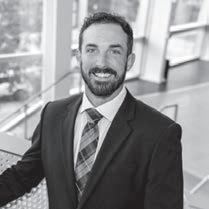
“I think a lot of college students, when they get out of the house and get away from family and get away from that high school structure, it becomes pretty difficult for them to stay organized,” Dailey said. “It’s good for them to have something that they can get involved in.”
For Dailey, joining one of these clubs also educates students on the nature of sports that they may not be familiar with or have had exposure to.
It’s not just the school that benefits from more student organizations, but the Hawkeyes that make up those organizations, too.
For sophomore Scarlette Rahman, club tennis at Iowa has provided both a social scene and a way to stay in touch with her sport.
“I really love the social aspect of it,” Rahman said. “I made so many new friends from this team, and you get to travel to all these different colleges, meet new people,
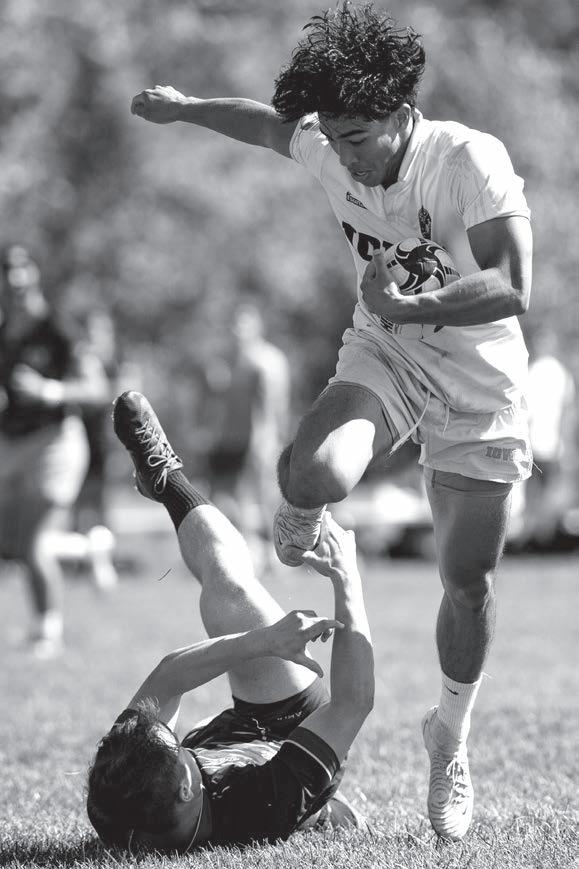
“I think there are a lot of misconceptions about the dangers of rugby, and people think that it’s ‘football without pads,’” Dailey said. “It really couldn’t be further from the truth. Rugby is a very structured game, and it’s one that, if people are willing to work hard and be resilient, can actually teach you a lot of life lessons.”
Junior Emily Schriever serves as the president of the Iowa Figure Skating Club, to which she has attributed similar themes of community and engagement. “I think having clubs, both athletic and non-athletic, is a great way to find a sense of community and find your own people,”
Schriever said. “Nine times out of 10, a lot of them can be lifelong friends that you have for a long time.”
Schriever also noted how being president of a club has allowed her to make new connections and explore unfamiliar settings.
What is your pre/post-game ritual?
The Daily Iowan: What is your favorite softball memory?
Braylen Conlon: My senior year of high school, my team made it to the state tournament as the No. 1 seed.
What is your favorite hobby when not playing softball?
I really like to bake cookies and cakes, stuff like that. I really like chocolate, so most of the time it’s chocolate chip cookies.
What or who got you into softball?
I am left-handed, so a lot of people were like, ‘Put her in softball and make her pitch.’ But I just fell in love with the sport of softball and the team atmosphere it has.
“One thing that I have gotten from being in the club over the years is being able to learn to communicate with others and get outside my comfort zone and talk to people,” Schriever said. “I’m kind of an introvert, but being in a club has forced me outside of my comfort zone to get to talk to people and get to know people in my club setting.”
I like to make TikToks with my friends, do my hair, and have a fun drink, that kind of stuff.
Favorite music genre, and why?
I would probably say country. Country gives me that summer vibe, and I love summer.
What made you choose Iowa?
Growing up like 30 minutes away and right down the road, I grew up in Iowa, going to Carver and Kinnick. Being here means so much to my family and me to wear Iowa across my chest, and I just love everything Iowa has to offer as a homegrown Hawkeye.
Favorite subject in school, and why?
I really like math, I just think it’s so satisfying to write the equation out and solve
it and get a single answer. I just love that. If not softball, what sport would you play, and why?
I stopped playing soccer when I was really young. It just interfered with my other sports, so I think maybe that.
Favorite holiday, and why?
Fourth of July. You get to eat, hang out with your friends, and get to watch fireworks. There is nothing better than that during the summer.
Biggest differences between high school and college softball?
Right now, it’s the strike zone, like, trying not to throw down the middle and more on the corners and varying it. Also, a lot of girls are so disciplined and even with a good pitch won’t swing, which is so frustrating.
Sports reporters Chris Meglio and Jackson Miller make arguments for Jeremy Hecklinski and Hank Brown, respectively.

Iowa football fans know head coach Kirk Ferentz very well, and they also know that Ferentz favors experience in many of his decisions. Hank Brown has that.
While Jeremy Hecklinski might have the flashiness and aggressive play style, Brown has a tad more experience, not only in college football but in offensive coordinator
Tim Lester’s system. Brown committed to the Hawkeyes on Dec. 13, 2024, and joined the team in preparation for the Music City Bowl. Hecklinski committed to Iowa on April 23, 2025, giving Brown four months longer in the Hawkeyes’ locker room.
Both Brown and Hecklinski appeared in games for Iowa last
season, with Hecklinski surpassing Brown on the depth chart during the season. Brown saw action in three games, where he went a combined 11-for-21 for 107 yards with one touchdown and one interception. Brown also scored a rushing touchdown against Albany in week one.
Hecklinski appeared in two games and attempted just two passes in 2025, and scored a rushing touchdown against Minnesota. Even though both quarterbacks didn’t see much action with the Hawkeyes last year, Brown still has much more experience than Hecklinski. Before transferring to Iowa, Brown played two seasons at Auburn. In 2024, Brown appeared in four games and started two for the Tigers. The Nashville, Tennessee, native went 27-for-43 in his four appearances and threw for 403 yards and six touchdowns.
Brown’s experience in the SEC and with ester’s offense at Iowa gives him the edge over Hecklinski for the starting quarterback spot for the Hawkeyes in 2026.


There should be no surprise if Jeremy Hecklinski is the starter next season. The sophomore quarterback did have limited snaps, yes, but he did pass up Hank Brown on the depth chart for a reason. One of his very few plays last season proved exactly why he should be the Hawkeyes’ guy. With a commanding 34-3 lead over Minnesota on Oct. 25, Hecklinski, who subbed in for starter Mark Gronowski, took the snap at the 11-yard line and effortlessly ran into the end zone for his lone touchdown on the season. It was a subtle play, but he displayed his athletic ability
to scramble. Hawkeye fans can think back a few years ago to the days of Deacon Hill and Cade McNamara, when there was no playmaking outside the pocket. That’s why fans loved Gronowski so much. Mind you, Gronowski is a bigger quarterback than 5-foot11, 188-pound Hecklinski. Brown is also notably bigger at 6-foot-4, 215-pound. However, Brown’s three rushes for negative three yards last season prove he isn’t nearly the scrambler Hecklinski is. While Hecklinski also did not see much playing time at his previous school Wake Forest, he was a well-decorated quarterback in high school just a few years ago, being the N0. 25 quarterback in the country in his recruit class, according to 247Sports.
The pair is splitting reps with the first team and the second team from spring practice until sometime during fall camp. That’s three to four months for one of them to outplay the other.
The centerpiece of that win was Maddux Frese, a junior who is in his first year at Iowa after spending the past two years anchoring the pitching staff at Southeastern ommunity ollege. Frese tossed seven innings of one-run ball with six strikeouts to propel the Hawkeyes to a victory.
The opportunity to come to Iowa was not only a chance to jump up to the DI level, but an opportunity to follow in his father’s footsteps. Frese’s father played baseball at the UI and was drafted by the ubs, where he made it all the way to Triple-A. Wulf is in his second year at Iowa and has excelled since making the transition from Southeastern. Wulf has continued his excellence this year with a . average and 5 hits, which are both second-most on the team. Southeastern gave Wulf an avenue to prove himself after not joining the Hawkeyes out of high school.
“I went to junior college and just grinded every day with hopes I would end up here someday,” Wulf said.
The grind of junior college baseball not only gives the players a chance to improve but also a new dose of perspective on the game of baseball that helps prepare them for the DI level.
“It taught me the emphasis of being myself and the best version of myself every day, and knowing that no one game is more important than each one,” Wulf said.
The jump up from the junior college level to the DI level is large, but the experience the players get at the junior colleges sets them up well. The system and culture Heller has put in place have made it seamless for players coming in.
“It was a great experience, and I wish my team was there with me, and that is definitely a goal for next year,” Tran said.
Despite being the only representative for the Hawkeyes at the national championship, Tran kept her mind locked on the gymnastics part that she had been doing all season long. Though Tran did have to wait till the very last rotation and performance, as she was partnered with the Minnesota team on the bars event.
ery similar to her egional performance, Tran swung, flew, and landed with almost no imperfections, resulting in a . 5 , just missing the firstplace award, which was
“They don’t have as hard an adjustment as you would think,” Heller said. “The academics and how the system is set up at a bigger school is really the thing they have to get used to the most, but most of them adapt well.”
The pipeline from junior colleges to Iowa has continued to stay strong during the transfer portal era. The ability to get players from other DI schools has added a new layer to constructing a roster.
Many teams may bypass junior college athletes now, but Heller and the Hawkeyes are not one of them. While Iowa is now adding transfers from all levels, it hasn’t affected the number of junior college players on the roster.
Many uni ue cases exist where a player has experience at a junior college and a DI university. raduate transfer ogan unde is now at his fourth school, after spending time at Iowa Western ommunity ollege, Kirkwood ommunity ollege, and FIU.
The Iowa baseball team is forged by players from all levels. The junior college pipeline created by Heller and his staff has no signs of slowing down.
Key contributors arrive each year from a junior college, and this year is no different. Wulf and isley have continued the standard of elite junior college transfers that was created years before them.
As the college baseball landscape continues to change, Heller has only reinforced his belief in recruiting junior college players.
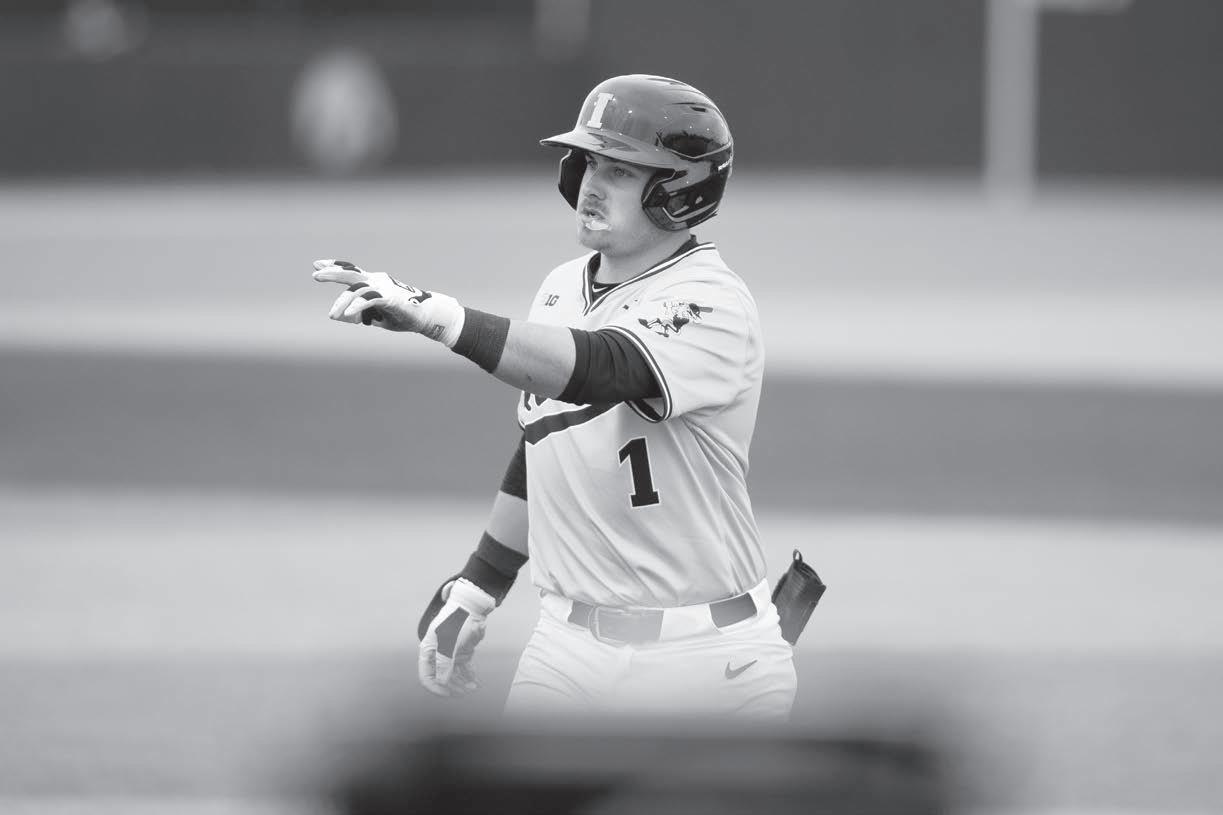
“Ultimately, it is where we can find the best bit from a cultural standpoint, a makeup standpoint, and also fill the need of the position that we’re lacking,” Heller said.
“It felt so amazing. They were so nice to me and supported me very similarly to how my own teammates would, with giving me a pep talk before and even setting up my bars for me,” Tran said.
ut Tran was not alone her fellow Gymhawks came together in Iowa ity, watching their fellow ymhawk perform on the national stage as a representative of all of them. Seeing Tran compete on the national level by herself had an inspirational impact on her fellow ymhawks, both new and veteran.
“We were cheering at the T when she was performing and knew she was going to do just as well as she did,” sophmore Sydney Turner said. “She showed us that with hard work and dedication, we
the next generation of ymhawks already in the program and still sitting in the stands.
“She is such a great example to our freshmen because she stays humble, doesn’t get too high or too low,” head coach en lewellyn said.
“She genuinely loves gymnastics, and she is a great representative for our fans, young girls, and future gymnasts who look up to her.”
Even though Tran has had so much success this early in her career, she still hopes to improve not just on bars but in her other events. She is even taking the time this offseason to better her skills competing on the world elite level with Team anada and moving to next year with high hopes and a humble perspective on her career.
serious. Under the guidance of a private coach, ohnson developed from what he called “an OK thrower” into a Division I athlete, eventually beginning his collegiate career at Eastern Michigan University before transferring to Iowa his sophomore year.
At Iowa, ohnson found more than just a place to continue his career. He found an environment that helped shape the way he approached the sport.
In a program he describes as a “family” rather than a business, the pressure to perform was replaced with something else.
“A lot of big DI programs, it’s a business,” ohnson said. “ ou do good, you’re praised. ou do bad, you’re cut. ut here at Iowa, we know
strength alone. As his career progressed, the difference between being good and being elite became less about physical ability and more about what was happening internally.
“At this point, it’s basically all mental,” ohnson said. “Obviously being strong is helpful, but once you get to this level, the difference is mental.”
For ohnson, that mental shift has been rooted in his faith. After struggling early in his career with injury and setbacks, he began to fi nd consistency not in results, but in something more constant.
“In high school, I didn’t have a relationship with esus, and I tried to do everything myself,” ohnson said. “As I got to college, I started to trust him more, but I only would trust him in the good times. oing
ranks and established himself as one of the top throwers in the country, his focus has remained largely unchanged.
“I’m here just to compete against myself,” he said. “ ust to do the best I can and represent Iowa and represent od in the best light I can.”
Outside of the ring, ohnson’s life looks a little different than many might expect. A former upright bass player who once considered pursuing music, he now spends time baking recipes passed down from his grandma, keeping him connected to home and close with family.
Still, his goals remain as ambitious as any in the country. ohnson has his eyes set to win national titles, set world records, and compete in the Olympics for gold. Additionally, he has been named to the owerman Award Watch ist. The award, given annually to the best collegiate male and female athlete in track and field for the last 1 years, has never been won by a thrower. “There’s always got to be a first,” ohnson said.
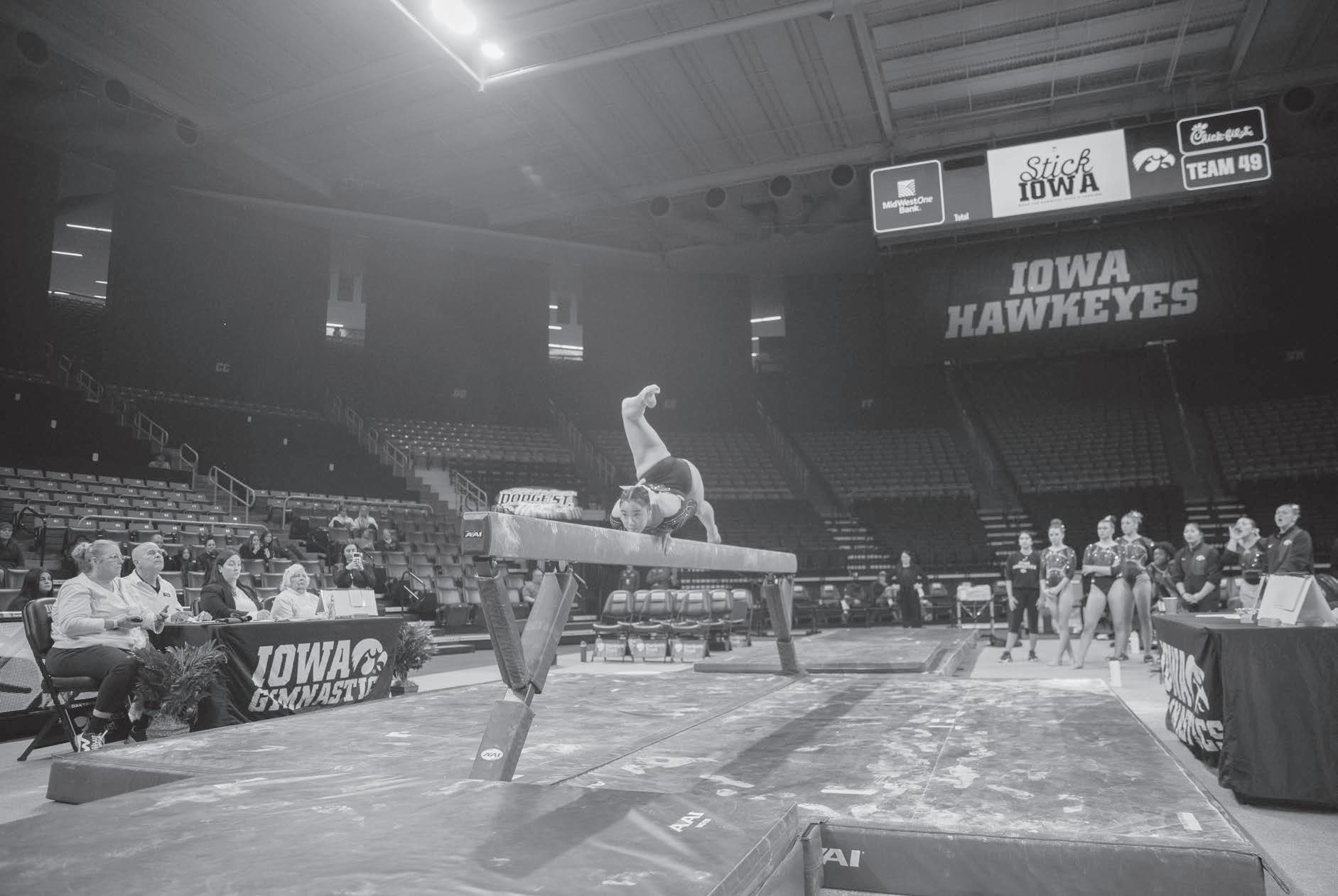





The Iowa field hockey team hosted the Northwestern Wildcats for an exhibition match on April 25. This is head coach Lisa Celluci’s 13th season after ending last season in the No. 9 position.


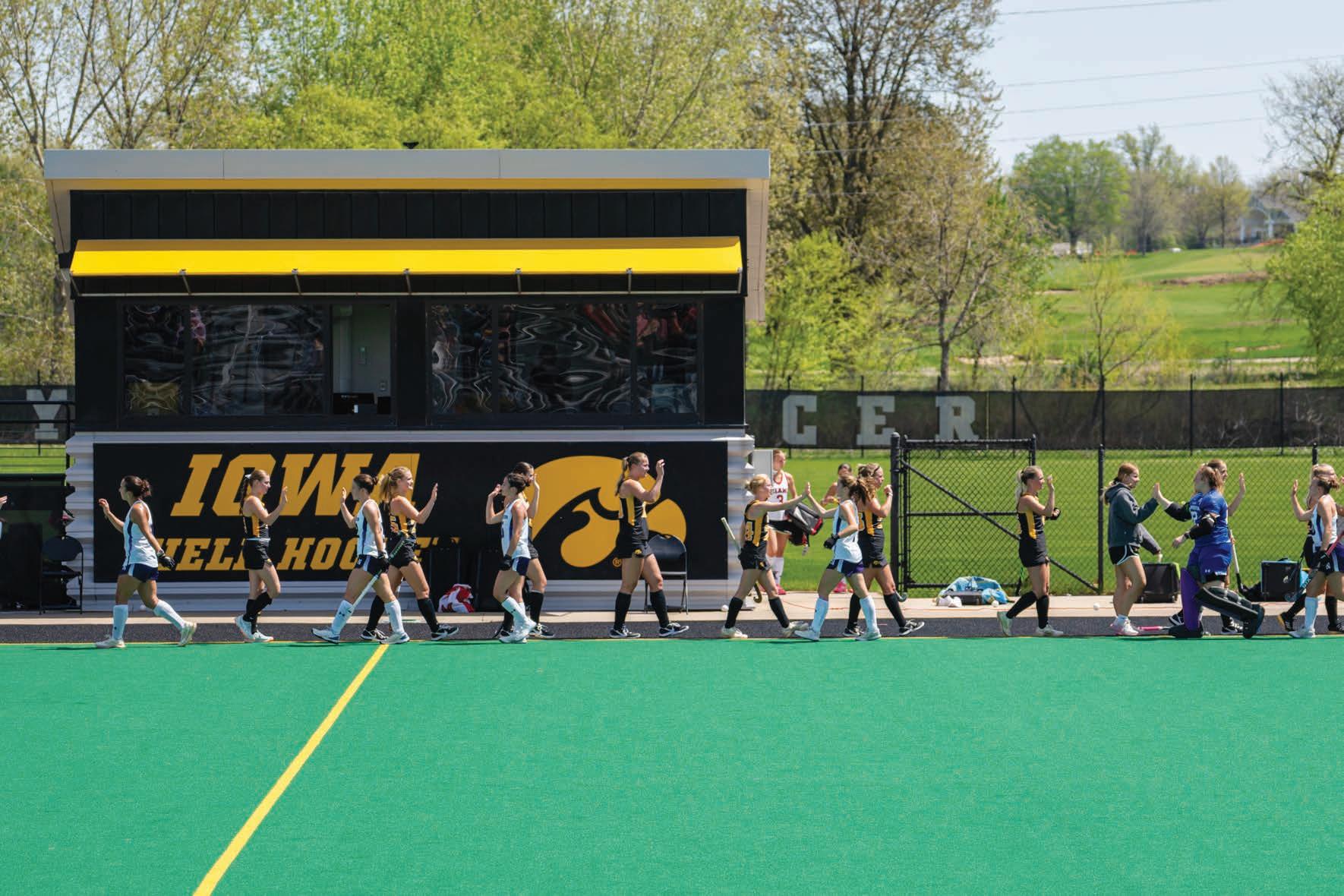

































Skaters express their creativity on the roads and at the local Iowa City Skatepark.

Skaters take to their boards to travel around the city and express their creativity on the roads and at the local Iowa City Skatepark.
skateboarding isn’t just on social media but in the markets as well.
While walking through Iowa ity or the University of Iowa campus, the distinct noise of rubber wheels approaching the uneven concrete pathways is not an unusual sound. From getting around town faster or simply just showing off and practicing some tricks skateboarders dominate the sidewalks and skateparks whenever the sun is out.
For skaters who prefer a skatepark setting, local boarders gravitate to the Iowa ity Skatepark in Terrell Mill Park on . Dubu ue Street, opposite Mayflower esidence Hall, where they can drop into deep bowls and grind across metal railings. With a new million-dollar addition to the park just north of the current set-up, built in the shadows of the eckwith owhouse, local boarders are amped up at the prospect of more space, tracks, and rails to increase trick combinations and accessibility for skaters of all skill sets.
This decision comes after a recent surge in skating popularity, primarily due to the rise of skate culture on social media and the inclusion of skateboarding in the summer Olympic ames, which transformed the primarily youth-led counterculture into a globally recognized sport. Additionally, the United States Skateboard Market is projected to reach $ 1. billion by , with a . percent compound annual growth rate, proving the popularity of
With a $ 5 , grant from the Federal and and Water onservation Fund, the $1.5 million renovation is planned to conclude in ovember after workers began construction in April . Despite the heaping mountains of dirt piled up around the area, the skatepark will remain open for public use throughout the entire renovation duration.
The Iowa ity Skatepark is open from dawn to dusk and already features several bowls, grinding rails, walls, and acceleration bumps for people to practice tricks on. eing near the park often comes with the impactful sound of rubber hitting cement and excited cheers from onlookers whenever an impressive trick has been completed.
The skatepark also features two picnic tables, allowing people to hang out in the space even if they’re not skating. As the closest skatepark to the UI campus, the place is fre uently crowded with people who utilize it for a variety of reasons.
“Skating is a thing that anyone can get into. I’ve met people of all ages, and I meet people in different majors,” Kyann Miller, first-year UI student and skateboarder who fre uents the Iowa ity Skatepark, said. “I’ve made a couple of good single-day friends, and I’d say the community is very welcoming.”

Even with large crowds of people at the skatepark, Miller said that the people she’s
View plant patents and borrow tools of
“Trading Faces” is an upcoming science fiction novel in which college students swap lives with billionaires.
This is an installment in a multipart series.
Tucked inside the University of Iowa Seamans enter, the home of the ollege of Engineering, is the ichtenberger Engineering ibrary, a two-floor library with a long history. Students can be found studying for classes, checking out tools and textbooks, putting together a puzzle, or playing chess.
Kari Kozak, director of the engineering and science library, said the library was established 1 years ago and was originally located on the Pentacrest until 1 1. She said it has resided in the Seamans enter since 1 and was named after donors in 1.
“It was established because they needed their resources for specifics, especially revolving around standards, but accessing different data and materials and just helping them with their research,” she said.
Prior to being an engineering-specific library, Kozak said the library served as a railway and water resource. She added that since the founding of the research center IIH Hydroscience and Engineering around 1 years ago, the library has assisted with finding data and resources.
“They used to do a thing called Studies in Engineering,’ which are resources that are still actually re uested to this day, on flood research and stuff that they have done on this campus,” Kozak said.
Kozak, who has been the director of the library for 1 years, discussed a resource she established for students in 1 the tool library. ocated on the back wall behind the circulation desk are long shelves with boxes of tools. Kozak said it contains everything from screwdrivers to her favorite tool, the thermal camera. lass textbooks sit on shelves to the right of the tool library.
When she established the tool library in 1 , it had only 5 entries. ow, it has about , most of them ac uired
through donations. After receiving an email from a professor whose students had been borrowing tools from the lab and not returning them, Kozak devised the idea.
“The best thing about the libraries is that we can put a barcode on anything, and we have the entire checkout system that we can just use. They’re all in boxes with barcodes, so that we can actually just check out the box and you can have the tool and e uipment,” she said. “It’s a way of trying to help break down that barrier of costs because college is expensive.”
ext to the tool library is the reative Space, a colorful room with D printers, ircuit machines, and dry-erase boards. The room is color coordinated in green, grey, blue, and orange from the printed gears on the walls to the standing dry-erase boards. Kozak said the library will hold workshops in this room and invite other student organizations to teach classes.
Kozak said the library is considered a designated patent and trademark resource center by the U.S. pPatent and Trademark Office, providing students with resources to learn about the patenting process.
Across from the desk is an augmented reality sandbox built in 1 or 1 .
iewers can hold their hands above a patch of sand, and the outline of water will form. Once they remove their hands, the projection of water floods the sand.
ext to the circulation desk is a row of plant patents, as Iowa is one of the largest corn plant producers in the U.S. plant patents stopped being physically printed a couple of years ago, Kozak said, but the library owns all of them.
At the back of the room is an exhibit case set up in honor of the chemical and bioengineering department’s 1year anniversary, with old photos and e uipment. That exhibit case has two accompanying displays outside the library. The stairs next to that exhibit case lead down to the library’s basement,
Having the opportunity to switch lives with a billionaire, gaining access to infinite pools of money in seconds, raises an undeniable moral uestion With the newfound riches, would a person bask in the glimmering golden glory of wealth or give back to the less-fortunate community they were once a part of “Trading Faces,” an upcoming sciencefiction novel by M. arroll, poses this exact uestion when a group of misfit physics students bands together to trade bodies with wealthy billionaires. The team’s goal is to distribute the money to an array of charities, hoping to make a difference in the world. Each character has their own troubling backstory and reason for sacrificing their lives for the benefit of others, and the cast has to tackle challenges arising from their experiment. The concept of “Trading Faces” drew me in from the very beginning. The idea that someone could, what the novel describes as arbon Transfer, into another person’s body was an interesting premise I hadn’t heard of before and was a very scientific approach to the usually somewhat mysterious body-swap trope.
Additionally, the dynamic arrangement of characters each had distinct personalities and secrets that kept me eagerly awaiting reveals. One of my favorite duos of characters was Serin and Skye, the former being a prospective physics student and the latter a movie star turned drug addict. I felt their storylines, both apart and together, were some of the most fleshed out of all the characters, and I really enjoyed it whenever the novel was being told from either of their perspectives.
I also particularly enjoyed the backstory of Megan, a former foster kid whose perspective opens the story. I felt that Megan’s character had great depth in her backstory, which, unfortunately, was a uality that some of the other characters were lacking. Speaking of perspectives, “Trading Faces” jumps between the eight characters’ perspectives substantially, without much indication of when it’ll happen. Sometimes a character would have ten chapters dedicated to their journey in a row, other times only four or five. While I did like hearing from each of the characters, I would find myself hoping to spend more time with one character rather than another.
Also, the entire book is structured in a very nonlinear way, which was, unfortunately, both interesting and confusing. The timeline

Arts reporter Hailey Sha er stands behind in-person shopping, while arts reporter Madisyn Hunt defends online shopping.

Iced coffee and shopping bags in hand. Best friend walking beside you. Meandering between stores with no definite destination. ou are happy, you are at peace, you are excited.
There are very few things that top a good in-person shopping day.
Let’s talk malls. The undeniable thrill of a good mall experience is exhilarating it sounds vapid and materialistic, but hang with me.
When you can jump between physical clothing stores, the ability to try on clothes trumps almost any perk online shopping offers. It offers a uality check, the opportunity to find your perfect fit, and gives you a clear, unaltered vision of whether an article of clothing really speaks to you. The excitement of pulling on a flattering shirt or perfect pair
of jeans in a fitting room is an incredibly satisfying, rewarding feeling that only the in-person aspect has to offer.
Plus, let’s face it. I am no exception to our society that freaking adores instant gratification. Walking out of a store like Hollister or Aerie with a bag full of new clothes is pretty awesome.

There’s no receiving the wrong order, color, or item by mistake. o anxiety that comes with living in an apartment, where packages are left by the door, and praying the neighboring units aren’t clothing thieves.
And there is no ripping open your long-awaited package, only to find that what you ordered doesn’t fit, and now you have to go through the return process.
Most importantly, there is an impact made in terms of waste reduction. Online shopping brings shipping boxes, plastic packaging, and delivery emissions along with it.
I implore you all to go back to your true shopping roots — grab a friend or two, swing by a restaurant or coffee shop on the way, and go tear up a mall. ou’ll find yourself in a much more rewarding experience as a result.
I adore thrifting. It makes me feel better knowing I can give all these clothes I buy a second home. ut as a medium-sized person, the clothes at thrift stores don’t often fit my body the way they would for someone slimmer. This is unfortunate, since the clothes that scream my name are the ones labeled “XS.” Stores like Urban Outfitters might have clothes that match my taste, but let’s be honest, they’re too expensive for something that is 100 percent polyester. So for me, Depop is my best friend.
I’ll give you my most recent example: I was in search of a deer-patterned jacket for the spring, the kind of pattern that can only be found dappled on a fawn’s backside. But the cheapest in-person options were those kinds of 100 percent polyester jackets from Hollister.
And so after sifting through $100 resells on my number one site, I finally found a $ 5 never worn jacket. She is gorgeous and able to be safe and sound in my closet, rather than a landfill somewhere across the ocean. I am not exempt from buying polyester firsthand. It’s in everything everyone has bought some before. But I would personally rather give a pretty plastic piece another home than just add more into the ether of products. This is exactly what resell shops like Depop encourage. With other people my age doing just that, I have found $ 1 black tie dresses, $ lightly used Steve Madden boots, and nicely priced XXL Southpole — which is amazing for oversized K grunge. ut forget secondhand, online shopping in general can be beneficial. One of the best places to find one-of-a-kind pieces is online. It makes sense for shops like acemade, since having multiple stores over the globe would be expensive and encourage a decline in uality for faster outcomes. So whether it be second or firsthand, don’t disregard the usefulness of online shopping. ust don’t get carried away, or else having the world of clothes at your fingertips will end up with the world of clothes at your front door.
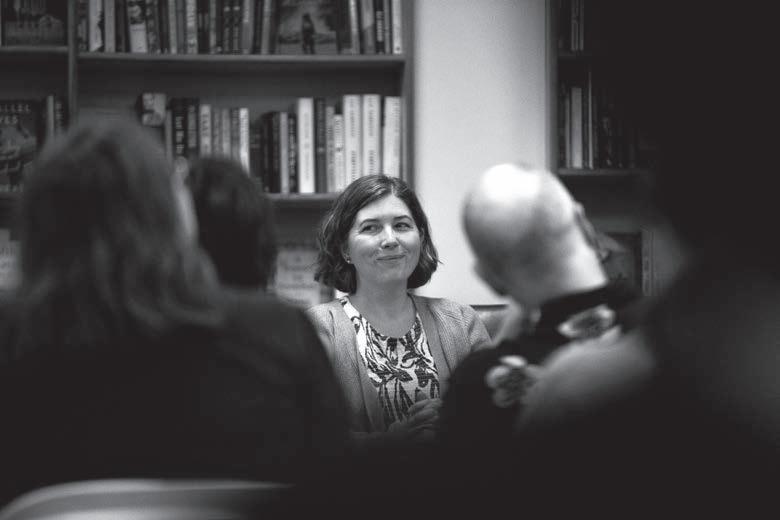
Rebecca Lehmann, author of “The Beheading Game: A Novel,” is also an award-winning essayist and poet. She holds an MFA from the Iowa Writers’ Workshop. She read her newest story, “The Beheading Game: A Novel,” at Prairie Lights Bookstore on April 22.
The Daily Iowan: What inspired you to write “The Beheading Game,” and why did you decide to write historical fiction instead of poetry?
Lehmann: I really wanted to retell the story of Anne Boleyn and show her in a more complex light because she’s often given a pretty two-dimensional depiction as a homewrecker who breaks up Henry III’s fi rst marriage, and gets what she deserves when she’s beheaded. In reality, she’s a very intelligent woman who spoke multiple languages, was a religious reformer, and, in fact, most scholars think she was falsely accused of the charges that resulted in her execution.

I’ve thought about the different ways to retell her story and ultimately decided I wanted to keep the beheading in the story because I think it’s what really resonates with people looking at Anne Boleyn and that she’s this great example of a very powerful woman through history. So I thought, what if she could wake up after her execution and come back to life? There’s a tradition of these kinds of head carrier stories, the Headless Horseman, and several saint stories where they continue living after being beheaded, and I wondered, why can’t Anne oleyn do that?
What do you feel is so special about Anne Boleyn and her death, and in the case of “The Beheading Game,” her return to life?
I think she’s an example of a woman who was really ahead of her time and didn’t conform to gender stereotypes for women or gender expectations at the time, when women were submissive, uiet, obedient, and basically the property of their husbands. They were to do as they were told and keep their mouths shut — in the case of ueens, produce male heirs.
She, instead, is this woman who is really

outspoken with a lot of big political ideas who wants to help usher the Renaissance into England.
Since this is historical fiction, do you believe as an author that you’re allowed to take creative liberties with history?
It is historical, but the keyword is fiction, and different people who write historical fiction can go in different directions. There are people who try to be really true to how things happen, and just dramatize the characters, and those who will take liberties. Obviously, with this book, it is taking a pretty big, imaginative leap.
What if Anne Boleyn came back from the dead, which kind of rests on the assumption of what if people could come
back from the dead, which in real life, of course they can’t. So in that way, it’s a book that’s taking a lot of liberties. I did try hard to make the world of the book as accurate and as historically true as I could possibly make, both in terms of the backstory for Anne and her relationship to the Tudor dynasty, which is a complicated family history. I also wanted to get details of the everyday life, like what would it have smelled like or looked like? I wanted to understand what the common people did, and how much money did somebody make in a day when they were a laborer? Things like this were the kinds of details I thought were important to get right, and I think every writer has to decide for themselves when they’re writing historical fiction, how far they’re willing to stray.



met have all been respectful and inviting. For beginners looking to get into the sport, a welcoming community such as the one at the Iowa City Skatepark can be a crucial part of gaining confidence, especially for women.
“A lot of people, especially girls I know, are scared to get into skating because it’s a very male-dominated field. Also, just with the stereotypes around skateboarders that they’re kind of rough people,” Miller said. “Well, they’re not. Everybody’s super chill, so anyone really can start skating.”
While a skatepark can sometimes be seen as an intimidating place for beginners, regardless of their gender, Miller expressed how people at the Iowa City Skatepark can be helpful and supportive to everyone, regardless of their experience level.
“We all know how hard it is to get on the board and start trying. Being able to show up and give what you can, we respect that,” Miller said. “Everybody's just trying to make sure, like, if you fall, you get back up good.”
In addition to fostering an environment for skaters to learn and practice their tricks, the Iowa City Skatepark is also a place for creativity to shine. One of the most notable examples of this is the graffiti that covers the skatepark, adding bright colors and bold designs to the otherwise dull, gray cement the park was built with.
“There’s a lot of art,” Miller said. “So many people add onto the graffiti, so it’s great to watch it evolve as more is added.”
Even for people who aren’t involved in the skating scene, the graffiti of the Iowa City Skatepark can be a welcoming sight, especially for Mayflower residents who see the skatepark regularly.
“I've never really looked at the graffiti up close, but whenever I drive by it, I love seeing the pops of color, especially in winter when everything else is so dull,” Evie Philip, first-year UI student and Mayflower resident, said.
Additionally, while the top of a board is often covered in black grip tape, the underside of a deck can be home to wildly personalized artworks and creative designs. From spirited sea-creatures of vibrant hues to bold graffiti lettering ready to make an impact, a skater’s board illustrates both their creativity and personality.
Outside of the graffiti and personalized boards, another art form emerges in the skating itself. With numerous tricks and skating styles, being on the board can open up a wave of inspiration for many skaters.
“I use skateboarding as an outlet for creativity,” Miller said. “The creativity part of skating is kind of like dancing. You get to go around in circles, doing tricks, and just doing whatever comes
dampening pads lining the walls to muffle the upstairs sounds. The basement contains shelves of even more books, ranging from topics such as LEGO, rockets, and weather, but also serves as the quiet study space in the library. Lit with a warm light, a tangible silence fills the air as students are bent over their study materials. Instead of designated study spaces, Kozak opted for study nooks with different types of chairs, along with television screens with different themes and lamps.
to you, and it’s like letting your body choose the movement.”
With countless tricks and combinations, learning new tricks is a foundational part of skateboarding for many skaters. However, each skateboard is different, and depending on which subcategory a skateboard fits into, it can quickly determine the style of tricks that can be accomplished on it.
The classic skateboard is a versatile piece of equipment best suited for both casual skating and performing tricks. These boards are typically between 28 and 32 inches long, making them flexible and easily maneuverable, and able to handle kickflips and ollies with ease.
While the classic skateboard is a common choice for many people, the longboard can also be a popular pick for more casual skaters. Featuring lengths anywhere from 32 to 44 inches, longboards have more stability than the classic skateboard but are less agile for performing tricks on.
“I’ve been longboarding for six years,” Alvis said. “I started with skateboarding, but I’m from a small town with bad sidewalks. You’re less likely to get thrown off a longboard from a small crack.”
Even though longboards are typically designed for casual cruising, tricks aren’t entirely out of the picture. For local longboarder and third-year UI student Jordan Brown, he’s determined to make the most out of his longboard.

“I decided I was going to ride my board around to class after I spent all this money on a board and helmet and stuff, but then I was like, let me learn how to stop,” Brown explained. “That brought me to YouTube stuff, and I was like, okay, there’s a whole world out here.”
Brown can often be seen practicing his tricks between Burge and Catlett Residence Halls, down T. Anne Cleary Walkway, downtown in front of the Ped Mall, and many more places across campus. Brown always has his music playing to accompany him as he skates, performing intricate dance moves on top of his board and shifting his weight around so that the board glides across the pavement in weaving arches, and is practicing to hopefully go into the professional scene after graduation.
“I want to go pro, that’s why I’m always out here training,” Brown said. “The pro scene is insane, there’s probably less than a thousand pros in the world. It’s still super niche in the U.S., and there’s maybe like twenty companies in it.”
Brown practices several days a week, with the goal of one day earning himself a sponsorship, an indication that he has made it into the professional scene. To gain traction for his longboard dancing, Brown promotes tricks, such as a pirouette, one of his favorites to perform, and training progress on his Instagram page.
“Everybody studies differently,” Kozak said. “I wanted to make sure that we have different types of study spaces.” Walking up the stairs, the noise difference between the two floors is noticeable. To the right of the stairs are two study pods. One of them, occupied at the time, has a stencil of a cat, a joke in honor of Schrödinger’s cat as the rooms are reminiscent of the box described in the equation.
“I want them to understand that this is a welcoming place for all,” she said. “Hopefully, they can find the resources and materials they need to help them in their study and their research.”
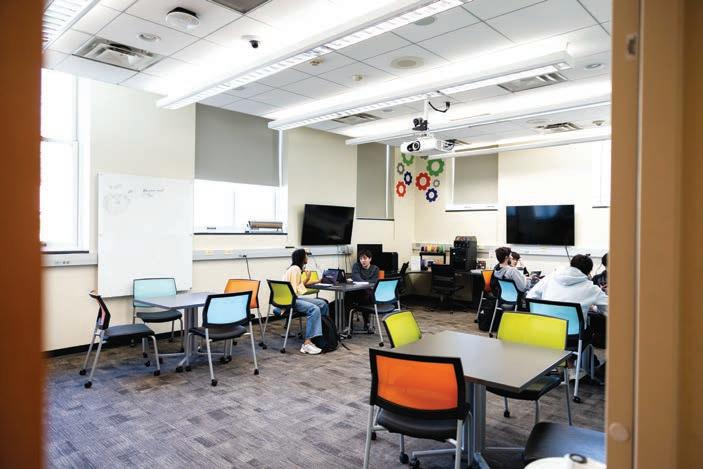

Even though the world of tricks is endless for the skating community, many casual skaters also break out their boards for convenience. With limited time between classes and long distances between buildings, skateboarding is both a quick and accessible way to get around the sprawling campus.
“I skate to class every day. I love it because it turns a 20-minute walk into a 9-minute skate,” Emma Barwin, local skateboarder and second-year UI student, said. “I’ve mostly had good experiences, and I’ve been seeing more people skating to class since the weather got warmer.”
As the weather warms and summer rolls in, traveling by skateboard has become more common on campus. However, with an influx of skaters and other people out on walks, issues can arise.
“Noise-canceling headphones can be annoying because people can’t hear when I’m saying ‘on your right’ or something. I imagine students who bike have this problem too, but unlike bikes, you can’t brake as easily on a skateboard; you have to drag your foot to stop,” Barwin said. “Thankfully, I’ve never had too bad a fall on campus, though.”
Even though bikes may have an easier time braking than skateboarders,
jumped around a lot between perspective shifts, which made it difficult to grasp when one character was supposed to be experiencing something compared to another character. I also felt that some of the information given to the reader appeared redundant due to this, with each character uncovering the same revelations as the last had.
While this structure made sense for “Trading Faces,” I do wish it could have been executed more efficiently. I would have liked to see some big plot twists and reveals, rather than the same spiel recited back several times, as there was ample space to play around with major plot twists in such
complications can still arise for bikers downtown and around campus.
Penelope Alvis, a UI second-year student, utilizes her electric bike as her main mode of transportation, in addition to her longboard.
“There are normally a lot of people on the sidewalks, so the bike lane is the only option in most areas,” Alvis said. “It gets really hard to get around near the Ped Mall because Ubers and DoorDashers park in the bike lane, and cars are still driving in the lanes next to the bike lane.”
With riding skateboards on Downtown Iowa City sidewalks prohibited, the bike lanes are the only option for skaters to ride on without having to pay a $15 fine. This decision comes as part of the “Walk Your Wheels” campaign, which forbids the usage of skateboards, bikes, scooters, and other wheeled modes of transportation on the sidewalks to prevent the likelihood of both rider and pedestrian injuries.
For skaters, this ban only increases the desire for more skating accommodations, such as the eagerly awaited Iowa City Skatepark renovation. With a devoted community throughout Iowa City, skateboarding is on a roll, and there’s no stopping the sport’s thriving culture on campus anytime soon.
a science-driven world capable of having characters switch bodies with another. As I neared the end of the novel, there were still questions I had about the storyline, and I’m hoping that they can be answered soon. “Trading Faces” is the first installment of “The Billionaire Switch” franchise, and even though I had some qualms about the structure and pacing of “Trading Faces,” I’m still interested enough in the storyline that I would easily read the next book in the series. I’m excited to see what Carroll has in store for the next “The Billionaire Switch” novel, and I hope it’ll contain more exciting action and deeper character development. For fans of science fiction and ensemble casts, I’d recommend keeping an eye out for “Trading Faces” when it hits bookstores in early November.