Ped Mall shooting shakes community
the suspect as of April 20.
The last shooting on the Ped Mall was nearly a decade ago,, which lead to the death of 22-year-old aleek Asham Douglas ones.
running and screaming. Police rushed to the scene within moments.
Nell Petersen was working a shift at The tuffed live early unday morning when she heard gunshots go off outside.
The second-year niversity of Iowa student said the sounds of gunshots was unmistaka le, followed y the sight of a crowd running through the Pedestrian Mall as the situation uickly escalated.
Those moments of confusion and fear uickly gave way to a larger emergency response.
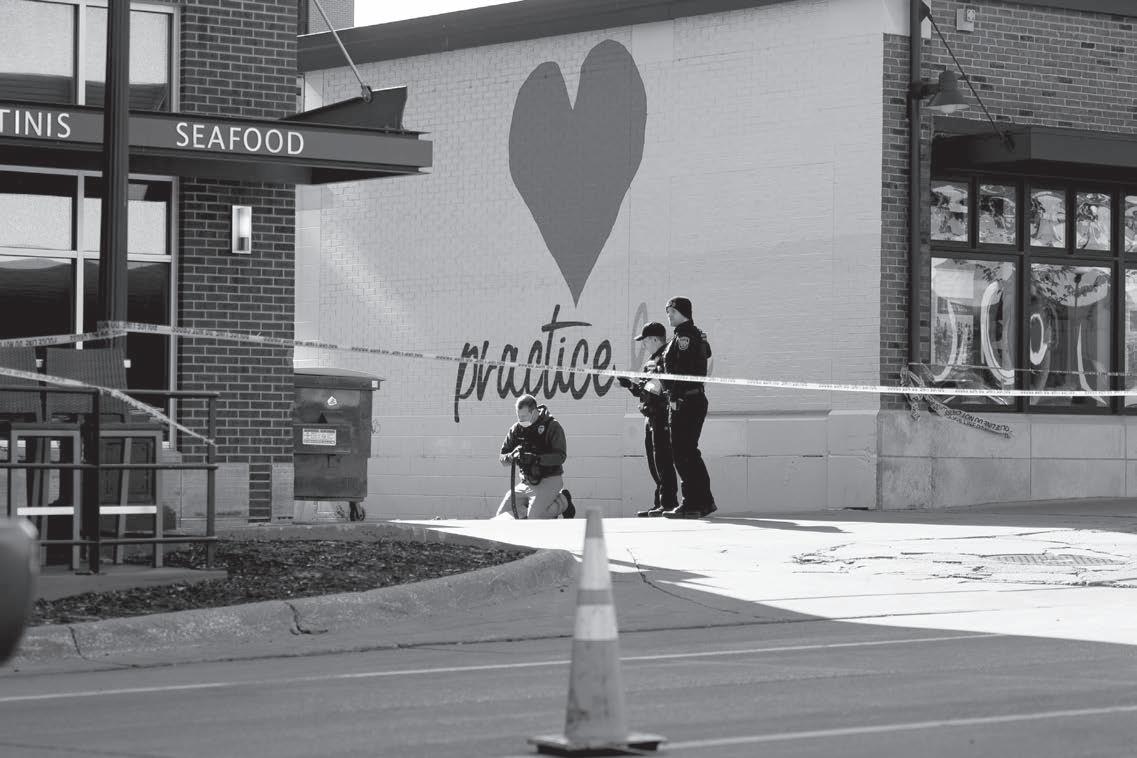
The shooting in downtown Iowa ity early April 1 left five people in ured, including three I students, after gunfire erupted during a large late-night fight in the Pedestrian Mall, according to reports from the Iowa ity Police Department.
As of April 20, two victims were released from the hospital with two in sta le condition and one in critical condition. I PD is still holding an investigation and have not caught
Petersen said she and her coworkers ran to the ack of the restaurant and took cover in the kitchen as the situation unfolded outside.
“It felt apocalyptic,” she said. “We didn t really know how to react or what to do ecause there have een gunshots in the Ped Mall efore, ut I don t think it s ever een something like this.”
ack Twait, a first-year I student, was walking in etween Pancheros Mexican rill and The nion ar rill when the shooting happened ust a out a lock away from the Pedestrian Mall.
As someone who has lived in Iowa ity his whole life, Twait said his first instinct was dis elief, uestioning whether the loud pops he heard were actually gunshots ecause, he said, that kind of violence feels out of place in the community. ncertainty uickly turned to alarm as people egan
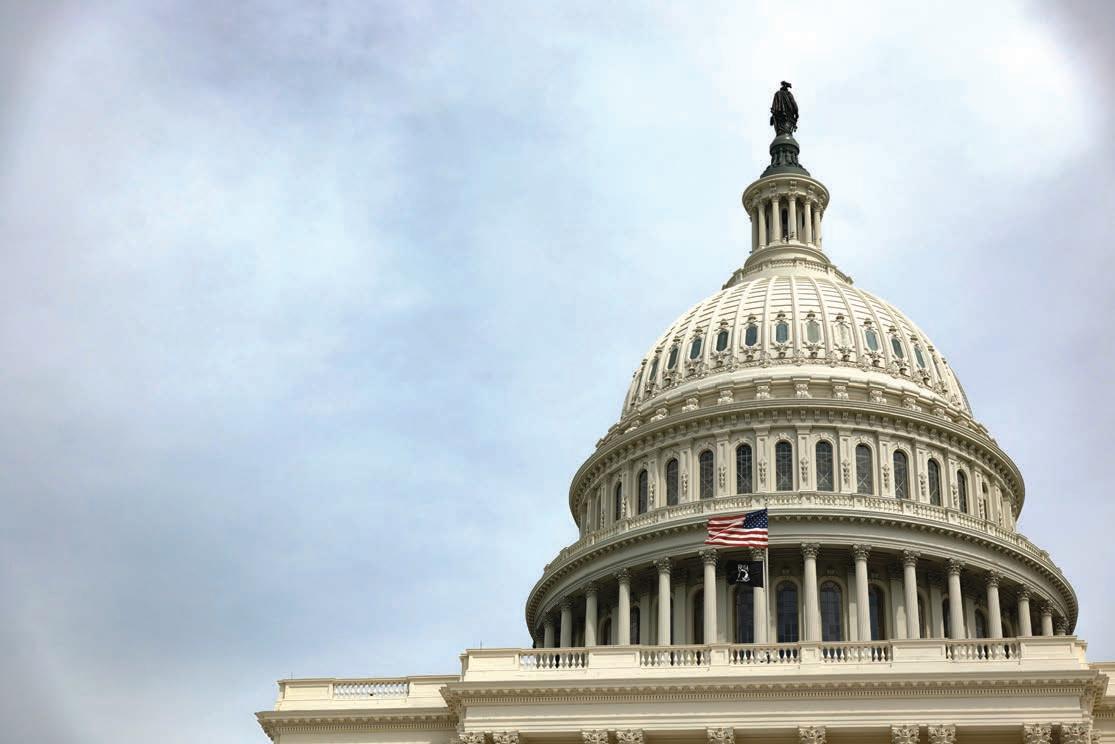
Iowa GOP calls for SAVE Act
“Iowa ity is such an amazing place with so much culture and so many things to do,” Twait said. “ ut when violence like this enters our community, it s really sad, and not something I want to think anyone wants.”
As everything was unfolding, Petersen said she was looking at posts on ik ak, a hyperlocal, anonymous social media app designed for college students to post, read, and comment on messages, and saw a lot of people spreading racist and hateful messages.
“ veryone should and together,” she said. “We don t need any politics and hate, we ust need people comforting other people.”
In a post on Instagram, the I lack tudent nion said the shooting underscored the need for community care among students.
50 years of UI music therapy
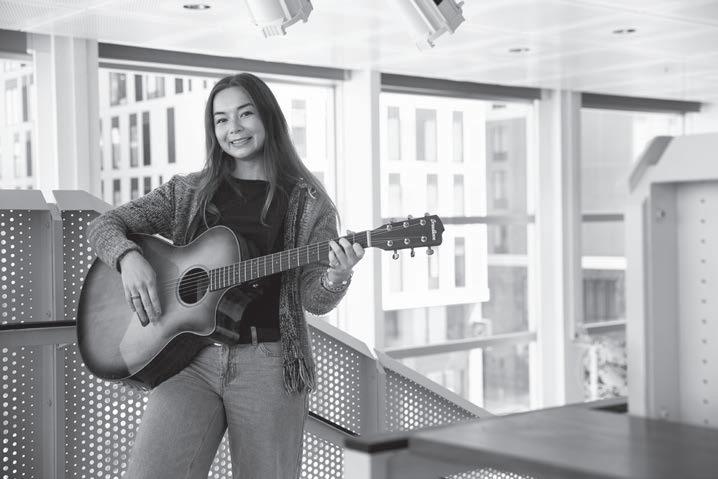
Jayda Hunstand is aiding teens with music therapy after her own spinal fusion surgery.
The niversity of Iowa s music therapy program turns 0 this year, and a graduate student is turning her own experience with spinal surgery into research that helps adolescents recovering from the same procedure.
The I s music therapy program conducts research on human responses to music, specifically evaluating its therapeutic applications for managing pain, regulating disruptive ehavior, and enhancing speech perception.
The program emphasizes that music therapy is a treatment different from simply listening to music it is facilitated live y a credentialed professional to achieve a patient s health goals.
ayda Hunstad, a graduate student in I s music therapy program and the lead researcher, said she underwent an extremely painful spinal fusion surgery in 201 .
“During my recovery, I was already a musician,” she said. “I listened to music within the hospital, kind of as an emotional outlet. ven during my recovery at home, I was using the piano as another emotional outlet.”
Hunstad has now egun developing music therapy videos to assist teens in their recovery from the same surgery, using techni ues such as slow-tempo music that matches a patient s heart rate to help guide them in pacing their reathing and calming their ody and mind.
Hunstad oined the I in fall 202 , inspired y a lecture y risten Nelson assistant professor of

“As Black students, we understand that these moments often carry an additional weight, and we must remain vigilant, connected, and committed to protecting our well-being and each other,” the post said.
The union hosted an event for individuals to reflect on the incident and find community on April 21 in the Afro-American Cultural Center from 7 to 8 p.m. in response to the shooting.
“In times of crisis, our greatest strength lies in our unity,” the post said. “We want to emphasize the importance of looking out for one another and prioritizing our collective safety.”
The UI Undergraduate Student Government and Graduate and Professional Student Government issued a joint statement on Instagram and said support is available for students who need it. The groups had support resources available in the Iowa Memorial nion from to p.m. on April 1 .
“We need to lean on each other during moments like this,” the statement said.
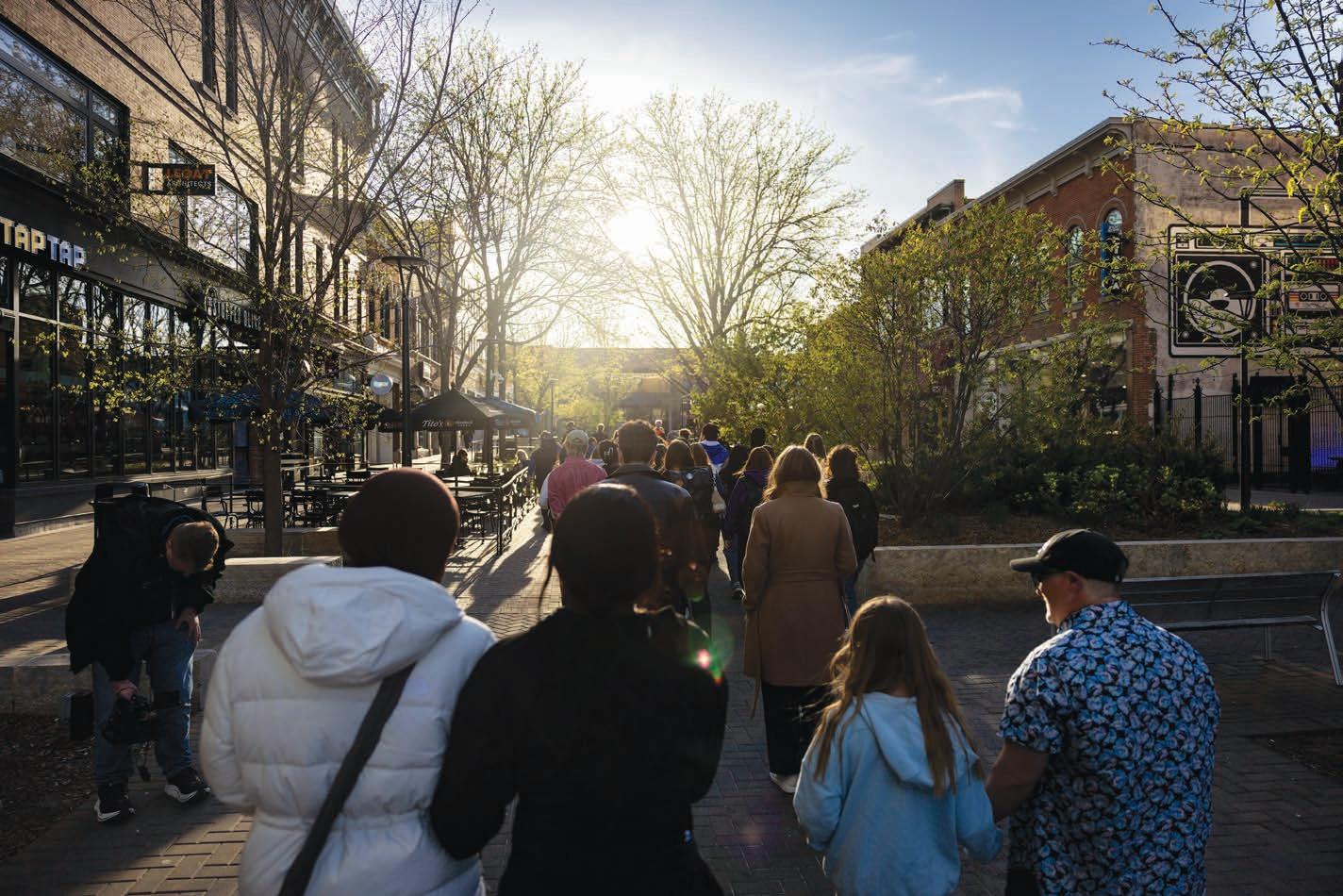
Soft evening light settled over downtown Iowa City as people gathered in Trinity Episcopal Church. The sound of a bell echoed through the street as around 100 community members marched toward the Pedestrian Mall near where the shooting occurred to hold a vigil on April 20 with many holding onto each other and crying as they grieved.
Rev. Nora Boerner from Trinity Episcopal Church helped lead attendees in prayer, song, and support as they grieved those who were impacted by the shooting.
“We'll pray together and be together in community, and also reclaim the space of the Ped Mall together so that it can be marked by community and care,” she said during a speech in the church.
In an interview with The Daily Iowan, Boerner said she wanted herself and the church to be present for the community and those affected following the incident.
“I'm here to support you, I'm here to be with you, to people who knew the victims and were just brokenhearted and don't know which way to turn,” she said. “Everywhere across that spectrum is why we have to hold one another.”
Jon Green, Johnson County Board of Supervisor chair of the board, attended the vigil. He said while he wasn’t surprised the shooting happened, he felt a range of emotions but emphasized the urgency it adds to addressing violence in society.
“We're just a deeply violent society, and there's a lot of things that we could do as a culture to begin to hopefully bring some of those tendencies down,” he said.
Iowa City City Councilor Shawn
music therapy at the UI and Hunstad’s faculty mentor — that focused on using music therapy to aid recovery from spinal fusion surgery.
“It was just a huge light bulb moment,” she said. “I was already implementing some of these things during my recovery.”
Nelson worked as a music therapist at the UI Stead Family Children’s Hospital for nearly 20 years, where she heard from nurses that teenagers were struggling through the painful procedure.
“ ometimes it s di cult for them to accept some of the psychosocial support that we put in place,” she said. “There was a lot of heavy reliance on medication and trying to get through each day. They felt that having this through music would provide a different avenue that might be more appealing.”
Harmsen also attended the vigil and said the shooting reinforced his belief that no community is immune to gun violence.
“There is no place that's safe from gun violence,” he said. “We've had gun violence in Iowa City before, but this felt like a unique incident.”
Harmsen said he has seen a lot of negative messages spread online about the shooting.
“Online space can be really ugly and really nasty,” he said. “Don't fall into that trap. Don't respond. There are people from all over the globe, all over the country, who are saying really out of pocket things about people here in Iowa City, and that's not us. That's not who we are.”
Local organizations, including Moms Demand Action, helped organize the vigil, working with clergy to help coordinate the gathering.
Temple Hiatt, local lead for Moms Demand Action for Gun Sense in America, a community of survivors who have een affected by gun violence and advocate for a gun-free environment, helped lead the crowd and spoke at the vigil.
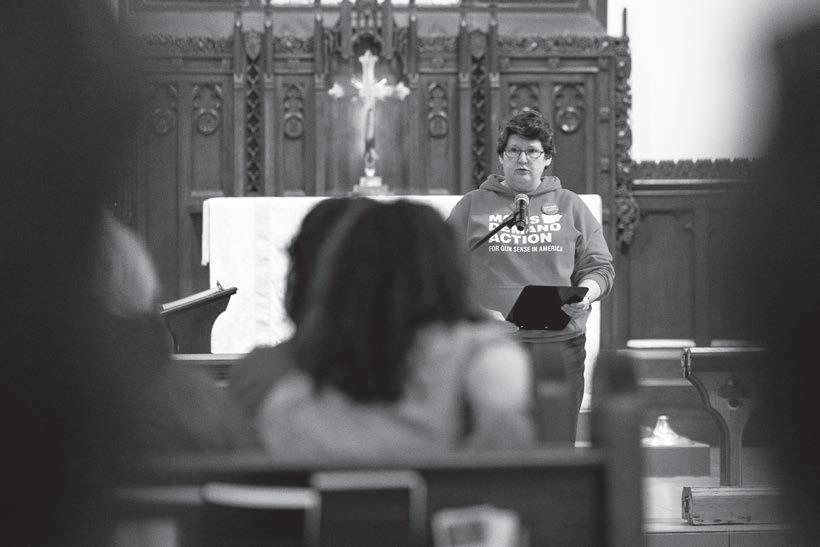
Hiatt said clergy from the Trinity Episcopal Church invited the organization to participate. She said she was processing heartbreak and sadness, and reflected on the broader emotional impact of the tragedy and the need for community change.
“I haven't really held space for many of those emotions,” she said. “I was feeling some of them today during the service, heartbreak and sadness, that this is the way America chooses to live, and we don't have to. We can make a change.”
Hiatt said Moms Demand Action is a resource people can use to find support, share their experiences, and connect with others impacted by gun violence.
“[I hope] survivors, those that were impacted by this event and their loved ones, understand that there are resources available for them,” she said. “There is a community that welcomes them to share their experience.”
The Iowa City Downtown District released a statement and said they are devastated by the incident and are thinking of those affected, including students, families, and employees.
“We know moments like this are deeply unsettling,” they said. “Downtown is a place where our community comes together, and when something like this happens, it affects us all.”
Veronica Tessler and Ryan Bruner, owners of Yotopia, which is located on the Pedestrian Mall, released a statement and said their priority is to maintain a secure, reliable business.
“This is our home, too, and we are committed to ensuring it is a safe space for those who live and visit here,” the statement said.
The Quarters Iowa City, an apartment complex located off
Hunstad said she wants her music therapy videos to help adolescents in the often neglected period of recovery, which can take six months to a year, rather than the three to five days of surgery when the patient has medical staff readily availa le.
Nelson said the videobased music therapy techniques provide a way for teenagers to fulfill their desire for autonomy, all while offering it through online video formats — a familiar method for teenagers accustomed to social media.
“They’re used to being in control of their bodies, and there's this period of dependence that they have after surgery,” she said. “The last thing you really want to do is rely on your parents for everything. Giving them things that they can have control over that are video-based is a very approachable option for teens.”
Abbey Dvorak, the head of the music therapy
Highway 6, sent out a statement to their residents acknowledging the downtown shooting and encouraging them to prioritize their well-being, check in with others, and use available university and crisis support resources while the incident remains under investigation.
“While this incident did not occur at our community, we understand that it can still affect how you re feeling,” the statement said. “If you’re feeling anxious, distracted, or just not quite yourself today, that’s completely understandable.”
In a post on Facebook, Katy Brown, owner of Kitty Corner Social Club, said the store will continue to stand up against gun violence to ensure a safer community.
“We’re not going to pretend everything is fine today, ecause it isn’t,” she said in the post. “But we are here, our doors will be open, and we will keep showing up for the community that we love —
In the aftermath of the shooting, students and community members have been left processing fear, grief, and uncertainty. Local organizations and university groups are now emphasizing available resources aimed at providing support, connection, and care for those impacted.
Green said he hopes community members will take advantage of available support resources as they process the aftermath of the shooting.
“I hope that everybody, both in the university and the larger community, avails themselves of those resources,” he said. “That’s a good place to start, because everybody's circumstances are a little different.”
program and an associate professor in UI’s School of Music, said it is wonderful to see Hunstad’s research in action.
Dvorak said the program has undergone significant changes since its launch. The program has grown from one to five faculty mem ers and partnered with 0 clinical locations for students to practice music therapy.
Dvorak said the clinical practice sites prepare students to treat a growing and broad population of patients who would enefit from music therapy, helping those who suffer from neurological conditions, chronic illnesses, aging populations, developmental and intellectual disabilities, and trauma-related mental health needs.
“The program over the years has accomplished lasting, meaningful impact,” she said. “Our program has contributed to improving patient
quality of life by preparing clinicians who use music thoughtfully, ethically, and responsibly to support physical, psychological, and personal health.”
Dvorak said the program’s curriculum has expanded to place greater emphasis on evidencebased practice, integrating fields such as neuroscience and psychology, and cultivating curiosity and a desire for lifelong learning.
“Music is one of those complex stimuli that affect people in different ways,” she said. “It allows us to work with people in different settings, like medical, mental health, education, rehabilitation, community, and
private practice.”
Nelson said during her time at children’s hospital, she would form bonds with patients but wouldn’t see them again once they were discharged. Collaborating with Hunstad gives her a unique look into how a patient lives their life after surgery.
“It was really interesting to see someone who had been through the surgery have such a deep understanding of the purpose of it and the need for it,” she said. “As music therapists, we're using music and this therapeutic relationship to improve people's experiences. I love the way she's taking this into a different direction.”


without fear.”
significant enough to impact an election’s outcome.
Most Americans support requiring photo ID to vote in federal elections, although the legislation remains opposed by Democrats. An August 2025 Pew Research Center poll found that 83 percent of U.S. adults support “requiring all voters to show government-issued photo identification to vote.” This number is up from 77 percent support in a 2012 Pew Research Center poll.
The SAVE Act has passed the U.S. House of Representatives multiple times since 2024, receiving support from Iowa’s federal representatives, and was passed most recently in the House in February.
Iowa Republican U.S. Reps. Mariannette Miller-Meeks and Ashley Hinson voted in favor of the bill in two consecutive Congresses.
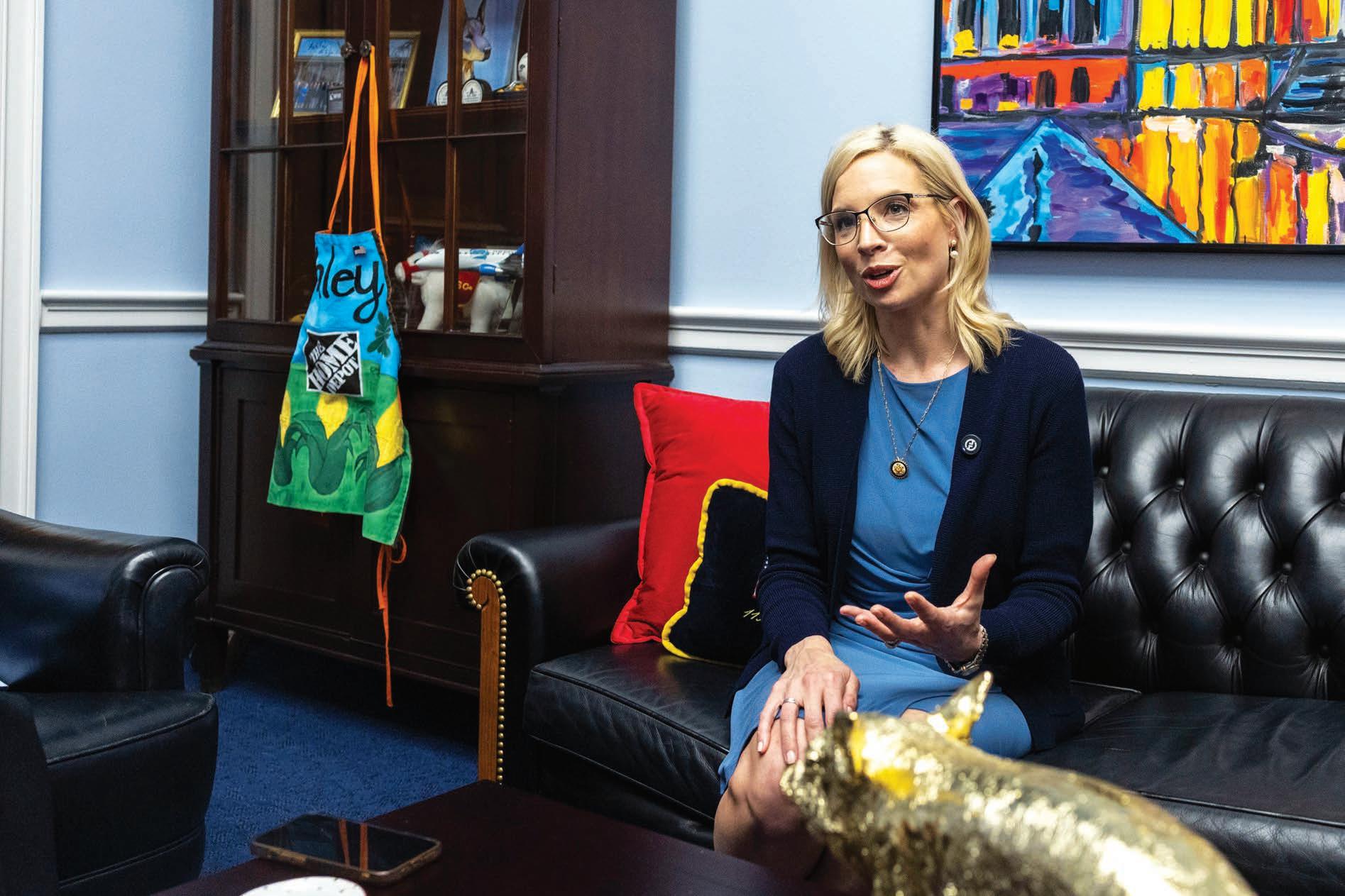
“I think it should be easy to vote and hard to cheat, and I think every voter should know that their vote matters,” Hinson said in an interview with The Daily Iowan.
Hinson pointed to election integrity as the reason for her continued support of the legislation.
“We’ve had some very close elections in the state of Iowa, so I think every person needs to know the integrity of their vote matters,” Hinson said. “That’s why I’ve supported the SAVE Act.” Hinson launched her bid for the U.S. Senate in September, following U.S. Sen. Joni Ernst, R-Iowa, announcing she will not seek reelection. The seat has attracted multiple candidates, including Republican former state senator Jim Carlin, Iowa Rep. osh Turek, D- ouncil luffs, Iowa en. Zach Wahls, D-Coralville, and Libertarian Thomas Laehn.
Primary polling compiled by The New York Times 2026 Poll Tracker shows Wahls as the Democratic frontrunner and Hinson as the GOP’s top pick. Primaries are set for June 2.
In the 2024 general election, Miller-Meeks won Iowa’s 1st Congressional District with 50.1 percent of the vote. Following a recount, Miller-Meeks secured her third term in the U.S. House by less than 800 votes.
In an email to the DI , Miller-Meeks said a high percentage of U.S. adults who support showing government-issued photo ID to vote, including 71 percent of self-identified Democrats, according to the Pew Research poll.
“We already show ID to drive, board an airplane, verify employment, open a bank account, or buy a beer,” Miller-Meeks said in an email to the DI . “Asking for proof of citizenship to participate in federal elections is common sense and essential to maintaining public trust.”
Miller-Meeks said Iowa has voter ID laws that work e ciently and voter turnout has increased after the law was implemented.
Iowa’s voter ID law was passed by the state legislature in 2017.
The law was implemented incrementally to allow poll workers to gain training and familiarity with the changes.
The law was partially in place for the 2018 midterm elections and fully in effect for the 2019 elections.
Iowa’s 2020 election broke an all-time turnout record for a general election, according to Secretary of State Paul Pate. Roughly 1.7 million Iowans cast a ballot in 2020, according to data from the Secretary of tate s o ce.
This turnout followed Pate sending every eligible voters information on how to request an absentee ballot.
In the 2024 general election, about 74 percent of registered voters cast a ballot, according to state data, which is roughly 1.67 million Iowans.
Thirty-six states, including Iowa, have voter ID laws, according to the National Conference of State Legislatures. Miller-Meeks said the SAVE Act will make showing voter ID the standard nationwide.
“If you’re already registered to vote, you don’t need to reregister,” Miller-Meeks said.
Johnson County political leaders worry the SAVE Act will disenfranchise voters and negatively impact voter turnout.
Vicki Aden, president of the League of Women Voters of Johnson County, said the SAVE Act, as it is written, will do more harm than good.
Aden said the legislation is written for a problem that does not exist, and the instances of noncitizen voting are minuscule.
Thirty-five of the a out 1. million allots counted in the 2024 general election were cast by non-U.S. citizens in Iowa, according to Pate. Iowa Attorney General renna ird s o ce charged six individuals with felony election misconduct, and so far, one case has ended in a guilty verdict.
“If you’re weighing people who say that noncitizens voting is impacting elections — it’s really not, that’s the claim,” Aden said. “My point would be not allowing people who are ualified to vote to register will impact the elections more because you’re going to disenfranchise many, many more people.”
Aden said the SAVE Act will disenfranchise women who have married and changed their last name since the last name on their ID will not match the last name on their irth certificate.
Women will have to show an alternative form of ID, such as a passport, Aden said, which has barriers due to a wait time and cost.
Aden said lawmakers assuming Iowans have the time and money to acquire the necessary documents to register to vote is a privileged response.
The league has received concern from Johnson County residents about whether the A Act will affect their voter registration as well as the burden of providing additional documentation. Aden said if the legislation passes, lawmakers are placing this burden on women.
“I’m not quite sure why they don’t understand that requiring a woman to get more documentation than her husband is inherently unfair,” she said.
Under the SAVE Act, voter registration drives, carried out by the League of Women Voters and other local political organizations, would no longer be legal.
Iowans would need to register to vote in person at the county auditor s o ce. There’s no funding to support the time and staff this would take, Aden said, and would be a burden to Johnson County’s election infrastructure.
Julie Persons, Johnson County county auditor, wrote in an email to the DI that if the bill passes, the Secretary of State would need to give counties direction on how Iowa will handle the process.
“At this time, we don’t know how the proposed legislation would impact election processes,” Persons wrote.
Removing the ability to register to vote outside of the auditor s o ce would disenfranchise rural voters, Aden said, who may live hours away from their county auditor. The SAVE Act will also negatively impact
working voters interested in registering to vote, as they might not be able to take time off work to go in person.
College students who likely didn’t bring their documents with them to school and older citizens whose licenses have expired will also face additional hurdles, Aden said.
Aden questioned how the U.S. draft is
fearmongering tactic to make Americans question the sanctity and security

Ted Cruz, R-Texas, in the Iowa and “Based on the fraud committed by Sena-
it,” he said.
Cranston said it is already illegal for noncitizens to vote, and to him, the SAVE Act sounds like it’s really about suppressing voters.
“Our elections have been really a pride of our country,” Cranston said. “The fact that we have in the past, have had elections and the transfer of power from one party to the next, where that has not been an issue until this last decade, with the wild swing that is taking place both in Washington and in Des Moines.”
Ernst said in an interview with the DI that she does not know if the SAVE Act will move this year, and lawmakers can continue to work on the legislation.
“The plan right now is to look for ways that we can begin funding opportunities for states so that if they want to engage in the SAVE Act at the state level, that’s one way to do it and lay the groundwork,” Ernst said. Ernst, a former county auditor, said she is sensitive to concerns about what types of ID will be accepted.
She said Iowa has already put many of the legislation’s measures into place, and she thinks most Iowans are “OK” with the SAVE Act.
Ernst said she does not think the legislation would disenfranchise voters.
“My thought is that we allow the time for women to update those requirements,” she said. “So what is in the SAVE Act today can always be tweaked to accommodate com-
buoyed by his claims, stormed the Capitol as Congress was going through the certification process of making iden
voter fraud after the insurrection, and now in his second term, he has continued to make claims about rampant voter fraud, with little to no evidence

“We are in a bind here
ing at this bill and thinking
Trump continued discussing through what
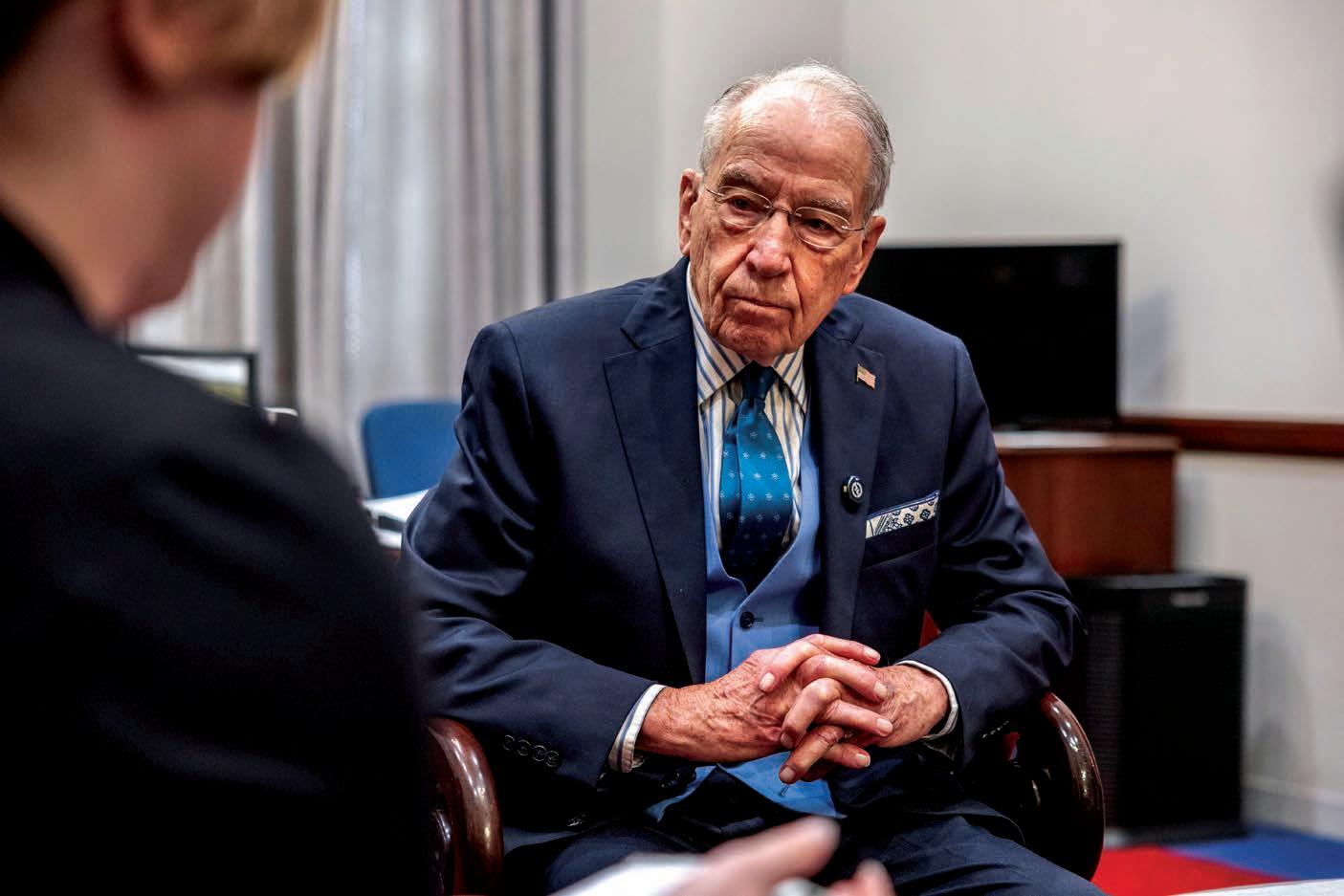
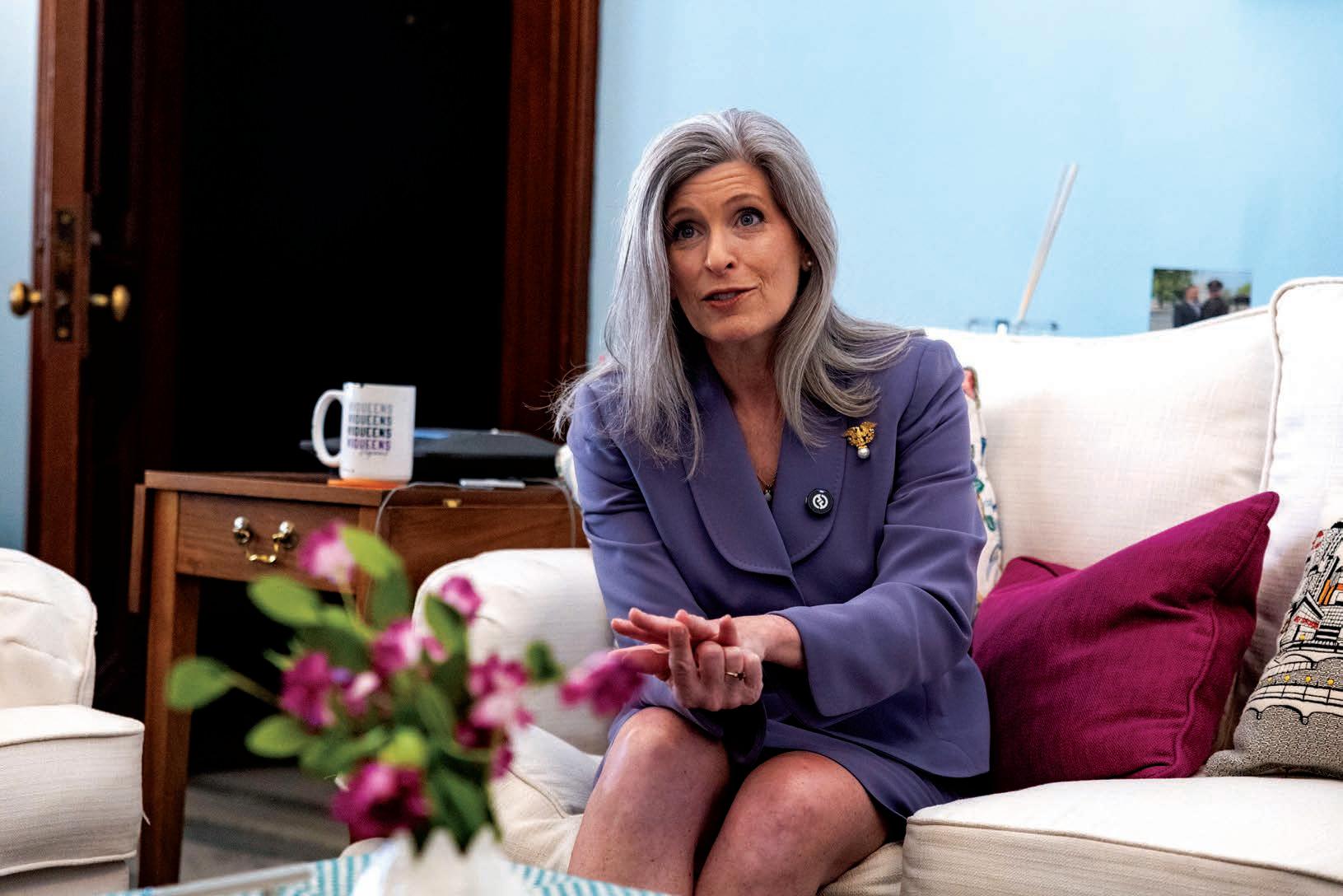
U.S. Sen. Chuck Grassley, R-Iowa, a cosponsor of the SAVE Act, said he supports the legislation because it’s a top issue for
of those documents
want to deny anybody that’s a citizen of the United States the right to vote,” Grassley said.


ident Donald Trump lost to Sen.
OPINIONS
Gun violence shouldn't be normal
In the aftermath of the Ped Mall shooting, IC confronts grief, racism, and routine.

Driving through downtown Iowa City on Sunday afternoon was disorienting. Groups of girls took their graduation pictures on the University of Iowa Pentacrest, while others sat on the lawn sipping Starbucks.
People went about their day, going on runs down efferson treet or walking their dog past them; it seemed pretty lively for an average Sunday in Iowa City.
But as I passed Yotopia and the Wells Fargo bank, it was eerie. I didn’t see a single student or resident walking down the 100 Block of East College Street, as if avoiding the area would resolve the real problem.
It is true that America has a gun problem, but it doesn’t end with the num er of firearm owners.
America has a perpetual cultural problem. Our empathy has limits, and too often it begins and ends with national headlines, skipping over the space in between.
That middle ground is the space where communities process the events and check in on one another. This is where our attention should be.
The national conversation around guns often swings between policy debates and “thoughts and prayers.” In the immediate aftermath, people are grieving and we should not reduce those emotions into a national statistic. But both matter; both are in the center of the violence.
Right now, we should be asking a simpler question: are the people around us OK?
UI graduate student Miriam Sandeen found herself helping a girl wounded by a bullet, urging someone nearby to use a shirt to stop the bleeding.
I first-year student Mozz Mozzammil was awakened by the Hawk Alert at 2 a.m., and spent the night calling friends, making sure they were safe.
The next day, Mozzammil went to work at the CVS near the Pedestrian Mall, right across from where the shooting occurred.
“The entire day, I was very anxious, thinking it would happen again. I kept looking at every customer who walked in, making sure nothing could go wrong because of last night. If somebody came in and stared at me from a distance, I felt
worried, thinking I might be in trouble,” Mozzammil said.
Gun violence leaves behind anxiety and worry, not just statistics. andeen, reflecting on the shooting, expressed a hope that the community would not simply return to normal, but would carry forward a stronger sense of responsibility for one another.
Empathy doesn’t just mean thoughts and prayers, it means the collective response to violence and how we treat it in conversation. It means centering the people whose lives were changed.
But that isn’t always what happens.
In the hours that followed, information spread the way it always does now. It was fragmented, emotional, and often wrong.
On apps like YikYak, speculation quickly turned into something uglier. After the City of Iowa City released a photograph with persons of interest, people started to point blame. One post read: “They need to ban Black people from Iowa City.”
Others read “usual suspects” or “why is it always them” referring to the race of all five suspects.
Comments under the national news sites since Sunday have been disturbing as well. Under the Instagram post made by the New York Post, comments ranged from thinly veiled racial stereotypes to outright hate speech, with users rushing to assign lame efore facts were confirmed.
Mozzammil saw all this discourse online, claiming someone accused a Black student for being the shooter just because he was Black. The student had no connection to the incident.
At the same time, it is izarre to see students and staff at the UI return to normal, not even 24 hours after the shooting. Classes are not canceled, many teachers haven’t spoken about the events, and students are expected to go back to work and school the following day.
Just as Iowa City residents avoided the 100 block for a single day, we mentally cordon off these events, convincing ourselves they are disconnected and temporary. It’s a way of coping and easier than confronting how routine they’ve become.
On April 19, there were 18 shootings in the U.S, not including the one in Iowa City, with headlines of different cities and different circumstances. et, many residents have not moved on, nor should they.
A UI junior and Iowa City native, who asked to stay anonymous due to privacy and safety concerns, experienced the
It's time to tax the data centers
Data centers should face a steep tax on electricity and water usage.

Data centers do not have a favorable view in the public eye, at least on a college campus, nor should they.
Most of the stories that come to us these days on the topic are grim. While delivering a TED Talk in April, computer scientist Ayse Coskun gave the example of a town in Virginia that saw its electricity bills shoot up by 20 percent after the construction of a nearby data center.
It’s rare to read news that gives you hope, but that was exactly what happened when I read an article by Inside Climate News that went over the extensive zoning rules eing rolled out by nearby Linn County. Keeping the possible dangers of these data centers in mind, Johnson County and the rest of the country should look to adopt similar measures, like taxing them more for their water usage.
Although there's a large drought of data on the specifics, it s no uestion that data centers are thirsty things. Used to
power — among other things — ChatGPT, these centers reportedly use roughly onefifteenth of a teaspoon of drinking water per query, according to ChatGPT’s founder, Sam Altman, in a blog post. According to Demandsage, ChatGPT processed 2.5 billion queries a day in 2025, which is roughly 212,500 gallons of water a day if we take Altman's claim to be true.
Pamela Mackey Taylor, a lobbyist for the Iowa Sierra Club, said a data center in Linn County was drawing as much as 15 million gallons of water per day from the Cedar River.
Although I was una le to find pu licly availa le statistics or reports to confirm this figure data center operators tend to e tight-lipped a out their water usage it is not an implausible claim.
Given the limited transparency in the industry, it is reasonable to question whether figures presented y executives like Altman might understate actual usage for public relations purposes. Complicating matters further, there have been relatively few comprehensive studies on data center water consumption, as large-scale, waterintensive AI infrastructure is still a relatively new development. Regardless of the actual figures, as demand for AI continues to expand and data
aftermath of gun violence firsthand long before the events of April 19.
In 2021, their boyfriend passed away due to gun violence.
The grief and trauma that followed changed the student’s life, from almost failing out of high school to choosing to pursue criminology in college.
“Seeing this type of violence happen in the place where I have always called home is really sad, but it’s not shocking. I’m kind of desensitized in a way. It is triggering in the sense that I know so many people are being impacted and hurting in the same way that I have felt,” they said.
Referring to the normality of the following day, the student said they were not shocked, since many of them might not be culturally aware of the cycle of violence. The anonymous source continued to speak about the online hate and racism regarding the suspects.
“The easiest way is to point blame at those around you, but the hardest thing to do is acknowledge that there needs to be change in some sort of way,” the source said.
That instinct to assign blame quickly — especially along racial lines — isn’t new.
It mirrors the broader national discourse, where conversations around gun violence often default to oversimplified narratives.
“Be empathetic to others, especially during a time where people have lost their loved ones,” the student said. The anonymous source continued, “Seeing the pain families endure after gun violence is one I would never wish on my worst enemy. Understanding that it could’ve been you or someone you love and how that would impact you really helps put things into perspective.”
And that is the perspective missing from much of the national conversation. If we only acknowledge these moments in passing, we aren’t just failing the people affected – we are accepting that this is normal.
We cannot keep returning to normal, because “normal” is the problem. Without policy change, every conversation, every vigil, and every expression of empathy exists in the shadow of what comes next. Iowa City is not an exception to gun violence. Breaking that pattern will require action that reaches into stronger gun legislation.

centers are built across the globe, so does their consumption of water and electricity. As climate change places increasing strain on the world’s resources, this growing demand raises the possibility of a serious crisis if data center water usage is not carefully monitored and managed.
Efforts to address this are already emerging at the local level. In Linn County, for example, zoning regulations now re uire data centers to submit detailed water usage studies and enter into formal water use agreements.
Measures like these represent an early attempt to bring transparency and oversight to an industry that has historically operated with limited public disclosure around resource consumption.
This is something that needs to be done nationwide. As data centers continue to expand, policymakers are beginning to explore ways to limit their environmental impact, including through taxation and stricter regulation.
For example, in Virginia, a bill was introduced in February that would force
data centers to pay more for electricity usage, whereas before, a good bit of the burden fell on nearby residents as well.
“The amended bill now allows the State Corporation Commission to determine if it is in the pu lic interest for large-load customers instead of residential ones to cover the cost of distributing power to data centers,” an article by Rappahannock News detailed.
It seems unreasonable to suggest that it could ever be in the public’s interest for residents to bear the cost of powering data centers.
A more equitable approach would be to place that burden on the companies themselves — for example, through a tax on the large amounts of electricity they consume.
A steep tax would likely raise the cost of AI services for both individuals and businesses, which could in turn reduce overall usage. At the same time, higher operating costs would create stronger incentives for companies to invest in e ciency and to cur their water and energy consumption.
UI students win national fiscal challenge
The group’s proposal organized a plan to bring down the national debt-to-GDP ratio using demographic, tax revenue, social security, Medicare, and AI reforms.
ight niversity of Iowa students rought home the 202 national title for the Fiscal hallenge in Washington, D. ., as concerns arise surrounding how the . . government will handle its national de t and deficit crisis.
Fiscal hallenge is a nonprofit educational organization where students from six universities across the country are chosen to present their ideas to economic experts and de ate the est course of action to address the issue.
The team, made up of fourth-year aptain Thi Nguyen, general mem ers fourth-year Timothy ttesen, fourthyear mma a tazovic, third-year asey udlow, fourth-year William ynott Haw ecker, third-year ack uehl, and alternates third-year A igail Morf and fourthyear rent umpkin, attended.
Tippie ollege of usiness professor and Director of ndergraduate tudies in conomics Alexandra Nica served as their advisor.
“We were tasked with ringing the national de t to DP ratio to percent within 0 years,” ttesen said. “It s all a out putting our country on a more sustaina le path fiscally so that we can have a alanced udget for future generations.”
Nyugen said the team s proposal would ring down the national de t-to- DP ratio, a measure of a country s output compared to its national de t, to 8 .0 percent in their proposal. This metric compares a country s pu lic de t to its annual gross domestic product. However, if the . . government continues with its current fiscal policy, its de t-to- DP ratio will e at 1 percent y 20 . rookings said the last time ongress successfully passed a full udget ill with full re uired appropriations measures was in 1 . These are 12 separate ills that cover funding for every federal agency. This is largely due to the extensive time it takes to formalize how the udget will e structured, partisanship division, and the enate fili usters.
The team s proposal focused on areas they elieved would help manage the nation s de t. It includes demographic measures to increase population growth and high-skilled la or through immigration and child care reform.
They also dealt with ocial ecurity and Medicare, as the programs are some of the largest federal spending categories. astly, they proposed tax revenue reforms and artificial intelligence investments to help with la or e ciency.
n average, they worked over 0 hours a week individually, and the pro ect itself took over 2 months to complete.
“It would e reasona le to say it was a full-time o outside of eing a student,” ttesen said. “We would e doing group meetings for anywhere from four to six hours a day, ut then we had a lot of work to do outside of it. I think I was easily spending eight to 10 hours a day and five days a week for the last few weeks leading up to the competition.”
a tazovic said the team felt even more motivated after finding out they made finals during spring reak, and part of it came from making it to the semi-finals at the 202 ollege Fed hallenge, another rigorous national competition where students present monetary policy recommendations.
“It was really nice ecause we had already uilt up that momentum from the Federal eserve hallenge
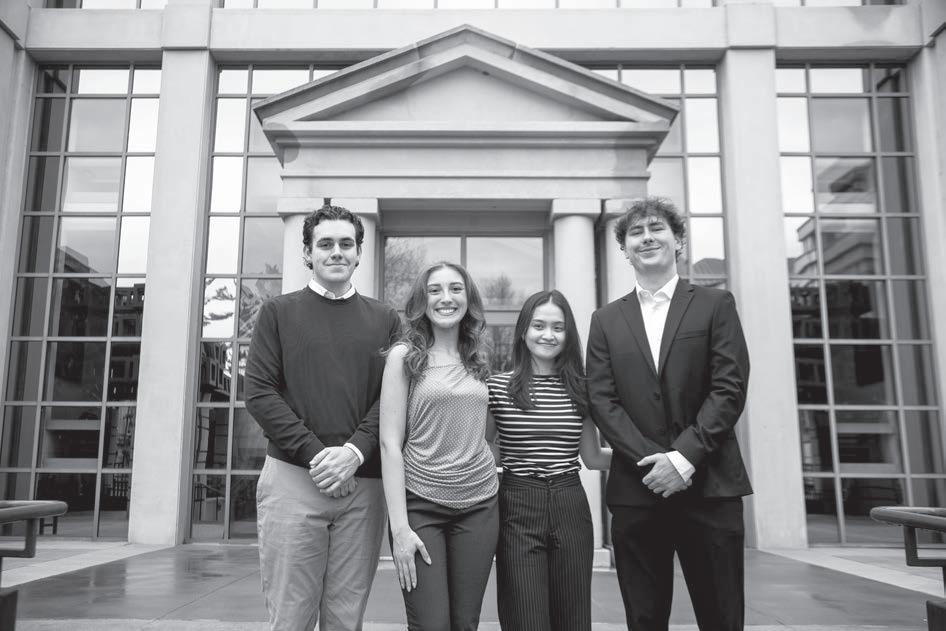
from last semester. It was me, Thi, asey, and ack that participated, and Iowa hadn t made semis in like over 10 years, so when we did it, it was like such a ig deal. We were ust hungry to do it again,” a tazovic said.
Haw ecker elieves their team effort is what sets them apart from other universities at the competition.
“We talked to other people, and we ve seen from past years su missions that you might often have a team where you have one or two people that are kind of leading the team and putting a lot of work in,” he said. “ ut we are all engaged. very ody really was interested and cared a out the pro lems that we re discussing, so we were a le to uild a really good group dynamic.”
The group was a le to meet multiple experts throughout their trip to D. ., such as the founder of Fiscal hallenge, Mike Aguilar, Martha im el, director and co-founder of the ale udget a , and Phillip . wagel, who serves as the current senior director of the ongressional udget ce.
“It s ust nice after putting in so many hours of research to e a le to ring a proposal in front of some of the preeminent experts in this field,” ttesen said.
Nguyen and a tazovic oth said they were anxious ut encouraged each other despite it all.
“When we left the room I had a ig smile on my face,” Nguyen said “ I felt really good, and I was really proud of the team. mma was umping up and down, she really hyped me up, and I was umping with her, too, we had a lot of fun.”
The group expressed their gratitude to Nica for reviewing their work and providing support as they researched.
“ he s een such a great academic resource during all this, ut more importantly, she s een there through our ups and downs,” a tazovic said. “It truly couldn t have
een done without her help either.”
The group also received help from other faculty mem ers and the I economics department, who accommodated their coursework, attendance, and gave additional resources throughout the semester.
“All of our professors were flexi le with us with such a huge time commitment, helping us make sure that we re still students in other classes. They let us get our class excuse and push some of our exams ack,” ttesen said.
“Dr. Nica was a ig part of this. We had the entire econ department letting us present in front of them, con students listening to our presentation, and Tippie people for letting us reserve rooms,” Nguyen said, “ riginally, our alternates weren t going to e a le to oin us in D. ., ut Dr. Nica advocated for them, and they were a le to come with.”
Nica said her iggest highlight as an advisor was seeing the team progress during their research.
“I am so proud of what they have accomplished. This has een an amazing team, and they ve worked so hard,” Nica said. “We can look at the log of how many rooms I reserved every day, not all of them could e there at the same time ecause of schedules, ut there were always some of them working on those things, and then I was oining them whenever I could.”
Nica said ecause she was also the advisor to the ollege Fed hallenge, it was natural for her to ecome the advisor for the Fiscal hallenge as well. he elieves the competition is a necessary opportunity to challenge the next generation on pro lems like the national de t. “This type of challenge is so important ecause we are in a situation right now where we re running ig federal udget deficits, and we have a huge demographic pro lem on our hands,” Nica said. “This disproportionately affects the younger generation. o, they have to have a say in it.”
Local programs, volunteers curb IC li er
Earth Month highlights city and volunteer e orts to reduce li er across Iowa City.
“The more people that are out in the community and connecting with the environment, the more people will care for the environment and take action for it,” McMullen said.
said she collected 82 alcoholic everage ottles, water ottles, and other assorted everage ottles. The data, she says, points to a larger issue.
As Earth Month draws attention to sustaina ility efforts, city o cials and local volunteers in Iowa ity say litter continues to e a persistent issue.
The Iowa ity Downtown District Am assadors program deploys paid staff to clean pu lic spaces and maintain downtown areas daily. The program has een in place for nearly two years and tracks the amount of waste collected y am assadors. Downtown District xecutive Director etsy Potter said the am assadors have collected 18,0 pounds of trash and cleaned 2, cur lines in the past 12 months.
“They are constantly picking up trash from the streets, emptying trash cans, and cleaning up parking lots and garages,” Potter said. “This is a seven-day-a-week operation.”
In addition to the am assador program, the ity of Iowa ity has created a program of their own to mitigate litter in Iowa ity. The Pro ect leanup program, a yearround initiative, encourages residents to take part in volunteer cleanups. endall McMullen, the city s climate action engagement specialist, said the city supplies kits that include gloves and trash ags to help organize participation.
The Pro ect leanup initiative was started in eptem er 202 and allows residents to pick up litter in their neigh orhoods, near y parks, and roads. McMullen said the initiative allows residents to participate on their own schedules, instead of relying solely on organized events.
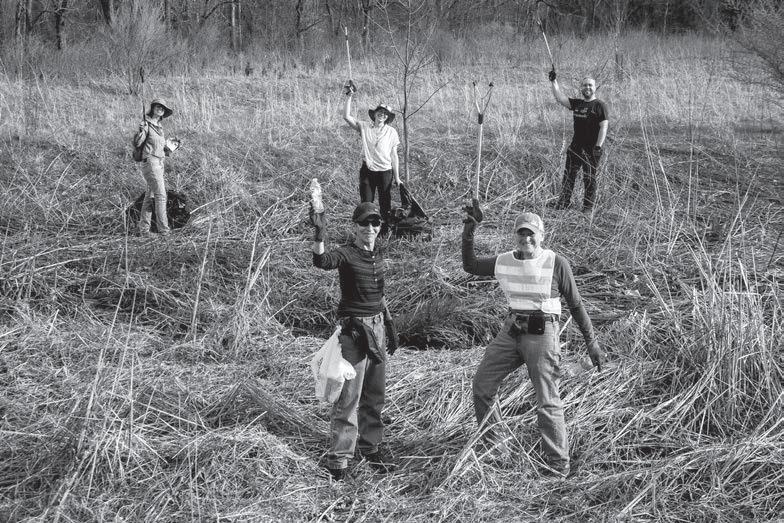
Despite these city-led programs, Iowa ity residents also play a role in mitigating litter in the area. The Iowa ity itter rew, a group that meets monthly, has grown out of a simple frustration.
“I got tired of seeing the litter,” Iowa ity itter rew volunteer ara eller said. “ o I decided to start picking it up.”
The group has een organizing monthly cleanups for the past three years, drawing a small ut consistent turnout, typically around six to 10 people. The group picks up litter in what eller calls “hotspots,” which are areas that consistently have high amounts of litter.
These hotspots include Terry True lood Park and Whispering Meadows wetland.
Volunteer Melissa Seranda said she tracks her findings and documents them. he has picked up almost 00 plastic water ottles since anuary. In March, eranda
“When you re picking up the same amount of litter every time, you know it s a ehavioral pro lem,” eranda said. “There s something happening where people are repeatedly littering in those areas.”
eranda said common places where litter is found are convenience stores, ma or roadways, and parking lots places where eranda said trash cans are often limited and poorly maintained. igarette utts, plastic ottles, and single-use packaging are among the most common items collected.
While cleanup efforts help, Iowa ity itter rew volunteer Amy hen said it is not a complete solution.
“We can pick up litter all day long, and there will still e more litter,” hen said. “We have to put in place practices that reduce our litter.” eranda points to policy changes, such as updates to Iowa s ottle deposit law, as a potential way to reduce waste. Iowa egan giving residents five cents per ottle donated ack to can redemption centers. ince 1 8, inflation has risen 1 percent, ut cans are still worth five cents. “ very single one of these ottles and cans that we pick up should e worth a uarter if the state were matching the rate of inflation,” eranda said. “I don t think we would e seeing as many cans on the ground if people could turn four of them in for a dollar.”
IC HOSTS PEACE VIGIL
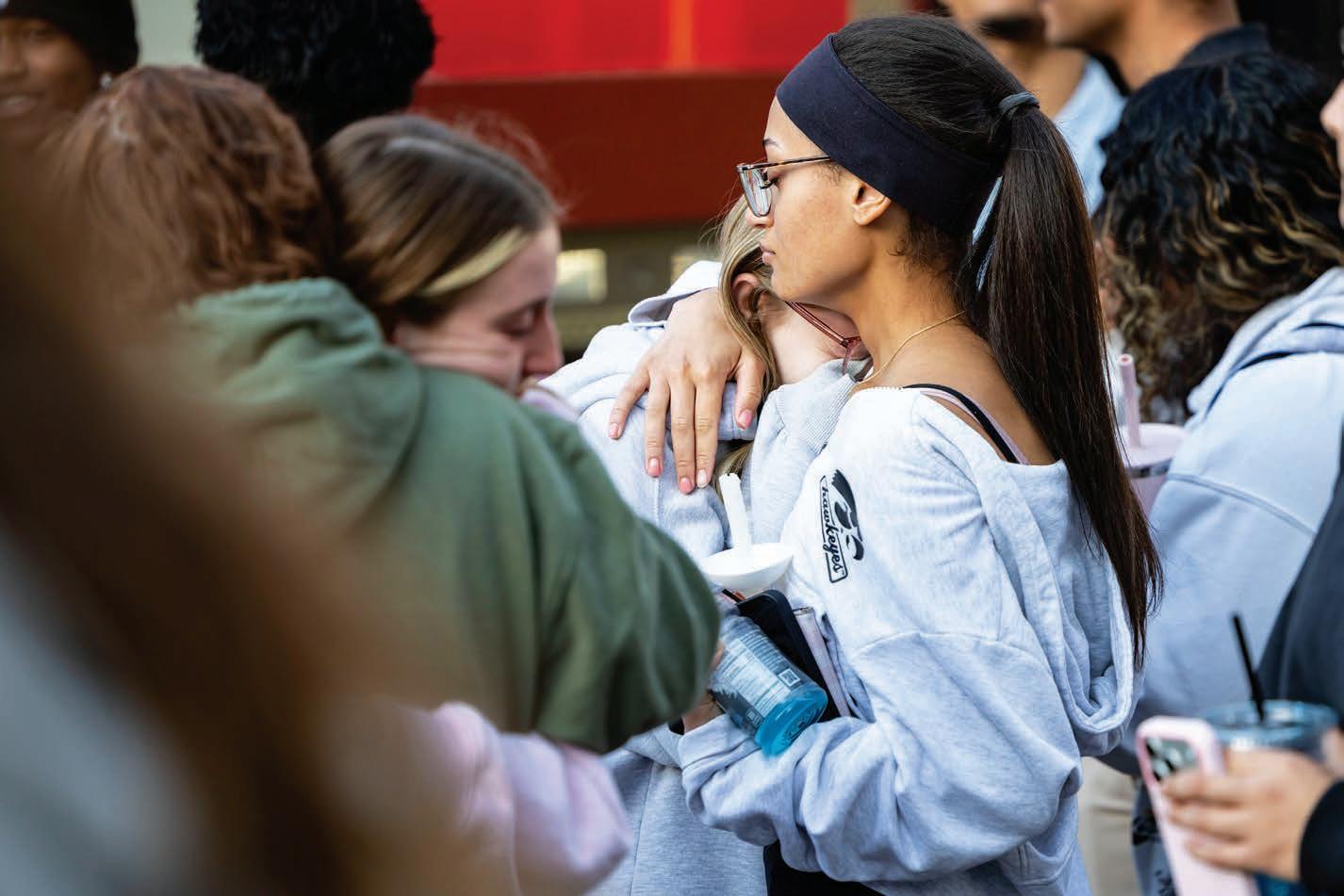
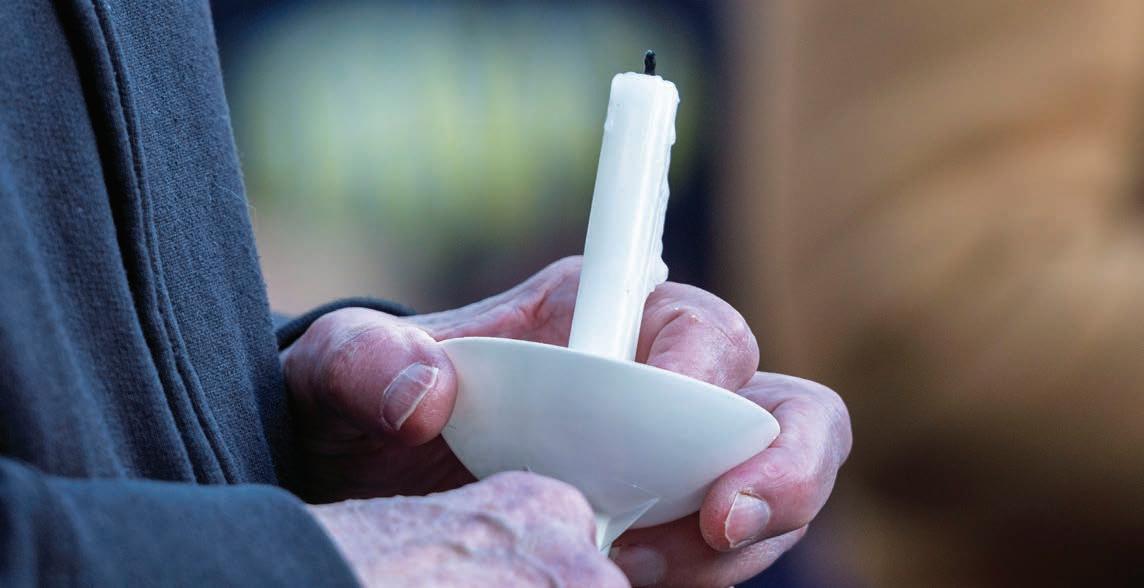
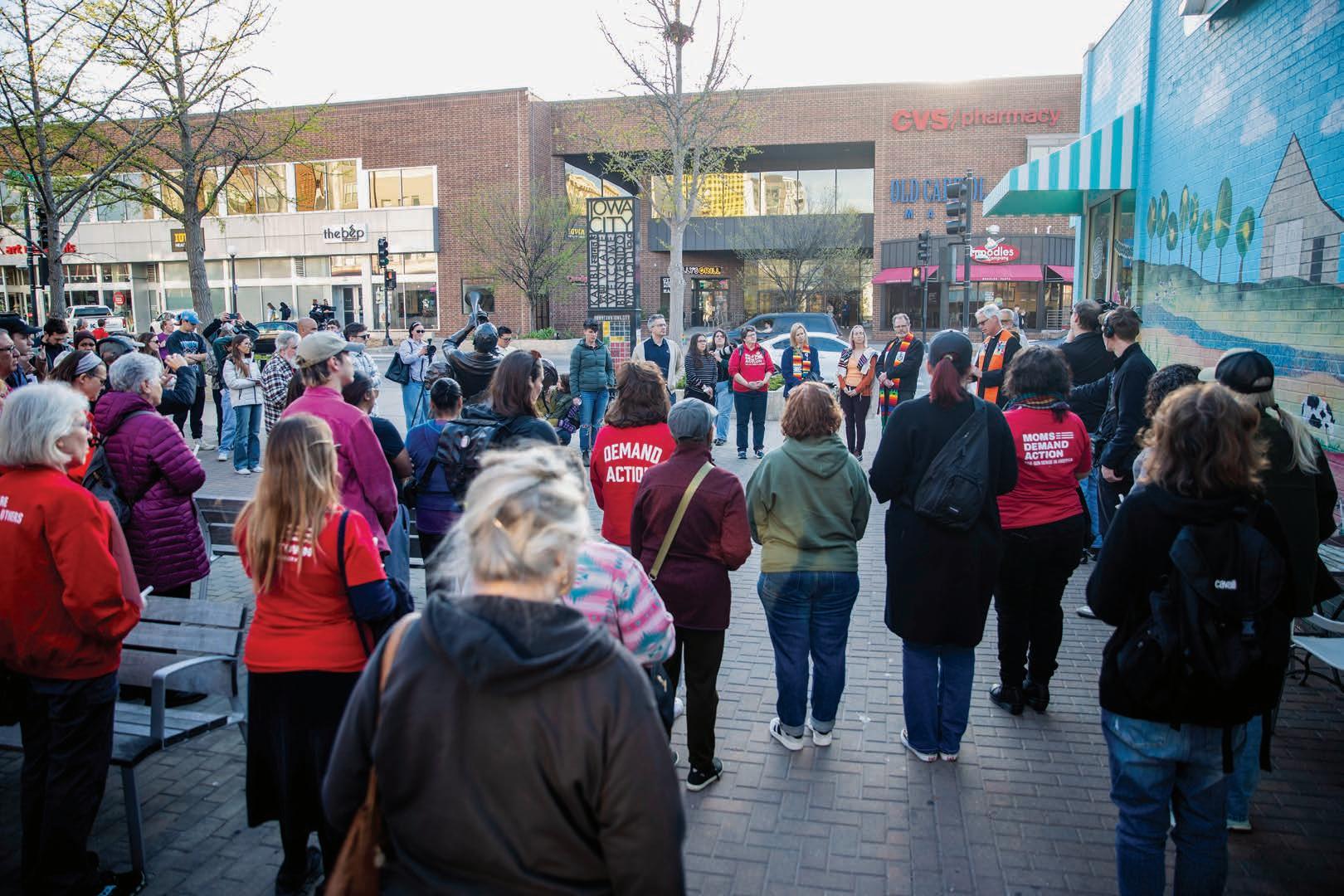

An Iowa City peace vigil was hosted at the Pedestrian Mall in Iowa City on April 20. The vigil followed a shooting on the morning of April 19 that injured five people, including three University of Iowa students.
Iowa farmers feel the squeeze
As high input costs and the presence of farm bankruptcies persist, Iowa’s congressional delegation fights for reprieve.
to the coalition, and roughly $165 million were frozen in Iowa.
WASHINGTON — As a fourthgeneration farmer from Waverly, Iowa, Mark Mueller, president of the Iowa Corn Growers Association, has been farming for 30 years. Though he is not experiencing the effects of farm ankruptcies plaguing farmers across Iowa, he has received numerous phone calls from many in distress.
Concerns surrounding farm bankruptcies and the cost of land, fertilizer, and input costs continuing to soar are changing the agricultural landscape across Iowa.
Mueller took over his family farm after his father and has raised silage corn, or fermented feed for livestock, alfalfa, and occasionally a specialty crop to see if there is a niche market for the product.
For Mueller, the most important person in his farming operation is his banker.
“Most people don’t seem to realize that farms operate on a whole lot of borrowed money,” Mueller said. “I might borrow thousands of dollars to put in a crop that might not get sold for a year or two down the road. We pretty much operate from loan to loan.”
Such loan dependency can leave farmers vulnerable.
From 2000 to 2025, the Iowa Farm Service Agency’s Farm Storage Facility Loans program saw 40,000 loans being issued.
Mueller said he has land, machinery, and operating loans outstanding and, likely, he will borrow more.
“If he were to shut off my operating notes, I’d be scrambling to find a new banker because farming does operate on a lot of borrowing money,” Mueller said.
Recently, farmers across Iowa have been shut off y their ankers and are looking for a new one.
“Things are tight in the farming community,” Mueller said.
This squeeze, Mueller said, can be attributed to a variety of factors, including commodity prices trending downward and input costs increasing.
During a banner year, or a year of very high crop production, the cost of grain decreases, Mueller said. However, if there is the threat of drought in Iowa or nationwide, the cost of grain can skyrocket.
According to the U.S. Department of Agriculture’s Economics, Statistics, and Market Information System, before the COVID-19 pandemic, the average price of corn was $3.41 per bushel. That number increased to $3.71 in 2019 and $5.48 in 2021.
Although farmers saw a higher price of corn, Mueller said those gains were offset by the increase in inputs such as fertilizer.
“I absolutely can’t raise corn without nitrogen, phosphorus, or potassium, but those three things went up in COVID,” Mueller said.
Alongside inflated prices, the loss of key government programs for farmers across the board contributed to increased bankruptcies.
Jennifer Studebaker, executive director for the Women, Food, and Agriculture Network, said the loss of the U.S. Department of Agriculture programs that supported farmers has been a major hit.
Programs including Local Food Purchase Assistance and Local Foods for Schools and Child Care Settings have been terminated, according to the National Sustainable Agriculture Coalition.
Across the nation, roughly $6.6 billion in funds were frozen nationwide, according
“The loss of funding supporting those farmers has been a big challenge as quite a few members in our network grow food for human consumption,” Studebaker said.
Increasing input costs, including the energy cost for running a farm, make reducing energy bills for farmers more di cult.
“A lot of farmers are operating on very thin margins,” Studebaker said “It’s not generally something you get into to be rich. It is because you care about feeding people and growing food and those additional costs just make it so the costs of doing usiness is higher than the profit you re going to get.”
When such costs increase, farmers often have to increase the cost of products, impacting how accessible they are to buyers, with many opting to pursue cheaper products, Studebaker said.
With Iowa leading the nation in the production of corn, pork, eggs, ethanol, and soybeans not falling far behind, agricultural sectors across the farmland are feeling the squeeze.
Rush Shortley, a bankruptcy attorney in Cedar Rapids, said farm bankruptcies typically fall under the Chapter 12 category. In his tenure as an attorney, he has seen bankruptcies hit farmers across industries, including corn, pork, and soybeans.
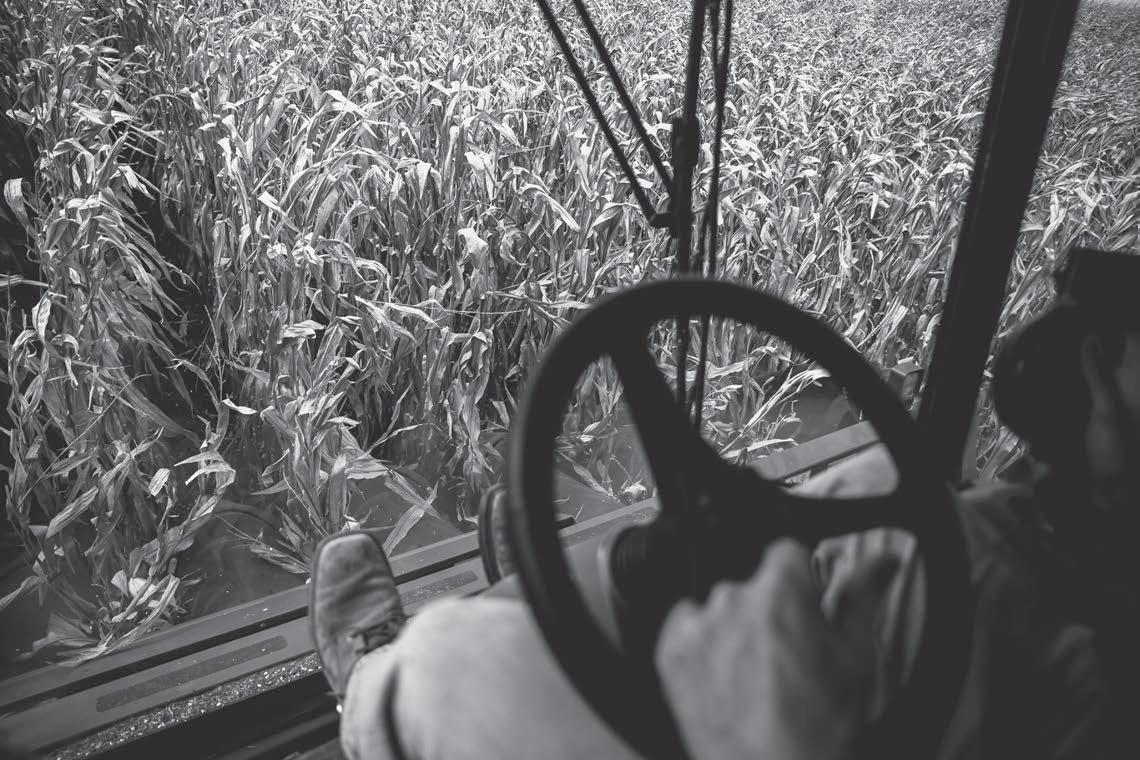
“Nowadays, there’s more and more specialization in the agricultural industry,” Shortley said, “When I was a kid, all these many years ago, most farmers in Iowa had livestock and crops. That sort of thing has become much more specialized, and they are all having trouble.”
Shortley said though the price of the product may look the same in the grocery store, farmers are having to pay more for the price of feed and in input costs, particularly in the pork and meat industries.
According to the National Pork Producers Council, Iowa producers largest expenditure category was feed in 2024. About 480 million bushels of corn, valued at roughly $2 billion, is the estimated cost to feed a little over 50 million hogs.
“It is the whole farming industry layering on costs. So it’s basically in a lot of ways, a losing proposition,” Shortley said.
Mueller said he has seen a similar struggle across sectors of agriculture. On his own farm, he raised a niche crop of corn for racing pigeons. Though on the unconventional side, Mueller said he is making more money from racing pigeon corn than the silage corn or alfalfa.
“So, farmers are having to look further for little special markets, and there aren’t many special markets out there,” he said.
“Economic forces have pushed us to grow things that we do best and in Iowa, that’s corn and soybeans and the animals that eat those things.”
Mueller said the rising prices have called for a monoculture, one that he sees as being caused by the present economic system.
As farmers grapple with maintenance issues, commodity prices, and uncertainty in the global market, members of Iowa’s congressional delegation are putting forth legislation aimed at easing tensions and
Iowa corn and soybean cash prices per bushel
high prices.
U.S. Rep. Mariannette Miller-Meeks, R-Iowa, said in an email statement to The Daily Iowan , the need for year-round E15 and the passage of the Farm Bill is “long overdue.”
According to Iowa Farm Aid, the Farm Bill is an omnibus piece of legislation working to assist farmers in all aspects of the industry, including nutrition, crop insurance, commodities, and conservation.
According to the U.S. Congress, the last Farm Bill was passed in 2018 and expired in September 2023. An extension was later granted in 202 to cover fiscal 202 . The bill expired on Sept. 30, 2025, and was re-extended through September 2026.
According to the American Farm Bureau, the present Farm Bill was proposed in March and is expected to be voted on y the House floor in late April.
Miller-Meeks said Iowa farmers feed and fuel the world and that she is fighting to keep it that way.
“I’ll always stand with Iowa farmers because when they succeed, our entire state and country succeed,” Miller-Meeks said.
U.S. Sen. Chuck Grassley, R-Iowa, said he, too, has heard from his constituents about the Farm Bill, with many farmers indebted to their family farms.
“Help people over a peak because farmers are at the bottom of the chain,” Grassley said.
Grassley said farming practices and agriculture as a whole are evolving and farm bankruptcies need to be “kept on top of,” and not waiting to take action.
“We can’t continue very long with farmers losing $1.10 on corn and $2, $2.50 on soybeans. We’ve got to pay special attention to it,” Grassley said.
U.S. Sen. Joni Ernst, R-Iowa, said declining farm revenue is not unique to President Donald Trump’s administration, and input costs are continuing to rise.
In 2012, at the pinnacle of the former
As farmers grapple with maintenance issues, commodity prices, and uncertainty in the global market, members of Iowa’s congressional delegation are pu ing forth legislation aimed at easing tensions and high prices.
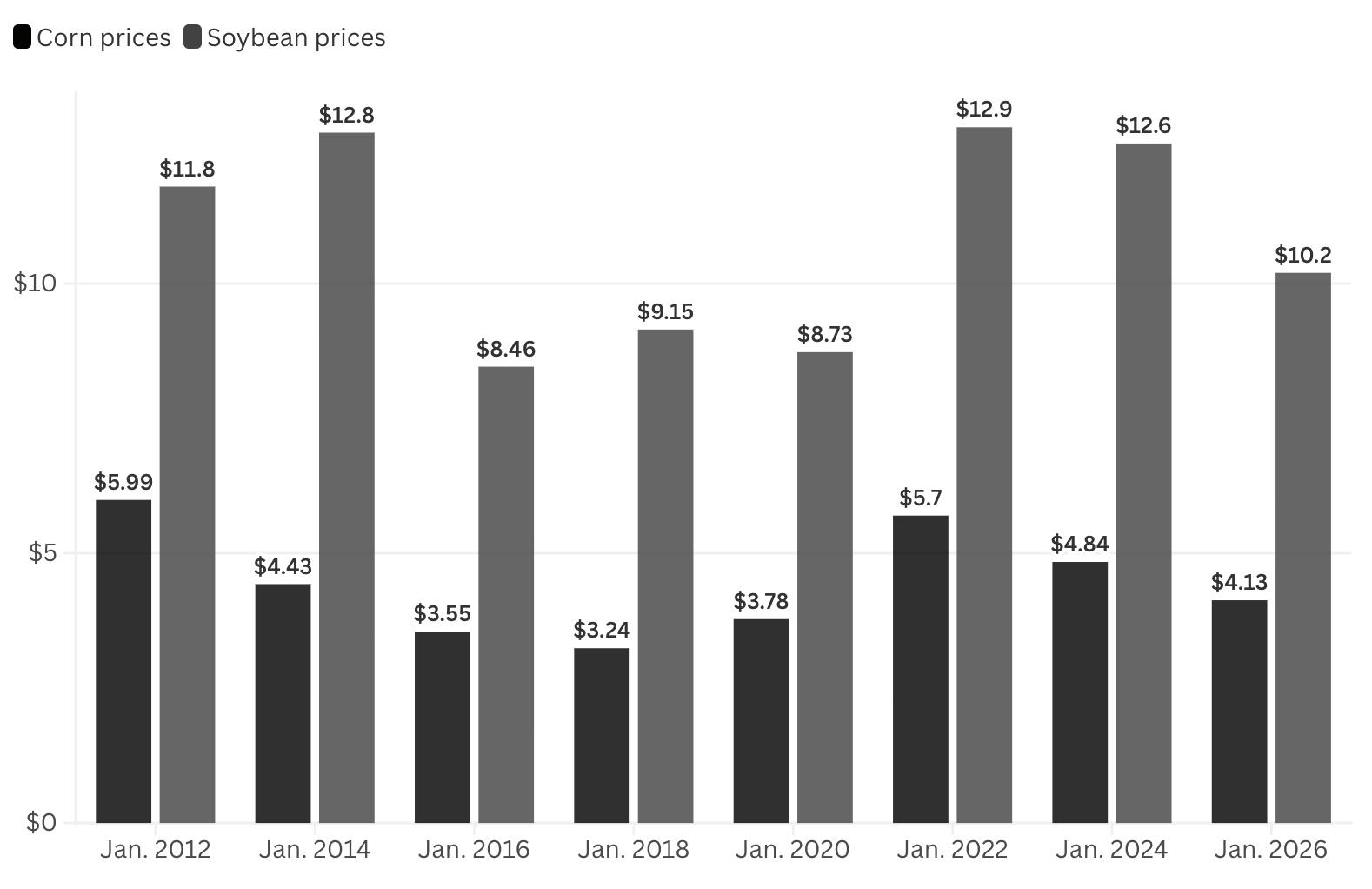
President Barack Obama’s Administration, the average price of corn sat at $6.99 and $14.57. Under former President Joe Biden, in 2022, the midpoint of Biden’s tenure, prices sat at $6.95 for corn and $15.51 for soybeans. During Trump s first administration, corn prices and soybean prices were $3.70 and $9.35, respectively. In 2025, those prices increased to $4.40 and $11.15, respectively.
According to the U.S. Department of Agriculture, Trump announced $12 billion for Iowa farmers in December 2025 to help mitigate rising production costs. The move came after similar action during his first administration, with 1 billion in funds in 2019.
Ernst called for opening the Strait of Hormuz as fuel prices continue to rise.
According to AP News, Iran opened the Strait of Hormuz, allowing for commercial vessels to pass through the strait on April 17. The strait was later announced as closed by Iran on April 18, less than 24 hours after the initial call. The strait remains closed as of April 21. According to the American Automobile Association, on April 20, the national price of gas sat at an average of $4.09, a decrease of nine cents from the week prior.
In Iowa, the average price of gas as of April 20, sat at $3.55, a 13-cent decrease from the week prior, and a roughly 60-cent increase from 2025, with gas prices at an average of $2.96.
The cost of diesel as of April 20 was $5.82.
Following the reclosure, prices have yet to change.
Ernst said four years of declining revenue is hard to overcome and that legislators and the Trump administration have a “whole smorgasbord of activities” that are being worked on.
“We know a lot of family farms are struggling right now,” Ernst said.
As new legislation is put forth to provide reprieve for Iowa farmers, Studebaker and others see a need for short- and long-term solutions.
Studebaker said she would like to see support for smaller farmers who produce specialty crops, such as radishes, to help find ways for farmers to get their product to market.
“How can we as a nation better support farmers to have a living wage and be able to grow food for those closest to them and support them in building those markets?” Studebaker said. Through the Women, Food, and Agriculture Network, Studebaker said the network has three programs to best assist struggling farmers, including a mentorship program, a Women Caring for The Land program, and the Place Politics program.
The mentorship program, Studebaker said, focuses on pairing beginning farmers with experienced farmers for a given harvest season, helping give advice and navigate challenges that may arrive.
The Women Caring for Their Land program assists women landowners in finding additional income streams and access to resources for those who may not be operators and have a tenant or family member farming their land.
The Place Politics program integrates farming interests with interests in leadership and the policy sector, where individuals can help push for legislation to support farmers.
“It is really important for people who may be facing foreclosure or other challenges financially to know they are not alone and have support,” Studebaker said.

SPORTS
A long goodbye for the Heartlanders
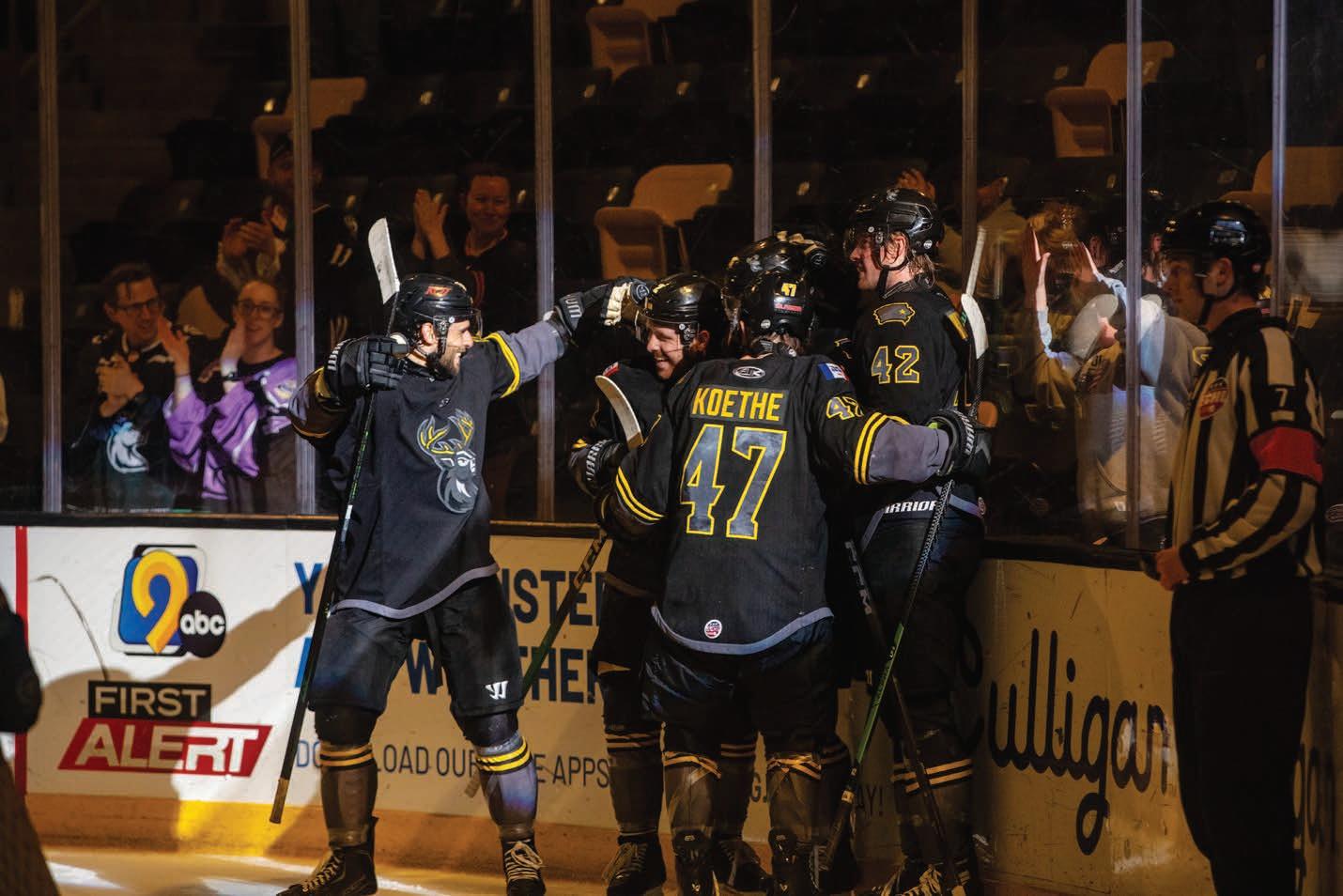
Nobody wanted to leave; not then, probably not ever. The Iowa Heartlanders’ final home game of the season technically ended after the loomington ison scored in overtime, ut as the rival team mo ed one another on the ice, the crowd at oralville s tream Arena didn t head for the exits. ather, they stood and waited patiently, not ready to say good ye without the proper send-off.
The ison knew etter than to cele rate too long, and soon exited the rink, leaving the Heartlanders alone to witness the scene. ow ells clanged, chants echoed, and cheers rained, the collective din defying the arena s many empty seats. The fans didn t need a sellout to make their voices heard.
Heartlander players skated slowly along the perimeter, raising their sticks in gratitude and appreciation efore heading to the tunnel. Head coach huck We er could only oin in the applause, his eyes glancing up at fans decked out in gear, a myriad of erseys ranging from all- lack to cornon-the-co patterns. urope s “The Final ountdown” rang from the speakers.
The scene continued later eneath the stands, this time etween mem ers of the organization. Team president Matt etz shook hands with team photographer ason u in, offering a heartfelt thank you to u in s five years of service. ater, the two took the ice, oining roadcaster David Fine, student interns, and others for a photo at center ice, capturing one last piece of evidence of not ust the season, ut the foreseea le future.
After five seasons of existence, the
Heartlanders won t play any games next year, as Iowa s only H team opted for a self-imposed suspension of operations for the 202 -2 season. As the team left the ice they called home one last time, em arking toward an uncertain future, urope s opening lyrics did the talking for them.
“We re leavin together ut still it s farewell And may e we ll come ack To arth, who can tell ”
eave it to a hockey team to descri e emotions in terms of physical violence. For forward eltie eri- eon, a Heartlander for the last two seasons, news of the suspension was “a punch to the face.” We er, with more than two decades of coaching experience, likened the situation to a “kick in the gut.”
The Heartlanders announced the news to the pu lic on March , claiming the
Transfer portal ups and downs
Lack of restraint poses potential for more harm than good.
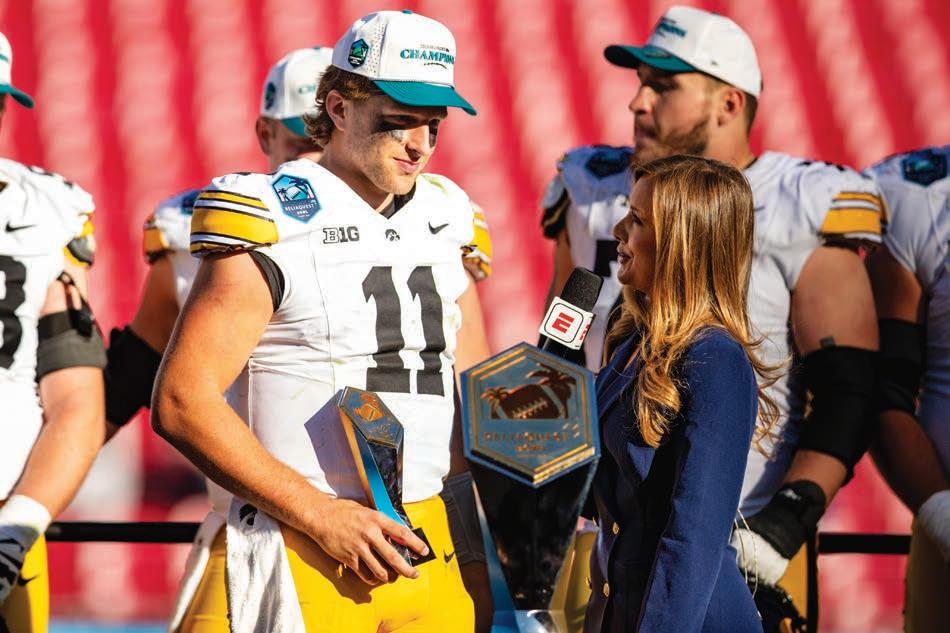
ust re-entered the transfer portal.
Transfer portal entries are no longer a lip on the radar ut a phenomenon enveloping Division I athletics across the nation. The num er of DI student-athletes who entered the transfer portal increased every year since 2022, surpassing 1 ,000 in 202 , according to data from the N AA. Divide that num er y the amount of DI schools, and that s over 0 transfers per university in 202 . This num er, while large, may seem like a drop in the ucket when one considers the nearly 200,000 DI student-athletes in America. It may seem inconse uential as well. After all, Power Four schools like Iowa have enefited greatly from the portal. Without the transfer portal, Hawkeye foot all wouldn t have snagged Mark ronowski, women s asket all couldn t pick up ucy lsen or hit- hat Wright, and the men s asket all team likely would have struggled to reach the lite ight without ennett tirtz or Alvaro Folgueiras, the latter of whom ironically
team examined all possi le solutions efore landing on suspending operations, which was approved y the league s oard of overnors.
“Despite significant efforts to sta ilize and strengthen the organization, we concluded that stepping ack for a season is the most responsi le course while we review long-term solutions,” said owner Michael Devlin, whose group, Heartlanders , purchased the team in the summer of 202 . “As stewards of the franchise, we elieve this step gives the organization the est opportunity to return on a stronger and more sustaina le footing.”
The statement added that during the reak, the team would look for potential investments and owner partnerships aimed at long-term success. ut without a competing team, players and coaches will
Baseball’s behind-thescenes team
The Hawkeyes’ 25 studentmanagers emulate pro teams’ operations.
The idea of an unregulated transfer portal, which ecame a reality two years ago when the N AA ruled athletes could transfer an unlimited amount of times without having to sit out their first season at a new school, as was previously re uired. This no-holdsarred approach, al eit within confined windows, rings reason to worry.
In the case of Iowa volley all, the transfer portal proved very useful for the uilding efforts of head coach im arnes. For the 202 and 202 seasons, the starting li ero for the Hawkeyes was plucked from the transfer portal, namely oy alles from Arizona and Milana Moisio from Miami. Also of importance was setter laire Ammeraal, a transfer from entral Michigan who, following an explosive Iowa career, was drafted y the maha upernovas of Ma or eague olley all.
If Iowa volley all is the only example, the transfer portal is an amazing thing after all, it s landed the program at least three reakout recruits.
oasting a roster of players, the Iowa ase all team offers nearly a full s uad of student-managers to assist on and off the diamond. From on-field roles to positions in data analytics, video and technology, and operations assistance, the 2 managers em race their often unseen roles.
For on-field managers Nolan raham, Andrew olu ow, and Alex Mroz, the crew make themselves at home in ullpens and atting practice, catching fast alls and tracking down line drives. In the dugout, they provide the water and Powerade supply for each team. unning drills is mostly what they do during practice and efore games, ut during games, a ig responsi ility is found in running the gametracking program, which helps the coaches and players with scouting reports for opposing teams.
“I d say a good way to kind of encapsulate what we do specifically in our department, is everything that allows for the coaches to ust truly coach,” olu ow said.
The other departments also have many responsi ilities. The ig ones include the data analytics team making statistics easier for the coaches and players to look at, video and technology setting up cameras for games and in the ullpens, and the operations assistants helping with whatever director of ase all operations Nic ngs asks of them, including running the social media.
“It s ust trying to make things as easy and as efficient as possi le for the coaches and players,” Mroz said.
“I would say the est comparison for our program, and from what I ve heard as well, is we operate like a ma or league ase all team,” raham said. “If you look at how an M organization is structured, it s asically
NFL dreams turned into reality
Six Iowa football players are projected to be drafted in 2026.
team All-Big Ten cornerback would be potentially slotted opposite of two-way star Travis Hunter.
On April 23-25, dreams will come true for 257 college football athletes at the 2026 NFL Draft. Five Hawkeyes were selected in the 2025 draft, with running back Kaleb Johnson being the highest selected of the group at pick 83 by the Pittsburgh Steelers.
Offensive lineman Gennings
Dunker is Iowa’s highest-ranked prospect at No. 51 on ESPN’s “Best Available” list. Dunker is ranked as the seventh- est offensive tackle in this year’s draft, but he’s not the only highly-touted lineman for the Hawkeyes.
Center Logan Jones is ranked as the third-best center in ESPN’s prospect ranking and was the 2025 Rimington Trophy winner, awarded to the best center in the country.
Rounding out the prospects for the oe Moore Award-winning Iowa offensive line is eau tephens, who is ranked No. 11 among offensive guards. Stephens recently visited with six teams ahead of the draft, including the Super Bowl champion Seattle Seahawks, Dallas Cowboys, and Atlanta Falcons, according to NF Network s Mike arafolo.
Other Hawkeyes projected to be drafted this year include cornerback TJ Hall, wide receiver Kaden Wetjen, and defensive end Max lewellyn.
According to ESPN NFL draft
analyst Matt Miller s seven-round mock draft, Dunker is projected to e the first Iowa prospect off the board, landing with the Steelers at pick 76.
The next Iowa player off the oard in Miller s mock is Hall at pick 88 to the Jacksonville Jaguars. The third-
Projected in round four to the San Francisco 49ers at pick 127 is Jones. The 49ers struggled with injuries across their offensive line in 202 , and Jones would join his former Iowa teammate, Connor Colby, in the trenches.
In round five, Llewellyn is expected to land with the Baltimore Ravens with the 174th pick. Stephens is projected to go one round later to the Detroit Lions at pick 213, before Wetjen rounds out the Hawkeye selections in the final round, projected to be selected by the New York Jets with pick No. 228. With mock drafts come lots of variation between analysts’ projections. For example, NFL.com draft analyst Chad Reuter predicts Dunker to be selected at pick 61 by the Los Angeles Rams, 15 picks ahead of where Miller s mock has him landing.
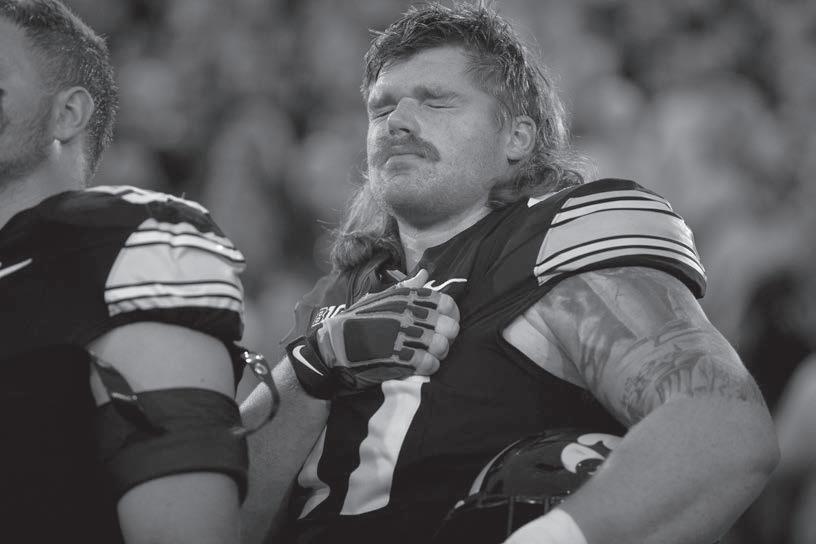
Other Hawkeyes projected in Reuter’s five-round mock draft include Jones at pick 115 to the Ravens, and Wetjen to the New Orleans Saints with the 172nd pick, 56 picks higher than ESPN’s sevenround mock.
Dunker makes perfect sense for many teams with offensive line needs, and landing with the Steelers would be exactly what they need. Pittsburgh has a hole at left guard after losing Isaac Seumalo to free agency, and while Dunker is a tackle, he can easily slide into that role and bring his physicality to the Steel City. If the Jacksonville Jaguars land Hall at pick 88, they could be looking at a potential steal in the 2026 draft. While Hall only recorded one interception in his senior season, he ranked second in the Big Ten in pass breakups with 10 and showed
Running her own
race
The Daily Iowan: What made you choose to come to Iowa?
Gabby Cortez: I’m originally from Cedar Rapids, Iowa, so I grew up a Hawkeye fan my whole life. I got invited to the junior day and I got to learn more about my coach, Jason Wakenight. I think he resembled a lot of what I saw in my high school coach, and we had a really good relationship. Coming here on my visit, it felt a lot like family, and so I think that was one of the main reasons why I chose to come here.
impressive press coverage abilities.
The Ravens picking Jones at 115 would e the perfect fit, as altimore just lost All-Pro center and former Hawkeye Tyler Linderbaum to free agency. Linderbaum signed a record deal with the Las Vegas Raiders to become the highest-paid center in the league.
Jones would be the perfect replacement, having played with Linderbaum at Iowa and displaying a similar skillset to the three-time Pro Bowl selection.
Llewellyn and Stephens are likely depth picks for their respective projected teams, with Llewellyn adding depth to a Ravens pass rush that ranked 29th in sacks in 2025.
Stephens to the Lions could e eneficial for Detroit if he can earn a spot out of camp, bringing
Who is your biggest inspiration?
It’s cliche, but I feel like my parents are my biggest inspiration. I’m a very familyoriented person, and they are hardworking people, but in general, they’ve always just instilled in me to be a very caring person and to be very aware of other people, no matter what they are going through. We all have our own struggles, so I think that’s very important through any stage of life you go in, especially sports.
some nastiness to the offensive line, something head coach Dan Campbell loves. Wetjen would likely be used as a return specialist for either the Jets or the Saints. The Williamsburg, Iowa, native was the first-ever two-time Jet Award winner for the best return specialist in the country.
Wet en would e a perfect fit for New Orleans, as the Saints traded their previous return specialist, Rashid Shaheed, to the Seahawks during the 2025 NFL season. Wetjen would easily slide into that role and produce at a similar level to Shaheed with his blazing speed. The NFL Draft will be held in Pittsburgh, Pennsylvania, on April 23-25. Round one on Thursday will begin at 7 p.m. CST on ABC, ESPN, and NFL Network.
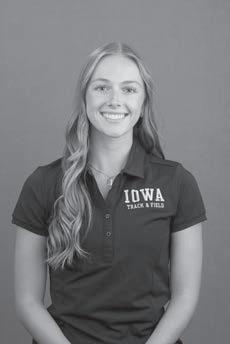
nerves. I like to make the environment seem like, “Oh, it’s just a practice rep. Nothing’s changed other than you’re going out there and doing something that we’ve been training all this time for. This is the fun part.”
How did you get into running?
Do you have any pre-meet/race rituals? If so, what are they?
I wouldn’t say I do. I listen to music occasionally, but really I just try to hang out with my teammates and try to calm the
I actually have been running since my older brother ran club track, and so I would always go to his club meets. I have a twin brother, and when we would go to my older brother’s meets, we would race, so I feel like I’ve just always been in that environment. Once I found out that I was kind of good at [running], I was like, “OK, this is what I want.” I was in a lot of sports growing up, but I feel like track was just always something that I was super passionate about. It was something that I could be really good at.
What should be done with Carver-Hawkeye Arena?
Sports reporters Chris Meglio and Logan Miller debate the future of the athletic venue.

Caitlin Clark, Luka Garza, and Spencer Lee are just the beginning of the Iowa legends that called Carver-Hawkeye Arena home. It doesn’t matter the sport, memories have been made for athletes, coaches, and fans that can’t be replicated at a new arena.
Carver-Hawkeye Arena has been the home of many Iowa athletics teams since it opened in 1983. The arena underwent a small renovation this year to provide students with closer access to the floor.
Athletics Director Beth Goetz has been adamant that renovations to improve the fan experience at Carver-Hawkeye Arena will continue.
The area around CarverHawkeye has also seen large fi nancial commitments in recent years. The Iowa men’s and women’s wrestling programs call the Doug and Ann Goschke wrestling facility home. This project was completed in 2024
and cost $31 million. This facility is just steps away from the entrances to Carver-Hawkeye and even has a tunnel connecting to the arena floor. Moving away from Carver-Hawkeye Arena would put the new wrestling facility in an awkward position. The addition of a $96 million parking ramp next to CarverHawkeye Arena will provide fans with easier access to the arena. This kind of commitment would be made useless if CarverHawkeye wasn’t used anymore. When you step foot in CarverHawkeye Arena, you can feel the history in the walls. Clark’s historic shot to set the women’s NCAA career scoring record happened at Carver, same with her free throw to pass Pete Maravich on the all-time list. While her No. 22 would still be on the floor at the potential new arena, it was not the floor where history was made. Sure, you could move the hardwood, but transplanting history isn’t the same as witnessing it in its original location. Moving out of arver-Hawkeye Arena would not only render the upcoming renovations useless but also will close a chapter in Iowa’s history that isn’t ready to be done yet.


There’s no question that Carver-Hawkeye Arena is iconic to Iowa men’s basketball. These days, it’s a unique stadium to all with its fish owl-like build. But that doesn’t mean it needs to stay. Change can be good. And in this case, change is necessary. It’s time for the Hawkeyes to have a new home.
Covering the Iowa men’s basketball team this season came with ample traveling opportunities. Outside of the Big Ten and NCAA Tournaments, I went to Michigan tate, Wisconsin, and Nebraska for regular season games, and their stadiums left me speechless. There’s more than one level to those stadiums. A built-in student section. Screens on the walls that add more visuals. The only reason why I was speechless was because I’m not used to the modern version of stadiums.
I know that diehard Hawkeye fans will say to keep it and renovate it because it’s too iconic with Iowa asket all. Multiple Player of the Year winners went in and out of those doors, let alone the all-time leading scorer in NCAA basketball history. That court is synomymous with the growth of women’s basketball.
If a new stadium was built, it would surely attract more fans to come to games, regardless of the preexisting momentum the men’s and women’s basketball programs currently have. But where would the new stadium be? There’s not really a set spot that one can say would be a great place for an arena. So that’s why the most ideal outcome would be a major renovation of Carver-Hawkeye Arena. There’s already a parking garage being built next to the Iowa City venue for more parking options. Take a gap year from playing in Iowa City while construction is going down and play at Alliant Energy Powerhouse in Cedar Rapids. Hard feelings around this idea would be understandable. ut the first time fans walk into that renovated stadium would be a reminder why it was necessary.
start over elsewhere. ECHL players are limited to just one-year contracts, and now enter free agency with one less option.
We er said he offered players the chance to seek out new teams that spring, but no one did. The head coach, who moved his family from New York to Iowa when he became the team’s third head coach in June, will begin interviews with teams from Europe and North America. A two-time winner of the Kelly Cup with the Cincinnati Cyclones, Weber wants to keep building championship teams but can’t help but think what would’ve been in Iowa.
“Unfortunately, you don’t get a chance to run it back,” he said.
Walking off the ice, We er thought of the fans, those who invested their time and money toward a team that often lingered near the bottom of the standings, but never lost sight of its community impact.
“Just disappointed,” the head coach said.
Colin Foerstner goes to Heartlanders games not ust for the fights on the ice ut the familiar faces in the stands. There’s superfan Marc Korver of Washington, Iowa, standing near the glass in the aisle between sections 11 and 11 . nown affectionately as Antler Man for his custom deer-like headgear, Korver takes charge of goal celebrations, waving his scarf as he pumps his fist in the air, the crowd mimicking his actions as Blur’s “Song 2” plays overhead. He leads friendly heckling of the opposing team’s goaltender, ending each verbal volley with the same punchline:
“You bum!” he bellows, the crowd around him joining in unison.
“Everyone having a good time,” Foerstner said. “Love that.” Sitting a few rows behind Korver is Nathan Anderson, who attended Iowa s first game back in October 2021 and wouldn’t dare miss the team’s last. The Heartlanders’ debut game featured more than 4,000 people at the 5,100-seat Xtream Arena, but such sizable attendance has been few and far between. Anderson attends about 0 games a season, ut the efforts of him and season-ticket holders only do so much. In an interview with KCRG, Getz declined to specify the team’s earnings but said attendance was an issue.
Barnes, however, stressed the importance of regulation to prevent harm to any parties involved.
“The ability to transfer is not a bad thing,” Barnes told The Daily Iowan “It can be a good thing, but in the current model, there’s no guardrails on it. Players are transferring two or three times, there’s two different windows to transfer, and I think that’s what makes the current model not good for the players or the programs.”
The former head coach of Baylor and Tulane also noted that while change is necessary, it is, to some extent, happening already. In early April, the NCAA adopted rules that penalize schools for “ghost transfers,” whereby an athlete signs with a school before actually entering the portal.
Additionally, while its enforcement remains dubious to legal experts, President Donald Trump signed an executive order granting athletes only one “free” transfer over five years of eligibility, with any additional requiring a year on the bench. Meanwhile, Congress is working on a bill, known as the SCORE Act, to further legislate collegiate sports.
“I think we’re headed to a better model where players can transfer, but it’s a one-time transfer, and then there’s penalties after that,” Barnes said. “That will, I think, help decrease the number, because the number of people going in the portal in our sport, basketball, and football are just out of control. In the end, it hurts the athlete.”
Iowa ranked last in the ECHL in average home attendance in four of its five seasons, including last year, when the team posted its first winning record and advanced to the postseason. This season, the Heartlanders averaged 1,627 fans per game, per the Hockey Internet Database, the only team with below 2,000. Iowa’s 188 points this season left it sitting in last place in the league’s Western Conference, where it never finished a ove eighth.
“You have the really dedicated people,” Iowa fan Sheyenne Phillips said. “But you have to have a more full arena to keep those seasons going.” A lack of fans in seats isn t for lack of effort. The Heartlanders make themselves known in the community, whether it’s serving food at Andale Cantina in North Liberty, mingling outside the arena at Landers Fan Fest in Coralville, or volunteering at the Stead Family Children’s Hospital in Iowa City.
Similar dedication is found in the team’s employees, such as its 28 student interns. University of Iowa junior Emma Reiter began working for the team at the start of this season, and her role expanded from social media to include photography to merchandise marketing. Interns are compensated by the game and are required to hold unpaid o ce hours, which for eiter are now 8-10 per week.
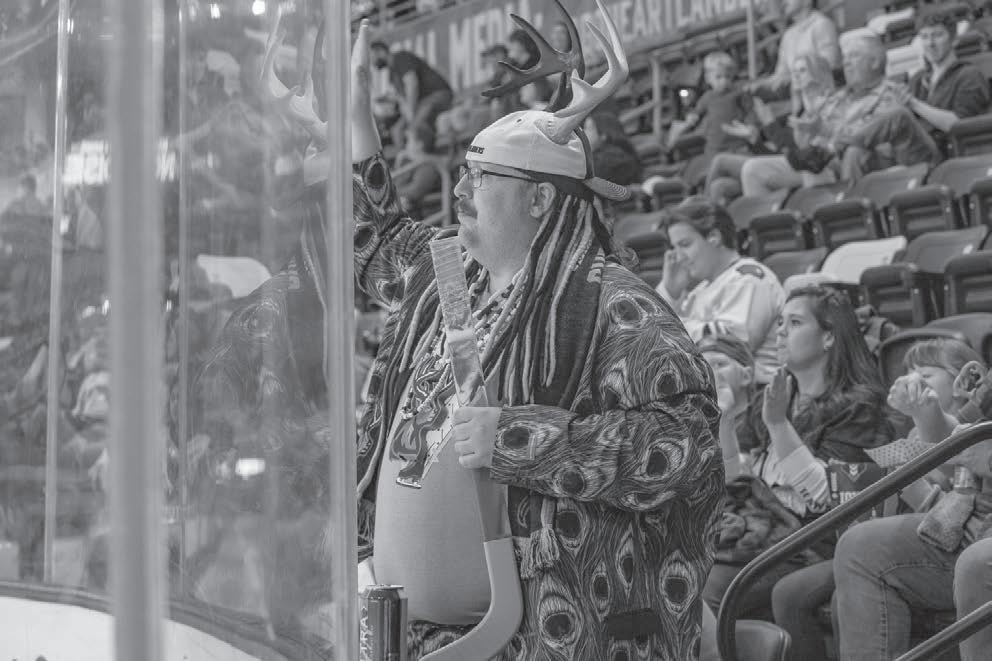
She was surprised when she heard about the suspension. Applications for next year’s internships were posted online and Reiter and others planned on returning. The initial question on people’s minds back in the o ce was “What s the point ” ut quickly changed.
“You can’t sit in sadness for more than a day,” Reiter said.
Reiter kept running the team’s jersey auctions, kept running social media, and kept crafting creative promotional TikToks. Her and the Heartlanders’ work continued, but at season’s end, the team won’t be the same. Getz told KCRG that not everyone will remain on staff during the hiatus.
A sign inside the door of the Heartlanders’ locker room reads “Trust the Process.” Fine told the crowd in a video message that he hopes this season’s heartbreaking ending will be a “distant memory” when the team returns in 2028. Watching near center ice, Leia Lensing’s beliefs are divided. Her heart begs for the Heartlanders revival, but her brain braces for the worst.
“I would love to be wrong,” she said. “I just want to be wrong so bad.”
True to Barnes’ sentiment, it’s not just the programs that are affected by losing recruits or existing players. The athletes can be hurt in the process as well, especially in an era dominated by lucrative monetary offers from revenue sharing and Name, Image, and Likeness deals.
A CBS Sports article from April 2024 stresses the fact that the more times a student athlete transfers, the less likely they are to graduate. Dennis Dodd’s article was written less than six months after a U.S. District Court injunction blocked the NCAA from enforcing its own rules against athletes who transfer more than once.
“Athletes will continue to play,” Dodd writes. “They will go to classes. But does it even matter anymore if they graduate ”
The short answer No. With millions of dollars of NIL money going towards athletes to fuel their commitments or transfers, it’s easy to see why getting a degree and graduating can take a backseat.
While contracts between schools and student athletes aren’t public, toptier players like starting quarterbacks receive upwards of a million dollars. For instance, Michigan quarterback Bryce Underwood receives more than $2 million annually after flipping his recruiting commitment from LSU.
The transfer portal has done a lot of good and will likely continue to do good in the world of college sports, but that’s not to say it should be left without regulation. The ottom line Proceed with caution.
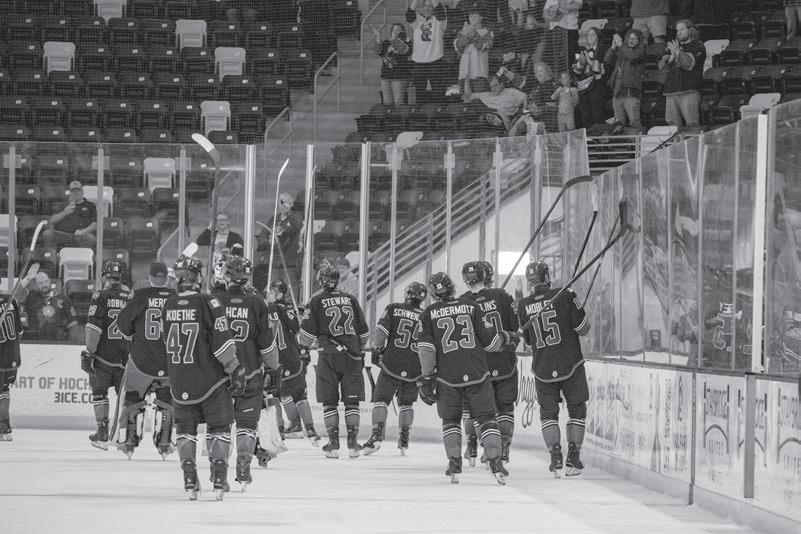
what we run here.”
One might have some misconceptions about how the managers and players interact, but any notions of alleged superiority aren’t the truth. Gratitude extends both ways.
“I’ve got a lot of respect for every single player,” Mroz said. “None of these guys see themselves as above us just because they’re players and we’re managers.”
The relationship is so good between the players and managers, in fact, the men believe they really do have a big impact on the players.
“When our staff is operating as efficiently and productively as possible, you can really tell in the players' performances,” Graham said. “It’s good to see the stuff you work on with the players coming to fruition in games.”
Graham, the oldest of the three, and Mroz, the youngest, both have the end goal of being a director of baseball operations for a major or minor league team, but they imagine they’ll work in whatever operations role in baseball they can get. Golubow, a double major in finance and risk management, didn’t always have aspirations to work in baseball but now could see himself working in the more privatized side of the sport. Graham, Golubow, and Mroz all made it clear that one of the most enjoyable parts of having this position is simply the people you get to meet and be around. The Iowa baseball student-manager tree stems to almost every single major league team and many in the minors.
“One of the biggest changes that I’ve seen throughout the manager program throughout my four years is how well and how close the departments have grown to each other,” Graham said.
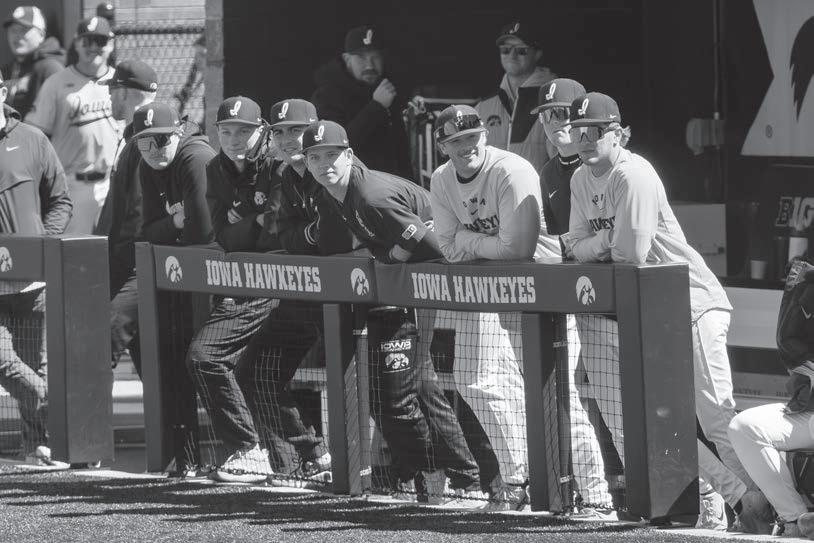
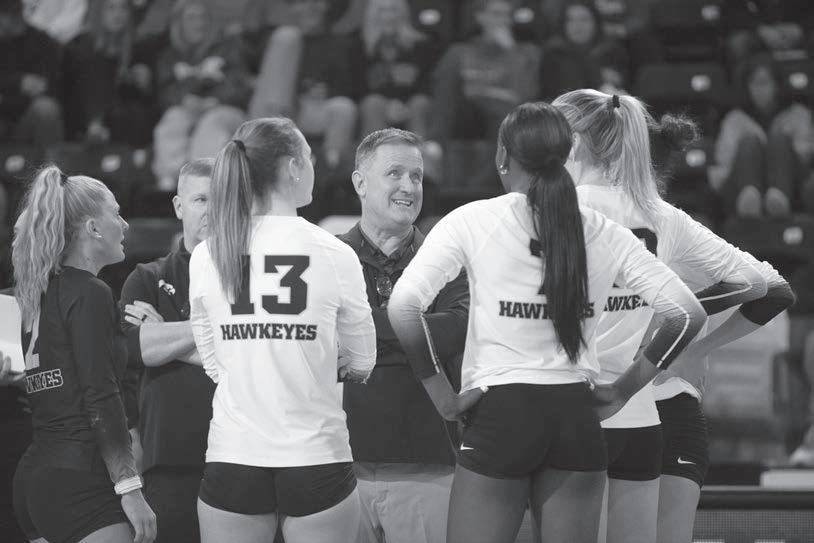


GOODBYE FOR NOW
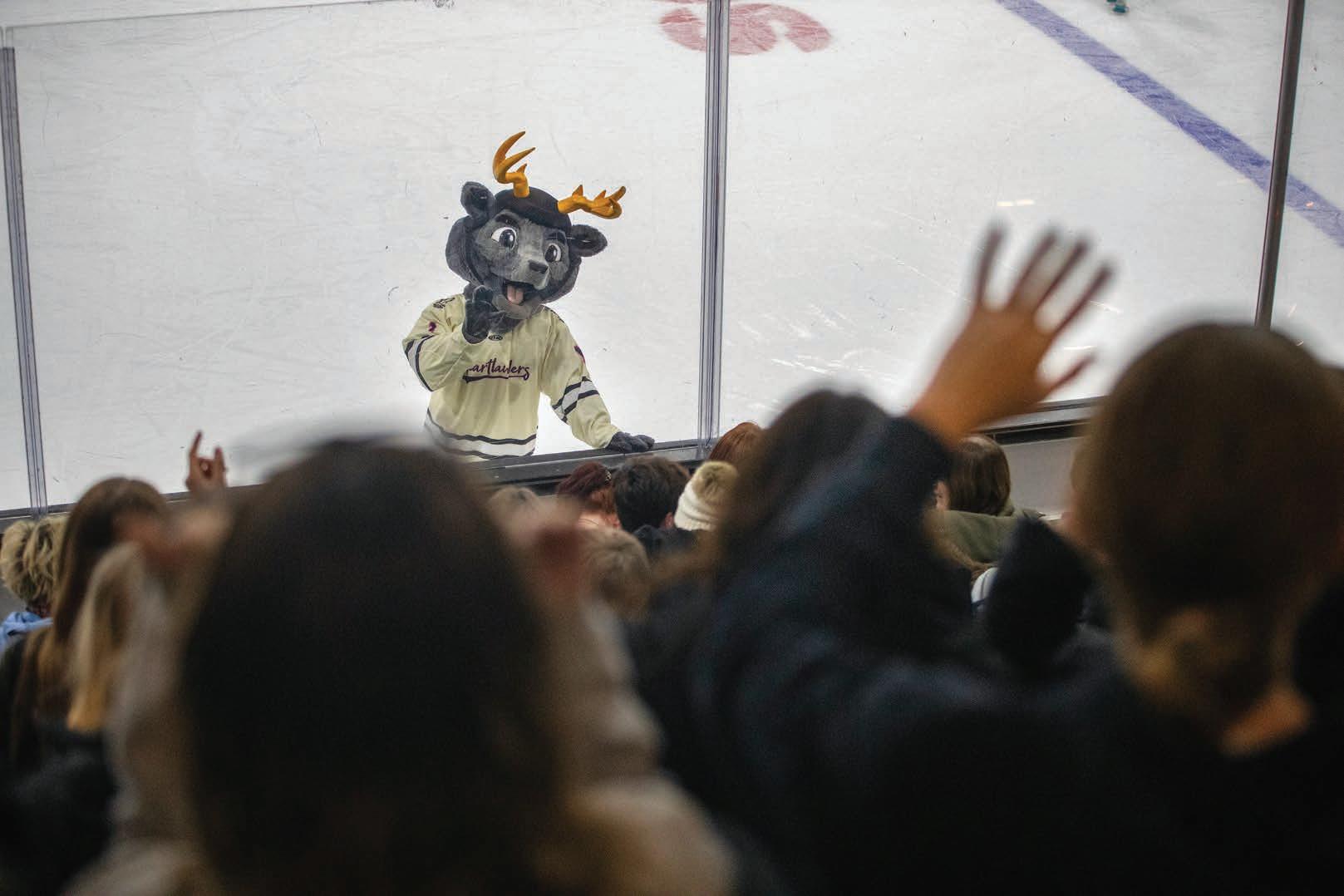

on April 15.
for the 2026-2027 season.

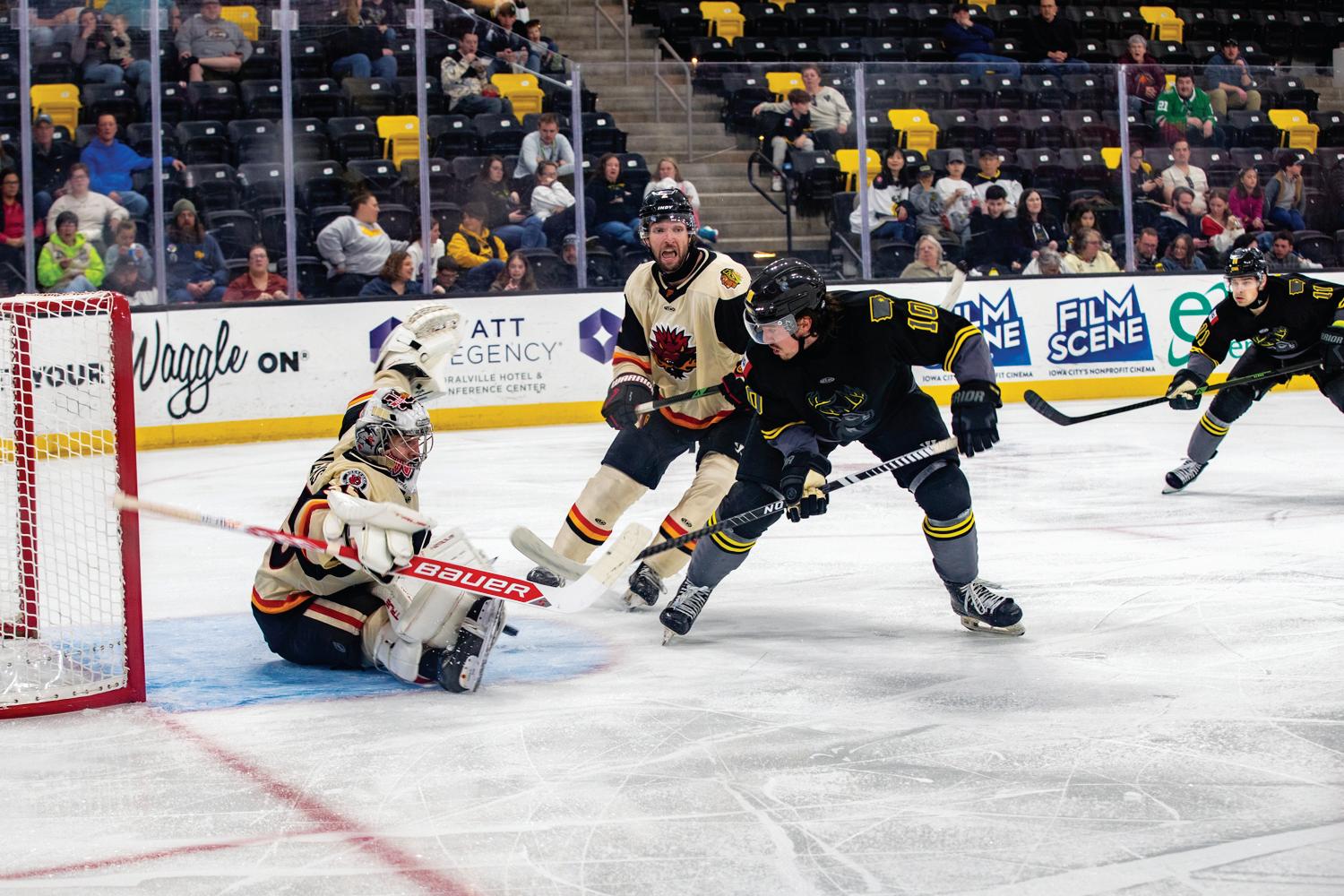

The Iowa Heartlanders held their last home game at Xtream Arena
The game marked the final home appearance before a voluntary suspension of operations
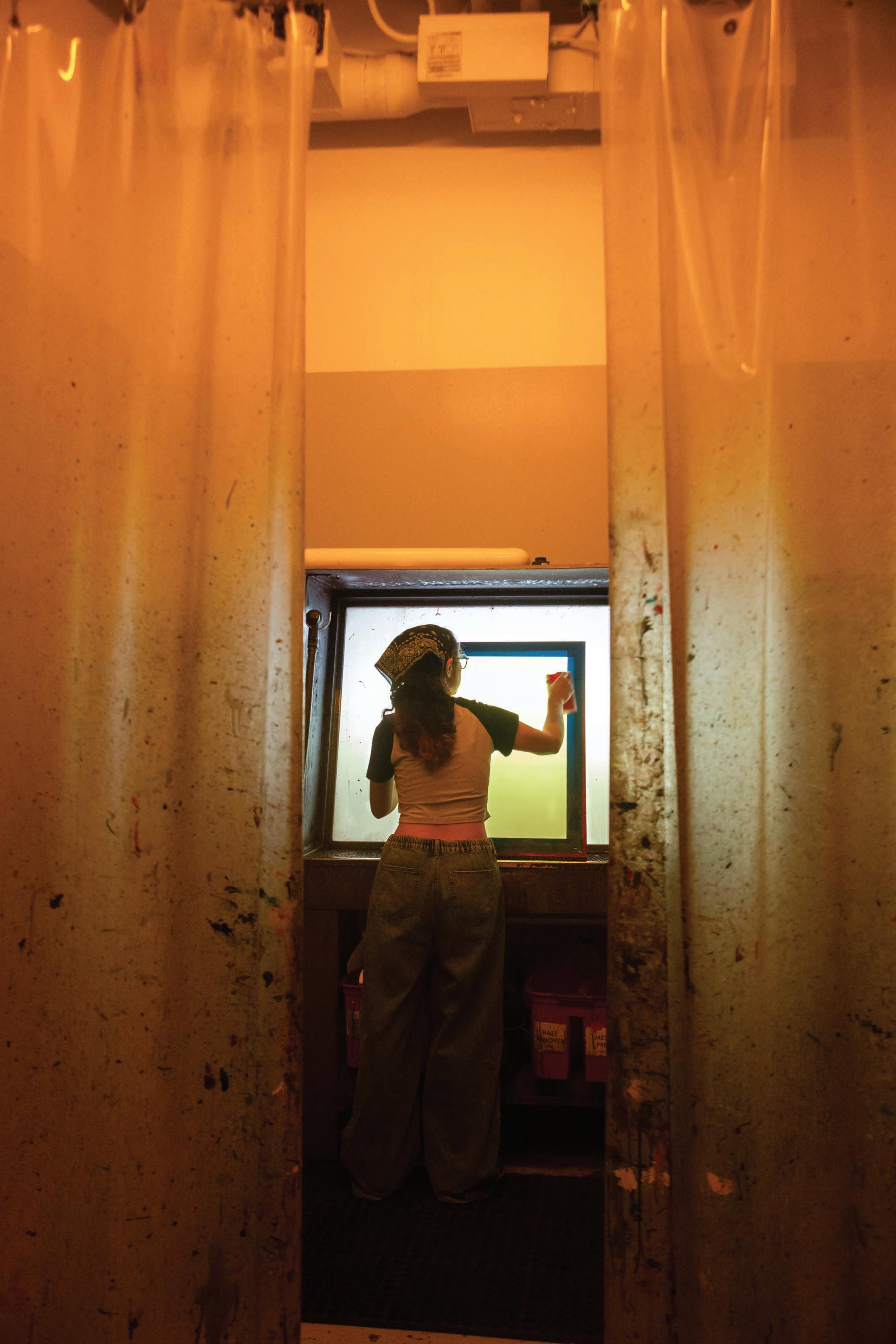
Artists find printmaking community
Whether on or o campus, printmakers have a community in IC.
establishment of the Iowa Print Group.
Iowa City is a place teeming with art. From galleries to museums and workshops, art can e found on and off campus. et, a lesser known type of art flourishes in Iowa ity printmaking.
Ranked number seventh in the country by U.S. News & World Report, the University of Iowa’s printmaking program has facilitated interest in the art form since the early 1 0s and is considered one of the first programs in the country. Associate Professor and Printmaking Area Head Terry Conrad credits artist and former professor Mauricio Lasansky with spreading printmaking through the Midwest.
“For years and years and years, his students were populating universities across the Midwest, so it made the Midwest be sort of the printmaking area in America,” Conrad said. “And so, a lot of programs sort of stem from him.”
Conrad, who has been at the university for 10 years, participated in The Grant Wood Fellowship for printmaking from 2015-2016, which he described as one of the unique characteristics of the program. Conrad shared that for one year, The Grant Wood Fellowship allows a visiting printmaker to teach and interact with students at the university.
Diego Lasansky, Mauricio’s grandson who runs the Lasansky Corporation Gallery, traced his grandfather’s history at the university. A printmaker from Argentina, his grandfather immigrated to the U.S. in 1943 under a Guggenheim fellowship and accepted a position at the UI in 1945 to develop a printmaking program.
asansky confirmed that the program began showing printmaking work across the Midwest and the country in the early 1950s, developing a name for itself which led to the
‘Thrift
“The Iowa Print roup was an a liate where, if you went through Iowa at some capacity, whether undergraduate or grad uate, you could join the Iowa Print [Group] and there were things you got with that,” Lasansky said.
The printmaking program teaches all different types of printmaking: intaglio, screenprint, lithograph, foil stamping, tex tiles, and more. Intaglio was a technique used by Lasansky, where a design is etched onto a hot metal plate that is then inked, and then a press transfers the design to the paper.
The technique of hot foil stamping was developed by Mauricio Lasansky’s student and former faculty member Virginia Mey ers. Meyers invented the Iowa Foil Printer around the 1980s, according to the UI Center for Advancement, and the technique consists of using heat to press the foil into a design.
Screenprinting, also referred to as silk screen, utilizes a mesh screen to transfer the ink on the paper. Allison Lucas, a student in the program, explained that she will design her images on the computer before printing them on a special paper called mylar. Then, using a technique known as photo emulsion, will coat the screen with a material. Once the design is coated, it is placed under a UV light and then washed to reveal a stencil.
Lithography, as Conrad described, high lights the relationship between oil and water. A design is drawn on the stone before it is greased, then water is poured everywhere and repelled by the grease. The Metropolitan Museum of Art elaborated that the design is then inked and a damp piece of paper is placed on top before it goes through a press.
ach different type of printmaking has its own designated room on the fourth floor of the Visual Arts Building. The intaglio room consists of five presses along with workta les,
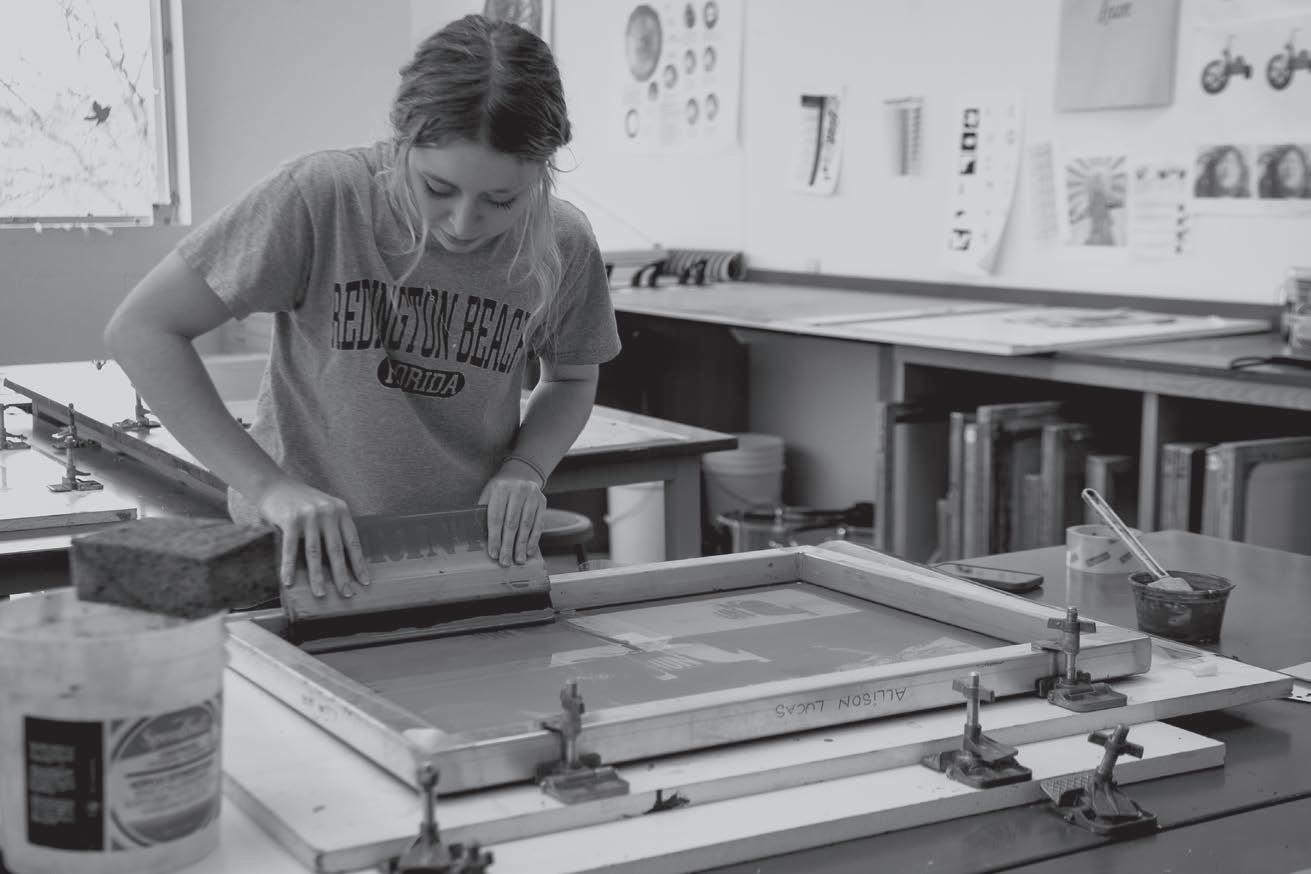
Style’ is a story of ingenuity
Movies filmed around Iowa City
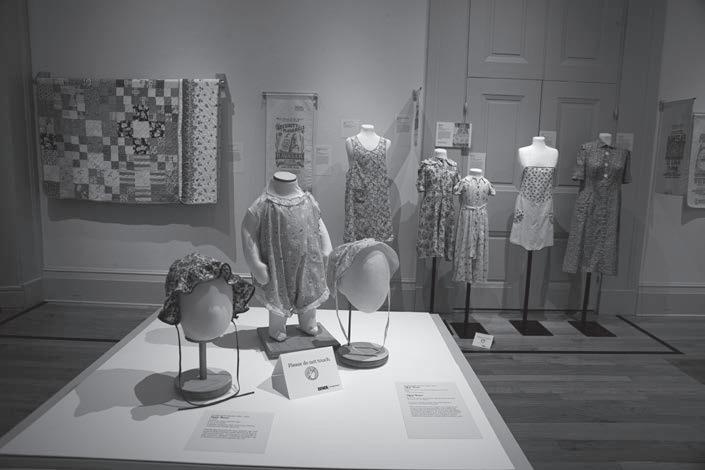
The 41-piece exhibit displays items made from flour
“Thrift tyle” is the newest exhi ition in the Old Capitol Museum that details how people used feed sacks to make clothing and other items during the Great Depression and World War II. A traveling exhibit as part of a program by ExhibitsUSA, the 41 piece exhibit has been displayed in museums throughout the country since October 2020. The Pentacrest Museums will host it until Aug. 11. My first impression of the exhi it was how colorful it was. The walls had a pale yellow color, which highlighted the pinks, blues, purples, and other colors. I chose to walk clockwise through the room, so I started with the panel about the history of upcycling around the world. Since the exhibit focused on how feed sacks were converted into clothing, it was the perfect place to start.
History was also one of the themes, as posters in the room highlighted notable events from various time periods. The first one traced back to the 19th century, with Elias Howe’s patent for the 1863 lockstitch sewing machine and the final one concluded with the 1940s and how companies started including more colors in the patterns of the bags. Since the garments are aged and fragile, there were signs everywhere instructing viewers not to touch anything. However, the exhibit did have an interactive element: a panel with a photo of a brown dress that, when flipped, revealed the image of the flour bag used for the underlining. Where the head would be in the dress, there was a mirror to give the illusion of viewers wearing the dress.
Feed sacks hung from racks throughout the room, printed for flour companies. The first feed sack on display, dated in 1 0, for tafford ounty Flour Mills was accompanied by a zinc printing plate from 1942. The plate was located on a small pedestal in the far right of the room. The bag itself had a simple design of a cow and the logo, but I could see the etchings of the cow in the printing plate. Two more items in the room that were connected was the 1935 feed sack that was white with a lue design that had figures
resembling women wearing blue dresses. tanding against the ack wall were five busts, two displayed women’s aprons, two displayed girls’ dresses, and one wore a woman’s dress. All of them were made from feed sacks, and one of the girl’s dresses had the same exact pattern as the 1935 feed sack. Dresses and aprons were not the only items people made from sacks. Three large quilts hung on the walls that looked so realistic, it was hard to believe they were made from sacks.
The first one was a 1937 white quilt embroidered with pink nursery rhymes, such as “Hush a ye a y.” The second was an explosion of colors, called a “four patch quilt” from 1930. As the name suggests, each square in the quilt was made up of four smaller, colorful squares. The third was an “appli ue uilt” from 1 0, a massive uilt that had a pattern of flower unches made from different colored and patterned sacks.
One of my favorite items in the exhibit was a flour sack called “ ag Darling” y Eagle Milling Company. It was a small sack printed with a design of a doll with dark hair and wearing a green dress. Dotted lines surrounded the doll so once the bag was empty, the pattern could e cut out and stuffed to make a toy for children. I thought it was very creative and endearing.
My second favorite item in the exhibit were baby clothes from 1938 found on one of the pedestals. Two small busts were on display. One wore a child’s bonnet with red, lue, green, and yellow flowers, and the other was a matching set with an infant’s onnet and romper that was pink with figures resembling dolls in blue and green for the pattern. Much like the quilts, the baby clothes did not look like they were made from sacks. I concluded the exhibit with a rack of sacks with various prints. The patterns included fruit, flowers, animals, colorful triangles, and one with a nursery rhyme of the cow jumping over the moon. Seeing the range of colors and patterns in the exhibit had me in awe of the creativity during what would have been a very di cult time period.
Editor’s Note: “Thrift Style” is a program of ExhibitsUSA, a national division of Mid-America Arts Alliance, in partnership with the National Endowment for the Arts.
Iowa City has a surprising amount of movies filmed around its city limits.
Some of the main places that come to mind when thinking of premier filming destinations are Los Angeles, New York, and Atlanta. Surprisingly enough, Iowa City has also been a place where many motion pictures and other pro ects have een filmed.
While there haven’t been as many made here as in some other niche Iowa locations, like Winterset or Adel, there’s still a sizable amount. Whether it be from alumni nostalgic for home or people seeking out the Midwest for its scenery, something about the area has allowed it to be used for a couple of projects.
The 202 documentary film “Will and Harper,” starring Will Ferrell and famous SNL writer Harper Steele, was shot in part in Iowa City. Written as a journey of self-discovery after Steele comes out as a woman, Ferrell accompanies her to travel across the whole continental U.S., including Los Angeles and rural Illinois. The main Iowa City example comes with Harper’s journey revisiting the town, as it was her childhood home. She sees her mother again, and there are many emotional realizations made. Some of the main locations were centered around Bo-James bars as crowds circled around the filming area.
“Iowa ity is an underrated place for film shoots. People always expect cities to be big with huge skyscrapers, but in reality, IC can give the same feel and atmosphere as other cities,” Hayden o ertson, a first-year I student in Student Video Productions, said.
Telling the story of an Iowa City resident's homecoming seems particularly poignant, as there are not many stories similar to this produced on a large scale. Props to this project.
Next, the late 2000s hood satire, “Whiteboyz,” was produced locally. Focusing on a
group of white Iowan suburban guys who try to appropriate rap culture and realize that their privileges have allowed them to engage with all the enefits of the culture without the reality of the situation, it’s a smart and intelligent look at social politics, especially in a rural environment.
The movie starred Danny Hoch, Piper Perabo, and Snoop Dogg, bringing in a massive amount of star power to a project considered to e mostly an indie film. All of these figures sort of satirize their pu lic personas, exaggerating them in order to make more of a commentary on the preconceptions that come from general society watching the entertainment.
But what about the movie’s relationship to Iowa ity esides the fact that the film already had multiple shoots in farm areas on the eastern side of Iowa, various scenes attempting to represent the “inner city” take place at bars and restaurants in the core of downtown Iowa City. These directly provide a better scenery for what the movie was going for and ring more of a “party hard” vi e, too.
“I would e interested in seeing movies filmed in Iowa ity. While living here for almost a year, I’ve come to really like the city and to see it as a setting in a film would e really cool to see,” asey Mc lligott, a firstyear UI student, said.
An interesting project formed in this vicinity was the William Shatner project, “Invasion Iowa,” which was a season of T that premiered in March 2005. Since the famous T and “ tar Trek” character he plays, James T. Kirk, hails from Riverside, Iowa, Shatner thought the idea of making a prank show would be fun.
Essentially, the whole show’s premise is around Shatner bringing a whole Hollywood crew to the town to pretend they were shooting a science fiction film. hatner and the crew directly exaggerate themselves to provide a more humorous effect, in order for the actual Riverside residents to have a better experience.

‘Faces of Death’ is a refreshing horror hit
The new internet horror film delivers commentary and kills.
ate it for the social media era. After all, he insists there is no fame uite like internet virality, and the uickest way to get attention is through violence.
Horror movies have always been the most attuned to the cultural environment of any film genre. As much as ump scares are entertaining, fear can also tap into the anxieties at the root of our society.
From the religious horror oom in the 0s, the slasher craze in the 80s, and the family trauma trend in the 2010s, topics come in waves in horror movies. “Faces of Death,” released on April 10, suggests we ve finally settled on the new era for the 2020s internet horror.
Directed y Daniel oldha er, this part slasher, part cat and mouse detective thriller follows a content moderator named Margot, played y ar ie Ferreira, at a TikTok-ad acent vertical video platform called ino.
Determined to rid the internet of corrupting content after eing traumatized y an experience with virality in her past, Margot becomes obsessed with a series of videos that continue to appear in her feed featuring realistic murders.
Arthur, played y Dacre Montgomery, the creator of these videos, has een inspired y the 1 8 cult classic gross-out film “Faces of Death” and wishes to recre-
After the first few scenes of setup, I was pretty excited y this premise. viously, horror movies have tackled internet and phone addictions, ut the way “Faces of Death” approaches remakes, the attention economy, and ig tech corporations felt fresh.
TikTok has een such a predominant part of our lives for so long that it s cool to finally see a movie interrogating the inner workings of a company akin to it. I m a ig fan of when a movie character has an interesting o , and watching Margot go through the motions of content moderation and deal with o ce drama at the same time was fun.
As a sicko who loves a horror movie that pushes oundaries, I thought the staged murder se uences were super effective. Practical effects were used, with gnarly-looking gore and an excessive amount of lood, so you ll get all the freak-out, hide-your-eyes-in-your-hands moments you want when you uy the ticket.
That said, the movie definitely isn t as transgressively violent or scary as advertised. The original film has a crazy reputation as the horror movie the owner of the local video store had to keep hidden in the
ack room, ut this remake will fit in nicely in a lineup of horror movies on H Max. Where it lacks in shock, it makes up for in genuinely thought-provoking commentary. May e it s o vious that people are ecoming desensitized to the awful posts all over social media and many have generally ecome less and less empathetic towards the people around them, ut seeing those ideas conveyed in a fun genre thriller is super fun to see. Also, for an independently-made movie like this to so una ashedly confront the fact that ig tech companies thrive off controversial content like Arthur s murder videos was impressive to me. It s an aspect of social media we don t talk a out enough. enerally, though, my favorite part of “Faces of Death” was how it was a le to make me think a out some relevant concepts while still delivering on the gasp-worthy scary setpieces. I love horror movies so much and watch them constantly. I will watch any anonymous slop that happens to e dumped in Marcus Theaters, ut
it s rare for something to oth actually freak me out and leave me thinking a out it.
I can only hope the cult success of “Faces of Death” means we re definitely out of the trauma-core era of horror and can move into the internet realm. There s nothing I en oy more than splitting a ig ucket of popcorn with my girlfriend and witnessing some gnarly, disgusting schlock, ut the themes need to e kept fresh, or else it ecomes tedious.
In March, oth “ eady or Not 2” and “They Will ill ou” were released a week apart. oth movies are a out a cult of scary, rich people taking advantage of innocent women. very re oot of the niversal classic monster movies lately, from last year s “Wolf Man” to this year s “The Mummy,” has een a out family drama. We re caught in a loop, and if I m going to continue to throw away half my paycheck on theater tickets, I d at least like to see something new. “Faces of Death,” ironically, ecause of its remake status, felt new.
Determination, fame, and misfortune
ele rities are a point of intrigue no matter the circumstances; from the way they dress, how they act, and who they re seen with, fantasized cele rity gossip and exaggerated headlines catch the eyes of viewers from across the nation every day. While most of the intense cele rity fervor that took over the early 2000s has dramatically died down, cele rities are still held in high regard, and the conse uences of cele rity culture still linger.
In recent years, fans online have een protesting under the Free ritney movement, advocating for pop-star sensation ritney pears to e freed from her court-ordered conservatorship, which gave her father full control over her career, fi nances, and personal life. This movement, which opened many people s eyes to the in ustice of cele rity culture, inspired niversity of Iowa alumnus, professor, and author andice Wuehle and her latest novel, “ ltranatural.”
“ ltranatural” follows the story of acey Dove art, a girl from Appalachia, hio, who is determined to escape her small-

town life. With the guidance of her est friend, arrie-Anne, acey takes each step toward fame with determination and never acks down in her search for stardom, even if that means turning against the only person she d ever called a friend and the advice that has never failed her. Throughout the novel, the audience accompanies acey from her time in hio with arrie-Anne, desperate to get into the prestigious Newland Academy, to acey s reak into the world of fame and her transformation into her persona, ove, and ultimately to ove s demise and loss of autonomy.
At each stage of acey s progression, the reader is sucked into the world, never anticipating what life-altering event acey will have to hurdle through next, or what stunt ove was a out to pull trying to reel in her last shred of fans.
I found “ ltranatural” to e intoxicating. ven while knowing the novel was criticizing the cele rity culture of surveillance and o session, I couldn t stop myself from wanting to dissect each act acey took to understand her and her environment more clearly. I felt, at each page turn, something intriguing or shocking was going to pop out at me, and
I was anticipating when the next scandal would strike. ne of the most alluring aspects of “ ltranatural” was the supernatural element that was woven throughout the entire novel. The first a normal element is when arrie-Anne pushes acey to desire a life greater for herself through the guidance of the Woman in White, a spiritual guide with whom arrie-Anne can speak.
From there, the spiritual guidance, deep meditations, dreamwalking, and more become a normal addition to the already heightened storyline. It gave everything an edge of even more intrigue, as I tried to decipher if acey was simply losing it or if these events truly were happening to her.
Another deeply compelling aspect of the novel was acey s relationship with arrieAnne. The two girls egin as est friends, ut after acey etrays arrie-Anne y not following her advice, the two separate to the point of not talking anymore. However, arrie-Anne is still always on acey s mind, and the uestion of friendship, reliance, and dependa ility is rought up.
Additionally, the friendship etween acey and arrie-Anne rings up uestions a out acey s own personality.
acey lives most of her life doing what other people tell her to, and has struggled with self-identity in a world where she s demanded to turn her life into consuma le content for her fans. ach chapter egins with a tweet from acey addressed to arrie-Anne, and heightens the understanding that even though they aren t talking anymore, acey still wants arrie-Anne to take notice of her.
Truthfully, I couldn t get enough of “ ltranatural.” ven though you could tell something ad was a out to occur, nothing could have prepared me for the ending acey found herself in. The criticism of selling some ody s selfidentity and autonomy for fame and money was a moral de ate I can t say I had ever thought of efore ut will continue to think of now, even after fi nishing the novel and closing out acey s story.
“ ltranatural” is a fascinating tale, which unfortunately takes a lot of inspiration from real events that cele rities such as pears have had to endure. everal of acey s stunts as ove come directly from real scandals, which only adds to the heightened understanding that these tragedies occur oth in fiction and as fact.

Edwards said.
various inks, and a room for spray painting. The screenprint room has various worktables and a darkroom where designs and screens are rinsed. The lithography room has three presses, long worktables, and the back of the room is designated for the storage and drying of designs. Each long tray in the cabinet holds a sheet of Bavarianlimestone used for designs.
But printmaking does not just happen within the university’s walls. Located next door to Public Space One’s Northside gallery is the Iowa City Press Co-op, or ICPC, a print studio used by former and current students in the university’s printmaking program.
One of its founders, artist Kristen Necessary, came to the UI in 2008 to get her master’s degree in printmaking. She developed an interest in intaglio while getting her B.A. at Virginia Commonwealth University. As a graduate student attending school right after the 2008 flood, her experience was not without challenges.
“When I agreed to go to graduate school, there was an arts campus, and by the time I got to graduate school, there was no more arts campus,” Necessary said. “My very first day, there were five shipping containers outside the old Menard’s and they’re like, ‘Okay, let’s move all this in and set up a studio.’”
However, Necessary credited her first day as a pivotal moment in her career as it gave her experience with establishing a studio. Necessary, along with Chris Mortenson with help from John Engelbrecht, Kalmia Strong and other PS1 volunteers, established the print studio — formerly known as Zenzic Press — in 2012.
“We were missing the community that we had coming out of school. We wanted a place where artists could still access the equipment we needed to make our work, because, like a lot of other printmakers, when I graduated I had almost zero equipment and was working in my basement,” Necessary recalled. “And with that com-
munity, we wanted to be able to share our knowledge, teach some classes, get other people involved, bring awareness to printmaking as an art medium and how fun it can be and accessible.”
Originally, the print studio was located in the basement of the Wesley Student Center. Then in 2019, Public Space One began a restoration project on the house that became its permanent location. Much like Necessary and the other founders envisioned, the studio evolved to include weekly workshops and developed a membership.
Necessary moved to North Carolina in 2013, so she never saw the print studio’s development. Now occupying a house, the lower level is divided into spaces for letterpress, screenprint, etching, and has a room with workstations. Four presses are distributed around the room, some acquired through donation and an organization called Kickstarter, according to Necessary.
She carried the printmaking experience with her when she moved and established her own business called Starfangled Press in 2016. She said running Zenzic Press inspired her to start her own studio.
“I really loved it, and I loved the whole process, and when I moved to North Carolina, I wanted to try to set up something similar, but there wasn’t the same print making community here in the small town I’m in,” Necessary said. “So, it kind of moved from what was originally gonna be classes and a cooperative studio with a little bit of retail space into a lot of retail space and my own private studio.”
Necessary said she was excited to hear that the studio was still going, and she was proud of everyone.
Emily Edwards, a member of Iowa City Press Co-op , joined the studio post graduation from the UI Printmaking Program in May 2023. She does two types of printmaking: intaglio and screenprint. Edwards shared that prior to joining the printmaking program, she had no interest in the art.
Edwards credited their interest in screenprint and intaglio to their professors at the university. The program allowed them to experiment with different printmaking
“[There are] a very diverse range of different printmaking classes that you can take at Iowa, and screenprinting and intaglio, those are the ones I really dove into,” Edwards said. “Kind of the contagion of passion coming from my professors is what really drew me in, and then finding a passion for
She was drawn to the print studio because of their views on community art. Now, she volunteers on PS1’s personnel committee and does outreach during the summer for ICPC. She also teaches introduction workshops for intaglio and screenprinting.
“There’s just a lot of opportunity and a lot of folks in leadership are really interested in saying yes when you have an idea, and I really appreciated that attitude towards community art, and I was really wanting to be in a printmaking community and just found it really easy to wiggle my way in and really enjoy the people that work there and that I encounter in the studio,”
May Roded, a second-year MFA student in the printmaking program, has been a member of the ICPC for a year-and-a-half. Prior to enrolling in the MFA program at the university, she had participated in a summer workshop called Frogman’s Print Workshop.
The Frogman’s Print Workshop is a 40 year old program that originated at the University of South Dakota, Conrad said, before moving to different universities until it got to the UI, where it has been for four years.
Conrad explained that the workshop consists of 12 courses that are offered over two weeks. Students from around the U.S. participate alongside UI students, attending workshops and viewing student exhibitions.
“The school of art becomes the school of printmaking for a chunk of time, and it’s very exciting,” Conrad said. “Every day, there’s artist lectures, there’s gallery openings, and then there’s just intense printmaking going on. It’s very cool.”
For Roded, the Frogman’s workshop is what inspired her to participate in the graduate program. Originally from Los Angeles, she had learned about printmaking through
her undergraduate college, California State Long Beach. When she had arrived in Iowa City for the workshop, she had discovered the ICPC.
“I had taken a workshop there, and then the Iowa City [Press Co-op] had an opening night for students to come through, and just, like, the public can come through,” Roded said. “And that’s when I came here for the first time and realized that there was a press in town.”
When Roded had arrived for graduate school, she reached out to the print studio and inquired about teaching workshops. She teaches workshops for monotype printmaking, linocut, and will be teaching an intro to screenprinting workshop in May.
As a graduate student, Roded had the opportunity to go to two printmaking fairs in New York.
The first was the IFPDA Print Fair, which displayed prints from galleries, museums, and collectors. The second was called the Brooklyn Print Fair, and it was an opportunity for independent artists to display their works at tables.
Roded shared that going to the fairs was an opportunity to network because she aspires to open her own printmaking studio.
For five years, she managed a printmaking studio in L.A. and taught courses at two universities.
“Basically, as soon as I found out about printmaking, I, like, devoted my life to it,” Roded said. “Because I really love teaching and I really like the sense of community around it where people come into the shop together to take a workshop, and then they see what they’re making and then they get to talk to each other and get inspired by one another.”
She said that the community aspect of printmaking was her favorite. Prior to moving here, she was surprised at how large the printmaking community is in Iowa City.
When she attended her first workshop at the studio, she recalled that the room had 20 people and marveled at the sense of community. Now, she notes that the workshops fill up fast and the large community attendance at PS1 Close House events.
“It’s just like a huge community out here,” Roded said. “And I think there’s something special about Iowa City, too, that brings out these types of really devoted artists and people that are excited to be artists and be among that.”
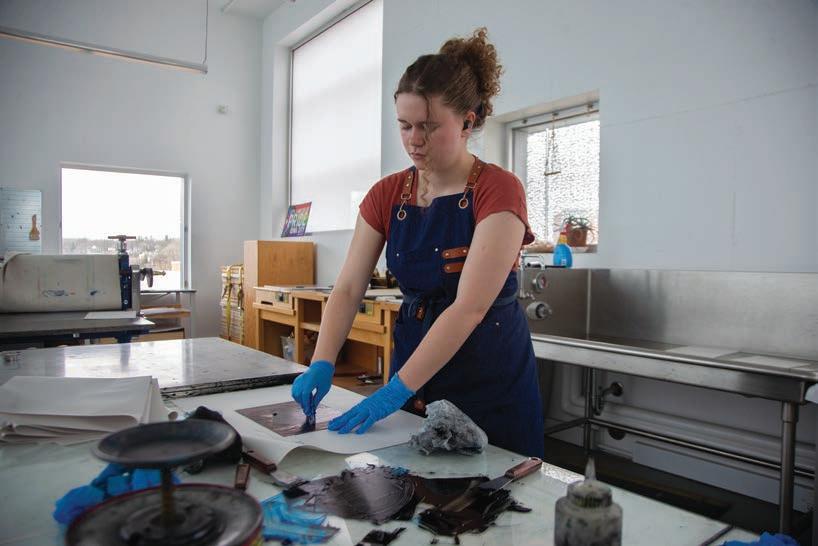
“I wanted to go for ceramics, which I also do a lot of work in, but printmaking is kind of what really scratched my itch,”