Iowa City fare free buses continues riding along
As the city approaches three years of free busing, long-term financial stability still remains in question.
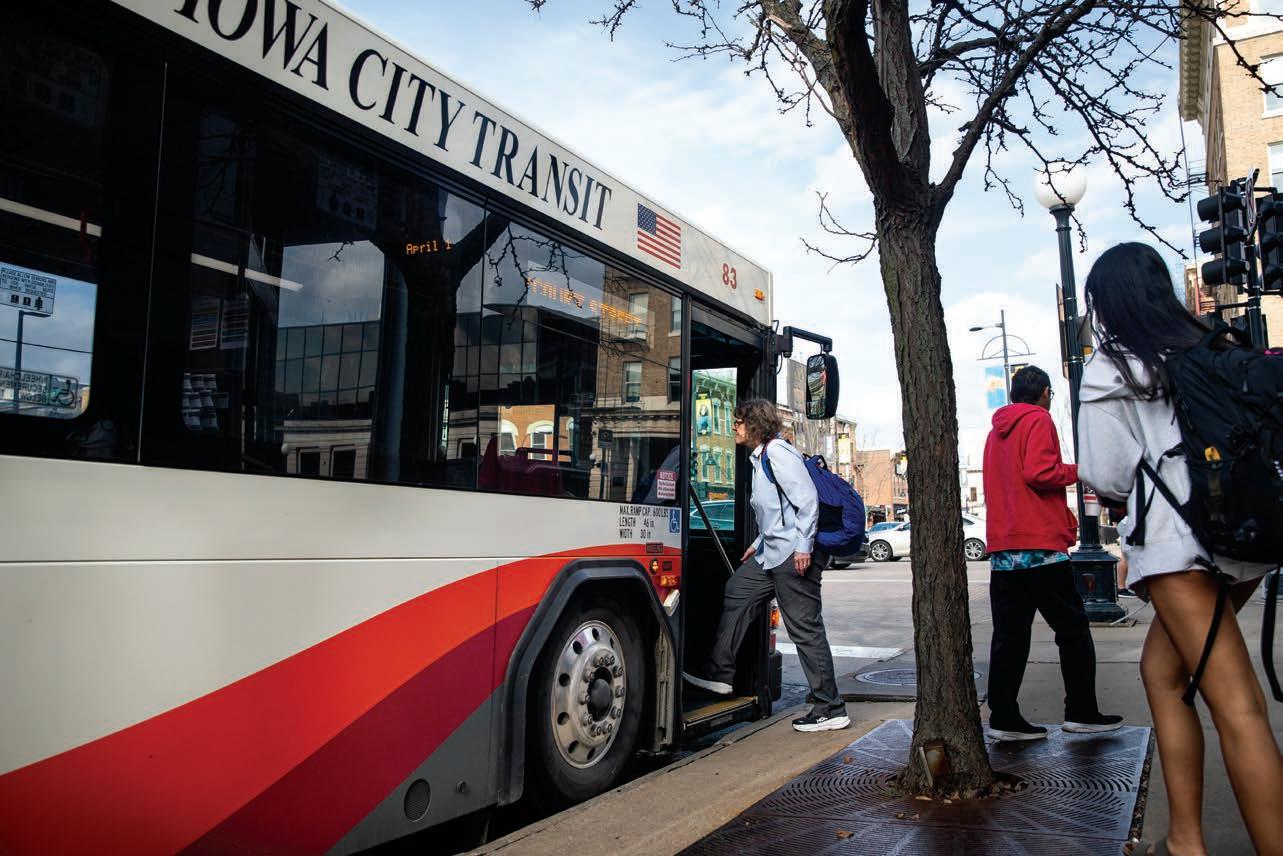
As Iowa City’s fare free bus program nears its third year of operation, the city has reported increased ridership, lowered emissions, and reduced traffic congestion while trying to secure long-term funding to continue the program’s early success.
In the first two years of the program, the city saw a percent increase in ridership on its buses as well as $3 million in savings for residents who took the cost-free buses, Darian Nagle-Gamm, the city’s transportation director, said.
In a June 17, 2025, city council meeting, assistant city manager irk ehmann said the percent increase is equivalent to an additional 700,000 riders. This


increase also meant taking over , vehicles off the road, and the energy use saved is equivalent to that of 3,000 homes, he said.
In the program’s third year and the fi rst since the two-year pilot ended in 2025, ridership numbers have stabilized , seeing a 3 percent decrease in what the city projected ridership to be, Nagle-Gamm said. The program as a whole, though, has exceeded initial e pectations when it fi rst began in August , she said.
UI continues license plate surveillance
Students raise concerns as UI keeps the cameras on campus.
“It's been a wildly successful program, I think it's been overwhelmingly popular, and we would all love for it to be able to continue into the future,” Nagle-Gamm said. Nagle-Gamm described transit funding as a “patchwork quilt” that draws from a variety of pools, including from the federal, state, and local levels. At all of these levels, there are various challenges the city is facing as it evaluates the future of the fare free program.
UI reacts to the success of Artemis II
UI researchers will help shape future lunar missions after Artemis II.
After the success of Artemis II, University of Iowa alumni and staff are looking forward to the contributions they can bring to future lunar missions.
The Artemis II crew splashed down on April 10 after a -day flyby of the oon, setting the stage for future missions to establish a long-term human presence at the lunar south pole and to test technologies for eventual missions to Mars.
Two months ago, UI alumnus and University of Wisconsin-Madison engineering professor, Dan Negrut, helped create simulations for a lunar vehicle potentially set to be used in Artemis V.
Negrut said the project has since been sidelined, as NASA shifts its focus more toward accelerating moon landings with lunar landers before expanding to lunar vehicles.
Negrut is now working with Intuitive Machines to develop simulations for lunar landers. Negrut’s simulations are not assigned to a single lander, but will be used to support a broad range of landings on the moon.
We help with the last five seconds approaching the moon and the way it makes impact,” he said. “It’s important because the instruments from the lander have to be aligned a certain way relative to the position of the sun to land at a certain location.”
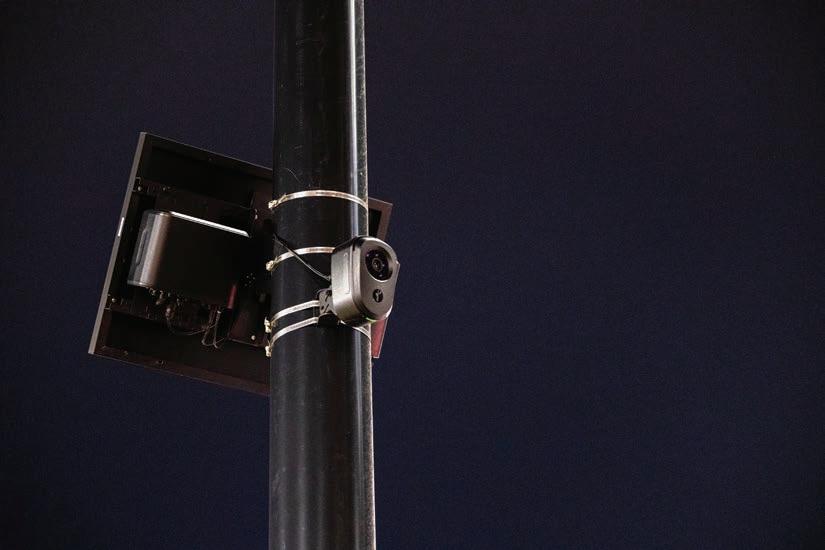
As debates over use of surveillance technology, such as Flock Safety, continue across the state, the University of Iowa remains one of the few local institutions still using advanced license plate readers, or ALPR cameras, even as nearby communities scale back their use of the cameras.
The City of Coralville terminated their contract with Flock in March, after months of pressure from community members to take the cameras down. The City of Iowa City has never had a contract with lock, and City anager Geoff ruin said the only cameras active in Iowa City are located on university property.
The City of North Liberty currently has 12 license plate readers in operation, according to Flock Safety.
The license plate readers are designed to capture license plate numbers and vehicle characteristics to assist in law enforcement investigations, according to Flock Safety.
The university is currently operating 29 of the plate readers around campus.
Members of the University of Iowa Young Democratic Socialists of America chapter started a campaign against the university’s use of the license plate readers at the beginning of the semester in January, pointing to fears that surveillance data could be misused.
UI fourth-year student Dave Cacho Serrano said a driving motivator for the campaign was the arrest of Jorge Elieser Gonzalez Ochoa in October 2025. Gonzalez Ochoa was arrested at Bread Garden Market in downtown Iowa City by plainclothes ICE agents, sparking concern about continued ICE activity in Iowa City and around campus.
“We felt that it was a moral obligation to support immigrant communities and students,” Serrano said.

Negrut said NASA’s pivot is likely a result of changing priorities with NASA’s new administrator, Jared Isaacman, who began the role in December 2025.
Intuitive achines recently received . million from NASA to use their landers to deliver seven science and technology payloads to the moon’s south pole accord to NASA.
None of Intuitive Machines’ landers have been assigned to a specific Artemis mission rather, through the . million in funding, they support the broader Artemis goal of establishing a sustained human presence at the lunar south pole.
hough he is in a flurry of changing deadlines and priorities, Negrut said he is still excited to be a part of lunar missions after the success of Artemis II.
“It just brings people together and motivates young people too,” he said. “It gives them a dream of what’s possible, and a chance for them to get excited about things and get into science and math.”
Richard Dvorsky, the research administrator for the Iowa paceflight aboratories, said he is particularly e cited for humans returning to the moon after a long hiatus, with the last manned mission taking place in 1972.


to share information about camera locations or usage policies.
hese are the kinds of abuses that should give everybody pause,” she said.
he I Iowa oung emocratic ocialists of America chapter uestioned whether the technology is necessary, arguing that traditional surveillance methods could achieve similar public safety goals without the same level of
data collection. We can still have a commitment to public safety without the risk of misusing people’s data,” Golden said.
owler said the state of Iowa currently lacks a statewide law regulating license plate reader usage, leaving decisions largely up to local governments and police departments. he AC has called for comprehensive legislation that would establish clear guidelines on data access and usage of surveillance technology.
If law enforcement chooses to use this kind of surveillance, there needs to be clearer guardrails,” owler said.
It really improves the public outreach,” he said. lementary school kids are more engaged in the space sciences. It’s good too in that it shows that human lunar e ploration is not necessarily ust aspirational. here’s actually a plan. It’s operational at this point.”
vorsky said the I’s P Program, a funding initiative supporting research in space and aerospace science, has funded the development of lunar instruments across campus, especially in the physics and astronomy department, since receiving . million in university funding in fiscal year . veryone in the department really en oys space e ploration and space sciences,” he said. he more that it’s in the public eye, I think it gives us more opportunity to kind of showcase this type of science that we’re doing here within physics and astronomy.”
Allison aynes, the director of graduate studies for the I’s epartment of Physics and Astronomy, said the findings of Artemis II have reminded her of her own work, tracking the particles of the northern lights from the sun to the arth’s
One of the most e citing things is the first image that the astronauts sent back from Artemis had aurora visible at the northern hemisphere of the arth,” she said. Being able to see arth from afar with the Aurora at the pole was ust a Casey e oo, an associate professor in the physics and astronomy department, said Artemis II has brought science to the forefront of people’s minds for the first time in years.
It’s not often that you get repeated day-to-day coverage of an event like this that is so impactful for our field, and in ma or outlets like C or he ew ork imes,” he said.
e oo said he finds all aspects of space travel fascinating, even mundane issues, such as the toilet problems Artemis II encountered on April . he mundane things are really difficult in this environment and in this constrained space,” he said. It does sort of re uire you to think about problems in a completely different way, even to accomplish simple tasks.”
e oo said he hopes Artemis , the mission during which A A e pects to begin building a moon base, will set the stage for new scientific methods, such as conducting astronomy from the moon.
e oo said the moon would provide an ideal environment for building larger, more sensitive telescopes in a low-gravity setting with almost no atmosphere, improving image uality by avoiding distortions caused by arth’s atmosphere.
aynes said the success of Artemis II should serve as a source of pride not only for those in astronomy and aerospace, but for humankind.
It’s ust amazing that we’re able to do something like this,” she said. I think it’s a good source of hope for people right now in a time that feels very unstable.”


At the federal level, the Infrastructure and Investment Jobs Act, passed in 2021, provided $1.2 trillion in federal funding for investments in transportation, utilities, and broadband internet. This act is set to expire in September 2026 if not replaced or extended.
The city also used money from the American Rescue Plan Act to help fund the program, but these funds were a onetime allocation given shortly after the start of the COVID-19 pandemic to help support local municipalities.
From the state level, Iowa City, along with many other local municipalities, has been in a precarious budgeting situation for the last few years because of property tax reform legislation.
In 2013, the Iowa legislature passed a bill that cut the amount of property tax revenue that could be made on multifamily properties. To try to reduce the impact of the lost revenue, the bill also created backfill payments to help supplement cities’ revenue, but those are set to expire in fiscal year 2026, which ends on June 30.
Property taxes are the largest source of revenue for the city, accounting for over $43 million of the city’s total general fund revenue of $66 million, according to fiscal year 2026 budget documents.
Given these external pressures, the city has worked to figure out local solutions. In the summer of 2024, the city increased parking rates and fees for the first time in over a decade. However, after facing public outcry, the city later voted to decrease parking meter rates in the downtown area.
At the time, this act passed 6-1, with then-Councilor Andrew Dunn, the lone dissenter, expressing concerns over the loss of revenue, part of which would go toward things like public transportation and parking ramp maintenance.

However, the parking rate increases may not play as large of a role in funding for transportation after all. NagleGamm said the city has seen a decreased demand for parking facilities downtown, which the city attributes to increased use of the buses.
A more recent revenue generator the city has landed on as a more viable solution is an increase to the city’s utility franchise fee. This fee is imposed on utility providers by a city for the providers’ use of public areas to deliver services. While the money for the fee is paid to the city by the service provider, the actual cost is passed onto the consumer and is reflected in their utility bills.
In Iowa, franchise fees are capped at 5 percent of the total revenue of the utility provider. For cities with a population of 200,000 or more, the cap is increased to 7.5 percent.
Last summer, the Iowa City City Council voted on increasing its franchise fee for gas and electric utility services provided by MidAmerican Energy from 1 percent to 2 percent, which would add one cent per each dollar of users’ utility bills.
City documents from these meetings specifically cite funding public transportation as one of the reasons
Although no one likes to see an increase in their bills, Bergus said she felt good about the increase as Iowa City is still on the lower end compared to other Iowa cities’ franchise fees. According to the Iowa Utility Association, many cities with similar populations to Iowa City have the same or higher franchise fees.
For example, Council Bluffs, with a population of over 62,000, has a 2 percent franchise fee on gas and electric.
Sioux City, which has a population of around 86,000, has a 5 percent franchise fee for gas and electric. Iowa City’s population is around 75,000.
Nagle-Gamm said now that the fare free program has left its pilot stage, the city will continue to evaluate the program on a year to year basis to determine its continuation until the city finds more secure footing in funding.
Bergus said keeping the fare free system around is a high priority for her as a councilor.
“I was really pleased that our staff suggested this solution with the utility franchise fee because we have limited ways of raising revenue, and subsidizing buses with property tax money is hard because that pool is very limited, and we
since 2023, several other cities across the country have been fare free for many years.
A system that is most similar to Iowa City’s fare free program is that of Chapel Hill in North Carolina. Chapel Hill has a population of around 60,000 people, is home to a large Division I public university — the University of North Carolina at Chapel Hill — and has its own transit department instead of a standalone transit authority that operates its bus system.
The public transit system at Chapel Hill has been fare free for 20 of its 50 years of operation, Emily Powell, community outreach manager for Chapel Hill Transit, said. The fare free system includes all aspects of public transit, including the city’s paratransit system, she said.
Much of the city’s public transit ridership is made up of those who work at or attend UNC, with 84 percent of riders using transit to go to campus, Powell said. Because of this, UNC is a large financial supporter of the city’s public transit, contributing nearly $10 million of the transit department’s $35.6 million revenue from last year, Powell said.
In addition to the university’s support, Powell attributed the fare free system's long-standing operation to a generous tax base, federal, county, and state grants, and local government support.
Another long-established fare free transit system is the downtown area of Salt Lake City, Utah. Operated by the Utah Transit Authority, the city of over 200,000 people has enjoyed free bus and fixed rail services in the downtown area since 1985, Thomas Lee, the transit authority’s public relations coordinator, said.
impact, Lee said.
According to a 2023 study by Metro Analytics, a North Carolina-based transit consulting firm, for every $1 spent in the Utah Transit Authority’s service area, $5.11 is returned to the local economy, Lee said.
From an environmental standpoint, Salt Lake City has unique air quality issues due to a weather phenomenon known as a weather or temperature inversion, where cold air is trapped close to the Earth’s surface by a layer of warm air. This essentially creates a bowl around the affected area that traps air pollution, creating smog and poor air quality.
Encouraging public transit use in the busiest part of the city through the fare free system helps to reduce the emissions created and lessen the impact of air pollution, especially during an inversion, Lee said.
“Obviously, air quality is an issue across the country, but it's kind of a special issue here. When there's more cars on the road, you can actively see the air getting worse,” Lee said. “So the free fare zone, because it is a place with a lot of people, anything we can do to keep those cars off the road is also just helpful to our city.”
A city with a more recent fare free system is Richmond, Virginia, which has a population of around 237,000. Like Salt Lake City, Richmond’s public transit is also operated by a standalone transit agency called the Greater Richmond Transit Company.
why the franchise fee increase was considered. The fee will go into effect on July 1, Councilor Laura Bergus said. In the June 17, 2025, meeting about the fee increase, Lehmann said the increase is expected to generate about $1 million in annual revenue for the city. While the franchise fee increase will be a more stable revenue source for the city as federal funds expire or are up in the air, Lehmann said more funding may be needed further into the future as homes become more energy efficient.
have a lot of other needs,” Bergus said. “This is definitely a high priority. Seeing the success of the program has just really driven that home.”
As Iowa City continues to search for long-term solutions for keeping public transit free, other cities across the U.S. have come across their own systems for fare free transit.
While Iowa City buses have been free
The way the system works is that riders who enter and exit within the fare free zone are not charged the regular $2.50 fare. The system is funded through a partnership with the City of Salt Lake City, Lee said.
The Utah Transit Authority oversees a large area that encompasses more than just Salt Lake City, Lee said, with the agency serving three-fourths of the entire state’s population. This service has a large financial and environmental
In 2020 during the height of the COVID-19 pandemic, the company got rid of fares to reduce direct contact between riders and drivers, Ashley Potter, the company’s communications manager, said. During this time, many transit agencies across the country saw ridership dip drastically, but the Greater Richmond Transit Company saw ridership fall only slightly, she said.
Now, the company is seeing unprecedented ridership numbers through the continuation of its fare free system. In 2018 when the company redesigned its transit system, ridership got up to 8 million, Potter said. Last year, with the fare free system having been around for five years, the company saw ridership shoot up to 12 million, which was a first for the system and better than pre-pandemic numbers, she said.

Like Iowa City, the Greater Richmond Transit Company has had a more patchwork approach to funding. In the first few years of fare free operation, the company received a grant from the Department of Rail and Public Transportation of Virginia, which included funding matches from local municipalities.
Fiscal year 2026, which began in July 2025, was the first year the company was without this grant and matching partners. So, the company created the Transit Access Partnership to reach out to organizations within their service area to invite them to support their transit efforts.
“The Transit Access Partnership became one of those ways that, to this day, we're still building upon and working to build relationships with other organizations that want to come along and recognize that transit is an essential infrastructure in the region to maintain and sustain that zero fare effort,” Potter said.
Although all of these fare free systems differ in their operation and funding, all of the officials involved have expressed how popular and successful the elimination of fares has been with the public.
“An open access transit network really does work, and I think finding the right partners to be a part of that and recognize the importance of it is just huge,” Potter said.
OPINIONS
ICE serves no purpose at airports
Placing ICE agents in airports has increased fear rather than improving airport security.

The decision to bring more U.S. Immigration and Customs Enforcement, or ICE into major airports during a government shutdown was framed as a solution. In short, it wasn’t.
On March 23, the Trump administration added ICE to major U.S. airports, claiming this move would support the TSA during a partial government shutdown caused by disputes over Department of Homeland Security funding.
This decision raised serious concerns about the message it sends to citizens and visitors. If ICE’s presence on city streets has already caused severe anxiety and distrust, extending its reach into major airports only heightened this sense of insecurity around basic activities like travel.
According to Reuters, from the beginning of President Trump’s presidency to February of 2026, more than 800 people have been arrested by ICE due to leads from TSA. These leads were supplied by TSA’s records on more than 31,000 travelers. The TSA’s Secure Flight Program is responsible for these records. However, this program was created as a “counter-terrorism measure,” not to give out private information for ICE to abuse.
Fortunately, as reported by CNN on April 9, many ICE agents have started to vacate airports across the nation. During a recent City Council budget hearing for the Philadelphia International Airport, it was noted that ICE agents were slated to depart by Thursday. Notably, at Cleveland Hopkins International Airport, agents had already left as of the Friday prior.
This change is unfolding in various airports nationwide. And yet, the brief addition of ICE in the airports has left a lasting, fearful impression on people. Their presence made many Americans feel uneasy and heightened their fears. ICE was not even serving any constructive role at TSA checkpoints, as much of that training would take months. Their contributions seemed limited to simply checking for IDs and even just handing out water to people waiting in long lines.
Instead of reassuring the public, the administration’s approach risked further
damaging America’s reputation as a welcoming and safe destination. By adding this brutal and distrusting form of security instead of focusing on actual security, we are just making people think twice about coming here at all. Is that the message we want to send about our country?
According to PBS, the addition of ICE at airports comes straight from the ongoing disagreements in Congress over funding for the Department of Homeland Security, which covers both TSA and ICE. Reuters has reported that since the start of the funding dispute, about 450 TSA workers have quit after about 1,110 who quit during the 2025 shutdown.
Despite these new additions, NPR recently reported that after 40 days of no pay, TSA workers have started to get paid again. As great as this is for many hardworking TSA agents, the Trump Administration has decided to allow ICE to remain in airports supposedly until the airports and TSA are working in full capacity, according to NBC News.

The Trump administration seems to believe that the best solution is to incorporate the same federal law enforcement agency which has killed innocent Americans, violently assaulted others, and acted on biased, racist impulses, and add them to spaces where people of every background travel.
It’s clear that airports are struggling and need support. During spring break, many travelers dealt with extremely long lines and serious delays getting through security.
On March 25, officials also announced that only two TSA screening checkpoints were operating across two terminals. This situation was directly tied to the lack of funding for TSA agents.
Meanwhile, ICE was still being paid during this same period, despite little evidence showing that they were actually helping ease TSA’s workload or improve airport security operations. Instead, their presence in airports mainly created tension and fear for many travelers.
According to The Independent, ICE agents are not trained to screen passengers, operate X-ray machines, conduct patdowns, perform explosive trace detection, or clear bags. These skills require months of specific A training. Because of that, their presence does little to actually reduce the growing airport lines or improve efficiency at security checkpoints.
Despite this, Trump has suggested they are there to supposedly help “protect
Americans.” ICE has always been at major airports to an extent, but if they aren’t actually improving airport safety, it seems like Trump wanted to create more fear than there already is.
We must question how ICE is operating in these spaces and whether their presence is being used in ways that go beyond safety and into intimidation during routine travel.
For University of Iowa third-year student, Terra Richards, the presence of ICE in airports doesn’t feel like added security. Rather, it feels like a threat.
“I immediately feel unsafe,” she said. “As someone who travels a lot, I think of airports as a sort of safe zone in my travel day, where I know that there are always authority figures and people ready to help you out.”
She argues that bringing more immigration enforcement into airports, given the current tension between citizens and ICE, crosses a line.
“It is really inappropriate that federal immigration officers are allowed to operate in these types of spaces,” she said, pointing out that airports had already had enough security personnel in place. “It’s cruel to take advantage of public spaces to prey on people with complicated legal status or to harass innocent citizens as we have seen ICE agents do on numerous other occasions.”
Even after experiencing the long delays during spring break firsthand, ichards doesn’t see ICE as a solution.
“I think that more ICE presence is just slowing down the already lacking efficiency of our airport and customs system,” she said.
“I am truly disgusted that the American government is using ICE to target Americans and immigrants alike. And even more horrified that they are now placing them in airports to ‘streamline’ the process,” Richards said.
By bringing ICE into airports, the Trump administration isn’t solving the actual problem; it’s revealing its priorities. Instead of addressing the clear staffing shortages and underfunding of TSA, it has chosen to introduce a force that grows fear rather than fi ing the efficiency problem of airports. It proves that the Trump administration’s focus is not on improving travel safety, but on expanding enforcement and control in highly visible public spaces.
Adding ICE to our airports didn’t fix long lines. They couldn’t replace trained TSA agents, and it didn’t make airports run more smoothly.
What it did do is send a message to Americans and to the rest of the world about what kind of country we are allowing ourselves to become.
We need sustainable farming practices
Iowa farmers need to adapt to more sustainable practices to lessen e ects of GMOs.

Genetically modified organisms, or GMOs, have transformed agriculture, helping farmers increase productivity, improve efficiency, and adapt to a changing climate, but their benefits are not enough to justify their negative environmental and health impacts.
Consumers’ demand for organic food can also increase the need for sustainable farming by creating financial incentives for farmers. People are willing to pay about 20 percent more for organic products to generate a bigger organic premium, which could cover additional costs for farmers wanting to switch to sustainable practices.
States like Iowa, where agriculture is one of the biggest industries, should continue to adopt more sustainable farming practices to lessen the effects brought upon by G Os. hese effects range from biodiversity loss, concerning increased environmental and health risks from rising chemical use, soil health degradation, and resistant weeds from the overreliance on herbicide tolerant GMOs.
Abandoning GMOs altogether is not practical either. Drought and climate adaptive GMOs have more potential in reducing crop failure caused by extreme weather, which in turn preserves water and steadily decreases greenhouse gas emissions. The challenge is integrating sustainable practices, while changing consumer behavior to shift demand toward sustainably grown products so farmers can afford to change
their practices.
According to USDA's Economic Research Service, Iowa has seen rapid adoption of genetically engineered seeds. As of 2025, about 92 percent of Iowa corn acres and 96 percent of soybean acres are planted with herbicide-tolerant varieties, and 87 percent of Bt corn acres, a type of GMO that allows the corn to be immune to certain pests, are insect-resistant.
These genetically engineered crop adoptions have allowed broader weed control and reduced insecticide use, which aligns with other sustainable farming practices we use like cover crops, crop rotation, integrated pest management, and nutrient management.
Iowa farmers can adapt by integrating conservation agriculture, diversifying cropping systems, and adopting precision and integrated management strategies — practices that not only protect the environment but also enhance long-term farm resilience and profitability.
The United States Department of Agriculture Environmental Quality Incentives Program, or EQIP, is a government program that offers financial cost-share payments and technical assistance for adopting sustainable practices for their farmers such as cover cropping, reduced tillage, nutrient management, and rotational grazing. State level healthy soil programs also provide per-acre payments for practices that increase soil carbon and reduce erosion.
David Greenwood-Sanchez, an assistant professor at the University of Iowa who specializes his research in the intersection of comparative politics and international relations, with a focus on food, agriculture, and global trade, claims that farmers are limited by market demand and policy, forcing them to grow what is most profitable

rather than what is most sustainable.
“You have to find a way to get your product to the market, and then also have it be something that people will ultimately want to buy. And so farmers, in a way, a lot of them have that inclination to produce more sustainably or to produce products that aren’t soy or corn,” GreenwoodSanchez said.
Greenwood-Sanchez said the market and government policies dictate what subsidies are in place. These subsidies in place for Iowa farmers come from a mix of federal USDA programs and state-level support.
He then raised the question, “To what extent can we, as consumers, as society, and then governments, create viable alternatives that allow them to transition to other things?”
To help out our local farmers, people
in the community can create a more reliable market for sustainable products through community supported agriculture programs, supporting local farmers’ markets, buying directly from the producer and funding and advocating for policies that make sustainable farming methods a priority. We can make collective differences through informed consumer choices, advocacy and support for government programs that give incentive for sustainable farming. These strategies have the potential indirect ways to lessen the negative effects of G Os on an economic and policy level.
Community support for switching to sustainable farming is most crucial for the protection of our resources and ensuring food security among many other reasons.
Left in “legal limbo”
UI professor sues after citizenship process was abruptly halted.

about how to navigate life here.”
That trust, he said, is built on years of quiet, consistent work.
The question and confusion of why the delay occurred has shaped his e perience in the weeks since.
part for others who may be facing similar situations.
For Sunday Goshit, a University of Iowa assistant professor and Nigerian immigrant, the decision did not come at the beginning of a long and uncertain immigration journey but at the very end of one. After more than 25 years of living, working, and raising a family in Iowa, Goshit had already passed his naturalization interview, received approval, and was scheduled to take the oath of citizenship the final step in becoming an American citizen.
Then, less than a month before the ceremony, the process stopped. The notice he received offered little e planation, citing only “unforeseen circumstances.”
Goshit announced April 3 he and his wife, Regina Goshit, are filing a lawsuit against the U.S. Citizenship and Immigration Services after their naturalization process was halted just weeks before completion.
“The worst part was no reason being given,” Goshit said in an interview with The Daily Iowan
Goshit’s immigration story began in August 2000, when he arrived in the U.S. from Nigeria on a student visa. At the time, he said, his goal was to earn a Ph.D. and return home.
“I viewed America as a classroom,” he said. “I didn’t know yet it would become my home.”
Within a year, his wife and four children joined him in Iowa City. What began as a temporary academic pursuit gradually became permanent, as the family established roots in the community.
Over the ne t two decades, Goshit earned multiple degrees from the UI, including a Ph.D., and cultivated a career centered on teaching and intercultural understanding.
He taught environmental science and later e panded into intercultural competency, working with students, local governments, and organizations to prepare them for increasingly diverse and global environments.
His work, he said, has always been grounded in a belief in the U.S. as a place of opportunity shaped by law and fairness.
“I have done everything in my power to be a lawful, contributing, and upright resident,” Goshit said.
Outside of academia, he has played a significant role in Iowa City’s civic life.
He has served on the Iowa City Community School District Community Education advisory council, led IC Compassion a nonprofit that provides immigration services — and currently serves as president of the Iowa City Foreign Relations Council.
Colleagues describe his influence as both broad and deeply personal.
Peter Gerlach, e ecutive director of the Iowa City Foreign Relations Council, said Goshit’s leadership e tends beyond formal roles into everyday community building.
“He helps people feel like they belong,” Gerlach said.
Gerlach pointed to Goshit’s ability to connect across communities, particularly among immigrants and newcomers navigating unfamiliar systems.
“He’s one of these connectors,” Gerlach said. “People trust him. They go to him when they have questions
In June 2020, the Goshits became lawful permanent residents. Five years later, in April 2025, they applied for naturalization. By October, both had passed their naturalization interviews and were approved. Their oath ceremony — the final step was scheduled for an. .
Under normal circumstances, the oath ceremony is largely procedural. Once completed, applicants officially become U.S. citizens.
But in December, just weeks before that final step, the couple received a notice canceling their ceremony.
According to the lawsuit, the cancellation occurred shortly after a federal policy changed restricting immigration from several countries, including Nigeria.
The timing, Goshit’s legal team argues, raises concerns about whether the decision was tied to broader
Goshit said the halt has altered how he understands his place in a country where he has spent more than two decades building a life. While his legal status as a permanent resident remains intact, the interruption at the final stage of the process has created a sense of instability difficult to define.
After arriving in the U.S. in 2000, Goshit said he maintained continuous legal status, never spending a single day undocumented
While the legal challenge focuses on the government’s actions, Goshit said the broader issue lies in how immigration policy is e perienced by those navigating the system.
“The rhetoric about immigration creates a sense of fear among people,” he said. “Which is very unnecessary.”
He said fear is often felt even by those who have followed the law and complied with every requirement.
If you want to fi the system, then don’t punish those who are following the rules and have taken the time to ensure they follow the rules,” he said.
He hoped the case encourages others to seek legal recourse when they believe the system has failed them.
“I want people to know that they can go to the judiciary and seek redress,” he said. Gerlach said that perspective reflects Goshit’s long standing approach to community work.
“He immediately thought about how this could help him connect with others going through the same thing,” Gerlach said.
Through friendship, Gerlach and Goshit have “discussed things that matter in life and made grand plans to make the community a better place for everyone to live.”
I know he puts in the time, the effort, the commitment for all of us, and without a desire for recognition or any other, my best friend, Sunday Goshit became an American in spirit and character a long time ago,” Gerlach said.
e said Goshit’s e perience mirrors concerns he has heard from other immigrants navigating an increasingly uncertain system.
“There’s a lot of fear right now,” Gerlach said. “And what Sunday is going through helps him understand that on a deeper level.”
Despite the uncertainty, Goshit said his sense of belonging in Iowa City has not changed.
Over the years, he has built a life centered on family, education, and service.
administrative actions that should not have applied to individuals who had already been approved for citizenship.
Filed in the U.S. District Court for the Southern District of Iowa, the lawsuit challenges the government’s authority to halt the naturalization process at such a late stage.
According to the complaint, Goshit and his wife had already received approval for naturalization, meaning their cases had reached final ad udication and should not have been subject to additional review or delay.
Their legal team argued the district court failed to follow its own procedures and acted without proper ustification.
“They did everything the right way,” said Laurel Jenks, a UI law student working on the case.
enks said the immigration is comple , but applicants who comply with every requirement are entitled to a fair and timely process.
“There are rules that the government agencies have to follow,” she said. “That’s not what happened here.”
For Goshit, the halt has created what he described as a “state of legal limbo.”
He said the uncertainty has not just been procedural but deeply emotional, shaped by sudden disruption of a process he had spent decades working towards.
When he first received the notice that his oath ceremony had been canceled, he said his reaction was immediate.
“Obviously I was very angry,” Goshit said. “This is [somewhere] that I have stayed for very long, and I have followed all the rules and the procedures, and I had gotten to the end.”
Goshit said the response from the Iowa City community has offered a counterbalance to the uncertainty. He said the support he has received showed him that Iowa City is a very welcoming community and that not everyone in society believes the rhetoric from politicians.
“I felt loved, I felt lucky, and I felt very, very privileged to be in this community,” he said.
he delay does not affect his status as a lawful permanent resident, but it does carry practical and emotional consequences.
It also limits his ability to travel freely and participate fully in civic life. He described the e perience as more than bureaucratic delay.
“It is stifling to pass the test of citizenship only to have the final gates locked without legal ustification,” he said.
It is a secondary e ile.”
Goshit’s case comes amid broader national debates over immigration policy and administrative authority.
His legal team points to recent policy changes that have increased scrutiny of immigration applications from certain countries, arguing that such measures risk sweeping in individuals who have already met all legal requirements.
For Goshit, the issue is not only about policy, but also consistency.
“This is much more than about me,” he said. “It’s about a system that should be correct.”
As the lawsuit moves forward, Goshit said his decision to speak publicly about the case was intentional. While he could have waited quietly for resolution, he said he chose to come forward in
His four children, who joined him in the U.S. as young children, have grown into adults with advanced degrees and careers of their own.
His work in education and community organizations has focused on fostering inclusion and strengthening connections across cultures.
“I have sought to strengthen the social fabric of Iowa,” he said.
For him, citizenship represents not just legal status, but the ability to fully participate in the community.
“I want to be a citizen of this great nation because of its global leadership in the rule of law,” he said.
The lawsuit seeks to compel the government to move forward with the naturalization process and allow the Goshits to take the oath of citizenship.
Legal proceedings could take months, but Goshit remains hopeful.
“I remain steadfast in my belief in the separation of powers that define American democracy,” he said.
e e pressed confidence that the courts will review the case fairly and uphold the principles of due process.
For now, he continues his work as an educator and community leader, even as his own future is uncertain.
After more than two decades in the U.S., his goal remains unchanged.
“I place my full faith in the ability and independence of the judiciary to adjudicate this matter and act justly, ensuring that the law serves as a shield for those who have honored it, I am deeply grateful,” Goshit said.
He said he wants people to learn, understand, and appreciate people from different backgrounds, and have hope for the future.
“I just want people to know I’m not in a dire situation as far as my status is concerned, I still have my green card and it is valid for quite a number of years,” Goshit said.
















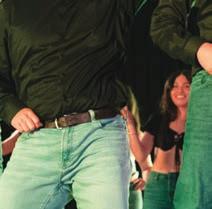







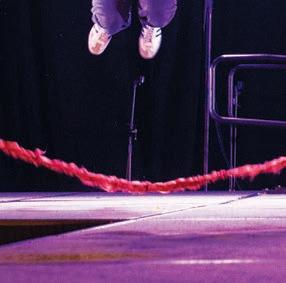


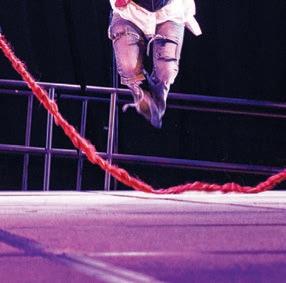
WALK IT OUT















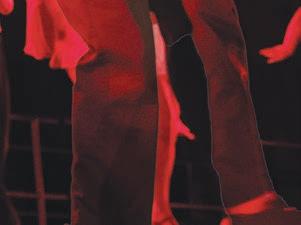


On Saturday, April 11, 2026, the University of Iowa student organization Walk It Out performed in the Iowa Memorial Union’s Main Lounge, presenting their showcase titled “PULSE: The Heartbeat of Culture.” The presentation invited students from numerous di erent cultures to perform. According to the group, the showcases theme “is a declaration that WE are present, resilient, and alive on campus.”
















Barker’s Bowling set to open this summer
A new bowling alley will replace SpareMe Bowl and Arcade inside the Chauncey
After almost five months of darkness in the two-floor unit inside Iowa City’s Chauncey otel, news has arrived on its future. he lights will turn on again as Barker’s Bowling plans to open in late spring or early summer .
oe ill, the owner of Burger aul, located inside the Iowa City Pedestrian all, is working on bringing a new bowling alley and entertainment venue to the old pare e Bowl and Arcade space.
ill said he decided to buy the unit not only as a business venture but also because he felt like there was a void in the Iowa City entertainment scene after pare e, the old bowling alley and entertainment space inside the Chauncey, closed in ovember . According to ealtor.com, ill purchased the building for million on arch .
he business’s name, Barker’s Bowling, is a tribute to ill’s mother.
Barker is my mom’s maiden name, and so it’s a tie to my past,” ill said. In life, you go forward, but you can never forget where you’re from.”
ince the venue has two floors, ill said he plans to use the upper floor primarily for private events, such as company functions, wedding receptions, and birthday parties. he main floor will be for everyday use with pool tables and shu eboards.
espite the differing purposes, both floors will each have si lanes to ensure guests have ample opportunity to bowl, ill said.
e also said there will be a dance floor and room for live entertainment and s.
ill said the plan is for Barker’s to be open until p.m. on weekdays and to stay open past midnight on weekends to introduce it as a staple in Iowa City’s nightlife.
he old layout at pare e included skee ball machines near the entrance, dart boards, tables spaced across the floor for guests to sit at, pinball machines, and windows overlooking the Chauncey wan Park.
A ma or part of pare e’s identity was the arcade and pinball games however, ill said that isn’t part of the plan for Barker’s.
I thought about it, and I entertained it, and for right now it doesn’t work,” ill said.
he problem for ill is that the arcade and pinball machines would likely block the windows overlooking the park, where he wants easy access so customers can en oy the nice weather.
owever, ill said he has not ruled out the idea of bringing in arcade or pinball games in the future.

As for the venue’s food options, he said there will be similar items to Burger aul, including burgers, fries, onion rings, and sandwiches. With the abundant kitchen space, he said he will also be cooking pizzas and potentially breakfast options, which could push Barker’s opening time to as early as a.m.
I’m working on a lot of different things in the kitchen,” ill said. ou’ve never seen the kitchen down there, but the kitchen is huge and is capable of doing so much.”
With the multitude of plans for the kitchen and the close pro imity, ill said a partnership or collaboration is possible. here’s always opportunities there,” ill said. here’s so much potential there, whether it be with ilm cene or other businesses.”
addie odd, the general manager of Iowa City’s independent cimena ilm cene, which is also located in the Chauncy, said pare e helped the theater cater events with pizza in the past. he potential for partnerships is something odd agreed with, but she was primarily happy to know someone
is moving into the empty building across from the bo office.
I’m personally ust looking forward to that space not being dark anymore,” odd said.
ue to the design and layout of Barker’s space, odd said the only thing that could replace pare e was a new bowling alley.
owever, she said moviegoers should still love the addition of Barker’s.
ight now we have a dark bowling alley across from our bo office, and it doesn’t feel very welcoming all the time,” odd said. o having a more lively space is good for both businesses.”
he said moviegoers would often be curious and e cited by the idea of going bowling after their movie. he also often saw customers from the bowling alley who would ask what movies were playing to see if they wanted to stay in the Chauncey building longer and watch a movie.
odd also said the presence of employees at Barker’s will make ilm cene employees feel safer when they leave the theater late at night.
ince both businesses operate in the Iowa City entertainment scene, odd said the weekends can be mutually beneficial for the two venues.
We have programming on riday and
aturday night to encourage students to go do something that is not ust going to the bar, so presuming they’re open late on riday and aturday, that would be beneficial for both businesses,” odd said. he Iowa City owntown istrict director of marketing Christopher unter said there are also possibilities for the downtown district to partner with Barker’s Bowling. ince they’re a member within our district, they’ll be able to participate in a lot of our community events and programs,” unter said. o, we’re e cited to help promote any events they have and also invite them to participate in our community events.” unter said the downtown district is also ready to welcome Barker’s to Iowa City and is e cited to see the business it brings in, with bowling returning to Iowa City’s downtown and the variety it will bring to Iowa City’s nightlife. With the location of Barker’s and the size of the space, ill said he is e cited to finish building and marketing the venue. here’s ust so much more that can be done with us,” ill said. I realize that it’s two blocks from downtown, so I have to make it a destination.”
Great Plains reimagines space in IC
The Indigenous-led project has plans for a healing sanctuary and garden.
A community-centered development is taking shape in Iowa City, as Great Plains Action ociety has begun transforming a cluster of properties into what organizers call a esilience ub” focused on healing, mutual aid, and Indigenous leadership.
Great Plains is an Indigenous-led organization that fights for Indigenous sovereignty, land rights, and climate ustice. he group was founded in and focuses on promoting environmentalism.
he one-acre pro ect is located in the southside of Iowa City on aiden n. and will repurpose e isting buildings into a multi-use space that includes a healing sanctuary, community gathering areas, an event space, and a mutual aid garden that will donate produce to nearby food pantries.
he pro ect has been supported through a mi of fundraising efforts, private donations, and grants from other Indigenous organizations. Great Plains does not have an estimated budget or date of completion at the time of publication. While still in its early renovation stages, Great Plains organizers say the vision goes beyond physical infrastructure.
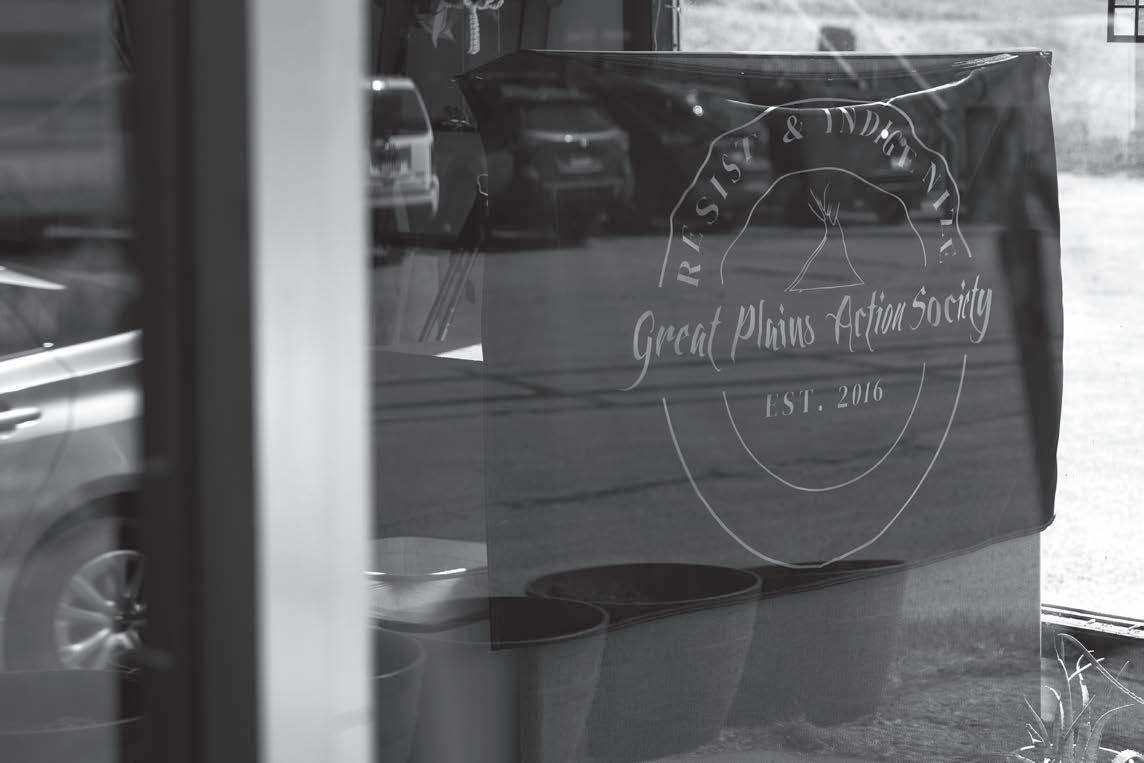
ounder and e ecutive director of Great Plains Action ociety ikowis obiss described the effort as a micro community” rooted in Indigenous values and designed to challenge economic and social systems.
We can protest as much as we want, or we can try to build new ways of being in the world,” obiss said. sing Indigenous knowledge, we hope that we can create economies based on compassion and ustice.” Central to the pro ect is the concept of rematriation,” which managing director of Great Plains Action ociety arie rebs described as a return to matriarchal, communitycentered systems. rebs said unlike traditional hierarchical structures, this model emphasizes shared responsibility and collective care.
It’s a circular structure where everyone has a role,” rebs said. We’re community oriented, and we are responsible for our community.”
his philosophy will guide programming at the site, including a healing sanctuary focused on marginalized communities, landbased therapy spaces, and a garden that incorporates Indigenous first foods,” including root vegetables, berries, corn, s uash, and others.
All food that comes out will be cooked in our space and given to the community or donated to community food pantries,” obiss said.
Organizers also plan to include a teaching kitchen, community event spaces, and an entrepreneurial launch pad” program for the creation of small businesses.
While the pro ect is Indigenous-led, obiss emphasized it is open to all members of the community, with a focus on community engagement and building relationships. obiss noted many Indigenous people live in urban areas, making pro ects like this especially
important outside of reservations. According to the rban Indian ealth Institute, percent of the . . Indigenous population lives in urban areas. We need to provide land to the marginalized, to the oppressed, and that is what we are doing here,” obiss said. We are trying to provide people with new world views.”
Iowa City City Councilor Oliver Weilein said the space is also intended to create visibility and connection. In Iowa City, the Indigenous population in was . percent, according to census data.
ou don’t see a lot of Indigenous people because there is not a lot here for them,” Weilein said. I see this as a way to provide people a place to heal, to have a space for themselves.”
Weilein, who attended the blessing ceremony of the site on arch , said the pro ect aligns with Iowa City’s
broader strategic goals, particularly around resilience and e uality. Weilein said he would like to see the city continue to support pro ects like this in the future. he land blessing drew attendees from multiple Indigenous nations, including the Ioway and Omaha tribes. Weilein said the ceremony included prayer, a song in the Ioway language, and a shared meal. It was an atmosphere of oy and solidarity,” Weilein said. rebs said the timeline for the pro ect is uncertain and largely dependent on funding, which has yet to be determined. or rebs, the longer-term vision is rooted in how people interact with the space itself. When you come to our spaces, we’re not going to be policing you,” rebs said. We are all there together in community. veryone is important, everyone is valued, and everyone has their role to play.”


SPORTS Iowa football preps for 2026
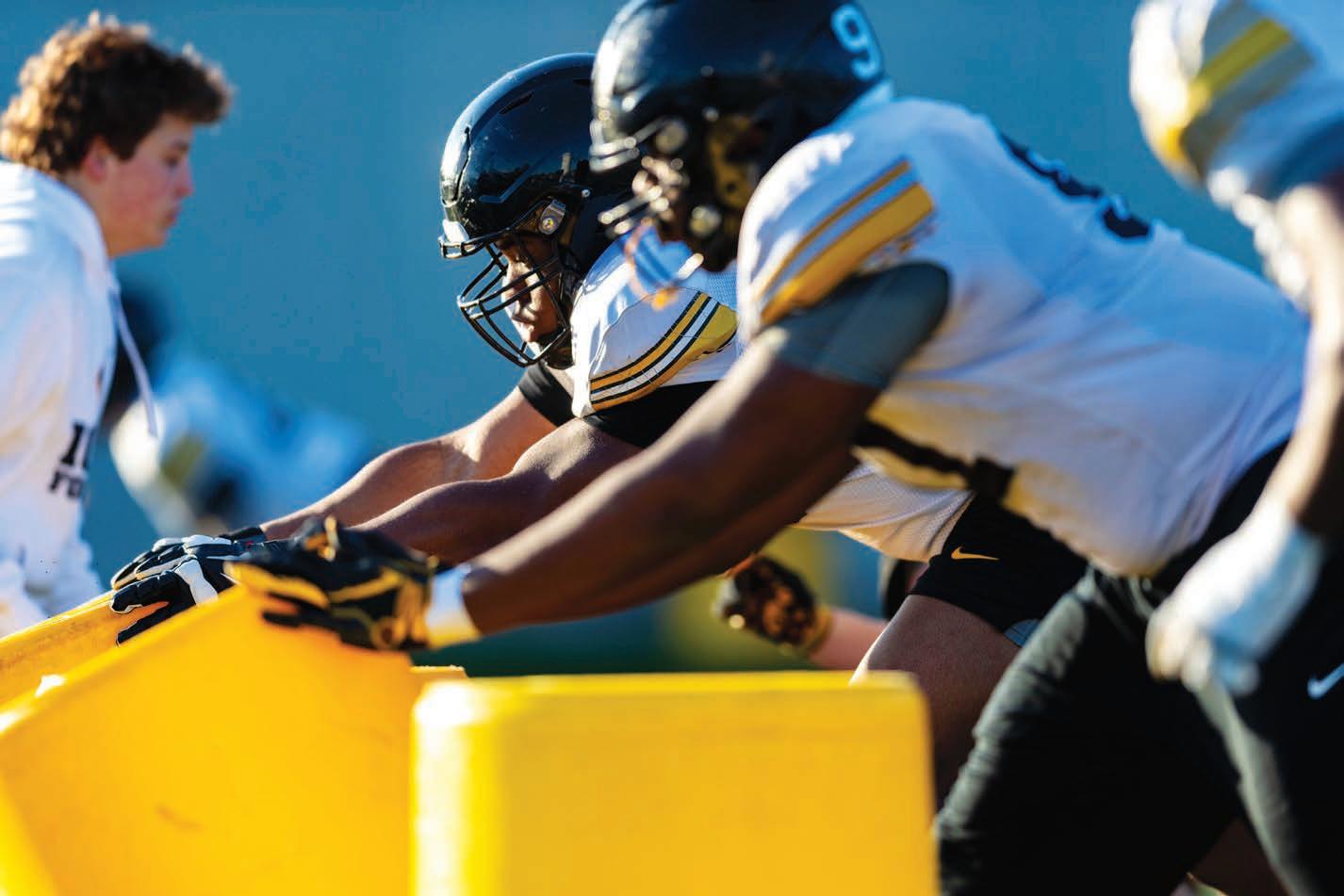
As the weather warms and the grass begins turning back to its usual green color, Iowa football head coach Kirk Ferentz prepares for his 28th year on the sidelines at Kinnick Stadium. Ferentz has led the Hawkeyes to 13 consecutive winning seasons and looks to repeat that success with unfamiliar faces on the roster.
Iowa finished 9-4 in 2025 with a 34-27 win over No. 14 Vanderbilt in the ReliaQuest Bowl on Dec. 31, 2025. The Hawkeyes landed at 17 in the AP and Coaches’ poll, finishing si th in the Big en with a 6-3 conference record.
This year’s spring practices are in full swing for the Hawkeyes, as young and talented transfers look to make a name for themselves in the Big Ten.
The transfer portal giveth, and the transfer portal taketh away. Iowa football has been the epitome of that phrase this offseason, losing key starters on defense but replacing them with young talent. he big move of the offseason defensively was safety Koen Entringer transferring to Louisville after starting every game and racking up a career-high 73 tackles in 2025. Entringer also served as a captain for the team, even representing the Hawkeyes at Big Ten Media Days in Las Vegas before last season.
Other contributors transferred out, but none were as big of a loss as Entringer.
With Iowa’s other safety, Xavier Nwankpa, graduating and preparing for the NFL Draft, the Hawkeyes were left with a mostly
empty secondary. erentz and staff, however, wasted no time replacing those losses with high-level FCS talent. The goal of the transfer portal was simple find players with something to prove and multiple years of eligibility.
The Hawkeyes crushed that goal, with just one of 16 transfers being a senior. Iowa also addressed its positional needs in the portal, picking up four defensive linemen, four defensive backs, and three wide receivers. Perhaps two of the biggest portal additions on the defensive side of the ball are safeties Tyler Brown and Anthony Hawkins. Brown, a junior from James Madison, racked up 80 tackles and five tackles for loss last season, earning him an allconference selection. Hawkins, coming in from Villanova, recorded 59 tackles, two interceptions, and nine pass breakups.
New coach, same culture
Dean Ward stresses continuity and calm for the Hawkeyes.
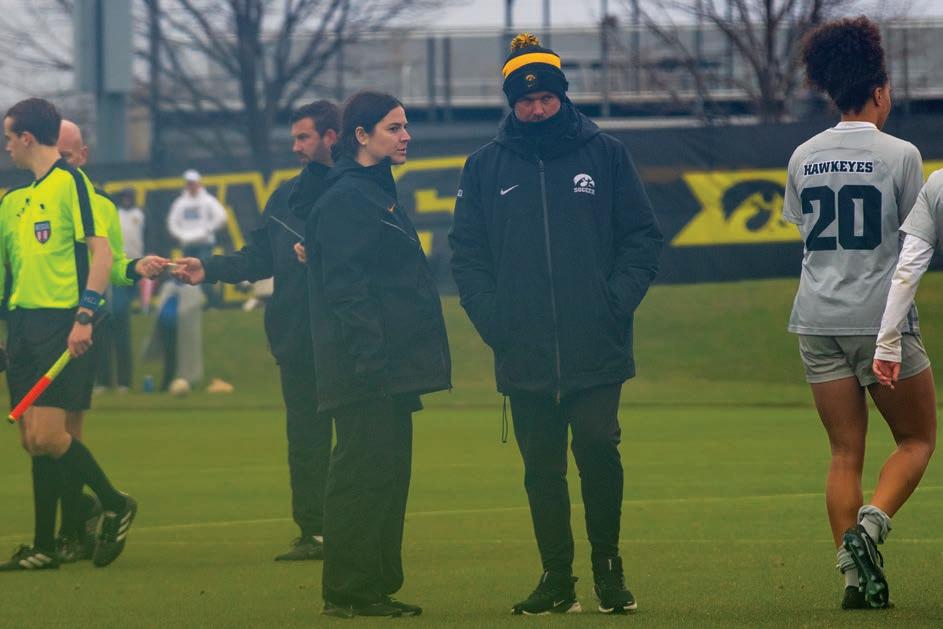
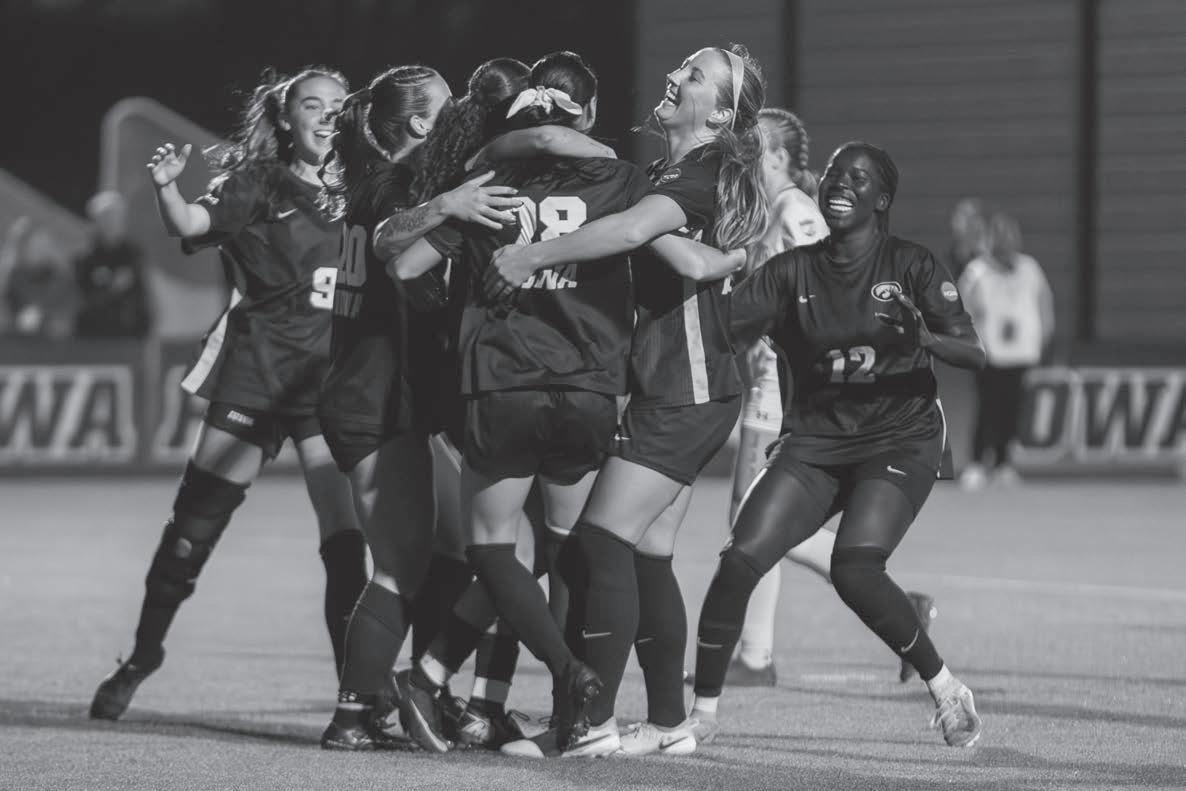
Two months removed from a program record third-consecutive NCAA Tournament berth, the Iowa soccer team dwelled in shock and uncertainty. After 11 years with the squad, head coach Dave DiIanni was leaving for the Michigan women’s soccer job.
“A lot of us were surprised,” sophomore Berkley Binggeli admitted. “No one really saw it coming.”
While the players processed the sudden change, Iowa Athletics Director Beth Goetz maintained a clear vision of who she wanted to fill the role.
resh off an CAA ournament appearance as the head coach of the Xavier women’s soccer team, Dean Ward sat in his office at his Cincinnati home when he received a phone call from Goetz.
“I was in a really good spot,” Ward said. “There had to be something attractive about this opportunity.”
However, Goetz’s investment in the success of the soccer team resonated with Ward, who knew after one phone call that she was the type of boss he wanted to work for.
Brown, Hawkins, and other young additions to the defensive back room have earned early praise from their new teammates.
“Tyler Brown, Anthony Hawkins, the transfers, we really need help from them,” junior defensive back Jaylen Watson said at media availability on March 31. “A lot of younger guys, Darien Jones, Marcello Vitti, it’s been a great addition to everybody that comes to the room, just trying to teach them the way and how we do things.” Junior defensive back Zach Lutmer also noted the importance of getting together as a position group outside of practice and outside the facility to build a strong relationship with each of the new additions.
“We’ve gotten together outside of practice and outside the facility to really get to know each other,” Lutmer said. “Because
Power surge in final season
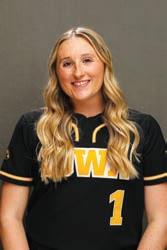
Senior outfielder Tory Benne is set to make her 200th appearance for the Hawkeyes.
Two weeks later, Ward’s appointment as Iowa’s new head coach was announced. The Birmingham, England, native was officially a awkeye.
While he was eager for new beginnings with his family and new team in Iowa City, it didn’t make saying goodbye to the Musketeers any easier for Ward. Due to the NCAA’s tampering rules, coaches face restrictions contacting current athletes at their former school.
“It’s like a breakup, it’s brutal,” Ward said. “You invest in the team, program, and individuals, then all of a sudden you tell them you’re leaving.” till, he was e cited to be a awkeye and compete in the Big Ten conference.
Understanding the team’s success under DiIanni, Ward has made sure to utilize a similar coaching style to instill a sense of continuity for the players.
“With [Ward] coming in and showing that he doesn’t want to change everything that we’re doing, he just wants to make us better, I’m like, ‘I want to stay at Iowa,’” freshman Josie Jones said. “Knowing that I can stay here and represent Iowa, I really enjoy that.”
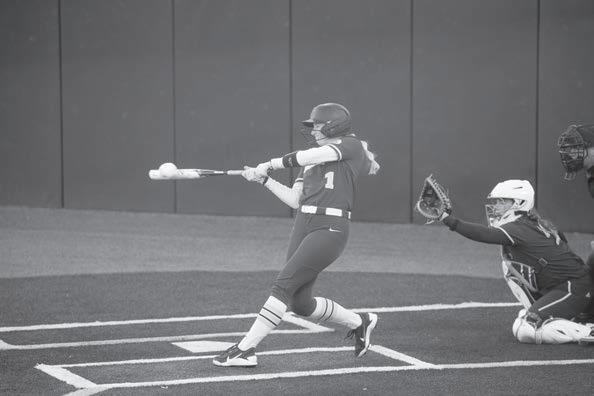
Over Iowa softball’s last four years, one thing has remained the same, and that is the reliability of star senior ory Bennett. he ort odge, Iowa, native is e pected to make her 200th appearance on April 17 in the series opener against Indiana at Bob Pearl Field in Iowa City. Bennett, over her four seasons with the Hawkeyes, has shown pro-level consistency, totaling 584 at-bats, earning 160 hits, scoring 100 runs, and striking out only 61 times. Her consistency at the plate this season has also led to an increase in power. Bennett has earned eight of her nine career home runs this season as the Hawkeyes have already surpassed last season’s homer total.
“I started seeing a hitting coach in the summer, and he has really helped me get my confidence up with power and launch angle,” Bennett said. “I’ve hit so many walls in my career, so he always would jokingly say, ‘How fun is it to hit walls? Not as fun as hitting it over one, is it?’”
Over her career with Iowa, Bennett e perienced firsthand the changes in the coaching staff, with this season being the first for former awkeye tacy ayJohnson in the head coaching role.
May-Johnson played for Iowa from 2003-06 and has almost years of coaching e perience, with head coaching stints at Utah Valley from 2020-21 and Fresno State from 2022-25.
“She has had all the success of going far in the NCAA tournament, which has helped us push ourselves to the dream of an NCAA tournament regional,” Bennett said. “Her competitive drive is so unique, and she tries to get you to put everything out there, making me a better player and a better person.” o her coaches, Bennett’s high offensive ability has been a key skill needed in their fight for a potential Big Ten tournament and NCAA tournament run this season. hough Bennett has become known for her offensive prowess, she also remained strong on the defensive end. On April 5 against Oregon, Bennett made a jumping catch in right field, robbing a home run to keep Iowa’s deficit at one run.
New beginnings at Finkbine
The historic golf course’s renovations usher a new era of golf in Iowa City.
Finkbine Golf Course turns a new page in Iowa City. The 71-year-old course is currently undergoing a reimagination project that will be completed for the 2027 golf season. The renovation will be the course’s most significant changes since it relocated in 1955.
Architect Scott Hoffman will spearhead the project after spending 13 years as a senior design associate for golf course architect Tom Fazio.
ailing from ebraska, offman started his own design firm, and his first solo design, Lost Rail Golf Club in the Omaha area, and put the golf world on notice in 2022. His opening project landed at 94th on Top 100 Golf Courses USA’s website.
The renovation will be closing the door on an era of Finkbine that holds fond memories for many golfers of all ages. Hailing from Pleasant Valley, Iowa, Hawkeye junior women’s golfer Maura Peters recalls stories from her father and grandfather playing the course in junior and amateur tournaments.
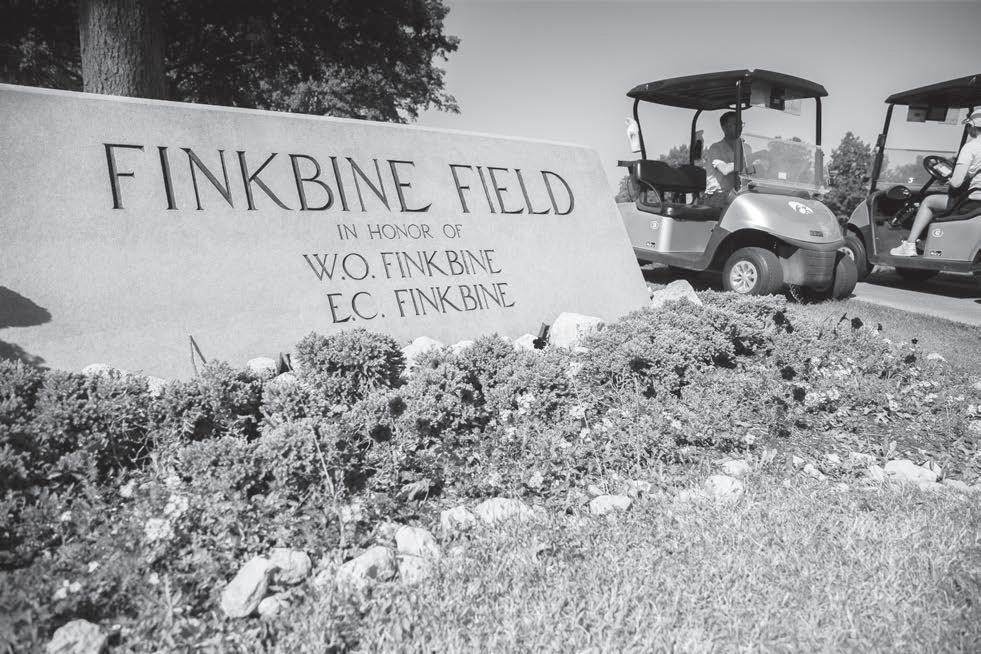
Finkbine previously played host to the Big Ten Championships and the Ben Hogan Tour, the former name of the PGA’s developmental league.
The reimagination project is thanks to donations from University of Iowa alumni Mary Lee and Fritz Duda. The Dudas also provided donations for the James M. Hoak Family Golf Complex and the new Nagle Family Clubhouse in 2020.
“Any time recruits can see upgrades and excitement around your golf program, it definitely turns an eye,” Megan Menzel, Iowa women’s golf head coach, said. The project is a part of a bigger
goal for Finkbine: bringing the course up to modern standards. The new design will lengthen the course to fit the modern game and add new unique challenges that weren’t there before. The project helps Finkbine and the Iowa golf teams propel themselves into a new era.
“It will help us compete in the Big Ten and come out knowing we have a really good championship-style golf course that will prepare us week in and week out.” Menzel said. The spring season has been unique for the golf teams. While the course was playable during the fall, construction forced the Hawkeyes to find creative solutions.
“Before a tournament I went out
with my coach and hit a bucket of balls, and we were able to hit shots into an old green from different places,” Peters said.
While the women’s team did not play in Iowa this spring, the men’s squad hosted the Hawkeye Invitational at the Riverside Casino and Golf Resort on April 20-21.
Finkbine has already hosted a variety of high-level golf tournaments, but with golf balls now traveling farther due to new technology and an irrigation system that needs an upgrade, the course featured its limitations.
“It was built in the ’50s, and golf has changed over time,” Dain Coppock, director of operations at
Iowa baseball’s redshirt sophomore
What or who got you into baseball?
The Daily Iowan: What is your favorite baseball memory?
Max Burt: Probably going back to travel ball when I hit my first home run, and having my dad as the coach, I always gave him a fist bump on third as I went around the bases.
What is your favorite hobby when not playing baseball?
I’ve been getting into thrifting, and I am into vintage clothes, which I have found some good ones at some garage sales.
My dad, for sure. He was my high school coach and travel ball coach growing up, and all I can remember is going to his games when I was little, and since then, I have loved baseball.
Finkbine, said. “We were hosting Iowa amateur events; this will prompt us to start hosting U.S. Open ualifiers.”
The renovation will not only raise the championship profile of the course but also be more appealing for golfers of all skill levels.
As the weather gets warmer and golf season begins, the excitement for the reimagination project at Finkbine is palpable.
“I wish I could see the look on everyone’s face the first time they play it,” Tyler Stith, the Iowa men’s golf head coach, said. “It’s going to be a centerpiece for the UI and something that everybody in the state is proud of.”

What is your pre- and/or post-game ritual?
I try not to stay too superstitious, but I guess I always put the left sock and shoe on first.
If not baseball, what sport would you play, and why?
Football, 100 percent, I miss high school football a lot and hanging out with the guys.
What are the biggest differences you noticed between high school and college baseball?
Everyone is good and so skilled here in college, and you figure that out really uick first day on campus.
What is the most memorable place you have gone with Iowa baseball?
When we were in Washington, we had a lot of free time, so we took some time to explore Seattle with the guys, which was a good time.
What music do you like, and why?
Country. It’s always what is playing, especially during the summer — just good vibes.
Did Addie Deal make the right decision to transfer?
Sports reporter Jonah Frey thinks that Deal will do be er elsewhere, but sports reporter Jack Birmingham thinks the decision will prove costly.

Addie Deal had her chance to cement herself as a starter this season but simply wasn’t productive enough for head coach Jan Jensen to continue to give her the nod. Yes, Deal is only a freshman and still has three full years to develop, but her role would remain limited behind fellow guards Taylor Stremlow and Chit-Chat Wright for the next two years.
At the time of her commitment, Deal carried the weight of the expectation to be Iowa’s next star guard. After posting doubledigit scoring figures in only three of her first 14 games with the Hawkeyes, Deal’s shining moment came against then-No.12 Ohio State in the wake of teammate Taylor McCabe’s seasonending injury.
Deal shined, tallying 20 points and five assists in a dominant 91-70 victory for Iowa. The freshman earned the starting role for the Hawkeyes’ next three games, and it was all
downhill from there.
In losses to USC, UCLA, and Minnesota, Deal scored a combined five points while shooting -of- from the field. Jensen then turned to Stremlow to start in place of Deal. The sophomore proved herself to be more productive in the role, scoring in double figures in four of the Hawkeyes’ next six games, including a double-double against Illinois. Yes, the Hawkeyes will need reinforcements at guard for next season as seniors Kylie Feuerbach and McCabe both graduate. However, Deal never consistently showed she was ready to start for Iowa despite playing 15.5 minutes per game this season. he finished with more turnovers than assists, 59 and 56 respectively, and was hardly a factor in the postseason, scoring points in five games.

Granted, Deal still has plenty of potential to eventually develop into a great player, but the Hawkeyes don’t have time for patience if they want to compete for a national championship ne t season. hey need to find a perimeter scoring threat now. Additionally, a new team and system may be all that the former five-star recruit needs to finally shine at the collegiate level. eal’s decision is ustified and nothing to panic about from an Iowa perspective.
While I have no doubt that a player like Addie Deal will have plenty of suitors via the transfer portal, her decision to leave an Iowa program on the rise could very well prove a costly one. While her starts this season were admittedly a little shaky, she still had a good opportunity with Iowa, even as a player off the bench. Coming into this season, Iowa’s guard lineup was pretty solid. Despite rising sophomore Aaliyah Guyton’s move to Illinois in the offseason, the awkeyes retained fellow sophomore Taylor Stremlow as well as senior Taylor McCabe and graduate Kylie Feuerbach. Add in the addition of sophomore Chit-Chat Wright, and Iowa seemed golden. Now, heading into next season’s campaign, Iowa graduates both the defensively-sound Feuerbach and a lethal sharpshooter in McCabe, the latter of whom suffered an AC in ury that cut her final season short. In other words, guards are a hot
commodity for the Hawkeyes, and Stremlow and Wright are the two big names that come to mind for the role.
I have no doubt that Deal would have been a third. While she may not have been a regular starter by the end of the season, she still earned Big Ten Freshman of the Week twice in one month, scored a career high of 20 points against a strong Ohio State team, and with five more games of double-digit scoring, earned a spot on the all-conference freshman team. What really stands out among her accolades isn’t her starts but her numbers. Stremlow scored 80 points last season, where she played in 34 games but only started in two. Even then-freshman Ava Heiden, arguably one of the nation’s most lethal bigs this season, only collected 141 points. Deal, on the other hand, scored 173 points this season. While that number may not have made her a consistent starter this season, as we’ve seen with Heiden and Stremlow, it can be a recipe for success.
Stremlow in particular is a player who went from a freshman spark plug to a key starter for the program, scoring 270 points this season, more than tripling last season’s total. There’s not a doubt in my mind that Deal could’ve followed a similar path.
there’s a lot of new faces, and you’ve got to get to know someone before you can get to ne t to him on the field and make calls with them and know what each other’s going to call. So I think that’s the biggest thing.”
Iowa not only collected talent on the defensive side but offensively as well. he Hawkeyes made a splash in landing wide receiver ony iaz from the niversity of e as io Grande alley. iaz was a highly sought after transfer, with offers from Alabama, Kentucky, Arkansas, and Illinois. iaz has uickly turned heads at practice for the Hawkeyes with his ability to make big plays and go up for the ball. It’s not often that erentz discusses wide receivers, but he couldn’t help but mention iaz’s talent and attitude in the early-going.
“Last year he really caught the ball,” erentz said. I’m a dumb line coach, but the receiver’s first ob is to catch the ball, and he likes to catch balls. No matter where they’re at, he’ll find a way to catch it. e runs well, and he has a great attitude.”
In , iaz caught passes for yards and touchdowns. he -footreceiver will pair with the potential number one target, eece ander Zee, who hauled in passes for yards and two touchdowns in eight games last season.
While the awkeyes offense has been considered a laughing stock for most of college football for the last eight to years, offensive coordinator im ester has begun to turn the tide on the narrative.
Since Lester took over in 2024, Iowa went from averaging points per game in
2023 to nearly 30 points per game over the last two seasons. he awkeyes hope their new offensive weapons can help continue that upward trend in .
Iowa made multiple moves in its running back room, including a change at running backs coach. Former Colorado State head coach and former Hawkeye defensive back ay orvell oined the staff as an analyst on Feb. 4.
Norvell was then elevated to the running backs coach position after Omar Young left for a ob in the with the as egas aiders. orvell oins the staff with nine years of head coaching e perience, including five years at Nevada and four at Colorado State. erentz said orvell and other assistants who have head coaching experience have en oyed working directly with their positions.
“I think they probably don’t mind not worrying about this and this and ust fully umping in with the offense and umping in with their players or defense, whatever the case may be,” erentz said. eah, it’s ust pure coaching. It’s a pretty good deal.”
Iowa returns around percent of its yards recorded by running backs last season, with leading rusher Kamari Moulton returning for his fourth season. he awkeyes also added outh akota transfer . . Phillips. he -foot- back rushed for over , yards and touchdowns with the Coyotes in 2025.
one of these offensive weapons can work, however, without the uarterback, a position Iowa has struggled with for a long time. Following one season of ark Gronowski at the helm, the
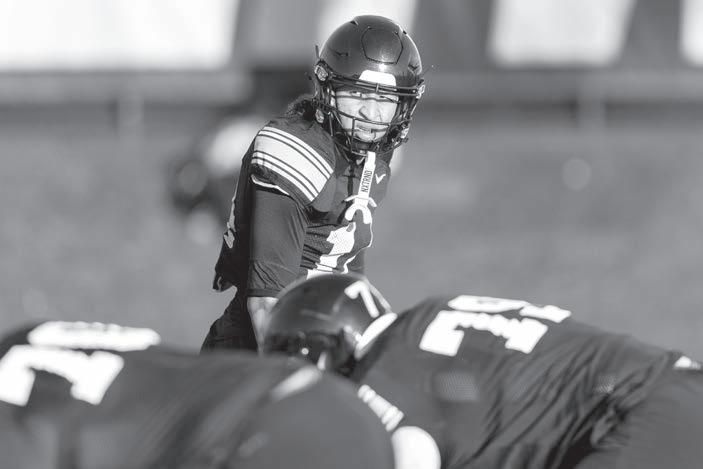
Hawkeyes turn to a competition between two promising uarterbacks.
Hank Brown transferred from Auburn to Iowa in ecember , while sophomore eremy ecklinski oined the Hawkeyes prior to the 2025 season. Both have gathered plenty of experience with Lester and his system while on the bench last season.
Brown was listed as the number two uarterback on the depth chart for the first half of the season before ecklinski climbed the chart to ump him for the backup spot.
Early in spring practices, both have shown flashes of being a solid option for Iowa under center while having vastly different ualities.
Hecklinski has shown fearlessness in his ability to push the ball down field and plays with a “gunslinger” mentality, while Brown likes to take what the defense gives him and
On the field, Ward plans to encourage freedom and creativity from his players to improve the team’s attacking presence, a style he’s no stranger to. In his two years at Xavier, the Musketeers ranked among the top five in the country in goals scored. efensively, Ward pairs that approach with aggression, stressing a “blue-collar” mentality he plans to implement.
While maintaining continuity on the field is important, Ward’s biggest challenge comes off it. In today’s landscape of college athletics, keeping a team together in the midst of a coaching change is harder than ever. Since the conclusion of the 2025 season, the Hawkeyes lost three players to the portal, while gaining five. All incoming transfers came before iIanni’s departure, and only one of the outgoing transfers left after the departure.
Ahead of the spring transfer portal window in May, he has worked to build a comfortable and welcoming environment.
“Change is scary,” Binggeli said. “I think there’s a lot of nerves with that.”
In their first practice together, Ward let the team know that he didn’t want anybody to feel pres-
sured to impress him. He encouraged the team to shake off any nerves that may have arisen with playing for their new coach.
“He’s really personable,” Jones said. “He wants us to show off our personality and add something to the team. We’ve really en oyed that so far from him.”
When Iowa takes the field, Ward doesn’t command his players around the field. Instead, he remains reserved on the sideline. In a rainy spring exhibition match against Saint Louis, his most attention-grabbing moment was slipping on a knit black-and-gold Iowa hat over his head in the second half.
It doesn’t mean he doesn’t care, nor does it mean he’s displeased with his team.
“I don’t want our players being oysticked with me telling them exactly what to do all the time,” Ward said. “Me screaming on the sidelines doesn’t always help.”
Iowa defeated Saint ouis, - . Ward felt it was a uality win, alluding to Saint Louis’ history of CAA ournament appearances and -record from last season. Iowa’s five spring e hibition matches will continue to give the team opportunities to grow accustomed to playing for Ward.

Aside from soccer, Ward’s wife, Jeri, and -year-old daughter, ucy, are his life. he three of them have uickly grown acclimated to Iowa City.
Although Ward admittedly didn’t know much about the state of Iowa before taking the ob, he uickly realized the perception of cornfields and boredom were over-exaggerated.
he reality is, Iowa City is pretty cool,” Ward said. “It’s got some nice restaurants and vibrant areas, the people are awesome, and everyone loves the Hawkeyes.”
While coaching the sport he loves, building connections with his players, and en oying Iowa City with his family, Ward has found his new home as a Hawkeye.
Just two months into his tenure, Ward helped replace uncertainty with reassurance and a renewed sense of direction for Iowa soccer and its athletes.
“I don’t want them to be wondering if I’m gonna be happy, screaming, sad or angry,” Ward said. hey know what they’re going to get from me, and I think that’s a good thing so they can go and express themselves and play.”

play a more methodical offense.
While the two are different in on-field attributes and personality, erentz believes there’s not a set way to play uarterback, and that the battle between the two will likely continue up until week one.
“Jeremy’s got a good attitude, and he and ank are different players in terms of statistically but also personality-wise,” erentz said. I think if you learn one thing in football — whether it’s pro, college, it doesn’t matter — there’s no set way to do things. It’s about playing within yourself, who you are, and ma imizing what it is that you bring to the game and both those guys are working really hard at it.” he awkeyes will hold their annual open spring practice at Kinnick Stadium on April at a.m., with gates opening at a.m. he practice will feature positional drills and a scrimmage. he practice is free to attend.
landscape with immediate transfer eligibility.
“My teammates have been with me since the beginning, and when they wanted to stay, I knew I wanted to stay with them,” Bennett said. “I think I have really learned a lot about myself, and it has made me into who I am today.”
career, a rarity in the modern collegiate sports
For Bennett, Iowa was and will always be

the dream place to play softball at the collegiate level. he memories and friendships made along the way will forever be something she will miss and cherish.
“Missing my friends and spending time with them at practice and in college, I will dearly miss, but the memories I will forever have and will never forget,” Bennett said.





ENDING EVEN


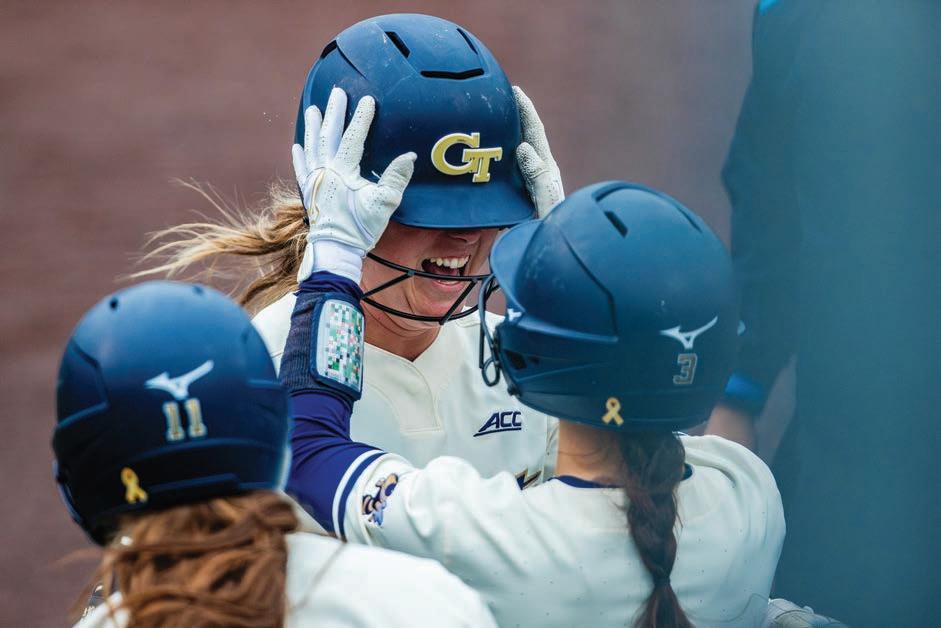

The Iowa Hawkeyes fell to the Georgia Tech Yellow Jackets, 8-0, at Bob Pearl Stadium on April 11. This was their second meeting at the Dr. Christine Grant Classic, ending the series in a tie, 1-1.




UI students build community across cultures
Underrepresented students connect through informal third spaces.
After making my decision to attend the Uni versity of Iowa in early 2024, certain statistics stood out to me.
Those identifying as Asian American make up only 4.7 percent of the total UI population. That is only about 1,500 people of over 31,500 students total. In a state where nearly 89 per cent of residents are white, those figures can shape expectations before students like me even arrive.
As an Asian American woman, I was scared because I was choosing to live through four more years of being underrepresented.
However, across campus, cultural orga nizations and informal gathering spaces are working to expand that preconceived narra tive. hey offer environments where identity is expressed and shared, in a way that goes beyond percentages.
On April 11, music, movement, and excite ment filled the IMU main lounge during “PULSE: The Heartbeat of Culture,” a show case hosted by Walk It Out, the university’s largest multicultural student organization.
Formed on the behalf of organizations like the Asian American Coalition, Indian Student Alliance, and Black Student Union, Walk It Out brings together a wide range of cultural and performance-based groups every year.
Paty Zurita-Gonzalez, a second-year stu dent at the UI, is a dance member for the Latin American group for the organization.
Zurita-Gonzalez said her decision to join was shaped by both personal and cultural connections.
“Coming from a dancing background myself, I loved being able to reconnect with something I hadn’t been able to do in college,” she said. “I also loved that I would be able to have a multicultural community who would expand my connections and would hold the

Exploring the Rita Benton Music Library
View student dissertations, medieval manuscripts,

This is an installment in a multi-part series. Located on the first floor of Voxman Music Building is a library with large glass windows. Sunlight streams from the panes of glass, illuminating students and faculty reading and working from manuscripts, sheet music, journals, and more — all of which can be found in the Rita Benton Music Library. Upon entering the library, viewers are greeted with a mini exhibit, which accompanies the James Dixon exhibit in the Main Library. The music library’s small exhibit “From the Desk of James Dixon: Joan Tower,” features an unpublished score titled “Composition for Orchestra (1967)” that Tower, a now Grammy award-winning composer, sent to Dixon for him to review along with a letter.
Viewers are also greeted by the stuffed animal Wülfie Parsons, a toy dog owned by late faculty member Donna Parsons, who died in 2018. The toy dog along with Monty, a black puma, sits on top of a shelf at the front of the library, accompanied by an information card.
The library was first located in the Eastlawn building’s basement from 1957 to 1972. Then the library moved to the former Hancher and Voxman complexes until the 2008 flood when it moved to the Main Library. It has been in its current location since 2016.
Director Katie Buehner said the hiring of Rita Benton in the 1950s played a role in the library’s growth. Benton, a pianist and researcher, was hired by the university in 1952 to do music cataloguing part-time.
“That is because music could be very difficult to get in those days,” Buehner said. “So putting a collection together that students could use, that faculty could use in their classes, was increasingly important.” The collection consists of around 90,000 pieces of sheet music, around 50,000 books, 3,200 microforms, and
38,000 forms of media, according to the music library’s page. Some of these materials are housed in the Arthur and Miriam Canter Rare Book Room, including Buehner’s favorite work, the Processional (Cistercian rite) dating back to 1475-1500. Buehner said it was the oldest item in the library’s collection.
“There’s a large number of medieval music manuscripts at the main library in special collections and archives, but I wanted one in our music building so that I could show that to students without them having to trek down the hill,” Buehner said. “It's a beautiful manuscript, but it’s also a hot mess in a lot of ways because there’s dirt, and it’s not completely bound, and it starts off really nice with illuminations and really fine work, and then kind of gets a little bit sloppy towards the end.”
One of her favorite aspects of working in the library was being able to purchase more music by Hancher’s composers-in-residence. Buehner said a lot of composers self-publish their works, so she will have to correspond with them directly to figure out how to acquire their music.
“It shows the investment the university is making and the experience for the students when they’re coming to campus,” Buehner said. “So, that’s been really fun.”
In addition to books, the Rare Book Room also has a collection of Czech music cylinders collected by dward edli ka. Dating back to the late 1800s, librarian assistant Amy McBeth said they were the oldest Czech music cylinders recorded in the U.S. This information was confirmed by Radio Prague International in a 2019 article, and a presentation done by Buehner in 2020 alongside Filip Šír from the National Museum in Prague.
Buehner and McBeth also shared that there is an early edition collection of scores in the Rare Book Room by Ignaz Pleyel, an Austrian composer that Benton researched, and who Buehner said “was more popular than Mozart and Beethoven.” While the scores have been digitized, Buehner said it was still
‘The Drama’ paved the way for a vital conversation
Zendaya and Robert Pa inson provide social commentary on a topic many students know too well.
“The Drama,” starring Zendaya and Robert Pattinson, shocked theaters when it opened on April 3.
The movie gained immense popularity built mostly from mystique and the star-studded cast.
In advertising for the movie, genuinely nothing was revealed of the plot other than the fact that there was a couple to be married and one of them had a secret that would shake everything up.
This mystery particularly intrigued me, as did my disdain for Pattinson — but that’s a problem for later — so I dragged my roommates to FilmScene to experience this whirlwind of a film.
Before I get into the nitty gritty, I want to acknowledge that there will be spoilers throughout this article because it’s nearly impossible to talk about the content of the movie without addressing the elephant in the room that is the plot twist.
Our adventure began in the second floor theater, which I had never been in before.
I was a bit shocked by how intimate the space was, but that honestly worked in the film’s favor.
Most of the people in the theater had very similar reactions to everything throughout the movie, and it was fun to see the silhouettes around me physically react to different scenes.
The movie begins with Charlie, played by Pattinson, writing a speech for his wedding reception. Through this, we get his and Emma’s, played by Zendaya, meeting, first date, and first kiss.
Although they seem like the most perfect couple, it all falls apart when they’re finalizing their meal options with their maid of honor and best man, Rachel and Mike, who are also married. Rachel and Mike are played by Alana Haim and Mamoudou Athie, respectively.
Rachel reveals that she and Mike both shared the worst thing they had ever done before their wedding night, and Mike convinces everyone to bring their secrets to light.
Each of the characters had done horrible things, from using their previous partner as a human shield against a dog to locking a child in a closet in an abandoned RV to cyberbullying peers.
However, Emma shocked everyone by stating that she planned and nearly carried out a school shooting when she was in high school.
Before the twist, I noticed the conversational acting was exceptional.
Every chat felt so real, like the way I would talk to my best friends.
Panic ensued, as Rachel took the moral high ground, Mike tried to peacekeep,
and Charlie eventually began to spiral. We saw bits and pieces of Emma as a teenager with the gun and as she planned the shooting while romanticizing the act. The tension throughout this scene, and many of the other scenes, was palpable and anxiety-inducing, causing me to physically recoil and put my head in my hands. This tension was heightened by the irregular music, which can only be described as mischievous with its woodwind and string instruments. As one can assume, the movie has mixed reviews online. I, however, thought they walked a very thin line in a thought provoking way.
The film felt almost like a period piece. Thinking back to my middle school and early high school years, I had peers that were highly fascinated by school shootings and the “aesthetics” of it all. Many had phases where they talked about hurting people just to seem more cool and edgy.
In that sense, I think the film was very telling of our generation, that is, Gen Z. We grew up with mass shootings. We know the best place to hide in a classroom, and I’m sure many of my peers have the ALICE training nearly memorized.
Because of this, I believe we have become desensitized to the issue, which leaves room for satire surrounding the situation. Had this movie been made 20 years ago, I don’t think it would have been received well.
The online discourse isn’t about the sensitivity of the topic but who the real villain of the story is. Of all of the characters, Haim perfectly captured the role of that one self-righteous friend who doesn’t think too deeply about an issue before making up their mind.
Yes, Rachel had her reasons for being mad, but she was much too short with Emma and threw her to the side without hearing her out. Even before Emma confessed, Rachel was flippant and rude to Emma.
Similarly, during her maid of honor speech, it seemed as though Rachel had some underlying feelings about Emma and all she needed was a small push to end their friendship.
That being said, I didn’t really like Charlie’s character either. Emma gave him so many chances to restart, which is a reference to when they met, but he only accepted those second chances when it benefitted him, not when it benefitted Emma, leading me to believe that his character is much more self-centered than he lets on.
This movie is great to see with your friends, especially if you want something that will spark real world reflections and conversations. See it before the online discourse clouds your opinion.
Iowa Author Award winner shares new book
Author and educator Kali White VanBaale reflects on decades of her writing experiences.
Kali White VanBaale is a 2025 Iowa Author Award Recipient with many different books published through her years as a writer. VanBaale juggles her day to day life with being a writer in the morning and a teacher in the afternoon. She is the author of many award winning books, such as: “The Monsters We Make,” “Good Divide,” and “The Space Between.” VanBaale read from her newest short story novel, “Release of Information: And Other Linked Stories,” at Prairie Lights Bookstore on April 7.
The Daily Iowan: When did you decide to write professionally, and why did you decide to do so?
VanBaale: I had written more as a hobby through my teens, into my early 20s. It was around that time when I had my first child, and I was staying home with the newborn, and thought, maybe this is it, it’s now or never to take a real go at writing professionally. I started to dedicate full time, or as much as I could to writing, which took me a good four or five years to get the novel completed and published. he problem with writing for the first time as a novelist is learning the craft, and accepting that you may need to rewrite things. It won’t be perfect the first time.
Do your stories tend to flow naturally to you?
I think they do. At first it was a lot of work to figure out the order of the short stories in my recent novel, and the order to introduce certain characters. Because they’ll connect back to the other characters in the story, I had to be strategic. In my earlier stories I struggled on how I wanted
to write them, and the final four stories I wrote came very uickly, and I knew where I wanted them to be. ome parts can be easier than others.
How does your experience as an established author help you to create more meaningful themes and content?
I’ve been writing and publishing for over years, and I think what comes with age and e perience and longevity is confidence.
It’s the ability to try new things, push myself out of my comfort zone and try new things.
Even when writing in novel form, I’ve tried very different things in each one of them. ven my short story collection was a completely different genre for me.
I had never published a collection before.
I think as I’ve gotten older and more e perienced I’ve gotten more willing to try. I’ve become more willing to try new forms of writing, new stories, and push myself further than before.

As an author of both nonfiction and fiction, which writing style do you find more appealing?
hat’s really easy to answer. iction is my first love. I do sometimes en oy nonfiction, and I did a lot of crime writing for the A&E network, where they have a true crime blog.
I did some reporting from them. It was super interesting because it was so different from fiction writing, in ways that I wasn’t completely trained in. ost of my e perience in writing isn’t within nonfiction. I think in some ways nonfiction can be harder to write than fiction.
As a short story writer, the writing process can be more unique
to you. What does a typical writing routine look like for you?
I split my days between writing and teaching because I am on faculty at an A program. I do all my writing in the morning, and I do all my teaching in the afternoon.
I’ll usually have about four good hours in the morning where I can really get into writing. I’m old school though, and I do a lot of my early drafts longhand ust writing in spiral notebooks because I feel like it gets ideas generating faster than when I’m staring at a blank computer screen.
I think there is something physical about getting it down on paper, and the connection with my hand and my brain.
I also feel like I can be messier and take more risks to figure out where I’m going, whereas if I’m staring at a screen, I feel a lot more pressure for it to be polished and perfect.
Although, after the first draft, I moved to the computer to clean it up.
I’m a very slow first draft writer, but I’m a more efficient revisionist. I en oy it a lot and can easily revise a piece of fiction five, , times before I’m finally O with it. With some novels, I have rewritten from beginning to end dozens of times. It can be a lot of work, but I think that’s what separates writers who get published because they’re willing to keep revising and doing the work to make something better in the end.
5 unconventional road trip snacks
As a idwestern girl, road trips are something that have been ingrained in my life since childhood. Whether it’s the hour trip to lorida from my hometown in Wisconsin or the eight hour trip to Chicago, snacks are the most make-orbreak addition to the e perience. After driving back to campus after spring break, I realized I’ve mastered my snack setup and learned the most efficient ways to eat the least efficient foods. ere are some of my favorite avant-garde road trip snacks.
Chips with a hint of lime and chunky salsa
tarting off strong with my absolute favorite road trip snack ostitos int of ime chips and salsa. ow, I am not picky about what salsa I’m using. owever, I prefer my salsa to be super chunkily diced, including the massive tomatoes, peppers, and lots of corn and beans. he runnier the salsa, the more difficult

it is to eat while driving, so naturally I lean away from it. But I will also eat super fi nely sliced and diced homemade salsa if the opportunity presents itself. his snack usually evokes the strongest reaction out of others when I suggest it, but honestly, super spicy chips and salsa in the car with nothing but a water bottle and the open road creates an unforgettable e perience for better or for worse.
Trader Joe’s buffalo style chicken dip and pretzels
You’ve already probably sensed a theme. or some reason I love a dip and a crunchy add-on at the most inconvenient times, such as on a freeway or two lane highway. his buff-chick dip is something that has been recently added to my road trip snack list, but it is worth it every time. I love pretzels, but sometimes they can be too bread-y, so adding a cold, cream cheese based dip helps to lighten the dish. Pro tip buy the mini coolers from rader oe’s as well to keep several dips and a drink cold for you. I also highly

recommend the chunky guacamole or any cheese dip to either go with the left over hint of lime chips or the pretzels.
Pomegranates and raspberries
As arguably the least controversial food on this list, I almost didn’t mention these fruits, but I must speak my truth. When I would drive back home to Wisconsin from Iowa or vice versa, I would buy one of the large containers of raspberries and cut up five pomegranates and eat them out of a glass bowl that I had stolen from my parents kitchen. As stated before, I like to keep my meals light, so these fruits are more than ideal. hey also provide the perfect break from all of the savory dips I often have packed. imilarly, in my messy car eating fashion, I either eat them with my bare hands or with my car spoon that is, the spoon that stays in my car in case of emergencies.
Kwik Trip glazer donuts his may sound like a typical car snack to you guys, but I must admit that
I absolutely hate stopping on car rides. If I’m by myself, I never stop when the trip is less than five hours, so stopping for a bite at wik rip means something. wik rip’s glazer donuts are the best donuts, from their airy and flaky dough to the slightly crispy glaze topping. hese donuts are one of the only sweets I deem necessary for a car ride.
An oreo blizzard from Dairy Queen
In addition to the largest-sized blizzard, you must also get the chicken strips and fries for dipping purposes. Within my trip from Wisconsin to Iowa, there is a Dairy Queen Grill and Chill at about the halfway mark, and this has been highly regarded as one of the only stops I’ll allow on my lonesome, but I’m not getting out of the car, so does it really count as a stop evertheless, if I’m getting a blizzard it’s because I know some open road is coming where I’ll really get the chance to appreciate the full sweetness of the ice cream without spilling all over myself.

impactful to have the physical copies.
“It is available online, but it’s really cool to come in and actually work with the physical materials because scores were published a little differently in those days, and learning about how that process works out and what composers and publishers were doing, that adds to the richness of the research experience,” Buehner said.
His works are categorized with B numbers, which are numbers named after Benton used to catalogue sheet music. McBeth said those numbers differed from the library’s usual cataloguing system because the libraries on campus utilize the Library of Congress’ organizing system.
However, because the music library owns a lot of scores, sometimes they will use the name of the cataloguer.
According to the Library of Congress’ website, call numbers consist of three parts: the subject, any specific information about the book, and year of publication.
As viewers progress through the library, they can browse shelves of scores in the front of the library, and journals in
the back. The music library also houses vinyl turntables, which music students use to listen to records.
The miniature exhibit in the front is not the only art to be found in the library. Suspended from the ceiling on the far end of the library is a green and gold glass sculpture made by artist Dale Chihuly titled “Forest, Amber & Gilded Chandelier.”
For Buehner, the best way to view it was from the second floor of Voxman. The chandelier aligns with the glass window on the second floor.
“When guests come to see the library, we’re always walking people down to show them the Chihuly because it’s just very, very pretty because we have these two, big huge windows which let in a lot of light, and it just kind of glances off that,” Buehner said.
She hoped that the library would inspire a sense of welcome and connection. Even though it was a small space, she encouraged people to walk through and view the library.

“We want people to feel welcome in the space,” Buehner said. “We want them to feel like they can come and they can study, they can ask questions, and that they can interact with music in ways that maybe they didn’t imagine.”
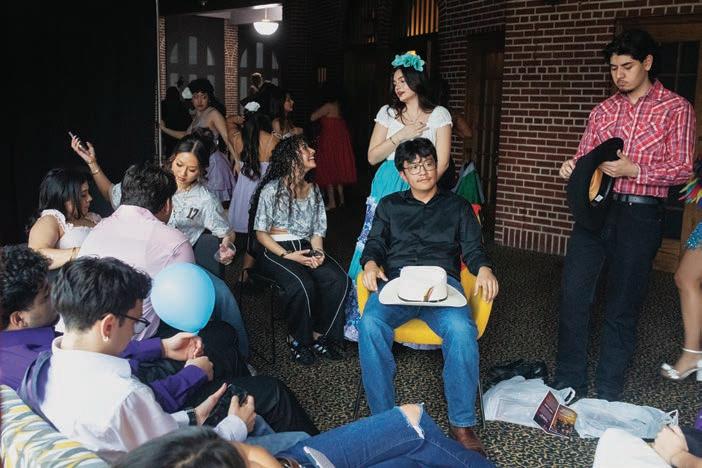
same values as myself.”
While events like PULSE create visible celebrations of culture, Zurita-Gonzalez noted that building community can also exist in response to challenges.
“Iowa City to certain extent does and does not support what we are trying to showcase. The recent restraint and hatred towards certain demographic groups has made it difficult to be comfortable in our skin. But rallying together against these challenges makes all the difference,” she said. While large-scale showcases make culture visible, other organizations focus on creating spaces where identity can be explored more personally.
Aiza Khan, president of the Pakistani Student Association, said events like henna night and Basant are central to that effort.
“I truly felt at home during the setup for our henna night. I spent the entire day with my board, working through all the small details and preparing for the event,” Khan said. “At that point, the friendships we had
built went beyond just being part of an organization. PSA is not just about events, but about the relationships and support system we create for each other.”
Outside of organized meetings, the community continues in less structured environments.
Students often point to “third spaces” — places outside of their classes and apartments — where relationships develop more informally.
Zurita-Gonzalez identified the Office of Access and Support, or OAS, in the Old Capitol Town Center as one of those spaces.
“I feel most welcome at OAS because it’s a space where I can study but also connect with people who share similar experiences,” she said. “It’s another place, outside of something like Walk It Out, where community just happens naturally.”
For Khan, those informal moments happen at the Iowa Memorial Union or Hubbard Park.
“After events like henna night or Eid celebrations, we’ll spend time together at places like the IMU or Hubbard Park,” she said. “Those moments, outside of the actual events, are where a lot of our strongest con-





nections are built.”
James McCurtis is involved in many cultural initiatives, including Alpha Phi Alpha, the first African American fraternity, and the Unity chapter of the National Association of Black Journalists.
“I don’t have to think about code-switching or conforming and assimilating into a culture that isn’t my own. Now, that doesn’t mean I feel alien when I’m in class.”
Shared experiences are not limited to cultural organizations alone.
Koro Castillo, a fourth-year student and president of Honors Students for Unity and Progress, said the group creates space for students to engage in conversations that often extend beyond identity-based events.
“In one of our meetings before Thanksgiving, we made hand turkey crafts while also talking about the history behind the holiday and acknowledging Native communities,” Castillo said. “Moments like that show how we try to combine community-building with learning and reflection.”
Most students, myself included, at the UI come from the Midwest, with a little more than a half of the student body coming from Iowa. Castillo emphasized this shared experience as a point of unity itself.
“We all work hard to create a space where each of us can live in our diverse identities but in a way that we can all learn from each other and appreciate our differences. We’ve had the experience of existing in spaces that aren’t necessarily diverse, so we look to create that for ourselves,” she said.
The UI is a big campus, with students of many identities figuring out who they are and who they want to be, Castillo explained. It can be isolating when you feel like no one relates to you, and that’s why having cultural and identity-based organizations is so important for students’ wellbeing.
“Our membership has gone down in recent years, and it’s hard to stay motivated when it feels like every day there’s a new policy restricting our human rights or attacking university freedoms,” she said. “Luckily, student organizations still have full autonomy to do and say what we want to, so we try to embrace that and stay the course. We love to chat and create conversation. Last semester, we spoke to students on how to engage in dialogue with people
who may have different beliefs than you, because we are aware that in Iowa, not everyone is on the same page beliefs-wise.”
McCurtis thinks showing up for each other even when the issue that one community is facing may not be what another is facing is what makes these connections so strong. When the African-American students at UI lost the Young Gifted and Black LLC, the protest mobilized more than just the black students.
“There were also people from the LGBTQ community there, which I know isn’t a community defined solely by people of color, but it is definitely a diverse and vibrant community, given how many different demographics are part of it due to intersectionality,” he said.
Speaking from personal experience, I didn’t find community in one organization alone.
Instead, attending events across different groups allowed me to diversify my own community. The Indian Student Alliance at the UI hosts events like Mock Shaadi, a fake wedding, and Nachte Raho, all of which offer a sense of belonging that I had once doubted I would find here.
Attending Walk It Out events, like PULSE, brought together multiple cultures in one spot.
Many of these organizations actively collaborate with other student groups, including those not centered on culture, to create more inclusive and multifaceted experiences.
Khan explained that PSA collaborates with cultural organizations like the South Asian Student Alliance and the Muslim Student Alliance. HSUP has collaborated with The Bijou Film Board, UI’s Environmental Coalition, and the Asian Pacific American Cultural Center. Currently, they are working on a new project with Hawk the Vote and Queer and Trans People of Color initiatives.
Representation is about presence, not numbers. At the UI, that presence is through performances, shared spaces, and in the communities students create for themselves.
Editor’s Note: James McCurtis is a former DI employee.