
IC schools grapple with cuts, financial strains

The district plans to finance millions in cuts through sta reductions and borrowing.



The Iowa City Community School District is facing millions in private borrowing, potential building closures, an increase to its property tax levy, and continued financial pressures that will leave educators and building staff out of work.
In January, the district held a regular meeting of its board of directors. The board went about business as usual and, in an agenda item involving the district’s business office, approved a financial obligation with only modest unease.
Two weeks later, community members began bringing concerns about financial management issues to the board. At the same meeting, the board announced it would need to cut millions from its 2026-27 budget, the largest cuts since 2023 when the district closed Hills Elementary to satisfy a $3.75 million cut.
By March 24, after a brief delay and just under a week before Iowa public school budgets are due to the Iowa Department of Management, the district approved its budget, short $7.5 million from the previous year. Staffing switchups also posed problems for the district’s financial management abilities.
The district had been operating without a chief financial officer since November 2025, when the district’s former CFO, Adam Kurth, stepped down from his position — two months after a $10 million interfund loan transfer was made — leaving other district administrators, including Chief Operating Officer Curt Pratt, to navigate the budgeting process.
Kurth did not reply to The Daily Iowan’s request for














comment sent in April.

Since March, the district has operated with an interim CFO, but recently appointed Solon Community School District CFO Pat Moore to the full-time position, beginning in July, according to a statement from the district issued on April 1.
At the Iowa City school district, what community members are calling “financial mismanagement” has snowballed and underpins larger issues statewide in education funding and poses separate questions about how the district is managing its money.
In a board meeting on Feb. 10, ICCSD’s superintendent Matt Degner addressed the board and the public, saying the district is experiencing a structural cash flow and spending issue, meaning the district has overspent and is low on funds.
“The honest and transparent answer is that our expenditures went beyond where we forecasted in the budget,” Degner said.
In August 2025, the district made an interfund loan transfer of $10 million from its Health Insurance Fund to its General Fund to cover operations.
The district’s financial office presented the transfer for approval six months later at a board meeting on Jan. 27. The board had no prior knowledge of the loan, board member Jayne Finch said during the meeting.
“I’m wondering why this wasn’t communicated to the board,” Finch said at the January meeting. “I think
about some of the decisions we’ve made since then, the board needs to have an understanding of our financial situation.”
The district will also need to privately borrow up to $25 million to satisfy general fund revenue streams, according to board documents from an April 1 work session. The district has already borrowed $3 million for the month of March to cover teacher payroll, anticipating potential cash flow issues.
The board also heard from project consultants, PFM Financial Advisors, on April 1, who said closing school buildings would be the fastest way to reduce operational costs and cut teaching staff.
The borrowing vehicle used by the district is an Iowadictated “anticipatory warrant,” which is a type of loan unique to and issued by school districts. Anticipatory, in this case, refers to how short a district anticipates it will be on revenues, at which point that shortfall can be covered by private borrowing.
In the case of warrants, if borrowed funds are not needed and remain unused, the principal can be paid back without interest, Brady Shutt, Iowa City Education Association president and district teacher, said.
Shutt said the district has already begun looking at contracts for teachers to make staffing reductions, conversations that he said generally fall first to
UI identifies extinct crocodile species
The species, Lucy’s hunter, was discovered by researchers in Ethiopia.
A University of Iowa-led research team looks forward to paleontologists paying more attention to lesser researched species, such as crocodiles, after adding a new apex predator to the fossil record.
In their study, published on March 11, “Lucy’s peril: A Pliocene Crocodile from the Hadar Formation, Northeastern Ethiopia,” the team identified an extinct crocodile species, Crocodylus lucivenator, or Lucy’s hunter, at the Hadar Formation fossil site in northeast Ethiopia.
The name comes from the early human species "Lucy," scientifically known as Australopithecus afarensis. Lucy’s skeleton was discovered in Ethiopia in 1974.
Lucy’s hunter, an apex predator, was 13 to 16 feet long and weighed 660 to 1,320 pounds, making it the largest predator known from the Hadar Formation, according to the study.
The research team analyzed nearly 200 physical features, such as jaw joints and skulls, across 50 crocodile species from multiple sites in East Africa.
Researchers determined Lucy’s hunter belonged to an extinct lineage of East African crocodiles and is not related to modern crocodile species in the region.

Christopher Brochu, a professor in the UI’s School of Earth, Environment, and Sustainability and the lead author of the study, said he fi rst examined the crocodile species in Ethiopia in 2016 and began to suspect the fossil represented an entirely
in neotropical crocodiles in the West Indies
Annabelle Temple named drum major
Temple will be the third woman to lead the marching band in the ensemble’s history.
Under the lights of Kinnick Stadium, the drum major of the Iowa Hawkeye Marching Band stands in front of more than 300 musicians at every home football game, performing for up to 70,000 fans.
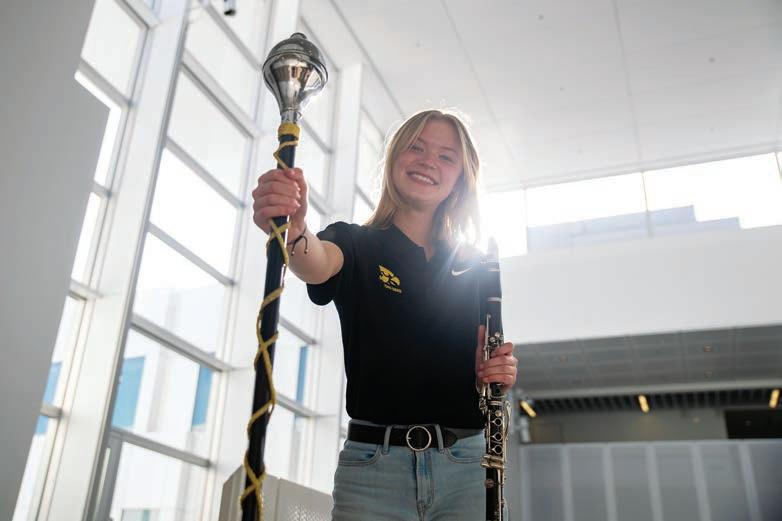
This fall, the role will belong to Annabelle Temple, a second-year University of Iowa student stepping into a leadership role only held by two other women before her and serving in the role for the next year. While she approaches the role with humility, the significance of her selection is not lost on her.
“It’s an honor to step into a role that has historically been held mostly by men and to show other women in the band that they can see themselves here, too,” Temple said.
In high school in Illinois, Temple served as the drum major for two years, an experience that first introduced her to the
di erent species from other known crocodiles. Brochu said he noticed Lucy’s hunter had a hump on its snout, something typically seen
Des Moines College Community Water loo Cedar Rapids Iowa City
or South America. The snout was also longer than normal in other extinct African crocodiles.
“Normally, in modern crocodiles, there is what I call a prenarial rostrum, so the snout extends beyond the nose for a short distance,” he said. “This thing had that, but at the same time, it also had some skull arrangements that are absolutely inconsistent with modern crocodiles.”
Brochu said the inconsistencies between Lucy’s hunter and modern crocodiles indicate researchers are currently unable to trace the genetic origins of East African crocodiles.
While they became extinct before they could establish a genetic link with any crocodile today, Brochu said Lucy’s hunter still shares hunting characteristics with today's Nile crocodile.
“They don't chase their prey.

They ambush it,” he said. “They remain stealthy, they stay hidden, and then they explode out of the water and grab their prey, or they're ambushing things that are already in the water like fish.”
Brochu said he was blessed to work with excellent graduate students and professors on the study, one of whom was an Iowa alumna.
Stephanie Drumheller, a co-author of the study and a professor at the University of Tennessee, earned a doctorate at Iowa in 2012. Drumheller joined the team to determine how bite marks and other disturbances on the bones of Lucy’s hunter showcased how it lived and became a fossil.
Drumheller determined that the injuries found on many of the crocodiles lines up with crocodile behavior today, in which crocodiles will fight over access to resources.
“It wasn't exactly unexpected, but it was fun to see how much evidence that we had for how far this type of behavior actually goes down the family tree,” she said.
Drumheller said crocodile fossils have commonly been
balance of leadership and performance required for the role.
This foundati onal experience motivated her to audition for the Hawkeye Marching Band’s top position.
The drum major is in charge of leading the marching band, teaching marching band steps and fundamentals, leading daily rehearsals, and performing for the crowd at Kinnick during the halftime show. Drum majors have an important leadership role in the band, and help to represent the band as a whole.
“I really like being in leadership positions to show others that they can be leaders themselves,” Temple said.
The audition process is rigorous and highly competitive, outgoing Drum Major Brandon Alpers said.
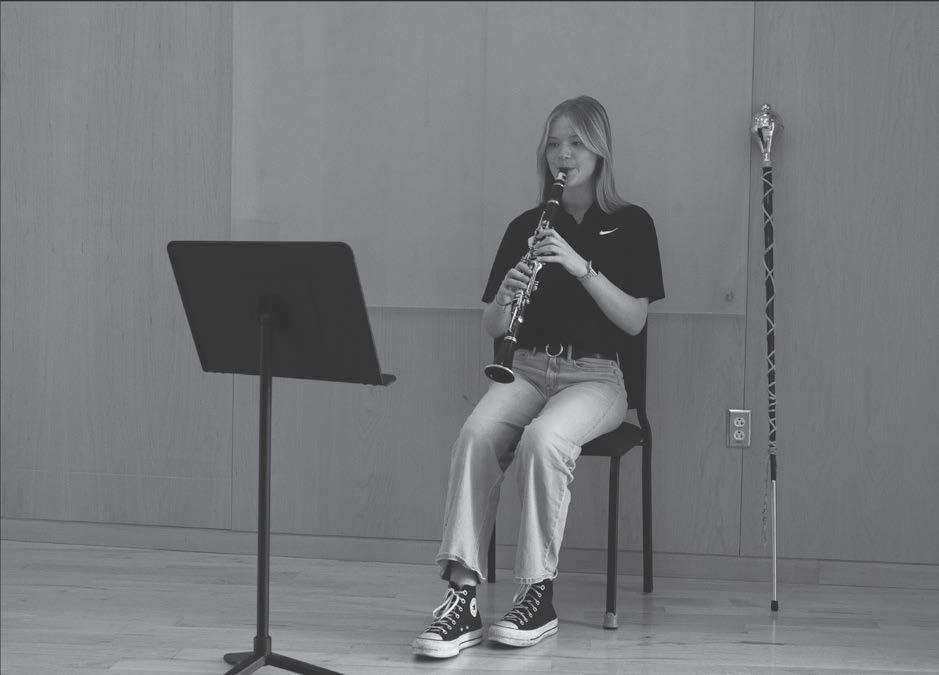
Candidates must complete written applications, submit conducting and mace demonstration videos, and advance through multiple rounds of interviews. A marching band mace is a staff used by drum majors to signal commands, maintain tempo, and perform visual flourishes.
Finalists then face a live audition that includes teaching marching fundamentals and completing mace — the long staff drum majors carry to conduct and signal the band — performances.
“It’s a lot,” Alpers said. “But all the finalists did amazing.” Alpers, who served as drum major for the 202526 academic year, said Temple stood out due to her technical ability and natural leadership.
“She is a naturalborn leader,” Alpers said. “Teaching comes really easily for her, and she is going to do phenomenally."
With over five years in the Hawkeye Marching Band, Alpers said the role of the drum major extends far beyond what audiences see on gamedays.
“The visual aspect, the performance aspect, is definitely what people see,” Alpers said. “But the two most
overlooked at sites like the Hadar Formation as opposed to mammals because historically, paleontologists believed crocodiles had hardly evolved over the course of millions of years.
“It's simply not true, but it has historically guided interest. When you're being told there's nothing interesting to see, people don't look,” she said.
“It s definitely a situation where the perception was driving the research, not the other way around.”
Drumheller said she hopes the
study helps crocodiles and other understudied species to be more valued by researchers.
“All these amazing discoveries are waiting to be found in places like the National Museum of Ethiopia,” she said. “It's really exciting to see a lot of that work coming out of researchers who are going back to these collections and taking a second look.”
In an email to The Daily Iowan, Jessica Smith, communications and engagement specialist at the University of Iowa Museum of Natural History, said the
scientists who started UI’s museum collection knew that documenting every specimen would one day help answer broader questions about the planet and its history.
“Discoveries like this carry that mission forward,” she said.
“It’s inspiring to see that same curiosity and commitment continued by researchers at the University of Iowa today, part of a centuries-old tradition at museums like ours."
In Drumheller’s view, Lucy’s hunter not only opens up an undiscovered chapter of crocodilian history, but it also serves to humble humanity’s view of their place on the food chain.
“We like to think of ourselves as mighty hunters in the present day, and maybe that is sometimes the case, but certainly when you look deeper into our family tree, there were lots of predators that were perfectly willing and able to hunt our relatives,” she said.
important things are teaching and leadership.”
Alpers said drum majors are in charge of instructing marching fundamentals, leading rehearsals, and serving as a bridge between band members and directors. They also act as mentors, often answering questions and helping to resolve conflicts within the band.
Stepping into this position means Temple must lead her peers, many of whom are close in age or even older than her.
Temple said being selected for this position as a second year puts her on the younger side of drum majors.
Alpers said building trust comes through consistency, communi cation, and small, everyday interactions, including honoring scheduled breaks and learning first-year members’ names.
“How do you get a group of 300 college-aged kids to trust you?” Alpers said. “Respect is a twoway street.”
Temple will take the role alongside Carissa Wolfe, the band’s Golden Girl, or feature twirler, who adds dynamic visual elements to the band’s performances. Wolfe, a first-year student and international gold
medalist through the International Baton Twirling Federation, said leadership on the field plays a crucial role in shaping the band’s energy.
“All 300 people in the band will always have each other’s back,” Wolfe said. “We’re all in it together, and this atmosphere is created by the drum major.”
That sense of unity is something Temple hopes to build on as she prepares for her season at the front of the band. The responsibilities of a drum major are significant, including leading rehearsals and performing in front of fans, but Temple is confident she can balance it all.
“I feel so ready for this opportunity, and I know that I have so many people behind me who are going to be supporting me through this,” Temple said.
For Alpers, watching that transition unfold has been a full-circle moment. After months of mentoring finalists and reflecting on his own journey, he said stepping away from the role has reinforced what made the experience meaningful.
“In my college experience, including
my role as drum major, I’ve always just tried to say yes,” Alpers said.
“Being open-minded has given me so many opportunities I wouldn’t have had otherwise.”
The camp teaches the band’s style of music, marching, playing, and shows.
“I’m so excited to take on this role,” Temple said.
“This is a role that I’ve looked up to for a while, so having the opportunity to do this is just amazing.”
Now, it’s Temple’s turn to step into that opportunity. Temple will begin preparations for the role this summer, and lead the Hawkeye Marching Band Camp.


probationary teachers, whose positions are more “tenuous” in nature.
In Iowa, teaching probation is three years for new teachers and two years for teachers who completed probation but are new to the district. Each of these probation terms must be completed consecutively within the same district, and contracts for probationary teachers can be terminated without cause at the end of each school year.
The district has until April 30 to notify probationary teachers who will be cut, in accordance with Iowa law.
While Shutt said he was not privy to the specific number of cuts the district is pursuing, he estimated, based on his work through the teachers’ union, that approximately 15 probationary teachers would be cut.
“In situations where I’m involved in talking with them, I really encourage them to maintain their dream of being an educator, to seek to continue to improve, to know that sometimes in our employment life, that it is just not the right fit at the right time,” he said.
The Iowa City Community School District provided the DI a statement on its budgetary concerns, sent out to district families following the board’s March 24 board meeting, at which it finalized the fiscal year 2027 budget. The district declined to provide any additional comment.
Degner said in the statement that the district is issuing the warrants to “responsibly manage cash flow while maintaining normal operations.”
The district is also considering increases to its property tax levy to meet revenue needs, Degner said in the statement. According to previous reporting by the DI, the district is proposing an increase in its tax levy to $17.10 per $1,000 taxable valuation, paid by property owners within the district’s boundaries. This is up from $16.06 per , in fiscal year .
During its Jan. 27 meeting, the Iowa City school board confirmed the loan transfer of $10 million, made in August 2025.
The announcement piqued the curiosity of longtime district parent Emily Campbell, a career financial statements auditor and finance and budget executive working for the University of Iowa. To Campbell, the way she watched the process occur was cause for concern.
The district’s financial o ce said in its board presentation that no accounting entry was made of the transaction.
“When they said that, it didn't make sense to me because you still should have been able to see the bank balances, and it should have reflected that,” Campbell said in an interview with the DI. “So I started looking at the financial reports from the last uarter, and I was trying to understand them better.”
Campbell spoke at the board’s Feb. 10 meeting, pointing out inaccuracies she found after reviewing the quarterly report, including four funds being removed for the first time in over a decade, a million di erence between starting balances for the current year and the ending balance of last year, and a loan missing from the financial report. The board acknowledged the inaccuracies Campbell found. In a conversation with the DI, Finch said Campbell’s claims were valid.
“ uarterly financial reports had funds that were missing, and there were some errors,” she said.
Campbell, who has worked at the UI in financial administration, budgeting, operations, and decision support roles for years, said she examined public financial reports available on the district’s website to begin identifying issues with finances, though she quickly found the documents di cult to understand.
“I started looking back and comparing them, and there's missing information. The information is incorrect, it’s clearly just copied from one year to the next,” she said. “It was just blatantly wrong.”
For the board’s Feb. 10 meeting, Campbell had compiled a document, shared with the DI and addressed to the board, describing the irregularities she observed, tying in audit documents she claimed were improperly handled and overall issues with oversight.
Campbell said an audit released in that analyzed district financial activities ending in 2023 was not correctly presented to the board. The audit presented financial reporting irregularities that needed “significant revisions,” contained unreconciled bank accounts, and expenses that were recorded in the incorrect f iscal year.
The audit also found that the district’s CFO had “the ability to update and add new vendors, process invoices, post journal entries, and has access to the electronic signature for cash disbursements.”
In response, the district wrote in its report that journal entry, account maintenance, and invoice processing abilities were removed from the CFO position in August in accordance with the audit’s findings.
Campbell said the audit report was not properly made available to the school board and went directly to district leadership, leaving the board blind to what the report found to be concerns with financial oversight within the district.
She referenced a March 28, 2023, board meeting document where the board placed its audit request. The document asked that audit report findings be returned to the board, which Campbell said did not believe
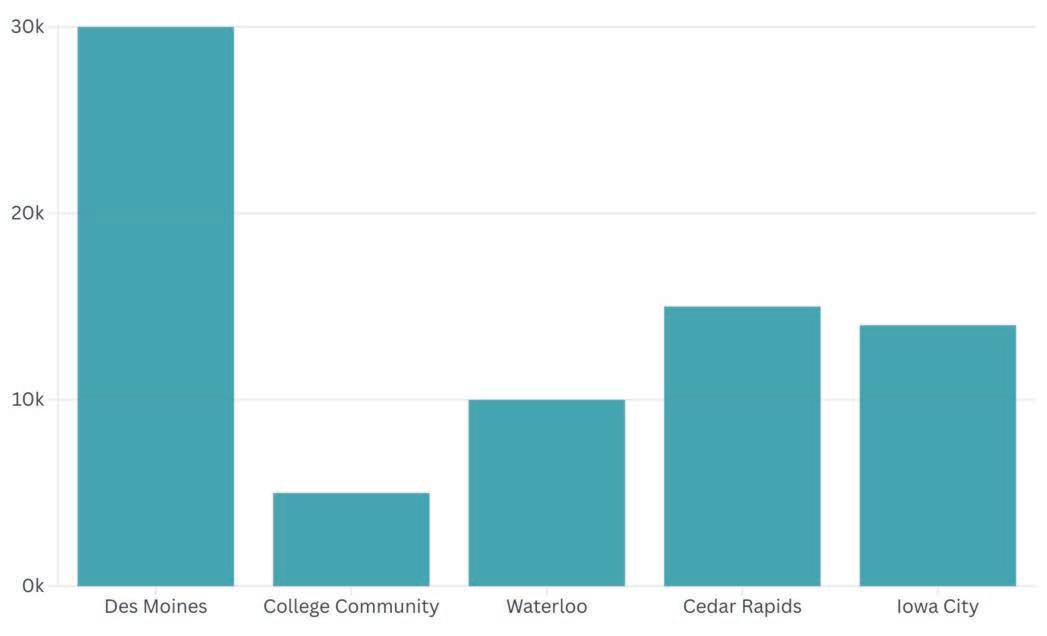
Iowa school districts’ enrollment for 2025-26
In Iowa, public schools receive funding on a “per pupil” basis, encouraging higher enrollment numbers to secure more funding.
had happened.
While reviewing the financial documents available from the board, Campbell said cash balances and other financial statement line items were matching between periods, which she believed suggested that the reports were not updated to reflect current financial health.
Campbell also said the fact that the board heard about the interfund transfer six months after it was made was “not normal.”
“That is where this whole thing started to me. That indicates that there's not an appropriate level of review, of authorization, of getting financial information by the administration,” she said. “It also indicates that there are serious issues with overall operations, legal counsel, or lack of going to legal counsel, and what is mandated by the state of Iowa and their internal policies, and lack of board oversight.”
an iller-Hook, school finance director for the Iowa Association of School Boards, said funding in education around the state is an increasingly thin line, citing systemic issues like private education savings accounts, or ESAs, inadequate funding, and declining enrollment.
The problems facing education funding in Iowa are interrelated, Miller-Hook said. This interconnectedness makes it di cult to identify the root cause or to distinguish it from a result of another factor.
“So if your enrollment is going down, and you're not getting the funding, it’s kind of a double whammy, and budget adjustments have to be made, and we’re a people business,” she said.
She said generally, 75 to 82 percent of an Iowa school district’s general fund goes to salary and benefits, meaning that once a district must make cuts, personnel are the only cuts a district can make to break even.
Iowa Department of Education.
The accounts, Miller-Hook said, were initially introduced and allocated based on income levels, though the program now applies a flat rate. She said in the three years since its introduction, the program has played a role in lowering public school enrollment.
The Iowa Department of Education website credits the 1.53 percent decrease in public school enrollment between 2024 and to a larger enrollment dropo challenge, referencing a predicted 5 percent reduction nationally by 2031.
While the district continues to navigate months of financial uncertainty, insight from other school districts across the state shows how common these challenges are and where the district’s situation has diverged.
In Des Moines Public Schools, Chief Financial O cer Shashank Aurora said funding is largely determined by a per-pupil formula and annual increases to SSA.
“The biggest misnomer is that property taxes are the largest funding source,” Aurora said. “They are one source, but funding is really driven by how many students you have and what the state sets per student.”
That structure acts as an e ualizer across districts, balancing local property tax di erences with state aid. Aurora said this also makes districts particularly vulnerable to declining enrollment and stagnant state funding, two issues that Aurora said school districts must take into account when making financial decisions.
In Des Moines, those pressures have forced the school district to cut $17 million this year, driven by rising operational costs, the loss of more than 600 students in the past year, and the loss of more than 3,000 students in the last decade.
Iowa City has lost 181 students between fiscal year 2025 and fiscal year 2026, amounting to 1.25 percent of the student body, according to district documents.
Aurora said because about 80 percent of Des Moines expenses are tied to the school district’s salaries and benefits, the reductions often have to come from sta ng.
“If I leave the sta untouched, I cannot make this large of a budget cut,” Aurora said.
“It’s the only way out.”
“That's what you get,” Miller-Hook said. “Very hard, very hard for districts to even negotiate within the [state supplemental aid] amount. Districts have to be competitive somewhat.”
SSA, or state supplemental aid, is the primary funding system for public schools in most states in the U.S. Iowa operates on a “per-pupil” basis, motivating school districts to enroll more students.
Over the past 60 years, according to the Iowa Department of Education, through mergers, 458 total Iowa school districts became 325. Merged school districts receive more funding because of larger student bodies.
In February, Iowa Gov. Kim Reynolds signed a law increasing per-pupil funding by 2 percent, an increase of $160, to $8,148 per student for the 2026-27 school year. However, Miller-Hook said 2 percent is not a viable figure, despite being a trend for nearly 10 years.
“It s not su cient, but that is where we are and where we've been for a while,” she said.
One concern regarding SSA increases is their performance relative to inflation. In February, Iowa Sen. Herman Quirmbach, D-Ames, who serves on the Senate Education Committee, released a statement decrying the 2 percent increase, saying it is easily outpaced by inflation, which he said is devaluing the education dollars provided by the state.
Quirmbach also released a presentation analyzing school funding since Reynolds took o ce in . In his presentation, Quirmbach asserts that the state has shorted the public education system approximately .9 billion, primarily due to inflation.
Per-pupil funding concerns fall to the background, however, Miller-Hook said, when considering the impact ESAs have on enrollment in Iowa.
ESAs are state-funded accounts providing $7,988 per student to be used for tuition at accredited private schools, according to the
Aurora pointed out the importance of experienced financial leadership and adherence to fund restrictions, areas where he said school districts can have complications.
“School finance is very siloed,” Sharma said. “You can’t just move money from one fund to another. That’s where people get confused and where districts can get into serious problems.”
Iowa City operates its budget within seven di erent restrictive funds, including the general fund, student activity fund, and the debt services fund. Each of these funds has rules that limit how much money can be used and prevent the district from reallocating resources to cover shortfalls.
Like many other districts across the state, including Des Moines, College Community School District in Cedar Rapids uses a five-year forecasting model, looking at enrollment trends, historical state funding increases, and inflation to help determine the next steps in the district’s financial goals.
“We project five years out, but we really try to focus on the three-year range,” College Community School District’s Chief Financial O cer Christie VanWey said. “It’s di cult because enrollment and legislation can change so quickly, but you can still see the trajectory.”
Growing enrollment has allowed the College Community School District to avoid budget cuts in the past. For the first time in the district’s history, $450,000 will be cut from the budget for fiscal year . VanWey said that although the district’s financial situation is not dire, declining enrollment and general inflation show a projected decline in income for the district.
“We can see the trajectory, and the sooner we react to it, the less impact we will have as a district,” VanWey said.
VanWey said taking a more proactive approach allows her district to make small and controlled reductions rather than large and drastic reductions later on.
VanWey said she closely monitors financial
indicators like the Unspent Authorized Budget, or the UAB.
The UAB is the amount of money a district is legally allowed to spend but hasn’t used yet. A higher UAB means the district has more money to spend in the future.
In addition to monitoring UAB, VanWey said her district also tracks solvency, or the amount of cash on hand, as an indicator of financial health. While UAB reflects spending authority, solvency reflects whether districts can actually meet their financial obligations in real time.
“We have board goals set around both of those indicators,” VanWey said. “They really guide our decisions and help us understand where we are financially and where we’re heading.”
VanWey said her district aims to maintain a cash reserve between 5 and 15 percent of its overall budget, a range that allows for flexibility while still prioritizing spending on students.
College Community is facing some of the lowest cuts necessary in Iowa school districts. Larger districts like Cedar Rapids, their neighboring district, cut $11 million from their budget last year and $13 million for the upcoming year. Waterloo cut $8 million from its budget for the upcoming year due to a decline in enrollment for the district.
VanWey’s emphasis on early intervention stands in contrast to the situation unfolding in Iowa City, where financial challenges have required a more immediate and direct response.
One of the most significant actions taken by the district in recent months was the interfund loan approved in January. Because school district budgets are divided into restricted funds, the district could not simply shift money freely to cover gaps in its general fund. Instead, the district temporarily borrowed money from another fund to maintain operations.
The situation also highlights a broader issue raised by o cials in other districts public misunderstanding of how school finances work.
In Des Moines Public Schools, Aurora said he regularly works to explain why districts can appear to spend in one area while cutting in another.
“People will say, ‘Why are you building something new if you’re cutting teachers?’” Aurora said. “Those are two completely di erent funds. ou cannot take that money and use it for salaries.”
Aurora said this disconnect can make it more di cult for districts to communicate the realities of budget constraints to the public, especially during periods of visible cuts.
Transparency, VanWey said, is key to bridging this gap. In her district, she provides monthly financial reports to the school board, publishes data alongside school board agendas, and presents multiple times a year to both board members and the public on the district’s financial position. She also introduced an annual financial health report, which she said compiles key data points such as enrollment trends, spending patterns, and long-term projections in a more accessible format.
“We really want to be as transparent as possible,” VanWey said. “When people understand the ‘why’ behind decisions, it makes a big di erence.”
In Iowa City, similar decisions are now at the forefront as the district works to stabilize finances. Alongside enrollment decline and limited growth in state funding, internal financial challenges have added another layer of complexity for the district.
While funding questions go back and forth in the legislature and among education advocates, Campbell said she does not believe the Iowa City school district’s situation is directly attributable to systemic issues and is rather its own unique challenge.
For Campbell, seeing the financial issues at the Iowa City district has caused her to reevaluate her commitment to a district she grew up in, as well as a district she returned to from San Francisco for the sake of her children’s education.
“Over the last 10 years, we have completely lost our faith in the state of Iowa's commitment to public education, but I have always thought that Iowa City Schools was the one or few of the districts in the state of Iowa that was going to pull through, that had their s--- together, and we'd be okay,” she said. “And I no longer feel like that.”
OPINIONS
Stop eating at problematic Chick-fil-A
Don’t support these types of businesses in Iowa City.

The opening of Chick-fil-A’s first U. . restaurant on arch , along the Thames in ondon, was anything but a celebration for the company’s American representatives. Instead of customers, the representatives found themselves surrounded by protesters who did not want to “eat mor’ chikin.”
The Chick-fil-A representatives did not wish to engage with the boycotters about the company’s openly anti- BT stances, from monetary donations to companies that supported BT discrimination, support for conversion therapy, and opposition of the E uity Act in the U.S.
When the temporary Chick-fil-A opened at the Iowa emorial Union during renovations, there was little fanfare or protest.
This was surprising to me partly for the fact that the restaurant would not be taking students’ dining dollars, the currency students are given to be used at certain venues around campus.
Numerous other local businesses exist in town that could have easily filled the void of food in the I U before turning to what isn’t just a controversial company.
The CEO of the company at the time, Dan Cathy, the son of Chick-fil-A founder Truett Cathy, told the Baptist Press he was “guilty as charged” in his support of traditional marriage.
“We know that it might not be popular with everyone,” Cathy said. “But thank the ord, we live in a country where we can share our values and operate on biblical principles.”
And operate on these principles, they did.Despite claiming they would step back from the same-sex marriage debate, according to a report by ThinkProgress in , Chick-fil-A donated more than . million to three groups with a history of BT discrimination.
The Fellowship of Christian Athletes



received the lion’s share at , , . The organization works with college athletes and holds a statement of faith that a rms a “traditional family structure” of one man and one woman, condemning sex outside of marriage and “homosexual acts.”
The Salvation Army received , an organization with a controversial history of discrimination and the Paul Anderson outh Home received , , an organization that, among other things, bears an unsettling resemblance to a conversion therapy camp.
“I went to school with the most homophobic people I’ve ever met in my life, and they got Chick-fil-A every Friday then they were all sad when they stopped giving money to anti- BT organizations,” third-year UI student, Rebecca Feldman, said.
I recognize that what a fast food chain’s leadership does may not top anyone’s priority list, but it is worth paying attention to the fact that, as the political climate shifts, these organizations find themselves increasingly able to be openly hateful and should be held accountable for the words and actions of their owners.
Iowa City, of course, has some businesses with this same problem. For example, Christopher Whalen, the West Des oines owner of Hyper Energy Bar, the energy drink bar, was charged with two counts of child endangerment and intimidation with a dangerous weapon in , according to CCI.
Hyper itself has a line out the door, despite Whalen’s problematic behavior. He was reported to have fired a gun in his home while his two children slept after a verbal
argument with his wife. There wasn’t a peep about his actions after no boycott or even really a general animosity toward the business, except a few people complaining on Reddit.
Business owners, who arguably hold significant influence over American society, need to be held accountable. This is made more di cult, of course, by the precedent set by public acceptance of similar behavior at the highest levels of leadership but it is not impossible on a smaller scale.
Because Hyper is a smaller business, a boycott could be extremely effective in pressuring the owner to step down or the business to relocate entirely.
Similarly, a boycott of Chick-fil-A’s presence in the I U during renovations could make the company think twice before establishing a location here.
Hunting is more beneficial than you think
Stigmas distract from the ecological benefits of ethical hunting.

I’ve never been a huge fan of hunting or hunters. I immediately swipe left on dating apps that proudly boast pictures with dead animals. It always seemed barbaric to me to enjoy the killing of another life.
But that’s my personal take. I can admit that it’s misguided and influenced by harmful stereotypes that aren’t always true of the majority of hunters.
Stigmas around hunting are often attributed to the minority of hunters that do so illegally or who hunt big game solely for sport without consideration for the wildlife. They give hunting a bad reputation.
But for most hunters out there, the hunt is about the experience, ohnson County Conservation Director Brad Friedhof said. It’s not about the harvest of the animal but the entire process of being connected with the environment, studying, and learning from animals and their behaviors.
The majority of great hunters are ethical. They’re e ective and e cient. They respect the wildlife. Hunting isn’t just a hobby that allows for connection with nature; it’s an environmentally necessary process and a sustainable alternative to industrial agriculture.
Conservation is a balancing act between the protection and care of the environment with that of human actions. Humans have a heavy impact on their environment and hunting is an important counterweight that helps to keep that scale balanced.
“Our job is to manage wildlife populations because we’ve altered the natural ecosystems so much that we’ve eliminated some of those control factors,” Friedhof said.
When those control factors, namely apex predators, have been eliminated, populations grow too high for the environment to support, and that’s when

other control factors, like disease and famine, take over. The latter factors can be devastating. They’re not uick or painless processes, and it’s tragic to see an animal su ering from something that could have been prevented.
We have a role to play, a responsibility owed to the environment through hunting. While we play that role well in some places, in others we struggle to fulfill that commitment.
“In Iowa City, we struggle managing the white-tailed deer population,” Friedhof said.
“We’ve got a lot of people, we’ve got a lot of di erent terrain, and it’s hard to get hunters in these locations to safely harvest those deer sometimes.”
In late February of a drone survey of deer in northern Iowa City found the population to be nearly four times its target of deer per s uare mile. An alarming deer were present in the . s uare
mile survey area.
Ongoing issues with car collisions, trampled lawns, and eaten bushes have reflected the dense Iowa City deer population and the need for outside interference.
“Between April and 9, the City may re uest one professional sharpshoot from the NRC.” The Iowa City overnment page cites under its deer management program.
In-depth discussion and education regarding hunting helps to break harmful stigmas and encourages hunters to do their part in promoting healthy ecosystems.
Hunting also provides valuable information about population trends and wildlife behavior. In the case of white-tailed deer, the lower brain stem can be harvested and tested for chronic wasting disease. Some researchers study ticks collected or take blood samples from the deer to establish
other fields of data and information. Anglers will do the same thing with tag fishing.
“The DNR collects a lot of data from hunters and anglers ,” Friedhof said.
“We also thank those hunters and anglers because they’re providing funds to protect those environments.”
Hunting and fishing licenses go into wildlife habitat stamps, and those funds are spent across the state to protect and purchase or restore natural habitats for all species.We don’t always see this side of hunting and wildlife populations, and when we don’t, we don’t think about it, leading to harsh judgments and stereotypes. It’s not just the thrill of the kill. Hunting is a vital management, informational, and economic tool.
“I look forward to, and I’m open to people who want to talk about this,” Friedhof said.
“I think that the big thing is to have an open civic discussion.”
American Lung Cancer Screening Initiative chapter opens at UI
The student-led nonprofit seeks to spread awareness of lung cancer screening and provides students with mentoring and UI Health Care opportunities.
The University of Iowa is now home to the second Iowa-based chapter of the American Lung Cancer Screening Initiative, after Drake University in Des Moines. The initiative is a national student-led nonprofit with over 50 chapters and 700 students in the U.S. and abroad.
The initiative’s mission is to promote the importance of screening for people at high risk of existing or potential lung cancer, centering much of its outreach on hosting events in community spaces and forming partnerships with various nonprofits and brands.
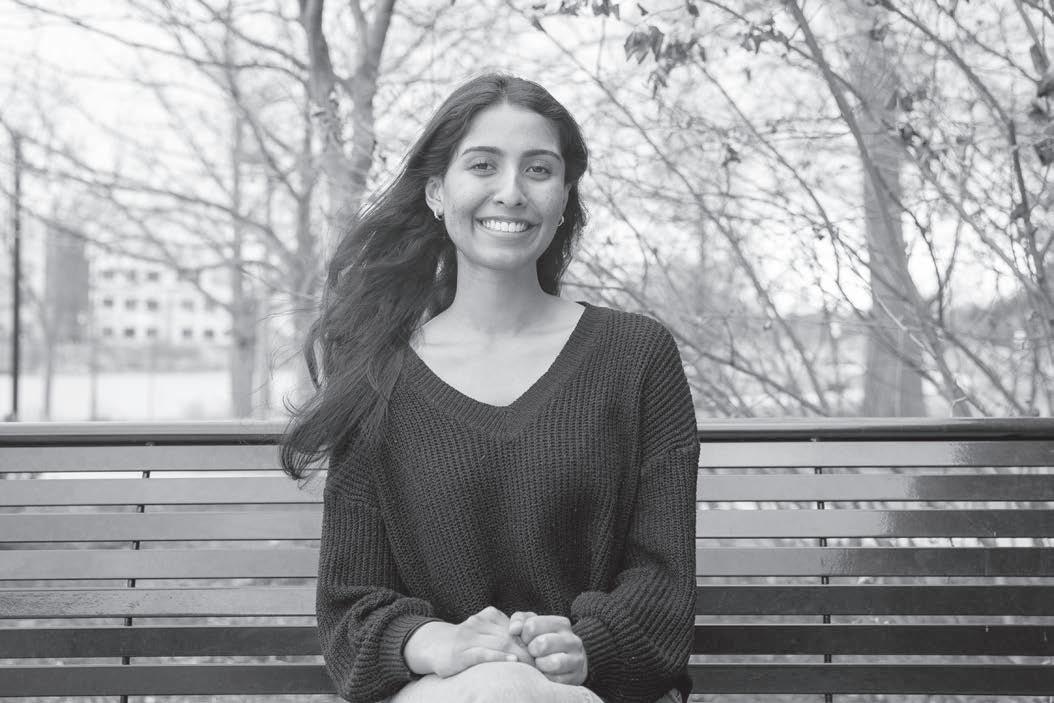
Avishma Muthyapu, a third-year UI biomedical engineering student, is the co-founder and president of the chapter. She said her academic interests and personal relations have inspired the trajectory of her mission to solve major health issues such as lung cancer.
“Disciplines between engineering and medicine overlap a lot, and I just kind of wanted to be part of both, where I am helping build a machine but also using them later in life. I feel like that would make me a good doctor later on,” she said. “I’ve had a lot of people in my life who are very close to me who have cancer. So even if I could contribute 1 percent to any research, I’d feel a little bit better.”
According to the Centers for Disease Control and Prevention and the National Cancer Institute State Cancer Profile, Johnson County has a lung cancer incidence rate of 27.1 across all age groups, races, and sexes.
Muthyapu discovered the institute through mutual friends from other universities and later decided to open a chapter at the UI. She hopes to spread as much awareness as possible on lung cancer screening in the greater Iowa City area.
However, Muthyapu said a negative stigma over lung cancer has limited the amount of progress and help that people who are at risk for the disease can get.
“It’s kind of frowned upon because a lot of people who do get lung cancer, they’ve been past smokers or vapers,” she said. “People are probably like, ‘Oh well, you were smoking, so it’s kind of like you deserve it,’ kind of thing. But that’s not the case. They still deserve care.”
Amya Saxena, a second-year UI molecular biology and biochemistry major, is the other co-founder and co-president of the new chapter.
She said she’s always had a passion to become a surgeon or physician to help those dealing with lung cancer. Like Muthyapu, Saxena believes the stigma
of current or past smokers not being deserving of screening is one of the biggest concerns.
“It’s important for high-risk individuals to at least get screened for lung cancer. The earlier you can diagnose it, the better chance you have at fighting it o ,” she said. The initiative’s screening assessment outlines that eligibility in the U.S. includes those in the 50-80 year age range, current smokers, those who have smoked in the past 15 years, and individuals who have a 20 pack or greater year smoking history.
Third-year UC Berkeley student and ALCSI International Intercollegiate Director Sania Choudhary has been the primary liaison helping Saxena and Muthyapu establish the UI chapter.
In her role, she oversees 13 international and U.S.-based chapters and is chair of the international initiatives committee that helps chapters abroad get connected to advisors. Choudhary is working with teams in India and Brazil.
“A lot of these places actually don’t have programs for lung cancer screening, so we’re helping them develop that kind of thing from the ground up,” she said.
Choudhary said she’s looking forward to the UI chapter contributing to the initiative’s national commitment to lung cancer screening outreach.
“Most people who are eligible for screening actually don’t know that they’re eligible. And the reason that we care so much about that is the survival rate for lung cancer at earlier stages is much higher than it is for those at later stages,” she said
Choudhary said the initiative is trying to make guidelines for screening eligibility more inclusive to women, people of color, and nonsmokers.
The initiative helped draft the Katherine’s Lung Cancer Early Detection and Survival Act, which was introduced to the U.S. House of Representatives in January 2021.
The bill lifts restrictions on screening eligibility for people over the age of 80 and those who stopped smoking over 15 years ago. It also seeks to expand coverage for people at high-risk of lung cancer who obtain a referral from a medical specialist.
Research from the American Society of Clinical Oncology shows physician bias against minorities, specifically Black patients, which sometimes leads
to them being labeled as “non-compliant” in following instructions to reduce the e ects of cancer. This heavily impacts their eligibility for cancer clinical trials.
“There’s a lot of e ort going on right now to make screening guidelines more equitable. Screening guidelines can be very unrepresentative of the general public,” she said.
Saxena and Muthyapu are looking to form a board of committees with various physician mentors and are planning to have future tabling events to increase their outreach and information on screening availability. In April, they are anticipating a Kendra Scott partnership where 20 percent of purchases will be given as initiative donations.
Saxena said advertising these screenings to high-risk individuals plays an important role for members. ALSAC also o ers mentoring from physicians, nationally held conferences to network with others advocating for the cause, and exposure to UI Health Care’s cancer screening center.
“You don’t have to be pre-med or even interested in a health career to be a part of ALCSI,” Saxena said. “We’re very open to any sort of majors, any interest. We just want to spread the word.”
UI professor nationally recognized for inventions
Fatima Toor was selected for the 2026 class of Senior Members in the National Academy of Inventors.
A University of Iowa professor has joined the ranks of nearly 1,000 engineers and inventors from across universities in the U.S. , and is the first to represent the UI in its membership.
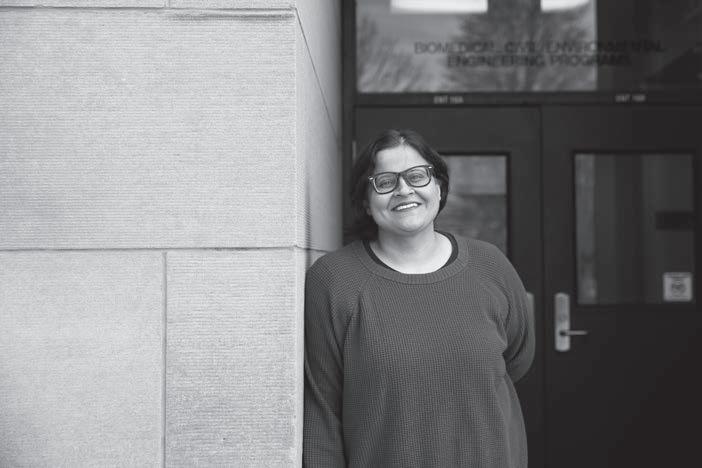
Fatima Toor, Lowell G. Battershell Chair in Laser Engineering and professor of electrical and computer engineering at the UI, was chosen for the 2026 class of Senior Members of the National Academy of Inventors. According to its website, the National Academy of Inventors is a member organization comprising national and international universities, governmental agencies, nonprofit research institutes, and corporate organizations. The academy has over 4,600 chapter members, fellows, and senior members.
When Toor learned she had been selected for the academy, she felt validated, saying that, in her field, it is easy to get discouraged from frequent setbacks, such as rejected grants and papers. Toor said receiving an honor like this makes the failures worth it.
“Having something positive, something that’s a recognition of the work we are doing, I think, is always encouraging and keeps us going forward,” she said.
Toor said she believes she was nominated for senior membership because she is very active in terms of start up activities as well as inventions. One invention her team has been working on is a nanotextured optoelectronic biosensor. This is an analytical electronic device used to detect cancer antigens. She hopes it can be used in the future to monitor existing cancer in patients.
A goal of Toor’s is to be selected for the academy’s Fellows Program, which she said is for advanced and successful inventors with many patents and licensed technologies. A recent academy fellow, Reza Abdovland, has over 30 patents, according to Justia Patents.
“It’s kind of like a lifetime membership,” Toor said, “So if I continue to innovate, and file for intellectual property and everything, the hope is that I become an NAI fellow, which is very prestigious.”
Toor has a long history of research and innovation. Her father was an engineer, and her mother was a mathematics professor. She said that because of this, math always came easy to her. She recalled experiences such as her dad asking scientific uestions on road trips, which she said piqued her interest in science.
“Even in middle school, I was teaching neighbors’ kids and getting some money for that, which was very cool,” she said.
Toor said she chose to go into engineering because as she took higherlevel classes, she found math to be too abstract. She said she was more interested in tangible things.
“From there, I realized that I think engineering is way more fun than being a pure math or physics major,” Toor said.
Toor earned her undergraduate degree at Smith College in Massachusetts, an allwomen’s institution. She later completed her Ph.D. in electrical engineering at Princeton University in New Jersey.
Toor believes she is fortunate to have had good professors and said she is still in touch with her undergraduate academic advisor. She added that she was lucky all of her advisors throughout her education were women.
“I think that’s really helped me, too, because I remember what they were able to do and accomplish,” Toor said.
Her Ph.D. advisor was a MacArthur Fellow, commonly called the “genius grant” by the public, and her postdoctoral advisor was the Vice President for Research at Purdue University.
“I was just glad that I am from a generation where women were already doing so well,” Toor said. “I’m standing on the shoulders of giants, as they say.”
Toor ended up at the UI because her husband was moving here for work. She said she was very anxious about moving to Iowa from the East Coast and that she felt isolated during the first few years she lived here. Still, Toor was impressed by the support Iowa provided for entrepreneurship.
“I never anticipated that that sort of opportunity would be here,” she said. “Iowa is special.”
Toor is also appreciative of how small the UI College of Engineering is. She said the hoops she has to jump through to get
projects o the ground are much smaller than at larger institutions.
“I’ve enjoyed that too because I’ve had crazy ideas, and people have been very supportive,” Toor said.
Madelynn Gayman, a second-year chemical engineering major, feels similarly. She said she would recommend UI’s engineering program, especially because of its size.
“If you go to Iowa State, everyone goes there for engineering, there’s a large class for every class,” she said. “Iowa, it’s definitely smaller classrooms, more oneon-one.”
Gayman said she loves her engineering professors at the UI. She said they are supportive and helpful when students are struggling.
“They care, and they’re good at teaching, and they know how your brain works instead of just throwing stuff at you,” she said.
The UI College of Engineering has a high placement rate. According to the UI Admissions’ website, within six months, 96 percent of graduates are employed, continuing education, or not searching for employment.
Spencer Timmerman, a third-year civil engineering major, is also very fond of his professors in the College of Engineering and how supportive they are.
“For the most part, they’re really good at teaching, getting their point across, helping the students out a lot when they need extra help,” Timmerman said.
He said the UI’s engineering program is full of opportunities for students. He said he went into engineering because of what he can do with it. Because of Toor’s extensive experience, she has advice for students looking to go down her same path. Her biggest suggestion is to get hands-on, outsideof-class experience in addition to coursework.
“Really try to get involved in problems that people are trying to solve that don’t have solutions in textbooks,” Toor said. She also said it is important to keep trying, even after failure. She said when she was younger, failure used to hurt a lot, but over time, her ability to admit and accept failure has grown.
“The important thing is, you can fail, but you should learn and be smarter next time,” Toor said.
Activists push for legislation on period poverty
Doctors say rising costs bring increased inaccessibility of period products.
Legislation to target period poverty, or the inability to access menstrual products and education related to periods, has been repeatedly introduced at the Iowa statehouse, yet female health activists say the issue isn’t being discussed enough.
House File 883, which was introduced in the 2025 Iowa legislative session, would mandate feminine hygiene products, such as pads and tampons, be accessible free of charge in the female bathrooms of Iowa public schools. The bill is active and waiting to be appropriated by a House committee.
Maanya Pandey, University of Iowa fourth-year student and founder of Love for Red, a c nonprofit dedicated to fighting period poverty through advocacy, awareness, and service in Iowa, said conversations surrounding the subject need to be more heavily discussed.
A c nonprofit is an organization exempt from federal income tax organized for charitable, religious, educational, scientific, or literary purposes, according to the Internal Revenue Service.
Pandey said despite the bill’s lack of advancement this session, she thinks through her conversations with lawmakers they are starting to understand the need to legislate the issue.
Pandey said people think inaccessibility to menstrual products primarily happens outside the U.S., but it does happen in the U.S. and in Iowa, specifically among the student demographic.
“The schools that we support, they reach out to us, and the sta talk about how they’re spending their own money to provide period products to students,” Pandey said. “Schools don’t have enough resources to provide these products for their students.”
According to the State of the Period 2025, a biannual study committed to assessing the level of access, stigma, and education surrounding periods for teens nationwide, period products are more accessible in schools now than they were two years ago. But, the study found that only 30 percent of teens believe schools actively support students during their periods.
Ruthina Malone, president of the Iowa City Community School District board, said they try to provide products in the health o ces of schools, and the purchases come out of the school’s health budget. She said legislation to mandate accessibility would be helpful if it were funded and required the products to be free of charge.
“It’s important, and it should be done,” Malone said. “It should be free because it’s part of the basic health of a student, and having them have to worry about the cost is another obstacle.”
For at least two sessions, a bill to mandate menstrual products in school bathrooms has been active, but it hasn’t gained enough traction to pass.
Pandey said she is meeting with legislators to make space for the bill in

the education budget, since an unfunded mandate would put pressure on public schools whose funding has already been razor tight. She said the directive would require the state to incur the cost of the products, but Iowa House lawmakers have seemed relatively open to funding the bill.
Pandey’s organization provides menstrual products to schools, similar to the target demographic of the bill.
She said it is a good start for addressing period poverty, but inaccessibility to products doesn’t stop after students graduate.
“People are menstruating all the time, everywhere, in all places,” Pandey said.
“We need period products in all places, and it should be the norm or requirement to have them in every bathroom.”
Dr. Francesca Turner, obstetrician, gynecologist, and advisor for Love for Red, said it makes sense to direct period poverty legislation at school-aged girls because they are one of the most marginalized and vulnerable populations.
“Kids in school are empathetic to everybody, regardless of party line,” Turner said. “Everybody wants to keep kids in school. Girls are missing an average of nine weeks of high school that live in period poverty. That’s a lot of school.”
Turner is unsure if the legislature will prioritize the issue or end up funding the directive, but she hopes to get to a point where access to menstrual products can be mandated for other subsects of women, such as
those who are incarcerated or on Medicaid.
“Although, I don’t think there’s any political will to give poor people menstrual products when we are taking away their food,” Turner said.
She said there isn’t any hard data to prove period poverty is worsening in Iowa but said she’s heard about increased cost of living difficulties among her patient population in the last year.
“If people are increasing their level of food insecurity, that right there telling you that if they can’t a ord food, they’re not going to be able to afford menstrual products,” Turner said. “To me, it’s the same because it’s just people living in poverty.”
Menstrual products are in higher demand because prices are increasing in general, said John Boller, executive director of the Coralville Community Food Pantry, which provides period products.
According to CNBC, the average cost of menstrual products has risen by nearly 40 percent since 2020, now sitting at $7.43 per unit.
He said there are more individuals coming into the food pantry in need of other necessary health products, including period products.
“It’s a reflection of our economic situation,” Boller said. “Groceries are unbelievably expensive. The cost of living is very high, and families are struggling, so they’re turning to places like food pantries for not just food but other essentials.”
Boller said the pantry has been working to keep more menstrual products on hand to meet the need, but products leave the shelves very quickly. He said they purchase a week or two’s worth at a time, but that nearly a half of the supply comes from community donations.
“More than half our neighbors have to pay for these essential health items,” Boller said. “So we do our best to make sure we can make them available as much as we can. Certainly we’re not able to meet the need, but every little bit helps.”
Blake Willadsen, marketing and communications manager for the Des Moines Area Religious Council, said a bulk of their supply of menstrual products comes from donations.
The council operates a large network of food pantries in the Des Moines area, which Willadsen said received about 7 million pounds of product in 2025. Of the 7 million pounds, only 200,000 pounds were nonfood items, such as toiletries, a percentage of which also included menstrual products. Willadsen said the pantries are seeing an increase in demand for all products, period products included, due to rising costs. He said it is a small chunk of what the pantry provides, but it makes a huge di erence in the community. “It makes it so much easier for women when they’re visiting a pantry, and they don’t have to make another stop,” Willadsen said. “It’s one less thing you have to worry about, and it something you absolutely need
Bill to draw Iowans to trades gains traction
The bill o ers wide-ranging support for skilled laborers amid workforce
fund to lawmakers based on Southeast Polk Community School District’s “Skilled Trades Extension Center,” a building constructed to house hands-on instruction in a variety of trades.
The “Iowa Skilled Workforce Act” is sweeping legislation that aims to attract and retain skilled laborers to the Iowa workforce. The bill, if passed, would result in notable changes to the education of trades, increasing the exposure to various industries for high schoolers, and allocate funds to expand programs at community colleges.
Introduced in February, House File 2466 sits in appropriations before advancing to the House floor for debate.
The legislation seeks to develop Iowa’s skilled workforce by increasing state funding for registered apprenticeship programming from $3 million to $4.5 million, along with lowering barriers for apprenticeship training by decreasing the hours required to teach an apprentice and eliminating the requirement for additional certification.
An apprentice is an individual learning a trade, generally through a combination of on-the-job training and time in the classroom from a skilled laborer in the field.
Jake Friedrichsen, lobbyist for Plumbers and Steamfitters ocal , said Iowa lacks sufficiently qualified tradespeople, and hopes this increased investment will lead to higher recruitment of apprentices, leading to a better workforce in Iowa.
According to the U.S. Chamber of Commerce, Iowa is experiencing a “severe” labor shortage as of December 2025.
A 2024 study by the Common Sense Institute found that older demographics are beginning to dominate Iowa’s labor force as the younger generations have begun to move out of state over the last two decades. Iowa’s workforce is aging, and without a su cient young population to fill job vacancies, trades such as manufacturing and construction are bracing for increased shortages.
Friedrichsen said Iowans need to learn about the trades prior to their high school graduation, which is why he was a proponent of the fund, established in the bill, to construct physical spaces for students to get hands-on experience with various industries.
Freidrichsen said he, along with other central Iowa laborers, brought the idea of the
The center is a part of broader workforce programming and offers registered apprenticeships in areas such as welding, diesel tech, auto tech, and veterinary tech.
Freidrichsen said House leadership liked the idea and decided to allocate funds to encourage other districts to mimic the Southeast Polk academy. He said it would help high school students gain exposure to trades and get training from experts in the classroom.
“This makes it easier for skilled tradespeople to enter the classroom and teach students some of these skills,” Freidrichsen said. “Most high school teachers have a wonderful sense of what trades [students] can go into, but not the actual specialty within the trade.”
He said investment by the state into the trades is worthwhile because apprentices overwhelmingly stay in Iowa for the duration of their career, and Iowa has a shortage of tradesmen.
“Our folks live here,” Freidrichsen said. “They buy houses here. They raise their families here. They send their kids to school here. We are a good investment, right?”
The bill includes language that encourages public school districts to develop preapprentice programs, or curriculum that would help give students experience in the trades.
Dave Daughton, lobbyist for the Rural School Advocates of Iowa and School Administrators of Iowa, said the language is confusing if not corrected before the bill’s passage.
The legislation adds it has the intent to have districts implement the changes no later than July 1, 2028, which Daughton said adds another layer of uncertainty.
“While it's encouraged, they want everybody to have it done here in a couple years,” Daughton said. “That's our concern about it.”
The bill, while sitting in appropriations, does not yet have funding attached to the programming potentially required of school
districts. Daughton said while additional exposure to the trades in schools would be beneficial to students, it would be a di cult re uest to have districts implement these changes, maybe unfunded, on a limited timeframe.
short and getting shorter,” Daughton said.
“It's possible that they can appropriate some funding to go to schools to help pay for some of the expectations that they're putting in, but there's nothing there at the moment.”
For Iowa’s community colleges, the bill includes a funding proposal to expand training infrastructure and equipment for the programs of high-demand fields, along with providing changes to the “Future Ready Iowa Last Dollar Scholarship.”
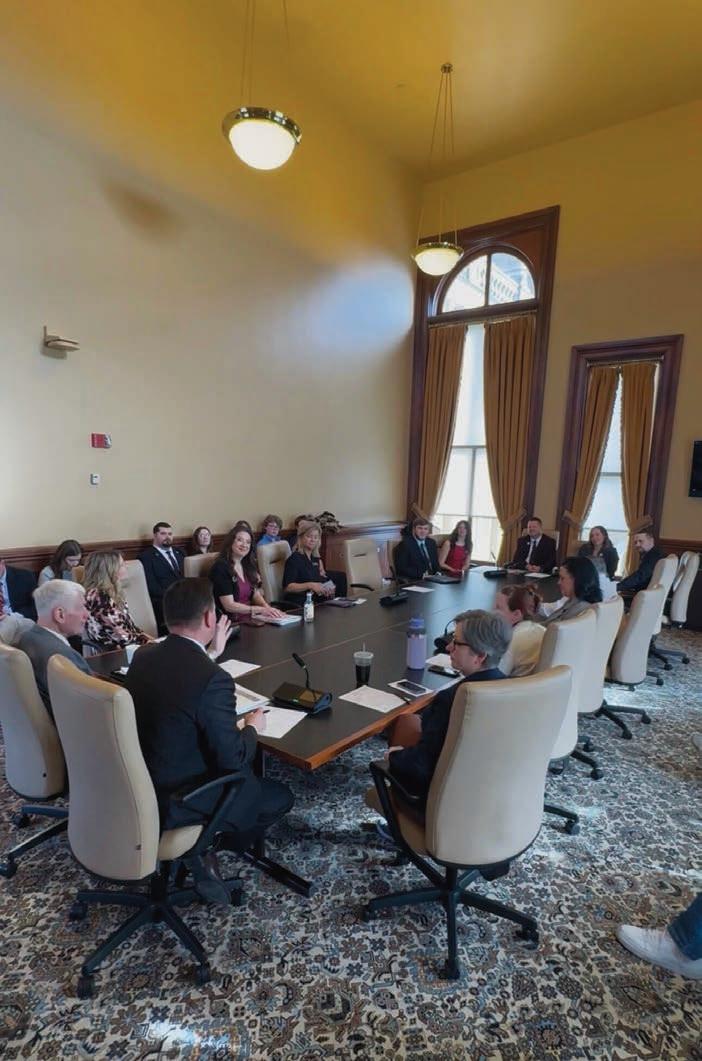
The funding would go toward equipment for labs at community colleges designed to teach trades programs, said Emily Shields, lobbyist for Iowa
Association of Community College Trustees.
“Those are among the most expensive programs to run at colleges because of those equipment and facilities costs,” Shields said. “So support for that would help us keep
The last dollar scholarship covers tuition and fees for eligible Iowans enrolled in highdemand, two year or shorter degrees after all other grants are applied. Shields said the bill would help the program expend all available funds by allowing flexibility within the income cap and expanding the degrees the money can be used for.
She said the changes will allow more students to access trades degrees, making education tuition free in more cases.
“Students who go into those programs, having access to more programs, more a ordably, with high uality e uipment and training facilities certainly have a leg up for their career as well,” Shields said.
UI collaborates with professional football league
Over the last school year, students have devised marketing plans for a professional American spring football league.
Marketing students in the UI Tippie College of Business’ “Sports Marketing” course are working with the United Football League, a professional American spring football league, and new expansion teams to develop marketing plans.
Starting in fall 2025 and continuing through spring 2026, UI assistant marketing professor John Staakhas led students to create marketing presentations that include branding and identity ideas, fan engagement opportunities, methods to increase ticket sales, and community building techniques.
Staak said students in his class for fall 2025 devised marketing plans and branding strategies for the league as a whole. Now, in spring 2026, his students are doing the same but for the league’s three expansion teams, the Louisville Kings, the Columbus Aviators, and the Orlando Storm.
Staak said he built connections in the sports world through his previous career as an analyst at earfield, a college sports marketing company. He said he still continues to do consulting work for Iowa Athletics, primarily for ticketing and surveying fans.
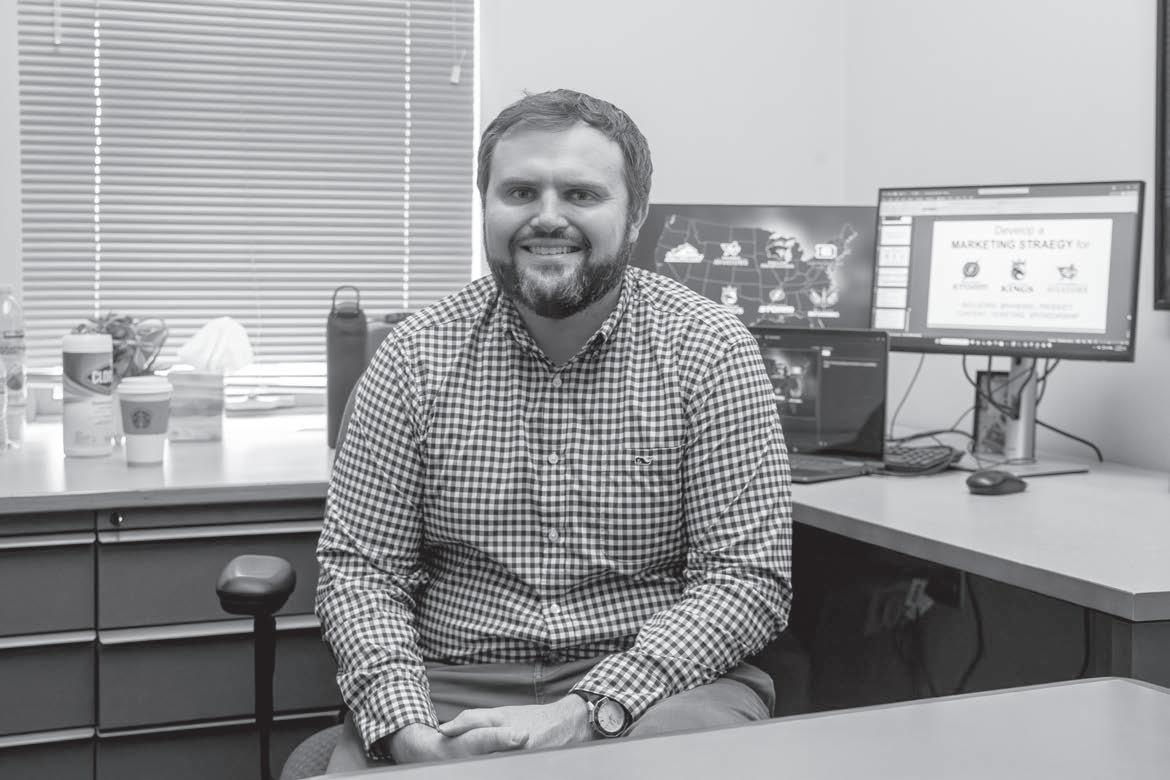
Staak said built a connection with the United Football League through their director of analytics and reporting, Madison Koch, who works remotely from the eastern Iowa area.
“She’s able to come into class and actually judge the presentations and give immediate feedback to students,” Staak said. “The UFL has a unique setup where it’s fully remote.”
already have their allegiances to one of the three professional teams.
Due to this, Staak said it is very important for students to consider community outreach and engagement when devising their marketing presentations.
For this semester Staak said his students are still in the research phase as they are trying to figure out who the demographics are for each team, how they spend their time, what type of entertainment they like, and which other teams they are fans of.
Each location is different from the others, and Staak said that will create advantages and disadvantages from a marketing standpoint, as the Orlando Storm play in a state with three di erent professional football teams: the Tampa Bay Buccaneers, the Miami Dolphins, and the Jacksonville Jaguars.
Staak said while there are a lot of football fans in Florida, the majority
Staak said a major part of devising a marketing strategy in his class includes researching the history of fan psychology and behavior to create plans that will most engage fans.
Staak said he chooses teams and leagues with promising futures that haven’t fully reached their marketing potential. He also said he wants to work with organizations that will be more receptive to his students’ ideas.
Staak said while the experience is great for students, it isn’t easy to see their marketing plans get implemented into real life, as this is something actual marketing teams struggle with as well.
However, one group from Staak’s fall
AI-focused club reaches one year since founding
Founded by Tippie College of Business students, the club looks to expand.
The University of Iowa’s first and only club centered around artificial intelligence, Applied AI, has reached one year since it was first founded in April 2025, continuing to expand in membership and leadership.
Applied AI was founded by Tippie College of Business third-year students Gabe Harris and Mac Van Fleet, who serve as president and vice president, respectively.
The idea for the club was conceived after Harris and Van Fleet had taken a course about AI with Tyler Bell, a UI associate professor of electrical and computer engineering. Harris said they identified a lack of learning opportunities about AI outside of the course, and they hoped to provide a go-to resource for students at UI.
“The goal of the club was to learn about AI, and we have learned a ton,” Harris said. “I mean, we’ve met a lot of the guest speakers, personally gotten to know them, and gotten their backstories. Learning more about their knowledge has been huge.” The club meets every other Thursday
2025 class did seem to share a similar idea with the league’s marketing team and may see their fan engagement idea implemented into games.
Fourth-year UI marketing student and member of the winning group last semester, Hannah Williams said she and her group came up with a fan engagement idea called “fourth and fan call,” a play on the phrase “fourth and blank” usually used in football games to express the amount of yards a team needs to gain for a first down.
She said the idea stemmed from her group’s desire to give fans “ultimate access” to the games and would allow fans to vote on the fourth-down play call.
Williams said Koch told them the league already had similar plans to their idea.
She said finding out the league had similar ideas to her and her team members was reassuring to them as it demonstrated that their creative process was similar to marketing professionals.
Another student from the winning group in Staak’s fall 2025 course, UI fourth-year marketing student Payton DeVena, said another part of their marketing plan was advertising around the fact that the league takes place in the spring.
“We did things like a spring fling date night, which was a package for two people,” DeVena said. “Carrying through that spring aspect throughout the entire presentation.”
DeVena said one of the most important things she learned from Staak’s class was to always research the background details.
“If you don’t understand the background details, it’s really hard to promote something that’s still growing,” DeVena said.
Staak said the class is considered an experiential learning class since it has students do real work for real clients as opposed to a simulated assignment.
For DeVena, she said her experience in previous marketing classes where the projects were simulated and the stakes were lower made her feel prepared to take on a class that would give her a taste of what working on a real marketing plan looks like.
“I’m a firm believer that what you learn in the real world and the experiences that you get are completely different than what you get in the classroom,” DeVena said. She also said while the class is beneficial for the students, the league also gets benefits from working with young people.
“Our age group right now is going to be what’s sustaining the UFL moving forward, if they succeed,” DeVena said. “So really understanding what we as consumers enjoy and how we would want the pricing to be, or what graphics would catch our eye, is something that you can’t really get unless you are talking to that age group or demographic.”

from 5 p.m. to 6 p.m. in the UI’s
Pappajohn Business Building. Applied AI sees a diverse range of student membership, with various majors and levels of familiarity with AI.
These meetings are split between guest speakers from the industry, hands-on workshops experimenting with AI, and conversations centered around its ethics.
Popular guest speakers in the past have included Nate Herkleman, a UI alumnus who began the AI company Uppit AI, and Andrea Mach, one of the first BeReal employees and the founder of chatbot Peekz.
Uppit AI has a similar mission to Applied AI, which is teaching students and businesses how to design AI systems, even with limited coding knowledge. Peekz is an AI-powered chatbot that is catered toward universities and its students, assisting with admissions, financial aid, and providing information about student services and organizations.
Harris said the club’s leadership hopes to include topics relating to the ethics of AI in a majority of their meetings on top of meetings already dedicated to it. In these meetings, the executive board remains neutral while the members discuss the productivity benefits of AI and the issues it may present, such as
hurting people in certain industries.
“Just by putting up bipartisan statements about AI and then opening it up to either good, bad, for, or against comments,” Harris said. “There’s honestly not a ton of guardrails on what we address. Obviously, we keep it very respectable. Everybody’s very understanding, and nobody’s arguing against each other. They’re just simply stating disagreeing points.”
Nic VanArkel, a second-year UI student, is the club’s vice president of external relations. His role consists of reaching out to clients and companies looking to partner with the club and finding guest speakers who can provide insight for its members.
VanArkel said it has been interesting to see how the club’s membership has expanded. The club’s GroupMe currently has 438 members. He said the first meeting this year drew well over a hundred students, filling the classroom.
“Every single chair was filled, the back wall was lined up with people standing,” VanArkel said. “It’s cool how these guys created this club, and now there’s almost like a lecture hall-sized amount of people who come to this club.”
Harris said one of the biggest changes the club has seen was introducing the
consulting branch. He said the club’s executive board was originally just five positions: the President, Vice President, and Vice Presidents of External Relations, arketing, and Innovation.
“We saw the club as an opportunity not only for students to come to when they need help with AI or want to learn about AI, but the Iowa City business community as well,” Harris said.
“By adding the consulting branch, they’re the people who work outside for di erent organizations, di erent businesses that need help either learning AI or how to use it in their own functions.”
Harris said he hopes to continue growing the consulting branch in order to expand the number of projects they have with businesses outside the club.
While the terms for the sitting executive boards will end at the end of the semester, Van Fleet said they are confident in the club’s future.
“It’s been very impactful for me, a community that we’ve created around such an interesting topic that’s moving so fast,” Van Fleet said. “We’re not experts. Nobody on the executive board is an expert. And so when we’re in these meetings, everybody’s kind of learning and going through this process together.”
IC community stands with Sunday
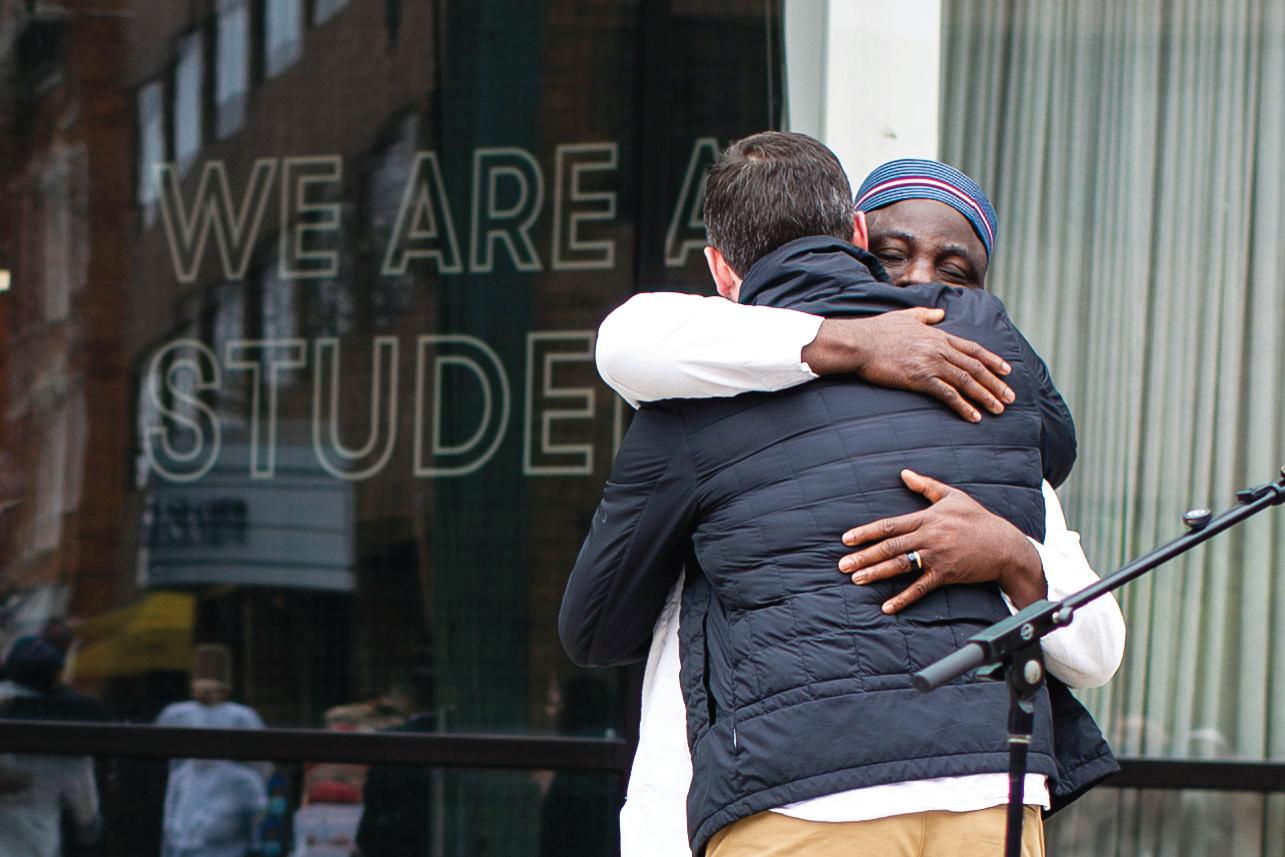
University of Iowa professor Sunday Goshit and his legal counsel announced their lawsuit against the U.S. Citizenship and Immigration Services on April 3 at a news conference on the Pedestrian Mall. Roughly 50 community members, UI students, and legal counsel showed up in support.




SPORTS GymHawks stick a season of milestones
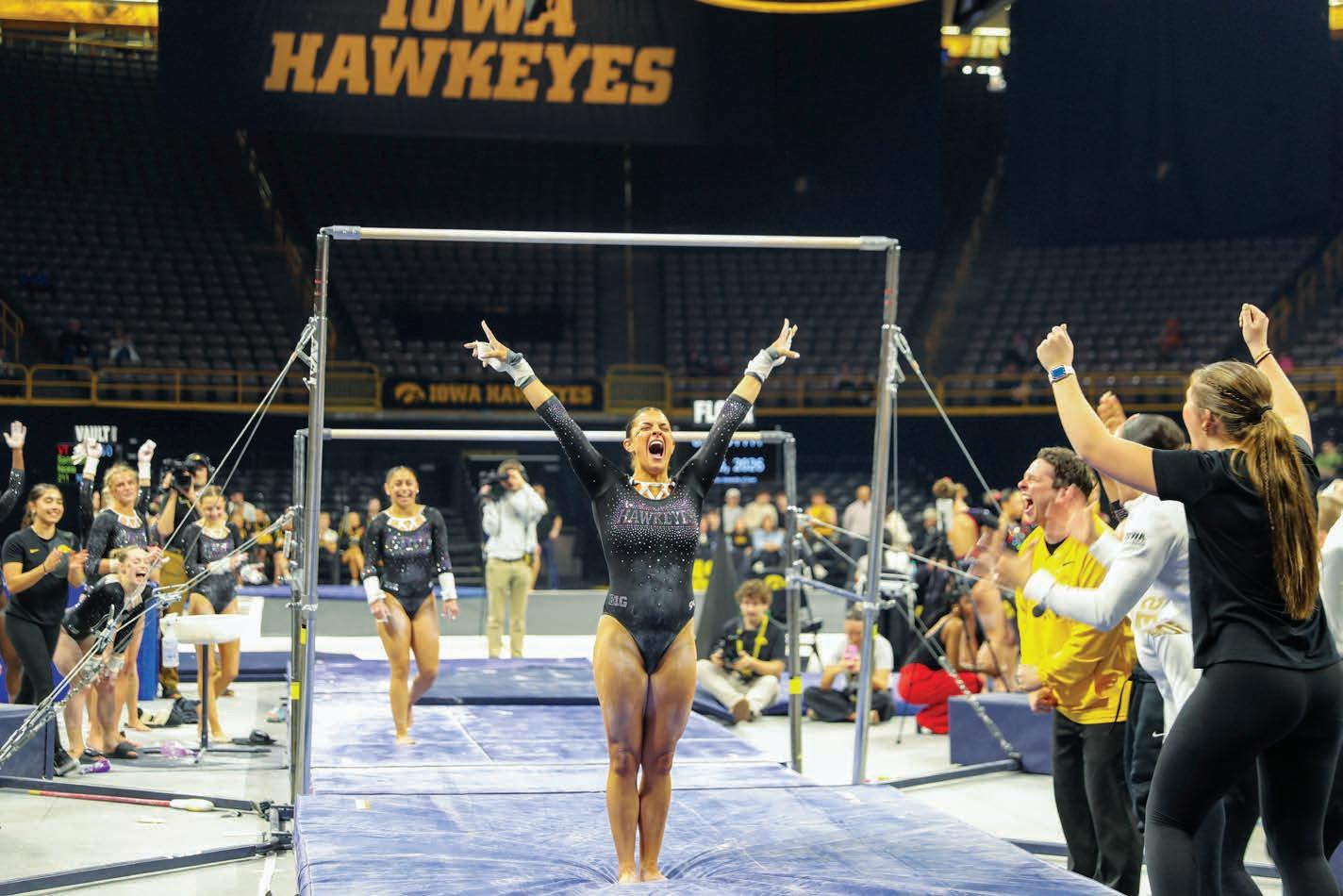
Iowa finished 9-0 at home, broke program scoring
records, and posted career highs across the roster.
year er uavia Henderson scored a new season-high on floor, and senior ianna Masella tied her season and career high on bars.
The Iowa gymnastics team wrapped up its 49th season, following a third-place finish in the second round of the Corvallis Region in the NCAA tournament.
This season, the Hawkeyes not only put themselves in reach of an NCAA Championship but also a year to remember, with countless individual season and career bests and program records earned along the way. any ymHawks, both veteran and new, made strides throughout the season, with high scores coming in almost every meet. During the Senior Day eet on arch , sophomore Sydney Turner earned a new career high on vault, fifth-
As a team, this season has already seen its highlight moments. The Hawkeyes finished undefeated at home with a 9record for the first time since . One of those home meets was the historic attendance record-breaking competition against Nebraska, where the Hawkeyes also made a new program team scoring record. Iowa finished the Nebraska meet with a 9 . , beating its previous record of 9 . , set back in against aryland. This very accomplishment has become a memory that not only the fans but also the coaches and athletes will look to remember for years to come. Contributing to the Hawkeyes’ highs this
season has been the newly added freshman class. eading the group and ranked th in the nation is freshman sensation Sophie Schriever. Schriever has participated in the all-around in all but two meets this season, earning a career high 9. at the Nebraska meet.
Schriever and her fellow freshmen have all made a much-needed impact on the program, bringing life and energy to their teammates, fans, and the entire program, something that head coach en lewellyn has emphasized throughout the year.
“They came in the summer, setting the tone early, and have been riding that wave ever since,” lewellyn said. “They look to the upperclassmen for help, not having big egos and just performing with love and passion for the sport of gymnastics.”
Helping the freshman along the way were
Back into the swing of things
Iowa outfielder Miles Risley showing a power surge after su ering a fractured finger.

the starting lineup, as he was used as a pinch runner for three games against Oregon State, indenwood, and St. Thomas.
the six seniors and three fifth-years. These veterans have made a lengthy impact on all the newcomers, helping them develop confidence and trust in one another and themselves, both in and outside of the gym.
“Confidence has been huge to me personally,” Schriever said. “It is a lot of weeks in a row, and that can become overwhelming; the seniors, though, are very uick to shut that thinking down, which has helped a ton.”
The ymhawks have had their fair share of struggles this season as well, overcoming some, like the depth of this year’s roster and its impact on the starting lineups for this season’s competitions.
“As the year went on, they have really learned to embrace and embody the
Where pace meets precision
Iowa track and field athlete Carson Lane invented a pacing technology to assist athletes.

In the final game of Iowa baseball’s road series against Florida Atlantic, center fielder iles Risley s uared to lay a bunt down to advance a runner in the top of the ninth inning. The ball ended up foul but struck his middle finger on his right hand before hitting the dirt. Risley finished the at-bat, going down on strikes for the second out of the inning. While the Hawkeye senior shook o the pain for the rest of that game, the injury was worse than expected.
“Honestly, I just thought it was bruised up and swollen,” Risley said. “I didn’t really talk to my trainer much, but the next day it was really bruised up and swollen, so I went in to talk to our trainer, and he was pretty concerned that it could be fractured. We got the -ray, and it was fractured.”
uckily for Risley, the fractured finger caused him to miss just three games because surgery wasn’t needed, but he was only able to run the bases when he returned. Nine total games went by before Risley could return to
Risley said running the bases before getting back into the lineup was beneficial for his return, and he wanted to help the team in any way he could before he was percent healthy.
“ ust getting out there in big situations and contributing to the team, that was my biggest thing I wanted to do while I couldn’t swing or throw,” Risley said.
The ohnston, Iowa, native wasn’t able to swing a bat for a whole week after his injury, but since his return to the lineup, Risley has hit . with four homers and RBIs over games. Returning from the fractured finger hasn’t been easy for Risley, as he was trying to tough out the pain during his first few games back.
“It’s been up and down,” head coach Rick Heller said. “He was toughing it out. Unfortunately, when you’re playing with an injury like that, it’s not easy. Each day, it gets better, each week it gets better with his finger.”
Risley returned to the Iowa lineup in a road series
For sophomore mid-distance runner Carson ane, track isn’t just about competition it’s about innovation. While balancing training and academics, the Iowa track and field athlete has launched a business centered on affordable pacing technology for runners. ane, a middle-distance runner for the University of Iowa men’s track and field team, created Stridelane, an ED lightpacing technology that helps runners hit their pace times. The system connects to a timing device, sets a predetermined goal pace, and once the starting signal is received, it lights up with a se uence of lights that runners pursue around the track at their target speed.
“In distance races especially, you usually want to have an even split or get the split as accurate as possible,” ane said. “Stridelane allows runners to simply look down and know they are on pace.”
As a successful high school and collegiate track athlete, ane became familiar with pacing technologies through his own experience. A business analytics and information systems major, he has applied his coursework directly to Stridelane, developing skills in coding, networking, and entrepreneurship. Although he always had an entrepreneurial mindset, he did not pursue it until he realized he could create pacing technology at a much more reasonable price.
While pacing lights aren’t new to the sport, Stridelane’s affordable price sets it apart from the other existing options.
“There’s technology similar to Stridelane out there, but that technology is only used at the world-class level, and it’s very unaffordable for teams,” ane said. “I wanted one in-house that I could use and provide to
Looking to repeat history
Daianne Hayashida looks to lead the Hawkeyes to NCAA tournament for second year.
A -year-old Daianne Hayashida picked up a tennis racket for the first time, not knowing she would eventually be playing for the Iowa Hawkeyes and help break a -year school drought in the process. rowing up in Peru, Hayashida knew she was highly competitive, with her first tennis tournament helping her to realize that in tennis, strategy and being on your own are two challenges she really enjoys about the sport.
“Even if you are playing good, sometimes your opponents are great,” Hayashida said.
This mentality led her to a seventh-place finish at the World Cup in the Czech Republic at years old and a bronze and gold medal in the Pan American ames. Competing at the collegiate level in the Big Ten, Hayashida said skill levels are similar, but the team aspect of NCAA competition stands out. As a senior this season, Hayashida assumed a leadership

Hayashida is a weapon on the court as well as in the classroom. She’s been an honor student for the last three years while also being at the top of her game as an athlete. To help with this, she enjoys making calendars and staying structured as a person. “It’s cool with tennis because honestly, before college, tennis was always like my priority, but now it’s both,” she said. “If you have everything structured and do everything ahead of time, that helps me feel a lot better mentally.”
role on the roster. She does her best to keep herself and the team motivated while maintaining a high energy, even during a more recent five-match losing streak, which she helped snap after a win over Purdue.
Hayashida has faced adversity throughout the years, but this year in particular, she su ered a hip injury that kept her out of two matches against Michigan and Michigan State. However, head coach Sasha
Boros was there by her side to help her not only physically but mentally as well, which only furthered their relationship.
“She always tries to see us, like, how we’re doing as people,” Hayashida said. “When I got injured, I was very upset not to play, but she was always trying to help me to feel better and like my health is a first.”
Being a Hawkeye for four consecutive years has led to many highs and lows for Hayashida, although ualifying for the NCAA tournament for the first time in years is at the top of her list.
The Hawkeyes narrowly missed the tournament in Hayashida’s first two seasons, but in April , earned an at-large berth as the then-junior went -9 in singles
Siblings’ influence led infielder to the diamond
What is your favorite thing to do outside of softball, and why ?
The Daily Iowan: If not softball, what sport would you play, and why?
Avery Jackson: Basketball, I just love playing it. I played it in high school growing up and kind of liked diving around for the ball.
Would you ever want to coach softball at any level?
eah, maybe. I am not completely opposed to it, but it’s not like my first go-to.
and earned first-team All-Big Ten honors.
Iowa lost to eorgia Tech in the first round, and with a 9record this year, returning to the tournament will be an uphill battle. et Hayashida doesn’t back down from the challenge. As her collegiate career comes to a close, she looks to finish strong this year and recapture the glory she and her team felt last year as they ualified for the NCAA tournament while also continuing to grow as a person. “I’m really grateful for the opportunity and experience here,” Hayashida said. “I feel I’ve grown not just as a tennis player but also as a person, which is the most important.”
I love to hang out with my friends. We like to binge watch shows together. We usually would all get sodas and shakes, too.
What or who got you into softball?
rowing up I watched my brother Owen play baseball and my sister Olivia play softball, and I think that I just followed along in their footsteps, I guess.
Would you rather play in the warm or cold, and why?
Warm, because you can feel your hands, which is important.
Who is the funniest on the team, and why?
I would say me, but Echo attiello is really funny, and she doesn’t try to be. Her personality just allows for it.
What is your favorite music genre, and why?
I like a different array. I like R B and country, but it kind of just depends on the mood.
What is your favorite softball memory?
Probably back when we played Illinois. I hit a home run there in front of my entire family. Since I am from Illinois so everyone was there.
Who will win the MLB World Series?
Sports reporters Trey Benson and Logan Miller argue between the Royals and Braves.

After defeating the New York ets in five games in , ansas City secured its second World Series title, ending a -year championship drought for the American eague Central s uad.
Now years later, the Royals currently hold a - record in , but as the season progresses, will see their name near the top of the standings. Following a bitter end to last season, the Royals look to flip the switch in with the talent and pitching depth necessary to find themselves hoisting the Commissioner’s Trophy in October.
The Royals may not be the obvious pick to win the World Series, but the B season lasts games for each team, so it’s safe to say the Royals have ample time to aim their sights in the right direction.
Heading the pitching sta for the Royals is left-handed Cole Ragans, who is returning from an injuryplagued . Ragans only pitched innings last year, ending with a - record, but aims to be an

instrumental part in turning the tide for the Royals this season. Fans remember his All-Star performance in , where Ragans won games and held a . earned run average. If Ragans can summon that form again, the pitching sta will have a key cornerstone.
Fellow southpaw ris Bubic and veteran starter Seth ugo also look to have strong seasons on the bump. Bubic stands at -foot- and pounds, dealing strikeouts a season ago with a . ERA. ugo tallied an - record last season with strikeouts.
oung star shortstop Bobby Witt r. is coming o consecutive All-Star seasons, including an American eague batting title in . ast season, his hitting dropped “only” to . 9 as he led the Royals in doubles and singles. First baseman Vinnie Pas uantino returns to add some pop into the lineup, leading the team in home runs last season with . Another bat that can aid the Royals’ lineup this season is former sixth overall pick in the draft, ac Caglianone. If Caglianone can make a similar sophomore jump like Witt, the top of the lineup could be dangerous.
The Royals have shocked the baseball world once, and with a multitude of talents this year amid a weak division, they are primed to do it again.
The season was one to forget for Braves fans. They finished with a disappointing - record and were hampered by injuries to star outfielder Ronald Acu a r. and ace pitcher Chris Sale.
However, the core that led Atlanta to consecutive -plus win seasons in and is still intact, and that was enough for me to pick them to win the World Series. That core features N VP Acu a r. and All-Stars Austin Riley, att Olson, and Ozzie Albies. The Braves won too many games to not have a World Series in those years. It’s time. Despite a losing record, the Braves still managed the thbest team OPS at . in the league last year. That was in spite of Acu a r. only playing 9 games. If Acu a can stay injury free this year, his power and speed, with homers and stolen bases in ,
will pose a danger to opposing pitching sta s.
The Braves’ key to winning a World Series starts with keeping the pitching sta healthy. In , the five starting pitchers on the Opening Day roster were all on the -day injured list by the halfway point in the year.
Arguably the biggest loss from injury last year was starting pitcher Reynaldo opez. He underwent arthroscopic surgery on his right shoulder just one start into . If he can return to his form, where he posted a .99 earned run average in starts, he changes the landscape of the rotation immediately.
One big problem still looms in the Braves’ way even if they can stay healthy. While not in the same division as Atlanta, the os Angeles Dodgers still run the National eague, securing consecutive World Series titles and have one of the most loaded lineups in B history.
That lineup is led by former VPs Shohei Ohtani, ookie Betts, and Freddie Freeman. Not many teams can even come close to competing with that. The Braves are one of those few teams.
While they aren’t the most common World Series pick, the Braves posed enough intrigue that I couldn’t resist picking them.
of us succeeding along the way is what is truly important.”
mindset of whoever is up is ready to go, and everyone can trust them to do their absolute best performance,” Llewellyn said.
Though some struggles still exist, Llewellyn notes they will continue to work to improve and overcome them not only in the postseason but also into next year.
“We still want to keep working on the simple things of sticking the landings, pointing the toes, and overall just trusting in ourselves to execute each performance to our best and believing we are the best team,” Llewellyn said.
Through all the ups and downs, the Iowa gymnastics program has seen growth in athletes’ confidence and trust in one another. But to the athletes, this season has been more than just that. It has been a unique rollercoaster built on trust and connectivity, with every Gymhawk wanting to enjoy the moments and have as much fun as possible.
“Our coaches also have our best interests in mind, and we are all trying not to put pressure on it but rather show everyone our passion for the sport,” Masella said. “Just doing what we all love and seeing all
other schools on an a ordable scale.”
To rent Stridelane, the base rate is $1,000, but if you were to purchase the whole system, it goes for between $15,000-$20,000. One of its competitors, Wavelight, charges $7,000 to rent, and upward of $50,000 to buy.
Stridelane has been used at multiple indoor and outdoor track meets, contributing to strong performances and expanding Lane’s business.
Stridelane made its debut at the Jimmy Grant Alumni Invitational on Dec. 13 at the Hawkeye Indoor Track Complex, where 19 athletes earned personal records and set two meet records, proving just how successful this technology can be.
As it continues to be used in competition, athletes and coaches say it enhances performance and atmosphere.
“Stridelane pace lights were a game changer at our meet, enhancing the competition as well as creating a great environment for the athletes and fans,” Wick Cunningham, the assistant track and field director at Northwest issouri State University, said, according to the Stridelane website.
Stridelane was used at the Bearcat Invite on Feb. 6-7.
Stridelane’s success has been prominent. However, like any other business, it had its challenges at the start.
But the season is not over yet, as the Hawkeyes just finished their Big Ten championship event, placing fifth in the competition. With sophomore Aurélie Tran earning the uneven bars championship with a 9.950, Iowa’s first in the event since 2003.
Iowa hopes to continue this momentum into the NCAA Regionals on April 2, its second straight trip as a team and its fourth in five years.
“Gymnastic postseason is like March Madness for basketball, anything can happen,” Llewellyn said. “Throughout the last few weeks, we have continued to emphasize to them that they have already won, they have already accomplished more than what we could have asked for.”
For many of the Gymhawks, this will be just another postseason, but for the freshmen, the gymnastics postseason will be an eye-opener, one that some are eager to start.
“I am really excited for how loud it’s going to be,” Schriever said. “Corvallis usually has big crowds, so I am excited for the adrenaline and big reactions after every performance.”
Nonetheless, this year’s Iowa gymnastics team is well prepared with its roster depth, passion from all athletes, and a mindset of an NCAA championship run like no other.
“Last meet we had the saying ‘Everything to gain,’ and we are trying to carry that into Regionals,” Masella said. “Not a single person here wants the season to be over; they are all ready to keep pushing and getting better.”
But for the Gymhawks, the run ended short as they failed to finish in the top two at Friday’s second round competition. Despite the heartbreaking ending,
“I built the product before I had a single customer. Then I leveraged my network to land sales across multiple meets and coaches,” Lane said. “However, the biggest challenge in the beginning was overcoming doubt.”
Before investing in the idea, Lane said it was easier to consider not pursuing it at all.
“This is pretty common and is why when people have great ideas, they actually don’t pursue them,” Lane said. “Overcoming that doubt and committing to my vision led me to where I’m at, and I try to keep that same mentality when making any decision.”
Lane has one piece of advice to give to those who have an idea: “Don’t fear failure.”
Even though he was hesitant at first to pursue his idea of an a ordable pacing technology, he stuck with it and has created a successful business that he sees as promising for the future.
With plans to expand Stridelane and introduce new tools, Lane is working to make high-level pacing technology accessible to runners at every level. Lane hopes to make Stridelane a household name in track and field, expanding its reach while continuing to innovate.
“My goal is to lead that growth while expanding the product suite, including an AI coaching tool I’m building to bring toptier coaching to athletes at every level,” Lane said.
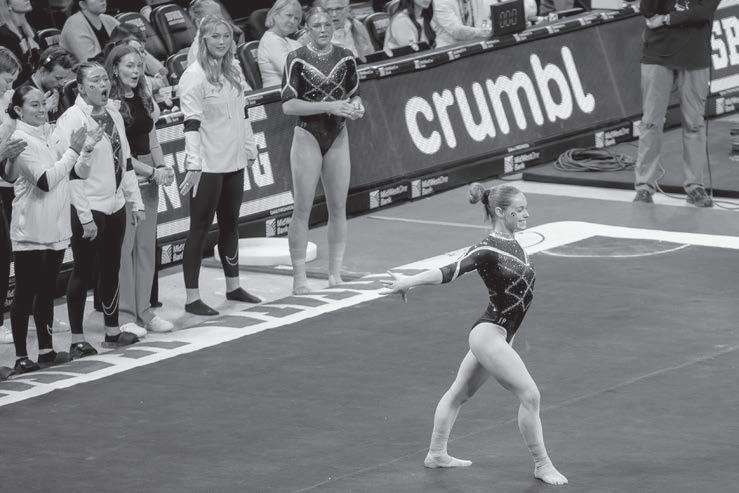
the Hawkeyes went out like they have all season.
Iowa earned a new program record on the bars event with a team score of 49.575, thanks to four out of five Gymhawks sticking the landing, a new career high 9.950 from Turner, and a lifetime achievement by Tran.
With perfect transitions between bars, Tran stuck the landing for her first perfect 10. She is also now Iowa’s new program leader as the only Hawkeye in history to score a perfect 10 on the bars event.
event and later fourth place in the allaround standings. But the high scores early were just not enough to combat UCLA’s top-tier scoring and Minnesota’s late consistency, leaving Iowa 0.225 points from an NCAA uarterfinals.
“Team 49” this season has been a team to remember, thanks to the countless records and season highs, but also because of the friendship, bond, and trust that have developed between all its Gymhawks. The season may be over, but the o season
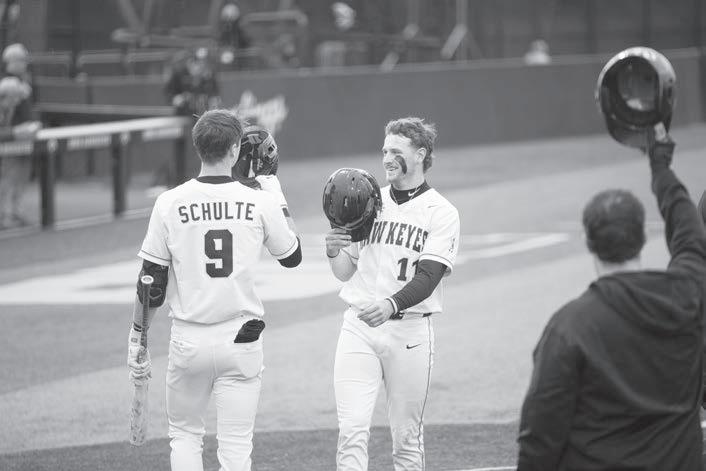
against Penn State, where he went 3-for-8 with five walks and one run scored.
The Kirkwood Community College transfer then extended his hit streak to seven games following the injury, hitting for a .409 average with six RBIs.
While Risley’s hand was bandaged up during those games, he didn’t think about the injury while playing and simply played free, just like he had done before.
“Just sticking to my process, sticking to my plan, and trusting our coaches and scouting reports, and just playing baseball, really,” Risley said.

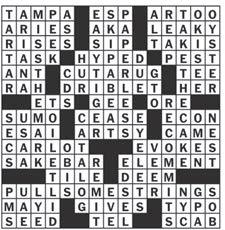


While a hand injury certainly impacts a player’s swing, the power for Risley hasn’t gone away. It has, in fact, gotten better, with all four of his home runs on the year coming after his injury.
Risley credited his recent power surge to the work he’s done with hitting coach Marty Sutherland to get his swing back intact after taking some time o .
“It’s been great,” Risley said. “I’ve been working hard with our coach, Sutherland, on hitting, and there are things to do to get my swing intact, and I don’t really feel [the injury] during games because all that adrenaline is going, and you’re just playing baseball at the end of the day.”





Tie party
The No. 48 Iowa Hawkeyes defeated the No. 46 Penn State Lions, 4-2, at the Hawkeye Tennis and Recreation Complex on April 3. This win was head coach Sasha Boros 112 victory, tying her for the most wins in Iowa women’s tennis history.




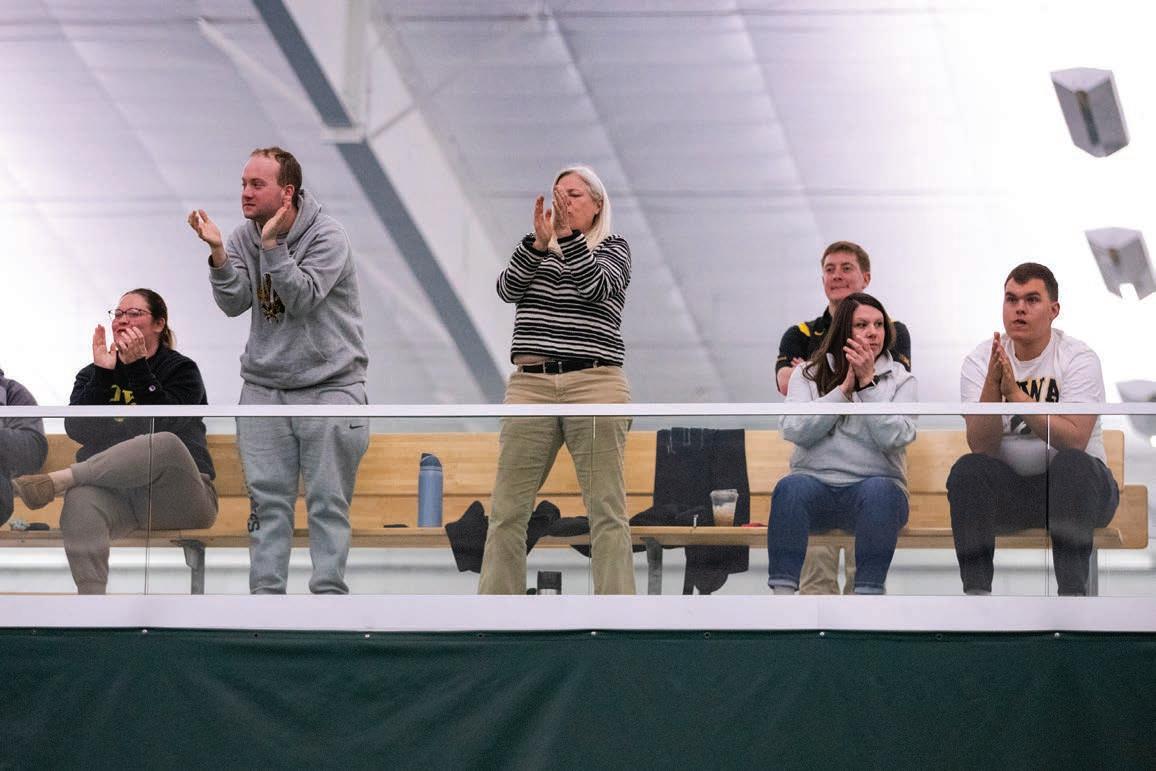





























Iowa races toward success


Hawkeye Formula Racing speeds toward becoming competition-ready through the completion of their first car.

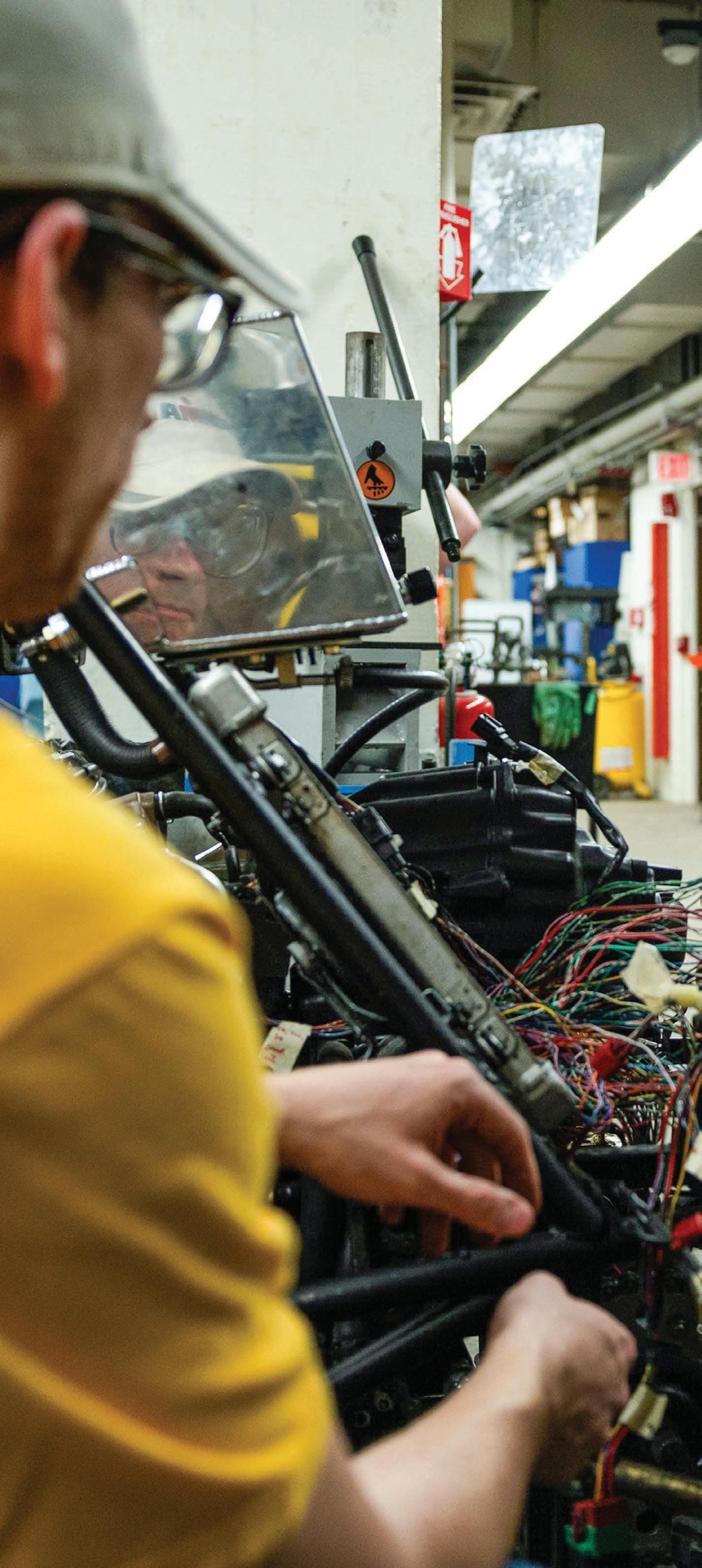
Speeding toward competition
Hawkeye
Formula Racing club brings engineering and ingenuity.
The Hawkeye Formula Racing car sat lifeless in the basement of the Chemistry Building at the University of Iowa, gath ering dust and slowly decaying as a pile of forgotten parts. The club was formed initially in 2019 and has been slowly losing speed ever since.
However, after years of the club being inactive, a new team of mechanics and car enthusiasts has taken up the challenge of reinvigorating the Hawkeye For mula Racing team and returning it to its former glory.
“This club has been dormant for five years, and we need to prove that we can build a car that runs,” Ephram Byler, a UI student and mechanic in the club, said. “We came in here, and there was a chassis, a suspension, two blown-up R6 motors, and a blown-up 250 motor, and nothing else.”
Hawkeye Formula Racing is a nonprofit student organization that races and com petes half-scale Formula One race cars in Formula SAE, a global student engineer ing competition designed to challenge teams to composite and fabricate their competition cars entirely from scratch in six to 12 months. With limited parts and equipment left over for them, Hawkeye Formula Racing has a long journey ahead before being competition ready.
To keep the competition both fair and safe, Formula SAE outlines the exact dimensions the cars must comply with and has strict, ever-changing guidelines that determine every aspect of the vehi cle’s construction. Each team looking to enter the competition must spend hours familiarizing itself with each regulation in Formula SAE’s guidebook to ensure their

Joy and perseverance in art Refinement and ruthlessness
The artist curated a multimedia exhibit titled, “Muddling Through” at PS1.

How did you capture the idea of “muddling through” in this exhibit?
Ballerinas flex their strength in Amazon Prime’s latest film, “Pre y Lethal.”
dancing talent is undeniable, and the action scenes where Ziegler blended classical ballet with cut-throat action were both captivating and satisfying to watch.
Mirzam Pérez is a multimedia artist and Professor of Spanish Literature, P.h.D., at Grinnell College. She designed an exhibition, “Muddling Through,” which is currently on display at PS1 until April 11. Inspired by her travels to Iceland, the multimedia exhibit documents the idea of “muddling through,” an ideology held in Iceland. The exhibit contains multimedia pieces including photos, woven fabric pieces, plaster sculptures, and 3-D fabric covered art This interview has been edited for length and clarity.
The Daily Iowan When did you get the idea for this exhibit?
Mirzam Pérez: In the summer of 2025, I went to a residency in this little town with 450 people in northern Iceland, very isolated. Iceland had always been a place that I wanted to go to. I was really interested in the level of happiness in this country, and to me, the weather is horrible — it’s isolated, it’s difficult to get there. Yet, people are so happy. We were there for a month, and I learned about this way of dealing with life or approaching life, which is called “Þetta Reddast," basically called, “muddling through.” They have this hope or this positive outlook in life, in which, despite any challenge, any conflict, any problem, things will work out. And that’s a beautiful way of seeing life and resilience and survival, and what makes us belong or fight for our happiness. It’s something I always think that are in my art practice. So that really stuck with me. And while I was there, I made a lot of art, and I also was inspired by a lot of the places that we went, that we traveled to there. Some of them are quite isolated. There were more sheep than anything else. And some of these pieces are also inspired by a residency also in Alaska that I was also thinking about the same things.
As an artist, I feel that I’m always muddling through, experimenting in trying to find materials. I always have that hope or that faith that things will work out. I think that’s a great way of approaching life, but it’s also a great way of approaching our creativity and our work in the studio.
We have that hope, we have that faith, we have that inspiration that drives us, too, and we know that things will work out if we give ourselves the space. Some of these, I have been doing a lot of different materials: wire, fabric, thread, and trying to push myself, right? Trying to find the boundaries, test boundaries, always with that joy for life, for color. I want people to come here and want to touch [the art], and I actually don’t mind if people touch it because there’s so many textures, so many layers. There’s another type of learning that happens with the hands that is very different than what happens with the eyes, and as an artist, I’m always wanting to touch things and controlling myself when I go to places, but I want to allow people, the viewers, to do that, too.
How long did this creation pro cess take?
This is work that I’ve been doing for about a year, year-and-a-half, inspired by those two residencies.
Sometimes, we don’t go with the first iteration. Sometimes, you make one and then it’s like, “Ah, I’m not loving it. Ok, let’s work on it again. Let’s find another way of doing it.” Until you get to the place that you're happy with it, and you’re like, “OK, we can do this now.”
I’ve also been experimenting with binding, not only thinking about the things that we carry with us. As an immigrant, this is something that’s very close to my heart, right? I’ve been carrying these things that belong to my
Ballerinas have always been a symbol of gracefulness, effortlessly gliding and spinning across the stage in intricately delicate costumes. What’s not pictured when watching a ballet performance onstage are the hours of hard work and dedication each ballerina puts into their intense training, honing their bodies into calculating machines.
Amazon Prime’s latest original movie, “Pretty Lethal,” demonstrates the dichotomy of refinement and ruthlessness in a ballerina when a group of five determined dancers breaks down on the side of the road on their way to a ballet showcase. Seeking shelter at a nearby inn, the group of girls will do whatever it takes to get to the competition, even if the inn happens to be brimming with vicious gangsters and a scornful ex-ballerina looking for revenge.
I found the premise of “Pretty Lethal” to be quite intriguing, and I was excited to see how the story would develop throughout the film. While there were scenes and aspects I enjoyed, ultimately, “Pretty Lethal” was nothing more than an entirely decent movie, never proving itself worth anything more than a first watch but still satisfying for what it was.
One of the aspects I was most excited about when going into “Pretty Lethal” was the cast involved in the film. Having been a longtime “Dance Moms” enthusiast, learning that “Pretty Lethal” starred “Dance Moms” star student Maddie Ziegler as the main character of the film, Bones, was thrilling.
Ziegler’s performance wasn’t anything groundbreaking, by any means. In fact, I actually felt her acting was considerably bad in several scenes. However, Ziegler’s
The blood-soaked action scenes were definitely my favorite parts of the film by far. One scene in particular has Bones attaching a sharp knife to the tip of her pointe shoe, before spinning in a perfect pirouette with her weaponized dancewear precisely angled at her attacker’s jugular.
Another satisfying scene has the group of girls performing well-practiced dance choreography together, orchestrating both a stellar performance of grace and gruesomeness. Truly, this film excels in the art of ballet bloodbaths.
Ziegler’s presence in the film wasn’t the only name I was excited to see, as the star known for her appearance in several Quentin Tarantino films, or as the name to my favorite Fall Out Boy song, “Uma Thurman,” also participated in “Pretty Lethal.” Thurman plays the scornful ex-ballerina turned gang safehouse inn-operator, Devora, who is dead-set on revenge and asserting her ballet dominance.
While I felt Thurman’s acting was good, her character brought up many question marks for me. Devora alternates between wanting to kill the group of ballerinas who stumbled into her inn and wanting to protect them from the evil patrons her inn attracts. Most of the time, I couldn’t tell if I should have been rooting for or against Devora, especially as the overarching backstory of “Pretty Lethal” took considerably longer to establish than it reasonably should have. Devora also has several sons who are shown throughout the film, but I wasn’t sure if she actually held an ounce of

Exploring Iowa City book clubs
A list of three book clubs in the Iowa City area to help you choose your next read.
what books they would be reading during the upcoming year.
For the month of April, they will be reading “Bunny” by ona Awad.
One of the University of Iowa’s most valued areas is the creative writing program, a marketplace of ideas, where anyone who seeks to improve their skills can learn from great writers of every generation. This importance of creative writing at the university has rubbed o on the rest of the Iowa City area, too.
Naturally, with such a deep history rooted in literature and education, you can find people expressing their passion for the spoken word around every corner in Iowa City. Whether in poetry readings in downtown co ee shops, libraries flooded with students, or in this case, book clubs.
Of all the buildings in Iowa City, there is one that seems to stand taller than the rest. With its brilliant golden crown and lofty throne overlooking the river, the Old Capitol is hard to miss.
The significance of this building has also made it a great location for the exchange and discussion of literature.
The Book Club at the Museum held its first meeting in February , where members got together and shared suggestions on
Amanda Stout, the Education and Engagement Coordinator for the Old Capitol Museum said the setting of the Museum contributes to the club’s image.
“Being immersed in a historic building with architectural details, atmosphere, and a connection to the past creates a sense of curiosity that pairs beautifully with reading and discussion,” Stout said.
“The setting encourages us to slow down, reflect, and engage more deeply with the stories we read.”
The next meeting of the Book Club at the useum will be April , at p.m. at the Old Capitol.
Members also stay in contact with each other in between meetings through a group chat, where they can share their thoughts, questions and conversation.
For those who enjoy reading but find the discussion portion of a book club more intimidating, the Silent Book Club is a great place to cozy up and get lost in a novel of your choosing.
Meeting downtown monthly at the Java House cafe, the Silent Book Club is a less
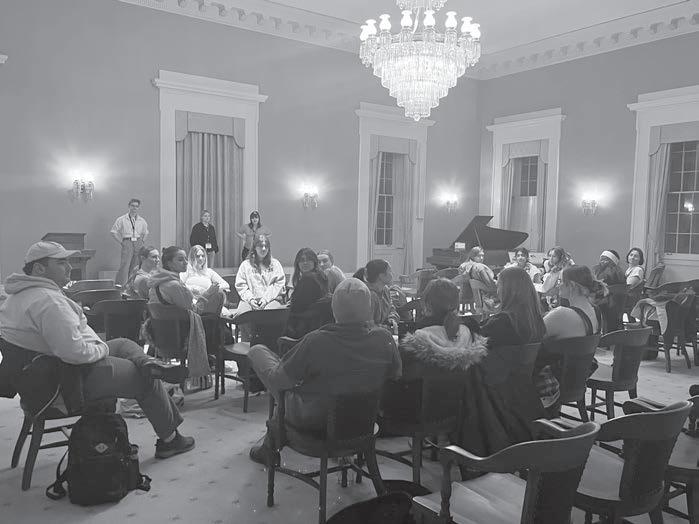
traditional cli ue made up of a significant number of introverts, according to Emerson Craig, a volunteer chapter organizer for the club.
“We definitely attract a lot of people who consider themselves introverts–the tagline for the organization is along the lines of ‘Introverts’ Happy Hour’” he said.
The Iowa City Silent Book Club is only one chapter of a vast community of tight-lipped bookworms in more than countries across the globe.
While chapters of the club may take many di erent forms, there are a few things that stay the same, according to Craig,
“The idea is that there’s no assigned reading. Everyone who attends a silent meetup brings whatever they’re reading at the moment,” he said.
Craig detailed that attendees could even bring alternate forms of media, such as audiobooks or e-books.
For those who do feel the urge to share with others, there is designated time before and after the reading for chatting.
Even before mainstream hits like “Heated Rivalry” by Rachel Reid, romance novels have been one of the most popular genres of book.
Thankfully, all those romance lovers out there have a place where they can indulge in community and literature.
Once a month, the owner of the event planning organization Bitchin’ Events, Tiara Phillips, hosts a gathering at Fix Co ee where readers indulge in a monthly romance novel, one of which was the aforementioned “Heated Rivalry.”
This month’s book is “The Seven ear Slip” by Ashley Poston, which brings the fateful romance story, but mixes in timetravel shenanigans alongside a magic apartment. Phillips emphasized the importance of third spaces in Iowa City
“It’s about creating spaces that make people feel comfortable, and people are craving community right now,” she said. “They’re also getting back into reading ”
Debating the ‘Dunesday’ release

“Dune: Part III” is about to be the cinematic highlight of the year, and everyone knows it. The previous two installments of the series have been a massive success, setting the bar of standards undeniably high. I can write an entire thesis on the symbolic color palette in the opening desert scene of “Dune: Part II” alone, so I think it’s safe to say that my hype for “Dune: Part III” is immense. Of course, this is a stark contrast pun intended to the recent flops Marvel has been putting out. Coming from a longtime Marvel fangirl who’s seen all the movies, I couldn’t care less for what “Avengers Doomsday” has to o er. None of the recent arvel films have been anything to get excited for. The blatant cash grabs by the studio trying to stu every well-known actor past

their prime back into the franchise are disappointing and insulting. Frankly, I think arvel keeping the release date for “Avengers Doomsday” the same day as the next “Dune” installment is a bit sad — do they really think they’ll stand a chance at the box office? I mean, Marvel has already lost the battle to “Dune,” as that film has secured exclusive rights to I A theaters on release and pushed Doomsday aside to the curb. Why would I ever choose to sit in a poor-quality theater listening to the same rehashed Marvel quip for the umpteenth time, as the faint sounds of life-changing cinema can be heard coming from the I A theater right next door?

I’m in the process of reading the original book series, and I’m pumped to see how director Denis Villeneuve adapts everything. Villeneuve has done an astronomical job so far with the previous two “Dune” films, and I trust him to deliver peak once more.
I’ll percent be watching “Dune Part III” on release day, decked out in “Dune” merchandise, and a collectable popcorn bucket filled to the brim in hand.
The first trailer for Denis Villeneuve’s epic conclusion to the “Dune” trilogy released a few weeks ago, and it blew up every group chat I’m in. “Dune: Part III” looks like a generational blockbuster but like, yeah, duh. Both of the other “Dune” movies are incredible, but the most recent Marvel movies that have been allegedly building up to “Avengers Doomsday” have been deplorable. Just out of mere curiosity, I’m going to be watching that first when both films release on Dec. 18.
I already know seeing the conclusion of Paul Aterides’ arc in a big, loud I A theater is going to be a highlight of my year. Therefore, I’m fine being patient and getting to it when I can.
Plus, I’ve read “Dune: Messiah,” the Frank Herbert novel the film is based on,
so I know where the story is going. Given how messy and incoherent the Marvel Cinematic Universe has been lately, I have no clue what they’re going to do with “Doomsday.” In that sense, I’m morbidly anticipating seeing what all this has been leading to.
Over the past year, arvel Studios has been slowly teasing out information about the movie. There was a ouTube livestream that revealed a large portion of the cast, including old favorites like James arsden as Cyclops and Patrick Stewart as Professor . At the end of this announcement, Robert Downey Jr. winked at the camera to get people excited about his portrayal of Doctor Doom.
This recast of Downey from hero to villain is such a shameless attempt to win back the good will and box office revenue the franchise has lost in the last seven years since he was last at the center of these movies. It’s such a lame hail mary but I would be lying if I said I wasn’t curious about where it would land.
Frankly, I’m hoping for a trainwreck with “Doomsday.” I want something so bad I can’t look away. It’s rare to have, what I’m assuming will be, such a high budget, massive mess of a movie come out and I want to embrace the chaos.

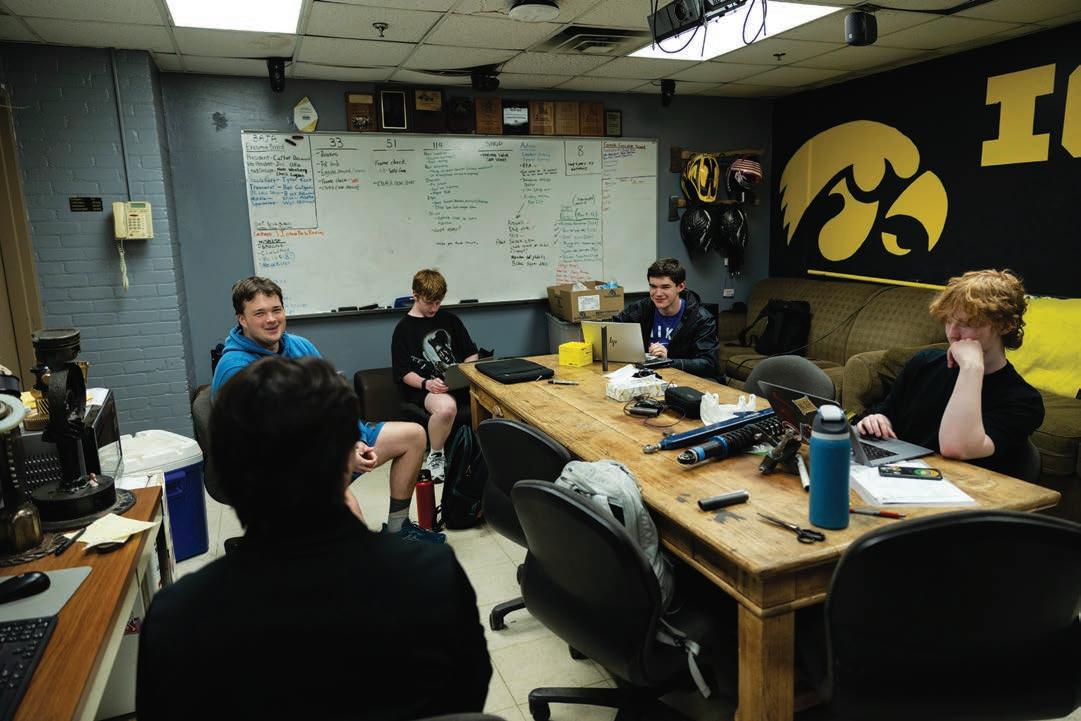
Vonk, the chassis designer, said. “Just being able to have a place where you can go and work on the car and experience all of it has been fun.”
car is up to standards of safety, construction, and maintenance.
Having started with only scrap pieces and a remnant of a car, Hawkeye Formula Racing is currently working toward the goal of completing their show car and preparing to construct their racing car for next year’s competition in the spring. This decision allows members to learn the inner workings of constructing the cars and gain the confidence they need to compete next season with a refreshed Formula SAE regulationcompliant vehicle.
“I’m a big car guy, and I don’t get to do this type of stuff normally,” Henry
Vonk has spent his time in Hawkeye Formula Racing designing the chassis for the club’s competition car, which is the structural framework of the vehicle. To do this, he has utilized both the Formula SAE guidelines that provide exact measurements the car needs to comply with, and computer-aided design software to construct a three-dimensional model of the chassis.
“I’m in mechanical engineering, so having to go through the CAD models and having to piece them together is really nice because we don’t learn design for another year,” Vonk said. “It’s nice
to get a basis of this stuff and deepen my overall mechanical skills.”
For many of the members in Hawkeye Formula Racing, working on a vehicle of this caliber is a new and exciting experience. With many members’ backgrounds coming from areas of engineering, the club has been able to help foster these interests and give members valuable real-world experience in the field.
“I never really got to work on a car like this before, only smaller stuff, nothing to this scale. Actually getting to learn and see how this stuff is done has been awesome,” Tyler Tatman, aerodynamics specialist, said.
“I’ve been researching how different cars use different forms of wings, like side skirts, and it’s just been a lot of fun to try and learn all the different ways they can be used.”
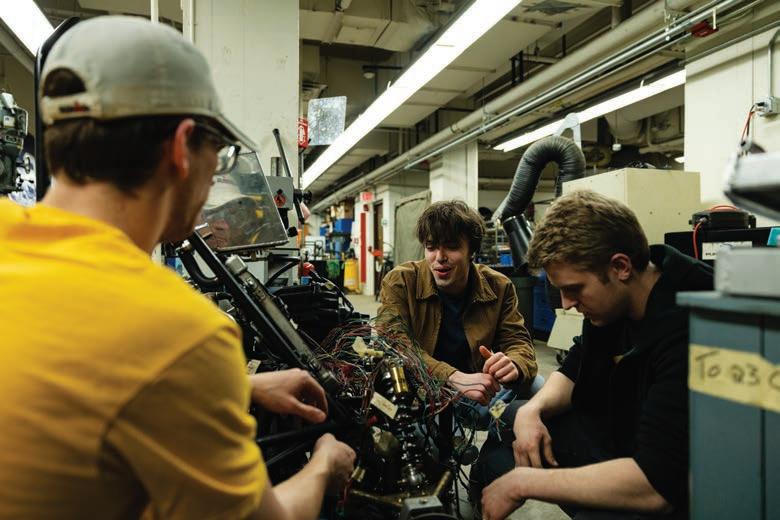
Even more research was needed for Hawkeye Formula Racing to make one of their primary modifications to the car: converting it from its original electric operating system to a gas-fueled one. The club needed to completely disassemble the original non-working vehicle left behind for them before they were able to start rebuilding it into something functional.
Consisting of roughly 15 active members from various backgrounds of engineering and interests, Hawkeye Formula Racing is a small but mighty team. The club promotes teamwork and ingenuity, requiring members to collaborate in order to achieve their goal of designing a drivable car.
“I’ve really liked learning to work with other people’s designs, especially in a team setting,” Hawkeye Formula Racing member Matthew Schaefer said.
With big goals in their sights, Hawkeye Formula Racing hasn’t gotten out easy, facing several roadblocks along the way to growing the organization. One of the obstacles the club has been encountering throughout its journey is acquiring the parts and materials needed to build its car.
Only starting with what the previous team had left for them, Hawkeye Formula Racing needed to either fabricate the parts on their own or find ways to purchase them from reputable sources. With some of the supplies needed to rebuild the car hard to come by, gaining the required parts has proven to be a difficult procedure.
“It’s a complicated process where you’re allowed to get parts from,” Byler said. “A lot of our parts have come from eBay, but you can’t buy them off an individual on eBay; it has to be from a business because the university won’t let you allocate their funds to a random individual off the internet.”
While Hawkeye Formula Racing also utilizes local businesses such as O’Reilly Auto Parts and Menards, the origins of their vehicle’s motor come from a man on eBay who sells parts of wrecked bikes online as a business. From this, the club was able to fit the motor into the vehicle and make great strides towards having a fully operational vehicle.
“One of my favorite days was when we added the mounts for the engine,” Drake Clements, vice president of Hawkeye Formula Racing, said. “We were in here until, like, 9 o’clock at night with a big welding thing going on with tons of sparks. It was a really big moment for us, and it was really cool to be there for it.”
With all of the equipment and parts needed, having an influx of funding is important.
For Hawkeye Formula Racing, a majority of funding comes from sponsorships with brands and businesses. As the club’s show car is nearing its completion, the team hopes to utilize the car in their effort to gain recognition for future sponsorships.
“So far, our funding is from past years’ sponsorship stuff,” Dylan Finn, president of Hawkeye Formula Racing, said. “But soon, we’re going to be reaching out to new companies looking for more sponsorships.”
Even though the team has run into plenty of difficulties and challenges along the way, members of the Hawkeye Formula Racing team have been gaining ample experience in diversified fields, including leadership.
“I’ve definitely developed a lot of management communication skills trying to provide the team as much as I can and give them what they need to do their work, and also keep things aligned with the university,” Finn said.
Working in a basement garage of the UI Chemistry Building, acting as the club’s car shop, Hawkeye Formula Racing has also been exposed to working with various mechanical tools.
The club utilizes band saws, grinders, wheel presses, and more, which have all come in use to construct the countless pieces needed to assemble their car.
“I haven’t had much experience in car shops, so gaining experience there has been really interesting, and it’s something I’ve wanted to do for a long time, so I’m grateful for the opportunity,” Clements said. “I’ve learned how to put a tire on and off, a lot about engines, and other stuff like that, which has been really important to learn.”
Even though Hawkeye Formula Racing still has a long way to go before competitions, they’ve already made astounding progress.
From taking a pile of parts to currently having a show-car on its way to full functionality, Hawkeye Formula Racing continues to race towards its finish line and near competition readiness, one meeting at a time.
worry for any of them. In fact, I can’t even remember what happened to the youngest son and if he survived or not, and I doubt the writers of the film can remember either.
There were a few plot holes in the narrative that took me out of the action a bit. The major offense to this was how the girl group was able to acquire so many various weapons and utilities throughout the film, seemingly from nowhere.
While I remember the group picking up a few things here and there, sometimes it felt like the girls were just pulling hammers and knives from the void of movie magic. Seriously, I doubt
a group of hardened criminals is leaving their keys in the ignition of their motorcycles, so why were they so easy to steal?
Overlooking the actual narrative of the film without lingering too long on the several plot holes and inconsistencies, “Pretty Lethal” was a fun watch for what it was. The action scenes were interesting, and the characters’ bickerings back and forth as they learned to be a cohesive, understanding group were hilariously entertaining.
“Pretty Lethal” is deserving of a first watch, but I wouldn’t waste my time ever rewatching it. Certainly, this sentiment resonates for all of the Amazon Prime original movies I’ve seen thus far, which isn’t a surprising observation in the slightest.









grandfather, and belong to my mother, and it’s like, “Why do I carry these things all the time?” So that is always on my mind. Some of them we carry because they’re a part of our heritage, part of our culture, or because of a need to keep things for our kids, for the people that are after us. So, that is something else that I’ve been experimenting with in these bound pieces. What is it that we carry along that gives us this strength to keep on going? I have a variety of tied objects, there’s all sorts of items in there. Some of them you can tell, and some of them are more unexpected. I was really taken by the vegetation in Iceland. There are not a lot of trees in Iceland, but they had lichen. And I wasn’t very familiar with lichen, these green and orange things that grow on trees, and I was trying to think of how those plants that are so small are so resilient and just grabbing on to life. I also did some photography while there. So, I’ve taken some of my pieces and located them in a cornfield and places
that are, to me, wonderful in Iowa. I love traveling through the countryside and seeing the cornfields and seeing how they sway in the wind. When we moved to Iowa, it was in July, August, and the corn was really high, and I was seeing the corn just swaying like that. I’m from Honduras, we don’t have corn this way.
In any case, I was saying that it almost seems like an ocean, this ocean of green and that, to me, was just so poetic and so beautiful. So I’m in this work, I’m locating myself in the environment and thinking about belonging and finding home and finding place. There’s a lot of ideas that are here.
Is there anything in particular you want viewers to take away when they view the exhibit?
I want them to experience the joy that I have in art. I want them to question themselves, you know, ‘What am I going to make? What am I gonna do to make this day the best day?’
And to have that conscious decision to make yourself happy, ‘How is that you are making yourself happy today? How are you muddling through?’