UI Iranians support U.S. strikes, hope for end of the Islamic Republic system.
it that my grandmother, 60 years ago, had more rights than I have right now ”
hen Melika Farshad tearfully kissed her grandfather goodbye in 2017, she knew it would be for the last time.
Farshad was 2 when she left her life and her hometown of Shiraz, Iran, to move to the United States for dental school. She was among more than an estimated 3 million Iranians who left the country due to the instability and repression of the past four decades under the Islamic epublic system.
The Islamic epublic system took power in 1979 as a part of the Iranian evolution, which dismantled the Pahlavi dynasty and transitioned the nation from a monarchy to a theocracy, and, in Farshad’s words, a “foreign occupancy.”
Farshad was torn with the decision to leave her roots the place generations of her family were raised, and what she described as a mountainous city known for its beauty and culture or to stay in the nation that she felt oppressed her.
Farshad noticed at a young age that women were treated differently in Iran. She had to cover her hair in school since kindergarten. As a teenager, Farshad learned she couldn’t travel without permission from a father or husband.
Farshad was held to a higher admission standard than men for dental school, and once accepted, she had to enter a door separate from her male counterparts after she was inspected head to toe to ensure her clothing provided ade uate coverage.
from attending a senior class award ceremony because, years
forearm e posed.
times, she would talk with her grandparents and they would remind her how different Iran was 50 years ago. She said back then, women had more rights but have since moved backward under the Islamic
Farshad hasn’t returned home since she left in 2017. Now, she is using her voice to share her story and the story of Iranians back home, who call for an end to the Islamic epublic system.
On Feb. 28, the U.S. and Israel launched coordinated strikes on Iran a decision aimed at eliminating Iran’s nuclear capabilities and the regime’s leadership. The same day, Iranian state media confirmed Supreme Leader Ayatollah Ali hamenei was killed in the attack.
ust over a week later, Iran chose Mojtaba hamenei, son of the former leader, to succeed his father.
The Trump administration claimed it “obliterated” Iran’s nuclear facilities following a une 2025 strike, but the e tent of damage to the sites has been widely debated. University of Iowa professor Brian Lai, whose research areas include American foreign policy and international relations, said tensions between the U.S. and Iran have largely centered around Iran’s nuclear program as opposed to social repression, but because of this fractured relationship, he said the U.S. government would be “more than happy to see their regime fall apart.”
Lai said while widespread repression has led to global calls for an
New Iowa softball coach Stacy May-Johnson is passionate about her alma mater’s resurgence.
The scene, the sights, the sounds — they all looked different to former coach Gayle Blevins. Unfamiliar indeed, but encouraging nonetheless. Standing along the first baseline at Pearl Field, Blevins observed the Iowa softball team from a distance but couldn’t drag her eyes away from the atmosphere.
The Hawkeyes were hosting Southeast Community College on Sept. 12. The fall scrimmage was more of a measuring stick than a competitive contest, and Blevins understood the idea better than most. Blevins coached the team from 1988 to 2010, retiring as the program’s all-time winningest coach with 9 5 victories. She led the Hawkeyes to four Big Ten regular season titles and four College orld Series appearances, but in the 15 years since her tenure, those heights remained out of reach. atching this season’s Iowa s uad, Blevins saw potential in the details. Small actions and interactions she hadn’t seen in a while. Hustle on and off the field. Constant chatter across the turf. Instructive coaching in the dugout. veryone looked confident and assured with their preparation. Blevins couldn’t help but think
“That’s the way it’s supposed to be.”
At the center of such change stood Stacy May- ohnson, Iowa’s new head coach and Blevins’s former player. From Big Ten standout and national star to returning alumnus, May- ohnson’s path led her back to Iowa City as the Hawkeyes search for stability after last season’s turbulence. The coach aims for consistency, but will demand e cellence. There’s no other way to achieve one of her most personal goals. Competing for conference titles and returning to the world series are lofty objectives, but May- ohnson won’t
hesitate to speak them into e istence. For her, a program resurgence starts simple, contained in a memorable slogan she introduced to thousands of Iowa fans at Carver-Hawkeye Arena during basketball games.
“This group is going to make people fall back in love with Iowa softball.”
“ hy am I not running right now ” Blevins turned to the Iowa dugout to ask the uestion.
ver the teacher, she wanted to reframe the moment into a lesson. The Hawkeyes featured one of their fastest runners on base, and rather than instructing her to steal to get in scoring position, Blevins ignored conventional strategy. From 2003 to 2006, she could afford to do so.
The game operated differently with Mayohnson at the plate. hy risk an out on the basepaths when May- ohnson could drive in both runs with one swing “ ell, look who’s up,” Blevins told her team. “Do you want me to take the bat out of her hand ” Opposing pitchers did their best to avoid unleashing May- ohnson’s hitting prowess. She recorded more career walks than strikeouts. ven pitches outside the strike zone weren’t safe. Former teammate ristin ohnson remembered Mayohnson swinging her bat like a tomahawk, thwacking a pitch seemingly over her head out of the park.
“She was not afraid of anyone,” Blevins said. “It didn’t matter who we faced. It didn’t matter who it was. She loved the challenge.” Name the sport, and May- ohnson likely aced the test. In her lone year of golf at eno High School, she ualified
UI GWSS department closure nears
The Iowa Board of Regents confirmed the closure of the department.
ment numbers, either ambiguous or facing inevitable closure.
Current and former students and staff of the University of Iowa’s Department of Gender, omen’s, and Se uality Studies are bracing for the confirmed closure of the historic program, which sits among several other majors recommended to be shut down by the Iowa Board of egents.
Students enrolled in the department will be able to complete their degrees, and a minor and certificate will continue to be offered, but new students will not be able to major in the program. Primary faculty in the department will move to other departments.
The possibility of the department closing has been in discussion for over a year now, when the UI originally proposed it be absorbed into a new School of Social and Cultural Analysis in December 2025. Other programs like African American Studies, ewish Studies, Native American and Indigenous Studies, Latino Studies, and American Studies would also have been incorporated. However, the Iowa Board of egents elected not to approve the school. This left the future of these programs, selected primarily because of their lower-enroll-
The main reason cited for the closure is low student enrollment. ith 12 undergraduate students enrolled in the Gender, omen’s and Se uality Studies major, it falls below the enrollment threshold of 25 undergraduate students set by the board’s orkforce Alignment initiative.
The orkplace Alignment initiative involves a review of programs at public universities in Iowa and how these programs are e pected to adapt to workforce needs in the state. It aims to provide clearer pathways from education to postgraduate employment opportunities.
The 2025 orkface Alignment eview of Programs eport was charged by Board President Sherry Bates on Feb. 27, 2025, with the findings and recommendations being presented in November 2025.
“Institutions must balance offering a breadth of programmatic offerings while maintaining the necessary enrollment thresholds to protect uality, sustainability, and cost effectiveness,” the report said.
In the case of programs like G SS, however, they are labeled as incompatible with this initiative entirely. The most recent report from the board
Farshad asked. “How is
for the Nevada state tournament. She won the 2000 Northern Nevada Player of the Year –in tennis. She helped the basketball team to consecutive basketball state championship appearances.
Yet the opportunity to play softball under a premier program like Iowa, competitors in four of the last eight world series, won her over. Blevins said Iowa was fortunate to land a recruit like May-Johnson, and the infielder delivered early, winning Big Ten Freshman of the Year in 2003 after leading the Hawkeyes in hits and doubles. Johnson was a senior on that squad and remembered her teammate as having a veteran knowledge of the game.
“She’s a player that can take in a lot of information, and it doesn’t paralyze her,” Johnson said. “If you get too technical with some athletes, it’s not beneficial to them, but I think Stacy thrived off that.”
May-Johnson carried her success across her career, earning three All-Big Ten selections. She still ranks in the top15 in program history in multiple categories, including batting average, runs batted in, and home runs.
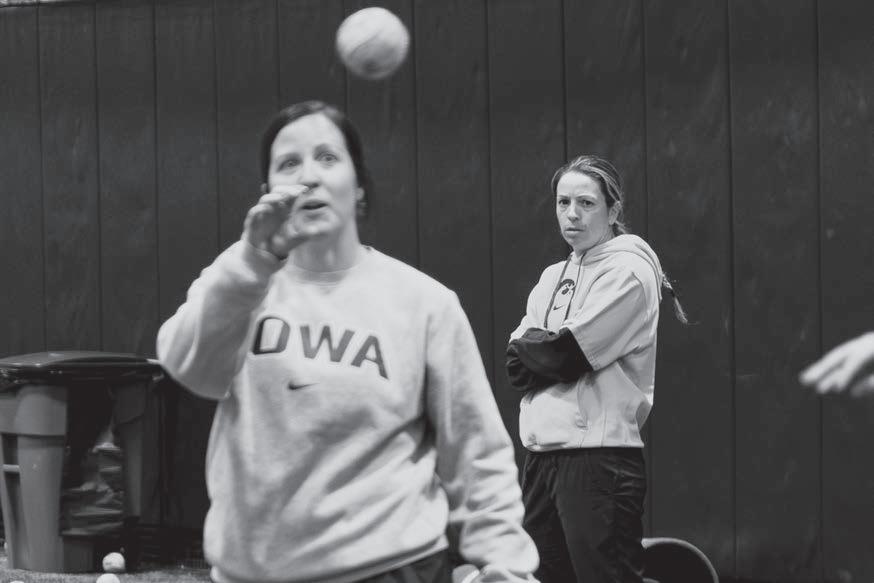
After graduation, May-Johnson split her loyalties. She started her coaching career first as a graduate assistant with the Hawkeyes, but she looked forward to summer. She found enjoyment in the more mundane activities like throwing batting practice and picking up balls, but still loved playing the game. Every June to August, she played for the Chicago Bandits of the National Professional Fastpitch League and finished with two league Most Valuable Player awards and her number retired by the team.
On the international stage, she helped the United States team to gold medals in the 2011 Pan American Games and World Cup, winning USA Softball’s Female Athlete of the Year. Of course, May-Johnson doesn’t bring up her playing career often among her players, but the resumé speaks volumes.
“She’s a confident young woman, and rightfully so,” Blevins said. “Some people want to be confident, but they don’t want to put in the work. Stacy’s put in the work.”
Committing to coaching exclusively by 2012, May- ohnson’s first stop was as an assistant at Iowa following Blevins’ retirement. May-Johnson spent three years with the Hawkeyes before taking an assistant job Louisville., where she was previously a volunteer assistant. After four years with the Cardinals, she bounced around the country, from Eastern Kentucky to Utah Valley to Fresno State. Yet as MayJohnson developed her coaching resumé, the Iowa program struggled.
Prior to Blevins’ arrival, Iowa achieved five winning seasons in its previous
nine years of existence, and under Blevins, the team never posted a losing season or finished worse than fifth in the Big Ten. In the ensuing 15 years after her retirement, Iowa posted just six winning seasons and only three years with an above .500 mark in the Big Ten. At first glance, Iowa’s 2025 season was one of success. The program finished 35-18 and 15-7 in conference play. But turnover at the head coaching position contradicted consistency on the field. The school announced Renee Gillispie would step down for the 2025 season for a medical reason, and in April, she announced she would not return.
The season initially featured assistant Brian Levin as the interim, but he departed the program in early March. He confirmed to The Daily Iowan he was let go following concerns with the team’s culture. Assistant Karl Gollan then assumed the interim role as the Hawkeyes finished 22-13 under his watch, including a victory over No. 5 UCLA. In early May, players and their parents expressed support on social media for Gollan to be promoted to the full-time position, but ultimately he wasn’t selected and took the job at Utah. Iowa announced its hiring of May-Johnson on May 28.
“It was a really difficult situation because the coach that did leave, we loved him,” senior Tory Bennett said.
As is customary in any coaching change, some Iowa players hit the transfer portal that offseason, including ace pitcher Jalen Adams and hitters Jena Young and Soo-Jin Berry, Iowa’s top duo in terms of batting average and runs driven in.
Those who stayed, like Bennett and fellow seniors Avery Jackson, Anna Streff, and Echo Mattiello, entered their first team meeting with an open mind. May-Johnson has been in their shoes and is just as committed to the program as them.
“That first team meeting was her reassuring that she’s coming here to win,” Bennett said. “And she’s coming here to make us better as people, not only as softball players, and the success will come with all the things that she’s going to bring to the table.”
Just as the players understood her situation, May-Johnson was empathetic toward their experiences. However, she wasn’t apologetic about her new role. She said she arrived humbly, but knew her players needed guidance.
“It was a tough year for a lot of them, but I think that they were also very hungry for some really solid leadership and direction,” May-Johnson said.
One reason for Iowa’s recent decline is due to increased competition in recruiting. May-Johnson is from Reno while Johnson hails from Cedar Rapids and remembers her only playing options
as Iowa and Iowa State. Today, with schools having a far more national reach, Iowa’s homegrown talent have ample opportunities elsewhere.
In May-Johnson’s final season as a player in 2006, 55 percent of Iowa’s roster hailed from in the state, according to listed roster’s on Iowa Athletics’ website. Last season, that figure dropped to 30 percent, albeit with a larger roster size. This season, homegrown talent stars across the Big Ten and elsewhere.
Catcher Jadyn Glab hails from Dubuque and leads Washington with a .432 batting average. Pitcher Teagan Kavan attended Dowling Catholic High School in West Des Moines and is Texas’ ace with an 8-0 record. Southeast Polk’s Sydney Potter ranks top-10 in Division I in home runs at Southern Illinois.
May-Johnson said keeping in-state recruits home is a “top priority.” She’s visited local high school games over the summer but also keeps tabs on travel programs in her own backyard. Iowa Premier Fastpitch is based in Des Moines and offers a national team for the top talent both in Iowa and across the country. Over 400 college commits have played for Iowa Premier since 2013, per its website.
Iowa Premier’s director and recruiting coordinator Greg Dickel first met May-Johnson around 2011 when he hired her to run a skills camp. He remembers the former player being hands-on with her instruction, demonstrating certain drills and techniques. He’s followed her coaching career since then and remembered her scouting his program in the fall, a tactic he believes didn’t happen in the past with Iowa.
Dickel grew up an Iowa fan and was ecstatic to see May-Johnson get the job. In his eyes, Iowa increased its legitimacy. The program needed to be rebuilt, and with May-Johnson, who he called a “one percenter” in the sport of softball, possesses the passion and dedication to take on the project. Mediocrity isn’t accepted.
“The person just exudes excellence, even just talking with her,” Dickel said. “The kids that are coming to the
program from here on out, excellence is the standard, period.”
Multiple Iowa natives from Iowa Premier are on the Hawkeyes, such as freshmen Carly Brewer from Norwalk, Paige Opheim from Humboldt, and Mariah Myers from Fort Dodge. All three previously committed to the prior coaching staff but didn’t waver when May-Johnson took over. If anything, they felt their trust was rewarded. Dickel said he ran into Brewer at the semester break, and the player told him she loved her new coach.
“I think that speaks volumes,” he said. “I’m excited for the future at Iowa.”
Nevertheless, constructing the future was initially an isolated task for May-Johnson. Her first couple of weeks on the job featured phone calls from 8 a.m. until 10 p.m. She said she ran 10 official visits by herself, driving them to and from the airport and showing them around the campus she once lived on.
“It’s wild,” she said. “It’s absolutely wild.”
While passion for reshaping the program is evident, May-Johnson makes a commitment to her players just as much as they do to her.
Dickel noted that in his conversations with May-Johnson, she will emphasize success beyond softball as part of her recruiting pitch. A high bar isn’t only applicable on the field but in life’s other aspects and across the decades after a playing career.
“Excellence is the standard,” he said. “She
will ensure it, and she will not fail them.”
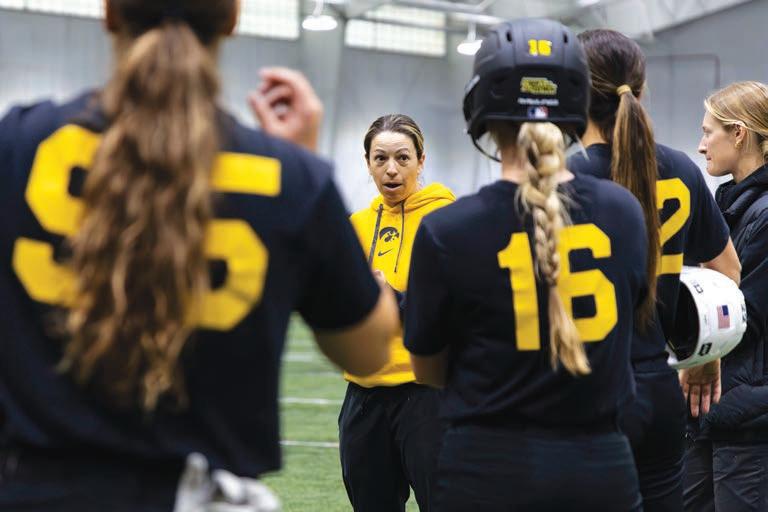
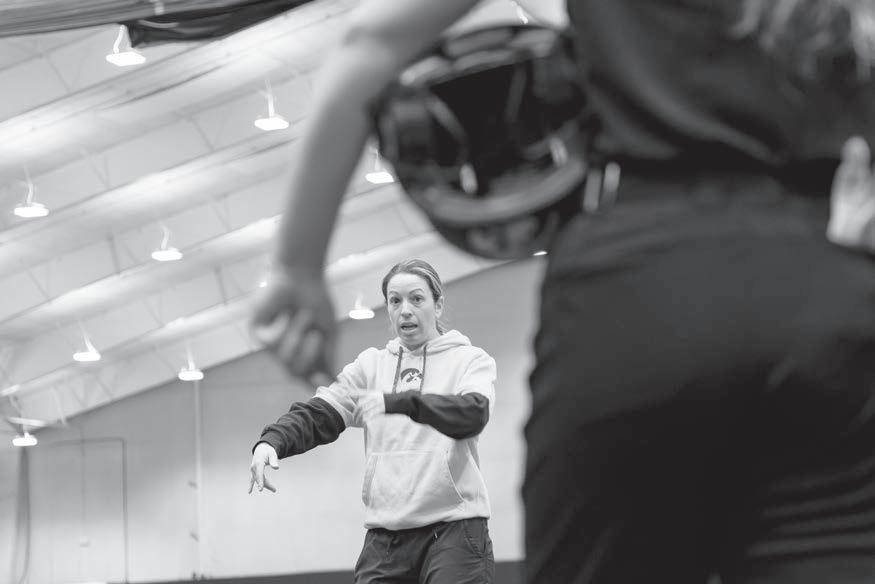
May-Johnson’s blonde braid peaks out beneath her black winter hat as she surveys her team in the huddle. She sounds under the weather, but MayJohnson delivers a clear message to her players that February morning on a turf field inside the Hawkeye Tennis and Recreation Complex.
Communicate. Be loud. Have fun. After all, softball’s supposed to be that way. It certainly was during her career. The season opened that weekend, and as the Big Ten slate begins, Iowa is 15-8 overall heading into its home opener on March 20. May-Johnson doesn’t eye a certain number, but remembers the doubters, like a national softball reporter telling her it would be great if Iowa won 15 games this season.
“I’m like, ‘Hmm, OK. OK. That’s what you think,’” she said. In May-Johnson’s mind, Blevins wrote the book to Iowa softball’s success, and it’s her duty to not just follow it but write her own chapter. Returning the program to prominence will take time, and adjustments are numerous but necessary. The climb has just begun, and May-Johnson has learned to embrace the uphill battle.
“Just a continued development of confidence,” MayJohnson said. “I think I’m a good coach, and I believe I’m capable.”
The annual 5K is hosted at MERF by University of Iowa Carver College of Medicine to raise funds for the Iowa City Free Medical and Dental Clinics & University of Iowa Free Mobile Clinic.
end to the Islamic Republic system, the U.S. and Israeli strikes were primarily due to lack of cooperation from the Iranian government regarding the nuclear program.
Lai said the goal of the Trump administration is to “demilitarize” Iran by eliminating or effectively restricting its nuclear and ballistic missile capabilities.
According to The New York Times, nearly 900 people were killed in the first four days of the U.S.-Israeli attempt to eliminate the Iranian nuclear program. The vast majority of the fatalities reported have been from Iran.
Shiraz, Farshad’s hometown, was one of the cities targeted in the attack. But, Farshad had long hoped for the U.S. to use military force on her country. She said it was the only way to end the increasing discrimination and economic suffering of her nation.
Farshad said the Iranian regime lost its chance for “diplomacy” or negotiation when it used brutality against its people. She said people in Iran are dancing in the streets, celebrating the attack on their own nation.
“It is difficult for those of us in the est to grasp the sheer desperation required to actually hope for your own country to be bombed,” Farshad said in a statement following the strikes. “But that is the reality of life under this oppression.”
Public sentiment in Iran surrounding U.S. intervention is hard to gauge, as cell service and landlines were reportedly disrupted across the country in the week following the first strikes, according to The New York Times. But, videos depict exaltation from Iranians who took to the streets following the death of Khamenei.
Lai said internally, Iranians are divided on the strikes. He said while many are celebrating the attacks, some Iranians may dislike their government but disagree with foreign intervention in the matter.
Farshad said the regime has built its ideology and consolidated its power around hostility toward the U.S. — chanting “Death to America” at every occasion. She said it would be too late to wait for this government to successfully obtain nuclear weapons before launching an attack, voicing her support for the U.S.Israeli strikes.
“This military operation is significant, but it is far less destructive than what would come if the regime were allowed to survive,” Farshad said in the statement.
She said she hopes the strikes remain surgical and targeted to dismantle the regime, and to provide a “level playing field” for the Iranian people to reclaim their sovereignty and reconnect with the rest of the world.
Lai said it is hard to say if the Islamic Republic system will fall due to the U.S. strikes, but Iran has institutional procedures in place to avoid the system crumbling solely because of their leader’s death.
Other key figureheads killed in the attack include two Former Ministers of Defense and Armed Forces Logistics of Iran Ali Shamkhani and Aziz Nasirzadeh, Commander of the Islamic Revolutionary Guard Corps Mohammad Pakpour, and Chief of Staff of Iran’s Armed Forces Sayyid Mousavi.
The Islamic Revolutionary Guard Corps, a military branch established to protect the existence of the Islamic Republic system, is at the center of the void. It is not clear if the guard will be able to effectively institute authority nationwide following Khamenei’s death.
Lai said in theory, the guard has enough structure to navigate the succession of the existing Iranian leadership. He said there are not yet reports on an internal attempt to overthrow the regime, but if the strikes in the region continue, it is possible.
“A regime change is not on the horizon, like right away within the next day or week,” Lai said. “But, after four more weeks of conflict, it’s possible.”
On Jan. 8 and 9, economic and social tensions boiled over in Iran. Thousands of protesters took to the streets in widespread dissent, calling for a regime change. Instead of a helping hand from their government, civilians were gunned down in the street.
An official death toll from the Iranian government reported over 3,000 deaths from the January protests; however, a significantly higher death toll is reported from human rights groups in the region. Ronald McMullen, UI professor and
former U.S. Foreign Service Officer, said the most recent protests were born primarily from an economic crisis in Iran. According to The Stimson Center, a nonpartisan foreign affairs think tank, Iranian currency, the rial, was valued at 1.4 million rials per U.S. dollar in December 2025 — its lowest level ever.
He said shopkeepers and small merchants were the primary catalyst of nationwide demonstrations — a group typically representative of one of the “strongest pillars of support for Iran.”
McMullen said the group, along with ethnic minorities and young people, rose up against the regime at once, which shocked the Iranian government.
Lai said social dissatisfaction, including women’s rights, has exacerbated internal strain for decades, and coupled with the economic crash sent the nation into crisis. He said the Iranian economy is struggling in part due to sanctions placed by the U.S. to pressure the nation to abandon its nuclear program.
As the Jan. 8-9 protests began, Farshad was treating a patient when she received at least seven missed calls from a friend back in Iran. She called him back, concerned when he didn’t pick up. After calling him again, he picked up the phone.
“All I heard was, ‘They are shooting us,’” Farshad said. “‘They are shooting, we have taken shelter.’”
That was the last Farshad heard from her friend, or anyone in Iran, for nearly three weeks.
The Iranian government was successful in silencing the protesters by shooting and arresting anyone who took to the streets, along with cutting off internet access to the region, McMullen said.
In the fallout of the protests, Iranians worldwide called for an end to the Islamic Republic system. Farhsad and other UI Iranian students have organized locally in support of U.S. military action and to share their stories of repression back home.
UI students and Iowa City community members have protested the deaths of civilians in protests against the regime.
Farshad attended the Feb. 14 protest in Iowa City. She went because Iranians back home don’t have the opportunity to voice their dissent to the regime, so Farshad said she can’t take her chance for granted.
She hopes the U.S. begins to understand the destruction of the Islamic Republic system. Farshad wants the regime to fall so Iran can reconnect with other nations, and be the “friend [it] once was with the world.”
“ e want the est to recognize our movement, recognize our protest,” Farshad said. “Recognize our urge for freedom and help us.”
Paria Karimi, Ph.D. student at the UI, said she has survivor’s guilt for moving to the U.S. from her hometown in Tehran, Iran, at 27 years old. Karimi said the recent bout of protests was so traumatizing, she blocked much of the two-week-long timespan out of her memory entirely.
Karimi is among the Iowa City residents protesting the Islamic Republic system, attending two of the recent demonstrations.
She supports the U.S. attacks on the soil of her home country, calling the death of Khamenei a “bittersweet moment.”
“On one hand, I wanted to cry for all those innocent people who were murdered at the hands of the regime as they can’t celebrate this beautiful day with us,” Karimi said in a statement to the DI. “On the other hand, after a very long period of time I feel like I can breathe again.”
Karimi said she is less stressed about the safety of her family back in Iran now compared to the months leading up to the U.S.-Israeli strikes because “Islamic regime forces have no moral and no mercy whatsoever.”
Karimi said a regime change is the only way out for Iran. She said the Islamic Republic system will kill millions if it stays in power, even more than the thousands it has executed, tried without due process, or raped.
Karimi said the opposition has more momentum and hope for change because this time, they have a leader. She said Crown Prince Reza Pahlavi is leading the charge, calling for an election and a transition into democracy.
government “brainwashes” students in public school, shaming them for not being “obedient” or doing as they are told.
“Because I was a woman, I was automatically less than a man,” Karimi said. “I was automatically stupid and less intellectual than a man.”
Karimi said she found herself angry at everyone and everything simply because she was born female and can’t do what she wants. But, Karimi said her college friends helped her realize that her worth isn’t determined by her gender.
“They helped me realize that this is not a problem of being born a woman,” Karimi said. “This is a problem of me being in the wrong setting.”
Karimi said the people of Iran will die of famine due to the inflation or be killed by the government if the Islamic Republic system stays in power.
According to Iran Focus, an independent, nonprofit news service, about 35 percent of registered deaths in Iran came from malnutrition as of Oct. 2025.
Farshad said Iranians have been taken hostage by their government. She said the Islamic Republic system doesn’t deserve the
Pahlavi is the son of Mohammad Reza Pahlavi, the Shah of Iran who was deposed in the 1979 revolution. Crown Prince Pahlavi was exiled following the revolution but seeks to return and be a transitional leader for the nation.
Karimi said for years, each time major protests broke out in her home country, she thought to herself, “It cannot be more brutal than this.” Yet, Karimi said the violence surprises her every time, with the January crackdown on protesters being no exception.
Reports by The New York Times detail gruesome stories from medical professionals in Iran the days following the protests, all of whom said they saw injuries “indicative of deliberate killing or intent to inflict serious bodily harm” to civilians from the Iranian regime.
McMullen said the previous bout of nationwide protests in Iran were violent but not nearly as violent as the Jan. 8-9 crackdown. McMullen said these protests demonstrated a “more violent, widespread repression.”
During the most recent protests, Karimi said the government successfully cut off all communication with the outside world, which she said shows the regime has no regard for human dignity.
Karimi left Iran to pursue her doctorate in the U.S. and get away from the regime, which she had known was repressive since she was a teenager. She described how the
diplomatic approach — or any negotiations, including allowing Iran to keep their nuclear program for “peaceful purposes.”
“It’s a government that opens fire on its own people who are struggling to feed their family,” Farshad said. “ hat can this government do with a nuclear power to the world?”
She said she wants the world to help the Iranian people fight the dictatorship, including by use of military force, because the Iranian regime would only continue to devastate its own people.
“ hen a foreign country invades and attacks a hospital, you call it a war crime,” Farshad said. “But there is no name for a government that attacks its own hospital.”
Farshad said Iranians have reached a point of desperation — where they protest for military action against their own government, because there is “nothing more to lose.”
“You see people struggling for day-to-day life,” Farshad said. “This person no longer fears prison. hen you haven’t been able to feed your family in weeks, you don’t fear death.”
Although Farshad hasn’t been back to Iran since she arrived in the U.S. nearly a decade ago, she is afraid of what she would return to in the event the U.S. does not successfully assist in ending the reign of the Islamic Republic system.
“I fear that the day that I can travel back to Iran, everybody I know is dead,” Farshad said.
OPINIONS
Mismanagement is not the only thing hurting ICCSD
The district’s financial troubles come from mismanagement, but that’s the short term.
High taxes are already a hard pill to swallow. The median Iowan household pays $10,384 a year in state taxes, according to The Des Moines Register , on top of $10,390 in federal taxes, according to USA Facts. And so it’s even more upsetting to see that money is being mismanaged.
hether it be because of inefficiencies or bureaucratic mistakes, governmental overspending is a serious issue. Thankfully, but not really, there is a folk cure: running public services like businesses, which usually involves budget cuts and competition.
The Iowa City Community School District has attempted to put this into practice in recent years. But the real problem is the flawed system that forces public schools to operate like competitive businesses. This leads to repeated cuts that ultimately threaten the survival and quality of public education.
In 2014, the district cut the German language program, fourth-grade orchestra, seventh-grade football, and foreign languages to save $3.6 million dollars, or $5.1 million if adjusted for inflation, per the Little Hawk.
In 2024, Hills Elementary was torn down after the ICCSD Board of Directors determined it would save them $1 million. Former students of the elementary school have since been bused seven miles out of town to Alexander Elementary School every day.
Faced with ever larger budget deficits, the district blinked. To cover salary costs between receiving property taxes and state funds, the district took a $10 million loan from its health insurance fund, costing them $394,000 in interest.
The loan was taken without board approval or proper public disclosure.
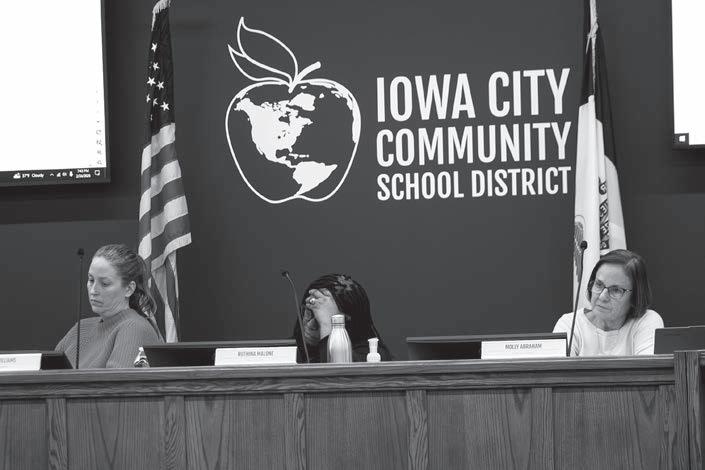
When asked how the fallout from the loan could have been avoided, Ruthina Malone, the ICCSD School Board
President, said “if we were told about it.”
“We have been very public about the deficiencies we have in our business offices ... and we are making sure we update the books so we all know what we are dealing with,” she said.
Either way, the way ICCSD has gotten out of this mess is with further cuts that didn’t really solve the problem.
The 2014 reductions were prompted by an increase of nearly one thousand students since 2010, according to The Little Hawk. In 2013, spending per student was $14,522, adjusted for inflation, according to the ICCSD budget fiscal year 202 . Now, it sits at 7,635, based on the Iowa City Community Schools Certified Budget for fiscal year 2024.
These numbers paint a picture very different from simple mismanagement of money. If the amount of students continues to increase and funding stays low, the district will be forced to do more with less, and something will have to give.
The most recent increase in school funding by the Iowa legislature was 2 percent, which is less than half of what teachers and parents were asking for, according to Iowa.gov. This is extremely far from the 92 percent increase needed to bring school funding levels back to 2013.
Such an increase is unlikely, and everyone knows it. This leaves school districts in an e tremely difficult position, forcing them to decide what is absolutely essential to provide students with a quality education. If funding continues to decline, however, more cuts will inevitably follow. The district plans to reduce its budget by $8 million. Although there are no finalized plans yet, the events of 2014 give us a clear idea of what may happen.
There will be fewer electives, fewer after-school programs, and larger class sizes. Cuts are a slippery slope; they continue until there is nothing left to trim. In 2014, it was the German program. If this trend continues, in 2034 it could be the Spanish program, creative classes, or after-school sports. What will be left to cut in 2044?
The loan fiasco is certainly
unacceptable. No organization should be short $10 million out of nowhere, especially one funded by taxes. But while frustrating, this is hardly surprising. Frankly, it only accelerates what already seems inevitable: more cuts.
When we separate symptoms from causes, it becomes clear that although the district’s financial oversight needs improvement, the deeper issue is chronic underfunding and a system that forces districts to compete with one another — and with private schools — for both students and funding.
Student enrollment in the public district has been declining in the past years, according to previous reporting by The Daily Iowan
The district is not blameless, far from it, but it is competing with private schools that charge tuition while also receiving government funding through vouchers.
When institutions can fundraise that way, it is much easier to offer smaller classes, better-paid teachers, and more programs than organizations that rely on a government that appears ambivalent toward them.
I am from Brazil, a country where this
story has played out before. Once public services lose proper funding and are forced to compete in rigged systems, they eventually fail.
The private sector, once considered better, then swoops in to provide mediocre services at exorbitant prices.
Once competition from public schools disappears, there is no longer any incentive for private institutions to offer better services because they become the only option.
If you want to see how devastating that can be, drive through the forgotten corners of Iowa. Look at the towns that began to decline after their schools closed. For many of them, the sentence was handed down the day their school shut its doors.
It is absurd that the district could mismanage its finances so poorly. It’s sad. It is a symptom of something larger, it’s what happens when we try to run public services like business.
The money taxpayers save in the short term is nothing compared to the price the community pays when the public can no longer trust the government for basic services.
Oppressive app infringes on privacy
The use of the “Mobile Fortify” app by ICE is a violation of the Fourth Amendment.
Three years ago, a rainstorm rocked my family’s house in Minnesota. The thunder roared so loudly the power lines lost their nerve — and so did we, hunkering down in the basement with a flashlight and a handful of books. It was my first time actually reading George Orwell’s “1984.” I lied my way through the high school class where it was assigned.
I read it in one night. The images that stuck with me were the ones most people know: suppression, surveillance, the slow erosion of truth. The book still gets mentioned constantly because those themes keep showing up in the news. One line specifically stuck out to me “If you want a picture of the future, imagine a boot stamping on a human face — forever.”
But in order for a boot to come down on a target, it needs eyes — it needs a spotter.
Today in the United States, Immigration and Customs Enforcement, or ICE, is increasingly equipping itself with those eyes.
An investigation by Reveal from The Center for Investigative Reporting discussed the story of 23-year-old Jesus Gutiérrez, a U.S. citizen walking home from the gym when he was stopped by federal immigration officers. Agents placed him in an unmarked SU and handcuffed him.
When Gutiérrez couldn’t immediately produce identification, the agents turned to another method. They photographed his face. Within minutes, using a mobile app, they determined he was telling the truth about his citizenship.
The app, called “Mobile Fortify” can identify someone based on their fingerprints or face by pointing a camera at them, according to emails obtained by
0 Media. No warrant. No court oversight.
ICE is not simply checking IDs anymore. As of last fall, it is scanning faces.
Since its inception, facial recognition software has been notoriously biased. According to an MIT study referenced by the ACLU, the error rate in misidentification for light-skinned men was 0.8 percent, as opposed to 3 .7 percent for darker-skinned women. ACLU reported it sued on behalf of Kylese Perryman, who was falsely arrested for robbery based solely on incorrect facial identification.
“This is a bipartisan issue.” Don Bell, policy council at the Project on Government Oversight, a nonpartisan, independent watchdog of government reforms, told me.
“People should be looking at this in the traditional sense of how Americans have always viewed their government: with distrust. Going all the way back to the founding of the country, the framers of the Constitution distrusted too much power being in the hands of the government,” Bell said.
Bell believed the app was a gross overreach by the government in its surveillance.
“You really should be asking yourself, do we need to do this? And how can this be targeted against me and my community? Because one day it may be one administration that’s targeting one group of people, and the next administration could be targeting another group of people, and it only makes us all less safe and free,” Bell said.
America it seems isn’t just walking toward a surveillance state. It remains running, and somehow doing it in silence as the public is distracted. But if we get too distracted, we risk letting our basic freedoms and rights being pulled from under our feet.
As Bell previously stated, the Mobile Fortify app is simply unconstitutional. the Fourth Amendment protects individuals against unreasonable government searches. If government officials don’t have reasonable suspicion, under the Fourth Amendment they are not entitled to receive
identification. Scanning someone’s face without permission should fall under this. This was established well in the case of Brown v. Te as in 1979.
Two officers were creeping by an alleyway with high drug traffic in their police cruiser when they spotted a man who they hadn’t seen in the area before. When Edward Brown refused to identify himself, the officers arrested him. The U.S Supreme Court ruled that the arrest violated Brown’s Fourth Amendment rights because the officers lacked reasonable suspicion to believe Brown had engaged or was engaged in a criminal act.
I’d like you to imagine what would be a fair ruling if instead of two suspicious cops flagging Brown for an arrest, it was an app on someone’s phone that scanned him and flagged him as a suspect, why would it not still be a violation of Brown’s Fourth Amendment rights?
A more recent U.S Supreme Court decision in 2001—
— ruled that there was a breach of the Fourth Amendment through an interior agent’s use of a thermal imaging device without a warrant. The imaging device was used to scan Kyllo’s triplex for the heat signatures associated with the high-powered lamps usually used to grow marijuana. The court ruled that the use of the device was the search itself, so the evidence was inadmissible.
Other countries have already demonstrated how easily surveillance tools can evolve into instruments of repression.
In 2017, the BBC reported the Chinese government had begun equipping its police with surveillance sunglasses. Connected to a massive database of suspects, officers could quickly scan an entire crowd and pick out people who were flagged to be arrested. The article reported fears that future use of such a product might be used not for protection but suppression. They were right. Authoritarian systems rely on omnipresent eyes.
detailed how Chinese authorities used vast surveillance networks and facial recognition systems to target ethnic minorities, particularly Uyghurs, who have faced mass internment and forced labor. The group found police relied on a data-tracking app that collected personal details ranging from religious practices to blood type, flagging people for investigation over minor anomalies like unusual electricity usage. That data fed into centralized systems integrating CCTV and facial recognition. ICE is bumbling through the streets with dangerous technology just like China. It is not yet vetted or studied by the courts of law, and it is technology that inches us ever closer towards a very imaginable future. If you want a picture of the future, imagine the eye that tells the boot what face to stomp on — forever.
In 2019, Human Rights Watch
recommended closing the department, among several other lowenrollment programs.
During the Iowa Board of Regents meeting on Feb. 25, UI Executive Vice President and Provost Kevin Kregel publicly reiterated the intention to close the Department of Gender, Women’s and Sexuality Studies. He shared the details of the report from the board, clarifying that while a minor and certificate will still be offered, the department itself will be closed. regel said his Office of the Provost decided on the closure of this program by comparing the board’s report to recent data and trends in UI undergraduate enrollment. He said they also look at licensure and accreditation requirements, available faculty resources, and the recency of a program’s establishment.
“I do want to note that as we’ve gone through this process, we have made sure that we are looking strategically at how we are going about this,” Kregel said in the meeting. “Looking at the resources that are being utilized, where the workforce alignment efforts will be falling, and how they are going to align with student interest going forward.”
The board and the UI have faced backlash for the decision to end the GWSS major, with many of the school’s alumni, students, staff, and other community
Women’s and Sexuality Studies, helped organize the letter and contributed their own testimonial.
Das said confusion surrounding the department’s future, especially following the rejection of the proposal for the School of Social and Cultural Analysis, turned away many current and prospective students and contributed to lower enrollment.
Das also said the political implications of the department’s closure may turn people away from staying with the university or in the state.
“When you shut down an entire department, it sends a wrong signal, especially to Iowans,” Das said. “Politically, there have been so many setbacks. Transgender rights are no longer protected in Iowa, and on top of that, you’re taking out this department on gender studies. So there would be some Iowans who do not want to be in the state. Iowa has been facing the so-called brain drain for a while now, and this would only make things worse.”
“Brain drain,” according to a 2026 Common Sense Institute report, is the trend of college-educated young adults leaving the state after their education, disrupting the state’s economy. Iowa has one of the highest trends in the nation, with the UI especially having a low postgraduation retention rate.
Only 37.7 percent of UI graduates remain in the state 10 years after graduation, despite 61.9 percent of the undergraduate student body being in-state, according to the report.
Das said the UI and the Board of Regents’ continued support of the Center for Intellectual Freedom further reveals the political motivation behind this decision.
stated values.
The university’s most recent strategic plan for the 2022-2027 school years describes the UI’s mission statement and commitment to inclusivity and opportunity.
“We are committed to ensuring access, respecting differences, and fostering a supportive environment where all individuals are valued, empowered, and encouraged to contribute to our shared success,” the UI said in the most recent iteration of its strategic plan.
members signing an open letter opposing this closure.
It includes 31 testimonials, offering people’s personal experiences with the GWSS program as well as their concerns about the impact it will have on students and staff. It has received 133 signatures.
ajorshi Das, an assistant professor at the University of Toronto and a graduate of the UI with a Ph.D. in Gender,
Established in 2025 as a result of state legislation, the Center for Intellectual Freedom is focused on teaching the political and economic systems in the U.S as well as the history and values of America. However, the school has struggled to secure student interest, having postponed its January classes due to a lack of student interest. Despite having a similarly low enrollment rate as the closing studies, the center will continue with classes in March, seeking additional funding.
Eva Packer, a 2025 UI graduate with a Bachelor of Arts in Gender, Women’s and Sexuality Studies, now works as the violence prevention program coordinator at the Women’s Resource and Action Center at the UI. She said the decision to close this department is harmful to the school’s legacy and contradictory to its
Packer said the university’s values statements, which are carefully crafted by the university, are not reflected when it dismisses interdisciplinary programs like Gender Women’s and Sexuality Studies.
“By eliminating these majors, you’re eliminating paths for students,” Packer said. “That only hurts the university as a place where you’re supposed to build community and engage with critical thinking skills.”
Sara Koppy, a 2025 UI graduate with a bachelor’s degree in social justice also signed the letter, including her testimonial in it. She said the program influenced her work as a legal assistant, thanks to the critical thinking skills developed through her studies.
“After four years of rigorous, expansive work, hearing the closure of my degree felt nothing less than crushing,” Koppy said in her testimony. “To see the foundation of
who I had become placed on the chopping block as a political spectacle was deeply personal. An education within the GWSS program taught me to think critically about the roles of power and each person’s influence on their environment, especially in the era of AI and mass censorship.”
Other alumni who provided testimonials also echoed frustrations that the education they had received at UI is now being targeted by the state legislature. Packer said the closure of this department will hurt the legacy of UI. She said closing this program is a departure from the school’s history of providing education for women and LGBTQ+ students. Since 1860, the UI has admitted women on an e ual basis with men, being the first public school to do so. Since 1970, the UI has also been the first state university to recognize and continuously fund an LGBTQ+ student organization. The department itself was one of the first of its kind in the nation when it was founded in 1974, originally called the Iowa’s Women’s Studies Program.
Packer said she would not have wanted to pursue anything other than her GWSS major, and she is disheartened that other students will no longer have the same opportunity. She said the department’s closure removes the opportunity for nontraditional, unexpected avenues of education and career prospects.
Local mosque marks second anniversary
Amid Ramadan, UI students say the mosque is vital for the local Muslim population.
As Muslims in Coralville and Iowa City observe Ramadan, a month-long fast from sunrise to sunset, the Osama Sharairi Mosque is one of two places of worship that hold communal prayers in Johnson County. The Islamic holiday is held from Feb. 17 to March 19.
The mosque approaches its second-year anniversary after opening in March 2024 at 2251 1st Ave. in Coralville. The owner, Hadi Sharairi, named the mosque after his late father. He said the Muslim community in the area has grown and needed another mosque, especially as the older Iowa City Mosque has limited parking.
Pew Research Data shows Muslims make up less than one percent of Iowa’s population. According to a 2020 Association of Religion Data Archives report, 5.92 percent of people were estimated to identify as Muslim in Johnson County. This is a significant increase from the 2.35 percent of identified Muslims recorded in 2010.
Sharairi also hopes the Osama Sharairi mosque can help educate non-Muslims.
“This will also help the non-Muslim communities to learn about Islam and to show them that Islam is a peaceful religion,” he said. Before opening the mosque, Sharairi wanted to build a daycare. He then realized there was enough space to incorporate a mosque in the upstairs portion of the building. The building now functions as both.
“That’s what’s unique about it cause it’s not a community that came up with this idea to make it happen. It’s the owner who always wanted to have a mosque and saw it as a good opportunity to pursue a blend,” Samir Falah, a good friend of Sharairi said.
The mosque welcomes a variety of backgrounds, including Sudanese, Pakistani, Indian, and others, but Ramadan and al-Jumu’ah, or Friday prayer, brings in the most engagement from various groups, especially students.
Although most Muslims in the greater Iowa City area attend the Iowa City Mosque which has been operating for over 27 years on 1812 W. Benton St., Osama Sharairi has begun partnering with University of Iowa students to volunteer for prayers host Qur’an lectures and is working to launch women-led Quran lessons. Much of the college outreach is from UI students spreading the word, Falah said.
Due to their relatively recent establishment, Falah said recruiting more students has been a gradual process.
Many Muslim students at UI believe practicing amadan on campus is difficult, but new mosques like Osama Sharairi help them through Ramadan.
UI first-year electrical and computer engineering student Omnia Ali said amadan offers many opportunities to connect with the Muslim community and build support for one another.
“One of my favorite parts is breaking fast
side-by-side, hearing the Qur’an recited in congregation, and sharing conversations that remind me I’m not experiencing this month alone. It’s a beautiful reminder of how strong and uplifting the Muslim community can be during Ramadan,” she said.
She believes the opening of Osama Sharairi is vital for the growing Muslim population in Iowa City and Coralville. Though she has not had a chance to visit, she said her community has a strong need for more gathering spaces and educational programs.
Ali also said practicing Ramadan and attending the Iowa City Mosque allows her to reflect on her relationship with Islam and grow closer to God.
“I see fasting as a practice of self-discipline by abstaining from some of the most prominent human desires,” she said. “I’m reminded of the importance of patience, restraint, and self-control. Fasting also helps me slow down, be more intentional, and reconnect with the spiritual values that guide me throughout the year.”
However, Ali struggles to find convenient spaces to pray on campus.
“Right now, the only designated prayer areas are in the Main Library and the Seamans Center, and it can be difficult to walk all the way to those buildings, especially during work hours or in the short breaks between classes,” she said.
As a result, Ali pivots to using empty classrooms to avoid distractions while praying but wishes there were more prayer areas to accomadate those who have to pray throughout the day.
During Ramadan, Muslims must perform five prayers daily Fajr, Dhuhr, Asr, Maghrib, and Isha. Each prayer is done at different times of the day dawn, midday, afternoon, evening, and night.
UI first-year student Bashir Eltyeb has similar issues to Ali. He described practicing Ramadan on campus as “challenging but manageable,” with classes being a primary obstacle because theyp interfere with prayer times.
Because prayer locations are not common on campus, he often uses his dorm residence on the third floor of Catlett Residence Hall when other areas aren’t available.
Sometimes Eltyeb commutes to his mosque with fellow Muslim students for Ramadan-specific prayers such as Tarawih.
For him, Ramadan is an opportunity to reflect on himself, his goals, and his faith.
“So it’s just a time for me to look back and have a conversation with former Bashir. Did you make it? Did you not? If not, why?” he said.
Before attending the UI, Eltyeb faced difficulties taking time off for religious holidays in high school. He has not yet done that at UI, but is concerned if the process will go smoothly when the time comes.
The university provides policies meant to help students observe religious holidays in their Statement of Religious Diversity and the University Calendar. It allows people who celebrate holidays such as Ramadan
to re uest time off if the holidays conflict with work and class schedules.
Holidays such as Eid al-Fitr, the celebration after fasting, sometimes fall on school days. Eid al-Fitr, however, will be held during the UI’s spring break this year.
Because his family is nearby, Eltyeb said he does not stress over logistics such as driving for Eid celebrations. Eltyeb believes this is a common worry for Muslim students on campus who are not from the area.
“And so Eid, which is supposed to be a time where you spend with your loved ones, is a little difficult, especially for Muslim students who are not from Iowa City, who can’t just go home and then come back the day after,” he said.
Eltyeb grew up in Iowa City and considers local mosques like the Iowa City Mosque and Osama Sharairi as supportive spaces for Ramadan. Muslim and culturally-related organizations on campus have helped him out.
“I definitely have a community, and I encourage other people to try to find a community as well. Even within that Muslim population, there are more specific groups, like the Sudanese Student Association, that have been very helpful in hosting events that connect me more to my culture,” he said.
A third-year UI student who wishes to remain anonymous, because her family does not know she’s Muslim, said she has found community in Iowa City despite being away from home for Ramadan.
She believes Ramadan is a time when she avoids material temptations to follow her connection to Allah.
This student is a convert to Islam who fell in love with the religion after visiting a mosque in 7th grade. Although her family isn’t Muslim, her Muslim and non-Muslim friends have supported her throughout her fast.
“I am friends with many Muslims here
in Iowa City. I am also a part of a Muslim girls’ group in my hometown. I do have many friends who are not Muslim but know about my religion and fasting, and do their best to encourage me,” she said. Like Ali and Eltyeb, she sometimes struggles to find places for prayer. She specifically references the challenges of finding bathrooms to perform wudu, a cleansing ritual before prayer.
However, she describes fasting on campus as easy.
“It’s honestly very easy to fast on campus. Like, spending time in lecture and lab helps the day go by,” she said.
This student has not formally attended Osama Sharairi either but said she has watched it transition from a church to a mosque since it was first purchased. While new mosques are important to her, she mentioned that the two masjids, or mosques, in the area are only accessible by bus or car, which limits nightly prayers for UI students.
“I wouldn’t call either of them close to the UI, and it is important to note there is no masjid in downtown Iowa City,” she said. Another issue she highlighted was her experience with Ramadan while living in dorms from 2023 to 202 . She specifically mentioned the limited suhoor meals, or predawn meal that is eaten before Muslims begin to fast at sunrise.
“It had to come from the university convenience stores, was largely limited in options like oatmeal, cereal, and was only offered about a week after amadan had started,” she said. “But I had to email several times to even be told it was an option.” She hopes that the UI continues to improve conditions for Muslim students on campus.
“I cannot imagine that the situation for fasting Muslim students who live in dorms has gotten better,” she said.
Northside welcomes award-winning home bakery
After five years of overnight baking and weekly sellouts, Bread Worthy will open in June.
At 3 a.m., while most of Iowa City is asleep, Colleen Brennan stands at her kitchen counter cutting coffee cake, with trays of croissants cooling behind her. The ovens have been running since noon the day before, and the house smells endlessly of butter and sugar.
By 6 a.m., Brennan and her partner, Erick Dole, will load their car and head to the Iowa City Farmers Market. By 7:30 a.m., they’ll be serving chocolate and almond croissants from behind an antique glass display case. By noon, they’ll be sold out.
oughly 2 hours after they first turned on the ovens, they will finally go to bed.
For five years, Brennan and Dole have run Bread Worthy out of their home in Iowa City, baking through the night and selling at the farmers market, Daydrink Coffee, and through scheduled online preorders. But with the bakery selling out nearly every week, the kitchen has outgrown the house.
“My plan was always to run this business as long as we can until we run into that tipping point we just can’t solve anymore. In the beginning, it was like, ‘Oh, we need more refrigeration, let’s buy a new refrigerator.’ About two years ago, we ran into everything being a chokehold. There was no space to buy anything new,” Brennan said.
Brennan said the demand eventually made it clear the home kitchen was no longer enough. The bakery is renovating 203 N. Linn St., formerly home to Goosetown Café and plans to open this summer.
The storefront will employ five people — three in the kitchen and two in the front-of-house — and operate Thursday through Sunday. The couple has yet to set business hours.
Originally from New Jersey, Brennan had always wanted to own her own business and cook, coming from a family that cooked, with her mom making every meal and her family hosting every holiday.
In her junior year of high school, she began finding recipes in magazines to make herself, specifically remembering making mozzarella tomato pasta and the excitement her family had trying it.
“I think just the aspect of being able to share food and see how happy it makes people is like when it was like, I would like to be a chef. And literally that night, I ran upstairs and was writing my application to go to culinary school. I think that’s when I was really like, I really like to do this,” Brennan said.
However, her parents were not totally supportive, recognizing the difficulties of the food industry.
“This is a really hard industry, and it’s low pay, horrible hours. You don’t often see your family. It’s not a great sustainable life, so they really tried to talk me out of it, and I actually ended up going to Penn State,” Brennan said.
Halfway through Brennan’s first semester at Penn State University, she realized that going to school for forensic science was “the worst idea.” Brennan then went to her counselor, ready to transfer,
but discovered Penn State offered a bachelor’s degree in hotel, restaurant, and institutional management.
During her time at Penn State, she studied abroad in Florence, Italy, making many friends and meeting Dole, her partner in business and in life.
Brennan laughed, describing her first few encounters with Dole and how, initially, they barely talked.
“We didn’t date while we were in Italy. We were in pastry class. There were only eight of us. I really made good friends with my friend Lauren and Jess. They were friends with Eric, and Eric and I didn’t talk very much,” Brennan said. “He was the only guy in the whole entire class. I remember our pastry chef kept trying to pair us up for things, and we would barely talk.”
A year later, with Brennan at the Culinary Institute of America, Brennan, Dole, and her friends from their time in Italy met back up in New York to see each other. Brennan said they “really clicked” and began dating long-distance.
Following Brennan’s graduation, the couple lived in various places, including New Jersey, Australia, and Chicago. Realizing they weren’t city people and wanting to live near family, the couple moved to Iowa City, where Dole is from.
“Iowa was more tempting because they had the cottage food law, so we could actually start the business in our home, because if we were to go to Jersey, we’d have to rent a kitchen and spend all of this money,” Brennan said.
According to Iowa State University’s small farm sustainability website, Iowa’s cottage food law allows for food that doesn’t require refrigeration and is shelf-stable to be sold directly to consumers from a home or farm without a license.
Moving to Iowa City in 2019, Brennan and Dole planned to start selling at the farmers market the following year, and then the pandemic started.
Brennan said COVID-19 “destroyed” the food industry, making her and her partner question for the first time whether they really wanted to be in the industry anymore.
“We made the choice to go 100 percent, and so we quit our jobs,” Brennan said.
On May 1, 2021, Bread Worthy became a full-time vendor at the Iowa City Farmers Market, serving a variety of croissants, including chocolate and almond, as well as cinnamon and pecan rolls and cookies.
“I kept trying to tell myself this is really happening because it didn’t feel real,” Brennan said. “I was like, this should be like the most exciting day of my life. I’ll be honest, I didn’t feel like that. It was more like just trying to convince myself like this was actually happening.”
Iowa City resident Ariel Glassman went to Bread orthy when it first came to the farmers market, initially attracted to the antique glass case they used to display their baked goods.
“We’re the kind of people like once we’ve tried it, we’re like, ‘Oh, we don’t really feel the need to go back,’ but we like this stuff
so much that we can have it as many times as we’re able to buy it, and then we really love taking her things to our friends and sharing,” Glassman said.
David Stenerson runs Iowa City Baked Goods, selling baked goods out of his home, and has become friends with Brennan and Dole over the years, with them offering advice on running a business out of a house. Stenerson said one of the reasons why Bread Worthy is so successful is its consistency.
“ very time I have bought their coffee cake, it has been the same coffee cake I’ve ever had, and it never disappoints. They’re always trying little new things, but everything is so consistently good. I have not had a single thing that I didn’t like,” Stenerson said.
Looking forward, Brennan said she hopes to expand the menu with the increased space.
“We right now have only focused on pastries and baked goods. We’ve always wanted to make bread because it’s in our name,” Brennan said. With a brick-and-mortar on North Linn Street, Brennan said she sees Bread Worthy joining the Northside’s tradition of locally owned gathering spots — places where customers don’t just grab food but build relationships.
“Northside itself has this amazing atmosphere, where each of those places is a gathering space,” Brennan said. “I just think we’re adding in a really cool bakery gathering space.”
New therapy arrives at UIHC to treat rare cancer
The hospital started providing a new therapy that fights synovial sarcoma, an aggressive cancer.
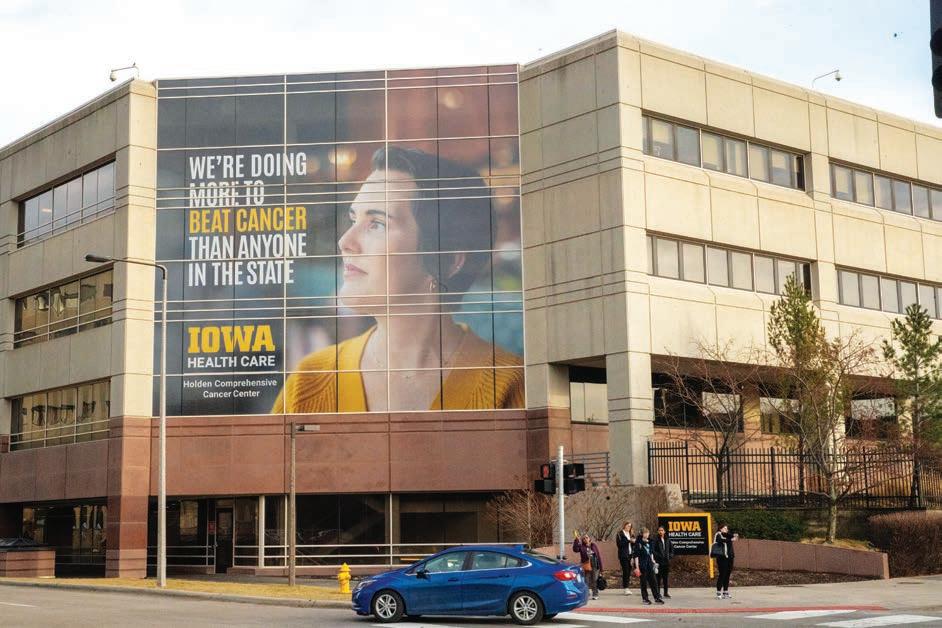
The University of Iowa Health Care Holden Comprehensive Cancer Center has started treating its second patient — the second in the state — with a cellular therapy to fight synovial sarcoma, a rare and aggressive form of cancer that can develop around any bone or connective tissue.
The U.S. Food and Drug Administration approved Tecelra in fall 202 as the first FDA-approved T-cell therapy, a type of cancer treatment that uses a patient’s own immune cells called T-cells, or white blood cells, to fight cancer more effectively.
The T-cell therapy is known as an adoptive cell therapy, which works by collecting white blood cells from a patient’s body and engineering them to attack cancer cells before administering them back into the patient.
Adaptimmune Therapeutics, a company that develops cancer treatments, was behind the T-cell therapy. In the clinical trial for the therapy, about 70 percent of patients whose tumors shrank from the therapy were alive at two years, with a possibility of long-term survival.
Gustavo Godoy Almeida, a medical oncologist at UI Health Care, said about 20 percent of patients in the trial were alive and cancer-free at two years, an outcome rarely seen with chemotherapy alone.
He said physicians typically wait five years before considering a patient cured.
Godoy Almeida said Tecelra offers much better results than current treatments for synovial sarcoma, which commonly use Ifosfamide — a chemotherapy drug that can kill cancer cells and suppress the immune system.
“After Ifosfamide, we keep providing different types of chemotherapy,” he said. “But they only prolong survival, which is around 18 months for synovial sarcoma patients. They do not cure these patients. So that’s why this new treatment is a very interesting way to treat cancer patients.”
Godoy Almeida said UIHC’s second patient to receive Tecelra therapy started high-dose chemotherapy on March 3, a process that will last for four days, followed by one day of rest and cell infusion the day after rest.
John Rieth, a medical oncologist at UIHC said the Adaptimmune Therapeutics’ clinical trial piqued his interest when the FDA approved the T-cell therapy in fall 2024.
“Thankfully, we were able to go talk with the company,” he said. “We were able to talk to our pharmacists here and to our fantastic cellular therapy service here to make sure that we’re able to offer the product here.”
According to the Tecelra website, there are only roughly 30 medical centers in the nation that provide Tecelra cellular therapy. The Holden Comprehensive Cancer Center is the
only medical center in Iowa to provide the treatment.
Rieth said synovial sarcoma can be found in young people. According to the National Library of Medicine, the cancer is most common when people are in their 30s, with a median age of diagnosis of 30. Rieth said Tecelra brings the possibility of prolonging patients’ lives long-term.
“ ou’re not only helping to benefit patients,” he said.
“It really benefits patients at the height of their life, it’s usually 30s and 0s, but it can affect even as young as 20s and teens.”
Breck Jones, the CEO of U.S. WorldMeds, the company that now manages Tecelra after it acquired Adaptimmune Therapeutics, said the goal with Tecelra is to administer the therapy to medical centers across the nation to remove logistical barriers for patients who have aggressive cancers.
“By partnering with leading institutions across the country like the University of Iowa, it means we’re bringing life-changing therapies closer to patients who need them the most,” he said.
Rieth said the clinical trial found that Tecelra was more
effective at the beginning of cancer treatment rather than as a last resort because the immune system is not as exhausted with chemotherapy treatment, potentially shortening the overall treatment timeline for patients compared with standard chemotherapy.
ieth said the cancer center is finding ways to help sarcoma patients outside of research. Courage Ride, a cancer center-sponsored annual bike ride that raises funds to improve the lives of those affected by sarcoma, reached a $1 million milestone in October, he said.
“We are a big research institution,” he said. “We’re trying to find breakthroughs in whatever way we can. e’re going to move forward both in these T-cell products and other immune therapy models and in sarcoma in general.”
Rieth said three of the nation’s sarcoma specialists work for UIHC, while many centers aren’t as lucky and do not have a single sarcoma specialist.
“This is a fantastic treatment that we can offer patients,” he said. “This goes to show that we really are one of the strongest in the nation as far as sarcoma treatment.”
UI business professor authors book on AI, ethics
Patrick Johanns’ textbook explores the ethical implementation of AI in business.
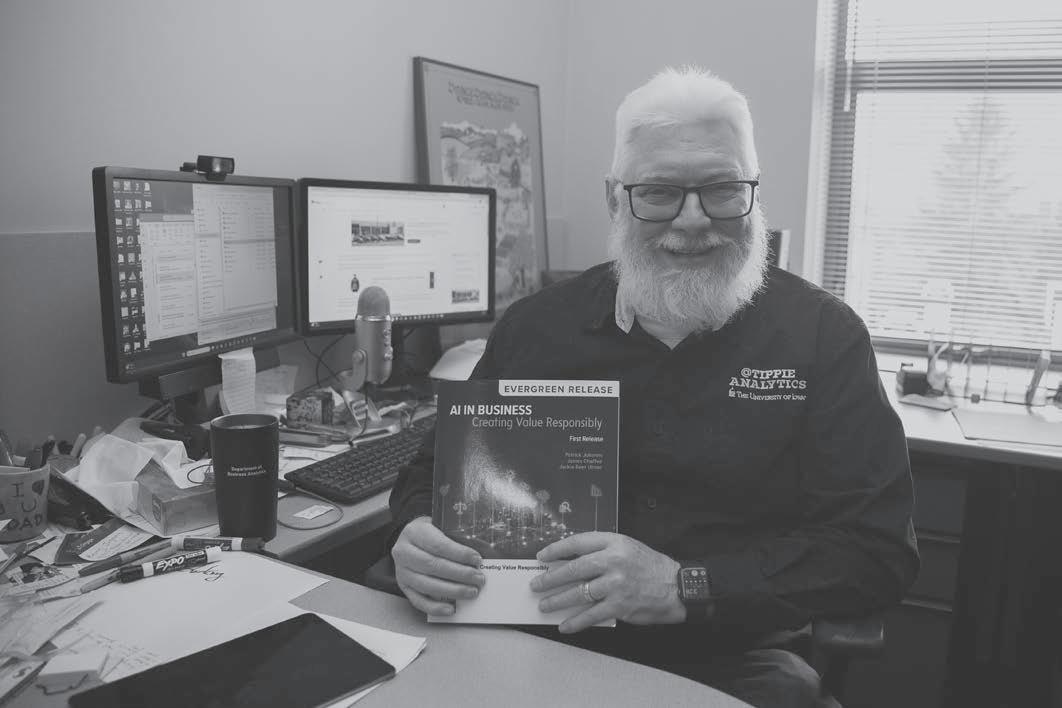
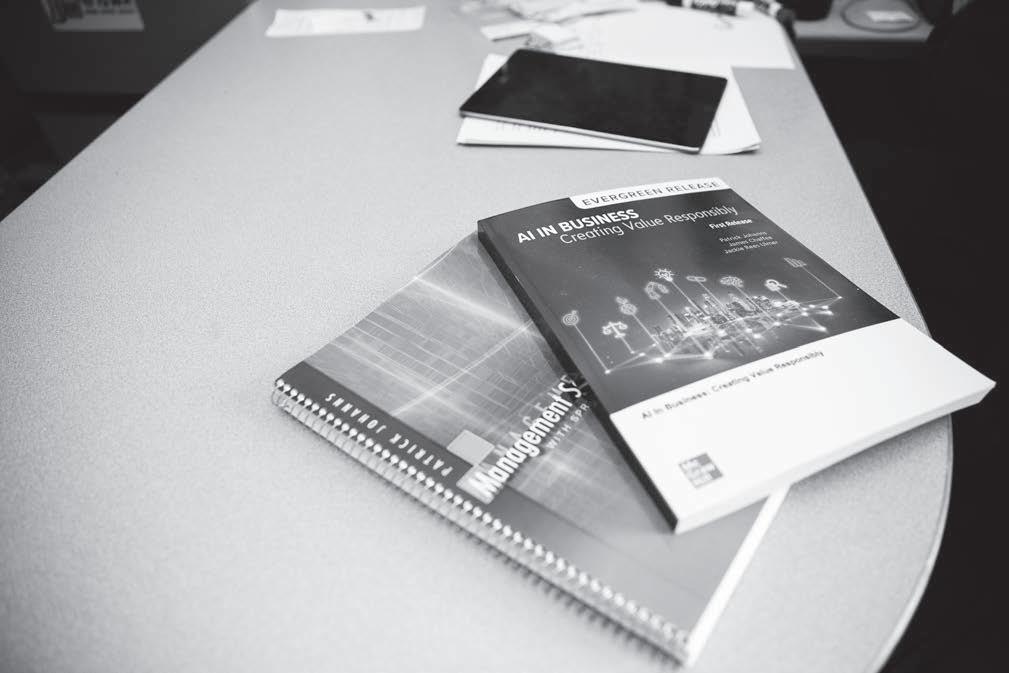
University of Iowa business analytics professor Patrick Johanns published a new textbook with McGraw-Hill titled “AI in Business: Creating Value Responsibly.”
The book will be used in his course to prepare students for the ever-changing realm of business as artificial intelligence grows in prominence.
Johanns book, published in January, focuses on the ethical usage and implementation of artificial intelligence, or AI, in business. Johanns is also currently developing an innovative course covering artificial intelligence in business for UI.
Johanns said the process began when the Tippie dean’s office tasked him with adding AI lessons to his Foundations of Business Analytics course. Seeing that there was no existing curriculum, Johanns decided to create his own.
According to an October 2025 report from Pew Research Center, 21 percent of workers say they use AI for their jobs, a 5 percent increase from 2024.
Global management consulting firm McKinsey & Company found in its 2025 survey on AI that 62 percent of respondents reported their organizations were experimenting with AI agents.
The report notes that most organizations are still in the early stages of implementing AI.
Johanns, a native of Osage, Iowa, received his bachelor’s, master’s, and doctorate degree from the UI. He has been with the university since 2014 and before that he was a faculty member at Purdue University from 2003 to 2014.
In 2017, he started Johanns Laser LLC, a North Liberty-based company that designs and produces laser-cut and etched items.
After writing two chapters’ worth of material, he tried to see if he could get the
side, he said the book dives into the issues of training employees to use AI and laying off employees because of AI.
On the personal side, he mentioned how AI can create convincing deepfake videos and the numerous ethical concerns there.
He also said the book teaches students the e tent to which artificial intelligence can answer their questions.
“Generative AI is more focused on generating an answer for you than it is whether the answer is true,”
chapters added to a textbook but struggled to find someone to buy it off him and kept writing.
“Then it was Christmas break, and I kept writing, and when Christmas break was over, I realized I had pretty much a whole book written, and then it was a matter of finding a publisher for the whole book,” Johanns said.
The finished te tbook ended up being eight chapters and 254 pages.
Johanns recalled a time where he was interviewed by the Purdue Exponent, Purdue University’s student paper. In 2008, while he was teaching at Purdue, Johanns wrote his own textbook to be an affordable alternative for business students, which garnered the attention of a campus reporter.
The Purdue Exponent article, titled “Faculty member helps cut textbook costs,” was originally supposed to be buried deep in the newspaper, Johanns said; however, the story ended up making the front page.
Johanns said the demand for AI lessons in his classes came from the job market, which now has employers seeking college graduates skilled in AI. So, he wanted to ensure his students had these skills.
“Rather than saying, ‘No, never use it,’ we better teach them how to use it responsibly,” Johanns said.
Johanns said the book was originally going to cover AI’s role in business. However, after having multiple discussions with people on the advisory board for business analytics, he saw how prevalent the question of ethics was, and he decided to include lessons on ethics in every chapter.
His book contains lessons on corporate ethics and personal ethics. On the corporate
Johanns said. Because of this, Johanns said it is always important to fact-check any sources that artificial intelligence uses to generate answers to users’ prompts, or else users are most likely using incorrect and misleading information, and hurting their critical thinking skills.
Johanns responded to some of the largerscale ethical concerns regarding generative artificial intelligence, specifically its impact on the environment, by saying that individual-level usage doesn’t contribute much harm to the environment.
Instead, Johanns said corporations that use artificial intelligence for fraud detection, marketing, and data analysis are the ones that are the main concern.
He also referenced concerns regarding artificial intelligence being used for defense and warfare decisions.
“When we talk about warfare, it should be such an ethical and moral decision that you would not leave that decision-making up to a computer,” Johanns said.
He referenced Anthropic, an AI safety and research company that recently decided to turn down the U.S. military’s demand to have unrestricted access to Anthropic’s artificial intelligence model, Claude.
This decision led to Anthropic being labeled a supply chain risk.
“I respect them for that stance,” Johanns said.
This decision would be followed by Claude becoming the most popular app on Apple’s iPhone App Store, taking that title from ChatGPT. At the same time, ChatGPT reportedly lost 1.5 million users after its parent company OpenAI made a deal allowing the Pentagon to use ChatGPT
in classified operations.
The backlash forced OpenAI to rework its deal with the Pentagon stating in a post that its AI models would not be used for mass surveillance, for direction of autonomous weapons or for high-stakes automated decisions.
Johanns said while he did include a reference to AI in the book, he decided to mostly steer clear of that topic, as it deserves its own textbook on ethics. Instead, Johanns wanted to focus strictly on training the future generation of business leaders to use artificial intelligence responsibly.
UI third-year entrepreneurship student and Johanns’ student Brooks Butcher became aware of his professor’s new book early in the semester.
“The first week, he talked about it and how it’s coming to life,” Butcher said.
Butcher is excited to see a book like Johanns’s be introduced into the curriculum, saying the increasing relevance of AI in higher education and the job market makes incorporating it in postsecondary education crucial.
“Honestly, I think it’s a great idea,” Butcher said. “Learning more about it is
definitely a key factor in the college world.”
UI second-year finance and accounting student Jack Fels, who has had training with artificial intelligence, likes the idea of teaching students how to use it because of the fine line between ethical and unethical implementation.
“It can be very helpful to study, get my thoughts together, and get some guidance with my assignments, but it shouldn’t be used for cheating,” Fels said.
While Fels hadn’t heard of Johann’s new book, he had some AI training in a class at the Tippie College of Business called Business Communication and Professionalism.
“I think BCAP was pretty helpful for me because we were able to use AI to get our thoughts together; however, we couldn’t just copy and paste it on,” Fels said. “So I think it can be ethical if you use it accordingly.”
Johanns said his opinion and habits regarding artificial intelligence have changed since writing his book.
“Before I was asked to add AI material, I had not really used generative AI much at all and now I am a daily user,” Johanns said.
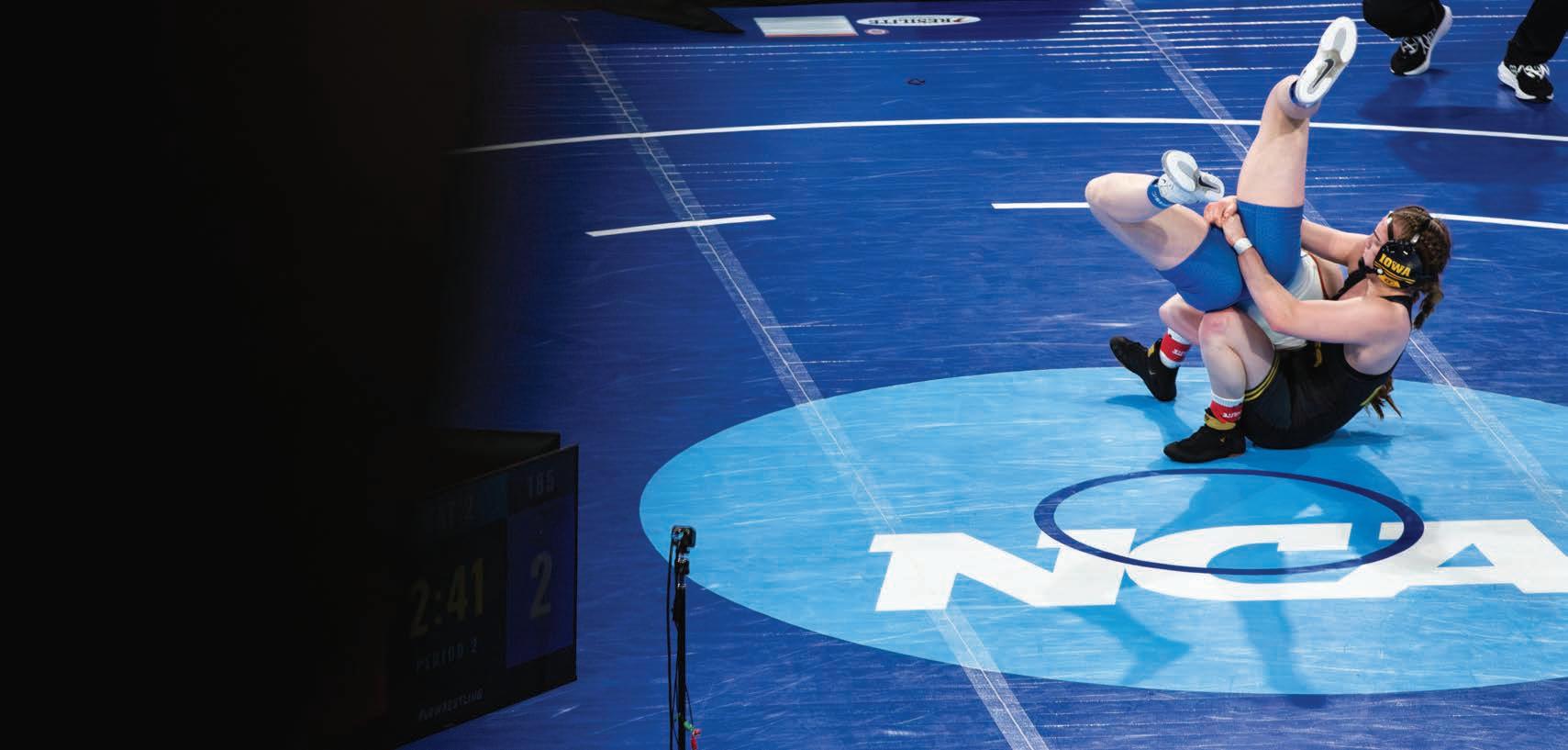
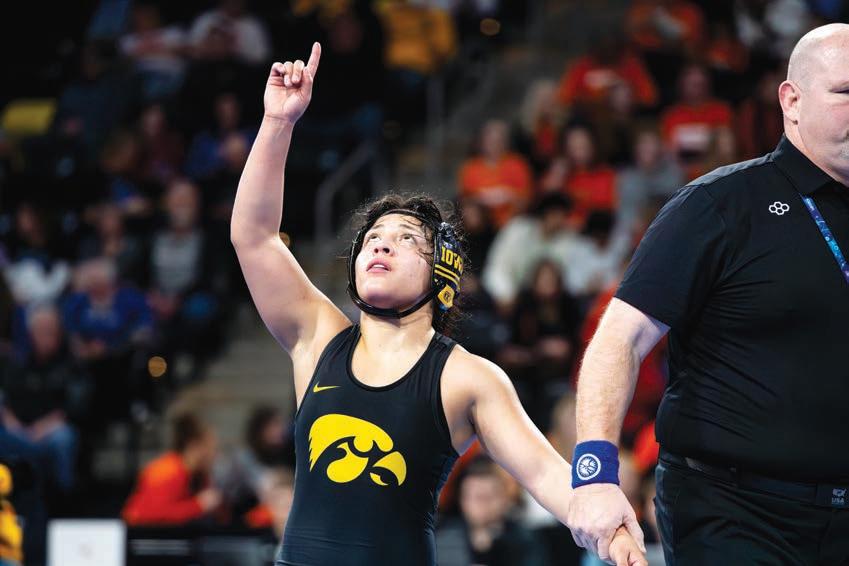
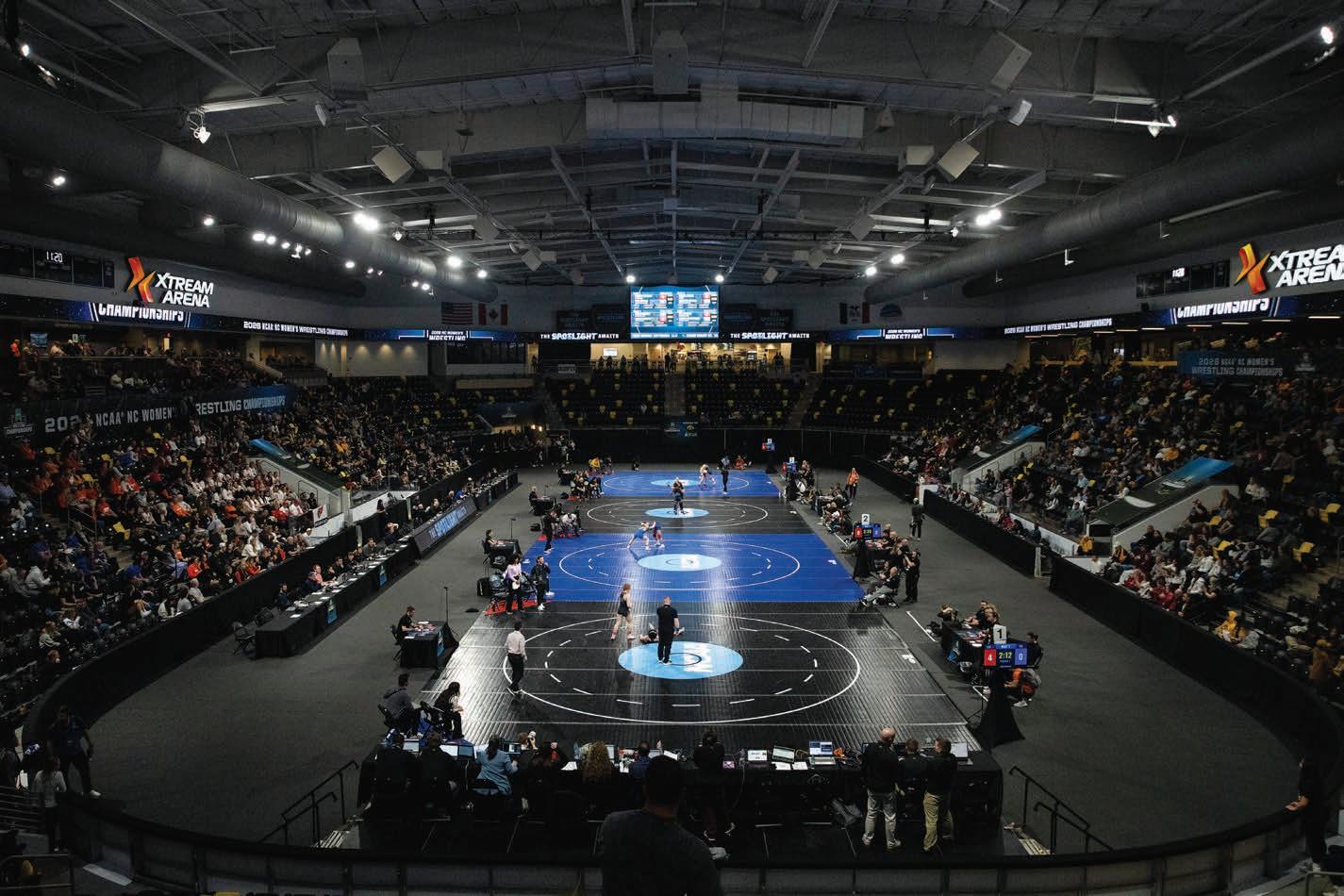
HISTORY HITS THE MAT
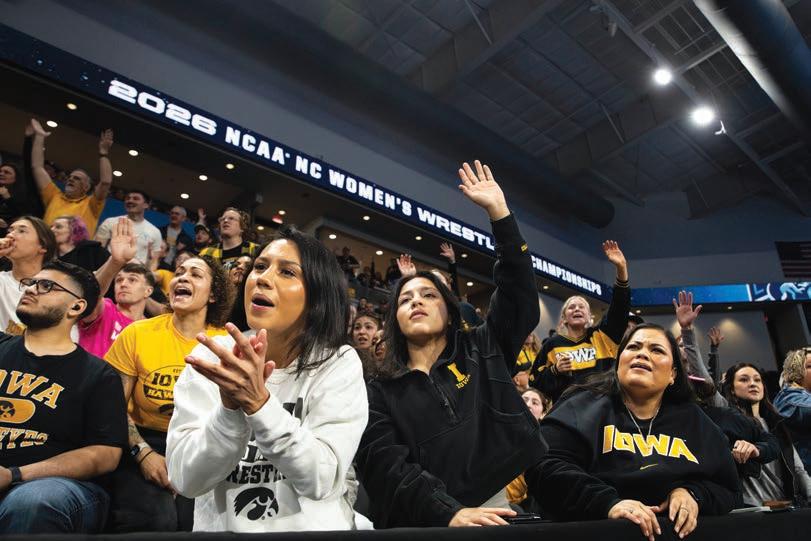
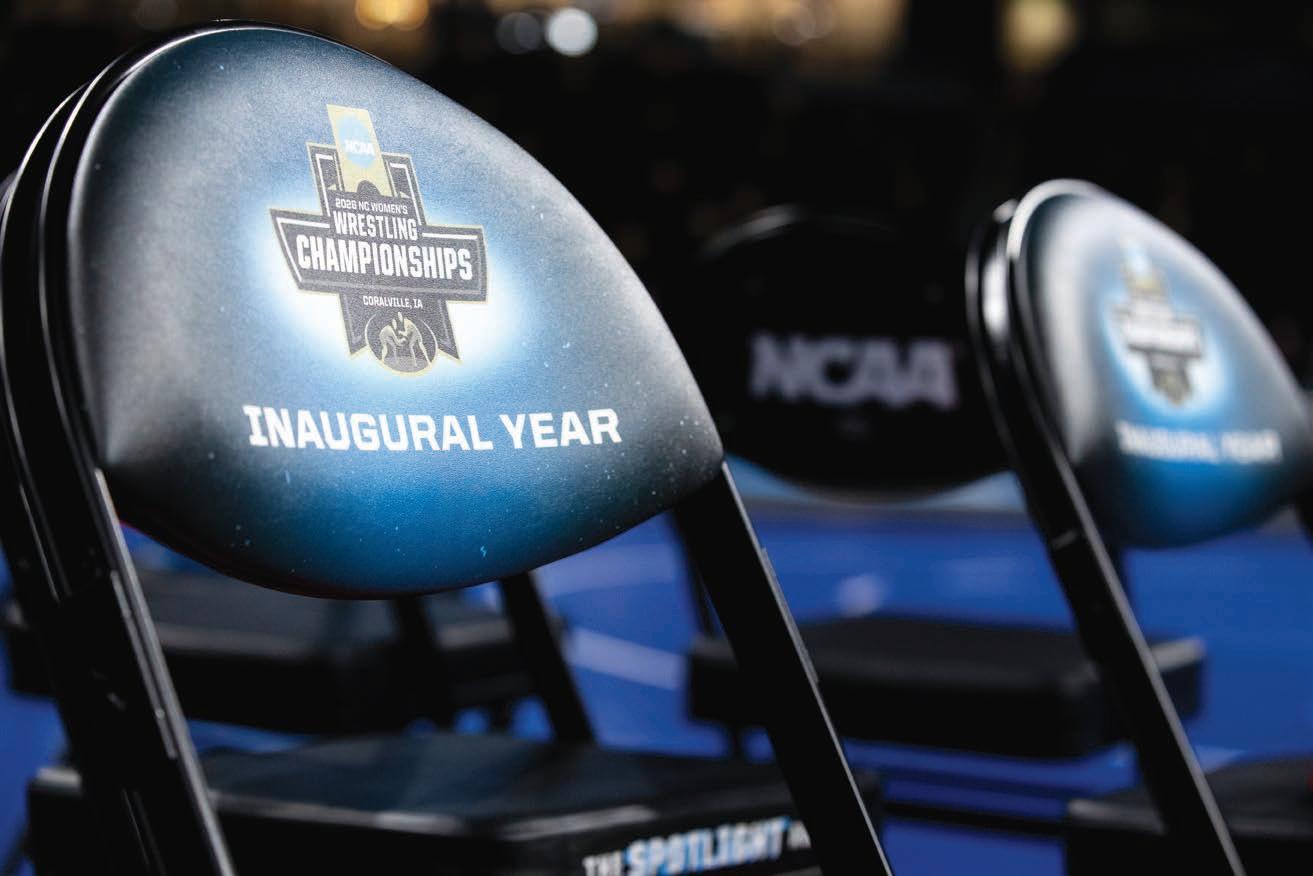
Wrestlers and fans from across the country met at Xtream Arena for the 2026 NCAA Women’s National Championships in Coralville, Iowa. The inaugural event took place on March 6 and 7, with the Hawkeyes placings second and taking home three individual titles.
SPORTS
New identity for a new era
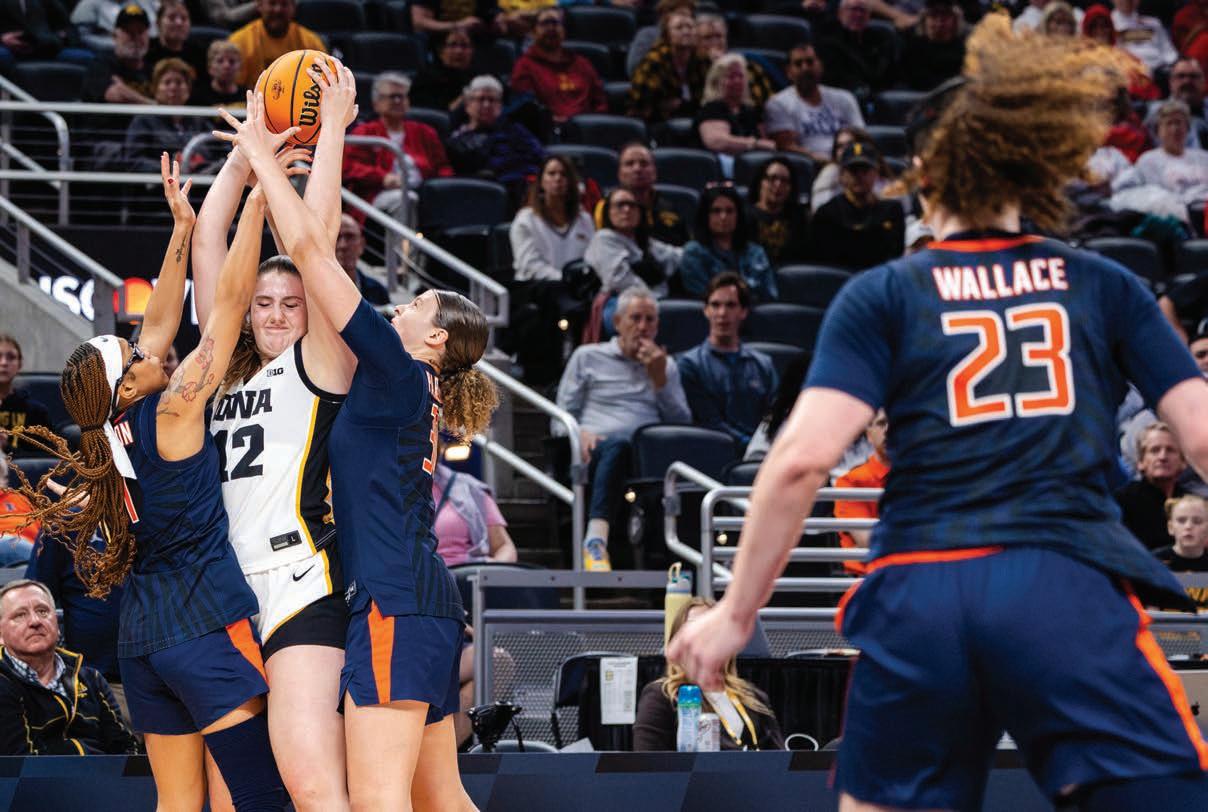
Iowa women’s basketball seniors leave unique legacies on and o the court.
she loses sleep over any mistakes, and she gets better every single day.”
Hannah Stuelke’s intended audience walked in early, but also just in time. The Iowa forward was just asked a question about her head coach’s growth over her two years in charge of the Hawkeyes, and Jan Jensen walked in from a side door and took a seat next to the wall. Jensen offered to e it, but Stuelke proceeded, her words leaving the player and coach in tears.
“Coach puts a lot of pressure on herself because she wants to be the absolute best for us, and I think that’s been really special for me to see,” Stuelke said. “Because she cares just so much that
“I’m just really proud of her,” she concluded before wrapping ensen in a hug ne t to the press conference podium. With that, Jensen took center stage while Stuelke departed, the head coach’s career on a steady climb to fame while Stuelke’s stellar collegiate playing career nears its end. Such is the case of the Iowa women’s basketball team this season, which departs four seniors who stuck around after Lisa Bluder’s retirement and witnessed the next era under Jensen.
The group Stuelke, ylie Feuerbach, ada Gyamfi, and Taylor McCabe e perienced consecutive national championship appearances before
Rivals to teammates
Cam Manyawu and Kael Combs grew close on the court.
leading the Caitlin Clark-less Hawkeyes back to the postseason in their final two seasons, an achievement some didn’t e pect.
After a second-round exit in the NCAA Tournament against Oklahoma, Iowa is back dancing in March, this time as a No. 2 seed. The Hawkeyes placed second in the Big Ten regular season despite neither coaches or media selecting them in the top five in the preseason polls back in October.
“Of course, I’m motivated to play as long as we can, but I think what they’ve done already was probably more than a lot of people were going to maybe bet on,” Jensen said. hile Iowa e ceeded e pectations from an outside perception, the internal
view from Jensen and the seniors is the Hawkeyes are right where they need to be. hile health betrayed a perfect on-court ending for some seniors, they take pride in leaving a legacy. They lived the “glory days,” but their twilight shines just as bright.
“They got to have their own identity,” ensen said. “They got to play the game they needed and wanted to play.” McCabe never thought her career would end in January when she tore the ACL and meniscus in her left knee in the opening minute against Ohio State. One of the best three-point shooters in program history, McCabe now finds progress not along the arc,
People first for Mia Mack
The junior found a home at Iowa after years on both coasts.
There are eight athletes on the roster for Iowa women’s tennis, but this relatively small group represents seven different countries on four continents. In fact, only senior Nikita Vishwase, a native of Phoenix, Arizona, hails from the United States.
March 17, 2022. A date Cam Manyawu would like to forget.
The Missouri 6A High School State Semifinal game featured the Ni a agles versus the Staley Falcons. Ni a was led by a standout guard from the southwest corner of the state named ael Combs. On the other side, Manyawu, a rising forward from ansas City, starred in a sixth man role for Staley. Combs’ game-high 19 points led Ni a to the 53- 3 victory and a spot in the state championship game. Manyawu doesn’t remember too much of it, though he’d rather keep it that way.
“It's kind of one of those games that… I didn t really want to relive,” he said.
The two then-high school juniors never talked before that day, familiar with each other through mutual friends. Little did they know the journey they’d go on together from
Wyoming to Drake and now to Iowa, where they’ve started nearly every game together in the loaded Big Ten conference.
Combs and Manyawu both admitted to being late bloomers in high school impact players the first three years of high school, then earned Missouri Class 6 All-State honors for their respective senior seasons. They received interest in several mid-major and Division II programs. Then-Sycamores assistant head coach Bryston Williams loved what he saw from both Missouri natives. Manyawu did receive an official offer from the school and initially committed to play there, while then-head coach Josh Schertz was focused on a transfer guard rather than Combs, a freshman.
Shortly after Manyawu’s commitment,
ith places from Guangzhou, China, to Lima, Peru, serving as hometowns for Hawkeyes, the emphasis on team culture is imperative. This environment appealed to junior Mia Mack, a transfer who previously played at both Miami and San Diego, and she’s been uick to adapt to the new atmosphere.
“She made it clear to me in our first conversation that what was most important to her is really the people,” head coach Sasha Boros said. “She really just knew that at this time — weather, beach, location to a big city, none of that was as important as the people she was around.”
A native of Löchgau, Germany, Mack joined the Hawkeyes after a season at San Diego that saw her notch a second-team All-West Coast Conference nomination in singles and honorable mention in doubles.
Like her coach, Mack credited her move to Iowa City to its people.
“The biggest reason for me — the people, coaches and the personalities on the team,” Mack said. “To me, it’s really important to be around people with good vibes. I think that was my main reason why I came to Iowa.”
Senior Pia ranholdt, a teammate of Mack, hails from Hilders, Germany, a city less than 150 miles north of Löchgau. While the two athletes didn’t have much direct interaction prior to Iowa, their time as Hawkeyes has brought them closer as teammates.
“She’s a great teammate,” ranholdt said. “She brings a lot of energy. She’s a very good tennis player, fighting a lot on the court. I feel like you can rely on her a lot. She’s cheering other people up, she’s supporting everyone, she’s a very big contribution to our team.” ranholdt also noted the parallels between herself and Mack early in the latter’s Iowa career.
“I just had this feeling that we had a lot of similarities in some ways,” ranholdt said. “Her character, her personality, is in a lot of ways similar to me. I thought that was really cool because we had lots of things to talk about, even though we didn’t even know each other that well.” Boros has run the program since 2016 and knows the Midwest might not be appealing to everyone. But she also recognized Mack’s talent a 35-20 record at Florida State and continued success out west. Mack won the Intercollegiate Tennis Association Championships in the fall of 2023, not dropping a set until the final, then proceeded to win 21 more matches at San Diego. Mack didn’t play last season and committed to Iowa in October 2025. Boros said the pair’s first conversation over the phone addressed the obvious.
“I think the first thing I told her was, ‘I love Iowa, I love Iowa City, but we’re not Miami and we’re not San Diego,’” Boros said. “‘Just want to make sure that
From transfer to team leader
After early injuries and a transfer, Haley Tyson has become a consistent veteran.
help of Jen [Llewellyn] and the other coaches when they came into the program.”
Fifth-year Iowa gymnast Haley Tyson has not only leaped to remain with the Hawkeyes this season but has also grown into the silent leader on floor and beam for Iowa.
The Aurora, Illinois, native has not only battled through changes in coaching but also minor injuries, non-competing seasons, and the early transition from Minnesota to Iowa.
Tyson first started her collegiate career at Minnesota in 2021-22, competing in five meets. Following her freshman year, she made the decision to transfer to Iowa, where she has so far competed in 17 meets across her four years with the program.
“I knew some of the girls here, and they spoke very highly of the program,” Tyson said. “It was nice to stay in the Big Ten, but also being at Iowa allowed me to be closer to home and family.”
In 2025, Tyson moved from not being in the lineup to participating in all 13 meets that season, 10 of which she did both beam and floor.
Head coach Jen Llewellyn noted that after understanding her club background and seeing the longterm potential Tyson had, it was only a matter of time before she found her footing.
“She has had tremendous growth over the years, but it was just about getting past the hardships and lack of confidence, which started with getting her head and body to click together,” Llewellyn said. “Since then, she has been amazingly consistent in all that she has done.”
For Tyson, and many of the veteran Gymhawks, the new coaching roster with Llewellyn and the assistants has been one to cherish and celebrate.
Tyson, though, did not compete her first two seasons with the Hawkeyes, as she was sidelined by a minor ankle injury and was still trying to find her place in the program.
“It was a little tough for me, especially having to come back from surgery,” Tyson said. “But it kind of motivated me knowing I could maybe come back even stronger than before, especially with the
“Jen and the new coaches have been so supportive in not only gymnastics but also your personal life outside of the gym, which is really, really nice,” Tyson said.
Having decided to return for her fifth season this year, Tyson was presented with yet another opportunity to help lead the program in her own way, one that may not be as loud or vocal as her fellow senior gymhawks.
“She is very much a leader by example,” Llewellyn said. “She never complains and will do
anything with the right attitude and mindset, but truly her resilience over the years with pushing to do the sport she loves has been a unique thing everyone has noticed.”
Senior Hanna Castillo arrived at Iowa at the same time as Tyson, and the two have helped develop the program into what it is today, especially in the floor event.
“At the beginning, we both were a little on the shy side, but she has really grown to be more open over the years, and she is just a truly kind and humble person to be around,” Castillo said.
Tyson has worked to help the new Gymhawks feel welcome and has helped them develop both personal and competitive skills along the way.
“When you first come in as a freshman, you are kind of used to training a lot, so teaching them to conserve themselves is something really important I have tried to
Freshman utility player talks memories, rituals
three runs and I hit a walk-off grand slam. That was a memory I’ll remember forever, and being with my teammates celebrating was really fun.
The Daily Iowan: What made you choose Iowa?
McKenzie Leitgen: Honestly, just the culture surrounding the team. The school itself is a great school, but also the fans that show up for the games are just so invested in every sport.
The coaches are new this year, but they have been nothing but the best. I think that they’re definitely leading our team in a great direction for seasons to come.
What is your favorite softball memory?
I would say the one that’s definitely stuck out is one that happened recently against Army. I came in to pinch hit. It started with my teammates getting on base first.
I wouldn’t have been put in that situation, but the bases were loaded. We were down
teach,” Tyson said. “But overall, I’ve tried to help them develop their self-confidence, specifically that they are good at what they do.”
As the 2026 season approaches its conclusion, seniors like Tyson have begun to think of what life after college will look like. Tyson is majoring in interdepartmental studies and is hoping to do something with business and the world of sports.
“I don’t totally know what I want to do postgrad, but I really would like to stay in the sports field helping people grow, regardless of what that may be,” Tyson said.
For now, Tyson is focused on helping her fellow Gymhawks end this season on a high note.
“Personally, I just want to be happy with my routines and keep being confident every time I step up to perform,” Tyson said. “But as a team, I just really want us to do well regardless of where we finish.”
What hobbies or interests do you have outside of softball?
I’m from Arizona, so I really like to go hiking and work out in my free time.
I also am a big dog person, and we have a place here called Petland, and I like to go hang out with the dogs and spend time with the people that I care about most.
Who are your role models and why?
One of my biggest role models would probably be my grandpa. He taught my dad the sport of baseball and then passed it on to me with softball.
He’s always been one of my biggest fans. He’s there all the time. He’ll bring his dog, and he’s just an incredible human being, and I look up to him.
What is your go-to song to get hyped up for a game?
My go-to song would have to be “Walk” by Foo Fighters. A lot of people don’t know that song. I listen to it on the bus, and it just gets me going.
Do you have any pregame rituals? If so, what are they?
Yeah, I feel like I do. I definitely am very particular about my hair. If I’ve been doing good, I keep the same hairstyle every day. Would you rather hit a walk-off or make a game-saving catch?
I would probably have to say hit a walk-off. I love hitting. That’s my thing.
What is one movie or TV show that you think everyone should watch?
I really like to watch “One Tree Hill.” It’s a go-to for me, and I think it’s really good.
Who will win the men’s Big Ten Tournament?
Sports reporter Jack Birmingham argues for Michigan, while fellow sports reporter Chris Meglio makes a case for Nebraska to take the crown.
It may seem a little bit basic to pick one of the top three teams in the nation to win this year’s conference tournament, but let’s not forget that Michigan is ranked high for a reason.
After an NCAA National Tournament berth last season, one that carried them to the Sweet 16, the Wolverines are looking to make a deep run this year. So far, head coach Dusty May, who led Florida Atlantic to a 2023 Final Four appearance, has done just that.
Michigan hasn’t had a cakewalk schedule this season. Rather, the Wolverines have notched statement victories over top contenders, such as a 75-72 triumph over Nebraska on Jan. 27 as well as an 83-71 shutdown of Michigan State in the team’s very next game on Jan. 30.
Both of these wins were over
ranked teams, as were Michigan’s victories over Purdue and Illinois, both by double figures. The losses for the Wolverines this season have been an upset by Wisconsin, 91-88, and a five-point loss to a top-ranked program, Duke. Some will attribute this success to May’s coaching. After all, in his first month on the job, Juwan Howard’s successor led Michigan to the top 15 of the AP poll for the first time since November 2021.
Others will say that the Michigan roster has paved the way to their many wins, with four players averaging double figures per game, a number identical to that of top competitor Michigan State. Of course, while the Spartans, as of March 1, were hitting at a 46.8 percent field goal clip, Michigan’s own number at that time was 51 percent.
Maybe it’s a mix of all of these factors, a blend of May’s coaching, strong presence in the paint, and the fuel beneath the fire of being a Power Five program. Either way, Michigan has what it takes to win out this year, and with May at the helm, I’ll be betting on blue.
No team wins 20-straight games in any stretch and can realistically be deemed a fraud. Nebraska’s win streak includes then-No. 13 Illinois and thenNo. 9 Michigan State, both games decided between one possession. Since then, three of its four losses were to ranked opponents in No. 3 Michigan, then-No. 13 Purdue, and thenNo. 9 Illinois in a revenge outing.
The lone unranked team to beat the Cornhuskers? Iowa. The Michigan, Purdue, and Iowa losses were all within five points. All of those games saw the opposition score at least two possessions worth of points less than its season average. It at least shows that the Cornhusker defense is never really the issue, rather than its offense.
Every player in Nebraska’s starting lineup averages at
least nine points per game. Atop the bunch is ex-Hawkeye Pryce Sandfort, one of the best shooters in the entire country, with 18.3 points per game. Rienk Mast with 13.7 and Braden Frager with 12.3 trail Sandfort. Those three guys can win a game at any moment and are hard to stop altogether. What I’m trying not to do here is be a numbers guy. I was a numbers guy for Kentucky’s team led by Rob Dillingham and Reed Sheppard two years ago, and they were upset in the first round by Oakland and ack Golkhe’s 10 threes in the first round of the NCAA Tournament. And I don’t want to say the eye test either because I watched Iowa shoot 26 percent from the field and still beat Nebraska by two scores. It could very well be Michigan State — its defense and rebounding are elite among the entire country, though its offense could stall. It could very well be Illinois — elite in almost every facet of the game but don’t spread the ball as much as most elite teams do. But my gut tells me to roll with the Cornhuskers.
but on the sidelines and social media.
The guard gave her senior exit interview on Feb. 25, almost three weeks removed from surgery. McCabe admitted she doesn’t have her range of motion and still walks “really weird,” but doesn’t shy away from her milestones.
“I got off crutches after about 10 days which I feel is pretty impressive,” she said.
McCabe chronicled such recovery through Instagram. A coach recommended she take up the endeavor, and McCabe, who holds more than 29,000 followers on the platform, reached six-figure views on her first video. A civil engineering major with a minor in art, McCabe lets her creativity shine.
Her first vlog covers the first four days of her rehab, featuring everyday activities like a trip to Target, Kitty Korner Social Club, and the Seamans Center on campus. McCabe edits in sound eff ects, like a groan or cheer for more of a humorous feel. Aware of her social infl uence, McCabe wants to be a role model for others experiencing similar setbacks, or at the very least, make people smile.
“Some people have asked me if I’m the one making them, because they’re like, ‘There’s no way she’s making this,’” McCabe said. “And it is me. I try to put a little cinematic and artistic feel on it.”
Now, McCabe trails behind her teammates taking the court for warmups. With a brace around her leg, she walks under the basket and then to the second row behind the Iowa bench, where she’s adopted a new perspective. Former Hawkeye Sydney Affolter joined the coaching staff as a graduate assistant this season, and such a future is possible for McCabe.
When she discovered the team’s stat-tracking system, she became more analytical while also learning to control her emotions. Gyamfi said her teammate “knows a lot more than people give her credit for.” When McCabe hobbles to the huddle, as she did in Iowa’s victory over Michigan, her voice matters.
“I got to be there, and it was too fun not to be,” McCabe said. “I know that I said some things sometimes that people
open arms. A forward from Johnston, Iowa, Gyamfi never saw consistent minutes as a Hawkeye, appearing in just 39 games over her previous three seasons. She’s embraced the bench role and the versatility it requires, whether it be giving advice, making a joke, or maintaining positive vibes.
After a knee injury wiped out the rest of the regular season in December, Gyamfi said she took a step back from her playing identity. An elementary education major, Gyamfi will student teach in Des Moines starting in August, but until then, wants to be the “good cop” for the Hawkeyes.
“I’m in the classroom all the time, and I feel like I take that role there as well,” she said. “Like, ‘I know we’re supposed to be having fun, but this is what we do.’”
Having played for six years, it may
Hawkeyes saw her play in all 32 games, but an injury held her out all the next season when Iowa reached its first national championship.
Like McCabe and Gyamfi, Feuerbach learned from the new viewpoint. While injury is uncontrollable, defensive effort is always manageable, and Feuerbach thrived when she returned, leading Iowa in steals last season and earning a spot on the Big Ten’s all-defensive team this year. A marketing major, Feuerbach said she doesn’t know exactly what her future will look like, but if she’s happy, that’s all she needs.
“I’ve been through pretty much everything,” she said. “So just handling it, taking everything day-to-day, and just staying positive.”
Playing time or injuries has never been an issue with Stuelke, who led the team’s freshmen in minutes in her first season and has started all but three games since. After earning the Big Ten’s Sixth Player
you would still consider coming to the heartland.’”
Despite the change in scenery, Boros was quick to praise Mack’s adjustment.
“She just really wanted to try to get to know us and we clicked immediately,” Boros said. “I got her in touch with the team members, and she clicked with them.”
For her part, Mack doesn’t regret making another move across the country. In her mind, she’s right where she belongs.
“I’m just really happy I committed to Iowa,” Mack said. “It felt like it was the right choice, and I’m really happy here. I’m really thankful and grateful for the people, and I enjoy it so much.”
of the ear when she fi rst arrived on campus, the spotlight on Stuelke never faded — she just learned to be more comfortable in its glow. Appearing in several commercials, she’s now thankful for all the cameras and microphones in her face.
“I used to be so uncomfortable and shy, and now I can carry a conversation,” she said.
The talk around Stuelke is now a professional playing career. She declared for the WNBA Draft, where she aims to join Clark and other past teammates like Lucy Olsen and Kate Martin. Former Hawkeye and current pro Megan Gustafson congratulated Stuelke when she first committed to the Hawkeyes and has been a mentor to Stuelke throughout her career.
The duo could become competitors or teammates, but for now Stuelke remains impressed by Gustafson’s rise and her work ethic, traits she incorporates within
Prior to the start of Big Ten action, Mack is 8-7 in singles, including a perfect 5-0 at the No. 2 spot. Her and senior Daianne Hayashida are the Hawkeyes’ top doubles pairing with a 7-3 mark.
“I couldn’t imagine a better team to compete with,” Mack said.
Williams took the head coaching job at yoming and offered both Manyawu and Combs. The pair committed shortly after and, ironically, ended up as random roommates — the start of their relationship.
The Cowboys ended the 2023-24 season with a 15-17 record and an eighth-place finish in the Mountain est conference.
Manyawu played a sizable role in his first year of Division I ball, playing 23 minutes a game across 32 appearances. Combs, on the other hand, faced more of a limited role, averaging 10 minutes across 27 games.
One of the other commonalities with Manyawu and Combs’ high school recruitment was their very first offer Northwest Missouri State. The head coach at the time? Ben McCollum.
After earning four Division II national championships during his 15-year tenure with the Bearcats, McCollum took his talents to Des Moines, Iowa, to become the head coach at Drake University.
He reached out to both former Cowboys, who were in the transfer portal, hoping that the upgrade to mid-major Division I was attractive enough. And it was — Manyawu andCombs moved states once again, this time as a planned duo.
“Being one of the first coaches to talk to me in high school, that meant a lot to me, just the early belief in me,” Combs said. “You can always trust him and you can always depend on him, and that's exactly what you want in a head coach. “ Their bond strengthened through vast success in the Missouri Valley Conference alongside new teammates and fellow Missouri natives Bennett Stirtz, Tavion Banks, and Isaia Howard. Drake rolled through its competition for a 30-3 regular season
record, a conference title, and a NCAA Tournament win.
Manyawu and Combs both held similar roles like their previous year at Wyoming in terms of playing time and production — only difference being Manyawu starting all 35 games for Drake.
Regardless of Combs’ limited minutes, McCollum believed in him just as much as Manyawu. So much so that the coach brought along the duo to Iowa City the following year to play for the Hawkeyes.
“It felt super good honestly, just knowing that you have someone that's going through the same things as you,” Combs said of he and Manyawu’s commitment to Iowa. “It doesn't make you feel like you're by yourself.”
And once again, Manyawu’s role remained the same as his two previous stops — 18 minutes a game, starting all 29 games thus far, averaging six points and 4.7 rebounds on 63 percent shooting. And right there alongside him in the first five is Combs, starting 25 of 29 contests with averages of 5.6 points, 2.4 rebounds, and 2.3 assists on 48 percent shooting from the floor.
“Just seeing him be able to come here to Iowa, take on the challenge, and then be able to play from the jump and really contribute and be an everyday guy, I'm just happy for him,” Manyawu said of Combs’ increased opportunities. If their 17-year-old selves in that high school semifinal game were to be told about the journey he and the guy on the other sideline would go through, they both wouldn’t have believed it. But they’re both grateful it did.
“It's a crazy story, but it's our story,” Manyawu said. “I wouldn't trade it for anything.”
BLOCKED BY BRUINS
Second-seed Iowa downed Illinois and third-seed Michigan before ultimately falling to undefeated UCLA in Big Ten play in a blowout game. On March 6, the Hawkeyes took down the Fighting Illini, 64-58, and on March 7, ended the Wolverines’ run, 59-42 in a close competition. The Bruins locked down Iowa’s o ense all four quarters on March 8, with only two Hawkeyes scoring over 10 points, a sharp contrast to six UCLA players scoring over 10 points. UCLA’s win marks the Bruin’s second straight championship win.
of alumni authors
Forming the alphabet through UI alumni
ABC’s of alumni authors
An alphabet of successful writers who graduated from the University of Iowa.
everybody knows each other,” Patel said. “It felt like that to write, it felt like coming home.”
The University of Iowa is known for its worldrenowned writing programs, including the Iowa Writers’ Workshop, which has produced countless writers and poets over the years. Now, with thousands of alumni graduating each year, the UI has accumulated an entire alphabet of authors from across the workshop and other departments.
Named one of “TIME” magazine’s 100 Most Influential People in the World, Patchett has won numerous awards and distinctions for her novels, with notable titles including “Tom Lake” and Pulitzer Prize finalist “The Dutch House.” Patchett owns her own bookstore, Parnassus Books, in Nashville, Tennessee, and is preparing for the release of her latest novel, “Whistler,” which explores themes of love, endurance, and the sweetness of life.
While at the UI, Taylor was an Iowa Arts Fellow in fiction at the Iowa Writers’ Workshop. He is the author of novels “Real Life” and “The Late Americans,” as well as short story collections including “Filthy Animals.” Taylor’s latest novel, “Minor Black Figures,” was a Booker Prize finalist and follows a queer, Black painter caught between the lines of desire, creativity, and faith.
A former Iowa Writers’ Workshop graduate and professor, who also used to work at Prairie Lights Books, Lombardo became an instant New York Times bestselling author with her debut novel, “The Most Fun We Ever Had.” Her second and most recently published novel, “Same As It Ever Was,” is a contemporary piece surrounding family drama, the same genre as her first book.
Walton is the author behind “The Final Revival of Opal & Nev,” which was endorsed as one of the best books of 2021 by former President Barack Obama. Walton is also the co-founder and co-host of a podcasting and storytelling venture, Ursa Story Company. Walton’s writing recently appeared in the short story collection, “You’ve Got a Place Here, Too.”
Patel, who is graduating in May, is a contemporary romance author who signed her first book deal for her Formula 1 novel “Offtrack” while as a student at the UI.
“Aside from there being many beautiful places to sit and write, it’s really cool to be on a campus that cares about literature and the fine arts like this,” Patel said. “I’m looking forward to having writing be part of my career, and I think that’s probably been one of the coolest things I’ve gotten out of here.”
Patel’s seventh book, “Cross My Heart,” is preparing for its U.S. release in March, while her eighth book, “Long Hot Summer,” is releasing in May.
“‘Long Hot Summer’ is such a homey and cozy vibe, like those ‘Virgin River’ type dramas where it’s a small town and
Graphic design makes campus flyers pop
When it comes to making signage, graphic design helps di erent events stand out.
O’Connor published her first story, “The Geranium,” while working toward her master’s degree at the UI. She has since become recognized as one of the most prolific Southern Gothic writers. Blending macabre elements and a Southern setting with themes of faith and the supernatural, O’Connor is praised both for her short stories and novels, such as “Wise Blood,” “The Violent Bear It Away,” and “A Good Man Is Hard to Find.” O’Connor also has a plaque on the Iowa Avenue Literary Walk.
Godwin’s first novel, “The Perfectionists,” originally began as her Ph.D. dissertation at the Iowa Writers’ Workshop and was published in 1970. Since then, Godwin has produced several other novels, short story collections, and nonfiction works.
A fellowship recipient from the Iowa Writers’ Workshop and winner of the 2023 “Paris Review’s” Plimpton Prize, Clark began writing with the publication of her short story, “Descent.” Clark’s debut novel, “The Hill,” follows a girl trapped between two worlds of punishment needing to find her own way of life, and is e pected to be released in May.
‘Industry’ Season 4 is a decade-defining work
in their flyers to attract the most eyeballs.
The finance thriller is uniquely tapped into the moment.
season, which, while satisfying, indicate the institutions in this world are changing.
There are many recognizable sights around the University of Iowa’s campus, from the iconic Pentacrest to the unique dorm buildings, from the Old Capitol Mall to The Chauncey a couple blocks east. However, you’ll pass by possibly the most recognizable sight of all thousands of times striding past the different storefronts flyers.
“Literary magazine flyers made me want to submit my work and contribute to the magazine,” ack Pearson, a first-year UI student, said.
On almost every pole and public space in Iowa City, flyers and advertisements fill out each available inch, promoting some sort of service, event, or announcement. Some of them are eyecatching, some aren’t. Some posters have the ability to draw more people in over others.
One thing is easily the most discernible reason: the visuals and the vibe those visuals give off. To command the attention of an overstimulated audience, flyer makers must assertively announce their promotions through the manipulation of fonts, colors, and other qualities.
Some flyers are drawn to give off a more gritty, DIY vibe — they can be photocopied and plastered around. Most organizations, though, will use photo-editing softwares or websites such as Canva, Photoshop, Photopea, and Pixlr. Then, all they have to do is download the design and print them out.
Some organizations are aware of the influence of their events when making flyers and use that to their benefit. For example, “Can We Talk” flyers by the University Lecture Committee, starring famous actor Penn Badgley, show Badgley’s face front and center — a recognizable sight that would instantly drive more of a crowd to the show. Flyers promoting Film Club classes have been around for a while and always keep the same format: a picture of one of the movies, followed by a list of the other ones, all centered around a consistent theme.
These are just a few examples of how organizations use familiarity and prestige
If these flyers are promoting something a little more unknown, there are other tricks. Flyers with gimmicks and funny humor can make someone’s day and make them feel like the event that’s promoted is relieving, worthwhile, or associated with some other positive emotion.
One example of this is the “Now Boarding” flyer by the anice improv group, which includes a boarding pass from Iowa City to “ anice City.” The flyer also says the ticket is free, communicating important information without making the advertisement seem more serious or drab.
“There was a poster… for a musical called 'Drag’daLore. I remember it was super bright and the colors drew me in specifically. It also had this cityscape background that had words on it describing the musical as 'The Musical Ballroom Epic,' and it really enticed me,” Hayden obertson, a first-year UI student, said. Music is a large focus of these flyers, promoting various shows and concerts.
Dan English’s March 4 show is a popular one showing up everywhere, a dramatic self portrait where he stares at the viewer.
In February, flyers for the band Lip Critic were out, an array of colored circles with medium shots of the band members in them. Since they play more “party” music, it was a smart marketing move for them to use the acidic color palette they did, genuinely representing what their event was going to be like more.
Flyers are also considered to increase the amount of awareness of a phenomenon.
“I think the location is more important than the design of the poster, as long as it’s somewhere people will be pausing,” Lilah Forbes, a business major at the UI said.
While large organizations such as Dance Marathon are typically able to garner the most interest since they are well known, there are many unique and dynamic strategies that flyer designers can take to make sure their program rises to the top and can make their advertisement a worthwhile investment.
These signatures around the UI’s campus are all part of an ecosystem of artists, entrepreneurs, and dreamers who believe wholeheartedly in their visions and want to convince other people to do that, too.
What makes “Industry” such an addictive show is its versatility. Since the first season debuted in 2020, the series has always been about young people in finance grappling with their place in their field and ultimately the world. Now, it’s a paranoid thriller about the rise of technofascism and heroic investigative journalism — essentially the kind of thing made in a lab for me to absolutely love.
Season 1 followed a coming-of-age drama structure, Season 2 had a sports movie underdog energy, and the masterful Season 3 felt like a Shakespearean tapestry of vengeance and betrayal. This pendulum in tone and genre has kept the show fresh and constantly on the money about the sociopolitical atmosphere in which the seasons are released.
Like no other show, HBO’s “Industry” feels tailor-made for the exact moment each episode airs. This is no different in the hyper-present fluctuating genre e ercise that is Season 4. While this batch of episodes was a step down from the previous season, I was still completely enraptured by the storytelling of showrunners, directors, and writers Konrad Kay and Mickey Down.
The pair of ex-financiers turned filmmakers has crafted the perfect sandbox in which to mesh and pull apart cultural topics. In Season 4, “Industry” broadens its scope from the trading floor to the expansive world of British politics, journalism, and aristocracy.
Each of these sectors is tethered in some way to the central financial core of the season, the postmodern digital banking platform Tender. The fictional company is a conglomeration of realworld companies led by the most purely evil character the show has seen so far in the form of Max Minghella’s character, Whitney Halvestrom.
Whitney is a technofascist CFO standing for powerful political figures in the tech space like Elon Musk and Peter Thiel, the latter of whom is mentioned several times in the season. His drive is quintessentially American: keep growing the company until it’s too big to fail and no one can investigate or litigate the legal shortcuts taken on the way to success. By implicating the media, Parliament, and the show’s main characters, Whitney crafts a tightly wound web of blame to fall back on once the government and the show's protagonist, Harper Stern, played by Myha’la, start investigating it.
The last time I reviewed “Industry,” I claimed one of its greatest appeals was that no matter what kind of bad day I was having, the characters in the show were having a worse one. This is even more true in Season 4, which was genuinely harrowing to watch at times.
After one of the past lead characters, Rob Spearing, left the show in Season 3 to live the only happy ending any character has seen in this series so far, “Industry” lost its heart, making the particularly nasty events this season all the more impactful. The show has always been honest about the state of the world, and Season 4 exists in an autocratic right-wing reality the characters have to adjust to.
In previous seasons, the world of finance has leaned progressively. Now, following real-world economic and political turmoil, the world of the show is far more cynical and cutthroat. Two fan favorite characters are written out of the show at midpoints of the
“Industry” has always been wise about representing the moment without preaching it, delivering the mood and experience of reading headlines right now through character rather than by expositing at the camera. When these ideas are delivered through unhinged and generationally good performances, particularly from Kit Harington and Ken Leung this season, they are especially potent.
Further, as Kay and Down have become more astute directors, the show has become more of a treat to watch. Episode two echoes the cinematography of “Barry Lyndon” while following a Dickensian haunting storyline I didn’t know the show was capable of.
Episode four feels like an adrenalineinduced Safdie Brothers film, while five feels like an homage to “Erin Brokovich.” Then, once you think you have a handle on the tone, the show introduces international spycraft and a paranoid thriller plot for the final few episodes a la “Michael Clayton.”
“Industry” is a dense, chameleonic show, and its ingenuity has riveted me for years. Besides being the most entertaining and well-made new show of this decade, it has also captured exactly what it is like to live through the 2020s.
While embellishments are made for the sake of the story, and some sloppiness in dialogue must be excused to occasionally convey an incredibly ambiguous and heady emotional experience a character is having, “Industry” holds a mirror to reality — a nihilistic, cynical mirror, but a mirror at that.
The last episode ends on a relatively corny note compared to the well-intellectualized and efficient language of the show so far, where a flight attendant asks Harper if she’s done, gesturing to her drink. Harper, who was stirring on the events of the season and making her next move, smirks knowingly at the attendant before the screen cuts to black and the classic Season 1 theme song plays.
Sometimes a cheesy moment is earned, and it absolutely is here. Season 5 is going to be the last for “Industry,” and I can only hope for the sake of our world and that of the show that it can end on a glimmer of hope.
Which Girl Scout cookie is the best?
Arts Reporter Hailey Sha er argues for Tagalongs, while Arts Editor Riley Dunn takes the side of Samoas.
There is absolutely no sweet flavor combination that trumps the ambrosial peanut butter and chocolate union. ven just one bite of deeply roasted, smooth, salty nuttiness complementing a rich velvety cocoa is incomparable.
Girl Scouts have worked their magic to encapsulate this magical tasting e perience, taking it one step further with a crispy cookie base. ith a mouth-watering flavor profile, Tagalongs are not only the most underrated Girl Scout cookie but also far above the comparison of any other offered option.
Peanut butter lovers know precisely how to e perience joy. Nestled ne t to eese’s cups, PB sandwiches, and Nutter Butters, Tagalongs have made a name for themselves in the delectable peanut butter universe.
If any flavor deserves to be considered the “best” of all Girl Scout cookies, it s the coconut and caramel delectables known as Samoas. These crispy, chocolate-drizzled shortbreads have persisted in the cookie lineup since the 1970s, even as others have fallen by the wayside, making their longevity a tribute to their timeless appeal. hile other cookies offer commonly-seen flavors, such as variations of mint or peanut butter, Samoas get a little more creative by mi ing toasted coconut goodness with layers of creamy caramel and striped chocolatey coating that is more memorable than your basic candy bar. This savory combination of tantalizing tastes melts on your tongue with each heavenly bite.
ith the aforementioned dreamlike blend of a heavenly chocolate shell and tear-jerkingly good peanut butter filling, the cookie addition introduces a perfectly crisp, light base, elevating it beyond just your average sweet treat.
This isn’t to say that other Girl Scout cookies are disappointing besides those toothpaste-es ue Thin Mints. Argue with the wall.
Adventurefuls, Toffee-tastics, ploremores, Do-si-dos, and yes, even Samoas, are works of art, and they deserve to be recognized as such. They’re classic, they’re nostalgic, they’re sweet, and they are truly never a bad choice. It’s simply unrealistic and unfair, however, to categorize them in the same tier as the blessed Tagalong. Girl Scout cookie season leaves society with one rational decision. Though other flavors may be sold and consumed for variety’s sake, the reigning king of all cookies offered by these selfless, community-serving girls remains on its throne. Do yourself a favor ne t time a Girl Scout knocks on your door buy yourself a bo of the masterfully crafted chocolate-covered peanut butter cookies.
Samoas also have amazing staying power and can either be enjoyed fresh within days after purchase or chilled in the freezer, giving you a host of small, donutshaped sleeves of delight that will last months until the ne t purchasing cycle. henever you are up late at night craving something sweet to eat, you can indulge in crunchy caramel delights.
Sure, other flavors such as Thin Mints, Trefoils, Tagalongs, and Do-si-dos are also enjoyable, but only one kind of cookie has had me craving more than one or two bo es every year, and that is the glorious tribute to the art of cookie-baking that is Samoas.
The bakers have truly perfected their craft with this one, and there is hardly a better “holy trinity” of tastes than the three “C’s,” caramel, coconut, and chocolate.
It is simply blasphemous to think that any other cookie can measure up to this classic combination and mouthwatering memorability.
So, the ne t time your local Girl Scout approaches your door or sets up a booth outside your grocery store, change your life by buying a bo of purple-clad Samoas. I promise you won’t regret it.
Redefining history in ‘The Beheading Game’
Rebecca Lehmann’s debut novel reimagines the tragic tale of Anne Boleyn.
corpse to revenge-driven resurrected ueen was into icatingly addictive to read.
Anne Boleyn has become an appealing subject for many historians, often filled with speculation and conspiracies related to her beheading. Her tale is a tragic one, flowing with love, despair, and ultimately death. Due to the rich topics in Boleyn’s history, inspiration and adaptations of her past have been sprouting for centuries.
Iowa riters’ orkshop graduate and award-winning poet and essayist, ebecca Lehmann, was also inspired by the story of Boleyn and wanted to give her take on the tale. In her debut novel, “The Beheading Game,” Lehmann gives Boleyn’s side of the story, fueled by her own love and revenge.
“The Beheading Game” starts strong with a prologue from Boleyn’s final words before her death, and then leads into the events of the actual beheading. This gives the audience, who may be unfamiliar with Boleyn’s tale, the historical conte t needed to further their understanding of the plotline and characters.
Moving into the first chapter, the tone of the piece is set up from the very first scene of Boleyn waking up confused, disoriented, and shockingly not dead after her beheading. Boleyn finds herself locked in an arrow crate serving as her coffin, with her head separated from her body and no idea how or why she isn’t dead. After regaining some of her senses, Boleyn escapes her coffin and sews her head back on with a vengeance.
I found this opening scene very interesting, which was a sentiment I held for the remainder of the novel.
The concept of a beheaded woman returning to life and sewing her head back on was captivatingly original, with the story s uni ueness continuing throughout the novel until the end.
Boleyn s character was a comple blend of fact and fiction that made reading the story from her perspective very intriguing. Boleyn had to learn to survive without the royal servants she was accustomed to and how to blend in with the commoners so as not to be recognized as the dead ueen.
Her whole character arc from confused
Boleyn meets another woman, Alice, who helps her on her journey and teaches Boleyn she can be strong and is capable of saving her daughter and killing her former husband. Alice is another comple character who is a fiercely independent woman without a husband and who knows how to live on her own. Alice demonstrates everything Boleyn is not, a stark parallel to two diverse lives of the same time period learning to be sympathetic and understanding to each other. This entire story gives major womens empowerment and pro-feminist themes, with many instances of Boleyn having to be an independent woman without the help of meddling men. Plus, the whole “my husband just sentenced me to death because I couldn’t produce a male heir, and he’s now marrying my young servant days after my death” definitely doesn’t paint men in a good light.
“The Beheading Game” is split into two main sections as Boleyn e periences two separate journeys leading to her ultimate uest of killing the king and securing her daughter s safety. Both of these sections were fueled by action and character development, but I felt there was a small disconnect between them that I would have liked to see mended through the addition of more references to Alice’s character and the e periences Boleyn had faced before she journeyed off alone.
Overall, I really enjoyed “The Beheading Game.” The plot was fresh and original, with a historical appeal about a figure I wasn’t e tremely familiar with. I could definitely feel the love and care Lehmann poured into the research behind this novel and the many historical figures and landmarks mentioned throughout the piece. For a debut novel, I’m e cited to see where Lehmann’s writing takes her ne t, and I hope she continues this journey and writes more books.
“The Beheading Game” releases officially on March 2 , and I can’t recommend it enough to fans of historical fiction, empowered female leads, and character-driven plots.
Stansel is the author of the western mystery novel, “The Last Cowboys of San Geronimo,” which was published in 2017. In addition to his work being featured in several literary journals, Stansel is also the author of the short-story collections “Everybody’s Irish” and “Glossary for the End of Days,” which is his latest book.
Smiley obtained both her master’s and Ph.D. from the UI, and has published numerous novels since. Her most widely recognized novel, “A Thousand Acres,” is an adaptation based on William Shakespeare’s “King Lear,” and won Smiley a Pulitzer Prize for Fiction in 1992. The 2002 drama film, “The Secret Lives of Dentists,” was adapted from Smiley’s novella, “The Age of Grief.”
Reid was the recipient of the Truman Capote Fellowship during her time at the Iowa Writers’ Workshop and is the author of two novels.
“The places I work end up inspiring much of my fiction. I worked as a nanny for six years when I was in my 20s, at a time when I was without health care. That experience inspired ‘Such a Fun Age,’” Reid said. “I also worked as an RA in my college dorm, and that experience inspired my second novel, ‘Come and Get It.’” Reid’s popular debut novel from 2019,
she was offered the opportunity to write the “Nancy Drew” series. After creating the iconic character, Benson is credited with writing 23 of the first 30 books in the “Nancy Drew” series under the pseudonym Carolyn Keene at the request of her employer, Stratemeyer Syndicate. Throughout her life, Benson, who died in 2002, had published hundreds of novels under various names.
Meyer graduated from the UI with dual degrees in theater and filmmaking and is known notably for his work in the “Star Trek” series. Meyer has also written three Sherlock Holmes novels, with his most famous being “The Seven-Per-Cent Solution,” which he later adapted into the screenplay for the 1976 film of the same title, earning him an Academy Award nomination for Adapted Screenplay.
Recipient of the 2006 Nobel Prize in Literature, Pamuk is a Turkish novelist known for his works on Turkish history and identity, and was a participant in the International Writing Program at the UI in 1985, where he lived in Mayflower Hall.
Harding is an award-winning author who won the Pulitzer Prize for Fiction in 2010 for his debut novel, “Tinkers.”
After being inspired by his maternal grandfather’s tales from growing up in rural Maine, Harding pieced together
“Such a Fun Age,” became a New York Times bestseller, with themes of privilege, race, and social commentary.
“The Iowa Writers’ Workshop gave me the time and space to become fully lost in my work while learning to be a good reader to my classmates,” Reid said. “The UI was where I learned to teach at the college level for the first time, where I met my agent, and where I gathered wonderful friends who are still my readers today.”
A graduate of Harvard University and the Iowa Writers’ Workshop, Ives is the author of novels and poetry collections. Ives’ debut novel, “Impossible Views of the World,” was a “New York Times” Book Review Editor’s Choice, and her book of poetry, “The Hermit,” brings audiences into the mind of a writer through a catalog of pieces on art and experience.
“I’m inspired by the absurdity of most forms of prestige and by the vulnerability of all humans,” Ives said. “The UI taught me that absurdity will never be in short supply.”
Former Hawkeye Yearbook editor and employee of The Daily Iowan , Benson began her writing career as a journalist before transitioning to ghostwriting, where
both facts and fiction to create the story of “Tinkers.”
“I simply would not be a writer if not for the Writers’ Workshop and for my teachers there — Marilynne Robinson and Elizabeth McCracken, and the English novelist Barry Unsworth — who gave me inspiration to last several lifetimes,” Harding said.
Beachy-Quick is an established essayist and poet who attended the Iowa Writers’ Workshop and is known for his poetry collections, including “Mulberry” and “This Nest, Swift Passerine.” In 2008, BeachyQuick published “A Whaler’s Dictionary,” which is a collection of essays and dialogue inspired by Herman Melville’s “Moby Dick.”
Known for her renowned poetry on race, identity, and history, Dove earned her MFA in creative writing from the UI in 1977 and won the Pulitzer Prize for “Thomas and Beulah,” her third poetry collection, in 1987.
After that, Dove went on to serve as the first African American U.S. Poet Laureate from 1993 to 1995 while former U.S. President Bill Clinton was in office. Her latest poetry collection is “Playlist for the Apocalypse.”
Cisneros is an internationally acclaimed fiction author, poet, and founder of the Macondo Foundation, an association of activist writers dedicated to changing the world through their art. Through her resilience, Cisneros published her first novel, “The House on Mango Street,” which is now required reading in schools and universities across the country.
“My experience at the Writers’ Workshop was so traumatic I considered quitting. I was lucky to transform my depression to rage, and my rage fueled a little book called ‘The House on Mango Street’ that I began as a reaction to the Poetry workshop,” Cisneros said. “Though it didn’t count as any credit towards my MFA, writing it kept me afloat while I was drowning.”
With an MFA from the Nonfiction Writing Program at the UI, Schlote-Bonne is a horror author of the novels “Such Lovely Skin” and “The Mean Ones.” Born through her desire to write a high-stakes adventure story taking place underground and her inspiration from her favorite comfort films and anime, Schlote-Bonne’s next novel, “What Feeds Below,” is expected to be released in fall 2026.
“When I started working on ‘What Feeds Below,’ I had just finished writing ‘The Mean Ones,’ which was a deeply personal story that pulled from much of my own experiences with relationship trauma and body image, and I wanted to write something that was pure escapism and fun,” Schlote-Bonne said.
Ullman began her poetry career with the publication of her first poetry collection, “Natural Histories,” which won the Yale Series of Younger Poets competition in 1978. Since then, Ullman has taught in the Creative Writing Program at the University of Texas-El Paso and has published four poetry collections, including “Slow Work Through Sand,” which the UI published as a co-winner of the Iowa Poetry Prize in 1997.
Vara’s debut novel “The Immortal King Rao,” published in 2022, was a Pulitzer Prize finalist that followed after Vara began her career as a technology reporter. In 2023, Vara published her short story collection, “This is Salvaged,” which won several awards and nominations.
Kinsella is a Canadian short-story writer and novelist, with most of his pieces centering on baseball. One of his most famous novels, “Shoeless Joe,” was adapted into the 1989 film, “Field of Dreams,” with his short story, “Lieberman in Love,” being adapted into an Oscar-winning short film.
New York Times bestseller, screenwriter, and Pulitzer Prize finalist, González has done it all since the release of her debut novel, “Olga Dies Dreaming.” She has now written the script for the upcoming TV series adapting the book.
A Ghana native who grew up in Alabama, Gyasi was inspired by a research trip she took to her home country Ghana for her debut novel, “Homegoing,” which is a historical fiction piece spanning three hundred years. Gyasi’s second novel, “Transcendent Kingdom,” also drew inspiration from her personal life, and focuses on a Ghanaian family living in Alabama.
Packer was first published at age 19 in “Seventeen Magazine,” and has since then been recognized as a talented African American author. A winner of several awards, Packer’s short story collection, “Drinking Coffee Elsewhere,” spans across a variety of settings, characters, and themes.
The House on Mango Street by Sandra Cisneros Breakfast of Champions directed by Alan Rudolph