Welding the gender divide

Iowa women prepare for trade careers, as the industry’s demand increases. attached to her notebook containing the phone numbers and Snapchat handles of the men in her class.
“At first it was a little awkward. mean, go figure all the boys had to pick on me a little bit to I stood, and I just kind of made it I’m here to stay,” Neustel
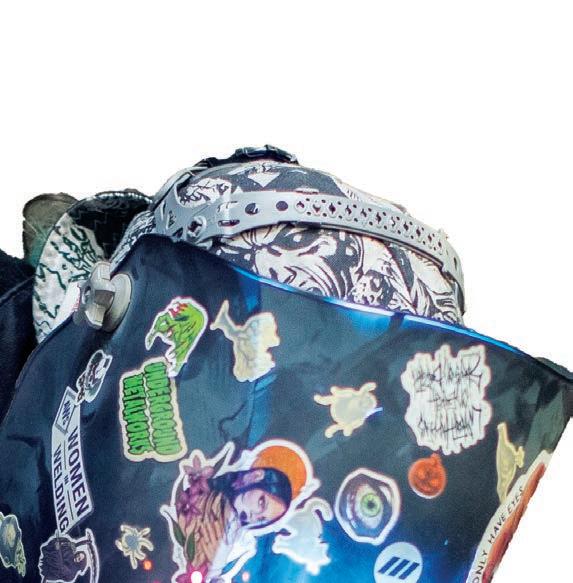


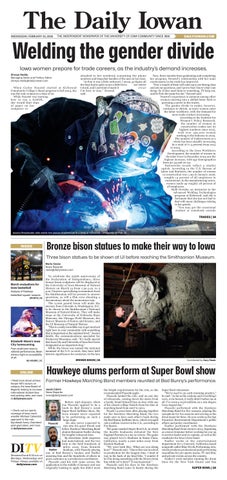
Now, three months from graduating and completing her program, Neustel’s relationship with her male counterparts in the trade has improved.
“Now a couple of them will come up to me during class and ask me questions, and I prove that I know what I am doing. So if they need help or something, I’ll help out, and he’ll do the same for me,” Neustel said. Neustel’s experience is common among other women entering into a skilled labor field or pursuing a career in the trades.
The gender divide in trades, however, continues to shrink, as more women enter the labor workforce, with the demand for more trade workers increasing.
According to the Institute for Women’s Policy Research, the number of women in construction trades saw its highest numbers since 2015, with over 350,000 women working in the industry in 2024. The number of tradeswomen as a whole has been steadily increasing by a total of 77.3 percent from 2015 to 2024.

According to the Iowa Workforce Development, the number of women in the labor force in December 2024 saw the highest increase, with age demographics from 40-54 and 20-24. Nationwide trends reflect a similar uptick. According to the U.S. Bureau of Labor and Statistics, the number of women in construction was 1,193 in January 2026, roughly 14 percent of all employees in construction. In the manufacturing sector, women made up roughly 28 percent of all employees.
Holli Gericke, an instructor in the Advanced Welding Technologies program at Kirkwood, said she is fortunate that she has not had to deal with many challenges relating to her gender.
“You may get the occasional student or somebody outside

Bronze bison statues to make their way to Iowa
Three bison statues to be shown at UI before reaching the Smithsonian Museum.
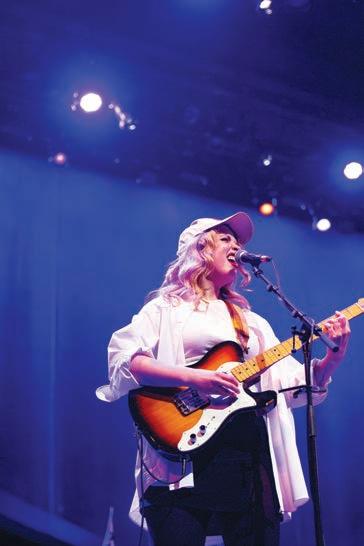
To celebrate the 250th anniversary of the Declaration of Independence, three bronze bison sculptures will be displayed at the University of Iowa Museum of Natural History on March 15 from 1:30 p.m. to 3 p.m. Curators specializing in mammals from the Smithsonian will be present to answer questions, as will a film crew shooting a documentary about the momentous trip.
The 2,000 pound bison will make the journey from Colorado to Washington, D.C. to be shown in the Smithsonian’s National Museum of Natural History. They will make stops at the University of Nebraska State Museum, the Chicago Field Museum, the Denver Museum of Nature and Science, and the UI Museum of Natural History.
“This is a really incredible way to get involved right here in your community with something that is important at the national level,” Jessica Smith, the communications specialist for Pentacrest Museums, said. “It’s really special that Iowa City and University of Iowa have been designated as an important stop.”
While the bison was named the national mammal of the U.S. in 2016, they have held historic significance for centuries. In the late

Hawkeye alums perform at Super Bowl show
Former Hawkeye Marching Band members reunited at Bad Bunny’s performance.

Before mid-January when Joe Piasecki applied to be a bush in Bad Bunny’s 2026 Super Bowl halftime show, the Iowa alumni never expected to be performing on such a large stage.

He also never expected to run into his good friend and fellow Hawkeye Marching Band alumni Benjamin Nadler during the lengthy rehearsal days. By showtime, both surprises had materialized, and the two took to the field hundreds of miles away from Kinnick Stadium, with Piasecki playing one of Bad Bunny’s bushes and Nadler assisting him and the hundreds of others in grass costumes as a production coordinator.
Piasecki said his wife came across the application in the middle of January and was originally looking to apply but didn’t meet
the height requirements for the role, so she recommended Piasecki apply.
Piasecki landed the role, and on one day of rehearsals, coming down the stairs from a break, found himself face-to-face with one of his closest college friends from his time in marching band from 2007 to 2011.
Nearly 14 years later after playing together for the Hawkeye Marching Band, the two made sure to have each other’s back during the Bad Bunny halftime show, which averaged 128.2 million viewers in the U.S., according to Fox Sports. The game marked Super Bowl LX, in which the Seattle Seahawks defeated the New England Patriots in a 29-13 victory. The game was played Levi’s Stadium in Santa Clara, California, nearly 2,000 miles away from Kinnick Stadium
“We were both like, ‘What are you doing here?’” Piasecki said. “I knew Ben was involved in production for the longest time. I kind of was in the back of my head like, ‘I wonder if he’ll be doing something with the Niners drum line while we’re here?’ It was hysterical.”
Piasecki said his days in the Hawkeye Marching Band came in handy during the
Super Bowl rehearsals.
“We’re used to an early morning practice,” he said. “As far as the costume and everything I wore, to be honest, it really didn’t bother me at all. I’ve worn a wool uniform on a 100-degree Iowa August day.”
Piasecki performed with the Hawkeye Marching Band for five seasons, playing the saxophone for two seasons and serving as the drum major for three. He now works as the San Francisco Environment Department’s public affairs and policy coordinator.
Nadler performed with the Hawkeye Marching Band from 2009 to 2013, beginning as a tenor drummer before working his way up to section leader and co-captain, as well as the conductor for Iowa’s beer band.
Nadler works in the entertainment department for a Concord, California-based nonprofit called Blue evils erforming Arts, which produces professional paid performing ensembles for pro sports teams, T and film, and private events across the country.
Nadler’s work includes running the drum lines for the New York Giants and San
was the only woman in a class of 22. she would find slips of paper on her computer or
19th century, bison faced extinction.
According to the National Park Service, the number of bison went from 30-60 million to less than 1,000 bison, but after Theodore Roosevelt and others created the American Bison Society in 1905, their population recovered.
Smith said the bison were also very important to Native American tribes, who used them as a resource for survival.
Gary Staab, sculptor and owner of Staab Studios located in Missouri, is the artist behind the statues. He has created wildlife inspired pieces for clients like the National Geographic Society, BBC, Discover Magazine, and the Smithsonian. Like many others, he sees bison as an inspiring and fascinating species.
“It would be really easy to be melancholy about this whole experience, but the Smithsonian is choosing to tell the story as a
to create. While the sculptures are 25 percent larger than life, they start out as small statues used to determine the pose and gesture of the
positive story. People got together, and they figured out how to save the species, so it’s a really extraordinary thing,” Staab said. The bison statues took over a year for Staab
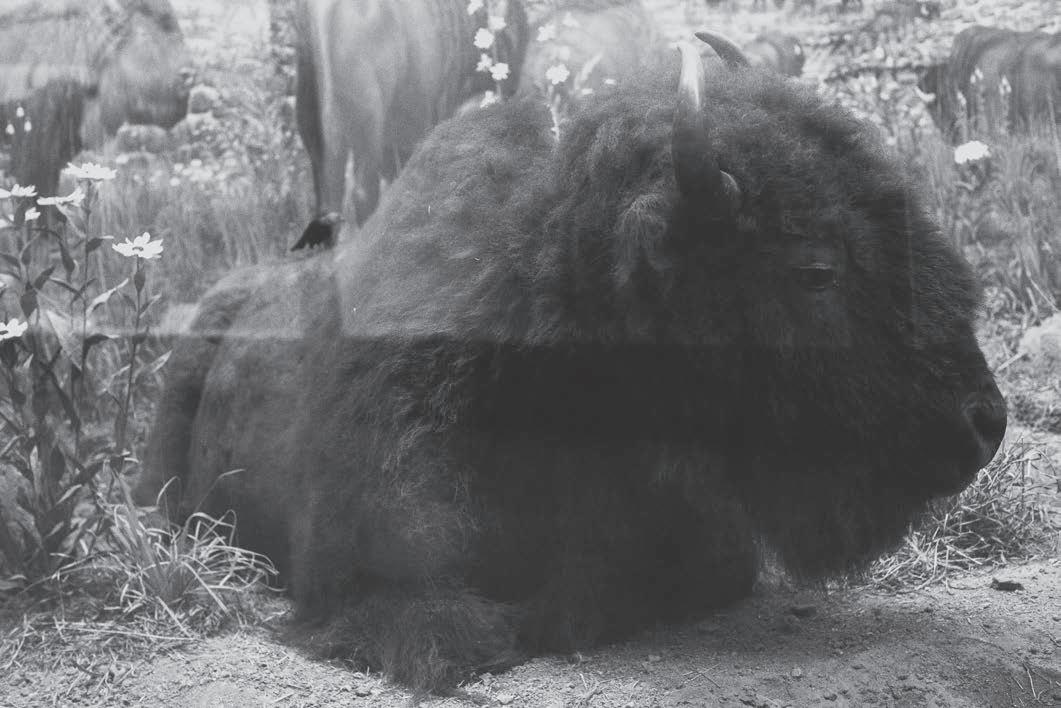
animal. Once he and the client are satisfied with the design, the final statue is created. The top shoulder of the bison reaches 10 feet tall and its size can be compared to a small elephant. Surrounded by 30 bison-related decorations in her office, Liz Crooks, director of the Pentacrest Museums, said bison play a large role in supporting ecological health in Iowa.
“They are very important to Iowa because as a prairie state, they were integral to keeping the prairie rich, thriving, and vital,” Crooks said. “Their grazing with their hooves and the mud wallows they created all played an important part in keeping the native areas healthy. We would have been a natural migration pattern for bison when they were in their heyday.”
The UI showcases many historical artifacts in their Natural Museum to document bison’s importance to Iowa. These exhibits include bison skeletons, prairie exhibits, taxidermies, and bison bones that Native Americans used as scrapers. Previous artifacts from the Smithsonian can be seen in the university’s museums.
Once the bison reach the Smithsonian, they will be permanently installed at the entrance of the National Mall, where they will face the Smithsonian Institution building. The historic site held living bison in the South Yard behind the Smithsonian Institution building in the 1880s.
Those who come to see the sculptures at the UI will have the opportunity to bid the bison farewell as they travel to their final destination.
“They’re inviting folks to wave the truck away, and this will be documented, of course,” Smith said. “We really want to give that warm Iowa send off and have as many folks there as possible.”
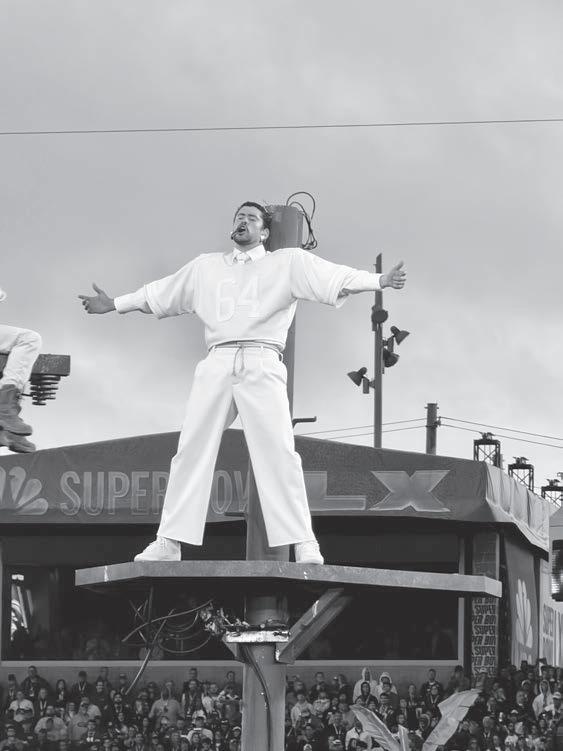
Francisco 49ers and building ensembles for teams such as the Golden State Warriors, creating paid opportunities for elite marching musicians. Nadler had previously performed in the drum line of the 2014 Super
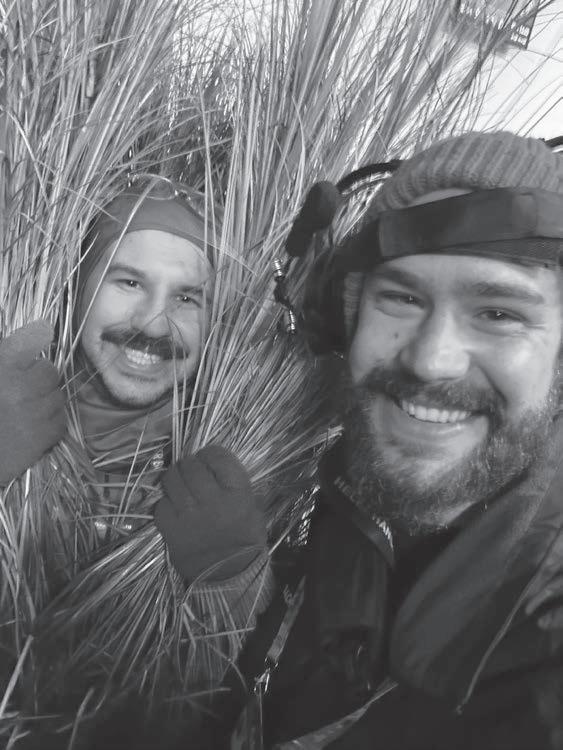
closer friends,” Nadler said. “We stayed close both on and off the field throughout our time together and made a lot of great memories being at those bowl games and just throughout the year.”
Nearly 17 years later from the 2009 season, Piasecki said he was
Bowl in the stands of MetLife Stadium.
Despite his countless run-ins with professional sports stadiums, Nadler said he was still taken back to his Iowa marching band days as Bad Bunny’s halftime show began, thinking back to the 2009 season,when the band performed a “Thriller” themed routine on Halloween at Kinnick.
Nadler’s first season with the marching band was 2009. He would play on and see Iowa end the season with an 11-2 record and a 24-12 win over Georgia Tech in the Orange Bowl. It was also the year he would spark a friendship with Piasecki.
“We became closer and
reassured to once again have a friend on the football field.
“Those costumes really didn’t have a lot of visibility. And to know that there was somebody there that I 100 percent trusted made me feel great,” Piasecki said. Both said the performance was electric and unifying in its message, saying they could feel the roar of nearly 70,000 fans that filled the stadium from the first note of Bad Bunny s performance.
While the artist didn’t speak with the two directly, Nadler said the star’s addresses to the entire halftime performing crew were enough for him
to see the grace Bad Bunny gives out to his cast and production crew.
“He spoke with such gratitude towards everybody involved from every moment,and did not take it lightly and made sure that everybody was recognized, which not all celebrities or music artists take that time to do,” Nadler said.
Danielle Paulsen, a UI alum who played trumpet alongside Nadler and Piasecki in the Hawkeye Marching Band, said she and her friends had only found out about Nadler’s involvement in the show after the game.
Paulsen now works as a physician assistant in the Twin Cities. She said during the game, she and her friends were on the lookout to find Piasecki among the bushes.
“We were excited to go back and find his bush,” she said. “It was really cool to see both of them kind of utilize their marching band experience for such a cool experience that people across the world got to see. I was really excited with that.”
Eric Bush, the director of the Hawkeye Marching Band, wrote in a statement to The Daily Iowan that it was fun to see the two alums contribute to the Super Bowl halftime show.
“It’s always great to see how our students and alumni take what they learn and gain from their experiences in

the Hawkeye Marching Band and apply them in unexpected and exciting ways once they graduate,” he wrote.
Nadler said the production team was allowed to capture content leading up to being on the field, allowing the two to take Bad Bunny’s song
“Debí Tirar Más Fotos,” or “I Should Have Taken More Photos,” to heart.
“We did get más
great moments.”
Piasecki said he was glad to have the photos to remind him of his second chance to perform with his friend on the field, long after the costumes were packed away.
“We definitely got to take the words of the song literally and have those memories together,” he said.


the industry that you deal with that might have some preconceived stigmas about women in trades, but overall people are kind of changing their tune regarding that,” Gericke said.
Now a full time faculty member and welder, Gericke had an unconventional start in the trades, entering the welding field at the age of 0.
“I just kind of got tired of working at my desk job and the kind of monotony of corporate life, so I decided to make a change for myself,” Gericke said.
Gericke said she has always liked working with her hands and being physically active in her day-to-day life. With a longtime interest in welding, Gericke began taking classes within the program she now instructs.
n 202 , ericke began working as an adjunct instructor, teaching night courses after working her day job in the corporate sector.
Gericke said many of her classes are
retire in the coming years taught her how to do the job well.
“ t s definitely a space that you re going to get welcomed into pretty well because they need those positions filled,” Avalo said.
However, Gericke said the physical demands of the job, such as health risks and physical wellbeing, are often worth noting when considering entering the field.
Gericke said adequate ventilation for respiratory health, hearing protection, and the proper personal protective equipment is needed to get through day-to-day challenges a liated with welding.
Gericke said it is important that individuals work in a place where their concerns are taken seriously.
The longtime welder said she hasn t considered leaving welding and wants to continue developing her skills.
“There is always room to grow and improve within this field. There are so many different avenues that you can transition into, and don t see myself getting bored with it,” Gericke said.
Avalos said her work is often labor intensive as her job requires her to
upon the trades. After talking with her counselor and realizing there was more to welding than she had anticipated, she took the leap.
“ ve always liked learning new things and being creative, and once I got into it, I ended up really liking it. I had two instructors who were super supportive and encouraging, who didn t treat us, the guys and girls, any different,” Avalos said.
The biggest barrier for Avalos was the preconceived notions of what the career path would be like, believing she would have been treated differently ust because she was a woman in the trades.
“I was scared to ask questions because didn t want to seem dumb, but, was still learning, and everyone was extremely helpful in teaching me the tricks of the trade,” Avalos said.
Similar to diesel program student Neustel, the technician experienced downfalls of the profession with men making sexual remarks.
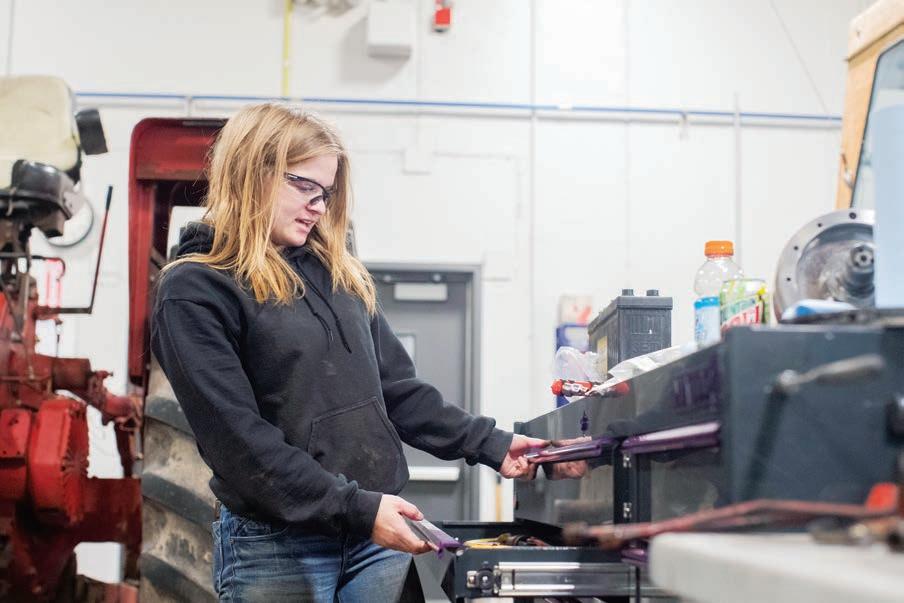
primarily male-dominated. During her time instructing at Kirkwood, however, she has seen more and more women enrolling in the program.
“I had several women in my classes at the start of this school year, which was really exciting to see,” Gericke said.
Many of the difficulties she and her students face within the welding field don t center around gender but rather around the physical demand of the program. rather around the physical demand of the program.
According to an economic impact report conducted by Bring Back the Trades Inc., a nonprofit organization that works to advocate for the skilled trades, and the F.W. Webb company, a nationwide plumbing and HVAC company, who analyzed a total of seven trades, there is an expected 1.4 million jobs in those trades that will be open by 20 0.
As the demand for skilled labor and tradespeople increases, Gericke said
maintain aluminum molds, welding any mold damages, placing weld clamps on, and keep them looking nice, used to make plastic parts for the agricultural sector.
“ ou re going to get dirty, you re going to get burned, you re going to get some scrapes and cuts. That just comes with the trade. But as you get more familiar, especially with my tools and not being scared of them, it becomes less and less,” Avalos said.
Despite the support the mold shop technician has, her job can feel isolating. Working in her own shop, she spends roughly eight hours a day by herself, something that she said has made working in the industry di cult.
“ m used to talking to people and having more social interactions with my previous customer facing opportunities,” Avalos said.
Avalos received her associate s degree in welding from Marshall Community College, where there were only six women in total, compared to 0 to 0 men in the class.
Now, Avalos is the only woman the company s mold shop has ever had.
Avalos learned how to push back on those remarks and, eventually, get them to end.
“ t s easy for me to shut it down right away, but for the most part it has been pretty amazing. I was not expecting to be welcomed as much,” Avalos said.
From the get-go, Avalos said she has never felt like she was hired because she was a woman. Rather, they looked at her skill set and what she could provide to a given company.
Though Avalos did not come from a construction back ground and had never worked with power tools before going to school for welding, those with experience were able to help her develop the tricks of the trade.
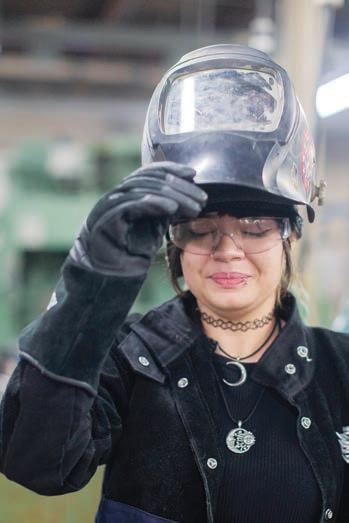
The trades were always in the back of essica Broadwater-olds mind from a young age, with the passion for skilled work strong and continuous.
Broadwater-olds father worked in the trades, and the second-year advanced welding technologies Kirkwood student knew she wanted to do something similar, as long as it wasn t the same as her father, who does manufacturing and industrial work for Quaker Oats.
“I have always been interested in the trades, and I just never knew which one would fit me, and fell in love with welding. As soon as I tried it, just once, I was immediately hooked,” Broadwaterolds said.
Growing up homeschooled, Broadwaterolds first became interested in welding when she was in high school. Because she was homeschooled, she didn t get the opportunity to take the welding classes she wanted, but she continued to research and learn more about the field.
Starting out in the trade, Broadwaterolds felt scared and intimated. he didn t know how to use a wrench and did not have the same welding experience as her male peers.
“When I started, there were only three women in my class. As time has gone on, there are only two now. o there s not a lot of females in these fields, which makes it a little harder,” Broadwater-olds said.
The welding student finds that often, it is hard to connect with others in the field, making it more di cult to get used to a profession with few women.
According to Welding Workforce Data, which is a welding employment statistics model collected by the American Welding Society, 5 percent of welders nationwide are women.
Broadwater-olds said when blueprints are shown in class, she often finds herself not knowing what is being shown.
“I really want to show other people that, Oh can do the same thing as you, even if I am a woman. I can weld just as good, can cut metal ust as good. o m trying to not allow there to be that difference,” Broadwater-olds said.
hardworking field. But so is nursing, so is doing restaurant business, so this is really just another thing women should try. Not even just welding, but maybe construction, electrical,” Broadwater-olds said.
One of Broadwater-olds favorite parts of being in the profession is getting asked what she is going to college for.
“When I say welding, their faces just light up, and it makes my heart so warm. It is one of my favorite factors of being in this field where people actually think it s cool,” Broadwater-olds said.
Neustel finds her everyday work to be rewarding. She comes from a farm family in Iowa and hopes to one day take over the property.
“When I started, I thought I would take what I learned back to the farms, but now I am looking into engine machining shops. A job like that would help me in so many different ways,” Neustel said.
Neustel said the diesel field is demanding but will allow her to pursue future endeavors, such as working in an engine machine shop.
“ ve learned a lot of things about where this can take me, even if it s not the easiest thing in the world,” she said.
One day, Neustel hopes to open an engine shop, potentially one she could run out of her home, while continuing to maintain her family farm, allowing her to remain in the trade she enjoys while keeping her values close.
For Gericke, being a woman in the trades has been empowering, allowing her to pursue research and other opportunities, regardless of her gender.
“It is important that we continue to have strong, smart, capable women in the industry. t s really powerful to be able to prove yourself and show others and yourself what you are capable of,” Gericke said.
Gericke said women bring unique abilities and levels of experience to the trades, but the workforce is a rewarding experience for men and women.
“For me personally, it broke up the monotony I was experiencing in the corporate world, and it also gave me a lot more autonomy over my day-to-day. My overall quality of life has greatly improved since I made that switch,” Gericke said.
Avalos said she wants to support women going into the trades, and the gender divide should not stop them.
“There s only more and more women going into the trades, so if you are curious, dip your toes in it, because you might end up doing something you really like. It has been one of the best, most sporadic decisions of my life, and I am glad I took it,” Avalos said.
Before Broadwater-olds entered the welding field, she didn t think she would be able to attend college for affordability reasons.Now, Broadwater-olds hope to pursue underwater welding.
“Welding has brought up my expectations, my confidence, and love for myself because know what I can do,” Broadwater-olds said. As Broadwater-olds looks at what her career prospects might look like in the future, being a woman in the field has not deterred her, despite the long hours and late nights.
“Not allowing your fear to get in the way of something that could literally change your life. We can get blueprints done, we can be hard workers, we can do everything a man or anyone else can,” Broadwater-olds said.
there is a consistent need for people in trades, and she has seen job stability within welding.
Itzy Avalos, a mold shop technician, a specific type of welder working with rotational molds, has seen the the trades in high demand, with a sizable age gap between her and her coworkers.
“Many of my coworkers are near retirement, and it s ust me and one other gentleman that s about my age, so it s definitely needed,” Avalos said.
Avalos attributed her company embracing her from the start to such demand, saying that those prepared to
After pursuing her two-year degree at Marshall Community College, Avalos decided to take a gap year, as she had yet to decide what career she wanted.
“I wanted something that I could learn quick and make a decent amount of money in, especially because if I was going to pursue it long term, I wanted to be financially stable,” Avalos.
As boredom began to creep into every crevice of the technician s life, she stumbled
Broadwater-olds said as new classes come into irkwood for the 202 -2 school year, there are aren t any women, a fact that makes her sad.
The Kirkwood student acknowledges the intimidation that comes with being a woman welder in a male-dominated field as well as the other di culties that come with being a student in the trades.
“Everyone plays it to be this really

OPINIONS
We need to repair rather than replace
Items aren’t built to last, which is unfair to consumers, but we can fight back.

The art of repair has become scarcely practiced in today’s age, with consumerism having convinced most people to throw out items when they are in disrepair in exchange for newer options. Many products are cheaply made and designed for a short lifespan, requiring repurchase rather than repair at the end — also known as planned obsolescence — according to an April 2020 article from The Guardian
Repairing items is more cost-e cient in most cases, and, as acknowledged by the City of Iowa City, is far more sustainable.
The Iowa City Repair Cafe hosted an event in partnership and collaboration with the City of Iowa City on Feb. 14 at the East Side Recycling Center’s Environmental Education Center. While some people were finding love this Valentine’s Day, some citizens were finding love for their planet.
“It’s important to encourage slow consumption, taking care of your things, and learning how to do that,” Serenity Delgado, a fourth-year University of Iowa environmental policy student who was present at the event, said.
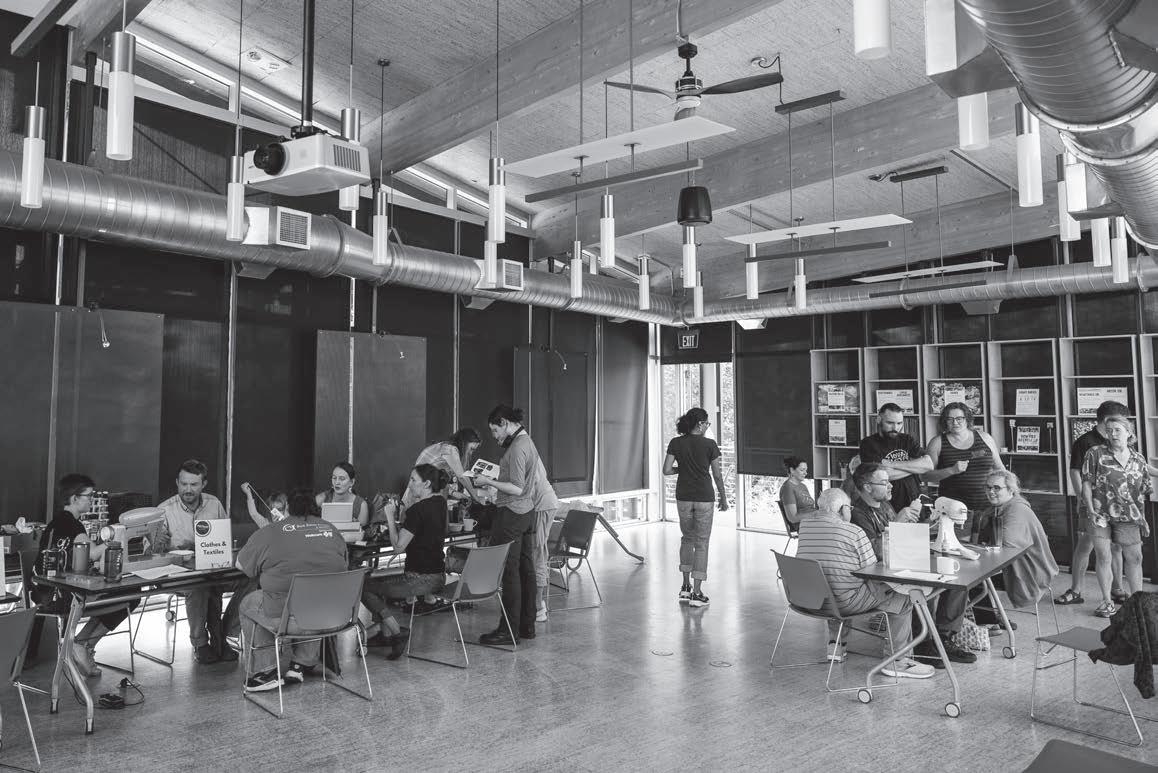
Josie Dunnington, the volunteer coordinator for the cafe, acknowledged that an important and sometimes overlooked aspect of consumerism and repair culture is income inequality, preventing people from buying the better-made, but more pricey items.
Dunnington is hopeful the cafe can teach the importance of finding and investing in quality products. She emphasized knowledge as an important component of the event. The cafe doesn’t just fix things for people and send them on their way — it teaches
on these technicians often means waiting hours for them to arrive, wasting time during tight planting and harvesting schedules. The profit margins for these services can be up to five times higher than the original e uipment purchase and can cause local economies to lose out on business.
In recent years, over 40 states have fought back against repair restrictions and have proposed Right to Repair legislation, or the right for owners of devices and equipment to freely modify and repair the products they have purchased, according to GovFacts, with New York pioneering the enactment in 2023.
As of Feb. 19, the Iowa House Agriculture Committee advanced House Study Bill 751 requiring manufacturers to make parts, software and documentation tools available to independent repair facilities and product owners, according to Iowa Capital Dispatch. Iowa is only just beginning to catch up in the fight for e uitable repair.
With the help of community repair initiatives like the repair cafe, we can make the shift to more sustainable and conscious consumerism.
“For me, the importance is not just keeping things out of the landfill,” Dunnington said. “We’re building a culture of repair and part of that is an awareness of how things work.”
Iowa needs to move on from wild west biking
Iowa has potential for biking, but under proposed legislation, we will never reach it.
One of the biggest pieces of news this year in Iowa biking was the introduction of House Study Bill 637. By the Iowa legislature, the bill would have made using a bike or electric scooter illegal on any sidewalk or road with speed limit above 25 miles per hour. It would have also made it illegal to use a bike that does not skid, ignoring that most modern bike brakes are designed to not skid, making it illegal to own safer bikes. The bill was rightfully criticized, so intensely that it was pulled two days after its introduction.
To the Iowa Bicycle Coalition the pulling of the bill was an undeniable success. To bikers, it was a partial one. Paul Sueppel, the manager of Iowa City’s longest standing bicycle shop, World of Bikes, put it best: “The [Iowa Bicycle Coalition] should stop just proposing stupid bills and try to propose some good ones.”
Elise Dahan, a University of Iowa teaching assistant, commutes to work on her bike and has few complaints about Iowa City’s bike infrastructure.
“I feel very safe biking in Iowa City I can go up to Coralville and can make do without a car. I have lived in places where I had to bike on the highway’s shoulder, and it’s bad,” Dahan said.
Yet Iowa lacked something essential for any successful endeavor: legislation. Iowa City resident Paul Giddings, who commutes to work by car, has some qualms.
“Some bikers want to be pedestrians and cars at the same time, especially on e-bikes that have a lot more speed than regular ones,” Giddings said. “Seeing them whiz up sidewalks and into the road is really confusing. I’ve had some close calls.”
Bicycling laws in Iowa are poorly designed and poorly enforced. State law says cyclists have the same rights and responsibilities as drivers, including the

right to share the road. While that may sound reasonable in theory, critics argue it is as flawed as ouse tudy Bill .
Bicycles are not cars and cannot keep pace
with tra c on most roads, especially in stop-and-go conditions.
In Iowa City, “share the road” signs often place cyclists and drivers side by side in ways that can create unsafe situations.
“It’s very stressful to ride with a car
behind me. I have to hope they are paying attention and are patient,” Dahan said.
The issue is compounded by the lack of legislation requiring cyclists to use visibility devices or wear helmets. Treating cyclists and drivers as equals on the road can leave both groups uncomfortable.
“A lot of drivers get angry when they have to wait for a biker to get going, when they wouldn’t care much about waiting for a snowplow or truck,” Sueppel said. “But bikers have just as much of a right to use the road.”
Iowa has significant potential for cycling. The state has 900,000 riders who generate $1.4 billion for the economy, according to Iowa News.
The longest paved biking trail in the U.S. is in Iowa, stretching 120 miles. The largest biking tour event in the world is not the Tour de France, as many would think — it is Iowa’s own RAGBRAI, which won’t be going through Iowa City
during the shortest ride in its history this year. Yet Iowa’s bike infrastructure and legislation resemble its bike lanes, which are marked for cyclists but often taken over by parked cars on weekends. To become a leading cycling state, Iowa must commit to stronger infrastructure and improved safety measures.
Many of the problems already have proven solutions. Idaho Stop laws, for example, allow cyclists to treat stop signs as yield signs. According to the National ighway Tra c afety Administration, such measures can improve tra c flow and reduce collisions by 23 percent.
Education campaigns on sharing the road, clearer regulations on cyclist visibility and distinctions between e-bikes and traditional bicycles could further reduce accidents.
Biking is fun, healthy, and a boon to the economy. All it needs to thrive is commitment from the state.

strict competition.
“We’re not going in there with the mindset like, ‘Oh, we have to win,’” she said. “Let’s make connections, your network is your network. We’re out there to reach out, introduce ourselves, and mostly build awareness. And if anything, it just makes us really proud that we could join in with this, being just four months open.”
Monday marked the 16th Top Chef competition. The event, which took place Feb. 23 at the Graduate by Hilton, saw 26 restaurants contribute cuisine in four categories: entrees, desserts, mixology, and barista.
Several Iowa City staples attended, including the Webster with a winter squash soup, St. Burch Tavern with tuna crudo, and Yotopia provided dessert with Salty Toffee Oh. Overall, the event presented 13 entrees, four desserts, 10 cocktails, and three coffee beverages.
Downtown District Director of Special Events Katie Biegger said the event, year over year, is a premier opportunity for businesses to showcase their menu, staff, and talent in an active restaurant scene.
“With Le Crave, we’re really glad that
“It’s an exciting transition from being a student to operating a business across the street,” Biegger said.
Le Crave brought baklava cheesecake bites, a dish Al Share said is inspired by the café’s multicultural culinary fusion, primarily Middle Eastern and Western cuisine.
“Bringing them together just shows what we’re all about,” Al Share said.
Al Share’s initial plans after graduation aligned strongly with her undergraduate studies. With a bachelor’s degree in human resource management and a certificate in international business, she began applying to obs close to graduation only to find her plans changing after a short few months.
“The corporate world wasn’t what I expected,” she said. “It was like, severely underpaid, overworked. What my expectations were, what they are expecting of me was just not something that aligned for my ethics and my morals and what I stand for.”
Al Share transferred to the university in 2023 to finish her final two years of undergrad. Her family moved from Schaumburg, Illinois, to Iowa City, where
said most of the culinary skill is in the family, lending quality to principled, homemade cooking.
During her time in Tippie, Al Share was an active member of the BizEdge program, a peer mentorship program in which she was a mentee for one year and a mentor the next.
Her time at Tippie, she said, was formative, adding she can find help from past teachers even after graduation. She told a story about reaching out to a former professor with an Excel issue, ultimately sitting down and working it out with him.
“I feel like it just brings a sense of comfort knowing that I can reach out to people who would actually take a chance to answer a question that I have or hear from me,” she said. “So I think it’s important that I’m, in a way, also giving back to the community that made me who I am.”
Al Share said she worked closely with BizEdge Program Director Gabriela Rivera as well as Danielle Dion, associate director of pre-business success initiatives, looking at both as mentors.
Dion said Al Share stands out among the majority of Tippie students; of the students
mentor, she said.
“I know that her time with us was really short, because I believe she transferred from another institution, so she didn’t start here as a first-year student, but feel like the time that she spent with us, she definitely made an impact on students that would have been her mentees,” Rivera said.
In the time since Le Crave has been operating, Rivera said BizEdge has catered cupcakes and pastries from Al Share’s shop twice, seeming like an obvious choice to support a hard-working former student.
“As a business owner, I’m glad that we can stay in touch with her, as a Tippie alum,” she said.
After four months, Le Crave is running strong, and with support from family and professionals, Al hare said the sacrifices of time spent with family, friends, and by herself are all worth it to make a life she is content with.
“Don’t get me wrong,” Al Share said. “Do I work like 60 to 70 hours a week sometimes? Yes. Is it a lot more than I expected? Yes. But would I not want to do it? Absolutely not. This is exactly where I want to be.”
Glide & Go Skate City rolls into IC
The rink’s opening has been delayed but the founder remains optimistic.
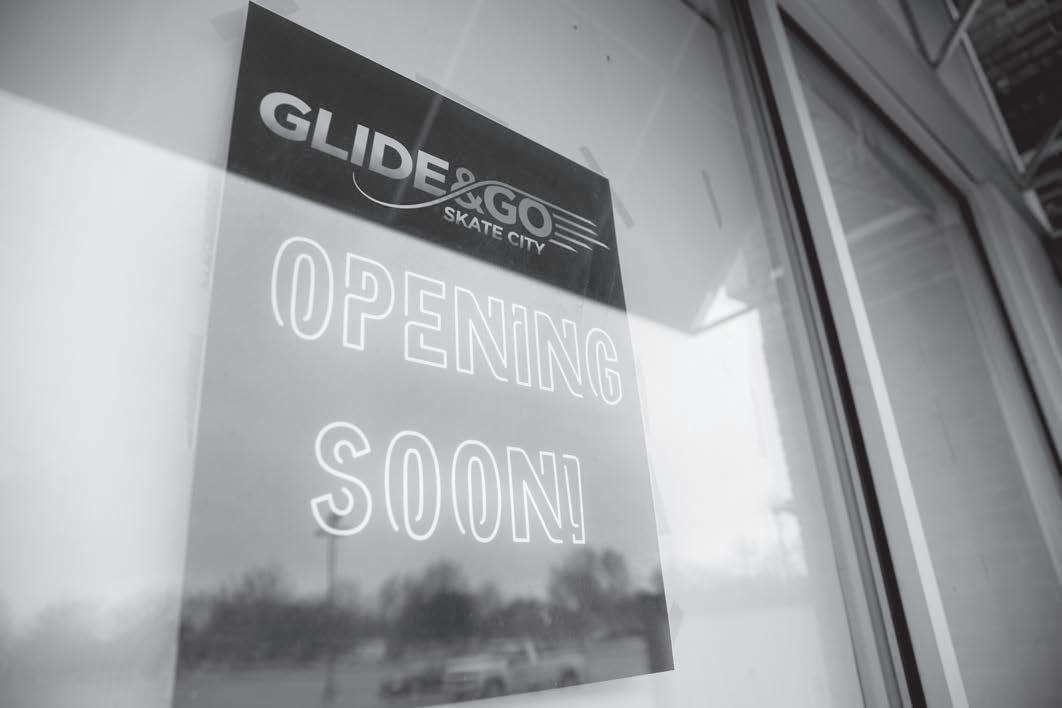
After a delay in Glide & Go Skate City’s opening, owner Alicia Crews said the new Iowa City Marketplace skating rink will open in the coming weeks.
Crews explained that her personal family issues and the building s fire code compliance had unexpectedly pushed the opening of Glide & Go, originally set for January.
The 27,000-square foot building was previously a JOANN Fabrics and Crafts that shut down in March 2025 due to declining sales and unsustainable debt. Crews repurposed items that JOANN’S had left behind, along with help from SherwinWilliams, Tate High School, The Home Depot, Ollie’s, and donations from Iowa City ReStore (Habitat for Humanity).
Originally from Florida but raised in Alabama, Crews moved to Iowa City in 2022 after living in Atlanta, Georgia, Peru, and Italy.
“The city in Alabama, where I was raised, really reminds me of Iowa City,” she said. “It’s just a very family-oriented kind of city. mall, the tra c goes slow, and it was ust very, very nice. And so that’s why, when I first got here, kind of looked around. was like, ‘Where are the skating rinks?’ because we had two in my city.”
Crews grew up roller skating and still loves it to this day.
“I’m extremely grateful for the opportunity to be able to bring this to the families and children here because roller skating was just such an essential part of my life as a teenager,” she said.
She described the obstacles she faced trying to fund lide o. Crews first started by applying to the Iowa LIFT program, which provides funding for those wanting to start or expand their small business. However, LIFT operates through local lenders — banks or credit unions — that scrutinize individual credit scores, and Crews did not meet the ualifications.
Crews then pivoted to seeking investors in Coralville and Iowa City, but said it was not attainable.
Crews wanted to find an organization that specialized in supporting disabled entrepreneurs like herself but very few were available. She obtained a
loan through Synergies Work, an Atlanta-based nonprofit.
Synergies Work gave her a $5,000 loan to start, and after 90 days of stable business operations, she’ll get another $5,000. Crews said she could get up to $30,000 in total.
“It’s amazing because what it does is that it demonstrates that they really do actually understand people who don’t qualify for standard programs,” she said.
Glide & Go provides special deals, such as the “city pass” for local nonprofits like CommUnity Crisis Services, Shelter House, and Iowa City Community School District students, staff, and faculty.
he said her goal was to make affordable prices for the community, rather than partnering with major corporations. A city pass membership to the skate rink is $69 a year or $15 per month. She also has a $49 all-semester deal for University of Iowa students.
Samantha Krogh, of Iowa City, has skated since childhood like Crews, and now skates as a hobby.
“It’ll be a great addition to the community. With more places like this, more people have the chance to get to know one another or become closer doing something fun,” Krogh said.
Krogh thinks the delay of Glide & Go Skate City is unfortunate but hopes everything turns out fine.
Michael Cotton, an Iowa City resident, believes the lide o kate City will benefit the Iowa City area. He highlights how Iowa City roller derby teams would be able to use this venue as an alternative to Mercer Gym. Cotton expressed his understanding of the delay and how it doesn’t bother him at all.
“Starting a business is hard, and I respect anyone taking on that process. I hope they have some good luck and can get it going,” he said.
Linda Roelens, from Rock Island, Illinois, looks forward to the opening and said opportunities like lide o offer growth potential for the community.
Roelens is in a skate group that travels every uarter to visit skating rinks in different cities. She said a nearby skating rink will help her fellow skaters have an accessible place to enjoy their hobby.
“We also have a regular who attends our local rink, once or twice a week, and lives about an hour and a half away. We have a skater who drives in from Cedar Rapids almost on a weekly basis,” she said. She said having a new entertainment venue like Glide & Go helps economic growth for those visiting from other cities.
“More than likely, after we will skate, we will buy gas locally and grab dinner before or on the way out,” she said.
Federal, state funding wavers for Iowa libraries
Public libraries face budget squeezes as funding becomes unpredictable.
n the most recent string of financial blows to Iowa libraries from the state and federal government, the Trump administration is seeking to eliminate the Institute of Museum and Library Services — the sole federal agency providing federal funding to libraries.
The administration filed a notice of appeal on Jan. 21, challenging the U.S. District Court decision striking down an executive order to dismantle the Institute of Museum and Library Services in April 2025.
Libraries were in limbo nationwide as legal battles to receive frozen funds continued, until a U.S. District Court struck down the executive order to dissolve the services in November 2025, and state libraries recieved federal dollars shortly after.
The Iowa City Public Library, along with libraries across the country, are facing financial uncertainty once again following the recent appeal. Sam Helmick, president of the American Library Association and community and access services coordinator at the Iowa City Public Library, described it as another “waiting pattern.”
Helmick said the repeated threats from the federal government are not reflective of what the majority of the American public would want, adding the decisions represent an abridgement or censorship of knowledge.
“It's already odd enough that we're not investing heavily in libraries,” Helmick said. “But then to see them almost systemically attacked with legislation and defunding doesn't feel like it's in the best interest of the American public.”
They said while the State Library of Iowa did receive its frozen funds in November, the federal challenges exacerbate existing implications of state budget cuts.
The Institute of Museum and Library Services administers funds through the Library Services and Technology Act, in which money is subsidized to state libraries through reimbursements and is then allocated to the 544 public libraries using grants.
Helmick said they plan to make the most of the released federal dollars as libraries across the country stress how important the funding is to unrestricted information access.
Helmick said libraries are important as a third space — a social location outside an individual' s home or work to gather, build community, and socialize with others.
“That third place can’t be a local McDonald's or Casey's,” Helmick said. “The American public deserves to have that space — whether it's to get out of the heat or the cold, or whether it s to find things to do after school before mom and dad can pick you up.”
Brittany Jacobs, president of the Iowa Library Association and director of the Burlington Public Library, said libraries in the state have been on “shaky ground” since legislation passed in 2023 eliminating local library levies.
The bill, House File 718, eliminated the authority of local communities to vote on a levy of up to 27 cents per $1,000 of taxable valuation to support public libraries.
Iowa City residents voted to approve the library levy in 1992, while Burlington voted for the tax in the 1970s.
Jacobs said the local levies were a significant contributor to library budgets across Iowa. She said the tax accounted for
65 percent of the Burlington Public Library’s operating budget.
Jacobs said libraries were still learning to navigate the elimination of the levy when the executive order from Trump delivered another blow.
“So 718 comes down the pike, sweeps away the library levy,” Jacobs said. “Then we turn the corner, and there's this executive order to close down the Institute of Museum and Library Services.”
thinking if the rug is pulled out under us infrastructurally, how are we making sure you all are still OK when we open our doors Monday morning?” they said.
elmick said sta ng and resources at the state library have taken a step back as a result of the challenges.
The Department of Administrative Services now runs the State Library, and there s ust a lot of uestions like, s this a soft closing?’”
They said some state programs have been discontinued— including the Insect Zoo from owa tate xtension O ce, which would travel to libraries across the state.
The outreach program was permanently discontinued in April 2025.
Mangano said the Iowa City library has been looking at ways to save extra money in the event of another budget cut, such as the elimination of the federal funds or state cuts to property taxes — a clearly stated goal of Iowa Republicans lawmakers this legislative session.
databases are first to get cut when the budget tightens.
“The federal shakiness with the budget has created a lot of uncertainty with the public library directors and public library employees,” Jacobs said. “But it’s the state funding that has impacted our ability to provide services.”
Jacobs said the gutting of libraries will lead to a rural “information hygiene crisis,” or the rapid overexposure to low- uality and misleading information because people will have to rely on their phones and computers more than ever to access resources.
“When we're only giving people access to extreme views that are not real and intentionally made to manipulate and misand disinform people,” Jacobs said. “It is going to impact us at our community level, and it just spirals out of control.”
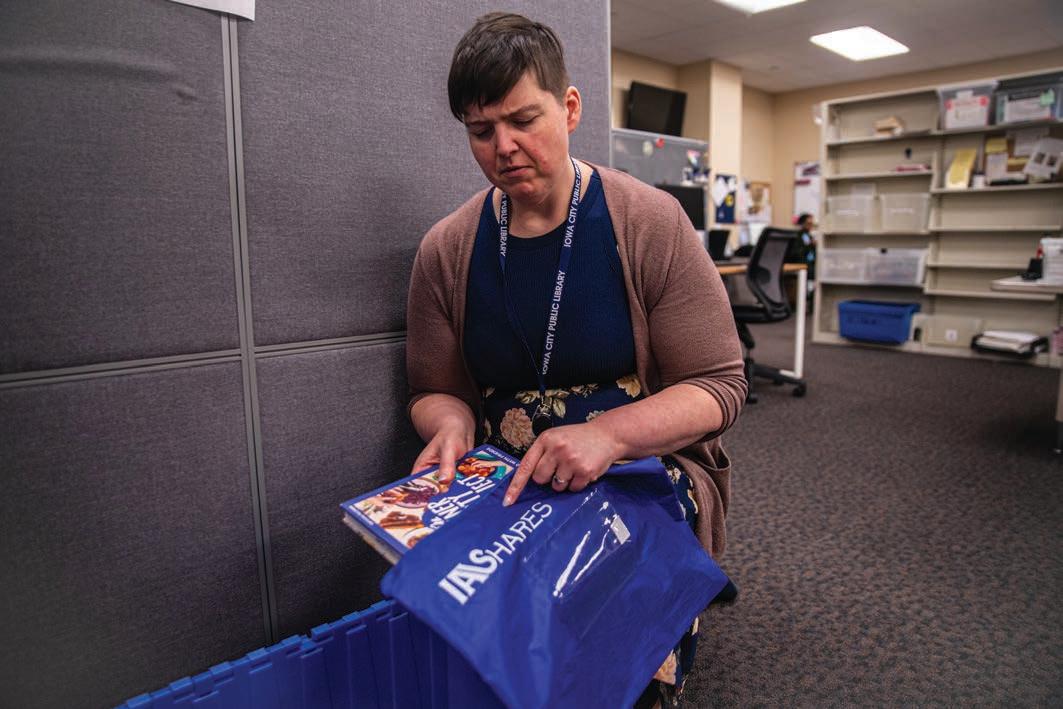
Public libraries rely on a range of services funded with money from the Institute of Museum and Library Services. Iowa Shares, an interlibrary loan program in which materials can be delivered across the state, is fully funded with the federal dollars, and its future was threatened by the executive order in April.
Anne Mangano, director of the Iowa City Public Library, said rural libraries saw a decrease in the carrier service while the Institute of Museum and Library Services funds were in limbo.
She said while 97 percent of the Iowa City library’s funding comes from the local level, primarily through property taxes, the Iowa Shares program is essential to transport information to communities throughout Iowa.
Helmick said the Iowa Shares program is secure as long as the Institute of Museum and Library Services continues to provide funding, but the long-standing unpredictability has led to consistent challenges, including additional administrative costs for libraries.
“Just like every other library in the country, we have increased time
Mangano said the integrated library system — the computer infrastructure used to view books checked out and library card information — is a substantial expense. She said the public library recently purchased a different system to significantly decrease the cost.
The state library stopped covering the cost of some services to save money. This includes an email service, which Jacobs said the Burlington Public Library lost access to. Jacobs said the change, which came midfiscal year, was not budgeted for and led to a complicated pivot.
She said if federal dollars were to be eliminated again, the Burlington library would also lose its website. She said the state library provides the expensive website development service, which would be a significant cost to bear for the local library.
She said the library doesn’t have the infrastructure to create a site on its own or the staff to manage the code behind the scenes.
Jacobs said state-level cuts are making a bigger impact on services provided to patrons, compared to federal changes. She said library materials — books, newspapers,
According to Iowa Library Statistics, there are 544 public libraries in the state, of which 75 percent are in communities with less than 2,500 people.
Helmick said they worry rural libraries may close as a result of the combination of budget shortages. They said they have already seen some locations shorten their hours, such as the Storm Lake Public Library, which began closing a half-hour early after having to eliminate two full-time positions in June 2025. The library now has only two full-time employees.
Jacobs said libraries are consistently on the “front line” for budget cuts and said the Burlington Public Library — although not rural — lost $75,000 for the budget of the current state fiscal year, in addition to $200,000 lost with the elimination of local library levies.
She said the Burlington library has dropped from 36 to 25 employees over the last 13 years, adding libraries may begin to shutter in “huge waves” if cuts continue.
"We're going to see small libraries on the chopping block,” Jacobs said. “If we lose federal services, that might just be the straw that breaks the camel's back.”
UI students weigh in on Minneapolis ICE shootings
Students and politicians call for accountability after the deaths of Good and Pretti.
Roughly a month after Alex Pretti and Renee Good were killed in the streets of Minneapolis by U.S. Immigration Customs and Enforcement, or ICE, agents, University of Iowa students from Minneapolis called the deaths tragic and hope to see ICE held accountable.
The widely shared videos of the shootings of the two American citizens, both 37, have brought civil liberty concerns to the forefront of public debate.
The shootings occurred during a largescale ICE operation in Minneapolis that sparked widespread protests, with hundreds of federal agents deployed and thousands of arrests made. Both deaths have sparked national debates and calls for investigation and accountability.
ate Thompson, a first-year student at the UI, grew up in Minneapolis and said reading the headlines about Good’s death was shocking. She said she lived close to where Good was killed, the same area George Floyd died in 2020.
“It definitely was bringing me back to 2020 with all the helicopters flying overhead and the whistles and the honking,” she said. “It’s very scary.”
ophie angel, a first-year student from Champlin, a suburb of Minneapolis, said watching the videos posted online was jarring.
“This is disgusting to see,” she said. “I was surprised, because the videos got so much traction. It’s also odd to me that no one seemed to care until it was a white person.”
Langel said the rhetoric surrounding immigration enforcement unfairly targets people who play essential roles in their communities.
“I hope people recognize that immigrant students, educators, families, and nurses are not the source of the problems,” she said. “The current approach seems to negatively affect the most valuable contributors of the country.”
Kasey Ludlow, a third-year UI student and president of Bridge Iowa, a club aimed at combatting political polarization, said while the shootings were tragic, they were a result of a high-pressure situation where o cers faced constant scrutiny and protests, making mistakes more likely on both sides.
“It was a situation that was bred for mistakes, when there are people following ICE officers and protesting them constantly, when they’re trying to go throughout their operations, and it creates a bad situation for both sides where stuff like that might happen,” he said. “And I wish that local leaders would have stepped up more.”
According to the Associated Press, federal agents have scaled back presence in Minneapolis, and the 700 ICE
o cers in the state, a uarter of which were in Minneapolis, were “withdrawn immediately” as of Feb. 15.
Ludlow said he is glad ICE activity has calmed down in Minneapolis.
“If they stayed and continued to enforce with the same tactics in aggressiveness as they have, it would have led to more accidents and more problems and more tension,” he said.
Thompson said people should not be afraid to spread awareness on social media platforms, attend protests, and volunteer at local organizations to help out people who are feeling oppressed by ICE.
“Make it known that you are on the side of the immigrants,” she said.
While UI students said seeing footage of the Minneapolis shootings stirred deep concern about uestions of accountability and justice, lawmakers and leaders also weighed in, calling for an investigation.
U.S. Rep. Mariannette Miller-Meeks, R-Iowa, urged local law enforcement to take accountability in a statement on Facebook on Jan. 26.
“The videos out of Minneapolis are heartbreaking, and any loss of life is tragic,” she said. “I call for a full investigation and complete transparency,
and for the rule of law to be upheld.”
U.S. Rep. Ashley Hinson, R-Iowa, expressed support for ICE and condemned rhetoric that she views as escalating tensions from Minnesota Gov. Tim Walz. She said the situation warrants a thorough investigation while emphasizing the need to balance law enforcement with constitutional rights in a statement on the social platform X on Jan 26.
“We can and must uphold the law while still respecting Americans’ rights to peacefully assemble,” Hinson said in the post. “Americans deserve to have the utmost confidence in our ustice system and in law enforcement efforts to enforce the laws that keep us safe.”
Iowa Rep. Brian Lohse, R-Bondurant, who went to the University of Northwestern – St. Paul in Roseville, Minnesota, a, declined The Daily Iowan’s re uest for comment.
During a press conference, U.S. Secretary of Homeland Security Kristi Noem criticized Minnesota leadership for their response.
“We’re praying for this deceased loved one’s family and friends, but we also recognize that the Minnesota governor and the Minneapolis mayor need to take a long, hard look in the mirror,” she said. “They need to evaluate their rhetoric, their conversations, and their encouragement of such violence against our citizens and our law enforcement o cers.”
Record number of bald eagles in IC area
Freezing temperatures drive bald eagles to open water around the Coralville Dam and the Iowa River.
Just after sunrise, when the Iowa River is edged with ice, and the trees along the bank stand bare, University of Iowa professor Patrick Weiguo Fan raises his camera toward the treeline. The city is quiet, but above the river, wings cut through the cold air.
Fan said winter mornings in Iowa City are the perfect chance to catch a glimpse of America’s national bird.
Fan began photographing bald eagles about three years ago after a friend mentioned they were living in town.
This winter brought historic numbers. During the Iowa Raptor Project’s annual Winter Raptor Survey, researchers counted 372 eagles between the Coralville Dam and Highway 22, the highest total ever recorded.
Each year, as freezing temperatures lock up lakes and rivers further north, bald eagles move south in search of food and open water. Along the Iowa River, from the Iowa City City Park to the stretches below the Coralville Dam, the river corridor becomes one of the most reliable places in the region to see them.
David Conrads, director of the Iowa Raptor Project, said eagles can be spotted all along the Iowa River through Iowa City and beyond. When Coralville Lake and portions of the river freeze, birds concentrate in large numbers around open water below the Coralville Dam and other areas where they can fish.
Bald eagles are migratory, Conrads said, and winter conditions also make them less territorial. That shift allows them to gather in unusually large groups, something not typically seen during nesting season. Large congregations can form anywhere open water remains accessible, turning stretches of river into temporary gathering grounds, he said.
Fan visits the river almost daily with his camera. He shares his photos on Facebook and runs a YouTube channel dedicated to his wildlife photography, documenting not only bald eagles but also swans, pelicans, and other seasonal birds. Early morning and before dusk, he said, are the best times to see them.
His favorite locations include City Park, the Benton Street Bridge, and areas near the dam, where he has seen more than 50, and sometimes nearly 100, eagles gathered at once.
Fan has observed the gathering of eagles along open water areas. But

for Fan, the birds are more than a photographic subject.
“They are dedicated to each other, and they protect each other, they hunt together, they raise children,” he said.
“For me to spend some time with them is very encouraging.”
The resurgence of bald eagles in Iowa has taken decades, Conrads said. In 1977, only one bald eagle nest was documented statewide. Since the banning of DDT, a pesticide used for farming, in 1972 and the introduction of federal protections such as the Endangered Species Act, more than 1,590 nesting territories have been recorded across all 99 counties, he said.
“It’s really a remarkable comeback,” Conrads said.
The Iowa Raptor Project, housed within the UI’s College of Education, plays a role in the ongoing recovery. The program focuses on conservation, education, and research related to birds of prey.
Through field research pro ects, public programming, and seasonal surveys like the winter eagle count, the organization tracks population trends and helps edu-
cate the community about raptor habitats and threats.
Still, the birds face ongoing threats.
Sonja Hadenfeldt, coordinator at Raptor Advocacy, Rehabilitation, and Education, or RARE, said the organization sees between 10 and 15 injured bald eagles each year. The organization works to treat injured birds of prey and return them to the wild when possible. The group also provides educational outreach to reduce preventable injuries.
Many of the bald eagles treated by RARE suffer from lead poisoning. Hadenfeldt said eagles often scavenge deer carcasses left behind after hunting season, and when deer are shot with lead ammunition, fragments can remain in the meat. If ingested, the metal can poison the birds, sometimes leading to severe neurological damage or death, she said.
Conrads also said lead poisoning from humans using lead bullets for hunting remains a significant threat, along with highly pathogenic avian influenza. Even as winter sightings increase, conservationists emphasize that the species’ recovery is not guaran-
teed without continued awareness and responsible practices.
Conrads encourages residents to observe eagles from a distance. Energy conservation is critical during the winter months, and approaching perched birds can force them to expend unnecessary energy.
Using binoculars and giving them space helps ensure their continued success along the Iowa River corridor, he said. Along the riverbanks, the blend of city life and wildlife creates a striking contrast. Students walk across bridges on their way to class while eagles perch in nearby cottonwood trees. Tra c moves steadily below as white heads scan the water for fish.
As winter continues, the open water below the dam will remain one of the best places in the state to witness a species that once nearly disappeared from Iowa skies. For Fan, each sighting is a reminder of resilience.
“We just need to learn from some of these birds, especially the bald eagles,” he said.
New food pantry opens doors to IC community
The local nonprofit Successful Living provides essential items and services.
The nonprofit Successful Living opened its newest service, a community food pantry, making a major step in a larger initiative to confront food insecurity in Iowa City.
uccessful iving announced the o cial opening of the pantry over social media on Jan. 6, as well as its hours of operation, running from 9 a.m. to 2 p.m. on Mondays through Fridays. It is located alongside the rest of Successful Living’s services on 2407 Towncrest Dr. in Iowa City.
The idea of starting a food pantry had existed for several years but came to fruition after Successful Living moved to a new, bigger building, Director of Client Support Services Douglas Krough said.
“We have this space,” Krough said. “We have this need in our community, especially with the whole situation with SNAP difficulties last fall. That really said, ‘Hey, we should probably try to accelerate this idea because we want to provide this service in our community.’” Operating since 1998, Successful Living is a social services agency centered around care for individuals aged 18 and older with chronic mental illness. It aims to help adults build the skills necessary to live independently and thrive in their communities. It provides for clients through housing, habilitation, and community engagement, working to care for and improve their mental and physical needs.
The agency provides a variety of programs for its clients. The day habilitation program offers a multitude of social activities, such as games, cooking classes, and group trips, helping to build social and practical skills. The intensive psychiatric rehabilitation program supports clients working toward long-term living, learning, working, and social goals through small groups over two years.
Successful Living provides direct care through its housing program. The service’s clients are able to live with one another in affordable housing, receiving daily support, financial assistance, and medical management as needed. Successful Living owns and operates 15 houses.
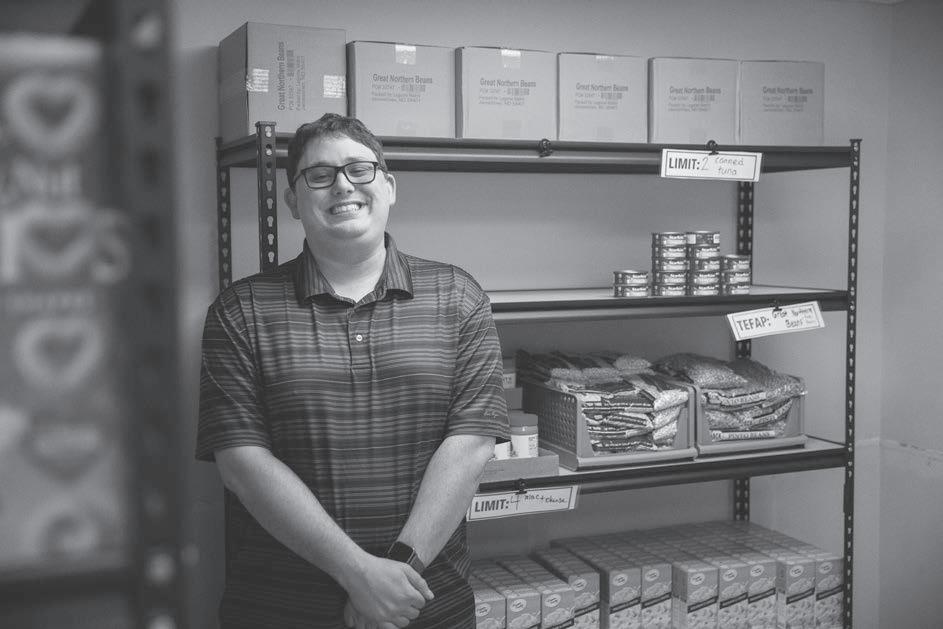
The food pantry provides a variety of services for visitors, who are able to browse around with a shopping basket. The shelves are stocked with canned goods, preprepared meals, dairy, and frozen items.
Much of the food is sourced from other nonprofits, like Hawkeye Community Action Program, Table to Table, and the Food Reservoir of Eastern Iowa, which provide it at low or no cost. Alongside the contributions made by these organizations, grocers, and community members also donate packaged and canned items.
The pantry also offers a clothing closet as well as household items, hygiene supplies, kitchenware, and board games. These pieces of inventory depend especially on community donations.
Rae Mattson, the community services coordinator for Successful Living, oversees the day-to-day operations of the pantry.
Mattson’s daily tasks include handling inventory, managing partnerships with the pantry, and, most importantly, assisting visitors. Many visitors don’t just go to the pantry for the supplies but also to be able to sit and talk to the staff and learn about different programs offered by Successful Living, Mattson said.
support assistant.
O’Tool and other student leaders at the Newman Center hope to use the drive to provide simple supplies like spices and seasonings for visitors to the food pantry. The drive is part of a larger initiative to support the needs of others during the ongoing season of Lent, highlighting the Catholic teaching of the corporal works of mercy, O’Tool said.
“We’re hoping to send students to the Shelter House, book sale, to volunteer, things like that,” O’Tool said. “And so we’re hoping our impact on the students is that we want them to learn about Successful Living, which I’ve only recently learned about from llie, and find ways people are interested in getting involved there.”
“We’ve been able to connect several community members with our mental health services,” Mattson said. “For a lot of our clients who use the food pantry, it’s really cool to be able to connect with them about various goals they have, like learning to cook something, learning more about food storage or meal planning, just see how they progress, and also just a chance to help work with their program staff about those goals as well.”
The pantry s first goal is to increase awareness and, subsequently, the number of resources and donations.
Successful Living plans to start a food drive in March, hoping to have several nonprofits, churches, businesses, and other organizations within the community contribute through food boxes.
One community initiative that is already underway is a spice drive organized by the Newman Catholic Student Center’s student fellowship team.
University of Iowa fourth-year student Kate O’Tool serves as one of the student leaders and as an organizer of the drive. She learned about Successful Living through her friend Ellie Wojcikowski, the organization’s client
The drive will run from March 23-28 and will be structured as a competition between grades to see who can gather the most donations, further encouraging student participation. Boxes will be set up in the main gathering space of the Newman Center to collect donations. Services like food pantries are very dependent on not ust other nonprofits, businesses, and federal services, but also support and involvement from members of the community. ue to the recent cuts to NA benefits, there is a higher need for community-based services like a pantry, Krough said. Volunteering, donating essential items, and monetary contributions are critical for allowing these services to function.
“We’re always looking for volunteers and for someone to come in for an hour at a time. I’m a believer in the benefits of work and volunteering and ust finding purpose in other people’s lives,” Krough said. “Just time, money, food, clothes, whatever people have, they just have a little bit of, and they d like to make a difference, they can always just let me or our community services coordinator know. We’d love to be able to accept whatever they re able to offer.”
THREE FLOORS OF FLEA

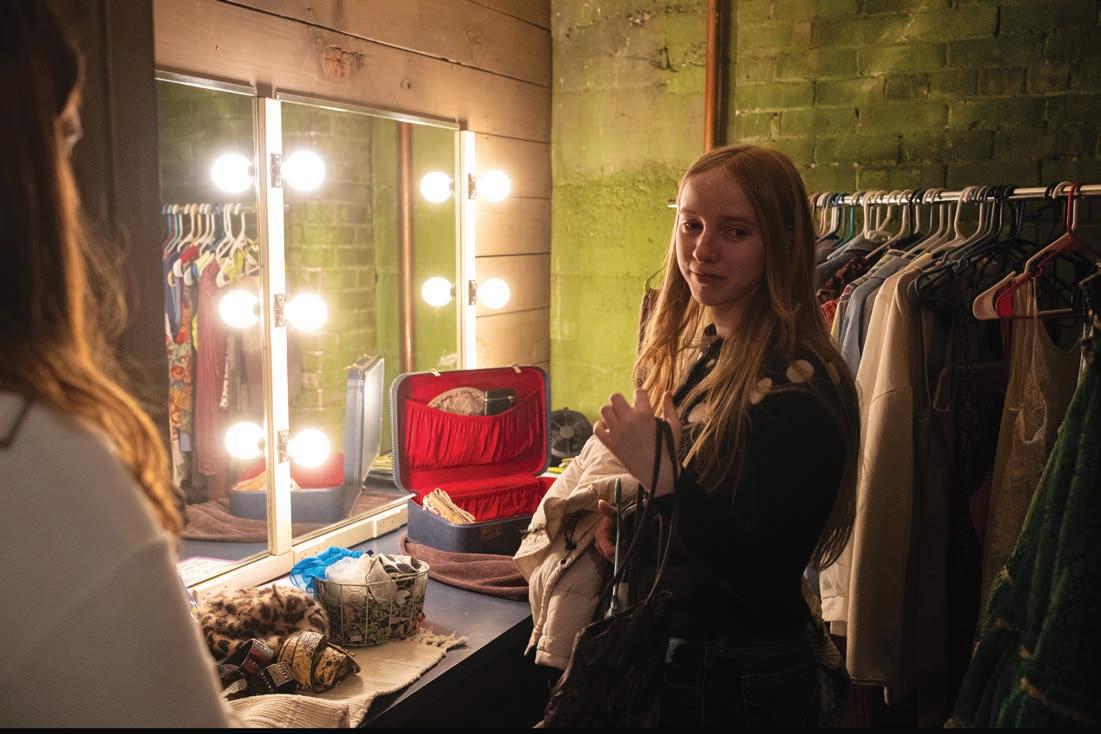
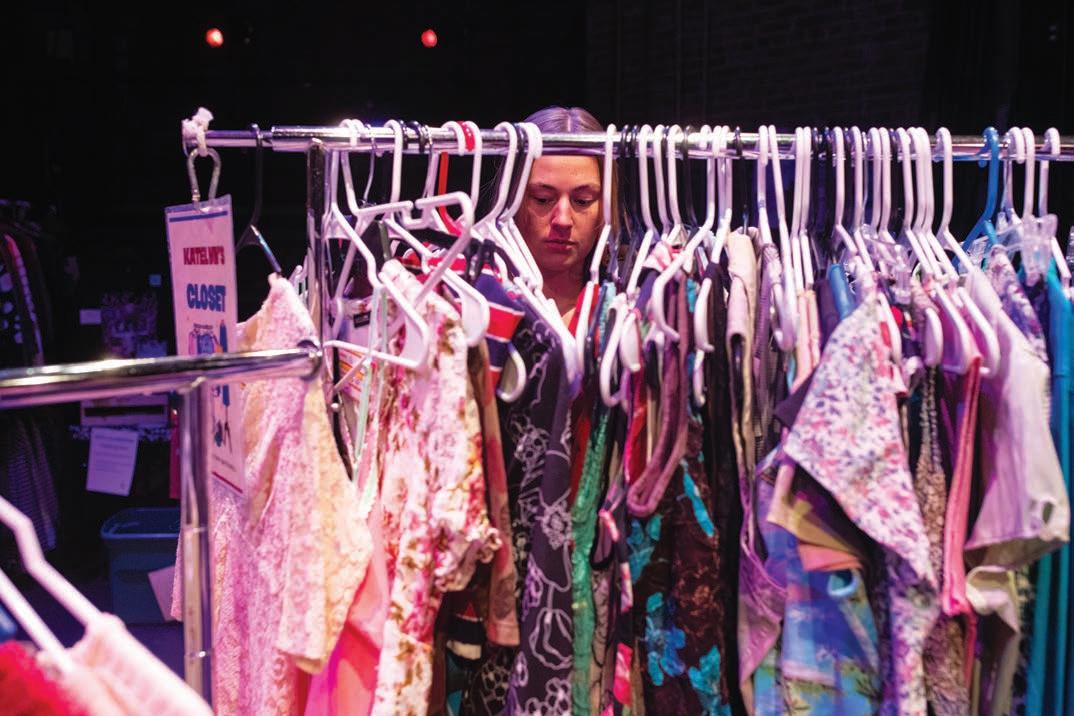
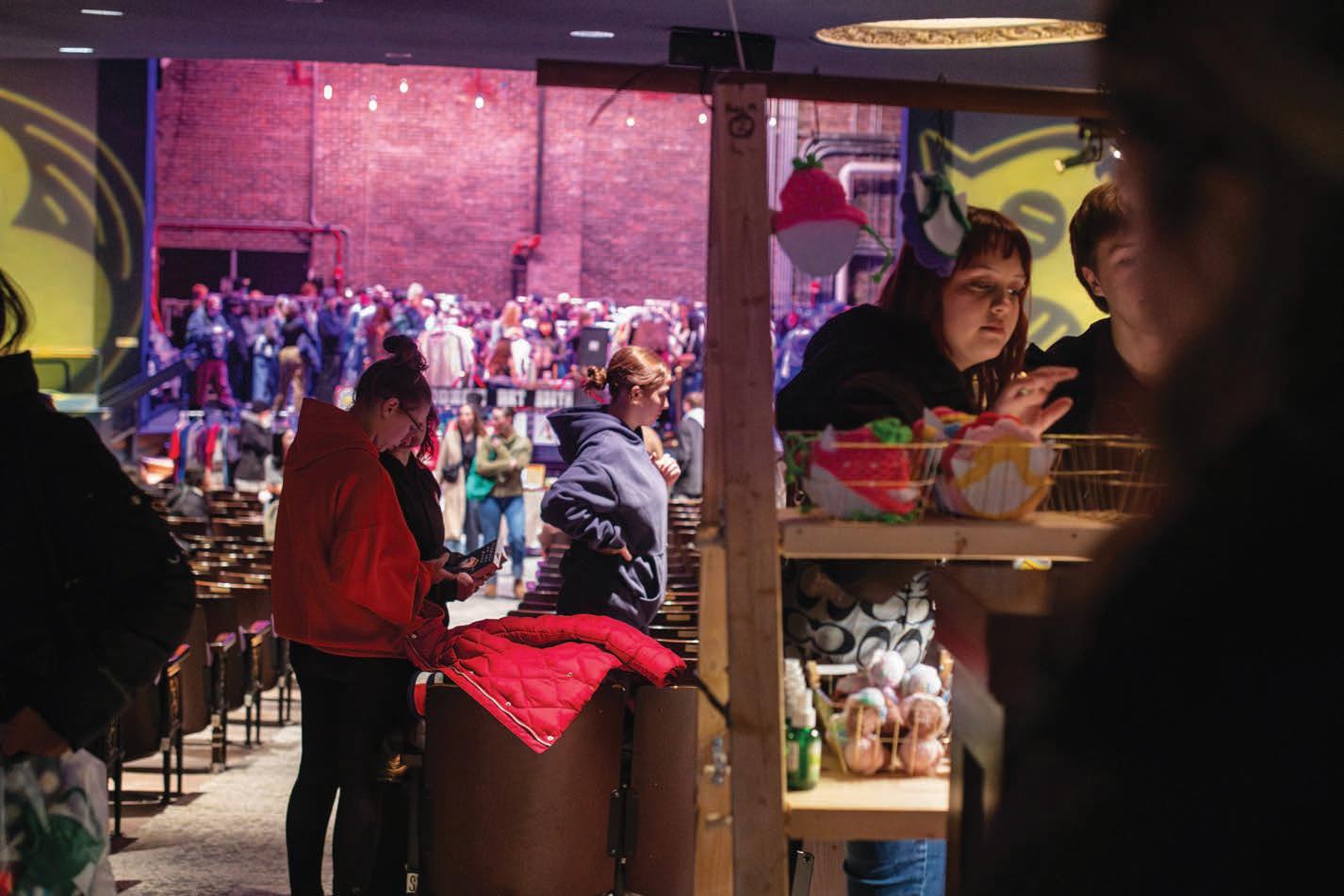
Hundreds of customers gathered at The Englert Theatre on Feb. 22 to shop at the first Iowa City flea market of the new year. Over a dozen vendors set up shop on the main floor, stage, basement, and second floor of the performing arts venue. Customers shopped for jewelry, thrifted clothing, po ery, and art.


SPORTS March evaluations for Iowa basketball
While the men’s
squad is close to 20 wins for the first time in three years, the women’s team remains elite while making adjustments.
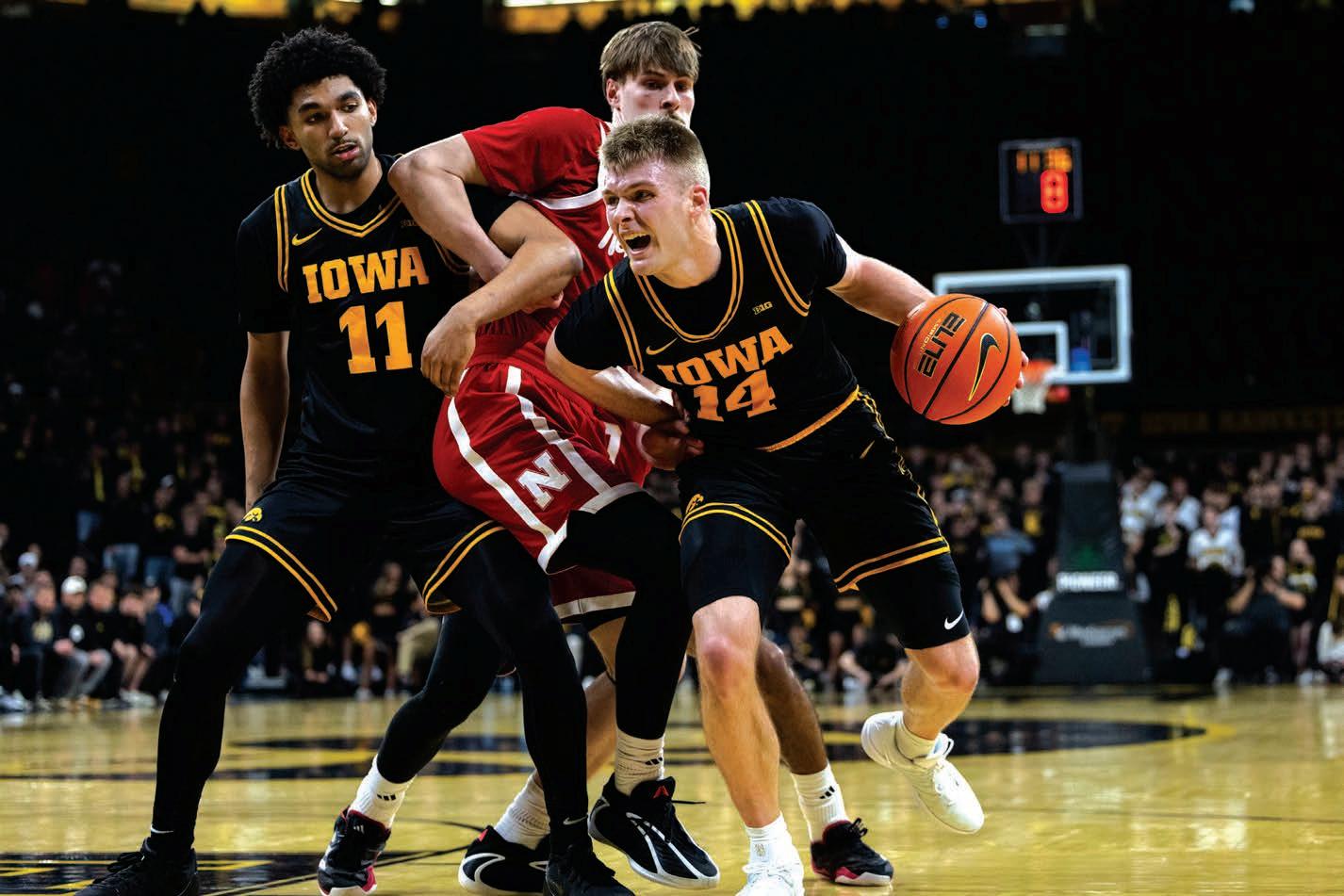
For a college basketball team being in its first season of a rebuild in the N era, the owa men s basketball team is having a great season. n fact, to say this team is overachieving isn t a reach at all. ook at the makeup of this roster. Of all the players on this roster, only two, Brendan ausen and Cooper och, came into this season with ower our experience. Ben McCollum was coaching ivision basketball two years ago at Northwest Missouri tate. is best player, Bennett
tirtz, was alongside him the past three years, along with four other players from last year s 1- rake s uad. ith that being said, this team has no business being 1 - while competing in one of the nation s premier athletic conferences in the Big Ten. Not only that, but the awkeyes are one of the more ecient teams on both sides of the court in all of college basketball.
As of eb. 22, owa ranks inside the top- in ivision in both offensive and defensive e ciency, according to enom rankings. Those e ciency numbers are due to McCollum preaching a team-first brand of basketball. As of eb. 1 , owa tops the Big Ten and sits 10th nationally with . points allowed per game and are one of two teams in the country to hold every
Relentless approach on the mat
Michael Caliendo is the only Iowa wrestler to compete in every dual this season.

t s been almost exactly one year since owa men s wrestler Michael Caliendo found himself deflated. On all fours in the middle of the mat as time expired, Caliendo could only watch as Mitchell Mesenbrink re oiced over winning the NCAA Championship at 1 pounds.
As Caliendo watched Messenbrink celebrate with coaches, teammates, and family, the North akota tate transfer decided to use this haunting memory from a season ago as a catalyst.
“ t s ust fuel,” Caliendo said. “ t s something that have been thinking about my whole life. hen you re younger, you want to win a national championship.”
haring this ambitious feat in his youth with thousands of other wrestlers, Caliendo is one of the few athletes in history to step on the mat for a chance at a national title.
“ t s more about the ourney to get there. One match is not going to make or break it,” Caliendo said. “ ve got one more year left, and if it doesn t happen this year, it doesn t matter.”
This mentality has given Caliendo an edge in his senior season, as the awkeye has dropped ust three matches on the year, with a 1 - record. Caliendo s approach has paid dividends this season, highlighting wins against No. 2 a arion ockett,, No. Braeden coles, No. Arau o, No. 12 addy allagher, and
opponent under their season average the niversity of Northern owa being the only other school. owa s best team stat, at least offensively, is that it sits eighth in the country in effective field goal percentage, proving that its offense generates e cient looks on almost every possession down the floor.
Outside of tirtz s 20. scoring average, Tavion Banks is the only other teammate of his to average double-digit scoring at 10. points per game. No one on this year s owa team averages more than five rebounds or one block a game. t s very rare to see a team boasting a winning record in the Big Ten with such lack of play statistics in today s game. ooking at the stats tell one side of the story. nlike the run-and-gun,
heavy three-point shooting game today, this year s awkeyes team plays a slower-paced style that flourishes off ball movement, inside shooting, and versatile defense. hat McCollum has done this season, coaching this s uad to what is panning out to be a successful first year with the program, has been incredible on pace for 20 wins, bringing fans back into Carver- awkeye Arena, and producing a surefire NBA draft pick in tirtz. Regardless of how far owa makes it in the Big Ten Tournament and the NCAA Tournament, pending ualification, awkeye fans should feel the utmost confidence that he s the right guy for the ob for the foreseeable future.
Avery Chambers vaults toward post-gymnastics career
As Chambers prepares for graduate school, the senior cherishes her final competitions.
lewellyn, who is in her second year with the owa program.

Avery Chambers runway is nearing its end.
The owa senior has mastered the routine sprinting, springing, then flipping and twisting before sticking the landing. The vault, perhaps the most explosive of gymnastics events, is Chambers obvious strength, competing in the event times over her four seasons with the ym awks. he also trained on beam and floor earlier in her career, but focused on the vault, a performance that lasts no longer than 10 seconds. hen she was younger, those precious ticks were her only opportunity to make an impact. Now, with her collegiate career coming to a close, her mentality broadened beyond such a limited scope.
“As a freshman and sophomore, kind of felt like had to prove myself constantly and try so hard to get in the lineups,” Chambers said. “ ince then, have tried to be happy with where am and ust have an overall positive mindset for all my teammates.”
Making the ump from four meets her freshman year to every meet across her past three seasons was once a sizable ad ustment, one Chambers is truly grateful for.
“ reshman year, was really eager to compete and was a little frustrated when wasn t in the lineup, but now think the team trusts me and believes that can compete at my very best every meet,” Chambers said.
Being one of the seniors on the s uad, Chambers has witnessed the program shift to the winning side of gymnastics under the direction of head coach en
“ ust think it has been a full 1 0-degree turn,” Chambers said. “ en and the entire coaching staff have really helped me find my motivation to keep going.” ith the help of her coaches, Chambers has grown into the ym awk she is today, a kind and loving leader for all those who enter the program, especially the freshmen.
“One of the biggest things is teaching them that in college, it s not about going above and beyond and trying to prove yourself on everything,” Chambers said. “ elping them find that confidence is something try to do with every newcomer.”
But to her fellow ym awks, she is more than ust a teammate and a leader she is someone they can look to for help in growing not only as gymnasts but as people.
“After one of our meet rotations, she spoke up about the team s energy being low and even noticed a freshman had something to say and encouraged her to speak up,” lewellyn said. “To have a senior encourage and then back up a freshman in front of everyone like that is such a great leader uality.” ven the best athlete leadership in college sports is only temporary. Roster turnover is a tough realization for many, especially younger competitors.
“ can t even believe she is leaving, but will truly miss hanging out with her outside of the gym at her house, getting coffee together, and so much more,” unior va olpe said. “ he is ust so welcoming and makes me and everyone feel wanted.”
The ourney for Chambers is shifting toward her academic career in speech and hearing science. ursuing a master s
Heartlanders goalies boast style
Riley Mercer and Dante Giannuzzi thrive with the nuances of the position.
Becoming a goaltender wasn’t exactly a choice for Heartlanders goalies Riley Mercer and Dante Giannuzzi. And it’s not because they were initially stars at the position. Rather, they were thrown in between the pipes due to sibling necessity.
“Whenever my older brother had his friends over, they would throw the little guy in the net, and I just kind of fell in love with it,” Giannuzzi said.
The duo each hail from Canada, Mercer from Bay Roberts and Giannuzzi from Winnipeg.
Mercer played junior hockey in Canada, spending all five of his unior years playing for the Drummondville Voltigeurs, where he won a championship in 2024.
Giannuzzi went stateside and signed with the ortland interhawks, where he spent five years. He chose to go this route instead of going to an NCAA school and holds no regrets.
“Being able to play in one spot for your whole unior career is rare, so m definitely grateful for the experience, and Portland has a big spot in my heart,” Giannuzzi said.
Now, the goalies have landed in Iowa and have been holding down the goaltender room alongside William Rousseau, who has earned multiple promotions to the Iowa Wild of the American Hockey League.
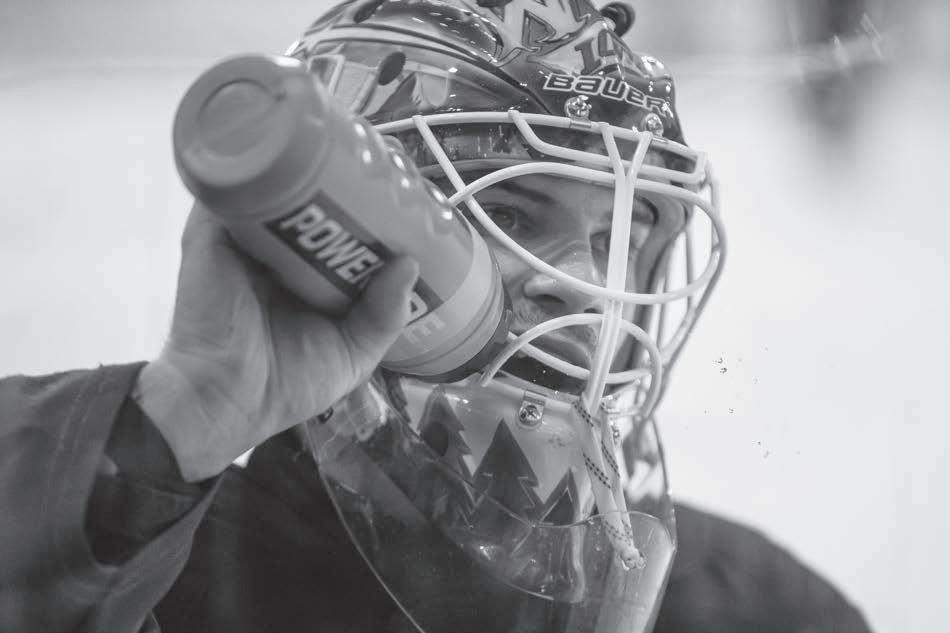
Part of the initial intrigue to the goalie position was customizable gear. Mercer also enjoys customizing his mask and has had several designs over the years, including his dog’s name and a “Hockey Fights Cancer” logo.
“My family has been affected by cancer, and I think it is a nice gesture to put it on the back of my mask and know that the ones I’ve lost are always with me,” Mercer said.
iannuzzi s mask designs came from different landmarks of the place he was in, including a bridge in Portland he would drive on everyday to get to the rink alongside solid color pads. He said Portland gave him new gear every season, and now five masks hang at his house back home.
The goaltender is a position completely different from all of the other skaters on the ice. This contrast calls for special drills and
warmups before games. For Mercer, he partakes in a lot of balance and reactionary warmups before he hits the ice. For Giannuzzi, he talks a lot with his mindset coach, Pete Fry, who he has been working with since his Portland days.
“I get on a weekly Zoom call alongside other ECHL goalies and go through pre-faceoff routines, post-whistle routines, and a bunch of other game plans to get me through games,” Giannuzzi said.
Even though all goalies wish to lead routine shutouts, perfection isn’t reality. Mercer holds a 10-13 record with a 3.12 goals against average. He resets after giving up a goal by doing the same patterns he’s done since he was a kid.
“When I was younger, I probably got scored
Iowa baseball outfielder raised to be a Hawkeye
What is your dream car?
The Daily Iowan: Would you rather hit a walk-off home run or rob a home run to win the game?
Kellen Strohmeyer: I’d rather hit a walk-off.
What do you enjoy spending money on?
Experiences, like fun things. If we travel, doing something cool, rather than spending it on clothes and food.
What is your favorite baseball memory?
The Principal Park series was a lot of fun last year. I think that was a really good memory. Also, going to the state tournament twice with my high school team and some of my best friends was a fun memory.
on more than I needed to, so I got used to it, whether that is a good or a bad thing,” Mercer said. “Now it doesn’t bother me, and I know that the next shot is the most important one.”
The goaltender is the last line of defense and the easiest person to place blame on. Throughout his career at the position, Giannuzzi grew to not only hold himself accountable but also maintain proper perspective in the face of di culties.
“I’ve been able to relate the adversity training I’ve faced in hockey and put it towards my everyday life,” Giannuzzi said. “Somedays you’re the windshield and somedays you’re the bug, but I’d say more days than not I am the windshield.”
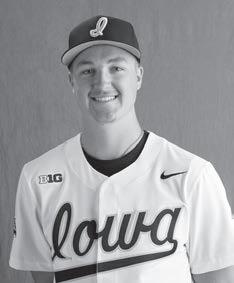
Honestly, I’m driving my dream car right now. I love the 4Runner. Otherwise, like a big Ford truck of some sort.
What made you choose Iowa?
I grew up a Hawkeye. We had season tickets to the football games, didn’t miss any home games from the age of 6 to 15, and my family is very supportive.
My mom doesn’t really miss any home games, and I’ve got a 12-year-old brother who wants to come watch me play.
So, just being an hour and a half from home and playing for a really good school that wins a lot of games was huge.
Have you ever met a celebrity? If not, who would you like to meet and why?
I actually met David Ortiz. I thought that was awesome. I met him at the Field of Dreams game, where I was working.
What is your favorite holiday and why?
My favorite holiday is Christmas — celebrate the birth of our savior, and it’s a great time to be with family.
Who is your baseball role model and why?
Growing up, I loved Big Papi, David Ortiz. I’m a big Red Sox fan, [he had] a good lefty swing. I also love Ken Griffey Jr., just because I loved his swing, too, as a lefty.
Where is the coolest place you’ve traveled to?
Probably the Dominican Republic. I really liked it there.
Outside of baseball, what is a skill you’d like to learn?
Guitar. I’m pretty flaky with it. I try, but it hasn’t come a long way as much as I hoped.
What is the best spring sport at Iowa?
Sports reporter Jack Birmingham makes a case for track and field, while Patrick Halma thinks baseball is the best.

I’m not saying that Iowa baseball isn’t a great program, but Hawkeye track and field simply offers more to watch for sports fans, even if baseball at the national level is the more popular choice. For starters, there’s the fact that baseball at Iowa is a men’s sport, with softball being the women’s equivalent. The programs both have their strengths, but there are clear differences between the sports, such as pitching style, field and ball size, and game duration. Track and field, on the other hand, while represented by differing men’s and women’s teams, is largely consistent as a sport, meaning that anyone can watch or play it without having to learn new rules or techniques.
owa track and field may not be as well-known as baseball, but the program offers a little bit of everything. More than that, the
athletes who make up the programs showcase versatility in these different areas, meaning whether you want to watch running, throwing, or umping, you can find an athlete in black and gold to root for. Want to watch someone throw a heavy object as far as they can? Ryan Johnson, on Feb. 9, was named the Division I Men’s National Athlete of the Week by the U.S. Track & Field and Cross Country Coaches Association. The junior broke his own record in the weight throw at the Iowa State Classic with a 24.99-meter throw. Maybe you’d rather watch a sprinting event, like the 200meter. Look no further than sophmore Chioma Nwachukwu, a native of Asaba, Nigeria, whose 23.43 was a personal best at the Larry Wieczorek Invitational on Jan. 23, as well as fifth in program history. If you asked the average American which sport they follow the most, baseball would admittedly be a popular answer. But in owa City, track and field offers inclusivity, more diverse events, and more Hawkeyes to root for, making it the best spring sport that owa has to offer.

When it comes to arguing for Iowa’s best spring sport, choosing baseball is a home run every at bat. It’s America’s pastime when it comes to sports, which is nowhere near track and field. Now don’t get me wrong, track and field is a good sport to watch, but when I look at my spring schedule, I have to weigh whether: (A) I want to go and sit in the stands watching athletes run in a circle, jump over hurdles, and throw a very heavy ball for three plus hours, or (B) sit in the stands and watch two teams battle it out on a turf field with players trying to hit a ball with a bat for around three hours. As I will remind you, many have dubbed it the hardest athletic thing to do. In my opinion, it is not a hard choice. I personally would love
to see a batter try to hit a home run and strike out than a runner run in a circle for a varying metric distance.
Track and field may have a multitude of opportunities to see athletes strive on a personal level, but baseball has that as well.
Many kids across the world watch college baseball to improve their own skills at a specific position. n the outfield, for example, kids can see Iowa’s Kellen Strohmeyer and Miles Risley rob batters of home runs and maybe even see one of them throw out a runner at home to win or save the game.
No one can go wrong with a 4-6-3 double play on the diamond with the help of Gable Mitchell, Kooper Schulte, and Caleb Wulf to end an inning. And when it comes to the mound, everyone can get hyped up when a pitcher is throwing a no-hitter, or even on the very rare occasion, a perfect game. But hey, who am I to make you choose not to spend your spring afternoons possibly inside watching track and field, but rather walk the small distance up the hill to the beautiful Duane Banks Field for a nice, cool spring afternoon baseball game?
The Iowa women’s basketball team lives between the absolutes. Nine consecutive wins to open the season and all is good, but losses to ranked Iowa State and UConn make possible postseason glory fleeting.
Then another eight consecutive victories capped off with a drubbing of a ranked Ohio State team, a triumph dampened by a season-ending ACL tear for starting guard Taylor McCabe. The roller coaster began again, and now the Hawkeyes are back again searching for equilibrium. With a 22-5 record and a second-place position in the Big Ten, it appears they’ve found it.
“It can be hard to navigate, but I think our players stayed the course,” Iowa head coach Jan Jensen said. “We understood we were reforming.”
Such a reformation process centered upon defense. McCabe’s final season didn’t boast much offensively, with her field goal and three-point percentages hovering at career lows, but she still averaged a career-high in minutes per game. Her reputation as a shooter, owning a career 40 percent mark from long range, helped space the floor and her defense often went unnoticed until her injury.
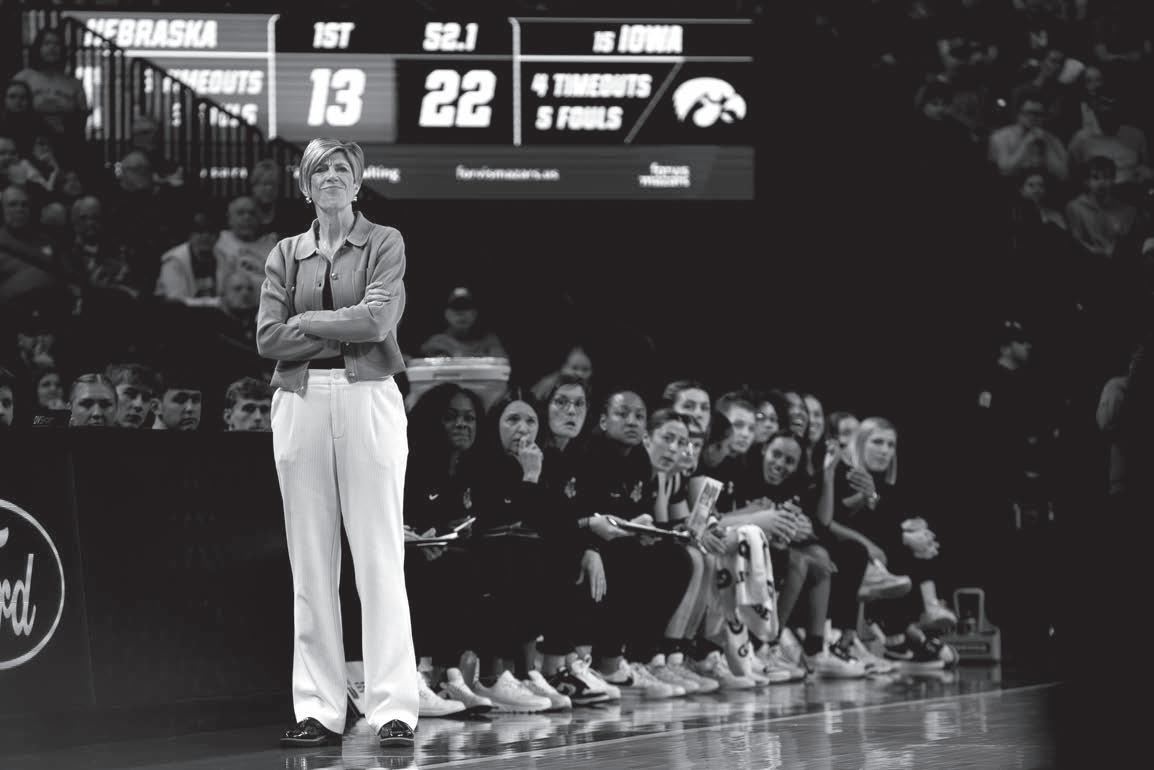
In the three games that followed, Iowa conceded 81, 88, and 91 points, which, outside of the UConn loss, sit atop in most opponent points allowed. Jensen said her team gave an “uninspiring” performance against Minnesota.
Jensen wanted assertiveness and awareness and saw both attributes bloom in Iowa’s next set of games — another three-game win streak. The spark started in the second quarter against Washington, where Iowa allowed just five points after conceding
25 in the first frame. Jensen maintained the performance was partly due to bad luck on the Huskies, who made just two field goals but also committed eight turnovers.
“That’s what it’s going to take from here on out,” Jensen said. “And if we can stay locked in and understand who’s
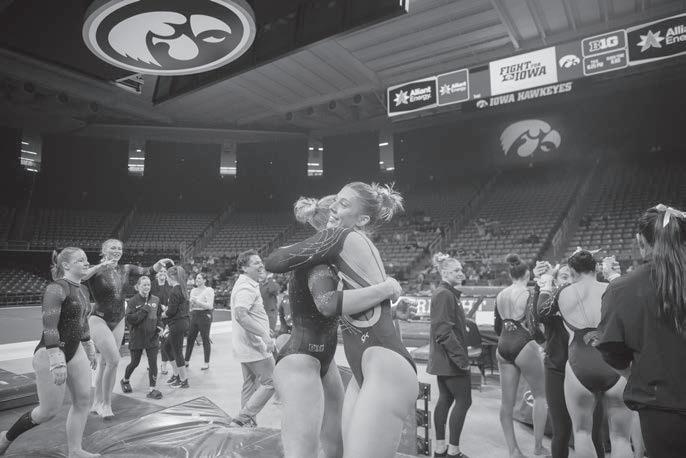
No. 10 Andrew Sparks.
Caliendo is the only Iowa wrestler to compete in every dual this season and has outscored his opponents by a staggering margin of 197 to 54 in his 15 wins, adding two pins to his resume as well.
“I don’t stop when I get a little bit of a lead, I don’t stop when I get tired,” Caliendo said. “I force myself to keep wrestling. I force myself to keep scoring points.”
This “all gas, no brakes” mindset has been an instrumental part of Caliendo’s winning formula.
Caliendo’s three losses on the season have come from top-six ranked opponents, falling to No. 1 Messenbrink, 11-2, No. 6 Oklahoma State Cowboy LaDarion Lockett, 7-3, and No. 4-ranked Joey Blaze of Purdue, 4-1, in sudden victory.
Despite the mistakes in those matches, head coach Tom Brands has full faith in his veteran 165-pounder to maintain his high athletic prowess moving forward.
“Caliendo is just as steady as they come,” Brands said. “Just steady, steady, steady.”
Despite a 12-5 team record against a grueling schedule, Caliendo, senior Drake Ayala, and other veterans have looked beyond the standings. For the seniors, the Hawkeyes’ future success hinges less on the win column and more on the accountability of leaders.
“I think that it’s just as much my fault as it is [Brands’] fault. And I know Mikey [Caliendo] feels the same way. Patrick [Kennedy] feels the same way,” Ayala said. “It sucks. Like you said, we’ve got to have effort out there.”
Through all of the noise this season has brought, Caliendo has been determined to remain true to himself, especially with postseason wrestling right around the corner.
doing what and when, then I think our defense can be pretty solid.”
Sophomore guard Taylor Stremlow served as one spark to this turnaround. She delivered three steals in the win over Nebraska and a late block against Washington. She started the last four games for the Hawkeyes after swapping places with freshman Addie Deal, who saw her scoring plummet when promoted to the starting lineup.
With Deal coming off the bench as she’s done since the beginning of the season, the guard better understands the pace of play and flow of the game, allowing for a smoother transition. The more experienced Stremlow is similarly skilled at shooting, with a career-high 51 percent from the floor and 39 percent from deep this season. The extra year lends to a greater awareness and comfortability
in speech pathology, she was accepted into multiple graduate schools.
With only two meets remaining before the postseason, Chambers looks to finish strong and cherish the memories she has made with her fellow GymHawks. Her performance on the vault is only momentary, but she hopes her runway can continue as long as possible.
“With my vault, I am really shooting for 9.900, but I am just really excited for the postseason and hope as a team we can move into the teens in the rankings and move on to nationals,” Chambers said.
Iowa needs from a starter.
As the regular season draws to a close, Jensen is more knowledgeable on her lineup variability, whether it’s adjusting for defense, height, or just the ability to navigate screens. The loss of McCabe is no doubt a hit to Iowa’s depth. With Emely Rodriguez out since November — Jensen still frames the situation as a back injury — the Hawkeyes usually feature three freshmen coming off the bench in Deal, center Layla Hays, and forward Journey Houston. Yet Jensen remains optimistic contributions will continue, even in the clutch of the postseason.
“We’re going to see different young stars shine,” Jensen said. “The key is to keep everybody ready when their time comes again.”
“A lot of wrestlers will get a 10-4 lead and start coasting, whereas I’m looking for the next best thing,” Caliendo said. “I’m going for a pin or I’m going for a technical fall.”
“At the end of the day, you are focusing on yourself, getting ready for your matches,” Caliendo said. “That’s what’s going to be best for the team.”




BADGERS BITE BACK
The Iowa Hawkeyes fell to the No. 24 Wisconsin Badgers, 84-71, during a basketball game at Kohl Center in Madison, Wisconsin on Feb. 22. This was Iowa’s third loss in their last four games, making their record 19-8.

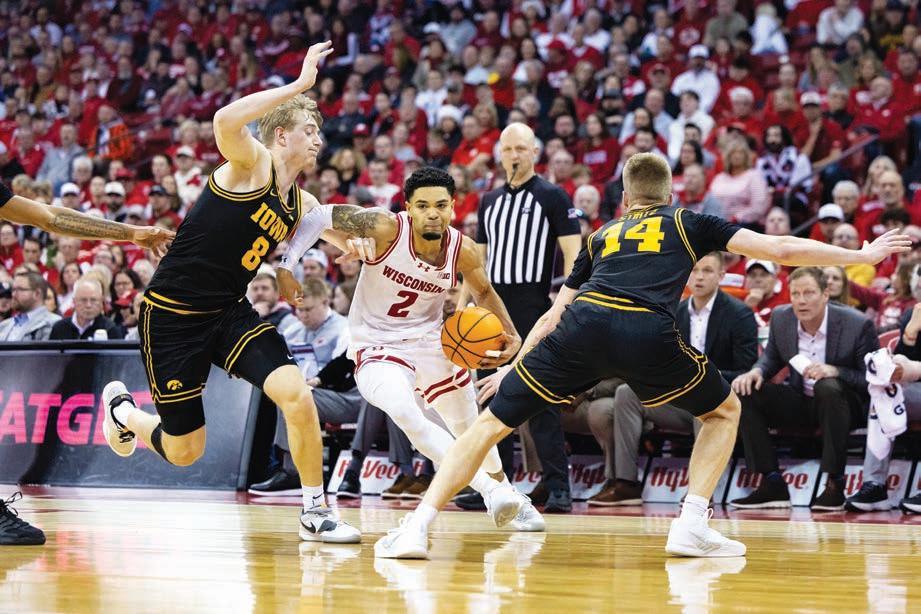

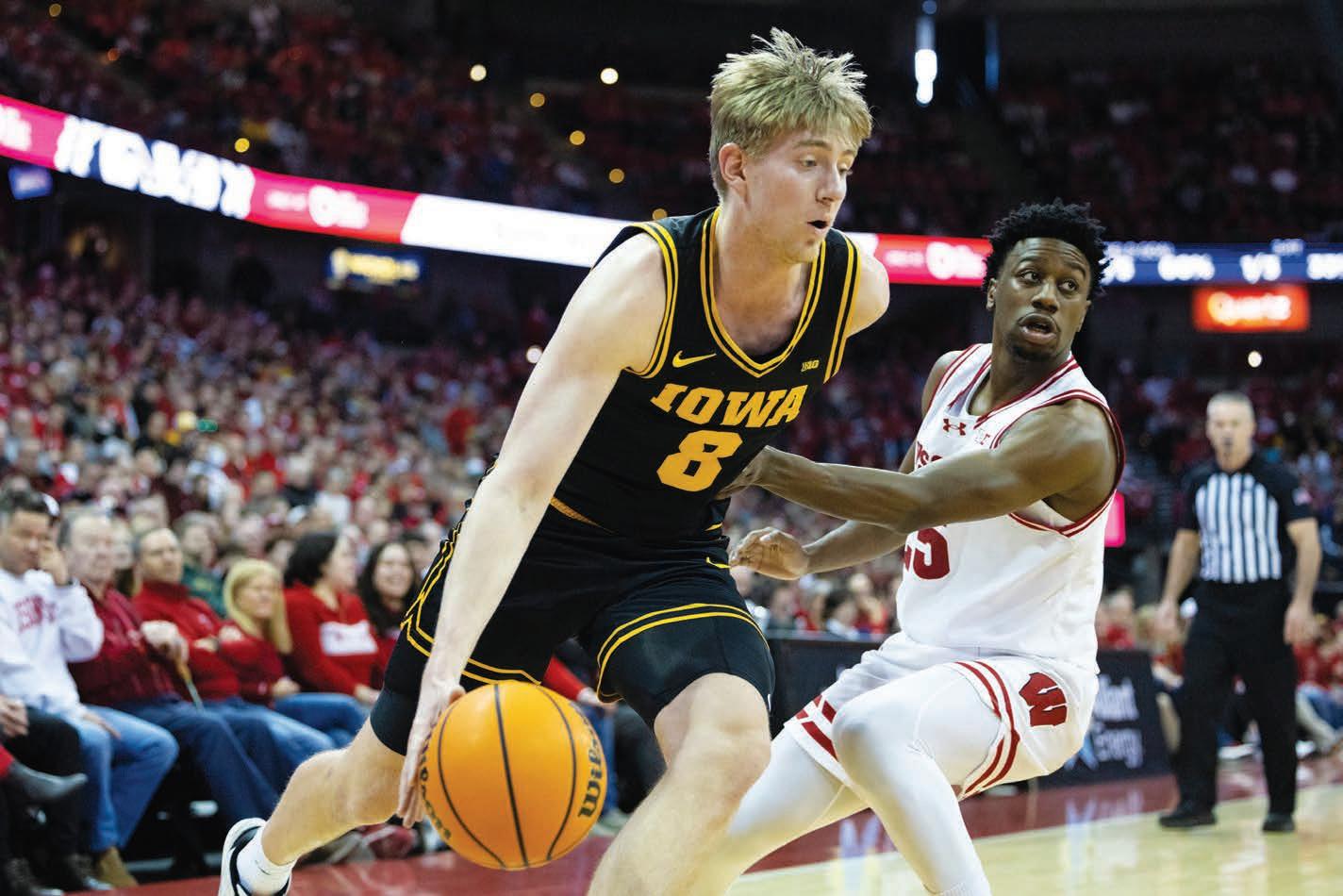














































































Elizabeth Moen stars in new setlist


The Songwriter returns to Iowa City with a fourth album in the works, highlighting arts accessibility.


Elizabeth Moen’s Iowa City homecoming
From small-town Iowa to national performances, Moen shines a light on accessibility of art.
by a theme of security and connectedness with a partner.
ulling off a mix of calm folk, raw and sweet, then contrasting it with electric and fierce backups, Moen had many audience members nodding their heads, tapping their feet, and even dancing in their seats.
Elizabeth Moen returned to Iowa City a decade after she graduated from the University of Iowa to perform her upcoming album “Fields on Fire” for a crowd of over 300 at The Englert Theatre on Feb. 21.
After building momentum from her unreleased tracks, Moen sprinkled in older songs like “Is Heaven Just A Waiting Room?” and “Songbird” while inviting the audience to sing along.
Four years since her last album, Moen’s upcoming album revives her indie-folkrock sound despite being short a guitarist. After joking that there are plenty of similar artists in Iowa City, Moen opened her set with “Renaissance Man,” the twang in her voice matching the sass that exudes from lyrics like “If I say I’m bad, baby it’s true.”
The Iowa native performed with a slight shift in energy, belting lyrics of reflectiveness and love that seemed more secure and content than in songs past.
Moen's song “Anybody Else” was a perfect example of this, with a twirling intro reminiscent of falling into sleep, leading into a more electric sound accompanied
Throughout the performance, Moen and her band executed entertaining vocal and instrumental riffs that kept the audience s eyes glued to the stage.
The theme of security radiating from her record is tangible literally and meta phorically, with this being her first time releasing through a record label offering a sense of security for the artist.
“I've always been kind of on the edge of my seat when it comes to the future of my career, and so like, kind of riding a wave of feeling secure,” said Moen. “No matter what happens, I just feel good about it.”
As big a stage as the Englert Theatre has been for Moen, she said her performances there weren’t as nerve-racking as the one a few months ago at Cook County Jail in Chicago.

Stanley Museum tells a story
through tapestry
The 220-foot-long piece by Canadian artist Sandra Sawatzky traces the history of oil.
In the Stanley Museum’s newest exhibit, “The Black Gold Tapestry,” a story unfolds on an almost 220-foot-long, handembroidered, linen tapestry. Created by Canadian artist Sandra Sawatzky, the tapestry traces the history of oil, from the prehistoric age to current times, also referred to as “black gold.”
Sawatzky currently resides in Calgary, Alberta, Canada, which is known as the oil capital of the country. She began this project in 2008 and completed it in 2017. The scale of the piece was inspired by the Bayeux Tapestry, a 230-foot-long medieval piece from the 11th century.
Sawatzky drew her theme from stories about war efforts during orld ar , where the military transitioned from coal-burning ships to fuel-burning ones. As an artist and a filmmaker, she refers to her pro ect as a “film on cloth,” due to the storyboard nature of the tapestry. Her goal for the project was to trace the history of oil as far back as she could.
Diana Tuite, visiting senior curator of modern and contemporary art, first saw the piece in 2024 at a show in the Massachusetts College of Art and Design art museum. She was drawn to the history in the piece as well as the history of handicraft. That type of hand embroidery was typically associated with women and marginalized communities.
“It’s also a handcraft people are actively engaging with, but no one is necessarily envisioning it as a way to tell a filmic story about something as all-encompassing as the history of oil,” Tuite said. “I really wanted us to present something that pushed back a little bit on the idea that you need a lot of bells and whistles technologically to create an immersive experience for audiences.”
As illustrated in its display at the Stanley,
the history can be traced all the way back to the prehistoric period. or the first out of 52 scenes in the tapestry, Sawatzky embroidered dinosaurs alongside the accompanying text, “Triassic, Jurassic, Cretaceous.” Within the next two scenes, she documented the prehistoric creatures’ decline, leading to the formation of bitumen, a viscous form of petroleum, which then transformed into oil.
Sawatzky kept the dinosaurs as a constant throughout the tapestry. Taking inspiration from the Bayeux Tapestry’s border of mythological creatures, the Black Gold Tapestry has a border of over 400 dinosaurs.
Divided into eight sections, each panel was hand-embroidered by Sawatzky. For every panel, she created a 30-32-foot-long drawing. Working three feet at a time, she would trace the drawing and then embroider the fabric.
“When you’ve got 220 feet, [it] is a lot, and it’s a mind game when you’re trying to complete that kind of work, so you have to break up every step of it down to small components,” Sawatzky said.
The final, colorful tapestry wraps around a room in the Stanley, against magentacolored walls. Numbers underneath each scene, labeled 1-52, correspond to an exhibition guide. As viewers progress through the exhibit — and time — they can read notes written by the artist.
Sarah Luko, manager of collections and exhibitions at the Stanley, and Sayuri Sasaki Hemann, assistant registrar, worked on installing this tapestry on the wall. They received the tapestry in two crates and one eight-foot-long tube. Hemann said, as a result of being compacted through transportation, the piece had to be steam-ironed.
“The important part to note is that we only steamed the white parts that don’t have embroidery, because the embroidery is made with wool and silk thread,” Hemann
said. “It’s also hand-dyed with natural dye, so we didn’t want the dyes to bleed out if it steamed.”
The two members of the collections team also demonstrated the touch panels in the middle of the room. The touch wall contained examples of four types of stitching: outline, chain, laid, and couching, and it offered viewers an opportunity to physically interact with the piece by touching and interacting with it. A large book entitled the “Tactile Graphics Tour” offered an accessible breakdown of 18 scenes in Braille.
For the color on the walls of the exhibit room, Luko took inspiration from one of the panels featuring Queen Victoria’s dress. The color of the dress was magenta, a color developed by William Perkin from cold tar waste.
“Hearing the information about that panel, she was one of the first people to wear
a synthetically dyed dress in the magenta color,” Luko said.
In addition to tracing the history of oil, Sawatzky intended to trace the history of color as well, with each panel having its own color palette. Until the 19th century, different pigmented dyes were not easily accessible. Luko said that, after Perkin invented aniline dyes, including magenta, it opened up the possibility for all different colors.
Sawatzky hoped that this piece would allow people to enjoy the craft of embroidery. When she had begun making the piece in 2008, she had felt handicraft was dying.
“I want people to pay attention to a story that’s basically as old as the world, and has had this 5,000 year history in our social history, and the way in which the use of oil has changed and spread,” she said, “It’s an amazing story, and it’s a story of humanity.”
‘Wuthering Heights’ stirs up explosive discourse
The new Emerald Fennell film has become controversial among UI students.
even attempt to be historically accurate.
The new adaptation of “Wuthering Heights” has caused a commotion across social media and among students at the University of Iowa. While some argue that the filmmaking makes the movie watchable, others are distracted by the changes made from the source material.
“The cinematography was insane and so fun to watch on the big screen; regardless of the somewhat inaccurate plot, I thought it was just a fun movie,” Jailyn Quinn, a fourth-year UI student, said.
Emerald Fennell’s film lexicon has consistently garnered intense media attention. Whether positive feedback or aggressive criticism, Fennell’s features leave viewers divided. Her films, “Promising Young Woman” and “Saltburn,” were widely successful yet received both criticism and praise. However, her most recent film, “Wuthering Heights,” has arguably created the most opinionated and passionate online discourse between viewers.
“Wuthering Heights,” Emily Brontë’s 1846 novel, is an iconic period piece and a classic novel. The film, based on the novel, was released in theaters on Feb. 13., starring Jacob Elordi and Margot Robbie, with music produced by Charli XCX. This film was arguably set up for rough feedback from the very beginning.
Including two of the most famous actors in the world and a soundtrack by a globally famous music producer, this film didn t
The UI students who loved the movie argue Fennell did include important aspects of the time, such as the setting, language, socioeconomic status, and fashion. Others who disliked the film argue those aspects alone are not enough to make up for everything Fennell decided to exclude.
Before the film even came out, people on the social platform X and Instagram were calling it “the Dubai chocolate of movies.”
eople were calling the film this because its roots are so utterly basic — the cast is made up of almost entirely white people. This is not at all accurate to the book, and the music does not match the time period in which the plot takes place.
Some argue Fennell did the book a disservice with her adaptation, while others praise her distinctive directorial vision. hen saw the film in the theater on its release day, I walked out overwhelmed with emotions. The theater was packed to the brim with girls of all ages, giddy to see the handsome Elordi on screen and watch this new and exciting film with their friends. In all honesty, I think my experience watching the movie affected my opinion of the film. thought the film was beautifully shot, and I thought the obscurity of it all made it so unique and fun to watch. But, after sitting with it for some time — and, unashamedly, a second viewing — I had some different thoughts, and so did many others.
Fennell’s directorial style is edgy and different. nlike Martin corsese, who focuses more on the actual art of film in his movies, Fennell likes to shock her viewers
and use that shock value to gain traction for her films in the media.
I took this discourse to the streets. I stood outside Starbucks on Clinton Street and asked people for their opinions on the film, remaining completely unbiased. The overall response I received? 18 out of the 32 people I talked to disliked it. It has been interesting collecting all of these thoughts and opinions as most of the people I have talked to who are
English majors had lots of negative things to say about the film, considering they acknowledge the book more. But, at the other end of the spectrum, students majoring in, for example, psychology or business analytics, really en oyed the film.
While Fennell may not have cared so much about the book-to-movie adaptation of it all, she nevertheless succeeded in making an entertaining and visually pleasing movie.
Fostering creativity through 3D printing
Located in the heart of the University of Iowa’s Seamans Center is the Iowa 3D club room, where plastic projects line the walls, and a multitude of printers coat the many tables. The room features a wide collection of printers, offering students the ability to print in various shapes, sizes, and forms of filament.
While the mechanics may sound daunting to some people, the s nonprofit, student-run club that has been around since 2022 brings limitless possibilities to the fingertips of all interested students.
Adam Bischoff, a fourth-year student and vice president of the 3D club, said the club uses a variety of printers, including three user-friendly Bambu printers, nder printers, and Prusa printers.
olylactic acid filament is commonly used in these printers, a bio-based thermoplastic polymer with a low melting point and high strength derived from renewable resources such as corn starch or sugarcane. The filament comes in a wide range of colors and can even be metallic, transparent, or -activated depending on the type. hile polylactic acid filament is the basic form of filament, the club also utilizes printers capable of printing in other materials, such as carbon fiber, polyethylene terephthalate glycol, and
acrylonitrile styrene acrylate. ach material offers its own uni ue properties strength, resistance to weathering, and durability that give club members access to the leading materials suited for each uni ue pro ect, percolating their minds.
“ m a maker, my hobby is engineering,” Trey okoun, a second-year graduate student and 3D club member, said. “The club is a place for me to work on my passion for engineering, and it helps me bring my crazy pro ects to life.”
Along with printing members pro ects, the 3D club also accepts commissions from student organizations, businesses, and the local community. As long as the re uest is school-appropriate and not illegal, such as the printing of firearms or other weapons, the club offers a place for anyone to bring their imagination to fruition.
“ ebsites like Thingiverse or MakerWorld have lots of creative prints on them that we can take and print ourselves,” Bischoff said. “ e ve also had members who make their own prints from scratch.”
ith roughly 2 active members, the club encourages education into the world of printing, collaboration between members, and creativity in projects.
After completing a brief training on the e uipment, members are given free access to the club room and materials.
The club hosts weekly, hour-long meetings consisting of fun facts, news about printing, speaking about
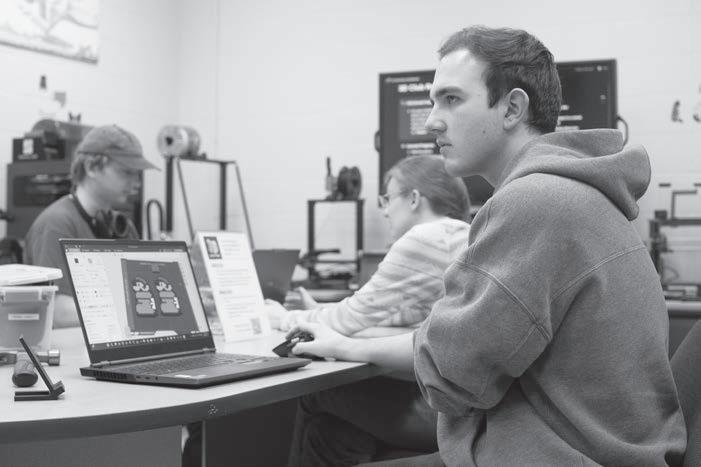
upcoming events, and working on either club-related or personal pro ects. ince the club seeks commissions, they often promote commission projects for members to work on, fostering an experience-driven environment that teaches members foundational skills in the world of 3D printing and design.
“ really en oy the like-minded community who like to work on pro ects and socialize,”
rica ahe, a club member, said. “ t s a great place to study and work.”
epending on the size and complexity of a pro ect, prints can range anywhere from a few hours to multiple days. hile waiting for pro ects to finish or taking advantage of the familiar environment, the 3D club room often serves as a comfortable place for members to hang out.
“The club space is a really chill environment,” Bischoff said. “A lot of people hang out there between classes. t s the people that really make the club fun.”
A look into Black film history with the UI archives
UI librarian Elizabeth Riordan discusses the history of Black films by exploring a vintage lobby card.
This is an installment in a multipart series.
Film history has a long and messy timeline. With the ease of tossing aside older movies from eras of silence and black and white, holes easily pop up. Lead Outreach and Engagement Librarian Elizabeth Riordan noticed this while going through the University of Iowa’s own collection. Riordan shares insight on the history of Black films by zeroing in on a lobby card for a 1920s film kept in the UI archives.
The Daily Iowan: What is a lobby card?
Riordan: A lobby card is what you would send to studios or the studio’s theaters to get them to check out your film. ust love the language they use, how they re trying to get you to come to the theater. They want you to buy into this film. What collection is this lobby card and others like it from?
This is from our Black Film and Television collection that we started a few years ago. e started it because we realized we had a huge gap in a lot of our film collections. e have a huge film collection because we ve had a lot of really cool people come to the UI and then have gone on to make films. ilm cene is

always advertising the latest ones. That s all history here at the . ith this gap, our curator Peter Balestrieri and I decided we could fill this gap a little bit. e started buying things that had to do with race films. This lobby card is for a movie called lying Ace.
What is a race film?
Race films were movies predominantly made for Black audiences. They were done with an all Black cast and made until the 0s. Richard . Norman, a white movie director and the founder of Norman Studios, usually directed them. e made films for African Americans because he would say how we’re ignoring this complete audience, and we shouldn’t be.
What was the movie advertised on this card/poster about?
lying Ace is one of the earliest films in our collection that we talk about. lying Ace’ was a silent drama in 1926. It was based on Bessie Coleman, or that’s what they say, and it was filmed in acksonville, lorida. t s also about flying aces in orld War I. That was a really popular topic at the time. t oined the ibrary of Congress ilm Registry in 2021, so it s now preserved forever in the ibrary of Congress, which is really great.

There was a lot of e uipment used like planes. They also used a lot of locals for the film. think that s really exciting because it was also a really smart tactic to get a bunch

They were making films that starred an all Asian American cast. o, race films can mean other communities as well. When we hear the term “race films” though, it s typically talked about in the context of Black Americans.


The performance at Cook County Jail for 96 individuals in custody, organized by Recipe for Change and The Numbers Project, was built on that idea. Throughout the last year, the jail has seen several musicians come through, and aims to improve individuals’ demeanors and mental health. Moen said playing there felt more important and emotional than other venues, as incarcerated people don’t receive as much access to the arts.
“Elizabeth and her group put on a show that was really touching and just really warm for the holiday season,” Trevor Olsen, Recipe for Change project manager, said.
Recipe for Change, a nonprofit organization, has provided access to the fine arts and job training, and has also served as a creative outlet for individuals in custody at Cook County Jail for the last 12 years. The organization aims to reduce recidivism, or the rate at which formerly incarcerated individuals reenter the criminal justice system.
The jail is one of the few that have cashless bonds, which results in the individuals in custody having longer stays, Olsen said.
“When incarcerated, things can be very grueling, very desperate,” she said. “By bringing in art and music, it changes the demeanor of individuals who reside here, if only just momentarily.”
After those performances, the individuals in custody often ask to access those instruments and learn about genres they may not have encountered without the nonprofit, Olsen said.

Eight individuals are enrolled in the music program at Cook County Jail and have access to record music daily, grounded in the faith that arts, and access to them, have rehabilitative powers.
Olsen believes getting individuals in touch with something that draws out the humanity within them is the only way for them to have a chance moving forward.
“Everyone deserves music, and especially live music,” Moen said about her performance there.
The belief that everyone deserves access to the arts was a guiding principle for the performance at Cook County Jail, and is part of the spirit that brought Moen back to Iowa City for Free Week.
Free Week, an arts and culture festival put on by Think Iowa City and the Iowa City Downtown District, entered its second year last week. More than 50 events took place at over 20 venues, an increase of 10 performances and five venues from last year’s festival.
The idea, originating from the Red River cultural district in Austin, Texas, was developed as a way to make the arts more accessible.
Johnson County has become a hotspot for public funding of the arts, recieving the most funding out of all counties in the state.
Iowa City artists and organizations have received more than $90,000 in art
benefit of that is that it is all pretty much walkable,” Hunter said.
Free Week also provides access to the arts, while national funding receives increased scrutiny with the U.S. House votes to fund the agencies with $2 million less than the previous year.
While national funding tightens, the opening act for Moen, The Night Lights, announced that they received a state grant from the Iowa Arts Council to fund their upcoming album as well as two creative workshops this year.
The folk band, consisting of three female vocalists, warmed the crowd up with songs from their debut album, “The Night Lights,” as attendees set foot into the historic venue and clomped snow off their boots.
Vocalist Abbie Sawyer introduced their song “Until I Fall Asleep” with a personal anecdote about being a mom. This vulnerability resonated with the audience, and their harmonic voices moved forward to mould the evening.
The crew met 20 years ago while working at The Englert Theatre, and have been performing under “The Night Lights” since 2023.

necting people with art is one way to ease their loneliness.
“Connection with the community and connection with arts is not a luxury,” Sawyer said. “It’s essential for sanity, and it’s essential for feeling whole.”
project grants in 2026, with 14 percent of Iowa Arts Council art project grants funding art in Johnson County, according to the Iowa Economic Development Authority.
Christopher Hunter, the director of marketing for the Iowa City Downtown District, said Free Week aims to entice people who haven’t had the ability to experience the multitude of art venues downtown.
“It just kind of reinforces that anytime you come to downtown Iowa City, you're going to find something to do, and the
The three musicians are passionate about making art, Sawyer said, seeing art as a basic human right, which is why they performed for Free Week.
“Arts are such a quick access point to be able to process, heal, transform, connect, feel seen, and feel heard, and these are all essential parts of the human experience that shouldn’t be tied to your ability to pay for them,” Sawyer said.
Sawyer said accessing the arts is a way to feel her own humanity, and is why the band loves playing shows that are free to the public. The vocalist believes con-
The band isn’t alone in that belief. Moen, from a small town in eastern Iowa, struggled to access art as a kid, and said she felt isolated before having access to art both as a performer and audience member in Iowa City.
Moen said that being able to aff ord tickets is a privilege, and it’s a shame that it is one.
Moen also mentioned that live music is a great way to facilitate intergenerational relationships. Shows like the one on Feb. 21 exemplified her point.
As Moen took a moment to switch from electric guitar to acoustic, she asked the audience to talk among themselves about a famous person they’d like to have
As she tuned, attendees broke into chatter, still excited to talk to one another even as Moen slowly introduced music back into the theater by ramping up before breaking into full song.
Free Week offers something for all ages, Hunter said, giving families an affordable way to introduce their kids to the arts.
In Iowa City, the average per-person per-event fee is $46.77, according to the Arts and Economic Prosperity 6 study done by Americans for the Arts in 2023.
With this fee, the price of a family attending a concert together in Iowa City can easily reach into the hundreds.
“Buying tickets for a family of five can get really, really pricey. So whenever there's anything that's free downtown, we're taking advantage of it,” Moen's aunt, Peggy Somerville, said.
Moen lived with Somerville during the writing process of her debut EP “Creature of Habit” when she was starting her artistic career in 2020, Following her performance at the Englert, Moen will be on tour through early March. Then, after a brief break, resume on another tour in June.





Daisy Jones and the Six by Taylor Jenkins Reid
Song Sung Blue directed by Craig Brewer