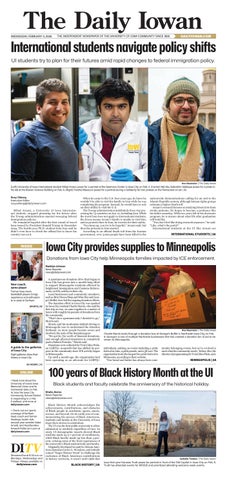
International students navigate policy shifts
UI students try to plan for their futures amid rapid changes to federal immigration policy.

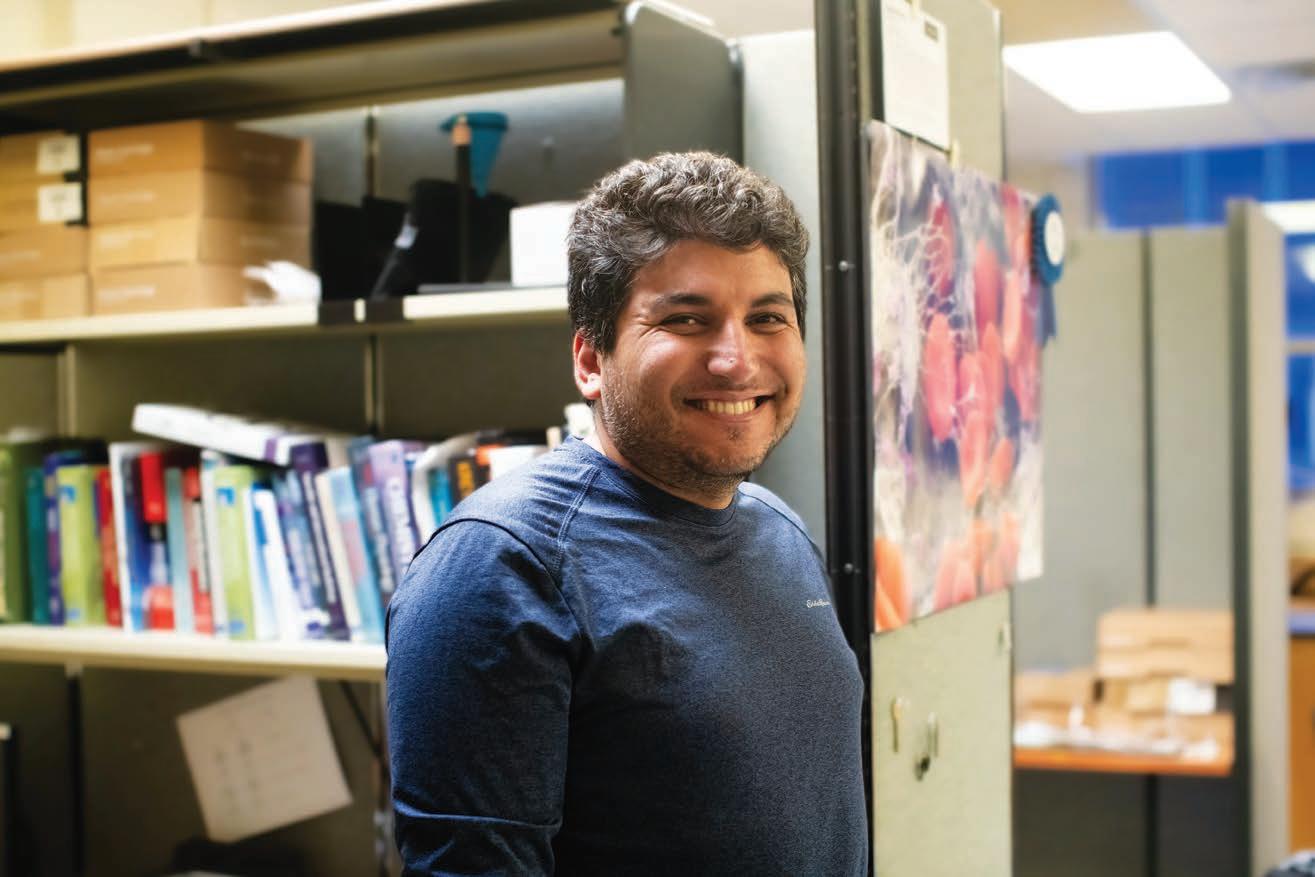
Milad Arzani, a University of Iowa international student, stopped planning for his future after the Trump administration enacted sweeping federal immigration policies.
e remained hopeful after the first round of travel bans issued by President Donald Trump in December 2025. The fourth-year Ph.D. student from Iran said he didn t even have to chec the o cial list to now his country was on it.
completing his program. Instead, he would have to rely on their ability to visit the U.S. he rump administration indefinitely fro e visa processing for 75 countries on Jan. 21, including Iran. While the travel ban does not apply to international students, the freeze means Arzani’s family is unable to visit him, and as protests flare in Iran, he worries for their safety.
“You keep up, you try to be hopeful,” Arzani said, but then the protests in Iran started.
According to an o cial death toll from the Iranian government, over 3,000 people have been killed in the
estimate a higher death toll.
Arzani’s research focuses on studying blood clots from stroke patients. He hopes to become a professor like his father someday. With two years left in his doctorate program, he is unsure about what life after graduation will look like.
“You don’t feel like doing research anymore,” he said. “Like, what’s the point?” International students at the UI like Arzani are
Iowa City provides supplies to Minneapolis
Donations from Iowa City help Minneapolis families impacted by ICE enforcement.
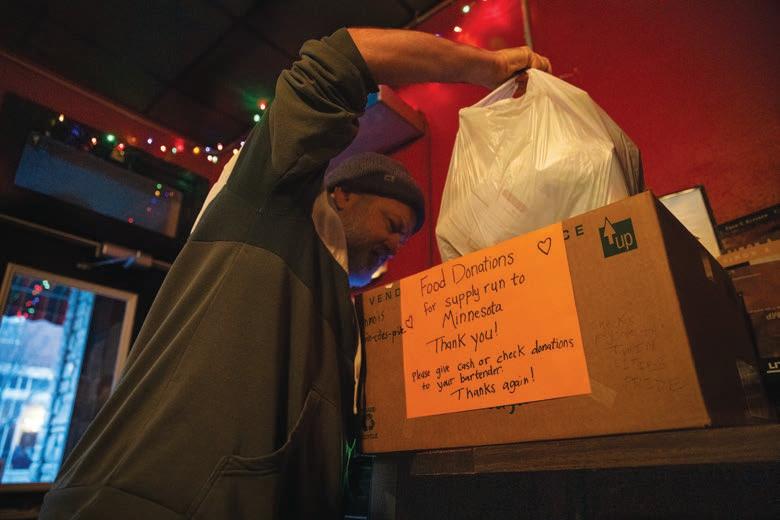
A spontaneous donation drive that began in Iowa City has grown into a month-long effort to support Minneapolis residents affected by heightened Immigration and Customs Enforcement, or ICE, activity in their city.
Local businesses and community members, such as Brix Cheese Shop and Wine Bar and George s uffet, have led the ongoing donation efforts.
he donation effort in Iowa City was spar ed by Iowa City resident Charlie Morris, who said his first trip on an. came together in a matter of hours with roughly 60 pounds of donations from the community.

“That’s how spontaneously I decided to go,” Morris said.
Morris said his motivation behind driving to Minneapolis was to understand the situation firsthand. As more people became aware and involved, the scale of the donations grew.
“ e got , worth of financial donations, and enough physical donations to completely pack a Subaru Forester,” Morris said.
Donations were collected for Twin Cities Pride, an LG nonprofit that has shifted its purpose in the community since ICE activity began in Minneapolis. Up until a month ago, the organization had been operating as an advocate for LGBTQ+
100
individuals, putting on events including a pride festival in June, a pride parade, and a 5K race. The organization hosts the largest free pride festival in Minnesota, according to their website.
“Our bread and butter has always been com-
munity belonging events, but we’ve evolved to meet what the community needs,” Kelsey Alto, the director of programming for Twin Cities Pride, said.
years of Black History Month at the UI
Black students and faculty celebrate the anniversary of the historical holiday.
Black History Month acknowledges the achievements, contributions, and obstacles of Black people in academia, sports, music, science, and beyond. On its 100th year of commemorating the success of Black Americans, students and faculty at the University of Iowa share their stories in celebration.
he UI was the first public university to allow admission to students regardless of race. In 2025, UI demographic reports showed Black students made up 2.7 percent of enrollments, while Black faculty made up less than 3 percent, echoing some of the lived experiences of the university’s Black student body and faculty. Originally developed in 1926 by African American historian Carter G. Woodson, and initially coined “Negro History Week” to challenge the exclusion of Black American contributions in history curricula, it wasn’t until 1986 that


Congress passed a law designating February for National Black History Month as a federally recognized observance.
Vanessa Shannon, a UI first-year and a representative for the Black Student Union, said she feels a lack of representation in her classes.
“There are many times when I am one of the very few Black students, and sometimes the only Black girl in the room, which can feel isolating,” she said. In her classes, she said she feels social pressure, on top of existing academic rigor. However, Shannon said such conditions have strengthened her as a student.
“Because of that, I’ve had to learn how to take up space and advocate for myself in academic settings where I don’t always see people who look like me,” she said.“My classes themselves are academically challenging, but the social dynamic can add another layer of pressure. I sometimes feel like I’m expected to speak for all Black students or that my perspective is seen as different, rather than just another valid viewpoint.”
As a member of the Black Student Union, Shannon also said that to create a more inclusive environment for Black students, the university could increase recruitment and retention of Black faculty and staff to provide mentorship opportunities to students in their respective fields, ultimately ma ing Black students feel more valued and represented.
UI third-year psychology major Ghada Dahab shared a similar feeling to Vanessa. Being Black has made her feel like she stands out from the rest of her friends and peers. Dahab said she sometimes feels pressure to represent more than just herself, but Black students as a whole.
Dahab’s community and accomplishments have made her college experience more than just feelings of subtle microaggressions. In September 2025, she represented the UI at the 6th U.S. Universities Arabic Debating Championship, a competitive four-day contest in New York City.
“I’m involved in student orgs on campus, and I go to events where I feel like my culture is represented most, in organizations like the Sudanese Student Association and Muslim Student Association,” Dahab said.“They give me a sense of belonging in ways that academic organizations haven’t necessarily provided.” Having the opportunity

to connect with other Black students at UI is something first-year student anasia Truitt found crucial as well.
She found it difficult to reach out to other lac students in her first semester. he first attended the UI’s MISSIE Block Party during Welcome Week, but her schedule eventually conflicted with her ability to attend more events.
Truitt has proactively engaged with MISSIE events, ensuring she gets as much exposure to them as possible.
“This semester, I made sure that my classes are scheduled earlier in the day and to stay on top of event dates so I could go to as many as possible,” she said. “And so far, I have been going to a lot more meetings than I did last semester.”
Truitt described how some people are shocked after telling them she studies engineering and computer science, and further details the lengths she goes to participate in lac student-led events, and how her white counterparts are unaware of the significance it plays in her life.
“They don’t understand why I do the things I do because they never had to really go through my experiences,” Truitt said. “They’ve never been followed home or looked down on because they were Black in a mostly white field. And even if they’ve witnessed these events, I don’t think they would understand what the weight of constantly being under fire is.”
Noor aad, a third-year business UI student, said her participation in Black student organizations has not only helped them build relationships but also prepared them for their career too. As vice president of the Sudanese
Student Association and events chair for Black in Business, she’s been able to networ e ciently.
She mentioned her excitement for upcoming events, including the 9th annual networking dinner for Black in Business, which has allowed her to utilize her creative, social, and communications skills.
Black faculty members voiced the impact being at UI has given them as well.
Professor Damani Phillips, director of jazz studies at the UI Voxman School of Music and a former professor of African American Studies, described the most valuable part of working with other Black faculty members as being able to get the support he needed to settle in Iowa as someone who came from a predominantly Black city.
“All [faculty members] were exceptional minds in their respective fields, very accomplished, and most had already navigated the promotion process here. hey were an unocial support group. These relationships made that work infinitely easier, and Iowa feels more like a home. I was very fortunate in that regard,” he said.
In addition to his journey of integrating into his department, Phillips has had a plethora of rewarding milestones from UI.
“The original iteration of African American Studies was an amazing concept that I was proud to be a part of. We’ve built a jazz program here that is stepping forward on the national stage to become a destination for comprehensive and culturally-informed a study, in the rural Midwest, of all places,” he said.
Professor Ashley Howard, current history and African American
Studies faculty member, also expressed her most rewarding moment at UI, specifically as a faculty liaison for students at the Young, Gifted, and Black Living Learning Community, which ended in 2025 due to federal diversity, equity, and inclusion, or DEI regulations.
“In addition to teaching their class, offering a rigorous educational experience, I was also able to help them navigate the first year of college with residence hall programming, build community through field trips, and most importantly, stay at Iowa and graduate,” she said. “It’s always such a joy when I run into them around town. They are working as medical professionals, social service providers, and teachers, truly thriving, and giving
so much back to the state and local community.”
Another thing Howard is fortunate for at UI is to be part of dynamic programs with diverse faculty.
“African American Studies is so much more than just a degree program, it’s a place that affirms the whole of the individual.”
She gave some advice to students of underprivileged backgrounds, emphasizing that they should know they belong at UI, no matter if they are of minority races or ethnicities, children of immigrants, rural, or veteran backgrounds, by encouraging them to build communities in places, within UI and elsewhere, where they may not see people who share the same life experiences.


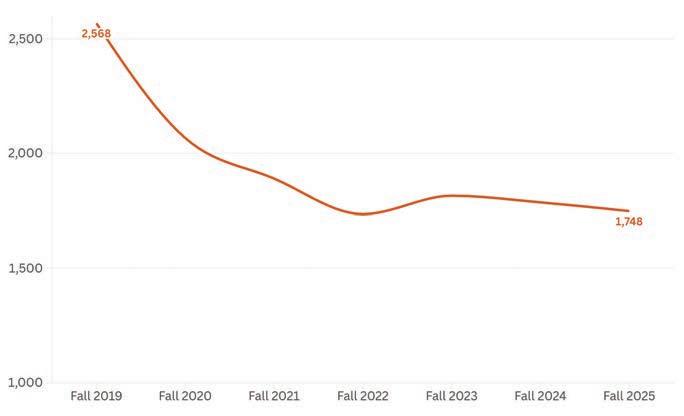
navigating rapid federal changes while balancing finishing out their degrees. As these challenges complicate being an international student in the U. ., new international student enrollment has dropped nationwide, especially among graduate students, according to data fro the Institute for igher ducation. he UI s international student enrollment has declined to ust over percent of the student population. In fall , the UI reported , international students, which fell to , in , according to data from the ce of the egistrar.
he ma ority of international students enrolled at the UI are graduate students.
ate Goettel, an Iowa City immigration lawyer and UI law professor, said immigration law is rapidly changing, and the types and numbers of immigrants affected by changes are much broader than ever before.
“ racticing immigration law in is li e drin ing from a fire hose,” Goettel said. International students face additional barriers to pursuing a career in the U. . after receiving their degrees, Goettel said, such as the re uirement to pay , to receive an - visa, a nonimmigrant, employer-sponsored visa that allows companies to temporarily hire foreign wor ers in speciality occupations.
he UI attracts “incredibly impressive international students at every level,” she said, and these policy changes ma e it difficult for international students to stay in the U. . and wor once their education is done.
ption ractical raining, or a temporary employment authori ation for students with - visas to stay in the U. . for up to one year to gain wor experience is another avenue for international students to further their careers.
“ hat is unfortunate are these are students who are trying to do every single thing correctly, filing the application, doing the paperwor , but because of some of the policy changes and delays at the immigration agency, they re not getting a decision that will help them move forward and wor here in Iowa or in the United tates,” Goettel said.
Ar ani said and postdoctoral programs allow for time to apply for permanent status, but companies are no longer pursuing international students due to travel bans. As federal immigration policy continues to shift, UI international graduate students navigate changes while pursuing advanced degrees.
ith a year left in his h. . program, Md Abu abrahim iddi ue, a fourth-year UI student from angladesh, said now is not a good time for international students to graduate. Immigrant visa applications from angladesh are also fro en.
iddi ue said many of his colleagues who have graduated recently are not receiving ob offers or even interviews in the U. . because companies don t want to sponsor visas, pay the , fee, or support due to concern the rump administration will end the training program.
e said it is terrifying to be an inter-
national student right now, especially following the nationwide visa revocations of more than , international students last year. ive UI students visas were terminated by the U. . epartment of omeland ecurity, or , without explanation. he students sued and Immigration and Customs nforcement, or IC , and a federal udge retained their visa status in ecember. “ e are all frustrated and terrified of what this could bring, too, and then I thin those inds of situations ta e a toll on both academic and research progress, too,” he said.
tudying human toxicology, iddi ue is finishing his master s thesis on arsenic toxicity. e came to the U. . in to study at the University of uffalo. e wanted to find somewhere he felt more comfortable, both academically and with his research. e learned the UI has a strong angla community, and an opening in spring brought him to Iowa.
e said international students must navigate a new language, culture, and the added stress of federal immigration changes impacting the learning process. International students come to the UI to conduct research and achieve academic excellence, iddi ue said, and they are not able to give percent of their concentration to their studies due to the constant slew of changes.
International students worry about encounters with IC , he said, and they still have no idea what to do if federal agents stop them.
he fatal shootings of two Minneapolis residents by IC agents raised ma or concerns with international students on campus, iddi ue said.
“It s not giving a good message to the international student community because we came to the United tates, because we now about the irst Amendment. e now we can express our values out there, open, in public without any harm,” he said. “And we now if we come to the United tates, nobody will udge us ind of li e that. And now what the administration is doing, it feels li e the way bac home with no rights to tal or no right to raise a voice.”
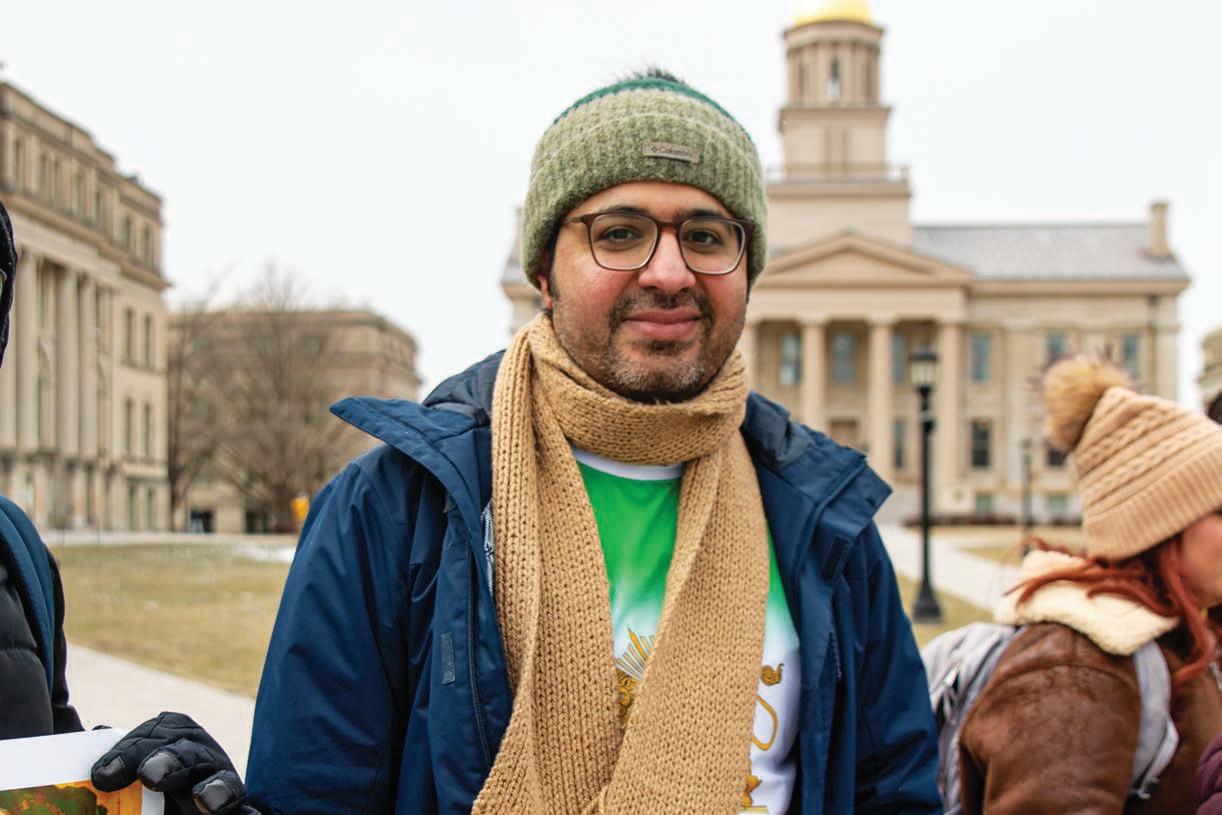
aised in Iran, arshid Masoumi, a UI fourth-year h. . student, has coordinated with other students to advocate against the crac down on protesters in Iran.
everal human rights groups estimate up to , people have been detained since the protests began in Iran on ec. . he New or imes reported on mass arrests, including doctors who treated in ured protesters in their own homes.
Masoumi said the peaceful protests held in Iowa City are a way to amplify the voices of the people in Iran and to show that civilians are innocent.
“ ere, I cannot stay silent,” he said. “ his is one of my obs, not to be silent.”
e said it is important for him to exercise free speech as those in Iran are unable to.
“ e are the voice, and this is our duty,” he said.
Masoumi lost communication with his family in Iran for two wee s during the protests and didn t now if they were safe, which caused stress. e hasn t seen his family in person since coming to the U. . three-and-
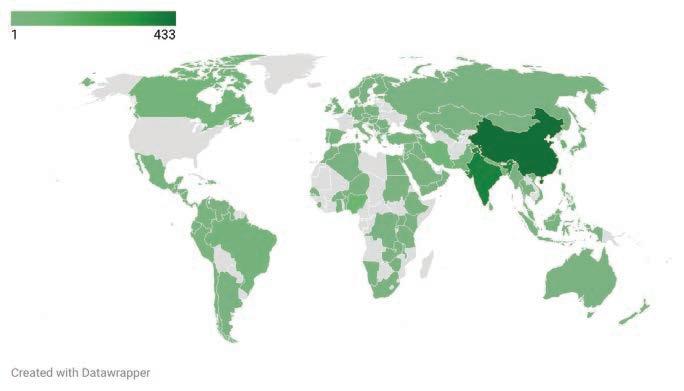
2025 UI international student countries of origin
a-half years ago, something he said he new would happen after he left Iran, but the travel ban means losing his family as a support system.
A mechanical engineering student researching biological soft tissues, Masoumi is set to graduate in May. ollowing the travel bans, the green card process was affected, he said. he processing time for an - National Interest aiver application, which allows foreign nationals wor ing in certain fields to self-petition for a green card without a ob offer, increased from eight months to months, Masoumi said.
his creates uncertainty and students close to their graduation are affected the most, Masoumi said.
“ e continue protesting because we fear the future,” he said. “ o if we cannot find a ob, and we don t receive the green cards and are forced to return to Iran while the regime remains, our lives would be in danger.”
Masoumi said the rump administration ma es international students feel singled out and targeted due to their identities.
“ e feel separated from the other students because I thin we can change everything,” he said. “ e can change our beliefs. e can change the level of our study. e can change everything. he only thing that we cannot change is our nationality.”
isiting her family in China over winter brea , hiheng ao, a first-year h. . student in the UI College of ublic ealth, said she didn t encounter any issues traveling with her student visa. owever, her visa is only valid for one year, and since she s in a five-year program, ao will need to either return to China to renew her visa or not visit her family for four years.
ao said she is weighing her options, but since it too three months to receive her visa, she thin s renewing it will disrupt her studies.
“ hat is stressful for students because you don t now exactly how long you can get your visa. o that may impact your classes, your wor in the university,” she said. “I thin that is the biggest concern here.”
ao s research is lab-based, so if she needs to wait for more than a month to get her visa renewed, she wouldn t be able to complete her labs, which could impact her ability to graduate on time.
ao said the rump administration s travel bans and visa revocations ma e her feel uncomfortable and stressed.
“I thin that will definitely extract me from my research. ecause for extreme situations, if I can t go bac , then I can t continue my h. . Li e, I can t do this remotely,” she said.
ederal immigration policies will impact her decisions as she gets closer to ma ing decisions for her future because it is becoming harder to find a ob after graduating, ao said.
he UI provides resources to help international students understand policy changes, including
mental health support, legal guidance, and advocacy organi ations.
In an email to The Daily Iowan, ussell Ganim, dean of International rograms at the UI, wrote that since individual cases vary, the university suggests students ma e an appointment with International tudent cholar ervices. tudents can also find information on the university s federal updates webpage.
“ very day, international students and scholars contribute immeasurably to the teaching, research, and service missions of the University of Iowa,” Ganim wrote. “ hey ma e our campus community more robust through their expertise, hard wor , and commitment to our institution.”
Ar ani and iddi ue serve as the Graduate tudent enate s co-chairs of the International tudent Committee.
he committee is wor ing to navigate a percent increase in mandatory fees for international students. ending approval from the Iowa oard of egents, recurring international student fees could increase from to for each fall and spring semester beginning fall , Ganim wrote.
Ganim noted it has been more than a decade since the last fee increase.
Ar ani said the Campaign to rgani e Graduate tudents, or C G , helped negotiate with the university to provide percent of each graduate student s mandatory fee. Clara eynen, unity chair for C G , focuses on representing all graduate students at the UI, including international students.
C G estimates a third of the graduate student population who wor at the UI are international students. eynen said ensuring international students feel safe and can be productive and focus on their research is an important part of eeping the UI running. he UI is an research institution, the highest tier of research institutions in the U. ., which is, in part, due to the wor of international students, eynen said.
“International students come here because they have valuable nowledge, and we can learn from them, and they can contribute greatly to their field of study,” she said. “And I thin the idea that the current administration is pushing that immigrants, international students, don t bring value to this country is absolutely absurd.”
C G is developing a preparedness plan to provide guidance on what to do if IC were to come on campus. eynen said the UI s guidelines on how students are able to respond to IC are unclear.
In the fall, the UI ffice of General Council updated campus guidelines for law enforcement presence, which includes IC .
“If a law enforcement o cer re uests access to records or a UI space, as them to wait while you consult with GC and UI for guidance,” the instructions read. “If the agent declines your re uest to wait, do not obstruct law enforcement agents or interfere with their actions.”
eynen said this policy is unhelpful, and C G has consulted with other graduate wor ers unions across the country for advice on how to provide guidance to international students.
“ hile complying with university policy, we want to ma e sure that we are providing fol s with information to help fill in the gaps and help soothe some of those anxieties,” she said.

The highest number of international students come to the UI from China, with over 400 Chinese students enrolled in 2025.
Enrollment from international students has dropped by over 800 students since the fall 2019 semester.
University of Iowa international student enrollment
OPINIONS
Performative activism dilutes political messages
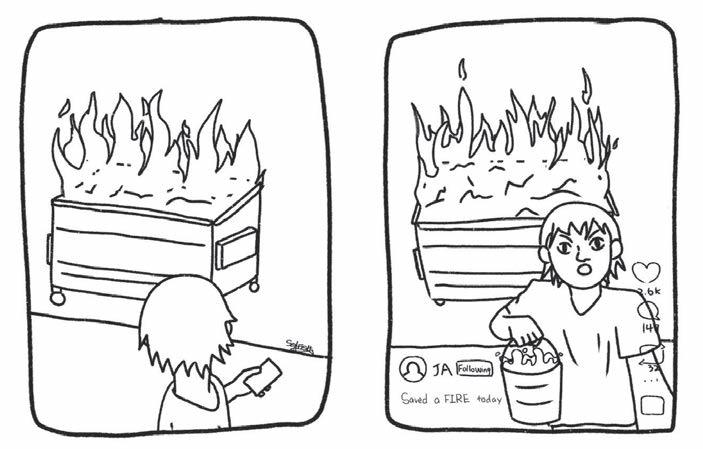
Social media activism is vacuous; change comes from your community, not from your phone.

We all have that friend who loves to post their politics. The type of person who, no matter what time of day it is, is constantly adding to their Instagram story to the point you have to tap the side of your screen upwards of 20 times to scroll through everything. Maybe you’re that friend; I know I certainly have been.
In a time where fascism is seeping into our institutions and people around the country feel like there’s nothing we can do to defend against it, spreading the word about causes or current events on social media can feel like the best thing to do. But this is frequently more performative than it is actually effective; it’s activism meant to be seen rather than to accomplish something, and in the grand scheme of the fight against our increasingly oppressive circumstances, it is doing more harm than good.
The next time you instinctively add a politically charged post to your story, ask yourself why you’re doing it. There are only three reasons, to me, why things get reposted: you feel passionate about the subject matter, you want to raise awareness of something among your followers, or you want your followers to know you care about it.
This is where the performativity comes in. In a McMaster Undergraduate Journal of Social Psychology article from 2022 titled “Social Media as a Stage,” scholar Amira Abdalla and other researchers surveyed college students from an array of schools within McMaster. They found 56.9 percent of respondents found social media posting to be the least effective form of activism, yet 75 percent say they still turn to social
media, while 49 percent say they have never participated in offline protests.
While this does not line up one-toone to how every student body at every university operates, I’d say even given my own disbelief in the usefulness of social media activism, I still contribute. And I can’t be alone in that.
Everyone wants to feel like they’re contributing to the culture, especially when we’re exposed to it 24/7 in our feeds anyway, so reposting a Courier Newsroom or Fire.org post on Instagram feels like contributing. The problem, then, is that for many folks, that’s where the activism ends.
Too frequently, I see an acquaintance or classmate post about a current event on their social media only to come off completely uninformed or disinterested when discussing it in person. I see members of my extended family share clips from the latest episode of “Last Week Tonight with John Oliver” only to say they’re disinterested in watching the news because it’s too depressing.
There are so many outlets now — be it a satirical Onion-esque Instagram post or a lengthy infographic cooked up by the New York Times — for people to feel like they’re contributing without saying anything at all, just for the sake of appearing “woke” online.
This form of slacktivism isn’t just annoying to your followers; it also dilutes real-world movements. When things take off online, even if they are tied to real-world issues, it’s easy for the unengaged to pass it off as a trend rather than something to take note of. These posts become even more problematic when they’re infused with pop culture imagery, turning serious problems into unserious content.
Take the infamous black squares following the murder of George Floyd in 2020 for example. People across Instagram shared blank posts to fill
up feeds and draw awareness to the Black Lives Matter protests. As is the case in all these scenarios, the sentiment is in good faith, but the effect is practically nonexistent.
During the recent “No Kings” movement in 2025, the constant posts of people sharing their protest outfits among massive crowds of people decrying the dictatorial behavior of our president turned what was an inspiring show of public unrest into a selfie fad.
Beyond diluting meaning, it’s important to remember that social media activism is conducted on the very platforms most people participating advocate against. Mark Zuckerberg, who has been cozying up to President Donald Trump since his inauguration last year, according to a Feb. 3, 2025, Los Angeles Times article, still runs Meta, the parent company of Instagram and Facebook. Elon Musk, a notorious
right wing fanboy, still operates the social platform X. When you share online activism, you are protesting inside your opposition’s house.
The point I’m making is not to avoid sharing the most recent dig at Mitch McConnell on “Saturday Night Live” when it makes you laugh, but being more considerate in where and how you take part in activism is vital in a time where our digital footprints are hardly private. Many things in the world right now are infuriating, upsetting, and induce a need to speak out and speak loudly.
Rather than simply appeasing that feeling by sharing something on Instagram, find groups in your community who meet regularly to discuss political issues, organize protests, or initiate strikes. Real change comes from the immediate world around you, not from your phone. It should be grounded in action, not performance.
You can’t rely on the government to tell you the truth
The Trump administration made false claims about the Minnesotans killed by ICE.

Recently across social media platforms a quote from George Orwell’s classic “1984” has been reposted hundreds, if not thousands, of times by users.
The quote reads, “The Party told you to reject the evidence of your eyes and ears. It was their final, most essential command.”
Not surprisingly, social media users have been using this quote to refer to the U.S. government and President Donald rump s political platform being built off of lazy lies. Despite all the lies being told by them through press releases, social media posts, and interviews, the messaging is easily combatable with common sense and proper sources.
The “1984” quote specifically has gained prevalence following the killing of Renee Good and Alex Pretti by ICE Agents in Minneapolis and the Trump administration’s comments on the murders.
Within 24 hours of Good’s murder, the victim-blaming and lies began. On Jan. 7, ecretary for ublic Affairs and omeland Security Tricia McLaughlin stated on the social platform X, that Good was a “violent rioter” who was using her vehicle as a weapon to murder ICE agents.
Good was a mother of three who before her encounter with ICE had just dropped off her 6-year-old son at school.
massacre law enforcement.”
She also claimed that Pretti was violently resisting arrest causing an agent to fire defensive shots at him.
Approximately an hour later, White ouse enior Adviser tephen Miller too to the social platform X to accuse Pretti of being an “assassin” who “tried to murder federal agents” e also said the emocratic arty “sides with the terrorists.”
Pretti was an Intensive Care Unit, or ICU, nurse who specialized in caring for veterans. In ICE’s altercation with him, video evidence shows that he never drew his weapon and only had his phone out to record the federal agents. e was shot after his weapon, which he had the right to conceal and carry in Minnesota, had been taken by an ICE agent.
The families of Good and Pretti should be allowed to grieve and not be burdened with a government smear campaign designed to paint ICE agents as heroes in these situations.
And to further their dehumanizing rhetoric, rump has resorted to artificial intelligence, or AI, images. Although he is no stranger to posting AI videos and images, the hite ouse posted a doctored picture of civil rights attorney Nekima Levy Armstrong to look distraught after being detained. Disseminating images like this only blurs the line between real and fake.
UI journalism professor Brett Johnson focuses his work on media law and ethics and has also been aware of the White ouse s AI usage and recogni es that distinguishing between real life and AI grows more di cult each day.
“That’s subtle,” Johnson said referring to the doctored image. “That makes it almost more insidious.”
Johnson also recognizes how with the introduction of AI, fact checking has become even more daunting of a task.
“So you still have the run of the mill fact checking, and then on top of that, you have to fact check these often subtly made AI videos and photos,” Johnson said.
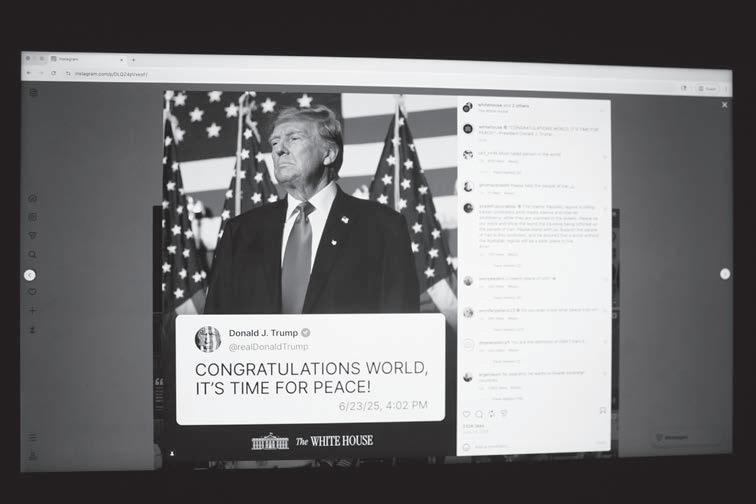
that still supports him based on his 38 percent approval rating, according to The Economist.
To be blunt, the administration’s lies are la y. hey are easily falsifiable and ridiculous, but for some people, those lies are the narratives they want to hear, and as such, they will not do any further research. People believe what is placed in front of them.
Johnson recognizes that these lies and narratives can easily gain prominence on social media through confirmation bias.
“When [lies are] all you’re seeing, you’re going to color that through the lens of your confirmation bias,” ohnson said.
Following the killing of Pretti by multiple ICE agents, Mclaughlin gave a news release to The Guardian before an investigation into the killing. In the statement Mclaughlin said, “This looks like a situation where an individual wanted to do maximum damage and
These statements and lies are not accidental. They are an intentional choice by the rump administration to deflect any misdoings while spinning their own story about events. Despite evidence debunking these claims as well as past ones, it appears that the administration is going to continue to lie to trigger confirmation bias in the shrin ing group
For those who follow the Trump administration on social media and tune in to their news and press releases, they are fed those lies in real time. Those lies are then regurgitated through other users like them who are in their same algorithmic social media bubble. owever, people who readily believe what they’re told via nonfact-checked social media posts are naive and are the exact types of people who make social media discourse unbearable.
In an ideal world the government wouldn’t lie to citizens, and while past administrations have lied the Iran-Contra Affair in , the entagon apers, and the Bill Clinton scandal of the late 1990s), this one seems to pump out new ones every
day via their multitude of social media accounts.
Nonetheless, fact-checking government lies has never been easier as all people need to do is google the topic and then read an article from a reputable news source such as “The Associated Press,” “NPR” or “Reuters.” If people care about truth and justice then they can’t be as lazy as the administration that negates it. We need to stop and fact check information before believing it. And with all the lies going around we should question whether the Trump administration will be held accountable for anything.
Johnson isn’t exactly sure what accountability could look like, especially considering the lack of history regarding administrations holding past ones accountable and president’s pardoning ability. owever, he does see a lot of people right now calling for accountability so he thinks this is something to be observant of over the rest of President Trump’s term.
“There are a lot of people who [want] some degree of justice and I don’t know what that looks like in 2028 or 2029,” Johnson said. Johnson believes that once the end of this administration comes around, there will be conversations around what justice may look like for those involved.
Reading Tree cultivates community
The Iowa City Reading Tree is in its sixth year of inspiring residents to become readers.
Joseph Hennager and his wife, Julia are the proud owners of the Iowa City Reading Tree. They have lived in Iowa City for over 40 years and currently reside in a tall, gray house with a screened-in porch overflowing with books.
Hennager built the Iowa City Reading Tree, located at 312 Ronald St., almost six years ago and has always had a passion for reading. He built the lending library inside an old 87 foot tree in his front yard that was leaning dangerously toward his neighbor’s house after the derecho tore through Iowa in August 2020, with hopes of providing young readers with a place to spend time reading books.
“We both have teaching degrees, so we understand the value of early reading, and I think we always read quite a bit,” Hennager said of him and his wife.
The Reading Tree is covered in wooden panels and intricate animal carvings. Hennager said the entire process took him around a year and a half, and that the project grew from a simple way to pass time during the COVID-19 pandemic to something with personal value. The animal carvings, in particular, carry significant meaning for him and the neighborhood.
“The eagle that’s over there is because of an eagle that lived in the tree, and this dog is because I had a black lab live for 20 years, so he’s still around here. Every animal that I have some connection to is here,” he said.
Hennager opened one of the multiple doors on a tall tree next to their house, displaying a collection of dog treats and a large, leather boo , filled with messages from children around the world. From the book, Hennager read one of the messages out loud.
“I love that the people in Iowa City put hard work into making the world a better place,” he said.
The Iowa City Reading Tree resides on a platform decorated with colorful strips of cloth and a chalkboard sign displaying positive messages.
The tree has a Ring Doorbell which children can ring and talk to “The Elf,” Hennager said. When a kid rings the doorbell, he will speak to them through it.
he tree has three different sections of
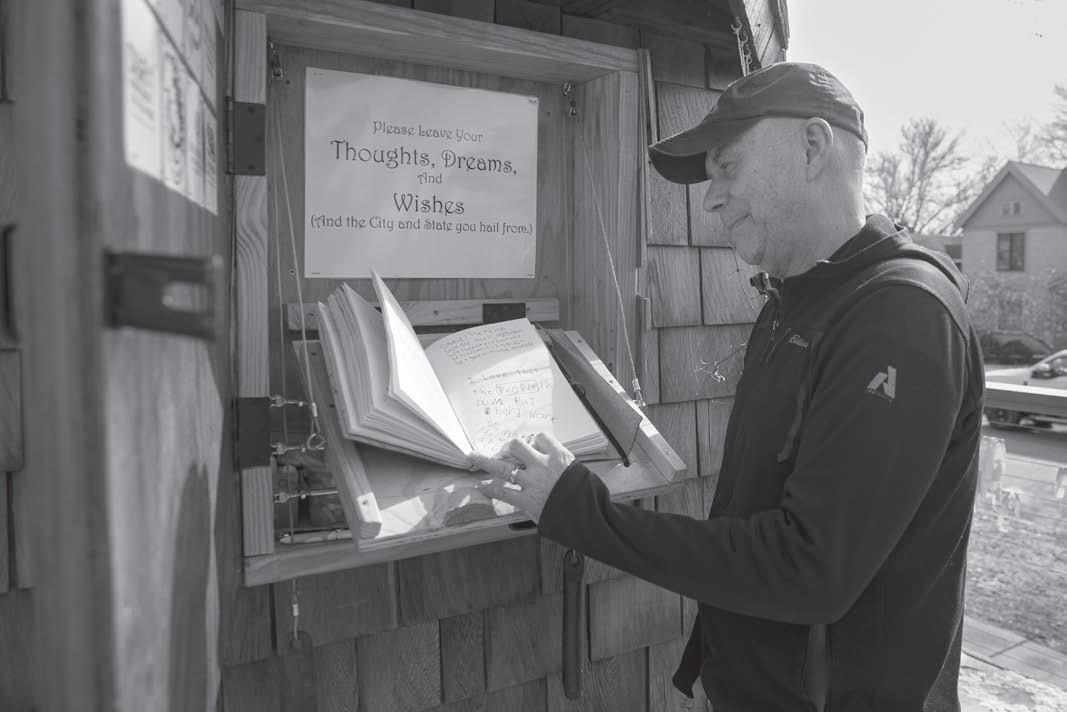
books: Littles, Middles, and Bigs. Hennager said he created the sections for all ages so that everyone can enjoy the wonder of reading. Notably, the “Littles” section is the least full, which highlights the need for children’s book donations, Hennager said.
Hennager called his next-door neighbor and close friend, Robert Moninger, to talk about the tree, which is more in Moninger’s yard than his. Moninger expressed a great fondness for the tree and the community that it creates.
“Some people come up and sit there on the railing and never open, never read anything,” Moninger said. “They never do anything but sit up there, kind of meditate.”
Moninger can see the Reading Tree from his living room window and said he can see everything going on out there. He spoke about how even if people don’t take or read any books, just being at the Reading Tree can be enjoyable.
Despite it being built years ago, Hennager said him and his wife. have many aspirations for the tree, such as writing a children’s book about the tree. Another one of these plans includes installing an old phone booth next to the tree.
He hopes that people will use the “phone booth to nowhere” to speak to whoever they want, whether that is people who have passed or someone they just miss.
“I just want it to be a place where people can come and read, sit, meditate. It kind of has a little spirit to it, mysterious and funky,” Hennager said.
Hennager said they have plenty of books for adults, but not for kids, mentioning that most people have books in their houses, either from when they were children or from their children. He believes providing children with books is important.
“All those books clutter up some place. They’re in a box some place in your house,
and you ust ind of figure, you can either hold them for your kids, or you can recycle them for other kids and pass the words on,” Hennager said.
Miriam Khaetov, Spanish bilingual library assistant at the Iowa City Public Library, said reading is crucial for childhood development.
“I think reading to kids is really important because it helps them in so many ways, like they can learn about new cultures,” Khaetov said.
She also expressed how important it is for children to hear stories from other cultures and in other languages so that they can begin to discover the world.
Hennager emphasized the importance of the tree in helping to provide an inclusive space for children and adults alike.
“I just want more and more people to come and get books and read as much as possible, that’s the plan,” Hennager said.
JoCo supervisors call for decrease in DHS funding
Supervisors request an end to DHS funding unless stricter guardrails are implemented.
Discussions on the changing landscape of President Donald Trump’s immigration priorities are trickling down to the local level, as the Johnson County Board of Supervisors continues conversations on how they will represent the county’s residents and interests.
The Johnson County Board of Supervisors’ primary focus has been on ICE protocols and funding as they pertain to county and state residents, with the board passing a resolution calls for congressional leaders to reduce funding for the U.S. Department of Homeland Security, or DHS, unless they implement much stricter “guardrails” for ICE.
Due to recent events, like the protests in on the streets of Minneapolis, the death of Renee Good, a 37-year old woman who was killed by ICE agents on Jan. 7, Alex Pretti, a former intensive care unit nurse for the Department of Veterans Affairs, who was killed by ICE agents on Jan. 24, and rising concern over ICE protocols in the state and across the nation, ICE continues to be a source of contention in the U.S., with protests occurring across the Midwest and across the country,
Johnson County and Iowa City have seen several ICE protests in the past few months, including the recent walkout done by local high school students, and after ICE detained Jorge González Ochoa while he was working at Bread Garden Market in September, an arrest that has since been declared unlawful in federal courts.
Several members of the board have spoken about ICE and the current administration, with Supervisor Jon Green calling the Trump administration’s policies threatening to individual liberties.
“The Trump administration’s assault on communities in the name of immigration enforcement is eroding our Constitutional rights and endangering residents,” Green said.
Green also said U.S. Border Patrol has violently arrested civilians, even citizens of the U.S., and deployed chemical weapons without warning in residential areas, harming school children and local law enforcement.
“From September 2025 through January 2026, immigration agents have shot at least nine individuals, three who died as a result,” he said, regarding Renee Goode, Alex Pretti, and Silverio Villegas González.
Supervisor Rod Sullivan said while resolutions usually do not have a massive effect, they are a way to voice opinions on issues. He added that it is the one little step that they can take with the federal government.
“They don’t really mean anything
legally, but I think it’s important that we say how we feel about matters of great importance to our community, and so that’s what we chose to do here,” Sullivan said.
The U.S. Senate Committee on Homeland Security and Governmental Affairs, the foremost oversight authority for the U.S. Senate, released a report in December 2025 asserting that, between June and November 2025, ICE had unlawfully detained 22 U.S. citizens.
The board previously rejected a Fourth amendment Resolution, which would require law enforcement to have judicial warrants for nonpublic access to private spaces and periodically hold workplace protocol training for supervisors and staff, consistent with the resolution.
The Amendment was rejected 3-2, with Lisa Green-Douglass, Green, and Sullivan expressing concerns over the safety of county employees should they not comply with ICE.
After a weeks-long discussion and support from the public on the issue of ICE at their formal, the Johnson County Board of Supervisors approved a different resolution on the issue of Immigration and Customs Enforcement, or ICE at their formal meeting on Feb. 5.
Green specifically referenced tighter “guardrails” for DHS as a primary argument for the resolution. This would mean ensuring that immigration agents committing violence and lawlessness will be properly investigated and receive sufficient consequences.
At their reelection watch party, Supervisor V Fixmer-Oraiz said the resolution was “the kind of leadership I think we need throughout the rest of this Trump administration.”
Prior to the resolution being approved, several members of the community came to the supervisor’s work session on Jan. 28 to speak in support of the resolution.
Samantha Spurgeon, an Iowa City resident, voiced her support of the resolution at the beginning of the meeting, calling the resolution “the bare minimum.”
“I know that there’s been other things trying to go forward, but I think that this is a good first step, and I strongly encourage you to take that first step,” she said.
The supervisors concluded they would approve the resolution to restrict Congressional funding for DHS and further implement guardrails.
The board will send a copy of said resolution to each member of the Iowa Congressional Delegation.
Green said tactics used by immigration authorities are becoming increasingly dangerous, including what he described as unprovoked violence, such as the pointing of weapons at civilians and deploying chemical weapons.
“The board calls for an end to Border Patrol deployments and an end to ICE and CBP’s lawless surges in cities across the country that are undermining public safety,” Green said, reading the resolution.
Iowa Democrats push for campaign finance reform
Congressional candidates aim to ban PAC money, overturning Citizens United ruling.
endorsements and money.”
Democratic candidates in the upcoming midterm election for Iowa’s 1st and 3rd Congressional Districts have touted expansive campaign finance reform plans to target the use of corporate and super PAC money in national elections.
Political action committees, or PACs, are organizations that pool contributions from donors to support a political candidate, initiative, or piece of legislation.
PACs have a prominent and evergrowing presence in national elections, Alex Smith, a University of Iowa political science professor, said.
mith said ACs can be a liated with corporations, ideologies, or political leadership. But, he said corporate PACs are the most common because each industry has interest groups and corporate PACs are the most effective way to leverage the weight of their corporation behind a candidate.
Candidates in the U.S. House races for Iowa’s 1st and 3rd Congressional District have largely refused to accept corporate PAC money for their campaigns.
Iowa Sen. Sarah Trone Garriott, D-Windsor Heights, is running against incumbent U.S. Rep. Zach Nunn, R-Iowa, for Iowa’s 3rd Congressional District.
Trone Garriott said she has not accepted any corporate PAC money for her congressional campaign, and she supports banning the funds entirely.
She said she is in favor of campaign finance limits and making the election process “more transparent and fair.”
According to the Federal Election Commission, or FEC, Trone Garriott has received $23,000 from other PACs but none from corporate PACs for her congressional campaign.
Trone Garriott said campaign financing ma es running for public o ce unattainable for many individuals and said intervention is needed to control how much can be contributed to campaigns.
“It’s kind of shocking how much money is in politics at every level of service. We need some kind of controls,” Trone Garriott said.
Smith said rejecting corporate PAC money became a prominent messaging tactic for Democrats in Iowa, simply because they are the “out-party,” or minority party, and they need to find an effective strategy to appeal to voters outside of their traditional base.
Iowa has not had a Democratic U.S. House member since 2022.
Smith said candidates who run against incumbents may refuse corporate PAC money strategically, as incumbents are often criticized for passing legislation in accordance with those funding their reelection effort.
“The perception many voters have is they’re making laws on behalf of those groups,” Smith said. “Those are the groups whose support they need to maintain to make sure that they continue to get those
Smith said there is no research behind campaign contributions from PACs influencing policy votes, rather the strategy is about public perception.
According to the FEC, Nunn received nearly $2.1 million in PAC money from 2023-2024 during his previous reelection campaign.
For his current House bid, Nunn has received over $800,000 in PAC money from January to September 2025.
Nunn has not made a public statement in regard to campaign finance reform and did not respond to requests for comment from The Daily Iowan at the time of publication.
In Johnson County, Democrats are looking to unseat U.S. Rep. Mariannette Miller-Meeks, R-Iowa, and take control of the 1st Congressional District.
Muscatine Democrat Taylor Wettach dropped out of the House race on Jan. 26, leaving UI Professor Christina Bohannan and health care worker Travis Terrell as the competitors for the Democratic primary.
Bohannan has not accepted any corporate PAC money but has accepted over , from ACs not a liated with specific companies or industries for her campaign, according to the FEC.
She pledged to “ban the abuse of leadership PACs as a loophole to personal spending” and “block unlimited corporate spending on campaigns,” as stated in her ethics reform plan.

Terrell, who is an outspoken proponent of campaign finance reform, said Bohannan’s stance on the matter is less blunt and transparent than his perspective.
“It is a lot more aggressive and clear that what I want is to see an end to corporations being able to put untold amounts of money into politics,” Terrell said.
Terrell has agreed not to take any corporate PAC money for his campaignand said he wants average Americans to finance politics as opposed to corporations.
According to the FEC, Terrell has accepted no PAC money for his congressional bid.
In 2025, Miller-Meeks accepted over $1.5 million in PAC money, according to the FEC. For her last reelection campaign in 2024, she received $2.4 million in PAC donations.
Miller-Meeks has not made a public statement in regards to campaign finance reform and did not respond to a request for comment from The Daily Iowan by the time of publication.
In addition to refusing corporate PAC money, many Democratic candidates have pledged to vote to overturn the U.S. Supreme Court’s ruling in Citizens United v. FEC. The ruling protected super PACs as a First Amendment right to freedom of speech.
Smith said the decision, which struck down components of the Bipartisan Campaign Reform Act of 2002, an act
to curb the influence of soft money in elections, “opened the floodgates” for campaign expenditures and allowed for the development of super PACs into what is prevalent today.
Soft money is an indirect campaign expenditure, such as an outside organization paying for an advertisement to run and promote a candidate of their choice, Smith said.
Washington” pact, a commitment to vote to overturn the decision. Trone Garriott and Bohannan are not listed as having signed.
“[Citizens United] put price tags on our politicians, and it made it so their loyalties and actions were just tied to the highest bidder instead of the constituents,” Terrell said.
Bohannan said she would vote to overturn the Citizens United ruling “and return to a government that served the people,” in a post on the social platform X on the 16th anniversary of the decision in January.
“The decision has been disastrous for the American people,” the post said. “It allows politicians like @millermeeks to use their congressional power to benefit billionaires and corporations, knowing they will be rewarded with vast amounts of dark money to get them re-elected.”
Smith said overturning the Citizens United ruling is highly unlikely but not impossible.
uper ACs have a growing influence on national politics, and can accept unlimited donations from individuals or corporations, but the committee cannot donate or coordinate directly with a campaign — a line which Smith said becomes blurred.
Unlike super PACs, corporate PACs have a donation limit ranging from $2,000 to $5,000 per election, but can donate directly to a candidate, according to the FEC.
Terrell is one of eight Democratic candidates in Iowa to sign on to the “Unrig
“Is it likely to happen? Not in the next year or two, and probably not in the next five years,” Smith said. “But to get the support you need for something like that, you have to start small and build a snowball effect.”
rone Garriott emphasi ed the influence of money in elections, and said while she is looking at possible options for state-level reform, real change would need to come from federal legislation.
“There is an outsized voice that money has in politics,” Trone Garriott said. “We need to change that.”
JoCo o icials condemn proposed Iowa ICE policy
The bill says local law enforcement must comply with the agency.
status,” Fixmer-Oraiz said.
Fixmer-Oraiz said bills like these promote authoritarianism.
The Iowa House of Representatives proposed a bill which would require local and state law enforcement agencies to comply with Immigration and Customs Enforcement, or ICE, and any other federal immigration agencies when asked.
While the bill, House File 2041, has not been discussed in subcommittee yet, ohnson County o cials see the bill as a threat and concerning for local law enforcement and government.
The subcommittee hearing for the bill, introduced by Taylor Collins, R-Mediapolis, was originally set for Jan. 26.
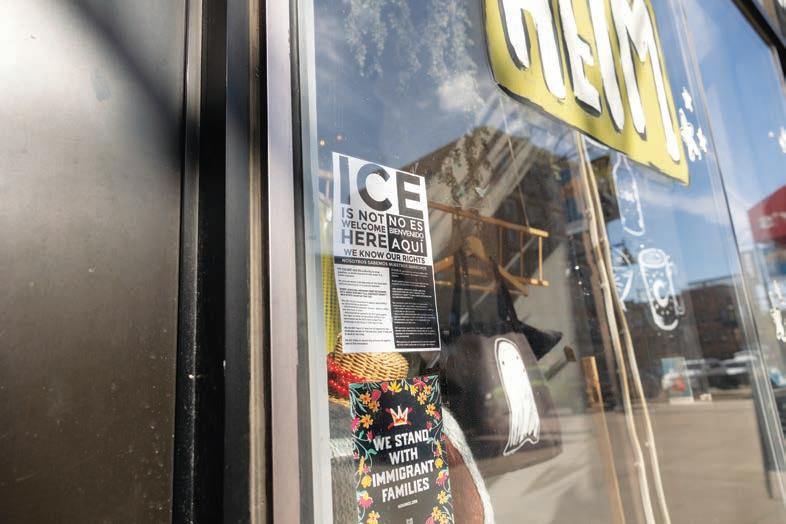
Johnson County Supervisor V FixmerOraiz said they see this bill as a threat to both the Fourth Amendment, which protects people from unreasonable search and seizures, and the 14th Amendment, which grants citizenship to all people born in the U.S. and grants due process under the law.
“What Republicans are doing is laying the groundwork for authoritarian rule to come in here and start utilizing our police force, our sheriffs, to do the bidding that should be a civil administrative issue and turning it into criminal activities," they said.
Johnson County Supervisor Rod Sullivan, who is running against FixmerOraiz for the District Four seat in the Johnson County Board of Supervisors election this year, said having local law enforcement comply with ICE is unconstitutional.
“If o cers see something going on that is unconstitutional, that should take precedence over some law that says you must cooperate,” he said.
Sullivan said the Trump administration and Iowa Republicans think they have the authority to do whatever they want.
“I suppose they could try and they could arrest a local law enforcement o cer who they thought wasn’t adequately compliant, presumably, that person would have some right of self defense with an attorney,” he said. “We’re in uncharted territory.”
Fixmer-Oraiz said since Jorge Elieser González Ochoa’s arrest at Bread Garden Market in Iowa City in September 2025, there has been an evolution of authoritarianism throughout the state.
“They [ICE] are going to now try and be much more coordinated and organized in order to get what they want,” they said. “I think that that’s probably a shift in tactics.”
Fixmer-Oraiz said this is not what the state and county should stand for.
Iowa community members submitted public comment on the bill despite it not being discussed in person, raising concerns and voicing support.
Holly Robertson, of Cedar Rapids, voiced opposition to the bill and said the federal government needs to be separated from local agencies.
Cornelius Canton, of Iowa City, said he supported the bill and said its intention is to keep people in Iowa safe.
“ICE keeps America safe and enforces common sense immigration law,” he said.
“These types of collaborations can lead to racial profiling and discrimination, especially if you have local law enforcement that has not done significant amounts of training or has data that can show they are not disproportionately targeting individuals based on their internal biases, being biased regarding race, ethnicity, or even especially perceived immigration
“That is just not what we are, that is not who Iowa is,” they said. “It s definitely not who Johnson County is. We’re not here to terrorize our residents. We are hard working, tax paying citizens who are absolutely the fabric of our community.”
ohnson County heriff rad un el
declined The Daily Iowan’s request for comment regarding the bill.
“The people working for ICE and the powers behind it are killing US citizens in broad daylight,” she said in the public comment chat. “And statistically there is no ustification for IC to be on the streets policing immigrants, let alone enforcing the local police to cooperate and work with ICE and any other federal immigration agency.”
“We are a country of laws, not of illegal immigrants.” ara attleson, a teacher at es Moines ublic chools, cited the Iowa tate heriffs and Deputies Association Code of Ethics and said state and local law enforcement has an obligation to contribute to the safety of Iowa citizens, and this bill does not uphold moral principles.
“If Iowa law enforcement finds themselves in a position in which Immigration and Customs Enforcement or Customs and Border Patrol is asking them to carry out an unlawful order, they should have the right to object to compliance,” she said.
Advocacy panel addresses deportation e ects
William D. Lopez spoke with Escucha Mi Voz’s Alejandra Escobar for Resisting Global Tyranny series.
Groups like Escucha Mi Voz have been active in the Iowa City and Cedar Rapids areas protesting the presence and actions of the U.S. Immigration and Customs Enforcement, or ICE, in the Midwest, organizing “know your rights” trainings and accompanying people to their check-in appointments in response to an increase in detainments at ICE check-in appointments. Escucha Mi Voz’s lead organizer Alejandra Escobar joined author William D. Lopez to discuss his new book, “Raiding the Heartland: An American Story of Deportation and Resistance” on Feb. 6.
The conversation was part of the Iowa City Foreign Relations Council’s spring 2026 program series, Resisting Global Tyranny, and drew in a crowd of over 100 people with some in the crowd having traveled from as far as West Branch and Muscatine to attend.
The Resisting Global Tyranny program series, which brings together scholars, students, and community leaders in conversation, explores how people resist authoritarianism and challenge structural injustices through panels and film screenings, with all events free and open to the public. Lopez is a clinical associate professor at the University of Michigan School of Public Health. His new book continues from where his award winning first boo , “Separated: Family and Community in the Aftermath of an Immigration Raid,” left off and brings readers into the small and rural communities have been targeted by large-scale worksite raids during President Donald Trump’s tenure. It explores the effects these wor site raids have on the health and well-being of the communities affected as well as how these communities respond to the attacks.
“I wanted to look at raids because they’re so catastrophic in communities that they bring to light the violence that is occurring every single day, ust on a different scale,” Lopez said.
entitled to out of fear of being pulled over while driving and detained, something often referred to as the chilling effect. A recent Supreme Court ruling has made it legal for IC to do ust this and profile individuals on the basis of race and language, increasing this fear and causing many to avoid going out or sending their children to school.
“Having people around helps you stay healthy. They help you when you’re down, they lend you a car, they take care of your kids,” Lopez said. “When this community network gets fractured by fear of ICE, people lose those social support systems.”
While these worksite raids have been taking place for decades, during Trump’s second presidency there has been a shift to having U.S. Border Patrol and ICE agents occupying a city and organizing house raids, like the widely publicized immigration raid that took place in Chicago’s South Shore neighborhood. Lopez said that he believes the purpose of these raids is to create a spectacle and to incite chaos that allows law enforcement to respond with more violence and military action.
“I think they’re using tactics that they tested on Black communities, especially during the War on Drugs, and what many would characterize as breaking and entering, but others would characterize as home raids,” Lopez said. “Now we’re seeing them at large scale in immigration enforcement.”

In “Raiding the Heartland”, Lopez characterizes deportation in the Midwest as “quiet, then violating, and climactic, traumatizing, then utterly, bitterly, lonely and cold.”
“They’re quiet, and it’s dangerous because it makes the community believe that it’s not happening. It ma es selected o cials not stand up for what’s right,” Escobar said as she spoke to Lopez Friday evening. “It’s quiet, and it’s painful in that silence.”
he effects of these large-scale raids could be seen in the quietness left in their wake: workplaces left empty without employees, churches without their congregation, and classrooms missing half of their students.
children were reported to have not attended school.
“We’re talking about Mount Pleasant and Postville, these communities are very small,” Guerra said. “In so many ways, I feel like you have no other choice but to be supportive because these are the people who are part of your everyday lives in small town or rural Iowa.”
“Raiding the Heartland” includes intimate interviews with the families and communities of those who were detained after large-scale raids, like the 2008 raid at Agriprocessors meat packing plant in Postville, Iowa, where 389 workers, 20 percent of Postville’s population, were arrested as a part of Operation Endgame under the Bush administration, which had the goal of deporting 11 million undocumented people by 2012.
The book examines the effects of detainment, deportation, and large-scale immigration raids from a public health perspective, with an emphasis on the effect on small, rural towns, 80 percent of whom, the Institute for Health Care Management estimates, are medically underserved and face barriers to accessible health care.
The institute also cites distance from health care services as another barrier that rural communities face, a barrier that, Lopez said, becomes further complicated for immigrant families who may stop utilizing social services and medical resources they’re
“After immigrant families themselves, our nation’s educators were the ones who absolutely experienced the brunt mass of deportations,” Lopez said. “I say that because every time a deportation happens in the school year between the hours of 8 and 5, it’s going to be the teachers that have to explain to those students what happened to their parents.”
These teachers, Lopez said, are often the ones who also have to figure out how to get children home safely when a parent or guardian might not feel safe enough to pick their child up from school following a raid, or who may have been detained and are physically unable to pick up their child.
The book also addressed the issue of a drop in attendance among Latino students following an immigration raid.
Jorge Guerra, an assistant professor of instruction in Latina/o/x Studies at the University of Iowa, remembered attending protests in Mount Pleasant, Iowa, where 32 workers were detained at the Midwest Precast Concrete Facility. In the day following the immigration raid, around 90
Guerra teaches courses in Introduction to Latina/o/x Studies and covers topics such as immigration in Iowa and the Postville Raid. While these can be sensitive subjects, Guerra said that he believes it’s still an important part of history to teach, especially since many in his class don’t seem to know this part of history.
“I do find it to be a duty for me to expose these stories and histories so that students can have a better understanding of who they are as Iowans, who they are as Midwesterners, and how they’re supposed to see and understand immigration,” Guerra said. “People still think about Border Patrol and immigration with the U.S.-Mexico Border. People don’t think about it in the context of how, to use the phrase of an article I teach, ‘the border is everywhere now.’”
As many as 2,000 federal agents being deployed in Minneapolis earlier this year in response to allegations about fraud involving Somali residents in the city.
People across race and citizenship status rushed to the street to protest the presence of ICE, something that Lopez said he believed is the ey to combating the effects of hypervisibility, which could cause many immigrants and Latinos in the Midwest to feel unsafe protesting visibly.
“Like we’re seeing in Minneapolis and like what I saw in ‘Raiding the Heartland’, the answer is these cross-race and crosscitizenship solidarity, movements based in solidarity,” Lopez said. “To acknowledge what happened to Renee Good and Alex Pretti, certainly they’re not absolved from bodily violence.”
Lopez attributed this to there being no attempts to hold ICE agents accountable, horrible hiring practices, and an administration that excuses and encourages the violent actions of ICE, such as a recent memo leaked to the Associated Press that
authorized ICE to enter homes without a judicial warrant. However, just as Lopez observed in “Raiding the Heartland,” communities respond to community harm, including religious groups and faith-based organizations, like Escucha Mi Voz, who hosted a “know your rights” training” at St. Paul’s United Methodist Church which drew in an estimated 600 people on Jan. 31.
“It’s impossible to maintain this energy if we don’t do another part of it,” Escobar said riday evening. “It s a big effort. It s rallying, it’s going to ICE to accompany people, it’s going to training, but also it’s taking care of each other, it’s loving each other, it’s connecting with each other.”
This is precisely what Reverend Jonathan Heifner of St. Paul’s United Methodist Church observed at the “know your right’s training” as he saw what he believed to be a method of combating hypervisibility: providing a safe space and support for people to make themselves visible.
“They put themselves at an incredible level of potential risk by telling their stories, but the important piece of what that was they were given the option and it was made clear what this was, what they were stepping into, and they were clear on what the risk could potentially be,” Heifner said. “What I think was a piece of making that possible was the kind of network that Escucha Mi Voz provided so that they could be visible in a place where they knew they had support and camaraderie.”
As the conversation closed Friday evening, Escobar reminded attendees of the importance of voting in local elections, where voters can apply more pressure and demand accountability in response to frustrations over representatives in the House and Senate voting to continue funding the Department of Homeland Security.
“Power is our capacity to act together in order to make a change, that’s what we’re seeing in Minneapolis,” Escobar said Friday evening. “From our community here in Iowa City, we need to connect. We need to organize and really think of what’s going on in the country and what we can do to change this.”
How the UI is helping NASA return to the moon
UI alumnus helps design simulations for a rover that may be used for lunar research.
morphed.
NASA is launching the second mission of the Artemis campaign to explore more of the moon than ever before, and University of Iowa staff and alumni are helping to make the lunar expeditions possible by developing lunar terrain vehicle simulations.
According to NASA, Artemis II could launch as early as March. While Artemis II is a manned fly-by of the moon, the following Artemis mission will see astronauts touching down on the lunar surface, and as early as 2030, Artemis V will see astronauts using the lunar vehicle.
The last manned flight to the moon occurred 53 years ago on Apollo 17, which launched Dec. 7, 1972.
A UI alumnus and University of Wisconsin-Madison engineering professor, Dan Negrut, is helping to create simulations for Intuitive Machines’ Moon Racer, a lunar vehicle possibly set to be used in the Artemis V. Intuitive Machines’ lunar terrain vehicle design has been marked as a candidate with two other vehicles to be used for the Artemis missions.
Negrut said NASA initially aimed to announce which of the three companies’ designs it would buy for over $4 billion by the end of 2025 but has now removed a definitive deadline on the decision.
“It’s just a big project,” Negrut said. “I’m super happy that our lab is helping with the rover simulations. The rover has this big team that has probably 10 different organi ations.”
Negrut said the lunar terrain warrants a unique engineering approach to the wheels, calling for them to be easily deformed or
“I’ve never worked with something like this before,” he said. “You obviously don’t have paved roads and such. The regular terrain is very soft. The wheels are going to basically sink in the terrain. You want them to deform a lot to become almost like a track wheel.”
Negrut collaborated with UI staff from the Driving Safety Research Institute last spring to present to NASA a simulation in which the UI’s National Advanced Driving Simulator was used to replicate driving a rover on the south pole of the moon as part of a U.S. National Science Foundation funded study.
Chris Schwarz, director of engineering and modeling research at the UI’s Driving Safety Research Institute,, said the presentation showed NASA how a simulated environment could help astronauts get accustomed to driving in lower gravity, synchronizing the moon’s time with time on Earth, and extreme lighting conditions.
“We look at things like how people interact with their vehicles, their dashboards, how they put their information on their screens,” he said. “When they’re up driving on the moon, they’re going to be moving from the darkest shadows to the brightest light.”
Schwarz said he trusts that all three designs for the lunar terrain vehicle models that NASA is choosing for future Artemis missions are well-designed.
The National Advanced Driving Simulator could come in handy for research questions and human practice, Schwarz said. The simulator lies in a 64-by-64-foot bay, one of the largest driving simulators in the world.
“There’s still going to be so many human factors and problems to think about to

improve the quality of life and to make sure that they’re safe,” Schwarz said. “I think that our simulator can play a part there.”
Daniel McGehee, the director of the Driving Safety Research Institute, was also at the NASA presentation last spring, where he presented the history of UI’s driving simulations.
McGehee said came about from a nationwide competition sponsored by the National Science Foundation, in which the UI went head-to-head against the second finalist — the University of Michigan — to claim the spot of a national driving laboratory.
McGehee said the simulator remains in
Coralville as one of the largest simulators in the world.
McGehee said the UI has long been a pioneer for driver-vehicle interfaces, helping to develop advanced technologies for the time, such as cruise control and lane assist, through the laboratory. He hopes to continue building that reputation as NASA sends humankind back to the moon.
“That’s one of the things that I was proud of,” he said. “We’ve been able to really develop that international reputation, along with our other space physics colleagues, that were sought after for advice when it comes to complex and challenging engineering issues.”
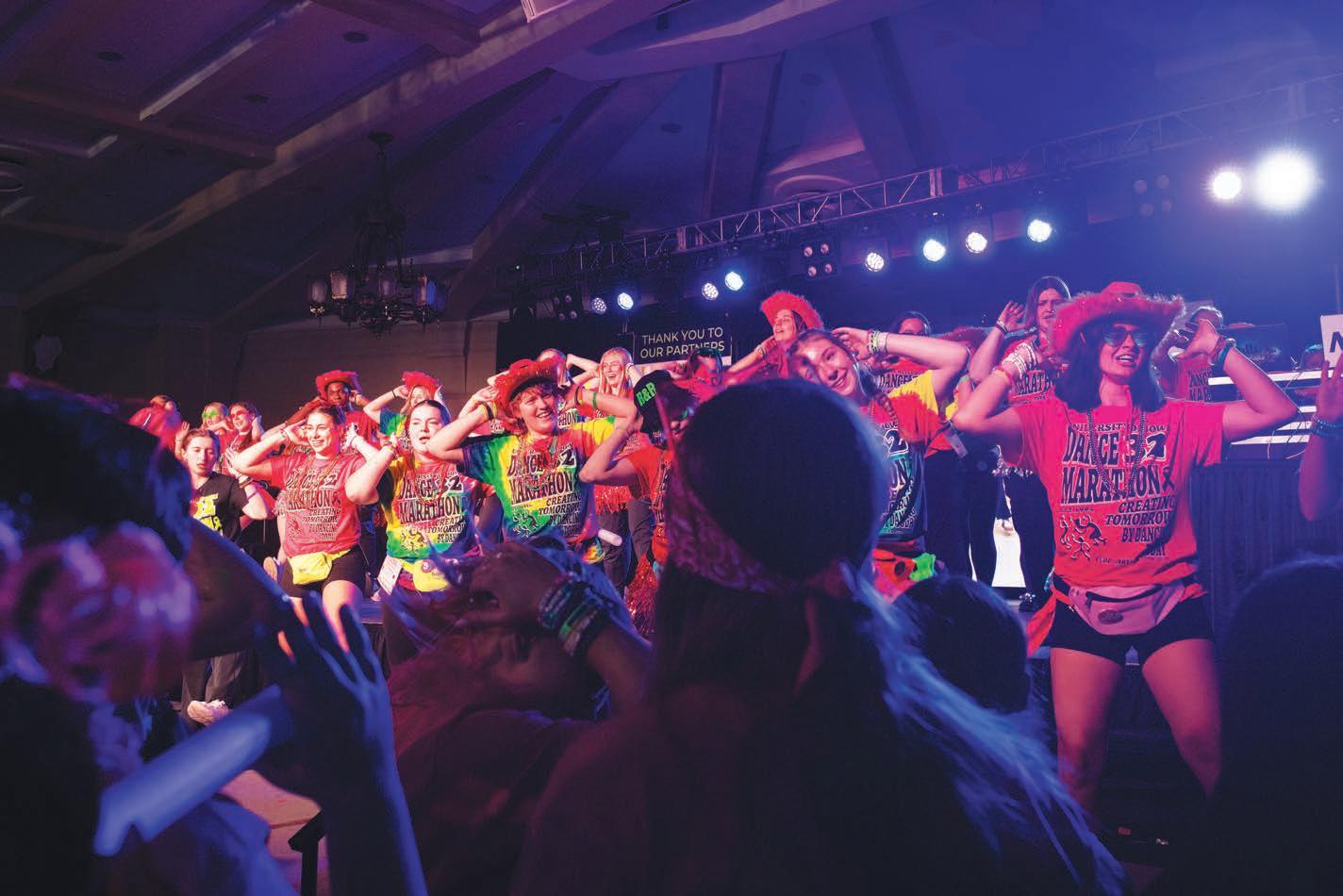
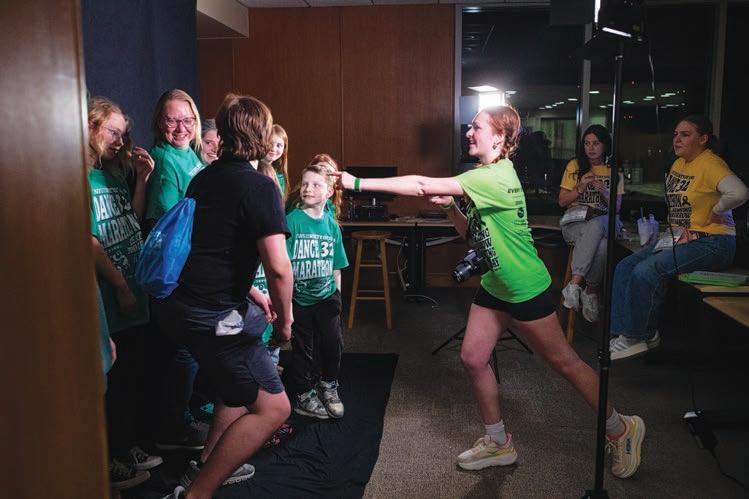
$1.7 million
Over 1,000 dancers participated in the annual fundraiser to support young cancer patients at the Iowa




SPORTS

New coach, same player
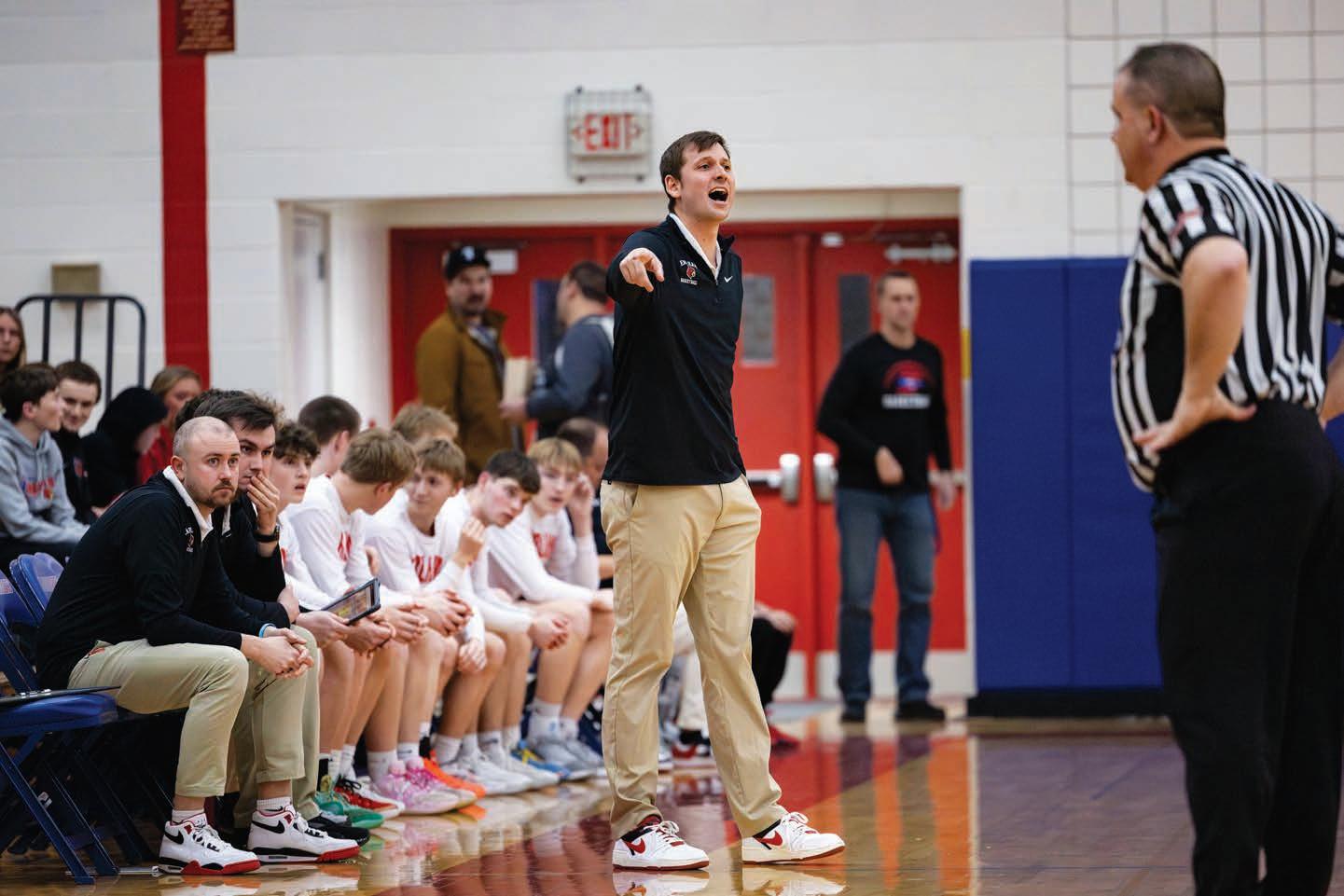
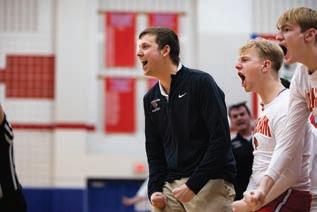
old, but his 74 games as a collegiate basketball player feel li e yesterday.
Austin Ash repeats the same word aloud. Working his way down the sideline bench, the Earlham High School basketball coach offers a fist bump to each of his players. It s less than a minute until tip-off, and Ash needs to set an early tone. His voice calm yet determined, he makes eye contact and utters the same mantra he once told himself.
“Positive.”
A blow of the whistle snaps Ash s attention back to the court. His palms drop to rest on his knees as he inspects the action. Ash is no stranger to bas etball observation. efore he patrolled the sideline in a quarter-zip and ha is, he sat on the end of the bench in sweatpants and a warm-up shirt, patiently waiting for an opportunity. is career as a boy s varsity bas etball coach is games
Ash is ust three years removed from his collegiate playing career, one defined by humble beginnings, persistence, and a blossoming cut short. e spent five seasons at Iowa, evolving from overloo ed wal -on to beloved role player, but never averaged more than five minutes a game.
A transfer to the Citadel offered him a chance to prove his talent, and Ash delivered, but a torn ACL ended his playing career. Now following a family lineage of coaching, he carries a bundle of philosophies from numerous mentors and lessons learned from past struggles. All the while, he never let go of the same enthusiasm and oy he exuded as a player.
“I m not out there on the floor, so I m ust trying to give them confidence to be the best players,” he said. Ash is nothing but optimistic. After all, he
achieved his dream before his senior year of high school at Mount Vernon. That summer, Ash s recruiting interest consisted of in-state NAIA schools Clar e and Mount Mercy University, ivision III Loras College, and at best, ivision II Northwest Missouri tate.
ut once the id from Cedar apids received a preferred wal -on spot from Iowa s ran McCaffery, Ash ended all speculation about his future. ith no promises of playing time or financial support, he d become a Hawkeye.
imilar to any wal -on, Ash found himself at the bottom of the pec ing order. e earned all-state honors averaging 23 points per game in his final season at Mount ernon, but now his talent paled in comparison to teammates and future N A players yler Coo and Lu a Gar a. Lac ing athleticism, Ash gave himself an edge with his shooting ability, working to increase his accuracy while quickening his release.
Invaluable utility man on the mat
hooting before and after practice, connecting on at least -of- shots from the wing or the corner wasn t impressive but rather the bare minimum. A video from March features Ash casually draining consecutive triples. Ash s shooting prowess earned him time on the floor, and while his minutes were scarce, the guard produced memorable moments. On senior night against Northwestern in , Ash, who was awarded a scholarship prior to that season, drilled a three-pointer from the bea of the igerhaw at midcourt. ith fans at Carver- aw eye Arena chanting his name, Ash felt no pain when he bro e his nose diving for a loose ball a few plays later.
“Adrenaline takes over,” he said. Ash recorded points over his final season with the Hawkeyes, more than his
Keltie Jeri-Leon’s year of stability
The Heartlanders forward has swapped teams five times in the ECHL.
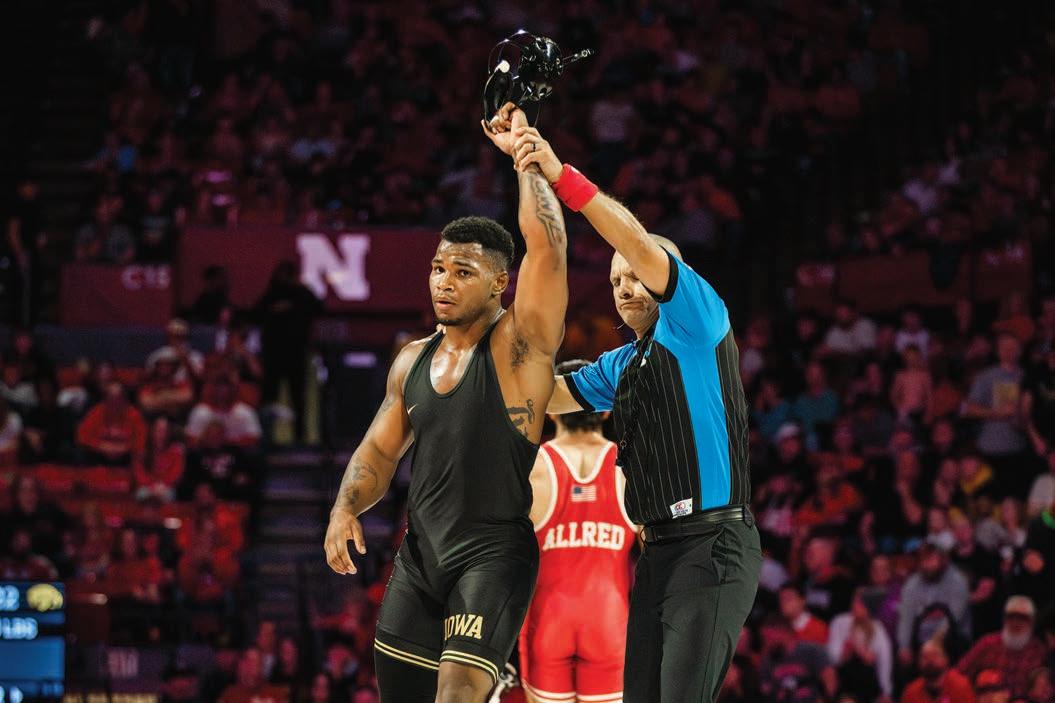
divisions this season. he former Iowa igh chool A tate Champion started theseason at his usual pound division, gathering a - win by ma or decision against ittsburgh s Chase ranit . The sophomore Hawkeye then got the ourneyman restling “Uncivil ar,” going a perfect - and outscoring his two opponents, - . Arnold then bounced down two classes and competed at the pound bout during the Soldier alute, grinding a - record for a second-place finish after falling to Navy s anny as in sudden victory, - .

A normal Christmas present for a 2-year-old is likely a toy or some clothes. or eartlanders forward eltie eri-Leon, a pair of ice s ates su ced. he pri ed footwear ic started his hockey journey. eri-Leon grew up in elowna, ritish Columbia, a province in Canada located above Washington and near Vancouver. As a id, eri-Leon wasted no time in putting those s ates to use than s to the ice rin his dad built for him in the backyard.
“ henever it got dar outside, we would switch from the fro en la e to our bac yard ice rin and play games against our neighbors under the lights,” eri-Leon said.
After spending some time playing unior hoc ey in Canada, eri-Leon made the move to the estern oc ey League and played for the ri-City Americans in ennewic , ashington. or his first time living in the U. ., the forward met friends that he still eeps in touch with to this day.
“ hey were li e a second family to me, and they treated me very similar to my parents,” eri-Leon said. “It also wasn t too far from home, so my parents were able to drive to some of my games, which helped the transition.”
After two seasons with the Americans, eri-Leon was then traded to the Seattle Thunderbirds, where he spent two and a half seasons. It was during his time in the city where the rumblings of an N L franchise coming to Seattle were starting to ramp up, which only created a more electric atmosphere for the L s uad. eri-Leon remembered sellouts at almost every game.
“I have a lot of love for eattle, it has a really special place in my heart,” eri-Leon said. “ eing in a large city li e that was really cool, and there were a lot of things to do when my family visited.” eri-Leon finished his unior hoc ey career during the
Maggie Ball carves her own path
The daughter of Oklahoma’s gymnastics coaches, Ball starts collegiate career at Iowa.
Norman, Oklahoma, native Maggie Ball, daughter of the University of Oklahoma head women’s gymnastics coach K.J. Kindler and associate head coach Lou Ball, looks to create her own story and impact in the world of gymnastics, but not in her hometown. Rather, her first chapter begins in Iowa City as a member of the Hawkeye gymnastics team.
From a young age, Ball was given high-performance opportunities to pursue gymnastics, with her parents being key role models. Kindler and Lou Ball both not only coach collegiate gymnastics but also have careers in the sport as athletes themselves, with Kindler having competed at Iowa tate and Lou all at Nebras a and Michigan.
It was from these experiences that allowed them, not only as parents but as coaches, to help Ball train and grow as a gymnast while also allowing her to decide her own path in sports.
“They always had the mindset of helping me get started but still offering me the opportunity to choose another sport if I wanted, which my sister did when she decided to pursue volleyball,” Ball said.
Even though she may be far from home, Ball still consults her parents on her routines and how to improve her skills — sometimes doing so in person, li e at the Iowa s meet at Minnesota on Jan. 31.
“My mom was giving me pointers afterward, which my coaches thought was pretty funny,” Ball said.
Through high school, Ball competed in club
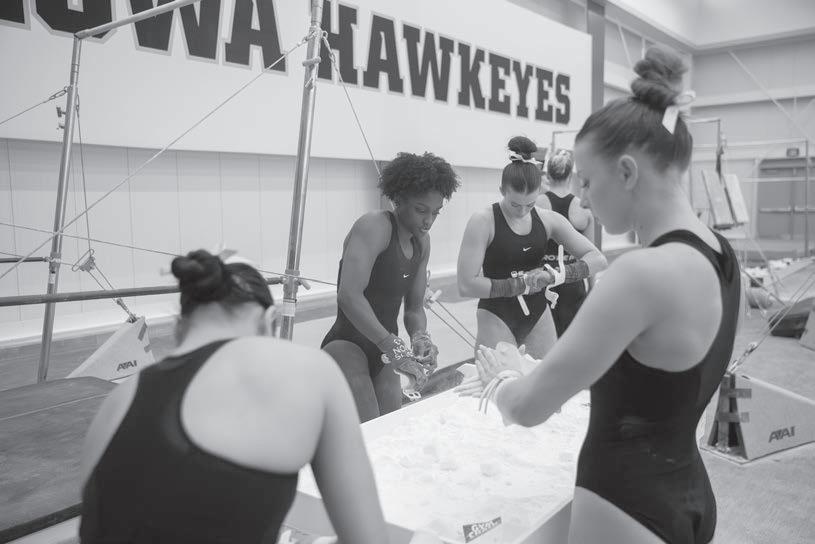
through skills and suggestions bestowed by her fellow team of Gymhawks.
“Its nice to hear from them and get that reassurance from someone who has been through the ins and outs and knows what you are going through,” Ball said. “Having that support brings a lot of positive advantages.”
To her teammates and coaches, Ball is
gymnastics at Bart Conner Academy, starring in all four events and claiming a national championship on beam in 2024. Despite the accolades, Ball noted one thing: the lack of group and team mentality in club gymnastics.
“There weren’t a lot of us on the club team, and it was kind of laid back, so sometimes it kind of felt like you were doing everything alone in both competitions, conditioning, and workouts,” Ball said.
owever, at Iowa, all received a warm welcome, as the majority of this year’s roster consists of veteran collegiate gymnasts. Ball learned
more than just another freshman on the team. She brings her own personality and characteristics that help not just her but everyone on the team.
“One of her biggest characteristics is that she always has that positive optimism and kindness that just radiates from her in practice and in competition,” freshman Daisy Bowles said. or Iowa head coach en Llewellyn, all embodies a passionate obsession.
“ nce she finds something to wor on, she can dedicate hours to working on it. That work
Hawkeye sprinter hits personal best
program over the last couple of years stood out to me.
What’s your favorite movie?
The Daily Iowan: What is your favorite place to visit on campus?
Jordan Gross: Probably Bread Garden Mar et, I feel li e I go there pretty often.
What is one thing that stood out to you about Iowa?
I didn t now much before coming on a trac visit. I feel li e Coach oody, the way he carries himself, and the way he’s built this
ethic is so contagious to the other gymnasts,” Llewellyn said.
hough being listed as an all-around on Iowa s roster, all chose to start off her collegiate career on beam. To her, the beam event at this time feels the most comfortable, and with a consistent uptick in scores since the beginning of the season, it looks like she made the right decision.
“I wasn t very happy with how the first few wee s went, but I have definitely been more intentional in practice, ma ing sure I carry that into the competitions, and hopefully my scores continue to improve,” Ball said.
Even though she does not compete in the other three events, Ball still dedicates her time to the collegiate training routine in hopes of one day becoming an all-around competitor for the program.
“I didn t do a lot of weight training in high school, but here we do it about twice a week, which helps me in ways,” Ball said. “I will definitely be wor ing hard this summer to hopefully make that move into the other areas.”
Even though her freshman season may be nearing its conclusion, all remains fixed on improvement, acknowledging her legacy as not just a coach’s kid but a descendant of collegiate gymnasts.
“I do hope to one day coach li e my parents, but for now, just trying to be sharper and confident in whatever I do is my immediate goal,” Ball said.
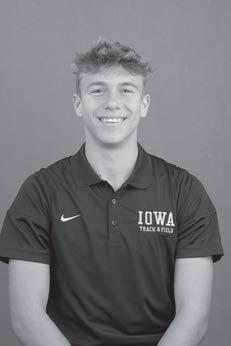
ff the top of my head, I ll probably go “Happy Gilmore 2.”
Who’s a role model or an inspiration in your life?
I ll go with my dad.
If you could have lunch with any person, living or dead, who would it be?
I d probably say my great-grandma. he passed a couple of years ago, and just having another conversation with her, I feel li e that’d be pretty nice.
What is your favorite sport besides track and field?
To watch, definitely football, but playing soccer is my favorite.
What’s your favorite event in track?
My favorite to run is the 100, but to watch is the 4x400.
What is the best Winter Olympic Sport?
Sports reporter Jonah Frey argues for ice hockey, while Jackson Mendoza argues for short-track speed skating.

Nothing beats the combination of physicality, high-paced action, and intensity of hockey, especially when the entire world is tuned in to see who takes home a prestigious gold medal.
Whether it’s sticking up for their goalie by getting in the face of the guy who just bumped into them, or dropping the gloves and fighting the guy who just blindside checked their teammate, hockey players play with immense pride and passion. But believe it or not, that passion elevates when they switch from sporting their league’s badge to representing their country.
Last year’s 4 Nations Face-Off was a sneak peek into what these Olympics will look like. The NHL reported 16.1 million viewers for the
championship game between the U.S. and Canada, making it the mostwatched hockey game ever. With Canada winning 3-2 in overtime, the game was absolute cinema. All 16.1 million viewers, if not already, were now made aware of the electric atmosphere and action international hockey brings. The U.S. and Canada aren’t the only strong contenders, however. Countries like Finland, Sweden, Czechia, and Germany are all strong competitors with some elite NHL talent as well. The last two women’s hockey Olympic finals featured the U.S. and Canada. The 2018 match was a thriller in which the U.S. won its first gold medal in the sport since 1998. The U.S. scored with just under seven minutes to go to tie the game at 2-2. When no winner was decided in overtime, it went to a shootout, where U.S. emerged victorious after six shots each. The rematch in 2022 didn’t disappoint. The stories, entertainment value, and action all combine to make hockey the best and most anticipated sport of the 2026 Winter Olympics.
The Winter Olympics are full of unique sports that most people do not tune in to at any other time of the year. Out of all of the sports, short-track speed skating is the one that takes the cake for the best nontraditional sport to spend your time watching.
The sport is essentially a mashup of hoc ey and trac and field, which creates the perfect formula for an exhilarating exhibition to watch.
The skaters are moving at about 30 miles per hour as they try to maneuver their way to the front of the pack. As the race is going on, skaters are
going outside and inside to cut off their opponents. The best part of the sport is that the crowd explodes whenever somebody cuts off an opponent and keeps the energy high throughout the entire race.
As the skaters lower their hands to the ice on the turns, that is usually where we see the most movement. These races usually take about a minute to complete, but that minute is full of intensity and anticipation, so what’s not to love?
Also, you’ll frequently see skaters fly off the trac into the padded walls surrounding the ice. While it is unfortunate for the athlete that had been waiting all their life to compete in the Olympics, it is entertaining for the viewer. Just like every Olympic sport, watching the athlete celebrate their medal wins is not only rewarding for them but for you as well. Take some time to watch some short-track speed skating this winter if you’re looking for a quick thrill.
previous four years combined. The guard proved his worth as a role player in the Big en and was now eager to define himself as a main scoring option. He found such an opportunity at the Citadel, a military school in Charleston, South Carolina, with Division I athletics programs. A member of the graduate program, Ash wasn’t on the same regimented schedule as his teammates. No 10 p.m. curfew. No early-morning formations. Just basketball — and his best season on the court.
Ash passed his first test with a -point debut against Clemson, shooting 5-of-10 from beyond the arc. e finished the season with 102 made triples, connecting on a near-40 percent clip while ranking second on the team in scoring with 15.2 points per game.
“It proved the belief I had in myself,” Ash said.
The guard’s improved numbers portended a potential professional career overseas, but a torn ACL in his penultimate game and the following rehab process shut the door on that future. Ash took a sales job in Des Moines but felt compelled to stay in basketball. He coached elementary school teams, and when the Earlham job opened up, the son of two high school coaches followed family tradition.
Meeting his players for the first time that summer, Ash laid the foundations of his program fundamentals first, starting with the strict man-to-man defense he learned from coach Ed Timm back at Mount ernon. is free-flowing offense emphasized the three-pointer, reminiscent of McCaffery s schemes, but also featuring the same set plays he learned from his father in sixth grade. In-game adjustments mirrored those of the Citadel’s Ed Conroy. Rebound-
For head coach Tom Brands, this innate ability to fluctuate between weight classes and perform at a high level is something most athletes do not possess.
“I think that when you are wired the right way, you will do what it takes when you’re up to executing the role,” Brands said. “Sometimes your role on a team or organization isn’t what you want it to be. But you’re called upon to do it, and so you accept the task with gusto.”
Few have been able to do what Arnold
ing was never optional.
Yet most importantly, after years spent supporting teammates from the bench, Ash expected nothing less than unselfishness from his players.
“They care more, they cheer more, when their teammates score than when they score,” he said.
arlham senior Gri n Messer calls his coach “intense.” Assistant coach Zac Reynolds labels his colleague as “go, go, go, all the time.” It’s easy to see their descriptions unfold as Ash cycles through a range of emotions. A turnover or foul prompts an eye roll and an annoyed glance at the rafters. An offensive rebound and put bac generates a right fist pump, followed immediately by both hands waving in the air, directing Earlham’s ensuing press.
This high-energy demeanor is replicated in practice. Ash would fill in during fiveon-five runs over the summer and will challenge his players to one-on-one battles.
“Whenever he hits shots, he’s just always trash talking,” senior Blaine Tiedemann said.
“He likes to let us know we can’t guard him,” Messer added.
Most Earlham players are Iowa State fans, and Ash will often reference his threepointer in a win against the Cyclones. Yet the coach also uses his playing experience as a guide. Ash knows any right-handed shooter should plant their left foot first, and the coach altered Tiedemann and Messer’s forms as such.
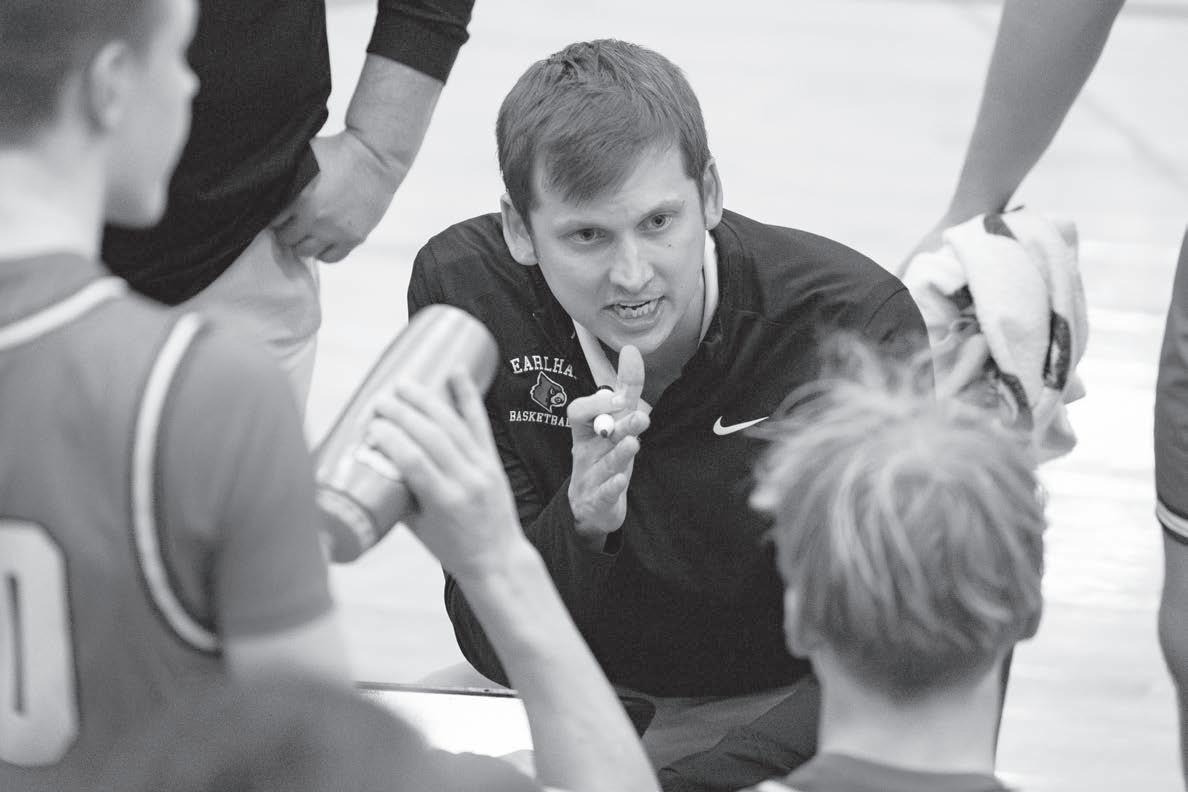
art floor general, part teacher, Ash is also a disciplinarian. A missed rebound or bad pass elicits a yell of “wake up!” Yet Ash’s harsh words are later replaced with encouragement. Tiedemann committed a turnover but then nailed a triple from the corner in Earlham’s next offensive possession.
“That’s the thing we preach,” Ash said.
has done, but he did not get to this uni ue position by accident. rands noted that the Georgia native has put in constant work around the clock to be where he is.
“It s important that you re not a fivemonth-a-year or a seven-month-a-year wrestler at this level. You have to be yearround, and Gabe Arnold certainly knows what that is about,” Brands said.
Even at a powerhouse like Iowa, which has produced 14 NCAA Champions and ig en Champions, rands and staff understand Arnold’s ability to pivot between three diff erent weight classes
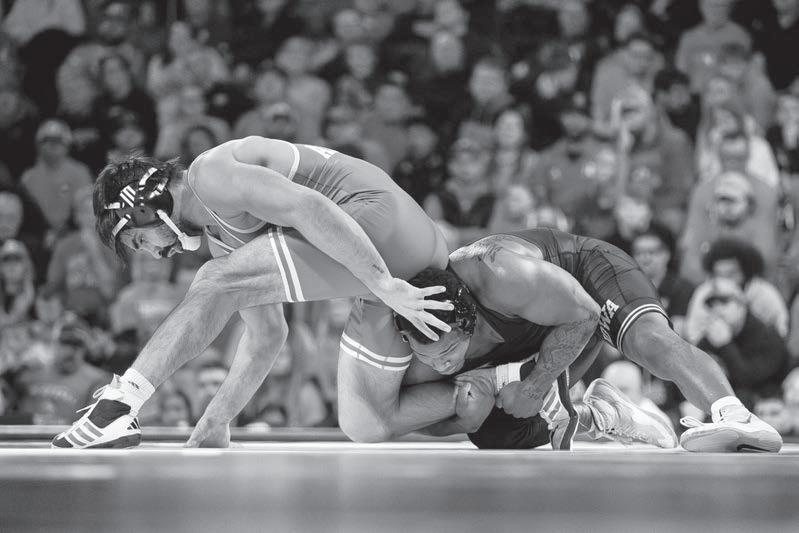
C I - pandemic, which made things complicated when looking for a pro contract. After waiting as long as he could, he signed a professional tryout contract with the Providence Bruins, the American Hockey League a liate of the N L s oston ruins. The forward skated in their preseason games and felt that playing for their a liate, the C L s Maine Mariners, was his best shot to play in the AHL.
Throughout his whole career, the forward has been no stranger to switching teams and moving to different parts of the country, seeing action with five different C L s uads. o some, a life on the go can be tiring. For eri-Leon, he finds it exciting to see different places.
“At the end of the day, the most important thing is playing hockey,”
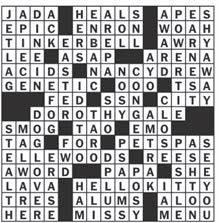
eri-Leon said. “It s all about finding the best opportunities to work your way up and further your career.”
Although he has been traded multiple times, Jeri-Leon distinctly remembers when he was traded from Savannah to Iowa in the middle of last season. He arrived early to practice but was pulled off the ice by avannah s video coach, who told him about the sudden trip up north.
“I packed up my things, and I’ve loved my time here ever since,” JeriLeon said.
It’s now been a year since Jeri-Leon was traded to Iowa, and the forward sees himself as a leader in the locker room with all the experience he’s garnered over the years.
“Just being a good voice in the locker room, trying to be a role model, and leading by example vocally every single day in practice is what I try to bring to this team,” Jeri-Leon said.
The journeyman boasts the stats to back up his vocal leadership. The forward ranks third on the team in both goals and points.
Although his hockey journey has been far from a straight line, JeriLeon says if he learned anything about himself over his career, it’s that he’s mentally strong.
“I’ve faced a lot of adversity, but my family has been a great support system for me throughout the years,” Jeri-Leon said. “No matter what’s been thrown at me, I’ve put my head down and worked. But at the same time, it’s been really fun, and I hope to play pro hockey for many more years.”


pacing, and hopping up and down, Ash
finally ta es a seat. is hands no longer grip his knees but rather rest comfortably behind his head. e can finally relax. Earlham is less than a minute away from a 12-point win at Interstate 35, marking the Cardinals’ seventh conference win, matching their total from last season with three games remaining.
on short notice is a truly exceptional feat. “It is invaluable,” Brands said. “A lot of times there s a fight to get someone to do that… Not saying he agrees every time with the method, but he has stepped up every time. It’s invaluable.” Arnold has proven to be critical for Iowa wrestling this season, rallying an 11-3 record in what’s been a grueling Big Ten schedule for the Hawkeyes. His best win of the season came on Jan. 23, defeating No. 7-ranked Silas Allred of Nebraska, 4-1. Arnold’s losses on the season have all come to top-10 foes, most recently falling
guarantee. He knows better than most the wor ethic and selflessness of bench players, but also the exhilaration and pride of being a routine starter. Ash’s basketball journey embodied both of these archetypes, and now as a coach, he’s reminding the next generation to embrace their current situation with positivity.
“Be an all-star in your role,” he said.
to Penn State’s No. 1 Levi Haines at 174 pounds and No. 4-ranked Minnesota Gopher Max McEnelly at 184 pounds.
Regardless of what weight class Arnold is wrestling at, the former two-time National Prep Champion has always answered Brands’ call at a moment’s notice, providing his athletic prowess wherever he is needed.
“It’s just about whenever you get the opportunity to go out there and compete hard, compete with integrity, and compete with everything you’re about,” Arnold said. “That’s what I strive to do every time I get to go out.”





NORTHWESTERN NEUTRALIZED








The Iowa Hawkeyes defeated the Northwestern Wildcats 76-70, during a basketball game at Carver-Hawkeye Arena on Feb. 8. Iowa guard Bennett Stirtz reached a career-high 36 points, going 8-8 from the free-throw line.

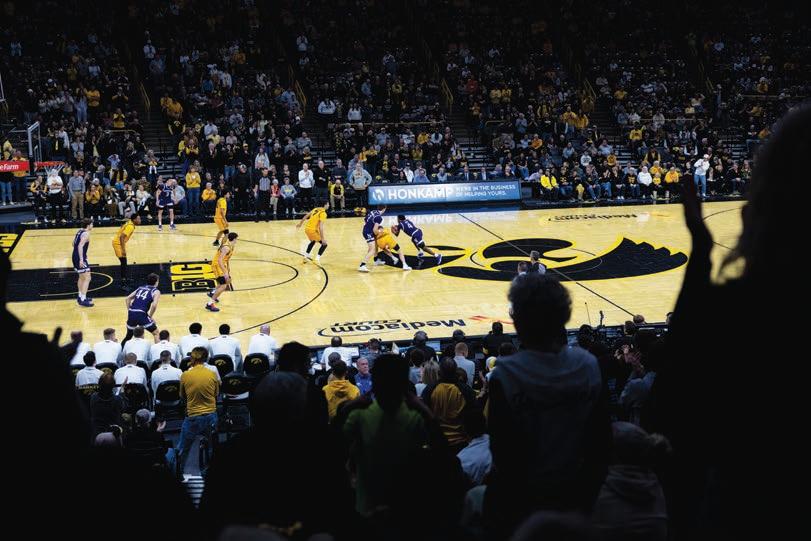





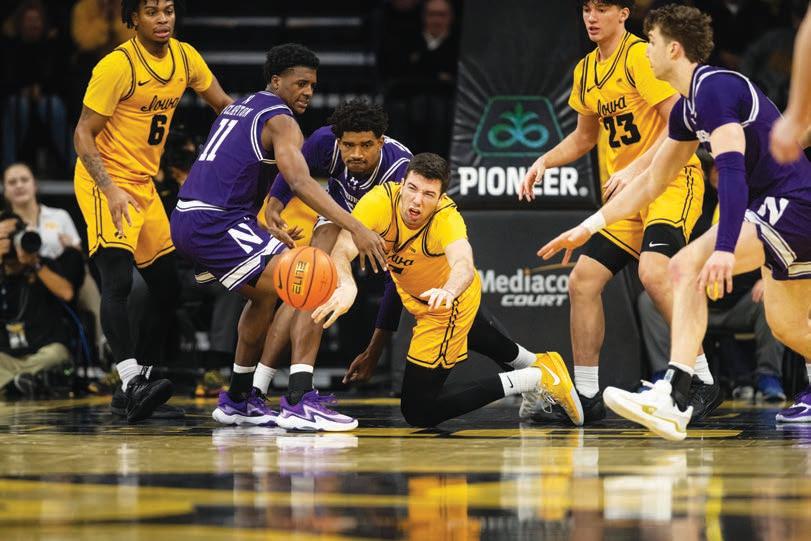
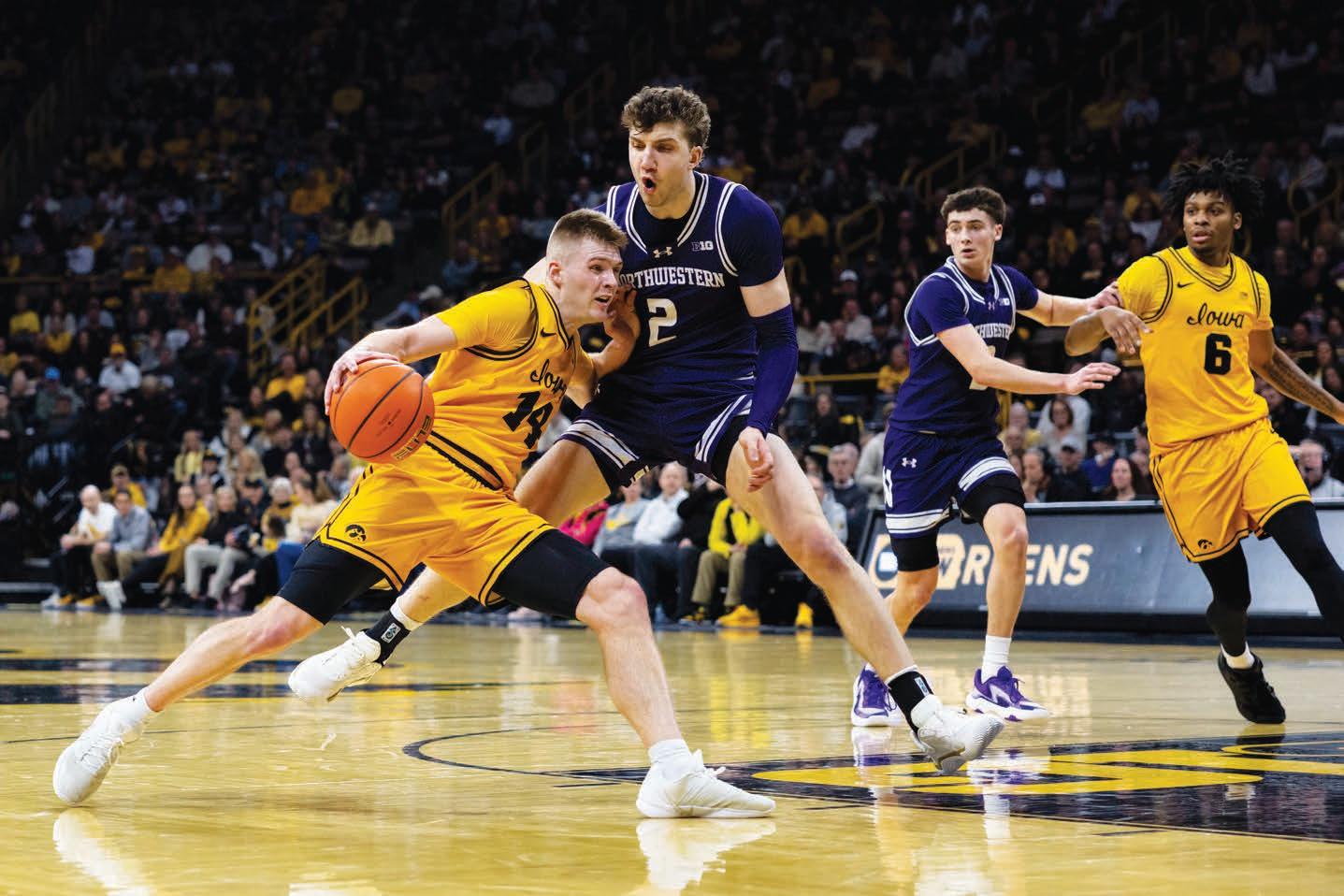
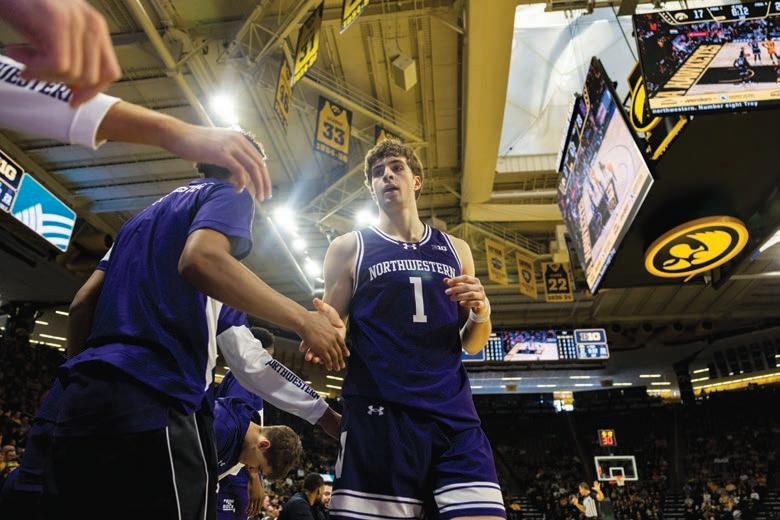















A guide to the galleries of Iowa City
Historic art venues share pieces of their rich repertoire of displays.
Art is everywhere in Iowa City, from printmaking to paintings art galleries can be found on and off the college campus, featured in Iowa City’s Gallery Walks, or hiding in plain sight.
In this guide, we’re taking a tour of eight Iowa City galleries and hearing from some of their owners and operators. From a museum near campus or a gallery inside a hospital, we hope you learn more about the art Iowa City has to offer.
Established in 1975 under the name Arts Iowa City, it was originally designed to be used for classes and workshops, but it always had the goal of hosting a different artist each month. In its current location, ArtiFactory now operates as a gallery space and an educational space for classes.
Located on the Wesley Student Center’s lower level, viewers can learn about and view different artists wor each month and chat with ArtiFactory volunteers or with Philip Beck, Arts Iowa City board’s co-president, who enjoys interacting with the community when they come to visit.
“I go and sit in the gallery, open it up usually twice a week,” he said. “When people come in, it’s just so nice to talk to them, and they are so appreciative and enjoy the artwork, and I really like that. I like that interaction.”
The current exhibit on display features oil paintings by artist and Stanley Museum employee Steven Erickson and will run through February.
Established in 1999, this frame shop on Linn Street serves as a natural gallery for paintings and prints. Upon entering, viewers are greeted by artwork lining the walls, encased in owner Kathleen Rash’s frames.
Rash herself can be found behind the counter, where frames of every color are organized in neat columns on the wall, or in her workshop where she builds the frames. The art she displays in her frames include pieces by Iowa artists as well as her own art.
Describing herself as a working artist, Rash works as a trained weather spotter for the National Weather Service and takes pictures of storms. She later uses those pictures as inspiration for her paintings.
The works she displays include paintings by George Walker, Byron Burford, Hans Breder, Sylvia Schuster, and
more. Rash got to know those artists doing framing work for them, and then displayed their work when she opened her business. ithin the first eight or nine years of opening, ash had participated in different Iowa City gallery wal s.
One of Rash’s favorite parts of working with those artists was seeing them as human beings. As a fellow artist, she appreciated the mutual respect they had for each other.
“I became a good framer, partly because of their help, and they’d been dealing with other frame shops in the past, but once we started working together, we’d set a pattern, and they trusted me to do exactly what they wanted,” Rash said.
Having operated in Iowa City for over 40 years, Iowa Artisans Gallery was established by 12 artists in 1984. The store is packed with art, featuring works by 200 art-
UI students' media obsessions
Students indulge in a variety of media — here’s what’s popular.

cash prize at stake, the faithful attempt to find out who the traitors are and vote them out, while the traitors eliminate faithfuls and try to make it to the end of the show.
ists across a variety of mediums, including wall art, jewelry, pottery, ceramics, glass, fiber, metal arts, and more.
Bethany Young, the gallery’s manager, took over in 2020, when the original owners retired, but had been working for the gallery for 23 years. Her favorite part of running the gallery was the relationships she formed with the artists, as well as the various art events throughout the year.
“I especially love hosting artists for exhibits and receptions, particularly for our ‘First Friday’ series each month,” Young wrote in an email to The Daily Iowan. “Iowa City Arts Fest is also a really fun weekend where we host artists, and they will do demonstrations of their craft for the community to observe.”
‘Send
Help’ is a riot
Sam Raimi is back with a great gross-out horror hit.
I’ve been a fan of Sam Raimi’s cartoonish, mean-spirited, and endlessly creative filmma ing since I was a id, so watching “ end elp,” his newest film, when it debuted in theaters on Jan. 30 was a delight.
When I was little, I’d obsessively rewatch “Spider-Man 2” and “Army of Darkness,” two of Raimi’s more kid-friendly offerings. he same wild camera movements, Looney unes character behavior, and simple story structures pushed to their limits I fell in love with as a kid were all present in “Send Help.”
The film follows Linda Liddle, an oddball bird-lady accountant, played by achel McAdams, who doesn t fit in with the misogynistic corporate culture in her o ce. er new sexist boss, played by Dylan O’Brien, passes her over for a promotion but teases her with a chance at getting it if she accompanies him and his cronies on a private jet to Bangkok for a merger deal.
Things go awry, and the plane crashes in the ocean, leaving Linda and her boss, Bradley, as the sole survivors on a deserted island. The pair is in luck, though, as Linda has been reading survivalist books her whole life and is so obsessed with the show “Survivor” that she auditioned for it.
From there, a slew of backstabbings, tested loyalties, psychosexual tensions, violent encounters, and desperate escape attempts ensue. he film rushes through the setup to get to the main event: two underused actors with great chemistry yelling at each other and occasionally trying to kill each other for 100 minutes. It will make you laugh with its goofy dialogue and then gross you out with a shocking amount of mud, vomit, and blood — as all movies quite frankly should.
Whether it’s a show about hockey rivals in a secret relationship or a young adult novel with heavier themes, University of Iowa students are getting their fill of pop culture media.
It’s no secret media is constantly evolving, with entertainment-fiending young adults and teenagers typically at the forefront of consumption lines. A collective interest in specific genres within generations works to create communities, resulting in widely-known TV shows, movies, and literature.
Alongside shared interests, UI students find themselves enjoying smaller-scaled and less popular media leisures. Inspiration is often found from these, and a new favorite show or book may turn up from the recommendations
“I’m currently watching 'The Traitors,' which is a show about celebrities that are dishonest with each other — like 'Big Brother,' but for celebrities. It’s very entertaining,” Kaylee Osterhaus, a UI fourth-year student, said. “Rob from Love Island is on it this season, which is also something that enticed me.”
“The Traitors,” based on the Dutch franchise “De Verraders,” is a U.S.psychological reality TV competition based in Scotland. A group composed of celebrities, like Season 6 Love Island star Rob Rausch, are divided into two teams, the “Faithful” and the “Traitors.” With a
Osterhaus isn’t alone in her admiration for the binge-worthy media genre. Reality television shows have seen a huge boost in popularity since 2021, increasing in production and content availability by 40 percent, a number that also represents the percentage of the general population that now watches reality television, which is primarily consumed by women aged 18–34.
While some students focus on one show or entertainment media source at a time, others spread their attention across multiple.
“I’m currently reading 'The Hate List' right now, and am rewatching 'Gilmore Girls' for, like, the sixth time,” UI third-year student Faith Litterer said. “I’m also into 'Heated Rivalry' and 'Selling Manhattan.’”
“Heated Rivalry,” actively taking social media and young adults everywhere by storm, is a show about the secret but intense relationship between professional hockey rivals. Based on Rachel Reid’s “Game Changers” novel series, the show found its name from the second book, published in 2019.
Alongside the popular TV shows, , a book piqued Litterer’s interest.
“The Hate List,” a novel by Jennifer Brown, tells the story of Valerie, who wrote “the hate list,” which then morphed into a target list that her boyfriend used to orchestrate a school shooting. The novel focuses on the aftermath, layered with guilt, bullying, and social alienation.
Other students keep things simple, only turning on the TV to keep up with their favorite team or sport.
“I honestly haven’t been watching much on the TV but basketball lately,” George Bitar, a UI first-year student, said. With the NCAA basketball season in full swing, tuning into games provides a constant stream of entertainment and a means for students to support men's and women's Hawkeye teams.
From reality television to attention-grabbing dramas to young adult novels to live sports, students at the UI are involving themselves with pop culture in ways that define both shared experience and individual taste.
While I wasn’t super familiar with O’Brien outside of his role as Thomas in the movie adaptations of “The Maze Runner” books 10 years ago, I thought he was outstanding here. is villainous cac le, wide-eyed, horrified whimpers, and slapstick injured acting reminded me of Bruce Campbell’s powerhouse comedic turns in Raimi’s “Evil Dead” series.
But this is mostly McAdams’ movie. An actor everyone in my generation knows from “Mean Girls” and “The Notebook,” McAdams has felt underappreciated in the last decade. ith fewer and fewer opportunities to flex what she can do outside of supporting roles, the only film I ve seen that utilized her in a meaningful way is “Spotlight” a decade ago.
In “Send Help,” though, McAdams is given free rein to go nuts. She gets to play lovable loser, blood-soaked survivalist, manic slasher villain, and twisted torturer within the same story. I can’t express how much fun it is to watch her performance contort and evolve throughout the movie; she kills it — literally.
The visual language here is so much more engaging than just about any movie you’re going to see this year, too. Raimi has always been the master of visual storytelling. He communicates character and feeling through camera movement rather than dialogue masterfully. arly in the film, when Linda meets radley for the first time, Raimi inserts a close-up wide-angle shot of a piece of tuna on Linda’s lip, then cuts to a hyper close-up shot of Bradley’s eye struggling to avoid looking down at it.
Without either character expressing their embarrassment or disgust, Raimi conveys their feelings and instills the same feeling in the audience in a way a simple two-shot conversation would not have accomplished as effectively.
It’s refreshing, too, to see an original thriller concept executed li e this. It wasn t tossed off to streaming or elevated into a prestige movie, and it just delivers on being an exceptionally crafted thrill ride.
As a die-hard fan of aimi, I found this film to be a return to form after his franchise work in “Doctor Strange: In the Multiverse of Madness” and “Oz: The Great and Powerful.” With a remarkably fun performance from McAdams at the center, there is no way anyone reading this will not have a great time at the movies watching “Send Help.”
Environmental lit mag ‘Tree Hugger’ makes debut
The literary magazine is the first at the UI to focus on environment and sustability, a passion of its editors.
our natural world.” Kathryn Schultz, nonfiction editor of ree ugger, said. “ he community we get to bring together is precious, welcoming, fierce, and strong.”
In the populated forest of literary magazines at the University of Iowa, a new literary magazine has taken root in the form of Tree Hugger. With an appreciation and emphasis on nature and the environment, Tree Hugger has grown apart from other literary magazines by off ering a publication dedicated to an often underrepresented genre in the field environmental writing.
The UI is well-known for its writing program, offering a diverse range of creative writing classes across numerous disciplines and genres. However, the topic of environmental writing was nowhere to be found — something Tree Hugger founder Claire Landmesser, a third-year UI student and avid nature enthusiast, took note of.
“At Iowa State, they have an environmental writing program, and it’s the only writing program Iowa State has that we don’t have here,” Landmesser said. “I feel like that’s a really important intersection across disciplinary thing to have, and I wanted to bring it here.”
Spearheading a campaign of ecological awareness and respect for nature, Tree ugger has become the first creative outlet on campus to highlight and appreciate environmental writing.
Either with a direct focus on the human relationship with nature or including themes of sustainability, conservation, or admiration toward nature, environmental writing blends creativity and science.
“We envelop two, too often separate, worlds — sciences and the arts — and unite them under one mission protecting
While environmental writing may sound daunting to some, Tree Hugger interprets the guidelines of the genre loosely and encourages stretching the boundaries of environmental writing.
In their submissions, Tree Hugger seeks writing of all capacities as long as the cultivation of awareness or appreciation of nature is evident in some regard.
“It doesn t have to be specifically, I love the environment, and I’m an advocate, and this is why you should love the environment,’” Landmesser said. “It can be a piece that involves environmental aspects and has a subtle appreciation or noticing of the environment, and can be from all different types of areas.”
In its submission forms, Tree Hugger accepts poetry, nonfiction, ournalism, fiction, and art. esides being centered around the environment, Tree Hugger only asks for the submitted piece to be less than 3,000 words in length.
Tree Hugger is finalizing the first edition of their literary magazine for publication and distribution to readers. Tree Hugger is accepting submissions for its second edition. Information regarding submissions, future events, and publication dates can be found on either their website or their newly created Instagram page.
Tree Hugger publishes two editions of its literary magazine each year, with one edition released per semester. In the fashion of environmentalism, Tree Hugger is currently looking into the most sustainable way for its publication to be distributed, including researching the

most environmentally friendly papers and print shops in the area.
“We decided not to publish in print for the Fall 2025 semester, and it's taking us some time to do so for the spring, because we've decided to go a pro-sustainability route,” Anna Fox, managing editor of Tree Hugger, said. “Ethical sourcing and recyclable paper are two of our biggest focal points for this. I think this speaks to a broader philosophy on our part that in order to talk the talk, we must also walk the walk.”
“The main point of these events is just to get people to hear about us and to really engage with the community,” Landmesser said.
“I feel like a big part of caring about the environment is the community aspect of it.”
Tree Hugger not only publishes their literary magazine but hosts several events as well throughout the semester. From events centered around cleaning up the community and picking up trash to poetry readings at the local greenhouse, Tree Hugger grows its popularity by cultivating loyal, like-minded members and bringing e cacious change to the community.
Graphic novelist talks issue surrounding book bans
Dapier’s new graphic novel is centered around the Chicago Public Schools’ decision to ban “Persepolis”.
ting out creative work itself is vitally important, especially in a struggling democracy.
Jarrett Dapier is an author, librarian, and drummer. His new graphic novel, “Wake Now In The Fire,” was published on Feb. 3, and is centered around the Chicago Public Schools District’s decision to ban Marjane Satrapi’s “Persepolis” from classrooms and libraries and the response to the enforcement. Dapier helped to uncover how the ban occurred.
This interview has been edited for length and clarity.
The Daily Iowan : What would you say to young writers who want to speak up about current events?
Jarrett Dapier: Telling your story is a political act. Expressing yourself and exercising your freedom of speech is a political act and demands to be taken seriously. If you’re writing truthfully and honestly about who you are and what you’ve experienced, being a conscious person in the world, I think that itself does an enormous amount of good and should never be underestimated. Put-

Were you into writing comic books before the Chicago Public Schools decision?
I took it seriously starting in high school, when I took creative writing classes with amazing teachers who recommended writers. One of those authors was Kurt Vonnegut, who was recommended by a friend, actually.
I also took it seriously in college, where I studied at the University of Illinois. I always continued to write throughout my 20s, whether it was for publication or not — so, journals on my computer, journals in my notebooks, starts of picture books, and starts of middle-grade novels. I also loved writing scripts. Working in teen services at a public library, I started a program adapting young adult novels to the stage.
I’ve now adapted three or four different books. Similar to how the action takes place under the lights, in a graphic novel, the action takes place in illustrations. But you provide the context and the conflict through dialogue and action.

Do you think the situation on book bans has improved or gotten worse since the experience you’re writing about?
It has definitely gotten worse. It has become an inferno that has taken hold of a lot of communities, including both suburbs and cities. This story was originally an outlier. There were only a few instances, at least in the research I could find, where a whole school system ordered the removal of a book from every school. The Chicago Public School system is over 500 schools, and it blew up in their faces, thankfully. There were a lot of ways the books were protected — they could not unilaterally remove the books from the libraries the way they desired to.
I often spoke with librarians and other faculty about this case study, and I’ve learned about it as an extreme example, but unfortunately it’s now been nationalized. So, you’re seeing hundreds of titles challenged at one time by people who haven’t read the books, and you’re seeing school and library boards receptive to this wholesale removal of literature from kids, teens, and adults. It’s bad everywhere,
and it’s almost like a pathogen caught by… people who want to control what we read, write, say, and think — who we can be. So, it’s astronomically worse.
Did you enjoy “Persepolis?”
Oh, yeah. The entire reason for diving into the research and noticing the problems when the ruling came down in 2013 was that I loved the book so much. The fact that the book was being censored and targeted at that mass scale was very notable. I just loved the way that it melds personal storytelling and personal experience with history-based storytelling, with the Islamic revolution of , how it affected Iranian society, and how it affected the main character, who was raised as a free thinker and raised to question everything, including politics and religion, and how dangerous it became for her society to suddenly transform into a theocracy. So I think somebody in danger for their belief in free expression compelled me. I just fell in love with her character. Yeah, she’s a badass. It’s a very sad story, and it’s continued to stoke my attention and interest in Iranian history. Especially with what’s been going on over the last five years.




It has evolved to more of an art museum, consisting of 6,500 pieces of permanent art as well as temporary exhibitions.
series called the Artist — Art and Art Illness Series, which showcases pieces of art with illness as the subject matter as well as artists who have dealt with illness.
Villareal described the current exhibit in the Art and Art Illness series, Rose-Lynn Fisher’s “The Topography of Tears,” which will be displayed through March.
Fisher, an artist based in Los Angeles, featured photomicrographs of her tears collected over eight years.
“It’s a unique space we can connect to health-related topics and touch patients or family members or caregivers who might be experiencing similar emotions,” Villareal said.
Nichole Wolz, the visual and performing arts coordinator for Project Act, oversees the rest of the temporary exhibitions, including their installation.
She said the exhibit program consists of five gallery spaces throughout the hospital that rotate every three months. Project Art produces about 18 temporary exhibitions a year. Wolz, a printmaker herself, was particularly drawn to one piece in the permanent collection, a 2019 paper installation called “Confluence” by artist Amy Genser.
The piece is made of mulberry paper and is inspired by the aerial waterways of Iowa, Wolz said. Having worked in her position since September 2025, Wolz said that seeing that piece had made her want to work there.
Villareal said she and Wolz manage a lot of installation and de-installation, and that is one of her favorite parts of working at Project Art.
Originally known as the University of Iowa Museum of Art, the Stanley Museum of Art has a long history in Iowa City. The museum was established in 1969 and has been in its current location since 2017.
Two bronze heads created by sculptor Robert Arneson sit on the grass in front of the modern glass building. Through the big glass doors, the colorful mural “One An Other” by artist Jiha Moon is displayed against a white wall for viewers to admire before taking the elevator up to the galleries and exhibitions on the second floor.
One current exhibit, titled “Weaving Narratives: African Textiles in Iowa,” consists of walls covered in beautiful, colorful textiles, representing different African cultures in Iowa.
A few of the textiles came from Elizabeth Stanley’s collection, part of the Stanleys’ donation of nearly 600 African art objects to the museum. The exhibit itself will be on display until April 29.
As viewers progress through the galleries, they can view all types of art in various mediums.
The museum’s current collections consist of modern art, contemporary art, ceramics, drawings, prints, photography, African, Oceanic, and Asian art, Indigenous Art of the Americas, and textiles.
Each room has new art to discover, and viewers can spend hours learning about all the art the Stanley has on display.
Facing the UI Health Care Medical Center Downtown is a white, two-story house.
That house is the Public Space One Northside gallery and is one of three historic houses under PS1’s operation.
Upon entering, viewers are invited to pick up info cards about the exhibit before entering the first room. Most exhibits in this Northside gallery fill two rooms, but it depends on the mediums and the artist’s wishes.
The exhibit on display is an interactive video installation titled “DEAD OR AMAZING,” so the first room is converted into a waiting room.
Both rooms have large windows that flood the space with light, and when art is displayed on the walls, the bright sunlight helps to amplify the colors.
Artist’s talks are held during their exhibit’s installation, and the large rooms can quickly become packed as visitors come in and listen.
The second room houses the video installation for the current exhibition. To create an immersive experience, blackout curtains cover the windows and doorways to prevent any light from entering the room.
For any interested visitors, the exhibit will be on display until Feb. 21.
A family-owned and operated business, the Lasansky Corporation Gallery has been in Iowa City since the early 1980s.
Upon entering, viewers can hang up their coats next to a 19th century steel printing press and browse a rotating selection of prints by artist Mauricio Lasansky.
Mauricio Lasansky died in 2012, but the gallery is operated by his grandson, artist Diego Lasansky, along with other family members.
The current selection of pieces span across Mauricio Lasansky’s career, from his black-and-white piece “Doma,” made in 1944 to colorful, complex pieces made in the 1990s. The style of printmaking Lasansky utilizes is called intaglio, where a drawing is etched on a copper plate and printed on paper with the help of a press.
For Diego Lasansky, his favorite part of running the gallery was being able to work with his family. He also enjoyed interacting with people who were interested in his family’s work, and he hoped that people would be able to learn more about printmaking and his grandfather’s work.
Education about printmaking and the artist was what he hoped viewers would take away from the gallery.
“Often when people come, education is a big part of it, whether they’re coming to research or they’re coming to collect,” Diego Lasansky said. “This form of education allows you to be a little more informed as you go to do something with it.”
Located on the ground floor of the UI Main Library, the gallery has been displaying exhibitions since October 1987. It operates as a space for students, with classes being encouraged to visit.
A new exhibit is displayed each semester, ranging from topics such as historical figures on the UI campus to crafts.
Exhibits are curated by UI faculty members with the help of library gallery staff and can feature materials from the university’s archives and collections across campus. Throughout the semester, curators will give talks or guided tours of their exhibits, which have been featured in various Iowa City Downtown District events over the years.
The current exhibit is “Orchestrating Community: The Public Service of Iowa Conductor James Dixon,” which will be displayed until June 26.
A gallery in an unexpected place, Project Art is located in the UI Hospital and Clinics. Established in 1978, it was designed to be an art collection that improved patients’ experiences.
While initially designed for patients, the public can also view the galleries with the help of an art pass, obtained with 48 hours notice to the Project Art team.
Anna Villareal, the collections coordinator, tracks and cares for the permanent collection, which involves use of a collections management database and collections care, and helps maintain the pieces.
She also oversees a temporary exhibit
During that process, she gets to interact with staff, patients, and their families.
“We have favorites, everyone has favorites, but it’s so interesting to see how an individual might experience an artwork different from another person based on what they may be going through or what they needed from the artwork at the time,” Villareal said.










White Teeth by Zadie Smith Paprika
directed by Satoshi Kon Severance on Apple TV+