CELEBRATING OVER 50
FRIDAY, MARCH 27, 2026

FRIDAY, MARCH 27, 2026
BY GABRIELLA BETHONEY DFP Writer
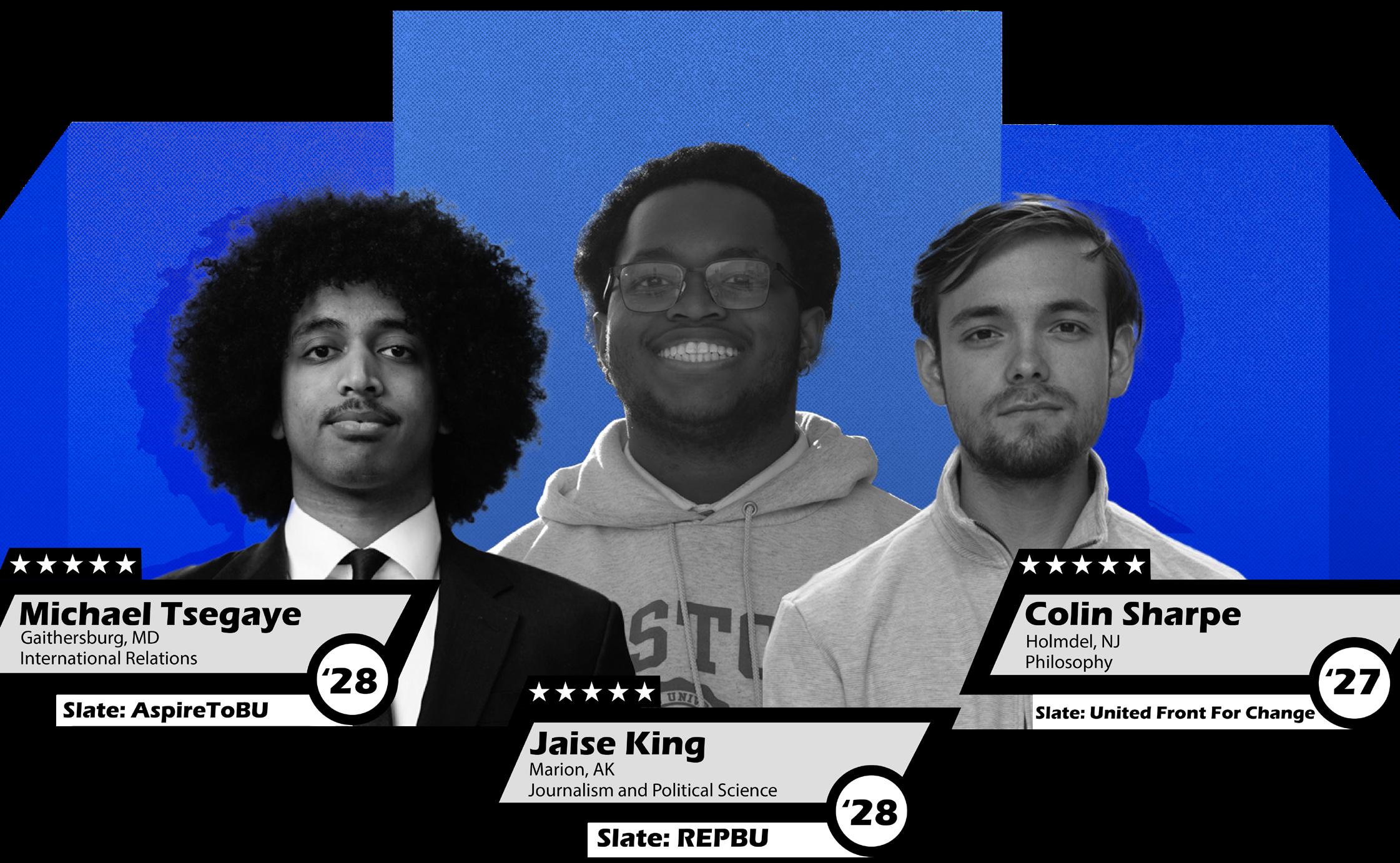
By 8:50 a.m. on Monday, Michael Tsegaye is already at FitRec, preparing for his bouldering class that runs from 9:00 a.m. to 10:00 a.m. Tsegaye said he arrives to all his commitments at least 10 minutes early, a habit adopted from his childhood: “early is on time, and on time is late.”
“When it comes to other people’s time, especially when it comes to people that you’re friends with and or love, you can’t really be wasting that time,” Tsegaye said.
Tsegaye, a BU sophomore studying international relations, said his interest in foreign policy also stemmed from his childhood.
Beginning in fifth grade, Tsegaye and his father would spend up to two hours of the evening watching CNN and reflecting on the “political circus that was playing out in the 2016 elections,” he said. Their conversations were a practice ground for Tsegaye to develop his own opinions on how governments can better serve their citizens.
Tsegaye said his father, an asylum seeker from Ethiopia, is a guiding
Continued on page 2
When he was a senior at Marion High School in Arkansas, Jaise King noticed a lack of resources available to local students applying to college. So King and his former classmate Coby Hayes cofounded a non-profit to address the issue.
As a BU sophomore studying journalism and political science, King balances his passions for operating his non-profit, Delta RedefinED, serving the mid-south, while living full-time in Boston as he pursues a career in investigative journalism.
Colin Sharpe grew up listening to his grandmother’s life stories. Mary, who was born in 1931, recalled an “older America” so “alien to any of us,” before interstate highways, television and instant communication.
As a BU junior studying philosophy, Sharpe said his grandmother’s firsthand accounts of pivotal historic events helped shape his passion for politics and journalism today.
The voting window for the 2026-27 StuGov executive board election is April 6 through April 10.
Visit the BU Student Elections Commission website for more information.
“If I could do non-profit work for the rest of my life, I would,” King said.
As King operates a non-profit far away from the region it serves, he often delegates planning and tutoring
Continued on page 2
Growing up in Holmdel, New Jersey, Sharpe described his upbringing as “a pretty typical story,” which sparked his curiosity about the world and different fields of knowledge. He often kept up with news, participated in mock trials, and sought forums to debate politics while in grade school.
Last year, Sharpe hosted a “prove me wrong” debate at the George Sherman Union for the club Young Americans for Freedom, of which he is the secretary. After reflecting on the format of the debate, Sharpe said it
Continued on page 2
BY GRACE WHINNERY AND OLIVIA RUZIC Associate City Editors
The Trump administration sued Harvard University last week, accusing university leadership of failing to protect Jewish students from antisemitism, prompting pushback from Jewish faculty.
The lawsuit, filed in Federal District Court in Boston, alleged that Harvard violated Title VI of the Civil Rights Act by fostering “a campus climate where hostile antisemitism and anti-Israeli conduct thrives.”
“For several years, Jewish and Israeli
FEATURES
PAGE 5
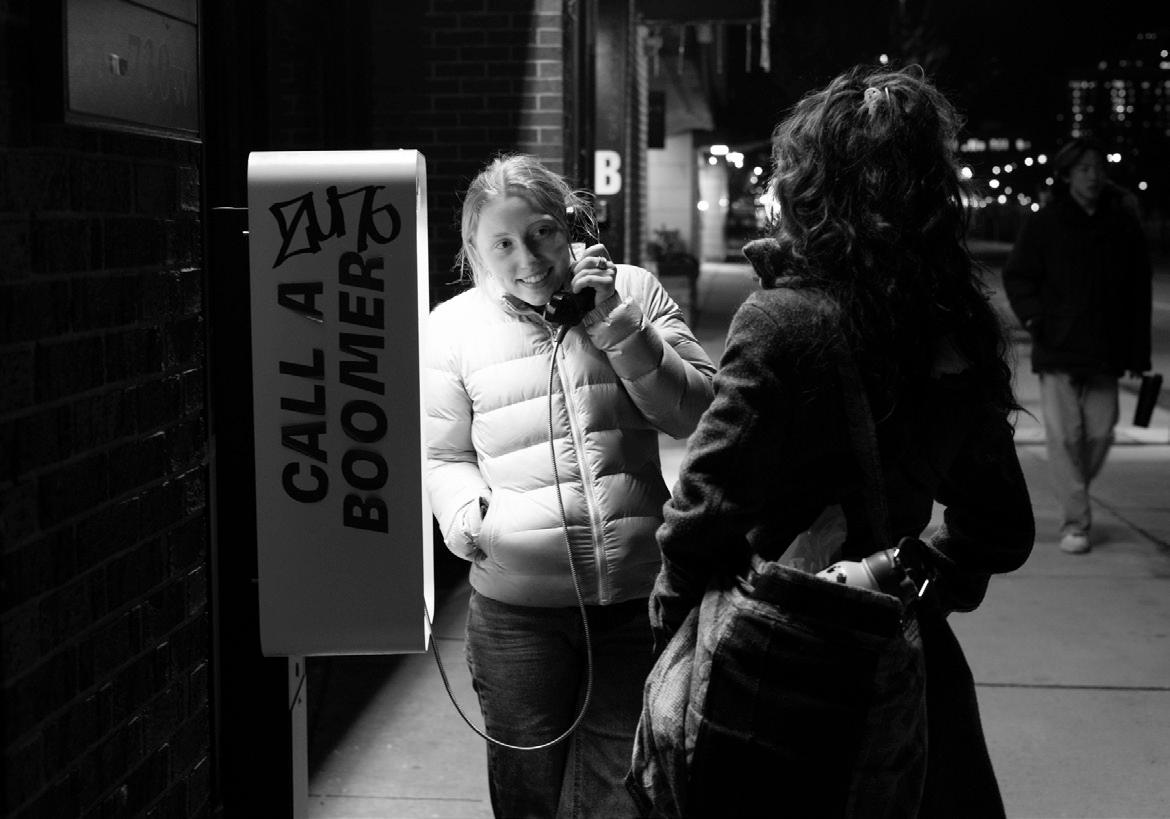
‘Call a Boomer’ phonebooth connects students, seniors
students endured a hostile educational environment,” the lawsuit reads. “Harvard’s response to this: do nothing.”
The U.S. Justice Department is seeking to recover more than $2.6 billion in taxpayer funding from Harvard, which the university accepted while allegedly in violation of Title VI.
In response, Harvard denounced the lawsuit and rejected its accusations.
“[We] will defend the University against this lawsuit, which represents yet another pretextual and retaliatory action by the administration for refusing to turn over control of Harvard to the federal government,” Harvard Media Relations wrote in a statement addressing the lawsuit.
OPINION
PAGE 8
BU’s sign policy is outdated and needs to change | Editorial
Shabbos Kestenbaum, the lead plaintiff in a 2024 lawsuit against Harvard that alleged it failed to protect Jewish students from harassment, said he supports the university losing its federal funding if it continues to allegedly discriminate against Jewish students.
“There is only one solution to institutions of higher learning that discriminate against American students: DEFUND!” Kestenbaum wrote in a statement to The Daily Free Press. “Let them get on their hands [and] knees and beg Qatar for more cash.”
The lawsuit comes six months after a federal judge blocked the administration’s
Continued on page 3

BY JACK SCHWED Campus Co-Editor
A former Boston University College of Communication professor sued the University last month for $1.6 million, alleging she experienced gender discrimination and retaliation by COM Dean Mariette DiChristina’s office and then-Interim Provost Kenneth Lutchen between 2022 and 2025.
Marni Zelnick, who at the time served as an associate chair and assistant professor in BU’s Film and Television department, claimed in the lawsuit that she was removed from a department chair search despite being ranked first choice by the search committee, and that she was subject to a “sham” investigation after she challenged the decision to remove her.
The lawsuit claims that BU administrators held Zelnick to a higher level of scrutiny than male candidates. None of the male candidates who advanced in the search “had credits in the field that were even close to Professor Zelnick’s,” the lawsuit states.
“What I’ve been seeking this whole time is just some accountability, some oversight and that ultimately has led us to court,” Zelnick said in an interview with The Daily Free Press.
Lutchen did not respond to multiple requests for an interview or comment.
“I cannot comment on litigation or personnel matters,” DiChristina wrote in a state to The Daily Free Press. “However, I can affirm that we are deeply committed to building an academically strong and inclusive community at COM with worldclass students and faculty.”
A BU spokesperson said he could not comment on pending litigation. The University, as of Thursday, had not filed an official response to Zelnick’s lawsuit in
Continued on page 2

SPORTS PAGE 11
Grandfather, granddaughter duo run in Boston Marathon
Continued from page 1
court.
Zelnick, now an assistant teaching professor in the Bellisario College of Communications at Penn State University, felt compelled to resign from her position at BU last year because the work environment became hostile, according to the lawsuit.
“I was forced to leave BU, get a job in another state away from my family,” Zelnick said. “My 83-year-old mother, I’m now living several states away from her, and instead of seeing my mom once a week for dinner, I’m seeing her a few times a year.”
Charles Merzbacher, the FTV department chair from 2004 to 2009, who “knew [Zelnick] well as a colleague,” said she was “tough” in arguments and may have “ruffled some feathers.”
“She’s tenacious and very, very strong-willed and articulate in stating her positions,” Merzbacher said. “Some people may have found that … intimidating.”
Scott Thompson, the current director of BU’s screenwriting program, said many of the lawsuit’s claims are inaccurate.
A COM faculty member familiar with the situation, who requested anonymity due to fear of retaliation from Zelnick, wrote in a statement to The Daily Free Press that Zelnick’s allegations are “completely fabricated” and unfairly accuse DiChristina of gender discrimination. The statement also claims Zelnick was investigated for her “toxic behavior” at BU.
“These investigations were not retaliatory but were initiated by the many people who fell victim to Marni Zelnick’s unfair and unwarranted treatment,” the faculty member wrote.
The lawsuit was filed in federal court in Massachusetts. Zelnick is seeking $1.64 million in compensatory damages, including loss of wages, damage to reputation and earning capacity, as well as emotional and physical suffering.
Gender Discrimination
Zelnick first expressed interest in the FTV department chair
position in 2022, when thenChair Paul Schneider announced he would retire at the end of the academic year. After presenting to the faculty, they voted unanimously for her election as chair, according to the lawsuit.
Schneider did not respond to multiple requests for an interview or comment.
When Zelnick’s selection was sent to then-provost Jean Morrison, Morrison said professors need to have an associate rank or higher to apply for chair, the lawsuit states. Zelnick accepted the provost’s decision, leading the University to conduct an external search for candidates, which ultimately failed to yield any additional contenders.
Schneider continued serving as chair for the 2023-24 academic year while BU began a second open search. The job posting, which Zelnick applied to, did not require applicants to hold any academic rank, the lawsuit states.
A document obtained by The Daily Free Press shows Zelnick ranked first and current Chair Craig Shepherd ranked thirteenth in the search committee’s evaluation.
DiChristina then directed the search committee to remove Zelnick from consideration, according to the lawsuit.
A faculty member troubled by “DiChristina’s directive to remove Zelnick” from the search called for an “emergency meeting” with FTV faculty, where they decided to keep her under consideration as a candidate, the lawsuit states.
A COM faculty member familiar with the situation said that former FTV professor Gustavo Rosa, who was “extremely close” with Zelnick, called the meeting and initiated the accusations of gender discrimination.
Zelnick said she’s “not sure” if Rosa led the discrimination accusations.
Rosa declined to comment on the lawsuit or any other matters relating to COM, FTV or BU in general.
After being ranked first again by a new search committee, Zelnick was removed from the search a second time, a decision made by Lutchen and DiChristina,
according to the lawsuit.
DiChristina then allegedly directed the search committee to remove Zelnick from consideration, claiming she would be vulnerable to pressure from senior colleagues due to her lower rank as an assistant professor, according to the lawsuit.
In January 2024, search committee Co-chairs Sheila Sitomer and Charlotte Howell informed Zelnick that she was removed under direction of DiChristina. Jan Egleson, an associate professor in the FTV department, resigned from the search committee in protest of the decision, the lawsuit claims.
Sitomer wrote to The Daily
example of how Tsegaye goes about his daily life.
“He was just able to put in enough raw effort alone and determination to provide not only for himself but for a family,” Tsegaye said. “I think that’s something that I take with me every day and I value as well when it comes to my own commitments and my own work.”
As head delegate at the BU International Affairs Association, Tsegaye said his punctuality has translated into his efforts in volunteering for extra work and being present for others who might need help with transportation or event setup.
“I do what I do out of a desire to see it grow and see it become better, hopefully in the vision, not only of myself, but of the people around me, that may rely on me and just hopefully pass it on and leave it better than it was before,” he said.
Tsegaye’s slate, AspireToBU, has an extensive campaign platform that focuses on improving connections on campus and increasing the administration’s transparency.
to colleagues who live in Arkansas and whom he can trust to carry the mission forward.
The non-profit’s first cohort of students garnered a collective $4.5 million in scholarship offers just last year, according to King.
King, who spent a large part of his childhood in Memphis, Tennessee before moving to Arkansas, admired his mother’s impact in youth and family advocacy at the Tennessee Department of Children’s Services. He said the way “she’d been able to touch so many [people] is really inspirational.”
With a strong interest in data analysis, propelled by his mother’s leadership and consistent encouragement, King wants to work in solutions-based journalism in the Deep South, investigating educational equity and school voucher programs which threaten to upend education systems in underserved communities.
“I really want to look toward how news deserts can be rectified in those types of regions, so that people in those regions don’t just end up being left in the dark about what’s going on in those areas,” King said.
King said his slate, REPBU, would focus on making StuGov approachable and resources more accessible to students.
debate, Sharpe said it “didn’t seem very productive for either side.”
He said a better debate format would include people who are “not afraid to challenge each other” but also have “a level of respect and decorum.”
In November 2025, Sharpe launched his own blog, Boston Dextera, on Substack, a platform where creators publish content directly to subscribers via email.
However, he is reluctant to pursue a career in writing because he fears that, as a reporter for a news publication, he might be forced to maintain their editorial stance rather than his own.
“Making money off of [writing] can kind of compromise your editorial independence and discretion,” Sharpe said.
After graduation, Sharpe plans to attend law school. He also hopes to continue studying the changes to the media and journalism in the digital age.
Sharpe’s slate, United Front For Change, is looking to craft a better college experience for everyone by starting an initiative called “campus wars” aimed at bringing students together.
enough,” the candidate responded in the video. “And you bring up a great point.”
The lawsuit claims a “sham” investigation of Zelnick opened following the ethics complaints, in which DiChristina appointed Senior Associate Dean Tammy Vigil to investigate Zelnick.
“I have no information to share on those matters or on any recent allegations you indicate might exist,” Vigil wrote in a statement to The Daily Free Press. She also declined a request to interview. Vigil’s report “frequently used language with gendered overtones” concerning Zelnick’s behavior and found her responsible for misconduct, the lawsuit states. The report described her demeanor and potential actions instead of true misconduct, according to the lawsuit.
The lawsuit alleges that the “investigation was biased and the outcome predetermined” because Vigil had a negative relationship with Zelnick.
After the report and its findings, DiChristina stripped Zelnick of her associate chair position and any stipends or raises, according to the lawsuit. In contrast, the lawsuit claims Rosa was also scolded for harshly questioning chair candidates, yet received positive annual reviews and a large merit raise that semester.
Free Press that she didn’t wish to comment, and Howell did not respond to multiple requests for an interview or comment.
The search committee ultimately hired Shepherd, who the lawsuit claims was removed from the search in a prior round and ranked “significantly lower” at every stage of evaluation.
Shepherd declined to comment on the lawsuit.
Some FTV faculty were “outraged” she was not approved as a finalist and demanded a meeting with DiChristina, the lawsuit states.
“It was a shock to all of us, and I think very upsetting, and we collectively tried to counter it,” said a COM faculty member present at the meeting, who chose to remain anonymous due to fear of retaliation by COM administration.
On Jan. 15, 2024, Zelnick wrote to FTV faculty and Schneider with concerns about discrimination in the search process, the lawsuit states.
“Right now, I stand removed while a white, male candidate with fewer credits remains in the pool,” Zelnick wrote in the email, according to the lawsuit.
The lawsuit claims three anonymous ethics complaints were filed against Zelnick between Jan. 10 and Feb. 8, 2024, for retaliatory reasons, and alleges the first two were filed by then-Associate Dean Jodi Luber.
The three complaints alleged Zelnick “publicly dress[ed] down and sen[t] threatening emails to those who voiced disagreement or questioned her authority,” that her discrimination claims had “created deep divisions at COM” and that she asked “overly challenging questions” to candidates in the chair search, the lawsuit states.
A video obtained by The Daily Free Press shows Zelnick questioning a candidate for the chair position on Feb. 5, 2024. Zelnick inquired about the number of women the candidate had hired on previous projects.
“[Hiring] one [woman] isn’t
“Male faculty in Professor Zelnick’s department regularly engage in heated discussions,” the lawsuit states. “None of these incidents [have] resulted in investigation or discipline.”
When the investigation concluded, the lawsuit states, Zelnick still did not know who filed the complaints against her, their contents or the evidence the University used.
Zelnick Responds
In summer 2024, Zelnick filed an internal complaint of discrimination and retaliation, naming DiChristina, Lutchen and Vigil as respondents, the lawsuit states. In doing so, she received the complaints against her and materials from Vigil’s investigation, including facts she “would have been able to rebut” had she seen them earlier, the lawsuit claims.
The lawsuit states Zelnick read multiple statements from Thompson that “demonstrated gender bias,” including one where he called Zelnick “smart and charismatic, which makes her dangerous.”
According to the lawsuit, Thompson also stated that Zelnick had a “hit squad … out to get him.”
Following these events, Zelnick believed she had no choice but to resign, which she did on Aug. 15, 2025, according to the lawsuit. She now works at Penn State University in a position the lawsuit claims is lower-paid.
A COM faculty member familiar with the events of the lawsuit said an investigation was opened against Rosa, and he was placed on academic leave.
Rosa now works at Penn State as an assistant professor in the Donald P. Bellisario College of Communications. Rosa and Zelnick both joined the faculty in Fall 2025 and previously cotaught classes at BU, a Penn State article reported.
Zelnick said it was her “dream come true” to teach at BU, so suing the institution was not out of any anger.
“This comes out of, in its own way, a love of the institution,” Zelnick said. “I’m not trying to take anything down. I’m trying to make it better.”
Continued from page 1
attempt to freeze federal funding to Harvard due to “relentless antisemitic actions.”
This is the second lawsuit the DOJ has filed against Harvard this year. In a separate Feb. 13 lawsuit, the Trump administration sued Harvard for withholding student data during an investigation into possible discrimination in its admissions process.
Jonathan Feingold, a professor at Boston University School of Law, said there is “no basis for a serious Title VI claim predicated on antisemitism,” as claimed in last week’s lawsuit.
“I don’t think any scholar out there who has looked at the actual facts and the complaint would conclude that the Trump administration is likely to prevail in this lawsuit,” Feingold said.
According to Feingold, the lawsuits could be an attempt by the Trump administration to exert power over Harvard and universities as a whole.
“Lawsuits like this are designed to signal to universities that the Trump administration is very comfortable leveraging litigation … to silence critics of the administration on university campuses, and more broadly, to control what happens in higher
education,” he said.
In response to the lawsuit, 120 Harvard Jewish affiliate faculty and staff signed an open letter on Wednesday to condemn the Trump administration’s “weaponization of antisemitism.”
“Although we hold a range of views about Israel, Gaza, and proPalestinian protests on campus, we stand united in the belief that this lawsuit can only harm Harvard’s Jewish community,” the letter reads.
The letter urged the DOJ to drop the case and called on Harvard to condemn it, writing that it “cynically exploits concerns about antisemitism to justify what can only be described as an authoritarian assault on institutions of higher education.”
Since the Oct. 7, 2023 attack on Israel by Hamas, Harvard students and faculty have reported an increase in antisemitic incidents on campus.
In 2024, Harvard settled with Kestenbaum and five other student plaintiffs. As part of the settlement, the university agreed to “undertake important actions to combat antisemitism.”
Harvard created a “Progress on Actions” page to track steps the university has taken to combat antisemitism and “AntiIsraeli bias,” which include collaborating with Ben-Gurion
University in Israel, introducing new courses in Jewish studies and Israeli history and creating the Office for Community Support, Non-Discrimination, Rights and Responsibilities.
The page features guidance on how to protest, forbidding demonstrations and protests in classrooms, libraries and “other places in which demonstrations and protests would interfere with the normal activities of the University.”
Derek Miller, a Harvard English professor who signed the open letter against the lawsuit, said the administration has taken impactful steps to combat antisemitism in the past few years.
“The university certainly made significant mistakes during that era of campus protests, and they have made serious efforts at remedying those mistakes since then,” Miller said.
Feingold said Harvard may have “overcorrected” in its response to campus protests, silencing students’ free speech.
“Were the Trump administration interested in holding Harvard accountable for failing to remedy a hostile environment on its campus, then where the university would start is the climate that Harvard was complicit in creating for Jewish
students who were protesting the university’s relationship to the Israeli government,” Feingold said.
Harvard Chabad Rabbi Hirschy Zarchi said he believes Harvard is “deeply” concerned about the well-being of its Jewish students and is not “indifferent to antisemitism” on campus.
“[Antisemitism] is an ongoing problem that the university itself acknowledges,” Zarchi said. “They’re taking the issue very seriously [and taking] some
important steps and changes to counter that, but there’s still much work to be done.”
Despite incidents of antisemitism at Harvard, Zarchi said he feels “very blessed” that Jewish students can find belonging on campus.
“On the one hand, we have a beautiful, thriving and vibrant Jewish community,” Zarchi said. “While at the same time, we have some real issues that are threatening the community that are being addressed.”
City councilors call for body camera footage to be released in wake of fatal police shooting in Roxbury
BY ELIZABETH MEHLER City Co-Editor
A Boston police officer charged with manslaughter after he shot and killed a Dorchester man who was suspected of a carjacking in March was released on personal recognizance after his arraignment. Calls for the release of body camera footage to the public remain unanswered.
“We need [the footage] for transparency, I think accountability, I think trust in the Boston Police Department … to keep speculation, assumptions, inferences from entering into the situation” said Boston City Councilor Miniard Culpepper in an interview with The Daily Free Press.
The officer, 33-year-old Nicholas O’Malley, pleaded not guilty to the manslaughter charge in Roxbury Municipal Court on March 19. O’Malley fatally shot 39-year-old Stephenson King on March 11, after King allegedly attempted to evade capture in a car.
Prior to the shooting, King allegedly assaulted a woman and forced her out of her car before driving away in the stolen vehicle, according to a criminal complaint.
King was unarmed and “did show the officers his hands at times,” but only partially opened his window and did not shut off the vehicle or unlock the doors, according to the complaint.
O’Malley’s attorney, Kenneth Anderson, said during the arraignment that O’Malley fired three shots at King because he feared King, who was moving the car, would strike another officer on scene.
King was maneuvering his vehicle forward and back “in an attempt to escape the police,” according to the complaint.
The BPD’s rules regarding the use of deadly force prohibit law enforcement from firing at a moving vehicle unless someone is being threatened “by means other than the moving vehicle.”
Several dozen BPD officers were present in the courtroom at O’Malley’s arraignment to show support for their fellow officer.
A BPD officer also started a GoFundMe for O’Malley’s family, which has raised over $473,000 as of Thursday.
In a joint statement, city councilors Culpepper and Brian Worrell thanked Suffolk District Attorney Kevin Hayden’s office for its “swift action” and responsiveness “to the voices of this community” in filing charges against O’Malley.
Culpepper and Worrell wrote they will continue their calls for the footage to be released.
“We are still hopeful to see bodycam footage of the incident and will continue to ensure that this process unfolds with transparency, accountability, and fairness that our communities deserve,” the councilors wrote.
Culpepper said Police Commissioner Michael Cox has the authority to release the body camera footage, despite Hayden’s refusal to do so.
At the March 25 city council meeting, Culpepper and Worrell introduced a measure calling for a formal review of the BPD’s body camera footage release policies to ensure “consistent procedures are in place.”
“There’s still a lack of clarity about how and when body camera footage is released, especially in cases involving the use of deadly force,” Culpepper said at the meeting.
The council approved the resolution in a 9-3 vote after a 30-minute debate. Councilors John Fitzgerald, Ed Flynn and Erin Murphy voted against the resolution, and councilor Sharon Durkan voted present.
The same city councilors who voted against the resolution expressed support for O’Malley.
Councilor Murphy emphasized being honest about the “full context” of the situation, writing in a statement that King’s “long criminal history” matters, despite the fact that O’Malley likely did not know the identity, or the
criminal history, of King when he fired the shots.
“We can support accountability and due process while also standing with the victims of violent crime and recognizing the difficult and dangerous work our officers do everyday,” Murphy wrote.
In a statement, Councilor Fitzgerald urged the community not to assume that O’Malley’s actions were “done maliciously or without necessary action.”
“While any allegation must be taken seriously, we must also
the footage while the case is ongoing.
“The police need transparency that the community can trust them,” Anderson told reporters after the hearing. “But while this is under investigation, I think it should be kept secret and let the process play out, and at some point we’ll have transparency.”
Anderson said the arrest of O’Malley at his home and the speed at which Hayden’s office filed charges is “unprecedented in my 35 years as a lawyer.”
“I’ve been involved in
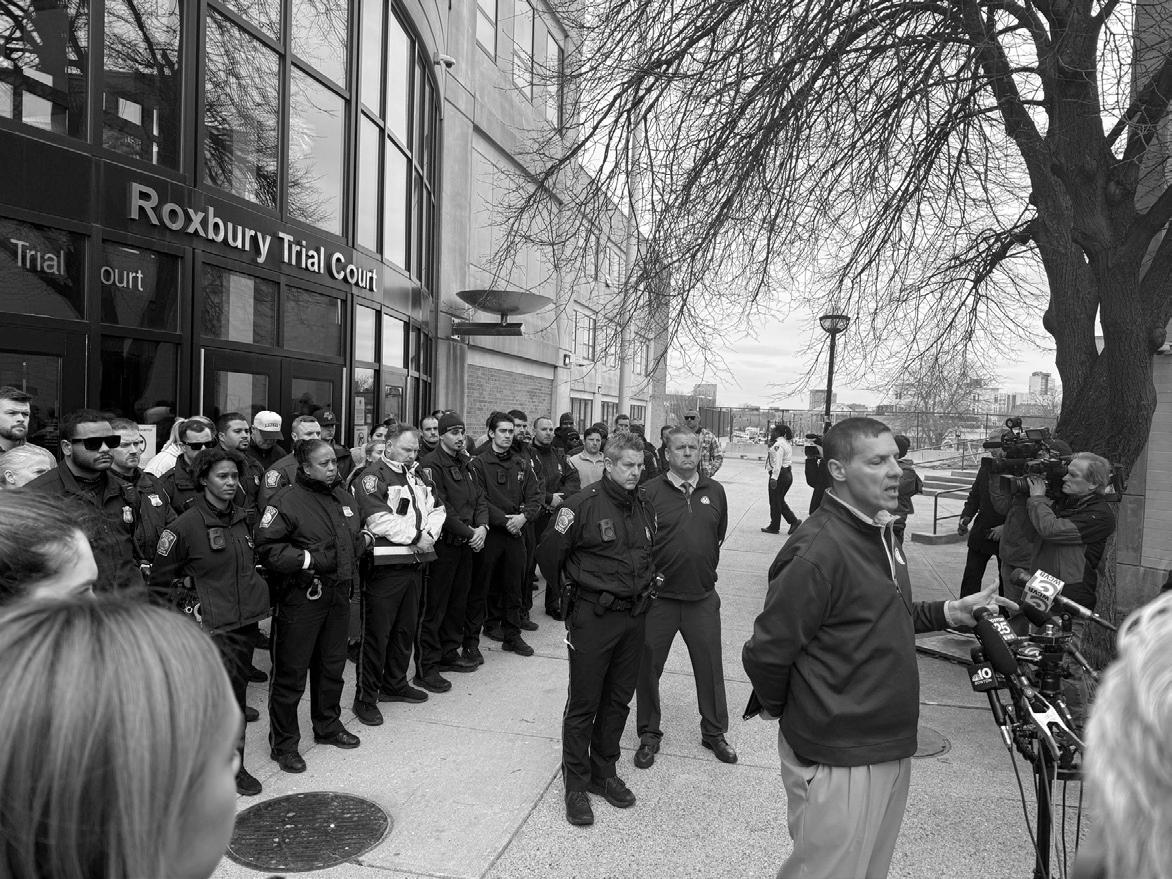
Several dozen officers stand outside Roxbury Municipal Courthouse as President of the Boston Patrolmen’s Union Larry Calderone speaks to reporters. Officer Nicholas O’Malley pleaded not guilty to manslaughter charges in Roxbury Municipal Court March 19.
ensure fairness and due process,” Fitzgerald wrote.
Councilor Flynn wrote in a statement that “now is the time” to stand with BPD.
“As a city, we should not rush to judgement and immediately second guess Boston Police Officer Nicholas O’Malley,” he wrote. “While this criminal case goes forward, the City of Boston should not penalize Police Officer O’Malley and his family by taking away his health care insurance and salary.”
Anderson said he agrees with Hayden’s decision to not release
probably 100 or more police shootings,” he said. “This is the first one anyone’s ever been arrested. This is not preferential treatment. This is election year tactics.”
Shira Diner, a BU LAW professor at the Criminal Law Clinic, said it’s “very unique and very rare” for a police officer in Boston to be charged for a shooting. This case is the first time in more than three decades a BPD officer has been charged with manslaughter.
“The system is set up to really shield police and law
enforcement from any sorts of criminal or civil accountability in what they do,” she said.
President of the Boston Patrolmen’s Union Larry Calderone said the union is “outraged at the way the arrest took place”
O’Malley “could have very easily volunteered to come in here and submit himself to the accusations,” Calderone said.
However, Diner said the arrest was typical for a case involving a manslaughter charge.
“The police officer who was charged is being treated like anyone else charged with this kind of crime in the Commonwealth,” she said.
According to Diner, it is uncommon for individuals with manslaughter charges to be released from custody without bail, like O’Malley was. His release gives him more freedom to work with his attorney, Diner said, which may mean he has an advantage in defending his case.
“The fact that someone is not held in custody gives them every possible advantage when it comes to fighting their case,” she said.
Culpepper said while he has not seen the body camera footage, he’s spoken with witnesses and believes it was an unlawful killing.
“When you look at what happened, I think the only conclusion the district attorney could have reached … based on the facts as presented was that this was an unlawful killing,” he said.
Hayden’s actions send the message that in Boston, “no one is above the law and that the police will be held accountable, just like anyone else,” Culpepper said.
Calderone said Boston still remains “the poster child for community policing across the country.”
“There’s a reason why we are the safest city in America, and it’s because of these men and women and how they interact on the street,” he said.
BY MARY GOETZ Associate Arts Editor
The Museum of Fine Arts Boston opened “Unbraid: Hair, Clay and Craft” on March 21, exhibiting film, ceramics and lithographs unified by a single material: hair.
“Hair can be extremely disgusting and gross … but it also [can] be your crowning glory, the
intersection between art and hair six years ago when she met Adebunmi Gbadebo, a resident artist at The Clay Studio in Philadelphia.
At the time, Gbadebo was working on her “True Blue” series, for which she travelled to and collected materials from the plantation of her enslaved ancestors. To make the art, she used organic elements like soil from the site and hair from friends and family.

thing that gives you your power throughout your persona and appearance,” said featured artist Jennifer Ling Datchuk. “One little strand of it can tell so much.”
While it was MFA curator Michelle Millar Fisher’s first time working with human hair, Fisher has worked with other materials from the human body, like breast milk.
Fisher said she first drew the
When Gbadebo completed her documentary “Watch Out for the Ghosts,” Fisher said she started thinking about bringing Gbadebo’s art to the MFA.
“Hair has been a part of history’s making for a very long time. Either hair as something that is worn and becomes an artwork as a statement of fashion or identity on the body,” she said. “That’s where I really started
thinking about this kernel of an idea.”
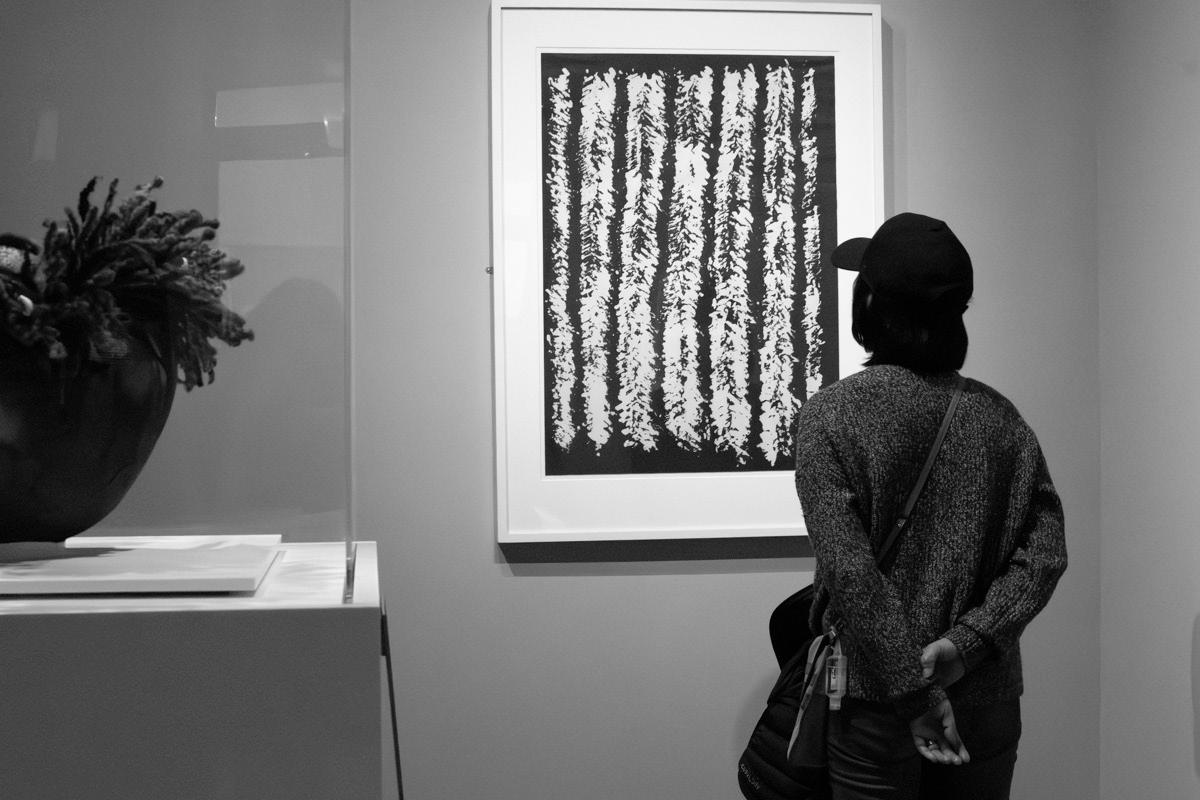
At the MFA Lizbeth and George Krupp Gallery, two indigo lithographs by Sonya Clark hang on the walls, depicting cornrows and braids.
In the center of the space — encased in glass — sit Datchuk’s porcelain jars, painted with fertility symbols and conjoined by a ponytail of human hair.
For Datchuk, hair is a window into gender and racial stereotypes.
“As someone who is mixed and biracial, my hair was always the giveaway of what I presented as to people,” she said.
Her film, “Tame” depicts herself facing away from the camera with her hair braided like a horse’s bridle.
In her hands, she carries a red plastic box filled with stereotypical “China Girl” dolls that clank as a hand yanks their braid backwards, symbolizing how women have been “domesticated and tamed to navigate this world [in] a certain way,” she said.
Datchuk said her vases, titled “Girl Fight,” explore the transitions from girlhood to womanhood, infertile to fertile and the other “dualities” of women.
“I interpret it as the fight I have within myself,” Datchuk said. “Wanting to be someone but projecting someone else, or being forced to be someone when I really internally wanted to be someone else.”
In curating the collection, Fisher said she thought of hair “as an identity marker across cultures and across time,” also noting its significance in rebellion and belonging.
Fisher said she wants visitors to be able to take a quiet, reflective break in the space, to sit with the “slightly strange materials” and think.
Visitors Mei Swartz and Tyera Zweygardt did just that.
Swartz is a social worker in pediatric oncology at the DanaFarber Cancer Institute in Boston.
While she said she doesn’t hold much meaning to her own hair, she’s seen its symbolic weight on her patients, who often lose their hair during treatment.
“I hear how difficult it is to lose such a huge part of your identity and have your illness be so obvious to people because you lost hair,” she said.
Swartz said she’s seen hair used in art exhibits at another gallery before — rugs made of hair hanging from the ceiling, for example — but this was the first time she’d seen hair presented through a cultural lens.
“I think it’s cool to weave in the culture with just hair,” she said. “And it’s not ‘just hair,’ it’s much more impactful than that.”
Zweygardt, a PhD graduate from Boston University, said she didn’t fully understand the exhibition’s content but appreciated it nonetheless.
“Hair means a lot to me, and it kind of always has,” she said, referring to the periods of hair loss she experienced. “I think people underestimate how important [hair] is to their expression.”
Fisher said she hoped that as visitors move through the exhibition, they come to love the medium as much as she does.
“It’s exciting to think about audiences coming into an exhibition that has craft in its title, and understanding that, yes, craft can mean clay, but it can also mean materials that are a little more left field, like hair,” she said.
‘Hope in the world and in humanity’: BU students grow from Alternative Service Break experiences
BY KIERAN SNOW Contributing Writer
Many college students look forward to spring break as a time for relaxing at home or traveling to tropical vacation spots.
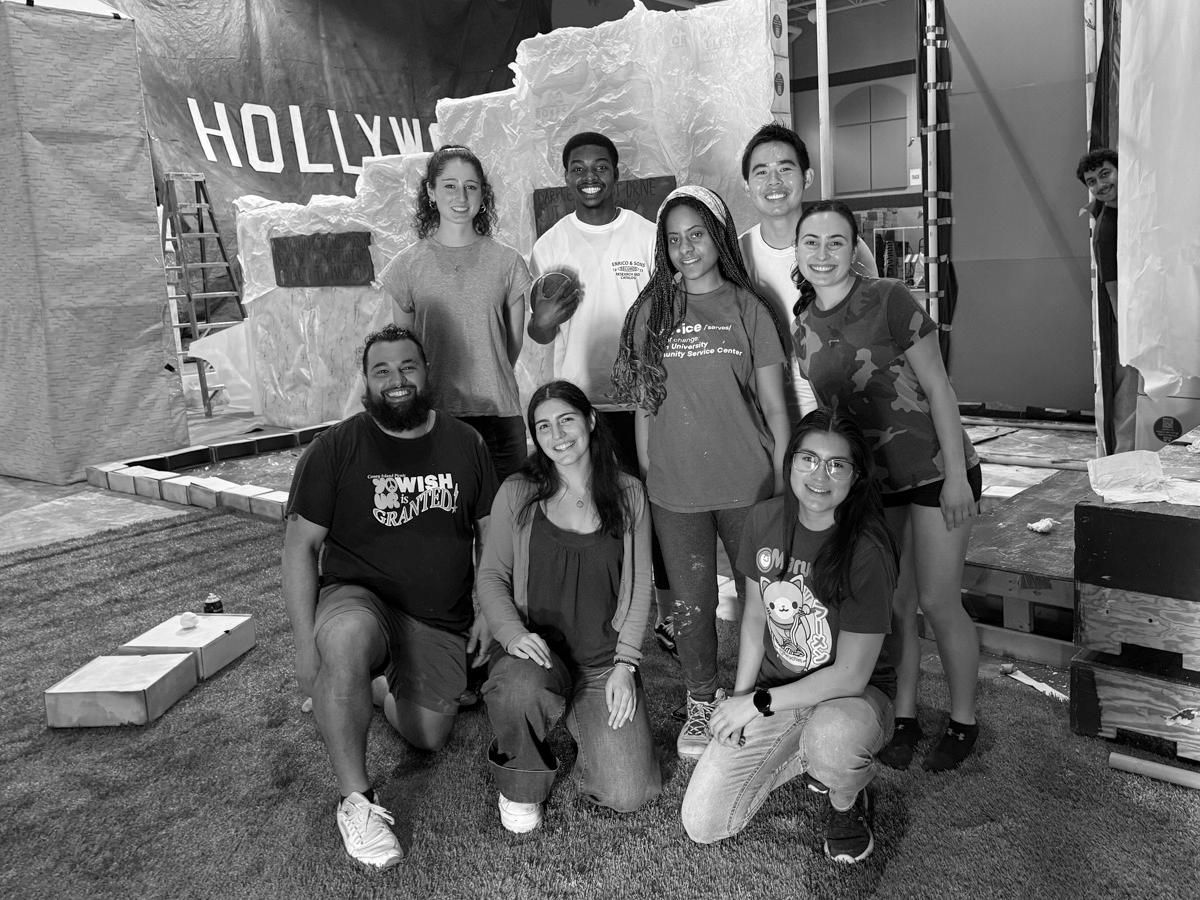
But for 30 Boston University students, spring break was a chance to volunteer, whether they were teaching middle school students about finances and college in North Carolina, renovating an arts center in Maine or monitoring wildlife in a national forest in Illinois.
As a part of BU Alternative Service Breaks program, students travelled to five locations across the country to volunteer for and support local communities.
BU junior Rinat Rizvanov led the group that traveled to Louisburg, N.C., where he and other students partnered with Terrell Lane Middle
School to tutor middle schoolers.
“I always loved teaching, and I saw the school was in the middle of nowhere,” Rizvanov said. “I felt it would be really cool to learn about these people living there and to … broaden their horizons and also broaden my horizons.”
Rizvanov and his fellow volunteers led presentations about BU and college life, tutored Terrell Lane students on math, science and English and also painted a mural together at the end of the week.
In Memphis, BU volunteers partnered with Serve 901, a local service organization that coordinates a broad range of volunteering opportunities from running a “diaper ministry” to helping lead a “spring jam” for a local Christian center.
BU junior Nahlya Hall said she chose Memphis because of its historically large African American population and because
its “southern sweetness” reminded her of visiting her grandmother in South Carolina.
“I wanted to come in this year doing the research, making sure that I’m prepared in any way that I can and that I don’t bring any biases,” Hall said.
Even though it was her third year doing the ASB program, Hall said the trip taught her that community service isn’t an activity that guarantees a pat on the back — but that silent work can still be rewarding.
Other students, like BU junior Stella Lavallee, participated in the ASB program for the first time. Lavallee led the group that traveled to Harrisburg, Ill. to work for the Shawnee National Forest.
While there, BU volunteers helped with trail maintenance and wildlife monitoring during the day and spent their nights exploring the local area, Lavallee said.
They also participated in educational activities, learning about the history of Indigenous peoples who once lived in the forest.
“Going somewhere I hadn’t been, meeting people I didn’t know existed and seeing them really passionate about what they’re doing … gives you hope in the world and in humanity,” Lavallee said. “It just reminds you that what you’re doing really does matter.”
The trip also expanded the perspective of BU senior Diego Feijoo, a leader of the group that went to Orland, Maine to support H.O.M.E., Inc. in staffing a food pantry, renovating the community’s arts center and even making art to sell for the project.
Feijoo said it was interesting for him to “see how a rural community in Maine shares many of the same

issues as Boston.”
BU junior and Feijoo’s co-leader, Diana Gamboa, said the experience challenged her preconceived notions about homelessness and community service.
“I definitely had a lot of assumptions challenged in Maine: what it means to serve an underserved community, what it means to work with an organization that might be affiliated with the church,” she said. “It gave me a new perspective into how service is done in different areas.”
Engagement in “ethical service” is one of the ASB program’s primary goals, said Margaret Babson, director of the Student Leadership and Impact Center, which runs the spring break program.
Ethical service is a form of service that emphasizes “doing work in solidarity” with the community,
which in turn “encourages learning and engagement,” according to the SLIC website.
“This is not just a vacation,” Babson said. “This is really a service opportunity, so you’re not just being dropped down somewhere. We’re being really aware of how we’re engaging with communities.”
The ASB program, which began in 1987, recently became a part of the newly formed SLIC and is currently run by Babson and Christopher Won. They manage everything from their long-standing connections with the communities to transportation and housing for students.
“You will learn so much about yourself and what’s important to you, and it keeps you positive,” Lavallee said. “There are a lot of dark things in this world. Just be a part of something good.”
BY TANISHA JAUHARI Contributing Writer
This summer, anyone at Boston University who likes fried chicken will have something to look forward to. A new Popeye’s is slated to open late May or early June, adding to the local food scene that already includes Raising Cane’s and bb.q Chicken.
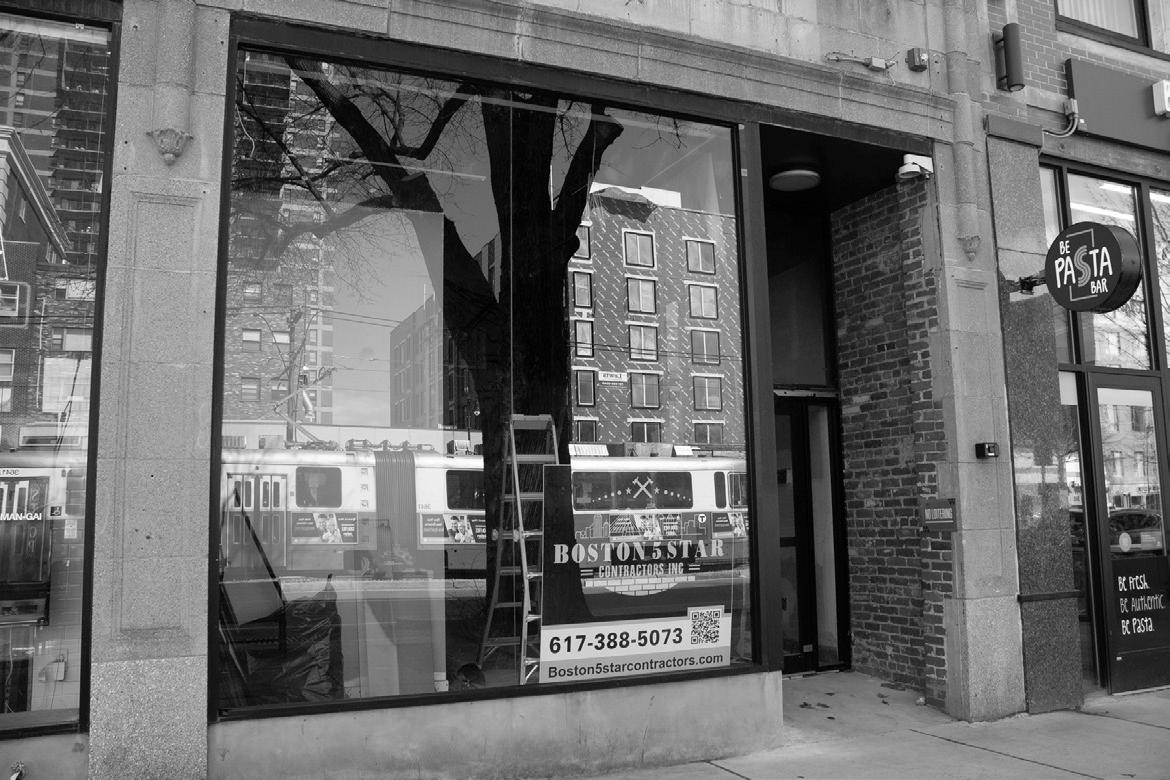
Rahman Hashimi, the location’s new owner, said the restaurant will be located at 1024B Commonwealth Avenue, previously home to Mission cannabis dispensary.
The location will operate from 10 or 11 a.m. to midnight, possibly
staying open later on weekends, he said.
With more than 3,000 locations worldwide, Popeye’s Louisiana Chicken is a fast food chain known for its Louisiana-style fried chicken and Southern-inspired sides like biscuits and mashed potatoes.
Hashimi, who has already operated over 15 Popeye’s in Connecticut and New York, noted Boston was a prime area for expansion since it currently does not have many locations.
“Boston is an unpenetrated area, and we wanted to grow more Popeyes restaurants there,” he said. “This was one of the target areas.”
The location will seat just 12 people. Due to space limitations, it will be focused on takeout through apps like DoorDash, Uber Eats and Grubhub.
Freshman Zachary Agres said although he frequented Popeyes in high school, he is indifferent about its opening because Raising Cane’s is already in the area.
“I really don’t care because we already have Raising Cane’s, and it’s better,” he said.
While freshman Cameron Vijeh said he is happy about the opening, he is also worried that the only options around campus will be fast food.
“I really like Popeyes. I think they are better than Raising Cane’s, but it doesn’t make sense to have a Raising Cane’s and a Popeyes,” Vijeh said.
When Popeye’s opens, BU students will have another late night dining option off campus.
After 10 p.m., students’ only dining options are restaurants, either on or off campus. No options accept dining points after 2 a.m.
Freshman Amy Zhang said she is excited to visit the new location.
“I walked by the place, and I was super excited for it because I’ve never had Popeye’s before,” she said.
However, she would prefer more authentic food options such as Asian cuisine instead of another fast food place.
“We already have fast food
options on campus, like Raising Cane’s. And then at [the] GSU, we [already] have several options,” she said.
Sophomore Jack Chainani said he would prefer to see healthier on-campus options, such as CAVA. He also said while the deliveryfocused setup could be convenient, he would prefer more seating.
“Eating in the restaurant is a part of the experience, and having only 12 seats is just not as engaging,” Chainani said.
Zhang agreed, saying that getting takeout discards the social aspect of eating.
BY BRIAN CHAN Business and Science Editor
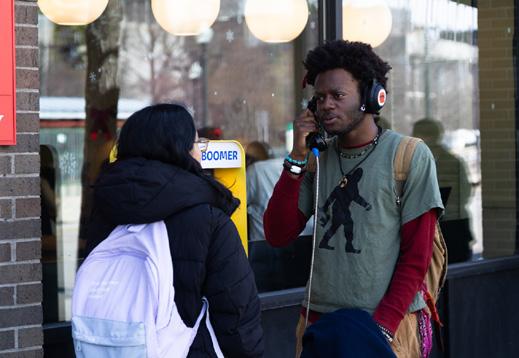
At first glance, baby boomers and payphones may seem like things of the past. But on Boston University’s campus, you can now interact with both.
Outside Pavement Coffeehouse, a plaque on a phonebox installed during the first week of March invites people to “call a boomer” as part of a social experiment.
When someone makes a call, a similar phone labeled “Call a Zoomer” located in a senior housing complex in Reno, Nevada
loneliness.
“Research shows that loneliness is more harmful than lack of exercise, excessive drinking, and even excessive smoking,” the plaque reads.
Calla Kessler, a social strategist for Matter Neuroscience, said that by having conversations and fostering relationships, people can alter their brain chemistry to live a happier life.
“If we can just have a friendly connection, even if it’s brief, you’re gonna get your brain to activate feel-good neurotransmitters more frequently than if you’re just at home, not
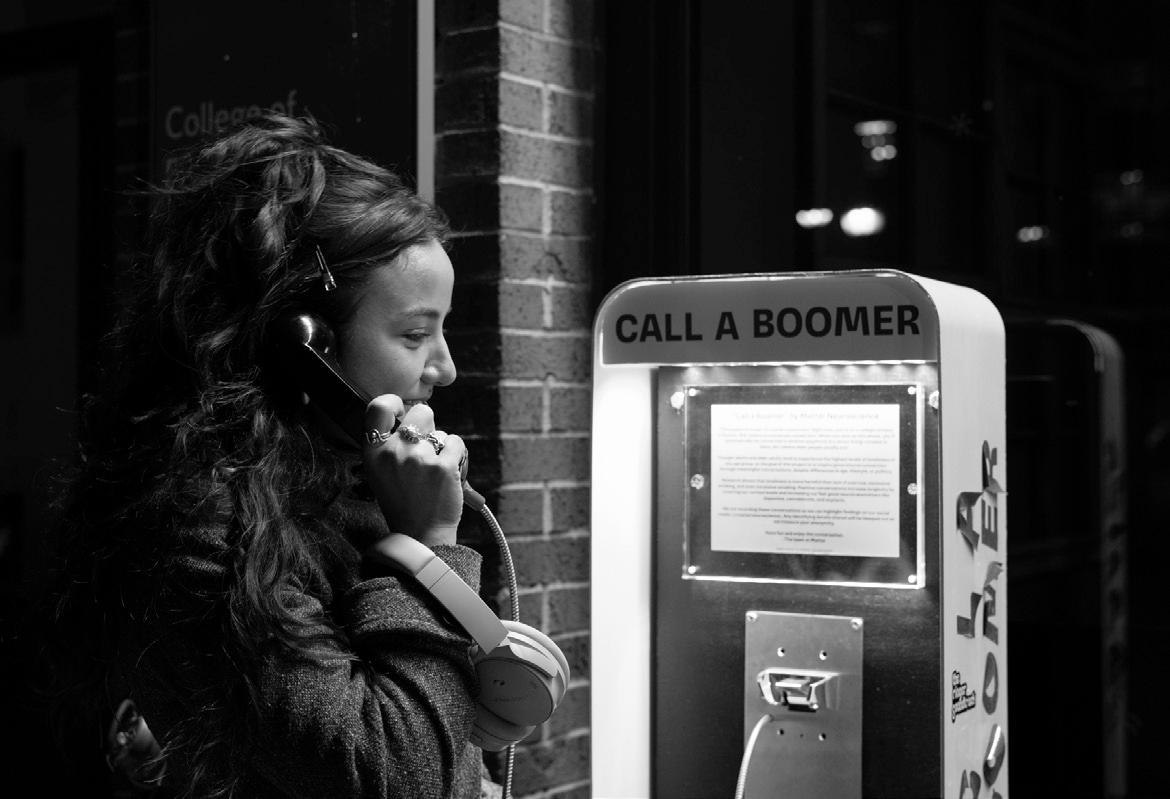
rings, initiating a conversation spanning nearly 3,000 miles and multiple generations.
The box is run by Matter Neuroscience, a company whose mission statement is “advancing human happiness for our collective good,” according to its website.
The phone booth creates conversations between baby boomers, currently aged 62 to 80, and members of Gen Z, aged 14 to 28. Out of all age groups, both young and old adults have experienced the highest levels of
talking to anybody,” she said.
According to Kessler, having regular conversations is essential for both physical and emotional health.
“We’re social beings, and we need each other on a molecular level,” she said. “We do that so much more easily when we’re with others.”
The idea to start the phonebooths emerged from discussions on creating something that would “inspire people to find common ground with one another and perhaps with people they
wouldn’t expect to connect with,” Kessler said.
“The payphones were just a stroke of luck and planning,” she added.
She noted that similar “Call a Republican” and “Call a Democrat” boxes in California and Texas, respectively, have already received a warm welcome.
According to Kessler, the Democrat and Republican phone booths received 350 connected calls and 400 voicemails, the vast majority of which were positive.
“You might expect such polarized groups to get into it because it’s so easy to do so on social media,” she said. “But I think when you actually put a human to [another] human on the phone … it’s less likely that you’re gonna just be mean. There’s another living, breathing human being on the end.”
Kessler said Matter Neuroscience decided to continue the project afterwards. This time, they focused on bridging a generational divide.
“There’s a lot of intergenerational distance, especially in Western culture,” she said. “We’re just not very connected to our elders.”
For the Gen Z phone booth, Kessler said the company chose Boston University’s campus because of its name recognition, “high walking traffic” of collegeaged students and its connection to the city.
While Trissha Sivalingam, a second-year graduate student, is close with her grandparents, she said she doesn’t interact with boomers regularly in her college life.
”In my day to day life, I don’t know if I … interact with boomers a lot beyond my professors,” she said.
So far, Kessler said, callers have been having open, sweet conversations, including sharing advice and connecting with one another.
It is currently unclear if Popeyes will accept BU dining or convenience points. However, Hashimi said he is eager to collaborate with the University and student organizations, such as by offering a student deal.
“As soon as we get ready to open, we’ll be visiting [the university’s] office [about] how the students, the whole thing works,” Hashimi said.
“I feel like [dining in options] is really important. Because whenever I go out, I usually go out with friends, so we usually dine in,” she said. “Taking it to go, I feel like the quality is sometimes less okay.”
‘Call A Boomer’ phonebooth fosters cross-country, multi-generational connections
“I think that the senior folks are really enjoying a chance to talk to the younger generation and vice versa,” Kessler said.
Santiago Yunes, a freshman at Emerson College, said the phonebooth’s anonymous and spontaneous nature made him feel more comfortable making a call.
“You don’t know who I am, I don’t know who you are,” Yunes said. “You can just come here and talk.”
The phone box exists under a month-long agreement between Matter Neuroscience and Pavement, Kessler said. But if both Pavement Coffeehouse and the senior home agree to continue, Kessler said they were willing to make it a permanent fixture.
“We’re always open-minded, and we definitely like to hear from our audience [about] what sounds interesting to them,” she said.
Kessler said she hoped the phone booth would highlight the dangers of loneliness and Mission Neuroscience’s prerogative.
“Even if we don’t get [one] more call, I think the amount of
buzz we’ve gotten around it has increased people’s awareness of the need for connection,” she said.
Yunes said being lonely is “understated” because it’s hard to admit as a problem.
“No one really talks about how hard it is to feel lonely,” he said. “You walk around people all the time, you’re surrounded by people in class and everything.”
Sivalingam said seeing the phone booth made her question whether her independence might also be loneliness.
“I definitely took a step back just to be like, ‘How much of my independence do I take a lot of pride in? How much of that loneliness impacts the way I ask for help?’” Sivalingam said. “I never really thought of it as loneliness. I’ve always thought of it as independence in my head.”
Even seeing the box while walking by could prompt people to reflect, she said.
“It’s more impactful than seeing something on your algorithm because it’s real, it’s in person,” Sivalingam said.
BY JENNY CHEN
Photo Co-Editor
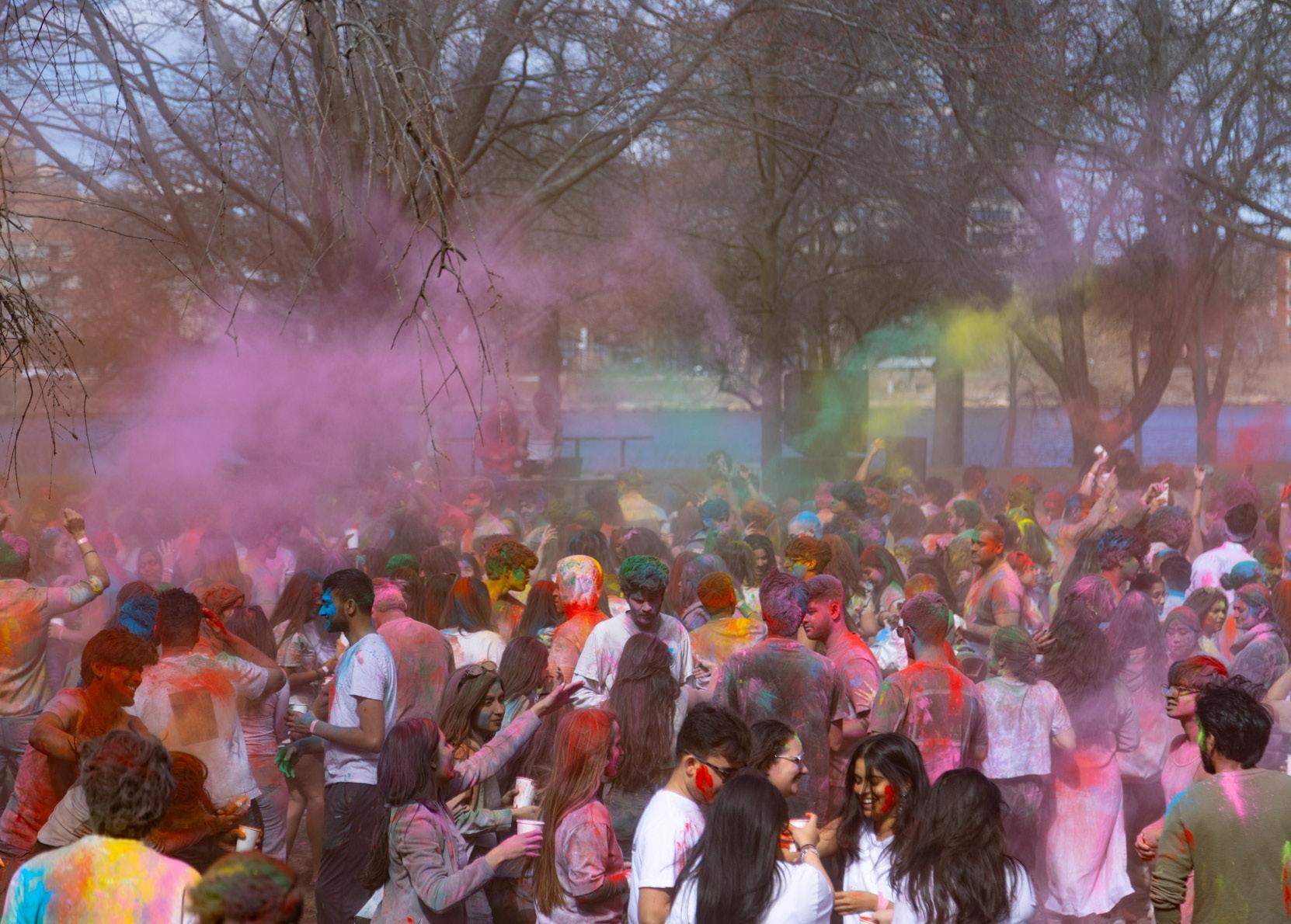
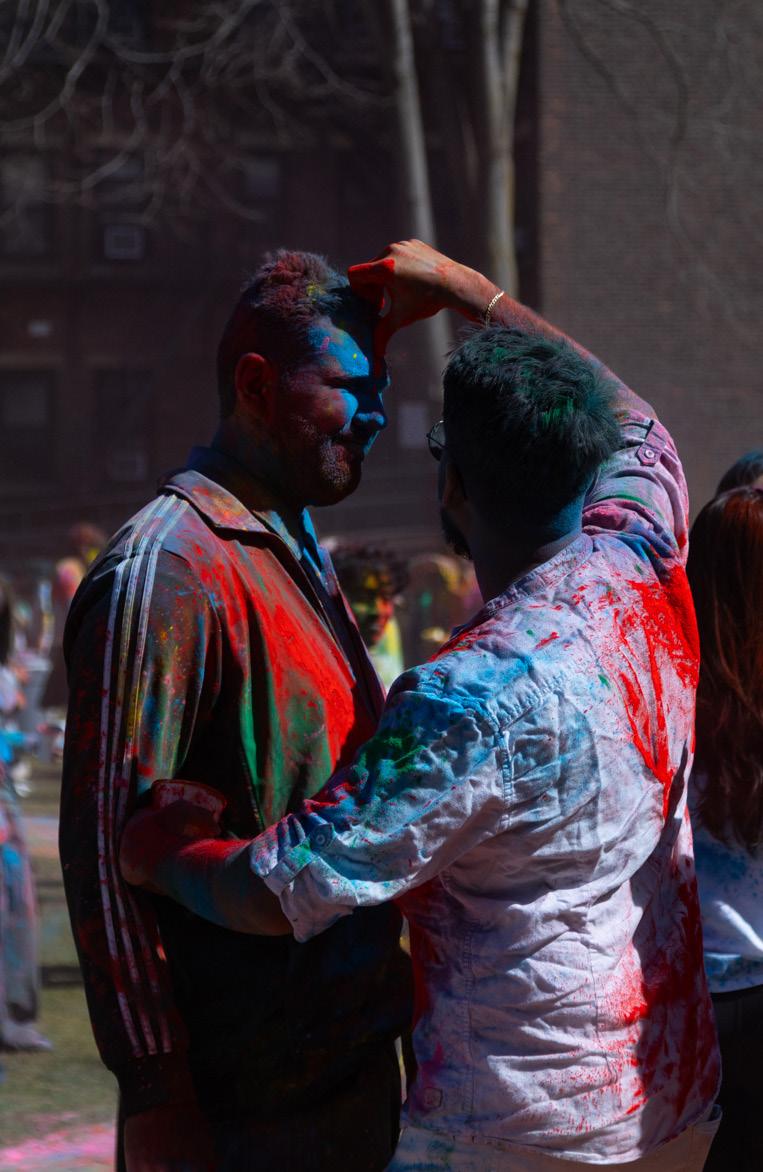
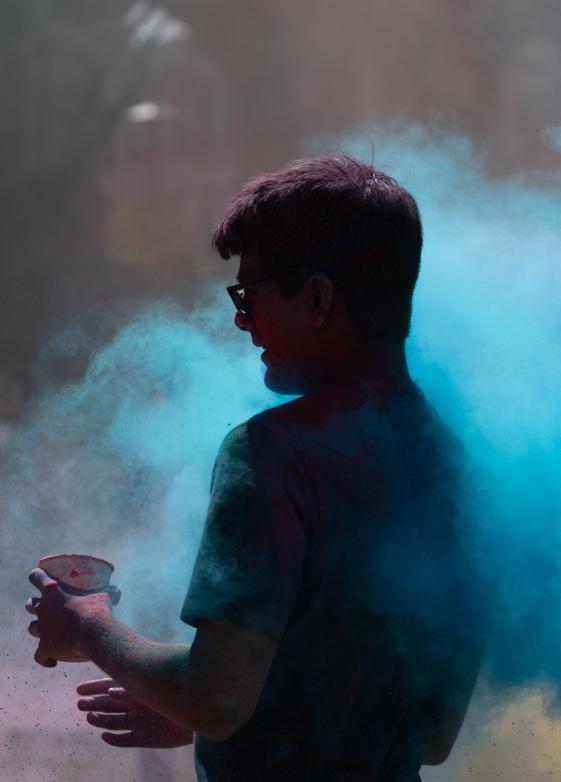
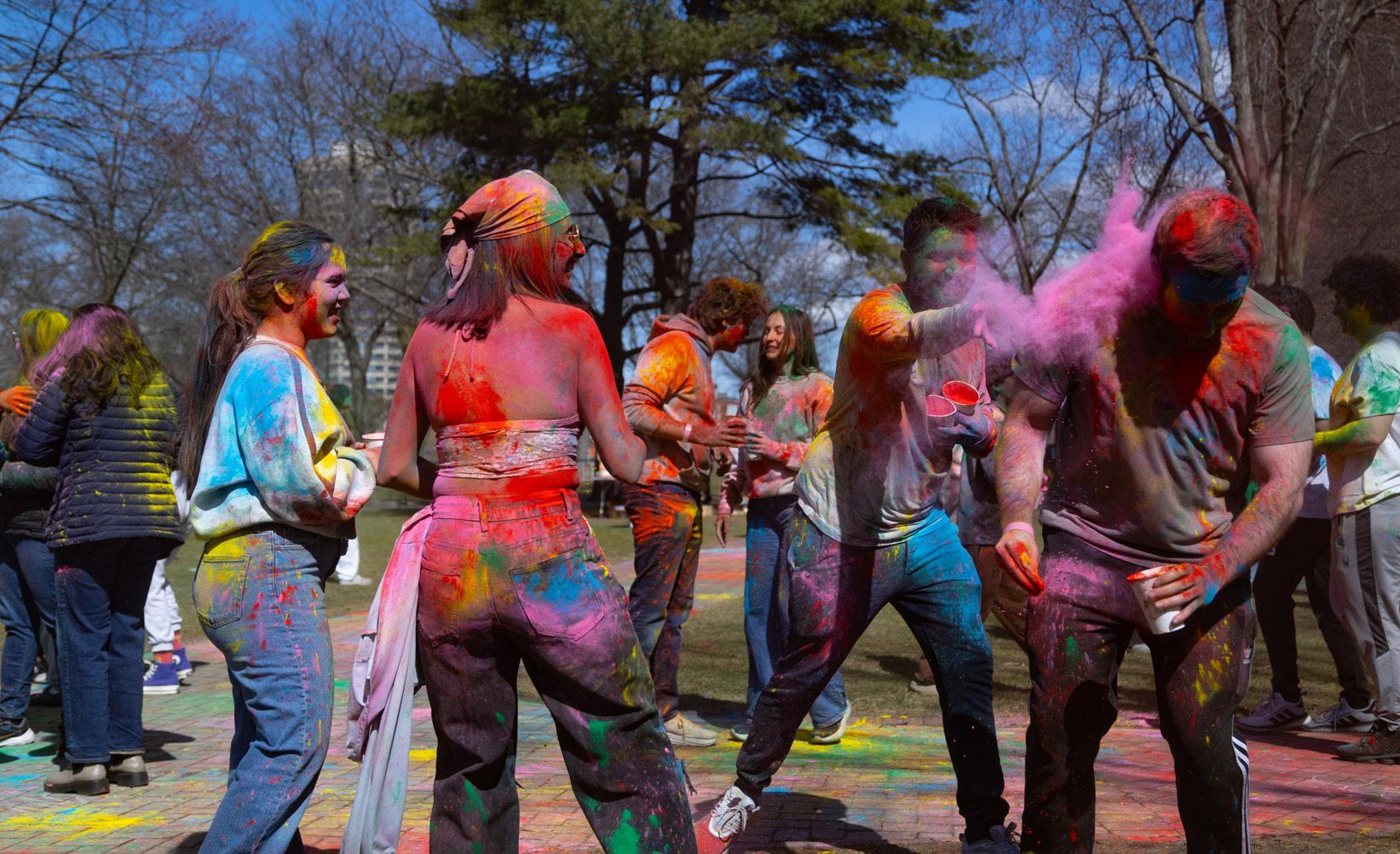
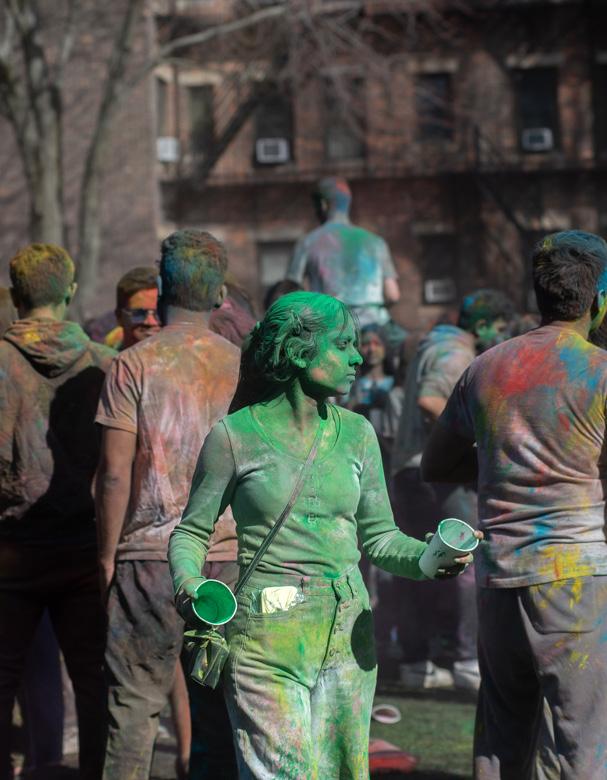
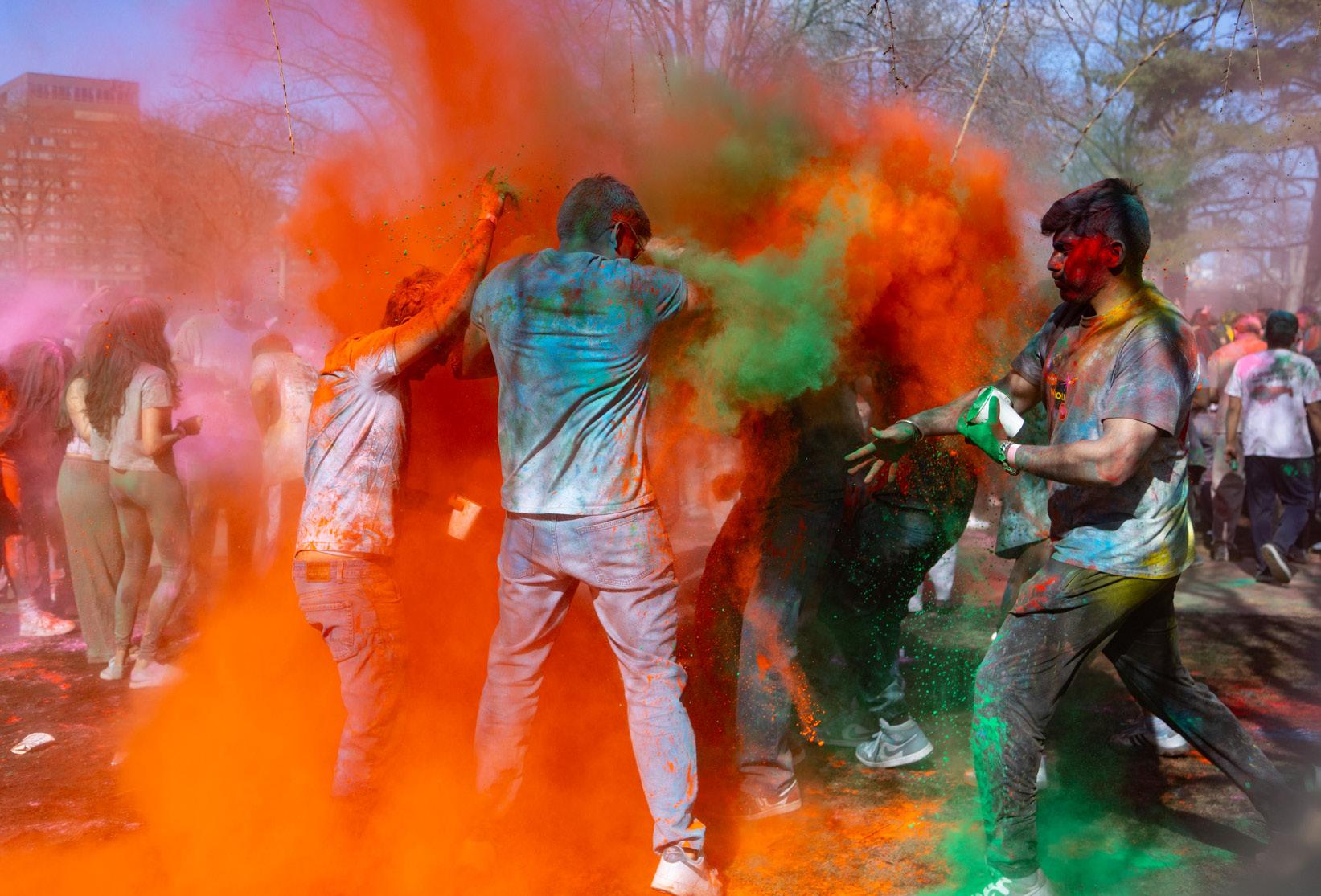
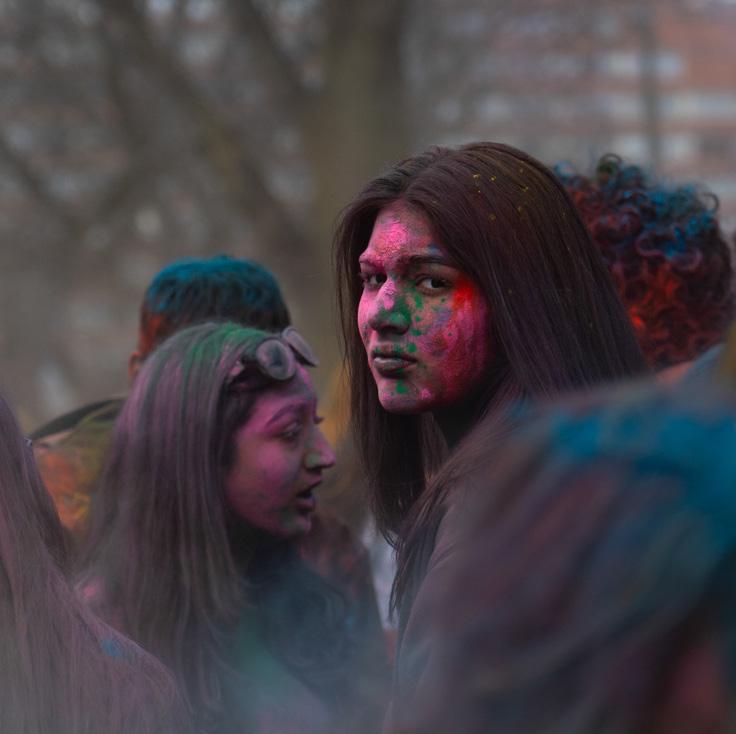
BU Beach was transformed on Saturday in honor of the Hindu festival of colors, Holi, for one color-crazed afternoon.
In a celebration hosted annually by the Boston University Hindu Cultural Association, people lined up to receive cups of powdered pigments that they sprinkled, pelted, and smeared each other with. Many attendees, embracing their bodies as canvases, wore white clothes that were quickly covered in vibrant colors.











BY ADA SUSSMAN Senior Columnist
Last year, Boston lost over $300 million in funding for a multimodal transportation hub in Allston after the Trump administration rescinded a federal grant for the project. A few months later, Roxbury lost almost $20 million in federal transport funding when the Trump administration again cancelled funds.
Now, more transportation improvement projects in Boston may be facing similar fates — but this time, through a mayoral consolidation of power antithetical to the pro-transportation policy Boston Mayor Michelle Wu ran on.
A recent report from the Boston Globe revealed that since February of last year, Wu has required that all new transportation policies and developments come across her desk first, thereby stalling hundreds of millions of dollars in essential infrastructure funding. The report also revealed that if the delays continue at their current pace, an estimated $200 million in pandemic relief funding would expire, dealing a
marred by massive transportation funding losses.
This mandated mayoral approval began after a 30-review period in 2025, when Wu paused all new developments to supposedly assess the success of transportation changes made during her first term.
This initial pause seemingly came as a tactic in her re-election campaign, when Wu’s cycling infrastructure overhaul came under fire by then-mayoral-challenger Josh Kraft. Kraft’s leveraging of bike lane controversies as a cornerstone of his campaign was enough to make Wu walk back her widespread infrastructural progress to make Boston’s streets safer.
But since her ultimately unopposed victory and the start of her second term, new developments continue to stall. Wu has put politics over people, and the safety of Boston’s streets hangs in the balance.
Large scale infrastructure projects, such as the overhaul of Blue Hill Avenue to install new bus lanes and the all-but-abandoned Allston Multimodal Transportation Project have come to a complete standstill — development delays
long isolated by Boston’s transit system.
A 2017 Metropolitan Area Plan ning Council report stated that Boston’s Black residents spend over 64 more hours annually on public buses than their white coun terparts, and bus routes through Mattapan and Roxbury represent some of the largest populations of underserved riders. This isn’t by accident — since Boston’s massive highway dispute in the South west Corridor and the restruc turing of the MBTA’s Orange Line in the midto-late twentieth century, these areas have been blocked from seam less tran sit access therefore cut off from con- sistent economic stimulus, which led to widespread municipal divestment.


Allston and Brighton, the neighborhoods that would have benefitted most from the proposed multimodal hub, have also been bisected by the Mass Pike, with much of the area completely isolated from broader transit networks, with the city instead prioritizing interstate development and suburbanization.
This is what is at stake if Wu’s administration continues to stall these redevelopment projects, which began to undo decades of neoliberally-backed neglect.
Wu argues that the decision to redirect all decision-making authority directly through her office — and therefore diminishing the
by this funding stall, has been the subject of controversy. Community members have criticized Wu’s approach from a civil rights perspective, accusing her of capitulating to the needs of through-traffic and deprioritizing the needs of local businesses in the area.
But by surrendering to these public controversies and functionally dissolving the approval power of the Streets Cabinet, Wu shrouds the fact that many of the stalled projects have received widespread support from their constituents, such as the redevelopment of Hyde Park Avenue and Maverick Station, according to the Boston Globe report.
Even small-scale development, such as elevating crosswalks, widening sidewalks and adding more
eliminate traffic deaths by 2030.
But now, that promise and priority seems to have been forgotten, with Wu still acquiescing to the optics of some of the controversial redevelopment plans, posturing a mealymouthed “consensus” approach. City Councilors Sharon Durkan and Liz Breadon have vocally led nearly the entire council to demand more transparency from the administration, and all they’ve been met with is radio silence. Wu’s consolidation of power and lack of transparency has left Boston residents completely abandoned, especially those who live in areas where development depends on fast-acting community investment before funds expire. And the necessity of these new developments cannot be overstated.
Pride flags and swastikas are not analogous, but BU’s signage policy treats them the same way
Last spring, Boston University’s Center for Gender, Sexuality and Activism was vandalized. For a University that often markets itself as a welcoming community — one that proudly supports its LGBTQ+ members — BU’s response told a different story. Administrators went silent, the investigation stalled and eventually, the space itself was permanently closed.
And just last week, faculty and students came back from break to see that administrators had quietly removed pride flags from their office windows on campus, citing a breach in signage policy. Surprisingly, there had been no town hall about the issue.
Wasn’t it convenient that no one was around to notice?
As Liz Bettini from the Wheelock College of Education and Human Development pointed out, the policy in question treats pride flags and swastikas as equivalent speech under the same administrative umbrella. Administrators have scapegoated this policy as justification, and framed the removal of pride flags not as a statement about the LGBTQ+ community but as a matter of consistent rule enforcement.
The context surrounding this takedown does little to help BU’s case. The Trump administration has spent the past year rescinding federal protections for queer people,
especially transgender individuals. BU students navigating this political reality come to campus with some expectation that the University will push back — or at minimum, not covertly remove flags while they were gone for a week.
Perhaps administrative officials are calculating that minimizing visible LGBTQ+ expression keeps BU beneath Trump’s radar and protects research funding. That calculation is worth naming plainly: It is a decision to make queer students less visible in order to avoid political inconvenience. Pride flags in faculty windows will not trigger a federal investigation — but what they will signal is that queer students have a home at BU. Removing them isn’t just hypocritical, but it also perpetuates a disappointedly exclusionary message.
Joseph Harris, associate professor of sociology and co-leader of the BU chapter of the American Association of University Professors, was one of several faculty members who sent a letter to President Gilliam calling the flag removals a suppression of free speech. In this letter, the AAUP also detailed over a dozen instances since last year in which BU administrators allegedly repressed
student and faculty speech.
The cited incidents range from the repeated removal of a faculty sign supporting detained international students — while other window signs in the same office were left untouched — to the silencing of the Moot Court student club, which was forbidden from voicing a request for sanctuary campus status at an event President Gilliam had specifically con- vened for student groups to share their
needs. The University also quietly discontinued the “POV” opinion section of BU Today and closed its comments section, further narrowing the already limited avenues for free expression.
The administration’s response has been to point back at existing language instead of reckoning with what that language actually does in practice. The argument that amending the policy would open a slippery slope toward overly specific exceptions doesn’t hold. Swastikas are symbols of hate speech evoking Nazi values, whereas pride flags exist to affirm LGBTQ+ identity.

Harvard University faced a nearly identical situation last fall, when administrators moved to restrict faculty from displaying a Black Lives Matter banner under a similarly broad signage policy.
After months of faculty pushback, Harvard finally revised its policies March 10.
BU faculty have pushed back, and yet BU’s administration has stood firm. Students are deciding whether BU is a place they can trust, and right now the evidence is not promising. As BU’s shortcomings continue to mount, some prospective applicants have contacted The Daily Free Press to say the university has fallen to the bottom of their college lists. Perhaps most re-
vealing was President Gilliam’s word choice at a recent town hall: Displaying a pride flag in a faculty window, she said, is a “privilege,” and she offered, as reassurance, that BU is “less draconian than some other institutions,” the Boston Globe reported.
This is the same president who, just two years ago, called BU’s steep drop in Black student enrollment “concerning and disappointing” and said addressing it “will be a priority.” These statements describe an administration that knows how to pay lip service to diversity, yet has not matched those words with action.
Freedom of expression is a constitutional right — not a courtesy extended at administrative discretion, and certainly not something a university championing diversity should be in the business of revoking.
The bar for an institution that prides itself on diversity deserves to be considerably higher than “less draconian.”
A university that cannot distinguish between a symbol of hatred and a symbol of belonging has not built an inclusive community, but rather the falsified image of one. Safe spaces are not safe spaces if they can be revoked overnight. They are shallow promises. And right now, BU is not keeping them. This editorial was written by Opinion Co-Editor Velana Valdez.

YEAR LVI. VOLUME B. ISSUE III.
Published Friday, March 27, 2026.
The Daily Free Press is published Sunday through Thursday during the academic year, except during vacation and exam periods, by Back Bay Publishing Co., Inc., a nonprofit corporation operated by Boston University students. Copyright © 2026 Back Bay Publishing Co., Inc. All rights reserved.
Truman Dickerson, Editor-in-Chief
Liam Dunne, Managing Co-Editor
Anjola Odukoya, Managing Co-Editor
Emma Clement, Campus Co-Editor
Jack Schwed, Campus Co-Editor
Elizabeth Mehler, City Co-Editor
Isabelle Zhang, City Co-Editor
Nicole Abrams, Investigative Editor
Toby Moses, Sports Co-Editor
Ethan Pott, Sports Co-Editor
Sophie Shatzky, Arts & Community Editor
Brian Chan, Business & Science Editor
Sameeha Sood, Opinion Co-Editor
Velana Valdez, Opinion Co-Editor
Erica Schwartz, Lifestyle Editor
Jenny Chen, Photo Co-Editor
Summer LaRose, Photo Co-Editor
Emma Jee, Master of Games
Bri Thel, Multimedia Editor
Angelina Pires, Podcast Editor
Andrew Weindling, Video Editor
Elaine Liu, Layout Co-Editor
Anna Peelen, Layout Co-Editor
Gianna Horcher, Graphics Co-Editor
Melissa Lemieux, Graphics Co-Editor

1. Chest muscles
5. Movement to build 1-Across 10. Class of 2026, for one
14. Way out
15. Salad dressing choice
16. Do again
17. Day of remembrance, commonly confused with an April holiday
19. Rocky rapper?
20. Biology sample
21. Confident in 22. “A ___ a dozen”
23. Dispensed
25. Made curly
27. Type of antidepressent, for short
29. Walter Brown, e.g.
32. Pickle holders
35. Adjusts
39. Affirmative action
40. Value of an ace, sometimes
41. Mexican eatery
42. Massachusett’s Cape ___
43. Plead
44. Type of hound
45. Bear habitats
46. Access a dining hall (in)
48. Deceitful scheme
50. “The Pinky Toe” focus
54. 4/20 Boston event, informally
58. “The ___,” 2025 medical drama
60. BUPD officers
62. Harry’s Hogwarts rival
63. Black and white cookie
64. Sweet Sixteen winners, in March Madness
66. Farsi’s twin
67. Stomach ailment
68. Extremely urgent
69. Bacon’s sound
70. Uploads on Instagram
71. Gets a perfect score
1. Addison Rae’s drink
2. May stressors, for a BU student
3. Uses as a reference
4. Denim mogul Levi
5. Many a BU hockey player
6. “Shoot!”
7. Turn out to be
8. Make one jump
9. Quieter
10. Teaching assistant’s role, after 2-Down
11. The R in RA
12. Eve’s Counterpart
13. “Sick!”
18. Annoys
24. Kind of play
26. Boston’s state, in AP style
28. Caesar’s day, in March
30. Midday
31. Combines
32. 10-Across’ pursuits
33. Once again
34. Enrolls in a class
36. Capone and Pacino
37. Dock
38. “The Anomaly” Jayson
41. Encourage crime
45. 20th century philosopher Jacques
47. Jamaican regional dialect
49. “Smooth Operator” band
51. Freeze, as a windshield
52. Viking founder of Normandy
53. Homer’s works
55. Wizard’s power
56. Earthy pigment
57. Lecture writings
58. Pea homes
59. Retirement accounts, abbr.
61. Editor’s undo
65. 58-Across locales
You just had to be there: Reflecting on my time at BU
BY KRISHA MAKHARIA Contributing Writer
Nothing really prepares you for college — not the orientation pamphlets, not the upperclassmen who smile at you knowingly during move-in week and not even the movies you spent your entire childhood watching to prepare for this exact moment.
College is messier, stranger and somehow so much better. You spend four years collecting moments you can’t quite explain to anyone who wasn’t there. Take that night out, for example. You know the one. You’re dancing and for one brief, inexplicable second, you do the hair flip, the one you’ve watched in every movie, always convinced you’d look absolutely unhinged if you ever attempted it in real life.
You told yourself there was no way you could ever pull that off. And yet, when you’re actually having fun and the
just for the day, to be warm. And so you strut down Commonwealth Avenue, head bobbing to summer rave music in your headphones, absolutely convinced you are That Girl. And the wind tunnels. God, the wind tunnels. You’ll be minding your business, genuinely convinced you’re a functional adult, and the second you’re near CDS, nature personally decides to humble you. I promise I can open a door — I promise.
There are the canon events too — the ones that feel like they were written into your college experience by some bored screenwriter who wanted to make things interesting.
There’s the night out where you spend the whole time taking care of everyone else or the friendship fallout you didn’t see coming. Then there’s the breakup or the morning after a situationship finally ends — only for you to bump into him at the dining hall. On pasta day. The one day you actually showed up.
Your friend group will have an opp. You will spot them around
will become one of your favourite stories to tell.
The laundry pile will grow. You will look at it. You will look away. You will do this for two weeks. Someone will take your clothes out of the washing machine when you’re five minutes late and the dryer will eat exactly one sock, every single time.
You will lose your BUID. You will take the elevator up one floor and feel the collective silent rage radiating from every single person in that lift. You will go to an event exclusively for the free things and leave with a tote bag, four stickers and somehow, a new friend. You will hear men gossip for the first time and you will be genuinely, completely blindsided. The BU bus will betray you. Repeatedly. It will simply not show up. The T doors will close right as you make your final two sprints and you will stand there, breathing hard, genuinely asking yourself what you did to deserve this.


it just happens — effortlessly, perfectly, no notes.
That’s the thing about college. It hands you those moments when you least expect them.
There’s the fake spring day in March — that one golden Wednesday where Boston decides,
Then there’s the fire alarm at 4 a.m. because someone somewhere decided tonight was the night to make instant noodles. You will stand outside in whatever you grabbed on the way out, halfasleep, furious, yet somehow this
You will see fraternity pledges doing the most inexplicable things. I once walked into an elevator with a guy carrying an entire tree branch — leaves and everything — and he acted like that was completely normal. It was not. You will go to concerts that make your chest ache in the best way. You’ll watch a sports game and feel that particular, inexplicable joy of belonging to something. You’ll have sidequests to the Charles River at midnight, for no real reason. You’ll discover there’s a BU Castle halfway through your time here and feel genuinely betrayed that nobody led with that. You will be the person DJing the party. You
Everyone knows everyone. We are all, it turns out, way too connected. You will go to the gym every single day for exactly one month and then never step foot in there again. No explanation and no guilt. You tried. You’ll pull an allnighter and truly understand, on a spiritual level, what Celsius was invented for. You’ll go to a frat party and finally understand why everyone hates them. You’ll get rejected from a club, sleep through your alarm, bomb an exam and cry about it.
romanticising. Romanticise the autumn leaves on Comm. Ave and the first warm day in March and the moment you finally nail the hair flip. Romanticise your growth and your small, stupid and wonderful moments.
Popular leftist politics are here. Democrats will do anything to
Your room will be plastered with reminders of your favorite people and your favorite things: posters, photobooth strips, keychains,
BY JONAH FOSTER Contributing Writer COLUMN
We are nearing the end of the internship application season, and I am still internship-less. Unless a hiring manager reads this article and offers me a role — or I naturally land an interview some other way — it looks like I’ll have to find another seasonal job this summer.
Being a pessimist during the internship cycle is quite the challenge. Before the rejection emails are sent and decisions are made, it already feels like a conclusion has been reached. In my mind, the outcome feels decided before I send in my application.
In 2026, this mindset is harder to get rid of in the face of the hidden job network. You can spend hours creating a tailored application, ensuring you include key words in your resume while agonizing over each sentence in a cover letter, only to feel like who you know or who happens to have time for a coffee chat is more important. It’s an exhausting element of the overly complicated job search.
I’m certainly not a terrible student, and I believe my experience to date should stand out to recruiters.
But I’ve yet to land an internship, and that fact alone speaks more than any progress I’ve made.
It’s quite frustrating that I don’t think pessimism is entirely irrational. Oftentimes it’s intertwined with realism and allows
individuals to set realistic goals — especially in this ultra-competitive era we live in. Rejections are far more likely than offers, therefore adjusting expectations simply reflects the reality of the situation.
In theory, expecting the worst isn’t a bad defense mechanism either. If I convince myself that I’m unqualified, that my cover letter is poorly written and that my resume is being torn apart by an AI scanner, I can’t be let down by rejection.
As Zendaya puts it in “SpiderMan: No Way Home” — I watched it yesterday — “If you expect disappointment, then you can never really get disappointed.”
Obviously my goal in writing this isn’t to defy every therapist’s advice and advocate for pessimism. Rather my goal is simply to depict my struggles in a process every student is going through.
At the same time this same mindset protects against disappointment, it makes it harder to recognize possibility. By the time I finish an application, hitting submit feels like the final achievement. The outcome is almost irrelevant to me, leaving the process essentially without purpose.
But I’ve continued down the journey. I continue to write, edit, submit and refresh my email even though I expect more of the same rejection. There is no shortage of effort on my end, but this effort is constantly weighed down by internal pressure and conclusions.
There are moments, though, where something else slips in — a small sense that an application was strong, or that an interview went better than expected. These moments don’t last very long, but they do complicate the process.
It’s harder to fully commit to pessimism when there is some
But know that when everything comes crashing down — and sometimes it will — it’s you who has to come to your own rescue. The biggest transition in college isn’t the classes or the city or even the people. You grow, mess up and learn to be the bigger person. You cry, you laugh, you sigh and you jump.
Don’t let go of the small moments. They’re the whole point.
pessimism — it’s expectation versus possibility. My expectations can set realistic goals while allowing room for a number of possibilities and opportunities.
I’m probably never going to be an incredibly optimistic person, but I don’t have to be. Welcoming moments of confidence through the application process and the outcome, rather I can take the results in stride and move on.
Granted, I’m still working on battling my attitudes, just as I am still working on applications. I’m not certain everything will work out in my favor, but at least I haven’t stopped trying.

BY HANNAH CONNORS Contributing Writer
The second edition of the Charles River Rivalry had a very different tone from last year’s lopsided meeting. For the only two NCAA Division I men’s lacrosse schools in the Boston area, it’s considered the biggest game of the year.
In 2025, Harvard buried Boston University 16-7. The Terriers fell far behind in the first quarter and never recovered from the early deficit.
But on Tuesday, the Terriers flipped that script. They didn’t leave with a win, but they showed they can go toe-to-toe with one of the nation’s best.
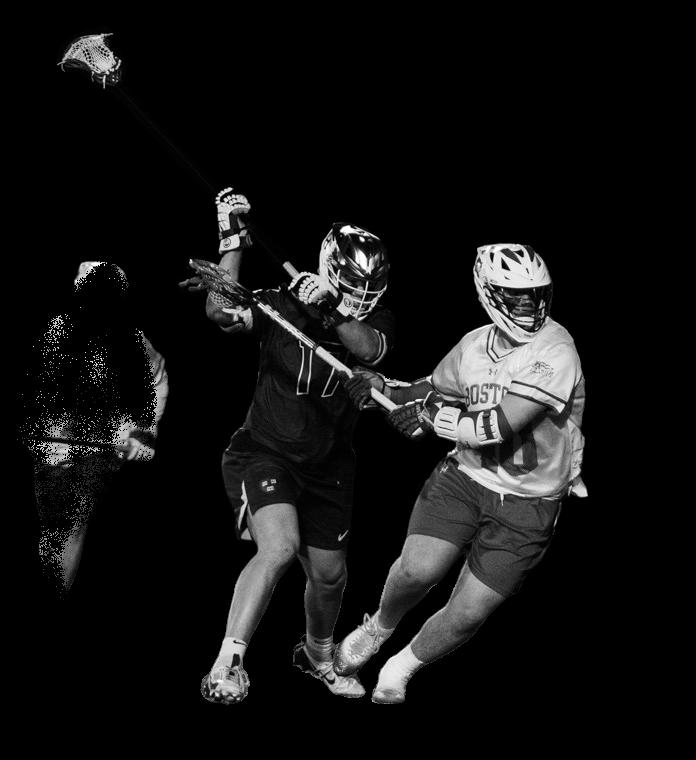
BU men’s lacrosse (5-4, 3-1 Patriot League) fell 14-11 to No. 3 Harvard (8–0) on March 24 at Nickerson Field.
“The next step is continuing to play consistently in the Patriot League, and then if we get another opportunity to play a team like this, finishing the game,” BU Head Coach Ryan Polley said.
The Terriers struck first, opening the game with back-to-back goals. Freshman attack Peyton Forte put BU on the board, and senior attack Jimmy Kohr added another to extend the
early lead.
Harvard responded with three straight goals of their own, turning the remainder of the first half into a fast-paced back-and-forth battle.
Crimson junior attack Jack Speidell — a Team USA U20 teammate of BU sophomore attack Timothy Shannehan — put Harvard on the board and remained dangerous all night, finishing with 4 goals and 2 assists.
After the first quarter, the teams emerged equal with the score tied 4-4.
In the second quarter, BU held a 2–1 scoring edge.
The pace slowed for both sides, but the
Terriers controlled the bulk of the offensive-zone possession. They generated 13 shots, went a perfect 8 for 8 on clears and held Harvard scoreless for a 12 - minute stretch — the longest of the game.
Momentum flipped after halftime as the Crimson strung together five unanswered goals. Senior midfielder Andrew Perry led the surge with two goals and an assist, constantly pressuring BU’s back line.
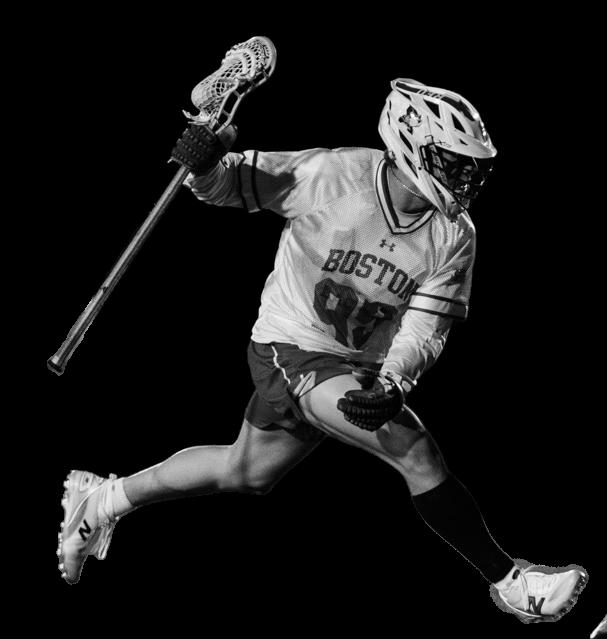
“They made some plays in the third quarter, and we just weren’t able to get the stops,” Polley said.
BU responded in the fourth, outscoring the Crimson 4-3, but it wasn’t enough to come back.
Harvard sealed things off with an empty-netter from senior attack John Aurandt IV after BU had sophomore goalie Connor Phillips play out of the net to pressure Harvard defensively.
At the end of the 60 minutes, BU had much more to show than the final score. The Terriers maintained — and at moments outplayed — one of the best teams in the country.
The Terriers had their chances.
BU outperformed Harvard in shots on goal, clears, ground balls, faceoffs and caused turnovers, but a career-best outing from Crimson sophomore goalie Graham Stevens, who made 22 saves, proved to be the difference.
“He’s a great goalie,
and you’ve got to make him work,” Polley said. “I think we gave him a couple [shots] and I think he got some confidence.”
Ahead of Tuesday’s matchup, Inside Lacrosse polls ranked Harvard third in the country, just behind Richmond University and Duke University. BU played better than its last showing against a top-tier opponent — Syracuse University — when the Terriers fell 13-6 in their season-opener. Offensively, seven different Terriers contributed to the scoring effort, including threepoint
performances from Kohr and Shannehan and a four-point performance from sophomore midfielder Andrew Pape.
The next step for the Terriers is not only showing they can compete with top teams in the country but also beat them.
Yes, it’s still early, but this BU team looks poised for a deep Patriot League postseason run. Winning the conference would punch a ticket to the NCAA tournament — and put the Terriers on a stage with teams like Harvard — solidifying them as not just a contender, but one of the nation’s best.
“We’re in a great position. I know our record is a little disappointing at 5-4 and we got off to a really strong start,” Polley said. “But we’re 3-1 in the Patriot League, still in first place. [We] control our own destiny.”
The Terriers will enjoy a few days of rest before traveling to Loyola, Md., on Saturday, April 4.
BY TOBY MOSES Sports Co-Editor
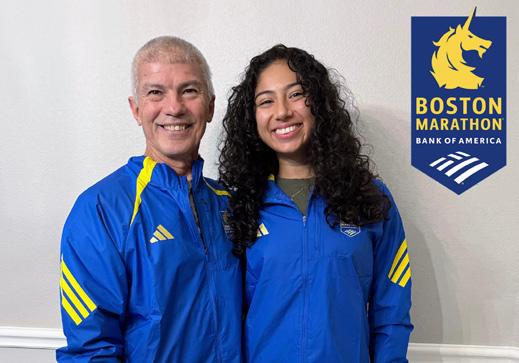
Carlos Sanchez and his granddaughter Mia sat together on a curb last April, nervously watching runners warm up at the start line before a marathon in Ventura, California.
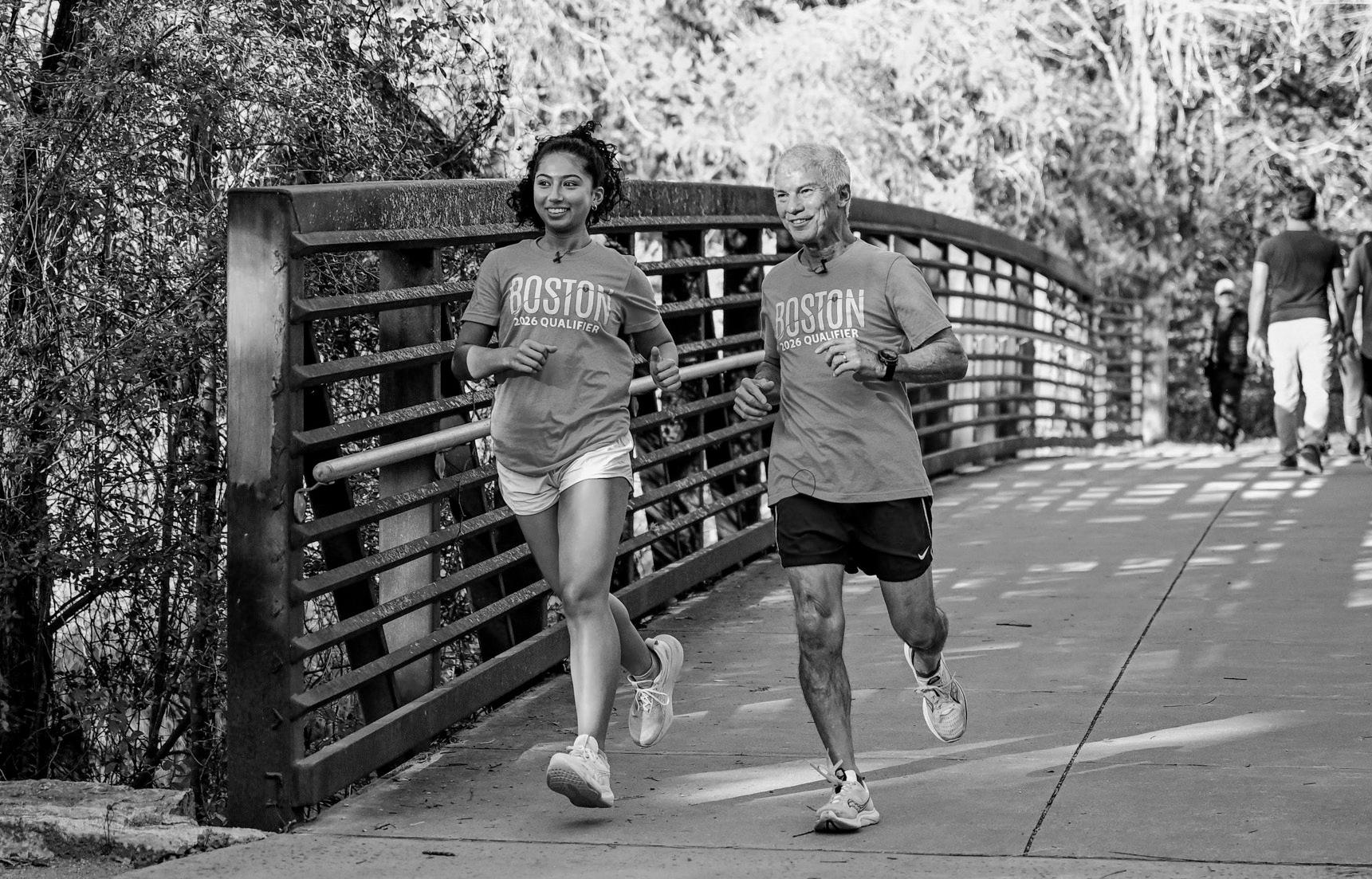
Carlos, 67, had spent 17 years — running 37 marathons — in an effort to qualify for the Boston Marathon. Mia, 23, a Harvard graduate student and former NCAA Division II runner at St. Edward’s University, was running her first-ever marathon.
A few hours later, both crossed the finish line with a Bostonqualifying time.
No grandfather-granddaughter duo has ever been documented running the same Boston Marathon in the race’s 130-year history. The Boston Athletic Association does not track familial finishes and couldn’t point The Daily Free Press to an example — potentially making Carlos and Mia the first pair to do so.
It started with a text. In February last year, Mia rode the 66 bus home through a Boston ice storm, having just taken a hard fall and telling her mother she was done with winter running, when her grandfather’s message appeared. He was running a marathon in California in eight weeks and asked if she wanted to join.
Growing up in Texas, Mia watched her grandfather run in cities across the country and in Cuba. After a momentary pause, Mia told her grandfather she’d love to join him.
“It was a special opportunity for me,” Mia said. “Something that I couldn’t really pass up.”
Standing together for the national anthem before the race, Mia felt the gravity of the moment
hit her.
“This is real,” Mia said. “I’m about to run 26.2 miles, and I’m here in California with my grandpa.”
The two got a little emotional. Then they ran.
Mia crossed the finish line with a time of 3:14:26, beating the women’s 18-34 Boston qualifying standard by over 10 minutes. She grabbed her phone and started tracking Carlos. She walked around the finish area, waiting, watching his dot move towards her — knowing he was on pace to qualify.
When Carlos came into view in the final stretch, Mia was there cheering. He finished in 3:50:49,
third in his age group, nearly 15 minutes under the men’s 65-69 qualifying standard. It was the fastest he’d ever run.
“The first thing I did was give him a hug, told him that I loved him and told him that I Boston qualified too,” Mia said.
Running hasn’t always been this serious for Carlos. He ran his first marathon in 2008 with his daughter Alexis, mostly just for fun. It wasn’t until after the COVID-19 pandemic that everything changed. Carlos sought out a coach, Nils Gundersen, who gave him a tailored training plan.
“You can see talent, even if they’re in their 60s,” Gundersen said. “He’s about the most resilient
athlete that I think I’ve ever known or coached.”
Carlos improved rapidly, and his work finally paid off when he ran the Houston Marathon in 2023. Despite the unforgiving heat, he finished over two minutes under his age group’s Boston-qualifying time.
But in April 2023, tragedy struck. While biking in a 150-mile fundraiser for multiple sclerosis victims, Carlos fell. He woke up in an ambulance, unsure what had happened.
“I couldn’t walk for 18 months.
If I tried to walk, my leg would hurt beyond belief,” Carlos said. “I told Nils, ‘If I make the cutoff, I’ll crawl the Boston Marathon.’”
Despite running his personal best in Houston, Carlos didn’t make the cutoff, as that year’s qualifying times required an additional buffer beyond the standard.
He dealt with structural issues in his legs and underwent intense physical therapy to return to full strength. One day, he told Gundersen he wanted to go on a run. He ran three miles.
“Three or four weeks later he was training again, going, ‘Alright, I’ve got to get back to Boston,’” Gundersen said. “I couldn’t believe it.”
For Carlos, running is a family affair, and there’s nothing like that feeling on the start line.
“To be there with them in that moment, it’s just so special, it’s ingrained in my mind,” Carlos said. “We’re standing there like, ‘Okay, here we go.’ A big hug, a few tears coming down, it’s just amazing.”
This April, he’ll again experience one of those moments.
The 130th Boston Marathon takes place on April 20, just a few months before Mia graduates from Harvard. She’ll leave Boston soon after, closing a chapter on a city she came to love.
“I already get emotional just thinking about it,” Mia said. “To see all the hard work that he has done to get him through this race, and then getting to celebrate together in a city that I’ve grown to love so much. It’s exciting to get to share this one last memory there.”
Carlos isn’t done either. Mia’s three siblings — the youngest still in middle school — are already running, too.
“When they graduate college, they want to get out there and run one with me,” Carlos said. “It’ll keep me going. I’ve got to stay in shape, the next generation [is] coming.”