CELEBRATING OVER 50 YEARS OF INDEPENDENT STUDENT
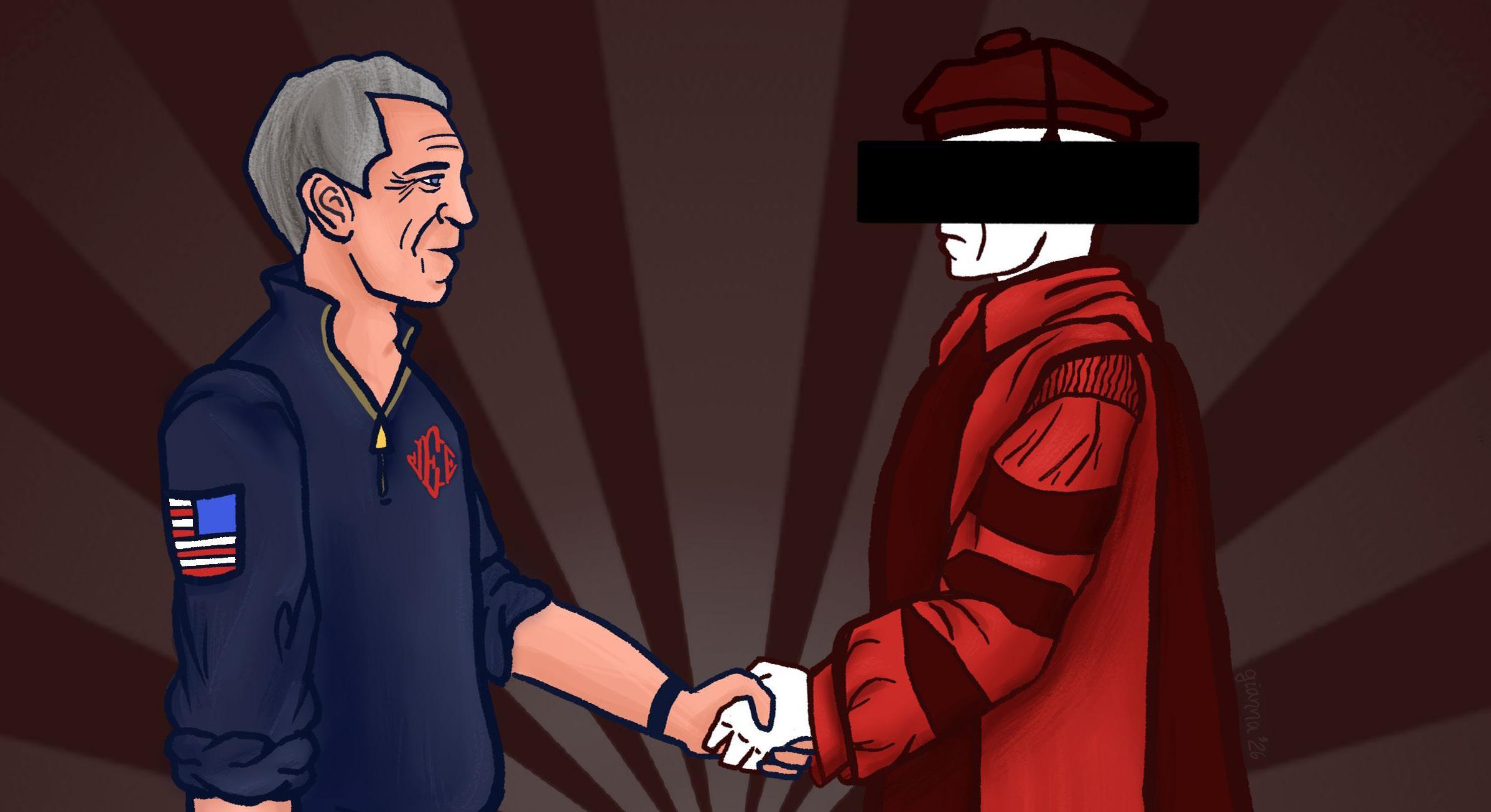
Epstein’s ties to academia
How
Epstein ingratiated himself within
the faculty ranks at universities in Boston, including at Harvard, MIT
BY ELIZABETH MEHLER City Co-Editor
GRACE WHINNERY Associate City Editor AND ISABELLE ZHANG City Co-Editor
Jeffrey Epstein faced reputational ruin after pleading guilty to soliciting a minor for prostitution in 2008 and later registering as a sex offender.
While he formerly purported to be a Wall Street mogul, emails released by the U.S. Department of Justice show how, after his conviction, Epstein sought to reestablish himself as a generous philanthropist with a
personal interest in science by donating to and establishing relationships with many of Boston’s leading academic minds.
High-profile scientists and academics spun in Epstein’s orbit for years, even after he was convicted of sex crimes. Many of the academics he regularly corresponded with have extensive ties to Bostonarea universities, most notably Harvard University and the Massachusetts Institute of Technology.
In 2019, Steve Bannon, a right wing strategist and former aide of President Donald Trump, wrote an email that appeared to summarize Epstein’s enduring public relations strategy.
“First we need to push back on the lies; then crush the pedo/trafficking narrative; then rebuild your image as a philanthropist,” Bannon wrote to Epstein.
That strategy appeared successful for over a decade, as many prominent academics referred to him as a financier in emails and later said they were not aware of his criminal conviction.
Boston University COM Dean Mariette DiChristina, who corresponded with Epstein in 2014 and 2015 as editor-in-chief of Scientific American, referred to Epstein in an email as a “financier who has supported the work of many Nobel laureates,” according to DOJ documents.
DiChristina did not acknowledge or make reference to Epstein’s 2008 conviction in any of her email correspondence. In a statement made on “behalf” of DiChristina, BU Spokesperson Colin Riley wrote, “it was often part of her role at Scientific American
Continued on page 11
BU student wins lawsuit against Newbury Street art studio owner
BY GABRIELLA BETHONEY DFP Writer
A Boston University student went viral on TikTok recently for winning a lawsuit against the owner of Rainbows Pottery Studio, a make-your-own pottery store on Newbury Street.
Ethan Stoehr, a senior in the College of Arts and Sciences who worked at Rainbows Pottery in 2024, told The Daily Free Press that studio owner Allison Carroll sued him in July 2024 after accusing him of failing to return a check.
After he won the lawsuit, Stoehr said Carroll sent him several GIFs mocking him and “alluding to [his] homosexuality” while
CAMPUS
PAGE 2
Frats under fire: BPD cracks down on noise
her daughter, Maggie Carroll, called him homophobic slurs in text messages.
“She should probably be investigated by some sort of authority for civil rights violations, abusive workplace and refusing to pay people for the work they’ve done,” Stoehr said.
Allison Carroll, reached by phone Wednesday, said Stoehr didn’t appreciate the “opportunity” he had while working at Rainbows Pottery, and that he “abused” the opportunity.
She said Stoher should “focus on his bright future” instead of rehashing the lawsuit.
Stoehr shared his experiences with Rainbows Pottery in a viral Jan. 2025 TikTok — along with other users — after the studio went viral when a customer criticized it for employing a registered Level 3 sex offender
FEATURES PAGE 4
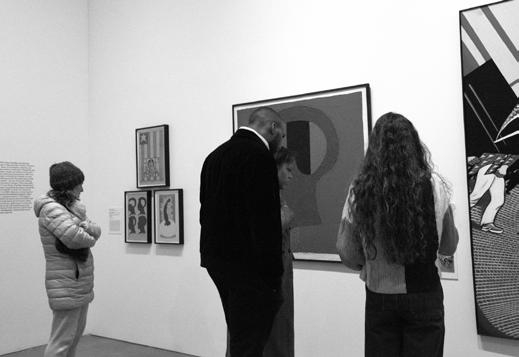
ICA features Black Artists-InResidence in new exhibit
while hosting children’s programs and women-focused events.
One person said in an interview with The Daily Free Press that the employee, Andrew Perez Giampa, 33, of Dorchester, attempted to give them alcohol in the store while they were underage. Another said Giampa threatened to “rape and kill” her.
Giampa was either convicted or adjudicated of indecent assault and battery of a 14-yearold or older person in Oct. 2024, according to Massachusetts’ Sex Offender Registry. Court records indicate that Giampa pleaded guilty to that offense in 2017.
Carroll said in a later removed TikTok video that Giampa “doesn’t currently work here and hasn’t for a while.” Carroll said Wednesday that she would not comment on Giampa, or on allegations that underage
BU researchers link late-stage CTE to dementia
BY BRIAN CHAN Business and Science Editor
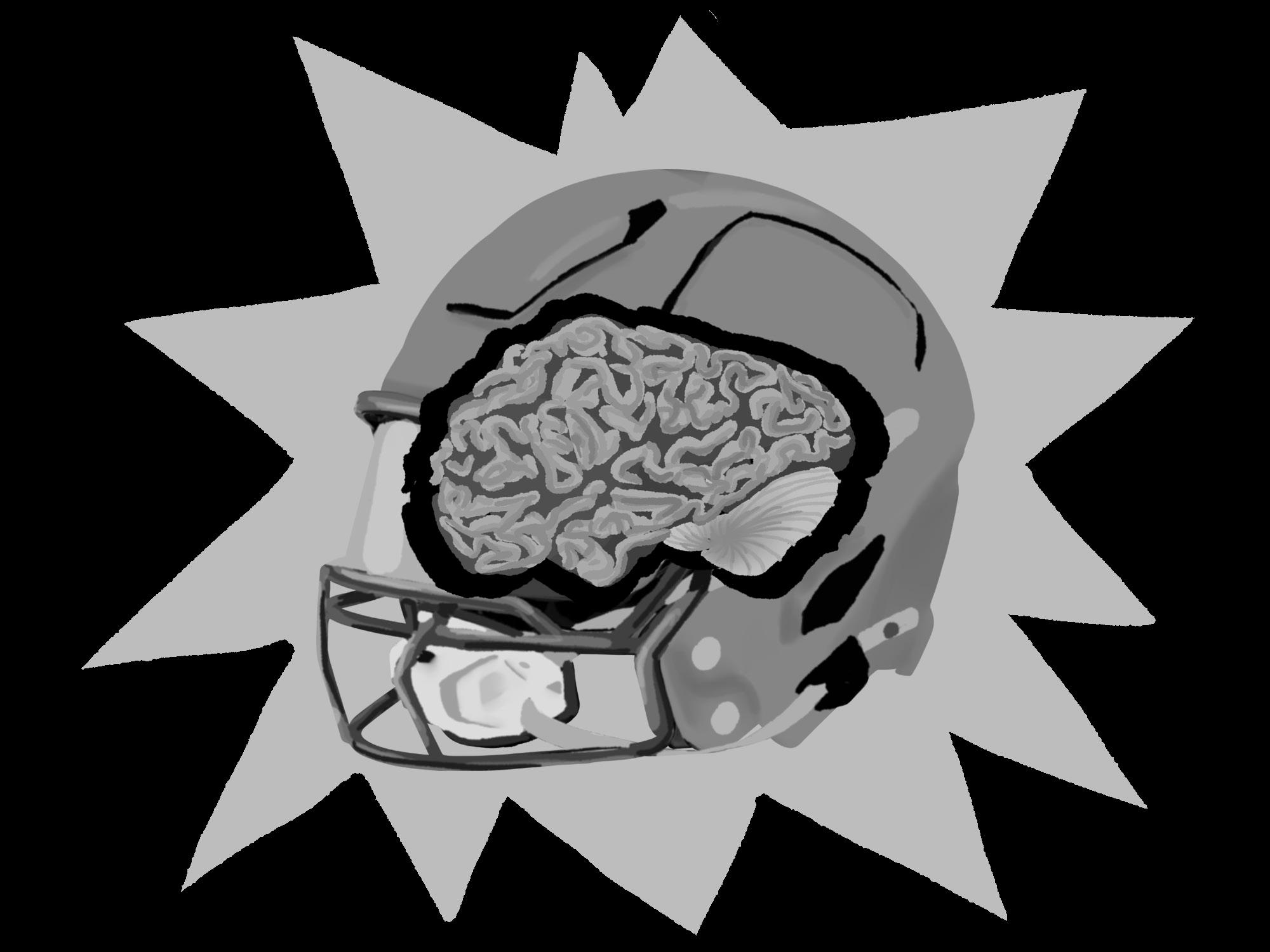
Some of the traditionally associated symptoms of chronic traumatic encephalopathy — a degenerative brain disease most attributed with football and other contact sports — include depression, aggressive behavior, memory loss and even suicidal thoughts.
But a recent study from Boston University’s CTE Center just added another feature to the list: dementia.
The study, the “largest of its kind,” according to the researchers, analyzed the brains of 614 donors. It found that people with late-stage CTE were about four times more likely to develop dementia.
“This was the first study where we were able to isolate cases from our brain bank that just had CTE pathology,” postdoctoral researcher and co-author of the study Jenna Groh said.
CTE is a neurodegenerative disease thought to be caused by repeated head impacts. It is thought to progress over years and decades in four stages, each one bringing the patient more and more severe symptoms.
Currently, there is no cure or way to diagnose the disease in living patients. The only way to confirm CTE is by analyzing a person’s brain after death.
According to Groh, CTE and dementia are so difficult to link together because dementia’s symptoms, such as personality shifts, can only be detected while the patient is alive. CTE, on the other hand, can only be diagnosed after death.
Brains with CTE often have other disorders too, that can make it hard to tell what exactly caused the dementia in the first place, Grah said.
“[The brain donors] oftentimes don’t just have CTE pathology alone. They’ll have Alzheimer’s disease, copathology, Parkinson’s disease or Lewy Body disease,” she said. “There’s lots of other causes of dementia.”
To retroactively diagnose dementia,
Continued on page 5
patrons were served drinks in her store.
A BU freshman, who asked to stay anonymous for their personal safety, said in an interview that they met Giampa in December of 2025 while browsing through Rainbows Pottery’s outdoor sidewalk kiosk. They described Giampa as “persistent” and having a “really weird vibe.”
“I thought that we were the only ones who had this weird experience,” they said after seeing individuals post on TikTok their experiences with Rainbows Pottery. “It was kind of comforting to hear that others also experienced weird vibes, and I stopped second-guessing my interpretation of it.”
Stoehr said Giampa repeatedly messaged a friend of his and “wouldn’t stop asking to
Continued on page 3
OPINION PAGE 8
Colleges amplify student burnout through hustle culture | Editorial
DANIEL GARBER | DFP PHOTOGRAPHER
SUMMER LAROSE
CITY
Gianna Horcher | Graphics Co-Editor
Melissa Lemieux | Graphics Co-Editor
COM dean said to have addressed correspondence with Epstein in meeting, but some faculty still want answers
CAMPUS
BY EMMA CLEMENT AND JACK SCHWED Campus Co-Editors
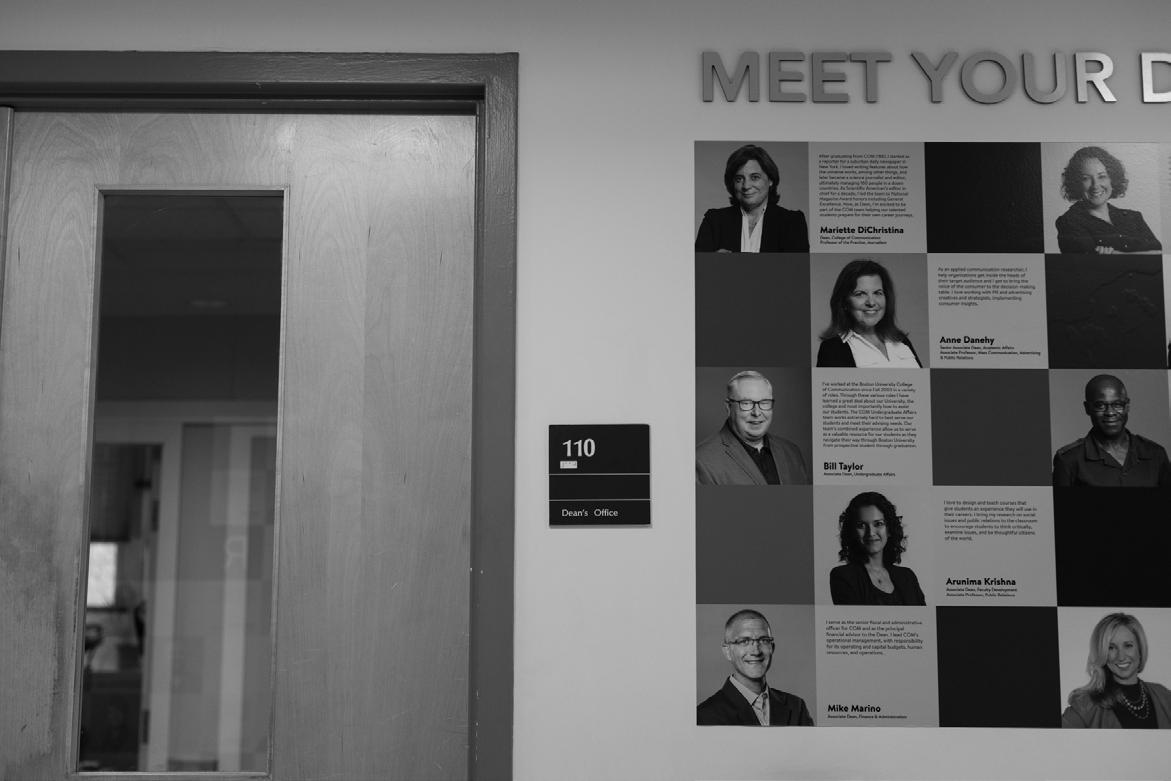
Mariette DiChristina, dean of Boston University’s College of Communication, briefly addressed her correspondence with Jeffrey Epstein at a meeting last week, where she said she was never unethical, but instead naive and not as engaged with the news as she should have been, according to two COM faculty members present at the meeting.
As of Thursday, however, DiChristina had not personally released a statement about her correspondence with Epstein.
In interviews with The Daily Free Press, COM professors gave varied reactions to the Dean’s Office’s communication on the situation, with some agreeing with her approach and others expressing frustration and confusion with a perceived lack of transparency.
“I don’t need to know her business, but I think that there needs to be an explanation, and then leave it at that,” COM professor A said. “But it’s going to linger if you don’t address it.”
The Feb. 12 meeting was planned before The Daily Free Press published a story Feb. 4 about DiChristina’s correspondence with the sex offender, which took place in 2014 and 2015 while she was the editor-in-chief of Scientific American.
At the meeting, an optional
“town hall” said to be open to all COM faculty and staff, DiChristina spoke for the first 15 minutes about the story, emphasizing that nobody knew about Epstein’s conviction in 2014 and that Scientific American did not conduct background checks on people requesting meetings, according to a COM professor who attended the meeting and asked to remain anonymous.
For this article, The Daily Free Press interviewed seven COM faculty members, across four departments, nearly all of whom requested anonymity to discuss sensitive topics without fear of retaliation. These professors were assigned a letter of the alphabet to distinguish them from one another.
While three said they supported DiChristina’s minimal communication following the article’s publication, the rest said she should be more communicative about the situation.
On Thursday night, BU Spokesperson Colin Riley referred The Daily Free Press to an earlier statement, in which Riley said “it was often part of [DiChristina’s] role at Scientific American to talk to people who expressed an interest in science. It was not the practice to do background checks before those conversations took place.”
COM professor B said a statement is not necessary due to the nature of the communication DiChristina had with Epstein.
“If there was a legitimate breach that was demonstrated in that
report then absolutely, but I just don’t see that that’s what’s going on,” COM professor B said. “I think that what’s happening is an appropriate crisis communication strategy.”
COM Mass Communication, Advertising and Public Relations professor Stephanie Schorow said there are two ways to address a situation of this nature — have a “complete airing, transparent meeting” or “not say anything and assume it will blow over.” Schorow said the second option is the one DiChristina seems to be taking.
COM professor D said as a COM faculty member, DiChristina should be setting an example for students by “[shedding] light on what’s hidden.”
“It’s important that you hold yourself to the same standard that you hold other people to, and the standard as communicators that we hold other people to has more integrity than this,” COM professor D said.
COM professors B and C said DiChristina’s role as editor-inchief of Scientific American at the time of the correspondence provides important context because she was searching for financial support for the publication.
Because DiChristina was communicating as a function of her job at Scientific American, COM professors B and C, along with Schorow, feel she had not done anything egregious.
“What strikes me most is that
the poisonous behavior of a man like Epstein is spreading to people who do not deserve it or may not deserve it,” Schorow said. “I think we have to be careful in the media of not indulging guilt by association.”
In a statement to The Daily Free Press, COM professor E wrote that when DiChristina briefly addressed the correspondence, she said she was unaware of Epstein’s crimes in 2014 and it was not procedure to conduct background checks.
“The idea that DiChristina knew about Epstein as a ‘science benefactor’ but somehow the solicitation of a minor slipped past her doesn’t pass the smell test
for many faculty and staff,” COM professor E wrote. “To many of us, it seemed disingenuous on its face.”
COM professor F said even if Scientific American had not conducted background checks, DiChristina should have been aware of Epstein’s criminal activity from fundraising research.
“In order to raise funds effectively, you need to do your due diligence about whomever you’re raising funds from. It’s just not because you’re suspicious but because you want to be an effective fundraiser,” COM professor F said. “You need to
Continued on page 11
BU fraternities face legal battles, lack of University support
CAMPUS
BY VERONICA HERNANDEZ Associate Campus Editor
AND KATHERINE WU Senior Writer
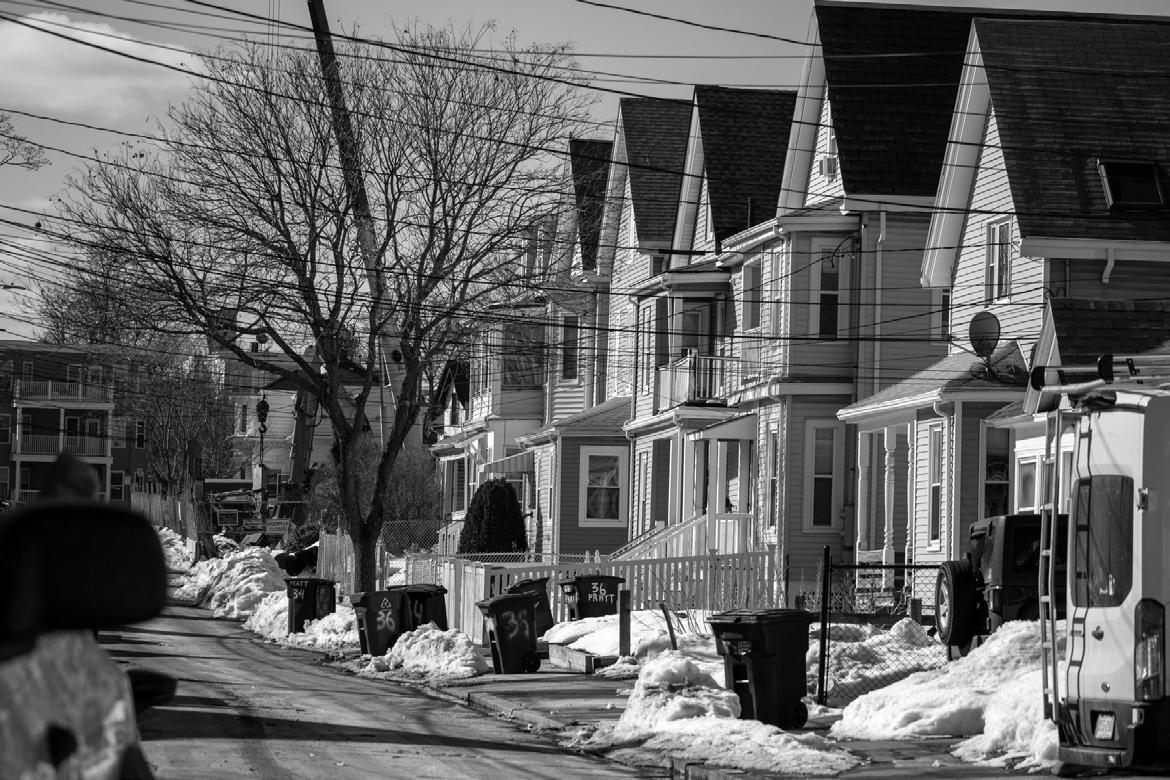
Five Boston University social fraternities said they are facing legal battles against the Boston Police Department as a result of large-scale social gatherings that escalated to court cases against students living in the houses where the events occurred, according to court dockets and interviews with fraternity members.
On Aug. 21, 2025, BPD shared a letter with BU’s “offcampus community” warning students of the consequences of hosting a “noisy and disorderly house.” The letter described it as a criminal offense and said a complaint would result in a Probation Central File on students’ permanent records.
“Frats have been a thing at BU for a while now,” said Z, a BU fraternity brother who asked to remain anonymous due to his involvement in an ongoing case. “This is the first time that it’s
ever become … an issue to this magnitude where every single frat at BU is getting in trouble.”
After multiple incidents of “out of hand” events and consistent noise complaints, BPD took legal action against BU fraternity members, said J, a former BU fraternity president who requested anonymity to avoid association with the situation.
Various court summons were filed in November or December 2025, and most will continue until at least March or May.
Fraternity members face risks of academic probation due to the cases, and must complete community service, ranging from 20 to 40 hours, to keep their permanent records clean. The cases also require brothers to write handwritten apology letters to officers or neighbors.
While BU no longer has any official fraternity houses, many fraternities have their own off-campus houses in Allston. However, these recent legal issues have hampered fraternities from using their houses as destinations to host their events, including for rush activities.
“The house doesn’t just serve
as a place where we throw parties,” J said. “It’s a place where we have meaningful events with each other, or it’s a place to hang out after classes.”
C, a BU fraternity president who requested anonymity to avoid possible repercussions, said many houses in Allston and on Pratt Street have been “blacklisted” by BPD after multiple noise complaints.
“You can try to mitigate through having several houses,” C said. “The core experience is that you’re able to have these house parties and take advantage of the basements or the backyards.”
Phi Kappa Tau secretary Levi Chan said PKT avoids noise complaints by ending their events “a little bit earlier than usual” and “minimizing … people outside,” but acknowledged “there’s always a risk” of getting noise complaints.
“Generally, a lot of the times you get a complaint, it’s because there’s so many people outside. All this chatter will summate into a level that’s noise complaint worthy,” Chan said.
C said these extra precautions aren’t always a guarantee.
Members of his fraternity bought a decibel reader for a 20-person event. But a week after the event, housemates received a noise complaint notification from BPD.
Fraternity members said they do not feel any support from the University amid these struggles.
The Office of Student Conduct & Conflict Resolution emailed warnings to residents of affected fraternities about a month before some cases were filed, fraternity members said.
“The fact that BU is willing to allow Greek life … while at the same time, this situation, where every frat is being shut down, seems just a little hypocritical,” Z said.
Chan said while his fraternity isn’t facing any legal issues, BU’s noise complaint policy is “a little harsh.”
“It generally just becomes very stressful to try and throw any event,” Chan said. “One strike, if you get a noise complaint, you get a mark on your record.”
Margaret Babson, the Director of BU’s Student Leadership & Impact Center, said while she is unaware of any legal matters concerning BU’s recognized fraternities, they receive the same treatment as other campusrecognized organizations.
“SLIC’s goal is to support the work and operations of our recognized groups, while ensuring students are having a positive experience,” Babson wrote in a statement to The Daily Free Press.
Multiple fraternity members disagreed with Babson’s statement and said they believe their organizations are treated “indifferently.” They pointed to difficulties in booking oncampus rooms and a lack of fraternity promotion at SPLASH.
M, a BU fraternity brother who requested anonymity to avoid association with the situation, said fraternities are “essential” to control on-campus activities, such as drinking and smoking. However, he said he believes BU “pushes” fraternities down despite this.
“I think [fraternities are] good overall and should be promoted rather than intentionally swept under the rug,” M said. “We’re registered. We pay to be a part of the BU system, but they treat us with a little less respect.”
C also emphasized the value of fraternities to the University and said fraternities at other schools are facing “nothing like this,” based on his experience talking to other presidents at his fraternity’s national conference.
“I do think that social Greek organization is really important at BU because we are so academically minded,” C said. “It’s never about just having fun and getting to know people.”
R, a BU fraternity brother who
chose to remain anonymous due to the sensitive nature of the topic, wrote in a statement to The Daily Free Press that the court cases “are killing Greek Life.”
“The noise complaints are taking students living in frat houses to court to fight them and creating a larger financial struggle for students,” R wrote. “I believe this is also ultimately harming BU’s community … they are ultimately killing the biggest social environment on campus.”
Z said despite fraternity cooperation with the case, BU is trying to further punish members to ensure a similar situation will not happen again.
BU Spokesperson Colin Riley and Assistant Dean of Students Dale Robbins declined to comment.
Judson Horras, president and CEO of the North American Interfraternity Conference, emphasized that they only work with Interfraternity Councils for “resources and general advice.”
“The NIC has no role in accountability, oversight or legal matters related to chapters at Boston University (or any campus for that matter),” Horras wrote in a statement to The Daily Free Press.
Aside from the six interviewed brothers, The Daily Free Press reached out to 60 members across all the social fraternities for comment, six of whom declined, while the rest did not respond to requests. The interviews conducted represent members from four different fraternities.
“If a fraternity is doing something disrespectful or against a law or something outrageous, then it’s very justified for there to be consequences,” J said. “I just wish it didn’t escalate to a thing where there is so much anxiety around it, so much money spent, so much time wasted, so much uncertainty. I feel like that’s disrespectful and unfair.”
COM Dean Mariette DiChristina’s office. Some professors at COM said they supported silence from the dean, while others encouraged a public explanation.
JENNY CHEN | PHOTO CO-EDITOR
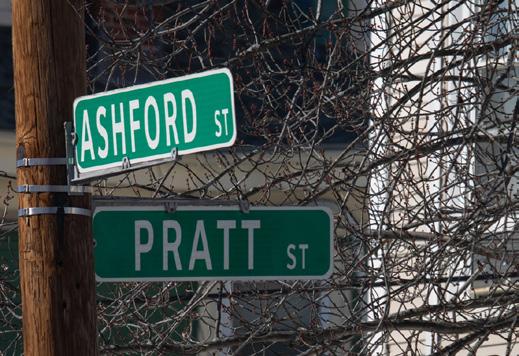
DANIEL GARBER | DFP PHOTOGRAPHER Pratt Street. Five social fraternities at Boston University are involved in ongoing legal battles with the Boston Police Department due to noise and disorder from large-scale events.
BU student wins lawsuit against Newbury Street art studio owner
Continued from page 1
hang out with her” or stop calling her.
“Very early on, I was like, ‘Yeah, I don’t really like this guy and I just want to stay clear of him,’” Stoehr said.
Lauren Hayden, an insurance attorney who formerly lived in Boston, said she filed a restraining order against Giampa in 2021 after she received multiple phone calls from him allegedly threatening to “rape and kill” her after she refused to give him her phone number when he confronted her on Newbury Street.
Hayden said she met Giampa at
a cupcake store. Giampa could not be reached for comment.
In January of 2026, Hayden later posted a series of TikTok videos — now taken down — detailing Giampa’s alleged conduct toward her and identifying him as a registered sex offender.
Hayden said she called Carroll last year and Carroll allegedly said Giampa “sexually attacked children in [Rainbows Pottery], that he supplied them with alcohol and then tried to sexually attack one of them,” which is why she fired him.
Hayden said, Giampa later violated the restraining order, to which prosecutors on the case “did nothing” despite her “begging.”

“I posted about it because … I was really upset that other women got attacked after me, because I felt like I failed a little bit when I wasn’t able to get any legitimate charges,” Hayden said.
Carroll’s lawyer sent Hayden a cease and desist letter ordering her to refrain from and remove “any and all further social media posts or statements in any way related to or concerning Rainbows.”
Mark Vazquez, who patronized Rainbows Pottery Studio in April 2021, said in an interview that Giampa and Carroll began distributing wine to him and his underage friends for free when they visited, despite checking their IDs and seeing they were underage.
“I do think she’s heavily lying when she says she has no idea about Drew serving minors wine,” Vazquez said. “She also did get a little bit drunk that night, along with some of the girls who we were with.”
The recent TikTok posts also criticize Rainbows Pottery Studio for its prices. Entry fees cost upwards of $41 per person, with some packages costing over $100 per person.
Many of the online reviews also criticize the cost of the pottery and Carroll’s demeanor. One person wrote in a Google review that Carroll was “ extremely rude and disrespectful to workers and patrons.”
Carroll responded to the customer’s comment, saying, “I’m not sure why you’re so upset just

because something is more than what you can afford.”
Another review said “prices were much higher than advertised,” to which Carroll responded: “What a waste of time harassing a business behind a screen.”
Emma Fallon, a sophomore at Boston College and a Rainbows Pottery Studio customer, said she visited the studio in December 2024 and described the experience as “way too expensive.”
“They didn’t tell us the price until we were done,” Fallon said.
“For a market that’s supposed to be kind of kid-oriented … I feel like it shouldn’t be that absurdly expensive.”
Giampa offered her alcohol while underage, but she declined the offer, Fallon said.
According to Stoehr, Carroll frequently opens lawsuits and loses many of them. In some instances, Steohr said, Carroll will sue someone over as little as their quitting.
“I don’t think [Carroll] belongs in Boston as a business, and I think that if people knew what has happened there … they would not want to go to her shop or have her in business either,” Stoehr said.
Boston judge orders U.S. to facilitate return of Babson student who was wrongfully deported to Honduras
CITY
BY EMMA MULLAY Associate City Editor
BY YU-KUAN MIAO Contributing Writer
A federal judge in Boston last week ordered the Trump administration to return a Babson College freshman to the U.S., more than two months after she was wrongfully deported to Honduras.
Citing a Bible passage, Judge Richard G. Stearns wrote in the order that “redemption may be found by acknowledging and fixing our own errors.”
“In this unfortunate case, the government commendably admits that it did wrong,” Stearns wrote. “Now it is time for the government to make amends.”
In November, the student, Any Lucia Lopez Belloza, was stopped at Logan Airport by Immigration and Customs Enforcement officers before she could board a flight to Texas to see her parents. Despite a judge issuing a temporary stay order barring ICE from transporting her, she was deported to Honduras two days later, according to court documents.
Lopez Belloza’s deportation was a mistake in January, but made no moves to correct the error and facilitate her return.
Todd Pomerleau, an attorney representing Lopez Belloza, called Judge Stearns’ recent decision “a step in the right direction.”
Lopez Belloza’s deportation was “completely unacceptable and un-American,” Pomerleau said.
“The narrative was that they were going after the worst of the worst, and she’s among the best of the best,” Pomerleau said. “Now it seems like any person they can arrest, they’re just doing it to cut corners, to get bonuses.”
“The narrative was that they were going after the worst of the worst, and she’s among the best of the best. Now it seems like any person they can arrest, they’re just doing it to cut corners, to get bonuses.”
- Todd Pomerleau
Lopez Belloza’s mother, who brought her to the U.S. without authorization in 2014, applied for asylum on behalf of her daughter but was denied. An immigration judge issued an order of removal in 2017, when Lopez Belloza was 11 years old, court documents said. The government admitted
Lopez Belloza “did nothing wrong,” Pomerleau added.
Babson College is located in Wellesley, Mass. — about nine miles from BU. In interviews, some Babson students expressed outrage at Lopez Belloza’s deportation.
Danna Ayala, a member of a first generation students organization at Babson who met Lopez Belloza at a retreat, said Babson students have been taking action on campus in support of her by rallying and organizing gatherings.
“It has just ignited a spark for us to speak for change,” she said. “We’ve been very uneasy with how the government and this administration is maneuvering the lives of people and the impacts of many communities.”
Lopez Belloza has continued to take courses at Babson virtually, but Ayala said it doesn’t compare to being present on campus, especially as Babson is a business school that “takes pride in experiential learning.”
“If [the class] is virtual and she’s
the only one online while she has a whole class of students sitting in the classroom, she might not feel comfortable to use her voice or really speak up,” Ayala said.
Abel Martinez, the president of the Babson Political Association, said his organization is currently providing housing for Lopez Belloza’s roommate and aims to house Lopez Belloza when she returns to campus.
“We’re all outraged,” Martinez said. “We’re all mad, and we’re all trying to do our best to help her any way we can.”
Martinez said he hoped to see the Trump administration “actually facilitate this return and actually follow court orders this time” — as they failed to comply with the last four orders regarding the case —but said he wasn’t too optimistic about it.
Ayala said while Lopez Belloza’s
case has been “successful in terms of overturning that order,” when it comes to similar cases, it is not “reassuring.”
“As much as we would hope that every single person out in America has a lawyer like Any, it’s just not the reality,” she said.
Last month, 80 lawmakers — including Mass. Sens. Elizabeth Warren and Ed Markey — wrote a letter to Secretary of Homeland Security Kristi Noem demanding Lopez Belloza’s return.
Amber Fang, an international student at Babson from Taiwan, said the timing of Lopez Belloza’s deportation made international students nervous about traveling during the holidays.
“There is more anxiety surrounding going to the airport, leaving the U.S. borders, and trying to get reentry,” she said.
Babson College did not respond to requests for comment.
Martinez said he wished Babson’s administration would “take a stronger stance” on immigration issues, as the school’s international student population — about 28% of total students— is scared to engage in political or social movements on campus.
Ayala said that, to her, the importance of returning Lopez Belloza is greater than just this specific situation and is reflective of a greater issue in the country.
“Returning Any to Babson is not just an act of charity or an act of redeeming a wrongdoing, it’s more of just reaffirming the values of democracy that America has,” she said.
Isabelle Zhang contributed reporting to this article.
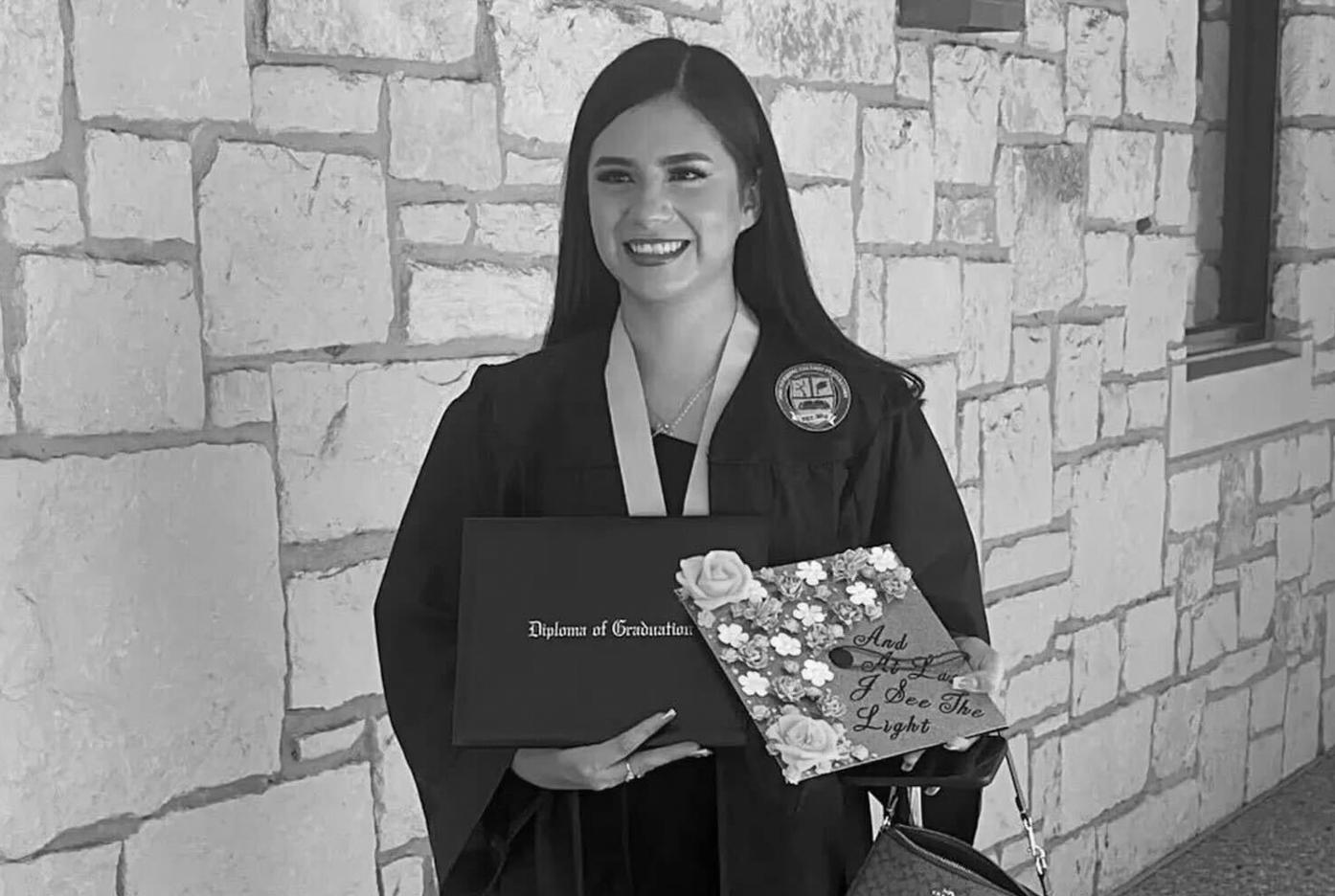
Babson College freshman Any Lucia Lopez Belloza. Following her wrongful deportation last November, a federal judge ordered the Trump administration to return her to the United States last Friday.
COURTESY OF TODD POMERLEAU
A pricing sign inside Rainbows Pottery Studio.
AVA RUBIN | ASSOCIATE PHOTO EDITOR
Rainbows Pottery Studio’s logo in the interior of the studio. The studio faced pushback after viral TikTok posts in late January alleged harassment and serving alcohol to underage customers.
AVA RUBIN | ASSOCIATE PHOTO EDITOR
ICA exhibit honors Boston’s oldest Black artist residency, perseveres through tumultuous history
BY CORNELIA NISBET DFP Writer
Almost a half century after its founding, Boston’s African American Master Artists-InResidence Program is being featured at the Institute of Contemporary Art, marking an extraordinary achievement for a program that has hosted countless Black artists while overcoming threats to its survival.
The ICA opened the exhibition, “Say it Loud: AAMARP, 1977 to Now” Feb. 12, which highlights the work of artists in Northeastern University’s African American Master Artists-In-Residence Program.
The exhibition, one of a handful of established residency programs for Black artists across the nation, features 60 works by 39 artists. It will run until Aug. 2.
The idea of differences and connection is central to the exhibit, which has art of several styles and materials spanning 49 years of work since its founding in 1977 by Simmons University professor
Dana Chandler. Today, it provides studio space to 13 artists and partners with various community organizations.
“Dana Chandler was really bedrock in terms of thinking, ‘How do I create a space in which artists of color … could be celebrated, as well as have a place where they can actually build and develop their practice?’” said current AAMARP Artist-in-Residence Marlon Forrester about the program’s founder.
Forrester, a graduate of the School of the Museum of Fine Arts, Boston, is one of the youngest members of AAMARP represented in the exhibition. He said he became involved with the program through a museum show called “Playoff X” at the National Center of African American Artists in 2012.
“It was a marker within the context of the Boston area, where folks knew about me and felt like ‘this guy has great potential to be one of the best,’” Forrester said.
Forrester’s piece in the exhibition is a 6-by-6 foot painting called “Warrior Dance.” The piece depicts a figure with a fabric object
in one hand and sword in the other, surrounded by abstract patterns.
Forester described the piece as having many layers, akin to an optical illusion if one looks at the center — a circular form placed at the belly button — for long enough.
“One of the things I am interested in is this idea of the dance, [which] is also about a spiritual connection to transformation. When I say spiritual, I mean the Black male body as a transformative thing and that within the context of people,” Forrester said. “We all come from different cultures, and we’re all connected to a land, and so the body becomes land.”
Though much of the ICA’s exhibit centers on the African American experience, artists of many different backgrounds have also contributed to the history of AAMARP, and their influence is reflected on the walls as well.
“It was very intriguing to find out that there was also a Chinese man and a white Jewish American man in this collective of African American artists as well, because they simply were all helping make the ship sail. So I thought that was beautiful,” said Viv Guilford, a visitor assistant at the ICA.
Pakistani-born artist Ambreen Butt has four works on display in the exhibit. Through connections with friends and a former professor at Pakistan’s National College of Arts, Butt put on an exhibition focused on South Asian art that was supported by AAMARP.
“AAMARP was one of those places that had always existed, and had nurtured a lot of artists, some of whom were my mentors and colleagues,” Butt said. “I’m one of those small flowers that was nurtured by the flowers that were nurtured by AAMARP.”
Despite having existed for almost five decades, sustaining the program hasn’t been easy, said Reginald Jackson, the director of AAMARP.
In 2018, Northeastern asked the
artists to leave, and Northeastern would take over the program, determining themselves which artists got studios and how long they could stay, Jackson said.
WBUR reported in 2018 that Northeastern sent a letter to AAMARP requesting it “vacate the Jamaica Plain warehouse where they work by July 13.”
In response, AAMARP members simply refused to leave.
Northeastern then changed the locks on the building, according to Jackson, who is also a professor emeritus of communications at Simmons University.
Jackson contacted former state representative Mel King, and Chuck Turner, a former city councilor, to help AAMARP’s cause.
“We got community together, and so we demonstrated outside the building. We painted a mural on the side of the building, and the mayor, Marty Walsh, got involved,” Jackson said.
After discussion, Northeastern agreed to not interfere with the program, except for placing security guards at the entrance to the studio. Artists could only work while security was there, which was
originally for the majority of the day, Jackson said.
But AAMARP has delayed membership for new artists, as it is unsure what the future holds for the program.
“We’re hoping that [Northeastern] continues to realize that they have a responsibility to the needs of the cultural community in which they reside,” Jackson said.
Northeastern University’s communications department did not respond to a request for comment before publication.
Jackson hopes the exhibition, which includes three of his works, will provide exposure and better understanding of the needs of the program.
Northeastern law professor Margaret Burnham visited the show and said she took away a strong sense of community from the art.
“I think it captures a collectivity in that community, and also an ability to reach out beyond practicing artists to those in the community who were associated with other forms of art, like dance and music, and to create a space where these artistic forms could speak to each other,” Burnham said.
BU law students fight for second chances for incarcerated women through Defender Clinic
COMMUNITY
BY BEN SIEGEL Associate Community Editor
Law students are often depicted in movies spending all their time poring over textbooks and studying for intense exams. But law students at Boston University help convicted women get a “second chance at freedom” in the courtroom.
For decades, the Defender Clinic within the Criminal Law Clinical Program — a two-semester experiential learning program in LAW — has given students the opportunity to represent people charged with crimes in Boston district courts, from their arraignments through their sentencing.
The program is now taking on postconviction cases, with its students representing incarcerated women to reduce life sentences and formerly incarcerated women to end their lifetime parole.
“For the past couple of years, the clinic has been expanding in terms of the work that it’s doing,” said Karen Pita Loor, a LAW professor and the clinic’s director.
Loor explained that she thought it would be “exciting” for students to broaden their horizons from pretrial cases to those of people already convicted.
She added that students’ postconviction work is often with people who were convicted of “very serious crimes,” giving law students a wider view of cases within the criminal legal system.
“The folks that we’re working with are people who have lifelong sentences, with the hopes of actually giving them a second chance at freedom,” she said. “They feel, many times, remorse for their conduct. They are different people now.”
Per the Constitution, defendants facing potential imprisonment are guaranteed an attorney, while those seeking clemency or reevaluation of their parole are not entitled to any legal representation. The clinic provides free services to its clients, providing them with legal help they may otherwise not have access to.
“It’s a perfect match because the clients are people who need assistance, the students are people who need to learn how to be lawyers, and the combination of those two puzzle pieces fit together,” said Shira Diner, a clinical instructor and lecturer in the clinic.
Diner said the people they represent, in turn, teach both the instructors and students about the criminal legal system.
“The clients are very much also helping the students by giving them the opportunity to practice their lawyering skills,” she said. “They’re able to help us flesh out their legal education in a way that they’re just never going to get sitting in a law school classroom.”
Aisling Flaherty, a second-year LAW student, is helping incarcerated women at the Massachusetts Correctional Institution in Framingham apply for clemency.
Flaherty said she was most impacted by her first in-person
meeting with her client, putting a face to the case she’d been studying.
“We actually got to see her and speak to her, and she got to know us,” Flaherty said. “Being able to have that human connection, I think, is the most impactful part of this work.”
The process is intensive, requiring
her students as well as the client’s “thrilled” reaction to the complete petition.
“Just having [the client] see her story, basically the story of who she is right now for the governor and having her see just how much work the students have gone into for it, is
students to obtain letters of support and review decades of trial transcripts, prison and medical records, Loor said. Over a month into the semester, the team working on commuting sentences was finishing their first clemency petition.
“That feels to me like a huge success,” Loor said, explaining the learning curve for both herself and
just a huge reward,” Loor said. Roxbury-based organization Families for Justice as Healing, a prison abolitionist organization led by former and currently incarcerated women and women with incarcerated loved ones, connects the Criminal Law Clinic with clients in its goal to end the incarceration of women and girls.
The project, which is in its second year, was born out of a desire to apply law students’ education to the local community, Loor said.
“We were looking for how [we could] make a bigger impact,” she explained. “I wanted us to connect more with our community, I wanted us to connect more with Boston.”
The Defender Clinic is fundraising until March 4 to cover the many costs its work requires. By Tuesday, it had received $6,940 — 69% of its $10,000 goal.
“In this time of really tight budget constraints, unfortunately, we can’t depend on the law school,” Loor said. “There’s just not the funding to do that, so this was a really creative way to see if we could get some funds, and it seems to be working.”
These costs include transcripts from clients’ original trials and assistance from medical or mental health experts, which can cost thousands of dollars. Additional expenses include travel to visit clients and summer payment for students to continue casework outside the academic year.
Diner noted there’s so much more to criminal cases than the initial charges, when people have a right to counsel.
“People need support and they need opportunities to truly move on after they’ve been incarcerated,” she said. “Without this support [from the fundraiser], we’re unable to help these clients, in a meaningful way, move on from their time of incarceration and move into being the members of the community that we’d like them to be.”
SUMMER LAROSE | PHOTO CO-EDITOR
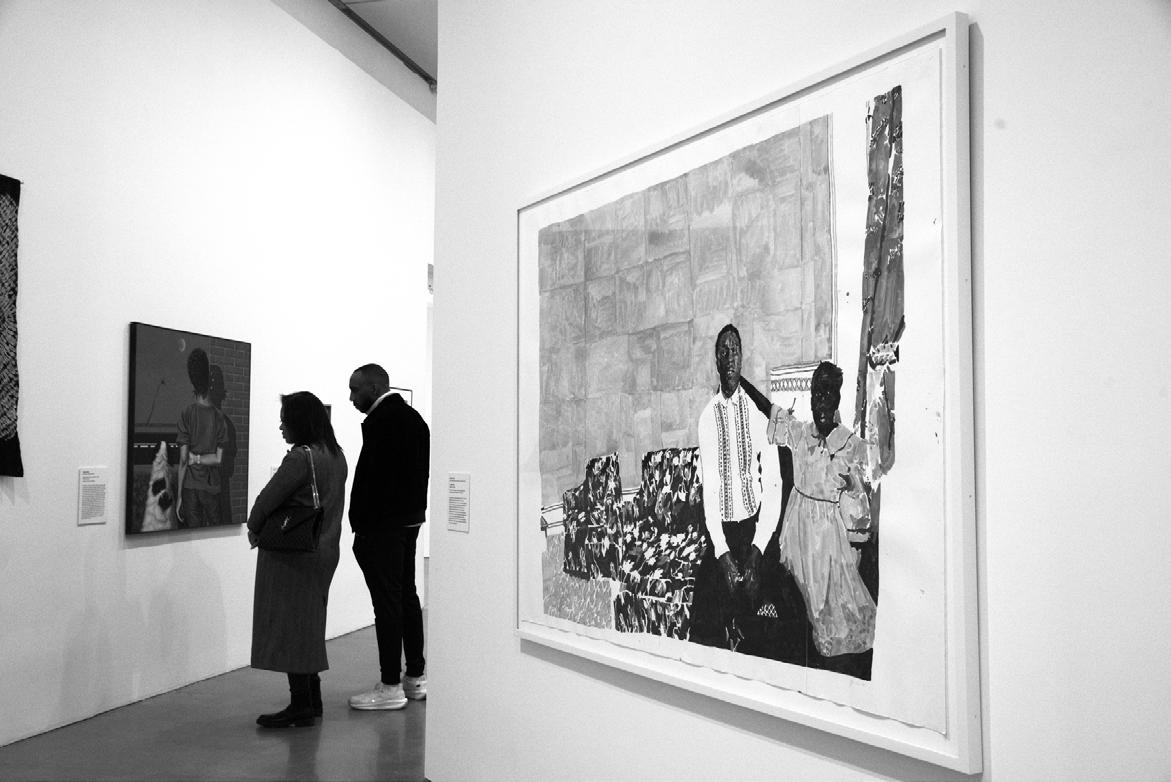
Two museum-goers stop to look at a painting part of the “Say It Loud” exhibition. The gallery, showcasing work by Black artists in the United States affiliated with a longstanding residency program, opened on Feb. 12.
SUMMER LAROSE | PHOTO CO-EDITOR
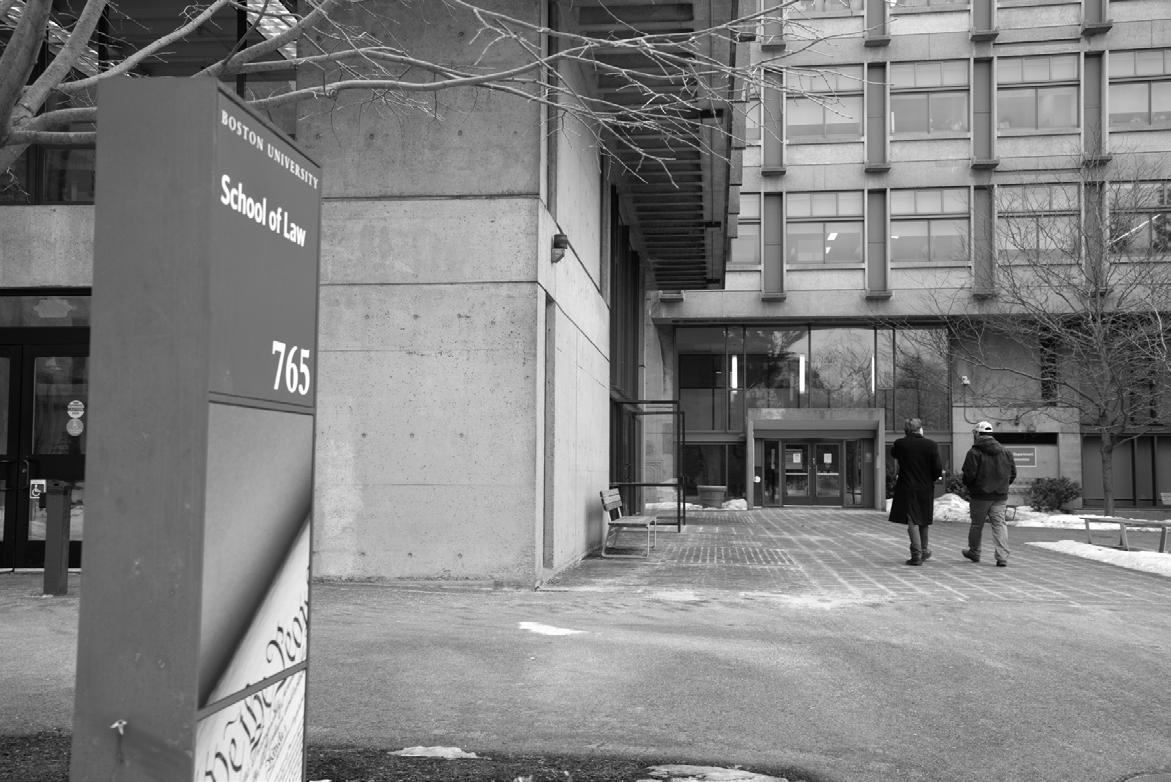
Boston University School of Law, located at 765 Commonwealth Ave. BU law students have begun representing people in post-conviction cases through the law school’s Defender Clinic.
SUMMER LAROSE | PHOTO CO-EDITOR
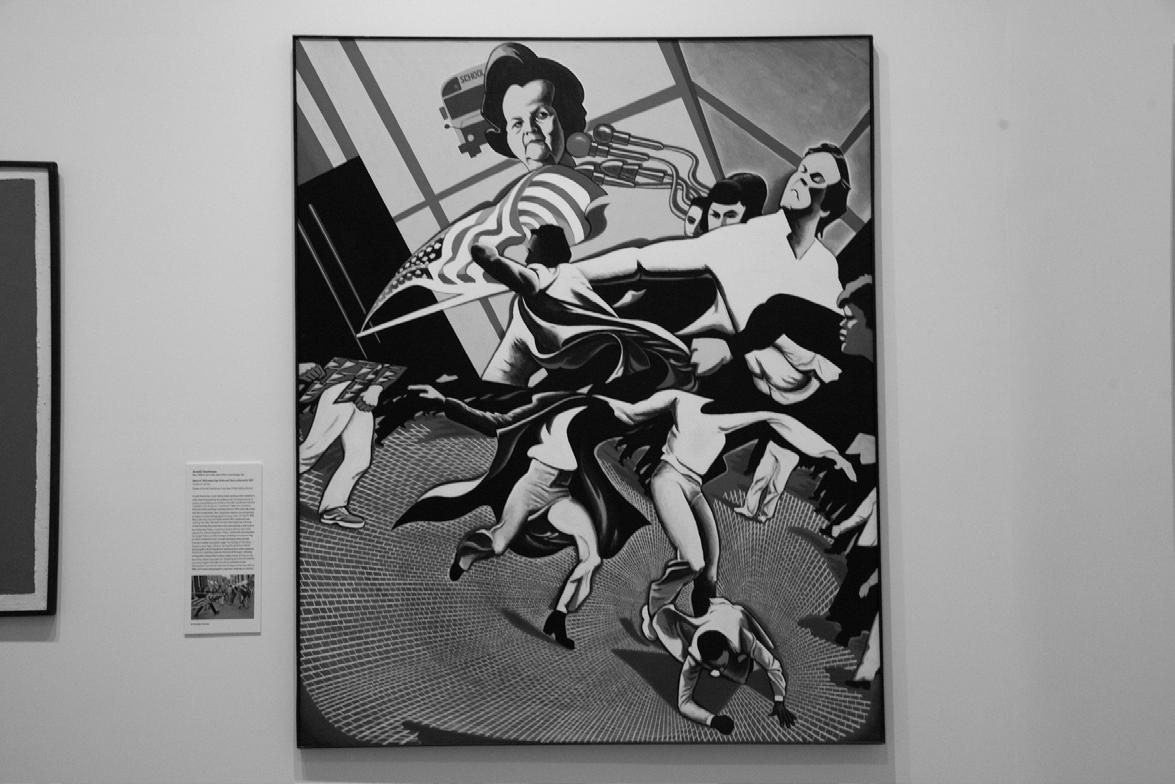
An acrylic painting by Arnold Trachtman depicting the Boston school desegregation busing crisis, on display at the exhibition.
In groundbreaking study, BU’s CTE center links CTE with dementia and not behavioral problems
Continued from page 1
the BU CTE Center conducted numerous “extensive” and “exhaustive” interviews with brain donors’ relatives. By comparing the brains of people who only had CTE with their symptoms during life, Groh said they were able to find an association between CTE and dementia.
They found that people with stage IV CTE were 4.5 times as likely to have dementia, while those with stage III were twice as likely. Also, 40% of those with CTE were mistakenly diagnosed with Alzheimer’s during life.
Groh said the study showed that CTE should qualify as an “Alzheimer’s related dementia.”
“If you look at Alzheimer’s research, [CTE] parallels the staging of Alzheimer’s disease,” she said. “That makes sense based on the damage to the brain that you see.”
In addition, the study found that CTE at any stage was not associated with any mood or behavioral symptoms — something Groh said has puzzled researchers.
“We hear of the complaint so frequently from the participants coming in for our living studies and also from families, but it is something that we haven’t been able to see,” she said.
Groh said she hoped the study would make physicians more aware that CTE could be the cause behind someone’s dementia.
Conor Gormally, the CEO and co-founder of Concussion Alliance,
a nonprofit creating resources for people affected by concussions, said it was especially hard for physicians to definitively say CTE could be behind their patients’ dementia, given its status as an undiagnosable disease and association mostly with professional sports.
a competitive past, whether that’s from the military, whether that’s from intimate partner violence, whether that’s from [when] they played QB in college football,”
Gormally said. “They come in talking about cognition issues, come in talking about memory issues and showing the hallmarks of Alzheimer’s and related diseases… [Out of] the things a
provider someone with, they can’t diagnose someone with CTE.”
the NFL to stop head-on collisions, the popularity of those sports
will hopefully help contribute to things on a cultural and
researchers can similarly diagnose CTE.
Malayka Gormally, co-founder of Concussion Alliance, said the publicity of CTE can discourage people with concussions, which are diagnosable and treatable, from seeking help due to “Tens of thousands of people out there with persisting concussion symptoms are not getting care, who are not told that such care exists. And then they read all these articles about CTE, and they think, ‘Oh my goodness, I have CTE,’” If results of studies like these are communicated properly, it could clear up the fear and mystery around CTE that can be more dangerous than the disease, Malayka Gormally said.
hoped the study would make people more aware of the inherent risks of impacts, especially comes to sports settings.
Gormally said while this study may encourage sports leagues like
popular sport in America,” Gormally said. “Studies like these
during life. The hope is that by using the same methods used to detect Alzheimer’s disease,
“This study is showing that CTE is not producing cognitive symptoms, and these people were concerned. Their family is concerned enough about CTE that they gave their brains. What is the likelihood that some of them had things that could be treated?” she said.
Internet moderation models trained on nude images sparks conversation about ethical research
BY RAYAN KHAN Associate Business Editor
The internet is not a safe place. Harmful subject matter such as nonconsensual records of nudity and, in extreme cases, child sexual abuse material, gets shared across the internet — and even ends up on the AI models trained to flag it.
These models need to be trained on existing sensitive images to recognize new sensitive images, requiring researchers to sift through sensitive material, Boston University assistant professor of Computing and Data Sciences Allison McDonald said. How to handle these data sets and present their findings ethically is an active debate.
BU’s Cyber Alliance Seminar Series held its first event of the spring semester at the BU School of Law on Feb. 11, with McDonald presenting on the ethical challenges of using nude images for artificial intelligence and machine learning research.
McDonald said she first got interested when she realized nudity detection algorithms were scraping the internet. She found a paper called, “Do nudity detection algorithms work on upskirt photos? To find out, we collected 1,600 pictures of upskirt photos just from the internet,” she said.
“Not only did they collect this data and do a bunch of testing on it, they included examples of these photos in their paper,” McDonald said.
Even if someone uploaded something consensually, they wouldn’t know it would be downloaded and used for this research. If they did know, they likely would want their image to be taken out of the data set, McDonald said.
While using sensitive images
in a research paper isn’t likely to cause acute harm to people, she said it does undercut their agency and dignity.
“The idea of searching for [nude data] on the internet, downloading a large amount of it and then doing experiments with it, and then putting it in your published manuscript for all of time is just mind-blowing,” McDonald said.
Guardrails exist to protect subjects in research. All federally funded U.S. research institutions are required to have an institutional review board to ensure research complies with federal laws about protecting human subjects.
Image data sets on the Internet, though, are a new case that aren’t given the same consideration from IRBs. This is because IRBs were built before the internet became what it is now, McDonald said.
This regulatory gap has created a dangerous loophole for data set practices. Researchers can often collect, annotate and share data sets containing intimate images, child sexual abuse material or other sensitive content without the ethical oversight that would apply to almost any other form of human subject research, McDonald said.
“If I want to just go and scrape data without interacting with anyone, most IRBs would say ‘this isn’t human subject research because you’re not talking to anyone,’” McDonald said. “‘It’s not our job to decide.’”
The people depicted in these images — often victims of abuse, exploitation or privacy violations — become data points with no say in how their images are used, she said.
Jacky Lin, a sophomore data science student on the executive board of the BU Data Science Association, said the problem
isn’t just outdated regulations — it’s a culture that prioritizes speed over ethics.
“Nowadays, ethics is not really the first thing people think about,” Lin said. “The first thing in [researcher’s] heads is not ‘how secure is this?’ or ‘how ethical is this?’ It’s typically ‘how can we do this as fast as possible, and with as little roadblocks as possible?’”
Sonia Saini, a third-year BU law student, pointed to a lack of informed policymakers as a reason these unethical research practices continue.
“If you can’t understand what you’re regulating, there’s no way your regulations are going to be effective,” Saini said.
Whether or not the responsibilities fall on IRBs, legislators or educators, McDonald’s research makes one thing clear: regardless of where responsibility lies, the current system is failing the people whose images end up in these data sets.
The problem, McDonald said, is not that people create consensual sexual content for public consumption.
“Explicit content and nude content is not inherently bad,” she said. “It’s not inherently harmful. There are so many ways that this is just a part of human behavior that has moved online.”
Instead, McDonald said she envisions a world where data sets with sensitive material are created consensually and handled ethically.
The path forward requires not just technical solutions or policy reforms, but a fundamental shift in how the research community values human dignity, McDonald said. The images in those data sets represent real people — people who never consented to become part of an experiment, and who may never know their trauma has
been repackaged as training data.
“It is plausible that we could build a data set that is completely consensually created, where people know that they’re donating data to science,” she said.
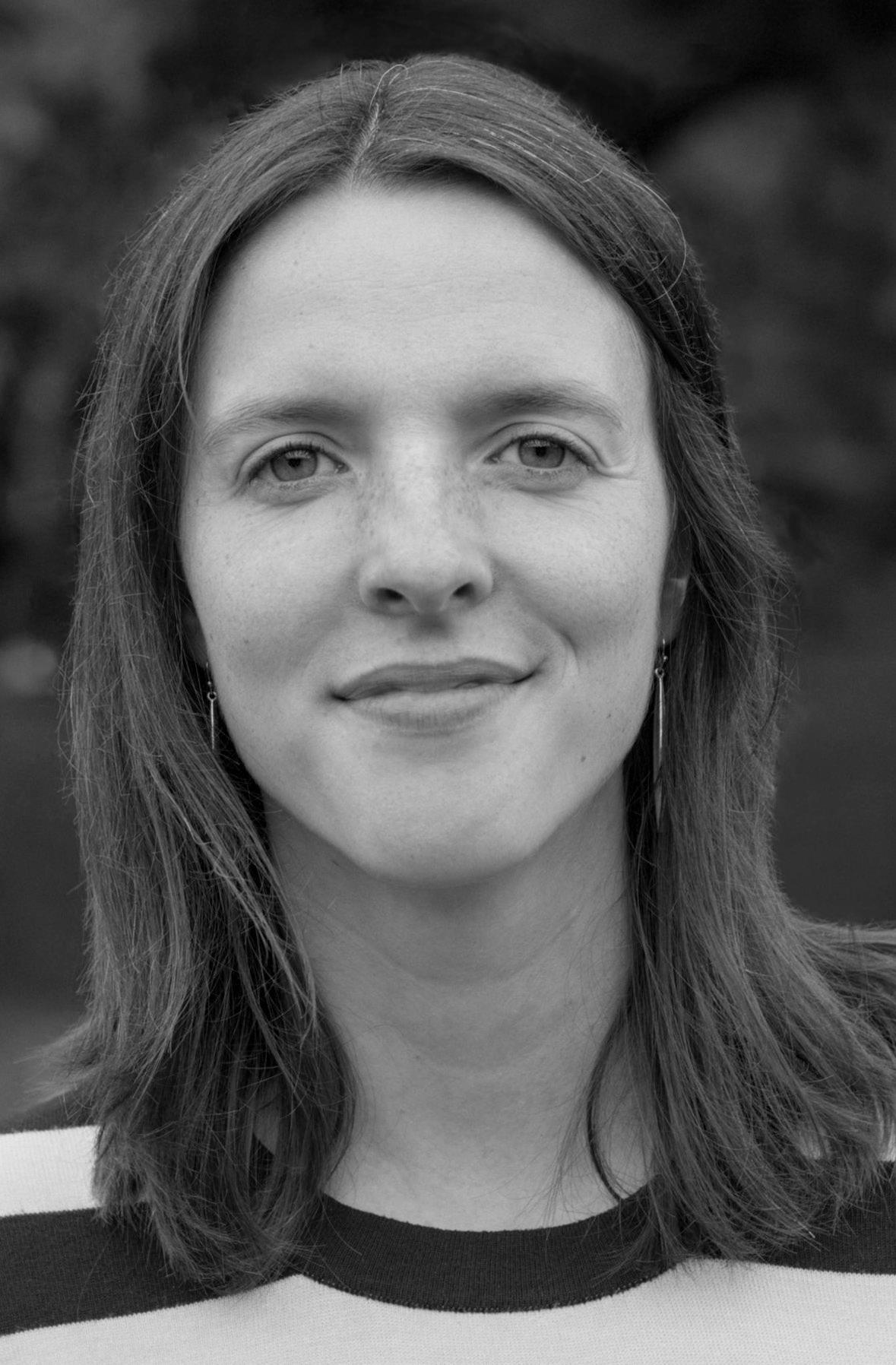
Assistant professor of Computing and Data Sciences Allison McDonald. Boston University’s Cyber Alliance Seminar Series held its first event of the spring semester at the BU School of Law Feb. 11, with McDonald presenting on the ethical challenges of using nude images for artificial intelligence and machine learning research.
COURTESY OF ALLISON MCDONALD VIA RITCHIE WILSON
Gianna Horcher | Graphics Co-Editor
Harvard students pucker up for Michael Keaton and Rose Byrne
BY SUMMER LAROSE
Photo Co-Editor AND KATE KOTLYAR Senior Photographer
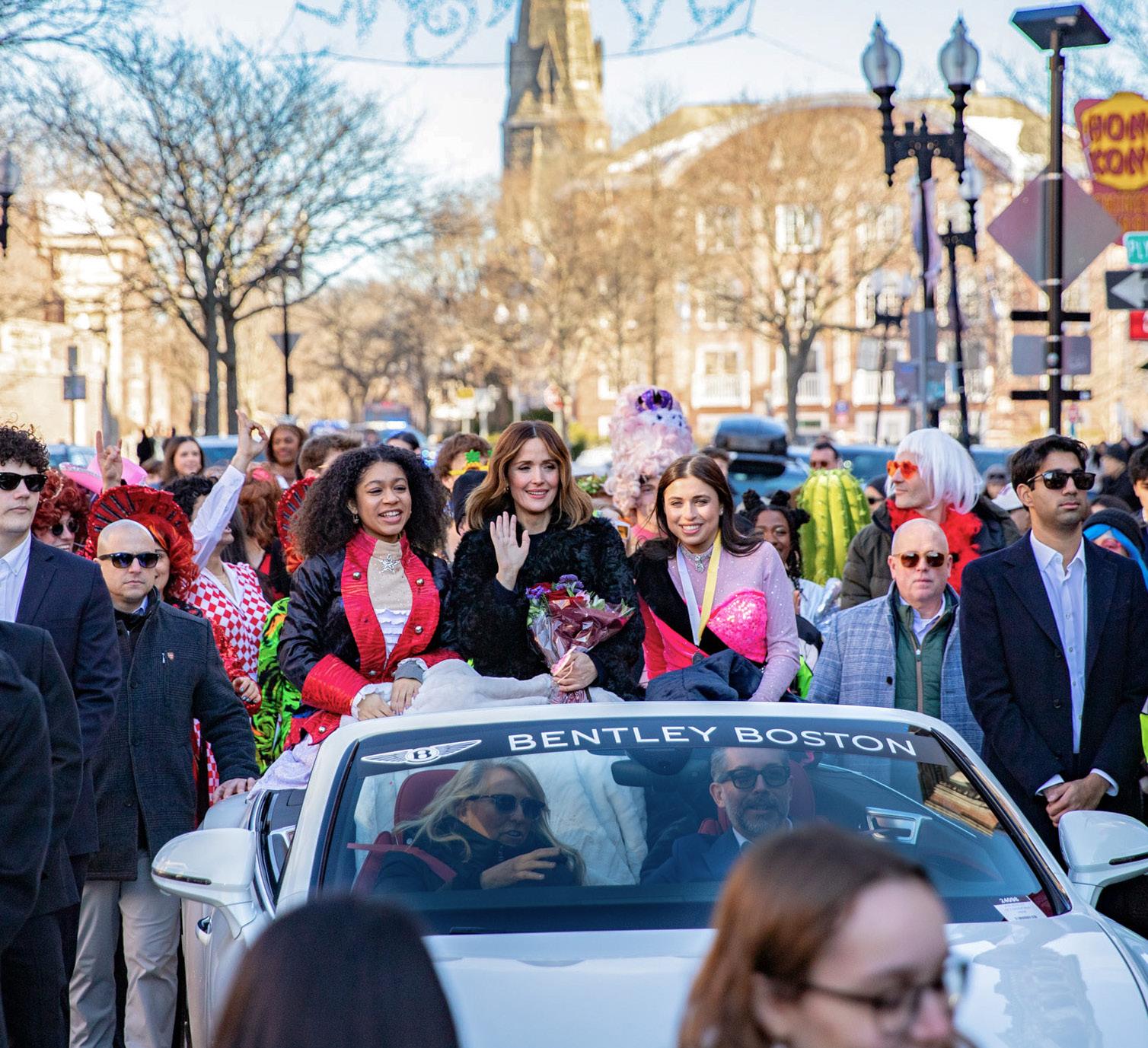
Harvard University’s Hasty Pudding Theatricals group honored actors Michael Keaton and Rose Byrne as their 2026 Man and Woman of the Year over the past two Fridays.
Byrne’s Feb. 13 commendation commenced with a parade down Massachusetts Avenue, while Keaton’s kicked off at Farkas Hall on Feb. 6.
Members of Hasty Pudding Theatricals teased each actor, named for their lasting contributions to the craft, with a “celebratory roast” before sending them off to attend performances of the troupe’s latest musical comedy, “Salooney Tunes.”
Byrne, famed for her role in “Bridesmaids,” was Oscar-nominated for the 2025 feature film, “If I Had Legs I’d Kick You.” “Beetlejuice” and “Batman” star Keaton recently directed and starred in “Sweetwater,” a dramatic short.
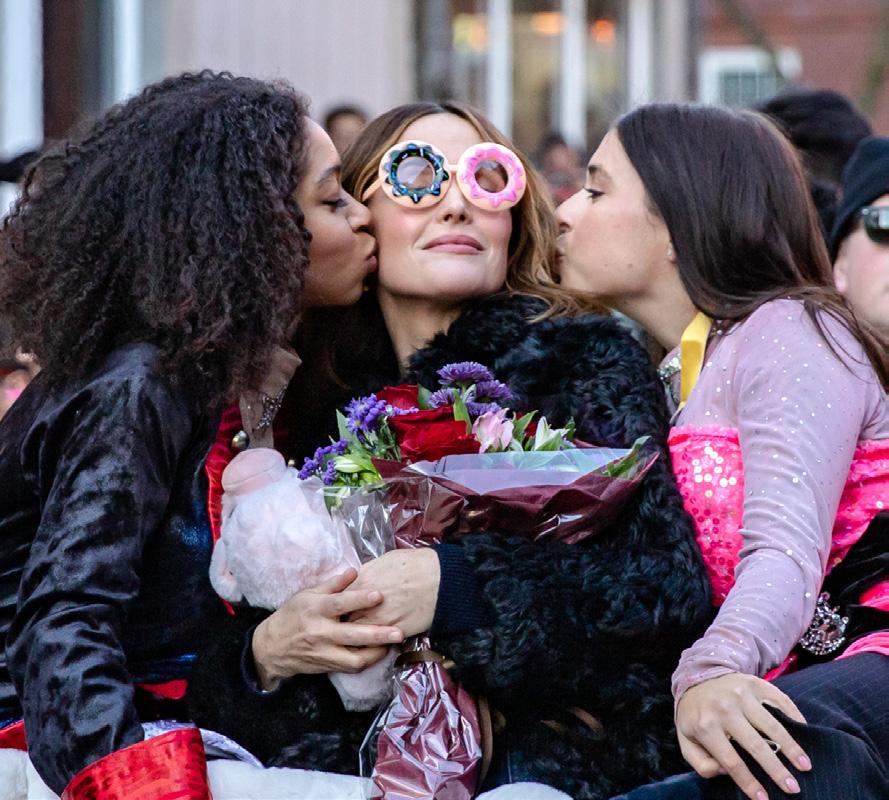
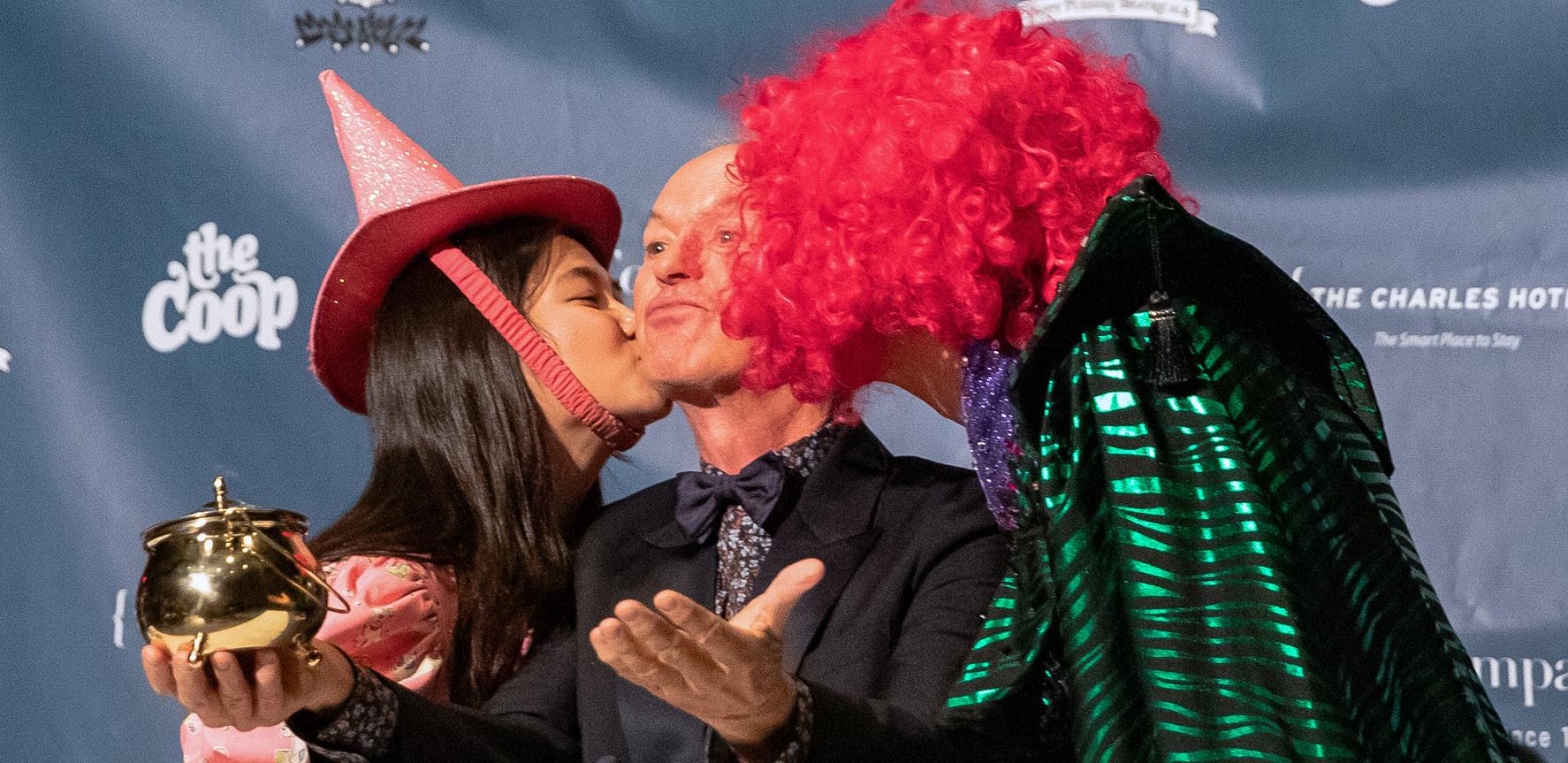
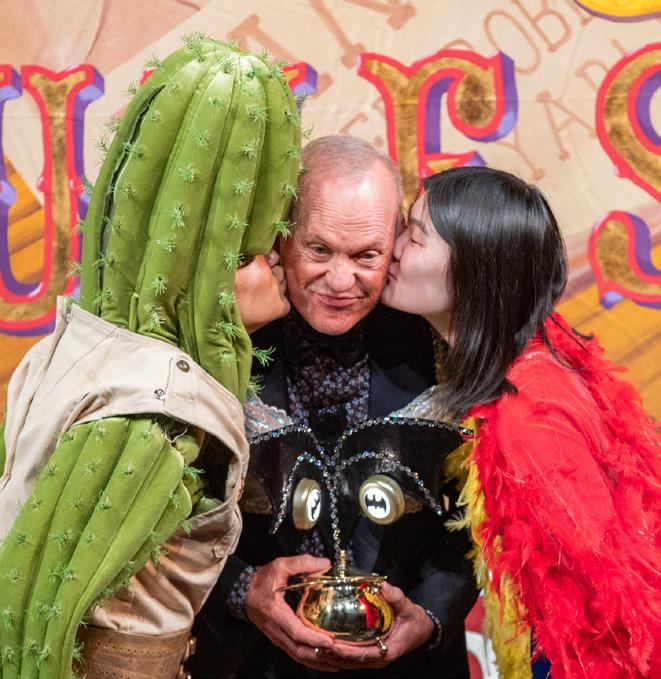
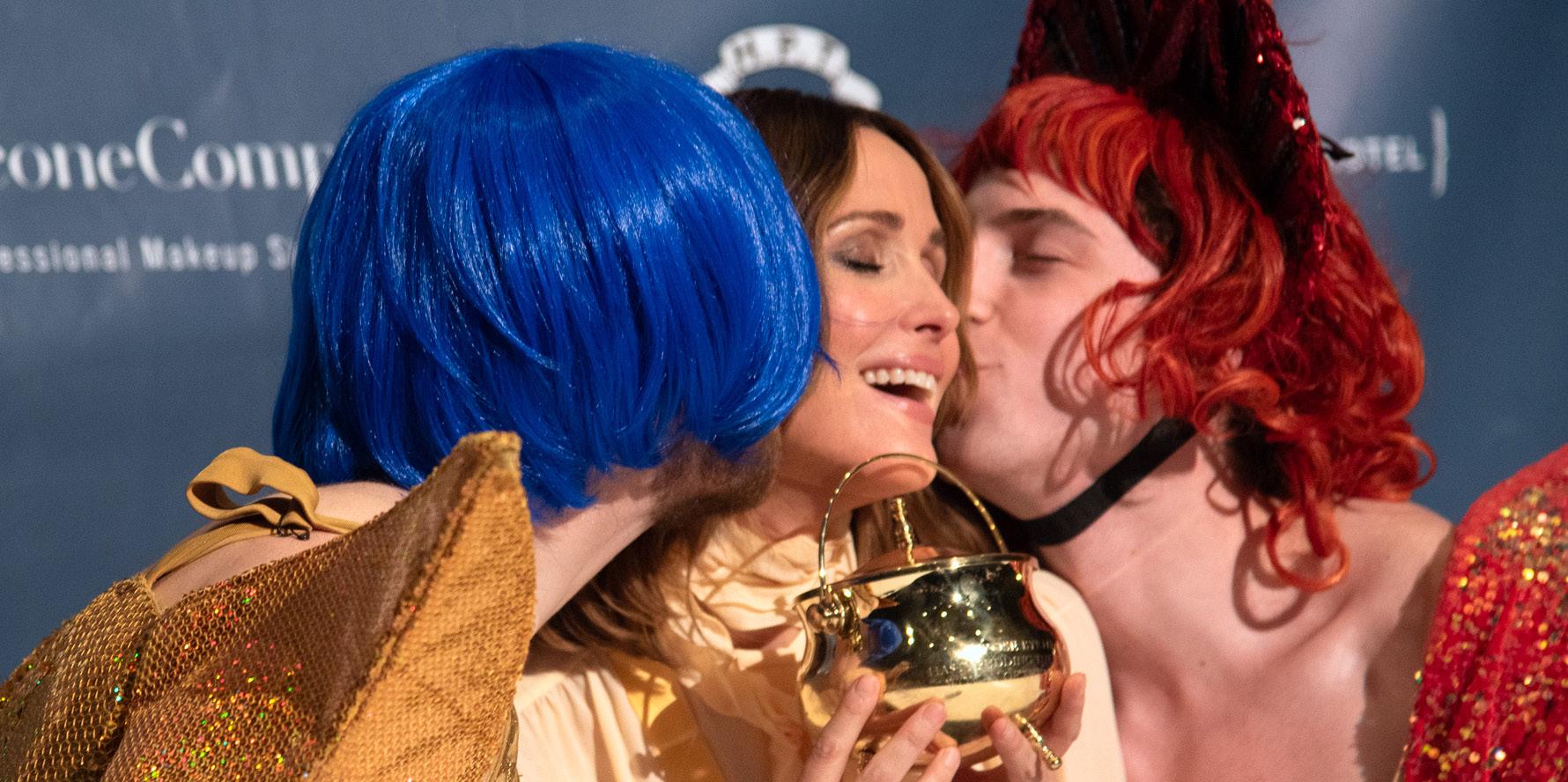
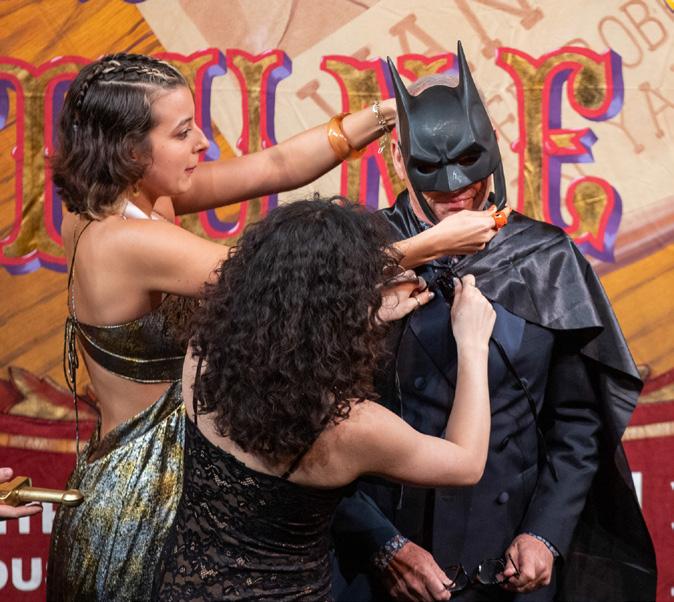
Keaton and Byrne both accepted the traditional pudding pot and cheek kisses from colorfully costumed Harvard students.

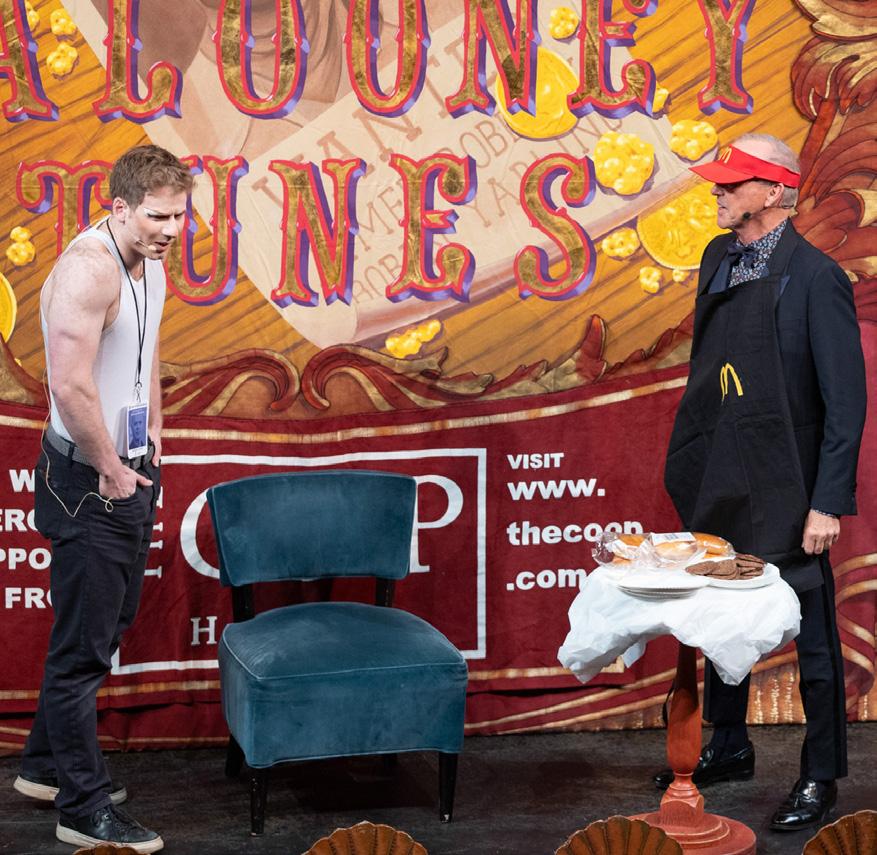
Keaton, reprising the role of Batman, duels a Hasty Pudding Theatricals member dressed as an Academy Award, referencing his Oscar nomination and loss for his performance in “Birdman.”

KATE KOTLYAR | SENIOR PHOTOGRAPHER
Roasters and “Salooney Tunes” producers Isabel Wilson and Daisy Nussbaum kiss Byrne at the parade’s conclusion on Holyoke Street.
KATE KOTLYAR | SENIOR PHOTOGRAPHER
KATE KOTLYAR | SENIOR PHOTOGRAPHER
KATE KOTLYAR | SENIOR PHOTOGRAPHER
KATE KOTLYAR | SENIOR PHOTOGRAPHER
KATE KOTLYAR | SENIOR PHOTOGRAPHER
KATE KOTLYAR | SENIOR PHOTOGRAPHER KATE KOTLYAR | SENIOR PHOTOGRAPHER
KATE KOTLYAR | SENIOR PHOTOGRAPHER
SUMMER
KATE KOTLYAR
KATE KOTLYAR | SENIOR PHOTOGRAPHER
KATE KOTLYAR | SENIOR PHOTOGRAPHER
Keaton, dressed as a McDonald’s employee, serves a hamburger to a Hasty Pudding Theatricals member.
Byrne waves at onlookers as she sits atop a Bentley riding through Harvard Square.
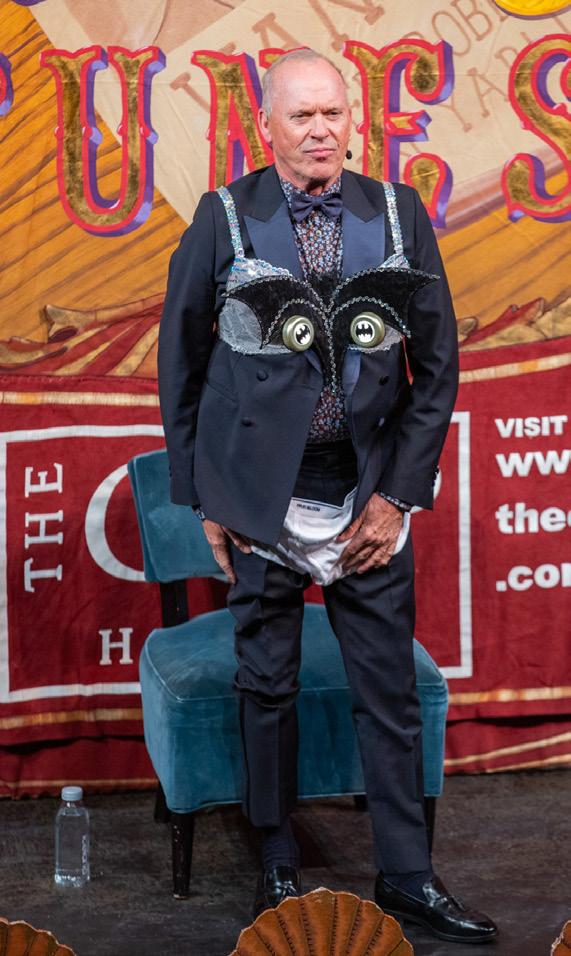
Keaton stands before the audience in a pair of white underpants and a Batman-themed bra.
Keaton holds out the pudding pot while a Hasty Pudding business staff member and band member kiss him before he heads to the premiere of “Salooney Tunes.”
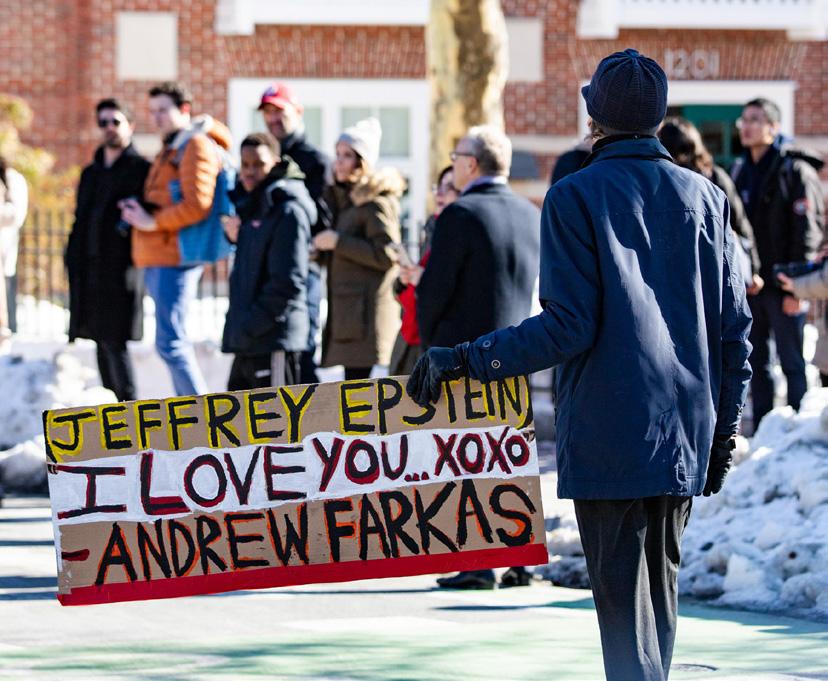
A person holds a sign in protest of Hasty Pudding Institute Chairman Andrew Farkas, who was named in the Epstein files, ahead of the parade.
Keaton receives kisses from two Hasty Pudding Theatricals members along with the pudding pot.
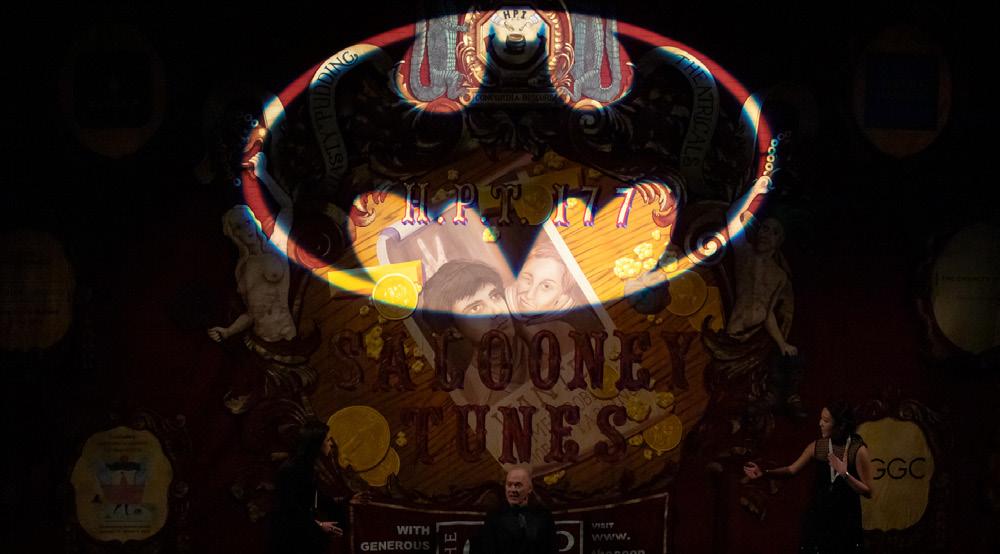
The Bat Signal flashes on the curtain behind Keaton, an homage to his titular part in Tim Burton’s “Batman,” at the start of his roast.
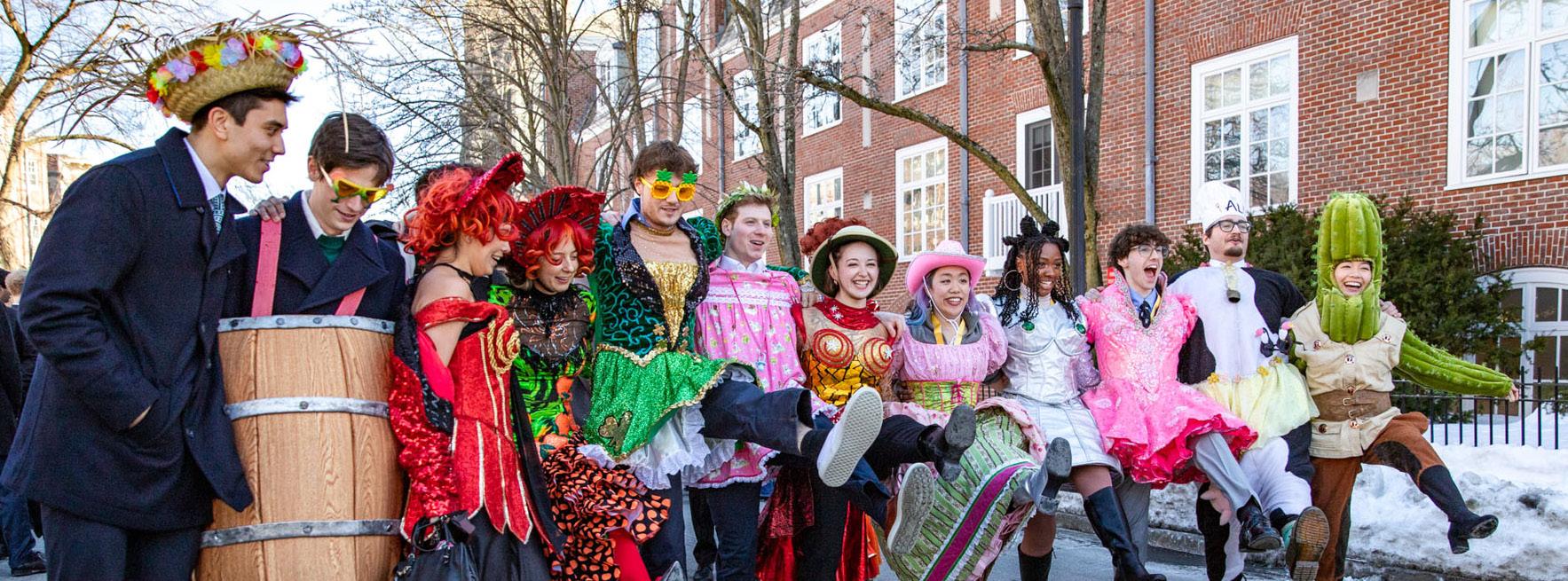
Hasty Pudding Theatricals members perform a kick line before their annual Woman of the Year parade.
Harvard student Jack Burton throws rice out of an Old Town Trolley Boston tours tram during the parade.
Two sequin-clad Harvard students lean in to kiss Byrne as she raises the pudding pot, which she received after her celebratory roast at Farkas Hall.
Members of Hasty Pudding Theatricals dress Michael Keaton in a Batman mask and cape.
‘Suit Squad’ powers BU men’s basketball from the bench
BY CHRISTIAN MARSHALL Senior Writer
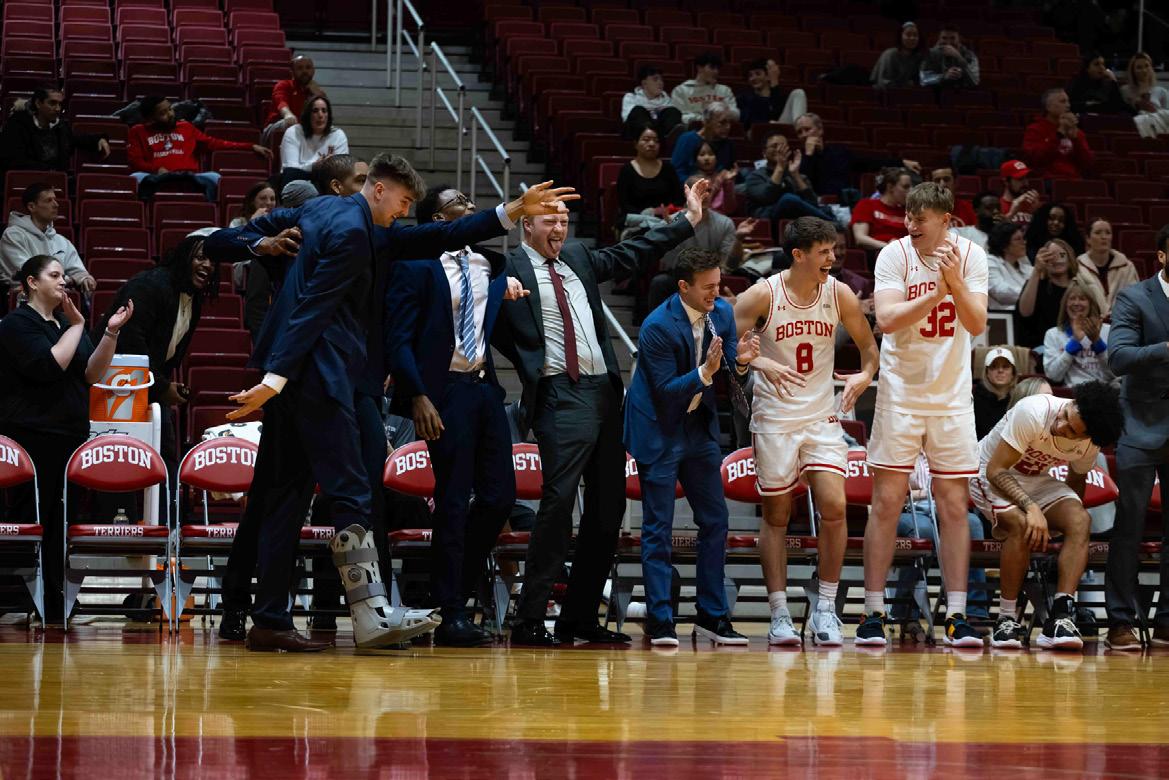
If you arrive at Case Gymnasium on a Wednesday night or Saturday afternoon to watch the Boston University men’s basketball team, you might encounter BU’s “Suit Squad” — a collection of injured Terriers positioned at the end of BU’s bench.
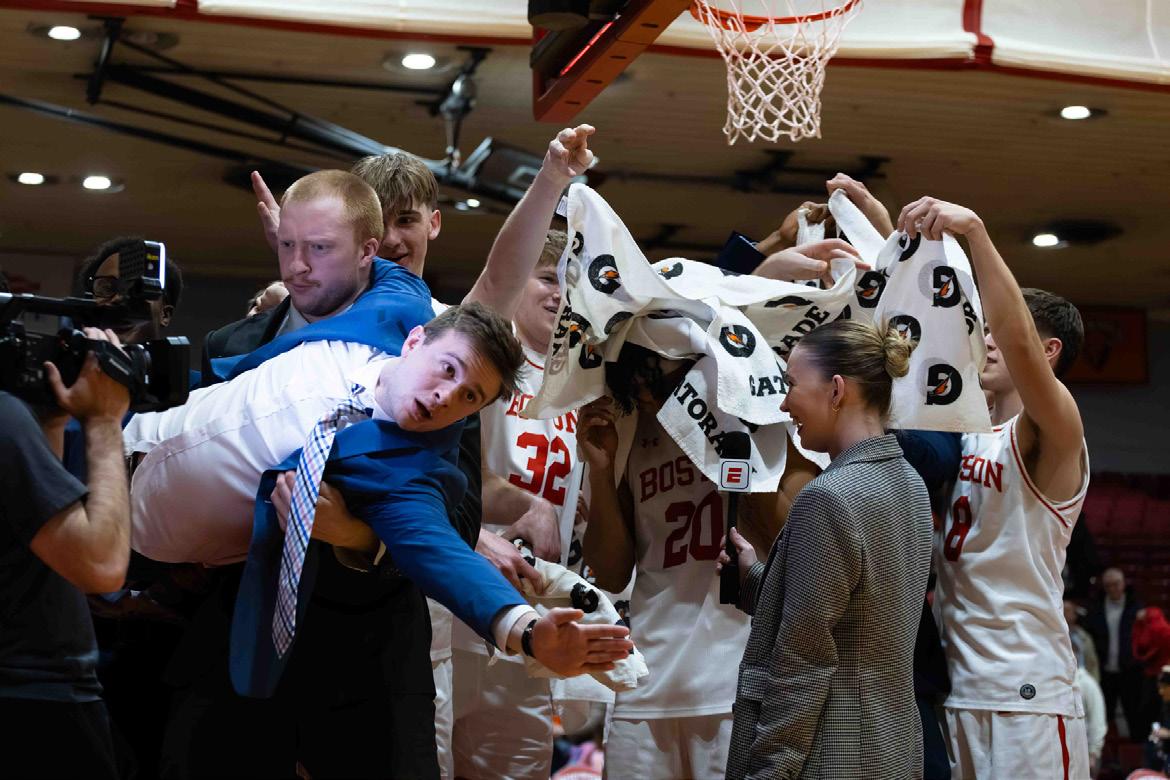
Every game, the injured and sidelined Terriers are dressed in suits, hitting a variety of celebrations ranging from rowing an imaginary boat to synchronized hip thrusts.
They’ve taken the opportunity to support their team on the court in whatever way they can, all while dressed in their Sunday best.
Injuries disrupted the Terriers’ season before the first tip-off. Senior forward Otto Landrum and junior forward Matai Baptiste each suffered season-ending lower body injuries before the season began.
In the season opener against Northeastern University, junior guard Kyrone Alexander — who was selected to the preseason AllPatriot League Team and was the team’s leading scorer last season — exited the game with a knee injury after 12 minutes of play and did not return.
Despite initial belief that Alexander would return to the team weeks after the opener, BU Head Coach Joe Jones announced at the beginning of conference play that he would miss the remainder of the season.
These early injuries led to the first iteration of the Suit Squad, which assembled during a mid-December game against Dartmouth, Landrum said.
“It was me, Kyrone and Mattai versus Dartmouth. We were the only people who were on the road trip and it was a very quiet gym [during] winter break,” Landrum
CO-EDITOR
said. “We just looked up a bunch of celebrations before the game. We tried to test them out as much as we could and it spawned this awesome thing — and the suits make it so much cooler.”
As the season moved into conference play, more players joined the season-ending injury list and joined the well-dressed support group.
Graduate student guard Ethan Okwuosa and senior guard Ben Roy have been ruled out for the season. Freshman forward Andrew Bhesania joined the list after three games. Graduate student forward Malcolm Chimezie has missed the last month of action with a bone bruise in his knee, and it is unknown if he will return, Jones said.
BU holds the dubious distinction of most games missed due to injury of any Division I program this season.
But the now seven-deep group of injured Terriers is still a constant presence at every team practice and workout. Their attendance is felt every home game — from pre-
game handshakes and hyping up the home crowd, to offering words of encouragement and advice to teammates during timeouts.
“I think that embodies what this program is about,” Roy said. “You have a bunch of good guys, so I’ll always do anything in my power to make them better on and off the court.”
The notion of a bench mob and choreographed sideline celebrations is well-known throughout college basketball. But the suits — required by Jones for home games — give the Terriers their own spin on the classic tradition.
“I do like wearing a suit,” Roy said. “Wearing a suit for that long during a game isn’t my favorite, just because it gets hot and you’re in it for a really long time. But I think if you’re not going to play, at least you look good.”
The impact of the bench support has helped swing games in BU’s favor, like the team’s 7773 overtime comeback win over Lafayette in late January — in which the sidelined players kick-
started the second-half surge in the locker room.
“All those guys have done a good job of creating some energy,” Jones said. “At halftime, you could feel their vibe was helping our guys that were playing because the guys respect them. Chance [Gladden], Donte [Tisinger Jr.], and Sam [Hughes]; they respect the older guys.”
The loss of experienced players on the roster hurts. The injuries have forced BU to rely on heavy minutes from freshman guard Chance Gladden and freshman forward Sam Hughes.
Reduced to just eight active players — and only three who played a significant role last season — BU’s roster has been drained of talent and leadership in a season where they were predicted to finish second in the Patriot League.
“We came to a collective decision that the guys who were playing still needed our help and still needed us to be as locked in as possible,” Roy said. “We’ve done a really good job of being mentors off the court and being really supportive for the guys that are playing.”
Despite the disappointment of their season ending prematurely, the injured Terriers — especially the upperclassmen — have taken it upon themselves to lead the team from the sidelines.
“[We’re] finding a different way to impact the team,” Alexander said. “It’s off-court coaching the younger players … helping them in that way and then just bringing extra energy.”
Those who have been sidelined have formed their own bonds on the road to recovery.
“You have other teammates that you can lean on, knowing that I’m not the only one injured, he’s going through what I’m going through,” Alexander said. “Having that group to lean on and even on the sidelines during practices, during games, you learn stuff from your teammates that you probably wouldn’t have outside of that.”
As BU enters the home stretch of conference play before the postseason, the players who can no longer contribute on the court are committed to coaching and celebrating from the sidelines, helping the rest of the team get over the line.
BU’s new field hockey head coach has some big shoes to fill
BY JANE GUAY Contributing Writer
Whether it’s graduating seniors or transfer portal departures, roster turnover is a fact of life for Boston University’s field hockey team. But this offseason it faced perhaps its biggest change in decades — a new head coach.
Former BU Head Coach Sally Starr announced her retirement in December, stepping down after 45 years in the role. Starr ended her half-century with the team on a high note, leading them to several improbable upsets throughout the 2025 Patriot League Tournament and winning the championship.
Returning to Nickerson Field to fill Starr’s shoes is Sarah Shute, a former Terrier with deep ties to BU’s field hockey program.
After finishing her sixth year as the head coach of Massachusetts Institute of Technology’s field
hockey team, Shute is returning to BU, where she served under Starr for ten seasons, from 2010 until 2019. After Shute gained experience on Starr’s staff, the MIT Engineers gave her the opportunity to serve as head coach for the first time in her career.
The combination of head coaching experience and having a front row seat to Starr’s skills for ten seasons has no doubt primed Shute for a smooth transition.
Not only has Shute been on the coaching staff for the Terriers, but she also played for BU’s field hockey team until her graduation in 2008. She was a dominant player, scoring 45 goals — the third most in program history — and playing in 87 games, the most ever by a Terrier.
While Starr will no longer be in the locker room, her spirit lives on in Shute, who learned from her as a player and a coach.
“Sally’s always been a huge supporter of mine, and I’ve always looked up to her,” Shute said. “Getting to work with her was really special to me and then just becoming colleagues while I was at MIT, we’ve always stayed in touch.”
“She’s been instrumental throughout this transition,” Shute added.
At this stage in the game, Shute said she is focused on understanding the team as players and as people. She emphasized the importance of building team culture, but also continuing the chemistry that led them to a Patriot League championship last fall.
“How can we hold each other accountable to those standards to ensure that throughout the spring and then next fall that we’re doing everything that we can to maintain that really high level of competitiveness and success on the field,” Shute said, “without sacrificing our identity and who we are?”
Transitioning from a coach as storied and long-tenured as Starr will likely be a process for the players, but by all accounts, the athletes are welcoming Shute’s return to BU with open arms.
“She understands the culture of [BU Field Hockey Association], and that’s something we’re really big on,” said senior midfielder/ forward Maddie Hudson. “Our team is a family, having someone who already knows that and understands that is such a huge leg up.”
“She knows the expectations that we have as a team for ourselves and how we operate,”

Hudson added.
It has been seven years since Shute’s assistant coaching tenure with the Terriers, meaning none of the current student-athletes have been coached by her.
“We have a smaller group than normal this spring, I think there’s only about 16 of us,” said junior midfielder Maggie Driscoll. “It’ll be really good to stay connected and learn this new coaching style.”
To emphasize the importance of understanding her team as people, Shute planned oneon-one meetings to help build relationships with her new athletes.
“We’re all having little individual meetings with her starting this week, so it’s been really good just to get to know her
a little bit and her background,” Driscoll said. “Obviously, she played here, she coached here, so it was a familiar name of course and it’s exciting to have her back.”
Succeeding a historically successful coach like Starr, Shute certainly has her work cut out for her. She must put her own stamp on the program without straying too far from a winning recipe.
“I’m just really, really looking forward to getting started working with them on the field, and just as importantly, getting to know them as people,” Shute said.
There is plenty of time before the Terriers will take the field for the 2026 season. But for the first time in 45 years, it will be a new face leading them when they do.
JENNY CHEN | PHOTO
Senior forward Otto Landrum carries senior guard Ben Roy, holding the Superman pose, during the postgame player interview. Landrum and Roy have both suffered season-ending injuries, but continue cheering on their teammates from the bench.
JENNY CHEN | PHOTO CO-EDITOR
The “Suit Squad” celebrates one of junior guard Michael McNair’s three-pointers.
COURTESY OF MIT ATHLETICS
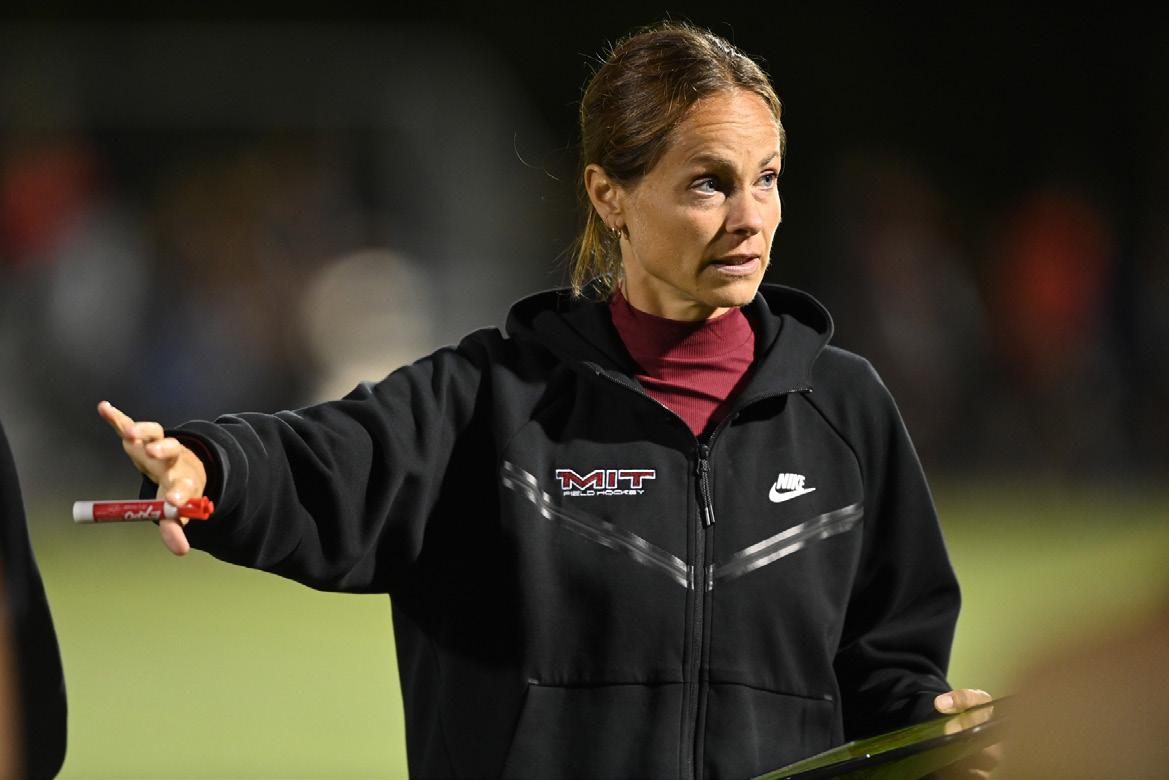
Shute coaches MIT field hockey.
COURTESY OF BU ATHLETICS
Sarah Shute shoots the ball. Shute, a former BU player and assistant coach, returns as the new head field hockey coach following the retirement of her longtime predecessor Sally Starr.
How much is your addiction worth to you? | Data Driven COLUMN
BY SARAH DATTA Senior Columnist
I love Instagram for all the wrong reasons. As much as I’d like to say I use it solely to keep up with my friends, most of my time on the app is spent scrolling through artificial intelligence-generated ASMR videos and local zoos’ posts about their new baby capybara.
Pretty much every time my time limit on Instagram pops up — which I set with such good intentions — I hit ignore.
Ask almost everyone you know and they will agree: Social media is addictive.
I’m sure there are some angels and saints our age who can resist the dopamine hits of 20-second comedy videos, but they are likely in the minority. Or, maybe I just hang out with people who are chronically online.
And now, social media giants are heading to the courtroom to atone for the allegedly addictive nature of their apps.
A 20-year-old woman known as K.G.M. is the first plaintiff. She joined social media platforms Instagram and Snapchat at nine and 11, respectively. K.G.M. alleges that this caused an addiction that led to numerous mental health concerns including body image issues and depression.
There are several lawsuits against social media companies, but a se-
ters and image editing tools on social media make it ridiculously easy to curate a version of yourself that is always prettier, thinner or whatever you want.
Do I personally believe social media is addictive? Absolutely. It has, beyond a shadow of a doubt, worsened the mental health, body image and
— spreading political misinformation, promoting disordered eating disguised as health and creating toxic content designed to harm others.
But then, of course, all that sensationalized, often clickbait-y and untrue content gets picked up by the algorithm and spread around to more people. There is incentive for people to make harmful content with hateful rhetoric because it’s circulated so much more and subsequently, creators can receive money or status off of the views.
This trial is indicative of a larger truth:
We’re liv-
ries of nine cases, starting with K.G.M.’s, will be heard as bellwether trials — that is, trials that act as test cases when there are many similar lawsuits.
If the plaintiffs win, it could mean monetary settlements and potential changes to the platforms.
Many of the cases discuss similar features of social media that make it addictive, such as automatic video playing and the omniscient, god-like algorithm that always recommends just what you want to see.
As we all know, those are just the tip of the iceberg. Beauty fil-
focus of so many people. It’s also so hard to know where the awful features of the app end and where the people who use it in problematic ways begin
ing in a world where technology dictates several aspects of our lives, and we are severely ill-equipped to handle it.
For instance, AI is literally destroying people’s lives, leading them to their deaths in the most extreme and unfortunate cases, and we can’t seem to figure out legislation or
ground rules to protect people from its harmful effects.
Furthermore, the infrastructure required to support AI chatbots is leading to an environmental strain, as data centers require huge amounts of freshwater daily to be functional.
The hidden price of hustle culture
ment, so students natu
EDITORIAL
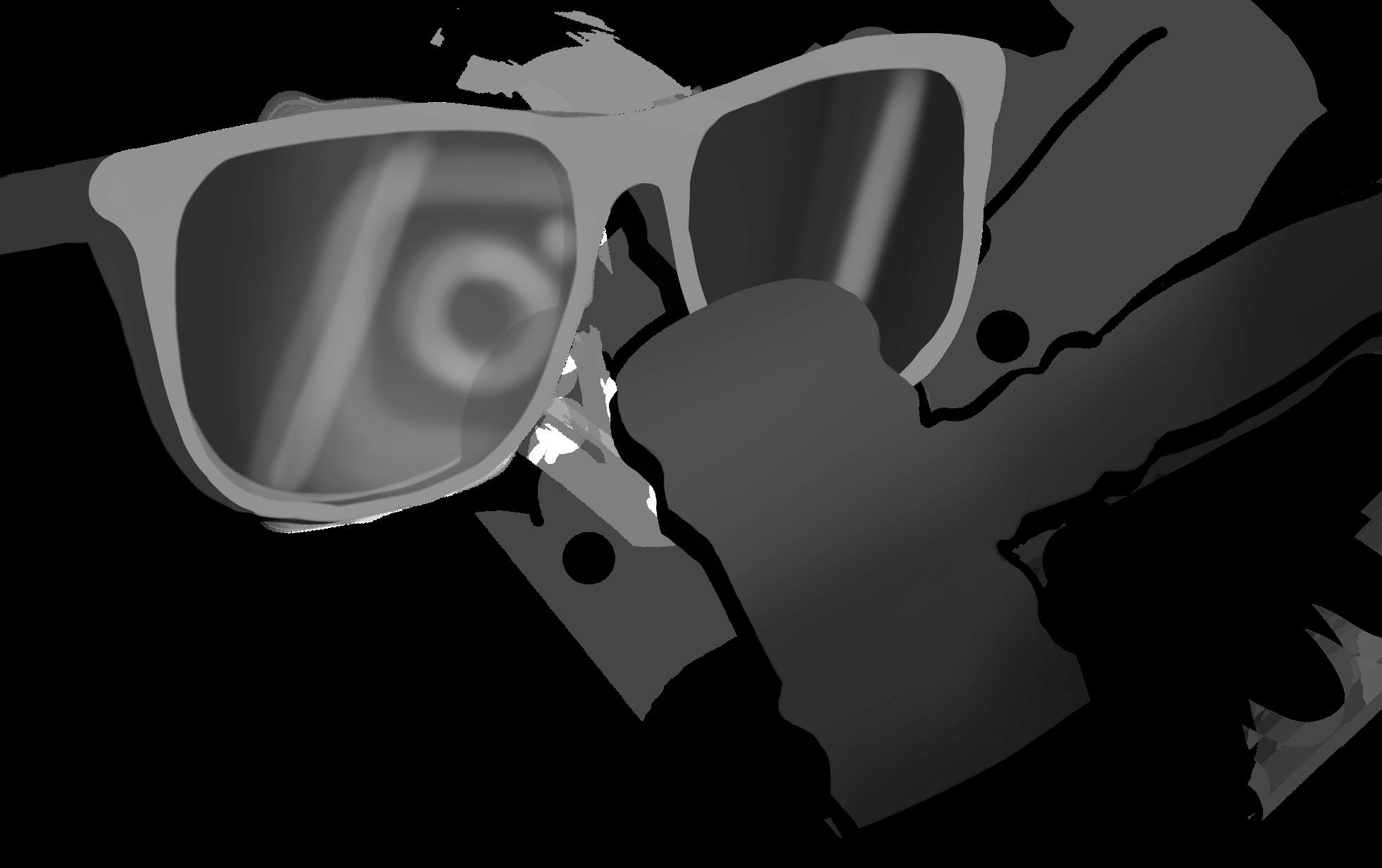
A new specter is haunting college cam puses across the United States — the fi nance bro. Upon your first interaction, he’ll likely ask for your LinkedIn. Com paring internship placements is his pre ferred method of social interaction. And his calendar is filled with coffee chats and interviews.
He seems to exist in a perpetual state of being on the grind.
But this state of existence isn’t unique to him. Elite universities, known for their admissions’ selectivity and academic rigor, are filled with students constantly working toward their next venture. Be it networking at career fairs or applying for internships the summer of freshman year, over the past few decades, college life has become synonymous with hustle culture.
Beneath the relentlessly buoyant LinkedIn posts, however, lies a darker reality: chronic burnout. Four out of five college students report this ex perience during their undergradu ate years. While, for many, living independently for the first time contributes to anxiety, burnout is consistently linked to the com pulsive need for success — espe cially when classrooms become sites for comparison rather than connection.
Highly selective colleges amplify this dynamic from the beginning. Many stu dents begin building resumes as early as ninth grade, cultivating “long-term extra curricular activities” and, in some cases, spending thousands of dollars on special ized college counselling programs.
After battling tens of thousands other applicants and miraculously securing undergraduate admission, many quickly realize the competition has only just begun. Grade deflation and “weed-out” courses further erode confidence in already high-achieving student bodies.
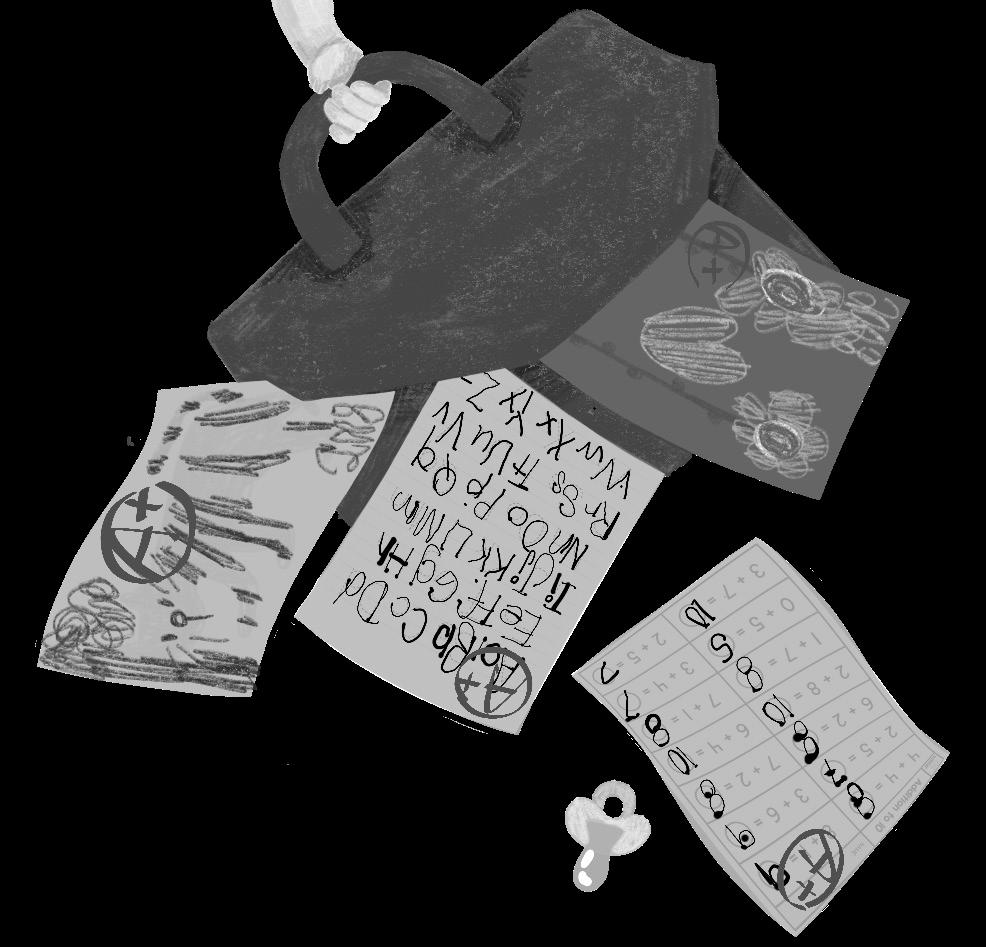
Internship timelines continue to accelerate. Students now apply in the fall of their sophomore year to secure positions for their junior summer. When the burden of workforce entry begins at 18-years-old,
For some students, this hustle is not optional. First-generation and international students often face compressed timelines shaped by financial necessity, family expectations or visa requirements such as Curricular Practical Training or Optional Practical Training. The pressure to secure sponsorships and stable income makes slowing down a high-stakes gamble.
High tuition costs compound the strain. Education is often framed as an invest-
imum productivity from every semester, regardless of the cost to their own mental state.
Taken together, these pressures lead to a central question: Is burnout a personal failure or a predictable outcome of structural instability?
Universities may not manufacture burnout deliberately, but they operate comfortably within the ecosystem that produces it. High internship and job place-
Can one person or company be held accountable for the harms of technology? Perhaps not.
That doesn’t mean we should stop fighting for better regulations in tech. Companies should still be aware of their ethical responsibilities to the world. But the addictive designs that make people turn to social media again and again, mean more money and more engagement. So hoping for moral responsibility in our capitalist, garbage dump of a society feels like an optimistic but unlikely goal.
Social media and technology sometimes feels like this ambiguously large and evil boogeyman that grew out of control. I don’t think we could have ever guessed the conse quences, and I worry that we won’t be able to control it now that it is so mainstream and infiltrated in our lives.
Maybe these trials are a step forward, though. If the plaintiffs win, it could mean some change in how social media works to make it less addictive.
The question we are forced to ask ourselves now is if we value profit over mental health — and I fear I already know the answer.
ment rates strengthen rankings, successful alumni reinforce prestige and career outcomes drive admissions marketing — especially when university status is directly linked to future career opportunities. While burnout is unfortunate for students, the culture of relentless achievement undeniably sustains institutional status.
To be clear, elite universities do offer extraordinary access that is difficult to find in other environments. Institutions like Boston University provide cutting-edge research facilities and entrepreneurial fellowships to students, along with extensive alumni networks and well-established career pipelines. The opportunities and connections are
Yet the pressures of college are only a reflection of a broader American work culture that conflates value with productivity. The job market rewards constant availability, early specialization and measurable outcomes. “Success” is often front-loaded — landing a first job, acquiring credentials and climbing the career ladder as quickly as possible.
But sustainable achievement might look different: Valuing intellectual curiosity, cultivating relationships, allowing room for reflection and recognizing that growth isn’t always linear. Learning to step back and explore ideas without immediate career payoff is a skill the modern workforce rarely emphasizes — but one that might be essential for long-term well-being.
The finance bro, after all, is not the villain of this story. He is its logical outcome — a visible embodiment of campus culture that equates constant motion with self-worth. The true spectre haunting elite universities is not ambition itself, but the fear of falling behind.
If college is meant to be a space for intellectual curiosity and personal growth, then perhaps the most radical act on campus today isn’t grinding harder, but pausing long enough to ask what we’re even racing toward — and whether that finish line justifies the cost.
This editorial was written by Opinion Co-Editor Sameeha Sood.
hustle culture
GiannaHorcher
Melissa Lemieux | GraphicsCo-Editor

THE INDEPENDENT STUDENT NEWSPAPER AT BOSTON UNIVERSITY
YEAR LVI. VOLUME B. ISSUE II. Published Friday, February 20, 2026.
The Daily Free Press is published Sunday through Thursday during the academic year, except during vacation and exam periods, by Back Bay Publishing Co., Inc., a nonprofit corporation operated by Boston University students. Copyright © 2026 Back Bay Publishing Co., Inc.
All rights reserved.
Truman Dickerson, Editor-in-Chief
Liam Dunne, Managing Co-Editor
Anjola Odukoya, Managing Co-Editor
Emma Clement, Campus Co-Editor
Jack Schwed, Campus Co-Editor
Elizabeth Mehler, City Co-Editor
Isabelle Zhang, City Co-Editor
Nicole Abrams, Investigative Editor
Toby Moses, Sports Co-Editor
Ethan Pott, Sports Co-Editor
Sophie Shatzky, Arts & Community Editor
Brian Chan, Business & Science Editor
Sameeha Sood, Opinion Co-Editor
Velana Valdez, Opinion Co-Editor
Erica Schwartz, Lifestyle Editor
Jenny Chen, Photo Co-Editor
Summer LaRose, Photo Co-Editor
Emma Jee, Master of Games
Bri Thel, Multimedia Editor
Angelina Pires, Podcast Editor
Andrew Weindling, Video Editor
Elaine Liu, Layout Co-Editor
Anna Peelen, Layout Co-Editor
Gianna Horcher, Graphics Co-Editor
Melissa Lemieux, Graphics Co-Editor

ACROSS
1. Florida spring break locale
6. Superman’s symbol
9. BU cultural club of “The Lion City,” abbr.
12. Location of some stones
13. “The Tell Tale Heart” writer Edgar
14. Appear to be
15. Trial or tribulation
16. Civil rights activist Wells
17. Cusco empire
18. Connections
19. Unreliable Warren Towers transportation
22. John Wick: Ballerina Star ___ de Armas
23. Chronic nervous system condition
24. Horror movie goals
25. “Back in my day...”
27. Overdone
28. Common mispelling of a pre-dinner drink
32. Twitter FYPs
33. Second biggest card-sending holiday
37. Detectives, for short
38. Engineering area of study
39. BU Tri Delta chapter
42. Slippery
46. Hack4Impact business partners
48. “SOH CAH TOA” math study
49. Spanish aunt
50. Shotokan ___, BU club sport
51. Lodging house
52. Clairo 2019 single
53. Lab culture jelly
54. Altman, of OpenAI
56. Pasiechnyk, for BU women’s ice hockey
58. Courteous chap
59. Draw
60. Piercing
61. NYC time zone
62. Texting format, for short
63. Parts of a min.
DOWN
1. 2006 Winter Olympics
2. South American mountain range inhabitant
3. ENG post doc programs
4. Monthly Social Security claims, abbr.
5. Pollen and nuts, for some
6. Homer’s works, i.e.
7. Dining hall beverage options
8. Walrus relatives
9. 2019 Mendes and Cabello duet
10. On the down low
11. Accumulates
12. Receipt figure
14. South Asian string instrument
20. Like some speedy cars
21. Play a part
23. Superhero accessory
26. Lad opposite
29. “___ the season”
30. College summer job title
31. Things you might catch in situationships?
33. Minecraft settlements
34. Wannabe
35. Braggadocious
36. Gov. welfare agency
37. Mailroom delivery
40. 33-Across symbol
41. Picnic pest
43. Book title formal, in an academic paper
44. Moments of silence
45. CFA student workstation
47. Midterms, e.g.
48. The T of NYT
52. Uncover
55. Biathlon skill
57. TA meeting times
It’s more than just a piercing | Thought Daughters
COLUMN
BY AVA FERRIERO DFP Writer
It was a beautiful summer day and I was bored. Like always, I craved spontaneity — I wanted to do something reckless because you only live once. What better way to do that than get my belly button pierced?
I had desired a belly button piercing for a while. I have the perfect stomach for it, and I was always jealous when I saw someone with one. I thought a simple piercing would enhance any outfit. And it is so my vibe.
Why didn’t I do it sooner? There was one thing holding me back: my mother, Stephanie.
As the oldest child, I was always taught to follow the rules and lead by example. I never wanted to push my limits because going against the expectations was a negative thing. When I fought back, it never ended well.
I am not saying this is bad. It’s just how it typically goes. The oldest daughter has to consider her little siblings because they look up to her. While there was pressure on me to be a role model, I liked it. It made me who I am, and contributed to my success. Without that pressure, I would probably be a different person. So, thanks mom and dad, I have no complaints.
But when I called up my friends and told them we were going to get piercings and did not tell my mother, it was hard.
I knew if I told her I was going to get my belly button pierced she would’ve said she doesn’t like how they look and forbid it. I also know myself — I would’ve listened and not done what I wanted to do. So I didn’t tell her at all.
I didn’t have to show her and make it a huge deal. But I wanted to.
While my parents have been pretty lenient with me, I have always held their opinions in the back of my mind. I relentlessly listened, despite my own voice wanting something else.
Yet, there comes a time when the oldest daughter finally realizes she needs to listen to her own voice.
This was that time.
My mother sees herself in me. I have always known that, and am proud of it. She is beautiful, fun and loved by so many why wouldn’t I want to be like her?
But a belly button piercing was never something she wanted for herself, and it certainly was not expected from me. To her, it is not who I am. To me, it represents someone I want to be.
To her, I was being ridiculous. But to me, this piercing was something much deeper — I did

pink gift bag, too.
Seventy dollars and a really adorable piercing later, I did it. I felt so confident and happy. After all the years of desiring a little piercing, I finally got it done. The needle didn’t even hurt!
But, I was still in pain — the anticipation of showing my mom was hurting me. So instead of approaching it gently, I had my friends record a video and I showed my mom my new glam in a parking lot outside of a froyo shop surrounded by people. She was furious.
In time, parents come around. While in the moment it is hard to see, they want what’s best for you — because they have more life experience, they assume they know what you should want and need.
I believe parents and children complement each other. While I do not share the same life experiences as my parents, I have my own. They’ve implemented their guidance and beliefs on me my whole life and I learned from their lessons. Now, as I share my experiences, if they’re open to it, they can learn something from me.
While it might seem like just a belly button piercing, it was a turning point. It was the beginning of a new relationship — a respectful, mature and understanding relationship between my I realized I needed to listen to my voice. She realized that when I do, she may not always agree. But that is okay.
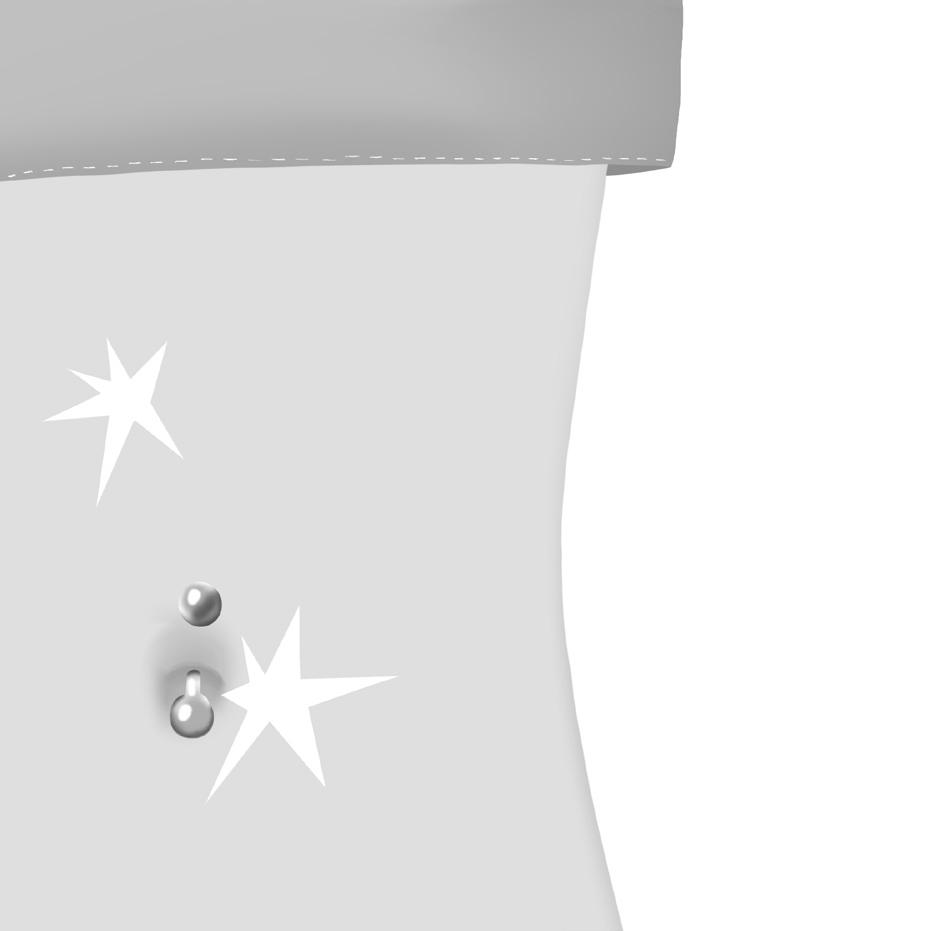
The silver ring is a reminder that it may take some disapproval to become the person you want to be. But if you look in the mirror and are proud of your reflection,
And if you give it time, disapproving voices will come around — sometimes even with a
Ask Abby (Or Analise): Bar etiquette
BY ANALISE BRUNO Senior Writer
There are really two main reasons people hit the bar: to have a good time or to find love. Sometimes it may be a little bit of both. In the age of dating apps, meeting someone in person can feel almost
— though one in 10 people in serious relationships actually met their partner online, according to the Pew Research Center.
College bars offer a more organic way to spark a connection. Flirting face-toface can feel intimidating, but there are simple ways to break the ice. However, you have to be bold enough to make that step.
tune with. Do not stand too close to the person you’re trying to talk to — it can be a little suffocating in an already claustrophobic environment. Also, unless they’re really feeling it, I would advise no touching — it can signal
“But Abby! What if I get rejected?”
Well, let’s evaluate the other side of “what-ifs” first. What if they flirt right back? What if you get their phone number or just have a really fun night? But seriously, if they

Do I think meeting one way is better than another? Certainly not. Still, I do think there is something alluring about meeting someone faceto-face. In some ways, it shows a lot of courage and true interest. Approaching someone out and about can sometimes bring you back to elementary school, when admitting you had a crush
everything around you is chaotic. Most importantly, if it seems like they’re trying to get away from you, they probably are — so take the hint and move along if things aren’t clicking. Forcing things will never end in your favor. Stop crowding together If you’re one of the people who falls in the category of “looking for love,” let me give you this hard and fast advice: stop crowding together in your own circle and only talking to your friends.
Flirting 101
I cannot say I have much experience with this one, but here’s some knowledge I’m going to bestow on you based on pure observation and copious films. If you’re unsure of how to approach someone, start with a compliment. It doesn’t have to be something sloppy like, “you’re so hot.” It could simply be “nice hair” or “love your top.” Then, ask the basics — but don’t get too in the weeds.
or casually hanging out in the back.
Social cues are also really important to notice and be in
communication — use them. If you both lock eyes, you might find it easier to make an approach.
as noisy and overstimulating as they are, will always be prime real estate for making a connection.
Melissa Lemieux | Graphics C o-Editor
Gianna Horcher | GraphicsCo-Editor
GiannaHorcher |GraphicsCo- Editor
Melissa Lemieux | Graphics Co-Editor
Files detail Epstein’s extensive connections to Boston professors
Continued from page 1
to talk to people who expressed an interest in science.”
A 2020 Goodwin Procter LLP report detailing Epstein’s relationship with MIT assessed that, following his convictions, Epstein “may have had a second motive for his donations: to launder his reputation by associating himself with reputable individuals and institutions.”
DOJ documents show Epstein’s approach to gaining access to the academic and scientific community was two-pronged: donations and personal relationships.
Epstein maintained a list of at least 27 top scientists with whom he had close personal and professional ties, the files show, including several from Harvard and MIT.
No professors mentioned in this article have been accused of criminal wrongdoing by the authorities.
Harvard University
By building close relationships with faculty and donating millions to America’s oldest university, Epstein gained access and influence on Harvard‘s campus.
Last week, Harvard announced it was expanding its ongoing investigation on University affiliates’ connection to Epstein to include donors and faculty members, following the newly released DOJ documents, according to Harvard Magazine, an independent Harvard news outlet.
University investigations into Epstein’s connections with Harvard began in November, when DOJ documents revealed extensive correspondence between Epstein and Larry Summers, a former Harvard professor and university president from 2001 to 2006.
Summers’ and Epstein’s relationship began in the early 2000s and continued just months before Epstein’s death in 2019, emails show.
Harvard English professor emerita Elisa New. Epstein also donated $110,000 to Verse Video Education, the non-profit organization funding the initiative.
Summers resigned from his teaching position at Harvard University last November, and said he was stepping back from public life.
“As I have said before, my association with Jeffrey Epstein was a major error of judgment,” Summers wrote in a statement to the Crimson.
Epstein also formed a close relationship with mathematics and biology professor Martin Nowak, who is included in Epstein’s list of scientists.
Nowak facilitated meetings for Epstein with academics he expressed interest in connecting with at Harvard’s Program for Evolutionary Dynamics offices, which are run by Nowak, a 2020 Harvard report found.
Between 1998 and 2008, the report found, Epstein donated $6.5 million to PED. His donation enabled Nowak to create a separate research facility for PED in Harvard Square. Epstein was given keycard and passcode access to PED offices, as well as his own office space, according to the report.
Harvard Physics Professor Lisa Randall, another scientist on Epstein’s list, maintained close contact with Epstein for years, riding on his private plane and visiting his island in 2014, according to DOJ documents.
In a statement to the Crimson, Randall wrote “Epstein was often in touch with the scientific community,” and wrote that she attended a 2006 gravity conference at St. Thomas, sponsored by Epstein.
“I am appalled by the full extent of allegations against him and deeply regret maintaining contact,” Randall wrote.
Outside of Cambridge, Epstein held a close relationship with Lawrence Krauss, a theoretical
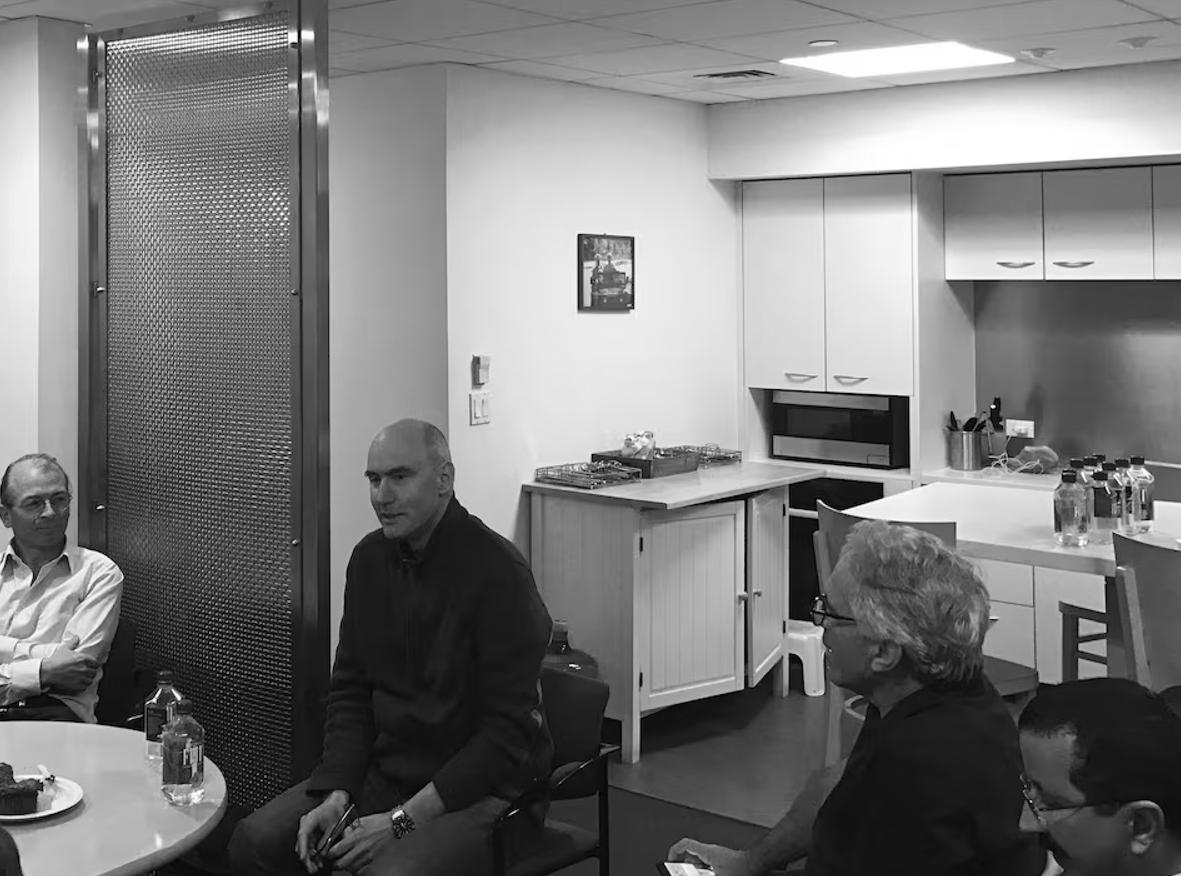
In one 2018 email exchange, Summers sought advice from Epstein on courting a woman he described as a mentee, while he was a professor at Harvard. In response, Epstein described himself as Summers’ “wing man.”
Summers also flew on Epstein’s private plane to visit his private Caribbean island used for sextrafficking operations on his 2005 honeymoon, while serving as Harvard President, according to The Harvard Crimson.
Epstein was appointed as a Visiting Fellow in Harvard’s psychology department in 2005 by Psychology Department Chair Stephen Kosslyn, whom Epstein donated $200,000 to between 1998 and 2002, despite lacking “academic qualifications Visiting Fellows typically possess,” according to a 2020 Harvard report.
The DOJ documents show Epstein planned to donate $500,000 to Poetry in America, a digital initiative led by Summers’ wife,
weekend at an ‘unconference’ called SciFoo,” DiChristina wrote to Epstein in 2014. “Lawrence thought everyone was a snob, and he might tell you that if you ask him sometime.”
Krauss said in 2019 that Epstein “was fascinated by science,” and together they attended scientific meetings and salons, according to the New York Times.
BU Adjunct Physics Professor Alex Sushkov was scheduled to attend one of Krauss’ workshops in 2013, when he was a research scientist at Harvard University, according to DOJ documents.

In a 2017 email he sent to another staff member who was concerned about Epstein being on campus, Ito wrote, “we should treat Jeffrey with respect.”
In December 2013, Epstein’s assistant emailed Krauss asking for a bio on Sushkov, at Epstein’s request.
“Hi Lawrence...Jeffrey would like me to print out Bio’s for the scientists attending your workshop,” the assistant wrote to Krauss. “i cant find much of a bio on Alex Sushkov...might you have something?”
The Daily Free Press was unable to determine Epstein’s relation to Krauss’s workshop. Sushkov did not respond to multiple requests for comment.
Massachusetts Institute of Technology
Goodwin Procter’s report concerning Jeffrey Epstein’s interactions with MIT found Epstein’s generous donations were motivated by a desire to improve his reputation.
Between 2012 and 2017, Epstein donated a total of $225,000 to Seth Lloyd, an MIT professor of mechanical engineering, who was among Epstein’s list of scientists.
Lloyd met Epstein in 2004 and remained in close contact with him after his 2008 conviction, visiting both his Florida office and private island, according to the report.
The unsolicited 2012 donations to Lloyd were used by Epstein to determine whether MIT would accept his money despite his convictions, according to the report.
“I’m going to give you two 50k tranches to see if the line jingles,” Epstein wrote in an email to Lloyd, regarding the 2012 donations.
Lloyd was placed on administrative leave in 2020 after acknowledging he failed to inform MIT the donations were from Epstein.
physicist and cosmologist who was also among Epstein’s list of top scientists.
DOJ documents show Krauss went to Epstein in 2017 for advice on how to address his sexual misconduct charge, which ultimately resulted in his retirement as a professor at Arizona State University.
Krauss’s science outreach organization, the Origins Project, received $250,000 in funding from Epstein before Krauss was removed in 2018.
In turn, Krauss connected Epstein to a network of high-profile scientists and academics over the years.
Krauss was serving on the board of Scientific American in 2014, when he gave DiChristina’s email to Epstein after he “expressed interest” in the publication. In DiChristina’s correspondence with Epstein, she references Krauss as a mutual friend.
“BTW, I saw Lawrence this
Epstein also had close personal ties with Noam Chomsky, a highprofile MIT linguistics professor, who praised Epstein for “extensive knowledge, penetrating insights, and thoughtful appraisals,” in an undated letter released by the DOJ.
Chomsky also gave Epstein advice on “the horrible way [he was] being treated in the press and public,” in a 2019 email.
In addition to individual professors, Epstein contributed greatly to the MIT Media Lab, a research laboratory within the School of Architecture and Planning, donating $525,000 after his convictions, according to the report.
Epstein’s attempt at restoring his reputation and establishing himself as a man of science through generous donations seemed effective, as MIT Media Lab director Joi Ito “cultivated” him as a donor despite knowledge of his 2008 convictions, the report said.
Ito described Epstein as “very smart and interesting and excited about our work,” in a 2013 email to Media Lab staff who raised concerns about Epstein, according to the report.
Ito resigned as director of the Media Lab and as an MIT professor in 2019, after his efforts to hide his financial connections to Epstein were revealed.
The MIT Media Lab used the funding provided by Epstein in 2013 and 2014 to support the work of Joscha Bach, a prominent cognitive scientist and artificial intelligence researcher who was hired “in large part because Epstein subsidized the cost,” according to the 2020 report.
Bach received nearly $1 million from Epstein. In addition to financing his research, Epstein paid for Bach’s flights, rent and children’s private school tuition.
In May 2017, Bach, Chomsky, BU Neuroscience Professor Stephen Grossberg and other brain scientists spoke and held workshops at ASU’s “The Science of Consciousness” 2017 conference.
Epstein discussed the ASU conference in 2017 email correspondence with author Deepak Chopra, according to DOJ documents.
“i will see you there,” Epstein wrote to Chopra. “chomsky should be fun.”
Epstein anonymously donated $50,000 to the 2017 conference through his foundation, Gratitude America, Ltd., though there is no record of his attendance.
A month after the 2017 conference, in an email to Epstein, Bach asked whether he ever spoke with Grossberg.
“Unrelated: did you ever talk to Stephen Grossberg? Sadly he is old now, [but] he has an excellent mind, delightful and curious,” Bach wrote to Epstein. “You might enjoy [him] (he is at Boston University).”
Grossberg did not respond to multiple requests for comment.
In 2019, ASU officials said the school was unaware of Epstein’s involvement with the conference. However, DOJ files revealed ASU professor and conference organizer Stuart Hameroff was aware of Epstein’s contribution.
The 2026 ASU conference has been cancelled, according to the program website.
“This was necessary due to several speakers and organizers including myself being mentioned in the Epstein files,” Hameroff wrote on X Feb. 6.
COM profs weigh in on dean
Continued from page 2 transparency’s sake the information had been made available to all COM faculty and staff, not just those who were present.
know what issues they’re focused on, what recent press has been circulated about them.”
Despite the relevance to all COM faculty and staff, COM professor A said there was relatively little talk about the article among staff in the immediate week after it was published.
“Nobody, except for maybe one, two people have mentioned it,” COM professor A said. “I feel like people are just walking around like, ‘Should we mention it? Should we not mention it?’ but I did mention it in my classes, and the students are concerned.”
COM professor E wrote they too had noticed students talking about DiChristina’s correspondence.
“I’d note the resonance of this story among students,” COM professor E wrote. “It was a topic of discussion in many classrooms last week. It was even fodder for loud taunts from the [Boston College] student section during the Beanpot Championship at the TD Garden.”
Despite the publicity surrounding it, COM professor B maintained that a public statement from DiChristina is unnecessary.
“I understand that there is confusion, and when there’s confusion, there is apprehension and fear,” COM professor B said. “I understand exactly why some of my peers feel that way. I also understand the reality of the situation being that a public statement at this point would not benefit anyone.”
COM professor F said they were not present at the Feb.12 meeting where DiChristina briefly addressed the article. They said they wished for
Of the seven professors The Daily Free Press spoke with, only two were present for any portion of DiChristina’s comments on the matter during the meeting.
COM professor A characterized the atmosphere in COM as “unsettling” because they do not know what the Dean’s office plans to do and how it may affect professors.
“I mean, is she going to have to resign? Take a leave of absence? We have no idea,” COM professor A said.
DiChristina has not been accused by the authorities of criminal wrongdoing.
COM professor F said the faculty whom they had spoken with about the article shared their concerns.
“I think that all of us, those who I’ve spoken to, agree that we need to not jump to any conclusions, but that clarity and transparency is really important,” COM professor F said. “I think that people find it very concerning, and they just want to be filled in on all of the pertinent details.”
COM professor F said if there is nothing “suspect” or “weird” about the situation, then DiChristina has “no reason to be anything other than clear” to faculty and staff about what happened.
“It’s very important that the administration goes above and beyond to be fully transparent because the reputation of the college and the University hangs in the balance,” COM professor F said.
COURTESY OF HOUSE OVERSIGHT COMMITTEE
MIT Linguistics professor and BU guest lecturer Noam Chomsky talks with Jeffrey Epstein.
COURTESY OF HOUSE OVERSIGHT COMMITTEE
Harvard University professor of Mathematics and Biology Martin Nowak sits at the edge of a table among a group including Jeffrey Epstein.