Haley Lopez Business Manager business@gobeach.media
Annette Quijada news@lbcurrent.com
Delfino Camacho arts@lbcurrent.com
Leyna Vu opinions@lbcurrent.com
Timothy Hessen sports@lbcurrent.com
Rebecca Lavond design@lbcurrent.com
Angela Osorio copy@lbcurrent.com
Charlotte LoCicero photo@lbcurrent.com
Erinna Lam socials@lbcurrent.com
Skylar Stock video@lbcurrent.com
Gianna Echeverria podcast@lbcurrent.com
From a game we played as kids to navigating the real world as college students, financial literacy is as important as ever.
Letter from the editor
DIEGO PEREZ/Long Beach Current
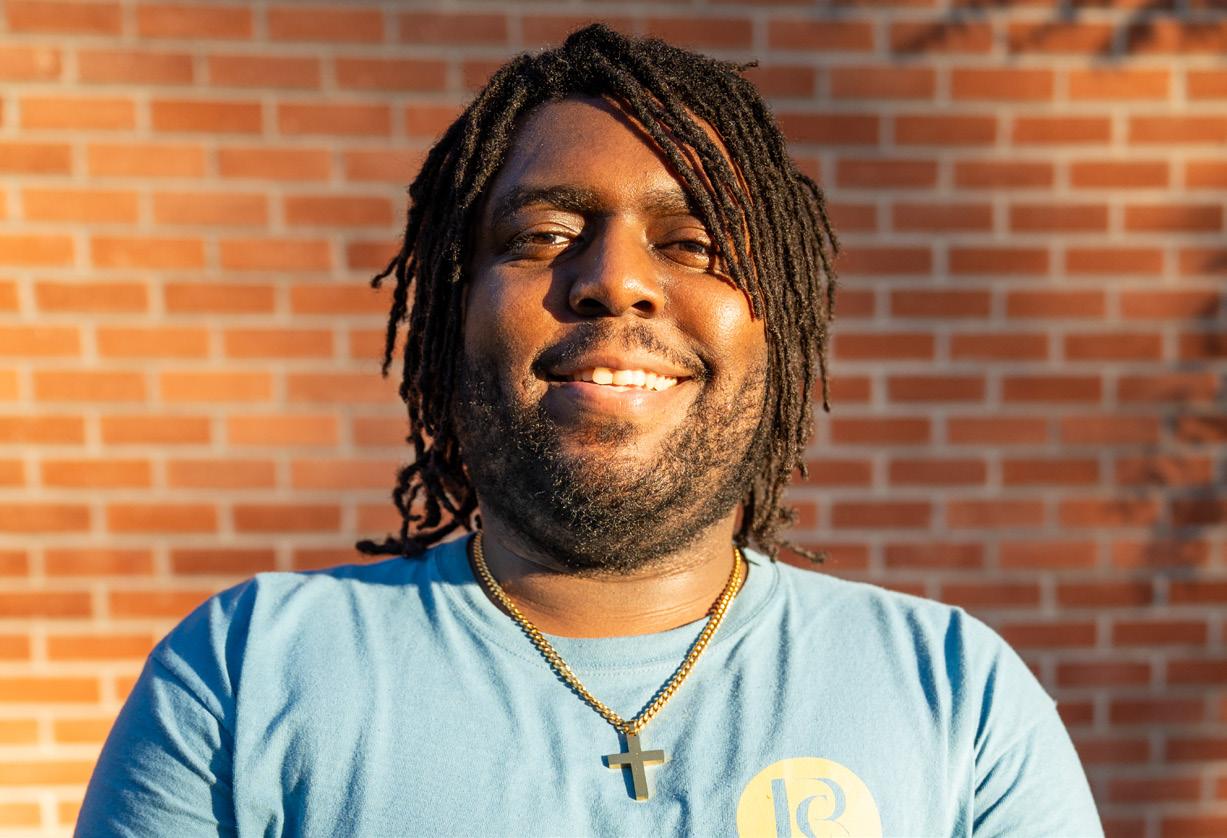
Fourth-year journalism major and Long Beach Current editor-in-chief Khoury Williams prepares for production outside the Current’s newsroom as staff members return from winter break on Jan. 16.
Two years ago, when I transferred to Long Beach State, I showed up with a giant hole in my pocket. No matter how much money I earned, it never seemed to stick around— each new paycheck disappeared almost as soon as I got it. By the time finals rolled around, I was struggling to afford basic necessities, such as food, a stress no student should have to face while studying for exams.
Taking a personal finance class the following semester completely shifted the way I think about money. For the first time in my life, I learned how to make long-term, informed
financial decisions that helped my money stretch and even grow from paycheck to paycheck. That transformation brought something I hadn’t had before with my finances: a peace of mind. While I was lucky enough to enroll in that class, students at CSULB don’t need to wait for a course to start learning about personal finance. Our campus offers a variety of tools, including the CSULB Financial Wellness Center, free financial literacy workshops and more. This issue focuses on financial literacy and can serve as a guide for students to formulate their own thoughts on the featured financial resources and tips, many of which
land acknowlEdgmEnt
are available here on campus at no additional cost.
Inside this issue of the Current, you’ll find stories about easing the financial burden of being a student, credit card trends to avoid, meals under $15, free streaming services, film students having to adapt to a changing industry and more.
Financial literacy isn’t just about avoiding stress; it’s about empowering each other to build a foundation for long-term success. I hope that by sharing my story and highlighting these resources, we can all feel inspired to learn, grow and make more well-informed financial choices together.
Here at the Long Beach Current we acknowledge that the school we report on is located on the sacred site of Puvungna, “the gathering place.” We are on the land of the Tongva/ Gabrieleño and the Acjachemen/Juaneño Nations who have lived and continue to live here.
We also acknowledge the Gabrieleño/Tongva (pronounced: GABRIEL-EN-YO/TONG – VAH) and Acjachemen/Juaneño (pronounced: AH-HACH-AH-MEN/JUAN-EN-YO) as the traditional custodians of the Los Angeles region along with the Chumash (pronounced: CHOO-MOSH) to the north and west, and the Tataviam (pronounced: TAH-TAH-VEE-YUM) and Cahuilla (pronounced: KAH-WEE-YAH) Nations to the east.
We respect and value the many ways the Tongva/Acjachemen cultural heritage and beliefs continue to have significance to the living people and remind us about the sacred and spiritual relationship that has always existed here at what we now call California State University Long Beach.
Editorials: All opinions expressed in the columns, letters and cartoons in the issue are those of the writers or artists. The opinons of the Long Beach Current are expressed only in unsigned editorials and do not necessarily reflect the opinions of the journalism department or the views of all staff members. All such editorials are written by the editorial board of the Long Beach Current.
lEttEr Policy: All letters and emails must bear the phone number of the writer and must be no more than 300 words. The Long Beach Current reserves the right to edit letters for publication in regard to space.
How Basic Needs eases the burden of rising student costs
BY NASAI RIVAS News Assistant
The cost of living is steadily increasing for students at Long Beach State and beyond, as the U.S. faces an affordability crisis with higher housing, food and personal expenses.
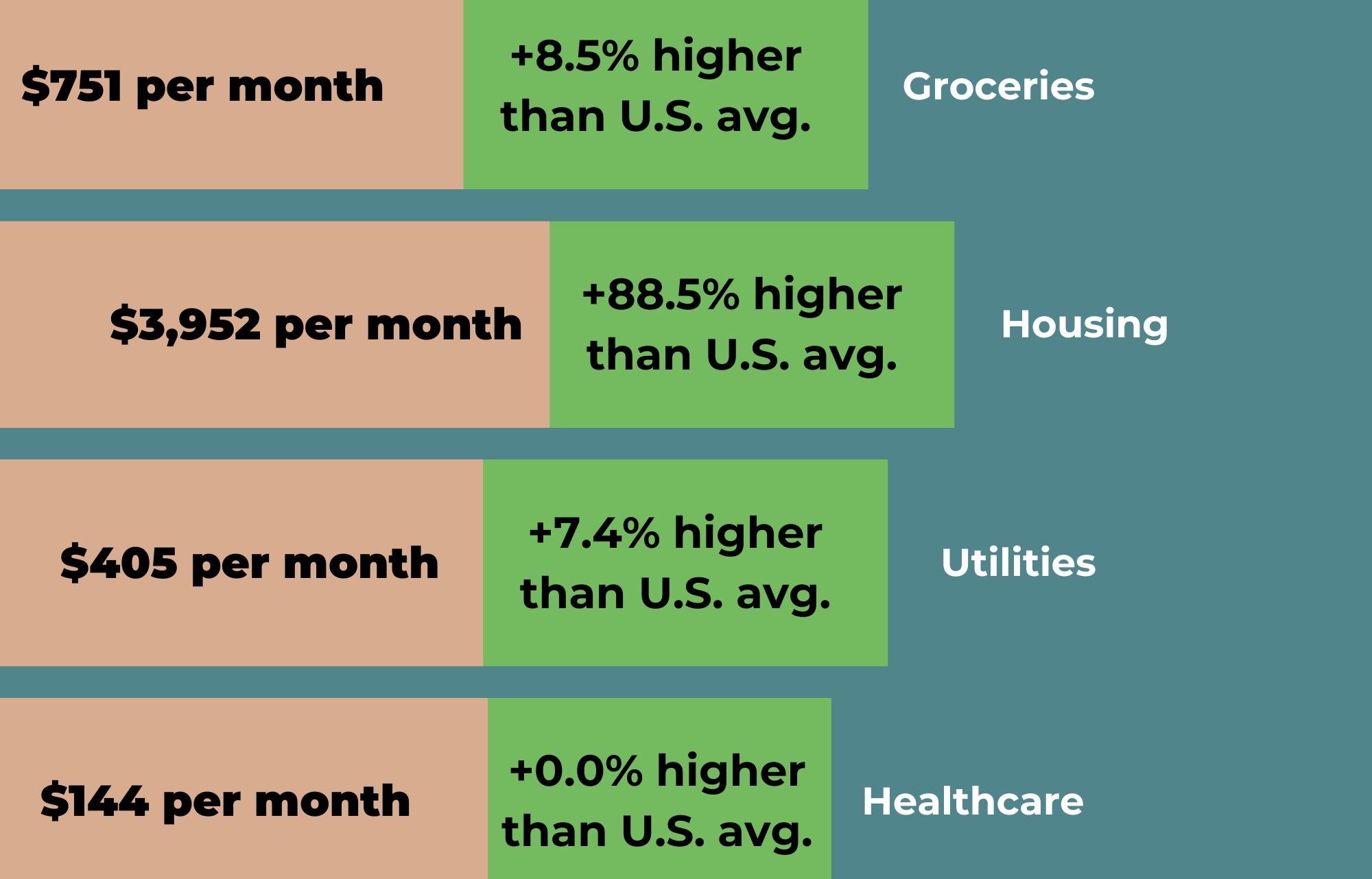
This comes as the cost of living in Long Beach ranks 49.8% higher than the national average, according to a report by apartments.com.
According to a 2024-25 Student Expenses and Resources survey by the CSU Aid Commission, total expenses for California college students have risen by 4% for students living with parents, 18% for students living on campus and 8% for students living off campus during the 2024-25 school year.
In addition, CSU tuition costs have increased by 6% since 2024 and will continue to increase through the end of the 2028-29 school year. This is part of the California State University Board of Trustees’ payment plan to fix budget shortfalls.
Alongside higher tuition, students are facing steep housing costs. The average rent for a Long Beach studio apartment is $1,475 a month, while the average for a one-bedroom apartment is $1,810.
The cost of living off campus is beyond higher education’s control, however, said director of the Basic Needs Program, Danielle Muñoz.
Located in Peterson Hall, Room 127, Basic Needs aims to assist students with food, housing, budgeting and unexpected emergencies.
Muñoz said Basic Needs works in a three-tier framework by helping students one-on-one, connecting them to existing resources and advocating for broader economic change by sharing collected data and students’ testimonials
with elected state and federal officials.
“We’re seeing a lot of food and housing costs rise quicker than wages,” Muñoz said. “So folks are working, and they’re just wondering, ‘Why can’t I make ends meet?’ And I first like to tell everyone, it’s not your fault. It’s not anything you’re doing wrong.”
Housing resources
To help students with rising housing costs, Basic Needs offers emergency housing, grants to avoid eviction and to pay for housing costs and rapid rehousing for students who suddenly lose their homes or live in unsafe environments.
Students like Alexandra Martinez, 24, a second-year graduate student in the Counseling Psychology program, said there is less financial support for graduate students at CSULB than for undergraduates.
“I think that adds an extra layer of financial burdens on me, and the way that I’m seeing its effects is … rent increases almost every year,” Martinez said.
Although she receives some university loans, Martinez balances her budget by managing her rising rent, food, utilities and other necessities as a student.
Martinez is employed as a Graduate Student Lead at Basic Needs as part of her paid practicum internship.
Since she started at CSULB in fall
2024, Martinez said Basic Needs has helped her with basic expenses like groceries and transportation, and she is happy to use her position to help other students who are struggling.
“I think so far, at least with the students that I’ve met so far, they’ve been very grateful that there is support like this on campus,” Martinez said.
Food assistance
Muñoz said the best place to get free food on campus is the Lauren Chalmers ‘83 Beach Pantry.
The pantry is located in the Student Health Services building, Room 115-A, and is open Monday to Friday from 10 a.m. to 5 p.m.
Students and their families can also get help buying groceries through CalFresh, the USDA-funded Supplemental Nutrition Assistance Program, or SNAP, in California.
Students can apply through CSULB’s website and may be eligible for up to $292 per month in grocery assistance.
For student parents, Muñoz said they can also use the California Work Opportunity and Responsibility to Kids program. Muñoz said CalWORKs provides students with minor children child care, transportation, grocery, housing and mental health benefits.
Budgeting help
Muñoz said Basic Needs can help teach students how to budget their finances in person or online with Basic Needs Staff.
Students can use the CSULB Virtual Financial Wellness Center, a resource with tips to improve their finances and access the Financial Literacy 101 course, which is free for life. The course offers advice on budgeting, student loans, credit and other financial decisions.
Martinez said Basic Needs is impactful in helping students access important necessities.
“Take advantage of the resources and services that’s already available to you,” Martinez said. “Some of the programs will only be available for you because you are a student. After you leave college [and] university life, a lot of these services are just not accessible.”
Muñoz advises students to use any free resource available to them, including Basic Needs.
“We have something for everyone, whether you’re not in a crisis, but you’re caught up in the crosshairs of this economic hardship we are in, and you want someone to sit with you and get power over your budget,” Muñoz said. “Or you are in a crisis and you’ve used all your money, [and] you don’t have anything left, we can help on both ends.”
Graphic by DANTE ESTRADA/ Long Beach Current Apartments.com cost of living in Long Beach. Information based on the Cost of Living Index by the Council for Community and Economic Research.
CSULB officials weigh in on $365M funding increase for CSU
BY JAYDEN SANDSTROM News Assistant
On Jan. 9, 2026, Gov. Gavin Newsom released his proposed 2026-27 state budget. This includes a 5% increase in California State University’s funding, as promised under the state’s multi-year higher education funding compact.
Last year’s budget cycle opened with Newsom proposing an 8% cut to CSU funding, before the revised budget reduced it to 3%.
In the same proposal, portions of previously promised university funding were pushed into future fiscal years, with the payments being deferred to 2026-27 and 2028-29.
Long Beach State’s Associate Vice President of Budgeting and Administration Kara Perkins oversees the university’s operating budget.
The operating budget outlines the university’s major revenue sources and expenses, and shows how funding is allocated across campus divisions. Funds are distributed across Academic Affairs,
Student Affairs, Administration and Finance, University Relations and Advancement, Information Technology, Department of Athletics and the President’s office.
CSULB’s operating budget revenue is currently 53% state funding, so changes in state support can have a major impact on the university’s finances.
Perkins said the 3% cut affected the university, but because it was relatively small compared to CSULB’s overall budget, the campus was able to absorb it and wasn’t forced to cut any of the divisions’ budgets.
CSULB also received additional enrollment-growth funding after money was reallocated from other CSU campuses that did not meet enrollment targets, helping offset the loss.
The CSU Board of Trustees’ plan, approved in 2023 to raise systemwide tuition 6% each year for five years, also helped mitigate the costs.
While the CSU system is slated to receive about $365 million in additional state funding under Gov. Newsom’s
proposed budget, how much of that money CSULB would receive remains unclear; the Chancellor’s Office has not announced how the funding will be distributed across the system’s 23 campuses, Perkins said.
While the state is increasing funding for the CSU system this year, Perkins said this might not necessarily be a net positive.
“When the state cut the entire CSU budget last year by approximately $143.8 million, they then offered it to us in the form of a loan that we would have to pay back…We still have to pay that back to the state, and so even as we get new money, we still owe them $143.8 million,” Perkins said.
Vice Provost for Academic Planning Dhushy Sathianathan oversees academic and strategic planning, faculty planning and financial planning tied to the Academic Affairs budget.
Sathianathan said about 70% of the division’s budget goes to faculty salaries, with the rest allocated to colleges and units that support Academic Affairs, in-
cluding the University Library, Academic Technology Services and other academic support programs.
According to Sathianathan, the state has been financially challenged, but CSULB is able to manage it because it can match enrollment to the budget, which helps fulfill the student body’s course needs.
“Our priority is that all of our students have sufficient classes. This campus has done extraordinarily well in making sure course availability is there,” Sathianathan said.
Sathiananthan emphasized that CSULB overall does a great job at managing its resources to support student success, and that most of its student success metrics place the univeristy in the top three CSUs.
Student success not being financially supported for a long period of time can create fluctuations in course availability, leading to classes becoming unavailable.
“I think that we have really been able to sustain the momentum of student success,” Sathianathan said.
Graphic by DANTE ESTRADA/Long Beach Current State budget shifts leave the CSU with an increase in fundings, although it is still uncertain how the funds will be distributed across the CSU campuses.
The growing crisis of student credit card debt
BY JAYDEN SANDSTROM News Assistant
U.S. credit card balances reached $1.23 trillion in the third quarter of 2025, according to the Federal Reserve Bank of New York, up $20 billion from the $1.21 trillion reported in Q2 2025.
In May 2024, the Federal Reserve Bank of New York reported that Generation Z borrowers had a higher share of their credit cards highly utilized than other generations. Compared with 12.3% of millennials—the second-highest rate—15.1% of Gen Z borrowers were maxed out.
Heather Summers, chief marketing officer at LBS Financial, oversees the credit union’s marketing and business development teams as well as its government relations and data analytics.
LBS Financial Credit Union is a community credit union that serves people
on and off campus. It operates a branch at Long Beach State’s Beach Shops on the second floor of the University Bookstore, where students can open accounts and use an ATM for deposits and withdrawals.
LBS Financial offers loans and credit cards, along with online and mobile banking services for everyday account access. LBS Financial also runs a scholarship program that eligible students can apply for.
Additionally, the Beach Shops branch also offers 0% technology loans to CSULB students, faculty and staff.
Summers said she has noticed students opening credit accounts earlier than they used to, attributing the shift to earlier access to money, with cash becoming less common.
Summers said students most often come into LBS with questions about how to build credit.
starter products to get students in the door and help them establish a track record, and students really just want to get their foot in the door, too, so they can take out an auto loan with low interest rates or even a home loan,” Summers said.
While many students may be eager to build credit, the national average FICO credit score fell to 715 in April 2025, which is a point drop from January and a two-point drop from April 2024, according to FICO.
FICO attributed the decline largely to federal student loan delinquencies, which were again reported on credit files as of February 2025.
A survey conducted by the California Student Aid Commission in the 20182019 academic year reported that 60% of college students have at least one credit card.
Among students with a credit card,
costs, and 70% reported they couldn’t afford those expenses otherwise.
“The biggest mistake students make is overextending themselves using credit cards to live beyond your means, and not paying back your credit cards at the end of the month,” Summers said.
She added that some students are drawn to rewards cards without fully weighing the bigger picture, including interest rates, fees and whether they can realistically pay the balance in full.
Summers also said she has seen an increase in credit-related scams targeting students, including check-cashing schemes.
In those cases, she said, students are told to deposit a check and return a portion of the money, only to learn later that the check was fraudulent, leaving them responsible to pay the full amount.
Summers encourages students to ask questions about these topics to make
ARTS & LIFE
Skip the subscription: 3 free streaming options for students
BY KHOURY WILLIAMS AND DANTE ESTRADA Editor-in-Cheif and Mutimedia Managing Editor
When Netflix first introduced original programming to its platform in 2012, the price for a basic subscription was as little as $8 a month, while the high-definition subscription was $10— positioning the service as a cheaper alternative to cable.
Today, while the standard price re-
mains the same, it now comes with ads. Without ads, subscription prices range from $18 to $25 per month, more than triple the cost of the standard option.
As Netflix moves forward with its planned acquisition of Warner Bros. Discovery, financial concerns have arisen regarding the platform’s potential marketplace dominance and continued price hikes for consumers.
Streaming services are now approaching the prices of most premium cable packages, blurring the lines between the value propositions of both cable and streaming choices in today’s entertainment marketplace.
To help students find fun entertainment without adding to their financial strain, the Long Beach Current’s staff rounded up three free streaming options to enjoy at no cost.
Tubi
Founded in San Francisco by tech entrepreneurs Thomas Ahn Hicks and Farhad Massoudi, the streaming platform exploded in popularity during the pandemic era in 2020 when it was sold to Fox Corporation.
Tubi’s service is entirely free, with no paid options. All the service asks for is
a stable internet connection and a free Tubi account to enjoy a library of over 275,000 film and television options, including over 300 Tubi-produced originals.
Tubi is allowed to offer its services free thanks to advertising, but the platform boasts that it shows fewer ads per hour than is common with traditional broadcast and cable TV.
What makes Tubi unique compared to its more costly streaming and cable counterparts is that it focuses on providing viewers with more nostalgic and independent content rather than newer, high-budget releases. Tubi is much more comparable to Hulu, but offered for free.
Swank
A free service that CSULB students have easy access to is Swank, containing an enormous library of films to stream online. The service is accessible by using your student email. Popular films like “2001: A Space Odyssey” and “La La Land” are featured on the site.
Films as early as the 1930s, such as “All Quiet on the Western Front,” are available; the cutoff for newest releases is 2023. Though the glamorous summer blockbuster “Barbie” is not available to
BY DELFINO CAMACHO Arts and Life Editor
I’ve always loved the capital “A” Arts.
Growing up, I was a voracious consumer of just about anything I could get my hands on – books, comics, TV, movies, music. As an Arts and Life editor, it should come as no surprise that I find joy in discussing art, its implications and the grander topics art can spark.
Lately media literacy has been on my mind.
Put simply: media literacy rates are down, especially among high school and college students.
A Media Literacy Now national survey found that only 38% of respondents reported being taught how to analyze media messages in high school – whether in advertising, television, or news — and how those messages can shape people’s beliefs or actions.
Some might ask: what’s the problem? Isn’t entertainment supposed to be fun?
Sure. But that’s also how we end up with people confidently telling guitarist Tom Morello to stop raging against the machine.
Art and popular media should be fun.
But when we lose the ability to look past the surface – whether in classic literature or even in the pulpiest or trashiest media – we end up with a less curious, less informed public. Media literacy isn’t
stream, other 2023 titles, including the Oscar-winning “Oppenheimer” and epic thriller “Killers of the Flower Moon” are both featured.
Swank includes subcategories to browse, such as a history section and a film study section featuring classic films, such as “12 Angry Men” and “American Psycho.”
Kanopy
A service that is always available in every academic library, Kanopy, notably includes numerous films, documentaries, and international films. Similar to Swank, the site requires that you use your student email to log in to access the service.
While the CSULB site offers a vast catalog of documentaries there are many films available to watch, including “Memento” and “Midsommar.”
The international film selection, while small, is worth checking out, featuring popular films such as “Oldboy” and “The Battle of Algiers.”
The documentaries presented showcase a variety of topics, from education to featuring diversity in filmmaking; there are plenty of options for those wanting to see through an objective lens.
about finding the “correct” interpretation. It’s about asking basic questions: Who made this? Why? What’s the context?
Without getting too serious (this isn’t that kind of column) a population that can’t break down media or consider intent with context becomes easier to mislead. The more shallow our engagement, the easier it is for misinformation and propaganda to pass as truth.
That’s the bad news.
The good news is that people want to engage. The same survey found that 84% of respondents support increasing media literacy in education, along with broader critical thinking instruction. The interest is there.
The even better news? The fix is fun and easy.
Consume more art.
College used to be seen as the time when students experimented – with ideas, perspectives and forms of expression they’d never considered before. Many of those ideas live inside art. Sometimes they are the point.
Now’s the time. Read the weird book. Watch that indie movie. Go to a museum. See a play. Engage with media that does not align or possibly even clashes with established views.
It’s a big, strange, exciting world of art out there. Let's go exploring.
Graphic by DANTE ESTRADA/Long Beach Current
Discounted $25 student Carpenter Center tickets rollover through 2026 season
BY DELFINO CAMACHO Arts Life Editor
Anew year brings a new lineup to the Carpenter Performing Arts Center with shows featuring jazz royalty, yacht rock gods, a famous flamenco guitarist and a Broadway star.
While ticket prices typically vary, donations have allowed the center to continue its discounted $25 student ticket rate for the spring semester.
Students can activate the discount by using the promo code HOTTIX when purchasing tickets online, and are encouraged to use their CSULB email. Students must present their campus ID at the door.
1) Yacht Rock Gold Experience with Special Guest Elliot Lurie
Sunday, Jan. 25 at 3 p.m.
Tickets: $58.75 | Student discount: $25
Birthed in the late ‘70s but named in 2005, the genre now dubbed “yacht rock” refers to specific types of rock songs that are light, melodic and smooth.
Featuring four lead singers accompanied by a band, Yacht Rock Gold Experience covers songs from yacht rock legends like The Doobie Brothers, Fleetwood Mac and Steely Dan, among others.
The show features famed Looking Glass frontman Elliot Lurie as a special guest with Lurie performing “Brandy (You're a Fine Girl)” from 1972.
“I think this music genre crosses generations,” said Franz Neumann, Carpenter Center communications and content specialist. “For existing fans to get all those classic songs all in one place is great. If you haven't really delved into this genre, it's the perfect concert to enjoy and get a selection.”
2) "Miles Electric Band" Celebrating the Miles Davis Centennial
Friday, Jan. 30 at 8 p.m.
Tickets: $38.75 to $58.75 | Student discount: $25
Born in 1926, the musical pioneer Miles Davis who is frequently named the most influential jazz musician of his time,
Elliot Lurie, lead singer for the 1970s band Looking Glass will serve as a special guest during the Jan. 25 Yacht Rock Gold Experience cover concert featuring covers like Lurie’s own “Brandy (You’re a fine Girl).”
is celebrating his centennial this year.
To commemorate the jazz man's 100 years, the Miles Electric Band, a collection of musicians featuring former Davis accompanists and contemporary masters, will take the Carpenter stage to perform a curated catalog of classic tunes by and inspired by Davis.
Created and led by Davis’s nephew Vince Wilburn Jr., an award-winning drummer and producer who played with Davis from 1980 to 1986, the ensemble features a who’s who of jazz stars like trumpeter Keyon Harrold who did the
trumpet recording for the 2015 biopic “Miles Ahead.”
“[The show] kicks off Black History Month, so we have $10 off tickets for the general public and faculty and staff,” Neumann said. “But of course, the student discount applies.”
Jazz fans who miss this might be left feeling “Kind of Blue.”
3) Charo
Saturday, Jan. 31 at 8 p.m.
Tickets: $43.75 to $63.75 | Student discount: $25
Few artists reach the level where they are recognized by a single name.
While perhaps not as synonymous as other single name contemporaries like Cher or Madonna, musician, dancer and all-around pop culture queen Charo will take over the Carpenter Center with her signature “Chuchi Chuchi!” cry for a night full of flamenco.
Originally from Spain, the musician first gained fame as a renowned teenage flamenco guitarist in the late 1960s. She would twice earn the title of Best Flamenco Guitarist from Guitar Magazine.
Perhaps best known today for her slew of appearances in a wide variety of movies, TV and reality shows including “The Simpsons,” “RuPaul's Drag Race” and “Dancing with the Stars,” Charo continues releasing music and performing internationally.
“Her persona that she puts on is super bubbly, and the show will be her comedy, dance and music and all that, but it's also her playing flamenco guitar,” Neumann said.
4) Mandy Patinkin in Concert: Being Alive with Adam Ben-David on piano
Saturday, Feb. 7 at 8 p.m.
Tickets: $68.75 to $78.75 | Student discount: $25
Stage legend Mandy Patinkin, who has won several awards including Tony awards, Golden Globes and Emmys in his over 25-year career, will perform the only Carpenter Center show next month.
Patinkin will perform a slew of fan-favorite American showtunes by composers like Stephen Sondheim and Harry Chapin including “Staying Alive,” which also serves as the namesake of the show and “Children Will Listen” among others.
“He's this big Broadway, TV, movie star; he's had a lot of relevance recently,” Neumann said. “He has a social media presence with his wife talking about politics and about the state of affairs of the world.”
Patinkin will be joined by pianist Adam Ben-David, whose stage credits include “Wicked” and the “Book of Mormon.”
Courtesy of Carpenter Center
ARTS & LIFE
Once upon a time Hollywood was hiring, now students are adapting
BY ANGELINA FRATIANNI AND ISABELLA SIQUEIRA Contributors
Hollywood.
It’s where movie stars live, where the Oscars are held, where big franchises premiere and where one of the world’s most famous signs greets visitors.
But for millions of bright-eyed filmmakers, Hollywood is where they partake in the biggest competition of their lives: getting a job.
For those in the entertainment industry, the Hollywood sign symbolizes success. Only those who land traditional movie careers get the privilege of seeing that sign on their daily commutes to famous studio lots like Universal and Warner Bros.
While these old studio names are recognizable, they are not typically where recent film graduates find work and reliable income.
According to Long Beach State faculty and students, it is commercials, vertical shorts and other non-traditional gigs found via networking and job site searches that are becoming the norm as reliable work for the current generation
of filmmakers.
“The people who make it are the people who don’t drop out; it’s a game of attrition,” Joyce Liu-Countryman, cinematic arts instructor at CSULB, said.
Hollywood has always been a challenging place to find a career, but it has become even harder today due to financial changes, such as Netflix’s current bid to purchase Warner Bros.
A May 2025 report by the Milken Institute focusing on California’s entertainment industry stability found that following the COVID-19 pandemic, “numerous out-of-state locations aggressively increased film incentives.” The institute found that entertainment jobs are leaving for New York, Australia, Canada and the United Kingdom.
As a result, national entertainment employment fell by 13.8% between 2019 and 2024. In California, employment fell by 15% during the same period.
These realities will not allow most CSULB graduates to stay on The Beach and remain within an hour’s drive to Hollywood; they will have to find work elsewhere.
Noah Varela, a recent CSULB alumnus with a bachelor’s degree in film/cinema/video studies, works as a production and crew freelancer in Orange and
and Los Angeles counties.
Varela recently worked on a vertical set, helping to set design a sorority house.
Vertical sets refer to media produced in the 9:16 aspect ratio of smartphones. Originally a freelance gig, he was invited back to work two days in a row.
“They’re like Disney Channel movies,” Varela said. “Most of the people just go on because of the money.”
The past couple of months have been slow for Varela; he stays connected with friends who work on creative film projects to avoid what he calls the “doomer mindset.”
“We’re not fully set up to be in this industry as we thought we would be,” Varela said. “Everyone was grasping at straws when we graduated.”
While he recalls a few takeaways from his undergraduate years, Varela said one of his favorite lecturers, Neil Corbin, helped prepare him for the real world.
“He really pushed us to do and write anything we wanted,” Varela said.“There are no set boundaries with scriptwriting. He went against everything that was being taught to us.”
Corbin focused on teaching students what he said is an overlooked skill needed to become employable: having a point
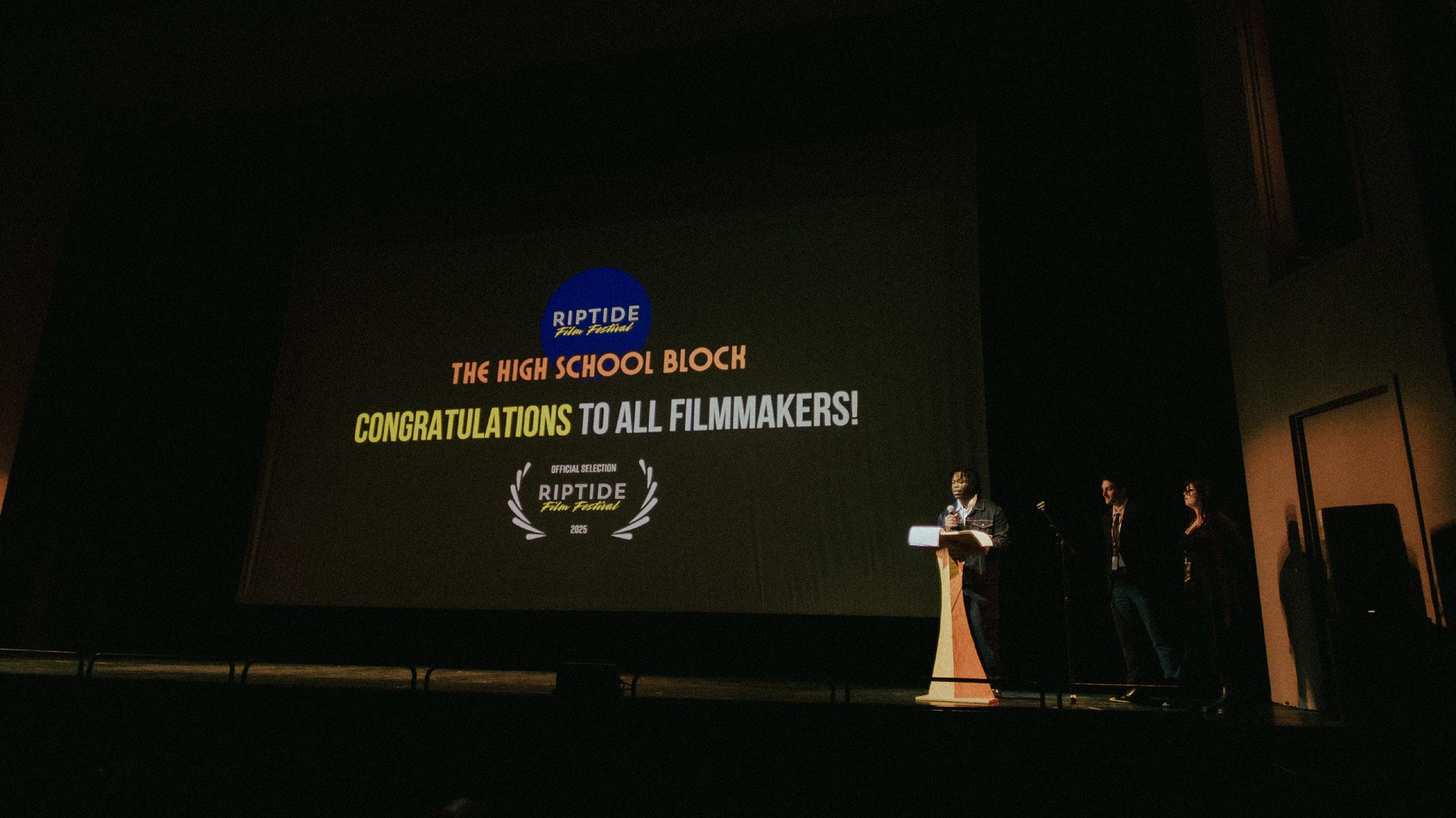
Top left: Isaak K. Nsuangani and a filmmaking friend check camera settings while preparing for a film shoot. Above: who graduated from CSULB with a bachelor’s degree in film screenwriting a creative writing minor and who started his own production company, also hosted a High School and Indie film festival in Collaboration with Riptide Films in August 2025. The event took place at Torrance Cultural Art Center’s Armstrong Theatre. Bottom left: A candid shot of Nsuangani along with a crew filming an indoor scene during a film project.
of view.
“If my students can show they have a strong point of view, people will always be interested in bringing them on,” Corbin said.
Corbin urged students to “find jobs to blow it off.” He recommended bartending, as students can have a flexible schedule while making a stable income.
“I just tell them to be realistic,” Corbin said.
While Varela followed his former professor’s advice, he also actively pitched jobs he was interested in and found social media to be a helpful resource.
“Sometimes you just have to swipe up on someone’s Instagram to land a gig,” Varela said.
Varela said this was the main way he has been able to land opportunities in the industry.
However, there are also other platforms for finding cinema arts job openings, including Backstage.com, a film industry-specific job listings forum.
While socials provide graduates easy access to job openings, they can only do so much, said CSULB cinematic arts alumnus Issak Nsuangani.
Nsuangani runs his own company, Aureate Productions, where he builds relationships with local businesses for
commercial work and content strategy in his hometown of Sacramento.
“It is important to be a part of the circles where people are doing things you want to do,” Nsuangani said. “[Aureate Productions] just gave me an outlet where I wasn’t just focused on school projects; I started to think about what I could do outside the classroom.”
CSULB professor and producer Joyce Liu-Countryman consistently applies her real-world professional insights to her curriculum for upper-class students.
Rather than focusing solely on filmmaking, she emphasizes “soft skills,” playing to students’ individual strengths and developing them as people, not just filmmakers.
For Liu-Countryman, networking is the key to landing work in film.
“You can get the basics in class, but you’re gonna figure out along the way what kind of filmmaker you want to be,” Liu-Countryman said.
It is vital to her that students understand the importance of kindness on a set. In her experience as a producer, she has learned that kindness goes a long way, from creating a comfortable set to making career strides.
“In the industry, at the end of the day, people hire you again, ’cause they
like you,” Liu-Countryman said. “You have to be likable and warm.”
For fourth-year cinematic arts student Michelle Gonzalez Aguirre, finding freelance opportunities has helped build her portfolio and set her up for success post-grad.
“What motivates me is being able to tell stories of voices that are not heard or stories that need to be shared,” Gonzalez said.
As part of the cinematography track, her primary goal is to become a director of photography and to contribute to meaningful, inclusive films. Before that, Gonzalez plans to work as a camera technician and freelance to get her foot in the door.
While she mentioned some of her professors have not been as eager to guide students into the realities of the current industry, Gonzalez also said a handful of professors have served as mentors and given her the confidence to pursue the career that inspires her, despite the industry’s competitiveness and saturation.
“If for some reason something doesn’t work, I’m going to pivot to do something that does work,” Gonzalez said. “I’ll figure it out.”
Photos courtesy of Isaak K. Nsuangani
OPINIONS
Craving cheap eats? Try these 4 meals under $15
BY VALENTINA VILLARREAL Social Media Assistant
Many fast food chains are beginning to notice that food affordability is becoming more challenging with consistent spikes in the cost of living. Their response?
To make value meals that become hits among cost-effective consumers.
In today’s economy, the prices of dinners and quick meals rapidly rise to become unaffordable and unattainable.
USA Today’s Gabe Hauari notes that inflation has affected Chipotle’s menu, leading to a 2% increase. Many individuals who relied on fast food for its affordability are no longer able to count on their beloved options.
With inflation driving up the cost of warm, fast meals, one question remains: which meals are filling yet affordable for under $15?
Olive Garden’s kids meal
Although marketed toward kids, this meal has portions equally filling for adults.
Ranging from $8 to $12 after tax, there are numerous options for Olive Garden Kids Meals, regardless of whether a person craves pasta or pizza. Each meal is paired with one side, a kids’ drink and two breadsticks.
For pasta lovers, there are three kinds of pasta shapes to choose from, including fettuccine, small shells and spaghetti, in addition to a separate ravioli kids’ entree.
Apart from these shapes, consumers can choose from four sauces to pair with their desired pasta shape: marinara, Alfredo, meat sauce and five-cheese marinara.
The consumer’s choice of a side of fruit, broccoli or french fries is then added to the cart, along with a drink. Additionally, with these pasta dishes, you can add your choice of protein and still keep the meal under $12.
Denny’s Slammin’ Meal Deals
DANTE ESTRADA/Long Beach Current
When in need of a quick bite, these reasonably priced fast food and diner meals are the perfect option for a sustainable budget.
Denny’s recently launched its Slammin’ Meal Deals, starting at $5.99, offering affordable eats.
With all meals under $10 before tax, this value menu offers a variety of options, ranging from breakfast plates to burgers and fries. Each meal is not only economically efficient but also extremely delicious.
If you’re in the mood for an all-inclusive American breakfast, order the Super Slam. The meal comes with two eggs in any style, pancakes, hashbrowns, two sausage links and two bacon strips.
If closer to dinner time, consider the chicken tenders and fries combo, which includes five chicken strips.
An additional bonus is that most Denny’s chains are open 24/7, serving
budget-friendly bites at any time of the day.
Wingstop’s Boneless Meal Deal
In a group and willing to split?
Wingstop’s Boneless Meal Deal can feed two to three people for $18.99 before tax. Although this offer is over $15, it’s more of a meal to share with others, making the split price under $10 per person.
This meal includes 20 boneless wings in any four flavors, a large side of the customer’s choice between fries, celery, carrots or corn and two dipping sauces.
With this deal, customers can mix and match their preferences among flavors, sides and dipping sauces.
Chili’s affordable meal hacks
Apart from the Triple Dipper, Chili’s has customers raving over its “3 for Me” deal, which includes one entree, a drink and a choice of a small appetizer. These “3 for Me” deals start at $10.99.
Depending on which quick meal a person may be in the mood for, Chili’s has a variety of entrees to choose from, besides the two additions that come with its meals. Options range from various burgers and sandwiches to chicken tenders.
Lastly, if a customer signs up for Chili’s free rewards program, they can add a free chips and salsa appetizer to any entree, including a kids’ meal. When determining what to eat with $15 to spend, consider these options for their variety and affordable prices.
Observing historic writing through an economic lens
BY LEYNA VU Opinions Editor
Transcription refers to the act of typing out historical records for the sake of preservation, which some people do as a hobby. It is deeply arduous yet meaningful work, but upon doing further research on the activity, I found that I was simply not built for it.
While work from the 19th and 20th centuries parallels today’s style, writing from centuries prior can be difficult to ascertain. In addition to the lack of standardized spelling in the U.S. before 1870, the mere act of writing was expensive and required cost-cutting where applicable.
Before learning about transcription, I was familiar with the history of writing and its relationship with the economy. The tradition of writing is complex
and gives rise to nuance, irrespective of which time period you look at, but I am partial to the shift in writing utensils from the Late Tang to Song Dynasties.
Often, the right pen needs to be paired with the right surface.
During the Late Tang Dynasty, economical writers used chicken feet brushes with hemp paper. While soft brushes were in circulation during this time, they were seen as a luxury and therefore not apt for everyday use. Soft brushes usually bled through the cheap hemp paper, making this pairing an unfortunate mismatch.
Yet, soft brushes were viewed as customary during the Song Dynasty and paired well with sturdy bamboo paper, a combination unique to the era as papermaking improved.
Similar to how the equipment had evolved over time, handwriting fol-
lowed suit. The lack of standardized penmanship and spelling conventions in 18th century America were the result of non-compulsory education. Because most of the population could not write, establishing a universal script was viewed as unnecessary.
While people wrote differently from one another, some trends can be seen across documents. For example, abbreviations and contractions were used to save space, as paper was a costly commodity. Interestingly, superscripts were common, with wch meaning “which” and wth meaning “with.”
The high cost of paper also gave rise to a unique writing style that resembled crosshatching. Upon exhausting the space on one sheet, writers would turn the page 90 degrees and continue.
Cross-writing was not only a clever trick to save space but provides insight
into the nature of correspondence from the 18th and 19th centuries. Before the advent of the telegraph, mail took days, sometimes weeks, to arrive, hence the volume of information stored per page.
Once writing became a general practice, it was used not just in office settings, but in everyday life.
While I can appreciate the history of writing across time and space, I cannot decipher it to save my life. As digital mediums become mainstays in communication, the sheer effort posed by our ancestors in recording and disseminating information fascinates me.
Born from a desire to form connections in spite of economic and geographic constraints, innovations in the medium and style of writing lend credence to the wit and will of previous generations. Despite this, their correspondence is impossible to read to the untrained eye.
Federally Insured by NCUA
The D.I.R.T.B.A.G. identity: What to expect in 2026
BY XAVIER CONSTANTINO
Sports Assistant
The 2025 season marked the start of a new era for the Long Beach State Dirtbags with the arrival of the ninth head coach in program history, TJ Bruce.
Though the team finished with a 2231 record and went 15-15 in conference play, Bruce viewed these struggles as part of the adjustment that comes with change.
“It was our first time as a staff, trying to create a different culture and trying to add our spin on Dirtbag baseball, and these players adding their own spin the same way,” Bruce said. “I think that going into this year, we are way farther along.”
Since the conclusion of last season, the program has undergone some notable changes.
In the offseason, the team welcomed three new assistant coaches to work alongside Bruce, with Dirtbag alumni Jon Strauss, Abe Alvarez and Jeff Tagliaferri all returning to Long Beach State.
“You have to really embrace and understand the Dirtbag style of play, and these guys embody it,” Bruce said. “I am so fortunate, and these players and the program are so fortunate to have the coaches and the staff that we have surrounding us.”
Like many other programs across the country, the Dirtbags also experienced some roster movement through the transfer portal, with eight players announcing their intent to transfer following the 2025 season.
Among those eight players, LBSU saw two of last year’s top-performing players, starting pitcher Kellan Montgomery and shortstop Armando Briseno, head to rival Big West programs.
Montgomery returned to his hometown team at UC Santa Barbara, while Briseno transferred to Cal State Fullerton.
Now in 2026, half the roster is back, but youth defines this squad.
The Dirtbags roster includes eight freshmen and two redshirt freshmen, all preparing to pursue Bruce’s goals of unity, competitiveness and steady improvement.
Among the newcomers is freshman pitcher Jaxon Baker, who joined the Dirtbags this season after graduating from Paloma Valley High School in 2025. Baker was ranked the No. 4 left-handed pitcher in California by Perfect Game and ranked No. 49th in prospect in the country.
Despite the shift in chemistry, the team sees an opportunity to spotlight its depth and resilience.
The young and retooled squad’s first opportunity to prove themselves will be at the start of the 2026 season on Feb. 13, when the Dirtbags welcome the San Jose State Spartans to a three-game series.
LBSU’s senior infielder Dylan Lina had a fantastic start to the 2025 season, his first year with the Dirtbags since transferring from Golden West College.
The Carson native batted .286/.407/.571 before he sustained a season-ending injury in late March last year.
Despite the setback, Lina is excited to return healthy for the 2026 season.
“I was really focused on coming back, keeping my mental good and keeping sure that everyone’s good on the team,”
Lina said. “I want to win. We want to win.”
Fans can expect the Bohl Diamond at Blair Field to be busy this spring.
This season’s schedule has the Dirtbags at home for 32 games, up from just 26 last season. Having home-field advantage matters, especially when the Dirtbags average nearly 2,000 fans per game.
“We’re blessed to have 30-plus home games this year,” Lina said. “I love playing, love protecting the crib; whoever comes here, it’s going to be fun regardless.”
As for expectations, Bruce did not offer any. Instead, he emphasized the importance of the team rallying together and taking the upcoming season one game at a time.
“We have a standard, and that’s the Dirtbag acronym: Discipline, Integrity, Responding, Toughness, Brotherhood, Accountability, Grit and Selfless,” Bruce said. “If we can represent those things in our daily life, then the expectations, results and the outcomes will take care of themselves.”
Catching the wave: Top LBSU star athletes to watch this semester
BY TIMOTHY HESSEN Sports Editor
Welcome to the second semester of the Long Beach Current’s weekly sports column, “Catching the Wave!” The arrival of the new year brings a bevy of exciting storylines to the world of Long Beach State sports.
The Beach’s national championship-winning men’s volleyball program looks to defend its title in 2026, women’s beach volleyball hopes to reach the NCAA Championships for a fourth consecutive year and women’s water polo seeks to avenge its heartbreaking loss in the Big West Championship final one season ago.
This week’s column takes a deeper look at the top must-see athletes in LBSU athletics this spring.
Skyler Varga, men’s volleyball
A 2025 AVCA First Team All-American, senior opposite and outside hitter Skyler Varga broke out as a
genuine star in his junior season.
The Saskatchewan native led LBSU in kills with 270 on a .368 attack percentage, as The Beach went on to capture their fourth national title in program history.
After coming up just short to UCLA in the NCAA Championship final in his first season with The Beach, Varga got his revenge in a championship rematch with the Bruins in 2025 and was named to the NCAA All-Tournament Team.
Now in his final year at LBSU, under new head coach Nick MacRae, following the retirement of fourtime NCAA Champion Alan Knipe, Varga looks to have his best season yet in pursuit of a repeat title.
Elisa Portillo, women’s water polo
Hailing from Madrid, Spain, Elisa Portillo arrived at The Beach as an international student in 2023 and immediately established herself as a leader of the program.
In 2025, the star attacker led the team in assists and finished second with 67 goals, earning First Team
All-Big West and Association of Collegiate Water Polo Coaches Second Team All-American honors.
Now heading into her senior season and already sitting at fifth all-time in goals in program history, Portillo hopes to lead The Beach to a Big West title after losing in the championship final the past two seasons.
Malia Gementera and Taylor Hagenah, beach volleyball
While a plethora of athletes are etching their names into LBSU record books, only the senior duo of Malia Gementera and Taylor Hagenah can say they’ve already reached the apex of success in the history of their program.
The two roommates and best friends made history in 2025, reaching 95 career wins, the most in program history for any pair.
With an entire season left to add to their legacies, the pair will look to advance past the first round of the NCAA Championships this year for the first time in their careers.
A fourth swing at success: Long Beach’s new pro baseball team looks to circumvent past pitfalls
BY TIMOTHY HESSEN AND BRUCE KUNTZ
Sports Editor and Contributor
Professional baseball in Long Beach has a history littered with failure.
Three teams – the Long Beach Barracuda, Breakers and Armada – have previously come and gone in short order.
The people behind the Long Beach Coast, a new team coming to Blair Field this spring, are confident their story will be different.
“The organization behind this has more experience than other organizations who have tried to bring baseball to Long Beach before,” Coast owner Paul Freedman said. “The league is better than any other league that’s brought baseball here and Long Beach is in a different moment.”
Freedman and the rest of the ownership group were well aware of Long Beach’s checkered history with professional baseball teams when they committed to making their own run at it. Blair Field has seen three previous franchises come through; they all folded in five years or less.
The first franchise was created in 1995, competing in the Western Baseball League under three names in its twoyear lifespan. The Barracuda, the Franchise and the Riptide – however you choose to refer to them – were so tight on funds that they had to play games in LBSU Dirtbags practice jerseys at one point.
They were replaced by the Long Beach Breakers in 2001, who attempted to compete in the same league and experienced a similarly quick demise. After only two seasons, the Western Baseball League was struggling, and the Breakers were no more.
The Long Beach Armada was the
most recent and most successful of the three Long Beach professional baseball ventures. Established in 2005, they lasted through 2009, but still did not reach the level of popularity required to last.
“As has been the case with minor league baseball around here, it’s hard to draw,” former Long Beach Press-Telegram writer Henry Saltzgaver said. “The Armada had pretty good teams a couple times, and yet, if they had 300 or 400 people at a regular season game, that was not a bad crowd for them.”
Saltzgaver added that he doubts the ability of a team to stay afloat in close proximity with the Los Angeles Dodgers and L.A. Angels.
“It’s really hard here in Southern California trying to say that you’re relevant when 30 miles away you’ve got two major league baseball teams,” Saltzgaver said. “As opposed to Rancho Cucamonga, for example, if you have to drive 90 miles to go to a major league game, you might consider a minor league game as a good alternative.”
Freedman is undaunted. He is the founder and CEO of the Oakland Ballers, who have stepped into the professional baseball void in Oakland after the Athletics’ departure.
The Ballers won the Pioneer League Championship Series earlier this year and have drawn enough fans for success, despite the larger presence of the San Francisco Giants in the Bay Area.
Freedman is now using his experience in Oakland to try to succeed where other Long Beach professional baseball teams failed. He said Long Beach has already engaged with the new club more than Oakland did before the launch of the Ballers.
“The reason these teams work is because you have the opportunity to break down walls between players and fans and make the community much more part of the experience than you could ever do in Major League Baseball,” Freedman said. “We have to live by those values and we’ve
demonstrated that so far.”
The Long Beach Coast’s first promotional campaign in September opened up fan submissions and a vote to decide what name the team would compete under.
After over 4,000 votes, the competition was narrowed down to three finalists: the Coast, the Parrots and the Regulators.
The Coast was selected as the primary name, while the Regulators will be the team’s “alter ego” that they will play as once a week.
Additionally, the Coast hired a manager who is familiar to many Southern California baseball fans: Troy Percival, the former Anaheim Angels pitcher who closed out their 2002 World Series title on the mound.
Percival managed the Idaho Falls Chukars, another Pioneer League team, to the Pioneer League Championship Series this year before they fell to Oakland. Freedman views Percival’s notoriety as a statement that this is the best level of baseball Long Beach has ever had.
“The Pioneer League had really quality baseball last year,” Percival said. “Once MLB cut their rosters down, the majority of those players came to us. I would say this level is closer to Double-A than Single-A.”
The Pioneer League has improved in its level of play and popularity in recent years. Since becoming an MLB Partner League in 2021, it has brought new rules onto the field to test them for MLB and create a unique product for fans to enjoy.
Home run derbies to decide tie games after nine innings and a fully-automated strike zone are among the rule changes the Pioneer League has recently tested.
“I was totally against [the home run derby rule] to start with, and then I was like, ‘my God,’ I love it when you win, you hate it when you lose, but your whole team is out on the field engaged and the fans are engaged,” Percival said. “It’s kind of cool to be on the bottom floor of the [rule changes].”
The Coast has also built a ground-level relationship with Long Beach State to
set up its presence at Blair Field.
Alongside a lack of attendance, the Armada was forced to shut down partially due to a dispute with the city over its rights to Blair Field. Saltzgaver described the city pulling the Armada’s permit to give LBSU full control over Blair Field’s operations as an effort to cut costs coming out of the Great Recession.
“The university wants more resources to be able to improve Blair, and our relationship provides that,” Freedman said. “The city wants this ballpark that has such a great history to be able to get more investment, and everybody wants more baseball.”
It remains to be seen whether the Coast will become the professional baseball team to finally last in Long Beach, but they have a strong plan and are committed to put it into action.
“What’s most important for us is that fans leave with a smile on their face,” Freedman said. “It won’t be perfect, but we’re going to set a very high bar on the experience that fans have when they come to a game.”
Left: Local baseball talent try out for the Long Beach Baseball Club on Thursday, Dec. 4 at the St. Anthony High School Athletic Complex. Above: Troy Percival, a World Series champion pitcher with the Anaheim Angels in 2002, will lead the Long Beach Baseball Club into its first season as the team’s manager. Below: Jerome Williams (left), a former Major League Baseball pitcher and assistant coach for the Long Beach Baseball Club, works with players at the team's local tryouts on Dec. 4.
DANTE ESTRADA/Long Beach Current
SPORTS
DIEGO PEREZ/Long Beach Current
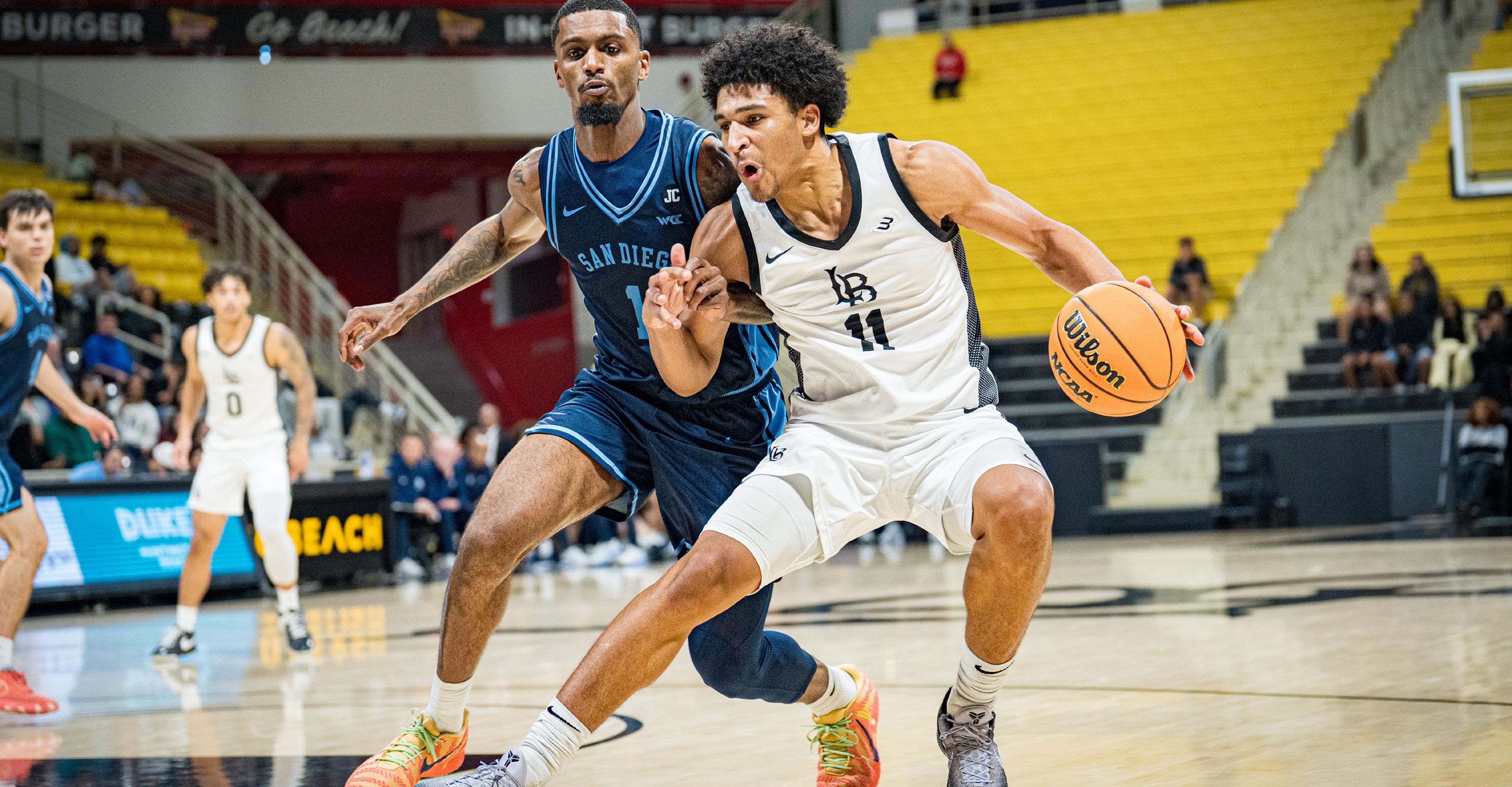
LBSU freshman guard Gavin Sykes steps back on a drive to the paint during his 30-point career night on Nov. 30 against the University of San Diego at the Pyramid.
The ‘silent scorer’ of LBSU men's basketball
BY JUNIOR CONTRERAS Sports Assistant
Calm, cool and collected, Long Beach State men’s basketball freshman guard Gavin Sykes is quietly establishing himself as one of the top freshman scorers in the country.
Averaging 18.9 points per game, Sykes leads all freshmen in the Big West in scoring and sits third among all scorers in the conference.
Sykes’s work ethic is what has contributed to his early success at The Beach.
“I’m here every day, I put in work every night, I just trust the work with a lot of people around me, especially my coaches, helping me and giving me the right things to do, to work on a bunch of game scenarios every night,” Sykes said.
At the beginning of the season, Sykes set a goal for himself: to work without regrets. Through his efforts, he believes he has achieved that goal and attributes it to his success.
LBSU head coach Chris Acker praised Sykes for his work ethic and focus, calling him a “worker.”
“I think the most impressive thing about [Sykes] is, you know what you’re gonna get every single day, never too high, never too low, just pretty steady,” Acker said. “I think for a young guy, it’s hard to be that way in college basketball, because there’s so many distractions and so many things going on.”
Being a true freshman, Sykes has already had many memorable games, such as scoring 20 or more points in more than half of his games this season, with a buzzer-beater three on Dec. 4 to force overtime against UC Santa Barbara.
Above it all, one game has taken the cake for him early into his collegiate career.
“The University of San Diego game, not just because I scored a lot of points, just because it felt so good just to get a win, like in college basketball,” Sykes said. “It’s very hard to win, and all the guys are super excited, and it was a tight game, and we pulled through…it felt like
everything we do has really paid off.”
The Sacramento native was the first LBSU freshman since Lucious Harris in 1990 to score 30 points in a game, leading The Beach to a victory over San Diego on Nov. 30, ending a 21-game losing streak against Division I opponents at the time.
Sykes wants to become a vocal leader for the team and he understands the importance of his role, but it is his teammates who have continued to build him up.
“I would say the team has really just helped me become who I am,” Sykes said. “Obviously, it’s tough every day. All these games, I’m learning new things, new experiences, and just talking to them and them helping me get through it, and talking to the coaches every day and breaking down film has really just helped me a lot and to study the game.”
Although Sykes is the leading scorer most nights, if you were to scan the court, you would not think so by his demeanor.
The freshman guard may be the calmest and quietest on the court, some-
times letting out a rare scream or clapping with emotion.
Who Sykes models his game after truly reflects who he resembles on the court: Phoenix Suns all-star guard Devin Booker.
“He’s very calm and poised on the floor and I just really like [Booker], so that’s who I study,” Sykes said.
The three-star recruit puts the team’s goal of winning the Big West before any personal goals.
“Obviously, team goals first, we want to win the Big West,” Sykes said. “In personal goals, I just want to hopefully be Big West Freshman of the Year, and hopefully that will contribute to us winning a lot more games.”
Leading the team in scoring, Sykes doesn’t want anyone to “sleep” on the team because he believes they are a good team that is figuring it out and “are about to start winning a lot more games.”
The Beach (8-11) are currently on a three-game win streak as they are now tied for third in conference standings.