RITUAL & RENEWAL
MODERN JAPANESE TEA CADDIES AND INCENSE IMPLEMENTS
Dai Ichi Arts, Ltd is a fine art gallery exclusively dedicated to celebrating modern and contemporary works of ceramic art from Japan
Since our inception in 1989, we have focused on placing important Japanese ceramics at the center of New York's contemporary art scene. The gallery has introduced pieces to the permanent collections of several major museums, including The Metropolitan Museum of Art, The Art Institute of Chicago, the Minneapolis Institute of Art, the Indianapolis Museum of Art, the Princeton University Art Museum, and many more
We are committed to providing authoritative expertise to collectors, liaising with artists, and showcasing inspiring exhibitions and artworks We welcome you to contact us for more information
Ritual and Renewal: Modern Japanese ceramic tea caddies and incense implements
Exhibition catalog | Online from: November 20 – December 19, 2025
Gallery open by appointment only
18 East 64th Street, Ste. 1F
New York, NY, 10065, USA
www daiichiarts com

K O R O & K O G O
I N C E N S E I M P L E M E N T S
Kōdō ⾹道, often translated as “The way of fragrance,” is known as one of three classical Japanese arts of refinement for the Japanese tea ceremony (sadō) and the art of flower arrangement (kadō) Codified during the Muromachi period, Kōdō is both an aesthetic pursuit and a meditative discipline Practitioners engage with incense through games such as Kumikō and Genjikō, which encourage comparative appreciation, and through the contemplative practice of Monkō, in which participants are invited to listen to incense rather than merely smell it. This approach reflects a broader Japanese sensibility that emphasizes attention, restraint, and the cultivation of awareness
Kōdō also encompasses a rich world of implements and material culture that span ceramics, metalwork, woodcraft, and other mediums Incense burners known as kōro, often fitted with ceramic or metal lids Ceramic containers for storing incense (Kōgo), are also among the central objects associated with this practice These forms, represented in this catalog, embody the relationship between fragrance and ritual through craft.
The origins of incense culture in Japan trace back to the sixth century with the arrival of Buddhism Agarwood was imported for the production of jinkō (沈⾹), and incense was used in the form of funkō (焚⾹), a method in which aromatics were placed atop burning charcoal The act of burning fragrance was understood as a devotional offering intended to reach the Buddha During the Muromachi period, an influx of rare fragrant woods and aromatics reached Japan as gifts to the imperial court. Their introduction into courtly life facilitated the expansion of incense use beyond religious contexts Incense became interwoven with secular cultural practices and daily environments, giving rise to a sophisticated sensory culture
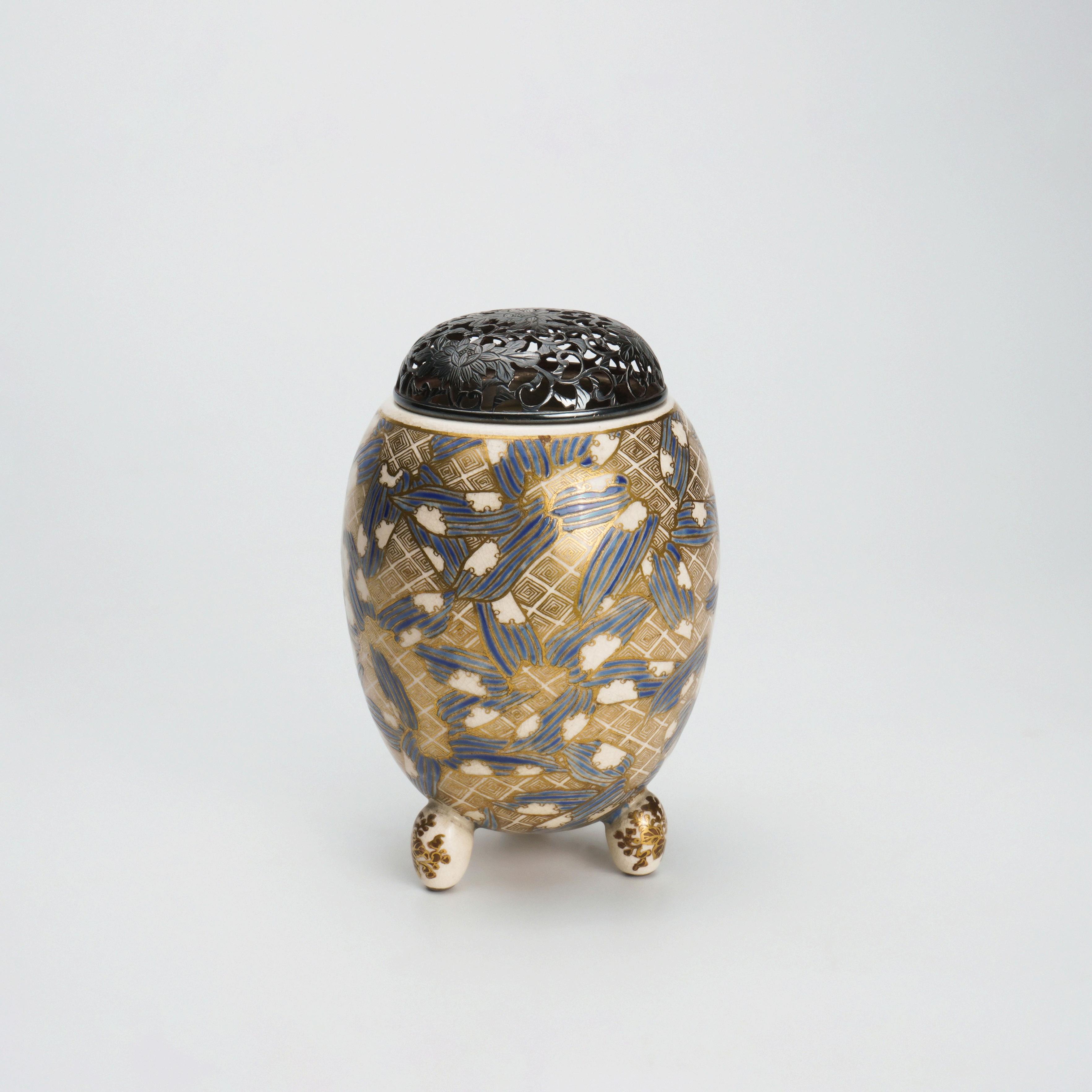
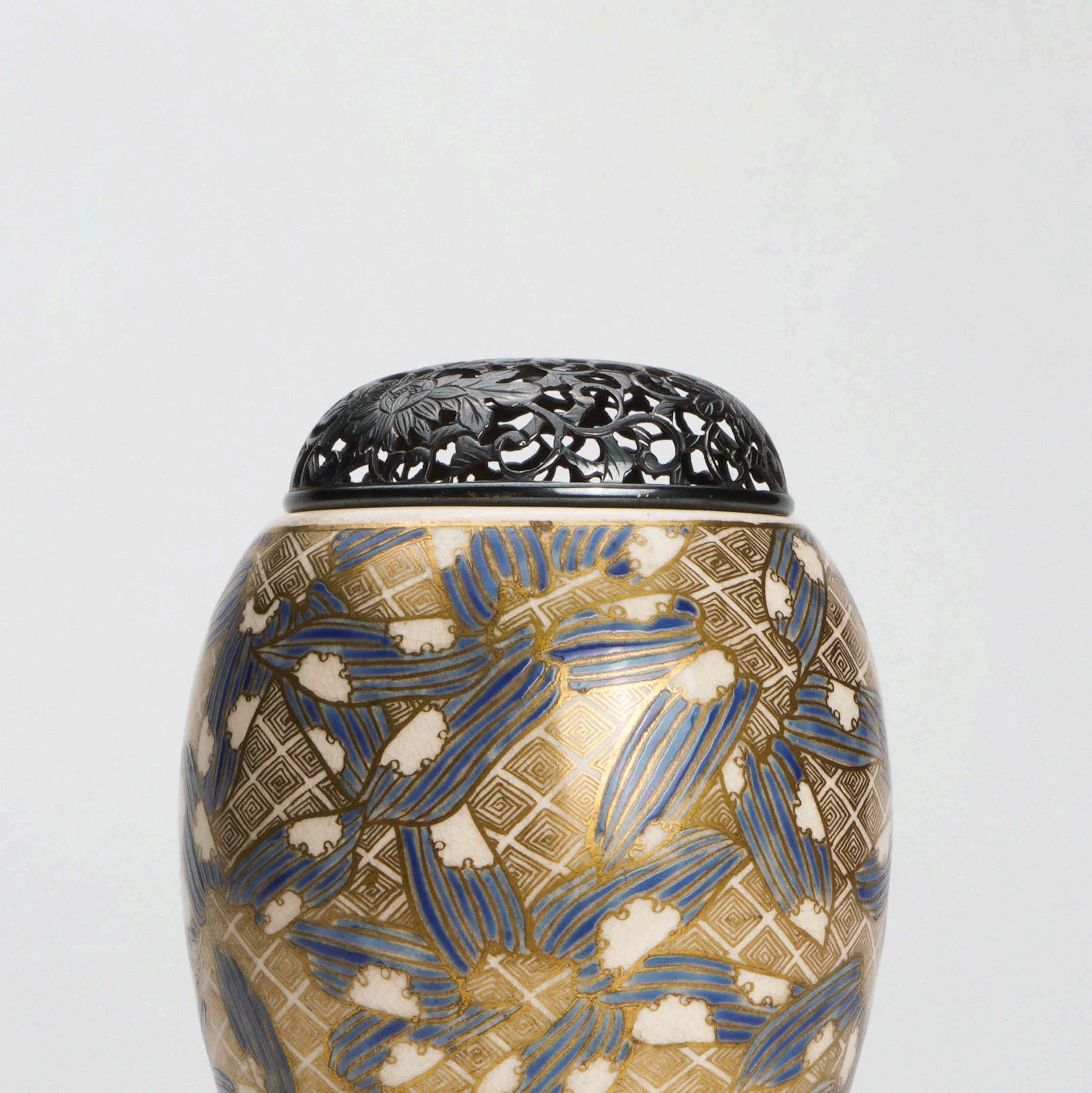
Ito Tozan I 初代 伊東陶⼭ (1846-1920)
Incense burner with bamboo leaf motifs, with signed wood box, porcelain with gold glaze and metal lid, (h) 12 06 x (w) 8 25 cm
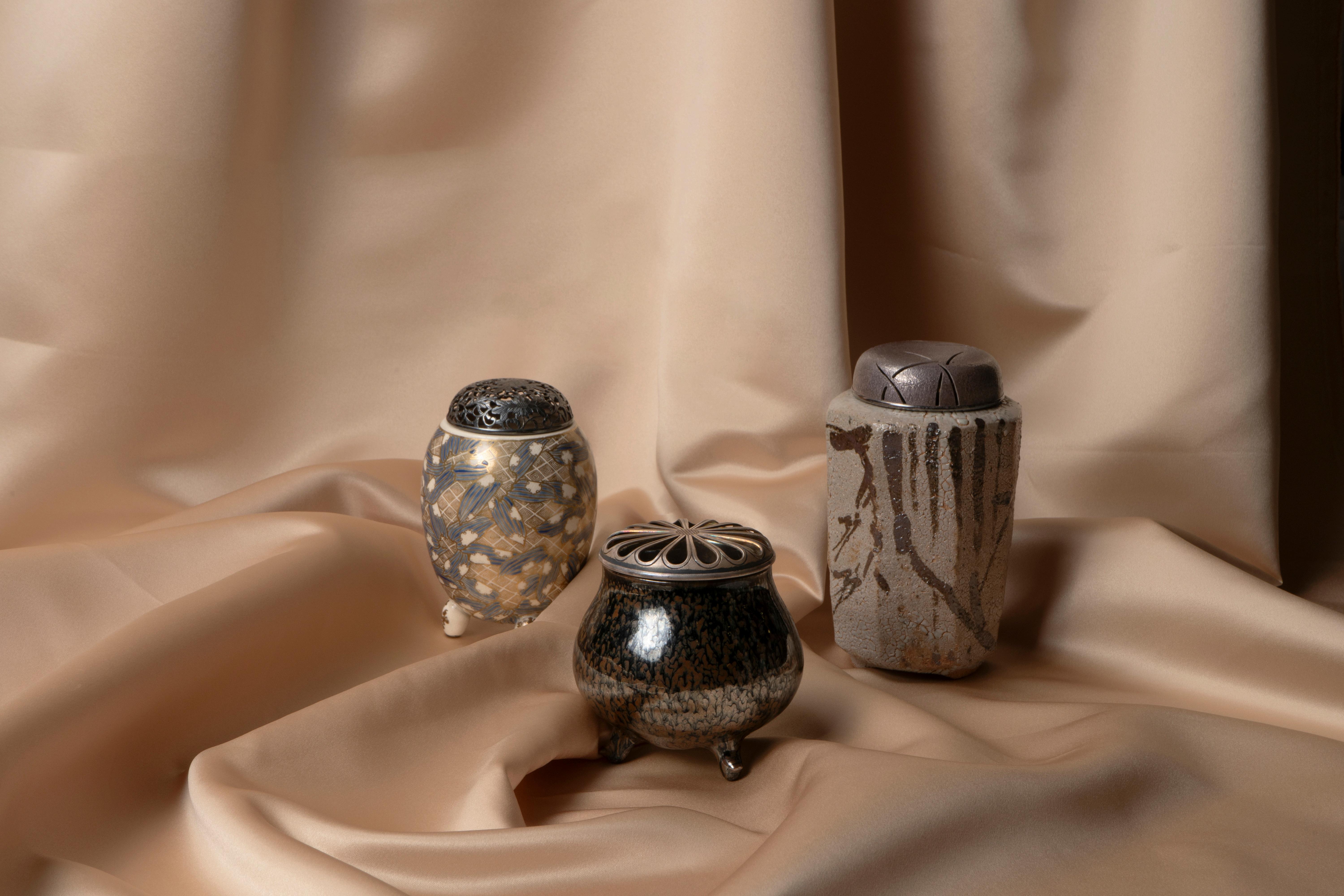
Although fragrance is central to Kōdō, the tradition stresses the importance of “listening to incense ” This practice reflects the animistic nature of Japanese cultural thought, in which materials are understood to possess spirit. Craftspeople working with wood or stone often describe listening to their medium Similar attention is cultivated in Kōdō as the participant refines the mind through careful engagement with scent The act of listening becomes a meditative activity that sharpens perception and clarifies the senses
Central to this experience are the Ten Virtues of Incense, known in Japanese as kōjuttokuto (⾹⼗徳) Attributed to the Northern Song poet Huang Tingjian ⻩ 庭堅 and transmitted to Japan by the monk Ikkyu Sōjun 休 宗純, these virtues articulate the spiritual and physical benefits of incense:
感格⻤神 : Sharpens the senses
清浄⼼⾝ : Purifies the body and the spirit
能払汚穢 : Eliminates pollutants
能覚睡眠 : Awakens the spirit
静中成友 : Heals loneliness
塵裏愉閑 : Calms in turbulent times
多⽽不厭 : Is not unpleasant, even in abundance
募⽽知⾜ : Even in small amounts is sufficient
久蔵不朽 : Does not break down after a very long time
常⽤無障 : A common use is not harmful
These virtues underscore the holistic nature of Kōdō, showing its philosophical, and spiritual qualities L I S T E N I N G T O I N C E N S E
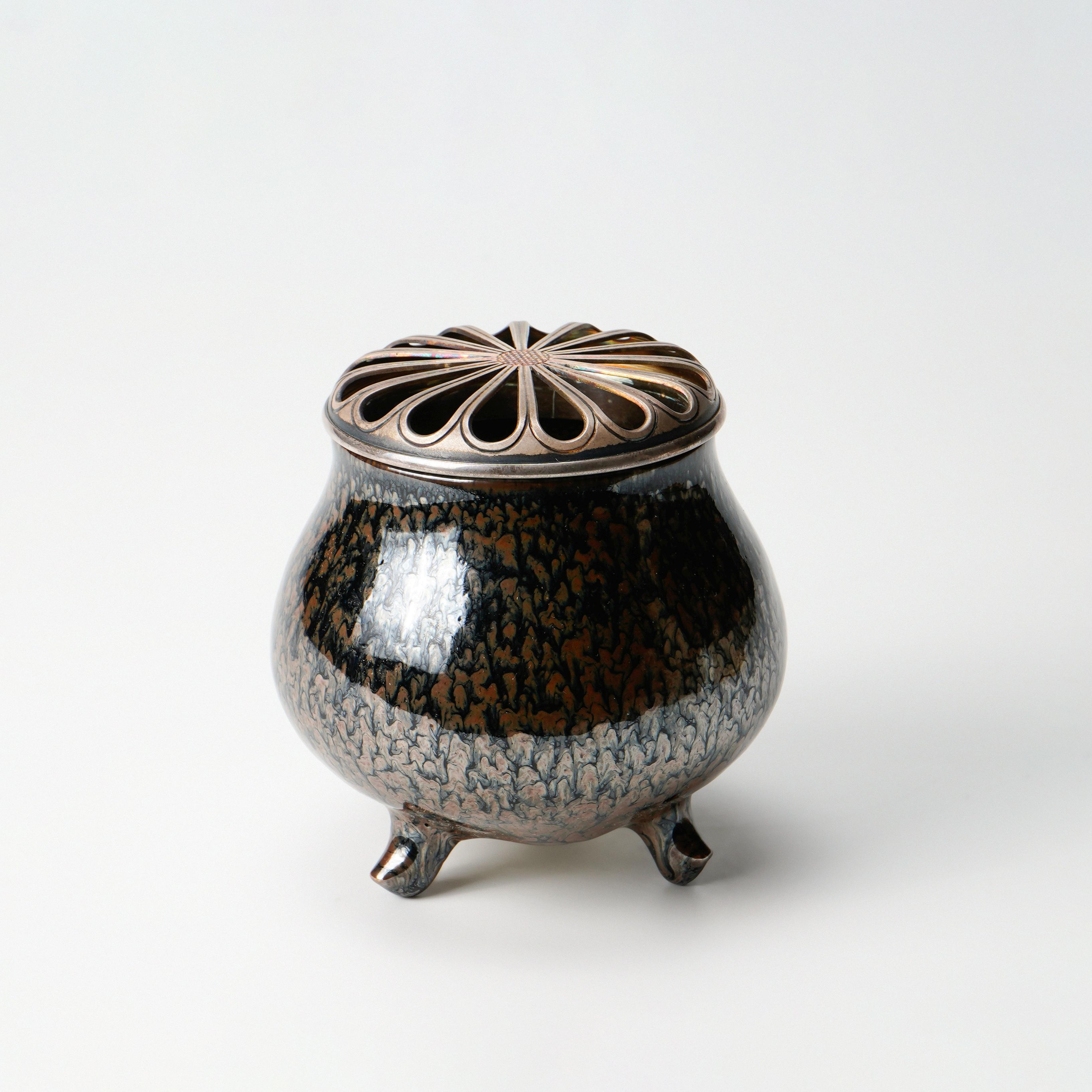
Incense burner with tenmoku glaze, with signed wood box, stoneware with metal lid, (h) 9 5 × (w) 9 cm
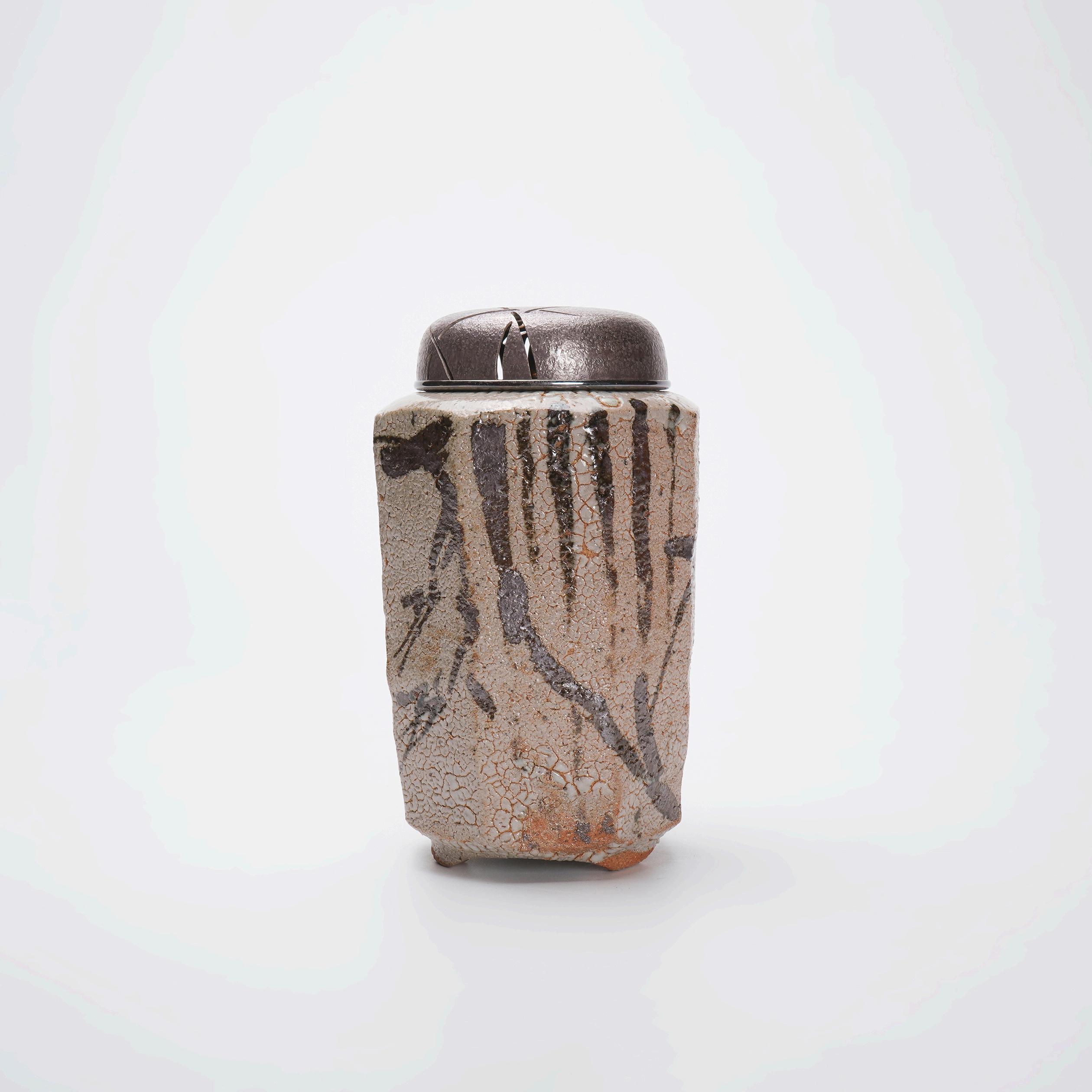
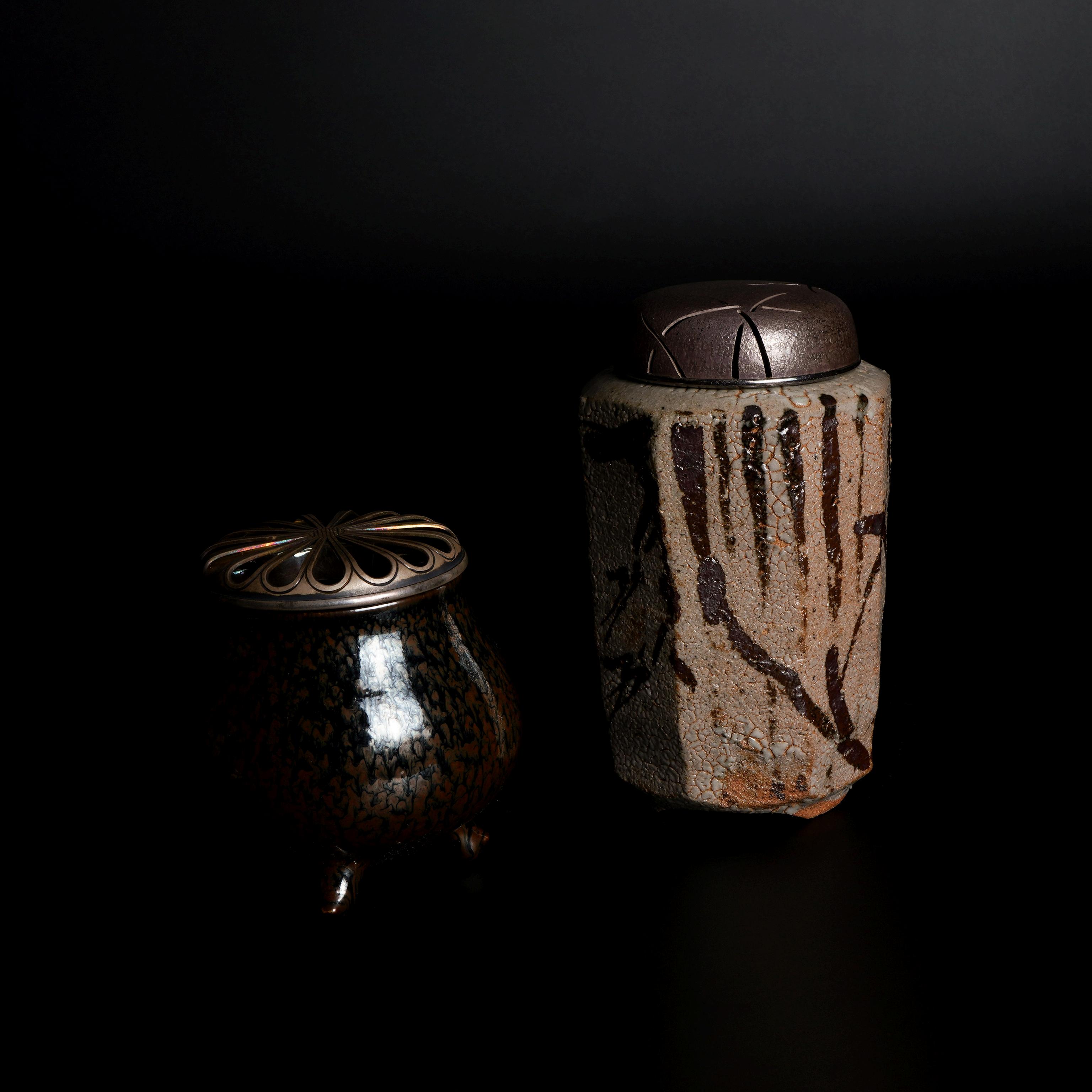
H I S T O R I C A L I N C E N S E I M P L E M E N T S
Formally speaking, Incense burners, or kōro, have evolved significantly throughout Japanese history. The ceramic forms we know today have a long lineage of variety Early burners were created for religious settings and often resembled Chinese bronze models with large openings These types of burners, archaic, and large, played with scale as a significant aspect of its object-hood, and were imported into Japan along with monks from China and Korea
As incense appreciation migrated into domestic and courtly environments during the 17 century in Japan, practices like Monkō and Kumikō (two types of incense games designed to experience the sensory pleasures of incense, and enhance awareness of the fragrance offered) gained popularity among the literati class As they grew more popular, accompanying incense implements grew smaller and more intimate These compact burners were designed to suit refined spaces and the personal contemplation that Kōdō requires, thus evolving into the ceramic forms that we associate with Kōdō today th
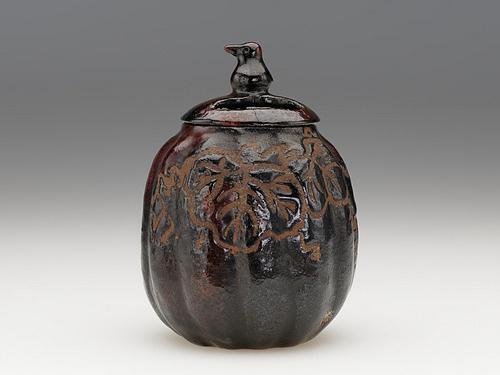
Black Raku incense burner in "melon" shape
Imitation of Ogata Kenzan 尾形 乾⼭ (1663-1743) Kyoto workshop 19th century, Kyoto, Japan, Earthenware, (h) 9 7 x (w) 9 7 cm Charles Lang Freer (1854-1919), purchased from Kita Toranosuke in Kyoto in 1907 Permanent collections of the Smithsonian Museum, Freer Gallery of Art Collection, National Museum of Asian Art, Smithsonian Image courtesy of the museum
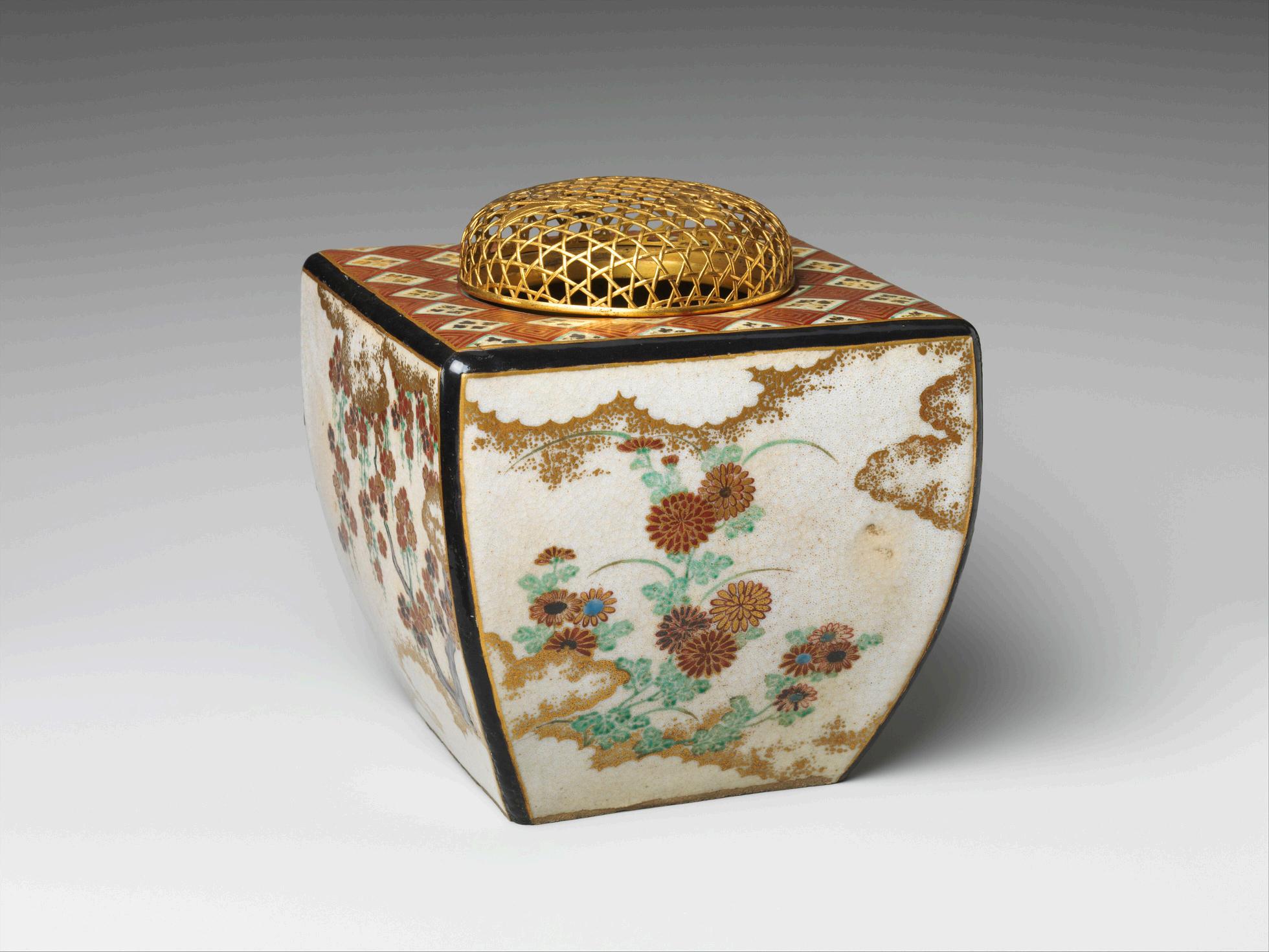
Ninsei-style Incense Burner with Flowers of the Four Seasons, Workshop of Nonomura Ninsei (active c 1646–94) , Edo period (1615–1868), c 17 Century, Japan , stoneware with polychrome overglaze enamels and gold; openwork gilt-bronze cover, (h) 17 1 (w) 8 4 (d) 18 4 cm H O Havemeyer Collection, Bequest of Mrs H O Havemeyer, 1929 Permanent collections of the Metropolitan Museum of Art Image courtesy of the museum th
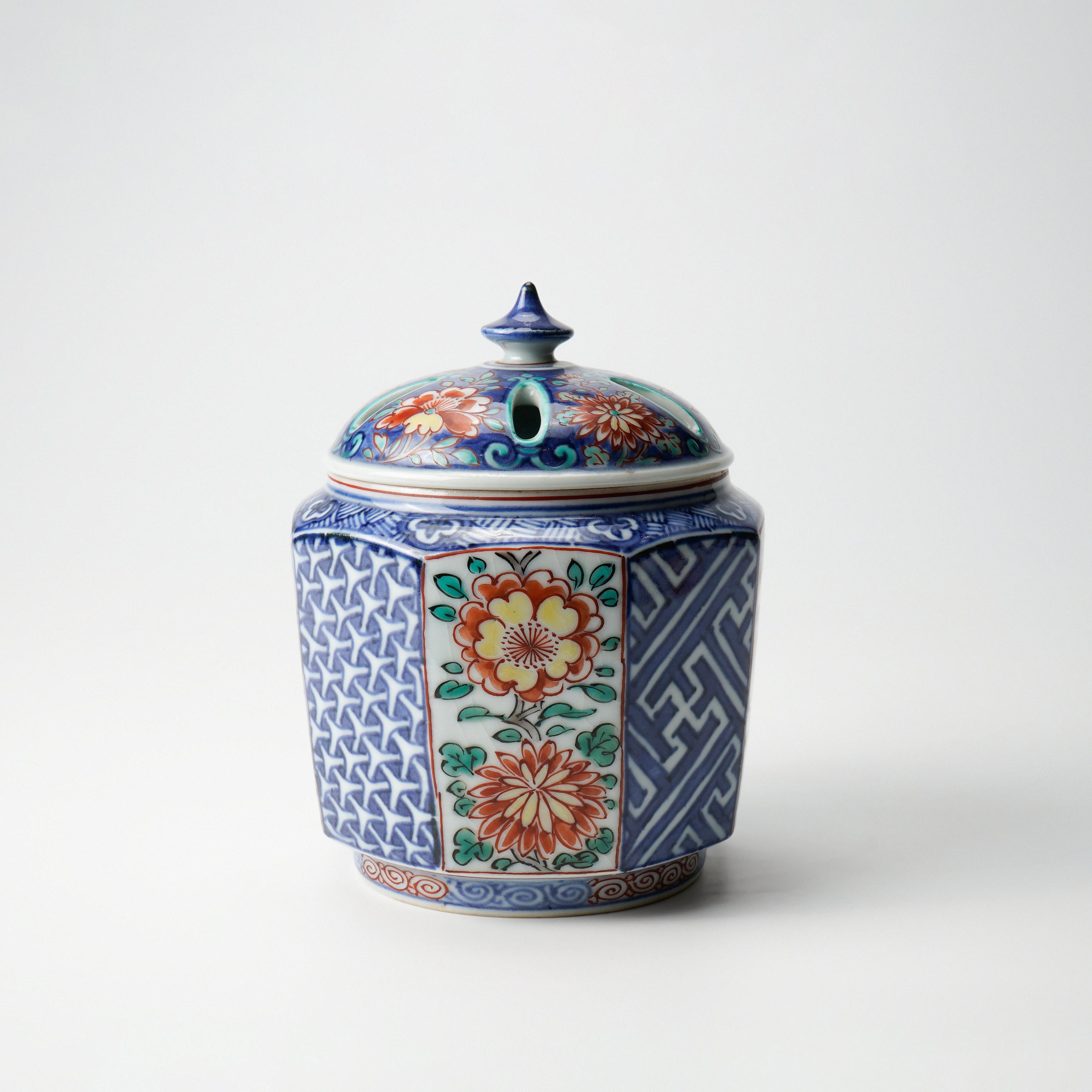
Incense burner with enamels, with signed wood box, porcelain, (h) 13 × (w) 9 3 cm
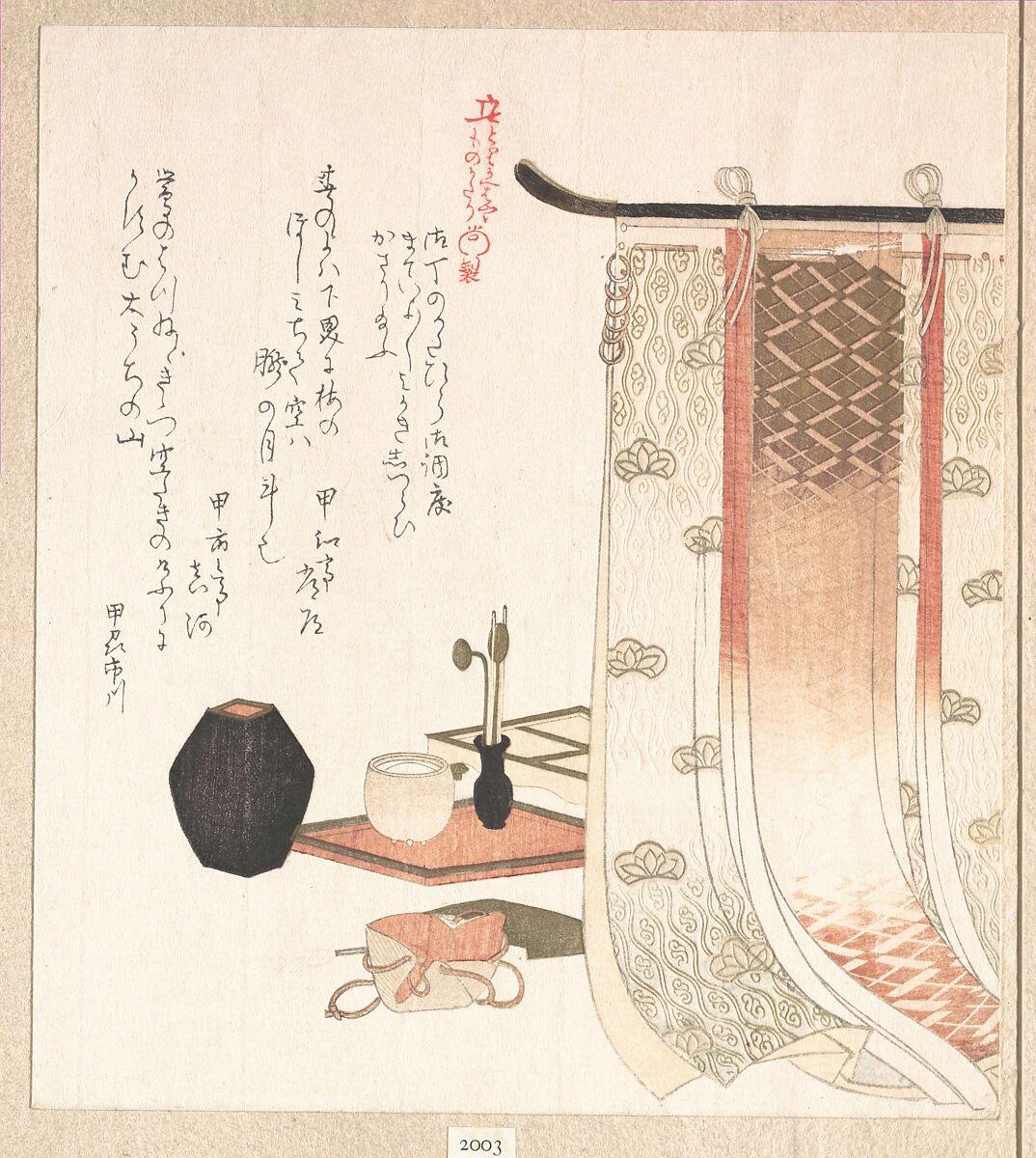
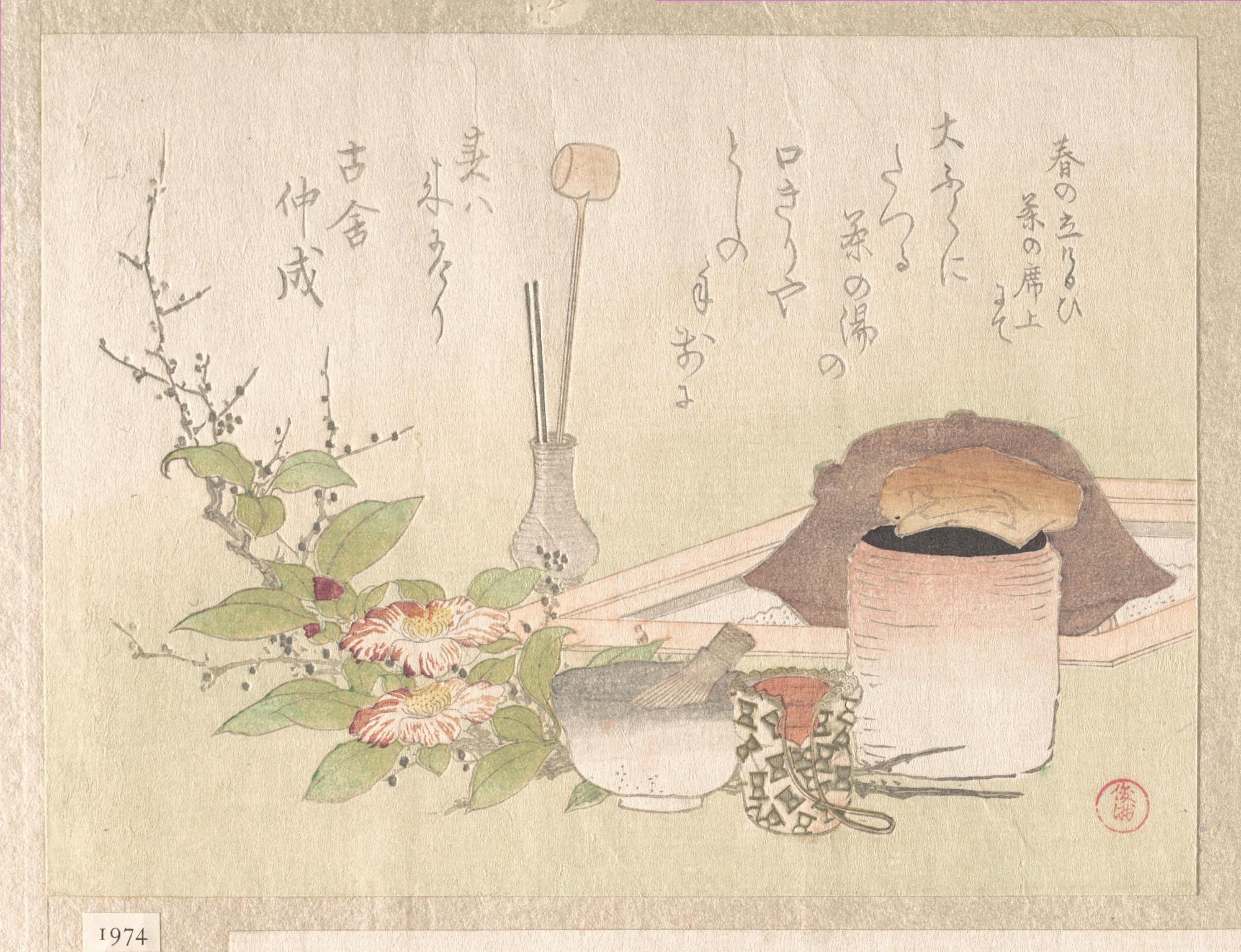
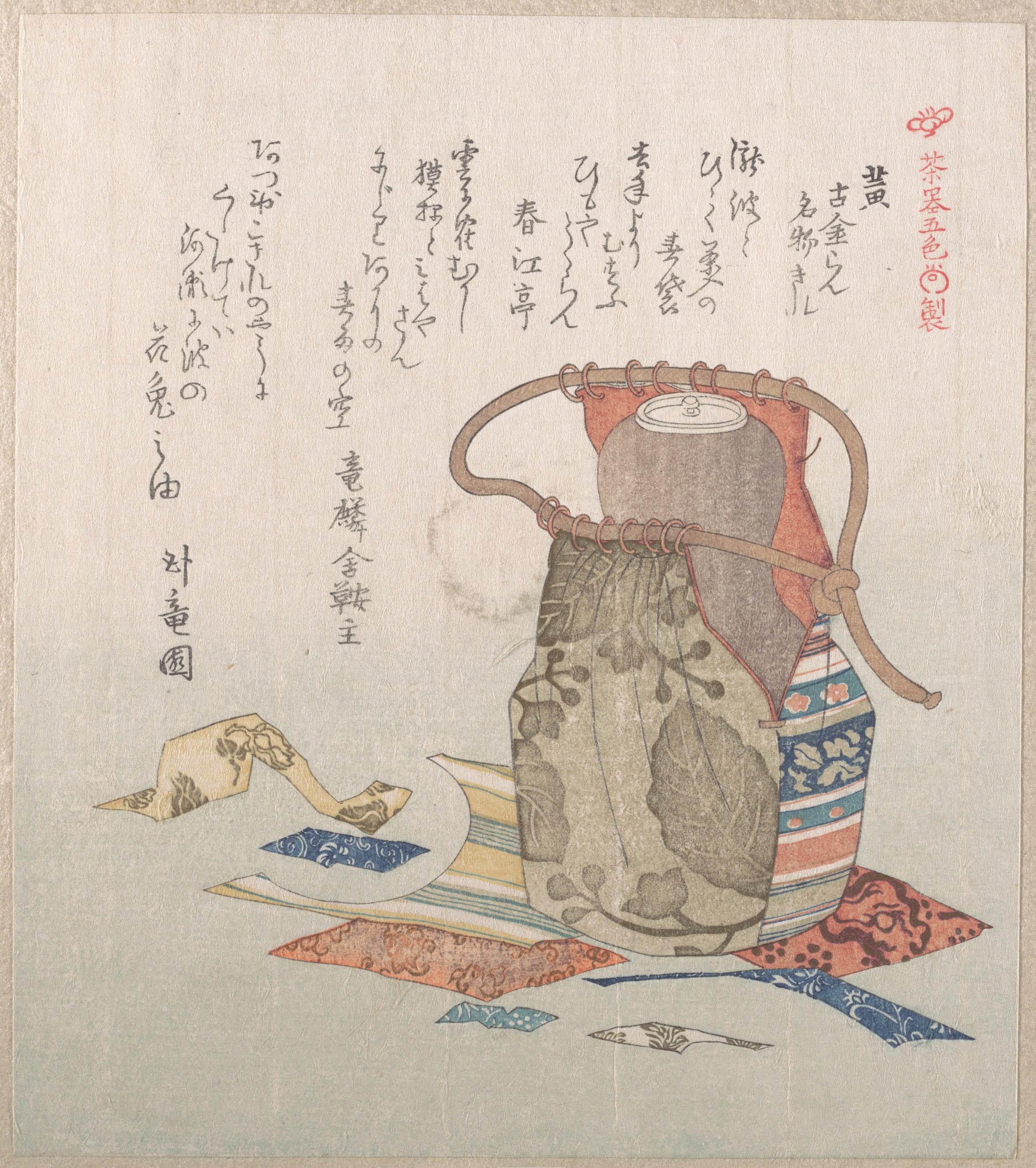
Kubo Shunman 窪 俊満 (1757–1820), Screen and Utensils for the Incense Ceremony Surimono, Edo period c 19th century, woodblock print (surimono); ink and color on paper, 20 5 x 18 4 cm O Havemeyer Collection, Bequest of Mrs H O Havemeyer, 1929 Permanent collections of the Metropolitan Museum of Art Image courtesy of the museum
K Ō D Ō A N D T H E T E A C E R E M O N Y
Kōdō developed alongside the tea ceremony during the Muromachi period as both practices were shaped by the broader philosophy of geidō, the way of art Geidō emphasized personal cultivation through disciplined aesthetic training Tea masters often began a tea gathering by burning incense, an act believed to purify the participants and prepare their spirits for the contemplative experience that followed
The intersection of fragrance and tea extends deeply into Japanese aesthetics: Both practices emphasize multisensory awareness, spatial refinement, and an understanding of subtlety of objects’ forms. Incense sets the atmosphere before tea is served, guiding participants toward mindfulness Unlike Western perfumery, Japanese incense focuses on the inherent character and quality of a single natural material
Fragrance games such as kumikō are incorporated into tea ceremony practice to cultivate the guest’s ability to “listen to the fragrance ” These games use specialized containers called kikikōro (聞⾹炉) with high walls designed to hold and present the incense, as exemplified by the two following floating tripod sometsuke kikikōro by Hachiya Sōyu 蜂⾕宗由 By “listening to the fragrance,” practitioners shift their consciousness into a realm shaped by the aromatics being presented This process prepares the mind to enter the environment of the tea room
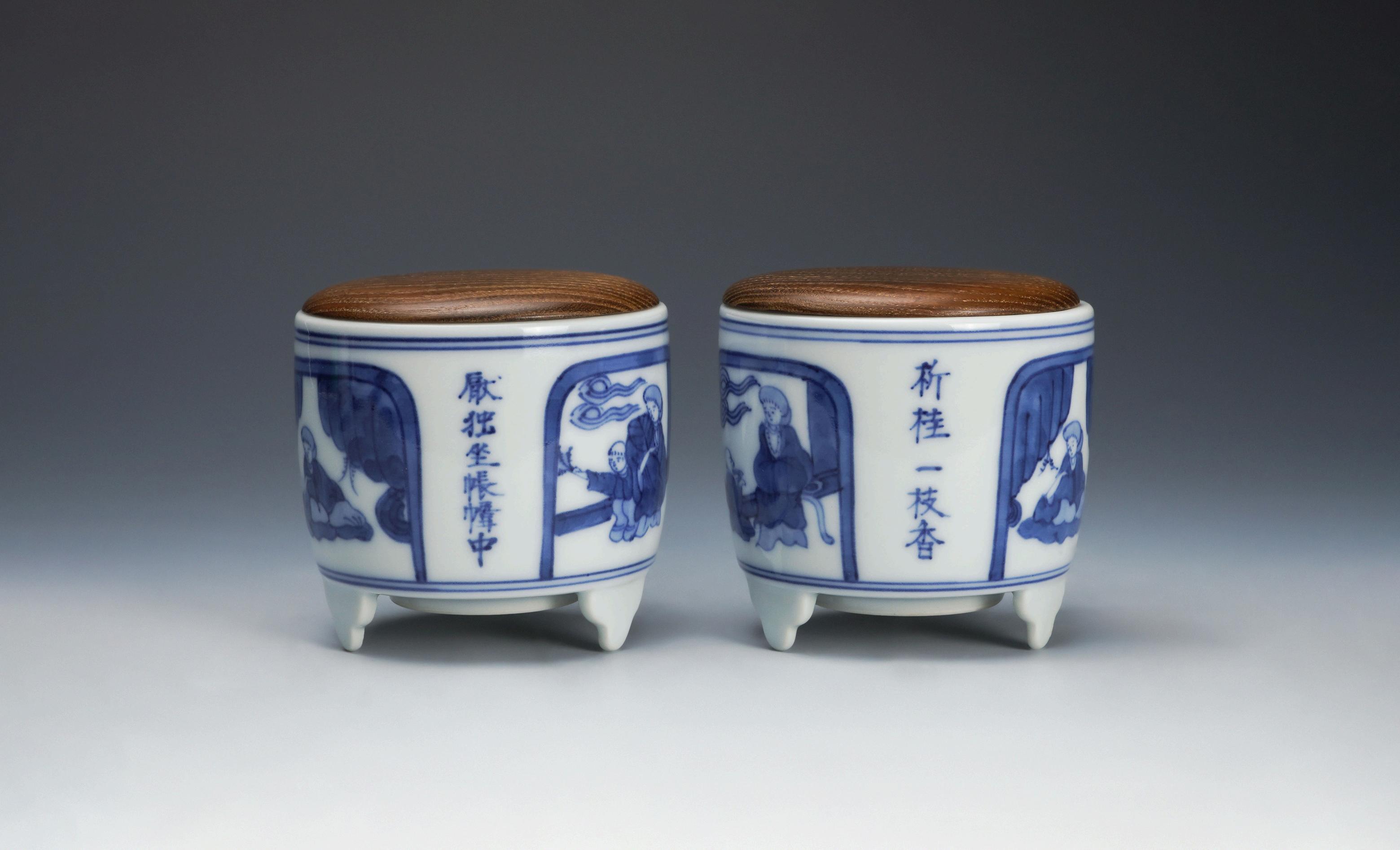
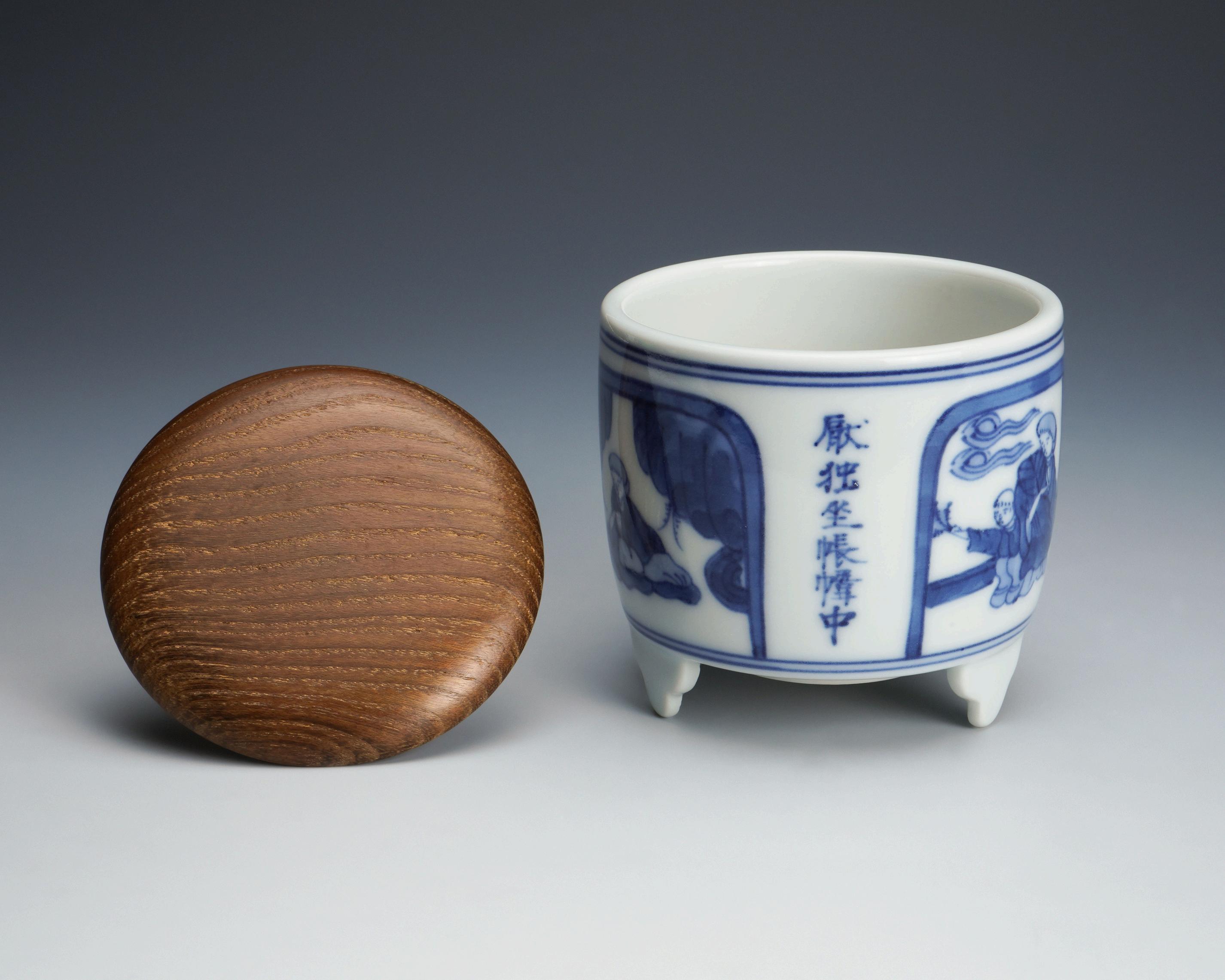
The Meiji Restoration (c 1868-1889) brought rapid Westernization and a decline in traditional fragrance practices Although incense had long been part of aristocratic life since the Heian period, and was also used by samurai to purify the spirit before battle, these customs were discouraged as Japan adopted Western cultural forms By the late nineteenth century the utilitarian view of Kōdō had diminished significantly
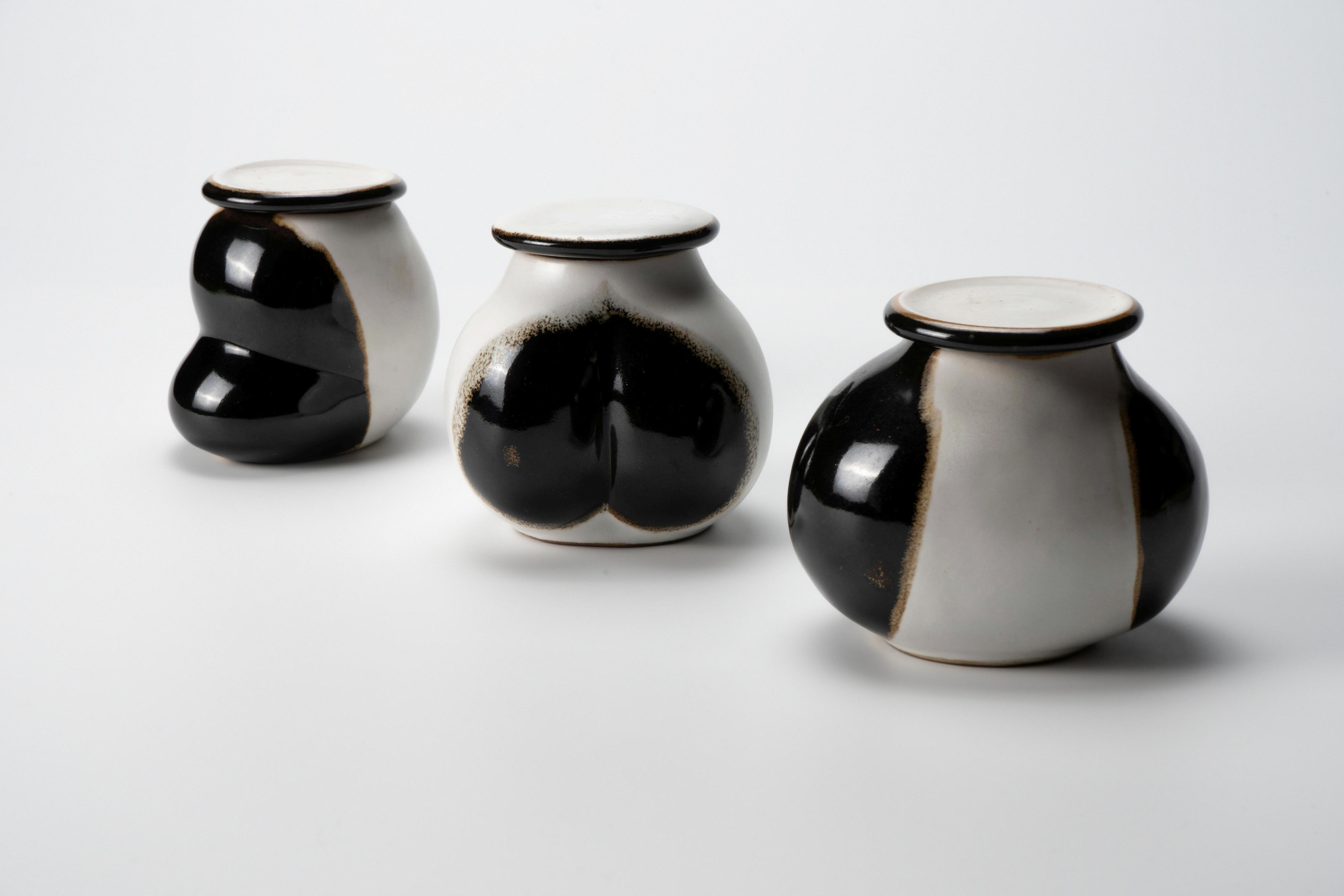
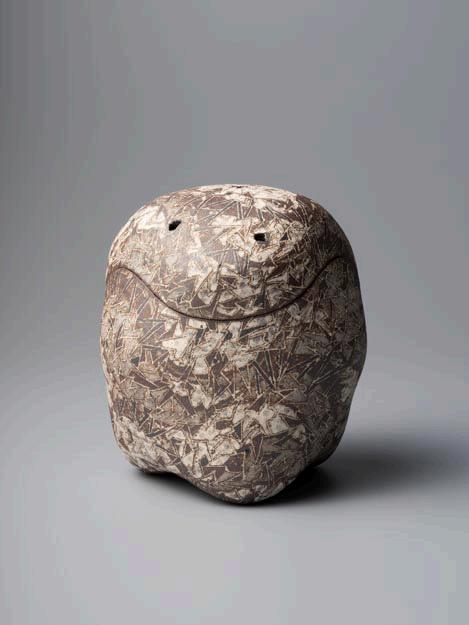
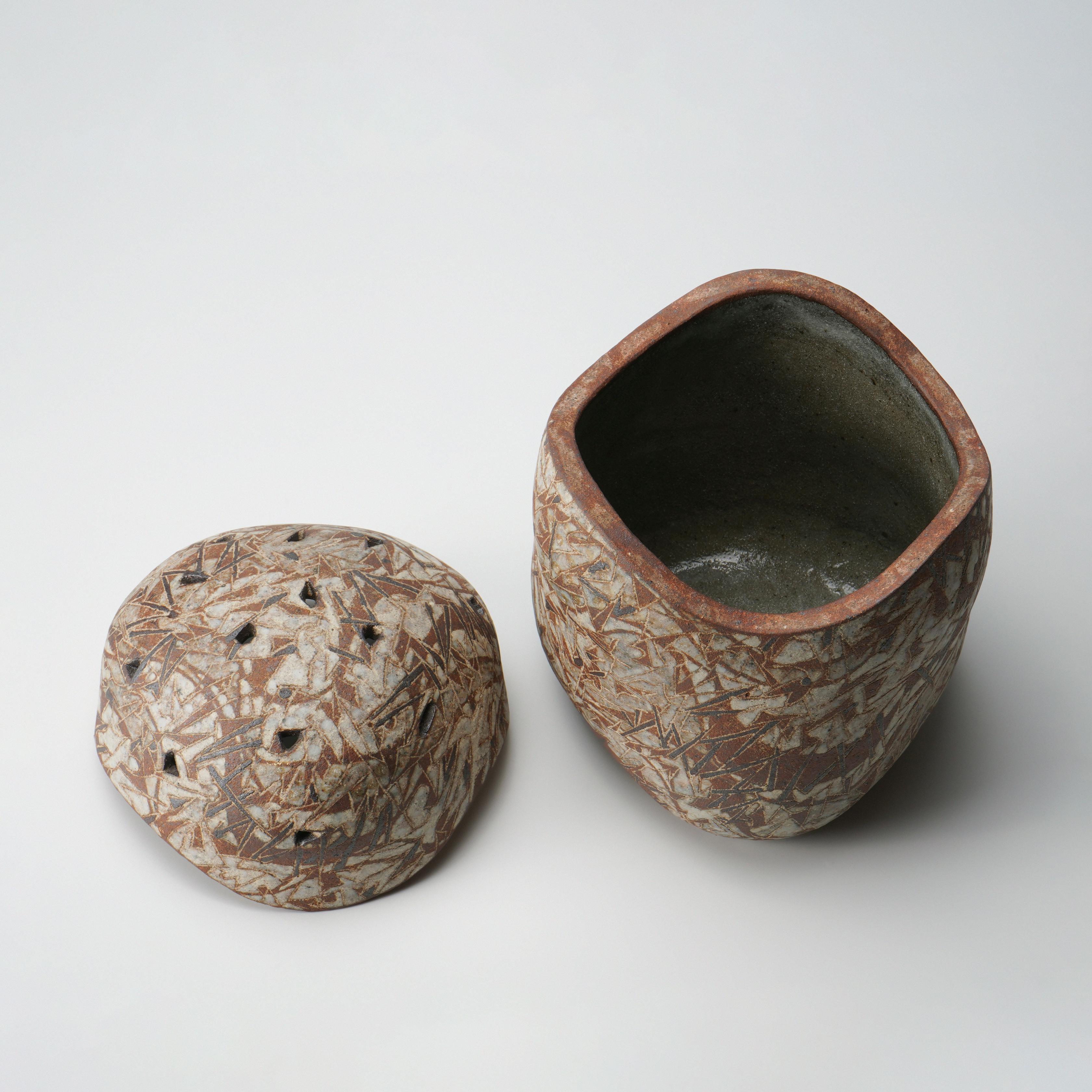
In 1890, traditional arts regained acceptance and Kōdō experienced a revival. By this time, however, the visual language of incense implements had begun to shift Censers and related tools increasingly reflected Western tastes as makers and manufacturers adapted their work for a growing global market During this shift, the functional use of incense implements gradually expanded into that of decorative objets d’art Many ceramicists took this opportunity to explore new formal expressions in incense containers, incorporating more individualistic and expressive elements into their craft The treatment and perceptions of the ceramic incense object changed during these changing cultural economies. This radical shift is exemplified by contemporary ceramic artists such as Wada Morihiro, Nagae Shigekazu, and several others that followed in the footsteps of individualistic artistic expression through the ceramic medium Wada Morihiro 和太 守卑良 (1944-2008), Incense burner, Ryu san mon (Ryu san pattern), stoneware, Gift of an Anonymous Donor, stoneware National Crafts Museum, National Museum of Modern Art, Tokyo Image courtesy of the museum
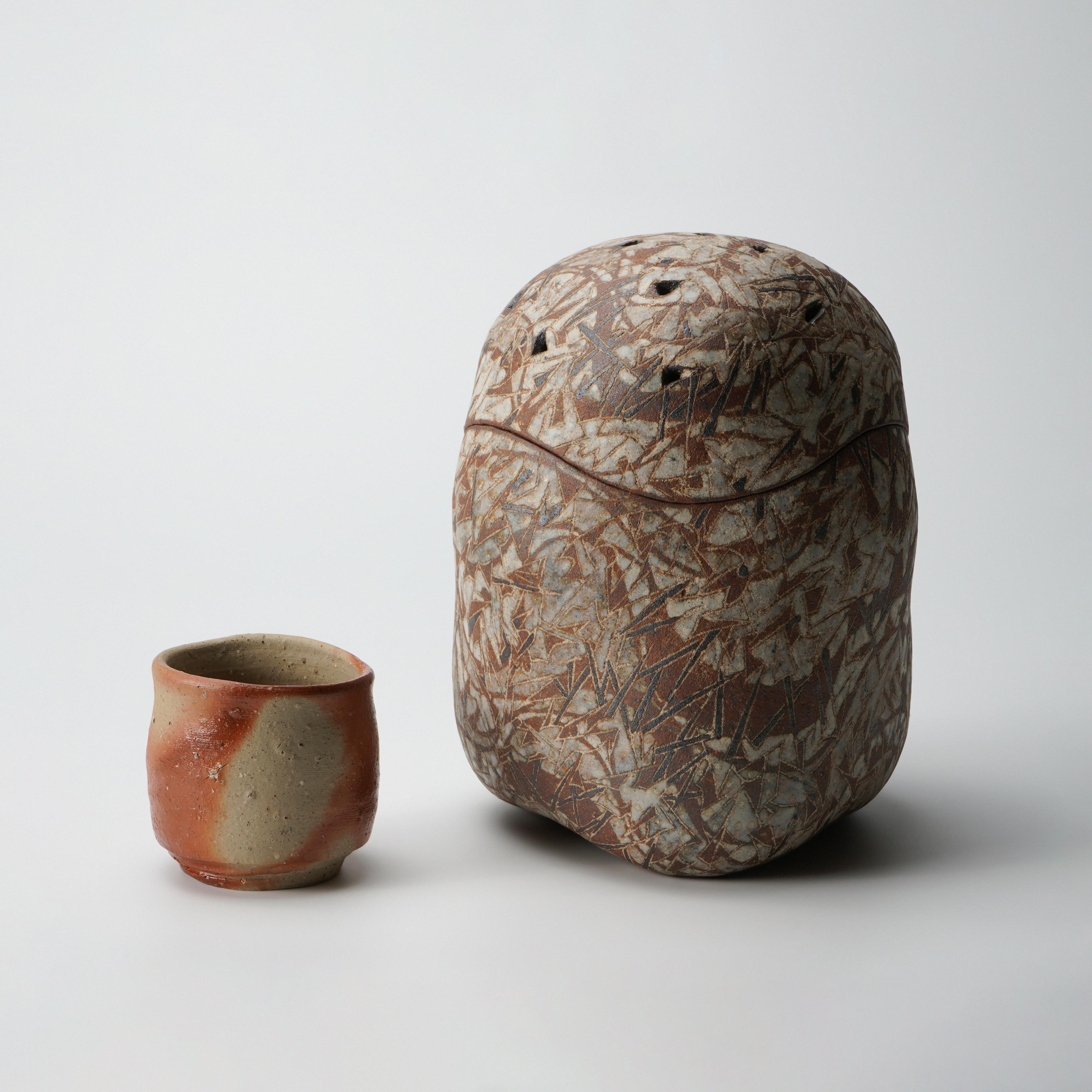
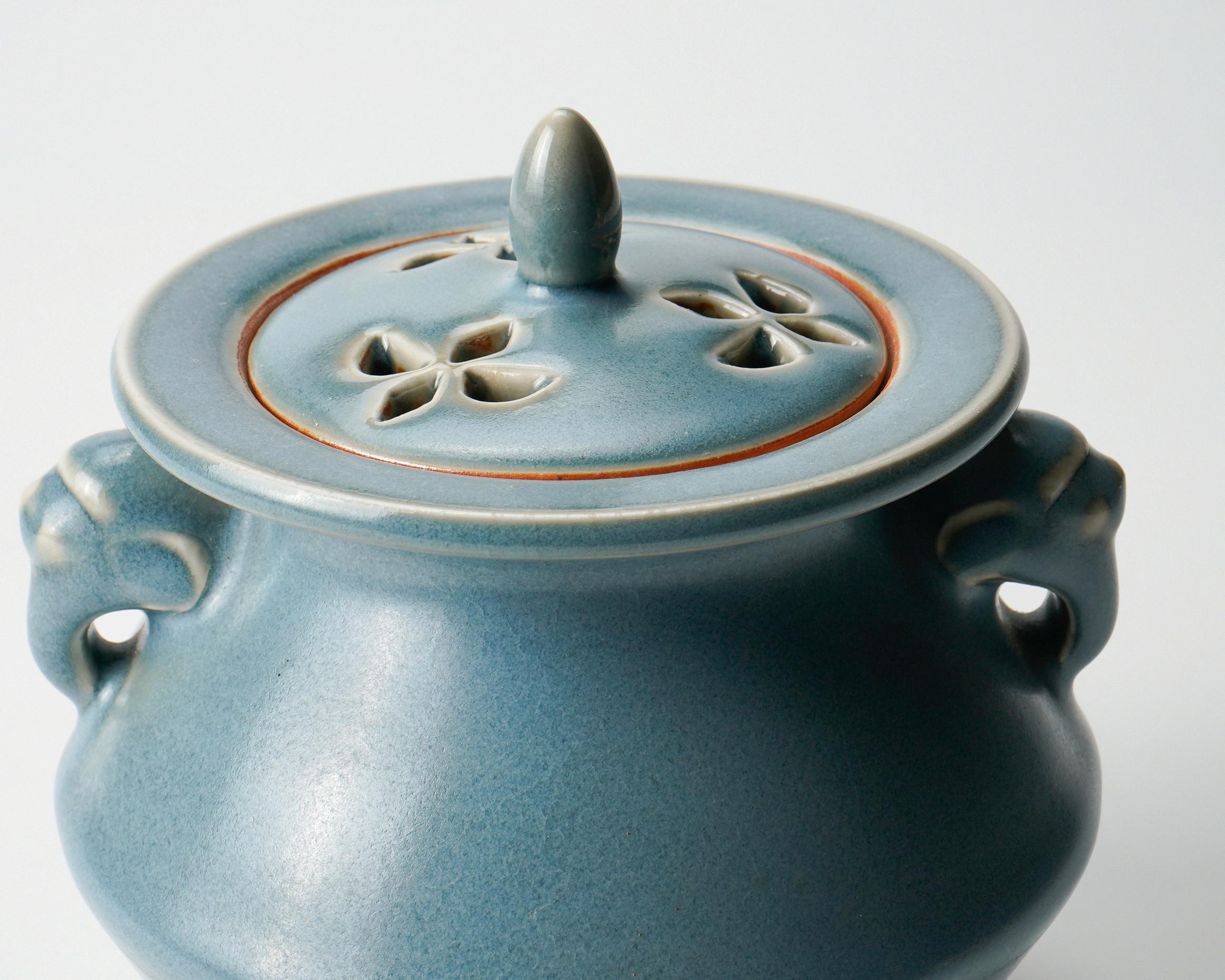
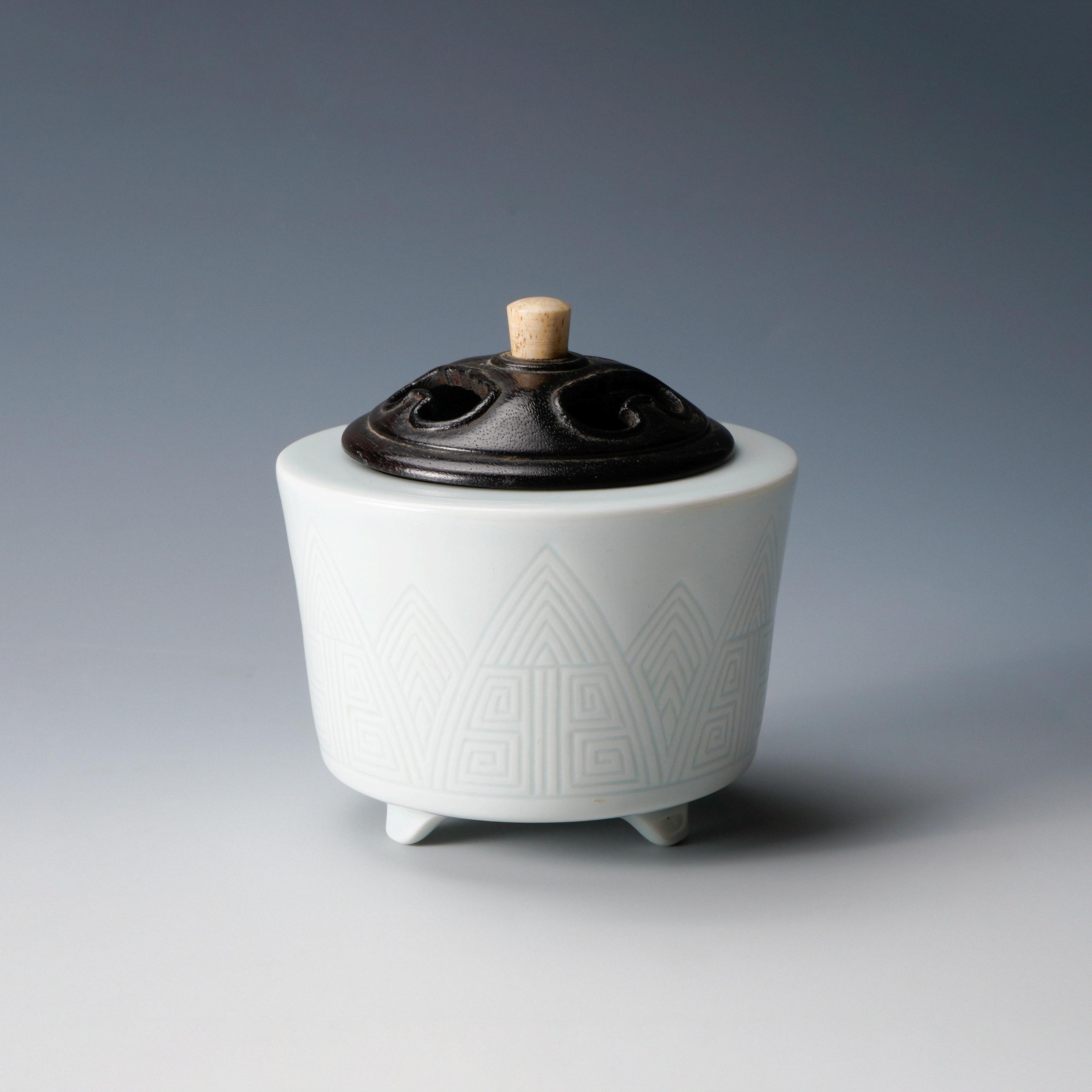
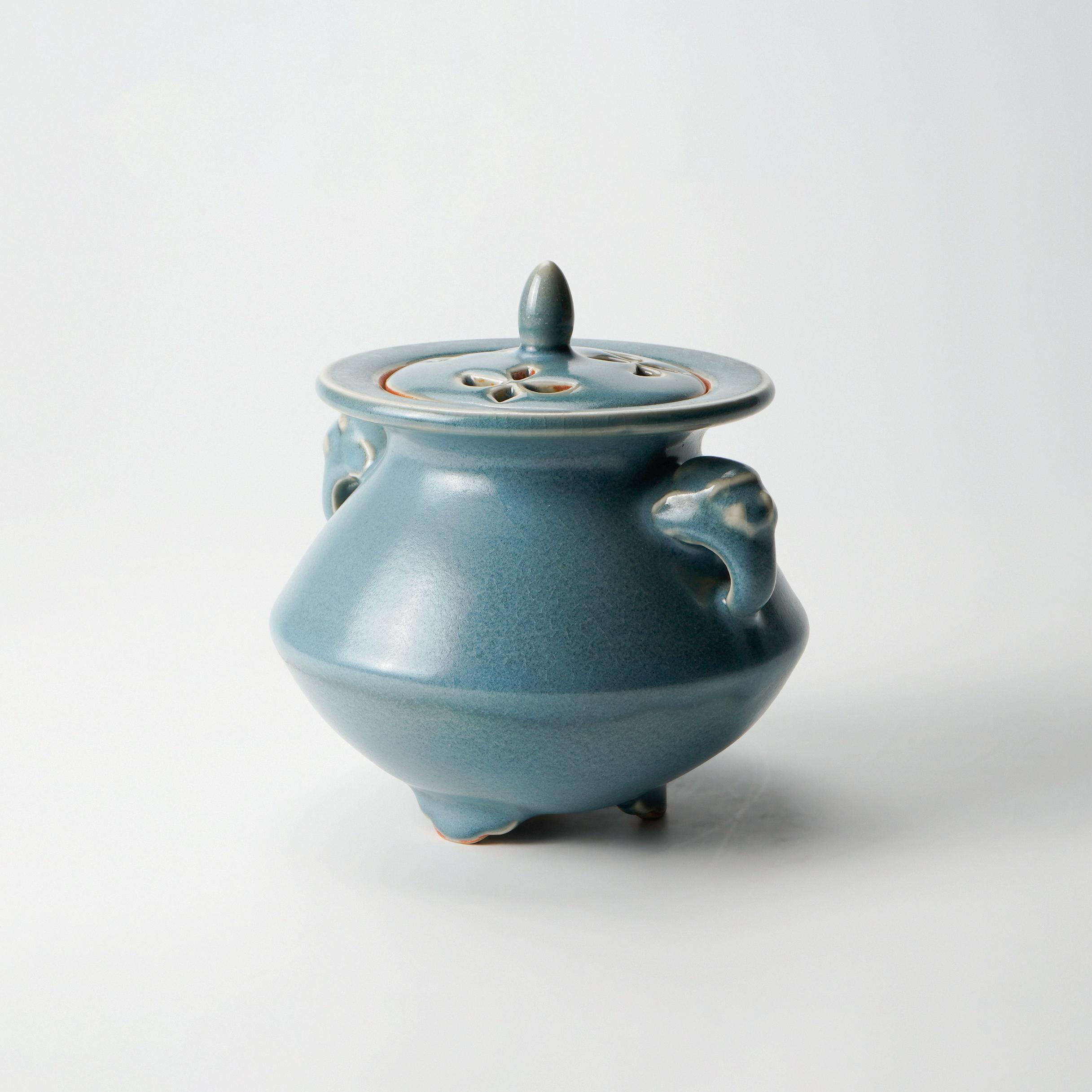
Nakashima Hiroshi 中島 宏 (1941-2018, Living National Treasure c 2007), Celadon incense burner, with signed wood box, stoneware, (h) 12 3 × (w) 12 cm
C H A I R E & N A T S U M E
T E A C A D D I E S
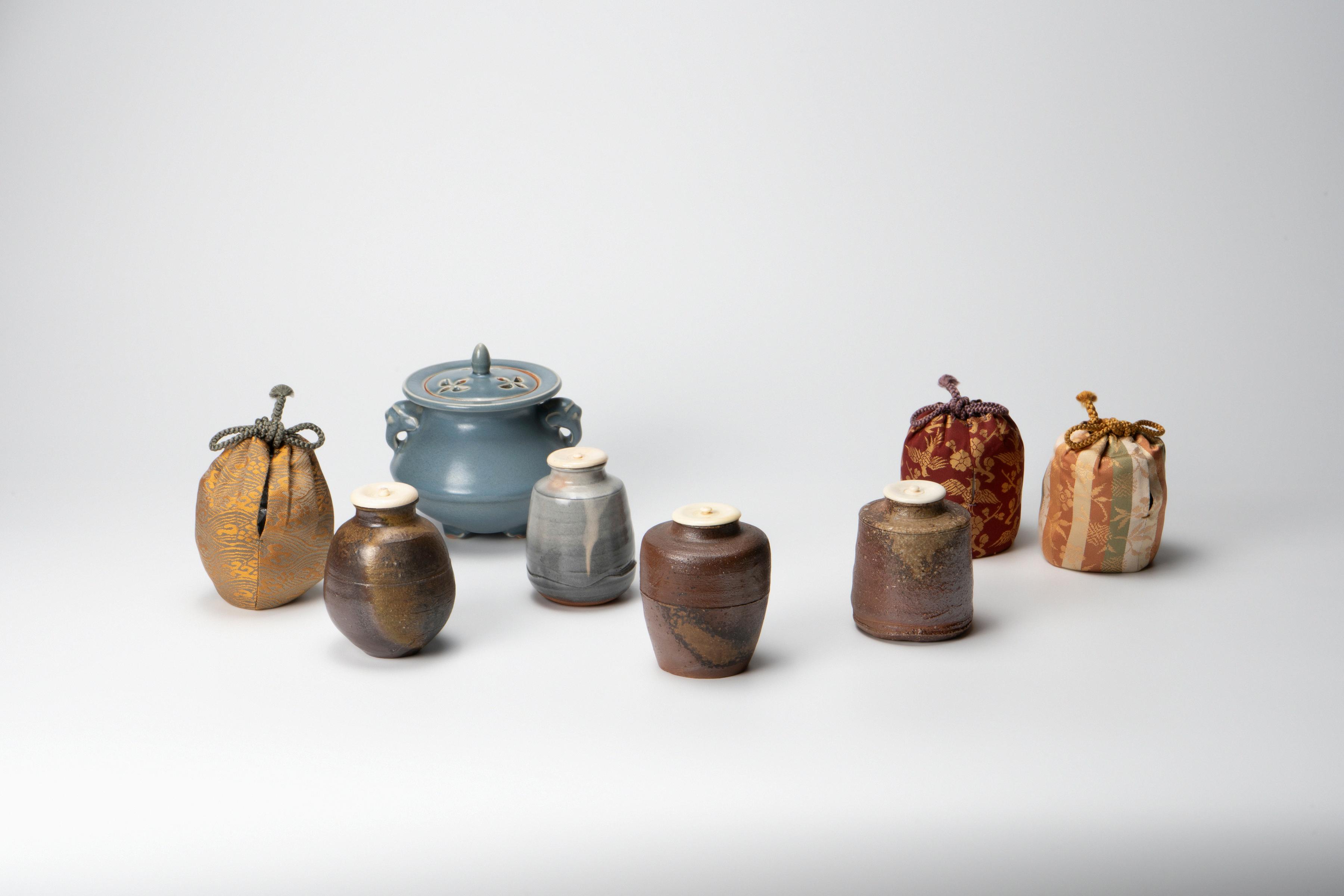
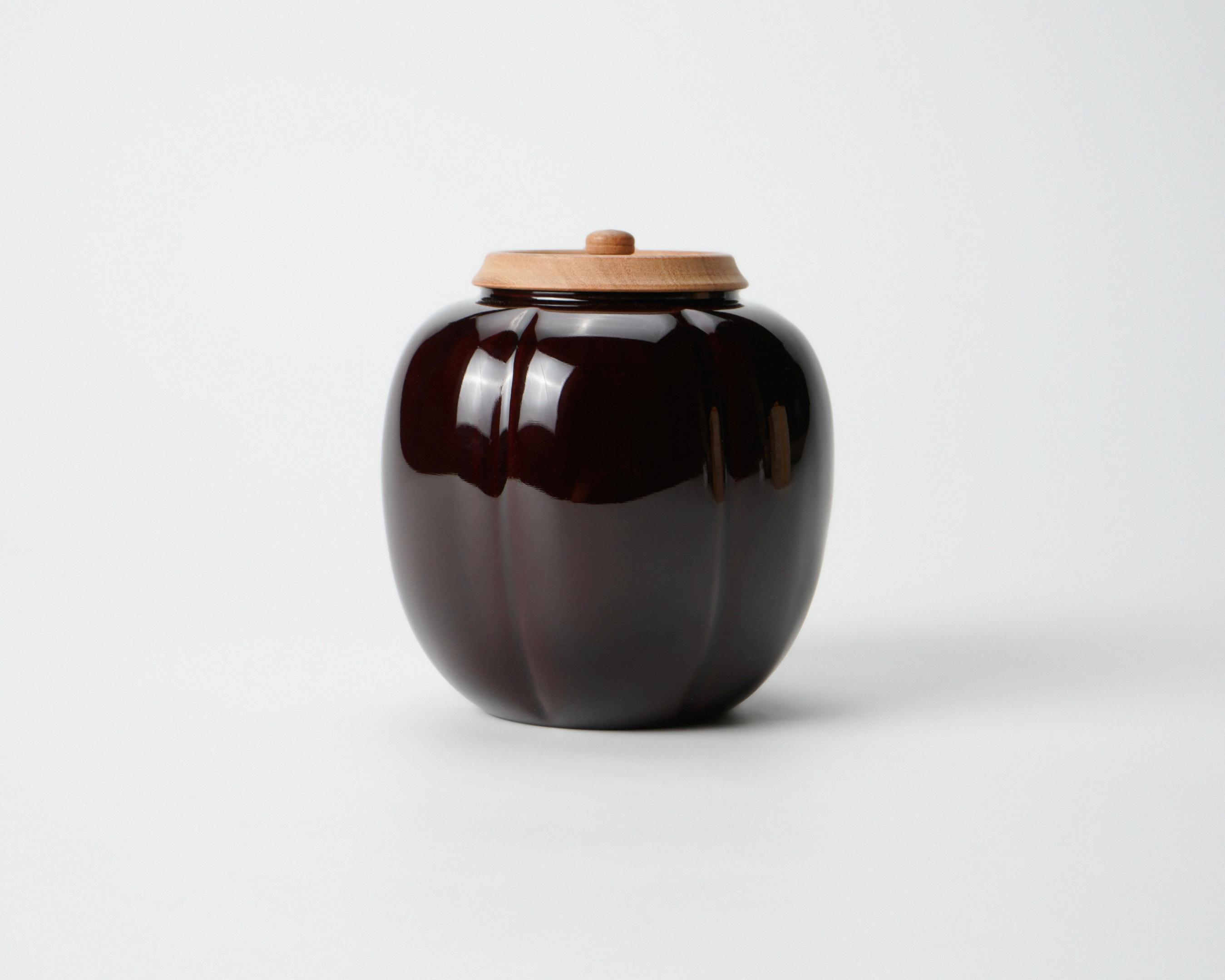
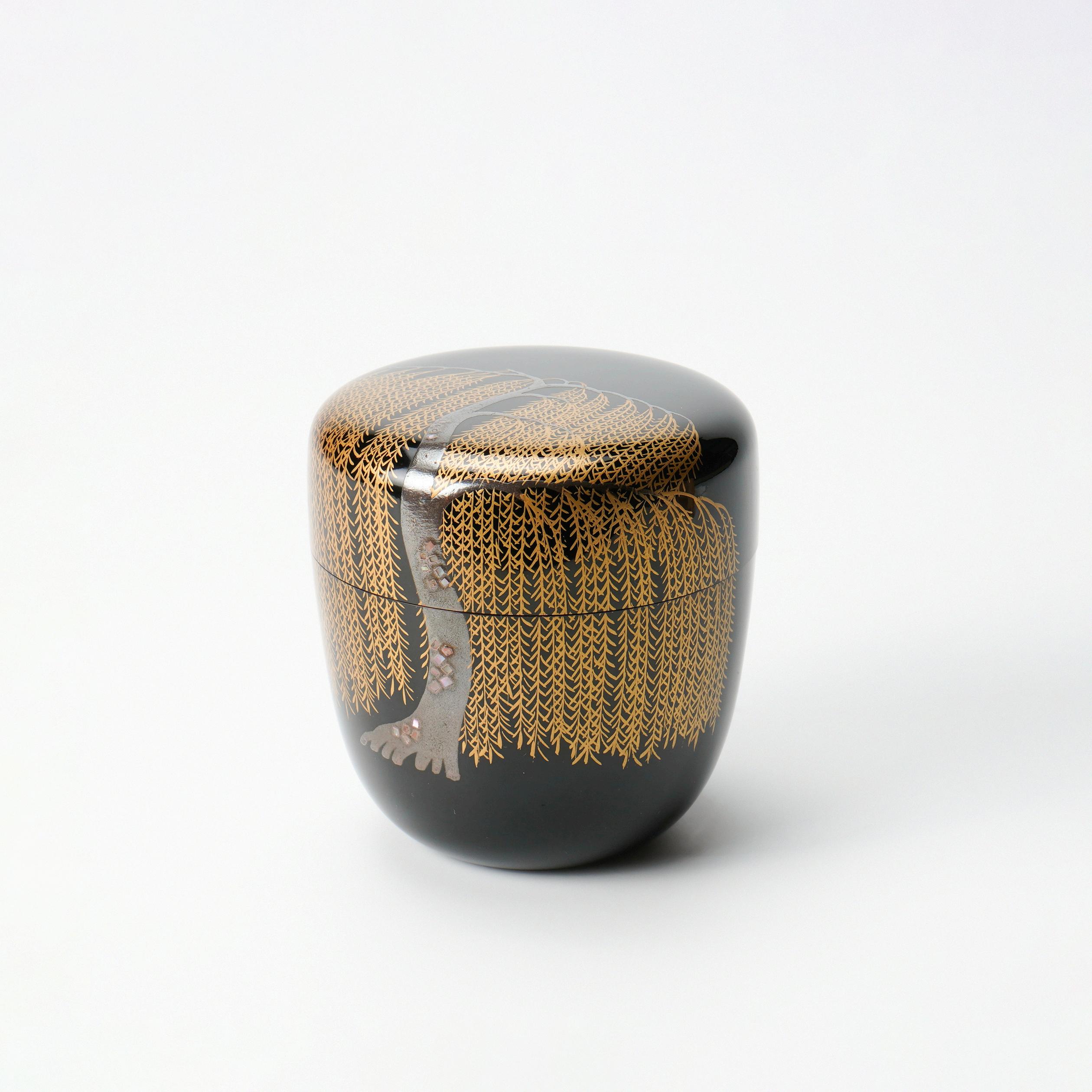
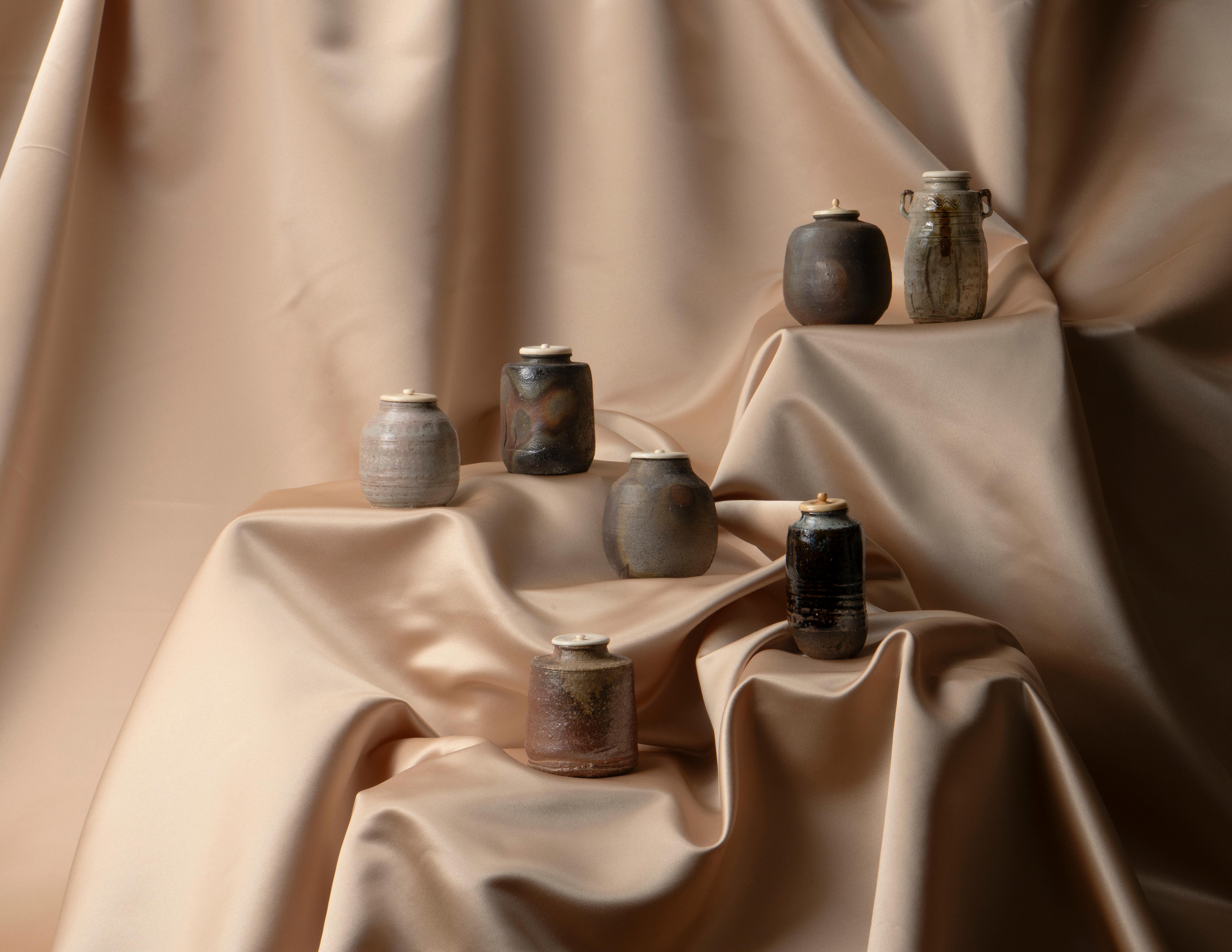
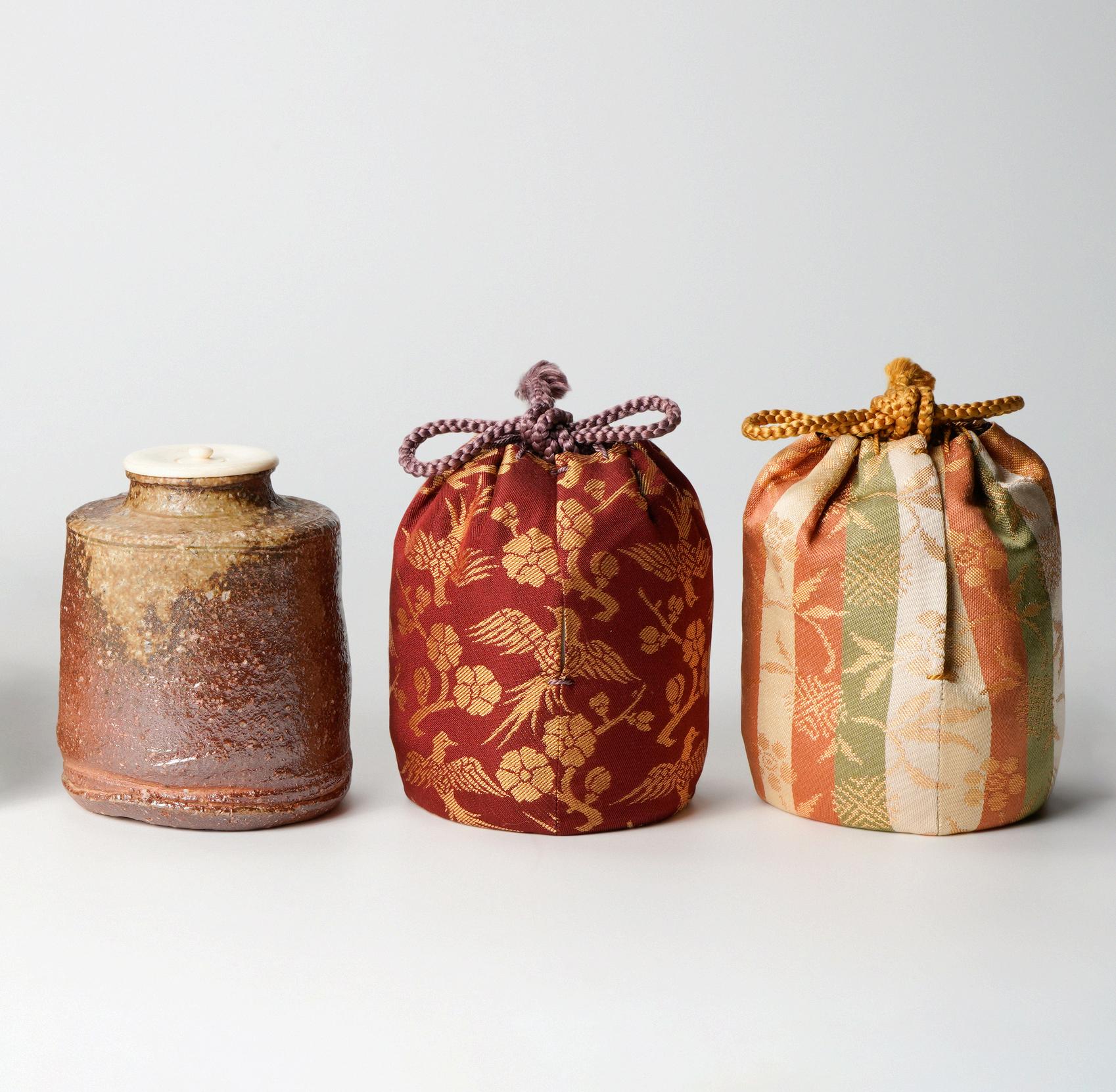
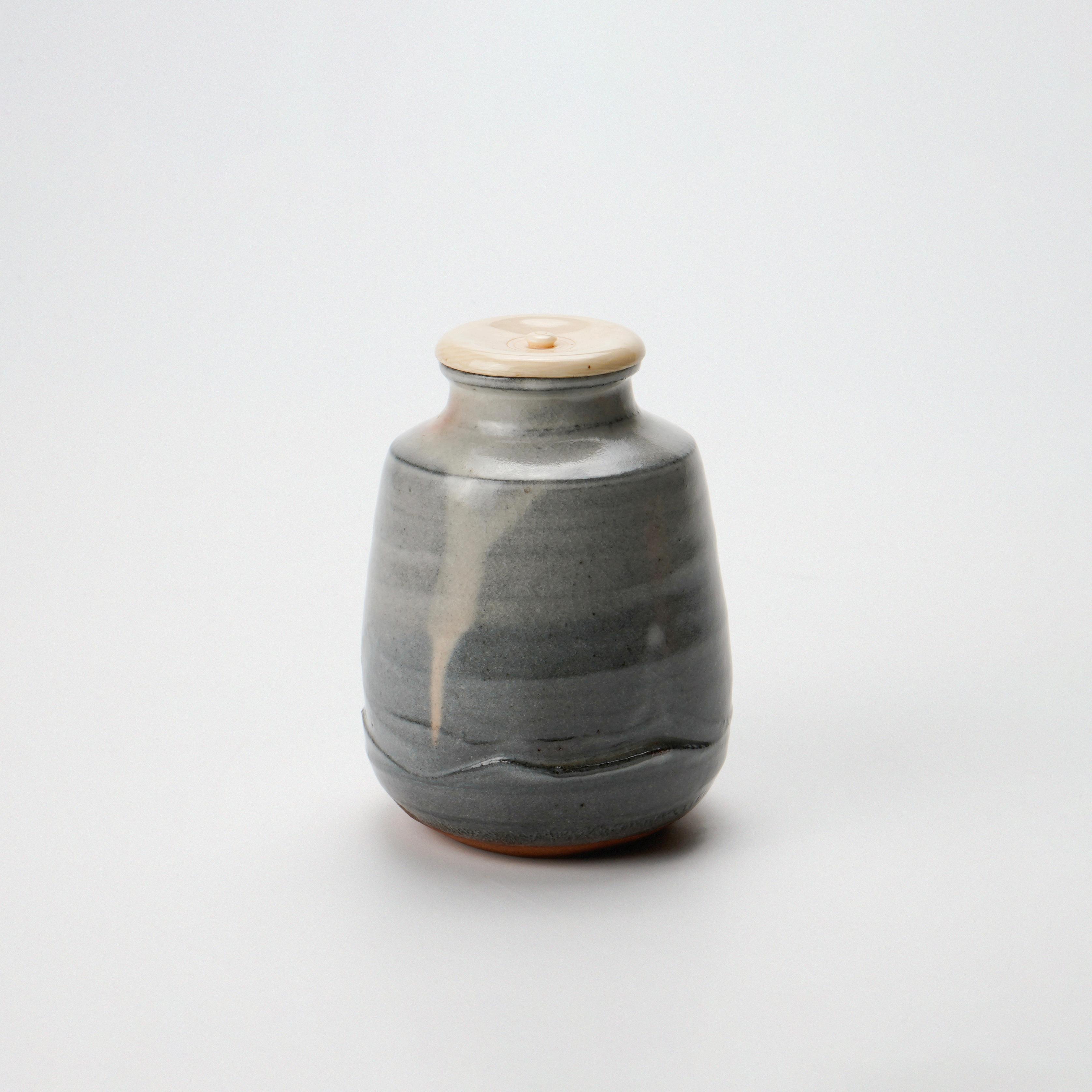
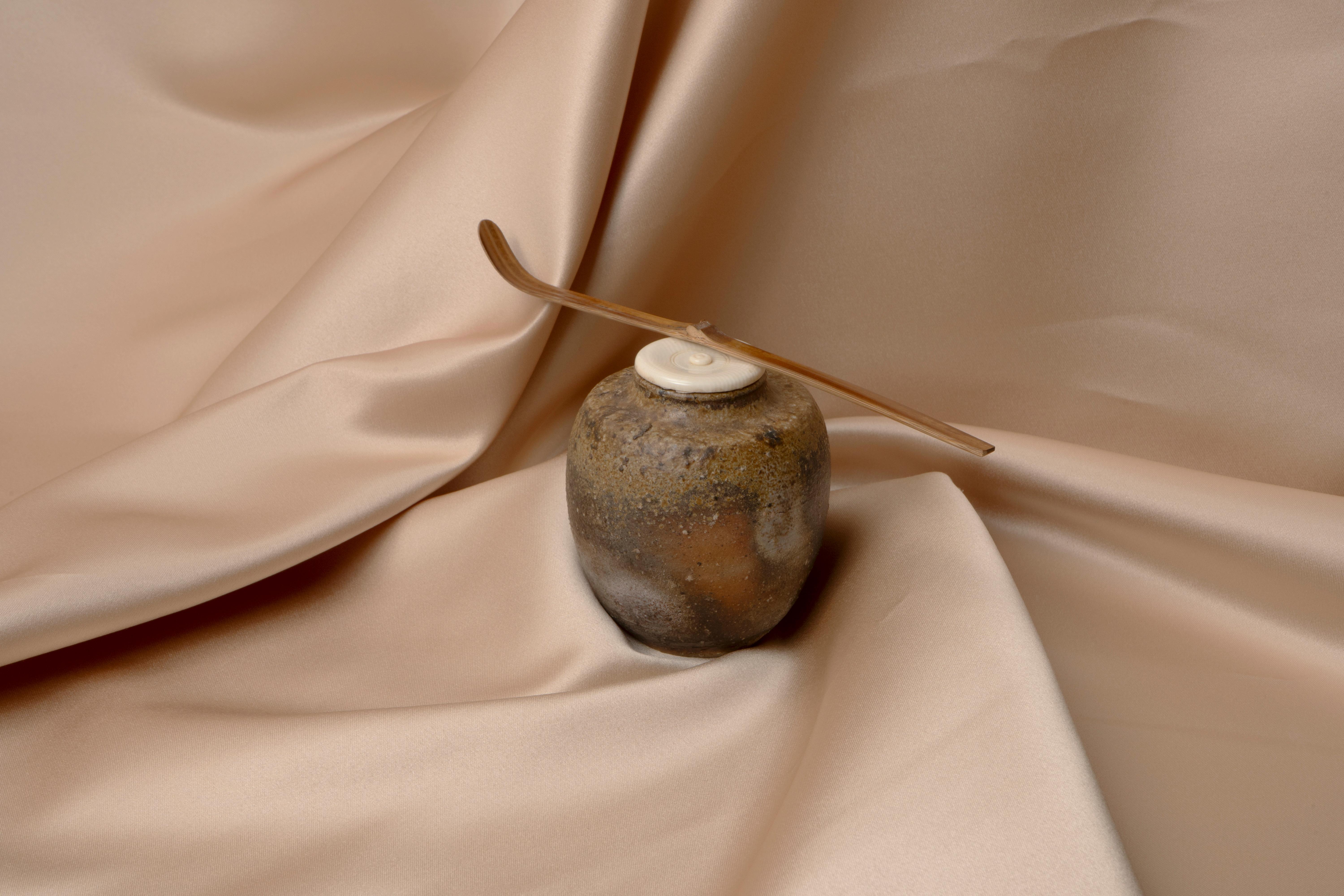
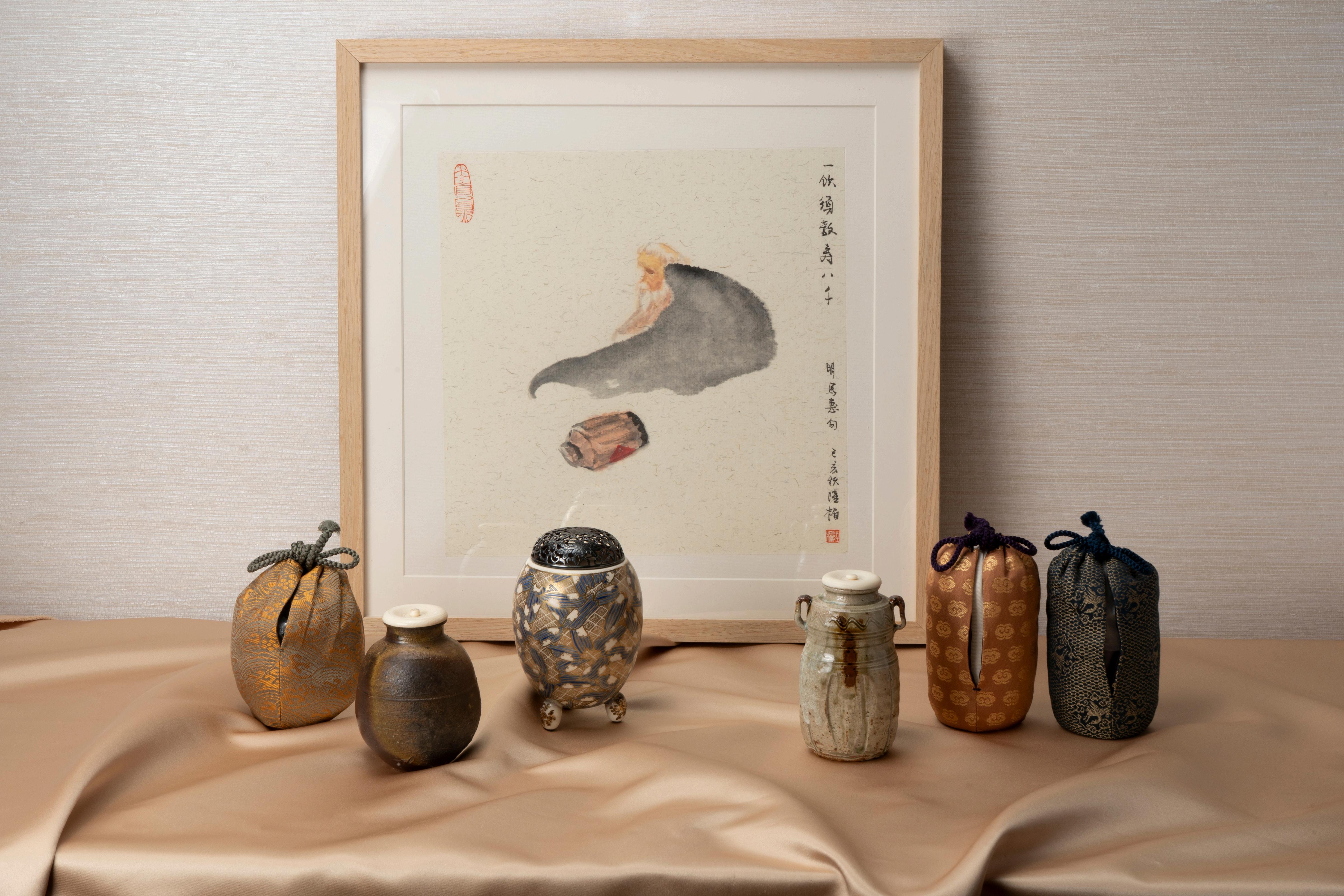
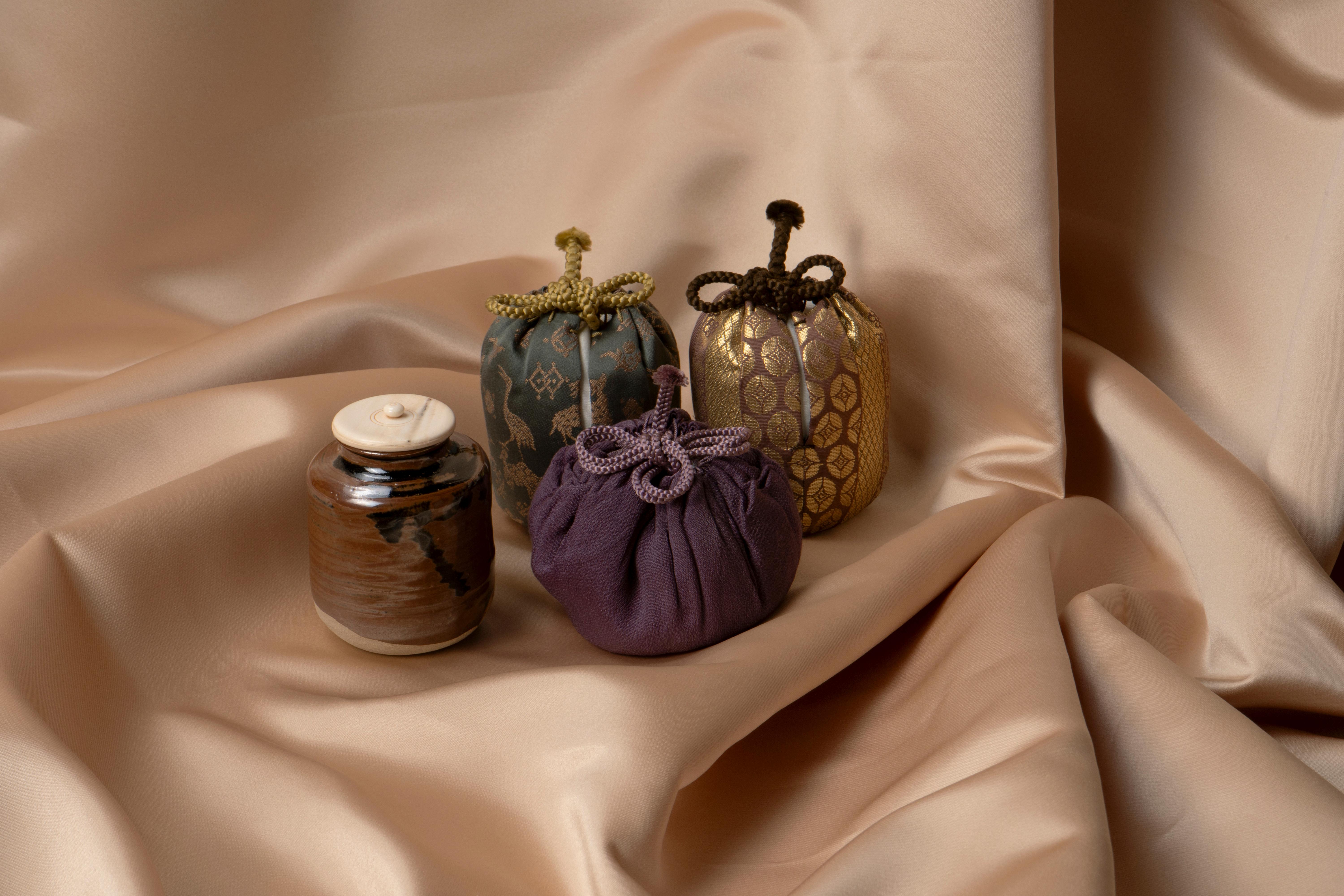
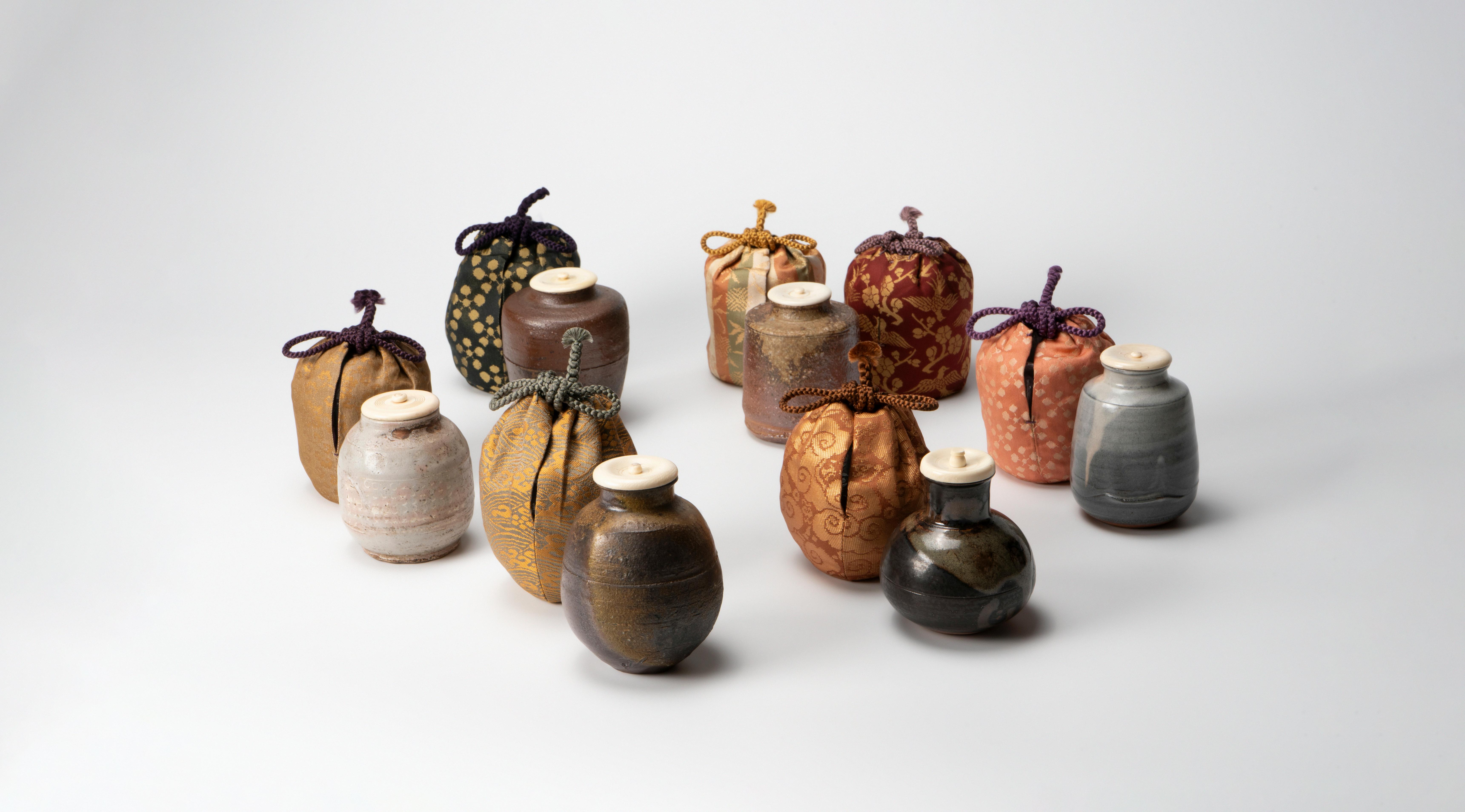
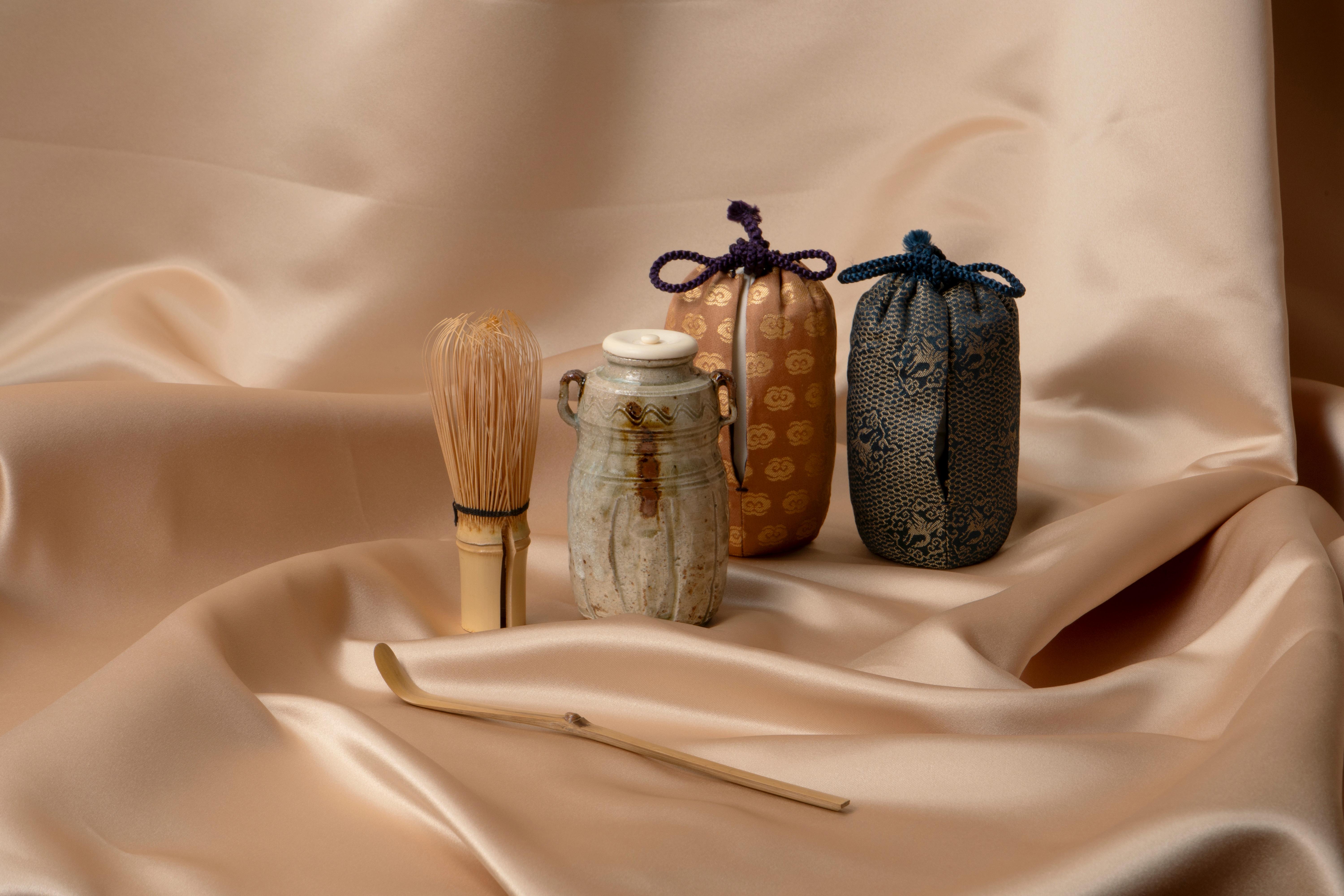
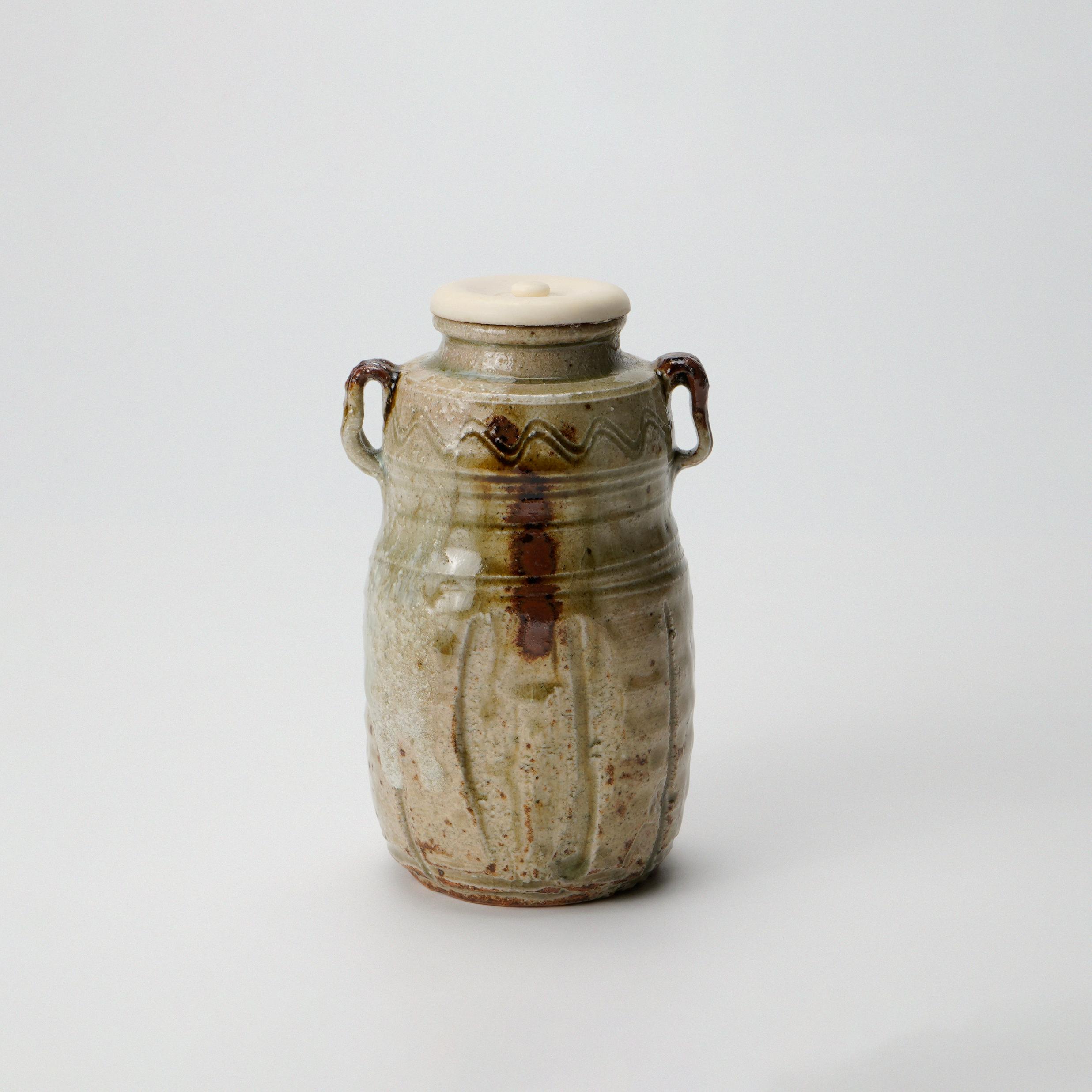
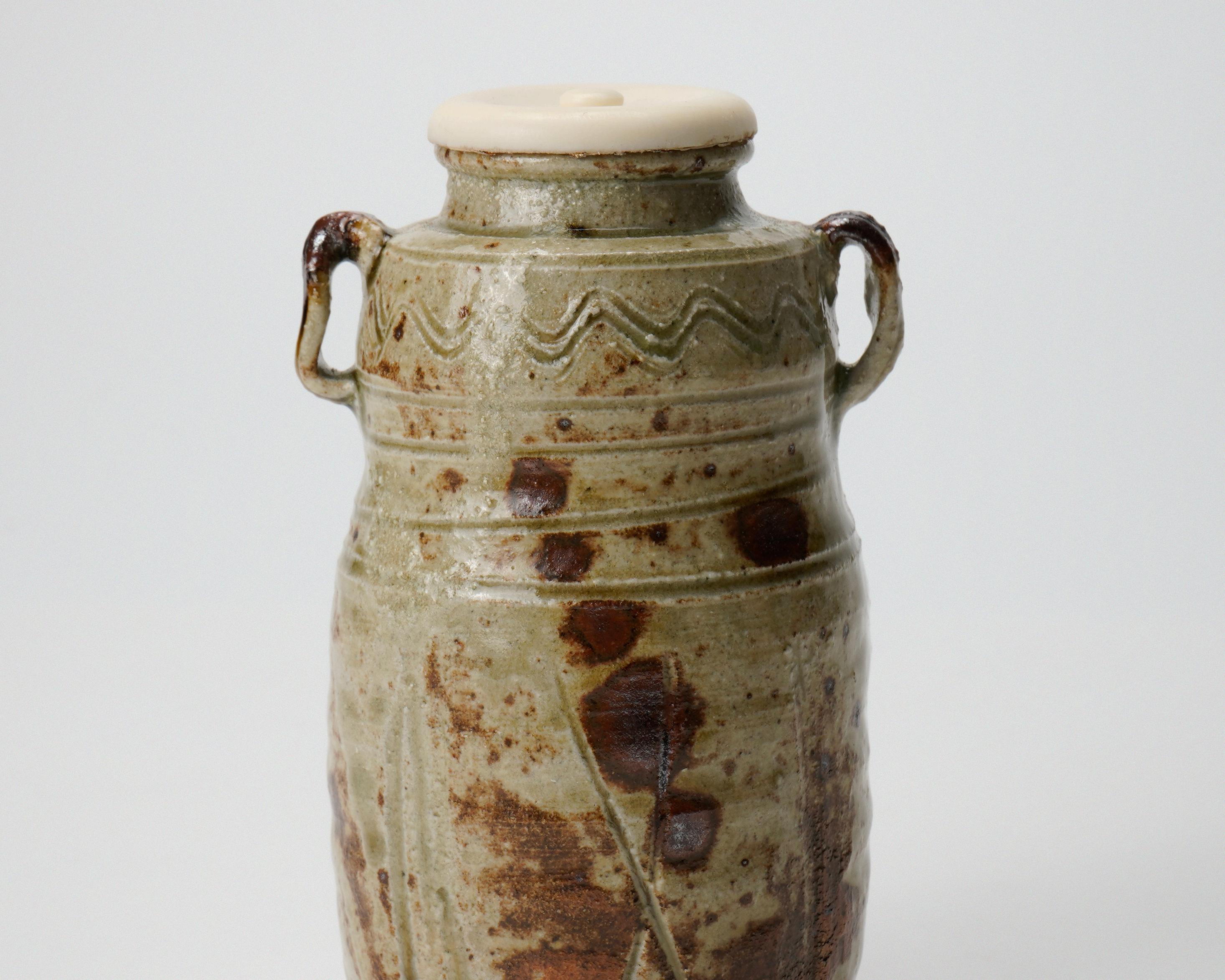
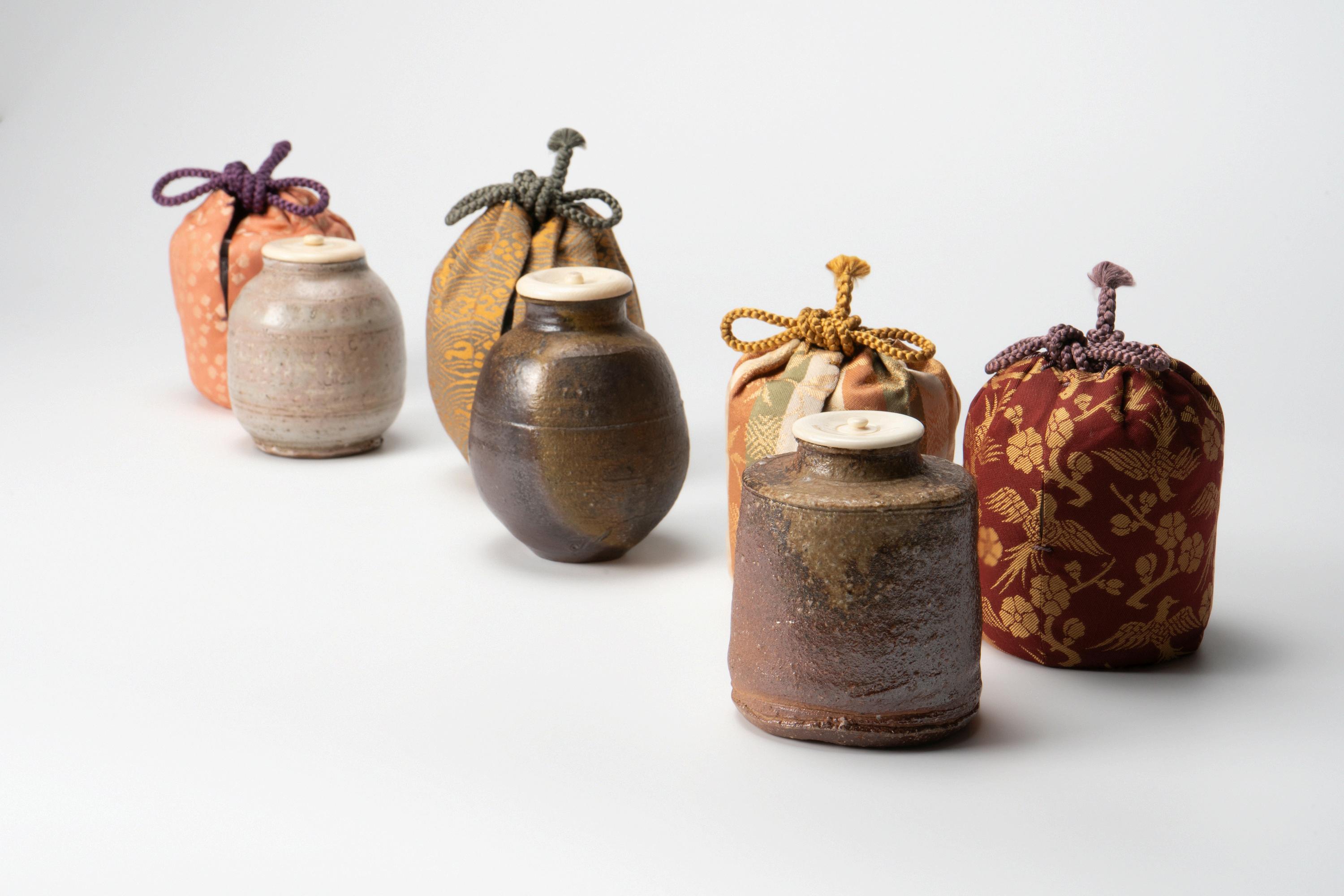
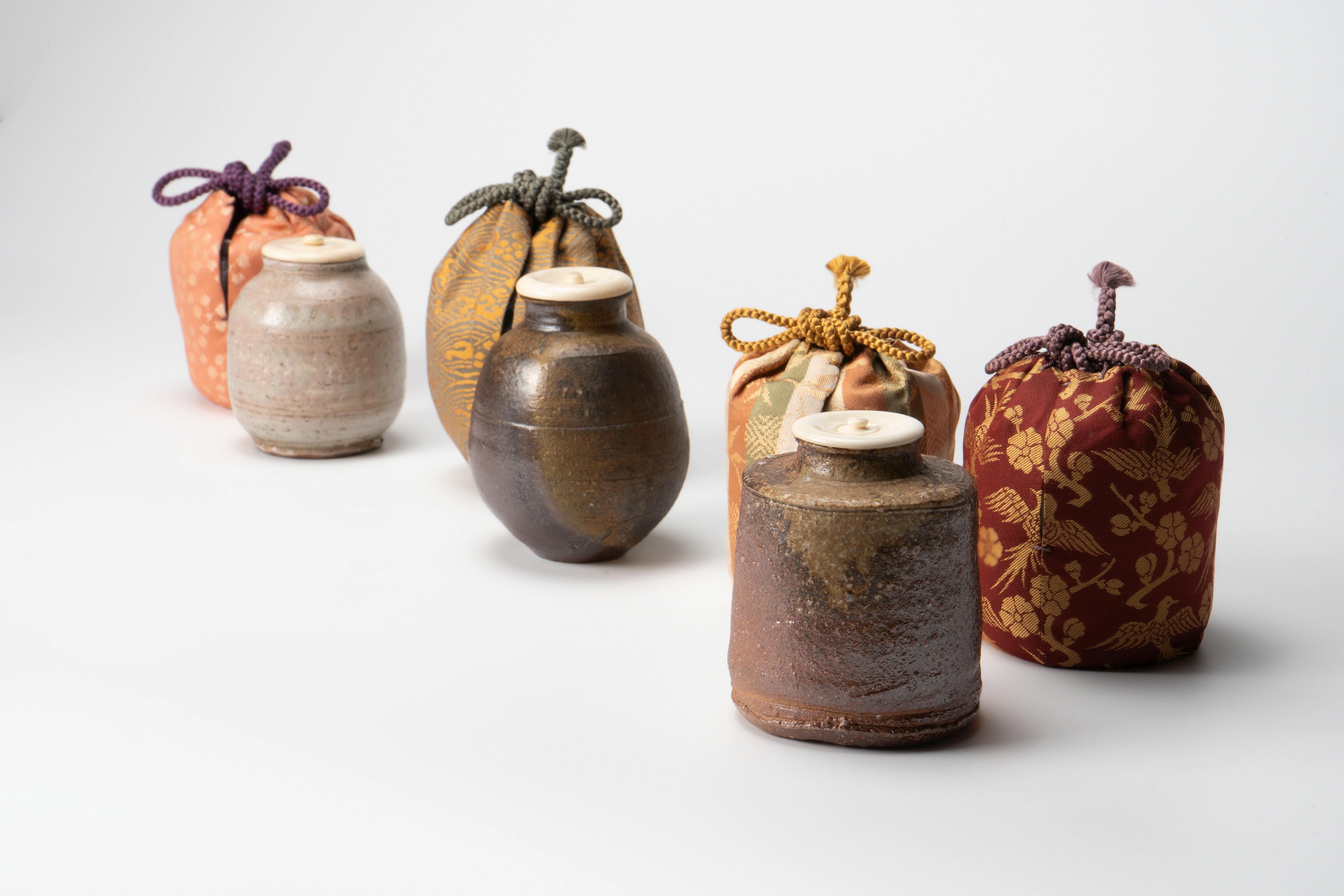
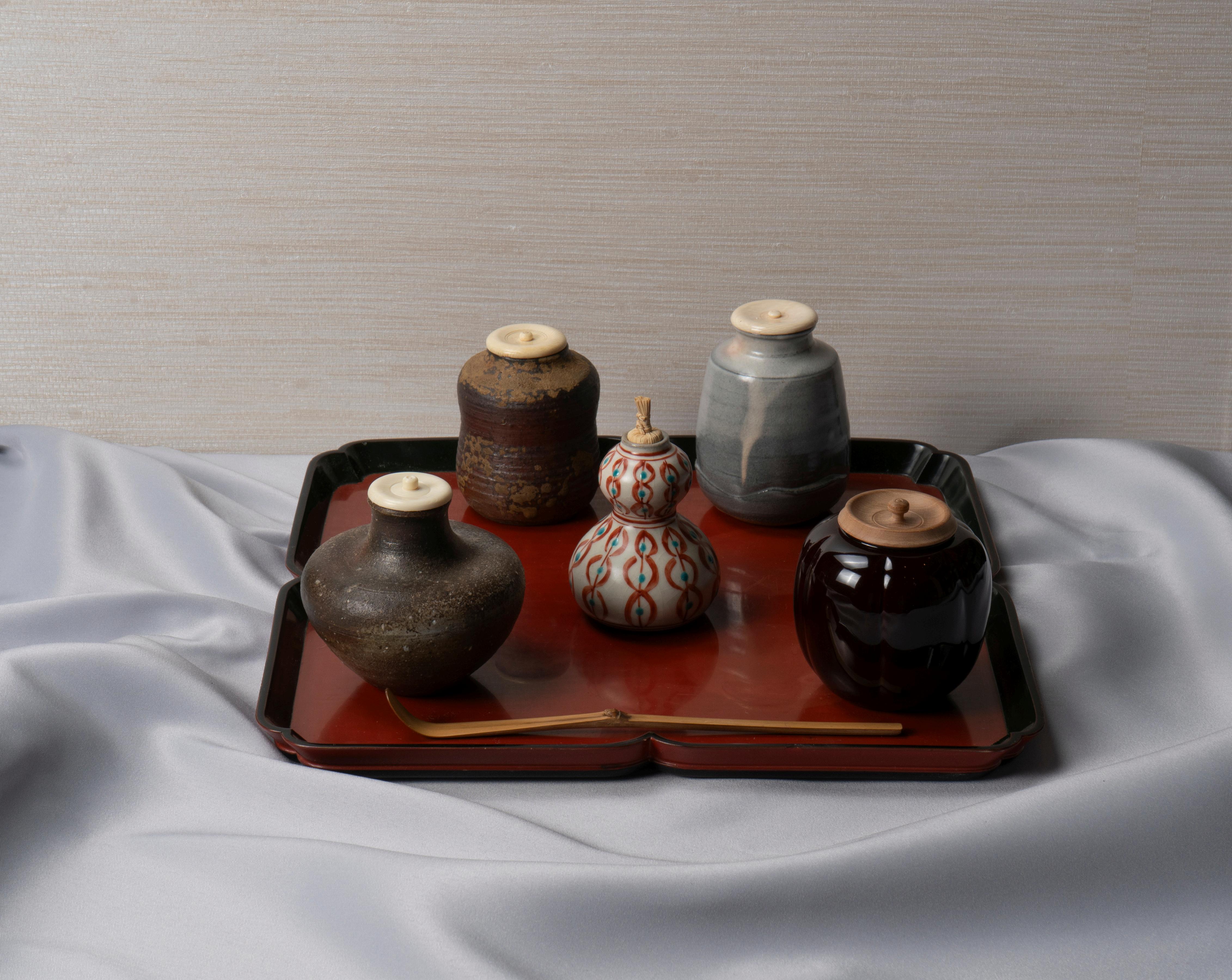
Tea caddies are central to the practice of the Japanese tea ceremony. Historically introduced from China by travelling monks, these small lidded vessels were originally ceramic containers used to hold and transport tea Their significance expanded during the Momoyama period (1568-1600), a time in which the way of tea was formalized and refined Stoneware of the Momoyama period, Edo period (1603-1868) tenmoku glazes, and the stylistic distinctions cultivated by different tea schools all contributed to a rich lineage of shapes, textures, and surface qualities. Tea caddies also belong to a broader world of tea implements and material culture that includes lacquer, metalwork, and textile accessories, each with a specific role in the tea environment and in the choices made by the tea host. The vessel also affects the tone of the overall tea ceremony in a variety of ways
Much like incense implements, contemporary tea caddies take on a variety of forms, and introduce new energy and expression into the tea space
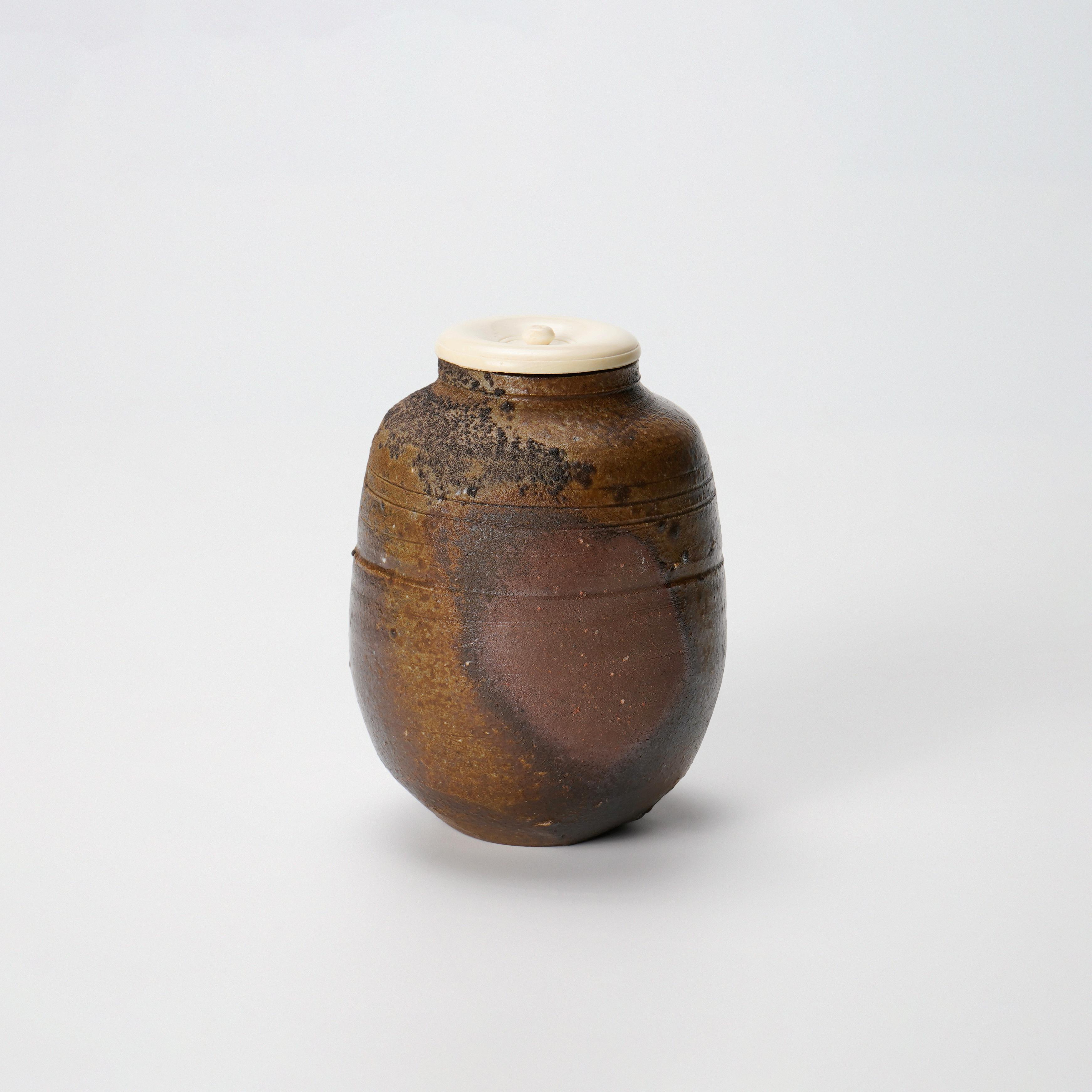
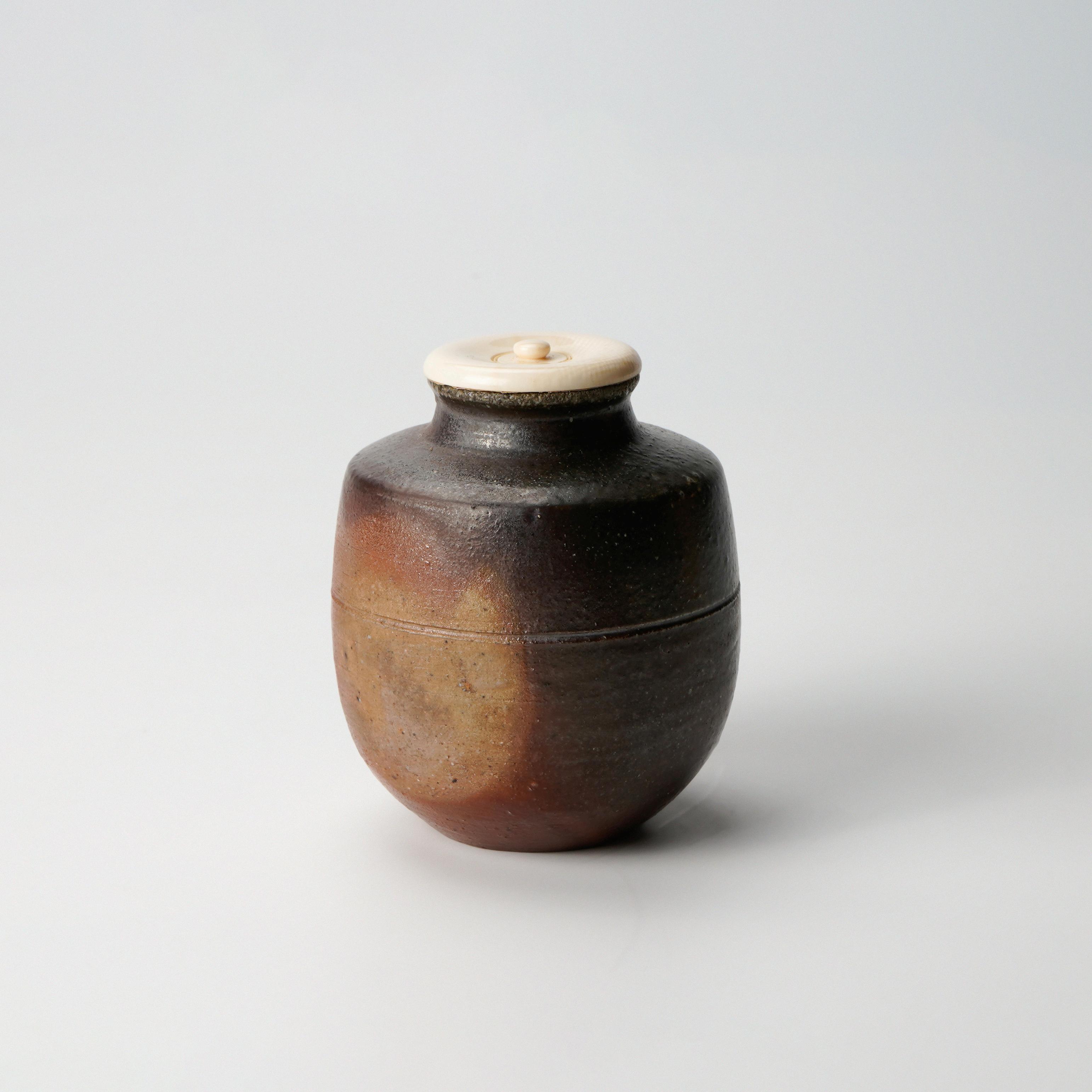
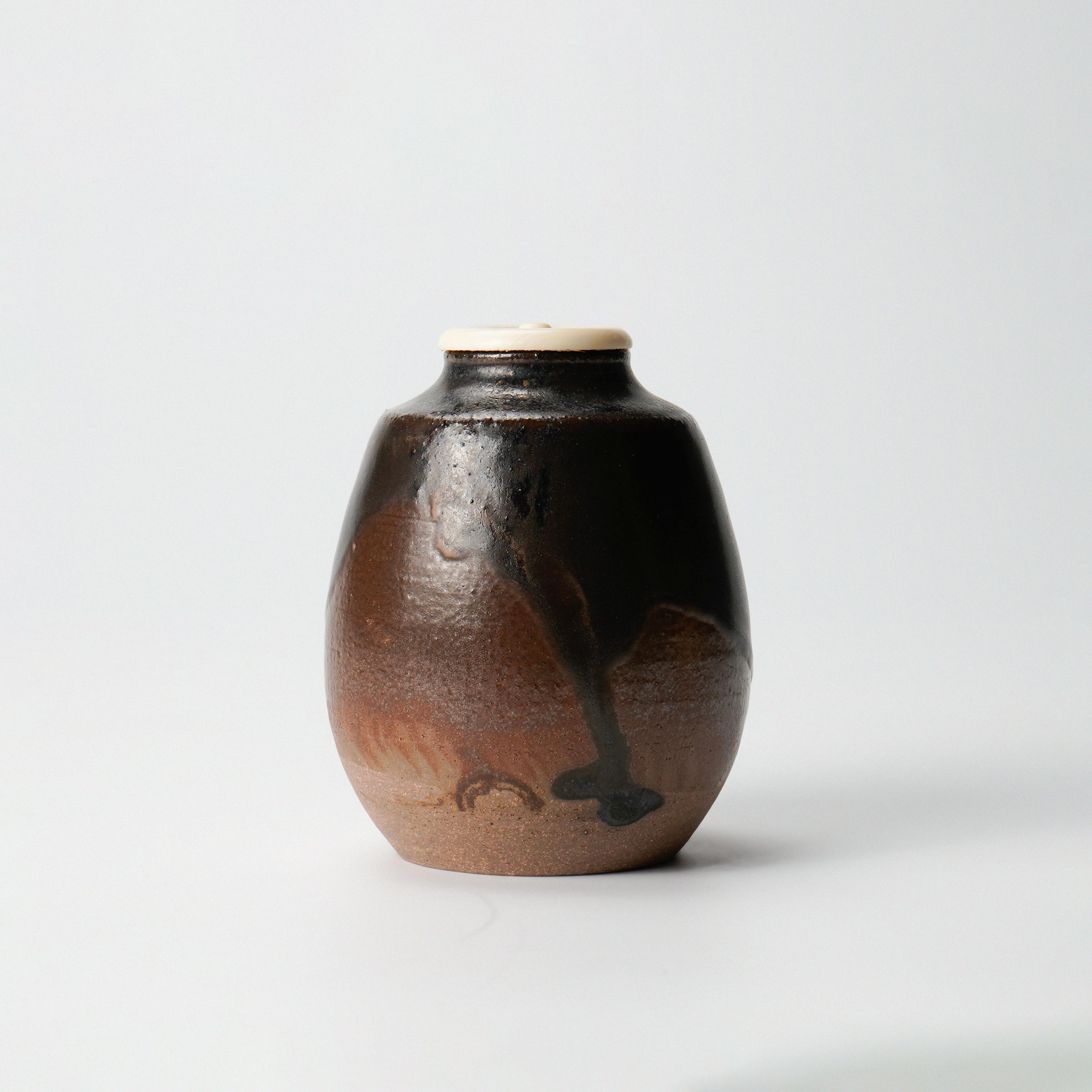
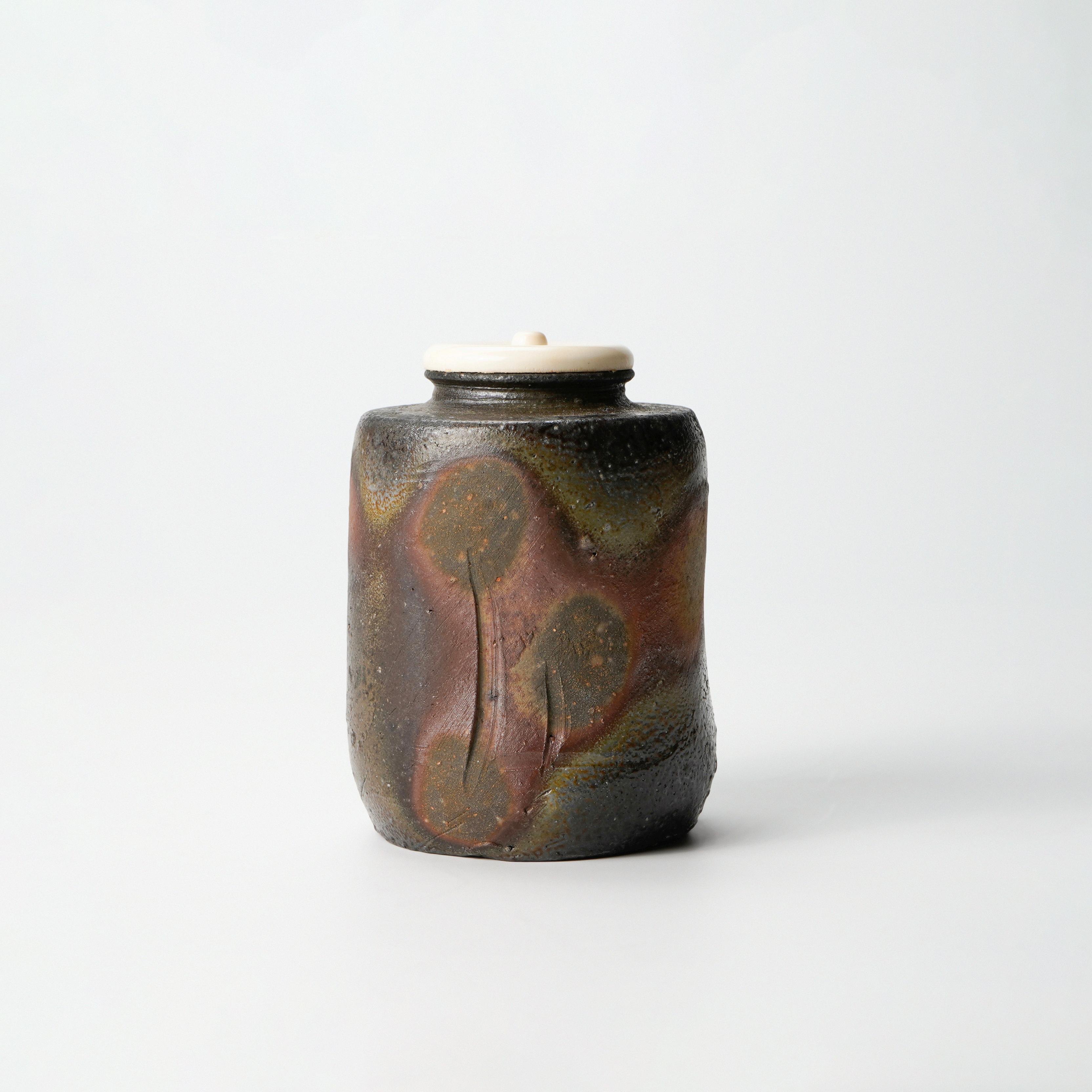
Fujiwara Yū 藤原 雄 (1932-2001, Living National Treasure c 1996)
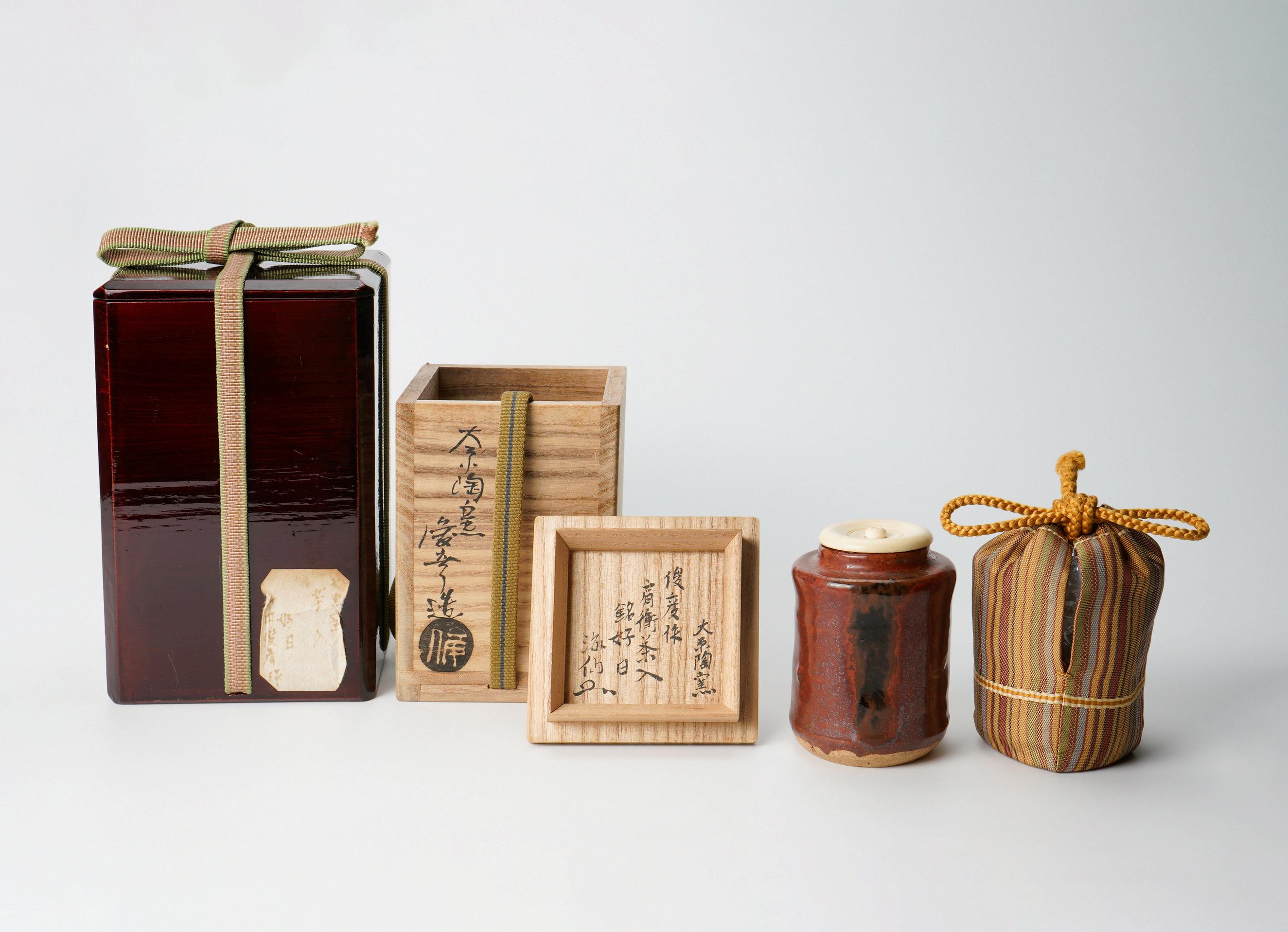
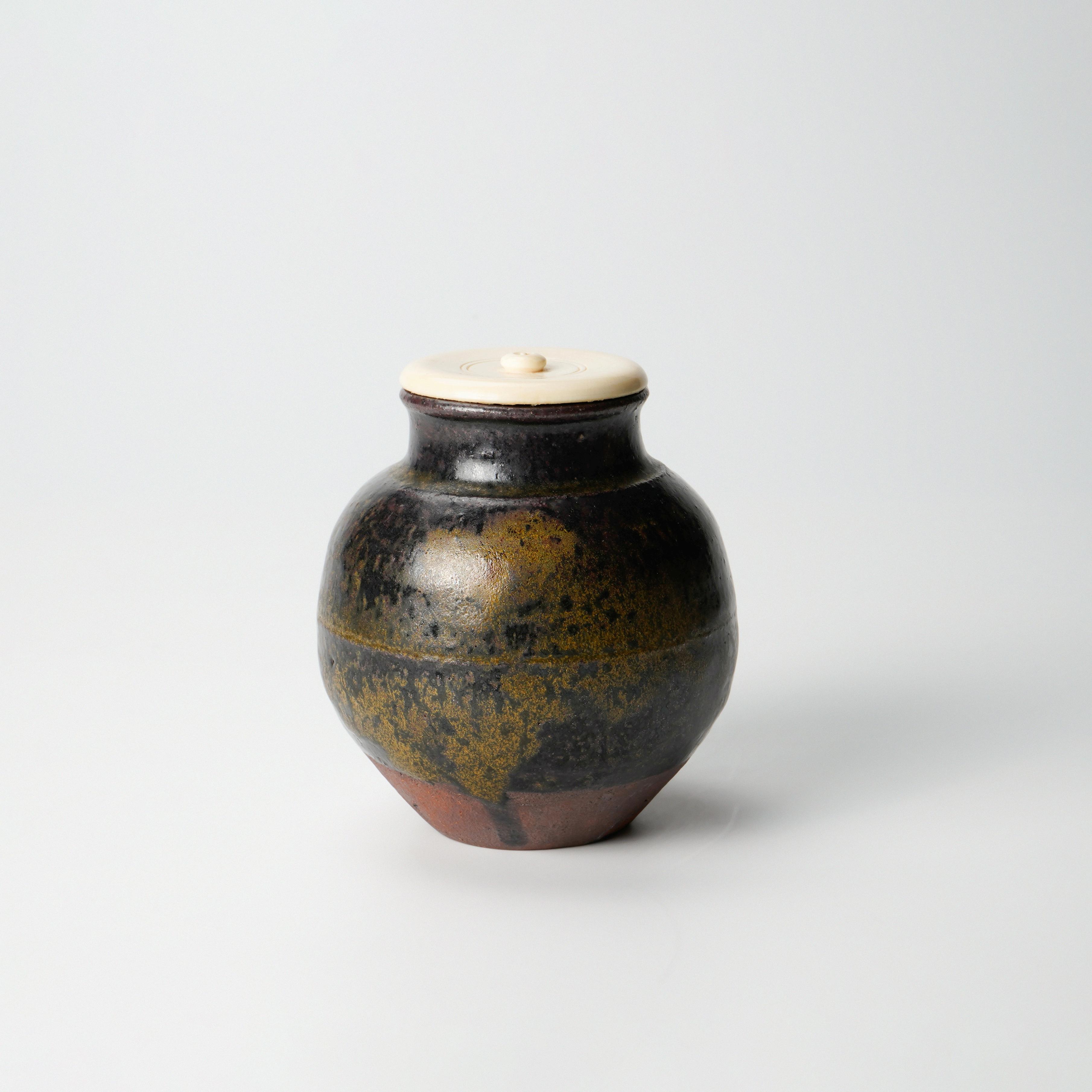
Bizen tea caddy, with signed wood box, stoneware, (h) 8 8 × (w) 6 9 cm
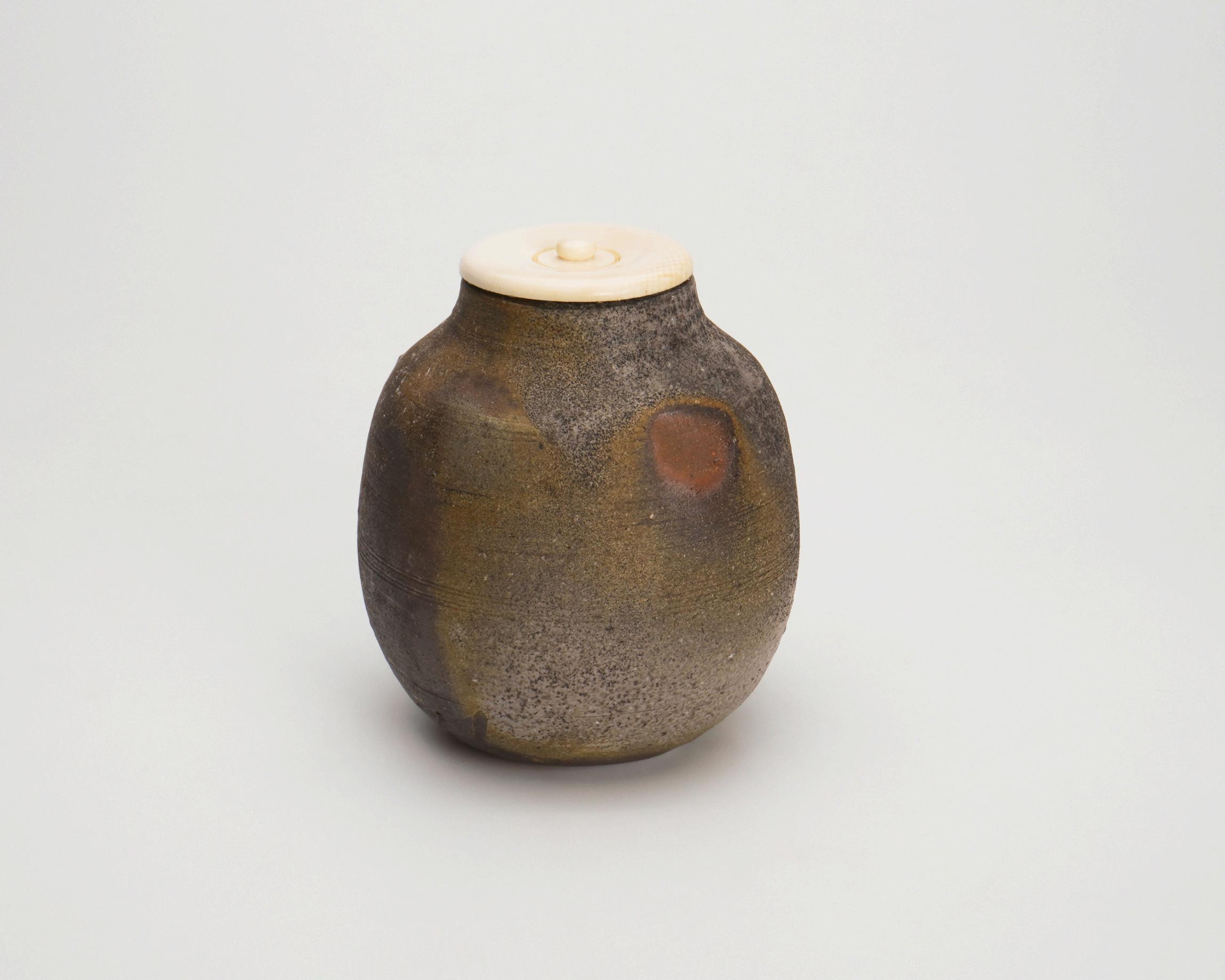
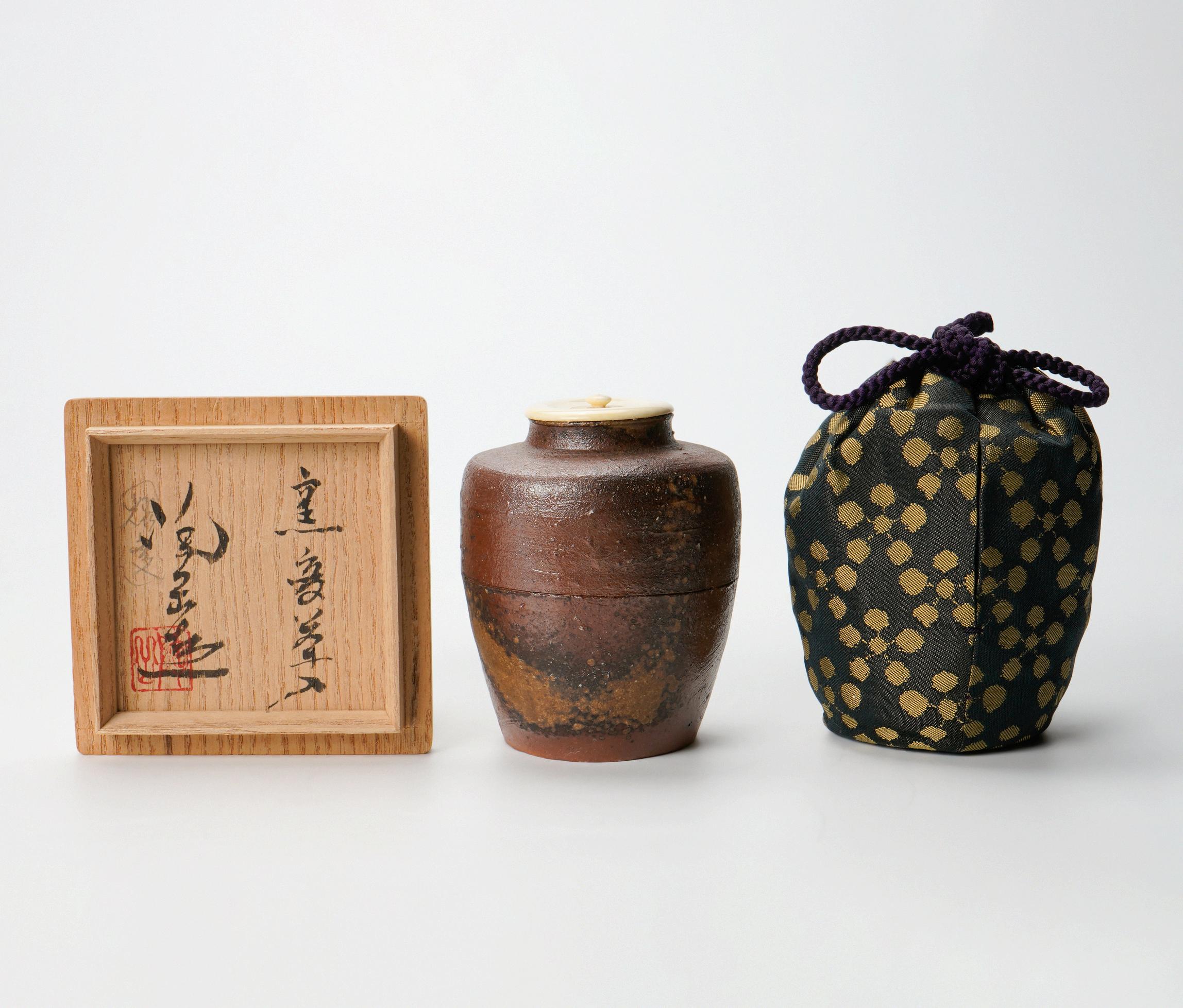
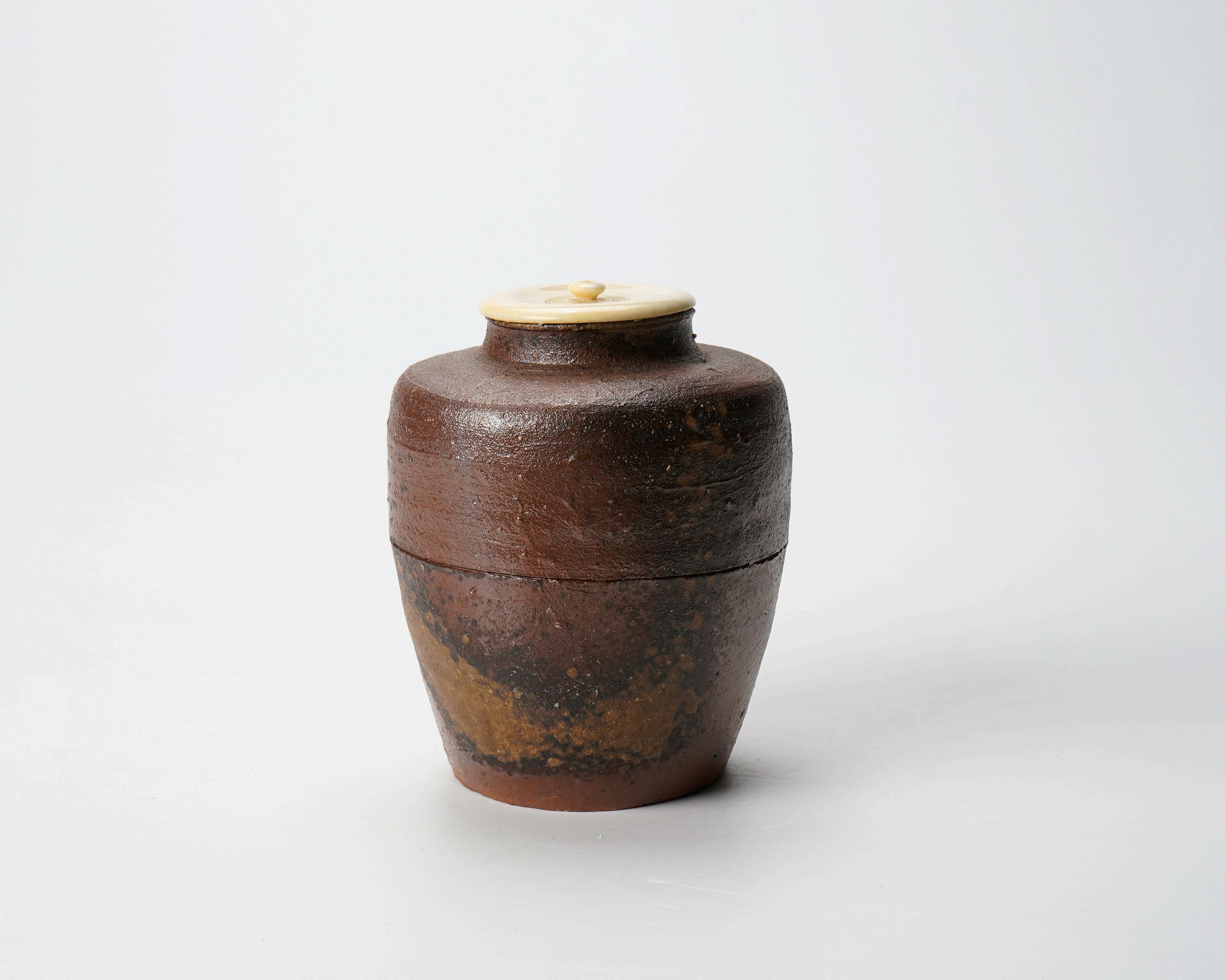
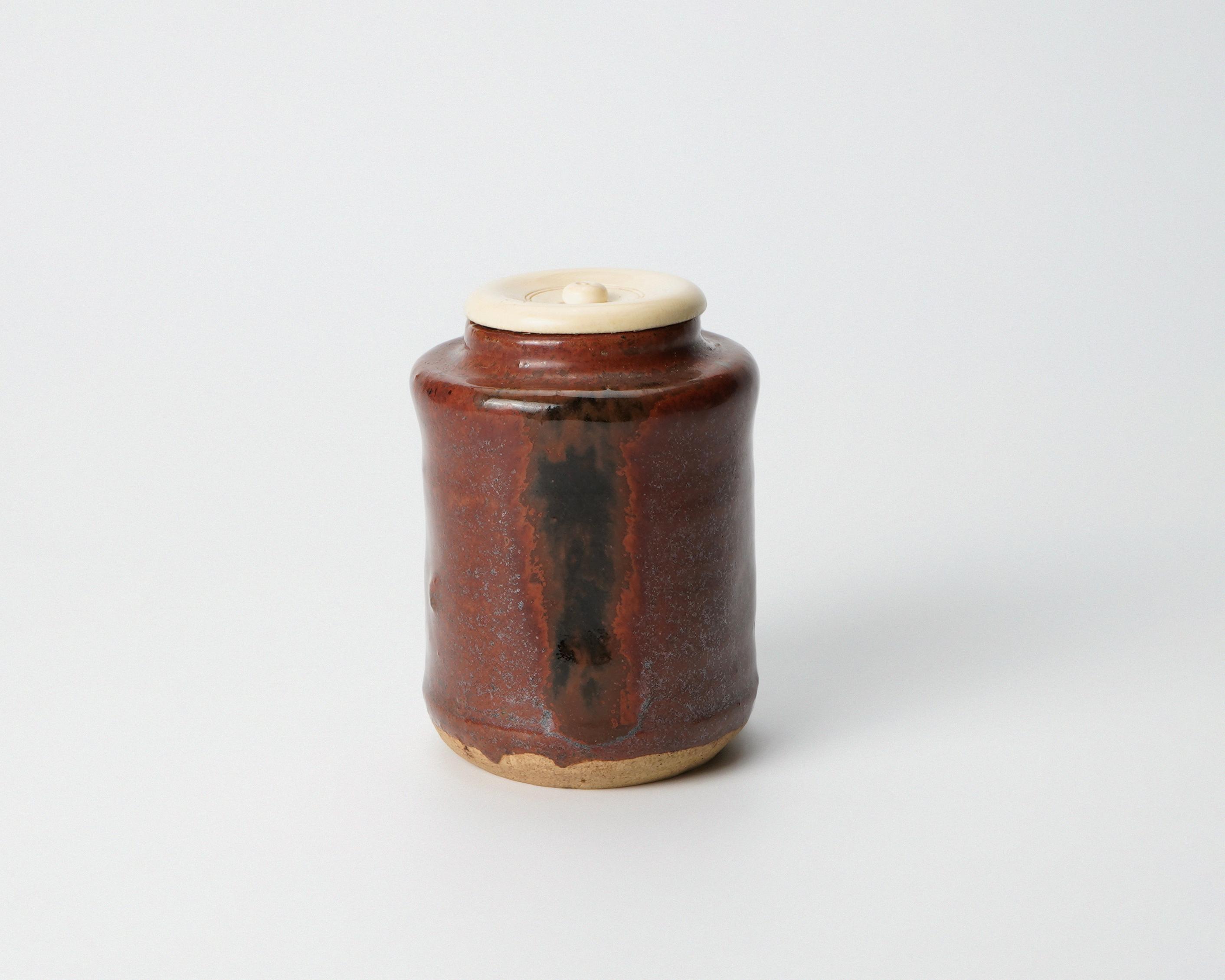
Fujiwara Yū 藤原 雄 (1932-2001, Living National Treasure c 1996), Bizen tea caddy, with signed wood box, stoneware, (h) 8 22× (w) 8 9 cm
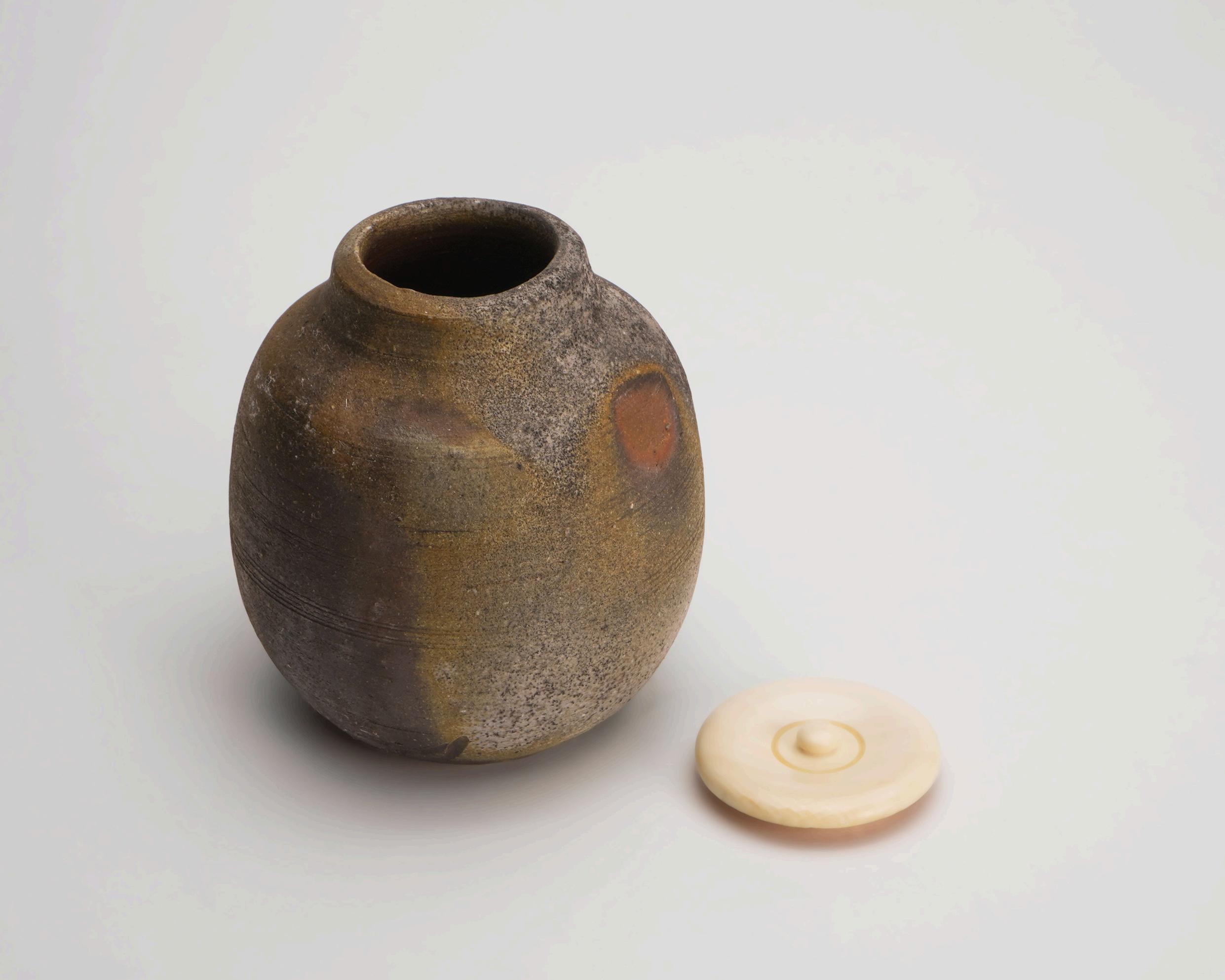
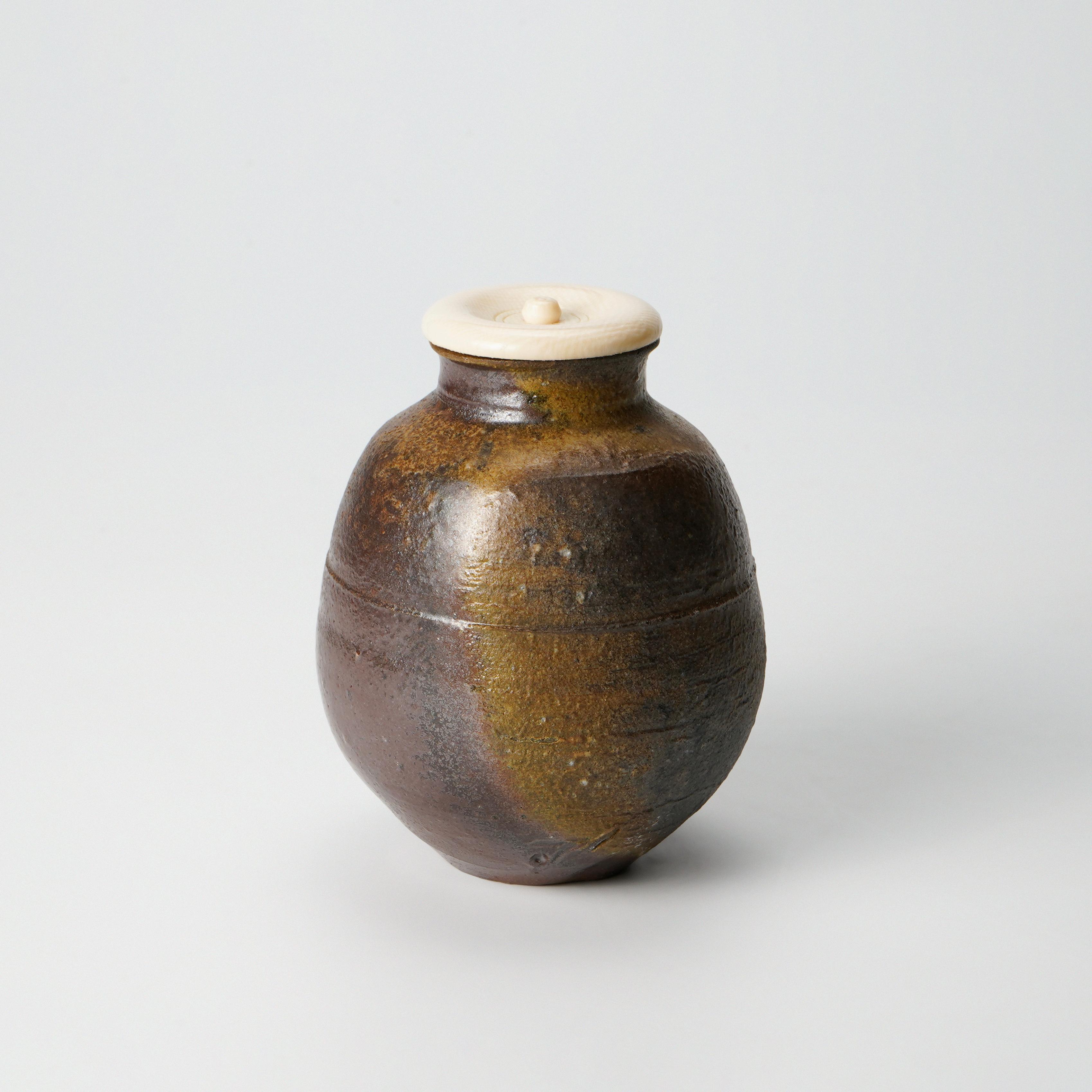
Fujiwara Yū 藤原 雄 (1932-2001, Living National Treasure c 1996)