DABUKA TRAVEL VISIONS
Magazine Nr. 13
May – July 2026
30 YEARS OF DABUKA
Special Edition
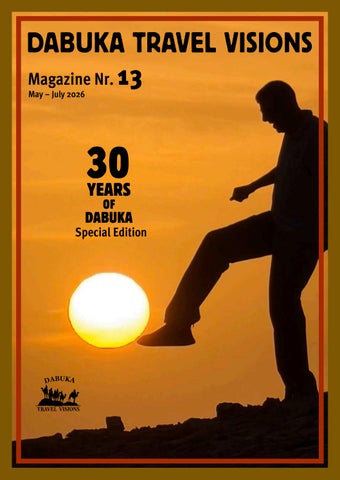
Magazine Nr. 13
May – July 2026
30 YEARS OF DABUKA
Special Edition
We are celebrating 30 years of our company – and we have decided to mark this moment consciously.
Three decades mean change. People come and go, perspectives shift, paths often emerge differently than planned. And yet something remains that runs through all these years.
This magazine is neither a classic retrospective nor a catalogue of our work. It is an attempt to pause –and to make visible different facets of this time: experiences, ruptures, encounters, and developments.
By the way – where does our name come from?
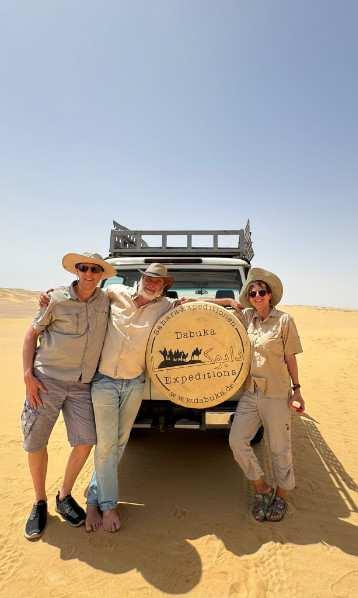
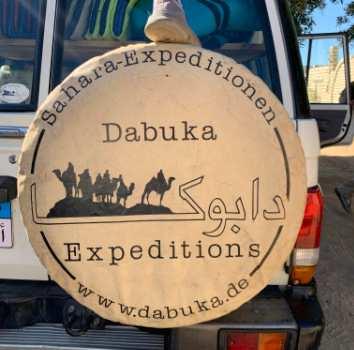
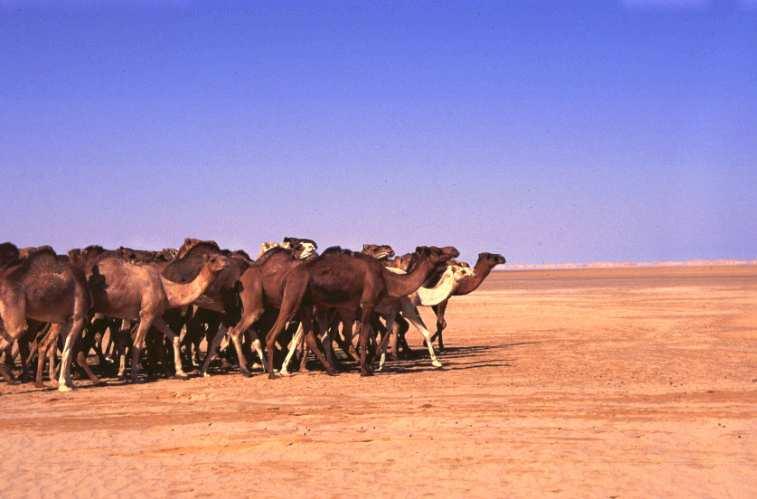
“Dabuka” refers to a moving camel caravan, a word of Arabic origin. It symbolizes movement through nature, which is what we stand for.
We now invite you to accompany us through these pages – whether from near or far.
Warm regards Dorothee und Tarek Cairo, May 2026
When the GPS System Suddenly Failed15
Stranded in the Ubari Sand Sea, Libya16 The Day My Passport Disappeared18 The Stamp That Never Existed19 The Vehicle That Nearly Got Stolen20 The Break:
Disillusionment21
Editor: Dorothee Rieche
Art Director: Andreas Klostermaier
Contributor: Shada Mamdouh
Marketing & Advertising: M. Ibrahim
Contact (Magazine): magazine@dabuka.de
Contact: +20 101 506 9061
Email: service@dabuka.de
Homepage: www.dabuka.com
Special Tours: www.eclipse-2027.com All texts and images in this magazine are protected by copyright.
Photos: Andreas Klostermaier, Steffen Kirchner, Tarek El Mahdi, Dorothee Rieche, et al
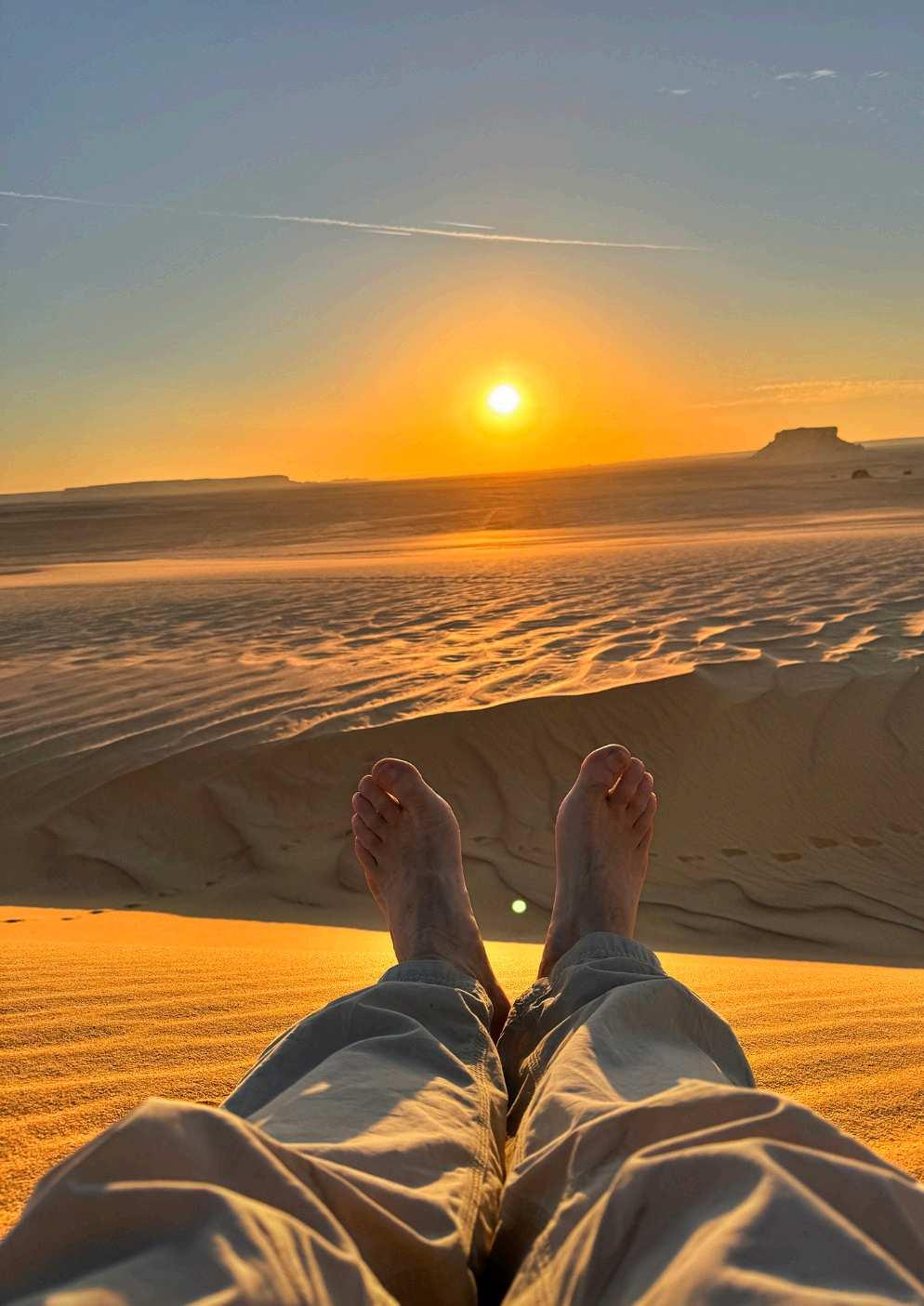
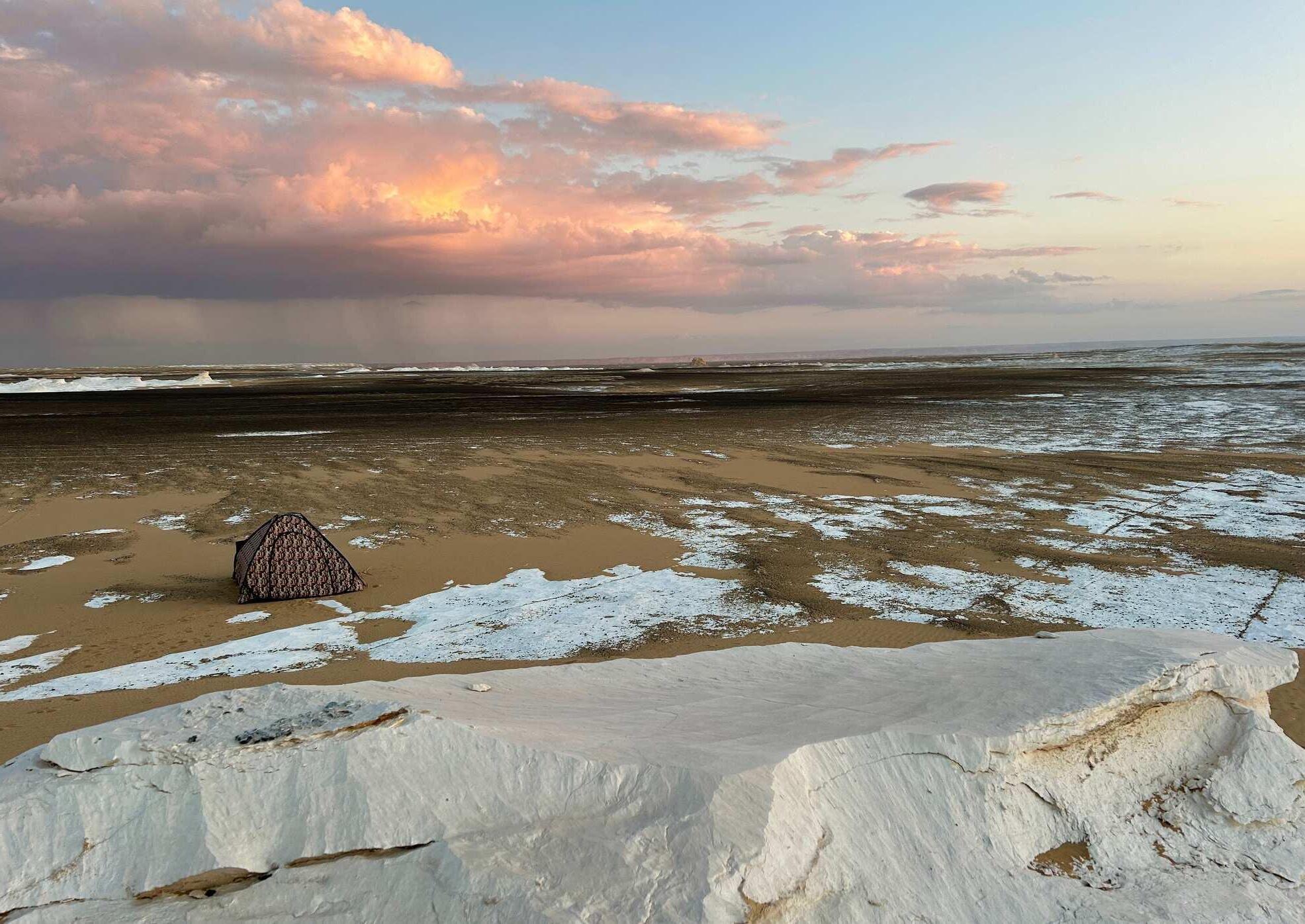
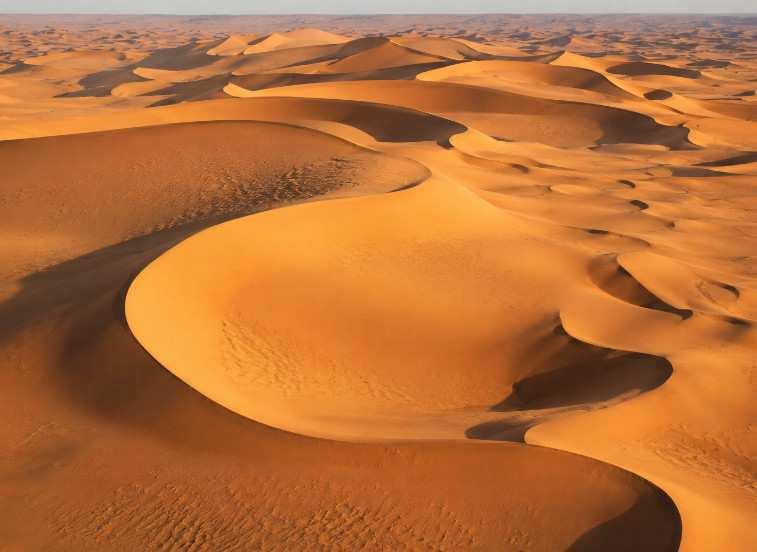
The air changes long before anything can be seen. It is no longer just warm – it is dry, vast, silent.
The moment the engine stops is always the same. As if the world briefly catches up before coming to a halt. Then nothing.
Only light falling differently.
And this first impression that time moves more slowly here.
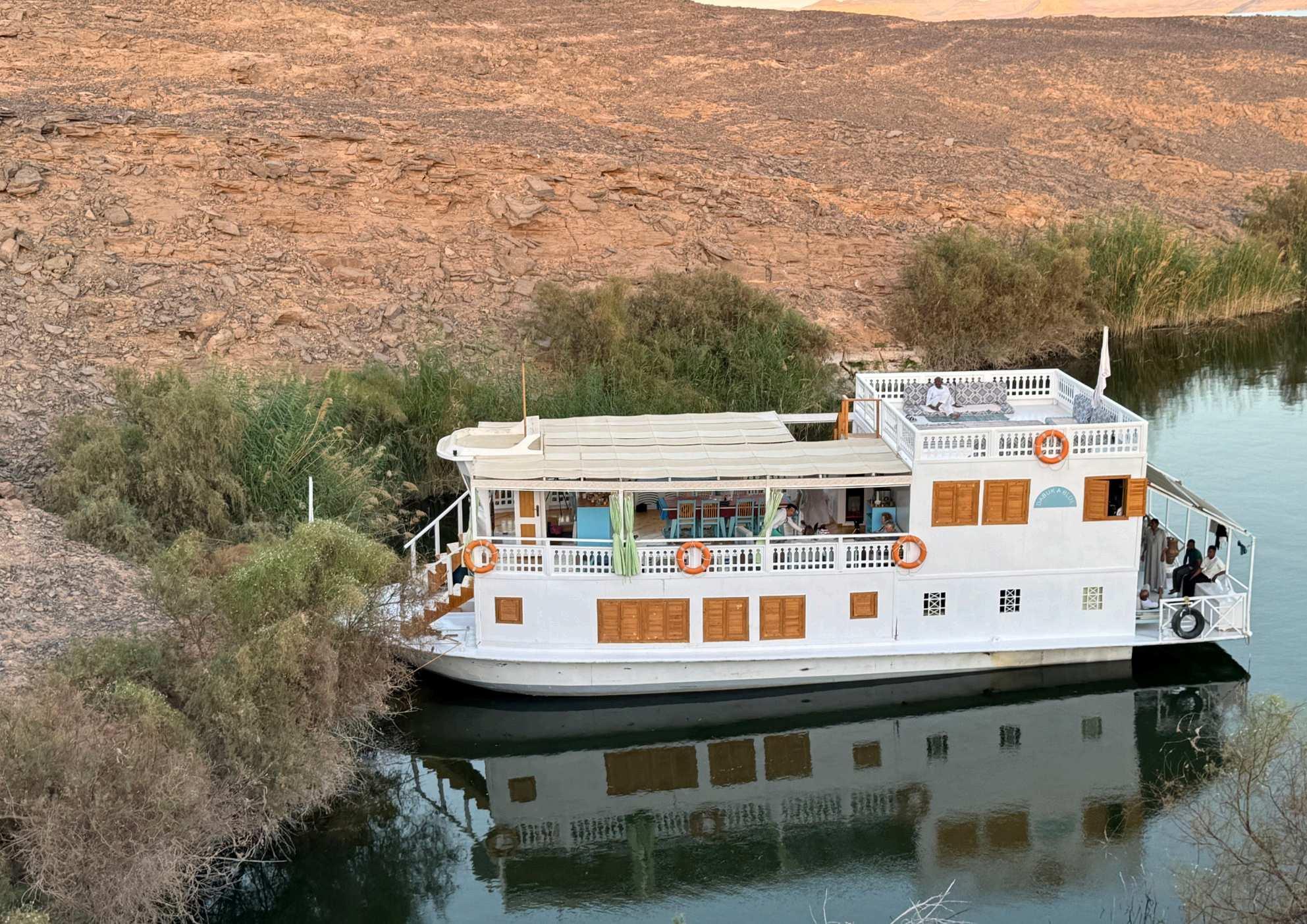
The engine starts and settles into a steady hum.
A jolt runs through the boat as it searches its way from the shore into the open lake.
A small breeze tousles the traveller’s hair, who adapts to the movement of the waves, lets their gaze wander, and is carried toward the horizon.
It is that special moment when one can let go, trusting the journey, wherever the path may lead.
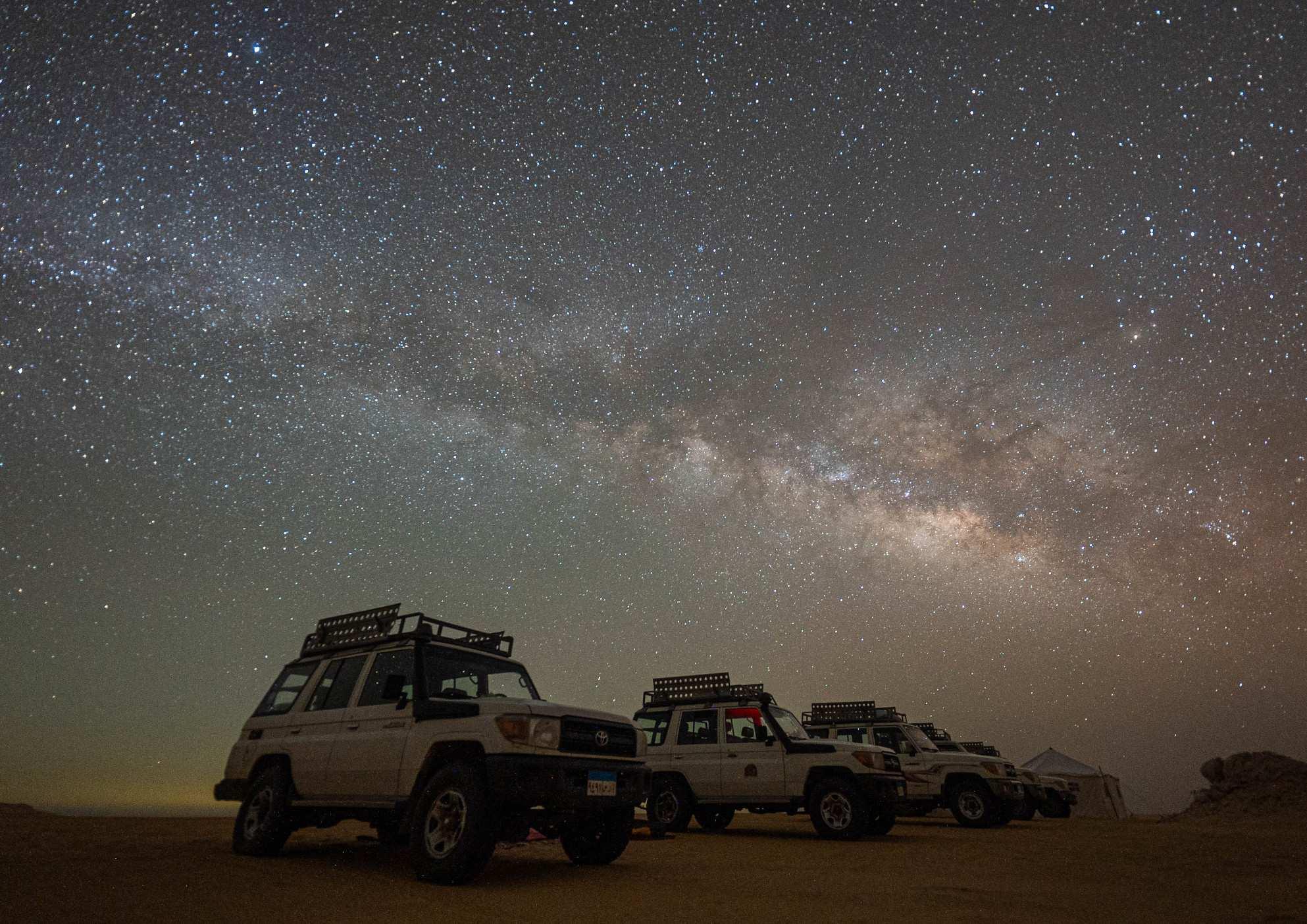
Just moments ago it was still bright – now night is already spreading.
Familiar shapes change their appearance and the wind settles.
Suddenly everything feels both close and infinitely distant at the same time.
Conversations become quieter without anyone deciding so. And the gaze keeps returning to the sky, to the different constellations of stars.
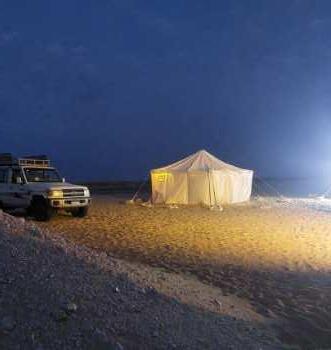
The campfire, as a source of light and warmth, draws people in almost magnetically, offering a sense of shelter in its glow.
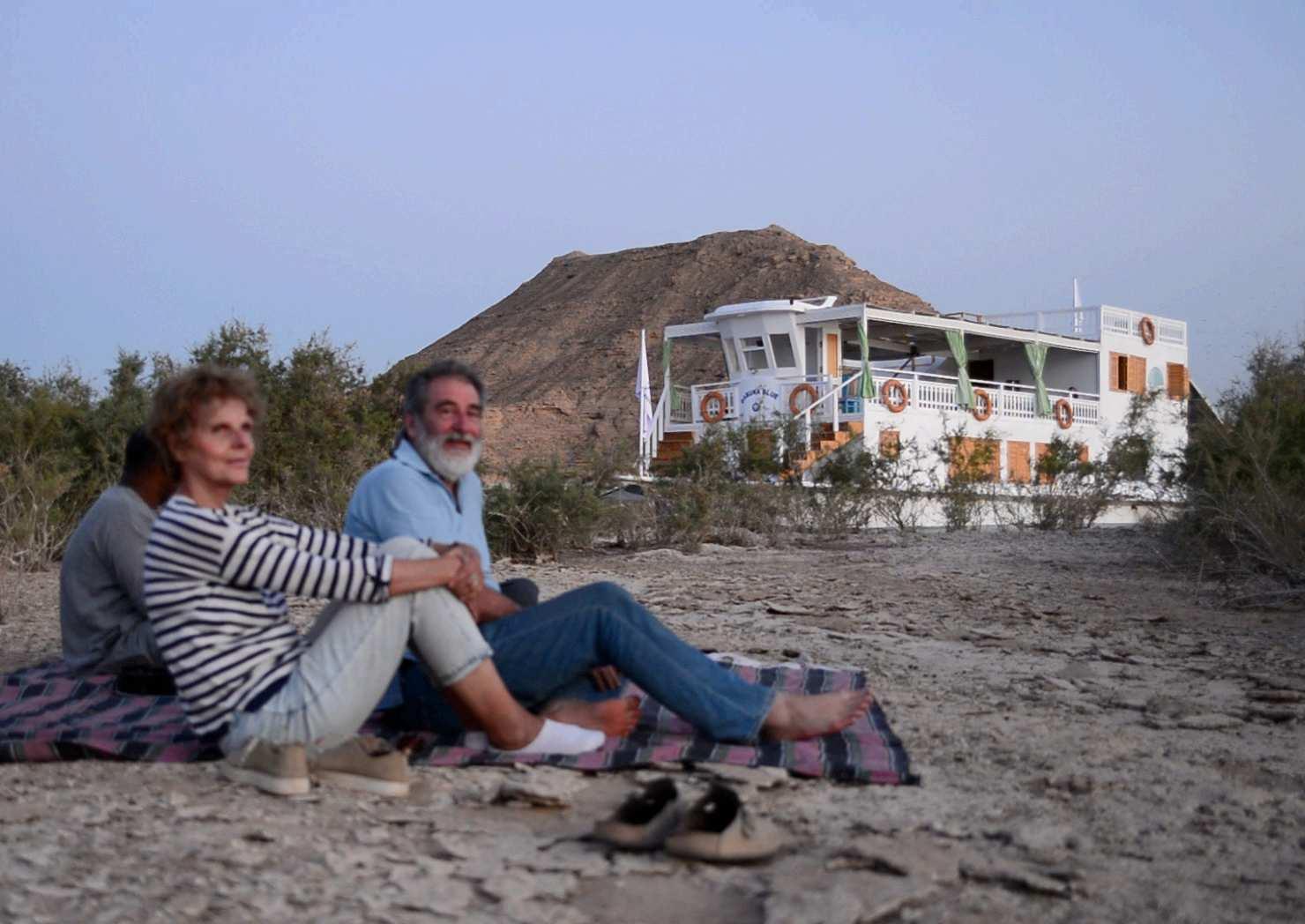
Every morning offers a new chance – a possibility for this day to become the best one.
Slowly one drifts between sleep and waking until the sunbeams tickle so much that the eyes have to open.
The smell of coffee and breakfast fills the air, and a certain tingling in the stomach announces all the wonders that might still happen today.
Every travel company – in fact anyone who plans – knows this moment: You believe everything has been thought through, prepared, secured.
And that is exactly when the journey truly begins. Because it is on the road that what cannot be planned reveals itself. People, situations, decisions – and things that simply happen.
Over 30 years, quite a lot has accumulated. We would like to tell a few of these moments here.
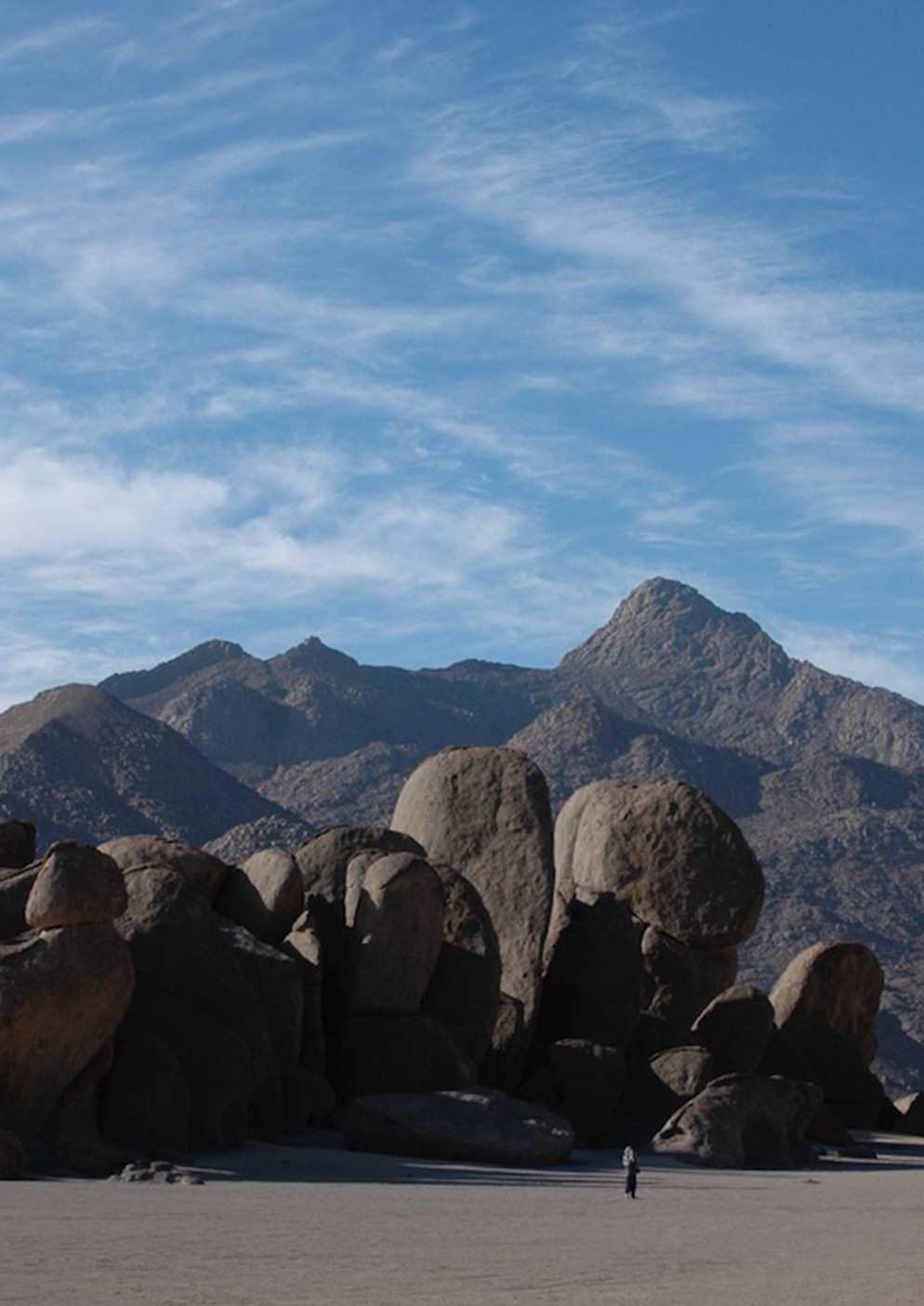
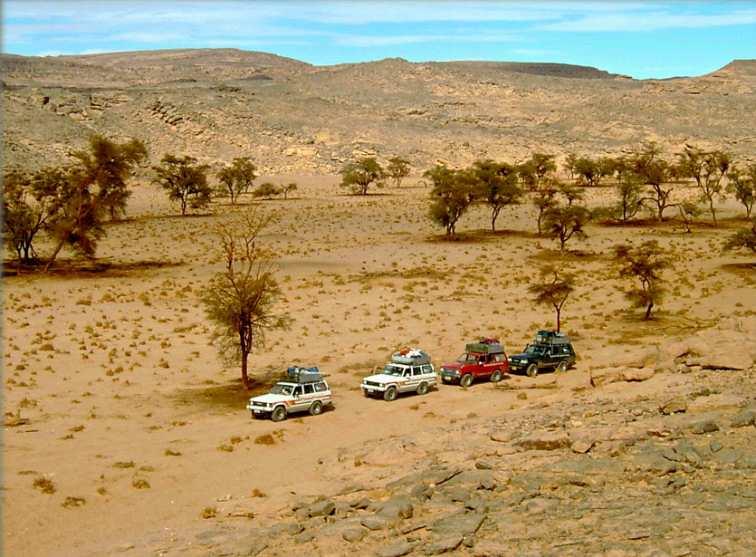
Between 1993 and 2011, Dabuka regularly conducted journeys to Libya – often through remote desert regions far from fixed routes. Orientation was always a mixture of technology and experience.
On this tour as well, Tarek relied on both. The GPS was running – until it suddenly failed. Without warning.
A second device was available. While driving, he reentered the coordinates. A small mistake was enough: one wrong number, barely noticeable, but with consequences.
What exactly happened:
To bypass a large stretch of Fishfish (fine, dusty sand that quickly pushes engines to their limits; a region one normally avoids whenever possible), Tarek planned an arbitrary point south of Wau en Namus, which he entered into the GPS. When the area seemed familiar, he checked the GPS: still 115 km – so they continued quickly in order to arrive before nightfall.
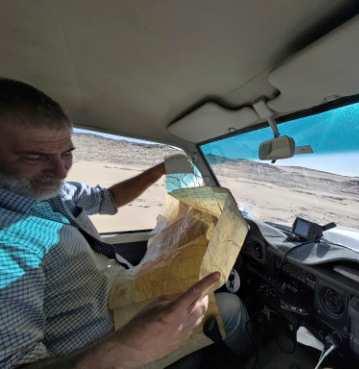
That was the mistake, because in the coordinates his finger had shifted by one digit (around 110 km).
Tarek felt that something was not right – and still initially followed the indicated data. In the end, this resulted in a detour of 110 kilometres.
For the group it meant only a loss of time. For him it was more: a reminder that technology is helpful – but cannot replace experience. �
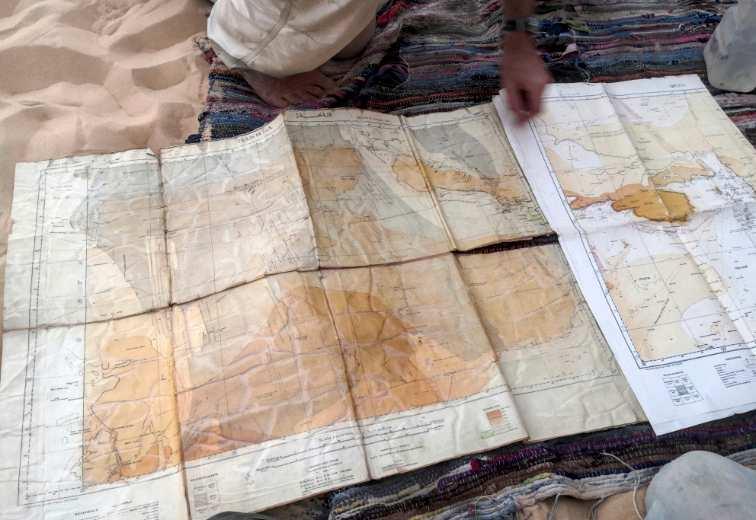
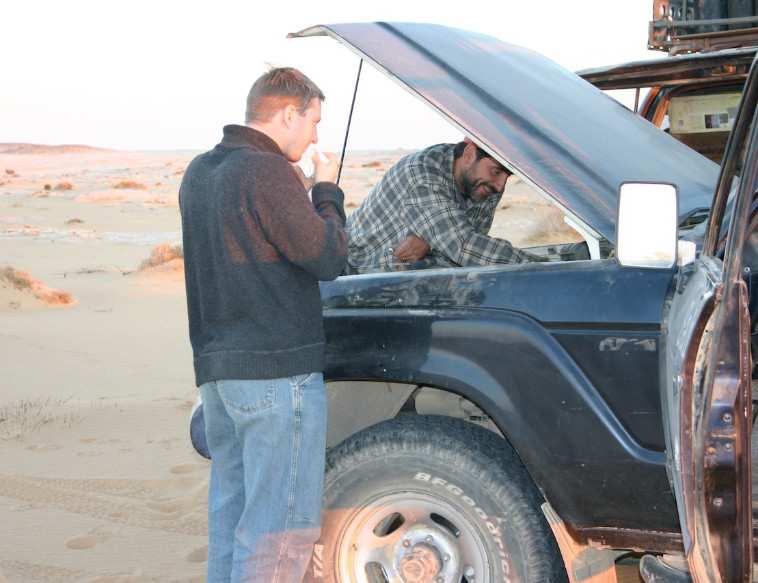
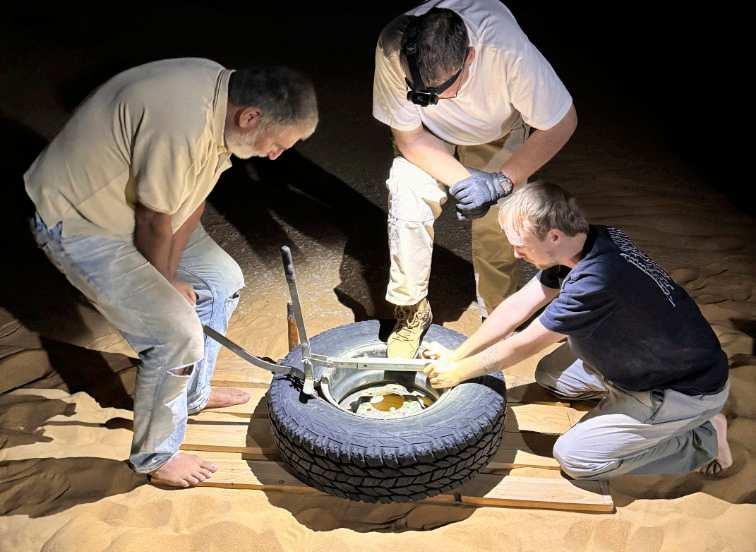
In southern Libya, in the Ubari Sand Sea, one of the vehicles suddenly came to a stop. The diesel pump had failed – in the middle of one of the most inhospitable regions of the journey.
Two vehicles had been travelling together. Now only one remained to go for help.
Tarek decided to drive with the group to the nearest oasis. From there he organized assistance: a taxi driver together with a Dabuka driver were sent off, equipped with money and clear instructions to procure a new pump from Tripoli, 1200 km away. They set off, contact was lost.
No one in Tripoli knew where they were or whether they would return.
So Tarek searched for a second solution. Through Egypt, another pump was organized, together with a mechanic and another Dabuka driver, flown in by plane to Tripoli. Everything had been arranged:
in Tripoli, another driver with his private car was dispatched to pick them up and bring them overnight to Ubari.
When this help was almost there, the unexpected happened: suddenly Tarek had contact with both teams. Both reached him within less than an hour – each carrying a diesel pump.
With both mechanics and both spare parts, they returned to the stranded vehicle. The route was exhausting – dune after dune. The mechanic from Egypt was not used to desert driving and had to keep getting out and continuing on foot.
On site, the repair began.
The Moroccan mechanic, who lived in Libya, handled the installation but got stuck in the final step. The engine adjustment had to be done by the Egyptian mechanic, who almost damaged the entire engine in the process.
The vehicle started again.
The journey could continue.
In retrospect, a story to tell.
In the moment itself, above all: one that costs nerves. �
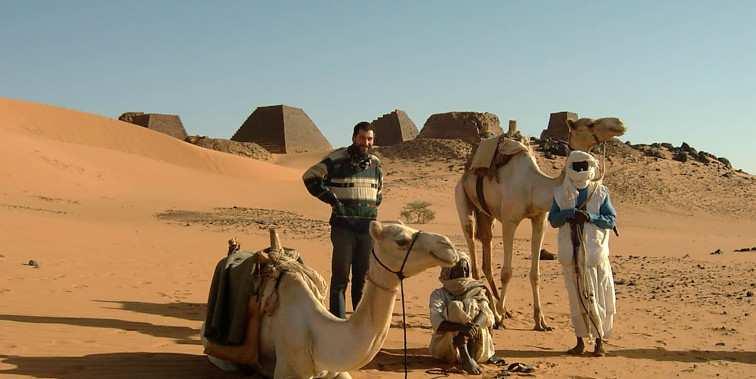
The journey had actually gone well. The group was in Sudan, the tour was completed – only formalities remained.
Because the duration of stay had exceeded the visa, all passports had to be extended at the Sudanese Mogamma in Khartoum. A routine procedure, in principle.
In the evening, the Egyptian military attaché invited the group to dinner. The processed passports were returned – all except one.
Tarek received a foreign Egyptian passport. The situation was delicate. It was Thursday evening, and after dinner the group was supposed to depart, followed by the drive back to Egypt. A tight schedule – and suddenly the most important document was missing.
That evening someone was sent to the Mogamma to search for the passport. All passports were checked, but Tarek’s passport could not be found anywhere. One employee could step in and take over a vehicle. Tarek remained behind to obtain new papers.
With support from the military attaché, he initially received a provisional document – but the actual
passport remained missing. With this document, Tarek booked a flight with Kenya Airways to Cairo on Saturday noon. This was important, as the next tour was already starting in Aswan on Sunday.
Even on Friday, searches at the Mogamma continued without success. Answers remained unclear.
On Saturday morning, the first official working day of the Mogamma, he insisted that the search continue – and refused to hand back the wrong passport before his own reappeared.
Only when the head of the office staff arrived did something change. Shortly afterwards, the passport was found – under a desk drawer. Was it intentional??
How it got there remained unclear. But the situation was still not over.
Two men from Sudanese intelligence appeared and asked Tarek and the first secretary of the Egyptian military attaché into a separate room on the first floor. A moment in which it became clear how little control one has in such situations.
Then, without further explanation, the passport was returned. He was allowed to leave.
And on Sunday morning, he actually sat with his next group on the same flight from Cairo to Aswan. What remains is less the sequence of events – but the feeling of how quickly a seemingly orderly situation can turn into something completely unpredictable. �
The revolution in Egypt broke out so unexpectedly for outsiders that Tarek was also partly surprised and caught up with a travel group.
He had been in Libya again with a group, having started from Egypt, and the journey was actually supposed to end there. Due to the political turmoil and the fact that it was impossible to predict how the situation would develop, the tourists flew back from Tripoli. Tarek and a German tour leader, however, still had to bring the vehicles back to Egypt. It was 10 February 2011 – the night President Mubarak resigned. Tension filled the air everywhere.
Border formalities in Sallum were usually long, but this time everything was different. For security reasons, it had been decided to move the visas to a safe location and store them in a bank vault in Marsa Matruh, over 200 km away. To complicate matters, the German tour leader had an Afghan visa in his passport – highly suspicious for the authorities.
They were instructed to contact the security police, but they could not be found. At the same time, time was pressing, as a curfew in Cairo began at 10 p.m. Tarek refused to be dismissed, searched further, and found the security unit waiting in a minibus. They were indeed willing to issue the permits so that the entry stamp could be granted. They could continue.
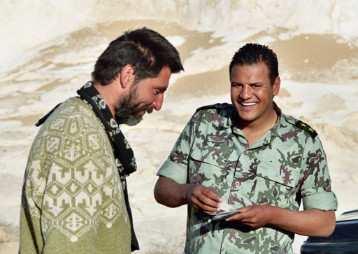
Relief did not last long. About 350 km later they were stopped at a checkpoint. Bedouins, deployed by the military, were monitoring the situation. They demanded passports – and immediately reacted sharply. There was no entry stamp for 10.02, instead one dated 01.02.
For the inspectors it was clear: these two travellers were suspicious.
Tarek kept his composure. He knew he had received the correct stamp only shortly before. After some thought, he showed the exit stamp from Libya, which fortunately carried the correct date. And anyone who had left Libya on 10 February must necessarily have entered Egypt on the same day.
The Bedouins were convinced – suspicion turned into a kind of calm. They reached Cairo that same day, as no one respected the curfew anyway. �
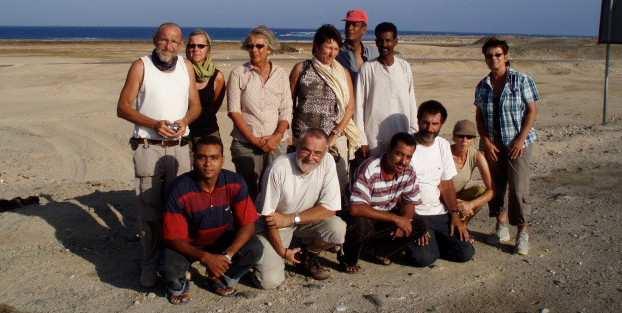
This story takes place 20 years ago, in the “golden times,” when it was still possible to travel the entire Western Desert including the Gilf El Kebir. Tarek had many tours there and therefore a larger team of drivers. He himself could not always be present. A group of Austrians was travelling with five vehicles toward the Gilf. Permits were required, and an officer had to accompany the group.
Tarek nevertheless sent his tourism manager Sameh to Bahariya, the first oasis stop, to ensure a smooth start. He had begun to suspect he could no longer fully rely on one of his closest employees, Mohamed Abd El Fattah – called “Lushi.”
Initially, nothing went wrong in Bahariya. The group started toward Siwa. Sameh returned to Cairo. In the evening of the first day in camp, a message arrived via satellite phone from the responsible officer in Bahariya: a mistake had been made in the permits. Everyone was ordered back. They turned around and set off again.
On the way, one vehicle got stuck in the sand. A normal situation in desert travel. But the driver was new – and the other drivers from Lushi’s circle repeatedly “helped” in a way that caused the vehicle to get stuck again and again until the clutch burned out. In hindsight, it was clearly deliberate.
The vehicle was no longer operational. The remaining group continued, while one driver stayed behind. What followed became a story of “everyday heroes.”
The new driver refused to leave the vehicle alone. He stayed. Other drivers left him minimal water and supplies and promised help – but none came. A suspicious vehicle without plates repeatedly appeared and disappeared. A construction crew later intervened and unintentionally scared it off twice.
Eventually, the vehicle was brought to a camp near a military post. It became clear that no help had ever been requested. After several days, the situation was resolved when support arrived from Siwa via Dabuka.
It later emerged that the incident was part of a planned scheme to steal the vehicle and use it for smuggling operations – a lucrative side business linked to Lushi. �
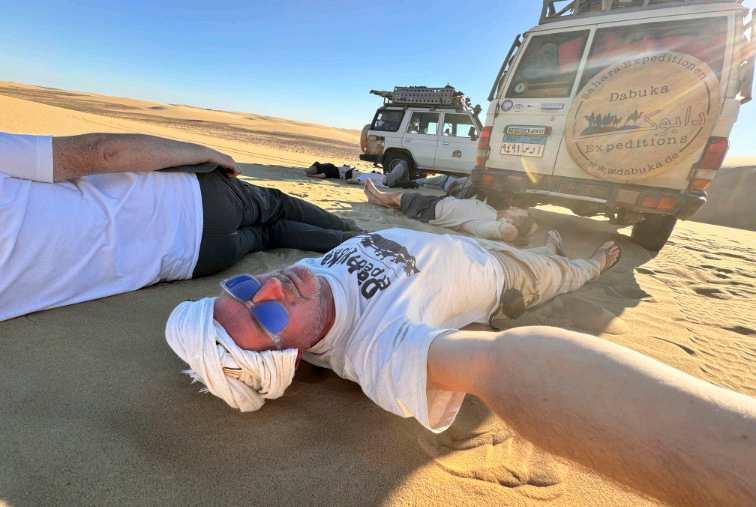
Some stories remain hidden for years, waiting to be told, gradually fading from memory and almost sealing themselves away.
This one has been waiting for more than 20 years. Too much pain and disbelief had to be processed first. Now it is to be brought into the light, because it is also an essential part of the story of Dabuka and Tarek. It still has an open ending, apart from the vague hope that justice in some form may one day be provided by fate.
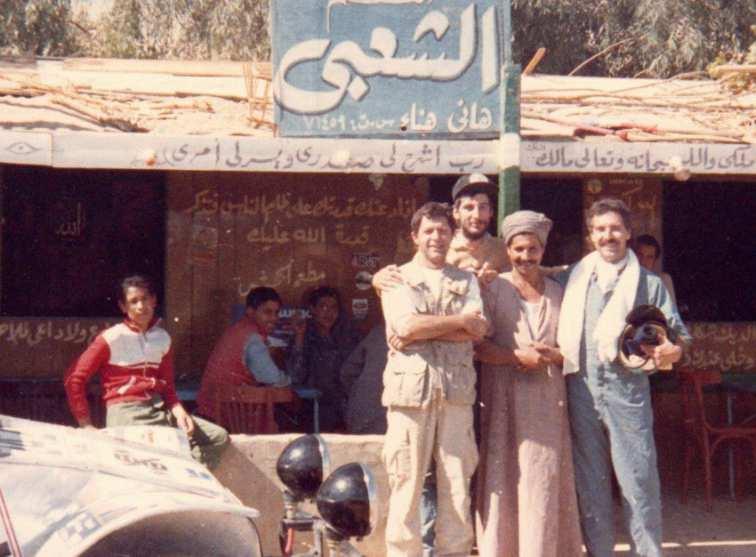
We go back to the 1980s, long before Dabuka was even founded. At that time, Tarek supported his brother Karim on his motorcycle expeditions through the desert. As a loyal brother, he made sure, among other things, that damaged motorcycle tires were brought to the Bahariya Oasis for repair. A frequent process – punctures were part of everyday life on such trips.
In the oasis of Bahariya, there was a young man who, like many at the time, worked in a small hut with his brothers under the supervision of his father, repairing inner tubes from early childhood. His name was again Mohamed Abdel Fattah, known as “Lushi.” They met, knew each other, talked, and invited each other for meals. A positive relationship for both sides.
Years passed until Tarek founded his own company in 1996, stepping out of the shadow of his brother and another mentor to build his own business.
Dabuka was initially founded for desert expeditions. For that, you need not only good 4x4 vehicles but also capable drivers, many of whom came from his circle of friends. But things became more complicated as operations expanded. His first vehicles had been saved for with great effort. His off-road experience was strong – so it seemed natural that one day Lushi would ask to join as well.
Lushi had no experience in the desert. His driving skills were limited to occasional short trips in an old family car within the oasis. And already here, a decisive turning point was made.
Tarek was young, entrepreneurial, and always had a generous heart. He quickly came to believe that supporting Lushi would help him develop a better
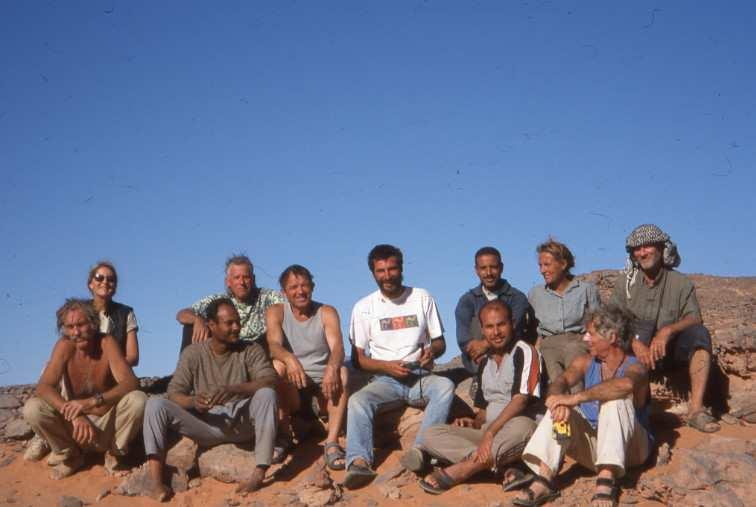
future. He would learn navigation, desert driving, vehicle maintenance, and also how to deal with clients.
Both Tarek and Lushi threw themselves into the project with enthusiasm. Dabuka was still struggling, but investments were made in vehicles and drivers in order to grow.
Lushi’s relatives were also employed – in the office, as drivers. Tarek’s social instinct had been awakened. He was grateful for every small success and shared it openly.
Of course, this so-called “training” of Lushi also cost a great deal of money and time. When he began accompanying tours independently, special guides had to be financed to support him. German tour leaders were flown in for this purpose. When several tours ran simultaneously, Tarek took the more difficult ones, while Lushi received the easier assignments.
For a while, the workload increased, but not the income. Yet this still seemed manageable. Then another turning point came, the scale of which only became clear much later. Tarek’s private life de-
veloped differently than planned. At that time, there was no Dorothee in his life, but another partner. His life shifted increasingly between Egypt and Germany, and his time in Egypt became more limited.
Anyone who has ever run their own business knows that control is essential – especially in a developing company – but one cannot be everywhere at once.
To give his private life a chance, Tarek needed more support in Egypt. He therefore granted Lushi, who had by then become like a son to him, a power of attorney under the supervision of the company manager Sameh Taman, so that he could act more independently.
The company began to run at full speed, expanding after the Luxor attack into Libya and Sudan. Tarek could no longer be present on all tours and worked with many different drivers. To further support Lushi, he was first given responsibility for organizing desert drivers and basic vehicle maintenance.
Still, after about a year, Tarek became increasingly alert. At first it was only a vague feeling of mistrust that one does not want to admit to oneself. Time
was lacking to investigate matters in depth – until the following situation occurred: Tarek transferred money to Lushi to buy two new vehicles. The cars were purchased, but not properly registered under new ownership. Instead, they remained officially under the previous owner – clearly a parallel financial channel outside Dabuka’s official system.
Once suspicion had been awakened, Tarek discovered that tools and equipment stored in Bahariya after tours were also disappearing. Especially when Tarek was away, other vehicles suddenly developed technical problems in the oasis, requiring expensive “repairs.”
In reality, Lushi had already built himself a large house in the oasis using diverted funds, with several floors. Conveniently, he made the entire ground floor available to Dabuka, where spare parts worth millions of Egyptian pounds were stored. The story of the almost stolen vehicle also traces back to him (this happened shortly after Tarek had officially separated from Lushi).
In the end, Tarek removed Lushi from tour operations – though always under pressure of ongoing trips, lack of time, and the fact that Sameh, while
experienced in classic tourism and well connected with authorities, had no real desert experience and also suffered from health problems.
What followed can be told in fast-forward. If one had thought Lushi would feel remorse, one would be mistaken. He instead worked increasingly against Tarek. He told clients that Tarek had retired and that he – Lushi – was now the sole contact person. He even claimed to have founded Dabuka himself and that Tarek was merely his employee. With stolen vehicles and contacts, he continued operating as a competitor for a while. Other competitors from the oasis tried to access Dabuka’s routes through him.
His main income, however, had long since shifted to smuggling and drug trafficking – strictly prosecuted in Egypt. Since Dabuka vehicles were used, it was easy to potentially blame Tarek if anything happened.
Lushi also sabotaged off-road vehicles used by Tarek’s expeditions in the Gilf el Kebir so that they would break down in the middle of nowhere –where help was far away. This occurred shortly after the official separation, but only later did the full ex-
tent become visible. Such actions could easily have led to fatal accidents.
Tarek was trapped in a terrible dead end, privately and professionally. Perhaps the most painful aspect was the human disappointment.
Of course, everyone asks: Why was this not noticed earlier? Why was Lushi never held accountable?
The first question is difficult to answer – hindsight is always clearer. And when one believes in the good in people, one does not easily assume malicious intent. Tarek saw it as a kind of educational process, like raising a son. He did not give up hope easily.
The second question is more brutal: despite legal assistance and contacts, no one could reach the mafia-like structure of the oasis. Lushi’s network functioned. He was ultimately celebrated locally as a “hero” who had taken advantage of a foreigner. Corruption, family networks, and informal power structures prevented legal consequences.
In December 2005, the final break with Lushi occurred. Even afterwards, incidents continued, in-
cluding threats against new drivers. Dabuka went through a deep crisis: stolen equipment, lost clients, and profound human disappointment.
Only Tarek knows how he endured this time. But it also defines him: he does not give up easily. And even in this dark period, new helpers appeared. Rayes and Sebeca – both now deceased – became important companions and friends, and helped rebuild Dabuka. They remain a lasting part of its story.
Tarek later said he is at peace today. He does not regret founding the company or guiding it through all its difficulties. What he learned: take the concept of trust seriously – and do not give it away too easily. And in a place like Egypt, understand where boundaries lie.
Still, this story must not remain untold. Sometimes it is enough to name things so that fate is reminded there is still an open account. Lushi is still around in Bahariya, continuing questionable activities. When he meets Tarek, he looks the other way. Tarek, as said, has not been defeated. Together we have since started and completed many new projects. Dabuka is turning 30 – and the future belongs to us. �
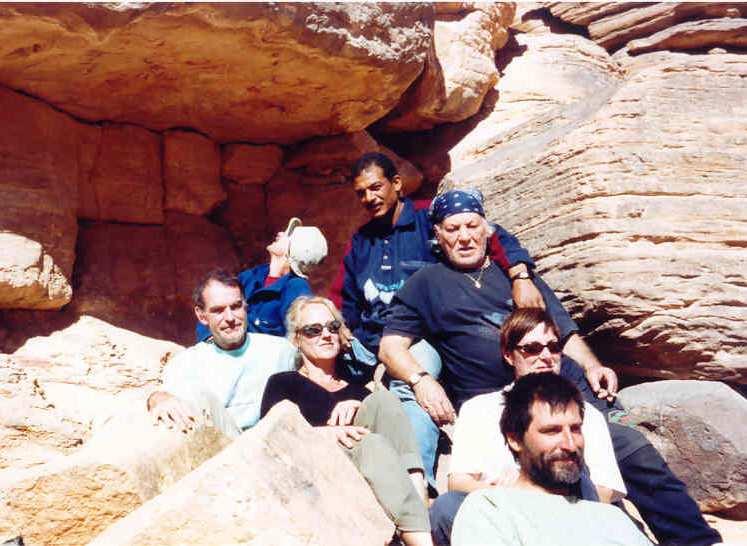
Perhaps some remember the old film Foxhole in Cairo – a spy story from World War II in which two German agents are guided across the Libyan desert toward Cairo. A key supporting figure in this story is one of the most fascinating personalities of the time: László Almásy.
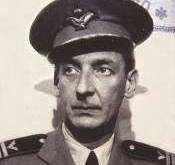
Almásy – Hungarian aristocrat, desert pilot, explorer, and legendary adventurer – was already a myth in his lifetime. Later he became the inspiration for The English Patient.
During one of his desert missions, something seemingly minor happens – yet it marks the beginning of a legend: fuel runs out in the middle of the Gilf Kebir. A vehicle must be abandoned. Its name: Purzel. Like all his vehicles, it had a name – almost like a companion left behind in the desert.
Decades pass. Wind and sand nearly erase the story. Then, in 1996, writer and publisher Raoul Schrott discovers Almásy’s diary and translates it. Between the lines, a new search begins: for a vehicle that should no longer exist – Purzel.
What follows is not only research, but an almost archaeological pursuit. The Austrian broadcaster ORF becomes involved and decides to document the search.
In 2008, Dabuka handles the logistics. Suddenly, a film crew, Raoul Schrott, and Tarek find themselves in the desert. The question grows stronger: Does Purzel still exist?
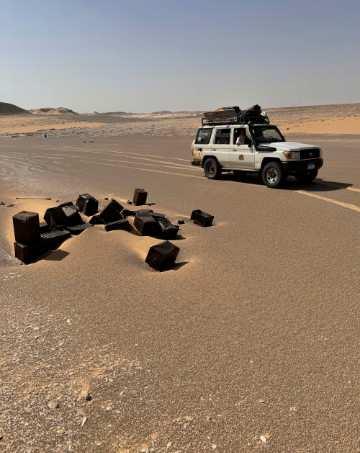
In the end, no vehicle is found. But something even more striking: The place – “the bandits’ camp,” as Almásy had named it.
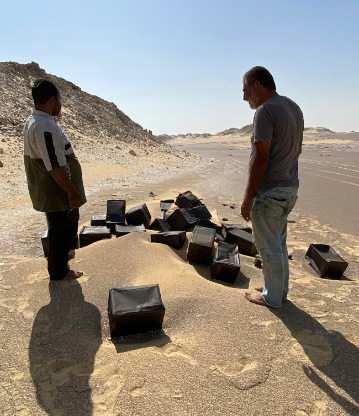
Tires, batteries, uniform fragments, jerry cans (Wehrmacht – 1942), canned food – scattered in the sand, as if the desert had briefly lifted what it had preserved for decades.
Purzel remains missing. Yet its existence becomes tangible again – as if it had never fully disappeared. Later, ORF revisits the story in the series Gipfelstürmer, turning a forgotten desert trace into a legend. �
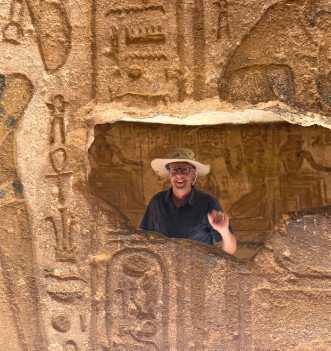
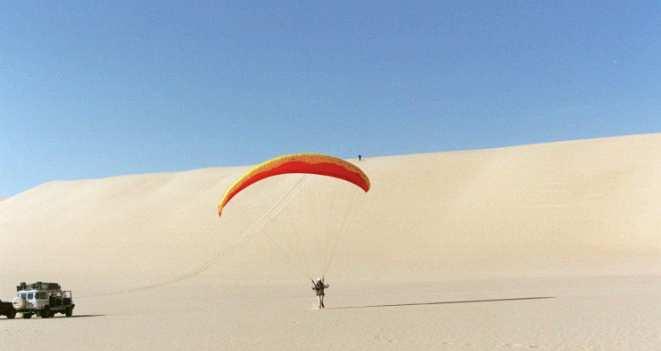
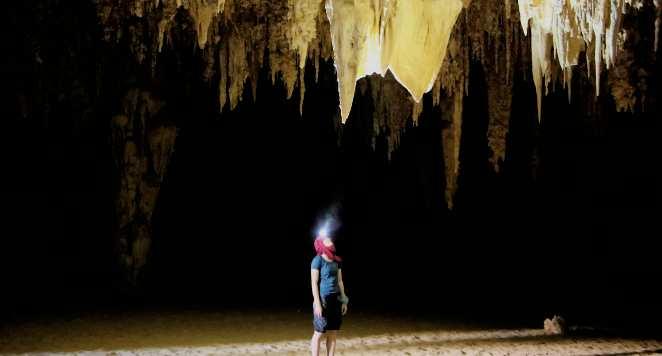
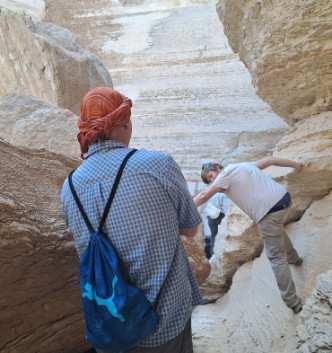
For 30 years, Dabuka has realized tailor-made projects in very different contexts – from expeditions to film and research projects, as well as cultural special formats. The focus is always on execution under real conditions: often complex, sometimes unpredictable, always project-based.
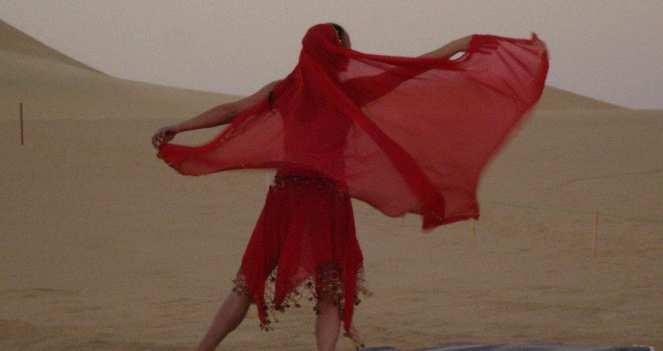
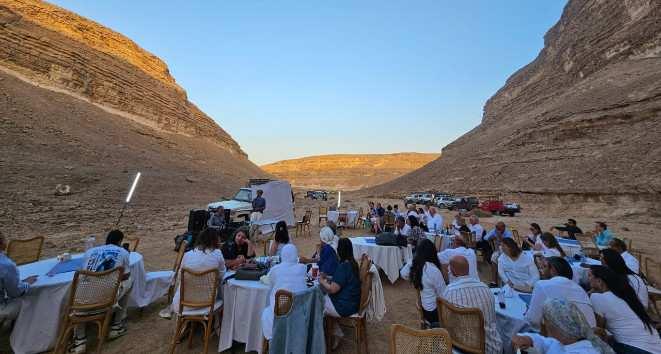
Near Ain Sokhna, a special evening format was created: a concert in remote desert surroundings with live piano and a culinary concept by a Nubian team. Martin (pianist) performed live on site. The combination of music, food, and location made this a unique event.
Wood was supported by Dabuka in Egypt while attempting to become the first person to walk the entire Nile. The route began in Rwanda and covered over 4,000 miles through six countries to Egypt. The project was documented by Channel 4 / BBC and is considered one of the most widely recognized expedition projects of recent decades.
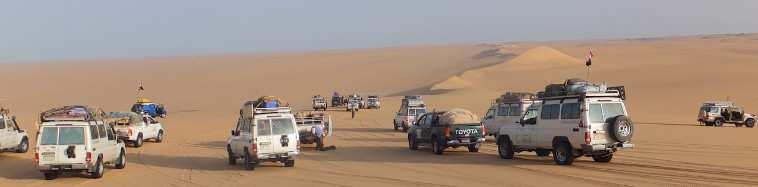
The Kamal Expedition 2014 was dedicated to a special anniversary: the memorial plaque of Prince Kamal el-Din Hussein, who in 1925 discovered the Gilf Kebir plateau in Egypt’s Western Desert and made an important contribution to the exploration of the region.
A defining feature of this expedition was its exceptional scale: under Dabuka’s leadership, it was carried out with more than 100 participants and over 30 vehicles. It was one of the largest and most impressive undertakings of its kind in the region, com-
With the Dabuka Blue, a new project on Lake Nasser was launched. The vessel operates between Aswan and Abu Simbel and is used for travel, documentation, and special programs. The first season was accompanied by an Egyptian film crew.
With Dabuka Travel Visions, a magazine was created that regularly brings together perspectives on travel, research, and culture. It was complemented by film evenings and discussion formats in Cairo.
Dabuka supported the international pyramid scanning project with French-Canadian research teams. The focus was logistical implementation under complex conditions around the pyramids of Giza and Dahshur.
One of the most well-known projects: Levison
bining historical remembrance with modern desert expedition logistics.
2013–2012 – Film & International
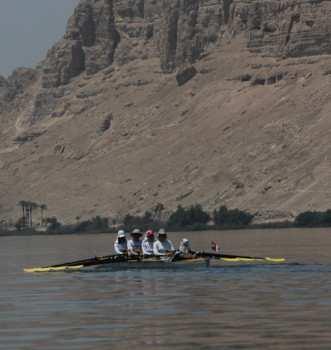
■ “Rowing on the Nile” (international cooperation, Luxor–Cairo)
■ ORF production Gipfelstürmer
■ London–Cape Town Rally (logistical support in Egypt)
During these years, numerous projects were carried out across North Africa and beyond:
■ Expeditions in Libya, Sudan, Jordan, and the Sahara
■ Cooperation with research institutions (including Free University Berlin, Desert Research Centre)
■ NASA-related fieldwork (2006 & 2009)
■ Meteorite crater research in southwestern Egypt
■ Logistics for international film productions and documentaries
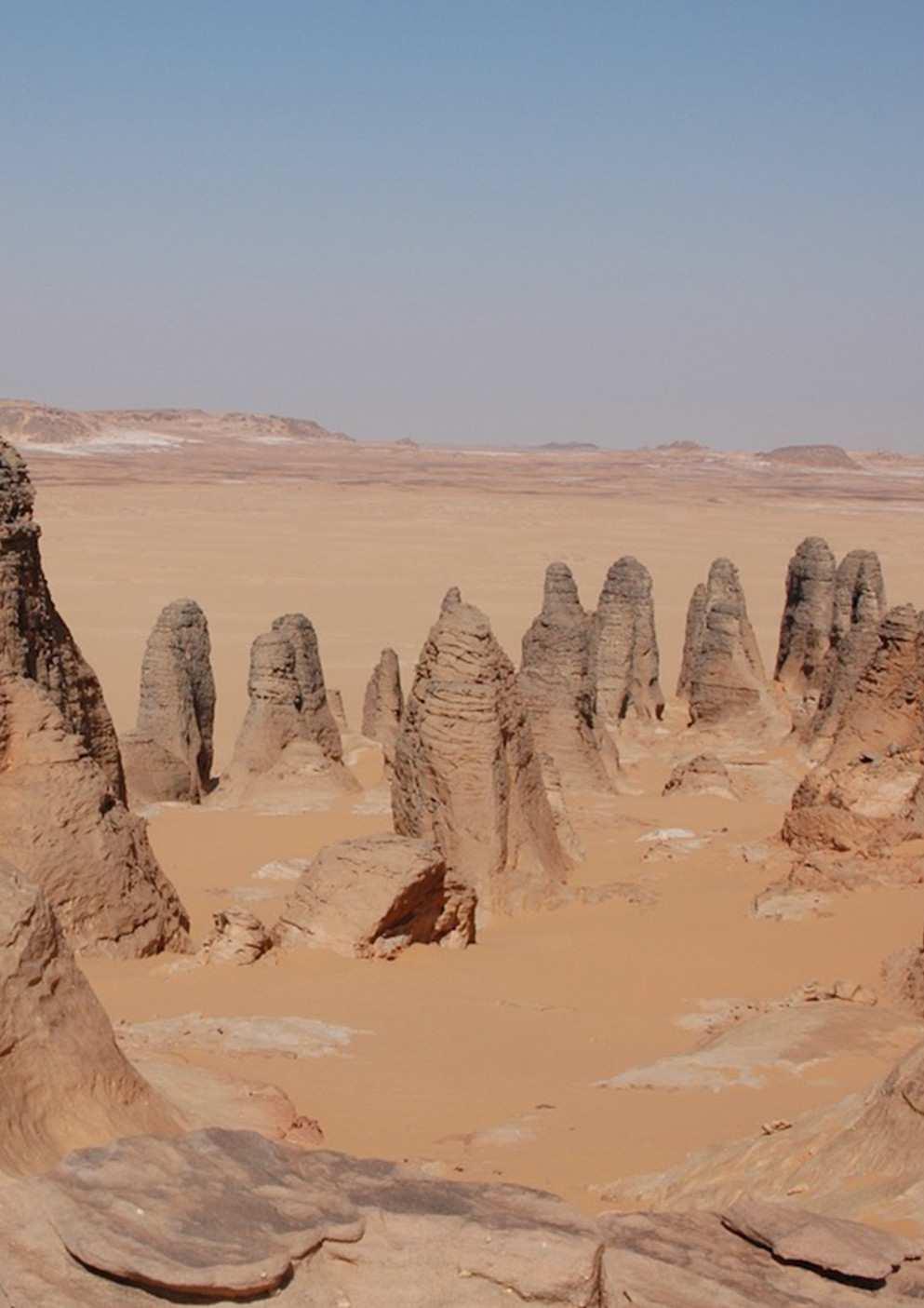
On the occasion of our anniversary, we asked various companions for their thoughts on Dabuka. Here is an excerpt:
Hans-Jörg Haber (former German Ambassador in Cairo):
“Wow – 30 years of Dabuka! I remember fantastic trips into the Western and Eastern Desert all the way to Sudan. These are my most beautiful memories. I wish you all the best for the next 30 years.” �
Krisztina (Hungary): “Dabuka – what comes to mind?
First of all, a unique desert concert. Elegantly dressed people sitting among sand dunes watching classical ballet and listening to flute music. A defining experience for me, together with my very first night in the desert. Alone in a tent under the starry sky – I cannot even describe the feeling. And on a practical note, I also learned that sneakers can be perfectly polished with sand All the best for Dabuka’s birthday!” �

Mahmoud Kaissouny (Egypt, former advisor to the Minister of Tourism and Minister of Environment): “One of the best travel agencies I have worked with was Dabuka with its fantastic programs. Outstanding remains the 2014 Prince Kamal el-Din expedition following the tracks of László Almásy. More than 20 international journalists joined and wrote about this journey worldwide. Over 100 people travelled in 34 off-road vehicles into the Gilf el Kebir – a milestone in the history of desert expeditions. And now the safari boat on Lake Nasser has further expanded Dabuka’s portfolio. I wish Dabuka continued success from the heart.” �
Mara Oser-Fischer (Germany): “In 25 years we have done many beautiful trips with Dabuka. Memories I still draw on today. We saw rock paintings, drove jeeps along dune ridges, and enjoyed the starry sky. Not only Egypt, but also Sudan and Niger. Recently, I even took my children and grandchildren on another Egypt trip to show them my memories. And just recently, I was able to enjoy a special senior journey on the Dabuka Blue. The safari boat on Lake Nasser gave my friends and me wonderful days. We were completely cared for and happy. Dabuka was and is a treasure for me.” �
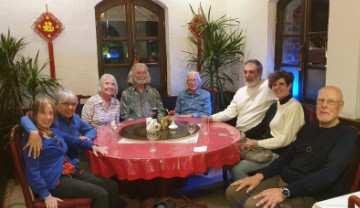
Isabelle and Pierre (France): “Between 2002 and 2008 we made five wonderful trips with Dabuka to Egypt and Libya. Fantastic landscapes, endless dunes, traces of our ancestors – and the joy of pushing cars stuck in the sand. Unforgettable memories. Thank you for everything – and now we look forward to new plans with yoga on Lake Nasser.” �
Alessandro Menardi Noguera (Italy: He has published, among other topics, on rock art in the Eastern Desert. Fields: Geology, archaeology, cultural heritage Research focus: Saharan and Central African rock art): “Dear Dabuka friends: 30 years of travel adventure –this is a great achievement. I wish you many more adventures and all happiness in life. Congratulations!” �
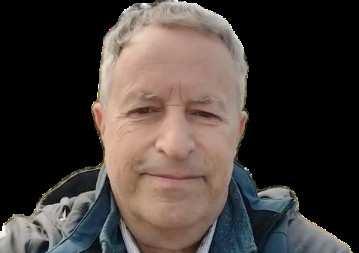
Georg Bittner-Buddenbrock (former Austrian Consul, currently Amman): “I came to Egypt in 1998 and fell in love with the desert. In 1999 Tarek asked me to join him in the desert, which I was very happy about.
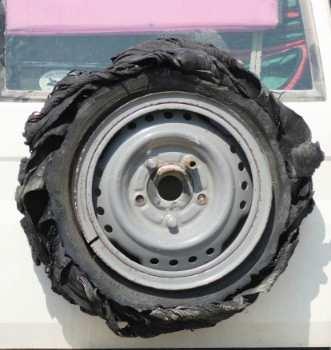
Funny situation: my Arabic is not very good, my car got a flat tire. During repairs, several vehicles suddenly appeared. As we later learned, they were Libyans (military and police) who thought we were smugglers. Tarek was initially nervous, a German participant and I less so. Once they saw we were foreigners, they relaxed.
I also noticed that Tarek did not have GPS. I asked him, and he said: everything is in my head. 15 years later I joined the Kamal expedition, which followed almost the same route. That was only possible thanks to Tarek’s knowledge.
If anyone wants to go into the desert, I can only recommend doing it with Tarek. There is simply no one better. Thank you, Tarek.” �
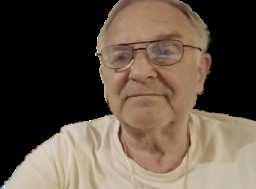
Bernard De Jonghe (France): In 1990, my first Saharan journey took place in Algeria, in the Ahnet region, where I accompanied Théodore Monod. It was a pilgrimage for him, and an initiation for me. From that moment on, I spent about one month each year in a region of the Sahara, or in other deserts.
My second journey with Théodore took place in 1991, following a route in Mauritania between Cap Blanc and Guelb el Richat. The guide for this Mauritanian journey was Samir Lama, accompanied by his wife Wally. Samir was a tough man and a great connoisseur of the desert.
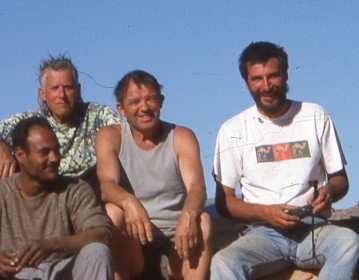
There was also a driver who handled the dunes with remarkable skill—rather quiet and independent. He seemed perfectly suited to the harsh life of the desert, sleeping at the foot of his vehicle with nothing more than a simple blanket.
That was Tarek.
I later undertook several journeys with Samir Lama in the Libyan Desert.
Afterwards, it was with Tarek and Dabuka Expedition that I was able to continue traveling through the regions of Gilf Kebir, Uweinat, and northern Sudan. Together with my partner Ginette, we always organized small groups of artists and scientists. The off-track exploration that Tarek is capable of leading suited me perfectly, and it deeply nourished and inspired my work as a visual artist.
Thank you, Tarek… �
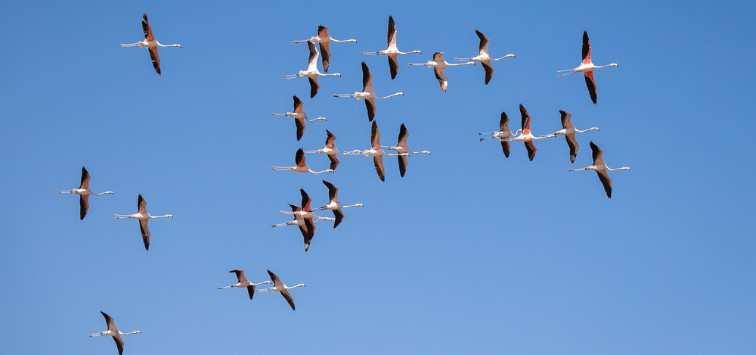
Attitude is not only shown in concepts, but in encounters, decisions, and moments that remain in memory.
For us, travel always means more than organization. It means connecting people, opening spaces, and taking responsibility for experiences that are personal and often very intense.
Respect is the starting point – toward the people we meet, the cultures we are allowed to experience, and the nature that shapes these journeys. This attitude accompanies every decision, even when it remains quiet in everyday life.
At the same time, good work requires reliability. Behind every journey stand clear structures, established processes, and a great deal of experience. They provide security and enable the freedom to respond correctly in special moments.
This is how our understanding of quality emerges: not as a rigid system, but as an interplay of care, responsibility, and attention to what truly makes a journey.
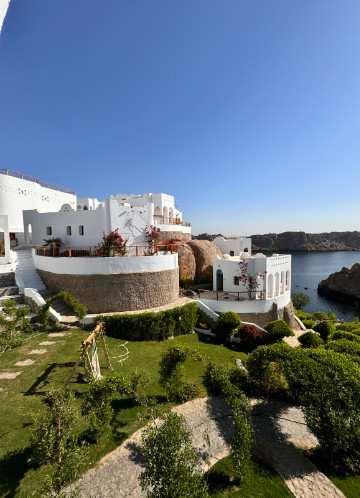
In the end, attitude shows itself in the details – in how we listen, how we plan, and how we act when an assignment becomes a personal experience. �
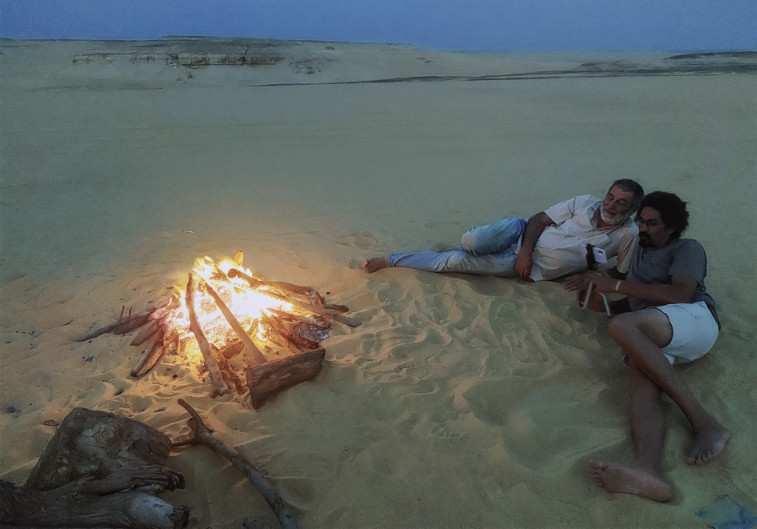
Today the company is carried by three people who have taken on different roles but work in a shared direction. The goal: Dabuka should continue to meet its standard of extraordinary journeys with that special extra touch.
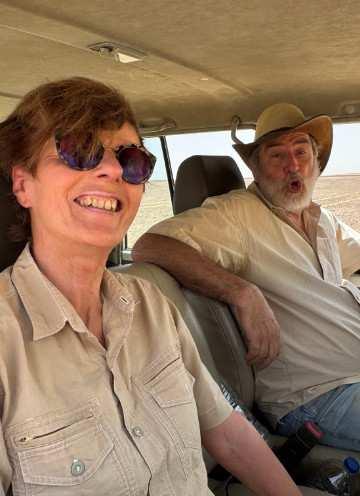
Tarek – founded the company and has shaped its core direction from the beginning. One could rightly say he “is” Dabuka. I remember when we first met. I saved his contact under the name “Dabuka” in my phone from the very beginning –and it remains so to this day.
Dorothee – combines operational structure with creativity; writing and client communication are her focus. She has accompanied the company from the start and joined full-time in 2024.
Amr – enriches the company through his wide network of contacts. He is essentially the HR department and, as a lawyer, responsible for the legal side. He also functions as a “problem solver – Mission Impossible.” When nothing seems to work anymore, he is the one to call. He has also been fulltime since 2024.
It is not about hierarchy, but complementarity. At the same time, we aim to secure the company’s future by continuously seeking new team members who can and want to take over the baton. �
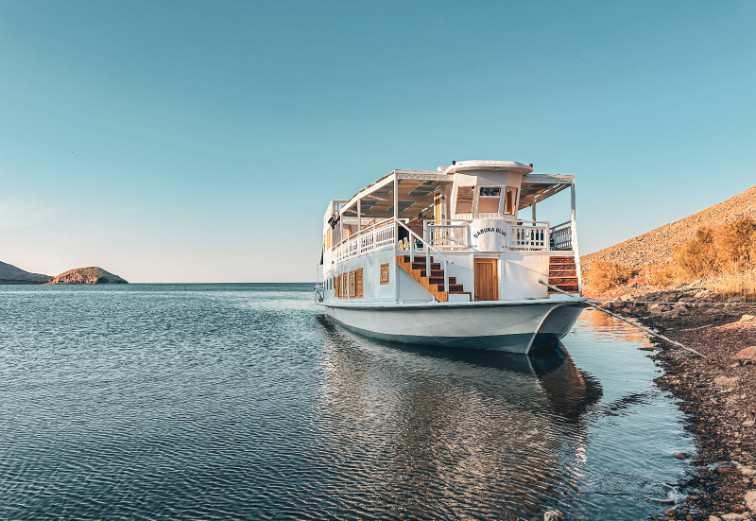
In the coming months, we are expanding our activities into several concrete projects and new fields of operation.
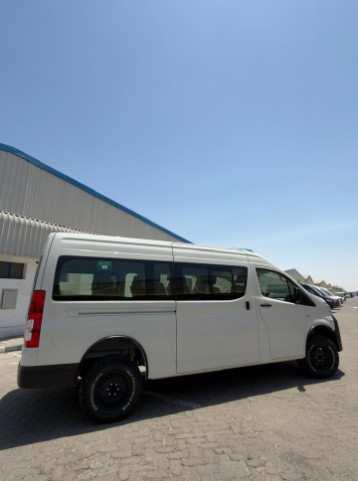
A key step is the deployment of our new 4x4 bus, currently still held in customs in Dubai. It will open new possibilities for transport and production in remote regions of Egypt.
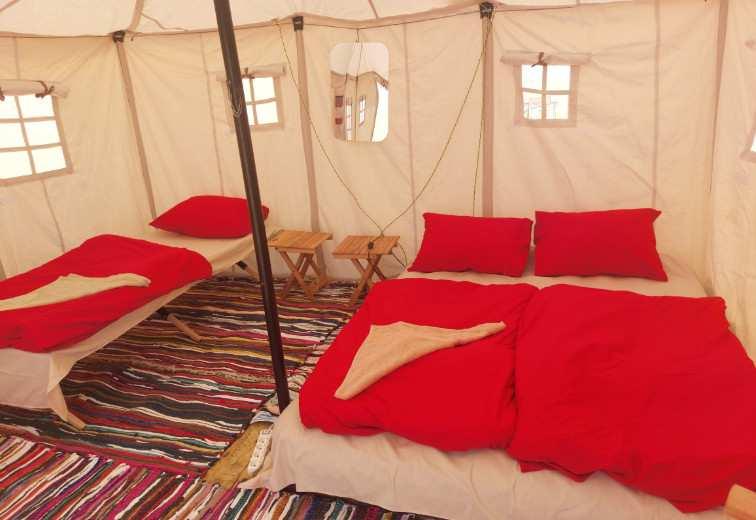
In travel and production, the following projects are in focus: Yoga trips, preparation for the solar eclipse 2027, and the expansion of glamping offerings.
With “Dabuka Premium,” we are also developing a segment for selected, higher-end travel and production formats – truly once-in-a-lifetime experiences.
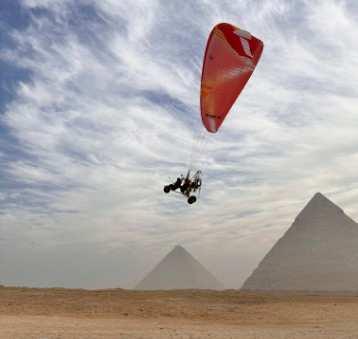
At the same time, our core field remains: organizing and executing productions and special projects that require special permits, local coordination, and flexible logistics – such as flights over the pyramids or opening desert routes. Our tours outside Egypt are also slowly but steadily expanding. �

Our work arises both from concrete projects and from our own ideas and developments that emerge from experience and environment.
The course of individual projects is rarely fully predictable. Alongside clear structures, external conditions, local realities, and short-term changes play an important role. Flexibility and the ability to respond on site are therefore integral to our way of working.
At the same time, this dynamic often leads to new approaches that go beyond the original framework and continue to evolve over time.
What remains decisive is close cooperation with local partners and international teams, without whom neither planning nor execution in this form would be possible.
We would like to thank all companions, near and far, who are part of the “Dabuka family.” Together we are strong and look forward to many more productive years. �