Views expressed in this magazine are not necessarily the views of the publishers. Copyright for material published remains with Rork Media Limited. Use of material from Scuba Diver is strictly prohibited unless permission is given. All advertisements of which the creative content is in whole or in part the work of Rork Media Limited remain the copyright of Rork Media Limited.
is a registered trademark of Rork Media. ISSN 2514-2054
Be inspired to dive in our native waters
When you read this, we’ll be post-GO Diving Show. This year’s event had more of a presence from UK dive centres and liveaboards than ever before, and I am all for anything that promotes diving in our native waters.
Hopefully many of you made it to the show, which is a great way to kickstart your UK diving year, and have come away feeling inspired, as I have myself, but if you needed further fuel to feed your desire to explore the diving available in and around this country, then turn to page 42 for part one of The Great Scuba Drive. Young dive professionals Rico Anselmi and Sophie Shields embarked on a mammoth month-long tour up through the UK from their base in Cornwall, enroute to completing their HSE Scuba course in Scotland. Instead of just hacking up the motorway in a couple of days, the duo decided to take their time, and visit some of the many coastal and inland sites that can be found on the way. Part one takes them from the South Coast up to the Lake District, and includes stops at inland sites such as Vobster, Wraysbury, Stoney Cove and Capernwray, as well as coastal locations in Wales. As they bravely decided to do this trip in November, they battled storm-force winds, freezing temperatures and other adversity, but still managed to come out the other end all smiles, which just goes to show that UK diving can deliver even when the conditions are not ideal. So follow their lead and get out there to explore your local waters.
Mark Evans, Editorial Director
Ask DAN
DAN medical specialists and researchers answer your dive medicine questions
Kids and Safe Diving
Teaching children to dive and exposing them to the ocean can be a rewarding experience for everyone involved. But it’s important to remember that children are not miniature adults. Additional precautions and considerations will be required. With a sound understanding of a young diver’s developing physiological and psychological needs, dive professionals, parents and children can work together to create a safe and enriching dive experience.
Physiological Concerns
Every child develops differently and at different rates. Similar to adults, children should not have any medical conditions that could affect their safety, they should be physically capable of managing equipment and the environment, they should be comfortable in the water, they should understand how to react to different situations, they should grasp basic dive skills, and above all, they should have an interest in diving. Here are some physiological considerations to understand:
• A child’s organs and systems are developing at various rates, and conditions like childhood asthma underscore how pulmonary function is still evolving.
• Because a child’s eustachian tubes are immature, children are predisposed to ear infections and could have an
increased risk of middle-ear barotrauma. It’s also harder for children to equalise.
• Children burn more calories and could be more prone to hypothermia once calorie stores are exhausted. The risks of diving do not discriminate based on age or experience, so the general risks of barotrauma, decompression sickness, arterial gas embolism, panic and traumatic events still exist.
Psychological Concerns
Even more significant are the concerns related to children’s developing maturity, cognitive abilities, patience, discipline and naturally short attention spans. Should an emergency arise, children may not have the capacity to react reasonably and calmly. If panic sets in, a child might bolt straight to the surface, putting themselves in danger of a decompression event. In addition, juggling the many responsibilities of a dive could be overwhelming, and a child may not fully grasp the invisible risks of diving. While children and adolescents may grasp scuba concepts in classrooms, they may have difficulty exercising the skills in real-life scenarios.
Most experts agree that most children can dive safely so long as there is strict adherence to the recommendations concerning training, supervision and scope of diving dictated by major training agencies.
BARRY MCGILL
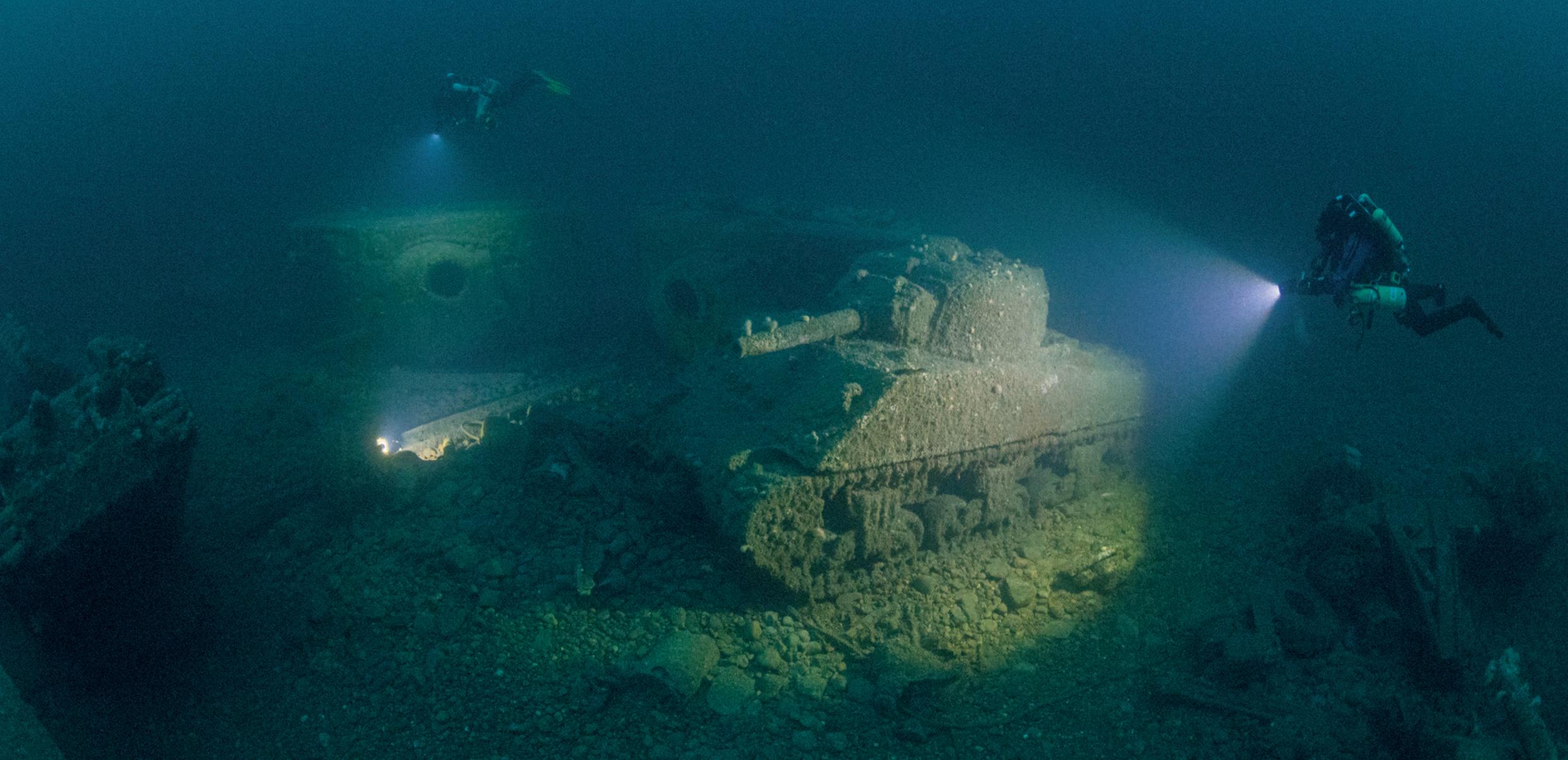
We chat to acclaimed technical diver and underwater photographer Barry McGill, whose stunning images are instantly recognizable, about the challenges of shooting shipwrecks and in remote destinations
Photographs courtesy of Barry McGill
Q: As we always do with these Questions and Answer sessions, how did you first get into scuba diving?
A: I grew up in Donegal, in the northwest of Ireland, where the sea was a huge part of my childhood. I always felt drawn to it and had a strong urge to be in and around the water. When I was about 13, I wandered into a dive centre on a family holiday and was completely captivated by the equipment and the whole world it hinted at. That moment planted a seed. I persuaded my parents to let me try a dive, and the day after we got home, I enrolled in a PADI Open Water course at my local dive centre in Mullaghmore, Co. Sligo.
The centre was run at the time by Declan Kilgannon, who was incredible and played a huge role in nurturing my love for diving. He even let me dive for free in exchange for helping out at the centre on weekends. What started as lending a hand soon turned into a summer job, and eventually I worked for him full-time while I was in college. I gained lots of experience and qualifications during this period and give me my passion for the sport.
Q: You have built up an enviable reputation when it comes to shipwreck diving and exploration, especially those lying in deeper waters. When did you first venture into the world of technical diving?
A: During my time working with Declan Kilgannon at Offshore Watersports, we regularly dived a local wreck in Donegal Bay that lies at a depth of around 50m. It was something we often did for enjoyment on summer evenings.
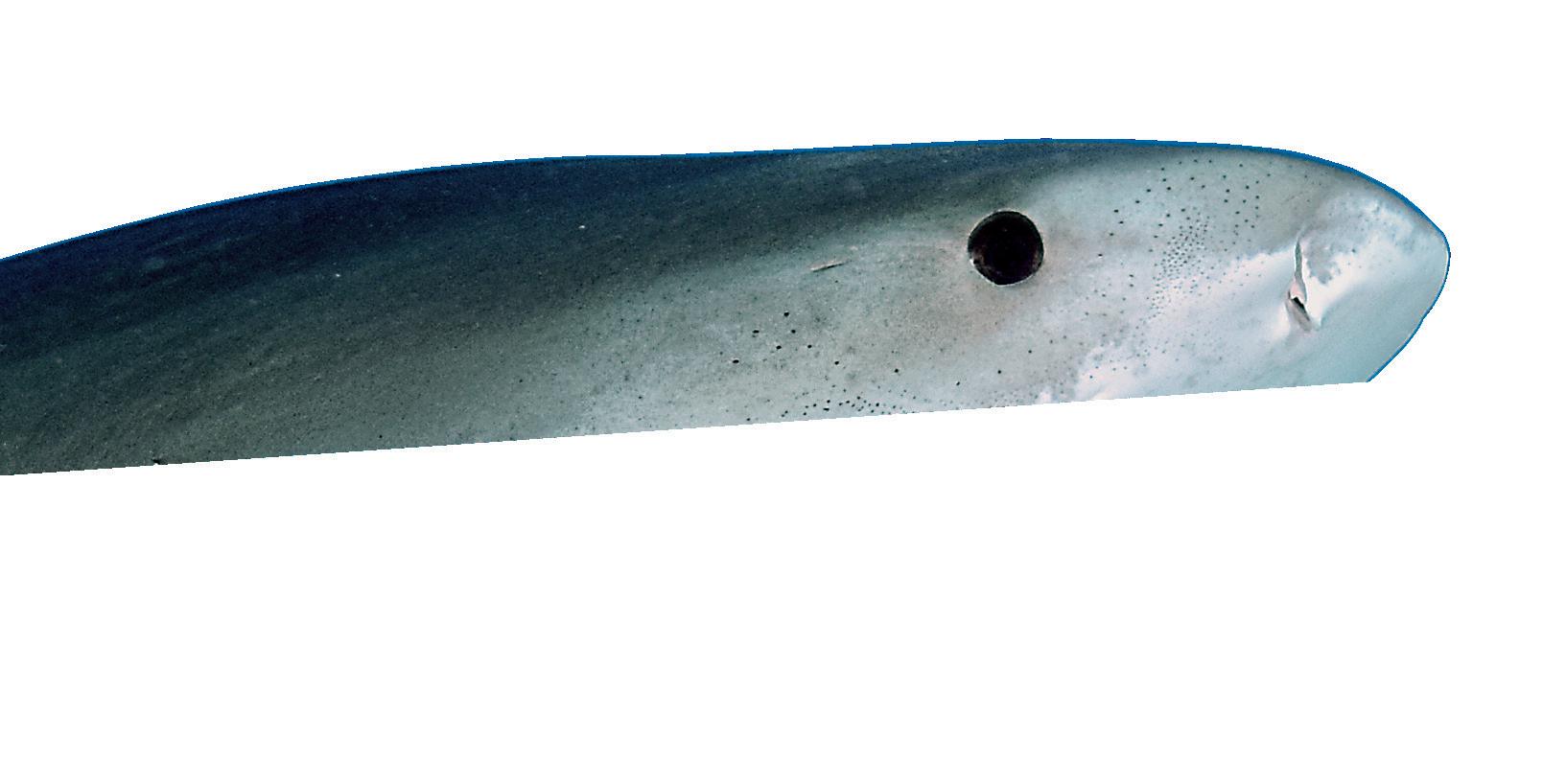
Tiger sharks have one of the most varied diets of all shark species, eating everything from seals, turtles, crabs, dolphins and even other sharks. Numerous reports state that even human garbage is not off for the menu for this apex predator.
Jeremy and Amanda Cuff head off on a shark-diving adventure around the Bahamas, starting off the west end of Grand Bahama on the legendary Tiger Beach
Photographs by Jeremy & Amanda Cuff (www.ja-universe.com)
To begin with, we chose to spend a couple of nights in Nassau (the Bahamian capital) before travelling over to Grand Bahama on one of the regular internal flights to Freeport. Though Grand Bahama is one of the larger Bahamian Islands, it isn’t the largest, despite what its’ name suggests. On Grand Bahama, the Epic Diving team are based at the Blue Marlin Cove, a well set-up aparthotel, with spacious accommodation featuring decent self-catering facilities, a bar and restaurant, a swimming pool, and a marina that shelters boats from the elements - it’s located in what is known as the West End.
To get there, it’s a good half an hour by road from the airport by a taxi minibus, which aren’t cheap, so it’s worth asking around to see if anyone else is heading in that direction and wants to share. Also, before setting off, it’s worth considering your food and drink supplies for the duration of your stay; unless you intend to eat and drink only what the restaurant and bar offers, it’s a good idea to stock up from one of supermarkets in the vicinity of the airport, as the West End (a fairly remote area) has little in the way of shops.
Over our years of dive travel, tiger shark encounters have tended to be fleeting on dives and none were up close; just as often, we’ve seen them from dive boats while traveling to and from sites. Though we’ve seen them in destinations as disparate as Walker’s Cay in the Bahamas (not far from Tiger Beach), Ningaloo Reef in Western Australia, the Socorro Islands off Mexico’s Pacific side, and North Male Atoll in the Maldives, these dives would get us fully up-close and personal with these sharks.
To talk about the diving itself, the place that is Tiger Beach is not actually a beach, or even near a beach; it’s a remote area of shallow sandy expanses and scattered coral patches on the Little Bahama Bank, completely exposed to the elements. At some point in the past, mostly as a result of fishermen visiting the area, it was noticed that it was frequented by tiger sharks, which gradually led to scuba divers travelling to the area to see what was happening there, which then led to regular shark-diving trips being offered, such as those run by Epic Diving.
From Blue Marlin Cove, it’s a full two-hour voyage to Tiger Beach each way, and is only visited by dive operators in
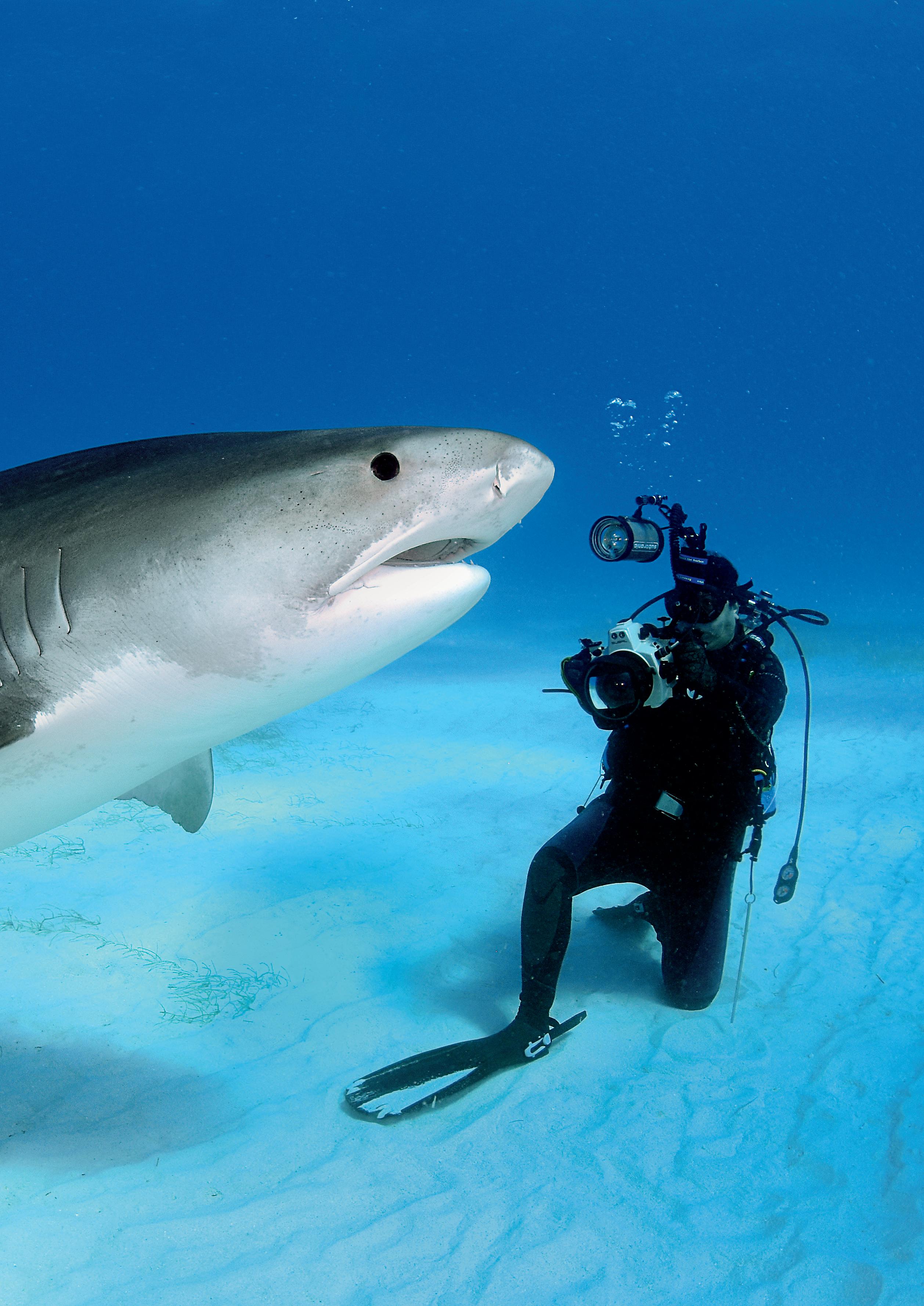
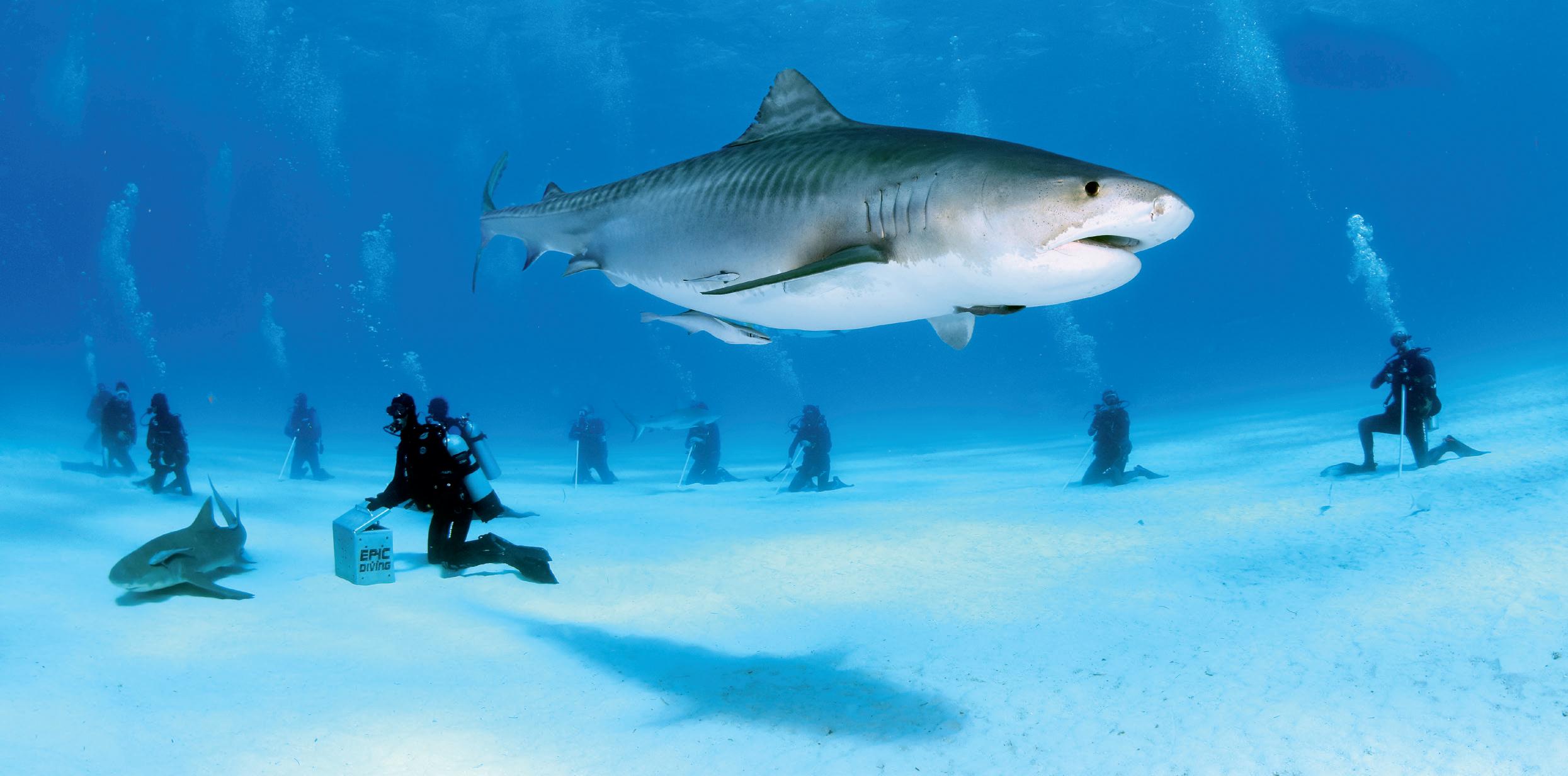
Tiger sharks are a commanding presence in the water
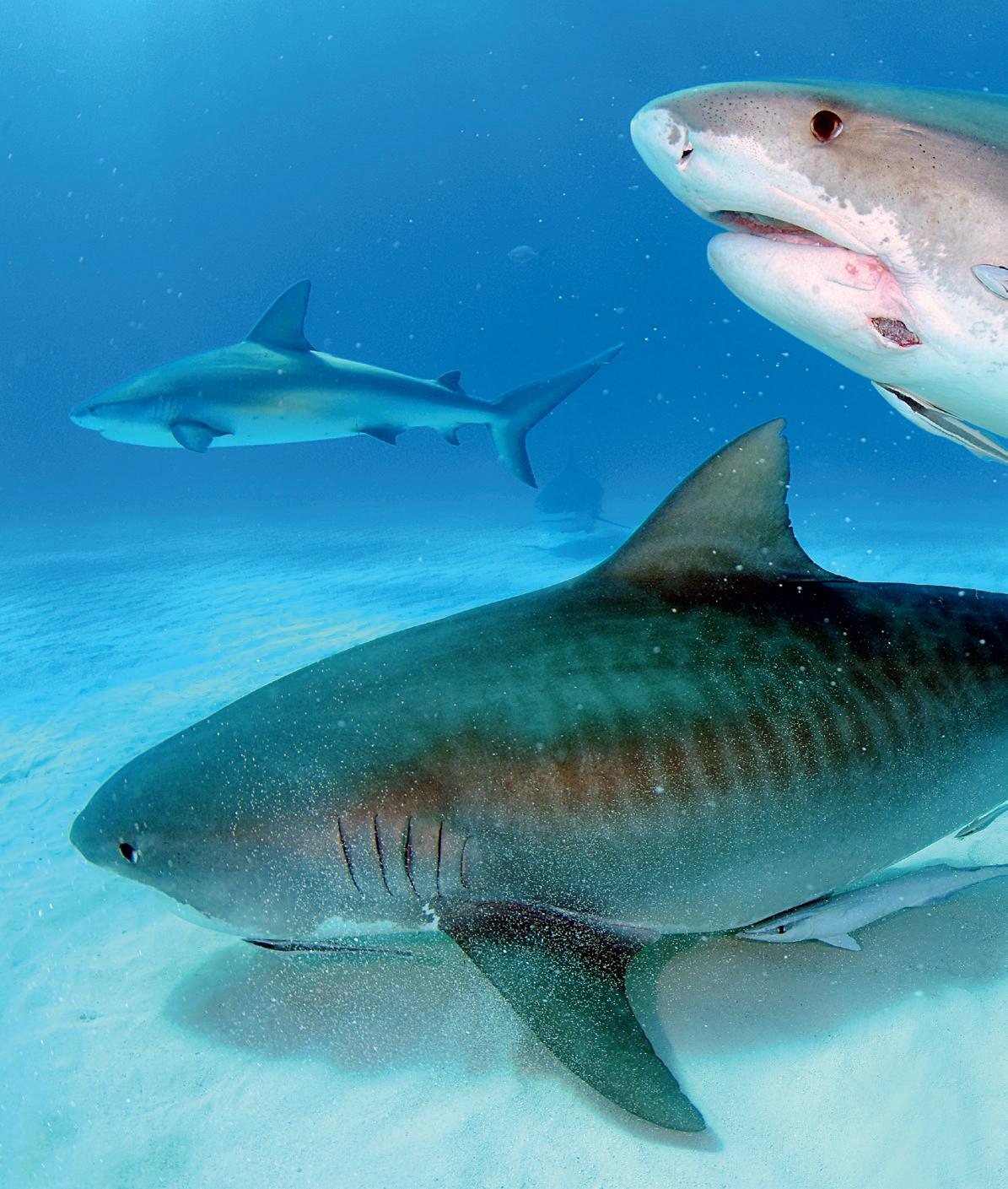
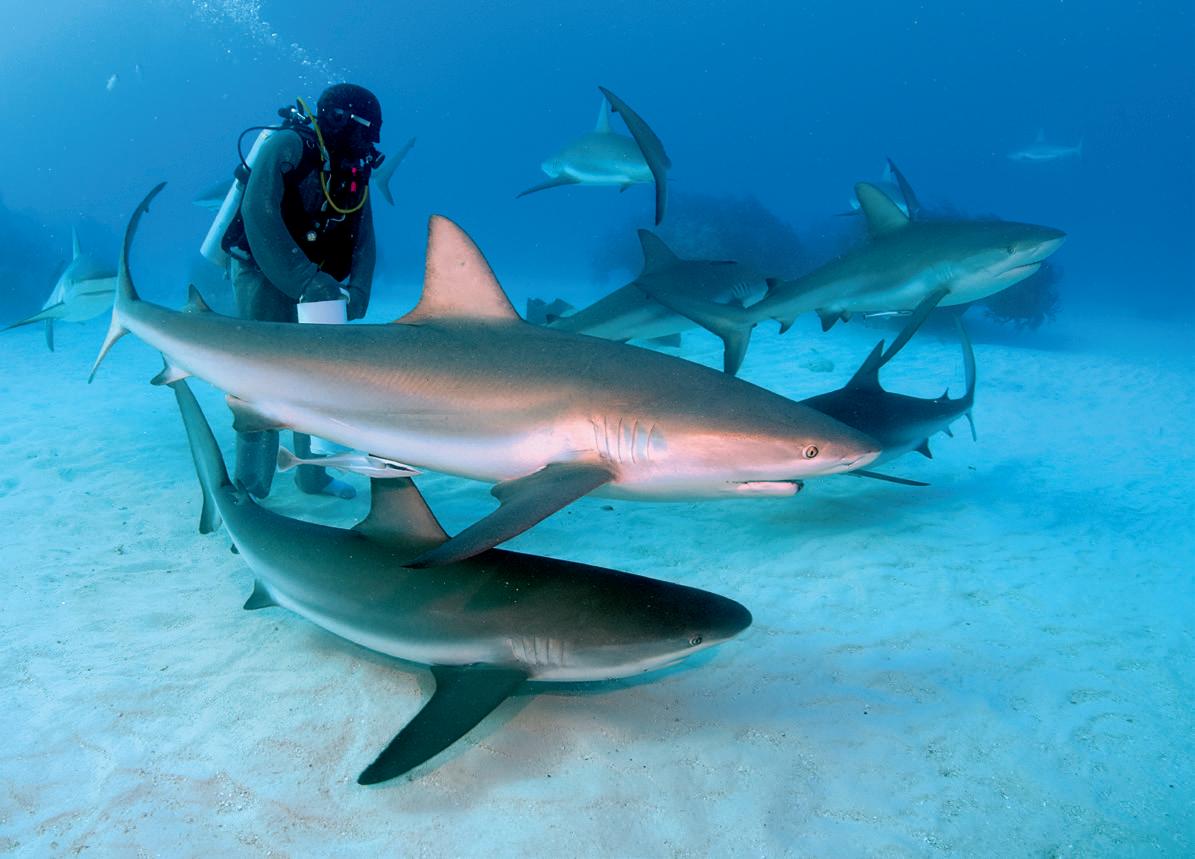
Up close with numerous Caribbean Reef sharks
Tiger sharks have distinctive ‘tiger stripes’ that give them their name