



By StatePoint
s you age, it’s important to keep an eye on your vision. While some vision changes can be expected over time, others may signal something more serious, such as cataracts, glaucoma or age-related macular degeneration (AMD), which can result in vision loss, blurred vision and glare.
According to one study, one-third of all cases of cataracts, open-angle glaucoma and early AMD occur in those 80 years old or older.
“Older adults with diabetes are especially at risk of developing eye-related issues over time, including cataracts and glaucoma, as well as diabetic retinopathy," said Dr. Grant Tarbox, senior executive medical director with HealthSpring, which offers Medicare plans across the country.
In fact, more than half of people with diabetes eventually develop diabetic retinopathy, according to the National Eye Institute. This is a serious condition that can cause blindness if left untreated.
Vision screening recommendations for older adults vary by organization based on health status and medical history. Nevertheless, if you have a vision benefit in your insurance
plan, it’s a good idea to take advantage of it in 2026.
While Original Medicare doesn’t cover a routine annual vision exam, most Medicare Advantage (MA) plans, such as those offered by HealthSpring, do provide additional vision benefits, including annual screenings. These plans may even provide you with an incentive for getting an annual vision exam. To avoid surprise payments, always visit an optometrist or ophthalmologist in your network.
Many eye diseases don’t present symptoms in the early stages, making screenings important. When conditions are caught and treated early, disease progression can be slowed. Both Original Medicare and MA plans generally cover treatment for various eye diseases. Beneficiaries may have to pay coinsurance or copays, depending on their coverage. Additionally, a Medicare Part D plan, which is often included in an MA plan, generally covers eye drops and other vision-related prescriptions.
“You should always ask your eye doctor to share information about your vision health with your primary care physician, including any prescriptions ordered, to better coordinate care,” said Tarbox.
In addition to screenings, you can support healthy eyes with lifestyle tweaks. Tarbox added that the same habits that benefit your overall health are also good for your eye health. This includes eating well, maintaining a healthy weight, washing your hands, not smoking, and taking medications as prescribed.
can help avoid unexpected costs.
By d-mars.com
or many Americans, the cost of health care can create significant financial strain, even for those with insurance. From unexpected hospital visits to ongoing treatment for chronic conditions, medical bills are a leading cause of debt. Experts say understanding available resources and taking proactive steps can help patients better manage these challenges.
Health care costs in the United States vary widely, and even routine procedures can result in large out-of-pocket expenses. High deductibles, co-pays and uncovered services often leave patients responsible for more than they anticipate.
One of the first steps in managing medical expenses is carefully reviewing all bills and insurance statements. Errors are not uncommon, and patients are encouraged to request itemized bills to verify charges.
“Patients should not assume their bill is correct,” health policy experts often advise. Identifying duplicate charges or services not received can reduce the total amount owed.
It is also important to understand what insurance plans cover. Knowing the difference between in-network and out-ofnetwork providers, as well as preauthorization requirements,
Medical providers and hospitals often have financial assistance programs, but patients must ask. Experts recommend contacting billing departments as soon as possible to discuss payment options.
Many providers offer interest-free payment plans, discounts for prompt payment or reduced fees based on income. Nonprofit hospitals are typically required to have charity care programs for eligible patients.
Open communication can also prevent accounts from being sent to collections, which can negatively impact credit scores.
A range of public and private programs can help offset medical costs. Medicaid provides coverage for low-income individuals, while Medicare supports those age 65 and older and certain younger people with disabilities.
In addition, some pharmaceutical companies offer patient assistance programs that provide medications at reduced cost or for free. Nonprofit organizations and disease-specific foundations may also offer grants or financial support. Patients are encouraged to research options specific to their condition and location.

Additionally, because of the heightened risk of diabetic retinopathy, people with diabetes should undergo comprehensive annual eye exams and keep their A1C (a measurement of blood sugar), blood pressure and cholesterol levels under control.
For information on HealthSpring’s Medicare plans, visit www.healthspring.com.
“Although we can take our eyes for granted, having good vision is a critical part of maintaining our independence as we age,” Tarbox said. “Good vision can help prevent a number of adverse events, including falls or car accidents, allows us to manage our health and home, and even helps us connect with others.”
Source: StatePoint
Negotiating medical bills is more common than many realize. Patients can request lower rates, especially if they are uninsured or paying out of pocket.
Experts suggest comparing prices among providers, when possible, as costs for the same procedure can vary significantly. Asking for a “cash price” or estimate in advance can help patients make informed decisions.
Recent regulations have also increased price transparency, allowing patients to access more information about expected costs before receiving care.
While not always possible, setting aside funds in a health savings account or flexible spending account can help cover future medical expenses with tax advantages.
Financial counselors and patient advocates can also assist in navigating complex billing systems and identifying cost-saving opportunities.
Preventive care, when accessible, can reduce the likelihood of costly medical interventions later. Regular checkups, screenings and early treatment can help manage health conditions before they become more serious and expensive.
Ultimately, navigating medical financial challenges requires a combination of awareness, communication and persistence. By understanding their options and seeking assistance when needed, patients can take greater control of their financial health while managing their medical care.
By d-mars.com News Provider



or millions of Americans diagnosed with prediabetes, diet is one of the most powerful tools to prevent or delay the onset of Type 2 diabetes. Health experts say making strategic food choices can stabilize blood sugar levels, improve insulin sensitivity and support long-term health.
Prediabetes occurs when blood sugar levels are higher than normal but not yet high enough for a diabetes diagnosis. Without intervention, many people progress to Type 2 diabetes within a few years. However, research shows lifestyle changes, especially diet, can significantly reduce that risk.
Nutritionists emphasize focusing on whole, minimally processed foods that digest slowly and avoid sharp spikes in blood sugar.
FIBER-RICH FOODS AT THE FOREFRONT
Foods high in fiber are among the best choices for people with prediabetes. Fiber slows the absorption of sugar into the bloodstream, helping maintain steady glucose levels.
Whole grains such as oats, quinoa, brown rice and whole wheat bread are preferred over refined grains. Legumes, including lentils, chickpeas and black beans, are also strong options due to their combination of fiber and plant-based protein.
Vegetables, especially non-starchy varieties like spinach, broccoli, cauliflower and peppers, provide essential nutrients with minimal impact on blood sugar.
“Fiber is key because it helps control how quickly sugar enters your system,” said registered dietitian experts in multiple clinical studies.
LEAN PROTEINS SUPPORT STABILITY
Protein plays an important role in managing hunger and stabilizing blood sugar. Lean
sources such as chicken, turkey, fish, eggs and plant-based proteins like tofu and beans are recommended.
Fatty fish, including salmon, mackerel and sardines, offer additional benefits due to their omega-3 fatty acids, which support heart health — a major concern for people at risk of diabetes.
Pairing protein with carbohydrates can also reduce blood sugar spikes after meals.
Not all fats are harmful. Unsaturated fats, found in foods like avocados, nuts, seeds and olive oil, can improve insulin sensitivity and promote satiety.
Experts recommend replacing saturated fats, such as those found in processed meats and fried foods, with healthier alternatives.
A handful of almonds or walnuts, for example, can be a satisfying snack that helps regulate blood sugar levels.
While fruit contains natural sugar, many options are safe and beneficial for people with prediabetes when consumed in moderation.
Berries, apples, pears and citrus fruits have a lower glycemic index, meaning they have a slower impact on blood sugar compared to tropical fruits like pineapple or mango.
Whole fruits are recommended over fruit juices, which can cause rapid spikes in glucose levels.
Experts consistently warn against diets high in added sugars and refined carbohydrates. Sugary drinks, white bread, pastries and processed snacks can quickly raise blood sugar and contribute to insulin resistance.
Instead, individuals are encouraged to read nutrition labels and choose foods with little to no added sugar.
Ultimately, consistency is more important than perfection. Health professionals advise building balanced meals that include fiber, protein and healthy fats, while maintaining portion control.
Regular physical activity, combined with a nutritious diet, further enhances the body’s ability to regulate blood sugar.
For those with prediabetes, small daily choices can have a significant impact. By prioritizing whole foods and reducing processed options, many individuals can successfully prevent or delay the progression to Type 2 diabetes. By d-mars.com

THE 2026 CONTEXT: FORCES SHAPING MENTAL WELLNESS
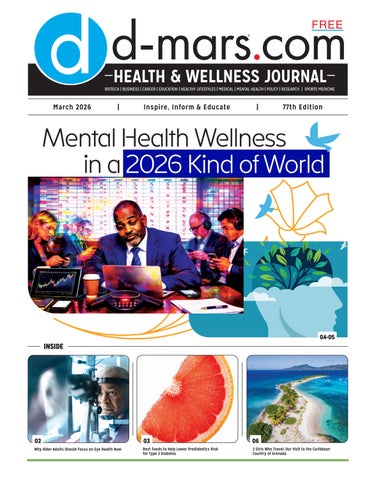
ental health wellness in 2026 is a dynamic, evolving state that integrates psychological, emotional, and social well-being. It enables individuals to think clearly, manage stress, regulate emotions, nurture relationships, and function productively in all areas of life. Wellness is not just the absence of illness, but the presence of skills, support, and environments that allow people to thrive.
Central to mental wellness are adaptability, resilience, and purpose. These traits empower individuals to navigate challenges, make sound decisions, and live with stability and meaning. As the pace of global change accelerates, these elements are essential for individuals, organizations, and society.
KEY COMPONENTS OF MENTAL HEALTH WELLNESS
• Emotional Regulation: Understanding, expressing, and managing emotions in healthy ways.
• Cognitive Functioning: Clear thinking, focus, problem-solving, and decision-making.
• Resilience: Recovering from setbacks and adapting to stress.
• Social Well-Being: Building meaningful relationships, effective communication, and a sense of belonging.
• Behavioral Balance: Maintaining healthy routines and boundaries.
• Purpose & Meaning: Connecting to values, goals, and a sense of life direction.
THE IMPORTANCE OF MENTAL WELLNESS IN 2026
Rapid technological change, digital overload, hybrid work, and shifting social norms have made mental health wellness a cornerstone of personal and organizational sustainability.
• Technological acceleration: AI companions, automation, digital overload, and an “always-on” culture.
• Economic and workplace transitions: Hybrid work, gig careers, and increased burnout risk.
• Social dynamics: Polarization, loneliness, and the search for authentic connection.
• Environmental and global stressors: Climate anxiety, geopolitical uncertainty, and collective fatigue.
While technology introduces supportive tools, it also creates challenges like digital fatigue and blurred boundaries. Economic shifts offer flexibility but raise burnout and job instability risks. Social fragmentation and environmental anxieties intensify the need for authentic connection and resilience. Together, these factors make mental wellness a societal priority.
THE EVOLVING DEFINITION OF MENTAL HEALTH WELLNESS
• Shift from crisis response to proactive, preventative care.
• Integration of emotional literacy, resilience training, and self-regulation skills.
• Recognition of neurodiversity and inclusive wellness frameworks.
• Blending physical, emotional, and digital well-being into a unified model.
Mental health wellness has shifted from reactive crisis care to proactive skill-building and prevention. Emotional literacy and resilience are now everyday essentials. Frameworks have become more inclusive—recognizing neurodiversity and uniting physical, emotional, and digital well-being for a holistic, compassionate approach.
INNOVATIONS TRANSFORMING MENTAL HEALTH SUPPORT
• Digital mental health tools: AI check-ins, personalized wellness plans, and virtual therapy.


emotional regulation cognitive functioning resilience social well-being behavioral balance purpose & meaning
• Workplace wellness ecosystems: Mental health PTO, sensory-friendly environments, and burnout prevention.
• Community-based approaches: Peer-support networks, micro-communities, culturally responsive care.
• Data-driven insights: Wearables, mood tracking, and early-warning indicators for stress and burnout.
AI-supported digital tools and virtual therapy have made care more accessible. Organizations now prioritize mental wellness with dedicated PTO, supportive environments, and policies to prevent burnout. Community approaches and data-driven insights enhance early intervention and personalize support, fostering a more interconnected and proactive mental health landscape.
• Overstimulation, attention fragmentation, and digital fatigue.
• Barriers to equitable access in underserved communities.
• Stigma that persists despite increased awareness.
• The tension between convenience and genuine human connection.
While technology expands access, it can also lead to overstimulation and attention fragmentation. Not all communities benefit equally—barriers such as limited internet and lack of culturally relevant care persist. Stigma around mental health remains a hurdle, and digital convenience sometimes diminishes authentic human connection. These challenges require ongoing, intentional efforts to ensure equity, balance, and genuine support.
STRATEGIES
• Building sustainable routines for emotional regulation.
• Practicing intentional digital boundaries and mindful tech use.
• Strengthening social support systems and community ties.
• Prioritizing rest, recovery, and nervous-system balance.
• Leveraging tools without becoming dependent on them.
To thrive, individuals should establish sustainable routines (like daily reflections or movement breaks), set digital boundaries, nurture social connections, and prioritize rest and recovery. Technology should serve as a supportive tool—not a crutch— so well-being remains grounded in personal agency and balance.
• Creating psychologically safe environments.
• Modeling healthy boundaries and emotional transparency.
• Implementing inclusive policies for diverse mental health needs.
• Investing in long-term wellness infrastructure.
Leaders and organizations are pivotal in shaping mental wellness. By fostering psychological safety, modeling healthy habits, implementing inclusive policies, and investing in sustained wellness infrastructure, they embed mental health into the fabric of daily life and community culture.
LOOKING AHEAD: THE FUTURE OF MENTAL WELLNESS
• Anticipating new innovations that blend advanced technology with humancentered support.
• Emphasizing emotional intelligence and adaptability as essential life skills.
• Working toward a vision where mental wellness is normalized, accessible, and routine. The next wave of mental health innovation will likely fuse technology with personalized support, enabling earlier intervention and more seamless integration into daily life. Emotional intelligence and adaptability are becoming critical for navigating complexity. The goal is to be a world where mental wellness is normalized and embedded in everyday routines, workplaces, and communities.
Mental health wellness in 2026 is both a personal responsibility and a collective pursuit. As technology, workplaces, and culture continue to evolve, embracing proactive care, emotional literacy, and holistic strategies will empower individuals and organizations to build a healthier, more resilient world. By normalizing mental wellness and making it accessible to all, society can foster environments where everyone has the opportunity not just to cope, but to truly thrive.
Kymberli Williams-Zeno, MSN, FNP-BC, PMHNP-BC



’all know how we love the Caribbean. We literally want to leave no island unexplored.
So, in March we visited Grenada (pronounced Gruh-nay-duh), a Caribbean country located in the West Indies, north of Trinidad and Tobago. Not to be confused with the similar sounding and spelled Granada (pronounced Gruh-nah-duh), a city in Spain.
Ok, enough with the geography lesson. Y’all want to know what we did, right? Right. Well, we ate, we drank, we explored, we had a time.
We opted for an Airbnb and had the absolute best hosts: Debbie and Rodney. They know everything about the island, so they made the best guide and photographer. And their Airbnb provided us with amazing views and tons of fresh fruit, right from the numerous fruit trees in their yard. We’ll link to it at the end of this blog in case you want to book!
Once we get to the Caribbean, we become island gals. So that means rum, plantains and other deliciousness. In Grenada, the drinks are strong and tasty. We found a great restaurant called Umbrellas Beach Bar that served up yummy food in big portions and great margs. We actually went there two nights in a row. Highly recommend. Oh, and one more thing. If you visit Patrick’s a lovely little restaurant that was close to our Airbnb, try the “under the counter” shot. Not for the faint of heart!
We enjoyed all the things in Grenada, including a personal tour of the island, dancing, live music and more! There was a local bus stop directly in front of our Airbnb that took us to Grand Anse Beach. Yall know we could spend an entire day at the beach! We even picked up some souvenirs from the shops at the beach.
So, would we go back to Grenada……..?
Heck yeah! There’s still so much to explore…and it’s not as touristy as other islands in the Caribbean. (We know that could change). But it was absolutely beautiful.
And as promised, here’s the link to the Airbnb we stayed at: https://www.airbnb.com/rooms/33400760
One more thing! We have a TikTok, so if you’re on there, give us a follow. (tiktok.com@2girlswhotravel) That’s where we post new content these days. For photos: https://2girlswhotravel.com/2023/05/10/our-visit-to-the-caribbean-country-of-grenada/
Fees began February 1st.
Don't have a credit card with you while at the airport? Look for the 'Cash to Card' kiosks in the Ticketing Lobbies at IAH and HOU. You can use cash to purchase and load a credit card.
A: No. TSA accepts several types of ID, including REAL ID-compliant mobile driver’s licenses and digital passports from Apple, Google, and CLEAR. For a full list, visit https://www.tsa.gov/ID
ince February 1, travelers without acceptable ID can pay a $45 fee to use TSA ConfirmID. The TSA will then attempt to verify your identity so you can proceed through security.
If you are unable to provide the required acceptable ID, such as a passport or REAL ID, you can pay a $45 fee to use TSA ConfirmID. TSA will then attempt to verify your identity so you can go through security; however, there is no guarantee TSA can do so.
Please note: Using TSA ConfirmID is optional. If you choose not to use it and don't have an acceptable ID, you may not be allowed through security and may miss your flight. Fraud or other criminal activity regarding this process will be processed under federal penalties.
Travelers without an acceptable ID can pay for TSA ConfirmID on the TSA's website. Payment of the $45 fee allows a traveler to use TSA ConfirmID for 10 days from the date of travel listed on the receipt.
FAQS:
Q: What happens if I don’t have an acceptable ID?
A: If you don’t have an acceptable ID, you have the option of paying a $45 fee for TSA ConfirmID to attempt to verify your identity; however, there is no guarantee TSA can do so. TSA ConfirmID is a paid service that helps keep air travel secure by ensuring that TSA verifies the identity of travelers and can provide the appropriate level of screening.
Q: What is TSA ConfirmID?
A: TSA ConfirmID is a modernized process for travelers unable to present the required acceptable ID to have their identity verified at the TSA checkpoint. You must pay a $45 fee for the process before you arrive at the security checkpoint or at the airport. TSA recommends paying the fee early to avoid delays.
Q: Is a passport my only other option if my driver’s license or ID is not compliant?
Q: What information may be required to complete the TSA ConfirmID identity verification process?
A: Legal name, address and date of birth.
Q: Can I pay in cash if I don’t have credit/debit card?
A: No. You must pay through Pay.gov, which does not accept cash. Cash is not accepted at the airport or by TSA officers.
Q: How do I pay the TSA ConfirmID fee?
A: You pay the $45 fee through Pay.gov and must show proof of payment at the TSA checkpoint. You can pay the $45 fee via Pay.gov using a valid bank account (ACH), debit card, credit card, Venmo, or PayPal.
Source: Fly2houston.com and tsa.gov/tsaconfirm-id https://www.fly2houston.com/airport-business/ newsroom/articles/item/no-acceptable-id-tsa-tocharge-usd45-fee/