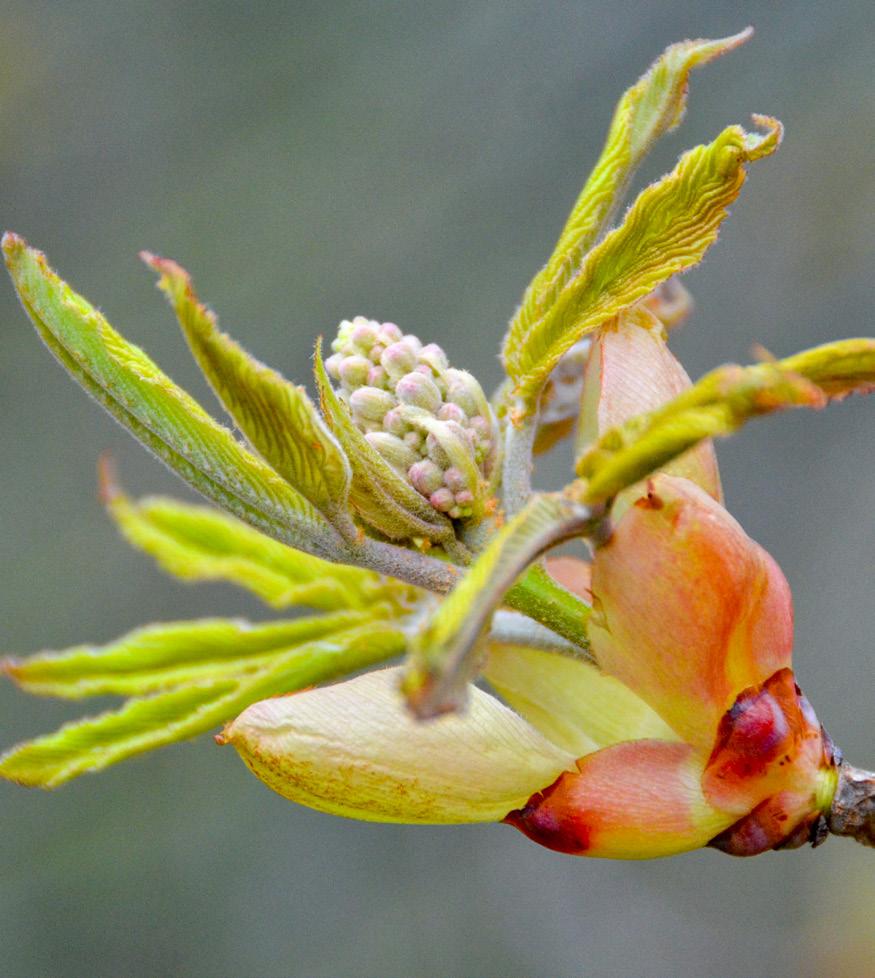
The buckeye tree (Aesculus) is one of the first trees to leaf out in spring and is also an early bloomer. This image shows a bud just beginning to burst open, emerging from the protective scales that kept it safe through the winter.
“History doesn’t repeat itself, but it does rhyme.”
– Mark Twain
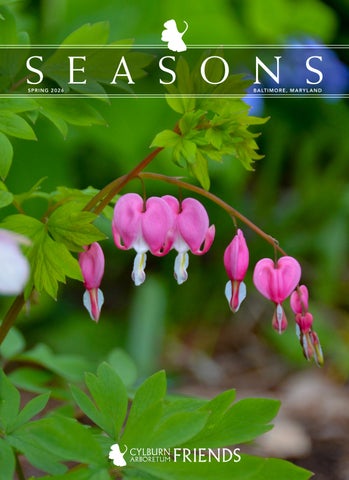
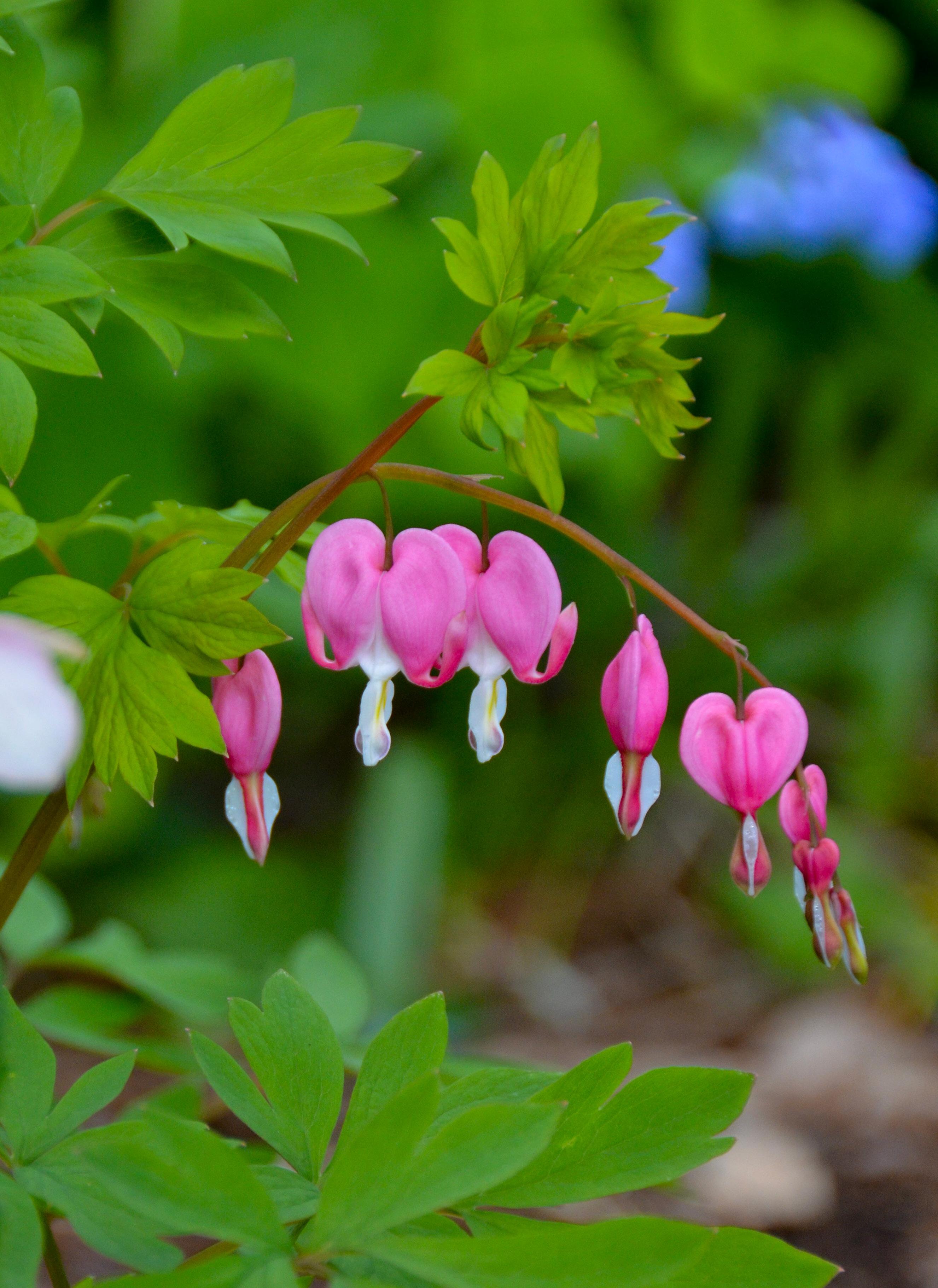
Cover: Bleeding Heart (Dicentra spectabilis) is a spring favorite, with graceful arching stems lined with delicate, heartshaped pink blooms. This classic woodland perennial thrives in cool, shady gardens.
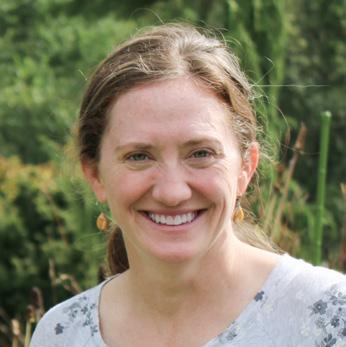
This time of year at Cylburn is one of my favorites. Every day a new bud opens, fresh stems emerge, and the scent of new growth drifts through the air. It gives me and our staff renewed energy for the season ahead and the many tasks that come with it: planting, scheduling programs, and preparing the grounds. Spring is likely our busiest time of year, with schools eager to visit on field trips, garden clubs excited to tour the grounds, and our largest public event, Market Day, just around the corner. I hope you have a chance to visit Cylburn this spring and enjoy all it has to offer.
In this issue, you will read about a fascinating piece of natural history in our collection, the Carolina Parakeet, once the only parrot native to the United States. It is also the season for registering for summer camp, and I share a personal reflection on Cylburn Nature Camp and the joy it has brought to my own family, as well as to the many young people who have experienced it over the years.
As always, I am grateful for your partnership. You help sustain the lectures, field trips, workshops, and youth programs that make Cylburn such a vibrant place. Most importantly, your support helps ensure that the arboretum remains free and accessible to everyone who wishes to explore it. Thank you for being part of this community.
With gratitude,
Brooke M. Fritz, Executive Director Cylburn Arboretum Friends
BOARD OF DIRECTORS
Hilles Whedbee President
Sandra P. Gohn Vice President
Ramesh Moorthy Secretary
Mark Gurley Treasurer
Will Clemens
Beverly Davis
Eric Dihle
Chris Feiss
Patricia Foster
Becky Henry
Nancy B. Hill
Bonnie Legro
Douglas Nelson
Daniel Pham
Michael Reamer
Courtney Sawyer
Sara Service
EX OFFICIO
Melissa Grim
Chief Horticulturist, Baltimore City Department of Recreation and Parks
SEASONS is published by Cylburn Arboretum Friends
Written and edited by
Brooke M. Fritz Executive Director
Erika Castillo Director of Education
Brent Figlestahler Head Gardener
Bill Geenen | Communication Design Layout and Design
Info@cylburn.org
Phone: (410) 367-2217 Cylburn.org
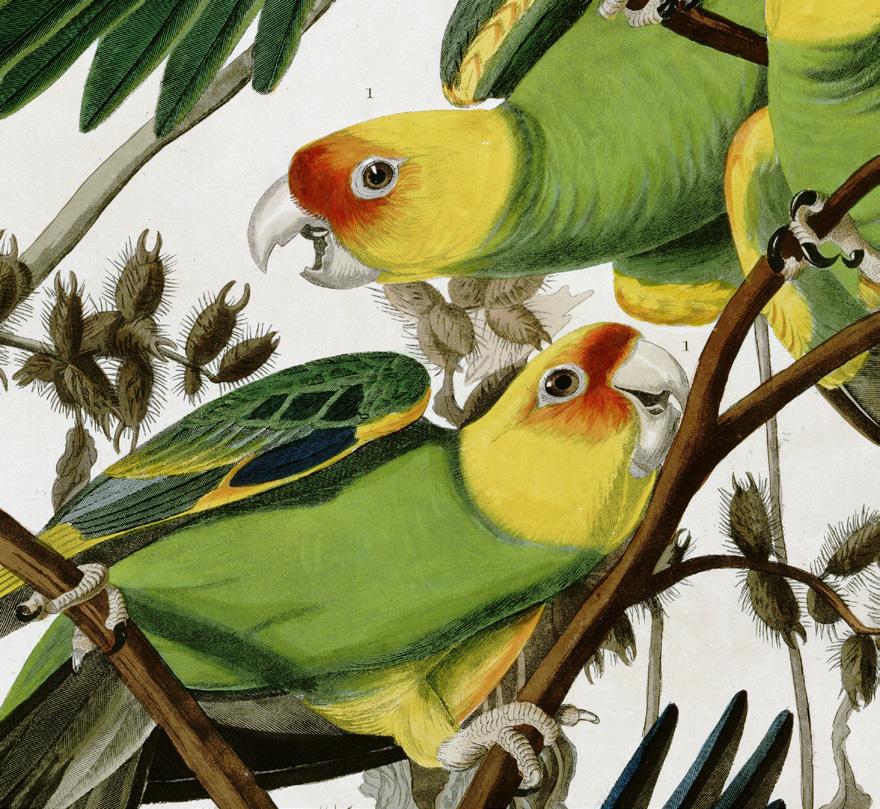
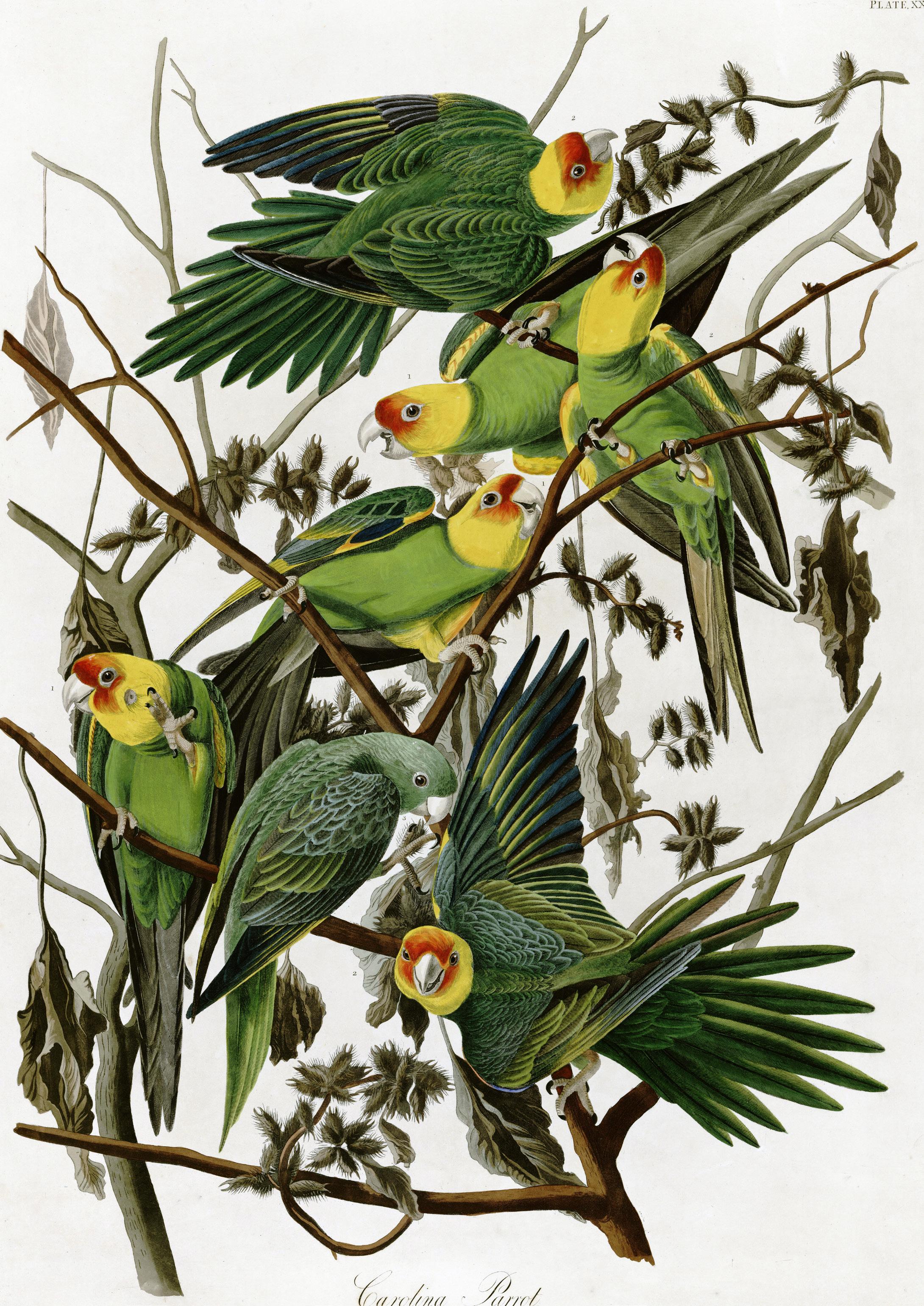
Carolina Parakeet from John James Audubon’s Birds of America (ca. 1827).
The Carolina Parakeet: Three Plants and Three Paintings
By Ben Leese
About the author: Ben Leese spends his days in a microbiology lab, but loves studying the Carolina Parakeet and other extinct species. He enjoys working in his garden, especially his native meadow, and likes spending summer evenings cheering for nearby minor league baseball teams. He was generous enough, after noting the Cylburn Carolina Parakeet in his studies, to write this article.
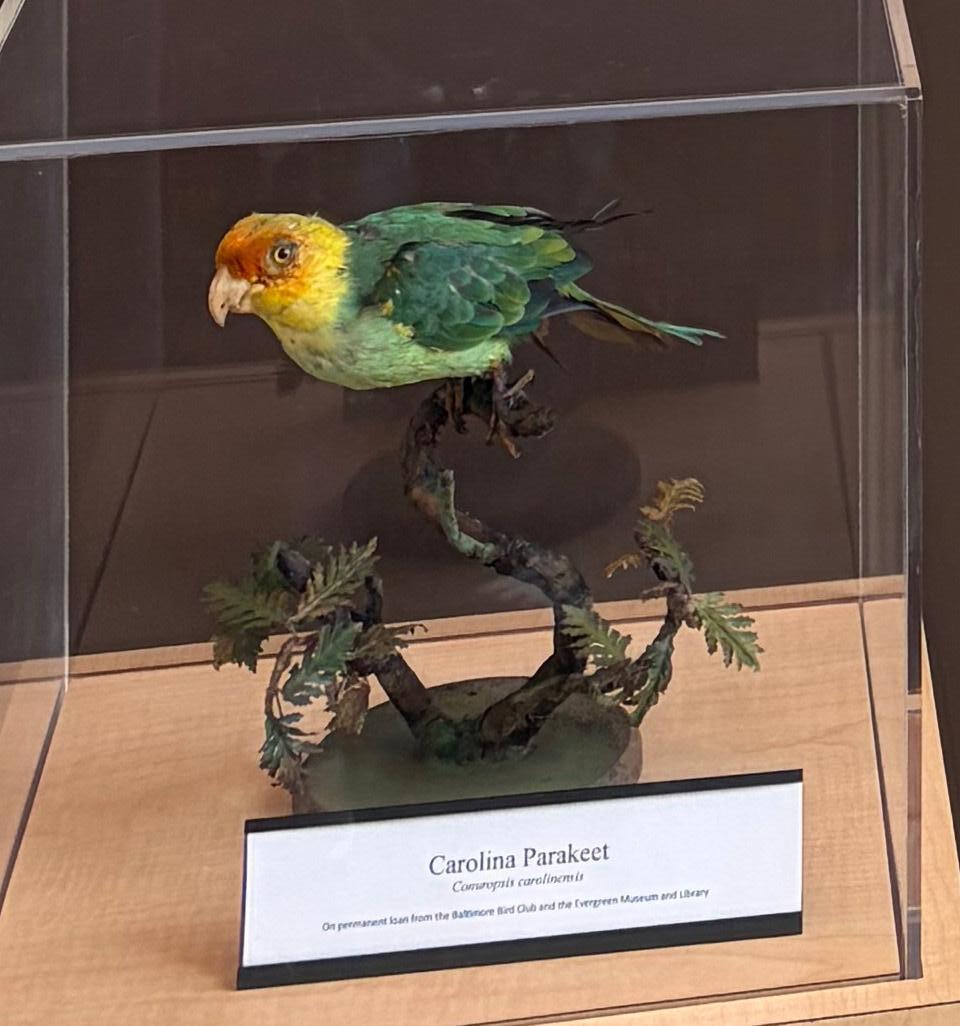
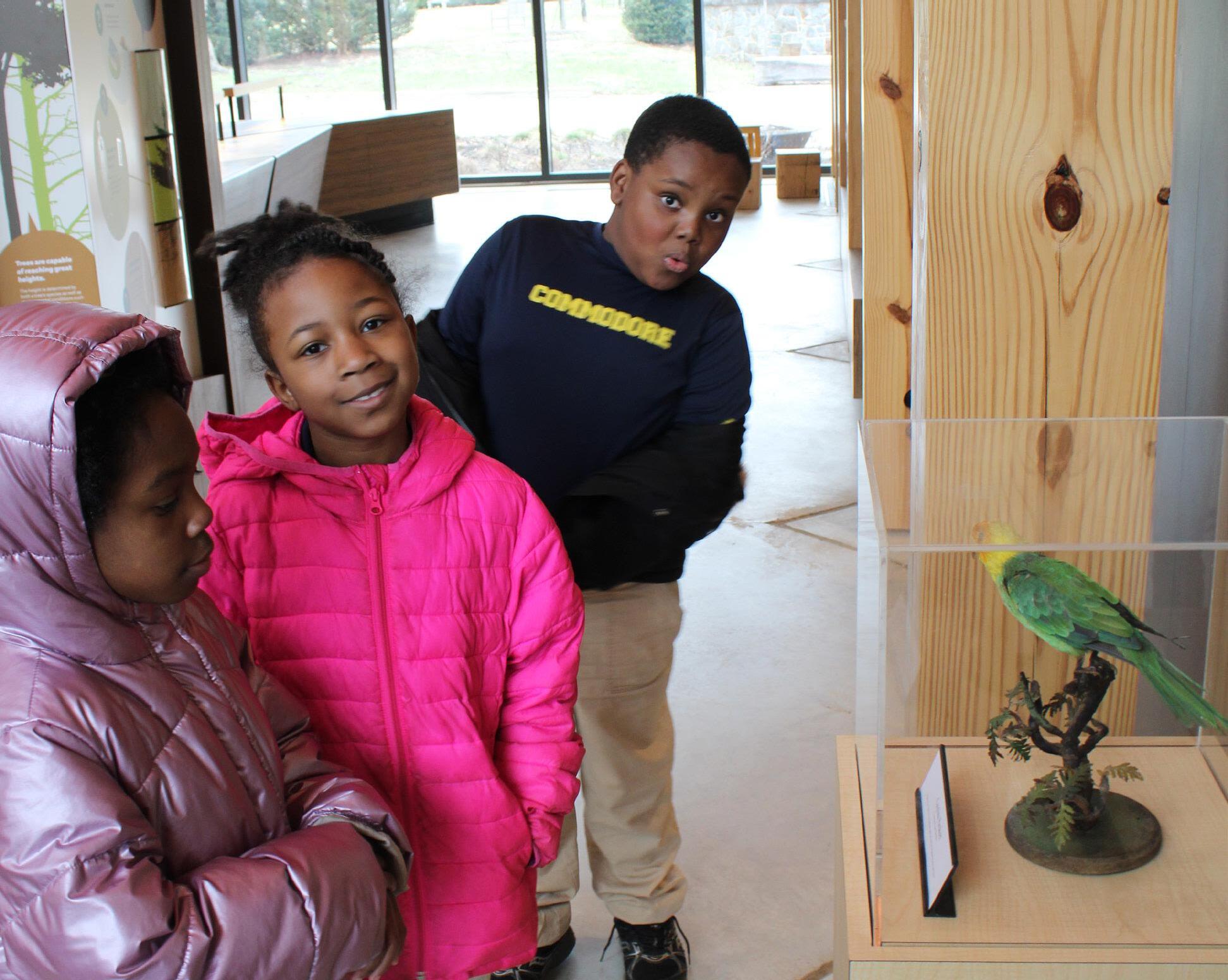
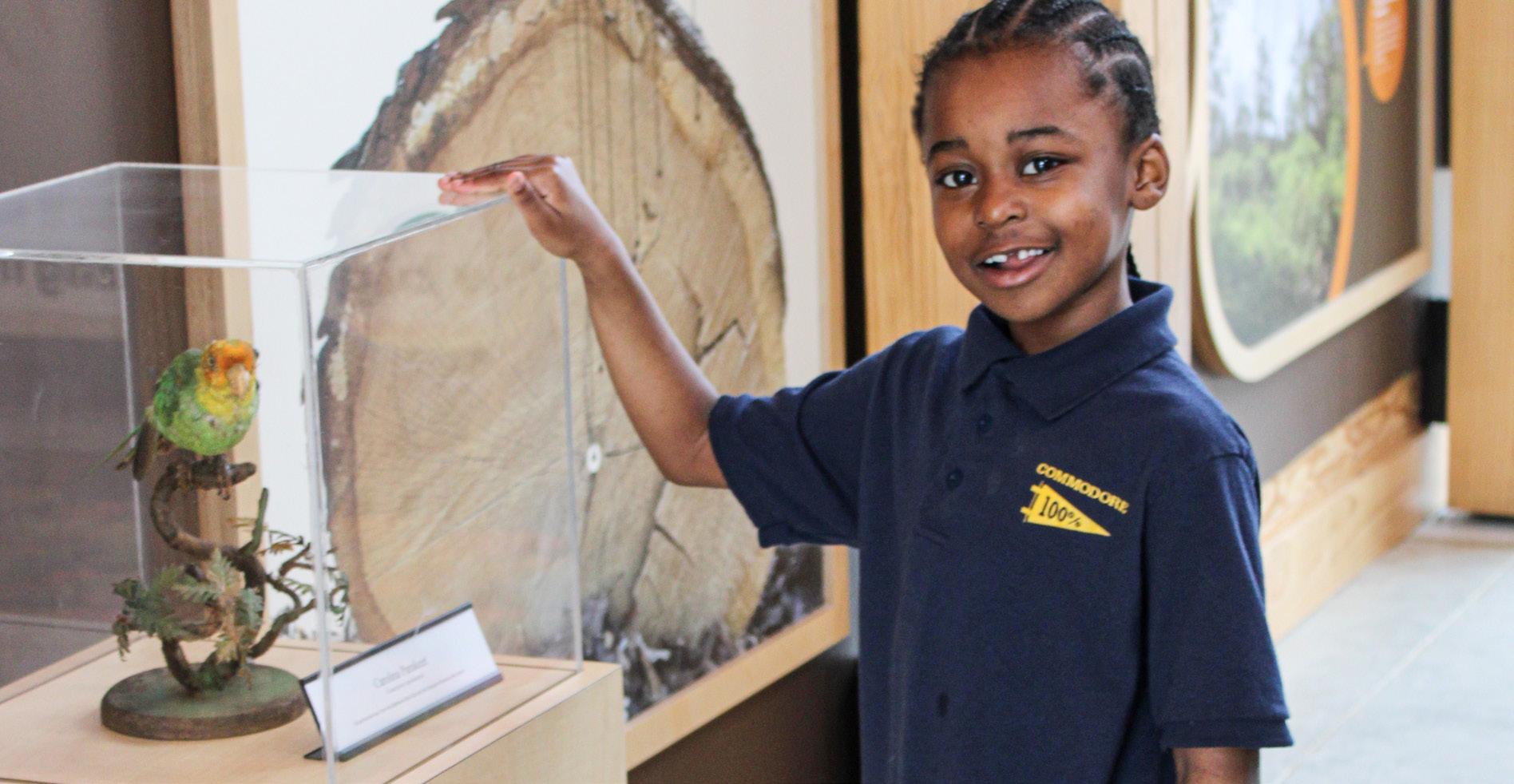
Tucked away in the Cylburn’s Nature Education Center, you will notice a parrot.
The bird might seem out of place in Maryland, but it is a rare specimen of the Carolina Parakeet, the United States’ only native parrot1.
The Carolina Parakeet, which went extinct in the early 20th century, once ranged from Florida to Nebraska and even into tidewater Maryland. Its “beautiful plumage, but horrid music,” as Rev. William Graham put it, made it hard to miss anywhere in its range.
In 1961, the Baltimore Bird Club and the Maryland Ornithological Society began assembling an extensive collection of mounted bird specimens, nests, and eggs, which were stored and displayed
at Cylburn Arboretum in the Nature Museum inside the Cylburn Mansion before moving to the Carriage House and now the Nature Education Center. One of the most significant specimens is a mounted Carolina Parakeet, on permanent loan as part of the Garrett Collection of the Evergreen Museum & Library.
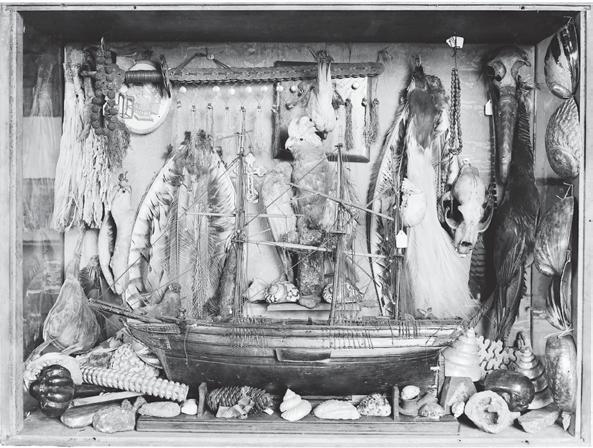
As with many older mounts, we lack information about where and when Cylburn’s parakeet specimen was collected. It was likely part of a curio cabinet, a fixture in many drawing rooms, especially among wealthy families in the nineteenth century. When specimens or diaries have detailed collection data, scientists can use that information to understand the species and,
A typical display of curios from the nineteenth centure included shells, bird's feathers, and mounted birds.
perhaps, the cause of its extinction. I found the Cylburn’s specimen while researching and geolocating old records of the parakeets (160 and counting!). But spreadsheets of geographical coordinates cannot reveal the charm and beauty of these birds in life. Three plants and three paintings help to tell their story.
The most famous portrait of the Carolina Parakeet, painted by John James Audubon circa 1827 (page 2), is among the artist’s best work. The birds seem in motion, you can almost hear them squawking, and the lowest parakeet is gazing directly at the viewer. But look past the parakeets, and you will see that Audubon chose to depict the species not on a tree, but on the lowly cocklebur weed, a strange artistic choice but an accurate biological one.
Carolina parakeets loved to eat cockleburs. Alexander Wilson, writing a bit before Audubon, suggested that the parakeet visited Maryland and Pennsylvania rarely because those states lacked many cockleburs. This taste for the weedy plant made for a love-hate relationship
with farmers, who cheered the birds for eating cockleburs but hated them when they touched the apple orchard. The parakeet was somehow adapted to the cocklebur’s toxins, which keeps most other animals from consuming it. Audubon and others even thought that the parakeet was itself toxic, at least to cats, because of this diet.
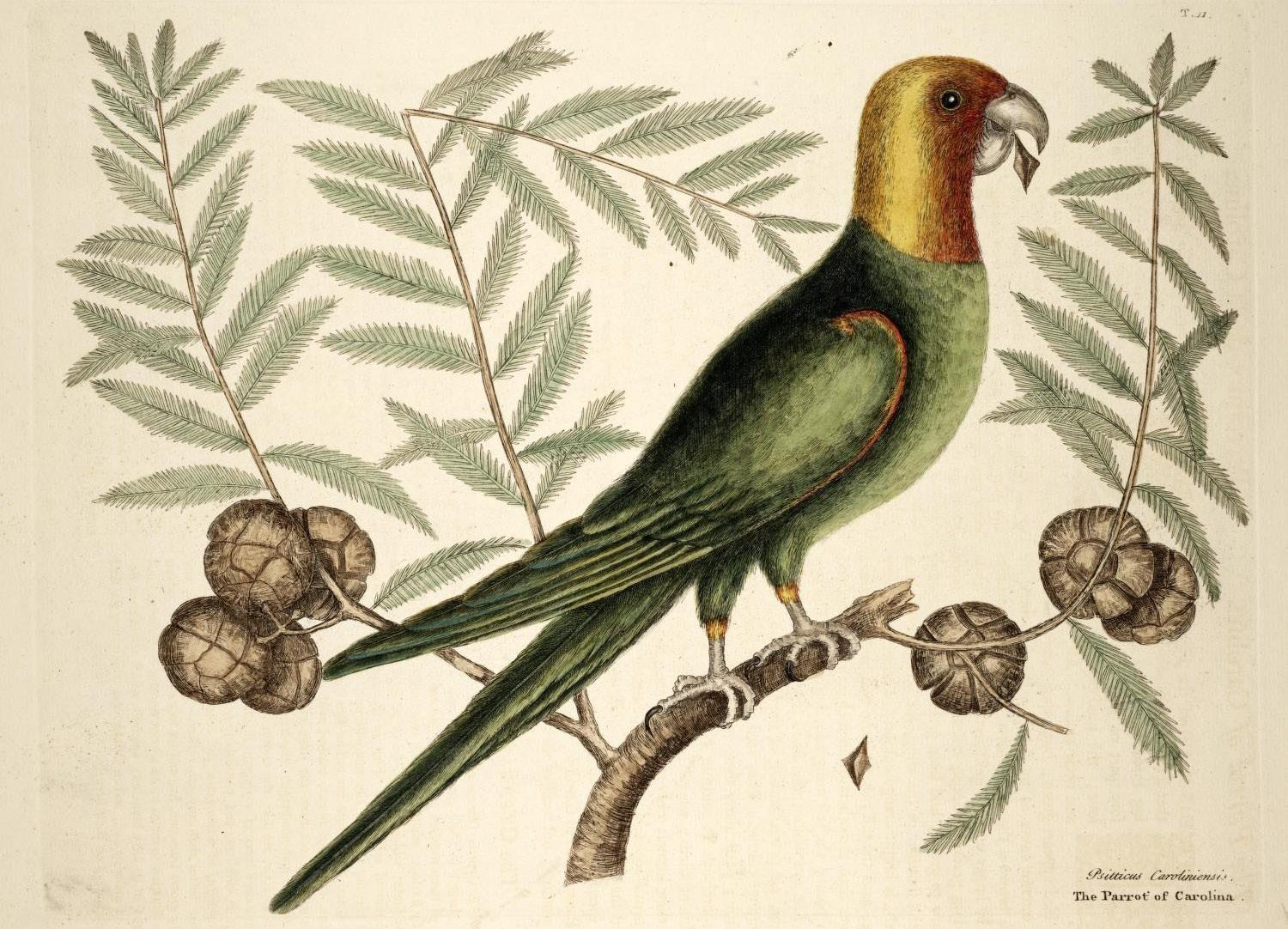
Mark Catesby’s 1700s painting of the Carolina Parakeet holds the distinction of being the basis for Carl Linnaeus’s scientific description of the species. While lacking Audubon’s artistry, Catesby’s image shows the parakeet in a cypress. The parakeet lived in large flocks and roosted communally in the hollows to the cypress. While most think that the parakeet nested in cavities in the cypress, others claim that the species made stick nests like a dove in its branches. The cypress served not only as hotel but also as buffet, and parakeets often ate the cypress balls (like round pine cones), another food source for which there was little competition.
Even though the cypress in normally a denizen of southern forests, Henry Rowe Schoolcraft first encountered cypresses and parakeets on the same day near Paducah, Kentucky:
I here first saw that singular excrescence in the vegetable kingdom called cypress knees. The point of land between the mouth of the Cumberland and Ohio, was a noted locality of the cypress tree. This tree puts up from its roots a blunt cone, of various size and height, which resembles a sugar loaf. It is smooth, and without limb or foliage. An ordinary cone or knee would measure eight inches in diameter, and thirty inches high. It would seem like an abortive effort of the tree to put up
another growth. The paroquet (parakeet) was exceedingly abundant at this place, along the shores, and in the woods. They told me that this bird rested by hooking its upper mandible to a limb.
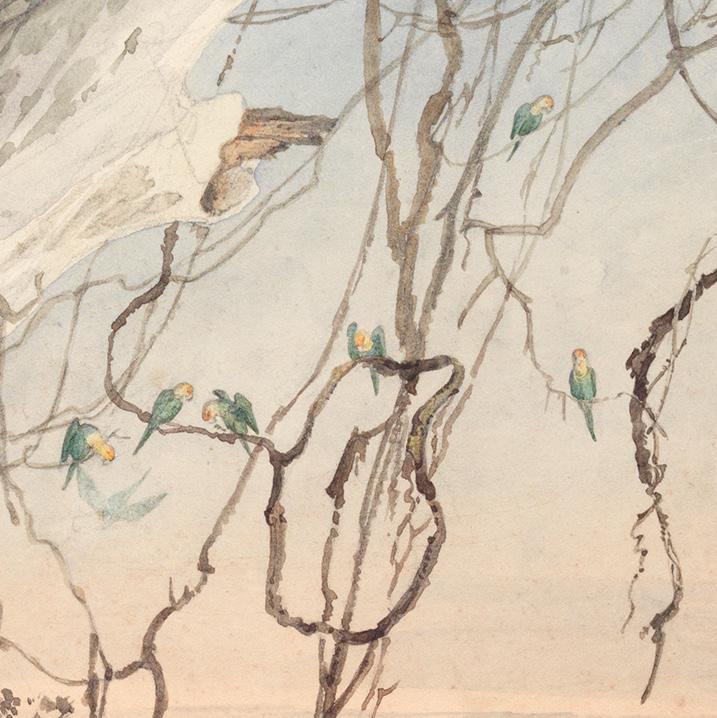
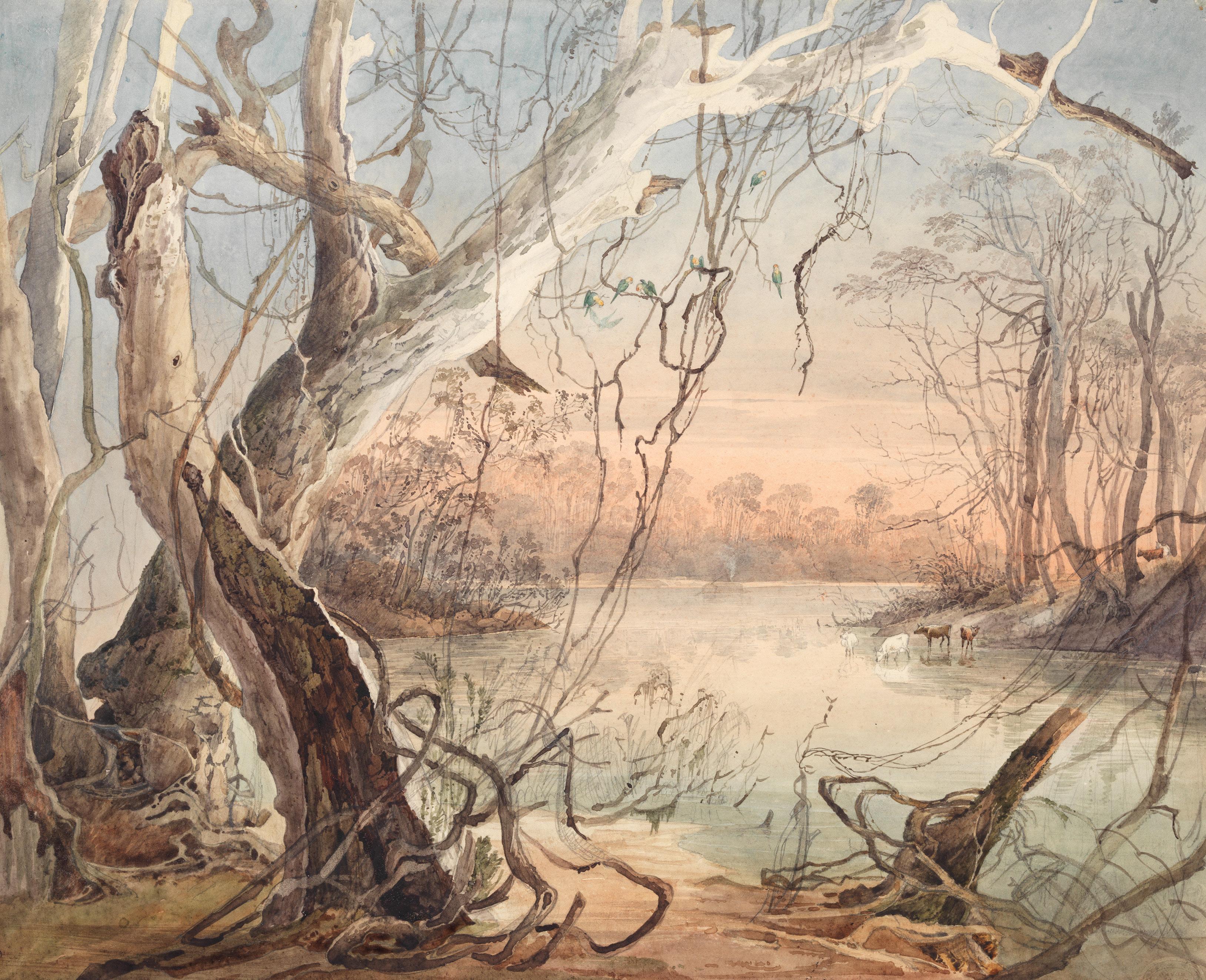
The Carolina Parakeet lived far beyond the cypress swamps of the south, ranging as far as Nebraska and Ohio. In these more northerly environs, the parakeet often lived in sycamore trees, which also served as both hotel and buffet. Some early observers reported that flock members who could not fit inside the large roosting cavities in sycamores hung near the outside by their beaks.
Mark Catesby’s Carolina Parakeeet from his Natural History of Carolina, Florida and the Bahama Islands (1729–1747)
Karl Bodmer, traveling with Prince Maximilian zu Wied, painted a flock of Carolina Parakeet in a huge sycamore near New Harmony, Indiana in the winter of 1832-1833.
American colonists moving west often traveled via wood burning steamboats. Sycamores prefer river margins and were likely often cut for fuel early around this time. The very means of travel that carried folks into the parakeet’s habitat also led to its demise.
The bright parakeets against the stark white of sycamore bark was a memorable sight, as Gert Goebel remembered:
… great flocks of paroquets came into our region every fall and frequently remained till the following spring. They were a small variety, about the size of a dove. They were bright green in color, and their heads were orange colored. These flocks of paroquets were a real ornament to the trees stripped of their foliage in the winter. The sight was particularly attractive, when such a flock of several hundred had settled on a big sycamore, when the bright green color of the birds was in such marked contrast with the white bark of the trees, and when the sun shone brightly upon these inhabited tree tops, the many yellow heads looked like so many candles.
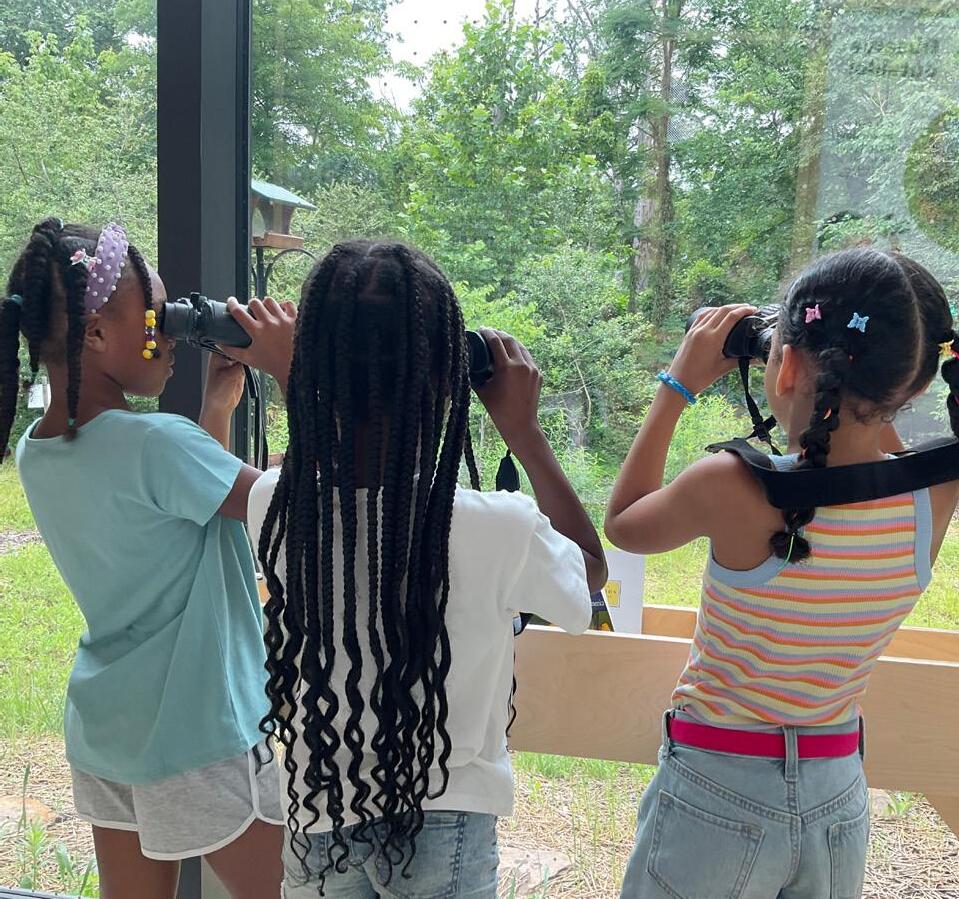
Today, specimens like the Carolina Parakeet help visitors connect past and present. The birds displayed in the Nature Education Center allow people to closely observe species they might otherwise only glimpse outdoors – or not at all, making the natural world easier to study and appreciate. More than 160 species of birds have been reported on the grounds at Cylburn, making it an excellent location to observe birds.
The parakeet displayed in the Nature Education Center may look out of place today, but it is a beautiful piece of our lost history and helps us tell the story of human disruption of the natural world. Next time you are exploring the arboretum or further afield in Maryland, and you find sycamores, cypresses, or even the lowly cocklebur, imagine them filled with parakeets.
You can find more of Ben Leese’s work on the parakeet in “Additional Records of the Extinct Carolina Parakeet” in the Bulletin of the British Ornithologists’ Club. Thanks for contributions from Brooke Fritz, Executive Director of Cylburn Arboretum Friends, for local context.
1 Except for a small portion of the Thick-billed Parrot’s range in Arizona.
Growing Up at Cylburn Nature Camp
By Brooke Fritz
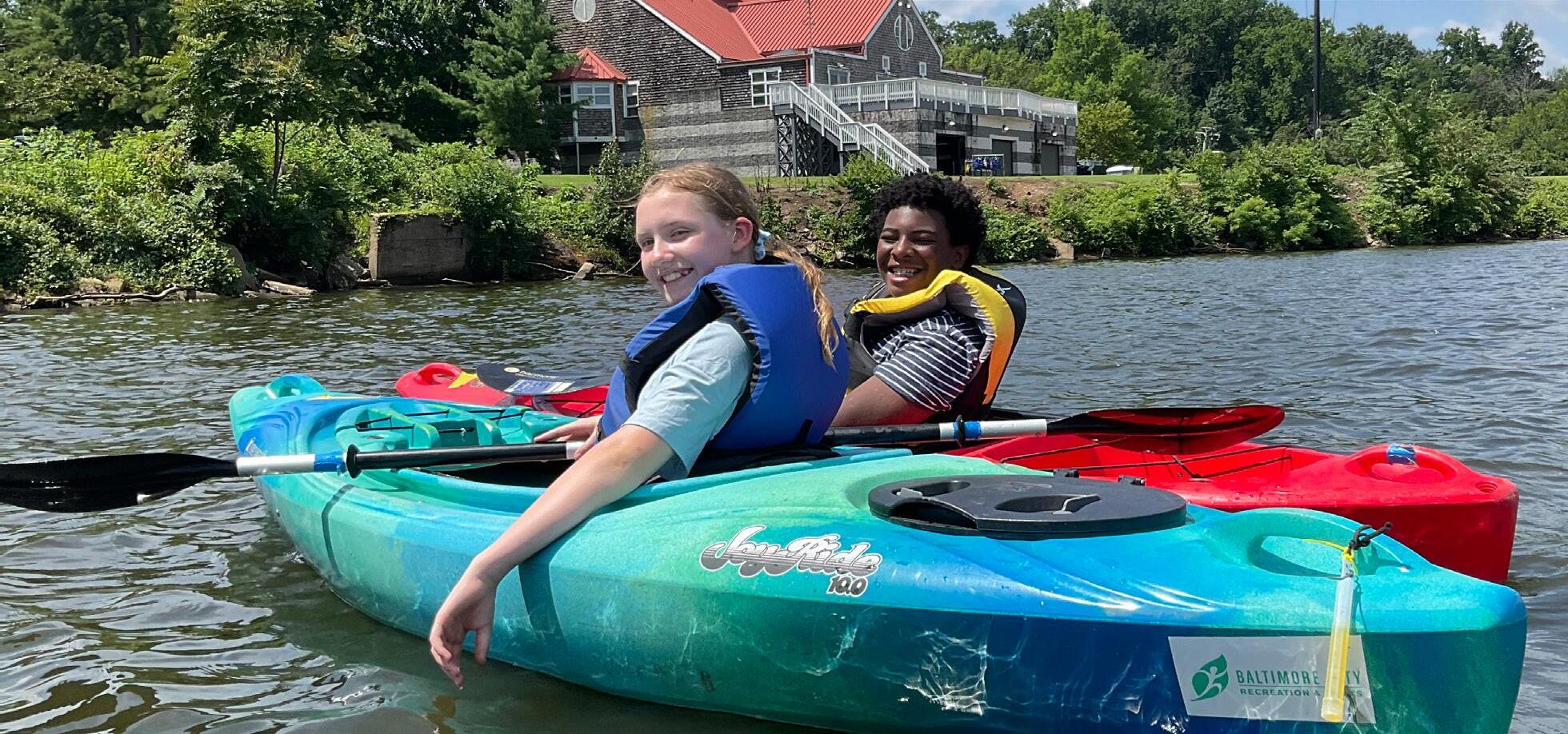
My children have attended many summer camps over the years. As a working mom, I was always looking for somewhere for them to be while I was at the office. We have tried them all: sports camps, art camps, theater camps, day camps, overnight camps, even a circus camp. But the one that has remained a summer constant is Cylburn Nature Camp.
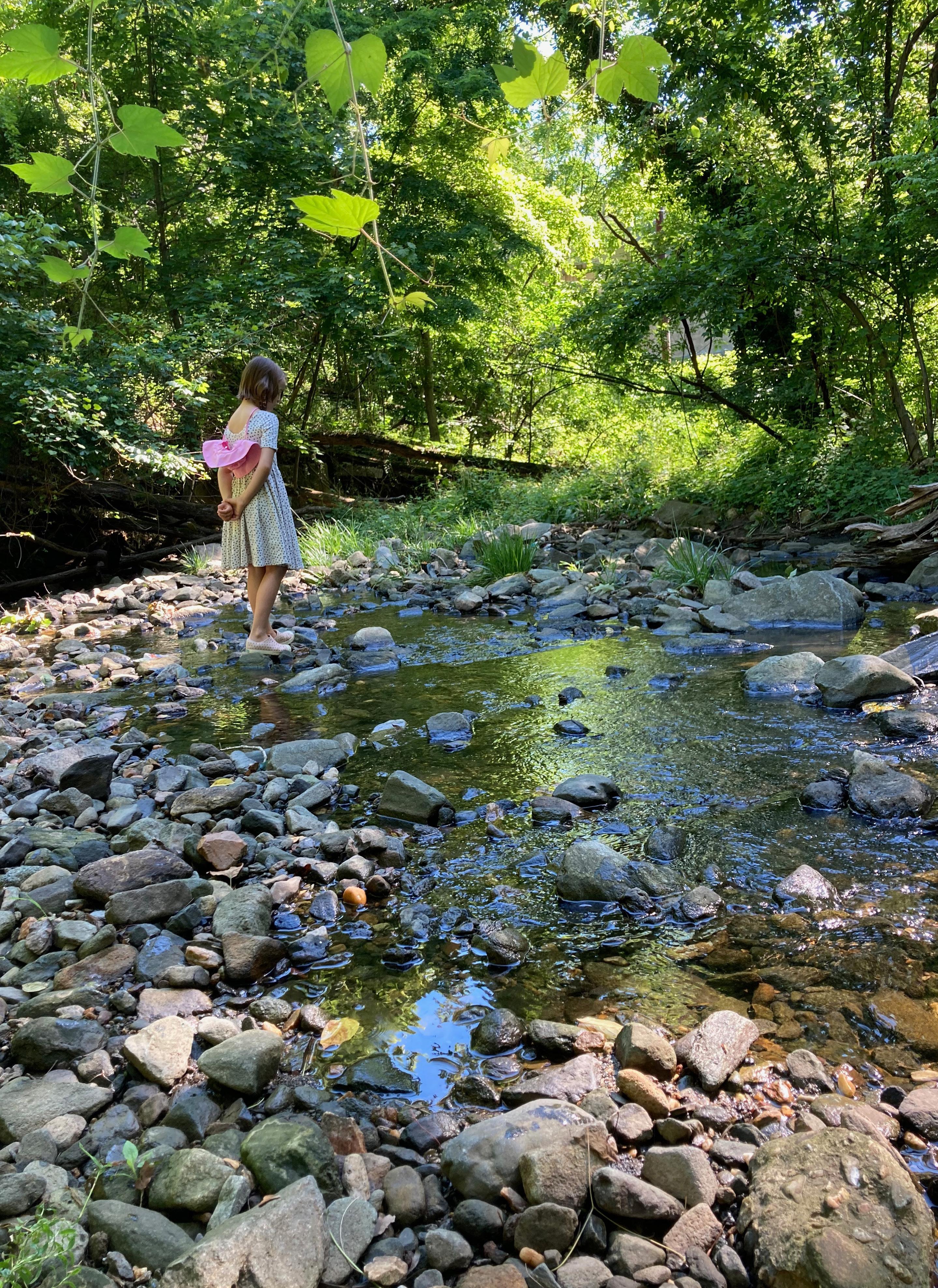
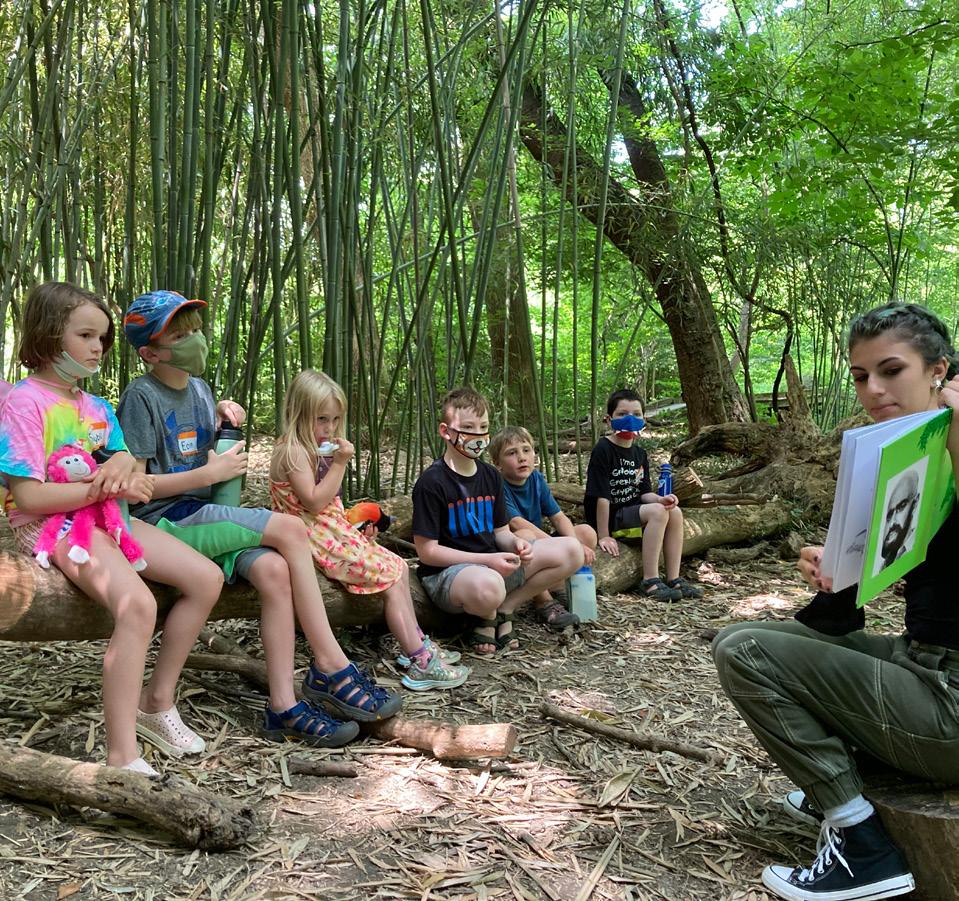
On a summer morning at Cylburn Arboretum, the day begins the same way it has for more than fifteen years, with a walk into the woods. By 9 a.m., small groups of children are already heading down the trails, scanning the ground for mushrooms, listening for birds, and watching for movement in the tall grass. What they discover each day is never quite the same.
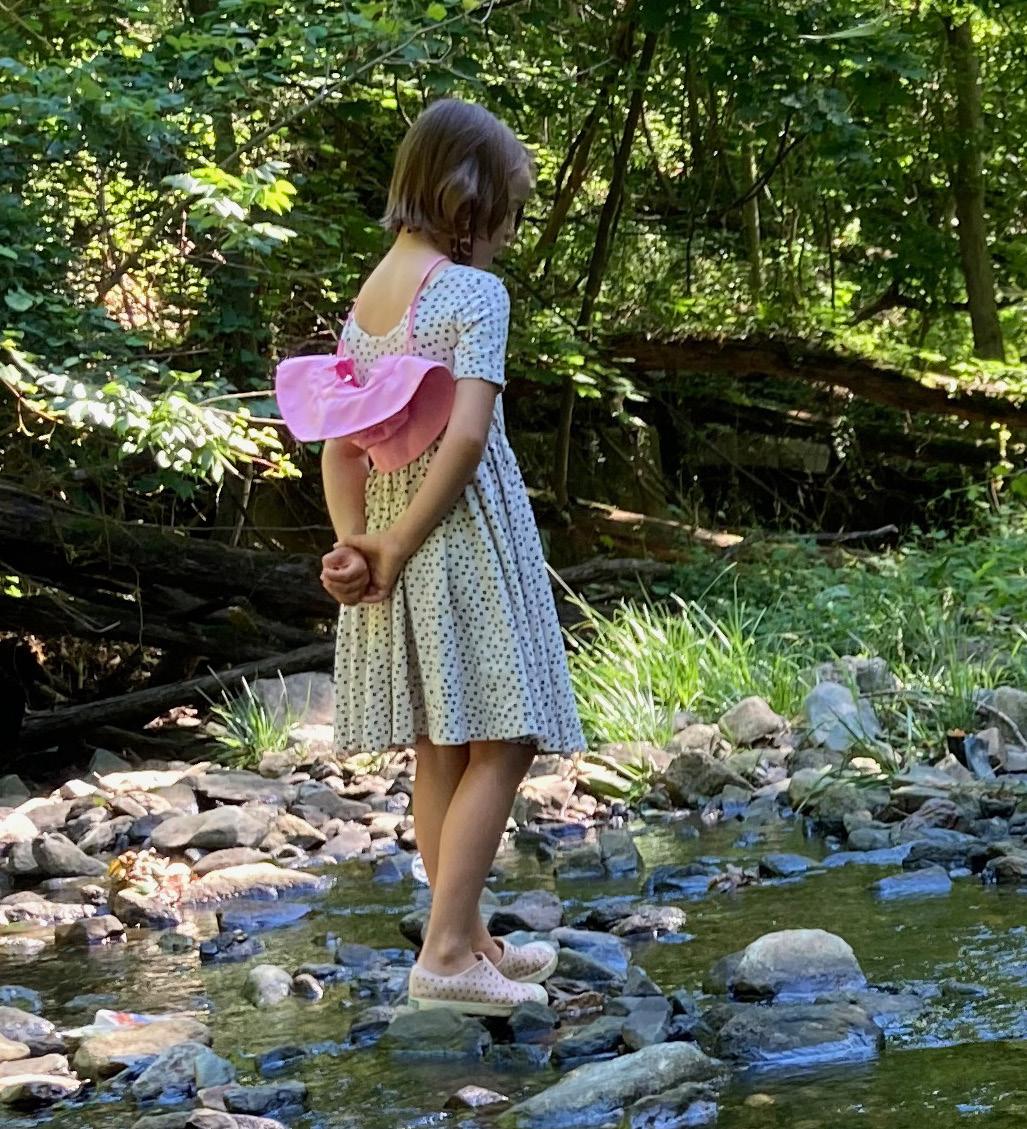
My daughter, now ten-year-old, started at Cylburn Nature Camp when she was five. She was one of the youngest campers that season, thrilled by the opportunity to be around so many older, more experienced campers. She still remembers the following year, when she finally “graduated” to having long enough legs to walk the Ravine Trail and explore the stream, opening up an entirely new experience.
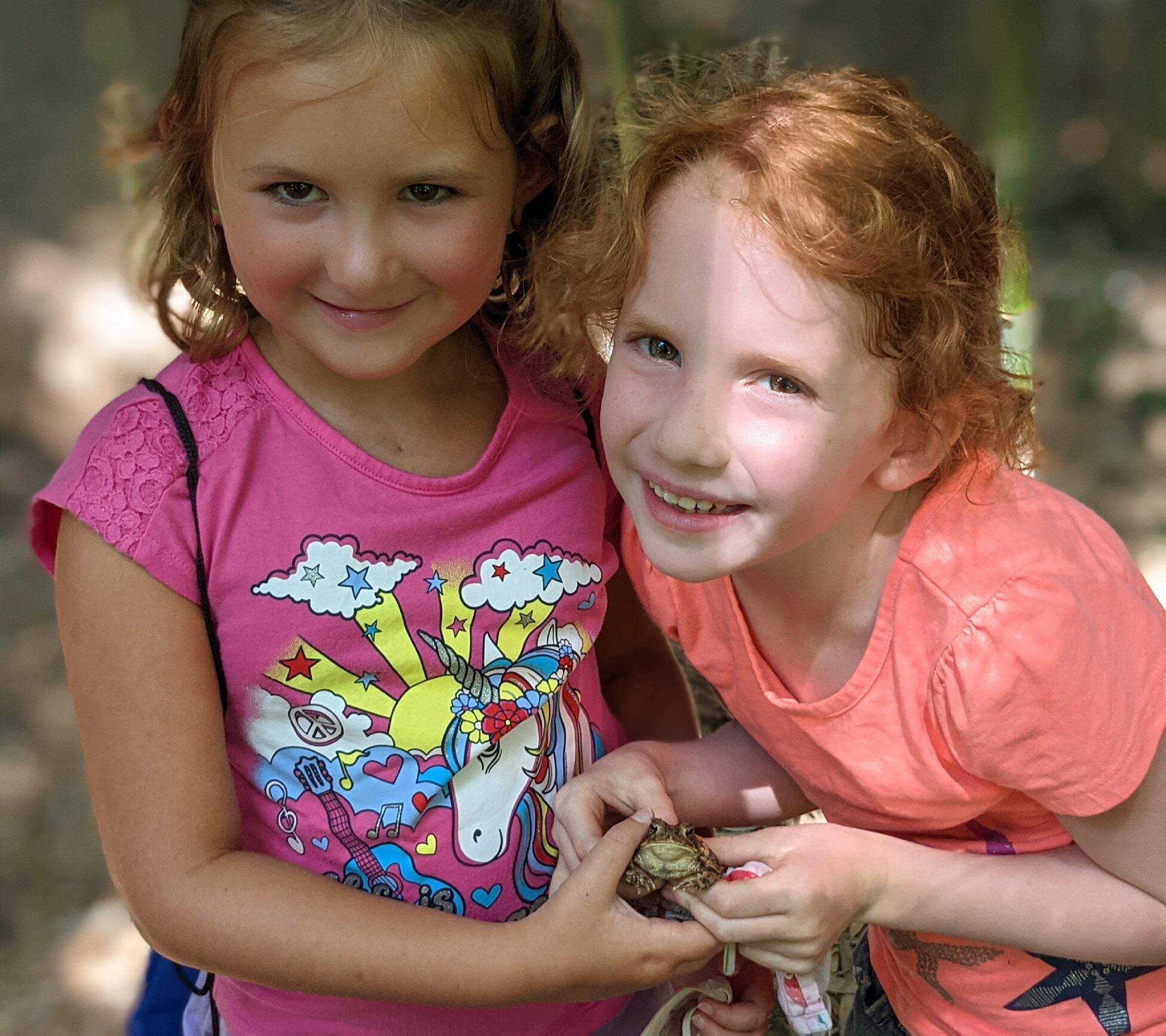
Nature Camp has long been one of Cylburn Arboretum Friends’ most beloved programs. Each week, campers explore the gardens, forests, and grounds of the arboretum while learning about plants, animals, and the ecosystems that make up our environment. But if you ask the campers what makes it special, their answers are often simpler and more fun. According to
my kids, it is “that you get to be outside all day exploring instead of sitting in a classroom.” They also appreciate the predictable rhythm of the day and the opportunity to make friends, many of whom return year after year.
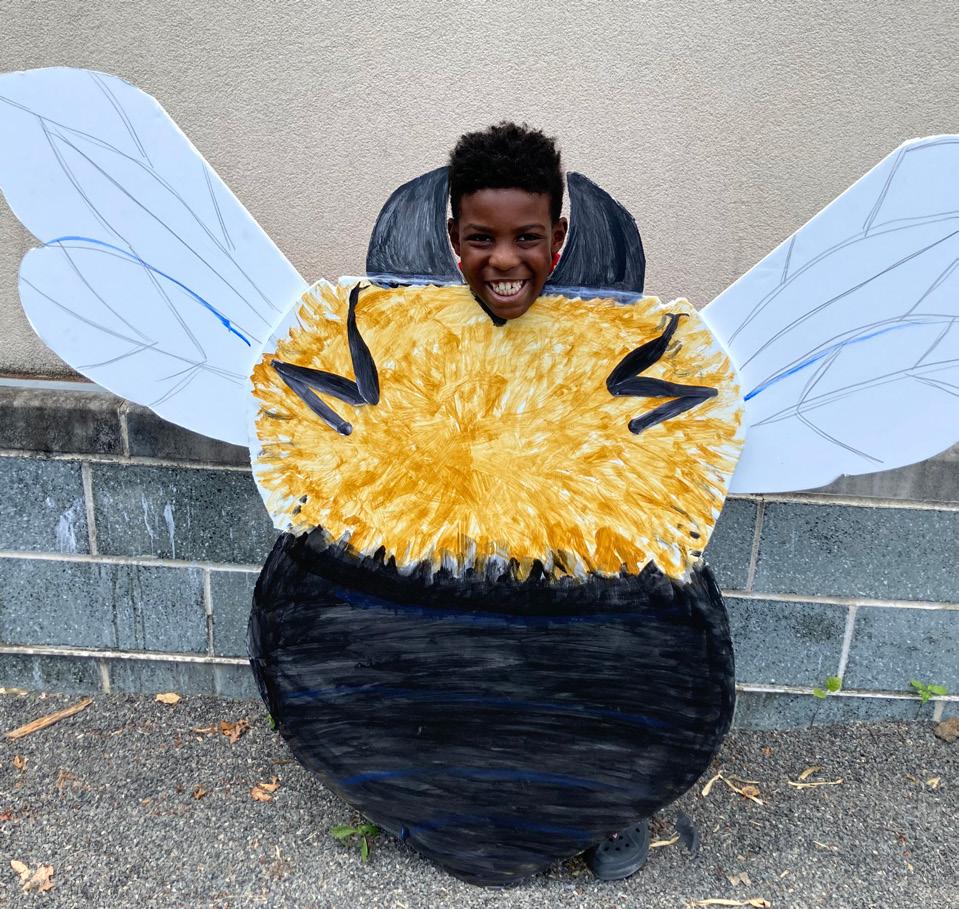
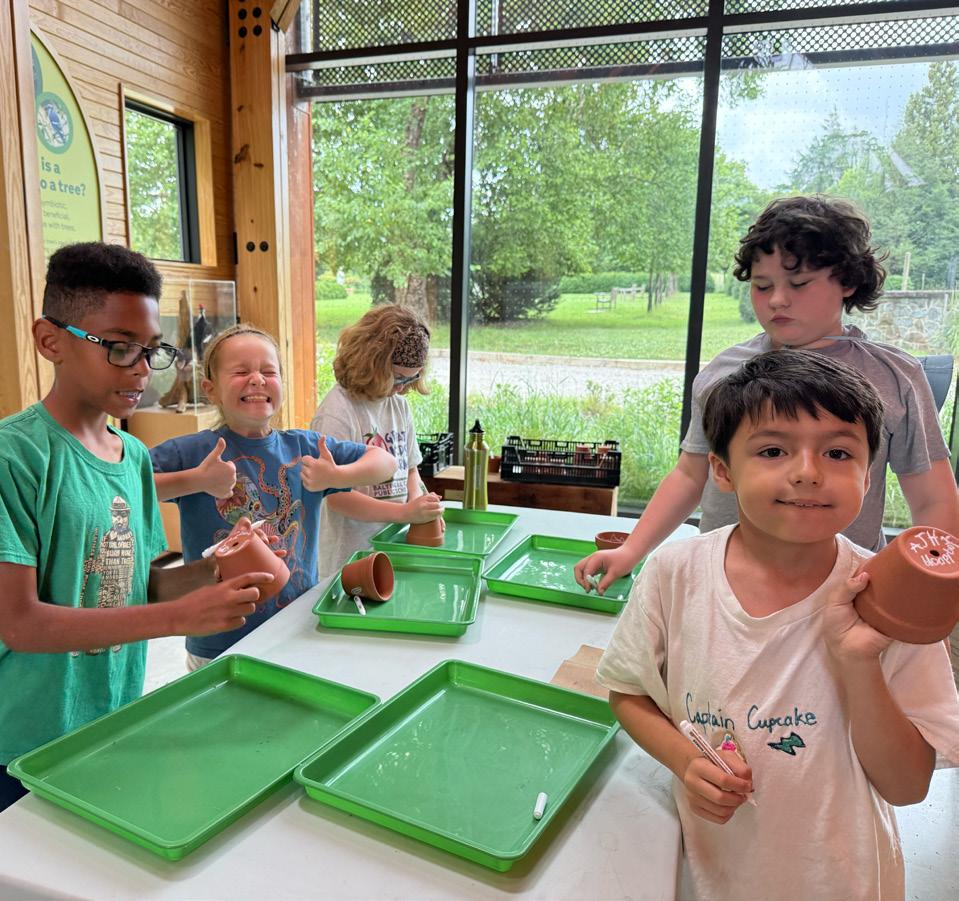
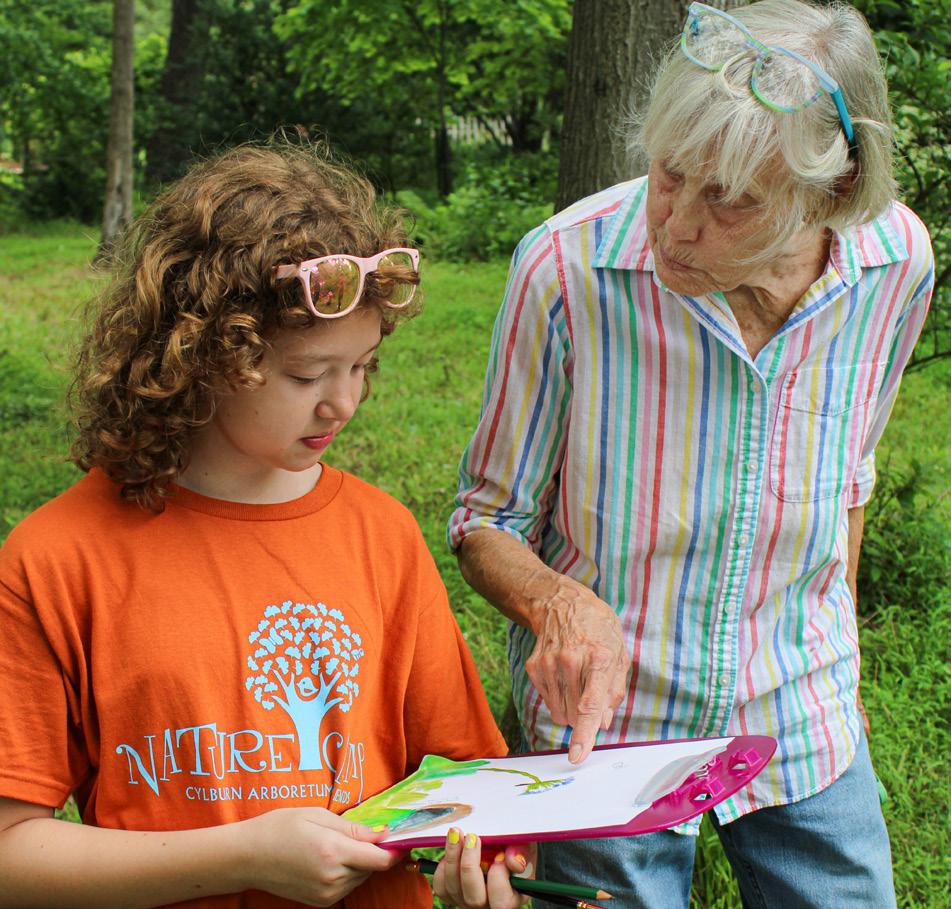
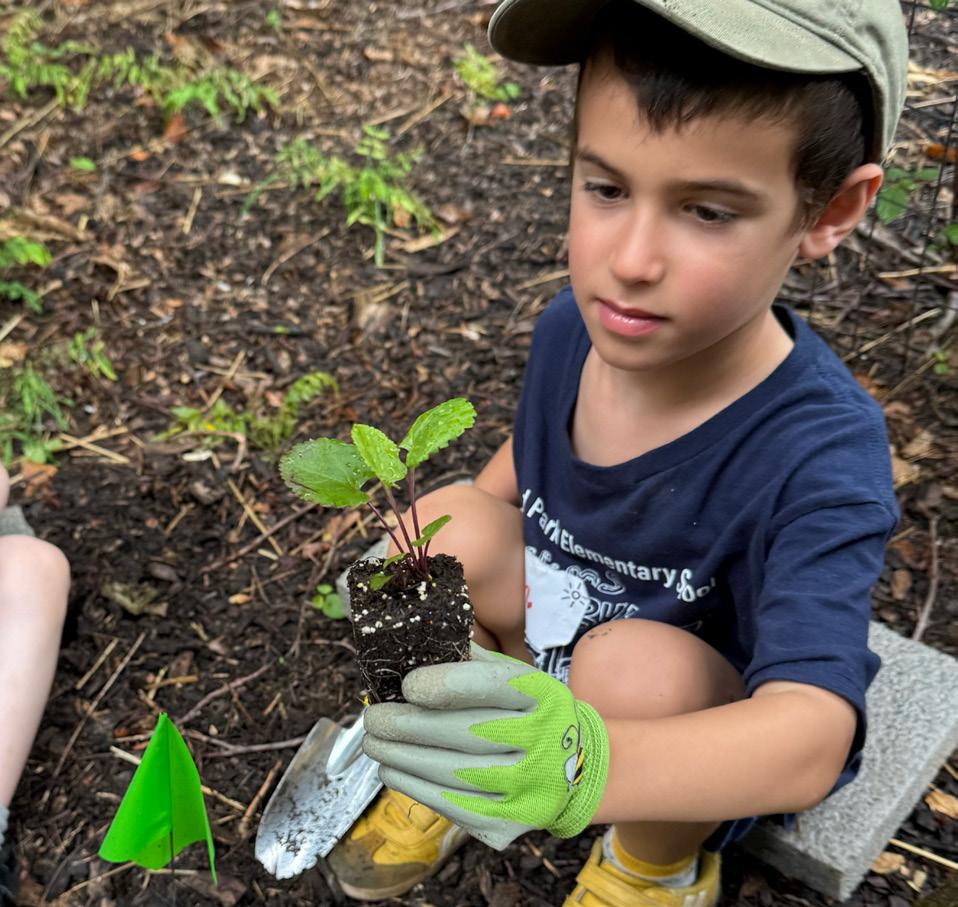
Hands-on exploration is a big part of the camp experience. Campers try botanical art projects, build bamboo trellises, and work in the gardens alongside our gardeners. My middle schooler is about to start her final year at camp, and she loves that this age group is slightly smaller. She comes home talking about the counselors, scavenger hunts, and kayaking trips. She reigns supreme during Capture-the-Flag every summer and starts introducing the sixth graders to the game plan before they even leave the drop-off parking lot.
Moudry Woods, a frequent after-lunch haunt, is particularly captivating with its woodland troll, stumps to jump on, dappled sunlight for games, and stick structures waiting to be rearranged or turned into imaginative forts. It is the kind of place where a simple patch of woods quickly becomes a stage for adventure, all within sight of the historic Cylburn Mansion and our Nature Education Center.
For me, the magic of Nature Camp often lies in seeing my children and the hundreds of other campers who enjoy our grounds every summer develop a deeper connection to the natural world. Watching a child suddenly stop to examine a flower, and noticing a counselor nearby who can help identify it before the group continues on
their way, is a small but meaningful moment. The woods and gardens of Cylburn become a place of curiosity and wonder.
Of course, my family is not alone in this experience. Each summer we hear from parents whose children leave camp excited to share what they learned that day, from discovering how woodpeckers find insects in trees to identifying plants along the trails. Many parents note how quickly the counselors build relationships with the campers and create a supportive, caring environment. One parent shared that their child was “excited to go to camp every morning,” while another wrote that their camper came home eager to explain the plants and animals they had learned
about that day. For many families, that combination of curiosity, kindness, and outdoor exploration is exactly what makes Nature Camp special.
By the end of the week, campers leave with muddy shoes, new knowledge, and a long list of favorite discoveries. This year, as one of my campers ages out, I will be paying particular attention to our youngest campers. It fills my heart with joy to know that my girls leave camp with the understanding that nature is something to explore, care for, and return to again and again. And I wish the same for all of our youngest campers this summer: many happy and glorious returns.
What Membership Makes Possible at Cylburn
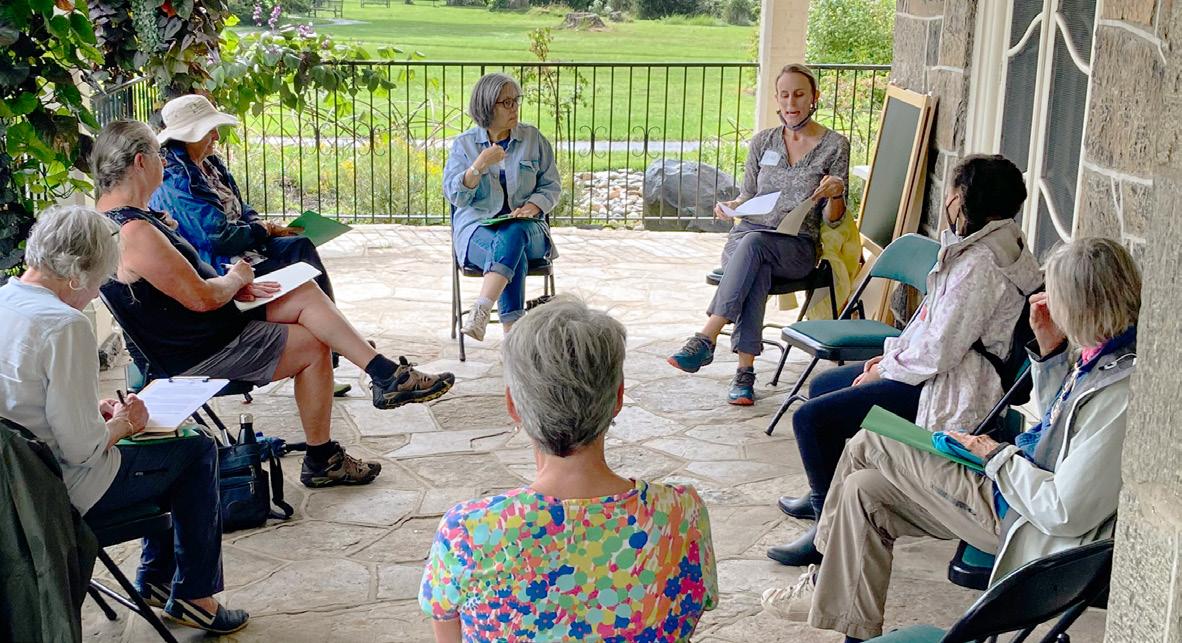
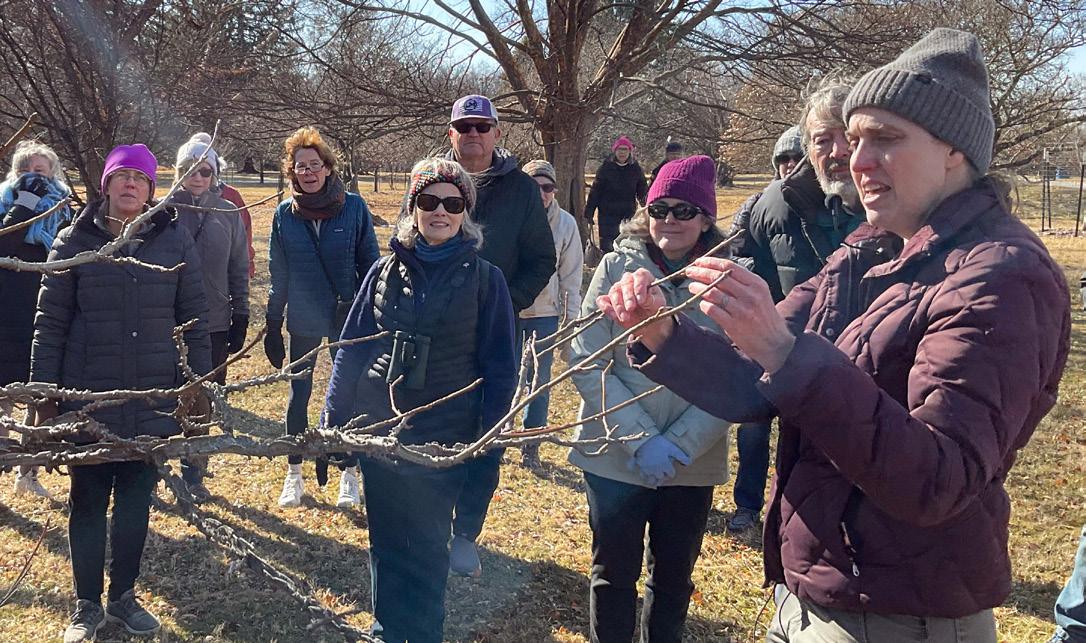
This spring, many activities are taking place at Cylburn Arboretum: lectures, workshops, field trips, drop-in programs, pop-up learning displays, and, of course, visitors simply exploring the grounds. Many of these experiences are made possible by a community that has quietly supported Cylburn for more than seventy years: its members.
The idea that Cylburn could be a place for learning and discovery began early. In 1954, to help bring that vision to life, the Cylburn Committee was formed as a citizens’ organization working
alongside the city. From the beginning, members played a central role in shaping the arboretum by clearing trails, labeling plants, planting wildflowers and shrubs, and creating educational programs.
In 1961, members of the committee that later became Cylburn Arboretum Association and then Cylburn Arboretum Friends helped establish the Cylburn Nature Museum in the mansion and opened a horticultural library to the public. Trails were improved, plant collections expanded, and seminars and nature walks offered throughout the year.
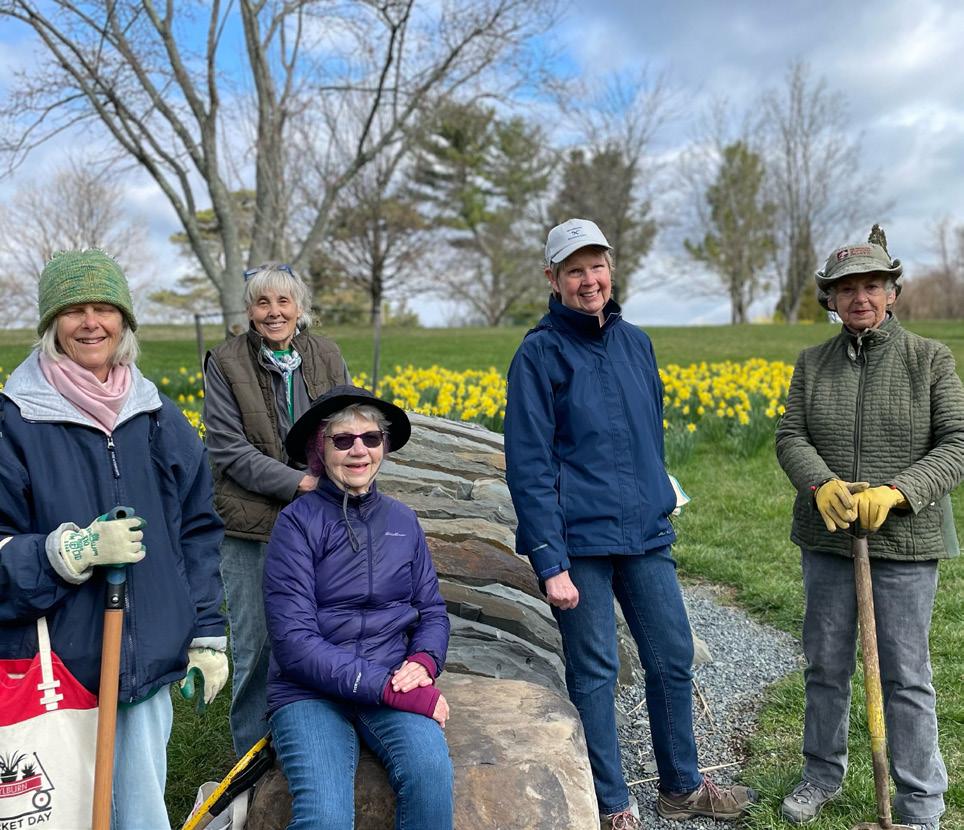
Today, membership continues to sustain this tradition. Member support helps fund educational programs, lectures, guided walks, and field trips, while also supporting the volunteers who help care for the gardens, trails, and natural areas.
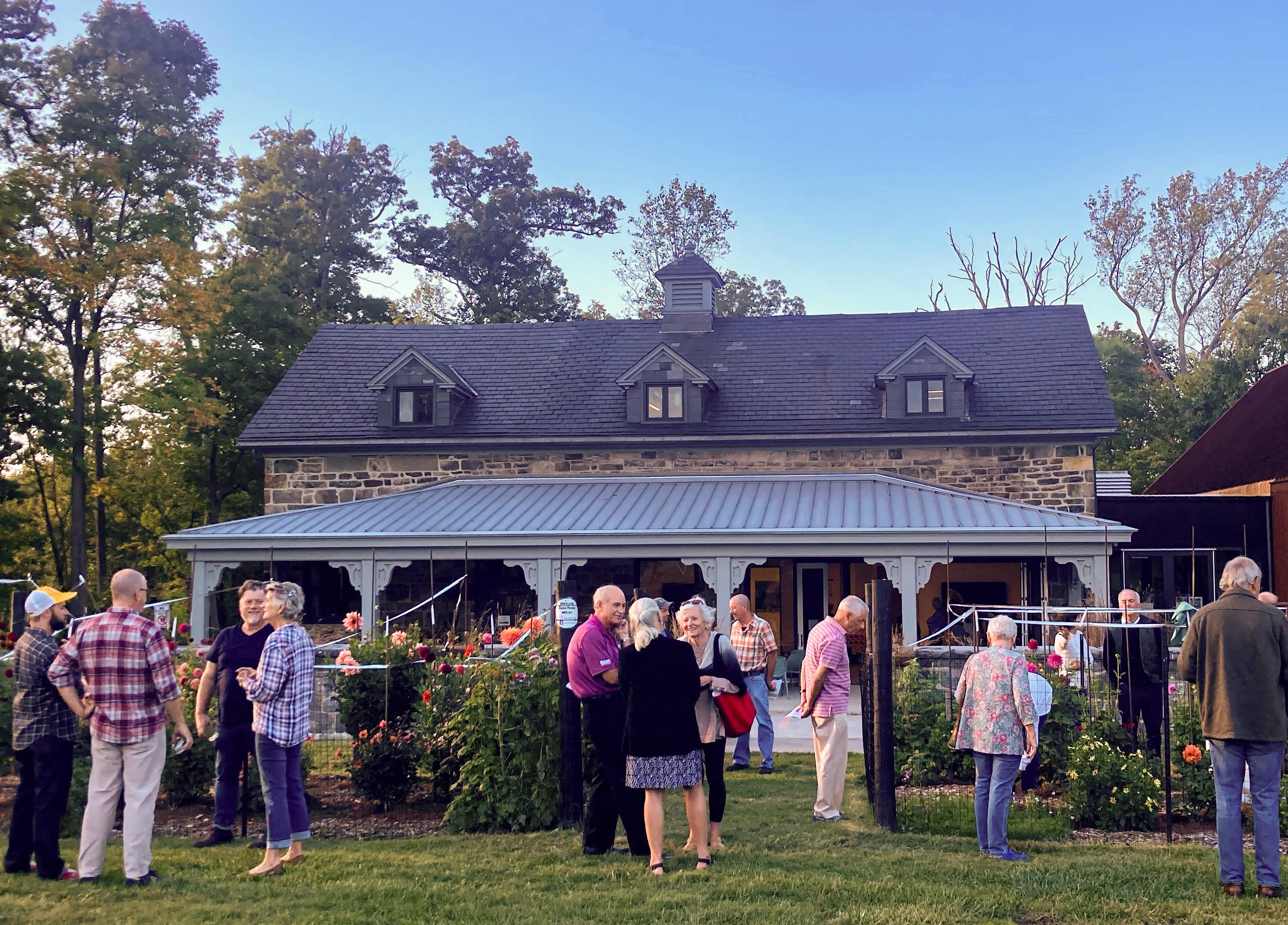
Membership also offers opportunities to gather with others who share a love of Cylburn. Each year we host a members-only annual gathering, where supporters come together to enjoy the gardens and connect with fellow members who care about this place. It is a simple but meaningful tradition.
Perhaps most importantly, membership helps preserve Cylburn as a place within a busy city where people can connect with nature. It remains a rare landscape where visitors can walk wooded trails, explore the gardens, and experience the
changing seasons, all with no entry fee. The fact that this remarkable place is free and open to all residents is due in part to members of Cylburn Arboretum Friends.
Your partnership helps ensure that the gardens, trails, and educational programs continue to thrive, allowing future generations to be inspired just as those early members were more than seventy years ago. We deeply appreciate your support. Thank you for being part of Cylburn’s ongoing story.
MARK YOUR CALENDAR
MAY 8-9: Market Day!
MAY 12: Tree Time: Frogs I
MAY 14: Gardener's Workshop: Late Spring
MAY 20: Wednesday Walk: Old Growth Forest Trees
MAY 21: Tree Time: Frogs II
JUNE 1- Summer Nature Camp
JULY17:
NEC DROP-IN PROGRAMMING: Every Saturday at 11am
GARGEN DROP-IN PROGRAMMING: Every sunday from 2:30-4:30 at the Mansion Gardens
THANK YOU
We can’t thank you enough for being part of our community at Cylburn Arboretum Friends—your support and participation is the foundation of our success.
Looking for more ways to be involved? VISIT CYLBURN.ORG
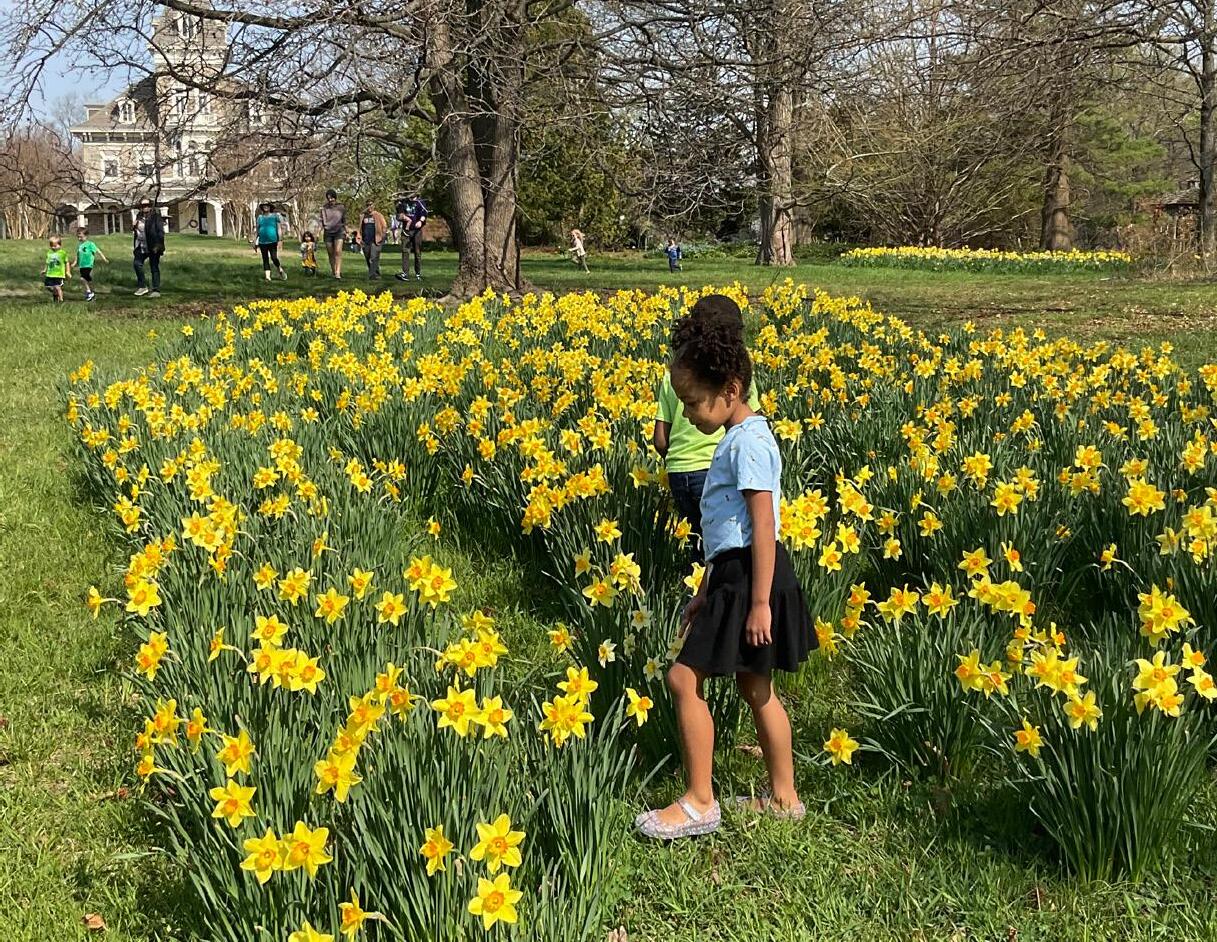
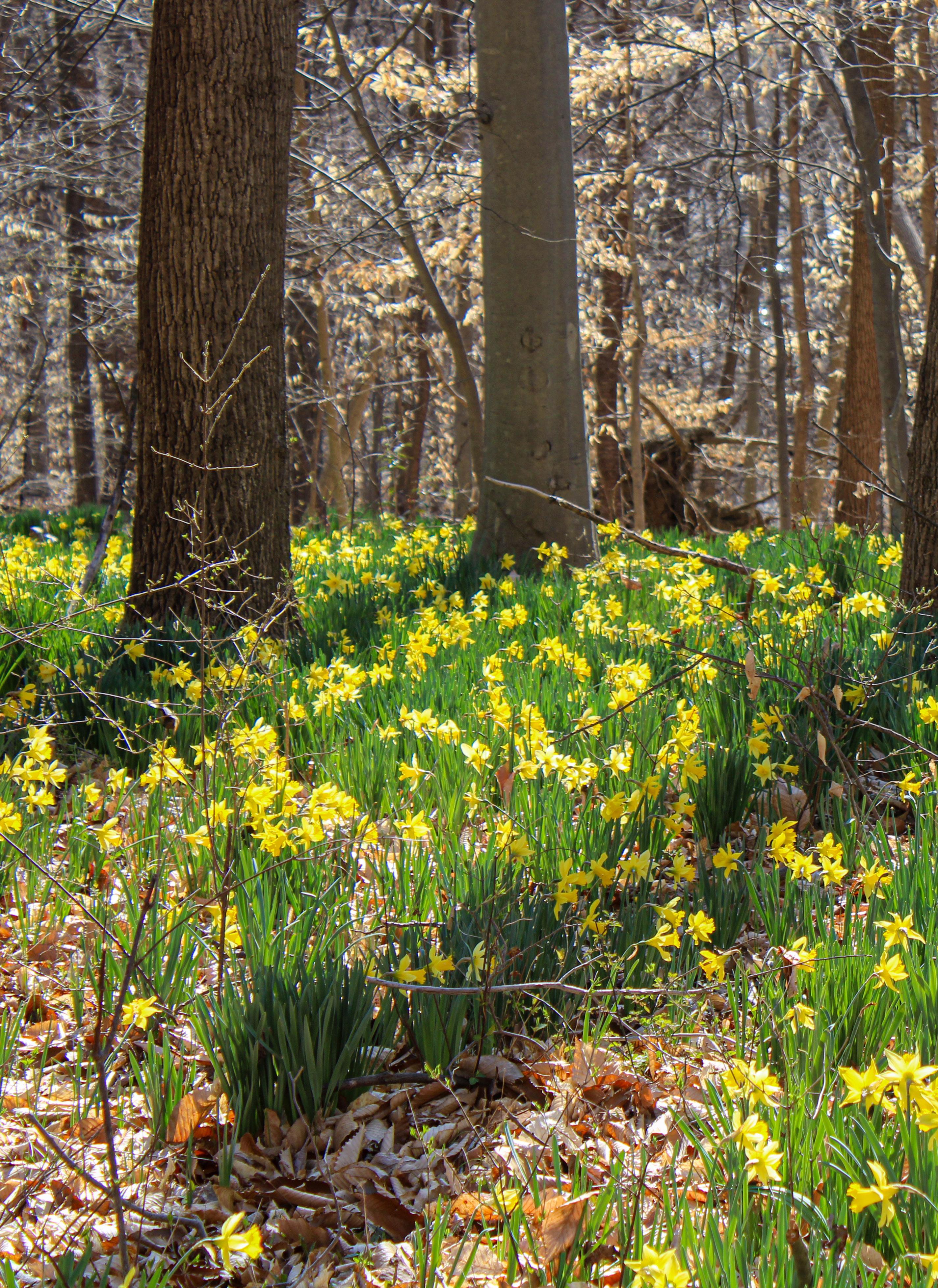
Drifts of daffodils bloom in the woods every year, a living reminder of Cylburn’s historic Tyson estate era.