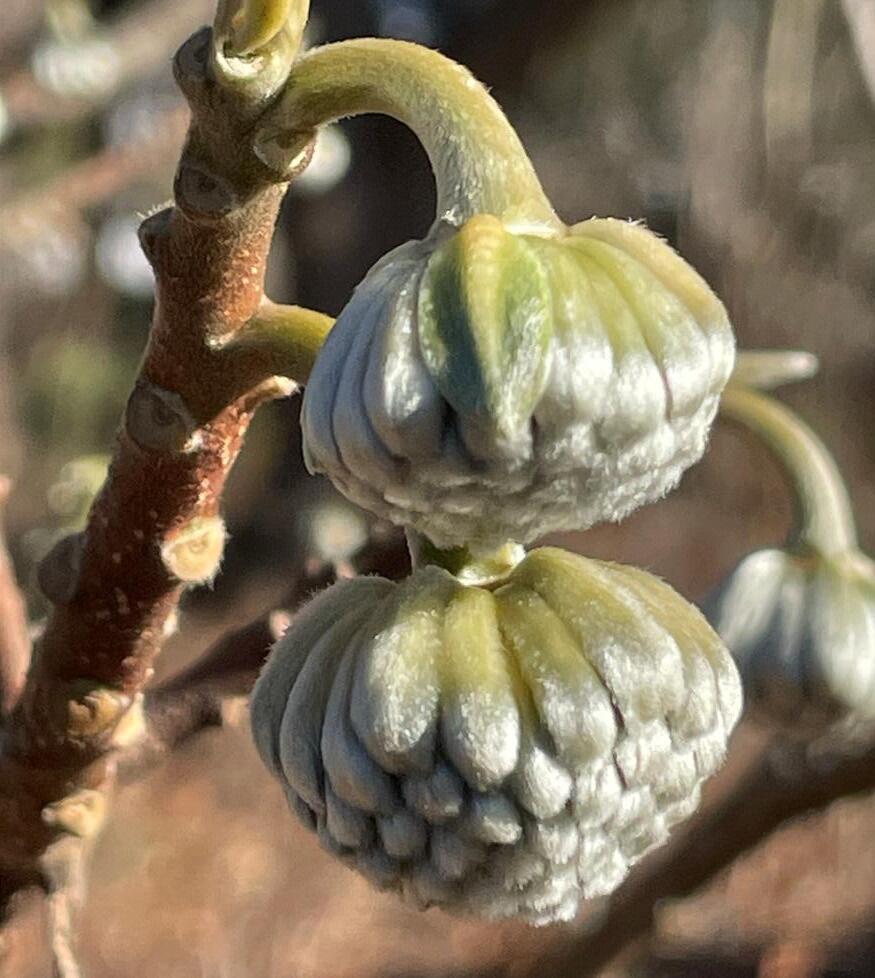
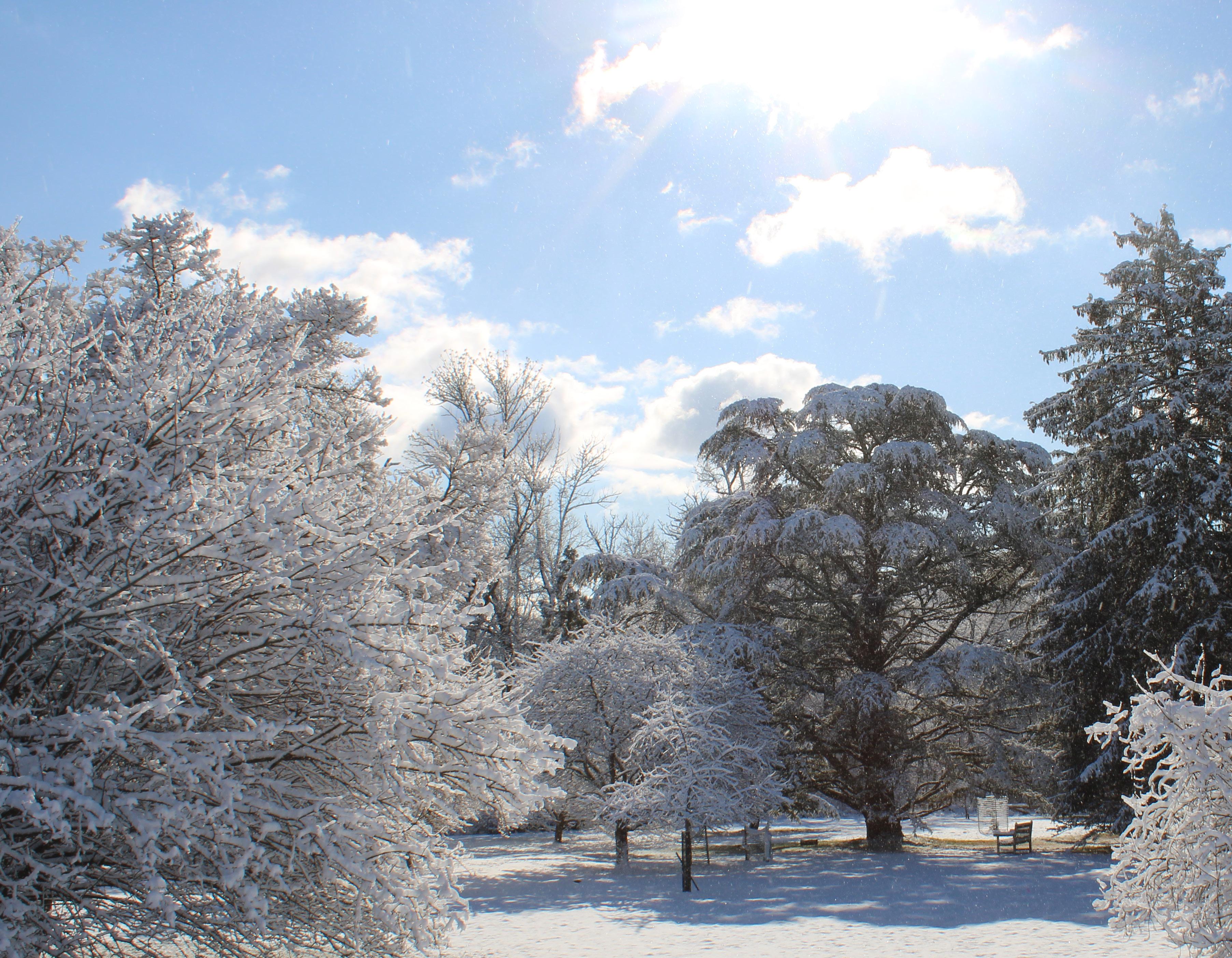
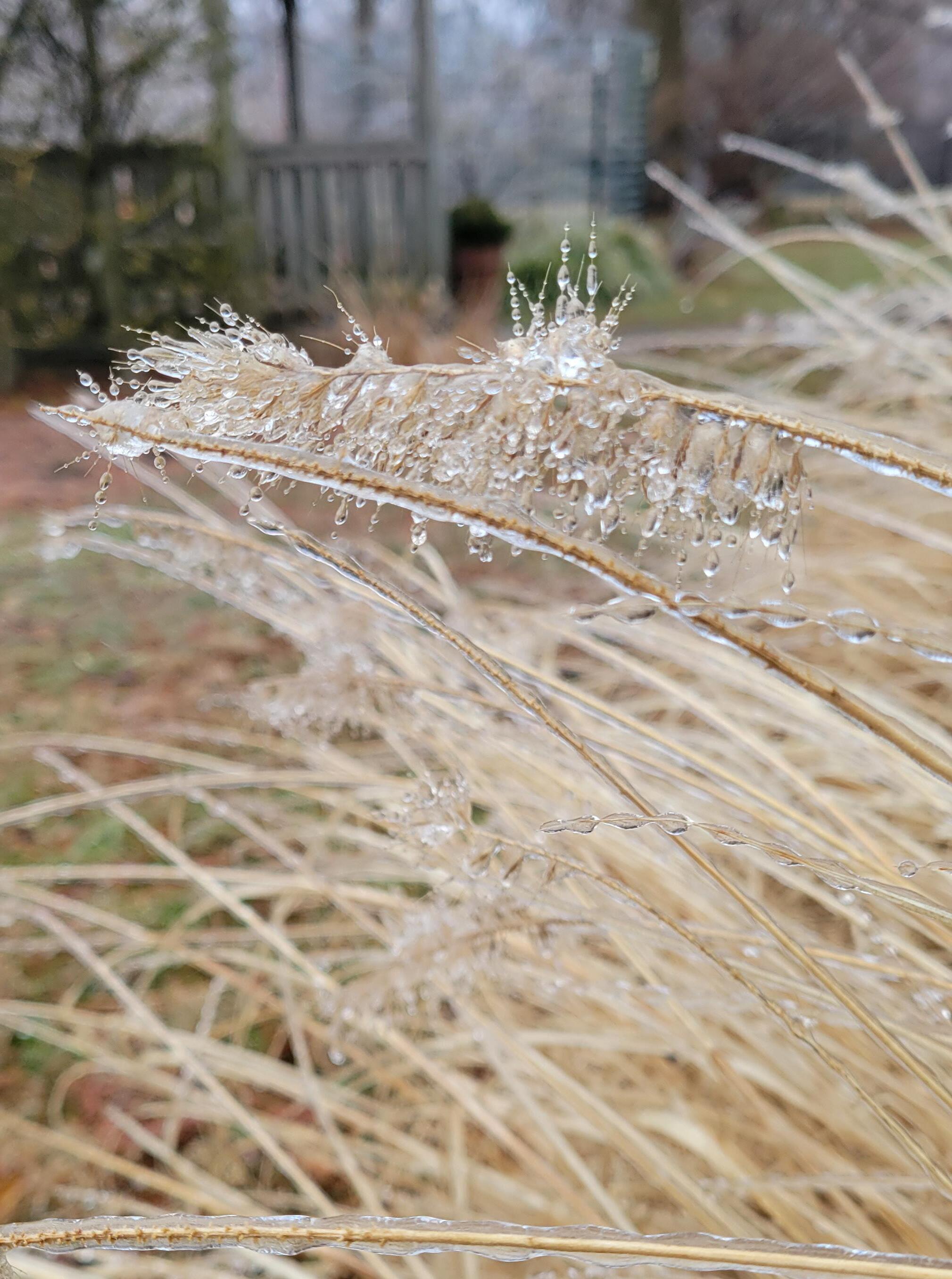
Edgeworthia (Edgeworthia chrysantha), commonly known as paperbush, offers yearround interest with its distinctive, architectural branching and sculptural form. In late winter, fragrant golden-yellow flowers bloom directly on bare branches. By summer, the shrub is covered in large, vibrant green leaves that add a lush presence to the garden.
“A society grows great when old men plant trees in whose shade they shall never sit.”
–Greek Proverb
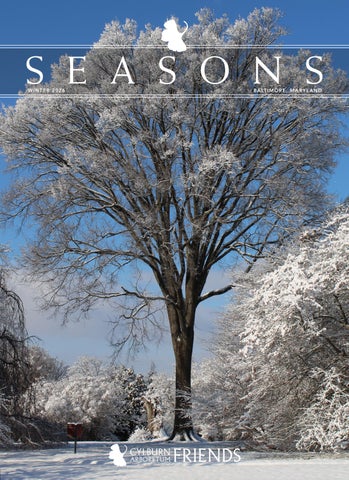
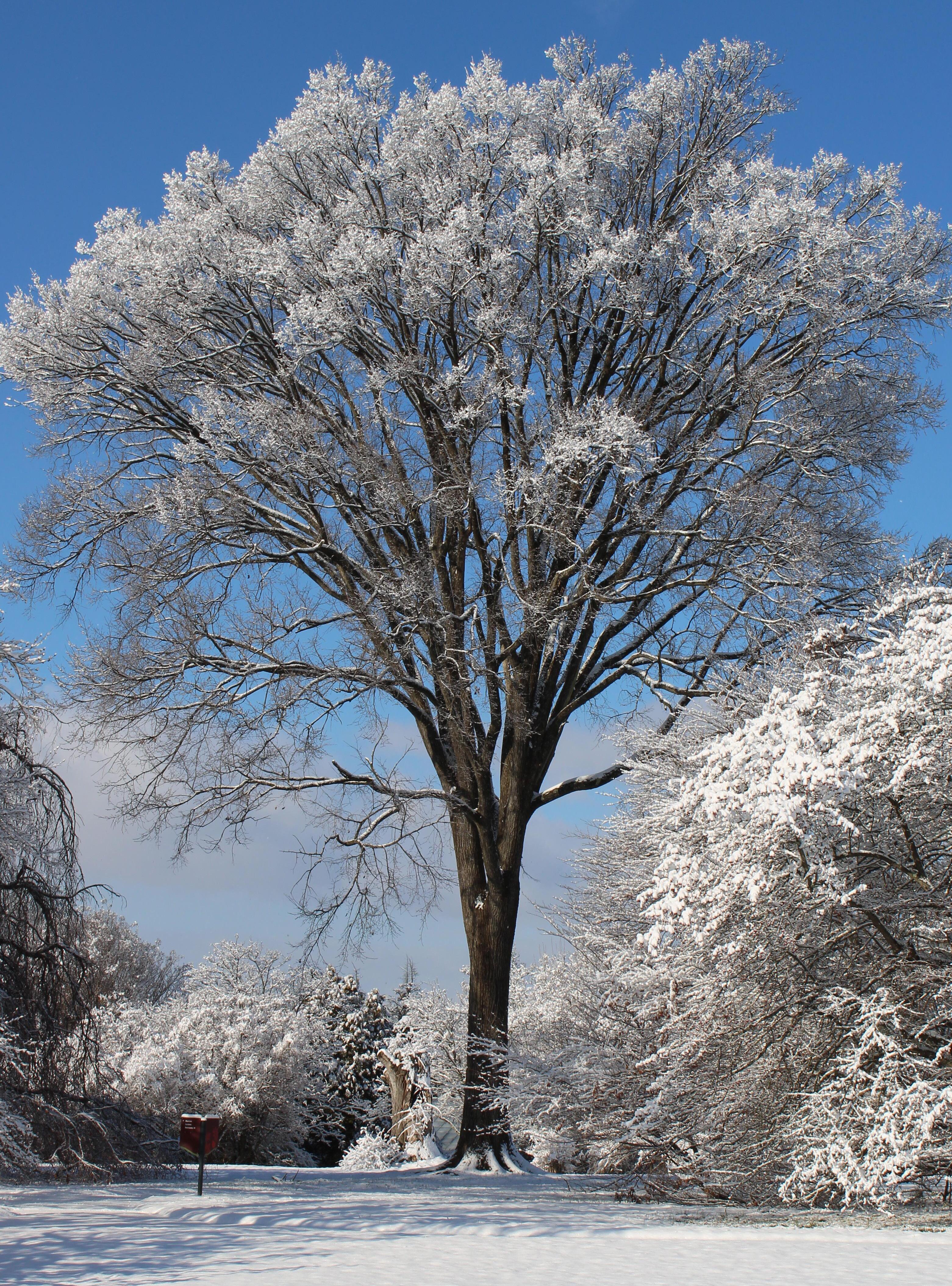
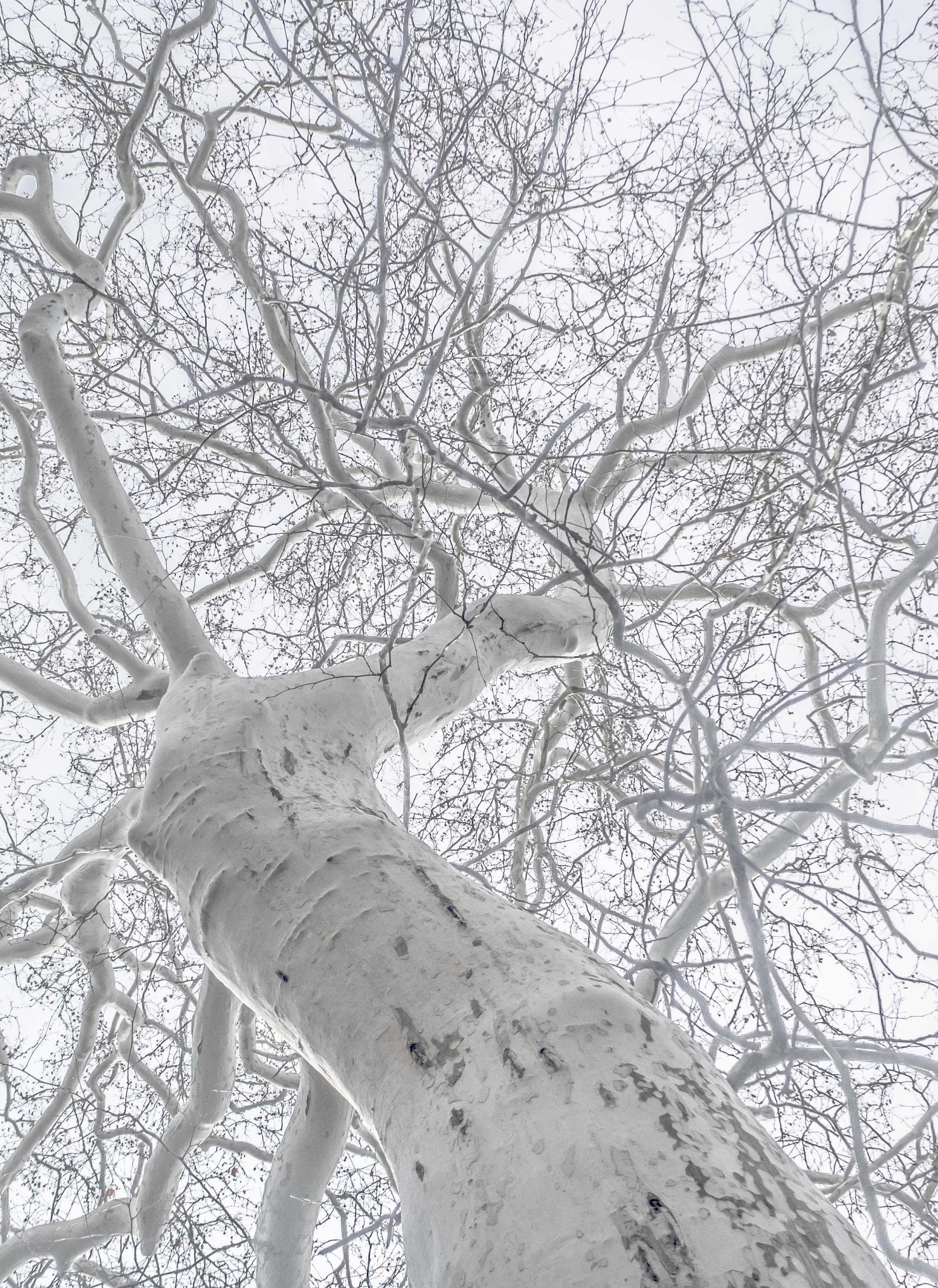
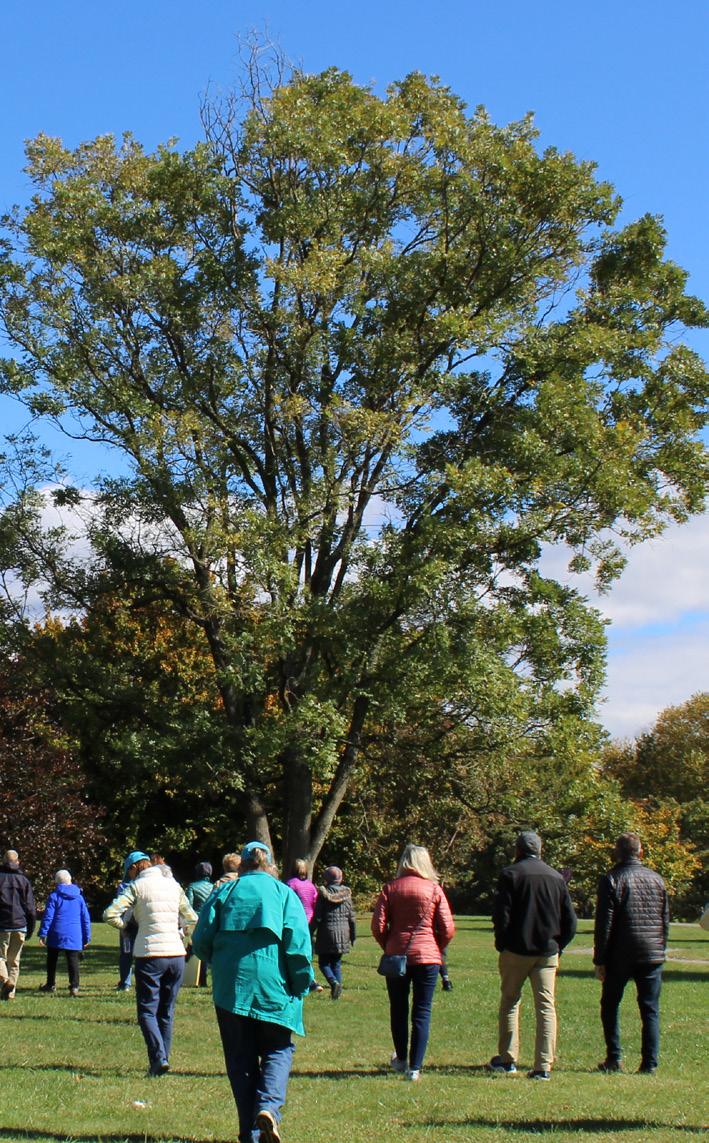
Cover picture: Slippery Elm (Ulmus rubra), the City Champion for Baltimore City, stands proudly on the West Lawn at Cylburn Arboretum. This impressive native tree is recognized as the largest and finest of its species in the city, with a broad canopy and deeply furrowed bark. It provides valuable shade, wildlife habitat, and a striking presence in the landscape. Photo credit: CAF
As we begin a new year, I want to take a moment to thank you for your partnership and support. Your belief in the importance of Cylburn Arboretum, and in the mission of our Friends group, makes our work possible. As CAF Members, you are an essential part of everything we do.
In this edition of Seasons, you’ll find an annual report highlighting CAF’s accomplishments during the past year. Here are just a few of the many achievements we are proud to share:
• Welcomed 13,287 visitors to the Nature Education Center, demonstrating continued enthusiasm even as the Center matures.
• Cared for 341,524 square feet of tree collections, the heart of the arboretum.
• Welcomed 1,971 students for guided field trips, deepening connections to nature through hands-on learning.
• Benefited from 4,511 volunteer hours, generously donated in support of our mission.
• Installed five new gardens, enriching the landscape for visitors.
… and so much more!
Looking ahead, the year before us is full of opportunity. Our recently completed Master Plan gives us meaningful goals to work toward, and we hope you share our sense of optimism and momentum. Thank you for being part of this community and for helping shape the future of this special place. I look forward to all
Booke M. Fritz, Executive Director Cylburn Arboretum Friends
BOARD OF DIRECTORS
Hilles Whedbee President
Sandra P. Gohn Vice President
Ramesh Moorthy Secretary
Mark Gurley Treasurer
Will Clemens
Beverly Davis
Eric Dihle
Chris Feiss
Patricia Foster
Becky Henry
Nancy B. Hill
Bonnie Legro
Douglas Nelson
Daniel Pham
Michael Reamer
Courtney Sawyer
Sara Service
EX OFFICIO
Melissa Grim
Chief Horticulturist, Baltimore City Department of Recreation and Parks
SEASONS is published by Cylburn Arboretum Friends
Written and edited by
Brooke M. Fritz Executive Director
Erika Castillo Director of Education
Brent Figlestahler
Head Gardener
CHAMPIONS
Bill Geenen | Communication Design Layout and Design
4915 Greenspring Ave. Baltimore, MD 21209
Info@cylburn.org
Phone: (410) 367-2217 Cylburn.org
SYCAMORE
In the place that is my own place, whose earth I am shaped in and must bear, there is an old tree growing, a great sycamore that is a wondrous healer of itself. Fences have been tied to it, nails driven into it, hacks and whittles cut in it, the lightning has burned it. There is no year it has flourished in that has not harmed it. There is a hollow in it that is its death, though its living brims whitely at the lip of the darkness and flows outward. Over all its scars has come the seamless white of the bark. It bears the gnarls of its history healed over. It has risen to a strange perfection in the warp and bending of its long growth. It has gathered all accidents into its purpose. It has become the intention and radiance of its dark fate. It is a fact, sublime, mystical and unassailable.
In all the country there is no other like it. I recognize in it a principle, an indwelling the same as itself, and greater, that I would be ruled by.
I see that it stands in its place and feeds upon it, and is fed upon, and is native, and maker.
By Wendell Berry
CHAMPIONS OF TREES
BY BRENT FIGLESTAHLER
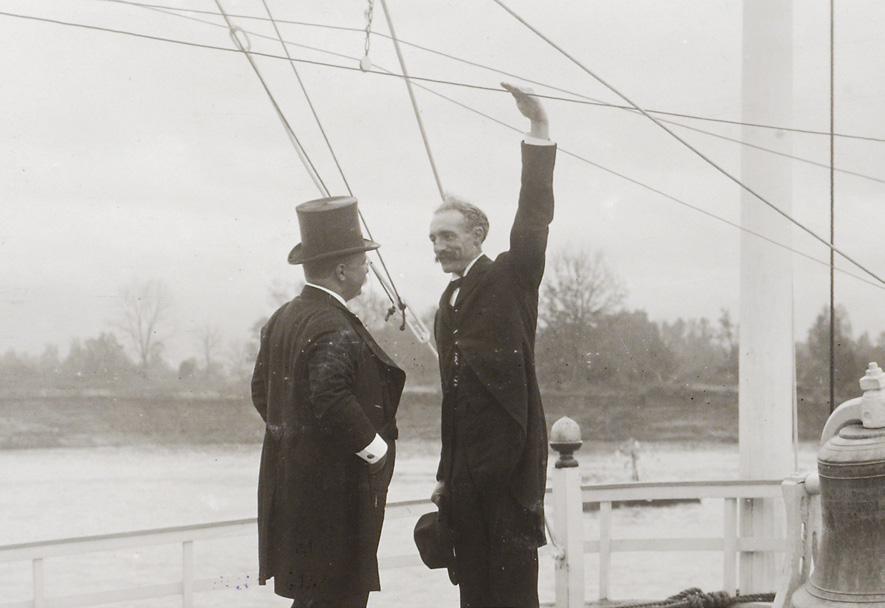
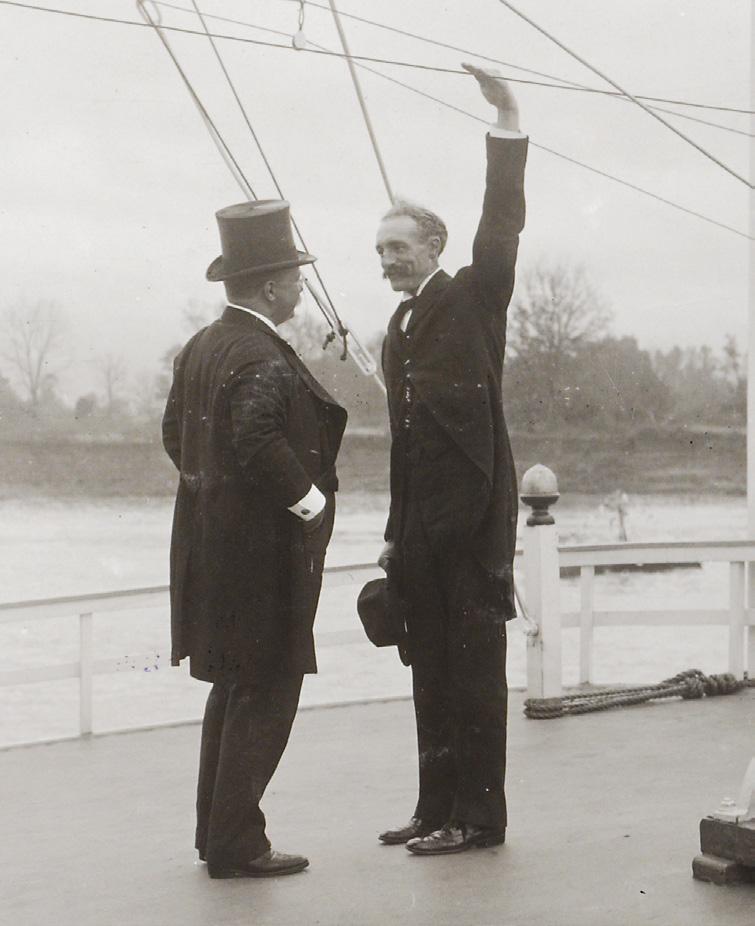
A long-armed, lanky forester by the name of Gifford Pinchot steps into the ring with a future Bull Moose, Theodore Roosevelt. The year is 1899, and forestry is still largely unknown outside of Europe. Despite their sparring, which they were known to do in both New York and Washington, the two men would become close friends, bonded by what was then (and remains now) a progressive idea: forest conservation.
Roosevelt, then Governor of New York, was “knocked off his very solid pins,” Pinchot later bragged. While Pinchot may have claimed victory in that particular bout, both mustachioed figures would go on to become champions of trees at the national level, inspiring conservation leaders across the country. Appointed by Roosevelt as the first Chief Forester of the newly formed U.S. Forest Service, Pinchot set in motion a wave of government-led conservation efforts—efforts whose influence would eventually be felt right here in Maryland, forever changing our cultural awareness of the trees among which we live.
Within a largely self-engineered bureaucracy, Pinchot relied on a cadre of foresters trained at the Yale School of Forestry, an institution funded in part by his own family. In 1906, Maryland hired one
such graduate. Fred W. Besley, a Pinchot protégé, became Maryland’s first State Forester and the third in the nation. Likely three hundred years his senior, a strapping white oak stood in attendance, patiently bearing witness to the annual barnyard activities of its Talbot County home. Besley would return to this tree throughout his career as a source of inspiration.
BESLEY: TEMPERED BY TRAVELS AND BUILT FOR SERVICE TO MARYLAND
Offering a warm counterpoint to the boxing ring, Pinchot founded the “Baked Apple and Gingerbread Club,” something that arguably warrants serious consideration for revival. In an effort to feed both the bellies and souls of his “student assistants,” among them Fred Besley, Pinchot welcomed them into his Washington, D.C. home for baked apples, gingerbread, milk, and lectures. One particularly passionate speaker was Theodore Roosevelt, who was by then President. Undoubtedly, the combination of sweet treats and a presidential presence helped galvanize Besley’s dedication to forest conservation. So strong was that influence that Besley went on to study at the Yale School of Forestry, graduating in 1904. After graduation, he was assigned to a government
planting station in Nebraska, aptly known as “the Tree Planter State.”
While Nebraska is most often associated with corn and other row crops, it is also home to the nation’s first Arbor Day. In another testament to the irony and the wonderous effects of the written word on the fate of trees, Arbor Day was first proposed by newspaper editor J. Sterling Morton. The holiday was later made official by the state in 1885, even featuring prizes for those who planted the most trees.
Falling on the 100th Meridian, the line that separates North America’s humid East from its arid West, Nebraskans were keenly aware of the importance of trees, not only as resources but as essential contributors to quality of life. Besley’s position that year, managing a government nursery and attempting (often unsuccessfully) to plant trees in the Sandhills, surely taught him the importance of community support, such as Arbor Day, in advancing the cause of tree planting. The following year, Besley was convinced to take on the newly created role of Maryland State Forester, a title he would hold for nearly 36 years.
Over his career, Fred Besley meticulously documented the condition of Maryland’s forest resources, implemented fire management practices, promoted roadside tree planting, and added vast tracts of protected land, including what would become Savage River and Pocomoke State Forests and Patapsco State Park. He also established Maryland’s first state nursery in College Park. Beyond these many achievements, Besley
accomplished something even more enduring, in my view: he taught us to love trees.
TREES FOR THE PEOPLE BY THE PEOPLE
Fred W. Besley understood that effective forest management depended on the support and participation of the public. After all, a large share of trees and forestland were, and still are, privately owned. Maryland’s initial state forest reserve consisted of just 2,000 acres in Western Maryland, donated by the Garrett brothers of B&O Railroad wealth. Inspired by similar conservation efforts in the Adirondacks, the Garretts believed Maryland needed a similar forest reserve.
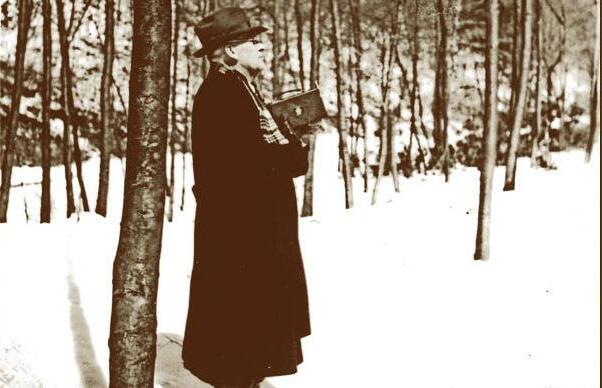
A meticulous documenter and early photographer, Besley systematically surveyed Maryland’s trees and forests early in his tenure as State Forester, including the newly-donated tracts in Western Maryland. His thoroughness took him down back roads, through barnyards, and over cow paths. By the end of these travels, he was intimately familiar with some of the state’s grandest trees, likely including a monster white oak in Talbot County, Maryland known locally at the time as the Wye Oak.
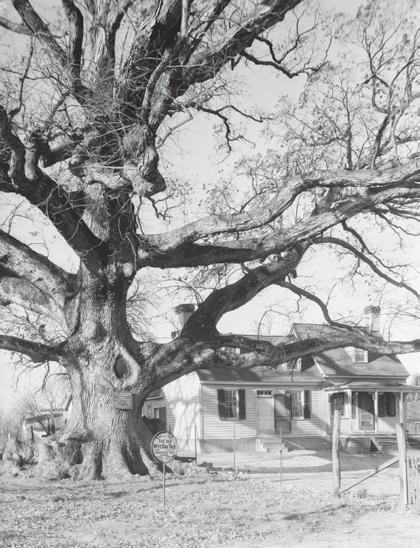
The Wye Oak, December 1936. Photo: E.H. Pickering
With its hulking girth, expansive canopy, and scars to prove its age, the patiently standing white oak of Maryland’s Eastern Shore had obviously long enjoyed its time in the sun and was now ready for its time in the spotlight. Possessing such arboreal magic, notable trees like the Wye Oak were, and still are, uniquely poised to serve as ambassadors, positively representing their kind in the everevolving relationship between people and trees.
Recognizing the power these trees held for the uninitiated, and their potential contributions to the state’s arboreal record, Besley ingeniously devised a widely publicized competition to identify large, historic, and otherwise notable trees across Maryland. Accustomed to managing outsized challenges with meager resources, he built a system that leaned heavily on public participation, a model still familiar to tree-planting government agencies and nonprofit organizations today.
Understanding the value and diversity of each tree species, Besley’s system allowed for champions of all kinds. He also developed a measurement method of his own design, which remains the standard today. Often working from tips about tree locations, Besley and his team personally traveled to measure many of these giants. Early in his career, Besley officially photographed and measured the Wye Oak in 1909. The tree was crowned a National Champion in 1940 and held that title until it succumbed to storm damage in 2002.
Today, Maryland’s Big Tree Program is celebrating its hundredth year and has gone on to inspire the National Champion Tree Program, run by American Forests, America’s oldest national nonprofit conservation organization. Reading alone will not do. Come see for yourself and touch a tree. Both Baltimore City and Maryland State Champion trees can be found on the grounds at
Patapsco State Park.
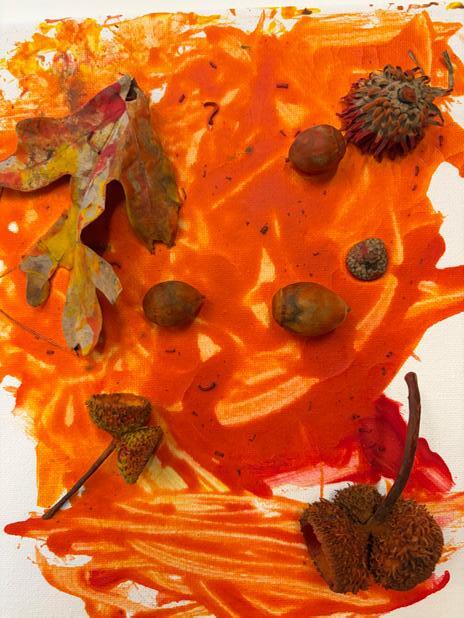
Cylburn. We also care for multiple Wye Oak seedlings, one of which fruited so heavily this year that its excess acorns even found their way into my son’s art projects. More broadly, Maryland in home to several national, and in some cases world, champion trees, including American elm, Kentucky coffeetree, serviceberry, and shagbark hickory, among others.
YOUR NEIGHBOR’S TREE…
What is a 19th-century barn without an accompanying tree, or an early 20th-century suburb without its towering canopy? Trees matter, especially older, larger ones! Whether “champions” or not, old trees form the identity of neighborhoods, sequester the most carbon, and offer ecosystem services that younger trees simply cannot duplicate. Most importantly, they inspire us to be better stewards of the landscapes we inhabit.
While garden-minded folks are often preoccupied with planting new trees, a growing reverence for mature and venerable ones is increasingly important. Unfortunately, tree age and size are too often associated more with liability than with
value. These national treasures are frequently privately owned, with the costs of their care—and, too often, their removal—falling on individual landowners. No matter how vast their boughs or how tough their bark, many such trees remain vulnerable, possessing little to no legal protection.
True to the roots of Besley’s approach, community forestry functions as a social contract among all of us. It is critical that an appreciation for big, old trees take root within our culture. While our story here picks up with Roosevelt, Pinchot, and Besley, the roots of stewardship run much deeper including colonial-era tree protections and indigenous land management practices, all grounded in a similar shared responsibility and social contract.
Planting a tree is only the first step in a long relationship between ourselves, our neighbors, and those who come after us. While it is a privilege to choose and plant a tree, we do not always get to choose the role we play in its life. At every stage, this beautiful, multigenerational process requires us to become champions of trees.
THEN
ARBOR DAY is a day dedicated to planting, nurturing, and celebrating trees. In the United States, it is observed each year on the last Friday in April. However, the good work of honoring trees is not solely a federal affair. Many states also celebrate their own Arbor Day. These morelocalized observances are usually times to align with the tree-planting conditions in that state.
For example, in Florida (my home state!), Arbor Day is celebrated on the third Friday in January. Vermont observes Arbor Day on the first Friday in May, while Alaska celebrates on the third Monday in May. In Maryland, Arbor Day is held on the first Wednesday in April.
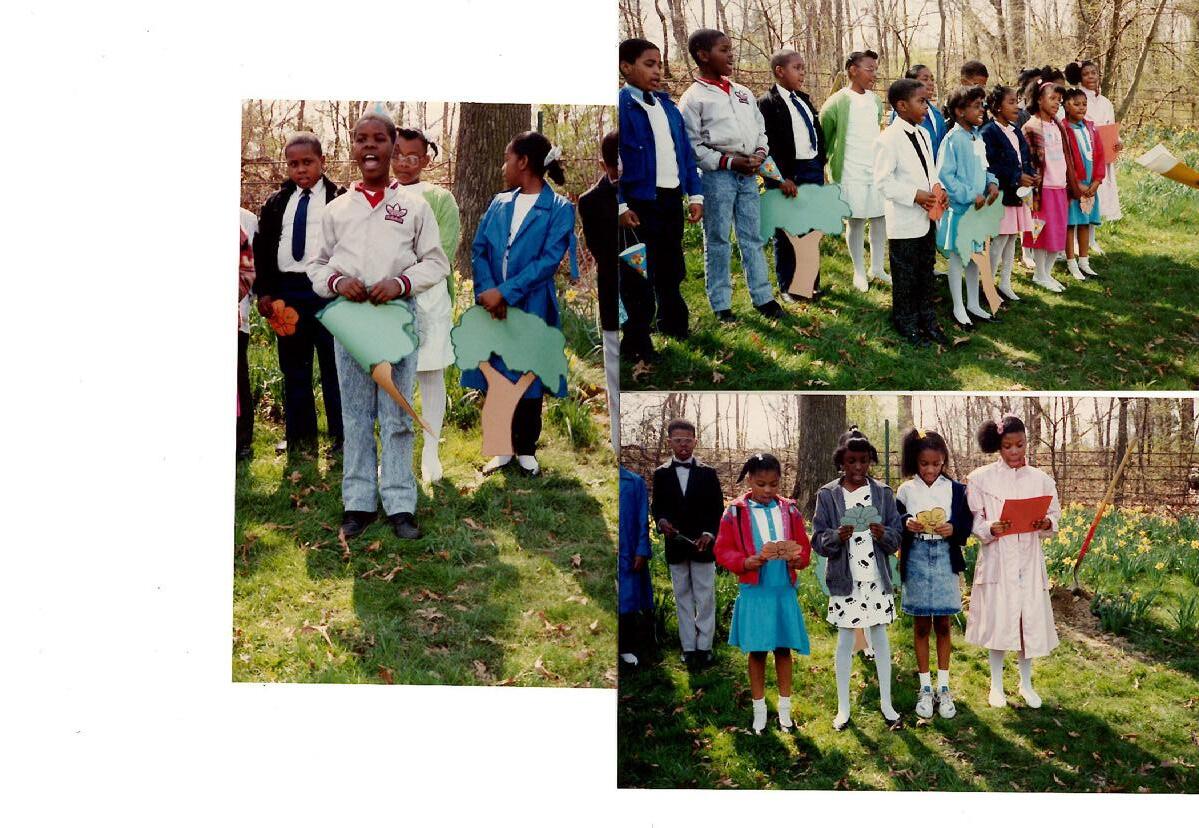
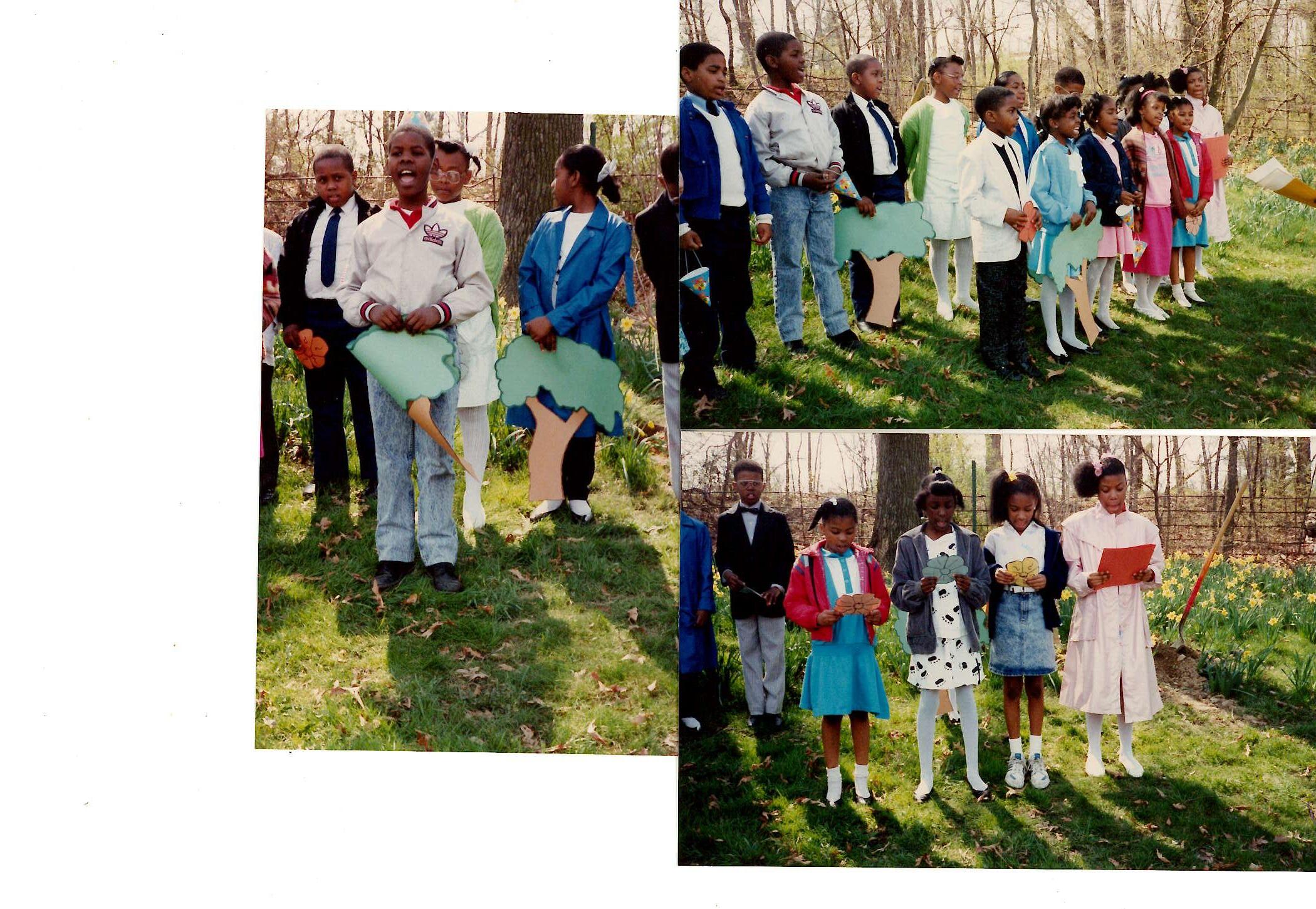
Cylburn’s first Arbor Day celebration was held on Maryland Arbor Day, Wednesday, April 7, 1982. That year marked a moment of both reflection and transition. Philip Myers, who served as president of Cylburn Wildflower Preserve and Garden Center from 1964 to 1970, had recently passed away. In recognition of his leadership and service, a tree was planted in his honor, and Mayor William Donald Schaefer spoke at the event. Notably, 1982 was also the year Cylburn officially changed its name from the Cylburn Wildflower Preserve and Garden Center to Cylburn Arboretum, reflecting a growing commitment to trees.
Celebrating Maryland Arbor Day at Cylburn Arboretum: THEN & NOW
BY ERIKA CASTILLO
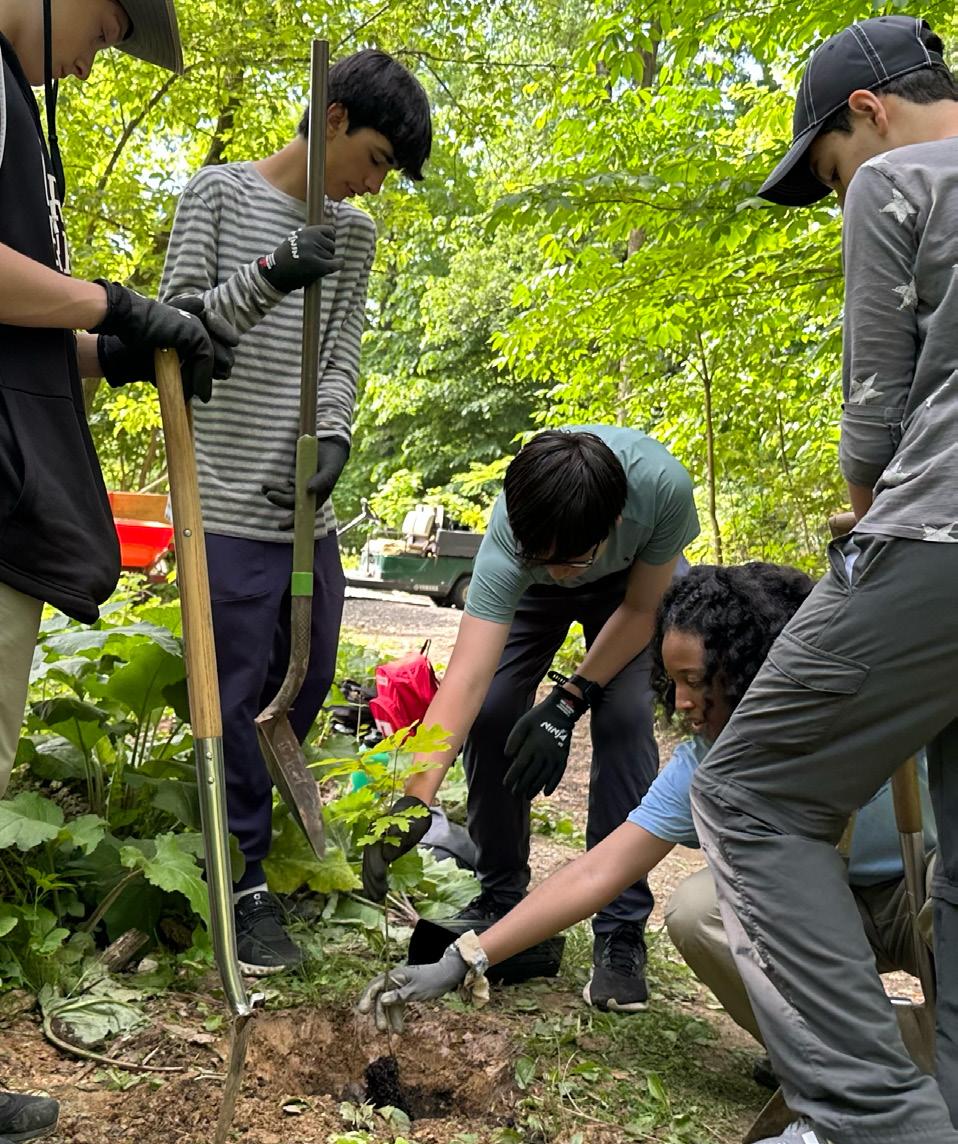
Cylburn Arboretum has continued to celebrate Maryland Arbor Day over the years. Early celebrations featured tree-themed poetry readings by children, speeches by the Mayor and the City’s Horticulture Division staff, and ceremonial tree plantings. Trees planted during these early years included oaks (specifically seedlings of the Wye Oak), chestnut hybrids, dogwoods, and heritage birch trees. Many local schools participated throughout the year, including Martin Luther King Jr. Elementary, Dr. Roland Patterson Academy, Pimlico Elementary, Edgecombe Circle Elementary, Greenspring Middle School, Cross Country Elementary, and the Waldorf School.
Arbor Day programming has evolved over time. In 1984, for example, the Frederick Douglass High School Brass Ensemble opened and closed the program with live music. By the 1990s, professional demonstrations such as tree climbing, pruning, stump grinding, and log loading were added. Tours of the property and of the Cylburn Nature Museum, then located on the third floor of the Mansion, were also commonly included.
In the early 2000s, Cylburn experienced a hiatus in formal Arbor Day celebrations, though the focus on trees and connecting Baltimore residents remained strong. During this period, several major changes took place: the Cylburn Nature Museum was relocated from the Mansion’s third floor to the Carriage House, Cylburn undertook a Master Planning process, the Vollmer Visitor Center was constructed, and, in 2023, the Nature Education Center opened in the renovated Carriage House.
NOW
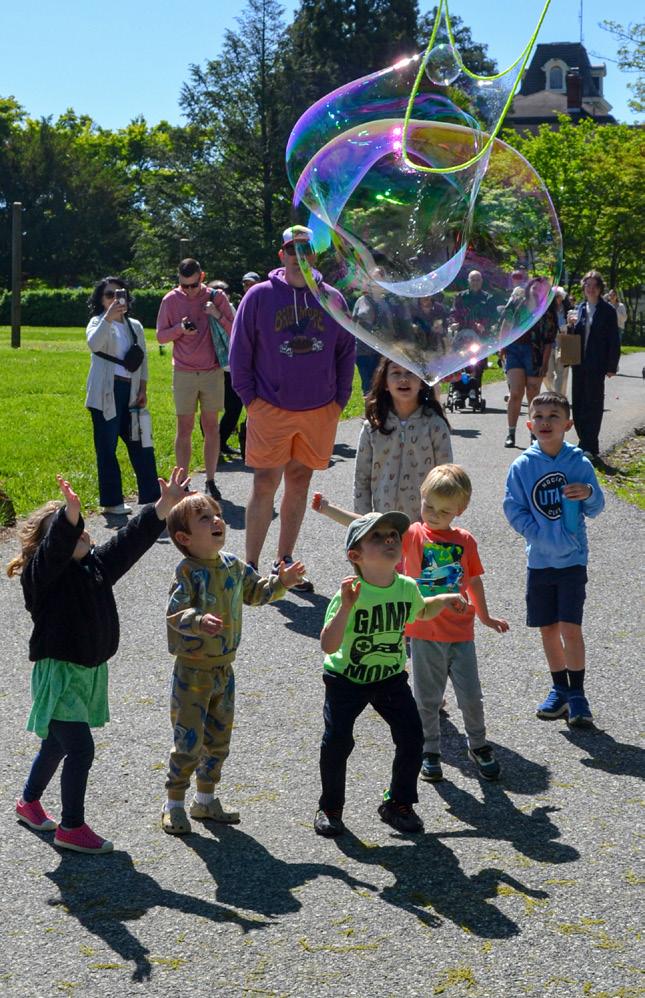
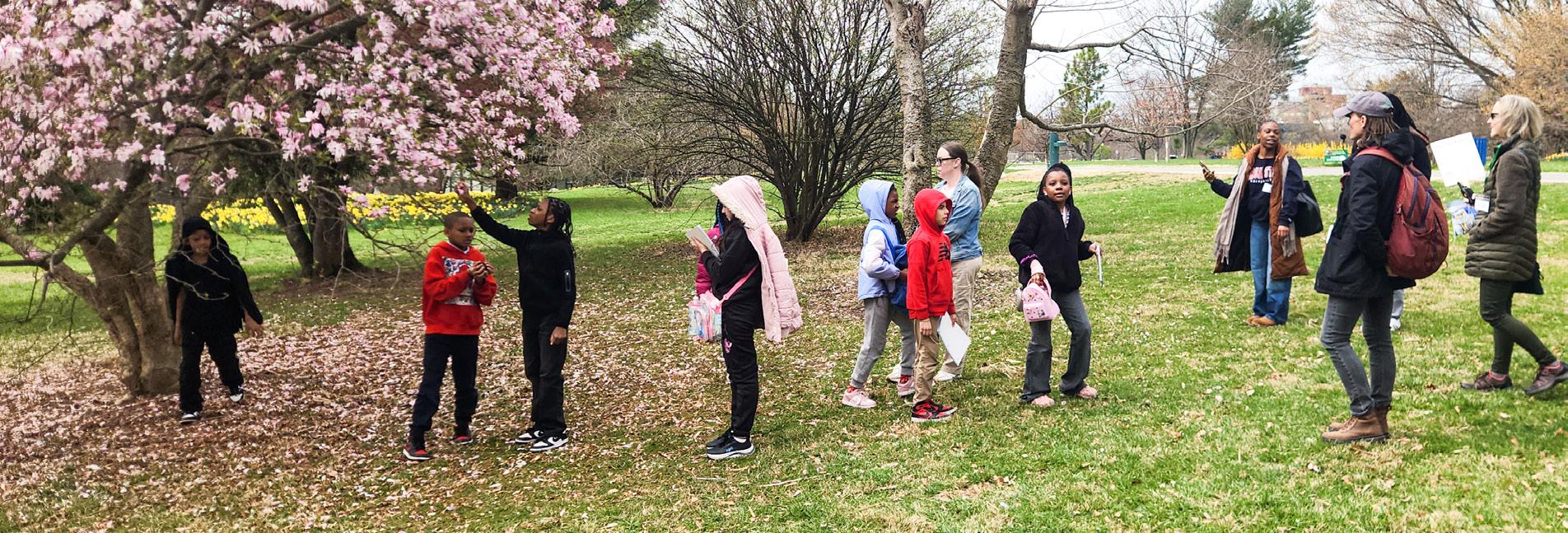
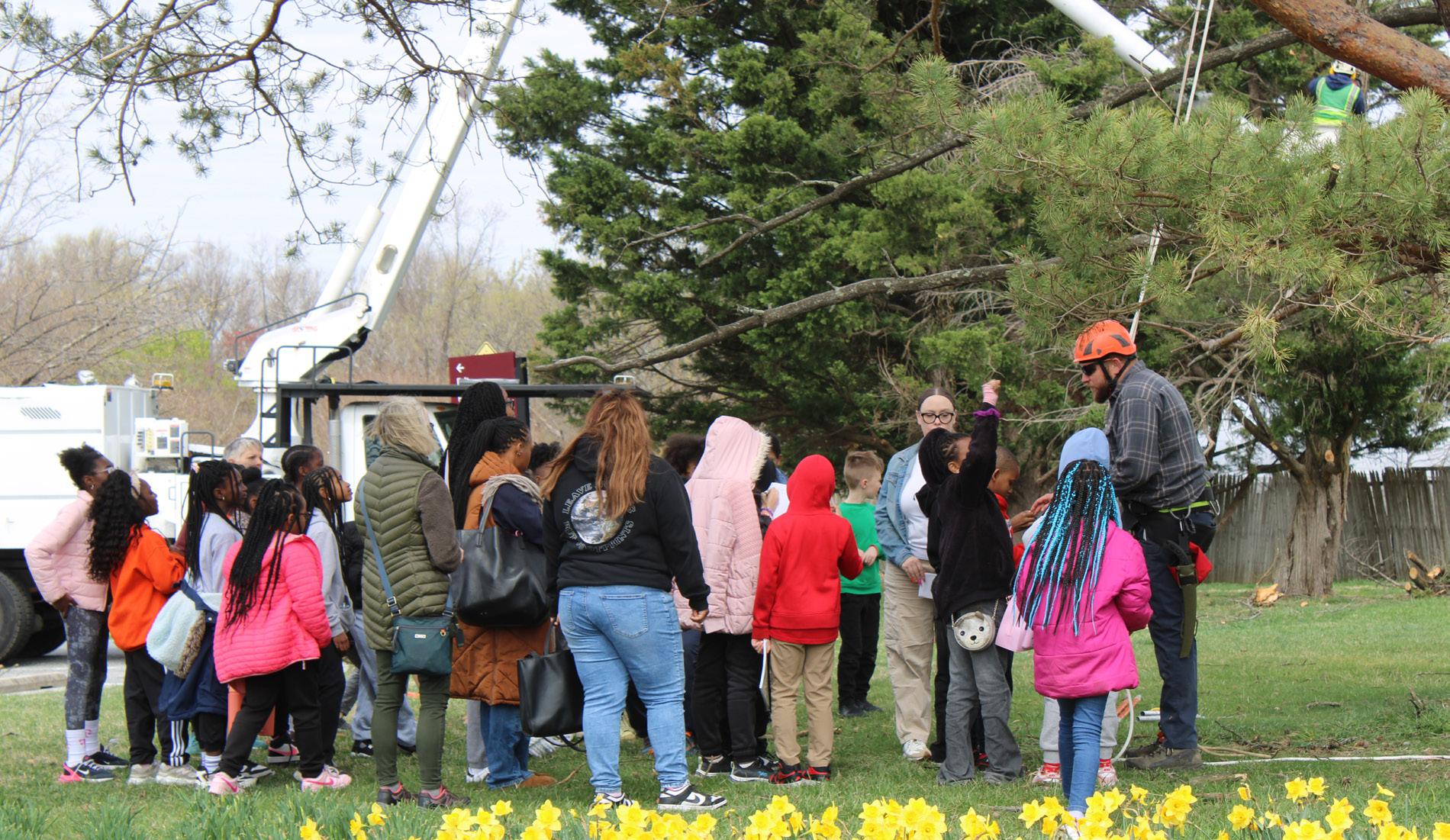
ON APRIL 2, 2025, we once again celebrated Maryland Arbor Day at Cylburn! Cylburn Arboretum Friends co-hosted the day with Baltimore City Recreation and Parks (BCRP) and its Forestry Division. The day began with field trip groups from Park Heights Academy (who walked to Cylburn from their school) and Tunbridge Charter School.
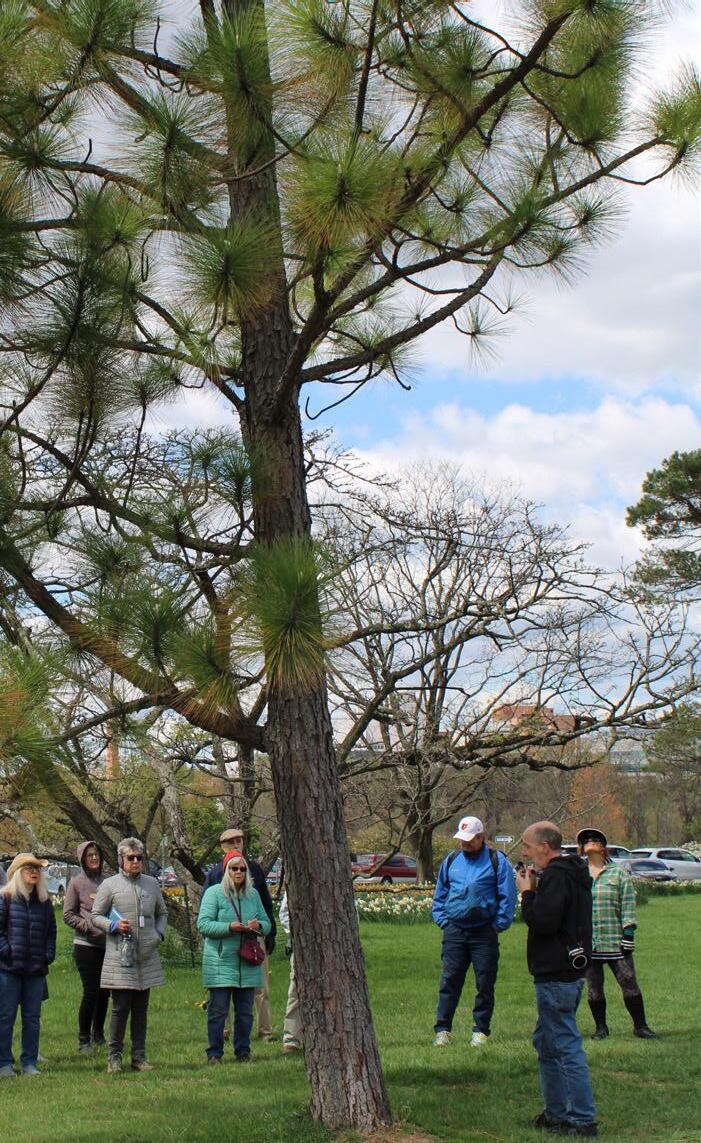
Much like the days of old, students observed professional arborists climbing trees and performing tree work, participated in tree-themed activities such as a guided hike, and visited the Nature Education Center to learn more about trees. In the afternoon, the public was invited to join tours of Camp Small and Cylburn’s champion trees, observe tree plantings, and visit information tables hosted by organizations including the
Maryland Department of Natural Resources and TreeBaltimore. Visitors also had the opportunity to create tree-themed crafts, explore the NEC, and watch the City Forestry Division at work with bucket trucks, log trucks, tree climbers, and tree trimmers.
Looking ahead, Cylburn will celebrate 2026 Maryland Arbor Day on Wednesday, April 1, coinciding with our Spring Break Camp. The day will once again feature collaboration with BCRP Forestry’s amazing team of professional arborists, along with a tree-themed walk open to the public from 12–1 PM. By revitalizing this cherished tradition at Cylburn Arboretum, we hope to inspire Baltimore residents, youth and adults alike, to celebrate, plant, and nurture trees!
2025 ANNUAL REPORT
Cylburn Arboretum Friends (CAF) works diligently to steward and program one of Baltimore’s most treasured public landscapes. In partnership with BCRP, we care for Cylburn’s gardens, trees, and woodlands while welcoming visitors and offering educational opportunities. 2025 was a year of both reflection and momentum. We celebrated tangible accomplishments while also laying the groundwork for the future.
A MAJOR MILESTONE: Completing the Master Plan
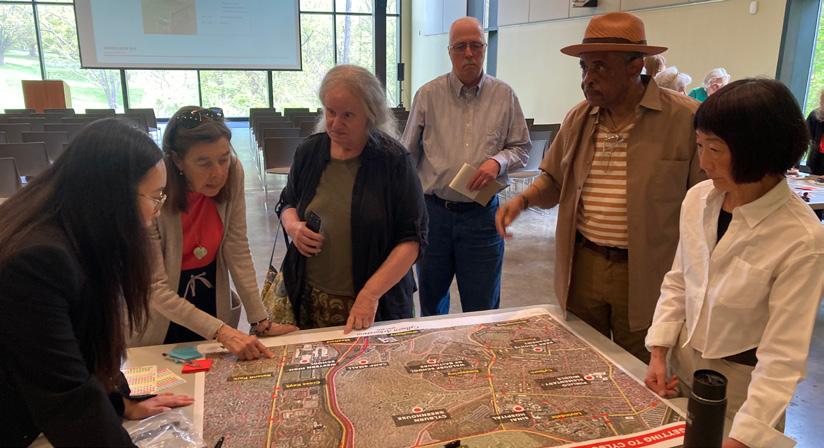
Last year marked the completion of a new Master Plan for Cylburn Arboretum, developed collaboratively with BCRP. Master plans serve as blueprints for growth, and this one establishes a shared 15-year vision for how Cylburn must evolve to meet the needs of future generations.
It has been twenty years since Cylburn last undertook this kind of comprehensive planning. That earlier plan led to transformative investments, including the creation of the Vollmer Visitor Center and the Nature Education Center. The newly completed Master Plan will help us to build on that legacy, addressing
aging infrastructure, improving accessibility and wayfinding, and expanding Cylburn’s role as an outdoor classroom and community resource. As the 2025 data below illustrates, Cylburn is a well-used and deeply valued resource for the City of Baltimore. This new plan will allow us to build on that momentum.
Most importantly, the plan gives us clarity and direction. It identifies priorities, aligns partners, and guides us with a shared vision of Cylburn as an inspiring public garden in the heart of Baltimore.
VISITORS
Stewardship Work
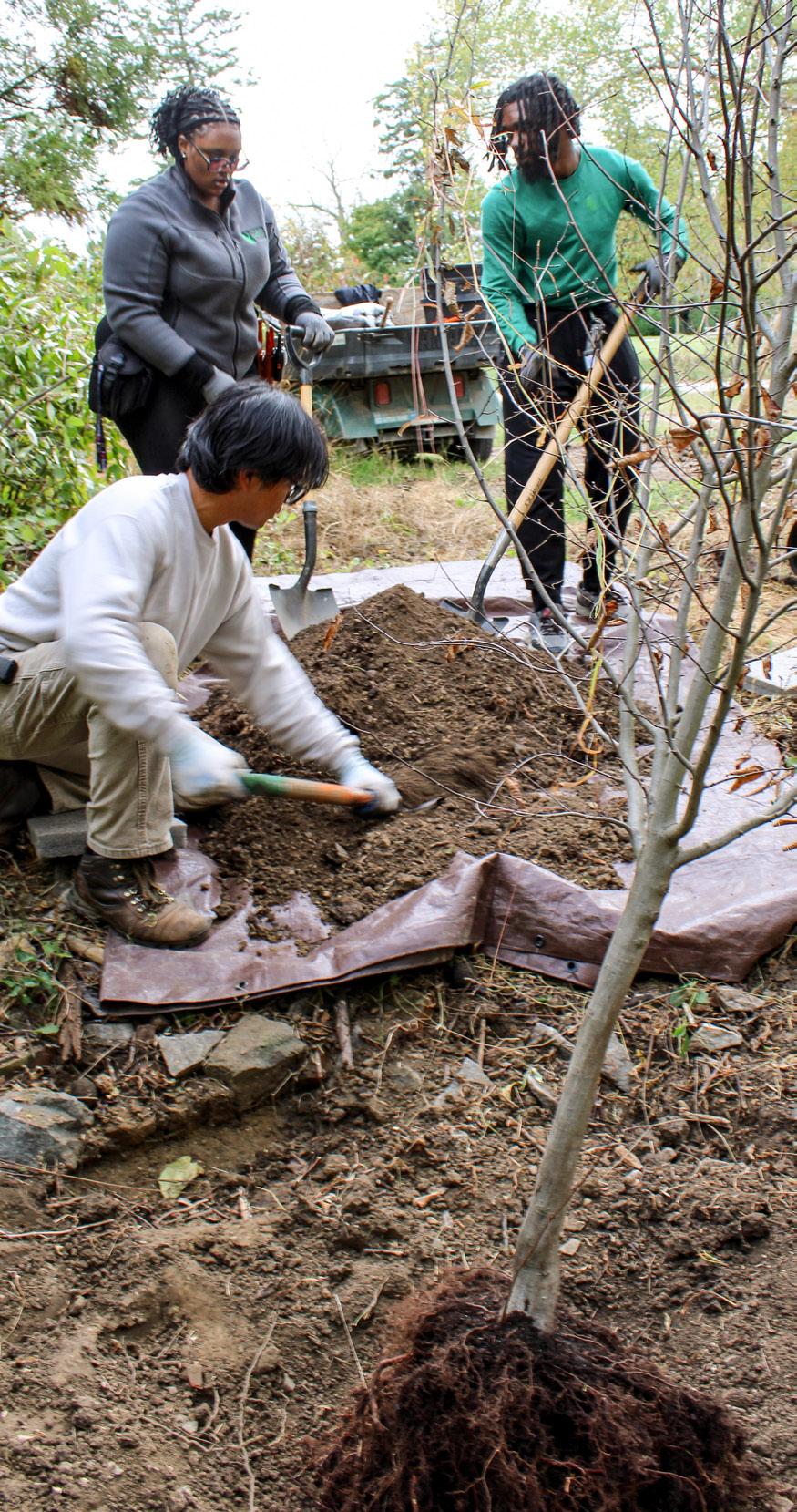
At the heart of Cylburn are its extraordinary living collections and gardens. These spaces are dynamic and require ongoing care and thoughtful management. From mature specimen trees to ongoing research efforts such as the Oak Study, our work reflects a long-term commitment to stewarding the landscape and enhancing Cylburn’s value to the community.
HORTICULTURE
New
City Demonstration Gardens
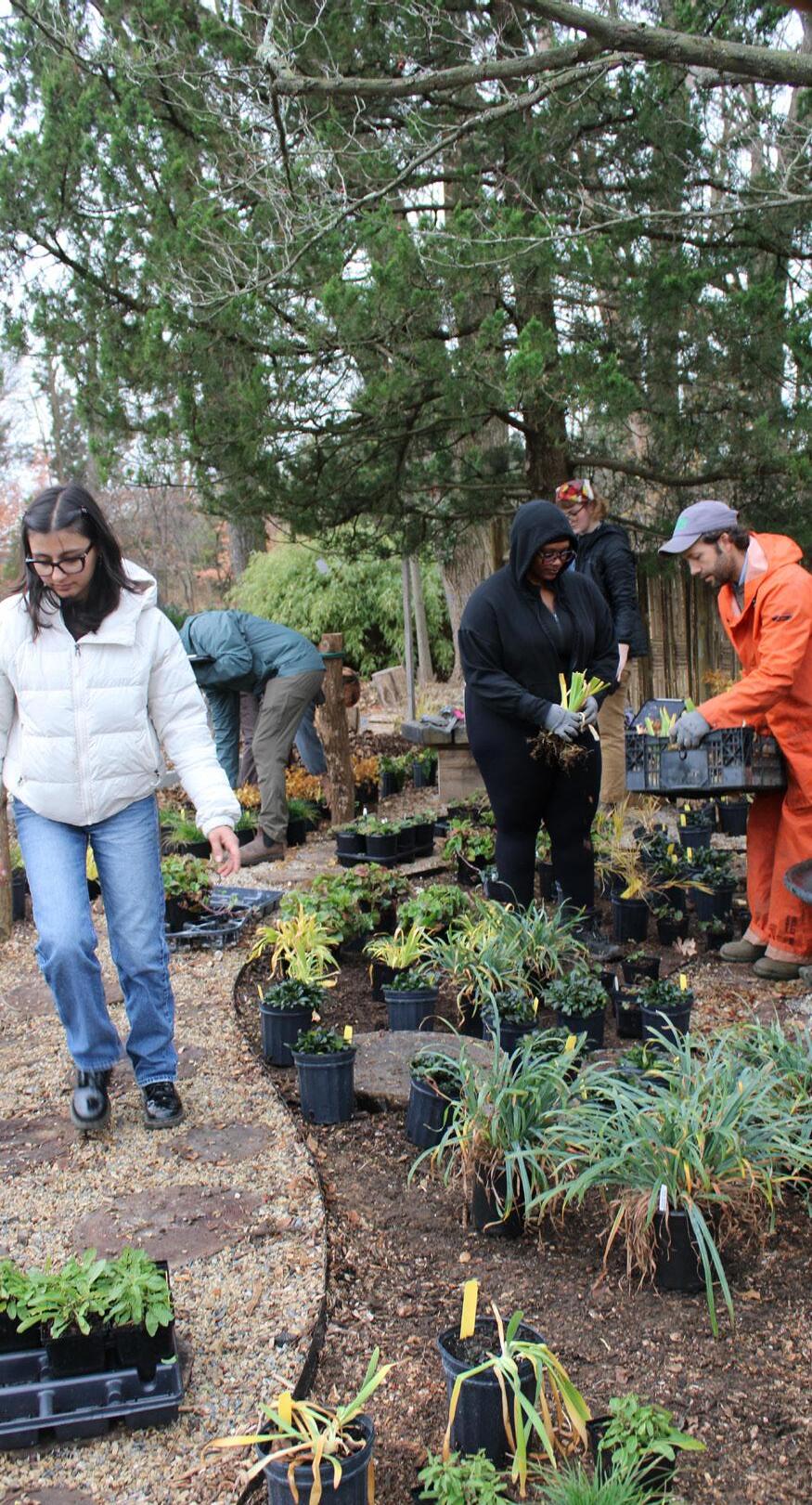
Spotlight: The most visible change to the landscape this past year was the installation of five new City Demonstration Gardens, located along the drive between the NEC and the Mansion. This project is a living example of how Cylburn Arboretum Friends blends horticulture, education, and community engagement to achieve its goals.
Designed at a scale that reflects Baltimore’s rowhouse gardens and urban landscapes, these five gardens serve as living classrooms. Each garden tells a distinct story, with its own design, plant palette, and aesthetic. Together they showcase a range of possibilities for traditional Baltimore rowhouse gardens.
Our new gardens demonstrate how public landscapes can inspire people to garden differently at home. They also reflect the synergies of partnership - made possible through collaboration with and among designers, donors, garden clubs, and city partners. These gardens are not just additions to the landscape; we hope they will inspire new generations of garden enthusiasts.
Education
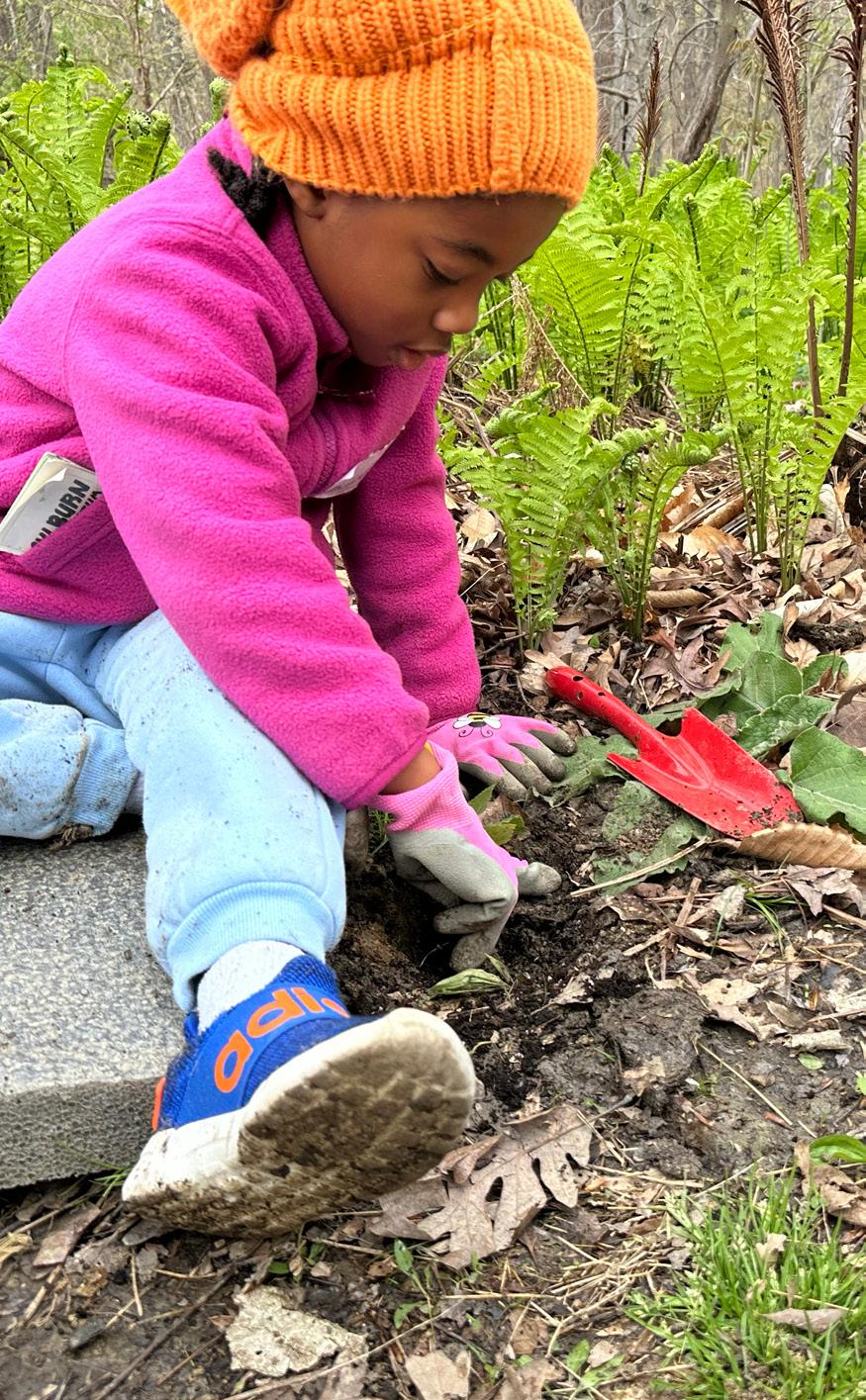
Education remains central to CAF’s mission. Last year, we welcomed schools for guided field trips three days a week, with a particular emphasis on serving Baltimore City Public School students. These visits provide meaningful outdoor learning opportunities that connect young people to nature.
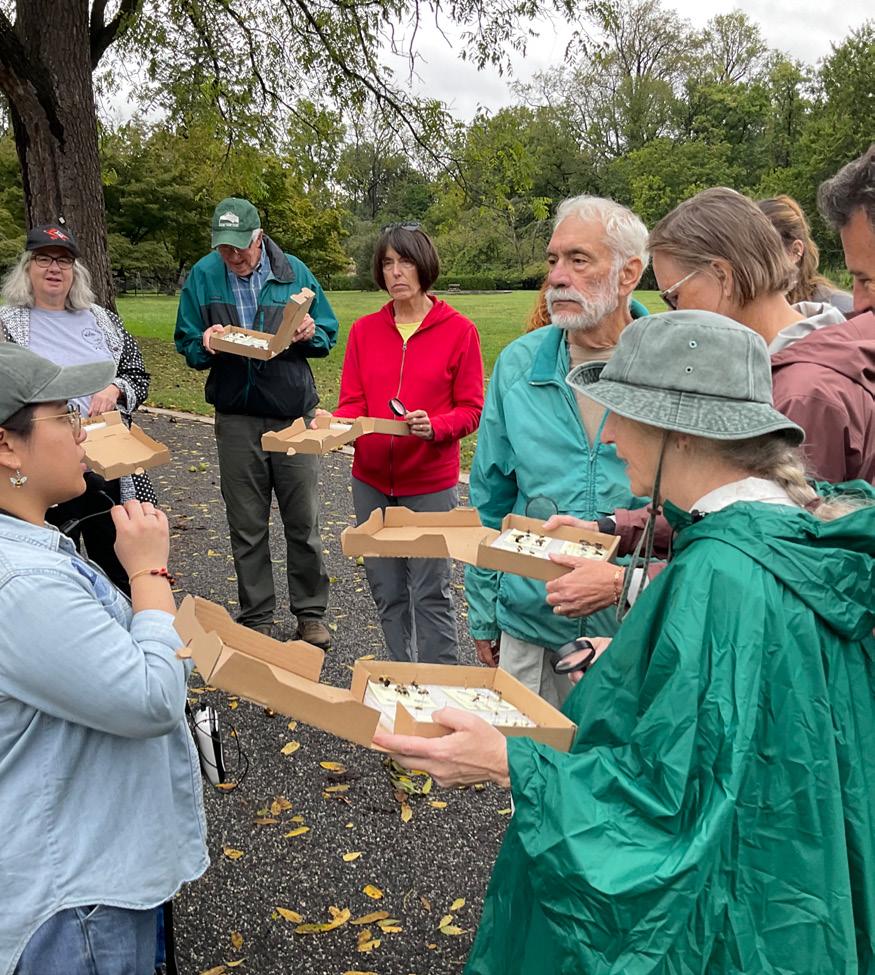
Beyond field trips, the Nature Education Center served as a hub for formal programming, informal learning, and family engagement. Programs, walks, workshops, and seasonal activities encouraged learners of all ages to deepen their understanding of plants, landscapes, and the environment.
EDUCATION
Expanded Nature Camp
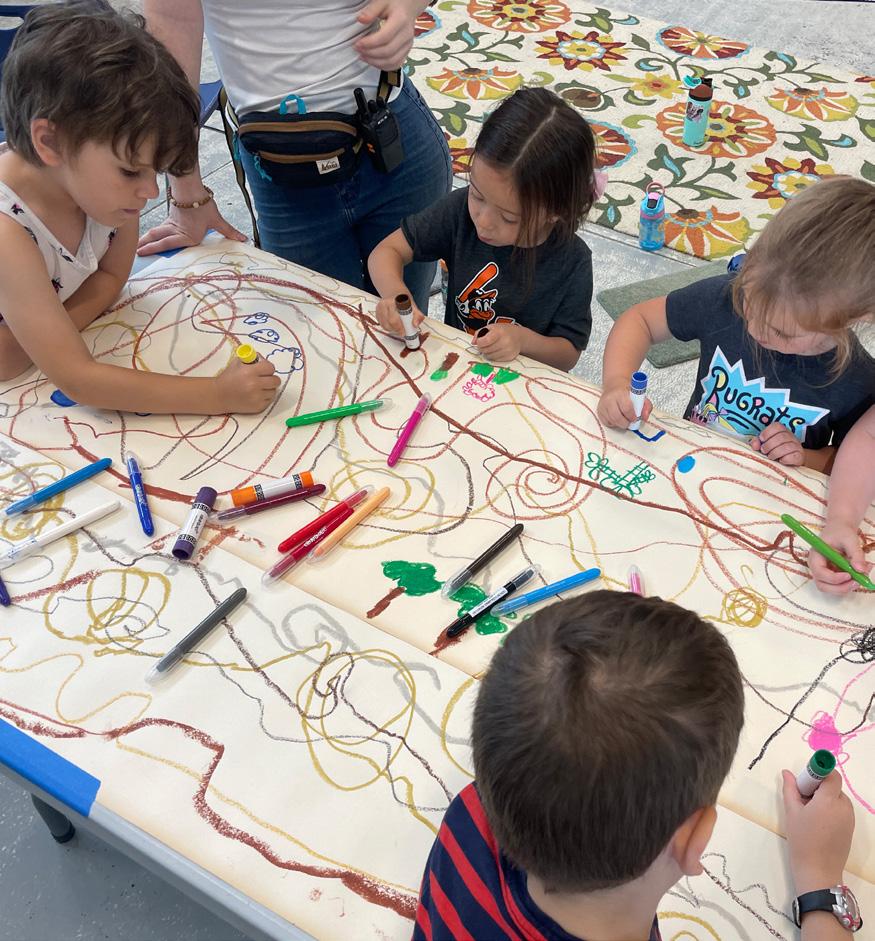
Spotlight: This past year, we expanded Cylburn Nature Camp in two significant ways. First, we added a second session of our early-summer mini-camp for four- and five-year-olds. Second, we launched our first-ever Spring Break Camp, intentionally scheduled to coincide with Baltimore City Public Schools’ spring break. Both additions reflect our commitment to meeting community needs and expanding access to high-quality outdoor experiences for young people.
During Spring Break Camp, children enjoyed a program similar to our summer camp—including guided hikes, hands-on nature activities, and plenty of time for unstructured play—while benefiting from the cooler temperatures of spring. The expanded mini-camp sessions addressed a key demand for early childhood programming, aligning with a time when many preschools are wrapping up for the year and families are seeking meaningful, age-appropriate enrichment activities. Together, these expanded camp offerings allowed owed us to reach more families and introduce new audiences to Cylburn as a place for learning.
Operating Financials
In 2025, the operating budget reflected another year of intentional investment and strategic growth. Revenue remained stable and diversified, supported by strong membership contributions, consistent program income, and a continued emphasis on grants and partnerships. On the expense side, the budget prioritized expanded education offerings and stewardship of the gardens and tree collections. The following financial details provide a transparent overview of how these funds were allocated and utilized to support our goals. These are the end-of-year unaudited numbers.
MARK YOUR CALENDAR
FEBRUARY 4: Volunteer Orientation
FEBRUARY 10: Tree Time – Natures Valentines Part 1
FEBRUARY 12: Gardeners Workshop – Tree Pruning
FEBRUARY 18: Wednesday Walk – Cylburn Greenhouse Tour
FEBRUARY 19: Tree Time – Natures Valentines Part 1
FEBRUARY 25: Visitor Services Volunteer Training
MARCH 10: Tree Time - Amazing Bark Park 1
MARCH 12: Gardeners Workshop – Gardening in Early Spring
MARCH 11: SPEAKER SERIES – Abra Lee
NEC DROP-IN PROGRAMMING EVERY SATURDAY AT 11AM
THANK YOU
We can’t thank you enough for being part of our community at Cylburn Arboretum Friends—your support and participation is the foundation of our success.