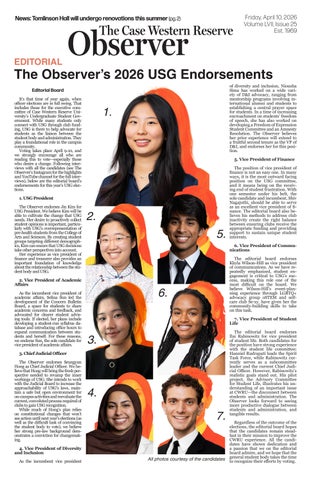
The Observer’s 2026 USG Endorsements
Editorial Board
It’s that time of year again, when officer elections are in full swing. That includes those for the executive committee of Case Western Reserve University’s Undergraduate Student Government. While many students only connect with USG through club funding, USG is there to help advocate for students as the liaison between the student body and administration. They play a foundational role in the campus community.
Voting takes place April 9-10, and we strongly encourage all who are reading this to vote—especially those who desire a change. Following interviews with all the candidates (see The Observer’s Instagram for the highlights and YouTube channel for the full interviews), below are the editorial board’s endorsements for this year’s USG elections.
1. USG President
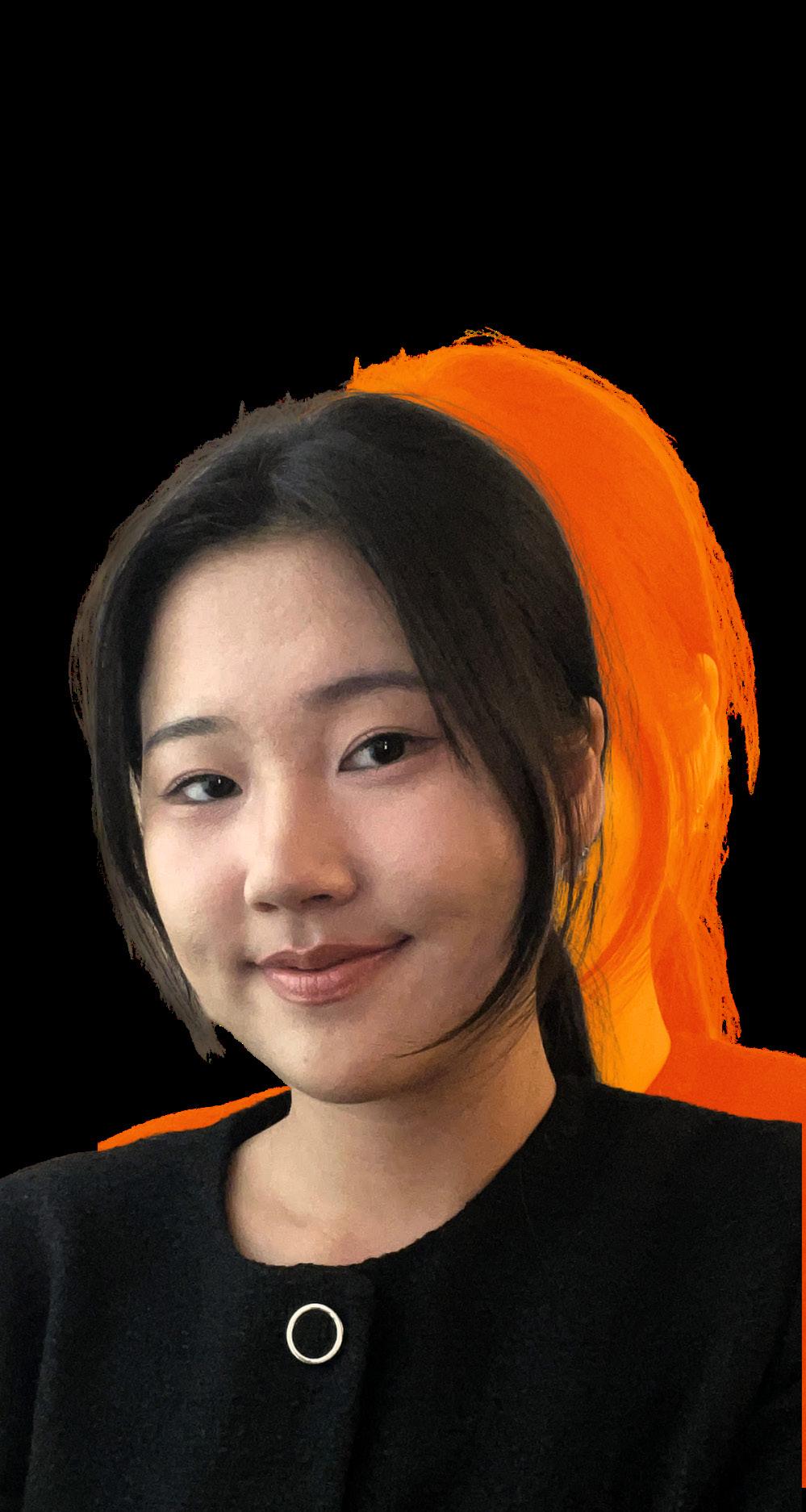
The Observer endorses Jin Kim for USG President. We believe Kim will be able to cultivate the change that USG needs. Her desire to proactively collect student opinions is important, particularly with USG’s overrepresentation of pre-health students from the College of Arts and Sciences. By creating student groups targeting different demographics, Kim can ensure that USG decisions take other perspectives into account.
Her experience as vice president of finance and treasurer also provides an important foundation of knowledge about the relationship between the student body and USG.
2. Vice President of Academic Affairs
As the incumbent vice president of academic affairs, Selina Sun led the development of the Concern Bulletin Board, a space for students to share academic concerns and feedback, and advocated for clearer student advising tools. If elected, her plans include developing a student-run syllabus database and introducing office hours to expand communication between students and herself. For these reasons, we endorse Sun, the sole candidate for vice president of academic affairs.
3. Chief Judicial Officer
The Observer endorses Seungyun Hong as Chief Judicial Officer. We believe that Hong will bring the fresh perspective needed to revamp the inner workings of USG. She intends to work with the Judicial Board to increase the approachability of USG’s laws, maintain a safe but open environment for on-campus activities and reevaluate the current, convoluted process required of clubs to gain USG recognition.
While much of Hong’s plan relies on constitutional changes that won’t see action until next year’s elections (as well as the difficult task of convincing the student body to vote), we believe her strong pre-law background demonstrates a conviction for changemaking.
4. Vice President of Diversity and Inclusion
As the incumbent vice president


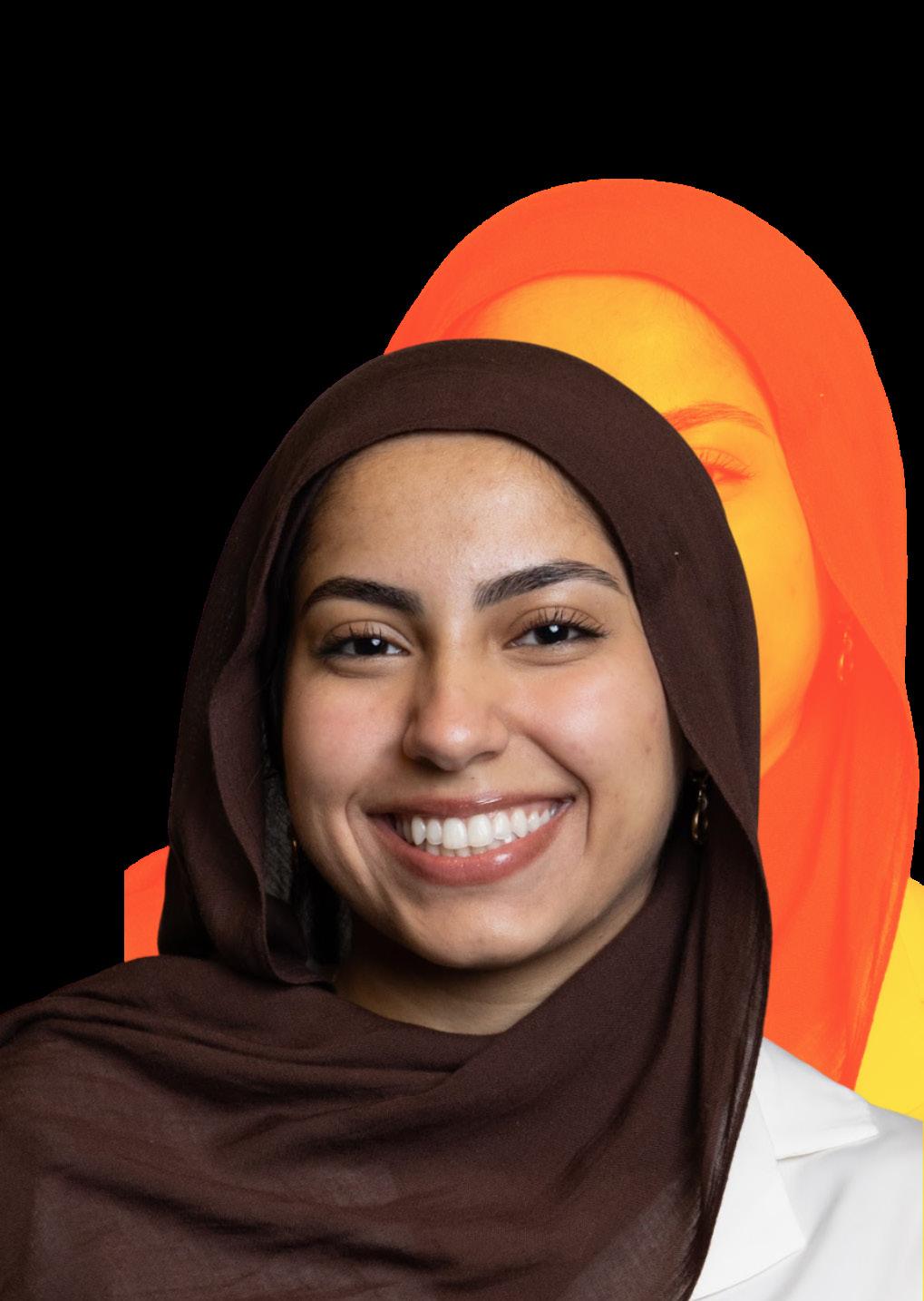
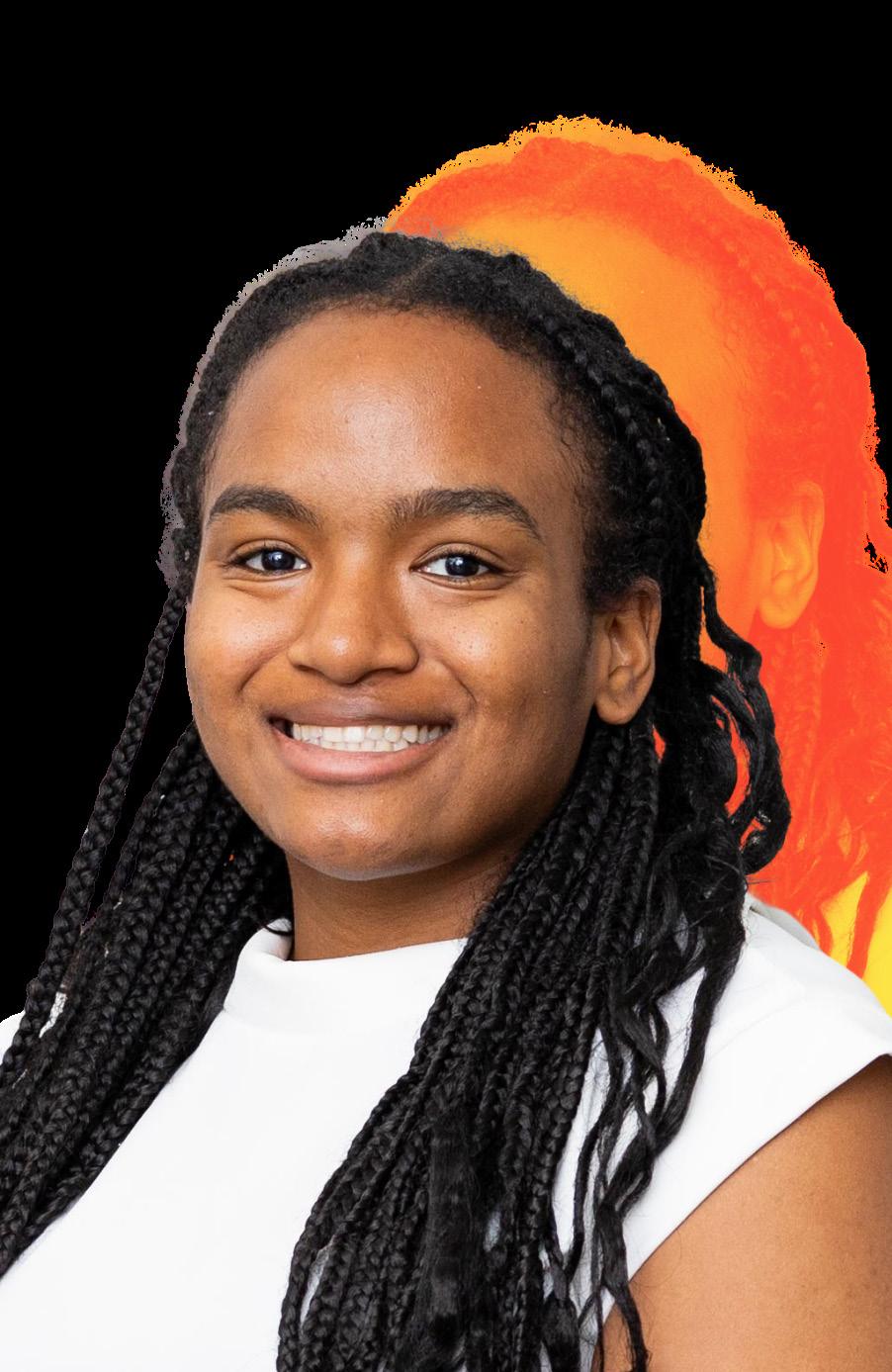
of diversity and inclusion, Niousha Sima has worked on a wide variety of D&I advocacy, ranging from mentorship programs involving international alumni and students to establishing a central prayer space for students. In a time of increasing encroachment on students’ freedom of speech, she has also worked on developing a Freedom of Expression Student Committee and an Amnesty Resolution. The Observer believes her prior experience will extend to a fruitful second tenure as the VP of D&I, and endorses her for this position.
5. Vice President of Finance
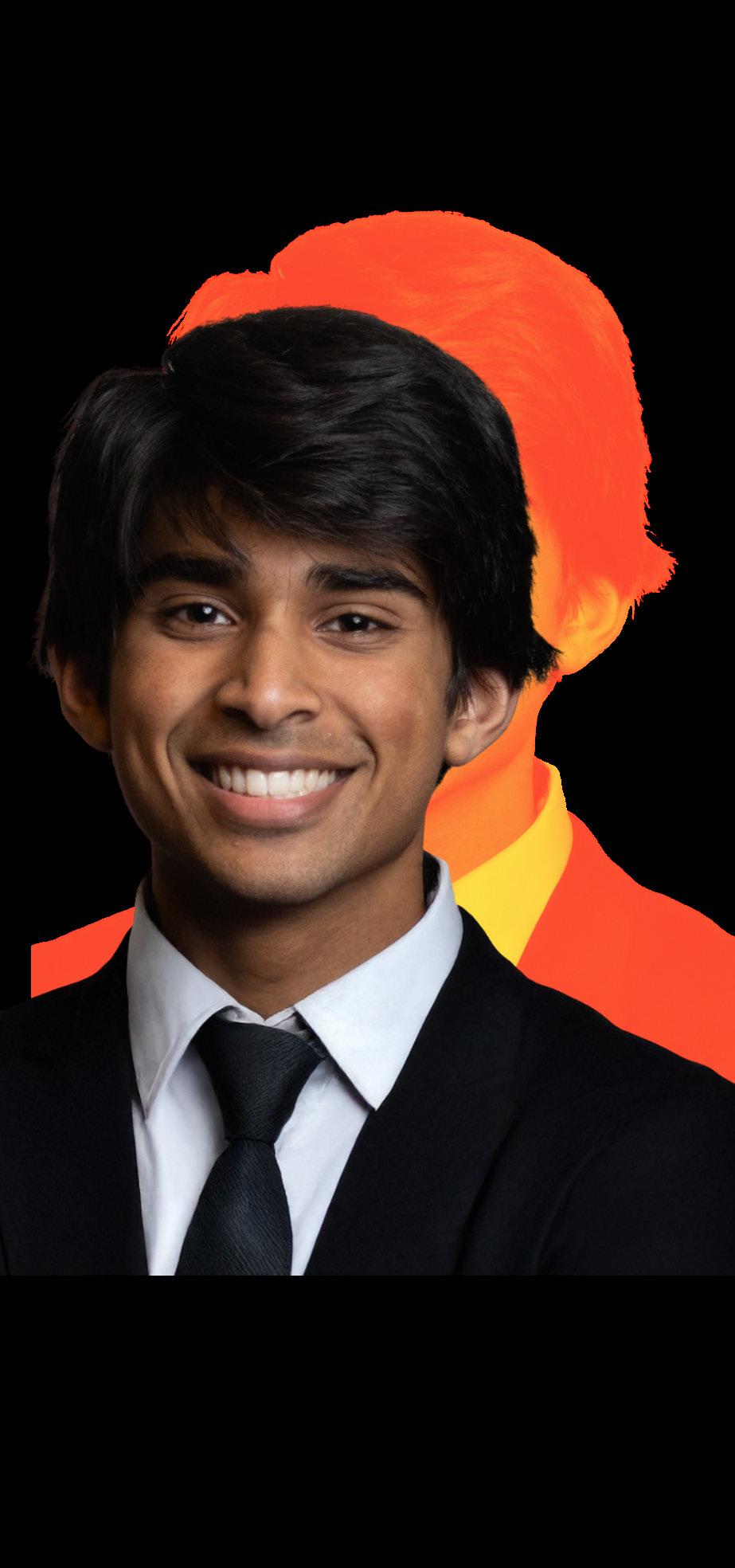
The position of vice president of finance is not an easy one. In many ways, it is the most outward facing position on the USG committee, and it means being on the receiving end of student frustration. With one semester under his belt, the sole candidate and incumbent, Shiv Nagajothi, should be able to serve as an excellent vice president of finance. The editorial board also believes his methods to address club inactivity create the right balance between ensuring clubs receive the appropriate funding and providing support to sustain unique student interests.
6. Vice President of Commu-
nications
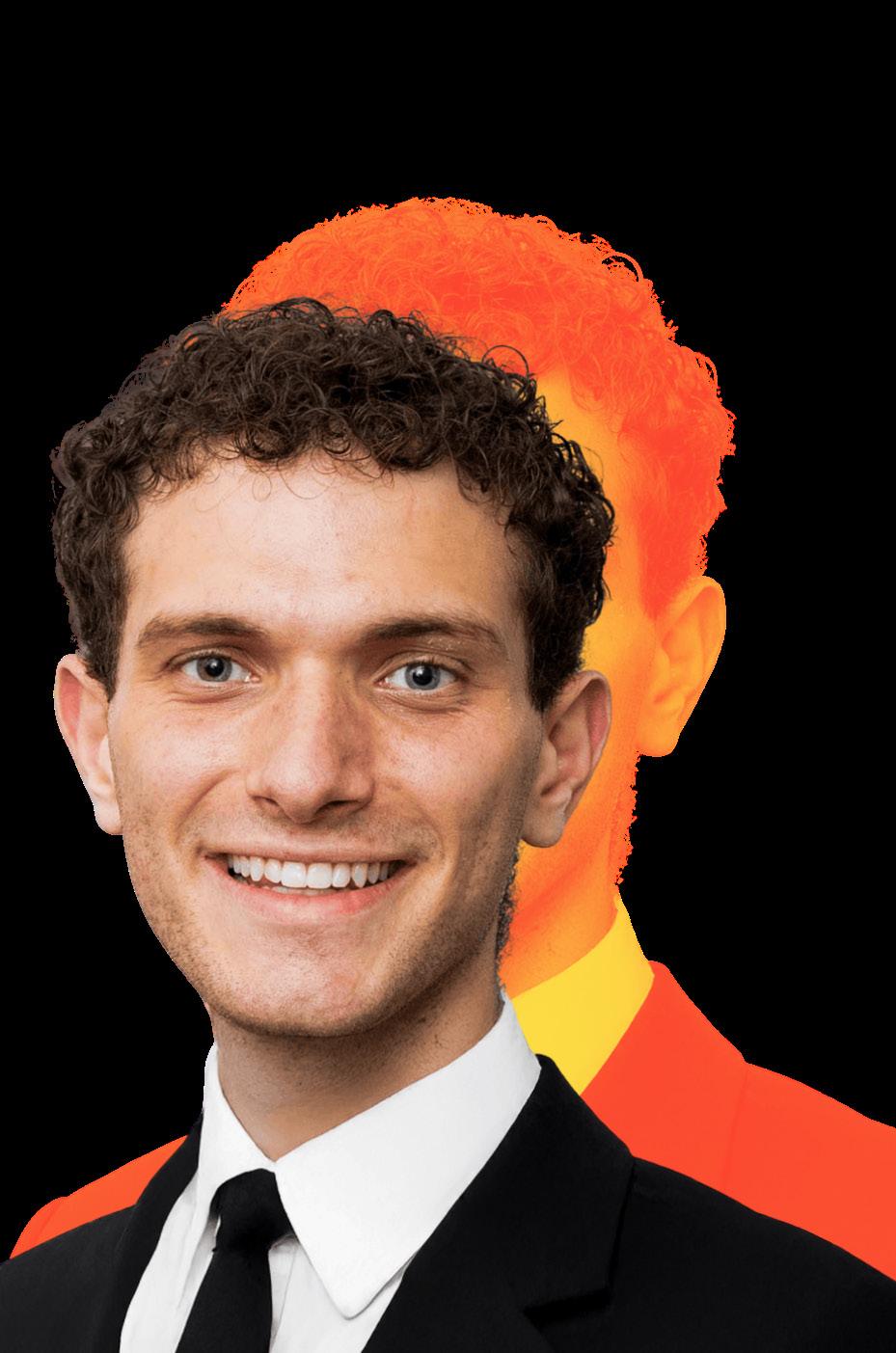
The editorial board endorses Khyla Wilson-Hill as vice president of communications. As we have repeatedly emphasized, student engagement is critical to USG’s success, making this role one of the most difficult on the board. We believe Wilson-Hill’s event-planning experience through LGBTQ+ advocacy group oSTEM and selfcare club Se-xy, have given her the community-building skills to take on this task.
7. Vice President of Student Life
The editorial board endorses Ilai Rabinowitz for vice president of student life. Both candidates for the position have strong experience with the student life committee; Hanniel Rudrapati leads the Spirit Task Force, while Rabinowitz currently serves as a subcommittee leader and the current Chief Judicial Officer. However, Rabinowitz’s realistic goals stand out. His pilot project, the Advisory Committee for Student Life, illustrates his understanding of an important issue at CWRU—the disconnect between students and administration. The Observer looks forward to seeing more productive dialogue between students and administration, and tangible results.
Regardless of the outcome of the elections, the editorial board hopes that the candidates remain steadfast in their mission to improve the CWRU experience. All the candidates have shown dedication and a passion that we on the editorial board admire, and we hope that the general student body takes the time to recognize their efforts by voting.
Tomlinson Hall will undergo renovations this summer
Maria Burrus Staff Writer
The Department of Campus Planning and Facilities Management began renovating the first floor of Tomlinson Hall early April and is expected to finish by August, just in time for the fall 2026 semester. The project is projected to cost around $3.7 million.
This follows the university’s recent renovations to student life in Adelbert Gymnasium, Olin Building, several residence halls and the construction of the new Interdisciplinary Science and Engineering Building (ISEB), CWRU’s largestever project on the Case Quad. ISEB was designed with the idea of fostering collaboration across engineering, technology and other STEM fields. This will likely lead to increased foot traffic on the quad due to the addition of new dining options for students and faculty.
The renovation plans include a new food service option with seating areas for eating and studying.
A wide range of quick-service options will be available, including a coffee bar and Mediterranean food. The traditional coffee shop will include crepes, smoothies and gelato, while the Mediterranean restaurant will have sandwiches, salads and bowls. There will be a mix of vegan, vegetarian and halal meals available. The options will use a combination of mobile and kiosk ordering.
“We are committed to keeping campus dining experiences fresh and engaging,” Christine Torrence, Associate Vice President for Campus Services, said. “Each year, we conduct surveys to better understand what is working well and where we can improve.”
The first floor is only phase one of the renovation. Next year, the ground floor will be updated with an upgraded layout and seating area, expanded service points and new menu options.
“This initiative represents a key step in advancing our long-term vision by enhancing and modernizing our dining program to match
the bold, welcoming new gateway to CWRU,” Jim Bolland, Resident District Manager for Bon Appétit, said.
The university partnered with the Student Food Committee, University Student Government and Residence Hall Association to develop these new dining services to fit the needs of students. The common themes that were present in student feedback included a desire for more diverse and faster meal options. Bon Appétit held pop-up events to test students’ thoughts on the new food concepts, and Campus Services will continue to collect student feedback and data even after the space opens to gauge student satisfaction.
Overall, the Tomlinson Hall renovation shows CWRU’s consistent efforts to modernize the campus, especially in areas that benefit student needs. By integrating more diverse, convenient and inclusive dining options alongside new study areas, this new space will create another prominent spot on the Case Quad.


Lawsuit claims ICE agents are illegally arresting Ohio immigrants without warrants By Katie
Millard
From FOX8 News
Iran accuses U.S. and Israel of ceasefire violations, threatening truce By Sammy Westfall, Natalie Allison, Evan Halper, Susannah George and Tara Copp From The Washington Post
Ohio AG awards $5 million to Cleveland State for new prosecutor training program By Brittany Wier From Cleveland 19 News
Cleveland City Council declares April 18 as Superman Day By Brin Koster From Cleveland 19 News
While healthcare struggled to keep up during CO- VID-19, community clinics never wavered By Patty Zamora From CWRU Newsroom
Ex-Ohio Senate candidate stole from kids and his employer, then spent big By Lucas Daprile From Cleveland.com
Why OpenAI bought ‘SportsCenter for Silicon Valley’ By Shannon Bond From NPR News
RFK Jr, EPA chief ‘declare war’ on microplastics amid growing evidence of health risks By Marc Siegel and Jennifer Johnson From Fox News
Astronauts suggest nam- ing a moon crater ‘Carroll’ after their commander’s late wife By Rachel Treisman From NPR News
NASA releases new ‘Earthset’ and eclipse images taken during historic flyby of the moon By Jacopo Prisco and Ash- ley Strickland From CNN News
'The Super Mario Galaxy Movie': Hype moments and aura
Natalie Qiu Contributing Writer
Major spoiler warning for “Super Mario Galaxy.”
I mean, it was fine I guess.
I should preface this review by saying I am the target demographic for this movie. I pointed at the screen when the Tostarenans—the skull guys from “Super Mario Odyssey” (2017) —appeared, pogged when the Corneria leitmotif played for Fox McCloud and instantly recognized the red star power-up— which Mario can only get around endgame of “Super Mario Galaxy” (2007)—from my childhood years of soaring around the fully-restored Comet Observatory. Every time a visual or auditory reference appeared, I could feel my brain cells rubbing together. This film truly maximized my ability to point at the screen and go, “That’s the thing! The thing from Mario!”
But when the credits faded out, I sat back in my seat, blinked twice and any lingering sense of satisfaction left me.
I tried to recall any character arcs that moved me and came up short. I tried to think of setpieces that really left an impression on me. I suppose the Dinosaur Bridge was cool? I tried to think of my favorite character, but all I could think of was Fox McCloud, the one non-Mario character, and he has maybe 6 minutes of screentime.
“The Super Mario Galaxy Movie” is 98 minutes of visually-rich keyjingling. There’s nothing to really chew on after the credits roll. But unlike other, more forgettable media of similar substance-less-ness, the movie had the additional challenge of adapting a massively successful game with a very distinct game-feel, by virtue of being named after the dang thing.
To be clear, I did not expect the movie to exactly retell the plot of the original game even though it’s one of the few Mario games that has one. Mainline Mario plots are famously bare-bones: Bowser kidnapped Peach, go save her. This allows their gimmick-filled platforming gameplay to take center stage, and, based on sales and general acclaim, that’s all the games need. This means, in general, Mario games feel cheerful and bombastic, with colorful levels,
creative applications of power ups and real time gameplay keeping it at the forefront of your attention. It makes sense that the “The Super Mario Bros. Movie” (2023) had to lend some depth to the Mario characters in order to tell a story.
However, among Mario games, “Galaxy” was one of the few games that had more story elements in addition to the usual kidnapping, which really set the game apart. Since the developers wanted a space setting to justify unique gravity gimmicks, they needed a hub world to navigate between each level. A few developers then decided to add more backstory into why the hub exists, and the resulting “Galaxy” contemplates topics like the loneliness of space and what one can find in that.
At the center of these moments of contemplation are the Comet Observatory and Princess Rosalina. After completing each cheerful level, the player is placed back in the Comet Observatory, allowing us to take a breather and explore the empty bedrooms, baths and kitchens of a lonely goddess’s home. In the library, we set our Wii remotes down and listen to Rosalina tell us a story about a girl who ran away to play among the stars because she could not bear the grief of losing her mother. But eventually, despite the friends she makes traveling through space, the girl breaks down, weeping and homesick. At the end of the game, with Bowser defeated, a massive black hole forms and begins to swallow everything in the universe. Thousands of baby stars fly into the black hole to try to prevent it. The universe ends. Then, it explodes back outward in a brilliant light and we float in the genesis of a new universe while a galaxy-sized Rosalina watches over and delivers a weirdly existential message for a Mario game:
“When stars die they turn to stardust and scatter across the cosmos. Eventually, that stardust reforms to create a new star … and so the cycle of life continues. But the cycle never repeats itself in quite the same way … So … you’ll see.”
A story like that can be eye-opening to a child. “Super Mario Galaxy” is not a philosophical masterpiece nor a Shakespearean tragedy, but it had an identity, a message and a uniquely hopeful take on the vastness of outer space which meant something to thousands of players. Of all the Mario games to adapt to a
movie, this one would’ve been a special pleasure to see on the big screen since it already has a highly moving plot and beautiful galaxies to be rendered.
Instead they gave Rosalina’s role to a non-Mario character who hasn’t had a new game in a decade, threw out her backstory for a barely-elaborated new one and did nothing thoughtful with the space theme or the Comet Observatory.
This isn’t to say I wanted the movie to feel lonely. When they first revealed Gateway Galaxy to be a bustling spaceship hub, I was fascinated by their take on a universe in which previously desolate planets now were widely used and accessible to the average universal citizen. Foolishly, I hoped to see the other lonely galaxies from the games now reimagined to be bustling residential areas or transport hubs. Developing the world like this would have been a fresh take on the source material and set up a robust universe for future films!
Unfortunately the Mario movies seem to take a plot philosophy much like their games, which does not work in a medium that runs for 98 minutes without interactability. It’s like being strapped to a chair and watching a computer play every Mario game at once.
In addition to barebones and reskinned themes from Galaxy, the movie borrows aesthetics from “Super Mario Odyssey” (the Cascade Kingdom’s T-Rex and the Lost Kingdom’s Dragon) and references “Super Mario World 2: Yoshi's Island” by randomly turning the Mario brothers into babies. These scenes make for snappy action sequences which don’t affect plot or any character trajectory in any way. To reference with a heavy hand is not inherently bad, but choosing to create a reference-maximized movie with no time for the characters to comprehend the world they were traversing or the feelings they were feeling makes for a shallow movie. There were no contemplative moments that let us gaze into the quiet vastness of space, nor tears of worry shed for loved ones worlds apart. The Lumas do not have time to wail for their kidnapped mother, because they’re too busy hyping up Fox McCloud.
An IGN interview with creator of Mario Shigeru Miyamoto and Illumination founder Chris Meledandri published April 1 includes an
admission that the setpieces were hodgepodged from so many different games, “because when things are too predictable, [Meledandri finds] that it's not exciting us and it's not exciting our creative teams.” They treat the original games like TikTok editors treat their source media and as a result create a product much like TikTok edits—spectacular visual sensations that rely on prior experience to imply meaning. Watching an edit with no context might have you wowed by the visuals in the moment, but you walk away empty.
Watching “The Super Mario Galaxy Movie” might have you wowed by the visuals in the moment, but you walk away empty.
But perhaps the real issue isn't the writers’ inability to develop concepts, it is the intended audience. Later in the same interview, Miyamoto and Meledandari were asked about why they included all the references.
“So what happens is that the team actually is driven to delight Miyamoto-san. [...] So when ideas come up, everybody's always looking to say “‘what does Miyamoto-san think?’” Meledandari said. This implies that the key-jingling rapid-fire referenceladen action sequences of the movie is 100% Shigeru Miyamoto approved. I'm starting to understand why this man is a brilliant game designer—and why expertise in one field does not beget expertise in another.
I should mention that I did enjoy the 2-D animated sequence for Fox McCloud's intro, the overall movie score and the animation quality. But no amount of delicious condiments can save an empty dish. I pray that they screen the next one against a test audience that is larger than just Mr. Miyamoto.
Sadly I doubt the directors need to care about any criticism coming their way since this movie will make a billion dollars because it’s Mario. Under the unimaginable vastness of a $372 million global box office, I feel lost. Does my opinion even matter? Am I just shouting into space? Will anything come of my voice?
Rosalina’s storybook ends in bittersweet happiness. The girl realizes she can't ever go home again but she resolves to make the stars her new home. I suppose that means I must make the best of what we got … and buy the next “Star Fox” game so Fox McCloud doesn’t spend another 10 years bumming around in the Super Mario Universe.

"The Super Mario Galaxy Movie" offers a lot in the way of references
comes to telling a compelling story. Courtesy of Nintendo
‘Heartbreak High’ Season three: a heartbreakingly entertaining goodbye
Season three of
Esha Bagora Social Media Editor
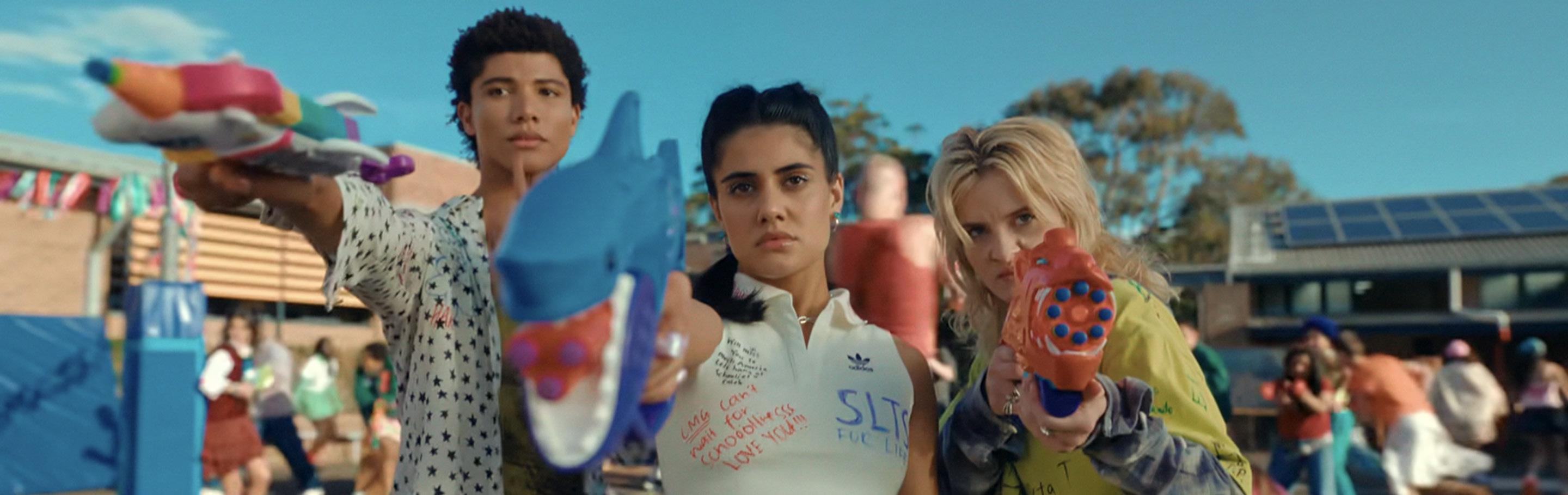
The latest and final season of “Heartbreak High” delivers a dramatic, chaotic and emotionally charged conclusion to one of the most distinct teen drama remakes of all time. The third season follows Hartley High’s graduating class as they say goodbye to school and hello to adulthood, forced to confront not only their futures, but the weight of everything they’ve left behind.
The season opens in the aftermath of the previous year's devastating school fire, with friendships still fractured and trust in short supply. Amerie and Harper are patching things up, but their dynamic remains uneasy. This tension is tested almost immediately when Amerie (Ayesha Madon) hatches a revenge scheme against the boys of St. Bruno's—the rival boy’s school— who stole Hartley High's mascot head and desecrated it. The plan seems simple enough, but it spirals in the worst possible way, leaving someone seriously hurt and the entire group facing a choice they're not ready to make: come clean, or cover it up.
From that point on, the season is driven by one central agonizing question: Who did it? What starts as a petty high school prank becomes a test of character for everyone involved. Even Principal Woodsy (Rachel House) and Ms. Obah (Chika Ikogwe) find themselves debating whether to go to the police or shield the students from the full consequences of their actions. The show doesn’t let anyone off easy, and that moral murkiness properly takes the season from good to great.
Amerie's arc this season is less
about being the perpetual outsider and more about accountability. She's no longer just reacting to drama; she's instigating it, and the show holds her accountable. Her complicated history with Malakai (Thomas Weatherall) also resurfaces with real emotional stakes, as his return forces both of them to reckon with unresolved feelings they never got to properly address.
The rest of the ensemble gets their share of the spotlight too. Darren (James Majoos) wrestles with independence and personal ambition, particularly a growing interest in acting, against the backdrop of graduation and what lies beyond it.
Quinni (Chloé Hayden), one of the series' most consistently grounded characters, faces the anxiety of an unstructured future head-on. Her neurodivergence continues to be handled with care and nuance, and her relationships are tested as she tries to balance loyalty with her own needs. Harper, meanwhile, channels her healing into art, slowly defining herself outside of the trauma that shaped her earlier storylines.
There’s also a new social rivalry this season as a former friend (guess who!) becomes an unexpected antagonist, creating internal fractures within the group that run parallel to the central cover-up. The question of trust and whether it can ever be fully rebuilt hangs over nearly every interaction.
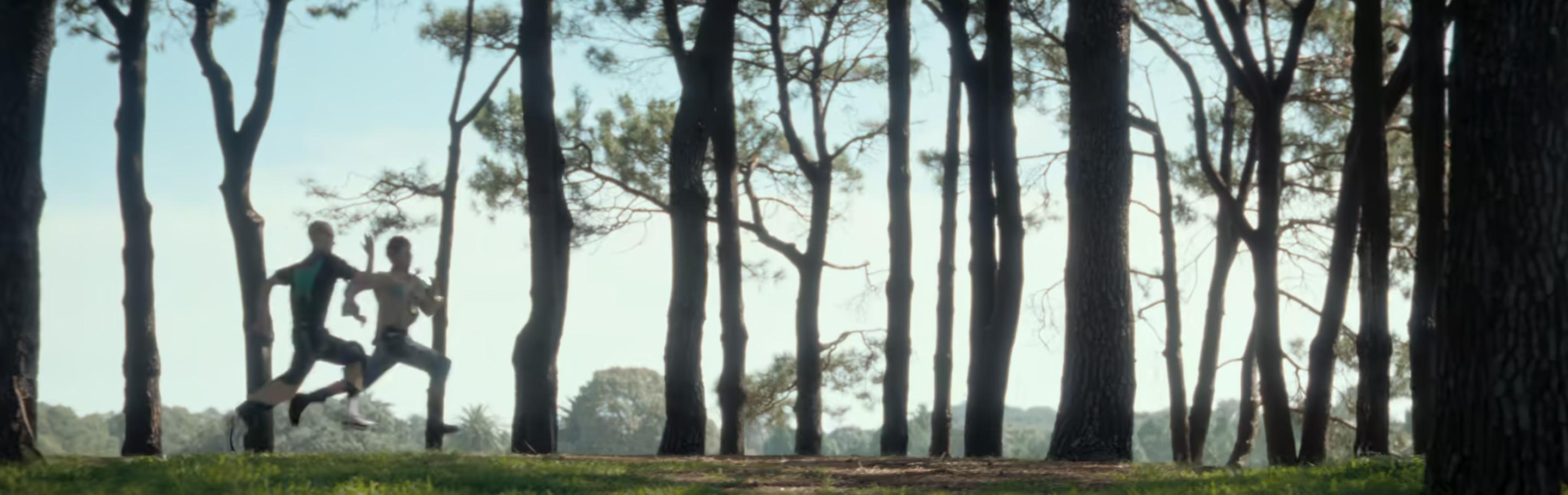
The season culminates in a “schoolies” trip—an Australian post-exam celebration—where the weight of everything the group has been carrying finally becomes impossible to ignore. The pressure of keeping secrets during what’s supposed to be the best week of their lives makes for some of the most tense and emotionally raw episodes of the entire series.
Each character ultimately steps into their next chapter in ways that feel true to who they’ve become over three seasons. The endings aren’t tidy or neat and some storylines feel rushed within the eightepisode season, but the messiness makes it so much more realistic.
“Heartbreak High” has always understood and delivered on the concept that adolescence is fundamentally unresolved; this final season wholly honors that truth. Bold, chaotic and genuine, it’s a farewell that doesn’t hide from the chaos it promised from the beginning.

CATERING

LET US HANDLE THE COOKING WHILE YOU FOCUS ON MAKING MEMORIES
Whether it’s a family gathering, work event, or celebration, our catering brings fresh, flavorful Lebanese-American cuisine to your table.
"Heartbreak High" presents a bittersweet goodbye to the teen drama remake. All photos courtesy of Netflix
Peach PRC’s debut album 'Porcelain' is worth the firing time
Penelope Cloonan Life Editor
Noted Australian pop sensation Peach PRC released her debut album “Porcelain” on April 3. The semi-selftitled album—PRC stands for porcelain—explores the artist's identity, queerness and work. Peach PRC has been a mainstay in queer pop spaces for a while now. Her bubblegum pop song “Josh” (2021) hit home as a diss to ex-boyfriends, and she has slowly built a platform from there. Her EP “Manic Dream Pixie” (2023) solidified this dreamy, sapphic “bubblegum pop” sound. Peach PRC is not for everyone. She has been known to use a lot of auto-tune, bubbly pop cliches set over moodier themes and oh-so-much pink. Peach PRC is unapologetically femme and queer. Her “Porcelain” release steps away from the pink just a bit—she even dyed her hair back from pink—but the core of what makes Peach PRC remains. This is raunchy sapphic pop, but maybe slowed down a tad. This is Peach PRC: reintroduced.
The album’s opening track, “Piper,” is cinematic. The overall production retains her dreamy quality from earlier works, but has more depth. The beat is interesting, playing with technosounding samples, layered with Peach PRC’s vocalizations and sharp keys. As Peach PRC enters the garden, becoming her new self, we enter with her.
Her song “Pink” more directly addresses her persona shift. For the first leg of her career, she had a very clear identity. Peach PRC was a popstar with pink hair, occasionally fairy wings and typically pink clothes. In the lead-up to her new album, Peach PRC dyed her hair brown and started connecting to nature, but she retained her funny sincerity; the outside is just a little less bright. “Pink” is her postmortem. The chorus on “Pink” is very repetitive. “It's pink, everything is pink. Mama, don't you think everything looks nice? Pink, dyeing my hair pink. Paint my kitchen pink. Mama, don't you think of me?” Peach PRC sings. Sure, using “pink” over and over is an easy way to create flow in pop, but it does do lyrical heavy lifting. Peach PRC floats above the lyrics and her problems, superficially getting out

certainly worth its weight in fine
standpoint, “Back To You” is very similar to Peach PRC’s previous work. It is a classic bubblegum pop song with tongue-in-cheek lyrics. In the song, Peach PRC talks about her life now: being with a new girlfriend and liking her new life overall. But, she doesn’t love it. Eventually, her refrain “back to you,” switches to “back to use,” signalling that this new life does not come from a relationship at all, it’s about recovering from addiction. It’s subtle, but it works to endear the audience to her. “Back To You” is what Peach PRC is good at: an upbeat song on a real topic.
back in November 2025. Admittedly, you can tell. It is exactly like the music on “Manic Dream Pixie,” very upbeat and techno. “Miss Erotica” is a hyperpop anthem about Peach PRC’s past as a stripper. She plays up the character, leaning farther into sexuality and spectacle. “Miss Erotica” deserves to be in a club.
“The Palace,” a later track on the album, addresses her past as a stripper with a more grounded tone. If “Miss Erotica” discusses the more lively aspects of adult entertainment, “The Palace” is the self-worth perspective. Peach PRC sings about the vulnerable

which came out all the way
theme present throughout much of her work, the tension between queerness and religion. One of her more famous songs is “God Is A Freak,” a funnier take on why a religious body cares about people’s personal lives. In “Oasis,” Peach PRC leans heavily on a Garden of Eden reference, fitting the nature theme of her new branding, as well as that religious tension undercurrent. It is a celebration of queer love. Peach PRC continues to poke fun at homophobia, saying, “Why would I wait for heaven, when just outside is a technicolour Earth?” Earth is her oasis, as long as she can live freely. Coming off of some of her moodier tracks, “Oasis” shines as a beacon of hope.
My personal favorite track on the album is “Out Loud.” Slowing it down once more with a more strippeddown song, “Out Loud” is a soft ponderance on closeted relationships. While desperately wanting to be loved “out loud” is not a new feeling, Peach PRC’s prior vulnerability makes the song hit home. As the backing track builds with her hopes, you can’t help but feel for her. The song ends with Peach PRC singing, “One day you'll see, she's gonna speak. And love me out loud,” trying to convince not only the listener, but herself.
The album does suffer from some tonal whiplash. For the most part, it is easy to tell which songs were written closer to Peach PRC’s pink pop image as opposed to her newer identity, but it is still absolutely listenable. Throughout the changing production levels, that same honesty remains. Peach PRC set out to make a candid album exploring her personhood, and she did just that. The tracks mentioned here are just my favorites, but the whole album is worth giving a chance. As a long-time fan of Peach PRC, I can confidently say that her muchanticipated debut album “Porcelain” is worth its weight in fine china.
Her track “Oasis” returns to a
The debut album of Peach PRC is more than worth a listen, and
china. Courtesy of Republic Records
The Observer's ACTUAL endorsements for USG
Editorial Board
As things are getting tumultous, it is imperative that the Case Western Reserve University's Undergraduate Student Government elect an executive committee that is able to bear the weight of our collective sins (going to CWRU). Therefore, we have decided to pitch our radical plan to save this sinking ship. Like Martin Luther, we will pin this revolutionary religious/political document to the door of wherever USG meets (we don't know). We also believe that, due to each year's fatally low voter turnout, this plan has a real chance of success. As such, below are our endorsements for a USG that WILL get things done.
1. USG President
The Observer endorses Tyler Vu for USG President. First of all, Vu's three years of service with USG has to be some kind of university record with their historically low member retention. As secretary, and then Chief Judicial Officer of USG, Vu taken on a variety of responsibilities within the organization. Further, he is a strong, authoritative leader, which any member of the Observer editorial board can testify to (think of his tyranny over the food ordering system). If you don't specify what you kind of cheese you want on your Five Guys burger? You'll get NOTHING. This sort of executive action is exactly what CWRU needs to Make USG Great Again (MUSGA).
2. Vice President of Academic Affairs
For our pick to fill this role, we choose Tyler Vu. Vu is really good at not cheating, so therefore would be adept at making sure other students also do not cheat. When Tyler does not know the answer to a question, he admits it, honestly.
Vu's strong networking skills and ability to interface with any number of working adults and professionals will be a boon in navigating studentfaculty interactions. Rest assured, if you're crashing out about a professor ghosting your email for 5 days, Vu has overcome something worse.
3. Chief Judicial Officer
What does CJO even do? Who knows. That's why we're making the unorthodox decision to resurrect a past candidate: Tyler Vu. Vu's intimate knowledge of the arcane USG bylaws is a rarity, even among past USG members.
4. Vice President of Diversity and Inclusion
Tyler Vu should be VP of D&I becalse he is an extremely inclusive individual. Vu will connect with virtually anyone on LinkedIn, because an opportuniy for one is an opportunity for all. A rising tide raises all ships. I think Gandhi said that. As VP of D&I, Vu will advocate for deeper cultural exposure such as mandatory screenings of Oscar-robbed masterpiece, "Marty Supreme," his favorite piece of cinema. He is also a diverse person. He has a diversity of opinions and thoughts. One day, last week, he paid someone one (1) compliment. Huge if true! The Observer could not independently verify this
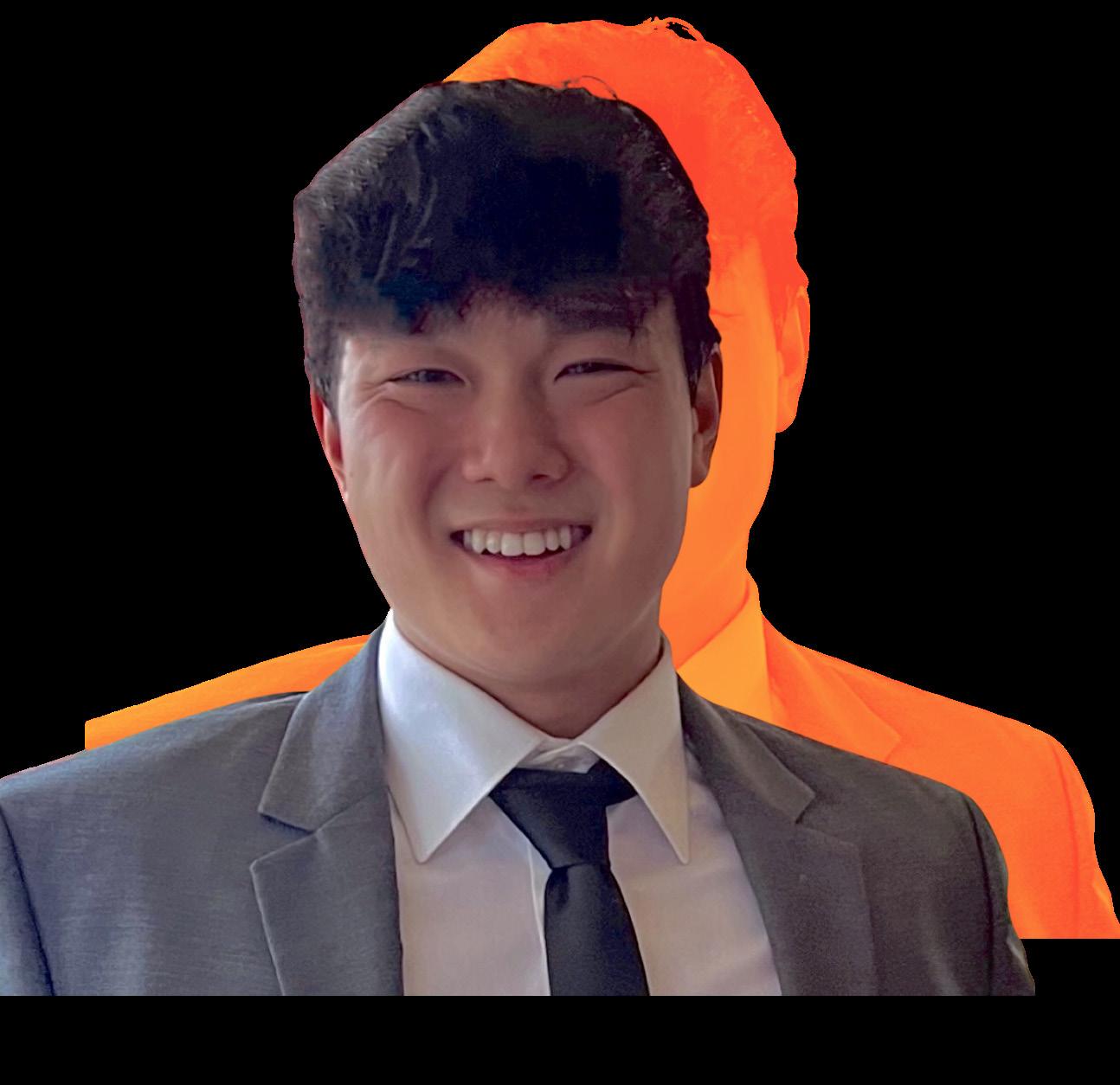
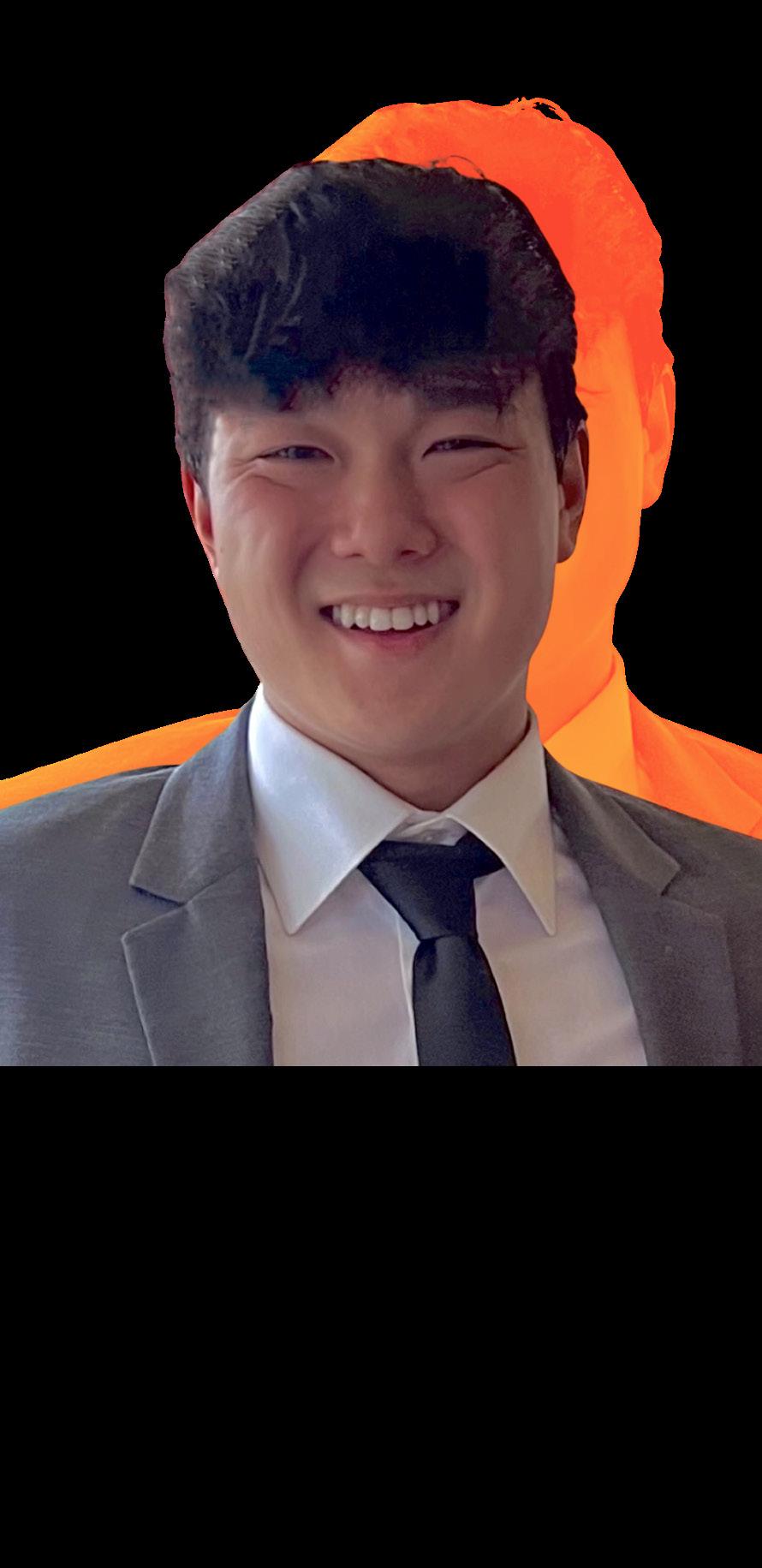
information.
5. Vice President of Finance
For the VP of Finance, the Observer, with a heavy heart, will sacrifice our capable Director of Business Operations, Tyler Vu. It's clear that USG organizations need him more than we do.
Vu has a strong command of CampusGroups and will chase down any advertiser with a whiff on interest in our paper. These skills will come in handy when the VP of Finance needs to catch those sneaky club treasurers trying to siphon a sneaky $100$5,000 off of students' parents' hard-earned tuition dollars at work.
6. Vice President of Communications
The editorial board endorses Tyler Vu for VP of Communications. Tyler Vu can definitely read. And write. And send emails. What else could you possibly need? With the way that CWRU students ignore newsletters and weekly blasts, you have to start wondering if the literacy rates are up to the national average. These basic reading and writing skills will take Vu far as he embarks on USG's ever-present, monumental task: getting people to fill out a Google Form. At The Observer, Vu sends out a weekly form that receives, on average, 25 responses. Compare that to the average response rate of all other Google Forms sent out at CWRU: 0 (source: I just made that up). 25/0 is infinity. Therefore, Vu would be infinity times more effective at this role.
Vu can also probably use social media, or whatever.
7. Vice President of Student Life
Tyler Vu is close friends with Travis Apgar (CWRU's own VP of Student Affairs—I bet you didn't know that). This dynamic duo will make things happen.
One thing that Vu recently made happen is saving your ungrateful life. Remember the meteor on St. Patrick's Day? The one that caused a fireball and sonic rainboom, that you might have heard while blowing up my email with notifications that a new member needs to be validated on The Observer's CampusGroups? Vu actually stopped that meteor with his bare hands. The sonic boom was actually caused by the contact point of this 7-ton meteor and Vu's fists. While you were playing NYT Connections in Statistics, Tyler Vu was saving the city from certain destruction. Who else could be the VP of Student Life, other than someone who saved student lives? Checkmate, liberals.
The future of USG will be bright with such a bright-eyed, diverse, and qualified cohort of individuals. The Observer hopes that the student body will be amenable to this radical proposal. To close out this endorsement, we offer a musical outro:
"It's a quarter after one, I'm all alone and I need you now Said I wouldn't call, but I've lost all control and I need you now And I don't know how I can do without, I just need you now..." Tyler, we need you more than ever.
All photos courtesy of Tyler Vu (we're sorry)
7 Cleveland attractions to explore this spring







Daffodil Hill
Cherry Blossoms at Wade Lagoon
The Holden Arboretum Guardians Game
Cleveland Botanical Gardens
Blossom Lane at Brookside Reservation
Cleveland Zoo
Sugarcoating the truth: We are all talking about the same thing
Oviya Gowder Contributing Writer
One could attribute Earth’s spinning on its axis to Newton’s first law of motion. However, in the context of the advancement and progress of humanity, the honor is bestowed upon language instead. Without language, there would be no communication of ideas, complex systems and culture from one generation to the next.
Linguistic capacity has a strong influence on behavior. For example, take a 2-year-old with a limited vocabulary and a basic grasp of grammar. This state is all their emotional expression is confined to when they are attempting to communicate with their parents. Thus, the unintelligible tantrums, while tiring to an overwhelmed parent, are slightly more justifiable due to their undeveloped language.
It is clear that language is the symbolic bridge between humans and culture. Language seen on social media posts, heard in small talk with strangers, news shows, advertisements and even the subtitles of movies shapes the beliefs, values and traditions humans
hold. The usage of certain words and phrases that exist uniquely in each language regulate how different groups of humans think and, therefore, culture as well. To add even more nuance, there are behaviors within language. Consider sugarcoating.
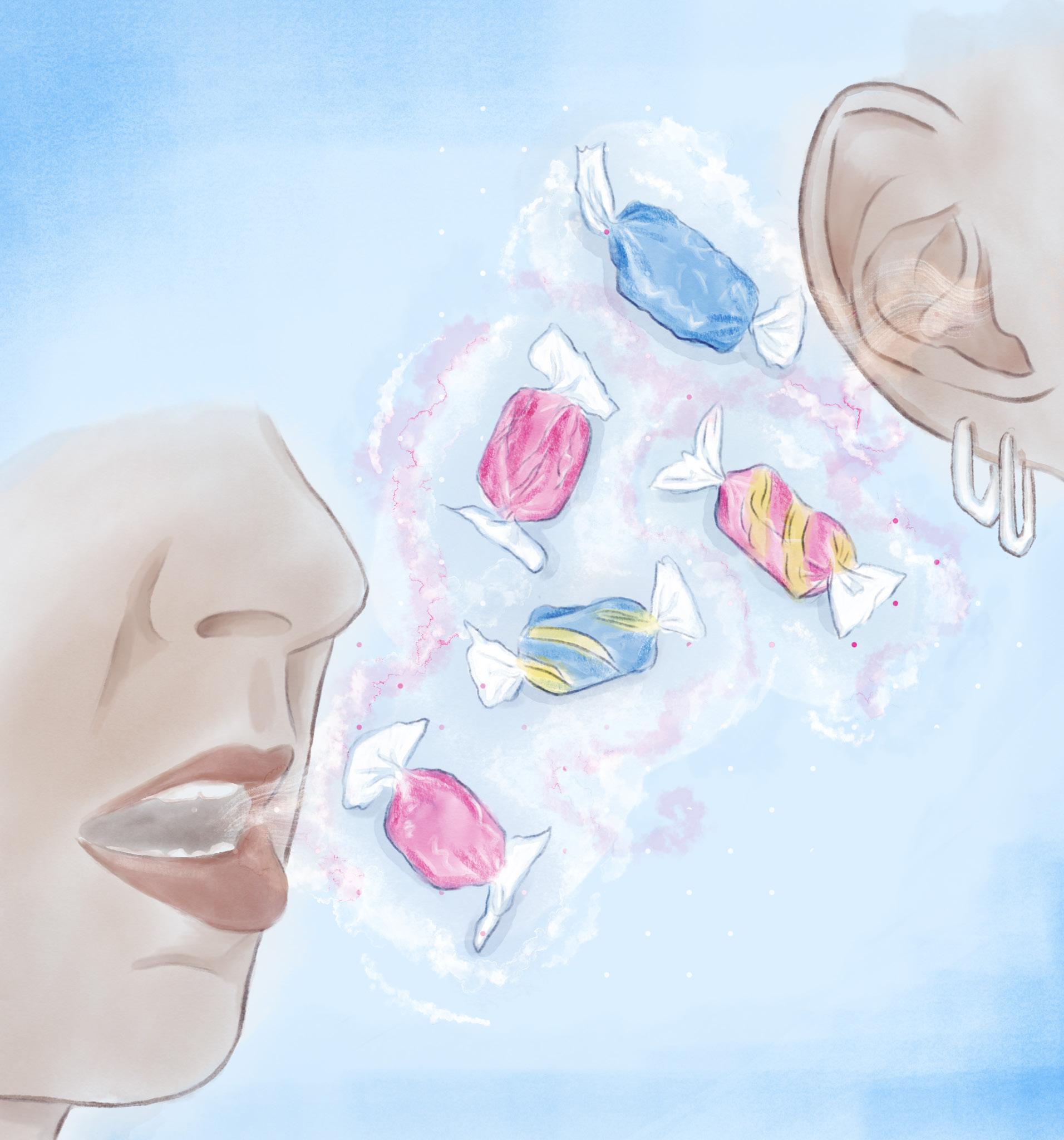
Sugarcoating involves warping and presenting harsh information in a more pleasant light. This common speech pattern is usually seen in uncomfortable situations. It makes news more digestible and less awkward for the speaker.
For example, to sugarcoat the phrase: “You don’t look good in that dress,” one may instead say “There may be other dresses that you could try on.”
By shifting the focus to other subjects, sugarcoating softens the message the speaker is trying to get across. Though it seems nicer, camouflaging the original language ironically means no effective communication took place, though. Sugarcoating isn’t simply phrasing information in a better way, but rather a manipulation of language that completely retracts the intent of the message.
So, why does this ambiguous speech pattern still exist? There is one study that demonstrates many
potential answers to this question.
In 2016, researchers conducted a study in which undergraduate students had to rate four brands of jeans based on four characteristics: style, wash, price and ethical practices, including if the company utilized child labor. However, these subjects could choose to see only two of four features. This resulted in 85% of students who did not elect to see the ethical practices of the companies that made the jeans. Moreover, students who decided to remain ignorant made belittling comments about the participants who opted to learn about the manufacturers’ child labor policies. In a previous study, shoppers agreed that they would rather remain unaware of a company’s ethical practices if they weren’t directly told about their policies. These shoppers had no inclination to perform a quick internet search to reaffirm their suspicions.
Now, imagine this as a conversation between two people. The speaker is an app that displays the ethical practices of a company that produces a brand of jeans. The receiver is the consumer of the jeans. In real-world conversations, there is an automatic as -
Anna Trusova/The Observer
sumption on the part of the speaker that the receiver would rather “remain ignorant” than know the truth. In other words, it may be considered more polite to protect the dignity of the receiver, eliminate any awkwardness for the speaker and reduce the possibility of any unpleasant emotion. This is ironic considering that a better grasp on grammar and a larger database of words should lead to a wider range of emotional expression than a 2-year-old. Alternatively, language acquisition is largely observational. While developing their own language skills, children closely watch and imitate their family’s speech patterns. These behaviors can eventually be seen in adolescence and adulthood. Though the individual’s own experiences throughout their lifetime may alter the type of jargon they use, sugarcoating may be acquired simply by observing how others phrase their words.
Now that we have covered the possible reasons sugarcoating exists, who are the types of individuals to partake in it?
In workplace settings, some in leadership positions may change their honest, harsh feedback about an employee’s work to decrease potential conflict, keep the tensions at bay and to keep the friendly, relaxed work environment. In a study, researchers discovered that mothers preferred doctors who used a more nonalarmist, indirect approach in their communication when discussing the possibility of their child having a developmental delay. If you widen the lens, certain cultures will even have values that imply what type of language to use toward others. For instance, in works by Japanese scholars that have been translated into English, ideal communication is when the meaning is implied rather than stated in a straightforward manner.
This doesn’t account for all the people who do it, which begs the question if sugarcoating is a cultural phenomenon or based on individual behavior.
In language, sugarcoating is an adaptive behavior that depends on the culture of an environment. To reiterate, culture dictates the values and guidelines that become the norm of a certain place, which then affects the behavior of the individuals there. Each environment—the workplace, the mall, the hospital, one’s own home—is its own cultural arena. Thus, the language used changes depending on what cultural hub one finds themselves in.
Language emphasizes what is important. In some situations, sugarcoating prevents tensions from rising. In other circumstances, the message needs to be delivered as effectively and quickly as possible. Even though we use the same grammar system and have access to similar vocabulary, it can still be frustrating to adapt to those with different communication styles, whether it be direct communication or beating around the bush. Instead of throwing a tantrum, though, just look at what “culture” you are in and use language to find a good middle ground.
Epitome of patient-centered care or profiting off insecurity?
Lucy Candeub Staff Writer
Among the many controversies within and surrounding the field of medicine, few are as socially contentious as the surgeries presiding in one of its many subfields: elective cosmetic surgery. As part of aesthetic surgery, what makes elective cosmetic surgery (ECS) different from its reconstructive plastic surgery counterpart is its lack of restorative care and its largely physically healthy patient base.
Plastic surgery has been around for thousands of years. Like other surgical fields, the surgeries of the past were entirely focused on reconstruction or restoration of function according to the International Society of Aesthetic Plastic Surgery. It wasn’t until the early 20th century, coinciding with the rise of Hollywood and the increasing prevalence of the beauty industry, that those surgeries took on a far more cosmetic approach. Over the course of the 20th century, as mass media, consumer spending and medical innovations developed, ECSs became both popularized and normalized in society.
ECS was well established by the time the field of bioethics developed, and, as a result, the ethics of ECS have been highly debated over the years. Bioethics typically refer to the Four Pillars of Bioethics—autonomy, non-malificence, benevolence and justice—to guide decision and theory-making. Like all other bioethical discussions, ECSs create intersections between these principles, which causes ethical friction. No field of medicine is without flaw, but due to the capitalist and non-necessity nature of ECS, it generally tends to be discussed in different ways.
For example, on the surface, ECS is the epitome of the principle of autonomy. What other medical procedure could possibly compare to the degree of patient-involvement and decision making other than this purely elective care? This can be looked at as an incredibly beneficial contribution: Normalizing patients having more agency in their own medical decisions is valuable and should be encouraged. However, whatever benefit that does come from this contribution is
minimized by the predatory nature of the procedures themselves. ECSs do demonstrate situations where patients take absolute authority over their own medical care, but at the cost of disrupting the balance between the physician-patient relationship. If it is normalized that the physician should be looked at as a service provider, what will that do to the sanctity of the profession itself? Will the medical field that should be focused on healing and justice shift to a marketable industry that relies on, profits from and perpetuates people’s insecurities?
Furthermore, social influence has a great impact on the decision-making of these patients, especially those in the younger age groups. Dr. Khalid Arab’s paper “Influence of Social Media on the Decision to Undergo a Cosmetic Procedure” discusses the effects of social media on cosmetic surgery using questionnaires to assess 816
participants. They found “48.5% reported being influenced by social media to consider undergoing cosmetic procedures. Respondents (51.4%) follow plastic surgeons on social media.” This indicates there is an element of coercion impeding a patient’s ability to fully consent. This study also discussed the relationship between advertisement and plastic surgery, noting how social media has “become a popular means of advertisements for cosmetic professional providers.” Not only are patients being coerced by the influence of social media, but part of that influence is coming from the medical industry itself. As if that was not concerning enough, according to Dr. Umar Rehan’s paper, “Mental health screening in facial cosmetic surgery: a narrative review of the literature,” the role of plastic surgery has a significantly greater impact on women with an almost triple the women to man ratio: “Female to male
ratio [of cosmetic surgery] was found to be 2.7:1.”
This makes determining autonomy particularly challenging, in comparison to other healthcare fields, because the line between dysmorphia disorder and acceptable insecurity is dynamic and highly situational. Whatever needs “healing” is whatever the patient considers “wrong,” not what is actually causing harm or detriment to the patient’s life. With that being said, it’s just as important to recognize that the ethical issues that arise from this situation are ultimately a social issue, not necessarily a medical or individual one. While that does not diminish the bioethical responsibility of healthcare providers, it sheds light on the systematic factors that underlay every elective cosmetic surgery. The field of cosmetic surgery may not initiate the insecurities of its patient base, but it undeniably perpetuates and profits from them.

The myth of effortlessness: What it takes to be successful
Lily Zhang Copy Editor
A few weeks ago, I listened to Rebecca F. Kuang’s talk at Maltz Performing Arts Center. There, Kuang talked about the struggle of writer’s block and how important it was to feel that struggle. This deceivingly simple sentiment has lingered in my mind since. It would be trite to discuss society’s perception of AI and how it influences our understanding of hard work. Instead, I will bring up the Winter Olympics—particularly, Alysa Liu, the “breakout” star of the 2026 Winter Olympics and America’s newest sweetheart. I say “breakout” in quotes because, despite skating for a while, it was her gold-medal cinch that brought her to the forefront of the internet this year. It goes without saying that Liu is exceptional. However, I feel that the internet has a habit of portraying anyone who is successful as effortlessly
so. The media has described Liu as effortless on the ice, gracefully bringing home the gold. Of course, I am not privy to her training, but I don’t doubt that it was grueling and a lot of hard work. Of course, the media won’t show that because it disrupts the image of lightness and gracefulness. This portrayal reflects how we like to imagine that good things come easily. I am not an Olympic figure skater, but I do argue that figure skating, much like any other creative medium, takes an incredible amount of concerted effort. It is not something done overnight or on a whim. In other words, it takes effort to be effortless.
This sentiment is applicable not only to figure skating, but to the arts as a whole. People expect the creation of art to be effortless, often because that is what is portrayed in the media: the eccentric painter sitting at the easel, placing paint marks on the canvas on a whim. On the contrary, art, like all other things in life, takes
time and dedication. People complain about the lack of hand-drawn animations and how art was better in the “good old days,” but won’t even pick up a pencil themselves. It’s often easy as outsiders to judge creatives based on what they do. This is only amplified with the introduction of AI art (the phrase, if you ask me, being an oxymoron). I remember scrolling on social media and seeing calls to action to “bring back real animation.”
Though the sentiment had its heart in the right place, something about the call to action being a 30-second video of compiled animated clips laid out over an audio didn’t sit right with me. Grouping all of these clips, each of which probably took an underpaid animator weeks to create frame-byframe, into one, homologous clump in the name of “saving art” created the same issue of focusing on the product rather than the process. Perhaps to save art, we should first appreciate the effort it takes to produce.
Looking past art, the overall issue now is to bridge the space between the current condition and an effortless one. Effortlessness is just a small byproduct of putting in lots of hard work and should not be treated as a goal. Of course, with AI on the rise, though, the false premonition of effortlessness becomes more prominent. But, for now, most good things in life are going to take some—if not a lot—of effort. The unfortunate truth is that trying to experience life “effortlessly” is not an experience of life at all. But, is this truth “unfortunate?” Being uncomfortable then growing and changing from that discomfort is not a bad thing, especially as college students. As students, we are given the grace to struggle. Yes, grades matter, but the overall academic environment is one that encourages struggle, which then encourages creation and growth. That isn’t to tell you to be miserable and not have fun, but to encourage you to also appreciate hard work.
Kristina Guo/The Observer
The future doesn’t belong to tech, it belongs to us
Milo Vetter Staff Writer
In a 2024 presentation called “We, Robot,” Elon Musk unveiled multiple new “futuristic” products, such as the Robovan: a cross between a train locomotive and an overpriced toaster. As usual, Musk’s commentary was shallow and unprofessional, with highly informative statements like: “We’re going to make this, and it’s going to look like that.” But, towards the tail end of this presentation, he made a statement that’s worth unpacking: “The future should look like the future.”
Now, on the surface, this declaration exposes a worryingly childish view of the future—one that appears to be informed entirely by style rather than substance. It appears that Musk’s desired style for “The Future” looks like it came straight out of Blade Runner. The robovan and, more famously, the Cybertruck, are the result of this weird futurism that seems more inspired by nostalgia of ‘80s science fiction than the practical reality of manufacturing.
But let’s go deeper. It’s easy to make fun of Elon Musk—the list of stunts is interminable. But notice how he didn’t say “this is our vision for the future,” or something equal-
The Case Western Reserve Observer
Established in 1969 by the undergraduate students of Case Western Reserve University
Darcy Chew Executive Editor & Publisher
Hannah Johnson Director of Print
Sabrina Feldberg News Editor
Alyssa Wang News Editor
Penelope Cloonan Life Editor
Aleksandra Majewski Opinion Editor
Ellie Palaian Sports Editor
Michelle Bai Copy Editor
Wendy Chen Copy Editor
Riya Kulkarni Copy Editor
We’ve all been there, trying to study or finish that last assignment when all we want to do is … anything else. Maybe we’re overwhelmed with the work we have to do, or maybe we feel the pressures of perfectionism and don’t want to start. We push ourselves to “lock in,” but call it quits too often, feeling guilty each time we pick up our phones to doomscroll again and again. Doing anything but the work we have piled up always seems to feel better than actually getting things done, but the sinking feeling in our stomach knowing we’ve wasted time is much worse. Can we really consider these pauses to be “breaks” if we feel worse after taking them?
Siya Motwani Copy Editor
Kashvi Madhwani Copy Editor
Abhishek Nambiar Copy Editor
Mariana Parilli-Castillo Copy Editor
Lily Zhang Copy Editor
DESIGN
Anjali Bhuthpur Director of Design
Lucas Yang Director of Design
Shareen Chahal Layout Designer
Sahar Kapasi Layout Designer
Reva Kolhe Layout Designer
Kiera Ng Layout Designer
Nithya Pandari Layout Designer
Jana Ashour Graphic Designer
Kristina Guo Graphic Designer
We may trap ourselves in a cycle of counterproductivity and double the time it takes to complete a task. In this “popcorn brain” mindset, we work and get little done, then stop working and think about how we could be working. By the time we resume our work, we feel ashamed, not refreshed, and we stay up late in attempts to catch up.
Anna Trusova Graphic Designer
DIGITAL MEDIA
Auden Koetters Director of Digital Media
Moses Fleischman Web Editor
Ayan Sheikh Video Editor
Matthew Stall Video Editor
Obafami Tidjani Web Editor
Phillip Kornberg Photo Editor
A break is not shameful, not when it has the potential to act as a tool that makes productivity much more efficient. We just need to know how to use them.
Tyler Sun Photo Editor
Esha Bagora Social Media Editor
Benjamin Kang Social Media Editor
Timothy Le Social Media Editor
Just as an athlete wouldn’t do 150 consecutive bicep curls while strength training at the gym, as students we must take meaningful breaks in reasonable intervals. One popular example of this is the Pomodoro method, where 5 minute breaks follow 25 minutes of work (10 minutes of break to 50 minutes of work is also a popular option). By time-boxing our productivity
Rhea Soni Social Media Editor
BUSINESS
Tyler Vu Director of Business Operations
Riya Dixit Ad Manager
Divya Kurma Business Manager
Anya Lin Analytics Manager
Ria Trivedi Marketing & Distribution Manager
The Observer is the weekly undergraduate student newspaper of Case Western Reserve University. Established in 1969, The Observer reports news affecting students and provides an editorial forum for the university community. Unsigned editorials are typically written by the opinion editor but reflect the majority opinion of the senior editorial staff. Opinion columns are the views of their writers and not necessarily of The Observer staff. For advertising information, contact via e-mail at observer@case.edu.
LETTERS TO THE EDITOR should be e-mailed to observer@case.edu or submitted on our website at observer.case.edu. Letters can be mailed to Thwing Center 11111 Euclid Avenue, Suite 01, Cleveland, Ohio 44106. For policy and guidelines related to the submission of Letters to the Editor, refer to observer.case. edu/submit-a-letter. The Observer is a proud member of CWRU’s University Media Board. Follow The Observer on Facebook, Twitter, TikTok and Instagram @cwruobserver.
ly fitting for a cheesy tech reveal. He said, “The future should look like the future.” As if the future is some sort of rigid destiny that we’re currently failing to fulfill. And this view is common in Silicon Valley. You hear it everywhere, especially when tech workers discuss a product that they sell. We’re primed to think that new tech will inevitably be adopted—whether it’s an app that replaces a switch, a new form of gambling on the go or an AI assistant for mundane tasks.
But rarely, if ever, does this narrative turn to doubt. What if this new solution doesn’t quite work for the problem it’s trying to solve? What if people start thinking their life was better before they adopted a new app? The reality is that the people who actually live with new products and infrastructure are the ones who decide what the future will look like. But to acknowledge this is to accept a lesser role in their own personal grand quests: saving the world with technology. And so they say, “I’m not out of touch, it’s the kids who are wrong!” It couldn’t possibly be that the Cybertruck is a bad product—consumers just don’t want to see the future.
Another great example of this is cryptocurrency. Crypto bros pumped up the idea of the blockchain as the inevitable future of finance. And yet, no amount of firm declarations of righteousness can change the fact that cryptocurrency’s low-trust environment makes it uniquely good for scams and uniquely bad at, well, being a real currency.
But more broadly, trying to predict what the future will look like is a fool’s errand. As a historical example, the future of energy was quite obvious to physicists in the nuclear age—once fossil fuels grow increasingly scarce, the world will inevitably shift to nuclear power plants. But with the benefit of hindsight, we’ve seen that nuclear power has instead stagnated. Why? Be-
cause other renewable sources have simply become cheaper and easier. In 2025, renewable energy (mostly solar, battery and wind) accounted for 88% of all new energy construction. Does a future where we get all our energy from wind and solar look like the future Elon refers to? Well, it really depends on what kind of future you envision, doesn’t it?
The future is certainly shaped by economic and material conditions. This is why we don’t pay dozens of masons to create buildings entirely out of bricks and, instead, prefabricate massive sheets of flat glass for curtain walls. And it’s also why AI is probably not going to go away—beyond all the frivolous uses that make our lives worse and waste energy, there are plenty of ways to save time and effort by delegating tedious tasks to AI. But we still have our voices. As AI art has become ubiquitous, it has also become cheap and boring. When we demand high-quality, humanmade products, people listen. When we tell stories about a future where burning fossil fuels is an outdated, even stupid practice, people listen. When we celebrate true technological milestones, such as the FDA approval of weight-loss drugs, which have contributed to the first decline in American obesity since it started being measured, people listen.
Those who sit on top of a mountain of ill-gotten power—whether it’s venture capital, company shares or the U.S. federal government— are terrified of this cultural power. One of the most common features of college commencement speeches is that fresh graduates will have immense power over the future, both in their ability to work in critical industries and their role as young urban professionals. This is one of many reasons why the Trump administration has targeted higher education. Use this power responsibly so that we don’t have to ride around in Elon Musk’s toaster taxi in twenty years.

Sports
March Madness concludes the NCAA men’s and women’s basketball season
Maria Burrus Staff Writer
As March Madness came to a close, both the men’s and women’s tournaments delivered dramatic endings to conclude the 2026 NCAA basketball season.
The women’s championship game was held on April 5 in Phoenix, Arizona, and featured a matchup between the University of South Carolina (USC) Gamecocks and the University of California, Los Angeles (UCLA) Bruins. USC advanced after defeating the University of Connecticut (UConn) Huskies in a 14-point game to end the Huskies’ undefeated season. UCLA was able to advance after defeating the University of Texas Longhorns in a low-scoring 7-point game. The championship game highlighted the differences between the two teams with the Gamecocks relying on their defensive performance and the Bruins on their physical offensive style.
The women’s national championship saw UCLA dominantly defeat the Gamecocks with a final score of 79-51. UCLA built an early lead and shut out the Gamecocks defense to under 30% shooting. Despite this being USC’s second straight runner-up finish after having defeated UConn in the final four, they were unable to maintain their momentum in the final moments
of the tournament. After the win, the Bruins finished their season with a 37-1 record for the season to secure the program’s first NCAA Championship title.
The Men’s Final Four was held April 4 in Indianapolis, Indiana and featured two competitive matchups between the UConn Huskies and the University of Illinois, and the University of Michigan Wolverines and the University of Arizona Wildcats. The Huskies were able to secure their spot in the championship game by defeating Illinois, using their strong interior scoring which limited Illinois’ offensive abilities. UConn took control early in the game and maintained a slower pace to close out the game with a 9-point lead.
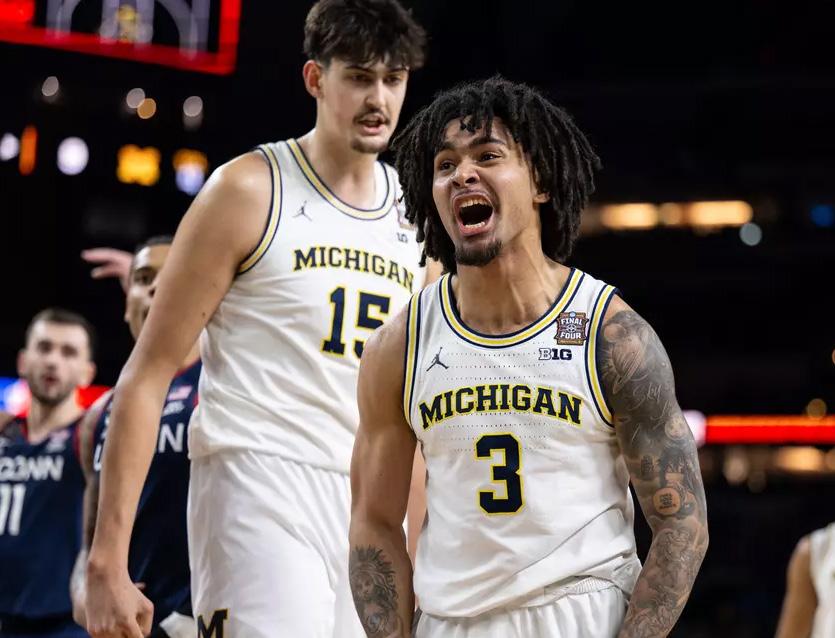
The Wolverines earned their spot in the title game by killing the Wildcats with a well-rounded scoring performance. Michigan held a maximum lead of 30 points over Arizona during the second half but ultimately ended up winning with an 18-point lead.
The men’s national championship game took place on April 6 and ended in a tight matchup between the Wolverines and the Huskies with the Wolverines ultimately coming out on top in a 6-point defeat. Although the game remained close, Michigan led by four at halftime and was able to maintain their rhythm until the clock ran out. Late in the game the Huskies cut down the lead but Michigan’s Trey McKenney hit a crucial three-pointer to solidify the
game for the Wolverines. As a result, Michigan took home their second national championship title for the program and UConn ended their perfect 6-0 record in championship games.
With the conclusion of these championship games, the 2026 edition of
March Madness has officially come to
an end. Though the Cinderella stories that have defined many championships are becoming less frequent in the world of name, image and likeness deals and the transfer portal, the tournaments are still full of exciting games and tightly-contested matchups that are sure to break someone’s bracket.
CWRU athletics stay busy across spring sports
Abhishek Nambiar Copy Editor
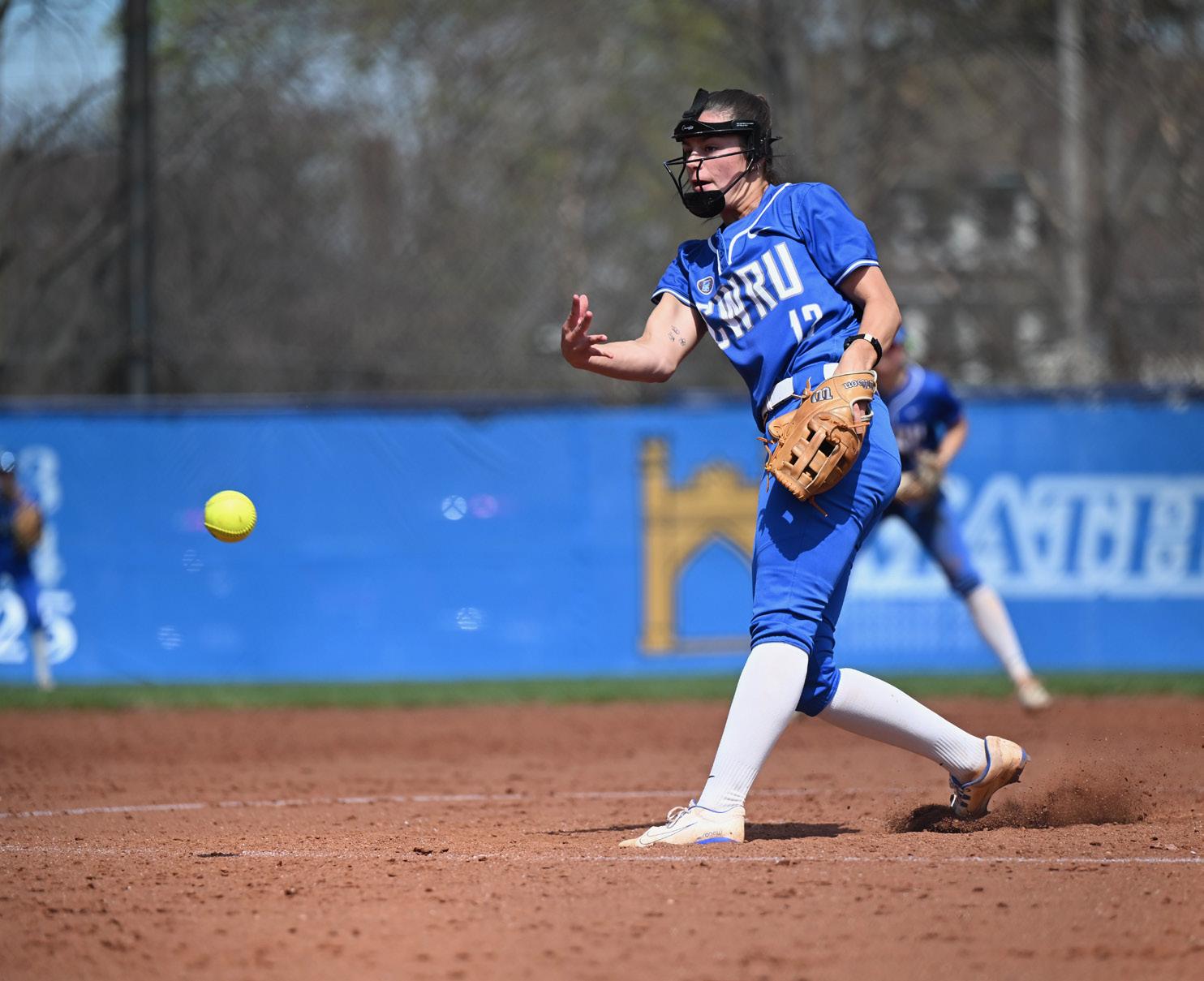
As the semester continues, so do the athletics teams of Case Western Reserve University. The tennis, baseball, softball and track and field teams all took part in events this past weekend, with varying levels of success while continuing their season.
Tennis
The men’s and women’s tennis teams swept all of their matches over the weekend. The No. 5-ranked men’s
team opened play with a victory over No. 11-ranked Kenyon College on Friday, April 3 before sweeping a doubleheader against the Rochester Institute of Technology on Saturday, April 4. Meanwhile, over the weekend, the women’s team earned a decisive victory over the No. 14-ranked Kenyon team on Saturday.
Friday’s match against Kenyon was uneven from the start as the Spartans swept doubles play at all three courts: graduate student Bryce Ware and third-year Trey Lambright at No. 1 doubles, third-year Santiago Salazar Garza and second-year Leon Chen at No. 2 doubles and fourth-years Ro-
han Bhat and Anmay Devaraj at No. 3 doubles. In singles, the dominant showing from CWRU would continue with wins at four of the six singles courts. In the end, CWRU achieved a 5-2 victory over the Owls.
The momentum continued into Saturday as the Spartans swept RIT 7-0. Not one doubles or singles contest was given up by CWRU, who consistently controlled the courts and never let up.
The women’s team was similarly dominant on Saturday as they defeated Kenyon 6-1. The sole point scored by the Owls came during the doubles play, as the Spartans dropped two of their three matches to give the doubles point to Kenyon; the win came from fourth-year Katalina Wang and graduate student Hannah Kassaie at court No. 1. Singles play would see the team bounce back, as all six courts saw the Spartans emerge victorious to seal a substantive win and their fifth consecutive one against Kenyon.
This coming weekend will be an important one for both teams. The men will make the drive down to Wooster, Ohio on Friday, April 10 to play fifth-ranked Denison University. The women will be celebrating their annual Senior Day on Saturday, April 11 as they host John Carroll University for a match.
Baseball
This past weekend proved to be a challenging one for the baseball team as they dropped three of their four games in a road conference series against Emory University from April 3-4.
Arriving in Atlanta ready to put the pressure on Emory University, the Spartans instead found themselves swept by the Eagles during Fri-
day’s doubleheader opening. In the first game, CWRU showed offensive flashes but ultimately fell short in a high-scoring contest that saw Emory pull away towards the latter half of the match. Game two was largely more of the same as the Eagles consistently took control of the field for the duration of the contest. The Spartans briefly tied the game during the top of the second inning when first-year catcher Collin Pool scored on a squeeze bunt from third-year shortstop Nate Arterburn, but this proved to be the team’s only point of the match as Emory later scored to take a lead it never gave up for the rest of the match.
Come Saturday, in the opener of the day’s doubleheader, the Spartans initially dropped 5-1 against Emory before mounting a comeback at the top of the ninth inning as they scored four runs to erase the lead—though the Eagles responded in the bottom half with a walk-off run to claim a 6-5 victory. The loss did not damper the Spartans’s momentum, however, as they bounced back in the final game of the series to end the day with a split. This final match saw CWRU secure a 6-4 win with improved hitting and pitching, preventing a series sweep. Among the key players of the day were first-year third baseman James O’Connor and first-year first baseman Tucker Greer, who each drove in three runs during the two games.
Next up for the baseball team is another four-game UAA series, this time at home against the University of Chicago. Play begins with a single game on Friday, April 10 at 3 p.m.
Continue reading on page 13
An impactful March Madness filled with glorious victories and heartbreaking losses has now concluded. Courtesy of Michigan Athletics
For CWRU athletics, spring has sprung and the sports teams have kept the momentum going. Phillip Kornberg/The Observer
CWRU athletics from page 12
Softball
The softball team faced a challenging but eventful weekend of their own against Emory, dropping a doubleheader on Friday but rallying to a win on Saturday.
In the first game of the series, CWRU showed early promise as they went neck-and-neck with the Eagles
throughout much of the game’s first half. The second inning saw the Spartans take the lead, but Emory responded with several timely hits including a go-ahead fifth inning and three runs in the seventh inning to take a decisive 8-3 lead by the game’s end. Game two saw CWRU continue to put up a fight but ultimately fell short again, this time in a contest
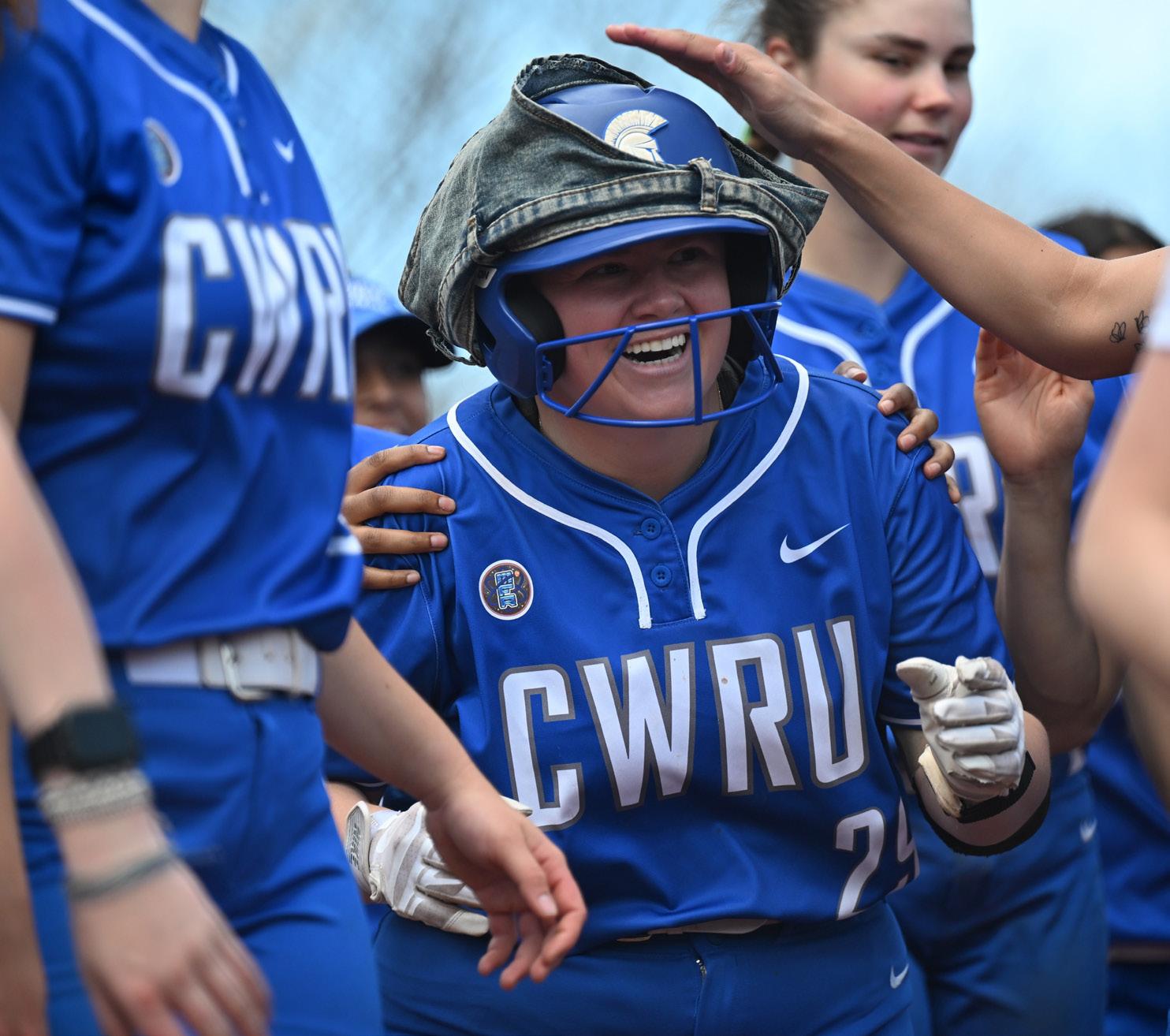
largely defined by defense as both teams struggled to put up points on the scoreboard leading to a 2-1 finish.
Game three would be a different story though, as the Spartans defeated the Eagles in a tightly-contested 13-10 match. CWRU erupted for five runs in the first inning, highlighted by a grand slam from third-year infielder Kaelyn Zusi, and continued to trade runs with Emory for the game’s duration. After falling 10-8 during the fifth inning, the team rallied once again. Third-year infielder Karen Potts tied the game with a solo home run in the sixth inning before first-year catcher Sophia Becker pulled off a walk-off three-run home run in the bottom of the seventh inning to secure the victory—the first walk-off by the team since one against Carnegie Mellon University on May 9 2025.
The squad will look to further build upon this momentum as they travel to New York City to take on New York University in a threegame series. The first of these three games will commence on April 10 at 5:30 p.m.
Track and Field
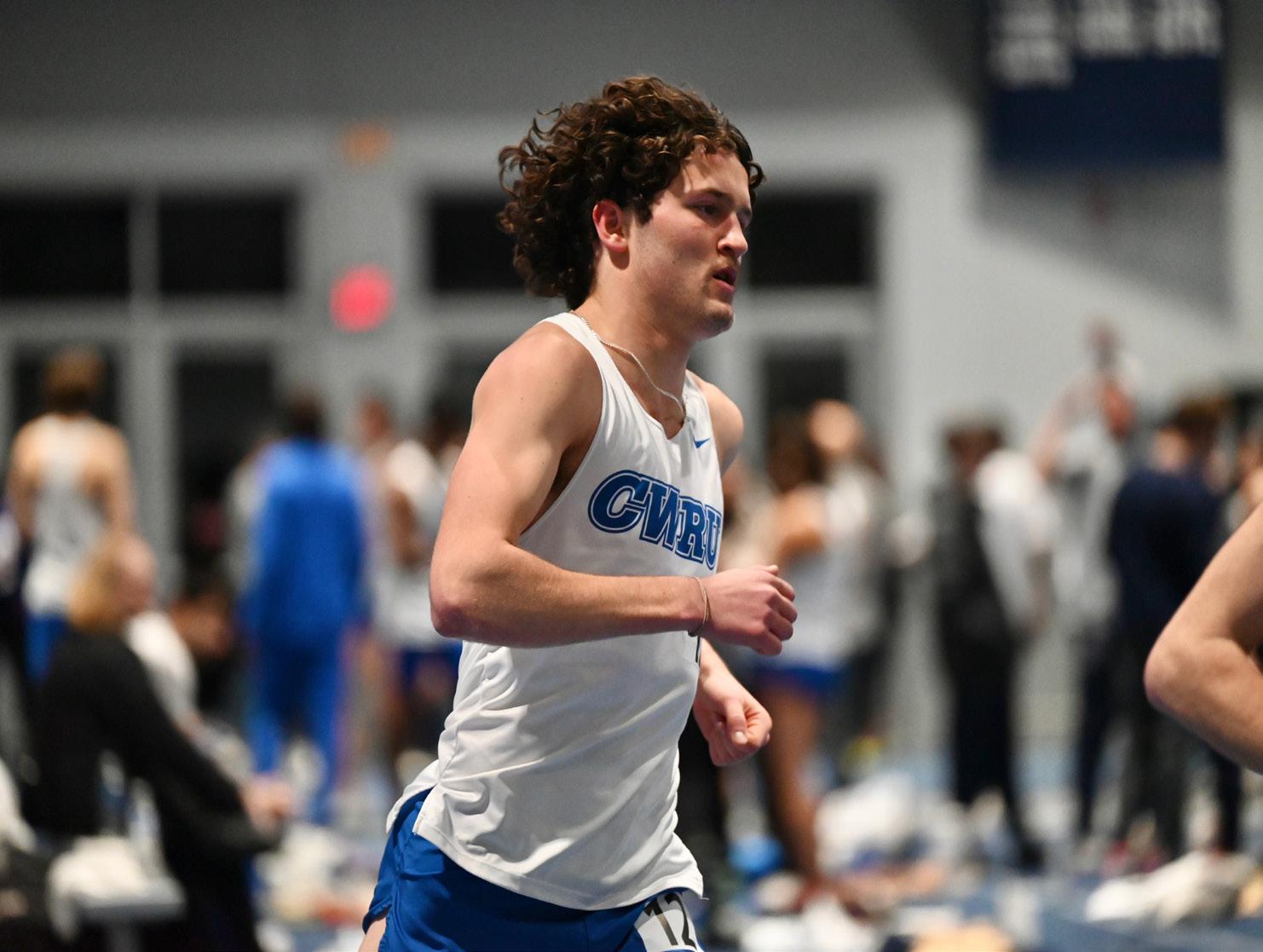
Strong performance was shown by the track and field teams this past weekend at the Wooster Invitational hosted by the College of Wooster in Wooster, Ohio. As a team, the women placed third out of 13 teams with 108 points, while the men finished
fourth out of 14 teams with 77.5 points.
Leading the Spartan charge was first-year sprinter Gianna Phipps, who set a pair of school records at the meet. One came in the 200-meter dash (25.01 seconds) to surpass a record she herself broke the week prior and the other in the 400-meter dash (55.36 seconds) to surpass a record set in 2016. Both events saw Phipps come in first place, making her one of four Spartans with a gold medal finish at the meet—the other three were first-year Anna Callo in the pole vault (3.52 meters), fourth-year Arianna Holbrook in the 800-meter run (2:17.44) and third-year Jacob Slater in the 5,000-meter run (15:08.22).
Among other highlights, fourthyear Anthony DeCarlo recorded the second-best mark in program history in the men’s pole vault with a distance of 4.74 meters, barely edged out by the current record of 4.81 meters set in 2015. Second-year Bailey Bowen threw the javelin 35.92 meters for the eighth-fartest distance in program history, while first-year Esther Umezurike-Chukwu ran the 100-meter dash in 12.80 seconds to tie for the ninth-fastest time in program history.
This weekend will see the Spartans take on two different meets. Most of the team will be taking part in the All-Ohio Outdoor Championships in Delaware, Ohio on April 10 and 11 while select individuals will be heading to Lewisburg, Pa. for the Bison Classic on April 11 and 12.
CWRU set to host 2026 UAA Outdoor Track and Field Championships
Adam Joseph Sports Writer
On April 25 and 26, Case Western Reserve University will host the University Athletic Association (UAA) Outdoor Track and Field Championships. It has been 20 years since CWRU has hosted the UAA conference track meet. The university was slated to host this meet back in 2020, but due to COVID-19, the season was cut short.
You would have to go back to 2006 to find the last time that this meet was in Cleveland.
“In 2006, we did such a bad job of [hosting] institutionally that the UAA was like ‘their site is not fit to host’,” head track coach Eric Schmuh said. “We had a throwing field that used to be underneath where [Stephanie Tubbs Jones Residence Hall] is now that was on an uphill grade.”
However, a lot has changed since then. Schmuhl and the rest of the coaching staff, alongside CWRU Athletics, have led renovations to CWRU facilities. Whether it is the new throwing field or the state-of-the-art video board at the Bill Sudeck Track, it is clear that the university is ready to bring this meet back to Cleveland.
Hosting the meet at DiSanto Field is exciting, but presents a set of challenges not usually faced. Most conferences tend to be centered geographically. Take the OAC (Ohio Athletic Conference), for example. If the name does not give it away, this conference consists primarily of other local Ohio universities, making these meets a lot easier to organize. However, the UAA is different. Ranging from Missouri to Georgia to New York, the UAA
is spread all over the Midwest and East Coast. Many of these conferences have the benefit of getting to compete with each other in close proximity year round, but for the UAA athletes in all sports, that is not the case.
There is also more than what meets the eye when it comes to organizing an event of this magnitude. Not including the multiple heats and flights of some events, there are over 54 different events with finals and prelims over the course of the two days. Ensuring that the meet runs smoothly and stays on schedule is essential. Especially considering Cleveland weather in April, it is always important to expect the unexpected with these meets.
“When something comes up, it’ll come to me, and then I need to be able to delegate it to someone with equal knowledge in that area,” Schmuhl said. “It is mostly an organizational challenge.”
Ensuring a smooth meet with all these uncontrollable factors is no easy task, but Schmuhl is confident that the coaching staff is well equipped to handle anything that comes their way.
Despite these challenges, there is so much to look forward to. Head women’s cross country coach Kathleen Nortz Yohann explains how the best part is being able to showcase CWRU and all the athletes competing.
“[Hosting the] UAA conference championship is an opportunity to highlight top-tier Division III talent and showcasing our facilities at the Sudeck Track,” Yohann said.
On the women’s side, we have not one, but two school-record holders slated to compete: first-year Gianna Phipps and fourth-year Arianna Holbrook.
“It’s the accumulation of consistent, intentional work over time— early mornings, demanding workouts and learning to take care of your body in a way that supports performance,” Holbrook said. “From our very first practice on Disanto to now standing on the line of our senior conference meet, it feels very fullcircle. In a way it’s kind of beautiful—we’re still the same people who showed up on that first day, but so much more experienced, confident and proud of what we’ve built.”
On the men’s side, there is a mix of veterans looking to continue their streak and underclassmen looking to make a name for themselves. Third-year Toby Langsner, who has scored in the outdoor UAA
track meet every year since he was a freshman, is a great example of CWRU’s continued success at this meet.
“This is the meet that brings everyone together and forms bonds that have held strong ever since my first indoor conference championship,” Langsner said.
The UAA track scene is extremely competitive. There are dozens of athletes from the conference already ranked top ten in the nation across the events. Getting a chance to see some of the fastest, highestjumping or farthest-throwing athletes in the nation is not something to miss.
Disclaimer: Adam Joseph is a second-year on the men’s track and field team.
Phillip Kornberg/The Observer
For the first time in 20 years, CWRU is set to host the UAA track and field championships on DiSanto Field. Phillip Kornberg/The Observer
Senior Spotlight: The legacy of CWRU tennis’ class of 2026
Ellie Palaian Sports Editor
The Class of 2026 entered as a group of four, but in classic Case Western Reserve University fashion, two—Asha Shukla and Elsa Syed— accelerated their paths and graduated early. That left fourth-years and co-captains Ellior Rose and Katalina Wang to carry the program forward.
Joining them this season is graduate student Hannah Kassaie, who chose to return for a fifth year. Together, the trio forms the backbone of the Spartans—setting the standard for what it means to compete, lead and represent the program. They’ve helped turn the women’s team into a formidable presence while building a culture that still feels like home.
Their resumes already stand
apart, but with one final season ahead, they’re not finished yet. This is the Class of 2026.
Katalina Wang
Fourth-year co-captain Katalina Wang has been playing tennis for the past 16 years. Over the course of her athletic career at CWRU she has established herself as a consistent and impactful player in both singles and doubles. As a second and third-year, she earned all-UAA honors in doubles and contributed across multiple singles positions, highlighted by strong records at third and fourth singles. Her third season as a Spartan was especially impressive, as she earned All-America honors after reaching the quarterfinals of the NCAA Division III Doubles Championship, while also being named All-UAA Second Team
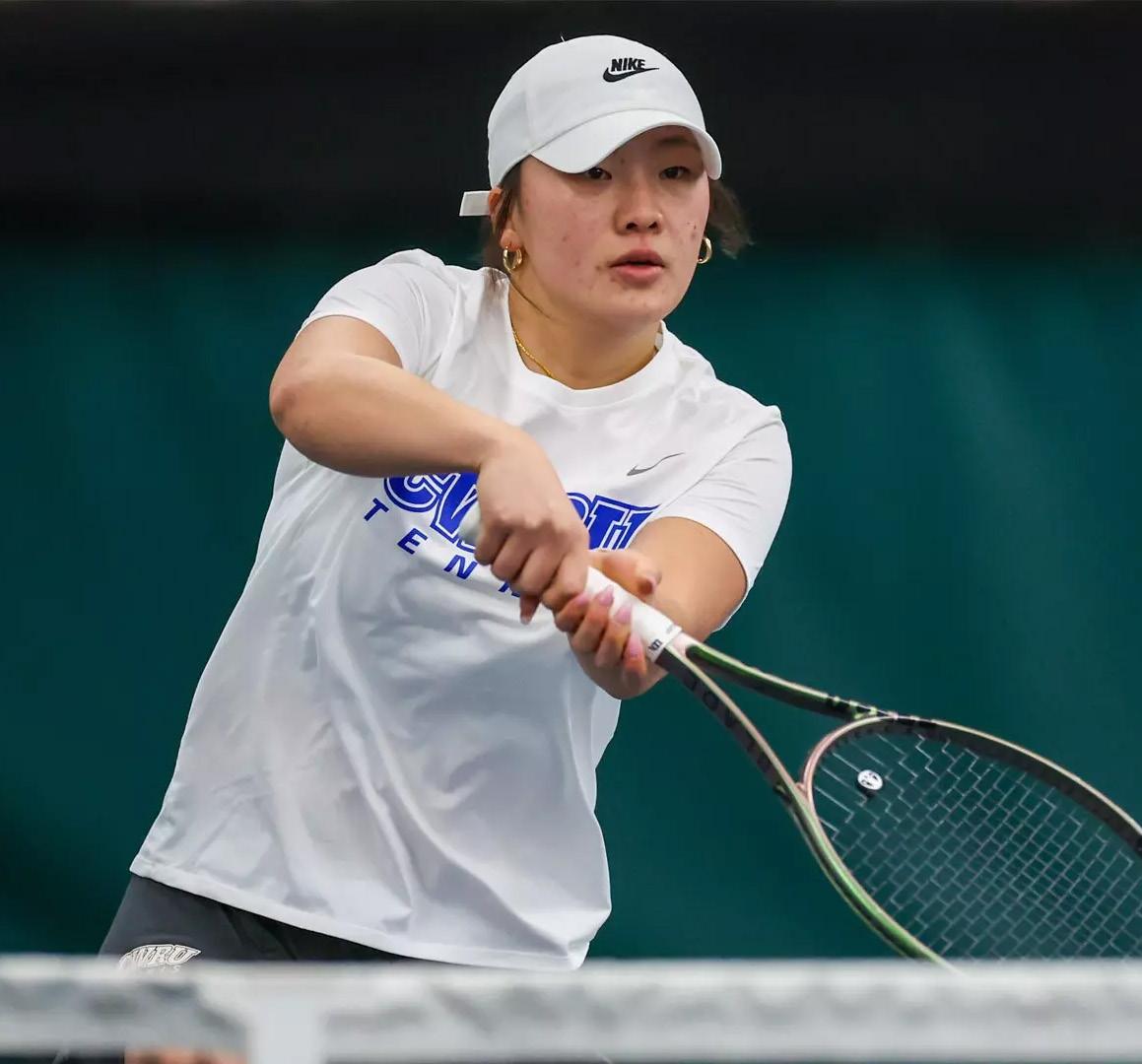
at first doubles. She posted solid records in both singles and doubles throughout her career, finishing her third-year ranked nationally in doubles and earning both academic alldistrict and conference all-academic recognition.
“Coming on to a nationally ranked team as a freshman, I was immediately surrounded by driven, hardworking players that pushed themselves on and off the court,” Wang said. “This drive reminded me that my time at Case is not the end of my tennis career, but just the beginning of the best and most competitive four years of my life. The players on this team start the season hungry and motivate me to work even harder to do it not only for myself, but for them as well.”
Off the court, Wang has been highly involved on campus, serving as the public relations chair and cofounder of the Chinese Student Association, co-president of the Food Recovery Network and founder and treasurer of Club Swim.
“[The Food Recovery Network] is an organization that promotes limiting food waste and spreading information regarding food scarcity and sustainability,” Wang said. “We take the excess foods from dining halls at Case, as well as other Case events, and package and distribute them to underprivileged neighborhoods around Cleveland with the help of our partners.”
Wang will graduate this spring with a degree in cognitive science and a minor in nutrition. After graduation, she plans to work as a medical assistant at a dermatology clinic while applying to medical school. She also intends to pursue pickleball and is aiming to compete at the professional level.
“It feels bittersweet,” Wang said. “This season has been great in regards to tennis itself but also the experience of being with this team. It feels great knowing that I gave it my all and will end on a good note, but obviously it is bitter to have
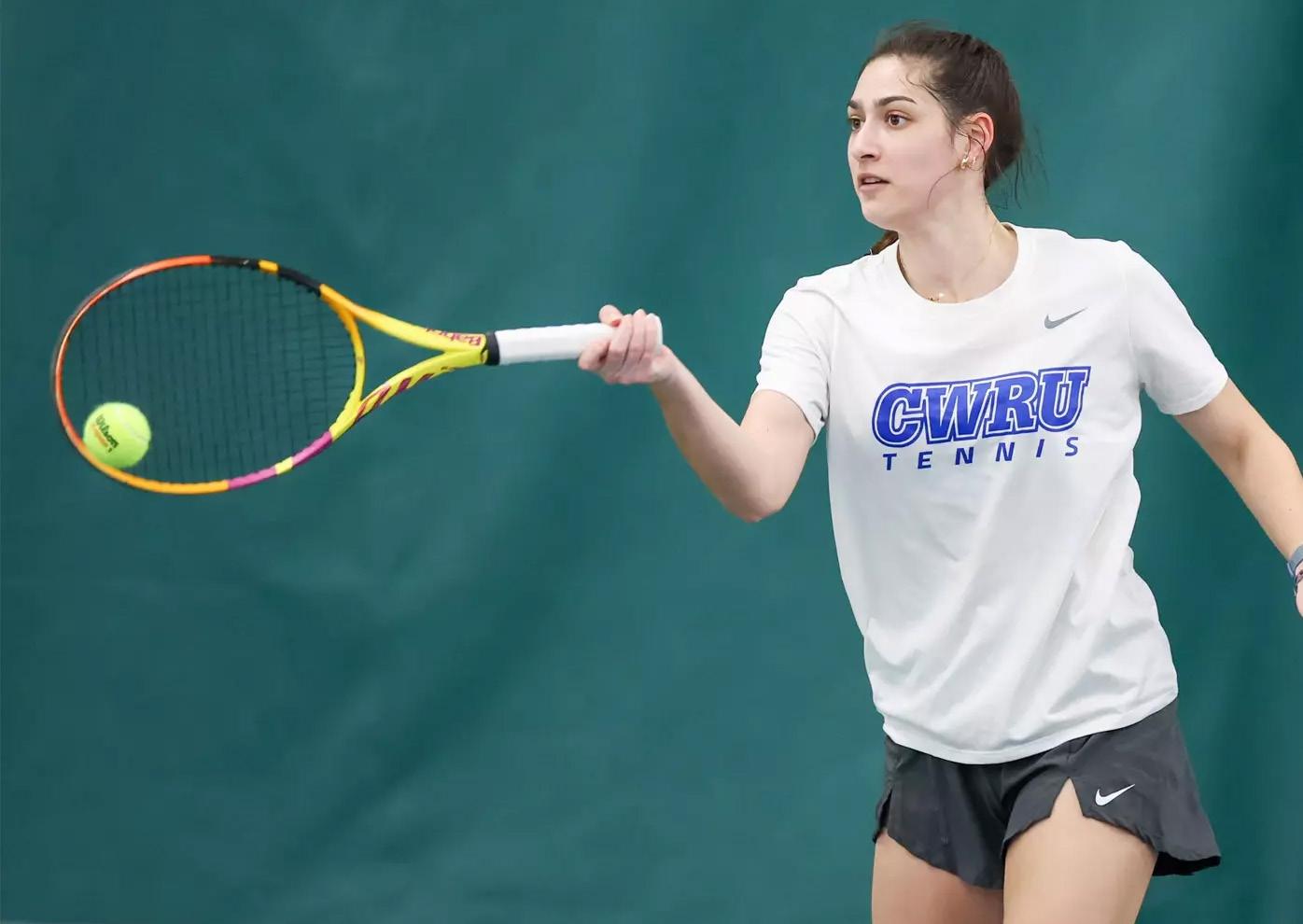
this monumental chapter of my life come to an end.”
As she enters her final season as a Spartan, Wang hopes that the impact she has made over the past four years will be carried forward by the younger classes.
“I hope that I am able to leave the team in a better place than how I found it,” Wang said. “Granted, it is a high request as the people who came before have done so much for the program and were pioneers who skyrocketed the values of this team. Thus, I hope I was able to fill these big shoes and inspire the next generation of players on this team to work hard and have fun.”
Ellior Rose
Fourth-year co-captain Ellior Rose has been playing tennis for just eight years, yet has become an essential part of the Spartan lineup. She made an immediate impact in her first two seasons at CWRU, going a perfect 13-0 in singles and 7-0 in doubles. As a third-year, she continued to contribute with a 5-2 singles record and a 10-8 mark in doubles, while remaining undefeated in dual singles matches. Off the court, Rose has also excelled academically, earning UAA All-Academic honors and induction into the CWRU Van Horn Society for maintaining a GPA of 3.8 or higher.
“While I did not play many matches my freshman and sophomore years, I learned how to cheer and uplift my teammates,” Rose said. “I wanted to make as big of an impact that I could in the role I found myself playing. I became a vocal presence for the team, constantly cheering for my teammates’ successes. After years of putting in the work on and off court, I now feel so grateful to be able to make an impact especially in our doubles lineup.”
Rose was selected as a team captain this season and embraced the role, expressing gratitude for the leadership experience and everything it has taught her.
“I watched as the captains of years prior guided us and have taken much of what they exemplified with me into this role,” Rose said. “We have a lot of freshmen this year, so it was extra important to help them adjust to life at Case as a student athlete and set our team culture. It’s been really rewarding to be able to apply the lessons I’ve learned throughout my 4 years and use them to help my teammates through the challenges they have faced.”
Rose will graduate this spring with a bachelor’s degree in Human Nutrition, along with minors in Sports Science and Psychology. She is grateful for the opportunities tennis has provided her and looks forward to applying the skills she has developed to her future endeavors.
“It feels surreal because it was a huge part of my life,” Rose said. “Tennis has taught me many skills that I will carry with me into my future. I have learned how to persevere, fight through adversity, how to be flexible, problem solve, how to work as a team, and an overall better work ethic and time management skills. In that sense I will not be leaving tennis behind, but bringing the transferable skills along with me.”
Continue reading on page 15
A history-making batch of CWRU women’s tennis seniors look forward to the future while leaving behind a lasting legacy. All photos courtesy of CWRU Athletics
Senior Spotlight from page 14
Rose is especially proud of the close-knit community she has helped build within the team and is most grateful for her friendship with Wang, the only other remaining member of their original four.
“It has been so special to go through this experience with her,” Rose said. “We have grown together, and I am so grateful to have had her by my side. We have been there to celebrate each other’s wins and support each other in our losses, and I wouldn’t have wanted to do it all with anyone else. I will cherish the memories we have made together, and know she will be one of my best friends for the rest of our lives.”
Hannah Kassaie
Graduate student Hannah Kassaie’s path has been anything but typical. After graduating early in 2024, she returned to the Spartans this season while beginning her first year of medical school at CWRU, using her final season of eligibility to compete once again.
Kassaie stands as the most decorated player in program history, earning six All-America honors over her career. She consistently competed at the highest national level, collecting multiple All-America selections in both singles and doubles. A UAA Player of the Year and multitime All-UAA First Team honoree at No. 1 singles and doubles, she made deep runs at the NCAA Championships, including appearances in the quarterfinals and round of 16 in singles, along with top-seeded finishes in doubles.
A dominant presence on the court, Kassaie compiled exceptional records, set program benchmarks in both singles and doubles and ultimately finished with the best singles record in program history. Nationally ranked throughout her career, she also earned prestigious honors such as the NCAA Elite 90 Award (twice), CSC Academic All-America First Team recognition and ITA Senior Player of the Year—cementing her legacy as one of the program’s all-time greats both athletically and
academically.
“My family’s support has always been amazing and most of the credit goes to them,” Kassaie said. “All the tournaments and practices they drove me to as a junior and put time into while also working full-time is really incredible. They’ve gone to almost every match we’ve had in college too. The team atmosphere and culture is also amazing. It really pushes you to do your best for the team and fight for something more than yourself.”
Off the court, Kassaie has achieved just as much, but what she remains most proud of is founding CWRU Athletes in Medicine—an organization dedicated to supporting fellow student-athletes pursuing the pre-med track.
“It’s a club of former athlete med students at CWRU Med. We host info meetings and Q&A panels on pre-med/health tips to help provide support for students who were in similar positions to us,” Kassaie said. “We help with things like balancing academics and athletics, ap-
plication tips, where to apply, extracurriculars, research, and a lot more. We also started a mentorship program where we matched former athlete med students with current pre-med/health athletes and encouraged them to ask questions and get advice from the med students. That way they can have someone to help and directly contact as they go through the application process or just pre-med/health in general.”
Kassaie is currently in her first year of medical school and is grateful for the opportunity to use her final year of eligibility and compete alongside the team once again.
“I love being able to learn about the body and how it functions,” Kassaie said. “I think it’s super cool being able to combine that knowledge with personal relationships by helping patients. Being able to use that knowledge as a physician and see their progress over time is something I look forward to. [For my last season] I hope to just have fun and enjoy the time I have with the team.”
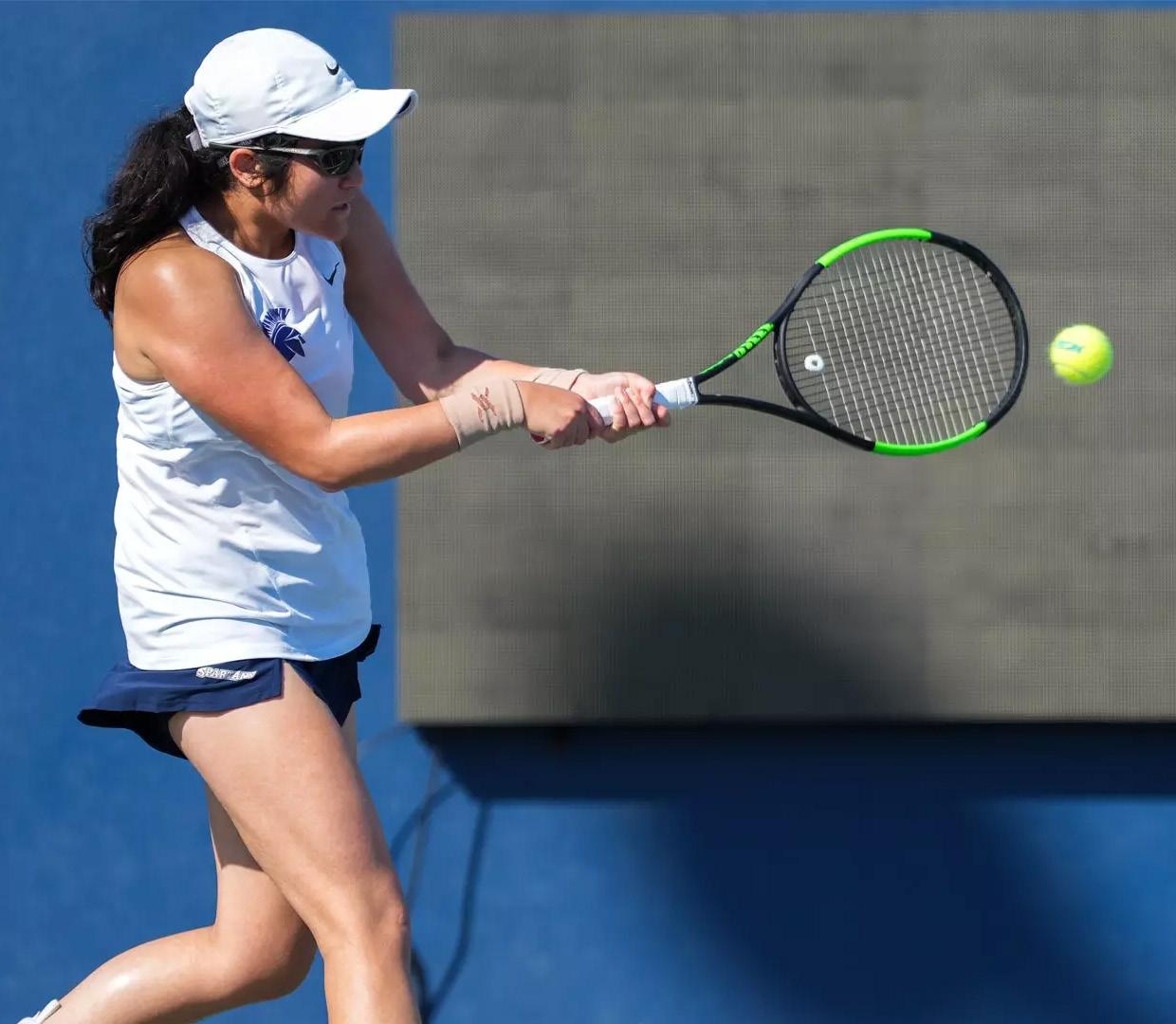
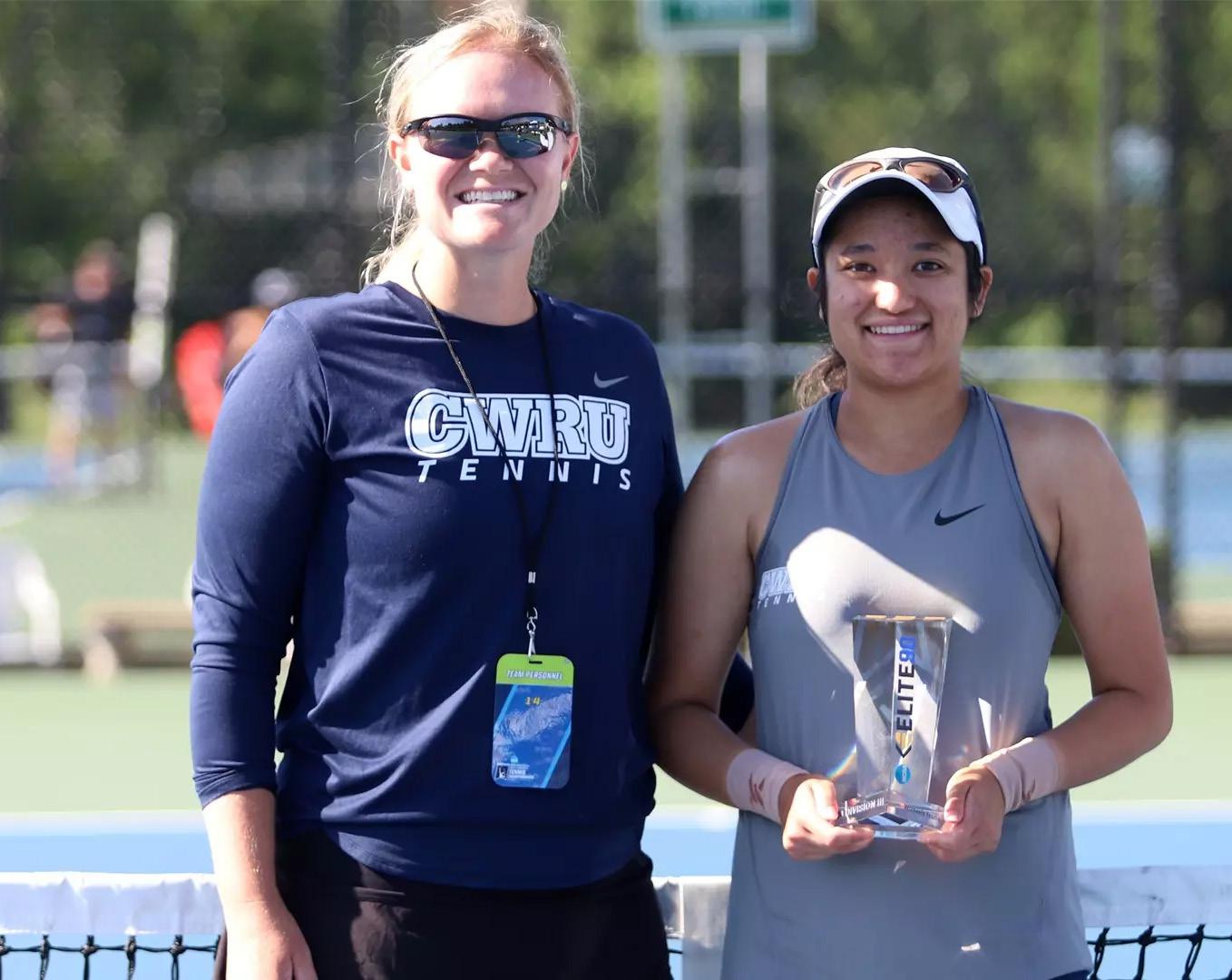
A. Abortion Access
B. Birth Control
C. Sex Education
D. Community Safety
E. Transgender Healthcare
F. Economic
VOTE IN THE MAY 5TH PRIMARY TO DECIDE WHO MAKES THE NOVEMBER BALLOT.
PLEDGE TO VOTE