Case Western Reserve
EDITORIAL
Friday, March 27, 2026
Volume LVII, Issue 23 Est. 1969
Friday, March 27, 2026
Volume LVII, Issue 23 Est. 1969
This Monday, U.S. Immigration and Customs Enforcement (ICE) agents were deployed to Cleve land Hopkins International Airport (CLE) to assist Transportation Security Administration (TSA) op erations during the partial government shutdown. ICE personnel were also sent to 12 other major air ports facing similar staffing shortages. According to the Department of Homeland Security, more than 400 TSA employees resigned since the shutdown began on Feb. 14. AT CLE, ICE officers are said to be stationed at exits and assigned to non-screening positions to alleviate the delays and manage operational flow.
With the increasing politicization of ICE, especial ly in the context of rigid enforcement of immigration policy, just hearing about the agency’s presence may evoke unease among the public masses. This may be especially true in communities that recently experi enced or actively participated in protests against ICE’s occupancy in their cities, where tensions may particularly linger.
“The deployment of ICE agents to our airports deeply concerns me and should certainly raise caution amongst our communities,” second-year Johan Laryea said, “... they have been sta tioned in a high stress environ ment, where their presence instills fear and concern among innocent individuals.”
While Hartsfield-Jackson At lanta (ATL) and William P. Hobby (HOU) airports were experienc ing TSA lines stretching up to six hours, CLE airport was only managing 15 minute wait times. Thus, the mobilization of ICE officers to an airport like Cleve land’s does not appear to be a tactical or necessary response, especially as more severe disrup tions persisted elsewhere with out the agency’s support. This discrepancy suggests that ICE’s presence at CLE may reflect ul terior motives, further fueling the unease and potential distrust felt by travelers and the greater Cleve land community. Especially as more than half of Ohio’s immigrant population resides in the Cleveland area.
Following President Donald Trump’s bold and incorrect statement during his 2024 campaign about Hai tian immigrants in Springfield, Ohio stealing and eating pets, he continues to spread misinformation and terrorize American residents. The Trump admin istration currently seeks to remove Tem porary Protected Status (TPS) for approxi mately 350,000 Haitian immigrants. The status remains valid due to federal courts blocking its termination. Currently, on the U.S. Citizenship and Immigration website, the administration is criticizing the judge’s decision, claiming that “a single judge in the U.S. District Court for the District of Columbia issued an order staying the Secretary’s TPS termination decision. […] The Department of Homeland Se curity vehemently disagrees with this or der and is working with Department of Justice to determine next steps.” Since January, there have been concerns regarding possible ICE operations in Ohio, following their deployment to Minnesota. Many have anticipated that the administration would go after Ohio harder than ever due to community

pushback, and these recent developments have only
“I am not very trusting with the official statements [the administration is] putting out because they’re claiming that the reason why they’re deploying ICE to the airports is to help with traffic control … but that’s not even true because a lot of the busiest airports aren’t having ICE agents deployed,” second-year
For example, Baltimore/Washington International Thurgood Marshall Airport (BWI) is experiencing wait times up to three hours, reported by travelers on Tuesday. However, agents have not been assigned to BWI as of
“This is just the start,” Negi says, “... because the only way for anyone to enter
ICE agents are not specialized in aviation security, yet during the ongoing partial shutdown, they will continue to get paid with the $85 billion at the agency’s disposal as they are classified as essential workers. Meanwhile TSA agents do not have this same designation despite operating under the same Department of Homeland Security. Since officers are uncertified in the screening process, their presence is seemingly useless in supporting operational flow. At the same time, over 50,000 TSA staff continued working without pay for more than five weeks. The past and current shutdown jeopardized TSA employees financially with many facing realities of financial insecurity and distress. The substitution of experienced employees with paid agency officers, lacking in sufficient airport security training, reads as a slight to those with years of experience in this field. Even so, Trump expressed the possibility of deploying the National Guard alongside ICE agents to support airport security.
Social media users are actively responding to the situation, warning passengers to disable the facial recognition on their handheld devices when entering airports, avoid using airport WiFi networks and print boarding passes so that they can keep their devices completely turned off during any potential ICE interactions in the airport. The ICE agency’s use of aggressive force against protestors and suspected immigrants may intensify the unease Case Western Reserve University students experience traveling to and from campus. With more than 19% of CWRU’s total student population consisting of international students, this concern is especially pronounced. For those without the blanket security of citizenship or a U.S. birth certificate, past incidents involving ICE intervention can heighten fear, particularly in highly surveillance spaces like airports that already create stress for passengers. “It makes me very worried for my friends, my family and I just think [people] should be as cautious as possible,” Negi said. “I acknowledge there isn’t much I can do to help this situation as a regular civilian but keep myself educated, continue to spread awareness, and urge others to do the same,”
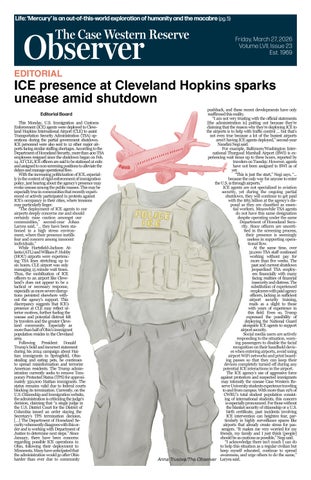
Anna Trusova/The Observer
Alyssa Wang News Editor
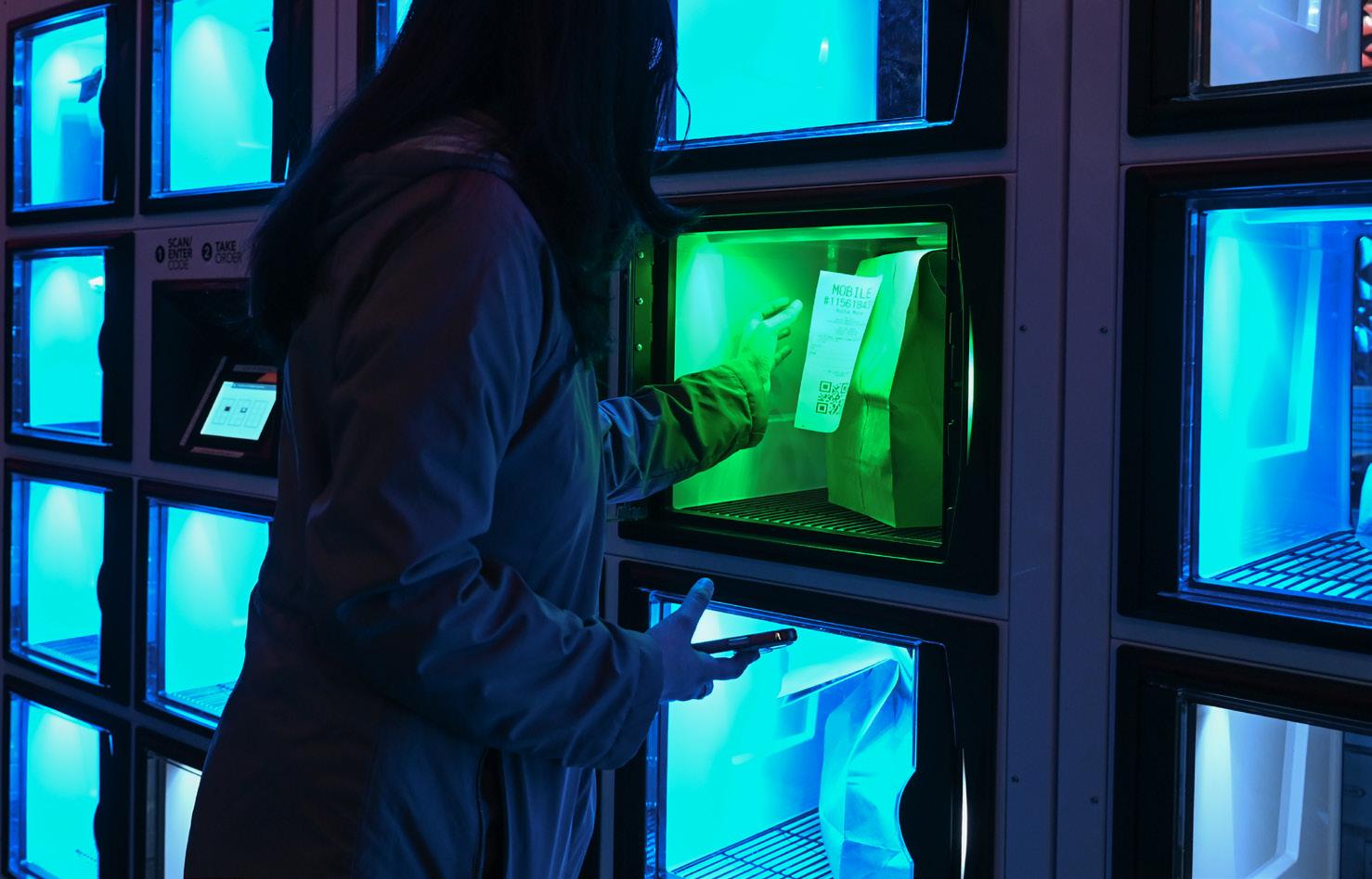
As Case Western Reserve University students returned from spring break and poured into The Den by Denny’s for their usual late-night meals, they were greeted by a new addition to the space: lockers.
Delivered and installed on March 12, the Apex lockers now serve as the new pickup system for students. These lockers have illuminated glass compartments and an automatic door release that can be opened with the QR code on students’ receipts. According to Jason Kimball, the assistant director of Dining Operations, the change was prompted by the number of mobile orders at The Den, which account for about 98% of transactions and can reach up to 110 to 125 orders per hour during peak times. Previously, staff prepared, staged and distributed each order manually, which ultimately slowed down service.
“To improve speed and reduce handling, we introduced a streamlined system that allows customers to retrieve their orders directly without staff assistance,” Kimball said. “The Den’s high volume and limited space made it an ideal pilot location, and we are now evaluating similar solutions for other sites.”
Despite the change, some students don’t believe the lockers were necessary. An anonymous student expressed skepticism about the need for such an update.
“I understand that having the lockers is a lot more convenient for the customer and the worker, but I don’t think having to buy lockers for food is the best idea for them,” they said. “They could have just made a better system to
work around the pickup system and delay issues they have when orders are waiting.”
Second-year student Ava Lipinski also thought the new lockers were inefficient.
“I feel so bad for the workers,” Lipinski said. “There’s lines of food ready and a line of tickets waiting to be made, but they can’t do their job because of a useless machine that just wastes everyone’s time.”
Instead of waiting at a crowded counter, students can now scan their QR code to retrieve their meals, reducing wait times and the need for staff assistance. Beyond improving efficiency, the lockers also help address food safety and theft concerns. Previously, orders could sit out for up to 90 minutes, creating potential safety risks. Now, if an order isn’t picked up from the lockers
within 15 minutes during peak hours, it is removed from the locker and the student must reorder. Similarly, when students accidentally take the wrong meal, it must be remade, which can delay service for others.
“Food theft has been a recurring concern,” Kimball said. “Based on historical tracking, an average of a couple dozen orders per day required remaking, often due to customers unintentionally selecting the wrong order or occasional instances of theft. Having them on a counter with easy access may have encouraged some unauthorized pick-ups. The current system helps ensure that the correct individual retrieves each order, reducing unauthorized pickups while improving efficiency and the overall customer experience.”
First-year student Rhea Soni commented on the new lockers after us-
ing them for the first time after spring break.
“I think implementing the new Den lockers was very helpful because it made getting your order a lot quicker and allows the workers more time to work on orders,” Soni said. “It also prevents the issues in the past where students would grab orders that weren’t theirs.”
Before selecting Apex, the university evaluated several locker systems but found that many required separate apps or didn’t integrate with CWRU’s existing meal plan. After first encountering the technology at a conference and visiting another university using a similar system, CWRU Dining Operations finalized the locker plan and began minor construction. The old service counter was removed, and the lockers were delivered and installed in under two hours, while the IT department established the network connectivity behind the scenes.
“The selected solution fully integrates with Transact, including both our point-of-sale system and mobile ordering platform, ensuring a seamless workflow,” Kimball said. “Additionally, as we explore expanding our reusable container program into retail locations across campus, this solution is already integrated with our current partner, Usefull, which supports a more streamlined and scalable implementation.”
Despite the new addition, the familiar atmosphere of The Den isn’t expected to change. Students can still grab a meal and sit with friends, while those in a hurry can quickly pick up their orders from the lockers. The lockers have been added without changing many of the existing processes, helping one of the busiest late-night dining spots on campus run more smoothly.
Aditi Darodkar Staff Writer
At Case Western Reserve University, researchers have discovered an immunotherapy approach to treat Acquired Immunodeficiency Syndrome (AIDS). Published in mBIO, a scientific journal by the American Academy of Microbiology, this research aims to reduce the need for lifelong AIDS medication.
For decades, AIDS, the end stage of an untreated Human Immunodeficiency Virus (HIV) infection, was a fatal diagnosis. Now, thanks to antiretroviral therapy (ART), it has become a manageable chronic condition. Modern drug combinations can suppress the virus to undetectable levels, allowing people living to lead long, healthy lives without risk of transmission. However, ART does not cure AIDS and requires lifelong, strict adherence to medication along with a myriad of side effects.
The challenge lies in the virus’s ability to hide.
“[HIV is] in a family of retroviruses, which means the viral genome that gets transmitted is an RNA, but once it gets into [human] cells, the RNA gets converted into double stranded DNA,” said Jonathan Karn, the director of CWRU’s Center for AIDS Research.
The virus then inserts its DNA
into the host cell genome permanently, where it may either remain in an active state and produce more virus particles or enter a reversibly dormant state in HIV reservoirs, a population of long-lived infected immune cells.
“So if you stop taking drugs, the virus rebounds,” Karn said.
To expose and eliminate these hidden HIV reservoirs, Karn’s laboratory is harvesting the power of Natural Killer (NK) cells. These white blood cells (WBCs) in the immune system are the first line of defense against viral infections and cancer.
“NK cells from people living with HIV have an innate ability to kill HIV-infected cells, but this requires activation,” said Mary Ann Checkley-Luttge, a senior research associate in the Department of Molecular Biology and Microbiology at CWRU School of Medicine. “The idea is that activated NK cells more easily find and kill actively infected cells than latently infected cells, thus reducing reservoirs enough to allow longterm immunological control of HIV without ART.”
Karn’s lab is using approaches already developed from cancer immunotherapy to enhance the ability of NK cells, making this the first time these techniques have been used for HIV therapy.
“NK cells can be extracted from the blood and grown to large num-
bers in the laboratory in presence of feeder or artificial antigen presenting cells (aAPCs), [which are genetically engineered WBCs that present a signaling protein to amplify NK cells],”
Checkley said. “The boosting of NK cells with this approach also increases activating receptors in NK cells which help them recognize cells that need to be killed.”
While this study was performed on cells from people living with HIV, the Karn lab is also using Macaque models to understand the impact on whole-body systems. In collaboration with Temple University and Rutgers University, the results from these animal models will be applied to developing clinical trials in people living with HIV in the upcoming years.

Nishil Sharma Contributing Writer
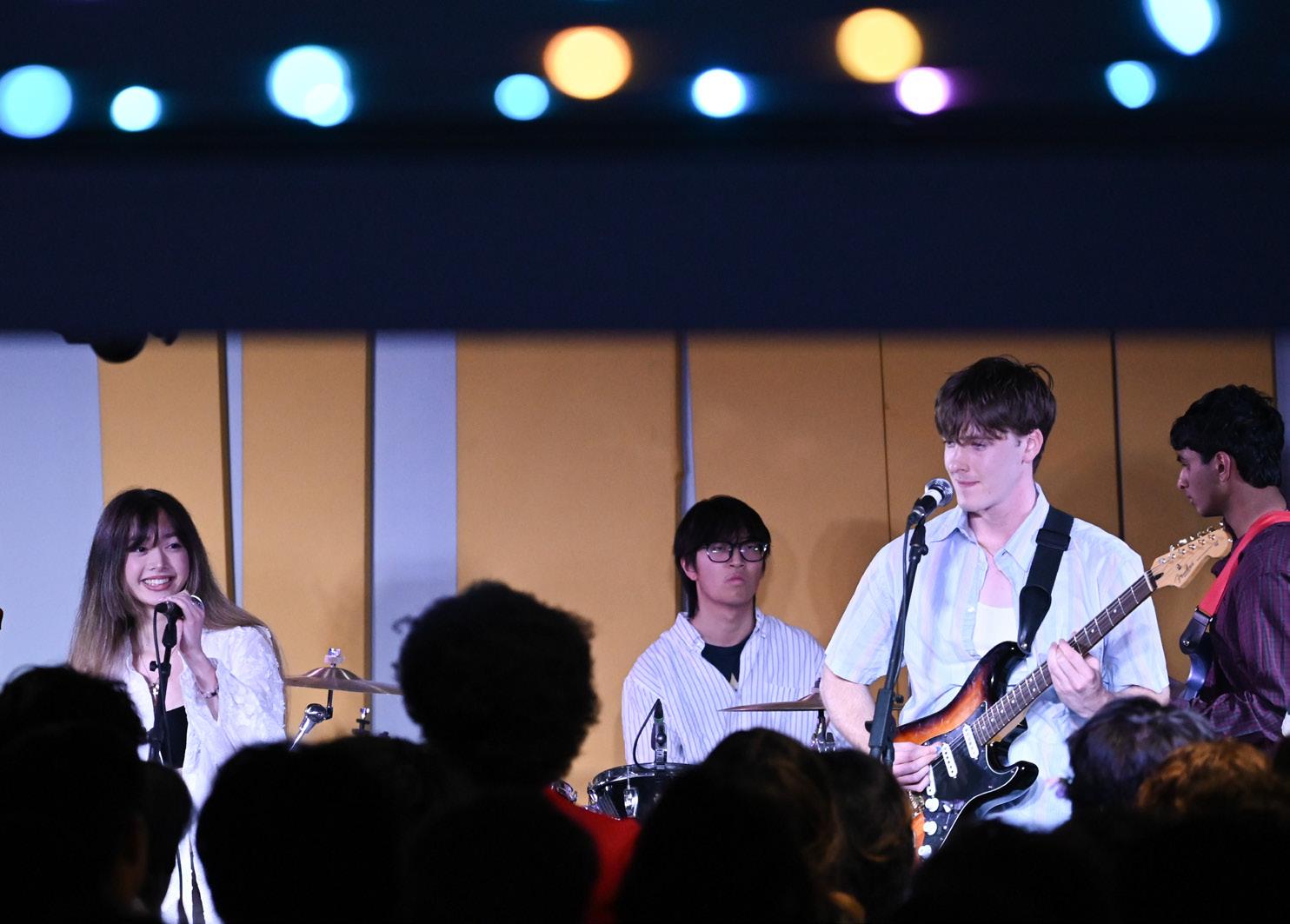
I’ve always found something so electric, so palpable about being in line for concerts: people seem more open, more talkative, more willing to share in anticipation with one another. I felt that energy this past Saturday at The Spot underneath Leutner Commons, where I found myself in line with my fellow Case Western Reserve University students awaiting one of the most anticipated events of the year: Battle of the Bands.
Each year, 10 student bands compete for audience votes, hoping to obtain the opportunity to open at Springfest—perhaps the biggest campus event of the year—along with a professionally produced music video. Between stripped-down acoustic duos and brass-backed ensembles, the performances made it clear that there was no one way to stand out.
As the lights dimmed, Rat Jacket took the stage. Scholars by day, hardrockers at night, this group of Ph.D. students set the tone with dark, dusky guitar strums before Liz lulled us into the opening to Kelly Clarkson’s “Since U Been Gone.” Their set of pop-rock hits continued into a cover of Paramore’s “Still Into You,” and finished out with a cover of Wheatus’ “Teenage Dirtbag” complete with DJ-style scratches from Aratrik’s Synyster Gates signature guitar and the iconic male falsetto performed by Jude to a strong reception.
Overbloom kept the energy going with a recital of Led Zeppelin’s “Moby Dick.” When the iconic drum solo hit, Max and Emilio delivered a whimsical and altogether impressive bongo solo with some of the most technical percussion work of the night. The band slowed it down with Fleetwood Mac’s “The Chain,” but Josh’s uniquely rough vocals added a new level of edge to the song. A heartwarming moment followed as the band passed out light purple daisies and eased into Paramore’s “All I Wanted Was You,” culminating in powerful belting from Anna.
Next up was the band that was “formed a hundred years ago and has stuck together ever since,” Cadence. One of the youngest groups of the night, they delivered an ambitious set, starting with The Strokes’ “The Adults Are Talking.” Evan’s smooth soprano saxophone work on “Careless Whisper” was an unmistakable centerpiece. On Bruno Mars’ “Locked Out of Heaven,” Alexa gave us her strongest vocal performance of the set, as her airy vocals blended with Eddy’s voice. This group has clear potential, and I’m excited to see them grow into their sound in the future.
After three upbeat sets, acoustic duo Lost and Found—composed of pianist Tiger and guitarist Delphine—took the stage in blue corduroy sweaters, accompanied by a striking sunburst ultramarine guitar, and delivered the most intimate set of the night. Opening with Maroon 5’s “Maps” and the Kid LAROI and Justin Bieber’s “Stay,” the duo provided a refreshing run of pop hits. Disclosure and Sam Smith’s “Latch” had the crowd clapping and singing along. The highlight of the set, however, was “Love the Way You Lie” by Eminem and Rihanna, where Tiger leapt off the stage mid-song and rapped with an infectious energy, producing one of the most joyful and unpredictable moments of the night.
Following the duo, Before Closed Doors, a group formed by overcom-
ing “a series of scheduling challenges and many closed doors,” set up their three-song heartbreak arc: “betrayal,” “despair,” and “bigger and better.” They began with a rendition of “Wake Up Call” by Maroon 5, in which Sawyer showed off his kick drum work alongside Neythan’s funky guitar strums. Singer Kashmere sank to the ground while the band slipped into “despair” with No Doubt’s “Don’t Speak,” building into fury as Tyler pumped out the bass line and Kashmere brutalized a microphone stand. They closed with “So What” by Pink, and a group hug at the end encapsulated their unparalleled ability to connect, both with one another and with their audience.
Some of the tightest musicianship of the night came from Hunny, a band whose members noted they had all been in bands back home. Their experience showed in a cohesive rhythm section composed of drummer Eamon, guitarist Reid and bassist Creed. Terry ripped the solo to Weezer’s “Undone (The Sweater Song)” with squealing pinch harmonics and bends. When Terry hopped on the lead vocals for Radiohead’s “Creep,” he seemed to channel an agony reminiscent of Thom Yorke himself. This group was clearly among the most experienced of the bunch.
Soulstice, an eight-piece, neo-soul collective, framed their performance as larger than tunes: “[This is] representation, it’s community, and it’s us finally living out that common childhood dream for all members in real time.” Opening to chants of their name with Raye’s “Where is My Husband,” they performed a set rich with texture—trumpet lines, walking bass, jazz-inflected keys, a vocal power trio and rap sections. A tribute to Women’s History Month invited the audience to describe their mothers in one word before transitioning into John Legend’s “Dope.” They finished with the night’s second performance of “Locked Out of Heaven,” complete with crowd calland-responses, holding total com-
mand of the crowd by the end.
In Love I Swear, a three-piece group built from a "desperate need to make music with each other,” had the crowd on its feet for the alternative metal anthem: Evanescence’s “Bring Me to Life.” Julie demonstrated range here, veering from ethereal croons to metalcore screams on “Screaming” by Loathe. Jericho dropped a blistering drum solo, and a metal take on Paramore’s “Misery Business” ensued, where Aaditya strummed away on a seven-string djent guitar before delivering a thrilling tapped guitar solo.
Lake Effect, in contrast, brought a lighter seapunk energy, beginning with bassist Daniel slapping out Red Hot Chili Peppers’ “Can’t Stop.” They then delivered the only original piece of the entire show, “Autopilot,” supplemented by a vibrant stage presence. Finally, they reminded the crowd of the importance of “having a little faith” as drummer Jonah ran over to the keys to deliver Journey’s “Don’t Stop Believin’” to phone flashlights swaying in unison.
And then there was Step Bros, a
sprawling eleven-member ensemble. With a brazen brass section, three layers of vocal harmony and extensive instrumentation, they delivered an unmatchably grand sound. Noa’s key performance on Bruno Mars’ “I Just Might” was impressive. The blend of Adam’s expansive voice, dirty guitar tones and polished brass on D’Angelo’s “Untitled (How Does It Feel)” created a sound that can only be described as golden. By the time they closed out the night with Earth, Wind & Fire’s “Boogie Wonderland,” the room felt like a full-scale concert. With a consistent and cohesive performance from every single member from this group, this performance landed on the top of my list.
More than anything, this year’s Battle of the Bands showcased the breadth of artistic expression on campus. Each group created their own affections with the audience whether through technical ability, vulnerability or sheer energy. For a few hours, the competition faded away, leaving only a reminder of how music, in all its variety, can bring a campus together.

Esha Bagora Social Media Editor
Major spoilers for “Bridgerton” Season 4.
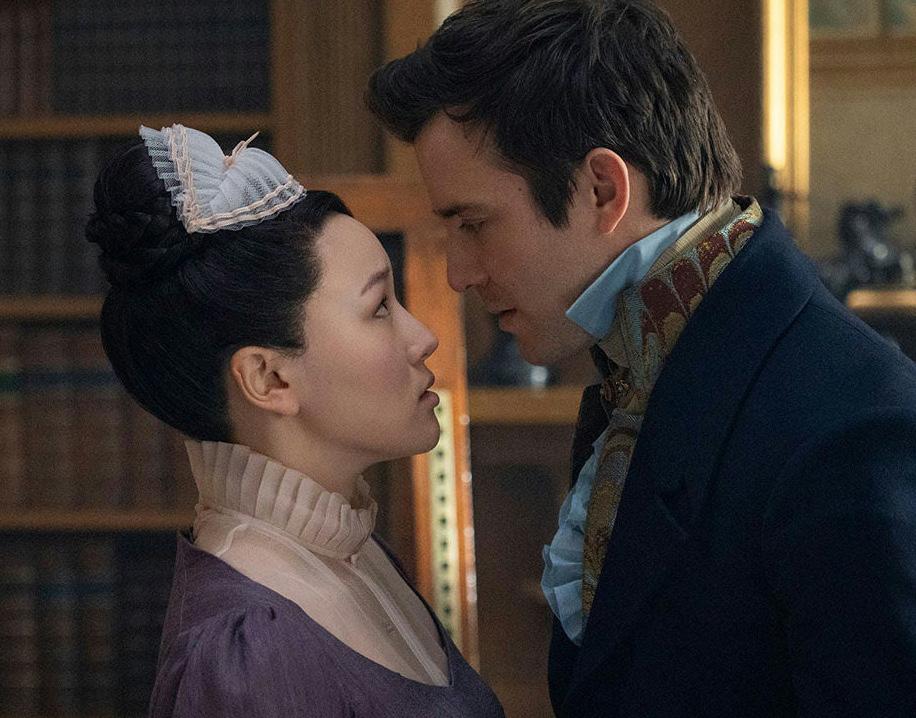
The second part of “Bridgerton”'s fourth season dropped on Netflix on Feb. 26, bringing the final four episodes of Benedict Bridgerton (Luke Thompson) and Sophie Baek's (Yerin Ha) Cinderella-inspired love story to a close. It arrives with a noticeably sharper emotional edge than what audiences have come to expect from the beloved period romance. Gone is much of the breezy flirtatious lightness that defined earlier seasons. In its place is something more grounded, more introspective and, depending on your tolerance for the slow-burn trope, more rewarding.
Part 2 picks up almost immediately after Part 1 left off, with Sophie still reeling from Benedict's request that she become his mistress following their charged kiss on the back stairwell of Bridgerton House. It is a gut-punch of an opening. Sophie, a hardworking maid whose own mother was a maid-turned-mistress, flees the scene without giving an answer, and what follows is a season-long reckoning with what it actually means to love someone across an impossible class divide.
While Part 1 felt like a fairly straightforward Cinderella retelling, Part 2 steps beyond the fairytale trope to address passion, loss and what is truly at risk for highsociety women who fail to secure a good match in the Regencyera marriage market. The narrative slows down just enough to let those stakes breathe, allowing characters to confront insecurities, social expectations and personal flaws in ways that feel genuinely earned. What immediately stands out is how deliberately the writing handles emotional payoff this time around. The mystery that drove so much of the season's earlier tension—Benedict's relentless search for his Lady in Silver—finally resolves in Episode 7 when he discovers that both Sophies, the woman he has fallen for and the masked stranger from his mother's masquerade ball, are one and the same. Her lost necklace, once belonging to her late mother, becomes the key that unlocks the truth. It is the kind of reveal that lesser shows would rush. Here, it lands with real weight.
The season also delivers a satisfying confrontation with one of the show’s more compelling villains. Sophie's scheming stepmother, Araminta, had long manipulated Sophie into believing she was excluded from her late father Lord Penwood's will, trapping her in a life of servitude. It takes Benedict, armed with fresh eyes and genuine love for Sophie, to finally point out that Sophie had never actually seen the will herself. It is one of the most quietly powerful moments of the season, a reminder that love, at its best, helps people see what they could not see alone. The finale seals everything with a surprise mid-credits wedding scene at My Cottage, the country estate where Benedict and Sophie's relationship first began to flourish, closing their arc with exactly the warmth and intimacy the story had been building toward.
Part
The production design continues to be nothing short of extraordinary. Ballrooms drip with candlelight, and every frame feels like it was pulled from a fever dream of Regency-era excess. Costumes do a great deal of narrative heavy lifting, with subtle shifts in color palette and silhouette tracking character development in ways that reward attentive viewers. But the real emotional work of Part 2 happens far away from the ballrooms, in drawing rooms barely lit by firelight, in garden conversations cut short by approaching footsteps and in late-night exchanges where characters finally say the things they have been avoiding for weeks. The supporting storylines add considerable texture to the season.
Penelope Bridgerton—now publicly known as the infamous Lady Whistledown—grapples with being in the spotlight, while a younger Hyacinth begins to reckon with the pressures of an impending debut season and the question of what it actually means to find a compatible match. Lady Danbury pushes for the freedom to forge her own path, while Lady Violet Bridgerton and Lord Marcus Anderson decide what they genuinely want from the next chapter of their lives.
The pacing does occasionally work against the show. Certain emotional conflicts circle the same territory one too many times before moving forward, and a handful of supporting subplots feel like they were given a strong opening act without a satisfying followthrough. The show is clearly juggling a lot of storylines at once, and not all of them land with equal weight. Still, when Part 2 pulls everything together in its final stretch, the payoff is remarkable. The season closes with emotional
resolution rather than manufactured cliffhangers, which feels like a conscious and confident choice from the writers. Some storylines wrap cleanly. Others leave threads deliberately loose, setting up what comes next without feeling manipulative.
Bridgerton has always been a show that knows exactly what it is. Part 2 suggests it is also figuring out what it wants to become. That evolution, uneven as it sometimes is, makes it one of the more interesting ongoing dramas on streaming television right now.


LET US HANDLE THE COOKING WHILE YOU FOCUS ON
Whether it’s a family gathering, work event, or celebration, our catering brings fresh, flavorful Lebanese-American cuisine to your table.
Penelope Cloonan Life Editor
Spoilers ahead for “Mercury.”
Case Western Reserve University’s Theater Department staged a production of “Mercury” to close out February. Steve Yockey’s play is a thriller comedy about the insatiable need for vengeance. Complete with blood, immortals and (simulated) animal cruelty, “Mercury” is a visceral exploration of what revenge can do to the people we care for.
The audience is first introduced to Pamela (Johanna Perry) and Heather (Abigail Gilman), a pair of neighbors in an illicit affair. They bicker, with Pamela playing the part of the detached, scorned paramour and Heather kindly trying to move on. Tension builds as Heather talks about her missing dog and fidgets with a bookshaped package, until Pa mela reveals she killed him. The expectation of “Mercury”’s theme is immediately set: normal people driven to do ab surd things.
We’re then taken to a cu riosity shop, where Olive (Reighan Bean) is attempting to curse Brian (Alexander Jones), her neighbor’s partner, so that she can have the neighbor, Nick (Dwight “Alex” Alexander III), all to herself. The unease with Olive is more obvious as Bean portrays as an Aunt Gladys type (“Weapons”), complete with bright clothes and a grating voice. While it was pleas ant to hear her talk, the more obvious oddity did add something minor to Bean’s per formance. After much persuasion, Olive convinces the strange owner of the curiosity shop, Alicia (Evie Oehlers) to sell her the strongest cursed item they have, a book.
is a thriller and a victim has to go.
Though they both want to go home, there can only be one. Pamela, dog murderer, grabs the knife and stabs Brian. Perry has created a Pamela that is so cartoonishly evil, yet disgustingly believable, you can’t help but be entranced, or even sickly glad, when she is doomed to the hellscape. “Sam,” echoes what the audience was thinking, claiming that Pamela deserves to stay while warning that the way home is not easy.
Treacherous it is, and we see Brian next in a bear carcass. While Nick and Brian certainly have their issues, Alexander and
You have to be funny.”
This interpretation certainly shines through in her performance. In collaboration with the student director, Rachel Greidinger, Oehlers came up with the idea that Alicia was once a trapped victim herself, who pushed through and became this bridge between hell and earth. This places Alicia in an interesting space, she is both human and entirely detached. When asked how Alicia sees the world, Oehlers said, “she thinks it's so funny, everything is a bit.”
Alicia sees the world as somewhat “whimsical,” but in the same breath will remind the audience of the reality of the hellscape.
ror to ourselves, that happens to crack jokes and drink Monster.
In developing such odd characters, space is required to really dig into their cores. Fortunately, the rehearsal space really allowed for improvisation. Actors were encouraged to use the Michael Chekhov technique, which involves creating one symbolic gesture for the character before starting scene work. Volas explained that “it forces you to think about what your character is thinking about in any given moment.” Oehlers shares this appreciation saying, “It was the most fun I ever had in a rehearsal process, and I felt so loved by the cast and the crew … even if I messed up, it didn't matter, because we just kept going.” That certainly shines through to the final show. The characters feel like people, or at least as much like people as immortals can be.

With that, the instrument of revenge is out in the world. Brian and Pamela open their books and, in a whirlwind of flashing lights, Pamela and Brian disintegrate. Gilman lets out a truly blood curdling scream, lending humanity to Heather. Meanwhile, Olive creepily sweeps up Brian’s ashes and welcomes Nick (to his own home).
We reunite with our victims in some hellscape, completely alone and surrounded by smoke. They commiserate until a man(-ish) “Sam” (Kosta Volas) covered in blood steps out on stage. This only adds more unease to the situation. It is revealed that “Sam,” the physical manifestation of vengeance, is the partner of Alicia. The cursed book was meant to have one copy, and yet, there are two. “Sam” and Alicia seamlessly transition to bickering reminiscent of a workplace comedy, before reminding the audience this
es. Brian may not have needed to die to work out his domestic issues, but it is a good perspective shift. You can’t help but root for Brian, feeling twistedly fulfilled when Olive is condemned to hell in his place. In the end, Olive and Pamela’s acts of violence are denounced, Nick and Brian work on themselves and everyone is forever changed by the hellscape. Only the immortals persist, unaffected.
These immortals are what make “Mercury” work. Without them, “Mercury” is a solid piece about vengeance, but it would lack the punch that absurdity yields. As Oehlers put it, “[“Mercury”] tackles a lot of really difficult concepts and difficult relationships, but it's so funny. And if you want a play to have impact, you can't just be dramatic, dramatic, dramatic, because people will just get sad and get bored and leave.
genre. Volas does a very similar thing with “Sam.” Despite being the literal manifestation of vengeance, more emotion than being, Volas plays “Sam” as a guy. “Sam”’s original entrance is straight out of a horror movie, but it is immediately undercut by comedic frustration. “This dude just got done torturing people,” said Volas, “He wants to go on his break, but two people are in his break room, and he just wants to get this done.” A lesser performer would use this beat for pure comedic relief, but Volas’s performance adds real depth to the character while getting genuine laughs. “He wasn't of this world,” said Volas, “but the funny part is that he acted like somebody from our world.” That familiarity is not accidental. People can overcome vengeful outbursts, like Brian, but they can also become like “Sam.” It is a dark mir-
On a technical level, the most interesting asset to “Mercury” are the transitions. In the original staging of “Mercury,” the whole set is a turntable, with Alicia turning the set to switch scenes. It gives her a sense of control and adds to the supernatural feel of the play. The CWRU Theater Department did not have access to a stage with a turntable, but they did aim to keep that control. Of their effort, Oehlers said, “I stand at the door, and I watch them as they look at each other and maybe start to get angry, and then they cannot start their conversation until I leave.” Though she may not have a physical grip on their circumstances, the characters still feel her imposing presence. At every level, this performance is interesting and strangely atmospheric. Even the scene breaks keep
That sense of curiosity permeates through the play. “Mercury” messes with time in space in ways that most plays do not. There’s mass amounts of blood, and it’s funny in ways a thriller usually is not. To put it plainly, “Mercury” is odd, but that’s what makes it so special. At the center of a deeply strange play, you have a beautiful, character driven exploration of vengeance. In the confusion, and perhaps revulsion from the bear intestines, you find clarity. It is a testament to the CWRU Theater Department’s skill and commitment to true art that “Mercury” worked as well as it does.
CWRU's theater department staged an incredible production of "Mercury," which explored the theme of vengeance through an assortment of quirky characters, a disemboweled bear and blood.
Ashley Rosinski/The Observer

Auden Koetters Director of Digital Media
Not one hour ago one of the photo editors asked me one of the most fearful questions that can be asked here at CWRU: “What is going on with all those green headbands?” It then struck me, the time of Humans vs. Zombies is once again upon us.
There are two types of people on this campus: people who are playing Humans vs. Zombies, and people who are just trying to go to class and are suddenly collateral damage in a sock-based apocalypse.
I am the second type.
I did not sign up for Humans vs. Zombies. I did not agree to live in a society where I have to evaluate whether the person walking toward me is a zombie, human or just someone studying for an organic chemistry exam. And yet, every semester, without fail, I am forced to participate emotionally, psychologically and sometimes physically (when someone almost plows me down on the quad).
For those lucky enough to be unfamiliar, Humans vs. Zombies is a campus wide game of tag where humans try not to get tagged by zombies, who are trying to grow the horde through tagging. It lasts 10 days, which is about nine days longer than any game of tag should last.
Day 1: Confusion
At first, you don’t know what’s happening. You see someone wearing a green bandana. Then another. Then five people sprint past you. Then someone dived behind a tree. Then someone else whispers, “They’re coming.”
You start to wonder if you missed an email. Or a major world event.
Day 3: Fear
By day three, the campus atmosphere has changed. Normal students walk. HvZ players move with purpose. They travel in packs. They whisper. They check corners. They text constantly. They look behind them every 15 seconds like they’re in a spy movie.
Meanwhile, I am just trying to get to class, uninvolved.
But suddenly someone yells, “ZOMBIES BY THWING.” and a group of 12 people sprints directly toward me. I am not a participant, but at this point I am running too, because mob mentality is real and I value my life.
Day 5: Sociological Observations
Not participating in HvZ turned you into a wildlife observer. You begin to notice patterns: Zombies stand very still in places that make no sense.
Humans refuse to walk alone.
Both groups take this far more seriously than any game involving socks should be taken. Everyone is late to everything.
The green bandanas begin to look less like game gear and more like a campus-wide militia.
Day 7: Academic impact
At this point HvZ players have stopped pretending this is casual. I overheard someone say:
“I can’t go to class that way, there are three zombies by Crawford.”
Imagine explaining that to a professor. Honestly though, from what I’ve heard, being a zombie is less stressful than being a human, which feels like an unintentional metaphor for life.
Day 9: Emotional Fatigue
Even as a non-player, you get tired.
You’re tired of being almost trampled. You’re tired of people whisper-yelling “SAFE ZONE.”
You’re tired of watching someone you know, a lab partner, a friend, a former romantic interest, crouch behind a bike rack and throw a sock at someone.
Mostly, you’re tired of not knowing if it’s socially acceptable to laugh when someone sprints full speed across the quad.
Day 10: Acceptance
By the final day, something changes. You start rooting for people. You start recognizing bandanas. You start getting invested. You have never played the game, but emotionally you are now part of the team.
What type of admitted student are you?
Finding a roommate before committing.
Taking a photo with the cool CWRU sign.
Getting a free tote and putting thousands of papers you will never look at again inside.
Realizing the campus is larger than you thought.
Taurus
Standing in the middle of the Binary Walkway. Gemini
Taking a photo with the ugly CWRU sign.
Leo
Walking under the Ugly Statue.
Scorpio
Overspending at the school bookstore.
Getting splashed waiting to cross Euclid.
Virgo
Tripping on the potholes in the middle of the Binary Walkway.
Sagittarius
Eating breakfast at Dunkin' with your whole family.
Accepting another school's offer.

10. It was Florida.
9. No one benefits from making the story up.
8. Tyler says dolphins are the smartest creatures on the planet (next to humans).
7. Florida's education system is number 1 in the United States because they educated all their dolphins.
6. The story sounds like it should be fake, but not impossible.
5. Gerald is a believable dolphin name.
4. The story involved way too many specific details to be fake.
3. No one can actually fully debunk it.
2. More believable than some other national news.
1. The logic checks out.
Aphrodite Contributing Writer
1. They haven't texted back in 3 hours. You:
A) Assume they hate you now
B) Double text
C) Post a hot picture on your story
D) Don't notice until the next day
2. Your flirting style is:
A) Awkward but cute
B) Bold and obvious
C) Sarcastic and funny
D) I don't flirt. I just exist and somehow it works
3. When someone you like compliments you back, you:
A) Panic
B) Say something flirty back
C) Make a joke
D) Say thank you like a normal person
4. Your biggest red flag:
A) Overthinking everything
B) I love attention
C) I get bored easily
D) I emotionally detach too fast
5. Your ideal relationship dynamic:
A) Best friends to lovers
B) Power couple
C) Partners in crime
D) Calm, stable and drama free
6. Your texting speed:
A) Immediately
B) 5 minutes (gotta seem cool)
C) Random, either immediately or 7 hours later
D) When I remember
7. The way you end conversations:
A) Okay I'll let you know :)
B) Miss me yet?
C) Just send a meme
D) Disappear
Results:
Mostly A’s: The Overthinker. You reread texts twelve times, analyze punctuation and ask your friends what everything means. You just want reassurance and someone who communicates clearly.
Mostly B’s: The Flirt. You treat texting like a sport and you are winning. You're confident, fun and know exactly what you're doing.
Mostly C’s: The Chaotic One. You're unpredictable. Are you flirting? Are you joking? No one knows. Not even you.
Mostly D’s: The Mysterious One. You're impossible to read, accidentally play hard to get and somehow make people like you more by doing less.

Mariana Parilli-Castillo Copy Editor
Lately, everybody seems to be obsessed with romance. I would argue that everybody has started to admit that they are obsessed with romance publicly. Wherever you turn, people are all abuzz about their favorite romance novel adaptation—among these being the likes of “Bridgerton,” “Heated Rivalry,” and “People We Meet on Vacation”—or their favorite romance fantasy novel— see the likes written by Sarah J. Maas and Rebecca Yarros. On social media, the cultural dominance of romance in public conversation has become everpresent in ways that finally reflect the true economic power of romance within popular media. Romance, in particular romance novels, had been relegated to the niche of moms and spinsters in public consciousness, even as they were always the best-selling genre. It is not as if people have suddenly realized they like romance; people have loved to read about love since time immemorial. This is why I find it absurd that everyone is treating the new presence of romance as the greatest sign of societal decline since the No Child Left Behind Act.
Anytime I log into social media, I end up having the unpleasant surprise of reading a non-romance reader’s hot take on romance. Suddenly, I have to read their opinions on whether or not romance signifies the sexual liberation or repression of the modern woman, whether the increasing presence of third-person perspectives represents the increasing narcissism of the younger generations or whether or not fan fiction should be laughed at for the nth week in a row. It is not as if these subjects do not have the depth that would make them compelling or that there are not entire papers endlessly debating those aspects of romance. The problem is that romance has now been opened to the scrutiny of a spectator that does not really care about it and rather just wants to use it as both proof and part and parcel of such societal ills as misogyny and homophobia.
“Heated Rivalry,” in particular, and its source material “Game Changers,” has been undergoing such absurd levels of scrutiny that it only makes it apparent that many of those who attempt to show themselves as romance critics often are working simply as bad faith critics. Without any sort of knowledge pertaining to the tradition or practices of romance (never mind the many branches of male-male romance across the world that have gained popularity with a primarily female audience in mind), they use it as proof of whatever egregious crimes they want to argue about female writers and readers and their interactions with the queer com-
munity, at any given time. And it is not as if there are no bad actors among the women who write male-male romance media. As a lesbian romance reader who frequently brushes shoulders with some of the circles that primarily read male-male romance, I have had multiple encounters with women who read and write queer romance while also being rather homophobic themselves. But rather than focusing on and criticizing these phenomena, these cultural writers broadstroke their arguments to qualify any woman who consumes male-male queer romance under the same label, with no regard for whether or not their assumptions are applicable.
There is a sort of appeal to many of these authors about the possibility of revealing a certain kind of homophobia that opens most women to bluntknife criticisms and proving that these women are nothing more than perverse exploiters of the male body. There are, of course, these women—much like there are men who consume lesbian porn for the pleasure of visually exploiting these uninterested bodies. But there are malemale female romance readers (such as myself, on occasion) who have no interest in the male body whatsoever. There are some that have no interest in anyone, for that matter. In my experience, women modulate their consumption of male-male romance as a method of enjoying a love story where they are not involved and are thus detached from their own bodies. One could argue that this is still open to criticism, as it implies a sort of internalized misogyny, but this is not what gets commented upon. Many of the people who have the chance to write these dissections of male-male romance do not even have the capability necessary to explore the thin line of escapism and repression. The facts of the matter are these: For many romance readers across time, the appeal of romance does not come from being part of the love story. Instead, the goal of romance often lies in its ability to satisfy the romantic needs of its audience without the input of a second person. Non-romance reading or watching critics forget this. I believe that the romance genre is one of the most important gauges for the media. There is something incredibly telling about what people like in others, and romance is all about people liking each other and proving to each other that they will like each other, hopefully, for a long time. Love is, at its barest form, a miracle of two (or more) people overcoming their societal, economic and personal circumstances because they want to stay with each other. Thus, people can’t help but to keep writing about it. I just wish that, when people wrote about the people who wrote about it, they would encounter love and romance on their own terms and not the terms by which they want to represent it.
Established in 1969 by the undergraduate students of Case Western Reserve University
Darcy Chew Executive Editor & Publisher
Hannah Johnson Director of Print
Sabrina Feldberg News Editor
Alyssa Wang News Editor
Penelope Cloonan Life Editor
Aleksandra Majewski Opinion Editor
Ellie Palaian Sports Editor
Michelle Bai Copy Editor
Wendy Chen Copy Editor
Riya Kulkarni Copy Editor
We’ve all been there, trying to study or finish that last assignment when all we want to do is … anything else. Maybe we’re overwhelmed with the work we have to do, or maybe we feel the pressures of perfectionism and don’t want to start. We push ourselves to “lock in,” but call it quits too often, feeling guilty each time we pick up our phones to doomscroll again and again. Doing anything but the work we have piled up always seems to feel better than actually getting things done, but the sinking feeling in our stomach knowing we’ve wasted time is much worse. Can we really consider these pauses to be “breaks” if we feel worse after taking them?
Siya Motwani Copy Editor
Kashvi Madhwani Copy Editor
Abhishek Nambiar Copy Editor
Mariana Parilli-Castillo Copy Editor
Lily Zhang Copy Editor
DESIGN
Anjali Bhuthpur Director of Design
Lucas Yang Director of Design
Shareen Chahal Layout Designer
Sahar Kapasi Layout Designer
Reva Kolhe Layout Designer
Kiera Ng Layout Designer
Nithya Pandari Layout Designer
Jana Ashour Graphic Designer
Kristina Guo Graphic Designer
Anna Trusova Graphic Designer
We may trap ourselves in a cycle of counterproductivity and double the time it takes to complete a task. In this “popcorn brain” mindset, we work and get little done, then stop working and think about how we could be working. By the time we resume our work, we feel ashamed, not refreshed, and we stay up late in attempts to catch up.
DIGITAL MEDIA
Auden Koetters Director of Digital Media
Moses Fleischman Web Editor
Ayan Sheikh Video Editor
Matthew Stall Video Editor
Obafami Tidjani Web Editor
Phillip Kornberg Photo Editor
A break is not shameful, not when it has the potential to act as a tool that makes productivity much more efficient. We just need to know how to use them.
Tyler Sun Photo Editor
Esha Bagora Social Media Editor
Benjamin Kang Social Media Editor
Timothy Le Social Media Editor
Rhea Soni Social Media Editor
Just as an athlete wouldn’t do 150 consecutive bicep curls while strength training at the gym, as students we must take meaningful breaks in reasonable intervals. One popular example of this is the Pomodoro method, where 5 minute breaks follow 25 minutes of work (10 minutes of break to 50 minutes
BUSINESS
Tyler Vu Director of Business Operations
Riya Dixit Ad Manager
Divya Kurma Business Manager
Anya Lin Analytics Manager
Ria Trivedi Marketing & Distribution Manager
The Observer is the weekly undergraduate student newspaper of Case Western Reserve University. Established in 1969, The Observer reports news affecting students and provides an editorial forum for the university community. Unsigned editorials are typically written by the opinion editor but reflect the majority opinion of the senior editorial staff. Opinion columns are the views of their writers and not necessarily of The Observer staff. For advertising information, contact via e-mail at observer@case.edu. LETTERS TO THE EDITOR should be e-mailed to observer@case.edu or submitted on our website at observer.case.edu. Letters can be mailed to Thwing Center 11111 Euclid Avenue, Suite 01, Cleveland, Ohio 44106. For policy and guidelines related to the submission of Letters to the Editor, refer to observer.case. edu/submit-a-letter.
The Observer is a proud member of CWRU’s University Media Board. Follow The Observer on Facebook, Twitter, TikTok and Instagram @cwruobserver.
at NCAA Championships
Men: 33rd of 46 teams
Women: 23rd of 44 teams
Track and Field
at W&L Track Carnival
Men: No team scoring
Women: No team scoring
Women’s Tennis
at Christopher Newport W 4-3
at Williams L 2-5
vs Johns Hopkins L 1-6
Baseball
vs John Carroll
Game 1 W 19-5
Ellie Palaian Sports Editor
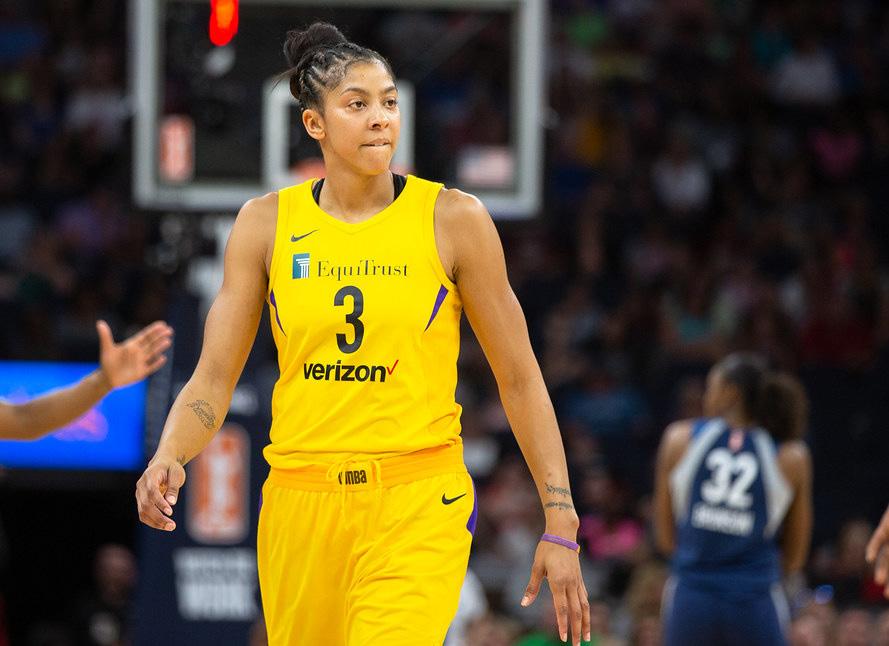
After eight days and more than 100 hours of negotiations, the Women’s National Basketball Association (WNBA) and the Women’s National Basketball Players Association (WNBPA) reached a tentative collective bargaining agreement (CBA) poised to reshape the future of professional women’s sports.
With surging viewership and growing popularity heading into the 20252026 season, the WNBPA engaged in more than a year of intense negotiations before finally reaching an agreement this past week.
The agreement surpasses what any other professional women’s league currently offers its athletes. For the first time, player salaries will be directly tied to league revenue, allowing them to grow alongside the league’s rising popularity. Under the new terms, players will receive 20% of gross league revenue—more than double the previous share of approximately 9%.
Among the many changes, the most significant is the dramatic increase in the league’s minimum salary. Previously set at $66,079, the WNBA minimum will now exceed $300,000—a substantial jump. Additionally, the salary cap will rise to $7 million, up from the previous $1.5 million. As a result, the league’s lowest-paid player this season will earn more than the highest-paid players did in 2025.
The WNBA now becomes the first major professional women’s league to offer a minimum salary at this level. For context, the average salary in the National Women’s Soccer League (NWSL) is around $50,500, while players in the Professional Women’s Hockey League (PWHL) earn approximately $37,131 on average. Prior to this agreement, no professional women’s league compensated its athletes at the level WNBA players are set to receive next season.
On the flip side, the maximum salary will be set at $1.4 million in 2026 and is projected to rise to more than $2.4 million by 2032. Meanwhile, the average salary is expected to reach $583,000 in 2026 and surpass $1 million by 2032.
The new deal also places a strong emphasis on recruitment, with existing rookie-scale contracts set to increase and future rookie deals expected to see significant salary jumps. Notably, the projected salary for the No. 1 overall
pick in 2026 is $500,000. This marks a major step forward in attracting top talent to the league, especially considering that entry-level WNBA salaries were previously barely livable.
Beyond financial changes, the new agreement also addresses quality-oflife benefits. The WNBA will provide housing for all players in 2026, 2027 and 2028, and for players earning $500,000 or less in 2029 and 2030. Additionally, all developmental players will receive housing every year.
The agreement also includes a wide range of additional improvements. Among the most notable are provisions requiring player consent for trades during pregnancy, expanded family planning benefits for players and their spouses or partners and enhanced mental health coverage. It also introduces salary cap exceptions for injured or pregnant players, guarantees league-wide charter air travel and expands team staffing requirements to include greater access to physicians, athletic trainers, strength and conditioning coaches, physical and massage therapists and nutritionists. Additionally, the deal provides a one-time recognition payment for WNBA veterans and retired players based on years of service, ranging from $30,000 to $100,000.
Collectively, these changes address many of the long-standing concerns female athletes have had about pursuing professional careers. By raising the
minimum salary and offering greater job security—particularly through pregnancy protections and family-focused benefits—the league is eliminating trade-offs that players have historically been forced to make.
Looking ahead, the WNBA is set to welcome two expansion teams this year: the Portland Fire and the Toronto Tempo. During negotiations, union leaders encouraged players to enter free agency so they could re-sign under the new CBA and take full advantage of its benefits. The WNBA Draft is scheduled for April 13, with preseason games beginning April 25. As part of the expansion process, the new teams will be able to select players from existing rosters, while current teams can protect up to five players from being drafted.
For many professional female athletes, the figures outlined in this new CBA are almost hard to believe. While male athletes have earned similar— often greater—compensation for decades, this agreement marks a longoverdue shift. It finally recognizes these women for who they are: elite professionals at the top of their sport, now receiving compensation and treatment that reflects their value.
It is safe to say that this new agreement marks a transformative moment for women’s sports. The WNBA has set a new standard, and if the model proves sustainable, it is likely that other professional leagues will soon follow its lead.
Ellie Palaian Sports Editor
Last weekend, Case Western Reserve University delivered a competitive showing at the 2026 NCAA Division III Men’s and Women’s Swimming and Diving Championships, highlighted by multiple All-American performances and a strong individual finish from its men’s team, which placed 33rd out of 46 teams overall at the Indiana University Natatorium in Indianapolis.
CWRU was led by fourth-year swimmer John Drumm, who turned in an outstanding championship across multiple events. Drumm opened the meet by earning Second Team All-American honors in the 500-meter freestyle, placing 16th in the consolation final with a time of 4:29.66. He narrowly missed qualifying for the championship final after posting a school-record time of 4:26.67 in prelims, just 0.11 seconds shy of the top eight. The performance marked his second consecutive All-American honor in the event
and the fifth of his career. Drumm elevated his performance on day three, earning First Team All-American recognition in the 200-meter butterfly. He placed seventh in the championship final with a time of 1:48.68 after swimming 1:47.21 in prelims. The finish secured the sixth All-American honor of his career and tied him for sixth-most in program history.
Continue reading on page 11
Abhishek Nambiar Copy Editor
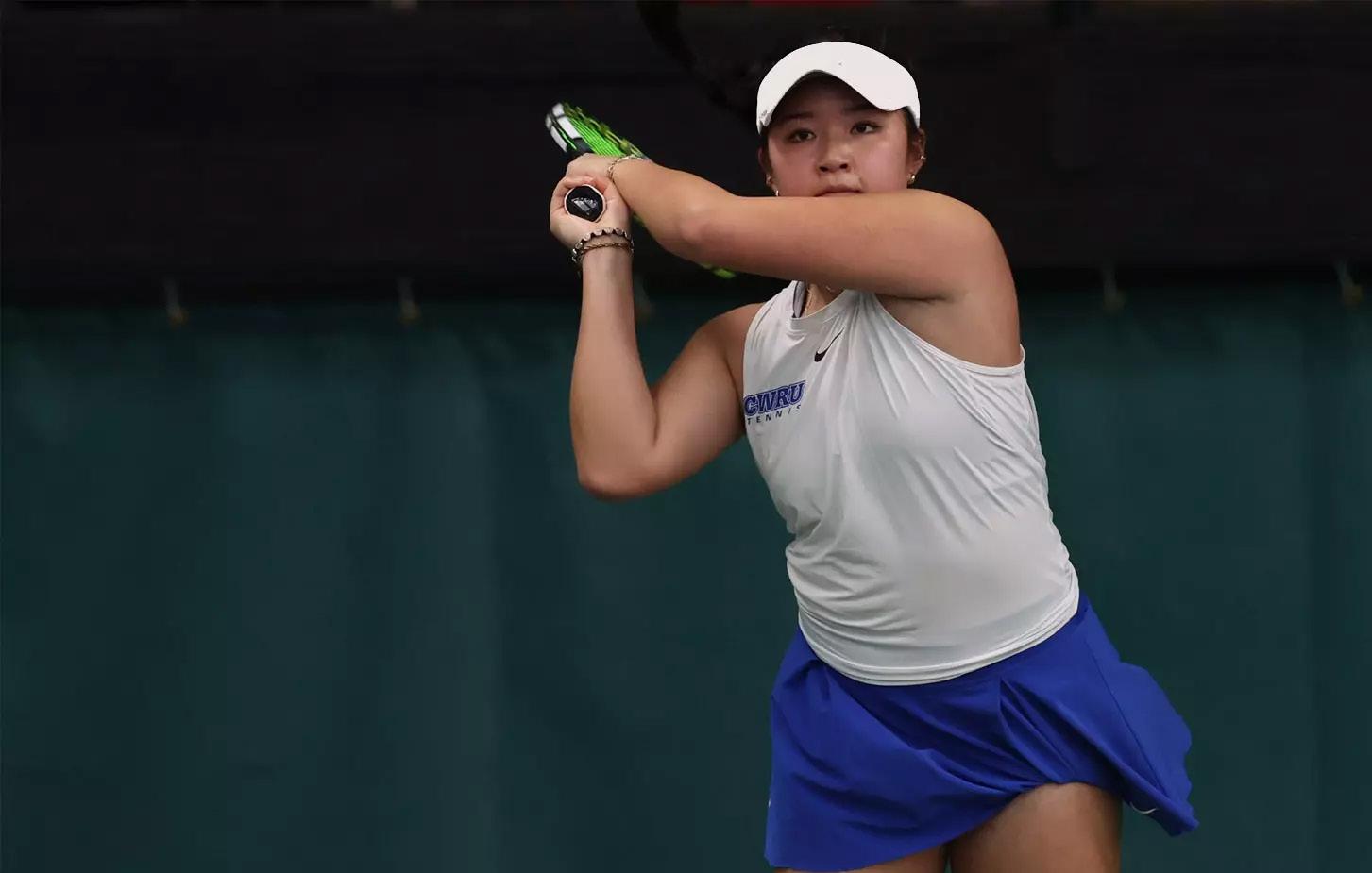
Over the past weekend, the Case Western Reserve University women’s tennis team took part in the Natalie Pitts Memorial Invitational in Newport News, VA, facing a challenging slate of opponents across three days of play. The team split their three contests at the meet, defeating host Christopher Newport University but losing to Williams College and Johns Hopkins University.
The Spartans opened the meet on Friday, March 20 against 23rdranked Christopher Newport, beginning with the doubles matches. The pairs of fourth-years Katalina Wang and Ellior Rose, and first-years Gabby Lee and Trisha Vellanki secured wins at their respective courts, allowing CWRU to take an early 1-0 lead in the contest.
Singles competition showcased the Spartans’ resilience in tightly contested matches. Wang set the tone as she decisively defeated her opponent, while first-year Tara Markovic and Lee followed suit to fend off a late push by the Captains. The contest ultimately came down to the final match, where Lee edged her opponent in a third-set tiebreak to secure a 4-3 victory for her team to end day one of the meet.
Day two presented a tougher challenge as CWRU faced No. 20-ranked Williams. In the doubles, Wang and Lee emerged victorious. However, their teammates fell short at the other two courts, securing a point for Williams as the two teams entered singles competition.
The Ephs took a 3-0 advantage after Markovic and Wong fell in their
at Bob Kahn Invitational
Women’s Tennis
singles, but a win by Wang allowed for a brief stall in Williams’ momentum. This would be short-lived, though, as Lee and Vellanki fell short in their contests, and a three-set victory by Rose to conclude the day was not enough to overcome the Eph advantage. Ultimately, Williams achieved a 5-2 win in their first-ever meeting with CWRU.
Day three saw the Spartans face their toughest competition yet at the meet as they went head-to-head against 7th-ranked Johns Hopkins. The doubles matches would see mixed results again for CWRU. Rose and Wong secured a victory, the second of the three doubles matches to finish.
The others saw the Spartans narrowly fall to their Blue Jay counterparts.
In singles, Johns Hopkins proved difficult to overcome. Wang continued to stand out, duking it out with her opponent until the very end and coming out successful in the last of the singles matches to conclude. All five other matches saw the Spartans give their best fight but ultimately fall short against the Blue Jays, with CWRU falling 6-1 in their final contest of the invitational.
Though the results this past weekend may have been mixed, the team will now turn their focus towards regrouping and preparing for the next stretch of their schedule. They will look to bounce back on Saturday, March 28 as they travel to Lima, Ohio to take on Ohio Northern University for their final away meet of the season.
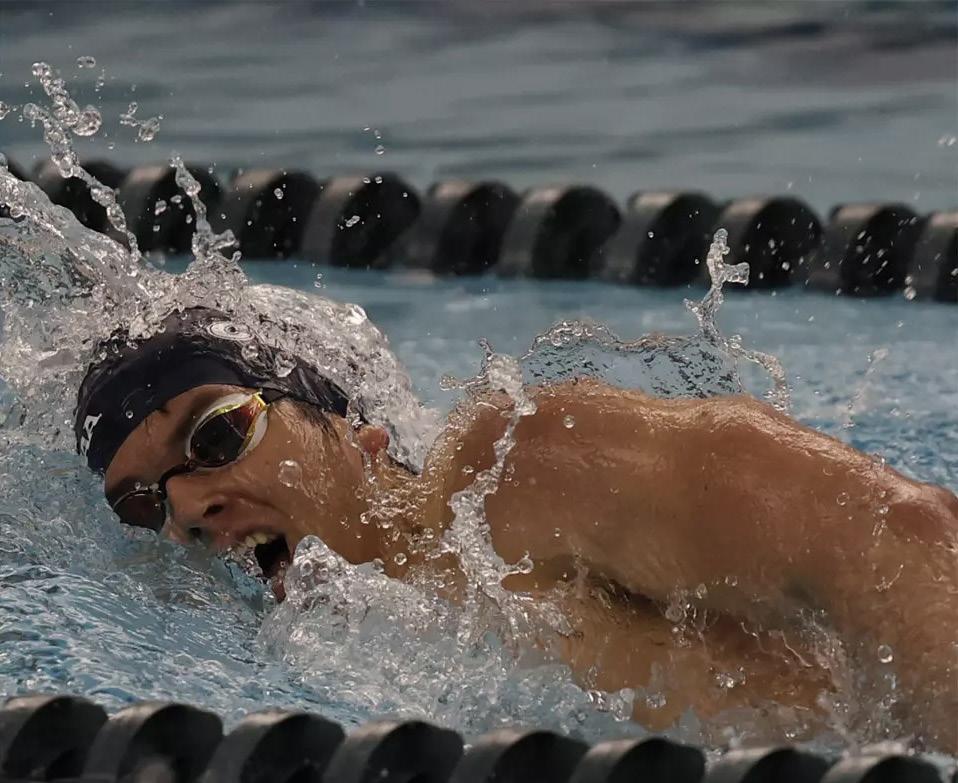
In addition to athletic accolades, fourth year swimmer William Froass recently won the 2026 Elite Scholar-Athlete Award for highest GPA in the Division III NCAA conference. Courtesy of CWRU Athletics
First-year diver Ryan Wells also made an immediate impact for the Spartans. Wells earned Second Team All-American honors in the 3-meter dive, placing 14th with a score of 461.05. He advanced to the consolation final after scoring 454.25 in prelims. Wells later added a 19th-place finish in the 1-meter dive with a score of 404.95.
His performance marked the first All-American recognition of his career and placed him among a select group in program history to reach the top 16 in the 3-meter event. Additional contributions came from fourth-year swimmer Mason Bencurik, who placed 29th in the 200 freestyle with a time of 1:39.35. While the men’s team relied
heavily on individual efforts, their consistent scoring throughout the meet helped them climb the standings, finishing with 22 team points.
On the women’s side, fourth-year swimmer Claire Kozma delivered one of the most decorated performances of the meet for CWRU. Kozma earned multiple All-American honors, including a ninth-place finish in the 200-meter freestyle (1:50.07), securing Second Team recognition. She also contributed to a 13th-place finish in the 200-meter freestyle relay alongside secondyear Marina Oria, first-year Sohalya Rawlins and fourth-year Eliza Dixon.
Kozma added another Second Team All-American honor in the 200-meter butterfly, finishing 13th with a school-record time of 2:02.66. Across the meet, she brought her career total to 11 AllAmerican honors, solidifying her place among the program’s all-time greats.
Relay teams also contributed key finishes, including the 800-meter freestyle relay and 200-meter medley relay, both competing against deep national fields.
Overall, CWRU demonstrated depth across both swimming and diving, with standout performances from veteran leaders and emerging first-year talent. The combination of record-breaking swims, All-American honors and national-level experience provided a strong conclusion to the season and a promising outlook for the program’s future.
Nobby’s Ballpark, noon & 3:30 p.m. vs Brandeis 3/29
Nobby’s Ballpark, 11 a.m.
vs Denison 3/26 vs Muskingum 3/28
Mather Park, 1 p.m. & 3
Vote in the May primary to decide who makes the November ballot.
Registration Deadline in OH: April 6
Early Voting: April 7 - May 4
Election Day: May 5