CWRU begins historic renovation of Adelbert Gymnasium
Ellie Palaian Sports Editor
At the beginning of March, Case Western Reserve University began renovations on its historic Adelbert Gymnasium. The renovation is expected to take approximately 14 months, with completion scheduled for May 2027.
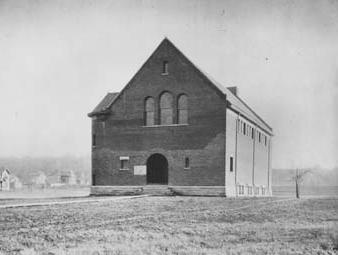
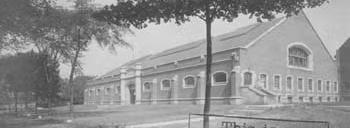
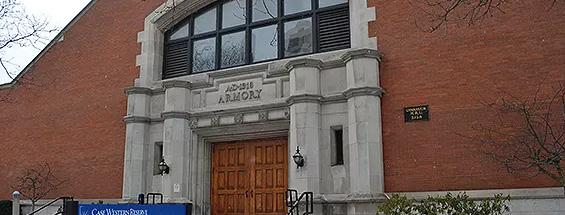
Opened in 1888, Adelbert Gymnasium was later expanded with an addition constructed between 1918 and 1919. The building was originally intended to serve as an armory during World War I, but construction was completed after the war ended. Over the following decades, the facility served as the home court for the Western Reserve Red Cats for more than 50 years and has periodically hosted Throwback Weekend basketball games for CWRU. The most recent renovation occurred in 2013, when the court was refurbished.
Former CWRU alumnus and trustee Fred DiSanto, along with his wife and their son and daughter-in-law, donated $5.9 million to support the renovation. In recognition of the gift, the facility will be renamed DiSanto Arena and will become the new home court for both the men’s and women’s basketball teams.
“Four varsity programs use Horsburgh [Gymnasium] for overlapping seasons: men’s and women’s basketball, wrestling and volleyball,” James C. Wyant Assistant Vice President Director of Athletics and Chair of the Department of Physical Education TJ Shelton said. “The renovation will provide an opportunity to move the basketball programs to DiSanto Arena for practices and home games.”
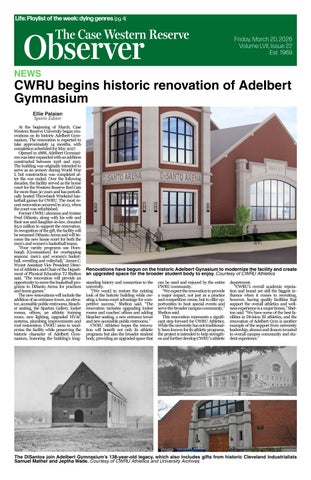
The new renovations will include the addition of an entrance tower, an elevator, accessible public restrooms, bleacher seating, the Spartan Gallery, locker rooms, offices, an athletic training room, new lighting, upgraded HVAC systems, plumbing improvements and roof restoration. CWRU aims to modernize the facility while preserving the historic character of Adelbert Gymnasium, honoring the building’s long-
standing history and connection to the university.
“[We want] to restore the existing look of the historic building while creating a home-court advantage for competitive success,” Shelton said. “The renovation includes upgrading locker rooms and coaches’ offices and adding bleacher seating, a new entrance tower and new accessible public restrooms.”
CWRU Athletics hopes the renovation will benefit not only its athletic programs but also the broader student body, providing an upgraded space that
can be used and enjoyed by the entire CWRU community.
“We expect the renovation to provide a major impact, not just as a practice and competition venue, but to offer opportunities to host special events and serve the broader campus community,” Shelton said.
This renovation represents a significant step forward for CWRU Athletics. While the university has not traditionally been known for its athletic programs, the project is intended to help strengthen and further develop CWRU’s athletic
department.
“CWRU’s overall academic reputation and brand are still the biggest influence when it comes to recruiting, however, having quality facilities that support the overall athletics and wellness experience is a major bonus,” Shelton said. “We have some of the best facilities in Division III athletics, and the renovation of Adelbert Gym is another example of the support from university leadership, alumni and donors invested in overall campus community and student experience.”
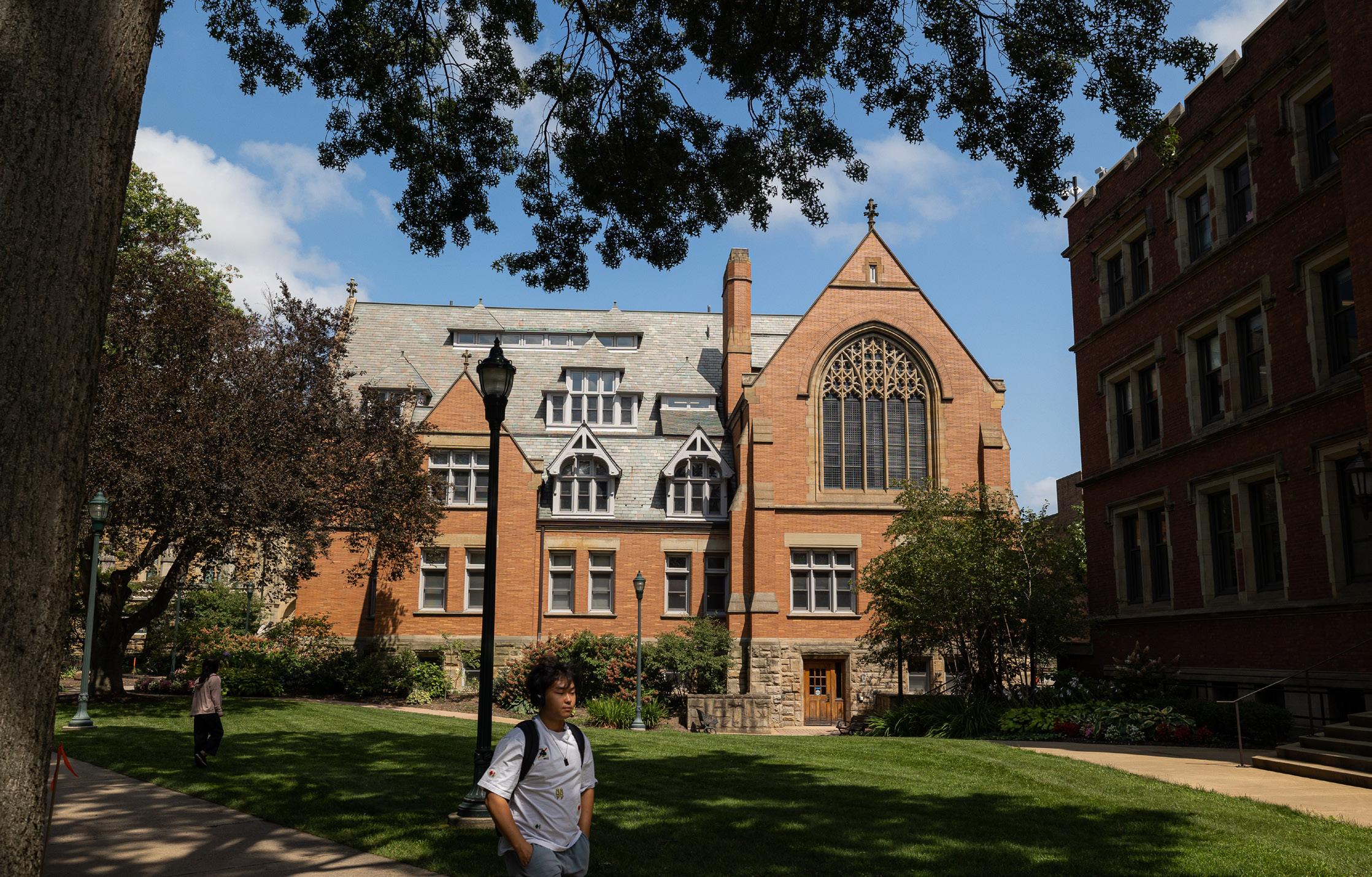
Renovations have begun on the historic Adelbert Gynasium to modernize the facility and create an upgraded space for the broader student body to enjoy. Courtesy of CWRU Athletics
The DiSantos join Adelbert Gymnasium’s 138-year-old legacy, which also includes gifts from historic Cleveland industrialists Samuel Mather and Jeptha Wade. Courtesy of CWRU Athletics and University Archives
USG focuses on new initiatives this semester
Alyssa Wang News Editor
At Case Western Reserve University, the Undergraduate Student Government (USG) has focused this semester on increasing transparency, improving communication with students and advancing several campus initiatives.
According to David Ampomah, USG’s Vice President of Communications, one of the organization’s primary goals has been making its work more student-centered.
“Our role is really just to advocate for students and to improve student life as much as possible,” he said. “A big part of that is bridging the gap between students and administration.”
To achieve this, USG has expanded its outreach efforts, particularly through social media and email updates. Compared to previous years, the organization has increased the frequency and consistency of its posts to improve student engagement. The communications team has also introduced feedback forms and initiatives like “Feedback Fridays,” allowing students to easily share concerns and suggestions.
Beyond communication efforts, USG’s other committees have implemented other changes on campus. The Student Life Committee, for example, worked to improve the mobile ordering app by adding a map that shows which places accept CaseCash. The update also includes a reporting form for students to notify administration if vendors are not accepting CaseCash as expected.
Other initiatives have focused on student support and accessibility. A winter clothing drive aimed to assist international students who may not have access to winter gear. Meanwhile, concerns about campus Wi-Fi and IT services have been raised to university officials through the Academic Affairs
Committee.
While some initiatives have already been implemented, others are still in progress. The Diversity and Inclusion Committee is currently working on a mentorship initiative that would connect undergraduate students with mentors from CWRU’s graduate schools. Additionally, members are exploring the creation of an ad hoc committee focused on social issues such as race, sexual assault and broader campus climate concerns.
Despite these ongoing efforts, Ampomah wishes that USG’s Communication Committee hosted more events for students to connect with each other.
“We’ve been pretty good with initiatives and getting our work out there,”
Pages to live by
Dylan Pinkins Contributing Writer
Between classes at Case Western Reserve University, third-year student Joy On finds a sliver of
time where she refuses to surrender to her phone. She settles into any comfortable place she can find, pulls out her electronic reader and disappears into her book. Around her, students scroll, swipe and tap. On does not look up.
Ampomah said. “But I’d say, on my part, we could have held more events and been more involved in the community in that type of way.”
As a student-led organization, USG members must balance academic responsibilities with representative duties, making it more difficult to effectively carry out changes. Additionally, while administrators are often receptive to student input, financial considerations can affect whether proposals are ultimately accepted.
“It really just depends on the administrator,” Ampomah said. “They’re a lot more receptive toward the [things that we’ve done], but it depends on what it is that they are trying to get done.”
USG emphasizes their collaboration with university administration. Repre-
“I’ve always liked reading,” On said. “I don’t remember a time when I didn’t.”
One of her oldest memories is of her curled up with her father, exploring Narnia through C.S. Lewis’s “The Lion, the Witch and the Wardrobe.” Since then, reading has been a major part of her life. At her local library, she once checked out 23 books in a single visit and returned them within a week. She saw it as a challenge, and it was.
For On, and many students like her, the library was never just a building. It was a sanctuary. It was a place where she could go to travel to an endless number of worlds, learning and growing with every page turned. It also acted as a system of reward, belonging and becoming. On’s school ran a yearly contest tracking who could read the most books, and she won. She loved reporting her progress to her teachers, stacking up written summaries to prove she had been there, inside those pages.
“People liked me reading, and I liked reading,” On said. “The net positive was: keep reading.”
But as she grew older, the stakes grew higher. As academic pressure weighed on her in high school, she recalled reading less during her junior and senior years. In college
sentatives meet regularly with administrators and invite campus leaders to attend general assembly meetings. In fact, on Mar. 17, USG hosted a general assembly with CWRU Chief of Police Paul Owens and Chief of Staff Katie Broncato to discuss upcoming security changes and different steps to improve student safety on campus.
Looking ahead, USG plans to release a comprehensive update outlining everything that they have implemented this past semester. The organization is also preparing for upcoming spring elections, encouraging students interested in advocacy and leadership to get involved.
“[We want] people to know that we are actually here to represent them,”Ampomah said.
this trend continued. With fewer blocks of time, reading began to fade because she felt like she didn’t have time for it anymore. The cognitive load of university classes and extracurriculars made her want to just pick up her phone and doomscroll like many others.
But reading is not just a part of On’s life. It’s a part of who she is. She began to find time by any means necessary: walking home, while eating, in the early mornings before class or at night even when she should be sleeping.
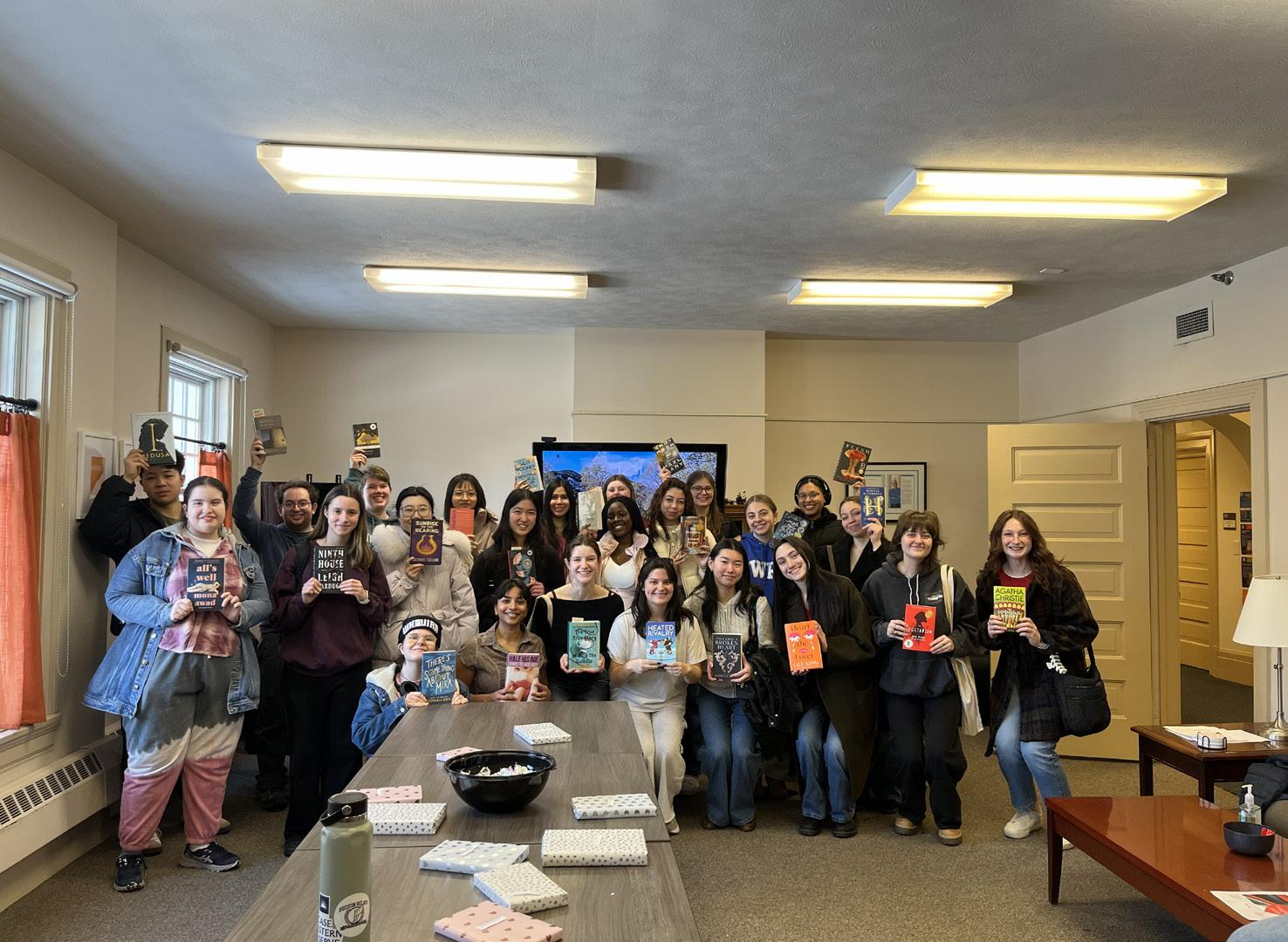
Now, On sits as the president of Cracking The Case, a CWRU book club. She helps create a sanctuary for students like her, just like the library once was. In Guilford House, students can hear them as soon as they walk through the door as club members engage in passionate, respectful conversations. What the club members found is that they share many similar interests beyond reading, and many have become close friends. A love for reading acts as a string of fate, weaving together like-minded people until they find one another.
Continue reading on page 3
During this past year, USG has been trying to improve the student experience through their initiatives, and look to increase communication between the general student body and the adminstration. All photos courtesy of Observer Archives
Joy On shares her experience as the president of CWRU’s mystery book club “Cracking The Case,” emphasizing how finding a community of readers has helped her to stay off her phone and do what she loves. Lucas Yang/The Observer
Pages to live by from page 2
“Being a part of a club helps force me to keep my passion,” On admits. Structure, she has learned, is not the enemy of love. Sometimes it is the condition for it. This structure can be observed far beyond reading, but in all aspects. Fourth-year student and avid reader Chloe Chen describes how she structures her free time.
“If I have the free time, I’d rather be learning and being productive,” Chen said. “I don’t let TV or social media overwhelm my life.”
Chen keeps a strict rule of only
40 minutes of Instagram time a day and does not use TikTok. She hides her phone in another room when she reads to avoid distractions. Fourthyear student Veronica Maciag takes a similar approach, turning on Do Not Disturb to stay focused. Despite balancing a triple major, double minor and part-time jobs, Maciag still finds time for both reading and a vibrant social life.
While Maciag juggles more work than that of many students, it seems possible through reading. Research
suggests that deep reading stimulates the brain to build a greater sense of empathy, attention and critical thinking skills. On, who plans to become a therapist, speaks from her experiences.
“Reading a lot of books is very important for psychology,” On said. “It teaches empathy. It helps you develop your own philosophy of life.”
Chen, providing another angle, puts it more plainly: reading boosts attention span, media literacy and the ability to sit with something long
enough to understand it.
“There’s always time to read, even if it’s just ten minutes every night,” Chen said. Now, back between classes, On finishes her chapter before her next lecture begins. She closes the e-reader, gathers her things and merges into the flow of students meandering the hallways. The story she’s reading is one droplet in an ocean of stories that defines her life for the better. Maybe there’s something to read after all.
CWRU introduces a new medical anthropology course
Alyssa Wang News Editor
At Case Western Reserve University, most courses teach students about complex social issues through classroom lectures and guided readings. However, a new anthropology course introduced last fall takes a new approach.
Anthropology 325/425, developed by anthropology professor Lee Hoffer, places students directly in a community-based research setting. Instead of relying on textbooks alone, nine students sit across from members of the Cleveland community, listening to stories of lives shaped by addiction and their experiences.
Hoffer, a medical anthropologist whose research focuses on illegal drug use and substance use disorder, created the course by combining key elements of his existing classes, ANTH 335: Illegal Drugs and Society and ANTH 339: Ethnographic and Qualitative Research Methods. He recognized that while undergraduate students want to get involved in research, opportunities in his field are often limited to graduate students.
“When you read about qualitative and ethnographic research methods, the ones that medical anthropologists use, it’s very hard to get a sense of them from books and lectures,” Hoffer said. “This was a way to get students engaged with the actual process of doing a community-based research study.”
The course is primarily geared toward medical anthropology majors who have already taken one of Hoffer’s prerequisite classes. Most participants are seniors, a decision Hoffer made intentionally due to the nature of the work.
“Although there is one junior in the class, I mainly selected seniors because they are going to have to interact with people that are actively using illegal drugs,” Hoffer said. “Seniors are a little bit more mature, and they’ve had a little bit more experience doing these kinds of things.”
Students conduct their research in partnership with a local syringe services program (SSP), located about a mile from campus, who Hoffer has collaborated with since 2008. At the site, they interview individuals who are actively using drugs, contributing to a broader effort to improve community health services.
Unlike traditional courses, ANTH 325/425 requires students to participate in every stage of the research process. They develop interview questions, interview each
of the individuals at the center, collect and analyze data and present the information to improve the exchange’s services. However, before that process can begin, Hoffer must develop a research protocol, obtain approval from the Institutional Review Board (IRB) and coordinate with the community organization.
“The big difference between this and other classes is that we’re actually participating in all elements of the research as opposed to just reading about it,” Hoffer said.
Because the project is taking longer than Hoffer originally expected, the course ultimately evolved into a two-semester experience. In the fall, students were part of a formal class and collected data, conducting approximately 24 interviews over a three-week period. In the spring, the class transitioned to an independent studies format where they began analyzing data, writing a final report and preparing presentations for both the class and the community partner.
Fourth-year medical anthropology and political science student Ellie Musser describes her experience in the class.
“There’s really one major project: an evaluation of the syringe service program (SSP) at The Centers, which we did by going to the SSP in person, interviewing folks who use it about their experience
with it, then analyzing the themes of what the service is doing well or can improve,” she said. “Now, we’re writing a final report of our findings to show to The Centers. Talking to SSP staff and clients was definitely my favorite part because I learned a lot about very current, local drug trends and Cleveland harm reduction.”
Despite its benefits, the course presents logistical challenges. Delays in IRB approval pushed back the research timeline, forcing students to adapt quickly once they were able to begin interviews. Additionally, coordinating schedules for nine independent studies in the spring semester has proven difficult.
Still, the hands-on nature of the course offers skills that extend beyond traditional classroom learning. Students conduct interviews, navigate complex emotional situations and utilize harm reduction practices in a real-world setting.
“Doing research isn’t a linear process,” Hoffer said. “Applying the methods and coordinating all the different things that we had to do before, after and during the interviewing process was tricky. But, actually doing a community-based project where our project is going to help the syringe exchange improve their services is something a lot of students appreciate because
that type of engagement is hard to come by.”
Beyond technical skills, the course also exposes students to the human side of substance use disorder.
“Most people that are using illegal drugs and have substance use disorder are in tough places, and their stories are complicated,” Hoffer said. “That’s not an easy lesson for students to learn outside of talking to the people themselves. It brings the students face to face with the challenges of substance use disorder and [allows them to help] reduce the public health risk of those activities in a very direct way.”
Hoffer hopes to continue offering the course in future years, potentially formalizing it as a two-semester sequence.
“There’s a lot of opportunities for Case students to get involved in research, but that is usually lab work,” Hoffer noted. “You get an opportunity, and the university helps fund the labs to engage students. That’s not offered as much in the social sciences, so this is the first class that I know of that does that in the social and behavioral sciences. The idea of the class is to give students direct exposure to some of the challenges in the everyday lives of people affected, and [I will] hopefully offer this next year to a new crop of students.”
Anthropology professor Lee Hoffer created the Anthropology 325/425 course to get undergraduate students involved in research in partnership with a local syringe services program. Courtesy of Matt Shiffler/Case Western Reserve University
Bruno Mars’ ‘The Romantic’: a journey of love complete with all its twists and turns
Riya Kulkarni Copy Editor
Bruno Mars’ newest album, “The Romantic,” released on Feb. 27 with nine short but punchy tracks and a total run time of 31 minutes. Its lead single “I Just Might” released Jan. 9 and, as of print, has spent nine weeks on the Billboard Hot 100. The album is his first solo album after the 2016 release “24K Magic,” and it too has risen to the top of the charts, a feat only previously observed with his 2013 album “Unorthodox Jukebox.”
“The Romantic” transports you to the dance floor where it's easy to imagine a lively atmosphere, bright colors and feelings. The album is aptly named, with hopeful romantic undertones, the sort of slow love accompanied by pursuit and hope through all of love’s twists and turns. Each song is equally deserving of space on the album, and I see no possible skips. In its brevity, Mars transports the listener into his romantic world, fitting perfectly into the legacy built by songs such as “Count on Me” or “Marry You.”
The first track and second single “Risk It All” immediately brought flashbacks to “Grenade.” Mars is no longer resentful like he was in “Grenade,” and instead is pining after his lover, hoping to win over the person of his desires. This yearning is so strong that he is ready to do anything, even put his life on the line to prove his love. “I would run through a fire…Just to be by your side,” Mars claims, and he continues to list the risks he would take throughout the song. Despite the upbeat accompaniment provided by the mariachi style music, the song seems to be peaceful, a soft hopeful melody in the quest to win love. These musical moods carry throughout the entire album, next seen in “Cha Cha Cha,” but “Risk It All” is much more
upbeat and ambitious, fitting to the name of the song. It stands as a song that one can definitely dance to.
The strong opening is followed by the strong lead single “I Just Might,” and if any listener is not already on the dance floor, they are dragged there. Mars refers to the pursuit once more, hoping to find someone who
songs such as “Just the Way You Are.” Mars is in a mode of a worshiplike love, insisting that his lover has been blessed by God with how perfect she is, that her mere presence is a miracle that “can turn that water into wine.” He concludes that his lover’s creation was a result of God picking favorites.
pride for love and the work it takes to maintain a relationship.
“Why You Wanna Fight?” cap scribed in “Risk it All” and previously scorned in “Grenade,” yet motivations have changed. Mars begs for the end of a fight, ready to apologize
ness, to “make it right.”“Why You Wanna Fight?” shows progression in Mars’ understanding one means. It shows the shedding of
Playlist of the week: dying genres
Penelope Cloonan
Life Editor
While it may not seem like it, opera does still have a dedicated fan base. In light of Oscar nominee Timothee Chalamet’s recent comment, “I don't want to be working in ballet or opera where it's like, ‘Hey! Keep this thing alive, even though no one cares about this anymore,’” it may be time for a reminder. Allow me to introduce you to four popular classic operas, ranging from absurd comedies to devastating tragedies. If the Italian language barrier is a concern, worry not, many listeners don’t know Italian at all. Some are written in English, with a decent amount in German or French, but still, the immediate beauty of opera is that you don’t always have to listen to the lyrics to understand the story. For the songs selected, you can just listen to feel. May it be an evil monologue or confidence in one’s own intelligence, opera can elicit powerful emotions wonderfully. Take this as a taster for those who might want to get into a genre (and maybe save 14 cents of viewer-
ship).
“I Am the Very Model of a Modern Major-General” from “The Pirates of Penzance”
“I Am the Very Model of a Modern Major-General” from “The Pirates of Penzance” is about as entry friendly as it gets for opera, or rather operetta (comic opera). Though the operetta was first staged in 1879, it has been on Broadway as recently as 2025. It is fully in English and just plain old funny. This song is my personal favorite, highlighting pseudo-intellectualism that comes with being a (at the time) “modern” major general. The song is upbeat, undeniably catchy and tells a concise story about a now outdated issue that you can laugh at.
“Libiamo ne' lieti calici” from “La Traviata”
“La Traviata” is an opera about a young, dying Parisian woman, Violetta, who finds herself in a starcrossed lovers plot. She leaves him, only to reunite when she is on her deathbed. This is one of the more famous songs from Act I, “Libiamo ne' lieti calici,” (also called “Brindisi”) which roughly translates to “Let’s drink and celebrate!” The
song is about exactly what you’d think, Violetta and her lover go to a bar to drink and be merry. It’s another wonderfully upbeat song that can put a pep in your step, even if you cannot speak Italian.
“La donna è mobile” from “Rigoletto” Upon first listen, you may think that this is just the Groupon jingle— the beauty of public domain music—but it is worth giving the whole opera a listen. The titular character, Rigoletto, is a jester who serves the insidious Duke of Mantua. The pair is cursed after the Duke seduces a young noblewoman, and Rigoletto can do nothing but watch as his daughter falls victim to the Duke’s proclivatives. It is a heartwrenching and a keystone tragic opera.
“La donna è mobile” roughly translates to “The Woman is Fickle.” The Duke of Mantua plots to sleep with a beautiful girl, Gilda, he’s seen in church, all while having an affair with another woman. In the song, his courtiers kidnap Gilda, and he rapes her. The audience knows that Gilda is Rigoletto’s daughter, but the Duke does not. You can only listen in horror as the curse comes to
“On My Soul” picks up the pace once more, with a faster and more lively tune. Mars pours promises of a love like one never seen before, ready to swear it on anything, including his soul. “Something Serious” continues this pace and energy, the lyrics insisting this love would be the most real love, which is why he should be with his lover.
“Nothing Left” completely changes the mood that persisted throughout the beginning of the album. Mars describes the feeling of loss as he feels his lover pull away, explaining that “the fire don't burn like it used to,” leaving him “reaching out… With nothing left to hold on to.” Feelings of loss lie right below the surface of the rhythm and grandness of the song.
The album concludes with “Dance With Me,” with a hook reminiscent of “Die With a Smile.” The same feeling of loss continues in this song, with a lingering hope that the love could rekindle once more over a dance, one last dance. The song maintains a hope that a dance is all that is needed, and the pair “will fall in love all over again.” The album concludes with no evidence of reconciliation, the bittersweet moment of two lovers drifting apart.
It is clear that “The Romantic” displays all of the aspects of love— the hopeful, happy and tumultuous—in a journey in and out of love. Perhaps a story was not the intent, but one was still told through each of the songs, with no one leaving the dance floor.
Bruno Mars's latest album takes you on a journey of love full of twists, turns and more than enough grooves to get you on the dance floor. Courtesy of John
fruition and an innocent woman is harmed.
“Queen of the Night’s Aria” from “The Magic Flute” In a change of pace, “The Magic Flute” is a German piece. “The Magic Flute” follows Prince Tamino and the bird-catcher Papageno as they try to rescue Pamina, daughter of the Queen of the Night from Sarastro. They eventually discover that Sarastro was good all along and help Pamina be free. “Queen of the Night’s Aria” is a fairly famous piece, with a portion of the aria where the Queen quickly navigates high notes making the rounds on Tik Tok every few months.
The song sees the Queen reveal her true nature and turn against her daughter, a suspenseful plot that can, on some levels, transcend language barriers. If any of this sounds appealing, there are movie adaptations galore for this opera. The best one is generally agreed to be “The Magic Flute” (1975), so I would start there.
Continue reading on page 5
Esparza/Atlantic Records via Hits
Playlist of the week from page 4
“Largo Al Factotum Della Cit-
tà” from “The Barber of Seville”
“The Barber of Seville” is another comedic opera for the ages, all in classic Italian fashion. Count Almaviva wants to woo Rosina, but must first get through her guardian, Dr. Bartolo, who wants to use her marriage as a pawn for money. The Count
and barber Figaro plot to break into Rosina’s prison of a home, eventually setting her free and allowing for her marriage to the Count. “Largo al factotum della città” opens the opera and serves as Figaro’s introduction. He sings of his great prowess as a barber and how busy he is because the people of Seville need him des-
perately. It’s a fun song that opens the opera with a bang and encourages you to keep the album going.
“The Barber of Seville” also inspired “Sweeney Todd: The Demon Barber of Fleet Street,” which was a 2007 film and frequent feature on Broadway. If you want a truly absurd story, and love musical theater, this is the opera for you.
A few more songs to add a little more culture into your life: “Che gelida manina” from “La Bohème” which inspired “Rent”; “O mio babbino caro” from “Gianni Schicchi”; “Un bel dì vedremo” from “Madama Butterfly”; “Dôme épais le jasmin” from “Lakmé.”
Oscars 2026: and the Academy Award goes to … who you’d expect
Penelope Cloonan Life Editor
Riya Kulkarni Copy Editor
The 2026 Oscars came and went with minimal fanfare. For the most part, the Oscars were predictable. This year, all Oscars voters were required to watch the entirety of each film in a category, or they forfeit their voting rights for that category. With the Oscars increasingly getting more and more criticism for being insular and not reflecting the views of the public, the voting policy change was made in an effort to do just that. The viewership declined nine percent from last year with a total of 17.9 million viewers, perhaps due to a conflict with the semifinal game of the World Baseball Classic after shifting the date to avoid conflict with the Winter Olympics.
“One Battle After Another” took home the most awards of the night with six, including Best Picture (Adam Somner, Sara Murphy, Paul Thomas Anderson), Best Director (Paul Thomas Anderson), Best Supporting Actor (Sean Penn), Best Adapted Screenplay (Paul Thomas Anderson), Best Film Editing (Andy Jurgensen) and Best Casting (Cassandra Kulukundis).
This year, the Academy introduced a new award for “Best Casting.” While some critics have called their casting uninspired after the award was given out, in the inaugural year, no one really knew what to expect. Sean Penn remained absent from the award show to spend time on the ground in Ukraine, echoing his absence from the BAFTAs and SAG Awards. Director Paul Thomas Anderson won his first
three Oscars after 14 nominations spanning back to 1998. “One Battle After Another” has had awards buzz throughout the season, and while not the exact audience favorite, its sweep is not entirely unexpected.
“Sinners” set the record for most Oscar nominations by a single film with 16 nods across a wide range of categories. “Sinners” took home the Oscars for Best Actor (Michael B. Jordan), Best Original Screenplay (Ryan Coogler), Best Cinematography (Autumn Durald Arkapaw) and Best Original Score (Ludwig Göransson).
The win for Michael B. Jordan marks his first nomination and first win at the Academy Awards. Ryan Coogler also won his first Oscar and is the second Black man to win the Oscar for
Best Original Screenplay after Jordan Peele’s win for “Get Out” in 2018. The award for Best Original Score to Ludwig Göransson was well deserved, but did seem like a consolation prize after losing with “I Lied to You” for Best Original Song to “Golden.” Any other year would have been a definite win for the song. Göransson’s win here marks his third win for Best Original Score, a category he has never lost.
In the only shocking upset of the night, “Marty Supreme” took home no academy awards. Even after an expansive Oscar marketing scheme including songs, the color orange and odd product placement, it wasn’t enough. For those leaping to blame Timothée Chalamet’s comments about opera and ballet, voting closed before. Have no fear, the moment did not go undiscussed at the ceremony.
The “Sinner”’s cast brought out retired ballerina Misty Copeland for their performance of “I Lied to You,” and host Conan O’Brien peppered in jabs. The Oscar-bait of an unlikeable extraordinary man simply did not work in the creative team's favor.
“Frankenstein” (2025) received nine nominations, but was not the favorite for many categories aside from the visuals. They received the awards for Best Costume Design (Kate Hawley), Best Makeup and Hairstyling (Mike Hill, Jordan Samuel, Cliona Furey) and Best Production Design (Tamara Deverell, Shane Vieau). This was well deserved from the immense detail that was used to construct the many unique costumes, as well as the intricacy of the set design.
Of all of the expected wins, “Golden” from “KPop Demon Hunters” won Best Original Song (EJAE, Mark Sonnenblick, Joong Gyu Kwak, YuHan Lee, Hee Dong Nam, Jeong Hoon Seo, Teddy Park) as well as Best Animated Feature Film (Maggie Kang, Chris Appelhans, Michelle L.M. Wong), beating out major Pixar and Disney projects. Midway through
their acceptance speech, the cast was stopped from finishing their speeches with music and a commercial break.
“One thing, as we post mortem for next year, will be to look at how we’re handling speeches," said Executive Vice President of Unscripted and Alternative Entertainment at Walt Disney Television Rob Mills. The cast finished giving their thanks in the pressroom after the program.
“Hamnet” is what you can consider stereotypical “Oscar bait,” which refers to movies made to appeal to voters, not audiences. Critics expressed concern with the release date being later in the year and overly emotional and heavy, hitting in the sweet spot of awards season and voters' hearts. The voters also tend to enjoy movies about artists, which Paul Mescal’s “Shakespeare” is, as they see the win as a win for their people. “Hamnet” took home one win with eight nominations, Best Actress (Jessie Buckley, the first Irish winner of the award). This race did have some contention, with Buckley and Teyana Taylor volleying favor throughout the awards season, but ultimately, Buckley won out.
The title of Best Supporting Actress went to Amy Madigan, who played Aunt Gladys in “Weapons.” The award was not without competition, as she was nominated alongside Taylor from “One Battle After Another,” Golden Globe winner Wunmi Mosaku from “Sinners”, Elle Fanning and Inga Ibsdotter Lilleaas from “Sentimental Value.” This win, along with the “Sinners” nods, do show a growing recognition for horror movies in the Academy. It has been speculated that this change may be due to the voting change. It will be interesting to see how the change to voting policy continues to impact Oscar wins going forward, but this year, it is hard to see its impacts. Next year will see interesting players such as “The Drama,” “Project Hail Mary,” “The Odyssey" and “Wuthering Heights.” Only time will tell.
This year represented a very typical year for the Oscar's with many films that were expected to win taking the awards they were owed and viewership being down as compared to previous years.
Courtesy of Brianna Bryson/Getty Images
Fun
You could have been a child prodigy too
Laszlo Polgar, a Hungarian psychologist, believed that the key ingredient to producing a prodigy required a child to be rigorously trained in a specific field starting at an early age. To test out this unorthodox parenting technique, he introduced the rules of chess to his three daughters: Susan, Sophia and Judit Polgar. Polgar started training 4-year-old Susan, and her sisters took up the same game after observing the intense studying Susan underwent. Their childhood was planned around the 64-square board game under the close instruction of their father. These efforts paid off with all three sisters dominating international tournaments with perfect scores during their adolescence, eventually leading to Susan being named the first woman grandmaster—the highest honor one can earn in the chess world—at age 21. Judit earned the same title at only 15 in 1991. While their accolades are impressive, this raises the bigger question of whether intentional practice in a nurturing environment can transform any child into a prodigy. Did Laszlo Polgar strike lucky with three daughters who were genetically predisposed to chess?
In the Polgars case, prodigies seemingly were made, not born. In other words, if Laszlo had not devoted his time and resources to training his daughters in chess, their names would have gone undiscovered in the chess world. Thus, it is vital to consider the possibility of genetic advantages that make children more apt to learning certain skills at the adult level. Both working memory and the innate drive to learn, also called “rage to master,” are two characteristics of prodigies that are proven to have a genetic basis. A 2014 study done on 18 prodigies in various fields found a common characteristic among all of them: remarkable scores on working memory tests. Though these children had a wide range of IQ scores, these child prodigies were able to efficiently store information in their long-term memory and manipulate it to solve any problem in the field they specialized in, unlike the typical child who stores information in their short-term memory. The heritability of this trait is reported to be 50%.
As they grow older, their working memory expands, making it even easier to accumulate, store and apply knowledge that they learn to their field. This feeds into another genetically linked trait— rage to master. They are more intrinsically inclined to constantly engage in their field for hours in day to an obsessive level. In addition to this trait being 40-70% heritable, the continuous rewards, ongoing praise from their family and their neurological development allowing their brain to absorb larger amounts of information continues to motivate them. Thus, the argument made by working memory and rage to master shows that talent stems from DNA, not environment. This argument can be further strengthened by the stories of parents from ordinary backgrounds who birth a child who
suddenly shows great aptitude in one area. Take singer-songwriter Stevie Wonder, for example, who was raised by a single mother and faced financial difficulties throughout his childhood. The Polgar sisters were parented by a psychologist and teacher, while a self-taught mathematical prodigy, Paul Erdos, was a son to high school teachers.
So, which side is correct?
The “prodigy conundrum” is the epitome of the nature versus nurture debate. While it has been continually proven that art, math, music and chess prodigies have a brain that is structurally and functionally different from typical children, these in-born talents can’t be naturally honed by pure coincidence. Someone had to introduce and encourage them in this area. Namely, they had to provide them with canvases, textbooks, instruments or access to tournaments.
As an analogy, there are two infants, Infant A and Infant B, who are genetically predicted to be six feet seven inches. Years later, when their growth spurt has terminated, Infant A is near the predicted height of six feet five inches while infant B is five feet two inches. The difference is astounding, but there is a reason for that. It all comes down to whether their nutritional needs were met throughout their childhood and adolescence while they were physically developing.
Infant B may have not been properly nourished, possibly because of their caretaker’s ineptitude, an underlying condition or their own stubborn refusal to eat the proper foods. Regardless of why Infant B was unable to meet their genetic fate, their environment trumped the effect of genetics.
Therefore, these same concepts can be applied to the three aforementioned cases. Laszlo ensured his daughters trained every day for hours, even allowing them to be homeschooled to give them more time to focus on chess. Erdos’s parents were high school math teachers, so he had ample access to mathematical books from which he studied. Additionally, his father introduced him to set theory which he later made significant contributions to in adulthood. Wonder’s mother, Lula Hardaway, became a creative partner, co-writing some of his biggest hits. The recognizable pattern is that these child prodigies had family members who encouraged and provided resources to foster their talents in a specific subject area.
Child prodigies are well-documented on social media by parents or through research studies which monitor their development from childhood into their adult years. Social media presents this picture of rightfully prideful parents retelling how their child taught
themselves their alphabets then went on to graduate college by the time they hit puberty, or created Picasso-esque works using Crayola washable paints. Social media heightens an already impressive achievement into an extraordinary feat. However, what social media doesn’t highlight is the extensive support system behind the camera. It doesn’t capture the parents, teachers and siblings that sacrifice their time to accommodate the budding genius.
To put a possible end to the debate, prodigies are born, stumble onto something they excel at, are recognized by their parents, given resources, praised by their community, encouraged to go further into their field and then labelled a prodigy.
Genetics plays a small role in the long-run. It isn’t insignificant, but the social factors are underappreciated and devalued when it comes to studying a prodigy. In all honesty, it takes luck for both the optimal genetics and environment to align in order to create a genius. This realization could make anyone wonder if they missed the chance to become a prodigy. Although an interesting thought, it is ultimately trivial to wonder about. Rather, effort and passion can produce achievements just as remarkable in any field as those of any child prodigy.
Anna Trusova/The Observer
Oviya Gowder Contributing Writer
City in crisis: new administration aims to revitalize East Cleveland
Editorial Board
Recently, Police Corporal Latasha Moore was indicted on 15 misdemeanor and felony charges, facing counts including, but not limited to, tampering with records, interfering with civil rights, negligence of duty and assault. This makes Moore the 21st former and current East Cleveland police officer indicted since Aug. 2022, some of which were sentenced to prison for violent incidents.
East Cleveland bears a significant and persisting stigma shaped by its history of elevated crime rates, fiscal decline and administrative instability. During a drive through East Cleveland, one undeniably encounters rows of abandoned houses, worsened by the crumbling lead paint and overgrown lots reflecting generations of neglect.
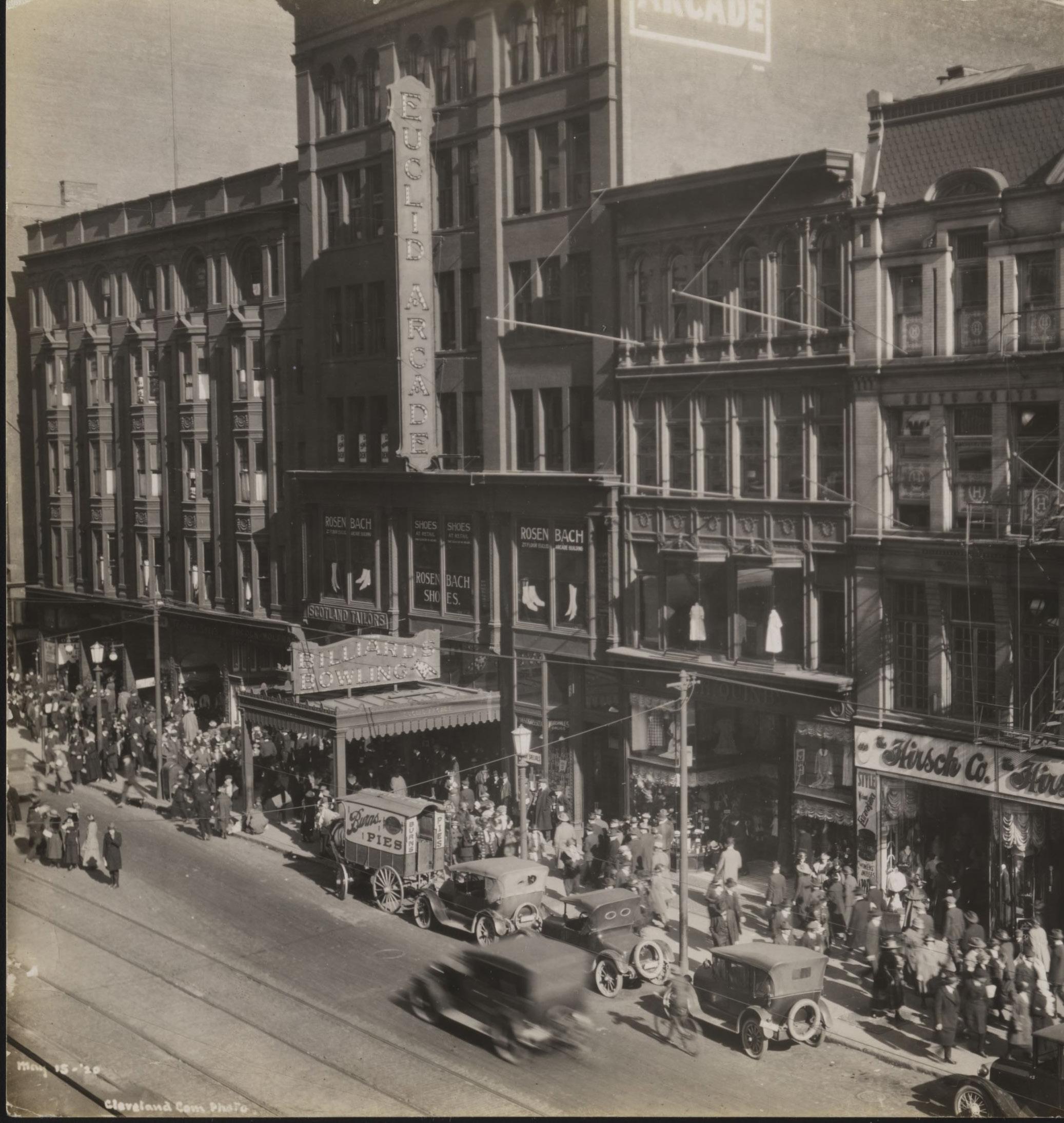
A trip down memory lane, though, recalls its former identity as “Millionaire’s Row,” which references the stretch of Euclid Avenue that was once recognized for being one of the most prosperous residential streets in the U.S. during the late 19th and 20th centuries. The avenue was lined with mansions home to some of the U.S.’s most powerful industrialists, including John D. Rockefeller. However, the dramatic increase in taxes and land expenses became the precursors to the decline of the affluent suburb. A number of the extravagant estates were destroyed to make room for the construction of commercial buildings, parking lots and the Innerbelt Freeway as part of Cleveland’s mid 20th century urban renewal projects. Fragmentations of the city’s luxuries remain, serving as a reminder of East Cleveland’s past prosperity and dominance. Yet abandoned housing—likely exacerbated by deteriorating infrastructure from the usage of lead-based materials— and prevalence of a dysfunctional administration prevented the area
from returning to its former glory. Cleveland’s urban renewal program of Hough neighborhood, in particular, serves as a primary example of the complex byproduct of racist policies enabled by the municipal government. The six urban renewal projects were directed at Black neighborhoods, which acted to forcibly displace its residents to specific areas of the city as their homes and businesses were destroyed for industrialization. The underlying motive stemmed from systematic racism, especially through practices such as redlining. With families fleeing the city, industry declined and so did Hough. Black Cleveland residents became trapped in the vicious cycle of systematic racism marked by failing businesses, unemployment, poverty and overcrowding—unlike their privileged, wealthier counterparts. Today, Hough continues to struggle to reverse the downfall it suffered many decades ago.
Corruption within the East Cleveland Police Department is yet another anchor weighing East Cleveland down, contributing to the persistingly high crime rates that reinforce the stigma of it being dangerous.
Mayor Sandra Morgan, who was elected for office this past January, has vowed to revitalize the municipality on the day of Moore’s resignation from the police department. The acting Chief of Police Reginald Holcomb has expressed similar sentiments in hopes of putting the past behind and bringing up a fresh future to East Cleveland. The Observer reached out to Holcomb for insight regarding how the department plans to move forward in response to the indictment, but was unable to receive comment by the publication deadline.
Last month, the city of Cleveland became formally in receivership with the State of Ohio after decades of economic strain. Morgan is oriented on public safety and infrastructure renewal through out-
sourcing grants and generating new revenue streams to fund such endeavors.
East Cleveland faces a lengthy road ahead. With the support and optimism of Morgan and Holcomb, meaningful progress is not only
possible, but long overdue. Before passing judgment, it is valuable to take the time to understand the deep-rooted history that has shaped East Cleveland, which now exists in the shadow of its former affluence.
The Case Western Reserve Observer
Established in 1969 by the undergraduate students of Case Western Reserve University
Darcy Chew Executive Editor & Publisher
PRINT
Hannah Johnson Director of Print
Sabrina Feldberg News Editor
Alyssa Wang News Editor
Penelope Cloonan Life Editor
Aleksandra Majewski Opinion Editor
Ellie Palaian Sports Editor
Michelle Bai Copy Editor
Riya Kulkarni Copy Editor
Siya Motwani Copy Editor
Kashvi Madhwani Copy Editor
We’ve all been there, trying to study or finish that last assignment when all we want to do is … anything else. Maybe we’re overwhelmed with the work we have to do, or maybe we feel the pressures of perfectionism and don’t want to start. We push ourselves to “lock in,” but call it quits too often, feeling guilty each time we pick up our phones to doomscroll again and again. Doing anything but the work we have piled up always seems to feel better than actually getting things done, but the sinking feeling in our stomach knowing we’ve wasted time is much worse. Can we really consider these pauses to be “breaks” if we feel worse after taking them?
Abhishek Nambiar Copy Editor
Mariana Parilli-Castillo Copy Editor
Lily Zhang Copy Editor
DESIGN
Anjali Bhuthpur Director of Design
Lucas Yang Director of Design
Shareen Chahal Layout Designer
Sahar Kapasi Layout Designer
Reva Kolhe Layout Designer
Kiera Ng Layout Designer
Nithya Pandari Layout Designer
Jana Ashour Graphic Designer
Kristina Guo Graphic Designer
Anna Trusova Graphic Designer
DIGITAL MEDIA
We may trap ourselves in a cycle of counterproductivity and double the time it takes to complete a task. In this “popcorn brain” mindset, we work and get little done, then stop working and think about how we could be working. By the time we resume our work, we feel ashamed, not refreshed, and we stay up late in attempts to catch up.
Auden Koetters Director of Digital Media
Moses Fleischman Web Editor
Ayan Sheikh Video Editor
Matthew Stall Video Editor
Obafami Tidjani Web Editor
Phillip Kornberg Photo Editor
Tyler Sun Photo Editor
Esha Bagora Social Media Editor
A break is not shameful, not when it has the potential to act as a tool that makes productivity much more efficient. We just need to know how to use them.
Benjamin Kang Social Media Editor
Timothy Le Social Media Editor
Rhea Soni Social Media Editor
Just as an athlete wouldn’t do 150 consecutive bicep curls while strength training at the gym, as students we must take meaningful breaks in reasonable intervals. One popular example of this is the Pomodoro method, where 5 minute breaks follow 25 minutes of work (10 minutes of break to 50 minutes of work is also a popular option). By time-boxing our productivity and knowing we will be rewarded, we remain more focused when we
BUSINESS
Tyler Vu Director of Business Operations
Riya Dixit Ad Manager
Divya Kurma Business Manager
Anya Lin Analytics Manager
Ria Trivedi Marketing & Distribution Manager
The Observer is the weekly undergraduate student newspaper of Case Western Reserve University. Established in 1969, The Observer reports news affecting students and provides an editorial forum for the university community. Unsigned editorials are typically written by the opinion editor but reflect the majority opinion of the senior editorial staff. Opinion columns are the views of their writers and not necessarily of The Observer staff. For advertising information, contact via e-mail at observer@case.edu.
LETTERS TO THE EDITOR should be e-mailed to observer@case.edu or submitted on our website at observer.case.edu. Letters can be mailed to Thwing Center 11111 Euclid Avenue, Suite 01, Cleveland, Ohio 44106. For policy and guidelines related to the submission of Letters to the Editor, refer to observer.case.edu/submit-a-letter.
The Observer is a proud member of CWRU’s University Media Board. Follow The Observer on Facebook, Twitter, TikTok and Instagram @cwruobserver.
Dying art of human connection
Afshan Ara Staff Writer
There has been a concerning trend regarding empathy. Even since before the COVID-19 pandemic, news and media has been flooded with everything that is going wrong in the world. Though it is true that things may have taken a turn for the worse, the public’s mindset and attitude is on the decline as well, with an increased lack of empathetic thinking.
Recent news during this past year has revealed tremendous amounts of horrors and these events, had they taken place twenty years earlier, would incite unanimous outcry. Besides politics, the world is facing major dilemmas in geopolitical conflict and the meaning of humanity. For example, take the Epstein files. Although what has been released has been heavily redacted and modified, it has uncovered extremely gruesome and worrisome behavior. What the public knew as an isolated trafficking ring became a central focus of many other unexplainable events. Any person with a capacity for emotion and rationality would take one look at them and become furious and only wonder, how could this happen? I am more surprised to see how little some people care about the atrocities committed against young children. Regarding news stories on wars, I hear mainly discourse on who is right and who is wrong instead of what it means
for the people going through them. It is not the fault of individuals either. The desensitization to constant violence has led people to consider new events simply as temporary headlines.
There have been previous studies to identify and understand this phenomenon. One psychological study done with American university students found a reported 48% decrease in empathy levels just between 1979 and 2009. I can only imagine how much worse it has gotten with the rise
of rampant social media and harmful rhetoric. There is an altered dynamic in interactions between people face to face that can largely be attributed to excessive social media use. In addition to levels of empathy decreasing, levels of narcissism, xenophobia and misogyny are steadily increasing especially in the West. So it is not enough to say that people just don’t care; they don’t care about people who are not exactly like them. It has gotten so laughable that “being an empath” became one big inside internet joke in which peo-
ple claimed to have found some new, unique experience where they could understand how others were feeling. Some people I know personally have admitted to using AI instead of human connection to be understood or talk to about problems in life. Like compassion, empathy is taught. Unfortunately, so is hate, and in a world that is so uncertain, it seems safer to not have to consider how other people are feeling at all.
The decline in caring as of late has shown up as a masked “hustle culture” where a person has no priority but to be as efficient and indifferent as possible and while chronic stressors like finances and society can explain the reasons why, the best solution is to slow down and think going forward. It is true that practicing empathy takes time and energy, so being intentional is rather important. Even small moments of mindfulness and understanding can make a huge difference on how someone’s day goes. It is also worth practicing for one’s own mental health and clarity. If people have the ability to care about others, they have the ability to be at peace with themselves as well. The recent comebacks in practicing empathy and mindful thinking are due to younger generations making an effort to understand what it means to care. Generation Z, although in the presence of the most technology and social media, has shown strides in keeping human connection alive. It matters to care.
Knowing our medicine and how to wield it
Riya Kulkarni Copy Editor
Growing up in an Indian household, herbal remedies always brought forth a sense of comfort. Every culture has their version of chicken noodle soup, and mine was a soupy lentil rice with a bit of salt, sugar and lemon. If I ever had a cold, I would go back to the ageold remedy of turmeric mixed into milk with a little bit of honey.
Beyond nostalgia and a sense of comfort, however, there is little credibility to these methods. WebMD mentions how turmeric is commonly used to treat pain and inflammation, with little effect on cholesterol levels and cold-like symptoms. This is far from the cure-all that could be expected from a treatment backed by generations. The warmth and the honey in the turmeric milk may help soothe an already irritated throat, but it would likely do little virus-killing. Time, rest, plenty of fluids and, perhaps, a visit to the doctor’s office allow our immune system to do the job. Before I continue, let me make some terms clear. Conventional medicine, also known as allopathic or “Western” medicine, describes medical practices conducted by medical professionals which may involve drugs or surgery. Complementary medicine is the use of alternate therapies in tandem with conventional medicinal treatments. Alternative medicine is used as a replacement for conventional medicinal treatments. These alternate therapies may include meditation, yoga, vitamins, natural supplements, acupuncture or homeopathy. It’s important to note that many lack a statistically significant outcome, so it is unclear if they can actually treat an illness. With little proven effectiveness, can these therapies truly replace conventional treatments? How much faith can we really place in their outcomes?
Take the example of homeopathic medicine, which started over 200 years
ago based on the belief that diseases can be cured by substances which elicit the same symptoms in healthy people (toxins, such as belladonna, poison ivy, mercury and lead) and the belief that a lower dose results in a greater effectiveness. Some prepared medicines are so diluted that the proposed active ingredient cannot be detected anymore, which brings into question if the treatment is even interacting with the patient at all. These dilutions are custom-made to fit the patient, yet homeopathic medications can also readily be acquired over the counter, with the extent of the dilution unknown. It treats the healing process, rather than any specific disease.
It is also important to consider the fact that many of these treatments tend to be self-prescribed. Small fractions of those receiving homeopathic treat-
ments saw a homeopathic practitioner, the self-administration leading to the risk of exposure beyond what would be in the toxins used in homeopathic medicines. No homeopathic medication is approved by the FDA, which means that their safety and effectiveness have not been regulated or examined to the same extent as conventional medicine. It fails in clinical trials when administered alongside a placebo.
Yet, many turn to complementary and alternative medicine (CAM), such as homeopathic medications, perhaps frustrated by conventional medicine, or eager to do as much as possible to heal themselves. Cancer patients may resort to CAM, even if the treatment has little effect on their symptoms. It’s alluring to have a less invasive treatment plan instead of surgery or medications with severe side effects, an easy
fix over a harder cure. However, behind this ease is a treatment that is not effective and will not treat the disease beyond potentially its symptoms.
It’s clear that CAM needs to be used responsibly, with the understanding that completely replacing conventional medicine will not entirely address or cure a disease. Complementary medicine can be helpful with treatment side effects to mitigate the pain and improve general quality of life—or at the very least, lift spirits so a patient can continue to fight and heal. More invasive treatment plans, such as surgery or even chemotherapy, take a great physical toll on the patient and greatly test one’s willpower and strength. Thus treatments such as yoga, herbal remedies or chiropractic therapy can serve as a support during the healing process. Belief in the power of a treatment, no matter its effectiveness, also improves morale when dealing with illness.
It would also be remiss to mention the fact that not all individuals want to deal with these mental and physical tolls and merely wish to live comfortably and peacefully with the time they have left. Many of these intense treatments have little chance of success and a much greater chance of further pain—the risk outweighs the reward. Use of CAM may make life much more comfortable, as well as give a greater sense of control over one’s own treatment. Mental health is just as important as physical health for individuals fighting various battles. With the significant population of pre-health students at Case Western Reserve University, it is important to not only be well informed about and accepting of different perspectives on treatment plans, but also to encourage greater medical literacy for those around us. Information is the power that allows a person to make informed decisions about their own health, beyond what may seem the simplest or what is sold to them as the best option.
Jana Ashour/The Observer
Kristina Guo/The Observer
Sports
CWRU baseball and softball stay busy during demanding spring break slate
Ellie Palaian Sports Editor
While much of the Case Western Reserve University student body spent spring break relaxing at home, traveling or soaking up the sun, the CWRU baseball and softball teams stayed busy, combining to play 17 games over the course of the week.
Softball
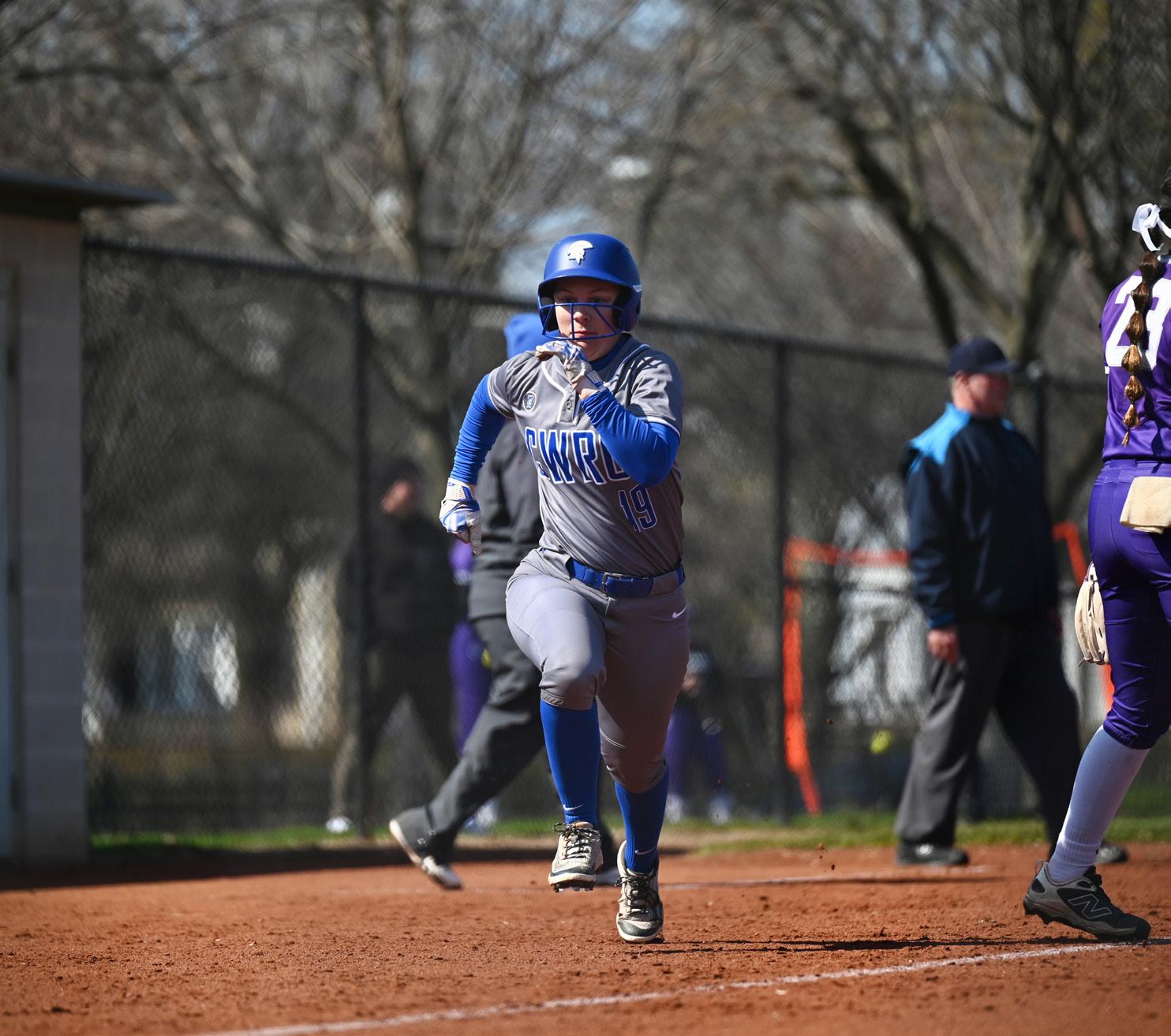
The CWRU softball team had a demanding spring break schedule, playing doubleheaders across five consecutive days. The Spartans finished 6–4, with three of their four losses coming against ranked opponents—No. 11 Moravian University (3–6), No. 23 Belhaven University (5–9), and No. 20 Rowan University (5–6). Their fourth loss came against Husson University (0–6) to close out the weekend slate.
Despite those setbacks, the
Spartans delivered several dominant performances, including three shutouts during the stretch.
With the condensed spring academic schedule, the team will quickly transition into conference play, opening UAA competition this weekend against Washington University in St. Louis. Following their conference opener, the Spartans will briefly step out of UAA play to face Denison University, Muskingum University and the University of Mount Union before returning to conference action.
Overall, the team’s performance over break highlights the work put in during the offseason. Facing a range of competition allowed the Spartans to test different lineups and build depth as they prepare for the intensity of conference play.
The Spartans will host WashU at Mather Park for a three-game series, opening with a single game on Friday, March 20 at 3 p.m., followed by a doubleheader on Saturday, March 21 at 12 p.m. and 2 p.m.
Baseball
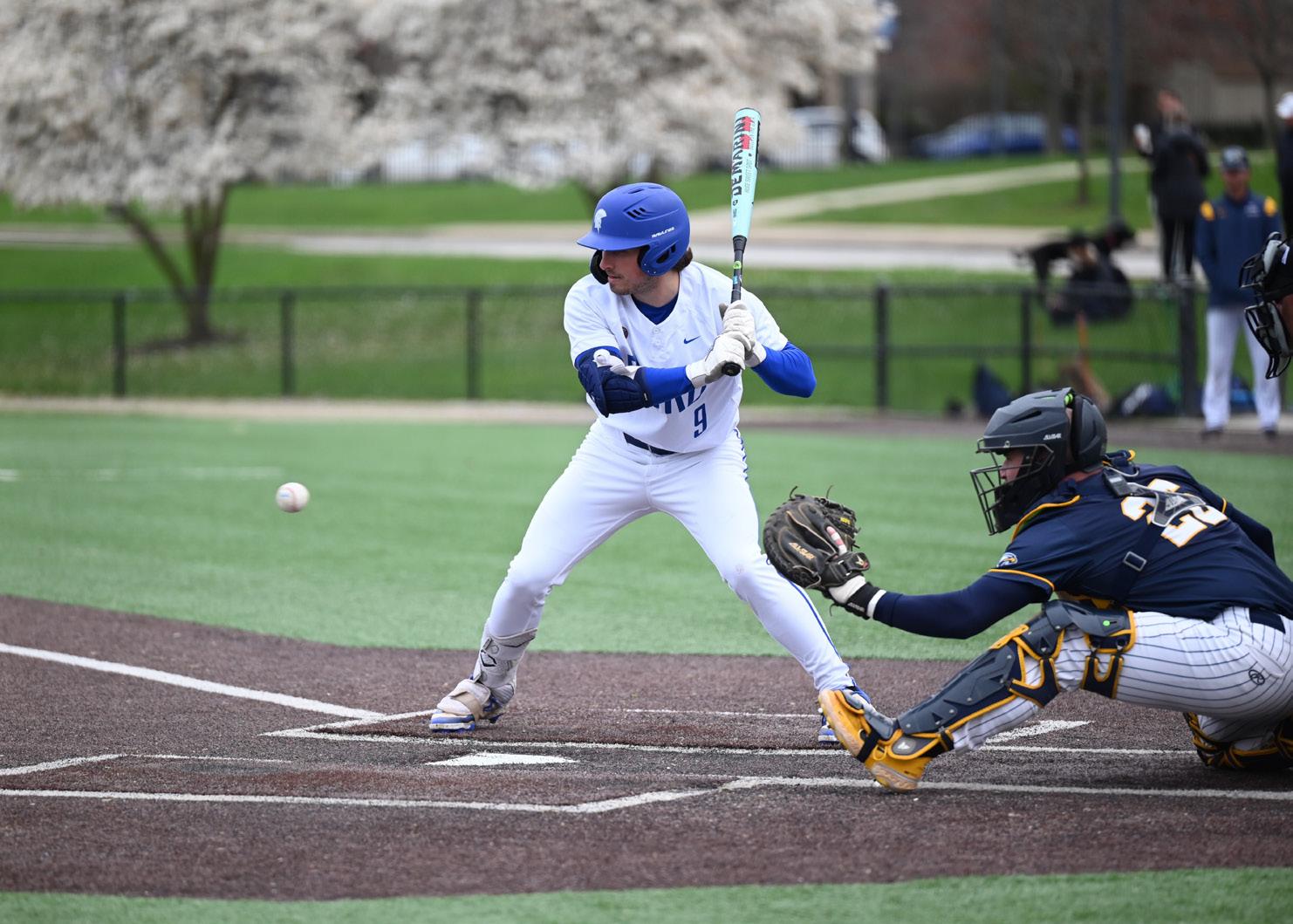
The CWRU baseball team also put together a solid showing over spring break, finishing with a 4–3 record. The Spartans competed in a three-game series against Swarthmore College (2–3, 12–7, 6–7), defeated Marietta College (2–1), split a two-game series with Mitchell College (1–18, 5–2) and edged Johnson & Wales University (4–3).
After suffering a tough 1–18 loss in the opening game against Mitchell, the Spartans bounced back with a strong 5–2 win in the rematch to close out the series.
Unlike softball, the Spartans have additional non-conference games before beginning UAA play.
They will host a doubleheader against John Carroll University on Saturday, March 21, followed by another doubleheader against the University of Mount Union on Sunday, March 22.
With another week to prepare for conference competition, the team will look to build on lessons from the break. The varied slate of games provided experience in a range of situations, from tightly contested matchups to more lopsided results.
CWRU will open UAA play at home against Brandeis University at Nobby’s Ballpark on Friday, March 27, kicking off a four-game series that will run through Sunday, March 29.
March Madness heats up in women’s college basketball
Ellie Palaian Sports Editor
March is here, and with it comes the chaos, heartbreak and brilliance that define the NCAA Women’s Tournament. The 2026 field is loaded, not just with traditional powerhouses, but with a growing middle tier capable of shaking up brackets across the country. And if the past few seasons have shown anything, it’s that women’s college basketball is deeper and more competitive than ever.
At the top, it’s impossible to overlook the No. 1-ranked University of Connecticut Huskies women’s basketball team. Year after year, they remain firmly in the national title conversation, and 2026 is no exception. Powered by standout forward Sarah Strong—widely regarded as the best player in women’s college basketball—UConn pairs
elite scoring efficiency with a well-balanced offensive attack. Strong’s dominance on both ends of the floor, combined with the veteran leadership and shotmaking ability of graduate guard Azzi Fudd, positions the Huskies as a serious contender to make another deep tournament run.
But they won’t have an easy path. Also No. 1 seeded South Carolina Gamecocks women’s basketball, under iconic head coach Dawn Staley, remains a powerhouse built on physicality and depth. South Carolina’s ability to dominate the glass and rotate fresh bodies is something few teams can match. In a tournament where fatigue plays a role, that depth becomes a serious advantage.
Then there’s the No. 2-ranked Louisiana State University Tigers women’s basketball, a team that thrives on energy and star power. With players like Flau’jae Johnson, LSU brings scoring
bursts that can flip a game in minutes. Their pace and aggressiveness make them dangerous, especially in matchups where opponents struggle to keep up athletically.
Other No. 1 seeds, the University of California, Los Angeles Bruins and University of Texas at Austin Longhorns both bring balance: strong guard play, interior presence and defensive versatility. Texas, in particular, stands out with its physical defense and rebounding margin, often controlling games without needing explosive scoring nights.
Of course, every tournament has its Cinderella stories. Midmajor programs and doubledigit seeds—teams like Princeton University or Gonzaga University—have proven in recent years that they can not only compete but win multiple games. With the increasing parity in the sport, it wouldn’t be surprising to see at least one unexpected team make
a deep run into the Sweet 16 or even the Elite Eight.
What will ultimately decide this tournament comes down to a few key factors: guard play, efficiency and composure. Teams that take care of the ball and shoot efficiently, especially from beyond the arc, tend to survive and advance. Free throw percentage, often overlooked, can also swing tight games in later rounds. And, perhaps most importantly, experience matters. Teams with players who have been through “The Big Dance” before tend to handle pressure better when every possession counts.
In a field this strong, there are multiple teams capable of cutting down the nets. But when I look at consistency, star power and championship pedigree, one team stands above the rest. I have all four No. 1 seeds in the final four and UConn winning the whole thing for the second year in a row.
The CWRU baseball and softball teams stayed busy over spring break with a series of games against numerous demanding opponents.
Courtesy of Phillip Kornberg / The Observer
Courtesy of Phillip Kornberg / The Observer
Big swings and bold moves highlight NFL offseason trades
Abhishek Nambiar Copy Editor
The new league year for the National Football League (NFL) began on Wednesday, March 11 at 4 p.m. EST. After this point, teams were free to officially trade players and enter contracts with free agents. With front offices across the league reshaping rosters through trades and free agent signings, here is a rundown of some of the most notable deals of this offseason to date.
Some of the most notable roster shifts have been occurring at the quarterback position. After being released by the Arizona Cardinals, Kyler Murray signed a one-year contract with the Minnesota Vikings—a team looking for improvements in its quarterback room following an underwhelming performance this past season from previous starter J.J. McCarthy. Tua Tagovailoa signed a one-year deal with the Atlanta Falcons after being released by the Miami Dolphins, though Miami is left with nearly $100 million in dead money to be paid out to him, given he was released before his Dolphins contract was up. In Tagovailoa’s place, the Dolphins signed Malik Willis, a move viewed as both high-upside and somewhat risky given his uneven development to date.
Meanwhile, Justin Fields was traded from the New York Jets to the Kansas City Chiefs.
Taking Fields’ place in the Jets’ QB room is Geno Smith following a trade with the Las Vegas Raiders—a move that reunites Smith with the team that originally drafted him. That being said, neither he nor the Jets may benefit from this trade, given Smith’s lackluster performance with the Raiders and the Jets’ notorious organizational issues.
In one of the more consequential signings of the offseason,
the Raiders landed former Baltimore Ravens All-Pro center Tyler Linderbaum on a three-year, $81 million contract, making him the highest-paid player in his position. The move signals an active effort by the Raiders to rebuild their roster in anticipation of having the number-one pick in this year’s draft, which they are all but confirmed to use to draft Indiana University star QB Fernando Mendoza.
As for the running back market, one of the most notable free agent signings is that of Travis Etienne Jr. with the New Orleans Saints in a four-year deal worth $52 million. And off the heels of a Super Bowl run with the Seattle Seahawks that earned him the game’s MVP title, Kenneth Walker III signed a deal with the Chiefs, a team looking to bounce back after a down year that saw them miss the playoffs for the first time in more than a decade.
More activity is also to be seen with wide receivers. One of the biggest splashes was made by the Buffalo Bills as they acquired DJ Moore and a sixth-round draft pick from the Chicago Bears in exchange for Buffalo’s secondround pick. Michael Pittman Jr. was traded from the Indianapolis Colts to the Pittsburgh Steelers as the latter looks to beef up its roster in a crowded AFC field, the Denver Broncos acquired Jayden Waddle from the Dolphins, and Christian Kirk was traded to the San Francisco 49ers following a stint with the Houston Texans. As for free agency moves, one notable deal came by way of the 49ers as they signed veteran Mike Evans to a three-year contract as the team looks to address weak spots and its notoriety for widespread injuries throughout the roster every season.
On the defensive side of things, several teams have been making moves—though the most profile move may be one that didn’t even go through. The Ravens cancelled their trade for
Raiders’ defensive end Maxx Crosby after he failed his physical examination, adding a shocking twist to a trade that some weren’t expecting. The Ravens were quick to pivot, however, signing Trey Hendrickson to a lucrative four-year deal after he was placed on injured reserve by his previous team, the Cincinnati Bengals.
As for other pass rushers, the Bills continued to bolster their roster by signing Bradley Chubb after his release from the Dolphins, while the Steelers signed safety Jaquan Brisker from the Bears. Edge rusher Jaelan Phillips signed a deal with the Carolina Panthers after spending time this past season with both the Dolphins and the Philadelphia Eagles, while the New York Giants added tight end Isaiah Likely following the conclusion of his contract with the Ravens, reuniting him with head coach John Harbaugh. History was made by the Los Angeles Rams as they acquired cornerback Trent McDuffie from the Chiefs and agreed to a $124 million contract with him, making McDuffie the highest-paid defensive back in NFL history. Accompanying McDuffie in Los Angeles is his former Chiefs teammate and fellow cornerback Jaylen Watson in a $51 million deal of his own.
As trades and free agency signings continue on, several strategies across different teams can be noticed. Some teams, such as the Rams, Bills and Ravens are emphasizing a win-now strategy in their signings and trades. Others, such as the Dolphins, Jets and Raiders look to be focusing on specific strategies as they attempt to rebuild their roster following lackluster seasons (or, in the case of the Jets, attempt to secure the number-one pick in next year’s draft). Whether or not these different strategies pay off will be seen when the 2026 NFL season kicks off in September.
Men: 5th of 7 teams
Women: 6th of 7 teams NCAA Indoor Championship
Region V Tournament 6th of 17 teams
Championships 35th of 71 teams
Suprising trades packed with potential and risk have been made featuring players across the nation. Courtesy of CCS Pictures via Flickr
Upcoming Games
Track and Field
at W&L Track Carnnival 3/20 - 21
at Bob Kahn Invitational 3/27-28
at Wooster Invitational 4/3-4
Women’s Tennis
at Williams 3/21
vs Johns Hopkins 3/22
Baseball
vs John Carroll 3/21
Nobby’s Ballpark, 12pm & 3pm vs Mount Union 3/22
Nobby’s Ballpark, 1pm & 3:30pm vs Brandeis 3/27
Nobby’s Ballpark, 3 p.m. vs Brandeis 3/28
Nobby’s Ballpark, noon & 3:30 p.m. vs Brandeis 3/29
Nobby’s Ballpark, 11 a.m.
Softball
vs WashU 3/20
Mather Park, 3pm vs WashU 3/21
Mather Park, 12pm & 2pm vs Denison 3/26 vs Muskingum 3/28 vs Mount Union 3/29 vs Emory 4/3
Men’s March Madness 2026 tips off with top teams and rising contenders
Maria Burrus Sports Writer
The NCAA March Madness tournament bracket opened on March 15, officially beginning the highly anticipated 2026 NCAA tournament, with 68 teams now competing for the Division I national championship.
The top teams in the bracket are Duke University, the University of Michigan, the University of Arizona, and the University of Florida, who headline as the No. 1 seeds. However, close behind are University of Houston and the University of Connecticut, who are strong No. 2 seed contenders with the possibilities of making deep runs in the tournament. Duke enters as the overall favorite after having a dominant season as they controlled the ACC; however, they could be vulnerable against faster, stronger defensive teams. Michigan and Florida had a late surge in the season by winning the Big Ten tournament and SEC tournaments, respectively. Florida has forced turnovers at one of the highest rates in the country, while Arizona stands out for having one of the most balanced rosters, but has been inconsistent against higher-ranked opponents. Despite being a No. 2 seed, Houston is still in strong contention after having won the Big 12 conference.
In last year’s tournament, Florida came out on top as the national champions, defeating Houston in the title game. Duke made a deep run to the Sweet 16 but was ultimately knocked out in the Final Four. Ranked fifth last year, Michigan also made it to the Sweet 16 after winning the Big Ten tournament earlier in the year. Brigham Young University (BYU) was a lower-ranked team that sneaked their way to the Sweet 16 and could do the same this year, being ranked sixth in their region. Last year, Michigan State University reached the Elite Eight, which could give them confidence to make another strong run this year, being ranked third.
This season, several programs will enter the tournament with incoming momentum. The University of Alabama had a slow start to the year but has re-established themselves after playing well in the SEC and turning into one of the highest scoring teams. Iowa State University emerged as a strong defensive opponent in the Big 12 Conference by winning important games late in the season. The University of Dayton dominated the Atlantic 10 with consistency and held one of the best records among non-power conference teams.
Some teams in the bracket were not expected to make it until late in the season. Seton Hall University and Colorado State University, for example, were able to secure spots after strong finishes, while Oklahoma State University benefited from playing a tough schedule. Another example is Miami University (Ohio) which, despite being considered a “bubble” team due to the strength of their schedule and losing the Mid-American Conference, earned its place by an at-large selection.
The first round includes several matchups that could result in upsets for the tournament. In the University of Wisconsin (No. 5)
vs. High Point University (No. 12), the game will come down to if High Point can shoot well from the three and if Wisconsin can keep up with their slower play style. Ohio State University (No. 8) vs. Texas Christian University (No. 9) is a highly anticipated, evenly matched game that is likely to be decided by lategame execution. For the University
pace of the game. A matchup with opposite teams is Gonzaga University (No. 3) vs. Kennesaw State University (No. 14), where Gonzaga prefers to get closer to the basket while McNeese takes longer shots. NCAA brackets closed on March 19, just before the first round of 64 games tipped off. With a combination of strong top seeds and lower-
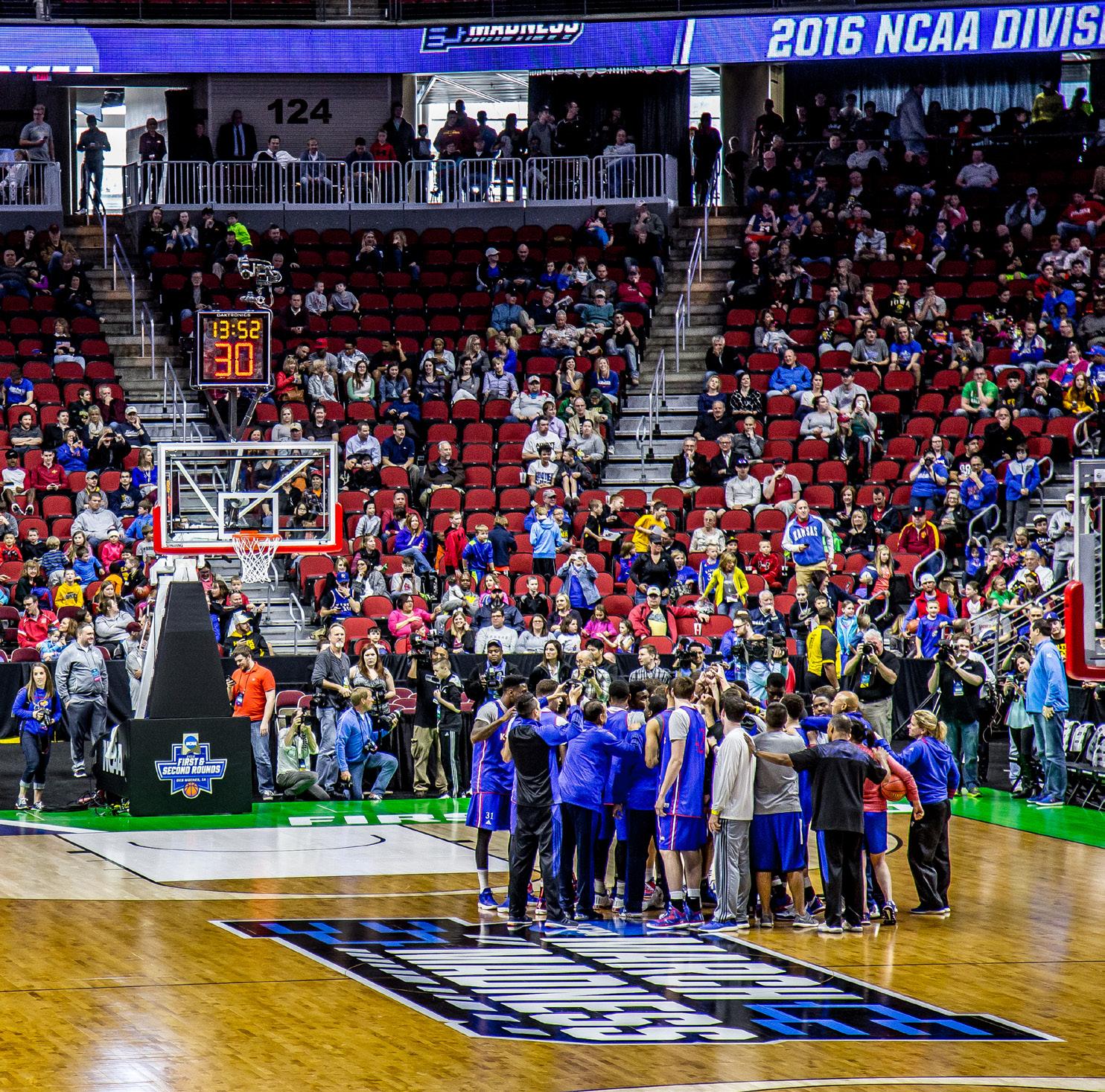
Men’s basketball teams across the nation have kicked off a promising season for March Madness. Courtesy of Phil Roeder via Wikimedia Commons