Health organizations find new ways to reach patients amid fears about Immigration and Customs Enforcement
By Melissa Daniels
Page 18



Health organizations find new ways to reach patients amid fears about Immigration and Customs Enforcement
By Melissa Daniels
Page 18

Mailing address: 31855 Date Palm Drive, No. 3-263 Cathedral City, CA 92234 (760) 904-4208 www.cvindependent.com
Editor/Publisher
Jimmy Boegle
staff writer
Kevin Fitzgerald
coveR and feature design
Maria Ratinova
Contributors
Haleemon Anderson, Melissa Daniels, Charles Drabkin, Katie Finn, Bill Frost, Bonnie Gilgallon, Bob Grimm, Terry Huber, Valerie-Jean (VJ) Hume, Clay Jones, Matt Jones, Matt King, Keith Knight, Cat Makino, Maggie Miles, Brett Newton, Greg Niemann, Jeffrey Norman, Dan Perkins, Theresa Sama, Jen Sorensen, Robert Victor, Eleanor Whitney
The Coachella Valley Independent print edition is published every month. All content is2026 and may not be published or reprinted in any form without the written permission of the publisher. The Independent is available free of charge throughout the Coachella Valley, limited to one copy per reader. Additional copies may be purchased for $5 by calling (760) 904-4208. The Independent may be distributed only by the Independent’s authorized distributors.
The Independent is a proud member and/ or supporter of the Association of Alternative Newsmedia, the California Newspaper Publishers Association, CalMatters, DAP Health, the Local Independent Online News Publishers, the Desert Business Association, and the LGBTQ Community Center of the Desert.



This is not an easy time to be a journalist. Our revenue models are broken; the president deems us enemies of the state; and it’s harder than ever to get government gatekeepers to give us information that, without question, belongs to the public.
Kevin Fitzgerald’s piece on the new Coachella Valley PIO Task Force, on Page 10, includes a rather striking quote from CV Strategies’ Erin LaCombe: “The media organizations are shrinking every single day. And after COVID, I thought, ‘Now, in the Coachella Valley, there are actually more public information officers than there are reporters.’”
Fortunately, we have some friends who are helping us out.
We received significant help in producing the two stories featured on this month’s cover. Melissa Daniels’ piece, on Page 18—looking at the ways in which health organizations are finding new ways to reach patients frightened by Immigration and Customs Enforcement actions under Trump 2.0—is the first in a series of stories she’s doing as part of the USC Annenberg Center for Health Journalism’s California Health Equity Fellowship.
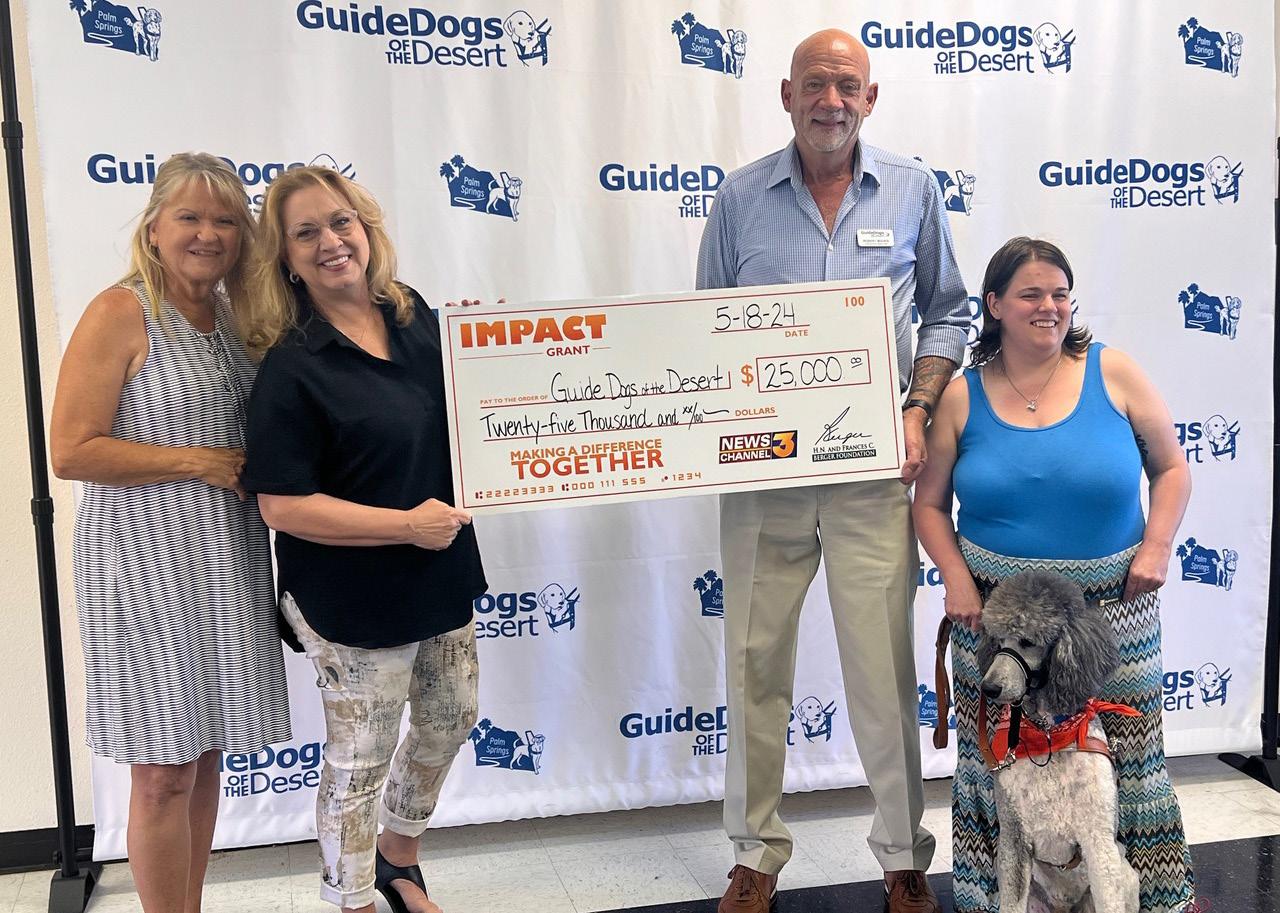
Meanwhile, the Coachella Valley Journalism Foundation (CVJF) awarded the Independent and The Palm Springs Post a grant to help us do our joint investigation on Guide Dogs of the Desert, which you can read on Page 14. Reporter Maggie Miles reviewed dozens of documents, emails and messages, and spoke to more than 15 people involved with Guide Dogs of the Desert, while reporting on the piece for six months; Post publisher Mark Talkington and I spent many hours working with Maggie. Knowing we could afford to do all of this thanks to the CVJF grant was a big help— and a massive relief.
We also received a big assist from Lawyers for Reporters, a project of the Cyrus R. Vance Center for International Justice, which, in their own words, “provides pro bono legal assistance to local and mission-driven journalism organizations in the United States.” For no charge, the good folks there reviewed the piece (several times!) to make sure we were being as fair and accurate as we possibly could.
Beyond this month’s issue, we’ve received pro bono help in the past from the First Amendment Coalition, a wonderful group that “educates, advocates, and litigates to advance government transparency and First Amendment protections for all.”
Through AAN Publishers, Local Independent Online News Publishers (LION) and the Google News Initiative, we’ve received funding to improve our business practices and bolster our coverage; for example, funding from AAN allowed us to launch our 11 Days a Week events newsletter a couple of years ago.
Of course, we also get a big assist from some of you, our wonderful readers, who send us contributions as Supporters of the Independent. (If you want to become one of these supporters, you can find more information on Page 25.)
To all of these organizations, and to you, dear readers: Thank you.
Welcome to the May 2026 print edition of the Coachella Valley Independent. As always, thanks for reading.
—Jimmy Boegle, jboegle@cvindependent.com


BY THERESA SAMA
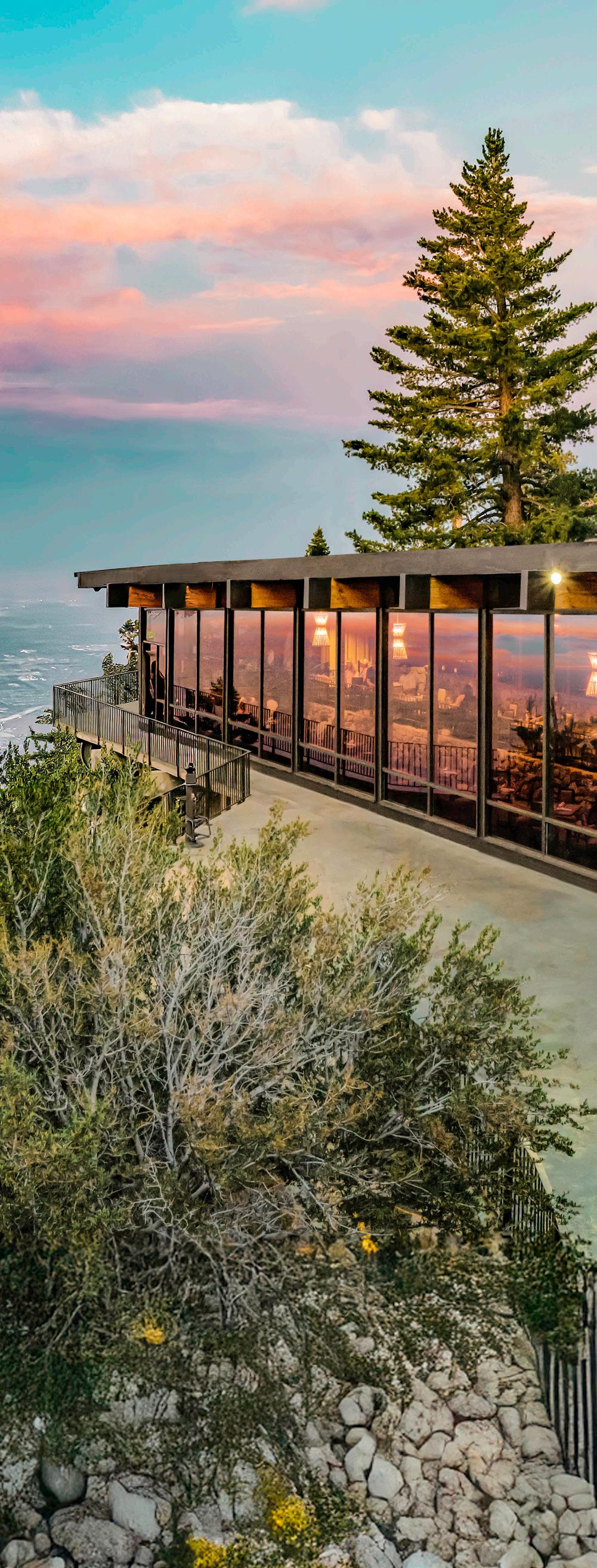
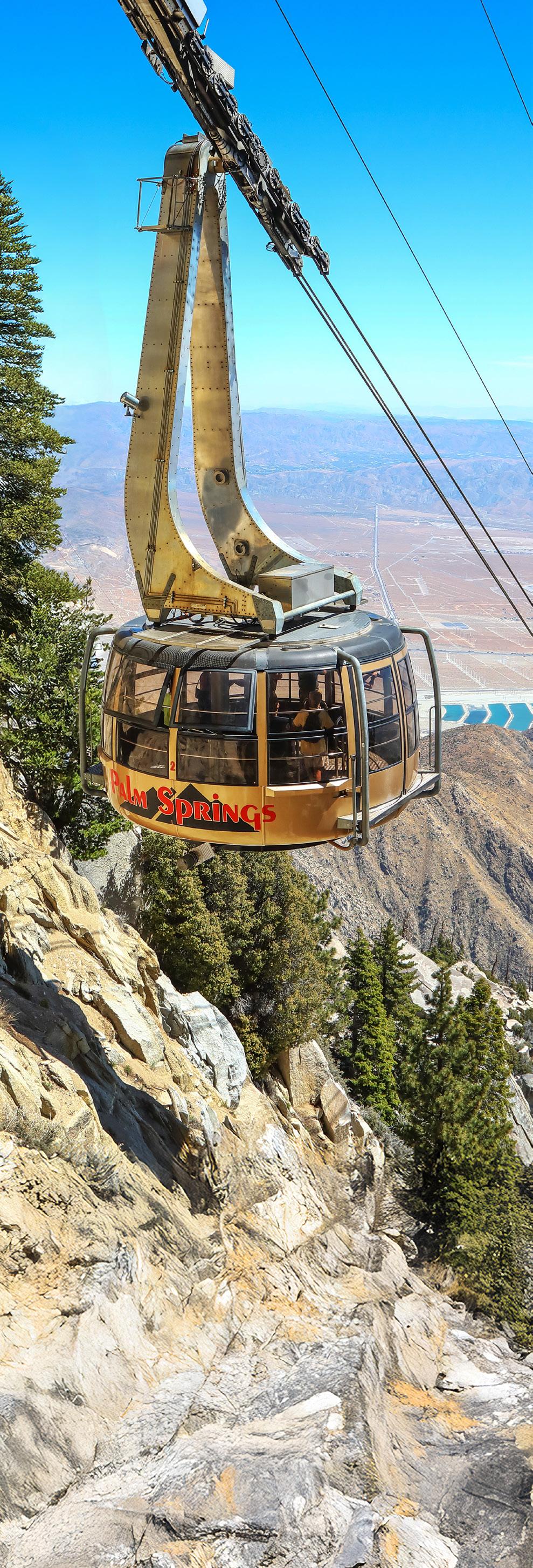
Stretching more than 40 miles across the heart of Coachella Valley, CV Link is far more than a bike path. It is a thoughtfully designed multi-use transportation corridor that connects cities, neighborhoods, parks, schools and major destinations while offering a scenic and accessible place to walk, run, bike or even travel by golf cart or low speed electric vehicle. Built largely along the Whitewater River and surrounding washes, CV Link is one of the most significant infrastructure projects in the valley’s history. CV Link is currently broken into three separated segments, with the western end at the Palm Springs Visitor Center (at Highway 111 and Tramway Road), and the eastern end at Airport Boulevard in the city of Coachella, near Jacqueline Cochran Regional Airport.
Along the way, the path, managed by the Coachella Valley Association of Governments, traverses through some of the valley’s most vibrant communities and scenic corridors, making it easy to explore multiple cities without ever getting into a car—while also getting in a great workout at the same time!
Each of the three segments offers its own atmosphere and highlights:
• The West Valley segment is 19.6 miles, delivering unobstructed views of the surrounding peaks of the San Jacinto and San Gorgonio mountains, while following the levee along the Chino Wash and Whitewater River. Starting at the Palm Springs Visitor Center, this segment ends at Date Palm Drive in Cathedral City. It also includes a scenic spur that branches off at Dinah Shore Drive and goes through Demuth Park to North Riverside Drive, along the Tahquitz Creek Channel, adding a lush contrast to the desert terrain. Riders and walkers can enjoy dramatic sunrises, golden afternoon light, wide open desert skies and classic Palm Springs charm.
• The Central Valley segment is just less than 5.5 miles. This route starts at the Bump and Grind trailhead, on Painters Path behind Desert Crossing Shopping Center, off Highway 111 and Fred Waring Drive. It ends at Cook Street, adjacent to Palm Desert High School. This
section has a disconnect and switches between on street sections and pathways along the wash, linking popular community attractions, with an access point at the Palm Desert Civic Park (43900 San Pablo Ave.). It’s ideal for casual strolls, family outings and mid day breaks.
• The East Valley segment stretches 16 miles from Highway 111 and Washington Street in La Quinta, to Airport Boulevard in Coachella. Beginning just north of Highway 111, it goes east through Indio, mainly following the south side of Whitewater River/Coachella Valley Stormwater Channel, with some sections navigating urban areas, before ultimately running parallel Interstate 10. From there, the path parallels Highway 86 to Coachella, just outside of Thermal. If you’re looking for a more off-the-beaten-path experience, this stretch is most serene. With a mix of wide desert vistas, this segment is a favorite for a long run, bike ride or peaceful walk.
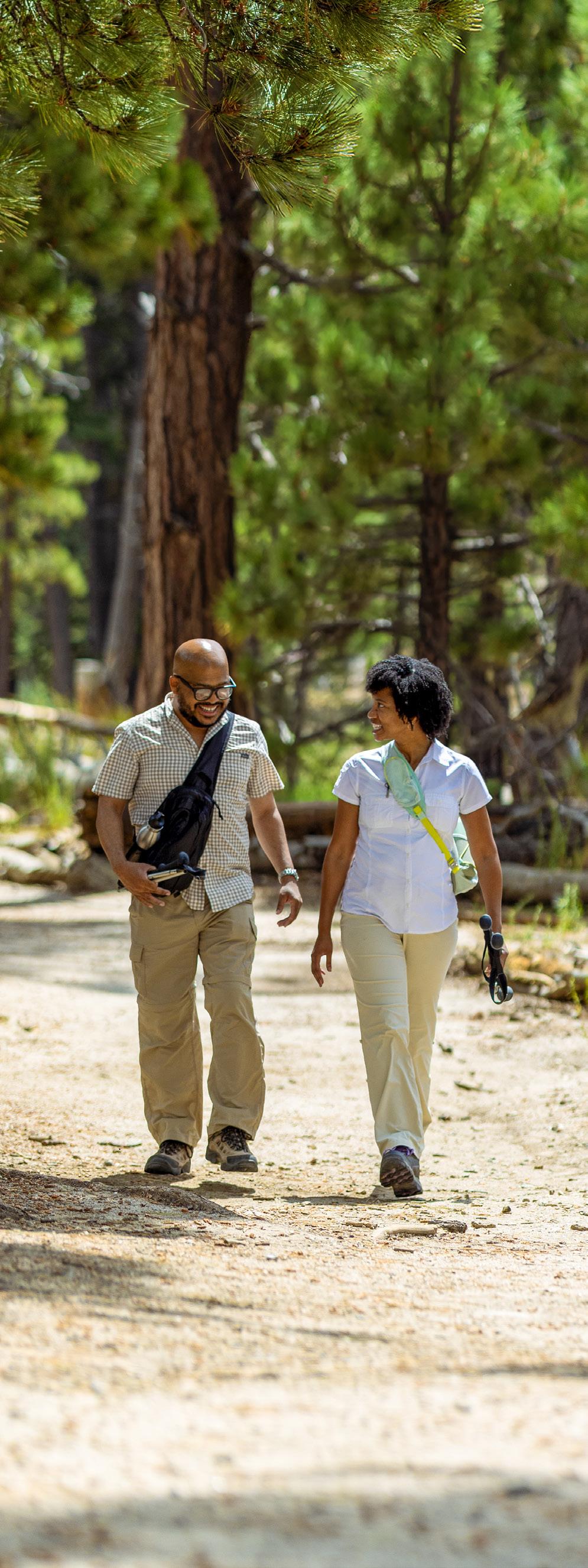
Some family members visited recently, and during their visit, four of us decided to check out CV Link. They love to walk, and I like to show them new trails during their visits—and this is a trail none of us had yet experienced. We checked out the westernmost section, between the Palm Springs Visitor Center and Gene Autry Trail. The panoramic views of the surrounding mountains were awesome—




CV Link includes more than 40 miles of trails with opportunities for exercise, transportation and desert views
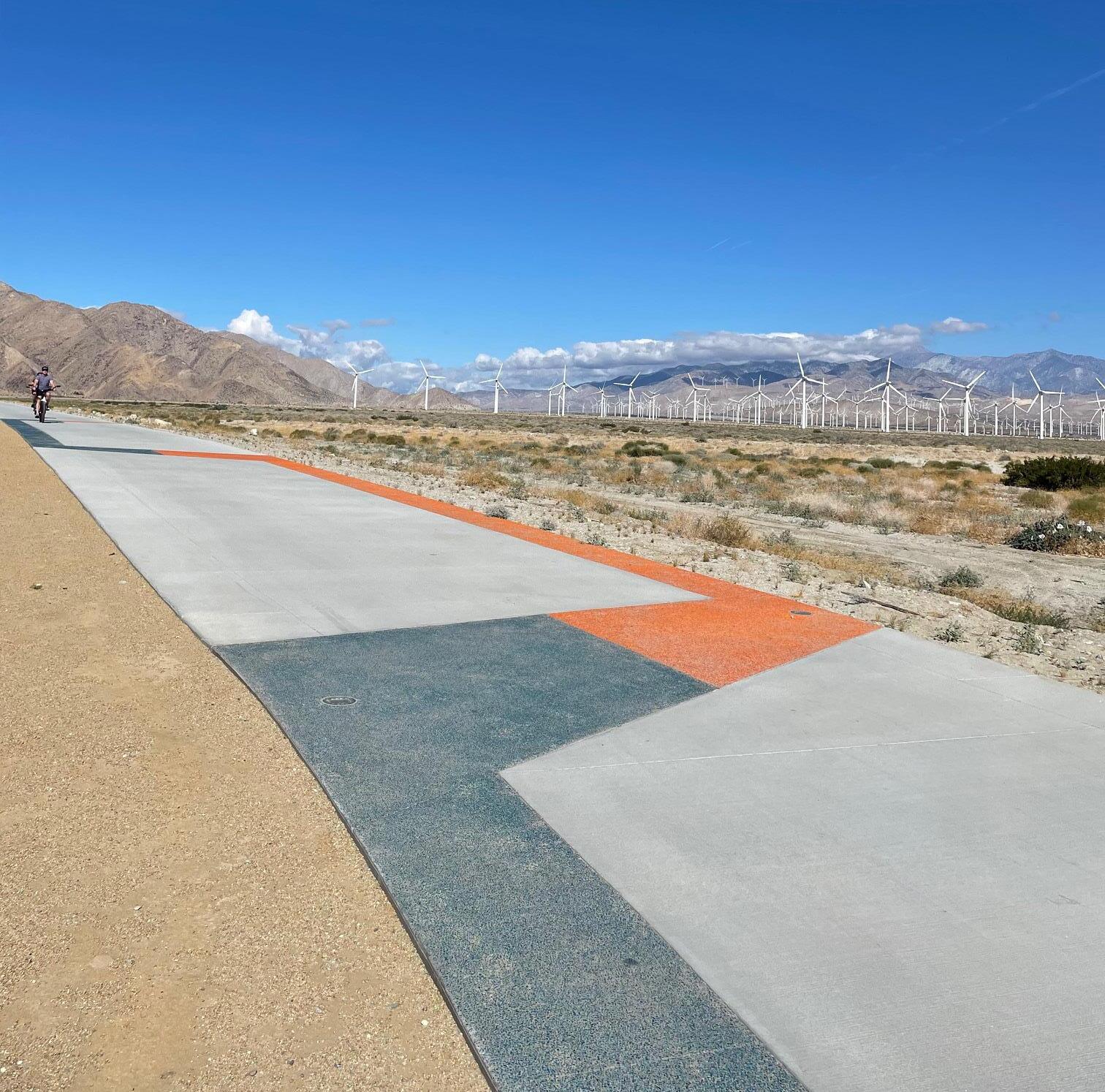
everyone mentioned that was their favorite aspect of the trail. We were all impressed with how beautifully designed the trail was, with such a nice wide path. My aunt and I especially liked the unpaved decomposed-granite walking/running path that runs alongside the wider paved path for bikers and mobility devices. The shade stop about a half-mile from Gene Autry Trail is nicely constructed, with signage, lovely landscaping, seating and a water station.
There were quite a few people using the trail that day; we observed bikers and walkers enjoying the beautiful day as much as we were. There was another nice shade/rest stop with an access point and street parking just east of Gene Autry Trail, at the corner of Via Escuela and Executive Drive.
Aside from shade structures, there are water stations, benches, bike racks, directional signs and solar-powered LED lights along parts of the pathway and at access points. Restroom facilities are available along CV Link at the Palm Springs Visitors Center, Esperanza Park,
and Grind trailhead, Palm Desert Civic Park, North Jackson Park and Sierra Vista Park, as listed on the CV Link maps page (coachellavalleylink.com/maps ).
The CV Link is open 24 hours year-round, meaning it’s a great workout at any time of the day. Dogs on leash are also welcome, but be prepared for high desert winds that could pop up at any time. (A windproof neck gaiter is always recommended.) Heat can be a problem, of course, especially during the hottest summer months; you may want to plan to be on the trail early in the morning or later in the evening. There are shade structures along the route, but beyond those, shade is minimal, so you’ll need to plan accordingly, and bring sun protection and water.
The CV Link offers myriad open-air adventures—whether you’re biking between cities, out for a run, enjoying a sunset walk or discovering new neighborhoods.
Learn more at coachellavalleylink.com.
BY BONNIE GILGALLON
When you look up the word “determination” in the dictionary, you should see a picture of Jerry Alcorn.
Alcorn was born and raised in Huntington Beach. Alcorn’s parents owned a famous restaurant in Laguna Beach called The Cottage, and he grew up in the restaurant industry alongside his mother, his brother and his great uncle.
When Alcorn was 13, his grandmother was diagnosed with cancer. Her final request was to be near her brother, Alcorn’s great uncle, who lived in Palm Springs with his partner—so the family sold the restaurant, packed up and moved to the desert.
For a while, Alcorn was interested repairing vehicles.
“I did heavy diesel equipment repair out here for years,” he said. “Then in 2007, I got my class A engineering license. Eventually, I landed a government contract excavating solar fields.”
Alcorn had been working that job for three months when the accident happened.
“I was working with two other contractors,” he said. “Some kid was just unfortunately a little messed up, and was operating a tractor he should not have been operating. He came out of the pit and flipped the tractor. There were six of us standing around in a circle having a meeting. We all ran—but the tractor hit me in the shoulder blades and smashed me down to the ground.”
Alcorn’s co-workers put him in his truck and drove him to Desert Regional Medical Center. That was his home for the next 11 months.
“I ‘died’ three times on the operating table. I should not have lived,” Alcorn said. “I woke up after my first spinal surgery, and the doctor kept asking, ‘Do you feel me pushing?’ I looked down and realized he was pushing my left foot. I realized I couldn’t feel it.”
At a point when many people would have crumbled, Alcorn’s determination kicked in.
“Life gives you lemons. You either make lemonade, or you eat the lemons,” he said. “I’ve put a lot of work in to get to where I’m at today.”
Because Alcorn’s co-workers drove him to the hospital, he said, the staff at Desert Regional didn’t realize his case was so dire, and they prioritized emergency cases being airlifted in. He said he was left in a hall near the emergency room for three days, which eventually led to a lawsuit. He prevailed, he said, but the settlement wasn’t large, because at the time, California capped malpractice-lawsuit damages at $250,000.
“For the first five months, my private health insurance was paying for almost everything, and I was paying the rest out of my own pocket,” he said. “Then an attorney friend pointed out that this is a workman’s comp case. It was certainly not my fault that a tractor landed on me at work.”
Alcorn said there are problems with the
workers’ compensation system in California.
“We went through hell for seven years fighting,” he said. “I have money coming in every month now, but, of course, it’s never going to make up for the loss of my legs.”
Doctors told him that he’d never walk again, that he’d be stuck in a wheelchair for life, and that he’d have to endure bowel and bladder issues. Alcorn had other ideas.
“I’m a very stubborn-willed man, and I don’t like being told no,” he said. “I was young. I had a beautiful wife and three young daughters, the youngest of whom was 9 months old. She’s never seen me walk normally.”
The rehab staff members at Desert Regional were surprised at Alcorn’s determination, but they encouraged him, he said.
“They said, ‘Dude, we don’t come across a lot of people with your attitude; just keep pushing!’” he said.
Alcorn pushed himself as much as he could, often working in the rehab room three times a day, sometimes on his own. Along the way, he lost nearly 200 pounds. (He weighed close to 450 pounds when the accident occurred.)
For the first two years, Alcorn said it felt like he was standing on top of two pool cues.
“All I felt were two sharp, painful points on my feet,” he said. “… I’d be in my front room screaming in agony from the pain and not sleeping because of the nerve pain. Because I’d been sober for eight years when the accident happened, I did not want to take a lot of pain medication. I wanted to feel in control and clear-headed.”
The first time Alcorn tried to take a step after his accident, he said, he fell on his face. “It took me years to learn the micro-process— how to stand, walk and engage,” he said.
After the braces he was using actually injured him, Alcorn went online and found TurboMed Orthotics, which makes orthotic braces that clip on to the outside of one’s shoe. He’s now an ambassador for the company.
When Alcorn was finally able to return home, he discovered a dearth of local support groups for those with spinal cord injuries.
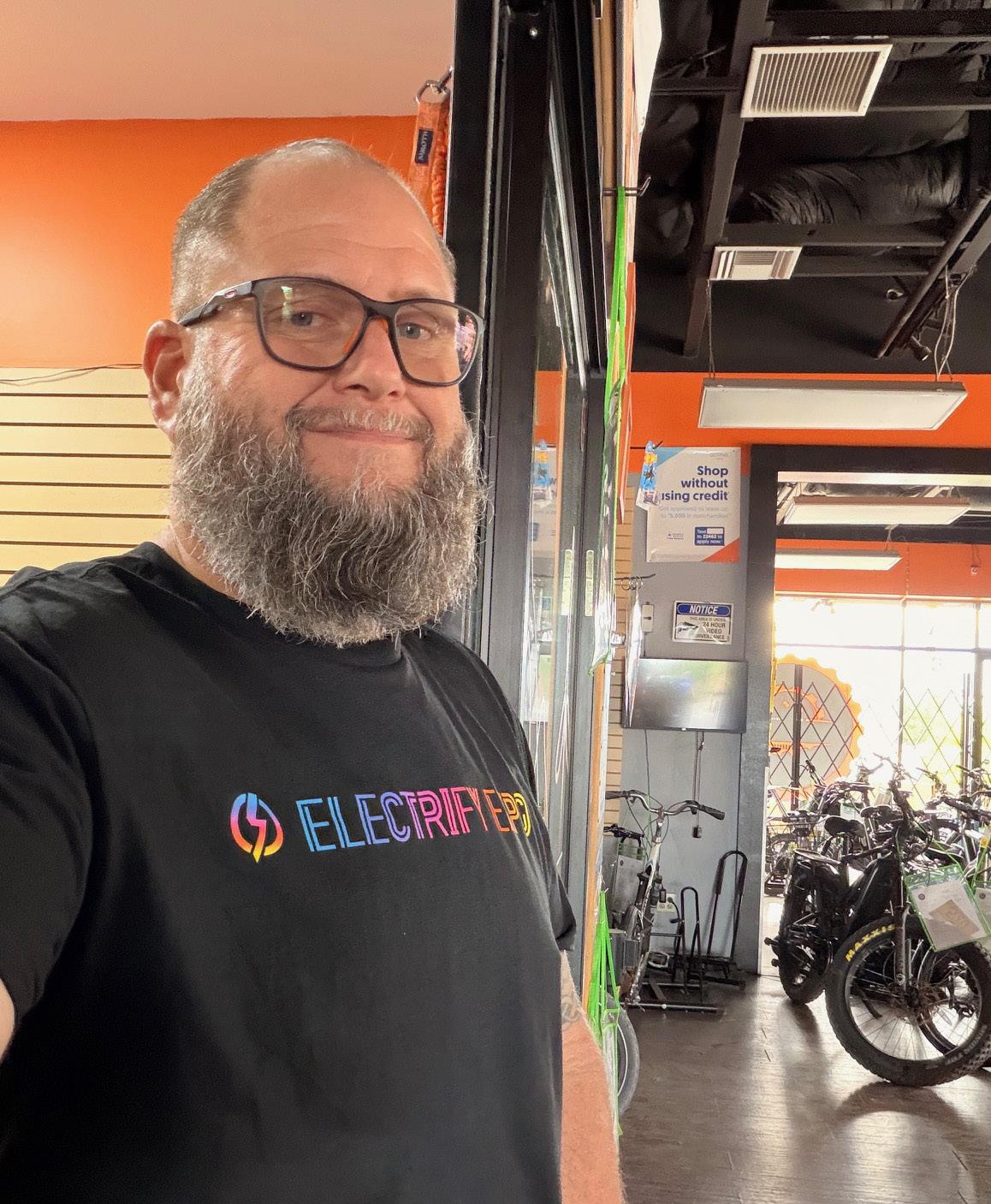
Discovering Desert Ability Center was key for Alcorn. During a ride with the group out in the east valley, his specialized bike broke down, and there were no repair shops—so Alcorn figured out how to fix it himself. That led to him opening his Palm Springs shop, Alcorn Adaptive. In addition to bikes, Alcorn works on electric items, including power scooters, mobility chairs and even lamps.
What’s his advice to others who have to endure life-changing trauma? “Reach out,” he said. “Try to find someone who’s been there, who can counsel you through the highs and lows.”
Alcorn always seems to find the silver lining.
“Before the accident, I was making triple what I am now,” he said. “But being able to take someone who’s injured and find a piece of equipment that works for them … the smiles and thank-yous I get supersede any money I could ever make.”
Resilience—it’s Jerry Alcorn’s specialty.
Learn more at alcornadaptive.com.
Bonnie Gilgallon has written theater reviews for the Independent since 2013. She hosts a digital interview show, The Desert Scene, which can be heard on www.thedesertscene.com and viewed on Mutual Broadcasting’s YouTube channel. Learn more at bonnie-g.com.

by Kevin Fitzgerald
On Jan. 28, an Orange County Superior Court judge issued a preliminary injunction that has stopped the Riverside County Superior Court and the Riverside County Sheriff’s Department from jailing individuals who have been arrested for low-level crimes, and have not yet appeared in front of a judge.
Previously, some arrestees for low-level offenses who were unable to make bail—with amounts as high as $20,000—had to remain in jail, for two to five days or even longer, until their arraignment. The arrestees were detained not because they were determined to be a danger to the public, but simply because they did not have the money to pay for their freedom. For now, incarceration of anyone accused of an offense that was on Riverside County’s “bail schedule” (which pre-determined bail amounts for a collection of roughly 60 low-level offenses) is prohibited.
The Superior Court took this action even though Sheriff Chad Bianco has been claiming that the lawsuit was frivolous and groundless. On May 30, 2025, shortly after the suit was filed, Bianco said on the John McGinness Show podcast: “The general public doesn’t know that bail is adjusted all the time. The initial bail just comes from a schedule, and you get held until you see the judge, and then the judge makes decisions of whether to increase the bail, or even lower the bail, or just let you out on your own recognizance. So, the idea that some innocent person is sitting in jail because they can’t pay to bail out is an absolute lie.”
Salil Dudani is a senior attorney with the Civil Rights Corps, and one of the attorneys representing the plaintiffs in this lawsuit. Dudani said the case is attempting to address two issues that have existed in Riverside County jails and courts for years now.
“We filed this lawsuit last year (on behalf of) people who had been unconstitutionally jailed in Riverside, and several faith leaders who feel strongly that it makes no sense to jail people just because they can’t make a cash payment, and don’t want their tax dollars spent on that senseless jailing,” Dudani told the Independent … It’s about two issues: the problem of cashbased jailing, and the problem of unnecessary delays before people are even brought to court in the first place in Riverside (County).
“Cash-based jailing is unconstitutional and unfair, for the obvious reason that whether you can make a cash payment has nothing to do with whether you’re a danger to the community, or whether you’re a flight risk. So, it doesn’t make sense to base jailing decisions on that. And any amount of unnecessary incarceration worsens public safety, because when a
person is in jail, their life is destabilized. Even just a couple of days of jailing, let alone more, can cause someone to lose their job, because they don’t show up to their shift, right? Their car can be towed, or they can be evicted if they don’t pay their rent, or they can lose custody of their kids, and so on, and so on, and so on. There’s a lot of very thorough, rigorous research showing that, unsurprisingly, people actually commit more crimes in the future, holding everything else constant, if they’re jailed pretrial, even for short periods.”
Violet Graham is one of the plaintiffs in with the lawsuit. In a recent interview, Graham discussed what happened after she was arrested and could not pay the $20,000 bail required for her to remain free until her arraignment.
“I wanted to talk … about how inhumane, and challenging, and punitive it is in the county jail,” said Graham, who said she had not been arrested previously, and has not been arrested since. “You’ve got people who were just arrested, (and) they’re not convicted. They’re waiting for their day in court. You know, I’ve seen every episode of Law & Order, so I thought I had an idea of what to expect. I did not expect to be shackled, hands and feet, for upwards of 12 hours at a time, with heavy metal chains and a gigantic Master Lock in everyone’s back. I’m aware that there are other ways to do this. They choose to do it in a particularly punitive way.”
Graham, who spent about 3 1/2 days in custody, explained that she has a “complicated medical history.”
“I have a spinal cord injury,” she said. “I was on 15 or more medications at that time, and not doing well medically. I did not receive any medical care (while in custody), and every day made that worse, and more risky. So, it’s frustrating to me to know that my experience could have been significantly less traumatic. Ideally, I shouldn’t have had to stay there overnight at all. … Until you reach housing, which could take days, (because) I didn’t reach housing until the last day I was in jail, you don’t get a blanket. You don’t get a sweatshirt; you don’t get socks. You get held in holding rooms. At the worst part, I was in a room with 15 other women, and we were all huddled together on the floor, because it was so cold.”
Graham said she was first placed in the
Riverside County continues to fight a Superior Court injunction banning pre-arraignment incarcerations for low-level offenses
Banning jail, then moved the next day to the Robert Presley Detention Center in Riverside. Although she was transported to a courthouse at one point, she never appeared before a judge. She was finally released finally on the fourth day of her captivity—and she subsequently discovered in court documents that the Riverside judicial system had decided, no later than the day after her arrest, not to file any charges. That delay in releasing her has never been explained by county authorities—and, according to the lawsuit, it is not an unusual occurrence.
Graham said that after she was released, she wanted to understand more about what happened to her, and whether it was normal. She learned, in a sense, that she was fortunate, since a large number of inmates have died in Riverside County’s jail system in recent years—making it, in the words of The New York Times, “one of America’s deadliest jail systems.”
“Particularly, I found the story of Alicia Upton, who died in 2022 in the Robert Presley Detention Center,” Graham said. “Her story has a lot of commonalities with my life story and the struggles that I’ve had, and to think that I just could have been in a different place, that
that could have been me, where they weren’t paying attention to me on the camera, and I was harming myself or something like that.”
Among the exhibits presented to the court were signed statements from other plaintiffs, all of whom pointed to serious disruptions that occurred in their jobs, their health, and their family or life responsibilities as a result of their detention.
On Friday, April 24 (the day after our deadline for this print issue), the case was slated to be back in front of the presiding judge for yet another ruling on an additional demurrer submitted by the Riverside County justice system, in an attempt to have the lawsuit shutdown. The court has already ruled twice against prior defense challenges.
As for whether or not a trial lies ahead, attorney Dudani said: “The constitutional issues are so clear that in other counties in California, it hasn’t even gotten to trial. The judge grants what’s called summary judgment in plaintiff’s favor. (I predict) there’ll be a judgment in plaintiff’s favor saying that, of course, cash-based jailing is unconstitutional—and the case should also address these hearing delays. That’s definitely what the plaintiffs are hoping (for) and expecting.”
Some projects arrive with renderings. Others arrive with opinions.
The Oasis at Indio has become the latter. Before most people have seen a site plan, they have already heard what it is supposed to be. A warehouse. A traffic problem. Something too big for where it sits.
That kind of narrative tends to move faster than facts.
At the center of the noise is a familiar mix of questions. Is it a massive data center? Will traffic choke the Monroe interchange? What exactly is being built out there along the freeway? And maybe the bigger question: what does this project actually mean for Indio? So instead of guessing, we went straight to the source. We asked BH Properties, the developer behind Oasis at Indio, to walk us through the facts, the unknowns, and the vision.
Author: Let’s start with the headline concern. People hear “1.8 million square feet” and immediately picture a giant warehouse. Is that what this is?
BH Properties: We understand why that perception exists. It’s a big number, and when people hear a number like that, they often jump to a single image. But that is not what this project is.
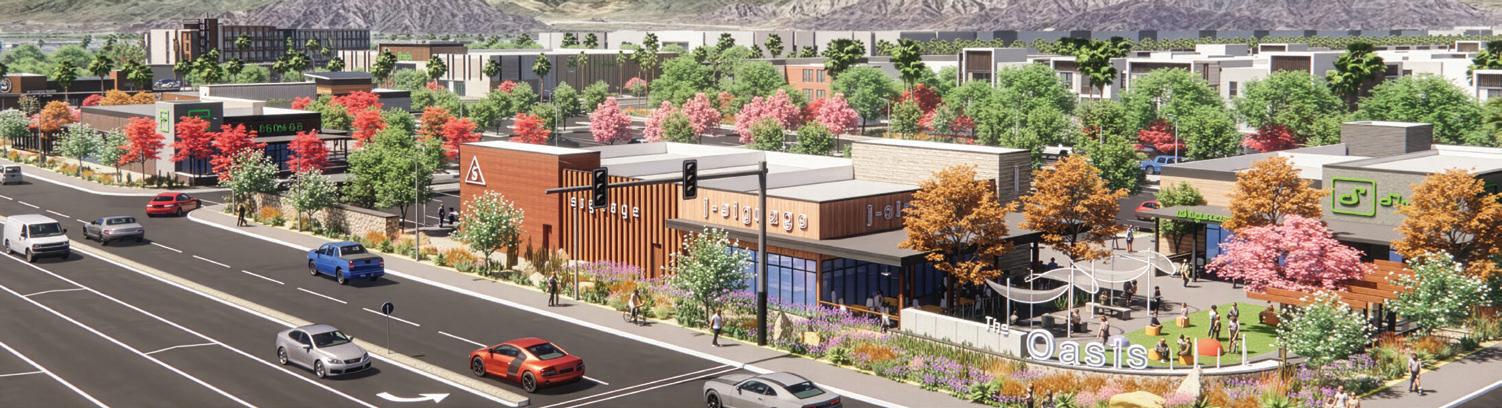
What’s proposed is a mixed-use plan across 75.5 acres that allows for a range of complementary uses. That includes up to 3,240 multi-family residential units, 20,000 square feet of commercial space, or an equivalent level of intensity, along with approximately 1,806,000 square feet designated for light industrial use.
But “light industrial” can mean many things beyond what people typically picture as warehouse development. We are exploring possibilities such as medical facilities, large-format sports and recreation venues, recording studios or soundstages, and other active uses that create jobs and bring people to the site.
The exact mix is still being finalized, but the vision is for a flexible campus that supports a broader live-work-play environment, not a project defined by trucks and loading docks.
Author: Traffic is another major concern, especially around the Monroe Street interchange. Critics say the infrastructure can’t handle it.
BH Properties: That’s a valid concern, and one we take seriously. The Monroe Street interchange needs improvements, and we are contributing to those upgrades as part of the project. We are also working with local agencies to make sure infrastructure keeps pace with development. The site itself is wellpositioned for that kind of planning. It is bounded by Avenue 42 to the north, Monroe Street to the east, the Thousand Palms Storm Channel to the west, and the I-10 Freeway to the south. Because it sits directly adjacent to the freeway, the location allows traffic to move on and off the highway system more efficiently, rather than forcing the bulk of circulation through surrounding city streets.
Author: So, you’re saying the project won’t overwhelm local roads?
BH Properties: The goal is to reduce that impact as much as possible. No project is without traffic, but thoughtful planning makes a difference. By aligning access with the freeway and investing in infrastructure improvements, we are addressing those concerns early.
Author: Let’s talk about what the Oasis at Indio is. What kind of experience are you trying to create?
BH Properties: We see this as one of the first true livework-play environments in the Coachella Valley. That means bringing together hospitality, commercial uses, and recreation in a cohesive way, while also supporting how people actually live day-to-day. The plan includes up to 3,240 residential units, which helps the City of Indio meet growing housing demand while creating a more balanced community.

Beyond housing, this is about opportunity. The project is expected to generate around 1,300 permanent jobs across retail, commercial, and related uses, along with as many as 2,100 construction jobs annually during build-out. At the same time, we are investing in infrastructure, including a new 2.4-acre IID substation that will improve electrical reliability for nearby residents and businesses.
MAY 2026
Author: Megan George
From a lifestyle perspective, you could have a hotel, walkable retail, wellnessfocused businesses, and spaces for entertainment or sports all in one place. It also contributes to shaping the Avenue 42 corridor into something more connected, with new options to shop, dine, and live. The goal is to create a place where people can spend time, build community, and access what they need without having to leave the area.
Author: There’s been mention of restaurants and retail. What will that look like?
BH Properties: The vision is to be thoughtful about the mix of uses. We are looking at bringing a variety of new dining opportunities to North Indio with a focus on fostering a walkable setting that encourages a more community-focused experience.
Author: Final question.
For residents who are still skeptical, what would you say?
BH Properties: Stay engaged. This project is still evolving, and community input matters. There is a lot of information out there, and we want people to have accurate details. We believe this is an opportunity to create something meaningful for Indio and the Coachella Valley, and we are committed to being part of that conversation.
Learn More
For updates and more information about the Oasis at Indio, visit www.theoasisatindio.com
by Kevin Fitzgerald
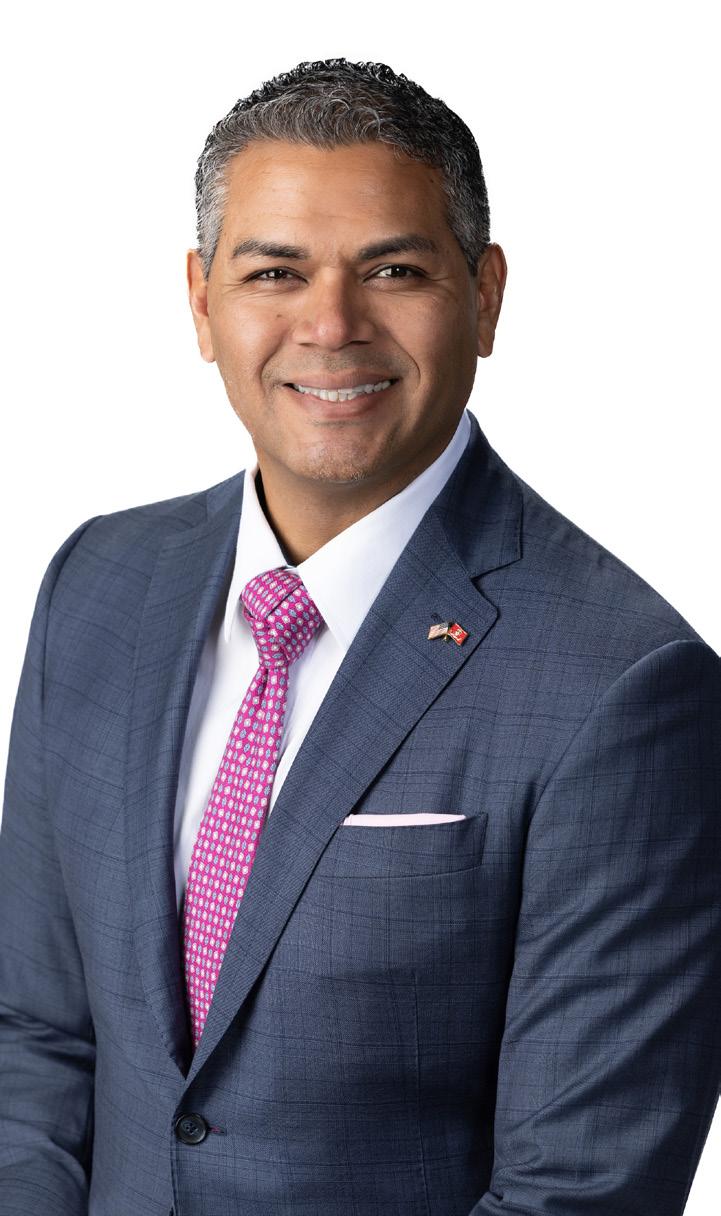
June 2 is primary election day in California, and in the contest for Riverside County’s Board of Supervisors District 4—which covers the Coachella Valley, south to Idyllwild, north to Desert Hot Springs and east to Blythe—voters will choose between nine-year incumbent V. Manuel Perez and 10-year La Quinta City Councilmember Steven Sanchez.
In California’s open primary system, a candidate that gets more than 50 percent of the vote is declared the winner—no general election needed. Since Perez and Sanchez are the only two candidates, it’s almost certain the winner will be decided by the primary.
V. Manuel “Manny” Perez was appointed to the seat by Gov. Jerry Brown in May 2017, following the death of John Benoit. Perez previously served in the state Assembly from 20082014. (In 2010, he defeated Sanchez when they both ran for the Assembly’s 80th District seat.) Before being nominated to the County Commission, he served on the Coachella City Council. From 2004 to 2008, he served on the Coachella Valley Unified School District Board of Trustees.
His biography on the County Commission website states: “Born and raised in the Coachella Valley, the son of immigrant farmworkers, Manuel attended local public schools and graduated from the University of California, Riverside. He taught at a local middle school, and went on to earn a master of education degree in administration, planning and social policy from Harvard University. He worked as a youth advocate and director of community health and advocacy for Santa Rosa Del Valle-Borrego Health, at Centro Medico Coachella and Centro Medico Oasis.” He lives in Coachella with his wife, Gladis, and has two adult sons, Ruben and Alejandro.
Steven Sanchez first won election to the La Quinta City Council in 2016. According to his city biography, Sanchez has served in a variety of capacities, including as a La Quinta Housing Authority member; as a Riverside County Local Agency Formation Commission (LAFCO) member; as vice chair of the Southern Region of California LAFCO; and as a member of the Coachella Valley Animal Campus Commission, among others. In his current role as Southern California Association of Governments District 66 representative, he represents not only La Quinta constituents, but those in the nearby cities of Blythe, Coachella and Indio. Sanchez enlisted in the U.S. Marine Corps in 1996 and served for eight years, including a tour in Iraq. Upon his honorable discharge from the military in 2004, Sanchez moved to the Coachella Valley. He has worked in the telecommunications industry, as district director
for a state legislator, as an account executive for a group of radio stations, and for a billboard company. He is a currently a commercial real estate agent. His city biography states: “When Steve isn’t working or volunteering his time, at 4 a.m., you’ll see him walking/running his rescued dogs (which are) a German Shepard named Sparta, a half-Malinois named Katana, and his recently adopted German Shepard named Romulus.”
The Independent recently spoke with each of the candidates and asked them the same set of five questions. Here are their answers to the first question: “What are the three most pressing issues facing your constituents in Riverside County’s District 4?” Perez’s answer has been edited for length, grammar and style; Sanchez’s answer has been edited only for grammar and style. Read the full answers to all of the questions at CVIndependent.com.
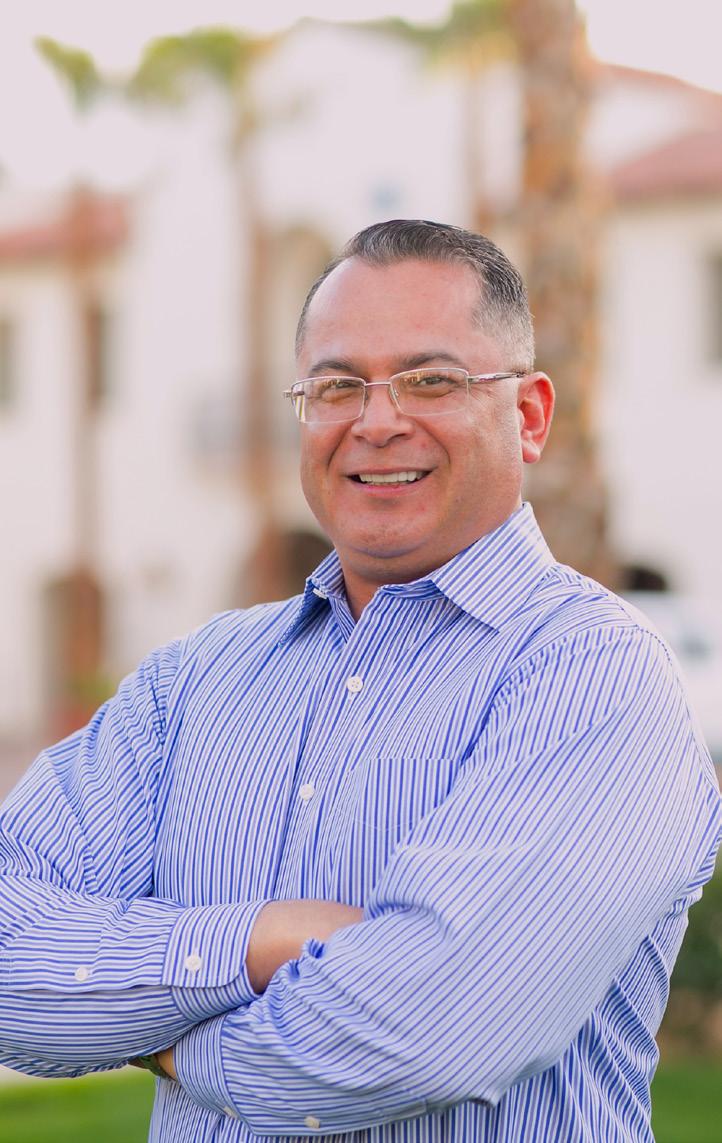
V. Manuel Perez
It depends on who you speak to. Our district, and our county, are so diverse. I would say that my district is probably the (most) diverse. It stems from Palm Springs all the way down to Blythe, and everything in between, all the way up Route 74 into the mountain area. … What I’ve been able to gather, though, is a combination of things.
The issue of housing is definitely premier. However, when you think about housing, affordability is one area, and the other one is workforce. There are those who maybe make a little (more), like a teacher, or a police officer, or a college student just coming home, but yet cannot afford a home that’s now in the range of $500,000 and up. However, with that being said, infrastructure is critical in order for us to build that housing, and to ensure that ultimately, it cancels out for both private developers as well as nonprofits … or whether that be Coachella Valley Housing Coalition, or a mobile home park area, where we still have issues with access to clean drinking water, and electrical concerns … .
Now, I’m happy to say that we’re going to start moving in a direction that I think is necessary. When people say we’re building housing, which we are, it’s more apartments, though, for the most part. Well, apartments don’t build you equity. If you’re in that house-
The two candidates for Riverside County’s Board of Supervisors District 4 discuss the most pressing issues
hold, it’s a lower rent, per se, because you are able to get subsidized through vouchers. At the same time, though, hopefully the goal is that you save, one day being able to pull together enough funds through a first-time home-loan program in order for you to be able to purchase a home. But we all know that the times have changed from 10 years ago, 20 years ago to now, and it still is very difficult.
Now, I’m also very proud to say out loud that, in the fourth district, we build more housing units than anywhere else in the county of Riverside. I’ve taken on this issue from the very beginning. … I took it upon myself to make housing my No. 1 priority, knowing that these connections exist … .
Another has to deal with the consistent issues of access to health care. That means that when the federal government, for example, guts dollars … that hurts our entities like DAP (Health) or our federally qualified health centers like Innercare. At the same time, it also hurts the programs and services that exist in JFK (Memorial Hospital) for that matter, or Desert Regional Medical Center, maybe potentially even in Eisenhower, although they do have a strong funding base. It definitely has an impact on Palo Verde (Hospital), as you know, and the Blythe area. I’m very proud of the fact that, over the course of these last
couple years, we’ve been working on this issue. … We launched strike teams (in Blythe) with true expertise. This strike team is there for six months to assess and evaluate what the next steps could possibly be, and ultimately ensure that the hospital is open with emergency services as well as primary care and things like lab work, CT scans and MRI scans. The folks in that community are very proud and very happy that we were able to do that. And we send doctors out there on an ongoing basis, and we will continue to do so … .
The third area is a combination from Veterans’ Services, ensuring that we excel, to Animal Services, and having the opportunity to turn our Animal Services Department around. In both those areas, we have, as a county, not invested as much as we should have over the course of years. And now, we are. We now have more staff with Veterans’ Services. Now we have another office in Desert Hot Springs, and we have a new leader, a director, Mr. (Adam) French, who is obviously not only a veteran, but has worked with the county alongside many of our colleagues, like Ralph Duarte, who’s very much loved by veterans … .
The same with Animal Services. We’ve had struggles over the course of years. … We’ve been able to allocate millions of dollars once again. Through our allocation here, we’ve hired more than 40 people. We have a stronger Animal Services enforcement team. We have stronger professionals who are administrators, that know what they’re doing. The culture has shifted … .
I could state that another area that is critical is public safety. Obviously, we need to ensure that we continuously support our Sheriff’s Department with the resources that they need so they can do their job, as well as our fire department (and) our emergency services department because, ultimately, they’re on the front lines. And we have done so. We’ve built new fire stations in the Fourth District, throughout the county of Riverside. We’ve been able to support our deputies with better pay, competitive pay, so that we don’t lose them to other areas.
As you know, the district runs from the Blythe area over to Desert Hot Springs and then up to Idyllwild. It’s a massively long land district. The Coachella Valley, Idyllwild and Blythe all can have different issues than each other, but overall, the first one is public safety.
I mean that regardless of which office any elected official holds; public safety is always
No. 1. It’s not just, “Hey, we need more cops and firefighters.” It’s beyond that. It’s, “Do the cops and firefighters have the adequate, up-to-date training,” right? As a Marine, (I can say) tactics and maneuvers adapt and change over time, and the same thing is true for police and fire. Do they have enough training? Do they have the proper up-to-date equipment and tools necessary to do their job properly? So, when we say public safety, it’s not just a manpower issue; it’s a training and tools and resources issue as well. And, especially up in the Idyllwild mountain areas, they deal with fire evacuations a lot more than we do down here in the desert, but those resources need to be properly distributed to all the communities. Infrastructure (is No. 2). Infrastructure is huge. The Coachella Valley has seen growth over the years, and over the last five, six years, we’ve seen the growth stall, mainly because of the lack-of-power issue. Your readers might remember this, but 10 years ago, when I first started running for the City Council, I started bringing up the issue of the lack of voting representation in (the Imperial Irrigation District). And, why that was important was because we had no one advocating for us, saying, “Hey, the Coachella Valley is growing. Infrastructure is old. We need new substations and transformers, and our energy grid out there needs to be looked at.” And when I brought that up many years ago, a lot of people basically said, “No, no, no. Everything’s fine.” They’ve been kicking the issue down the road. Well, look at us now. We’re lacking in infrastructure because of the lack of power. Developers can get a will-serve (letter of commitment from a power company), but the will-serve has no teeth, because IID often can’t provide the power that’s needed.
So, the areas that need the growth, the jobs, the expansion, that life source the most, are the east valley (communities) out in Mecca, Thermal and North Shore, in those areas, right? That’s where the growth in the Coachella Valley is going to be, and that’s where it’s stalling. That’s where the job growth is stalling because of the lack of power. Without power, no developer is going to invest in any projects in that area. If you need $30-$40 million substations, (and) somebody has to build a $10 million property, you’re asking them to build a $50 million property, right? It just doesn’t cancel out. And the same thing with the water, right? Water infrastructure can’t expand. So, all of these services are tied together with the lack of power.
Then, (the third issue) is government accountability and fiscal responsibility. We’ve seen, over the years, government corruption. In fact, we just saw it with the mayor of Coachella, who was the chief of staff of our current supervisor, pleading guilty to felony charges. And some say, “Well, how is
the supervisor supposed to know this?” Well, first of all, they’re best friends. This isn’t just a relationship of chief of staff and supervisor. This is your buddy you grew up with. This is somebody who you know intimately, and their investments, their personal businesses and figures. To have the lack of oversight and knowledge that your chief of staff is reappropriating housing funds that are intended for those who need it, toward his investment properties, that’s a big issue for me. And, it’s a matter of character, right? It’s who you associate yourself with. So, it’s not just, “Hey, they made a mistake.” No, these aren’t just mistakes. This is a character issue.
I’m not just pointing to the supervisor. This is, in general, in government. I think, often, what people don’t like is the lack of accountability in all levels of government. Somebody in government does something major, (and) it’s a slap on the wrist, right? I think at this time, the residents, the voters, are finally just fed up with the lack of accountability at all levels of government. And I don’t stand for that. I don’t care if I know the person, or if we’re friends. One of the sergeants in my Marine Corps unit used to say, “A Marine on duty has no friends.” It rings true in government, right? A councilman, supervisor, a congressman on duty has no friends. Your duty is to your constituency, not to your buddies. We need to bring that back into government.
So, those are the three top issues, affecting everything from Idyllwild to Blythe and Desert Hot Springs, and everywhere in between.
























Fitzgerald
With a lowkey, under-the-radar announcement, a small group of experienced PIOs from Coachella Valley cities, a Native American tribe, a utility and a public-relations business revealed the formation of the Coachella Valley PIO Task Force. Some readers may be wondering, “What’s a PIO?” The acronym stands for public information by Kevin
officer, and most of the aforementioned types of organizations have one on staff to act as a contact for media representatives and the public at large; some also manage critical information flow within their own organizations.
Erin LaCombe is the president and founder of CV Strategies, and a former television reporter and news director in both Los Angeles and Coachella Valley; her firm serves a variety of corporate, government and nonprofit clients. The CV PIO Task Force is her self-described “brainchild.”
“It was an idea I had about 10 years ago,” LaCombe told the Independent in a recent interview, “and it just sort of (stayed) in the back of my mind. What if all these organizations really work together on communicating for the media? I really saw (a need) during COVID, and during Tropical Storm Hilary. Those are the two sort of local media events where I thought, ‘You know what? This is really necessary.’
“Meanwhile, the media is changing so much. The media organizations are shrinking every single day. And after COVID, I thought, ‘Now, in the Coachella Valley, there are actually more public information officers than there are reporters.’ So, (the PIOs) are part of this story about how the residents of the Coachella Valley get information.”
LaCombe and her experienced PIO associate at CV Strategies, Jennifer Barnakian-Poland, began assembling an executive committee.
“They were hand-selected by us to give a broad spectrum of the valley,” LaCombe said. “You know, some water (agencies), some city, and the ones that you don’t always hear about. We had someone sign up from (Coachella Valley Mosquito and) Vector Control, who you don’t even think about—until there’s the mosquito outbreak, and then all of a sudden, you’ve got to find that guy, right?”
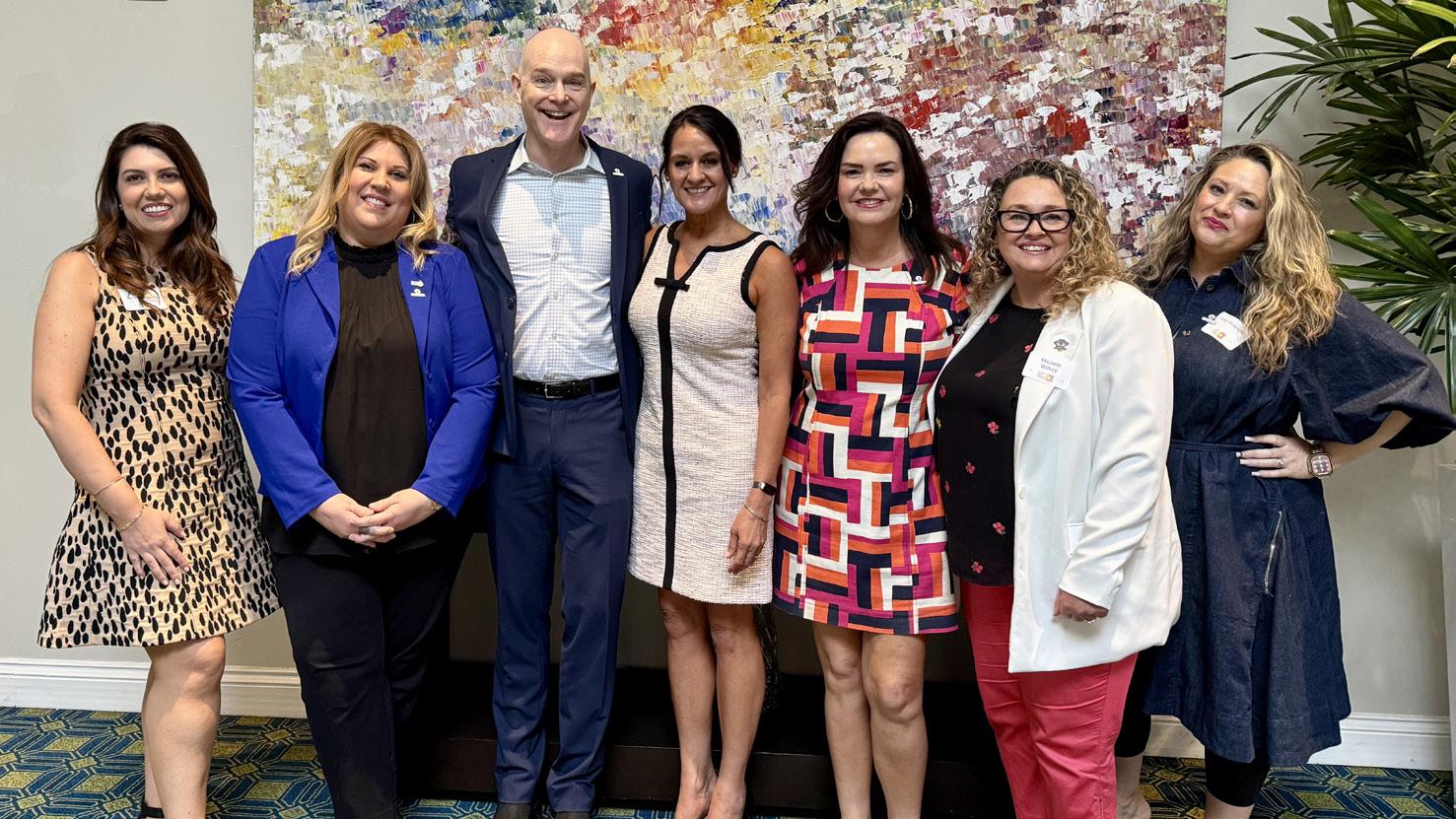
The founding members are Amy Blaisdell, chief communications officer from the city of Palm Springs; April Scott, programs and public affairs specialist from the Mission Springs Water District; Kate Anderson, director of public relations from the Agua Caliente Band of Cahuilla Indians; Risseth Lora, chief communications and public affairs officer from the office of Riverside County Fourth District Supervisor V. Manuel Perez; Micaela Wilkey,
senior affairs analyst from the city of Indian Wells; and Barnakian-Poland. To date, all the funding for this effort is coming from the marketing budget of LaCombe’s CV Strategies.
“We’ve provided (the executive committee) with the authority to review the membership applications and really drive this mission,” LaCombe said. “My interest is from a corporate standpoint, too. I’m a small business owner who survives in government. So, this makes sense for me and my company, but it also makes sense just as a 30-year resident of this community, thinking, ‘OK, we can do this better.’”
The organization’s website (cvpio.org) has this description of the organization: “When information needs to move quickly across the Coachella Valley, whether during a crisis, a community celebration, or everyday operations, the professionals behind the message stand ready. The Coachella Valley PIO Task Force is a voluntary collaborative network where public information officers from independent organizations across the valley come together to learn, support and strengthen each other’s work.”
Scroll down a bit further, and you find this addition: “The Coachella Valley is a dynamic region of nearly half a million residents, millions of visitors, and countless stories. Each of our organizations plays a vital role in serving this community. By connecting as professionals, we strengthen our individual abilities to communicate effectively, respond to challenges, and serve the people who depend on us, all while maintaining the independence and unique identity of our respective organizations. When we support each other, everyone benefits: Our organizations operate more effectively; our communities receive better information; and public trust grows stronger.”
The Independent connected with Blaisdell to ask what motivated her to jump on board as chair of the PIO Task Force’s executive committee.
“I think it’s important that PIOs from around the valley collaborate with one another so we can strengthen how we’re responding to different critical issues facing our region, such as homelessness, funding public safety, tourism and economic development, affordable housing, transportation needs, communicating information and updates on special events,
Local public information officers join forces to launch the CV PIO Task Force
weather emergencies, road closures, and city council policies and initiatives,” Blaisdell said. “The idea is that we can learn from one another and put new ideas and strategies into practice.”
Blaisdell said the PIO Task Force is meant to be “a valuable resource for members of the media and various stakeholder organizations throughout the valley.”
“We are in the process of launching our website, and the goal is to provide helpful factual information and FAQ documents in a resource library highlighting statistics and information touching on economic development, tourism, vacation rentals, real estate and the important special events and tourist attractions that boost our local economy,” Blaisdell said. “… In addition, we plan to launch a calendar highlighting important community events.”
Scott explained why she welcomes the arrival of the CV PIO Task Force.
“It’s the opportunity to collaborate and learn from other PIOs in the valley, because it’s from different sectors,” Scott said. “I work in water. When you work in water and wastewater, you’re familiar with and know many other communication professionals in water and wastewater. But the opportunity to be involved with other agencies and other public affairs professionals (outside of my specialty) was a huge opportunity. … Regionally, I feel like the Coachella Valley is so special … and we’re kind of separated from a lot of other larger areas. So regionally, it’s great to have that opportunity to get to know each other, and each other’s agencies, and have that resource locally.”
Barnakian-Poland said they’ve had a great response from the valley’s PIOs so far.
“We organized in November. … Now, across the board, we have cities and water districts, and we have the county as well,” she said. “We have been getting so many new members. (Interested parties) are sending inquiries, and we have pretty much all the cities now on board, so we’re very excited about that. We also are getting school districts, and our next outreach will be hospitals as well as utilities. … I’d like to point out that we’re actually looking to expand the membership opportunity to Imperial Valley, as well as the high desert and the San Gorgonio Pass, because they’re also impacted.”
Now that the CV PIO Task Force’s website is up and running, and the executive committee is reviewing and accepting new members, what other steps are being taken?
“We’re going to go into KESQ and CBS and do a tour, and have conversations with some of their reporters and producers about how the PIOs can help them do their job, and vice versa,” LaCombe said. “That type of learning experience is so incredibly valuable, especially when you’ve got green reporters. It’s their first job, and they couldn’t tell you where the Salton Sea is, or that we’re nine cities.”
Added Barnakian-Poland: “We will be building out a suite of media-focused resources, including economic impact reports, a comprehensive calendar of events, key points of contact across organizations, FAQs and a centralized document library. … The goal is to create a more connected, efficient experience for media by bridging the gap between reporters and the right sources in real time.”
Learn more at cvpio.org.


The Agua Caliente Band of Cahuilla Indians cordially invites you to a special community recognition event honoring a historic milestone: the 150th Anniversary of the Establishment of the Agua Caliente Indian Reservation.
Rooted in a legacy that has endured since time immemorial, this gathering celebrates culture, community, and tradition.
FRIDAY, MAY 15, 2026
4 P.M. – 9 P.M. Agua Caliente Cultural Plaza, downtown Palm Springs
JOIN US FOR AN EVENING FEATURING:
• Live bird singing and traditional dancing
• Native American vendors showcasing authentic art and offerings

• Delicious food offerings
• Engaging cultural demonstrations
• Complimentary admission to the Agua Caliente Cultural Museum
TTurning 100 this year, the La Quinta Resort eventually gave its city its name
The La Quinta Resort was founded in 1926 in a remote desert cove by Walter H. Morgan, who by greg niemann
he La Quinta Resort and Club, the iconic hotel that gave its name to the city of La Quinta, is celebrating its centennial. Throughout 2026, the resort has announced special events, limited-time offers and other centennial experiences.
persuaded his wealthy San Francisco father, an oyster-company magnate, to fund the project. It began as an upscale desert escape and soon became a secluded hideaway for Hollywood’s elite, with guests including Greta Garbo. Director Frank Capra and screenwriter Robert Riskin, a frequent collaborator with Capra, would escape to the resort to write.
Well before the resort came to be, indigenous Desert Cahuilla had established encampments, digging few wells in the area. In 1862, the Bradshaw Trail, a wagon road established by William Bradshaw linking San Bernardino with the gold fields of La Paz, Ariz., became a regular route through the La Quinta area. The wagon trail was later replaced by the railroad.
The first known permanent non-indigenous resident of La Quinta was John L. Marshall, a former Los Angeles paint store owner who settled there in the early 1900s. He built an estate called Hacienda del Gato. Around that same time, Happy Lundbeck established a homestead and a store near the rocky promontory that is now called Point Happy, near Highway 111 and Washington Street. In 1922, Chauncey D. Clarke built a ranch where he founded the Point Happy Date Gardens and Arabian Horse Ranch.
There still wasn’t much in the area in 1926
when Morgan built what was originally called the La Quinta Hotel. He hired noted architect Gordon B. Kaufman, who developed the classic Spanish colonial revival resort that highlighted the isolated location. Horseback riding, a nine-hole golf course and desert solitude became early draws.
In the 1930s, business executive E. S. “Harry” Kiener purchased thousands of acres of land adjacent to the La Quinta Resort. He subdivided and built 63 small “casitas” which he began selling. Due to poor health, he sold his interest, and the new owners added a central building called the Desert Club. It opened in 1937— designed in 1930s Art Deco style, unusual for the area. The Desert Club attracted a number of celebrities early on, but began to have financial problems. In the 1960s, a fire caused significant damage. It limped along, for the most part, before closing for good in the 1980s.
The town that began to evolve in the 1930s was hastened by the construction of State Route 111, which connects most of the Coachella Valley cities. The expansion of Washington Street in the 1950s and 1960s also linked La Quinta with highways 60 and 99 (which became Interstate 10 in the 1970s). In the
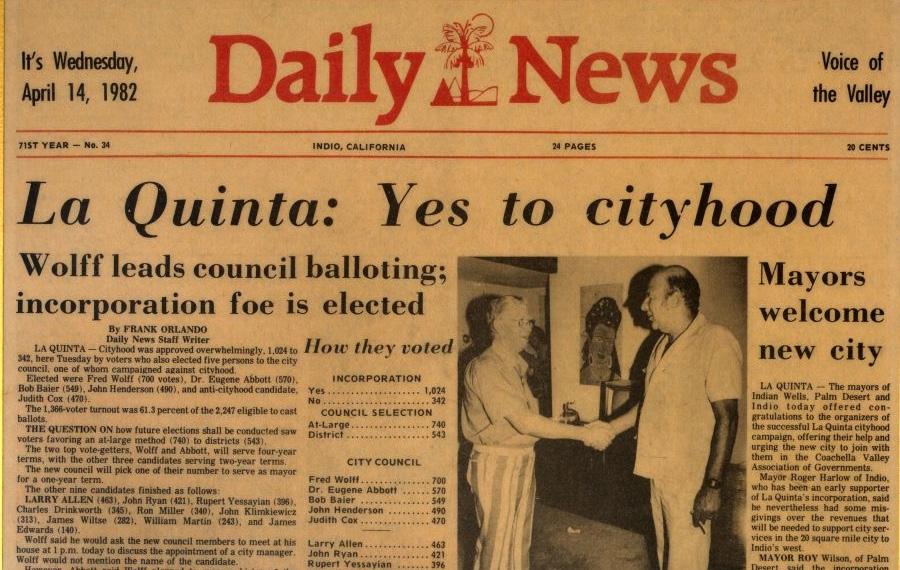
1970s, La Quinta grew dramatically, and in 1982, La Quinta was incorporated as a city— taking its name from the resort.
Over the years, La Quinta Resort grew. Today, there are 796 guest rooms, including 620 California hacienda-style casitas and suites, and 98 villas. There are five legendary golf courses, 41 pools, 21 tennis courts and a handful of pickleball courts.
The United States as a whole became acquainted with the secluded old-world style resort when ABC filmed The Bachelorette there in 2020, during the COVID-19 pandemic. The next year, Food Network filmed the cannabis/ cooking competition series Chopped 420 there.
About a mile away is Old Town La Quinta, a real estate development that offers 30 restaurants/cafes, shops, boutiques, salons and offices. Old Town was developed by homebuilder Wells Marvin, who moved to La Quinta in 1997. He had been inspired by the Spanish colonial revival architecture in Santa Barbara and Carmel-by-the-Sea, as well as the nearby La Quinta Hotel and Resort. It took him seven years to develop the picturesque and welcoming Old Town, with an inviting and popular Main Street.
Today, there are more than a dozen parks in La Quinta, including the beautiful 710-acre
Lake Cahuilla Veterans Regional Park. The 135-acre Lake Cahuilla, nestled against the base of the Santa Rosa Mountains, offers fishing, picnicking and camping. Visitors might also see some bighorn sheep that often visit from the rocky hillsides. The park offers 96 individual and group campsites, picnic tables and barbecues, horseback riding and hiking on nearby trails.
Named for the ancient lake that once covered the valley floor, Lake Cahuilla was created by the Coachella Valley County Water District in 1969 as the terminus of the Coachella Canal, which brings water 123 miles from the Colorado River.
Today, about 40,000 people call La Quinta home. The town is popular with visitors thanks to its tranquil parks, the vibrant Old Town, and world-class golfing—but La Quinta Resort and Club remains the city’s biggest attraction, as has been the case for nearly 100 years.
Sources for this article include the La Quinta Historical Society; Lake Cahuilla Veterans Regional Park; “History of La Quinta” by the city of La Quinta, the La Quinta Resort and Club; and Guideposts to History: People and Places of Historical Significance in Early San Bernardino and Riverside Counties ( Santa Fe Federal Savings and Loan, 1977).
By Robert Victor
May’s evening twilight scene is dominated by two brilliant planets: Venus, of magnitude -4, low in the west-northwest; and Jupiter, of magnitude -2, in the west, to Venus’ upper left. At dusk mid-twilight on May 1, Jupiter is halfway from horizon to overhead and nearly 40° from Venus. The gap between them closes to 30° on May 10; to 20° on May 20; and to within 9° on May 31, all building up to their spectacular conjunction on June 9. Both planets are moving east against the starry background, while the zodiacal backdrop itself is sinking lower in the west as weeks pass, a consequence of Earth’s revolution around the sun. Jupiter this month shifts daily by 0.14° to 0.19°, while fast-moving Venus goes 1.2° daily, bringing it closer to Jupiter. Many of the sky events described below are illustrated on the Abrams Planetarium Sky Calen-
dar. For $12 per year, subscribers receive quarterly mailings, each containing three months of calendars and evening star maps. Subscription info and a free printable sample of the May 2026 calendar and sky map are available at abramsplanetarium.natsci.msu.edu.
Watch the changing configurations of Venus and Jupiter with the stars of Taurus and Gemini—with plenty of photo-ops! On May 1, watch Venus pass just more than 6° north (to the upper right) of Aldebaran, eye of Taurus. Farther left, in the west-southwest, look for Orion, with his three-star belt pointing left to Sirius, the brightest star, twinkling in the southwest. Follow these stars and others until their annual exits from the western sky.
Watch these evening events: On May 12, Venus is 4° south of Beta Tauri, tip of the Bull’s northern horn, and between the horns the next evening. On May 17, the young crescent moon, just 3% full with earthshine, is low in the west-northwest at dusk, 14° to the lower right of Venus. Look nightly for rest of May and watch the moon pass two brilliant planets and four first-magnitude zodiacal stars.
On May 18, spot Venus in the daytime! Look near the 8% crescent moon in the west shortly before sunset, with Venus 2°-3° to its lower left. As the sky darkens after sunset, a spectacular conjunction awaits!
On the next evening, May 19, the 16% crescent moon climbs to 14° to the upper left of Venus and 7° to the lower right of Jupiter. Note the “Twin” stars Pollux and Castor, 4.5° apart, within 9° above the moon, and 6°-10° to the upper right of Jupiter.
On May 20, Mercury, at magnitude -1.6, sets 40 minutes after sunset, so look for it earlier, with optical aid, within 25° to the lower right of Venus. By an hour after sunset on May 20, Mercury has set, but the 25% moon appears 8° to the upper left of Jupiter and left of the Twins. (See more about Mercury below.)
On May 20 and 21, Venus sets farthest north along the horizon—farther north than even the setting sun on the first day of summer, June 21. For the rest of Venus’ evening
apparition, ending in early October, watch Venus’ setting point shift progressively farther south along the western horizon.
On May 25, Venus forms an isosceles triangle with Jupiter and Castor, nearly 15° from each. Mercury is at magnitude -1.1, now easy for the unaided eye, 20° to the lower right of Venus. From May 26-31, Jupiter is within 6.3° to the south of Pollux. On May 30, Jupiter forms an isosceles triangle with Pollux and Castor, 10.3° from each.
Watch for a special event the night of May 30-31: There are two full moons this month, one on May 1 at 10:23 a.m., and the second one on May 31 at 1:45 a.m. Since the red supergiant star Antares, heart of Scorpius, is at opposition to the sun on the night of May 30-31, the full moon will appear close to that star all night. The closest approach, with Antares within 1° above the moon’s northern edge, occurs on the morning of May 31, shortly after 3 a.m. in the Coachella Valley. Since this is the most distant full moon of the year, and it is a “Blue Moon,” then we have a Blue Micromoon in conjunction with a red supergiant star! After the “Blue Moon” overnight on May 30-31, the next one—if defined as the second full moon in a calendar month—will take place on Dec. 31, 2028. But if a Blue Moon is defined as the third full moon of a season with four, then tonight’s was not a Blue Moon, and the next will occur on May 20, 2027.
In morning twilight: Use binoculars to spot 0.9-magnitude Saturn, very low in the east; and 1.2-magnitude Mars, within 8° to Saturn’s lower left, on May 1. Even though they’re 32° and 24° from the sun, the viewing conditions are poor (and get worse further north), with the zodiacal belt inclined so low.
Now, here’s a bit more about Mercury’s sudden, unusually bright appearance into May’s evening sky: During the hours surrounding its superior conjunction on May 14, Mercury, shining brilliantly at magnitude -2.4, will appear on LASCO coronagraph videos of NASA’s Space Weather Prediction Center. Solar conjunction occurs at 7 a.m. Pacific, and Mer-
Venus and Jupiter are dominant in evening skies—and
This sky chart is drawn for latitude 34 degrees north, but may be used in southern U.S. and northern Mexico.
mid-twilight occurs when the Sun is 9° below the horizon. May 1: 43 minutes after sunset. 15: 44 " " " 31: 46 " " "
cury’s disappearance behind the sun lasts from about 4 1/2 hours before until 4 1/2 hours after that time. To view Mercury on NASA’s videos just before and after its 8 1/2-hour occultation by the sun, visit www.swpc.noaa. gov/products/lasco-coronagraph.
The near-coincidence of three events—Mercury passing the ascending node of its orbit and crossing north of the plane of Earth’s orbit on May 13; superior conjunction behind the sun on May 14; and Mercury’s perihelion, closest to the sun on May 18—makes the innermost planet ascend rapidly and brightly into the post-sunset sky in following days. How soon after May 14 can you spot Mercury just above the west-northwest horizon shortly after sunset, with optical aid? With the unaided eye?
From Palm Springs on May 20, Mercury is 8° to the upper left of the setting sun and sets 40 minutes after sunset, 24.5° to the lower right of Venus. On May 21, Mercury is 9.2° to the upper left of the setting sun, and sets 45 minutes
after sunset, 23.6° to the lower right of Venus. Remaining above the horizon five minutes longer after sunset is a marked improvement after 24 hours, and it accumulates: By May 24, Mercury is 12.5° from the sun; sets 62 minutes after sundown; and will be easy for unaided eye. By May 31, Mercury, still prominent at magnitude -0.6, widens its elongation to nearly 19° from the sun, and follows the sun over the horizon by more than 1 1/2 hours.
The Astronomical Society of the Desert will host a star party on Saturday, May 9, at the Santa Rosa and San Jacinto Mountains National Monument Visitor Center; and on Saturday, May 16, at Sawmill Trailhead, a site in the Santa Rosa Mountains at elevation 4,000 feet. For more information, visit astrorx.org.
Robert Victor was a staff astronomer at Abrams Planetarium at Michigan State University. He is now retired and enjoys promoting sky watching to folks of all ages.
Our investigation finds documented safety, leadership and financial concerns at Guide Dogs of the Desert
by Maggie Miles
On Aug. 16, 2025, a female Guide Dogs of the Desert employee walked into a building at the organization’s Whitewater campus to begin an early-morning shift alone.
A man, Bryan Vines Burge, attacked her. As reported by KESQ: “Investigators said Burge encountered the victim … and pulled a knife on her, trying to force himself on her while threatening her life.”
Burge later pleaded guilty to attempted rape. On March 19, he was sentenced to 25 years to life in prison.
While the attack itself was a shocking but isolated incident, a joint investigation by The Palm Springs Post and Coachella Valley Independent revealed reports of gaps in campus security and leadership’s response to the attack. Interviews, internal documents and emails, and court records we reviewed show that employees had raised broader concerns about campus security, the leadership of executive director Robert Maher, board oversight and the organization’s finances.
Maher and Richard Clapp, the chairman of the organization’s Board of Directors, declined to answer many specific questions about internal complaints, frequently citing personnel matters, but broadly disputed the characterization of events described by former employees.
During our six-month investigation, The Post and the Independent spoke with more than 15 current and former employees and volunteers, most of whom chose not to be identified for fear of retaliation, including losing their jobs or disciplinary action. Several said the specialized nature of their work would make it difficult to find similar jobs locally.
“There is nothing to say to you, because those are all private staff matters, and they don’t have anything to do with you, the public or anyone else,” Maher said in a phone interview on April 21 in response to questions. “My response is that these are all in-house staff relations, and of course, by law, I’m not allowed to speak on them.
“And I’m really surprised at this whole position, here, because you know better.” Together, the interviews, documents and court records indicate employees repeatedly raised concerns about safety, management and workplace practices. Multiple staff members said those concerns were not adequately addressed.
There is no indication in court records that the attacker had any prior connection to the organization or that the attack was directly linked to the issues raised by staff.
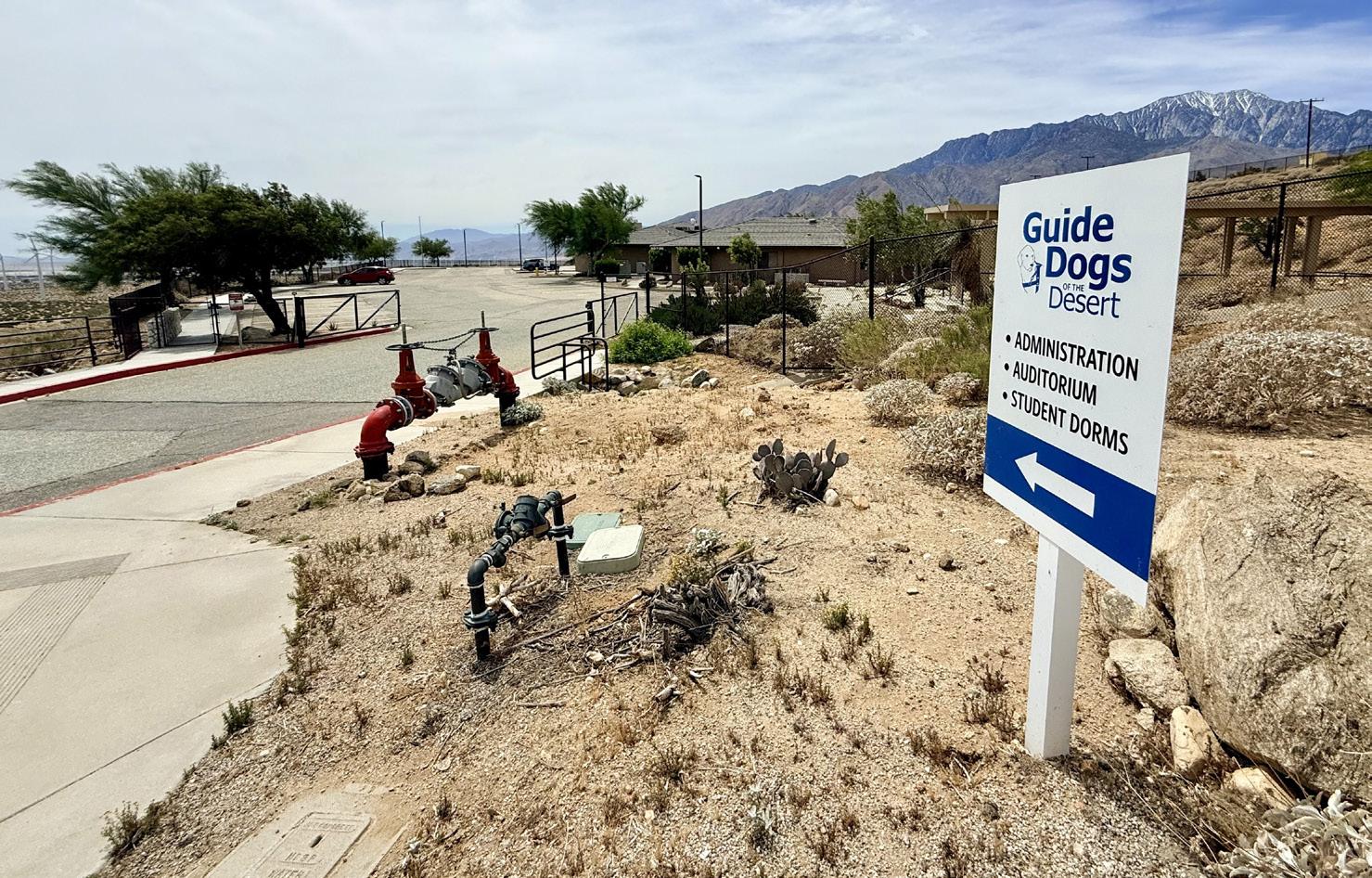
Guide Dogs of the Desert, whose mission is to “provide quality guide dogs to the blind and the blind with special needs,” operates a six-acre campus off Dillon Road in Whitewater, just north of Palm Springs. The campus includes a 12-bedroom dormitory, administrative offices, a dining and conference space, and a 400-seat auditorium where graduation ceremonies are held. The campus also includes kennel facilities housing up to 25 adult dogs, a separate puppy kennel and an on-site wellness center.
Founded in 1972 by Bud Maynard, the nonprofit has grown from a small desert ranch house into an internationally recognized training program. Over more than 50 years, it has graduated more than 900 guide dog teams, providing dogs and training at no cost to clients. Employees said that the importance of the mission—and the scale of the operation— make their concerns all the more troubling.
“What makes all of this so concerning is that the mission is absolutely vital—helping people who are blind or visually impaired live safer, fuller, more independent lives—and the staff and volunteers on the ground care deeply about that work, as do donors,” said Tom Tarr, a former development director for the nonprofit.
“They understand that the need is great. They are pouring their hearts into the training of the dogs, and supporting the needs of the clients, and the volunteers, but their efforts are being undercut by poor working conditions and systemic mismanagement at the leadership of the organization.”
In the months before the attack last August, staff who spoke to The Post and the Independent said, security issues on campus had already been identified. Among them was a broken lock on the only door to the building where the attack occurred, besides a sliding glass door that had remained intact, staff said.
Multiple employees said they warned Maher that the door needed professional repair. According to those employees and a detailed
letter from a canine development staff member sent to the board, a locksmith was not hired before the attack.
“(T)here was no indication at any time that that lock had been broken prior to the attack,” Maher said. “There’s no formal report to that effect.”
At the same time, security cameras—including one covering the area where the attack occurred—had not been functioning properly since at least June 2025, according to the letter and multiple employees. Staff members said the medical team requested repairs more than once and that they were unaware of any repairs being made before the attack. The cameras were used not only for exterior monitoring, but also to observe dogs inside the facility, including those recovering from surgery, allowing staff to review footage if complications arose overnight.
Those issues, staff said, were part of broader concerns about the organization’s safety planning.
According to multiple staff interviews, the organization did not have a workplace violence prevention plan in place, despite California requirements that employers maintain one. Employees said they repeatedly raised the issue with Maher and the board.
The issue is also raised in a lawsuit filed in February by Caryn Gates, a current employee and former director of human resources, which alleges retaliation for protected activity, whistleblower retaliation, and constructive discharge in violation of public policy, among various other claims in the aftermath of voicing her concerns.
According to the filing, Gates raised concerns with Maher about the absence of an adequate plan on Aug. 17 or 18, 2025—one or two days after the attack. The lawsuit further states that beginning around Aug. 23, 2025, regular Wednesday directors’ meetings were canceled, and Gates was subsequently excluded from management meetings.
Guide Dogs of the Desert has not yet filed a response to Gates’ allegations.
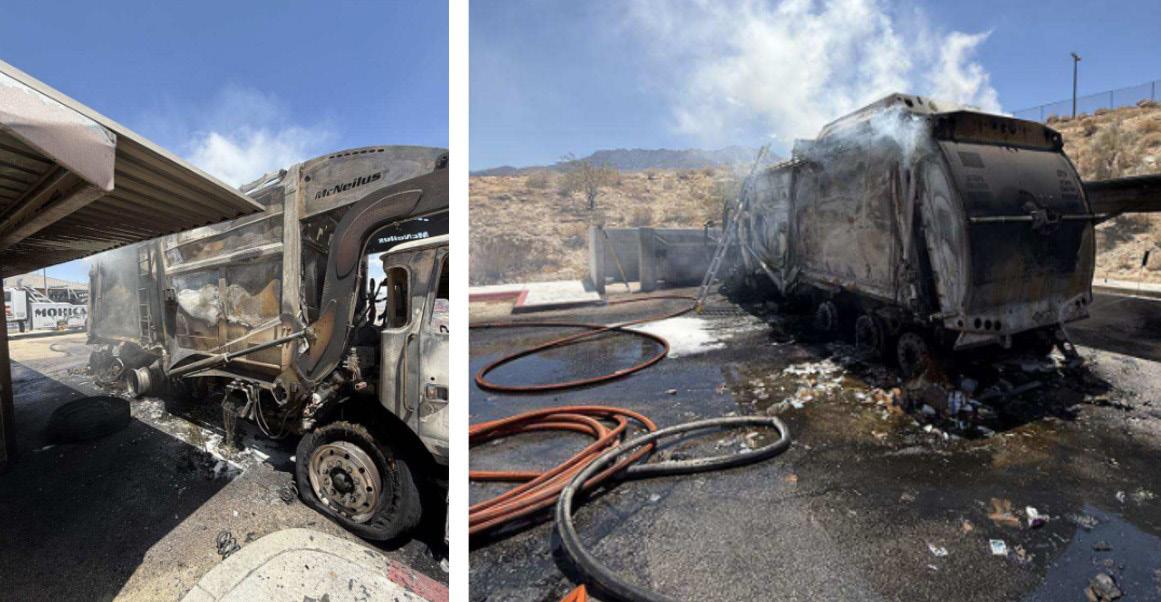
Staff also said they had asked for a fire safety plan for about two years and that one was not in place. That absence became crucial on July 1, 2025, when a garbage truck exploded in the GDD parking lot and caught fire during a staff meeting in an adjacent building, creating what employees described as a confusing and frightening situation without a clear evacuation protocol. The fire caused smoke and fire damage to a nearby parking stall cover and at
least one adjacent vehicle. The incident was confirmed by The Post and the Independent through a CAL FIRE report.
“That’s not correct,” Maher said when asked about the lack of a workplace violence prevention plan and fire safety plan.
Clapp, the Board of Directors chairman, said in an interview that he was “not totally certain how to respond to that” when asked why a workplace violence prevention plan and fire plan had not been put in place.
“Based on what you just shared, you’re not aware of everything that went on, and not aware of all the details and all of the background,” Clapp said. “You’re hearing from people, obviously, very second-hand information that is not accurate, and I cannot give you any specific response to that, because it would involve talking about individuals, which is personnel.”
Clapp declined to answer multiple questions about internal complaints, repeatedly citing personnel concerns.
Employees and internal documents raised a new set of questions after the attack—not about prevention, but about how leadership responded afterward.
According to multiple current and former employees, Maher was notified about the attack immediately, but did not come to campus that day, which was a Saturday. Instead, according to the letter from the canine development staff member, he reportedly told Gates he would “deal with it on Monday.”
Multiple employees said Maher did not contact the victim until Monday, more than two days after the Saturday attack.
As employees arrived on campus, both on the day of the attack and afterward, many were not informed of what had happened. Some said they learned about the attack from
co-workers or the victim herself.
On Monday evening, Aug. 18, an employee working an overnight shift without security said that she was told by Maher that the building’s water had been shut off due to a sprinkler leak, and that she would need to go outside to a valve near a storm drain—in the same area where the attacker had hidden—to turn it back on, according to an internal letter and staff interviews. She refused, citing safety concerns, and maintenance was called instead.
“That’s all a private staff matter,” Maher said in response to the concerns around his actions after the attack.
The letter to the board also stated that a workers’ compensation incident report had not been completed on the day of the attack and, according to the letter, still had not been completed more than a week later.
According to the California Department of Industrial Relations, employers must provide a workers’ compensation claim form within one working day of a reported injury, return a copy to the employee within one working day of receipt, and forward the form and injury report to the claims administrator within one working day. Employers are also required to authorize up to $10,000 in medical treatment within one working day of receiving a claim. The department states that having employees seek treatment through personal insurance may constitute misrepresentation of the cause of the injury.
“You’d have to talk to our HR person, Ms. Caryn Gates, about that,” said Maher.
For some employees, those decisions reinforced their view that safety concerns were still not being adequately addressed, even after a violent incident.
On Aug. 25, a staff member sent a lengthy let-
ter to a member of the Guide Dogs of the Desert board of directors, which was then forwarded to board chair Clapp outlining safety issues, concerns about the organization’s response to the attack, and what the employee described as a pattern of inaction.
The letter said employees had previously brought concerns about Maher to board leadership at least three times and that they did not receive what they considered a meaningful response. It described morale as “dire,” warning that 10 staff members were on the verge of quitting.
In a Sept. 2 email, Clapp wrote that the board was “taking the events of Aug. 16, 2025 and the surrounding safety concerns very seriously” and would be “working with Mr. Maher to address those concerns.” But the response indicated that the board wanted employees to first raise concerns through internal supervisory channels.
“In the future, should you have other work concerns, please present them to your immediate supervisor,” Clapp wrote. “If that person cannot resolve the issue, then the next step is the on-site human resource person who will work with the executive director to resolve the issue.”
In a follow-up email to board members on Sept. 7, Clapp instructed them to refer employee concerns about Maher to Gates.
“During the past several weeks, various board members have received phone calls or emails from members of the Guide Dog staff regarding concerns they have,” Clapp wrote. “... If (Gates) can’t resolve it, then Rob, as executive director, becomes involved. If the concern involves Rob, and it can’t be resolved, then
Caryn brings the issue to the board. … If the issue doesn’t involve Rob and is not resolvable, then Rob brings the issue to the board. I’m sure you can see what happens if employees feel they can go directly to board members.”
Employees said they received no further communication from the board about the concerns raised in the letter. They said the broken lock was repaired after the attack.
When asked why he directed employees to the executive director when there were multiple complaints about his leadership, and to the human-resources director, Clapp said he could not discuss the issue.
“I can’t talk to you about what’s going on among people like that,” he said.
Around the same time, Gates escalated her warnings and handled a discrimination complaint filed by a blind employee against Maher.
According to Gates’ lawsuit, the complaint was filed on or around Sept. 3, 2025. When Gates brought it to the board, she was instructed to present it directly to Maher, placing her “in an untenable position of having to report discrimination allegations to the person accused of committing them while simultaneously supporting an employee who had made a protected complaint,” the lawsuit states.
When asked about the complaint filed by the blind employee, Clapp said he could not discuss it.
“All I can tell you is, at this point, when you have an organization that involves 30 people, there’s always going to be something happening, and to take second-hand information and
continued on next page
make it into something—that sounds to me like you’re trying to make it into something that could put (The Palm Springs Post) in a very bad situation. … I wish I could just be straightforward with you, but I can’t, because it’s personnel.”
When asked about the discrimination complaint by the blind employee and if any action was taken, Maher responded that he did not have a comment.
“I guess we are done, because, again, you have your own mission for some reason, and your mission is to hurt the organization, and your mission appears to be looking to justify somebody who is disgruntled, and that’s very unfortunate,” Maher said.
“And I don’t know what you think the outcome of publishing a story like this might be, but it’s unfortunate you’re taking this position, because if I was able to speak freely, you’d probably understand everything very clearly, and you’d understand that disgruntled employees are just that—disgruntled employees, and I don’t have anything else to say.”
The following month, Gates alleges in the lawsuit, some of her responsibilities began to be stripped away.
According to Gates’ complaint, in or around October 2025, Gates’ HR duties were removed from her position without adequate explanation or consultation. Later that month, she received a disciplinary write-up for violating policy at a volunteer event, despite the fact that volunteers wrote rebuttal letters supporting Gates and contradicting the allegations against her. Also in or around October 2025, Gates wrote her first letter to the board alleging retaliation
for her protected activities, including reporting the blind employee’s discrimination complaint against Maher to the board.
Gates’ complaint goes on to allege this sequence of events:
In mid-November 2025, an outside consultant, Del Peeples, was hired to take over human resources duties. On Nov. 25, Gates’ HR director title was removed from the company website without notice or explanation; as of this writing, the website lists her as director of community engagement.
On Dec. 2, Gates sent a second letter to the board documenting what she described as escalating adverse actions against her.
That same month, a mass email to volunteers announced that another employee would take over the puppy den and volunteer program—responsibilities central to Gates’ role. Gates alleges she was also barred from accessing the puppy den, prohibited from having guide dogs in her office, and no longer allowed to transport or pick up dogs. She said physical HR files were removed from her office without notice and that the actions left her feeling publicly humiliated.
Her lawsuit alleges 15 causes of action, including whistleblower retaliation, discrimination, harassment and failure to implement required workplace violence prevention measures.
“Our board would never tolerate any form of retaliation against any employee under any circumstances,” Clapp said in response. “... As a general statement, that is just something that is not and would never be ever tolerated—any kind of retaliation for any reason whatsoever. Again, that’s second-hand, third-hand, whatever you’re bringing up there. … It doesn’t match reality.”
Maher echoed that stance, declining to address the allegations directly and framing them as part of an internal legal dispute.
“… I’m just really surprised, because I think you can recognize that this is a disgruntled employee who is trying to lash back any way they can,” said Maher. “And the fact that one person who has indicated that they are still caring about the community is trying to hurt the very community that they are saying they’re caring about is very unfortunate, and I think this whole situation is very unfortunate.”
When told that The Post and the Independent have spoken with more than 15 concerned current and former staff and volunteers, Maher said he “still thinks it’s all very unfortunate.”
Troubling patterns also emerged in another aspect of the organization: its finances.
In 2023, Guide Dogs of the Desert reported net income of more than $1 million. One year later, it reported a net loss of $476,790.
That shift came during a period in which multiple development directors raised concerns about financial management before later departing the organization.
Michael O’Donahue, who said he has three decades of nonprofit-management experience, was hired as development director in August 2022, just five weeks before the organization’s anniversary celebration in September. O’Donahue said an event production company and a marketing firm had been hired—but little work had been completed when he arrived.
“All of that responsibility was put on me” with just five weeks to execute, O’Donahue said.
Despite his efforts, O’Donahue said the
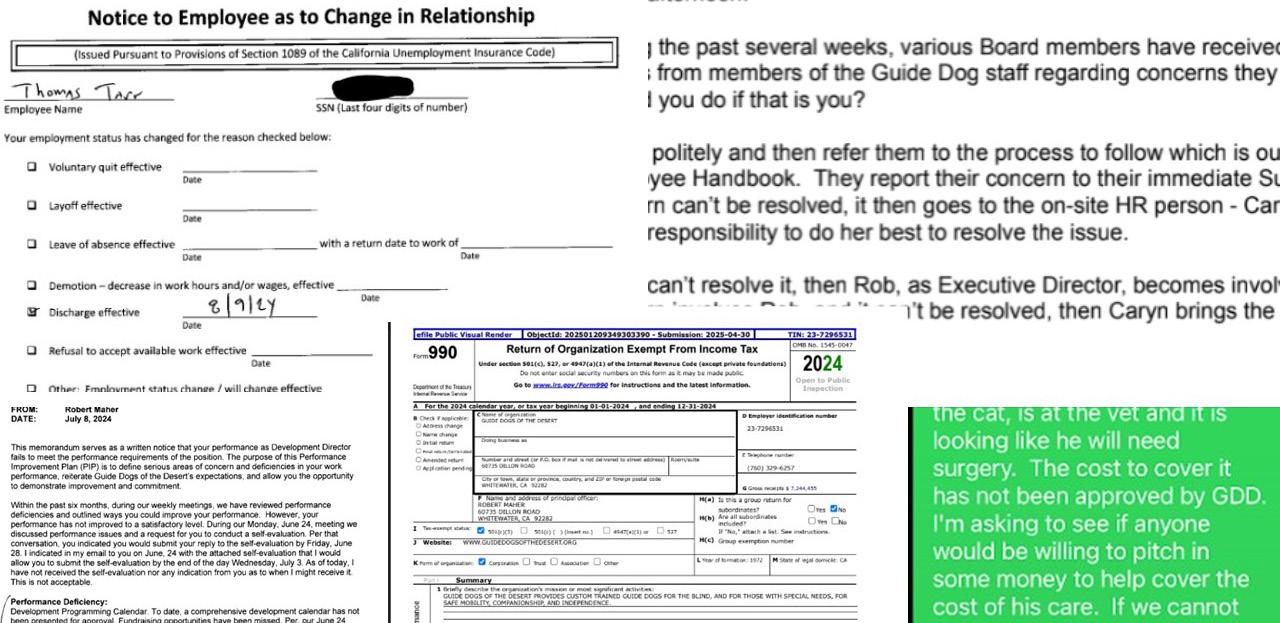
event barely covered its expenses—and when accounting for the marketing and event company’s contract costs, “it was a huge loss.”
O’Donahue was also concerned about more than just the fundraising event losses. He said he raised concerns with Maher about what he viewed as financial mismanagement and a lack of transparency from leadership.
“I (told Maher) I could not continue to raise money from donors with his mismanagement of the organization and would need to leave if things did not improve. I put this all in writing in an email I sent to him—and the next day, I was terminated,” O’Donahue said. “He did not have any kind of conversation with me after I sent the email, and he told the operations manager he had decided to ‘accept my resignation,’” even though he had not resigned.
O’Donahue said a board member contacted him after his termination to discuss why he had left. O’Donahue said he shared what he viewed as concerns about financial management, but “never heard anything back from anyone.”
After O’Donahue’s departure, the organization cycled through development leadership, including a short-term director, before hiring Tom Tarr.
Tarr, who has more than 30 years of experience in strategic planning and fundraising for businesses and nonprofits, joined Guide Dogs of the Desert in 2023—also shortly before a major fundraising event. He said that, as with the previous event, substantial payments had been made to outside contractors, but little work had been completed, leaving the responsibilities to him and GDD staff.
Tarr created a comprehensive development plan during the spring of 2024 that, according to the document obtained by The Post and the Independent, identified financial problems within the organization. According to Tarr, he sent the plan to the board in August 2024.
In the plan, Tarr detailed losses from GDD’s signature fundraising events, including the 2023 gala, which generated $77,456 in revenue but cost $93,846 to produce—a net loss of $16,390, “excluding staff and volunteer time,” according to the document. According to Tarr, he was asked to leave the marketing costs off the financial report presented to the board.
“In Palm Springs and in the Coachella Valley area, everybody thinks fundraising is (all about) events, and it’s not. … Events are actually the least productive way to raise money,” Tarr said.
In the plan, Tarr wrote: “GDD has suffered from years of frequent leadership transitions, frequent transitions in development staffing, lack of investment in fundraising infrastructure and modern technology, lack of financial controls between finance and development, and inconsistent deployment of fundraising strategies and tactics—with the resulting impacts on donor awareness, trust and reten-
tion.” Tarr’s plan then included a number of suggestions to improve the organization’s fundraising capabilities.
Tarr elaborated in an interview: “Prior to my getting there, there was no reconciliation between the money that came in the door and was recorded from a fundraising standpoint, and then reconciled with finance and what was deposited. It wasn’t until I got there … my colleague in finance, we worked together to set up a process to do that.”
Tarr said implementing this basic financial control—a standard practice in nonprofit management—was not directed or supported by Maher.
“Huge red flag,” Tarr said.
Responding to Tarr’s claims of financial losses and a lack of financial controls, Clapp pushed back, calling those assertions assumptions and questioning their accuracy. Maher did not specifically address financial controls in his responses to questions.
“We’ve been in business 53 years,” Clapp said. “I wish I could publicly share with you the endowment fund we have. … You know, if people leave an organization … they didn’t fit, and they weren’t doing what they were supposed to do, or they found something else to do.”
On Aug. 9, 2024, Maher called Tarr into a meeting and presented him with a document titled “Notice to Employee as to Change in Relationship,” effectively terminating his employment that day. Tarr later sent a letter to the board noting the pattern of turnover.
“Turning over three development directors in two years seems indicative of an issue needing to be addressed,” Tarr wrote.
Clapp, however, reiterated that Guide Dogs is not dealing with any financial problems.
“My gosh, we’ve got an endowment,” Clapp said. “Personnel come and go. That’s any business, any organization. If these questions all involve personnel … so if three people left Guide Dogs for whatever reason, I can’t talk to you about that.”
Maher said he could not discuss Tarr’s claims, because it was a personnel matter.
In his final communication to board members, Tarr criticized Maher’s leadership style. “It is essential that an executive director understand how to collaborate on charting a direction for the organization,” Tarr wrote.
After Tarr’s termination, Maher told the board he would take over the development role himself and, according to multiple sources, received a raise tied to the additional responsibility.
To discuss the concerns raised by O’Donahue and Tarr, The Post and the Independent asked Rob Razani, who teaches forensic accounting at California State University, Northridge, to review Guide Dogs of the Desert’s public
filings. Razani spent decades examining nonprofit information returns for the Internal Revenue Service, including 14 years as a senior team coordinator in the Large Business and International Division of the IRS.
Razani said the concerns raised by O’Donahue and Tarr reflected legitimate red flags. The financial patterns identified by The Post and the Independent—including the $476,790 deficit in 2024, a 28% decline in revenue from 2023 to 2024, recurring fundraising event losses and concerns about financial controls raised by former employees—are the types of issues the IRS considers when deciding whether to initiate an audit, Razani said.
According to GDD’s Form 990 information returns, the organization lost a total of $121,450 on fundraising events over past three years—with net losses of $66,680 in the transition period ending December 31, 2022, $35,344 in 2023, and $19,426 in 2024.
Razani said deficit operations, large losses in investments and assets, multiple years of money-losing events, and the apparent absence of a development director since Tarr’s termination in August 2024 were all concerns.
While the organization lists a development officer, Louise Fasana, on its website, she was hired to focus on grant writing and previously reported to Tarr. Since his departure, she has taken on additional responsibilities and now reports directly to Maher, but employees say the development director role has not been filled.
Razani said that without access to the organization’s internal financial records, he could not determine whether the patterns indicate “malicious and inappropriate behavior by the entity’s management, or if they are simply the result of poor decision-making, lack of business savvy on the part of the management, or even simple bad luck and adverse economic forces.”
However, he said the documented financial patterns were red flags that would typically draw IRS scrutiny.
“Unfortunately, the IRS’s budget for audits is currently strained and out of 100 cases that show red flags like this, perhaps two or three are picked up for examination (probably less for nonprofit entities),” wrote Razani.
Clapp, in response, reiterated again that Guide Dogs is in good financial shape.
“We operate on donations. We operate on foundation support. We operate on planned gifts. We operate on estate gifts,” he said. “There’s been a very, very active planned giving program at this organization for years. So there are many, many people out there who have arranged through their estates to support this organization, but we don’t know when that’s going to happen.”
“We don’t know when that’s going to occur,” he added. “So you may start the year with a budget that looks like it’s in big trouble, and by the end of the year, have a budget that’s wonderful.”
Added Maher: “That’s the way that our organization works and our budget works. If you also go look at our endowment, our endowment has been going up every year.”
Said Clapp: “There’s no financial difficulties with this organization,” he said, pointing to its 53-year history and suggesting its endowment reflects its stability. He added that staff departures don’t necessarily signal a problem, but rather that employees either “didn’t fit” or chose to move on.
Clapp declined to elaborate further, adding: “I can’t really answer. I’m not being very helpful, and I apologize … but as soon as you hit personnel stuff, I hit a wall.”
Former employees said their concerns about safety, leadership and finances reflected what they viewed as a broader pattern of problems inside the organization. Some also pointed to smaller incidents that, in their view, illustrated problems with Maher’s decision-making and priorities.
In the summer of 2024, according to a staff member’s letter to the board, employee text messages reviewed by The Post and the Independent, and interviews with current and former staff, Maher directed staff to euthanize Theo, a young cat who lived on campus and was used in training exercises.
Theo had been diagnosed with urinary crystals, a treatable condition. A veterinarian was “shocked that someone would request to euthanize a young and otherwise healthy cat,” the letter states.
When staff members offered to raise money for Theo’s medical care, text messages reviewed by The Post and the Independent show that Maher refused.
Maher disputed that account, saying: “I did not. That was all under the direction of our medical team and all of the directors. All directors were involved in that decision, and it did not happen.
“The animal had a terminal health condition,” he added, “and under medical advice from our licensed veterinary clinic, and under medical advice, that was the advised thing to do.”
Belinda Mason is the former kennel technician who coordinated with a no-kill animal rescue organization she had worked for previously to take Theo. According to Mason, when she went to get the cat to take it to the rescue organization, Maher still wanted the cat euthanized and told her she was being insubordinate.
Mason said the matter was traumatic for all staff involved because they felt they had to choose between the life of the cat and their jobs.
In the end, she took the cat and later came back for his sister, which was also part of the
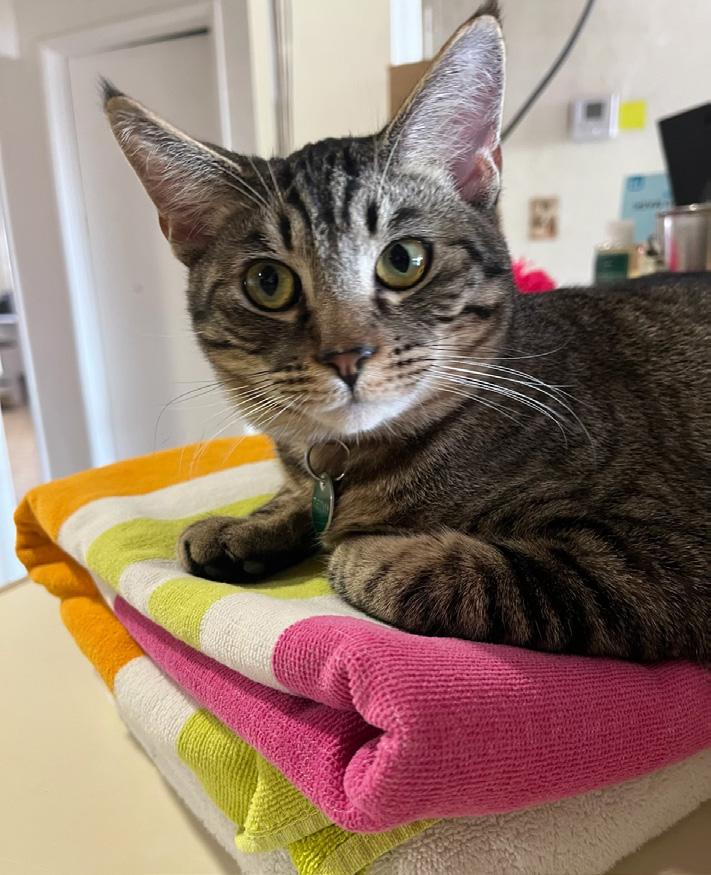
training program, because they were a bonded pair. The cat received treatment and made a full recovery without surgery. Theo and his sister were later adopted by a loving family; according to Mason and other staff interviews, Theo is alive and healthy.
Employees said that the incident occurred during the same period they were also raising safety concerns that, in their view, remained unresolved by Maher and the board, led by Clapp since 2022.
“At the end of the day, everything rolls up to the board,” Tarr said in an interview. “The board is the only one to hold the executive director accountable ... and it was painfully obvious right away that no one on the board understood fundraising. No one on the board had any level of sophistication of experience with fundraising.”
Employees repeatedly said in communications to the board, and in discussions with The Post and the Independent, that they’ve raised concerns not to harm the organization, but because they believe wholeheartedly in the importance of Guide Dogs of the Desert’s mission.
“I truly and deeply love both my job and my co-workers,” one staff member wrote in a letter to the board. “Without proper and decisive leadership, there will be serious and irrevocable damage to the organization.”
This reporting was supported by a grant from the Coachella Valley Journalism Foundation. Please consider making a contribution to the foundation at cvjf.org. This story was independently reviewed by attorneys at Lawyers for Reporters. More information on that organization can be found at www. vancecenter.org/initiatives/lawyers-for-reporters.



By Melissa Daniels
The Desert Healthcare District (DHCD) planned to hold a women’s wellness event last December in North Shore, a predominantly Latino community of about 3,500 at the northern edge of the Salton Sea. But when the community engagement team began calling around to confirm appointments, patients started canceling. Reports of Immigration and Customs Enforcement raids were circulating on social
media, while some shared accounts of friends or family members being detained.
“As we were calling them, they were letting us know, ‘No, I don’t want to go, because my partner is undocumented, and they’re my primary means of transportation,’” said Alejandro Espinoza, DHCD’s chief of community engagement. “Women who were undocumented didn’t outright say that they were undocumented, but we know our community, and we saw a lot of people cancel for that event.”
DHCD ultimately canceled the clinic and rescheduled it for February. The episode is just one example of the ways in which the threat of ICE raids under the Trump administration has rippled through healthcare systems across Southern California.
In the Coachella Valley, providers in immigrant communities report that fewer patients are seeking care since new ICE enforcement policies took hold last year. Organizations hosting health-care events in farmworker communities saw attendance
drop in 2025 when local ICE activity increased. DHCD alone saw a 25% decrease in mobile health care visits.
Looking ahead, changes to California’s Medi-Cal program are expected to further limit access. As of this year, the state is no longer providing new, full-scale MediCal enrollment for some adults who are undocumented. Beginning in July 2027, some enrollees will have to pay monthly premiums to keep benefits.
In response, providers are rethinking how to deliver care to people who are undocumented. Mobile clinics are showing up at private, undisclosed locations instead of public events. Community health-care workers are conducting training and public meetings on Zoom. And there’s new funding being directed toward clinics and services in the eastern Coachella Valley to serve migrant communities.
Espinoza said one of the first priorities for his team is making sure the community knows that health-care providers don’t share information with immigration officials.
“A big part of it is awareness, and ensuring we’re developing culturally sensitive messaging in traditional and non-traditional ways to ensure that our community members who are seeking these resources know where to go,” Espinoza said.
Finding new ways to serve a vulnerable population
According to the California Immigrant Data Portal, a project of USC’s Equity Research Institute, about 2.8 million undocumented immigrants lived in the state in 2023. In the eastern and central parts of Riverside County, immigrants make up about 24% of the population. Around 74,900 of those residents are undocumented or living in households with mixed status.
But this population is longstanding: About 74% of those who are undocumented have been here for 10 years or more, and 44% have been here for at least 21 years. Across California, these communities have endured numerous traumatic and high-impact raids targeting this community—including one at a St. John’s Community Clinic street medicine event in Los Angeles last summer.
While city-specific ICE takeovers like those in Minneapolis have faded from headlines, locals in the Coachella Valley are still spotting Border Patrol vehicles in places like Home Depot parking lots, or along Interstate 10.
When local ICE sightings started increasing, Espinoza said his DHCD team started coordinating with private-property owners to find places to bring its mobile health-care units, like churches, agricultural fields and packing houses. The main goal, he said, was to get people the health care they needed in places ICE couldn’t legally enter. Health-care providers are under no legal obligation to tell federal immigration enforcement officials anything about the status of their patients— but immigration agents may enter public areas of a health-care facility without a warrant or the facility’s consent.
But these mobile clinics on private property still required people to take a risk by leaving their homes.
“The challenge was still there, because how do the community members get there?” Espinoza said. “There were still issues where there might be a checkpoint leading up to that church or that field or that distribution center where ICE might have set up.”
Melinda Cordero-Barzaga is a co-founder of Vision y Compromiso, a 26-year-old organization that trains and supports promotoras, a predominantly Latina womenled workforce of community health workers. In the Coachella Valley, the workforce is active in farmworker communities. At one point last year, one of their promotoras quit due to a fear of exposure around ICE raids, ConradoBarzaga said.
“She was so scared that she actually quit her job with us, because she did not want to leave her home,” Cordero-Barzaga said. “She has three children and wanted to just be home with them and ensure that she did just not run any risks, because it’s only her and her husband living here.”
Cordero-Barzaga, like Espinoza, said the threat of ICE raids have caused a decrease in larger health-care events, and they’ve been replaced, in part, by more discreet forms of aid, like virtual visits and meetings in largely undisclosed locations.
“There’s still this fear in the community, and people are having this hypervigilance about the situation,” Cordero-Barzaga said. Vision y Compromiso began holding monthly Zoom trainings in English and Spanish on how to respond to potential ICE encounters—and, at the request of promotoras, started mental-health support programs.
“This really came from asking promotoras, ‘What do you need right now?’ And (ICE rights training) was one. And the second was, ‘We need a space to talk about mental health, because we are on the front line, and we need to process some of the things that we’re dealing with.’”
The challenges are forcing providers to think differently about how they deliver care in the short-term—and the long-term as well.
Anthony White is the vice president of government and community affairs at TrueCare, a federally qualified health center that operates across Southern California. He said Medi-Cal enrollment changes will force challenges across the health-care industry, and that TrueCare has already experienced small decreases in weekly visits to clinics from Medi-Cal enrollees this year.
He said the overarching concern is that some patients may forgo care entirely if they lose coverage, or opt out due to new premiums, increasing the risk of people landing in emergency rooms with chronic conditions.
“We’re really trying to educate our patients to understand that even if they do lose their insurance, we’re going to care for them,” White said. “Our mission and our mandate from the federal government is that we care for everybody.”
At DHCD, CEO Chris Christensen said the organization is focused on long-term solutions to increase access to care. In March, it awarded a $2,975,625 grant to Innercare, a federally qualified health center that operates bilingual clinics in Coachella and Mecca. The money is meant to support the development of a Coachella Valley teaching health center program, over the next three years, to address the community’s physician shortage.
The district also gave $185,337 to the Mecca-based nonprofit Galilee Center to continue its Bridge to Health program, which connects underserved and migrant families to medical and behavioral health services.
DHCD is in the midst of a strategic planning process, as access to care becomes more difficult for vulnerable populations, including residents who are undocumented. Potential solutions include ramping up mobile health unit activities, as well as working with organizations like Coachella Valley Volunteers in Medicine, which provides care free of charge, regardless of insurance or immigration status.
“Part of our strategic plan is to develop the partnerships and relationships with other organizations to leverage resources that are available—whether they’re financial or through personnel—that can do outreach and provide some kind of access to the care that people need and deserve,” he said.
To that end, some of the most impactful efforts continue to come from within the most affected communities. CorderoBarzaga from Vision y Compromiso said the organization’s annual conference last September saw record attendance. The theme was “Building Resistance, Sowing Hope and Harvesting Community Power.”
“This is what, to me, is incredible,” Cordero-Barzaga said. “People may be experiencing this fear for their own family or for themselves as the promotora, and they are still wanting to learn—and they’re not standing still,” she said.
Melissa Daniels reported this story while participating in the USC Annenberg Center for Health Journalism’s 2026 California Health Equity Fellowship.
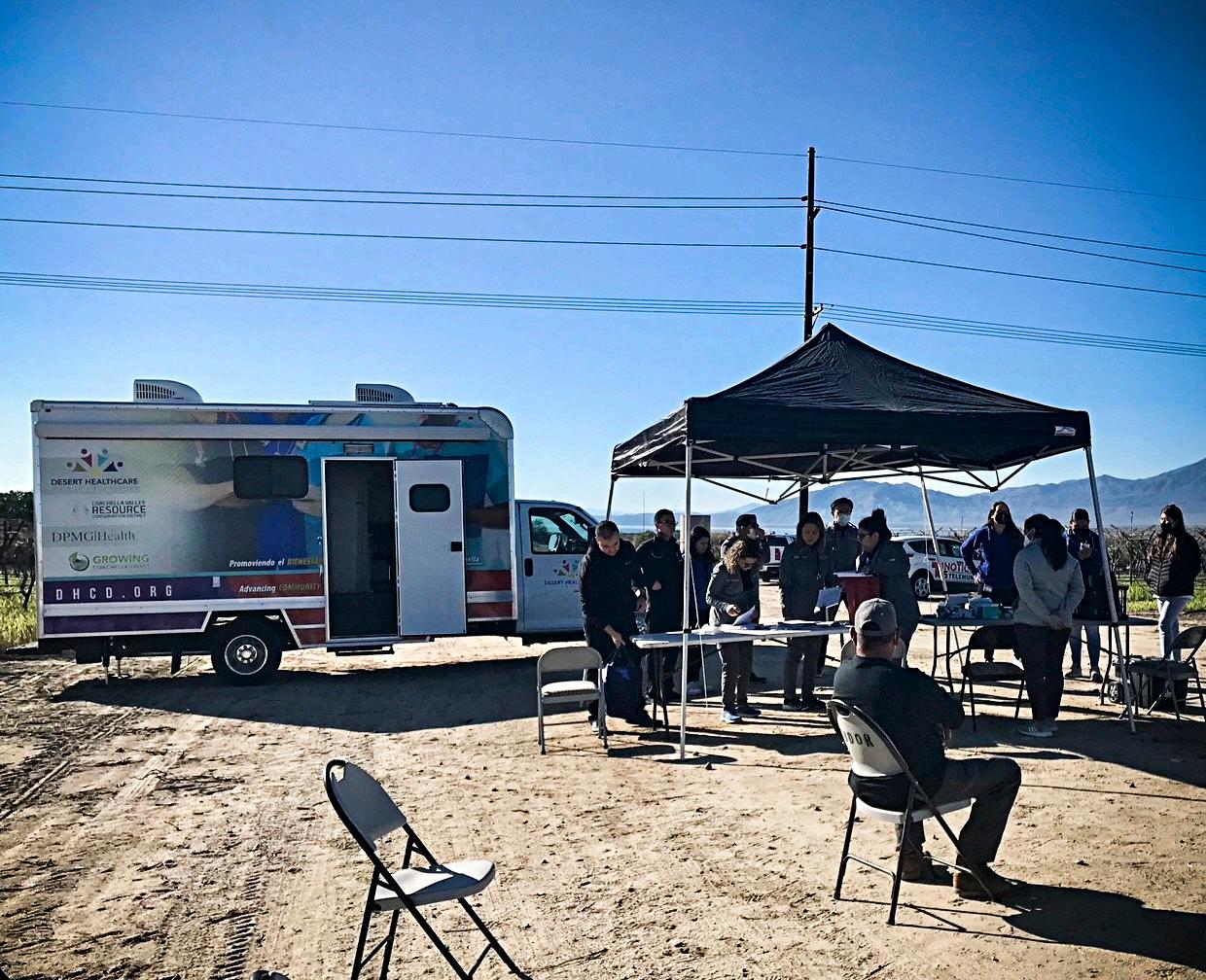

We believe in second chances.

By ELEANOR WHITNEY
In a digitally saturated world where we are connected to our devices but often disconnected from each other, zines offer a vital opportunity for self-expression and community-building. These independently published—and often handmade—magazines will be the stars of the first Mojave Zine Fest, which will take place Friday and Saturday, May 15 and 16. The fest will kick off on Friday with a reading and celebration at Mas o Menos in Joshua Tree, followed by a day-long zine fair on Saturday at Corner 62 in Twentynine Palms. The event is
designed for zine readers, writers and those who are just curious to connect and celebrate do-it-yourself media. Saturday will feature more than 20 local and visiting zine makers offering their work for sale or trade; a zine-making workshop led by artist and zine publisher Jillian Sandell; a panel discussion delving into queer zines, both past and present; and an afternoon creativity workshop facilitated by artist Walker Mettling.
The high desert is home to a vibrant community of artists and writers with a famously independent and iconoclastic spirit, but the Mojave Zine Fest is a first for the area. Organized by Natalie Raymond and Rita Lilly, both local artists and zine makers, the festival fills an important gap in the high desert’s cultural calendar. Lilly, a member of the Public Arts Advisory Committee in Twentynine Palms and the Sun Spot artist co-op in Joshua Tree, explained why the desert and zines make a strong pairing.
“There’s something inspiring about the desert that just makes people want to create,” Lilly said.
Zines are especially compelling to Lilly, because the medium “helps give people a voice, whether through drawing, painting, writing, photographs, or their political voice. Zines are an open playing field.”
While zines have been around for decades, if not centuries, they are experiencing a newfound popularity as people turn away from commercial, digital platforms toward forms of expression that feel authentic. The resurgence of interest in zines is partially a “reaction to and rejection of the algorithm,” according to Sarah Bennett, a zine maker who’s a professor of journalism and media studies at Santa Ana College; Bennett is also the co-founder of community print shop PLACE Long Beach and the Long Beach Zine Fest.
Zines are an accessible medium for all types of storytelling.
“It’s a form of resistance to tell your own story in your own way,” Sandell said. “The personal is political, and zines are connected to stories that don’t get published in the mainstream press, and (stories) from those who are
often marginalized.”
An artist who regularly leads zine-making workshops, Sandell’s workshop at the Mojave Zine Fest will include a brief history of zines. Sandell will explain how to use a zine as a starting point to start a larger project or explore a big idea, and enable participants to make a mini-zine.
Zines have roots in varied sources, including political pamphlets distributed during the American Revolution; 1930s science-fiction fan zines; 1970s community-oriented publications focused on feminist, LGBTQ and Black liberation; and 1980s magazines covering the punk scene. Contemporary zines are as diverse as their predecessors, but share a common thread—telling a story and sharing a perspective that may be shut out of mainstream media, art and bookstores.
“Digital media is incredibly unstable, and print media is subject to the censorship of the market, but people have to respond to crises by printing and disseminating information themselves,” said Brooke Palmieri, who will be part of the panel on queer zines at the fest. Palmieri is a resident of Joshua Tree, an author and historian whose CAMP BOOKS imprint promotes access to queer and trans history through rare archival materials, zines and installations.
“In every place and time, there are people who need to seize the means of production and of storytelling,” Palmieri said.
Community-building is a central aspect of zine culture and publishing.
“Writing can be very solitary, and zines flip that on its head,” Palmeri said. “You write alone, but never in a vacuum, as you’re writing to others.”
Palmieri has connected with fellow zine makers in places like London, Berlin and Athens, learning that zines enable their creators to “get to know your neighbors and feel like you have neighbors all over the world.”
Whether international or hyperlocal, zines are everywhere today,
“Now there are micro or niche zine fests down to the neighborhood level,” Bennett said. There are regular zine fests throughout South-
A new zine fest in the high desert highlights the importance of independent media
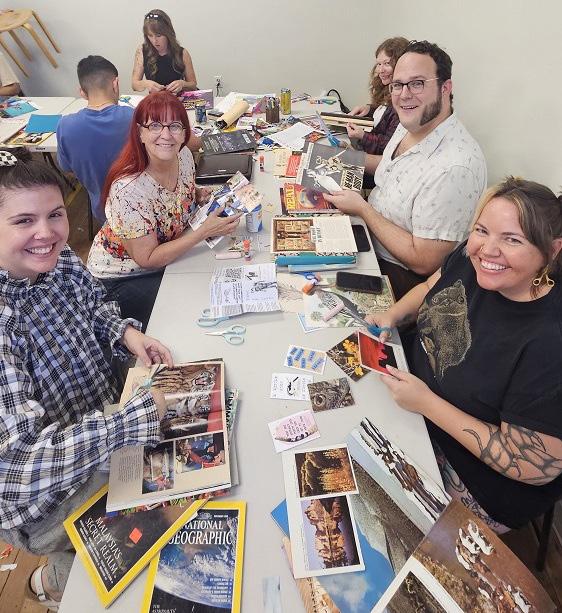
ern California, in San Bernardino, Ontario, San Diego, Los Angeles, Long Beach and Anaheim.
Whether you are an experienced zine maker or curious to get started, attending a zine fest is a great first step to become more involved with a local community of creators.
“There’s always room for more zines,” Palmieri said. “They are small and cheaply made, and it’s a welcoming environment with a low bar of access.”
Organizers hope to grow Mojave Zine Fest into an annual event.
“My hope is that writers will come and see that it is easy to take the means of production into their own hands if they desire,” Palmieri said. “There’s a strong tradition in the desert of people self-publishing—and celebrating,
amplifying and strengthening that is great.”
Zines play an important role in challenging political repression and facilitating community connection.
“A free society doesn’t exist without freedom of information,” Bennett said. “Making zines is resistance. On a fundamental level, zines are a way to get verified information on paper that those in power do not want out there. What a time to be making zines—they matter now more than ever.”
The Mojave Zine Fest will take place on Friday and Saturday, May 15 and 16, in Joshua Tree and Twentynine Palms. Admission is free, but RSVPs are encouraged. Learn more and RSVP at mojavezinefest.com.
By Matt King
Summer is nearly here—and that means one of the Coachella Valley’s most poppin’ parties is nearly here, too.
Desertopia, a twice-a-year celebration of music, art and drag, returns for a fifth year this Memorial Day weekend. The festival combines pool-party fun, electronic music jams and, as the Desertopia’s socials detail, “queer desert magic.” Expect a safe space for all LGBTQ+ and allied attendees, on Friday, May 22, at Studio 4707; and Saturday, May 23, at The Sonoran.
During a recent phone interview, Desertopia co-creator Kevin Kauer explained how the event was formed, in collaboration with co-producer Anthony John.
“People come to Palm Springs from all over, and it’s such a great place to be for Pride and everything, but we didn’t really feel that there was an alternative option for people,” Kauer said. “It felt a little bit more one note or linear, and our backgrounds are more underground and diverse. We came up with Desertopia and then brought in Victor Rodriguez and Jerren Ronald (Perfect Lovers). They’re a married couple, and they do Bears in Space in L.A., and Por Detroit in L.A. and Mexico City, and all these kinds of things. We all just teamed up together to bring the vibe that we do to the desert. A lot of people moved there during COVID, so there were different ages and different backgrounds and that kind of thing, so it felt like it was a time that something new and kind of different needed to happen in the desert.”
Kauer said doing Desertopia has been “super-transformative.”
“We’re always in different locations and different venues, different hotels, different clubs, different non-venues that we’ve turned into venues—and it kind of keeps things nice and exciting and fun,” Kauer said. “There’s always a different experience. It’s indoor; it’s outdoor; it’s daytime; it’s nighttime; and it’s so many different things at once, and they’ve always just been really, really great, and packed with all different kinds of people. Our production value over the years just keeps going up.”
Kauer and his co-organizers strive to create an experience, not just a party, he said.
“It’s not just us opening the door and putting some DJ on and kind of forgetting about it; it’s really the full experience that people get,” Kauer said. “We have different things (attendees) can do during the parties, and it’s tied in with the experience of coming to Palm Springs and wanting to get the most out of your weekend. … We really take care of people from start to finish, and there’s a lot of talent and artistry that comes out with the music and the drag and everything.”
Desertopia has hopped around various
locations in its five-year history, but has maintained a consistent relationship with The Sonoran, which featuring 38,000 square feet of outdoor event space, and some dynamic indoor offerings.
“The very first year, we did our Sunday daytime party at the Sonoran outside, and this last party was the first time we came back to their outside space for a daytime party,” Kauer said. “Pretty much every year, we’ve used the inside space. ... That’s always been a favorite space of ours. It’s very unassuming, until you go inside and realize what a fun and dynamic space it is. We’ve always loved being there, and this last year, outside of the pool party, which we’re doing again, we were able to have a lot of space … for things a bit more carnival-esque— and waterslides.”
Last year, during Greater Palm Springs Pride, a Desertopia event was hosted in a new location, at 4707 E. Sunny Dunes Road. They’ll be returning to this space Memorial Day weekend for the Friday-night party.
“It’s an incredible space,” Kauer said. “It’s not like a club or anything. It used to be a showroom for some guy’s car collection, but it’s got this great indoor/outdoor experience where we’re able to do the music outside, kind of bleeding into the inside, and have open air. It’s a rare treat in Palm Springs because of the noise. Luckily, in the location they’re in, it’s doable and approved with the city, so we don’t have to worry about (noise), which is great.”
Kauer detailed each day’s entertainment offerings.
“(On Friday), we have Horse Meat Disco, which is just such a staple for us,” he said. “(We) have been working with Horse Meat for a couple of decades. It just always brings out everybody, and it’s super-fun music. Along with them, we have Father Figure, who’s our friend Mark from P-town, and he’s been holding down this party called FAGBASH there for 20 years or something. Everyone who moves around doing parties has been there and knows him and knows all the magic that he brings, so that pairing is really special.”
On Saturday, there will be an afternoon pool party, followed by an evening show with a vari-
The Memorial Day weekend edition of Desertopia offers LGBTQ+ attendees and allies both daytime and nighttime revelry
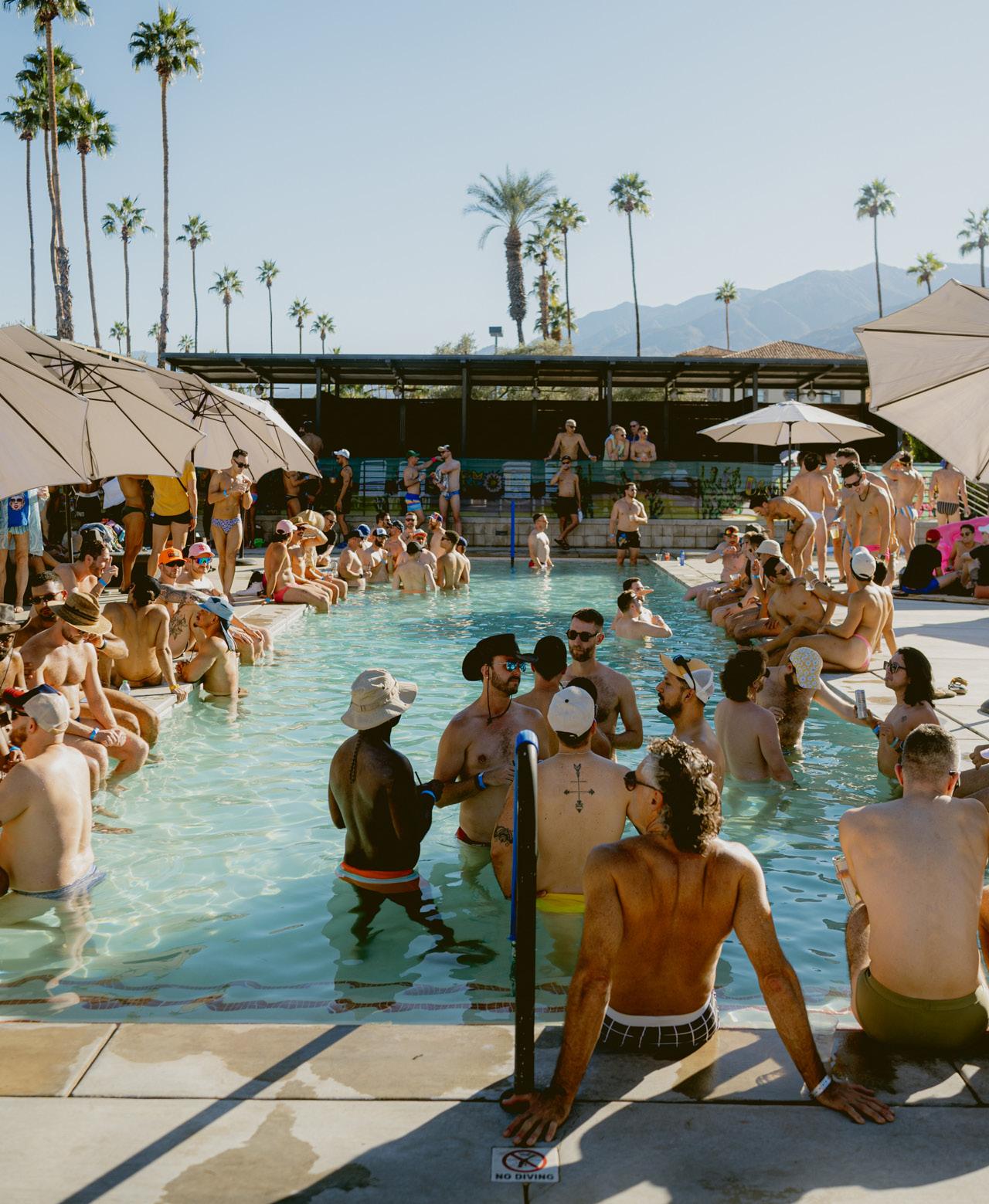
ety of performers.
“Saturday night, we have x3butterfly, who lives in New York, but is from Detroit. We always want to have a good mixed lineup of different people, different locations, different backgrounds and different identities. We have me, Jerren and Victor; Sindri, a great disco DJ from L.A.; Flabbergast, an amazing drag queen; and DJ Naté. It’s really all over the place.”
Kauer promised that proceeds from Desertopia will go directly toward supporting the performers.
“Those tickets and everything that’s being bought is supporting queer artists, smaller
artists, trans artists, POC artists,” he said. “A lot of very mixed, diverse people are on the ground working, so I think it’s nice to know that having that fun experience, and buying tickets, is really helping out a lot of artists.”
Desertopia will take place on Friday, May 22, at Studio 4707, at 4707 E. Sunny Dunes Road, in Palm Springs; and Saturday, May 23, at The Sonoran Palm Springs, at 1555 S. Palm Canyon Drive, Unit B. Weekend passes start at $170, and single-event passes start at $80 for Friday; $60 for the Saturday pool party; and $65.01 for the evening event. Learn more at www.desertopia.party.
By Matt KinG
Alocal performer’s new show chronicles how he used the arts—and leather—to grapple with a traumatic upbringing.
Michael Pacas will bare his heart and soul in Hell-Bent for Leather, his latest cabaret show. Through showtunes and other surprises, Pacas will share the story of his tumultuous youth, and outline how musicals helped ease his struggle of growing up queer in the Southern Baptist church. Hell-Bent for Leather will take place on Thursdays, May 14 and 21, at the Palm Springs Cultural
Center. During a recent phone interview, Pacas summed up the show’s story.
“If you want to look at it just on the surface, it’s the story of a sexually repressed but very enthusiastic Southern Baptist choir boy who leaves home for the first time and stumbles into a Chicago leather bar—so it’s as chaotic as you can possibly imagine,” Pacas said. “… “Underneath, it’s more about your identity, and what happens to you when the life that you are taught … doesn’t really fit anymore.”
Hell-Bent for Leather deals with combatting shame and reclaiming identity.
“I used my life as a little bit of a blueprint, because I sort of felt it was rather extreme,” Pacas said. “When I start talking about the show with people, there have been so many similar experiences, so it’s something that’s kind of universal.”
Pacas discussed his first exposure to the arts.
“Up until about the time that I was 15, my primary social circle was the middle of the church, and I really didn’t have a lot of friends in elementary school or junior high,” he said. “I decided that I was going to audition for a community theater production of Brigadoon. I got cast, and all of a sudden, I was around people who were like, ‘Oh my gosh; you go to Sunday school every Sunday?’ … It was very eye-opening to me, because all of a sudden, I was really immersed in a group of people who came from totally different backgrounds than I did. That’s how the arts sort of jump-started me, and I’ve been continually doing it until now.”
Pacas discussed how he eventually arrived in the Coachella Valley.
“We have a couple of very good friends,” Pacas said. “My husband and I have been together for 33 years, and we’ve known them longer than we’ve known each other, and they had moved to Palm Springs. This was about 12 years ago, and one of them was having his 60th birthday, and we decided to fly over here from Chicago to celebrate with him. He was going to have a party; it was in mid-August; and the heat was deadly. Downtown was a ghost town. We were racing around trying to find the shadows of light posts, but we did think the area had good possibilities. I, of course, started
checking out the local performing arts community, to find out what size it was and how many theaters. We decided to come back in February and look around. It was much nicer here than it was in Chicago in February—and we decided to sell our house in Chicago. We had been looking at various places, but had never considered the Palm Springs area. Our two friends whom we visited started it all; we live in the same neighborhood.”
Pacas soon became involved in the local theater scene, and has performed with Revolution Stage Company, Desert Ensemble Theatre, Desert TheatreWorks, Palm Canyon Theatre and others.
“What I like about the theater community here is everybody is very, very supportive of each other,” he said. “I’m sure there’s a little bit of competition going on when someone doesn’t get cast, but I mentioned to an acquaintance that I was going to be doing some Facebook group postings, and she said, ‘Oh, let me send you a text of the list that I use.’ There’s a welcoming exchange of information, and everybody’s got each other’s back.”
Pacas will revisit some painful memories in Hell-Bent for Leather, but he said “the timing is right” for him to do so.
“The things were kind of horrifying when they happened, but when you look back at them in hindsight, they’re actually kind of funny,” he said.
Pacas said two previous one-man shows have helped him prepare for Hell-Bent for Leather
“My first one was called Who’s Your Daddy? about the power dynamics of being a son, being a father, and being a father to a daughter,” he said. “I guess I had daddy issues back then, even. That was my first one, and it was a very nice show, but it didn’t take a lot of risks. I had done a second show about what it was like growing up in Louisiana, and it was called Big ’N’ Easy. When I look back, it’s sort of like this show has body parts of those other two shows, because it’s about family; it’s about how children are raised; and it’s also about what it’s like growing up in the South. This is probably their love child, I guess.”
Pacas said he hopes that his mix of musical
Michael Pacas’ latest one-man show, ‘Hell-Bent for Leather,’ explores painful memories—and eventual joy
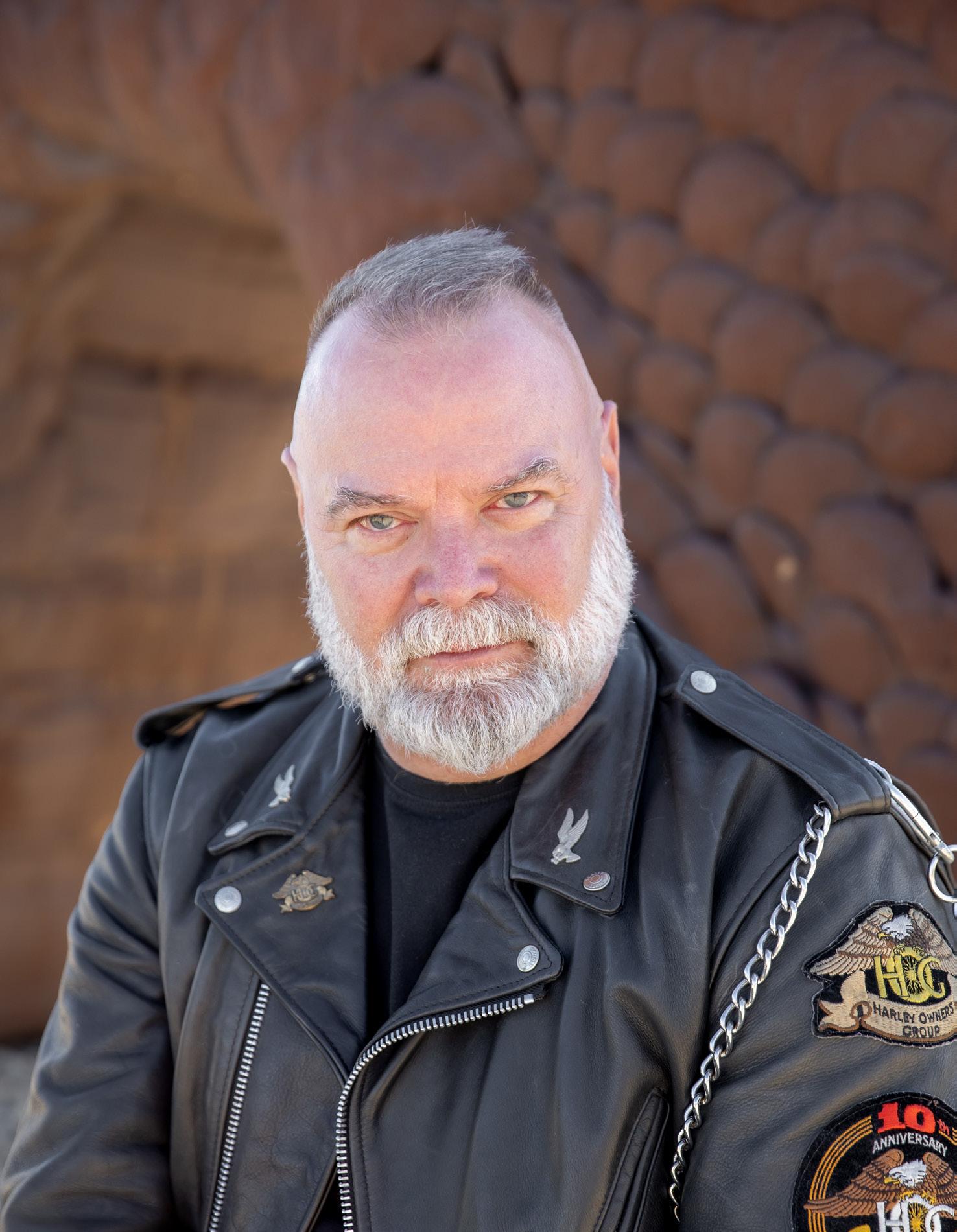
messages and personal storytelling will invite audiences into his world—and also allow them to connect with the show in their own way.
“(As a performer), a lot of it is a leap of faith in yourself and in your ability to create the vibe where the audience can see themselves through you,” he said. “It’s always a bit of a challenge. I look at it from the audience’s point of view—to not make it about just me being up there, peacocking around, but it’s about, ‘Let me tell you this funny story, and maybe
you can relate to it.’ It’s not me sending out energy; I’m really sort of inviting the audience as well. There’s a possibility that connection might not be made—and that’s the joy and horror of live performance.”
Michael Pacas’ Hell-Bent for Leather will take place at 7 p.m., Thursdays, May 14 and 21, at the Palm Springs Cultural Center, at 2300 E. Baristo Road. Tickets start at $37.89. For tickets and more information, visit www.psculturalcenter.org.

By brett newton
Some of my longtime friends who live in Southern California (with whom I’ve adventured before) lit the beacon for us all to meet up in Los Angeles—Torrance, specifically—and do some brewery-hopping for some much-needed camaraderie.
We all decided to start at Smog City Brewing. We could have started at either of the next two places we ended up, but we went with our stomachs—AGL Craft Meats was serving up barbecued meats there, and beer + BBQ = no-brainer.
I began with Smog City’s Czech golden lager. I’ve found myself reaching for lagers more and more of late, and it was a perfect choice on a 72° sunny day. It was crisp with a bready, slightly
doughy malt flavor, easy drinking, and a great companion to my brisket plate. My opinion of Smog City went way up on my last visit for a reason: They make great beer.
As we all caught up, I tried Kampai From Torrance—a hoppy lager with notes of citrus, pine and mixed berries; a sour saison called Electric Sundown, made with mango, guava and turmeric, with a lovely tartness and fruit flavor; and a mole version of their bourbon barrel-aged stout, Infinite Wishes, that had all the chocolate you’d want, but not a lot else.
For our second stop, we had options. We could either go to Hermosa Brewing’s taproom, which was basically next door to Smog City, or we could take a short walk the other way to HopSaint Brewing. We chose HopSaint with the reasoning that a short walk would be a great idea on a beautiful day. So onward, we strode, making each other laugh and recounting past adventures.
At that point, I knew nothing about HopSaint Brewing. I’d heard the name, but outside of maybe trying something at a random beer festival I didn’t recall, HopSaint was basically a blank slate for me. This was their satellite taproom; their brewery and attached restaurant is in Torrance as well.
I began with their Kolsch Enough which is, unsurprisingly, a kölsch. A quick side note: A kölsch is an historic style from Cologne, Germany (Köln, in German), that is a “hybrid ale,” i.e., fermented as an ale but conditioned like a lager. It resembles a pilsner, but with slight fruity notes from the yeast. I have a long tradition of evaluating whether a brewery knows what it’s doing by first ordering a lager or a beer whose style is subtle, like a kölsch—and I’ve had far too many American versions that made it clear the brewer had never tried an actual kölsch before. I am pleased to report that HopSaint easily passed the test: The beer

A tour of some of Torrance’s best craft-beer joints
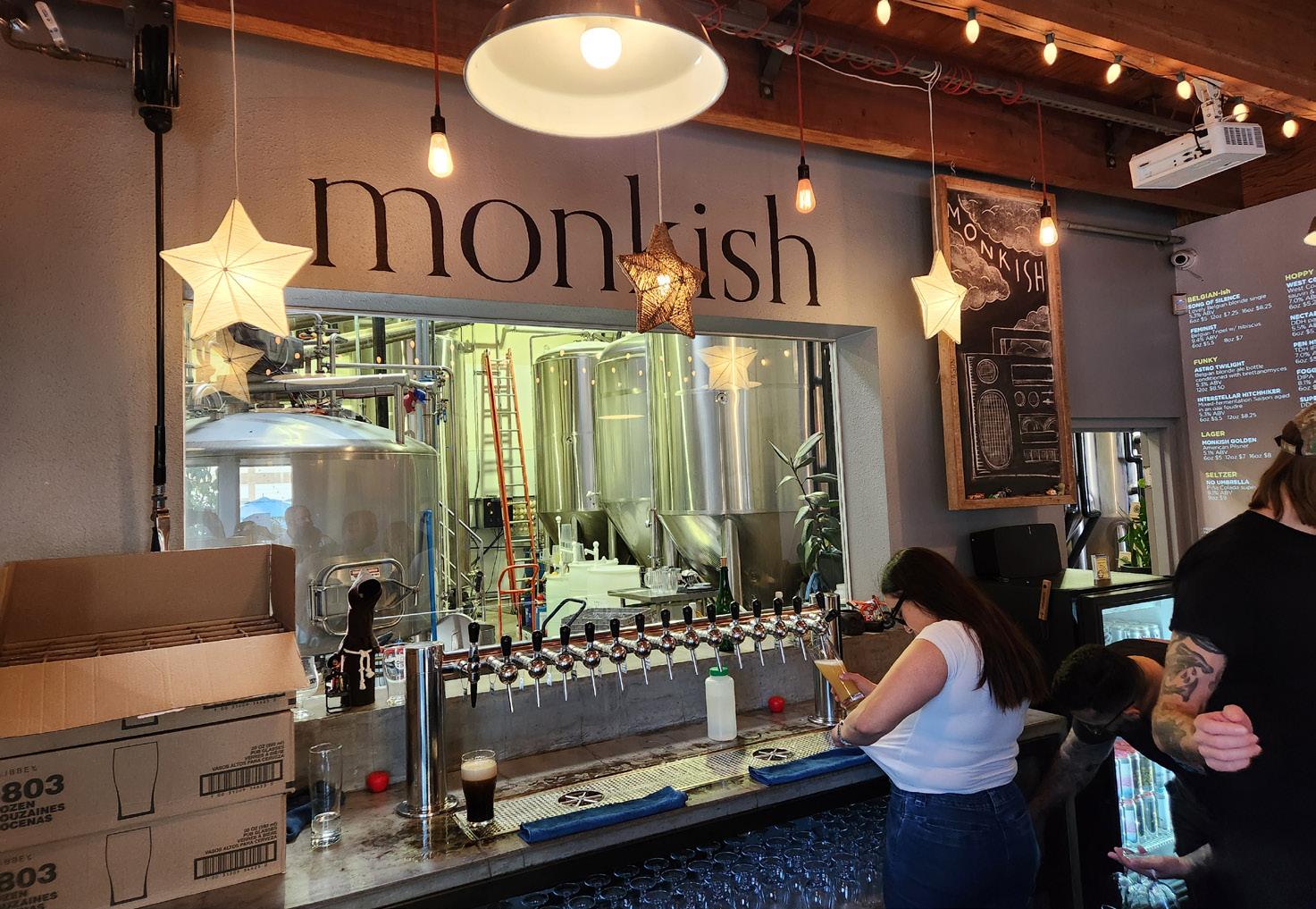
was clean and crisp, with a slight fruity note. I exchanged some sips with friends (also trying HopSaint’s excellent Vienna lager and German-style pilsner in this way).
I eventually went back for a pour of their NITRO Chocolate Trip—a porter served on nitro, with a lovely toasted English malt flavor. I was talking to the staff about their great beer; they gave me a sample of something hoppy, and asked what I thought. With a sniff and a sip, I immediately knew that the Krush variety of hop (one of my current favorites) was used. Sure enough, the beer was called Freshly Krushed IPA, and it had the unmistakable flavors of tropical fruit, citrus and strawberry. This was the best beer I’d had all day. I shall be keeping HopSaint in my sights now.
It was time for a slightly longer walk—with more laughs along the way—to Monkish Brewing.
I’ve been interested in Monkish since their beginnings, when they were focused on Belgian styles (back when people would actually order Belgian styles). Since then, they have pivoted toward more of a modern craft-beer focus, i.e., murky IPAs and pastry stouts. Lest you think I am disparaging them, let me be clear: Every West Coast IPA, lager or sour ale I’ve had from them since then has been high quality—so much so that I wish they focused on that stuff. I walked past the bustling patio area and into the taproom to take a look at the menu. My eyes quickly locked in on Paddy O’s Dry
Irish Stout. One of the casualties of the last decade in craft beer is this style; Irish stouts and Irish reds are sorely missed by this writer, and whenever I encounter them on draft, I order one. Paddy O’s was just what the doctor ordered: a silky nitro pour of 4.2% alcohol-by-volume chocolately, roasty goodness. This is what I love most about visiting a brewery’s taproom: You are likely to see less-popular styles that have received the same love (or more) by the brewers, but are not destined to leave the brewery. I also tried their West Coast Expansion IPA. It was good, but my palate was fatigued, and it was time to return to Bennett and Autumn’s place nearby. (They so kindly hosted me for the weekend.)
After a lovely dinner of homemade masala chicken skewers, and more great conversation, I had one of the best nights of sleep I’ve had in a long time. I never regret my decision to hang with this group of friends, despite the sometimes-vexing drive. I wish they could come hang up here and have the same kind of craft-beer experience—but not only does the overall quality not match up; the valley’s breweries are pretty spread out. For now, I have to be grateful for these trips—and look forward to the next one.
Brett Newton is a certified cicerone (like a sommelier for beer) and homebrewer who has mostly lived in the Coachella Valley since 1988. He can be reached at caesarcervisia@gmail.com.


For 13 years, the Independent has been telling the Coachella Valley’s stories. Our mission is to inform readers like you—and to help you build stronger connections with your community. To continue doing so, we need reader support!
Please consider becoming a sustaining Supporter of the Independent, or make a one-time donation, by visiting CVIndependent.com/support-our-publication, or by sending us a check using the coupon to the right. You can support the Independent directly (non-tax-deductible)—and now can make a tax-deductible donation via our fiscal sponsor, the Alternative Newsweekly Foundation (ANF). Via ANF, we can accept cash, grants and donations from donor-advised funds. We can even accept stock or crypto! Questions? Email jboegle@ cvindependent.com, or call 760-904-4208.

Thank you for supporting the Independent!
NAME
ADDRESS
PHONE AND/OR EMAIL
AMOUNT OF CHECK
Want your donation to be tax-deductible? Make your check out to the Alternative Newsweekly Foundation. Don’t need a tax deduction? Make your check out to the Coachella Valley Independent. Please mail to:
Coachella Valley Independent 31855 Date Palm Drive #3-263 Cathedral City, CA 92234
By Katie finn
There are wine regions you discover through maps, textbooks and tastings. And then there are wine regions that arrive in your life through a completely unhinged side door.
My side door was Napoléon.
Years ago, when I was living in Napa, I had a highly sophisticated “city” friend named Brian. I lovingly called Napa “podunk no-fun,” and Brian made it his personal mission to rescue me with regular trips into San Francisco and the East Bay for experiences I never would have found on my own.
One day, he invited me to the jaw-dropping Paramount Theatre in Oakland for a special
screening of Abel Gance’s silent masterpiece, Napoléon, which first premiered at the Paris Opera in 1927. Yes, a silent film. But wait—it gets better: It was 5 1/2 hours long. (And from what I understand, that was the short version. The original cut apparently clocked in at nineplus hours, because subtlety was apparently not the assignment.)
The “soundtrack” was performed live by the Oakland East Bay Symphony, a full 60-piece orchestra. Imagine sitting in one of America’s grand art deco theaters, watching a massive black-and-white epic unfold, while a live orchestra swells beneath it. It was transportive. It was theatrical. It was one of the most magical experiences of my life.
It sent me down a rabbit hole. If you’re watching Napoléon, eventually you learn that Napoleon Bonaparte was born not in mainland France, but on the Mediterranean island of Corsica.
Naturally, my next question was: Wait … they make wine there, right?
Oh, they do.
Corsica is one of those places that sounds fictional until you see photos: jagged mountains rising from a turquoise sea. Windwhipped coastlines. Tiny villages clinging to hillsides. Beaches that look Caribbean until you turn around and see granite peaks.
It is officially French, but culturally and historically, it has long lived between France and Italy. It sits west of Tuscany and north of Sardinia, and has changed hands various times over the centuries. Genoese influence, French rule, Italian proximity—everything about Corsica feels layered. And nowhere is that dual identity more expressive than in the glass. Corsican wines often carry the structure and savory edges you associate with France, but with the sunshine, herbs and easy charm of Italy. If France and Italy had a wildly attractive Mediterranean love child, her name would be Corsica.
Winegrowing on Corsica stretches back thousands of years. The Greeks and Romans cultivated vines here, understanding what every smart civilization eventually figures out: If you
have sun, sea breezes and hillsides, you should absolutely be growing and fermenting grapes.
Modern history, however, has been bumpier. In the 20th century, quantity often overshadowed quality. Bulk wine production, outside demand, phylloxera (blight) and international varieties pushed many native grapes aside. Some indigenous vines nearly disappeared. It’s a familiar story in the wine world: Local identity is traded for commercial convenience.
Then came the heroes. Over the last few decades, a new wave of younger growers and quality-minded estates began looking backward in order to move forward. They replanted native grapes. They studied old vineyards. They focused on site, balance and authenticity. Instead of trying to make Corsica taste like somewhere else, they asked the far more interesting question: What does Corsica taste like when it is unapologetically itself?
The answer is compelling. So, let’s meet the grapes.
Identified as Corsican sangiovese, Niellucciu is one of Corsica’s signature red grapes and a star in regions like Patrimonio. It can produce structured reds with notes of cherry, dried herbs, leather and sun-warmed earth. In rosé, it becomes fresher, offering red berries, citrus peel and savory spice. It’s like sangiovese took a beach vacation and came back way more relaxed.
If Niellucciu is the brooding one, Sciaccarellu is the flirt. This grape tends to be lighter in color and body, beautifully aromatic and full of personality. Expect strawberry, pomegranate, white pepper, rose petals and wild herbs. It makes some of the island’s most charming rosés and elegant reds. Pronouncing it correctly is a challenge. Drinking it is not.
Known elsewhere as vermentino, Corsica’s Vermentinu thrives in coastal conditions. It gives vibrant whites with citrus, pear, fennel, sea-spray minerality and a subtle bitter-almond finish that begs for seafood and sunshine.
Corsican Malvoisie refers to local expressions connected to the broader malvasia family. Depending on style, it can be floral, honeyed, stone-fruited and wonderfully textured, sometimes dry, sometimes richer—always charming.
The Mediterranean island of Corsica is producing amazing wines that are perfect for May in the desert
One of my favorite facts about Corsica is that most of its wine production is dedicated to rosé. This makes perfect sense once you understand the climate and lifestyle—warm days, sea air, outdoor meals, grilled fish, beach afternoons and long lunches that drift into evening. Rosé isn’t an afterthought there; it’s intentional and woven into daily life.
And if you live in the desert, you should be paying attention.
By May, many of us are already negotiating with the sun. We want wines with refreshment, flavor and enough personality to keep things interesting without knocking us flat at 4 p.m. Corsican rosé delivers exactly that. It has the breezy appeal we love, but often with more savory complexity and gastronomic backbone than one-note pinks built only for Instagram. So if you’re curious, here are some bottles to try:
Terra Nostra Rosé of Sciaccarellu is a gorgeous introduction to the island. It’s pale salmon in the glass with aromas of wild strawberry, watermelon rind, pink grapefruit and fresh herbs. On the palate, it’s crisp, energetic and dry, with a peppery snap that keeps it grown up. It’s ideal with grilled shrimp, goat cheese or pretending your patio is the Mediterranean.
Clos Alivu Rosé of Niellucciu comes from Corsica’s most famous appellation, Patrimonio. This rosé shows a little more depth and savory structure. Think raspberry, blood orange, dried thyme and a faint mineral edge. There’s substance here—it’s perfect for roast chicken, charcuterie or the friend who says they “don’t really drink rosé” and simply needs better rosé.
Domaine Santa Giulietta Rouge is a blend
of Niellucciu, grenache and syrah that captures the island’s crossroads identity beautifully. Dark cherry, blackberry, lavender, cracked pepper and warm earth lead into a medium-bodied palate with soft tannins and spice. Grill something. Then open this.
Domaine Vetriccie Rouge is a classic blend of Niellucciu, Sciaccarellu and merlot that balances rustic charm with polished drinkability. Red plum, black tea, herbs and subtle smoke unfold in layers. It’s friendly enough for weeknight pasta, yet interesting enough for wine people who insist on discussing “sense of place.”
What I love most about Corsica is that it doesn’t shout. It doesn’t have the marketing machine of Provence, the prestige of Bordeaux or the trend-chasing buzz of whatever region social media discovered this week. It simply has beauty, history and resilience. In a world where so many things are becoming standardized, polished and algorithm-approved, Corsica remains gloriously specific. Its wines still carry accent marks and tell local stories.
So this May, when the desert heat starts tapping you on the shoulder, skip autopilot. Reach for the island that sits between France and Italy, where Napoleon was born; the coastline is dramatic; the grapes have names your spellcheck hates; and rosé is treated with the respect it deserves.
Katie Finn is a certified sommelier and certified specialist of wine with two decades in the wine industry. She can be reached at katiefinnwine@ gmail.com.
THURSDAY, MAY 14, 2026

Harvey B. Milk Leadership Award
Advocate for LGBTQ+ civil rights and gun safety. Survivor of the tragic 2016 mass shooting at Orlando’s Pulse Nightclub.
The Harvey Milk Diversity Breakfast Coalition invites you to take your seat at the table where progress begins. This isn't just a breakfast; it’s a powerful gathering of leaders, allies, and advocates dedicated to the relentless pursuit of equality. Come honor Harvey’s legacy and help us fuel the next chapter of the movement.

Harvey B. Milk Legacy Award
Advocates for parents’ unconditional love for their LGBTQ+ children. They lost their 21-yearold son, Matthew, to a hate-motivated murder.






An amazing bagel breakfast sandwich for lunch, and a Korean-barbecue adventure for dinner



By Jimmy Boegle
Townie Bagels, Bakery and Café, 650 E. Sunny Dunes Road, No. 5, Palm Springs
It’s a near-perfect breakfast sandwich. Did you know that Southern California’s best
It’s true—at least according to the headline . The sub-headline even says that the fare at Townie Bagels is “worth the drive from Los Angeles.”
Thankfully, Townie Bagels is just a short

best,” I am certainly comfortable with declaring
My go-to at Townie is the Sunny Dunes sandwich, usually on an Asiago bagel. When sausage, egg and American cheese is added to that freshly toasted bagel, the result is one of the most delicious breakfast sandwiches
In addition to a fantastic selection of bagels—they’re New York-style, water-boiled and then baked—Townie offers various bialys, pastries, breads, cookies, pies and even quiches; be sure to check out their refrigerator case for yummy things you can get to go and warm up at home. Pro tip: Townie is open from 6:30 a.m. to noon, every day but Tuesday, and the earlier you get there, the better the chances are that they’ll still have the bagels and/or other treats you desire, because they do sell out. (Check Townie’s website for their daily
Not only are Townie’s baked goods excellent; owners Andy Wysocki (who’s also the lead baker) and Bill Sanderson do a lot of good in the community. Each year during DAP Health’s day-long Dining Out for Life event, Wysocki and Sanderson go above and beyond by donating 110 percent of that day’s sales.
In other words: There’s no reason for you to not frequent Townie Bagels. (Other than those pesky calories.)

WHAT The “King’s Choice” Korean barbecue WHERE Blazing King BBQ and Hot Pot, 72600 Dinah Shore Drive, Palm Desert HOW MUCH $29.99
CONTACT 760-699-8206; www.blazingkingbbqhotpot92211.com
WHY It’s an adventure.
Want a nice, relaxing meal? If so, do not go to Blazing King BBQ and Hot Pot.
Want to enjoy a wide variety of tasty Korean-style fare, with a bit of adventure thrown in? Then Blazing King is the place for you.
I recently made my first visit to Blazing King on an early Friday evening, after a hellacious work day.
Here’s how their menu works:
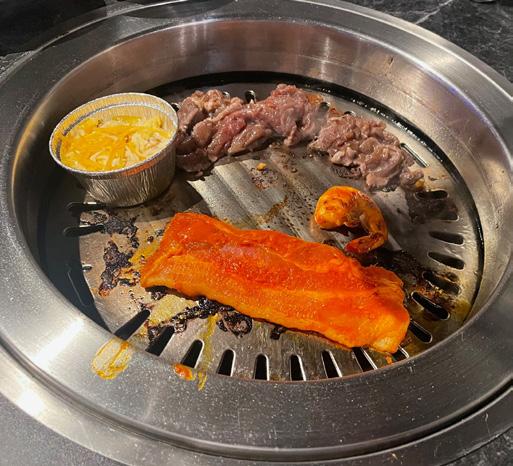
Your table chooses whether to do barbecue or hot pot, and then you make your food selection. We went with barbecue and the “King’s Choice,” which includes your pick of 22 pre-prepared items and cook-yourself proteins. You can upgrade to “King’s Plus” ($32.99, with five more items), “King’s Premium” ($38.99, with yet another nine items) or, on the barbecue side, the A5 Waygu Platter ($59). Everything except for the Waygu is all you can eat. And then … well, you’re kind of on your own. Don’t get me wrong; our server was fantastic. The servers bring drinks and the items you order, remove used dishes and change the barbecue-grill plates (which gives the servers quite the arm workout), but you, the diner, do everything else. You cook the meats, get up to make custom sauces, try to avoid cross-contamination by not using the preparation tongs on meats that are cooked, peel the marinated shrimp (and choose whether to peel before or after cooking?), make sure you’ve cooked everything properly (to avoid poisoning oneself) without incinerating things, and so on. It can be a lot—especially after a hellacious work day.
Is the experience relaxing? Heavens no. Is it fun? Sure, once you figure out what in the heck you’re doing. Is the food good? Yes. Will I be going back to Blazing King? Most definitely— when I am in the right mood for it.

By charles drabkin
Taste of Jalisco is returning to downtown Cathedral City for its 10th year. From 5 to 11 p.m., Friday, May 1; 3 to 11 p.m., Saturday, May 2; and 3 to 10 p.m., Sunday, May 3, you’ll find lots of entertainment, a carnival and, of course, food vendors. Cathedral City residents (with a valid ID or a utility bill), as well as military members, first responders and teachers, get in free on Friday, on Saturday, and on Sunday before 5 p.m.; enter at the parking garage entrance. Otherwise, advance tickets start at $10.37. Hopefully, the current political situation won’t discourage anyone from celebrating our neighbors and friends! Learn more at tasteofjalisco.com.
Greater Palm Springs Restaurant Week returns from Friday, May 29, through Sunday, June 7. This yearly promotion by Visit Greater Palm Springs is a fun way to try new-to-you restaurants, and revisit old favorites. Plus, if you make your reservations through the dinegps.com website, $1 will be donated to FIND Food Bank! Many restaurants will be offering deals and prix-fixe menus to celebrate. One of the things I like about this promotion is that restaurants at every level take part, so you can participate at a variety of budgets. Learn more at dinegps.com.
H&H Bagel is now open at 73131 Country Club Drive, Suite C10, in Palm Desert. You can pick up a New York bagel that was boiled in New York City water, flash-frozen, shipped to Palm Desert and baked fresh. My husband, who works nearby, picked up some on H&H’s first day; they were very tasty and, as his grandmother would say, “Just like New York.” Learn more at www. hhbagels.com.
Desert Kid Coffee opened during the first Coachella weekend, at 44850 San Pablo Ave., in Palm Desert, to much influencer fanfare. In addition to roasting coffee on-site, they are hosting music events and coffee lessons. Turn to Page 31 to read Matt King’s feature story about Desert Kid, and/or learn more at desertkid.coffee.
Last month in this space, I mentioned that One More Bite Dumpling House was opening a Palm Desert location. We now know they are also opening a space in downtown Palm Springs in the former home of Antigua, at 105 S. Palm Canyon Drive. I called the owner of OMB to get more details, but he is currently in China, and we hadn’t been able to connect as of this writing. Learn more at ombdumpling.com.
I recently learned about Harriet’s Bar and Lounge at Casa Cody, at 175 S. Cahuilla Road, in Palm Springs. The space previously catered mainly to guests at the oldest operating hotel in Palm Springs, but recently, the restaurant has been trying to draw in more locals, as well as visitors staying elsewhere. Harriet’s offers an all-day menu with sandwiches, flatbreads and salads, as well as an extensive specialty cocktail menu. Learn more at casacody.com/experience/ eat-drink.
Sibayan Bubble Tea is now open at 13313 Palm Drive, Unit K, in Desert Hot Springs, serving a variety of bubble and milk teas. Sibayan has a Facebook page with a handful of pictures and videos, but little else; otherwise, check the review websites to find out more.
The owner of Hunny’s Palm Springs (at 160 La Plaza; hunnysps.com) tells me she is opening a second restaurant, called Nashville, in the former home of Sol Agave, at 262 S. Palm Canyon Drive. Nashville will focus on country favorites like tri-tip, barbecue and ribs; the owner said she hoped it would be open by the end of April. Keep your eyes on this space for more information. Nobibi is coming to 34580 Monterey Ave., No. 102, in Palm Desert, near La Baguette and Yucha Donut, with imaginative soft-serve ice cream flavors and fantastical presentations. I am looking forward to trying the Dream Cloud, a combination of cotton candy and ice cream with a variety of toppings. Check out at nobibi.com.
Greek restaurant Mykonos is now open at The River, at 71800 Highway 111, Suite A122, in Rancho Mirage. Offerings include a variety of mezzes, as well as lamb and chicken dishes, and more. Learn more at mykonosgreekfood.com.
A few more restaurants around the valley are listed for sale, including The Spread, a sandwich shop at 66184 Pierson Blvd., in Desert Hot Springs; Korean restaurant BeeCh, Please, at 67555 E. Palm Canyon Drive, No. A105, in Cathedral City; and Armenian joint Family Bakery, at 73910 Highway 111, Suite I. The restaurant industry is difficult, so good luck to everyone involved. Have a restaurant news tip? Email foodnews@cvindependent.com!


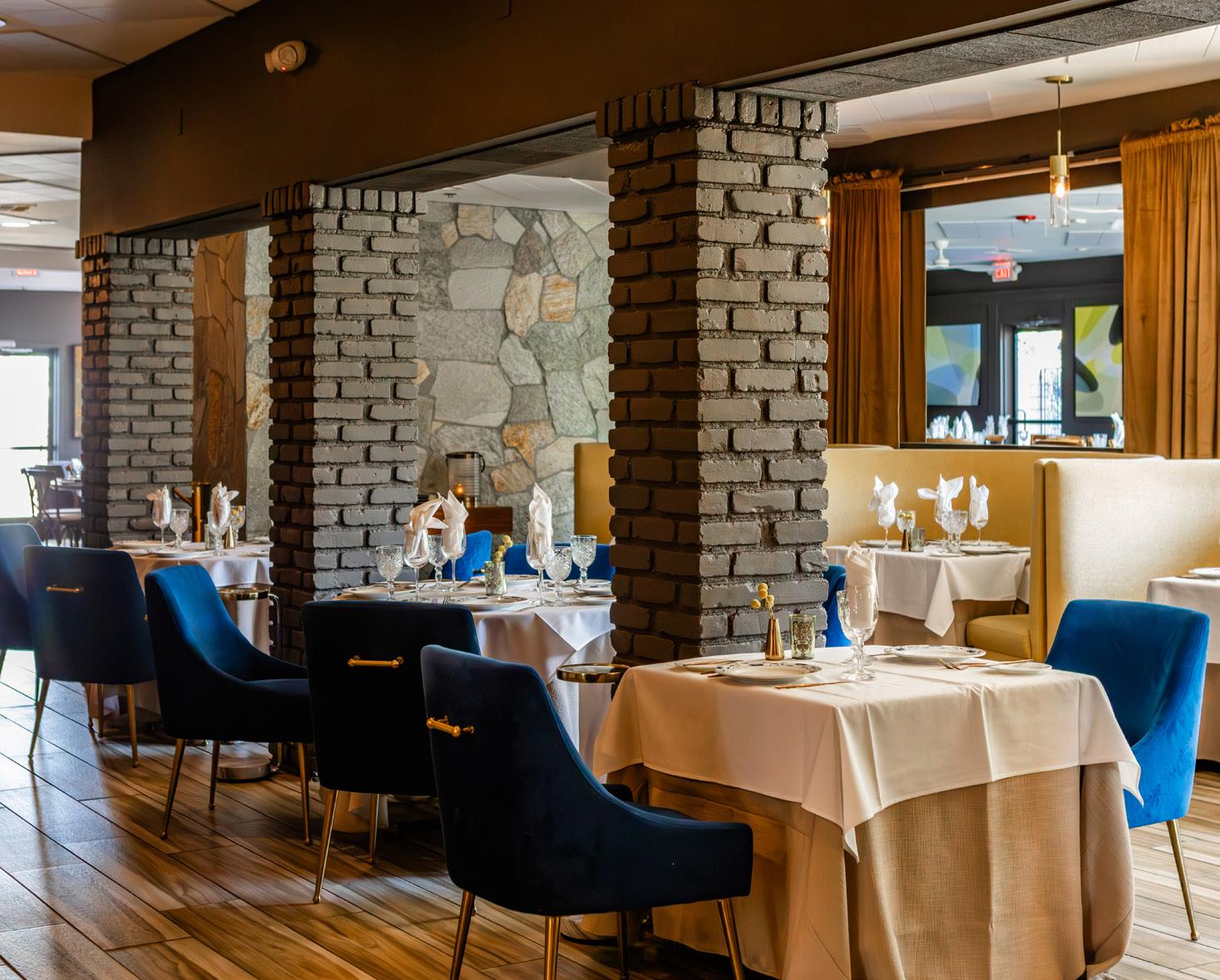


By matt king
Anew monthly music series trades rock-show production for raw songwriting.
The Desert Beat: Southwestern Songwriters Showcase is quickly becoming one of the desert’s most special musical events. Instead of loud amps, colorful lights and fog machines, Desert Beat features solo singer/songwriters, minimal lighting and an up-close-and-personal experience. Every month at Mojave Gold, local musicians sit in the round—in the middle of the
audience—and share the stories behind their songwriting before singing a song.
You can catch the next Desert Beat on Thursday, May 21.
The event is hosted by Brad Parker, a renowned singer/songwriter who started Desert Beat alongside his partne, Deb Greco. During a recent interview with the duo, Parker discussed how he went from embracing rock-star theatrics to valuing the process of crafting a song.
“When I got to Nashville is when things changed,” Parker said. “Songwriters were beginning to get their own place and space in Nashville and country music. The songwriter was traditionally more valuable, but they weren’t honored.”
Desert Beat takes heavy inspiration from the Bluebird Café in Nashville, a famous music venue that hosts songwriters in the round and helped launch the career of a few country superstars.
“Willie Nelson, after writing a few hits including ‘Crazy,’ Nashville told him, ‘Nobody wants to hear your music; get out of here,’ and he went back to Texas,” Parker said. “You would think a songwriter that good, they would really value, but they didn’t. Then Amy Kurland, who started the Bluebird Café in Nashville, she just wanted to hear songwriters, pure and simple.”
Desert Beat’s in-the-round style offers a home-y vibe, helping foster deeper connections between audiences and musicians—who sit mere feet from each other.
“We were lined up against the wall, and we decided we didn’t want to play against this wall anymore, so we started setting up in the middle of the room, and that became in the round, which was like an old ‘sit on the front porch in the backyard,’ kind of Southern Appalachian thing,” Parker said. “… In the round, you’re only looking at the person doing the song, and with the lighting we achieved at Desert Beat, everything else disappeared.”
Parker elaborated on that lighting.
“We put a light in the middle of everybody, and the light is like a campfire, because we’re evoking the spirits of all the people who influence these writers, so that they all come to the room,” he said. “Deb came up with this idea.
… The writers are going to be influenced and
inspired by what they hear the other writers do, and what the audience reacts to, and all the side comments. People will be writing songs in that room right when it’s going down.”
Before starting Desert Beat, Parker started Western Beat, a songwriters’ night in Hollywood.
“One night, Spinal Tap walked in—in costume, wigs, the whole thing, with accents,” he said. “They talked totally in character from the minute they walked in to the minute they left: ‘We just wanted to play a few tunes for you guys,’ and my first comment to them was, ‘Well, we don’t have any amps, so you can’t turn it up to 11,’ and they didn’t even crack, especially Christopher Guest, who goes, ‘Well that’s the theory about us, that we really can’t play, so we’ve come here to show people what we can really do, because you don’t necessarily need the amp.’”
Parker found his way to the desert after re-connecting with Greco, a long-lost love.
“We met each other in 1980 and didn’t see each other after ’85,” Parker said. “Thirty years.”
Greco, a desert resident since the late 2000s, happened to hear Parker on the radio in 2015.
“I was driving, and I heard this song, and it was his song, called ‘This Is the Song,’” Greco said. “I said, ‘Huh, that sounds familiar; I think that’s Brad,’ and it was an NPR station, and (the host) says, ‘We’re talking to Brad Parker about his new album, Days of Poetry.’ I’m like, ‘Oh shit, I heard that for a reason.’ … I found him on LinkedIn, and I sent him a note and said, ‘I’m your number No. 1, and I remember you.’”
Added Parker: “I wrote her back and said, ‘How do you know I’m not your No. 1 fan?’ And then we got together, and the rest is history.”
In a way, the desert helped Parker find his way back to an impressive songwriting career. Across his catalogue, Parker has songwriting and producing credits for everyone from Cher to Hurricane!
“The whole songwriting thing was a random happy accident,” Parker said. “I really wanted to be a rocker, and then I really wanted to be a blues artist, and I achieved both with my brothers over 15 years, from ’69 to ’85. I was writing all these songs that I couldn’t even get
Brad Parker—someone who knows about songwriting—and Deb Greco put songwriters in the spotlight at the monthly Desert Beat showcase
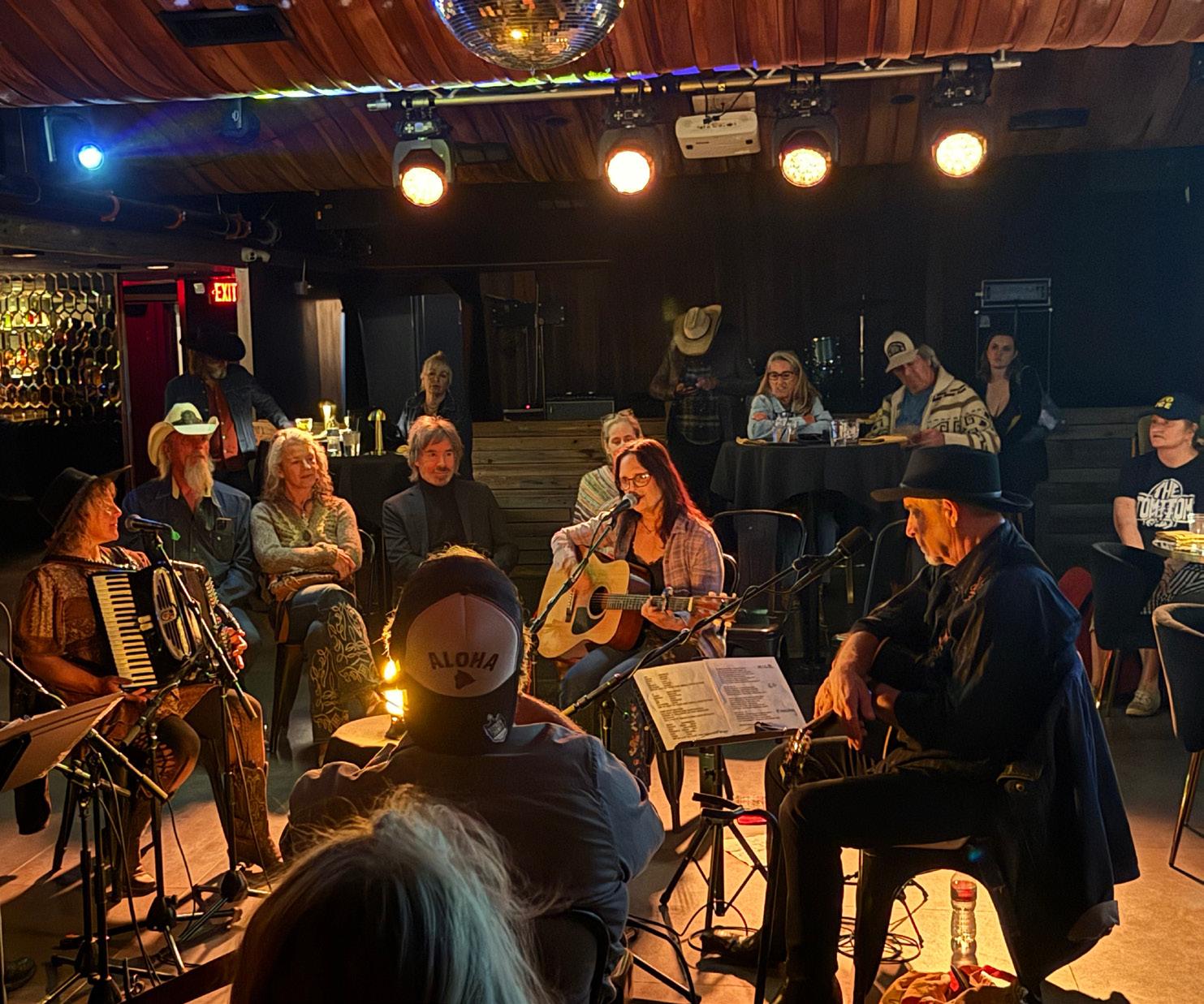
my own band to play. They were so wordy. I was really a big fan of Chuck Berry and Woody Guthrie and Bob Dylan and writers who wrote for writing’s sake, not for the music’s sake, and telling big stories. I liked all of that, but I didn’t really have an outlet for it. When I got to Nashville, suddenly it was, boom, ‘You’re a writer.’
That’s the No. 1 gig in town there.”
Parker’s biggest hit was Kathy Mattea’s “Nobody’s Gonna Rain on Our Parade.”
“It stayed on the (Billboard) Hot 100 for six months,” he said. “It just wouldn’t go away. Right at the end of its run, there was one station of the 210 reporting stations that made up the (rankings for) No. 1, and this guy who ran the station hated Kathy Mattea. He hated her personally, because she had done a benefit for AIDS victims, and he said he wasn’t going to support anybody who supported homos. He never let it be No. 1 at that station, to block it from getting the No. 1 award on Billboard When I was working with Johnny Rivers many years later, and I told Johnny the story, he said, ‘I never want to hear you say that again. That’s a No. 1. … You’re going to call it No. 1 from now on.’”
Greco promised that he will fight to make sure the Southwestern Songwriters Showcase
remains a free event.
“Desert Beat is free, and we fought about that,” Greco said. “The first thing (venues) say to us is, ‘Well, what do you want to charge at the door?’ We don’t want to charge anything at the door. That’s not the point. Why are you trying to monetize something before it even exists? It’s almost kind of offensive to look at it that way. We support it, and it doesn’t cost us a lot of money, but we support it.”
Parker praised the local community of songwriters.
“You can’t build a music community with imported stars from New York, L.A. or anywhere else—you have to build it from the ground up with the people who were there, and I think we’ve proved it with Desert Beat,” Parker said. “The basic talent of the music business is songwriting, and we have a scene, between the valley and the high desert, that’s got more than enough songwriters for any kind of records you want to make.”
The next Desert Beat will take place at 6 p.m., Thursday, May 21, at Mojave Gold, at 56193 Twentynine Palms Highway, in Yucca Valley. Admission is free. For more information, visit mojavegolddesert.com.
By matt king
The newest addition to the desert’s coffee scene is hoping to make an impact with fresh roasting techniques … and music!
Desert Kid Coffee, on San Pablo Avenue in Palm Desert, celebrated its soft opening on April 9. Thanks to packed lines during festival weekends, social-media posts recommending the spot and word-of-mouth chatter, Desert Kid has already started building a solid reputation.
Desert Kid Coffee’s grand opening is set for sometime in May. For more information, stay tuned to www.instagram.com/desertkidcoffee.
Shortly before the soft opening, I stopped by Desert Kid Coffee to chat with founders Katie Reed and Joseph Eccles.
“Coffee has always been a big part of my life,” Reed said. “I was totally that kid in high school who would go pick up a coffee before going to school, and then when I moved out to New York City, (a café) was the place I would go to if I didn’t want to be alone, but wanted to be out and about and feel connected to the community. It’s where first dates would happen, or one-on-ones with my manager—or if people came to visit me, there’s always so much pride in showing them your local coffee spot. That’s when I really fell in love with café culture.”
Reed worked in tech for about a decade.
“With the changing landscape—like so much with AI, so much about over-optimization and everything in this world—I just want to get back to in-person community building, especially after the pandemic,” Reed said. “I just thought about building a ‘third space’ here in the Coachella Valley to be able to bring people together over coffee. … We have such a rich hospitality industry out here, so if Stumptown Coffee is to Portland, then there is definitely an opportunity for someone to be the blank to Palm Springs or the Coachella Valley, and we hope Desert Kid is.”
For Eccles, coffee has been part of his daily routine since he was a child.
“I remember when my dad would take me to middle school, and he was one of those guys who goes to Starbucks every day. … He would stop and hang out with his friends outside for usually 15 minutes before he took me to school,” Eccles said. “The rule was that I could get a coffee as long as it was not a sugar coffee or not something that was expensive … so I learned to drink coffee at a young age, and really started to love it then, and I just have those memories attached to it.”
That coffee love grew into a full-blown obsession.
“I got into specialty coffee culture early on, so when I would travel … I just felt like you saw culture thrive in spaces like coffee roasteries
and shops,” Eccles said.
Obsession is not an understatement: Eccles left a decade-long teaching job at Shadow Hills High School to dive into the science of roasting the perfect cup.
“I turned my office … into my roasting room,” he said. “I had my roaster in there … and I would open my computer and just nerd it out. I nerded out on how I can craft the best specialty coffee, because at that time, there was really no specialty coffee in the desert. I think Everbloom had just started. I just wanted a new hobby, and it just grew and grew and grew. … I dreamed up the idea of what a roastery would look like with specialty coffee in the desert, having visited some really special ones around the world—but I didn’t ever anticipate actually taking action on it until Katie was like, ‘I have this idea.’”
Eccles and Reed said they’re adamant about collaborating with other local coffee shops.
“We’re friends with a lot of the different owners in the valley, and we’ve had outreach and are looking for ways to collaborate over time,” Eccles said. “I feel like there’s a lot of opportunity out here. … You go to Riverside; you go to Redlands; you go to L.A. or San Diego, and there are coffee shops literally next to each other, across the block from each other, across the entire city. It’s really neat when you see the outreach take place and when people come together, because there is such a cool coffee culture.”
Eccles explained Desert Kid Coffee’s unique roasting process.
“Our roaster is an air roaster … and there’s nobody locally roasting on an air roaster,” he said. “It gives you a lot of control over the process.”
Eccles and Reed are working to create direct relationships with coffee-growers.
“We got to do an origin trip a couple of months ago and go to Guatemala, to meet producers and shake hands and eat dinner with them and get toured around,” Eccles said. “… I think that’s a really unique thing, because the supply chain in coffee passes through so many different people’s hands. Oftentimes, the people who are left behind are the producers themselves—the growers, the farmers. The
Desert Kid Coffee brings a different roasting technique—and occasional live music—to Palm Desert’s San Pablo Avenue
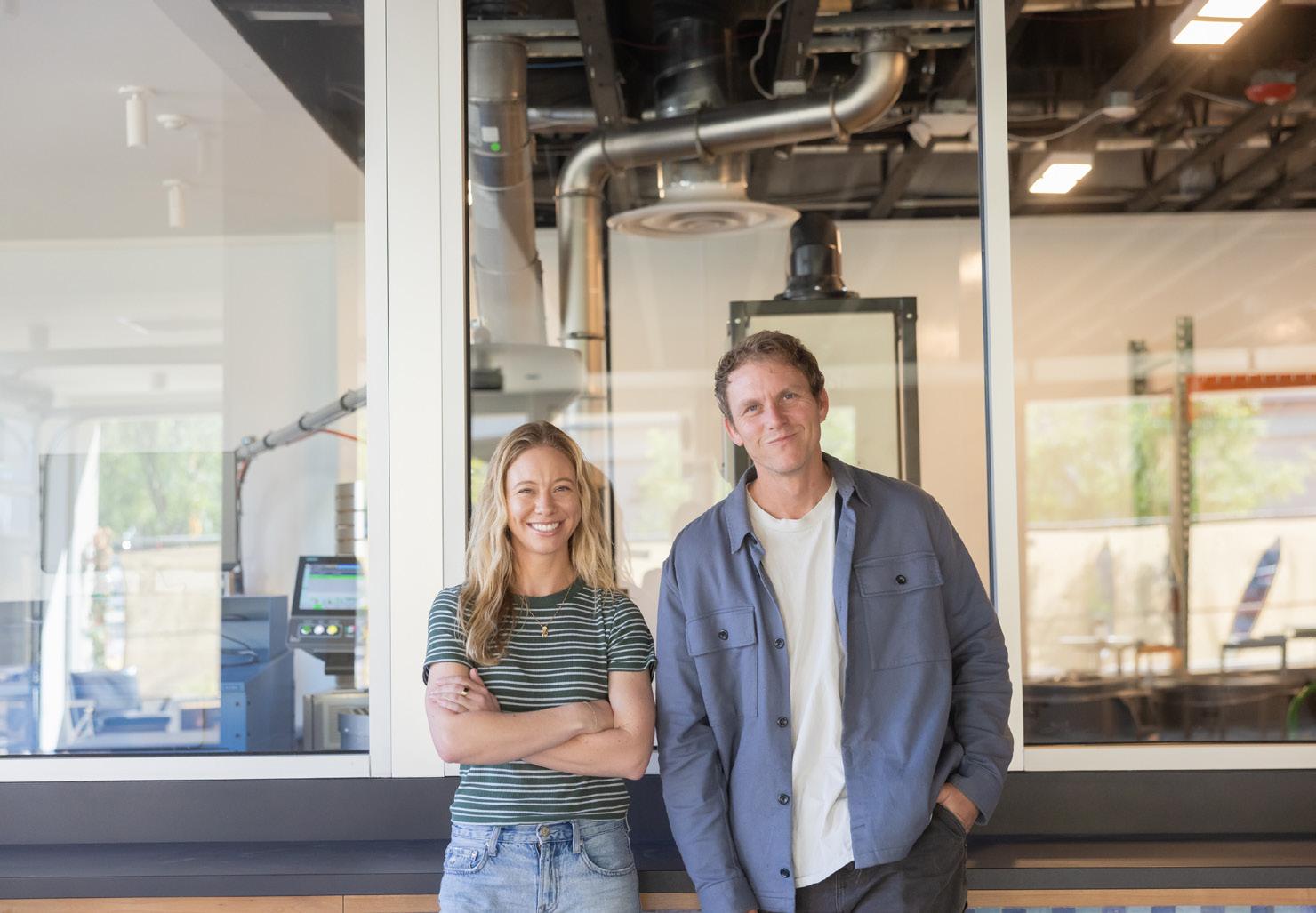
goal is, by cutting out more of that middle-man mentality, then you can pay fairer wages to the farmers and to the producers.”
Desert Kid is in the space previously occupied by Musicians Outlet, which was a beloved local music retail store—and Reed and Eccles say they’re committed to keeping the music going.
“This is where I learned to play guitar; this is where I took my first guitar lesson,” Eccles said. “Growing up here, going to Palm Desert High School, being a part of this space, there was always something really special about San Pablo and about this building. This was actually the first building that we came to, and we just kept going back to it. We went and saw a few other places, but we were like, ‘Something good needs to happen to this building.’”
Desert Kid has already launched a new concert series at the shop called Desert Sounds, inspired by series like NPR’s Tiny Desk. Artists will perform stripped-down performances inside the coffee shop, and the live sets will be professionally recorded and released online. You can check out the first episode with Palm Shadow, on Desert Kid’s YouTube channel.
“We’re obsessed with music,” Reed said. “We all grew up in the light of the festivals out here, in addition to all of us taking our first music lessons in this building. … We have so many talented friends out here who are musicians, and Joseph used to be in a band. So many people are talented from here, and we have so
much pride for all our friends who are talented in the Coachella Valley.
Stay tuned to Desert Kid’s socials for information about the next concert, because they won’t necessarily occur on a consistent basis.
“We’re not billing ourselves as, like, a music venue, per se,” Eccles said. “It’s going to be much more like an intimate setting, and then we’ll go on some sort of rotation once we are up and running. It won’t be like we’re putting on weekly shows, but we’re really excited to bring to the community a little bit of a different angle from some of the other venues that are popping up.”
Reed and Eccles invited any local businesses who may want to collaborate to reach out.
“Anyone starting a coffee program—we want to be their hyper local go-to option,” Reed said. “You can see Desert Kid Coffee on the menu; we can help train their staff, help them understand what equipment to get and help guide them through that process, and then roast them coffee. We already have one customer, which is Brandini Toffee, and we help them spin up their retail outlet out in Palm Springs. Now we’re about to launch our wholesale site so that we can get more people to order from us.”
Desert Kid Coffee is located at 44850 San Pablo Ave., in Palm Desert. Learn more at instagram. com/desertkidcoffee and desertkid.coffee.


Thousands of Coachella Valley Independent readers and News Channel 3 viewers voted in this year’s Best of Coachella Valley readers’ poll—and they selected the Purple Room as the winner of Best Bar Ambiance and finalist in four categories:














TUES-WED-THURS 6:30-9:30




Call us today to schedule a complimentary consultation and get acquainted with an independent, Fee-Only financial planning & investment management firm located here in the Coachella Valley.
Allow us to show you the benefits that result from a financial plan tailored to helping you achieve your goals.









By matt king
For some bands, one song is all it takes to get great gigs, festival placements and radio play. For very few bands, that one song is their first.
Morongo Robinson released “Waiting” in May 2025, and on the back of that song, the band members have enchanted local rockers, mystified Mojave indie bands and charmed sand-blasted songwriters in the year since. They’ve traversed outdoor desert concerts and per-
formed pop-ups at venues like Mojave Gold and the Red Dog Saloon—and the band is set to make their second appearance at the Joshua Tree Music Festival, after last year’s fest hosted the first-ever Morongo Robinson live show.
Morongo Robinson will perform at the Joshua Tree Music Festival on Sunday, May 17.
During a recent Zoom interview with Tyler Joseph French and Amanda Davis, they talked about how Morongo Robinson was formed.
“Amanda and I got together via Instagram,” French said. “I put a post on my story searching for a female vocalist, because I had some ideas in mind that were slightly out of my register, and I was imagining female vocals on some of these songs. Some of the inspirations were Fiona Apple, St. Vincent, Björk and Alison Mosshart. My wife and I have a 2-yearold son, and our babysitter DMed me and was like, ‘I know the perfect person for this project, and she’s my best friend.’ Amanda came by a week or so later, and we gelled pretty much instantly. She brought some incredible harmonies and melodies, and then we began writing together.”
What are the keys to a perfect musical partnership?
“Willingness to listen to one another, vibes, and willingness to communicate directly,” French said.
Added Davis: “I think similarities play a big part, too. We both take music pretty seriously, and have a level of standard that we want to project or work on. I feel like that makes us really compatible.”
While Davis and French are Morongo Robinson’s primary songwriters, they emphasized that bassist/producer Ian Stahl rounds out this tenacious trio.
“Ian, our bass player, he’s the producer of the track ‘Waiting,’” French said. “He’s one of the owners of Coyote Run Studio, so he’s a sound engineer, and he and I co-produced that track. It’s really the three of us as a nucleus for Morongo Robinson, and then there are rotating, satellite, creative, beautiful human beings surrounding us.”
“Waiting” started off as a way to explore the sonic possibilities of the new music relationship.
“In my head, this was sort of a trial run of
our creative partnership,” French said. “Funny enough, ‘Waiting’ was a track that was not really close to me originally, and I was like, ‘Let’s try this, because this isn’t one that’s super-precious.’ The more we got into it, and we started fleshing it out and spent all the time in the studio, I sort of fell in love with it.”
“Waiting” is an interesting sonic concoction, beginning with a jazzy, sax-led intro warmed up by synths and sultry guitar, before evolving into alternative-rock breaks with plenty of spacey, folky moments. French said the band has crafted other songs, and they will join “Waiting” to fill out the rest of their forthcoming EP.
“Our newest batch of songs, (on which) we have gelled and found that partnership, are the ones I think we really want to put forward first,” French said. “Our favorite seven songs are going to round out that EP.”
Since Morongo Robinson has released just one song so far, it’s hard to determine what genre best describes the band. French explained that all songs on the upcoming release have “their own distinct fingerprint.”
“I think that the production style of ‘Waiting’ and its rhythms reflected some things that I’ve been used to creatively in the past,” he said.
“We’ve now grown together and started finding our own sound, but even within that sound, I think there are a lot of differences between all the songs. I can’t lump two of them together.”
They’re looking forward to their return to the Joshua Tree Music Festival.
“One thing that I really realized last time is how much fun we do have onstage,” Davis said.
“Now that we’ve been together for some time, and we’ve performed together more, I think it’s going to be even more comfortable and more fun, and we have some pretty good players with us who feel really committed. It’s going to be a nice bed that we have made for ourselves.”
Davis said she considers the Joshua Tree Music Festival her “home festival.”
“I grew up here … and I think (the festival) really is and continues to be such a platform for me specifically to learn more about myself and my talents, and be given the opportunity to play music with my friends and perform for the community,” she said. “It’s just a gorgeous place to be.”
After debuting at last year’s Joshua Tree Music Festival, Morongo Robinson returns with a more fleshed-out sound
The band was a last-minute addition to last year’s lineup after one of the international bands experienced visa issues.
“Barnett English, who runs the fest, had just heard our track ‘Waiting,’ because one of the owners of the studio sent it to him,” French said. “There’s a … stage at JTMF (called Veggie Camp) back amongst all the tents, and it’s sort of the late-night, renegade underground area. One of the producers of the studio sent our music to Barnett to be like, ‘Hey, I’m thinking of having this band play Veggie Camp,’ and then shortly after that international band dropped out, I got a text from Barnett 3 1/2 weeks before the fest, and he’s like, ‘Hey, can you play 75 minutes on Friday?’ At this point, we had accumulated maybe 45 or 50 minutes worth of music, and I was like, ‘Sure.’”
Morongo Robinson are bringing “more of a fully fleshed out sound” to this year’s festival.
“The first time we played the fest, we were still honing in on our identity a little bit,” French said. “There was a little bit of funk stuff, and there was some more folky rock
stuff. It was very poly-jamorous, but we’re getting to the point where I think all of our songs sound like Morongo Robinson.”
As Morongo Robinson continues to build their sound and live show, they are adamant about attaching emotion to every step.
“I don’t think we really have a mission statement, besides allowing ourselves to emote, and to feel deeply and express that—and just be vulnerable through the lyrics and the melodies, because we don’t really know any other way,” French said. “I think it’s therapy for both Amanda and I to sing and to write music, so we do it because we have to—and then we do it because we get to.”
Morongo Robinson will perform on Sunday, May 17, at the Joshua Tree Music Festival, which takes place at Joshua Tree Lake RV and Campground, at 2601 Sunfair Road, in Joshua Tree. The festival takes place Thursday through Sunday, May 14-17. Weekend passes start at $316.73, and Sunday tickets are $82.66. For tickets and more information, visit joshuatreemusicfestival.com.
By Matt King
Aband whose members are split between Tijuana and Anza blends politics and humor into gritty garage-rock jams.
That band’s name? Apple Sex.
The band has become quite familiar within the desert’s music scene. Drummer Alex Cota remains in Tijuana, but brothers Arthur Gomez (guitarist/vocalist) and Edison Gomez-Krauss
(bassist/vocalist) moved to Anza and became involved in Idyllwild’s music community. They’ve performed a few times at Audiowild Studios; Art Gomez contributed to Idyllwild Rocks Magazine; and the band also contributed a song to the Coachella Valley compilation album It Came From the Desert Vol. 3 (which, full disclosure, I produced).
Apple Sex released their latest studio album, Yuma Puma, on April 4. Tracked at Audiowild Studios, the 13-track epic explores numerous sonic experiences, as the band attaches their societal critiques to different genres such as relentless punk (“Stop Resisting”), danceable rock (“Some Boys”), surf pop (“Another Place to Party”) and others.
During a recent interview via Discord, the trio explained that the band’s name comes from family history.
“We were a cover band, and we had a completely different name, but we wanted to settle on something permanent,” Gomez said. “We were still playing covers, kind of mixing them with the original songs, but we needed a different band name, because we didn’t want to play with the cover band’s name. One day, while we were chatting about this, my father overheard us, and he told us the story about how one of his brothers, who had passed away in the ’70s, was a hippie kind of dude, and he wanted to play in a rock ’n’ roll band. He didn’t have a band himself, but he was a musician, and he had told my father … ‘I’m gonna make the greatest rock ’n’ roll band ever. It’s gonna be called Apple Sex.’ … When my father told us that story, we said, ‘We’ll take that name,’ and sometimes we’ll jokingly say we’re a ’70s band that never put out any music until the 2000s.”
As the years have gone by, the band has found deeper meanings in the ridiculous name.
“What (our uncle) kind of explained to our dad was that the name was a reference to knowledge,” Gomez-Krauss said. “Not just the sex; it was the apple of sex, of Adam and Eve, the one that takes you to a slightly higher plane. It’s a rebellion, of sorts, against the higher powers. That kind of resonates with the punk-rock element and the counterculture element that we want to always embrace, and I think there’s a lot of philosophy in our music. … To me, it’s that
rebellion, that bite that shows you that you’re naked, that shows you you’re afraid, and makes you want to drive forward.”
Online, the Apple Sex members describe their sound as “psychedelic death rock,” but realistically, the band doesn’t know what their genre label should be.
“We’ve always struggled to find a place within communities,” Gomez-Krauss said. “We’ve always been too hardcore for alternative scenes, yet we’re still not punk enough for the mosh-pit crowd, so we’ve always kind of joked around, ‘What exactly are we?’ Vaguely, we are garage rock. Some people have said that we’re punks; we’ve been called educated hippies, and psychobilly. I don’t even know how we landed on (“psychedelic death rock”). … I don’t even know what death rock is.”
Yuma Puma is the band’s first album in six years; their last LP, New Cooler Weapons, came during the height of COVID in June 2020. Because of both distance and the pandemic, the trio used file-sharing to flesh out ideas for Yuma Puma
“We had a Google Drive with the demos; we chose some songs, and we kind of polished them at a distance,” Gomez-Krauss said. “Everybody was getting familiar with the songs, and then Alex was able to come up here, and we just hashed them out.”
Apple Sex performed the songs physically together only a handful of times before tracking them.
“We tested them out once or twice in Idyllwild, and we just recorded them,” GomezKrauss said. “We really didn’t have the opportunity to play a lot of these songs (in person before that), which is the optimal way to really polish a tune. … One of the things that I think is beautiful about us is that we can still get together and do this.”
Themes of police brutality, trans acceptance and toxic nationalism are all over Yuma Puma, and the band said many of the lyrical ideas have been in the works for years.
“A lot of these songs were written in 2024, and even before,” Gomez-Krauss shared. “I wrote ‘Stop Resisting’ in 2015 when Eric Garner got choked out by a cop (in 2014), before George Floyd. It’s pre-Trump era, basically.”
Apple Sex’s songs dish hilarious insults to transphobes—“Some y’all need to get a life and shut the fuck up,” for example—and use humorous voices and frames to comment on serious societal issues.
“I like to think all the songs are funny and political at the same time,” Gomez said. “There’s a sense of humor in how we comment about stuff politically or socially. There’s a song in there that I wrote about depression, and I wrote it in what I think is a kind-of funny way as well.”
Gomez-Krauss said the track list of Yuma Puma was ordered to correlate to the struggles in today’s world.
“‘American Means’ is very arrogant American, and ‘Joke’s on You’ is like, ‘Get out of my way,’” he said. “Then it devolves into the society where your freedoms start eroding, and we have ‘Stop Resisting’ and ‘No One Gives a Shit About Your Band.’ After the erosion of your freedoms and your liberty, depression comes. ‘Yuma Prison,’ you’re locked in this cell, and then ‘All Out of Rock ’n’ Roll’ is more depression. Ultimately, there’s this realization that you can fight this with ‘Dark Side of the Room,’ and even though you’re in this corner, you can get out. ‘For the System’ is sort of the culmination of it. We can fight it, but ultimately, we’re just going in circles.”
Apple Sex’s lyrics are usually abstract, rather than mentioning specific situations.
“That way, you can stay timeless,” GomezKrauss said. “I recently played at a No Kings rally with Jonny Miller, and we played ‘I-FeelLike-I’m-Fixin’-to-Die Rag’ by Country Joe and the Fish. We swapped the word ‘Vietnam’ for ‘Iran,’ and the song just made sense. That one’s a 60-year-old song, and it still makes sense
to this day, because they’re very American struggles. I think police brutality will always exist; American arrogance will always exist; homophobia and discrimination will always exist. If you stay away from direct timeline references, these things can resonate for generations to come.”
The band members wear their culture on their sleeve, including Spanish lyrics across their catalogue, and switching between English and Spanish on “All Out of Rock ’n’ Roll.”
“We need to embrace that, and especially now that we’re playing more in the U.S., we’re bringing our culture with us, so I would like to promote more multi-language, especially when you have some prudes complaining about, ‘Oh, they’re not singing in English,’” Gomez-Krauss said. “We’ll do a whole fucking album in Spanish just to piss those people off.”
Cota, who didn’t say much during the interview, provided an interesting perspective on the importance of culture in the band’s songwriting.
“When Edison and Arthur were living in Mexico, they were writing songs about what they were living through their current, political, social lives,” Cota said. “Much of the writing is about what’s going on right now. It doesn’t go deep into the past—we’re speaking of where we are at the moment. Sometimes it’s personal; sometimes it’s about family. We are kind of pushed into being in the U.S.A. for the circumstances right now, so we’re writing with this mentality, and we’re kind of doppelganging a bit. If we were somewhere else, I’m pretty sure we would be writing about what’s going on there at the moment.”
Learn more at instagram.com/applesexsux.
By matt king

This music scribe says you may have a great time experiencing the desert’s entertainment scene this month. Happy May!
Acrisure Arena hosts brawls and boleros. At 6 p.m., Friday, May 22, get your fists ready for the Bare Knuckle Fighting Championship, billed as the first legal bare-knuckle promotion in more than 100 years! Tickets start at $41.55. At 8:30 p.m., Sunday, May 31, rock en Español icons Maná will share their classic hits. Tickets start at $99.75. Acrisure Arena, 75702 Varner Road, Palm Desert; 888695-8778; www.acrisurearena.com.
Fantasy Springs offers comedy, country and cabaret! At 8 p.m., Friday, May 8, Mexican comedian Sofia Niño de Rivera brings the laughs to the Moja-ja-ja-jave. Tickets start at $52.50. Internet phenom and recent Broadway star Trisha Paytas will perform her first solo cabaret show, beginning at 8 p.m., Saturday, May 9. Tickets start at $52.50. At 8 p.m., Saturday, May 16, country stars Lady A (formerly Lady Antebellum) return to the desert. Tickets start at $102.50. At 8 p.m., Friday, May 22, the frequently shirtless comedian and podcast host Bert Kreischer will spread the hilarity. Tickets start at $82.50. Fantasy Springs Resort Casino, 84245 Indio Springs Parkway, Indio; 760-342-5000; www. fantasyspringsresort.com.
The Plaza Theatre features various notable acts during a busy month. RePLAY, a scriptin-hand performance series, will host a production of Better Late with an all-star cast of Jason Alexander, Lucie Arnaz, Dan Bucatinsky and David Hyde Pierce, at 7:30 p.m., Friday, May 1; and 2 and 7:30 p.m., Saturday, May 2. Tickets start at $58.25. At 4 p.m., Sunday, May 3, enjoy sensational Spanish guitar from Benise, alongside mesmerizing dancers. Tickets start at $57.10. At 6 p.m., Saturday, May 16, have a tail-


waggin’ time with Puppy Pals Live, a one-ofa-kind stage show that mixes hilarious hounds with scruffy stunts. Tickets start at $33.80. At 3 p.m., Sunday, May 17, experience globally recognized vocal talent from the Westminster Chorus, a rather bombastic barbershop group! Tickets start at $25. At 7:30 p.m., Monday, May 18, pay respects to two music icons with The Carole King and James Taylor Story, a tribute performance featuring sonics and stories. Tickets start at $78.05. Plaza Theatre, 128 S. Palm Canyon Drive, Palm Springs; 760-593-5818; www. palmspringsplazatheatre.com.
The McCallum Theatre will soon be taking its summer break, so catch a show while you can! The McCallum’s uber-popular showcase of desert entertainers, the Open Call Talent Project, returns at 7 p.m., Friday, May 1; and 2 and 7 p.m., Saturday, May 2. Tickets start at $28. At 7 p.m., Tuesday, May 5, McCallum favorite Jeffrey Siegel returns for Keyboard Conversations, this time presenting A Few More of Our Favorite Things! featuring classic works from iconic pianists. Tickets start at $33. College of the Desert’s production of musical comedy Kiss Me, Kate will grace the famous Palm Desert stage at 8 p.m., Friday, May 15; 2 and 8 p.m., Saturday, May 16; and 2 p.m., Sunday, May 17. Support collegiate theater! Tickets start at $27; students with ID can get $10 tickets at the box office. McCallum Theatre, 73000 Fred Waring Drive, Palm Desert; 760-340-2787; www.mccallumtheatre.com.
Morongo Casino is hosting a handful of headliner concerts. At 9 p.m., Friday, May 1, experience banda badass Luis Angel “El Flaco” live! Tickets started at $150.26 as of this writing. At 9 p.m., Saturday, May 2, the Spanish hits keep coming as Roberto Tapia heads to the desert with some regional




The Coachella Valley’s nine cities, three school districts and other elected bodies have less oversight, leading to more government malfeasance.
Local musicians, artists and restaurateurs can’t connect with potential new audience members and customers, because their great work is going unheralded.
Our neighbors in need don’t know where to go for help, because they aren’t getting any news about the nonprofits that are there to assist them.
This is the world without local news. This is the world without the Coachella Valley Independent.
It doesn’t need to be this way.
Our readers are taking a stand by becoming Supporters of the Independent. By helping the Coachella Valley Independent to preserve coverage of your community and culture, they’re directing their dollars to focus on the people, ideas and solutions to overcome today’s unprecedented challenges.
The data is clear: When local news outlets shut down, civic engagement declines; partisan division increases; and corporate misconduct and public corruption flourishes.
Help ensure we never see a world without the Independent, and make the Coachella Valley thrive. Become a member now.






Mexican jams! Tickets start at $78.75. At 9 p.m., Friday, May 8, Cabazon goes country for twangy troubadour Chris Young. Tickets start at $109.75. Morongo Casino Resort Spa, 49500 Seminole Drive, Cabazon; 800-252-4499; www.morongocasinoresort.com.
Spotlight 29 has the music and comedy goods! At 8 p.m., Friday, May 8, honor the legacy of the late, great Selena with Selena the Show, a tremendous tribute to the queen of Tejano music. Tickets start at $23.30. At 8 p.m., Saturday, May 9, Mexican legend Gerardo Ortiz brings iconic Spanish hits to town. Tickets start at $54.25. At 8 p.m., Friday, May 15, don’t miss Latin Legends, an evening featuring performances from El Chicano, Tierra, Joey Quinones, Malo and Lighter Shade of Brown. Tickets start at $49.10. Honest Goodness Comedy Fridays bring laughs from Bryan Torresdey (May 1), J Valentino: Mama’s Boy (May 8), Jesus Trejo (May 15), The Bald Killers (May 22) and Polar Bear (May 29). Tickets start at $17.32 to $33.84, and you must be 18+ to attend. Spotlight 29 Casino, 46200 Harrison Place, Coachella; 760-775-5566; www. spotlight29.com.
Agua Caliente Rancho Mirage is offering a star-studded lineup! At 8 p.m., Saturday, May 2, Grammy Award-winning songwriter Sheryl Crow is set to perform. Tickets start at $143.11. At 8 p.m., Friday, May 8, catch internet sensation-turned-sensational standup Becky Robinson for a hilarious night. Tickets start at $34.75. The voice of a generation, John Fogerty, of Creedence Clearwater Revival fame, will bring iconic hits like “Bad Moon Rising,” “Fortunate Son” and others to town, at 7:30 p.m., Saturday, May 9. Tickets start at $142.64. At 7:30 p.m., Friday, May 15,
enjoy a double scoop of ’70s rock with John Waite and John Cafferty and the Beaver Brown Band. Tickets start at $44.07. Armenian star Arkadi Dumikyan will share his duallingual pop during two exclusive evenings, at 6:30 p.m., Saturday, May 16, and 4 p.m., Sunday, May 17. Tickets start at $80. At 8 p.m., Friday, May 22, witness Yachtley Crew combine high-energy performances with softrock hits. Tickets start at $24.43. At 7:30 p.m., Saturday, May 23, Matchbox Twenty’s Rob Thomas will perform a special Memorial Day weekend show. Tickets start at $127.63. At 8 p.m., Friday, May 29, enjoy some old-school comedy from GenX Takeover, featuring six different comics. Tickets start at $29.59. Agua Caliente Resort Casino Spa Rancho Mirage, 32250 Bob Hope Drive, Rancho Mirage; 888-9991995; www.aguacalientecasinos.com.
More residencies equal more fun at Agua Caliente Palm Springs! Desert Blues Revival Wednesdays feature a nod to the ladies of soul music from local star Hope Diamond (May 6), an explosive blues-guitar performance from the Jonny Ransom Band (May 13), horny grooves from Funk Monks (May 20) and soul-stirring vocal power from Kaye Bohler (May 27). Shows are at 7 p.m., and tickets range from $12.51 to $22.11, available at eventspalmsprings.com. Carousel Thursdays showcase fresh takes on the ’30s and ’40s from Pino Noir (May 7), a tribute to beloved songwriter Irving Berlin (May 14), the jazz-bass talents of Hannah Rose Dexter and the True Joys of Life (May 21) and Latin rhythms from Los Chicos del Mambo Orchestra (May 28). Shows are at 7 p.m., and tickets start from $17.85 to $19.98, available at eventspalmsprings.com. Agua
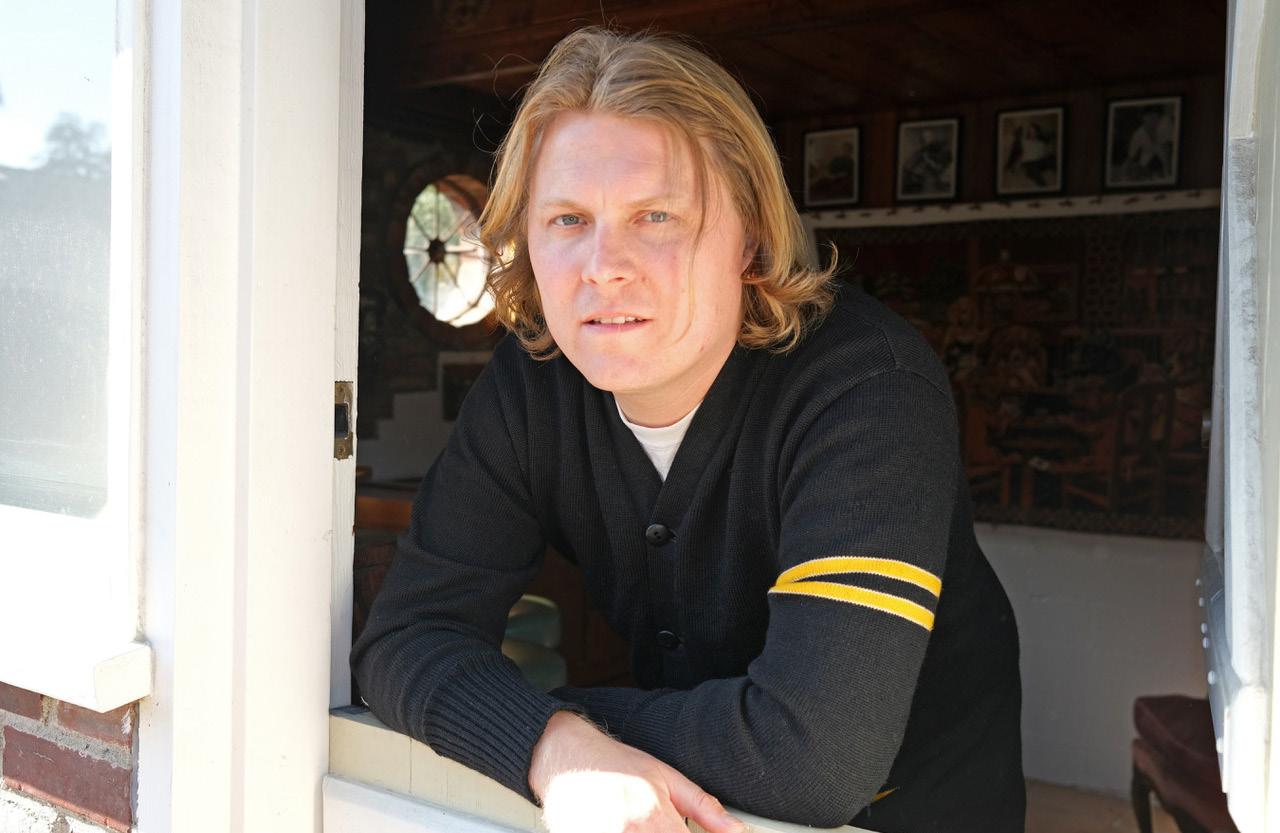
Caliente Casino Palm Springs, 401 E. Amado Road, Palm Springs; 888-999-1995; www. aguacalientecasinos.com.
Here are some highlights from the globally adored Pappy and Harriet’s. At 7 p.m., Friday, May 8, the internet-revived ’00s indie band Panchiko are set to perform an intimate show on the outdoor stage. Dead Calm will open. Tickets start at $48.96. Alt-country phenoms 49 Winchester return to the desert at 7 p.m., Saturday, May 9, after rockin’ Stagecoach in 2023. Flying Mojito Bros. will open. Tickets start at $31.86. At 7 p.m., Tuesday, May 12, psych/garage guitar hero Ty Segall will showcase loud hits from his sonic repertoire. Tickets are $45.85. Multi-genre superstar Santigold, behind the insanely catchy “Disparate Youth,” brings undefinable music gems to Pioneertown at 7 p.m., Thursday, May 14. Troy Baker Sound will open. Remaining tickets are $181.08. At 9 p.m., Monday, May 18, punk-rock pioneer HR, of frantic ’80s rockers Bad Brains, will showcase his reggae-heavy solo band. Swingin’ Johnny and Nick Oliveri will open. Tickets start at $32.90. Grunge gurus the Afghan Whigs are on their 40th anniversary tour and will set the outdoor stage ablaze at 6:30 p.m., Sunday, May 24. Mercury Rev is set to open. Tickets start at $60.36. At 9 p.m., Sunday, May 31, the Joshua Tree National Park Association presents the fifth annual Beneath the Desert Sky Benefit Concert Sin City All Stars, The Ghost Notes and Long Duk Dong are all set to perform. Tickets start at $32.90, and proceeds will support Joshua Tree National Park. Pappy and Harriet’s Pioneertown Palace, 53688 Pioneertown Road, Pioneertown; 760-228-2222; www.pappyandharriets.com.
Mojave Gold has a few shows on the May calendar. At 9 p.m., Friday, May 1, experience the ska, reggae and soul selections of The Slackers. Tickets start at $28.96. Celebrate women songwriters at 8 p.m., Saturday, May 2, with A Night of Queens, featuring performances from Amy Jay, Dominique and the Diamonds and Anna Olivia Eve. Tickets
start at $12.15. At 8 p.m., Friday, May 22, don’t miss the Queer Gold Pride Party, featuring live music and drag performances from Tumbleweed Timemachine, Kit Tapata and Obsidienne Obsurd. Tickets start at $12.15. At 8 p.m., Saturday, May 23, roots-music duo the Watson Twins will spread folk and fun across the desert. Tickets start at $23.70. Mojave Gold, 56193 Twentynine Palms Highway, Yucca Valley; 442-205-0192; mojavegolddesert.com.
Oscar’s in Palm Springs is hosting a couple of non-residency events. At 7 p.m., Wednesday, May 20, performers from across the country unite for UNSTOPPABLE: A Drag Spectacle, celebrating the perseverance to perform, no matter the circumstance. Tickets start at $34.95. Oscar’s famous Sunday T-dance hosts a special Memorial Day Monday edition, featuring a performance from pioneering disc jockey Robbie Leslie, at 3 p.m., Monday, May 25. Tickets are $20. Most Oscar’s shows include a food/ drink minimum. Oscar’s Palm Springs, 125 E. Tahquitz Canyon Way, Palm Springs; 760-3251188; oscarspalmsprings.com.
The Purple Room is slated to close for the summer after Memorial Day weekend, so don’t miss out! At 8 p.m., Friday, May 1, and Saturday, May 2, watch Nic and Desi nail Hollywood hits and deliver Broadway beauty! Tickets start at $50.85. Tony Award-nominated singer-songwriter Ann Hampton Callaway will share selections of moving melodies at 8 p.m., Friday, May 8, and Saturday, May 9 Tickets start at $66.30. Purple Room favorite the Marvelous Marilyn Maye brings to town the best show you’ll ever see by a 98-year-old performer, 8 p.m., Thursday, May 14, Friday, May 15, and Saturday, May 16. Tickets start at $97.20. At 8 p.m., Friday, May 22, Star Search alum Sam Harris is set to perform. (His Saturday show is sold out.) Tickets start at $66.30. All shows include dinner reservations two hours before show time. Michael Holmes’ Purple Room, 1900 E. Palm Canyon Drive, Palm Springs; 760-322-4422; www. purpleroompalmsprings.com.

Get to better know Selexa’s bassist, and a mysterious solo artist from DHS
by matt king
NAME Holden Hartle
GROUP Selexa
MORE INFO Coachella Valley punk-rockers
Selexa emerged onto the local scene in 2020 with progressive lyrics and emphatic rock energy—then basically vanished. The band popped up with the occasional single release and show, but didn’t have much of a presence until recently. Even though the members are living in L.A. now, the band has made it a point to perform in the desert and showcase a new era of their heavy-hitting sound. Selexa is set to release “Indica Limelight,” their first new single in four years, on Friday, May 1. Expect more grunge goodness and music with a message to come from these riffed-out rockers. Holden Hartle is Selexa’s bassist. Learn more at www. instagram.com/selexatheband.
What was the first concert you attended?
My mom was the one who gave me my love for live music, so I’ve been going to local shows for as long as I can remember. The first concert I can remember is being barricade (in the front) at a Rancid show as a 7-year-old.
What was the first album you owned?
Stadium Arcadium by the Red Hot Chili Peppers. I was a high-schooler and super pretentious about music. I’ve since cooled on the Chili Peppers, but they were the first ones who really taught me about stage presence and personality in performing.
What bands are you listening to right now?
I’m trying my best to listen to everything, but I always seem to be behind. Baby Keem’s Ca$ino and Underscores’ U have been my albums of the year so far.
What artist, genre or musical trend does everyone love, but you don’t get?
I’m generally out on country music. It doesn’t speak to me, and it never has. Plus, the new wave of pop country feels so soulless and capital-driven; it doesn’t feel like art.
What musical act, current or defunct, would you most like to see perform live?
Seeing Turnstile this past October was a huge check off my bucket list. Still on that list is Idles. I need them to come back to the States again!
What’s your favorite musical guilty pleasure?
I am the poster child of, “It’s not a phase, Mom.” Emo music like My Chemical Romance and Fall Out Boy is cringey, sure, but to be cringe is to be free, and I stand by that. Powerful songwriting with amazing performances, no matter how you look at it.
What’s your favorite music venue?
My favorite local venues have been the Oasis on Miles and Coachella Valley Brewing Co.— small venues with good music and better vibes.
What’s the one song lyric you can’t get out of your head?
“Freight train coming down the track and it almost gave me a heart attack,” Joyce Manor, “I Know Where Mark Chen Lives.”
What band or artist changed your life?
I found this band called Heart to Gold when I was in high school. At the time, they were a super-small three-piece Midwest emo band that played loud catchy riffs. It ultimately inspired me to join my own three-piece and try to emulate their success.
You have one question to ask one musician. What’s the question, and who are you asking?
I’m asking Mike Kerr from Royal Blood how he gets his tone so far, and if he can spot me some gear.
What song would you like played at your funeral?
“True Love Will Find You in the End” by Daniel Johnston.
Figurative gun to your head, what is your favorite album of all time?
Hot Fuss by The Killers. Most people know this album for “Mr. Brightside,” but literally every song on this album is a banger.
What song should everyone listen to right now?
Not to be corny and do self-promotion, but my band Selexa is releasing a new song called “Indica Limelight” on May 1, wherever you listen to music.
NAME Prichard Nixon
MORE INFO Few desert artists are as eclectic as Prichard Nixon. The Desert Hot Springs artist has only released music on Bandcamp, and has tapped into numerous genres by using his voice as the primary instrument. A cappella harmonies, sensational scatting, beatbox bangers and hilarious lyrics are spread throughout the artist’s hefty online catalogue. Nixon’s new album, Up for Nothing, Down for Anything, is 11 tracks of vocal versatility—and according to Nixon, this album is likely the final release for the Prichard Nixon project. While the artist had previously remained anonymous, Nixon provided a photo of his real face for this feature. Learn more at prichardnixon. bandcamp.com.
What was the first concert you attended?
When I was 17, my father took us to see The Presidents of the United States of America at the Key Club in Hollywood. I was the entertainment editor of the high school newspaper at the time, and I remember writing a stellar concert review for the entertainment section.
What was the first album that you owned? Panopticon by Isis. I remember being 15 years old and my father giving me a ride to Best Buy so I could purchase a copy. I knew nothing about the band or their music, but I liked the album title and artwork—it made me think Twenty years later, it’s still one of my favorite albums.
What bands are you listening to right now?
I’m on a serious anarchist-punk kick right now: BoySetsFire, Refused, SAMURAI. I hate the current state of the world, and these bands are providing some much-needed strength and guidance as I continue striving for something greater.
What artist, genre or musical trend does everyone love, but you don’t get? This is going to sound cliché, but Top 40 radio does nothing for me creatively. Occasionally, I’ll catch a snippet in the car or when I’m out with friends, and I’ll think, “Wow, nothing’s changed in the last 20 years.”
What musical act, current or defunct, would you most like to see perform live? Hatebreed! Those guys have gotten me through so much. Positive hardcore for the win!
What’s your favorite musical guilty pleasure?
I used to have to apologize for listening to Limp Bizkit back in the day, but I’m not doing it anymore. Pull up any of their recent singles—“Dad Vibes,” “Out of Style,” “Making Love to Morgan Wallen”—and it’s clear they’ve still got it after more than 30 years together. I met guitarist Wes Borland last year, and he was super nice and humble, too.
What’s your favorite music venue?
Chain Reaction in Anaheim (R.I.P.). I’ve been straight edge for more than 20 years, so I appreciate a good, scrappy all-ages venue.
What’s the one song lyric you can’t get out of your head?
“Give yourself a break from self-rejection / Try some introspection / And you just might find / Life’s not so bad and anyway / At the end of the day / All you have is yourself and your mind,” Rollins Band, “Low Self-Opinion.” Henry Rollins is a national treasure, and these are the kind of lyrics that save lives.
What band or artist changed your life?
Modern Life Is War’s Witness saved my life, and I say that without a hint of sarcasm. I would not be here today if not for that band and that album.
You have one question to ask one musician. What’s the question, and who are you asking?
I would ask Kurt Cobain if death provided him with the peace he searched for so desperately while he was alive, because I sometimes wonder about myself.
What song would you like played at your funeral?
“Motion Picture Soundtrack” by Radiohead. No other song comes close.
Figurative gun to your head, what is your favorite album of all time?
It’s a dead heat between the expanded edition of Norma Jean’s O God, the Aftermath and Witness by Modern Life Is War. Both albums altered the way I consume and interpret art, regardless of the medium (music, lyrics, visuals), and I would gladly take a bullet for either of them.
What song should everyone listen to right now?
“Simple Design” by Breaking Benjamin is a perfect myriad of seemingly disparate musical compositions wonderfully executed.

“Miscues”—yes, I do. By Matt
Jones
Renaissance setting in America
Shakshouka ingredient
Batteries for some remote-controlled vehicles
Chant after a soccer
Vientiane language
Slick, as a speaker 17. The Joys of Yiddish author Leo
18. Be better at evasion than 20. “The vest and jacket are itchy and don’t fit”?
The Facts of Life
Sashimi topper
McKellen of the X-Men movies
More than -y
Euphoria network 30. Controversy when a Boston Marathon
cheater becomes a TV host?
36. Former Chinese leader Zhou ___
37. NBA Hall of Famer Gasol
38. Dwight Eisenhower’s wife
39. Invitee who makes the party suddenly make sense?
42. Texting format initials
43. Fish that goes with chips
44. “Live ___” (Taco Bell slogan)
45. ___ Tomé and Príncipe
46. Spam generator
47. Tom kha kai cuisine
51. Where to change direction in your LeSabre?
56. Build up
57. Steamboat ___ (Mickey Mouse cartoon in public domain)
58. The Bridges at ___-Ri (1954 movie)
59. “Golly!”
60. Burning
61. Late Pink Floyd
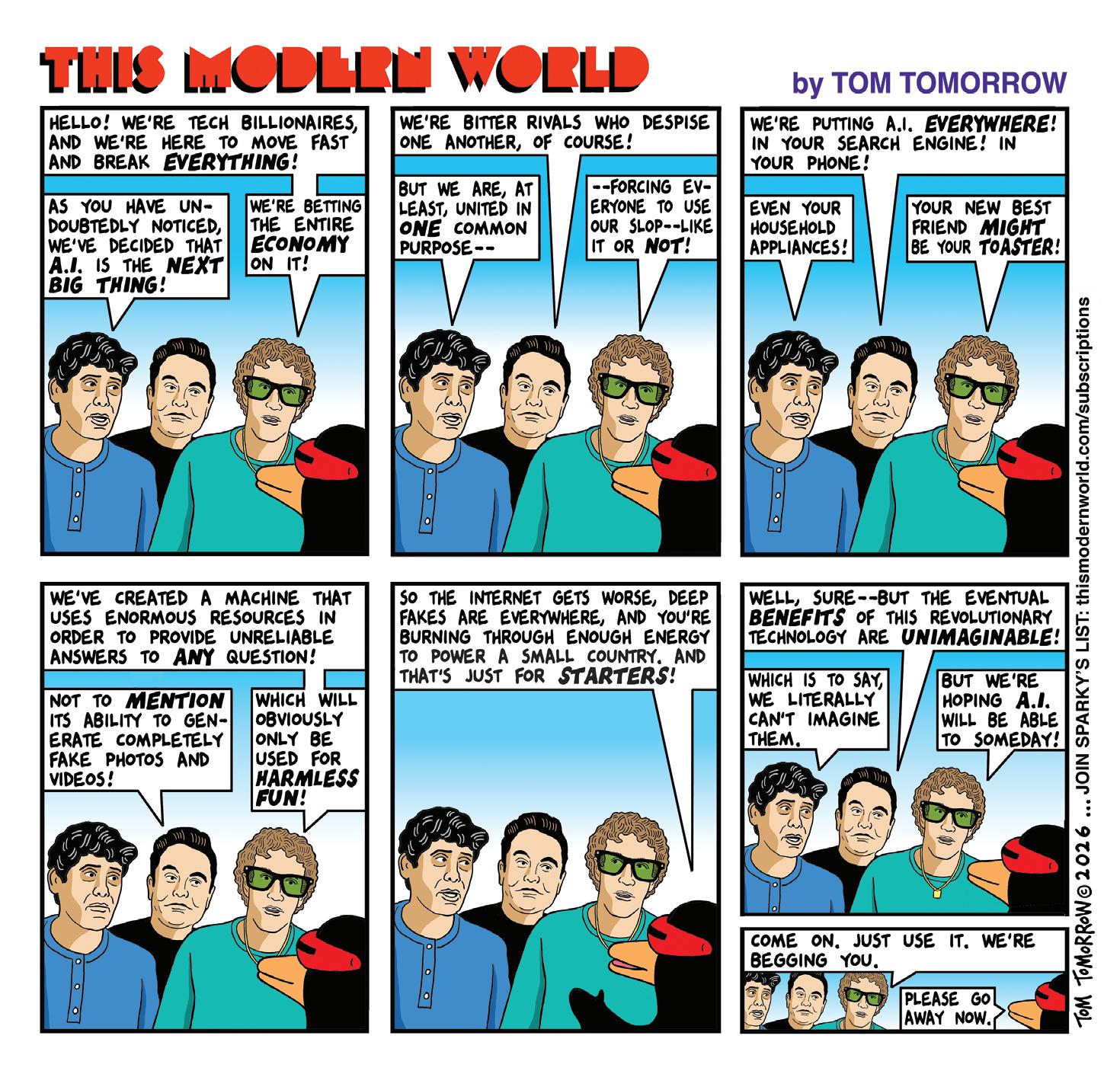
member Barrett 62. 77 Sunset Strip actor Byrnes
63. Approvals Down
1. Seattle Slew, for one
2. How some things are read
3. Pine tree secretion
4. Led Zeppelin’s “Whole ___ Love”
5. Monthly util.
6. Festival of Lights symbol
7. Skip formal nuptials
8. Asterix’s home
9. “Can I bug you?”
10. Painful ordeal
11. Discount grocery chain headquartered in Germany
12. Word with hex or high
16. Ask for table scraps
19. Grade school projects
21. One-legged camera support
25. TV series about hiding edibles?
26. Words spoken before a spell
27. Computer-to-TV cable
28. Mission: Impossible actress Barbara
29. Fashion designer Cassini
30. Rules partner, briefly
31. “E Pluribus ___”
32. Spots in the Loire
33. ___ in “zebra”
34. Song subject with the question “What is it good for?”
35. Granny
40. Filmed material
41. Corrode
45. Boston fish specialty
46. Holstein, e.g.
47. Bridge collections
48. Polynesian dances
49. One-Punch Man genre
50. Cannes concepts
51. You might commit to one
52. Ones, to Juan
53. Kinda gross
54. Like some textbooks
55. Abundant (with)
© 2026 Matt Jones
Find the answers in the “About” section at CVIndependent.com!