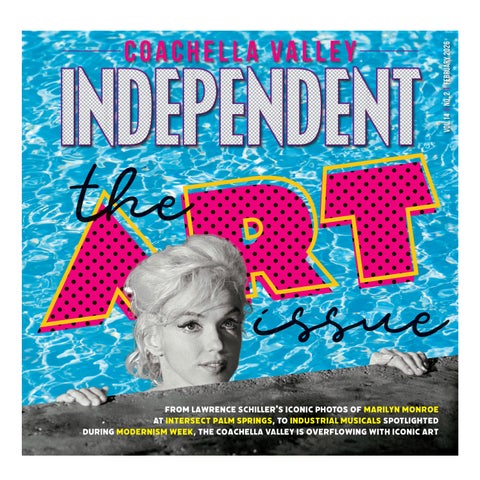
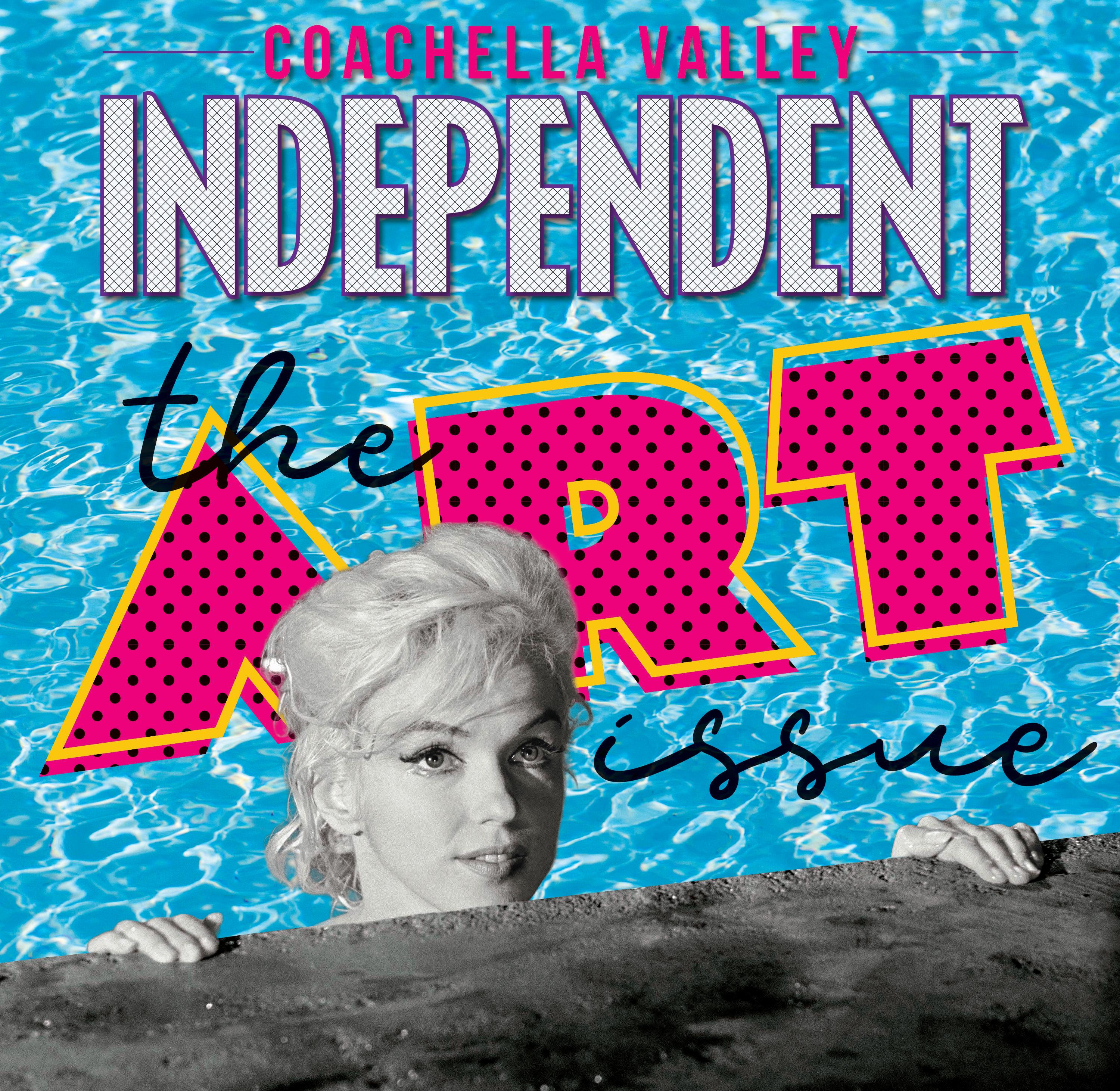
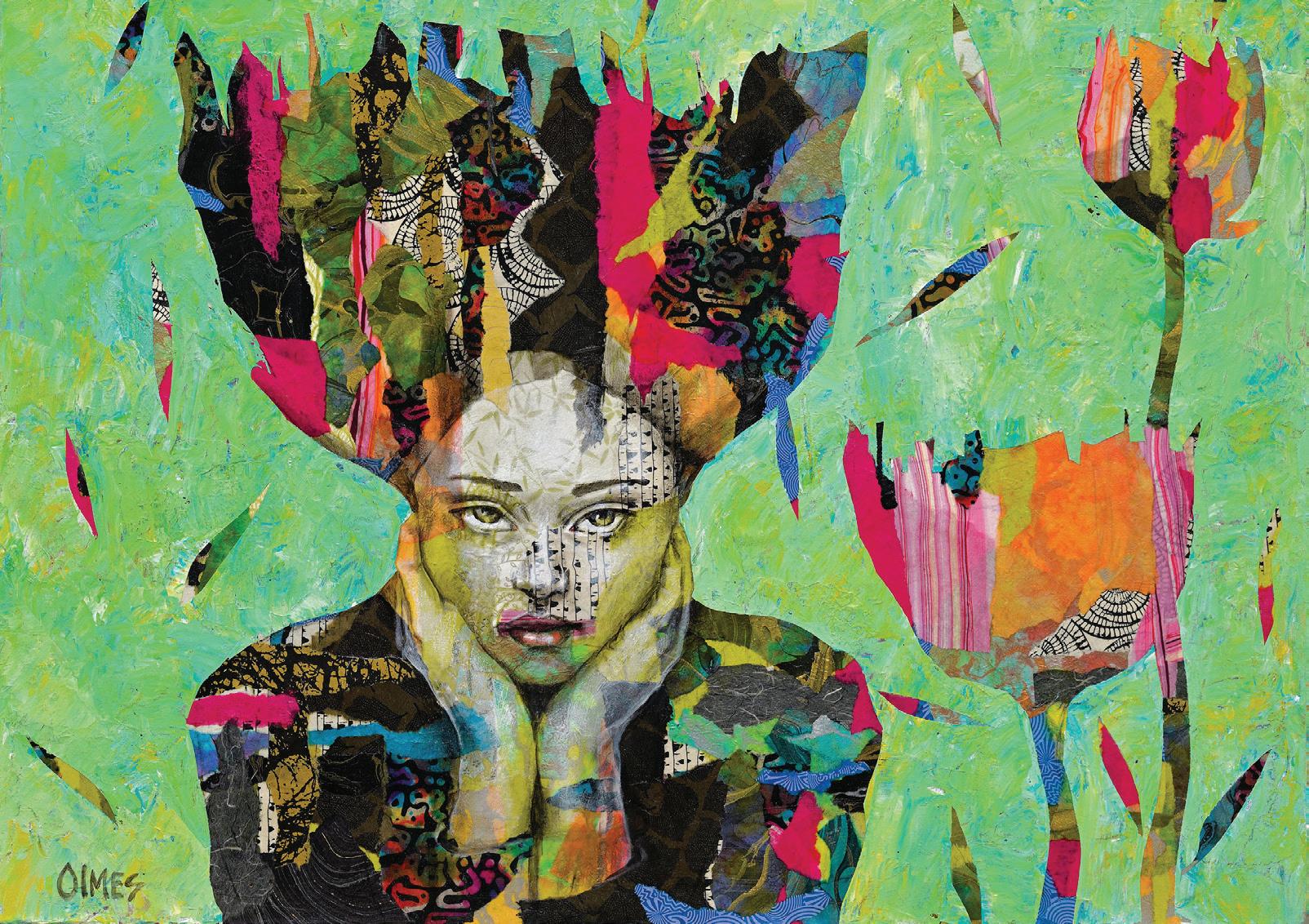
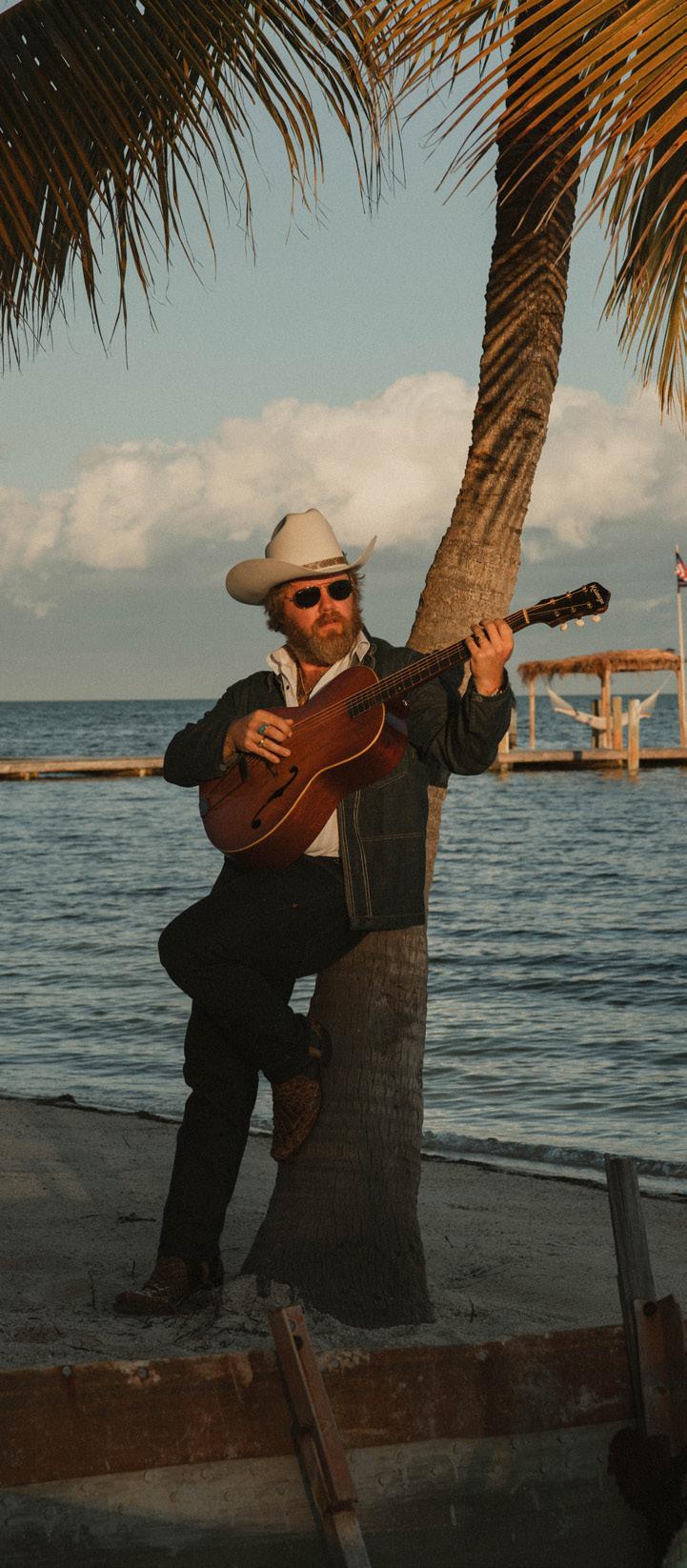
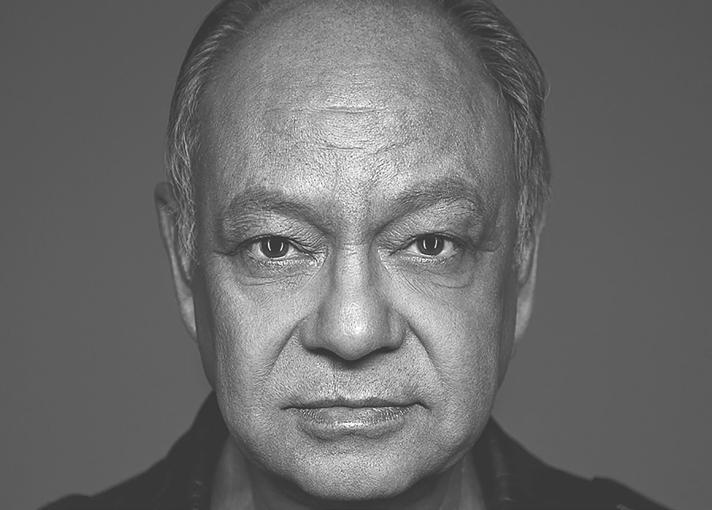
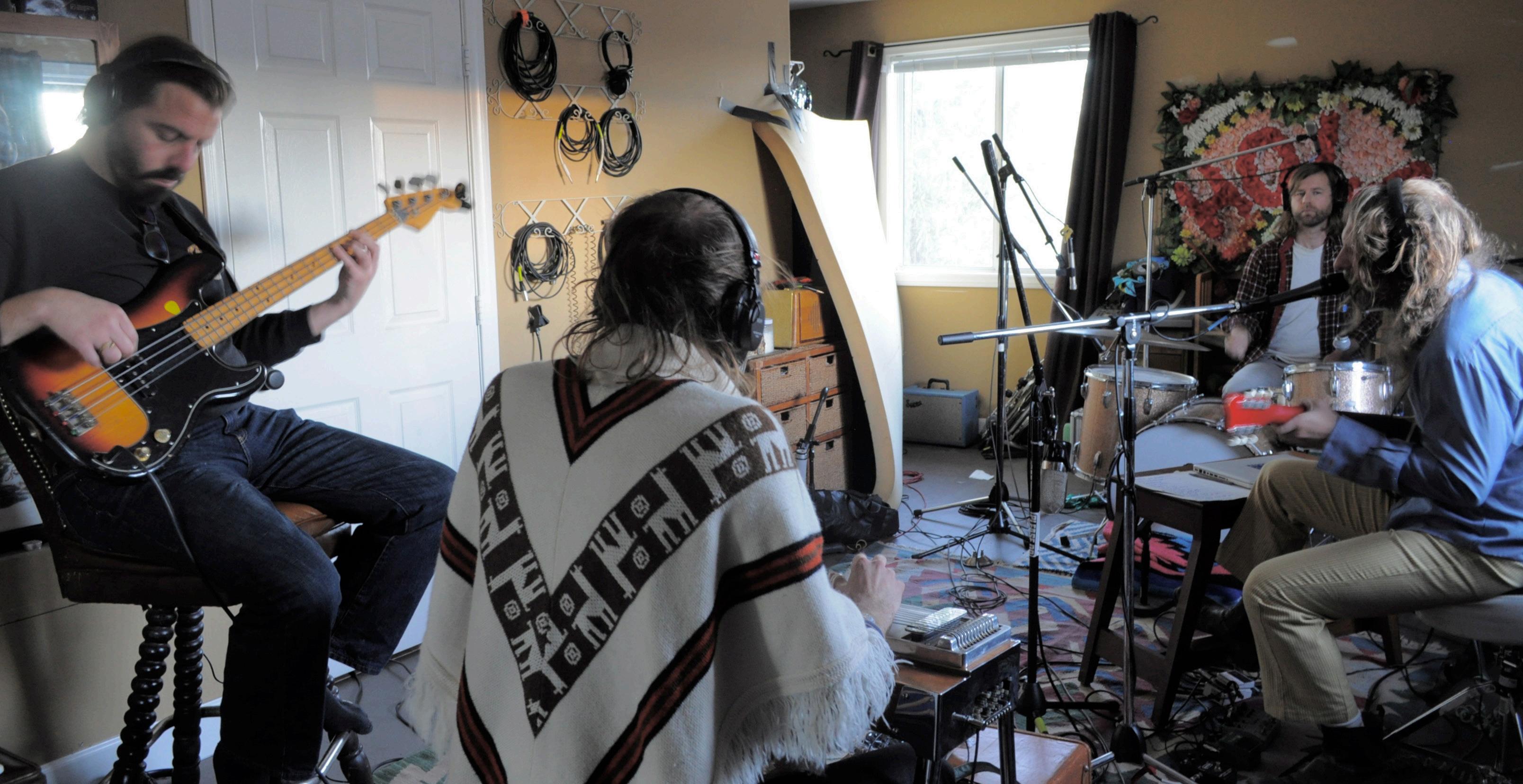
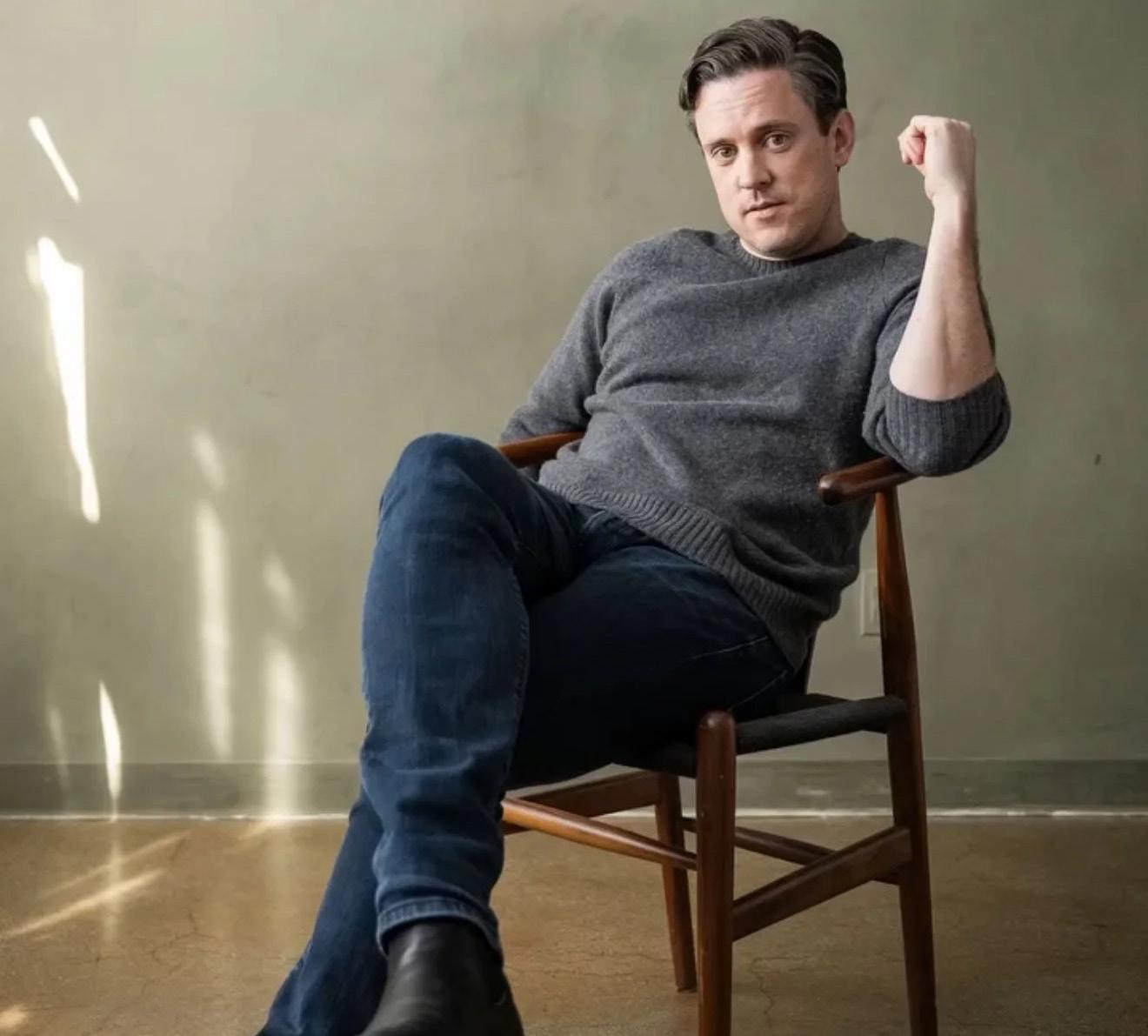
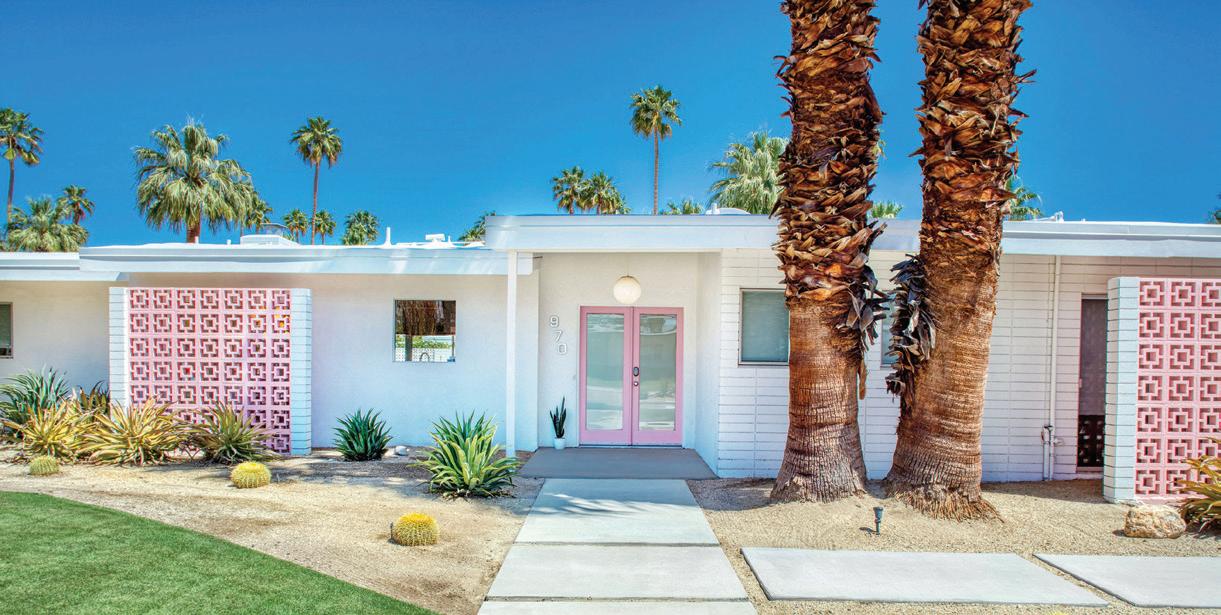
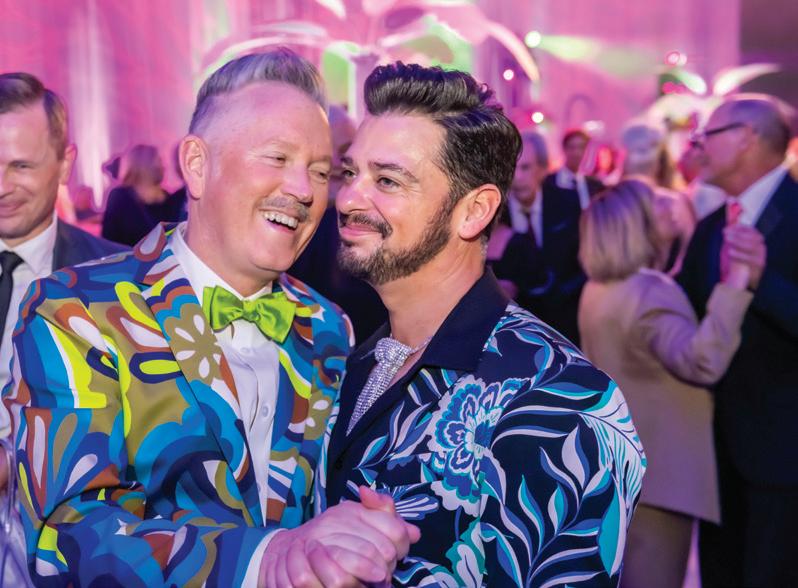
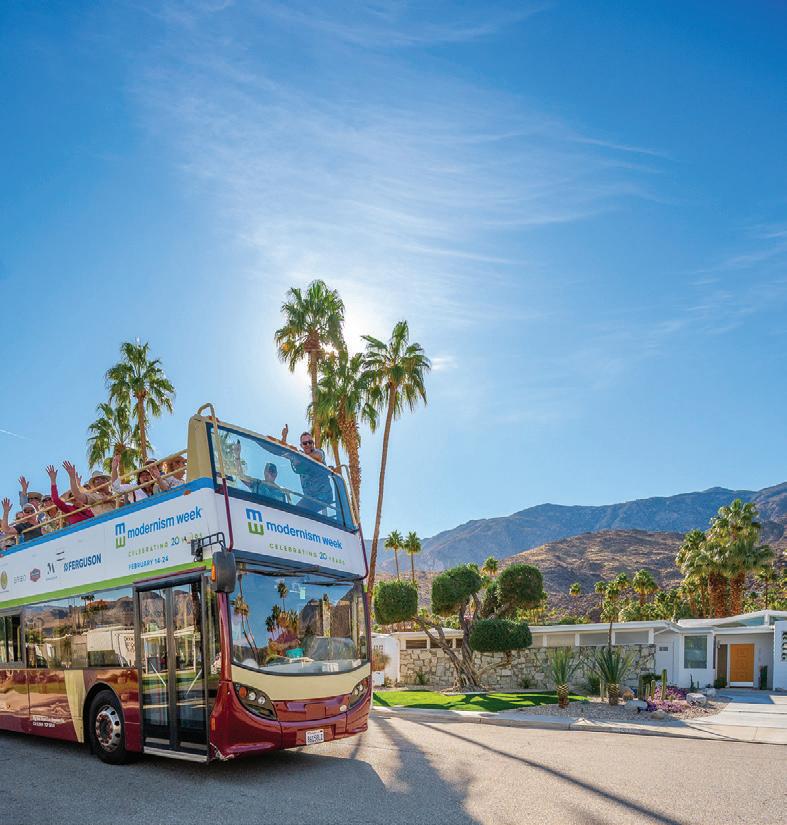
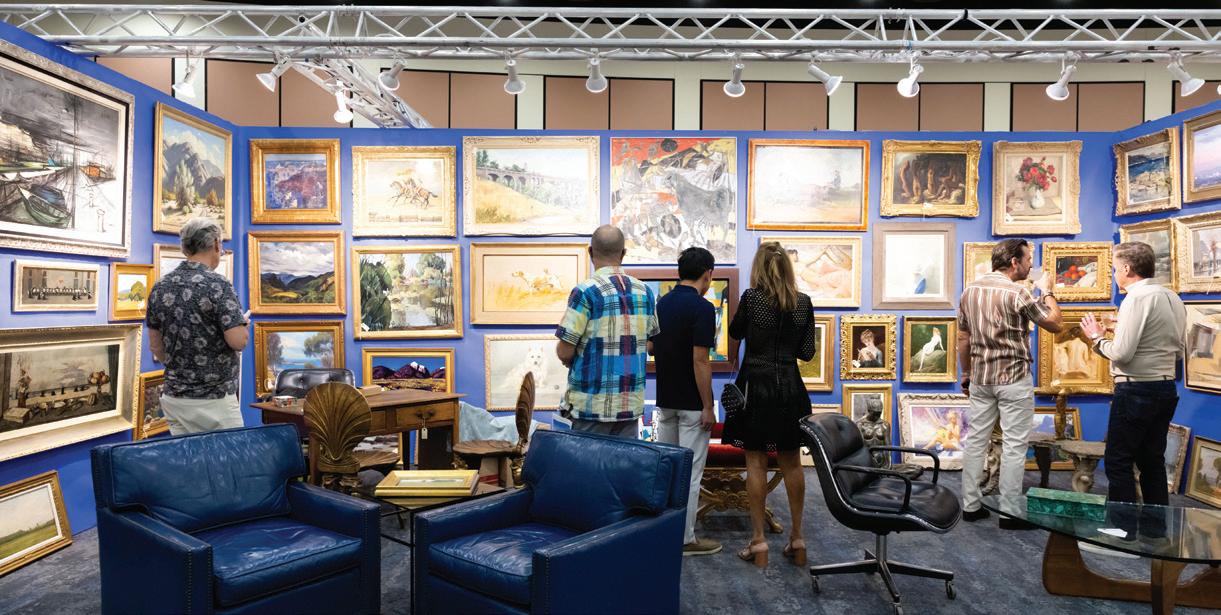
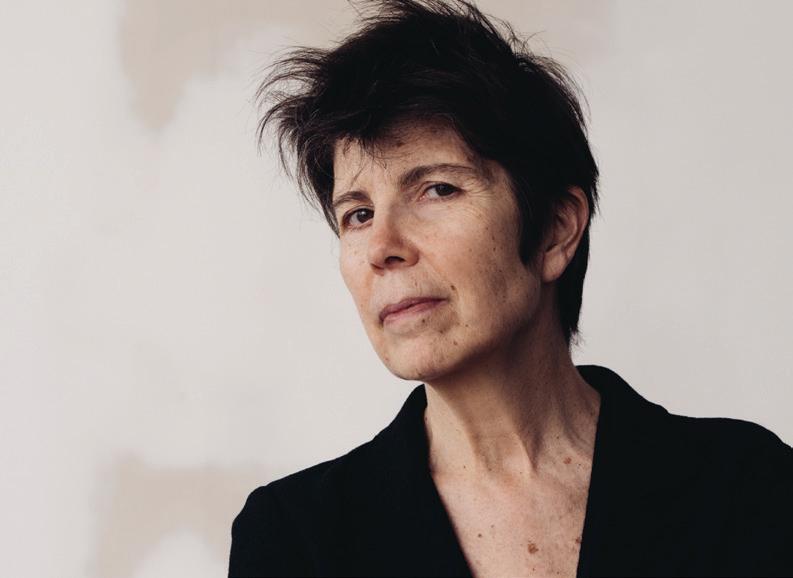
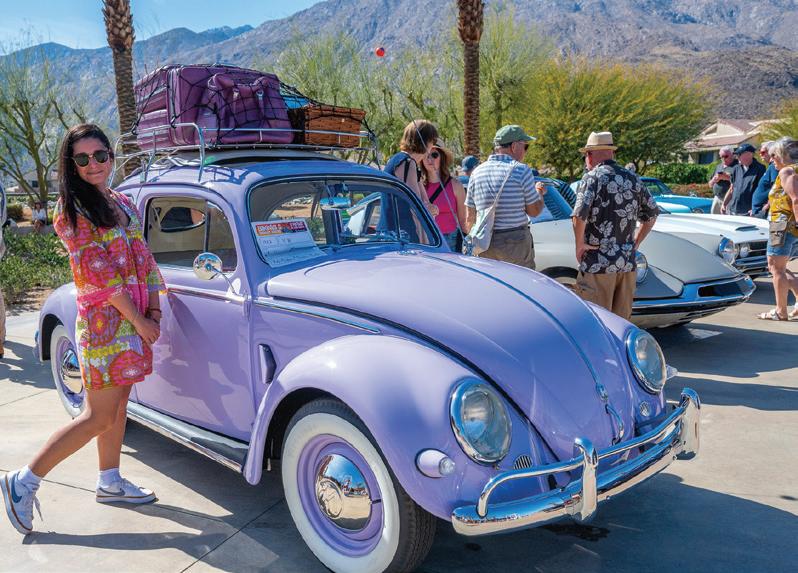
From Lawrence SchiLLer'S iconic photoS oF mariLyn monroe at interSect paLm SpringS, to induStriaL muSicaLS SpotLighted during moderniSm week, the coacheLLa VaLLey iS overFLowing with iconic art
Mailing address: 31855 Date Palm Drive, No. 3-263 Cathedral City, CA 92234 (760) 904-4208 www.cvindependent.com
Editor/Publisher
Jimmy Boegle
staff writer
Kevin Fitzgerald
coveR and feature design
Maria Ratinova
Contributors
Haleemon Anderson, Melissa Daniels, Charles Drabkin, Katie Finn, Bill Frost, Bonnie Gilgallon, Bob Grimm, Terry Huber, Valerie-Jean (VJ) Hume, Clay Jones, Matt Jones, Matt King, Keith Knight, Brett Newton, Greg Niemann, Jeffrey Norman, Dan Perkins, Theresa Sama, Jen Sorensen, Robert Victor, Eleanor Whitney
The Coachella Valley Independent print edition is published every month. All content is2026 and may not be published or reprinted in any form without the written permission of the publisher. The Independent is available free of charge throughout the Coachella Valley, limited to one copy per reader. Additional copies may be purchased for $5 by calling (760) 904-4208. The Independent may be distributed only by the Independent’s authorized distributors.
The Independent is a proud member and/ or supporter of the Association of Alternative Newsmedia, the California Newspaper Publishers Association, CalMatters, DAP Health, the Local Independent Online News Publishers, the Desert Business Association, and the LGBTQ Community Center of the Desert.
A NOTE FROM THE EDITOR
The degree to which many national news sources have bent over backward to appease Donald Trump has been alarming—and depressing.
The billionaire owners of The Washington Post and Los Angeles Times killed editorials endorsing his opponent. ABC News paid $16 million to settle a lawsuit many saw as frivolous. Meta paid him $25 million to settle a lawsuit stemming from their suspension of his accounts after the Jan. 6, 2021, attack on the Capitol. And most appalling of all, CBS News has rolled over in multiple ways to make the president happy (or, well, at least less angry). Amazon (whose executive chairman, Jeff Bezos, owns The Washington Post), Apple and Meta have all made large donations to the president’s White House ballroom project.
What happened to “afflict the comfortable, and comfort the afflicted”? All of these organizations have decided that profit is more important than standing up to someone whose actions have been dictatorial in many ways.
That said, not all national media sources have cowered. Despite the actions of their organizations’ owners, reporters at The Washington Post, ABC News, CBS News and Los Angeles Times have continued to report critically on the Trump administration’s actions. And some national outlets have stepped up their coverage—none more so than Wired magazine.
I’ve sung Wired’s praises in this space before, and I’ll probably do so again, because the reporters at Wired are killing it. While I could share many examples of the magazine’s excellent reporting and analysis, I’ll discuss just one, published on the day we went to press: an amazing analysis piece by Garrett M. Graff, headlined “We Are Witnessing the Self-Immolation of a Superpower.”
Here’s the lede:
Imagine you were Vladimir Putin or Xi Jinping and you woke up a year ago having magically been given command of puppet strings that control the White House. Your explicit geopolitical goal is to undermine trust in the United States on the world stage. You want to destroy the Western rules-based order that has preserved peace and security for 80 years, which allowed the U.S. to triumph as an economic superpower and beacon of hope and innovation for the world. What exactly would you do differently with your marionette other than enact the ever more reckless agenda that Donald Trump has pursued since he became president last year?
Nothing.
In fact, the split-screen juxtaposition of three events this week—Trump’s own nearly two-hour commemoration of his one-year anniversary as president; the gathering of defiant, rattled global elites in snowy Davos; and the spectacle of Denmark and its European allies building up a military force in Greenland with the express purpose of deterring a US military takeover— might someday be seen as heralding the official end of the grand experiment in a rules-based international order that has kept watch since World War II.
In the first three weeks of 2026, Trump’s Mad King rantings about Greenland have accelerated into something far more stunning and alarming: A superpower is choosing to self-immolate and torch its remaining global trust and friendships, including and especially NATO, the most potent geopolitical alliance in world history, at the precise moment when it had been reinvigorated and renewed and at its strongest and largest ever in the wake of Russia’s large-scale invasion of Ukraine in 2022.
Graff’s piece gets even better from there. He makes his case rather powerfully. These are weird and concerning times. We’ve always needed journalists—at the national, state and local levels—to report on our government fairly, honestly and accurately, but we’ve never needed them more now. Welcome to the February 2026 print edition of the Coachella Valley Independent—our annual Art Issue. Thanks, as always, for reading.
—Jimmy Boegle, jboegle@cvindependent.com
HIKING WITH T
BY THERESA SAMA
Hidden in the rugged foothills of the northern Coachella Valley—east of Desert Hot Springs and just north of Sky Valley Resort, off Dillon Road—is Tim’s Ladder Trail.
This is not your average desert hike. This challenging, unmarked route climbs steeply into the backcountry of Joshua Tree National Park. With more than 2,000 feet of elevation gain in less than 3 miles, the trail offers raw desert adventure for those who dare to take on the challenge. The reward: Sweeping 360-degree scenic views from the high ridges.
You’ll overlook the Little San Bernardino Mountains to the north. In the distance to the southeast is the Salton Sea, with the Santa Rosa Mountains and Toro Peak to the south, Mount San Jacinto to the southwest, and San Gorgonio Mountain (Old Greyback, the highest peak in South-
ern California) to the northwest. If you look far in the distance to the west, between the peaks of San Jacinto and San Gorgonio, you may spot the Morongo Casino Resort tower in Cabazon. You’ll have breathtaking views of the entire desert floor beneath you while looking down into Sky Valley Resort, which was founded and built by Tim Manthei—the man behind Tim’s Ladder Trail—and his family.
I was fortunate enough to connect with Tim Manthei (not on the trail, unfortunately), and during our conversation, I learned that the story of this hidden yet iconic trail has been shaped over more than five decades.
Manthei said he came out to the desert from Huntington Beach in 1970 and started building Sky Valley Resort. At that time, he also started carving out what is now Tim’s Ladder Trail—but not intentionally, at least not at first.
“I just started hiking up there, and kept hiking, and eventually a trail started to form,” Manthei said. “Then different people started working on the trail with some tools, and it just evolved over the years.”
He gave the most credit to Din Kossova, a Sky Valley local. Kossova built the “now legal” monument just more than a mile from the start. You can’t miss it! It’s a tall rock tower featuring a flag at the top. There’s an interesting (heroic and somewhat sad) story behind the monument, which was built twice by Kossova in honor of President Woodrow Wilson, who fought for Albanian independence.
Along the trail, you’ll find steep climbs; rocky, sandy terrain with loose footing; high winds; and no shade. Hiking during the summer is dangerous due to extreme heat, and flash floods are a risk in the canyon areas. Be mindful of weather that can change suddenly! Manthei recalled one particular storm from memory as if it were yesterday: “On Sept 10, 1976, we had 4.5 inches of rain in 1.5 hours, and the wash rose 5 feet deep that day. It was crazy!”
A couple of my hiking buddies—Tex and Jennifer—joined me recently to make the climb. It’s grueling! You can compare this trail
to the Museum Trail in Palm Springs. They are both hard climbs, but this one is longer and steeper. The trail is marked by white dots on rocks, much like the Museum Trail—and those dots are the only trail markers you will find. There are a few cairns, along with some rock art along the way, but every signpost we encountered was broken; even the metal flag post at the monument was broken in half. The destructive winds along this trail are not to be taken lightly.
Once you climb about three-quarters of the way up the trail, looking northwest, you can first see Old Greyback. After the monument, it’s only about a half-mile to the boundary of Joshua Tree National Park, so we continued on—because that’s how we roll!—but that meant more climbing. We peaked out at 2,581 feet, near a witness post, where we were looking at a gradual descent into a canyon wash from the back side of the ridge. I was able to get cell service in that particular spot, and I saw on the map that the wash would bring us out just west of the ridge where we started our climb.
At that point, we thought taking the wash out would be a no-brainer versus the climb we had just endured. We reached the wash, and we were so happy to be trudging through soft sand on flat ground—but that didn’t last long before we came to our first drop, which was just the first of many 8-to-12-foot drops. We scrambled and slid our way across and down each one. It was insane—and there were no ladders! It turns out we were no longer on Tim’s Ladder Trail. Finally, after an hour or so of scrambling through the rocky canyons, it leveled again, and we found our way out to Dillon Road, about a mile or so west of Sky Valley Resort.
The Hiking Guy has an excellent guide mapped out for this trail, at hikingguy.com/ hiking-trails/joshua-tree-hikes/tims-laddertrail. I highly recommend studying this guide and printing it out to take with you. I wish I had done that!
Tim’s Ladder Trail is more than just a difficult desert hike; it’s a living piece of Sky Valley history, shaped by one man’s curiosity,
Tim’s Ladder Trail is a significant challenge—but it’s worth every step
persistence and love for the mountains. Now 56 years after he arrived here, Tim is still climbing. He and his wife, Pamela, go out once or twice a week to climb the trail. They often go down the ridge to the west and make a loop instead of going out and back. It’s a bit longer to do the loop; it goes down into the back canyon where there is actually a ladder that must be used to get out. My hiking buddies and I will definitely be taking this route next time.
If you’re ready for a strenuous climb, panoramic views and a taste of desert solitude, this hidden gem awaits. Just remember to respect the land—pack in; pack out; and leave no trace.
A few quick tips for success:
• Start early to beat the heat.
• Download a GPX file or print the trail guide from the Hiking Guy (see above); the trail is unmarked.
• Check weather carefully, and do not start this hike if rain or high wind is in the forecast.
• Avoid this trail during the summer months.
• Bring trekking poles and 2-3 liters of water.
• Wear sturdy boots.
• Bring a first-aid kit and all desert hiking essentials (www.desertmountains.org/hiking.)
Upcoming Events
• Friends of the Desert Mountains’ Wildflower 5k takes place at 8 a.m., Saturday, Feb. 28. The trail run will be moved this year from the Randall Henderson Trail to Cap Homme/Ralph Adams Park, at 72500 Thrush Road, in Palm Desert. More information will be available as details are finalized and registration opens. Check the Friends’ website at www.desertmountains.org.
• Friends of the Desert Mountains’ Coachella Valley Wildflower Festival, presented by the city of Palm Desert, returns from 10 a.m. to 4 p.m., Saturday, March 7, at Civic Center Park, at 43900 San Pablo Ave. The free, family-friendly event features native plants, a youth art contest, arts and crafts, food trucks and environmental education for all. Learn more at www.desertmountains.org/cvwf.
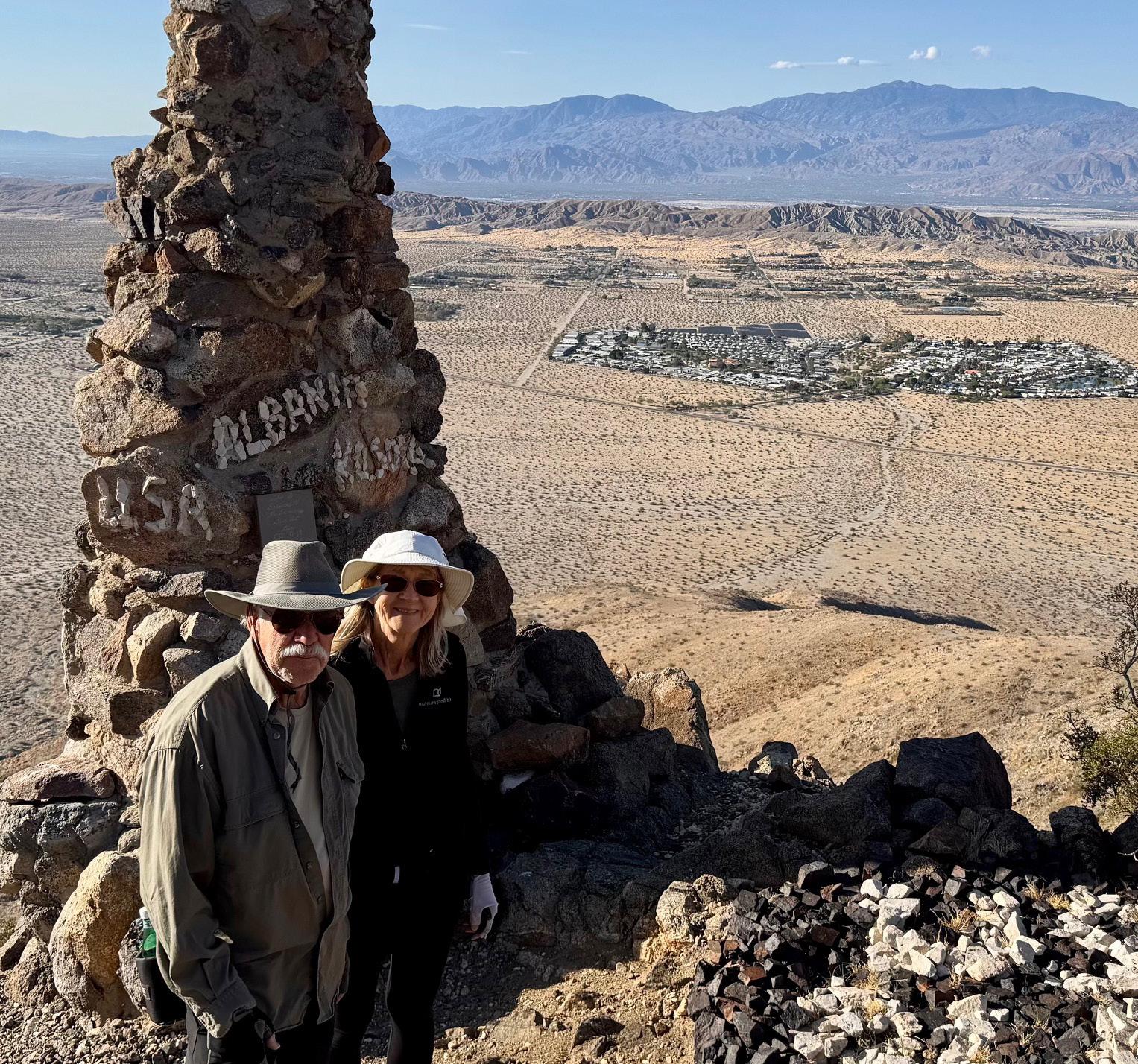
Tim Manthei and his wife, Pamela, stop for a picture at the monument built by Din Kossova, located about a mile from the start. This view overlooks Sky Valley Resort, which was started by the couple in 1970. Walter Cunningham
KNOW YOUR NEIGHBORS
BY BONNIE GILGALLON
William “Bill” Schinsky’s family is part of Southern California history. Schinsky’s maternal grandfather was part of the Marquez family, who settled Santa Monica as a Mexican land-grant family. They actually lived in a town just south of Santa Monica, called Westchester. That’s where Schinsky, who was born in 1946, went to Catholic high school.
“As a child, I had a pretty hefty case of asthma. I couldn’t run around like other kids, because as soon as I did, I couldn’t breathe,” he said. “I had a quiet and sickly childhood.”
Schinsky had three siblings: an older sister and two younger brothers. One traumatic incident helped shaped Schinsky’s outlook on life.
“Because I was such a sickly child, my father, who was not an easy man, considered me a real sissy,” he said. “One day, when I was 7 years old, we were home alone. My father grabbed me and said, ‘If you want to act like a girl, then you can dress like one.’ He put me in one of my sister’s dresses and locked me out of the house on the front porch. There I was, for all the world to see. I became an adult that day. I realized: If you can’t trust your parents, then you can trust no one.”
Schinsky originally planned to be a history teacher. In 1968, he was studying history in college when he got drafted and was sent to Vietnam. He spent 420 days there, and confirms that, yes, war is terrible, but surprisingly, “it can be pretty boring.”
“Much of the time, you just sit around waiting for something to happen,” he said. “I was in the 105 Howitzer unit, which is the smallest of the cannons. We were stationed near the DMZ (demilitarized zone). I was closer to Hanoi than I was to Saigon, but we could feel the ground shake at night from the bombing.
“The Vietnam experience did change me. It reinforced the conviction I already had that I had to take care of myself, because no one else was going to.”
Schinsky became protective of one buddy in Vietnam who was absolutely terrified when
there was mortar fire. Schinsky would put him in a foxhole, light him a cigarette, and say, “Stay here; I’ll be back when it’s over.” Another soldier asked Schinsky to write letters to his mother, and to read the ones she sent back out loud, because he was totally illiterate.
Schinsky said he has some PTSD. He gets very anxious in crowds, and the sound of a helicopter makes him shudder.
When Schinsky came home and went back to school, he took a required “Art 101” class. It changed his life.
“I liked painting, but I knew pretty early on that I was not going to be a great at it. But I had a knack for design and placement and selection,” he said. “After undergraduate school, I took a museum-studies class at Cal State Fullerton. It was clear my path was to work in a museum or open a gallery.”
Schinsky relocated to the desert in 2003.
“My husband grew up in Coachella, where his stepfather was the mayor,” he said. “He has lots of family here, and we used to come out in the ’70s to visit his folks. He didn’t really want to come back, but I’ve always loved the desert, so we made the move.”
Once settled in the Coachella Valley, Schinsky applied to be a substitute teacher, but instead was asked to work one-on-one with a troubled sixth-grader. What initially was
Meet Indio resident Bill Schinsky, an artist, teacher, gallery owner and Vietnam veteran
supposed to be a three-week stint turned into three years.
“I was the only person who listened to him,” he said.
Schinsky eventually took over the Coachella Valley Arts Alliance, which evolved into the Coachella Valley Art Center. In 2011, he submitted a proposal to create a gallery in Indio that would offer affordable studio space for artists to work, as well as classes. It was accepted, and the Coachella Valley Art Center was born.
Schinsky was also the curator of the Rancho Mirage Art Affaire for two decades, and taught an introductory art class for College of the Desert at their satellite locations in Indio and Mecca.
When COVID-19 hit, Schinsky tried something a bit different. “I just started picking up objects—creating collages or just putting them together in more sculpture form,” he said.
“I’ve been very fortunate to have known and been influenced by some very famous artists, including Lenore Tawney for textiles, and Sol LeWitt, who some thought of as the father of minimalism. Lewitt told me not to worry about what other people think of my work, but just to do what I need to do.”
In 2023, after the city of Indio accused Schinsky of not doing enough community-oriented
projects—a claim Schinsky said is unfounded— the Coachella Valley Art Center’s lease was terminated. He has been running a community art gallery on Perez Road in Cathedral City.
Schinsky said that although he has a reputation for being grumpy (he calls it being direct), he tries to always be kind and helpful. So what’s on his bucket list?
“I’ve sent a proposal to the Cheech Marin (Center for Chicano Art and Culture) in Riverside, which has a huge collection of Hispanic art,” he said. “I’d like to repeat an exhibition I did in Indio dealing with the lynching of Mexican-Americans in California from 1848 to 1895. It’s called 149, because that’s the number of Mexicans who were lynched.”
Perhaps the most surprising thing about Bill Schinsky is that he loves sumo wrestling. Why?
“It’s traditional,” he said. “It has fabulous history, and I love the movement and ceremony involved—plus, I just love anything Japanese.”
Learn more at instagram.com/schinskywilliam. Bonnie Gilgallon has written theater reviews for the Independent since 2013. She hosts a digital interview show, The Desert Scene, which can be heard on www.thedesertscene.com and viewed on Mutual Broadcasting’s YouTube channel. Learn more at bonnie-g.com.
Bill Schinsky: “I’d like to repeat an exhibition I did in Indio dealing with the lynching of Mexican-Americans in California from 1848 to 1895. It’s called 149, because that’s the number of Mexicans who were lynched.”
HOLDING ON TO HISTORY
LMoney from the California State Library, the National Endowment for the Humanities and by KEVIN FITZGERALD
ast April, word first began to circulate among users of the California Digital Newspaper Collection (CDNC) that the invaluable online resource—containing searchable archives of publications going back to 1846—could shut down permanently due to a loss of funding.
a private source tied to the Center for Bibliographical Studies and Research at the University of California, Riverside, which oversaw the collection (cdnc.ucr.edu), had all dried up within less than two months.
Surprisingly, by the time June arrived, much of that funding had been restored—but it did not come in time to stop the termination of the dedicated staff that had worked for more than a decade to grow the content and maintain its operations.
Daryle Williams is the dean of UCR’s College of Humanities, Arts and Social Sciences (CHASS), and among his many responsibilities is the management and oversight of CDNC operations. When the Independent previously reported on the CDNC last July, a UCR representative told us that Williams would not be available for an interview—but Williams took the time to speak with us recently regarding the status of the archives as 2026 progresses.
The good news, Williams said, is the CDNC, as it stands now, is more stable in terms of both technology and funding.
“I’m just going to be blunt: The project was in a precarious state,” Williams said of the CDNC as of mid-2025. “There were some real significant funding challenges, and also, from a technology perspective, and a maintenance perspective, and some management and oversight and leadership perspectives, things got a little dicey last year. The site went down several times. I didn’t know it at the time, but we came to understand that some of the technology was failing, and we were at the risk, and still are in a risky situation, of literally losing material. We think we’ve identified most of those risks and taken steps to mitigate that. So, the site is up. It may go down every once in a while now for hours, but we’re not talking large-scale outages that were real in the middle of last year.
“So the preservation of, and access to, this resource is much more stable than it was even in the last six months. … We had commitments to get it done, but it was not clear that we were actually going to be able to accomplish it as a day-to-day kind of thing.”
Williams said one of the CDNC’s problems involved out-of-date servers.
“They were beginning to fail, so we’ve replaced some servers,” Williams said. “We just
bought a new one. … We have some continuing and new technical team (members) that are looking at this closely, monitoring (website performance) and being responsive to when we have outages.”
Another problem was “bot” attacks.
“People were trying to attack the site, and we had denial of service,” he said. “So we’ve upgraded the software, and we’re in a stronger position in terms of security as well. This was the right thing to do, but it was not clear what was happening (in terms of funding) until the end of June. Now we have a guarantee of a state appropriation … of $430,000. … This will be foundational for base funding for us to move through this period right now. We’re really doing substantive work to back up the material and make sure the site remains stable and sustainable.”
New and meaningful partnerships are now a focus for Williams as part of his multi-pronged strategy to secure the CDNC’s operations.
“There will be a press release in the next month, but we’ve been able to identify some new partners in the state of California—some recognized partners who are very interested in the state’s history, life and culture, digital preservation and experience, and have resources who are committed to partnering with us on this ongoing preservation and access,” he said. “This resource is a resource of the people of California, and has been entrusted to the regents of the University of California, and it will remain so. But we have every need and interest in finding friends and partners who are able to join us, and bring what they can to the table. We need more technical infrastructure. We need more technical expertise.”
Williams pledged that the CDNC would not be commercialized.
“(We’re looking for) other institutions, public or private, that still want to begin from the public good, and the public good is associated with the free press—access to the free press’ information, and access to one’s history,” he said. “Let’s be blunt about what’s found in California newspapers—terribly ugly things that are in the long history of the California press. … But we need to have access to ugly things, and uncomfortable things, so we can understand who we are and where we come from.”
Williams also expressed a desire to team
UC-Riverside makes progress in securing the future of the California Digital Newspaper Collection
up with other, smaller newspaper collections throughout the state.
“The origin of the (CDNC) project was really (focused on) the press mainly in the parts of Northern California that were built around the time of the California gold rush, which makes sense,” Williams said. “For the most part, that’s the origins of what we now call California. … My understanding is (that in the 2010s), there was this new project to make sure that every county of the state had at least two titles that were part of the CDNC. That required the work of identifying through county libraries, but also historical associations in the state: What physical collections did they have, and how could we have access to those collections that have been digitized? That work of broad breadth and representation of California experiences and voices, we want to continue as well.”
That said, Williams confirmed that adding new digital content to the more than 50 million pages of digitized newspaper pages already in the archive, of which some 20-plus million pages are currently searchable, is not an immediate priority.
“Right now, we’re not taking any new materials,” he said. “That’s one of the things we’re pretty clear on. Right now, we’re cleaning up a couple of projects that were disrupted and suspended mid-work, especially projects associated with this NEH grant which focused in on African-American newspapers from the Los Angeles and Bay areas. We’ve got to finish that work first, so we’re not taking any new projects. I’m not saying we’re not going to in the
future, but there’s no new material, other than the things which we already committed to, that we’re looking at right now.”
It’s clear that an air of uncertainty hangs over the future of the CDNC, despite the obvious progress that’s been made by the dean and his team. It’s also clear that the will to stabilize and improve access to this major cultural and academic repository exists.
“I’m the dean of the College of Humanities, Arts and Social Sciences,” Williams said. “My day job is assuring the high-quality education of 11,000 undergraduates, and the professional development of my faculty and staff. The CDNC is part of my portfolio, but it is not my primary job. It’s not primarily what the people of California are paying me for—but this is really important, so I’ve taken some of my personal time, and also (utilized) the authorities that I have, to get us out of the hole we were in. And you can quote that.
“Let’s be excited about, and proud of, the resource and the accomplishment. We’ve now, for more than two decades, had this tremendous resource available to the people of California, due in large part to the investments by the people of California, through state appropriations, through public interest, but also through the support of the University of California. (Now, we’re working) to build out access and preserve this resource of California’s print history and all the things that have been recorded and taken place in newspapers in California. There’s a long-standing accomplishment there, and I think we should be proud of that.”
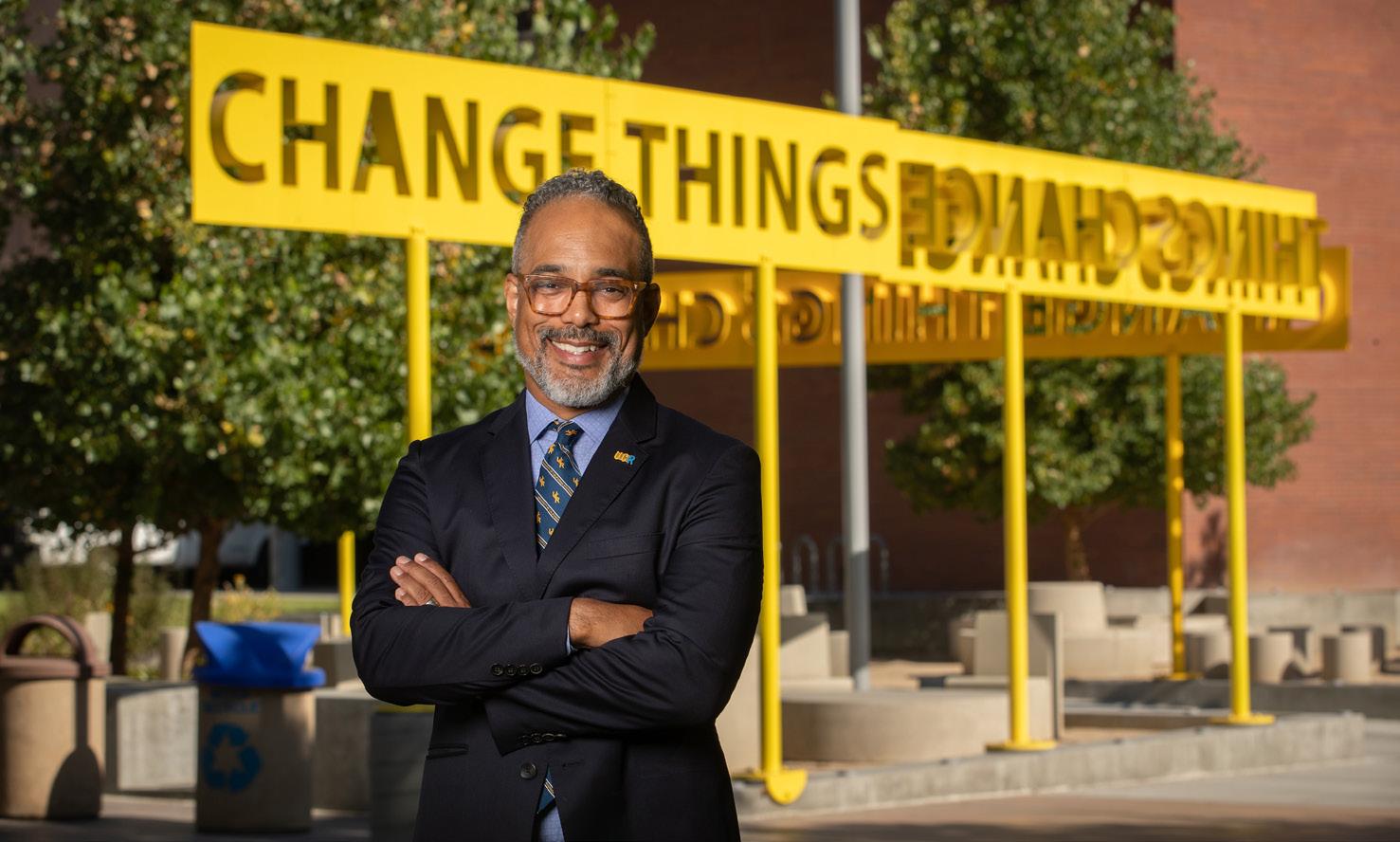
Daryle Williams, dean of UCR’s College of Humanities, Arts and Social Sciences: “Let’s be blunt about what’s found in California newspapers—terribly ugly things that are in the long history of the California press. … But we need to have access to ugly things, and uncomfortable things, so we can understand who we are and where we come from.”
Intersect Palm Springs Art + Design Fair returns to Coachella Valley for one of the region’s largest gatherings of art, design, and architecture, presenting leading galleries from around the world and fostering dialogue through cultural partnerships, curated programming, and community engagement.
12-16 FEBRUARY 2026
Scan QR code for updates and more info on the fair
PALM SPRINGS CONVENTION CENTER
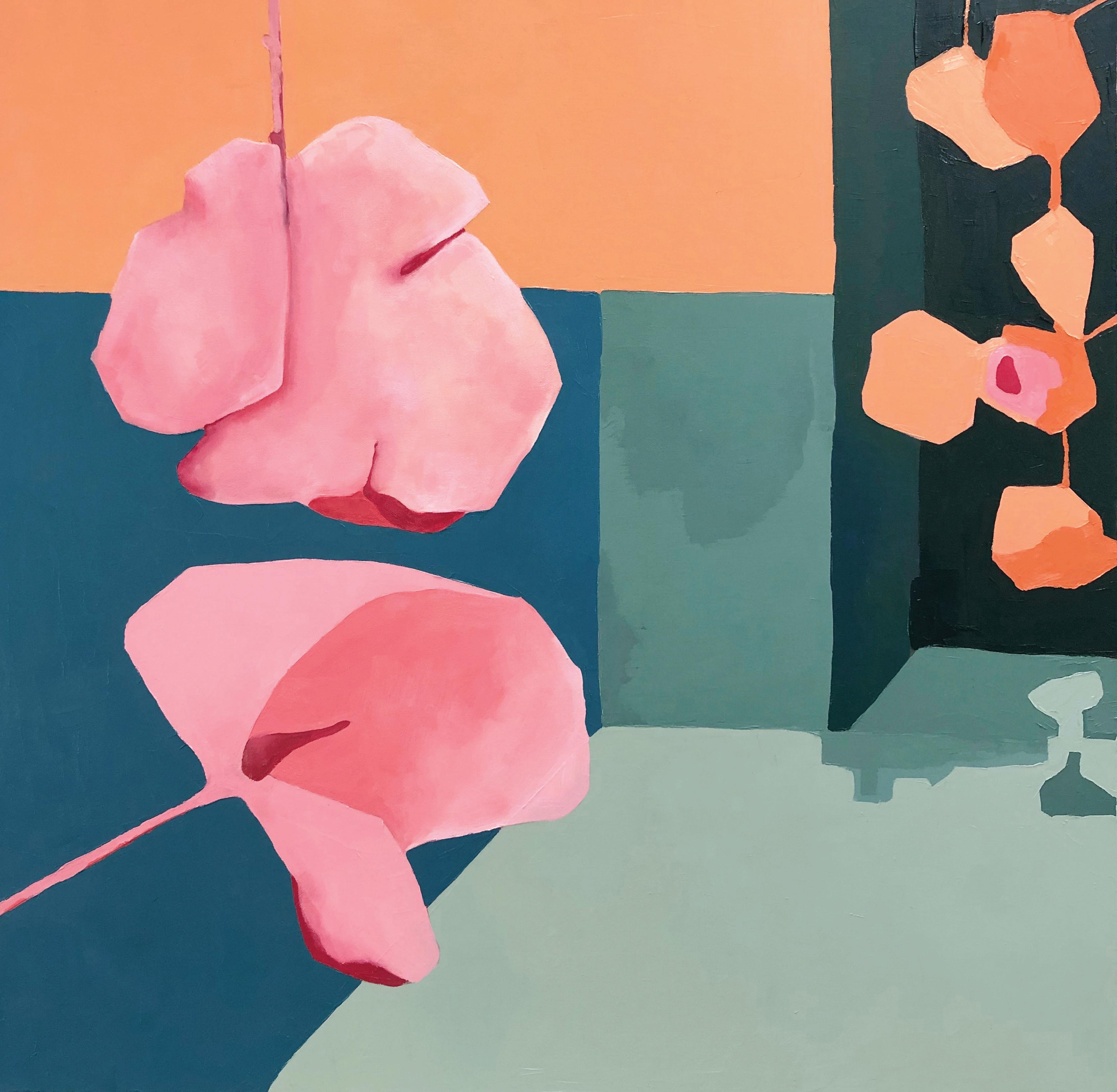
Kristi Head Endless Summer, 2020 Oil on canvas
30 x 30 in Courtesy of Taylor Fine Art
CIVIC SOLUTIONS
Wby Melissa Daniels
hen driving through parts of the Coachella Valley, you’ll see more Teslas than pedestrians. After all, heading out on foot can be a treacherous journey; a lack of sidewalks or crosswalks can make it dangerous to walk, bike or skate as a mode of transportation.
As much of the valley’s population continues to age, while the valley is also adding more
young families, the city of Palm Desert is working on making it safer for people to walk or bike through the city—especially children and older adults.
Palm Desert in early January announced it secured a $5.68 million grant to help improve street safety near schools and other high-risk corridors. It was one of 521 jurisdictions across the country to receive a portion of the $982 million in grants awarded by the U.S. Department of Transportation in late December. The vast majority of the grants are slated to support planning efforts, but Palm Desert was one of 67 grantees to receive funds to actually implement new fixtures and improvements.
“Recognizing that road safety is important, especially for pedestrians, children and older adults—which you see more so in Palm Desert and the Coachella Valley—we wanted to look at ways to create safer environments,” said Christopher Gerry, senior project manager for the city of Palm Desert.
Some of the first areas to be addressed will be streets near Abraham Lincoln Elementary
School, Palm Desert Charter Middle School, George Washington Charter School, James Earl Carter Elementary School and Palm Desert High School.
The city plans to begin project-design this year, including public outreach. Improvements could include additional sidewalks, curb ramps, pedestrian-level lighting, high visibility paint and driver-feedback signs.
What might sound to some like small changes could actually become lifesaving, as pedestrian deaths are becoming more common in the United States. Data from the Fatality Analysis Reporting System, crunched by the Insurance Institute for Highway Safety, shows 7,314 pedestrians were killed nationwide in 2023. This accounted for 18% of all traffic fatalities and marks a 78% increase since pedestrian deaths’ lowest point in 2009.
The causes behind this troubling trend are myriad, but the solutions tend to be rather simple—at least on paper. Traffic-calming measures and infrastructure improvements can make it safer for pedestrians while also
Palm Desert secures a second federal grant to improve street safety—and save lives
making them more visible to cars.
Gerry said Palm Desert’s work on roadway safety is part of a long-term vision—and like many public-policy initiatives, it started with data and fact-finding. In 2023, the city received a federal grant of $970,000 to support street-safety planning efforts.
“When we got that planning grant, that was our first real opportunity to say, ‘How can we strategically look at certain opportunities in Palm Desert for the foreseeable future and make them safer environments?’” Gerry said.
The city worked with Alta Planning + Design to figure out what areas were most in need of improvements. It examined data from 1,564 crashes between 2013 and 2022 in the city limits, and mapped its “high-injury network,” or places with the highest number of injuries or fatalities from traffic crashes. About 83% of serious collisions occurred on 8% of the city’s roads, the data show.
The city built two plans that helped beef up its latest grant application: The Safe Routes to School Plan looks at areas where students may be walking; and the Safe Routes for Older Adults plan, a newer concept in city planning, aims to make it easier for people 55 and up to navigate without cars. Both of those plans use data from community surveys and outreach events, and pinpoint issues seen on city streets, like people turning in front of pedestrians or people crossing in the middle of the block.
Thomas Soule, the city’s public affairs manager, said Palm Desert won’t just rely on grant
funding to make more multi-modal improvements, but will look at what’s possible out of its own operating funds to make sure streets are multi-modal.
“We want Palm Desert to be as friendly and welcoming as possible for everybody who moves here, but also who might visit here,” Soule said.
In June 2025, as it prepared for the latest grant application, the city formally adopted a Vision Zero strategy to eliminate traffic deaths and serious injuries by 2040. The concept stems from the national nonprofit called the Vision Zero Network, which aims to reframe traffic deaths not as “accidents,” but as tragic and preventable losses of life.
The city has also rolled out educational materials—like a bus-ad campaign with SunLine—to promote its Very Important Pedestrian signage, to remind drivers to be on the lookout; the latest grant funding will allow the city to further those efforts.
“One of the things we found is that drivers out here don’t expect to find pedestrians as they’re driving, so they’re not really looking out for them,” Soule said.
For Gerry, the resulting infrastructure improvements that will come from these efforts are more than just road projects; they’re a matter of making sure people can safely get where they need to go, no matter their age, occupation or economic status.
“My children go to these schools, and so it’s personal to me to keep them safe, and keep their friends safe,” Gerry said.
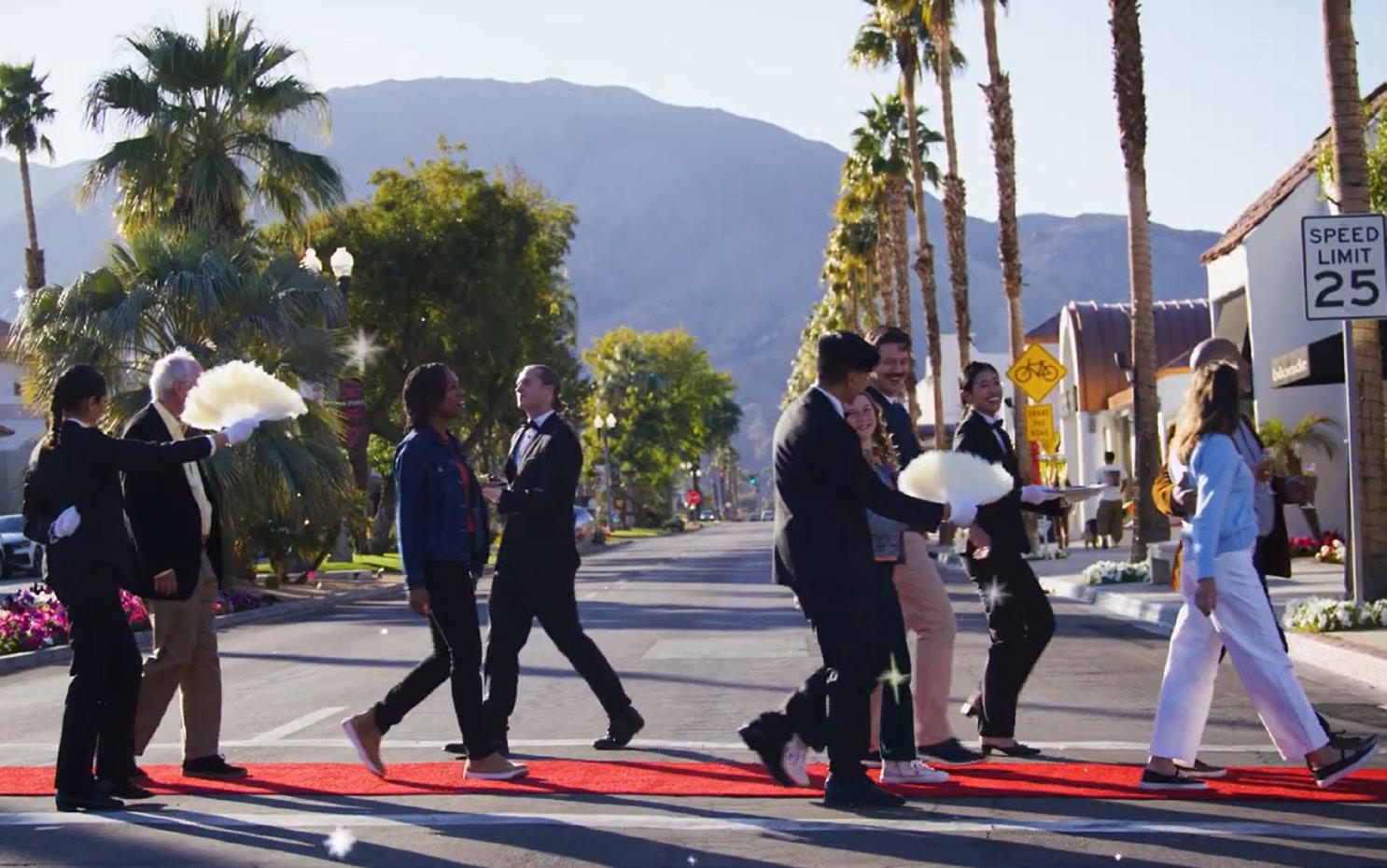
An image from a “Very Important Pedestrian” video by the city of Palm Desert.
FEBRUARY 26 – MARCH 1, 2026 LA QUINTA CIVIC CENTER PARK
This year’s Spring Celebration will showcase 185 juried fine artists from 28 states and abroad. 23 artists will be exhibiting for the first time at Coachella’s signature art event.
Enjoy live music, premium beverages, and gourmet food at the stunning Civic Center throughout the four day event.
# Elite Top Ten Fine Art& Craft Events in the Nation 2025 – Greg Lawler Art Fair Source Book #1 Fine Art & Craft Event in the Nation – Greg Lawler Art Fair Source Book 2021, 2022, 2023 & 2024
CV HISTORY
TThe Salton Sea has gone from massive accident, to resort destination, to pollution threat, to potential lithium bonanza
Today’s Salton Sea lies 228 feet below sea level, on the site of the much-larger ancient Lake Cahuilla. Peaking at 40 feet above sea level, Lake Cahuilla encompassed much of the Imperiby greg niemann
he Salton Sea, 35 miles long and between nine and 15 miles wide, is the largest lake by surface area in California. Its history is complex—and an anomaly in the natural world.
al, Mexicali and Coachella valleys, most recently between 500 and 1,000 years ago.
With evaporation and no outlet, over the years, Lake Cahuilla dried up, leaving a huge 2,000-square-mile desert sink—from the Gulf of California to the Banning Pass. A horizontal dark band from the earlier shoreline is easily spotted along the cliffs near today’s Salton Sea. The ancient shoreline also left distinct terraces and tufa deposits around Travertine Point. The oral histories of the local bands of Native Americans include the existence of a large lake about 500 years ago.
In the 1850s, the dry Salton Sink attracted the attention of Oliver M. Wozencraft, a former Indian agent and member of the California Constitutional Convention. He theorized that instead of desert sand, the earth under the former lake was alluvial soil, which would welcome farming, given enough water. In 1859, the California Legislature granted Wozencraft all rights in the Salton Sink. He died in 1887 before attracting investors to help him get water to the area.
However, his efforts caught the attention of three men: George Chaffey, Charles R. Rockwood and Anthony H. Heber. In 1896, they formed the California Development Company, and by 1901, they were able to divert a portion of the Colorado River’s flow to begin irrigating the desert. The water flowed from near Yuma, into Mexico, and then north into the Imperial Valley.
Chaffey designed the canal diverting the water. In the 1880s, along with developing the California communities of Etiwanda and Ontario, he created the idea of mutual water companies and built the first hydroelectric plant in California. A world-renowned engineer, Chaffey had previously provided irrigation water in Australia to help colonize arid regions. Thanks to Chaffey, the irrigation of the Imperial Valley led to a boom, and by the end of 1904, more than 100,000 acres of land had been reclaimed.
Chaffey eventually severed his relationship with the others, and after he left, Rockwood especially grew impatient with the rate of water flow designed by Chaffey. He ordered a canal cut to bypass the gate controlling the water flow. The initial Colorado River water flow was low due to below-average winter
storms. Also, Mexico was slow to put a gate on its side of the new bypass canal.
With heavier rainfall, disaster was inevitable.
Early in 1905, the first of five floods surged down the diversionary canal, and attempts to close it became futile. By the end of June, 14,000 cubic feet of water per second was settling into the below-sea-level Salton Sink. Ironically, one of the flooding victims was the California Development Company itself, which was later taken over by the Southern Pacific Railroad to prevent bankruptcy.
The water created not only the Salton Sea, but irrigated much of the Imperial Valley, attracting both farmers and wildlife. In 1930, the Salton Sea Wildlife Refuge was established for the protection of ducks, geese and shore birds. The sea became a key location on the Pacific Flyway, as more than 400 species stop there on their annual migration.
During the 1930s and 1940s, the All-American Canal and Coachella Canal were constructed to better harness the water. During World War II, commercial fishermen caught mullet in the Salton Sea to help supply coastal fish markets.
The 1950s and ’60s marked the heyday of the Salton Sea for tourism and recreation. The lake attracted fishermen, water-skiers and campers. The Salton Sea State Recreation Area opened in 1955; while not very heavily trafficked today, the park is still open and features an informative visitor center.
Communities came into being. Salton City was established as a residential town on the northwest shore. Also on the west side, Desert Shores and Salton Sea Beach were developed, while Bombay Beach was established on the eastern shore. In 1962, the North Shore Beach and Yacht Club Estates opened. In the early 1950s, corvina and gulf croaker were successfully established in the Salton Sea, creating a sports fishery that thrived for a couple of decades. Sargo (a silvery grunt) were also introduced and became the most abundant fish caught in Salton Sea until their numbers begin declining.
As the years went by, the Salton Sea got saltier and saltier. By the early 1960s, the California Department of Fish and Game predicted that the Salton Sea would eventually die by 1980 or 1990 because of salinity levels. Diking systems were discussed to reduce salinity lev-
els, but in 1976, Hurricane Kathleen flooded the Imperial Valley farmland and increased the level of the Salton Sea. Above-average rainfall for the next few years flooded many of the shoreline resorts.
By the early 1980s, the Salton Sea’s salinity exceeded 40 parts per thousand, considerably greater than nearby oceans. Fishing was discouraged due to selenium and other pollutants.
Evaporation has been offset somewhat by nearby irrigation, keeping a large shallow lake there, although its salinity has remained very high. The Salton Sea is also full of toxic chemicals from fertilizers and sewage—making it one of Southern California’s biggest pollution concerns—and its rotten-egg-like hydrogen sulfide smell sometimes wafts into the Coachella Valley.
In 1993, the Salton Sea Authority was formed by Riverside County, Imperial County, the Coachella Valley Water District and the Imperial Irrigation District to address the myriad problems, including damage to wildlife. Throughout the years, conservation efforts on both the state and federal levels have tried to manage the Salton Sea water level and salinity to improve its habitat and recreation usage.
Today, the state-led Salton Sea Management Program is tackling the problems with a multi-faceted approach, which includes restor-
ing parts of the sea, creating wetlands for habitat restoration, and planting vegetation to help suppress dust. The goal is to cover nearly 30,000 acres of exposed lakebed with projects by 2028.
Some recent news about the Salton Sea could be a game-changer. It was discovered that the Salton Sea contains one of the largest lithium brine deposits in the world—with an estimated 18 million metric tons of lithium, at a value of about $540 billion. According to Newsweek magazine, “California Gov. Gavin Newsom has described the region as the Saudi Arabia of lithium mining. … If harnessed successfully, it could cement California’s leadership in clean energy technology.”
With the introduction of lithium, the future of the Salton Sea promises to be as fascinating as its past.
Sources for this article include It Happened in Southern California by Noelle Sullivan (Falcon Publishing, 1996); Roadside History of California by Ruth Pittman (Mountain Press Publishing, 1995); The Desert Revolution by Lowell L. Blaisdell (University of Wisconsin Press, 1962); Imperial Valley by Tracey Henderson (Neyenesch Printers, 1968); “What Next for California’s Salton Sea After $540Bn ‘White Gold’ Discovery,” Newsweek, April 6, 2025.
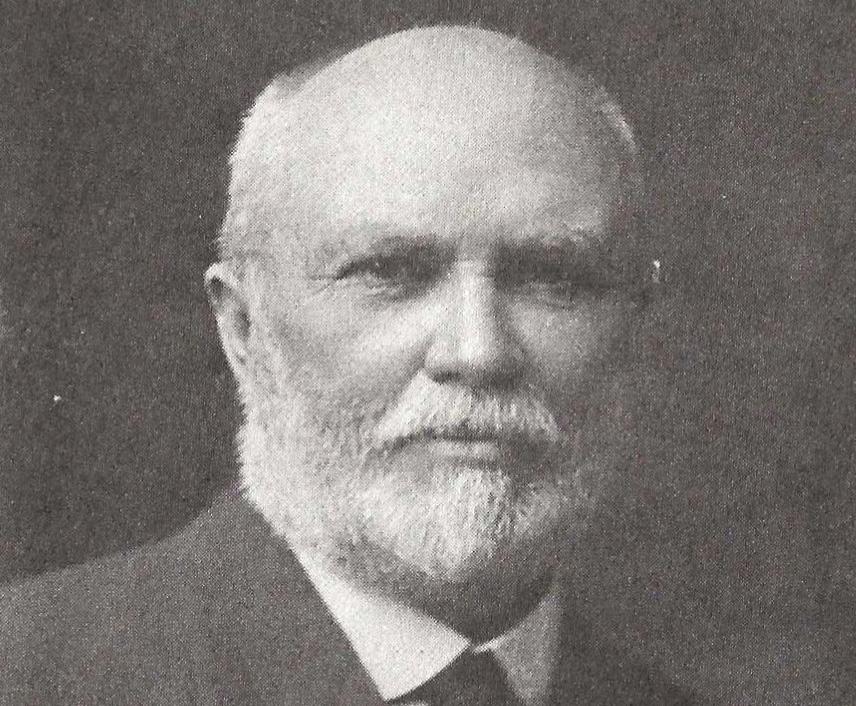
George Chaffey. Photo courtesy of the Bancroft Library
FEBRUARY ASTRONOMY
Planets and Bright Stars in Evening Mid-Twilight
For February, 2026
This sky chart is drawn for latitude 34 degrees north, but may be used in southern U.S. and northern Mexico.
You can see six of the seven other planets in February early evenings—and prepare for a total lunar eclipse early on March 3
IBy Robert Victor
n the skies of Earth in February, six of the seven other planets—all except Mars—can be seen in the early evening, but not all at once.
Look for the two innermost planets in twilight: Mercury is best in the second and third weeks, before dropping down and fading quickly in the final week. If you have an unobstructed view toward the west, you can begin noticing Venus below Mercury by midmonth. The four giant outer planets can all be seen in a dark sky at nightfall, although Saturn and Neptune sink very low in the west by month’s end.
On Feb. 1, the full moon rises nearly at the same time the sun sets. By nightfall, the moon is about 15° up in the east-northeast to east, with 1.4-magnitude Regulus, heart of Leo, the Lion,
just risen 14° to the moon’s lower left. Jupiter shines at magnitude -2.4 in the east, nearly 30° to the moon’s upper right and nearly halfway from horizon to overhead. Note the “Twin” stars Pollux and Castor, of magnitude +1.1 and +1.6, respectively, now 9° and 10.3° to Jupiter’s lower left and left. After the moon and Jupiter, the next brightest object in the sky at nightfall is the star Sirius, of magnitude -1.4, blue-white in color, and twinkling noticeably.
On Feb. 2, the moon, one day past full, rises in the east just before the end of evening twilight. Using binoculars, look very near the moon’s upper left edge and try to spot the star Regulus. By first light of dawn on Feb. 3, the moon and star will be more than 5° apart in the western sky, with Regulus to the moon’s lower right. On Feb. 3 at nightfall, the waning moon hasn’t risen yet, and Saturn presents itself as a star of magnitude +1.1, about 22° up in the west-southwest. Using binoculars, look for a 1° by 3° rectangle of stars to the lower left of Saturn. Its two upper stars, of fifth magnitude, are each 1° from Saturn tonight, forming an isosceles triangle. The rectangle’s two lower stars, near magnitude 4.5, are each 3.6° from Saturn, making another isosceles triangle. The four stars, in the constellation Pisces, the Fishes, form part of a little-known asterism, Testudo, the Turtle. A telescope shows the rings of Saturn, on Feb. 3 tipped 2.3° from edge-on, and can show Neptune as a faint, 7.9-magnitude “star,” 1.5° to the upper right of Saturn. For the rest of February, Saturn and Neptune can be seen as close in the sky as they will be until the year 2132.
The other giant planet is Uranus. It appears at magnitude 5.7, bright enough for the unaided eye in very dark skies, in the same field as the Pleiades star cluster. On Feb. 3, Uranus ends retrograde, so it shifts only 1/4° east against the stars this month. Look 5° south and slightly west of Alcyone, the Pleiades’ brightest star, and 0.8° southwest of 5.7-magnitude 13 Tauri, a close match in brightness to Uranus. On our evening twilight map accompanying this column, connect, in order, the eastern
endpoints of the trails for these seven stars: Sirius, Procyon, Pollux, Castor, Capella, Aldebaran, Rigel and back to Sirius. This is where you will find the stars of the Winter Ellipse, or Winter Hexagon, on February 1. To find where these stars will appear on Feb. 28, connect the west endpoints of the trails. Note Jupiter and Betelgeuse lie inside the polygon. Other evening stars include Deneb sinking into the northwest, and Regulus, heart of Leo, the Lion, rising in the east-northeast and climbing into the east. At opposition on Feb. 18 and visible all night, Regulus is plotted on both our twilight maps, evening and morning. There are currently no planets visible in morning twilight. The brightest stars are golden Arcturus, high in the southwest, and blue-white Vega, in the east-northeast. Other bright stars are Altair and Deneb, completing the Summer Triangle with Vega; Spica, about 33° below Arcturus; Antares, the red supergiant heart of the Scorpion, in the south-southeast to south; and Regulus, sinking in the west.
Let’s return our attention to the western sky at dusk, where Mercury has begun its best evening apparition of this year. At magnitude -1.0 on Feb. 10, it’s easily visible low between the west-southwest and west, provided your view is unobstructed. Look earlier, and you might catch Venus before it sets, 6° to the lower right of Mercury. After Venus sets and the sky darkens a bit, Saturn becomes visible, within 23° to the upper left of Mercury. Jupiter shines in the east, 107° from Saturn.
On Feb. 18 is perhaps this month’s most spectacular sight: a thin, 3 percent young crescent moon with earthshine illuminating its upper side, and the planet Mercury very close to the lower right of the moon’s sunlit side.
On the next evening, Feb. 19, the 8 percent crescent moon stands 5° to the upper right of Saturn, while Mercury, still bright at magnitude -0.5, reaches greatest angular distance, 18° from the sun, and climbs to its greatest altitude above the western horizon in twilight.
On Feb. 20, Saturn passes Neptune in their
Evening mid-twilight occurs when the Sun is 9 below the horizon. Feb.1: 41 minutes after sunset. 15: 40 " " " 28: 40 " " "
closest visible approach until more than a century from now. Before the sky darkens fully, locate Saturn 17° below the 15 percent crescent moon. Next, through a telescope, look for the 7.9-magnitude planet 50’ (arcminutes) to the right of Saturn, and 2° to the upper right of the fifth-magnitude star 29 in Pisces.
Mercury lingers 10° to the lower right of sinking Saturn Feb. 22-26, while fading sharply from magnitude 0 to +1.2, and starting retrograde against the stars on Feb. 25. By Feb. 27, when it passes 4.5° to the upper right of Venus, the innermost planet fades through magnitude +1.6 and may be lost in bright twilight.
Overnight on Monday to Tuesday, March 2-3, the moon will be full, with a special event: A total lunar eclipse, the first of two major lunar eclipses visible from California this year. For the predawn eclipse on Tuesday, March 3, set your alarm to get up and out by 1:50 a.m. if you want to catch the start of partial eclipse.
The total eclipse will last for nearly one hour, from 3:04 a.m. until 4:03 a.m. Partial eclipse will conclude at 5:17 a.m.
The Astronomical Society of the Desert will host a star party on Saturday, Feb. 14, at Sawmill Trailhead, a site in the Santa Rosa Mountains at elevation 4,000 feet; and on Saturday, Feb. 21, at the Santa Rosa and San Jacinto Mountains National Monument Visitor Center. For more information, visit astrorx.org. Check that website also, for a link to “Impromptu Star Parties” which I am planning to offer in the west valley.
The Abrams Planetarium Sky Calendar includes illustrations of many of the events described in this column. To subscribe for $12 per year or to view a sample, visit www. abramsplanetarium.org/skycalendar.
Robert Victor originated the Abrams Planetarium monthly Sky Calendar in October 1968 and still helps produce an occasional issue.
Map by Robert D. Miller
Fomalhaut
ROBERT D. MILLER
Showbiz
for Businesses
Steve Young shares his obsession—elaborate musicals created for corporations—with the Modernism Week crowd
By Matt King
Modernism Week is back, and the Coachella Valley will be celebrating midcentury modern design, architecture and … musicals written for corporations?
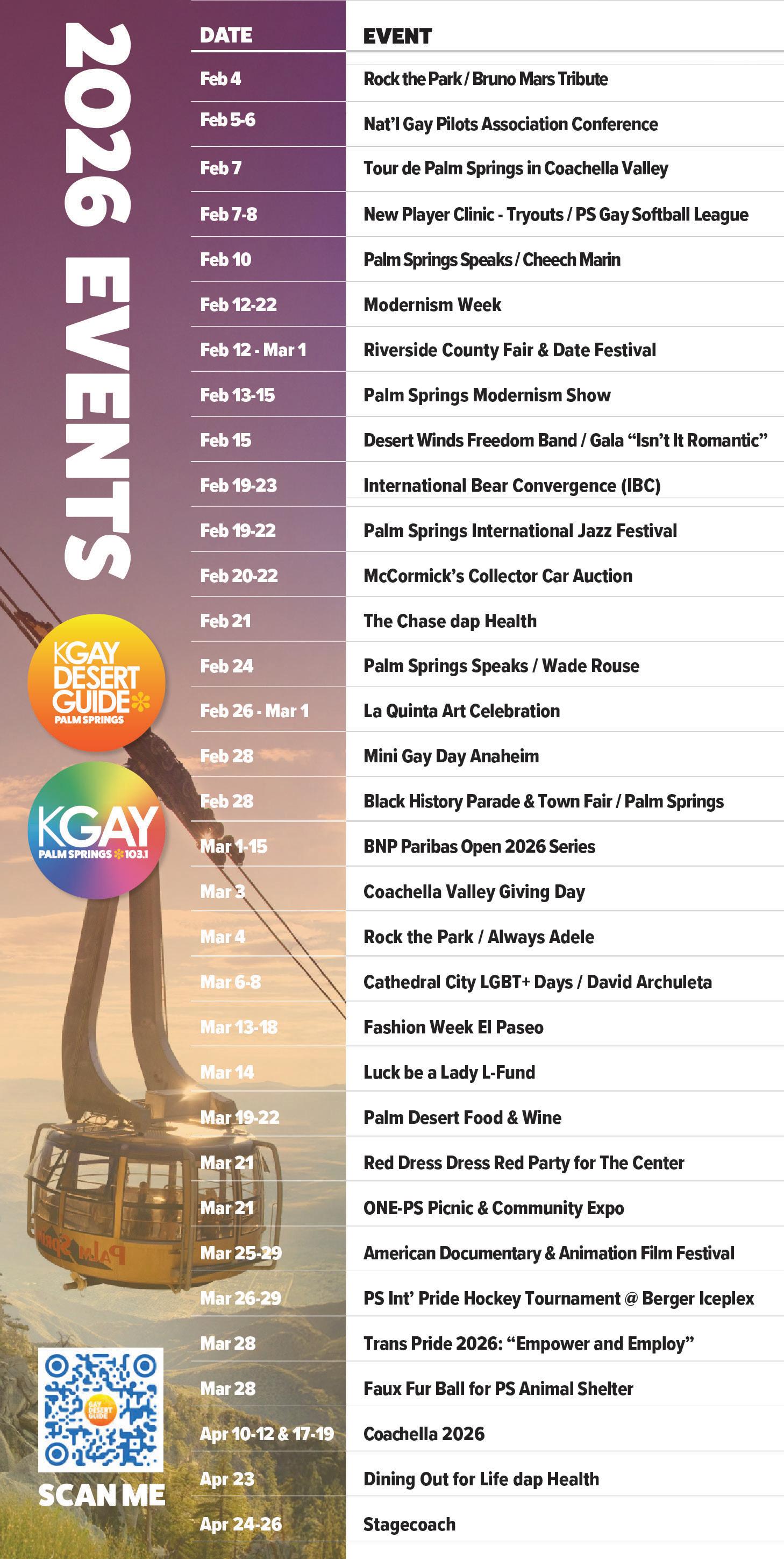
Yes! From Feb. 12-22, Modernism Week allows fans of the midcentury modern era to step back in time and immerse themselves in beautifully designed homes—while revisiting the arts of the era. While many events feature DJs or tribute bands performing classic songs, one special show offers examples of midcentury culture that are anything but classic.
The Weird and Wonderful World of Industrial Musicals, a live show hosted by Late Show With David Letterman and The Simpsons writer Steve Young, will explore an intriguing niche—musicals written for corporations. Young will show video clips and share stories about the industrial side of musical theater, with songs about everything from Coca-Cola bottlers to Bic Pen makers.
You can catch the show at 3:30 p.m., Friday, Feb. 13, and Saturday, Feb. 14, hosted at the Modernism Week Theater at CAMP, located inside the Hyatt Palm Springs.
“This is the latest iteration of a long-running collecting and historian passion of mine,” Young said during a recent interview. His obsession with these strange works of art began during his time working for David Letterman.
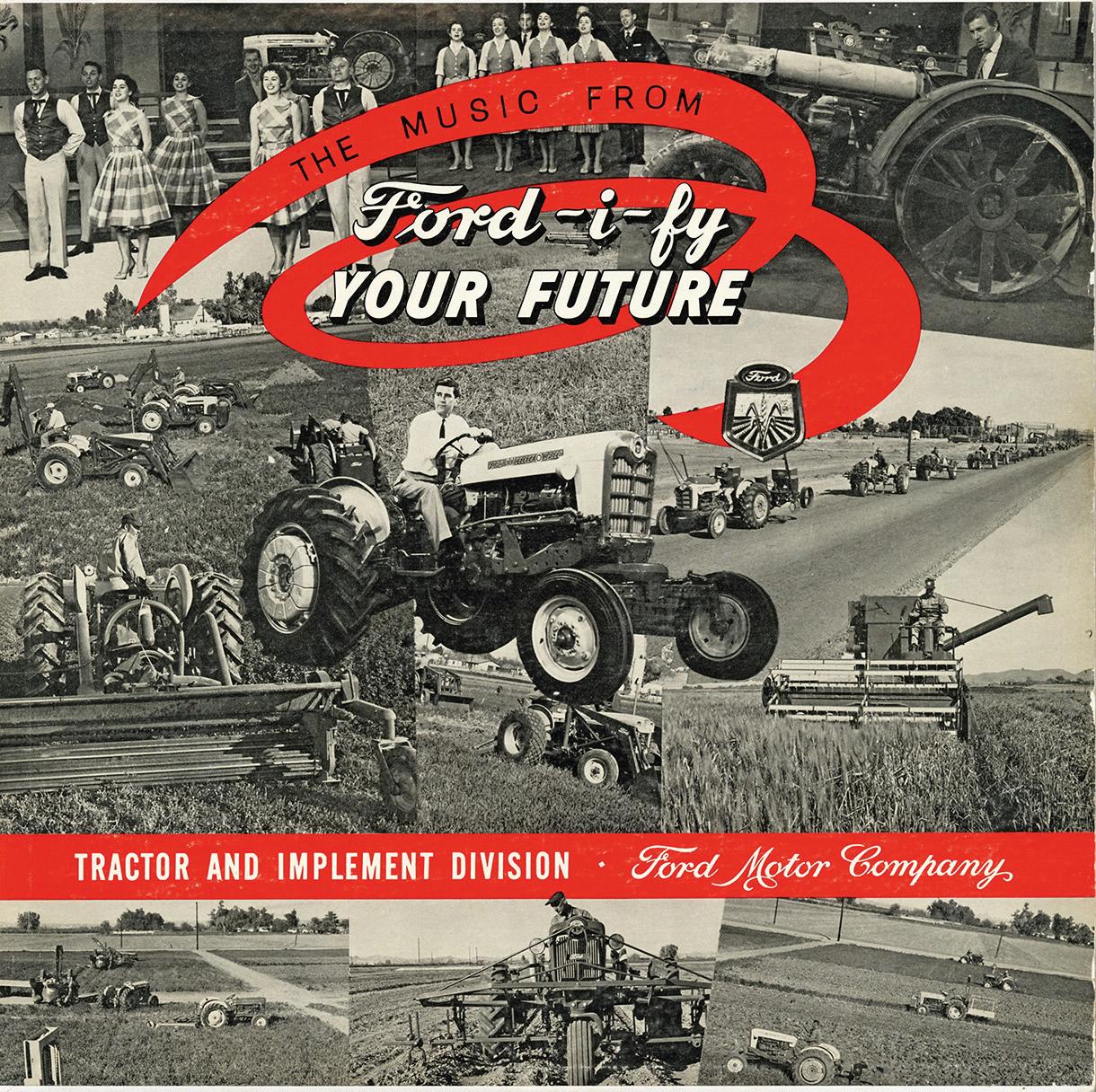
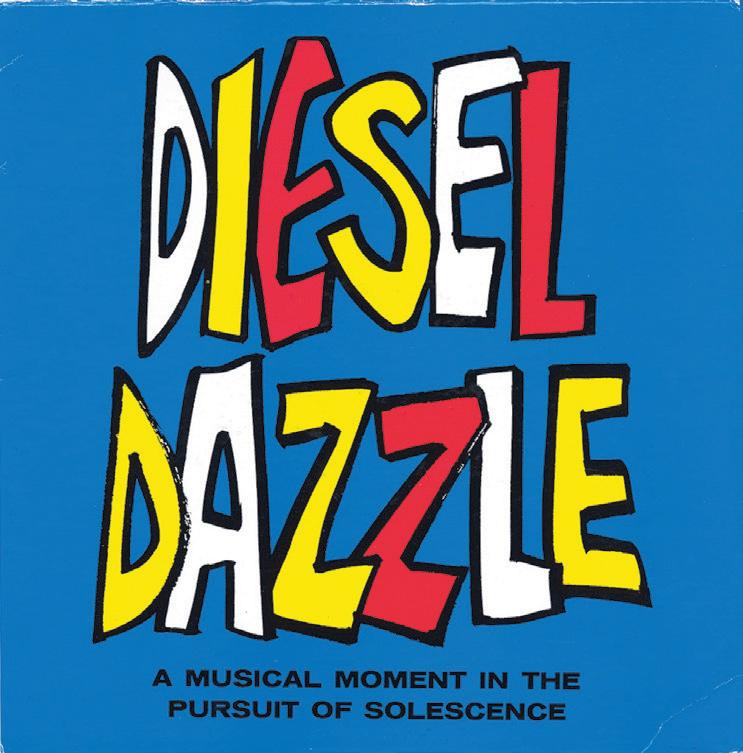
“One thing that I was tasked with doing was going out and looking for strange vinyl records we could use in a bit on the show called ‘Dave’s Record Collection,’” Young said. “We’d find unintentionally funny, weird record albums that we’d hear a little sample of, and Dave Letterman would have a funny blow-off line. I would go to thrift shops and used record stores, and later eBay and places like that, just looking for anything that I thought we could get a funny clip out of, and get a laugh and move on.”
In the process, Young kept coming across industrial musical records.
“I began finding these very mysterious,
corporate, souvenir, private-pressing record albums from conventions and sales meetings,” he said. “You would think, ‘Oh, well, it must be just horrifyingly dull speeches,’ but they were original musicals—and Broadway-level, in many cases. They were full-fledged musical shows performed for the private audiences at these meetings—the corporate insiders, the dealers, the salesmen, distributors and managers. As I got more, and these records were slowly accumulating, I started realizing that, apparently, it’s a genre that, from what I can tell, no one has ever heard of before.”
Young was amazed at the variety of releases—products of a unique era in history.
“There is a wide range of quality ones; there are some OK ones; and there are some pretty dismal, desperate, sweaty little ones, but the top level galvanized me with how well done they were at catchy melodies and clever lyrics and production value that clearly smelled like post-war America—corporate money at its most flush-feeling,” he said.
Young collaborated with Sport Murphy to write and compile the book Everything’s Coming Up Profits: The Golden Age of Industrial Musicals After the release of the book, Young took his talents to the screen.
“I became the subject of a documentary called Bathtubs Over Broadway,” which premiered in 2018, he said. “I now intermittently go around the country presenting a 90-minute show where I talk about how I accidentally fell down this rabbit hole, which I describe as the largest chunk of 20th-century American culture that had never really been noticed before, because it was, by design, off the grid, where the public could not see it. You could only go into these shows if you were a John Deere tractor salesman or a Coca-Cola bottler or you managed a Kinney shoe store or whatever.”
Young’s book, movie and live show all go further than anyone else has gone into the
world of industrial musicals.
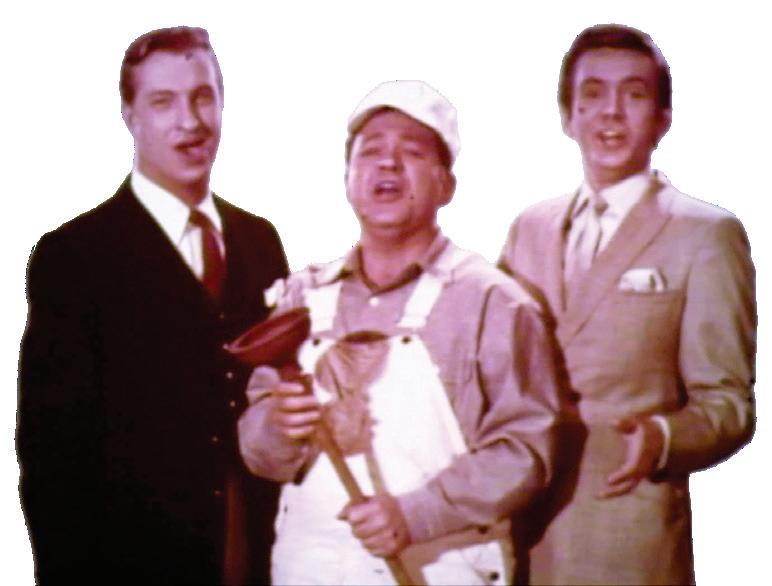
“There were a few people who had some of these records, but I was the first one who ever started tracking down the composers and the performers and learning about it from the inside out,” he said. “I do a show now that’s loaded with film clips that only I have, because people who I’ve met have given me things out of their basements and personal archives, and it’s deeply hilarious, as you would expect. There’s no way there should be an actual musical about selling Purina Dog Chow, or the American Standard bathroom fixtures being promoted in song and dance to plumbing-fixture distributors.”
These strange selections of corporate
musical theater can be downright hilarious, but Young transcends the wacky to find the human, serious side of these productions.
“It’s crazy on the face of it, but then all of these other layers start to emerge about, not only the people I met—who became like second families to me, and I ended up speaking at the funerals of some of these people—but what it meant in 20th-century America to be part of a big company,” Young said. “… Did companies actually feel like they could and wanted to value the people in their organization? Throw them a big wingding and say, ‘Oh, you’re going to sell a lot next year, but by the way, we want you to listen carefully to this
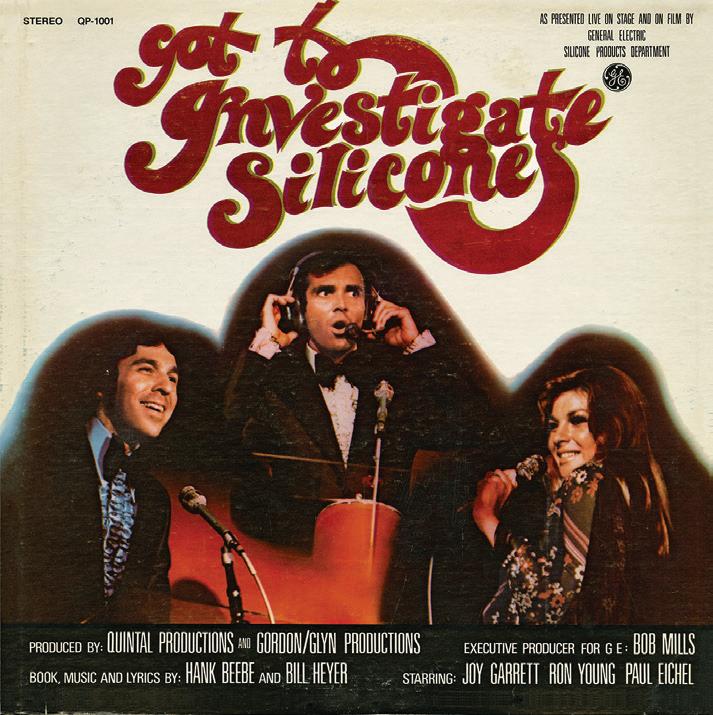
show, because this show is about how what you do actually matters. You’re helping humanity rise to a better state of civilization with the things you sell and the work you do.’ It was very powerful, if it was done right, and at the same time, we can … fall over laughing at the General Electric silicones musical or the Hiram Walker liquor company sales meeting song and dance. It’s such a bizarre combination of powerful and sincere things to think about, and the most crazy stuff seems like it must have been made up by comedy writers, but it’s real.”
Some of these musicals were developed and performed by Broadway’s biggest talents.
“I remember some performers telling me, ‘At some level, we knew that this stuff was not what you got into show business to do,’” he said. “It was bizarre, because (these musicals were) loaded with jargon … but I talked to people like Chita Rivera and Florence Henderson, who said you had to be able to immerse yourself in it enough to believe it, because then you could sell the performance to the audience. Other people have told me, writers of this stuff, about watching managers and salesmen in the audience get choked up and tears rolling down their faces, because they felt like somebody actually understands ‘what we’re up against out there, and that what we do has meaning and value, if we’ll only pause a minute to remember that.’”
Some creatives involved in these musicals struggled to find meaning in their work, something with which Young can relate.
“As I talk about in my show, at the Letterman show every day, I was writing mate-
rial, most of which wasn’t used, or even if it was used, it was quickly forgotten. Sometimes I had to grapple with, ‘How do I value what I’m even trying to do?’” he said. “Then I talked to these people whose work, by design, was never supposed to be known about by the public, and was ephemeral and supposed to be thrown away. Your best work of your career might have been for a floor-tile company at a hotel ball room that played once at 8 in the morning— and then I show up late in these people’s lives and say, ‘Guess what? I know exactly who you are. I have several of your shows that survived on vinyl record, and we’re going to talk about it, and I’m going to tell people about it.’ It was a wild left turn for some of these people.”
Even though the success of Young’s work once led to the writer being invited to do a corporate gig where he was “writing lyrics for a big opening number for a pharmaceutical com pany’s event,” Young said industrial musicals will almost certainly never make a comeback.
“Maybe the pendulum swings a little bit back, but we’ll never be back in the golden age, with a vast amount of money being spent on original book musicals with a 40-piece orchestra and sets and choreography and all that,” he said.
The Weird and Wonderful World of Industrial Musicals will take place at 3:30 p.m., Friday, Feb. 13, and Saturday, Feb. 14, at the Modernism Week Theater at CAMP, located inside the Hyatt Palm Springs, at 285 N. Palm Canyon Drive. Tickets are $25. For tickets and more information, visit modernismweek.com.
show dinner and a
During Modernism Week, PS Underground offers themed celebrations of jazz/soul, Palm Springs—and bacon!
By Matt King
Alocal venue known for its themed dinner shows has become a staple of the desert’s celebration of all things midcentury modern.
PS Underground is one of the most frequent hosts of events at this year’s Modernism Week, offering fans of the midcentury modern era chances to immerse themselves in the beauty of jazz music, old media and classic Palm Springs.
“We got involved in Modernism Week about eight years ago,” said PS Underground co-founder Michael Fietsam. “This is when we were still kind of a pop-up venue, and we were bouncing around from location to location. At that time, Modernism Week was looking to bring in more social events, and several of the Modernism Week board of directors (members) were familiar with what we were doing, and they thought it would be kind of fun to see whether or not tickets for that would sell.”
PS Underground’s first Modernism Week event was a big hit.
“We did a show called ‘Nod to Mod,’ and it was a historical trip through the ’50s and ’60s, both culinary and musically, and people just really responded to it,” Fietsam said. “It was unique and different, and something that Modernism Week hadn’t offered before, so we kind of created our own little niche.”
The demand for more social events grew as the years went on, and PS Underground began producing numerous Modernism Week events.
“From that year on, every single year, both the fall preview of Modernism Week and then Modernism Week itself in February, we have been doing events,” Fietsam said. “Two years ago, we decided to do two events for February, because a lot of people wanted to buy tickets to more than one show while they were here in town. … This year, we’re doing four completely different shows for Modernism Week.”
One of PS Underground’s Modernism Week shows—“Sitcom,” which includes table games, sitcom theme music and food that Fietsam described as “an upscale version of what you would eat in front of the TV on a Friday night”—is already sold out. Here’s how
Fietsam described the three shows that had availability as of this writing.
“Queens of Soul and Jazz” (7 p.m., Sunday, Feb. 15, Monday, Feb. 16, and Tuesday, Feb. 17): “About three years ago, we met Patrice Morris when she came here to cover for a performer who was ill, and she just blew the house away. Patrice Morris does a lot of R&B, gospel, Motown and soul music. She toured for the last 18 years with The 5th Dimension, but she has worked with all sorts of famous performers, from Michael Jackson to Peabo Bryson and Taylor Dayne, and she just brings the house down. It’s going to be a raucous evening of entertainment. She’ll be performing along with a live band. The food will have a little bit of a soul influence to it— the nod to soul.”
“Palm Springs Holiday” (7 p.m., Wednesday, Feb. 18, Thursday, Feb. 19, Friday, Feb. 20, and Saturday, Feb. 21): “This is more of our classic Rat Pack-style midcentury show, and it is based on performers who lived and worked here in Palm Springs from the 1940s through the 1960s. It’ll have
“It’s all live performance with live musicians and live singers,” Fietsam said. “We don’t do drag impersonations or anything like that. … We pride ourselves in making sure that the overall experience is something that is all five of the senses.”
Fietsam said that when it comes to these historical-leaning events at PS Underground, research is as important as rehearsal.
“We did a show called ‘Plaza’ for the Plaza Theatre, where we did a lot of historical research on making sure that each one of the performers who we featured were actually focused in a nightclub at one point, in Palm Springs, during its heyday,” he said. “We did research on each one of the restaurants, the history of them, when they opened, when they closed, and what their signature dishes were— and then we elevate that experience.”
He provided an example involving The Doll House, the aforementioned restaurant included in “Palm Springs Holiday.”
“We heard this story about how Frank Sinatra and a whole group of his friends came in one night when Peggy Lee was performing, and they were loud and boisterous, so Peggy Lee just started singing quieter and quieter and quieter, and actually, the conversations around the table became quieter and quieter—and that’s how Peggy Lee got her signature, quiet, slow way of singing songs,” he said. “Some of those stories, we sometimes will impart along with the food and the music.”
Fietsam said PS Underground’s chef, David Horgen, keeps attendees happy and intrigued.
everyone (including) Frank Sinatra, Dean Martin, Rosemary Clooney, Betty Hutton, Louis Armstrong, Nat King Cole, Ella Fitzgerald. We’re setting it in a fictitious nightclub, and the food will be upscale representations of foods that were on menus in Palm Springs from the 1940s through the 1960s. The Chi Chi Club, The Doll House, Lyon’s English Grille—those are the kinds of restaurants from which we’re gaining inspiration for the food.”
“Bacon, Beehives and Bubbly” (11 a.m., Sunday, Feb. 22): “The Modernism Week board of directors loves our traditional bacon brunch that we do, so we thought, ‘How can we put a spin on that for Modernism Week?’ This particular show features bacon in every course, and the ‘Beehives’ are for beehive hairdos, so it’ll be music from the girl groups of the 1960s, and champagne.”
Fietsam said PS Underground shows provide authentic entertainment and have a goal of stimulating all of the senses.
“We have a full-on kitchen, fully licensed, a fully hosted bar, and we’re deemed just like a regular restaurant, although all we do are these more unique, immersive dining experiences,” Fietsam said. “We never reveal menus in advance. People, when they purchase their seats, can list dietary restrictions, but they’re not purchasing this show based on if it’s going to have chicken à la king. They won’t know what (the food) is until the chef comes out and describes each course, how he’s made it and why it inspired him with the particular theme.”
Fietsam said he’s proud of the “unique element” that PS Underground has provided to Modernism Week fans.
“What we’ve developed over eight years and 16 different seasons for Modernism Week is people wanting to come back year after year, and they build their schedule around what shows they want to see at PS Underground, and fill in the rest,” he said. “That’s kind of fun. We see people, and they’ll raise their hands: ‘This is my sixth Modernism Week with you,’ or, ‘This is my fourth.’ It becomes like a club a little bit.”
PS Underground is located at 1700 S. Camino Real, Suite 2, in Palm Springs. Tickets to all of PS Underground’s Modernism Week dinner events are $225, and include a four-course meal with live entertainment. Tickets to “Bacon, Beehives and Bubbly” are $130, and the menu is bacon-focused, so vegan options are not available. For tickets and more information, visit modernismweek.com.
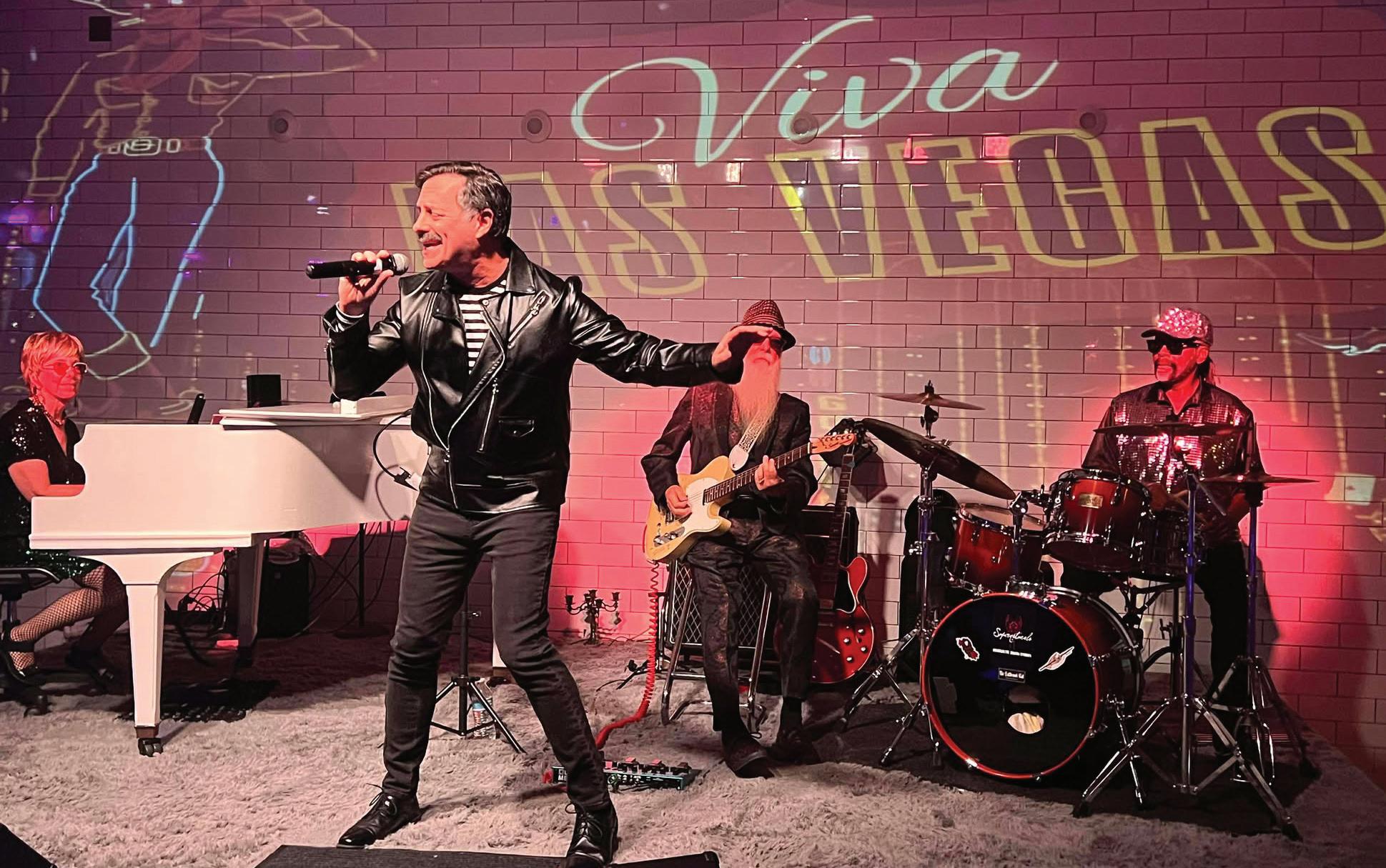
Tod Macofsky performs during a previous PS Underground event, “Viva Las Vegas.”
Quality Health Care Counts.
Thank you, U.S. News & World Report, for listing us as one of the “Best Hospitals” in the region and California. We’re grateful to our exceptional care teams and hospital workers whose talent and dedication made this honor possible. We were also recognized for our high quality care in 18 specialties, surgeries and procedures.
• Abdominal Aortic Aneurysm Repair
• Aortic Valve Surgery
• Colon Cancer Surgery
• Gynecological Cancer Surgery
• Heart Bypass Surgery
• Hip Fracture
• Hip Replacement
• Knee Replacement
• Leukemia, Lymphoma & Myeloma
• Lung Cancer
• Orthopedics
• Pacemaker Implantation
• Pneumonia
• Prostate Cancer Surgery
• Spinal Fusion
• Stroke
• TAVR
• Urology
We look forward to building on and even surpassing this level of excellence in the coming year and delivering the best possible care to the people we serve.
Learn more about our accreditations and recognitions at EisenhowerHealth.org/Awards.
starsImmortalizing the
Intersect Palm Springs brings top artists like Lawrence Schiller, famous for his iconic Marilyn Monroe photos, to the Coachella Valley
By Kevin Fitzgerald
After a one-year hiatus, Intersect Palm Springs is returning to the Palm Springs Convention Center from Thursday, Feb. 12, through Monday, Feb. 16—and one of the most interesting events involves Marilyn Monroe, who would be turning 100 this year.
Renowned photographer, film director and writer Lawrence Schiller will engage in a conversation with Palm Springs Life editorial director Steven Biller, titled “Marilyn and America in the ’60s,” at 3 p.m., Sunday, Feb. 15.
The Independent recently spoke with Schiller, who turned 89 in December, before his return to the desert, where Melissa Morgan Fine Art staged his Marilyn Turns 100 photography exhibit last November. The interview began with a question about Schiller’s remembrances of working with Monroe when he was on assignment from Paris Match magazine to cover the making of the never-finished 1962 film Something’s Got to Give, co-starring Dean Martin and Cyd Charisse. A selection of the photographs he created on this assignment will be on display at Intersect Palm Springs.
“With Marilyn, I met her first on a movie called Let’s Make Love, with Yves Montand, which I photographed for Look magazine,” Schiller said. “And then several years later, I received an assignment from Paris Match, the French magazine, to photograph her on the movie Something’s Got to Give
“You know, I sat once in a T-Bird with her looking at pictures, opposite Schwab’s drugstore, and she held the pictures up to the streetlights. She was somebody who was looking for a certain type of public image to knock Liz Taylor off the cover of the magazines with Richard Burton, because Liz was getting from Fox, at that time in ’62, over a million dollars for a film called Cleopatra, and Marilyn, for the same studio doing Let’s Make Love (back in 1960, had only gotten) $125,000. So she tried
to re-negotiate her contract with Fox, and Fox wouldn’t re-negotiate—a deal is a deal. So, she sought other ways of showing the studio that she had as much popularity, and could gain as much publicity as Elizabeth did. That’s what sold movies in those days. We didn’t have the internet; it was ads in magazines, and magazine stories that made movies theater-worthy.”
fire me, and the pictures speak for themselves.”
Schiller was born in Brooklyn, N.Y., in December 1936, before moving with his family to the San Diego area in 1943. Larry, as he refers to himself, started garnering awards and professional photography assignments even before the age of 20.
“I was in college in … the late ’50s. I went to
courses at Pepperdine—because the school didn’t offer any.
Monroe died of a drug overdose just a few months later, on Aug. 4, 1962.
“There’s another part to the nice story,” Schiller recalled, “because I told you why Marilyn Monroe wanted to do the pictures. So when she sat and told me that in her home one day … I said to Marilyn, ‘You know, you’ve got a very big problem, if you do this.’ To paraphrase, she says, ‘What’s the problem? You’re not going to get me on the cover of Life magazine?’ And I said, ‘No, the problem is you’re already very famous, Marilyn. If you do this, you’re gonna make me famous.’ She looked at me and said, ‘Don’t be so cocky, Larry; I can fire you in two seconds.’ Of course, she didn’t
a very small school in L.A., only 800 students at that time, out at 79th (Street) and Vermont (Avenue), two buildings,” he said. “The name was called Pepperdine in those days. It’s still Pepperdine, but not the big campus out in Malibu.”
He majored in accounting and business. “My mother and my father pounded into my head that, ‘No matter what your profession is going to be, Larry, you have to understand business,’” Schiller said. “And my mother pounded into my head that I should take accounting and business, and of course, that’s been the foundation, I think, of my entire professional life.”
Schiller said he didn’t take any creative
“But the very first semester, they made me the photo editor of the school newspaper,” he said. “And I became the editor of the Annual at Pepperdine. But you go in as a freshman, and like six weeks after you go in, they’ve got a school election for school president, vice president … and if you’re a freshman, who knows who these people are, if you just look at their names? So (one of) the first things I did at Pepperdine was convince the school to do a photo ballot. It was a full page in the school newspaper where all the candidates were photographed with their name under it, and that was the ballot. … It was a very, very unique thing. Nobody had ever done anything like a photographic ballot at any university or school—and for a while, that became something that a lot of schools picked up.”
After college, he said his work was determined not by what he wanted to do, but the desires of the editors of the magazines who hired him.
“I wanted to do a lot of things, but in those days, you had to have photographic assignments, and the editors of the national magazines, if they decided to use you, they determined where you went,” Schiller said. “I was always wanting to go to Vietnam, and no magazine would give me an assignment and send me to Vietnam. I wanted to go to Chicago
A photograph of Marilyn Monroe taken during the making of Something’s Got to Give. Photograph by Lawrence Schiller
and Washington and photograph the upheaval (around) social justice, and I had to wait until the Watts riots to do it, because no magazine would send me.
“I lived in Los Angeles, coming out of Pepperdine, and therefore I lived in a celebrity-based community, so the magazines around the world—whether it was Paris Match in France, Der Stern in Germany, Life magazine in New York, or whatever—they thought of me as somebody who would cover celebrities more than Vietnam.”
Then I started to direct films based on stories that I had covered. The first (non-documentary feature) film I directed was Hey, I’m Alive (starring Ed Asner and Sally Struthers), where a Mormon pilot-preacher saves a Jewish girl in the Yukon, and it’s about the relationship between that Mormon and a Jewish girl from Brooklyn. It was a story I had done for Life magazine.”
When asked if he had a favorite among his many thousands of photographs, Schiller said he did not.
His work started attracting the attention of the big movie studios.
“I started getting hired by the studios themselves, with me still owning my photographs, to photograph movies, because the stories appeared in magazines which publicized the movies,” Schiller said. “I did five movies with Paul Newman, and … on the fourth movie, he looked at me, and he said, ‘You know? I’m going to fire you, Larry.’ And I said, ‘What do you mean you’re going to fire me?’ He says, ‘Well, you said to me yesterday that you were tired of photographing different heads on the same bodies … so you’re fired now.’ I said, ‘Well, why are you doing that?’ He says, ‘Because you’re going to start directing films.’”
Newman handed Schiller the script to Butch Cassidy and the Sundance Kid
“He says, ‘Find something in here that you would like to direct, and I’ll tell George Roy Hill (the director) you’re going to direct (that portion).’ I came up with something for Butch Cassidy, which I directed.”
The portion directed by Schiller was a still photo montage of sepia-toned images.
“When the film was released,” Schiller said, “it got me another job at Paramount, on Lady Sings the Blues. And then I got another job.
“I’ve got five kids and six grandkids, and I don’t even think about which is my favorite,” Schiller said. “In my photography, I don’t think about which is my favorite, either. They reflect a small part of history. Yes, there are some pictures out of certain events that I think are extremely well done, storytelling pictures, and ones that other photographers didn’t really understand how to do. The famous picture I have in the Dallas police station of (Lee Harvey) Oswald’s gun being held up, silhouetted, and I’m behind the guy (holding the gun), and you see all the photographers taking the picture of the gun—well, that’s a storytelling picture. It tells the whole story in one image. It’s not like everybody else who is doing a picture of the gun. What I tried in my life when it came to pictures is (to figure out): How does a single picture do its best to tell the entire story? Sometimes, it’s impossible, but sometimes, it just happens. You know, with Marilyn, I think any one of the (Something’s Got to Give) pictures tells the great story that, at that age of 36, after the traumas in her life and everything, she was in pretty good shape to get into the boxing ring of life again.”
Schiller said he’s grateful that his photography continues to help him make a living today.
“I can never rest on my laurels,” Schiller said. “I’m just a child. I’m still growing up. I’m a teenager. I’ll be 90 this year. I’ve got a long way to go. … I’m working on a little biography, which is told in a very interesting voice, and I’m working on the exhibits and galleries like this nice one that Melissa Morgan has supported and asked me to contribute to. Quite honestly, it’s to keep my brand alive. I don’t have a pension plan, because I never worked for anybody—so you know that my photographs are my pension plan.”
“Marilyn and America in the ’60s,” featuring Lawrence Schiller, takes place at 3 p.m., Sunday, Feb. 15, at Intersect Palm Springs. The festival takes place Thursday, Feb. 12, through Monday, Feb. 16, at the Palm Springs Convention Center, at 277 N. Avenida Caballeros. Single-day admission tickets are $35, with discounts; multi-day passes are $70; an all-access pass, including admission to the opening preview and VIP program, is $100. For tickets and more information, visit www. intersectpalmsprings.com.
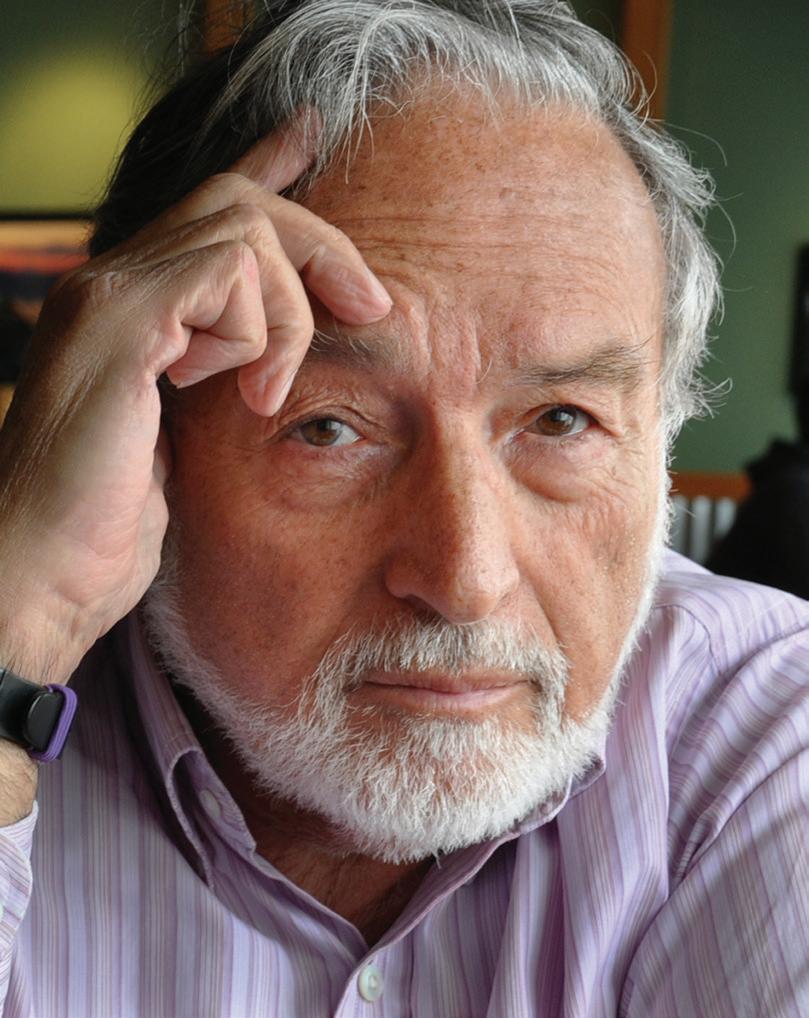
A self-portrait by Lawrence Schiller.
Connecting
creatorswith
Why artists like glass
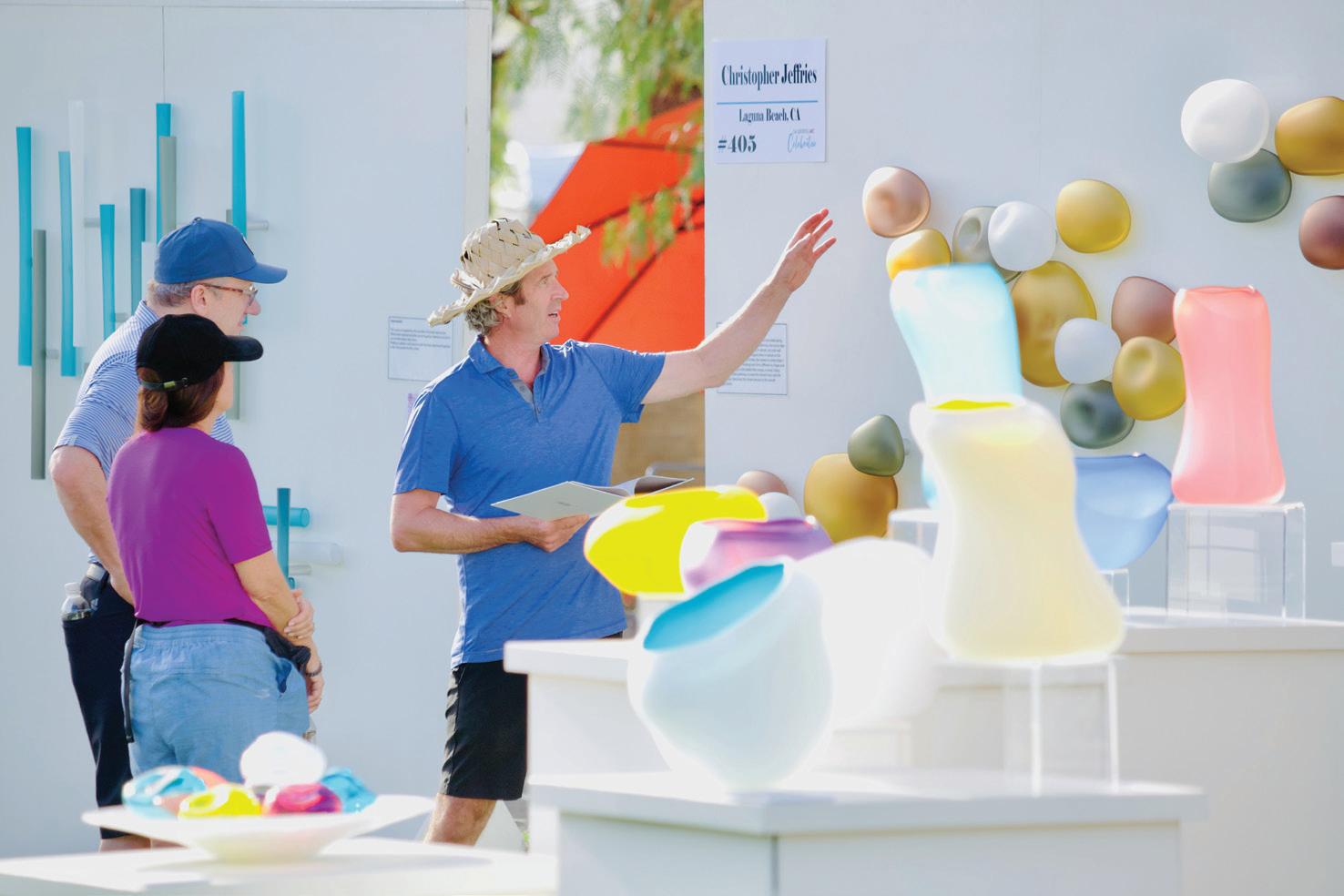
sculptor Christopher Jeffries keep returning to the La Quinta Art Celebration
By Melissa Daniels
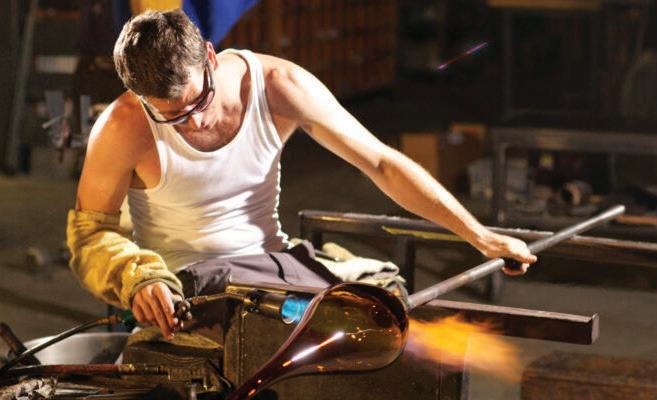
When Christopher Jeffries sends his handblown glass works to galleries around the world, he never knows where they’ll wind up.
But at the La Quinta Art Celebration, he always knows he’ll get to meet with potential clients in person—leading to custom wall-sculpture jobs and long-term friendships.
“It’s super-rewarding going to these shows and meeting clients and collectors, and being able to put artwork into their homes and into their lives,” he said. “You really do get to know your clients, create connections and make amazing relationships that last a lifetime.”
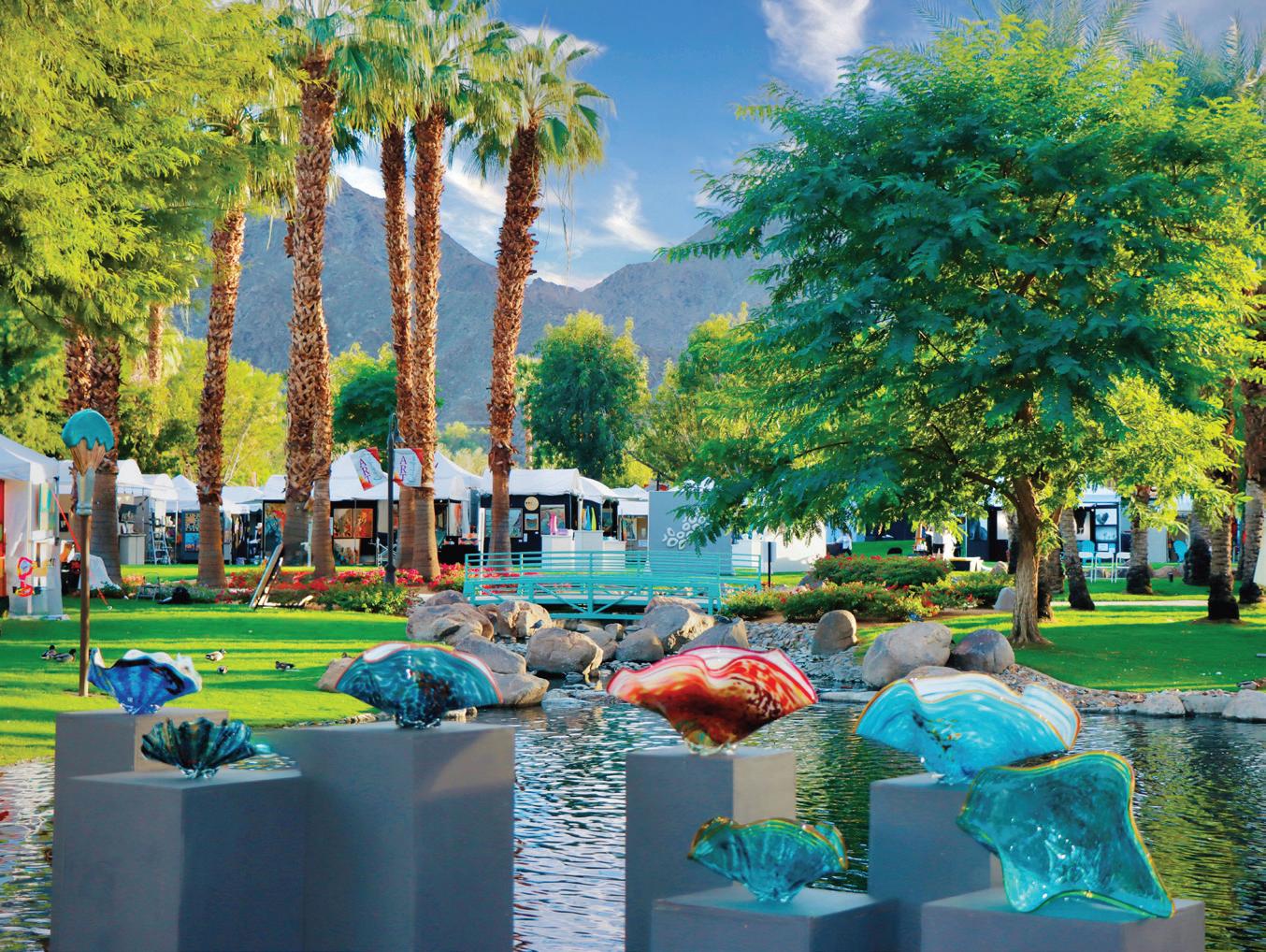
Jeffries Glass is one of the 185 participants in the La Quinta Art Celebration’s spring event this year. Organized by Scope Events with the city of La Quinta serving as lead sponsor, the event takes place at the La Quinta Civic Center from Thursday, Feb. 26, through Sunday, March 1.
The juried exhibition brings together art-
ists from 28 states, plus Canada and Africa. Attendees can expect to see works spanning mediums including painting, glass, sculpture, ceramics and jewelry—with 23 artists participating for the first time. Beyond the art booths, the event features local food and beverage vendors as well as live performances. One of the most notable aspects of the
event is the caliber of artists it is able to attract. There’s the humanitarian photographer Lisa Kristine, a recipient of the Lucie Humanitarian Award; painter Erin Hanson, known for founding the “Open Impressionism” style; and sand-cast glass sculptor Marlene Rose, who was a National Endowment of the Arts grant recipient in 2007.
Accolades aside, the working artists who come to the show bring a bevy of techniques, experiences and skills forged across a lifetime of artistry. Jeffries, for instance, has been working in glass since falling in love with the medium while studying fine art at Chico State University. He went on to study in Italy, worked in an apprenticeship with master glassblower Igor Muller, and studied glass while living in the Czech Republic. He’s also taught at the historic Corning Museum of Glass in central New York, a haven for glass-blowing artists from around the world.
In the late 1990s, Jeffries began an appren-
ticeship with acclaimed American glass artist Dale Chihuly. Many locals may know Chihuly’s work from spots like Imago Galleries, the Palm Springs Art Museum, the Desert Willow Palm Desert and the Melissa Morgan Sculpture Garden. During his time working with Chihuly, Jeffries helped create Chihuly’s famous “Fiori di Como” sculpture in the ceiling at the Bellagio in Las Vegas.
individual flowers that were molded together in the final piece.
In 2001, he began his own company, Jefferies Glass, in Laguna Beach. The team consists of Jeffries; his wife, Jitka; and apprentices, many of whom come from the local glass program at Cal State Fullerton.
“We’re always working together as a group,” he said. “I’ll have someone set up the color and get the first gather on it, and do the color prep. Then they’ll hand it off to me, and I’ll be on my bench with an assistant who will be blowing into the pipe and shielding from the heat and helping me create the piece that we’re working on. Then they’ll put on the fireproof suit and they’ll carry it into the oven.”
The floral-inspired piece contains around 2,000 blown-glass pieces and weighs around 40,000 pounds. Jeffries recalls working in teams on the floor to create the
The studio’s pieces radiate color, inspired by nature and travel, and can fit a range of tastes from mid-century to contemporary styles. Most of what Jeffries makes are custom pieces designed to fit a client’s living space, with a focus on wall installations that can add color and texture to vast spaces. Jefferies works directly with his clients to figure out what kind of story to tell and what type of piece will fit their home—whether it includes intersecting strips of color, or more rounded, puzzle-piece forms.
While it was the intensity and chemistry of the process that drew him to glass as a medium, it’s the relationships he has with patrons that are becoming the real reward, he said. Jeffries said he looks forward to coming to the desert— both for the serenity of the landscape and to hear how residents respond to his art.
“It’s really an honor to have our artwork in anybody’s home,” he said.
The La Quinta Art Celebration will take place from 10 a.m. to 5 p.m., Thursday, Feb. 26, through Sunday, March 1, at the La Quinta Civic Center, 78495 Calle Tampico. One-day tickets are $25; a multi-day pass, valid all four days, is $30. For tickets or more information, visit www.laquintaartcelebration.org.
Above: Christopher Jeffries with patrons. Photo by Brian Maurer. Left: Christopher Jeffries in the studio.
DO-GOODER
OPEN DOORS
By Matt KinG
Every October, artists and art studios open their doors throughout the Joshua Tree region for the Highway 62 Open Studio Art Tours, allowing people to take a closer look at the creativity scattered across the Mojave Desert.
Local musician and events promoter Lisa Rae Black recently joined the board behind the Highway 62 Open Studio Art Tours—and she wanted to do something special for the tour’s 25th anniversary, while raising much-needed funds.
Enter the Lizard King.
“The Lizard King Immersive” is a special event honoring the local organization’s quarter-century of promoting arts in the desert— and the multi-faceted creativity of rock-music icon Jim Morrison and The Doors. A crop of local talent will celebrate the musical, lyrical and visual outputs of Morrison through song, spoken word and media presentations on Wednesday, Feb. 18, at Mojave Gold. Half of the ticket proceeds will go to the Art Tours.
The event is slated to feature an all-star cast of desert musicians including Bingo Richie, Bobby Furgo, Sean Wheeler, Kevin Bone, Brad Parker, Lisa Moncure, Jesika Von Rabbit, DJ Gray, Paul Forrester, madame harlequin, and Lisa Rae and Blue Ladies—all singing different Doors classics.
Black and Forrester, under their booking name JT City Limits, have been producing shows featuring a revolving door of local musicians paying tribute to a music icon, similar to the nature of “The Lizard King Immersive.”
“Gathering together people who are super-talented, that’s what we do as musicians,” Black said during a recent interview.
“That’s how I learned jamming, by playing with people in the community, so it’s been easy. It wasn’t even very thought out. It just was sort of natural to do that.”
Black said the idea for events with multiple musicians stemmed from her involvement with Dylanfest in Torrance. For three decades, Black and dozens of other performers have paid tribute to the legendary Bob Dylan by each performing two or three songs. This, alongside her history of tribute bands, led to one of her latest projects, David Bowie-focused act the Jean Genies.
“Besides doing Dylan, I’ve been in Black Sabbath and AC/DC tribute bands that have toured all over,” she said. “I always wanted to sing, and David Bowie was the artist I chose, and the Jean Genies is basically that.”
Beyond the music, “The Lizard King Immersive” will celebrate the other sides of Morrison’s artistic vision. Black said the “Immersive” portion of the show will include visual projections of videos starring and shot by Morrison.
“These are videos that Jim Morrison shot while he was in college at UCLA,” she said. “These videos were made available from the UCLA film vault, and they’re on YouTube, so we’re going to be showing portions of those really cool videos of Jim Morrison … in Joshua Tree. He shot these videos himself.”
Morrison’s connection to the desert goes further than Joshua Tree being the subject of his film. One of The Doors’ most memorable lyrics is “Indians scattered on dawn’s highway bleeding,” a poetic line from the song “Peace Frog.” Black said the lyric actually stems from one of Morrison’s experiences in the Mojave.
“Jim Morrison came here when he was 6 years old with his parents, and what happened was he saw an Indian on the road, allegedly, as a child, and then he came back and had a hallucination,” she said. “Joshua Tree plays a big role in his life.”
Natasha Beranek, music writer at Yucca Brevifolia Magazine, will be narrating the event, sharing stories and tidbits about Morrison’s wildly creative life.
“My narration of this event is a culmination of a 5-year-long streak of research into the music of The Doors and the writings of Jim Morrison,” Beranek said via email. “In 2021, I published an essay on Medium exploring the philosophical leanings of Jim Morrison. I intended it to be a test run for a paper I later hoped to submit to a peer-reviewed journal on posthumanism, a relatively new field of study that asks what it is to be human in an age when the boundaries between nature, technology and humans are being challenged by artificial intelligence and biotechnological innovations. … Morrison was an extremely bright individual. Not only did he possess a very sharp insight into the societal effects of TV, visual media, and the ideology of American liberalism in the second half of the 20th century, but he was also remarkably forward-thinking about how technological innovations would unfold, especially in the music industry. My narration of ‘The Lizard King Immersive’ will touch on these themes, as well as Morrison’s spiritual/philosophical connection to the desert and the American West.”
‘The Lizard King Immersive’ raises
funds for the Highway 62 Open Studio Tours while honoring Jim Morrison
Lisa Rae Black and Paul Forrester.
“The Lizard King Immersive” includes narration, poetry and art, and it’s commenting on the human condition in the same way Morrison did in his music.
“He arrived at certain existential questions about the modern condition that he wanted to relay to others, and he seemed to think The Doors’ music an ideal starting point for sparking philosophical reflection within their listeners,” Beranek said. “‘A Doors concert is a public meeting called by us for a special dramatic discussion,’ he explained to one journalist, and at a later date, adding, ‘For me, it was never really an act, those so-called performances. It was a life-and death thing; an attempt to communicate, to involve many people in a private world of thought.’ Unfortunately, Jim realized that this was mostly lost on his audiences, who were most drawn to the sensationalism and his hype as sex idol.”
After Beranek moved to the desert, she felt a strong urge to listen to The Doors
“Why do I hear the Mojave Desert in The Doors when the mythos of The Doors—its cultural legacy—has been nothing if not that of a quintessential L.A. rock band?” she wrote. “At the same time, it also got me thinking about ‘the desert’ as a concept that has a phil-
osophical history, as an idea that has mostly been understood as something ‘other’ or fundamentally different from ‘the city’ (L.A.). What I mean is, when people say, ‘Let’s drive out to the desert this weekend,’ they don’t just want to visit an arid climate or view a stunning landscape; they are enacting a specific set of ideas about what ‘the desert’ has stood for in the Western imagination for the past 200-300 years—a limit (‘frontier’) to conquer, a terrifyingly barren space, or a place of spiritual pilgrimage.
“Perhaps most often, you hear people say that they come to ‘the desert’ to get in touch with their ‘true selves’ rather than the selves that have been molded by societal pressures or expectations. I have heard a lot of (high desert) artists and musicians express something along these lines. It’s very romantic—the notion that the desert (nature) will remedy the societal and technological ills from which we seemingly cannot escape.”
“The Lizard King Immersive” will take place at 6 p.m., Wednesday, Feb. 18, at Mojave Gold, at 56193 Twentynine Palms Highway, in Yucca Valley. Tickets are $21.40. For tickets and more information, visit jtcitylimits.com.
ARTS & CULTURE
IN THE CARDS
By Eleanor Whitney
If you love to explore—whether it’s realms earthly, cosmic or internal—the Travel Tarot created by Palm Springs-based writer, astrologer and tarot practitioner Jeff Hinshaw could be for you.
Travel Tarot will be released on Feb. 17 by well-known travel publisher Lonely Planet. In Hinshaw’s deck, each of the 78 cards depicts a different destination, vibrantly illustrated by South Africa-based Studio Muti. The places range from the familiar to the far-flung, from Scotland’s Isle of Skye, to Rajasthan India, to the Simpson Desert in Australia, to Naples, Italy.
Traditionally, tarot decks consist of 22 named major arcana cards, which can represent a journey of spiritual evolution, and 56 cards in four suits: cups, wands, swords and pentacles. The tarot began as a card game played in Europe in the 15th century before evolving into a tool for divination and self-discovery, with connections to astrology and a range of mystic and spiritual practices.
In selecting a location to pair with each card, Hinshaw drew upon his own travel experiences, as well as extensive knowledge of tarot iconography and traditions. The deck comes with a guidebook which includes travel stories, information about the cards, and both a question and affirmation for practitioners to consider.
“It’s a tool for self-reflection,” Hinshaw said. “People may want to pull a card in the morning or for the week. I always encourage my students and anyone working with tarot to leave the card out,” which enables different meanings and interpretations to arise.
Hinshaw has been teaching and writing about the tarot for more than a decade, and learning about the iconography and history behind the cards for far longer. Interested in card decks, he picked up his first tarot deck when he was a teenager at a game shop, noting, “I was immediately drawn to it and have been studying it ever since.”
Hinshaw was further intrigued when he learned about the tarot’s connection to astrology, which first captured his attention when he was playing the computer game The Sims as a child. In the game, players could set a character’s zodiac sign as part of their personality.
“When I started realizing that the tarot wove together with something that, as a kid, I loved in a computer game, I just was fascinated,” he said.
Hinshaw’s work on the Travel Tarot blends his studies into the tarot’s art history and iconography with his degrees in psychology and creative writing, as well as his experience as an educator. He has noticed that interest in the tarot has become increasingly mainstream.
“(The tarot) is part of the collective consciousness in a bigger way than we’ve ever seen
before, and I think this deck is a part of that movement and wave,” he said. “There are lots of tarot decks coming out, but it’s an art form that has been around for centuries, and it centers ancient, archetypal storytelling.”
To illustrate the process he used to create each card, Hinshaw told the story about the Lovers tarot, which he pulled from the deck on the morning of our conversation. The Lovers is paired with Hawaii.
“On a surface level, it’s about love and relationships, and I do think of the Hawaiian Islands as a place where people fall in love, but the Lovers card is also about bringing masculine, feminine and the spiritual side of yourself together,” he said.
Hinshaw went on to recount that while living on the Big Island of Hawaii, he struck up a conversation with a fisherman while walking on the beach.
“The fisherman drew a triangle in the sand and put three letters—a K, Q and C—at each corner,” Hinshaw said. “He explained the ‘K’ sound in Hawaii is sacred, and then he said, ‘You can think of it as K for king, Q for queen, and C for creator,’ then he looked at me and said, ‘You embody all three,’ as a rainbow appeared on the horizon. So this card is in honor of that story—the king, the queen and the creator, all coming together within.”
Though he has lived in many places, including most recently in the high desert, Hinshaw is proud to now call Palm Springs home. He was drawn to the desert by the creative and LGBTQ communities here, and said he’s inspired by the region’s unique nature, from Tahquitz Canyon to Joshua Tree National Park.
“The expansiveness of the desert feels really healing for me,” Hinshaw said. “I’m deeply humbled by nature here.”
Twentynine Palms is featured in the deck, paired with the Eight of Wands card. The design features a jackrabbit moving swiftly through a rocky landscape dotted with Joshua trees. Hinshaw explained that the card can symbolize “rapid developments and fruitful serendipity, encouraging you to cast intentions to make magic with excitement and ease.” The card is inspired by Twentynine Palms’ desert
Palm Springs-based astrologer Jeff Hinshaw hopes his ‘Travel Tarot’ inspires journeys of all kinds
Jeff Hinshaw: “(Tarot) is a tool for self-reflection. People may want to pull a card in the morning or for the week.”
landscape, as well as the creative and Native communities that call the desert city home.
“This is really a love letter to the entire high desert,” Hinshaw said.
In addition to Travel Tarot being a tool for personal reflection, Hinshaw said, he hopes the deck will enable connection and shared synchronicities. Hinshaw said he recently went to the restaurant Farm, in Palm Springs, to celebrate the deck’s upcoming release, and took his early copy with him. Seeing the deck, his waiter was intrigued, so Hinshaw invited him to pick a card.
“When he pulled a card, his jaw dropped, and he asked, ‘Are all the cards about Cuba?’” Hinshaw said. “And I said, ‘No, there’s only one card about Cuba.’”
The waiter then told Hinshaw that his parents emigrated from Cuba. It’s moments like this, which bring people together, inspire conversations and build community, that Hinshaw hopes the Travel Tarot will inspire.
“My hope for Travel Tarot is that it brings in more purpose and intention to the travel experience and cultivates a deeper reverence for our planet and for culture,” he said. “Without even having to physically travel somewhere, this deck allows you to travel to that place in your internal landscapes.”
Travel Tarot will be released on Tuesday, Feb. 17, by Lonely Planet. Find out more about Jeff Hinshaw, including his newsletter, podcast and upcoming events, at www.cosmiccousins.com.
ARTS & CULTURE
TALENT ON WHEELS
By Matt King
Calling all local skaters, and fans of flips and tricks!
The Coachella Valley AM, an amateur skateboard contest, is returning for a third year, on Saturday, Feb. 7. During the all-day celebration at La Quinta X Park, fans can expect a mix of grinds, bowls and high-flying action from both local and out-of-town skaters—and this year, the competition is sponsored by Goldenvoice, meaning bigger prizes, higher stakes and wildly entertaining skate action.
During a recent interview with Victor Delgado, La Quinta X Park’s facilities manager and the creator of the Coachella Valley AM, he said he’s hoping to build on the success of the previous two contests.
“With this one, we have a bigger prize purse, so we expect it to be the biggest one we’ve had so far,” he said.
This is the first year the event is being sponsored and presented by Goldenvoice. Back in the ’80s, well before Coachella and Stagecoach, Goldenvoice was all about punk rock and skating.
“We are really excited to partner up with them,” Delgado said. “Bill Fold (a Goldenvoice executive who handles concert operations) actually came by the park, and he started skating more and more, and that’s how we built a relationship.”
Delgado and others had been wanting to bring an amateur skating contest to the desert for years, and cited the opening of the La Quinta X Park—with 31,000 square feet of skating areas—as the boost they needed.
“We just didn’t know how to bring (the idea) alive,” he said. “Once the city of La Quinta built
the X Park, we knew that we had to start going with this event, because the skate park is really an Olympic-type skate park, and it’s perfect for these types of events.”
The desert has a rich skating history—it was an integral part of the famous desert rock music scene, born in the ’80s at places like the Nude Bowl—yet Delgado felt nervous about starting a skate contest.
“It’s really scary starting something when you don’t know how it’s going to turn out,” he said. “Once we started doing all the work … we were hoping for the turnout to be good—and we were surprised by how good it did.”
Some of those nerves stemmed from the fact that our local skate scene isn’t as prominent as it was decades ago.
“The skateboarding scene is definitely a little different than it was back in the day,” Delgado said. “We are definitely here to try to make it thrive and make it better, and as of right now, there definitely are a lot of up-and-coming skateboarders here in the valley. … The youth try to keep going, and that’s why we’re here, to try to motivate the youth and show them that there’s a whole different
The
world of skateboarding out there.”
Delgado has worked closely with Eddie Elguera, a local resident and championship skater.
“We’ve had a partnership with Eddie for years now, even coming before the La Quinta X Park opened,” he said. “He used to host the El Gato Classic here in the Coachella Valley, which is an event he created that would bring Tony Hawk out here and all the old-school pro skaters, and give an opportunity for the Coachella Valley to meet those people.”
The El Gato Classic, which last took place in 2022, does honor legends, but Elguera said in an interview that the event also made space for “new blood.” Delgado wanted to expand on that and create an event solely dedicated to the next generation of skaters.
“We’ll have a few pros there, but that’s not going to be the main section of the contest,” he said. “The Coachella Valley AM was created for amateur skateboarders and to put a spotlight on up-and-coming talent from around the
world, and our local talent as well.”
One of the biggest additions to the Coachella Valley AM this year is “an adaptive section.” Delgado said skaters with disabilities will be able to participate in the event’s festivities.
“We’ve actually had a lot of people, from around the world, come by the park who have a disability, and they always go out there and skate,” he said. “We are really motivated by that, so we have a special contest for them in our event.”
Delgado invited everyone to experience the CV AM.
“If you want to witness some amazing skateboarding and just feel the vibe of how the skateboarding scene is down here, come by the X Park, and check out the event.”
The Coachella Valley AM will take place at 9 a.m., Saturday, Feb. 7, at the La Quinta X Park, 46170 Dune Palms Road. The event is free to attend. For more information, visit www.instagram.com/ laquintaxpark.
The goal of the Coachella Valley AM is to showcase up-and-coming skating talent.
The Coachella Valley’s nine cities, three school districts and other elected bodies have less oversight, leading to more government malfeasance.
Local musicians, artists and restaurateurs can’t connect with potential new audience members and customers, because their great work is going unheralded.
Our neighbors in need don’t know where to go for help, because they aren’t getting any news about the nonprofits that are there to assist them.
This is the world without local news. This is the world without the Coachella Valley Independent.
It doesn’t need to be this way.
Our readers are taking a stand by becoming Supporters of the Independent. By helping the Coachella Valley Independent to preserve coverage of your community and culture, they’re directing their dollars to focus on the people, ideas and solutions to overcome today’s unprecedented challenges.
The data is clear: When local news outlets shut down, civic engagement declines; partisan division increases; and corporate misconduct and public corruption flourishes.
Help ensure we never see a world without the Independent, and make the Coachella Valley thrive. Become a member now.
CAESAR CERVISIA
By brett newton
We’re now in a new year—and a quarter of the way through the century!—so this calls for a look back at craft beer in 2025, in the context of the 24 years that came before it. Perhaps we can divine something about the future of craft in this way—and maybe even come across a solution or two to some problems, if we’re fortunate.
Nationally, craft beer seems to have slipped a bit last year. According to the Brewers Association, “While full 2025 production numbers will not be finalized until the Beer Industry Production Survey in (the first quarter of) 2026, scan data for Q3 (of) 2025 suggests a continued weakening in the back half of 2025.”
Brewery closures outmatched openings for the second straight year (but only by a small percentage of total breweries, if we’re looking for silver linings—which we definitely are). While this trend has not played out locally, La Quinta Brewing Co. did close their Old Town La Quinta taproom (which was one of the better spots in the valley for a beer and scenery). Ultimately, though, LQBC is still going strong at their Palm Desert brewery and Palm Springs taproom locations; Desert Beer Company opened a satellite taproom in downtown Indio; and Indio Brewing Company opened its doors. The desert helped to offset those Brewers Association numbers by one, which is nice.
Let’s talk about more positives in the area. Besides LQBC’s recent improvement, the beer at 29 Brews at Spotlight 29 Casino is still at a high quality. I recently tried their Tipsy Tortoise IPA again—and I recommend it. I cov -
ered both 29 Palms Beer Co. (not to be confused with 29 Brews) and its sister restaurant and bar, Grnd Sqrl, last year, and both are worth a short trip up to the high desert. Grnd Sqrl has the best tap list, by far, anywhere nearby. Las Palmas Brewing is still cranking out great beer in Palm Springs, as I am wont to mention to anyone who asks. I’m especially fond of them because of their saison, which is frequently on tap.
Now, here’s an attempt at a dispassionate look at the negatives.
Craft beer selection in the desert is bad The previous sentence may make it seem like I’m immediately contradicting the one before it, but it’s extremely difficult locally to find a decent selection of craft beer. I am not just talking taps around the valley, mind you; I am talking about the beer you’ll find on retail shelves, too. As I’ve stated innumerable times: When buying cans or bottles, always
The year 2025 brought an increase in local taprooms—but it also brought an increase in past-its-prime cans and bottles on shelves
check dates. I’ve found shockingly old beers on shelves; on one occasion, I found beer from a brewery that went out of business two years prior.
You might be thinking, “So if there’s all this beer spoiling on warm shelves, then maybe there isn’t a market for it.” The problem is not so black and white; there is plenty of blame to go around between the distributors, the breweries and the stores. Breweries are hungry to expand their work with distributors; those distributors mostly do not seem to care if customers get fresh craft beer; and retailers can sometimes be easily impressed by a distributor’s spiel. The result: Shelves and shelves of craft beer—and yet not a drop to drink.
Old IPAs suck. A lot. Almost any beer sucks when it’s old. So my suggestion to you is to either stick with three- to six-monthold lagers, stouts and Belgians, or strike out and visit some of the places I mention in my columns outside of our area. Extraordinary times call for extraordinary measures. Let’s try to give the business to the places that produce or carry good products.
In summary, the state of the local craft beer scene is mixed. There is definitely still promise, and there are indeed possibilities, but it’s
difficult to predict which way the wind will blow in this space.
It takes a combined, concerted effort to get a thriving craft community up and running— lots of people who care deeply and are willing to go the extra mile in order to overcome the inertia of the current scene. You have to know what’s good, and sometimes form special relationships, and perhaps drive a little farther in order to get the best of the best. What’s more: Just because it’s local doesn’t mean local business need to carry it. A word of advice to local decision-makers at stores and bars: If a brewery’s beers do not pass muster, just don’t carry them despite what your distributor-rep says. The stink will rub off on you. There are enough moderately good-to-great beers to fill your beer lines, and—who knows?—you may even attract beer-drinkers who seek the best of the best to sit at your bar and bug you about what else is good in craft beer.
In short: We can do better than we are currently. I fervently hope that we do.
Brett Newton is a certified cicerone (like a sommelier for beer) and homebrewer who has mostly lived in the Coachella Valley since 1988. He can be reached at caesarcervisia@gmail.com.
Always check the date when you buy beer—because there are a lot of old, bad brews on local shelves.
FOOD & DRINK
Doing
PRIDE
in the Coachella Valley.
LVINE SOCIAL
By Katie finn
Our 250 members support equality–and they support you!
et me start by saying this: I love restaurants.
I love dining rooms, candlelight, crisp linens and that ceremonial moment when a bottle of wine hits the table like a small blessing. I’ve spent most of my adult life working every single holiday in those dining rooms—Valentine’s Day very much included. And because I love you, I feel obligated to tell you the truth.
comfortable, unhurried and present. When the playlist hits just right. When the wine glass stays full. When no one is timing your dessert decision.
The most romantic Valentine’s Day is not spent in a restaurant. It’s spent at home. Shoes off. Music playing. Wine already open. No one hovering. No one watch-
ing the clock. No one gently asking if you’re “still working on that,” because there’s another couple anxiously waiting to sit where you are.
See what our members have to offer at desertbusiness.org
I was recently reminded of this kind of at-home bliss by a customer who came into the shop and unknowingly nailed the assignment. She told me she needed a bottle of Sancerre to pair with some crab cakes she’d picked up from Haines Packing in La Quinta. She was planning a simple Little Gem salad with a homemade vinaigrette, those fresh lump crab cakes, and a beautiful bottle of sauvignon blanc.
That was it. Thoughtful. Simple. Scrupulously delicious. As she was describing her dinner
plans, I thought: Well, damn. That sounds perfect, not just for her Saturday night meal du jour—but also for Valentine’s Day.
Here’s the part no one tells you about dining out on Valentine’s Day: Restaurants are sprinting. Kitchens are stretched. The goal—through no fault of the staff—is efficiency. You’re not lingering. You’re not luxuriating. You’re being lovingly ushered through dinner so the next reservation of two can slide in and attempt to capture romance under the glow of heat lamps and a ticking clock.
Romantic moments don’t happen on command. They happen organically—when you’re
The Best Margarita in the Coachella Valley
445 N. Palm Canyon Drive, Palm Springs 760-327-1196 • www.bluecoyotegrill.com Outdoor dining • To-Go Delivery via Grubhub and DoorDash
Blue Coyote Grill is honored to be among your Best of the Coachella Valley picks— winner for Best Margarita and finalist for Best Salsa and Best Mexican Restaurant!
Our margarita is made from a secret family recipe—one sip and you’ll know why we won!
Explore our lush outdoor patios and casitas, perfect for large groups and celebrations. Now booking holiday parties— create unforgettable memories in our tropical oasis.
Visit us in Palm Springs; enjoy our dog-friendly patio; and taste the flavors that have made us a Valley favorite. Your margarita is waiting!
Which brings me back to that woman and her crab cakes: As far as I’m concerned, that might be the most romantic dinner imaginable. And the best part? She was going to enjoy it by herself.
Valentine’s Day shouldn’t belong exclusively to couples. It belongs to anyone who wants to create a thoughtful, intimate moment with food and wine—solo, partnered or somewhere in between.
Why not make Valentine’s Day the night when you do exactly what you want? Why not grab oysters and Champagne and eat them barefoot in your kitchen? Why not order your favorite takeout and open the bottle you’ve been “saving”? Why not make a steak, pour a red you love, and let the night unfold naturally?
It doesn’t have to be elaborate. It doesn’t have to be expensive. What it has to be is intentional.
Somewhere along the line, indulgence picked up baggage. Guilt. Apologies. Justification. But food and wine were never meant to carry that weight. They should offer small moments of pleasure that connect us to ourselves and to each other.
And Valentine’s Day? It doesn’t have to be an excuse to pamper yourself. It’s a reason to slow down and enjoy something beautiful for the sheer thrill of enjoyment. That, my friends, is romance. So, if easy Valentine’s Day dinners—or any dinner, for that matter—that feel special without being a production are up your alley, here are a few of my favorite ways to indulge. Oysters + Muscadet: For maximum romance with minimum effort, remember this: Whole Foods does 12 oysters for $12 on Fridays. Pop them on ice; add lemon and maybe a whisper of mignonette; and you’ve got an instant Valentine’s moment. Pair them with Louis Metaireau Grand Mouton Muscadet Sur Lie, one of the most ideal oyster pairings ever created. Briny, bone-dry, citrusy and subtly yeasty from aging sur lie, the wine mirrors the oceanic sweetness of oysters without overpowering them. Crisp, refreshing and quietly sexy. Crab legs + Chablis: After a quick stop at Haines Packing for crab legs, and a little melted butter, and you’re halfway to perfection. Add a bottle like Domaine de la Meulière Chablis Premier Cru Les Fourneaux, and you’re in classic, elegant territory. This wine is all wet stone minerality and bright acidity, with a faint
saline edge that makes sweet crab meat absolutely sing. Luxurious without trying too hard.
Chinese takeout + Champagne: As a kid, I always remember one of my mother’s favorite “lux night at home” dinners was Chinese food and Champagne—and she was absolutely right. There is something wildly decadent about pairing great bubbles with takeout cartons spread across the table (or the duvet cover, wink wink). Order the out-of-this-world Peking duck from Palm Tree Palace, or dive into the spicy, layered, complex flavors of CIE Sichuan Cuisine. Pair it with a grower Champagne like my personal favorite, the Gaston Chiquet Tradition Brut. Bright citrus, orchard fruit and savory depth refresh the palate, tame spice and make even takeout feel intentional. If romance to you means a sizzling pan and a great bottle of red, steak night at home is undefeated.
Season two good steaks generously with salt and pepper. Heat a cast-iron pan until it’s hot; add a splash of oil, and sear the steaks for three to four minutes per side. Add butter, smashed garlic and a sprig of thyme or rosemary, then spoon that melted butter over the steaks like you mean it. Rest them. Pour the wine. Put on a song. Slice and serve. Serve with a sharp green salad, roasted potatoes—or, honestly, just the steak and the wine. No one is ever going to be disappointed with a perfectly seared filet and full-bodied Cabernet. No one. At the end of the day, romance isn’t something you reserve for a restaurant reservation. It’s something you create. It’s quiet moments. Thoughtful choices. A glass of wine, a good meal and time to actually enjoy it.
This Valentine’s Day, skip the chaos. Stay in. Eat well. Drink something delicious, and treat yourself to a wonderful evening.
Katie Finn is a certified sommelier and certified specialist of wine with two decades in the wine industry. She can be reached at katiefinnwine@ gmail.com.
Community Is Our Priority.
For 13 years, the Independent has been telling the Coachella Valley’s stories. Our mission is to inform readers like you—and to help you build stronger connections with your community. To continue doing so, we need reader support!
Please consider becoming a sustaining Supporter of the Independent, or make a one-time donation, by visiting CVIndependent.com/support-our-publication, or by sending us a check using the coupon to the right.
You can support the Independent directly (non-tax-deductible)—and now can make a tax-deductible donation via our fiscal sponsor, the Alternative Newsweekly Foundation (ANF). Via ANF, we can accept cash, grants and donations from donor-advised funds. We can even accept stock or crypto! Questions? Email jboegle@ cvindependent.com, or call 760-904-4208.
Thank you for supporting the Independent!
NAME
ADDRESS
PHONE AND/OR EMAIL
AMOUNT OF CHECK
Want your donation to be tax-deductible? Make your check out to the Alternative Newsweekly Foundation. Don’t need a tax deduction? Make your check out to the Coachella Valley Independent. Please mail to: Coachella Valley Independent 31855 Date Palm Drive #3-263 Cathedral City, CA 92234
COMPASS ROSE
Your Fiduciary Advisor
FOOD & DRINK INDY ENDORSEMENT
We have top-notch ossobuco for dinner, and amazing Armenian honey cake for dessert
By Jimmy Boegle
WHAT Pork shank ossobuco
WHERE Desert Moon Restaurant, 350 S. Indian Canyon Drive, Palm Springs HOW MUCH $35
CONTACT 760-424-8850; desertmoonps.com
WHY It’s a perfect version of a classic dish. It’s always a strange when a new restaurant opens in a space formerly occupied by another restaurant where you have many fond memories.
WHAT Honey cake (medovik)
WHERE Family Bakery, 73910 Highway 111, Unit I, Palm Desert HOW MUCH $5.80 for a slice CONTACT 760-404-0481
WHY It’s delicious without being too sweet. The best dessert I’ve in recent months didn’t come from a fancy restaurant or an upscale bakery. Instead, it came from a non-descript hole-in-the-wall, located in the sea of strip malls along the frontage road on the north side of Highway 111 in Palm Desert.
It’s called honey cake—and if you’ve never tried it, I strongly recommend heading to Family Bakery to try a slice for yourself.
Family Bakery is a small, mostly-takeout Armenian restaurant that’s been open for not quite a year and a half.
Call us today to schedule a complimentary consultation and get acquainted with an independent, Fee-Only financial planning & investment management firm located here in the Coachella Valley.
Allow us to show you the benefits that result from a financial plan tailored to helping you achieve your goals.
For me, such is the case at Desert Moon, which took over the Indian Canyon Drive spot that Rio Azul Mexican Bar and Grill called home before finally shuttering for good in 2024. I had many amazing times at Rio Azul with friends and family, and it’s where we celebrated the publication of the Independent’s 3,000th story in May 2016. (We’re somewhere around 9,500 stories now.)
Alas, Rio Azul is gone—but I am happy that another great restaurant is now in that space.
Desert Moon opened there in late 2024, offering “California fusion.” After a challenging start—it took a while for Desert Moon to get its full liquor license, and the restaurant had to close for a period last summer for more work on that complex’s problematic electrical system—the restaurant seems to have hit its stride. On a recent holiday-weekend Monday, the main dining room was almost completely full.
I’ve dined there twice in recent months, and both times, the most rave-worthy dish has been the pork ossobuco—in fact, it’s the best version of this dish I’ve ever had. The pork is fall-off-the-bone tender while still being juicy, thanks to the presence of just enough fat. The hubby is generally not a fan of stewed/ shredded meats, because they can sometimes have a hair-like texture—but this ossobuco does not have that problem. And at $35, with soup or salad included, it’s priced well, too.
Desert Moon’s menu is pretty small, with only a dozen or so entrées, but that ossobuco will keep us going back—and we’re well on our way to creating more happy memories there.
On the savory side, you’ll find chicken and beef kebabs, chicken shawarma, breakfast sandwiches, hummus, meat- and potato-filled perashkis, cheese borek and a few other Mediterranean-style options. On the bakery/savory side, the options include puri bread, baklava, napoleons, eclairs, cream puffs, Mikado cake (another Armenian dessert, with creamy custard and chocolate glaze) and some other tasty treats.
But really, you should be getting the honey cake on your initial visit to Family Bakery. It consists of very thin layers of honey sponge cake, with each layer separated by a slightly tart cream filling. The predominant flavor is like a caramelized honey—but the cake is not actually all that sweet, and the texture is wonderfully soft without being at all mushy. It’s truly unlike any other slice of cake I’ve ever had.
It’s common today for restaurants and highend bakeries to charge well more than $10 for desserts; I’ve even seen a few places where some desserts are $20-plus. Putting cost aside, I’d rather have a $5.80 piece of honey cake from Family Bakery than virtually any of those desserts. It’s that good.
Restaurant NEWS BITES
By charles drabkin
FEBRUARY IS FOR FESTIVALS WITH FOOD
It is time once again for the annual Riverside County Fair and National Date Festival, taking place at the Riverside County Fairgrounds, at 46350 Arabia St., in Indio, from Thursday, Feb. 12, through Sunday, March 1. Agricultural exhibits highlight the farmers, ranchers and growers in our county, and there are carnival rides, monster trucks, a rodeo—and, of course, tons of fair food! General-admission presale tickets are $12, with kids’ tickets for just $10; tickets to special events and rides are extra. Find more information and buy your tickets at www.datefest.org.
Be Greek for the weekend at the 29th Annual Palm Desert Greek Festival, returning to St. George Greek Orthodox Church, at 74109 Larrea St., from 10 a.m. to 8 p.m., Saturday and Sunday, Feb. 21 and 22. Experience authentic Greek food and delicious Greek pastries; dance to Greek music; and take a church tour. Admission is just $5; kids 12 and under are admitted for free. Food must be purchased separately. Visit pdgreekfestival.org for all the information.
IN BRIEF
Last month, we mentioned the opening of Sunset, at 369 N. Palm Canyon Drive, in Palm Springs. Since then, the proprietors have opened the upstairs area as speakeasy-style space called After Hours, with an assortment of appetizers and craft cocktails. I can see this becoming a real hot spot. Find out more at instagram.com/afterhourspalmssprings or afterhourspalmsprings.com.
Luchador Brewing Company is opening a second location/tasting room at 250 S. Palm Canyon Drive, in Palm Springs, between Pomme Frites and Thai House. There’s no word yet on what they will serve, and the new location isn’t listed on their website as of this writing, so check back here for updates
A new lounge has opened next to Bar Cecil: Beaton’s at Bar Cecil, at 1555 S. Palm Canyon Drive, in Palm Springs. You’ll find cocktails and light snacks, perfect for before or after dinner. Find out more at beatonsatbarcecil.com.
Yucha Donut and Boba is set to open next to La Baguette, at 34580 Monterey Ave., Suite 105, in Palm Desert, offering mochi donuts. Instagram is the best place for information that we could find, although the page didn’t say much as of this writing: instagram.com/yuchadonut.
The popular food truck Birrieria Sinaloa has opened a brick-and-mortar location at 73120 Dinah Shore Drive, in Palm Desert. Watch www.instagram.com/birrieriasinaloa for updates.
The owners of TQLA’s Agave Bar and Grill have changed the space via an upscale makeover into a Latin tapas bar: Lola’s at the Cove, at 78015 Main Street, Suite 109, in La Quinta. The menu includes empanadas, ceviche and other small plates. The best information seems to be at facebook.com/Lolasatthecove.
El Paseo Chop House will be opening at 72595 El Paseo, in the Palm Desert space that formerly housed Cuistot. Sign up for updates at elpaseochophouse.com.
Heartbreaking news: PS Air Bar and the Bouchet wine and liquor store, at 611 S. Palm Canyon Drive, Suite 22, in Palm Springs, have closed. They had been listed for sale for quite some time. Also closed: IHOP, at 471 S. Indian Canyon Drive, in Palm Springs. The locations in Cathedral City, Rancho Mirage and Indio remain open.
Now, here all sorts of big chain-restaurant news. First: Sumo Dog, the hot dog/Japanese fusion chain with existing locations in Indio and at the Indian Wells Tennis Garden (during special events), will be opening new locations at The Palms shopping complex at Avenue 42 and Monroe Street in Indio, and at the Cabazon Outlets; www.eatsumodog.com.
Jersey Mike’s is opening a new location at 1751 N. Sunrise Way, in the same Palm Springs shopping center as Albertsons; www.jerseymikes.com.
Farmer Boys is opening in the new Cathedral Cove development on East Palm Canyon Drive and Date Palm Drive in Cathedral City; www.farmerboys.com.
Two chain restaurants are moving into the former home of Tuscanos and BrewQuinta, at 78772 Highway 111, in La Quinta. Shake Shack (shakeshack.com), and CAVA, a Mediterranean/ Greek fast-food restaurant (cava.com).
Just down the street: Keke’s Breakfast Cafe, a Florida-based diner chain with locations across the country, has announced plans to open at 79892 Highway 111, in La Quinta; kekes.com.
Finally: The fried-chicken joint everyone loves to hate, Chick-fil-A, and a new Dutch Bros. Coffee will be opening at Avenue 42 and Jackson Street in Indio. Have food or restaurant news? Email foodnews@cvindependent.com.
Thousands of Coachella Valley Independent readers and News Channel 3 viewers voted in this year’s Best of Coachella Valley readers’ poll—and they selected the Purple Room as the winner of Best Bar Ambiance and finalist in four categories:
TUESDAYS
ROSE MALLETT
Jazz
WEEKNIGHT ENTERTAINMENT
TUES-WED-THURS 6:30-9:30 PM
WEDNESDAYS
CHARLES HERRERA, DARCI DANIELS & MICHAEL HOLMES
Swinging to the music of the Rat Pack Era
THURSDAYS
DATE NIGHT!
Experience the most romantic night of the week , with a delicious three-course menu for only $59 pp accompanied by the Andy
legend sings the music of Holiday, Vaughn, Ellington.
Frage Combo.
DESTROYING DAVID is presented by special arrangement with Jason Odell Williams Dezart Performs is a 501 (c)(3) non-profit.
MUSIC
CELEBRATING SUCCESS
By matt king
Thirteen years ago, the music world was taken by storm when R&B crooner Aloe Blacc and DJ Avicii teamed up to release “Wake Me Up.” Thanks to pulsating, feel-good electronics from Avicii and a heartfelt, powerful vocal performance from Blacc, the song exploded, reaching No. 1 on charts all over the world, and earning multi-platinum status in multiple countries. Today, the song is a staple of electronic music festivals while also commonly found in pop-mu-
sic cover sets—and Aloe Blacc is celebrating this success.
Blacc is setting out on a three-city run of shows dubbed the “Wake Me Up Tour.” The artist will celebrate his biggest hits, revisit gems from earlier in his career, share some of his more recent songs, and work in a few covers. After a three-night residency at New York’s iconic Blue Note Jazz Club, followed by a weekend at Blue Note Los Angeles, Blacc will visit the Plaza Theatre in Palm Springs on Monday, Feb. 16.
During a recent phone interview, Blacc explained why this tour is focusing on the biggest hit of his career.
“It’s been a little over 10 years since I released ‘Wake Me Up,’ and it’s given me so much in my career,” Blacc said. “It’s given me an opportunity to be more present, and as an indie artist, I didn’t have that visibility. It’s kind of an homage to having that visibility and being able to make a living off of this music thing.”
Some artists have an inkling that a certain song could wind up being a hit—but Blacc said had “no idea” what “Wake Me Up” would become.
“I just knew that it felt good,” he said. “When we made it, the studio session was just an acoustic session, so it wasn’t a fully finished product yet with the kind of EDM mix that Avicii made. I had no concept of what could happen with it, because it just wasn’t in my world in terms of genre. I was pleasantly surprised.”
Why does Blacc’s celebratory run of shows include multi-date performances in New York and Los Angeles—and then a Monday show in Palm Springs?
“The Stand Together album (Blacc’s 2025 release) was executive produced and co-produced by one of my friends who lives in Palm Springs part of the year,” he said. “Jason Mendelson has an amazing, beautiful, midcentury modern house in Palm Springs, and he suggested, ‘Why don’t you come out and do a show?’ He had some connections to the venue, and we had the conversation, and said the best timing would be during Modernism Week, because a lot of folks will be in town, and it would be an opportunity to have a concert while there’s a lot of energy in Palm Springs.”
Even though the concert is not formally a part of Modernism Week’s programming, Blacc is excited to provide some old-school sounds for fans of midcentury modern culture and arts.
“The Good Things album (Blacc’s soul-heavy 2010 debut) is certainly a throwback, and Modernism Week is all about that nostalgia,” he said.
Over the past few years, Blacc has expanded his efforts beyond music, venturing into philanthropy, and even serving as the CEO of Major Inc., a biotech company dedicated to antiviral therapies and treating infections. In 2026, Blacc said, he is finding more time for music.
“I was lucky enough to find a CEO to help manage the biotech company, so I don’t have to do any of the day-to-day stuff anymore,” he said. “From a philanthropy standpoint, my wife generally is the family steward in terms of our giving, so I can focus on music way more than I was before. I’ve been writing and creating new stuff, but I have a lot of old stuff that I really want to get out, so right now, I’m prioritizing and organizing songs from the catalog that have yet to be released.”
While Blacc is making more time for music, he said a large-scale tour remains unlikely. In other interviews, Blacc has explained that he avoids lengthy stints on the road in an effort to watch his children grow up and spend time with his wife.
“I really do like the idea of making it around the world to present my music to as many of my fans as possible; I’m just trying to find crafty ways to do that,” he said. “L.A. is a destination for a lot of people around the country and around the world, so to the extent that I could just stay in L.A., and eventually everybody will get around to seeing me, that’d be awesome.”
Blacc said he’s unsure what a tour schedule could look like as his children grow up.
“(My children) can pack their own lunches at this point, which is great, but I want to be home, not just for them, but for my wife as well,” he said. “Thinking about being away for too long is—I don’t know; I’ve got to manage. What we did this past summer was we all went out to Europe, and I had shows here and there, but we were all together by the weekend in the same place for a few days.”
Aloe Blacc, one of the best modern soul/pop voices, is coming to Palm Springs for a special performance
Blacc’s stops in New York and Los Angeles include multiple performances, leaving room for setlist shake-ups and fun, but he insisted that the one-off in Palm Springs will be just as special.
“While I have an album that is a bit throwback, and I have hit songs that I definitely cannot avoid doing in the show, I think just playing with the idea of nostalgia would be great, and (I’m considering) maybe even just throwing in more covers than usual on the Palm Springs show,” he said. Blacc is no stranger to covers, releasing unique renditions of his favorite songs as
album cuts, and even putting out 2 EPs of covers (Rock My Soul: Vol. I and II) in 2024. Even with a large repertoire of tributes, Blacc said his performance at the Plaza may venture into “possible uncharted territory.”
“I have a lot of ideas about things that I want to try out from the folk singer/songwriter era and classic rock era,” he said.
Aloe Blacc will perform at 7:30 p.m., Monday, Feb. 16, at the Plaza Theatre, at 128 S. Palm Canyon Drive, in Palm Springs. Tickets start at $64.90. For tickets and more information, visit www. palmspringsplazatheatre.com
Aloe Blacc.
MUSIC
THEATRICAL TALENT
Broadway greats Jessica Vosk and Tony Yazbeck are coming to the Palm Springs Cultural Center
TBy Cat Makino
om Truhe, the executive producer of the “Broadway’s Best in the West” concert series at the Palm Springs Cultural Center, promises the shows offer audiences a chance to see “the fastest rising stars of today”—and the February and March shows will feature stars Jessica Vosk and Tony Yazbeck, respectively.
Vosk—whose Broadway roles have included Elphaba in Wicked and Jersey in Hell’s Kitchen
said her Palm Springs concert is the only one she has scheduled in 2026, because she’s soon starting rehearsals for the Broadway musical adaptation of Beaches. She’s playing Cee Cee Bloom in the show, opening in the spring at the Majestic Theatre.
Vosk’s performance is on Valentine’s Day, and she said she’ll “focus on dating horror stories and love stories.”
“I’ve been gifted with such terrible people that I’ve dated,” Vosk said. “It would be a bummer if I couldn’t share that with the world.”
Vosk sings a variety of songs, from Broadway tunes to her own spins on Taylor Swift, Whitney Houston, Joni Mitchell, James Taylor, Carole King and others. She said her ultimate goal is to offer her audiences a respite.
“As a community of people, no matter where we’re from, we’ve had a very rough time in the United States over the past year,” she said. “Bringing art is a form of healing for people. I found that in every city I was in … everybody was tense, and their shoulders were up near their ears—and by the end of the night, their shoulders relaxed, and they laughed. They left feeling a bit lighter than when they came.”
Vosk was raised in New Jersey, and she knew by the age of 3 that she had a passion for singing. She started in community theater at a young age, and her father, who played in a band, taught her harmony and how to sing. She had a backup plan, though: She graduated from Montclair State University with a degree in communications and public and investor relations, and then went to work on Wall Street, which her brought security, stability and health care.
But something was missing. “Part of me felt broken and sandwiched in,” Vosk said. “It manifested in anxiety and panic.”
She was laid off three years later, and decided to pursue what she loved.
“I took a giant leap of faith, jumped off the trampoline with no safety net, crossed my fingers and hoped for the best,” she said.
Her big break came in 2009, when she was a vocalist in the concert version of Kristina, the musical by Benny Andersson and Björn Ulvaeus of ABBA, performed at Carnegie Hall. For the outspoken Vosk, the toughest part of the entertainment industry, she said, is working with old-school producers who don’t value her creative trajectory.
“People can make it very hard for you,” she said. “… I will just continue to try to keep knocking walls down and opening ceilings for people in the field.”
Her message to readers: “It is as important to allow yourself to be a little silly and free as it is to be polished and buttoned up. That’s the thing I love to do most. Come to my concert, and be exactly who you are, and feel like you’re
in a safe place. I love to use my voice for people who can’t find (theirs). I’m a very big LGBTQ and women’s rights ally.”
One month later, on March 14, the series will welcome Tony Yazbeck—called a triple threat because of his talent in singing, dancing and acting.
Yazbeck’s credits include roles in the Broadway revival of On the Town (earning him a Tony nomination), Gypsy, Finding Neverland, Chicago, Prince of Broadway and, most recently, A Chorus Line. His TV appearances include American Sports Story, Billions and Smash.
His inspirations include Fred Astaire, Gene Kelly and Gregory Hines.
“I love music like Gershwin and Bernstein, Irving Berlin and Jerome Kern, but I also do contemporary songs like Billy Joel or Elton John songs,” Yazbeck said. “Fred Astaire was the reason why I tap dance. I was glued to Fred and Ginger. It was the complication between grace and rhythm. … (It) looked effortless, and I thought, ‘Whatever this is, I want to do this.’”
During his show, Yazbeck said, he’ll take the audience on an emotional journey of life’s ups and downs, told through the lyrics of classic show tunes, stories and tap dancing.
“The themes of my songs have to do with being present in life and enjoying what we have—right now,” he said. “For so long in my
personal life, I kept working toward the next thing, and not necessarily enjoying where I’m at and being grateful for that. … It’s a social media age where we’re so programmed to isolate ourselves; we don’t even realize that time is moving by, and we’re not soaking it in.”
Born just down Interstate 10 in Riverside, but raised in the Poconos with his divorced mom, Yazbeck made his Broadway debut at 11, playing a newsboy in the revival of Gypsy starring Tyne Daly.
“We didn’t have any money, so the only way my mom agreed to pay for dance classes was if I would practice 2 1/2 every day in our dark basement,” Yazbeck said. “And if I didn’t, she would take the classes away.”
He said he loves doing solo concerts.
“This is the stuff that keeps me going,” Yazbeck said. “I’ve gone through my own dark night, including divorce, so to be able to come out of that in a joyful way and love my life again … I have a weird, interesting philosophy, and I think that’s why my show is the way it is.”
Jessica Vosk will perform at 7 p.m., Saturday, Feb. 14, and Tony Yazbeck will perform at 7 p.m., Saturday, March 14, at the Palm Springs Cultural Center, at 2300 E. Baristo Road, in Palm Springs. Tickets for each show start at $84.43. For tickets or more information, visit www.psculturalcenter. org/broadways-best-in-the-west.
Tony Yazbeck.
Jessica Vosk.
MUSIC
SOUTHERN JAMS
By Matt King
Acountry-music songwriter responsible for some of the genre’s greatest recent hits is an accomplished singer in his own right—and he’s bringing some Southern jams to the Coachella Valley.
ERNEST has penned songs for Florida Georgia Line, Morgan Wallen, Post Malone, Chris Lane and others, including some of those artists’ biggest hits, like “I Had Some Help” by Post Malone
and Morgan Wallen, and “Cowgirls” by Morgan Wallen. His personal music career is nothing to overlook, though, as his twangy, heartfelt voice explores vibes from folk, pop and even hip-hop. He even has a mega-hit of his own, “Flower Shops,” featuring Wallen.
ERNEST is set to perform at Fantasy Springs Resort Casino on Saturday, Feb. 7.
During a recent phone interview with Ernest Keith Smith, which took place a few days after his 34th birthday, the artist reflected on his 33rd year of life.
“Last year was great,” Smith said. “We got to play in front of a bunch of new fans between the Old Dominion tour and the Lainey Wilson tour.”
In 2025, ERNEST celebrated the release of Cadillac Sessions, a collaborative album with him and three up-and-coming country artists he signed to his brand new label, DeVille Records.
“I put out the Cadillac Sessions to start last year and introduced my artists to the world— Cody Lohden, Rhys Rutherford and Chandler Walters,” Smith said. “They all grew tremendously this past year in their songwriting and stuff.”
Before the year ended, ERNEST released another set of music.
“I put out a little seven-song EP called Live From the South, which I basically made while waiting for (a new) album to be finished, which is finally finished, and coming out at the top of this year, which I’m excited about,” Smith said. “We’re doing the Live From the South tour where I’m playing a bunch of those new songs, and then announcing an album release sometime in the spring.”
Although ERNEST’s release strategy is consistent with the fast-paced nature of the music industry, he said he’s not feeling hurried.
“I’m just always writing more songs,” he said. “I’m not worried about not having the songs whenever it’s time to drop stuff. I’m more impatient. I’d drop more if I could.”
The seasoned songwriter said that his writing for other musicians is largely collaborative, and he rarely writes songs for others on his own time.
“I would say 90% of the time I’m writing, when I’m not writing with another artist, I’m writing for myself, or with myself in mind,” he
said. “The rest of the time, I’m usually pulled in to write for and with a certain artist. In the last couple years, anyway, I haven’t had to try to text many songs to my artist friends; I’m just writing them with them.”
He said his collaborations have helped him with his own music.
“I’ve kind of helped develop my own sound throughout the years by helping develop other sounds,” Smith said. “I know, when we’re writing a Morgan song or a Post song, what that’s going to feel like. Post isn’t a great example, because his album (F-1 Trillion) was almost a continuation of my album Nashville, Tennessee, because we wrote it all back to back. Basically, it was happening at the same time. When I go into Morgan mode, I know when I’m in Morgan mode … and then for my own sound, I’ve kind of leaned more traditional over the years, as kind of a juxtaposition to what I write for other people.”
Even though ERNEST’s discography is layered with influences, the musician said there is a clear “filter” for his music, involving one of the most iconic venues in music history.
“Everything I cut, I think about going through what I call the ‘Opry filter,’” he said. “‘Can this be replicated onstage at the Opry with no extra bullshit?’ That’s where I stem all my production from: ‘Will this music honor the Grand Ole Opry when I play it there live?’”
ERNEST’s performance in Indio will mark the star’s return to the desert after an eventful time at Stagecoach in 2024, where he not only performed a solo set, but made a guest appearance with headliner Jelly Roll and legend Willie Nelson.
“That was so fun,” Smith said. “Obviously, the funniest part was going onstage with Jelly—and my microphone not being on. I’ll never forget that, and I’ll never let him forget that, either. That was a crazy, fun little weekend. We had my son’s 3-year-old birthday party at one of the houses, and Wiz Khalifa was there, and Cindy Crawford. He had the most star-studded 3-year-old birthday party ever. We had a good time. I got to sing with Willie Nelson. I had nothing but good memories out there, and I can’t wait to get back. I might go play a little golf when I come back out there
ERNEST is bringing a dose of fresh country music to Fantasy Springs
again, too.”
ERNEST promised that his Live From the South tour will bring Southern-country energy to Indio.
“The sound of that whole EP was very Southern, more so than just country,” Smith said. “I added a piano player and a bass player, so we’re a full-on band. There are no tracks going on, and it just kind of takes you back to that late ’70s Alabama outdoor party singing ‘Dixieland Delight.’”
ERNEST will perform at 8 p.m., Saturday, Feb. 7, at Fantasy Springs Resort Casino, at 84245 Indio Springs Parkway, in Indio. Tickets start at $52.50. For tickets and more information, visit www. fantasyspringsresort.com
The Venue REPORT
February 2026
By matt king
Happy February! Although it’s the shortest month of the year, the beautiful weather means the days are filled with entertainment galore. Stay safe, and savor all that the desert has to offer this month.
At Acrisure Arena, enjoy a double dose of hip-hop shows. At 7:30 p.m., Wednesday, Feb. 11, catch a performance by Grammy Award-winning rap queen Cardi B, the songstress behind hits like “WAP” and “I Like It.” Tickets started at $124.20 as of this writing. At 7:30 p.m., Saturday, Feb. 14, celebrate the history of rap with How the West Was Won, a show featuring performances from Bone Thugs-N-Harmony, E-40, Warren G, Jason Martin aka Problem, Suga Free, Brown Boy and Glasses Malone. Tickets started at $53.40. Acrisure Arena, 75702 Varner Road, Palm Desert; 888-695-8778; www.acrisurearena.com.
The Plaza Theatre is super busy; here are some highlights. At 7:30 p.m., Friday, Feb. 6, and Saturday, Feb. 7, an all-star cast of film, TV and Broadway performers will conduct a staged reading of The Importance of Being Earnest (in New York). Featured stars include Christine Ebersole, Isabella Coben, Judy Kaye, Priscilla Lopez, Jess Salgueiro, Ryan Spahn, Michael Urie and Lillias White. Tickets start at $34.95. At 7:30 p.m., Tuesday, Feb. 10, the Palm Springs Speaks series hosts multi-hyphenate cultural icon Cheech Marin, from Cheech and Chong. Tickets start at $84.05. At 8 p.m., Thursday, Feb. 12, spend An Evening With Priscilla Presley, as she shares stories from a life of acting, music and being married to the King. Tickets start at $69.90. At 9:30 a.m., Friday, Feb. 20, take a local history lesson and experience Hollywood Meets the Palm Springs Plaza Theatre: A Multimedia Journey. Lucie Arnaz (daughter of Lucille Ball and Desi Arnaz), Plaza Theatre historian Jim Cook and Plaza Theatre Foundation president J.R. Roberts will educate and entertain while sharing the star-studded history of the local ERNEST.
Cheech Marin
MUSIC
NEW MUSICAL RELICS
By matt king
The latest album from a beloved high desert band took more than a decade to create.
The Blank Tapes released their latest album, Lost Weekend, in early January. It’s 18 tracks and nearly 80 minutes of musical bliss, venturing through sonic journeys such as Beatlesesque sky-high psych and folk on “Dumped,” road-trip country vibes on “Is It Worth It” and Grateful Dead-inspired laid-back blues on “I’m Invisible.”
During a recent phone interview with multiinstrumentalist, songwriter and producer Matt Adams, the brainchild of The Blank Tapes, he explained how he started the album in 2015.
“It took a long time,” Adams said. “I knew it was going to take a long time, but it took a couple years longer than I wanted. The pandemic kind of slowed things down, and other things in life. I have a problem where I just record a lot of stuff, and sometimes we’ll record an album and not finish it and then start recording another one. I basically did that with multiple albums. Over the course of the 10 years, I’ve released maybe 10 albums, so I just kind of see whichever one is almost done, and whichever one seems right to release.”
Adams periodically checked in and tweaked bits and pieces of Lost Weekend over the past decade.
“I started it in 2015 and was just kind of chipping away at it every few months,” he said. “I do the vocals, and then a few months
have passed, and I do some guitar. With this particular album, I was generally working with someone else, so … it took a little bit of coordinating and then finding time when I wasn’t working on my other albums. … In a way, it kind of helps, because my tastes develop over the years, and sometimes when I’m listening to it, a year will pass, and the album will just kind of collect dust for a little bit, and then I’ll brush it off and listen to it and hear it differently.”
Adams said the album’s size also kept him from completing it in a timely manner.
“It was such a massive album, 18 songs, and a few of them are really long, extended jams,” he said. “It was sometimes a little overwhelming for me to process all of it, so I’d kind of get reintroduced to it and hear it with fresh ears, and listen to what needed to be done and what needed to be finished or what it was missing. Every year, I would just chip away at it, and up until the last few months, I was
The Blank Tapes’ Matt Adams finally releases a batch of songs 10-plus years in the making
adding a couple of things here and there.”
Adams eventually found himself working with “a relic of the past.”
“It’s kind of crazy sometimes when I think about where it was in my life, and what the world was like 10 years ago,” he said. “It’s an interesting thing … the longer time goes on, the more it becomes dated. With a lot of my stuff, I’m not really too concerned with current trends, and only occasionally do I mention current events that are going on. A lot of the songs on the album were about particular instances in my life, and it was almost like the farther I got away from it, the better it was to just be distanced from it emotionally.”
Adams said he also had to work up the courage, in a sense, to release his lengthiest and jammiest body of work yet.
“I’ve released albums in the past that have been a little slower … but I’m more known for the upbeat, psychedelic rock or the pop with folk and surf and all that,” he said. “I knew it was going to be somewhat of a wild card, releasing it—not that people wouldn’t accept it, but it was a departure from a lot of the other stuff I’ve been releasing recently.”
Even though Adams is sifting through songs that are in some cases more than a decade old, he said he never feels disconnected.
“I’ve always kind of been existing in all parts of my musical life at the same time, in a weird way, even though I’m always writing new stuff,” he said. “In the past year, I’ve made an effort to slow down, because I have literally hundreds of new songs to record that are going to take me a long, long time. … It’s not that hard for me just to go back 5, 10, 20 or 30 years ago to music, even to songs I wrote when I was in high school. … They’re all my babies, in a way. Some of them develop a lot quicker, and some of them are still toddlers that I look after and check in on every now and then.”
His recording lineup—with Adams on electric guitar, Will Halsey (of Sugar Candy Mountain) on drums, Joe Lewis on bass and Connor “Catfish” Gallaher on pedal steel— makes Lost Weekend’s deep track listing and stretched-out jams different from Adams’ previous releases, but the sonics still carry the patented Blank Tapes reverb guitars and soothing vocals.
“I try to have my albums be a 40-minute release, which is a pretty digestible length of time for people to listen to stuff, so this album is basically a double album,” he said. “A lot of these other albums I have are double or even triple albums, and they’re just really unconventional, and in a way, not too commercial. I’ve always personally loved big, sprawling albums—like the Magnetic Field’s 69 Love Songs, or the Clash’s Sandinista!, or The White Album—that let the band stretch out a little bit. I think it’s cool to see that. If I’m a fan of someone, I’m going to appreciate a longer album. In a way, I’m just mostly doing it for myself, but I know certain people who like my music are going to appreciate it.”
The Blank Tapes isn’t the only artistic output from Adams. His captivating pieces of visual art can be found on local concert posters, most notably at Pappy and Harriet’s, and his work has been used by bigger bands and projects.
“A lot of times, I’m spending 12 hours on an illustration for the Grateful Dead, or a music festival, or Pappy and Harriet’s,” he said. “A lot of my art is connected with the music, so it’s usually concert posters or album covers or T-shirt designs. I’m grateful to have that as a source of income, and a whole other life for my creativity—but it took over, in a way, so my music life then had to share a lot of time with doing a ton of artwork. It’s a good problem to have.”
Learn more at theblanktapes.com.
theater, during this official Modernism Week event. Tickets are $137.91. Plaza Theatre, 128 S. Palm Canyon Drive, Palm Springs; 760-5935818; www.palmspringsplazatheatre.com.
Fantasy Springs hosts comedy and classics. At 8 p.m., Friday, Feb. 13, say goodbye to iconic pop-vocal duo the Righteous Brothers, as they make another pitstop in the desert on their farewell tour. Tickets start at $52.50. At 8 p.m., Sunday, Feb. 15, indulge in romantic grupera jams with BXS Bryndis X Siempre, a group honoring the legacy and ballads of Mexican band Grupo Bryndis. Tickets start at $52.50. At 8 p.m., Friday, Feb. 20, catch the original Jersey boy himself, Frankie Valli and the Four Seasons, for what may be the final time, as the band is on “The Last Encores” tour. Tickets start at $82.50. At 8 p.m., Saturday, Feb. 21, get ready to laugh at the crude humor stylings of Jim Jefferies. Tickets start at $82.50. Fantasy Springs Resort Casino, 84245 Indio Springs Parkway, Indio; 760-342-5000; www.fantasyspringsresort.com.
Here are some notable events from a busy February at the McCallum Theatre. At 7 p.m., Tuesday, Feb. 3, witness the artistic clash of Counterpoint, a music and dance collaboration between pianist and composer Conrad Tao and choreographer and dancer Caleb Teicher. Tickets start at $47. Hear classic songs
The Venue REPORT
continued from page 35
from films performed by the McCallum Theatre Orchestra, made up of today’s top Hollywood studio-recording musicians who travel to Palm Desert especially for these concerts, at 8 p.m., Friday, Feb. 6, and Saturday, Feb. 7
Tickets start at $73. At 8 p.m., Saturday, Feb. 21, catch the legendary Count Basie Orchestra, a group who has continued honoring the jazz icon, even more than four decades after his passing. Tickets start at $68. Board gameturned-stage show Clue: Live on Stage! will bring the high-stakes murder-mystery experience of the tabletop game to life for multiple performances happening Wednesday, Feb. 25, through Sunday, March 1. Tickets start at $72.99. McCallum Theatre, 73000 Fred Waring Drive, Palm Desert; 760-340-2787; www.mccallumtheatre.com.
Morongo is hosting two headliner concerts. At 9 p.m., Friday, Feb. 27, enjoy the technobanda and reggaeton sounds of Mi Banda El Mexicano de Casimiro Zamudio. Tickets start at $68.50. At 9 p.m., Sunday, Feb. 28, R&B star Brian McKnight brings the lovin’ jams to town. Tickets start at $68.50. Morongo Casino Resort Spa, 49500 Seminole Drive, Cabazon; 800-252-4499; www.morongocasinoresort.com.
Spotlight 29 welcomes three music legends. At 8 p.m., Saturday, Feb. 14, soul star and Disney songwriter Peabo Bryson is set
to perform. Tickets start at $38.80. At 8 p.m., Saturday, Feb. 21, catch 89-year-old romantic-ballad fave Engelbert Humperdinck Tickets start at $38.80. At 8 p.m., Saturday, Feb. 28, legendary soul and gospel singer Dionne Warwick returns yet again to the desert. Tickets start at $38.80. Honest Goodness Comedy Fridays feature Dustin Ybarra (Feb. 6), Dick Salas (Feb. 13), Rodrigo Torres (Feb. 20) and Frankie Gonzalez (Feb. 27). Tickets start at $17.32 to $20.52, and you must be 18+ to attend. Spotlight 29 Casino, 46200 Harrison Place, Coachella; 760-775-5566; www. spotlight29.com.
Agua Caliente in Rancho Mirage features some intense entertainment! At 8 p.m., Saturday, Feb. 14, Australian rock outfit Air Supply celebrates more than five decades of rock and romantic jams. Tickets start at $59.08. Actress and singer Bernadette Peters brings songs from her Broadway and film career, and will team up with the Desert Symphony at 8 p.m., Thursday, Feb. 19. Tickets start at $69.42. At 8 p.m., Friday, Feb. 20, experience the rock ’n’ soul combo of Sons of Legion. Tickets start at $24.46. At 8 p.m., Saturday, Feb. 21, legendary soul singer and Motown leader Smokey Robinson is set to perform. Tickets start at $73.75. At 8 p.m., Friday, Feb. 27, experience a local appearance from indie-pop act Fitz and the Tantrums. Tickets start at $39.91. Agua Caliente Resort Casino Spa Rancho Mirage, 32250 Bob Hope Drive, Rancho Mirage; 888-999-1995; www. aguacalientecasinos.com.
Agua Caliente in Palm Springs rolls on with blues and vintage music residencies. Desert Blues Revival Wednesdays feature soulful blues guitar from Celso Salim (Feb. 4), love songs and love-lost songs from the Gand Band (Feb. 11), a mix of blues past and future from BoneThumpers (Feb. 18) and a celebration of Motown from Funk Monks (Feb. 25). Shows are at 7 p.m., and tickets start at $17.85, available at eventspalmsprings.com. Carousel Thursdays feature the swingin’ rhythms of Cosmo Alleycats (Feb. 5), jump blues and vintage R&B from Lil’ Mo and the Dynaflows (Feb. 12), phenomenal crooner Lynda Kay (Feb. 19) and a powerful Louis Armstrong and Jack Teagarden Tribute (Feb. 26). Shows are at 7 p.m., and tickets start at $17.85 to $19.98, available at eventspalmsprings.com. The monthly musical time-capsule show, this time dedicated to 1958, will take place at 7 p.m., Friday, Feb. 6, and feature performances from Tod Macofsky and the Gand Band. Tickets start at $22.11, available at eventspalmsprings. com. Agua Caliente Casino Palm Springs, 401 E. Amado Road, Palm Springs; 888-999-1995; www. aguacalientecasinos.com.
Pappy and Harriet’s has the live-entertainment goods, per usual, so here are a few selections. At 9:30 p.m., Friday, Feb. 6, catch
Drink the Sea, a new rock-music supergroup featuring members of R.E.M., Screaming Trees, Queens of the Stone Age, Alvvays and more! Tickets are $48.96. Get ready to groove when funky vocal trio Say She She returns to the desert, bringing disco-pop vibes for a performance at 9:30 p.m., Saturday, Feb. 7. Tickets start at $48.96. At 9:30 p.m., Friday, Feb. 13, country storyteller Sunny Sweeney will spread Southern vibes at the Pioneertown Palace. Tickets are $26.68. Indie-pop and folk duo JOSEPH is set to perform at 8 p.m., Tuesday, Feb. 24. Tickets are $54.14. Pappy and Harriet’s Pioneertown Palace, 53688 Pioneertown Road, Pioneertown; 760-228-2222; www. pappyandharriets.com.
Mojave Gold is hosting some cool events this month. At 7 p.m., Wednesday, Feb. 4, the venue’s open mic, Poets, Pickers and Prophets, invites all creatives to share their stuff on Mojave Gold’s beautiful stage. The event is free, and signups to perform start at 6 p.m. At 9 p.m., Friday, Feb. 6, sing along to your favorite angsty hits when Emo Kids, an emo-rock cover band, takes the stage. Tickets are $21. At 9 p.m., Saturday, Feb. 7, dance the desert off at Dance Mojave Dance!, a movin’ and groovin’ party hosted by DJ Ceddy Ced. The event is free. Local-goth event promoters Luna Negra bring dark-electro pop outfit LUCKYANDLOVE to the high desert at 9 p.m., Saturday, Feb. 21. Tickets are $10 for the first 50 purchasers, and $15 thereafter. At 8 p.m., Thursday, Feb. 26, multi-genre performer Bob Schneider and alt rock duo Me Nd Adam team up for a night of noise. Tickets are $35. Mojave Gold, 56193 Twentynine Palms Highway, Yucca Valley; 442205-0192; mojavegolddesert.com.
Oscar’s in Palm Springs is extremely busy with residency events—and a one-off headliner event: At 7 p.m., Saturday, Feb. 14, Tony and The Kiki are set to perform. The glam-rock outfit goes the extra mile, pouring flamboyance and androgynous style into catchy, powerful jams. Tickets are $24.95. Oscar’s Palm Springs, 125 E. Tahquitz Canyon Way, Palm Springs; 760325-1188; oscarspalmsprings.com/events.
The Purple Room in Palm Springs exudes fun! At 8 p.m., Friday, Feb. 6, and Saturday, Feb. 7, Pitch Perfect and Drag Race combine for Dragapella!, an evening of song, satire, drag, dance and more! Tickets start at $50.85. At 8 p.m., Friday, Feb. 20, and Saturday, Feb. 21, acclaimed vocalist Ben Jones will explore 100 Years of the American Songbook. Tickets start at $50.85. At 8 p.m., Friday, Feb. 27, enjoy a tribute to jazz icon Sarah Vaughan from Purple Room favorite Rose Mallett. Tickets start at $45.70. All ticketed shows include dinner reservations two hours before showtime. Michael Holmes’ Purple Room, 1900 E. Palm Canyon Drive, Palm Springs; 760-3224422; www.purpleroompalmsprings.com.
Ben Jones
MUSIC
LUCKY 13 the
This month, it’s all about the Jacksons in the local
hardcore scene
by matt king
NAME TJ Jackson
GROUP Built to Break
MORE INFO Built to Break is one of the newest bands in the local hardcore space, but their debut release, CVHC DEMO ’25, gave the band instant local cred, as vocalists from other local hardcore bands were featured on every non-instrumental track. In the months since, Built to Break has packed venues with sweaty moshers ready to move their bodies and shout along. The band’s music and live performance were featured in an online ad campaign for the clothing brand Lurking Class, and Built to Break were recently signed to Irish Voodoo Records, who pressed their music on vinyl! Limited copies of the 7” are available at irishvoodoorecords.bandcamp.com. The band’s frontman is TJ Jackson.
What was the first concert you attended?
Tim McGraw, LOL. My cousin dragged me to it with her … but my first show was Madball and H2O in Los Angeles when I was 13ish.
What was the first album you owned?
Bad Religion, Stranger Than Fiction. That record absolutely changed my life.
What bands are you listening to right now? Oh, man … my favorites right now are Combust, Cosmic Joke, Haywire, Dally, Stalemate, and STRUT, to name a few.
What artist, genre or musical trend does everyone love, but you don’t get? Slam … I do not understand whatsoever.
What musical act, current or defunct, would you most like to see perform live? I’d loooooooove to see Mental. I never was able to see them, and it still makes me sad.
What’s your favorite musical guilty pleasure?
Newer country like Zach Bryan and Tyler Childers. Not really a guilty pleasure, per se, just a genre I never thought I’d ever be into.
What’s your favorite music venue?
SHOWCASE THEATRE (Corona) FOREVER.
What’s the one song lyric you can’t get out of your head?
This one’s waaaaay too hard. Literally anything from Title Fight is usually running through my head at any given moment through the day.
What band or artist changed your life?
Bad Religion is the absolute end-all, be-all band for me that changed everything. I bought their
CD Stranger Than Fiction at a yard sale when I was, like, 11 or 12, and through them, found punk and hardcore and emo and pop punk, and that all absolutely informed who I am as a person today.
You have one question to ask one musician. What’s the question, and who are you asking?
“Hey, Ned (Russin): When’s Title Fight coming back?!” LOL.
What song would you like played at your funeral?
“Dull” by one of my favorite bands, Samiam … or “Frown” by Title Fight.
Figurative gun to your head, what is your favorite album of all time?
Bad Religion, Stranger Than Fiction
What song should everyone listen to right now?
“Face to Face” by Stalemate.
NAME Sage Jackson
GROUP Face Facts
MORE INFO Sage Jackson does a heck of a lot for the desert’s music scene. He’s fostered bands and fans in the hardcore music world with his Hot Stuff Booking company, which swings from shows showcasing locals and other bands from the Inland Empire, to hosting world-class acts like Haywire, Militarie Gun and Knuckle Sandwich. He’s helped keep the hardcore flag waving with his band Face Facts, and provides guttural, screaming vocals over a sonic mix of punk, groove and grunge. The band’s singles and EPs have recently been packaged on vinyl, and the 13-track collection The Rhythms Of … is available exclusively on vinyl. Grab a copy at www.indecisionrecords.com.
What was the first concert you attended?
The band Fuel played a free show by my house when I was, like, 12, and I went to that with my parents. The first show I went to that I actually wanted to go see was Touché Amore, Tigers Jaw, and Dads in 2014 at the Glass House (in Pomona).
What was the first album you owned?
Neighborhoods by Blink-182 on CD. It was their first album back after a long time, so I was excited to go pick that one up. It’s all right, I guess. It was the first album I bought with my own money.
What bands are you listening to right now?
I’ve always liked the band Now, Now a lot, but I’ve been listening to it almost every day to start 2026. Been listening to a lot of Trapped Under Ice and Terror recently, trying to get inspired to finish writing my band’s first LP. I’ll throw Forced Order and Freedom in there, too. There’s a TikTok guy, Hudson Freeman, who has a good song called “If You Know Me” that I’ve been playing a lot, too.
What artist, genre or musical trend does everyone love, but you don’t get? Pop country. Singing about partying in a Southern twang is debilitating.
What musical act, current or defunct, would you most like to see perform live?
I never got to see the original lineup for Tigers Jaw. At the Drive-In would be cool as well. Johnny Cash in his prime would’ve been another good one to see.
What’s your favorite musical guilty pleasure?
I don’t like calling any of it a guilty pleasure, but I guess MySpace scene music: Millionaires, Medic Droid, and Paddock Park.
What’s your favorite music venue? Chain Reaction (Anaheim). Rest in pieces.
What’s the one song lyric you can’t get out of your head? “A hint of light in the dark / Only enough to keep from giving up / If I could go back to the start / To break the pattern forming between us,” “Thread,” Now, Now.
What band or artist changed your life? Have Heart was my introduction into hardcore and more underground music. I didn’t know lyrics and music could be written like that until I heard it. Up until that point in my life, I didn’t really care for music in such a passionate way.
You have one question to ask one musician. What’s the question, and who are you asking? Kurt: Who did it?
What song would you like played at your funeral?
I don’t really care, honestly. Whatever everyone else thinks I would’ve wanted to hear, I guess.
Figurative gun to your head, what is your favorite album of all time? It’s too hard to say. It’s always changing. I’ll just say the Elliott Smith discography and cheat. Squeeze the figurative trigger so I don’t have to answer.
What song should everyone listen to right now? “Let It Win” by Neu Blume.
Hannah La Liberte
OPINION COMICS & JONESIN’ CROSSWORD
Matters”—the family as a unit.
“Fine by me”
Dow Jones Industrial
e.g.
2007 NBA MVP
20. ___ contendere (no contest plea) 21. Half of the green Trivial Pursuit category
Puts under a spell
Ballpark figure?
Rage ___ (2025’s Oxford Word of the Year) 37. Suffix dropped from 22-Down’s full name
Add up to
Ghana’s capital
42. “Family” found in the four long theme answers
43. “America” singer in West Side Story
44. Oliver Twist burglar Bill
45. Short opening letter?
47. Distant lead-in
48. “Bali ___” (South Pacific tune)
49. Turntable part
52. Coffee dispenser
53. First-time gamer
55. They run the show
57. Dryer by the sink
60. The Grapes of Wrath itinerant
61. Follow
62. Japanese cat figurine with one paw raised
67. “That’s pretty cool”
68. Solo
69. Dually packaged candy bar
70. Ultrafast fliers, once
71. Really enjoy
72. Provocative
Down
1. Portland Timbers’ org.
2. Get takeout, perhaps
3. Citizen Kane film studio
4. D&D villain, or a Stranger Things antagonist
5. Top
6. Puzzle cube creator Rubik
7. Top
8. Nights before 9. Freight train unit
10. Foreshadowed 11. Boat brand designed for a certain water activity
12. Double Dare host Summers
13. Little kid
18. Japanese beef city
22. Pic-based social media site, for short
23. Illinois-Indiana border river
24. Small tree that’s a source of gum arabic
25. Long, thin bug that camouflages well with leaves
29. Little Miss Sunshine
Oscar winner Alan
30. L.L. Bean’s home state
31. “___ vincit amor”: Virgil
33. Past adolescence
34. Jimmy Carter’s
Georgia hometown
36. Three, in Italian
39. Lowest roll on a D20
41. John Jacob on the Titanic
46. Fan of Capt. Kirk and crew, as some (including Leonard Nimoy) prefer