English General Paper











We are working towards endorsement of this title for the Cambridge Pathway
We are working towards endorsement of this title for the Cambridge Pathway
Original material © Cambridge University Press & Assessment 2026. This material is not final and is subject to further changes prior to publication.
Dear Teacher,
Welcome to the new edition of our Cambridge International AS Level English General Paper series
We have developed this series to support the updated Cambridge International AS Level English General Paper syllabus (8021) for examination from 2028. This series has been designed to flexibly meet your teaching needs This preview will help you understand how the coursebook and the teacher’s resource work together to best meet the needs of your classroom and students.
This Executive Preview contains sample content from the series, including:
• a guide explaining how to use the series
• a guide explaining how to use each resource
• a table of contents for each resource
In developing this new edition, we carried out extensive global research with AS Level English General Paper teachers – through lesson observations, interviews and work on the Cambridge Panel, our online teacher research community. Teachers just like you have helped our experienced authors shape these new resources, ensuring that they meet the real teaching needs of the AS Level English General Paper classroom.
We have fully revised the coursebook and it is divided into two main sections, Part 1: Reading and Comprehension, and Part 2: Academic Writing. The Reading section supports students in learning how to read and understand different texts and to use a variety of strategies to extract the right information from them. The Writing section focuses on composition, giving students the opportunity to present their own views and respond to other views across many subjects. The series includes a range of activities and additional video content that supports students’ English skills development. The coursebook also includes a variety of tips to help enhance these skills while reflection and selfassessment features encourage students to think about their own learning. Each chapter contains project and practice questions that help consolidate learning.
Core to the series is the brand-new digital teacher’s resource. It will help you support your students and confidently teach to the updated syllabus, whether you are new to teaching the subject or more experienced. For each chapter there are lesson ideas and activities, common misconceptions to look out for, worksheets, PowerPoint presentations, answers to the coursebook, extra wrap-up activities and more.
Please take five minutes to find out how our resources will support you and your learners. To view the full series, you can visit our website or speak to your local sales representative. You can find their contact details here:
cambridge org/gb/education/find-your-sales-consultant
Best wishes,
Julia Fusi Commissioning Editor
Cambridge
University Press & Assessment
We
How to use this series
This suite of resources supports students and teaching following the Cambridge International AS Level English General Paper syllabus (8021) for examination from 2028. The components in the series are designed to work together and help students develop the necessary knowledge and skills for this subject.
General
for Cambridge International AS Level




The Digital Teacher’s Resource provides everything teachers need to deliver the course. It is packed full of useful teaching notes, lesson ideas, with suggestions for differentiation to support and challenge students, ideas for assessment and home and project guidance.
A wide range of additional content, such as worksheets, PowerPoint slides, as well as answers for the Coursebook questions, is also available to help teachers save time and enrich their practice.
The Coursebook is designed for students to use in class with guidance from the teacher. It is divided into two parts: Reading and comprehension and Academic writing and provides lots of opportunities for students to develop these skills through a range of engaging activities. Reading and Writing tips offer different strategies to support students in enhancing these skills. Reflection and self-assessment features encourage students to think about their own learning. Each chapter ends with Practice questions that help consolidate learning.
A digital version of the Coursebook is included with the print version and is available separately.
General Paper for Cambridge International AS Level




David Towsey & Alexandra Lezark
Second edition with Digital access



5
6
5.1
5.2
5.3
5.4
6.1
6.2
6.3
7
7.1
We are working towards endorsement of this title for the Cambridge Pathway
The Digital Coursebook contains videos to accompany each chapter. The videos provide further examples and explanation on key skills as well as additional activities and questions.
Each chapter begins with a set of learning intentions to explain what you will learn in the chapter.
A short starter activity explores what knowledge you already have before starting the chapter. This activity will introduce you to the concept covered in this chapter.
1 Activities help you to become better readers and writers. They encourage you to reflect not only on the content of what you are reading, but also on the important role of the writer. Exploring the deliberate choices writers make in their writing will help you to sharpen your skills of analysis and increase your enjoyment of the texts you study. Later in the book you will also be able to practise your writing skills. In addition, you will find example responses to questions written by the authors. All sample responses throughout the book have been written by the authors.
This feature focuses on the main grammar or language topics in the chapter. It helps you to deepen your understanding and knowledge of key concepts.
These are questions or activities that you can use to reflect in pairs or groups on the skills that you have been learning in the chapter.
Within each chapter, there are two to three projects that allow you to contextualise learning by applying your skills to a task. The project can be used as an extension activity to deepen your knowledge.
These tips are helpful reminders or notes that will give advice on skills or methodology. They will also help you to avoid common errors.
Key vocabulary is highlighted in the text when it is first introduced. An accompanying definition is given in the margin to tell you the meanings of these words and phrases. You will also find definitions of these words in the Glossary at the back of the book. Bold may be used elsewhere in the text for emphasis, but all key terms will have an accompanying definition in the margin.
These tips will help you to further enhance your reading skills.
These tips will help you to further enhance your writing skills.

Checklist boxes appear throughout the chapter and provide a quick reminder of important key points that have just been covered. Use this to reflect on your learning before moving on to the next section of the chapter.
• This feature contains a series of statements which summarise the key learning points you will have covered in the chapter.
Each chapter contains a set of questions which provide practice at responding to the types of tasks required by the syllabus.
Sample answers within activities and for practice questions encourage you to evaluate answers at different levels, enabling you to apply those evaluation skills to your own work, and to understand how you can answer questions successfully. All sample answers have been written by the authors.
At the end of Part 1 and Part 2 there is a chapter providing a set of practice questions to help you prepare for assessment.
All example answers to questions taken from past question papers, practice questions, accompanying marks and mark schemes included in this resource have been written by the authors and are for guidance only. They do not replicate examination papers.
In examinations the way marks are awarded may be different. Any references to assessment and/or assessment preparation are the publisher’s interpretation of the syllabus requirements. Examiners will not use endorsed resources as a source of material for any assessment set by Cambridge International Education.
Each chapter ends with a grid showing ‘Now I can…’ statements which match with the Learning Intentions at the beginning of the chapter. You might find it helpful to rate how confident you feel about each of these statements when you are revising. In addition, you can check your progress with the accompanying ‘Prove it’ tasks.
How to use this book
Reflection activities enable you to look back on your work and encourage you to think about your learning. You will critically assess the approach to your work, leading to self-awareness and improvement.
Now I can…
Confidence rating (1–5)Prove it
We are working towards endorsement of this title for the Cambridge Pathway
The information in this section is based on the Cambridge International Education syllabus. You should always refer to the appropriate syllabus document for the year of examination to confirm the details and for more information. The syllabus document is available on the website: www.cambridgeinternational.org.
This book is for students following the Cambridge International AS Level English General Paper course – and for anyone else who wants to develop their skills of analytical reading, academic writing and critical thinking.
This course will help you to be a better reader and writer, as well as teaching you to think critically about the world around you. It will equip you with the skills you need to ask questions about what you read and to write formal, academic essays. These skills are highly valued in school and college subjects, at university and by employers. They will also prove useful in the wider world throughout your life.
This course will also show the importance of understanding other people’s points of view and of expressing your own ideas clearly and effectively. As you develop your ability to read and write well, you will learn how to identify different perspectives on an issue. In turn, this will help you to express your own opinions clearly and to justify them convincingly. Explaining your own decisions while also acknowledging and understanding why other people think differently will increase the respect that others have for you and help you have a positive impact in the world.
The first part of this book focuses on reading comprehension. You will learn how to read and understand different texts and to use a variety of strategies to extract the right information from them. You will also explore how to work out what texts really mean by what they say, even when they do not state this directly. Finally, you will have the opportunity to use what you read to write texts that persuade others of your point of view.
In the second part of the book, you will extend your writing skills to academic essays. In doing this, you will master a form of writing that gives you the opportunity to present your own views and to respond to other views across many subjects at school, college and university. You will also develop and demonstrate your ability to use written English accurately and effectively at an advanced level.
We hope you enjoy studying.
David Towsey & Alexandra Lezark
x





In this chapter you will:
• learn the difference between explicit and implicit meaning and make inferences from texts
• explore different text structures and explain how they contribute to a writer’s message
• consider the writer’s purpose and look at the ways in which purpose can be identified
• investigate the style, tone and register of a text and the effects they have on the reader
• explore the writer’s use of language, including connotations, figurative language and emotive language, to understand its impact on the reader
• practise identifying the point of view and perspective from which a text is written and understand how this influences the message.
2Exploring the text
The skills you explored in Chapter 1 – understanding individual words, identifying main and supporting ideas, and adopting a variety of reading strategies to focus on relevant information – are all important. However, to fully understand a text, and to clearly demonstrate that understanding, you need a toolkit of analytical skills to explore how different elements of a text work together and what they reveal. This chapter will equip you with those tools, showing you how to explore texts with depth and insight, to become a more analytical reader and interpreter of texts.
Read Text 2.1, an extract from an article about tourism in Spain. Text 2.1

Has mass tourism gone too far?
London’s office districts have an eerie1 air to them at this time of year as workers pack off for their summer vacations. It’s a sure bet many of them will be in Spain – where tourists have been arriving in record numbers, but at a growing cost to local people.
The impact of short-term holiday lets on housing markets in places like Ibiza has caused chaos, forcing some hospitality workers to live in caravans2 and tents. Amid wider concerns about mass tourism, including the insensitive behaviour of some visitors, large protests have taken place in Spain’s big holiday towns.
There are fears demonstrations could soon extend across Europe. [Journalists] find growing disgruntlement3 among those living in the continent’s visitor hotspots, who want a better balance between mass tourism and its impacts.
by
Graham Snowdon, www.theguardian.com
1eerie: strange and frightening

2caravans: vehicles equipped for living in, often used for temporary accommodation
3disgruntlement: a feeling of dissatisfaction or discontent
We are working towards endorsement of this title for the Cambridge Pathway
Discuss the following questions in small groups.
Surface meaning:
• What is the main idea of the article?
• What are some key details or facts included in the text?
Deeper meaning:
• What does the article suggest about the potential consequences of tourism in Spain?
• What concerns or challenges related to tourism does the writer mention or imply?
• What is the writer’s overall perspective on the current state of tourism in Spain? How do you know?
In your discussion, consider the following features:
• Purpose: Why do you think the writer published this article – what was their purpose?
• Style and tone: Describe the tone or attitude the writer seems to have toward tourism. What impression does this give you as a reader?
• Use of language: What specific words or phrases create a particular effect or reveal the writer’s perspective?





We are working towards endorsement of this title for the Cambridge Pathway
2 Exploring the text
Critical thinking involves looking beyond the surface to consider hidden meanings in a text, like an iceberg that hides most of its mass below the water. To do this, you need to understand the difference between explicit and implicit meaning. Think of explicit meaning as the tip of the iceberg, visible above the surface. Implicit meaning is the vast, hidden part that lies beneath the surface.
You will come across explicit and implicit messages every day – probably without even realising it – in conversations, books, films and even through non-verbal cues. The ability to decipher these meanings enables you to communicate effectively, interpret information accurately and develop critical-thinking skills.

Explicit meaning in a text is the information that a writer states directly – the literal meaning of the words. Being able to identify explicit meanings allows you to select relevant information and use it for a specific purpose, clearly demonstrating your understanding of a text.
explicit meaning: ideas and details that a writer or speaker states directly
implicit meaning: ideas and details that readers or listeners have to work out for themselves
We are working towards endorsement of this title for the Cambridge Pathway

Identify key words and phrases – the ones that convey the main ideas and supporting details.
Look for direct statements – sentences that clearly state facts, opinions or arguments.
Pay attention to any definitions or explanations that the writer includes.
Note any examples or illustrations that clarify the writer’s points.
Look at this sentence: ‘Weaving, a traditional craft practised all over the world, allows people to express their cultural identity, to preserve historical techniques and to create beautiful, decorative textiles by hand.’
You can identify the following explicit information here:
• Weaving is used to express cultural identity.
• Weaving helps to preserve techniques used in the past.
• Weaving results in beautiful, decorative textiles.
1 Read Text 2.2, then answer the questions to identify explicit meaning. Text 2.2
Origami is the traditional art of paper-folding, in which a single sheet of paper can be transformed into many different shapes without the need for scissors or glue. This craft has been practised for centuries and originally had religious and ceremonial purposes. Today, it has evolved into a popular hobby and origamists – as practitioners are called – often create representations of animals, flowers and geometric designs. It is also a useful educational tool, teaching both creativity and precision, and is used in modern fields such as maths and engineering to model complex structures and to solve design problems.

a What is the main idea of this passage?
b What materials are traditionally used in origami?
c What are two modern fields that make use of origami?

Implicit meaning refers to things that a writer or speaker does not state directly, but which can be figured out by looking closely at the language they use and the details they include, and then considering what these things suggest. Implicit meanings enrich texts and speech in the following ways:
• They shape perceptions, subtly influencing how readers perceive characters, events and ideas.
• They reveal hidden dimensions, conveying a character’s inner world, the complexities of a historical event or the details of scientific concept, for example, without explicitly stating every detail.
• They explain complex relationships, showing the dynamics between characters in a story, the cause and effect in historical analysis, or the interconnectedness of scientific concepts, for example.
• They offer personal perspectives and opinions on the events, themes or arguments in a text, inviting readers to engage in critical thinking and form their own interpretations.
• They make reading and listening an engaging experience – creating suspense, tension, humour and other emotional effects that grab and hold people’s interest.
To identify implicit meaning, you need to look beyond specific words and consider other features of the text that might give clues to what a writer means.

Look for figurative language – metaphors, similes and other figures of speech can convey deeper meanings (see Section 2.4).
Consider the writer’s tone and specific word choices, as these can reveal their attitude or perspective.
Look at a speaker’s body language, or the actions attributed to a character in a text – these non-verbal cues can suggest someone’s emotions and motivations.

Note the structure and organisation of a text, which imply connections between ideas or emphasise certain points.
figurative language: words and phrases used not with their basic meaning but with a more imaginative meaning to create a special effect; figurative language techniques include simile, metaphor and personification
metaphor: a type of comparison that describes one thing as if it were something else simile: a type of figurative language in which one thing is compared to something else using the words ‘as’ or ‘like’ non-verbal cues: things that reveal someone’s feelings and thoughts without using words – for example, body language and facial expressions

We are working towards endorsement of this title for the Cambridge Pathway
Read Text 2.3, then look at the notes below to identify each of the features in the ‘Identifying implicit meaning’ checklist.
Text 2.3

Traditional Hopi art is rooted in everyday life, spirituality and storytelling – features that manifest in all stages of the pottery process. It’s mesmerising watching the old Hopi potter work. His hands move slowly around the clay, smoothing the surface, pulling the neck taller. The sides of the pot are very slightly uneven, like the mesas that are visible through the window behind him. The pot is not shaped to sit on a shelf, but nothing in nature is perfect either.
‘Will you paint the feather design?’ I ask quietly, reluctant to interrupt his work
‘Not yet,’ he replies. ‘I haven’t dreamt it.’
The clay will dry overnight. In the morning, he’ll start again – the same shape, the same earth, but maybe a different story. The lines aren’t decoration. They are memories. Wishes. A way to speak without noise.





Figurative language:


• ‘A way to speak without noise’: This implies that the art is more than visual –it is a form of quiet communication or expression.


• ‘The lines aren’t decoration. They are memories. Wishes.’: This suggests that each line has spiritual and personal meaning.
Tone and word choice: Words like ‘slowly’, ‘not yet’, ‘same earth’ and ‘wishes’ give the text a peaceful, thoughtful tone. It feels as though the potter is connected to the land and the tradition, and not in a rush to finish.
Non-verbal cues: The potter moves slowly, pauses before choosing a design and waits for a dream. These actions show that he takes the process seriously and sees it as more than just making something look nice.
Structure and organisation: The passage starts with the physical process (shaping the pot), moves to a quiet conversation, and ends with reflection. This mirrors how traditional Hopi art is ‘rooted in everyday life, spirituality and storytelling’ as the article states.
We are working towards endorsement of this title for the Cambridge Pathway
2 Read Text 2.4, then answer the questions to identify explicit and implicit meanings. Text 2.4

Kalamkari is an ancient Indian art form that involves hand-painting detailed patterns and pictures onto fabrics using natural or vegetable dyes. It has been practised for generations and often features mythological motifs that reflect the spiritual beliefs and traditions of specific communities. It is a painstaking, multi-step process that has been passed down through families, which includes:
• preparing the cloth
• drawing outlines with a bamboo pen
• applying dye in several stages.
While kalamkari retains a strong cultural and traditional symbolism, it has been adapted in the modern world into fashion items and home décor. This blending of heritage with contemporary tastes shows both the resilience and quiet evolution of traditional arts and crafts.


a What is the explicit meaning of this text?

b What does the passage suggest about the role of kalamkari in families?
c Why might the use of natural dyes and careful craftsmanship be important beyond simply how they make things look?
d What does the phrase ‘quiet evolution of traditional arts and crafts’ imply about how kalamkari has changed and developed?
Particular command words can often guide you on whether you should be looking for explicit or implicit information. For example, ‘give’ and ‘identify’ usually require understanding of explicit meanings, while ‘explain’ and ‘describe’ often require implicit understanding.
2Exploring the text
We are working towards endorsement of this title for the Cambridge Pathway
Inferences are conclusions that you draw based on the implicit information in a text. You use clues such as textual details, tone and word choice to work out what the writer or speaker really means. For example, if someone is constantly checking their watch, you might infer that they are anxious or impatient. What a writer implies can help you make inferences by providing hints to guide your thinking, by forcing you to analyse their words more deeply and by encouraging you to interpret ideas in different ways.
When you make inferences from a text, you should always back them up with evidence. Ask yourself: ‘Which words or phrases in the text make me think this is what the writer means?’ Explain what inferences you have drawn and why.
Look at this example:
At the meeting, she smiled, nodded and took notes. But when the proposal passed, she was the first to leave the room – quietly, without comment.
What does this suggest about the woman’s reaction to the proposal? You might infer the woman disagreed with the decision (even though this is not stated directly), but she chose not to speak up. Leaving the room silently shows she did not support the outcome.
Have you ever had to guess what someone meant when they did not make their point directly? Or maybe you had to figure out what a story was really about without being told? Share your experiences with a partner and explain how you made inferences in that context and how this helped you understand the situation better.
Implicit meaning and inference are not the same thing, although they are connected. The writer or speaker implies something, and the reader or listener decides what it means (makes inferences).
infer: to work out a meaning by applying evidence and reasoning imply: to suggest something in an indirect way, without stating it explicitly
Who does it?
Writer or speakerReader or listener Action Suggests indirectlyDraws a conclusion How it is done Through hints, cues, figurative language Through analysis, reasoning, context
Certainty May be intentional or unintentional May not be the only possible interpretation
Look at this statement: ‘It’s getting late, and I have an early meeting tomorrow.’ Here, the speaker implies that they need to leave soon, rather than stating it directly. The listener may infer that the speaker is tired and wants to end the conversation.
3 Read Texts 2.5–2.7, then answer the questions.
Text 2.5

In 1962, when I was 12, my parents gave me a set of [. . .] carving tools and some books on Māori carving. [. . .] I took to it like a duck to water –it was quite common to see me come home with an old tōtara fence post over my shoulder, to be cut up and carved. Then I started doing souvenirs for Paradise Valley. I was still at school and effectively I had abusiness running with my hobby – it just went from there.
My neighbour [. . .] was talking to dad over the fence one day. He heard this tap, tap, bang, bang in the shed and dad told him I was doing Māori carving. He hopped over the fence and had a look. ‘It’s not bad. I think you want a bit of help mate,’ he said. ‘Meet me down at my kitchen Saturday morning, seven o’clock and I’ll take you out to the Buried Village.’ So he used to take me out there and I learnt a lot about the business side of things. I started working there.
From Q&A with Clive Fugill, Māori master carver, Te Puia, New Zealand

Text 2.6

I started embroidering at a time when, I think, I was searching for a way to connect to my Palestinian heritage. [. . .] Having always been a crafty kid, doing things like origami and crochet, one of the first things I thought of with regards to something Palestinian was this kind of embroidery, which was ubiquitous in my family home growing up [. . .]. It just seemed like something fun and interesting to do, so I picked up a needle and thread and did a lot of research about the history and meanings embedded in this medium… and the rest is history. So, unlike 99% of the Palestinians that do this embroidery, I was not taught by my mother or grandmother. However, Istill feel that the act of doing it is a very Palestinian act, as incorporating this practice into one’s daily life is something many Palestinian women do and have done for generations.
From ‘Threads of Identity: An Interview with Jordan Nassar’ by Sarah Messerschmidt, www.berlinartlink.com


2Exploring the text
We are working towards endorsement of this title for the Cambridge Pathway
Text 2.7

Chihuly’s time in Murano would prove key to the progression of his career. After observing the Murano tradition of team-based glassblowing, Dale Chihuly began experimenting with his own methods of production. Soon,heincorporated the idea of teamwork into his own projects and was able to create sculptures far greater in size and quality than any previous creation ofhis.
This was a notable turning point [. . .] and it was arguably the beginning of a new movement of glassmaking for the industry as a whole, as it marked aunique American-born approach to the art of glass. [. . .] His work reflects afusion of cultures and nationalities. [. . .]
Through his travels [. . .] he has adopted the techniques of different countries and traditions. [. . .] The stunning glass chandeliers, that would later be hung over Venice’s canals and suspended in the Venetian piazzas scattered throughout the city [were] widely viewed [. . .] as [. . .] the artist’s token of appreciation to the city that he considered responsible for propelling his career through its history of traditional glassmaking.
Dale Chihuly – American Vision of Murano Glass, www.glassofvenice.com (abridged)


a What is implied about the artists’ relationship with their work in each extract?
b What deeper message is the writer suggesting, even if it’s not said directly?
c Choose two of the three artists. How are their motivations similar or different? What does this show about how artists connect with tradition in different cultural contexts? Use evidence from the language, tone or imagery in the text to support your ideas.
Text structures are the frameworks that organise information in non-fiction texts. Different structures help writers to present their ideas logically and help readers to navigate complex material. Understanding how a text is structured helps you figure out the writer’s purpose, identify key points and explain how ideas are connected. In your reading comprehension, you will often need to:
• explain how an argument develops
• identify connections between ideas
• evaluate how a writer organises their points.
Recognising text structures will help you follow the logic of a passage, support your answers with specific examples and explain why a writer presents information in a certain order. It will also improve your own writing skills by showing you a range of interesting structures that can be selected to suit your own purpose.

2 Exploring the text
In your wider reading you will come across several different types of text structure. They have slightly different features and serve different purposes. You can often identify the type of text structure by scanning for particular transition words –the linking words that order the information, signalling a move between ideas in sentences and paragraphs.
Chronological/ sequential Presents events or steps in the order in which they occurred or should occur.
Cause and effectExplains why something happens and its consequences.
Compare and contrast Examines similarities and differences between two or more subjects.
Problem and solution Identifies an issue and proposes ways to address it.
first, next, finally, before, after, following
because, due to, as a result, therefore, consequently
similarly, unlike, in contrast, however, both, whereas
‘First, scientists conducted the experiment. Then, they analysed the results.’
‘Since pollution levels increased, many cities introduced air quality regulations.’
‘Unlike fossil fuels, solar energy is renewable and does not emit carbon dioxide.’
transition words: words or phrases that show a reader the link between phrases, sentences or paragraphs in a text
Spatial order Organises information based on location, direction or physical arrangement of objects or places.
problem, issue, solution, to address this, one way to solve
next to, across from, to the left, behind, in front of, upstairs, downstairs
‘Plastic waste is a major environmental problem. One solution is switching to biodegradable materials.’
‘As you enter the museum, the gift shop is on your right, followed by a large sculpture hall. Upstairs, the painting galleries stretch along the west wing.’
Understanding how transition words work to connect ideas and structure a text is also very useful for your own academic writing. There is more information on this in Section 6.2.
We are working towards endorsement of this title for the Cambridge Pathway
Like a timeline of events, chronological order presents information in the order in which it happened. It is a natural way to tell a story, provide historical context, relate an event or explain a process – guiding the reader step by step from beginning to end.
A chronological structure makes it easy to follow the sequence of events and understand how they relate to one another, showing how events unfold over time and how one event can lead to another. This structure can also be engaging to a reader, by establishing a natural flow that keeps them involved in the story or process.
4 The following paragraph describes the process of making a cup of tea, but the sentences are out of order. Rewrite the paragraph to put the information in chronological order. Use appropriate transition words.
Finally, add milk and sugar to taste and enjoy your warm beverage. Next, pour the boiling water over the tea bag in the mug. First, boil some water in a kettle. Then, let the tea steep for a few minutes. After that, remove the tea bag and discard it.

Cause and effect is a text structure that explains how events or actions are connected –where one thing directly leads to another. Writers use this structure in various contexts to show relationships between causes (why something happens) and effects (what happens as a result). Cause and effect is also used in persuasive writing such as editorials, to argue for or against certain actions.
chronological order: an organisational structure in which events are presented in the sequence they occurred
sequence: a series of related things or events and the order in which they follow each other
In science, cause and effect explains natural processes:
• ‘When water is heated to 100°C, it begins to boil.’
• ‘Deforestation leads to habitat loss, reducing biodiversity.’
KEY TERMS
cause and effect: a relationship between events where one event (the cause) makes another event happen (the effect)
editorial: an article in a newspaper that expresses the editor’s opinion
2Exploring the text
In history, this structure helps analyse how past events shaped the present:
• ‘The invention of the printing press led to increased literacy rates across Europe.’
• ‘The Great Depression contributed to economic reforms and new financial regulations.’
In environmental studies, cause and effect shows consequences of human actions:
• ‘Burning fossil fuels releases carbon dioxide, which contributes to climate change.’
• ‘Overfishing disrupts marine ecosystems, leading to declining fish populations.’
In health and medicine, it explains the impact of behaviours on well-being:
• ‘A lack of exercise can lead to obesity and heart disease.’
• ‘Exposure to secondhand smoke increases the risk of lung cancer.’
In everyday life, cause and effect is commonly seen in simple actions and their outcomes:
• ‘If you forget to water a plant, it will start to wilt.’
• ‘Staying up late can make you feel tired the next day.’

You may find cause and effect a useful structure to use in your own persuasive and argumentative writing.
5 Look at this scenario:
A student stays up late playing video games.





Write a paragraph that explains the potential chain reaction of cause and effect that might result from this scenario. Use appropriate transition words to connect the events.
Compare and contrast is a text structure that explores the similarities and differences between two or more things. Writers use this structure for various purposes, such as helping readers make informed decisions (for example, comparing different products or services) or analysing historical events (for example, comparing the leadership styles of two figures). It is also often used in science to examine different species, ecosystems or theories. Furthermore, in persuasive writing, compare and contrast can be a powerful tool for developing arguments by highlighting the advantages of one perspective over another (see Chapter 4).
Recognising the compare and contrast structure allows you to break down complex topics, weigh different perspectives and engage in critical thinking. By identifying key similarities and differences, you can better answer analyticalquestions about a text, support your interpretations with evidence and develop well-reasoned arguments in your own writing.
We are working towards endorsement of this title for the Cambridge Pathway
6 Select two popular social media platforms (such as Instagram and TikTok, Facebook and X, Snapchat and YouTube).
a Create a Venn diagram or a chart to compare and contrast these platforms. Consider the following factors.
i Target audience: Who uses each platform?
ii Features: What are the key features and functionalities of each?
iii Content: What types of content are typically shared on each?
iv Purpose: What are the main reasons people use each platform?
v Impact: How do these platforms influence communication, social interaction and information sharing?
Short-lived photo and video content
video sharing
Long-form videos and curated channels
b Now analyse the similarities and differences. Based on your comparison, which platform do you think is more influential? Which platform has a greater impact on society? Explain your reasoning.
The problem-and-solution text structure is a way of organising information that first presents a problem and then discusses ways to address it. Writers use a problem-andsolution structure for the following reasons:
• To analyse social issues: Newspaper articles and essays might explore problems such as poverty, inequality or environmental damage and propose solutions.
• To explain scientific discoveries: Scientific reports often present a problem or question and then describe the research and experiments conducted to find a solution.
• To persuade readers to a particular point of view: Speeches and opinion pieces often use this structure to argue for a specific course of action to address a problem.
• To provide instructions or advice: Self-help books and manuals often use problem and solution to offer guidance on overcoming challenges or achieving goals.
KEY TERM
Venn diagram: a visual tool that uses overlapping shapes to show similarities and differences
7 Look at the following scenarios. Work in small groups to:
• identify the main problem in each of the scenarios
• brainstorm at least three possible solutions for each problem
• evaluate your solutions – which solution do you think is most effective and why?
a Many students struggle to stay focused during online classes because of distractions at home.
b The spread of misinformation on social media makes it difficult for people to distinguish reliable news sources from false information.
c The increasing reliance on artificial intelligence raises concerns about job displacement and the need to retrain workforces.

Spatial order is a text structure that describes the physical location or arrangement of things, similar to how you might describe the layout of your bedroom to a friend. While spatial order is often categorised under descriptive writing, it specifically focuses on the organisation of details based on location and arrangement rather than other descriptive elements like sensory details or emotions.
2 Exploring the text
Writers use spatial order for various purposes, such as describing a place in a travel brochure, explaining the parts of a cell in a biology textbook, providing instructions for assembling furniture, or creating vivid settings in literature. Understanding spatial order is important because it helps you visualise the scene, organise descriptive details and understand the relationships between different parts of a whole.
We are working towards endorsement of this title for the Cambridge Pathway
8 Read the following short descriptions of rooms and identify whether they effectively follow the spatial order structure.
• If they do, select the words or phrases that indicate spatial arrangement.
• If they do not, rewrite them to improve their use of spatial order.
a The kitchen has modern appliances. The dining table sits near the window. To the left of the table is a wooden shelf with decorative items. Behind the counter, there is a refrigerator.
b My bedroom is comfortable. I enjoy reading books, and my bed is very soft. I like my cosy atmosphere.
c As you enter the library, the fiction section is directly ahead. To the right, rows of non-fiction books are neatly organised. In the far-left corner, a reading nook provides a quiet space for study.
9 Imagine you are designing your dream bedroom or study space. Write a paragraph describing the layout of your ideal room using spatial order. It may help to picture yourself giving a tour of the room and describing what someone would see as they walk through it. Use prepositions and directional words (‘next to’, ‘across from’, ‘to the left’, ‘in the centre’, etc.) to indicate the location of furniture and other features.



Look for transition words – certain words and phrases indicate how the information is organised.
Analyse the relationships between ideas. Ask yourself: Are events presented in a sequence? Is the text explaining a problem and solution? Does it compare two subjects?
Create a visual representation. Use graphic organisers to map out the structure, such as:
• flowcharts for cause-effect relationships
• timelines for chronological order
• Venn diagrams for compare-contrast
• tables for problem-solution analysis.

2Exploring the text
10 Identify the text structure in each of the following statements.
a When pollution levels rose across the city, local leaders passed new clean air laws. As a result, the number of hospital visits for asthma dropped significantly.
b First, preheat the oven. Then, mix the dry ingredients and whisk the eggs. After combining everything, bake the cake for 30 minutes.
c Unlike Instagram, TikTok focuses more on trends and audio. However, both apps are used to share short videos and connect with audiences worldwide.
d To the right of the fountain is the rose garden. Behind the benches sits a large oak tree that provides shade in the afternoon.
e Rising global temperatures have led to increased extreme weather events. Flooding, droughts and wildfires are becoming more frequent as a result.
Every writer has a reason for writing and every speaker has a reason for saying what they say – words always have an agenda! A writer or speaker may aim to inform, persuade, entertain or express an opinion or emotion, and exploring this purpose will help you better understand the message and meaning of someone’s words. Recognising this distinction will help you engage more critically with texts, ensuring that you understand not only what is being said, but also why it is being said.
Purpose and meaning are closely linked: a writer’s intent affects how they present ideas, what evidence and information they include and what language they choose, such as emotional or logical appeals. For example, if a journalist writes an informative piece about climate change, they might use statistics and expert opinions to present facts objectively. However, if their goal is to persuade their reader to adopt more sustainable habits or donate to a climate charity, they may choose emotive language and focus

emotive language: words chosen to evoke a deliberate emotional response in a reader


We are working towards endorsement of this title for the Cambridge Pathway
The idea of purpose or motivation can also be applied to speech – whether spoken or written down. For example, if you are asked to analyse a real-world scenario based on a conversation or an interview, you can consider what the ‘speaker’s’ motivations might be based on their language choices, their imagined audience, use of evidence, and so on.
Think about the different ways you communicate with others, such as texting a friend, writing an email to a teacher, posting on social media or giving a presentation. Each of these has a different purpose. In pairs, discuss the following questions:
• How do you change your language and style depending on your purpose and audience?
• How can you tell what someone else’s purpose is when they communicate with you?
• Can you think of a time when you misinterpreted someone’s message because you did not understand their purpose? If so, tell your partner about this situation.
People write for many different reasons. They may want to:
• inform or explain
• persuade or argue
• entertain or amuse
• express thoughts or feelings
• inspire or motivate.
There will often be clues in a text as to the writer’s purpose. Ask yourself the following questions to identify what this might be.
Before reading:
• What type of text is this (article, blog, story, poem, advertisement, etc.)?
• Where was this text published (newspaper, magazine, website, textbook, etc.)?
• Who is the intended audience (general public, a specific age group, subject experts, etc.)?
During reading:
• What is the main topic of the text?
• What kind of language does the writer use (formal/informal, objective/subjective, emotional/neutral)?
• How is the text structured (chronological, cause and effect, compare and contrast, etc.)?
• What kind of evidence does the writer use (facts, statistics, examples, anecdotes, etc.)?
• Does the writer express opinions or try to persuade the reader?
formality: the extent to which a piece of writing follows standard English conventions
objective: describing something that is based on facts, rather than being influenced by personal beliefs or feelings
subjective: influenced by or based on personal beliefs or feelings, rather than being based on facts
anecdote: a short account of an interesting incident
We
After reading:
• What was the main point I took away from the text? What did the writer want me to learn or to do after reading it?
• How did the text make me feel (for example: informed, entertained, persuaded, inspired)?
• Can I summarise the author’s main point in one sentence?
A writer’s purpose and a reader’s feelings do not always align. For example, an article may be intended to inform, but a reader might feel angered or inspired by its content. Consider how your reaction relates to what the writer aimed to achieve.
The following table shows how the questions can be used to reveal the writer’s purpose. As you read a text, identify its key features (structure, language, evidence), then compare your findings to the table and decide which purpose aligns best with the text’s characteristics.
Purpose Text types Structure Register / language features Evidence
Inform/ explain article report email textbook chronological cause and effect spatial formal neutral objective clear explanations technical terms facts statistics expert opinions
Persuade/ argue article blog speech advertisement compare and contrast problem and solution argumentative (see Chapter 5) formal or informal (depends on audience) subjective emotional appeals rhetorical devices strong claims anecdotes opinions persuasive techniques
2 Exploring the text
rhetorical device: language techniques such as rhetorical questions, repetition and figurative language that are designed to have a persuasive effect, to make people believe things
We are working towards endorsement of this title for the Cambridge Pathway
Purpose Text types Structure Register / language features Evidence
Entertain/ amuse story poem play novel chronological narrative informal vivid imagery dialogue figurative language engaging tone anecdotes plot events character interactions setting descriptions
Express thoughts/ feelings diary journal blog letter email chronological narrative informal first-person viewpoint personal reflections emotive language personal experiences opinions descriptive details
Inspire/ motivate blog speech self-help article problem and solution narrative informal encouraging tone motivational language direct address (‘you’)
anecdotes personal stories calls to action
dialogue: the speech in a book, play or film call to action: a speech or a piece of writing that asks or encourages people to do something to deal with a problem imperative: used to describe the form of a verb that is usually used for giving orders
Instruct how-to guide manual recipe infographic sequential spatial formal direct commands (imperatives) simple, clear instructions diagrams numbered steps bullet points
Narrative texts are usually fiction, but some genres fall into the category of narrative non-fiction, including historical recounts, memoirs and travel writing. Narratives – whether fiction or non-fiction – may follow several different structures, including linear (chronological) or non-linear. They are often based on a classic five-part structure where the action builds to a climax and eventually reaches a resolution.
We are working towards endorsement of this title for the Cambridge Pathway
Look at this short excerpt from a leaflet as an example:
‘First, we looked at the community’s main challenges: high rent, limited transit and lack of green space. Then we spoke to residents and developed a three-step plan for change.’
The clear structure here – problem, process and solution – helps the reader follow the logic of the message and understand that the plan is based on real concerns and input from the community.
11 Read Texts 2.8–2.12. Match each text to one of the following purposes:
to inform to persuade to entertain to express personal feelings to inspire
2Exploring the text
2.8

The Amazon rainforest is often referred to as the ‘lungs of the planet’. This vast area of forest is essential in maintaining our planet’s climate balance. It absorbs significant levels of carbon dioxide from the atmosphere, and releases oxygen, playing a substantial role in reducing the effects of global warming. However, this vital ecosystem is under threat from deforestation due to human activities such as mining, logging and agriculture. The continued existence of the Amazon is vital for Earth’s sustainable future and the preservation of our planet’s extraordinary biodiversity.
Text 2.9


Are you tired of feeling sluggish and unmotivated? Do you want to boost your energy levels and improve your overall health? Then join our 30-day fitness challenge! Our programme offers personalised workout plans, nutritional guidance and expert support to help you achieve your fitness goals. Sign up today and transform your life!
Text 2.10

The old, abandoned house stood on a hill overlooking the town. Its windows were boarded up, and the paint was peeling. As the wind howled through the broken panes, a sense of eerie mystery hung in the air. Legends spoke of a family that had vanished within its walls, leaving behind only whispers and shadows.
We are working towards endorsement of this title for the Cambridge Pathway
Text 2.11

They say that if you find a job that you love, you’ll never work a day in your life. So, keep searching – you will eventually find what you are looking for. Neversettle for less!
Text 2.12

I remember the day I first learnt to ride a bike. The feeling of freedom and accomplishment was exhilarating. The wind in my hair, the sun onmy face and the world whizzing by – it was pure joy. Even now, yearslater, the memory brings a smile to my face.
As you read a text, always ask yourself ‘Why did the author write this?’ Look for clues in the language, tone and structure to uncover their purpose – to inform, persuade, entertain or express themselves.
Environmental issues – reading between the lines You are going to work in small groups to research a current environmental issue and analyse how it is presented in different types of text. You will create a booklet of your findings to put in a ‘class library’ of source material that you and your classmates can refer to for future research and writing.
Step 1: In your groups, decide on one of the following topics to research:
• fast fashion and waste
• plastic pollution in the oceans
• climate change and extreme weather.
Step 2: Use the internet and any other resources available to you to find three different sources about your topic. Make sure that at least one of your texts is persuasive or opinion-based. You could look for:
• a news article
• a climate organisation press release
• an advertisement
• a social media post
• a company website
• a transcript or video of a speech, podcast or documentary
• a transcript of an interview with an expert or activist.
2 Exploring the text
Step 3: Print out copies of your three sources. Work together to highlight and annotate them clearly to answer the following questions:
• What is the explicit meaning? (What is clearly stated?)
• What is the implicit meaning? (What is being suggested? What inferences can you make and why?)
• Who is the target audience? How can you tell?
• What would you say the overall feeling of the text is? Does it feel neutral and objective? Emotional or angry? Do you think the writer or speaker is biased? If so, in what way and what makes you think that?
• What specific examples of language get the message across particularly effectively?
Step 4: Write two additional pieces of text for your booklet on separate sheets of paper.
• Introduction: This should explain the topic you have chosen, including the key facts and why the issue is important.
• Summary: This should be a comparison of the three texts, containing information about what each one says and what it suggests or implies. Include a reflection on which text you found most trustworthy and why.
Step 5: Assemble your sources and notes into booklet form. Include any pictures that contribute to your analysis. Put the Introduction at the front and the Summary at the back. Create a cover with your topic title and the names of your group members.
Step 6: Set up a shelf in the classroom to keep your research booklets. Read the booklets created by one or two other groups.
Have you ever noticed that you change the way you speak depending on who you are talking to? You might use slang with your friends, formal language with a teacher and a playful tone with a younger sibling. In the same way, writers make deliberate language choices appropriate to the context. These help to shape meaning and guide the reader’s understanding.
The ‘voice’ of a piece of writing is reflected in its style, tone and register Style refers to the use of language, word choice, sentence structure and use of literary devices such as figurative and emotive language. Tone refers to the words and details that show a particular attitude towards the subject matter. Recognising these features and being able to analyse them will help you to evaluate how well a writer achieves their purpose and creates particular effects.
slang: very informal language that is usually spoken rather than written
register: the level of formality in a piece of writing or a speech literary device: a technique or tool that a writer uses to convey their meaning or create particular effects, such as figurative or rhetorical language
We are working towards endorsement of this title for the Cambridge Pathway
Style refers to the language and grammar choices that a writer or speaker makes to create specific effects, such as their word choice and sentence structure. Identifying the style of a text will help you to focus on how language has been selected for a specific purpose, audience and context.
Some writing styles include:
• Journalistic: A journalistic style presents information concisely, factually and objectively, often using neutral language. For example: ‘The Prime Minister announced a new policy to address climate change, emphasising the need for global cooperation.’
• Literary: A literary style often includes descriptive and figurative language to create imagery and to evoke emotions in the reader or listener. For example: ‘The towering trees whispered secrets to the rustling wind as golden leaves danced in the autumn air.’
• Technical: A technical style uses specialised vocabulary and precise explanations. It is often used in academic writing such as journals, or to give instructions. For example: ‘The photovoltaic cells convert sunlight into electricity by generating an electric field within the semiconductor layers.’

imagery: literary devices, such as figurative and sensory language, that encourage a reader to form a picture in their mind of the way something looks, sounds or behaves specialised: relating to a particular subject or activity, rather than being general
simple sentence: a sentence that just has one main clause
You have probably come across the three main sentence structures before.
• Simple sentences have one main verb and express a complete thought. They convey information clearly and directly, often creating emphasis or a sense of urgency. For example: ‘The sun shone brightly.’
• Compound sentences join two simple sentences with a coordinating conjunction. They show relationships between ideas, create balance or contrast, and develop a logical flow. For example: ‘The sun shone brightly, but dark clouds loomed on the horizon.’
• Complex sentences combine a main clause with one or more subordinate clauses, which add information. Complex sentences allow for more nuanced and layered explanations. They also allow a writer to develop characters or settings and build atmosphere or mood. For example: ‘Although the sun was shining, the air was cool and crisp.’
compound sentence: a sentence that has two or more main clauses joined by coordinating conjunctions coordinating conjunction: a word such as ‘and’, ‘but’, ‘or’ that joins two words or two main clauses in a sentence complex sentence: a sentence that has a main clause and one or more subordinate clauses, introduced by a subordinating conjunction
clause: a group of words, consisting of a subject and a finite form of a verb
subordinate clause: a clause that cannot form a sentence alone, but which adds information to the main clause
2Exploring
Writers carefully select and combine different sentence structures to shape meaning, to control the pace of their writing and to create emphasis. Different sentence structures can also work well for particular purposes:
• Informative texts tend to use clear, structured sentences for precision.
• Persuasive writing may use complex structures to develop arguments and short, direct sentences for impact.
• Stories (narratives) mix different sentence types to control pacing and build mood.
Recognising these structures will help you analyse texts effectively, and understand how a writer reinforces meaning, tone and argument.
12 Read Text 2.13, a speech given to graduating students at a university, then answer the questions.
Text 2.13

Look back over your shoulder fondly and say goodbye to act one of your life. And thenquicklylookforward.Acttwobeginstoday.It’syourturntoreach out and take the baton.
You enter the world at a time of great challenge. [. . .]
Our planet is warming with devastating consequences – and there are some whodenyit’sevenhappening.[...]
And yet we are not powerless in the face of these problems. You are not powerlesstofixthem.
No generation has ever held more power than yours. And no generation has been able to make change happen faster than yours can. The pace at which progress is possible has accelerated dramatically. Aided by technology, everyindividual has the tools, potential, and reach to build a better world.
That makes this the best time in history to be alive.
Whatever you choose to do with your life . . .
Wherever your passion takes you.

I urge you to take the power you have been given and use it for good. Aspireto leave this world better than you found it.
Ididn’talwaysseelifeasclearlyasIdonow.ButI’velearnedthegreatest challenge of life is knowing when to break with conventional wisdom.
Don’tjustaccepttheworldyouinherittoday.
Don’tjustacceptthestatusquo.
No big challenge has ever been solved, and no lasting improvement has ever been achieved, unless people dare to try something different. Daretothinkdifferent.
FromAmericanbusinessmanTimCook’scommencementspeech at Duke University in 2018 (abridged)

pace: the speed at which something moves or with which something happens or changes
We are working towards endorsement of this title for the Cambridge Pathway
a Note down the main idea in this text, then make some additional notes to record the emotions that this idea evokes.
b How does the speaker use different sentence types (simple, compound and complex) to build his argument and connect with his audience? Find one example of each sentence type and write down why you think it is particularly effective in conveying the message or creating a specific effect. Make sure you comment on the impact of the message. Look back to the list of questions you should ask before, during and after reading in Section 2.3 to help you.
c Rewrite the first paragraph of the speech to change the sentence structures. For example, combine short sentences into longer ones, or break down complex sentences into simpler ones. How do these changes affect the clarity, flow and impact of the paragraph?
13 In small groups, discuss the following questions:
a How does the use of different sentence types contribute to the power and persuasiveness of the speech in Text 2.9?
b What effects do different sentence structures create (for example, emphasis, clarity, emotion, rhythm)?
c How does understanding sentence types help you appreciate the impact of Cook’s words?



Tone refers to a writer’s or speaker’s attitude toward the subject, and it is reflected in word choice, sentence structures and level of formality. Tone shapes how a reader perceives the message of a text. Some common tones include:
• Serious: A serious tone is most often found in formal or academic contexts to present important issues. For example: ‘The consequences of climate change are dire and require immediate action to prevent irreversible damage to the planet.’ Here, the use of strong language (‘dire’, ‘irreversible damage’) conveys a sense of urgency.
• Humorous: A humorous tone is light-hearted and entertaining, often using wordplay, exaggeration or informal expressions. For example, ‘Going green is all the rage these days! Even my grandma is composting and driving a hybrid car.’ Here, the use of colloquial language (‘all the rage’) and anecdote makes the writing feel playful and engaging.
• Optimistic: An optimistic tone is founded on the language of hope, solutions and positive outcomes. For example: ‘With innovation and collaboration, we can create a sustainable future where technology and nature coexist in harmony.’ Here, the use of positive language (‘sustainable future’, ‘collaboration’) encourages a forward-thinking perspective.
• Objective: An objective tone is neutral and fact-based, avoiding emotional language. For example: ‘The study indicates that global temperatures have risen by an average of 1.2 degrees Celsius over the past century.’ Here, the use of precise language and statistical data creates an unbiased tone.
colloquial language: informal words or expressions that are more suitable for use in speech than in writing
2Exploring the text
• Concerned: A concerned tone might express worry or alarm about an issue, often to raise awareness. For example: ‘The increasing frequency of extreme weather events is a stark reminder of the urgent need to address climate change.’ Here, the use of cautionary language (‘urgent need’, ‘stark reminder’) highlights the seriousness of the situation.
The register of a piece of writing or a speech is its level of formality, which usually depends on purpose and audience. In some ways it can be seen as a feature of style – a deliberate choice by the writer or speaker about the language they use.
• A formal register is used in serious or official contexts, such as academic essays, scientific reports, legal documents and speeches. It features precise vocabulary, an objective tone and sophisticated sentence structures to convey information clearly and professionally. For example: ‘Scientific studies indicate a correlation between prolonged exposure to air pollution and respiratory diseases.’
• An informal register is used in casual or familiar situations like conversations between friends, personal emails, text messages, or blog posts. It features simpler language, a conversational tone and personal expressions, making the writing more relatable. For example: ‘Did you know that breathing in polluted air for too long can mess up your lungs?’


• A neutral register is used in situations where clarity and straightforward communication are important, such as manuals, instructions, news reporting or public announcements. It avoids emotional tone or highly formal language and focuses on delivering information in a clear, factual way. For example: ‘The city’s public transport system will be suspended for three days due to scheduled maintenance.’
In reality, a text or speech may be very formal (such as academic papers or speeches to parliament), very informal (such as casual conversations) or anywhere in between.
Both style and register relate to how a writer uses language, but they focus on different aspects:
• Style refers to the way a writer crafts their writing using word choice, sentence structure and tone to create a particular effect. It is about the technique and expression used.
• Register refers to the level of formality, which depends on the purpose and audience. It is about how appropriate the language is for the context.
We are working towards endorsement of this title for the Cambridge Pathway
14 Read Text 2.14, then answer the questions.
Text 2.14

It took many years of hard work to finish that task. There was not one new element, there were several of them. But the most important is radium, which could be separated in a pure state. Now, the special interest of radium is in the intensity of its rays which [are] several million times greater than the uranium rays. And the effects of the rays make the radium so important. If we take a practical point of view, then the most important property of the rays is the production of physiological effects on the cells of the human organism.
These effects may be used for the cure of several diseases. Good results have been obtained in many cases. What is considered particularly important is the treatment of cancer. The medical utilization of radium makes it necessary to get that element in sufficient quantities. And so a factory of radium was started to begin with in France, and later in America where a big quantity of ore named carnotite is available. America does produce many grams of radium every year, but the price is still very high because the quantity of radium contained in the ore is so small. The radium is more than a hundred thousand times dearer than gold.

But we must not forget that when radium was discovered, no one knew that it would prove useful in hospitals. The work was one of pure science. And this is a proof that scientific work must not be considered from the point of view of the direct usefulness of it. It must be done for itself, for the beauty of science, and then there is always the chance that a scientific discovery may become like radium a benefit for humanity.

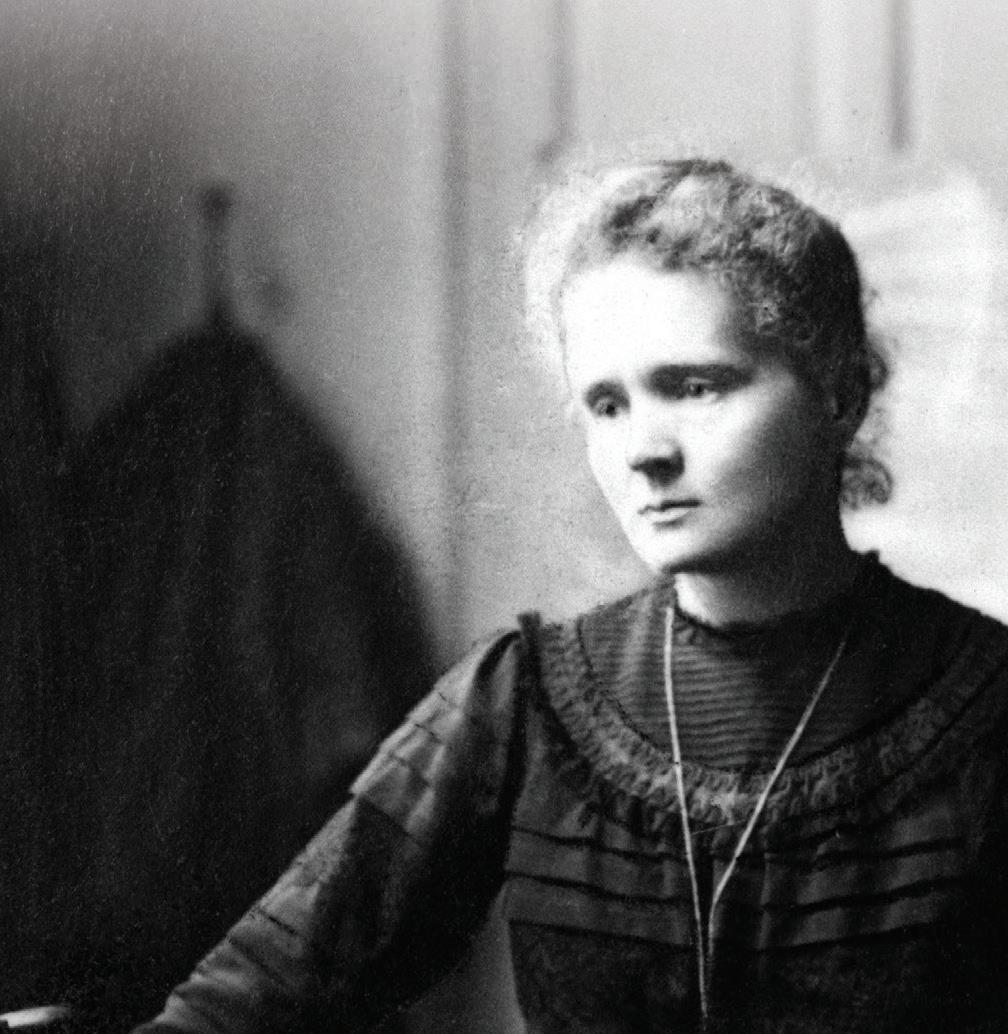
From a speech by Marie Curie about the discovery of radium, 1921



a What is the overall tone of this passage?
b What is its register – is it formal, informal or neutral?
c Does it express excitement, persuasion or logical reasoning?
d Does the speech use simple or complex sentence structures?
e Which two of the following best describe the word choices in this speech? Identify words or phrases from the text that support your choices. precise technical emotional
f This speech was delivered in the formal, academic setting. How would the language need to be adapted if the speaker were sharing these ideas in a personal letter or a classroom discussion instead? Use examples from the text to support your ideas.
15 Summarise Text 2.14 using the following styles, tones and registers:
a Casual/conversational: Rewrite the passage as if you are explaining Curie’s discovery to a friend or social media audience. (Hint: Use simple sentences, contractions and everyday language.)
b Inspirational/motivational: Rewrite it as a speech encouraging young scientists. (Hint: Use powerful language, rhetorical devices and an uplifting tone.)
c Historical narrative: Rewrite the passage as if it were part of a historical biography or documentary. (Hint: Keep it factual but make it engaging, as if telling the story of her discovery.)
Syntax refers to the set of rules that govern how words are arranged in a sentence. For example:
• Standard order: The teacher explained the concept clearly. (subject-verb-object)
• Inverted order (for emphasis or stylistic effect): Clearly did the teacher explain the concept. (Placing ‘clearly’ at the beginning shifts emphasis.)
• Deliberate emphasis: Never had the students been so engaged in a lesson. (Placing ‘never’ at the beginning intensifies the statement.)
Syntax choices interact with style, register and tone, reinforcing purpose and level of formality. Varying syntax allows a writer or speaker to:
• enhance clarity, ensuring messages are easily understood
• create emphasis, placing key information in positions of prominence
2 Exploring the text
logical reasoning: a thinking process that uses established rules or principles to draw conclusions and solve problems
• reflect tone and register – for example, short, simple sentences may create a direct or informal tone, while longer, complex sentences may convey a formal or academic register.
For example, in journalistic writing, short, active voice sentences create a sense of urgency, whereas in literary writing, longer, more intricate sentences build mood and detail.
syntax: the grammatical arrangement of words in a sentence active voice: a grammatical construction where the subject of a sentence is the person or thing performing the action
We are working towards endorsement of this title for the Cambridge Pathway
Look at this extract from another speech and the notes below: We cannot delay action any longer. [1] Climate change is not a distant threat – it is here, now, shaping our weather, displacing communities and disrupting food systems. [2] While some still argue over policies, the science is clear, and the need is urgent. [3] It is our responsibility – not tomorrow, but today – to act decisively for the sake of future generations. [4]
[1] Short, urgent sentence. The syntax is simple and declarative, and the effect is to create a sense of urgency and determination, setting the tone as serious and persuasive. The register is formal but accessible, suitable for a speech.
[2] Longer compound sentence with a list. The syntax is a parallel structure with commas and dashes, with the effect of emphasising the immediacy and scale of the problem. The tone is urgent and assertive. The purpose of this sentence is to persuade the listener by presenting logical evidence (appeal to reason).
[3] Complex sentence with a dependent clause. The sentence starts with a subordinate clause that introduces contrast; this syntax acknowledges opposing views but quickly shifts attention to the speaker’s main point. It makes the argument sound balanced and thoughtful, which helps build credibility. The formal and reasoned tone is appropriate for persuasive writing, such as speeches, commentaries, or public advocacy pieces.
[4] Sentence with interruption for emphasis. The use of dashes adds a deliberate pause to highlight the contrast between ‘not tomorrow’ and ‘today’, and this syntax draws attention to the urgency of the message. It encourages the reader to reflect and reinforces the speaker’s call to immediate action. The tone is inspiring and persuasive, with a moral appeal that emphasises collective responsibility.

16 Rewrite the following sentences as described.
a The children quickly completed their homework.
(Rewrite to emphasise a different part of the sentence.)
b She had never felt so happy in her entire life.
(Invert this sentence by placing ‘never’ at the beginning.)
c The storm raged with incredible fury.
(Rewrite this sentence to shift the emphasis to ‘with incredible fury’.)


Style, tone and register are all linked to the language a writer or speaker uses. Specific words (diction) are carefully chosen to shape the meaning and message of a text or speech, to create certain effects and to make the reader or listener respond in a particular way.
Writers use language and word choices to:
• create tone, mood, or atmosphere (for example, tense, optimistic, humorous)
• show emotion or attitude (for example, frustration, regret, enthusiasm)
• persuade or influence others (for example, to suggest solutions or frame people positively/negatively)
• suggest motives, assumptions or bias (for example, exaggeration or selective phrasing)
• give insight into a speaker’s personality or priorities.
By analysing word choice, you can explain what a speaker’s tone suggests, why they made a particular comment or what their word choice reveals about their motives or feelings. Additionally, you will be able to evaluate how persuasive or emotional the language is, and how it reflects the writer’s purpose or point of view.
Text 2.15 shows two text types that exemplify of some of these effects.
Text 2.15

Part 1: Journal entry
Tuesday, 6 February
Honestly, today just confirmed what I’ve been thinking for weeks. We’re expected to do everything, smile about it, and say thank you for the opportunity. I don’t mind stepping up when needed, but this? Another week of ‘volunteering’ for lunch clean-up just because I didn’t say no fast enough?
I overheard Ms Patel saying I’m ‘such a dependable student’. Translation: someone who won’t argue back.
I stayed behind after class to speak up, but of course I chickened out. Just nodded and said, ‘I’ll manage.’ Why is it so hard to just say what I mean?

diction: the choice and use of words in speech and writing
Part 2: Dialogue excerpt (the next morning)

Jordan: You doing that clean-up thing again today?
Zara: (shrugs) Yeah. Guess so.
Jordan: You don’t even like it. You told me last time it was exhausting.
Zara: I know. But Ms Patel already wrote my name down.
Jordan: So what? Tell her to cross it off. You’re allowed to say no.
Zara: (quietly) I wish I could.
We are working towards endorsement of this title for the Cambridge Pathway
Note the following features:
• Diction: Phrases such as ‘I’ll manage’, ‘chickened out’ and ‘I wish I could’ suggest Zara’s internal conflict. These words reflect a passive, hesitant tone that hints at her discomfort with confrontation, even though she feels taken advantage of.
• Tone and emotion: The journal entry opens with ‘Honestly, today just confirmed what I’ve been thinking for weeks’, which conveys emotional exhaustion.
• Syntax: Short responses like ‘Yeah. Guess so.’ and ‘I know.’ in the dialogue highlight her reluctance and discomfort. These fragmented sentences suggest avoidance or a desire to shut down the conversation.
17 Read Text 2.16, then answer the questions.
Text 2.16

Part 1: Excerpt from a conversation between two students, Priya and Lewis
Lewis: You’ve seen the final Project Week shortlist, right?
Priya: Yeah. ‘Future Me’ or ‘Sustainable Solutions’. And now everyone’s in a panic about what to vote for.
Lewis: I just think we should be using the time for something bigger than writing mock CVs
Priya: Wow. Harsh. Some of us don’t have a clue what we want to do after school – a little guidance wouldn’t hurt.
Lewis: It’s not that I don’t get it. But we’re constantly told to ‘think about the future’. What about learning to change something now?
Priya: Change is great, but not everyone wants to spend the week being lectured on waste bins.
Lewis: It’s not about bins. It’s about action. Planning something real. Not just reflecting and moving on.


Part 2: Extract from the Project Week voting form
Year 12 Project Week: Voting form
Sustainable Solutions
Work in teams to identify a real environmental or community challenge and design an actionable solution. You will:
• research local issues, develop campaigns, or propose new systems
• present findings and a pitch to a review panel of staff and community partners
• focus on critical thinking, teamwork and practical impact.
Future Me
Explore what life after school might look like and how to prepare for it. You will:
• attend career and education workshops, mock interviews and life-skills sessions
• create a personal portfolio and post-school action plan
• focus on self-reflection, goal setting and confident communication. Students must vote by Thursday 3 p.m.
Project Week will run Monday to Friday, and your selected theme will guide all activities.

2Exploring the text
a How does Lewis’s way of expressing his opinion shape the reader’s impression of him? Refer to a specific sentence or phrase that stands out in how it is phrased.
b How does the conversation between Priya and Lewis help us understand the contrast between their priorities? Explain how their responses to each other build that contrast.
c Look at the description of ‘Future Me’ in Part 2. What kind of experience is being presented, and how does the wording influence how the reader might feel about it? Choose one phrase or sentence to support your answer.
d The Project Week voting sheet includes headings, lists and bullet points. How do these choices affect how information is communicated to students? What does this structure suggest about the writer’s purpose?
e Consider Lewis’s final line: ‘It’s about action. Planning something real. Not just reflecting and moving on.’ What do these short phrases suggest about how he feels? Why do you think the speaker uses this rhythm and structure?
f Both texts present different ideas about what students should gain from Project Week. How does each text communicate these ideas to influence the reader? Use examples from both to support your view.
g Imagine you are reading this as a student deciding how to vote. What parts of the language might shape your decision? Support your answer with evidence from one or both texts.
Two words might have similar definitions according to the dictionary (their denotation), but they can create very different feelings or impressions when read or heard. This is because even similar words can have different connotations. For example, both ‘home’ and ‘house’ refer to a place where someone lives. However, ‘home’ suggests warmth, belonging and personal connection, while ‘house’ feels neutral – even impersonal. All the effects explored above are created by choosing words with the right connotations, so recognising and understanding different connotations is useful not just for analysing texts, but also for your own academic writing, to ensure you get your message across in the way you want.
It is tempting to think of connotations as simply positive or negative, but they are often more complex than that. The meaning of a word may vary depending on context, perspective and intention:
• Who is using the word? A journalist, a poet and a politician might all use the same word differently.

denotation: the main meaning of a word, not including any feelings or ideas that people may associate with it
• What is the tone of the text? A word like ‘stubborn’ might be negative in a workplace setting but suggest admirable qualities in a story about perseverance.
• How does the word affect the reader’s perception? Choosing between ‘brave’ and ‘reckless’ can entirely change how someone’s actions are viewed.
connotations: the ideas, feelings and associations that a particular word evokes in a reader, in addition to the main meaning of the word
We are working towards endorsement of this title for the Cambridge Pathway
The following table gives some examples of how similar words carry different connotations.
Word DenotationConnotationsExample
economical Careful with money Positive, resourceful, wise, responsible
cheap Low in priceNegative, possibly of poor quality, lacking value
confident Sure of oneselfPositive, assertive, self-assured, capable
My grandmother was economical, always finding ways to save money and make the most of her resources.
The furniture was cheap and poorly made, falling apart after only a few months.
The confident speaker captivated the audience with her clear voice and compelling arguments.
arrogant Having an exaggerated sense of one’s own importance
determined Possessing firm or unwavering resolution
Negative, haughty, conceited, overbearing
stubborn Having or showing determination not to change one’s attitude or position
Positive, resolute, persistent, tenacious, strongwilled
The arrogant CEO dismissed his employees’ suggestions, believing that he knew best.
Despite facing numerous setbacks, the determined entrepreneur never gave up on her dream of starting her own business.
Negative, inflexible, obstinate, unwilling to compromise
The stubborn child refused to eat his vegetables, even though his parents pleaded with him.
18 Copy and complete the table to identify the denotation and connotation of each word, then give an example of the word in context.
Word DenotationConnotationExample curious nosy brave reckless generous extravagant assured conceited assertive aggressive
Words are like onions – they have layers! Exploring the connotations of words will uncover the subtle shades of meaning and help you to understand the writer’s attitude, tone and purpose.
When people write or speak they may use certain types of words and phrases for particular effect:
• Figurative language includes many different devices, including simile, metaphor and personification, that take words beyond their literal meanings. Sayings like ‘as quiet as a mouse’ or ‘as brave as a lion’ are examples of simile.
• Sensory language uses words to create vivid imagery and appeal to the reader’s five senses. Descriptions such as ‘the sweet aroma of freshly baked bread’, ‘the deafening roar of the thunder’ or ‘the velvety softness of the cat’s fur’ create a more immersive and engaging reading experience.
• Emotive language is used to evoke specific emotions. Words such ‘joyful’, ‘heart-breaking’, ‘infuriating’ or ‘inspiring’ can directly trigger emotional responses in the reader or listener.
Although these language devices are very common in literary texts, they are also used in persuasive texts and speech, and indeed any material that aims to elicit a specific response from the reader or listener, whether that is empathy, anger or excitement. Understanding these language uses will help you to read beyond the literal meaning of words and recognise deeper messages and meanings within a text.
2 Exploring the text
personification: a literary device in which a nonhuman object or idea is given human qualities or characteristics sensory language: words chosen to appeal to a reader’s senses: sight, sound, touch, taste and smell
We are working towards endorsement of this title for the Cambridge Pathway
The three most common types of figurative language you are likely to come across in your wider reading are simile, metaphor and personification.
• A simile is a comparison between two things using the words ‘like’ or ‘as’ (for example, ‘The snow fell like soft feathers.’)
• A metaphor is a direct comparison between two things (for example, ‘The city is a concrete jungle.’)
• Personification is when a writer gives human qualities to non-human things (for example, ‘The wind howled through the trees.’)
Figurative language is more than just decoration – it shapes how a reader interprets the meaning, mood and message of a text. For example, saying ‘the wind howled through the trees’ gives the wind human attributes, making it seem alive and menacing. This choice might reflect the writer’s intention to create a tense or foreboding atmosphere in a story or to highlight the impact of a disaster event.
Similarly, comparing a city to a ‘jungle’ suggests chaos, unpredictability, or even danger. The connotations of these comparisons help reveal a writer’s perspective: Is the city a vibrant, untamed ecosystem or a lawless and overwhelming place?

Analysing these language choices will help you to uncover not only the emotions a writer wants to evoke but also their viewpoint on a subject.
19 Read the following sentences. Each one uses emotive or sensory language to influence the reader. For each example:
• Identify one or two specific words or phrases that create a sensory or emotional effect.
• Explain what the effect is and how it might shape the reader’s understanding or reaction.
a ‘The air was thick with smoke, coating the back of your throat like ash. Sirens rose and fell in the distance, their cries fraying the edge of silence.’
b ‘Is it fair that some children go to bed hungry while leftovers are thrown away? This isn’t just a crisis – it’s a call to action.’


c












Emotive language and sensory language often work together. Sensory details can enhance the emotional impact of a scene, while emotive language adds depth and meaning to sensory descriptions. In speeches, advertisements and opinion articles, these techniques are often used to influence the audience’s feelings and perceptions. For example, a charity campaign might use sensory language to describe the harsh conditions of people in need (‘freezing winds, hollow cheeks and trembling hands’), while also employing emotive language to provoke empathy and urgency (‘No child should have to endure such suffering. Act now to save a life.’). Politicians and activists also use these techniques to sway public opinion, painting vivid pictures of problems that need immediate attention or appealing to values such as justice, freedom or security.
20 Read Text 2.17, then answer the questions.
Text 2.17

Have you ever been at sea in a dense fog, when it seemed as if a tangible white darkness shut you in, and the great ship, tense and anxious, groped her way toward the shore with plummet and sounding-line, and you waited with beating heart for something to happen? I was like that ship before my education began – only I was without compass or sounding-line and had no way of knowing how near the harbor was. ‘Light! Give me light!’ was the wordless cry of my soul, and the light of love shone on me in that very hour.
From
a Find three examples of emotive language. What emotions do they evoke?
b Identify three examples of sensory language (sight, sound, touch, smell, taste). How do they create a vivid scene?
c How do these techniques work together to shape the overall tone and impact of the passage?
21 Read Text 2.17 again, then rewrite it in two different ways.
a In a neutral, factual tone. Remove all emotive and sensory language. Make it as plain and objective as possible, like a report. Example: “The writer describes being at sea in a dense fog. She was anxious and uncertain, unable to find her way. She lacked instruments to guide her and did not know how near or far the harbor was. She asked for light to guide her and felt relief when it came.”
b With heightened sensory and emotive language. Keep the meaning of the passage the same but intensify the emotional and sensory elements to make it even more vivid. Example: “The suffocating fog wrapped itself around me like a heavy shroud, each moment sinking me deeper into fear. My heart thudded violently as I strained for some sign of rescue. I was adrift, blind and directionless, every breath trembling with despair. In that abyss, I cried out for light, and when it pierced the darkness, it filled my soul with uncontainable joy and deliverance.”
2Exploring the text
We are working towards endorsement of this title for the Cambridge Pathway
Now read Text 2.18, an extract from an article about ice diving in the name of science. As you read, consider all the skills you have explored in this chapter so far: explicit and implicit meanings, text structure, writer’s purpose and use of language.
Text 2.18

There is a 70cm-thick (28in) layer of ice capping the surface of this lake, in a remote corner of Lapland, northern Finland. Gathered around a hole cut into the ice is a group of around 20 people, peering down into the inky depths with some trepidation. The seemingly lifeless water below the ice has a temperature only slightly above 0 degrees Celsius (32 degrees Fahrenheit). Some of them are about to jump down there to venture under the ice.
Sophie Kalkowski-Pope is one of the divers preparing to visit this strange, upside-down world where she will swim below a ceiling of smooth ice. The marine biology graduate from the University of Queensland, Australia, is part of an ice-diving training party that has gathered here. She is wearing a dry suit and anticipating the initial cold shock when that frigid water will hit the exposed skin on her face.
It’s so numbing in these Arctic waters that, even with thermal clothing and special insulating gloves, divers find it hard to use their hands after just 30 minutes underwater. There are other dangers, too, so strict safety protocols are in place. Divers are tethered to the surface using a safety rope, with a handler on the surface communicating with the diver via rope signals. Onetug for ‘ok’, two tugs for ‘stop’, three for ‘come back’.
A standby diver waits nearby in full gear, ready to enter the water if there’s an emergency. And there are two holes cut in the ice next to each other so there are two exit points.
The lines of rope linking divers back to the surface could become entangled in submerged branches or logs, other debris, or even the diver’s own equipment such as fins or tanks.


The training here on a frozen lake is practice for work that will be done out on the sea ice ofthe Arctic and Antarctic, where there are added dangers – large seals sometimes gather atthe dive holes, preventing divers from leaving the water.
With one final check of her equipment, Kalkowski-Pope puts her breathing apparatus inhermouth – and flings herself in.
[. . .]

It may be the middle of March, but it still feels very much like winter here. The lake is frozen over and surrounded by Finland’s highest fells, still draped in thick snow.

Perry Brandes, a commercial diver from Florida, where he is used to a far warmer climate, hasjust completed his first ice dive. ‘It’s very peaceful,’ he says. ‘You look up and see light coming through. It’s like looking at a city from afar.’ This, he explains, is the sun peeking through holes in the ice above. Those twinkling lights are like beacons that guide the diversback to the surface.

From ‘The divers venturing under the ice in the name of science’ by Erika Benke, www.bbc.co.uk



22 a What text structure does this article use? Choose from the following and justify your choice with examples from the passage.
A chronological
B cause and effect
C description
D problem and solution.
b The main purpose of this article is:
A to encourage readers to try ice diving
B to inform readers about the experience and safety of ice diving
C to highlight the dangers of ice diving and persuade against it
D to explain how climate change affects Arctic diving.
c Using context clues, which word could replace ‘trepidation’ in line 3?
A confidence
B hesitation
C confusion
D excitement.
d Which sense does the phrase ‘inky depths’ (line 3) engage? Why?
e How does the phrase ‘shock of the temperature sending ripples up her spine’ help the reader understand the physical impact of the ice dive? What does the writer’s choice of wording suggest about Sophie’s experience?
f What effect does the comparison ‘twinkling lights are like beacons’ have on the reader’s understanding of the underwater setting? How does it reflect the diver’s perspective or emotions (line 31)?
g Identify one example of emotive language and explain how it influences the reader’s perception of ice diving.
h Imagine this article was rewritten for a tourism advertisement rather than a science feature. How would the tone, language and content change?
When reading texts, especially non-fiction texts such as news articles, interviews, opinion pieces or speeches, it is important to think about who is speaking, what they believe, and how they might be connected to the issue. There are two main things consider:
• Point of view: This means who the ideas and information are coming from. Different sources can affect how a message is shaped or received.
2 Exploring the text
We are working towards endorsement of this title for the Cambridge Pathway
• Perspective: This refers to how a person’s background, beliefs or experiences influence what they say. Two people might talk about the same issue but have very different views depending on what matters to them.
By thinking about point of view and perspective you can better understand why a text is written in a certain way, what the writer wants the reader to believe, and how different people might see the same topic differently.
Point of view refers to the source of the information – who is speaking or writing, and how their position shapes what that they include, what they emphasise and what they leave out. It focuses on the source of the voice or opinion in the text: the person, group or organisation sharing ideas, facts or arguments.
Common examples of point of view that you may come across in non-fiction texts include:
• a scientist writing about environmental policy
• a government official delivering a public address
• a teenager sharing a personal experience in a school newsletter
• a charity organisation issuing a public appeal.
Each of these reflects a different position or role, and this shapes what kind of information is shared and how readers interpret it.
When identifying the point of view in a text, look for:
• Who the speaker or writer is (What role do they hold? What experience might they have?)
• What language they use (Is it formal, emotional, persuasive or neutral?)
• What information they focus on or leave out (Do they highlight facts, opinions or specific groups).
23 Read the four extracts a–d. For each one answer, the following questions:
• Who is likely to be speaking or writing?
• What clues help you decide?
• How does the point of view affect what they say or how they say it?
a We’ve seen first-hand how rising sea levels are affecting coastal communities. Urgent changes to policy are needed if we want to avoid irreversible damage.
b I was so nervous before the performance, but I was pleased with it in the end. Sharing my poem with the whole school helped me feel more confident.
c The government is investing an additional $2 million into green energy projects across the country, supporting both innovation and job growth.
d Just $3 a month could help us to provide clean water to children in need. Your donation could change a life today.
fact: something about which there is information that cannot be challenged; something that is known to have happened or to exist opinion: a thought, belief or judgement about an issue or a person
2Exploring the text
Perspective is related, but it refers to how the speaker’s or writer’s background, values or experiences shape the way they present their message. Understanding perspective helps you:
• identify whose voice is shaping the message
• understand why certain ideas are emphasised or left out
• compare how different sources approach the same issue.
Two people with different roles or experiences may view the same issue very differently even if they are talking about the same facts. For example, when considering whether or not school uniforms are a good idea:
• The teacher’s point of view is that of an educator working in a school. Their perspective might emphasise discipline, learning and professionalism.
• The student’s point of view is that of someone experiencing the rules. Their perspective might focus on self-expression, comfort or fairness.
Both are expressing their views on the same topic, but their background and role influence what they choose to focus on – this is the difference between point of view (who) and perspective (how).
Readers and listeners also bring their own perspective, based on their experiences, knowledge and beliefs. This shapes how they interpret information. When analysing and evaluating texts, you need to think beyond your own perspective and consider how others might view an issue based on their own – different – background and experiences. For example, imagine a government introduces a new policy designed to reduce car usage in cities to lower pollution:
• A scientist might focus on the environmental benefits, offering data on improved air quality and reduced carbon emissions.
• A commuter who relies on their car for work might see it as an inconvenience and advocate for better public transportation.
• A business owner in the city centre could have concerns about how reduced car access might affect customer foot traffic.
• A government official might consider the economic impact and how to balance environmental goals with public needs.
For example, look at this statement:
‘We need to stop delaying. Government funds should go towards building more public transportation – not expanding highways. As a daily train commuter, I know how unreliable current services can be. Investing in rail will not only cut pollution, but also make life easier for thousands of working families.’


We are working towards endorsement of this title for the Cambridge Pathway
You could identify the following about the perspective of this short piece:
• Who is speaking? A train commuter – someone who uses public transportation daily.
• What is their perspective? They want more investment in rail, and they view it as essential for reducing pollution and improving daily life.
• What clues show bias or persuasive intent? The phrase ‘We need to stop delaying’ suggests urgency and frustration. ‘Not expanding highways’ dismisses an alternative without exploring its benefits. ‘Make life easier for thousands of working families’ appeals to empathy and shared values.
• What does this tell us? The writer’s personal experience shapes their argument. Their perspective supports public transport, but the emotional and selective language shows a clear bias – they are trying to persuade the reader to agree.
24 Read the statement below, then answer the questions.
‘Everyone’s talking about how fitness trackers help teenagers stay active – but we’re not asking the right questions. These devices collect constant data: heart rate, sleep patterns, even location. Who sees that information? And how long is it stored? We wouldn’t let someone follow our children around all day with a clipboard, so why are we okay with a watch doing it? Until stricter privacy laws are in place, wearable tech should stay out of schools.’
(Alicia Rowe, child data privacy advocate)
a Who is the speaker, and what is their point of view?
b What parts of the text reveal the writer’s perspective or personal priorities?
c Identify one phrase that shows bias or persuasive language. How does it affect the reader?
25 Read Text 2.19 about a city dweller and his hobby. Pay attention to the people and groups involved and their perspectives.
a Who expresses a perspective in this text? List each person or group mentioned and briefly describe what they think or feel about Mr Garcia’s garden.
b Choose two different perspectives. What do their opinions show about their values, concerns, or priorities? What might have influenced their views?
c Which perspective do you find most reasonable or convincing? Why?
Text 2.19

Mr Garcia, a bustling city apartment building resident, had a peculiar passion: urban gardening. He transformed his tiny balcony into a miniature farm, complete with rows of vegetables, fragrant herbs, and even a small chicken coop. While Mr Garcia enjoyed fresh eggs and homegrown produce, his neighbours had mixed reactions. Mrs Rodriguez, who lived next door, loved the fresh coriander Mr Garcia shared, but she was less enthusiastic about the early morning cockerel calls. The building’s landlord worried about the structural integrity of the balcony with the added weight of the soil and chicken coop. Local officials were concerned about potential health and safety violations. Animal rights activists questioned the ethics of keeping chickens in a confined urban environment. Meanwhile, Mr Garcia’s friends admired his resourcefulness and dedication to sustainable living.



Why do different groups have varying perspectives on the same issue? What factors might shape their viewpoints. Think about personal experiences, cultural background or professional expertise. Discuss your ideas in small groups.
Now, shift your discussion to a particular scenario: the impact of a disaster event (for example, a hurricane, wildfire or earthquake).
• How might different groups – such as residents, emergency responders, government officials, scientists, and business owners – view the event differently?
2Exploring the text
• What concerns might each group prioritise?
• How do personal experiences and responsibilities shape their perspectives? Finish your discussion by reflecting on how understanding different perspectives can help in decision-making and problem-solving in real-world situations.
We are working towards endorsement of this title for the Cambridge Pathway
26 Read Text 2.20 carefully, then answer the questions.
Text 2.20

At Northley Sixth Form College, the administration is considering whether to install facial recognition technology at building entrances to improve security and monitor attendance. Two representatives –onefrom the college’s leadership team and one from the student body – were asked to submit written statements for a meeting next week.
Extract from Mr Khan’s statement (Vice Principal for Student Welfare)
In recent years, schools and colleges have faced increasing challenges: unauthorised visitors, late arrivals, even student safety during emergencies. Facialrecognition systems are already being used at airports and concerts. Ifthese tools can help protect thousands in highrisk spaces, surely they can make a positive difference in our college too.
The system we are exploring would not store images beyond daily use. It wouldnottrackstudents’movementswithinthebuilding,onlyconfirm that they’ve arrived and match their identity to our internal record. This is nodifferent to scanning an ID card – but faster, more secure, and less prone to misuse.

Above all, we must ask: what matters more – convenience or collective safety?
Extract from Sadia Lewis’s statement (Student Council Chair)
Facial recognition in a school? That’s not safety – it’s surveillance.
The moment we normalise this kind of monitoring, we stop questioning what’s being done with our personal data. How long is it stored? Who has accesstoit?Andif a systemmisidentifiessomeone,whathappenstothem?
I’m not saying safety isn’t important – it is. But there are other ways to handle it: a staffed front desk, secure ID cards, or even a rotating sign-in team. Our school shouldn’t feel like a testing ground for tech companies. When did being a student mean giving up your right to choose how your face is used?

a According to Mr Khan, what is one benefit of facial recognition technology in schools?
b What do Mr Khan’s comments in paragraph 2 suggest about how the system would work in practice?
c What is the effect of the rhetorical questions used in paragraph 2 of Sadia Lewis’s statement?
d What impression does the reader get of Sadia Lewis’s attitude in paragraph 3? Support your answer with a phrase from the text.
e Compare the views of Mr Khan and Sadia Lewis. In your own words as far as possible, explain how their perspectives differ and what each one believes is most important.
2 Exploring the text
Looking back at the different texts and voices in this chapter, which techniques helped you most in identifying the writer’s message or point of view? Was it the word choice, tone, structure or something else? How did your awareness of perspective or bias change the way you interpreted a text? Choose one example and explain how the writer’s choices shaped your understanding of their purpose.
The power of language in media
You are going to work in small groups to apply your understanding of how language can be used for effect by writing a script and recording a short voiceover for a media piece. This could be an advertisement, documentary clip, or public service announcement.
Step 1: Select one of the following visual prompts:
• a silent commercial or advertisement
• a nature documentary clip (muted)
• a news segment without audio
• a historical or fictional image (for a narrative voiceover).
Step 2: Plan your voiceover:
• Define the purpose: What do you want the audience to feel or understand?
• Choose a register and tone: Will your voiceover be formal, dramatic, informative, persuasive or humorous?
• Decide on key language features: Use sensory details to make the description vivid; incorporate emotive language to enhance audience engagement; select precise word choices to shape tone and mood; choose words whose connotations add depth to the message. For example:
• A PSA about climate change might use urgent and serious language (‘The ice is vanishing before our eyes, an irreversible catastrophe’)
• A travel advertisement might use excitement and wonder (‘Breathtaking landscapes, crystal-clear waters, and golden sunsets await you’)
• A historical documentary voiceover might be formal and descriptive (‘In the harsh winter of 1914, soldiers endured unimaginable conditions in the trenches’).
Step 3: Write the script for your voiceover. It should last one to two minutes and should include:
• a strong opening that hooks the audience
• vivid descriptions using sensory and emotive language
• a well-structured narrative that complements the visuals
• a powerful closing statement.
We are working towards endorsement of this title for the Cambridge Pathway
Step 4: Practise reading your script aloud, adjusting for:
• pacing – is the delivery engaging?
• clarity – are words easy to understand?
• emphasis – are key words given appropriate weight? Then record your voiceover, either as a single speaker or with multiple voices. Add background music or sound effects for impact, if appropriate.
Step 5: Present your voiceover to the class. Those listening should give feedback based on the following questions:
• How effectively did the language enhance the message and emotions?
• Did the voiceover match the tone and intent of the visuals?
• How did word choices shape audience perception?
Step 6: Reflect on this project:
• What challenges did your group face in making the voiceover impactful?
• How did your use of language influence the way the audience understood the visuals?
• If you had to adjust the voiceover for a different audience (for example: younger children, professionals, a global audience), what would you change?
• Explicit meaning is the information that a writer states directly.
• Implicit meaning is what the writer suggests or implies through tone, word choice, and text structure.
• Writers structure texts in different ways to create specific effects. Common structures include chronological order, cause and effect, compare and contrast, problem and solution, and spatial order.
• There is a difference between implying and inferring: the writer implies; the reader infers.
• A writer’s tone reflects their attitude and can influence how a message is received.
• Style and register vary depending on the purpose, audience and formality of the text.
• Point of view and perspective shape how a subject is presented and can affect what is emphasised or left out.
We
Text D: Survey results (visual)
Title: Resident opinions on delivery robots – initial survey (n = 200)
Read the material before answering the questions.
Background
A local council has begun testing delivery robots in residential areas. The battery-powered robots are designed to carry parcels or food orders directly to people’s doors.
Text A: News brief – Delivery robots on trial
The Council has finally launched its much-anticipated automated delivery programme. Supporters say the battery-powered robots reduce traffic, lower emissions and allow contact-free delivery.
However, not everyone is convinced. Some residents say the robots clog narrow pavements and force pedestrians – especially people with wheelchairs or pushchairs – to step into the road. Others worry that the machines are recording video without permission.
1 According to Text A, what are two reasons supporters give for using delivery robots? [2]
The council has limited the trial to two districts and says it will monitor feedback before deciding whether to expand the service.
2 What impression does the phrase ‘not everyone is convinced’ (Text A) give about public response? Explain your answer using your own words. [2]
Text B: Council notice to residents
3 What concerns does the resident raise in Text C, and how does her tone influence the way the message is received? [3]
Delivery Robot Pilot Scheme – Community FeedbackRequested
2Exploring the text
4 Look at the survey results in Text D. How do the figures reflect the mixed opinions shown across the texts? Support your answer with references to at least two of the texts. [3]
As part of our sustainability and smart-transport strategy, the city council is piloting autonomous delivery robots in two neighbourhoods from April to June.
5 What is the overall purpose of Text B, and how does the writer’s use of tone and structure support that purpose? [4]
The aim is to test whether these systems can support local delivery services while reducing traffic and emissions.
6 What do the texts suggest about how different people define ‘progress’? Compare the views expressed in at least two of the texts, using your own words. [6]
All robots are GPS-tracked, limited to pavement routes and programmed to stop when they detect a person or obstacle.
Residents can report issues or leave comments via the council website until 30 June.
7 Compare how the writers of Text A and Text C present their views on delivery robots. In your own words, explain how each writer uses tone and language to influence the reader. [6]

Text C: Public comment (online forum)

‘I support new technology, but these robots are a hazard. My son, who has mobility challenges, was nearly knocked over when one passed too close on the pavement. And they beep constantly – it’s stressful, especially for anyone with sensory issues. If this is progress, it shouldn’t come at the expense of people’s well-being.’ (Nadia M., local resident)
We are working towards endorsement of this title for the Cambridge Pathway
Text D: Survey results (visual)

Title: Resident opinions on delivery robots – initial survey (n = 200)

1 According to Text A, what are two reasons supporters give for using delivery robots? [2]
2 What impression does the phrase ‘not everyone is convinced’ (Text A) give about public response? Explain your answer using your own words. [2]
3 What concerns does the resident raise in Text C, and how does her tone influence the way the message is received? [3]
4 Look at the survey results in Text D. How do the figures reflect the mixed opinions shown across the texts? Support your answer with references to at least two of the texts. [3]
5 What is the overall purpose of Text B, and how does the writer’s use of tone and structure support that purpose? [4]
6 What do the texts suggest about how different people define ‘progress’? Compare the views expressed in at least two of the texts, using your own words. [6]
7 Compare how the writers of Text A and Text C present their views on delivery robots. In your own words, explain how each writer uses tone and language to influence the reader. [6]
2 Exploring the text
7 Compare how the writers of Text A and Text C present their views on delivery robots. In your own words, explain how each writer uses tone and language to influence the reader. [6]
The writer of Text A uses a balanced and factual tone. They present both the benefits and concerns, using phrases like ‘supporters say’ and ‘others worry’ to show different sides. This helps the reader understand the issue without forcing an opinion. In contrast, the writer of Text C expresses a strong personal viewpoint. She uses emotive language, such as ‘nearly knocked over’ and ‘stressful,’ to highlight the danger robots pose for her son. Her use of first-person language and examples makes the reader sympathise with her situation. Together, the two texts show different styles: Text A informs the reader with neutral language, while Text C tries to persuade through emotion and personal experience.
How confident do you feel about what you have learnt and practised in this chapter?
Rate yourself from 1 (not confident) to 5 (very confident), then complete the tasks to prove it. Go online and find an opinion piece (for example, from a newspaper or blog). Use one or more passages from this text to answer the Prove it questions.
Now I can…
Confidence rating (1–5)Prove it understand the difference between explicit and implicit meaning and identify implicit meanings in texts
recognise different text structures and explain how they contribute to a writer’s message
identify and explain a writer’s purpose
analyse the style, tone and register of a text and the effect they have on the reader
analyse a writer’s use of language, including connotations, figurative language and emotive language, and explain its impact on the reader
identify the point of view and perspective from which a text is written and explain how this influences the message.
What is one thing the writer states directly in the passage? What is one idea the writer implies but does not say directly?
What type of text structure is used in the passage analysed? How does it affect the way information is presented?
What is the purpose of the passage? Provide evidence from the text to support your answer.
Identify the tone of the passage. What words or phrases contribute to this tone?
Choose a word from the passage with a strong connotation. What impression does it create? Would a different word choice change the meaning?
Find an example of sensory or emotive language in the text. How does it impact your reader’s perception?
What point of view is the passage written from? How does it shape the reader’s understanding?






We are working towards endorsement of this title for the Cambridge Pathway
Introduction
About the authors
How to use this series
How to use this Teacher’s Resource
About the syllabus
About the assessment
Syllabus correlation grid
Lesson plan template
Approaches to teaching and learning
School Support Hub
Teaching notes
Part 1 Reading and comprehension
1 Comprehension skills
1.1 Vocabulary
1.2 Identifying main ideas and supporting details
1.3 Reading strategies for comprehension
1.4 Summarising and paraphrasing
2 Exploring the text
2.1 Explicit and implicit meaning
2.3 Text structures
2.3 Identifying the writer’s purpose
2.4 Use of language
2.5 Point of view and perspective
3 Analysing and evaluating ideas and evidence
3.1 Reading texts critically
3.2 Analysing meaning
3.3 Assessing reasons and evidence
3.4 Making supported judgements
We are working towards endorsement of this title for the Cambridge Pathway
4 Writing persuasively
4.1 Expressing opinions and developing a persuasive voice
4.2 Writing in different formats
4.3 Writing with style and purpose
4.4 Editing for clarity and impact
Part 2 Academic writing
5 Planning an essay
5.1 Essay basics
5.2 Understanding essay questions
5.3 Considering perspectives and evidence
5.5 Creating an essay plan
6 Writing an essay
6.1 Writing an effective introduction
6.2 Organising the main body of an essay
6.3 Writing an effective conclusion
7 Communicating effectively
7.1 Writing accurately
7.2 Choosing your vocabulary
7.3 Communicating formally
7.4 Checking your work
Coursebook answers
Acknowledgements
We
This Teacher’s Resource contains both general guidance and teaching notes that help you to deliver the content in our Cambridge International AS Level English General Paper series. Some of the material is provided as downloadable files, available on Cambridge GO. (For more information about how to access and use your digital resource, please see the inside front cover.) See the Contents page for details of all the material available to you, both in this book and through Cambridge GO.
There are teaching notes for each chapter of the Coursebook, and each chapter contains the following features to help you deliver the chapter.
At the start of each chapter there is a teaching plan, which summarises the sections covered, including the number of learning hours recommended, an outline of the learning content, and the Cambridge resources that can be used to help you to teach the chapter. Section
The Learning plan table includes the learning intentions, success criteria and assessment objectives that are covered in the chapter. It can be helpful to share learning intentions and success criteria with your students at the start of a lesson so they can begin to take responsibility for their own learning.
The Language support feature contains information to help you present a specific language or grammar point from the chapter. This feature especially focuses on the needs of students with English as a second language.
There are often common misconceptions associated with particular topics. These are identified in a table along with suggestions for eliciting evidence of these misconceptions in your class and suggestions for how to overcome them.
We are working towards endorsement of this title for the Cambridge Pathway
Reflecting the Coursebook, each chapter is divided into sections. For each section, there is a selection of starter ideas, main teaching ideas and plenary ideas. You can pick out individual ideas and mix and match them depending on the needs of your class. The activities include suggestions for how they can be differentiated or used for assessment. Homework ideas are also provided.
The teaching notes include a range of downloadable resources, which are provided as both PDF and Word files (except for the PowerPoints) so you can edit them as you choose.
• Worksheets: the worksheets provide additional activities and resources on topics, as well as additional texts to help students apply their skills to a range of examples. All sample answers have been written by the authors.
• PowerPoint presentations: the PPTs can be used in conjunction with topics and include additional teaching notes. The PPT should be displayed at the front of the classroom to help provide lesson structure and stimulus. All sample answers have been written by the authors.
You will also find answers to the Coursebook questions at the end of this resource.
We are working towards endorsement of this title for the Cambridge Pathway
CAMBRIDGE INTERNATIONAL AS LEVEL ENGLISH GENERAL PAPER: TEACHER’S RESOURCE
Section
Approximate
2.1 Explicit and implicit meanings 5 hours
2.2 Text structures3.5 hours
2.3 Identifying the writer’s purpose 3.5 hours
Explicit meaning
Implicit meaning Making inferences
Common text structures
Chronological order
Cause and effect
Compare and contrast
Problem and solution
Spatial order
Reasons for writing
Resources
Coursebook: Activities 1–3
Downloadables: Worksheets 2.1 and 2.2 PPT 2.1
Coursebook: Activities 4–10
Downloadables: Worksheets 2.3 and 2.4
2.4 Use of language10 hours
2.5 Point of view and perspective 5 hours
Style
Tone Register Word choice
Point of view Perspective
Coursebook: Activity 11
Downloadables: Worksheets 2.5 and 2.6 PPT 2.2 Video 2.3
Coursebook: Activities 12–22
Downloadables: PPT 2.3
Coursebook: Activities 23–26
Downloadables: Worksheets 2.7 Video 2.5
Assessment
objectivesLearning intentions
Students will:
AO1: Demonstrate understanding of information (explicit and implicit) from a variety of material.
AO1: Identify, select and use relevant information and examples for speci c purposes.
AO1: Apply information that exempli es ideas and opinions.
AO2: Demonstrate the ability to interpret meaning, language and information in their context.
AO2: Develop explanations using information and examples.
AO2: Analyse and evaluate arguments and make supported judgements.
• learn the difference between explicit and implicit meaning and make inferences from texts
• explore different text structures and explain how they contribute to a writer’s message
• consider the writer’s purpose and look at the ways in which purpose can be identi ed
• investigate the style, tone and register of a text and the effects they have on the reader
• explore the writer’s use of language, including connotations, gurative language and emotive language, to understand its impact on the reader
• practise identifying the point of view and perspective from which a text is written and understand how this in uences the message.
Syntax may pose a particular challenge for some students. Use the Coursebook Section 2.4 ‘Language focus’ box and the ‘Common misconceptions’ table below to draw out any uncertainty and clarify how to construct sentences using correct syntax.
Success criteria
Students can:
• understand the difference between explicit and implicit meaning and identify implicit meanings in texts
• recognise different text structures and explain how they contribute to a writer’s message
• identify and explain a writer’s purpose
• analyse the style, tone and register of a text and the effects they have on the reader
• analyse a writer’s use of language, including connotations, gurative language and emotive language, and explain its impact on the reader
• identify the point of view and perspective from which a text is written and explain how this in uences the message.
Figurative language such as simile, metaphor and personi cation can be challenging, particularly for non-native speakers. Encourage students to create their own ‘language guide’ where they can record key terminology, de nitions and examples. They can refer back to this throughout their studies.
It may also be bene cial to provide students with glossaries for some of the texts in Chapter 2, to support their understanding of vocabulary. For example, you could provide the following glossary for Text 2.14:
• element: a simple substance that cannot be reduced into smaller chemical parts
• physiological: relating to the way in which the bodies of living things work
• organism: a single living plant, animal, virus
• utilisation: the act of using something in an effective way
• dearer: more expensive.
Students may not understand that commas are needed to separate subordinate clauses in complex sentences, except when the subordinate clause appears at the end of the sentence.
Write the following examples on the board and ask students to identify what is wrong with each example:
• Although the sun was shining the air was cool and crisp.
(Comma is missing after subordinate clause.)
• The weather which had been glorious suddenly changed.
(Commas are missing around the subordinate clause.)
• The air was cool and crisp, although the sun was shining.
(Comma not needed as the subordinate clause is at the end of the sentence.
Encourage students to identify examples of complex sentences in texts they are reading. Pay particular attention to how commas are used to separate clauses.
Remind students of the rule: commas are used in complex sentences when the subordinate clause interrupts the main clause or when the subordinate clause comes at the beginning of the sentence.
The ‘Language focus’ box in Section 2.4 offers further support on sentence structures and their effects.
Students may not understand how to use standard syntax when constructing sentences, resulting in incorrect word order.
Write the following examples on the board and ask students to identify what is wrong with each example:
• The children were excited really about the holiday.
(The adverb needs to come before the adjective.)
• She never is happy.
(The adverb should follow the main verb.)
Starter ideas
1 Getting started (15 minutes)
Resources: Coursebook Chapter 2 ‘Getting started’ box
Identify a set of rules to support students in understanding the correct word order. For example:
• Adverb before adjective.
• Adverb after main verb.
The ‘Language focus’ box in Section 2.4 explores syntax in more detail and can be used for further support.
Purpose and description: This activity introduces students to the skills they will develop throughout this chapter, including main ideas and supporting details, implied meanings, perspective, purpose and language features.
Working in small groups, students should read Text 2.1 and then discuss the questions relating to the text. Take feedback as a whole class.
Students may already be familiar with the concepts of explicit and implicit meanings. Remind them that explicit meaning is the literal meaning of a text (what the writer states directly) and implicit meaning is what is not stated directly (what we can work out by reading between the lines). Ask students to consider the explicit meaning of Text 2.1 and then any implicit meanings. Discuss these as a class.
Answers: Explicit meanings include:
• Many London workers leave the city in the summer months to go on holiday.
• Spain is a popular tourist destination.
• Short-term holiday rentals for tourists means there are fewer housing options for locals in places such as Ibiza.
• Spanish residents have been protesting about tourism.
Implicit meanings include:
• The writer focuses on the negative impacts of tourism, suggesting that they believe changes need to be made to ensure locals are not adversely affected by tourism.
• Words such as ‘chaos’, ‘insensitive’ and ‘disgruntlement’ indicate that the writer thinks something needs to change.
What to do next: Ask students to apply the same approach to a different text. They could find a newspaper article relating to one of the syllabus topics and make notes on their article using the Coursebook ‘Getting started’ activity and questions as a guide. Students should identify the surface meaning of their chosen article (What is the main idea of the article? What are some key details or facts included in the text?) and then make notes on any deeper meanings (What does the article suggest? What is the writer’s overall perspective? How do you know?). They could also make notes on:
• Purpose: Why do they think the writer published this article – what was their purpose?
• Style and tone: Describe the tone or attitude the writer seems to have towards the topic. What impression does this give the reader?
• Use of language: What specific words or phrases create a particular effect or reveal the writer’s perspective?
If students feel confident looking at explicit and implicit meanings, they could begin to make notes on these too.
2 Explicit and implicit meanings and using inference (15 minutes)
Resources: None
Purpose and description: This activity is designed to get students thinking about how they can use inference skills to deduce implicit meaning.
As a class, discuss what inference means in relation to reading comprehension. Elicit an understanding that when reading, inference is about using the information in the text to identify ideas that are not explicitly stated. Explain this as ‘reading between the lines’, looking for clues in the text that highlight implicit meaning. Establish an understanding of the difference between inferring (what the reader does) and implying (what the writer does).
Write the following sentence on the board:
Walking down the road in the dark, the children were terrified.
Ask students to identify the explicit meaning of the sentence (it is dark and the children are scared).
Model how the writer could communicate the children’s fear using implicit meanings. For example:
• As he walked along, Arnav clutched his bag tightly to him.
• Meera looked back over her shoulder, her eyes peering into the darkness that enveloped them.
Now ask students to do the same based on this sentence:
When the bell rang at the end of the day, the children were excited that the summer holiday had begun. Working in pairs, students should write three or four sentences that communicate the children’s excitement implicitly. Encourage them to think about their language choices, and remind them of the need to be suggestive rather than stating ideas directly. The reader will then have to use their inference skills to work out the meaning.
Share some examples as a whole class. Remind students that they are using their inference skills to understand the implied meanings that have been created.
Answers: Example answers:
• At the sound of the bell, the children burst through the doors.
• Escaping from the con nes of the classroom, Akhila felt the fresh air of freedom on her face.
• There was a clamour of noise – shouts, whoops and singing – as the children emptied out on to the playing elds at the end of the day.
What to do next: Direct students to the ‘Language focus’ box on implying and inferring. Ask students to read the information in the box then close their Coursebooks and, with a partner, test one another on the differences between them.
1 How do writers express meaning in texts? (90 minutes)
Resources: Coursebook Section 2.1, Activities 1–3; selection of text types (e.g. extract from a piece of ction, newspaper article, advertisement, letter written to parents by the school); Worksheet 2.1 (optional)
Purpose and description: Students will work through the information in the Coursebook to secure their understanding of explicit and implicit meanings in different texts.
As a class, read the description of explicit meaning in the Coursebook, and the ‘Identifying explicit meaning’ checklist. Then ask students to work alone to complete Activity 1.
Check that all students understand what gurative language is, particularly the de nitions of metaphor, simile and personi cation. Write the following examples on the board and ask students to identify the gurative language technique used in each one:
1 His anger burst out of him, taking the others by surprise.
2 The water was as smooth as glass.
3 The garden was covered in a blanket of snow.
4 The dog howled like a siren.
Having established a secure understanding of these terms, ask students to read the information on implicit meaning, then Text 2.3 and the accompanying notes, which help to identify implicit meanings. They should then complete Activity 2. Take feedback as a class to check understanding. Distribute your selection of texts among the students (see ‘Resources’). Working in small groups, students should use the Coursebook checklists ‘Identifying explicit meaning’ and ‘Identifying implicit meaning’ to identify explicit and implicit meanings in at least two different texts.
When all groups have nished, project a copy of each text onto the board for the rest of the class to see. Take feedback from different groups, discussing the meanings they have identi ed. In order to identify the implied meanings, students will have had to use their inference skills. Read the Coursebook section ‘Making inferences’ and discuss the inferences students made about the texts in this activity. Finally, ask students to complete Activity 3 to practise their inference skills.
Answers: 1 personi cation; 2 simile; 3 metaphor; 4 simile
Differentiation ideas:
• Support: When handing out text types, ensure they are appropriately differentiated to suit the needs of each student. A letter written to parents, for example, may be more straightforward to interpret than a poem.
Before students complete Activity 3, spend some time reading and discussing Texts 2.5–2.7 together. If they are not familiar with the crafts described in each text, show photographs of completed artworks or videos of artists at work. This should help students to visualise the crafts described in each text. For visually impaired students, offer a description of each craft based on the images you choose to share.
Before Activity 3, ask students to complete Worksheet 2.1, which offers support by focusing just on the explicit meanings of the texts. The worksheet includes a glossary of more challenging vocabulary for each text and a set of comprehension questions for students to complete.
• Challenge: Encourage students to carry out their own independent research into the syllabus topic area of traditional arts and crafts, as explored in Texts 2.5–2.7. Ask students to nd another text (maybe an article, interview or webpage) that explores this topic. They should annotate their chosen text to identify the explicit and implicit meanings, using the checklists in the Coursebook to structure their annotations. Assessment ideas: Assess students’ written responses to Activity 3 against the strands in AO1 and AO2.
2 Exploring meanings in interviews (150 minutes)
Resources: Coursebook Section 2.1; recording equipment or pens and paper
Purpose and description: This activity gives students the opportunity to become responsible learners, carrying out their own independent research and exploring explicit and implicit meanings in their ndings. Here, students will carry out interviews to gather and share a wide range of knowledge and opinion from a variety of sources. By collating this research, you could create an anthology of primary sources that could be kept in the classroom and referred to when these topics come up again.
You will need to split this activity into three parts: a 60-minute lesson, a homework task, and a 90-minute lesson. This is to allow time for students to conduct their interviews at home.
Part 1: Explain to students that they are going to conduct interviews to nd out about one of the syllabus topic areas in more depth. They will need to decide which topic area they would like to explore and who they are going to interview. They should make realistic choices based on who they are able to interview, so provide guidance on this if necessary. For example, they could interview a teacher about the role of education in society. Or, if a family member or friend works in a particular area such as medicine or science, students could interview them about medical and scienti c advances and their ethics, or the testing and provision of medicine.
Having chosen a topic area and decided who they will interview, students should write 4–6 questions to ask that person. If necessary, model appropriate questions with the class. For example, if interviewing a relative about traditional arts and crafts, such as knitting, they might ask:
• How would you describe your craft to other people?
• How did you get into knitting?
• What inspires you to create knitted garments?
• Why do you think it is important that people learn to knit today?
Remind students to create open questions that will encourage their interviewees to respond in detail, rather than closed questions that just require a yes or no answer.
Part 2: Students should interview their chosen person for homework. If possible, they should record the interview using their phone or another recording device. If they cannot do this, they should write out their questions clearly on a piece of paper, leaving plenty of space to note detailed answers. Remind students to observe non-verbal cues such as body language; if they are writing down responses, they should record things like the interviewee’s tone of voice, too.
Part 3: When students have completed their interviews, they should listen carefully to the recording, or look closely at their written notes, and create a table like the one below to identify explicit and implicit meanings in the responses to each question. Some examples have been given as a guide.
Question
How would you describe your craft to other people?
How did you get into knitting?
Explicit meanings given in response
Using knitting needles and wool to produce clothes people can wear
1985, when she was a teenager
Taught by her grandmother
Implicit meanings given in response
More than just art – it means something to the creator and also to the person who wears the garment. Helps to connect people – almost spiritual.
Knitting is a way of remembering her grandmother and feeling close to her. Implies that knitting gives her a sense of security and identity.
Remind students that they will need to use their inference skills to support them in understanding the implicit meanings of the responses. Refer them to the Coursebook checklists for identifying explicit and implicit meaning to support them in interpreting their ndings.
Ask students to share their ndings in small groups. They should summarise what they learnt from their interviewee and talk through the explicit and implicit meanings they have identi ed. This will enable students to explore a range of topics beyond their own interview.
Finally, create a class anthology of interview responses. This could be made up of the tables students created in Part 3, along with the written transcript of each interview. Students should write a short introduction to go in the anthology with their transcript, outlining the chosen topic area and explaining who they chose to interview. This anthology can then be referred to in future lessons when the topics come up again.
Differentiation ideas:
• Support: Help students to choose an appropriate topic area and interviewee. Work with them (individually or in small groups) using the model questions shared in the lesson to devise a series of appropriate interview questions they can use.
• Challenge: Challenge students to interview someone about a topic area that is unfamiliar to them. They could do some background research on the topic area before conducting their interview to reinforce their independent reading and research skills. Students could also be encouraged to turn their interview into an article for the school newspaper or website, which could be shared with others.
Assessment ideas: Take in the tables students have created and use them to assess their understanding of explicit and implicit meaning, and how well they can apply their inference skills. Identify students who may need to revisit Coursebook Section 2.1 to improve their understanding before moving on.
1 Experiences of inference (10 minutes)
Resources: Coursebook Section 2.1, ‘Discussion point’ box
Purpose and description: This activity encourages students to re ect on their own experiences of having to make inferences.
Put students in pairs and direct them to the Coursebook Section 2.1 ‘Discussion point’ box. They do not need to make notes but should be prepared to share their ideas with the rest of the class.
2 Reading between the lines (15 minutes)
Resources: Worksheet 2.2
Purpose and description: This activity offers an alternative text for students to practise their skill of reading between the lines.
Hand out copies of Worksheet 2.2 and read aloud Walter De La Mare’s poem ‘The Moth’ to the class. Some of the language may be unfamiliar to students, so allow them to use a dictionary to de ne any words they are unsure of.
Ask students to work with a partner to do Activity 1 on the worksheet, summarising the explicit, literal meaning of the poem. Share responses as a class.
In their pairs, students should then discuss what they think the hidden meanings of the poem might be. You could ask them to discuss and make notes in response to the prompt questions on the worksheet or encourage them to use the Coursebook ‘Identifying implicit meaning’ checklist.
Answers: See Worksheet 2.2 answers.
Homework idea
Interviews
Resources: Recording equipment or the hard copy questionnaire students created in Main teaching idea 2
Purpose and description: Students should carry out Part 2 of Main teaching idea 2 as homework – conducting their interview and either recording it on a device or transcribing the answers onto a questionnaire sheet.
Starter ideas
1 Common text structures (15 minutes)
Resources: Coursebook Section 2.2, table of common text structures
Purpose and description: This activity introduces the range of common text structures students might encounter in their reading, and will allow you to gauge what they already understand about each type of structure.
Put students into groups of three or four and direct them to the table of common text structures in the Coursebook. They should read the information and then work together to note down at least one text that they know of that ts each text structure – for example, an example of a chronological/sequential text might be a recipe they have followed. Take feedback from different groups and write examples of each text type on the board.
What to do next: Ask students to keep a text type diary for the next week, noting down texts they come across that t each structure.
2 Exploring structural features (15 minutes)
Resources: Coursebook Section 1.1, Text 1.3; Coursebook Section 2.2, table of common text structures
Purpose and description: This activity lays the groundwork for a more in-depth look at the cause and effect structure by revisiting a text students explored in Chapter 1. It will help students recognise the type of clues they need to look for when determining the text type, but will also reinforce the idea that many texts do not t neatly into a single category.
Begin by asking students to identify the effect of each of the following events:
• Someone starts to ll a bath but forgets about it and leaves the tap running.
• A farmer plants their crops but there is no rain for two months.
• A student fails to hand in their homework.
These straightforward scenarios introduce the idea of cause and effect. Explain to students that some texts follow a cause and effect structure.
Ask them to re-read Coursebook Text 1.3 in Chapter 1 independently. Come back together as a class and explain that this text is an example of a ‘cause and effect’ structure: it looks at the impact that AI is having on education (its consequences). Project a copy of the text on to the board. As you read the text aloud, annotate the transition words and other phrases that are used to show consequences to exemplify this text structure. For example:
• Cause: ‘New large language model generative AI systems score higher on most standardised tests than average students and often in the top tenth or even one percentile.’
• Effect: ‘This is forcing school systems to reconsider standard modes of assessment and will prompt innovations in how learning is measured.’ (Note the use of the modal verb ‘will’ to show consequence.)
• Transition phrase (in bold): ‘In other words, it’s about rethinking the way we learn and teach and by consequence how students are taught and what they are encouraged to prioritise.’
Ask students to look again at the table of common text structures in Coursebook Section 2.2 and identify which other structure Text 1.3 could be said to follow. Elicit that there are elements of the text that t problem and solution structure – and even compare and contrast. Explain that is because it is an evaluative text.
What to do next: Encourage students to look back at some of the previous texts in the Coursebook and identify the structure(s) they follow. Students can then complete Activity 5. When they have written their cause and effect text, they should annotate their paragraph, identifying the examples of appropriate transition words they have used. Encourage students to refer back to the table of common text structures in the Coursebook to help them.
1 Compare and contrast and problem and solution text structures (90 minutes)
Resources: Coursebook Section 2.2, Activities 6 and 7
Purpose and description: This series of activities explores some of the other text structures students might encounter.
Ask students to think about the other subjects they are studying. Have they ever been asked to compare and contrast two ideas or concepts in any of these subjects? For example, in History, they might have had to compare and contrast what life was like for women in different eras, or in Biology they may have had to compare the characteristics of different species. Share examples and record them on the board.
Next, ask students what sort of language they might use when comparing and contrasting. They have referred to the Coursebook table of common text structures in earlier activities, so they are likely to suggest some of the transition words listed there: similarly, unlike, in contrast, however, both, whereas, etc. Record these and any other suggested words and phrases on the board, then read the information in the Coursebook section ‘Compare and contrast’ as a class.
Explain to students that in Activity 6, they are going to compare and contrast social media platforms. Put students in pairs and ask them to discuss the different social media platforms they have used or are familiar with. If they use social media, ask students to explain what it is about that particular platform that appeals to them and why they choose to use it over others.
Students should then work alone to complete the activity, creating a Venn diagram and writing a comparative response. Encourage students to use the words and phrases collected on the board to help structure their ideas.
Next, introduce the problem and solution text structure. Explain that writers use this structure for a variety of reasons and refer students to the information in the Coursebook section ‘Problem and solution’ to expand on this.
Working in small groups, students should complete Activity 7. Take feedback as a class and share ideas for solutions for each of the three scenarios discussed. Make notes on the board and encourage students to add to their own notes during the feedback.
Ask students to choose one of the three scenarios in Activity 7 and write a problem and solution text in the form of a newspaper article exploring the issue. For example, if they choose scenario a, they will write a newspaper article discussing the problem of how students struggle to stay focused during online classes because of distractions at home and offering solutions to this. Students might draw on their own knowledge or experience or they may carry out further research into this area.
They should then complete a short self-assessment of their article, highlighting any transition words they have used appropriate to this text structure.
Differentiation ideas:
• Support: Before students complete Activity 6, share the assessment questions (see ‘Assessment ideas’ below) as a guide for what students should include in their response.
• Challenge: Ask students to find further examples of compare and contrast texts and problem and solution texts and annotate them to show how they fit the text structure. They could look for examples in the resources used in other subjects, such as Science or History, or look in a library or online. Some students might carry out further independent research to support their written response to the scenario.
Assessment ideas: Ask students to swap responses to Activity 6 with their partner and peer assess each other’s work, using the following questions as a guide:
• Has my partner identified the similarities between the platforms?
• Has my partner identified the differences between the platforms?
• Has my partner used transition words to structure their writing?
• Has my partner explained which platform is more influential, giving reasons to support their argument?
Students should share their peer-assessment with their partner and make any necessary improvements to their own work.
The written task following Activity 7 also offers the opportunity for students to compete a short self-assessment.
Resources: Coursebook Section 2.2, Activities 8 and 9
Purpose and description: This activity explores the spatial order text structure. Begin by reminding students of the features of the spatial order text structure in the Coursebook common text structures table. Ask students to read the information in Coursebook section ‘Spatial order’ and to complete Activity 8. Take feedback as a class to check understanding. Next, put students in pairs and allocate each pair a part of the school (for example, the dining hall, library, a particular classroom, the gym). In pairs, they should write a description of their assigned space, using the features of the spatial order text structure. Ask each pair to swap their description with another pair and highlight the transition words used, checking that the text structure and language have been used correctly.
Finally, ask students to complete Activity 9.
Differentiation ideas:
• Support: Before students begin writing their own examples of spatial order texts, spend some time thinking about appropriate transition words for this text structure. Begin by recapping those in the Coursebook common text structure table (next to, across from, to the left, behind, in front of, upstairs, downstairs) and then, as a class or group, see if students can add to this list. Students might come up with suggestions such as: before, overhead, beneath, alongside, near.
• Challenge: Ask students to find their own example of a spatial order text structure and bring it in to share. They should annotate their text to show how it conforms to the spatial order text structure, identifying transition words and considering the audience and purpose of the text.
Assessment ideas: Students can complete peer-assessments of one another’s written descriptions, highlighting the appropriate transition words used in their spatial order texts.
1 Revise common text structures (10 minutes)
Resources: Worksheet 2.3 (cut up into cards)
Purpose and description: This activity is designed to revise the key features of common text structures. Put students in pairs and give each pair a set of cards from Worksheet 2.3. Ask them to reconstruct the Coursebook table of common text structures by matching the text structure with the correct description, transition words and example.
As a challenge, you could give students blank cards instead of those with examples on them, and ask them to write their own short example for each type of text structure.
We
2 Reviewing transition words (10 minutes)
Resources: Worksheet 2.4
Purpose and description: This activity reviews the use of transition words in different text structures. Give each student a copy of Worksheet 2.4. Using the table on the worksheet, students should ll in the gaps in the texts using appropriate transition words/phrases so each text makes sense. They should then identify the text structure for each text.
Answers: See Worksheet 2.4 answers.
Exploring text structures
Purpose and description: This activity brings together the work on different text structures and allows students to apply their knowledge and understanding to a selection of different real-life texts. It also provides an opportunity for students to explore syllabus topic areas, by either building on previous learning or being introduced to new ones.
Students should create a booklet with an example of each text structure they have studied in Section 2.2.
Chronological/sequential
Cause and effect
Compare and contrast
Problem and solution
• recipe
• instruction manual (e.g. for building a piece of furniture)
• newspaper editorial
• letter written from the school explaining a new initiative
• speech
• review (e.g. comparing different versions of a particular product)
• speech
• newspaper article
• self-help guide
Spatial order
• extract from a piece of ction where the writer is describing a particular place
• museum guidebook
• guide to the school or college
They should stick each text in the middle of a piece of paper with space around it for annotations. Working on one text at a time, they should identify the type of text, audience and purpose, and record this information around the text.
They should then read the text and identify the main idea – what it is about. Having done this, students should be able to identify the text structure. They should annotate the text to show how it is an example of this text structure, looking for transition words and any other linguistic clues. When students have completed their booklets, they can staple or paperclip them together, to create a library of examples that students can refer to later in the course or as part of their revision.
1 Emotive language (15 minutes)
Resources: Coursebook Section 2.3; Worksheet 2.5
Purpose and description: Students will probably have come across emotive language in earlier English studies, so this activity serves as a refresher on this common technique for conveying purpose in writing and speaking.
Read the following description aloud to the class:
Every year, thousands of animals lose their homes due to the destruction of the rainforest. Unless humans change their behaviour, thousands more animals will suffer.
Ask students how this makes them feel. They should recognise that the text is designed to make the reader feel guilty and sad. Explain to students that this is emotive language: words chosen to evoke a deliberate emotional response in the reader.
Ask students to read the introduction to Coursebook Section 2.3 and to make a note of the definition of emotive language.
Hand out copies of Worksheet 2.5. Put students in pairs. They should choose one of the images on the worksheet and write a paragraph of text using emotive language based on the image. Remind them that their language must evoke a strong, emotional response in the reader. They might choose to specify an imagined text (for example, a charity appeal or an advertisement) to contextualise their paragraph. For visually impaired learners, read the following descriptions of the images:
Image A: Imagine the shoreline on the coast of Dubai. In the background, the buildings stand tall across the skyline. In the foreground is the beach. The beach is littered with plastic, mainly water bottles that have been washed up by the waves. The sand is covered in plastic debris.
Image B: There is a small, wet, bedraggled looking cat crouched on some steps in the rain. The cat looks uncared for. Its eyes are closed and it looks unwell. The concrete steps look hard and cold.
Image C: Two women are smiling and holding hands as they cross the finish line of an obstacle course race. The women are running beneath a huge, inflatable arch with the word ‘Finish’ printed across the top of it. The women look wet and muddy from the race but they both look very happy.
Ask students to share examples of their emotive paragraphs. This can be done either as a whole class or in small groups. Ask students to identify the most effective examples of emotive language and how the language makes them feel. Encourage students to think about which words in particular evoke the emotional response.
Answers: See Worksheet 2.5 answers.
What to do next: Ask students to find their own examples of emotive language in any texts they are reading, either in other subjects or in their own time. Encourage students to look at charity appeal advertisements both in print and video. Can they identify the emotive language used in these texts?
2 Discussion point (10 minutes)
Resources: Coursebook Section 2.3, ‘Discussion point’ box
Purpose and description: This activity introduces some of the ideas students will need to explore in relation to writer’s purpose.
Ask students to discuss in pairs the Coursebook ‘Discussion point’ questions. Take feedback and share responses as a class. Make sure all students have grasped the idea of what is meant by someone’s purpose in writing or speaking.
What to do next: Ask students to create a table comparing the differences between some of the text types they have discussed in class as shown in the example below:
We
Text type Audience Purpose (reason for writing)
Text message My friendAsk a question about a trip to the cinema
Language and style Anything else
Informal, brief Use of interrogative sentence type Uses emojis
Email Biology teacherInform the teacher that the printer is broken Apologetic, formal Standard English
Clear and direct language –declaratives
1 Reasons for writing (90 minutes)
Resources: Coursebook Section 2.3, Activity 11
Purpose and description: This activity encourages students to explore a range of texts, with a focus on understanding and identifying the writer’s purpose.
Ask students to read the information in the Coursebook section ‘Reasons for writing’, including the table of different purposes. Students should then complete Activity 11. Share answers as a class to check that students have correctly identi ed the range of different purposes.
Next, ask students to look at the table of different purposes. Ask them to create a blank version of the table, with additional rows as necessary.
TextPurpose Text types StructureRegister/language features
Explain to students that they need to complete the table for all the texts they have read in Chapters 1 and 2 of the Coursebook so far. For each text, they should identify the features listed in the table. Reassure them that as some of the texts are shorter than others, it may not be possible for them to ll in every box for every text.
When everyone has completed their table, pair them up to compare responses. Have a brief class discussion on the following questions:
• Were there any texts that they found dif cult to categorise?
• Were there any texts with more than one purpose?
• Did any texts use features of more than one text structure?
Answers: See Coursebook answers and notes on texts.
Differentiation ideas:
• Support: Choose four or ve texts from the Coursebook for students to focus on when completing the table.
• Challenge: Ask students to nd examples of other texts they have read and add these to the table.
Assessment ideas: During class feedback on Activity 11, establish how well students have understood how to identify a text’s purpose. You can also assess their written responses in the table to check understanding.
Resources: Worksheet 2.6; Coursebook Section 2.3
Purpose and description: This activity gives students the opportunity to practise reading and responding to an unseen text and determining the writer’s purpose. The text could prompt further discussion and research into a number of syllabus topic areas, such as visual arts, including design and fashion, sustainable development, and globalisation and its impacts on wealth and equality in society.
Begin by asking students to think of their favourite item of clothing. Why is it their favourite? Does it hold a memory? Is it comfortable? Does it enable them to take part in a particular hobby? Or do they just like the way it looks? If students feel comfortable doing so, they could share these ideas in pairs. Hand out copies of Worksheet 2.6 and read the headline: ‘“I’ll take three!” – the pros and cons of buying multiples of your best clothes’. Put students in pairs and ask them to discuss the idea of buying multiples of a favourite item of clothing. Why might people do this? What do they think of this idea?
In their pairs, students should read the full text on the worksheet and work together to discuss the questions, making their own notes in response. They can annotate the text on the worksheet if they nd this helpful. Once students have completed the questions, each pair should join with another pair and share their responses.
Finally, ask students to determine as a class the purpose of this text and how they know. Elicit the idea that this text has more than one purpose (it is entertaining but it is also informing readers about some of the positives and negatives of fast fashion and arguing that we should do something about this). It is important that students recognise that most texts do not t neatly into one category and that many texts will have dual or multiple purposes.
Answers: See Worksheet 2.6 answers.
Differentiation ideas:
• Support: Group students so that they can offer one another peer support during this task.
• Challenge: Encourage students to explore some of the issues raised in this article in more depth. For example, the article notes: ‘A 2022 report by the Berlin-based Hot or Cool Institute says consumers in developed economies need to limit their fashion acquisitions to ve pieces per year to keep global warming from exceeding 1.5C.’ Ask students to look up the ndings of this report. How far do they agree that individuals have a responsibility to limit their fashion purchases? Students could create a presentation or written essay arguing their point of view.
Assessment ideas: Assess students’ written responses to the questions to ensure they have fully understood the text.
1 Exploring purpose in your own writing (20 minutes)
Resources: Selection of students’ own writing from school subjects or home (e.g. English essay, write-up of science experiment, account of historical event, book review, email, social media post)
Purpose and description: This activity allows students to review a selection of their own texts written for different purposes. Students will use the skills and knowledge they have learnt during Section 2.3 to interpret the texts.
Ask students to choose three of the texts they have brought in and share them with a partner. They should look at the texts they have in front of them (each pair should have access to six texts). For each text, ask students to identify the text type, audience and purpose. Encourage them to look back at the Coursebook table of different purposes to guide them. Join up pairs into groups of four to share ndings.
2 Text types (10 minutes)
Purpose and description: This activity encourages students to think about the different text types that might share a particular purpose.
On the board, write the different purposes that texts might have that students have considered in this section:
• Inform/explain
• Persuade/argue
• Entertain/amuse
• Express thoughts/feelings
• Inspire/motivate
• Instruct
Ask students to work in pairs and to write down as many different text types that they can remember that might have each purpose. For example, a text written to ‘instruct’ could be a recipe.
Share responses as a whole class or ask students to check their ideas against the table in the Coursebook.
Answers: Refer to the Coursebook table of different purposes for possible responses.
3 Understanding a writer’s purpose (10 minutes)
Resources: Video 2.3
Purpose and description: Play Video 2.3, which builds on the information in the Coursebook to consolidate students’ understanding of writer’s purpose, including activities for identifying different purposes and guidance on how to write using features designed to convey different purposes.
Project: Environmental issues – reading between the lines
Resources: Coursebook Section 2.3, ‘Project’ box
Purpose and description: Allow some homework time for students to work on the Section 2.3 project ‘Environmental issues – reading between the lines’. They can use the time to complete some/any of the following: nd their sources, research their chosen topic area, work on their written texts, assemble their booklet, design and create their front cover.
1 Introduction to writing styles (20 minutes)
Resources: Selection of short texts to suit the abilities and interests of your class
Purpose and description: This activity introduces the idea of different writing styles. You will need a selection of different texts to show students, which could include the following: extract from a piece of ction, poem, scienti c essay, extract from a textbook, magazine article, newspaper article, webpage.
Put students into small groups and give each group a selection of four short texts. You could give all groups the same texts or vary the texts between groups (this may be helpful if you want to differentiate this task).
Students should look at their texts and discuss the following questions:
• What is the text type?
• Who might be the intended audience?
• What is the purpose of the text?
• What sort of language does the text use?
As a class, read the introductory information in the Coursebook section ‘Style’. Discuss any other styles of writing you feel may be useful in addition to journalistic, literary and technical. For example, you might mention:
• reflective – such as that used in journals or personal statements
• argumentative – such as in a formal essay or debate response
• expository – an informative style, such as in a textbook or science article.
Students should work in their groups to try to identify the style of each of their given texts. Share ideas as a class, encouraging students to give examples from their texts to demonstrate how they came to the decision. For example: ‘This text uses a literary style. It uses the metaphor “a blanket of snow” to describe the weather.’
What to do next: Students could create their own scrapbook of texts, finding examples of different styles. They can annotate their texts to show how language is used to create that style.
Resources: Coursebook Section 2.4, Activity 16, ‘Language focus’ box
Purpose and description: This activity introduces students to the importance of syntax (word order) in expressing meaning.
Write the following words on the board: playing of becauseCraigremindscricket it loves himchildhoodhis
The words are jumbled up and in an order that does not make sense. Challenge students to work out the correct order and rewrite the sentence as quickly as possible. Share answers as a class.
Explain to students that syntax is the technical term used to refer to word order in a sentence. English usually follows the subject-verb-object syntactic structure, but there are times when we vary syntax in order to emphasise particular words, phrases or ideas.
Read the ‘Language focus’ box ‘Syntax’ and ensure that all students understand how it works. Then ask students to complete Activity 16.
Answers: Craig loves playing cricket because it reminds him of his childhood.
What to do next: Get students to explore the use of syntax in other text types, either looking at texts from the Coursebook or finding their own texts to explore. They should note the syntactic structure used (do the sentences follow the subject-verb-object structure?) and consider any variations for effect.
1 Language in speech (90 minutes)
Resources: Coursebook Section 2.4, Texts 2.13 and 2.14
Purpose and description: This activity encourages students to explore language use in more detail. Having worked through the Coursebook sections ‘Style’, ‘Tone’ and ‘Register’, including the ‘Language focus’ box ‘Sentence structures and their effects’ and Activities 12–16, students are going to consider language use in speeches by creating their own written texts.
Refer students back to Texts 2.13 and 2.14. Point out that Text 2.13 is a speech that uses sentence structures to persuade, and Text 2.14 is a speech that uses technical language, a formal register and logical reasoning. Explain to students that they are going to write a speech relating to a syllabus topic area. Their speech should be aimed at young people, and they should imagine they will deliver it to their year group in their school or college. Write these three options on the board.
• ‘As a school or college we should do more to support local charities.’ Write a speech arguing your view on this statement.
• ‘More money needs to be invested in sports for young people.’ Write a speech arguing your view on this statement.
• ‘Young people should have a clear idea of which career path they want to take by the time they leave school or college.’ Write a speech arguing your view on this statement.
Ask students to choose one of them and to write a speech arguing their view on the topic. When students have completed their speeches, they should swap with a partner and answer the following questions about their partner’s speech. This will enable them to practise their reading skills by reading and analysing their partner’s language.
1 What is the overall tone of your partner’s speech?
2 What is its register – is it formal, informal or neutral?
3 Does it express excitement, persuasion or logical reasoning?
4 Does your partner’s speech use simple or complex sentence structures?
5 How would you describe the language and style of the speech? Identify words or phrases from the text that support your choices.
Differentiation ideas:
• Support: Offer students support when planning their speech using the following planning structure. For example:
Arguments in favour of school supporting local charities: consider community links, education, benefits to the school/students
Reasons schools might not support local charities: consider school budgets, time constraints, national or international charities
My main argument is . . .
Point 1: Evidence? / Counter-argument?
Point 2: Evidence? / Counter-argument?
Point 3: Evidence? / Counter-argument?
Begin by exploring the statement they have chosen. Encourage students to think of arguments both for and against the view in the statement. Next ask students to write down their main view/argument in response to their chosen statement. Finally, ask students to identify three main points they want to make in their speech. For each point, they should think of some evidence or a counter-argument they can use or consider.
• Challenge: Challenge students to include evidence from wider, independent research in their speech. Assessment ideas: Assess students’ written responses to their partner’s speeches to ensure they have understood how language and sentence structures can be used effectively. This can also act as a form of peer-assessment as the responses should indicate to students whether their speech was effective.
2 Word associations (60 minutes)
Resources: Coursebook Section 2.4, Text 2.18, Activity 22; video or images of people ice diving (optional)
Purpose and description: This activity gives students the opportunity to explore how a writer uses meaning, structure and language to create deliberate effects. Students should have already completed Activity 18 on connotations, and read the information on emotive and sensory language, as well as the ‘Language focus’ box ‘Simile, metaphor and personification’. They should also have completed Activities 19–21.
Begin by writing the word ‘ice’ on the board. Ask students to create a mind map of words and phrases associated with this noun. These can include adjectives, adjectival phrases, similes or metaphors, or other nouns they associate with the word.
Take feedback and record students’ ideas on the board. Try to group similar ideas together (as shown in the ‘Answers’ provided). Encourage students to consider the connotations of some of the ideas suggested to suggest synonyms for some of the words.
Explain to students that they are going to read an extract from an article about ice diving. If they are unfamiliar with this activity, you could show a video or some images of ice diving.
Ask students to read Text 2.18 and complete Activity 22. If necessary, check understanding once students have completed questions a–c, before asking them to move on to the language analysis questions.
Answers: Example spider diagram.
Differentiation ideas:
• Support: Students may bene t from having some of the more challenging vocabulary in Text 2.18 explained to them before they complete the activity. You could either provide students in advance with a glossary of terms you have identi ed as potentially challenging, or ask students to read the text and note down any unfamiliar vocabulary, which they can then look up in a dictionary.
Students may also bene t from additional support in understanding the overall meaning of the text. Read the text aloud, pausing after each paragraph to help students identify the main idea and supporting details in each section of the text.
• Challenge: When responding to the question h in the activity, students could rewrite the text for a tourism advertisement, rather than simply describing what might need to change. Having produced their own version of the text, students could then annotate it to show how and where they made changes to the tone, language and content.
Assessment ideas: Assess how well students have absorbed the key concepts and their understanding of how meanings, structure and language create deliberate effects by asking them to write a short descriptive paragraph from the perspective of someone preparing to go ice diving. They should use emotive and sensory language, as well as least one simile, one metaphor and one example of personi cation. Either take in this written work and mark it, or ask students to swap with a partner and peer-assess by annotating each other’s work to assess the effect of the language and structural choices.
1 Sentence structures (10 minutes)
Resources: Coursebook Section 2.4, ‘Language focus’ box (‘Sentence structures and their effects’); Section 1.1, Text 1.4
Purpose and description: This activity gives students further practice at identifying how sentence structures are used for deliberate effect.
Ask students to re-read Text 1.4 in Chapter 1. In pairs, they should identify the following in the text:
1 Simple sentence used to communicate a single idea clearly to the reader
2 Complex sentence used to convey detailed research findings to support the journalist’s point of view
3 Compound sentence to enhance the argument
Encourage students to refer back to the ‘Language focus’ box if they need to. Students can also discuss any other sentence structures they think are particularly effective in this text, giving reasons to support their ideas.
Share responses as a class.
Answers: Example answers:
1 ‘The upside is they are doing something about it.’
2 ‘Two-thirds of 16- to 24-year-olds think social media does more harm than good and three-quarters want tougher regulation to protect younger people from it, according to polling for the New Britain Project, a thinktank founded by a former teacher, Anna McShane.’
3 ‘This isn’t how anyone talks about something they love, but how you look back on a relationship that was in retrospect making you miserable.’
2 Recapping gurative, sensory and emotive language (15 minutes)
Purpose and description: This activity consolidates students’ understanding of figurative, sensory and emotive language.
Write the following sentences on the board:
1 Animals should not have to experience the loss of their natural habitats. It is our responsibility to protect them.
2 Years ago, the trees were filled with a cacophony of noise: the sounds of the rainforest were like a musical score, from the high-pitched bird song to the low growl of predators.
3 The arms of the trees stretched high into the sky, reaching for the warmth of the sun.
4 In a tiny pool, a frog fiercely guarded its minute eggs, which bobbed in the water like little eyes twinkling in the dappled sunlight.
5 Today, the forest is a shadow of its former self. The once vibrant, luscious forest floor is now a wasteland.
As a class, students should identify the figurative, sensory or emotive language used in each sentence. Put students in pairs and ask them to discuss the effect of each of the examples they have identified. Can they identify any other linguistic features? What effect do these have?
Answers:
1 Emotive language evokes feelings of guilt. Use of ‘our’ (possessive determiner) to engage the reader directly.
2 Simile – ‘like a musical score’; sensory language appealing to sense of sound – ‘high-pitched bird song to the low growl of predators’.
3 Personification – ‘The arms of the trees’ ‘reaching’; sensory language – visual image of trees along with sense of touch ‘warmth of the sun’.
4 Simile – ‘like little eyes’; sensory language – visual imagery ‘twinkling in the dappled sunlight’; alliteration – ‘frog fiercely’ contributes to overall sensory effect.
5 Metaphor – ‘a shadow of its former self’ shows how the forest has been destroyed.
Homework idea
Revision materials
Resources: Coursebook Section 2.4, ‘Language focus’ boxes
Purpose and description: Section 2.4 includes three ‘Language focus’ boxes: ‘Sentence structures and their effects’, ‘Syntax’ and ‘Simile, metaphor and personification’.
Ask students to read the ‘Language focus’ boxes again and to create revision materials to support their understanding of the different language elements. Students could create flashcards, posters or a series of PowerPoint slides. Their revision materials should include a clear definition of each language feature, along with examples to help them remember each term.
Starter ideas
1 Fact and opinion (10 minutes)
Resources: None
Purpose and description: This activity will get students thinking about the difference between fact and opinion.
Read aloud some statements about your school or college. Ask students to decide whether each statement is an example of a fact or an opinion. If students need a reminder, there are definitions of these terms in the introduction to this Coursebook section. To make this more interactive, you could ask students to indicate whether the statement is fact or opinion by using a particular movement or gesture (stand up for a fact, for example).
Statements could be based on the following ideas, adapted to suit your setting:
1 There are [XX] students in this school.
2 This school provides students with an excellent education.
3 The school is located in [name of town or city].
4 The English department is one of the best in the school.
Answers: 1 Fact; 2 Opinion; 3 Fact; 4 Opinion
What to do next: Ask students to consider some of the texts they have read – perhaps an advertisement or a newspaper article – and discuss as a class how writers use fact and opinion to help get their point of view across.
2 Point of view (15 minutes)
Resources: Coursebook Section 2.5, Activity 23
Purpose and description: This activity introduces students to the idea of a writer’s or speaker’s point of view. Note that students may have come across alternative definitions and explanations of this term. In particular, in fiction texts, the term ‘point of view’ is often used to refer to the ‘voice’ used in the narrative – for example, first person, third person omniscient. In non-fiction material, however, it is more typically used to refer to the source of the information – who is speaking or writing – and how their position shapes what they include, what they emphasise, and what they leave out.
Ask students to close their eyes and imagine a school sports day. The students, teachers and parents are all gathered on the field waiting to start the races. Suddenly, it starts to rain. The teachers decide it is not safe to continue and cancel the event. The children are asked to line up and return to their classrooms.
In groups of three, ask students to discuss how this event might be relayed from the point of view of the different groups: the children, the parents, the teachers. Alternatively, you could ask students to role play a discussion, taking on the role of parent, teacher and student, and sharing ideas from that person’s point of view.
Share ideas as a class.
Finally, ask students to read the information in the Coursebook section ‘Point of view’ and complete Activity 23.
Answers: Students’ discussions might yield some of the following ideas:
• Parents might be disappointed that the event has been cancelled (perhaps they have taken a day off work to come and watch) but also relieved they do not have to stand outside in the rain. There may be some understanding of why the decision was made to cancel.
• Teachers might be concerned that the children would hurt themselves if running in the rain. They could be worried about children slipping and falling.
• Children might be angry that the sports day has been cancelled. They have been looking forward to it and want to take part. They do not think the rain makes any difference to the competitors, it is just the spectators not wanting to get wet.
What to do next: Move on to consider the concept of perspective by reading the information in the Coursebook section ‘Perspective’ and completing Activity 24.
1 Point of view and perspective (90 minutes)
Resources: Coursebook Section 2.5, Activities 25 and 26
Purpose and description: These activities encourage students to explore how language is used to communicate point of view and perspective. This builds on the work completed in Starter idea 1 and Coursebook Activities 24 and 25.
Begin by reading aloud Text 2.19 with the class. As you are reading, create a rough sketch on the board depicting the different people and places mentioned in the text. You could ask the class to help add to the drawing. Try to include labels of the building and the people in it (Mr Garcia’s apartment, balcony, farm, Mrs Rodriguez, landlord). You will also need to add local of cials, animal rights activists and friends –they are located outside the building.
Ask for volunteers to come and add some thought bubbles to each of the characters. How does each character feel about Mr Garcia’s garden? Students could also volunteer to come up to the board and add to the class sketch.
Ask students to complete Activity 25, and then share responses in pairs.
Direct students to the Coursebook ‘Discussion point’ box. Put them in small groups to carry out the rst part of the discussion. Take feedback as a class and ensure students are con dent in their understanding of the ideas of point of view and perspective.
Introduce the scenario for the next part of the discussion: the impact of a natural disaster (for example, a hurricane, wild re or earthquake). You could choose to link the discussion to a particular disaster if you wish. Students should then work through the rest of the ‘Discussion point’ questions. Take feedback from different groups and share ideas as a class.
Now explain to students that they are going to work independently to complete Activity 26. Encourage them to draw on the ideas from their discussions and their knowledge of perspective and point of view in their responses.
Differentiation ideas:
• Support: By sketching Text 2.19 on the board, you will be supporting visual learners. This should help all students to have a clear understanding of the different points of view and perspectives described.
Ensure that students are grouped appropriately for the ‘Discussion point’ tasks so they are able to offer peer support and all students can contribute.
• Challenge: Ask students to prepare some real-life research in advance of the discussion on natural disasters. They should present their ndings to their group before starting the discussion. For example, students could look at procedures for responding to natural disasters, reports on how particular disasters have been dealt with, or government guidelines in their home country.
Assessment ideas: Assess students’ written responses to Activity 25 and Activity 26 against AO1 and AO2.
2 Point of view and perspective (60 minutes)
Resources: Worksheet 2.7
Purpose and description: This activity encourages students to think more deeply about perspective and point of view. It also relates to the syllabus topic areas of education, social media, and the use of technology in daily life.
Hand out copies of Worksheet 2.7 and read aloud the context information relating to the task.
Divide students into five groups. Assign each group one of the following characters:
• You are the headteacher at the school. The proposal is your idea.
• You are a teacher at the school. You have noticed that some of your students have been really struggling to concentrate in class. You think some of them are not getting enough sleep.
• You are a student. You own a mobile phone but you do not use social media.
• You are a student. You enjoy connecting with your friends on social media.
• You are a parent. You want your child to perform well at school and get the best possible results in their examinations.
Ask students to plan and write a statement in response to the proposal in their groups, which will be shared at an upcoming meeting in the school. Students need to think about using language appropriate to their character and to consider carefully the point of view and perspective they are communicating. Encourage students to use rhetorical devices to make their argument more persuasive and to draw on evidence or research to support their ideas.
Collate the written responses. Ideally, if students have typed these in their groups, they can be quickly collated and printed during the lesson. Alternatively, these could be read aloud or projected on to the board. Each group should read the written statements produced by the other groups’ characters. In their groups, students should discuss how the perspectives differ and what each character believes is most important. End the activity by creating an opinion line so that students can share with you their own perspective on this issue. Ask students to form a line from one side of the classroom to the other. One side of the classroom is ‘Firmly agree with the proposal’; the middle of the classroom is ‘Neutral’; the other side of the classroom is ‘Firmly disagree with the proposal’. Ask students to position themselves along this line and then ‘interview’ students, asking them to justify their place.
Answers: See Worksheet 2.7 answers.
Differentiation ideas:
• Support: To support students who are struggling, assign a role that most closely aligns with their own viewpoint.
• Challenge: Encourage students to draw on evidence and research to support their arguments. You could also invite students to act out the meeting, taking on the roles of the different characters and speaking from their point of view.
Assessment ideas: Assess students written responses. Have they accurately captured the point of view and perspective of their assigned character?
1 Changing perspective (15 minutes)
Resources: Coursebook Section 2.5, answers to Activity 24
Purpose and description: Students should have already completed Activity 24, considering the writer’s point of view and perspective on teenagers using fitness trackers and the storage of data. Ask students to re-read this text, then write a response from a different perspective. For example, they could consider the point of view of a teenager who is keen to be healthy and active, or a parent who is happy for their children to wear
We are working towards endorsement of this
a tness tracker. Students can then share their ideas with a partner and discuss how that perspective differs from the original text.
2 Re ection (15 minutes)
Resources: Coursebook Section 2.5, ‘Re ection’ box
Purpose and description: Students should complete the task in the Section 2.5 ‘Re ection’ box. Ask students to write a written response. When they have written their responses, students should share their ideas in small groups. Did they choose the same texts or different texts? What features have the members of their group have identi ed?
3 Point of view and perspective (10 minutes)
Resources: Video 2.5
Purpose and description: Play Video 2.5, which builds on the information in the Coursebook to offer a more in-depth look at point of view and perspective, including some additional activities identifying these features in a text.
Project preparation
Resources: Coursebook Section 2.5, ‘Project’ box
Purpose and description: Students can spend some time at home preparing for their voiceover presentation for the project ‘The power of language in media’, in particular practising for the voiceover (Step 4).
We are working towards endorsement of this title for the Cambridge Pathway

CAMBRIDGE INTERNATIONAL AS LEVEL ENGLISH GENERAL PAPER : TEACHER’S RESOURCE
Use the glossaries below to help you understand Coursebook Texts 2.5, 2.6 and 2.7. When you have read the texts, complete the comprehension questions for each one.
Text 2.5
Glossary
Māori: the indigenous Polynesian people of New Zealand tōtara: a tree found in New Zealand; its wood is strong and durable
1 What craft is Clive describing?
2 Which country does the craft originate from?
3 How old was Clive was he started doing it?
4 Who helped him to improve his skills when he was a child?
Text 2.6
Glossary
embroidering: decorating cloth or clothing with patterns or pictures consisting ofstitchesthat are sewn directlyonto the material
crochet: to make clothesand other things using wool and aspecial needlewith a hook at one end ubiquitous: seeming to be everywhere
1 What craft is Jordan describing?
2 Which country does the craft originate from?
3 How did Jordan learn the craft?
Text 2.7
Glossary
Murano: an island north of Venice in Italy fusion: when two or more things join or are combined
chandelier: a decorativelight thathangs from the ceiling and has several parts like branches for holding bulbs or, in the past, candles piazza: in Italy, a public square or open areawith a hard surface in a town, where there is no traffic
1 What craft is Dale describing?
2 Which country does the craft originate from?
3 Which country is Dale from?
4 How has he adapted the craft to make it his own?
We are working towards endorsement of this title for the Cambridge Pathway
CAMBRIDGE INTERNATIONAL AS LEVEL ENGLISH GENERAL PAPER : TEACHER’S RESOURCE
Read the poem ‘The Moth’ by Walter De La Mare, then answer the questions.
If there are any words you do not understand, look them up in a print or online dictionary.
The Moth
Isled in the midnight air, Musked with the dark’s faint bloom, Out into glooming and secret haunts
The flame cries, ‘Come!’
Lovely in dye and fan, A-tremble in shimmering grace, A moth from her winter swoon Uplifts her face:
Stares from her glamorous eyes; Wafts her on plumes like mist; In ecstasy swirls and sways
To her strange tryst.

By Walter De La Mare

1 Summarise the explicit, literal meaning of the poem.
2 Explore the possible hidden meanings in the poem.
a What or who could the moth represent in this poem?
We are working towards endorsement of this title for the Cambridge Pathway
b What effect is created by the personification of the fire in the first stanza?
c How does the poet describe the moth?
Chronological/ sequential
Cause and effect
Compare and contrast
Presents events or steps in the order in which they occurred or should occur.
Explains why something happens and its consequences.
Examines similarities and differences between two or more subjects.
first, next, finally, before, after, following
because, due to, as a result, therefore, consequently
similarly, unlike, in contrast, however, both, whereas
‘First, scientists conducted the experiment. Then, they analysed the results.’
‘Since pollution levels increased, many cities introduced air quality regulations.’
‘Unlike fossil fuels, solar energy is renewable and does not emit carbon dioxide.’
Problem and solution
Spatial order
Identifies an issue and proposes ways to address it.
problem, issue, solution, to address this, one way to solve
Organises information based on location, direction or physical arrangement of objects or places.
next to, across from, to the left, behind, in front of, upstairs, downstairs
‘Plastic waste is a major environmental problem. One solution is switching to biodegradable materials.’
‘As you enter the museum, the gift shop is on your right, followed by a large sculpture hall.
Upstairs, the painting galleries stretch along the west wing.’
We are working towards endorsement of this title for the Cambridge Pathway
CAMBRIDGE INTERNATIONAL AS LEVEL ENGLISH GENERAL PAPER : TEACHER’S RESOURCE
Use the table to help you complete the sentences with appropriate transition words. Identify the text structure for each sentence.
Structure Transition words
Chronological/sequential first, next, finally, before, after, following
Cause and effect because, due to, as a result, therefore, consequently
Compare and contrast similarly, unlike, in contrast, however, both, whereas
Problem and solution problem, issue, solution, to address this, one way to solve
Spatial order next to, across from, to the left, behind, in front of, upstairs, downstairs
1 There are too many fish in this pond. ____________________, we need to transfer some of them to a different location.
Text structure: ______________________________________________________________________________
2 If you follow the arrows to the end of the corridor, the waiting room is situated ____________________ the bathroom.
Text structure: ______________________________________________________________________________
3 ____________________, chop the onion. ____________________ add it to the pan and cook until it is soft. ____________________ add the chopped tomatoes and allow these to simmer. ____________________, season the sauce with salt and pepper.
Text structure:______________________________________________________________________________
4 ____________________a lack of volunteers, we have had to cancel Saturday’s swimming event.
____________________, there are lots of disappointed children.
Text structure:______________________________________________________________________________
We are working towards endorsement of this title for the Cambridge Pathway
CAMBRIDGE INTERNATIONAL AS LEVEL ENGLISH GENERAL PAPER : TEACHER’S RESOURCE
5 The games consoles are very similar. ____________________ this one allows you to play games online ____________________ this one does not.
Text structure: ______________________________________________________________________________

We are working towards endorsement of this title for the Cambridge Pathway
CAMBRIDGE INTERNATIONAL AS LEVEL ENGLISH GENERAL PAPER: TEACHER’S RESOURCE
Choose one of the images below and write a paragraph based on that image, using emotive language. If you wish, you can specify an imagined text (for example, a charity appeal or an advertisement) to contextualise your paragraph.
Remember that your language must evoke a strong, emotional response in the reader.
A: A beach in Dubai covered in plastic waste washed up by the sea


We are working towards endorsement of this title for the Cambridge Pathway
CAMBRIDGE INTERNATIONAL AS LEVEL ENGLISH GENERAL PAPER: TEACHER’S RESOURCE
C: Two women crossing the finish line at the end of an obstacle race
Your paragraph:
Read the text below, which is an extract from a newspaper article, then answer the questions.
‘I’ll take three!’ – the pros and cons of buying multiples of your best clothes

It can be reassuring to have twins or triplets of your favourite pieces in the wardrobe. But it can backfire1
What’s more satisfying than finally identifying the perfect white T-shirt? Easy: realising that said T-shirt is affordable enough to purchase four of them – and, in so doing, ensuring that there’s always a crisp, clean tee within reach to layer under jumpers, blazers and trenches2

Buying multiples of garments is one of those lesser -discussed shopping strategies that’s surprisingly widespread. It’s something many people do – typically as a way to reassure themselves that they’ll always have easy access to their most trusted pieces.
It’s also divisive3. For every shopper who derives4 peace of mind from a wardrobe populated by twins and triplets of their preferred garments, there’s another, more ‘intentional’ customer who scoffs at the practice. ‘I would never do that,’ one friend told me. ‘I love cherishing every individual piece.’
And no matter how handy it may be to own the same shirt in several colours, multi -buying can’t help but be environmentally dubious5. A 2022 report by the Berlin-based Hot or Cool Institute says consumers in developed economies need to limit their fashion acquisitions6 to five pieces per year to keep global warming from exceeding 1.5C. That doesn’t leave much room for repeat purchases. by Emily Cronin in the Financial Times


Glossary
1backfire: (of a plan) to have the opposite result from the one you intended
2trenches: an abbreviation of ‘trench coats’ – a military style coat
3divisive: used to describe something that causes great and sometimes unfriendly disagreement within a group of people
4derive: to get something from something else
5dubious: thought not to be completely true or not able to be trusted
6acquisition: something someone has bought, often to add to a collection of things
We are working towards endorsement of this title for the Cambridge Pathway
1 Before reading:
a What type of text is this (article, blog, story, poem, advertisement, etc.)?
b Where was this text published (newspaper, magazine, website, textbook, etc.)?
c Who is the intended audience (general public, a specific age group, subject experts, etc.)?
2 During reading:
a What is the main topic of the text?
b What kind of language does the writer use (formal/informal, objective/subjective, emotional/neutral)?
c How is the text structured (chronological, cause and effect, compare and contrast, etc.)?
d What kind of evidence does the writer use (facts, statistics, examples, anecdotes, etc.)?
e Does the writer express opinions or try to persuade the reader?
We are working towards endorsement of this title for the Cambridge Pathway
3 After reading:
a What was the main point you took away from the text? What did the writer want you to learn or to do after reading it?
b How did the text make you feel (for example, informed, entertained, persuaded, inspired)?
c Summarise the writer’s main point in one sentence.
We are working towards endorsement of this title for the Cambridge Pathway
CAMBRIDGE INTERNATIONAL AS LEVEL ENGLISH GENERAL PAPER : TEACHER’S RESOURCE
Read the context information in the box below.
The leadership team at your school or college is concerned about the impact that social media use is having on young people’s mental health and well-being. They are also concerned that mobile phones are causing distractions during lessons and having a negative impact on students’ education.
They are proposing a complete ban on mobile phones anywhere on school premises. This includes at break and lunch times, and on school transport.
A meeting will be held next week to discuss this proposal. Written statements from all concerned parties must be submitted in advance.
I am considering this proposal from the point of view of (please tick one):
The headteacher at the school. The proposal is your idea.
A teacher at the school. You have noticed that some of your students have been really struggling to concentrate in class. You think some of them are not getting enough sleep.
A student. You own a mobile phone but you do not use social media.
A student. You enjoy connecting with your friends on social media.
A parent. You want your child to perform well at school and get the best possible results in their examinations.
Complete your planning notes here, then write your statement ready for the meeting.