
BRAIN AND BEHAVIOR INNOVATIONCENTER

Letter from the Technology Pillar Director
BRAIN AND BEHAVIOR INNOVATIONCENTER
Letter from the Technology Pillar Director
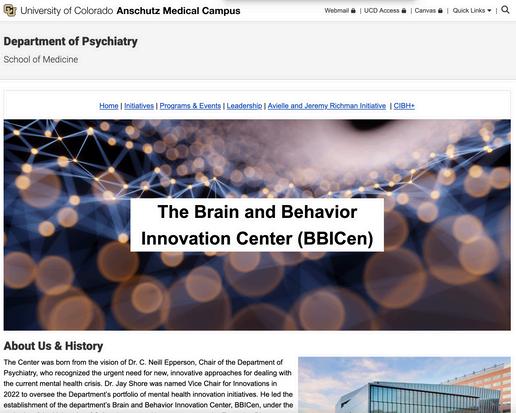
Allison G. Dempsey, PhD Professor, Director of Informatics & Technology

Research Spotlight: Avielle
Pillar Highlight: mindLAMP Team Member Feature: Dr. Allison G. Dempsey
Good News: Awards, Publications & Media
As we look ahead to the next chapter of innovation at BBICen, I’m excited to share the progress and vision of the Technology Pillar. Our work continues to be guided by a commitment to advancing cutting-edge digital mental health care through collaboration, infrastructure, and implementation.
At the heart of our efforts is the Digital Innovation Lab, which has become a cornerstone for technology-driven transformation. Within the lab, we’ve launched and supported several key initiatives, including the mindLAMP trial and the Bridges/Babyscripts project. These projects are not only expanding our understanding of digital phenotyping and maternal mental health delivery, respectively, but are also demonstrating how thoughtfully designed tools can be integrated into real-world clinical settings.

Letter Continued
To support this work, the lab has built a robust infrastructure that includes a Digital Navigator Program, a team of trained research assistants, licensed clinicians, and a peer-to-peer consultation model involving faculty experts in clinical trials, cross-sector collaboration, technology development, and implementation science. This structure ensures innovation is shared, scalable, and sustainable, rather than siloed.
We are also deepening our informatics and data integration strategy, which has enabled us to successfully lead the rollout of measurementbased care across all psychiatry outpatient clinics. This milestone reflects our commitment to data-informed practice and continuous quality improvement.
Looking forward, we are working closely with campus partners to build the infrastructure needed to meet the pace and expectations of our industry collaborators. We are preparing to launch several exciting new partnerships that will bring cutting-edge tools and insights into our ecosystem. At the same time, we are expanding our network of community partners, with the goal of establishing BBICen as a national hub for mental health technology research and innovation.
Thank you to all who have contributed to this momentum. I look forward to continuing this journey with you as we build a more connected, responsive, and equitable system of care.
Warmly,

Allison G. Dempsey, PhD
The Avielle Initiative Seed Grant for Brain Health Research and Innovation was created to honor the life and legacy of Avielle Richman, a bright and compassionate young girl whose life was tragically cut short in the Sandy Hook Elementary School shooting. Avielle was known for her curiosity, empathy, and love of science. In her memory, the initiative seeks to advance brain health research that fosters compassion, resilience, and community well-being values that Avielle embodied.
BBICen worked closely with friends of the Richman family to establish the Avielle Initiative Seed Grant and hosted the inaugural annual call for proposals in 2023. Each year, the initiative awards up to $25,000 per project to support early-stage, high-impact ideas that may not yet qualify for traditional funding. The Avielle Initiative is supported through a combination of endowment and discretionary funds, allowing flexibility to expand awards and support related outreach efforts. The spirit of the fund is to empower Department of Psychiatry researchers and clinicians to explore bold, community-centered solutions that advance brain health and behavioral science.




To date, four projects have received funding from this seed grant:
Parenting and Executive
Functioning (PI: Dr. Jacob Holzman)
This project adapts a brief, scalable parenting program delivered via telehealth to enhance parental executive functioning. The goal is to improve engagement and outcomes for families with young children exhibiting behavioral concerns.
DEFUSE (PI: Dr. Robyn Hacker)
This project focuses on the development and pilot of a traumainformed asynchronous online intervention aimed at de-escalating people in crisis. By integrating real world scenarios, the goal is to better equip law enforcement officers to reduce the need for and use of force.
Multidisciplinary Assessment Collaborative (MAC) ZERO (PI: Dr. Amber McDonald)
MAC ZERO aims to enhance current TAMT (Threat Assessment and Management Team) practices by embedding developmental and social variables into the investigative framework used for individuals presenting as a threat in order to better evaluate risk, more effectively target intervention strategies and reduce the likelihood of violence.
Brain Camp (PI: Dr. Tracy Bale)
Brain Camp is a free, community-based summer program that uses interactive science and art activities to teach elementary-aged children about the brain to boost health, emotional wellness, and stress management. Developed by Dr. Tracy Bale, the camp helps children recognize their agency in guiding their developing brain, while emphasizing social-emotional learning and resiliencebuilding. The program culminates in the creation of student-designed public art installations, such as Little Free Libraries and giant brain sculptures. The artwork not only reinforces what they are learning, but also spreads the important message of brain health further in the community.

Each edition will highlight a feature study from one of our three pillars: technology, novel therapeutics and care redesign.
Colorado continues to face a critical shortage of accessible, high-quality mental health services. In response, the Brain and Behavior Innovation Center (BBICen) launched the Digital Innovation Lab in 2024, under the leadership of Dr. Allison Dempsey. The lab is pioneering the use of cutting-edge technologies to improve mental health care delivery across the lifespan for people throughout the state.
Over the past year, the lab has built a multidisciplinary team that includes mental health clinicians, clinical trial experts, implementation scientists, research staff, and digital navigators. Together, they are driving research, improving care quality, and forging partnerships with industry leaders. Their goal: to test and scale digital tools that can make mental health care more effective and widely available.
One of the lab’s flagship initiatives is a clinical trial launched in January 2025, centered around the mindLAMP mobile app and platform Developed by Dr John Torous at Beth Israel Deaconess Medical Center (BIDMC), a Harvard-affiliated hospital, the mindLAMP model serves as the foundation for this clinical trial, which is the result of a collaboration between BBICen, BIDMC, and Dr. Torous.
Led by Dr. Tiffany Love, the study enrolls 40 participants from Colorado who are experiencing symptoms of anxiety or depression. Data collection is expected to wrap up in early fall 2025.
While the trial is a key milestone, the lab’s ambitions go far beyond it. The mindLAMP platform is part of a broader strategy to develop and refine digital mental health tools that can be scaled across Colorado—and eventually, nationwide. By integrating technology into care, the Digital Innovation Lab is laying the groundwork for a more accessible, responsive, and data-informed mental health system.
This innovative trial blends technology with therapy in a way that’s both personalized and data-driven:
Daily insights: Participants track their symptoms and behaviors using smartphone data—such as activity levels, sleep patterns, and screen time—alongside selfreported inputs.
Telehealth therapy: Each participant receives six weeks of cognitive-behavioral therapy (CBT) via virtual sessions with a licensed therapist.
Digital navigation: Weekly check-ins with a digital navigator help participants use the app effectively and interpret their symptom trends, promoting selfawareness and empowerment
Custom content: The app offers tailored educational materials, symptom questionnaires, cognitive assessments, and other clinical tools.
Each edition will highlight one of our outstanding team members, the work they do, and some fun facts along the way For our second edition we want to introduce the Center’s Technology Pillar Lead, Allison G. Dempsey, PhD. Read on to learn more about Allison and her contributions to the BBICen initiatives.
Starting in early childhood, I’ve loved puzzles and games that involve creativity, strategy, and teamwork. Over time, I’ve found ways to apply these skills professionally, especially in strategy, systems-level planning, and innovation. As a psychologist, I focus on creating and growing behavioral health programs that can be personalized, scaled, and efficiently administered in complex health systems. This, coupled with a curiosity and commitment to explore how technology can improve mental health care delivery, has led to my work as BBICen’s Technology Pillar Lead.
When did you start working with BBICen?



I’ve been part of BBICen since its inception, building on my work in the Department of Psychiatry’s Office of Innovations and my work as the behavioral health representative on the UCHealth System’s Physician Informaticist Group. I’ve served as Director of Informatics since 2020 and Director of Technology since 2022, both for the Department, and took on the role of lead for the technology pillar when BBICen was formed.
What has been the most rewarding part of your involvement with BBICen?
Working with the amazing team of leaders within BBICen and CU, as well as collaborators (both internal and external), is incredibly humbling and rewarding. This is a group of people who are excited about the work we do and share the mission of improving access to and delivery of quality care to improve the lives of individuals in Colorado and beyond.
What excites you the most about your work with BBICen?
In this role I constantly get to learn and grow and engage in really exciting projects. It connects back to my love of puzzles, creativity, strategy, and teamwork.
What is a hidden talent or hobby you outside of work?
I am a one-time escape room designer and many-time escape room escapee I’m happiest when with family and friends exploring foreign places or Colorado’s beauty. Also, I am a passionate, yet solidly mediocre skier.
Below you will find highlights of new and exciting things coming from the BBICen team along with awards, wins, promotions - all the GREAT things happening now!
Conventional antidepressant therapies work by enhancing communication between brain regions important for cognition and regulation of mood and motivation. Unfortunately, they are ineffective in about half of patients suffering from depression and they work very slowly, with patients often needing 6-8 weeks before feeling better. One idea for their poor performance is that they act indirectly to strengthen brain circuits. A BBICen research team, led by Dr. Andrew Novick, is now taking part in a clinical trial of a novel drug that strengthens communication directly.

Novick, MD, PhD
A San Diego company called Neurocrine has developed an experimental drug that acts like a hearing aid to amplify the ability of brain cells to excite each other We will use standardized psychiatric questionnaires to measure symptom improvement, we predict that the new drug will produce more rapid and consistent beneficial actions than our current therapeutics.



Digital mental health (DMH) technologies are changing how mental health care is delivered by improving access to care, personalizing support, and encouraging self-management across diverse populations. Evidence shows strong potential across telehealth services, mobile applications, web-based programs, and tools that use machine learning (ML) and artificial intelligence (AI). Common features include realtime symptom monitoring, interactive skills training, and adaptive feedback, all of which can improve engagement and clinical outcomes.
While digital mental health technologies are expanding potential access to care, evidencebased options remain limited. Integrating realworld data into clinical care is promising yet unproven, requiring rigorous trials and longterm studies. ML and AI power many tools but need safer, more reliable algorithms before clinical adoption. Policymakers must craft flexible regulations and prioritize privacy, fairness, and equitable access to prevent these technologies from reinforcing disparities or eroding user trust.



Thank you to all those who made this edition of the BBICen Newsletter possible including:
Angel Tran
Allison Dempsey
Tereza Guedes
Jay Shore
Claudia Iannelli
All photos are the property of the CU Anschutz Department of Psychiatry. Use or distribution of these images without express written permission is prohibited